
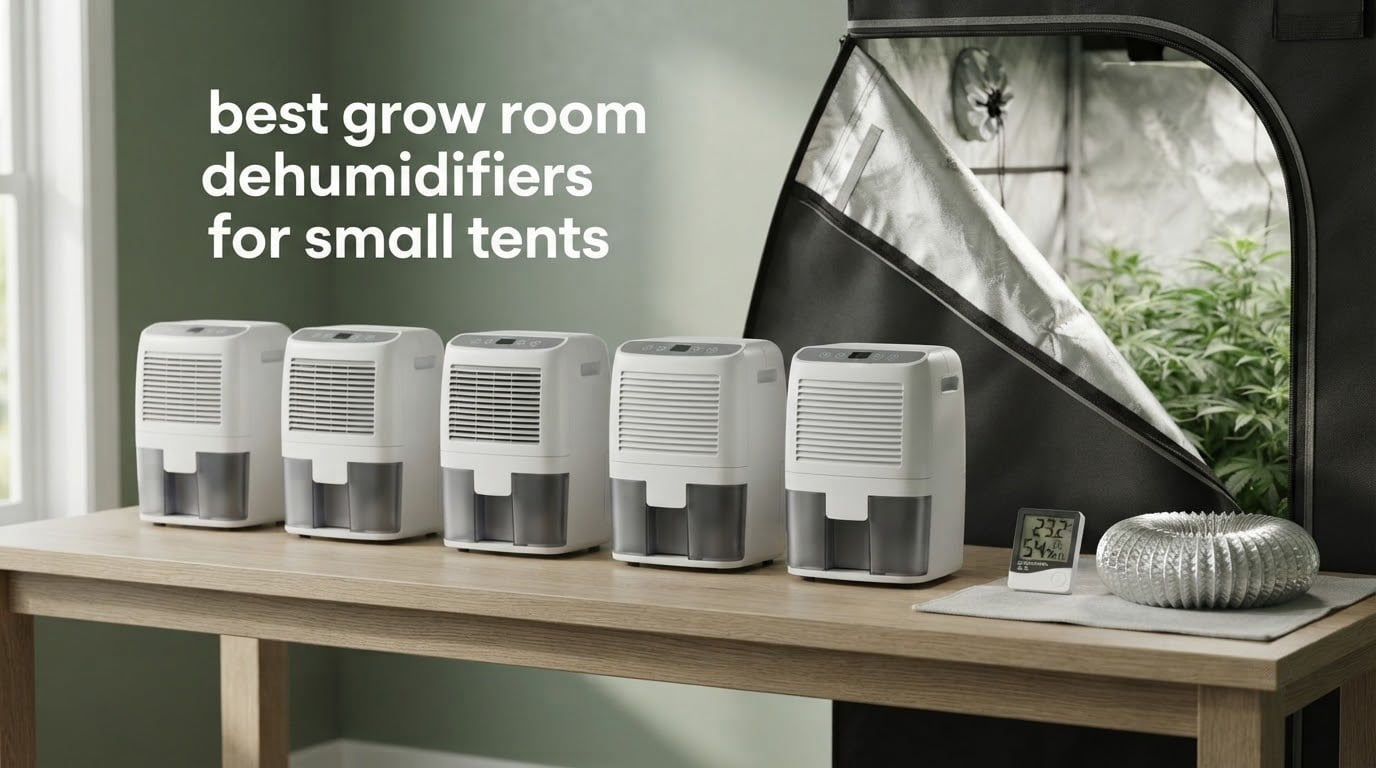
Small tents fail on humidity, not light. A sealed 2×2 or 3×3 canopy traps every ounce of water you pour in, and once relative humidity climbs past 60 percent with warm leaves, powdery mildew and bud rot start looking for a foothold. The honest truth about the best grow room dehumidifiers for small tents is that almost all of them are compact non-compressor models, and they can help a small tent while running continuously without ever handling a real late-flower load on their own.
I spent several weeks reading the spec sheets, the failure reports and the owner comments on eight compact dehumidifiers, then matched each one to the tent size it can realistically hold. We also read every ranking forum thread on this topic, because growers have already named the units that quietly disappoint. This roundup covers all eight, matched to tent size, with the drawbacks written next to the advantages.
If your tent is bigger than a 4×4, or you are running flower at 70 percent ambient humidity, scroll past the small models and read the sizing section first. Sizing is the single variable that decides whether a dehumidifier helps you or just adds noise and warmth to the canopy. If you are still choosing the tent itself, our guide to the best grow tents for indoor gardens covers the shell side of the equation.
Top 3 Small Grow Tent Dehumidifiers in October 2026
These three lead the list because they combine usable tank size, continuous operation and a spec sheet that matches what owners report. The Ivation desiccant unit is the one to look at if your tent sits in a cold room, and the SANVINDER is the most thoroughly reviewed of the three, sitting at a 4.2 rating across thousands of owner comments.
All 8 Dehumidifiers Compared Side by Side in October 2026
Every model below is a compact thermo-electric or desiccant design. That is the defining constraint of this list, and it is why the pints-per-day numbers look small next to the compressor models that occupy hardware store shelves.
| Product | Specifications | Action |
|---|---|---|
 Pro Breeze 2200 cu ft Compact Dehumidifier Pro Breeze 2200 cu ft Compact Dehumidifier |
|
Check Latest Price |
| Ivation 13-Pint Desiccant Dehumidifier |
|
Check Latest Price |
 SANVINDER 25oz Dehumidifier for 285 sq ft SANVINDER 25oz Dehumidifier for 285 sq ft |
|
Check Latest Price |
 Windangel 44oz Dehumidifier with 3 Modes Windangel 44oz Dehumidifier with 3 Modes |
|
Check Latest Price |
 TABYIK 35oz Quiet Dehumidifier TABYIK 35oz Quiet Dehumidifier |
|
Check Latest Price |
 Ivation IVADM10 Thermo-Electric Dehumidifier Ivation IVADM10 Thermo-Electric Dehumidifier |
|
Check Latest Price |
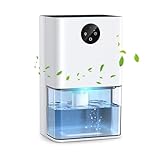 Deyagoo 50oz Small-Space Dehumidifier Deyagoo 50oz Small-Space Dehumidifier |
|
Check Latest Price |
 Eva-Dry Wireless Mini E-333 Eva-Dry Wireless Mini E-333 |
|
Check Latest Price |
1. Pro Breeze 2200 Cubic Foot Compact Dehumidifier
- 52 oz tank is large for a compact thermo-electric model
- Quiet operation suits a bedroom or apartment grow
- 40W draw keeps running cost down
- Rated to 250 sq ft with a one-year warranty
- Auto shut-off with LED indicator
- Peltier output falls away below 41F
- No humidity setpoint or digital display
- Single fan speed
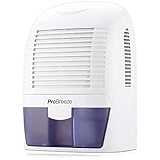
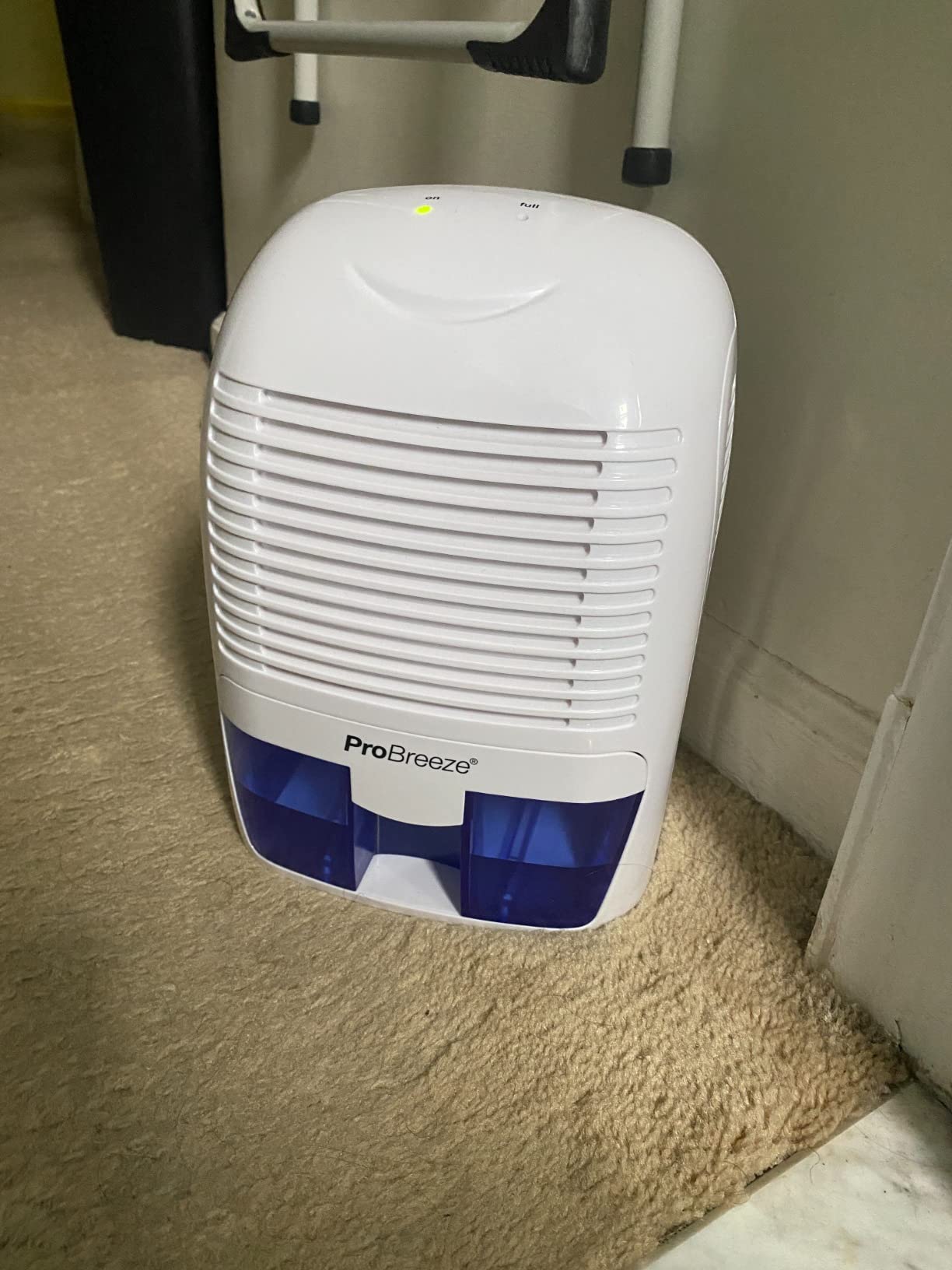
The Pro Breeze PB-03-US is the model I kept coming back to while reading the owner comments, and it is the one I would put in a 2×2 or a 2×4 first. It uses thermo-electric Peltier cooling, removes up to 18 ounces of water per day, and holds 1.5 litres in a tank that is unusually large for the class. That tank size matters more than the headline removal rate, because the failure mode on every small model is the same: the water collects faster than you empty it.
It covers up to 250 square feet, weighs 4.5 pounds, and runs at 40 watts. Owners describe it as quiet enough to sit beside a bed, and the auto shut-off with an LED indicator means it will not keep filling after you fall asleep. The recurring theme across several years of owner comments is that this unit runs continuously without drama as long as you keep the tank in the loop and empty it when the light comes on.
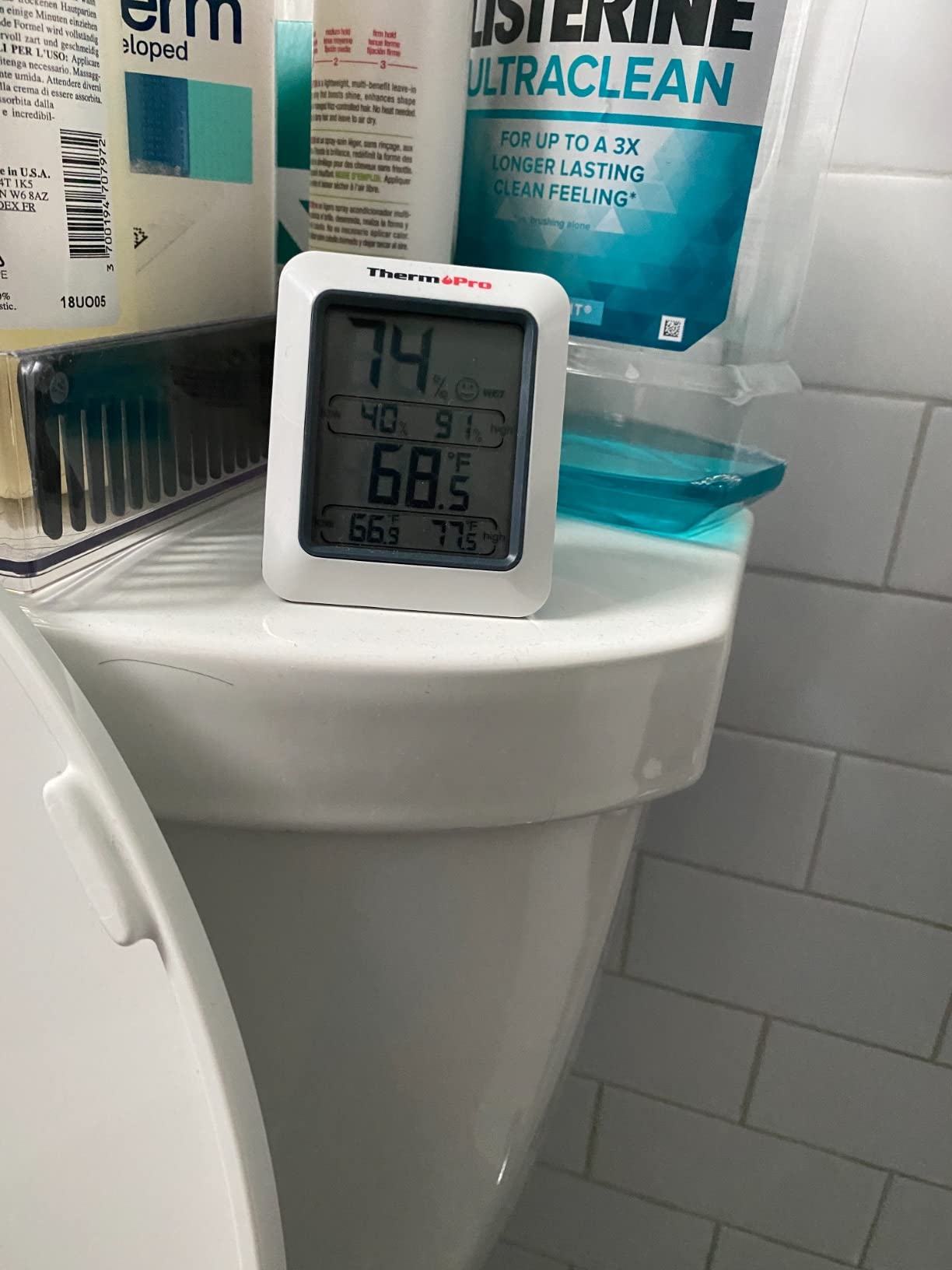
Two things to know before you commit. There is no humidity setpoint and no digital display, so this is a tank-and-shut-off machine rather than an RH-controlled one, which means you need a separate thermo-hygrometer inside the tent to know where you stand. Second, the rated 250 square feet figure applies to moderate ambient humidity, and a flowering canopy in a sealed tent puts out far more moisture than a bedroom does.
One grower on r/microgrowery described a budget setup built around a Pro Breeze paired with a portable air conditioner and external venting, which is the honest shape of a small-tent climate setup. The dehumidifier handles moisture and the air conditioner handles heat. Run them separately in a 4×4 and neither keeps up.
Who this dehumidifier suits
For a 2×2 or 2×4 tent where you can empty the tank once or twice a day, this is a comfortable first machine. It suits growers who want low noise and a low power draw more than they want automated humidity control, and the 52 oz tank gives you more slack than anything else in this list.
Who should skip it
Skip it for a 3×3 or 4×4 in flower, for any tent in a room below 41F, and for anyone who wants the unit to hold a setpoint on its own. Peltier output drops sharply as the ambient temperature falls, and a unit with no RH sensor cannot chase a target.
2. SANVINDER 25oz Peltier Dehumidifier for 285 Sq Ft
- 4.2 rating across thousands of owner reviews
- Under 35dB is among the quietest figures here
- 23W keeps running cost down for a unit with a usable tank
- Compact 5 inch cube with a carry handle
- Auto shut-off with a red indicator light
- 25 oz tank fills fast in a tent
- Adapter durability is the most common complaint
- Single fan speed and no humidity setting
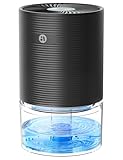
The SANVINDER DH-CS03 pulls up to 16 ounces of water a day at 86F and 80 percent humidity, which is close to what the Pro Breeze manages while drawing less than two-thirds of the power. It is rated for spaces up to 285 square feet, and the 4.2 rating across more than 3,600 reviews gives you a long owner record to read before buying.
Noise is the headline feature. At under 35 decibels with no compressor to rattle, it is one of the quietest options here, which matters if the tent is in a bedroom or a shared apartment. Energy use comes in at 23 watts, or about 0.96 kilowatt-hours over 24 hours at continuous draw.
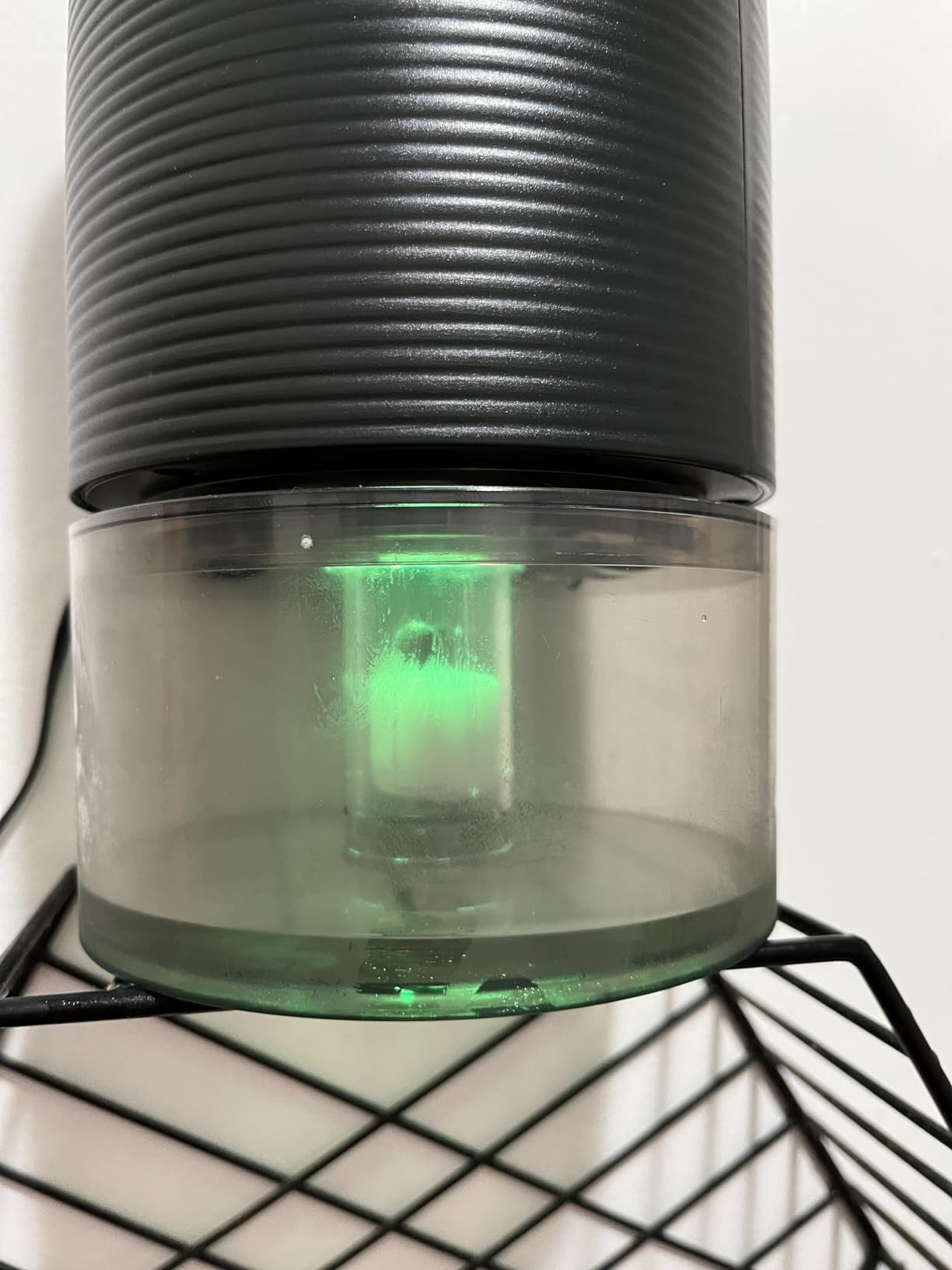
The recurring complaint across reviews is the power adapter rather than the unit itself, with multiple owners reporting adapter failure after several months. That is worth knowing before you bury the machine behind a shelf or run it around the clock for weeks. The 25 oz tank is also small enough that a busy tent needs two emptyings a day.
Owner photos also show the cube is genuinely small, with a built-in handle and a footprint that fits behind a single plant shelf. That footprint is the real reason to consider it in a tight 2×2 where a wider rectangular unit would crowd the canopy.
Who this dehumidifier suits
Best for a 2×2 or small 2×4 in a quiet room, and for growers who care more about noise and power draw than tank capacity. The review volume behind the rating also makes it the safest compact pick if you are hesitant about an unfamiliar brand.
Who should skip it
Skip it if you cannot replace the adapter easily or if your tent runs cold. Below moderate temperatures the Peltier module simply cannot pull enough water out of the air to matter.
3. Ivation 13-Pint Desiccant Dehumidifier with Drain Hose
- Works from 33F where Peltier units stall
- Continuous drain hose means hands-free running
- 13 pints per day is far above the compact class
- Digital display with an LCD control panel
- Auto-restart after a power outage
- 470W draw is the highest in this roundup
- Desiccant rotor uses more energy per pint
- Only two fan speeds and a 3.8 pint tank
The Ivation IVADDH06 uses a desiccant rotor rather than a cooling coil, which is the reason it works in a room other compact units refuse to touch. It pulls up to 13 pints of water per day at 60 percent relative humidity and 68F, and it operates from 33F to 104F. That 13-pint figure is more than ten times what the compact Peltier models achieve, and it is why this unit is the one I would consider for a winter tent.
It is also the only model here with a continuous drain hose in the box, which removes the single biggest annoyance of small-tent dehumidifying. Hook a hose, run it out through a vent port, and the tank stops being your problem. Owners also call out the LCD control panel, the 1 to 12 hour timer and auto-restart after a power outage as useful for unattended setups.
The trade-off is power. At 470 watts on high and 280 watts on low, this unit draws several times what a 23-watt Peltier model does, and the rotor-based design uses more energy for each pint removed. It also weighs 14 pounds, which is a real consideration if you plan to move it in and out of a tight tent.
Coverage is listed at up to 270 square feet, which lines up with a 2×4 tent or a small 3×3. If your tent sits in an unheated garage or basement during winter, this is the unit on the list that will still be doing anything in February.
Who this dehumidifier suits
Cold-room growers, basement tents, and anyone who wants a drain hose so they can stop babysitting a tank. It also suits a 2×4 in flower where 13 pints per day is closer to the real requirement than a Peltier model can deliver.
Who should skip it
Skip it in a bedroom or a tent where noise and heat matter, and skip it if your electricity bill is tight. At 470 watts it costs far more to run per pint than every other model here.
4. Windangel 44oz Dehumidifier with 3 Modes and Auto Defrost
- Three modes with three fan speeds and a timer
- Auto defrost for cold season operation
- Four timer settings from continuous to 72 hours
- Low 24W draw at 2.6 pounds
- Lower daily output at 349ml than most rivals
- 44 oz tank is smaller than the Deyagoo
- Newer brand with a shorter track record
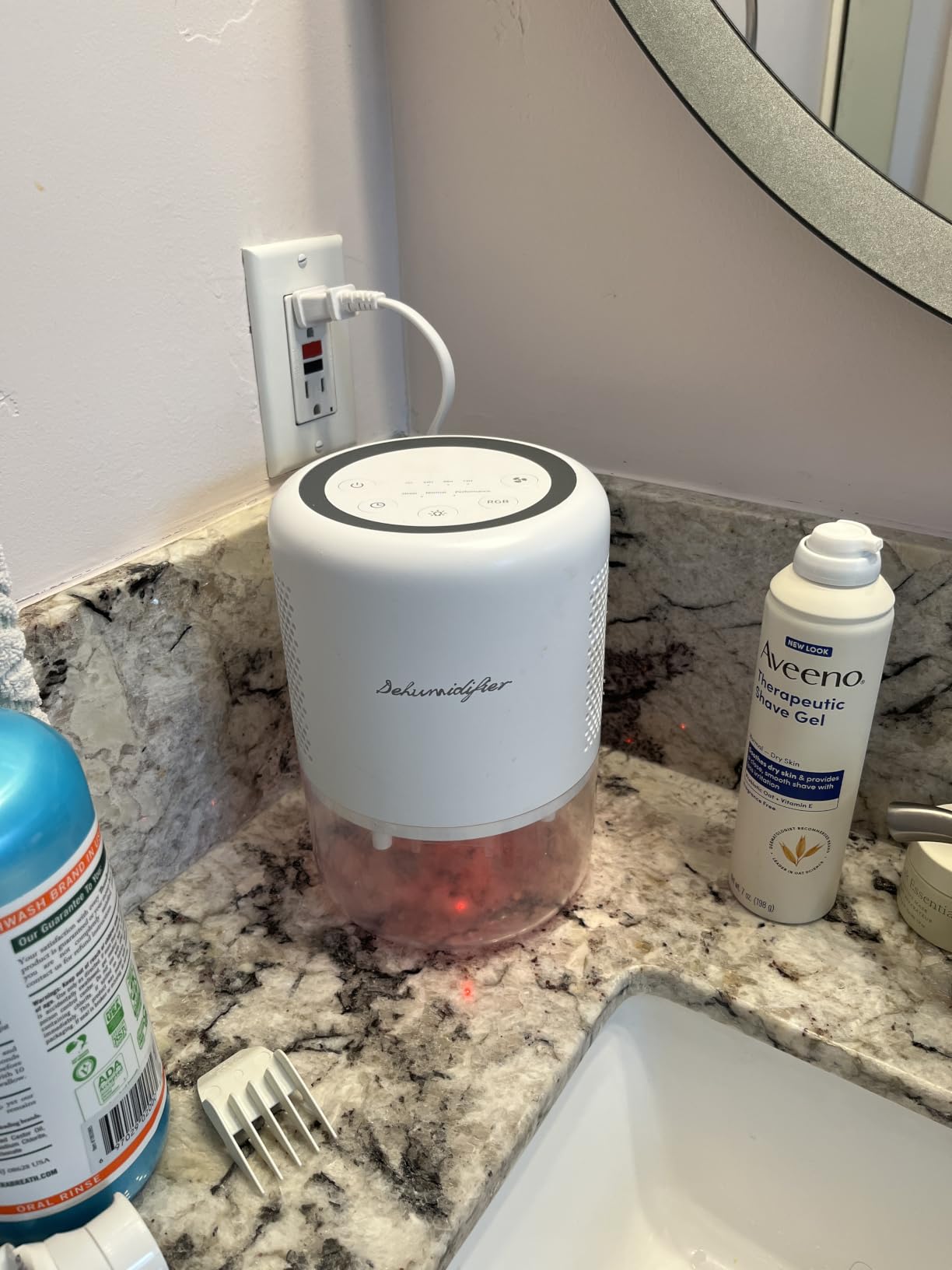
The Windangel DH-D2 is the feature-loaded member of the group. It runs three dehumidification modes, Sleep, Normal and Performance, gives you three fan speeds, and adds four timer settings that stretch from continuous operation out to 72 hours. For a grower who wants the machine to cycle around a work schedule rather than run flat out, that is a genuinely useful set of controls at this size.
It collects up to 11.8 ounces in 24 hours at 86F and 80 percent humidity, holds 44 ounces in the tank, and runs at 24 watts. The auto defrost function is the sleeper feature here, since it is the only compact unit on this list that claims cold-season operation, and the marketing states it maintains 45 to 55 percent humidity.
Be skeptical of that 45 to 55 percent claim in a grow tent. There is no RH sensor in the machine, so it cannot measure the air it is treating, and the figure describes a comfort target rather than measured control. What it does give you is the ability to schedule it and to choose a quieter mode overnight.
Output of 349ml per day sits below the 400 to 450ml of several rivals, and the tank is 6 ounces smaller than the largest here. In a sealed flower tent those gaps matter, so treat this as a 2×2 unit or a closet and seedling-room machine rather than a flower-stage workhorse.
Who this dehumidifier suits
Best for a 2×2 tent or a seedling and clone room where you want timers, sleep mode and scheduled cycles. It also makes sense as a backup unit you can run overnight at low noise while the main machine handles the day.
Who should skip it
Skip it if you need maximum daily extraction, a large tank, or automatic humidity control. The mode names look like smart control but the unit has no sensor behind them.
5. TABYIK 35oz Quiet Dehumidifier
TABYIK 35 OZ Dehumidifier for Bedroom RV, Quiet with Auto Shut Off, Blue
- 28dB is the lowest stated noise figure here
- 35 oz transparent tank is easy to monitor
- Two-year manufacturer warranty
- Compact 5.9 inch footprint with a carry handle
- Collects up to 16 oz in 24 hours
- No humidity setting at all
- Several reviews report failures within six months
- Short power cord and a lead-heavy plug
The TABYIK DH-CS01 is built for a quiet room, with a stated 28 decibels of operation and no compressor. It pulls up to 16 ounces of water per day at 86F and 80 percent humidity into a 35 ounce transparent tank, and it carries a two-year manufacturer warranty, which is longer than the one-year cover on several units in this class.
The transparent tank is a small but real quality-of-life feature. You can see the water level without lifting the unit, and the auto shut-off triggers at 700 to 800ml with a flashing red light so you are not guessing. Power draw sits at 41.67 watts, and consumption is under 1 kilowatt-hour per day.
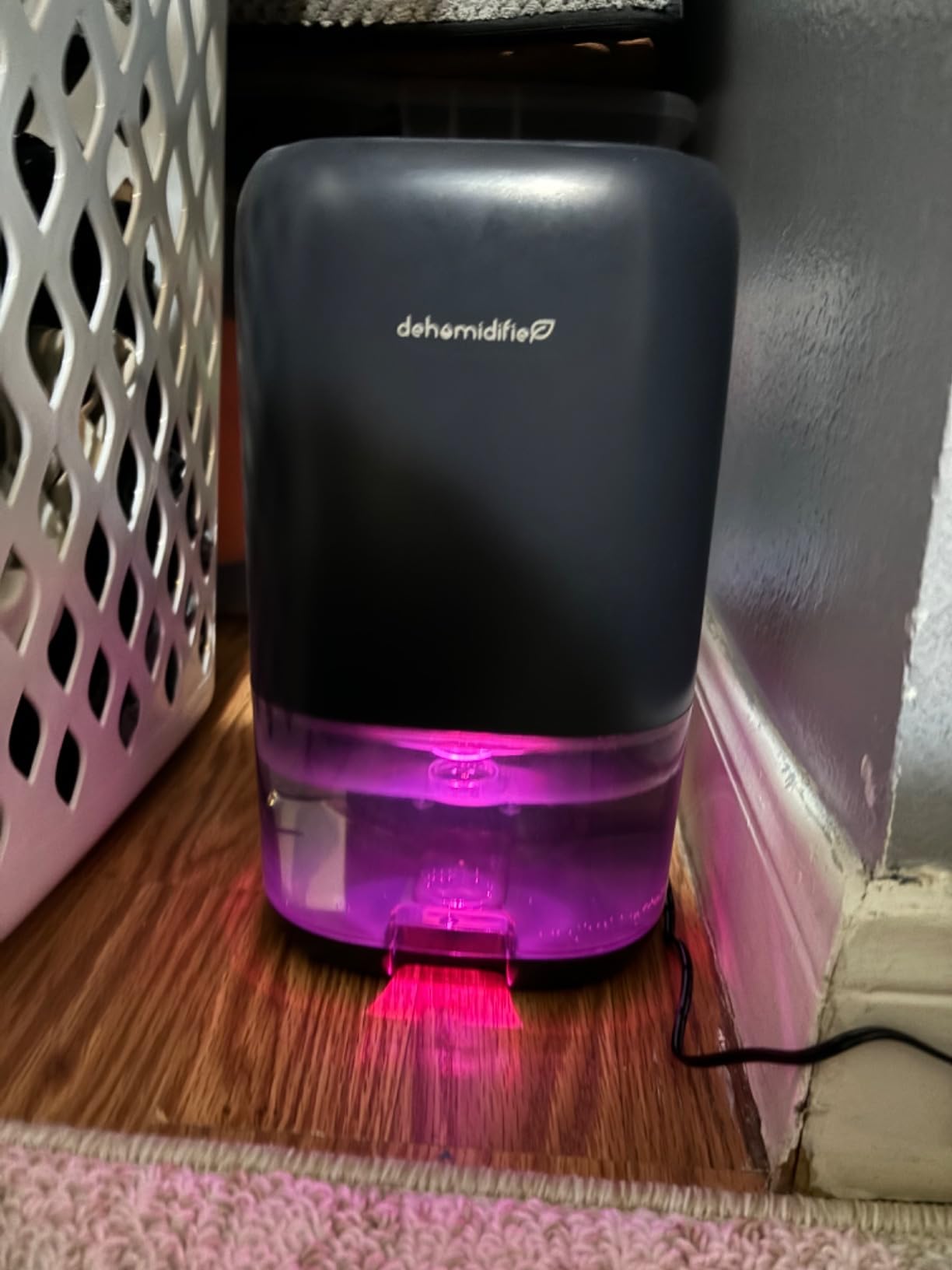
The durability reports are the part to weigh carefully. Several owners describe units failing within six months, and others say the noise is louder than the advertised 28 decibels in a quiet room. Neither complaint is universal, but at this size there is no warranty backup beyond the two-year paper promise.
There is also no humidity setting, which means this is a pure collection device. Run it, empty it when it signals, and use a separate hygrometer to know when the tent is actually in range. The short power cord is the other practical limit, since it pushes you toward the middle of the tent rather than the corner.
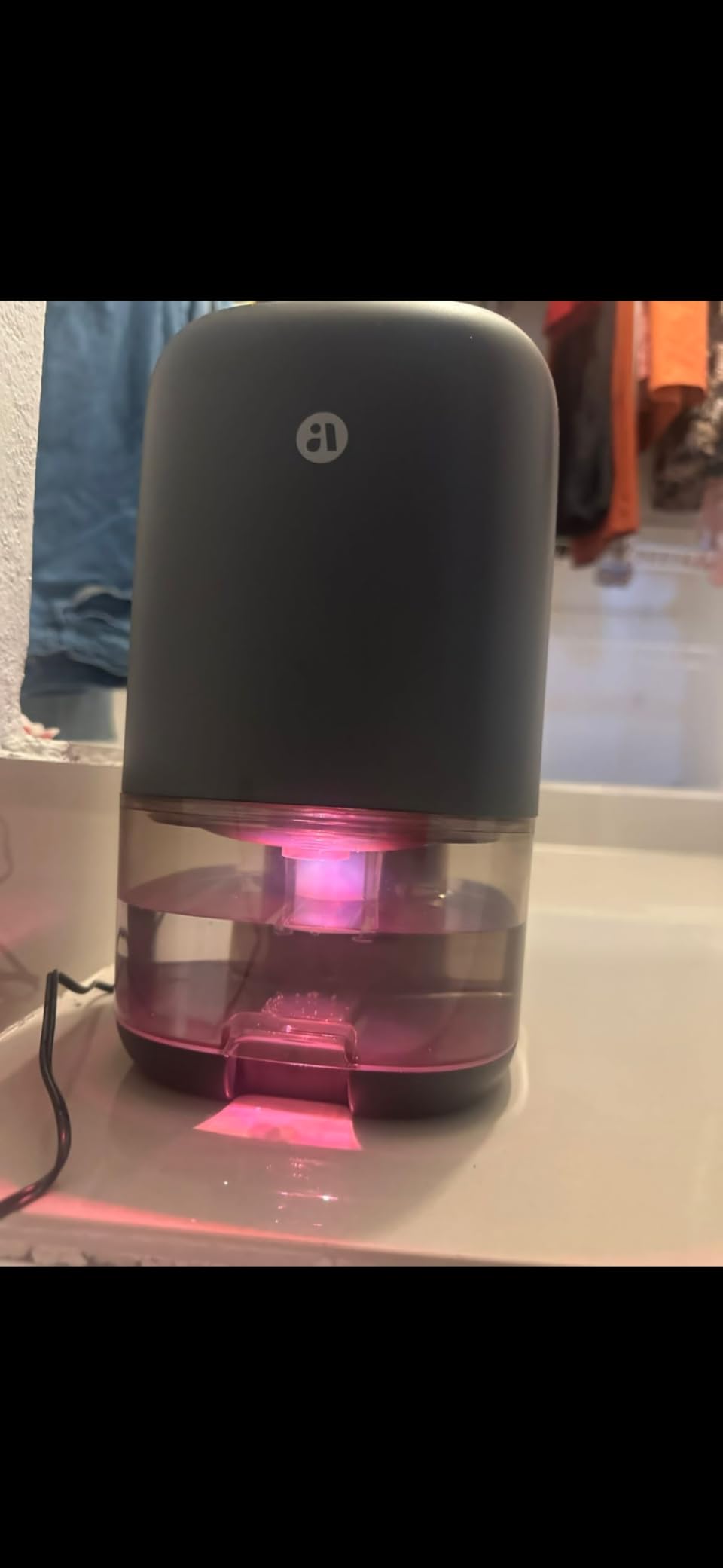
Who this dehumidifier suits
Good for a bedroom tent, a quiet apartment setup, or a seedling and clone area where the priority is silence and a tank you can watch. The two-year warranty makes it a safer budget pick than most of its size.
Who should skip it
Skip it if you need setpoint control, if you need the unit to run unattended for weeks, or if early-failure reports make you uncomfortable. It collects water and shuts off, and that is the entire feature set.
6. Ivation IVADM10 Thermo-Electric Small Dehumidifier
- 13.5W is the lowest power draw in this roundup
- No moving parts means genuinely silent running
- Washable air filter with a tank-full indicator
- Compact 6.1 by 5.1 by 8.7 inch body
- Listed coverage of 1100 sq ft suits small enclosed spaces
- 17 oz tank is among the smallest here
- Listed 6 pints per day is far above real output
- No humidity setting and no display
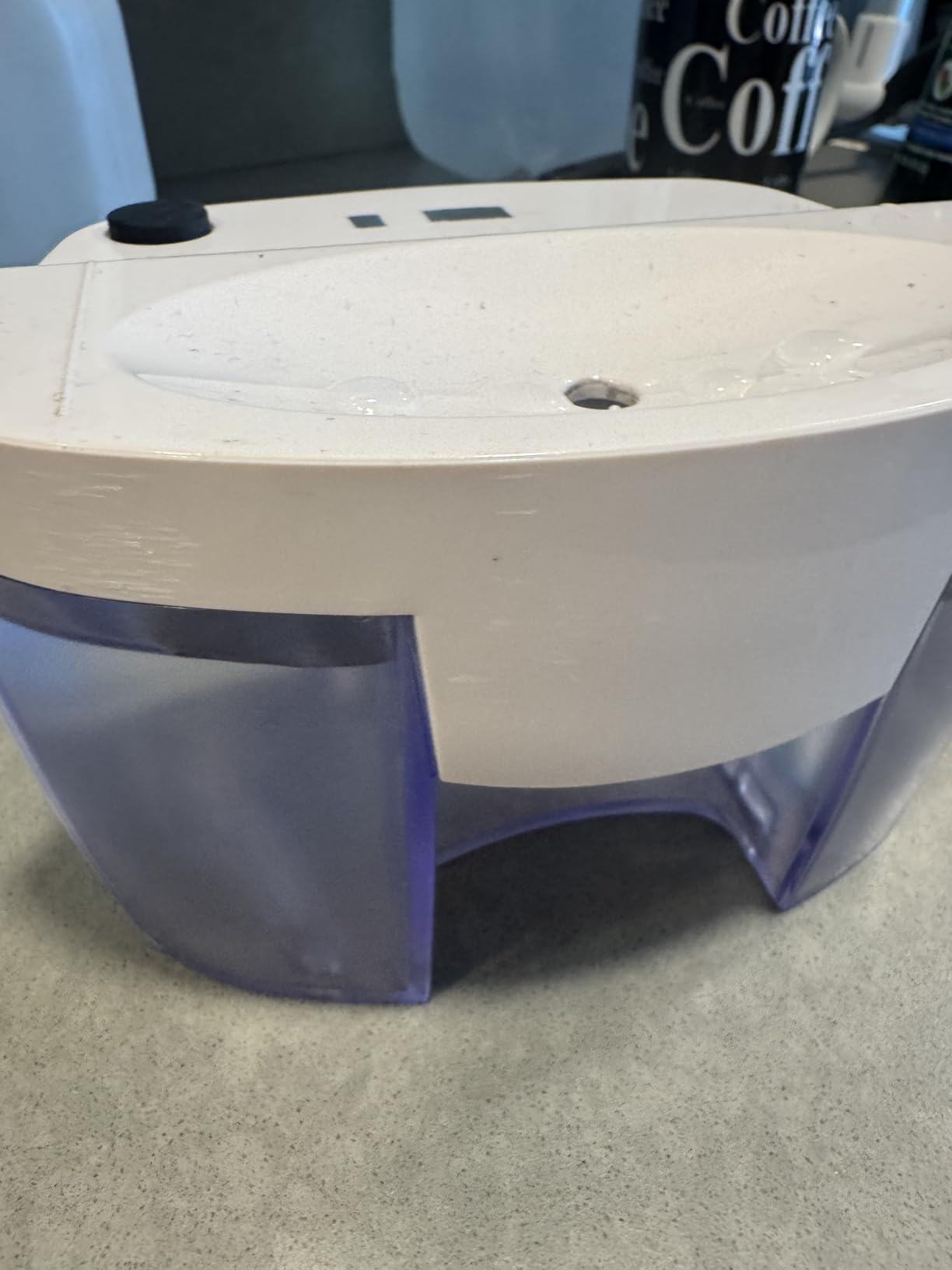
The Ivation IVADM10 draws the least power in this roundup at 13.5 watts, with no moving parts at all, which is why owners describe it as silent rather than quiet. The washable air filter and the tank-full indicator light are sensible touches at this price band, and the whole unit weighs just 6 ounces, so moving it around is effortless.
It is also the least honest spec sheet here, and you need to read it carefully. The listing claims 6 pints per day and coverage for 1,100 square feet, which no thermo-electric unit of this size can deliver in a humid space. Treat the coverage figure as a marketing number and the 17 ounce tank as the only real capacity measure you have.
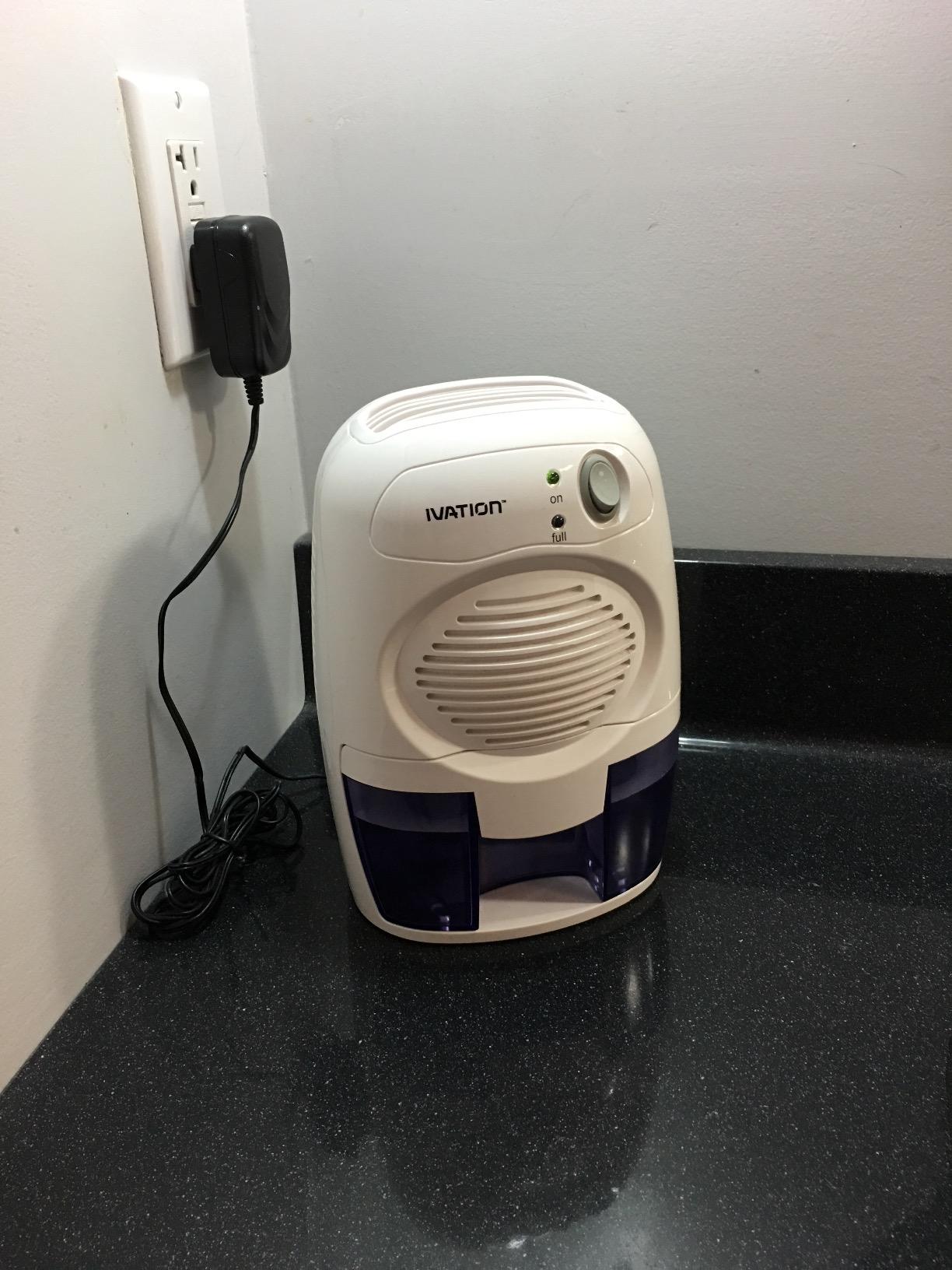
In practice the owners who like it are treating it as a closet, boat, RV or antique-car unit, which is exactly what the description implies. Reviews also note that Peltier performance drops off below roughly 50F and that the lightweight shell feels fragile if you knock it around a tent.
For a grow tent, the honest read is that a 17 ounce tank with no setpoint will fill faster than you want to empty it. If you want the lowest possible power draw for a small seedling tray area, it does the job. For a full canopy, pick a bigger tank.
Who this dehumidifier suits
Suits closets, RVs, small storage rooms and a seedling area where the priority is near-silence and a negligible power bill. It also works as a secondary unit in a lung room that needs a little help in winter.
Who should skip it
Skip it for any flowering tent, and skip it if you are relying on the stated coverage figure. The 17 ounce tank and the absence of any humidity control make it a closet unit, not a room unit.
7. Deyagoo 50oz Small-Space Dehumidifier for 200 Sq Ft
50OZ Dehumidifier, Small-Space Dehumidifier for Bedroom RV Closet 200 Sq.Ft
- Large 50 oz transparent tank for a thermo-electric unit
- Removes up to 400ml in 24 hours at 86F
- 30dB operation with no compressor
- 28W draw
- Easy-clean tank with a grooved design
- Fewer owner reviews than the rest of this list
- Single fan speed with no humidity setting
- Peltier technology is weak in cold rooms
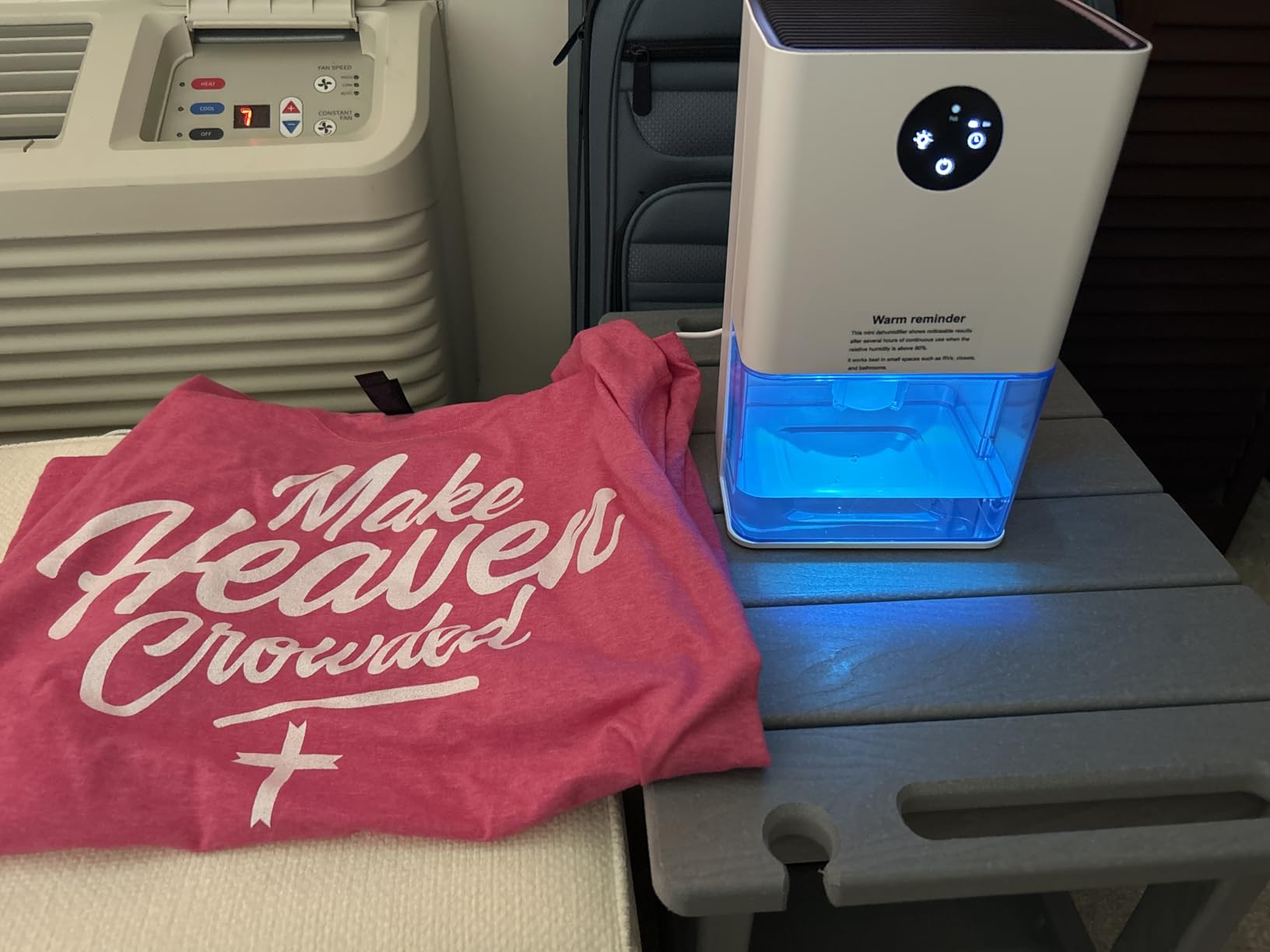
The Deyagoo DY501 puts a large tank under a small footprint. It removes up to 400ml per day at 86F and 80 percent humidity, and a 50 ounce reservoir means fewer interruptions in the middle of a flower cycle.
The body is 5.91 by 4.72 by 9.84 inches, so the extra capacity does not cost you much footprint, and the grooved tank design makes it faster to rinse clean. It shuts off automatically at 1300 to 1500ml with a flashing red light, and it is rated for up to 300 square feet with 200 square feet stated as effective.
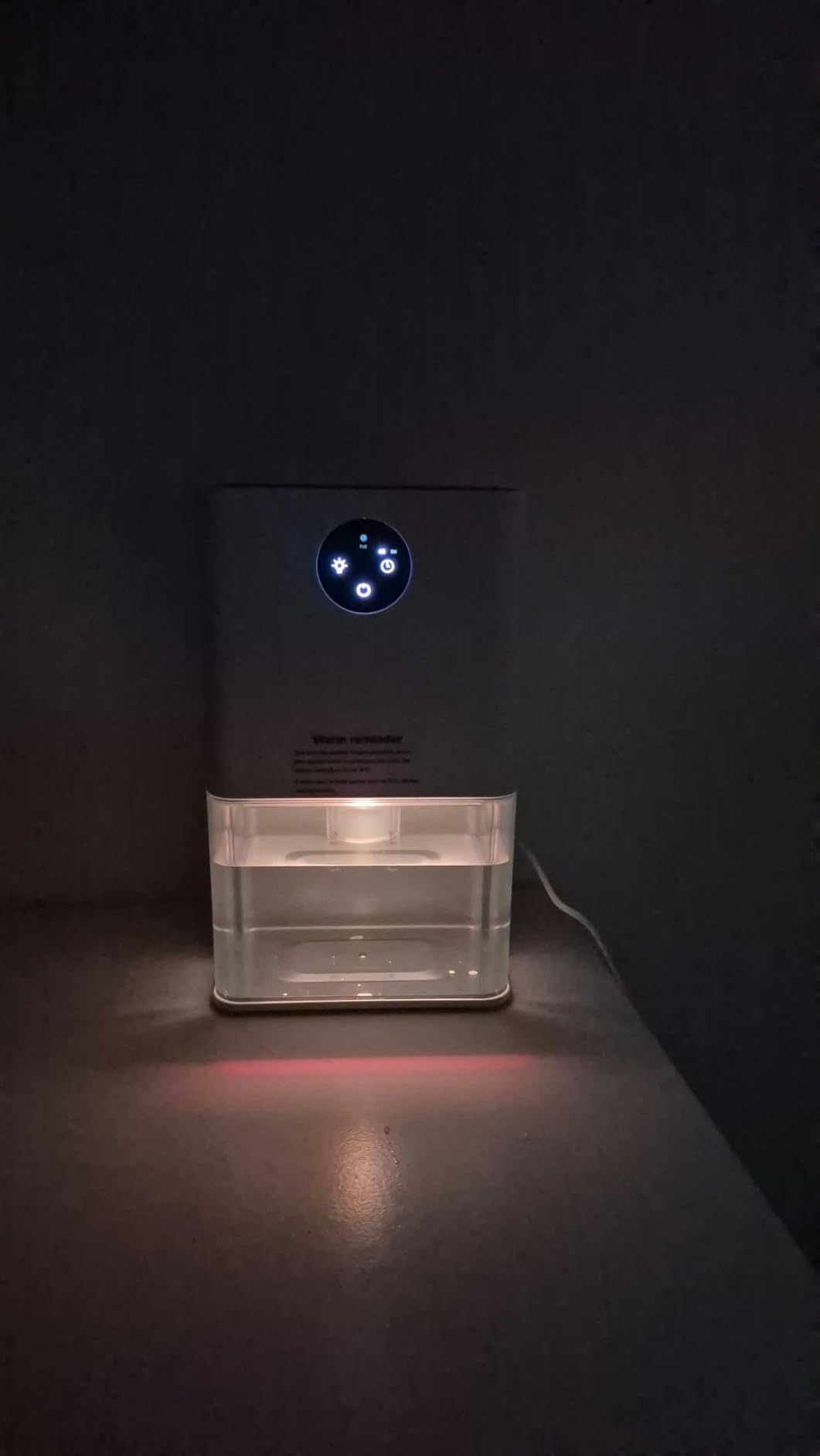
The caution here is the review base. With 324 reviews at a 4.1 rating, this has the shortest owner history in the group, and the brand itself is newer than the others. That does not make it a bad machine, but it does mean you are buying on the spec sheet rather than on years of owner reports.
It also has no humidity setting, so like most of the class it collects rather than controls. Make sure the top air inlet and the back outlet stay clear, since the reviews flag obstruction as a common cause of disappointing results.
Who this dehumidifier suits
Best fit for a 2×2 or 2×4 where fewer tank emptyings matter more than automated control. A 50 ounce reservoir gives you real slack between services, and 28W keeps the running cost down.
Who should skip it
Skip it if you want proven long-term durability, if you need a setpoint, or if the tent is cold. Peltier output drops in cool rooms regardless of tank size.
8. Eva-Dry Wireless Mini Dehumidifier E-333
- Completely cordless with no power cord in the tent
- Rechargeable for 20 to 30 days per charge
- Silent passive operation with no fan noise
- 5 year manufacturer warranty
- Owners report 10 or more years of service
- 6 oz capacity is the smallest here by a wide margin
- Passive collection with no fan and no RH control
- Not a room dehumidifier under any reading
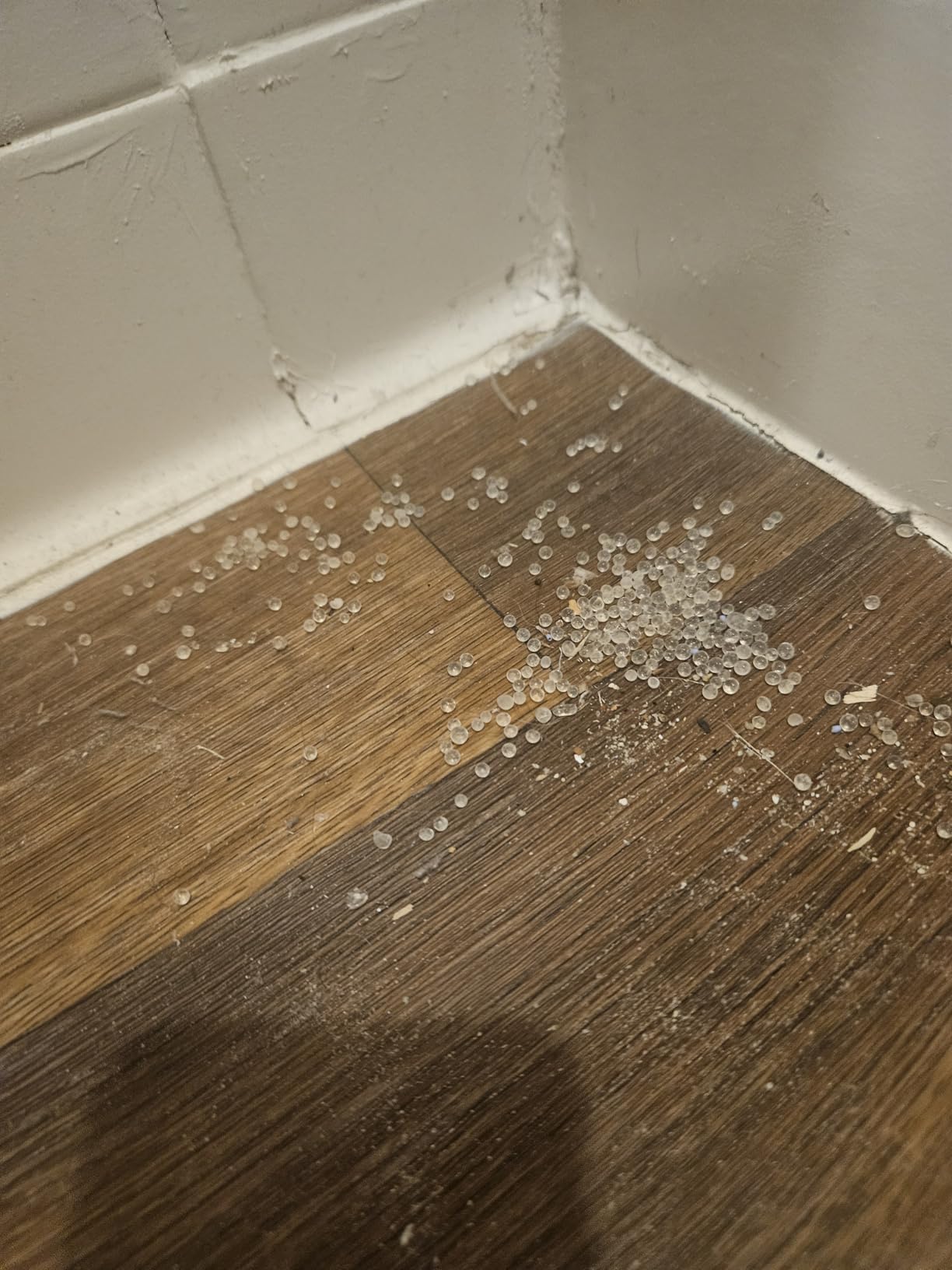
The Eva-Dry E-333 is the odd one out, and I include it deliberately. It is not an air mover at all. It is a passive silica gel desiccant canister that absorbs moisture from the air around it, holds 6 ounces, and recharges by plugging into a wall outlet for 12 to 14 hours. The same cordless design that makes it ideal for a closet makes it wrong for a whole tent.
What it is good at is contained humidity. Owners use it in safes, wardrobes, closets, gun cabinets and RVs, and the 5-year warranty plus reports of 10-plus years of service reflect how simple the mechanism is. At 333 cubic feet of stated coverage it is technically larger than a 2×2 footprint, but coverage for a passive canister means the volume of air it can actually touch, not the volume of the room.
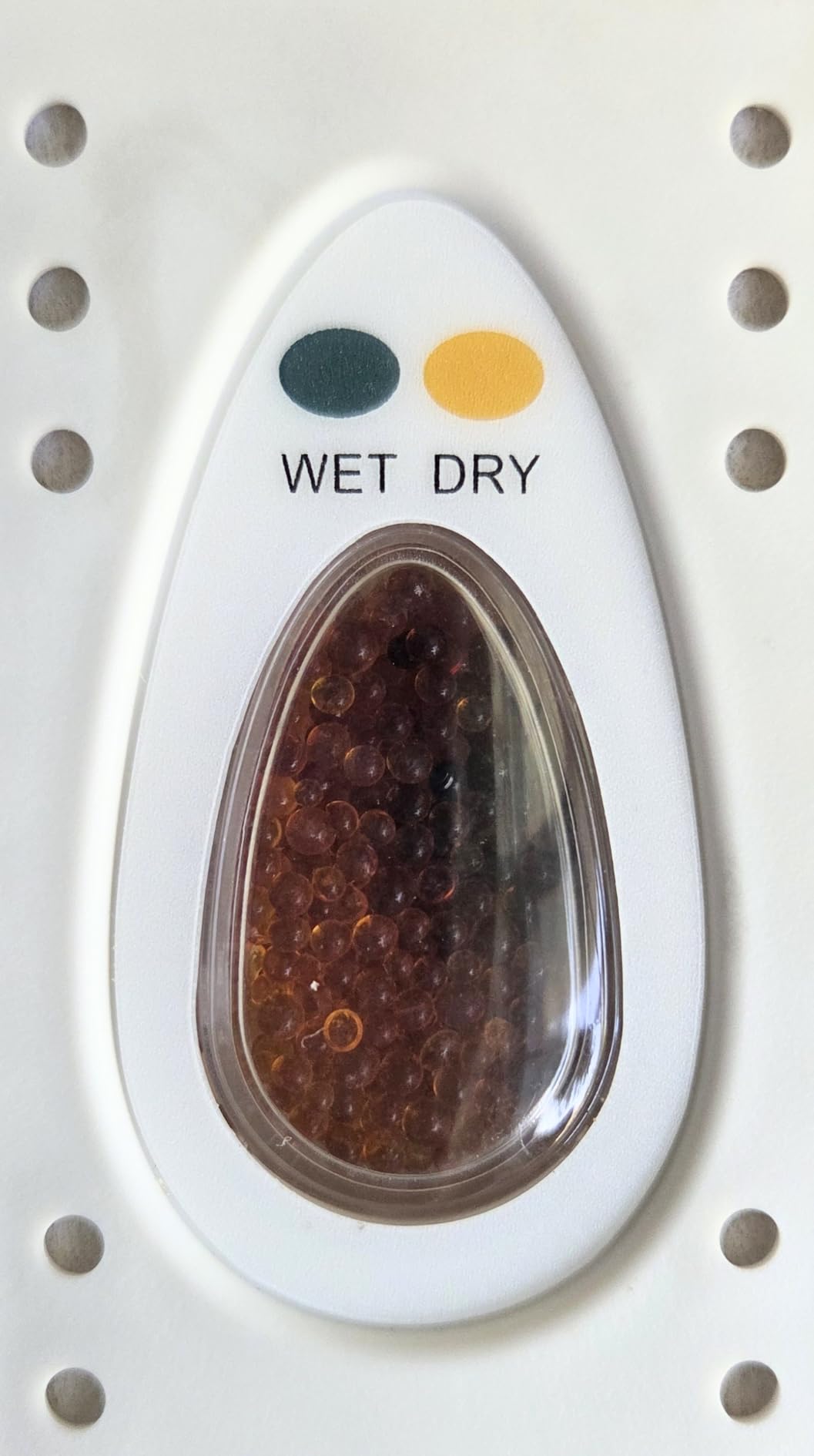
In a grow tent the numbers are unforgiving. At 0.38 pints per day, it would take a very short time to need recharging, and the unit does not move air, so it only affects the air immediately around it. The obvious application is a seed storage box or a small propagation chamber rather than a canopy.
One thing to plan for if you do use it: condensation collects inside the canister during recharging, so keep it on a towel or a tray. Several owners mention this as a small but persistent annoyance.
Who this dehumidifier suits
Suits anyone who needs passive humidity control in a seed box, a wardrobe, a storage cabinet or a small RV locker. It is also the safest pick if you need zero electrical noise inside a tent.
Who should skip it
Skip it as a tent dehumidifier. At 6 ounces of passive collection with no fan, it cannot hold a 2×2 through a watering cycle, let alone a flowering canopy.
Where to Put the Unit: Inside the Tent or in the Lung Room
Put the dehumidifier outside the tent and duct it in whenever you can. Every thermo-electric and desiccant model adds warm exhaust air to whatever space it sits in, and in a small tent that heat is exactly what you do not want. Running it in the lung room or closet and pushing treated air through a vent port keeps the canopy space cool.
Size the duct to the tent intake port and keep the run short, because a long or undersized duct cuts airflow and quietly reduces how much moisture the machine actually removes. Seal the port around the duct so you are not pressurising the tent, which pushes warm humid air back out through a leak and undoes the work. Our broader picks for larger setups are covered in our basement dehumidifier roundup and our whole-house dehumidifier guide.
In-tent placement is acceptable in a 2×2 only, and only if your tent has a solid carbon filter or the unit’s light leak cannot reach plants. Keep it in a corner away from the intake and exhaust of your fan, and remember that the exhaust has to go somewhere. Growers venting through a small window report stable tent temperatures in the high 70s and low 80s Fahrenheit, with humidity still needing daily attention, which is the honest ceiling for this setup.
Humidity Targets by Growth Stage
Seedlings and clones want the wettest air of the whole cycle, roughly 70 to 75 percent relative humidity, because young tissue with thin leaves transpires poorly and dry air stunts establishment. Almost none of the units on this list can hold that range on their own, which is why a humidifier or a domed propagation box usually does the early work instead.
Vegetative growth is comfortable between 50 and 70 percent. That is the easiest stage to hold, and it is where a compact thermo-electric model earns its place, since transpiration is lower before flowers open.
Flower is the hard stage. Between 40 and 50 percent is the target, and this is where growers on r/CTents and r/GrowingMarijuana consistently report fighting the number daily with passive control alone. Add late-flower water usage and a small Peltier model simply cannot keep pace, which is the point at which a compressor unit or a lung-room setup becomes the correct answer rather than a bigger bill.
Our bedroom dehumidifier roundup covers several compressor-style units if you have decided the small-tent class is not enough.
How We Picked and What We Tell Growers to Skip
This roundup is built from published specifications and a large base of owner reviews rather than from a single controlled laboratory session, and we think that is the honest way to cover this niche. For every model we compared rated daily extraction against real-world coverage claims, tank size against how often a grower would realistically empty it, power draw against the cost of continuous running, and noise against where the tent actually lives in the house.
Two conclusions came out of that comparison. First, the cheapest semiconductor tier is the weakest segment on the market for grow use, and the mechanism is the reason: a Peltier module cools its coil by a few degrees, and when the tent air is already warm and near saturation there is simply not enough temperature difference to condense water. Compressor units pull roughly 39 times the capacity for about four times the energy per pint removed, which is why growers on r/Autoflowers advise skipping the smallest units entirely.
Second, the units growers actually trust by name are larger household machines used for the whole room rather than the tent itself. A grower in a forum.growweedeasy thread described running a 70-pint Frigidaire that works well but is too large for the space, while a r/ACInfinityAdvancegrow user runs a Midea cube across two 2×4 tents. Both approaches treat the tent as part of a room rather than a sealed box.
Our advice: buy for tank size and drain capability first, noise second, and treat every coverage figure in this class as aspirational. If you need more than roughly 10 pints of genuine daily extraction, move up to a compressor model.
Frequently Asked Questions
What is the best dehumidifier for tents?
For a 2×2 or 2×4 tent, a compact thermo-electric model with a large tank and a drain hose works best. The Pro Breeze 2200 cubic foot unit holds 52 ounces and pulls up to 18 ounces per day, while the Ivation 13-pint desiccant model handles cold rooms and 13 pints per day. Above a 3×3 in flower, step up to a compressor unit.
Should I put a dehumidifier in a grow tent?
Usually no. A thermo-electric unit exhausts warm air, so running it inside a small tent adds heat exactly where you do not want it. Place it in the lung room or closet and duct treated air into a tent vent port, sealing the port to avoid pushing humid air back out through leaks. In-tent placement only works in a 2×2 with the exhaust routed away from the canopy.
How do I calculate dehumidifier size for a grow room?
Add up the water you deliver in one watering cycle, divide by the days between waterings, then double the figure to cover plant transpiration. Add 15 percent for hot or humid climates. A 2×2 taking 4 litres every two days needs about 8 pints per day once transpiration is included, which is the point where compact thermo-electric models stop keeping up.
What is the best humidifier for a small grow tent?
For seedlings and clones, target 70 to 75 percent relative humidity, which most small dehumidifiers cannot provide because they only remove moisture. A cheap ultrasonic or evaporative humidifier paired with a timer handles the early stage, while a thermo-hygrometer in the canopy lets you switch it off once vegetative growth begins and dehumidification takes over.
What is the best humidifier-dehumidifier combo for a grow tent?
A combo unit is rarely necessary if you stage your targets. Run a humidifier during the seedling and clone stage at 70 to 75 percent, then shut it off and switch to continuous dehumidification at 50 to 70 percent in veg and 40 to 50 percent in flower. Staging avoids the situation where two devices fight each other and both run constantly.
Final Verdict: Best Grow Room Dehumidifiers for Small Tents
For most small tent growers, the Pro Breeze 2200 cubic foot unit is the place to start because its 52 ounce tank and 40 watt draw suit continuous running better than anything else in this class. The Ivation 13-pint desiccant model is the pick if your tent is cold, since it works down to 33F and includes a continuous drain hose. Budget-tight setups can take the SANVINDER 25oz unit for its quiet, low-draw operation and its well-documented 4.2 rating.
Be clear-eyed about the ceiling. None of these compact thermo-electric and desiccant models can hold a 3×3 or 4×4 through late flower, and the very smallest semiconductor units are widely regretted purchases. Size the machine with the formula above, duct it in from outside the tent, and run a thermo-hygrometer inside the canopy so you are working from numbers instead of guesswork. That is the whole difference between humidity control and a machine that merely collects water.