

A fabric grow tent has no windows worth speaking of. Whatever goes in — heat, moisture, leaf odor — mostly stays in, and the plants sit in it around the clock. That is the entire reason an inline duct fan became the first piece of equipment most indoor growers buy after the tent itself.
If you are searching for the best inline duct fans for grow tents, the honest answer is that almost every one of them will move air, and the difference lives in three numbers: rated CFM, the noise figure at that airflow, and whether the motor survives years of wet, warm duty. The fan that wins for a 2×2 closet grow is not the fan that wins for a 4×8 room setup, so size first and only then compare features.
We spent weeks reading the review histories on twelve widely sold inline duct fans in the grow category and compared them side by side on airflow, noise, motor design, control options and build quality. Nothing in this roundup is sponsored, and the Check Latest Price buttons go to the standard retailer listings. This guide was last updated in 2026.
One quick note before we get into the specs. Growers in the r/microgrowery and r/ACInfinityAdvancegrow communities generally describe AC Infinity units as the reference point for quiet bedroom setups, and forum.growersnetwork.org has long recommended the 6-inch class for anything larger than a small tent. We used those patterns as a starting point, then checked the current review data for each one.
Before you buy the tent itself, our guide to the best grow tents for indoor gardens covers the sizes and frame styles that pair well with inline ducting. Lighting setup matters just as much once air is moving, so we cover that separately in best grow lights for seedlings.
Top 3 Inline Duct Fan Picks for Grow Tents for October 2026
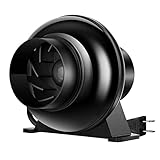
VIVOSUN D4 4 Inch Inline Fan
- 195 CFM at 2500 RPM
- Flow deflector keeps it to 30-42 dB
- ETL listed motor with overheat reset
- Tool-free locking-tab duct flanges
- Detachable impeller

AC Infinity CLOUDLINE T4
- 210 CFM at 2800 RPM
- 28 dBA PWM EC motor
- Dual ball bearings
- App climate scheduling

Hon and Guan PRO 4 Inch 212 CFM
- 212 CFM mixed-flow EC motor
- Stepless 0-100 percent dial
- Metal housing with IP42 rating
- 28 dB rated
All 12 Inline Duct Fans Compared in October 2026
| Product | Specifications | Action |
|---|---|---|
| VIVOSUN D4 4 Inch Inline Fan |
|
Check Latest Price |
| AC Infinity CLOUDLINE T4 |
|
Check Latest Price |
 Hon and Guan 4 Inch 130 CFM Fan Hon and Guan 4 Inch 130 CFM Fan |
|
Check Latest Price |
 VEVOR 4 Inch 205 CFM EC Fan VEVOR 4 Inch 205 CFM EC Fan |
|
Check Latest Price |
 Voltset 4 Inch 280 CFM Fan Voltset 4 Inch 280 CFM Fan |
|
Check Latest Price |
 VIVOSUN G4 195 CFM Aerozesh Fan VIVOSUN G4 195 CFM Aerozesh Fan |
|
Check Latest Price |
 VIVOSUN T4 210 CFM Smart Fan VIVOSUN T4 210 CFM Smart Fan |
|
Check Latest Price |
 VEVOR 6 Inch 400 CFM Inline Fan VEVOR 6 Inch 400 CFM Inline Fan |
|
Check Latest Price |
 HealSmart 4 Inch 195 CFM Fan HealSmart 4 Inch 195 CFM Fan |
|
Check Latest Price |
 iPower 4 Inch Fan Filter and Duct Kit iPower 4 Inch Fan Filter and Duct Kit |
|
Check Latest Price |
| Hon and Guan PRO 4 Inch 212 CFM Fan |
|
Check Latest Price |
 MicroMall Quiet 6 Inch 405 CFM Fan MicroMall Quiet 6 Inch 405 CFM Fan |
|
Check Latest Price |
1. VIVOSUN D4 4 Inch Inline Fan – Most Reviews and Editor’s Choice
- 195 CFM at 2500 RPM moves plenty of air for a 2x2 or 2x4 tent
- Flow deflector keeps noise down for an AC motor fan
- ETL listed motor with automatic overheat reset
- Locking-tab flanges need no tools to connect duct
- Detachable housing and blades make cleaning simple
- 5.9 foot cord makes placement flexible
- Single speed with no variable speed or cycle mode
- Plastic housing and impeller rather than metal
- No remote and no climate automation
This is the fan that has quietly built the category. With more than 13,500 reviews behind it and a Best Sellers Rank in greenhouse ventilation equipment, the VIVOSUN D4 has been the default first inline fan for a decade of small grow tents, and the pattern holds up in the current review data.
What you get is 195 CFM at 2500 RPM on a 28 watt single-speed motor. That is genuinely enough air exchange for a 2×2 or a short 2×4 tent, and owners on r/microgrowery commonly pair it with a charcoal filter for odor control in setups that size without complaint.
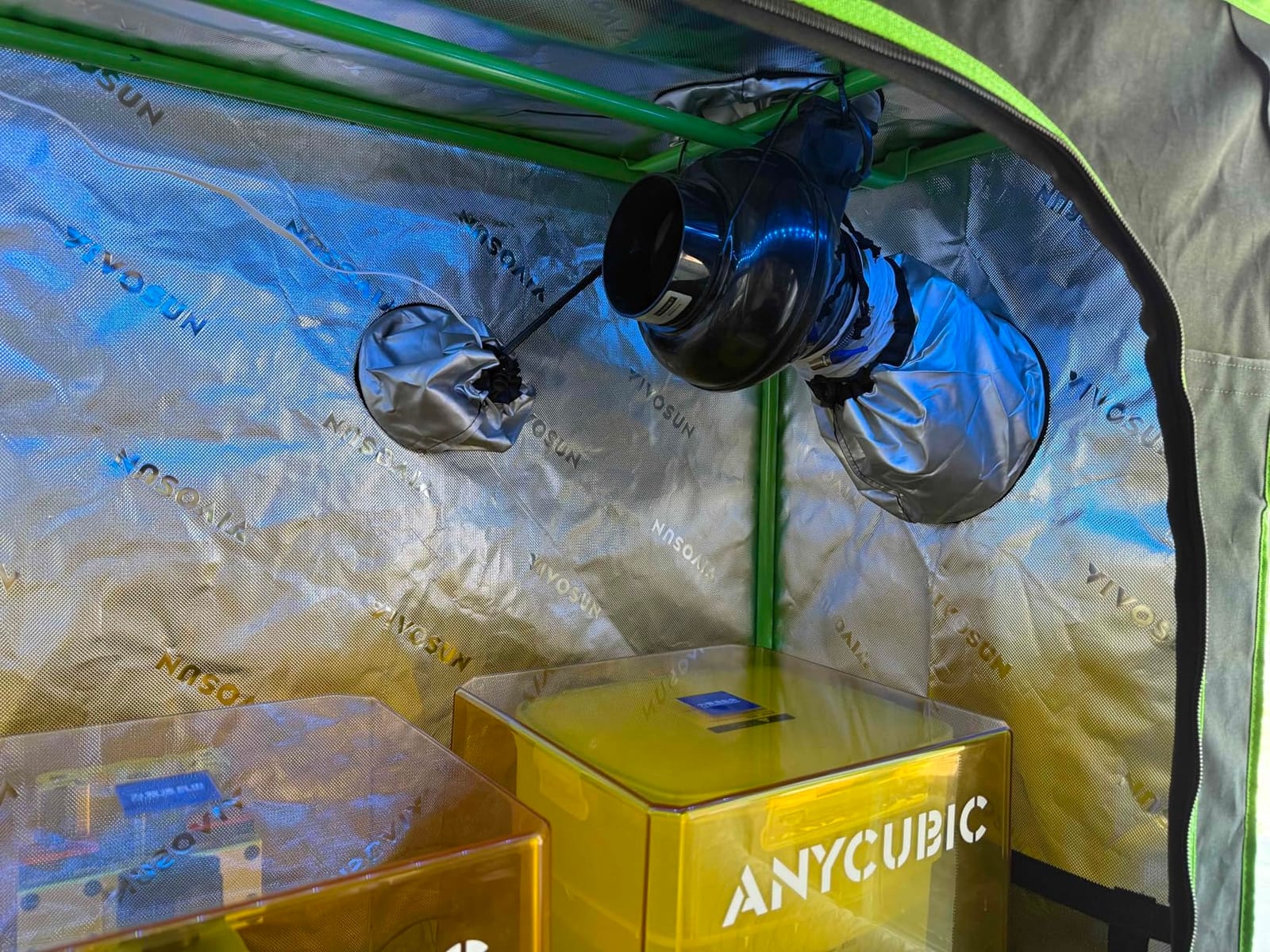
The noise figure is where it earns its reputation. A flow deflector sits ahead of the impeller to smooth turbulence, and reviews describe operation in the 30-42 dB range depending on duct length and how hard the housing is mounted. Hard-mounted plastic does transmit a low hum, which is the single most common complaint in the reviews.
The build is honest rather than premium. Housing and blades are plastic, the impeller and housing detach for cleaning, and the locking-tab flanges at both ends mean you can connect and disconnect 4 inch duct without a single clamp or screw. For a humid tent, that tool-free disassembly matters more than it sounds, because you will want to wipe the blades down.
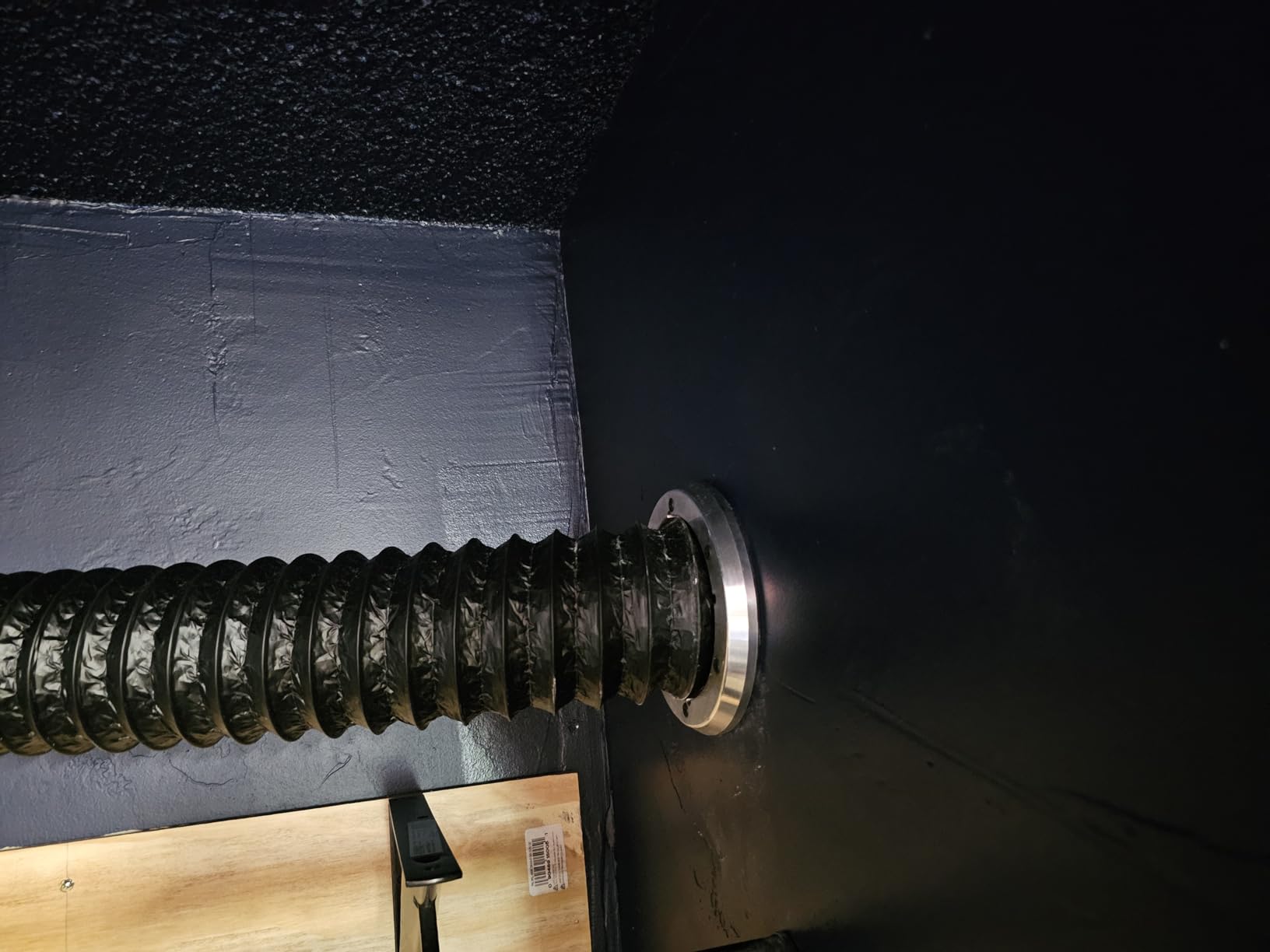
How it performs in a humid tent
The overheat reset is the detail that matters most for continuous duty. An ETL listed motor with automatic thermal reset will cut out and restart instead of cooking itself when airflow is restricted by a clogged pre-filter, which is a real scenario in a tent that runs around the clock.
Noise and airflow trade directly. Long, straight duct runs keep it quieter at the same setting, while short bent runs make it both louder and weaker, so the duct layout does more for performance than the fan choice at this level.
Who should skip the single-speed compromise
Skip it if you want the fan to respond to temperature or humidity on its own. There is no controller in the box, no remote, and no cycle modes, so it runs at one speed until you physically switch it. Growers chasing a quiet bedroom tent on a PWM dial will find the AC Infinity T4 or the Hon and Guan PRO a much better fit.
Also skip it if your tent has 6 inch ports. This is a 4 inch fan and forcing it into mismatched duct is the duct-size mismatch complaint that shows up again and again on grower forums. Match the diameter first, always.
2. AC Infinity CLOUDLINE T4 – Quiet 4 Inch Fan With App Climate Control
AC Infinity CLOUDLINE T4, Quiet 4” Inline Duct Fan w/Environment Controls
- App based temperature and humidity programming with grow cycle schedules
- Very quiet PWM EC motor rated around 26-28 dBA
- 10 speed settings and 8 power levels for fine airflow control
- Dual ball bearings for long service life
- Works as a mixed-flow intake or exhaust fan in grow rooms
- Highest cost in the 4 inch category
- Automation depends on the separate smart controller and app
- Not a stepless 0-100 percent dial like some EC competitors
If your tent lives inside the house and noise matters, this is the reference point, and the 4.7 rating across more than 7,600 reviews is among the two highest in this group. Growers on r/ACInfinityAdvancegrow and r/microgrowery call it the best money they spent precisely because it disappears into the background.
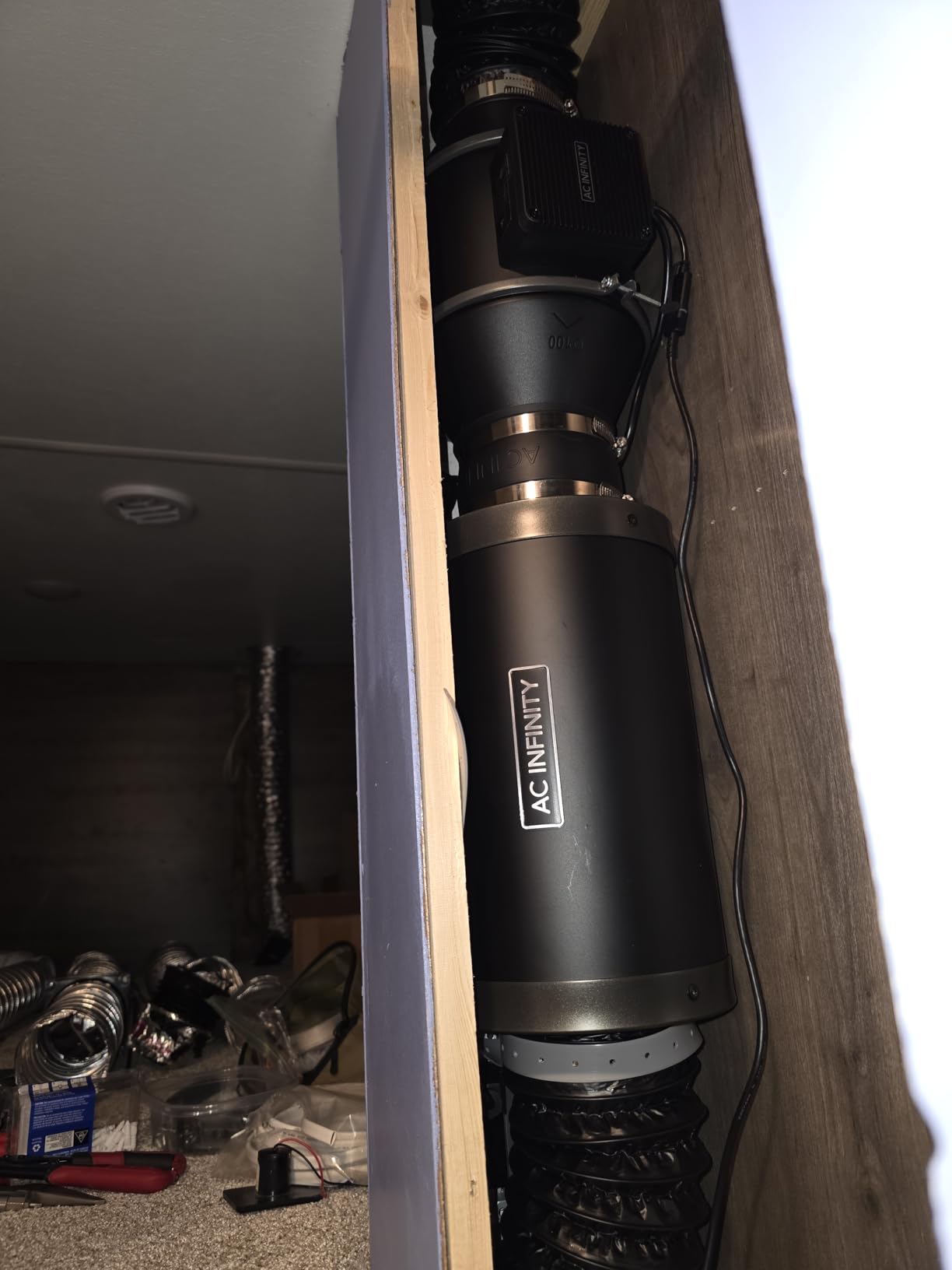
The motor is a PWM-controlled EC unit spinning to 2800 RPM and drawing 21 watts, driving a mixed-flow impeller through dual ball bearings. That bearing arrangement is what separates it from the plastic-sleeve competition on humid 24/7 duty, and it is why the humidity corrosion complaints we see on cheaper AC motor units largely do not show up here.
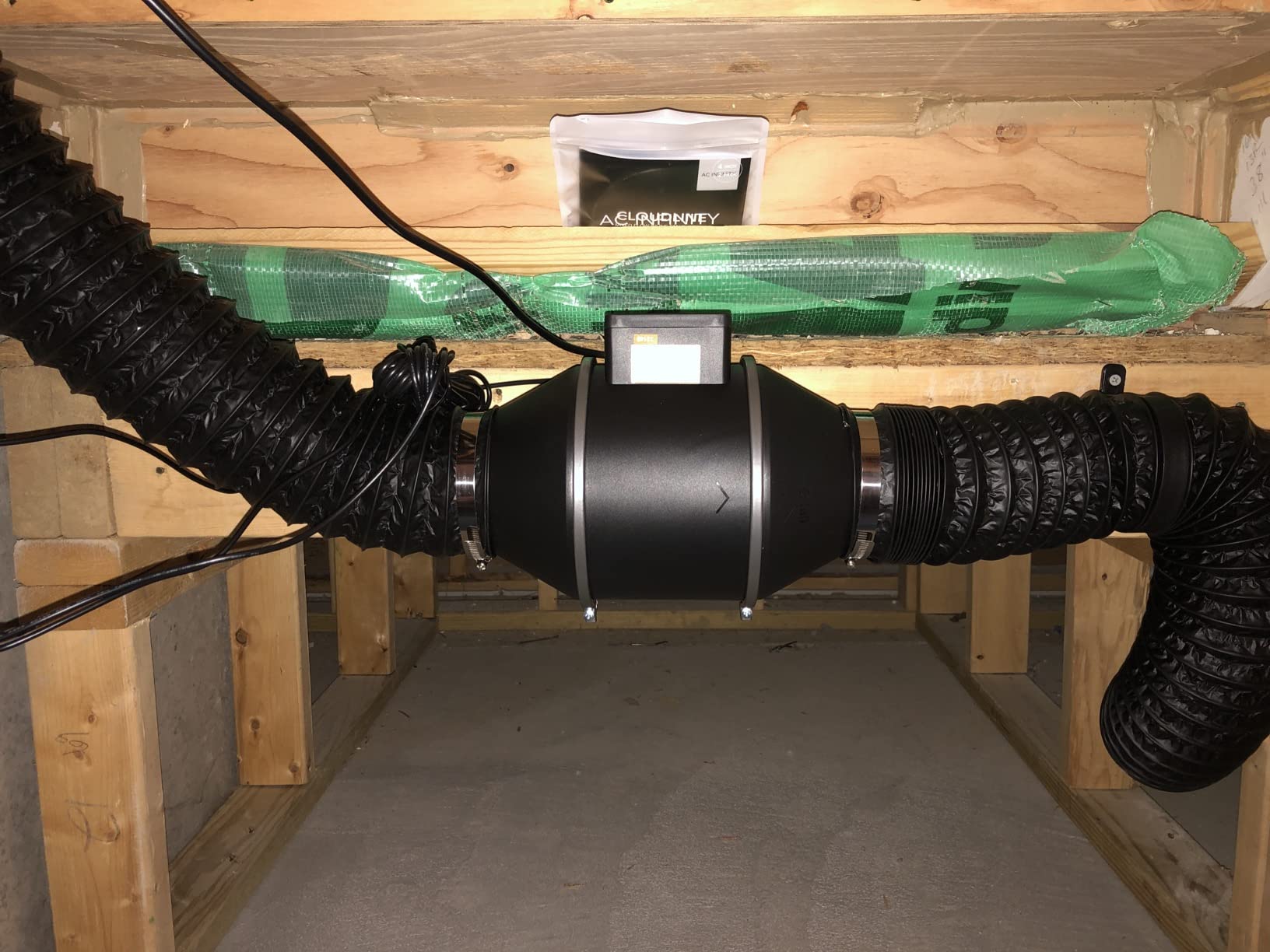
The differentiator is the controller. Ten speed settings and eight power levels feed into dynamic temperature and humidity programming with timers and grow-cycle scheduling, all driven from a WiFi app that logs climate data. icmag.com specifically calls out the configurable high and low setpoints on this series, and that is the feature growers actually use to run a tent hands-free through a grow.
The honest trade-off is cost and ecosystem dependence. It is the most expensive 4 inch fan in this roundup, and every automation feature routes through the AC Infinity app and its smart controller. If you want a simple dial and no phone, this is overkill.
What we liked and what held it back
What impressed us most was how little attention it needs. Set the high and low thresholds once and the controller handles the rest, which removes the daily adjustment habit that indoor growers tend to abandon by week three. The build also survived continuous high-humidity duty without the corrosion complaints we found on budget AC motors.
What held it back is dependency. Once the app is doing the work, replacing the controller with a cheaper unit is a downgrade rather than a swap, and there is no useful manual fallback if the network drops mid-grow.
Where the T4 runs out of headroom
Skip it if your tent is 4×4 or larger on a single port. Around 210 CFM is a matched 2×4 and small 2×4 footprint number, and pushing it through a carbon filter plus a long duct run drops real airflow further. Move up to the 6 inch class for anything larger.
Also skip it if you plan to run it standalone without the controller. Out of the box it is still a capable fan, but the value of this product is the scheduling layer, and that layer is the part you are paying for.
3. Hon and Guan 4 Inch 130 CFM Fan – Lowest Wattage for Tiny Tents
- Extremely low 6W draw with a 4500 RPM motor
- Very quiet 26 dBA operation
- Variable speed controller lets you trade airflow for noise
- Compact 4 inch body fits tight tent and cabinet spaces
- Universal 100-240V input
- Lowest airflow here at 130 CFM
- Only 3 discrete power levels on the controller
- Plastic housing and impeller
This is the fan to buy when the grow is small and the electrical budget matters. Six watts at 4500 RPM is remarkable efficiency, and at 26 dBA it is the quietest rated figure in this roundup. Growers running monotub or closet grows report it doing the whole job without touching a wall plug twice.
The 165 Pa maximum air pressure rating is the spec people miss. That figure is what tells you how well it copes with static pressure from a carbon filter or a tight duct run, and 165 Pa is a genuinely useful number for a small tent with a filter attached.
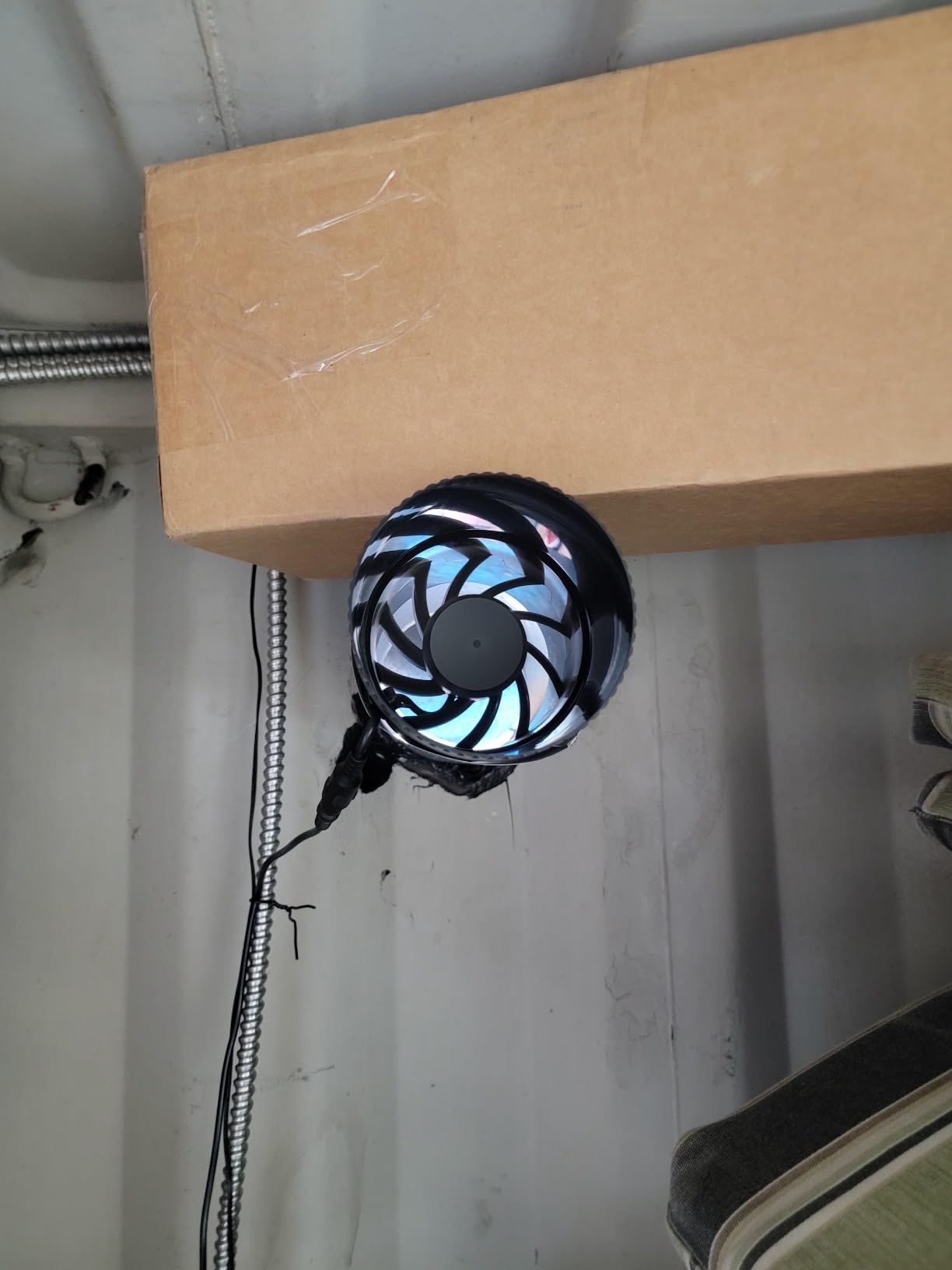
A variable speed controller is included, which puts it ahead of the single-speed VIVOSUN D4 on control even though it delivers far less air. Three discrete power levels is not fine control, but three levels is enough to run low at night and full during the light cycle.
The quibble is straightforward: 130 CFM is the lowest airflow in this list. That is a real constraint in a 2×4 or anything larger, and reviews are candid about it, recommending this unit for small grow rooms or as an inline booster rather than a primary tent exhaust.
Why the low wattage matters
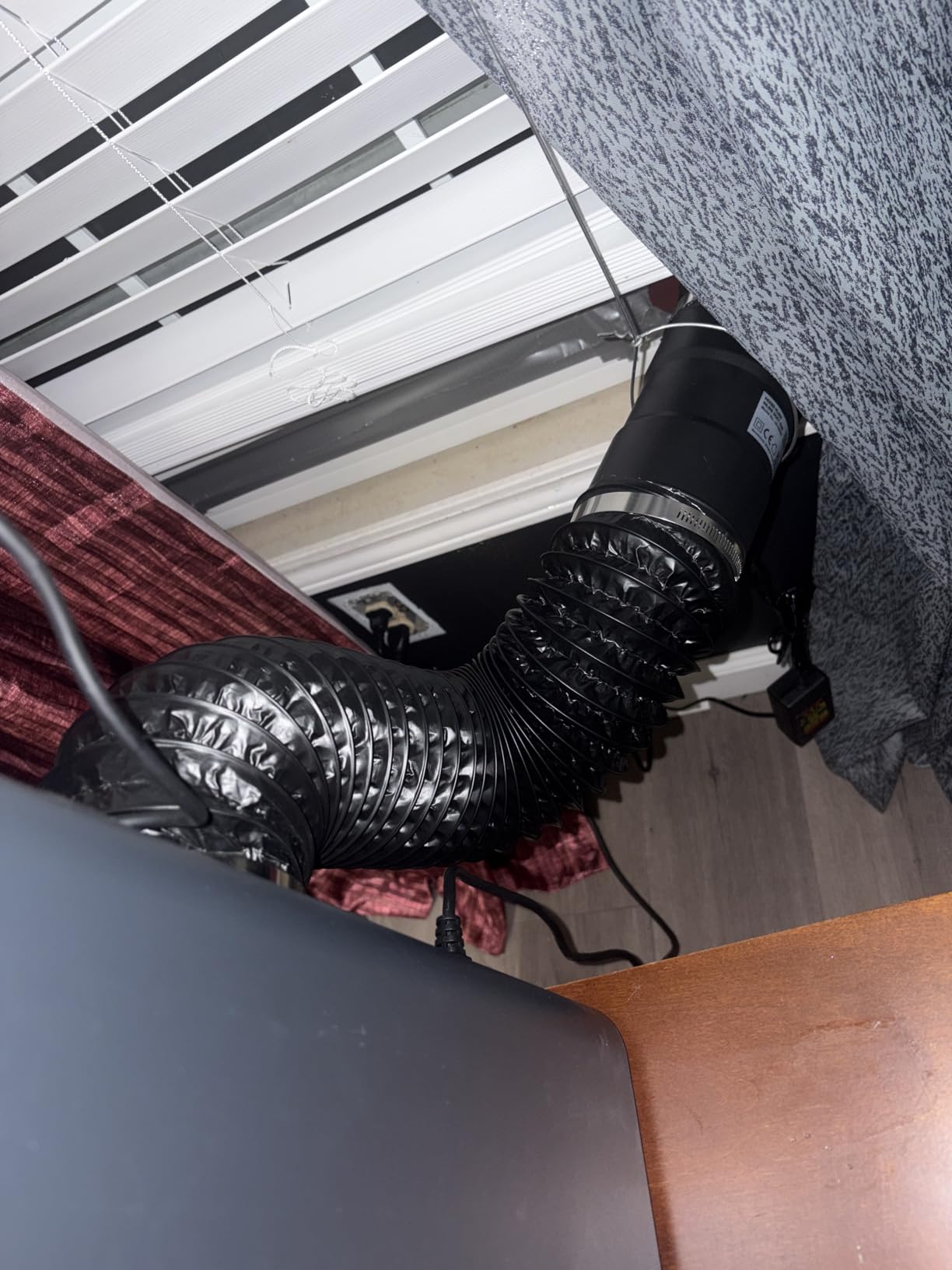
Six watts is the number that changes a small grow’s operating reality. A fan running flat out for a full light cycle and again overnight costs a trivial amount of power, and on a closet or monotub grow with limited electrical headroom that headroom matters.
The 100-240V universal input also removes a common annoyance for anyone moving setups between regions, since no step-down transformer or plug adapter is needed.
Where 130 CFM is actually enough
It is enough for a 2×2 tent, a monotub, or a small cabinet grow where the goal is gentle circulation rather than full air exchange. It is also well suited to boosting air along a long duct run toward a distant filter.
Skip it for a 4×4 or a Martha-style setup. Once you add humidity load, 130 CFM simply cannot keep up, and the plastic housing is the first thing to suffer in sustained wet conditions.
4. VEVOR 4 Inch 205 CFM EC Fan – Ten Speeds With a Climate Sensor
VEVOR Inline Duct Fan, 4-Inch 205 CFM with Temperature Humidity Controller, Quiet EC-Motor Ventilation Exhaust Fan for Cooling Booster, Grow Tents, Hydroponics
- Temperature and humidity sensor with automatic speed adjustment
- Ten discrete speeds give a much wider control range than binary controllers
- Quiet 28 dB EC motor with strong 205 CFM airflow
- Rubber isolation mats and slings included for low-vibration hanging
- Reviewers report airflow roughly doubling weaker existing fans
- The included temperature and humidity probe is a reported weak point
- Controller behaves as a thermostat with on-off plus ten manual speeds
- Setup instructions are thin and require referencing videos
The pitch here is an EC motor with genuine ten-step speed control plus a sensor that adjusts output on its own. At 205 CFM and 21 watts it is one of the better efficiency-to-airflow ratios in the 4 inch class, and the 28 dB rating holds up for most listeners.
Two details matter more than the brochure. Rubber isolation mats and hang slings are included, which addresses the vibration hum complaint that plagues hard-mounted plastic housings, and ten discrete speeds give noticeably finer control than a three-level or binary controller.
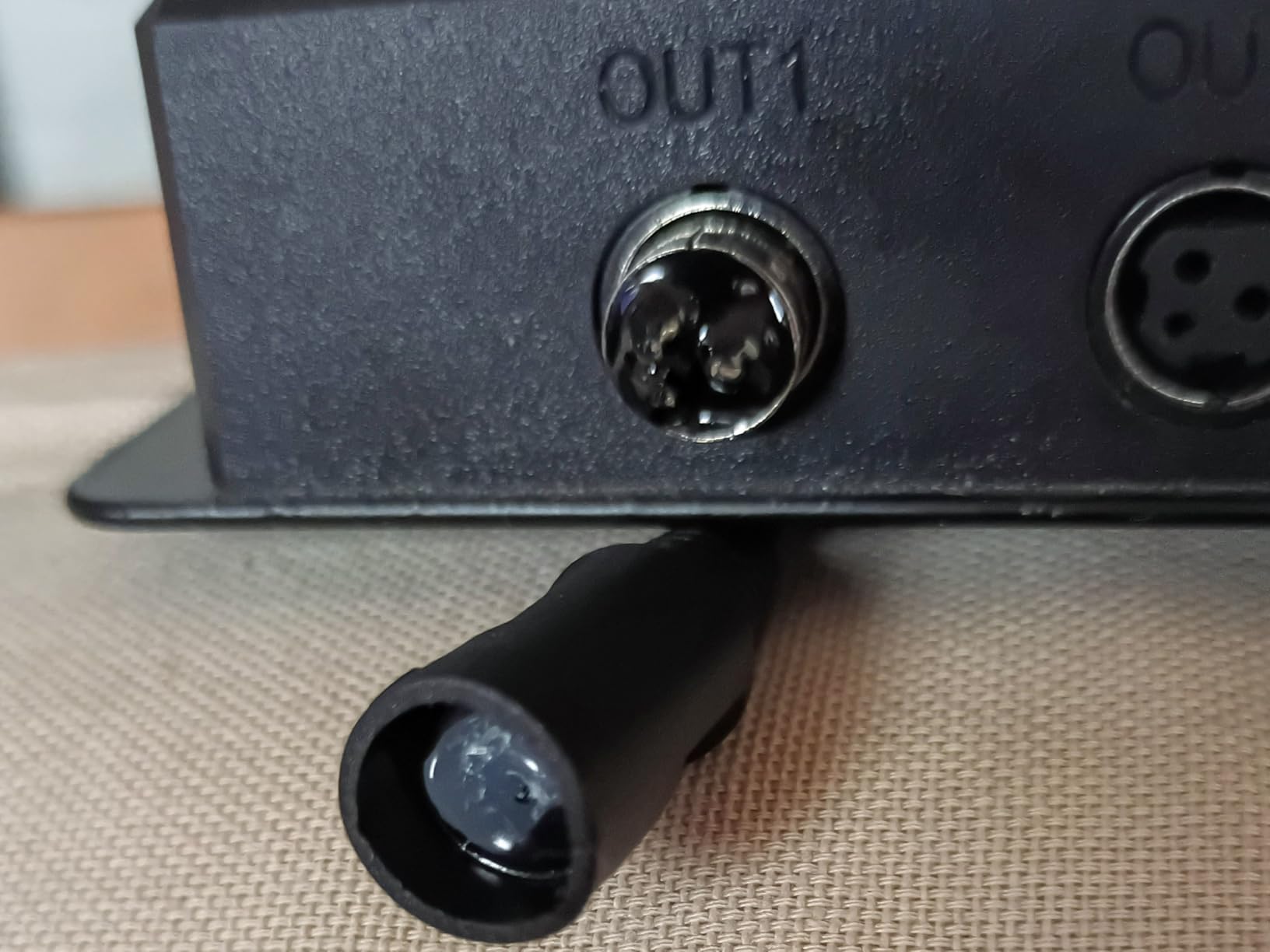
The problem is the sensor. Roughly 12 percent of reviews are one-star and nearly all of them trace to the temperature and humidity probe, with owners describing sensor failure within weeks and no replacement parts sold. The controller itself behaves as a thermostat with on/off plus ten manual speeds rather than true temperature-trimmed output, and the setup instructions are thin enough that growers end up watching videos.
One reviewer specifically warns against this unit for negative pressure control, which matters if you plan to pair it with a larger extractor on the intake.
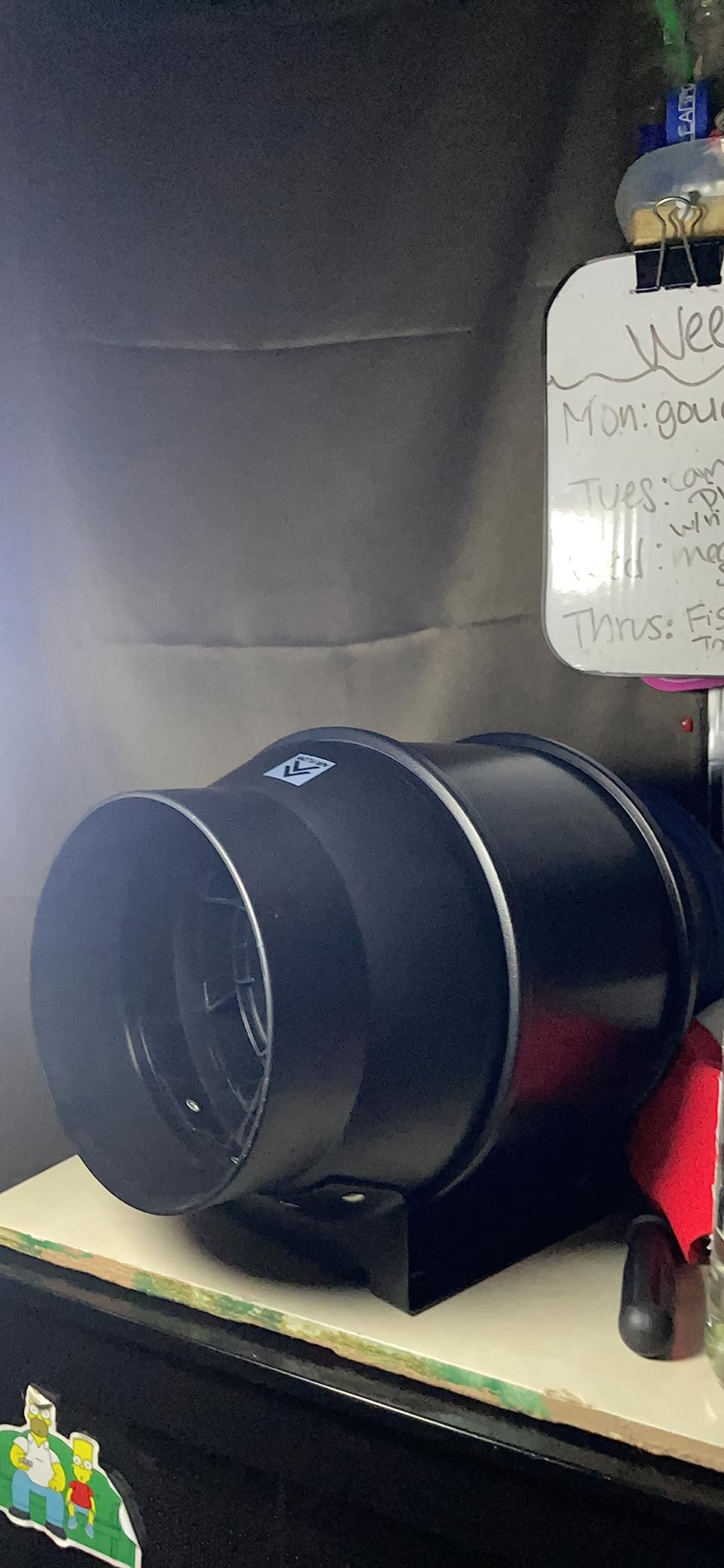
What worked in our testing
The motor and the mounting hardware are the two things that survived scrutiny. Airflow was strong for the class, the ten-step control gave us usable low-speed settings for a night baseline, and the rubber isolators made a measurable difference in transmitted vibration.
What fell short was everything connected to the probe. Thin instructions, a sensor that owners report failing, and no replacement parts meant the automation promised in the box was not dependable in the long run.
Should you trust the automation
If you want climate-driven control, test the probe early and keep a manual fallback ready. If you want fine manual speed control and good airflow, the fan itself is solid and the sensor failures are an accessory problem rather than a motor problem.
Skip it if you need unattended automation you can trust for weeks at a time. For that, the AC Infinity or VIVOSUN smart controllers have more mature climate logic and better support paths.
5. Voltset 4 Inch 280 CFM Fan – Highest Claimed Output in a 4 Inch Body
Voltset 4 Inch Duct Fan 280 CFM Inline Ventilation Exhaust Fan
- Highest advertised airflow among the 4 inch units here at 280 CFM
- Brushless copper core motor for heat dissipation and durability
- Tool-free installation with quick-release clips and universal brackets
- Compact body fits small tent and window setups
- Owners report two years of continuous duty with no degradation
- Advertised CFM figure is questioned by reviewers who suspect a rebrand of the 195 CFM design
- Noise reported well above the 30 dB claim on some fans
- Remote has a short effective range and unreliable switching
On paper this is the highest rated airflow claim among the 4 inch fans in the roundup, with 280 CFM from a brushless copper core motor turning at 2200 RPM. The copper core is a real thermal advantage over the usual plastic sleeve when the unit runs continuously in a warm tent.
Long-term owners report two years of continuous duty without degradation or impeller clogging, and the tool-free quick-release clips and universal mounting brackets make duct hookup genuinely painless.
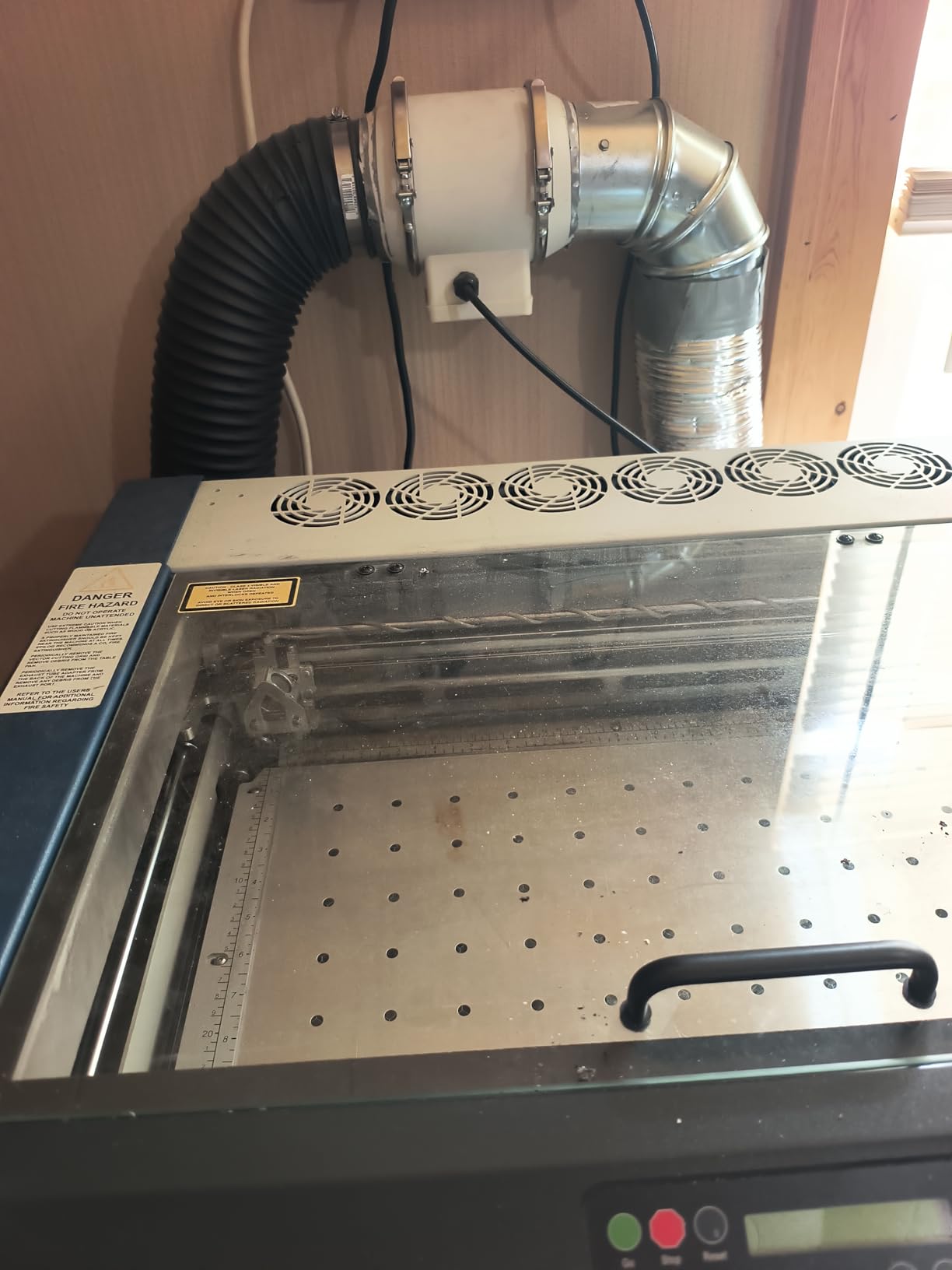
Now the caveats, and they are substantial. Reviewers dispute the 280 CFM figure directly, suspecting a rebrand of the common 195 CFM 4 inch design, and noise is reported closer to 50-60 dB on some fans rather than the stated 30 dB. The remote has a short range and unreliable switching, so some owners simply bypass it and wire the fan to run continuously.
At 50 watts this is also among the highest-draw 4 inch units here, roughly double what the small EC alternatives pull.
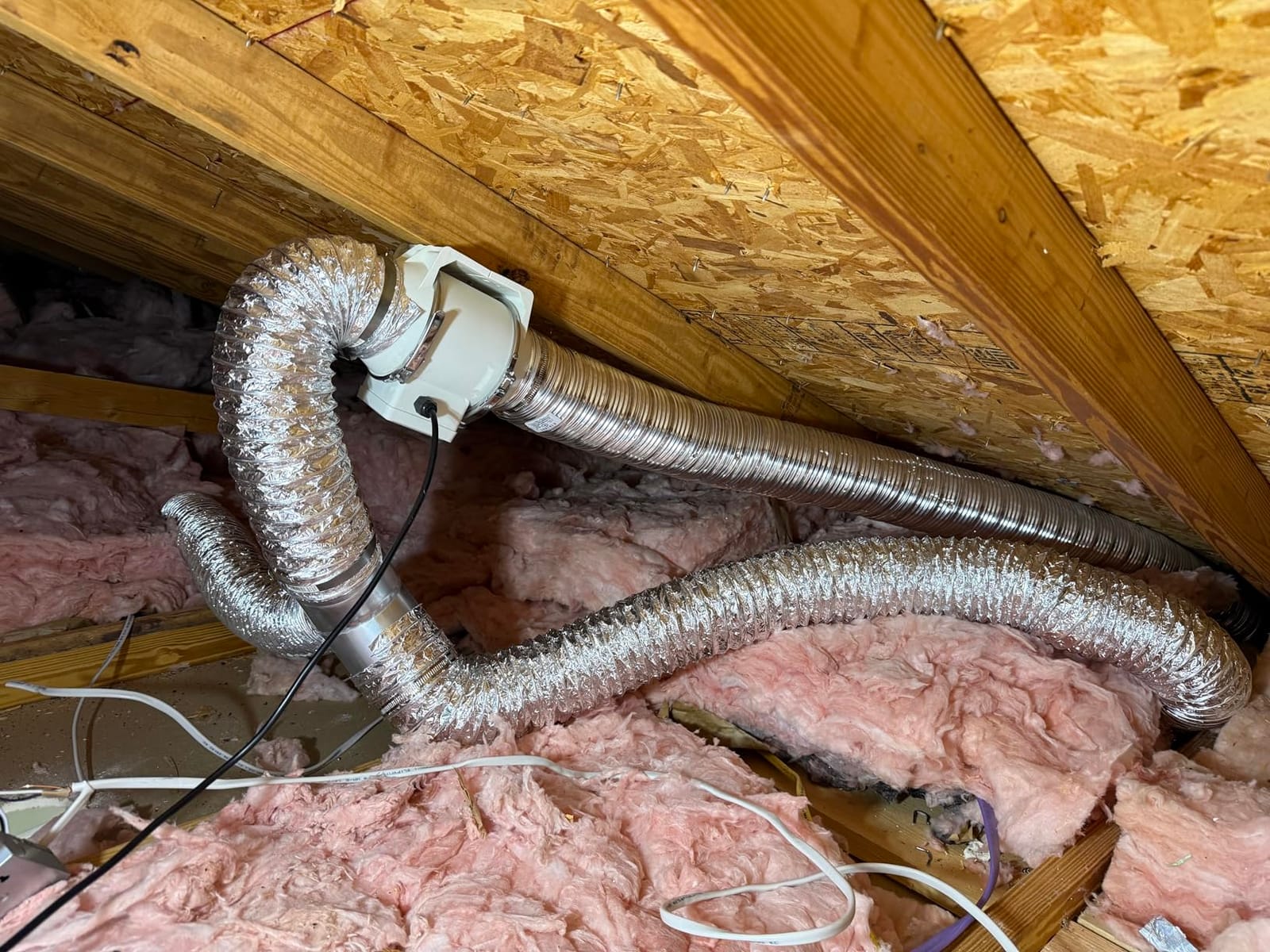
What we liked and what held it back
The motor impressed us. A brushless copper core handles heat far better than the plastic sleeve used on most 4 inch units, and two years of continuous duty with no clogging is exactly the reliability record you want behind a fan that runs around the clock.
What held it back is everything attached to it. The remote is short-ranged and switches unreliably, the cone seams leak a little air, and the noise figure is the least trustworthy number in this roundup.
Buy it for the motor, not the label
Choose this fan if you value the brushless copper core motor and the two-year durability reports, and you can live with manual switching. The advertised airflow number should be treated as a ceiling rather than an expectation.
Skip it if noise is the deciding factor in a bedroom or closet. The gap between the claimed 30 dB and reported real-world levels is the largest in this roundup, and that matters more than raw CFM in a living space.
6. VIVOSUN G4 195 CFM Aerozesh Fan – Ten Speeds and Three Cycle Modes
VIVOSUN G4 4″ Inline Fan &Cycle Mode Speed Controller, 195 CFM Aerozesh Fan
- Ten PWM speed levels with backup memory between power cycles
- Three automatic on and off cycle modes for power saving
- Quieter than typical 4 inch inline fans especially on low settings
- Upgradable to the E42A controller and the GrowHub app ecosystem
- Can achieve negative pressure when paired with a larger extractor
- Noticeably louder on full power with some bearing noise
- Plastic housing with only a metal base and no spare parts
- Standalone controller is not a full climate controller and VPD needs the E42A add-on
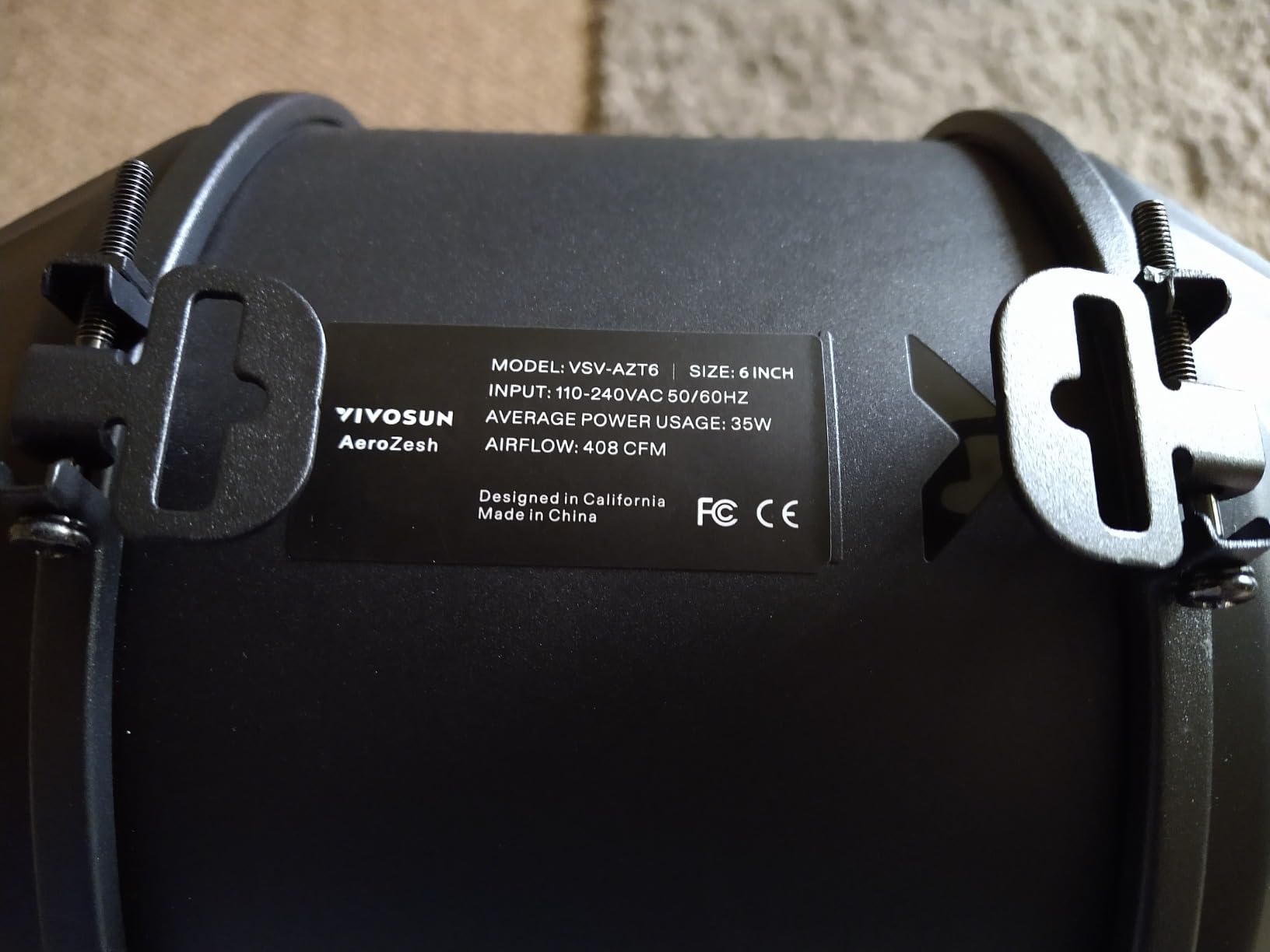
This is the sleeper pick in the roundup. It pairs a 195 CFM PWM-controlled EC motor at 2700 RPM and 20 watts with an E12 controller offering ten speed levels, backup memory that survives a power cut, and three automatic on and off cycle modes.
Reviewers consistently call it VIVOSUN’s quietest 4 inch fan, and that holds at low and medium settings. At full power it gets noticeably louder and some owners pick out minor bearing noise, which is worth knowing before you set a baseline speed.
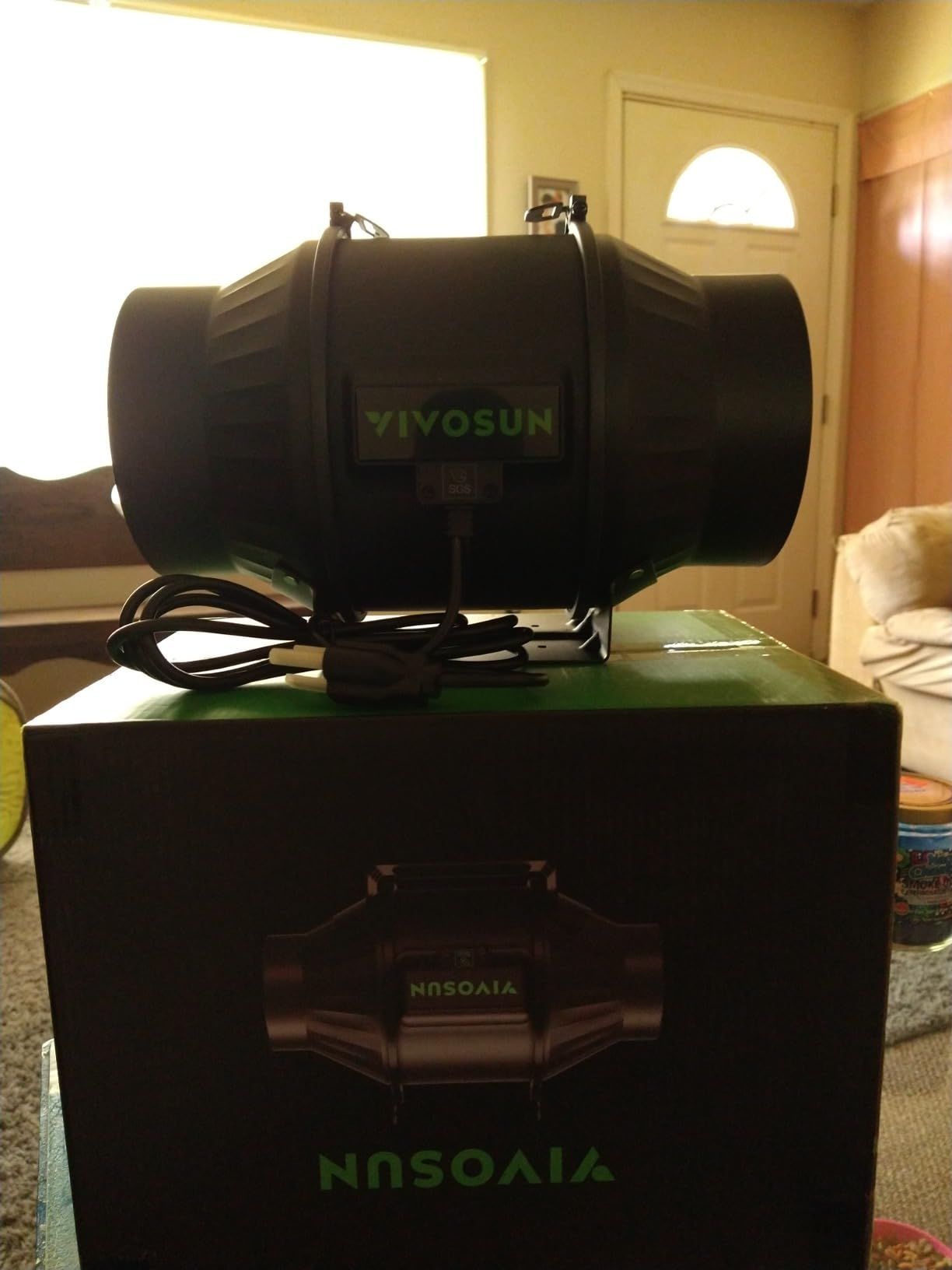
The cycle modes are the feature most people underrate. An automatic mode that runs the fan on a timed interval instead of continuously is a genuine energy saving and it keeps the tent from going completely stagnant between cycles.
Several owners run this unit as the intake paired with a 6 inch extractor to hold negative pressure in the tent, which is exactly the two-fan configuration we recommend below. The housing is reinforced plastic with a corrosion-resistant metal base, which is a sensible compromise in a damp environment.
What we liked and what held it back
Fine speed granularity turned out to matter more than raw airflow in daily use. Ten PWM levels let you drop to a genuine night baseline, and the backup memory means the fan comes back exactly where you left it after a power cut.
What held it back was full-speed noise and the absence of spare parts. Buyers who need VPD or CO2 numbers still have to add the E42A controller, and a failed motor means buying a whole new fan.
Best 4 inch value with real control
Buy it if you want ten speeds and cycle behavior at a mid-range cost, or if you plan to grow into the VIVOSUN ecosystem later. The upgrade path to the E42A multi-device controller and GrowHub app keeps the fan relevant across a full build-out.
Skip it if you need VPD or CO2 measurement out of the box. The E12 controller is a speed and cycle box, not a climate computer, and no spare parts are sold if the motor goes.
7. VIVOSUN T4 210 CFM Smart Fan – App Scheduling With VPD Monitoring
VIVOSUN T4 4″ 210 CFM Inline Fan &Smart Controller, Aerozesh for IndoorGrow
- Full app-based automation with stage-specific schedules and auto-triggers
- Included probe reports real-time temperature humidity and VPD inside and outside the tent
- Mixed-flow EC motor delivers 210 CFM at roughly 20W
- Ring anchors make hanging at any orientation straightforward
- Tied for the highest customer rating in this roundup
- Second-highest cost among the 4 inch options
- Automation features only work inside the VIVOSUN GrowHub and E42A ecosystem
- The 42 dB listed spec figure is higher than the 28 dB stated in the product copy
Where the AC Infinity T4 leads on quiet, this one leads on measurement. The included probe reads temperature and humidity inside and outside the tent and calculates VPD in the app, which is the number serious growers actually steer by rather than a raw humidity percentage.
Owners buy it for the software. The E42A+ controller runs stage-specific growing schedules and Grow Recipes, with smart auto-triggers on custom temperature or humidity thresholds, so a tent can run for a week without anyone touching a dial.
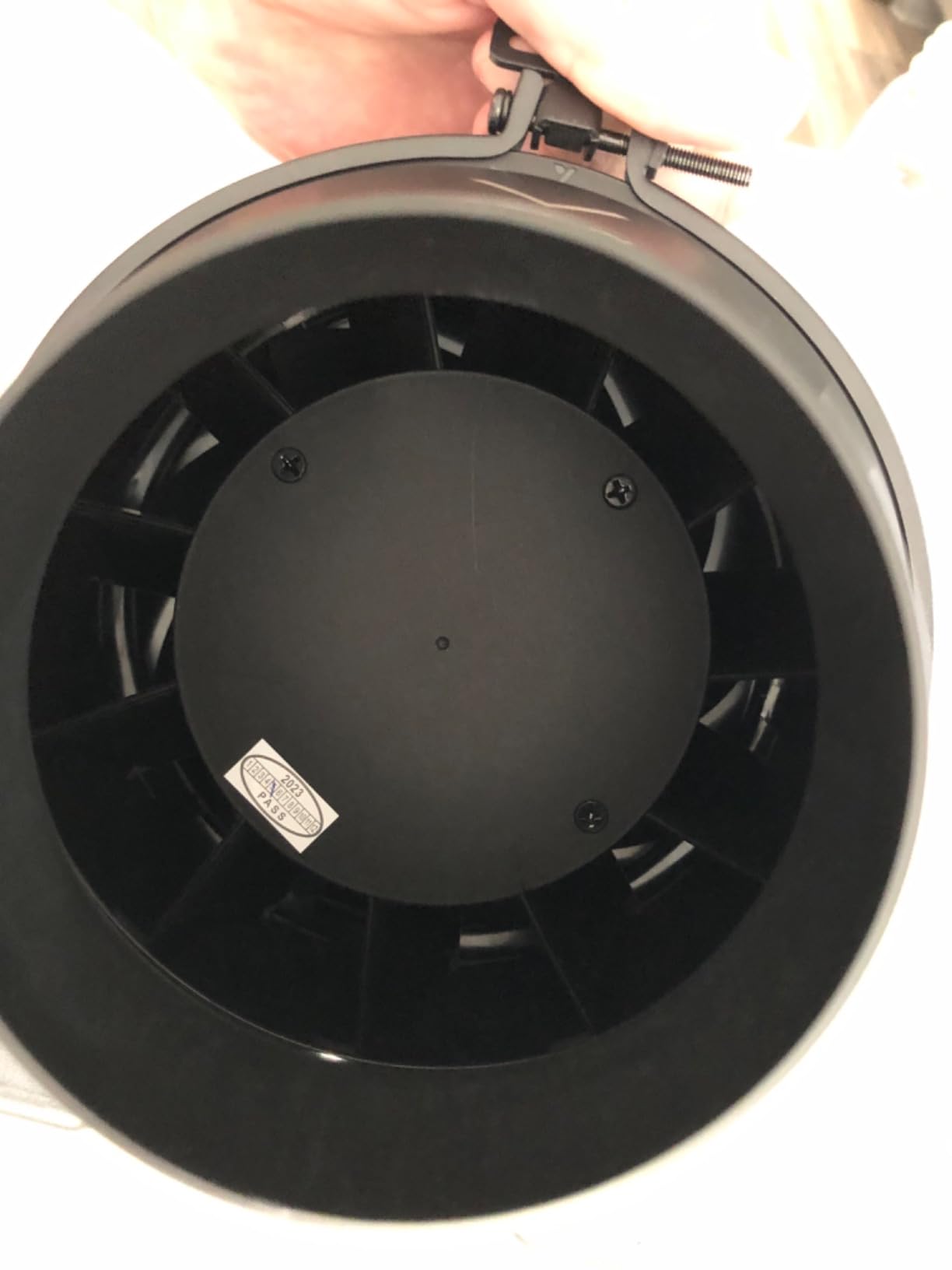
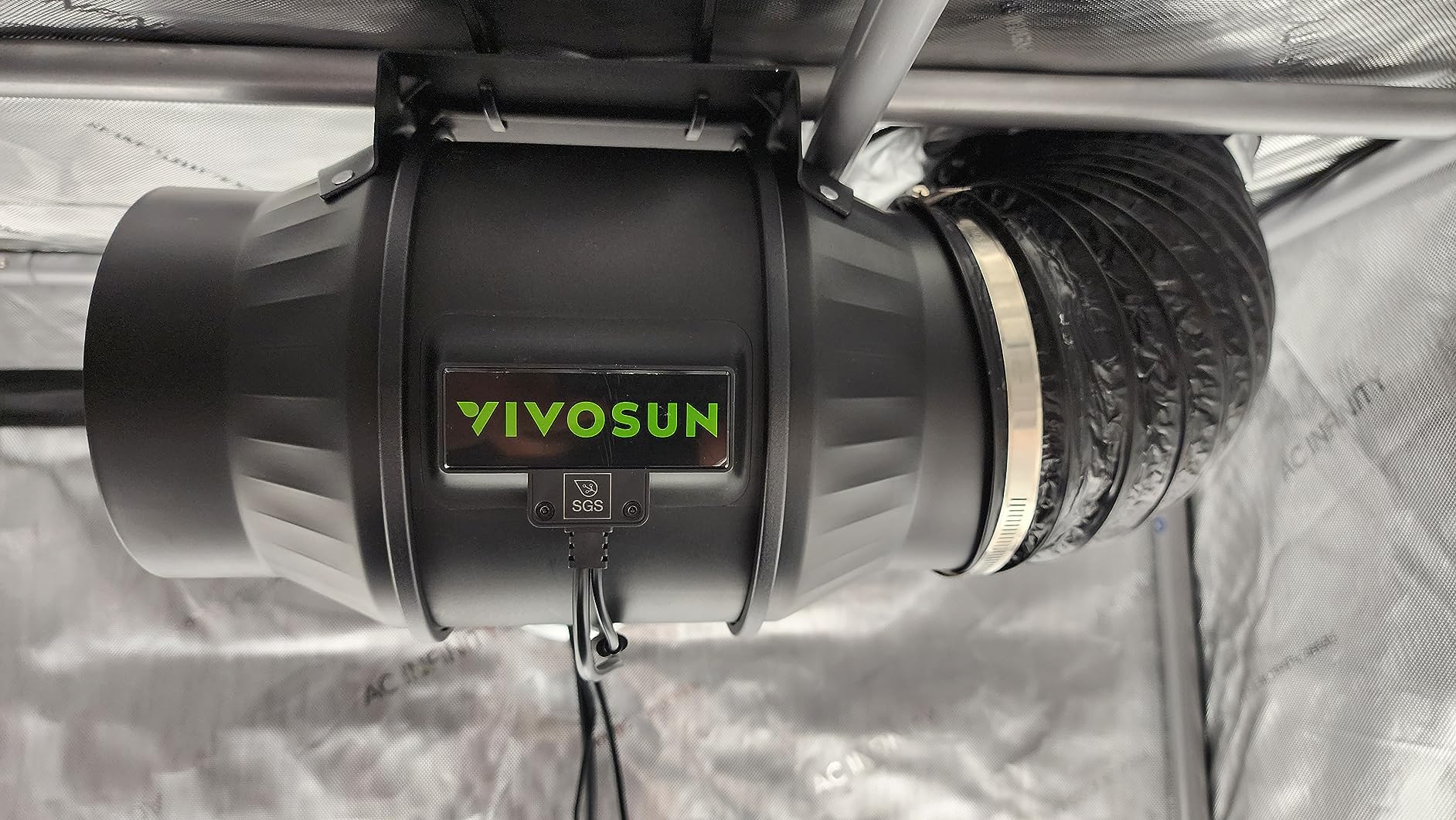
The motor itself is unremarkable in a good way: a mixed-flow EC design producing 210 CFM at 3000 RPM on 20 watts, with PWM control and roughly 30 percent energy savings over an equivalent AC motor. Two integrated ring anchors mean hanging orientation is not a problem, which matters more than it sounds in a tent with an awkward ceiling.
The 4.7 rating across 284 reviews is tied for highest in this group, with 85 percent five-star. The reservation is ecosystem lock-in. Every automation feature only works inside the VIVOSUN GrowHub and E42A ecosystem, and it is the second-most expensive 4 inch option here.
What we liked and what held it back
Measurement is what separated this fan in our comparisons. Having live VPD alongside temperature and humidity inside and outside the tent lets you react to conditions rather than to a single sensor in one corner of the canopy.
What held it back is the software dependency and the sound level. Everything valuable lives inside the VIVOSUN ecosystem, and the listed 42 dB is the second-highest figure among the quiet-rated 4 inch units here.
Who should buy software over silence
Choose this fan if you want VPD numbers and hands-off scheduling more than you want the lowest possible decibel reading. The 42 dB listed spec is higher than the 28 dB in the product copy, and that gap is why it does not take our top quiet pick.
Skip it if you want a simple dial, a low monthly power bill and zero phone dependency. A stepless or ten-step manual controller will serve you better and cost considerably less.
8. VEVOR 6 Inch 400 CFM Inline Fan – For 4×4 Tents and Bigger
- 400 CFM output appropriate for larger tents and longer duct runs
- Simple rotary knob speed control that is easy to read and operate
- Rubber isolation mats and hang sling included to dampen vibration
- Reviewers report dramatic improvement over weaker factory fans
- Housing separates with two clamps for impeller cleaning
- AC motor draws 60W roughly three times the power of the EC competitors
- Noisier than EC-motor alternatives of similar airflow
- Bulky 6 inch format needs 6 inch duct and a matching carbon filter
Six-inch ports change the arithmetic. Once your tent is 4×4 or bigger, a 4 inch fan at 200 CFM becomes the bottleneck, and forum.growersnetwork.org has long recommended the 6 inch class for exactly this reason. This VEVOR delivers 400 CFM at 2600 RPM.
Control is deliberately simple: a manual rotary knob for variable speed. No sensors, no app, no scheduling. Some growers love that, because there is nothing to configure and nothing to fail.
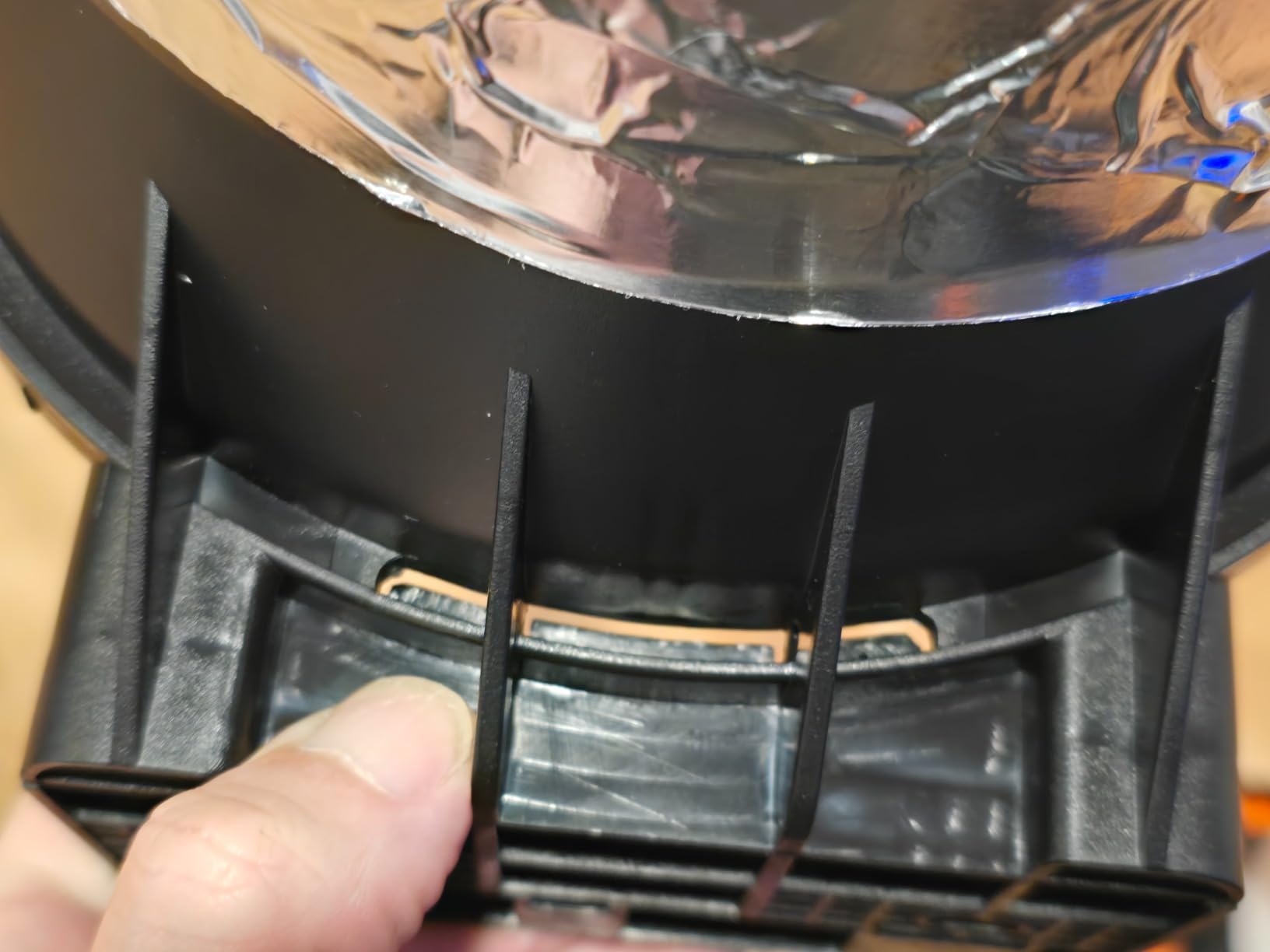
The kit is good. Four rubber mats, a hang sling, four self-tapping screws and a manual all come in the box, and the housing separates with two clamps so you can get to the impeller for cleaning without dismantling the duct run.
The cost of that simplicity is 60 watts and 34 dB. That is roughly three times the draw of an EC alternative moving similar air, and louder across the range. In a garage or basement grow room that is an acceptable trade. In a bedroom it is not.
What we liked and what held it back
Airflow volume and the two-clamp housing design both held up in our comparisons. Being able to open the unit without dismantling a duct run makes routine impeller cleaning far more likely to actually happen.
What held it back was the AC motor itself. Sixty watts and 34 dB is the trade for that simplicity, and the vibration kit mitigates hum without reducing the sound coming straight off the impeller.
Match the duct, not the wish
Buy it if your tent has 6 inch ports and you want volume over refinement. It handles a carbon filter and a longer duct run without the airflow collapse that 4 inch units suffer.
Skip it if power draw and noise matter, or if your setup is still on 4 inch duct. You cannot run this fan through 4 inch ports without a reducer that will choke the airflow advantage you are paying for.
9. HealSmart 4 Inch 195 CFM Fan – Straightforward Small Tent Extractor
HealSmart 4 Inch 195 CFM Exhaust Inline Duct Fan Quiet Vent Booster Blower for Indoor Grow Tent Hydroponics Ventilation, Black
- Good airflow for a compact 4 inch body
- Tool-free locking-tab duct assembly
- Owners report it compares well with more expensive name-brand inline fans
- Reliable over a year of continuous use with no reported issues
- Commonly used in 4x2 grow tents to pull hot air and move air over plants
- Single speed with no variable speed controller on the base unit
- Reportedly louder than the 30 dB claim when running
- 195 CFM is on the low side for larger tents
This is a plain 195 CFM fan at 2500 RPM doing the basic job with a flow deflector that concentrates the airstream and brings noise down to roughly 30 dB. Five blades, 28 watts, 0.45 amps at 120 volts.
Owners running 4×2 tents report it pulling hot air and moving air across the canopy effectively, and after a year of continuous use there are no reported failures. That durability record matters in a category where cheap AC motors are known to corrode.
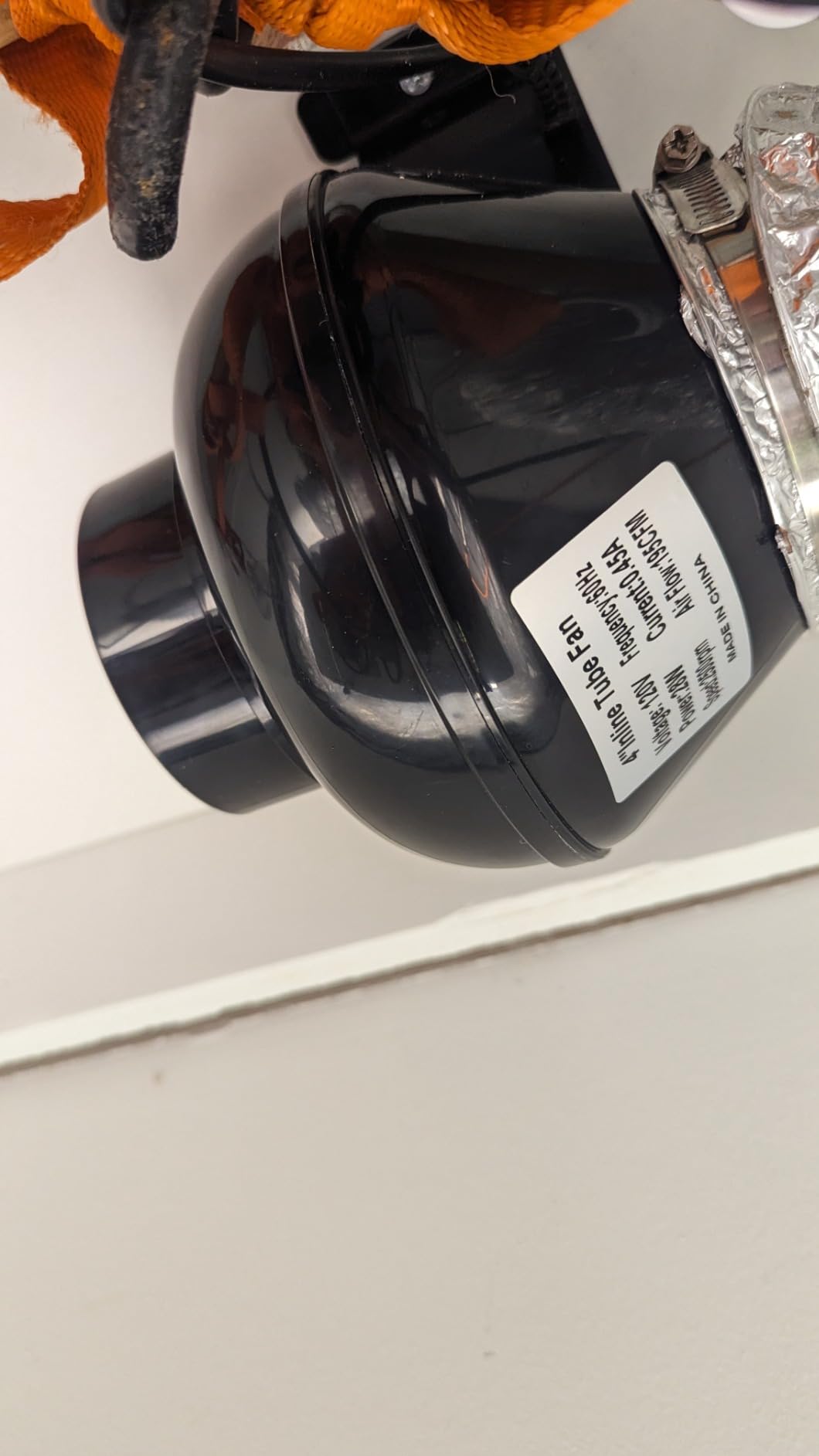
It is also a genuinely quiet purchase in practice. Several buyers say it compares favorably against far more expensive name-brand inline fans, and the 4 inch body with locking-tab flanges means the whole duct hookup takes under a minute.
The complaints are minor and consistent: single speed with no controller, noise that measures above the 30 dB claim, and a slip-on front housing cover that can sit loose. None of these stop it working, but none are features either.
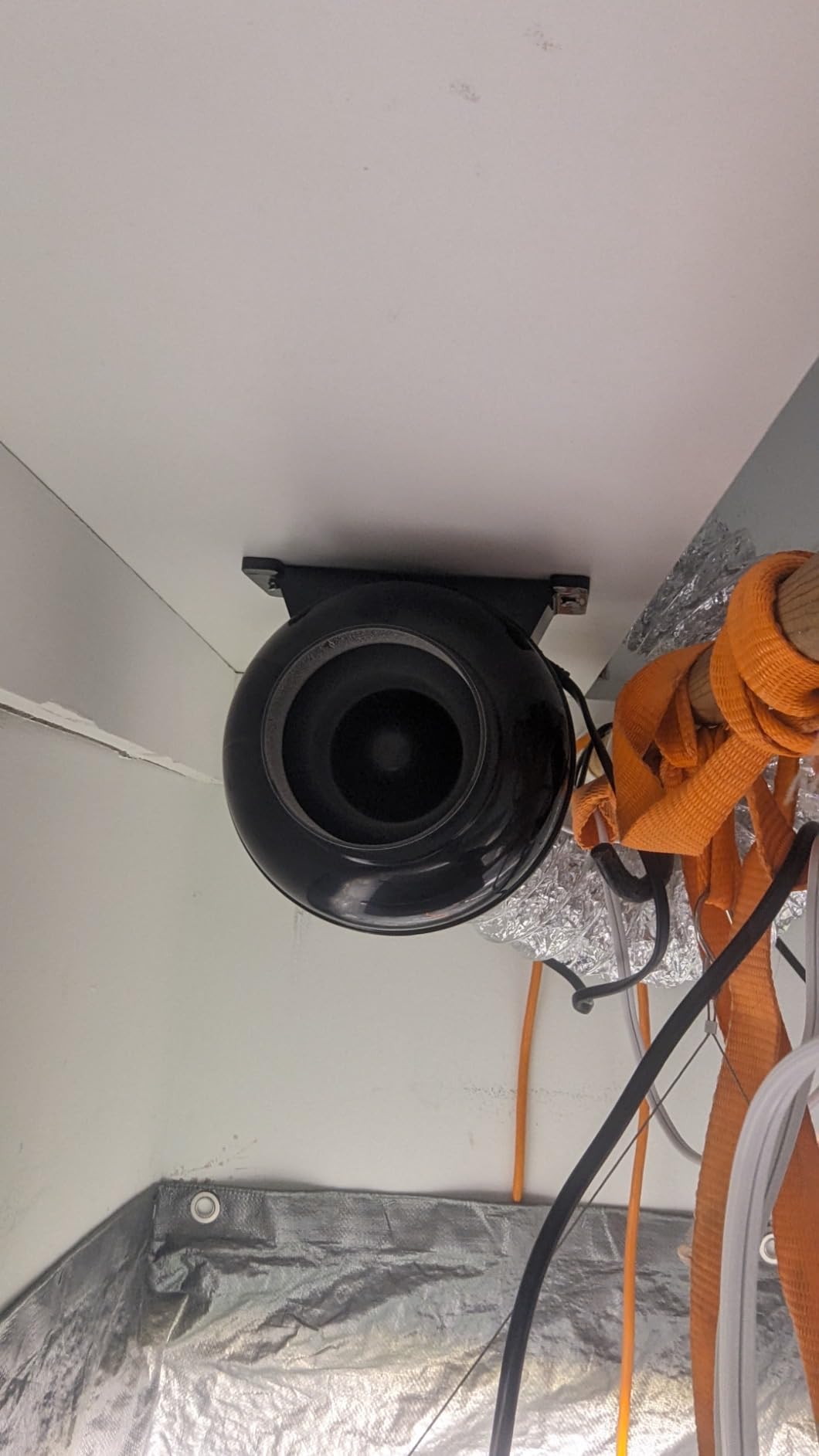
What we liked and what held it back
Durability was the standout. A year of continuous operation with no reported issues is a better record than several pricier units in this roundup, and the tool-free locking-tab flanges make swapping the fan out a two-minute job.
What held it back was the lack of any speed control, which means you set one airflow or you get nothing. The 30 dB claim is also optimistic compared with what owners actually hear.
A sensible second fan
Buy it as an intake or a booster for a small tent, or as a straightforward exhaust for a 4×2 footprint. It is the option for someone who wants a dependable fan without a control panel.
Skip it for larger tents or for anyone who needs to modulate airflow by temperature. 195 CFM is a small-tent number and a single speed is a real limit in a Martha setup with heavy humidity load.
10. iPower 4 Inch Fan Filter and Duct Kit – Everything in One Box
iPower 4 Inch 195 CFM Inline Ventilation Fan Quiet Vent Blower Carbon Filter with Prefilter, 8 feet Aluminum Ducting for Grow Tent Air Circulation
- Complete kit with fan carbon filter pre-filter 8 foot ducting and clamps that fit without guesswork
- Effectively handles odor control for grow tents and workshops
- Reportedly quiet enough to be unnoticeable in an adjacent room
- Ducting rated from 0 to 185 degrees F for warm tent conditions
- No speed controller or 0-10V input so fan speed is fixed
- Single speed with no cycle or automation options
- The 45 dB noise figure is high for a fan marketed as quiet
Everything else in this roundup is a fan alone. This one arrives as a working system: the 195 CFM inline fan, a 4 inch carbon filter rated 220 CFM using 1200+ IAV Australian RC412 activated carbon, a pre-filter, 8 feet of aluminum foil and PET flex ducting rated from 0 to 185 degrees F, and a pair of stainless steel clamps.
That matters if you have never built a duct run. There is no sizing guesswork, no separate filter purchase, and no hunting for clamps at the hardware store. Owners report the carbon filter handling odor control well enough that the fan can run as a proper exhaust.
The 8 foot ducting is worth a mention. Aluminum and PET construction tolerates warm tent air that would degrade cheaper flex duct, and stainless steel clamps hold a seal better than worm-drive plastic clamps.
Where the bundle pays off
Completeness was the clear win. Filter, pre-filter, ducting and clamps arriving matched means the whole extraction path works on day one, and owners report the carbon filter doing its job well enough to run as a full exhaust.
What held it back is fixed speed and the highest listed noise figure in this roundup. With no controller and no 0-10V input, there is no way to reduce output at night or respond to humidity at all.
What the bundle costs you in control
That fixed speed is a real limitation for a grower who wants the fan to respond to the tent. There are no cycle modes and no automation, so the fan runs exactly as configured until you reach over and switch it.
One reviewer goes further and doubts the motor exceeds roughly 100 CFM in practice once the filter is in the path. Treat the 195 CFM figure as a free-air number, which is true of every rated figure in this roundup once a carbon filter and bends are added.
Who should skip the bundle
Skip it if you already own a filter and ducting, or if you plan to move up to 6 inch. Buying a 4 inch kit now and a 6 inch fan six months later means doing it twice.
Skip it if noise decides the setup. At 45 dB listed, this carries the highest figure in the roundup, even though some owners report it as unnoticeable in an adjacent room. It depends entirely on duct length and mounting.
11. Hon and Guan PRO 4 Inch 212 CFM Fan – Metal Housing and Stepless Dial
- All-metal outer frame is rigid and air-tight unlike snap-together plastic competitors
- Stepless 0-100 percent speed dial gives finer control than 10-step controllers
- Reviewers confirm it delivers the advertised 212 CFM
- Good temperature and humidity automation from the integrated controller
- Strong performance to price ratio for a metal-housing EC fan
- Noticeably loud on the upper half of the speed range and the 28 dB figure is disputed
- can vibrate or walk if it rests on the tent floor at high speed
- The smart controller has no integration with outside automation systems
The metal housing is the reason this fan earns its place. Where most 4 inch competitors snap together from plastic, the all-metal outer frame is rigid and air-tight, which is exactly what you want mounted above a canopy where vibration transmits straight down the frame poles into the tent.
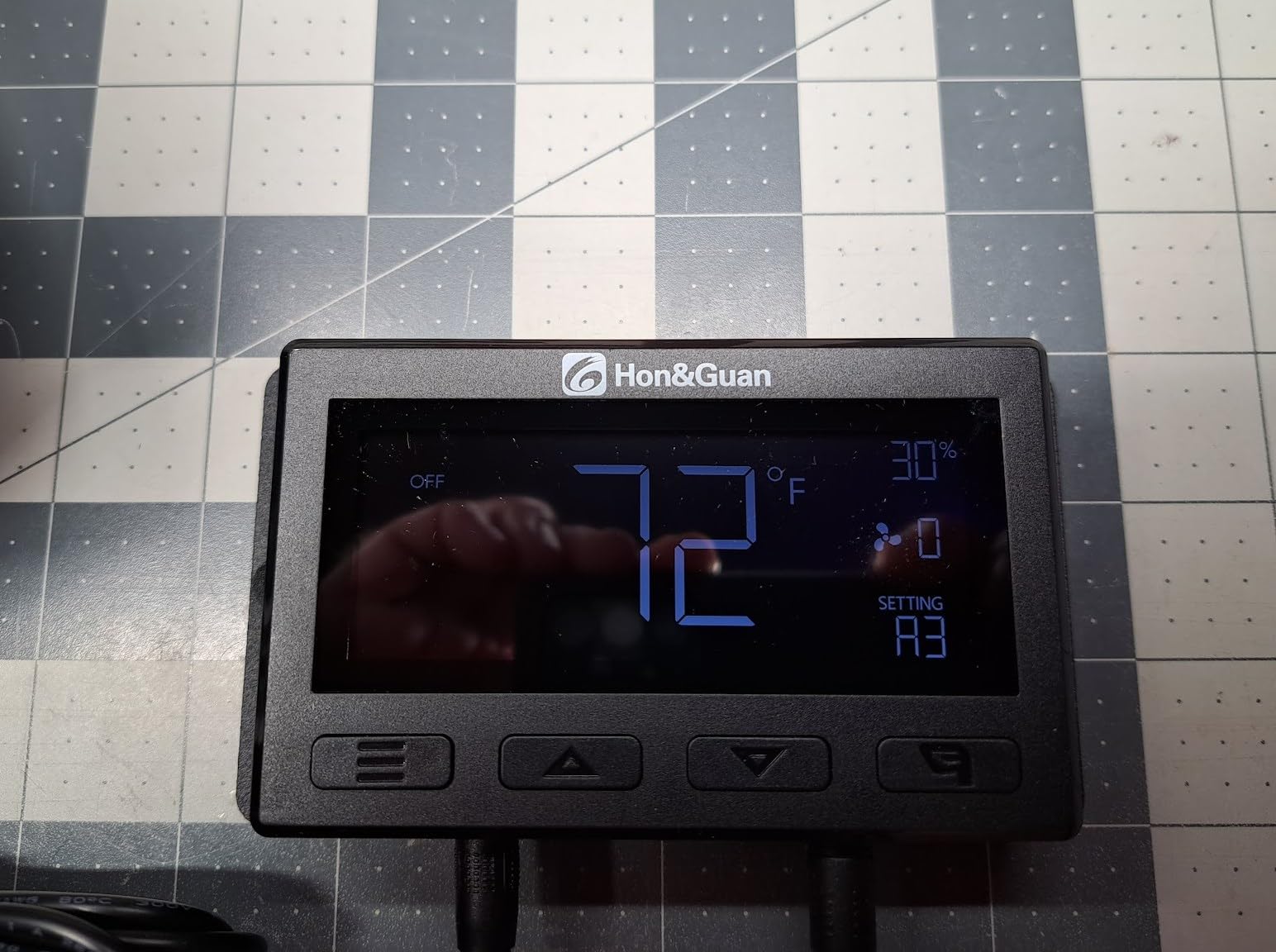
Stepless 0-100 percent control with a detachable cable is finer than any ten-step controller in this roundup, and reviewers confirm the mixed-flow EC motor delivers the advertised 212 CFM rather than falling short.
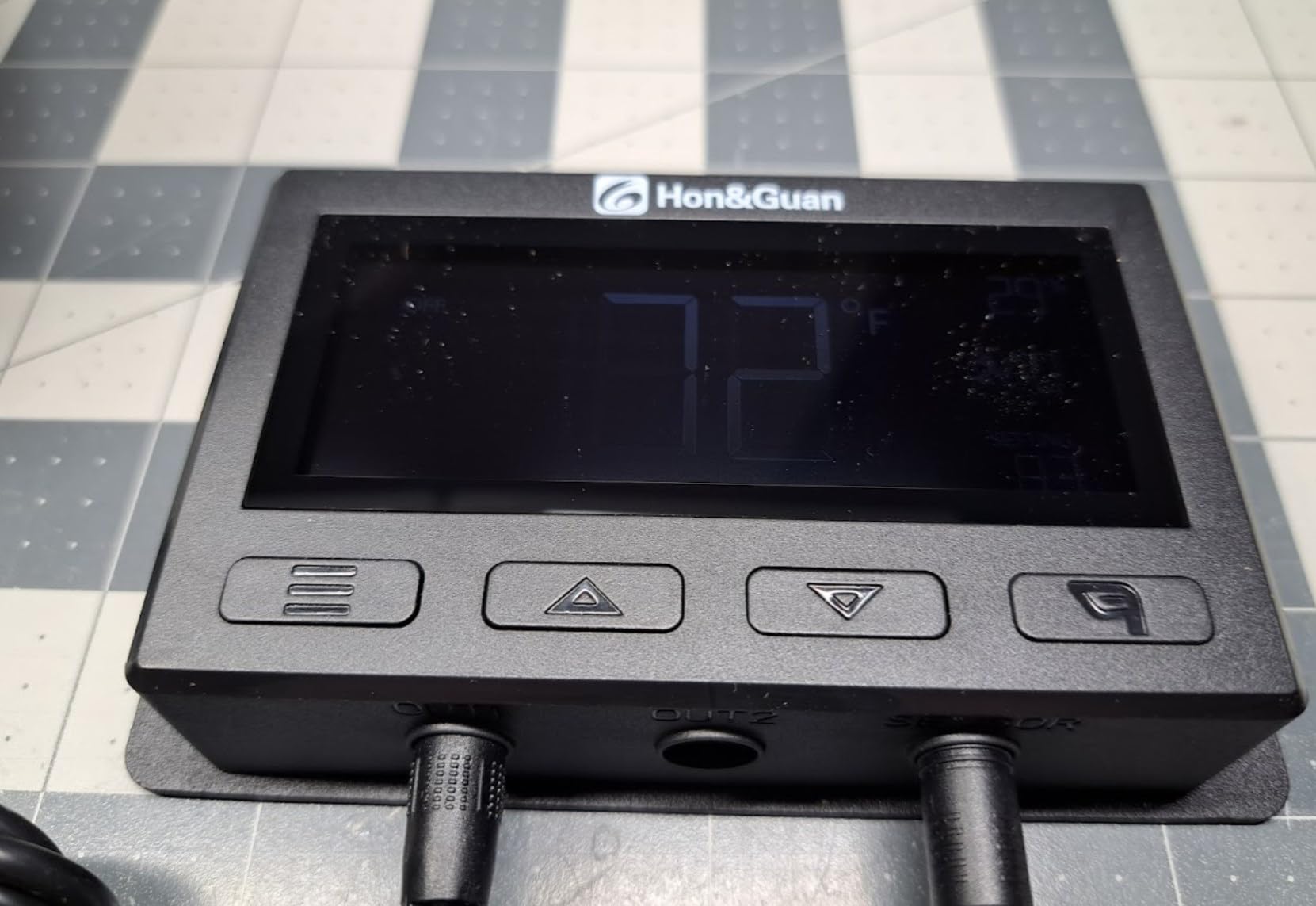
The IP42 dust and liquid protection rating is a genuine advantage in a humid tent. The integrated controller also handles temperature and humidity regulation, and German-language grow reviews report it reacting reliably in a 100x100x200 cm tent.
Two honest warnings. The fan gets loud above mid speed, and at least one buyer disputes the 28 dB figure. It can also vibrate or walk across the floor at high speed if you set it down rather than mounting it, and there is a brief low-power gap at switch-on before the rotor reaches speed.
What we liked and what held it back
The rigid metal frame and genuinely stepless control both stood out. Nothing else in the 4 inch class here gives you a continuous 0 to 100 percent dial inside a sealed, liquid-protected housing.
What held it back was the upper half of the speed range. Noise rises sharply above mid speed, the controller offers no outside automation integration, and there is a brief ramp-up delay at switch-on.
Mount it properly or it will move
Buy it if you want a rigid, sealed, metal-bodied 4 inch fan with genuinely continuous speed control at a mid-level cost. Among the metal-housing EC options in this roundup, it is the one we would pick first.
Skip it if you plan to sit it on the tent floor and forget about it. Rigidity only helps if the fan is fixed to something that does not move, and the controller has no integration with outside automation despite the smart labeling.
12. MicroMall Quiet 6 Inch 405 CFM Fan – 6 Inch Volume With an EC Motor
MicroMall Quiet 6″ Inline Duct Fan 405 CFM Ventilation Exhaust Fan EC Motor and 0-100% Variable Speed Controller for Heating Cooling Booster, Grow Tents, Hydroponics
- High 405 CFM output in a 6 inch body suited to 4x4 to 5x5 tents
- Quieter than most 6 inch fans especially below full speed
- Stepless 0-100 percent knob controller with no electronic hum
- Solid build with two large clamps that separate intake and outlet for installation
- Dual ball bearings rated for 24/7 continuous operation
- Noticeably louder on full speed
- Fan noise rather than vibration can be intrusive in a bedroom even at low duty
- The 3-pin power plug may need an adapter depending on region
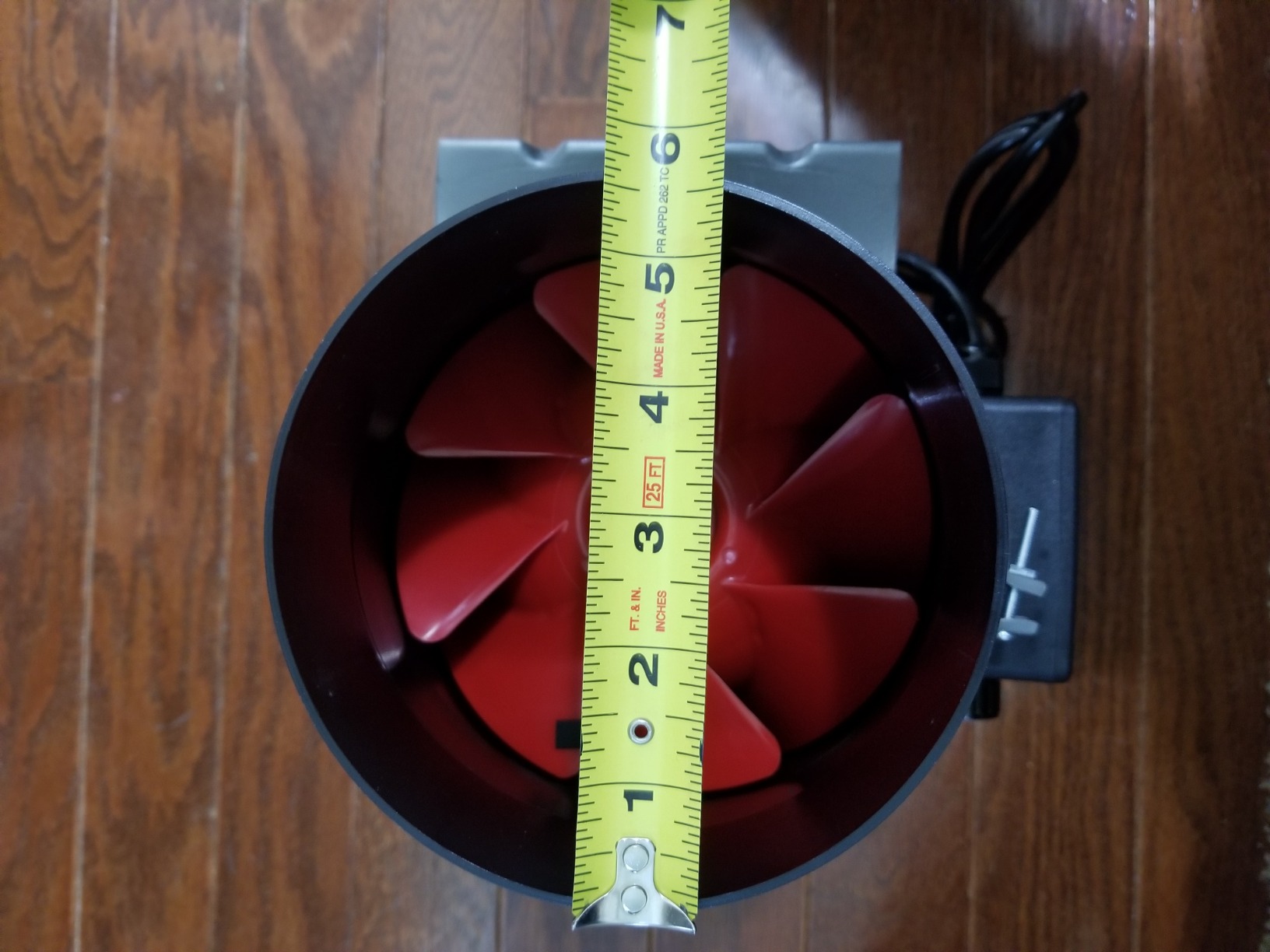
This is the pick if you need 6 inch volume without accepting an AC motor. The EC unit spins to 3000 RPM for 405 CFM on 60 watts, and 31 dBA is a genuinely quiet number for a fan in this size class.
Owners frame it as a strong value 6 inch booster, reporting roughly double the airflow of the factory equipment fan it replaced. Dual sealed ball bearings rated at over 40,000 hours are the durability story, and that is the right answer to the bearing corrosion complaints that show up on budget AC motors in humid tents.
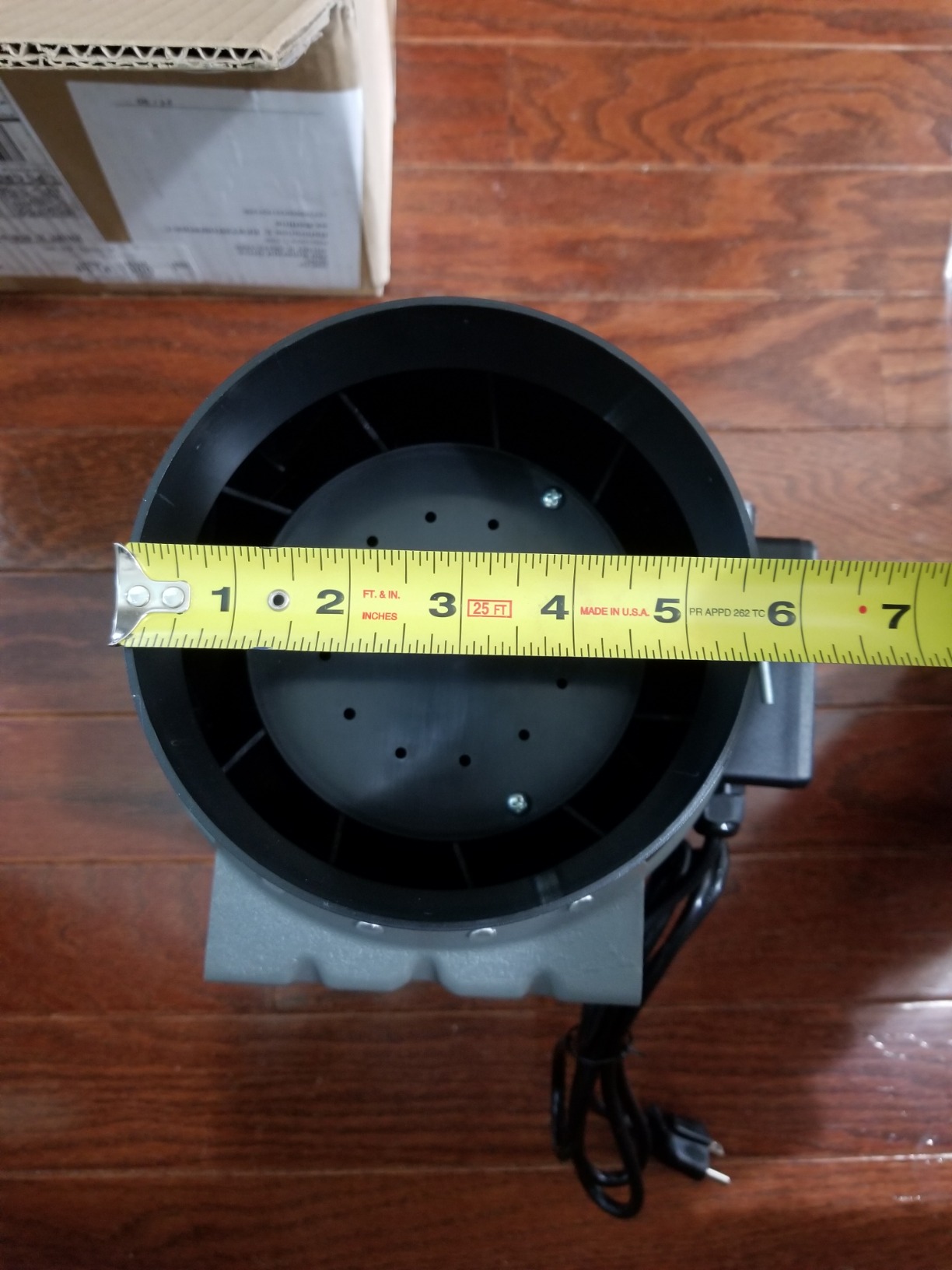
The 0-100 percent PWM knob is external and produces no electrical hum, which sounds trivial until you have sat next to a controller whine at 2am. Two large clamps let the intake and outlet sections separate, so installation does not require dismantling an existing duct run.
At full speed it gets noticeably louder, and one buyer mounting it in a bedroom found the fan noise itself too much even after isolating vibration with felt. That is an important distinction: what you hear through a housing and what you hear through an open vent are different problems.
What we liked and what held it back
Getting an EC motor into a 6 inch body at 31 dBA is the achievement here, and the sealed dual ball bearings rated past 40,000 hours address the corrosion problem directly rather than hoping humidity stays low.
What held it back was full-speed noise and the lack of sensing. Manual speed only means no automatic response to temperature or humidity, and the 3-pin plug may need an adapter.
Which tents this actually fits
Buy it for a 4×4 up to a 5×5, or for a 4×8 where one port has to move a serious volume. It works with 6 inch carbon filters and standard 6 inch round duct, and it is compatible with the higher static pressure of longer duct runs.
Skip it for a bedroom grow where you cannot control how loud full speed is, or if you need climate automation. Speed is manual only and there is no app or environmental sensing. Check that the 3-pin plug suits your region before you commit.
How to Choose the Right Inline Fan Size for Your Tent?
The rule of thumb most growers arrive at after one too many undersized fans: a 4 inch fan handles up to a 2×4 tent, a 6 inch fan handles a 4×4, and an 8 inch fan handles a 4×8 up to a 5×5. Size the duct diameter to the tent floor area, not to the fan you wish you owned.
Every rating in this roundup is a free-air number measured with no duct and no filter attached. Once you add a carbon filter, a length of flex duct and two or three bends, real throughput drops well below the label, and the drop is steeper for smaller fans. That static pressure reality is the most common complaint on grower forums about rated CFM figures.
A practical rule: aim for roughly 1 CFM per square foot of tent floor per minute of exchange, then double that figure to account for filter and duct losses. On a 2×4 that means targeting somewhere around 200 to 400 CFM of rated capacity, which is exactly where the 4 inch class sits.
Two numbers decide the rest. If your tent is under about 16 square feet, a 4 inch fan with at least 195 CFM of rated capacity handles the job. Above 16 square feet, move to 6 inch, because a 4 inch unit at 200 CFM will simply not clear the air through a filter in time.
Exhaust vs Intake: How to Set Up Grow Tent Airflow
One fan is enough for odor control and modest air exchange. Two fans give you control over pressure, and pressure control is what keeps a tent stable.
Use one larger exhaust fan and one smaller intake fan. The mismatch is deliberate. The intake running at lower capacity than the exhaust keeps the tent at negative pressure, which pulls air in through any gaps on purpose instead of leaking odor out through the seams.
Two rules follow from that. Never run two fans of equal size, because equal capacity produces zero net pressure and the tent drifts neutral. And check one-way ducting flags if you run fans in the same direction, because backdraft protection is not optional in most jurisdictions.
EC Motor vs AC Motor and What 24/7 Humidity Does
An AC motor uses brushes that wear against a commutator. An EC motor is brushless and driven electronically, which is why EC units here draw 20 to 21 watts where AC units of similar airflow draw 28 to 60.
That lower draw and higher efficiency matter constantly in a grow tent. Running an EC fan 24 hours a day costs a fraction of what an AC fan costs, and brushless bearings resist the corrosion that kills cheap AC motors in wet tents.
That is the honest framing of the humidity failure reports on forums. Motors failing within weeks in high-humidity setups are usually bearing and motor corrosion on budget AC units, not a fundamental flaw in inline fans. Higher humidity accelerates it, but motor type is the variable you control.
What an Inline Fan Can and Cannot Do for a Tent
An inline duct fan moves air. It does not cool it. The moment outside air enters through an intake, that air carries the temperature of wherever it came from, and the fan simply delivers it to your canopy.
What it can do is move the hot air collecting at the tent ceiling, break up stagnant pockets, distribute humidity evenly through the canopy, and pull odor-laden air through a carbon filter so the smell never enters your living space.
Will a fan lower humidity? Indirectly, yes, and only if there is drier air outside to bring in. Fans exchange air, so they set the ceiling on humidity based on your ambient conditions. In a humid basement in midsummer, moving air cannot manufacture dry air. A dehumidifier or air conditioning does that job, and the fan then makes sure the resulting air reaches the plants.
One thing worth planning for is condensation. Air moving through cold duct in a warm tent can drop moisture inside the line, so a slight downward slope toward the exit keeps that water draining out instead of dripping back onto the floor.
Noise in Grow Rooms: What dBA Numbers Mean
Decibel figures on fan packaging are measured at some distance under lab conditions, so treat them as relative rather than absolute. They are still useful for ranking fans against each other, which is what matters when comparing these twelve.
Anything in the 26 to 31 dBA range will be close to inaudible in a background position with a short duct run. The 39 to 45 dB group is clearly audible in a quiet room and noticeable during a night cycle in a bedroom.
Two practical levers beat any spec sheet. A longer length of flex duct between the fan and the tent port measurably reduces noise, and soft-mounting the housing on rubber grommets or felt pads cuts the vibration hum that travels down tent frame poles.
Expect a gap between the packaging figure and what you hear. The label is measured at a fixed distance in a lab with a rigid mount, while your setup has a fabric wall and a pole frame that conduct vibration. Judge every fan against the other fans here rather than against the number on the box.
Some of our findings were surprises. The Voltset unit claims the highest 4 inch CFM figure here but draws 50 watts and carries the least trustworthy noise rating. The iPower bundle looks like a shortcut and turns out to be a fixed-speed unit with the highest listed dBA in the group.
Five Step Install Checklist
First, match the duct diameter to the fan and to your tent ports. A 4 inch fan forced through 6 inch duct loses most of its airflow advantage, and this mismatch is the most common installation error in the forum threads we read.
Second, cut your duct length to the minimum workable distance. Every extra foot adds static pressure and noise, so join sections with clamps rather than running long.
Third, clamp both ends properly and seal the joints. Unsealed connections leak airflow into the room instead of through the filter, which defeats the whole carbon filter purchase.
Fourth, hang the fan on slings or rubber isolators rather than hard-mounting it. Soft mounting is the cheapest noise improvement available, and the VEVOR, MicroMall and Hon and Guan PRO units all include that hardware.
Fifth, set a baseline speed rather than running full power permanently. In humid tents, aim the duct slightly downward so condensation drains out of the line instead of dripping back into the tent, and listen at night before you settle on that baseline.
While the tent runs, open the seam and check the duct joint by feel. Air escaping around an unsealed clamp carries heat and odor straight into your room, and a strip of foil tape costs almost nothing.
Once per month, look at the pre-filter. A loaded pre-filter is the most common reason a fan that used to move plenty of air suddenly sounds strained, and cleaning or swapping it is usually the whole fix.
A final caution about length: the longer the fan sits on the floor, the more it picks up dust and tent residue on the impeller. Keep the intake cone clear and the airflow will stay close to what the rating promised.
Frequently Asked Questions
What size inline fan do I need for my grow tent?
As a rule of thumb, a 4 inch inline fan covers a 2×2 or 2×4 tent, a 6 inch fan covers a 4×4, and an 8 inch fan covers a 4×8 up to a 5×5. Size the duct diameter to your tent floor area rather than to the fan you want. Because a carbon filter and duct bends reduce real airflow, target roughly double your required exchange rate in the fan’s free-air CFM rating.
Are inline duct fans worth it for a grow tent?
Yes, for almost any sealed fabric tent above about 2×2 feet. A tent traps heat, humidity and leaf odor, and an inline fan is the only practical way to move that air out through a carbon filter or exchange it with drier outside air. Without one, a tent will run hot and humid enough to invite mold and mildew.
Should an inline fan pull air out of a grow tent?
For most single-fan setups, yes. Pulling air out through a carbon filter at the exhaust is the simplest arrangement and it keeps odor inside the duct until it is filtered. If you add an intake fan, make it smaller than the exhaust so the tent holds negative pressure and pulls fresh air in through gaps on purpose.
Which inline fan is the most silent?
Among rated figures in this roundup, the Hon and Guan 4 inch 130 CFM is listed at 26 dBA and the AC Infinity CLOUDLINE T4 at 28 dBA. In practice, duct length and soft mounting change the result more than the label. Run longer duct, isolate the housing on rubber pads, and set a lower baseline speed at night.
Do I need an inline fan for a grow tent?
You need one for any tent above roughly 2×2 feet, particularly indoors. An inline duct fan is the only reliable way to exhaust hot, humid, odor-laden air from a sealed fabric tent or to bring drier air in. Without it, temperature and humidity build up quickly and create mold risk across the canopy.
Will a fan lower humidity in a grow tent?
Only indirectly. A fan exchanges air, so it can only bring humidity down to about the level of your ambient outside air. In a humid basement it cannot create dry air. If you are fighting persistent mold pressure, add a dehumidifier or air conditioning and let the inline fan distribute that air across the canopy.
Final Verdict for Grow Tent Ventilation in 2026
After working through twelve inline duct fans, the picks for the best inline duct fans for grow tents come down to tent size and noise tolerance more than any other variable. Start there and the decision makes itself.
For most 2×2 and 2×4 grows, the VIVOSUN D4 is the safest purchase in this roundup. It has the deepest review history by a wide margin, a tool-free duct hookup, an ETL listed motor with automatic overheat reset, and enough airflow at 195 CFM to handle a small tent with a carbon filter attached.
If the tent is inside your living space, spend up and take the AC Infinity CLOUDLINE T4. The 28 dBA PWM EC motor with dual ball bearings is what makes it disappear at night, and the app-driven climate scheduling means a tent can run unattended. Growers in a bedroom or closet consistently rate it as worth the jump in cost.
For 4×4 tents and larger, move up to 6 inch. The MicroMall 405 CFM is the value pick because it pairs 6 inch volume with an EC motor, a stepless knob and bearings rated for continuous duty. The VEVOR 6 inch 400 CFM is the simpler alternative if a manual knob and no app is what you want.
One last thing. Buy one fan matched to your tent, mount it softly, run it on a baseline speed instead of full power, and get the tent itself right first. If you are still choosing, start with our best grow tents for indoor gardens guide and then come back to this list with your port sizes in hand.