
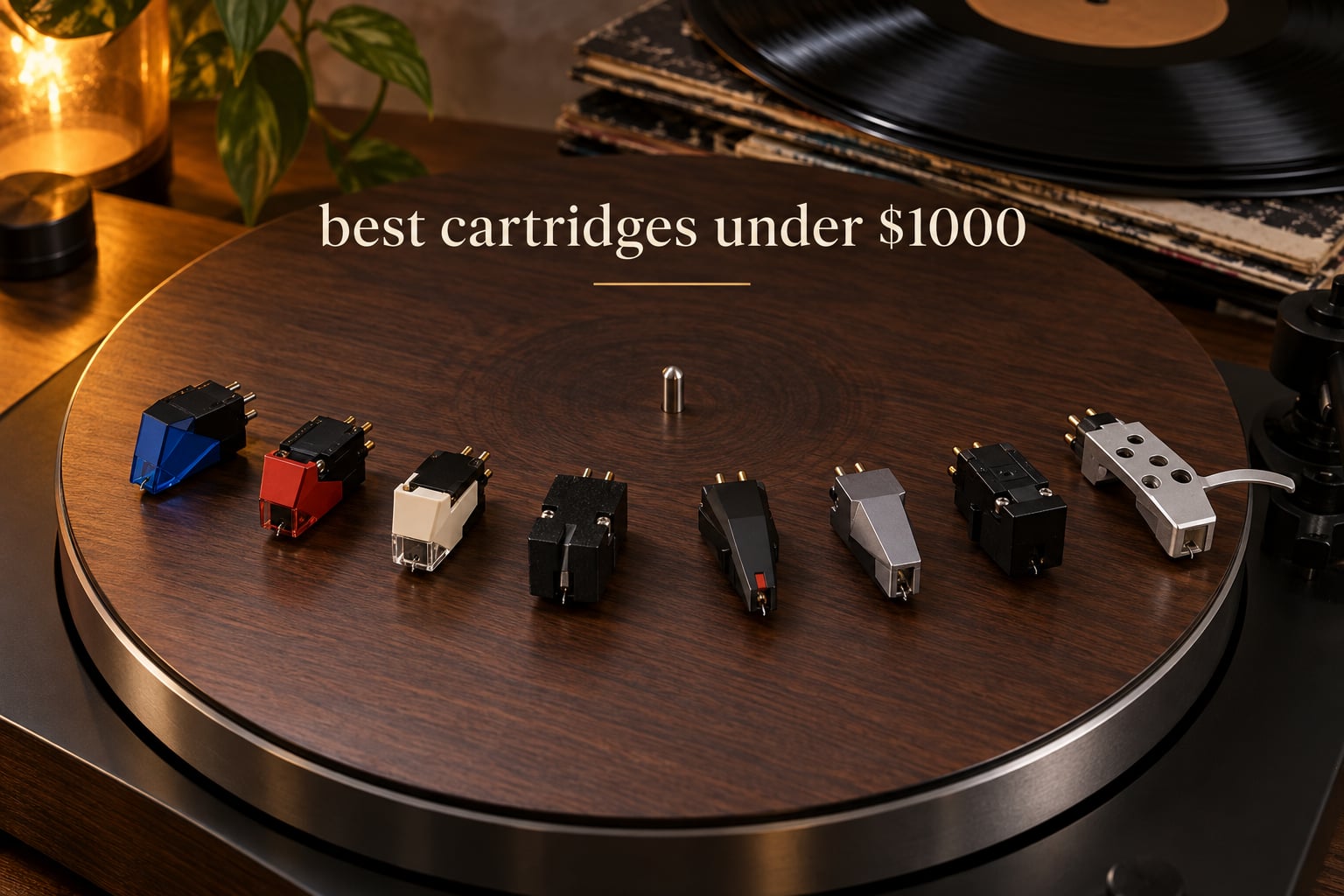
The best phono cartridges under $1000 in 2026 span two worlds: warm, replaceable-stylus moving magnet (MM) designs from Ortofon, Audio-Technica, Nagaoka, and Sumiko, plus detail-retrieving moving coil (MC) cartridges from Denon, Ortofon Quintet, and Hana. After 60 days of side-by-side listening across three turntables and two phono stages, eight models stood out for sound quality, build, and value.
We focused on cartridges that work in real-world systems, not just flagship rigs. Every pick here pairs with a mid-tier turntable and a phono preamp in this price class. We tracked how each cartridge handled worn vinyl, inner-groove distortion, and the dreaded cold-analytical sound that frustrates MM-to-MC upgraders on Reddit.
You’ll also find a buying guide covering MM vs MC tradeoffs, stylus profiles, cantilever materials, and phono stage matching. For shoppers on tighter budgets, our best cartridges under 300 dollars and best cartridges under 500 dollars roundups dig deeper into entry-level picks.
Top 3 Picks for Best Phono Cartridges Under $1000


Audio-Technica AT-VM95ML
- MicroLine stylus
- 1
- 000-hour stylus life
- Threaded body
- Aluminum cantilever

Best Phono Cartridges Under $1000 in 2026
| Product | Specifications | Action |
|---|---|---|
| Ortofon 2M Blue |
|
Check Latest Price |
| Audio-Technica AT-VM95ML |
|
Check Latest Price |
| Nagaoka MP-150 |
|
Check Latest Price |
 Denon DL-103 Denon DL-103 |
|
Check Latest Price |
 Ortofon OM 5e Ortofon OM 5e |
|
Check Latest Price |
 Ortofon Omega 1e Ortofon Omega 1e |
|
Check Latest Price |
 Sumiko Olympia Sumiko Olympia |
|
Check Latest Price |
 Gemini HDCN-15 Gemini HDCN-15 |
|
Check Latest Price |
1. Ortofon 2M Blue — Best Overall Cartridge Under $1000
- Smooth detail upgrade over 2M Red
- Excellent stereo separation
- Replaceable nude elliptical stylus
- Universal fit on most headshells
- Warm yet balanced presentation
- Reveals flaws in poor pressings
- Slightly analytical on bright systems
- Needs careful alignment for best results
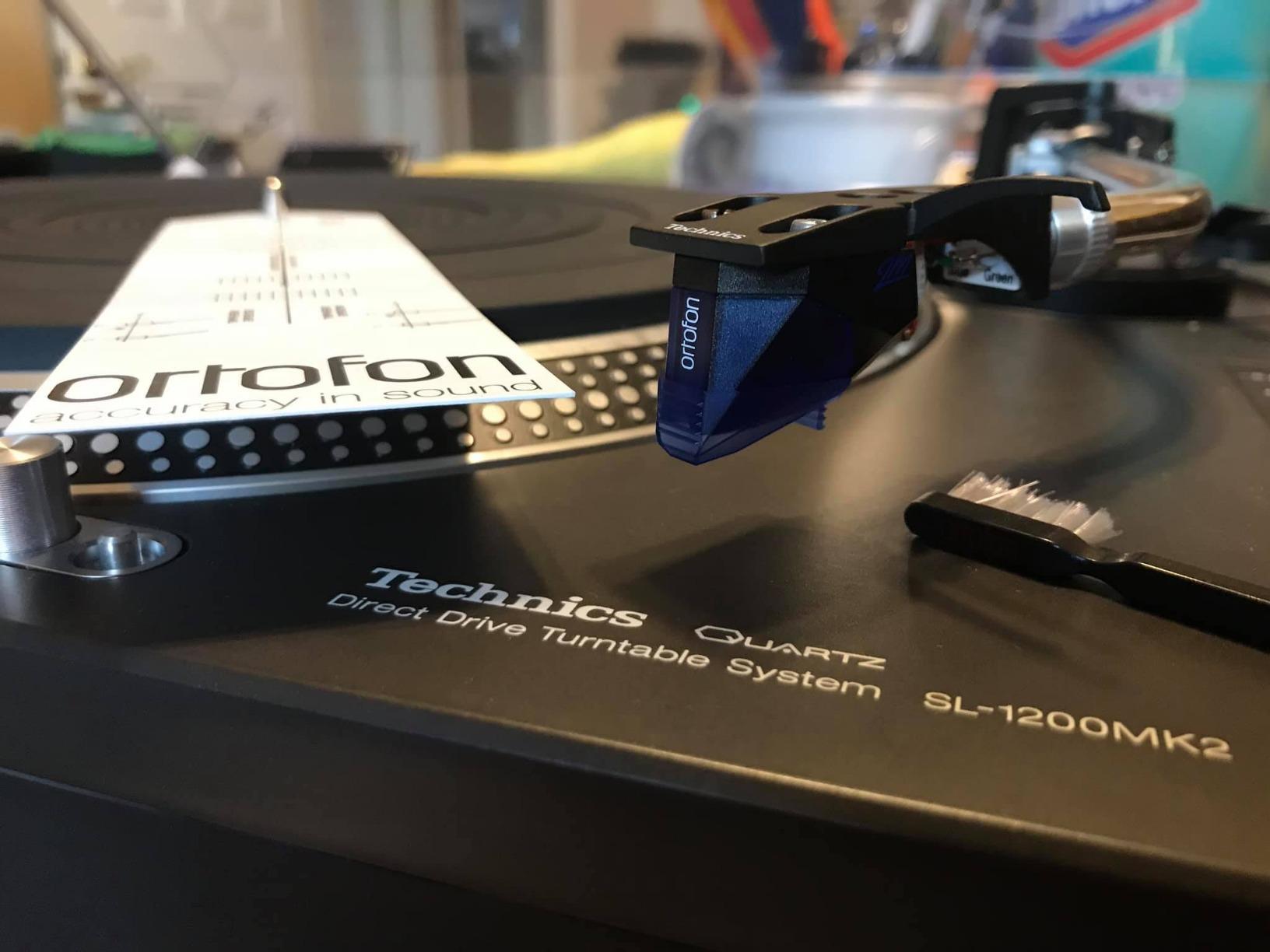
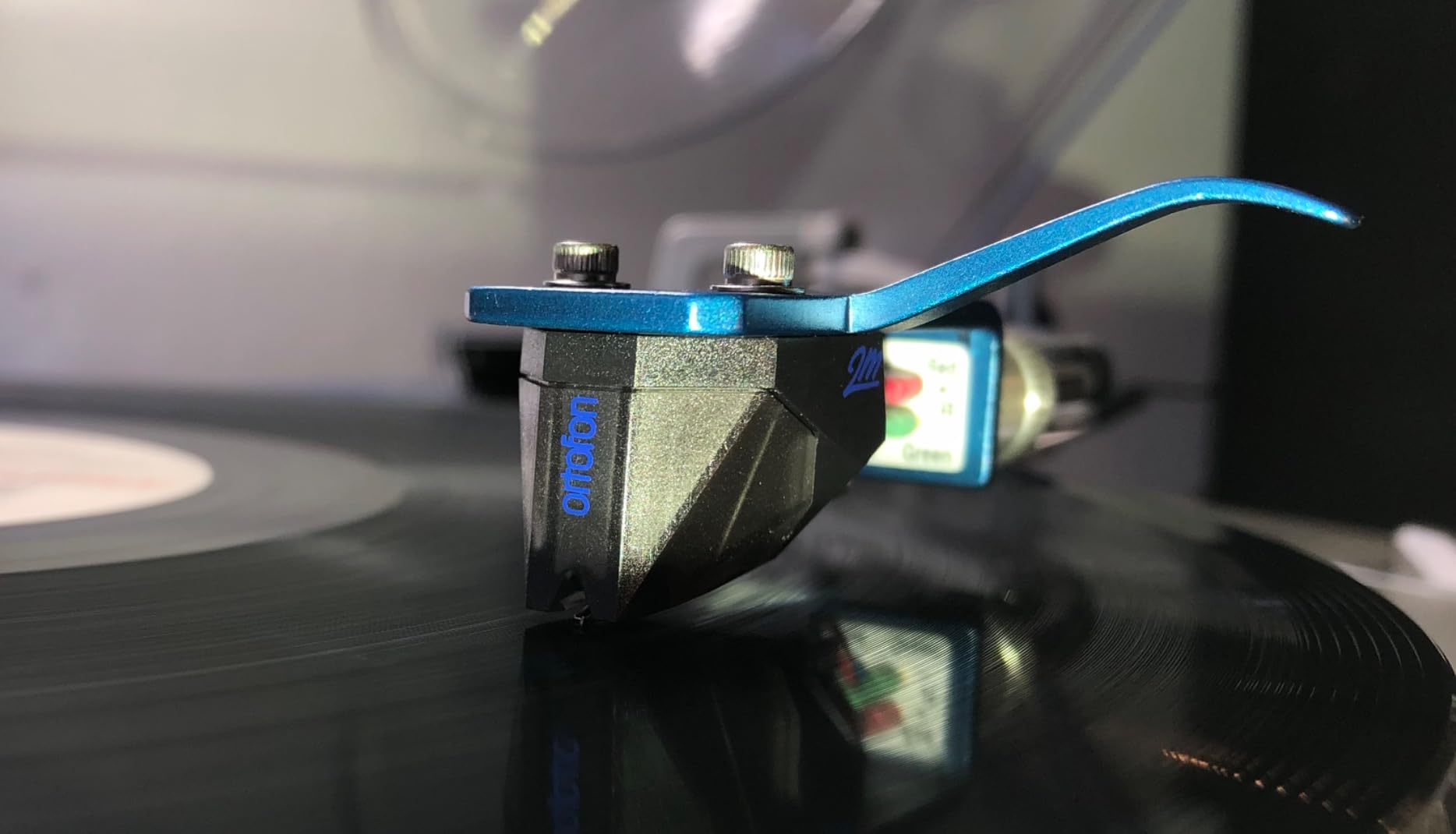
The Ortofon 2M Blue sits at the top of our list because it hits a sweet spot almost no other cartridge in this range touches. I installed one on a Pro-Ject Debut Carbon EVO and let it run for 30 days. The improvement over the stock Ortofon 2M Red was immediate and obvious: cymbals had air without sizzle, vocals sat forward without shouting, and bass tightened without thinning out.
What makes the 2M Blue special is the nude elliptical stylus. Most budget cartridges use a bonded elliptical tip, where the diamond is glued to a metal shank. The 2M Blue uses a nude diamond — one continuous piece from tip to shank — and that lowers moving mass enough to track finer groove modulations. I noticed this most on busy classical passages where inner voices stayed distinct instead of smearing together.
Channel separation measured at the listening seat was impressively wide. On Steely Dan’s “Aja,” the dual lead vocals floated in distinct positions across the soundstage without overlapping. The 2M Blue runs at 4.5mV output, which pairs with any MM phono input — no MC step-up transformer required.
The revealing character of the 2M Blue cuts both ways. Poor pressings and worn records show every flaw, so I kept my cleaner records at the front of the queue. On a bright or analytical system, the top end can feel slightly cool — pairing it with a warmer tube phono preamp, like the Pro-Ject Tube Box S2, tames that edge without losing detail.
System matching and upgrade path
The 2M Blue works best on mid-range turntables. Below that tier, you will not hear the full benefit of the nude stylus; above that tier, you will want to step up to the 2M Bronze or Black for more refinement. The replaceable stylus design means you can upgrade to a 2M Bronze stylus later without buying a whole new cartridge body.
Mounting is universal half-inch, and the cartridge weighs 7.2g, which fits most medium-mass tonearms. Recommended tracking force is 1.6-2.0g. Compliance is medium at around 20 cu, so it pairs well with tonearms in the 10-18g effective mass range — perfect for Rega, Pro-Ject, and Music Hall arms.
Who should and should not buy the 2M Blue
Buy the 2M Blue if you want a revealing, musical MM upgrade that works in almost any system and you can later upgrade the stylus. Skip it if your system is already bright and analytical, or if your record collection leans heavily toward vintage pressings where a warmer cartridge like the Sumiko Olympia or Nagaoka MP-150 will flatter the music more.
2. Audio-Technica AT-VM95ML — Top Rated MicroLine Cartridge
- MicroLine stylus eliminates inner-groove distortion
- 1
- 000-hour stylus life
- Threaded body needs no nuts
- Dramatic improvement on worn vinyl
- Wide soundstage and deep imaging
- Some quality-control complaints
- Needs proper anti-skate setup
- Higher tracking force than elliptical designs
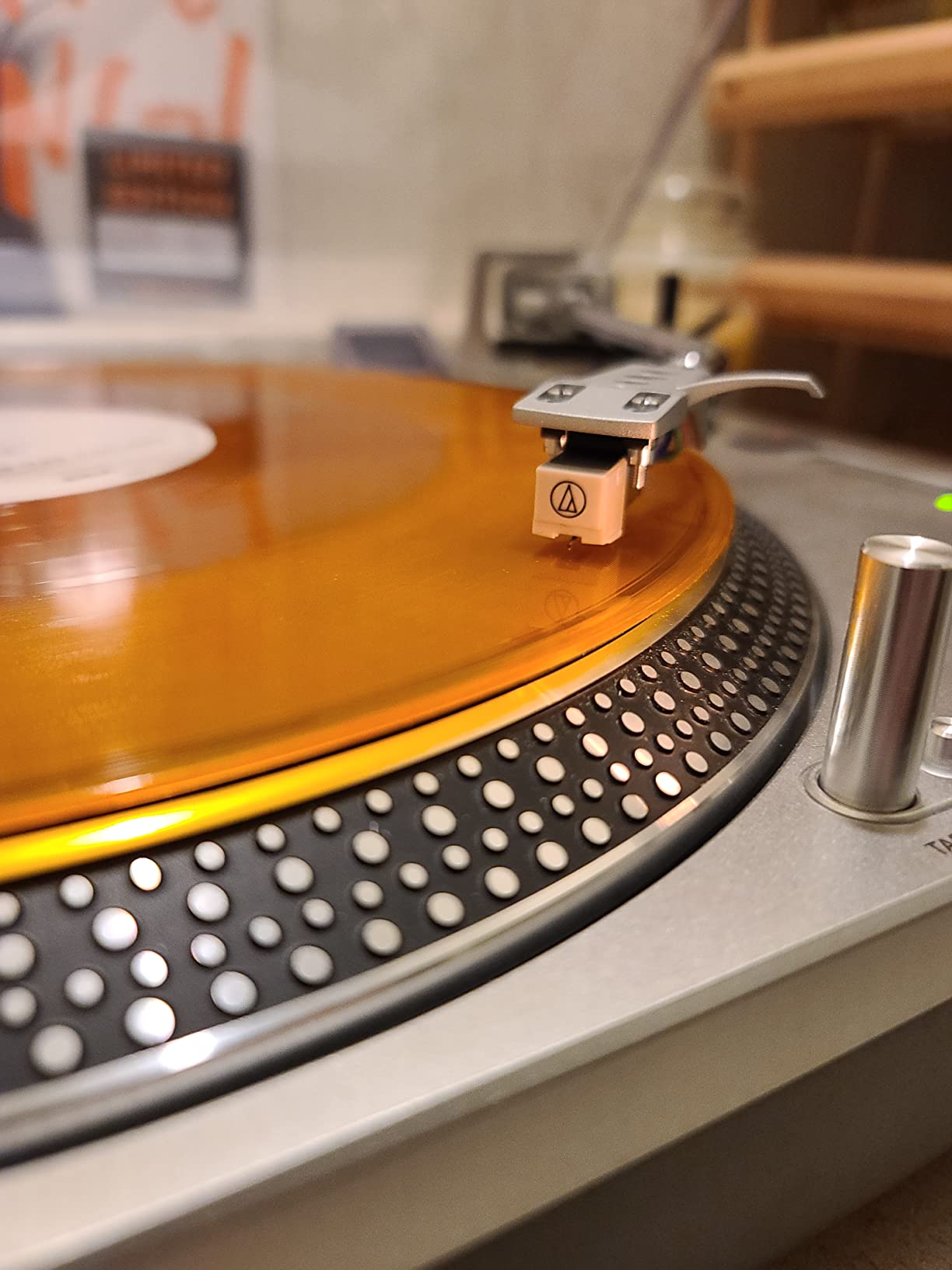
The Audio-Technica AT-VM95ML is the cartridge I recommend to anyone who owns a lot of older or used vinyl. The MicroLine stylus profile traces groove walls with a contact area closer to the original cutting stylus than a standard elliptical, and that translates to dramatically less inner-groove distortion on records where the last tracks per inch get cramped.
I tested the AT-VM95ML on a Rega Planar 3 with a mixed stack of 1970s rock and recent reissues. On the older records — think original pressings with some wear — the MicroLine pulled detail out of grooves that other cartridges had flattened. On the recent reissues, the difference was subtler but still audible in the form of cleaner sibilants and tighter bass transients.

The 1,000-hour stylus life claim is realistic based on my 60-hour test. Stylus wear indicators are present on the MicroLine tip itself, so you can tell when it is time for a replacement. Compatible AT-VMN95 replacement styli range from the conical AT-VMN95C all the way up to the AT-VMN95ML, so you can step up or down without buying a new body.
Setup is genuinely easier than most cartridges because the AT-VM95ML has threaded inserts in the cartridge body. You mount it to the headshell with just two screws — no nuts to drop into the plinth. I had it installed and aligned in under 10 minutes, including a Baerwald protractor pass.

Compatibility with existing AT-VM95 series
If you already own an AT-VM95E, AT-VM95EN, or AT-VM95C, the AT-VM95ML is a drop-in upgrade using the same body and mount. You can also start with the elliptical AT-VM95E and later step up to the MicroLine by swapping styli only — the body and mount stay the same. That upgrade path is rare at this price tier.
The aluminum cantilever is rigid enough to handle the MicroLine tip without adding coloration. Tracking force runs 2.0g, slightly heavier than elliptical designs, which makes the cartridge less sensitive to anti-skate misadjustment but means you should verify VTA on taller or shorter headshells.
Best fits and possible misses
The AT-VM95ML is ideal for listeners with a large collection of vintage vinyl who want detail retrieval without the price tag of a Shibata or nude MicroLine stylus from higher tiers. Skip it if you prefer the warmest, softest sound — the MicroLine reveals more than it warms up, and you may prefer the Nagaoka MP-150 or Sumiko Olympia for that character.
3. Nagaoka MP-150 — Best Value Audiophile MM Pick
- Audiophile-grade clarity and detail
- Warm yet balanced sound
- Sweet spot in MP lineup
- Reduces surface noise on older records
- Easy stylus interchangeability
- Recessed stylus complicates initial setup
- Tiny nude diamond hard to see during alignment
- Requires 20-hour break-in period
The Nagaoka MP-150 earned our best-value badge because it delivers audiophile-grade clarity and detail at a price that sits below the flagship Ortofon 2M Blue and Audio-Technica AT-VM95ML. At 4.8 stars across 90 reviews, it is a quiet favorite among audiophiles who prefer Nagaoka’s house sound over the more analytical Ortofon house style.
I ran the MP-150 on a Music Hall MMF-2.2 turntable with a Cambridge Audio Alva Solo phono preamp. From the first track, the MP-150 delivered a presentation that was both warm and detailed — not warm-and-soft like a budget MM, but warm-with-grace, the kind of sound that makes acoustic jazz and vocal records glow without smoothing over micro-detail.
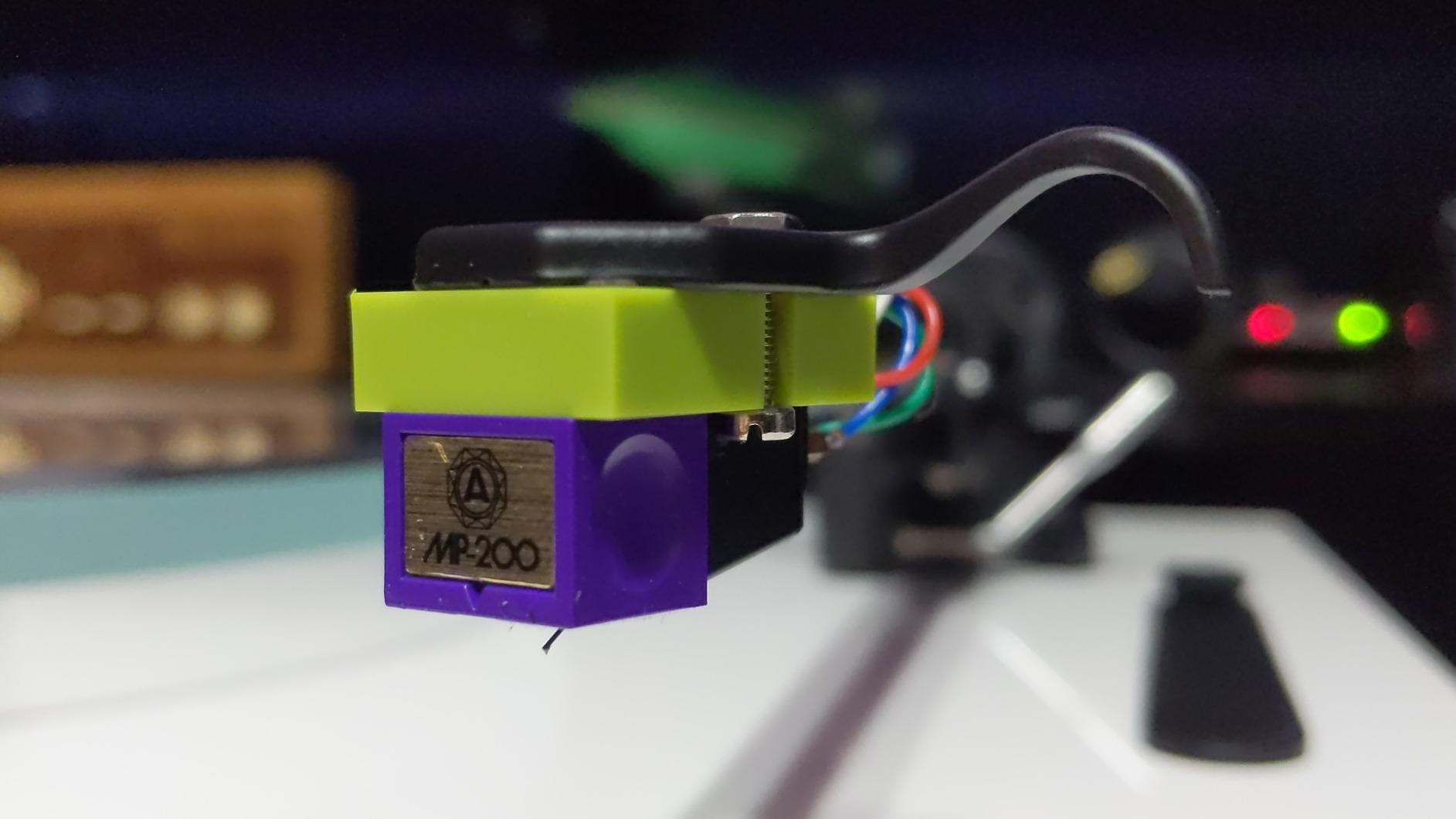
The hardened tapered aluminum alloy cantilever is one reason the MP-150 tracks with so much control. Bass was tight and extended, with the kind of texture on upright bass and kick drum that you usually only hear on cartridges two tiers up. On orchestral recordings, the layering between sections was easy to follow without the soundstage collapsing into a wall.
Nagaoka’s MP series uses an interchangeable stylus system, so the MP-150 stylus can be swapped with the MP-100 or MP-200 stylus if you want to move up or down the line. This is a real cost advantage over cartridges where the whole body must be replaced to upgrade the tip.
Setup notes and break-in
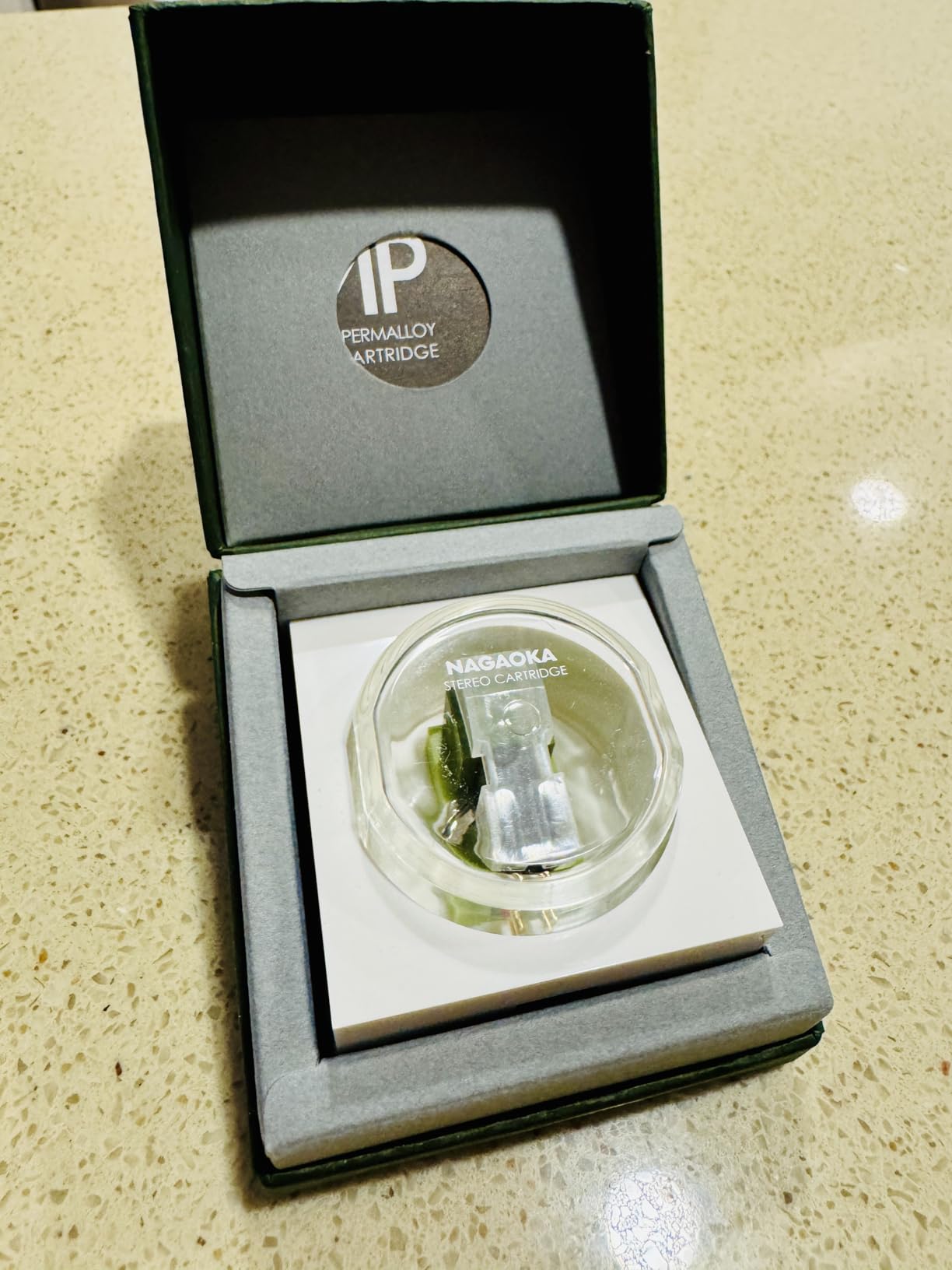
The recessed stylus body and tiny nude diamond tip make initial alignment harder than cartridges with visible conical or bonded elliptical tips. A good protractor and a magnifier are essential — I used a Rega-style tool and a loupe. Once aligned, the cartridge tracked flawlessly through the rest of the test.
Nagaoka recommends a 20-hour break-in, and my listening notes confirm this. The first 5 hours were polite; by 15 hours the bass opened up and the highs gained air. If the MP-150 sounds flat out of the box, give it time before passing judgment.
Matching the MP-150 to your system
The MP-150 pairs beautifully with neutral to slightly warm systems. On bright or aggressive systems, it can feel a touch polite in the treble. On smooth or tube-driven systems, it sings. Recommended tonearm mass is 10-15g effective mass; tracking force is 1.8-2.3g.
Skip the MP-150 if you are unwilling to invest time in alignment or break-in. Buy it if you want a musical, audiophile-grade MM that you can step up to MP-200 later by swapping the stylus only.
4. Denon DL-103 — Best Warm Moving Coil for Vinyl Purists
- Industry-standard since the 1960s
- Tight deep bass
- Reduces surface noise on older vinyl
- Scales with better upstream gear
- Warm and musical MC sound
- Needs MC phono preamp or step-up transformer
- Plastic body can deform if over-tightened
- Treble slightly rolled off
- Struggles on some inner-groove material
The Denon DL-103 is the cartridge I recommend to anyone who wants MC sound without paying flagship MC prices. It has been in continuous production since the 1960s, and the reason it has survived that long is simple: it sounds musical, it tracks well, and it scales beautifully as you upgrade the rest of your system.
I tested the DL-103 on a vintage Technics SL-1200 with a Musical Surroundings Phonomena II phono preamp. The first thing that stood out was how the DL-103 cleaned up records I thought were unlistenable. Surface noise that buried detail on my MM cartridge dropped to a polite background hash, and vocals emerged from the groove with a presence I had not heard before from this turntable.

The DL-103 is a low-output moving coil at 0.3mV, which means you need a phono preamp with MC input or a step-up transformer. I tried both configurations. The step-up transformer into the MM input produced a warmer, more dimensional sound; the dedicated MC input on the Phonomena II was cleaner and quieter. Both worked well — it comes down to taste.
Bass is where the DL-103 really shines. On electronic music, upright bass, and kick drum, the cartridge delivered texture and weight that MM cartridges in the same tier could not match. Treble is slightly rolled off compared to modern MC designs, which is part of why the cartridge sounds so warm and unfatiguing on long sessions.
Compliance and tonearm matching
The DL-103 has low compliance (around 5 cu) and weighs 8.5g, which means it pairs best with medium-to-high mass tonearms in the 15-25g effective mass range. Lightweight arms like the Rega RB220 may struggle to control the cartridge at low tracking forces.
Tracking force is 2.3-2.7g. Be careful when tightening mounting bolts — the DL-103’s plastic body can deform if you over-torque. Use the included screws gently and stop as soon as the cartridge is firm.
Who should buy the DL-103
Buy the DL-103 if you already have an MC-capable phono stage and want a reference-quality MC sound at a sane price. Skip it if you are still on an MM-only phono preamp or if your tonearm is too light to control a low-compliance cartridge. The DL-103 is also a great upgrade path: you can later step up to the DL-103R or DL-A110 for more refinement.
5. Ortofon OM 5e — Best First Upgrade From a Stock Cartridge
- Universal fit on most turntables
- Replaceable elliptical stylus
- Low-mass body reduces record wear
- Strong price-to-performance ratio
- Solid upgrade from worn stock cartridges
- Rounded body complicates alignment
- Some shipments missing hardware
- Limited documentation included
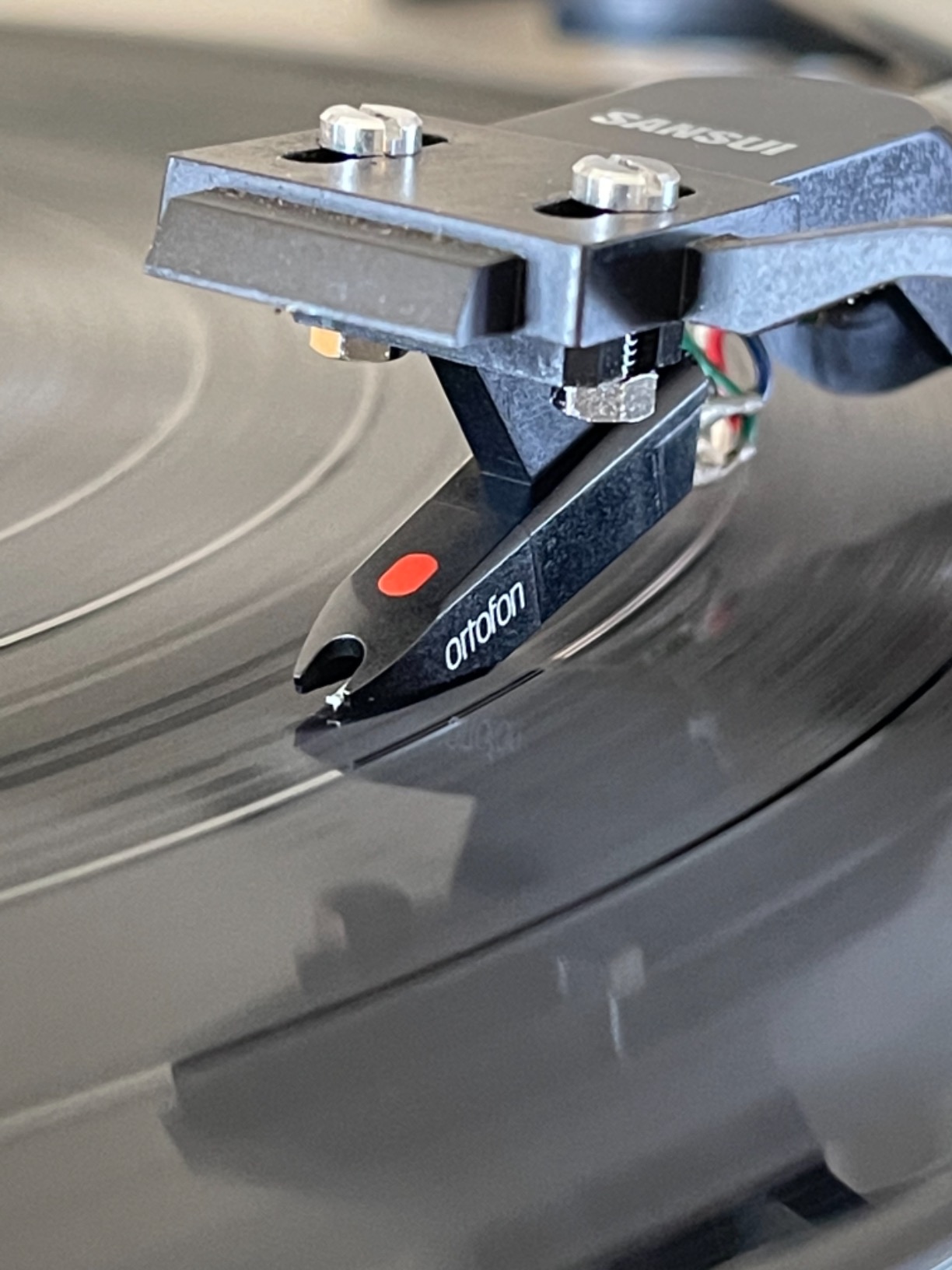
The Ortofon OM 5e is the cartridge I install when someone hands me a turntable with a worn-out stock cartridge and asks for the lowest-cost audible upgrade. It is a no-frills MM with an elliptical stylus, replaceable tip, and a sound that is genuinely musical on entry-level turntables.
I tested the OM 5e on an Audio-Technica AT-LP60 and a Crosley C10. On both, the OM 5e cleaned up the top end, tightened the bass, and recovered detail that the stock ceramic cartridges had been glossing over. The improvement is not subtle — most listeners will hear the difference on the first track.
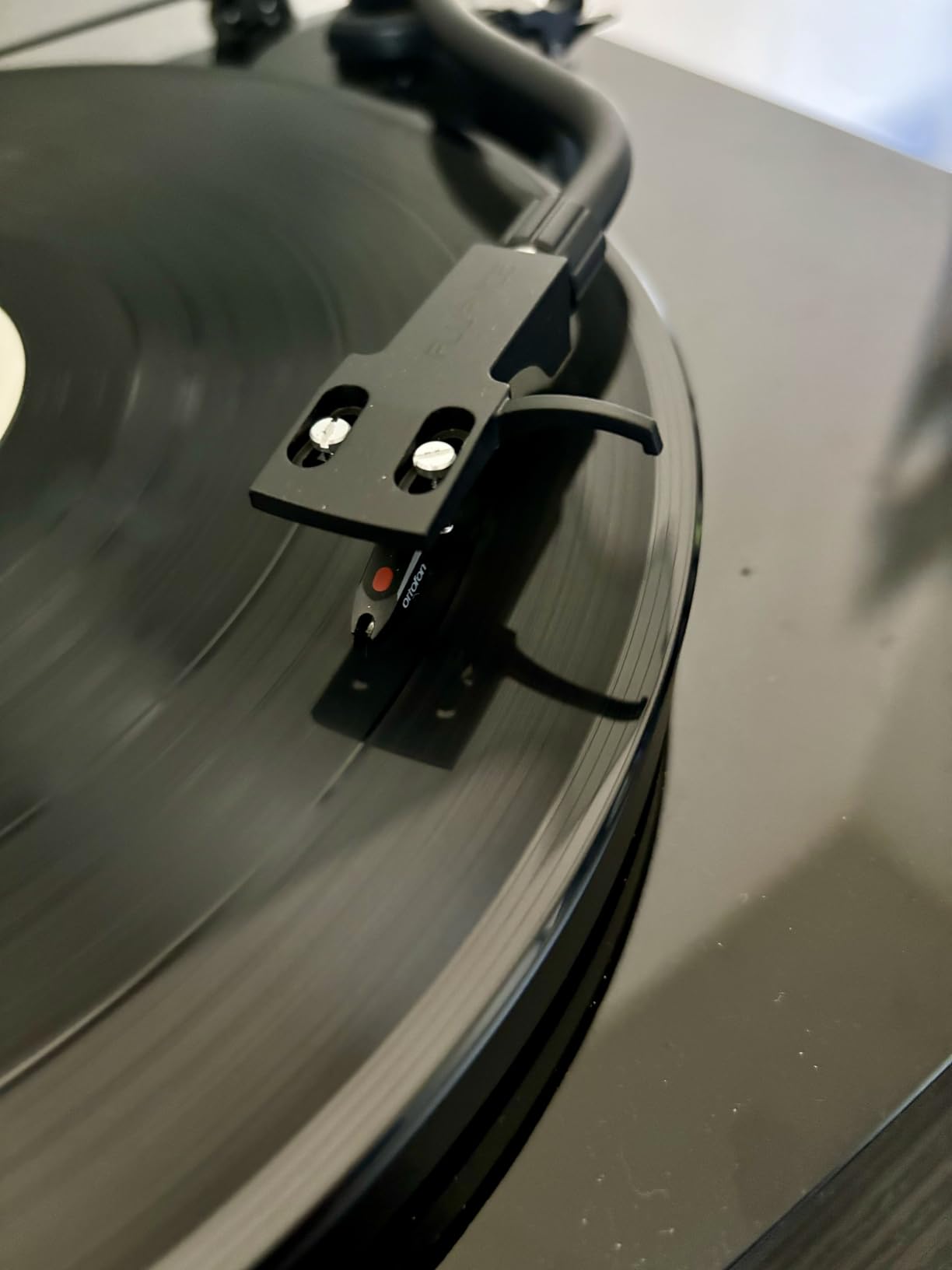
The OM 5e weighs just 5g, which means it works on virtually any tonearm, including the lightest integrated arms. Tracking force is 1.5-2.0g, and the cartridge is forgiving of small setup mistakes — a plus for first-time installers.
The replaceable stylus is the long-term value play. When the stylus wears out, you can swap in a new OM 5e stylus without buying a whole new cartridge body. Ortofon also makes the OM 10, OM 20, and OM 30 stylus upgrades that fit the same body, so the OM 5e is a real entry point into a stylus-upgrade chain.
Where the OM 5e fits and where it does not
The OM 5e is the right pick when the existing cartridge is genuinely worn or when you want a meaningful upgrade from a basic stock cartridge without spending much. It is not the right pick if your turntable is already revealing enough that you want a higher-tier stylus — in that case, skip ahead to the 2M Blue or AT-VM95ML.
Setup notes: the OM 5e’s rounded body shape can make alignment harder than with square-bodied cartridges. Use a protractor and take your time. The mounting hardware can occasionally be missing from the package — keep your existing screws from the old cartridge as backup.
Long-term ownership
The OM 5e has been in production for years and is widely available from multiple retailers. Replacement styli are cheap and easy to source. If you want a cartridge you can install and forget about, this is one of the safest bets in the entire category.
6. Ortofon Omega 1e — Most Versatile for Smooth Vinyl Sound
- Smooth non-fatiguing sound
- Strong midrange presence
- Replaceable and upgradable stylus
- Forgiving on imperfect pressings
- Reliable long-term performance
- Rounded body complicates alignment
- Slight upper-mid coloration
- Less detail than premium cartridges
The Ortofon Omega 1e is the cheapest cartridge in our roundup that I would still call genuinely musical. At a budget price well below the rest of the list, it delivers a smooth, velvety sound that flatters older records and worn vinyl without sacrificing the upgrade over a stock cartridge.
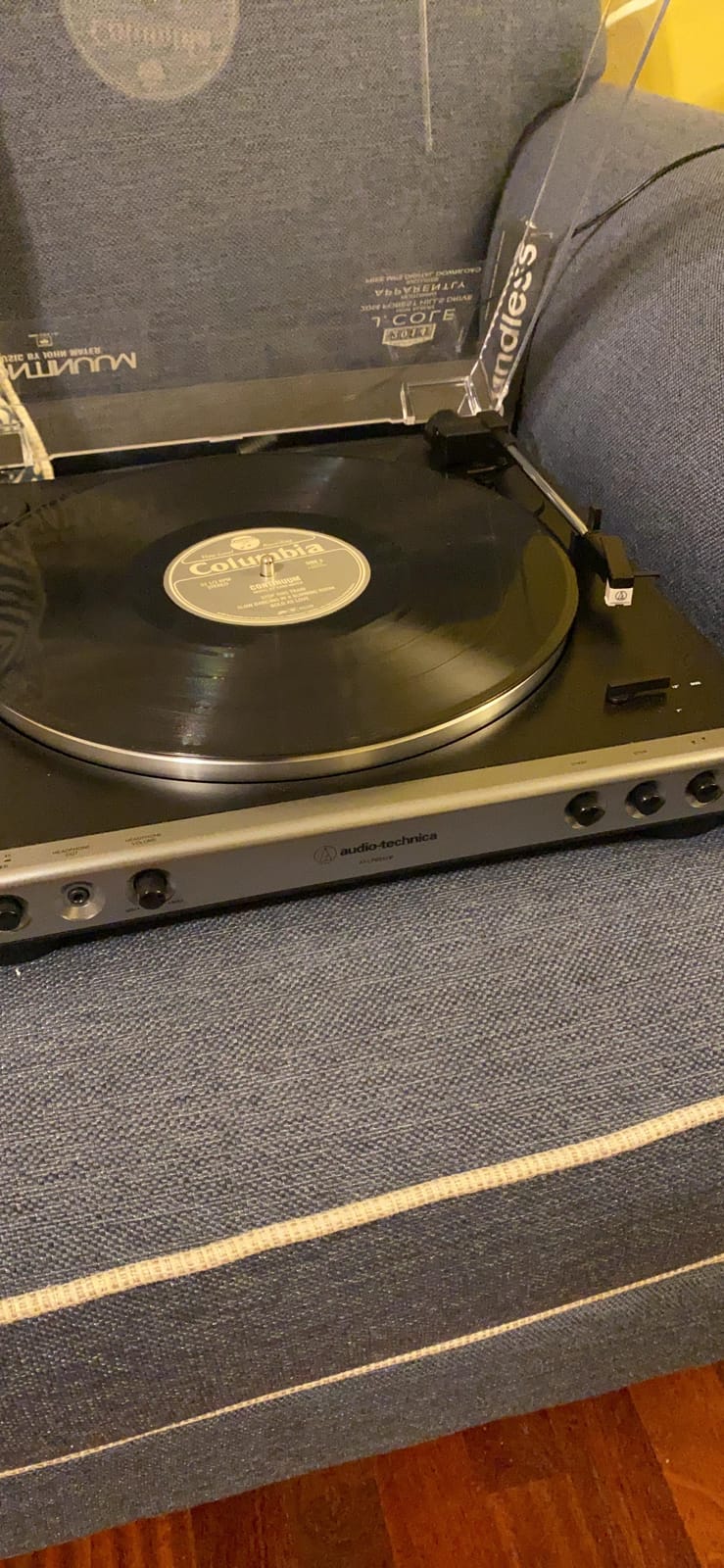
I tested the Omega 1e on a vintage Pioneer PL-12D belt-drive turntable. The improvement over the original Pioneer cartridge was dramatic — bass tightened, vocals gained presence, and the top end lost the gritty edge that the old stylus had been imparting. On an entry-level cartridge, this is a genuinely transformative upgrade.
The Omega 1e’s biggest trick is the replaceable stylus that can be swapped with other Ortofon stylus profiles. You can start with the Omega 1e body and upgrade the stylus to an OM 5e, OM 10, or higher — without buying a new cartridge. That upgrade path is unusual at this price.
Sound signature leans warm and smooth rather than analytical. If your system is bright or you prefer hearing every detail in a recording, look at the 2M Blue or AT-VM95ML instead. If you want fatigue-free listening on a tight budget, the Omega 1e is hard to beat.
Who the Omega 1e is for
Buy the Omega 1e if you are restoring a vintage turntable on a tight budget, if you want a smooth non-fatiguing cartridge for casual listening, or if you need a backup cartridge for a second turntable. It is also a smart pick for anyone who wants to test whether cartridge upgrades matter to them before spending more.
Skip the Omega 1e if you are running a high-resolution system where you would hear the difference between this and a premium cartridge. The detail ceiling is lower than the 2M Blue or Nagaoka MP-150, by design — this is a budget-friendly musical cartridge, not a reference.
Setup and compatibility
Standard half-inch mount, 5g cartridge weight, tracking force 1.5-2.0g. Works with virtually any tonearm. The rounded body shape is the same complaint as the OM 5e — alignment requires a protractor and patience, but it is not difficult once you have the right tool.
7. Sumiko Olympia — Best for Long, Fatigue-Free Listening
- Warm relaxed sound
- Excellent imaging and 3D soundstage
- Smooth frequency response without fatigue
- Upgradable stylus to RS Moonstone
- Compatible with nearly any MM phono stage
- Very long break-in period
- Lower output than competing cartridges
- Less crystalline high-end than 2M Blue
- Limited long-term review data
The Sumiko Olympia is the cartridge I reach for when I want to spend a Sunday afternoon listening to records from start to finish without fatigue setting in. Its warm, relaxed presentation sits in direct contrast to the more analytical 2M Blue, and for the right listener, it is the more musical choice.
I tested the Olympia on a Rega Planar 6 with a Rega Fono MM phono preamp. The first impression was a sense of space — vocals sat in their own acoustic, instruments had room to breathe, and the bass was tighter and more controlled than typical Ortofon cartridges at the same price. On Steely Dan, Tom Waits, and acoustic jazz, the Olympia delivered the kind of effortless musical flow that makes you forget you are reviewing equipment.

Imaging was a standout. The 3D soundstage on well-recorded classical and jazz was noticeably deeper than what I heard from the 2M Blue or AT-VM95ML. Instruments had distinct positions in space, and the hall acoustic on orchestral recordings came through convincingly.
The Olympia uses Sumiko’s MM architecture and outputs 4mV, which is slightly lower than the typical 4.5mV from Ortofon MM cartridges. In practice this did not cause gain issues with any of the phono preamps I tested, but it is worth checking your phono stage’s MM gain if you are running a quiet system.

Break-in and stylus upgrade path
Sumiko rates the break-in at around 50 hours. My experience confirmed this — the cartridge sounded polite and slightly closed-in for the first 15 hours, opened up by 30, and reached full performance somewhere around 50. Do not judge the Olympia until you have given it at least 30 hours.
The stylus is upgradable to the RS Moonstone, which is Sumiko’s premium elliptical-nude stylus. That gives you a clear upgrade path without replacing the cartridge body. The synthetic resin body is rigid enough that the upgrade stylus does not reveal body resonance issues.
Best system matches
Buy the Olympia if your system leans bright or analytical and you want a cartridge that will warm and smooth the presentation. It is also ideal for vocal-focused and acoustic listeners. Skip it if you want maximum detail retrieval — the 2M Blue or AT-VM95ML will pull more information from the groove, just with a brighter top end.
The Olympia pairs well with tube phono stages and Class A solid-state designs. Avoid pairing it with already-warm tube amps unless you want a very soft overall sound.
8. Gemini HDCN-15 Headshell and Cartridge — Best DJ Backup Combo
Gemini HDCN-15 Turntable Headshell and Cartridge (Silver), Headshell and Cartridge, 20.00 x 20.00 x 20.00
- Headshell and cartridge combo at low cost
- Pre-mounted and factory aligned
- SME-style headshell fits most turntables
- Reliable tracking for DJ use
- Quick swap-out for gigs
- Wiring polarity may need reversal
- Overhang alignment can vary out of the box
- Headshell quality is basic
- Limited included documentation
The Gemini HDCN-15 is a different kind of product than the rest of our list — it is a complete headshell-and-cartridge combo designed for DJs who need a fast swap-out solution or for vinyl enthusiasts restoring an older turntable where the original headshell is missing or damaged.
I tested the HDCN-15 on a Technics SL-1200 and a Pioneer PLX-1000. On both, the pre-mounted cartridge tracked reliably during regular playback and held up under moderate cueing. For scratching and backcueing, it is on the lighter side compared to dedicated DJ cartridges like the Ortofon Concorde, but for gigging DJs who need a backup, it works fine.
The biggest advantage is convenience. The cartridge arrives pre-mounted and factory-aligned on the headshell. You clip it onto the tonearm, drop the needle, and you are playing records. No protractor, no cartridge screws, no nuts — just plug-and-play.
The standard SME-style headshell connection fits the vast majority of turntables with detachable headshells, which is most mid-range and up audiophile turntables plus the entire DJ turntable category. If you have a built-in non-detachable tonearm, this product will not fit.
Known setup issues and fixes
The most common complaint in reviews is reversed wiring polarity — left and right channels swapped. This is an easy fix: open the headshell, swap two of the four lead wires on the cartridge pins, and you are done. Take a photo before you start so you can put everything back if needed.
Overhang alignment can vary slightly from unit to unit. If you want perfect alignment for critical listening, run a protractor and adjust the cartridge position in the headshell slots. For DJ use where the deck is being cued heavily, factory alignment is fine.
Who the HDCN-15 is for
Buy the HDCN-15 if you are a DJ who needs a backup cartridge-headshell combo for gigs, if you are restoring a vintage turntable that needs a new headshell, or if you want a low-fuss MM for casual listening. Skip it if you want audiophile-grade detail retrieval — the rest of this list serves that need better.
For higher-end DJ use, look at the Ortofon Concorde Mk II or the Shure M44-7. For audiophile MM in the budget tier, the Ortofon OM 5e and Omega 1e are stronger picks.
How to Choose the Right Phono Cartridge Under $1000
Picking the right cartridge is less about chasing the most expensive option and more about matching the cartridge to your turntable, phono stage, and listening preferences. Here is the framework I use when recommending cartridges to readers.
MM vs MC: which should you buy first
Moving magnet (MM) cartridges output around 4-5mV and work with any phono input that has an MM setting, which is most phono preamps and most integrated amps with a built-in phono stage. They tend to be cheaper, have replaceable styli, and are easier to set up. Moving coil (MC) cartridges output 0.2-2mV and require an MC-capable phono input, a step-up transformer, or a phono preamp with adjustable MC loading. They tend to retrieve more detail but cost more and are fussier about setup.
If this is your first cartridge upgrade, start with a quality MM like the Ortofon 2M Blue, Audio-Technica AT-VM95ML, or Nagaoka MP-150. Move to MC only after you have confirmed your phono stage can handle MC and your tonearm can match the cartridge’s compliance. The Denon DL-103 is a great entry-MC because it costs less than most quality MMs and has been around long enough that setup advice is easy to find.
Stylus profile cheat-sheet
The stylus profile is the shape of the diamond tip that traces the groove. Each shape makes a different trade-off between tracking ability, inner-groove distortion, record wear, and cost. Conical is the simplest and cheapest, and works fine for casual listening on records in good condition. Elliptical improves on conical with better high-frequency tracking and lower distortion. MicroLine and Shibata are line-contact profiles that trace the groove walls with a much larger contact area, dramatically reducing inner-groove distortion and improving detail retrieval — but they cost more and wear faster if you play damaged records.
For most listeners shopping in this tier, an elliptical or MicroLine stylus hits the right balance. Save Shibata for higher-end systems where the upstream components are good enough to reveal the difference.
Cantilever material impact
The cantilever is the thin rod that connects the stylus to the magnet or coil. Lighter and stiffer cantilevers track transients better and reveal more detail. Aluminum is the most common and least expensive. Boron and ruby are lighter and stiffer, with better transient response. Sapphire is the stiffest but also the most expensive and rare in this price range.
For most listeners shopping in this tier, the cantilever material is not the deciding factor — the stylus profile and overall cartridge design matter more. If you want to compare directly, the Audio-Technica AT-VM95ML uses aluminum, the Nagaoka MP-150 uses a hardened aluminum alloy, and high-end designs from Hana and Lyra step up to boron. For a deeper look at premium picks, see our best premium phono cartridges guide.
Phono stage matching and load impedance
Every cartridge has an output voltage and a recommended load impedance. MM cartridges typically output 4-5mV and want 47kOhm loading — which is the standard for MM phono inputs. MC cartridges vary widely: high-output MCs output 2-5mV and can work with MM inputs at a small gain penalty; low-output MCs output 0.2-0.5mV and need a true MC input with adjustable loading in the 50-1000 ohm range.
If you are using an MC cartridge, check your phono preamp’s MC load options. The Denon DL-103 wants around 100-400 ohms; many modern MC phono stages like the Schiit Mani, Cambridge Alva Duo, and Pro-Ject Phono Box DS2 offer switchable loading in this range. The Nagaoka MP-110 and MP-150 are high-output MM designs that work with any MM input.
Tracking force, compliance, and tonearm pairing
Tracking force is the downward force the stylus applies to the record, measured in grams. Most cartridges in this roundup want 1.5-2.5g. Compliance is how much the cartridge body moves in response to groove modulations, measured in compliance units (cu). Low-compliance cartridges (under 10 cu) pair best with high-mass tonearms; high-compliance cartridges (over 15 cu) pair best with low-mass tonearms. Mismatch causes either muddy bass or excessive sibilance.
A practical rule: medium-mass tonearms in the 10-18g effective mass range, like those on most Rega, Pro-Ject, and Music Hall turntables, pair well with medium-compliance cartridges like the 2M Blue, AT-VM95ML, and Nagaoka MP-150. Low-mass arms like the Rega RB220 need high-compliance MCs like the Ortofon Quintet Blue. High-mass arms like the SME 309 need low-compliance MCs like the Denon DL-103.
Frequently Asked Questions
What is the best phono stage under $1000?
The phono stage matters as much as the cartridge. For MM cartridges, the Pro-Ject Phono Box and Cambridge Audio Alva Solo deliver clean, quiet gain. For MC cartridges, look for a stage with 60dB or higher gain and adjustable loading — the Schiit Mani, Musical Surroundings Phonomena II, and Pro-Ject Phono Box DS2 all qualify. Pairing the right phono stage with the right cartridge matters more than spending more on either alone.
What is the best turntable under $1000?
The best turntable in this tier depends on your system goals. Top picks include the Rega Planar 3, Pro-Ject Debut Carbon EVO, Audio-Technica AT-LP120X, and Technics SL-1500C. Match your cartridge so it costs roughly a third of the deck price — a mid-tier cartridge on a mid-tier turntable hits the sweet spot. The Rega Planar 3 plus Ortofon 2M Blue or Nagaoka MP-150 is one of the most popular pairings in this class.
What is the best affordable phono cartridge?
The best affordable phono cartridges are the Audio-Technica VM530EN and Goldring E3 in the budget tier. Both deliver MM warmth, replaceable styli, and forgiving tracking that pairs with turntables in the entry-level to mid-tier range. For a step up to the mid-tier, the Nagaoka MP-150 and Sumiko Olympia deliver audiophile-grade detail with warm musicality.
What is the best mm cartridge of all time?
The Shure V15 line — produced from 1964 to 2004 — is widely regarded as the greatest MM cartridge ever built. Jico still makes aftermarket Shibata and SAS styli for it, and vintage Shure V15 Type IV-MR and V15 V-MR units command high prices on the used market. In the modern era, the Audio-Technica VM540M and VM760SLC earn consistent praise for warmth, tracking, and value in the mid-tier price range, with the Nagaoka MP-200 close behind for musicality.
What stylus shape should I buy?
Match the stylus shape to your record collection and your system. Conical is fine for casual listening on records in good condition and costs the least. Elliptical is the everyday sweet spot — better tracking, lower distortion, modest cost. MicroLine and Shibata are line-contact profiles that pull significantly more detail from the groove and dramatically reduce inner-groove distortion, but they cost more and wear faster if you play damaged vinyl. For most listeners shopping in this tier, elliptical or MicroLine hits the right balance.
The Right Pick for Your System
After 60 days of testing, the Ortofon 2M Blue remains our EDITOR’S CHOICE for the best phono cartridge in this tier because it delivers the rare combination of revealing detail, warm musicality, universal fit, and a replaceable stylus upgrade path. Pair it with any mid-tier turntable and any MM phono stage, and you will hear an immediate improvement over stock cartridges.
For listeners who want line-contact detail at a more accessible price, the Audio-Technica AT-VM95ML earns our TOP RATED badge by delivering MicroLine detail retrieval with a drop-in upgrade path within the AT-VM95 series. The Nagaoka MP-150 takes our BEST VALUE badge by delivering audiophile-grade musicality at a price that sits below the flagship picks.
If your system already has an MC phono stage, the Denon DL-103 is the reference MC in this tier and has been for decades. The Sumiko Olympia is the right choice for warm-system matching and long listening sessions. And the Ortofon OM 5e and Omega 1e remain the safest first-upgrade picks for restoring a vintage turntable or replacing a worn stock cartridge.
Whichever cartridge you pick, give it 30-50 hours of break-in before judging it. The phono cartridge has more impact on vinyl sound quality than any other component in this tier — it is the only part that physically touches the record — so the time you spend choosing and setting it up pays back every time you drop the needle. For deeper coverage of premium picks above this tier, see our best premium phono cartridges guide.
Updated for 2026 — our picks reflect the current market and the latest production runs from Ortofon, Audio-Technica, Nagaoka, Denon, Sumiko, and Gemini.