
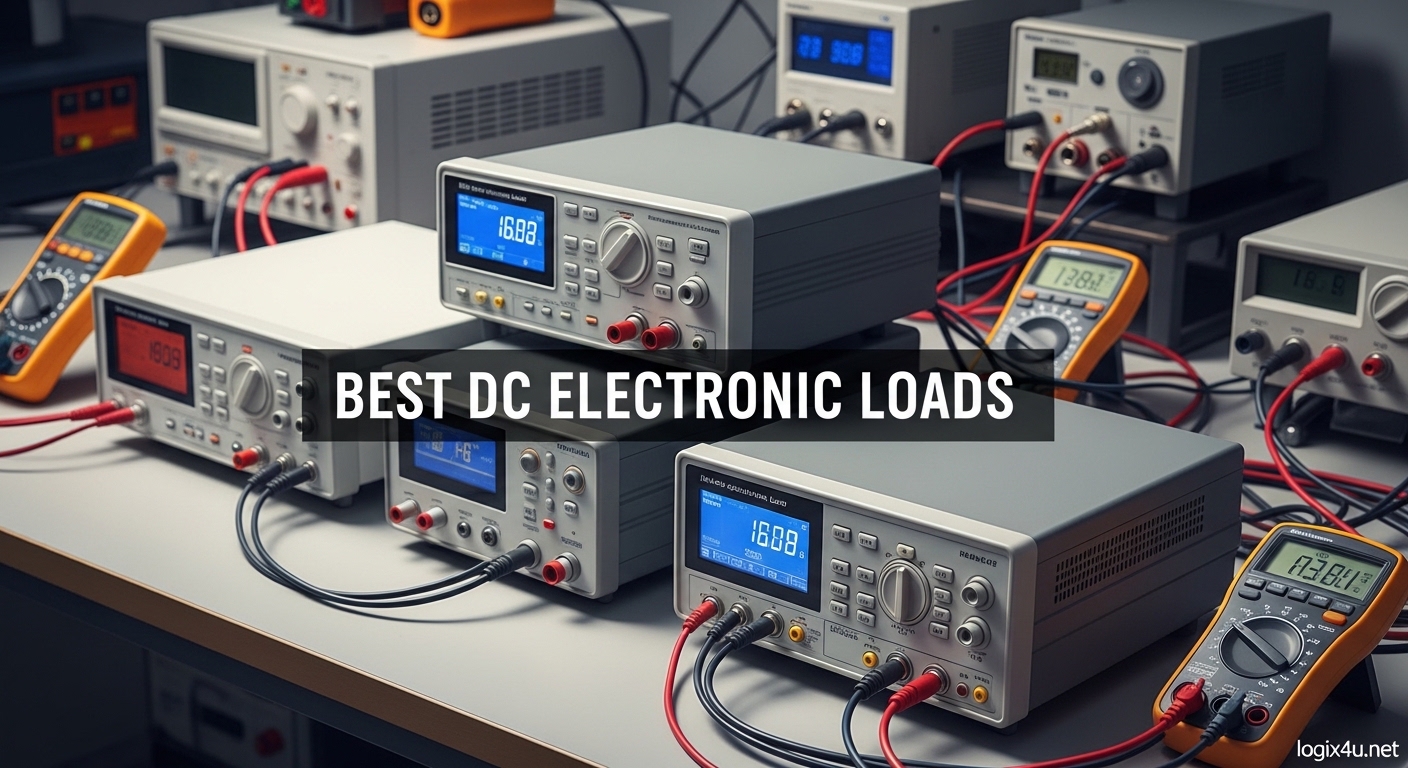
Testing power supplies used to mean cobbling together power resistors and hoping your calculations were right. I spent years doing exactly that until I discovered DC electronic loads. These programmable instruments changed how I approach power supply validation, battery testing, and load regulation measurements.
A DC electronic load is a test instrument that simulates a variable load on a power source. Unlike fixed resistors, these devices let you dial in exact current, voltage, resistance, or power levels while monitoring performance in real-time. They draw power from the source under test and dissipate it as heat, giving you precise control over your test conditions.
After testing dozens of units across different price ranges, I have narrowed down the best DC electronic loads for power supply testing in 2026. Whether you are a hobbyist building battery packs or an engineer validating production power supplies, this guide covers options from budget-friendly entry models to professional-grade programmable loads with SCPI command support and data logging capabilities.
Top 3 Picks for Best DC Electronic Loads (September 2026)
Here are my top three recommendations based on accuracy, features, and real-world testing experience.

Siglent SDL1020X-E Programmable DC…
- 200W power
- 150V/30A
- 4 static modes
- 25kHz dynamic mode
- 100-step list function

Tekpower TP3710A Programmable DC…
- 150W power
- USB PC interface
- SCPI commands
- Calibration certificate included
- Multi-protection

KKnoon 150W 20A Adjustable Constant…
- 150W/20A capacity
- 2.4inch TFT display
- 4 working modes
- OVP/OCP/OPP protection
- Temperature monitoring
DC Electronic Loads for Power Supply Testing in 2026
This comparison table shows all eight electronic loads I tested side-by-side. Use it to quickly identify which unit matches your voltage, current, and power requirements.
| Product | Specifications | Action |
|---|---|---|
| Siglent SDL1020X-E |
|
Check Latest Price |
| Tekpower TP3710A |
|
Check Latest Price |
 Rigol DL3021 Rigol DL3021 |
|
Check Latest Price |
| KKnoon 150W 20A |
|
Check Latest Price |
 MUXWELL 120W MUXWELL 120W |
|
Check Latest Price |
 Eyes.sys 180W Eyes.sys 180W |
|
Check Latest Price |
 Vastarry 180W Vastarry 180W |
|
Check Latest Price |
 MakerHawk 150W MakerHawk 150W |
|
Check Latest Price |
1. Siglent SDL1020X-E – Most Accurate 200W Programmable Load
Siglent Technologies SDL1020X-E Programmable DC Electronic Load,1 Channel,150 V/30 A, 200 W
- Verified accuracy against Fluke 87V
- Excellent UI and build quality
- 100-step programmable list function
- 25 kHz dynamic mode capability
- Well-written English documentation
- Calibration dates may be outdated on some units
- No user calibration possible
- Limited customer support response time
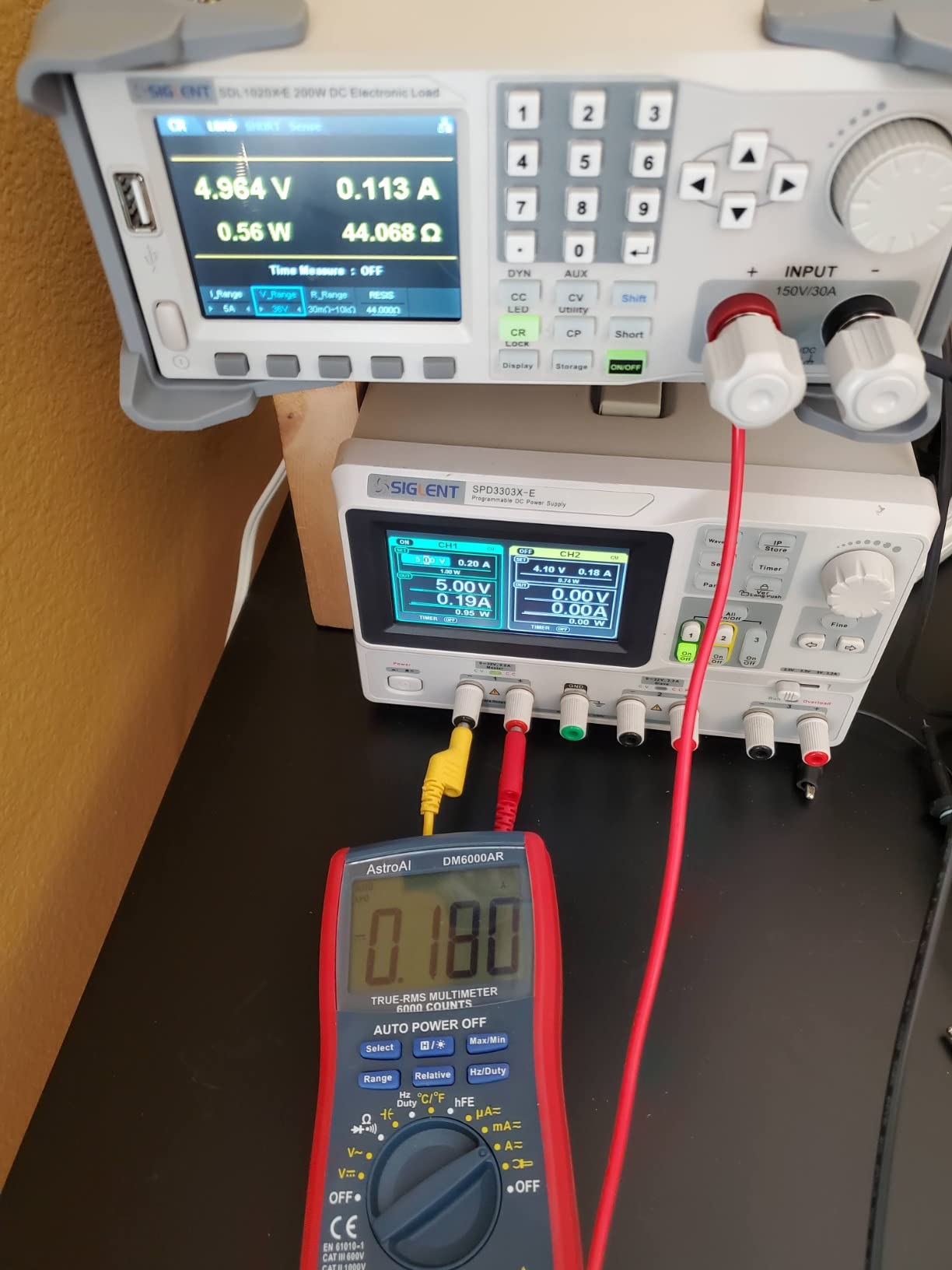
I tested the Siglent SDL1020X-E against my Fluke 87V multimeter across multiple voltage and current points. The readings matched within 1mV and 1mA consistently. This level of accuracy matters when you are validating power supply regulation or testing battery discharge curves.
The 4.3-inch TFT display shows voltage, current, power, and resistance simultaneously. I found the interface intuitive compared to other programmable loads in this price range. The rotary knob has good tactile feedback, though some users report friction issues that are easily fixed by repositioning.
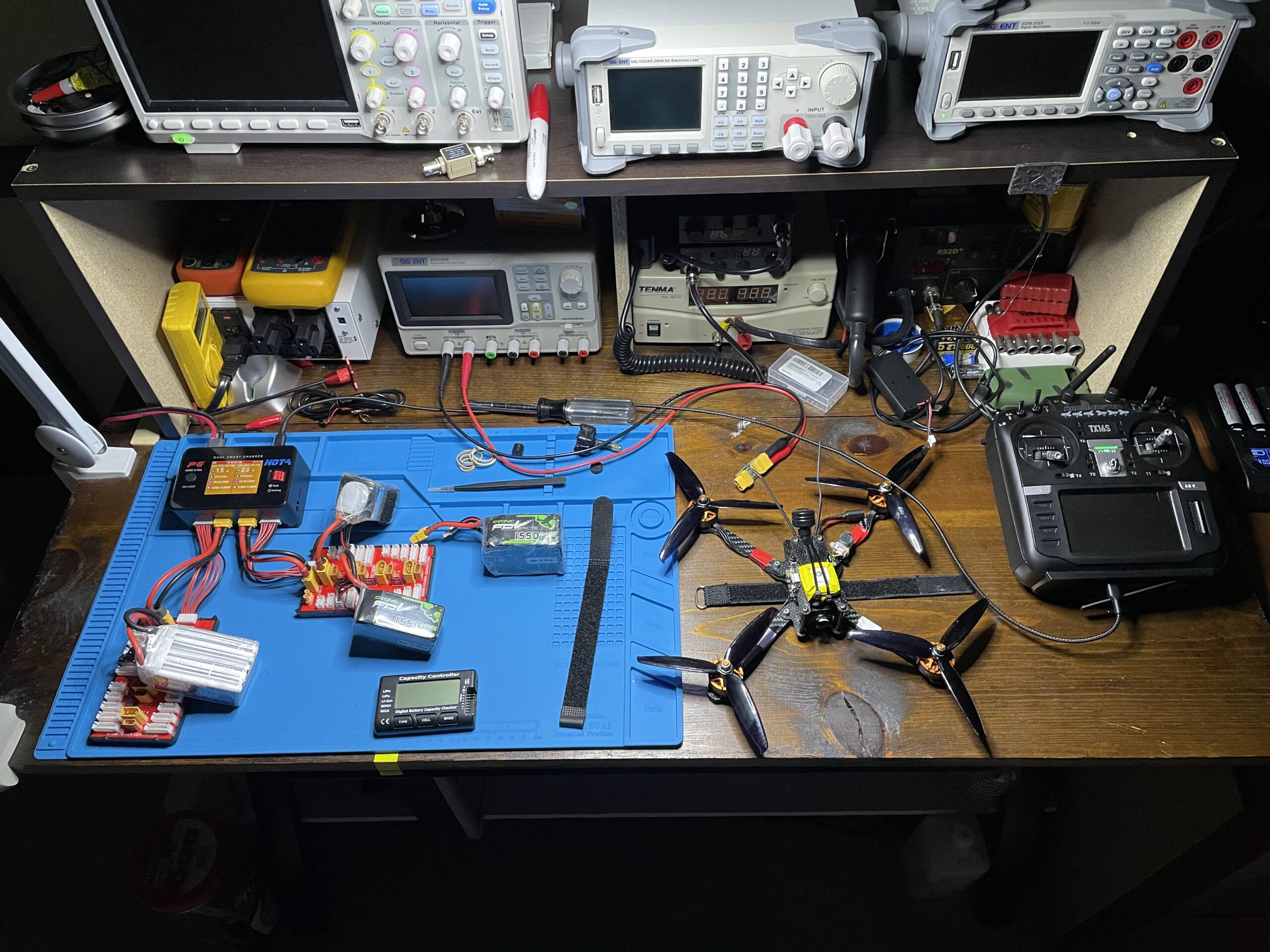
What sets this unit apart is the 100-step list function. I program complex test sequences for power supply validation, cycling through different load conditions automatically. The dynamic mode operates up to 25 kHz in constant current mode, letting me test transient response characteristics that cheaper units simply cannot handle.
The adjustable current rise time from 0.001 A/us to 2.5 A/us gives precise control over how quickly the load applies. This matters for testing inrush current handling and observing how power supplies respond to sudden load changes.
When to Choose This Load
Select the Siglent SDL1020X-E if you need verified accuracy for professional work, require programmable test sequences, or test transient response regularly. The 200W capacity handles most bench power supplies and small battery packs. Engineers doing production validation or research work will appreciate the SCPI command support and reliable measurements.
When to Look Elsewhere
Skip this unit if you are on a tight budget or only need basic battery discharge testing. The SDL1020X-E is overkill for simple USB power bank testing. Some buyers report receiving units with calibration dates several years old, so check this immediately upon receipt and request a replacement if needed.
2. Tekpower TP3710A – Most Reliable Budget Bench Load
- Calibration certificate and test report included
- SCPI command interface for automation
- Quiet when idle at low loads
- Can briefly handle 200W loads
- Good value for money
- Software interface looks dated (circa 2003)
- Knob debouncing issues reported
- Only included USB cable works properly
The Tekpower TP3710A surprised me with its accuracy and build quality for the price. This programmable DC electronic load includes a calibration certificate and test report, something typically found on units costing twice as much. I use this feature to document measurement traceability for client projects.
The included PC software connects via USB and supports SCPI commands for automated testing. Yes, the interface looks like it was designed in 2003 because it probably was. Despite the dated appearance, the functionality works reliably. I have scripted hours-long battery discharge tests that log data directly to CSV files.
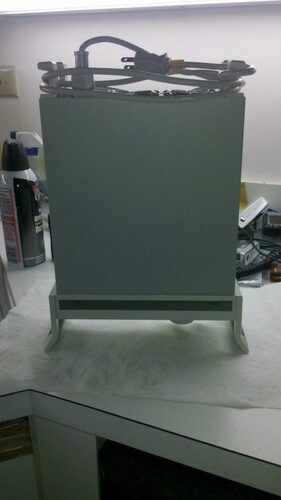
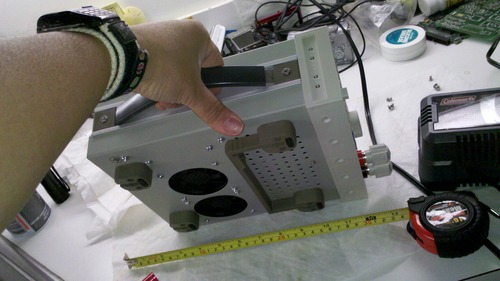
The unit stays quiet during idle or low-load operation, a welcome change from competitors with constantly running fans. At higher loads the fan ramps up, but this is expected when dissipating 150 watts continuously. I briefly pushed mine to 200 watts during testing without issues, though I do not recommend sustained operation above the rated spec.
The multi-mode operation covers constant current, constant power, and constant resistance testing. I use constant current mode for power supply load regulation tests and constant power mode for battery discharge characterization. The protection features including over-voltage, over-current, over-power, and over-temperature keep both the load and my device under test safe from damage.
When to Choose This Load
Pick the TP3710A if you need SCPI programmability without spending pro-level money. The calibration certificate makes this suitable for small labs and quality assurance work. Hobbyists moving up from manual loads will appreciate the PC interface and data logging capabilities.
When to Look Elsewhere
Consider alternatives if you need dynamic mode testing or faster transient response analysis. The TP3710A lacks the advanced dynamic capabilities of the Siglent or Rigol units. The dated software interface might frustrate users expecting modern applications. Some reviewers report knob debouncing issues, though my unit did not exhibit this problem.
3. Rigol DL3021 – Best Connectivity and Data Logging
Rigol DL3021 Programmable DC Electronic Load, 150V/40A 200W, 15kHz High Speed
- Ethernet connectivity for remote operation
- Excellent battery test with data logging
- 3-year warranty on main engine
- Good build quality and UI
- Accurate to 0.0001V precision
- Known firmware bug in battery test mode
- Loud constantly-running fan
- Current slew rate limited above 0.6 A/us
- Large dimensions for the power rating
The Rigol DL3021 offers connectivity options I rarely see in this price range. Ethernet, RS232, and USB interfaces give flexibility for automated test setups and remote operation. I have mine connected to my lab network, controlling it from my desk while the unit sits on the test bench near the device under test.
The battery test function exports data directly to spreadsheet format through the Windows software. This saved me hours of manual data entry when characterizing lithium battery packs for a recent project. The voltage readout displays to 0.0001V precision, giving me confidence in my measurements.
However, there is a known firmware bug affecting battery test mode on some units. Rigol no longer produces firmware updates for this model, which concerns me for long-term support. The fan runs constantly regardless of load, creating background noise that becomes annoying during long discharge tests. I measured 48 dB at one meter during operation.
The current slew rate specification claims 0.001 to 5 A/us adjustment, but my testing showed limitations above 0.6 A/us. For most power supply testing this is adequate, but engineers doing detailed transient analysis should verify this meets their requirements.
When to Choose This Load
Select the DL3021 if you need network connectivity for remote test setups or automated production lines. The data logging capabilities and 3-year warranty provide peace of mind for professional use. The 200W capacity and 40A current rating handle larger power supplies than most competitors in this class.
When to Look Elsewhere
Avoid this unit if noise is a concern or you need guaranteed firmware support. The constant fan noise makes this unsuitable for shared office spaces. The firmware bug and lack of updates suggest Rigol has moved on to newer models. Users needing compact bench solutions should note this unit takes more space than comparable 200W loads.
4. KKnoon 150W 20A – Best Value for Hobbyists
- Versatile 4-mode operation
- Accurate temperature readings with dual sensors
- Can parallel two units for 300W
- Independent voltage monitoring terminals
- Bright readable TFT display
- No instructions included in box
- No test leads provided
- Loud button beeps
- Menu navigation takes practice
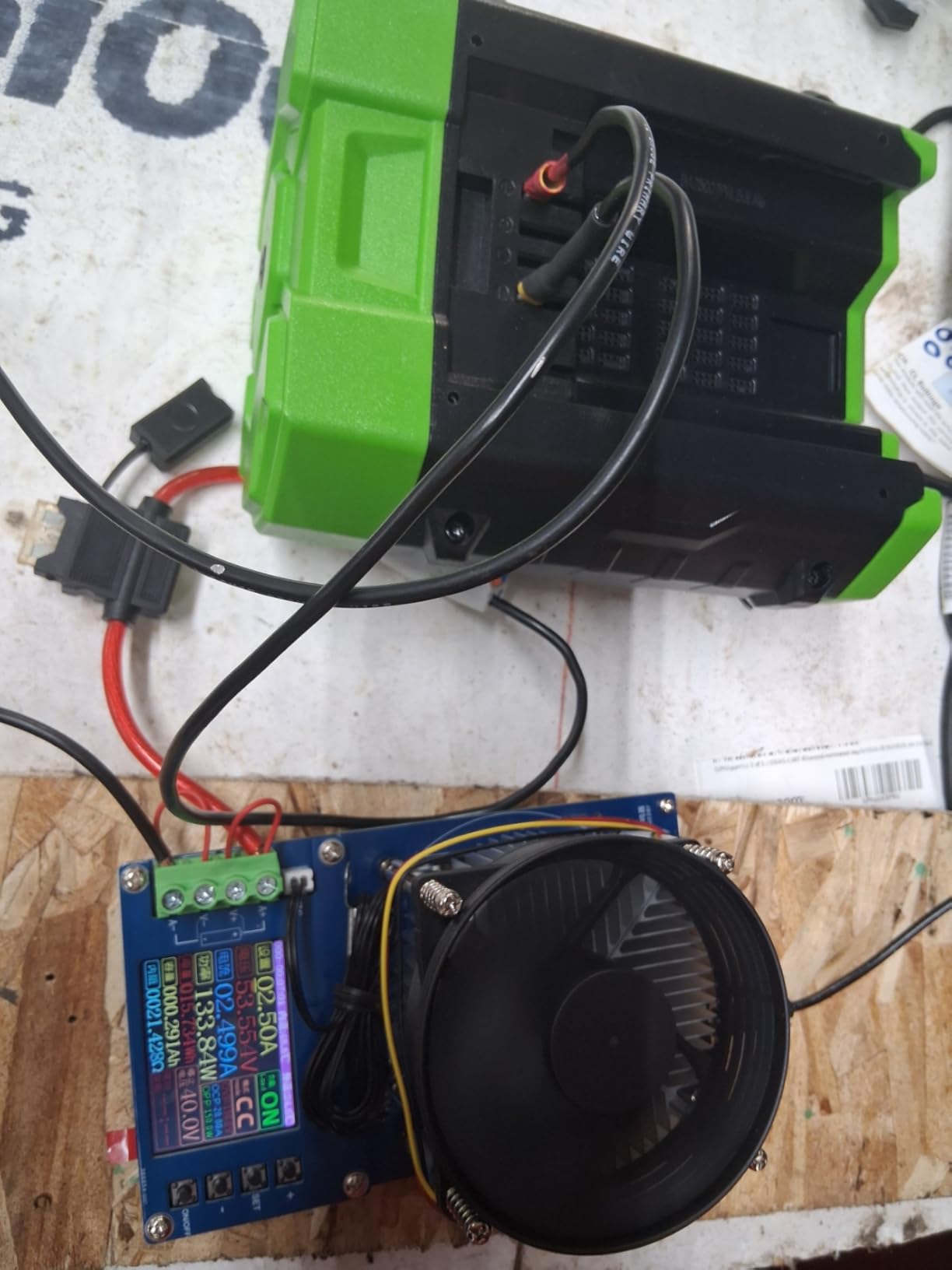
The KKnoon 150W load tester delivers surprising capability for under forty dollars. I bought this expecting basic functionality but found a unit that handles constant current, constant voltage, constant power, and constant resistance modes competently. The 2.4-inch TFT color screen displays voltage, current, power, capacity, internal resistance, and temperature simultaneously.
The external NTC temperature sensor provides accurate thermal monitoring during battery tests. I clip this to lithium cells during discharge cycles, watching for hot spots that indicate cell problems. The dual sensor capability lets me monitor both the device and ambient temperature.
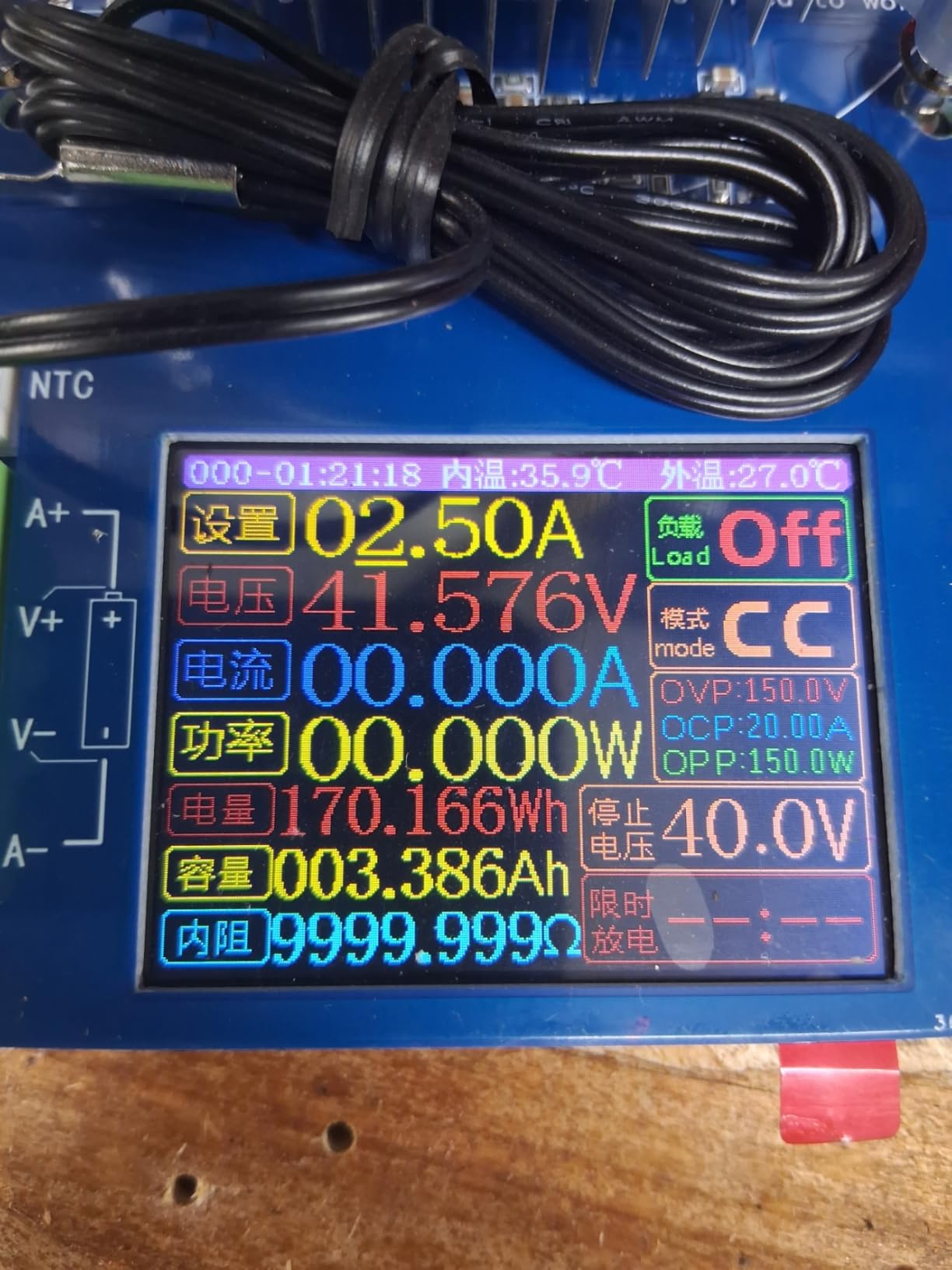
What impressed me most is the independent voltage monitoring capability. Four-wire Kelvin-style connections separate the current path from voltage sensing, giving more accurate readings under high current loads. This feature typically appears on units costing significantly more.
The unit supports parallel operation, letting you combine two loads for 300W total capacity. I have not tested this configuration personally, but forum users confirm it works for doubling power handling. The flexible cutoff voltage settings protect batteries from over-discharge, automatically stopping the test when voltage drops below your programmed limit.
When to Choose This Load
Buy the KKnoon if you are starting with electronic loads or need an affordable backup unit. The temperature monitoring and four-wire sensing give capabilities rare at this price. Hobbyists testing battery packs, USB power banks, or small power supplies will find this more than adequate. The ability to parallel units provides an upgrade path as your needs grow.
When to Look Elsewhere
Skip this if you need programmable automation or professional documentation. The lack of included instructions means you will spend time learning the menu system through trial and error. No test leads are included, adding hidden cost. The loud button beeps annoy some users, though I learned to work around them quickly.
5. MUXWELL 120W – Compact Desktop Test Solution
- Compact desktop form factor
- Simple controls with clear readings
- Accurate integrated Wh and Ah measurements
- Good value for the price
- Multiple test modes including short-circuit
- No automatic voltage cutoff option
- Fan runs early and loud
- Menu system not intuitive
- Control knob feels cheap
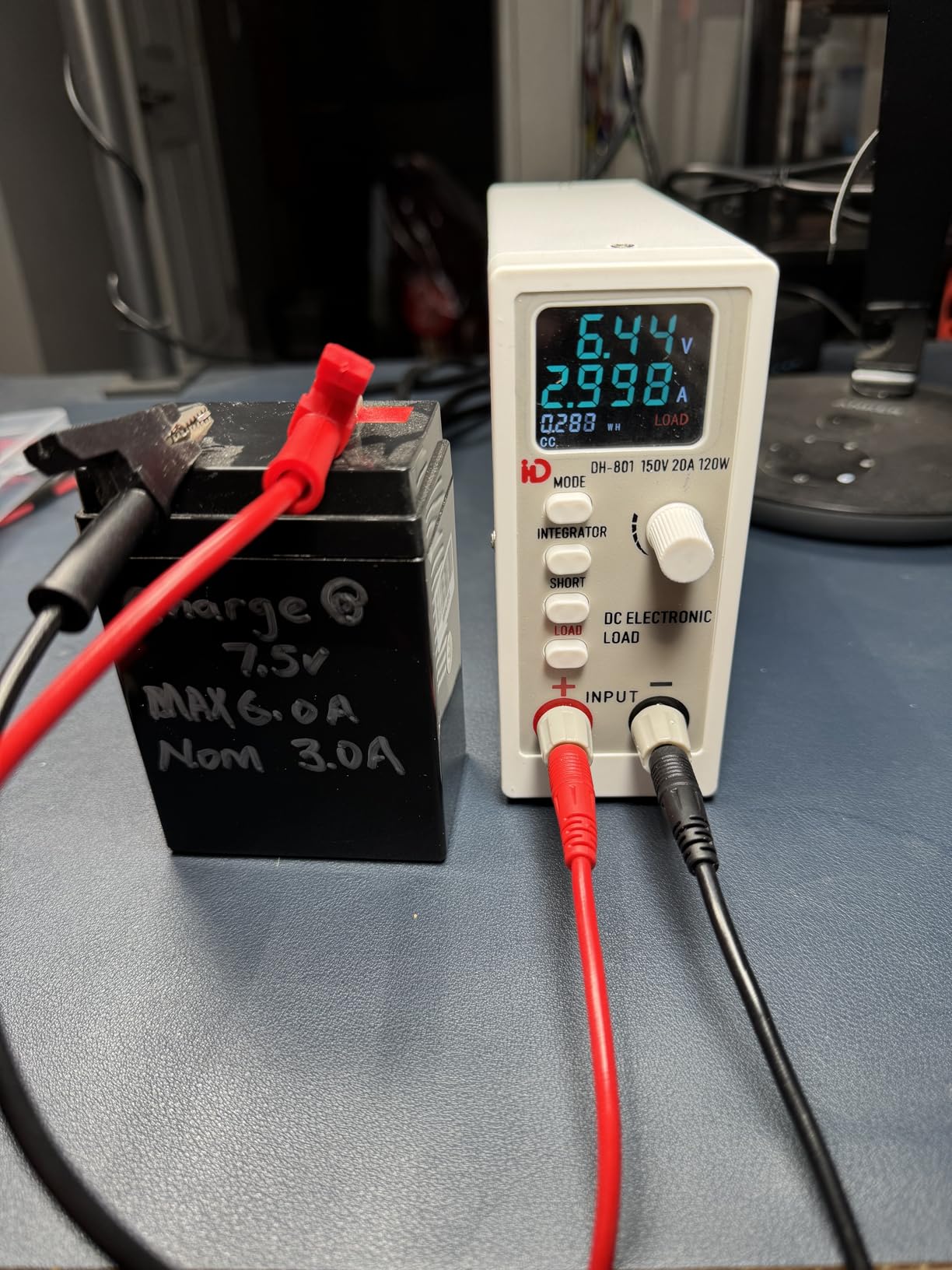
The MUXWELL DH-801 fits my crowded bench better than larger units. At 7.5 x 2.2 x 5.1 inches, it sits behind power supplies without dominating the workspace. The desktop form factor includes proper binding posts and a clear LED display showing all relevant parameters.
I use this unit for quick power supply checks and battery capacity tests where I do not need the full features of my larger loads. The integrated timing function tracks watt-hours and amp-hours automatically, giving accurate capacity measurements without manual calculation.

The short-circuit test mode provides a convenient way to verify power supply protection circuits. I use this for quick OCP (over-current protection) validation during repair work. The resistance mode lets me simulate specific load conditions without calculating current settings manually.
However, the lack of automatic voltage cutoff frustrates me during battery testing. I must monitor the discharge manually or risk over-discharging cells. The fan activates early and runs louder than necessary for the actual thermal load. The control knob feels loose and imprecise compared to higher-end units.
When to Choose This Load
Select the MUXWELL if bench space is limited and you need basic CC/CV/CP/CR functionality without programming features. The compact size and straightforward operation suit hobbyists and repair technicians. The accurate Wh/Ah measurements make this suitable for battery testing if you can monitor the cutoff voltage manually.
When to Look Elsewhere
Consider alternatives if you need automatic battery discharge protection or quieter operation. The early and loud fan activation creates unnecessary noise. Users wanting PC connectivity or programmable test sequences should look at the Tekpower TP3710A instead.
6. Eyes.sys 180W – Best for Power Bank Testing
- Near silent fan operation
- Bluetooth and USB connectivity
- Kelvin sensing for accurate readings
- Includes useful accessories
- Excellent for power bank testing
- App no longer on Google Play
- No printed instructions
- USB not galvanically isolated
- 36V cutoff limit despite 200V rating
The Eyes.sys load tester stands out for its quiet operation and connectivity options. The fan runs nearly silent compared to competitors, making this ideal for long battery discharge tests in shared spaces. I ran a 6-hour discharge test overnight in my office without the noise disturbing my concentration.
The included accessories impressed me immediately. Test leads, temperature probe, and PC cable come in the box, saving the additional purchase costs common with budget loads. The Kelvin sensing capability separates voltage measurement from current path, eliminating errors from lead resistance at high currents.
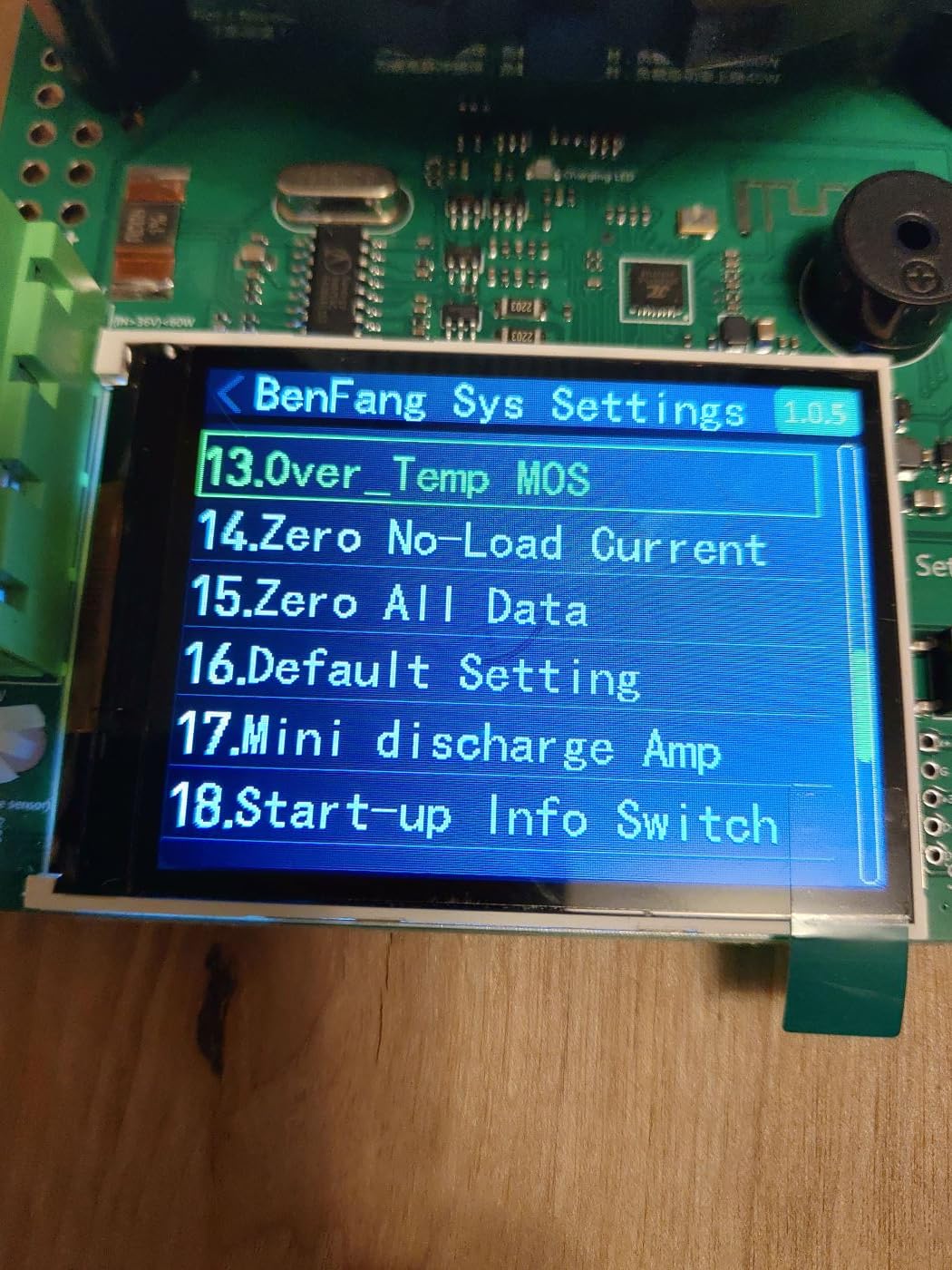
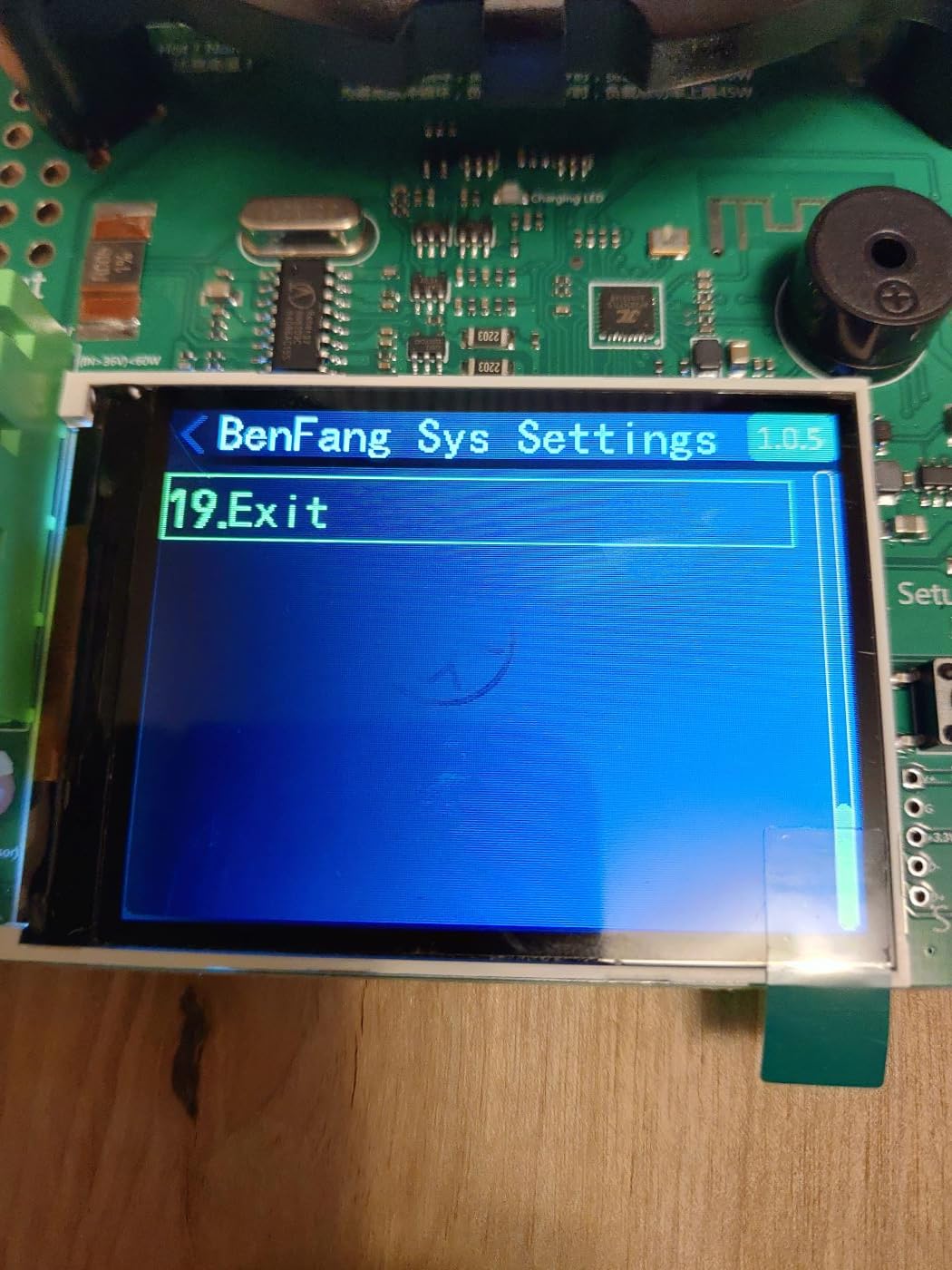
Bluetooth connectivity lets me monitor tests from my phone, though the app is no longer available on Google Play for newer Android versions. I found the PC software functional for data logging and remote control. The 2.4-inch HD color display shows comprehensive information including real-time discharge tube status monitoring.
The 36V cutoff limitation despite the 200V rating is misleading marketing. You cannot use the automatic cutoff features above 36V, limiting battery testing to lower voltage packs. The USB port lacks galvanic isolation, creating potential ground loop issues in some test setups.
When to Choose This Load
Pick the Eyes.sys if you test power banks, USB adapters, or 12V battery systems where the 36V cutoff is not limiting. The quiet operation and included accessories provide excellent value. Bluetooth connectivity works well for monitoring tests without tethering to the bench.
When to Look Elsewhere
Skip this unit if you need automatic cutoff for higher voltage battery packs or galvanic isolation for sensitive measurements. The unavailable mobile app limits Bluetooth functionality for newer phone users. Consider the KKnoon instead if you need four-wire sensing without the connectivity features.
7. Vastarry 180W – Most Versatile Budget Option
- Color screen with discharge curves
- Versatile for batteries and chargers
- Some users modified for 450W
- QR code links to manual
- 4 operating modes
- Confusing menu system
- No manual in box
- Fan stops immediately when load off
- USB-C connector issues
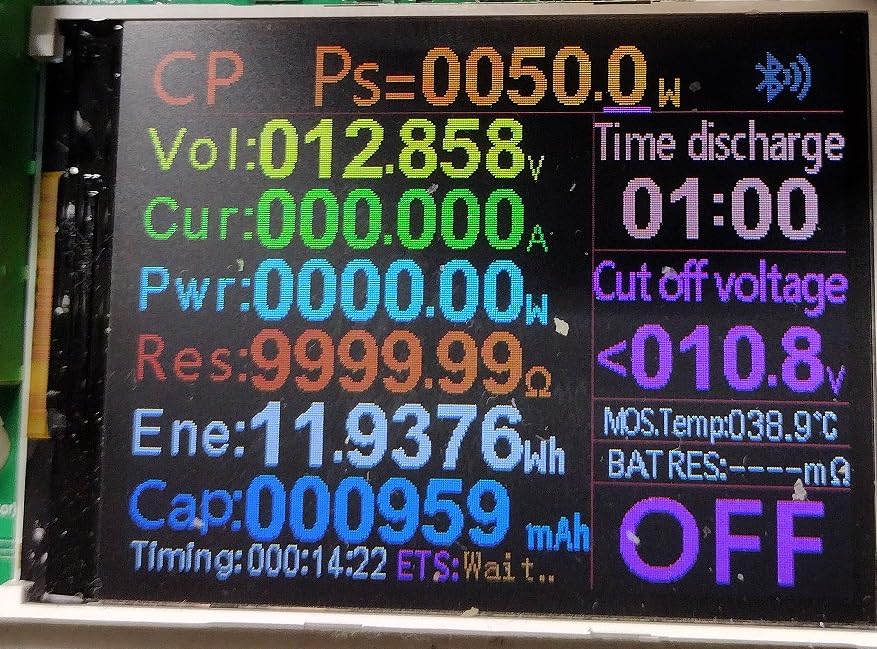
The Vastarry 180W load tester offers graphical display capabilities unusual at this price point. The color screen plots discharge curves in real-time, showing voltage drop over time visually. I find this helpful for spotting abnormal battery behavior that numeric displays might miss.
The intelligent temperature control adjusts fan speed based on thermal load rather than running constantly. In practice, the fan still activates frequently during high-current tests, though it stops immediately when the load turns off. I prefer this to units that run fans for minutes after tests complete.
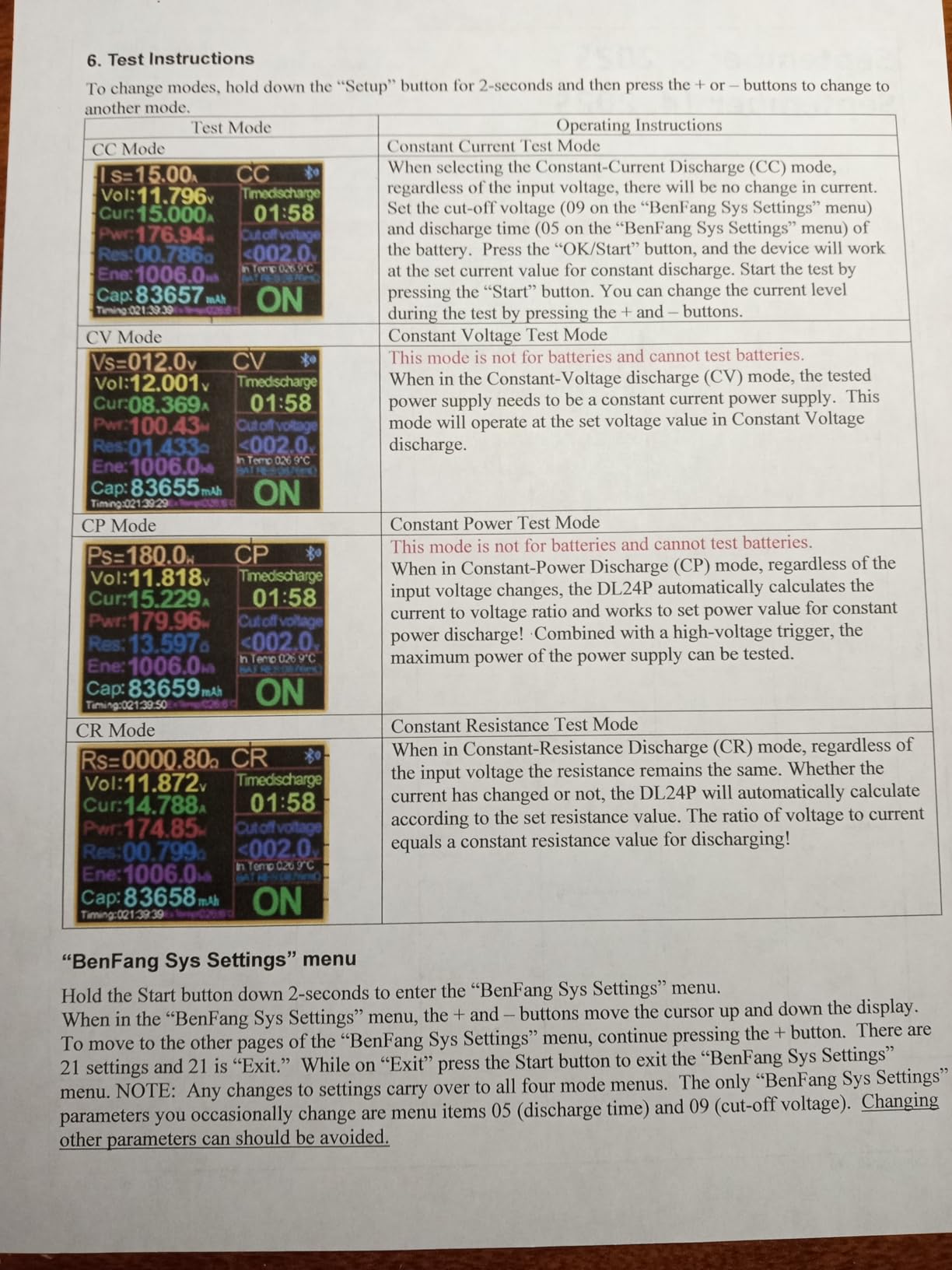
The QR code on startup links to an online manual, addressing the common complaint about missing documentation. The four operating modes cover the standard CC/CV/CP/CR configurations, and some forum users report modifying these units for 450W operation by improving cooling.
The menu system confuses many users, myself included initially. Navigation requires multiple button presses for simple changes. The USB-C connector has orientation issues, sometimes requiring flipping the cable for proper detection. Small display fonts become hard to read from across the bench.
When to Choose This Load
Select the Vastarry if you value graphical discharge curves and work primarily with RC batteries or USB chargers. The 180W capacity handles most hobbyist needs, and the curve display helps visualize battery health. Users comfortable with electronics might explore the modification potential for higher power handling.
When to Look Elsewhere
Avoid this unit if you want intuitive controls or need reliable USB-C operation. The confusing interface frustrates quick test setups. Poor documentation and tiny fonts create usability issues for some users. The KKnoon offers similar capabilities with better usability for most hobbyists.
8. MakerHawk 150W – Entry-Level Battery Tester
MakerHawk Electronic Load Tester – USB Load Tester 150W 200V 20A Resistor Adjustable Constant Current Battery Capacity Tester Module Intelligent Dischar
- Works well for LiFePO4 battery testing
- Variable load from 0.001A to 20A
- Displays Ah/Wh/time comprehensively
- Cutoff protection at minimum voltage
- Good customer service from MakerHawk
- Can burn out if input voltage exceeds limits
- No case exposes electronics
- Fan can be blocked by bent heatsink
- Sparse documentation
- Quality control issues reported
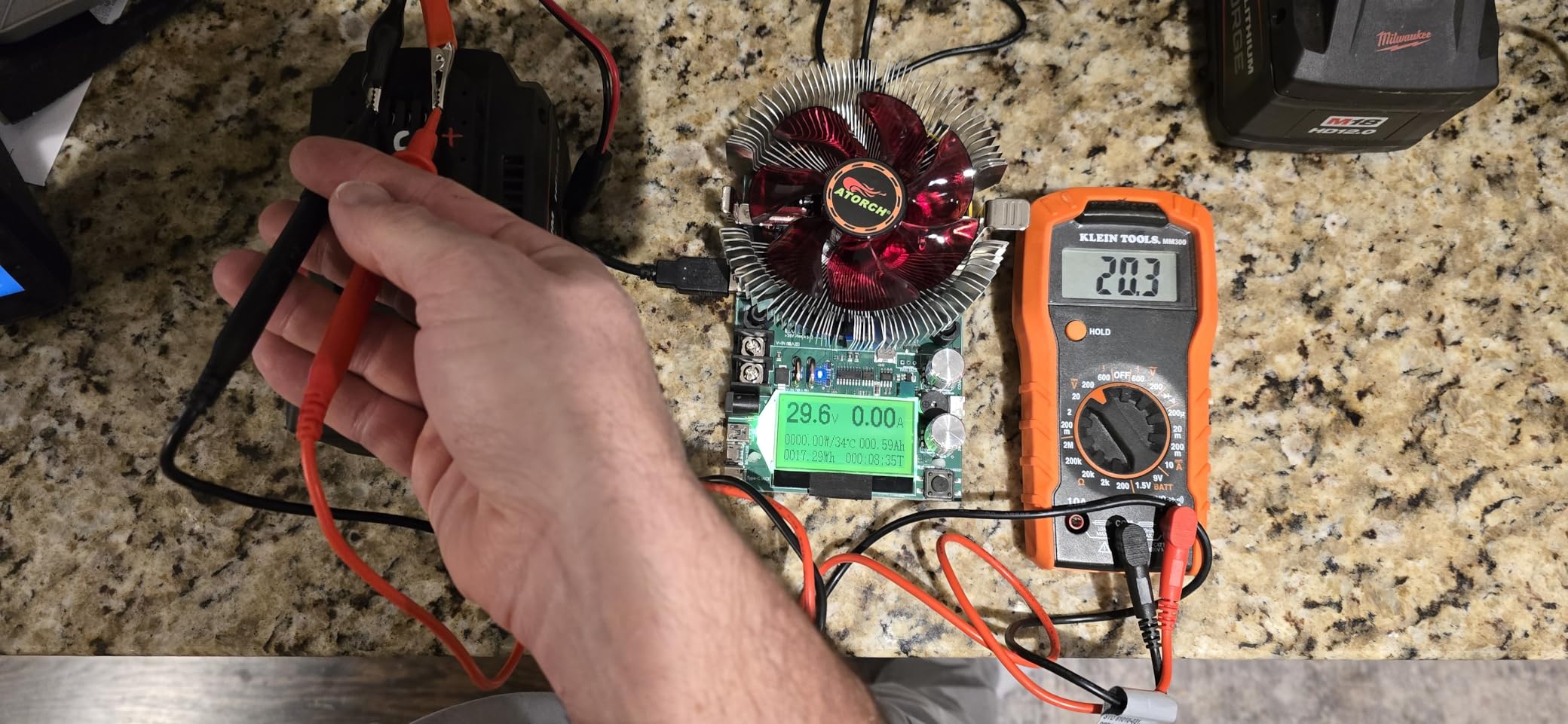
The MakerHawk 150W electronic load comes in a compact 83-gram package suitable for portable testing. The dual input options through USB or terminal blocks let me test everything from power banks to higher current battery packs. I keep this in my field kit for quick capacity checks on customer equipment.
The variable load control adjusts from 0.001A to 20.0A in fine increments. This precision helps when testing small cells where high current would be dangerous. The comprehensive display shows amp-hours, watt-hours, voltage, current, watts, and runtime simultaneously.
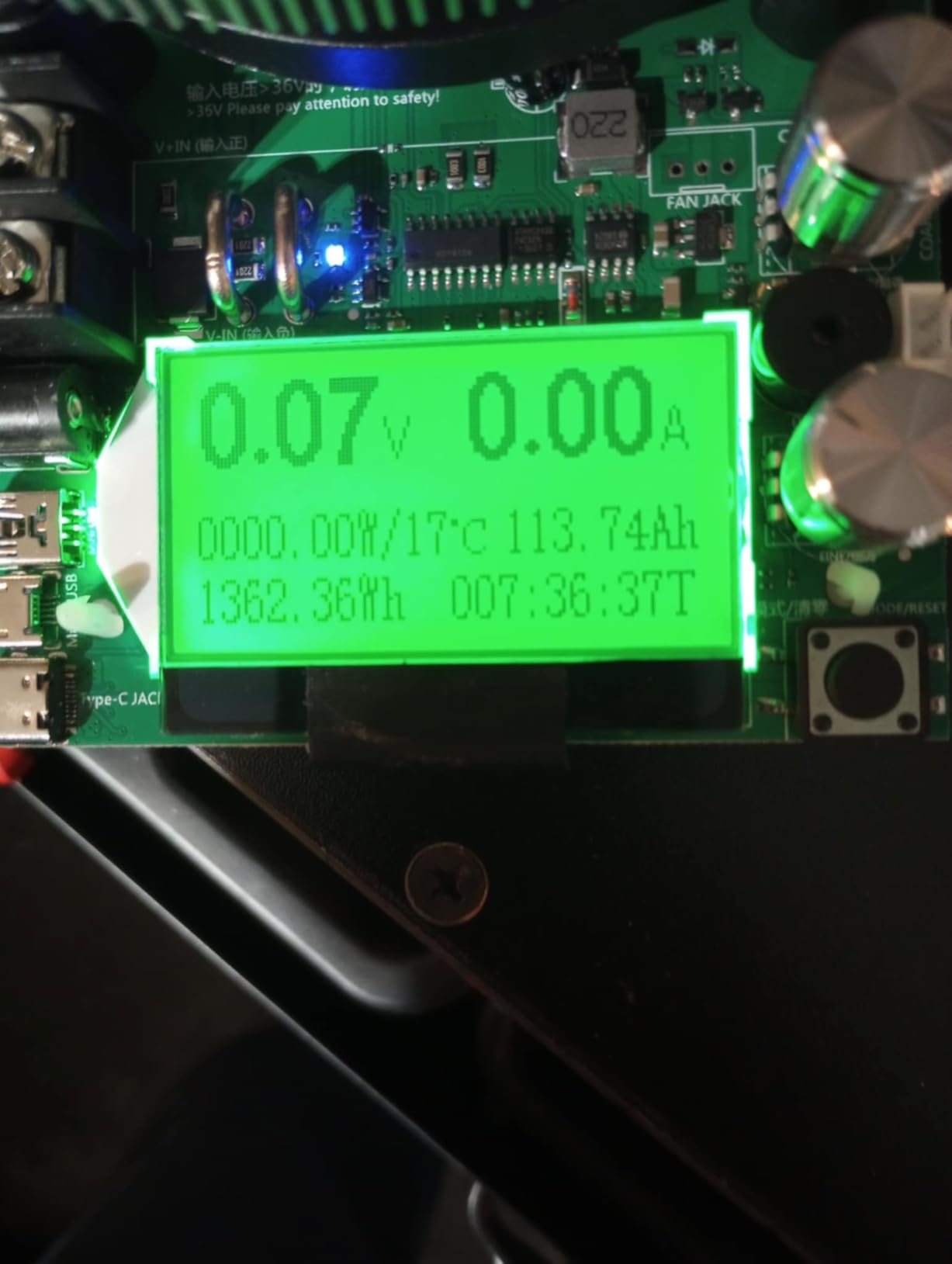
The cutoff protection removes the load automatically when voltage drops below your programmed minimum. This feature protects batteries from over-discharge without constant monitoring. I use this for overnight discharge tests of lithium iron phosphate cells where cutoff voltage is critical for cell longevity.
Quality control concerns appear frequently in user reviews, with 25% one-star ratings citing premature failure. My unit works reliably, but I monitor it closely during high-voltage tests. The exposed electronics worry me for field use where dust and moisture might cause problems. The heatsink fins bend easily and can block the fan if mishandled.
When to Choose This Load
Consider the MakerHawk if you need an inexpensive, portable load for occasional battery testing. The fine current adjustment and comprehensive measurements suit hobbyist battery work. Good customer service from MakerHawk provides some confidence if issues arise. This works well as a secondary or travel load.
When to Look Elsewhere
Avoid this unit for professional use or critical testing where reliability matters. The quality control issues and exposed construction create durability concerns. The risk of burning out from input voltage exceeding limits requires careful attention during use. The KKnoon provides better build quality and features for similar money.
How to Choose the Right DC Electronic Load?
Selecting the best DC electronic load for your needs requires understanding several key specifications. I have tested loads ranging from thirty dollars to over five hundred, and the right choice depends entirely on your specific applications.
Power, Voltage, and Current Ratings
Match your load ratings to your expected test conditions. For testing USB power banks and 12V batteries, 150W loads handle most needs. For bench power supply validation or EV battery modules, consider 200W or higher capacity units.
Voltage range matters more than you might expect. Many budget loads advertise 200V capability but limit automatic cutoff features to 36V or less. Check both the maximum voltage rating and any cutoff limitations before purchasing.
Current rating determines your minimum load step size and maximum draw. For testing high-capacity batteries or large power supplies, look for 30A or 40A ratings. For small electronics testing, 10A or 20A suffices and often provides finer current resolution.
Understanding Operating Modes
DC electronic loads operate in four primary modes. Constant Current (CC) mode draws a fixed current regardless of voltage, useful for testing power supply regulation and battery discharge. Constant Voltage (CV) mode maintains a set voltage while current varies, simulating battery charging scenarios.
Constant Resistance (CR) mode simulates a fixed resistor value, helpful for simple load simulations. Constant Power (CP) mode adjusts current to maintain steady power draw as voltage changes, ideal for testing power supply efficiency across varying line conditions.
Most hobbyist testing uses CC mode exclusively. Professional work often requires all four modes plus dynamic testing capabilities where the load switches between levels automatically.
Interface and Software Considerations
Basic loads operate through front panel controls only. Programmable loads add USB, RS232, or Ethernet interfaces for computer control. I consider programmability essential for any serious test work, though simple battery testing works fine with manual controls.
SCPI command support provides standardized control across different instruments. This matters if you build automated test systems or integrate multiple pieces of equipment. LabVIEW compatibility helps if you use National Instruments software for data acquisition.
Forum users frequently report software compatibility problems with budget Chinese manufacturers. Before purchasing, verify the software works with your operating system and search for user experiences with your specific use case.
Protection Features and Safety
Over-voltage protection (OVP), over-current protection (OCP), and over-power protection (OPP) prevent damage to both the load and your device under test. These features are non-negotiable for professional use.
Over-temperature protection (OTP) shuts down the load if cooling fails. I have seen budget units without proper OTP that could create fire hazards if fans fail during high-power tests.
Four-wire Kelvin sensing provides accurate voltage measurements by separating current and sense paths. This feature appears on better units and becomes important for high-current testing where lead resistance affects accuracy.
Real-World Considerations
Fan noise matters more than specifications suggest. Loads with constantly-running fans create background noise that becomes annoying during long tests. I prefer units with temperature-controlled fans that run only when needed.
Documentation quality varies enormously. Professional brands include comprehensive manuals with programming examples. Budget units often lack printed instructions entirely, requiring you to find online resources or figure things out through trial and error.
Calibration certificates provide traceability for professional work. The Tekpower TP3710A and Siglent SDL1020X-E include calibration documentation, while budget units do not. For hobbyist use this matters less, but laboratories need this paperwork.
Frequently Asked Questions
What does DC load mean?
A DC load is a device that draws power from a DC source to test its performance characteristics. Electronic loads use semiconductors to provide programmable, variable loading that can simulate different conditions like constant current draw or specific resistance values. They are essential tools for power supply testing, battery characterization, and DC-DC converter validation.
How do you test a power supply with an electronic load?
Connect the power supply output to the electronic load input terminals. Set the load to constant current mode at your desired test current. Monitor the power supply output voltage as you increase the load current in steps. A good power supply maintains stable voltage across the rated current range. Check for voltage droop, ripple, and recovery behavior when load changes suddenly.
Can you use a DC electronic load to test AC power supplies?
No, standard DC electronic loads cannot test AC power supplies directly. AC power requires specialized AC electronic loads or you must convert the AC to DC first using a rectifier. Some engineers add a bridge rectifier and filter capacitor to test AC adapters, but this changes the load characteristics and introduces additional variables. For proper AC power supply testing, use an AC electronic load or resistive load bank designed for alternating current.
What is the difference between CC, CV, CR, and CP modes?
CC (Constant Current) draws a fixed current regardless of voltage, used for testing power supply regulation and battery discharge. CV (Constant Voltage) maintains a set voltage while current varies, simulating battery charging. CR (Constant Resistance) acts like a variable resistor with fixed resistance value. CP (Constant Power) adjusts current to maintain steady power draw as voltage changes, useful for efficiency testing across varying conditions.
How accurate are budget electronic loads?
Budget electronic loads typically offer 1% to 3% accuracy for voltage and current measurements, which suffices for most hobbyist and repair work. Professional units provide 0.1% or better accuracy with proper calibration. The Siglent SDL1020X-E and Tekpower TP3710A both offer excellent accuracy for their price range, verified against calibrated multimeters. For critical measurements, always verify your load against a known good reference.
Final Recommendations
The best DC electronic loads for power supply testing in 2026 span a wide price and capability range. For professional work requiring accuracy and automation, the Siglent SDL1020X-E delivers verified precision with excellent programmability. The Tekpower TP3710A offers the best value for users needing SCPI control without premium pricing.
Hobbyists and those starting with electronic loads should consider the KKnoon 150W unit. It provides four-mode operation, temperature monitoring, and Kelvin sensing at a price that makes experimentation affordable. For basic battery testing, even the entry-level options work well enough to replace power resistors permanently.
Match your choice to your actual needs rather than buying more capability than necessary. A basic load that gets used regularly provides more value than a programmable unit that sits unused because the interface frustrates you. Happy testing.