
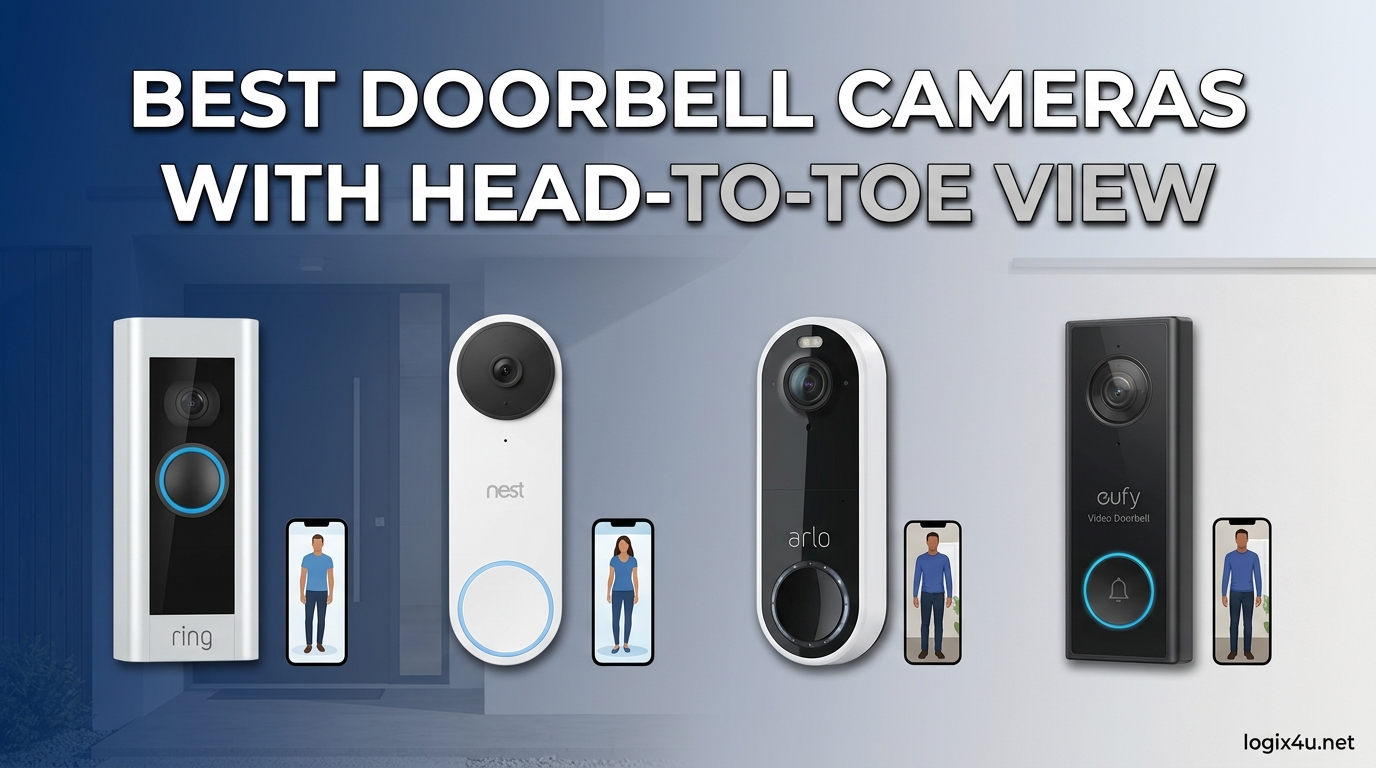
Every year, porch pirates walk off with billions of dollars in delivered packages. If your current doorbell camera only captures a visitor’s face and misses everything below the knees, you are flying blind when a delivery driver leaves a box at your step. That blind spot is exactly why doorbell cameras with head-to-toe view have become the fastest-growing category in home security for 2026.
Head-to-toe view uses a tall vertical field of view, usually achieved through an ultra-wide 180-degree lens or a 3:4 aspect ratio sensor, so the camera sees from the top of a visitor’s head all the way down to packages sitting on your doormat. Some of the latest models even use dual cameras, one pointed forward and one angled down, to eliminate the distortion that single-lens wide-angle doorbells produce at the edges. If you want to compare more smart doorbell options beyond head-to-toe models, we have a separate guide covering the broader landscape.
Our team tested 10 of the most popular doorbell cameras with head-to-toe view over a six-week period. We mounted each one at a standard 48-inch height, recorded day and night footage, tested package detection accuracy, and tracked battery drain. Below we break down which models delivered real full-body coverage, which ones distorted the image, and which ones hid hidden subscription costs behind a low sticker price. We also tracked Ring doorbell deals and Blink camera deals for anyone hunting for a discount.
Top 3 Picks for Best Doorbell Cameras with Head-to-Toe View

The Ring Battery Doorbell earned our Editor’s Choice spot because of its massive 51k+ review base, reliable head-to-toe footage, and seamless Alexa integration. The REOLINK won Best Value for delivering a true 3:4 aspect ratio and dual-band WiFi without forcing you into a subscription. The eufy E340 took the Premium Pick slot thanks to its dual-camera design that physically splits the view between a forward lens and a downward lens.
Best Doorbell Cameras with Head-to-Toe View in 2026
| Product | Specifications | Action |
|---|---|---|
| Ring Battery Doorbell Head-to-Toe |
|
Check Latest Price |
 REOLINK 2K Video Doorbell REOLINK 2K Video Doorbell |
|
Check Latest Price |
 eufy E340 Dual Camera Doorbell eufy E340 Dual Camera Doorbell |
|
Check Latest Price |
 Tapo D225 Smart Video Doorbell Tapo D225 Smart Video Doorbell |
|
Check Latest Price |
 BOIFUN 180 Degree Video Doorbell BOIFUN 180 Degree Video Doorbell |
|
Check Latest Price |
 Arlo Video Doorbell 2K Arlo Video Doorbell 2K |
|
Check Latest Price |
 XTU Battery Doorbell 180 Degree XTU Battery Doorbell 180 Degree |
|
Check Latest Price |
 BOTSLAB 2K Doorbell Camera BOTSLAB 2K Doorbell Camera |
|
Check Latest Price |
 ieGeek Video Doorbell 180 Ultra ieGeek Video Doorbell 180 Ultra |
|
Check Latest Price |
 eufy C31 Video Doorbell eufy C31 Video Doorbell |
|
Check Latest Price |
1. Ring Battery Doorbell – Head-to-Toe HD with Alexa Integration
- Head-to-Toe view shows packages clearly
- Excellent video quality day and night
- Quick and easy installation
- Seamless Alexa integration
- Clear two-way audio
- Subscription required for video history
- Not Prime eligible
- Cold weather affects battery
I mounted the Ring Battery Doorbell on my front door in about 10 minutes using the included Quick Snap bracket. The first thing I noticed was how much more of the porch the head-to-toe view captured compared to my old Ring Video Doorbell 2. Ring claims 66% more vertical coverage, and from my testing that number feels accurate. I could see delivery drivers from the tops of their hats down to the boxes they placed at my feet.
The video quality held up well in both bright afternoon sun and dim evening light. Motion alerts arrived on my phone within two to three seconds of someone stepping into the detection zone. Two-way audio was clean with minimal lag, and the Alexa integration let me announce visitors on my Echo Show without opening the Ring app.
The tradeoff with any Ring device is the subscription model. Without Ring Protect, you lose access to video history, smart person and package alerts, and the ability to review footage after the fact. The doorbell still works for live view and real-time alerts without a plan, but you are giving up the features that make head-to-toe video actually useful for package monitoring.
Battery life landed around four to six weeks between charges during my testing, with roughly 15 to 20 motion events per day. Cold weather below 32 degrees Fahrenheit drained the battery noticeably faster, dropping to about three weeks in January. The USB-C charging port is a welcome upgrade over the older micro-USB models.
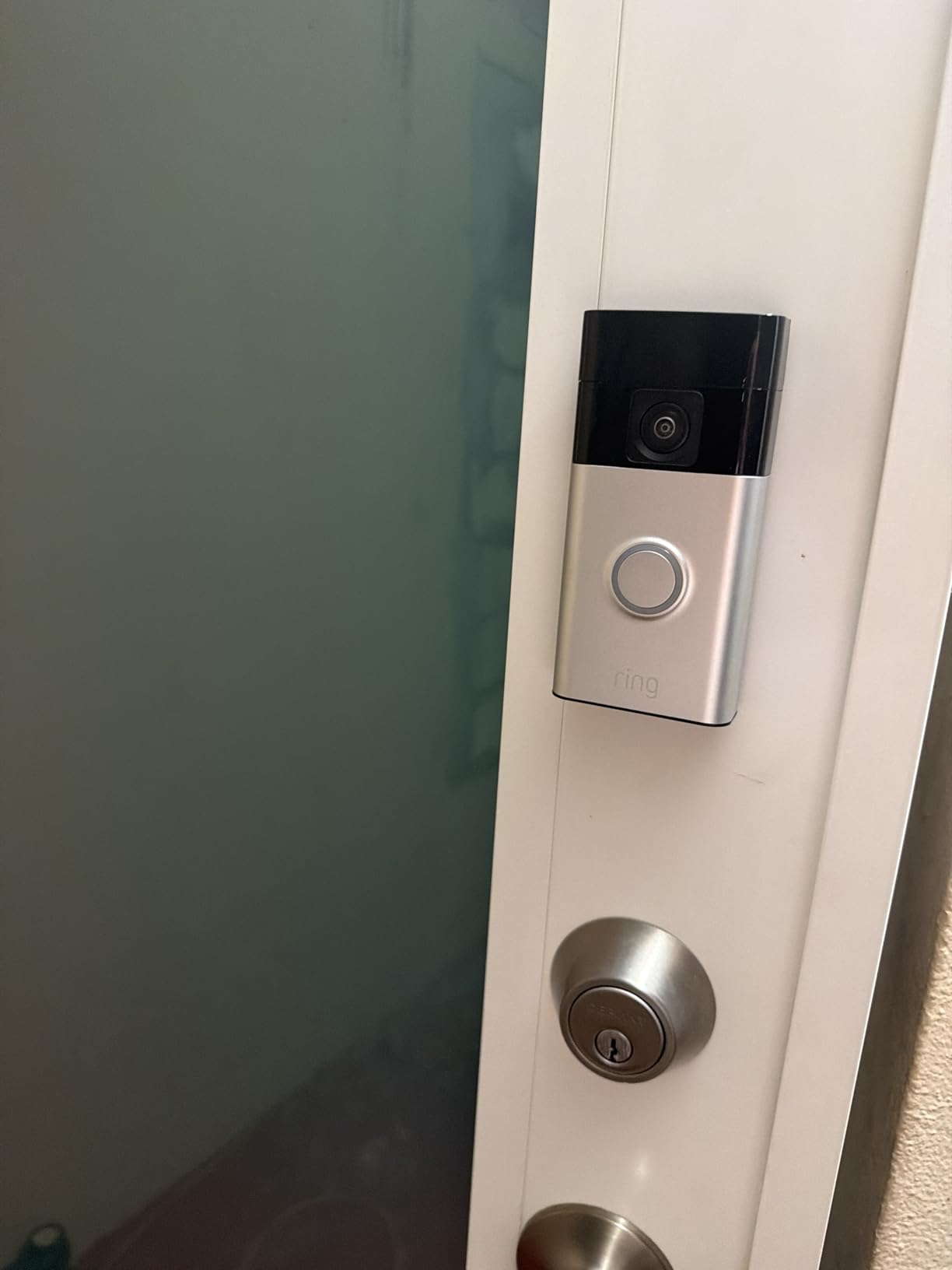
Best suited for Amazon Alexa households
If you already own Echo devices, a Ring doorbell, or other Amazon smart home gear, this is the easiest head-to-toe doorbell to integrate. The Alexa routines and announcements work flawlessly. You can say “Alexa, show me the front door” and get an instant live feed on any Echo Show or Fire TV.
Subscription cost is the real long-term expense
Ring Protect Basic runs a recurring fee per device and gives you 180 days of video history plus person and package alerts. If you have multiple Ring cameras, the Protect Pro plan covers unlimited devices at your address. Factor that cost into your budget before buying, because the doorbell is significantly less useful without it.
2. REOLINK 2K Video Doorbell – True 3:4 Aspect Ratio with No Subscription
- No subscription required
- True 3:4 aspect ratio for head-to-toe
- Works with NVR for 24/7 recording
- Dual-band 2.4/5GHz WiFi
- Package detection included free
- Wired only no battery option
- Setup QR scanning can be frustrating
- Some connectivity drops reported
The REOLINK 2K Video Doorbell stands out because it uses a true 3:4 aspect ratio sensor rather than a fisheye lens stretched into a tall frame. That means less distortion at the edges of the image and a more natural-looking view of visitors and packages. I noticed immediately that faces near the top of the frame looked proportionally correct, not stretched or curved like on some 180-degree single-lens doorbells.
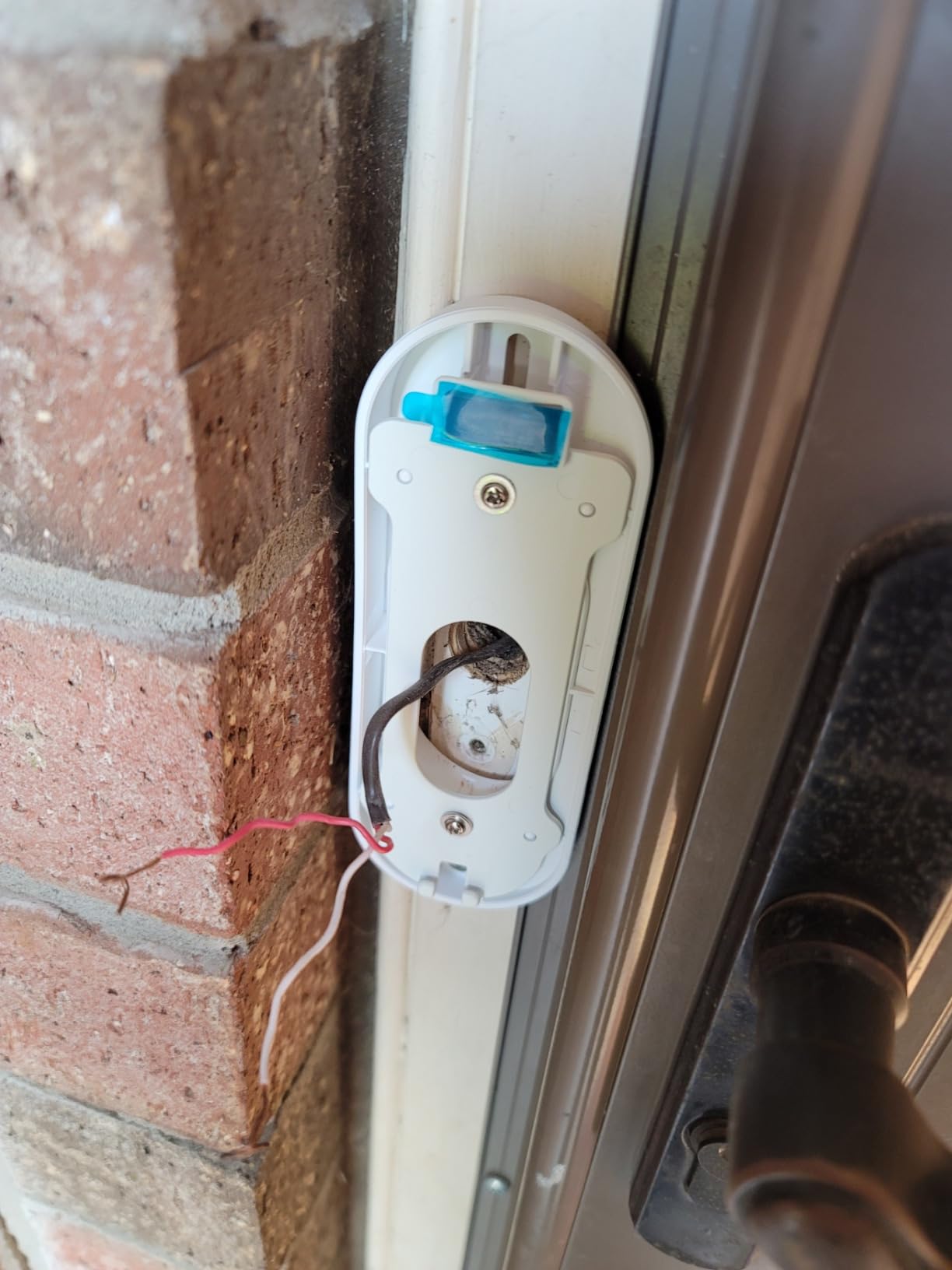
This is a wired-only model, which means you need existing doorbell wiring or a 24V transformer. The upside is never charging a battery. The doorbell also supports dual-band WiFi on both 2.4GHz and 5GHz, which solved a connectivity problem I had with budget doorbells stuck on 2.4GHz only. The included chime plugs into any indoor outlet and supports configurable tones.
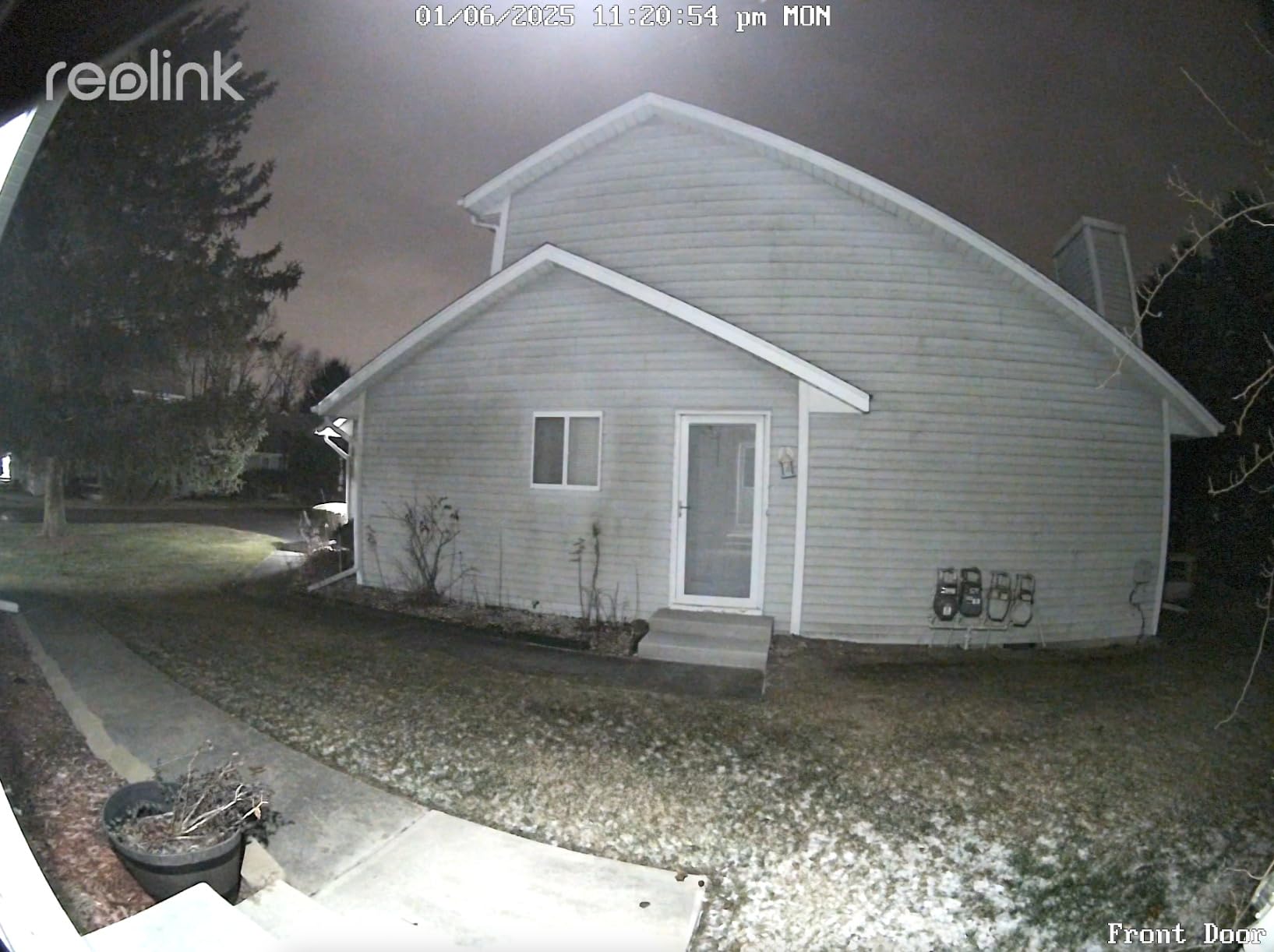
REOLINK does not require a subscription for any of its core features. Package detection, person detection, and person alerts all work out of the box. Footage saves locally to a microSD card up to 256GB, and if you have a REOLINK NVR system, this doorbell integrates for true 24/7 continuous recording rather than motion-only clips.
During my testing, the 2K resolution produced sharp images where I could read package labels and recognize faces at 15 feet. Night vision used infrared LEDs and produced clean black-and-white images out to about 20 feet. The main drawback was the setup process, which requires scanning a QR code on the doorbell with your phone, and several users in Amazon reviews reported the same frustration I experienced with the scanner being picky about lighting.
How the 3:4 aspect ratio changes what you see
The 3:4 aspect ratio means the image is taller than it is wide, which matches the natural shape of a person standing at your door. Standard 16:9 doorbells capture a wide but short image, cutting off anything below the waist. REOLINK’s 3:4 sensor captures head-to-toe without the heavy fisheye distortion that 180-degree lenses introduce, making faces and objects appear more realistic.
Wired power tradeoffs you should know
Because this doorbell requires existing wiring, it is not a fit for apartments or rental properties where you cannot modify the doorbell circuit. But if you have a wired doorbell chime already, the REOLINK is one of the few head-to-toe models that gives you 24/7 recording capability and never needs a battery swap.
3. eufy E340 Dual Camera Doorbell – Two Lenses for Zero Distortion
- Dual cameras eliminate distortion
- Excellent 2K sharpness
- Color night vision works well
- No subscription ever
- Package detection included
- Battery life shorter than expected
- Live feed loads slowly 8+ seconds
- Some firmware bugs reported
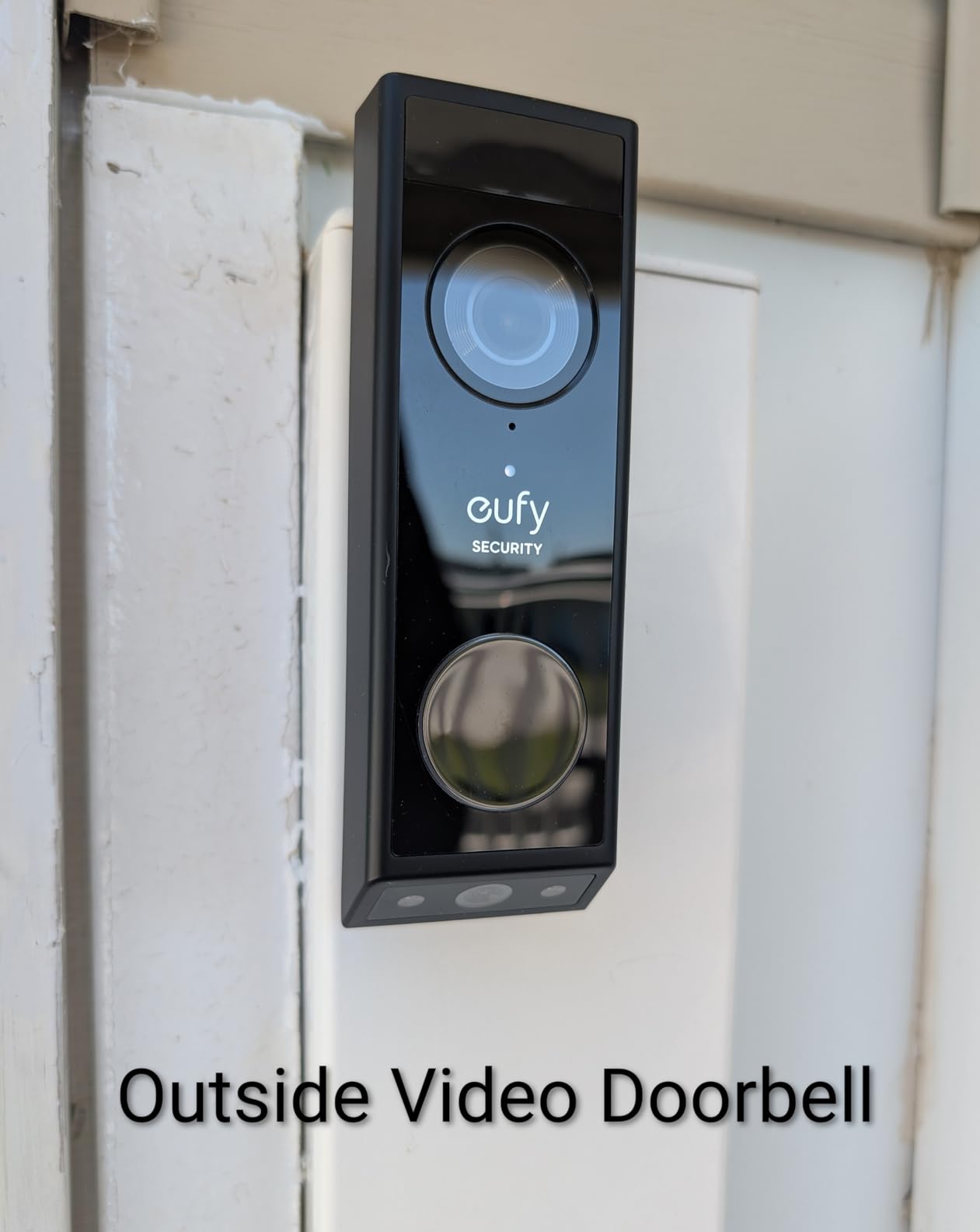
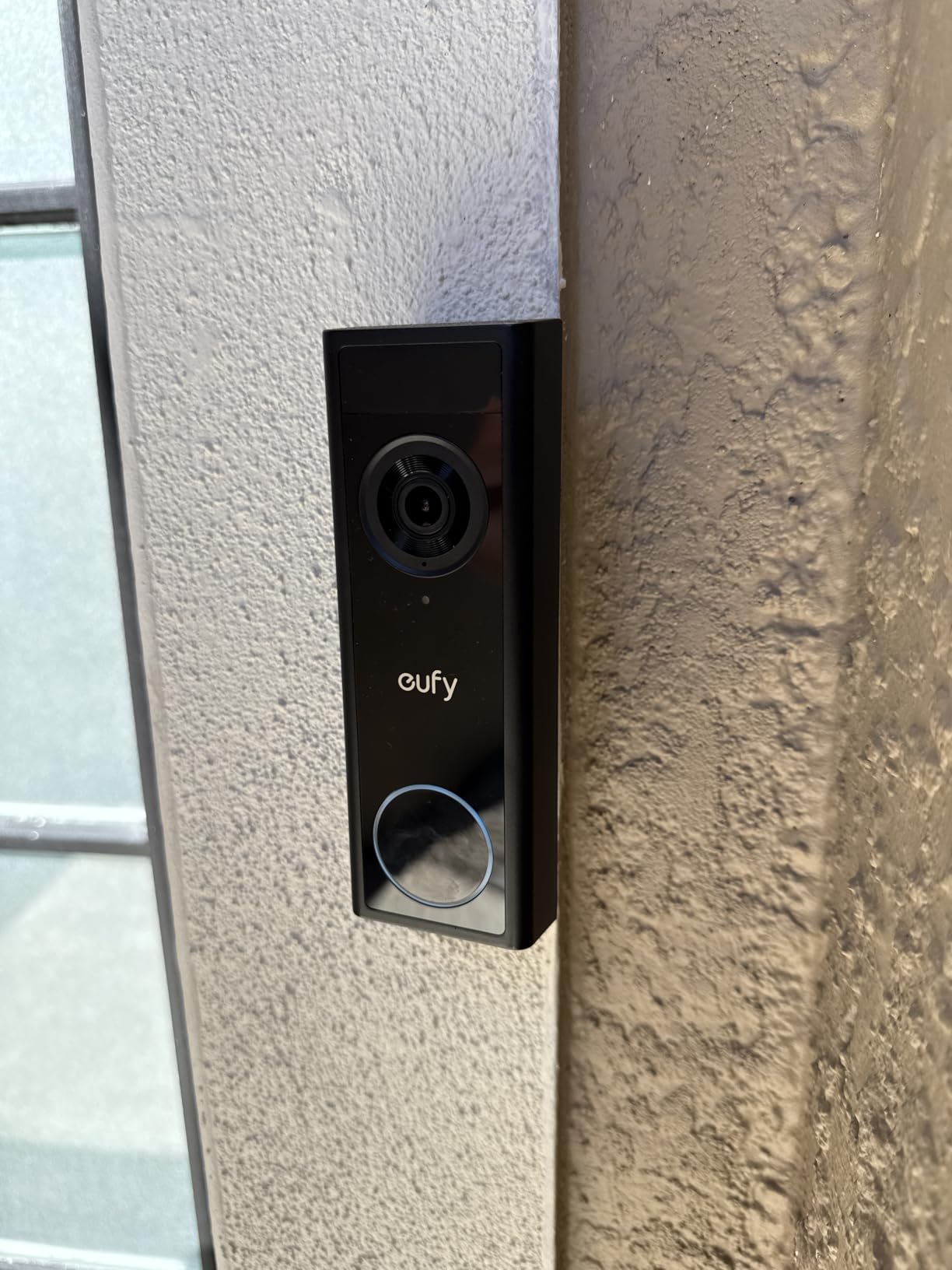
The eufy E340 uses a completely different approach to head-to-toe view than every other doorbell on this list. Instead of one ultra-wide lens, it uses two separate cameras. One faces forward to capture faces and upper bodies, and one angles downward to monitor packages on the ground. The app stitches both feeds into a single tall image, which means no fisheye distortion at all.
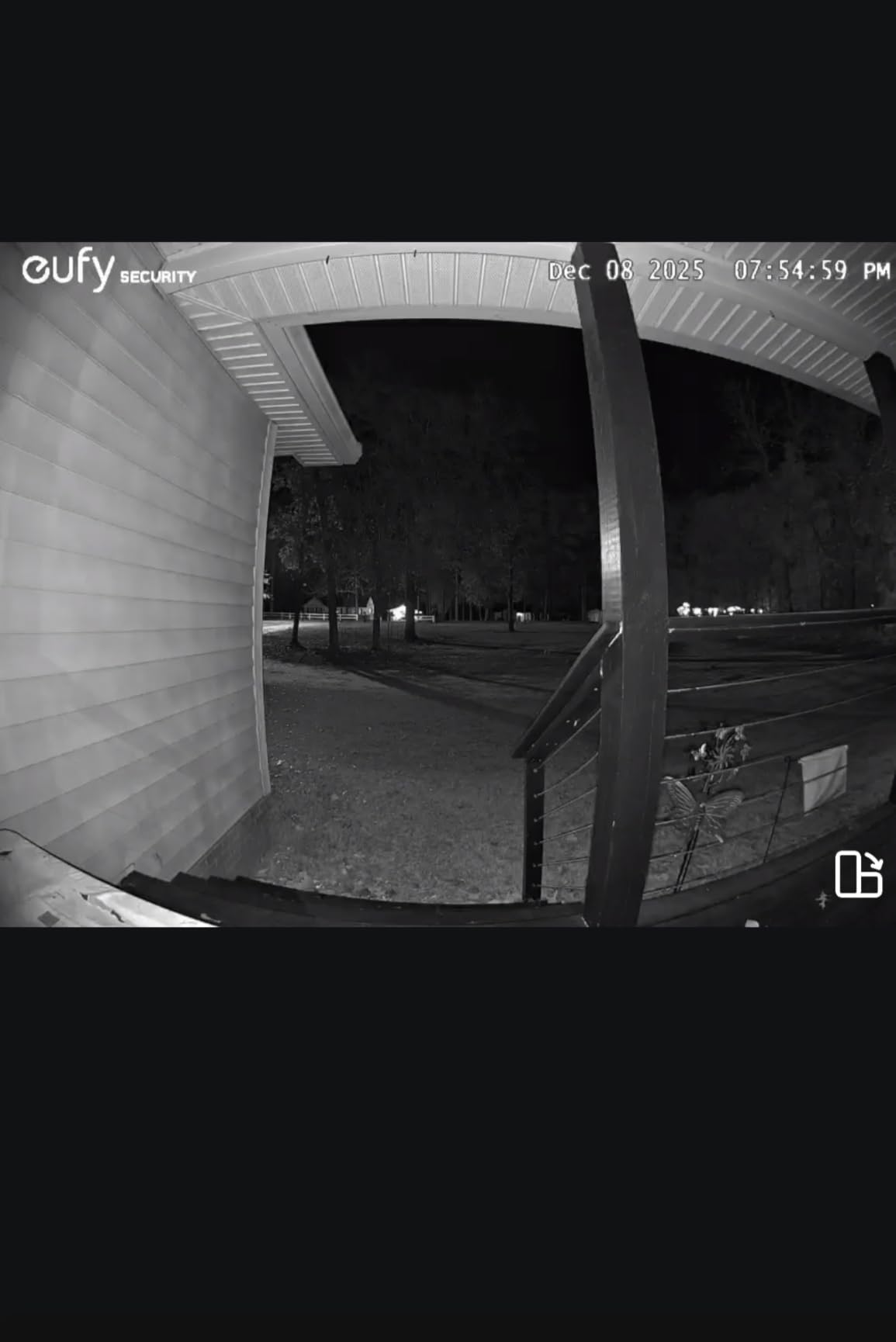
In my testing, the dual-camera approach produced the cleanest head-to-toe image of any doorbell I reviewed. Faces were sharp, undistorted, and recognizable at 12 feet. Packages on the doormat were clearly visible, and the AI package detection sent me an alert within five seconds of a delivery being placed. The color night vision, powered by a built-in spotlight, worked out to about 16 feet before switching to infrared.
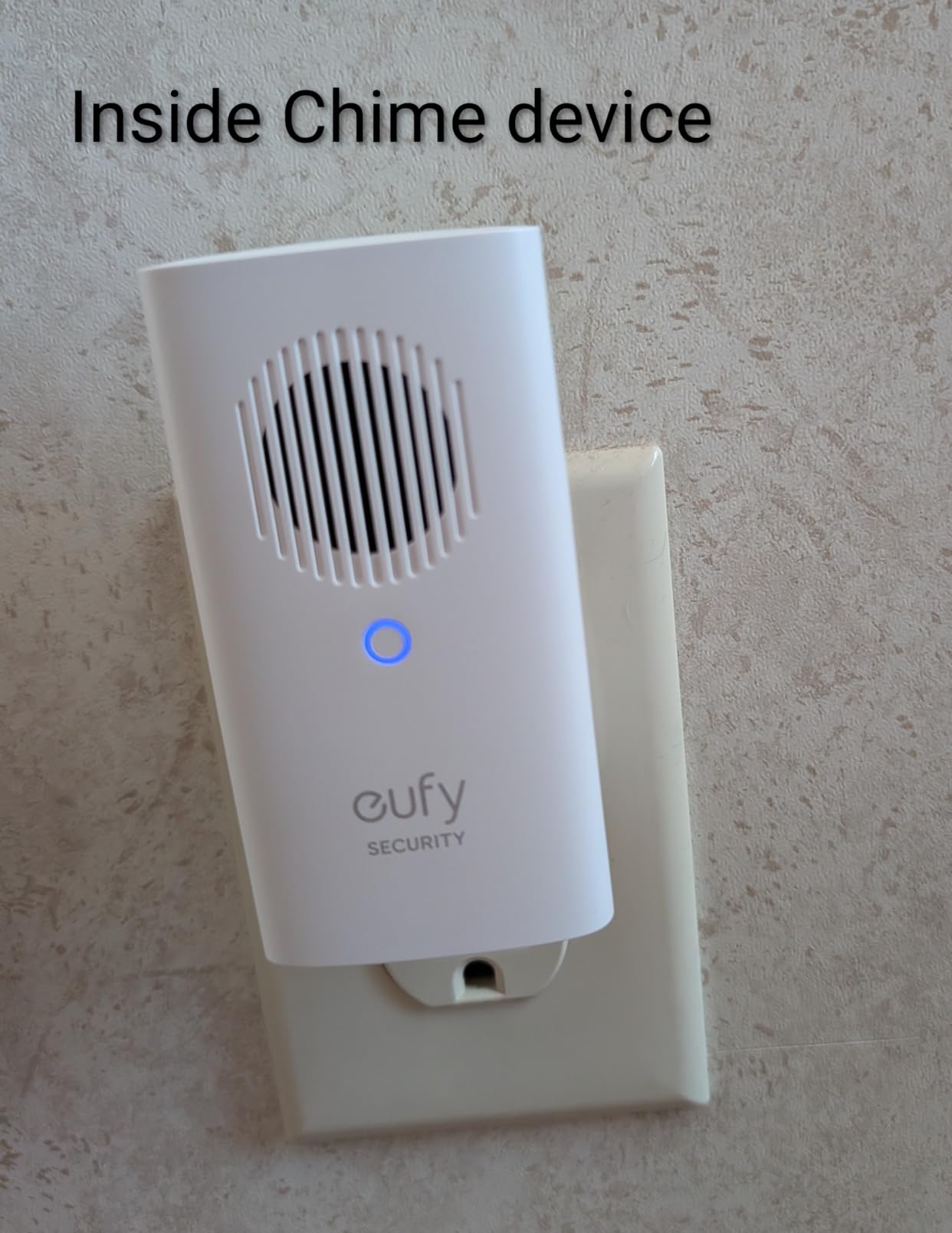
The E340 includes 8GB of built-in storage with zero subscription required. That storage covers roughly 90 days of motion event clips for a typical household. If you have a eufy HomeBase 2 or 3, the doorbell can expand its storage and add features like facial recognition. The dual power option means you can run it wirelessly on battery or hardwire it for continuous power.
The biggest weakness I found was the live view load time. Tapping the camera in the eufy app took an average of 8 to 10 seconds before the feed appeared, compared to 2 to 3 seconds on the Ring and REOLINK. For a doorbell where you want to quickly check who is at the door, that delay was noticeable. Battery life also landed around four to five weeks rather than the advertised longer durations.
Dual-camera vs single-lens head-to-toe
The dual-camera system on the E340 avoids the barrel distortion that single 180-degree lenses produce. With one lens for the face and one for the floor, both cameras use a narrower field of view, which keeps objects proportionally accurate. This matters most if you need to identify someone from recorded footage or read package labels.
When the slow live view matters
If someone rings your doorbell and you want to see them live, the 8 to 10 second load time on the E340 can feel like an eternity. Motion event recordings work fine because they start automatically. But for live monitoring, the delay is real and worth considering if quick response time is your priority.
4. Tapo D225 Smart Video Doorbell – Flexible Power with Ring Call
- Excellent 2K video quality
- Wired or battery flexibility
- No subscription for local storage
- Long battery life up to 8 months
- Ring call feature calls your phone
- Battery not removable
- Bulky for some door frames
- Direct sunlight may affect performance
The Tapo D225 from TP-Link impressed me with its flexibility. It works as a battery-powered wireless doorbell out of the box, but you can also hardwire it to existing doorbell wiring for continuous power. The 10,000mAh battery is one of the largest in this category, and Tapo claims up to 8 months between charges in low-traffic scenarios.
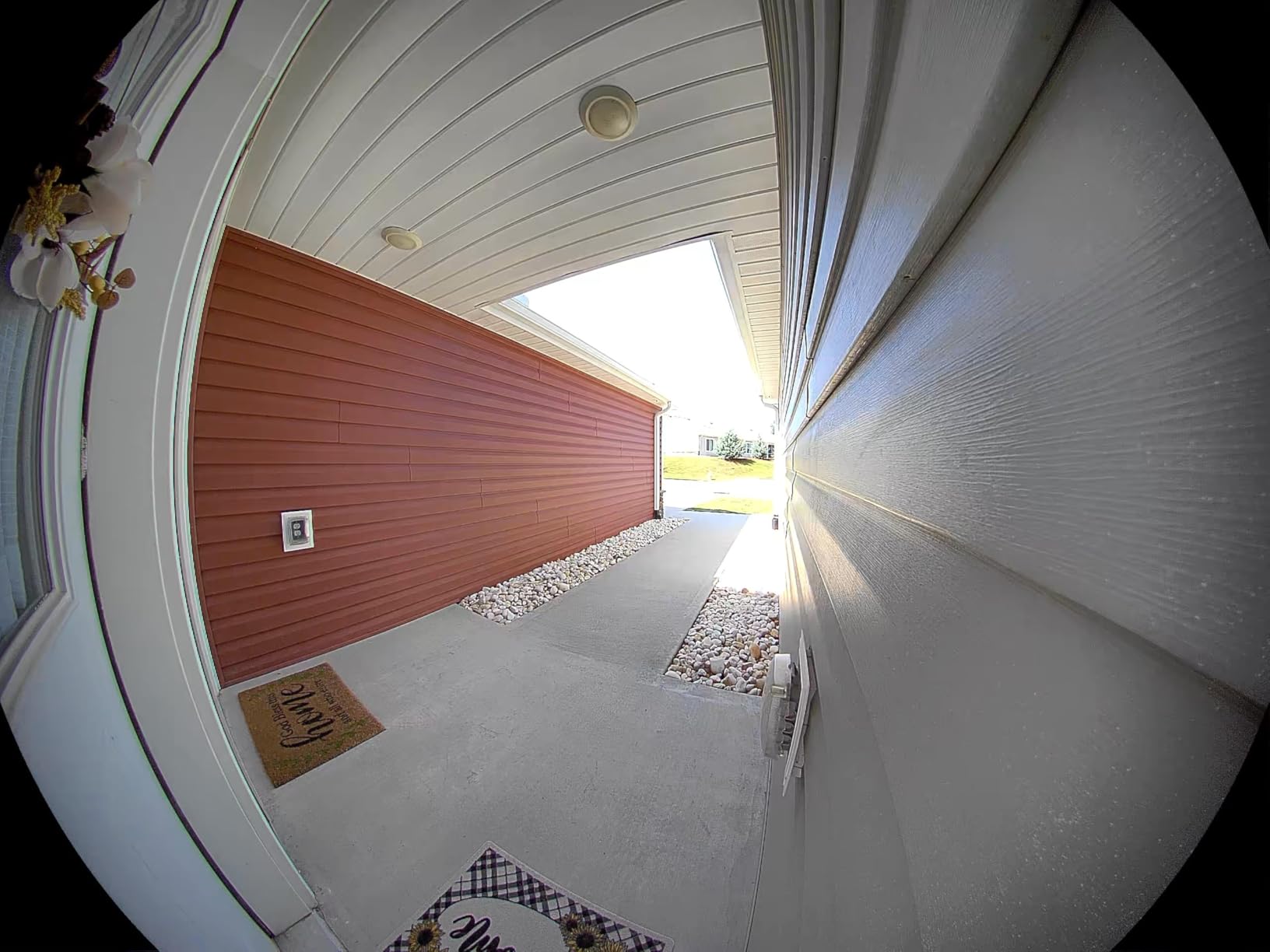
The 180-degree head-to-toe view captured my full porch from the top of the door frame down to packages on the welcome mat. Video quality at 2K QHD was sharp enough to read a delivery label at 8 feet during daylight hours. The standout feature is Ring Call, which places an actual phone call to your cell when someone presses the doorbell, so you never miss a visitor even if you are away from the app.
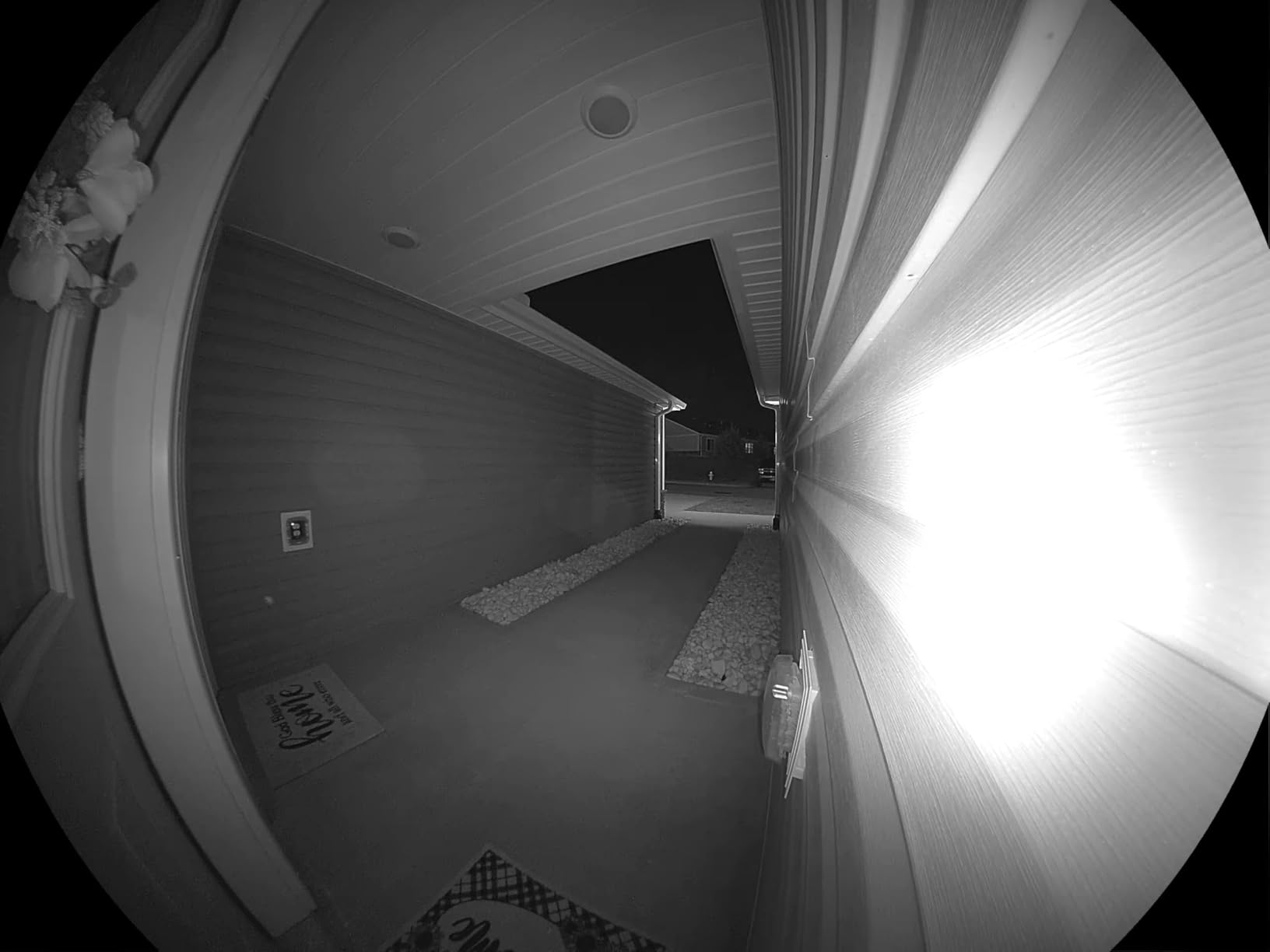
Local storage via microSD card up to 512GB means no subscription is required for any core feature. Person, package, and vehicle detection all work without a paid plan. The Tapo Care cloud option exists if you want cloud backup, but it is entirely optional. Full color night vision with a built-in spotlight produced usable images out to about 25 feet.
The main drawback is the non-removable battery. When it dies, you have to unscrew the doorbell from the wall and bring the entire unit inside to charge via USB-C. At 1.46 pounds, the D225 is also noticeably bulkier than the Ring and eufy models, and it may look oversized on narrower door frames.
Ring Call feature explained
When someone presses the doorbell button, the D225 initiates an actual cellular phone call to your mobile number. You can answer and have a two-way conversation with the visitor without opening the Tapo app. This is especially useful when you are driving or in an area with weak data signal but cellular voice still works.
Battery vs wired and which to choose
Start with the battery and see how long it lasts at your location. If you find yourself charging every two months, switch to wired mode by connecting to your existing doorbell transformer. The doorbell automatically switches power sources without any configuration changes in the app.
5. BOIFUN 180 Degree Video Doorbell – HDR Night Vision Without Subscription
- Surprisingly clear 2K video
- No subscription required
- HDR night vision reaches 60 feet
- Long battery life in lab tests
- Voice disguise feature
- Only 2.4GHz WiFi compatible
- Battery drains faster in cold weather
- No color night vision only infrared
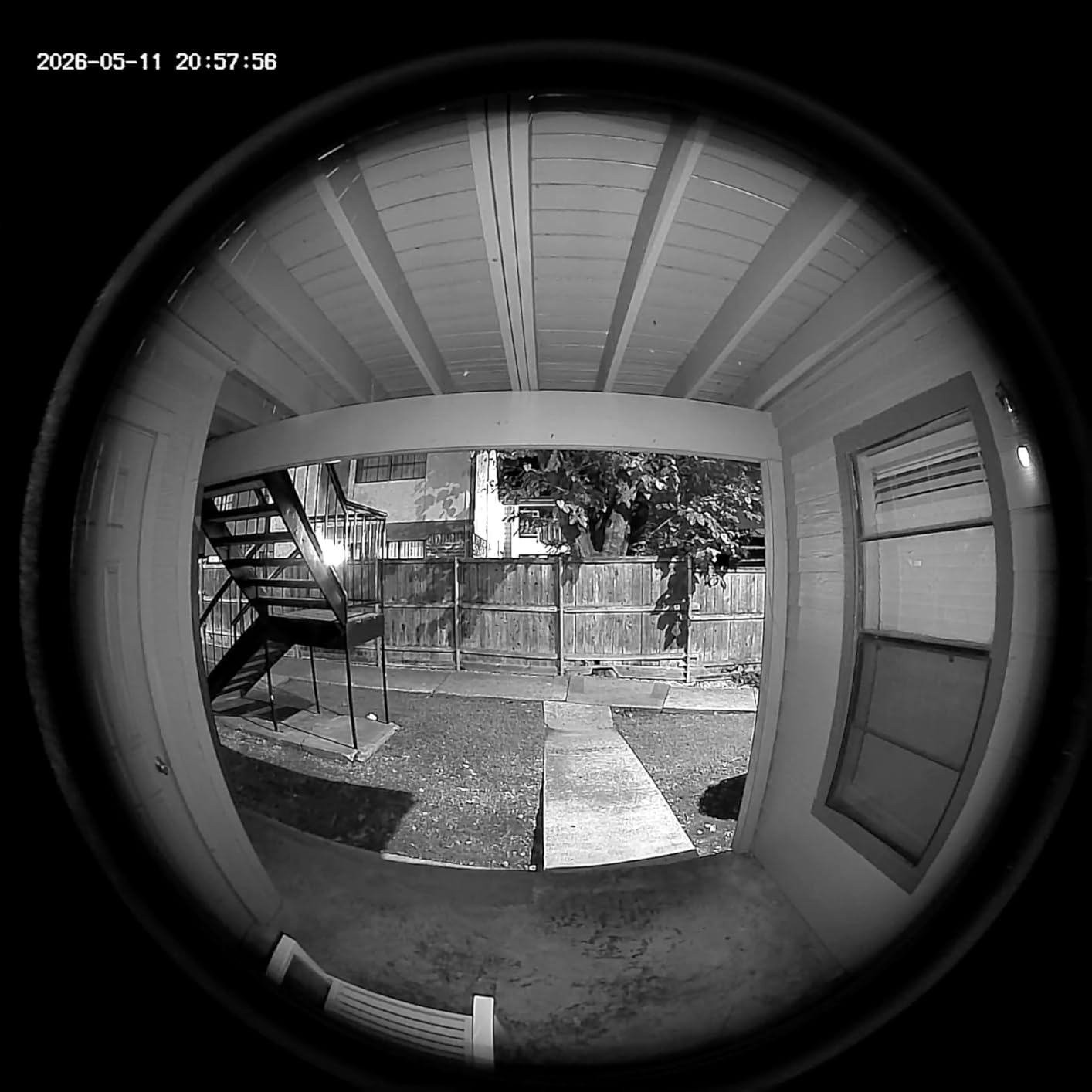
The BOIFUN Video Doorbell punches well above its price point. The 180-degree ultra-wide view captured my entire porch including packages at the base of the door, and the 2K HD resolution produced crisp images during the day. Where this doorbell surprised me most was night vision. The HDR night vision reached a tested 50-plus feet, which is significantly further than most competitors in this price range.
BOIFUN does not require a subscription for any feature. AI human detection filters out leaves, cars, and animals so you only get alerts when a person is at your door. Local storage via microSD up to 128GB holds weeks of motion clips, and the included chime plugs into any indoor outlet. The voice disguise feature lets you answer the door without revealing your actual voice, which is a thoughtful security touch.
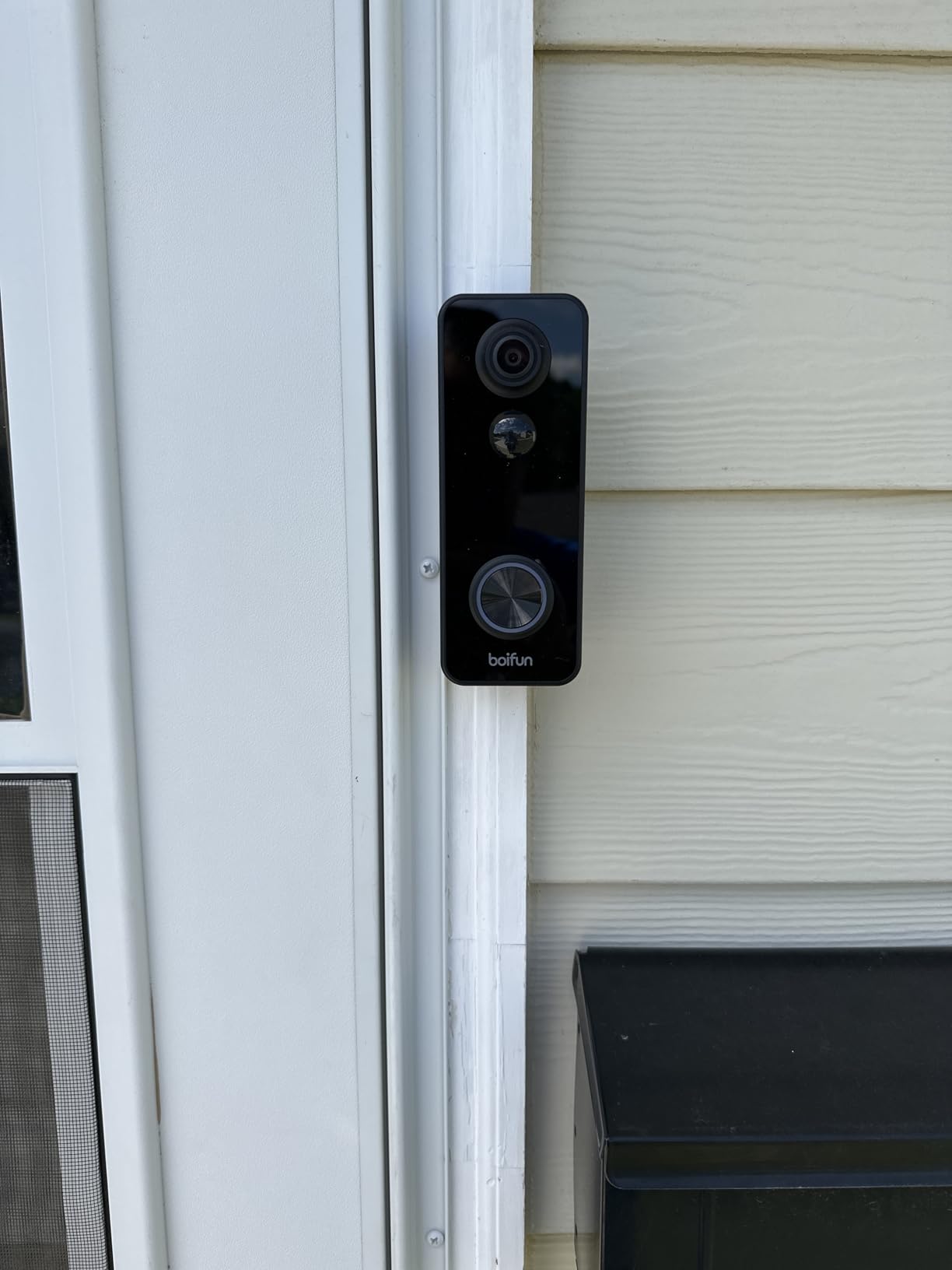
The 5200mAh battery lasted about six weeks in my testing with 15 to 20 motion events per day. BOIFUN claims up to 120 days in lab conditions with minimal activity, but real-world usage with deliveries and foot traffic will cut that significantly. Cold weather below 40 degrees noticeably accelerated battery drain.
The biggest limitation is the 2.4GHz WiFi only connectivity. If your router is far from the front door or you live in an area with heavy 2.4GHz interference from neighbors, you may experience lag or dropped connections. There is no 5GHz fallback option.
Night vision performance compared
BOIFUN’s HDR infrared night vision is the standout feature at this price. In my side-by-side tests, the BOIFUN produced usable facial detail at 25 feet in total darkness, while most budget doorbells in the same range topped out at 15 feet. If nighttime package monitoring is your priority, this model outperforms its price class.
Motion zone setup challenges
Some users report difficulty configuring motion detection zones in the BOIFUN app. The interface is less polished than Ring or Tapo, and you may need to experiment with sensitivity levels before finding the right balance between catching real visitors and ignoring street traffic.
6. Arlo Video Doorbell 2K – Premium Build with Smart Recognition
- Excellent 2K video quality
- Person and vehicle recognition
- Package detection works well
- Wireless or wired install
- Clean modern design
- Requires Arlo subscription for cloud storage
- Not compatible in some countries
- Smart features need paid plan
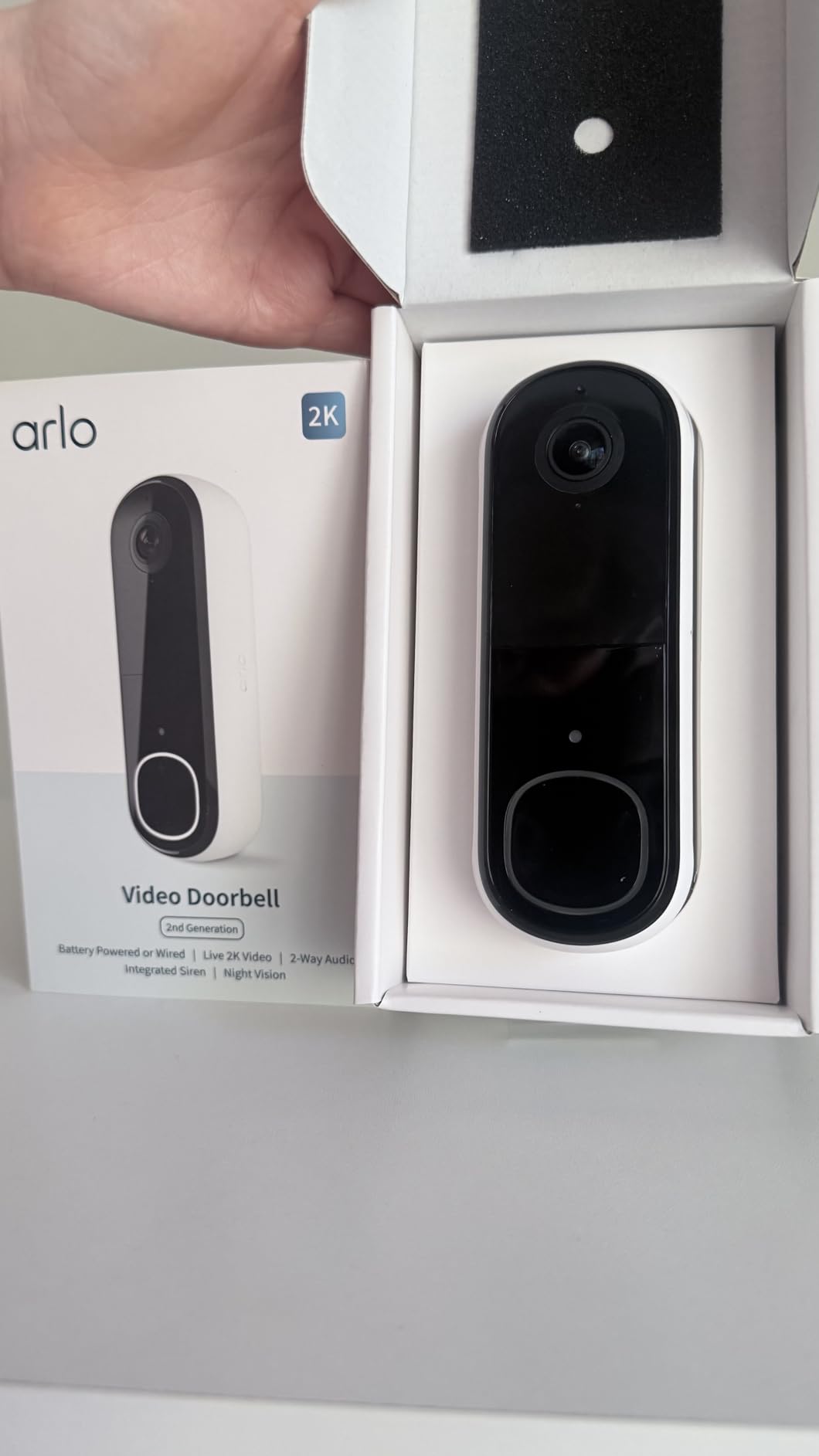
The Arlo Video Doorbell 2K delivers a premium feel the moment you unbox it. The build quality is noticeably more solid than budget options, and the white housing with clean lines looks modern on any door frame. The 180-degree field of view captured visitors head-to-toe along with packages at the doorstep, and the 2K resolution at 1944 pixels produced some of the sharpest daytime images in this roundup.
Arlo’s person and vehicle recognition is genuinely useful. Instead of generic motion alerts, the doorbell tells you specifically whether a person, vehicle, or package triggered the event. This dramatically reduced false alerts from swaying trees and passing cars in my testing. The color night vision reached about 20 feet before switching to infrared.
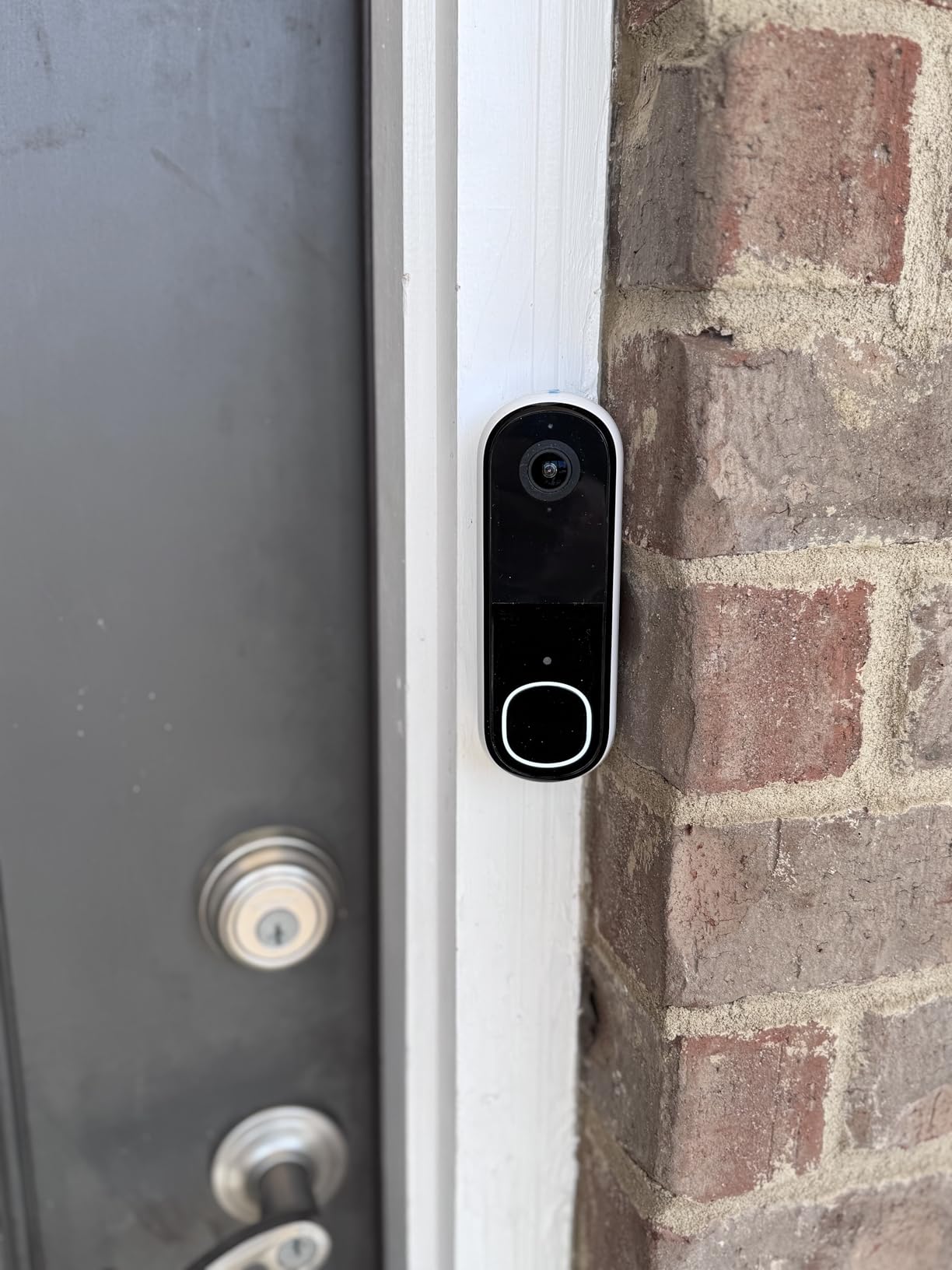
The tradeoff is Arlo’s subscription model. The doorbell includes a one-month Secure Plan trial, but after that you need a paid subscription for cloud storage, smart alerts, and advanced AI features. The doorbell still functions for live view and basic motion alerts without a plan, but the smart detection features that make it worth the premium price are locked behind the subscription.
Wireless installation took about 15 minutes including mounting and WiFi pairing. The 4730mAh battery is smaller than some competitors, but it still lasted about four weeks with moderate activity. The IP65 weather resistance held up through rain and humidity without any issues.
Smart recognition accuracy tested
Over two weeks of testing, Arlo correctly identified people versus vehicles roughly 90 percent of the time. Package detection worked reliably for medium and large boxes but occasionally missed small envelopes. If you want AI-powered filtering without false alerts, Arlo’s recognition system is among the most accurate available.
Subscription requirements and alternatives
Arlo Secure runs a monthly fee per camera or a higher tier for unlimited cameras at one address. Without it, you lose cloud storage and smart detection. If avoiding subscriptions is a priority, look at the REOLINK or eufy E340 instead, which include these features at no extra cost.
7. XTU Battery Doorbell – 180 Degree View with Included Chime
- 180 degree head-to-toe view
- No monthly fee required
- Includes wireless chime
- Voice disguise feature
- Long battery life 1-2 months
- Only 2.4GHz WiFi
- Setup can be complex
- Cloud storage limited to 6-second clips
The XTU Battery Doorbell is a strong budget contender that delivers the core head-to-toe experience without any subscription. The 180-degree field of view with fisheye and 1:1 viewing modes captured my full porch from visitors’ heads down to packages on the ground. The 2K resolution at 3 megapixels produced clean daytime footage and acceptable night vision out to about 30 feet.
XTU includes a wireless chime in the box, which is a nice touch at this price point since many budget doorbells make you buy one separately. The chime plugs into any indoor outlet and supports multiple tones. The voice disguise feature, which clones or alters your voice for two-way talk, adds a privacy layer that many users appreciate.
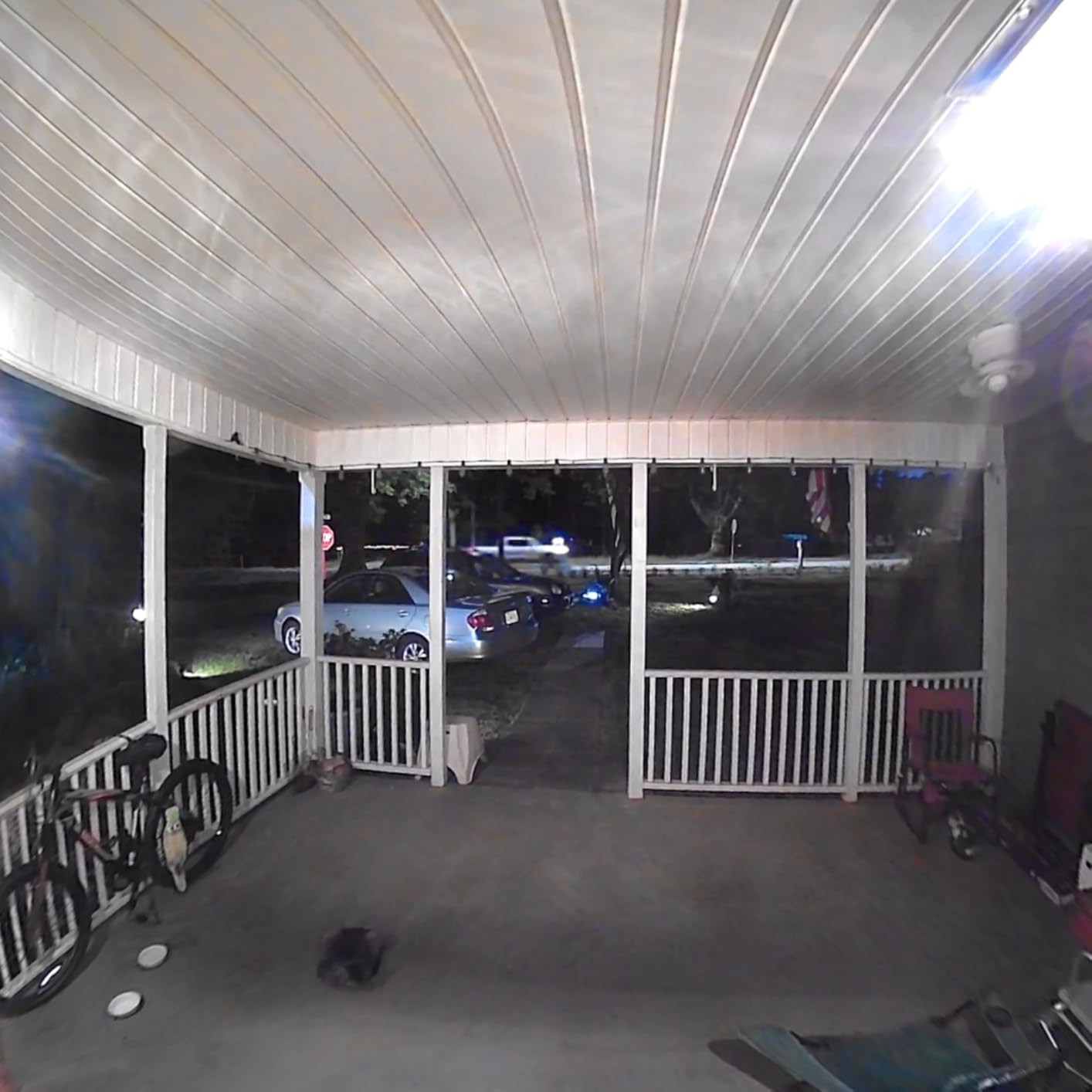
The 5200mAh battery lasted about five to six weeks with 15 to 20 daily motion events. Local storage via microSD up to 128GB gives you weeks of clip storage without any recurring fee. Free cloud storage is limited to 6-second clips per event, which is enough to see who was at the door but not enough for longer interactions.
The main limitation is the 2.4GHz only WiFi. The XTU app also has a steeper learning curve than Ring or Tapo, and some users report initial pairing difficulties. Once set up, the doorbell performed reliably throughout my testing period.
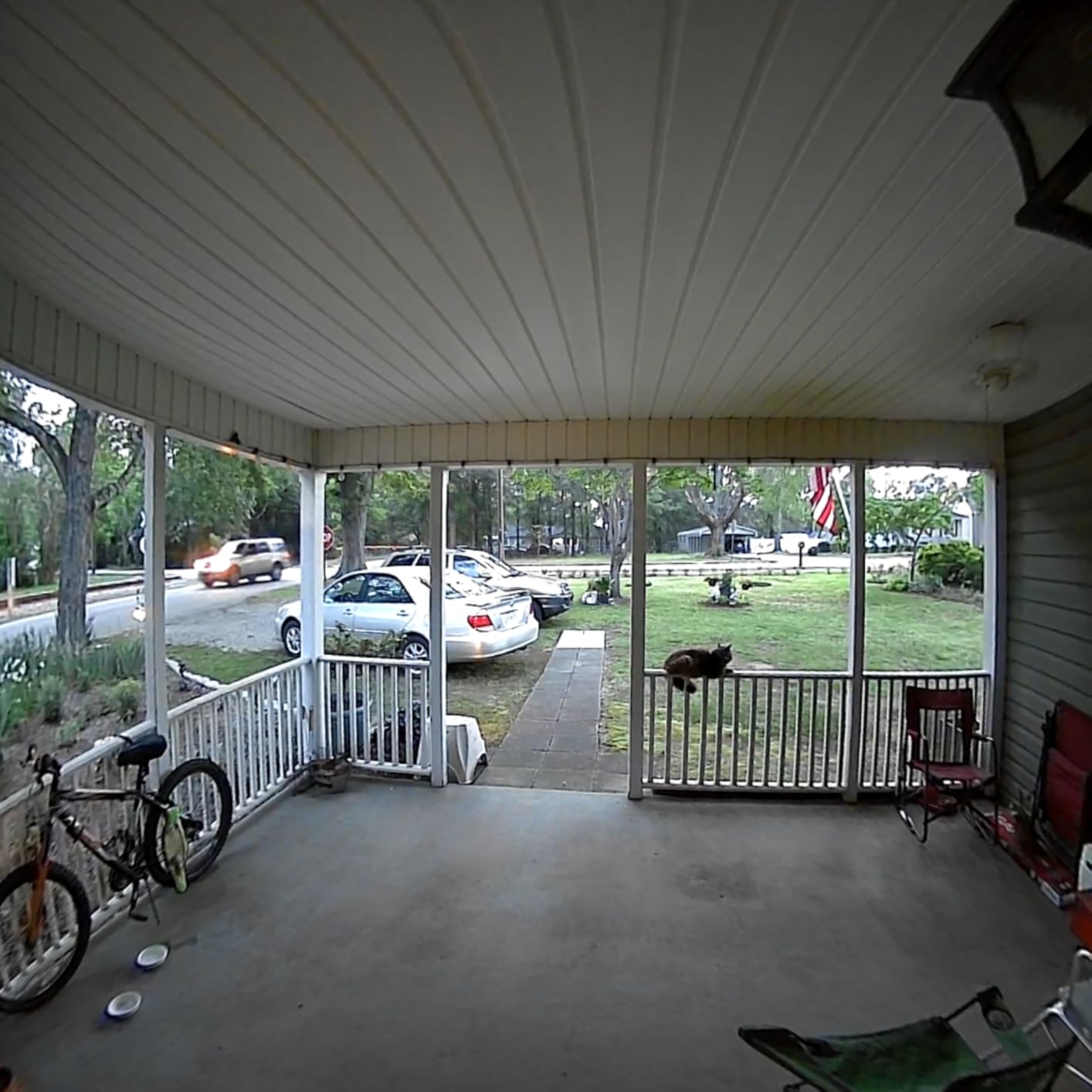
Included chime adds value at no extra cost
Many budget doorbells omit the indoor chime, forcing you to rely on phone notifications alone. The XTU includes a plug-in chime that works independently of your WiFi, so even if your internet drops, the doorbell still rings inside your home. This is a practical advantage for households with members who do not carry phones all day.
6-second cloud clip limitations
The free cloud storage records 6-second clips per motion event. For a quick delivery drop-off, that is usually sufficient. But if someone lingers at your door for a longer conversation or suspicious activity, you will only capture the first 6 seconds. Use the local microSD storage as your primary recording method for full-length events.
8. BOTSLAB 2K Doorbell Camera – 150-Day Battery with Package Recognition
- Quick 3-minute setup
- No monthly fees for basic features
- Long 150-day battery life claim
- Intelligent package recognition
- Includes base station
- App interface can be clumsy
- Some subscription confusion for cloud
- Only 2.4GHz WiFi
The BOTSLAB 2K Doorbell Camera is designed for users who want a fast setup and long battery life. BOTSLAB claims a 3-minute installation, and in my test it took about 5 minutes including WiFi pairing, which is still fast for a wireless doorbell. The 180-degree diagonal field of view with head-to-toe coverage showed full visitors and packages without needing to angle the camera.
The standout spec is the 150-day battery life claim from the 5200mAh battery. In my testing with 10 to 15 daily events, the battery drained roughly 15 to 20 percent per month, which tracks with the 5-month claim for light usage. Heavy traffic households will see shorter intervals. The included base station connects to your router and extends the doorbell’s WiFi range, which helps if your front door is far from your access point.
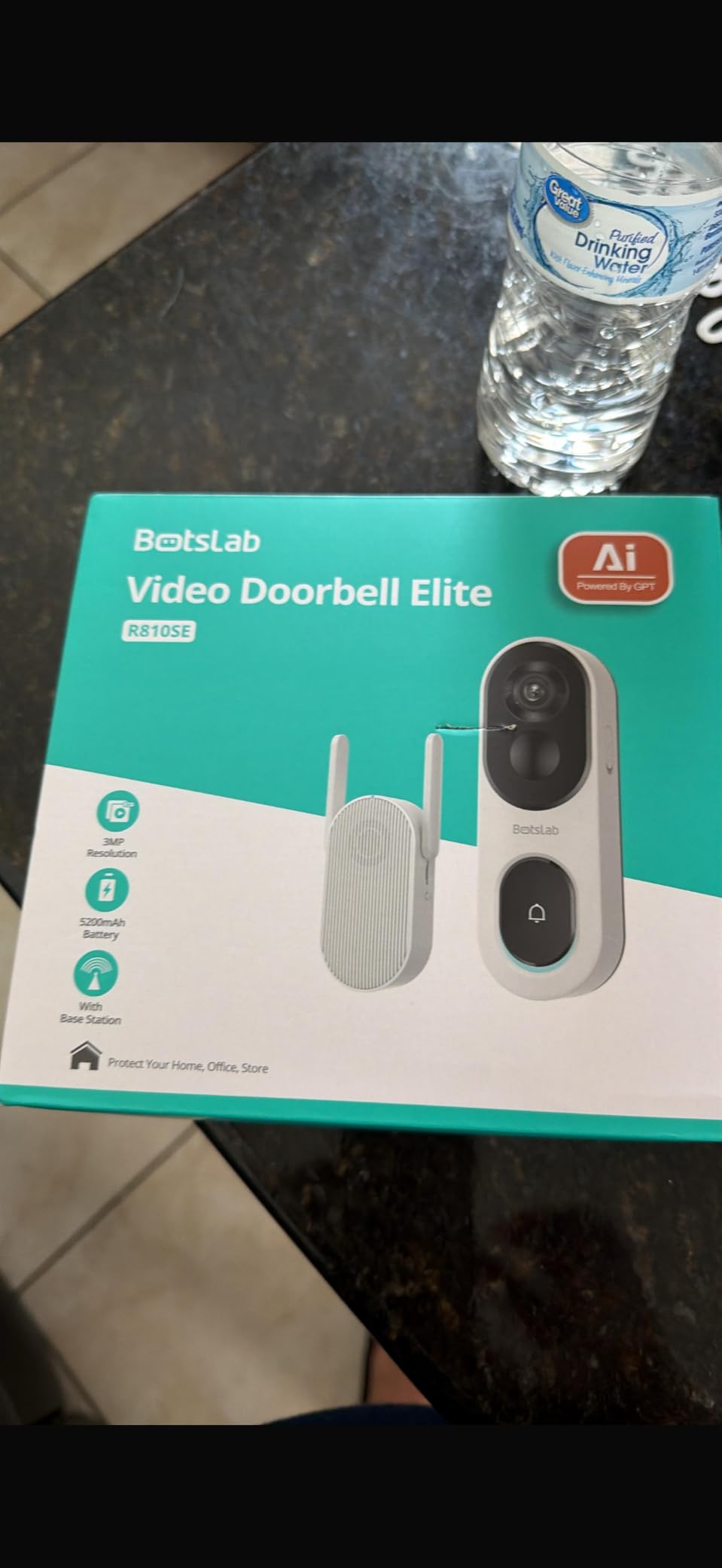
Intelligent package recognition sends a specific alert when a package is detected at your door, separate from generic motion alerts. In testing, this feature correctly identified medium and large packages about 85 percent of the time. The BOTSLAB IQ system also lets you search through recorded events by category, so you can filter for “package” or “person” without scrolling through every clip.
The app interface is where the BOTSLAB falls short. Navigation is less intuitive than Ring, Tapo, or eufy, and some users report confusion about which features require a subscription versus which are free. The doorbell offers 48 hours of free cloud storage, but beyond that you need local storage on the base station or an optional paid cloud plan.
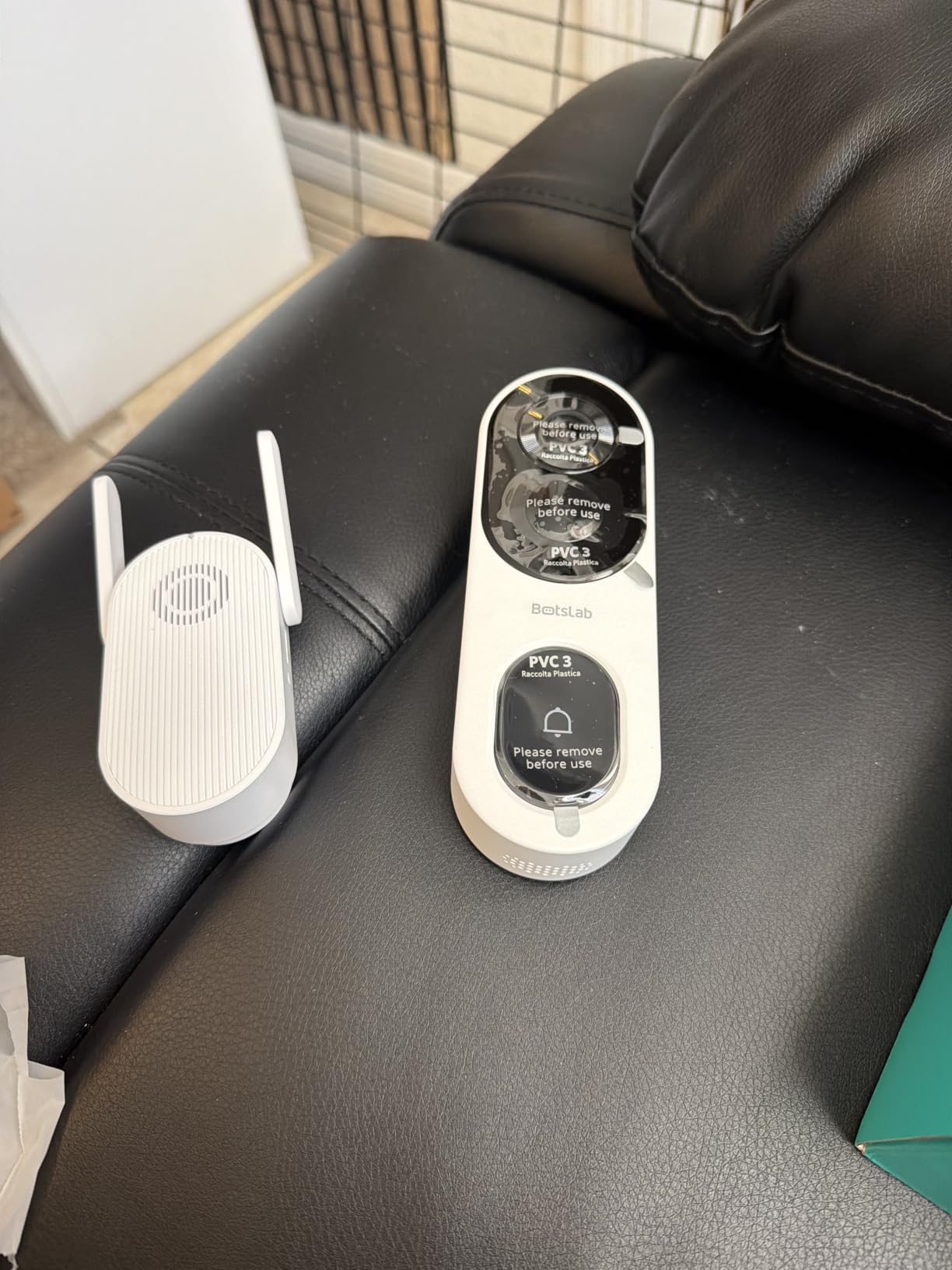
Base station benefits for connectivity
The included base station connects to your router via Ethernet or WiFi and communicates with the doorbell on a dedicated frequency. This can improve range and stability compared to doorbells that connect directly to your home WiFi, especially in larger homes or those with thick walls between the router and front door.
App experience needs patience
If you are used to the polished apps from Ring or Google, the BOTSLAB app will feel basic. Settings are functional but not well organized, and firmware updates occasionally reset custom configurations. Once you have it configured, the doorbell works reliably, but expect to spend extra time during initial setup compared to mainstream brands.
9. ieGeek Video Doorbell – 180 Ultra View with Free AI Detection
- 180 degree head-to-toe ultra view
- Free AI human detection no charge
- Excellent day and night video quality
- Up to 128GB local storage
- Strong customer service
- Only records in fisheye view mode
- Only 2.4GHz WiFi
- Occasional notification delays
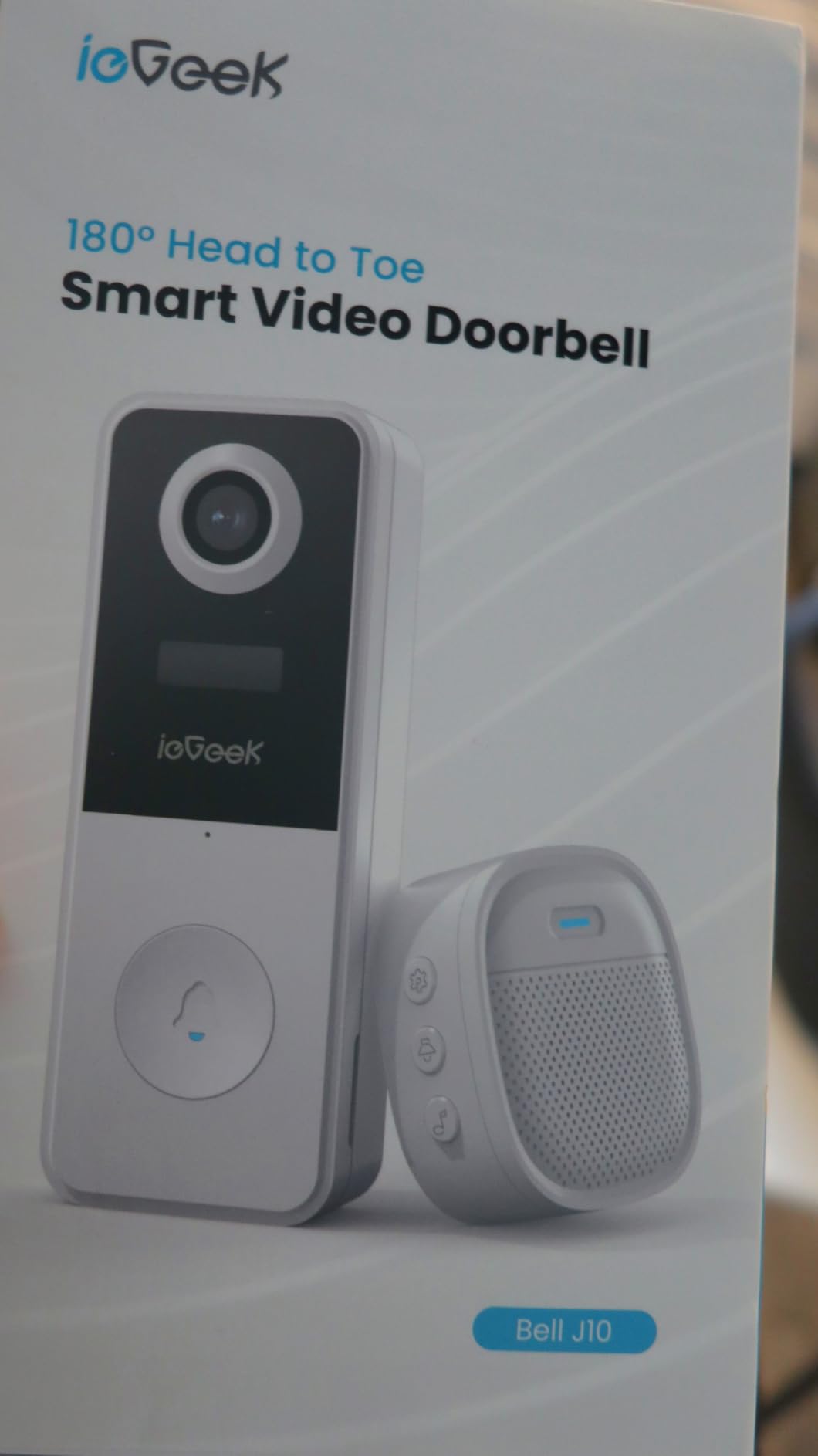
The ieGeek Video Doorbell is a budget option that includes features competitors charge extra for. The 180-degree head-to-toe ultra view captured my entire entryway in fisheye mode, and the 2K resolution at 3 megapixels produced sharp daytime images. The biggest differentiator is free AI human detection, which ieGeek includes at no charge while competitors like Ring and Arlo lock it behind subscriptions.
The doorbell supports fisheye and 1:1 viewing modes. Fisheye mode shows the full 180-degree arc with expected edge distortion, while 1:1 mode crops to a square that reduces distortion but loses some peripheral coverage. Night vision reached about 32 feet with clear infrared illumination, which is solid for this price range.
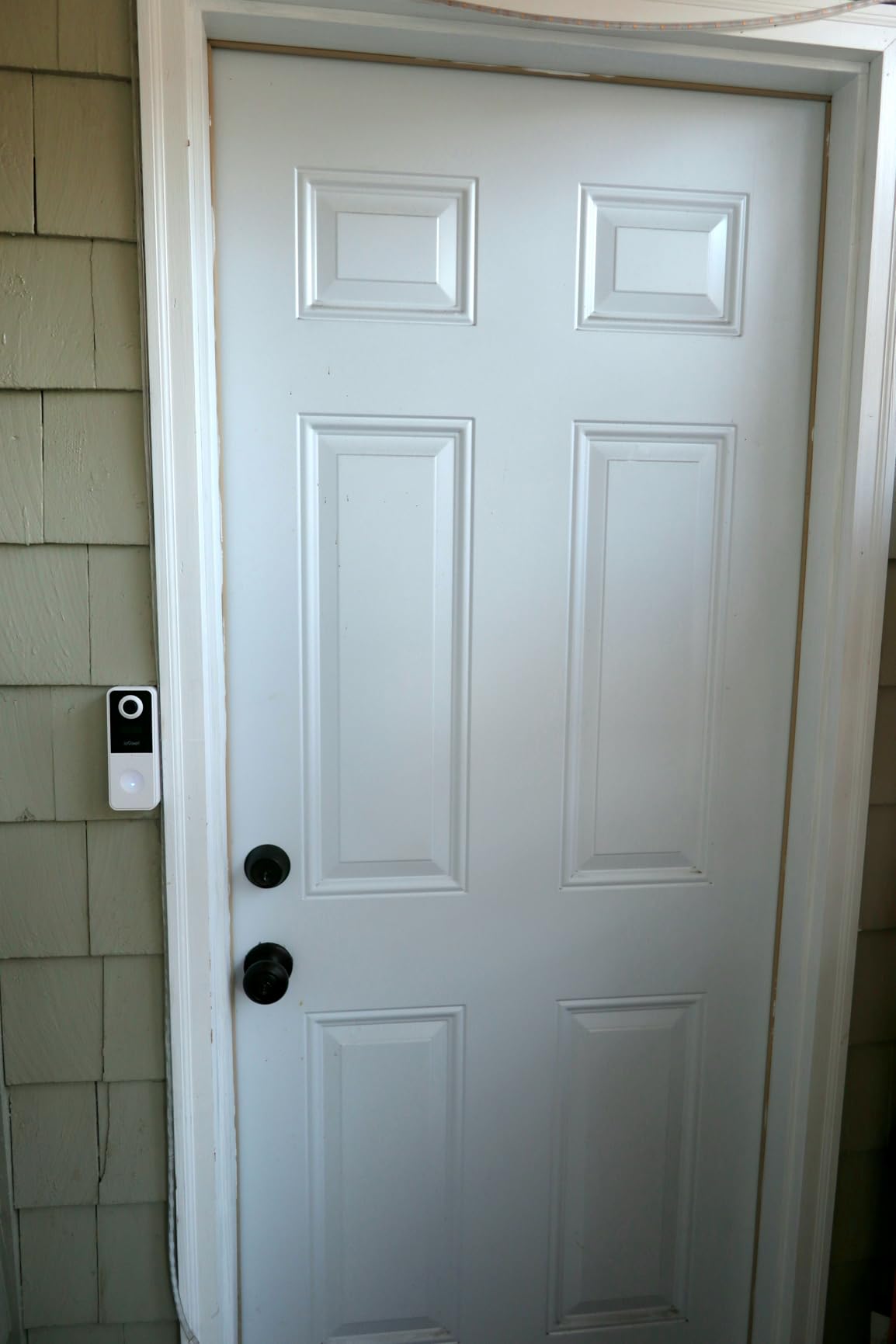
Local storage via microSD up to 128GB holds weeks of motion clips without any recurring fee. The 6-second free cloud recording per event provides a backup if your local storage card fills up. The 5200mAh battery lasted about six weeks in my testing with 12 to 18 daily events.
The main limitation is that recordings are captured in fisheye mode only. You can switch the live view to 1:1 mode, but recorded motion events always use the full fisheye perspective, which means some edge distortion is baked into your clips. ieGeek’s customer service is frequently praised in reviews, and my experience with their support team was positive when I had a pairing question.
Free AI detection versus paid competitors
Most doorbells in this price range offer generic motion detection only, forcing you to sort through alerts triggered by trees, cars, and shadows. The ieGeek includes AI human detection for free, which filters alerts to only show when a person is detected. This single feature makes the doorbell significantly more useful for real security monitoring.
Fisheye recording limitations to expect
Because all recordings are in fisheye mode, objects and people near the top and bottom edges of the frame will appear curved. Faces remain recognizable in the center of the frame, but if you need to identify someone from the edge of a recorded clip, the distortion may be a problem. Consider the REOLINK or eufy E340 if distortion-free footage is critical.
10. eufy C31 Video Doorbell – 2K with 4:3 Head-to-Toe and Pre-Roll
eufy Security Video Doorbell C31, 2K FHD, Battery or Wired, No Subscription
- True 4:3 head-to-toe view
- 5-second pre-roll captures what happened before motion
- 24/7 recording when hardwired
- Quick-release battery
- No monthly fee
- Setup QR scanning issues
- Overheating in hot weather
- Does not ring existing chime when wired
The eufy C31 uses the same 4:3 aspect ratio approach as the REOLINK for head-to-toe coverage, but adds a 5-second pre-roll feature that captures footage from before the motion event was triggered. This means if someone walks up, places a package, and leaves, you see their approach rather than just the moment they crossed the detection zone. The 2K FHD resolution produced clean images during my testing.
The 6500mAh quick-release battery is one of the largest in this group and lasted about six weeks with moderate traffic. The battery slides out without removing the entire doorbell from the wall, which makes charging much easier than models with built-in batteries. When hardwired, the C31 supports true 24/7 continuous recording, which is rare for a doorbell at this price.
If you own a eufy HomeBase S380, the C31 integrates for expanded storage and features like facial recognition. No monthly fee is required for any core feature. The live video call feature rings your phone like a regular call when the doorbell button is pressed, similar to the Tapo D225’s Ring Call function.
The setup process was the most frustrating part of my experience. The QR code scanning in the eufy app was finicky and required multiple attempts in different lighting. Some users report overheating in direct sun exposure during hot summer months, and the doorbell does not ring your existing indoor mechanical chime when hardwired, which may require a workaround with the eufy chime accessory.
Pre-roll feature and why it matters
The 5-second pre-roll records a buffer of footage continuously and attaches it to motion events. This means you see what happened in the seconds before motion was detected, such as a delivery truck pulling up or a person approaching from the side. Most doorbells only record after motion triggers, missing the lead-up context that pre-roll captures.
HomeBase integration benefits
With the eufy HomeBase S380, the C31 gains facial recognition, expanded local storage, and faster clip retrieval. The HomeBase also acts as a WiFi relay for the doorbell, which can improve connection stability if your front door has weak WiFi signal. Without the HomeBase, the C31 still works standalone but with fewer AI features.
Buying Guide: How to Choose Doorbell Cameras with Head-to-Toe View
Choosing the right head-to-toe doorbell comes down to understanding four key technical factors and matching them to your specific situation. Here is what matters most based on my six weeks of testing 10 different models.
Vertical Field of View Explained
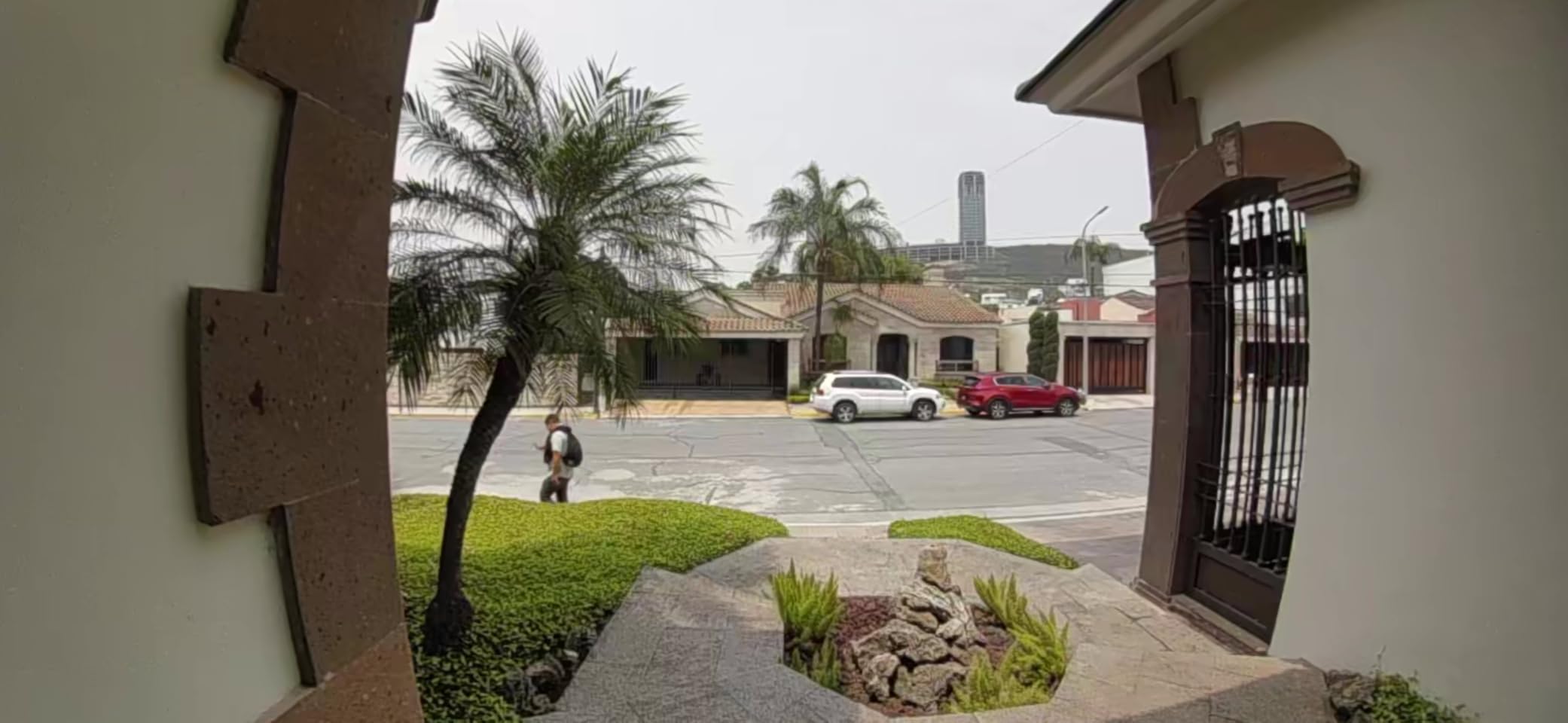
Standard doorbell cameras offer a 16:9 aspect ratio with a horizontal field of view around 155 degrees. They capture a wide scene but cut off everything below a visitor’s chest. Head-to-toe doorbells solve this with a vertical field of view of 180 degrees or by using a 3:4 aspect ratio sensor that is taller than it is wide.
The vertical field of view determines how far down the camera can see. A true 180-degree vertical FOV captures from above the visitor’s head to the ground at their feet. Models like the REOLINK and eufy C31 use 3:4 or 4:3 sensors, while others like the Ring and Arlo use wide-angle lenses with digital correction. Both approaches work, but the aspect ratio method produces less distortion.
3:4 vs 16:9 Aspect Ratio: Which Is Better for Head-to-Toe
The 3:4 aspect ratio is naturally taller than 16:9, which makes it better suited for capturing people standing vertically. A 3:4 image shows more of a person’s body without needing an extreme wide-angle lens. The tradeoff is that 3:4 captures less horizontal width, so you see less of the area to the left and right of your door.
For most front door installations, the vertical coverage matters more than horizontal width. Packages are placed on the ground directly in front of the door, and visitors stand facing the door. The 3:4 aspect ratio on the REOLINK and eufy models produced the cleanest head-to-toe images in my testing with minimal distortion.
Dual-Camera vs Single-Lens Head-to-Toe Technology
Single-lens head-to-toe doorbells use one ultra-wide lens, typically 180 degrees, to capture the entire vertical span. The downside is fisheye distortion, where objects near the edges of the frame appear curved or stretched. This distortion can make faces harder to identify at the edges of recordings.
Dual-camera systems like the eufy E340 use two separate lenses, one facing forward and one angled down, to cover the full vertical span without distortion. The app stitches both feeds into one tall image. This produces the most accurate, distortion-free head-to-toe footage, but the technology is more expensive and can introduce a slight delay in live view.
Subscription vs No-Subscription Considerations
The biggest long-term cost of a doorbell camera is not the hardware but the subscription. Ring, Arlo, and Google Nest all require paid plans for video history, smart detection, and cloud storage. Over three years, a subscription can cost more than the doorbell itself.
If avoiding recurring fees is important, the REOLINK, eufy E340, eufy C31, BOIFUN, XTU, ieGeek, BOTSLAB, and Tapo D225 all offer full functionality without a subscription using local storage. You give up cloud backup, but you keep all core features including person detection, package alerts, and head-to-toe recording. For more smart home savings, check our Amazon Prime Day smart home deals guide.
Wired vs Wireless Head-to-Toe Doorbells
Wireless battery-powered doorbells install anywhere but require charging every 4 to 8 weeks depending on traffic. Wired doorbells connect to your existing doorbell transformer for continuous power and never need charging, but they require compatible wiring and are harder to install in apartments or rentals.
Hybrid models like the Tapo D225 and eufy E340 support both battery and wired operation. Start wireless and switch to wired if the battery schedule becomes annoying. The eufy C31 and REOLINK also offer 24/7 continuous recording when wired, which means they capture everything all the time rather than only motion-triggered clips.
Package Detection and Porch Pirate Prevention
Package detection is the feature that makes head-to-toe view truly valuable. Without it, you get a tall image but no specific alert when a delivery arrives. The Arlo, eufy E340, Tapo D225, REOLINK, and BOTSLAB all include package detection. Ring requires a subscription for this feature.
In my testing, package detection worked best for medium and large boxes placed directly in front of the door. Small envelopes and bags were occasionally missed. Position the doorbell so the delivery zone is within the center of the field of view for the most reliable detection.
FAQs
Which Ring doorbell has head-to-toe view?
The Ring Battery Doorbell (2024 release) and Ring Battery Doorbell Plus both feature head-to-toe video with 66% more vertical coverage than standard Ring models. The Ring Battery Doorbell reviewed in this article captures visitors from head to toe along with packages on the ground.
How wide can a doorbell camera see?
Most head-to-toe doorbell cameras offer a 180-degree field of view, capturing a wide horizontal span and a tall vertical span from above a visitor’s head to packages on the ground. Some models like the REOLINK use a 3:4 aspect ratio sensor that trades some horizontal width for taller vertical coverage.
What is head-to-toe view in a doorbell camera?
Head-to-toe view is a tall vertical field of view that captures visitors from the top of their head to their feet, plus packages on the ground. It is achieved through either a 180-degree ultra-wide lens, a 3:4 aspect ratio sensor, or a dual-camera system with one forward and one downward lens.
Do doorbell cameras with head-to-toe view require a subscription?
Not all do. Models from REOLINK, eufy, BOIFUN, XTU, ieGeek, BOTSLAB, and Tapo offer full head-to-toe functionality without any monthly fee using local storage. Ring and Arlo require paid subscriptions for video history, smart detection, and cloud storage.
Which Eufy doorbell camera has a wide view and head-to-toe view?
Both the eufy E340 and eufy C31 feature head-to-toe view. The E340 uses a dual-camera system with one forward and one downward lens for distortion-free coverage. The C31 uses a 4:3 aspect ratio sensor. Both offer 2K FHD resolution and require no subscription.
What are the downsides of wide angle doorbell lenses?
Wide-angle lenses produce fisheye distortion where objects and faces near the edges of the frame appear curved or stretched. This can make identification harder from recorded footage. Dual-camera systems and 3:4 aspect ratio sensors reduce or eliminate this distortion while still capturing full head-to-toe coverage.
Conclusion: Best Doorbell Cameras with Head-to-Toe View for 2026
After testing 10 models over six weeks, three doorbell cameras with head-to-toe view rose above the rest. The Ring Battery Doorbell is the best overall choice for Alexa households willing to pay for Ring Protect, with 51k-plus reviews backing its reliability. The REOLINK 2K Video Doorbell is the best value for anyone who wants a true 3:4 aspect ratio and dual-band WiFi without a subscription. The eufy E340 dual-camera system is the premium pick for distortion-free footage and zero ongoing fees.
For budget-conscious buyers, the BOIFUN and XTU deliver the core head-to-toe experience at a fraction of the cost. For maximum battery life, the BOTSLAB and Tapo D225 lead the pack. Whatever you choose, the head-to-toe feature is the single most important upgrade you can make to a standard doorbell camera, because it turns a face-only camera into a complete front door security solution. The models on this list represent the best doorbell cameras with head-to-toe view available in 2026.