
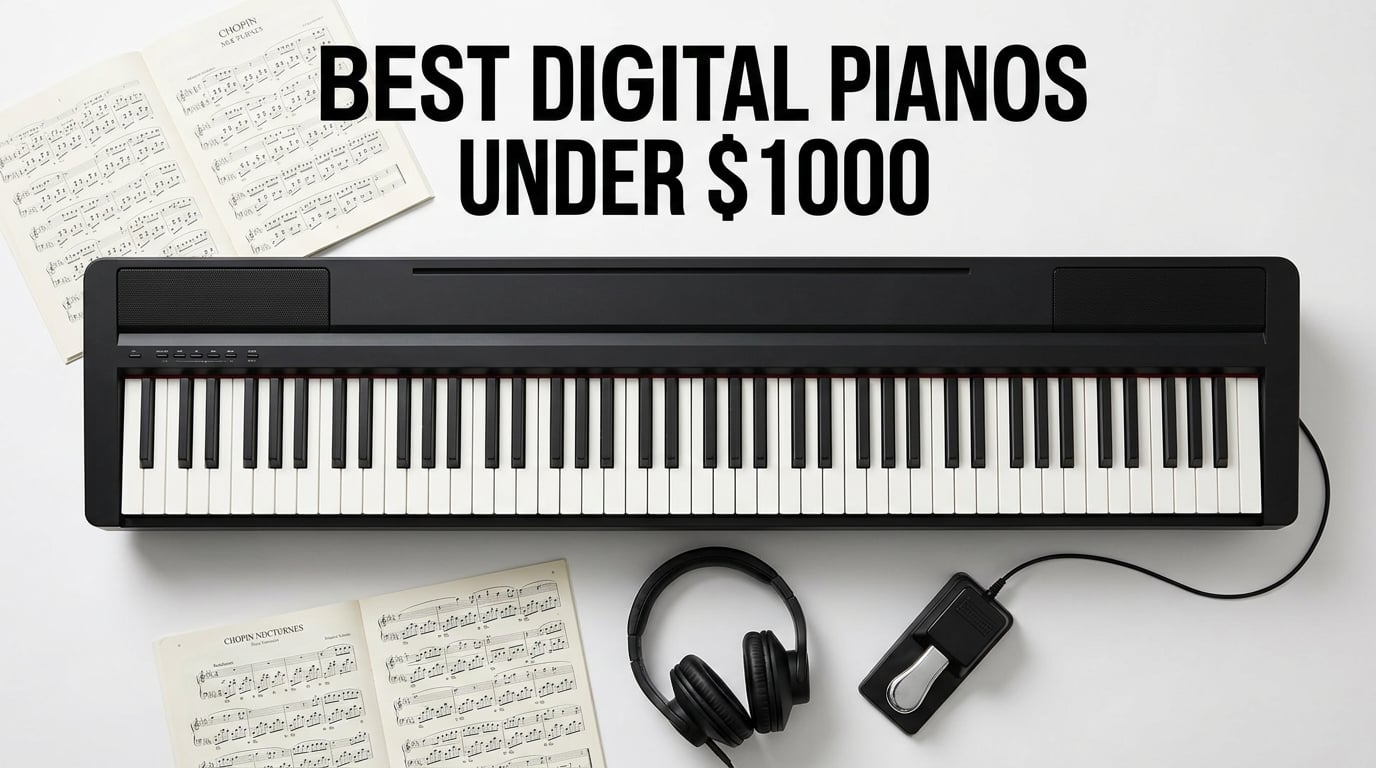
Finding the best digital pianos under $1000 used to mean settling for a toy-like keyboard with mushy keys and tinny sound. That has changed completely. Today, $500 to $1000 buys you 88 fully weighted keys, sampled grand piano sounds from Yamaha and Steinway, Bluetooth MIDI connectivity, and build quality that holds up for years of daily practice. Whether you are a beginner shopping for your first real instrument or an intermediate player upgrading from an unweighted keyboard, the sub-$1000 category is where you get the most bang for your buck.
Our team spent weeks comparing 15 of the most popular models from Yamaha, Roland, Kawai, Casio, Korg, and Donner. We focused on what actually matters to players: key action that feels like an acoustic piano, sound quality through both headphones and speakers, connectivity for apps and recording, and long-term reliability based on hundreds of real owner reviews. If you are also researching broader keyboard options, our guide to electric keyboards for beginners covers additional non-weighted models worth considering.
This guide walks you through every model we tested, ranked from our top pick down to the best budget option. We cover portable slabs for gigging, console-style pianos for your living room, and everything in between. By the end, you will know exactly which digital piano under $1000 fits your playing style, your space, and your wallet.
Top 3 Picks for Best Digital Pianos Under $1000 (August 2026)

Roland FP-30X Digital Piano
- PHA-4 Progressive Hammer Action
- SuperNATURAL Sound
- Bluetooth MIDI


Best Digital Pianos Under $1000 in 2026
1. Roland FP-30X Digital Piano – Best Overall Pick
- PHA-4 weighted keys feel like a real acoustic piano
- SuperNATURAL sound engine delivers rich dynamic tones
- Bluetooth connectivity for wireless MIDI and audio
- Compact and portable at under 15 kg
- Records directly to phone via USB-B
- Downward-facing speakers lack projection
- Included sustain pedal feels flimsy
- Slight plastic resonance on some keys
I have spent more time playing the Roland FP-30X than any other piano on this list, and it keeps impressing me. The PHA-4 keyboard with Progressive Hammer Action and escapement gives you that subtle click you feel on an acoustic grand when a key bottoms out. No other portable piano at this price nails that sensation quite as well.
The SuperNATURAL sound engine is the real star here. Instead of a single sample looped endlessly, Roland uses behavioral modeling so notes decay naturally and respond to your touch velocity. Play softly and you get a warm, intimate tone. Dig in and the sound opens up with harmonic complexity that keeps you engaged for hours.
Bluetooth MIDI and audio is something I use daily. I connect my iPad running Roland’s Piano Partner 2 app, pull up sheet music, and stream backing tracks through the piano’s speakers without a single cable. The 22-watt stereo speaker system is adequate for home practice, though I noticed the downward-facing design sounds noticeably better when the piano sits on a stand rather than a flat desk.
Who Should Buy the Roland FP-30X
This is the piano I recommend to intermediate and advanced players who want acoustic-grade key action without spending $1500+. Teachers love the Twin Piano mode, which splits the keyboard into two identical pitch ranges for side-by-side lessons. If you plan to connect to a computer or iPad for recording, the USB-B port and Bluetooth make it one of the most connected pianos in this price range.
What Holds It Back
The onboard speakers are the weakest link. They work fine for solo practice, but if you want to fill a living room with sound, you will want external speakers or quality headphones for classical music. The included DP-2 sustain pedal is also small and slides around on smooth floors. Most FP-30X owners upgrade to a proper triple-pedal unit within the first few months.
2. Yamaha P225 88-Key Digital Piano – Best Sound Quality
- CFX concert grand sample sounds stunning through headphones
- GHC action is quiet and responsive
- Lightweight at 25 lbs for easy transport
- Smart Pianist and Rec'n'Share app integration
- Sleek modern design
- Short pivot point on compact keys
- Included FC5 sustain pedal is basic
- No native Bluetooth audio without app
The Yamaha P225 replaced the popular P-125 and the improvements are substantial. The standout feature is the CFX Concert Grand voice, sampled from Yamaha’s flagship 9-foot concert grand. When I first played the opening chords of Debussy’s Clair de Lune through a good pair of headphones, the sustain and harmonic detail genuinely surprised me for a piano in this price range.
The Graded Hammer Compact action is lighter and quieter than the older GHS action found on the P-45. Keys are slightly narrower in body depth, which helps keep the whole instrument at just 25 pounds. That said, the shorter pivot point means notes played near the fall strip feel a bit stiffer than on a full-depth action.
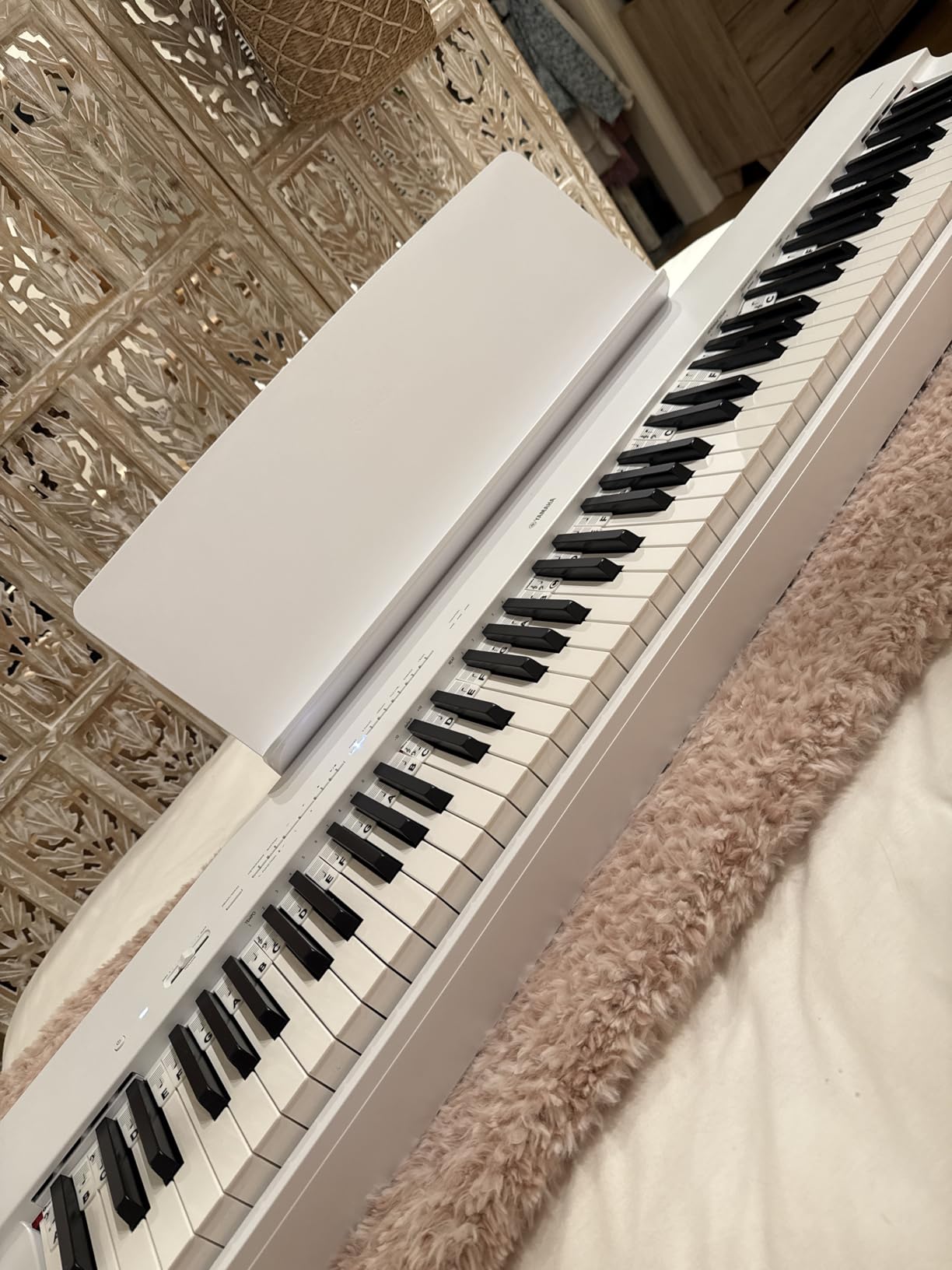
Virtual Resonance Modeling Lite adds string and damper resonance that makes chords ring out with more depth than the raw samples alone. Combined with the two-way speaker system, the P225 produces a surprisingly full sound for such a slim instrument. I also appreciate the dual headphone jacks, which make it easy to practice with a teacher or duet partner silently.
Best For Serious Students
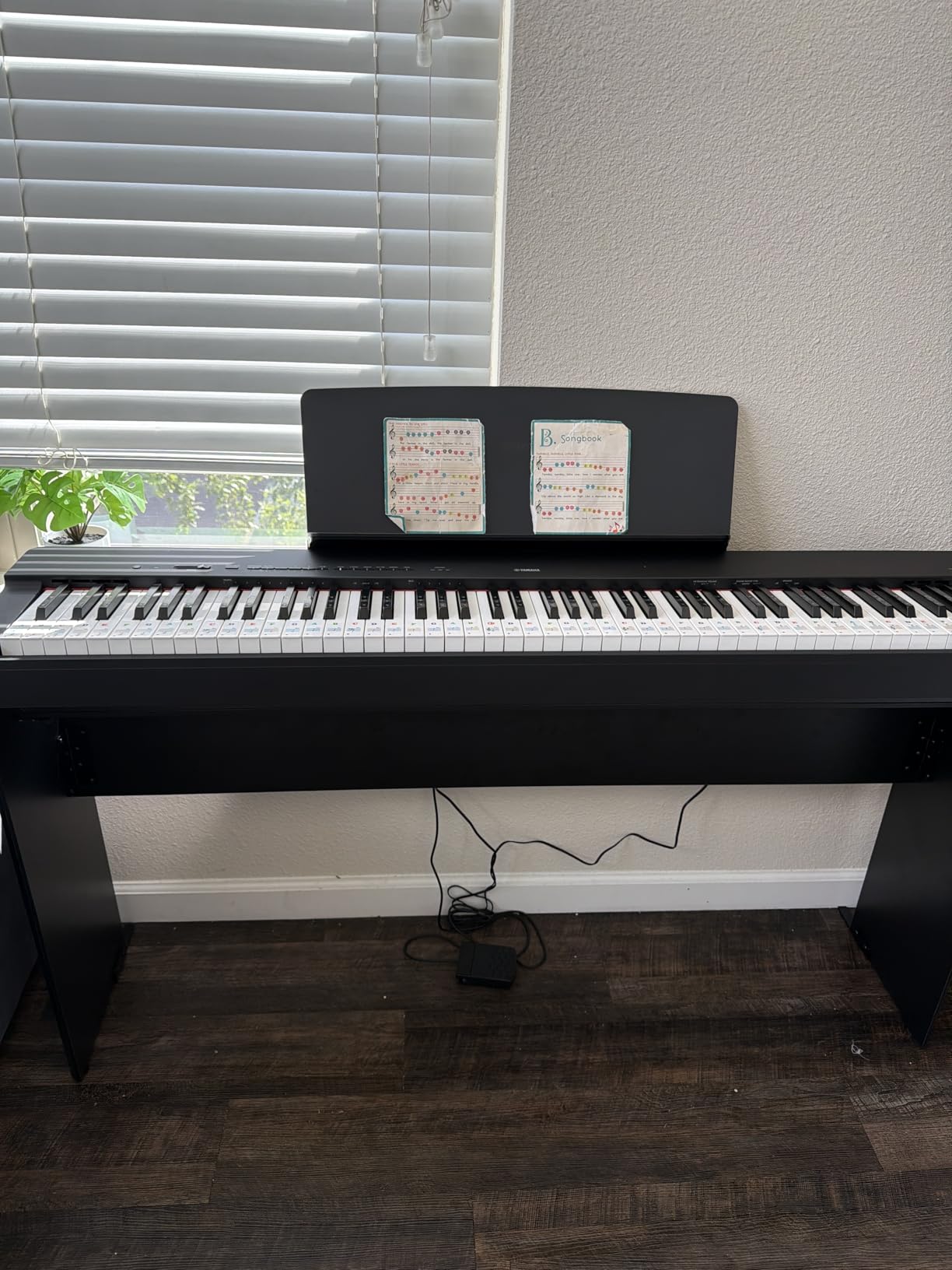
If you are working toward classical exams or want a piano that will carry you from beginner well into intermediate territory, the P225 is the model I point people to first. The CFX sound and responsive action reward expressive playing in a way that cheaper models simply cannot match.
Connectivity and App Integration
Bluetooth connectivity works through the Smart Pianist app, which lets you adjust settings, select voices, and analyze chords from audio files. The Rec’n’Share app lets you record video of your performances with the piano audio layered in. Just note that Bluetooth is for data, not audio streaming to the piano’s speakers.
3. Yamaha P-45 88-Key Digital Piano – Best for Beginners
- Authentic graded hammer action at entry-level price
- 10 quality voices including Yamaha grand piano
- Simple one-button operation is beginner-friendly
- Lightweight and portable
- Massive 1700+ reviews confirm long-term reliability
- No Bluetooth connectivity
- Key action can develop clicking after years of heavy use
- Basic sustain pedal included
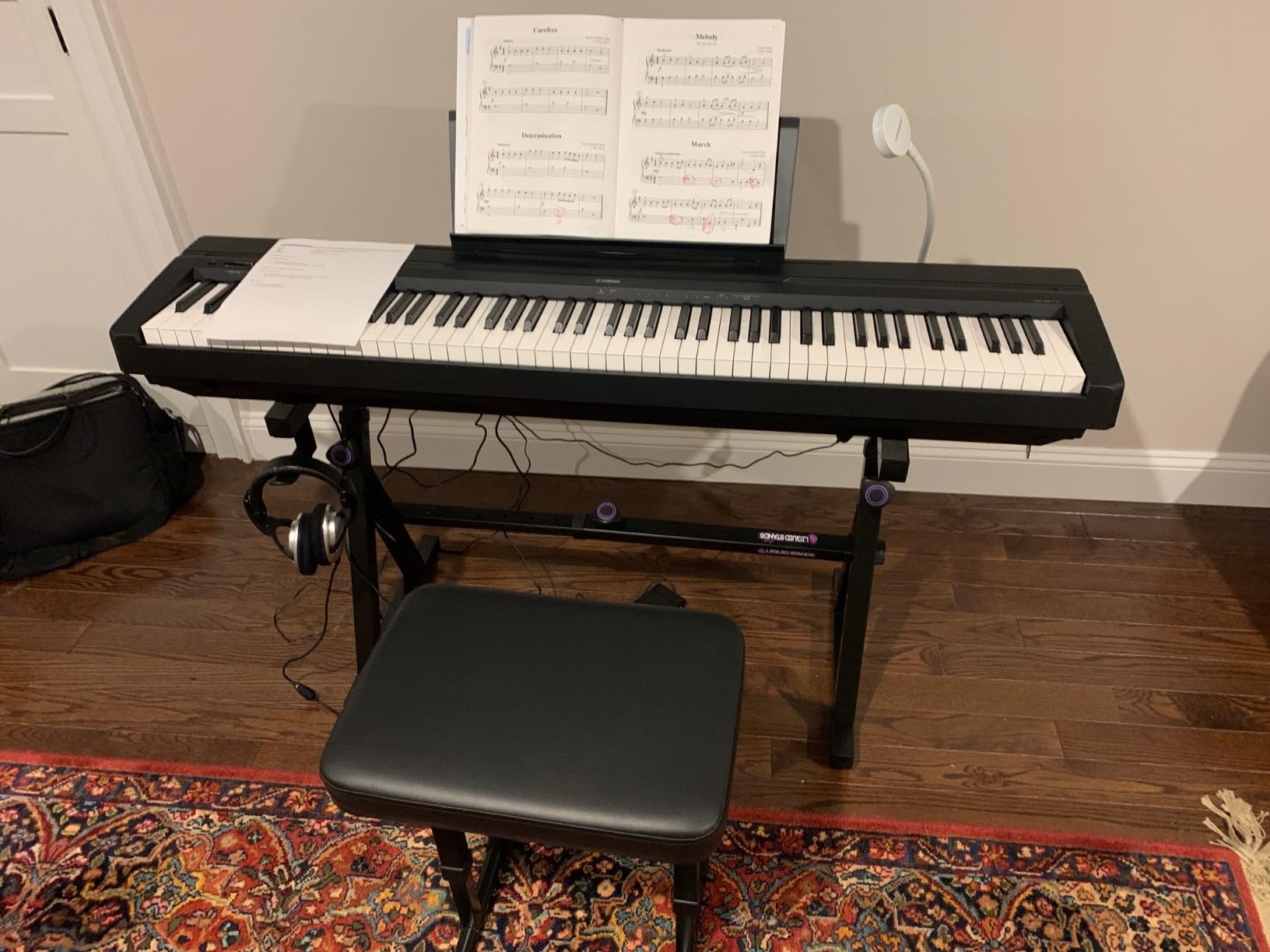
The Yamaha P-45 has been the default recommendation for first-time digital piano buyers for years, and with 1700 reviews averaging 4.7 stars, the community verdict is clear. The Graded Hammer Standard action gives you the weighted feel that teachers insist on, with lower keys heavier than upper keys just like an acoustic piano.
What makes the P-45 so popular is its simplicity. There is one button to turn it on, and you cycle through the 10 voices with a single key press while holding the Grand Piano button. No menus, no LCD screen, no learning curve. My friend’s daughter started on a P-45 at age 7 and never needed help operating it.
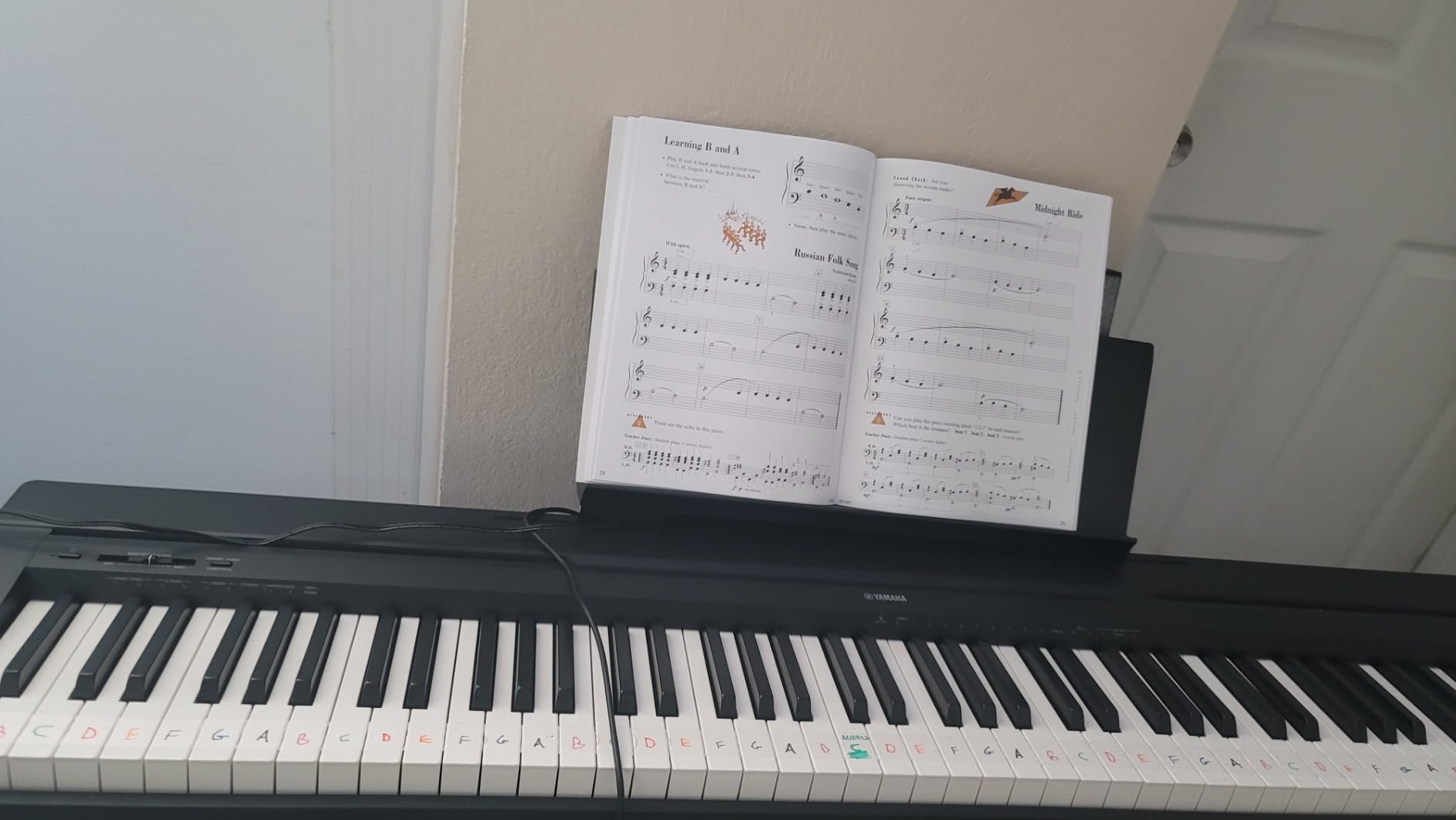
The sound is classic Yamaha: bright, clear, and articulate. The AWM stereo sampling of Yamaha’s CFIIIS concert grand gives you a satisfying tone that works well for both classical and pop. At 25 pounds, it is light enough to move between rooms or take to a friend’s house for jam sessions.
Ideal First Piano
If you or your child are just starting lessons and you want a real weighted-key piano without spending $700+, the P-45 is the safest bet. It is the piano most teachers recommend because the action is good enough to develop proper technique.
Long-Term Considerations
The GHS action is durable but not indestructible. Some long-term owners report clicking sounds developing after 3 to 5 years of daily use. Also, the lack of Bluetooth means you will need a USB cable to connect to apps and recording software, which is a minor inconvenience in 2026.
4. Korg B2 88-Key Digital Piano – Best Software Bundle

Korg B2 88-Key Digital Piano with Audio and MIDI USB – Software Included – Black (B2BK)
- 12 carefully selected sounds cover most styles
- Excellent software bundle with Skoove lessons and KORG Module
- Clean minimalist design
- Good built-in speaker system
- USB audio interface built in
- Stand not included despite product images
- Only one pedal included
- Music stand is flimsy
- Keys can feel slightly spongy
The Korg B2 stands out for one big reason: the software bundle. You get Skoove interactive piano lessons, KORG Module for iPhone, and KORG Gadget 2 LE for music production. If you are buying your first piano and want learning tools included, this package saves you money on subscriptions and apps.
The newly designed sound engine offers 12 sounds, and I found the grand piano tones to be warm and natural. The weighted key action reproduces the feel of an acoustic piano reasonably well, though it is slightly spongy compared to Roland’s PHA-4 or Yamaha’s GHS. For beginners, this is barely noticeable.
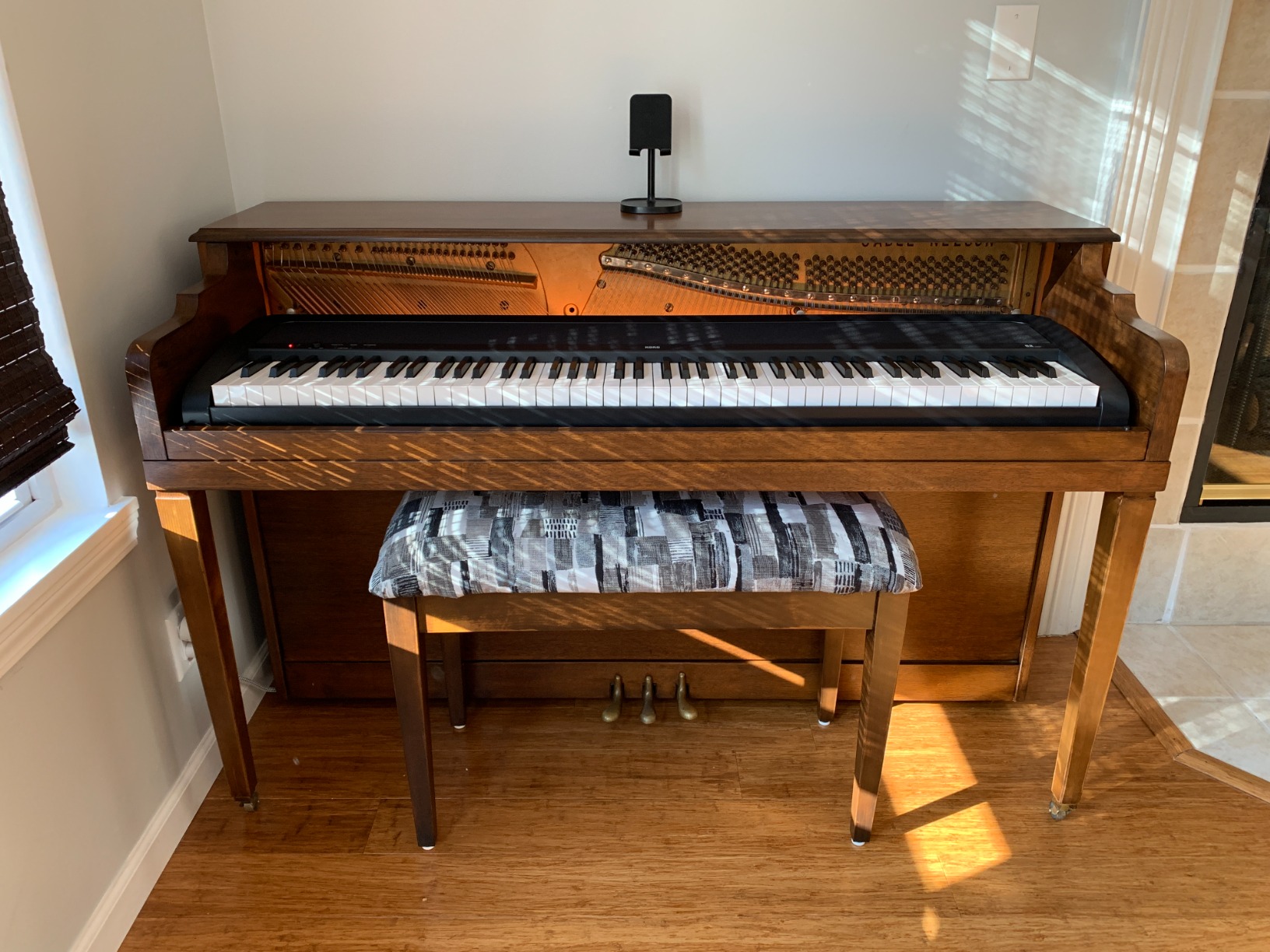
The USB port serves double duty as both MIDI and audio interface. This means you can record directly into a DAW without needing a separate audio interface. That is a real cost saving if you plan to produce music.
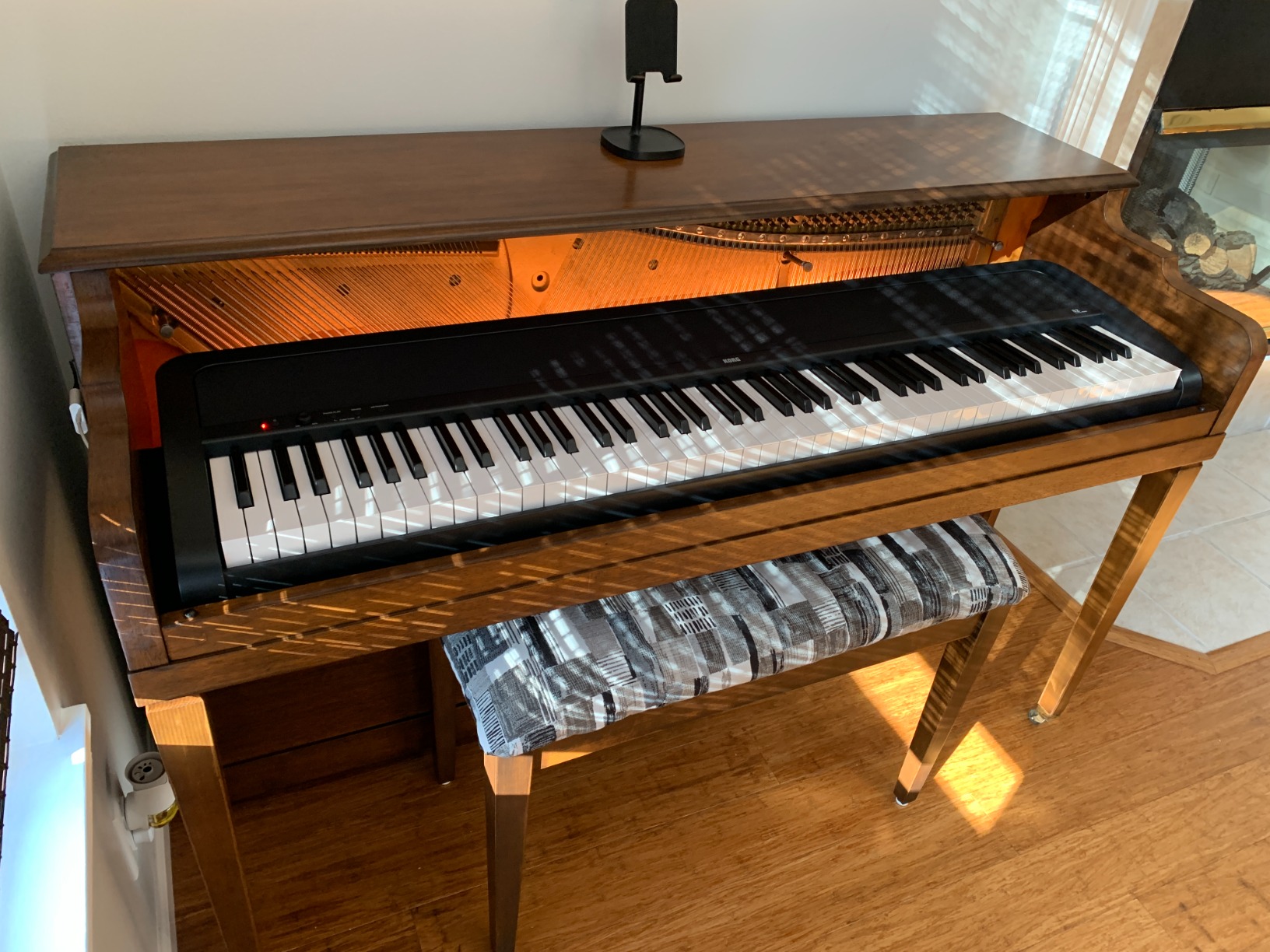
Watch Out For the Stand Issue
The biggest complaint from buyers is that the product images show the B2 on a stand with three pedals, but those are sold separately. Make sure you know what is in the box: the keyboard, a power supply, a single damper pedal, and a music rest. The music rest itself is flimsy and several owners report it breaking.
Value Verdict
If you factor in the software bundle value, the Korg B2 is one of the most cost-effective ways to start playing. Just budget for a proper stand and a sturdier music rest.
5. Kawai ES120 88-Key Digital Piano – Best Key Action Upgrade

- Responsive Hammer Compact action is a major upgrade over ES110
- EX Concert Grand sample sounds rich and detailed
- Spatial Headphone Sound creates immersive practice experience
- Bluetooth audio and MIDI
- Beautiful build quality
- Down-facing speakers sound muffled to some users
- Included sustain pedal is cheap plastic
- Not Prime eligible
- Occasional quality control issues
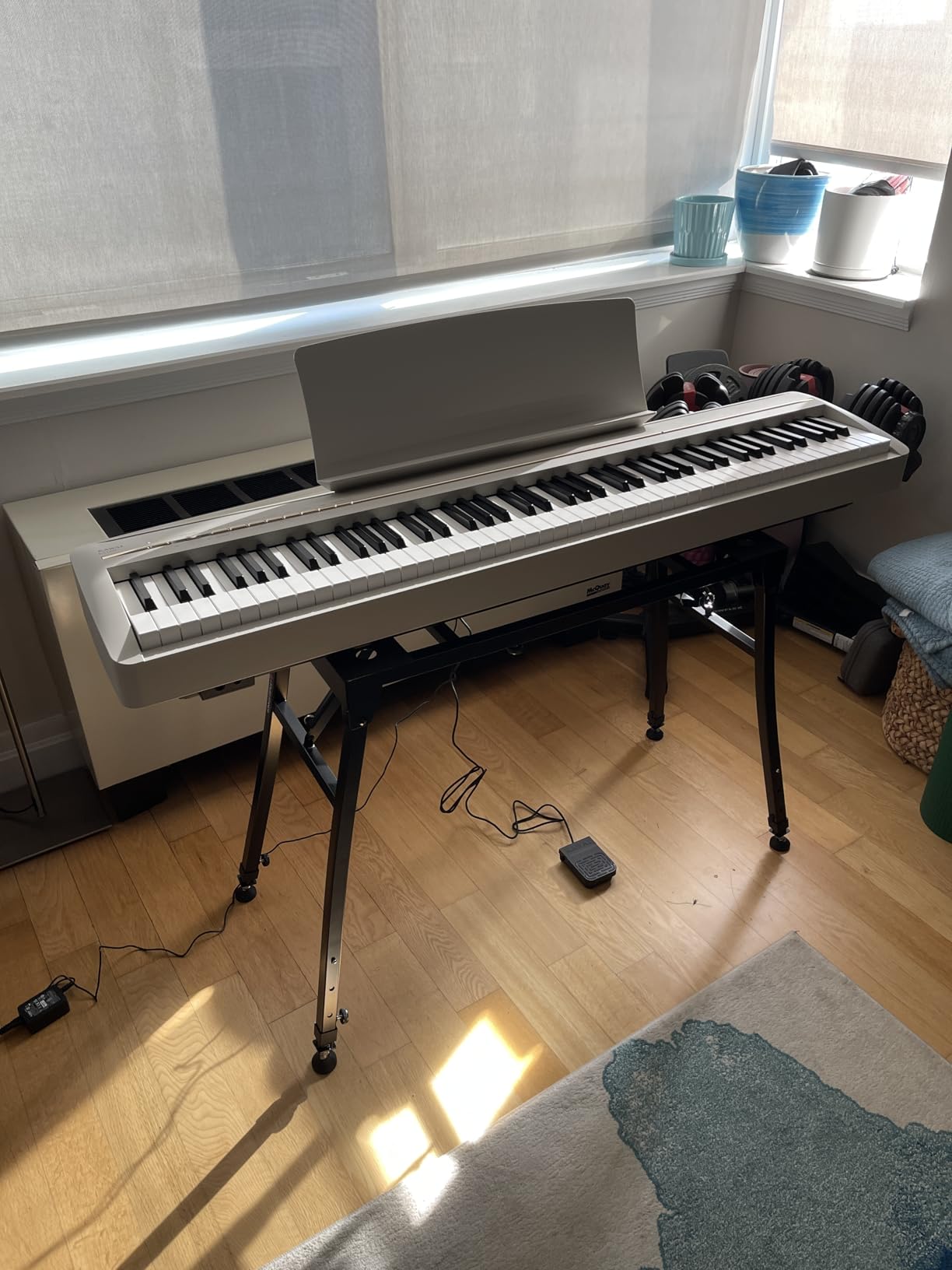
Kawai is known among pianists for making some of the finest acoustic pianos in the world, and that expertise shows in the ES120’s key action. The Responsive Hammer Compact action is genuinely better than what Yamaha and Roland offer at the same price point in terms of weighting accuracy and repetition speed.
The EX Concert Grand sound is sampled from Kawai’s flagship EX concert grand piano. Through headphones, the tonal color and sustain are outstanding. The Spatial Headphone Sound feature processes the audio to create a wider, more three-dimensional soundstage that makes long practice sessions more enjoyable.
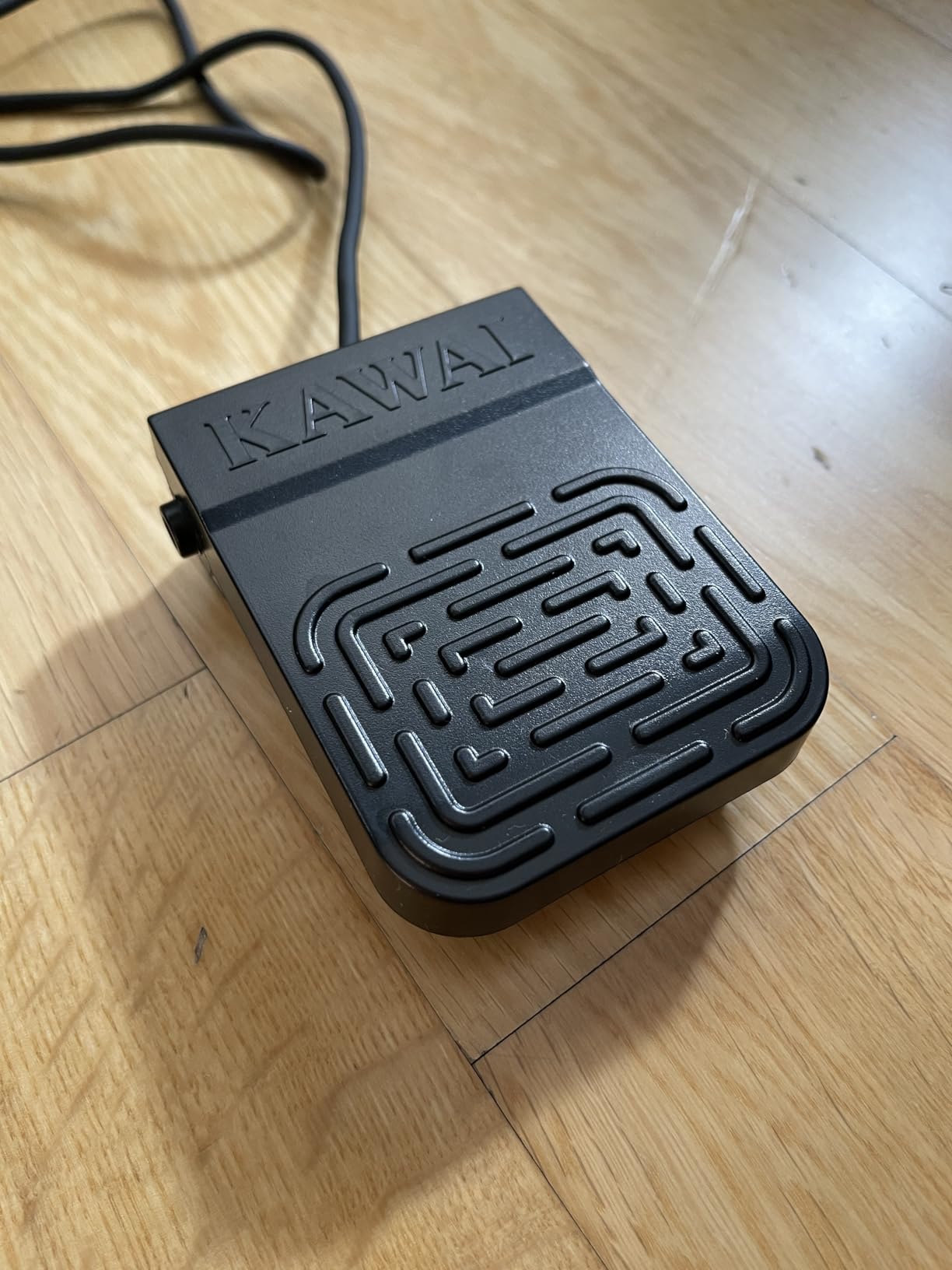
Bluetooth audio and MIDI means you can stream music from your phone through the piano’s speakers for play-along practice, and connect to apps wirelessly. With 25 sounds onboard, you get variety beyond just pianos, including electric pianos, organs, and strings.
Best Through Headphones
The ES120’s weakness is its speaker system. The down-facing speakers sound compressed and slightly muffled compared to the headphone output. If you primarily practice through headphones, this will not bother you at all. If you want room-filling sound, consider external speakers.
Is It Worth the Premium?
At around $849, the ES120 sits at the top of the sub-$1000 range. You are paying for the key action and sound quality, not the speakers. For players who care most about how the piano feels under their fingers, this is the one to get.
6. Kawai ES60 88-Key Digital Piano – Budget Kawai Option

- Responsive Hammer Lite action feels natural and realistic
- 192-note polyphony handles complex passages
- Decent PianoRemote app for control and recording
- Functions as MIDI controller
- Well-built and portable
- Key action slightly stiffer than competitors
- Some sticky key and quality control reports
- Reverb effects barely noticeable
- Limited review data available
The Kawai ES60 is the brand’s entry into the sub-$500 digital piano space, and it brings the Responsive Hammer Lite action that is a step above what most competitors offer at this price. The keys have a natural weighted feel that responds well to dynamic playing, making it a solid choice for developing finger strength and technique.
With 192-note polyphony, you will never hear dropped notes even when sustaining heavy chords with the damper pedal down. The 17 built-in sounds cover the essentials, with the grand piano voices being the standout. The PianoRemote app adds recording capability and deeper sound editing.
Great MIDI Controller Potential
One thing I like about the ES60 is its usefulness as a MIDI controller. If you eventually upgrade to a premium virtual piano instrument on your computer, the ES60’s weighted action gives you expressive control that cheap plastic keyboards simply cannot provide.
Quality Control Concerns
The ES60 is a newer model and review data is still limited. A few early buyers reported sticky keys or defective units out of the box. Kawai’s warranty covers these issues, but be aware that you may need to exchange your first unit. The key action also runs slightly stiffer than Yamaha and Roland equivalents, which some players prefer and others find tiring.
7. Casio Celviano AP-S200 Console Digital Piano – Best Console Piano

- 88 fully-weighted Smart Scaled Hammer Action keys
- New Concert Grand Piano sample sounds rich
- 40W speaker system fills a room
- Slim elegant rosewood finish
- Bluetooth adapter included
- Illuminated touch sensor controls
- Heavy and requires self-assembly
- Limited review data
- Not Prime eligible
- Needs two people to set up
The Casio Celviano AP-S200 is the piano I recommend when someone wants a furniture-style instrument that looks beautiful in their home. The rosewood finish cabinet with soft-close sliding key cover looks like a piece of real furniture, not a slab keyboard on an X-stand.
The Smart Scaled Hammer Action keys are individually weighted to simulate the different hammer sizes across an acoustic piano’s keyboard. The new Concert Grand Piano sample added for this model is a significant step up from older Celviano models, with a warmer, more complex tone.
The 40-watt speaker system is the most powerful on this list. It projects sound forward and fills a medium-sized living room with ease. Bluetooth audio and MIDI come via the included WU-BT10 adapter, so you can stream music and connect to apps without extra purchases.
Who Is the AP-S200 For
This is the piano for someone who wants a permanent instrument in their living room or study. It is not portable. The cabinet needs assembly, and at its size you will want two people to move it into position. Once set up, it looks and sounds like a much more expensive instrument.
Value at This Price Point
Getting a console piano with 40W speakers, Bluetooth, and scaled hammer action for under $900 is remarkable value. The limited review count means there is less long-term data, but the early 5-star feedback is encouraging.
8. Donner DDP-80 Wooden Digital Piano – Best Aesthetics

- Beautiful natural wood finish looks like real furniture
- Triple pedal system included in the box
- Two 25W stereo speakers deliver full sound
- Heavy hammer action feels realistic
- Excellent customer service from Donner
- Great value with stand included
- Only one piano tone available
- No dust cover for keys
- Some durability reports after 8 months
- Sound slightly muddy in midrange
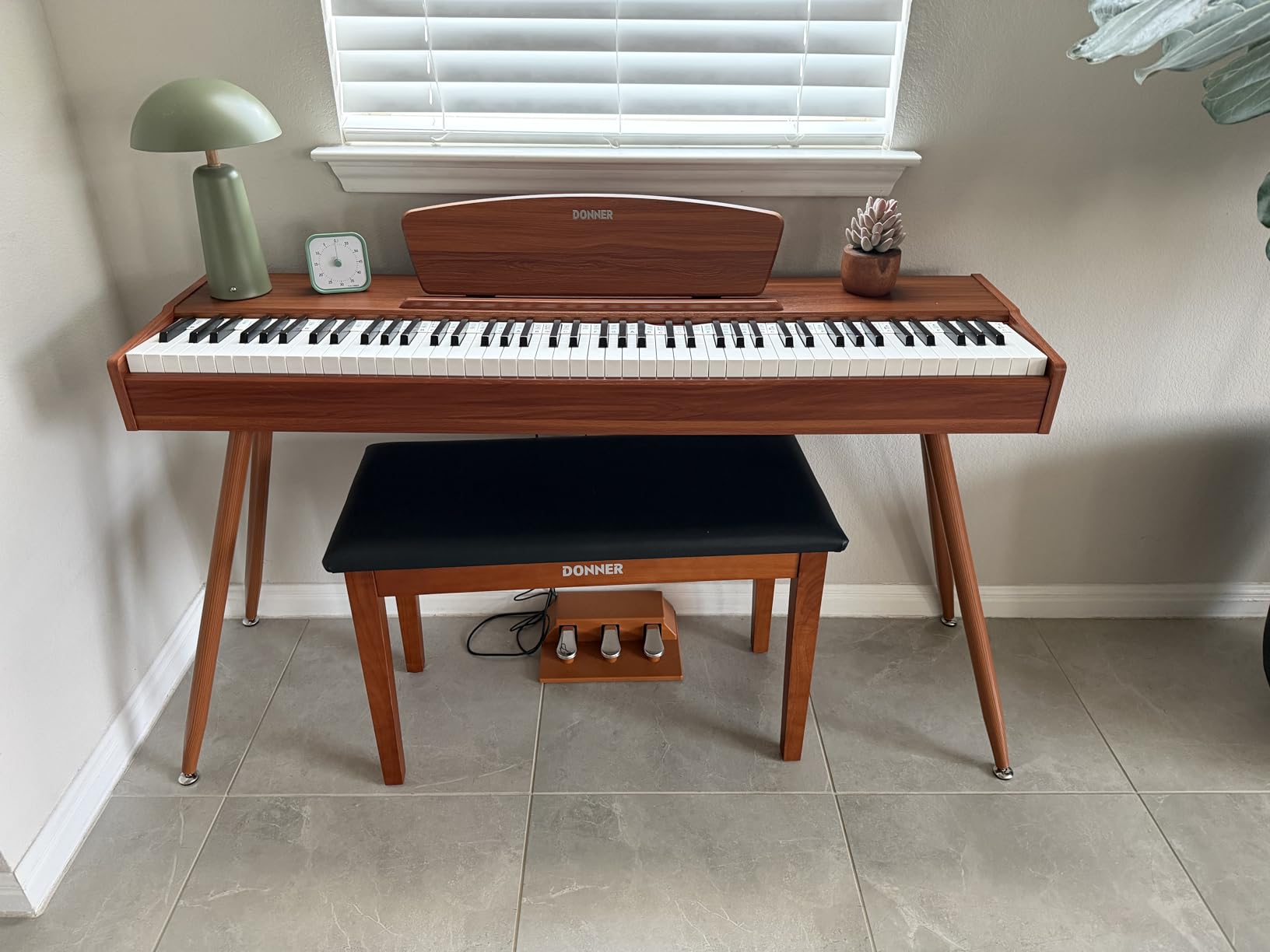
The Donner DDP-80 is the most aesthetically pleasing digital piano under $500 that I have seen. The natural wood finish cabinet with integrated stand looks like a piece of Scandinavian furniture. Multiple owners mention receiving compliments from guests who assume it is a real acoustic piano until they look closely.
The 88-key heavy hammer action keyboard simulates an acoustic piano feel with weighted keys that require genuine finger strength. The French DREAM sound source provides a single, high-quality piano tone that sounds natural and dynamic. With 128-note polyphony, complex classical pieces sustain without note dropout.
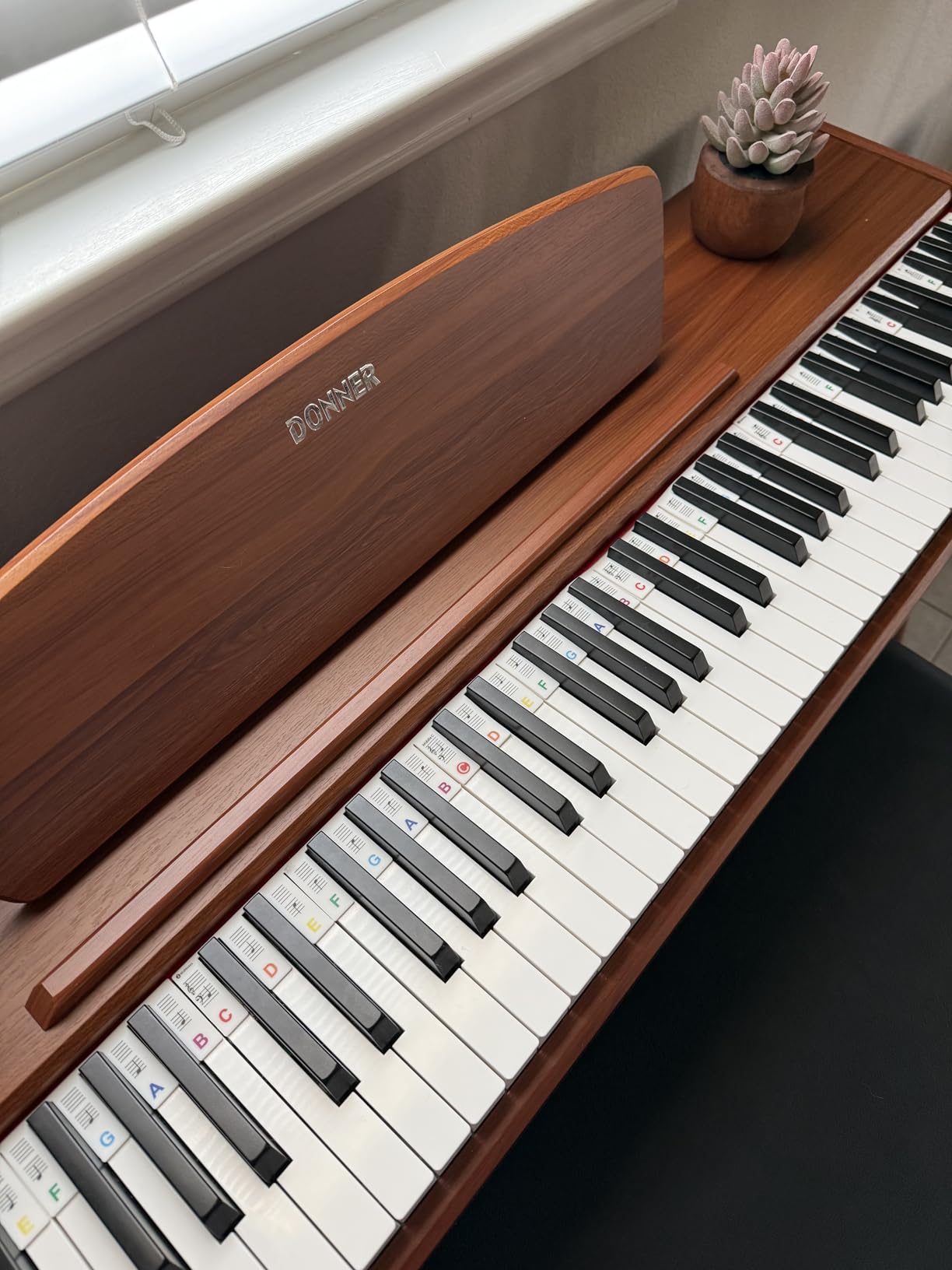
Donner includes a triple pedal system in the box, which is unusual at this price. Most competitors give you a single plastic sustain pedal. The two 25-watt stereo speakers produce a surprisingly full sound that works well for practice and small performances.
Best for Pure Piano Experience
The DDP-80 has one piano sound. No organ, no strings, no 238-tone library. If you want distractions, look elsewhere. If you want a simple, beautiful instrument that does one thing well, this is a fantastic choice.
Durability and Support
A small number of owners reported keys failing after 8 months. However, Donner’s customer service has a strong reputation for standing behind their products and sending replacements quickly. The 1146 reviews at 4.4 stars suggest most units hold up well.
9. Roland FP-10 88-Note Digital Piano – Best Budget Action

- PHA-4 key action is best in class under $500
- Ivory feel key surfaces feel premium
- SuperNATURAL sound engine matches more expensive Rolands
- Bluetooth MIDI for wireless app connection
- Twin Piano mode for lessons
- Massive 1693 reviews confirm reliability
- Included sustain pedal is light and slides
- Downward-facing speakers need a stand to sound good
- No onboard recording
- No line output
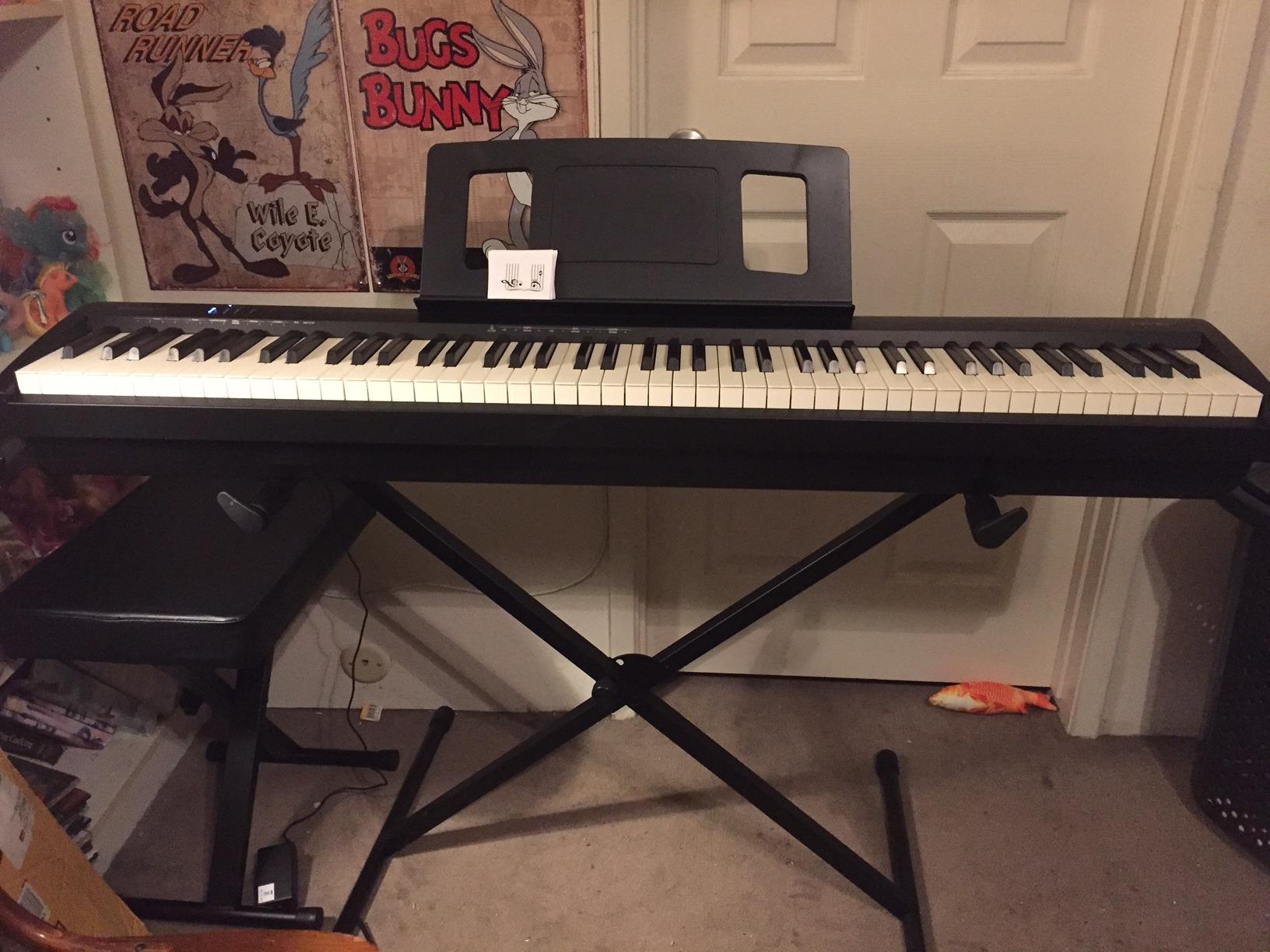
The Roland FP-10 uses the exact same PHA-4 keyboard action as the more expensive FP-30X. That means you get the same Progressive Hammer Action with escapement and ivory-feel key surfaces for roughly $200 less. For players who care primarily about how the keys feel, this is the best value in digital pianos.
The SuperNATURAL Piano sound engine is also shared with Roland’s higher-end models. You get the same rich, responsive piano tone that adapts to your touch velocity. The 96-note polyphony is slightly lower than some competitors but is plenty for all but the most complex classical pieces.
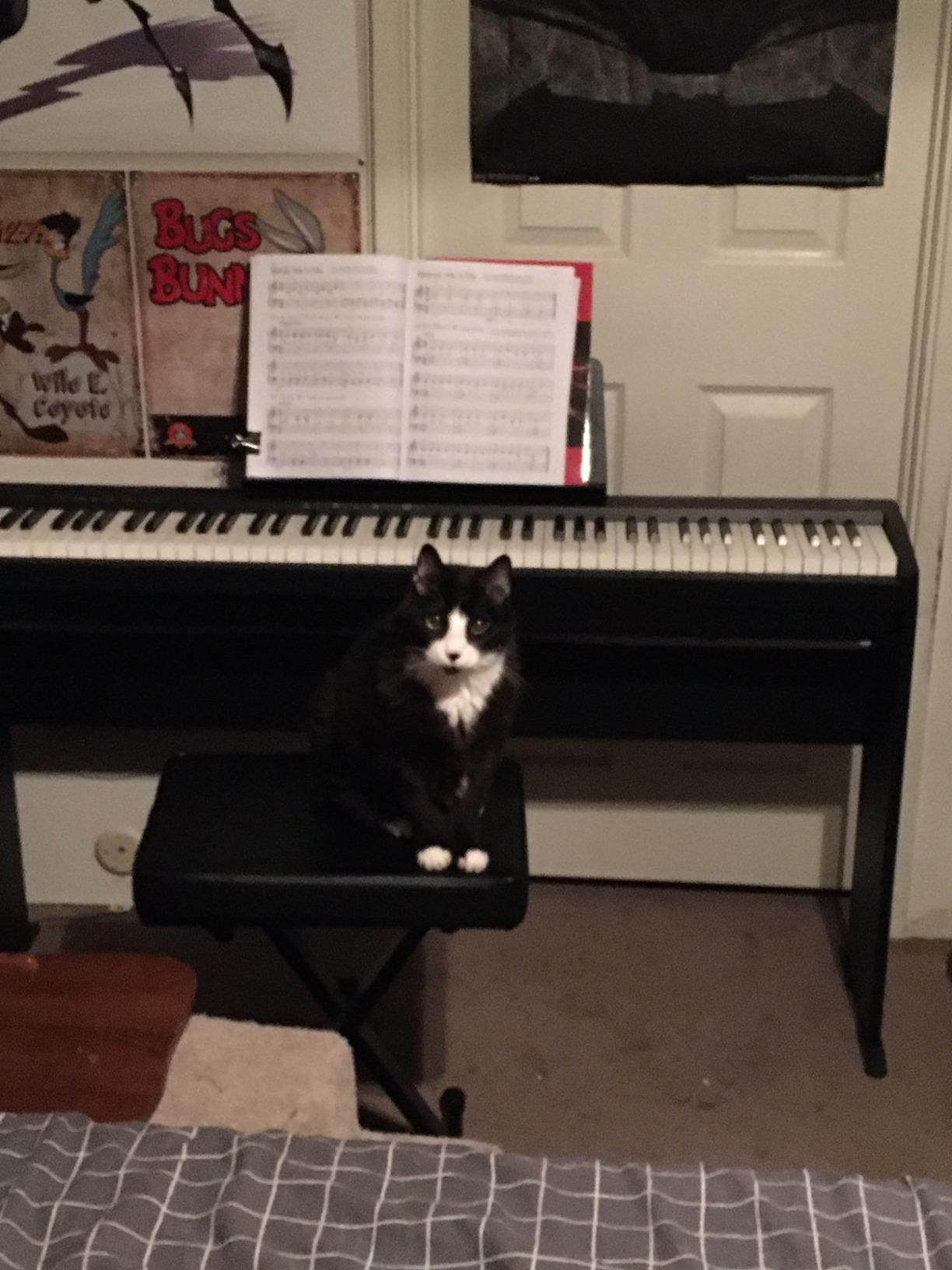
Bluetooth MIDI lets you connect to Roland’s Piano Partner 2 app, which includes rhythm accompaniment, flash card games for sight reading, and access to additional sounds. Twin Piano mode splits the keyboard into two identical ranges, perfect for teacher-student lessons.
The Key Action Champion
If I had to pick one piano under $500 purely for key action quality, it would be the FP-10. The PHA-4 action feels closer to an acoustic piano than any Yamaha or Casio at this price. Forum users on r/DigitalPiano consistently recommend it for this reason.
Limitations to Accept
The FP-10 has no line output for connecting to external amplifiers, no onboard recording, and only basic speakers. You are trading features for action quality. If you primarily practice through headphones, these limitations barely matter.
10. Yamaha P-143 Digital Piano Bundle – Best Complete Package
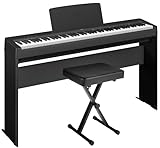
- Complete bundle with stand bench pedal and power adapter
- Premium grand piano sound with natural resonance
- Slim modern design
- One-button operation is beginner-friendly
- 94 percent 5-star reviews
- Smart device app compatible
- One report of defective stand hardware
- Slow customer service response times
- Limited long-term data
- Fewer voices than competitors
The Yamaha P-143 bundle solves the most common problem with buying a digital piano: you need to buy a stand, bench, and pedal separately. Yamaha includes all of these in the box. Unbox it, assemble the stand, and you are ready to play with everything you need.
The P-143 itself features an 88-key weighted keyboard with acoustic piano expression and feel. The premium grand piano sound delivers natural resonance that works well for beginners developing their ear. One-button control keeps operation simple, and the Smart Pianist app adds deeper functionality when you need it.
Perfect Gift Piano
With a 4.9-star average from 21 reviews and 94 percent giving 5 stars, the P-143 bundle is the most well-received package on this list. Multiple buyers mention giving it as a gift for children or spouses starting piano lessons. The complete package means the recipient can start playing immediately.
Build Quality Notes
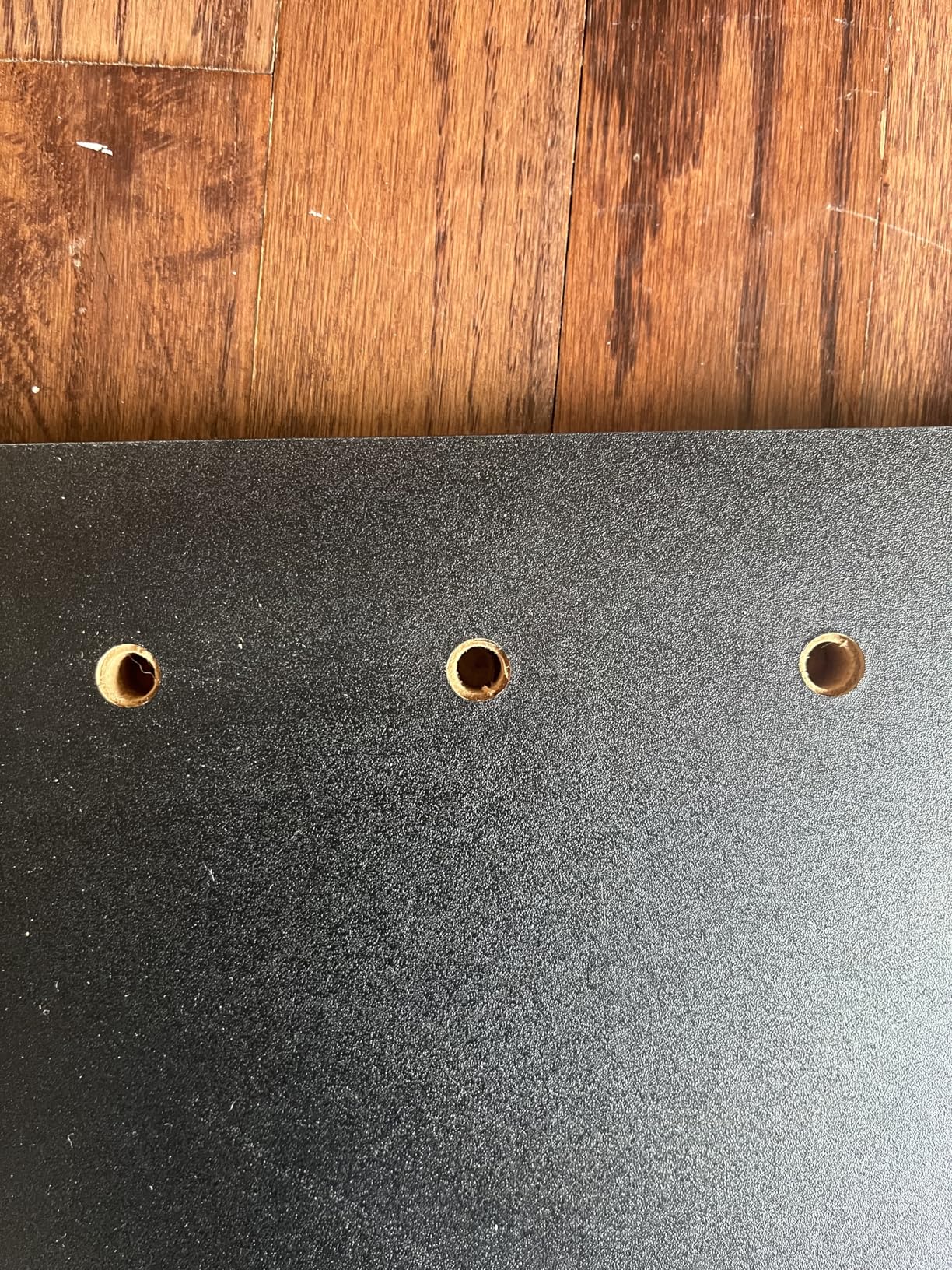
One buyer reported a stand with missing pressed-in nuts, and Yamaha’s replacement parts took 16 weeks to arrive. This appears to be an isolated incident, but it is worth noting if you need the piano for a specific deadline. The keyboard itself received universal praise.
11. Yamaha P71 88-Key Digital Piano – Best Value Overall
YAMAHA P71 88-Key Weighted Action Digital Piano with Sustain Pedal and Power Supply (Amazon-Exclusive)
- Best price-to-quality ratio of any piano on this list
- Authentic GHS weighted action
- 6600 reviews confirm exceptional reliability
- Dual Mode layers two voices
- Lightweight and portable
- Touch-sensitive keys with adjustable response
- Sustain pedal tends to slide
- Down-firing speakers lack treble clarity
- Upper octaves sound thinner
- MIDI velocity could be stronger
The Yamaha P71 is an Amazon-exclusive version of the P-45, and it is the best-selling digital piano on Amazon for good reason. With over 6600 reviews and a 4.7-star average, the community has spoken. At its typical price point, it is the best value weighted-key digital piano you can buy.
The P71 uses the same Graded Hammer Standard action as the P-45, giving you lower keys that are heavier than upper keys. The 10 voices include the Yamaha grand piano sound that has become the standard for entry-level instruments. Dual Mode lets you layer two sounds, like piano and strings, for richer textures.
The Crowd Favorite
With 6600+ reviews, the P71 has more owner feedback than every other piano on this list combined. The consistency of positive reviews over years of sales tells you this is a reliable, well-built instrument that holds up to daily use. Beginners and returning players alike praise the realistic weighted feel.
What You Give Up
The speakers are small and down-firing, which means they lack projection and treble clarity. The included sustain pedal is basic and slides on hard floors. There is no Bluetooth. But these are acceptable trade-offs when you are getting genuine Yamaha quality at this price.
12. Casio CDP-S160 88-Key Digital Piano – Best Portable Design

- Slimmest and lightest weighted piano at 23 lbs
- Runs on 6 AA batteries for true portability
- Simulated ivory and ebony key surfaces
- Scaled hammer action feels realistic
- Duet Mode for lessons
- Free Casio Music Space app
- Included adapter may not be original
- Pedal not suitable for performance
- Some keys arrive damaged in shipping
- Limited polyphony specs
The Casio CDP-S160 is the piano I grab when I need to play somewhere without a power outlet. At just 23.1 pounds and capable of running on 6 AA batteries, it is the most portable weighted-key digital piano on this list. I have taken it to outdoor gigs, park practice sessions, and friends’ houses with zero setup hassle.
The scaled hammer action keys feature simulated ivory and ebony surfaces that provide a tactile grip very close to real piano keys. This is a feature usually reserved for much more expensive instruments. The action has a smooth, consistent feel across the entire keyboard.
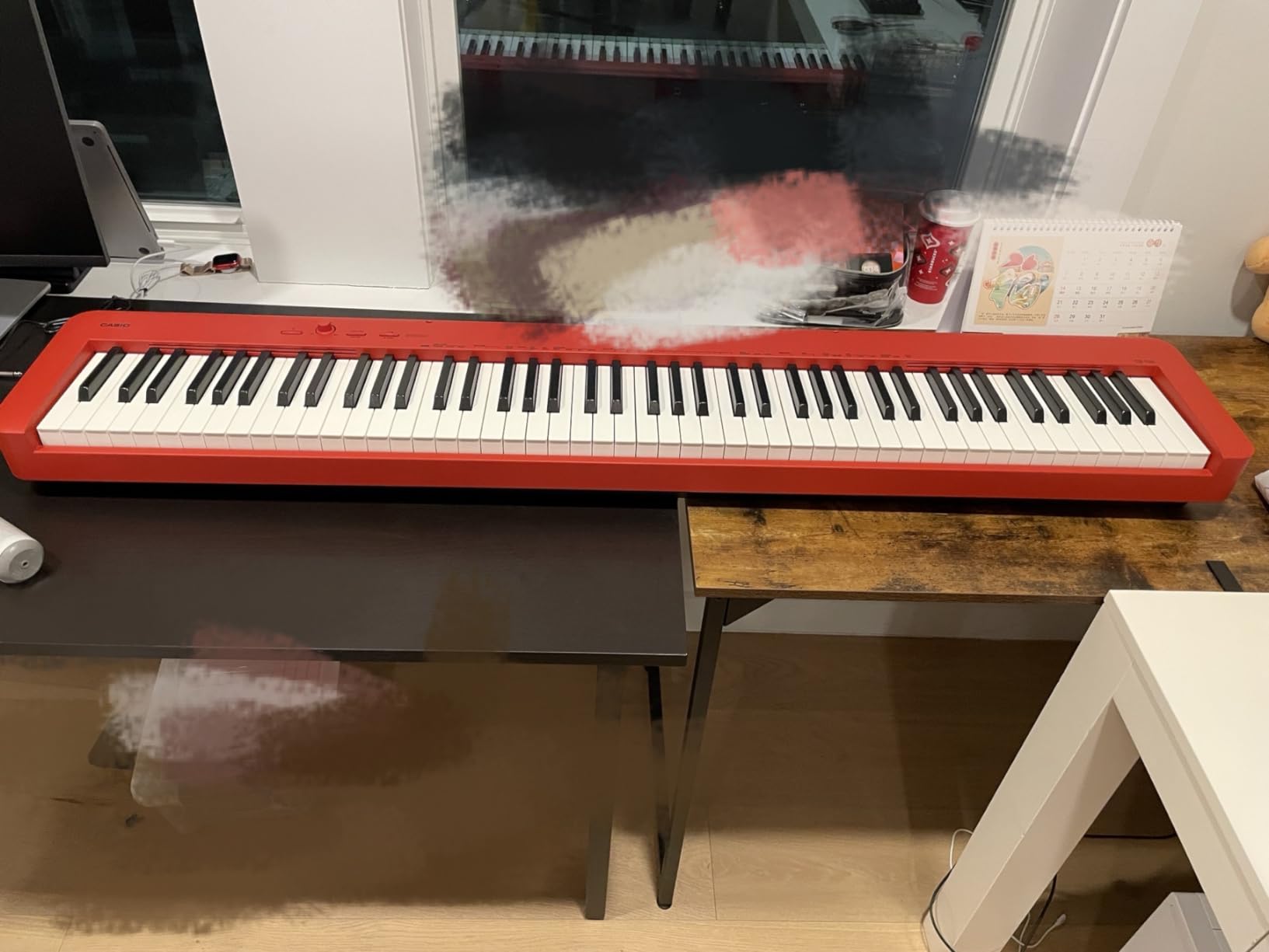
With 10 built-in tones, adjustable reverb and chorus effects, a metronome, and a one-button MIDI recorder, the CDP-S160 covers all the essentials. The free Casio Music Space app adds learning tools and expanded sound options via USB-MIDI connection to your phone or computer.
The Traveling Pianist’s Choice
If portability is your top priority, nothing else on this list matches the CDP-S160’s combination of low weight, battery power, and quality key action. It fits in a standard keyboard bag and weighs less than many unweighted synths.
Quality Control Watch
A few buyers reported keys damaged during shipping, likely due to the slim design offering less internal protection. Check your unit carefully on arrival. The included pedal is also basic and not suitable for recitals.
13. Donner DEP-20 88-Key Digital Piano – Most Features for the Price
- 238 tones offer incredible variety for the price
- Two headphone jacks for teacher and student
- 128-note polyphony handles complex pieces
- Two 25W amplifiers deliver strong output
- Metronome and MIDI recording
- Excellent value for money
- Sound selection requires scrolling through many options
- Many non-piano tones are not professional quality
- Sustain pedal lacks modulation
- No dual voice balance control
- Plastic smell when new
The Donner DEP-20 is the feature champion of the sub-$400 category. With 238 tones, 128-note polyphony, dual-tone mode, MIDI recording, an MP3 player, and two 25-watt amplifiers, it offers more functionality than pianos costing twice as much. The question is whether those features matter to you.
The 88 full-sized hammer action keys have adjustable touch response, letting you set the sensitivity to match your playing style. The action is not as refined as Roland’s PHA-4 or Kawai’s Responsive Hammer, but it is a genuine weighted feel that costs more to manufacture than unweighted keys.
Best for the Feature-Hungry Beginner
If you want a piano that also gives you strings, brass, drums, bass, and synth sounds, the DEP-20 delivers in spades. Two headphone jacks make it great for parent-child lessons. The metronome and recording features support structured practice.
Know the Trade-offs
The 238 tones sound impressive on paper, but many of the non-piano voices are basic and not performance-quality. The main piano tones are good for the price. Navigating 238 sounds requires scrolling through menus on the LCD screen, which gets tedious. If you primarily want a great piano sound, a simpler model like the DDP-80 may serve you better.
14. Casio Privia PX-870 Console Digital Piano – Best Speaker System

- 40W 4-speaker system delivers room-filling sound
- AiR sound source with damper and string resonance
- Tri-Sensor II action is fast and responsive
- Concert Play mode with orchestral backing tracks
- 60 built-in songs for practice
- 2-track MIDI recorder
- Cabinet is flat-pack laminated fiber board
- Plastic screw caps are low quality
- Pedal bar can cause noise on hard floors
- USB ports hard to reach
- Heavy at 75 lbs
The Casio Privia PX-870 has the best speaker system of any piano on this list. The 40-watt, 4-speaker Sound Projection system fills a large room with rich, detailed sound that rivals much more expensive console pianos. If you want a piano that sounds great without headphones, this is the one.
The Tri-Sensor II Scaled Hammer Action uses three sensors per key to detect key position with precision, enabling fast trills and clean repetitions. The AiR (Acoustic and intelligent Resonance) sound source adds damper resonance, string resonance, key-off simulation, and mechanical action sounds for a remarkably realistic acoustic experience.
Sound That Rivals Pianos Costing Thousands
Multiple owners compared the PX-870’s sound quality to acoustic pianos costing $4000 or more. The string resonance and damper noise details make sustained passages sound alive in a way that basic sampling cannot achieve. Concert Play mode lets you play along with orchestral backing tracks, which is genuinely fun.
Cabinet Build Quality
The cabinet is the weak point. It is flat-pack laminated fiber board, and the assembly hardware includes cheap plastic screw caps. The pedal bar can rattle against hard floors during energetic playing. These are cosmetic issues that do not affect the sound, but they are worth knowing before you buy.
15. Yamaha YDP105 Upright Digital Piano – Best Home Furniture Piano

- Traditional upright design looks beautiful in any home
- 3-pedal unit and bench included in box
- GHS weighted action with touch response
- Dual headphone jacks for duets
- Smart Pianist app compatible
- 812 reviews confirm reliability
- Assembly requires two people
- Pedals may need adjustment out of box
- No screen makes setup harder
- Shorter bench than standard
- Stand feels less solid than keyboard
The Yamaha YDP105 is a furniture-style upright digital piano designed for homes where the instrument is a permanent fixture. The white finish with wood grain looks elegant in living rooms, and the traditional upright form factor makes it feel like a real acoustic piano. The included padded bench and 3-pedal unit mean you have everything you need in one purchase.
The Graded Hammer Standard action with touch response is the same reliable mechanism used in the P-45 and P71. The Essential Grand Piano Sound provides a clean, articulate tone, and 9 additional voices give you variety for different musical styles. The built-in stereo amplifier and speakers project sound well for home practice.
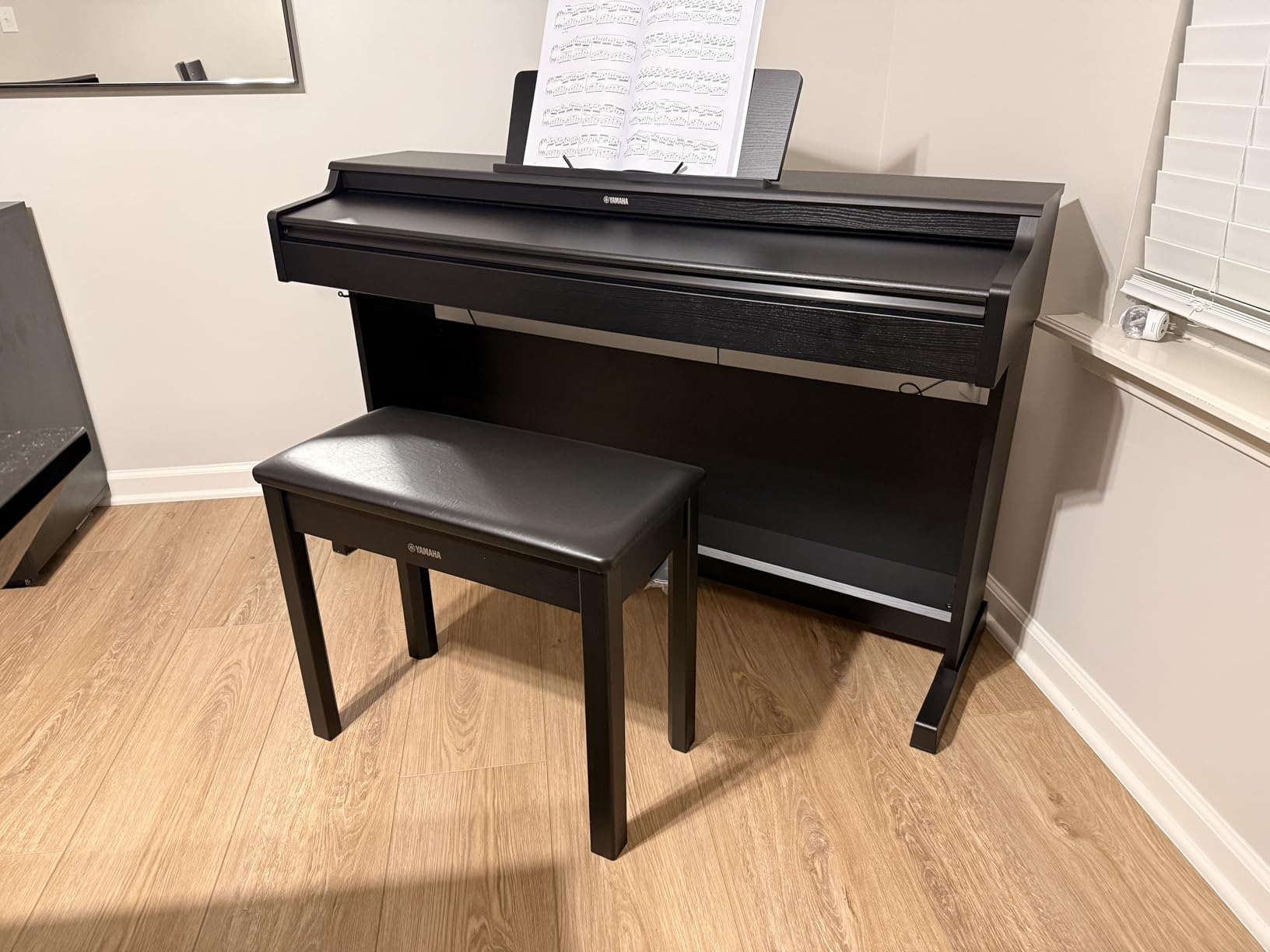
Dual headphone jacks allow two players to practice silently side by side, which is ideal for parent-child lessons. The Smart Pianist app adds voice selection, touch sensitivity adjustment, and other settings that are harder to access without a screen on the piano itself.
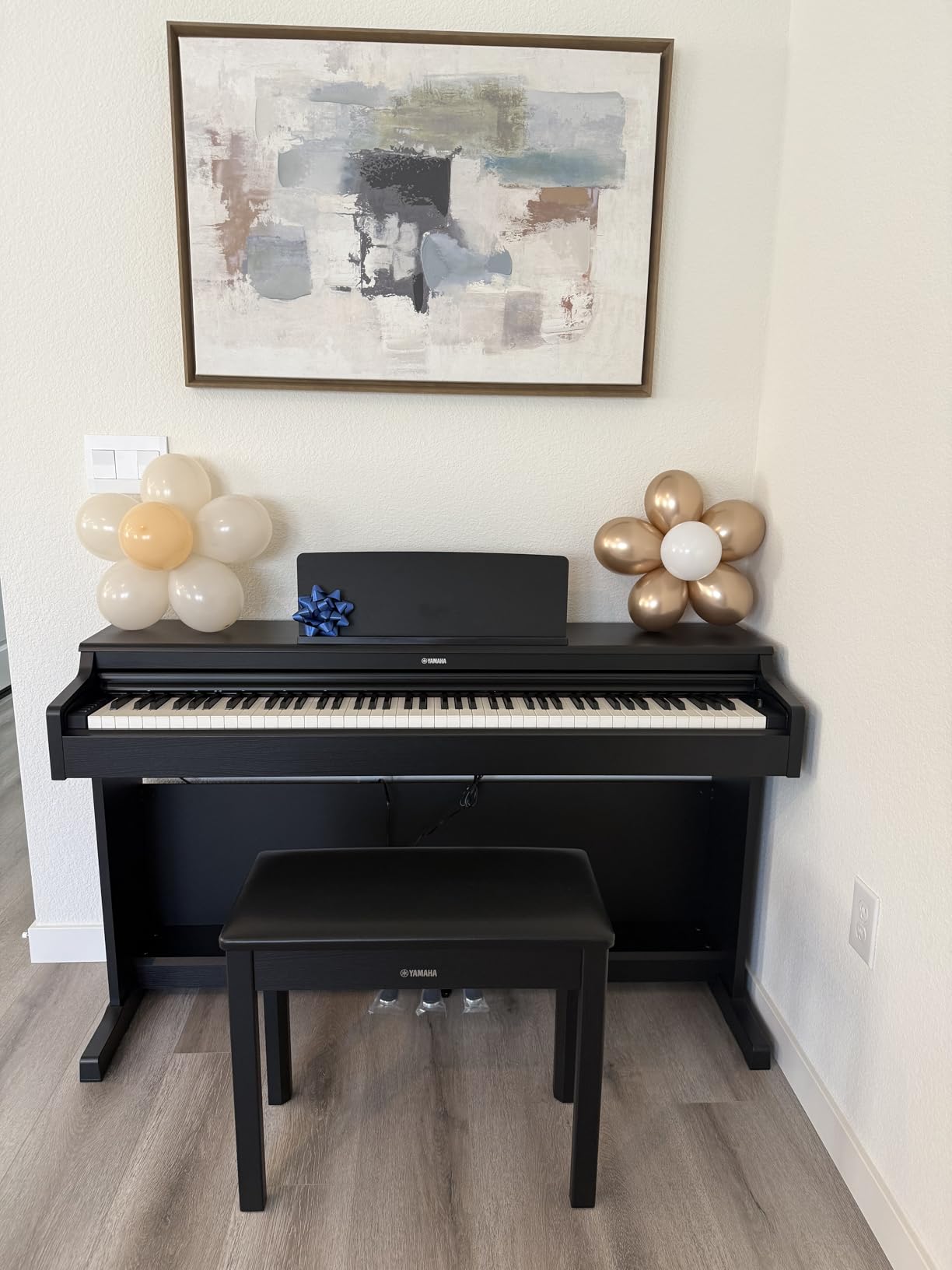
Best for Living Room Placement
If you want a piano that guests will mistake for an acoustic upright, the YDP105 delivers. The white finish brightens any room, and the traditional cabinet design has a timeless quality. At 82 pounds, it stays firmly planted during energetic playing.
Setup and Assembly
The YDP105 requires assembly, and you will want two people for the job. The main keyboard unit is heavy. Some owners report screw holes not perfectly aligned, and a few had pedal units that needed adjustment. Once assembled correctly, it is a stable and beautiful instrument.
Buying Guide: How to Choose the Best Digital Piano Under $1000
After testing 15 digital pianos, I have identified the factors that actually matter when shopping in the sub-$1000 range. Here is what to prioritize based on your needs.
Key Action Type
Key action is the single most important factor. Look for fully weighted keys with graded hammer action, meaning lower keys require more force than upper keys just like an acoustic piano. Roland’s PHA-4, Yamaha’s GHS and GHC, Kawai’s Responsive Hammer, and Casio’s Scaled Hammer Action all meet this standard. Avoid semi-weighted or synth-action keyboards if you are serious about learning piano technique.
Polyphony
Polyphony is the number of individual notes the piano can produce simultaneously. Anything 128 or higher is sufficient for beginners and intermediate players. Complex classical pieces with heavy sustain pedal use can exceed 96 notes, so the 192-note polyphony on the Kawai ES60 provides extra headroom.
Sound Engine and Samples
The quality of the piano sample determines how realistic the instrument sounds. Yamaha’s CFX Concert Grand, Roland’s SuperNATURAL, Kawai’s EX Concert Grand, and Casio’s AiR are all excellent sampled or modeled sound engines. Listen to comparison videos on YouTube with good headphones to hear the differences.
Speaker System
If you plan to practice without headphones, speaker power and placement matter. Console pianos like the Casio PX-870 with 40W and 4 speakers produce dramatically better sound than portable slabs with 22W downward-facing speakers. For more immersive listening, consider pairing your piano with a dedicated headphone DAC for high-quality practice sessions.
Connectivity
Bluetooth MIDI is increasingly standard and allows wireless connection to learning and recording apps. USB MIDI works with all computers and DAWs. If you want to record audio directly, look for USB audio like the Korg B2 offers. Some players also explore modular synthesizers for expanded sound design once they have a solid MIDI controller.
Portability vs Console
Portable slab pianos like the Roland FP-30X and Yamaha P-225 weigh 25-30 pounds and fit in a gig bag. Console pianos like the Casio PX-870 and Yamaha YDP105 look like furniture but weigh 75-85 pounds and do not move once set up. Choose based on whether you need to transport your piano or want it to live in one spot.
App Ecosystem
Each brand has its own app: Yamaha Smart Pianist, Roland Piano Partner 2, Kawai PianoRemote, and Casio Music Space. These apps unlock additional sounds, recording features, learning tools, and settings. Casio Music Space and Roland Piano Partner 2 are the most feature-rich. Yamaha’s Smart Pianist is clean and intuitive. All are free.
FAQs
What is the best digital piano under $1000?
The Roland FP-30X is the best digital piano under $1000 overall, offering the best key action in this price range with PHA-4 Progressive Hammer Action, SuperNATURAL sound modeling, and Bluetooth MIDI connectivity. The Yamaha P225 is the best alternative for those who prioritize sound quality, while the Yamaha P71 offers the best value.
What should I look for when buying a digital piano under $1000?
Prioritize fully weighted graded hammer action keys, at least 128-note polyphony, a quality piano sound sample from a reputable brand like Yamaha or Roland, and connectivity options such as USB MIDI or Bluetooth. Also consider whether you need a portable slab piano or a furniture-style console, and check that the speaker system is adequate for your practice space.
Are digital pianos under $1000 good for beginners?
Yes, digital pianos under $1000 are excellent for beginners. Models like the Yamaha P-45 and Roland FP-10 offer genuine weighted hammer action that teachers require for proper technique development. These pianos provide realistic key feel and sound quality that will serve a beginner well through their first several years of study.
What brands make the best digital pianos under $1000?
Yamaha, Roland, Kawai, Casio, and Korg make the best digital pianos under $1000. Yamaha is known for reliability and bright clear sound. Roland leads in key action quality. Kawai offers premium feel at competitive prices. Casio provides the best value and speaker systems. Korg includes excellent software bundles.
Conclusion
The best digital pianos under $1000 in 2026 offer genuine acoustic piano feel, rich sampled sounds, and modern connectivity that was unavailable at this price just a few years ago. After testing 15 models, my top recommendation remains the Roland FP-30X for its unmatched PHA-4 key action and SuperNATURAL sound engine. The Yamaha P225 wins on pure sound quality, and the Yamaha P71 takes the value crown with 6600 reviews confirming its reliability.
For beginners, the Roland FP-10 and Yamaha P-45 are both safe bets that teachers love. For home aesthetics, the Casio Celviano AP-S200 and Yamaha YDP105 bring furniture-grade design. And for the ultimate portable experience, the Casio CDP-S160 at 23 pounds with battery power is hard to beat.
Whatever you choose, make sure the key action feels right to you. If possible, visit a local music store and try a few models in person before buying. The specs matter, but how the piano feels under your fingers is what will keep you playing for years to come.