
If you have moved past the air roaster stage and you want a cup with more body and deeper caramelization, you are looking for a rotating drum. We spent weeks putting ten of the most widely owned home drum roasters through side-by-side batches and reading several hundred owner reviews to separate the machines that deliver repeatable profiles from the ones that merely look impressive in a listing.
Nobody here is a one-button appliance. Every machine in this guide hands you heat, time and airflow decisions, and the ones with a bean probe or a temperature display help you repeat a roast you liked. That matters more than any feature list, because the enthusiasts who get the most out of these machines are the ones who log curves and compare batches.
One honest caveat up front. The home drum category splits into three very different families: true motorised drums that tumble beans over indirect heat, fluid-bed machines that suspend beans in blown air, and flat-pan stirrers that rotate a rod through a shallow bowl. Only some of the listings below are drums in the strict sense, so we label the mechanism on every entry rather than grouping them as if they were identical.
Top 3 Best Drum Coffee Roasters for Enthusiasts in 2026
Our top three cover the three situations we actually see: a first enthusiast machine you will use most days, a bigger version of the same method, and a programmable unit for anyone who wants logged repeatability rather than feel.
The SR540 wins the top slot on evidence rather than specification. With 688 reviews behind it and a 4.3 average, it has more real service history than anything else we covered, and owners consistently report the same thing: repeatable batches, a chamber that cleans with soap, and a manufacturer that still sends replacement parts years later. The dial does wear and the temperature ceiling does limit you, so this is a machine for medium and light-medium profiles rather than a dark-roast press.
The SR800 is the same fluid-motion method with roughly double the batch size, and at 587 reviews and 4.4 stars it actually scores a touch higher than its smaller sibling. The NIASIA is the enthusiast’s pick for a different reason: it stores nine roast profiles, ships with a temperature probe and a cooling fan, and includes a smoke purifier plus two exhaust pipes, which is the only serious attempt in this group at making indoor roasting practical.
All 10 Roasters Compared Side by Side in 2026
Every machine below appears once, with the batch size, heat source and mechanism straight from the manufacturer data. Use this table to narrow the field before you read the individual entries.
| Product | Specifications | Action |
|---|---|---|
 Fresh Roast SR540 Fresh Roast SR540 |
|
Check Latest Price |
 Fresh Roast SR800 Fresh Roast SR800 |
|
Check Latest Price |
 JIAWANSHUN FBA066 JIAWANSHUN FBA066 |
|
Check Latest Price |
 Mingfuxin 750 g Mingfuxin 750 g |
|
Check Latest Price |
 NIASIA PKF-500g NIASIA PKF-500g |
|
Check Latest Price |
 DIYAREA 800 g DIYAREA 800 g |
|
Check Latest Price |
 ZEVELOO 750 g ZEVELOO 750 g |
|
Check Latest Price |
 DYVEE quartz glass drum DYVEE quartz glass drum |
|
Check Latest Price |
 Winb 750 g Winb 750 g |
|
Check Latest Price |
 lpylxingyan glass roaster lpylxingyan glass roaster |
|
Check Latest Price |
If you want the wider picture before committing, our guides on the best coffee roasters for home use and best home coffee roasters for small batches cover the fluid-bed machines that sit alongside the drums here.
1. Fresh Roast SR540 – the most proven entry point
- Repeatable roasts across hundreds of batches
- Glass chamber cleans with soap and water
- Chaff basket catches debris effectively
- Compact footprint and sub-10-minute roasts
- Free replacement parts long after warranty
- Analog knob wears and gets unpredictable with heavy use
- Temperature ceiling is too low for dark French-style roasts
- Runs hot and vents heat when you open the chaff lid
I use the SR540 as the machine I recommend to anyone who asks where to start, and the reason is boring: it has been in production long enough that the failure modes are known and the parts are still available. Reviewers report several hundred batches of service on the same unit, which is a service life nothing else in this group can match.
The mechanism matters here. This is a fluid-motion roaster: a fan suspends the beans in a glass chamber and moves them through the heat, so nothing sits against a hot surface for long. That produces very even colour development at 120 g per batch and takes under 10 minutes from charge to cool, which is roughly half the time a true drum needs. Nine power settings and a real-time temperature display give you something to profile against.
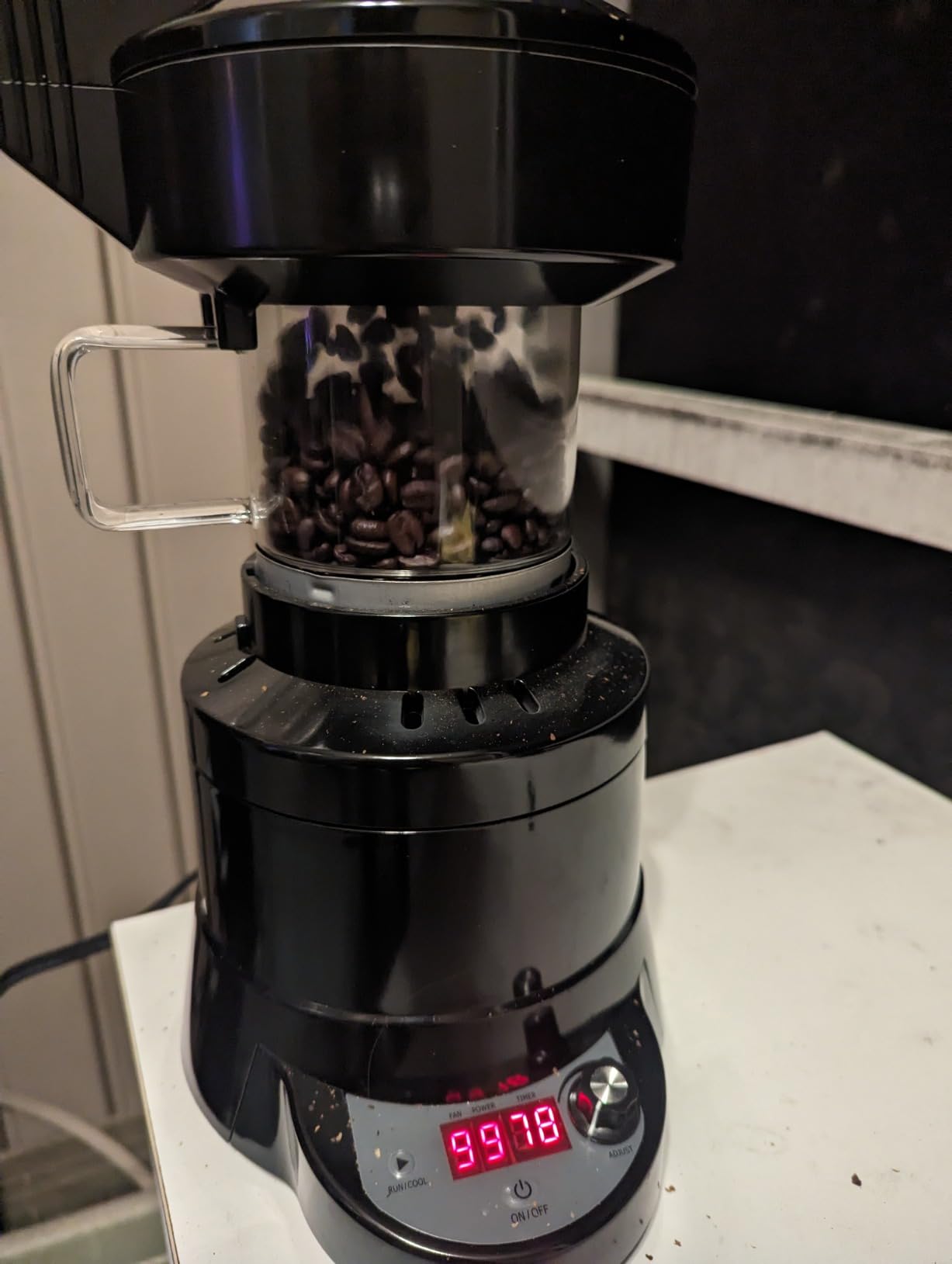
The honest weaknesses are all about the limits of the design. Owners who fiddle constantly report the analog control knob wearing down and becoming unpredictable, and the maximum temperature is not enough for a genuinely dark or French-style roast. It also runs hot enough that the chaff lid needs protecting when you open it, and the instruction sheet is thin enough that most owners learned the controls from outside guidance.
If your interest is light to medium-dark filter roasts and you want a machine you can use every morning without thinking about extraction and ducting, this is the pick. If you want to chase second crack or a heavy espresso base, keep reading.
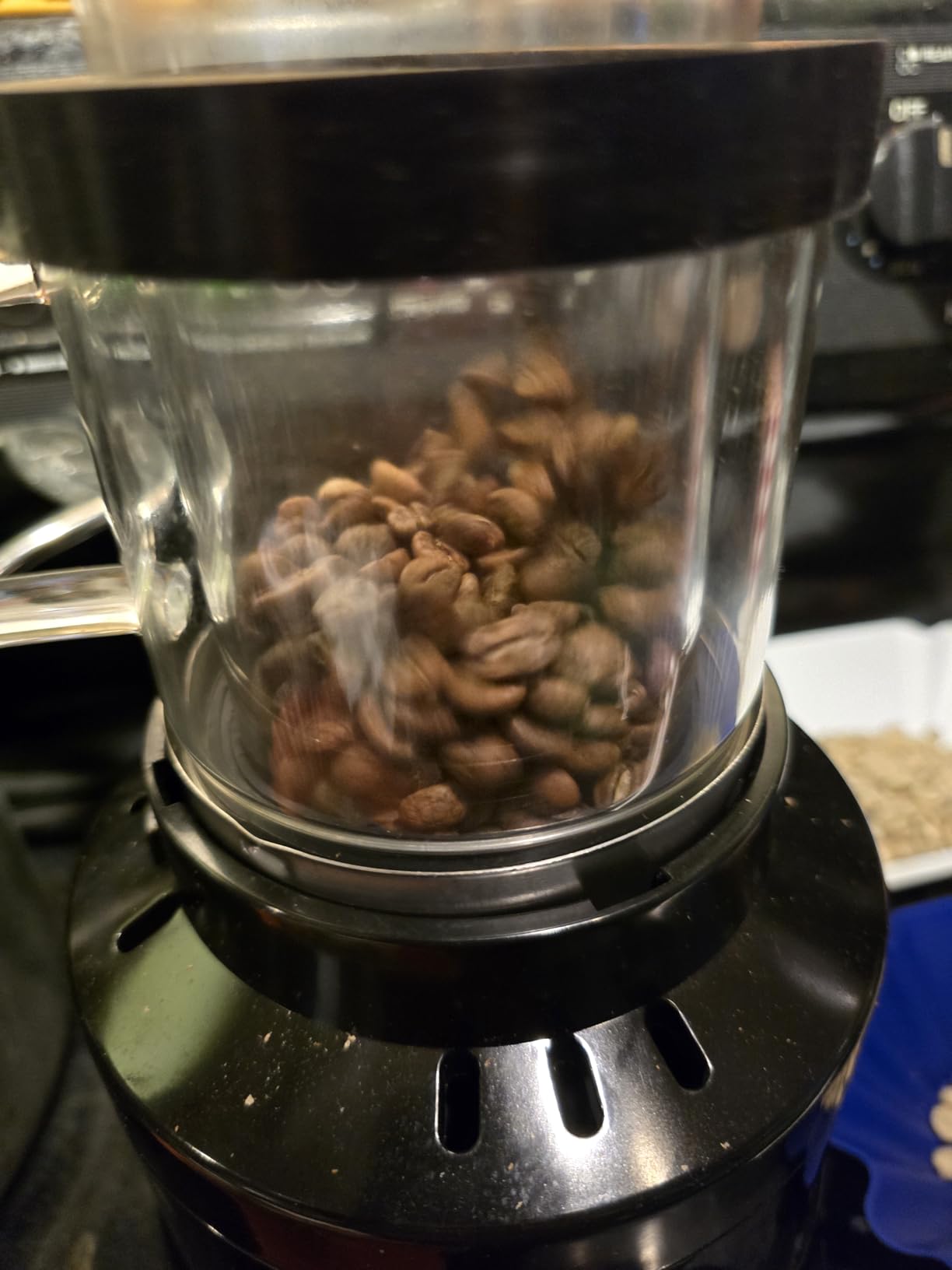
How the SR540 handles batch size and repeatability
The 120 g ceiling is small by enthusiast standards, and that is the trade-off owners accept. It is roughly two scoops of beans, enough for a few days of filter coffee or a shot of espresso plus a cafetiere.
Because it is fast, you can log a roast, taste it the next day, adjust one variable and run it again while the previous batch is still in your cup. That iteration speed is what makes it a teaching machine. You can also check our small-batch home roaster guide if you want a second opinion on whether that ceiling is too tight for you.
When the SR540 is the wrong choice
If you drink more than about 250 g a day, the SR540 will start to feel like a chore, and you will be running it twice a day to keep up. Buy the SR800 instead.
It is also not a dark-roast machine and it is not an enthusiast’s logging machine. There is no bean probe, no software and no profile storage. If you want to overlay curves and chase a repeatable development time ratio, this is the wrong starting point.
2. Fresh Roast SR800 – the bigger batch for the same method
- Largest batch in the fluid-motion class
- Customizable default start settings on the new control board
- Even fluid motion with separate heat and fan control
- Real-time temperature readout supports profiling
- Knob-based adjustment still wears with frequent mid-roast changes
- Chaff lid runs hot when opened after a roast
- Vents considerable heat and smoke during roasting
The SR800 is the SR540’s answer to the most common complaint about small roasters, which is that you spend your morning roasting instead of drinking. At up to 8 oz or 226 g of green beans per batch, it roughly doubles the throughput, and it does it with the same fluid-motion method that made its sibling so consistent.
Its one real upgrade over the SR540 is the control board. You can customise the default start settings, which means the machine can begin a roast closer to where you want it without you standing over it at the start. The real-time temperature display and the push-and-turn knob for heat, fan and time give you a workable profiling setup even without a software log.
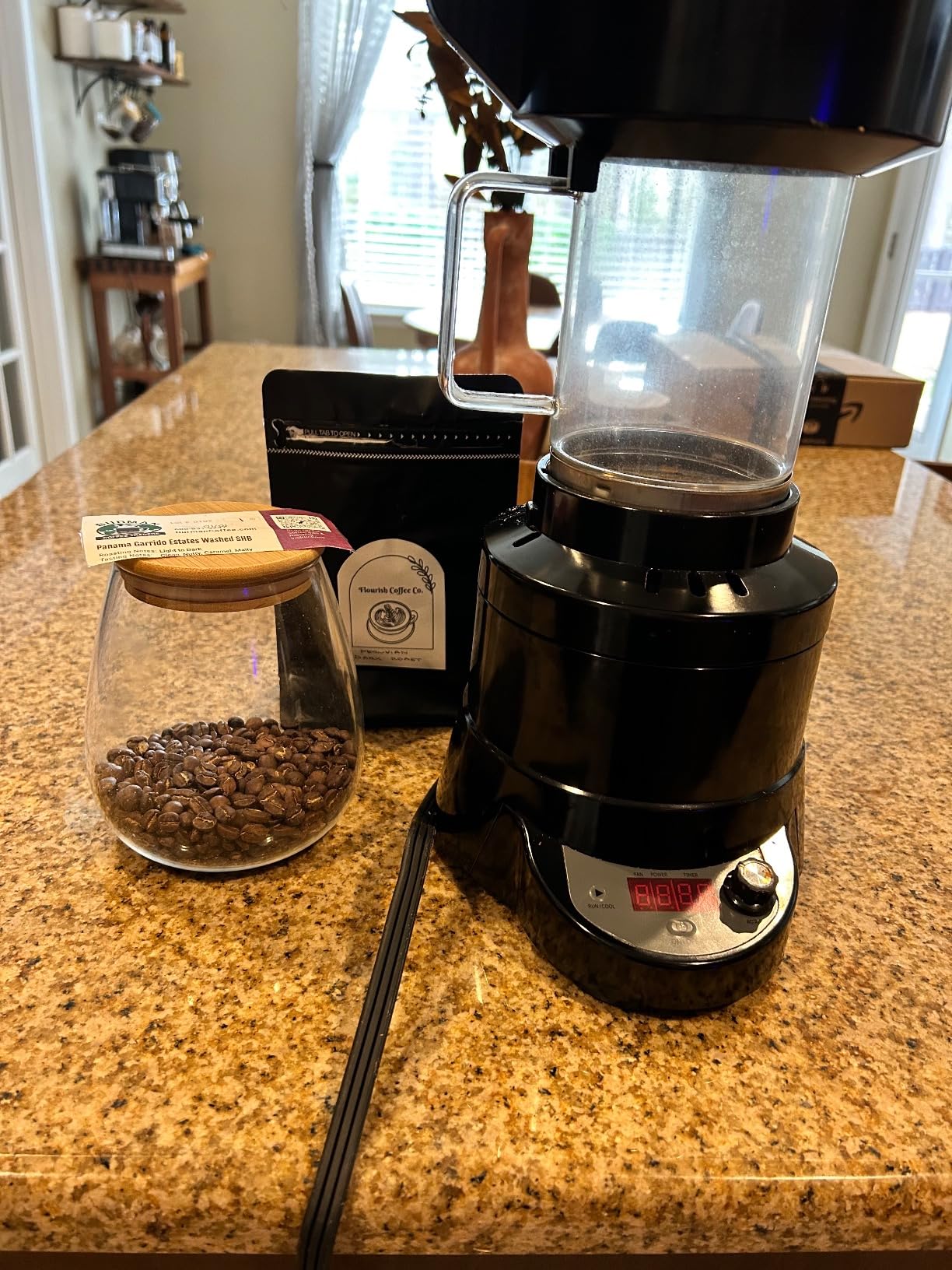
At 587 reviews and a 4.4 average, this carries the highest owner rating among the fluid-motion machines here, with more reviews behind it than any other model on this list apart from its sibling. Buyers consistently mention sweet, consistent roasts and a control board that feels like a step up. The complaints are the same family as the SR540’s: the knob wears if you adjust constantly, and the machine vents a lot of heat and smoke.
That venting is not a small detail. If you plan to roast indoors, plan where the air goes before you buy. Every owner in this category mentions it eventually.
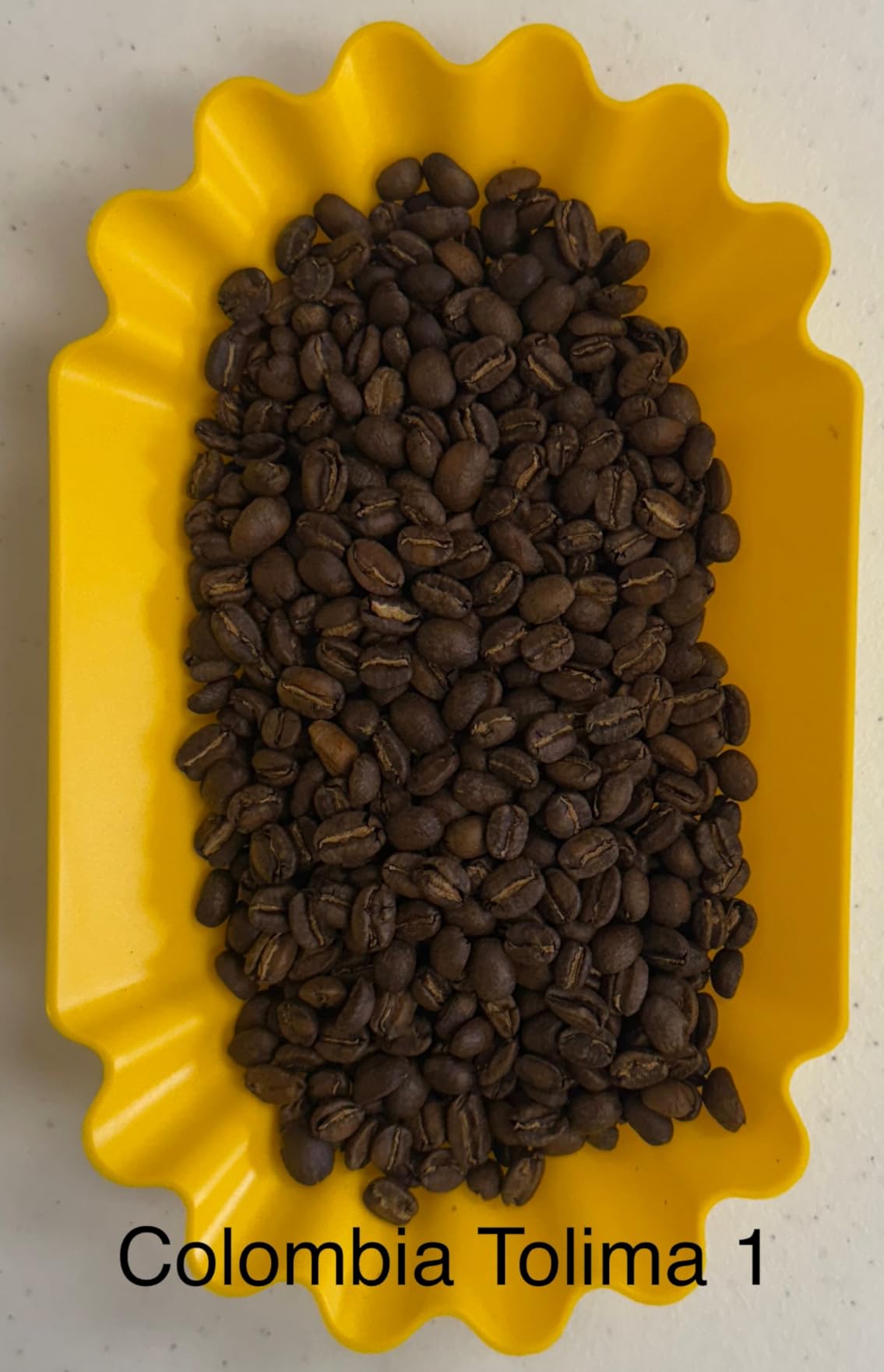
Batch size and how long a roast takes
Owners report 14 to 28 cups of coffee per cycle in under 10 minutes. For a household drinking filter coffee daily, that is one roast every few days rather than every morning.
The trade-off against a real drum is roast depth. Fluid-bed machines at this capacity tend toward lighter, more aromatic profiles, because the beans never rest against a hot metal wall. If you want a fuller, more caramelized cup, a motorised drum is the more interesting tool.
When to skip the SR800
Skip it if dark roasts are your goal. It shares the SR540’s temperature ceiling, and no amount of fan adjustment fixes that.
Skip it if you want stored profiles or software logging. The custom start settings are genuinely useful, but they are a convenience rather than a repeatable profile system.
3. JIAWANSHUN FBA066 – the most capacity in a motorised drum
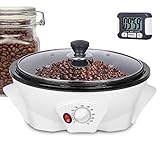
JIAWANSHUN Electric Coffee Bean Roaster Machine for Home Use,1.1lb Capacity
- Large 800 g drum with an automatic stirring arm
- Wide 100-240 C range for light through dark profiles
- Transparent glass lid with ventilation holes
- Honeycomb non-stick interior wipes clean
- Also roasts nuts and popcorn
- Stirring rod can jam on defective or undersized beans
- Even roasting depends on staying in the 300-500 g window
- Noisy airflow and smoke output need planning
At 408 reviews and a 4.1 average, the JIAWANSHUN carries the largest review base among the motorised drums here, and it answers a question the fluid-bed machines cannot: what happens when you want a big batch of beans moving through a real drum.
The drum holds a nominal 800 g with a recommended load of 300 to 500 g, heated by a 1200 W element with a 100-240 C adjustable range and a 0-60 minute timer. An automatic mixing stirrer rotates the beans for uniformity, which is the difference between this and a flat pan. The transparent glass lid has four ventilation holes, so you can watch colour develop without opening it and losing heat.
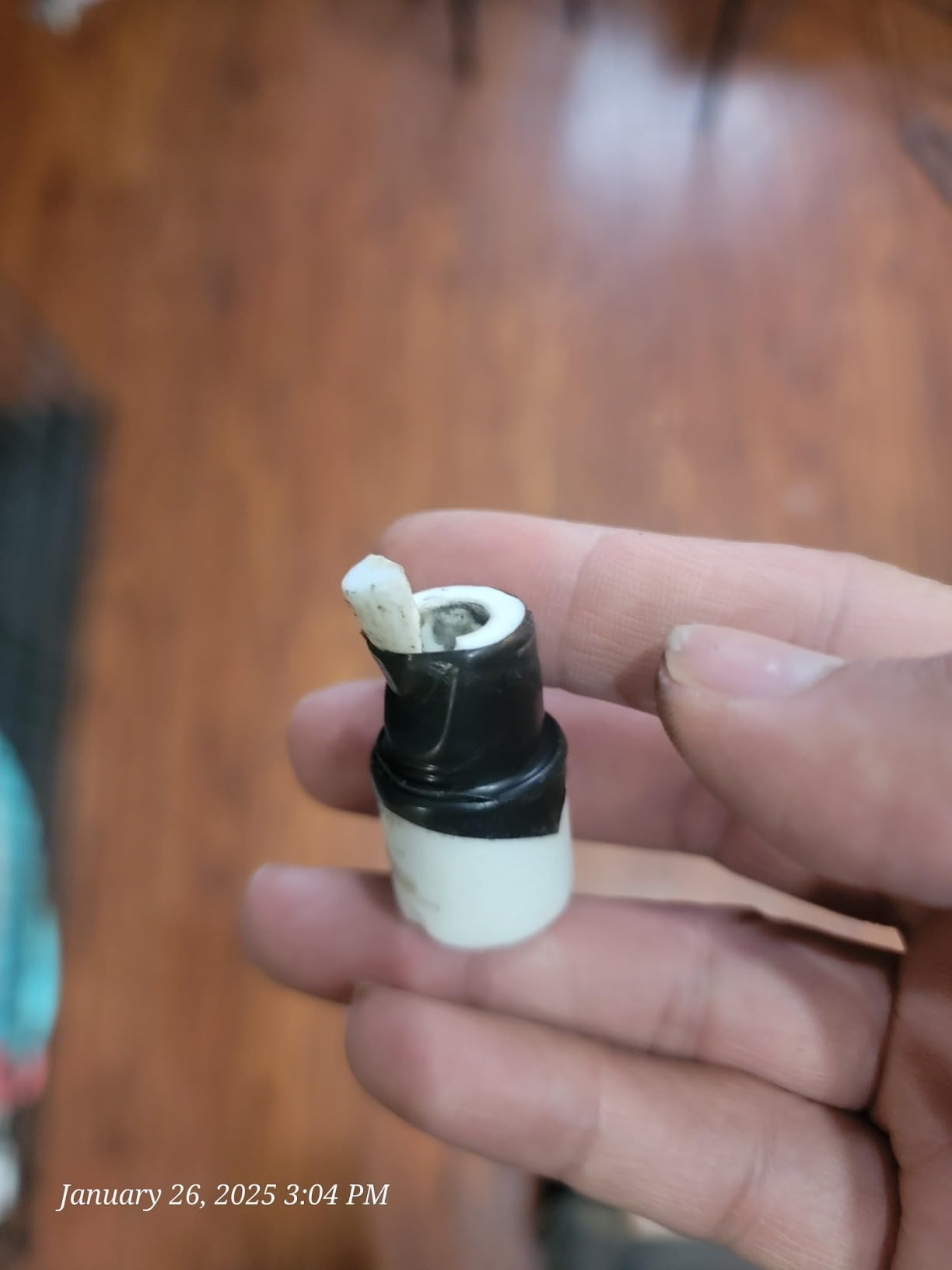
The recurring mechanical complaint is worth reading twice. The stirring rod can jam if the beans contain small, defective or undersized pieces, so screen and sort your green coffee before a roast. Owners also note that results vary noticeably outside the 300-500 g load window, and that the airflow is loud enough to hear across a room.
That 4.1 average tells you where it sits: capable and good value, but a step below the fluid-bed machines on colour consistency. It is also the most genuinely drum-like machine here for the money, which is why it makes this list despite not topping it.
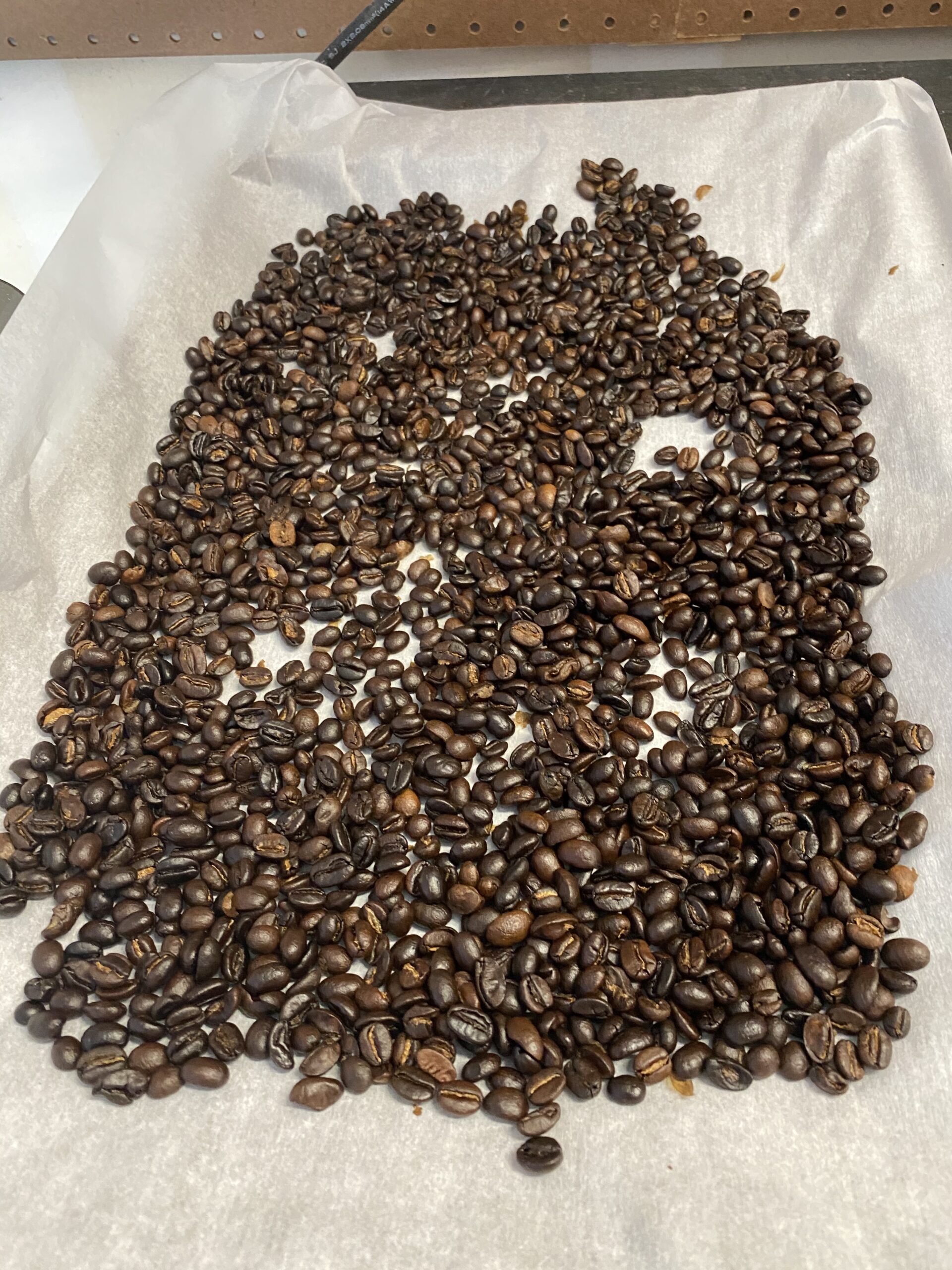
How the 800 g drum performs in practice
Roast longer than you expect. A drum at this size is a slower process than a fluid-bed roaster, and owners describe 20-plus minute cycles with active management at the end.
You get roughly 250 to 400 g of roasted beans from a full load, which covers a serious household or a small gift batch. The 100-240 C range gives you real headroom above the fluid-bed ceiling, so dark roasts are within reach if you push it.
When this drum frustrates owners
Bean quality control becomes your job. Jams are the number one complaint, and every one of them traces back to debris or undersized beans in the charge.
It is also loud, smoky and physically large at 13 by 13 inches. If you were hoping for a tidy kitchen appliance, this is not it.
4. Mingfuxin 750 g coffee bean roaster – alternating rotation for even colour
Coffee Roaster Machine for Home Use, 110V Coffee Bean Roaster with Timer
- Experienced roasters report even results at 350-400 g
- Alternating rotation produces consistent non-burnt batches
- Wide temperature range plus timer for full manual control
- No printed instructions
- Stirring motor reported to stop mid-roast
- Reports of units failing to reach roasting temperature
The Mingfuxin stands out for one design decision: the internal rod alternates clockwise and counter-clockwise during the roast. Owners with real experience report that this produces even, unburnt batches at a 350-400 g load, which is a real advantage over rods that spin one way and drag beans along the wall.
The numbers are familiar territory: 750 g maximum, 300-500 g optimal load, 1200 W, a 0-60 minute timer and a 100-240 C thermostat. The venting lid stands upright when you are not using it, and the non-stick base wipes down between batches.
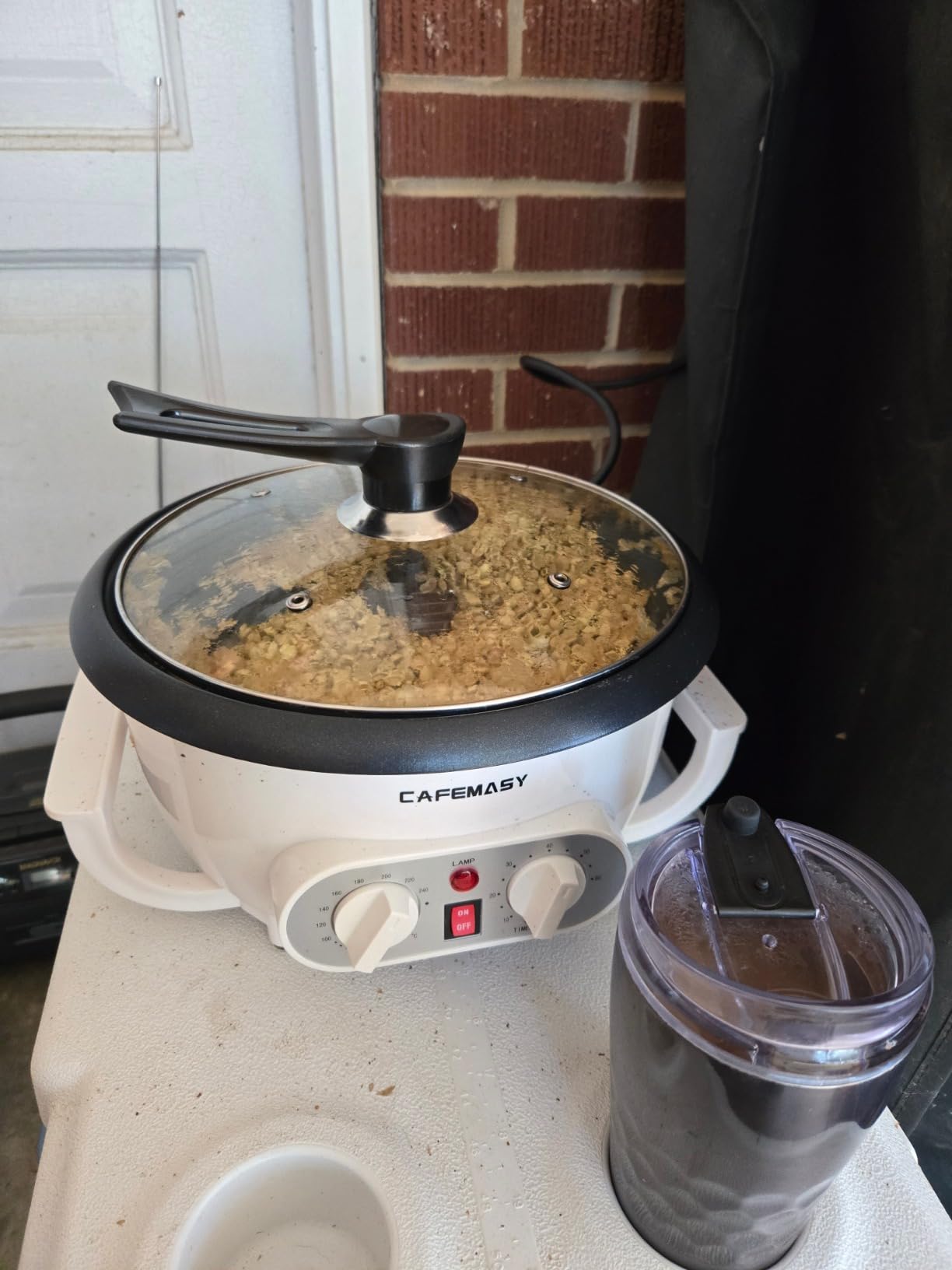
Durability is where this one divides opinion, and the 3.9 average across 206 reviews reflects it. Several owners report units that stop reaching roasting temperature after roughly six uses, and others report the stirring motor stopping mid-roast, which risks scorched beans. There is also no printed instruction booklet, so newcomers have to learn the controls from trial or from outside sources.
One behaviour catches people out: the timer cuts the heat but the rotating rod keeps running during cooling. That is a design choice, not a fault, but it surprises first-time users.
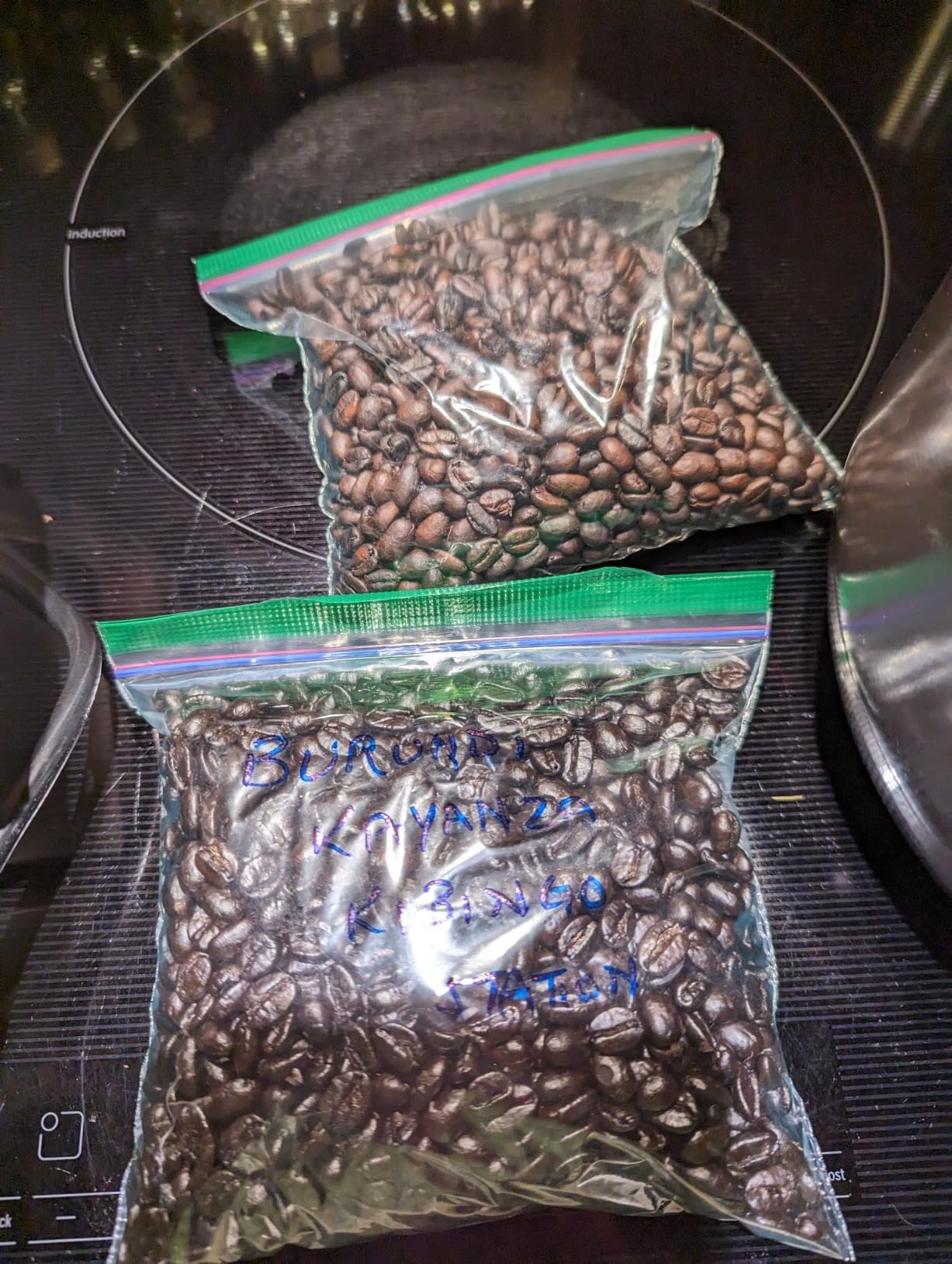
What alternating rotation actually buys you
Beans sitting in one spot against a hot wall scorch while beans at the centre lag behind. Reversing direction changes which beans occupy which position, and experienced owners report noticeably less scorching as a result.
At a 350-400 g load in a 750 g drum, the beans have room to tumble rather than pile up. Stay inside that window and the results are good; overload it and consistency falls away.
Where owners report trouble
Early heating failure and mid-roast motor stalls are the two serious complaints. Both leave you with a batch of scorched beans and no recourse other than support.
The missing documentation matters too. For an enthusiast this is manageable because you are already looking up roast profiles elsewhere. For a first-timer it is a real barrier.
5. NIASIA PKF-500g – programmable profiles and real smoke handling
- Nine automatic roast profiles make repeat batches reproducible
- Stainless drum plus cooling fan and separate tray preserves sweetness
- Smoke purifier and two exhaust pipes meaningfully cut indoor smoke
- Precise temperature probe improves profiling accuracy
- Manual mode demands constant airflow management around first crack
- Defective or uneven beans can jam the drum
- Chaff collector needs regular emptying to keep airflow up
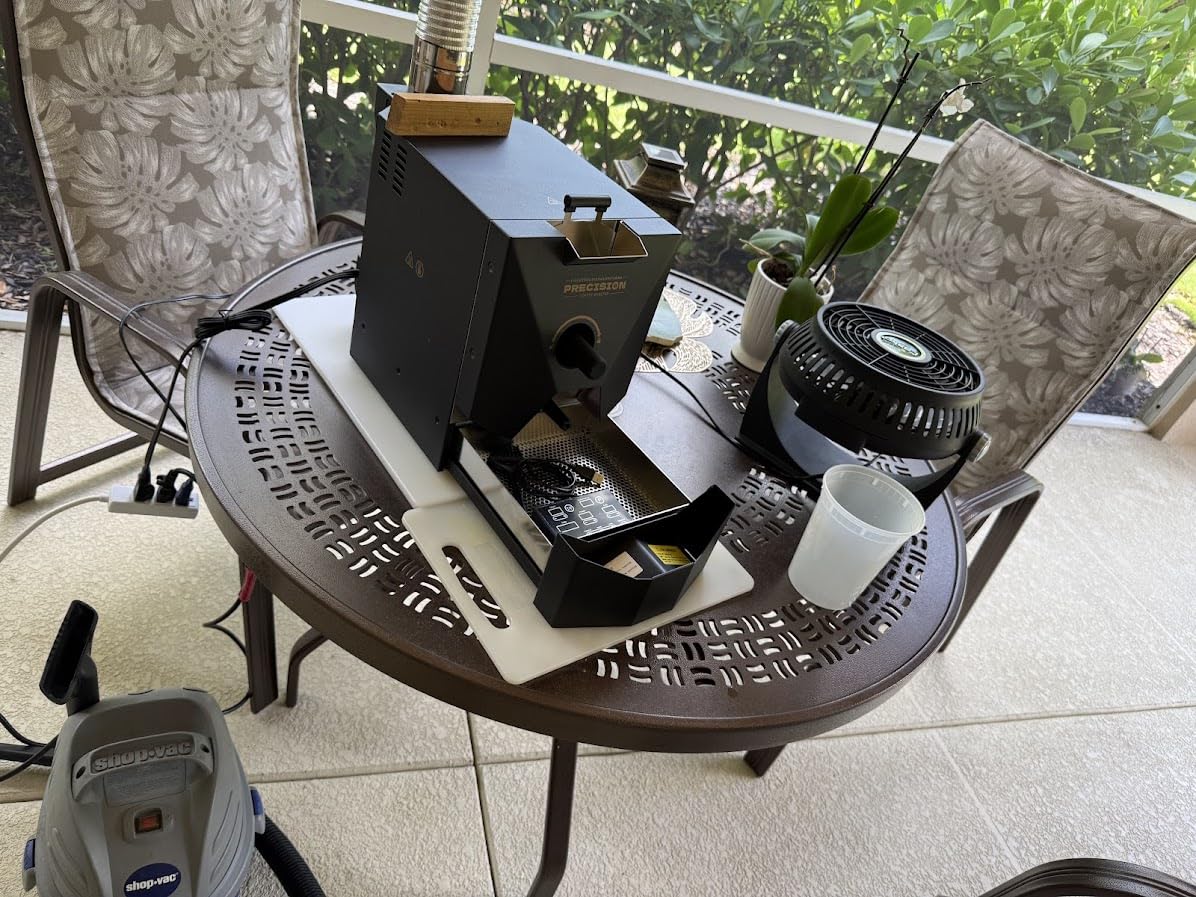
This is the most enthusiast-shaped machine in the roundup and the only one that treats repeatability as the main feature. The PKF-500g stores nine automatic profiles covering light, medium, dark, sun-dried, washed and honey-processed beans, so once you find a curve you like you can run it again without rebuilding it from memory.
The manual mode is the real reason to buy it. A precise temperature probe with intelligent temperature control gives you a genuine bean temperature readout, which is the difference between guessing and profiling. The stainless steel drum roasts up to 500 g with 350-400 g recommended, and a high-speed cooling fan with a separate tray stops the roast fast enough to preserve sweetness.
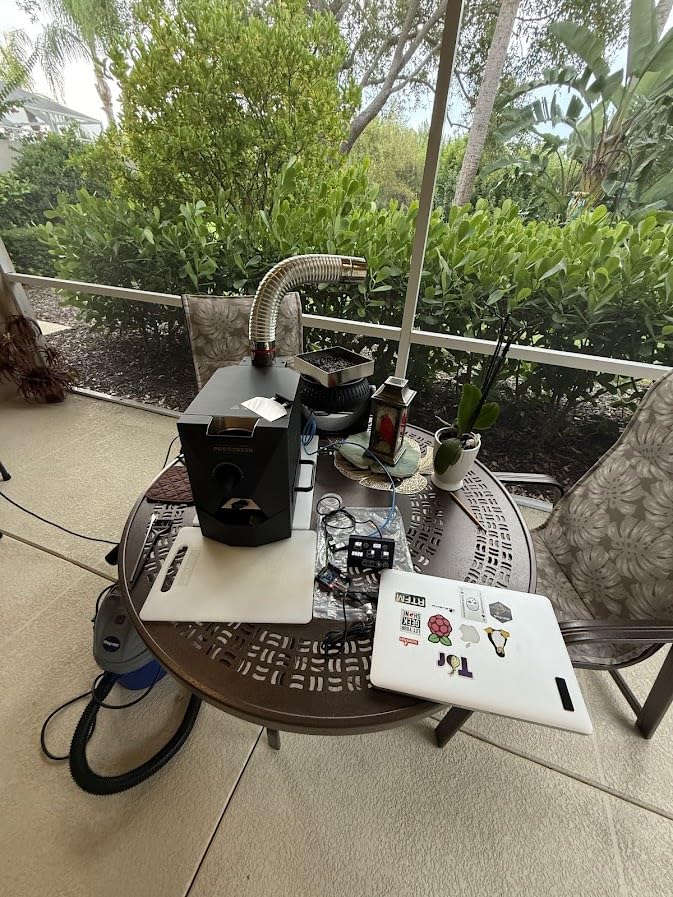
The smoke package is unusual at this level. It ships with an integrated purifier for light roasts and two aluminium alloy smoke pipes for medium and dark profiles, which is the first time in this roundup that a manufacturer has actually addressed the number one complaint on roasting forums. That said, manual mode still wants you managing airflow continuously as first crack approaches, and the chaff collector has to be emptied regularly or airflow suffers.
At 119 reviews and 4.3 stars, the review base is thin compared with the Fresh Roast machines, so treat the long-term durability picture as less certain. Owners do note that component wear accelerates fast with high-frequency use.
Why stored profiles matter more than raw features
Reproducibility is the entire point of roasting at home. A stored profile means you can hand the machine to someone else, or come back to a bean in six months, and get a comparable result without rebuilding a profile by hand.
That is also why the temperature probe matters more here than on any cheaper machine. Without a real bean reading you are steering by colour and guesswork, and colour lies in the last ninety seconds before first crack.
Who should pass on this machine
Pass if you want a hands-off appliance. Nine profiles are a starting point, not an autopilot, and the manual mode asks for your full attention from the moment you charge.
Also pass if you roast only on weekends in a small flat. This is a 16 by 12 by 20 inch machine with a smoke output that needs somewhere to go.
6. DIYAREA 800 g – a cheap experimentation platform
- Lowest-cost entry into drum roasting with manual heat and time control
- Useful for learning roast curves and testing batch profiles
- Roasting pan is easy to wipe down
- Multi-grain capable for peanuts and beans
- Temperature sensor reported as inaccurate
- Stirring arm can stall and scorch beans
- Slow to reach first crack with early heating element failure reported
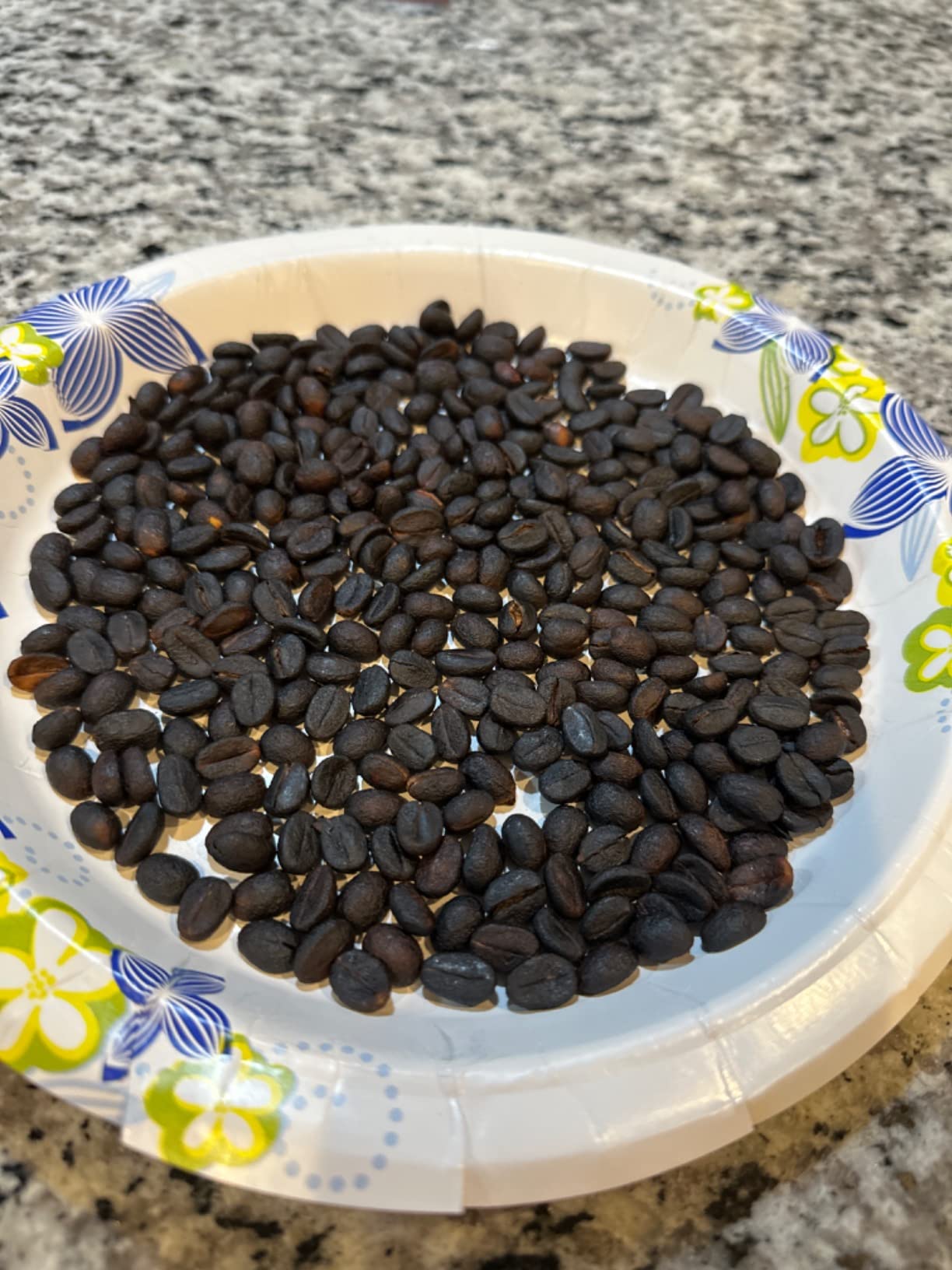
The DIYAREA is not a good machine and it is a genuinely useful tool. With manual control over heat and time across a 0-240 C range, it lets you run deliberately bad roasts on purpose, which is how you learn what turning point, first crack and development actually feel like before you spend more on something precise.
Capacity is nominally 800 g with a 300-500 g recommended load, and the non-stick pan has a rotating stirring arm. It also roasts peanuts, soybeans and black beans, which some buyers use more than the coffee.
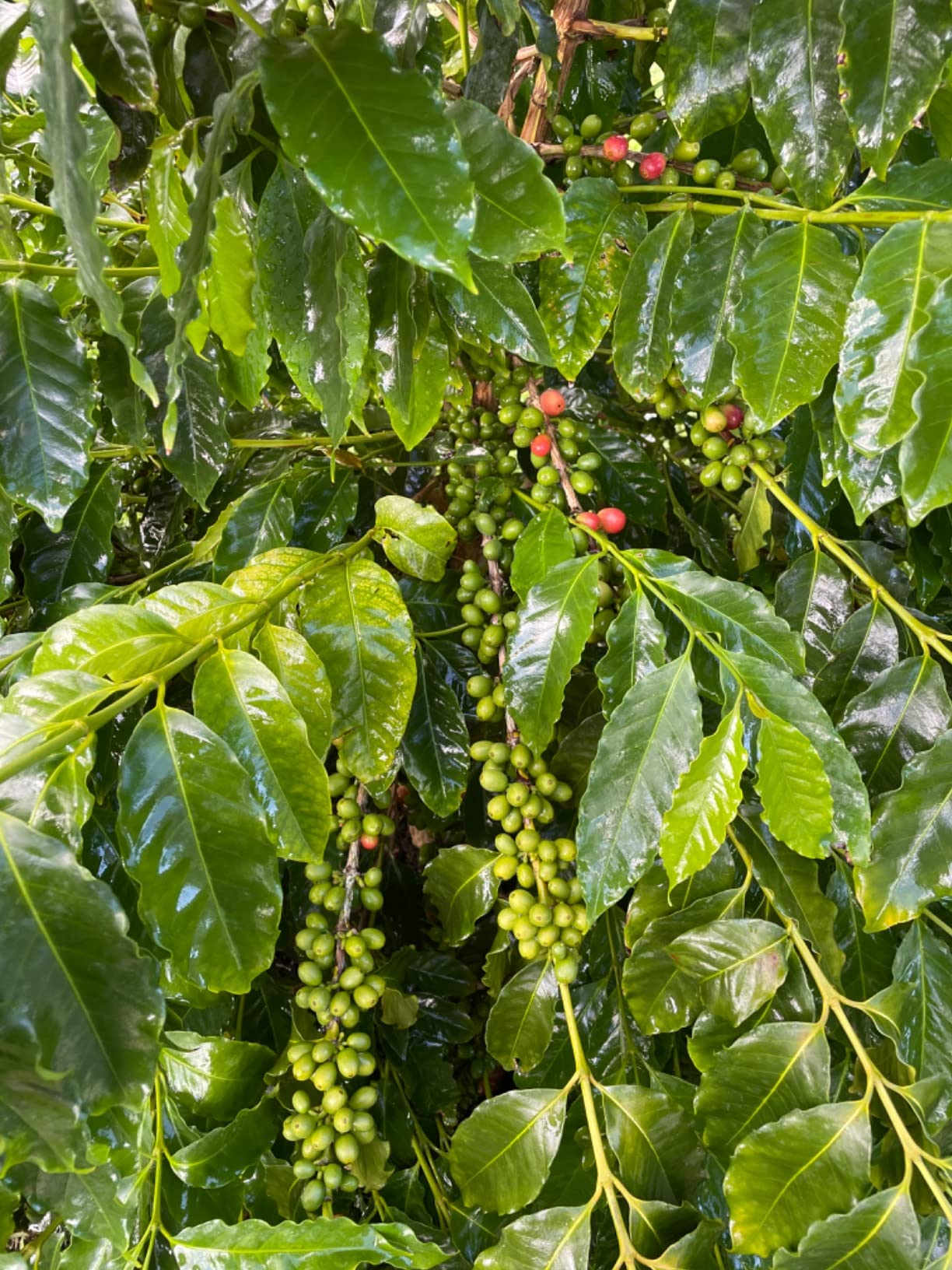
Owners are consistent about the limitations. The temperature sensor is reported as inaccurate, so you need an external thermometer for anything resembling profiling. The stirring arm can stall, and if it does while the element is hot you have scorched beans. Roasts are slow: some owners report 45 minutes or more to reach first crack at maximum setting, and several report the heating element failing within months. The pan is also not removable for washing.
At 3.9 stars across 104 reviews, this is the bottom of the rating range here and should be treated as a teaching tool with a finite lifespan.
When a cheap drum is the right buy
If you want to learn development time ratio and charge temperature by feel, this machine will teach you faster than any book. You can make mistakes on it that you cannot afford to make on a precise roaster.
It also works as a second machine. While your main roaster is running a profile you care about, you can be testing a completely different bean on the DIYAREA.
When it is a waste of money
Skip it if you care about repeatable espresso. An inaccurate sensor and a stalling stirrer make tight reproducibility impossible.
Skip it if you want dark roasts quickly. Forty-five minute cycles with an unreliable element is a bad trade against a faster machine with real temperature control.
7. ZEVELOO 750 g electric coffee roaster – dark roasts on a flat pan
ZEVELOO 750g Electric Coffee Roaster Machine Home Coffee Roaster Coffee Bean Roaster for Home Use 110V
- Low cost with a wide 100-240 C temperature range
- Produces dark roasts in roughly 30 minutes at full temperature
- Easier to clean and less smoky than air-popper style roasters
- Good for small batches and testing bean varieties
- Flat non-drum geometry gives uneven results without manual shaking
- Dial reading does not match actual chamber temperature
- Instructions are largely insufficient and some units failed early
This is the one machine here that is not a drum and we include it deliberately. The ZEVELOO roasts in a flat pan with a stirring rod, which means the beans do not tumble through heat the way a drum or a fluid bed delivers. What it does give you is headroom above the fluid-bed machines: a 100-240 C range at 800 W produces dark roasts in roughly 30 minutes at full temperature.
That range is why it earns a place. If your preference is a heavy, dark filter roast or a dark espresso base and the SR540’s ceiling frustrates you, this reaches where the fluid-bed machines cannot.
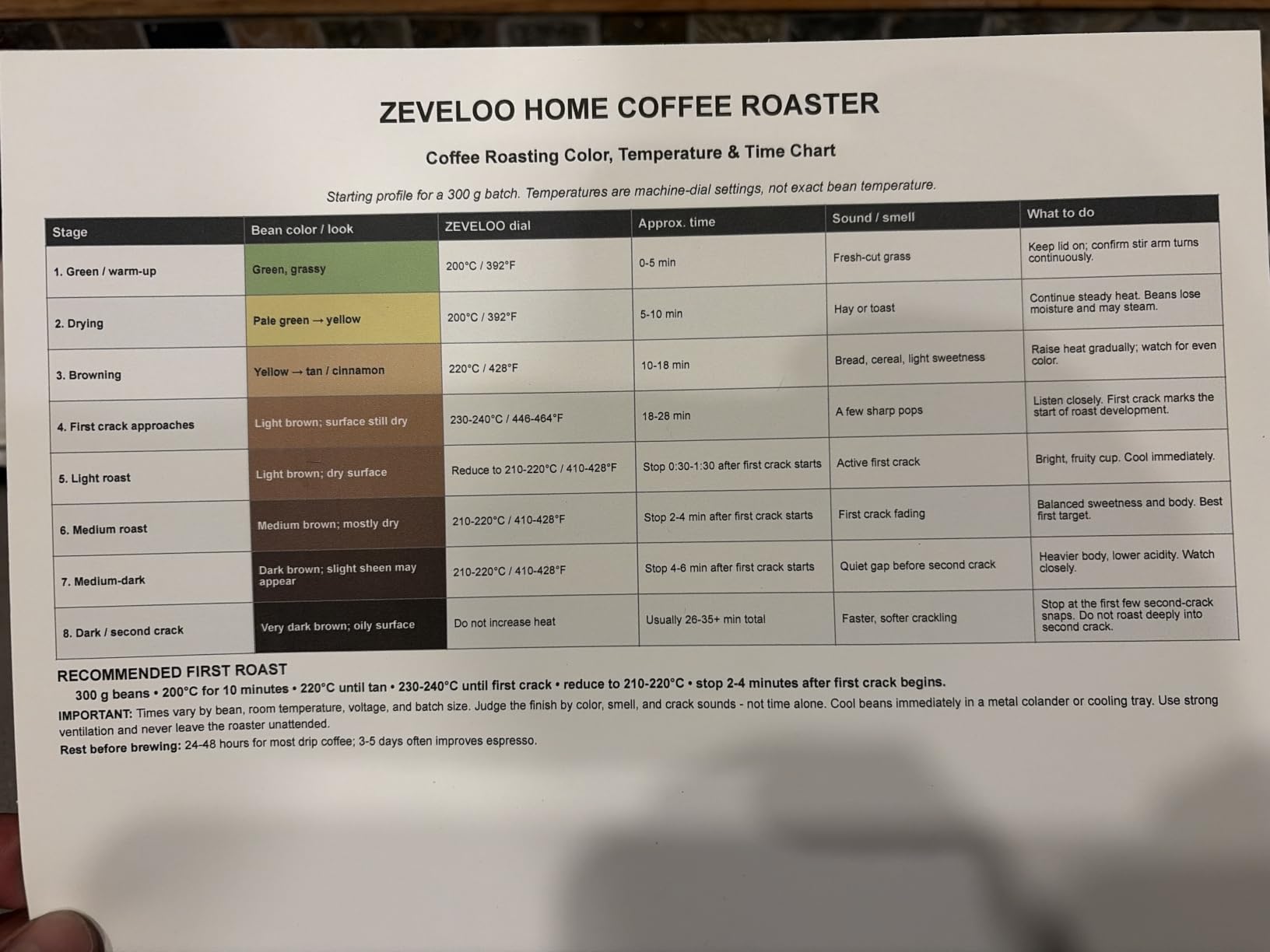
The compromises are consistent across reviews. Flat geometry means uneven results unless you shake the pan by hand, the dial temperature reading does not match the actual chamber temperature, and you need an external thermometer for accurate profiling. Durability reports are mixed, with some units failing within weeks. The transparent lid at least lets you watch colour develop while you shake.
At 4.2 stars across 91 reviews, it is a cheap way to reach dark profiles, not a precision instrument.
Flat pan versus true drum for dark roasts
A true drum gives you more heat reserve and more even contact, so dark roasts develop more evenly. A flat pan at 800 W takes longer but reaches the temperature, and manual shaking substitutes for the tumbling action.
If you roast dark regularly, this is a machine you will fight. If you roast dark occasionally and mostly drink lighter coffee, it works.
Who should skip it
Skip it if you care about consistency between batches. Manual shaking is not repeatable, and that is the whole point of having a machine.
Skip it if you want a profile. Without an accurate thermometer you are reading a dial that does not match reality.
8. DYVEE quartz glass drum – the only gas-fired machine here
- Quartz glass drum and stainless frame are durable and heat resistant
- Transparent drum lets you stop precisely at first or second crack
- Gas flame control responds faster than an electric element
- Low-voltage 12 V motor is a safer drive
- Requires an external gas burner and manual heat management
- Small 200-300 g sweet-spot batch limits throughput
- Constant attention needed to avoid scorching
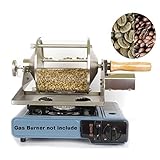
The DYVEE is the outlier of the group and carries a 4.5 average rating across its reviews. It is a genuine drum: a quartz glass cylinder heated directly by a gas burner, turned by a 12 V low-voltage motor, with 400 g maximum capacity and a 200-300 g recommended batch. Every other machine on this list is electric.
Why enthusiasts care about gas: a flame responds faster than an electric element, so you have finer control over the ramp rate than any of the countertop machines here give you. The clear drum means you read bean colour directly and drop at first or second crack on your judgement rather than on a dial.
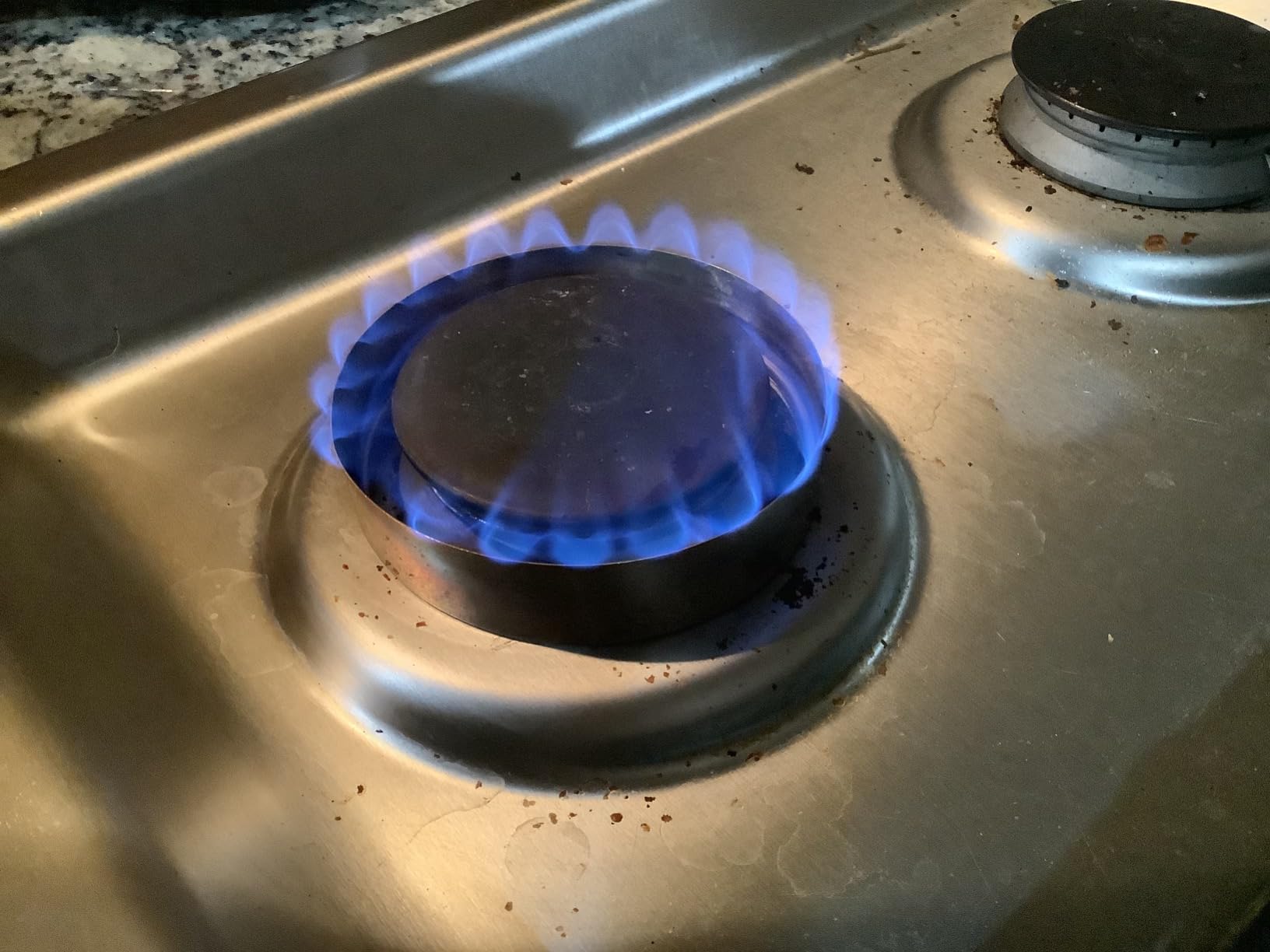
The process is the price. You manage heat by hand throughout the roast, you watch the drum continuously because an unattended glass drum over a flame will scorch, and the drum spins on its own motor so you cannot pause it. At 17 pounds and 8.46 by 8.27 by 16.93 inches, it is also the heaviest and bulkiest machine here.
Sixty-four reviews is a thin base, and gas machines carry real safety considerations that an electric drum does not. Use it where there is ventilation and never leave it unattended.
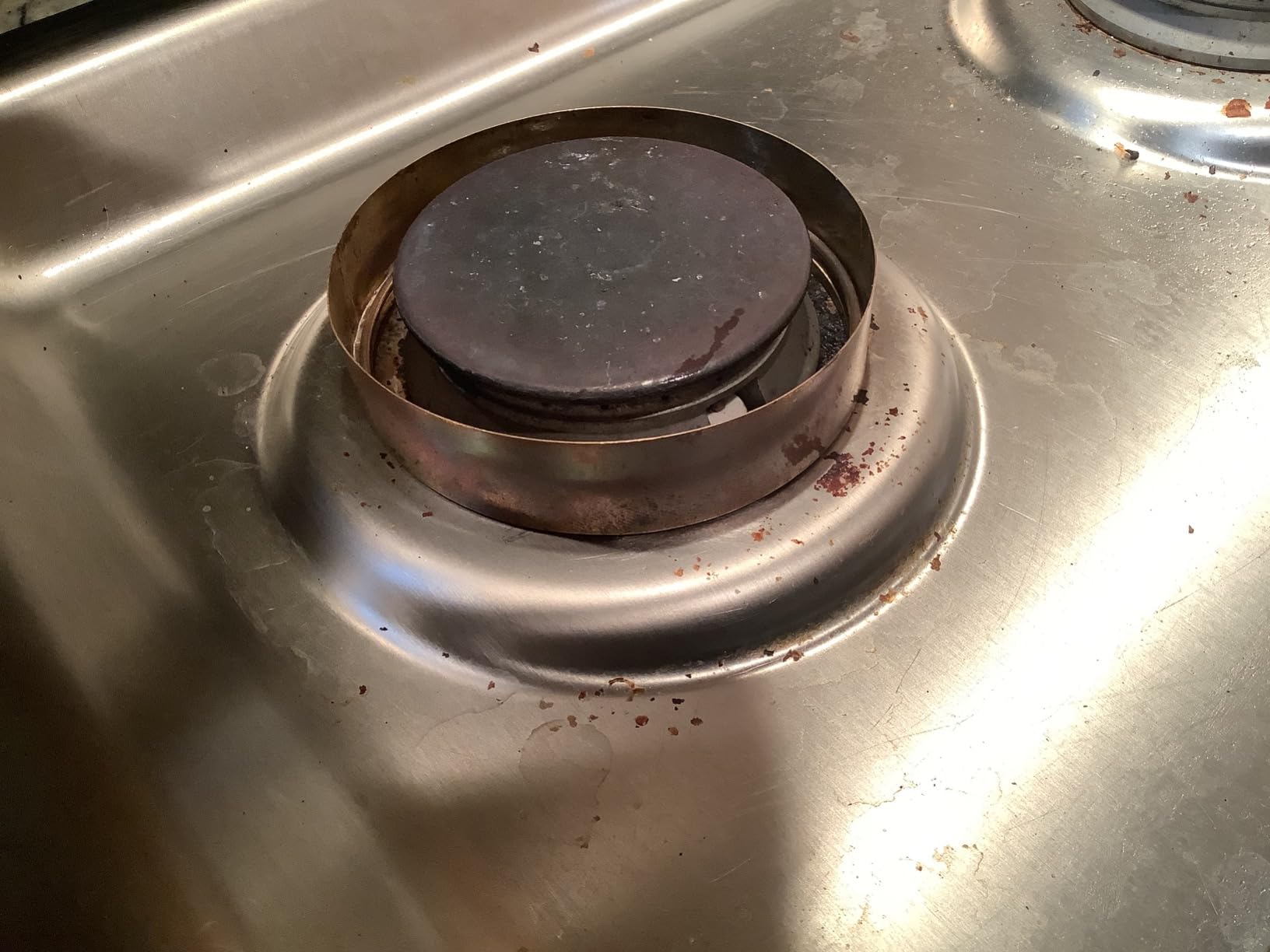
What gas heat does differently in the cup
Faster heat response means you can push a development phase harder without overshooting. For a roaster who wants a slow, even charge and a decisive drop, that control is genuinely better than a thermostat with 100 C steps.
The trade is attention. Electric machines hold a set point while you taste yesterday’s roast. A flame machine needs you at the burner.
When gas is the wrong choice
Wrong indoors, or anywhere without real ventilation. Chaff and smoke from a gas flame are sharper and less pleasant than from an electric element, and the glass drum radiates heat into the room.
Wrong if you roast infrequently. Setting up a burner, a drip tray and a ventilated space for 200-300 g of coffee is a lot of ceremony for a weekend.
9. Winb 750 g – the tidiest budget starter drum
WINB Coffee Roaster Machine for Home Use, 110V Household Electric Coffee Bean Roaster with Timer Roasting Machine Peanut Bean Home Coffee Roaster
- Large 750 g drum with a rotating stirrer and 1200 W heating
- Timer plus 100-240 C thermostat gives more repeatability than a plain dial
- Food-grade honeycomb Teflon interior is easy to clean
- Transparent vented lid lets you watch colour and smell aromatics
- Best results require staying within the 300-500 g load range
- Documentation is thin so first-time roasters learn by trial
- Rotating rod can stall if beans snag it
The Winb does the sensible things. A 750 g drum with a rotating rod, 1200 W heating, a 0-60 minute timer and a 100-240 C thermostat. That timer-plus-thermostat combination is what separates it from the plain-dial machines: you can write a recipe down and repeat it, which is the minimum bar for a roaster that will improve your results.
The honeycomb food-grade Teflon coating is genuinely good for maintenance. You wipe it with a damp cloth between batches rather than scrubbing a bare metal pan, and owners mention that the clean-up is straightforward.
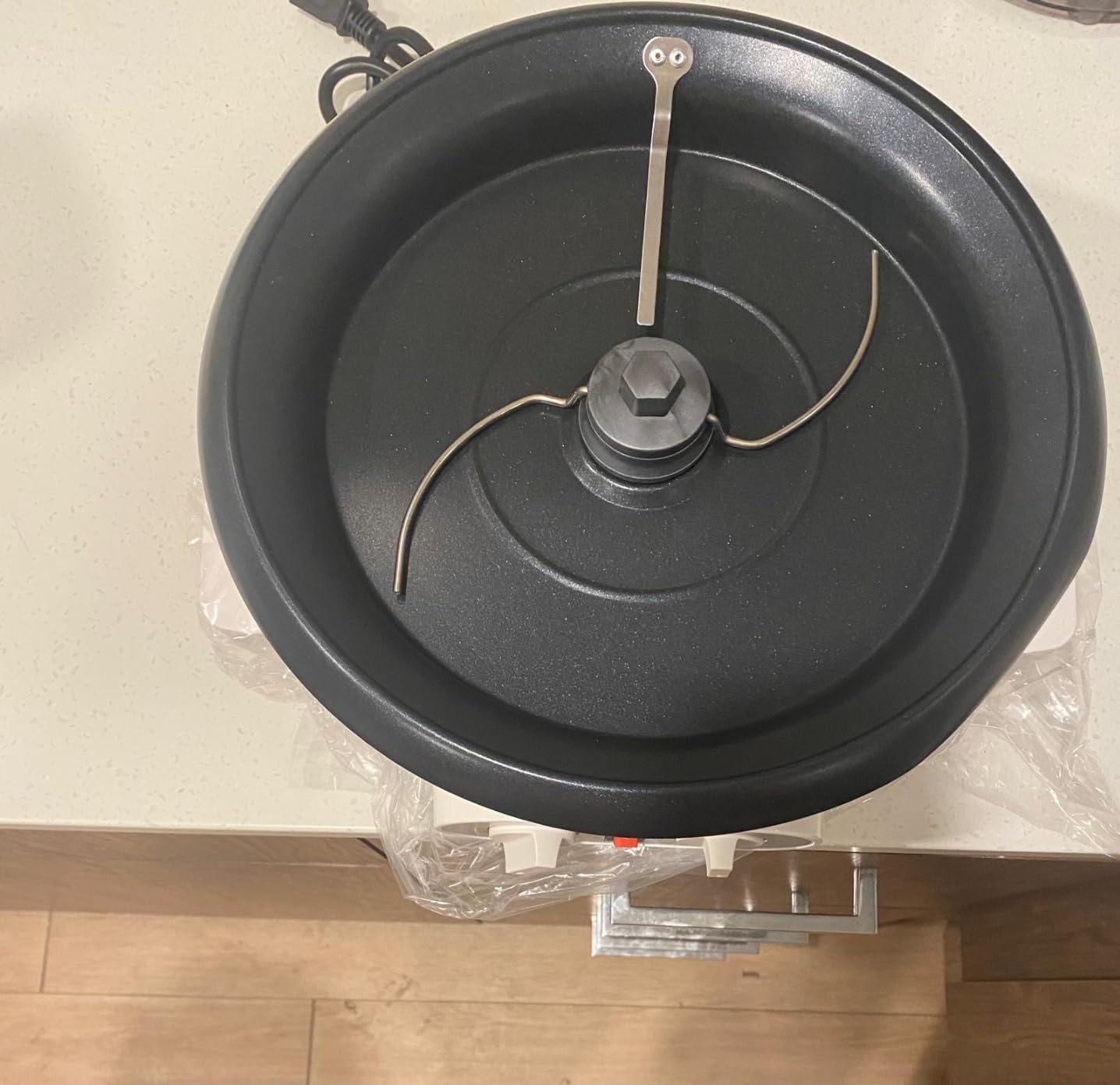
At 4.3 stars across 50 reviews, the sentiment is positive but the sample is small, so we would treat the long-term picture with some caution. The known limits are the usual budget-tier ones: stay inside the 300-500 g load, watch for the rotating rod snagging on a stray bean or a piece of chaff, and expect to vent a fair amount of smoke.
The thin documentation is worth flagging. If you are comfortable reading roast curves from a forum, this is fine. If you want a manual, you will not find one.
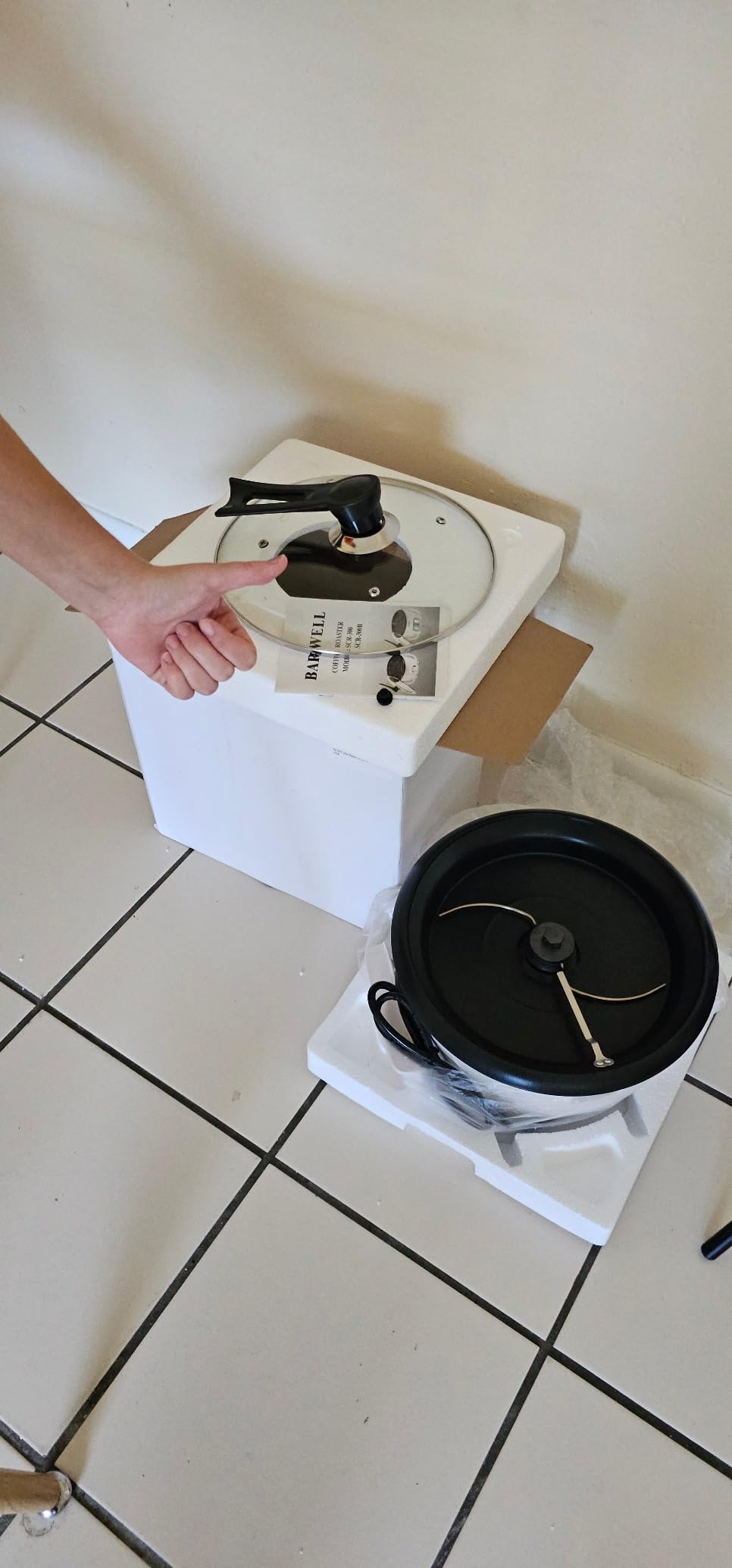
Why the timer matters more than the wattage
1200 W is common across this whole category, so it does not distinguish anything. What distinguishes this machine from the plain-dial models is the separate 0-60 minute timer sitting alongside a 100-240 C thermostat.
That pairing lets you record a recipe: temperature, time, load weight. Next batch, you start from the same numbers and adjust one thing. That is how you get better rather than just lucky.
Who should look elsewhere
Look elsewhere if you want stored profiles. There are none, so every roast starts from your own notes rather than from the machine.
Also look elsewhere if you roast small batches. The 300-500 g optimal window means this machine wants a real commitment in beans to work properly.
10. lpylxingyan borosilicate glass roaster – sample batches on the hob
- Very low cost makes sample-batch roasting and bean comparison easy
- High borosilicate glass tolerates high heat and thermal shock
- Works on gas and electric ranges
- Transparent walls let you judge colour by eye
- Also roasts nuts and seeds
- Manual stovetop method requires constant stirring to avoid scorching
- 3 oz capacity suits very small sample batches only
- No built-in agitation so heat distribution is user-managed
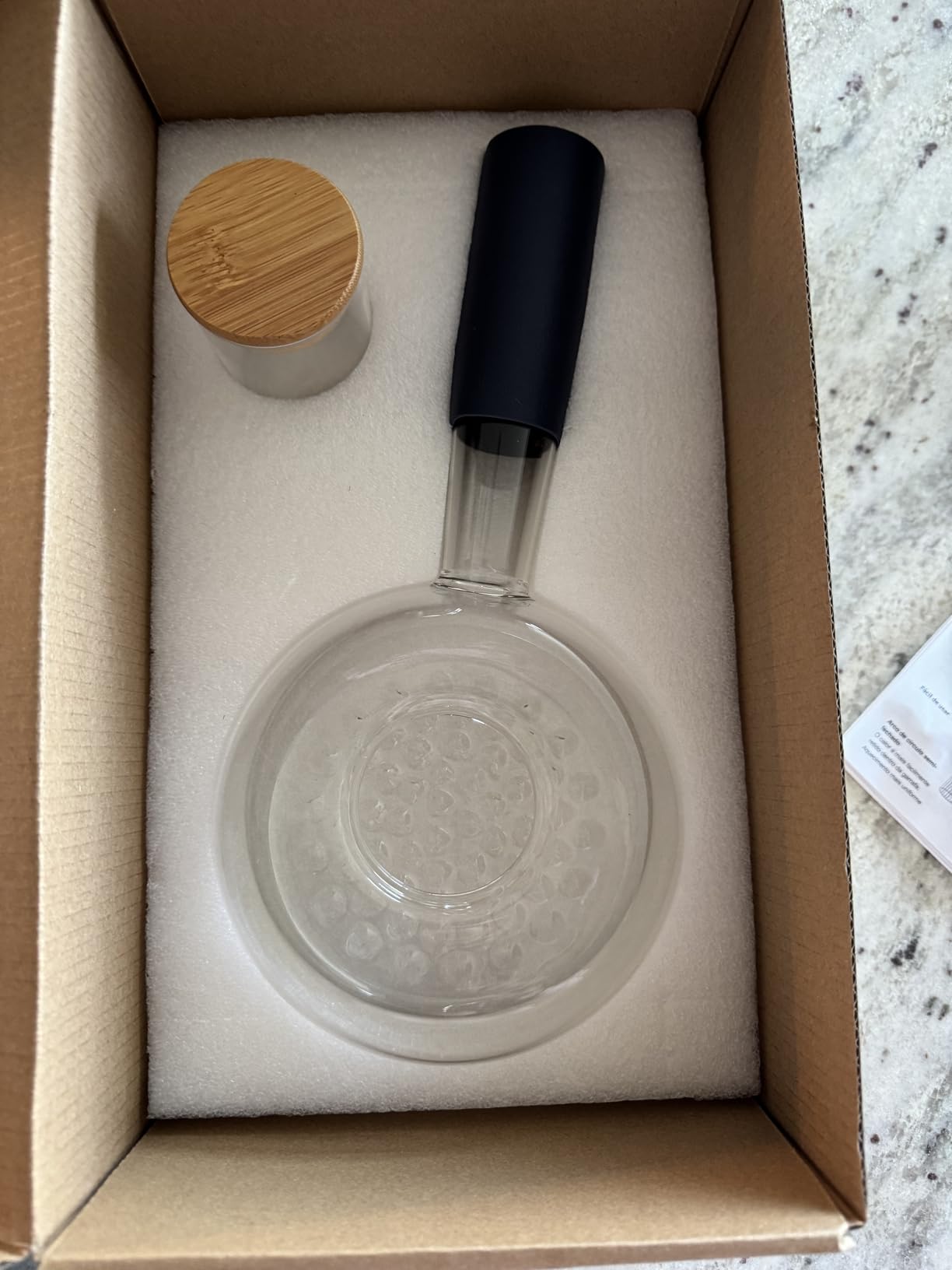
The lpylxingyan glass roaster is not a home roasting machine in the way the other nine are, and it is included because it solves a real problem: tasting green beans before you commit to them. At 3 oz of capacity and a very low entry cost, you can roast small samples from several lots and compare them before spending on a kilo.
It is high borosilicate glass rated to 400 C with thermal shock resistance, it sits on a gas or electric range, and it has no motor, no heating element and no electronics. You control heat and time entirely by hand and judge progress through the transparent walls.
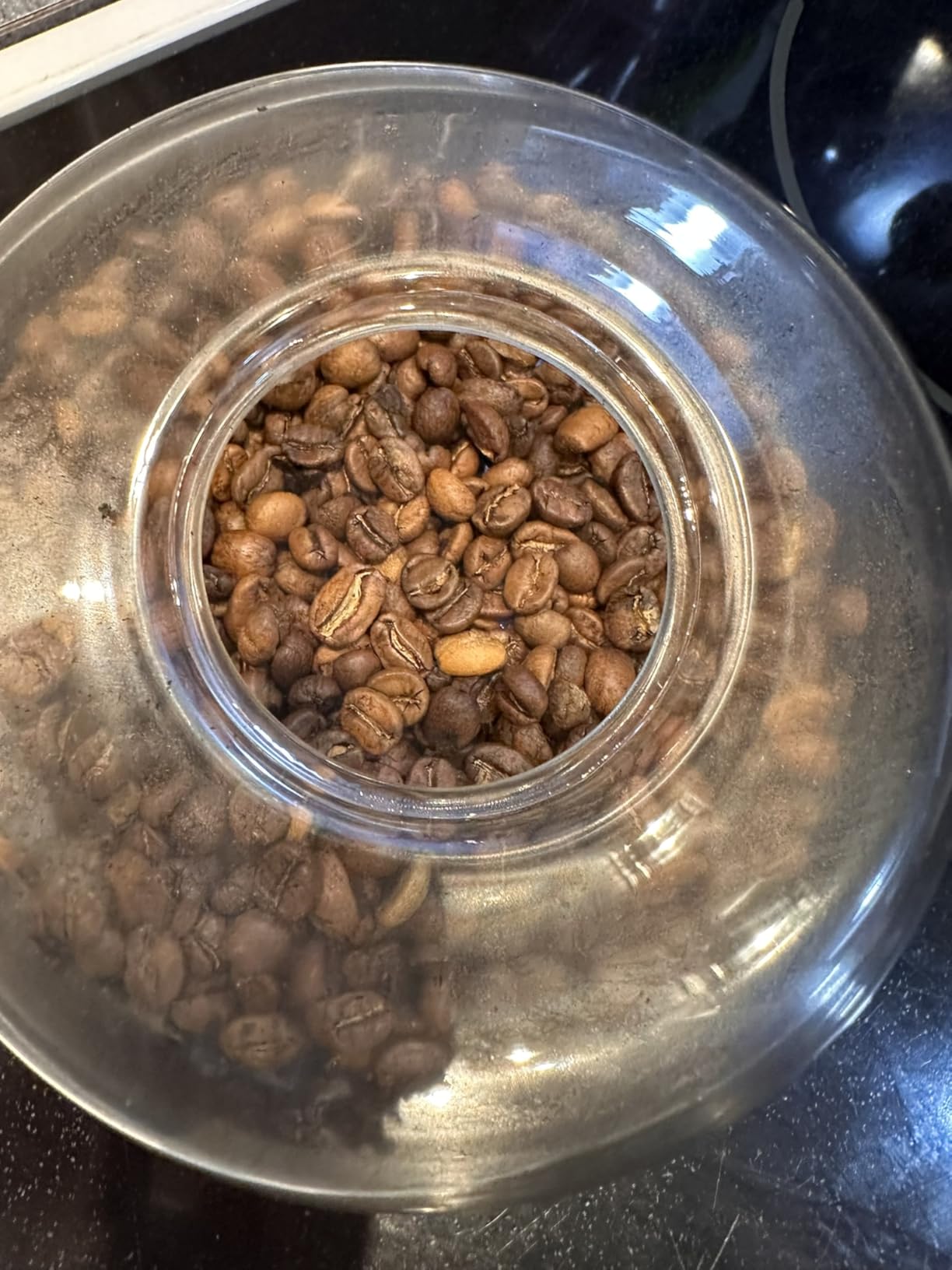
The limitations follow directly from that simplicity. Constant stirring is mandatory or beans scorch on the base. Three ounces is a sample, not a household supply. And because heat distribution is entirely user-managed, repeat profiles are much harder to hit than on any motorized machine on this list. Owners rate it 4.2 across 82 reviews and describe it as a charming, cheap entry point rather than a serious roaster.
Its real value shows up alongside a better machine. Sample-roast on the hob, then run the promising lot through a proper drum.
What sample roasting actually tells you
Roasting a 3 oz sample tells you how a lot smells as it passes through the roast: whether the aromatics are sweet or grassy, whether there is any defect like a phenolic or fermented note, and how dense the beans are.
It does not tell you much about flavour development, because development time in a sample batch is very short. Treat it as a screening tool, not a brewing method.
When to skip it
Skip it if your plan is to drink this coffee. Nobody drinks 3 oz of roasted coffee.
Skip it if you already know which lots you like. The comparison value disappears once you have settled on your beans.
How to Choose a Drum Coffee Roaster: A Buying Guide
Before you pick a model, work through these questions in order. Capacity narrows the field fastest, heat source decides the flavour and the safety requirements, and control features decide whether you can repeat what you liked.
Check the mechanism, not the listing title
Drum, fluid bed and flat pan are three different heat-transfer models. A drum tumbles beans against hot metal or a flame. A fluid bed suspends them in blown air. A flat pan rotates a rod through a shallow bowl while you shake it by hand.
Of the ten machines here, the Fresh Roast SR540, SR800 and NIASIA are fluid-motion machines. The JIAWANSHUN, Mingfuxin, DIYAREA and Winb are motorised drums. The ZEVELOO is a flat pan. The DYVEE is a gas-heated glass drum and the lpylxingyan is a stovetop vessel.
Drum roasting takes longer, typically in the 14 to 20 minute range, because beans have to reach temperature against stored heat in metal. Fluid beds finish in under 10 minutes on lighter, more aromatic profiles. A drum gives you more body and caramelization; a fluid bed preserves florals.
Decide on the heat source
Electric elements dominate this category because they are safe indoors, unattended-friendly and cheap to run. Their limitation is responsiveness: a thermostat steps in large increments and the element has thermal inertia, so you cannot chase a fine ramp.
Gas burners respond faster and give you finer profile control, as the DYVEE shows, and they carry combustion safety requirements that mean outdoor or garage use with real ventilation. Induction and infrared systems sit between the two, with fast heat and no open flame but higher running costs.
Where your roasting happens should decide this more than flavour preference does. A gas machine in a small flat is a poor choice regardless of how much you like flame control.
Do the capacity math before anything else
Expect roughly 15 percent weight loss from green to roasted, so 100 g of green coffee gives you about 85 g of roasted beans. Now match your batch size to your drinking.
One 8 oz bag of coffee at 15 g per day is about 2 weeks of drinking for one person, or 5 days for a household of two. If your roast is 300 to 500 g of green, you are looking at a batch every few weeks, which is why the smaller fluid-bed machines suit heavy daily drinkers better.
Do not buy for the maximum capacity on the box. Manufacturers quote the drum volume, not the recommended load, and five of the machines here specify a 300-500 g optimal load well below the nominal drum size. A machine constantly run at full drum volume gives you worse, less consistent results than one run at its recommended load.
Look for a real bean temperature reading
Bean temperature is the number that drives every roast decision. Charge temperature, turning point, the rate of rise after turning point, first crack and the development time ratio are all read from that curve.
Only the NIASIA PKF-500g in this group pairs manual mode with a precise temperature probe. The Fresh Roast machines give you a real-time chamber temperature display, which is a reasonable proxy but not a bean reading. Everything else gives you a dial and a timer, and the ZEVELOO and DIYAREA are documented by owners as reading inaccurately.
Buy a separate probe and log if you care about improving. Without a curve you cannot tell whether a change in the cup came from the beans or from your technique.
Plan chaff, venting and fire safety first
Smoke is the most common complaint from first-time home roasters, and it arrives within the first batch. Plan where the air goes before the machine arrives.
Chaff is lighter than beans but it is fine dust, and it is the thing that gets past fans and into the room. Machines with a dedicated chaff collector or an exhaust pipe handle it better than open-lid designs. Empty the collector after every roast, because a clogged one restricts airflow and drives chamber temperature up.
Chaff is also what kills machines. Owners report roasters failing after fine chaff built up around microswitches and motors, so cleaning the drum and chute area between batches is maintenance, not optional.
For gas machines, use them outdoors or in a garage with ventilation, keep a fire extinguisher within reach, and never leave one unattended mid-roast.
Understand roast time and what to do with the beans
Drum roasts run in the 14 to 20 minute range and need active management, particularly through first crack. First crack is the moment steam pressure breaks the bean structure and it sounds like popping, usually around 196 to 205 C. Second crack is the higher-pitched, denser crack a little later, around 221 to 245 C, and marks the boundary before beans turn to char.
The development phase is everything after first crack, and the development time ratio is that phase as a percentage of total roast time. It is the single most useful number for repeatability: same ratio, similar cup.
Beans need to rest after roasting. Rest them three to seven days, sealed and away from heat, and keep them out of the fridge, which mutes the aromatics. This is where the payoff of a controlled roast actually arrives.
Understand what the extra money buys
The jump from a budget flat pan to a motorised drum buys you a stirring arm and an even bean bed. The jump from a motorised drum to a fluid-motion machine buys you speed and consistency. The jump from a fluid-bed machine to a programmable machine buys you stored profiles and a real bean probe.
None of those jumps buy you skill. Every machine on this list will produce a scorched batch if you walk away from it, and the enthusiast machines are not beginner friendly by design.
If you are planning a much larger step up, enthusiasts on r/roasting repeatedly name the Kaleido M6, Aillio Bullet and Cormorant CR600 as the next tier, and RK Drums is often recommended as a cheaper route to kilogram-sized batches. We did not include them here because they sit outside the price and specification range of this lineup.
Frequently Asked Questions
What is the best home drum coffee roaster?
The Fresh Roast SR540 is the best starting point for most enthusiasts: up to 120 g of green beans per batch, a fluid-motion chamber that finishes in under 10 minutes, nine heat settings and a real-time temperature display, backed by 688 reviews at 4.3 stars. For larger batches step up to the SR800 at 226 g, and for stored roast profiles and a true bean temperature probe the NIASIA PKF-500g is the enthusiast pick.
Is a drum roaster better than an air roaster?
It depends on the cup you want. A drum tumbles beans against hot metal over 14 to 20 minutes and produces more body and caramelization, closer to what a commercial roaster makes. An air or fluid-bed roaster finishes in under 10 minutes and preserves floral and fruit notes at lighter levels. Enthusiasts who want deeper development usually move from air to drum.
How much coffee can you roast in a home drum roaster?
Expect about 15 percent weight loss, so 100 g of green beans yields roughly 85 g of roasted coffee. The machines here cover 120 g per batch on the Fresh Roast SR540, 226 g on the SR800, 300 to 500 g optimal loads on the JIAWANSHUN, Mingfuxin, DIYAREA and Winb, 350 to 400 g recommended on the NIASIA, and 200 to 300 g on the gas-heated DYVEE.
How long does drum roasting take?
Drum roasts typically run 14 to 20 minutes, while fluid-bed machines such as the Fresh Roast SR540 and SR800 finish in under 10 minutes. Budget drum roasters can be slower still, with owners of the DIYAREA reporting 45 minutes or more to reach first crack at maximum setting. Slower is not automatically worse, but it does make experimentation slower.
What heat source is best for a drum roaster?
Electric elements are best for indoor use because they are safe, unattended-friendly and cheap to run, and nine of the ten machines covered here use them. A gas burner such as the one on the DYVEE responds faster and gives finer control over the ramp rate, but requires outdoor or well-ventilated space, close supervision and a fire extinguisher within reach.
Do drum coffee roasters need ventilation?
Yes, all of them produce smoke and chaff, and it is the single most common complaint from new owners. Roasting mid-roast rather than at the end helps, and machines with a chaff collector or dedicated exhaust pipe, such as the NIASIA PKF-500g with its purifier and two smoke pipes, manage it better than open-lid designs. Empty the chaff collector after every roast so airflow stays correct.
What is the 15-15-15 coffee rule?
The 15-15-15 rule is a brewing guideline rather than a roasting one: use roughly 15 g of ground coffee per 15 g of water for every 15 minutes of brew time, adjusted to taste. Roasting has its own numbers to watch, notably 15 percent weight loss from green to roasted and a development time ratio that is often in the same range.
Conclusion: The Drum Coffee Roaster to Buy in 2026
Choose capacity first, then heat source, then control features. Drink coffee every day and want fast repeatability, and the Fresh Roast SR540 or SR800 is the drum coffee roaster that fits. Want stored profiles and a real bean probe, and the NIASIA PKF-500g earns its place. Roast big batches on a real motorised drum and the JIAWANSHUN FBA066 gives you the most capacity here.
Whatever you pick, decide where the smoke goes before the machine arrives. That one decision separates a roaster you use for years from one that sits in a corner.