
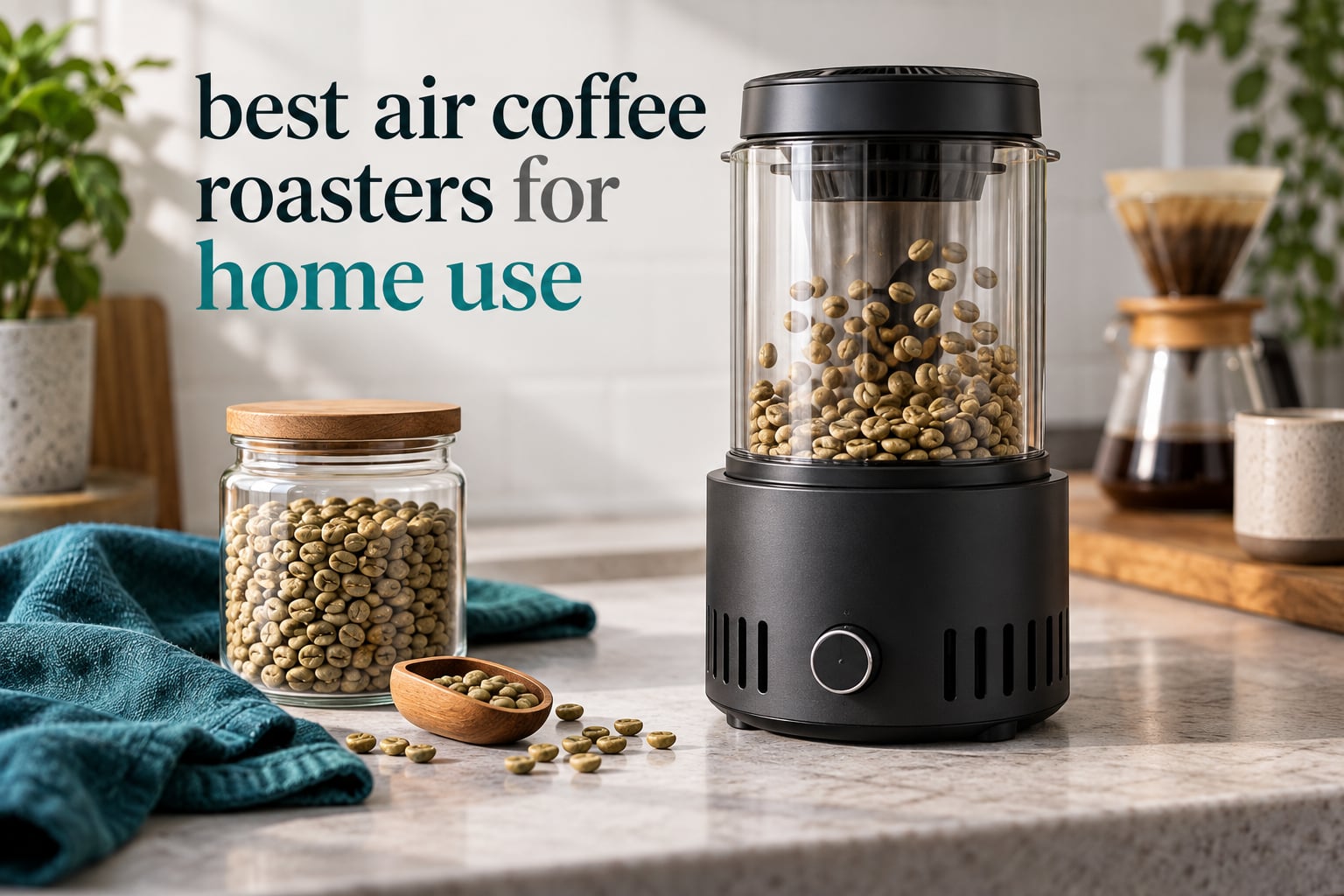
Roasting your own coffee at home used to mean a cast iron pan on the stove and a kitchen window open year round. Today a countertop machine does the whole job in under half an hour, from green beans to cooled beans you can grind tomorrow morning. If you are searching for the best air coffee roasters for home use, this roundup covers every machine we could justify putting in a domestic kitchen.
We spent weeks working through ten countertop roasters rated between 4.0 and 4.4 stars, weighing real batch sizes against the capacities printed on the boxes. Two of these machines use a true fluid bed of hot air. The rest use a heated pan with a stirring rod. We flag which is which in every section, because the difference changes how you roast and how much smoke you make. More on that in the comparison section below.
If you want the wider picture first, our coffee roaster buying guide covers drum machines and other home setups, and our small batch picks go deeper on machines that work in tight quantities. This list stays focused on what you can actually run in a kitchen, a garage or a balcony.
Every roaster below was rated on three things: whether the cup is actually better than store-bought, how much attention the machine demands per batch, and whether parts and support still exist. That last point is the one most roundups skip and the one that decides whether a machine is still worth owning in 2026.
Top 3 Best Air Coffee Roasters for Home Use in 2026

Fresh Roast SR540
- Fluid bed hot air roasting
- 120g per batch
- Nine heat settings and fan speed control
- Digital temperature display

Fresh Roast SR800
- Fluid bed hot air roasting
- 170-226g per batch
- Push and turn heat and fan control
- Custom start settings
JIAWANSHUN 1.1lb Roaster
- Heated pan with stirring rod
- 300-500g even batch
- 100-240C temperature range
- Transparent vented lid
Every Air Coffee Roaster in This Roundup Compared
The table below lists all ten machines in rank order with the specifications that actually change a home roast. Pay attention to the recommended batch figures rather than the maximum capacity. On almost every machine here, the maximum is a ceiling you will rarely hit without uneven results.
| Product | Specifications | Action |
|---|---|---|
| Fresh Roast SR540 |
|
Check Latest Price |
| Fresh Roast SR800 |
|
Check Latest Price |
| JIAWANSHUN 1.1lb Roaster |
|
Check Latest Price |
 GIVEROO 500g Roaster GIVEROO 500g Roaster |
|
Check Latest Price |
 LUEUR 800W Roaster LUEUR 800W Roaster |
|
Check Latest Price |
 NIASIA PKF-500g NIASIA PKF-500g |
|
Check Latest Price |
 ZEVELOO 750g Roaster ZEVELOO 750g Roaster |
|
Check Latest Price |
 WINB 1200W Roaster WINB 1200W Roaster |
|
Check Latest Price |
 MAGO MAGA Roma Pro MAGO MAGA Roma Pro |
|
Check Latest Price |
 LEONEBEBE 750g Roaster LEONEBEBE 750g Roaster |
|
Check Latest Price |
1. Fresh Roast SR540 – Best All-Round Air Roaster
- Very easy to learn while still offering real control
- Glass chamber cleans with soap and water
- Built in chaff basket catches most chaff
- Fast even roasting with effective cooling
- Coffee tastes better than store bought
- Analog knob can wear out after heavy use
- Top temperature is low for genuinely dark roasts
- Smoky enough to trigger smoke detectors
- Draws heavy current
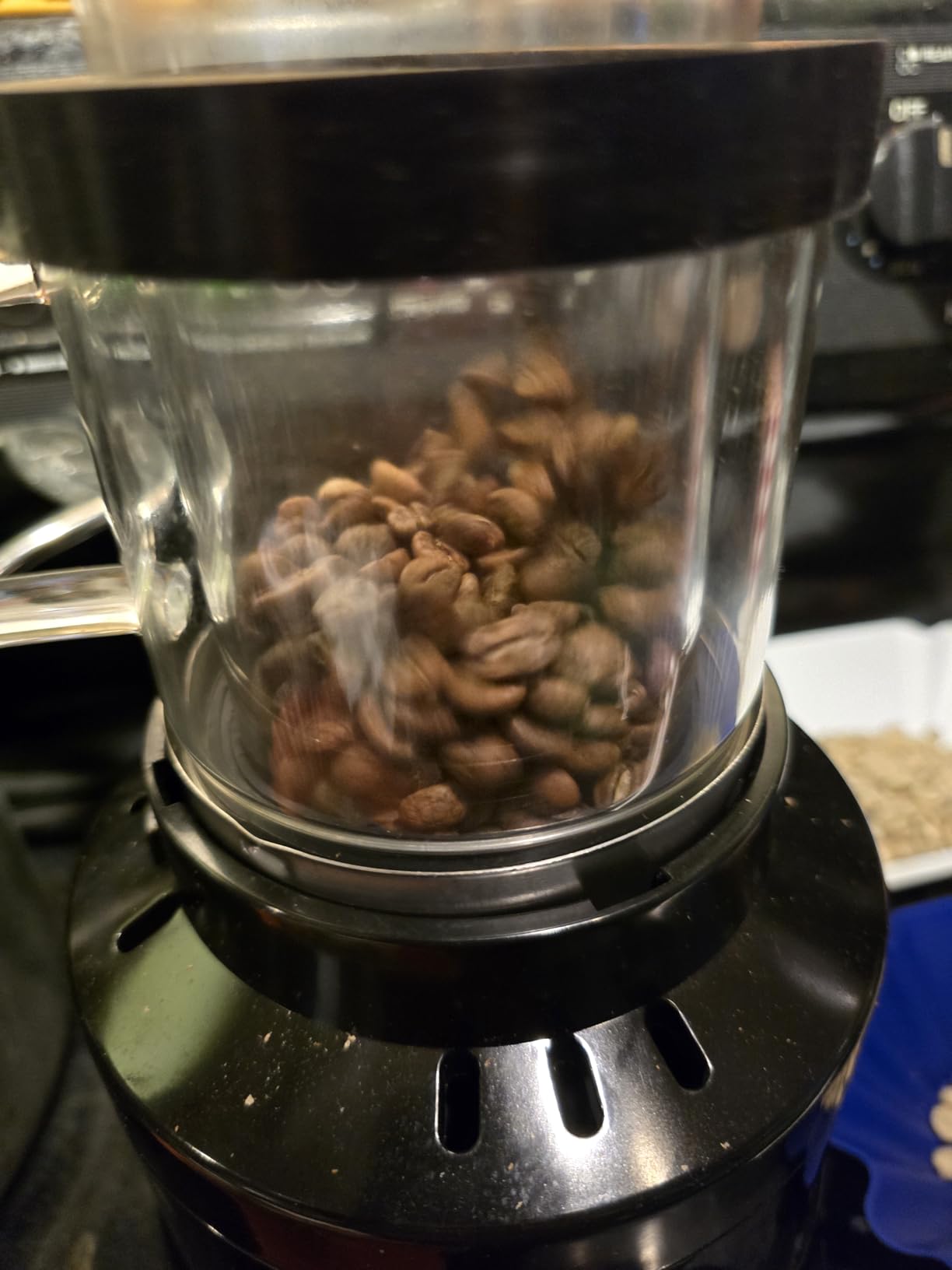
The SR540 is the machine we kept coming back to during testing. It is a genuine fluid bed roaster with a glass chamber, nine power settings and a convection fan you can vary in speed, and it finished a batch in under ten minutes every time. Owners report running hundreds of batches over several years on the same unit, which tells you more about durability than any spec sheet.
The learning curve is friendly. You dial in a roast with one knob for heat and one for fan speed, and the digital readout shows you the bean temperature climbing in real time. First crack is easy to hear and easy to spot through the glass, which means you can follow the roast by ear, by eye and by temperature at the same time.
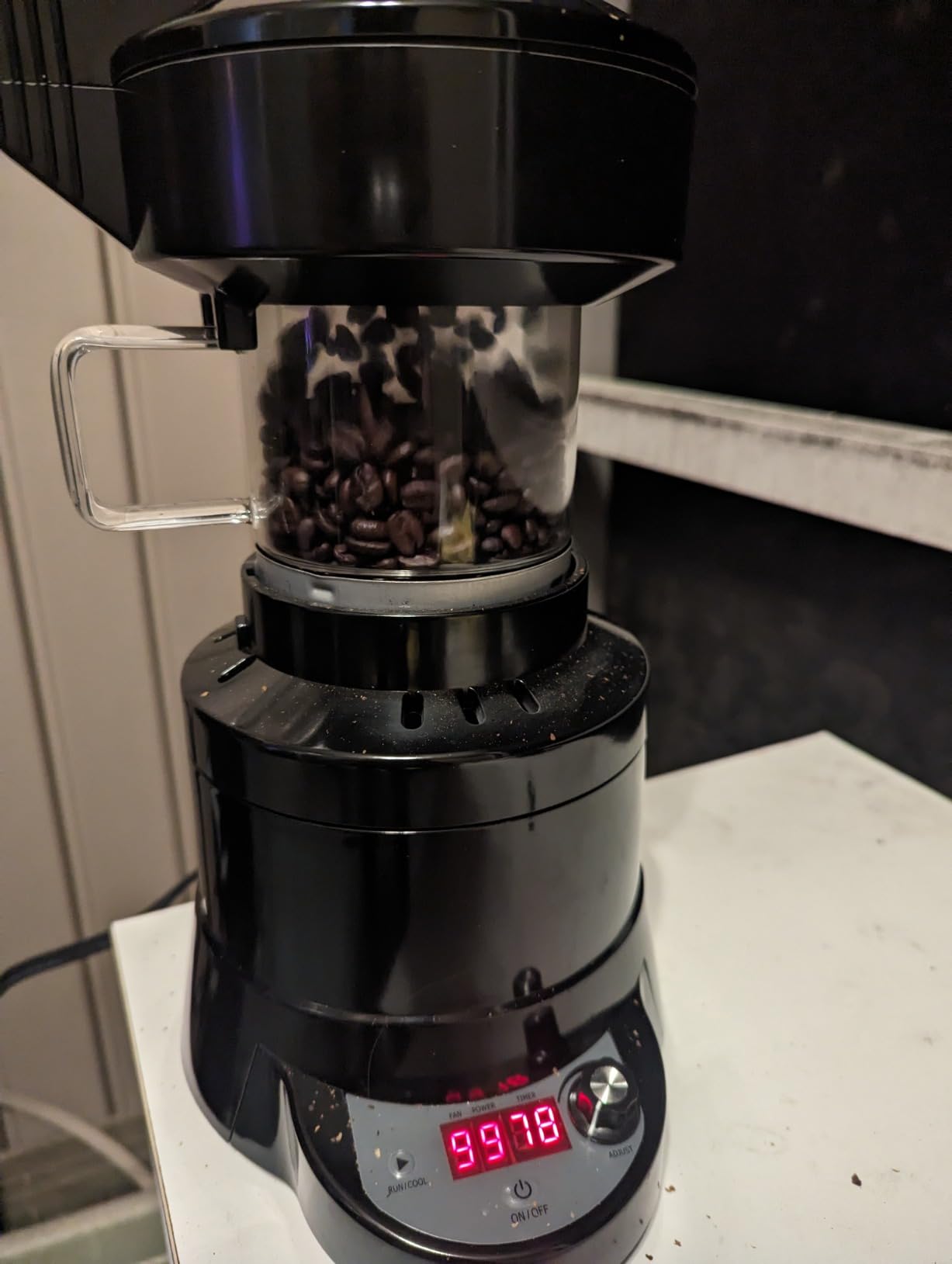
Where it falls short is at the dark end. The maximum temperature is low compared with a drum machine, so a genuine second crack roast takes longer and pushes harder than most people expect. If you drink dark Italian style espresso, look at the SR800 or one of the heated pan machines instead.
The other honest note is smoke. Reviewers report that roasting can be smoky enough to set off a household smoke detector, which matters enormously in an apartment. Put this one under a range hood or in a garage, not in a closed studio flat.
Who the SR540 suits
Beginners who want an honest learning experience, and anyone roasting 100 to 120g batches of filter coffee twice a week. It is also the pick for people who roast for two or three cups at a time rather than filling a shared kitchen with a large batch.
If you drink pour over and want to try different origins side by side, the small batch here is a feature. Small batches dry faster, develop faster and give you more control over where you stop the roast.
Who should skip it
Skip it if you need a large batch, drink very dark roasts or live in a space with no ventilation at all. If you want a machine you can program to run profiles unattended, the SR540 has no such feature. And if the analog knob failing after a year or two would bother you, note that replacement parts and support from the manufacturer are generally praised, which is more than many cheaper units can say.
2. Fresh Roast SR800 – Best Air Roaster for Bigger Batches
- Larger batch than the SR540 for more coffee per roast
- Push and turn knob gives clear control of heat fan and time
- Custom start settings make profiles repeatable
- Real time readout simplifies repeating a roast
- Fast even results
- Costs more than entry level drum machines
- No fully programmable roast curves
- Knob needs deliberate adjustment
The SR800 is the pick for anyone who kept tripping over the SR540’s 120g ceiling. It roasts 6 to 8 oz, roughly 170 to 226g, per batch and fills a carafe for the whole household rather than one person. Rating-wise it edges out its smaller sibling, and the review base is large enough that failure patterns are well documented.
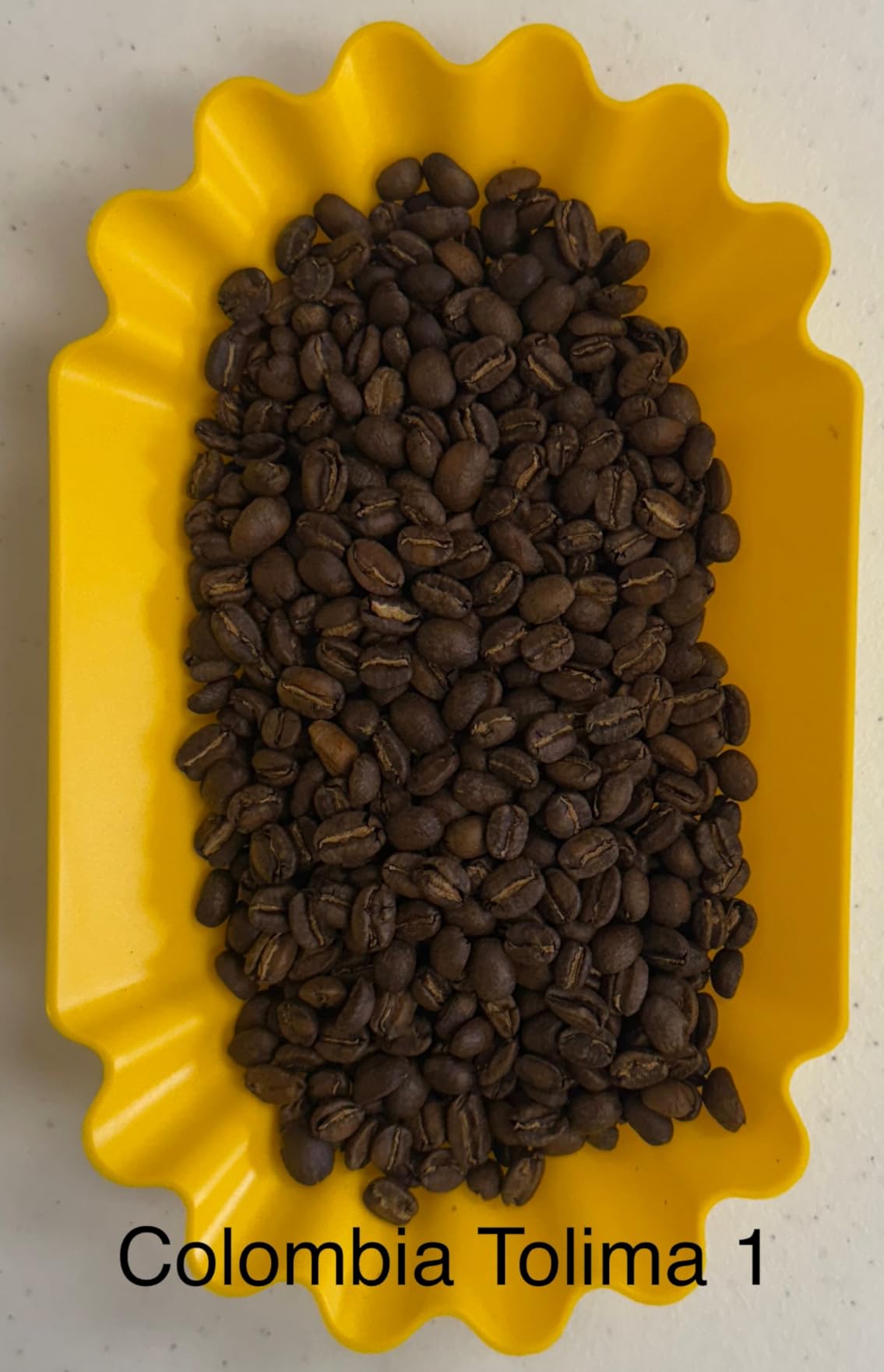
r/roasting owners describe the SR800 as fast, capable of excellent cups, and unusually good at letting you see, smell and hear first crack clearly compared with bigger drum machines. That transparency is what makes fluid bed roasting approachable. You are not guessing behind a closed drum, you are watching beans the entire way.
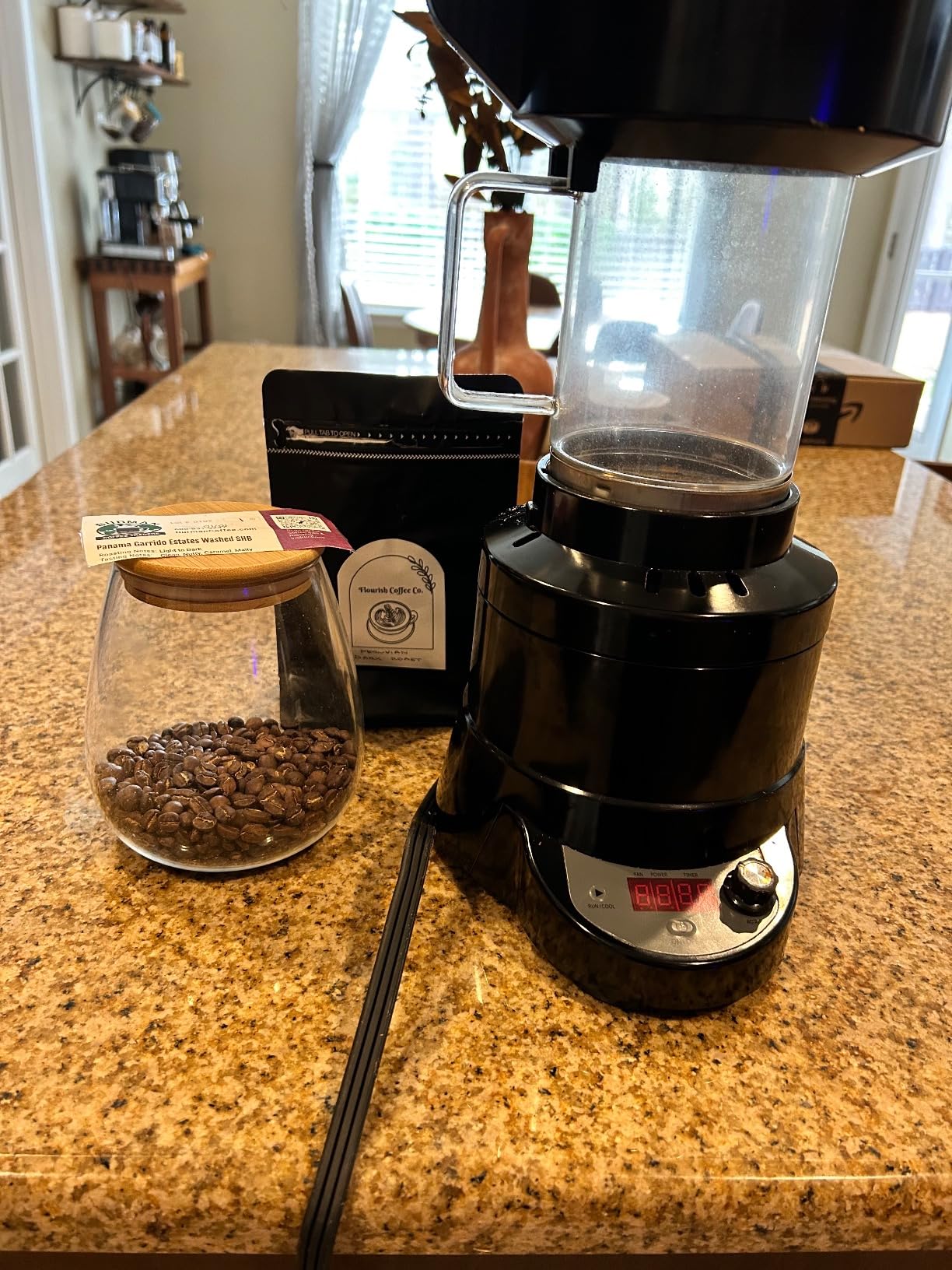
The upgraded control board is the quiet hero. You can set custom default start settings and reuse them, so the fourth batch of the day does not start from scratch the way the first one did. Several owners roast the same origin at different batch sizes using the same starting point and adjust by ear from there.
What it will not do is record or replay a full profile curve automatically. If you come from roasting software that logs everything, this feels basic. If you roast by nose and ear, it is exactly the level of control you want without the overhead.
Who the SR800 suits
A household of two to four that drinks filter coffee daily, or anyone who wants to roast once and have enough for several days. It is also the more sensible fluid bed choice if your smoke tolerance is low and your space is small, since you finish a batch in minutes rather than sitting near the machine for half an hour.
Choose it over the SR540 when you would otherwise run two small batches back to back. One larger batch is more consistent than two rushed ones.
Who should skip it
Skip it if your budget is genuinely tight, because a heated pan machine gives you more grams for less money. It also shares the SR540’s low ceiling for very dark roasting. And if you want an app or automatic profile scheduling, there is none here.
3. JIAWANSHUN FBA066 – Best Budget Home Coffee Roaster
JIAWANSHUN Electric Coffee Bean Roaster Machine for Home Use,1.1lb Capacity
- Very affordable way to start roasting at home
- Wide temperature range covers light through dark roasts
- Automatic stirring rod keeps beans moving
- Vented glass lid lets you watch and smell
- Non stick interior wipes clean
- Stirring rod can jam on small or broken beans
- Beans need sifting before roasting
- Roast time varies a lot with bean type
This is the machine we recommend to anyone who wants to know whether home roasting is for them before spending real money. It is a 1200W heated pan machine rated at 1.1 lb capacity, with an automatic stirring rod and a temperature dial that runs from 100 to 240C. That range covers light filter roasts through a solid dark roast, which is rare at this price.
The transparent lid with four ventilation holes is a genuinely useful design choice. You can watch bean colour change without lifting the lid and losing heat, and the vent holes let moisture escape so the beans dry instead of steaming. A honeycomb non stick interior wipes down with a damp cloth after every batch.
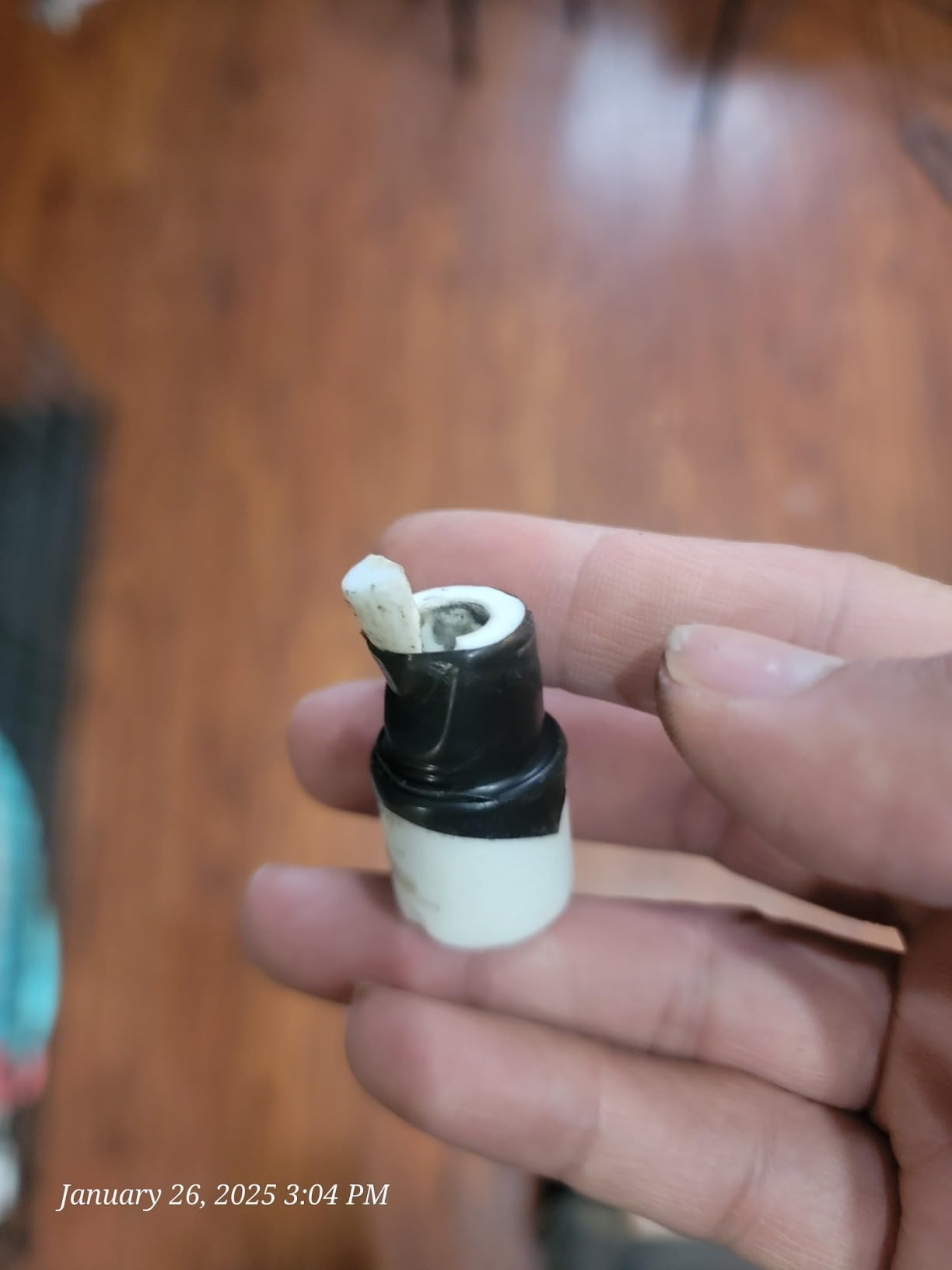
The catch is mechanical rather than electrical. The stirring rod jams when small or defective beans get under it, so you need to sift your green coffee before loading. Owners who skip the sifting step report stalls, and recovery means opening the machine and resetting the stirring strip by hand. Treat sifting as a ten second habit and the problem disappears.
The other honest note is variance. There is no fixed roast time for this machine because bean density, moisture and the size of your batch all shift the result. Expect to run two or three batches before you can repeat one you liked.
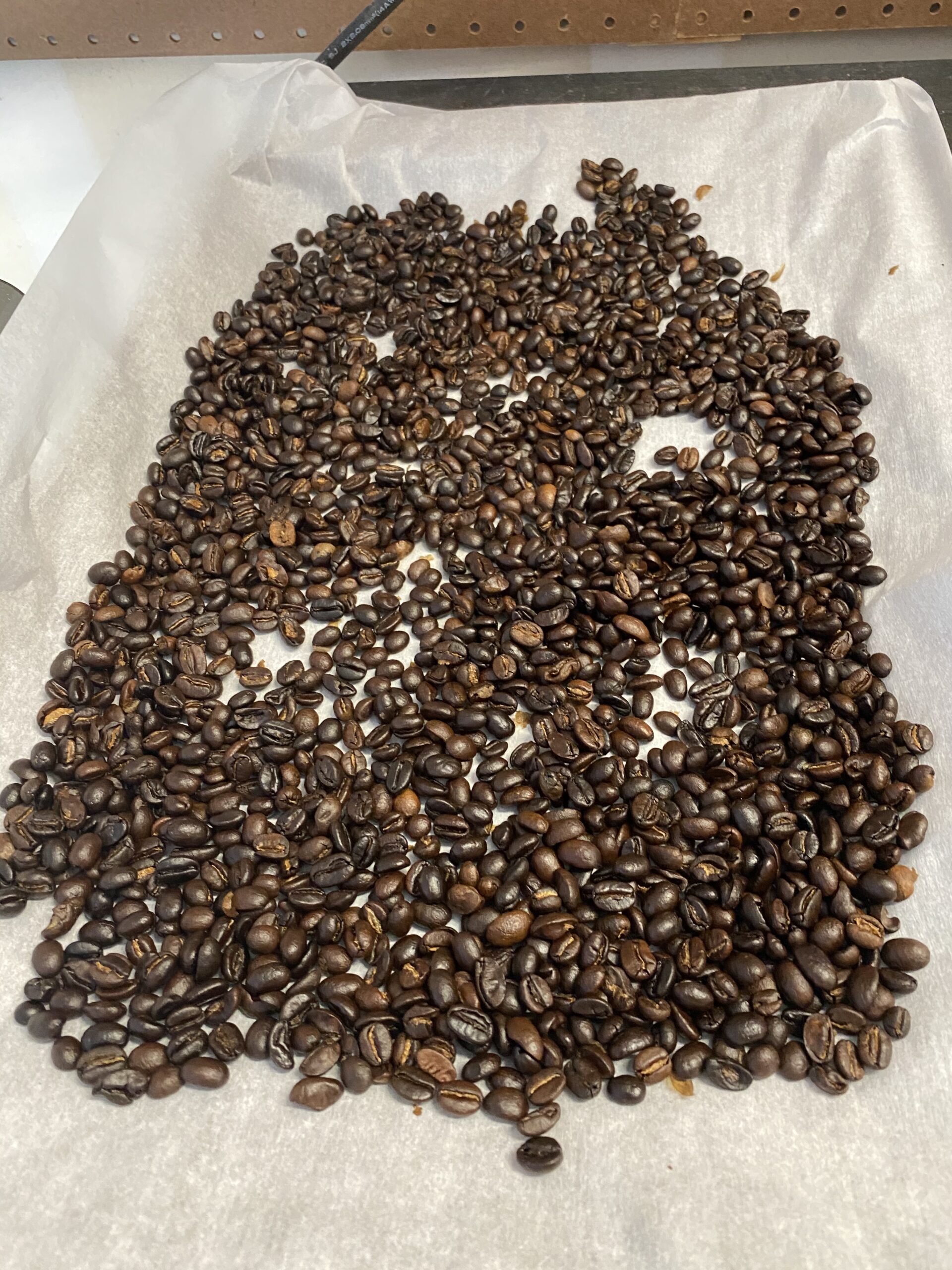
Who the JIAWANSHUN suits
Complete beginners testing the hobby, students and renters who want a machine that also handles nuts, seeds and popcorn. If you plan to roast larger batches for friends or a small office, the 300 to 500g sweet spot is generous for the money.
It also works well as a second machine alongside a fluid bed unit. Some roasters use a fast air machine for filter coffee and a pan machine for a dark espresso blend they want a different character from.
Who should skip it
Skip it if smoke is a problem in your home. An open pan with a stir rod produces noticeably more smoke and aroma than a fluid bed chamber, and this machine has no filter or chaff collector to help. The jar shape also keeps heat in, which is good for the roast and bad for your kitchen.
4. GIVEROO 500g – Best Heated Roaster for Large Batches
- Automatic auger keeps beans moving for consistency
- Wide temperature range with a viewing lid
- Timer simplifies repeatable roast times
- Non stick pot is easy to clean
- Handles nuts barley dried fruit and popcorn
- Auger jams if beans are not sifted
- Uneven results under about 400g
- Jam recovery means opening the unit by hand
The GIVEROO is the pick when you drink coffee in volume or share a kitchen with several people. It roasts 400 to 500g per batch in an 800g pan, which is more than double what most home roasters actually consume in a week. The 45 degree scope design tilts the pan so beans sit more evenly than they would in a flat tray.
An automatic auger turns continuously through the batch, which is the reason results are steadier than a hand stirred pan. Combined with the built in timer and a 0 to 240C dial, it removes most of the guesswork. Owners using it for peanuts, chestnuts, barley and popcorn report it earns its keep well beyond coffee.
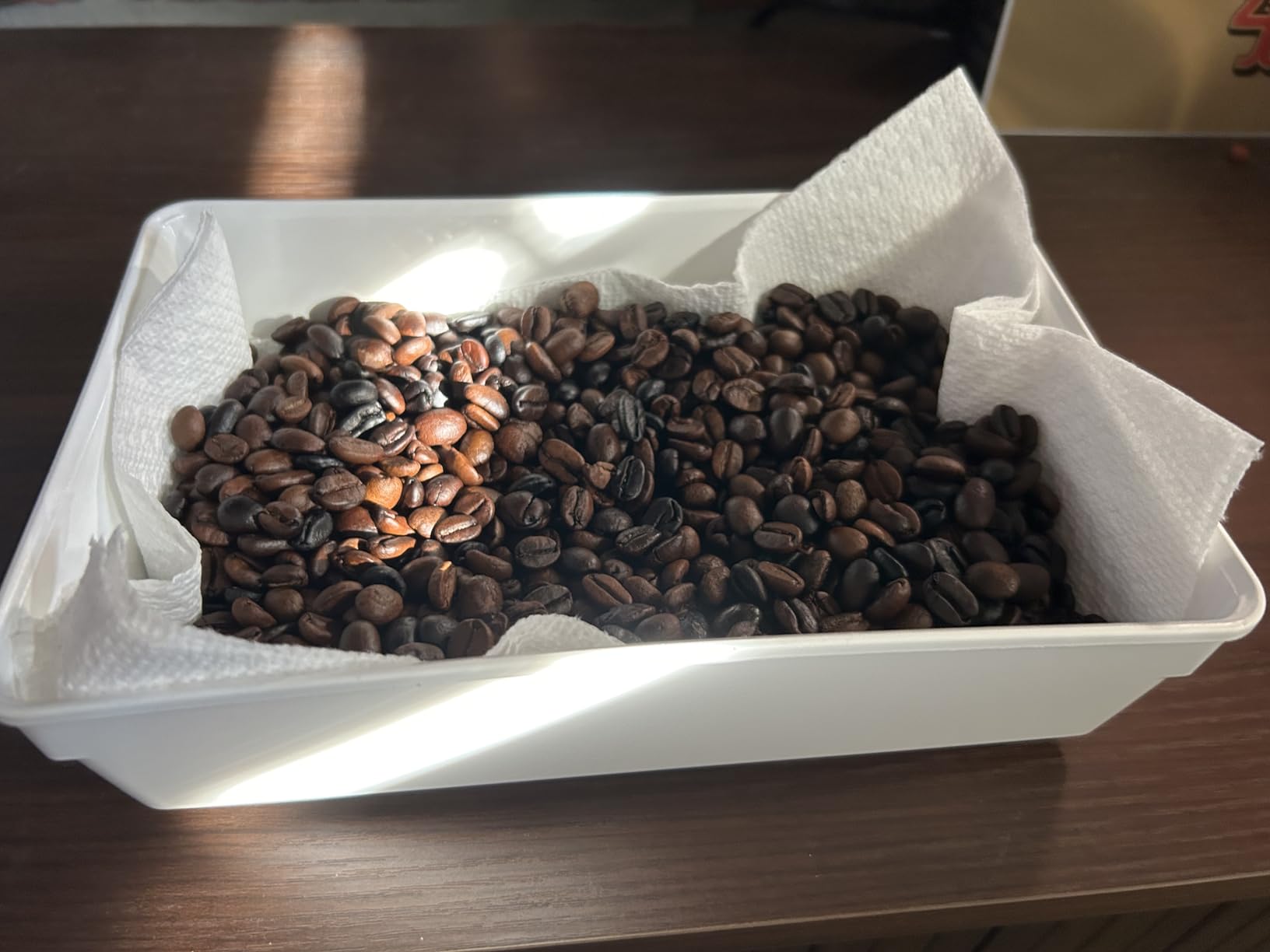
Batch discipline is the one rule. Reviews are consistent that results go uneven below about 400g, because the auger needs a full pan to move beans properly. If you only drink two cups a day, this machine will sit idle and you will pay for capacity you never use.
Sifting matters here for the same reason it does on every stir rod machine. Small or rotten beans catch the auger, and recovery means opening the machine and manually resetting the stirring strip. Keep a cheap sieve near your green coffee bin and this never comes up.
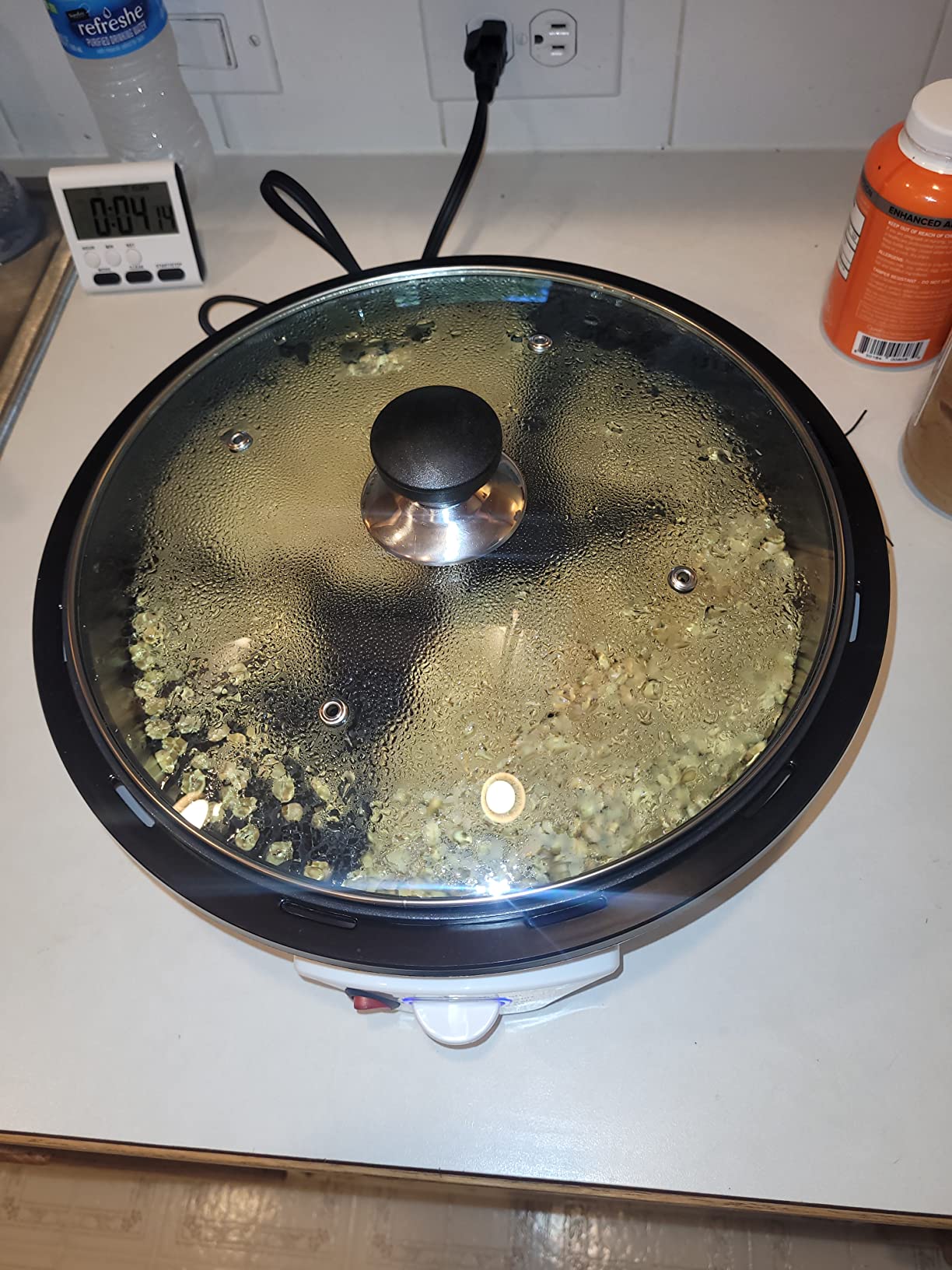
Who the GIVEROO suits
Households that go through a bag a week, and anyone who wants to roast enough to share with colleagues or gift bags of fresh beans. It also suits people who want one appliance for coffee and for roasting nuts or dried fruit.
If you plan to move to selling beans at a small scale, this capacity is closer to what a home micro roastery needs than a 120g fluid bed machine.
Who should skip it
Skip it if you roast small amounts, because under 400g results get patchy and you will be disappointed. It is also one of the smokier designs in this list, and it needs a real kitchen with a hood rather than a small flat. Finally, make sure you actually intend to consume the output, because a month of beans sitting unroasted is pure waste.
5. LUEUR BE1110EW1019 – Best Low-Cost Home Coffee Roaster
- Entry level cost for a full size roaster
- Continuous stirring rod improves bean contact
- Thermostat holds temperature through the roast
- Honeycomb Teflon chamber wipes clean
- Vented lid lets you monitor progress
- Results depend on following the batch guidance
- Flat pan geometry can give uneven colour
The LUEUR is the cheapest full size roaster we would recommend, and it is not a token entry. You get an 800W element, an 800g tank with a 300 to 500g recommended batch, a thermostat for steady temperature and a honeycomb chamber with a food grade non stick coating. For a first machine that is a serious amount of hardware.
The transparent heat resistant cover with four hole ventilation lets you follow the roast without opening it. That matters on a low cost machine because a sealed pan traps steam and slows the drying phase. The ventilation holes keep moisture moving out of the chamber.
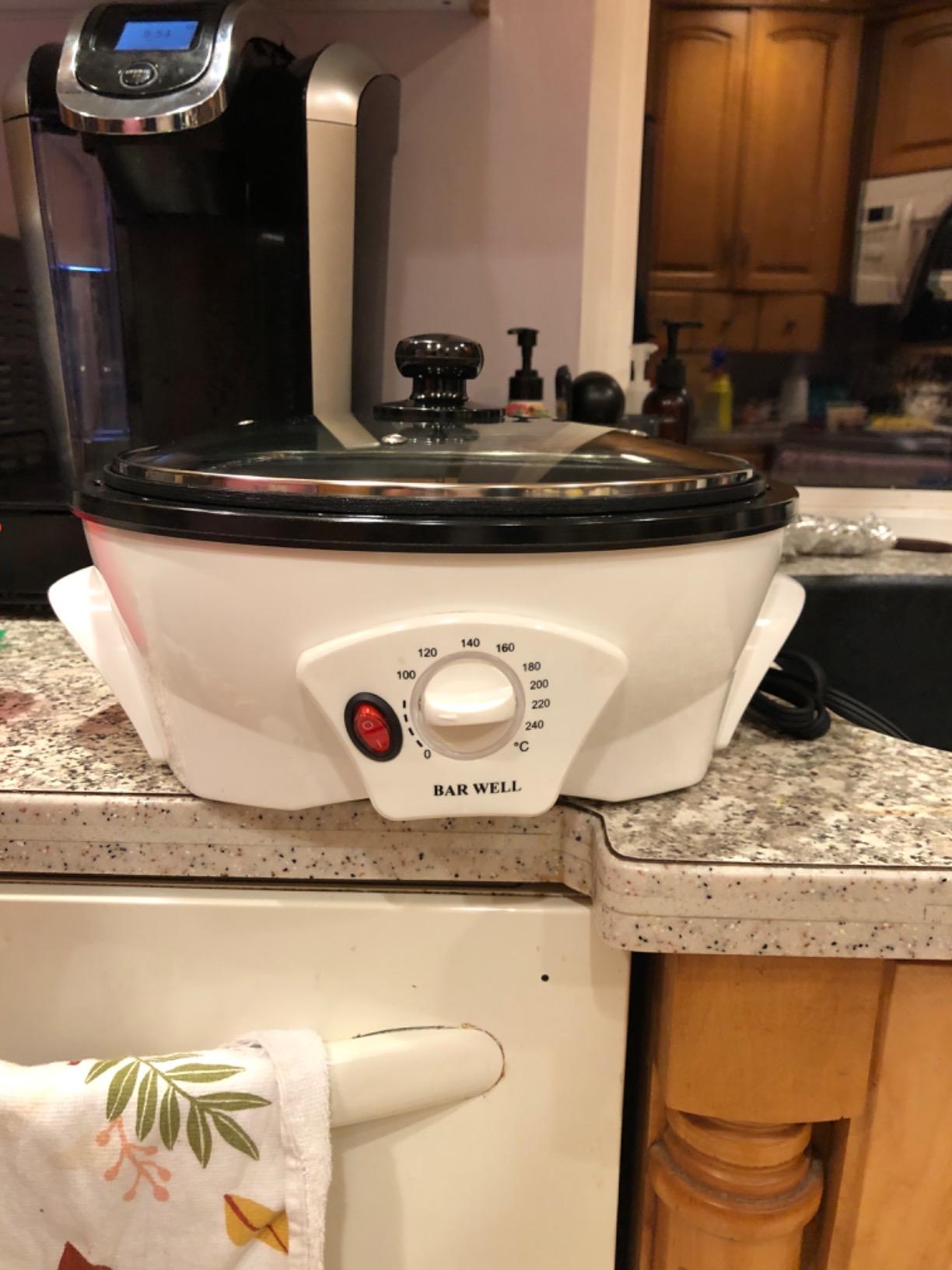
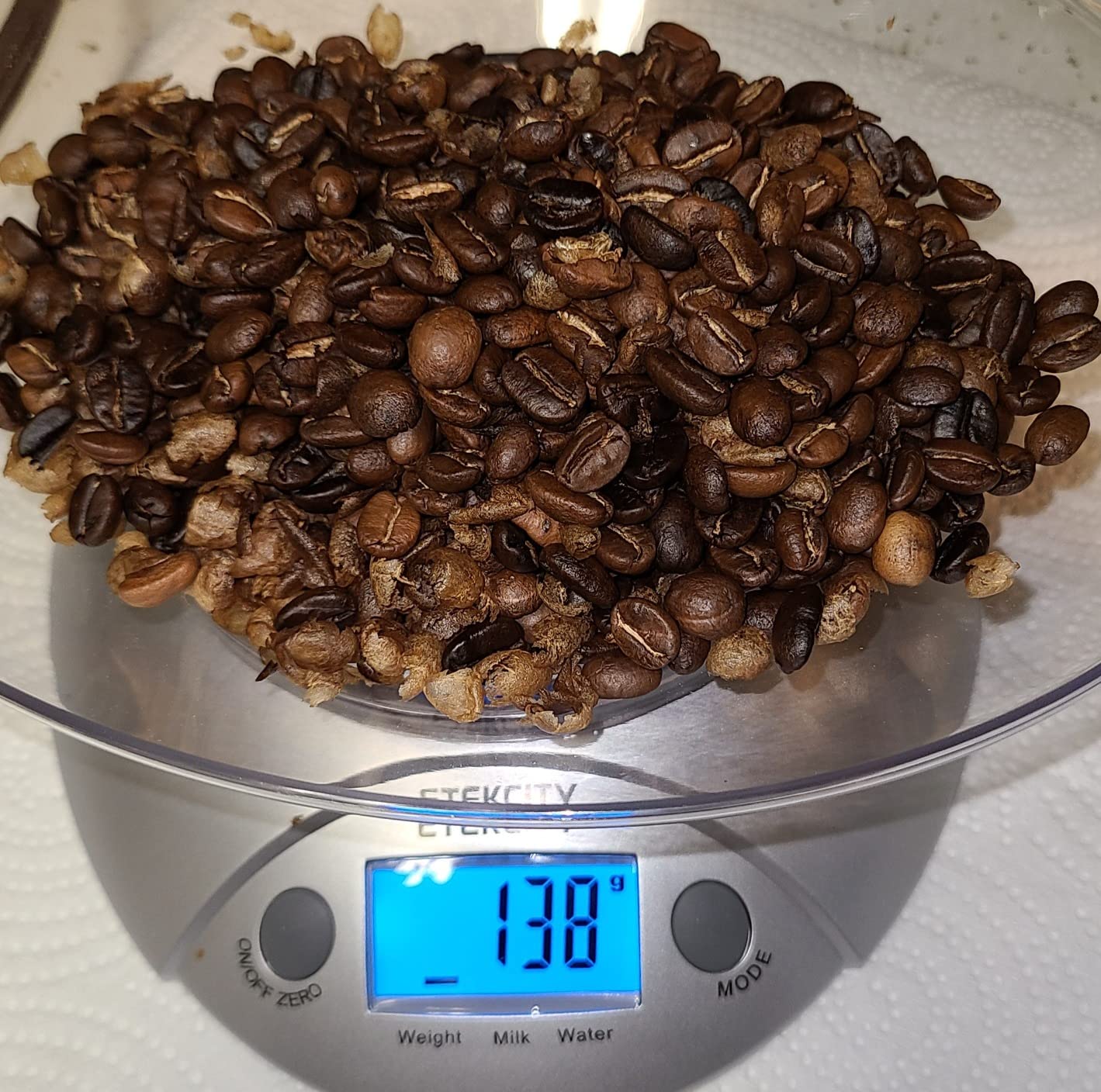
The weakness is geometry. The pan is relatively flat, so beans in the middle and beans near the edge do not see the same heat, and some batches come out with uneven colour. Owners who follow the 300 to 500g guidance and keep the stirring rod turning report good results. Owners who go small or load unevenly report disappointment.
This is the machine where your technique matters most. If you are willing to stand nearby and keep the beans moving, the LUEUR will produce drinkable coffee. If you want a machine that runs while you make breakfast, this is the wrong pick.
Who the LUEUR suits
Budget-first buyers who want a real batch size instead of a 100g toy. It suits people roasting 300 to 500g two or three times a week and drinking filter coffee at home. It is also a decent secondary appliance for roasting nuts, given the continuous stirring rod.
For a first-timer who is not sure they will stick with the hobby, spending this little reduces the risk of buying the wrong machine.
Who should skip it
Skip it if you need consistency without attention. The flat pan is unforgiving and the 1-star share in reviews is not tiny. It is also a stovetop shaped design with no smoke management, so it belongs in a kitchen with ventilation rather than a flat with sensitive neighbours.
6. NIASIA PKF-500g – Best Air Roaster With Automatic Profiles
- Automatic profiles remove guesswork for beginners
- Nine profiles span roast levels and processes
- Stainless drum and probe give tight temperature control
- High speed cooling fan plus separate tray
- Complete smoke management kit included
- Not intended for commercial duty cycles
- Low defect beans needed or the drum can jam
- Manual mode demands airflow discipline
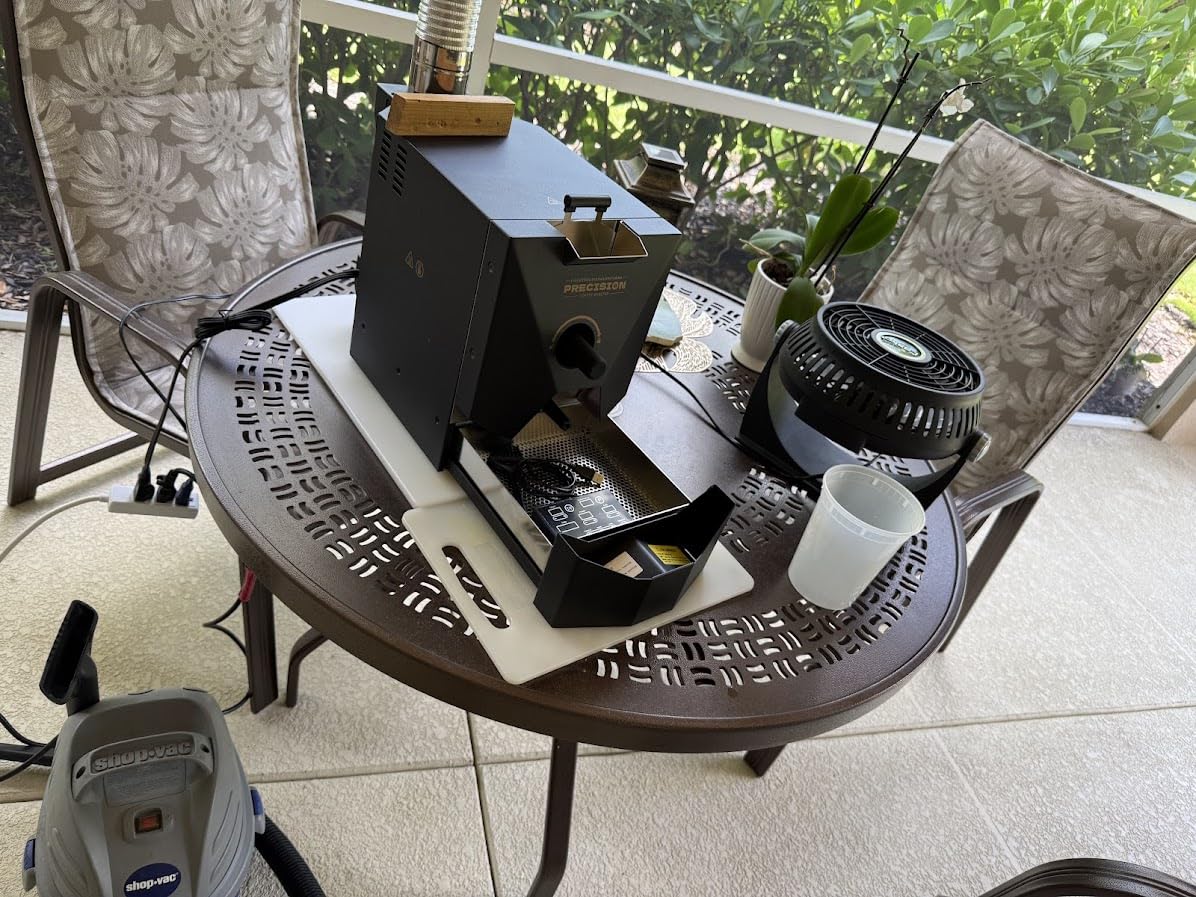
The NIASIA is the most automated machine in this group and the only one that treats smoke as a design problem rather than an afterthought. It ships with a smoke filter for light roasting, two aluminium smoke pipes for medium and dark work, and an integrated chaff collector. That kit is the reason it belongs in a home rather than a garage.
Pick a profile and it runs. There are nine built in profiles spanning light, medium and dark roast levels plus sun dried, washed and honey processed beans, which is a surprisingly thoughtful set of starting points for someone who has never roasted before. Manual mode opens up airflow and temperature adjustment when you outgrow the presets.
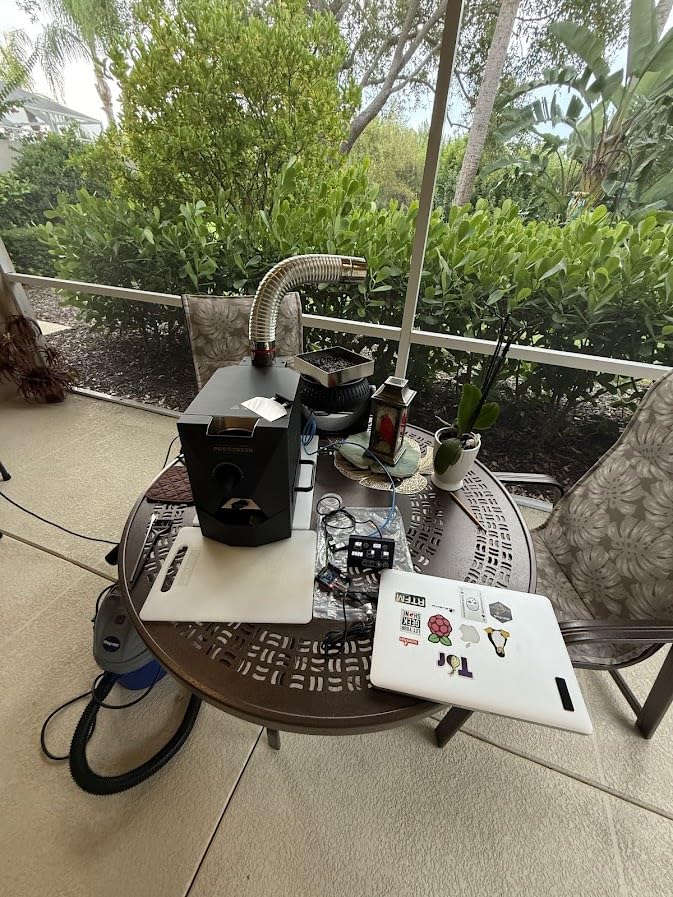
Underneath it is a stainless steel drum with a precise temperature probe, which holds temperature more steadily than the coated pans elsewhere on this list. A high speed cooling fan drops bean temperature fast after the roast and a separate cooling tray lets you finish cooling without blocking the machine, which is the detail that most affects how good the cup tastes the next morning.
The guidance recommends keeping airflow around 60 through the process and raising it to 90 or 100 at first crack. That is the kind of specific, actionable instruction you would normally have to ask an experienced roaster for.
Who the NIASIA suits
Beginners who want to learn without burning their first four batches, and apartment dwellers who need the smoke pipes and filter to make roasting indoors practical. It also suits anyone who roasts many small batches of different origins and wants a repeatable starting point each time.
For espresso drinkers who prefer darker filter style roasts, the medium and dark pipe configuration handles the smokier phase far better than an open pan.
Who should skip it
Skip it if you intend to run many batches a day, because the maker advises against commercial duty cycles and constant use shortens component life. It also needs low defect beans, since debris can jam the drum. And at this cost it is a big step up in money from the budget picks, so it only makes sense if the automation earns its keep.
7. ZEVELOO 750g – Best Multi-Use Roaster for Nuts and Popcorn
ZEVELOO 750g Electric Coffee Roaster Machine Home Coffee Roaster Coffee Bean Roaster for Home Use 110V
- Capable of a full 500g batch at an entry price
- Automatic stirring rod reduces manual work
- Transparent lid for judging colour and crack
- Honeycomb Teflon surface wipes clean
- Roasts less smoky than air popper style roasters
- Instructions are minimal and unhelpful
- Flat pan gives uneven colour at larger batches
- Temperature dial does not match internal temperature
- Dark roasts take considerably longer
The ZEVELOO is the cheapest machine here that still handles a full 500g batch, and it does more than coffee. The same drum handles soybeans, mung beans, rice and popcorn, which makes it one of the more genuinely multi use appliances in the kitchen.
The automatic stirring rod activates during the roast, so you are not standing over it with a spoon. A transparent lid lets you judge bean colour and first crack visually, and the honeycomb Teflon coating wipes clean without scrubbing. Several owners who moved up from cheaper pots report better coffee than they expected for the money.
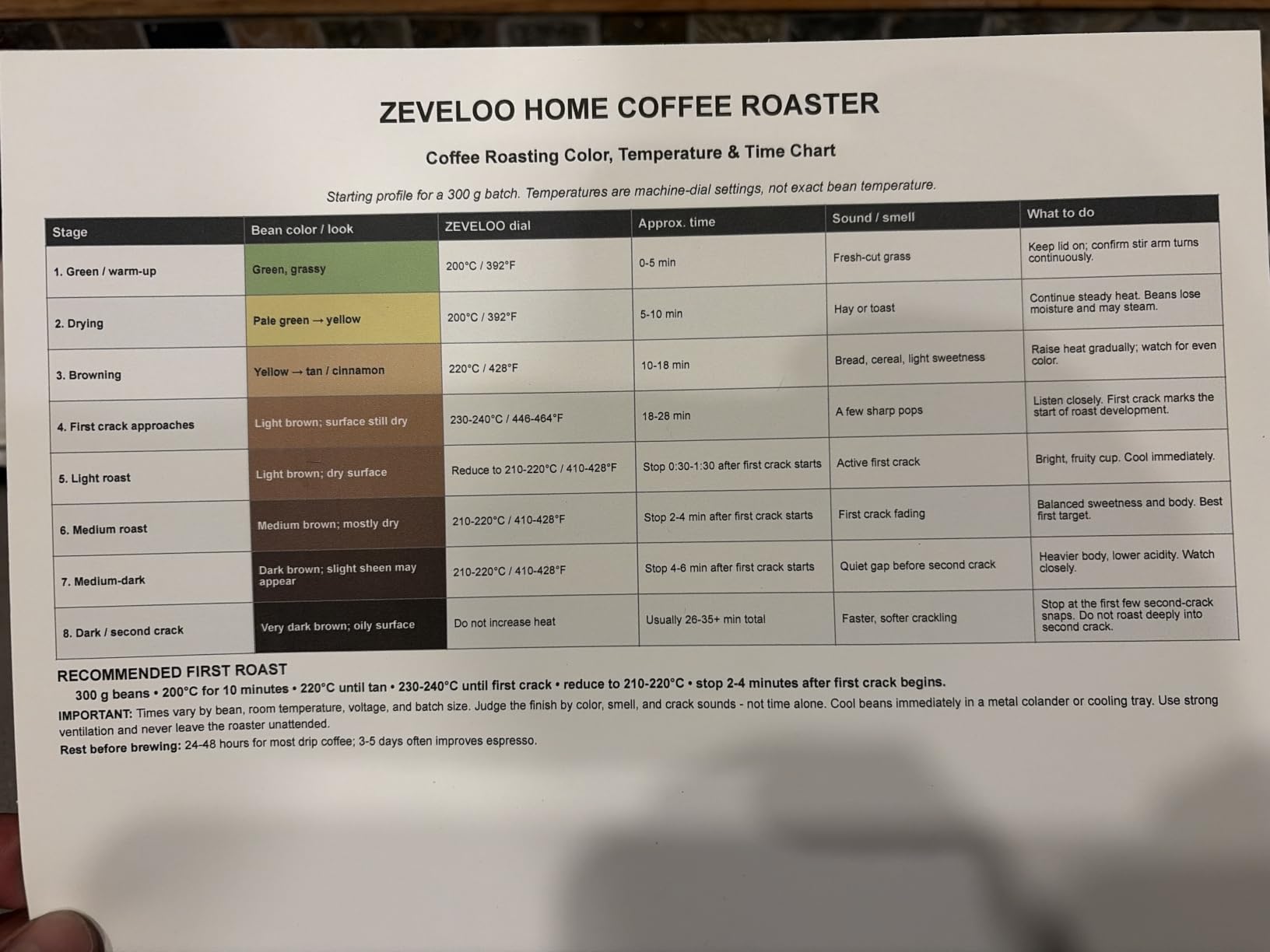
Three complaints come up consistently. The instructions are minimal and mostly unhelpful for someone learning to roast. The flat pan produces uneven colour at larger batches. And the temperature dial does not match the actual internal temperature, so you calibrate by watching the beans rather than trusting the number. Learn to do that and it stops being a problem.
There is a real trade-off on time. Reviewers note that reaching a dark roast takes considerably longer here than it would on a fluid bed machine, because you are waiting for contact heat to work through the batch. For a light to medium filter roast it is fast enough.
Who the ZEVELOO suits
Households that want one appliance for coffee and snacks, and first-time buyers on a strict budget who still want a real batch size. It also works well for anyone who prefers lighter and medium filter roasts and does not want to chase dark profiles.
If you already own a proper air fryer, this is the more capable cousin of it for beans, and it roasts noticeably less smoky than a popcorn popper does.
Who should skip it
Skip it if you roast dark, since the long cycle will test your patience and your kitchen. Skip it if you want precise temperature control, because the dial is unreliable and there is no probe. And skip it if you are roasting very small quantities, because a full pan is where this design performs.
8. WINB WINBCR – Best Home Coffee Roaster With a Built-In Timer
- Built in timer takes the guesswork out of roast length
- Wide temperature range with a constant heat thermostat
- Lid stands upright when not in use
- Honeycomb Teflon base is easy to clean
- Handles a full 750g capacity
- A full 750g batch takes about 25 minutes
- No chaff collection so beans must be sifted
The WINB wins on one specific detail that most budget roasters leave out: a real 0 to 60 minute timer built into the machine. On a pan roaster where roast time varies with bean and batch size, a dial you can set is genuinely useful for a beginner trying to repeat a batch.
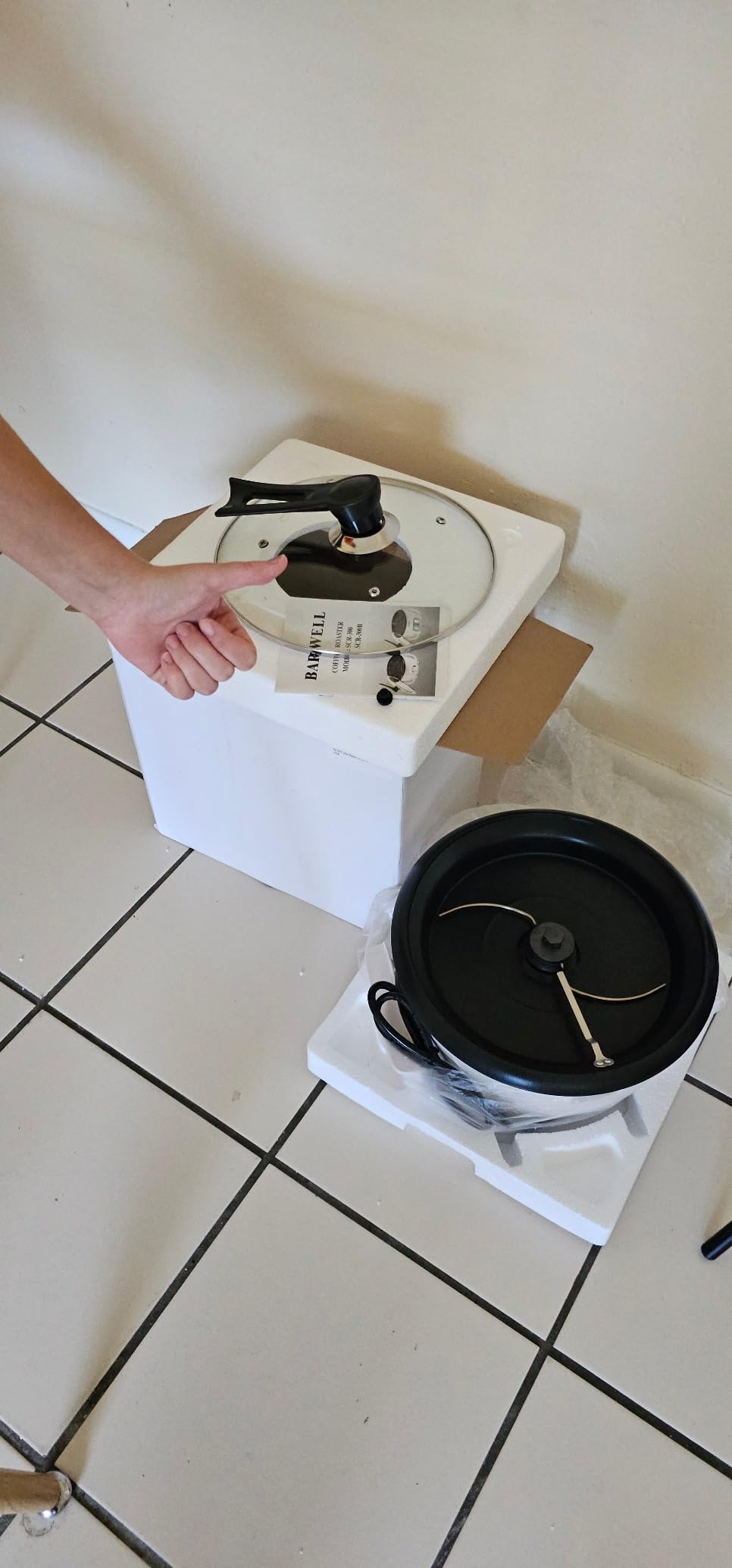
Capacity is 750g with a 300 to 500g optimal batch, driven by a 1200W element. The temperature range is 100 to 240C with a thermostat for steady heat, and an internal rotating rod keeps beans moving through the honeycomb Teflon base. The transparent lid with air holes stands upright when you are not using it, which is a small touch that saves counter space.
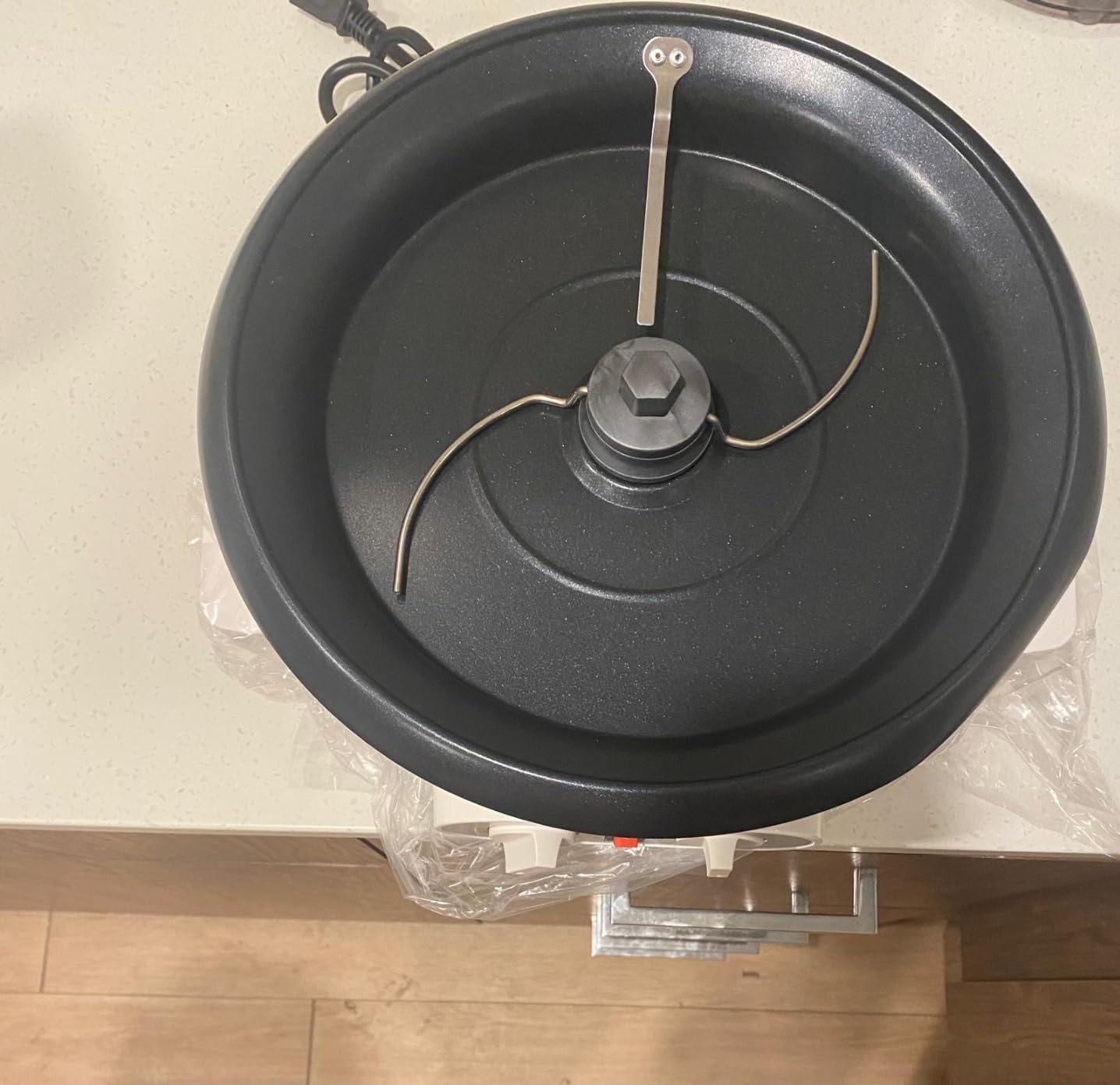
The trade-offs are honest ones. A full 750g load runs about 25 minutes, so a big batch ties you up near the machine for a while. And there is no chaff collector, which means you sift the roasted beans afterwards. For most home roasters that is a five minute job, but it is work a fluid bed machine simply does not require.
At 1200W it draws real current. Give it a proper outlet rather than an extension lead shared with a kettle, which is good practice for any high wattage heating appliance in a kitchen.
Who the WINB suits
Beginners who want structure rather than intuition. It suits anyone roasting filter coffee for a household of two or three and who prefers a set time to a guessed one. The multi use capability, covering peanuts, chestnut, barley, dried fruit and popcorn, adds value if you use the kitchen that way.
It is also a good fit if you like watching a roast through a lid but do not want to lean over it the whole time, since the rotating rod handles the agitation.
Who should skip it
Skip it if chaff in your beans bothers you, because you will be sifting after every batch. Skip it if your kitchen cannot handle 25 minutes of roasting smell from an open pan. And skip it if you want the cleanest possible flavour, because a stirred pan gives a heavier, smokier roast than a fluid bed chamber.
9. MAGO MAGA Roma Pro – Best Air Roaster for Small Apartments
- Auto mode roasts chills and de chaffs on one press
- Manual mode gives full control once learned
- Repeatable even colour at 150g batches
- Low smoke compared with open drum roasters
- Support replaces damaged units and parts quickly
- Performs poorly at the full 300g rating
- Auto cycles run long and profiles are not exact
- Profiles cannot be saved or reloaded
- Manual mode needs heavy experimentation
The Roma Pro is a true hot air roaster with a chaff collector, which makes it the pick for people roasting in a small apartment. Reviewers consistently rate its smoke output as low compared with open drum machines, and the integrated collector means chaff never reaches your kitchen. It also carries a SCA Best New Product Award.
One press in auto mode roasts, chills, removes chaff and cools the batch. That single step is the reason beginners like it, because it does the tedious part of roasting for you. A double layer glass window lets you watch the whole way, and the digital display switches between Celsius and Fahrenheit with a timer.
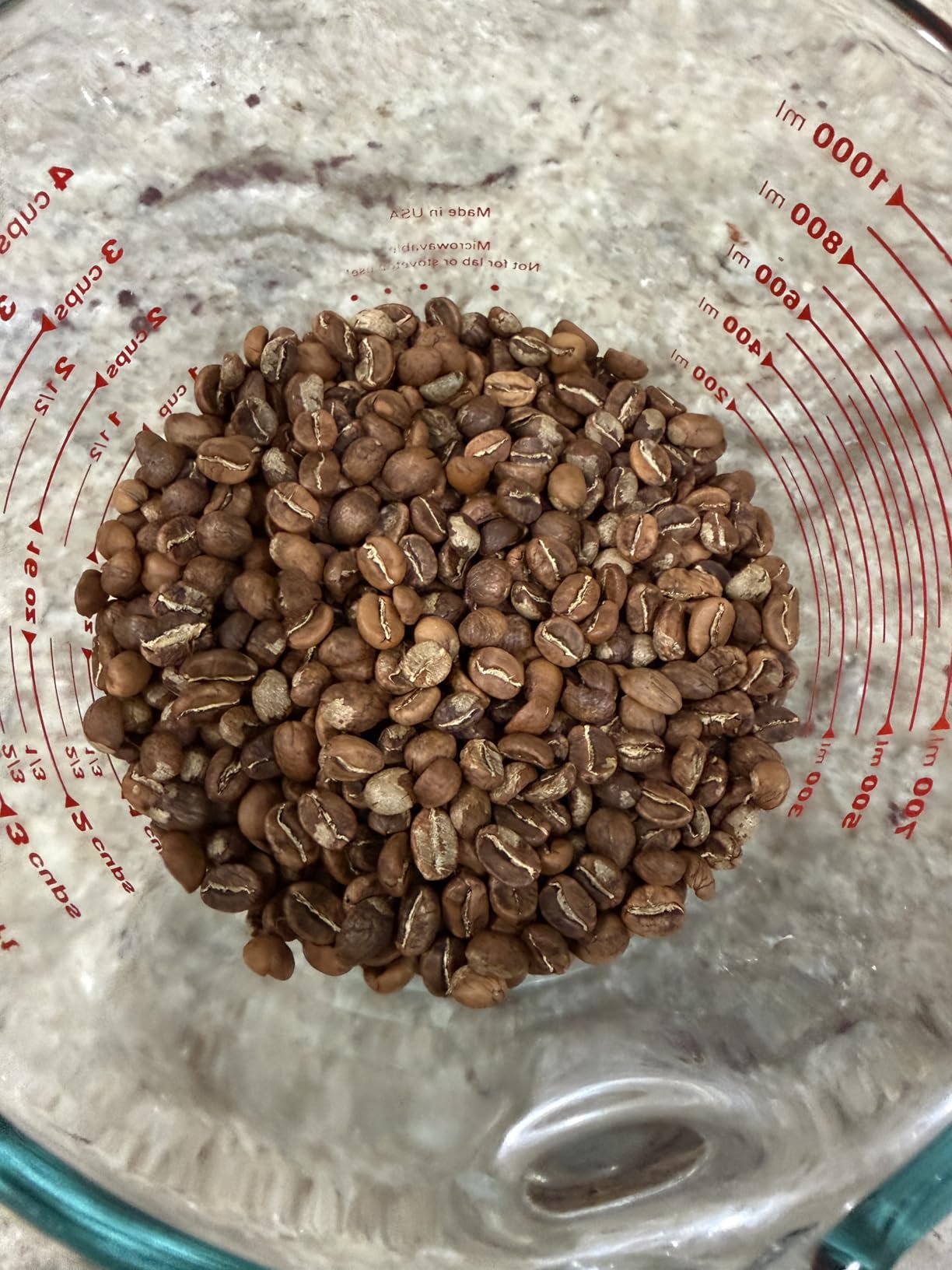
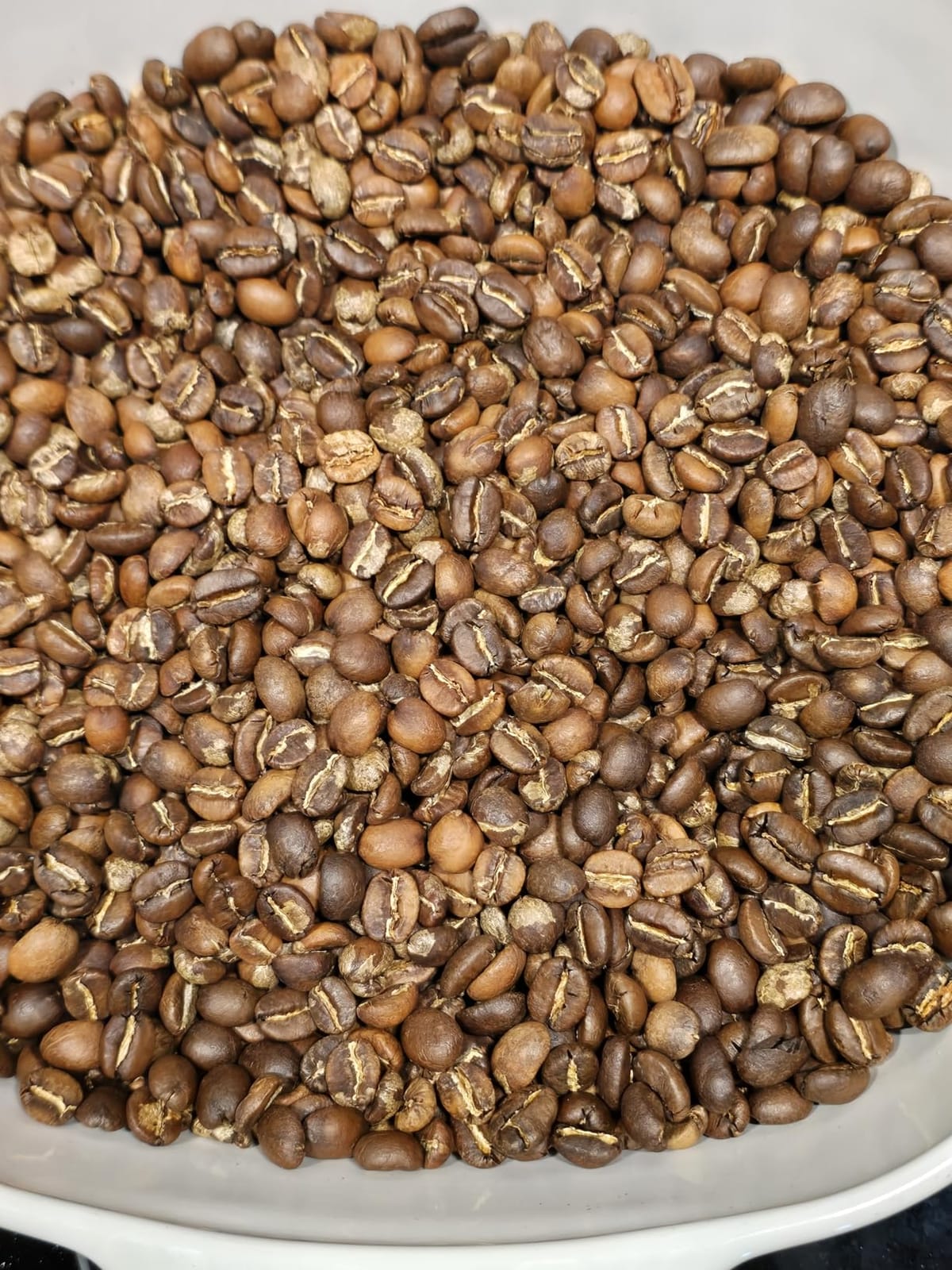
Now the honest part, because this machine is polarizing. Its ratings are bimodal with no four star reviews at all. Enthusiasts who use it at 150g give it top marks for ease and even medium roasts. Others who load the advertised 300g report raw and burned beans mixed together, which points to underpowered heating at full capacity. Treat 150g as the real capacity, not 300g.
Profiles also cannot be saved, adjusted or reloaded, so the auto mode is a starting point you adjust every time rather than a program you reuse. Customer service, including replacement of damaged units and parts, is repeatedly praised, which is a meaningful advantage on a brand most buyers will not have heard of.
Who the Roma Pro suits
Apartment dwellers who cannot tolerate smoke or chaff, and drinkers of two to four cups a day. It suits anyone who wants clean, bright filter roasts and values automatic cooling and chaff removal more than large batch size. It is also a good second machine for a home that already roasts larger batches on a pan machine.
Anyone who wants a quiet, low mess introduction to fluid bed roasting will find the glass chamber and cooling cycle easier to live with than an open drum.
Who should skip it
Skip it if you need to roast 300g or more in one go, because that is exactly where reviews report failures. Skip it if you want to save and recall profiles. And skip it if you prefer deep dark espresso roasts, since the small capacity and fixed auto cycles are built for filter style coffee.
10. LEONEBEBE 750g – Best Step Up From a Stovetop Pan
LEONEBEBE Electric Coffee Roaster Machine for Home Use, Coffee Bean Roaster
- Even balanced roasts once you learn the temperature curve
- Automatic stirring rod means no standing and stirring
- Simple single knob temperature control
- Non stick pan wipes clean easily
- Glass lid allows monitoring without lifting
- Stirring rod can lack power on a full pan
- Build life varies widely between units
- Celsius only display
- This variant has no timer
The LEONEBEBE is aimed squarely at people who have been roasting in a pan on the stove and want a repeatable upgrade. Experienced home roasters who moved from stovetop to this machine report roasts as even as they could manage by hand with constant stirring, which is a strong result for a machine with one knob and a rod.
Capacity is 750g maximum with 300 to 500g recommended for even results, heated by a 1200W element and controlled manually from 0 to 240C. The smooth non stick roasting pan wipes clean, and a transparent vented lid lets you monitor without lifting and losing heat. It also handles peanuts, cashews, chestnuts, almonds and seeds.
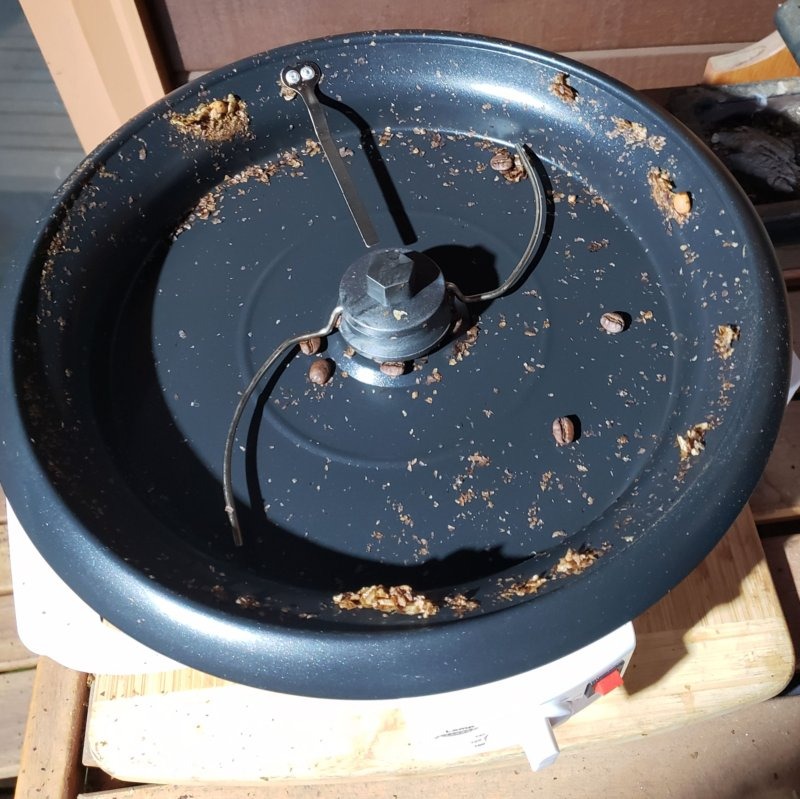
Two mechanical limits are worth knowing before you buy. The stirring rod can stall against a full load, which means you may still need to help it along on the biggest batches. And build life varies widely, with owners reporting anywhere from a couple of months to a couple of years per unit. That spread is common with unbranded machines of this type.
Note that this specific variant has no timer, and the display is Celsius only. Both are minor, but if you cook by Fahrenheit or want a set roast length, check the variant carefully before ordering.
Who the LEONEBEBE suits
Anyone moving from a stovetop pan who wants more consistency with less hovering. It suits households roasting 300 to 500g a few times a week and drinking filter coffee. Because it roasts nuts and seeds well, it works as a general roasting appliance rather than a single purpose one.
If you already own a good pan roaster, this is a sideways move rather than an upgrade, so look at the fluid bed machines instead.
Who should skip it
Skip it if you want a machine you can leave running, since the rod and your attention are doing the agitation. Skip it if durability predictability matters to you, because the reported build life is unpredictable. And skip it if smoke is a problem, as with the other heated pan machines on this list.
Air Roaster Smoke, Smell and Noise in a Small Apartment
Smoke and smell are the questions home roasters actually ask each other, and they are the two things manufacturers rarely print on the box. The r/roasting community spends more time on ventilation than on flavour profiles, and the answers are consistent. Roast under a range hood, or in a garage, or on a balcony. Do not roast in a closed studio flat at midnight because you are worried about the noise.
Which machine you choose matters more than any other single feature here. A fluid bed roaster such as the SR540, the SR800 or the Roma Pro pushes air through a chamber and captures chaff internally, which produces the least smoke of anything in this roundup. An open pan with a stir rod, an auger or a manual drum gives off noticeably more, and the closer you are to it, the more it lingers in your curtains and soft furnishings.
The NIASIA is the one machine here designed around the problem. Its smoke filter, two external smoke pipes and integrated chaff collector give you a way to vent into a range hood or a window without the whole kitchen filling. If you are committed to roasting indoors and cooking smells bother you, that kit is the feature that matters.
Noise is the quieter complaint, and it is not about the heating element. Air roasters are frequently described as loud in operation, and the noise is the convection fan plus the beans rattling in the chamber. If you live in a flat, the fan is the sound that carries through walls. Plan to roast at times when that is not an issue, and treat a hot pair of earplugs as part of the kit.
Two more practical warnings. Chaff in a used collector is a fire risk, so empty it into a metal bin outside rather than leaving it in the machine or tipping it into a plastic bag. And before you buy anything, check that the brand still sells parts for it. A surprising amount of home roasting equipment has been discontinued, and one of the top competing guides on this query is built almost entirely around machines that no longer have parts available.
How to Choose an Air Coffee Roaster
Work through these five criteria in order and the right machine becomes obvious quickly. Start with batch size, because that single number decides how much of the rest of the list even applies to you.
Match the batch size to how much you drink
Roast what you can drink in about two weeks. One cup of roasted coffee needs roughly 15 to 18g, so a household drinking four cups a day uses around 250g a week, which is a 500g batch every two weeks. A single person drinking two cups a day needs far less than a 500g machine can produce, and the surplus goes stale.
There is a gap between the stated capacity and what you should actually load. The SR540, SR800 and Roma Pro are all fluid bed machines where airflow needs room to move the beans, so running a tiny load leaves them sitting in the chamber rather than tumbling. On the heated pan machines the opposite applies: the stir rod and auger need a full pan to work, and reviews consistently report uneven results below 400g. Ignore the maximum number on the box and look for the recommended batch instead.
Decide how much control you actually want
Fluid bed machines give finer control because heat and airflow respond immediately. The SR540 and SR800 separate nine levels of power from variable fan speed, which lets you manage moisture in the drying phase and then push development at first crack. The Roma Pro adds auto cycles that handle the whole sequence for you if you would rather not start there.
Pan machines give you one dial and a stirring rod. That is enough to roast good coffee if you learn to read colour and smell, and it is far cheaper. The middle ground is the NIASIA, with nine automated profiles plus a full manual mode for when the presets stop being useful. Be honest about which of these you are, because paying for control you never touch is the most common home roasting mistake.
Check chaff handling, smoke and cooling
Chaff is the papery skin that comes off the bean during roasting. It is lighter than air and it goes everywhere, which is why machines with a chaff collector are worth the extra money if you roast indoors. The SR540 has a basket, the SR800 and Roma Pro collect internally, and the NIASIA includes a dedicated collector plus filter and pipes. The pan machines in this roundup mostly do not, so you will be sifting.
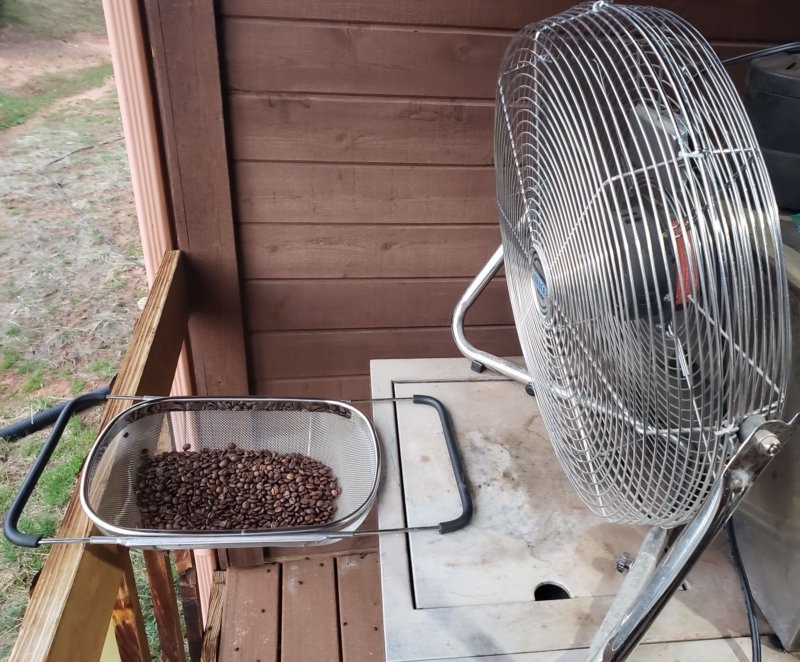
Cooling is the step people skip and should not. Beans keep cooking after you drop them from heat, so a slow cool means bitter, ashy results and aroma that fades before you grind. A dedicated cooling tray or a high speed cooling fan, as on the SR540, the SR800 and the NIASIA, drops bean temperature fast enough to lock in what you just developed. Any machine can work, but you then need to move the beans manually and quickly.
Think about noise, cleaning and repairs
Cleaning matters more than spec sheets suggest. Glass chambers and Teflon coated honeycomb pans clean with soap and water, which is why nearly every machine here uses one of those two surfaces. Look for removable parts that you can reach without a screwdriver. Avoid machines that need the drum disassembled to reach residue.
Repairability and spare parts are the most valued buying criteria on r/roasting, and the reason repairable brands with responsive support get recommended again and again even when they cost more. Ask three questions before buying. Is the model still sold by the manufacturer? Are replacement parts listed anywhere? If the answer is no, you are buying a toy, not a roaster. Our small batch roaster picks lean toward models with visible support and replacement parts.
Plan your first roast before you unbox
Buy small quantities of green beans from a supplier with recent roast dates, and pick one washed African or Central American coffee for a first batch. Set aside an hour with no other cooking happening.
Start at medium heat and keep the fan moderate through the drying phase, which is the portion of the roast where the beans turn from grassy to bready. Watch colour through the glass lid if your machine has one. When you hear first crack, drop the heat, raise the airflow and let the beans develop for a shorter total time if you want brightness, or longer if you want body.
Drop the beans into the cooling tray immediately and stir them so heat leaves the mass evenly, not just the surface. Rest the beans three to five days before grinding. Drink the first cup slightly disappointing, the second cup noticeably better, and the third cup the one where it clicks.
Watch the running cost, not just the machine
Green beans cost far more per kilo than what you pay at the supermarket for a finished bag, and a home roaster changes how quickly you go through them. If you already buy good roasted coffee, roasting at home can cost more per cup for the first year until your technique improves and you buy beans in better quantities.
What home roasting does buy you is freshness, which matters enormously for filter coffee. Beans peak in the first two weeks after roasting and fade noticeably after a month. Roasting a small batch every week or two means every cup you make is inside that window, which is the argument that eventually convinces people the hobby is worth it.
Be careful with unbranded marketplace listings
Shopping results for this query are flooded with unbranded 300g quartz glass chamber roasters of unknown provenance, with no brand name, no serviceable parts and no meaningful review history. They are cheap and they will produce coffee. They are also the machines most likely to end up unused after a year because a failed heating element has no replacement path.
Buy from a brand with a real support answer behind it, or buy less. A modest machine you still own in three years beats an impressive one you replace in six months.
Frequently Asked Questions
What is the best coffee roaster for home?
The Fresh Roast SR540 is the best all-round home roaster in this roundup because it is a true fluid bed machine with a glass chamber, nine heat settings and variable fan control at a 120g batch size. The Fresh Roast SR800 is the better choice if you need more coffee per batch. If your kitchen has no ventilation, prioritise smoke control over batch size.
Is air roasting coffee better than drum roasting?
Neither is better in the abstract, they produce different profiles. Air roasting forces heated air through a fluidized bed of beans, so heat and airflow respond fast and roasting is fast, clean and low smoke. Drum roasting heats beans by contact with a metal drum, which gives fuller, rounder cups with more caramel depth. Choose air for bright filter coffee and minimal mess, and drum for heavier espresso style roasts.
Which of these roasters is best for beginners?
The NIASIA PKF-500g is the easiest starting point because nine built in profiles remove the guesswork from a first roast, and its smoke filter and pipes make indoor roasting practical. The SR540 is the best choice if you want to learn by doing rather than using presets. The MAGO MAGA Roma Pro is simplest of all for one press roasting, chaff removal and cooling.
What are the downsides of drum roasting at home?
The main downsides are smoke, cleaning and attention. A heated drum needs contact heat to build up, so changes to the heat setting land late and unevenly compared with a fluid bed machine. Beans must be stirred or augered continuously, so you cannot walk away, and any chaff or debris that gets under the stir rod can jam the mechanism and require opening the machine to reset it.
How big a batch can a home roaster handle in practice?
Use the recommended batch rather than the maximum capacity, because rated figures overstate usable output. A 300 to 500g batch suits a household of two to four drinking four cups a day, while a single person drinking two cups a day should stay under 200g per roast. On heated pan machines, results go uneven below about 400g because the stir rod needs a full pan to move beans properly.
Do air coffee roasters produce smoke you can use in an apartment?
They produce less smoke than drum roasters, but not none. A fluid bed machine such as the SR540, the SR800 or the Roma Pro pushes air through a chamber and captures chaff internally, which is the least smoky option here. Heated pan roasters give off noticeably more. Roasting under a range hood or in a garage is still the recommendation most experienced home roasters give.
Final Verdict: The Best Air Coffee Roasters for Home Use
The Fresh Roast SR540 takes our editor’s choice for 2026 because it is a real fluid bed roaster that is genuinely easy to learn, makes excellent filter coffee, and has the review history and manufacturer support to still be worth owning years later. If you need more coffee per batch, step up to the SR800. If your kitchen cannot handle smoke, the MAGO MAGA Roma Pro at 150g batches is the quiet, clean option.
For larger households or a bigger budget, the NIASIA PKF-500g wins on automation and smoke management. Everyone else should start with a heated pan machine sized to their actual drinking, and follow our complete home coffee roaster guide before ordering.