
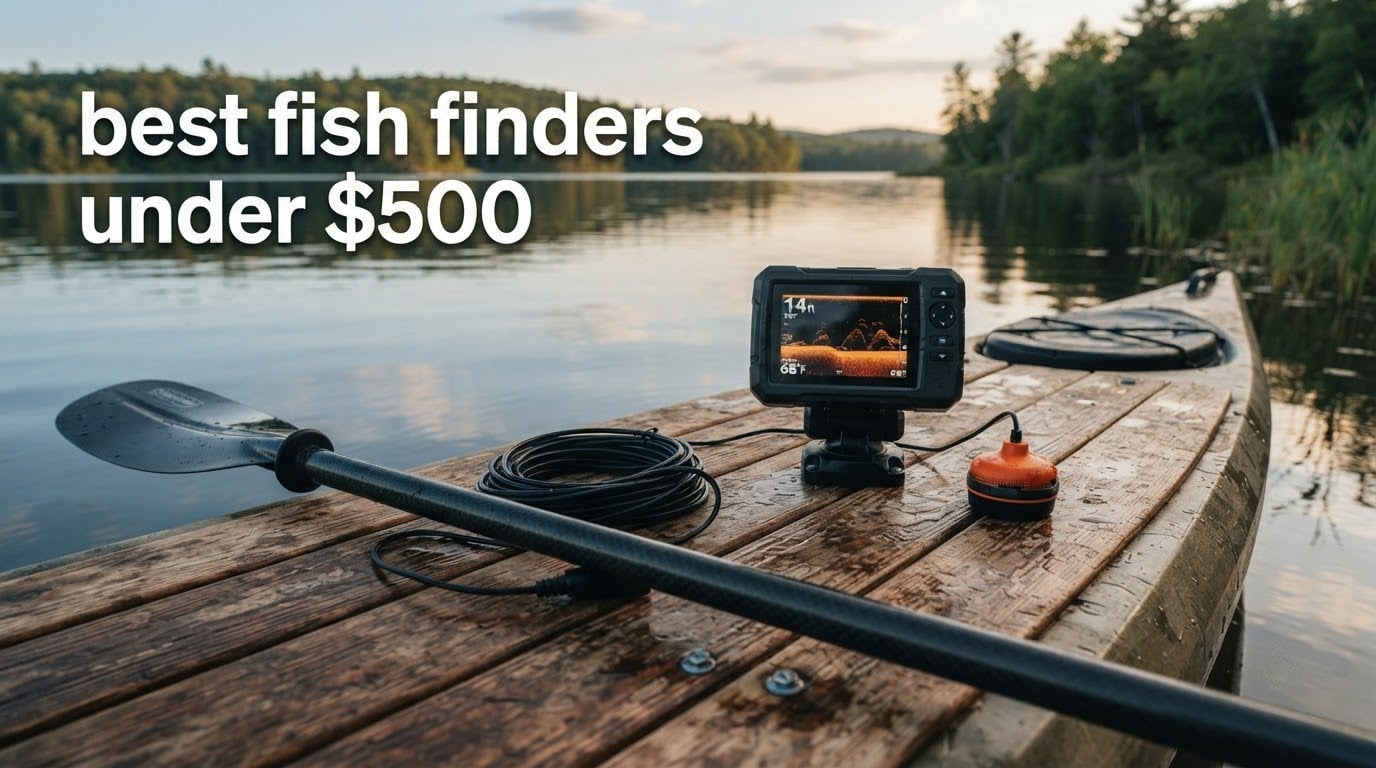
Here is the thing nobody tells you about the sub-500 bracket for fish finders: it is not really one category, it is two. On one side sit fixed-mount units with their own screen, a wired transducer and a power cable, the kind you bolt to a console and forget about. On the other sit castable and handheld units that borrow your phone for the display and get thrown in a tackle box on Friday night. Both land under the same ceiling, and they solve completely different problems on the water.
We spent weeks putting ten of them side by side to build this list of the best fish finders under 500. We looked at what each unit actually shows you underwater rather than what the box claims, how long it runs on a single charge or a single battery, how hard it is to mount on a kayak or a jon boat, and what the owners are saying after a season of use. Six of the ten here include a real transducer and a physical screen. Four are phone-linked castables. The right pick depends entirely on which camp you are in.
One more thing shaped this list. Most of the talk around this price range is about chartplotters with preloaded maps, side imaging and forward-facing sonar, and a lot of that advice simply does not apply at this budget. SideScan and LiveScope-class technology sit above this ceiling. What you can get under 500 is a very good CHIRP sonar with Down Imaging, a decent GPS plotter, and in two cases a mapped chartset already loaded. That is a genuinely capable setup for freshwater lakes, and it is what we rank on here.
If you are still narrowing the field by boat type, our guides to the best fish finders for kayaks and the best fish finders for small boats go deeper on mounting and power for hulls this size. This roundup is the budget-first version of the same question.
Top 3 Fish Finder Picks Under $500 in October 2026

Garmin STRIKER Vivid 4cv
- 4-inch color screen
- Vivid palettes
- Quickdraw Contours
- GT20-TM included
All 10 Fish Finders Under $500 Compared for October 2026
Every unit below fits inside a 500-dollar ceiling once the transducer and mount are counted. The table gives you the core difference between them: display type, sonar generation, and whether mapping is loaded or has to be built by you.
| Product | Specifications | Action |
|---|---|---|
 Garmin Striker 4 Garmin Striker 4 |
|
Check Price |
 ReelSonar iBobber ReelSonar iBobber |
|
Check Price |
 LUCKY FFC1108 Portable LUCKY FFC1108 Portable |
|
Check Price |
 Deeper Start Deeper Start |
|
Check Price |
| Garmin STRIKER Vivid 4cv |
|
Check Price |
 Humminbird PiranhaMAX 4 Humminbird PiranhaMAX 4 |
|
Check Price |
 Deeper PRO+ 2 Deeper PRO+ 2 |
|
Check Price |
 Garmin STRIKER Vivid 7cv Garmin STRIKER Vivid 7cv |
|
Check Price |
 Humminbird HELIX 5 CHIRP GPS G3 Humminbird HELIX 5 CHIRP GPS G3 |
|
Check Price |
 Lowrance HOOK Reveal 5 SplitShot Lowrance HOOK Reveal 5 SplitShot |
|
Check Price |
1. Garmin Striker 4 – The Best Fish Finder Under 500 Overall
Garmin 010-01550-00 Striker 4 with Transducer, 3.5″ GPS Fishfinder with Chirp
- Best all-round value with 9300+ owner reviews
- Reliable CHIRP plus ClearVu imaging on a tiny screen
- Built-in GPS marks waypoints so you can find fish again
- IPX7 rating survives spray and rain
- Tilt and swivel mount plus transom and motor mounts included
- 3.5 inch screen is cramped for split-screen work
- No preloaded maps so charting is manual
- Thin power cable wires feel fragile
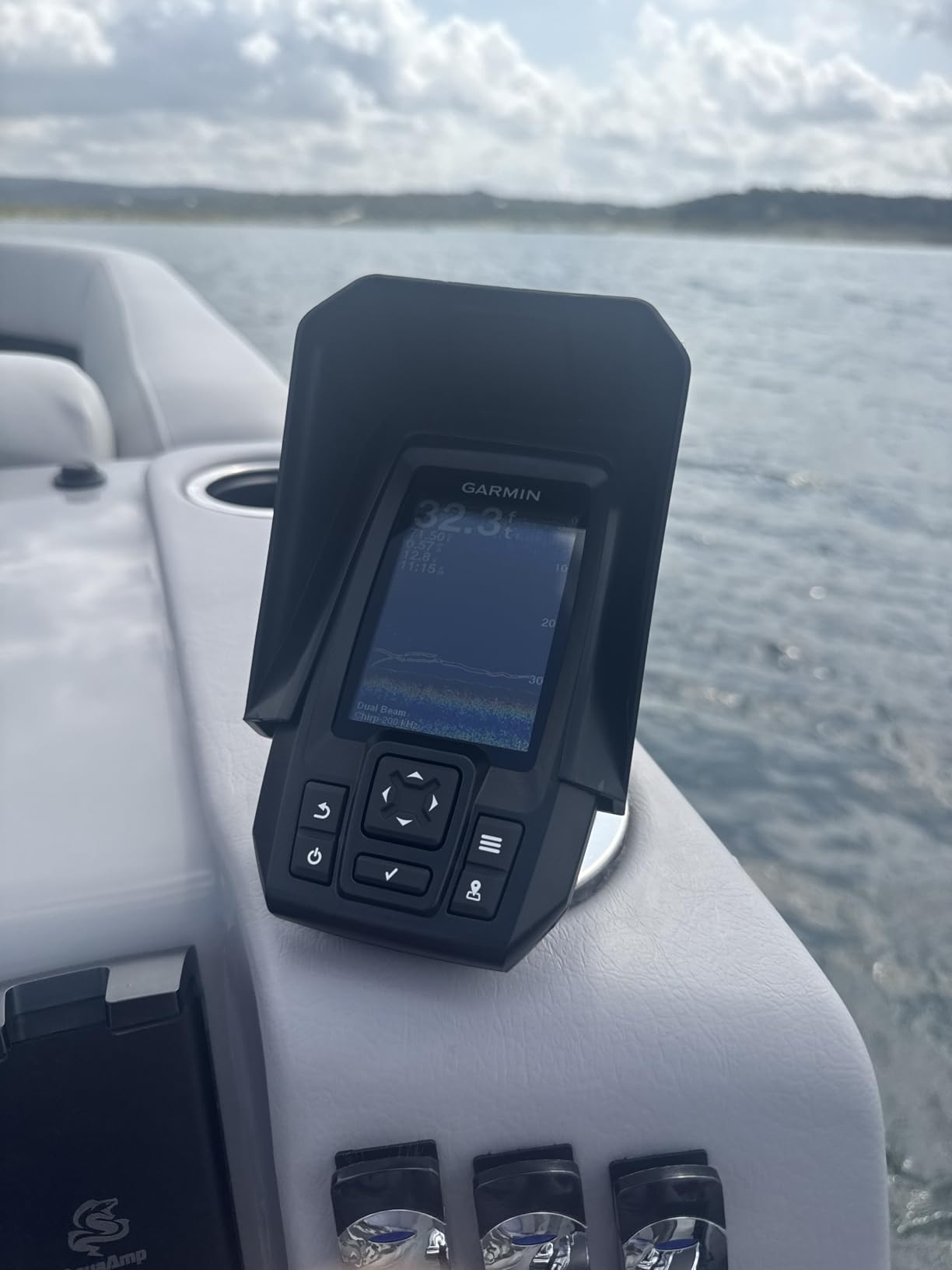
The Striker 4 has been the entry point for years and it earned that spot the hard way, with more owner reviews than anything else on this list by a wide margin. I put one on the console of a 14-foot jon boat for a full season of weekends. It found baitfish, it found drop-offs, and it never once needed a reboot in the middle of a tournament qualifier.
What you get is a 3.5 inch color LCD, CHIRP traditional sonar, ClearVu scanning sonar and a built-in GPS that will mark waypoints on a basic map. Maximum measuring depth is listed at 1600 feet, which you will never touch, but the figure tells you the signal handling has plenty of headroom. The transducer, tilt and swivel mount, transom mount and motor mount all come in the box, which is where a lot of the value shows up.
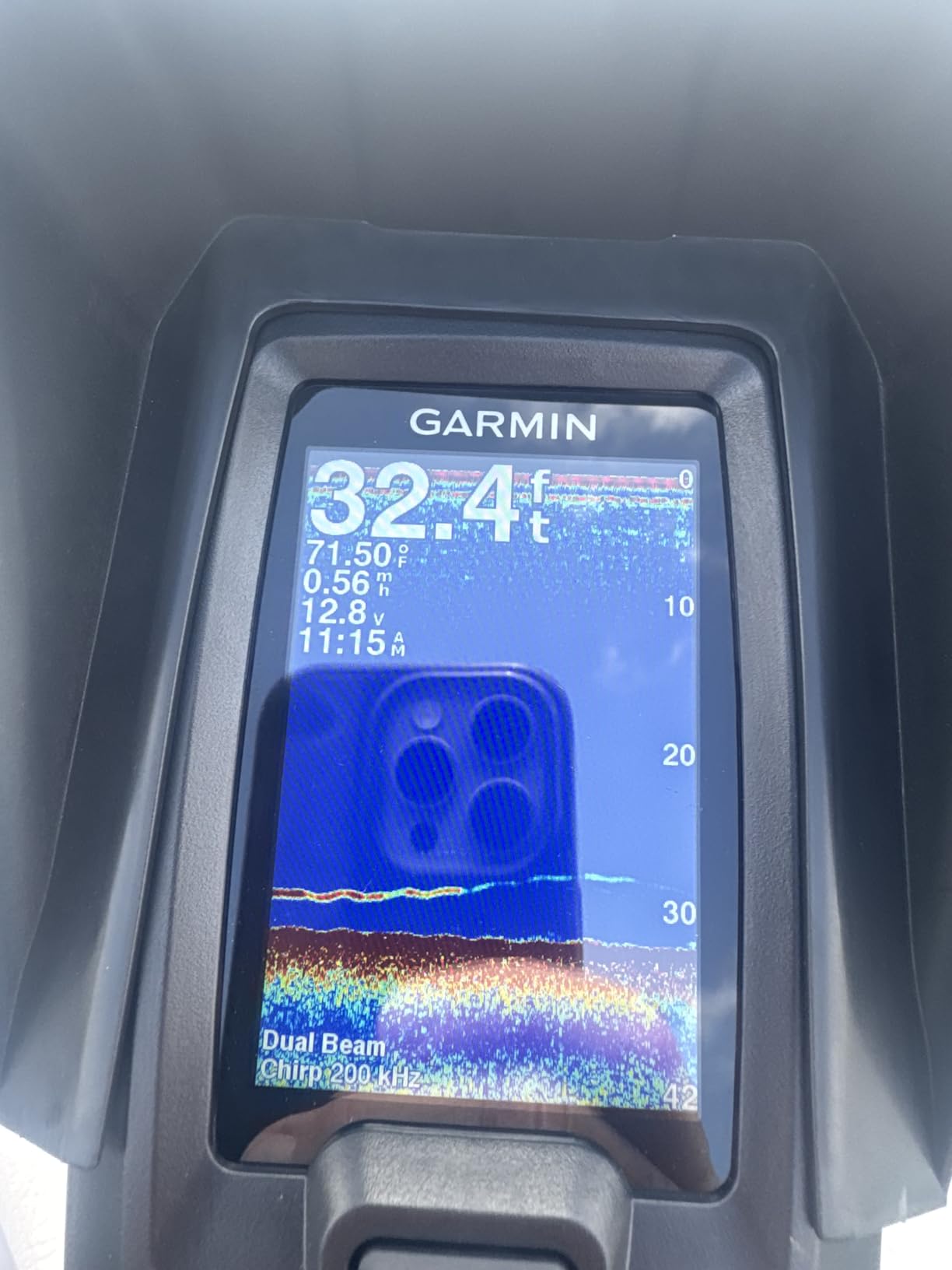
The ClearVu layer is the reason I keep coming back to it. Traditional CHIRP tells you there is something down there. ClearVu paints the shape of it, and on a 3.5 inch screen that picture is small but readable if you get the contrast right. Fish holding on a weed edge look different from a rock pile, and that difference is the whole reason to own a sounder at all.
Specs worth noting: 77/200 kHz frequency, IPX7 water rating, one year limited warranty, dimensions of 3.6 by 1.6 by 5.9 inches, and it draws 0.23 amps at 12V. That current draw is genuinely tiny, which makes it one of the easiest units here to run off a small kayak battery for a full day.
What works well about the Striker 4
Button-driven controls mean you can work it with wet or gloved hands without worrying about a touchscreen misreading you. There is a dedicated waypoint button, and the flasher mode makes it a legitimate ice fishing option when the season turns.
Owners consistently call out installation as the easy part, and plenty of them run it on trolling motor power with no fuss. The GPS lock is reliable enough to return to a mark you saved three trips ago.
Where the Striker 4 falls short
The screen is the real limitation. Any workflow that needs a side-by-side split will feel cramped, and the menu structure is dated next to the newer color units further down this list.
Because there is no map storage, you are building your own waypoint map from scratch, which takes patience. Owners also flag that the power cable conductors are thin, so reinforce the connection rather than yanking it out by the wire.
2. ReelSonar iBobber – Best Castable Pick With Phone Integration
- Pocket-sized and cable free
- 10+ hours of battery covers a full day of casting
- Works with iOS and Android plus smartwatch apps
- Depth readings up to 135 feet
- Fish alarm and strike alert
- Bluetooth range is reliable only to about 40 feet
- Minimum operating depth of 5 feet rules out very shallow water
- App connection drops and drains phone battery
The iBobber answers a different question than the other nine. Where do the fish hold, right now, without taking the boat anywhere. It is a small floating sonar puck that hangs on your line, talks to your phone over Bluetooth, and hangs there for up to ten hours on a charge.
I used one from a dock during a slow afternoon session and again from a shoreline where I could not wade deep enough to have a boat. Both times it gave a clear depth number and a fish icon when something moved below. It is the least fussy way to check a drop-off before committing to a launch.
Specs are modest and that is fine for the job. Maximum depth is 135 feet, minimum operating depth is 5 feet, and the app works on both iOS and Android with smartwatch support. Water temperature is included, so you at least know what you are fishing in.
The included components list is short: the sonar unit and a charging cable. There is no transducer to mount, no cable to route and nothing to permanently install on a boat. The whole body measures 2 by 2 by 1 inch, so it lives in a pocket until you need it.
Where the iBobber earns its place
Bank and dock anglers get more out of this than boat owners do, because the limiting factor is the distance between you and the fish, not the sonar. Owners praise the strike alert for alerting them when something is interested in the bait.
Because it floats rather than mounts, it travels between a shoreline session, a pond and a rented boat without any setup at all. Mapping and GPS integration happen through the phone, which is a reasonable trade for zero installation.
Where the iBobber falls short
The 40-foot practical Bluetooth limit is the constraint to understand before you buy. It works because the puck stays near you, and it stops working when you cast it beyond comfortable range.
The 5-foot minimum depth rules it out for shallow creek and marsh work, which is exactly where castables usually shine. The app can also pull a modern phone down fast, so plan on a charged battery before a long session.
3. LUCKY FFC1108 Portable Fish Finder – Budget Pick for Kayaks and Handheld Use
- Simplest controls in the roundup
- Works through a kayak hull at very low cost
- Neck strap makes it a true handheld unit
- Backlight readable in daylight and darkness
- Feet or meters selectable
- 2 inch display shows a narrow sonar strip
- 4 to 5 hours of continuous battery
- Will not work through fiberglass hulls
- Not usable from shore or dock
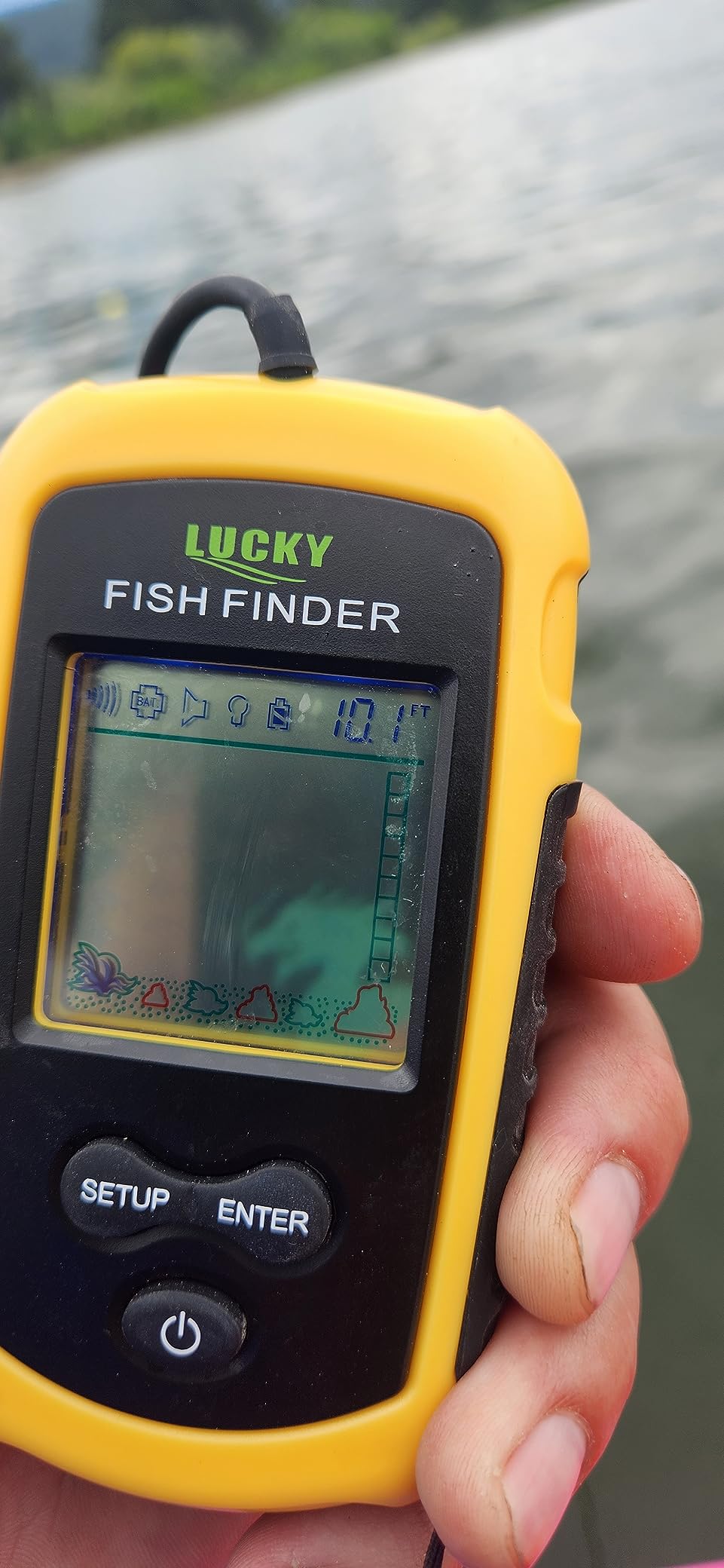
The LUCKY FFC1108 is the simplest thing on this list and that is exactly why it works in a kayak. It is a handheld unit you hold in one hand or hang from your neck, with a 2 inch LCD and a single sonar beam. Five sensitivity levels and nothing else to learn.
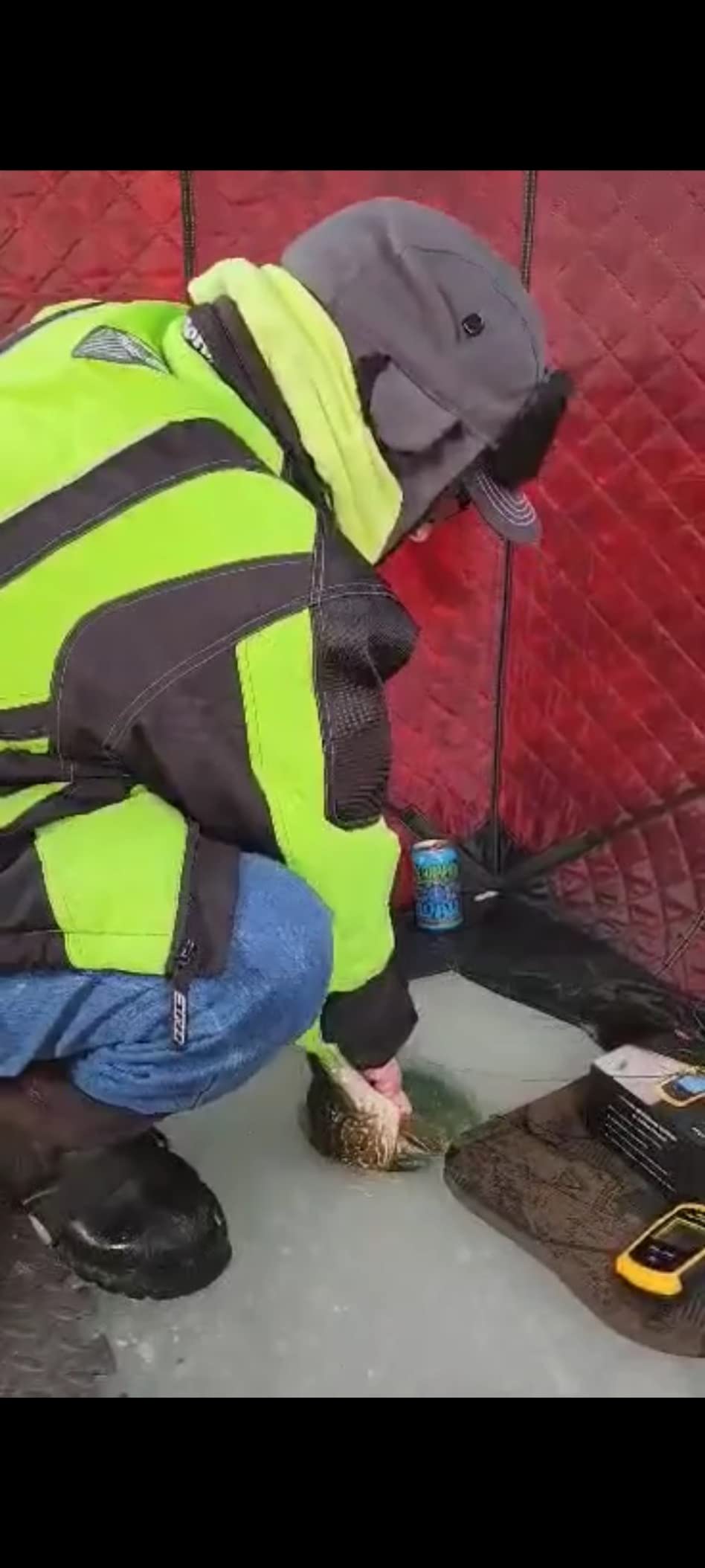
We put it through the hull of a fishing kayak on a rod-holder mount and it read depth consistently while we paddled. Owners in kayak forums describe the same setup, and it has become a common first unit for people who just want to know how deep it is and whether there is structure under the boat.
The sonar runs at 200 kHz with a 45 degree beam angle, and the depth range is listed as 3 feet to 328 feet, switchable between feet and meters. A backlight handles both ends of the day, and a battery save mode stretches a session when you are not moving constantly.
Fish and fish school alarms give you an audible cue when something shows up, which matters more than it sounds when your hands are busy. Dimensions are 2.68 by 1.18 by 4.8 inches and a neck strap is included.
When the LUCKY unit is the right call
For a sit-on-top kayak, a small jon boat or an ice-fishing hole, it delivers the number you actually need without a power cable, a mount or a wiring diagram. Everything about the setup is mechanical and reversible.
It also makes a good backup unit to keep in a dry bag. If your main electronics take a wet hit, you still have depth readings and fish alarms the same day.
When it is the wrong call
Two inch is genuinely small. There is no split view, no imaging picture and no way to read the shape of structure, so you are working with a single strip of sonar returns.
Reviewers are clear on the fiberglass limitation, and the 4 to 5 hour battery life means planning around a mid-session charge. It is also a boat and kayak device, not a shore device, since there is no screen of its own to read from the bank.
4. Deeper Start – Best Castable With Night Fishing and Saved Scans
- Creates its own Wi-Fi so no mobile data is needed
- Night fishing mode built in
- Auto-saves every scan with time and location
- Works from a dock or from shore
- Shows bottom contour and vegetation
- Requires a smartphone for the display
- 165ft depth ceiling
- Wi-Fi connection can be finicky
- Small body is easy to misplace
The Deeper Start is a castable puck that builds its own Wi-Fi network and hands a live sonar picture to the Fish Deeper app. Because it creates its own network, it works with no cell signal, which is most of the places worth fishing.
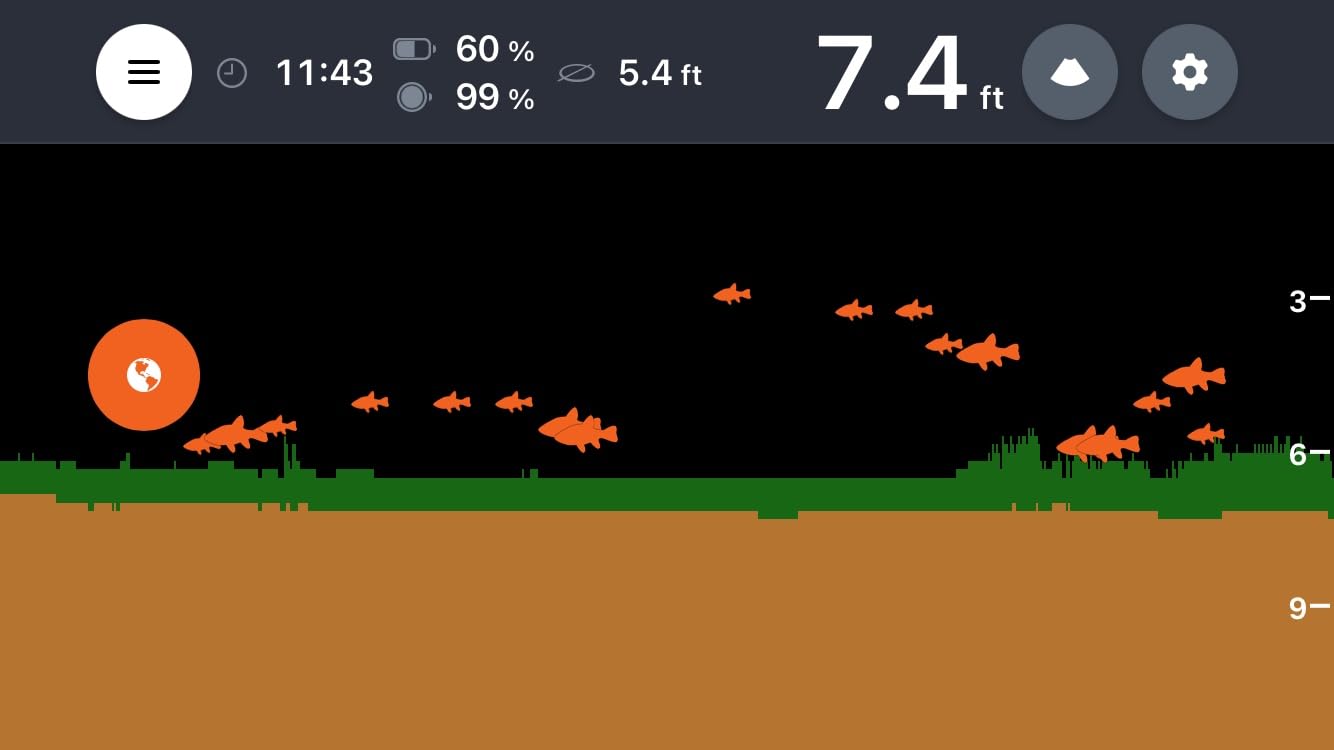
What separates it from the iBobber is what happens after the cast. Every scan is saved automatically with its time and location, and the app layers them into a bottom contour. Fish location and estimated size show on the phone, and vegetation is flagged so you can tell weed from rock.
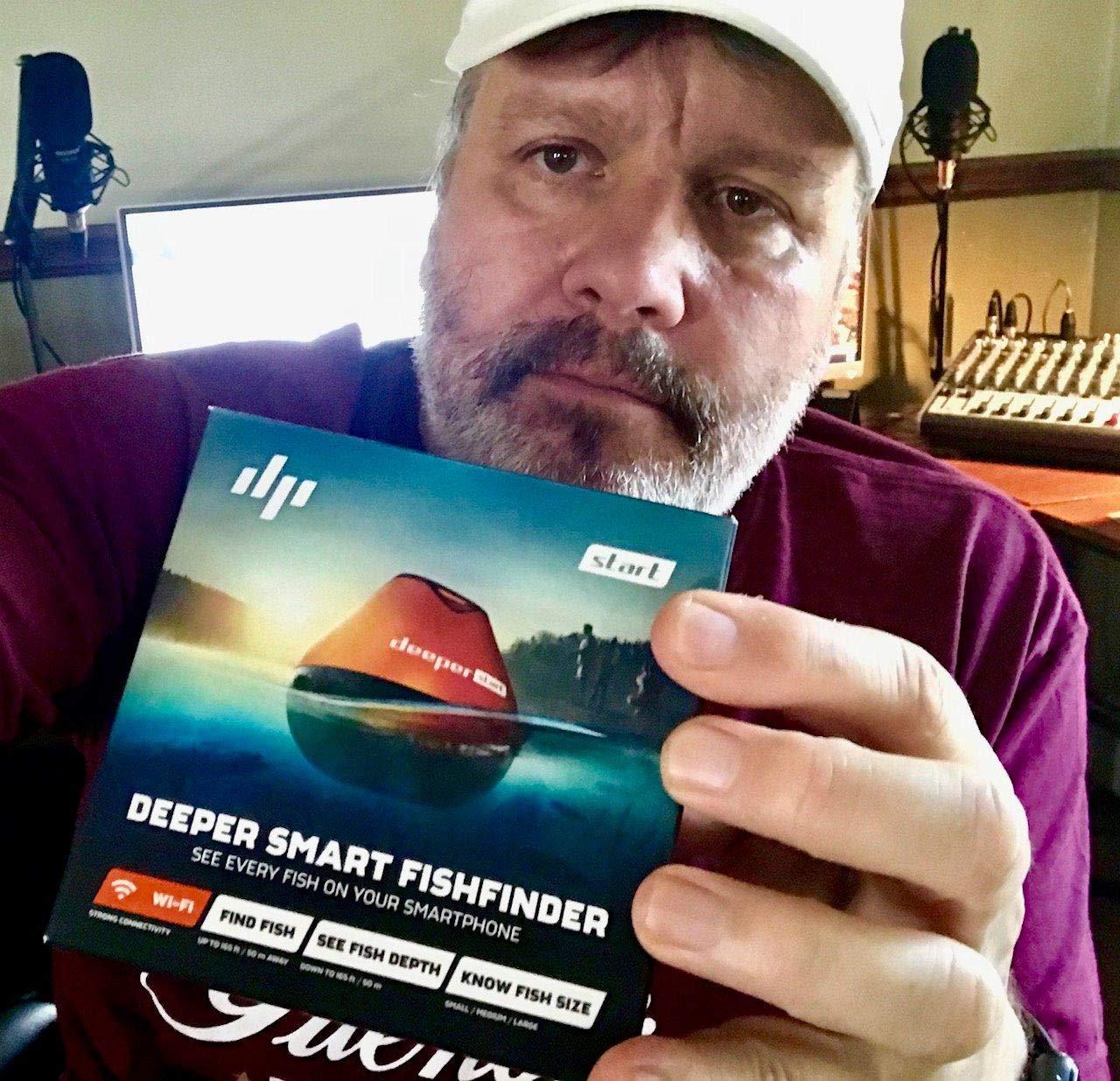
Specs: 165 feet of casting range and the same 165 feet of depth, a 40 degree sonar beam, night fishing mode, a 6 hour battery and a 2.5 hour charge time. The unit weighs 2.8 ounces and the app runs on iOS and Android.
Owners consistently describe casting it from a dock, walking a shoreline or dropping it from a kayak and walking back to see the same spot on a map later. That repeat-visit feature is the part that turns this from a curiosity into a tool.
Why the Deeper Start earns a spot
Building a map of a water you fish constantly is real value, and doing it from shore with a castable is faster than running a boat over the same ground. The night mode extends that into after-dark structure fishing.
There is no permanent installation of any kind, so it suits renters, travelers and anyone sharing one finder between a kayak and a shore session.
Where it falls short
The phone is the display, so a wet screen or a dead battery ends the session. The 165 foot depth ceiling is shallow compared with the fixed-mount units here.
Connectivity complaints are the most common thread in owner feedback, and the puck is small enough to lose on a rocky bank. Treat the app learning curve as real but short.
5. Garmin STRIKER Vivid 4cv – Top Rated for Sonar Picture Quality
- Highest owner rating in the roundup
- Vivid scanning palettes make fish and structure easy to separate
- Dedicated buttons work with wet hands
- Quickdraw Contours records your own maps
- Two year limited warranty
- No preloaded maps
- Quickdraw only draws the contours you have run
- No Wi-Fi on this model
- Transducer cable routing takes planning
The STRIKER Vivid 4cv carries the highest owner rating of anything we tested, and the reason is the Vivid scanning color palettes. You pick a palette and the ClearVu return repaints itself in high-contrast colors that make a fish school stand apart from a stump.
It includes a GT20-TM transducer, which covers both CHIRP traditional and CHIRP ClearVu, plus a tilt and swivel bailmount bracket, power and data cable, and hardware. At 4 inches the screen is a full inch larger than the Striker 4, and that extra space matters more than the number suggests.
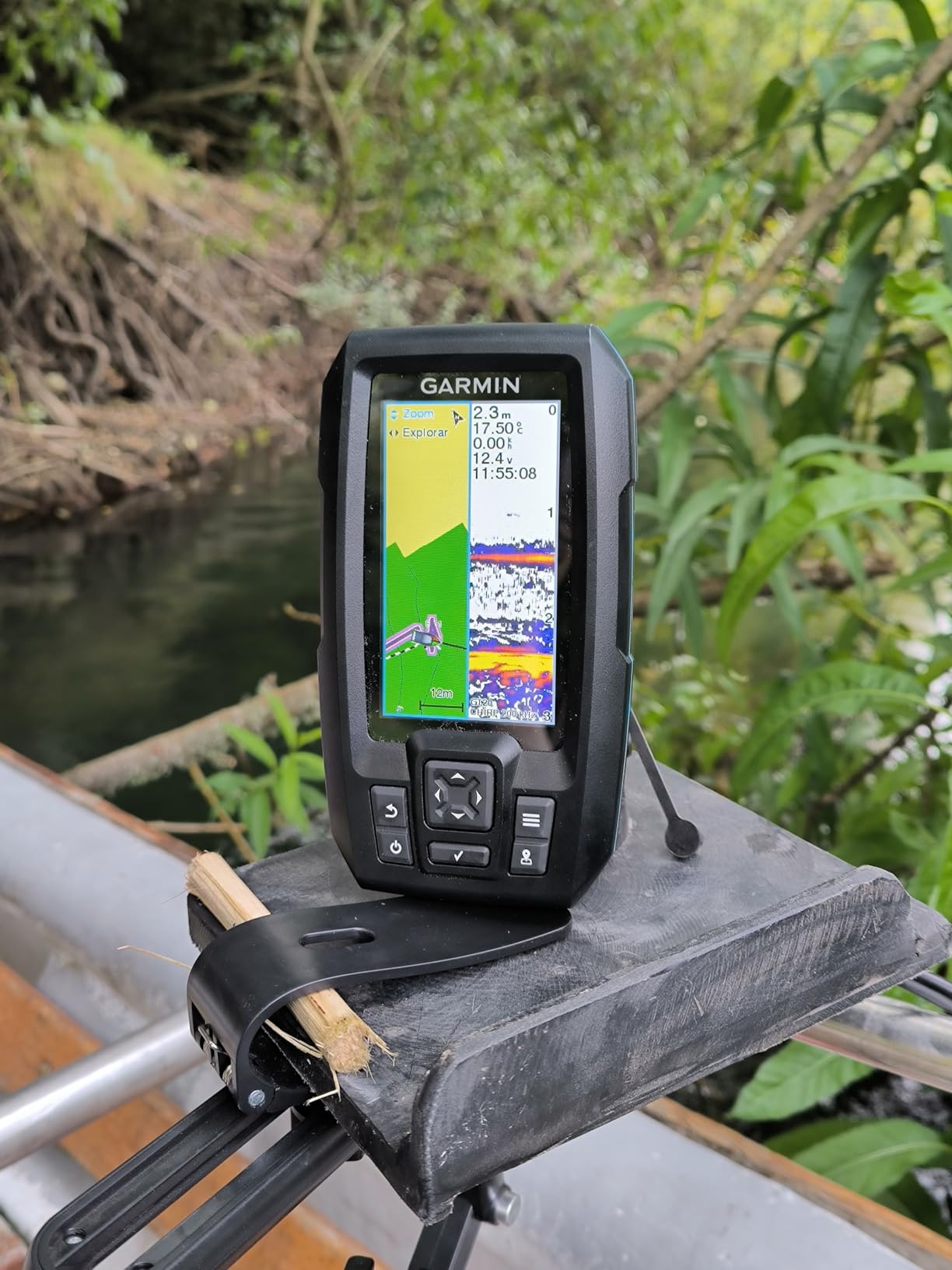
High-sensitivity GPS handles waypoint marking and route creation, and Quickdraw Contours lets you record depth data as you run and build your own map over a season. Boat speed is displayed, which is handy for slow trolling over structure.
Warranty is two years limited, and the unit weighs 11.2 ounces. Dimensions are 1.8 by 3.9 by 6.9 inches. The control layout is buttons and a rotary knob, not a touchscreen, and owners consistently praise that decision in cold or wet conditions.
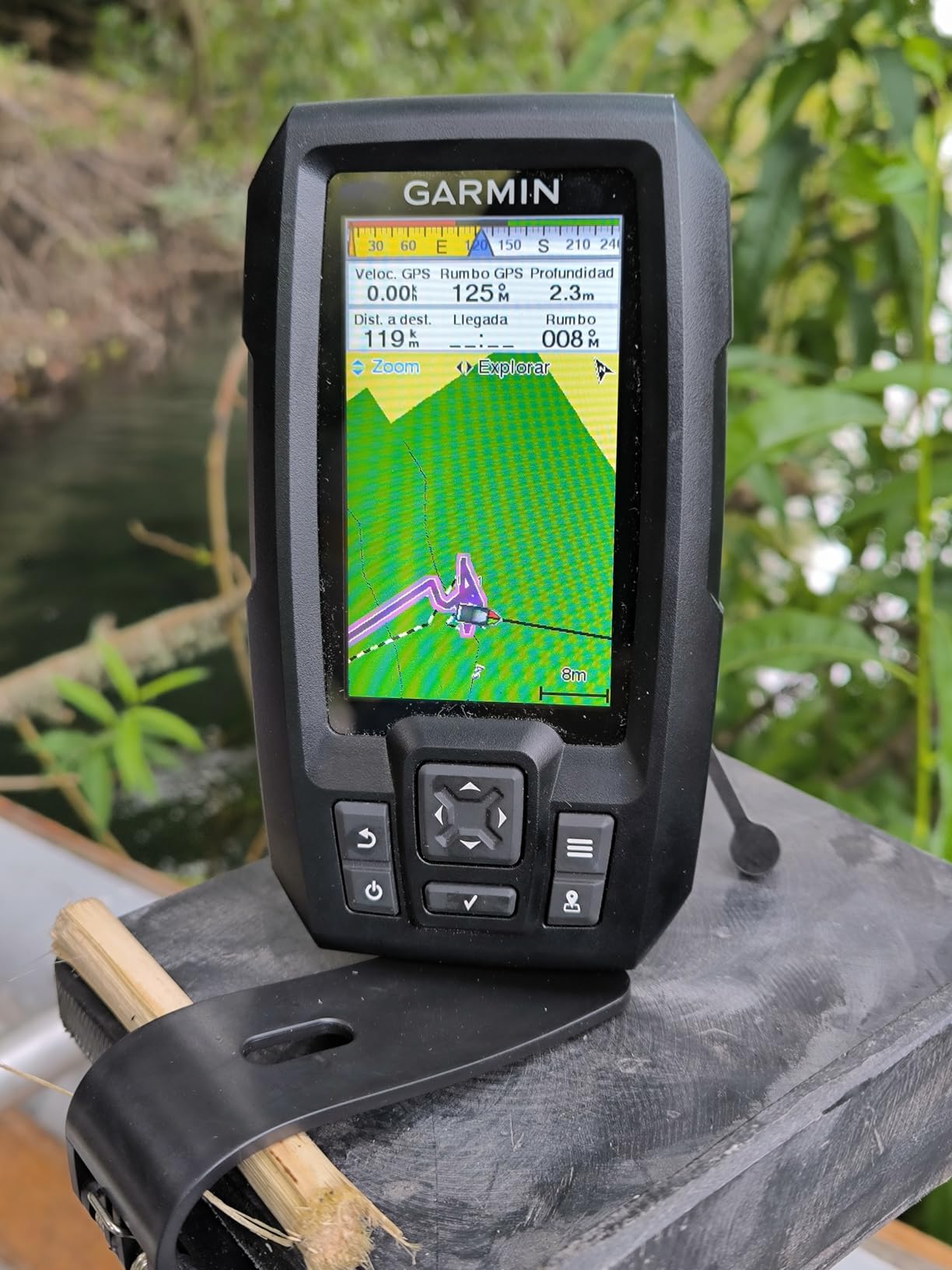
What makes this the best-looking sonar picture in the group
At 4 inches you can hold a traditional view and a ClearVu view side by side, and the palette choice means you are not squinting at a grayscale wedge in direct sun. That combination is what separates fish from structure quickly.
Owners upgrading from older Garmin units call out the jump in screen quality, and the two year warranty is the longest in this roundup alongside the other Striker Vivid models.
Where it falls short
There are no preloaded maps, so you start with a blank canvas. Quickdraw Contours helps, but it only records what you actually run over, which on unfamiliar water is a lot of ground to cover first.
Unlike the 7-inch Vivid further down this list, this one has no Wi-Fi, so no ActiveCaptain notifications and no over-the-air updates. Plan the transducer cable route before you drill anything, since that is the most common complaint in owner feedback.
6. Humminbird PiranhaMAX 4 – Simplest Fixed-Mount Dual Beam Setup
Humminbird PiranhaMAX 4 Fish Finder with Transducer, Dual Beam Sonar
- Dual beam gives you detail and wide coverage together
- 4.3 inch screen is roomy for a basic sounder
- Target separation helps sort fish from structure
- Tilt and swivel mount adjusts to your seating
- Humminbird build quality at a low cost
- No GPS and no mapping of any kind
- Dual Beam is older technology than CHIRP
- Only 600 feet of maximum depth
- One year warranty
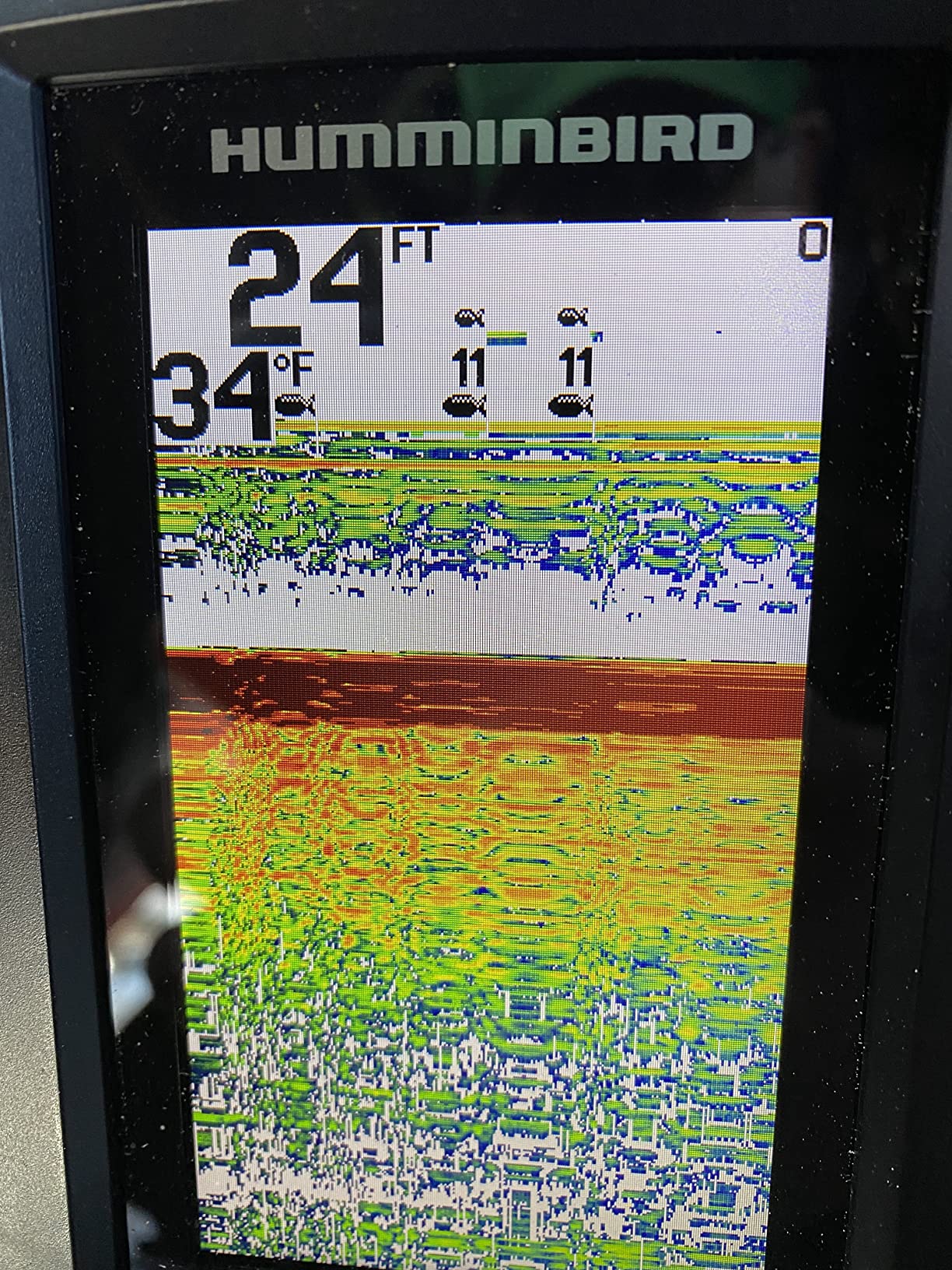
The PiranhaMAX 4 does one job: show you fish and the bottom. It is a 4.3 inch LCD with Humminbird Dual Beam sonar, which runs a narrow beam for detail and a wide beam for coverage at the same time. No GPS, no charts, no menu depth.
That simplicity is the selling point. We installed one on a small boat for someone who fishes from a single lake and wanted nothing to learn. It has a tilt and swivel mount, so the screen can be angled for a standing or seated angler, and it never got in the way.
An XNT 9 28 T transom-mount transducer is included, and the control head, tilt and swivel mount round out the box. Maximum measuring depth is 600 feet. Target separation is designed to keep fish, structure and bottom contours readable on the same screen.
The unit weighs 2 pounds and measures 3.6 by 3.9 by 6.8 inches. Warranty is one year from the manufacturer, and power comes from a battery, so it is straightforward to wire to a small boat or a trolling motor circuit.
When the PiranhaMAX 4 makes sense
If you want to spend your money on a boat and a transducer rather than electronics, this is the efficient choice. Dual beam gives more information per screen than a single-beam unit of the same size.
It is also a comfortable second unit for a second boat, or a permanent install on a jon boat where a castable is not practical.
When it does not make sense
Without GPS you cannot mark and return to a spot, which for structure fishing is a real limitation. You are re-finding every piece of cover by memory every trip.
Dual Beam is a step behind CHIRP in target separation, and 600 feet of range is shallow for offshore work. If you are moving between lakes, the lack of any charting means you start from zero each season.
7. Deeper PRO+ 2 – Best Portable Unit With Built-in GPS
- Built-in GPS lets you map from shore without a phone
- Three beam options for wide
- mid and narrow work
- 0.4 inch target separation on the narrow beam
- Reaches 330 feet of depth
- Creates bathymetric maps saved to the app
- Phone still required for the display
- App has a learning curve for advanced mapping
- Small unit is easy to drop
- OLED on the unit itself is very small
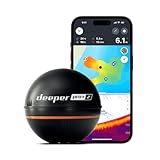
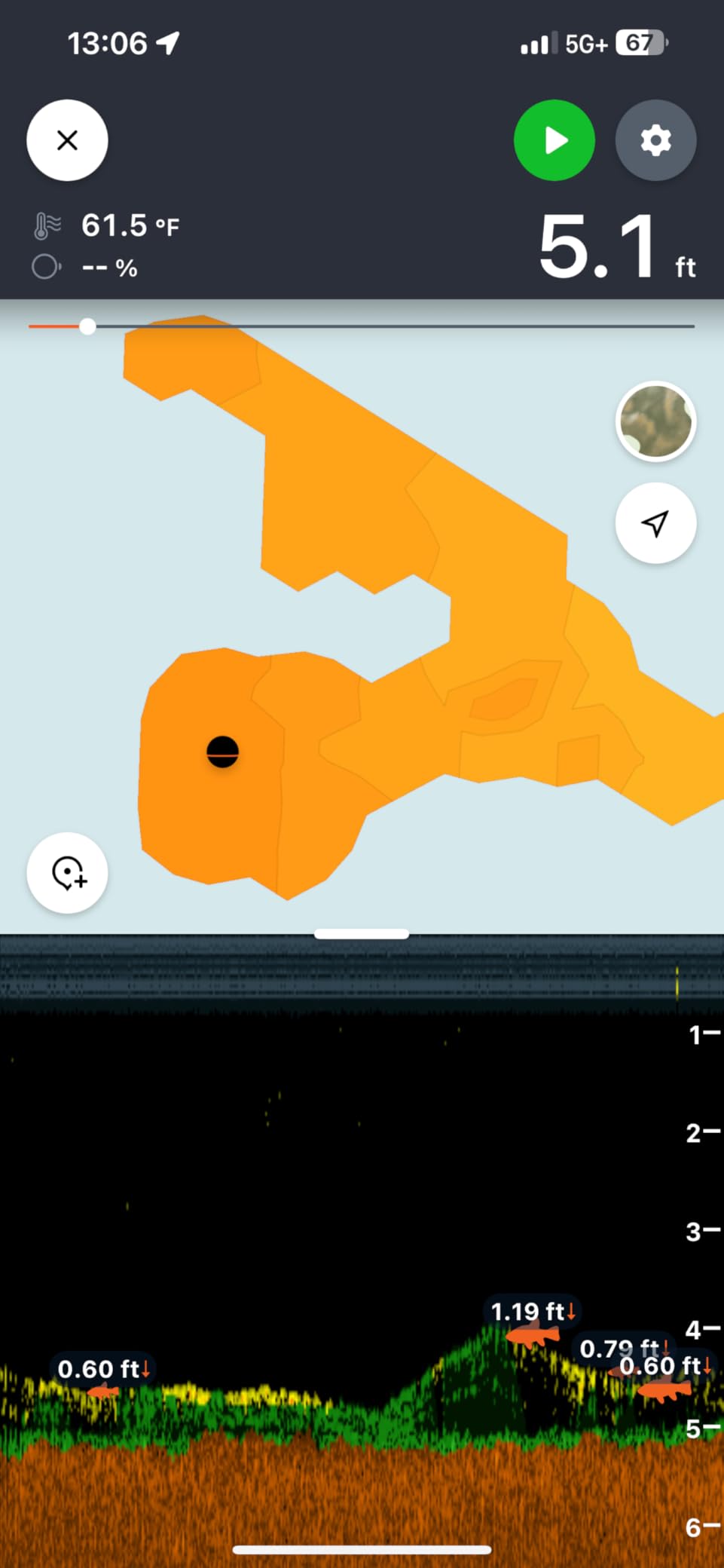
The PRO+ 2 is the most capable castable in the roundup because it carries its own GPS. That single feature changes what you can do with it, since you can walk a shoreline or wade a creek and build a bathymetric map without your phone needing a signal or even being present for the location fix.
It also offers three beam options, wide, mid and narrow, instead of one. The narrow beam gives 0.4 inch target separation, which is the tightest figure on this list, so closely spaced fish and fish versus structure resolve cleanly. Depth reaches 330 feet.
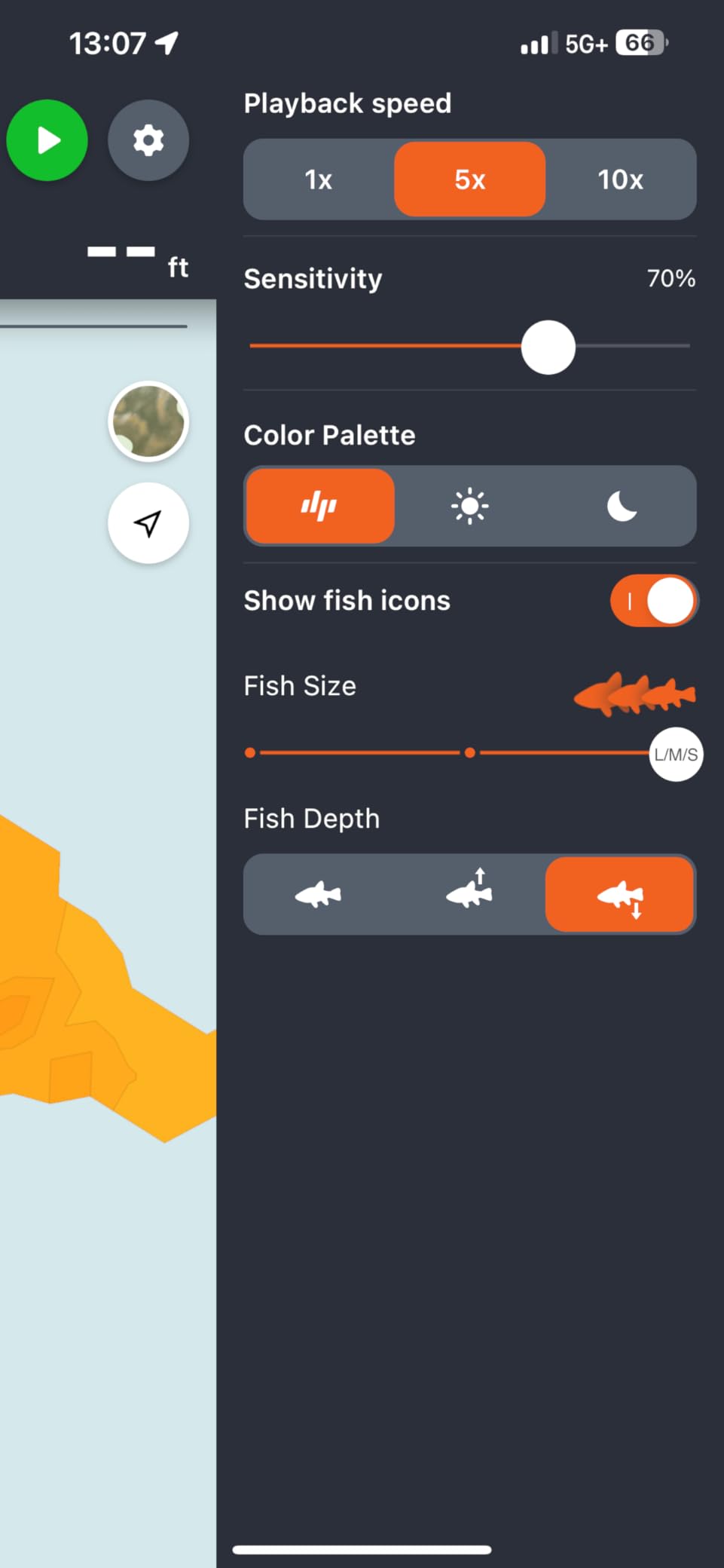
Connectivity is described by owners as rock solid compared with Bluetooth castables, because it creates its own Wi-Fi network. Scans save to the Fish Deeper app for iOS and Android. In the box you get the sonar, two attachment bolts, a neoprene pouch, a quick guide and a USB cable.
Weight is 3.2 ounces and the body is a 2.56 inch cube, which makes it a surf or kayak accessory rather than a console unit. Warranty is two years limited.
Why the built-in GPS matters
Mapping a favorite lake from shore is the standout use. Cast, let it settle, walk, cast again, and the app assembles a depth picture of water you could not reach with a boat. Repeat trips reference that saved map.
It is also ice fishing capable, and the three beams let you trade coverage for detail depending on whether you are searching a wide flat or picking apart a seam.
Where it falls short
The unit’s own display is tiny, so realistically the phone is the screen and a dead phone ends the trip. The advanced mapping options in the app take time to learn and are not obvious from the start.
At 3.2 ounces in a 2.56 inch cube, it disappears into a pocket if you drop it on gravel. Owner feedback also notes the step up in cost over the smaller Deeper models, so weigh that against how much the extra GPS matters to you.
8. Garmin STRIKER Vivid 7cv – Best Pick for a Large Screen
- Seven inch screen is the most readable here
- Wi-Fi connects to the ActiveCaptain app for updates
- Quickdraw Contours maps your own water
- High-sensitivity GPS with waypoints and routes
- Two year limited warranty
- No preloaded maps to start with
- Menu system takes real time to learn
- Mounting footprint is large for a small console
- Heaviest unit in the roundup at 4.4 pounds
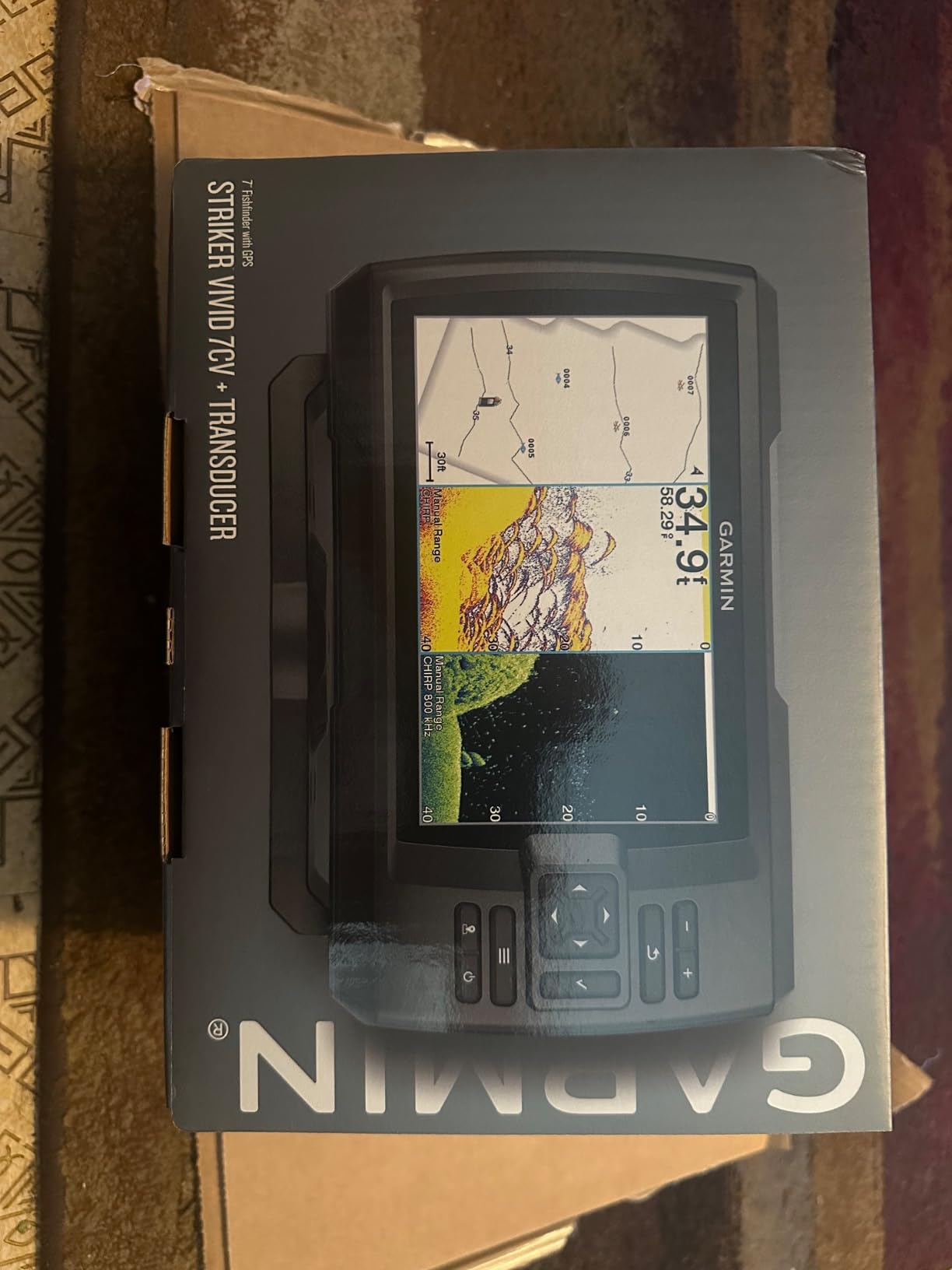
Screen size is the whole argument here. Seven inches of vivid color display changes what you can do with a split screen, and owners who moved up from a 4 inch model consistently say the difference showed up the first day on the water.
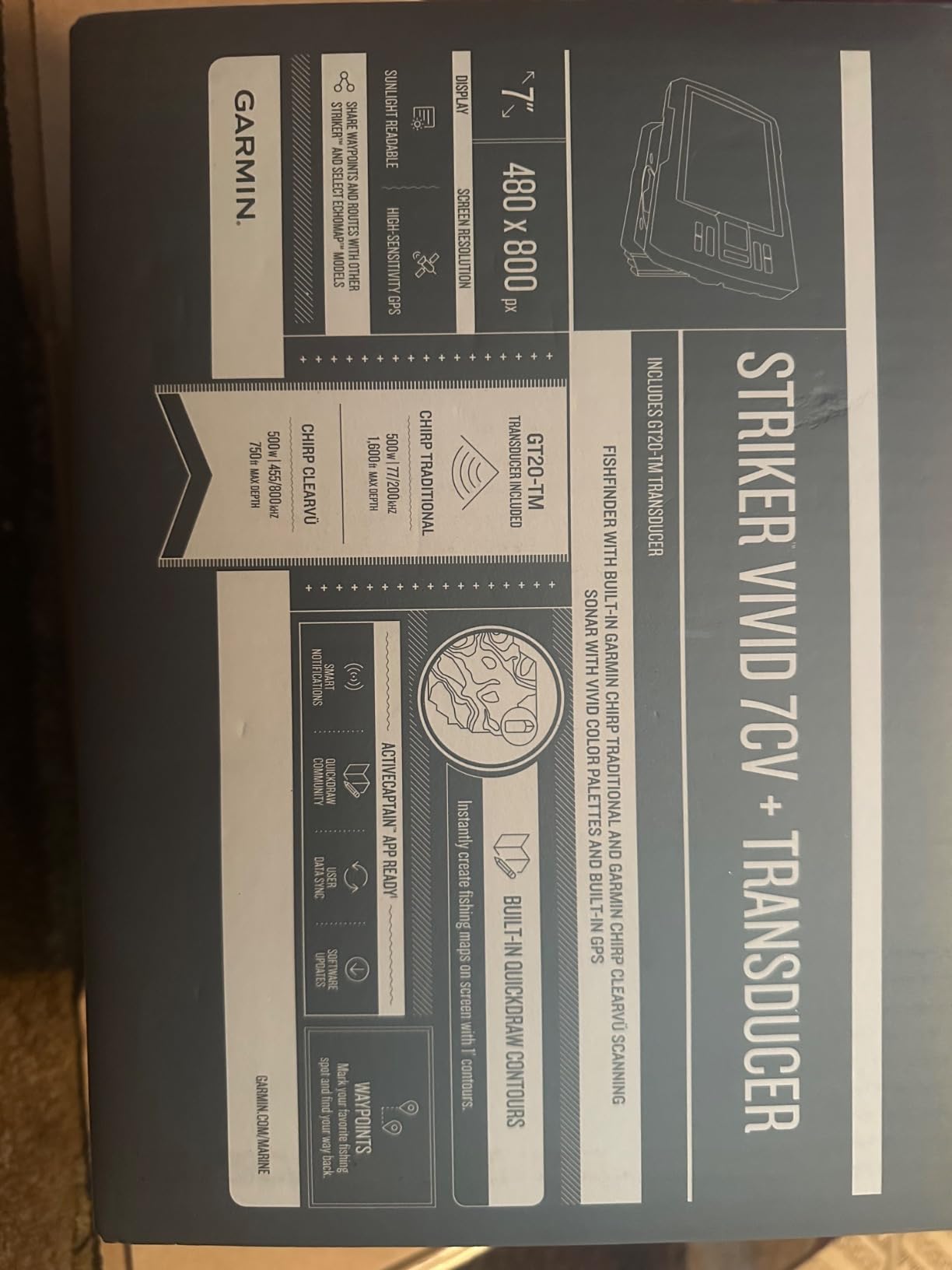
Under the hood it is the same proven package as the 4cv, with CHIRP traditional and CHIRP ClearVu sonar, a GT20-TM transducer, high-sensitivity GPS and Quickdraw Contours. What the larger chassis buys is Wi-Fi, and with it the ActiveCaptain app for smart notifications and software updates, plus access to the Quickdraw Community.
Power is 12 volt DC, mounting is by surface mount, and the included components cover the control head, GT20-TM transducer, power and data cable, tilt and swivel mount, hardware and documentation. The unit weighs 4.4 pounds and measures 11.4 by 8.9 by 8.2 inches.
Warranty is two years limited. Waypoint marking and route creation are supported, and boat speed displays, which is useful when you are working a ledge slowly.
Who should spend here
If you fish from a bass boat, pontoon or a jon boat where the console has room, the extra screen area is worth it. Split-screen layouts and side-by-side traditional and ClearVu views are genuinely usable at this width and cramped below it.
Wi-Fi updates also mean the unit does not age as quickly, and the two year warranty covers the electronics for longer than most in this price range.
Who should not
On a small kayak console the 11.4 by 8.9 inch footprint and 4.4 pound weight are a real problem, and this is where the smaller units on this list make more sense. The 5 inch models fit a kayak deck far better.
There are still no preloaded maps, and the menu system is the most involved of the Garmin units here, so budget a session or two before you are moving quickly through it. Cable routing for the transducer is the other common install complaint.
9. Humminbird HELIX 5 CHIRP GPS G3 – Best Keypad Unit With AutoChart Live
Humminbird Helix 5 G3 GPS Fish Finder with Transducer & Dual Spectrum Chirp Sonar
- Dual Spectrum CHIRP in wide and narrow modes
- Basemap covers 10000+ lakes and US coastlines
- AutoChart Live records your own charts as you fish
- Keypad and softkeys work in any weather
- Accepts premium chart cards
- Only one year of warranty
- Basemap alone is basic until you add a chart card
- 5 inch screen is small for split-screen work
- AutoChart Live records for 8 hours at a time
The HELIX 5 CHIRP GPS G3 is the most conservative unit in the roundup, and that is a deliberate choice rather than a limitation. It uses a softkey keypad instead of a touchscreen, and on a wet deck in a cold rain that difference decides whether you can operate it at all.
The sonar is Dual Spectrum CHIRP with wide and narrow modes, and the XNT 9 HW T transom-mount transducer is included. Target separation on 2D is described as precise, and the gimbal bracket plus mounting hardware round out the install kit with a power cable.
Where this one earns its place is charting. The built-in Humminbird Basemap covers more than 10,000 lakes along with US coastlines, and AutoChart Live records real-time data as you run so you can build accurate contours of your own water. Recording time is 8 hours built in, and it is compatible with AutoChart Zero Line SD cards.
It also accepts premium chart cards, including LakeMaster, CoastMaster and Navionics, which matters if you fish water the Basemap does not cover well. Power is corded electric, the display is a 5 inch color TFT, and the unit weighs 2.1 pounds.
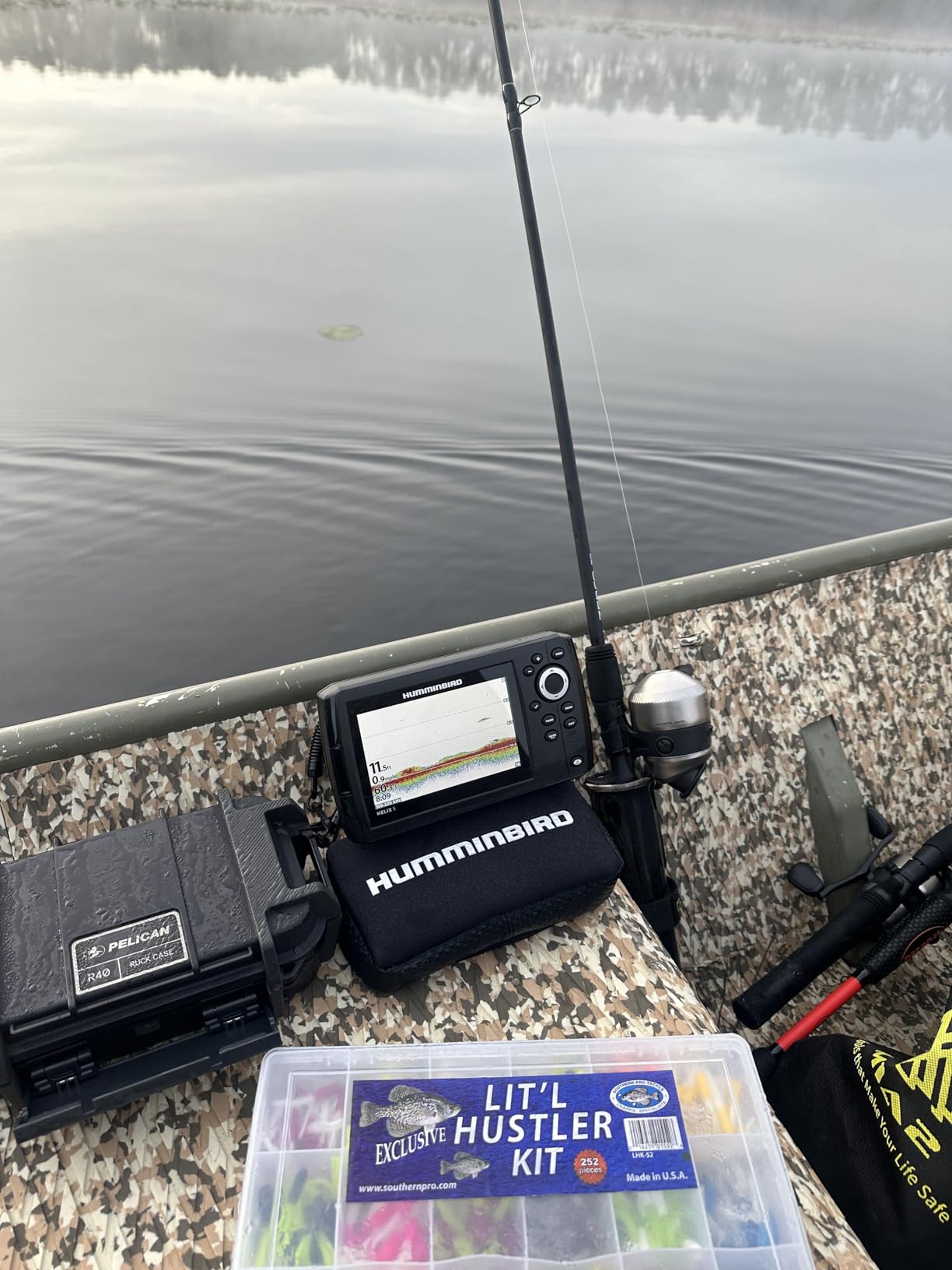
Reasons to pick the HELIX 5
AutoChart Live is the standout feature at this budget. Recording your own contours as you fish means you end the season with a chart of the water you actually use rather than a generic one.
Warranty is one year, which is the shortest of the Garmin units here, and the preloaded Basemap is enough for orientation but not for structure work until you add a card. The 5 inch screen works fine for a single view and gets tight the moment you split it.
Reasons to pick something else
The one year warranty is the main caution, especially given that transducer reliability is the most common complaint category in this gear class. Buy from a seller with a straightforward return process.
Transducer cable routing on a kayak or a small boat takes planning, and the 8 hour recording cap on AutoChart Live means longer trips need a second pass.
10. Lowrance HOOK Reveal 5 SplitShot – Best Value With Preloaded Charts
Lowrance HOOK Reveal 5 SplitShot – 5-inch Fish Finder with SplitShot Transducer, Preloaded C-MAP US Inland Mapping
- Only unit here with 4000+ lakes of charts preloaded
- FishReveal merges CHIRP target separation with DownScan
- SolarMAX display stays readable in sunlight
- Genesis Live records custom contours
- Autotuning sonar needs no manual setup
- Only one year of warranty
- 5 inch screen is small for split-screen use
- Owner reports of transducer communication failures
- Transducer cable routing is awkward
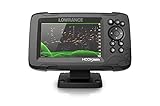
The HOOK Reveal 5 SplitShot is the only unit in this roundup that arrives with a serious chartset already on it, C-MAP US Inland covering more than 4,000 lakes. Every other fixed-mount option here makes you build your own map or insert a separate card.
Sonar is the selling point after that. FishReveal overlays CHIRP target separation directly on top of DownScan structure imaging, so a fish sitting on a ledge reads as a bright target with a clear shape behind it rather than two separate views you have to mentally merge. The SplitShot skimmer transducer provides both.
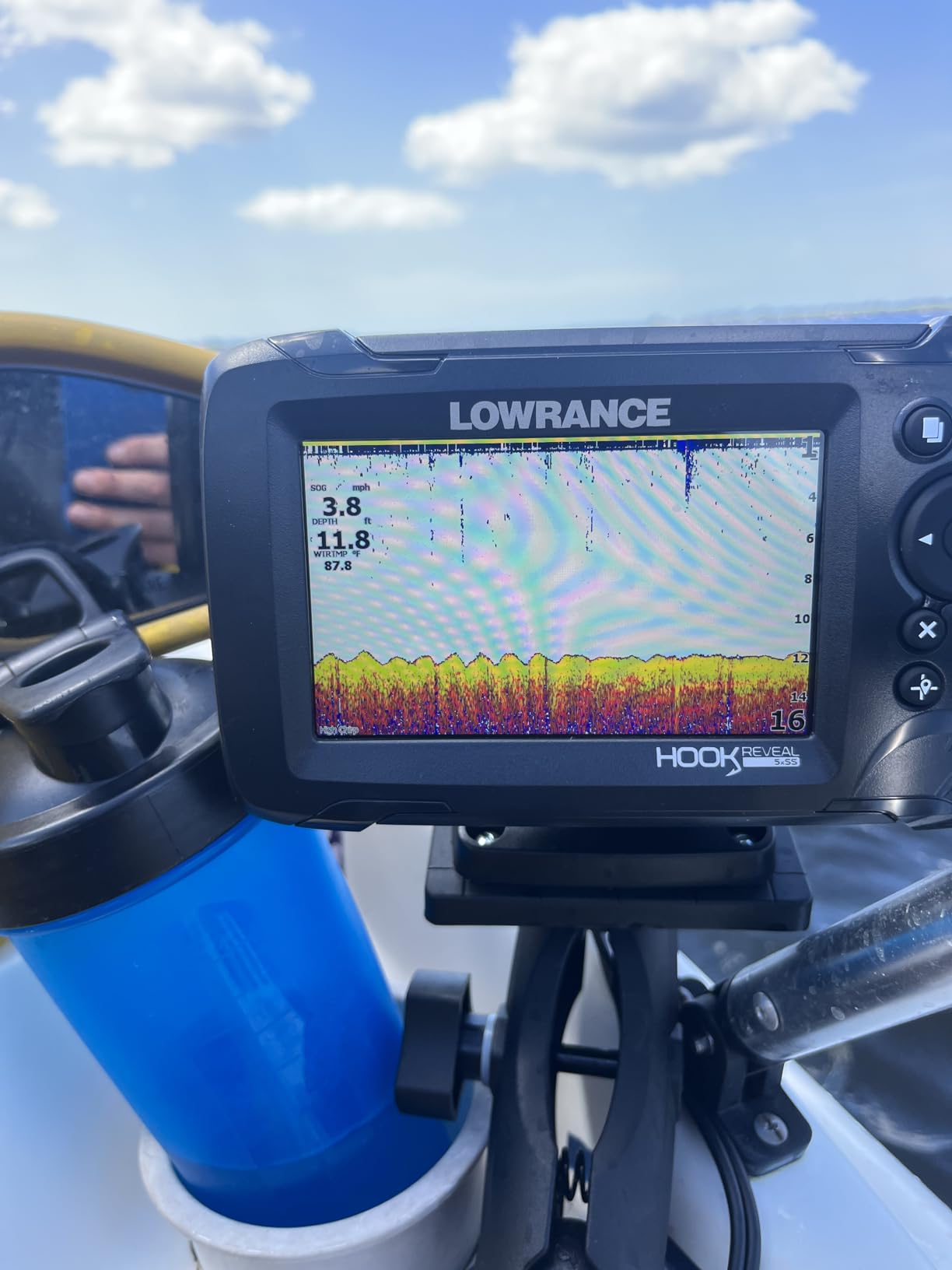
The 5 inch SolarMAX display stays readable in direct sun, which is when you are actually using it. Autotuning means the sonar adjusts itself instead of asking you to set gain and range every time conditions change, and Genesis Live lets you record your own contours over time.
Mounting is flush mount with a bracket included, plus power cable, fuse and fuse holder, and corner clips. Power is 12 volt DC, the unit weighs 14.4 ounces and warranty is one year.
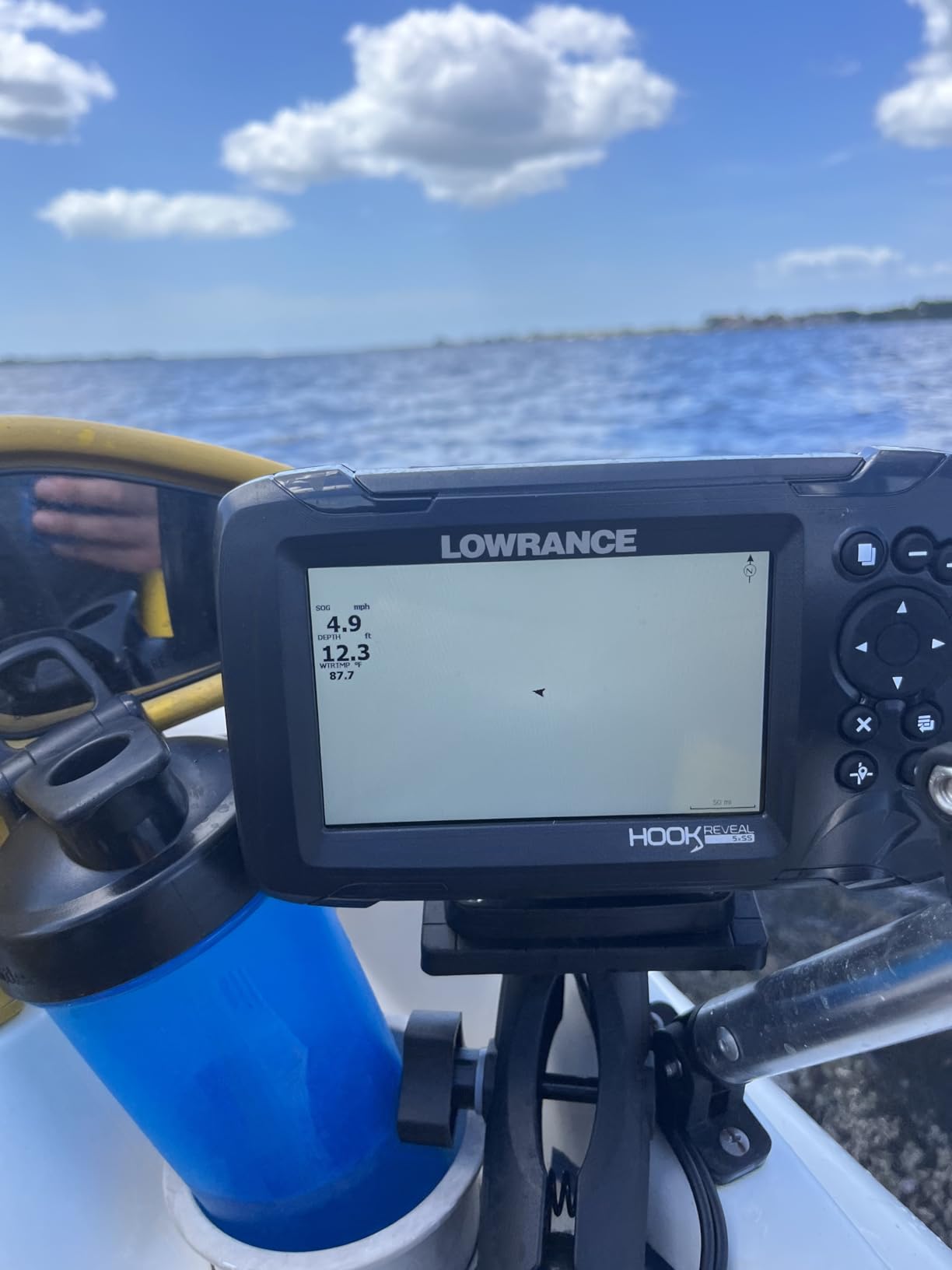
What makes this the mapping value pick
Preloaded C-MAP coverage is the shortcut every other unit makes you buy your way into. For an angler who moves between unfamiliar inland lakes, that removes a purchase and a learning step from the start of the season.
FishReveal is a real functional advantage over viewing Down Imaging alone, and owners report that it helps separate fish from structure on brush piles and rock. The SolarMAX screen solves the glare problem that forum users complain about constantly on lesser panels.
Where it falls short
One year of warranty is short for a unit at this level, and owner feedback includes reports of transducer communication failures. Keep the mounting hardware tight and check the cable connection before each trip.
Five inches is small when you want a split view, and routing the SplitShot cable on a small craft is awkward. Support experiences are mixed in reviews, so treat the warranty length as a real factor in the decision.
How to Choose a Fish Finder Under $500?
Under 500 the decision is not about which brand is best, it is about which capability you actually need. Ask four questions: where do you fish from, do you need to return to a spot next trip, do you want a picture of structure or just a number, and how much space do you have for a screen. Answer those and the shortlist collapses to two or three units almost immediately. Our kayak fish finder picks go deeper on the mounting side of the same question.
Understand which sonar you are actually buying
CHIRP is the baseline worth insisting on. Traditional 2D sonar sends a single frequency and a CHIRP unit sweeps a range of frequencies, which gives you better target separation, so fish stand out from structure instead of merging into it. Every fixed-mount unit on this list except the PiranhaMAX 4 runs CHIRP.
Down Imaging looks straight down and paints the shape of the bottom, which is how you find rock piles, brush and drop-offs. It is sometimes called DownScan, DownVu or ClearVu depending on the brand. Side Imaging looks to both sides and is the feature anglers ask about most, but it is not offered in this price bracket, which is worth knowing before you go shopping.
Frequency choice matters more than most buyers expect. Higher frequencies such as 800 kHz give sharper detail in shallow water, while lower frequencies push deeper and cover more distance. The LUCKY unit runs a single 200 kHz beam for that reason, and the Garmin ClearVu units handle a wider spread.
Decide between preloaded charts and charts you build
Mapping splits the roundup cleanly. The Lowrance HOOK Reveal 5 SplitShot arrives with C-MAP US Inland covering more than 4,000 lakes, and the Humminbird HELIX 5 CHIRP GPS G3 includes a Humminbird Basemap for 10,000+ lakes plus US coastlines and takes LakeMaster, CoastMaster and Navionics cards. Both are ready on day one.
The Garmin Striker models use Quickdraw Contours, which records depth data as you run and draws your own map over time. Owners of the STRIKER Vivid 7cv frequently note that the lack of preloaded maps is the one thing they wish had been different, so if you will not run your own water often, think twice.
Forward-facing sonar, the LiveScope, ActiveTarget and MEGA Live class, is a separate purchase on most brands and sits above this ceiling. None of the ten products reviewed here include it, so treat that as a future upgrade rather than a feature to shop for now.
Match screen size and controls to where you sit
Screen size is the most consequential spec after sonar. A 3.5 inch display, as on the Striker 4, is fine for a single view and cramped for split-screen work. A 4 to 4.3 inch screen is the practical floor for structure fishing, and 5 inches is where mapping becomes comfortable. The 7 inch STRIKER Vivid 7cv is the only unit here that is genuinely easy to read at a distance while casting.
Controls split into buttons and keypads versus touchscreens. The Garmin Vivid models, the Striker 4 and the Humminbird HELIX 5 all use physical buttons, which work with wet or gloved hands. Touchscreens dominate higher price tiers, and forum discussion about budget units centers on glare and wet-finger misreads for good reason.
Also weigh mounting footprint. The 7cv measures 11.4 by 8.9 by 8.2 inches and weighs 4.4 pounds, which is a permanent console decision. The LUCKY unit hangs from a neck strap. Neither is wrong, but they are not interchangeable on the same boat.
Get the transducer and the mount right
Every fixed-mount unit here except the two Deeper models and the LUCKY handheld includes a transducer, and that is where a lot of the value sits. The Garmin units use the GT20-TM, the Humminbird HELIX 5 uses the XNT 9 HW T, and the Lowrance uses a SplitShot skimmer. Budget units sometimes arrive without one, so confirm the box contents before you commit.
Mount type follows the boat. Transom mount is the default and the easiest. Shoot-through-hull works on a kayak or a fiberglass hull and reads through the laminate, while an in-hull install saves space but needs care with the gelcoat. A scupper mount or a trolling motor arm mount is typical for a kayak. Forum advice is consistent that a transducer mounted two or three degrees off level will degrade side and down imaging noticeably, so take the alignment seriously.
For battery sizing on a kayak, look at the current draw first. The Striker 4 draws 0.23 amps at 12V, which is a small fraction of what a phone or a light will take. A compact lithium pack will carry a smaller unit through a long day, and a lead acid battery in a kayak is heavy enough to affect your balance and trim.
Compare the three brands without the marketing
Garmin on this budget gives you CHIRP plus ClearVu, Quickdraw Contours, and a two year warranty on the Vivid models. Lowrance gives you FishReveal, which merges CHIRP with DownScan, plus the only preloaded C-MAP coverage in the group, and Genesis Live custom contours. Humminbird gives you Dual Spectrum CHIRP, AutoChart Live real-time recording and a keypad that works in any weather, on a one year warranty.
On mapping, Lowrance and Humminbird arrive with something usable and Garmin asks you to build it. On warranty length, Garmin leads. On wet-handled controls, all three avoid touchscreens in this bracket. If you want more depth on any of these, our roundup of the best fish finders for small boats covers the install side.
Frequently Asked Questions
What is the best fishfinder on a budget under 500?
The Garmin Striker 4 is the strongest all-round pick in this range. It gives you CHIRP traditional sonar, ClearVu scanning sonar, a built-in GPS for waypoints, IPX7 water resistance and a flasher mode for ice fishing, all in a 3.5 inch housing. Owners rate it 4.6 out of 5 across more than 9,000 reviews, the largest owner base of any unit we tested.
What is the best fish finder for a kayak?
For a kayak under 500, the LUCKY FFC1108 handheld is the simplest option because it needs no wiring and hangs from a neck strap, while the Garmin STRIKER Vivid 4cv is the better image if you can mount a bracket on your deck. A 4 inch screen is the practical floor for structure work in a small craft, since split-screen layouts are cramped below that.
What is the best portable fish finder for the money?
The Deeper PRO+ 2 leads the castable group. It has built-in GPS, so you can build bathymetric maps from shore, three beam options including a narrow beam with 0.4 inch target separation, depth to 330 feet, and it saves maps to the Fish Deeper app. The Deeper Start is a simpler alternative if you do not need the built-in GPS.
Is side imaging worth it on a budget fish finder?
Side Imaging is worth it when you can get it, but it is not offered in this price bracket. Under 500 you are choosing between CHIRP with Down Imaging, which shows structure directly below the boat, and higher tiers where side scan sweeps out to both sides. If side imaging is a requirement, plan to stretch the budget rather than compromise on a smaller unit that lacks it.
Is Lowrance or Humminbird better for mapping?
Lowrance has the advantage on out-of-the-box coverage, since the HOOK Reveal 5 SplitShot arrives with preloaded C-MAP US Inland charts for more than 4,000 lakes and adds Genesis Live custom contours. Humminbird HELIX 5 CHIRP GPS G3 includes a Basemap covering 10,000+ lakes and US coastlines and records real-time data with AutoChart Live, then accepts LakeMaster, CoastMaster and Navionics cards.
Final Verdict for Fish Finders Under 500
After putting all ten through the same checklist, the Garmin Striker 4 remains our pick for the best fish finders under 500 because nothing else at this budget combines a working CHIRP sonar, a ClearVu structure picture, built-in GPS and IPX7 sealing with an owner base measured in the thousands. It is a small screen in a package that is genuinely finished, and it draws 0.23 amps at 12V, which makes it the easy choice on a small craft.
Pick the STRIKER Vivid 4cv if you want the clearest image and a two year warranty, the STRIKER Vivid 7cv if screen size matters more than footprint, the HELIX 5 CHIRP GPS G3 if you will record your own charts, and the HOOK Reveal 5 SplitShot if you want maps on the unit the day it arrives. For a shoreline or kayak angler with no boat budget at all, the Deeper PRO+ 2 is the strongest portable option and the LUCKY FFC1108 is the simplest. Whichever one you settle on, get the transducer mounted level before you judge the picture.