
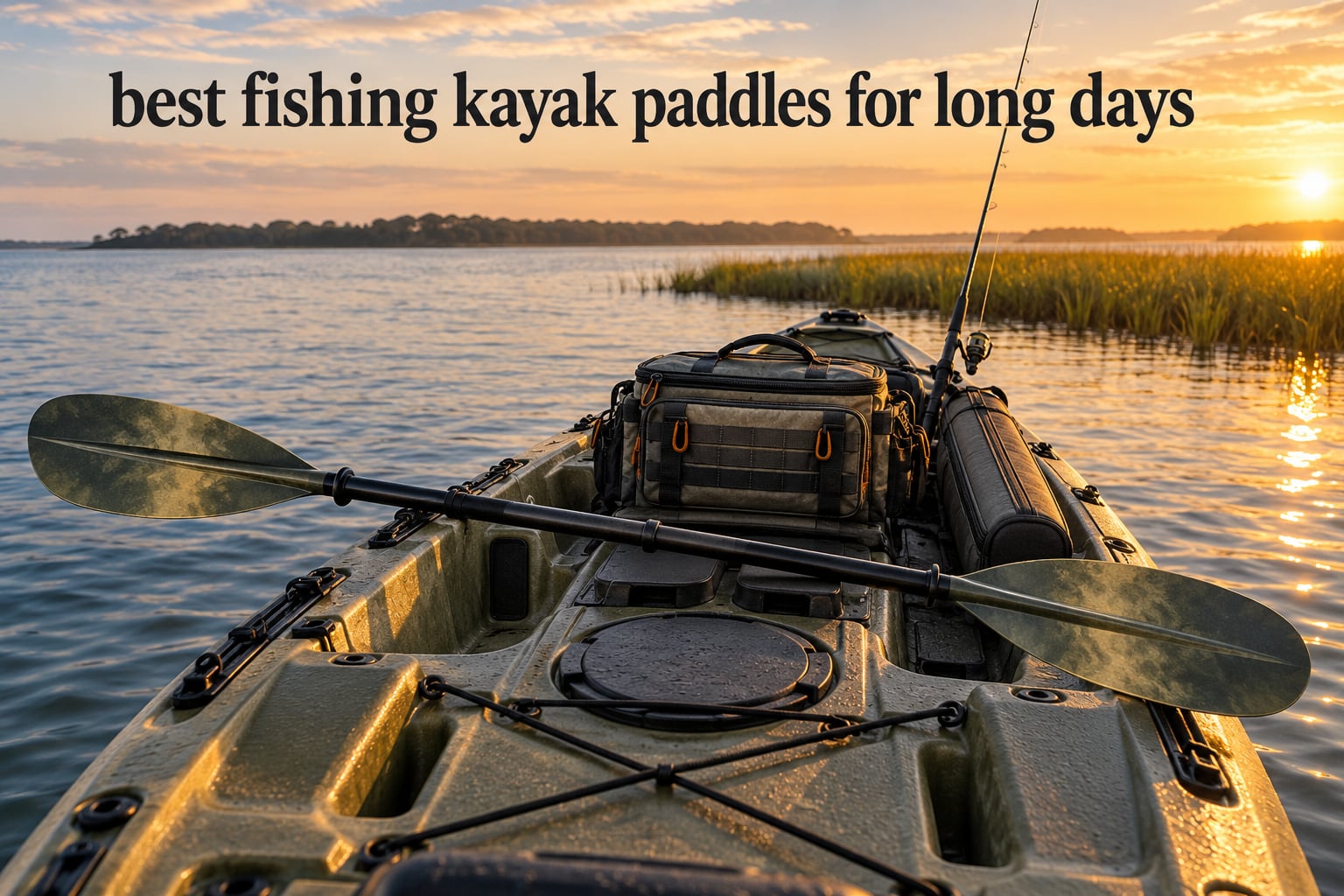
A full day on a fishing kayak is not a paddling session. You cover open water at trolling speed, cross channels, work the wind, and then hold position for four hours of casting while a current nudges you sideways. A paddler puts out well over two thousand strokes an hour on a moving day, and the paddle in your hands matters far more than the gear strapped to your deck.
Hour one tells you nothing. Every paddle feels fine for an hour. The difference shows up in hour four, when your shoulders start to ache and your arms take over the work your back used to do. That is why the best fishing kayak paddles for long days are chosen by weight, blade efficiency and fit rather than by angler features alone.
We spent weeks comparing twelve paddles across wide sit-on-top hulls, adjustable-seat boats and narrow sit-ins, focusing on the things that decide whether you still have casting arms when you get back to the ramp. If you also want a paddle that works when you are not chasing fish, our touring kayak paddle guide covers the same weight logic from a different angle.
Top 3 Picks: The Fishing Kayak Paddles We Trust Most in 2026
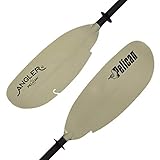
Pelican Poseidon Angler
- 250 cm length
- Aluminum shaft
- 0/65 degree feather
- Hook retriever and shaft tape

Best Marine Carbon Paddle
- 30-32 oz
- Two-piece carbon
- 60 degree feather
- Doubles as canoe paddle

Pelican Symbiosa
- 240-250 cm telescoping
- 360 degree blade angle
- Indexed grip
- Adjustable drip rings
Best Fishing Kayak Paddles (October 2026)
| Product | Specifications | Action |
|---|---|---|
| Pelican Poseidon Angler |
|
Check Latest Price |
| Best Marine Carbon Kayak Paddle |
|
Check Latest Price |
| Pelican Symbiosa |
|
Check Latest Price |
 Pelican The Catch Pelican The Catch |
|
Check Latest Price |
 Backwater Assassin Paddle Backwater Assassin Paddle |
|
Check Latest Price |
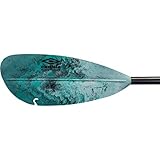 Carlisle Magic Angler Carlisle Magic Angler |
|
Check Latest Price |
 Bending Branches Angler Ace Bending Branches Angler Ace |
|
Check Latest Price |
 WONITAGO Carbon Kayak Paddle WONITAGO Carbon Kayak Paddle |
|
Check Latest Price |
 OCEANBROAD Carbon Paddle OCEANBROAD Carbon Paddle |
|
Check Latest Price |
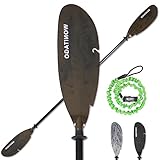 WONITAGO Angler Paddle WONITAGO Angler Paddle |
|
Check Latest Price |
 OCEANBROAD Fishing Paddle OCEANBROAD Fishing Paddle |
|
Check Latest Price |
 Leader Accessories Adjustable Paddle Leader Accessories Adjustable Paddle |
|
Check Latest Price |
1. Pelican Poseidon Angler: The All-Rounder That Handles a Loaded Hull
Pelican Poseidon Angler Fishing Lightweight Kayak Paddle – Built-in Retrieval Hooks – Fiberglass Reinforced (Sand, 98.5 in)
- Floats after a drop thanks to internal flotation blocks
- Built-in hook retriever and shaft tape measure
- Ovalized shaft section indexes the top hand
- Push-button feather at 0 or 65 degrees
- Heavier in the hand than a carbon paddle
- Blades show flex under hard strokes
- Drip rings run small so water still reaches your gloves
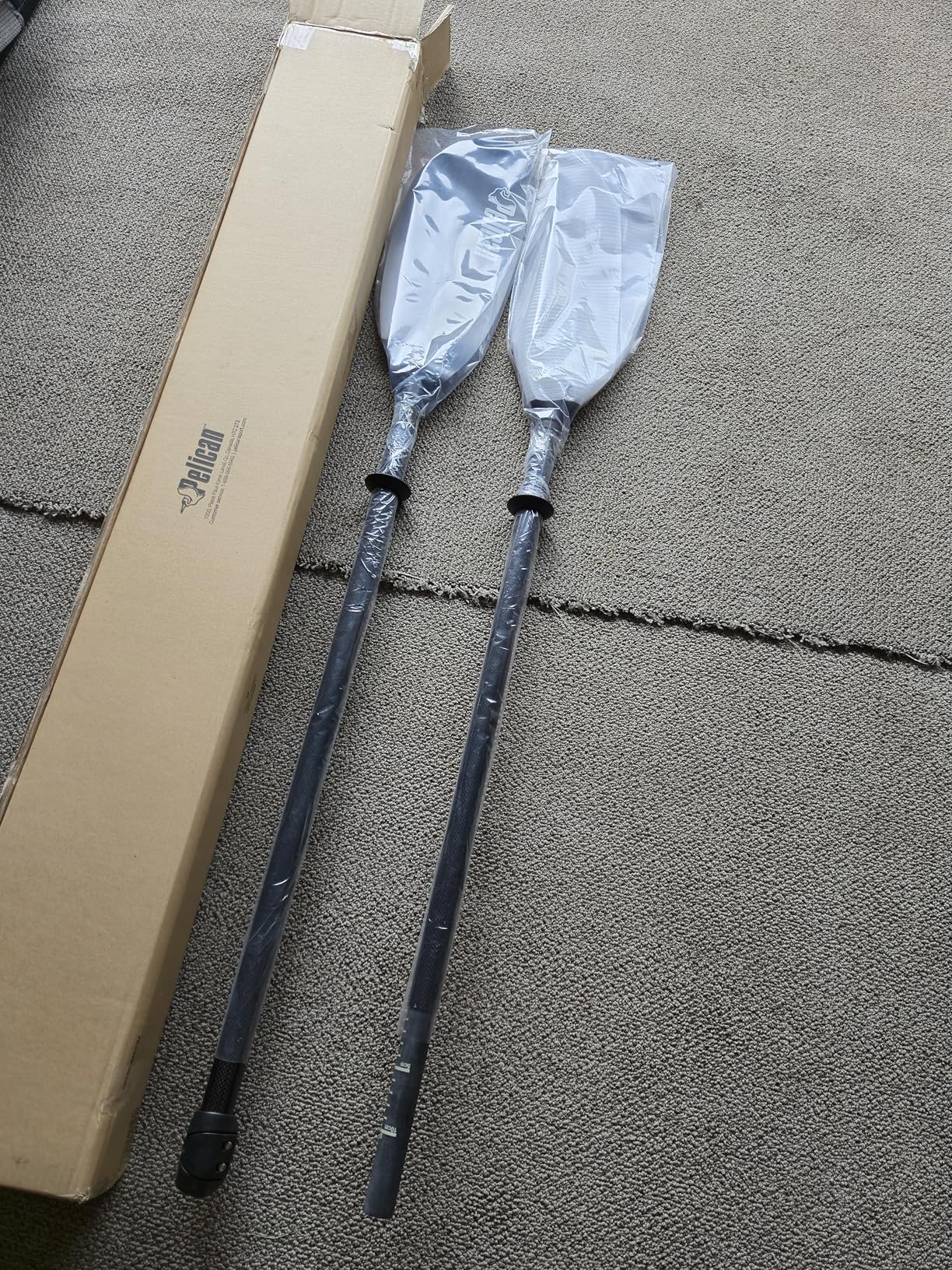
The Poseidon is the paddle we kept handing to friends who ask for one recommendation. At 250 cm and 98.5 inches it is sized for hulls wider than the narrow recreational kayaks most people start in, and the two-piece push-button build means it lives in the bed of a truck rather than across the roof rack.
The push-button ferrule feathers the blades at a 0 or 65 degree setting, and owners consistently choose the 65 degree option for open water because the offset blade slices through the air on recovery instead of catching it. That matters when you are working across 300 metres of exposed water into a breeze.
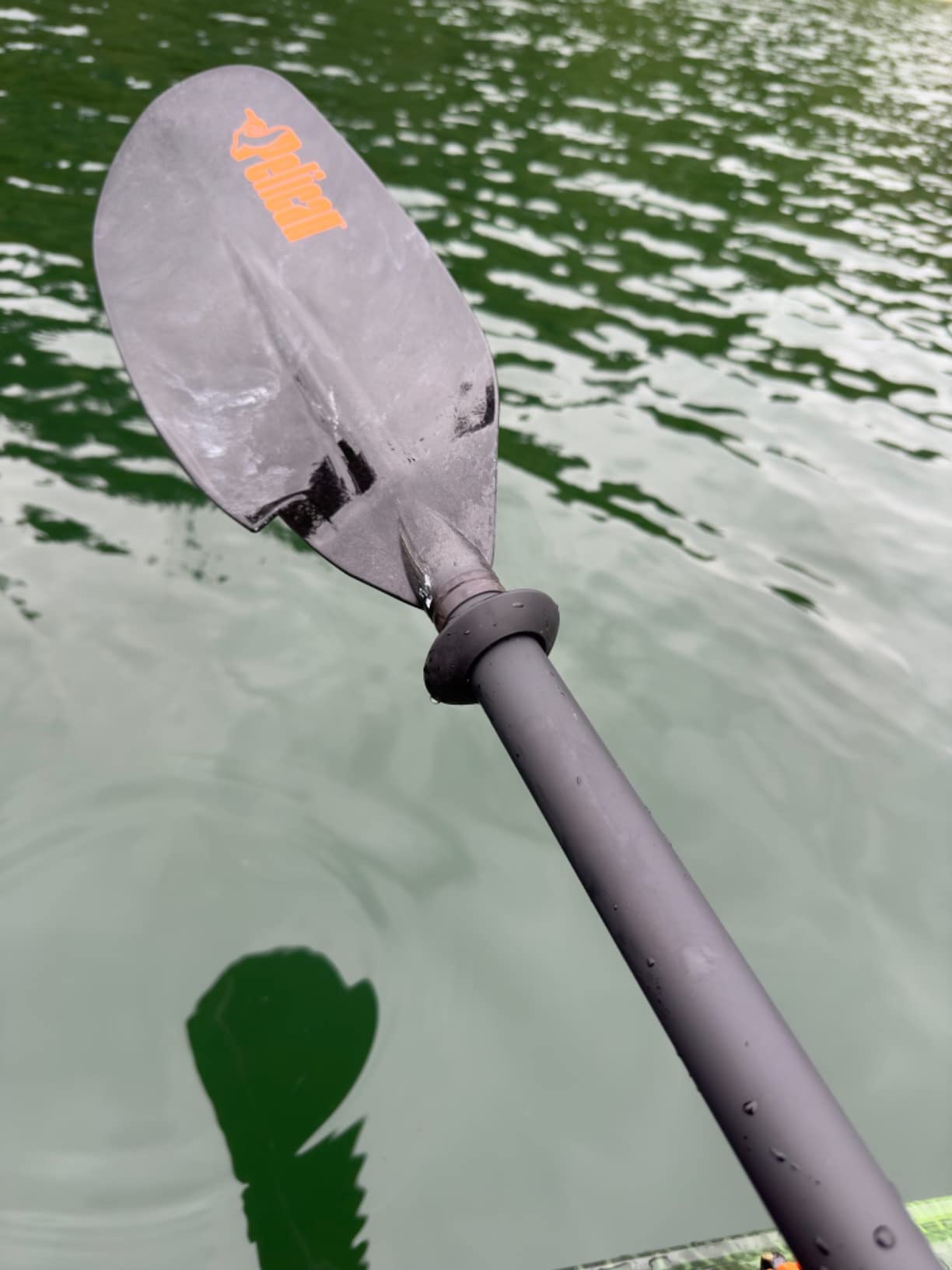
What surprised me most was the balance of the angler features against the plain shaft and blades. There is a hook retrieval point built into the blade and a high-visibility measurement tape running down the shaft, and neither one turned the paddle into a gimmick. The ovalized section on the right-side shaft also acts as a hand-positioning index, which is a quiet answer to wrist ache in the fifth hour.
Two internal flotation blocks mean that when the paddle goes over the side, it stays on the surface instead of dropping. On a loaded fishing kayak drifting in current that is worth more than any accessory you can bolt to the hull.
Who the Poseidon suits
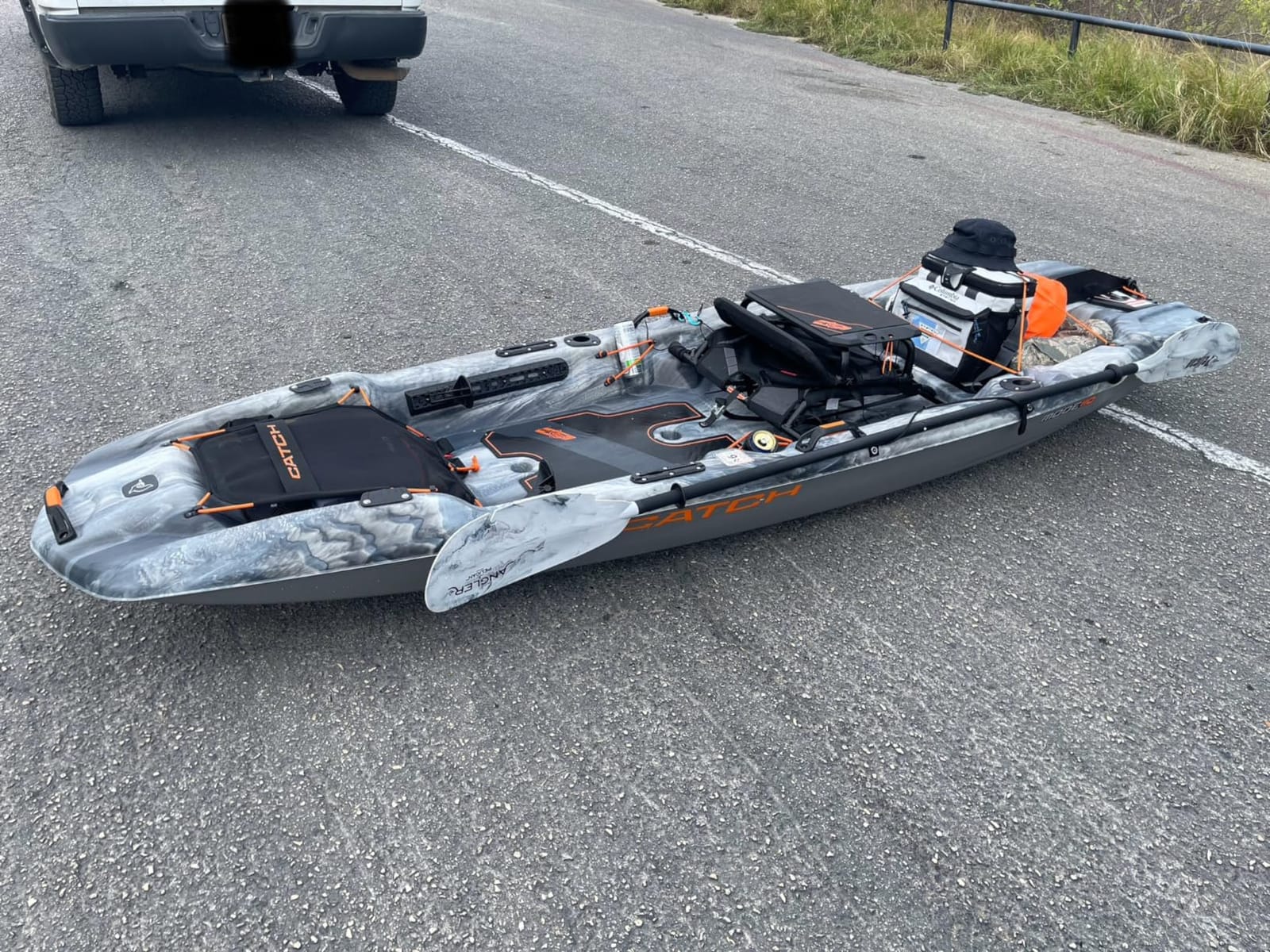
It suits the angler on a 10 to 12 foot sit-on-top who wants one paddle that handles launching, drifting and the occasional hard crossing. The 0/65 feather choice means it works for someone learning a relaxed stroke and for a paddler who wants to power up when the wind picks up.
It also suits anyone who fishes in weather that puts a paddle in the water. The rubber grips stay predictable wet or dry, and the 250 cm length gives a wide hull enough clearance that the blades do not hit the hull on every forward stroke.
Who should skip it
Skip it if you sit in a narrow sit-under or a sit-in hull, because 250 cm will feel over-long and slow to swing. The brand also aims this model at paddlers taller than 5 foot 5 inches, so a shorter angler should look at an adjustable shaft instead.
Skip it if you want the lightest paddle in the group. At 2.1 pounds the aluminum shaft is on the heavy side, and the fiberglass-reinforced polypropylene blades show flex under hard strokes, which you will feel if you are paddling a heavy hull at speed.
2. Best Marine Carbon Paddle: The Lightest Thing You Can Swing All Day
- Genuinely light at 30-32 oz for a carbon paddle
- Two-piece joint feels solid with no wobble
- Blades match or feather in 60 degree increments
- Doubles as a canoe paddle
- Shipped length chart can be off so verify your length
- Occasional reports of a loose blade on arrival
- Some minor twist in the blades
At 30 to 32 ounces this is the paddle that changes how a long day feels. Owners describe the difference most plainly as shoulders that do not ache at the end, and our own comparison of the weights in this group put it a full pound under the aluminum paddles most anglers buy first.
The blades measure 18 by 6.75 inches on a shaft diameter of 1.125 inches, which is a narrow, efficient shape. That narrower blade is exactly what you want when you will spend six hours at a slow cruise, because it rewards a relaxed stroke instead of demanding power you do not need.
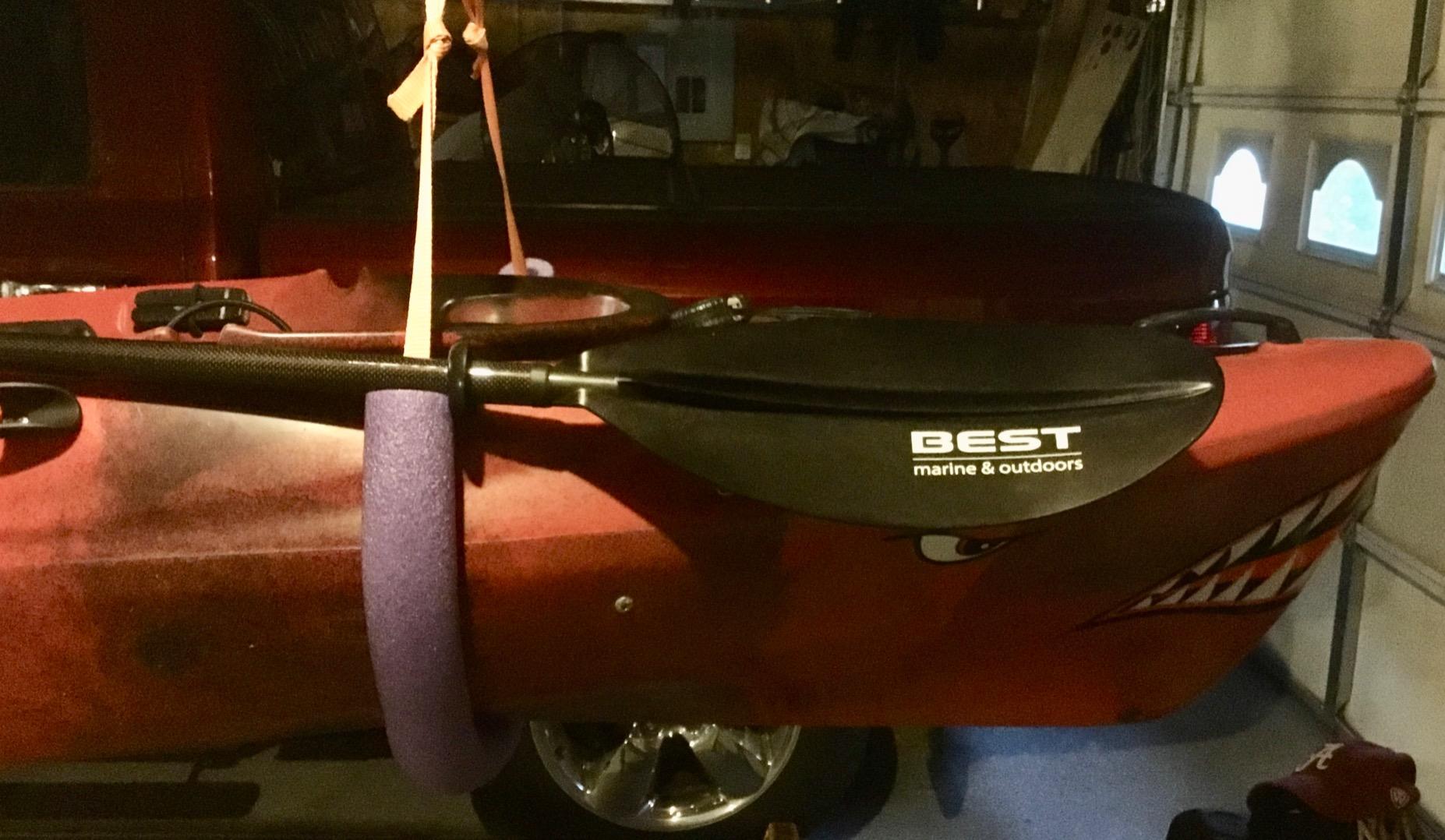
Feathering works in 60 degree increments, so you can set the blades inline or feathered depending on the water. Inline feels strange for a first outing if you are used to a feathered paddle, but it is useful in heavy vegetation, where a feathered blade can grab stems on the recovery.
The double-sided design also works as a canoe paddle, which is a genuinely useful second life for a mixed-discipline boat. Colors are matched to popular kayaks, so if you care about how the rig looks, there is more than one choice.
Who this carbon paddle suits
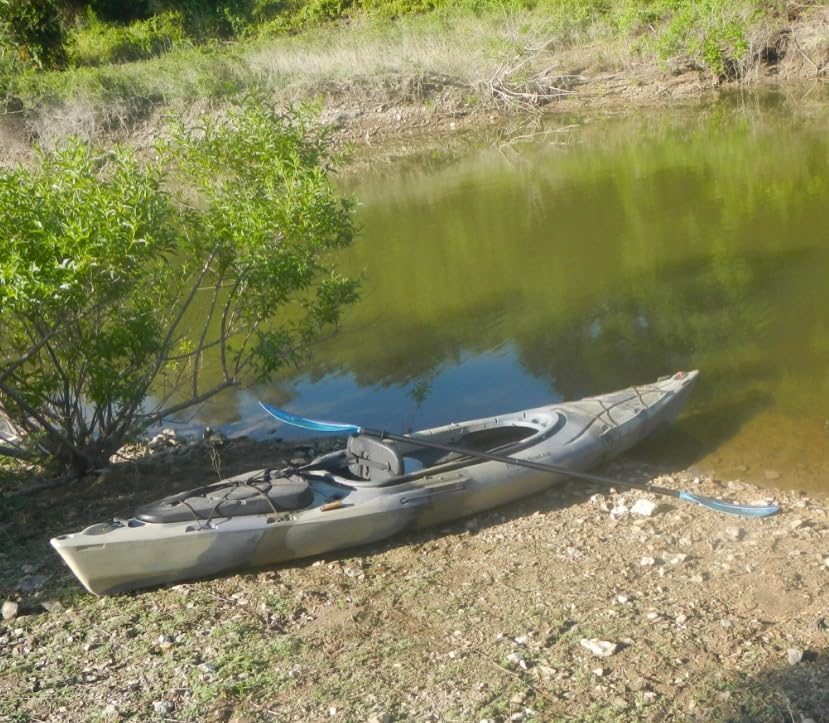
It suits paddlers logging six or more hours, covering real distance, or returning to the water on tired days. Forum threads about paddle quality keep circling the same point: when a lighter paddle is a good fit for the paddler and the boat, lighter wins even over a heavier premium option.
It also suits anyone who shares a kayak with a partner of a different height and wants one paddle that covers more hull types than a single fixed length.
Who should skip it
Skip it if you want dedicated angler features. There is no hook retriever and no measuring tape on the shaft, so you will still need to carry a ruler and hope you have a retriever on a separate line.
Skip it if you are fussy about fit. Some owners report the shipped length chart is inaccurate, and a few received a paddle with a blade not tightened fully onto the shaft. Both problems are solved by measuring yourself before you order rather than trusting the chart.
3. Pelican Symbiosa: The Adjustable Paddle That Handles Changing Crew
- Telescoping shaft dials in to your height and hull width
- 360 degree blade angle tuning
- Indexed ovalized grip on the shaft
- Adjustable drip rings for a drier grip
- Fiberglass shaft is heavy next to carbon options
- Fewer angler features than a dedicated fishing paddle
The Symbiosa telescopes from 240 to 250 cm, and that ten centimetres of range solves more problems than it sounds. It is the paddle we recommend when two people share one hull, when an adjustable seat changes your height mid-season, or when you move between a 30 inch and a 34 inch boat.
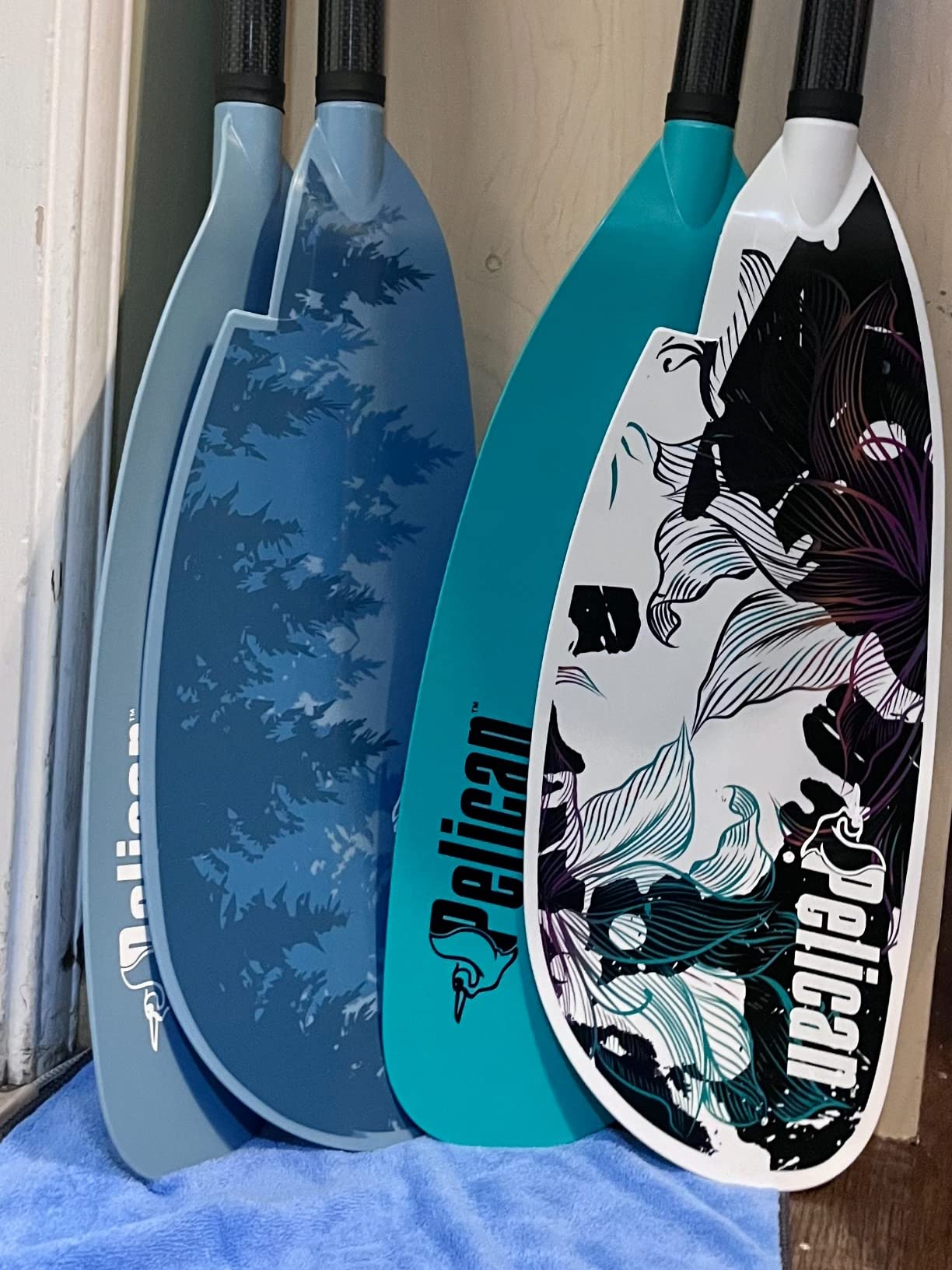
The 360 degree blade angle adjustment is the underrated feature here. Most paddles offer two or three locked positions. This one lets you dial the blade angle to whatever your stroke feels like on the day, which for a relaxed all-day angler is a real comfort lever.
The ovalized section on the shaft repeats the trick used on the Poseidon: it gives the top hand a repeatable reference position. On a long day that consistency matters more than people expect, because hand placement drifts every time you stop to cast.
Adjustable drip rings are fitted at both ends, and they are sized properly rather than being the undersized rings that let water run down the shaft. Cold hands and wet gloves are the complaint that appears most often in angler threads, and this is one of the few paddles here that addresses it directly.
Who the Symbiosa suits
It suits paddlers over 5.5 feet tall in kayaks over 30 inches wide, which covers most of the mid-size fishing kayaks on the market. If your hull width is at the upper end of your usual range, the long setting gives you blade clearance without a specialist paddle.
It also suits anyone fishing in cold water who wants their hands dry, and anyone who adjusts their seat height and does not want to buy a new paddle every time they change position.
Who should skip it
Skip it if your hull is narrower than 30 inches. The shortest setting is still 240 cm, which is long for a narrow recreational sit-on-top and will feel slow to swing in tight water.
Skip it if you fish hard every day and want the lowest possible weight. A fiberglass shaft at 2.1 pounds is a full pound above the carbon options here, and there is no hook retriever or shaft scale built in.
4. Pelican The Catch: Built for Hulls Over 34 Inches Wide
- Built for hulls over 34 in wide and paddlers over 6 ft
- Hook retriever and tape measure in the shaft system
- Blade angle adjusts from 0 to 65 degrees
- Impact-resistant blades handle roots and brush
- Fiberglass shaft is heavy next to carbon options
- Long version is unwieldy in narrow kayaks or heavy vegetation
The Catch is the wide-hull answer in this roundup. At 102.4 inches, or 260 cm, it is the longest paddle we tested, and the brand recommends it for anglers over 6 feet in kayaks wider than 34 inches. If your boat is one of the big bass or musky platforms, a shorter paddle will foul the hull on every forward stroke.
Blade angle adjusts across the same 0 to 65 degree range as the Poseidon, so you can feather for open water and run closer to inline when you are pushing through vegetation. That combination matters on a long day because most of your time is spent at low speed but not at zero speed.
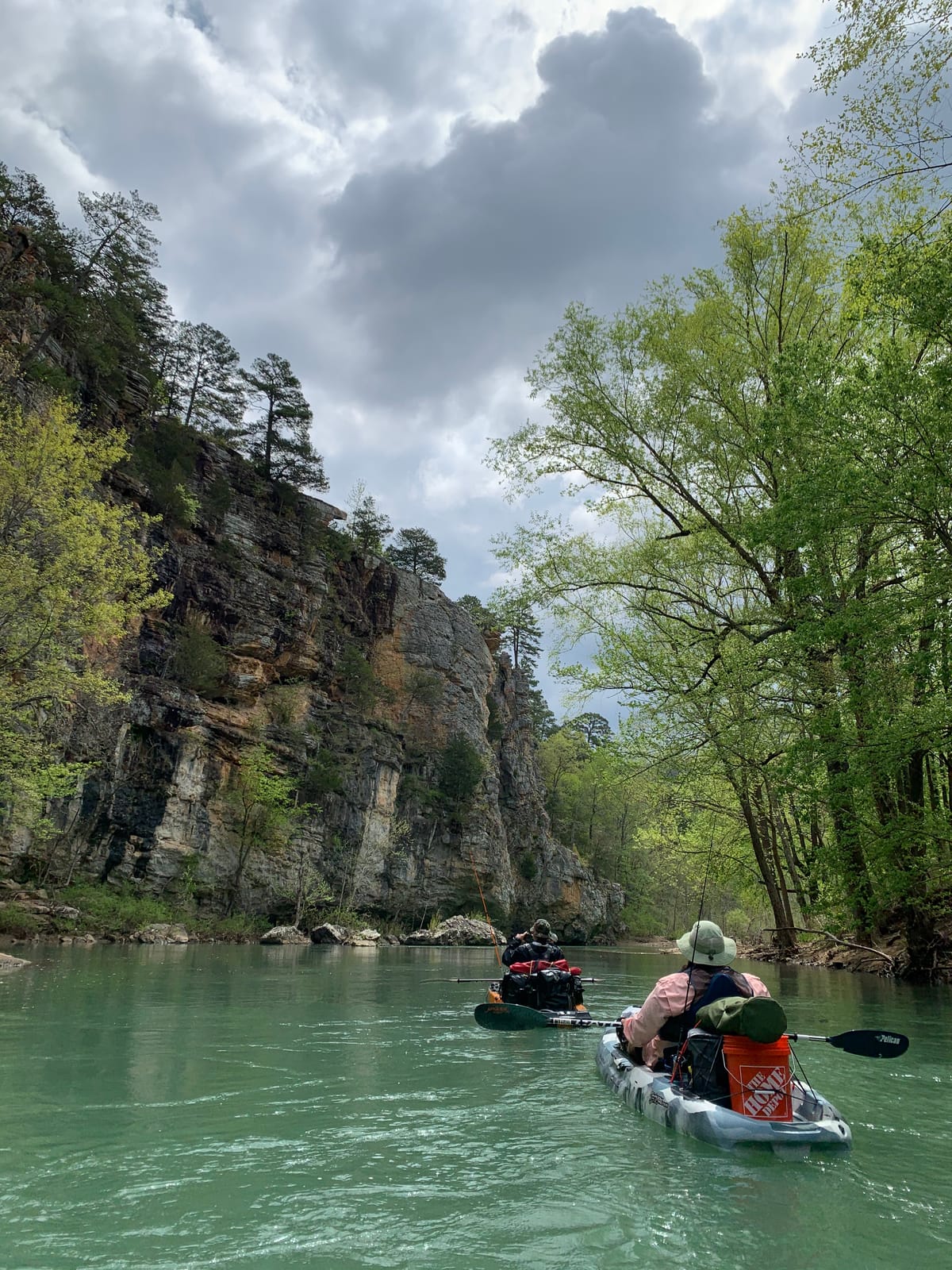
The angler features are the same useful pair as on the Poseidon: a hook retrieval system and a tape measure printed along the shaft. Having the ruler on the paddle means you can check a fish against a regulation without digging a tape measure out of a tackle bag in the middle of a bite.
The blades are fiberglass-reinforced nylon, described by the maker as impact resistant, and owners in brushy water report that they take contact with roots and branches without cracking. For a boat that will be pushed off submerged timber more than once a season, that is the right material choice.
Who The Catch suits
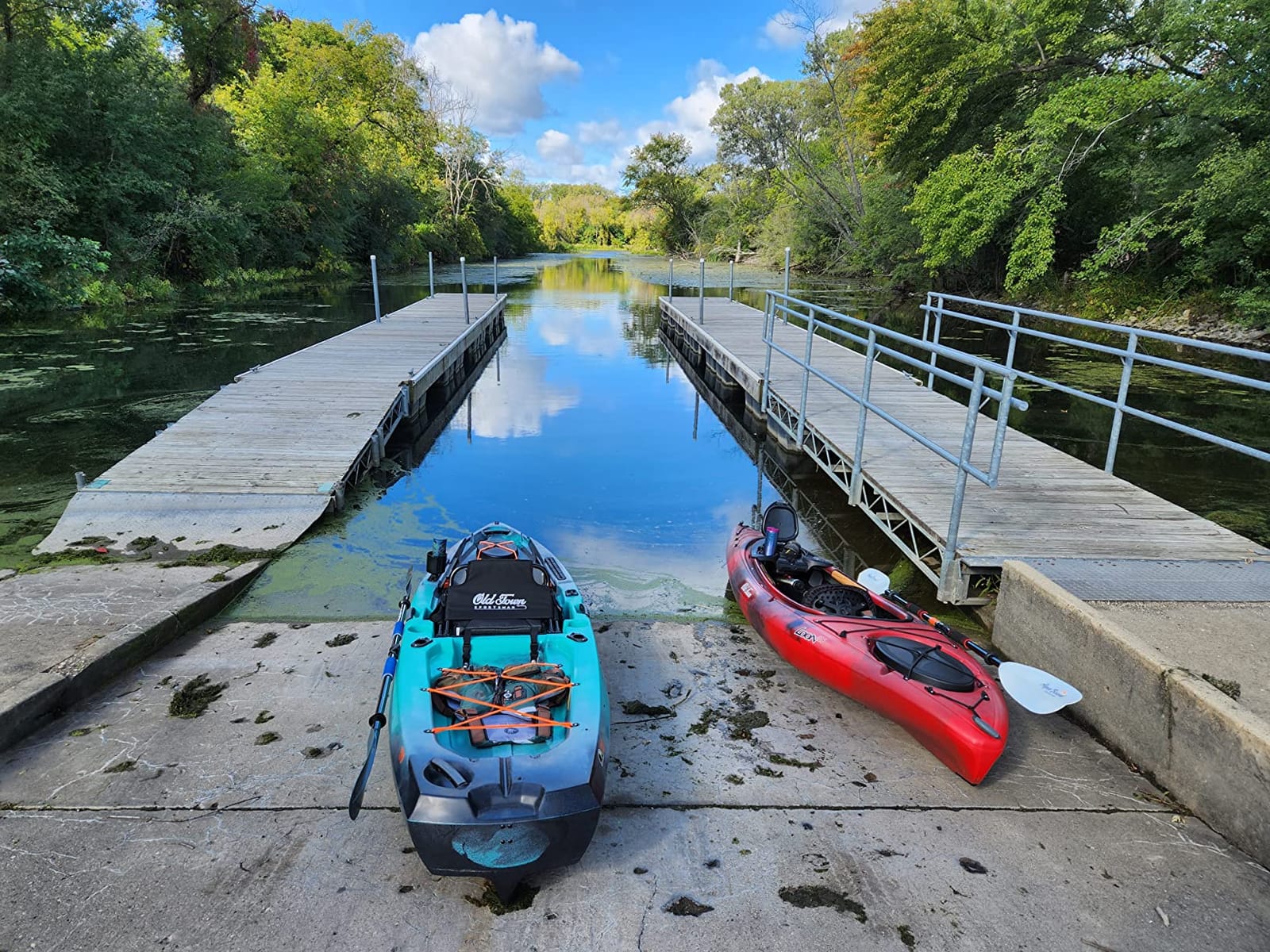
It suits taller paddlers in very wide hulls, particularly anyone fishing for musky or big bass where the boat sits wide and carries a lot of gear. The length means you do not have to shorten your stroke to keep the blades off the hull.
It also suits anglers who land fish often and want the hook retriever within reach rather than clipped to a vest.
Who should skip it
Skip it in anything narrower than a 34 inch hull. Owners of smaller kayaks describe the 102.4 inch version as unwieldy, and it is genuinely awkward to swing in heavy vegetation or among trees.
Skip it if weight is your top criterion. It carries the same fiberglass shaft penalty as the Symbiosa, and the carbon paddles here will save you roughly a pound per stroke cycle.
5. Backwater Assassin: The Paddle That Doubles as a Tool
Backwater Assassin Paddle 06-0017 Full-Size Carbon-Fiber Hybrid Kayak Paddle – 98.5′ to 102.5′ Length
- Hook grabs line decoys docks and branches
- Serrated edge pushes off logs and mud
- Two adjustable length ranges covered
- Three year warranty on a paddle
- Heaviest paddle in this group at 2.7 lb
- Nylon blade feels softer than a carbon blade
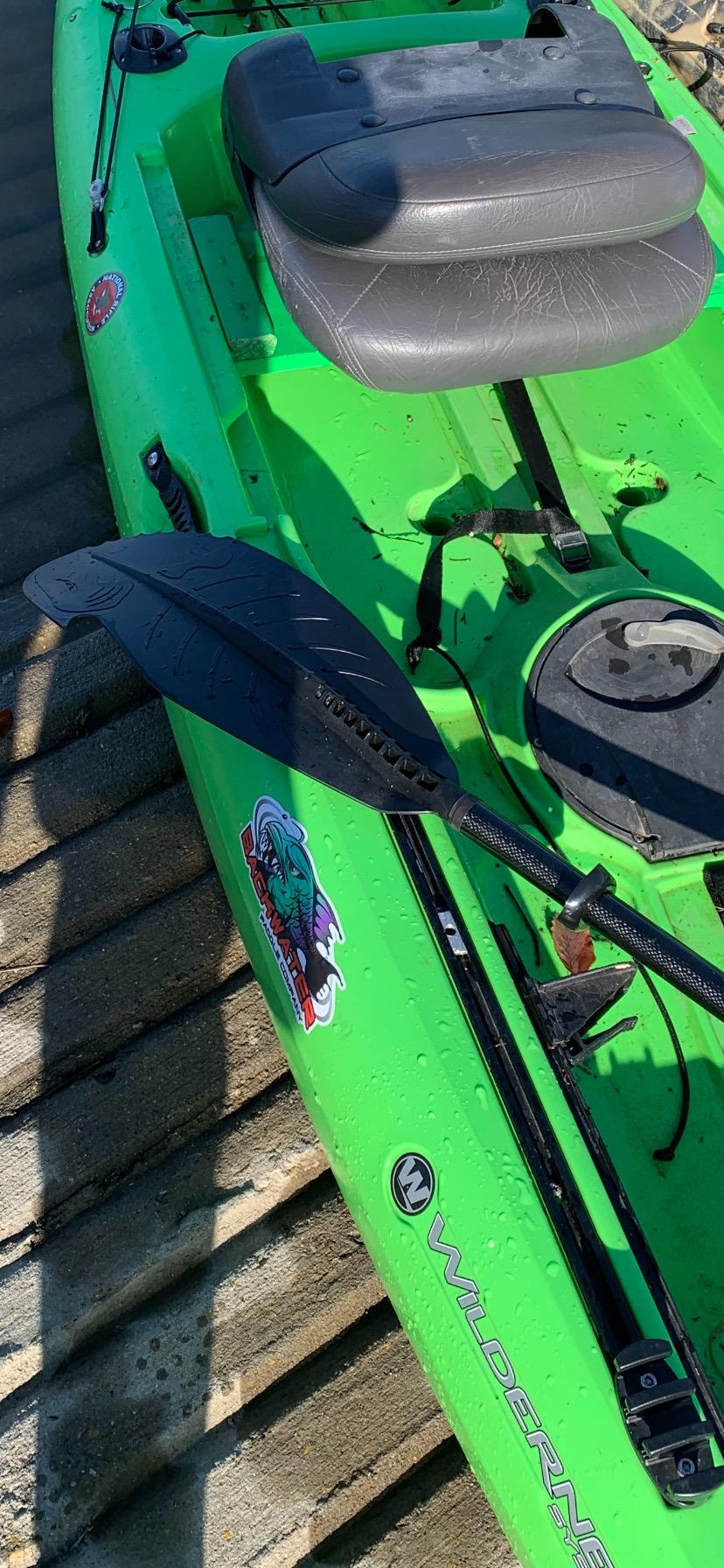
The Backwater Assassin is built for the parts of a fishing day that are not paddling. The hook at the blade end grabs a line, a decoy, a dock line, or a tree limb when you drift too close to a overhanging branch, and the serrated teeth along the edge let you push off a solid surface to free yourself from a stuck position.
Two adjustable length ranges cover most fishing hulls: 230 to 240 cm and 250 to 260 cm. If you own more than one boat, or if your seat height changes a lot, this is the broadest coverage in the group without buying two paddles.
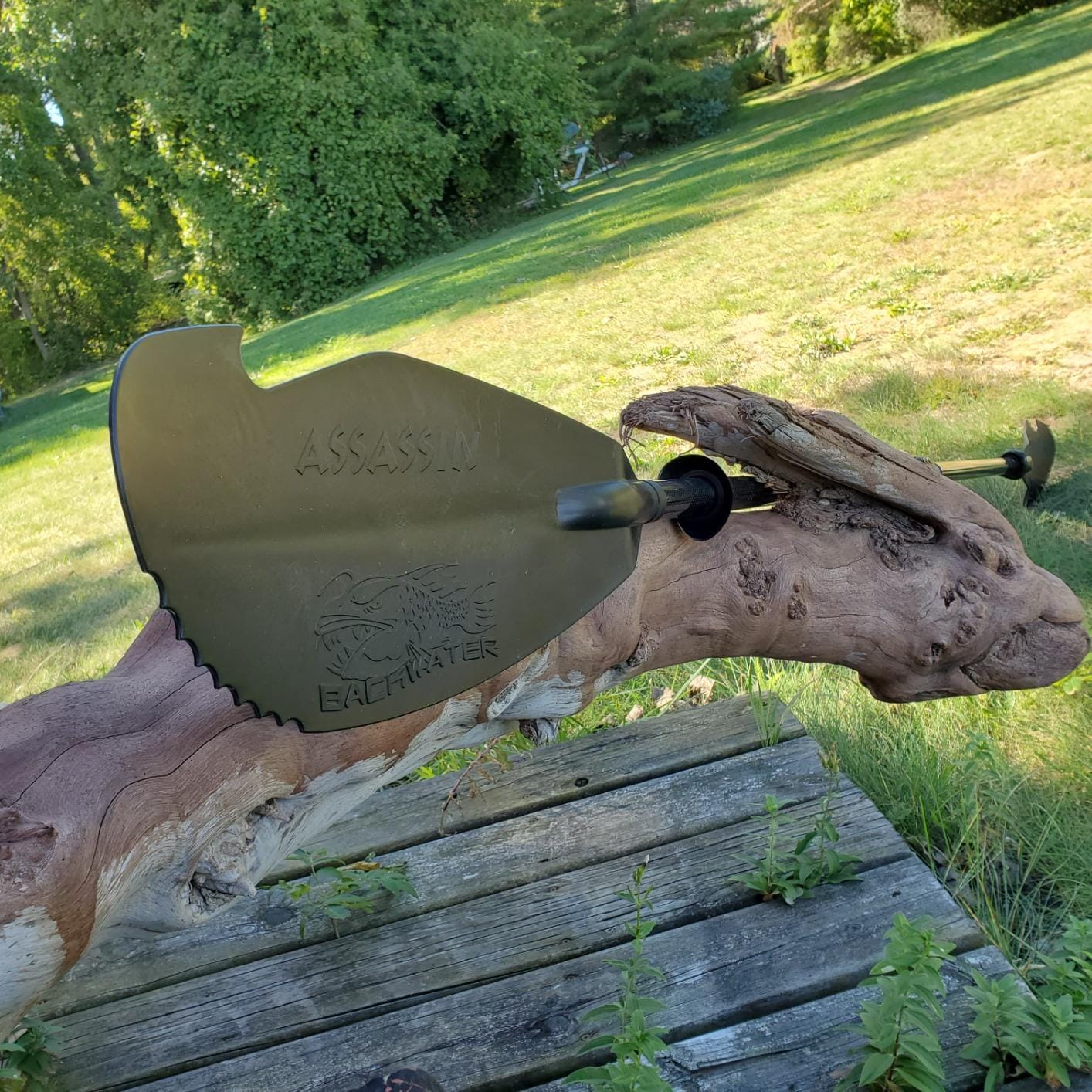
The shaft is described as carbon hybrid, which is where the strength-to-weight balance comes from, and the blade is ABS injected nylon. Nylon is less crisp in the water than carbon, so if your priority is stroke response you will feel the difference in the first few strokes.
Drip rings are included, which is not a given on budget paddles, and the warranty runs three years, longer than anything else in this roundup. On a tool you will use to lever yourself off mud and push off rocks, that length of cover matters.
Who the Backwater Assassin suits
It suits anglers who work shallow water, duck blinds, timber and tight cover. The hook and teeth are genuinely useful there, and there is no other paddle here that replaces a push pole or a paddle float.
It also suits owners with two hulls of different widths, and anyone who fishes in salt water and wants a tool-grade paddle rather than a featherweight.
Who should skip it
Skip it if you are chasing all-day comfort above everything else. At 2.7 pounds it is the heaviest paddle we reviewed, and that is roughly a pound and a half more than the lightest carbon option over a day of steady paddling.
Skip it if you want a crisp blade for windy crossings. The nylon blade gives ground in heavy chop, and a faster paddling trip deserves a stiffer blade.
6. Carlisle Magic Angler: The Grip That Works Hot or Cold
- Curved asymmetrical blades give a smooth powerful stroke
- Wrapped fiberglass shaft stays grippy hot or cold
- Reliable push-button feathering on a two-piece build
- J-notch clears snagged lines and rubber drip rings included
- Fixed 230 cm length with no telescoping adjustment
- Heavier than carbon paddles at 2.5 lb
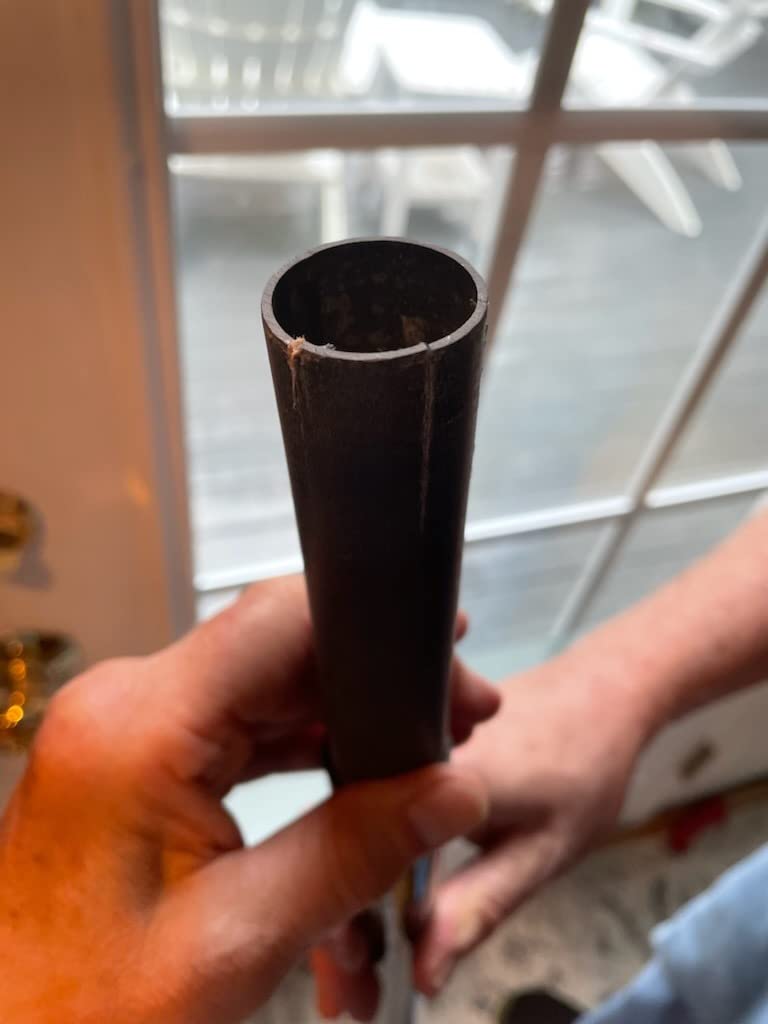
The Magic Angler solves a problem most paddles ignore: grip temperature. The shaft is fiberglass wrapped for grip, which keeps your hands workable on a freezing launch ramp and on a July afternoon when a bare aluminum shaft becomes painful to hold.
The blades are glass-filled polypropylene with an asymmetrical, slightly curved shape, and that curve is the reason the stroke feels smooth. Curved blades roll off the water rather than chopping, so you can hold a relaxed rhythm for a long drift without your wrists complaining.
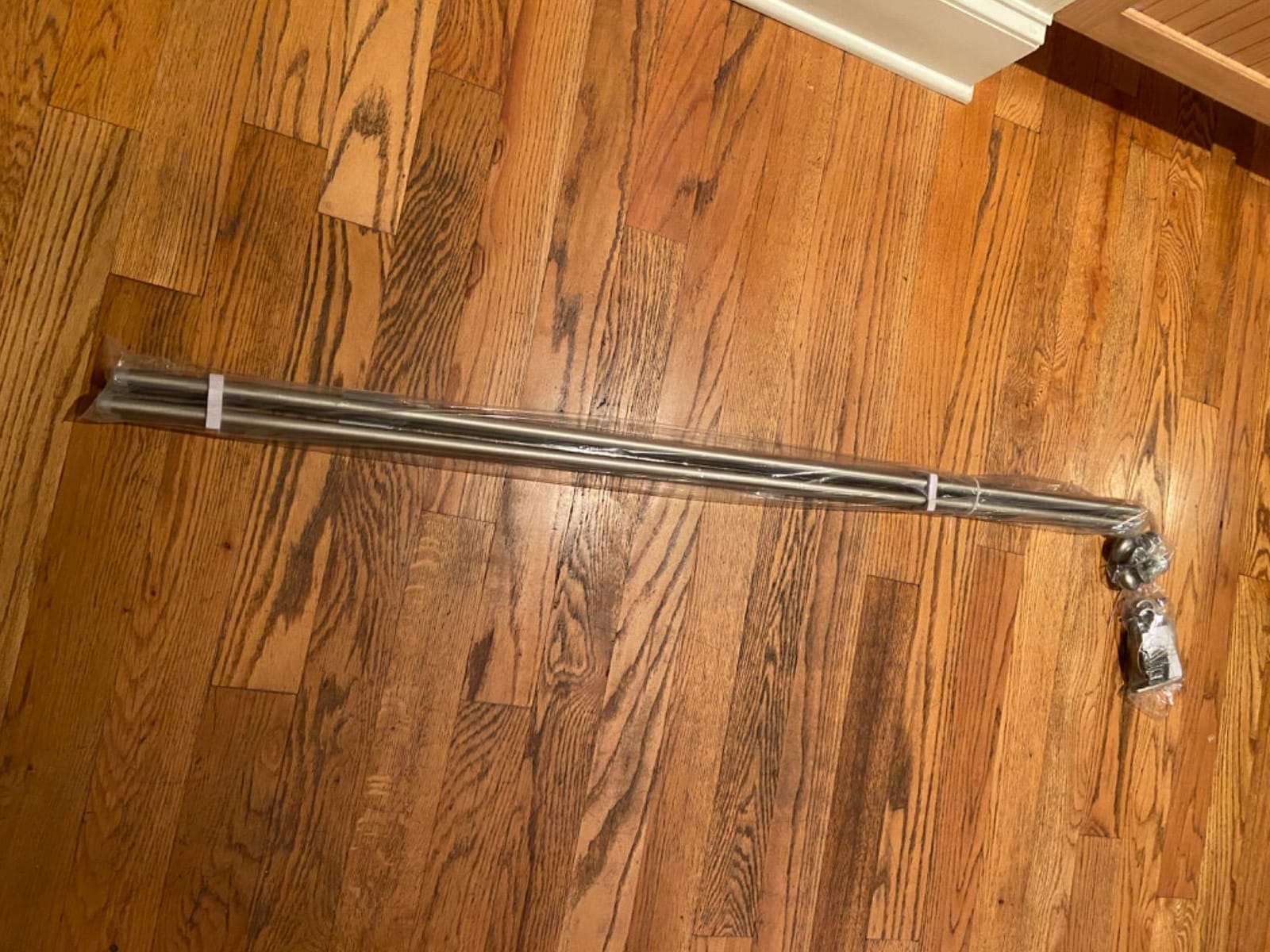
The push-button ferrule is described as no-fail and it feathers or sets the blades inline in seconds, which matters when you are switching between open-water crossings and pushing through reeds. The two-piece design also means it fits in a locker or behind a seat rather than across the boat.
The J-notch on the blade is the angler detail here. It is cut to free a snagged line or hook from a weed bed, which saves you from cutting good line with a knife at the end of a long morning.
Who the Magic Angler suits
It suits cold-water and shoulder-season anglers, and anyone who fishes a lot in a small sit-on-top under 30 inches wide, where a 230 cm paddle fits properly. The wrapped shaft is the single most comfort-focused feature across all twelve paddles we looked at.
It also suits paddlers who sweep-cast a lot of water, because the J-notch means a snagged rig is a five-second fix instead of a knot in your hands. Staying able to see the water in low light matters just as much, and our polarized sunglasses guide for kayak fishing covers the lens options worth taking on a dawn session.
Who should skip it
Skip it if you share the boat with a taller paddler or if your seat height changes. At a fixed 230 cm there is no adjustment, and being an inch or two short on a wide hull is worse than being slightly long.
Skip it if you want minimum weight. At 2.5 pounds it is one of the heavier paddles here, and the advantage it buys with grip comfort is not a substitute for saving a pound when the day is long.
7. Bending Branches Angler Ace: The Lightest Carbon Shaft in the Group
- Very light carbon shaft cuts arm and shoulder fatigue
- Blades bite cleanly and take hits from roots and rock
- Tight snap-button joint with no play
- Ovalized grip removes hot spots
- Ruler markings on the shaft
- Fixed lengths mean sizing must be right
- Minimal packaging
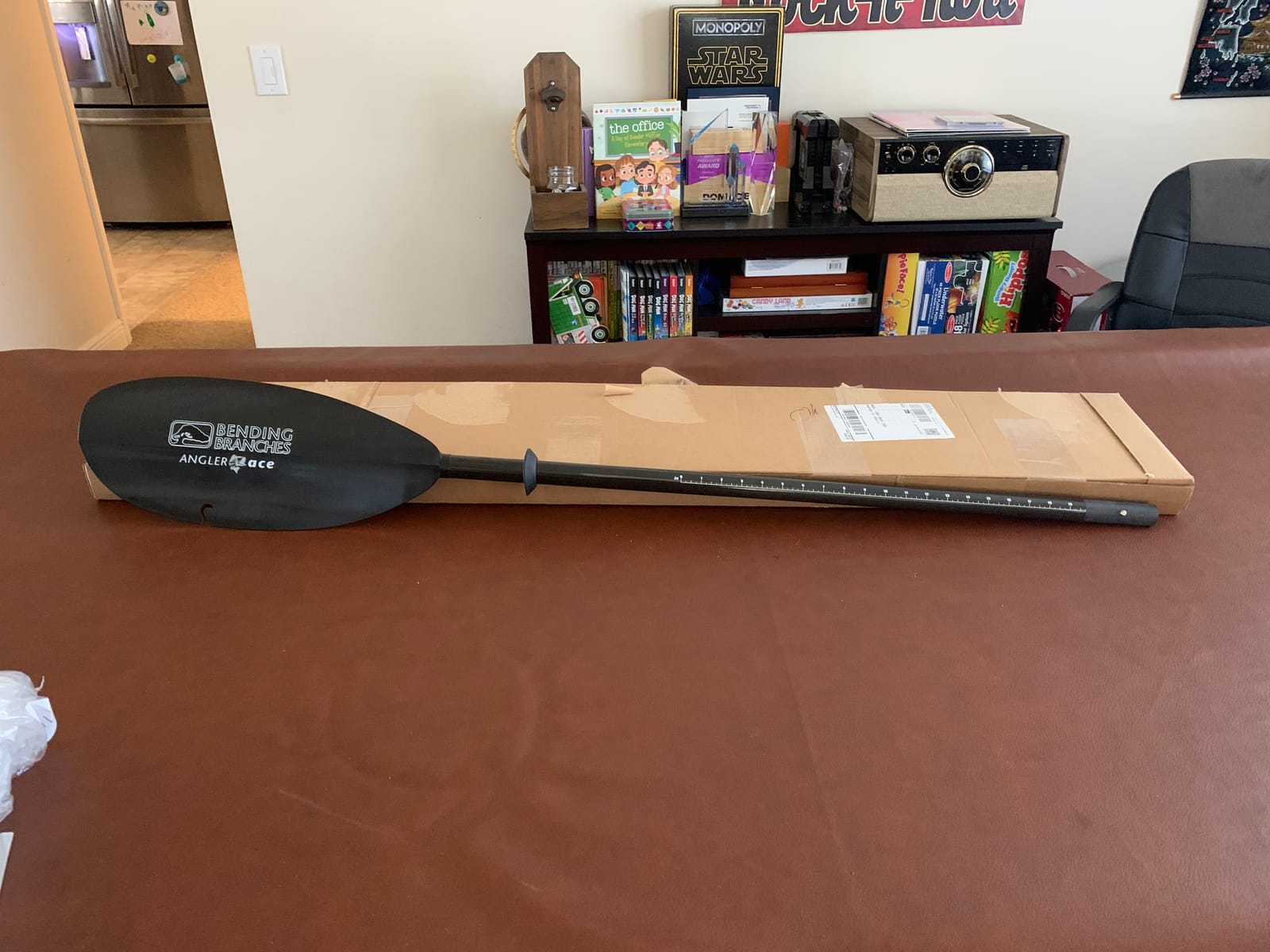
The Angler Ace has the highest rating of anything we reviewed, and the reason owners give is consistent: the carbon shaft is very light and the blades hold up to rock, roots and oyster beds. Owners report being able to paddle for hours without the fatigue they expect from a fishing paddle.
Lengths run from 240 up to 280 cm, which is the widest range of fixed lengths here. A long paddle like this is the right call for a big hull where you want power per stroke and maximum reach across open water on the paddle-in.
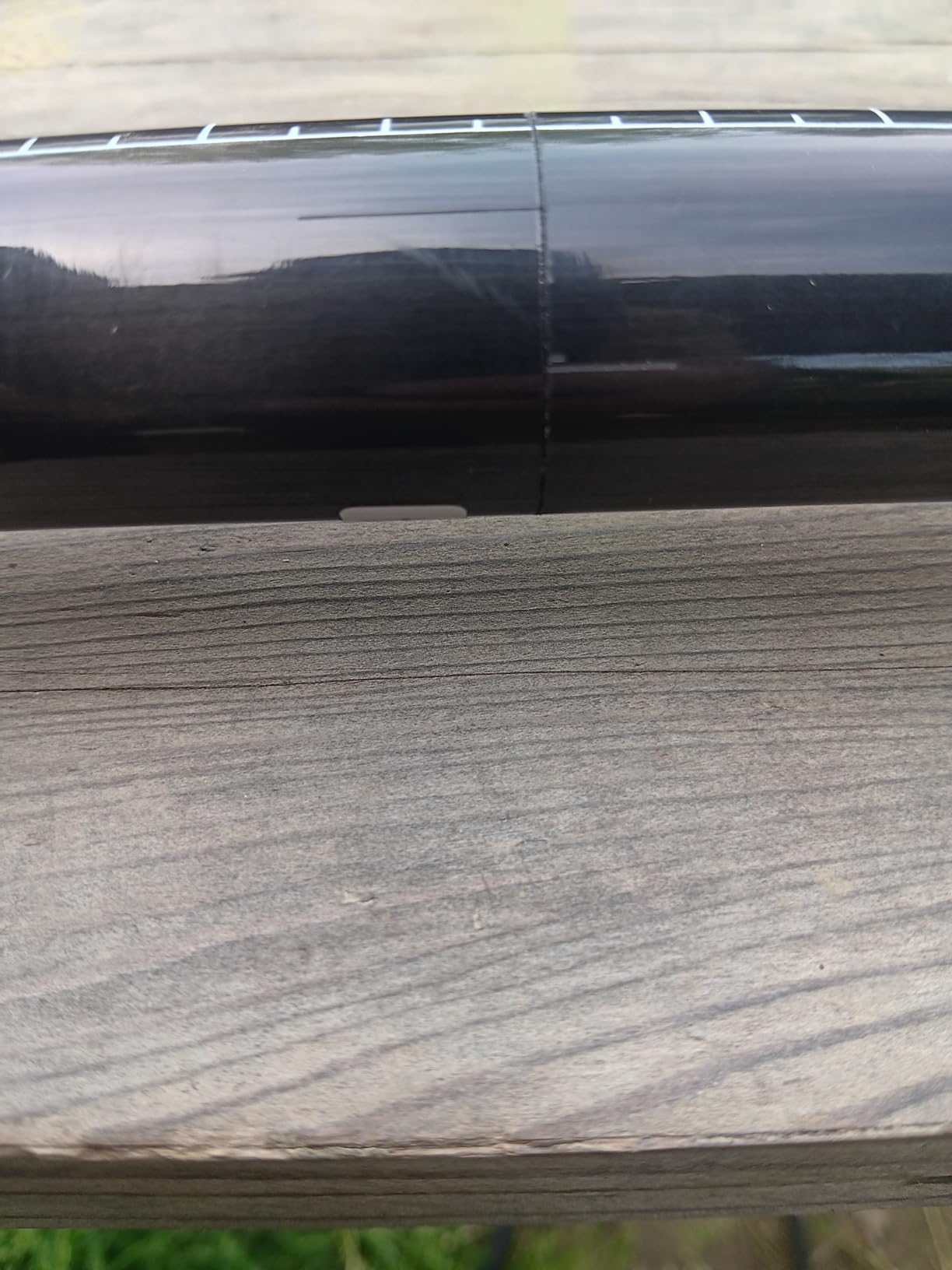
The snap-button ferrule joins the two sections with no play or wobble once assembled, and that tightness is what keeps the blade from feeling disconnected at the catch. Ovalized shaft shaping is used to spread pressure across the hands and remove hot spots that build up over a long day.
Ruler markings on the shaft cover the same need as the printed tape on the Pelican paddles. The carbon-reinforced nylon blades are described by the maker as delivering a strong bite with efficient power transfer, which is the behaviour you want when the hull is loaded with tackle and you are working into a current.
Who the Angler Ace suits
It suits paddlers who want the lowest weight with a carbon shaft and do not need telescoping adjustment, and who know their required length. If you fish from a hull over 32 inches wide and paddle regularly, a 250 to 260 cm version is the sensible starting point.
It also suits anglers who push off submerged timber and work around roots, because the reinforced nylon blades are more forgiving than a pure carbon blade when you knock them on something hard.
Who should skip it
Skip it if you are between sizes or unsure of your length. These are fixed lengths, so picking wrong leaves you with a paddle that is either short on a wide hull or awkward in a narrow one, and there is no adjustment to correct it later.
Skip it if you fish from a hull under 30 inches wide. A 240 cm paddle is already long for a small sit-on-top, and the longer options are meant for wide boats and open water.
8. WONITAGO Carbon Paddle: The One That Breaks Down Smallest
WONITAGO Kayak Paddle Adjustable, Lightweight Carbon Fiber Kayaking Oar
- Light carbon shaft with controlled flex
- Quick pin lock changes length fast in the field
- Three-section build breaks down small
- Blades float in salt and fresh water
- No angler features such as a hook or shaft scale
- Higher share of one-star reviews than the leaders
This carbon paddle adjusts from 86 to 94 inches, or 220 to 240 cm, across 20 cm of travel, and it breaks into three sections for transport. That breakdown is the reason it wins the travel slot: it fits in a small bag rather than needing a roof rack or a bed long enough for a two-piece paddle.
Total weight is around 2 pounds, with a carbon fiber shaft that has controlled flex rather than a noodle feel. Controlled flex matters on a fishing kayak because it absorbs the shock of a hard stroke against a loaded hull without stealing all your power.
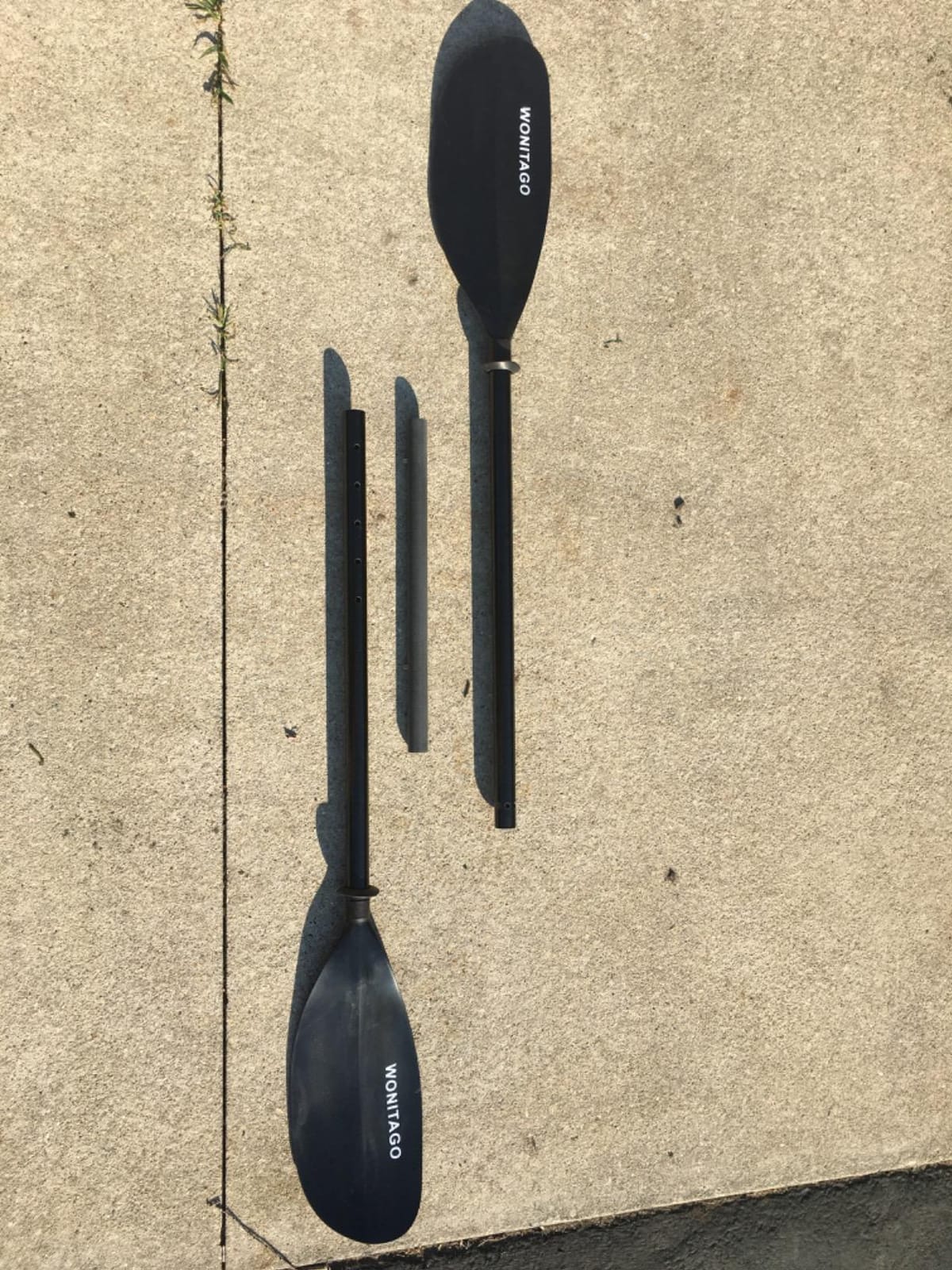
The quick pin button lock sets the blade angle at plus or minus 60 degrees, which is a real choice rather than a fixed offset. Inline is the setting to use in heavy vegetation; feathered is the setting that keeps the recovery blade out of the wind on an open crossing.
The fiberglass and polypropylene blades float in both salt and fresh water, so a drop in a river or an estuary is a retrieval problem rather than a swim. Colours and length variants are broad, which is helpful if you want the paddle to match the boat.
Who this carbon paddle suits
It suits paddlers who move between water bodies, carry gear on a roof rack, or fish a lake that is a long drive from anywhere. The three-section design and quick pin lock mean you can change length at the launch without tools.
It also suits anglers on narrower hulls, since the 220 cm end of the range is the shortest here and works on boats under 30 inches wide.
Who should skip it
Skip it if you want angler features. There is no hook retriever, no shaft measuring scale, and no backwater hook, so it is a general paddle that happens to be light.
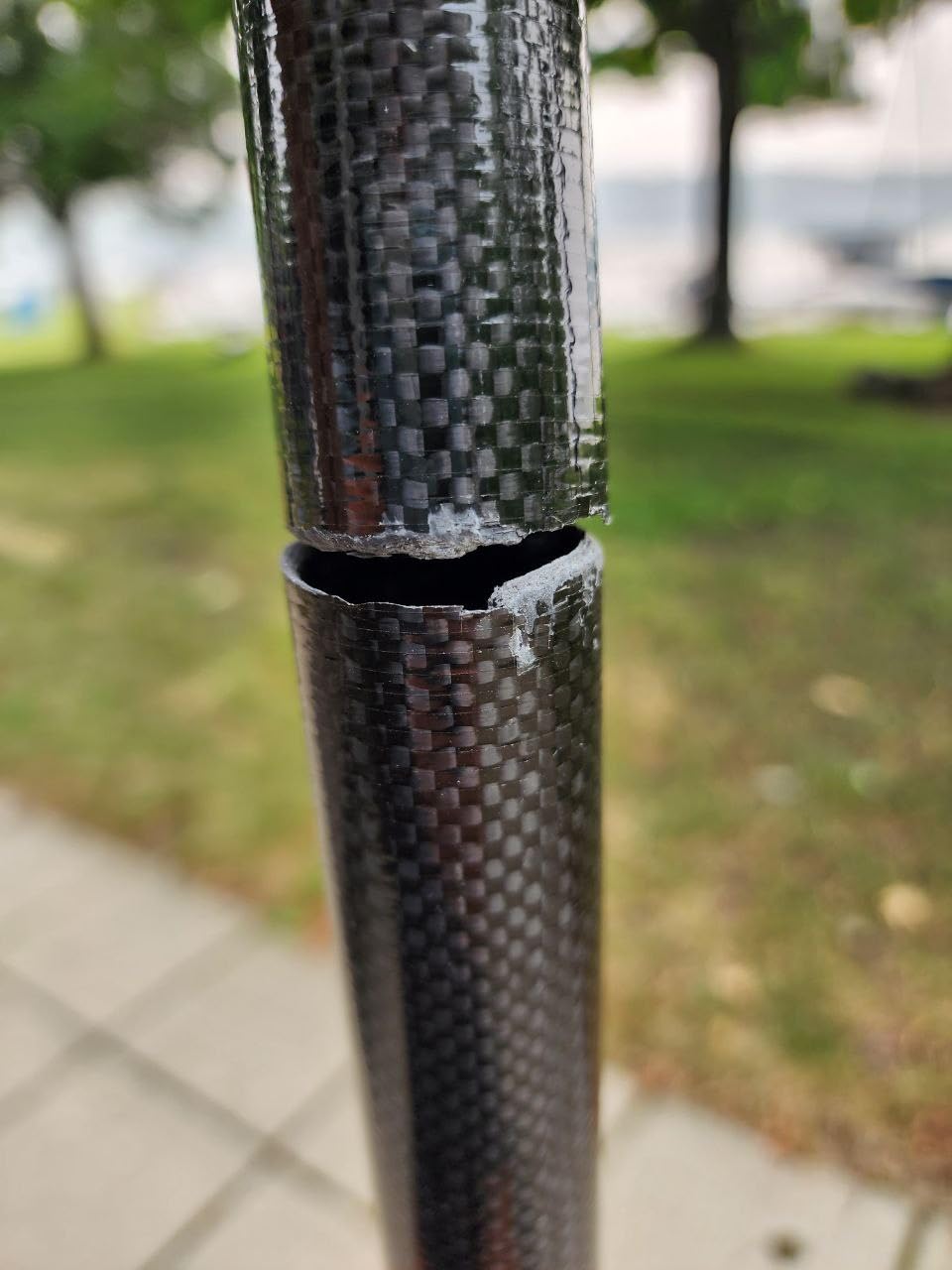
Skip it if you are sensitive to inconsistent finish. This paddle carries the lowest rating in the group, and the gap comes from a larger share of one-star reviews around blade and hardware quality rather than around how it paddles.
9. OCEANBROAD Carbon Paddle: Feathered Angles and Extras in the Box
OCEANBROAD Adjustable Carbon Fiber Kayak Paddle 86in/220cm to 94in/240cm Kayaking Oar with Paddle Leash 1 Paddle, Black
- Light listed weight at 35 oz
- Leash angle lock and drip rings included in the box
- Three-section breakdown for transport
- 0 or 60 degree feather for wind and vegetation
- Shortest adjustment range of the carbon options
- Highest share of one-star reviews in this group
The product listing puts this paddle at 35 ounces, and that is the number most anglers quote when they compare it to their old aluminum stick. At that weight it competes with paddles far above it in this roundup, and the three-section breakdown makes it easy to carry to a remote launch.
The shaft is carbon fiber with fiberglass-reinforced blades described as UV resistant. UV resistance is worth noting for anyone who leaves a plastic blade on a trailer or in a truck bed through a full summer of sun, since plain plastic blades go floppy over several seasons.
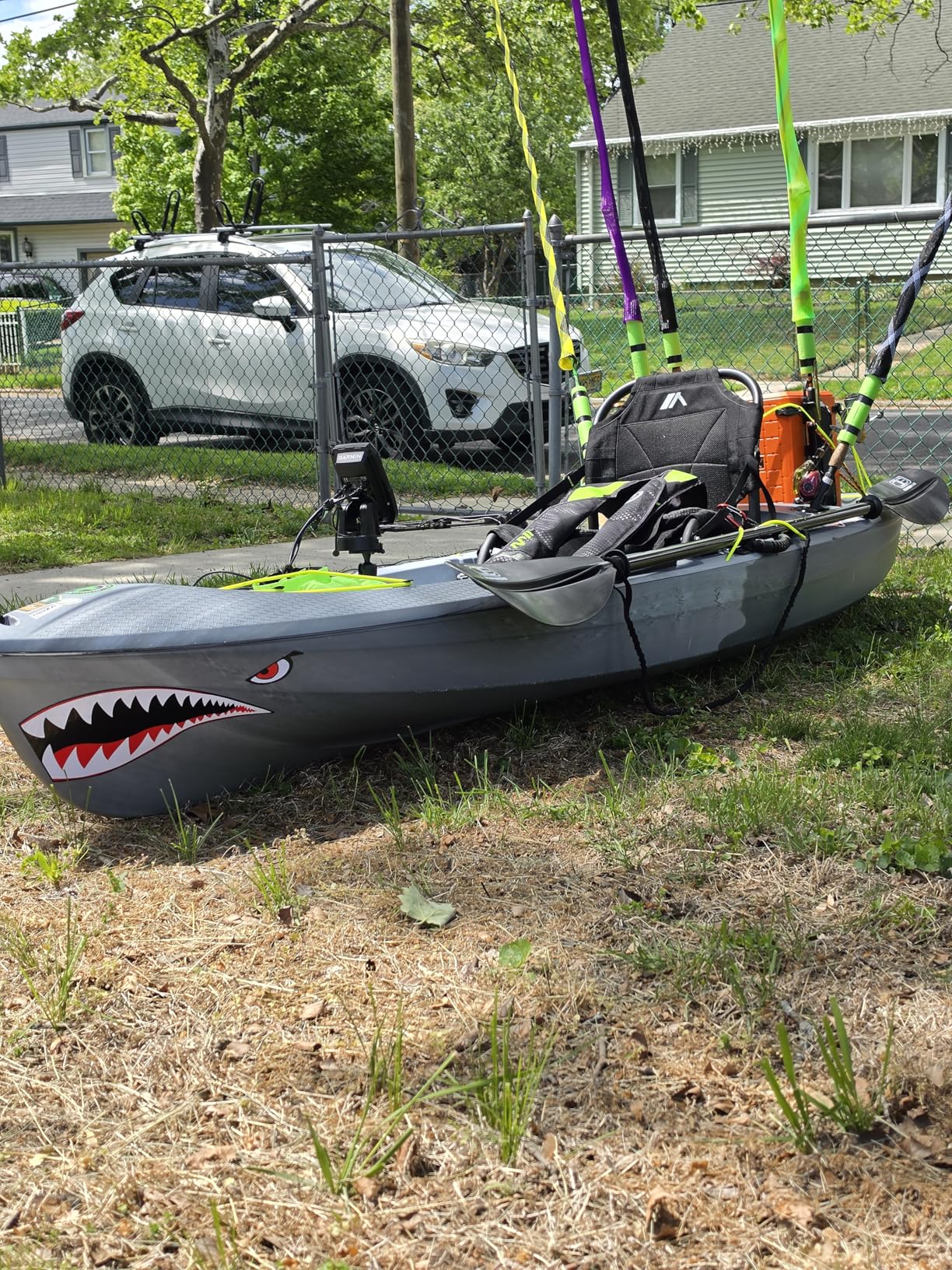
Blade angle locks into feathered 0 or 60 degree positions. For a long day on a wide fishing kayak, feathered is the setting to use for cruising coverage, and 0 degrees keeps the blades quiet when you are working close to overhanging cover.
The box includes a safety leash, a three-position angle lock and drip rings. Accessories arriving in the box is not universal among the budget paddles here, and several owners specifically call out leashes arriving separately on other models.
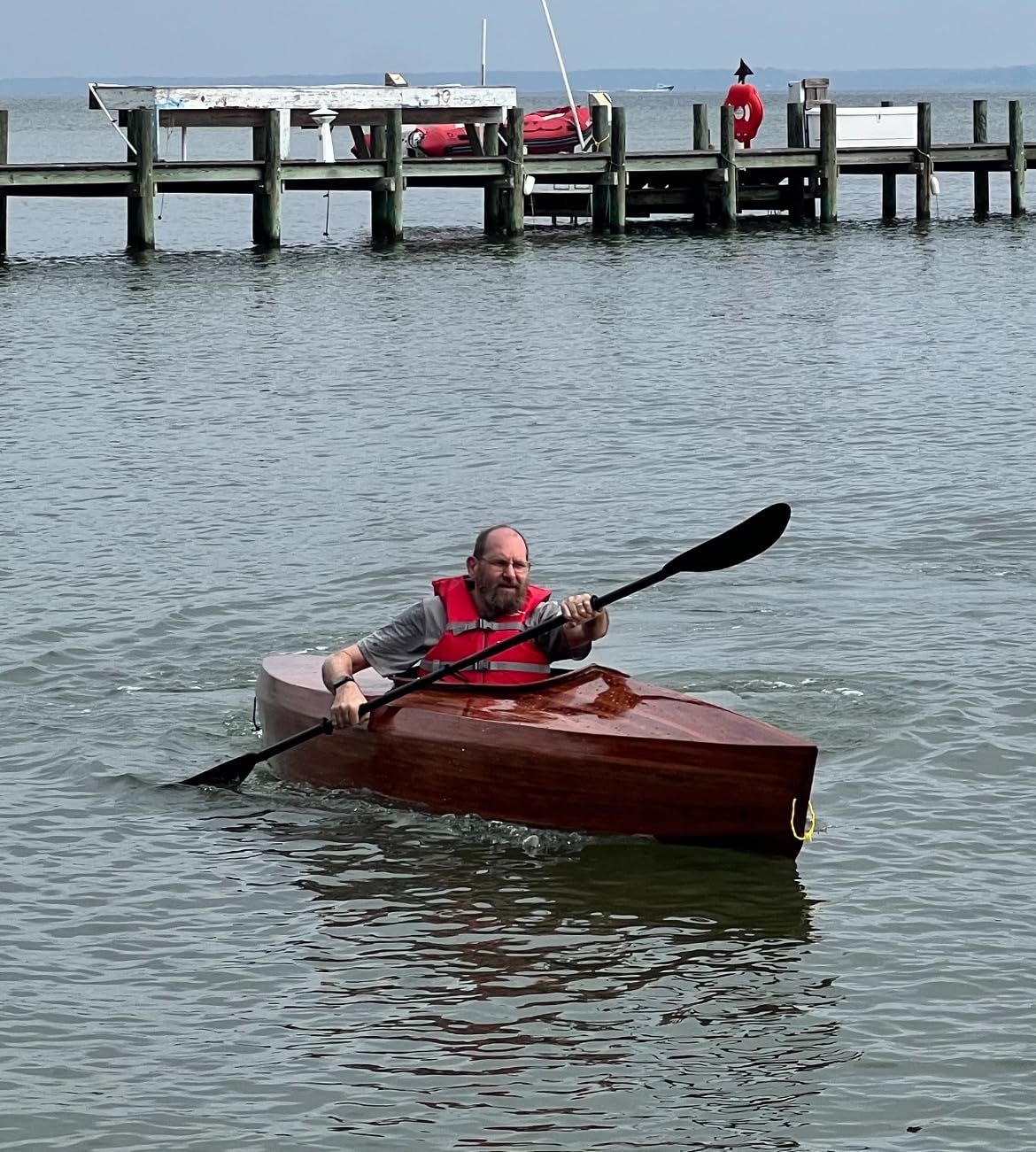
Who this OCEANBROAD paddle suits
It suits paddlers on narrower hulls who want carbon weight without a big budget, and anyone fishing a boat under 30 inches wide where a 220 cm paddle is the right starting length. It also suits owners who want the leash and drip rings sorted on day one.
It suits seasonal anglers who store gear in a hot vehicle, since the blades are described as UV resistant.
Who should skip it
Skip it if your hull is wide. The 220 to 240 cm adjustment range is the shortest of the carbon options here, and on a hull over 32 inches a short paddle costs you stroke count and blade clearance.
Skip it if build consistency matters most to you. Like the other carbon budget option in this group, it carries the highest share of one-star reviews, with complaints centred on carbon shaft and blade finish durability.
10. WONITAGO Angler Paddle: The One With a Measuring Scale on the Shaft
WONITAGO Angler Kayak Paddle Adjustable Fishing Kayak Oar with Paddle Leash
- Engraved 40 inch scale on the shaft for checking catch
- Blade hook for line and dock retrieval
- Length adjusts across 230-250 cm
- Holds up well in saltwater fishing use
- Length adjuster sits under the gripping hand
- Aluminum is heavy next to carbon options
The standout feature is the 40 inch scale engraved into the shaft. For anglers working to a slot limit or a state regulation, a ruler permanently attached to the paddle removes the most common excuse for keeping a fish. It is a small detail that changes how a whole morning of catching goes.
Length adjusts from 90 to 98 inches, or 230 to 250 cm, giving 20 cm of travel, and the shaft uses a 1.2 mm aluminum shell. That wall thickness is the thickest listed in this roundup, which reads as a deliberate choice for a paddle that will be used in salt water and pushed around in boat ramps.
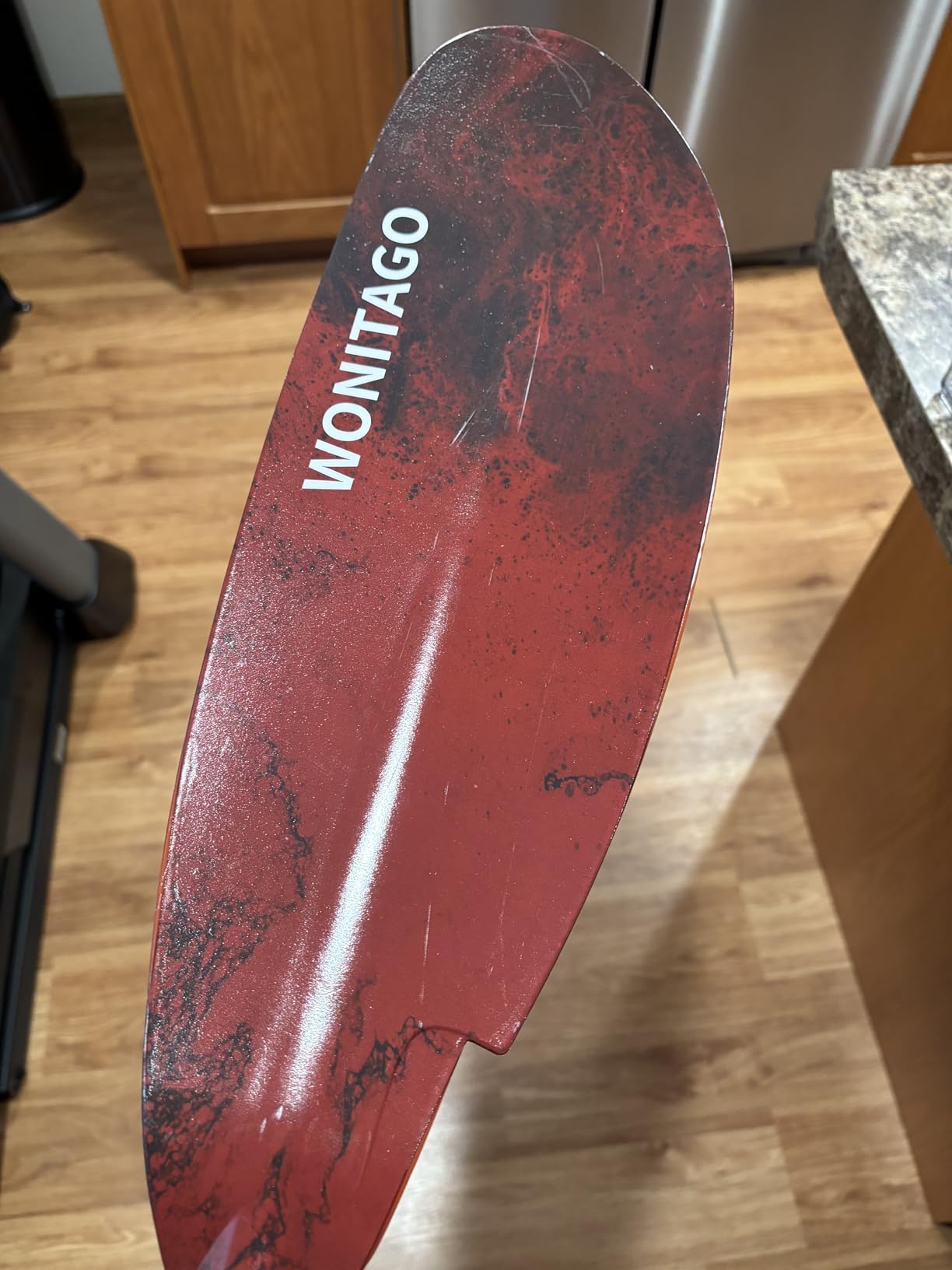
The blade hook handles line retrieval and grabbing a dock, and the blades float in both salt and fresh water. The three-piece design with a quick pin button lock packs down small, which suits anglers who launch from a crowded public dock rather than a private ramp.
Owners report the grip stays comfortable for full-day paddling, though the 2.64 pound total weight is the second heaviest here. On a slow trolling day that weight costs less than it would on a hard crossing, which is worth keeping in mind before you rule it out.
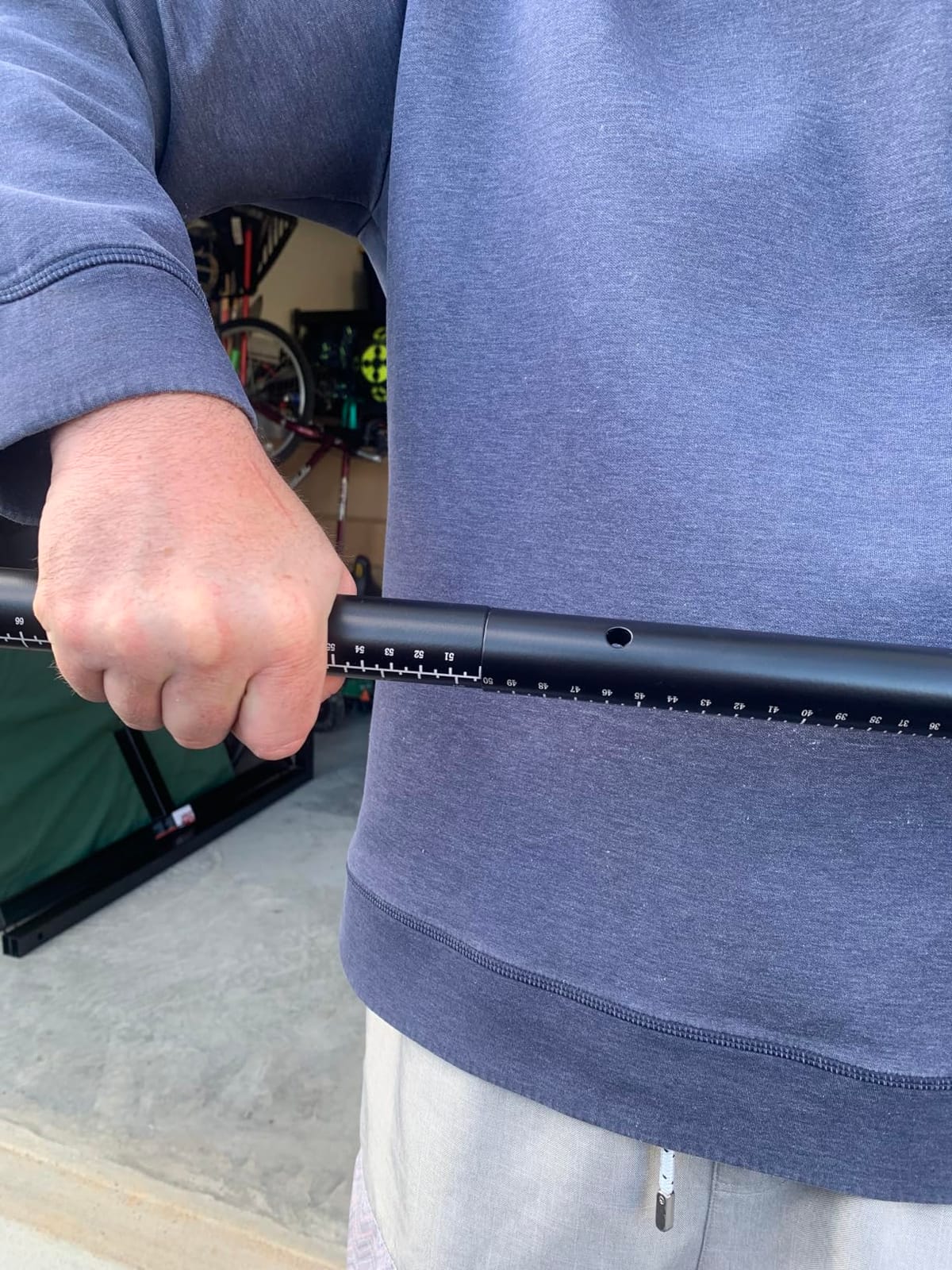
Who this angler paddle suits
It suits anglers who keep and measure fish, and who fish salt water where corrosion and hardware finish decide how long a paddle lasts. It also suits shared boats, since 230 to 250 cm covers most mid-size hulls from one paddle.
It suits paddlers who want a ruler and a retrieval hook but do not want to carry either as separate gear.
Who should skip it
Skip it if you have sensitive hands on the grip. The length adjuster sits where the hands hold the shaft, and owners report that it becomes uncomfortable over a full session.
Skip it if you want a light paddle for long days. An aluminum shaft at 2.64 pounds is around a pound more than the carbon options here, and that difference is felt most in the final hour.
11. OCEANBROAD Fishing Paddle: The Widest Adjustment Range Here
- Longest adjustment range here suits wide fishing hulls
- Stiff shaft with solid power and little flex
- Hook retrieval built into the blade
- Leash drip rings and three angle locks included
- Heavier than expected for casual paddlers
- Blades run small next to some rivals
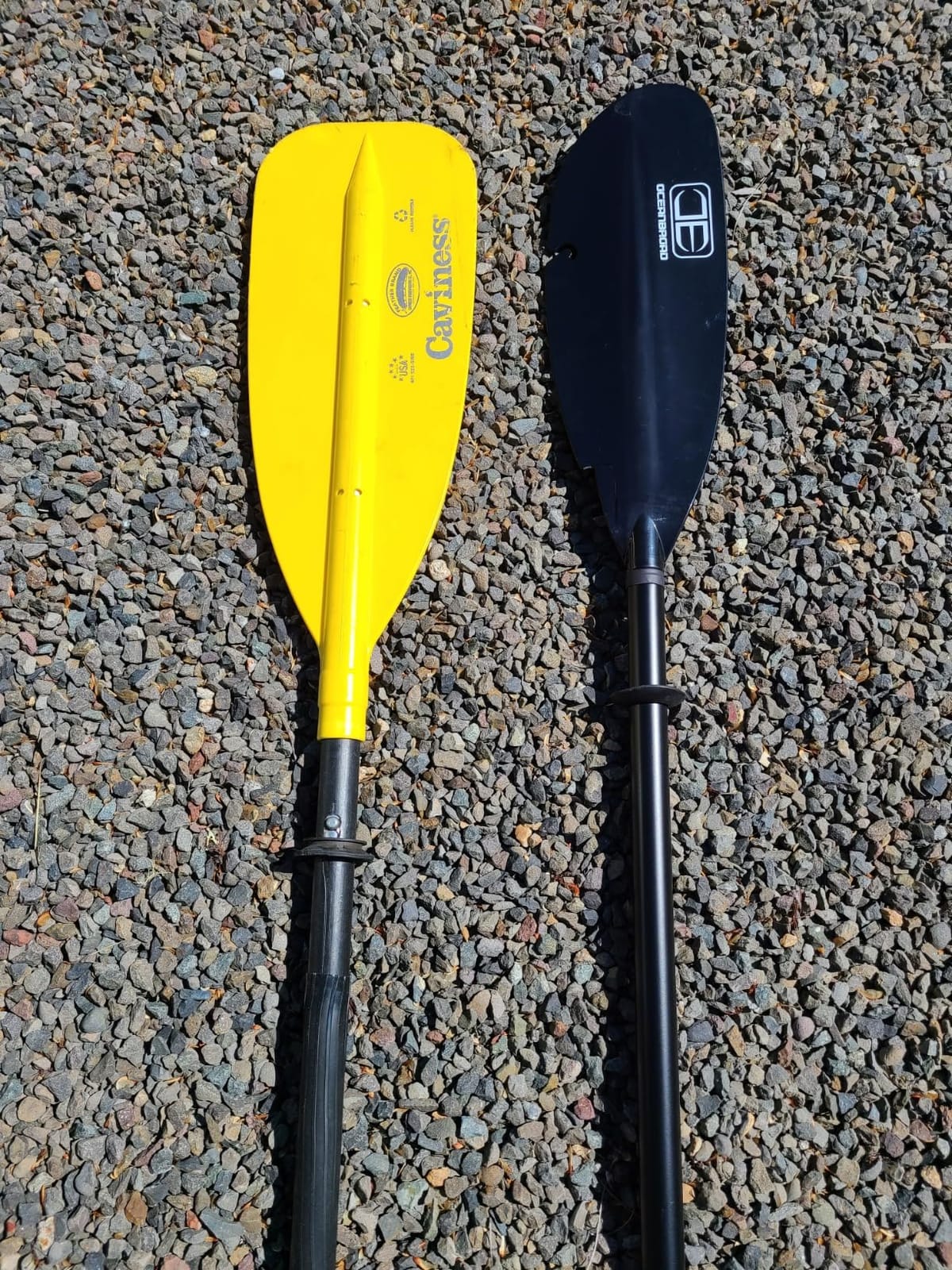
The headline number is 94 to 102 inches, or 240 to 260 cm, in 5 cm increments. If you have ever measured a wide fishing kayak and worked out that you needed more length than a standard adjustable paddle offered, this is the paddle designed for exactly that problem.
The shaft is aluminum alloy with a 1.1 mm shell and the blades are fiberglass-reinforced polypropylene. Owners describe the shaft as stiff and well made, giving solid power with very little flex, which is a real advantage when the hull is carrying a full load of tackle.
Three locking blade angle positions cover inline and feathered set-ups, and the integrated hook retrieval system in the blade handles the line rescue that anglers need most. A bungee paddle leash and drip rings are included, which covers the two accessories most often left out of a box.
The three-piece construction is straightforward to assemble at a launch and packs into a small vehicle. Several owners note that the light feel and smooth blade keep their joints from feeling achy through a long session, which is the standard we held every paddle here to.
Who this fishing paddle suits
It suits owners of very wide hulls who keep missing out on the length they need from cheaper adjustable paddles. Five-centimetre steps mean you can get close to the right reach without a custom cut.
It also suits anglers who want angler features and included accessories without moving up to a carbon shaft, and who prefer a stiff feel over a light one.
Who should skip it
Skip it if your hull is under about 30 inches wide, because the shortest setting here is still 240 cm. Owners also report the weight comes as a surprise for casual paddlers, and it is heavier than the carbon options.
Skip it if you want maximum blade area. Several reviewers note the blades run smaller than competing paddles, which means you need more strokes to cover the same distance.
12. Leader Accessories Adjustable Paddle: The One That Adjusts for Everyone in the Boat
Leader Accessories Adjustable Kayak Paddle 90-98in for Fishing Adults Blue
- Five length settings fit a range of paddlers
- Hook groove and 0-40 in shaft markings
- Effective drip rings plus an elastic leash
- Floating design makes retrieval easy
- Heavy at full extension at 2.6 lb
- No separate hand grips for cold or wet hands
This paddle runs from 90 to 98 inches, or 230 to 250 cm, across five length settings in 5 cm steps. The brand positions it for adults and youth sharing one boat, and that framing is accurate: the range covers a wide spread of paddler heights on hulls from a small sit-on-top up to a wide fishing platform.
The aluminum alloy shaft has a 1.1 mm shell and the double-sided blades are fiberglass-reinforced polypropylene. The long reach reduces the work per stroke, and owners note that a stiffer shaft means fewer aching joints over a long day even if the total weight is on the higher side.
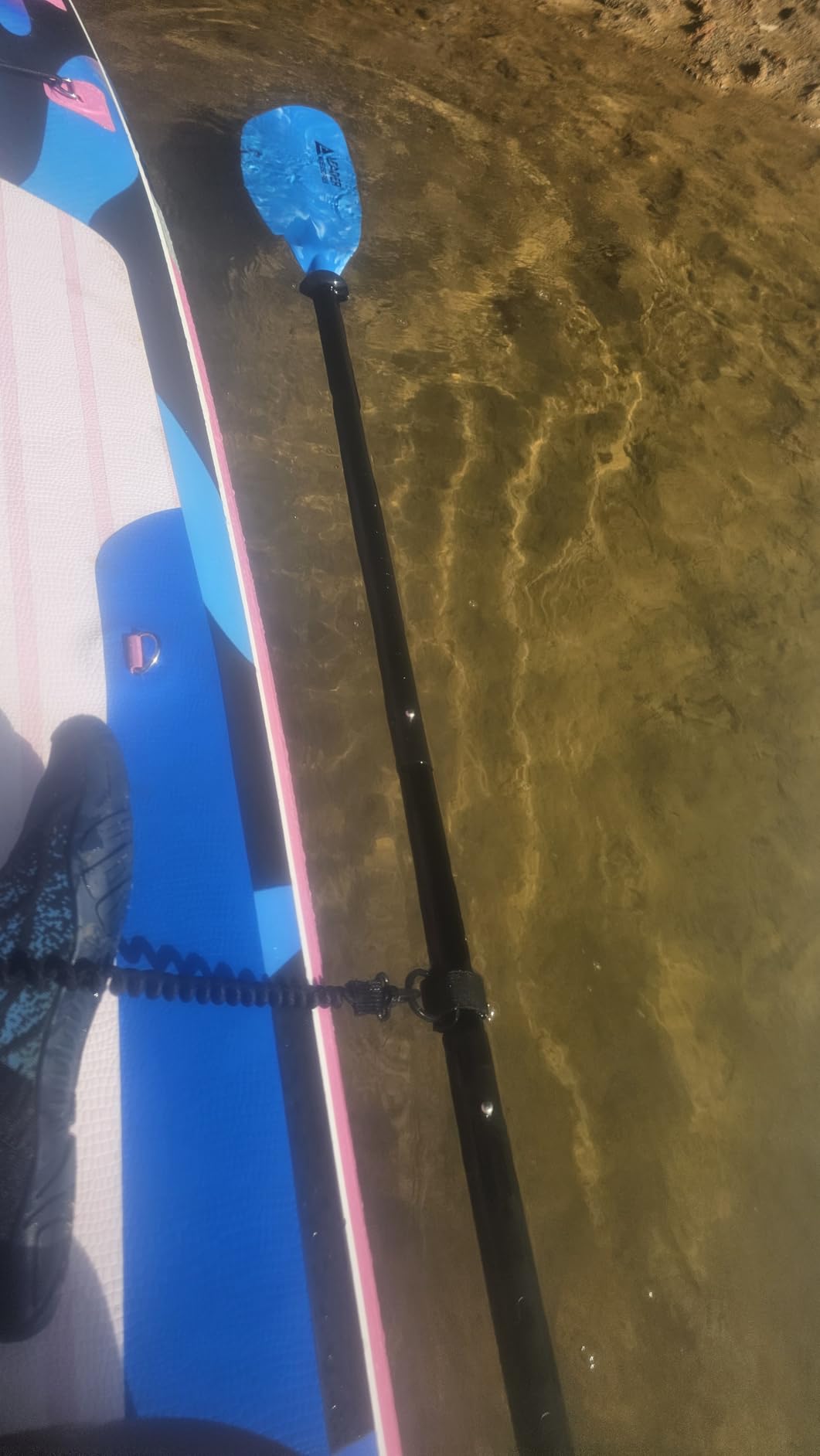
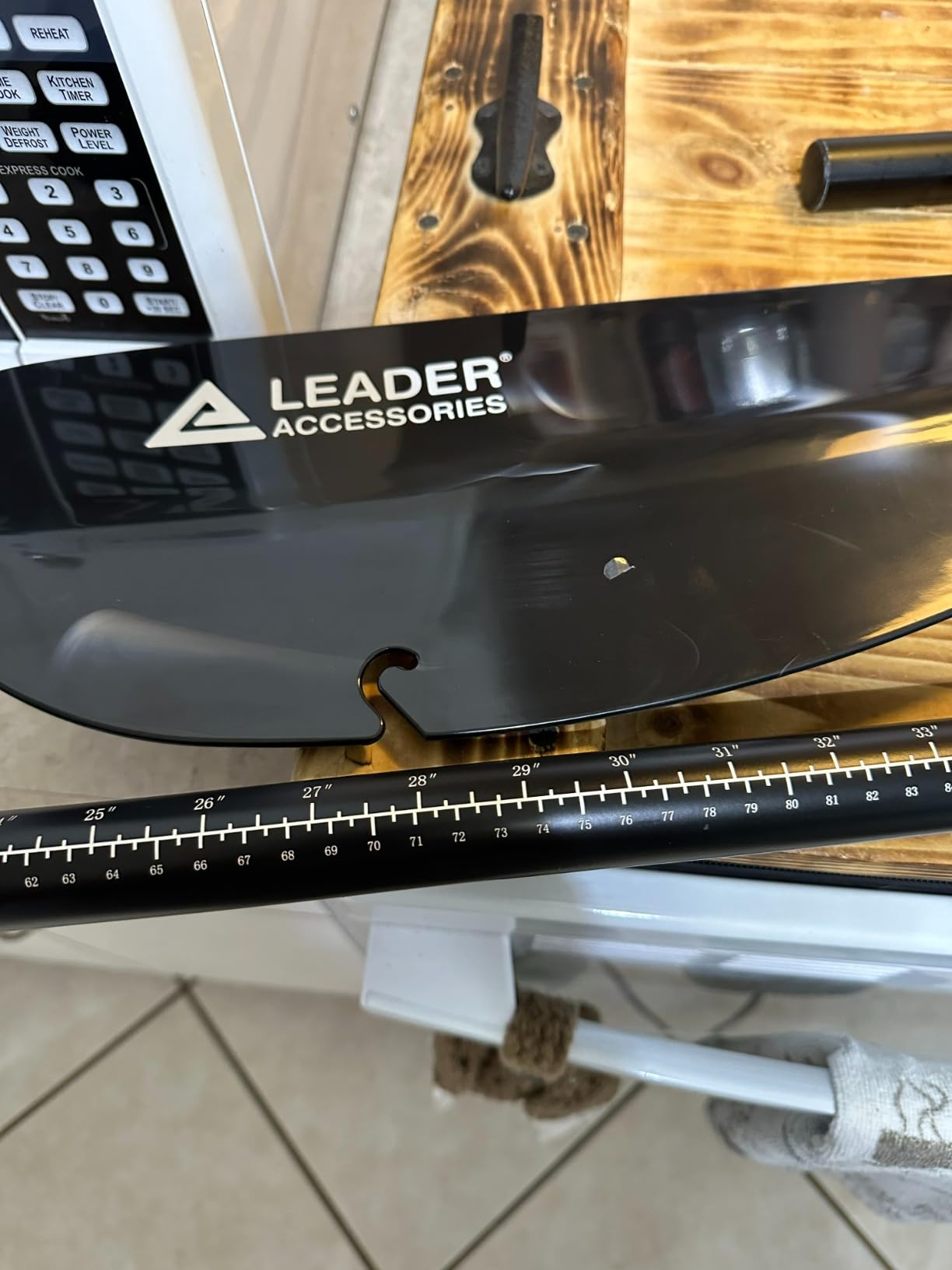
The angler touches are well chosen: a built-in hook retrieval groove on one blade and high-visibility 0 to 40 inch measurement markings along the shaft. Three locking positions for plus or minus 60 degree blade angles let you switch between feathered cruising and a quieter setup near cover.
Drip rings sit at both ends and an elastic leash is included. The floating three-piece design makes a dropped paddle easy to find, and the longest section measures 115 cm, which is short enough to fit behind most seats or in a side bag.
Who this paddle suits
It suits families and shared boats where two paddlers of different heights use the same hull, and it suits anglers who want a measuring scale and hook groove without buying separate accessories. It also suits anyone who fishes from a boat they store in a small vehicle.
It suits cold-water anglers less well only if you need bare shaft warmth, since there are no separate hand grips on this model.
Who should skip it
Skip it if you want the lightest paddle available. At 2.6 pounds and fully extended, owners report the weight is felt more than they expected, and it is the heaviest of the adjustable aluminum paddles here.
Skip it if you want a long paddle. The maximum setting is 250 cm, which falls short of what a hull over 34 inches wide usually wants.
Paddle Length Chart by Kayak Width and Paddler Height
Measure the beam width of your kayak, not the length. A 10 foot fishing kayak can be 33 inches wide, and it is the width that decides how long your paddle should be. Most anglers should measure across the widest point of the hull and match it to your height in the list below.
Under 23 inches wide: 205 to 215 cm for paddlers under 5 foot 5 inches, 215 to 220 cm for 5 foot 5 inches to 5 foot 11 inches, 220 cm for 5 foot 11 inches to 6 foot 3 inches, and 220 to 230 cm above 6 foot 3 inches.
23 to 28 inches wide: 215 to 220 cm for paddlers under 5 foot 5 inches, 220 to 230 cm for 5 foot 5 inches to 5 foot 11 inches, 230 cm for 5 foot 11 inches to 6 foot 3 inches, and 230 to 240 cm above 6 foot 3 inches.
28 to 32 inches wide: 220 to 230 cm for paddlers under 5 foot 5 inches, 230 cm for 5 foot 5 inches to 5 foot 11 inches, 240 cm for 5 foot 11 inches to 6 foot 3 inches, and 240 to 250 cm above 6 foot 3 inches.
Over 32 inches wide: 230 to 240 cm for paddlers under 5 foot 5 inches, 240 cm for 5 foot 5 inches to 5 foot 11 inches, 250 cm for 5 foot 11 inches to 6 foot 3 inches, and 250 to 260 cm above 6 foot 3 inches.
If you fall between two lengths, go shorter unless you have a short torso. A paddle that is slightly short is far easier to correct than one that is too long, which is the error that ends your day with aching shoulders.
Buying Guide: Matching a Paddle to Your Hull and Your Day
Start with shaft material
Aluminum is the durable, affordable default and it survives rock and root strikes better than the alternatives. Fiberglass sits in the middle, offering more flex absorption than aluminum at a moderate weight, and it is often warmer to hold. Carbon is the lightest and the most efficient, which is why it wins on long days, but it is more brittle after an impact and costs more.
For most anglers, fiberglass is enough. Carbon pays off if you log six or more hour days and cover real distance each session. If your fishing is mostly slow drift fishing within a mile of the launch, aluminum is a defensible choice and will outlast a carbon shaft.
Choose the blade angle to match your day
A low-angle blade sits closer to the shaft and is built for a relaxed sweeping stroke that uses your back and core. A high-angle blade sits further out and delivers more power per stroke for short, punchy efforts. Most of a fishing day is slow, steady, low-power paddling, which is exactly where low-angle wins.
Feathering rotates the two blades relative to each other, most commonly at 0, 30 or 60 degrees. A large feather angle reduces wind resistance on the recovery stroke, which matters when you are crossing open water or paddling into a breeze.
Decide between fixed and adjustable
A fixed-length paddle is stiffer and usually lighter, and it always looks and feels finished. An adjustable or telescoping paddle solves the fit problem on a wide hull and lets two paddlers share one boat, at the cost of a joint and a little weight.
If you fish from an adjustable-seat kayak, treat the paddle as adjustable too. Several of the paddles here extend far enough to cover both the low and high seat positions, which removes a common source of wrist and shoulder strain.
Pay attention to grip and shaft diameter
A standard shaft diameter suits most hands, but a smaller shaft helps paddlers with small hands or existing wrist problems. Ovalized or indexed shaft sections give the top hand a repeatable position, which stops hand placement drifting every time you stop to cast.
For cold water, wrapped or rubberized grips are worth more than most paddlers expect. Bare aluminum conducts cold straight into your palms and gloves, and cold hands end a long day early.
Do not skip the leash, drip rings and flotation
A paddle leash prevents a paddle going over the side in current or wind, and losing your only paddle means a swim and a walk. Drip rings keep water running down the shaft into your lap and gloves, which is the complaint that shows up most often in angler threads. Flotation, either internal blocks or floating blades, decides whether a dropped paddle sinks or surfaces.
Check what actually arrives in the box before you leave for the launch, because accessories are frequently listed and frequently absent. A pair of replacement drip rings is cheap insurance and takes a minute to fit, and keeping the rest of your day gear in something like a compact tactical backpack keeps it off the wet deck where it would otherwise sit in a puddle.
Frequently Asked Questions
What length paddle do I need for a 10 ft fishing kayak?
A 10 foot fishing kayak is usually 30 to 33 inches wide, so a 240 to 250 cm paddle suits a mid-height paddler and a 250 to 260 cm paddle suits someone taller than 6 foot 3 inches. Measure the beam width of your hull and match it to your height rather than using the length of the boat, because a 10 foot hull is often much wider than a 10 foot recreational kayak.
Is fiberglass or carbon fiber better for long days of kayak fishing?
Carbon fiber is lighter and stiffer, which cuts the effort of every stroke and is the better choice if you log six hour days or more. Fiberglass is heavier but absorbs shock better and is easier on your budget and your wallet after a rock strike. Most anglers are fine with fiberglass; carbon pays off when weight is the thing slowing you down in the last hour.
Why does my kayak paddle make my shoulders ache?
Aching shoulders on a long fishing day usually come from three things: a paddle that is too heavy, a paddle that is too short for a wide hull, or a blade angle that forces your arms to do the work. Check the weight first, then the length against your hull width, then consider a narrower low-angle blade and a feather angle of 30 to 60 degrees to reduce wind resistance on recovery.
Can I use a regular kayak paddle for fishing?
Yes, and many anglers do. A regular recreational paddle works fine if it is light enough and correctly sized for your hull. What a fishing-specific paddle adds is a hook retriever on the blade, a measuring scale on the shaft, backwater teeth for pushing off, adjustable drip rings, internal flotation, and blades reinforced to take hits from roots and brush.
Do pedal drive fishing kayaks still need a paddle?
They do. A pedal drive handles propulsion at cruising speed, but you still need a paddle for launching and beaching, for getting into and out of shallow water, for repositioning when the current or wind beats the drive, and for pushing off submerged timber. Most pedal owners carry a light adjustable paddle in the hull for exactly those jobs.
The Verdict: Which Fishing Kayak Paddle to Buy
For most anglers the Pelican Poseidon Angler is the pick: 250 cm, a stiff-enough aluminum shaft for a loaded hull, flotation blocks, a hook retriever and shaft tape, and the highest review volume in this group. If weight is your priority and you can live without angler features, the carbon two-piece at 30 to 32 ounces is the one that will leave you freshest at hour six.
Match the rest of the list by hull width. Under 28 inches, look at the carbon paddles around 220 to 230 cm. Between 28 and 32 inches, aim for 240 to 250 cm and choose between the telescoping fiberglass options. Over 32 inches, go to 250 to 260 cm and take the widest hull coverage on the list.
Measure your beam width first, then decide on the shaft material, then pick the feather angle. Check the latest details for your pick and get on the water.