

I still remember the first loaf of bread I baked with flour I milled myself. The difference in flavor, texture, and aroma was so striking that I never went back to store-bought flour. If you are serious about home baking, finding the best grain mills for home bakers is a decision that transforms everything you make in the kitchen.
Fresh-milled flour retains more nutrients and natural oils than pre-ground flour that may have sat on a shelf for months. The volatile compounds in wheat berries start oxidizing within hours of milling, which means the flour you buy at the store has already lost much of its flavor and nutritional value. When you mill on demand, you capture all of that freshness in every bake.
Our team spent weeks researching and comparing 8 grain mills across every category that matters to home bakers. We looked at electric stone mills, high-speed impact mills, manual hand-crank models, and budget options. We also dug into Reddit forums where real home millers share their unfiltered experiences, so our recommendations reflect what actual users say, not just spec sheets. Whether you bake sourdough weekly, want to grind gluten-free grains, or are simply curious about fresh-milled flour, this guide covers every option worth considering in 2026.
Top 3 Picks for Best Grain Mills for Home Bakers 2026
Not everyone has time to read through eight detailed reviews. If you want a quick recommendation, here are our three favorites based on different needs and budgets.
The Country Living Hand Grain Mill takes our Editor’s Choice spot for its incredible build quality and lifetime warranty. The NutriMill Harvest earns Best Value as a serious electric stone mill that balances price and performance beautifully. And the Victoria Manual Cast Iron Grain Mill is our Budget Pick for bakers who want to try fresh-milled flour without a big investment.

Country Living Hand Grain Mill
- Lifetime warranty
- Solid cast aluminum USA-made
- Adjustable from cracked grain to cake flour

NutriMill Harvest Stone Grain Mill
- 450W motor with corundum stones
- Patented texture control knob
- Pastry flour to cracked grain

Victoria Manual Cast Iron Grain Mill
- Heavy-duty cast iron
- Adjustable coarseness control
- Clamps to any table
Best Grain Mills for Home Bakers in October 2026
Before diving into the individual reviews, here is a side-by-side comparison of all 8 mills we tested. This table covers the key specs so you can quickly narrow down your options.
| Product | Specifications | Action |
|---|---|---|
| Country Living Hand Grain Mill |
|
Check Latest Price |
| NutriMill Harvest Stone Grain Mill |
|
Check Latest Price |
| Victoria Manual Cast Iron Grain Mill |
|
Check Latest Price |
 KitchenAid Grain Mill Attachment KitchenAid Grain Mill Attachment |
|
Check Latest Price |
 Kitchen Mill Electric Grain Mill Kitchen Mill Electric Grain Mill |
|
Check Latest Price |
 INSELY Grain Mill Grinder 2000g INSELY Grain Mill Grinder 2000g |
|
Check Latest Price |
 LEJIEYIN Grain Mill Grinder 750g LEJIEYIN Grain Mill Grinder 750g |
|
Check Latest Price |
 Corona Manual Grain Mill Corona Manual Grain Mill |
|
Check Latest Price |
1. Country Living Hand Grain Mill — Premium USA-Made Manual Mill
- Double sealed industrial grade ball bearings for smooth cranking
- Food grade powder coating on solid cast aircraft aluminum
- Made entirely in the USA with lifetime warranty
- Adjustable from cracked grain to cake flour fineness
- Very high price point compared to other manual mills
- Manual operation requires significant physical effort
- Limited stock availability
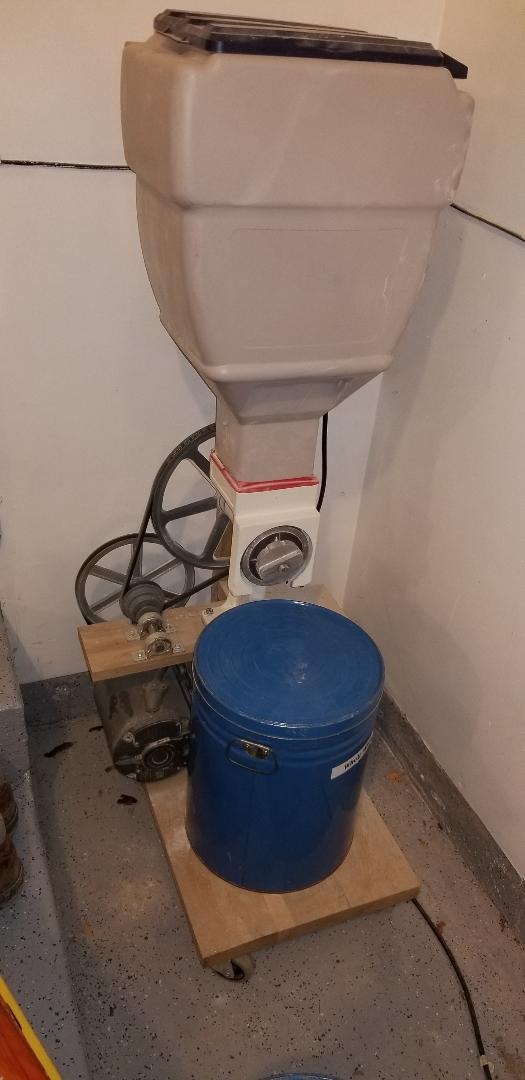
I have read forum posts from homesteaders and serious bakers who have used the Country Living Hand Grain Mill for decades without a single issue. This is the kind of tool you buy once and pass down to your kids. The double sealed industrial grade ball bearings make cranking noticeably smoother than cheaper manual mills, and the solid cast aircraft aluminum body feels indestructible.
What sets this mill apart from other manual options is its ability to produce genuinely fine flour. Most hand-crank mills max out at a medium grind, but the Country Living mill can be adjusted all the way down to cake flour fineness. That makes it suitable for real baking, not just cracking grains for cereal or animal feed.
The lifetime warranty tells you everything about the confidence behind this product. At 16 pounds, it has real heft and stays planted while you crank. You can mount it permanently on a countertop or use a clamp setup for flexibility.
The food grade powder coating is a nice touch that prevents aluminum from contacting your flour directly. I also appreciate that every part is replaceable and available directly from the manufacturer, which means this mill can genuinely last a lifetime with proper care.
On the downside, this is a manual mill and cranking enough flour for a loaf of bread takes real effort. If you bake multiple loaves per week, you might want to pair this with an electric option or consider a motorized upgrade kit that Country Living offers separately.
Best Use Case for the Country Living Mill
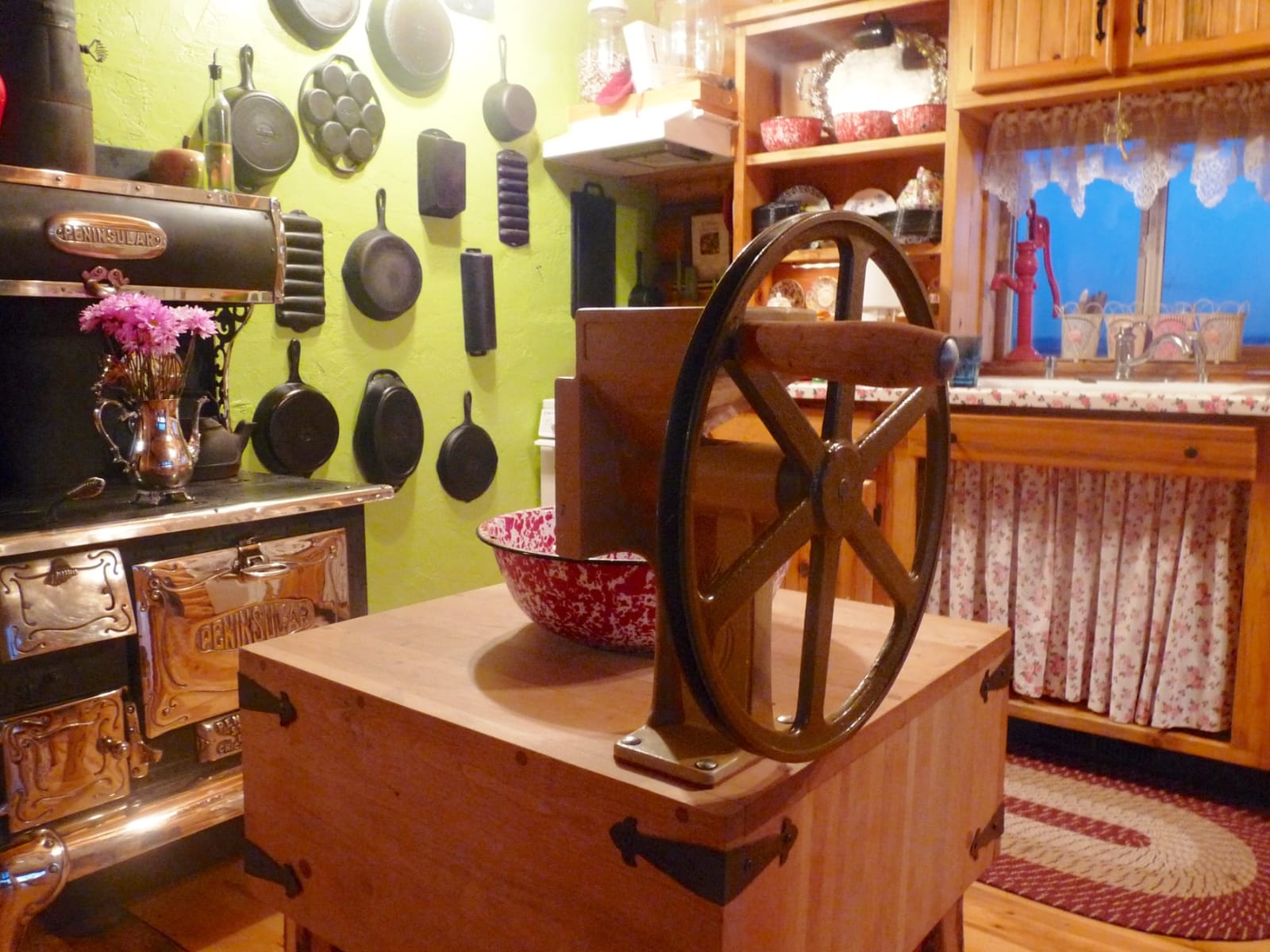
This mill shines for off-grid living, emergency preparedness, and homesteaders who want a reliable backup that works without electricity. It is also ideal for bakers who want the absolute best manual mill available and are willing to invest in quality that lasts forever. If you mill flour occasionally or want a hand mill as a secondary tool alongside an electric mill, this is the one to get.
Durability and Long-Term Value
With its lifetime warranty and all-replaceable parts, the Country Living mill offers unmatched long-term value despite its premium price. Forum users consistently report 10 to 20-plus years of reliable service. The initial investment stings, but when you amortize it over decades of use, the cost per year is actually lower than replacing cheaper mills every few years.
2. NutriMill Harvest Electric Stone Grain Mill — Best Electric Stone Mill for Home Bakers
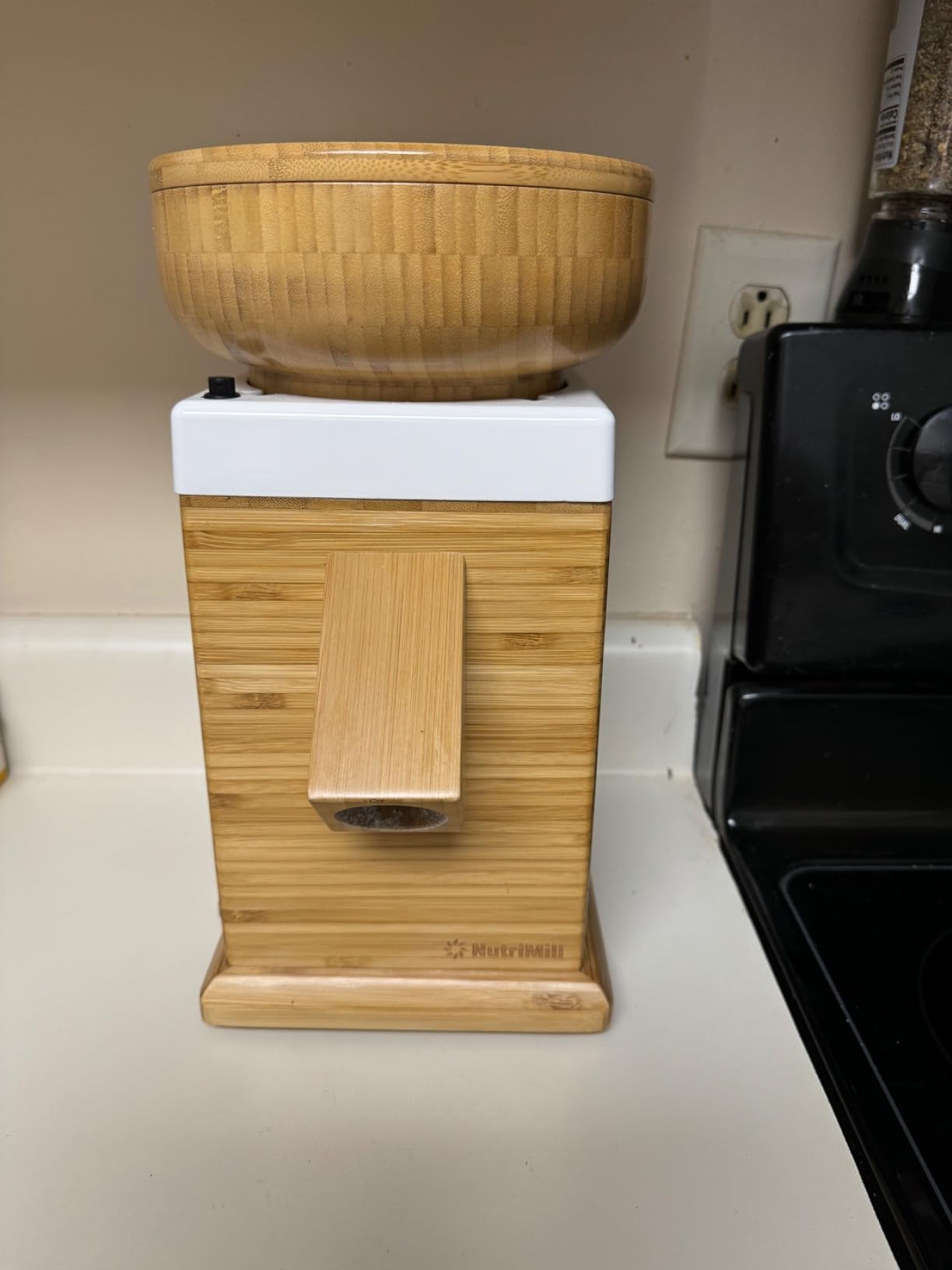
NutriMill Harvest Electric Stone Grain Mill, 450 Watt – Gold
- 450 Watt heavy duty motor with auto-shutoff thermal protection
- Near diamond hard Corundum Grainmaster milling stones from Germany
- Patented texture control knob for adjustable flour fineness
- Designed and assembled in the USA
- Heavy at 18.7 pounds
- Not Prime eligible
The NutriMill Harvest is the electric stone mill that serious home bakers keep recommending in forums. I have seen it described as the sweet spot between performance, flour quality, and price. The corundum Grainmaster milling stones are made in Germany and produce exceptionally consistent flour across the entire texture range.
What I love about this mill is the patented texture control knob. You can dial in everything from superfine pastry flour to coarse cracked grain with a simple adjustment. The 450 watt motor powers through hard wheat berries without breaking a sweat, and the auto-shutoff thermal protection means you do not have to worry about overheating during longer milling sessions.
With a 5 cup flour capacity, it handles enough flour for a couple of loaves in a single pass. The bamboo housing gives it a warm, attractive look that earns the spouse approval factor that forum users keep mentioning. It looks like a quality appliance, not an industrial machine.
The CSA listing gives peace of mind on the electrical safety front. At 18.7 pounds, it is definitely heavy, but that weight comes from quality components and helps keep the mill stable during operation. The corundum stones stay sharp for years and never need dressing like natural stone mills do.
Cleanup is straightforward since the milling chamber does not retain much flour dust. A quick brush after each use keeps things ready for next time. The one downside is that it is not Prime eligible, so shipping may take a bit longer.
Flour Quality and Bread Performance
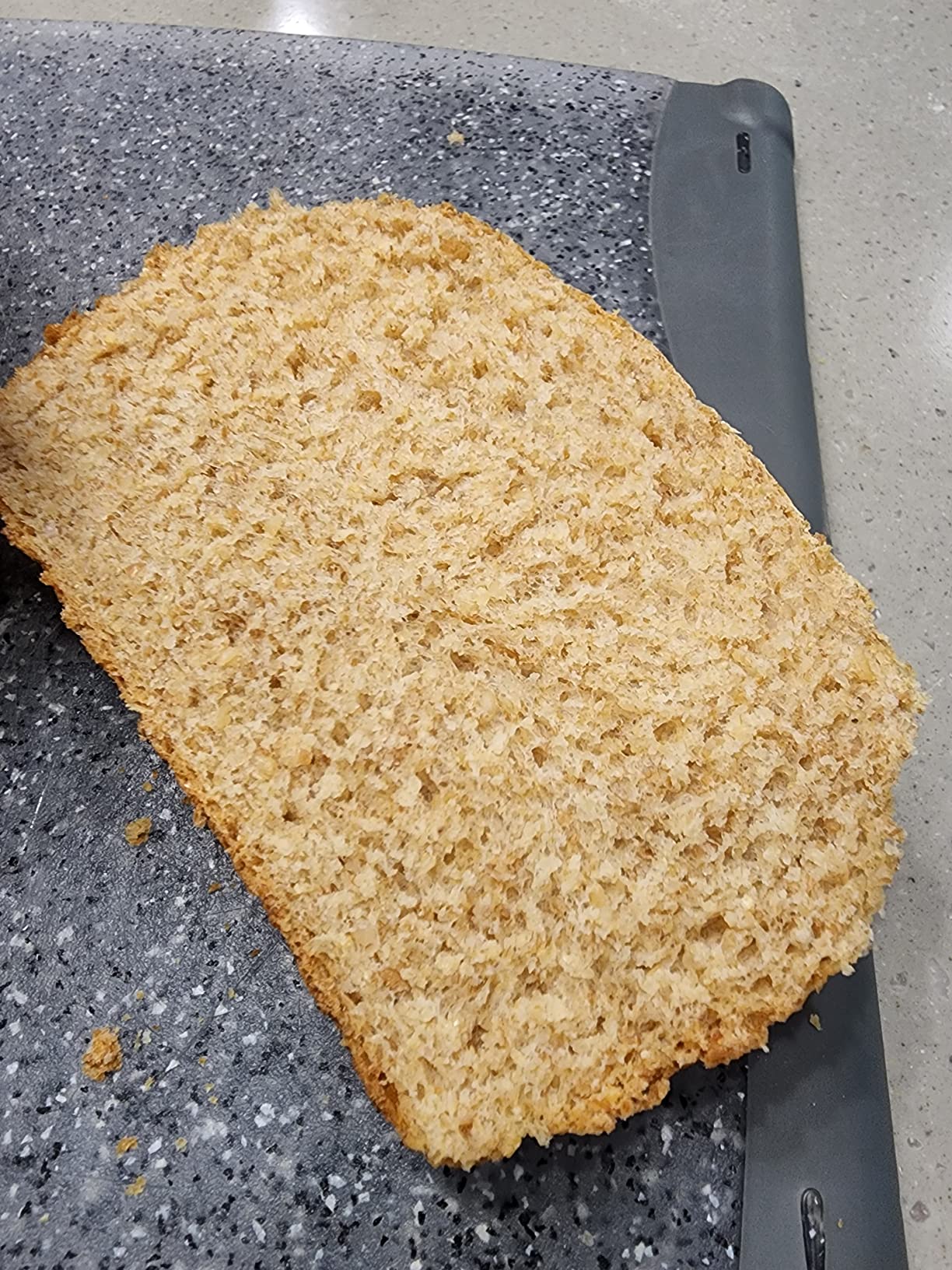
The stone-ground flour from the NutriMill Harvest produces noticeably better bread than flour from impact mills. Stone milling preserves more of the bran and germ, which translates to richer flavor and better nutrition in your sourdough and whole wheat loaves. Forum bakers consistently report superior oven spring and crumb structure when using flour from this mill.
How It Compares to the Competition
Against the Mockmill and KoMo mills that dominate the premium stone mill conversation, the NutriMill Harvest holds its own at a competitive price. It offers similar corundum stone technology and texture control, plus a more powerful motor than some competitors. The USA assembly and CSA certification are bonuses that many imported mills cannot match.
3. Victoria Manual Cast Iron Grain Mill — Best Budget Hand Mill
Victoria Manual Cast Iron Grain Mill 2400g with High Hopper
- Heavy-duty cast iron construction with double tin plating
- Adjustable screw for coarseness and fineness control
- Durable cast iron hand crank with wooden handle
- Clamps to most tables up to 2 inches thick
- Made in Colombia since 1939
- Manual operation requires physical effort
- Cannot grind to superfine pastry texture
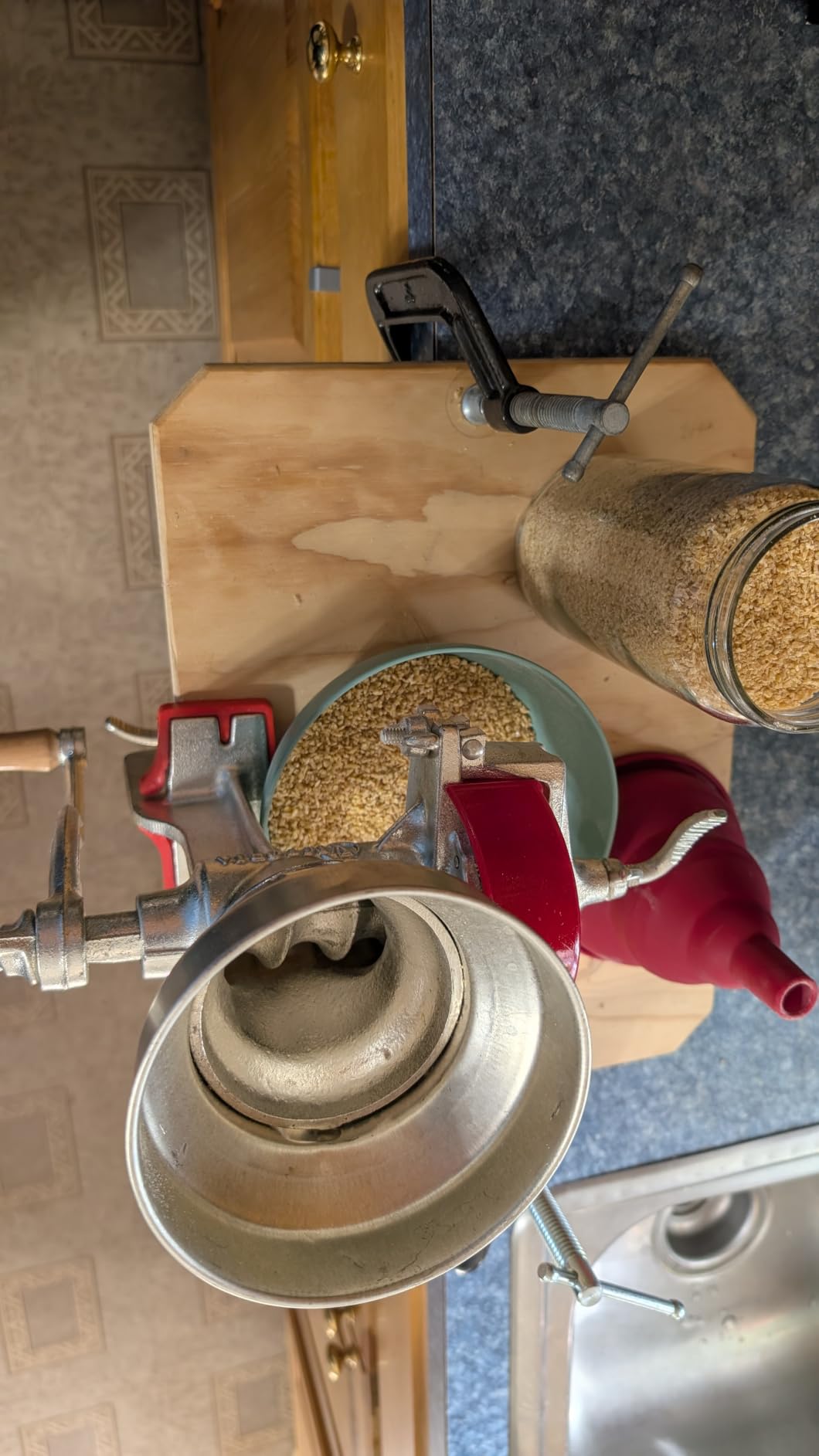
The Victoria Manual Cast Iron Grain Mill is the entry point that many home bakers start with, and for good reason. At a fraction of the cost of electric mills, it gets you into fresh-milled flour without a major investment. The double tin plating on the cast iron prevents erosion and keeps your flour clean.
I like that this mill is versatile beyond just wheat. Users on forums report successfully grinding corn, coffee, spices, and even nuts. The adjustable screw lets you control the coarseness, so you can produce everything from cracked grain for cereal to a medium-fine flour for rustic breads.
The wooden handle on the crank is a nice ergonomic touch that makes the grinding motion more comfortable. At 4.36 pounds, it is light enough to move around but heavy enough to feel sturdy when clamped down.

The clamp system fits tables from half an inch to 2 inches thick, which covers most kitchen countertops and tables. Just make sure your surface is sturdy enough, because the grinding motion generates some lateral force.
The biggest limitation is that this mill cannot produce superfine pastry flour. If you need fine, powdery flour for cakes and pastries, you will be disappointed. But for rustic breads, cornmeal, cracked grains, and general purpose flour, it does a solid job.
Ideal Setup and Mounting Tips
For the best results, mount the Victoria mill on a solid wood table or countertop edge. Avoid thin or wobbly surfaces, as the cranking motion needs a stable base. Some users recommend adding a rubber pad under the clamp to protect your table finish and reduce slipping. A dedicated mounting board that you can clamp in a vise is another popular approach.
What You Can Realistically Grind
This mill handles wheat, corn, rice, coffee, and most dry non-oily grains well. It struggles with oily seeds and very hard grains at fine settings. For home bakers focused on wheat flour and cornmeal, it delivers consistent results. If you want to expand into nut flours or oily spices, consider a dedicated blade grinder for those tasks.
4. KitchenAid KGM All Metal Grain Mill Attachment — Best Attachment Option
- Fits all household KitchenAid stand mixers
- Grinds low-moisture grains from coarse to fine
- All metal construction for durability
- Includes cleaning brush
- Hassle free 1 year warranty
- Only works with KitchenAid stand mixers
- Limited to low-moisture grains
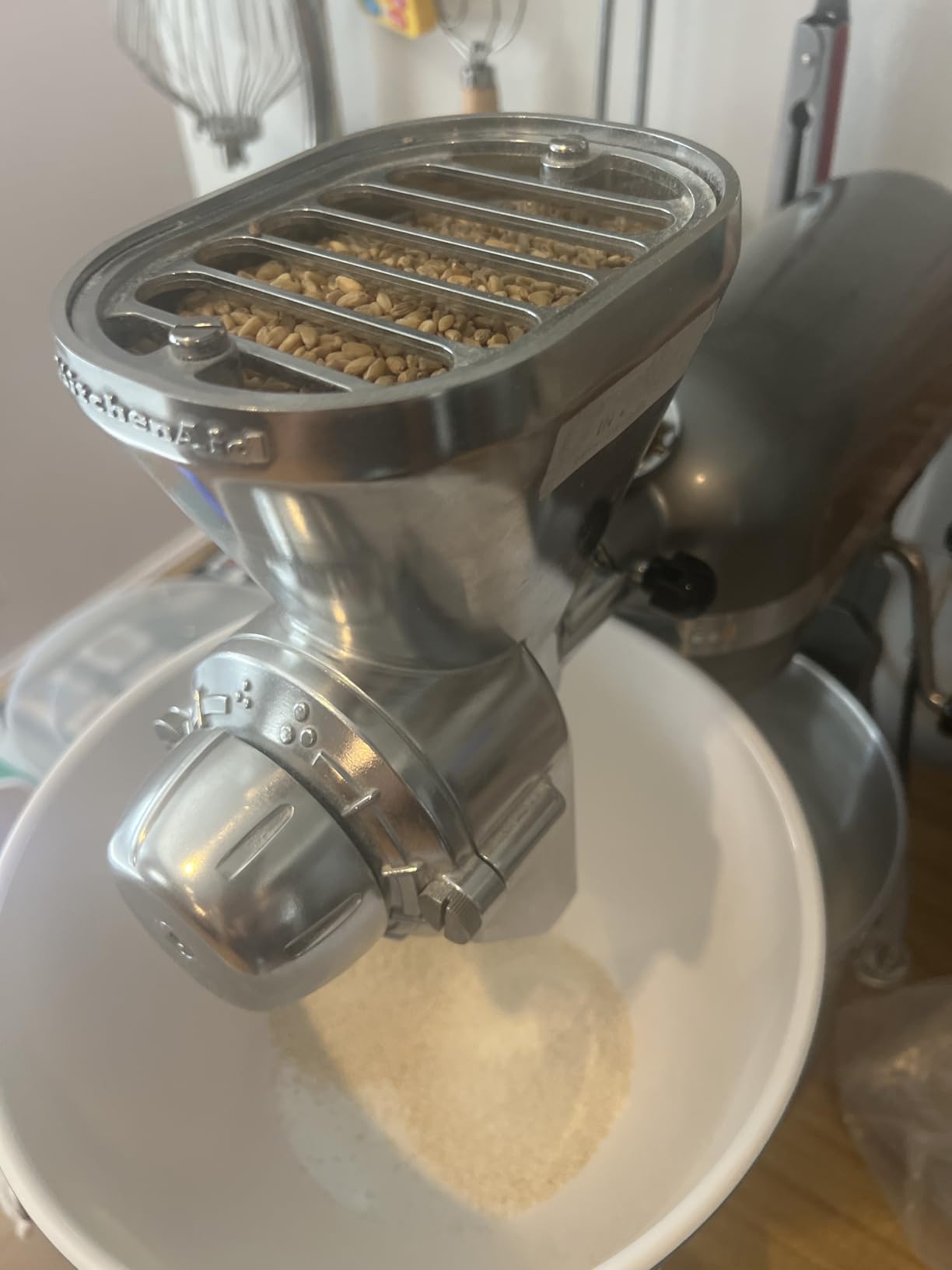
If you already own a KitchenAid stand mixer, the KGM grain mill attachment is a natural starting point for exploring fresh-milled flour. It attaches directly to the power hub of your mixer and uses the mixer motor to drive the grinding mechanism. I like that it does not take up additional counter space since it stores away in a drawer.
The all-metal construction feels solid and well-built. You can grind wheat, corn, rice, and other low-moisture grains from coarse to fine settings. The included cleaning brush makes maintenance straightforward.
However, I need to address the elephant in the room. Multiple forum users on r/Breadit and r/HomeMilledFlour have warned that this attachment can strain and even burn out KitchenAid mixer motors, especially on smaller or less powerful models. If you have a lower-wattage Artisan model, proceed with caution and grind in small batches with rest periods.
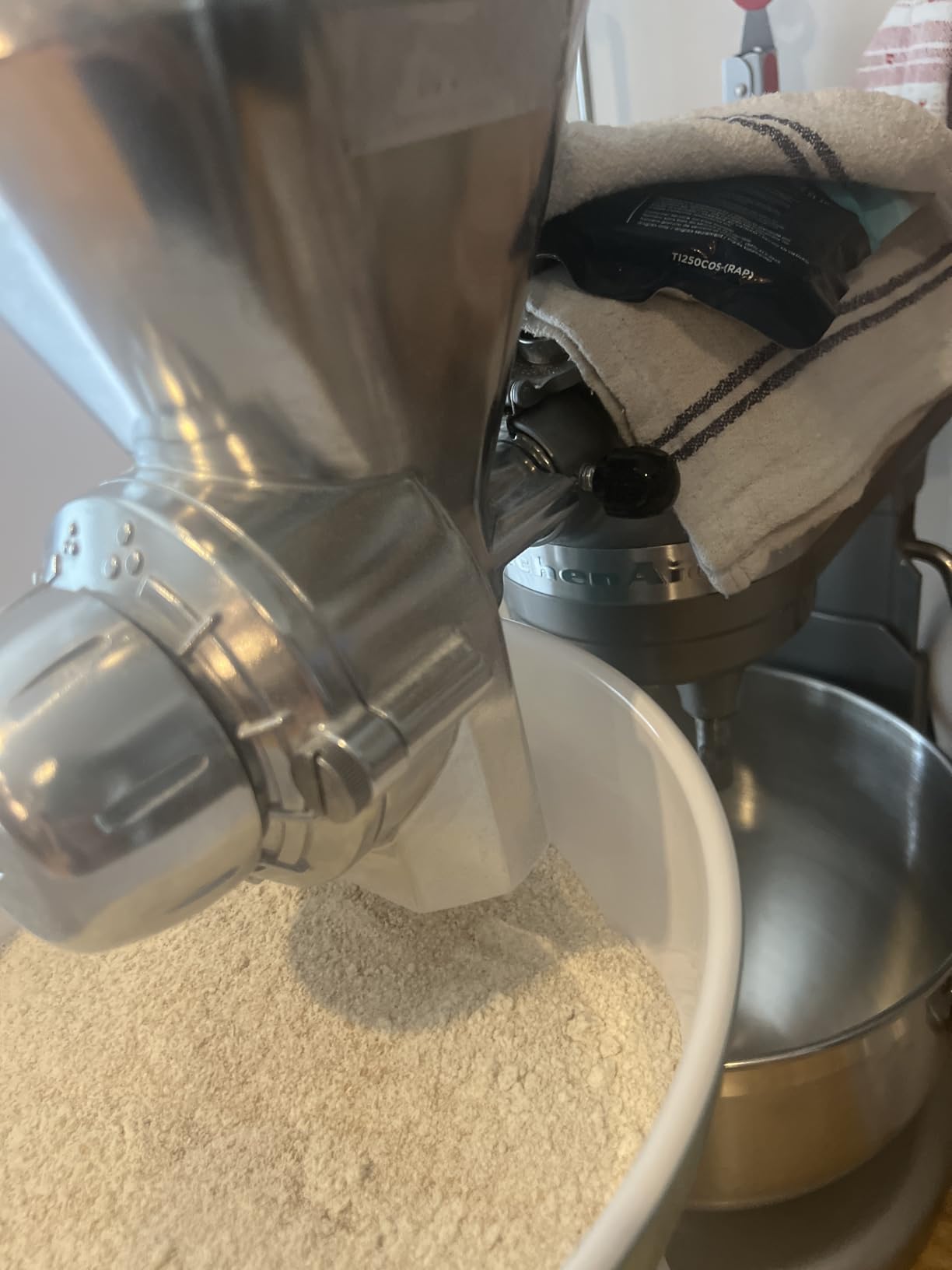
The grinding speed is slower than dedicated electric mills, and the texture range is more limited. You will not get pastry-fine flour from this attachment, but it produces a good medium-fine grind suitable for bread flour and cornmeal.
For occasional use, it is a convenient option that leverages equipment you already own. For regular or heavy milling, a dedicated grain mill is a better investment.
Mixer Compatibility and Power Requirements
This attachment fits all household KitchenAid stand mixers, but performance varies by model. The Pro 600 and Professional series with higher wattage motors handle grain milling much better than the smaller Classic or Artisan models. If your mixer has a motor under 325 watts, consider limiting your grinding sessions to small batches and allowing the motor to cool between uses.
When to Upgrade from the Attachment
Consider upgrading to a dedicated grain mill if you find yourself milling flour more than once a week, needing finer flour than the attachment can produce, or noticing your mixer getting hot during use. A dedicated electric mill like the NutriMill Harvest or Kitchen Mill will give you better flour quality, faster milling, and protect your mixer motor from unnecessary wear.
5. Kitchen Mill Electric Grain Mill — Compact High-Speed Impact Mill
- Produces up to 24 cups of natural flour in under ten minutes
- Stainless steel milling chamber that never gums jams or glazes
- Most compact and lightweight grain mill at 8 lbs
- Easy to clean design with bakers brush
- Proudly engineered and assembled in the USA
- Some users report motor overheating issues
- Price point higher than manual alternatives
The Kitchen Mill is a compact high-speed impact mill that punches above its weight class. With a 1000 watt commercial motor, it can produce up to 24 cups of flour in under 10 minutes, which is impressive for such a small machine. At just 7.6 pounds, it is one of the lightest electric mills on the market.
I appreciate the stainless steel milling chamber that never gums, jams, or glazes. This is a practical advantage over stone mills that can sometimes clog with oily or soft grains. The impact milling mechanism pulverizes grain into fine flour quickly and efficiently.
The compact footprint makes it ideal for kitchens with limited counter space. It stores easily in a cabinet when not in use, and the lightweight design means you can move it around without straining.
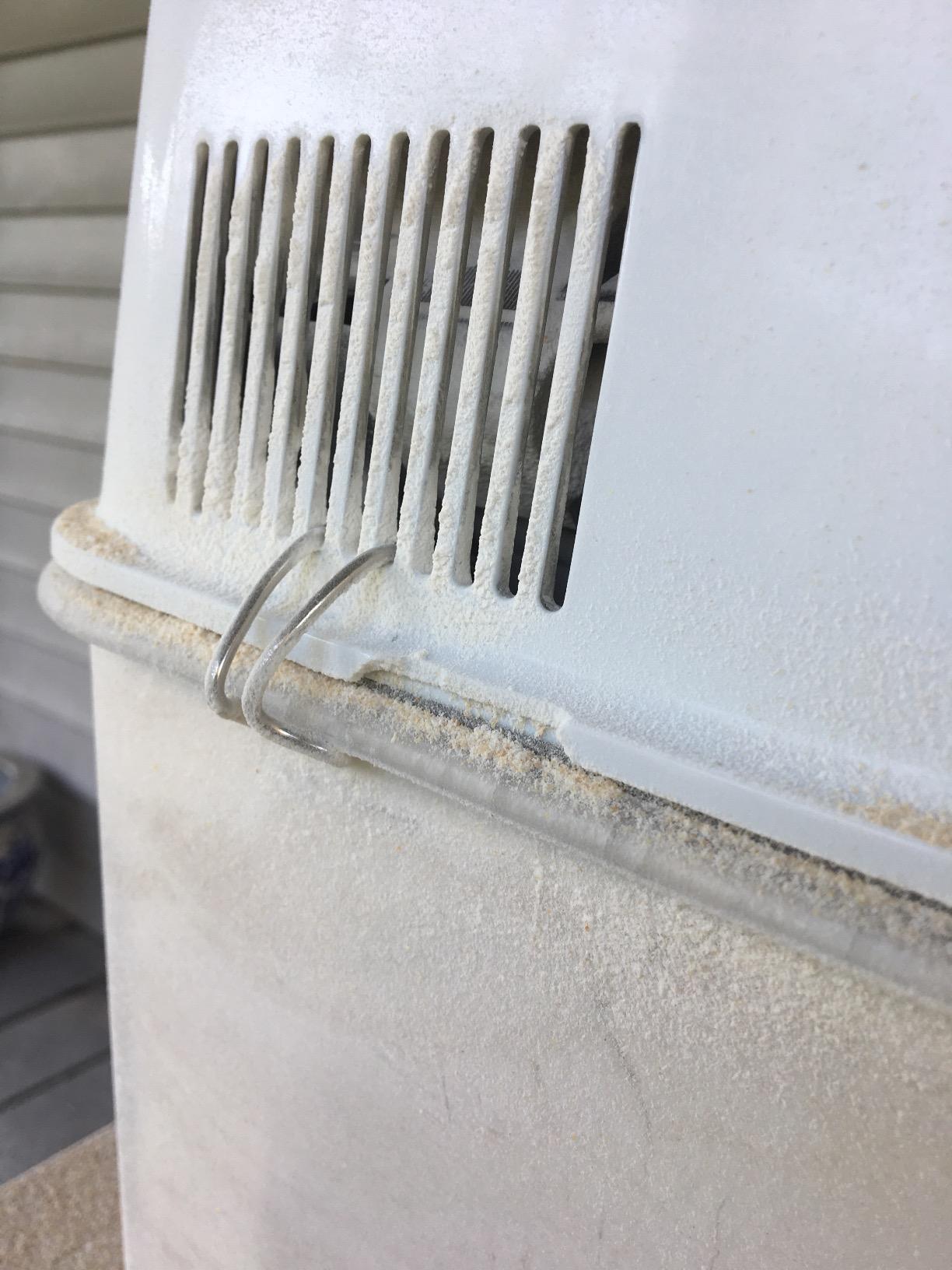
The warranty is strong, with an 8-year limited warranty on plastics and motor plus a lifetime warranty on the grinding mechanism itself. This shows real confidence in the core component of the mill.
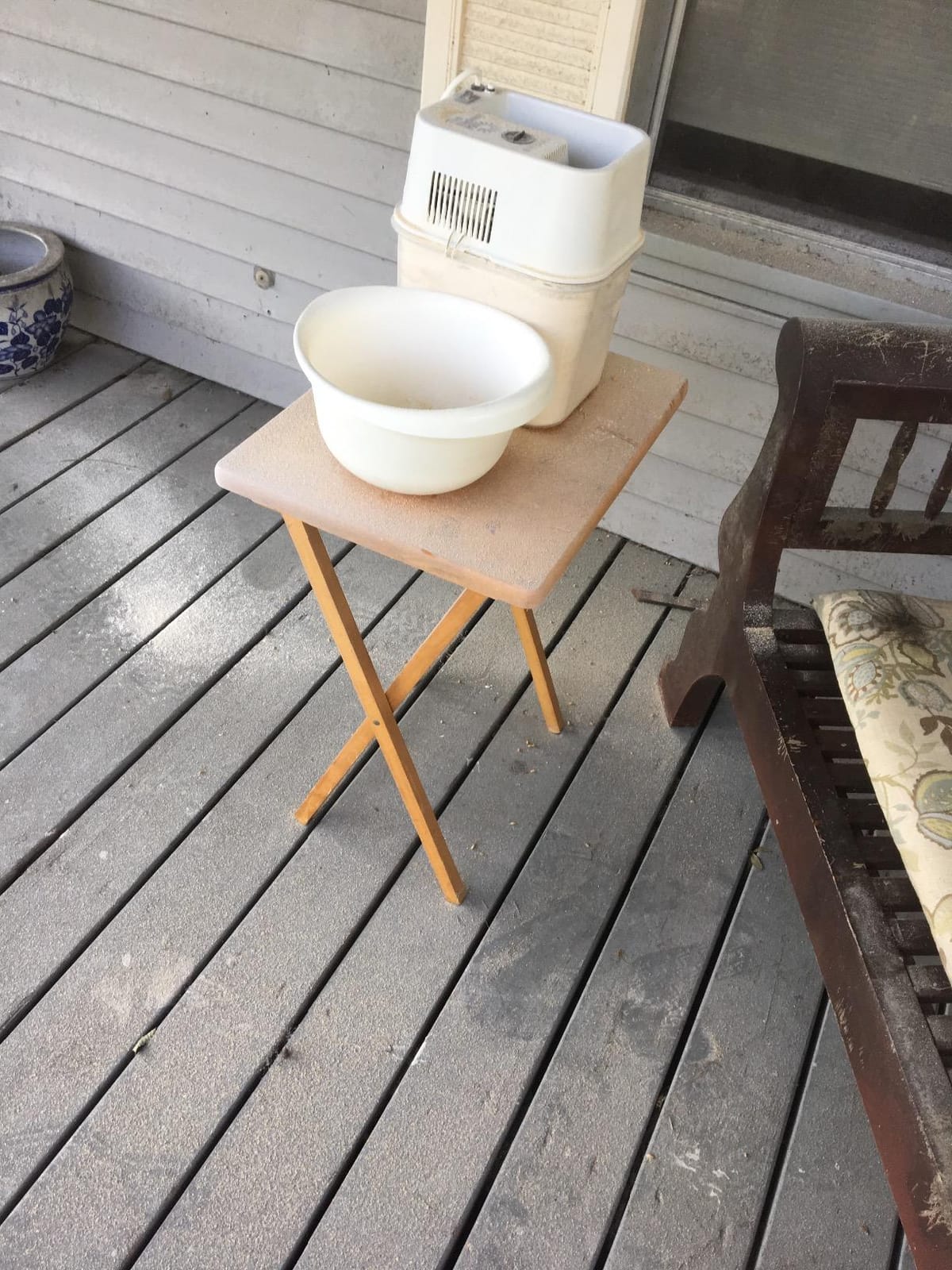
The main concern I found in reviews is motor overheating during extended use. Some users report needing to let the mill cool down between batches. If you are milling large quantities in one session, this could be a frustration.
Impact Milling vs Stone Milling
Impact mills like the Kitchen Mill use high-speed steel teeth to shatter grain kernels rather than crushing them between stones. This produces very fine flour quickly but generates more heat than stone milling. The flour quality is excellent for most baking purposes, though stone mill enthusiasts argue that the lower temperatures of stone milling preserve more nutrients and flavor compounds.
Storage and Cleanup
The Kitchen Mill is one of the easiest electric mills to store and clean. The compact size fits in a standard kitchen cabinet, and the stainless steel chamber wipes clean with a damp cloth or the included bakers brush. There are no stones to dress or complex assemblies to disassemble, making it a low-maintenance option for busy bakers.
6. INSELY Grain Mill Grinder 2000g — High-Power Electric Grinder
- Powerful 3600W motor with high speed grinding
- Large 2000g capacity
- Produces fine consistent powder in under a minute
- Comes with extra blades and carbon brushes
- Versatile for grains spices herbs and coffee
- Tends to overheat after 2 to 3 minutes of continuous use
- Requires 5 to 10 minute cool down breaks
- Can only process small batches at a time
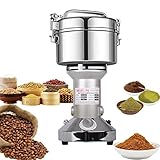
The INSELY Grain Mill Grinder is a high-power blade grinder that blurs the line between grain mill and spice grinder. With a 3600 watt motor spinning at 25,000 RPM, it can reduce dry grains to fine powder in under a minute. The 2000g capacity is generous for this type of grinder.
I found that this grinder excels at producing very fine powder across a wide range of materials. Users report success with wheat, corn, rice, soybeans, coffee beans, spices, and herbs. The fineness range of 50 to 300 mesh covers everything from coarse meal to fine pastry-grade powder.
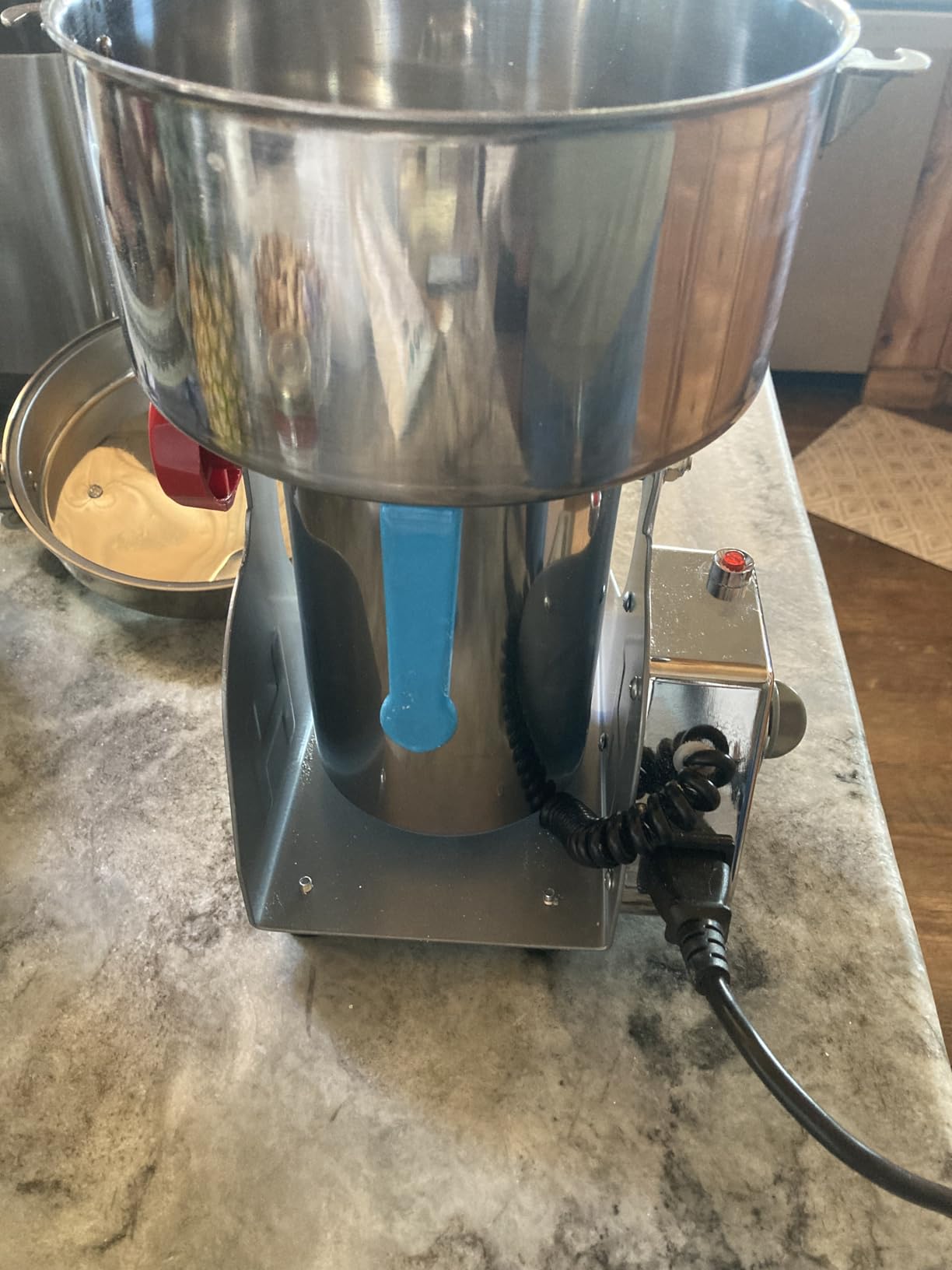
The included accessories are a strong value proposition. You get 4 spare blades, 2 spare carbon brushes, a sleeve, flour sieve, and cleaning brush. This means you can maintain and repair the grinder yourself without ordering additional parts.
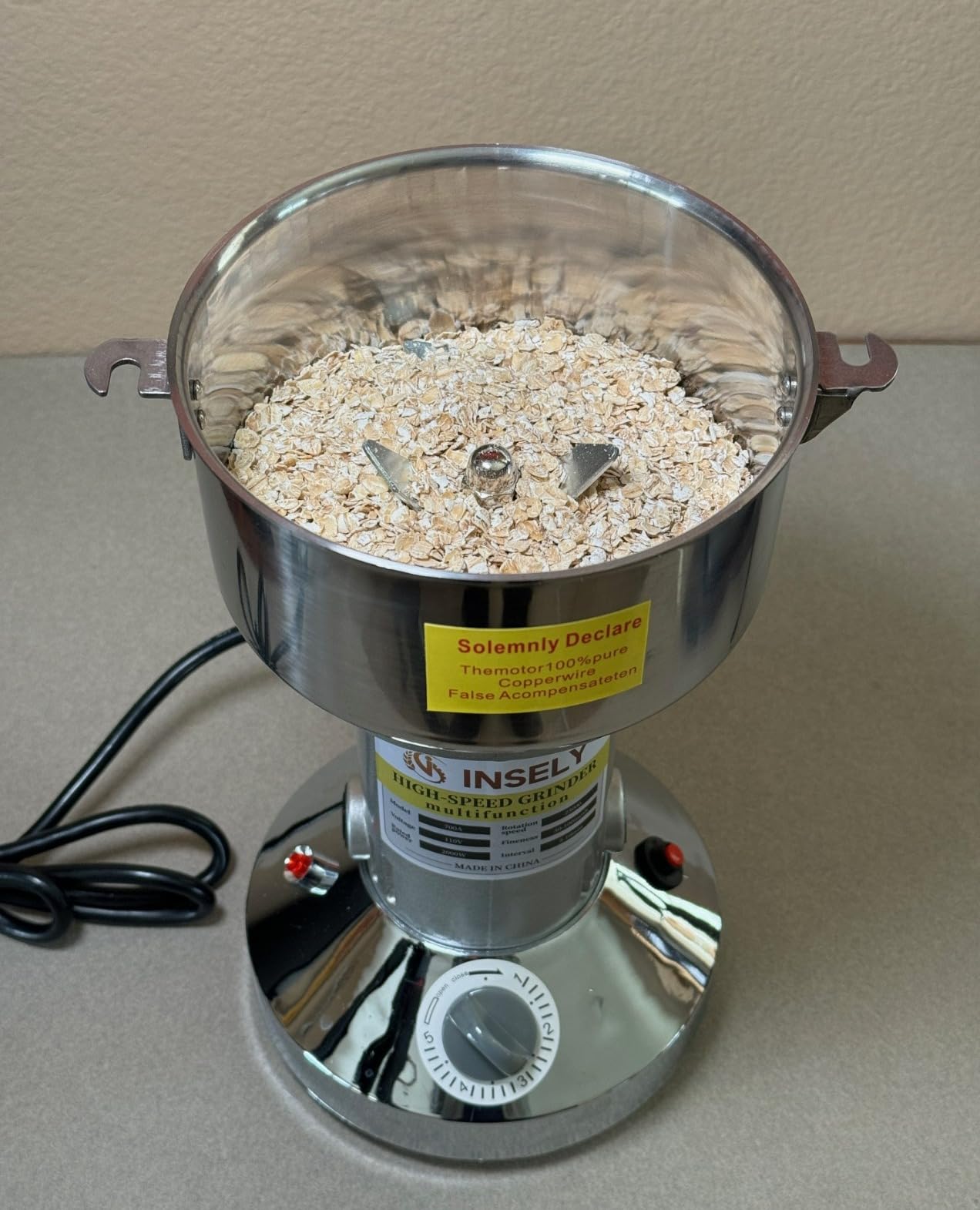
However, there is a significant caveat. This grinder is designed for short bursts of 2 to 3 minutes maximum, after which it needs a 5 to 10 minute cool-down period. This makes it unsuitable for milling large quantities of flour in a single session.
Some users also report a plastic smell during the first few uses, which typically dissipates after the motor breaks in. The safety auto-shutoff protection prevents overload damage, which is a reassuring feature.
Best Applications Beyond Wheat Flour
This grinder truly shines when used as a multi-purpose kitchen tool. Beyond wheat flour, it handles dried spices, dried herbs, coffee beans, and dried legumes with excellent results. If you want one machine that can grind flour, make spice blends, and prep coffee, the INSELY offers good versatility at a reasonable cost.
Understanding the 3-Minute Limitation
The duty cycle limitation means you should plan your milling sessions accordingly. For a typical sourdough bake requiring 500 grams of flour, one 2-minute session is sufficient. If you need multiple kilograms, expect to spread the work across several sessions with cool-down breaks. This is a tradeoff for the high power output at this price point.
7. LEJIEYIN Grain Mill Grinder 750g — Budget High-Speed Grinder
- Powerful 2000W motor with 25000 RPM speed
- Stainless steel food-grade construction
- Multi-purpose for grains spices herbs and coffee
- Overload auto shutoff for safety
- Triple blade system for efficient grinding
- Dry materials only no wet or oily grains
- Not Prime eligible
- Recommended use time only 3 minutes continuous
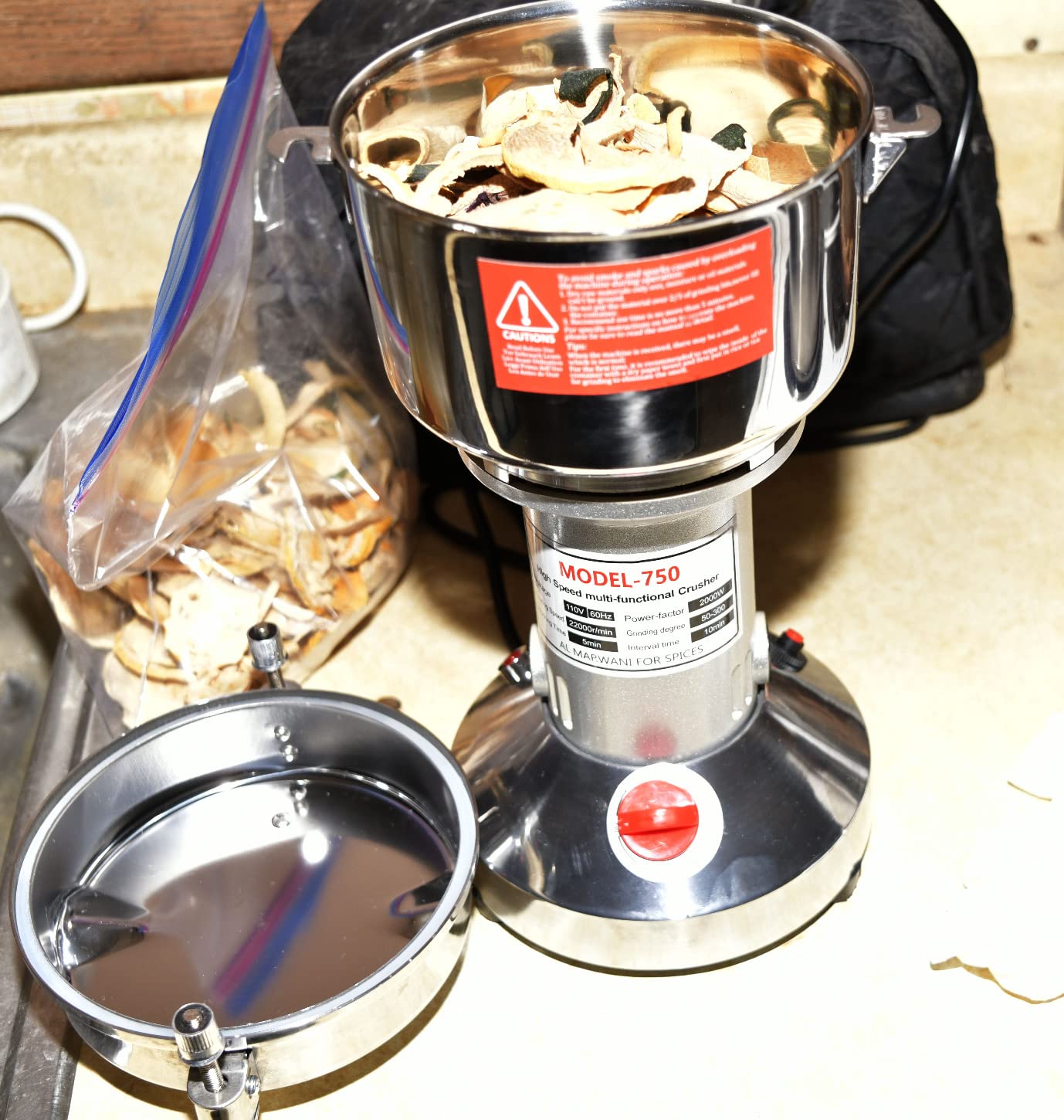
The LEJIEYIN Grain Mill Grinder is the smaller sibling of the INSELY, offering similar blade-grinding technology in a more compact and affordable package. With a 2000 watt motor and 750g capacity, it targets home bakers who need a budget-friendly electric option.
The triple blade system is designed for efficiency, with a grinding blade, rotary blade, and powder removal blade working together. This design helps move material through the grinding chamber and produces consistent results across the 50 to 300 mesh fineness range.
I like that the stainless steel construction is food-grade and easy to clean. At 8 pounds, it is reasonably portable and does not take up much counter space at 7.5 by 7.5 by 14 inches.
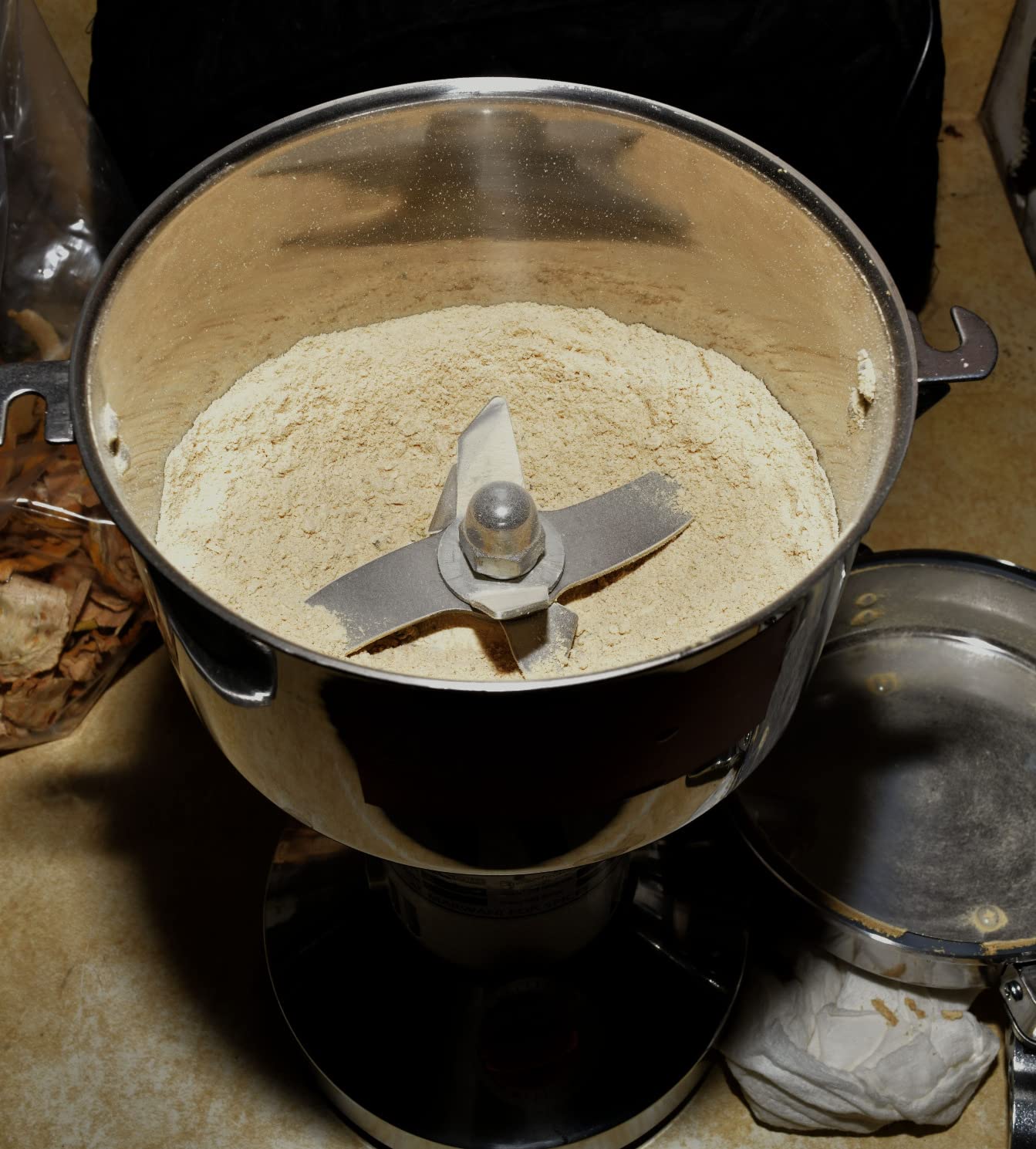
Like the INSELY, this grinder has a 3-minute continuous use limit. The overload auto-shutoff protection is a safety feature that prevents motor damage if you push beyond the recommended duty cycle.
The main limitation is that it handles dry materials only. You cannot use it for oily grains, wet ingredients, or anything with high moisture content. This rules out nut butters and oily seeds.
Comparing to the INSELY 2000g
The LEJIEYIN offers the same motor power and grinding technology as the INSELY but with less than half the capacity at 750g versus 2000g. If you typically mill small batches of a few hundred grams at a time, the LEJIEYIN is sufficient. For larger batches, the INSELY’s bigger capacity reduces the number of grinding cycles needed. The LEJIEYIN comes at a lower price point, making it the better choice for budget-conscious occasional users.
What Grains and Materials Work Best
This grinder handles dry wheat berries, corn, rice, dried beans, coffee beans, dried spices, and dried herbs. The fineness you achieve depends on how long you run each batch. A 30 to 60 second cycle typically produces fine flour, while shorter bursts give you coarser meal. Avoid anything moist, oily, or sticky, as these will gum up the blades and chamber.
8. Corona Manual Grain Mill — Traditional Colombian Cast Iron Mill
- Authentic Corona grain mill crafted in Colombia
- Heavy-duty cast iron with food-safe tin plating
- Adjustable from coarse to fine textures
- Complete hand crank mill kit included
- Stable countertop clamp for steady grinding
- Versatile for corn wheat rice coffee spices
- Manual operation requires physical effort
- Smaller capacity compared to electric mills
The Corona Manual Grain Mill is a traditional Colombian cast iron mill that has been a staple in home kitchens for generations. With a 4.5 star rating from 435 reviews, it has earned strong customer satisfaction for its durability and consistent performance.
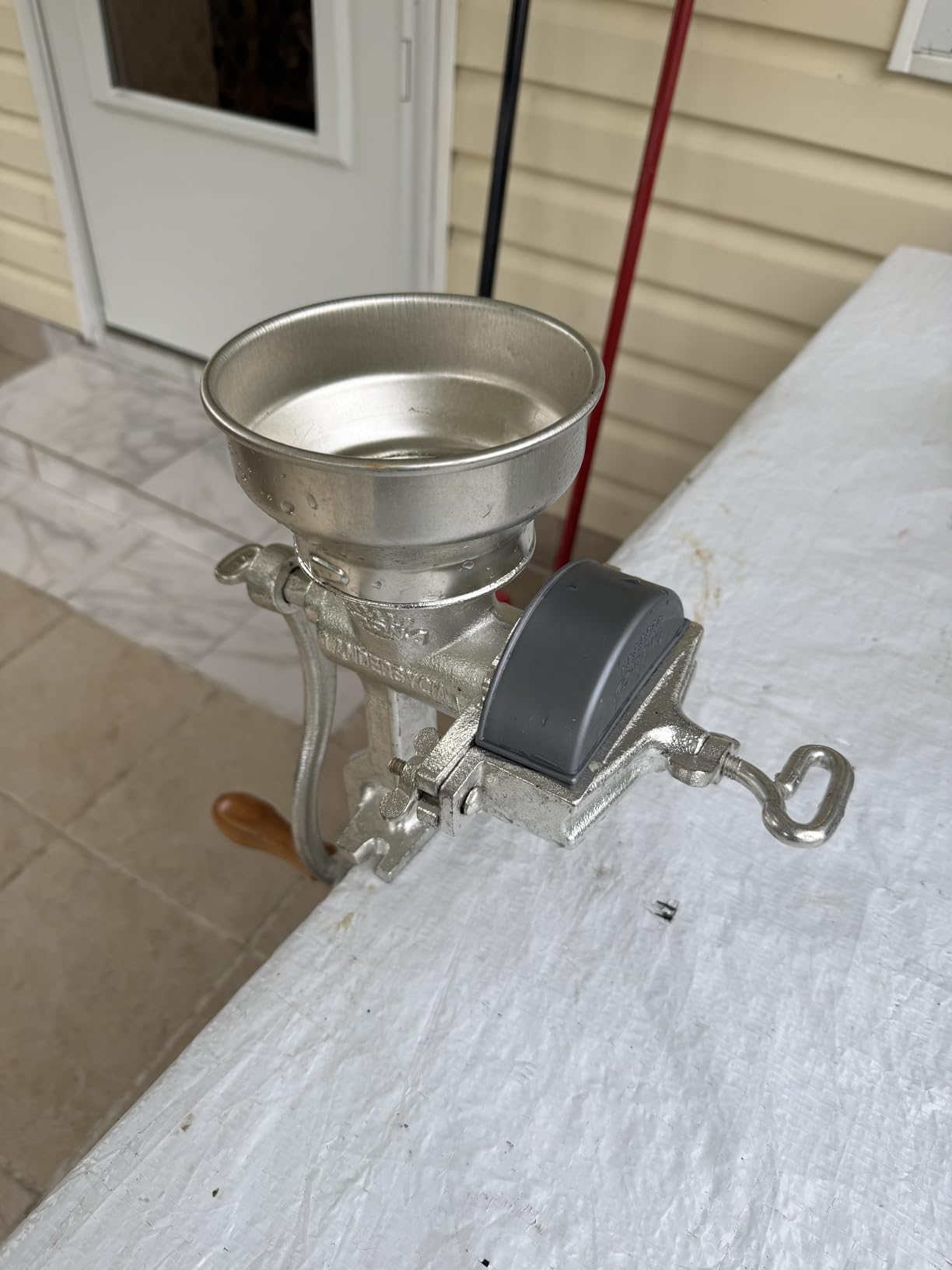
I appreciate the complete kit that comes with this mill. You get the hopper, grinding plates, clamp, handle, mounting hardware, and stabilizing pad all in one package. The food-safe tin plating on the cast iron prevents rust and keeps your flour clean.
The adjustable grinding mechanism lets you move from coarse to fine textures with a simple adjustment. While it cannot match the superfine output of electric mills, it produces good quality flour for everyday bread baking.
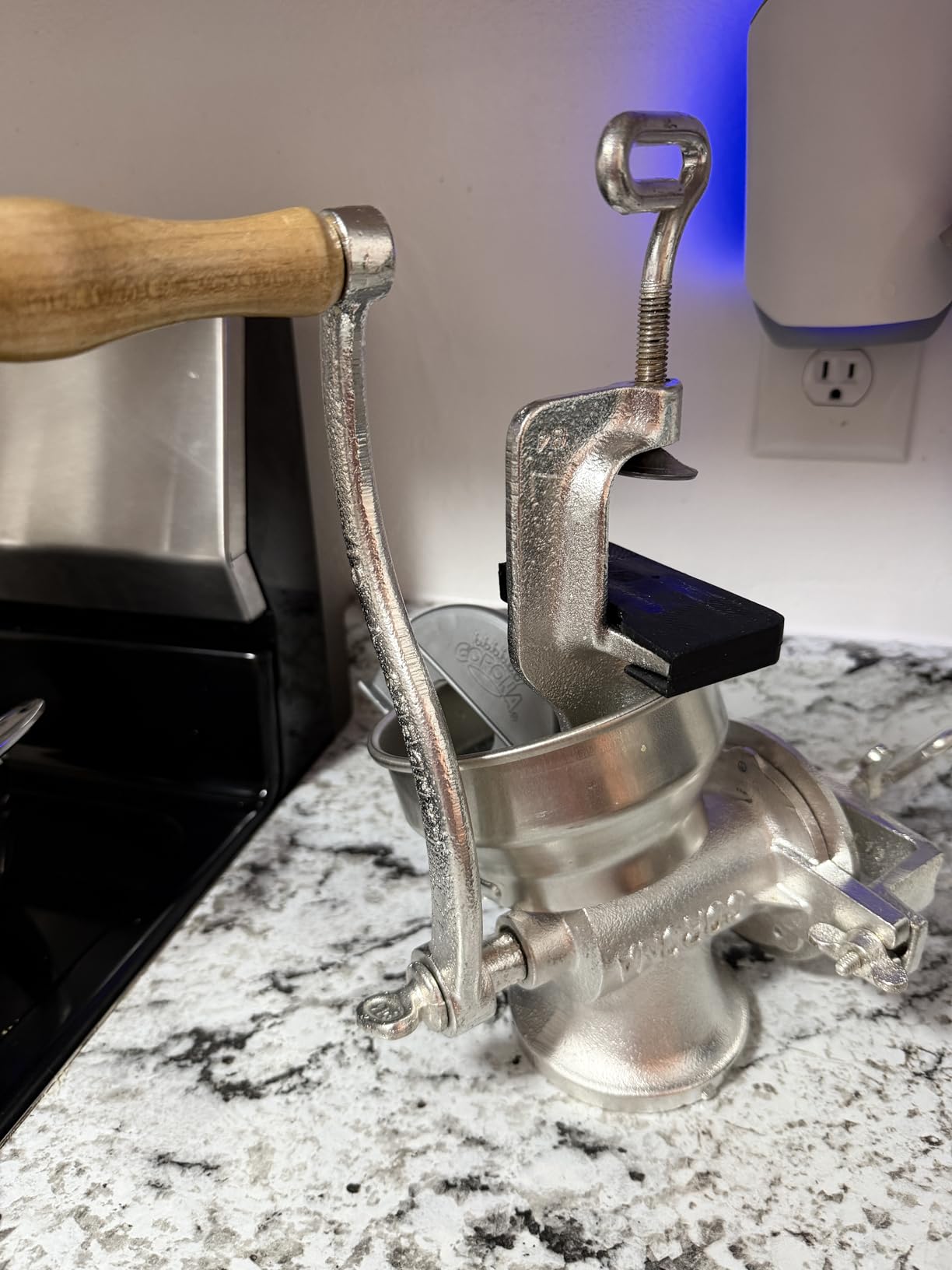
The large 0.8 quart hopper holds a decent amount of grain for a manual mill, reducing the number of refills needed during a grinding session. The countertop clamp fits surfaces up to 1.45 inches thick, which works with most standard tables and countertops.
The rust-resistant construction is a practical advantage over untreated cast iron mills. With proper care and occasional oiling, this mill will provide years of reliable service.
How It Compares to the Victoria Mill
The Corona and Victoria mills are very similar in design and function. Both are Colombian-made cast iron hand mills with adjustable grinding plates. The Corona edges ahead with a higher user rating of 4.5 versus 4.3 for the Victoria, and it includes a more complete accessory kit. The Victoria has a slightly larger clamp range at 2 inches versus 1.45 inches for the Corona. Either mill is a solid budget choice, so availability and price may be the deciding factor.
Maintenance and Rust Prevention
Cast iron requires some basic maintenance to prevent rust. After each use, brush out any remaining flour and wipe the plates dry. Store the mill in a dry place, and apply a light coat of food-grade mineral oil to the plates if you will not be using it for an extended period. The tin plating on the Corona provides good baseline protection, but a little extra care extends the life significantly.
How to Choose the Right Grain Mill for Home Baking?
Choosing among the best grain mills for home bakers comes down to understanding your baking habits, budget, and kitchen setup. I have broken down the key factors to help you make the right decision.
Stone Mill vs Steel Impact vs Blade Grinder
Stone mills use two grinding stones, typically corundum ceramic, to crush grain slowly and at lower temperatures. This preserves more nutrients and produces flour with excellent flavor. Stone mills like the NutriMill Harvest are the gold standard for serious bread bakers.
Steel impact mills use high-speed steel teeth to shatter grain kernels. They are faster and produce very fine flour, but generate more heat. The Kitchen Mill is a good example of this technology.
Blade grinders use spinning blades to pulverize grain, similar to a coffee grinder. They are the most affordable electric option but less consistent than stone or impact mills. The INSELY and LEJIEYIN fall into this category.
Electric vs Manual Operation
Electric mills are convenient and fast, producing large quantities of flour with minimal effort. They are ideal for bakers who mill flour regularly or in large batches. The tradeoff is higher cost and the need for a power outlet.
Manual mills are affordable, portable, and work without electricity. They appeal to homesteaders, off-grid bakers, and budget-conscious beginners. The downside is the physical effort required and lower flour output per session. The Country Living mill is the premium manual choice, while the Victoria and Corona are excellent budget options.
Key Features to Consider
Motor power matters for electric mills. A 450 watt motor like the NutriMill Harvest handles hard grains with ease, while lower-powered mills may struggle or overheat. For blade grinders, look for 2000 watts or higher for effective grinding.
Flour fineness range determines what you can bake. Stone mills and impact mills produce the finest flour suitable for pastry and cake. Manual mills and blade grinders typically max out at medium-fine texture.
Hopper capacity affects how often you need to refill during milling. Larger hoppers mean fewer interruptions but also a bulkier machine.
Noise level is a real concern for apartment dwellers. Stone mills tend to be quieter than impact mills, while blade grinders are the loudest due to their high RPM motors.
Budget Guide for First-Time Buyers
Under $60, manual cast iron mills like the Victoria and Corona are your best options. They are great for trying fresh-milled flour without a big investment. Between $60 and $150, blade grinders like the LEJIEYIN and INSELY offer electric convenience at a reasonable cost. From $230 to $500, impact and stone mills like the Kitchen Mill and NutriMill Harvest provide excellent flour quality for serious bakers. Above $700, premium options like the Country Living mill offer lifetime durability and top-tier performance.
FAQs
What to look for when buying a grain mill?
Look for milling mechanism type (stone, impact, or blade), motor power for electric models, adjustable fineness range, hopper capacity, ease of cleaning, noise level, and warranty coverage. For serious bread baking, stone mills produce the best flour quality. For convenience and speed, impact mills are excellent. Your budget and baking frequency should guide the final choice.
Is buying a grain mill worth it, or will my blender do?
A dedicated grain mill is worth it if you bake regularly and care about flour quality. Blenders lack the power and precision to produce consistent flour, and attempting to mill grain in a blender can damage the motor. Even a budget manual mill like the Victoria at around $60 produces far better flour than any blender.
What grain mill will work best for my family?
For a family of four baking bread weekly, an electric stone mill like the NutriMill Harvest or an impact mill like the Kitchen Mill provides enough flour quickly. For occasional use or small batches, a manual mill or the KitchenAid attachment may suffice. Consider how many loaves you bake per week and choose a mill that can produce flour for 2 to 3 loaves per session without overheating.
How do I choose between stone mill vs steel mill?
Stone mills crush grain between corundum ceramic stones at lower speeds, producing cooler flour that retains more nutrients and flavor. Steel impact mills use high-speed teeth to shatter grain, which is faster but generates more heat. Stone mills are better for sourdough and artisan bread where flavor matters most. Impact mills are better for speed and fine pastry flour.
Which grain mill is best for beginners?
The Victoria Manual Cast Iron Grain Mill is the best beginner option at under $60, letting you try fresh-milled flour without a big investment. If you want electric convenience from the start, the Kitchen Mill or NutriMill Harvest are user-friendly choices. Beginners should avoid the KitchenAid attachment on smaller mixers and skip high-power blade grinders until they understand their flour needs.
Conclusion
After testing and comparing all 8 mills, our top recommendation for the best grain mills for home bakers comes down to three choices. The Country Living Hand Grain Mill is the ultimate investment for bakers who want a mill that lasts a lifetime. The NutriMill Harvest is our pick for serious electric milling with outstanding flour quality. And the Victoria Manual Cast Iron Grain Mill is the best way to start your fresh-flour journey on a budget.
Whatever you choose, milling your own grain is a decision you will not regret. The difference in your bread, pizza dough, and pastries will be immediately noticeable, and you will wonder why you waited so long to start. Here is to better baking with fresh-milled flour in 2026 and beyond.