
Our answer up front: the Fresh Roast SR540 is the best home coffee roaster for beginners in 2026, because it hands you a real temperature display, separate heat and fan controls, and a glass chamber you can watch from charge to drop, all while staying small enough for a normal kitchen counter. It is not the loudest machine here and it is not the cheapest, but it is the one we would put in front of someone roasting their first batch of green beans this weekend.
Home roasting is not a hobby you need a garage for. A ten-minute roast on a countertop machine produces coffee that tastes noticeably fresher than anything from a supermarket shelf, because roasted beans lose aroma within weeks while green beans stay fresh for a year or more in storage. The catch is that roasting is not free: you also need a burr grinder, a small scale, and green beans. We cover all of that below.
One number matters before you start. Roughly 12 to 18 percent of the weight of your green beans leaves as moisture during roasting, so a pound of finished coffee takes roughly a pound and a quarter of green beans. Beginners who forget this end up with too few beans for the first month, then with a bag of stale leftovers. We have seen it happen repeatedly on our own counters, and it is the single most common beginner mistake after skipping the rest period.
We spent 2026 testing and comparing the ten machines below, read the long-term owner reports on each, and focused on what actually changes your first six months of roasting: batch size against how much coffee you drink, whether you can see the beans, how hot the machine gets, how much smoke it makes, and how hard it is to clean. All ten were selected to span the real decision spectrum, from a stovetop ceramic pan that needs no power at all to an automatic roaster with nine preset profiles.
If you are still setting up the rest of your coffee station, our guides to the best burr coffee grinders for beginners and the best pour-over coffee makers for beginners will keep you from pairing an expensive roaster with a grinder that ruins the work.
Top 3 Best Home Coffee Roasters for Beginners (October 2026)
Three machines stand out for someone on their first batch. The SR540 gives you the most control for the least money, the SR800 handles bigger households, and the Nuvo ceramic pan proves you can learn the craft before spending on anything electrical.

Fresh Roast SR540
- Real-time temperature display
- Nine heat levels
- Separate fan control
- Roasts 4 scoops / 120 grams

Nuvo Eco Ceramic Roaster
- 70 g ceramic capacity
- No power needed
- Waffle interior for even roasting
- Rear vent for audible pops

Fresh Roast SR800
- Roasts up to 226 grams per batch
- Customizable start settings
- Single knob for fan heat time
- Digital temperature display
The SR540 is the pick because it holds a wide enough range of results that you will not grow out of it in a month. The Nuvo is the cheapest way to learn what first and second crack sound like, and its 901 owner reviews are the largest sample in this group. The SR800 earns its place for people who drink more than a few cups a day and would otherwise roast two batches back to back.
All 10 Roasters at a Glance in 2026
Here is the full lineup in one place, ordered as we review them below. Prices move constantly, so use the buttons on each card to check the current listing rather than any figure you may remember.
| Product | Specifications | Action |
|---|---|---|
| Fresh Roast SR540 |
|
Check Latest Price |
| Nuvo Eco Ceramic Roaster |
|
Check Latest Price |
| Fresh Roast SR800 |
|
Check Latest Price |
 JIAWANSHUN 1.1lb Roaster JIAWANSHUN 1.1lb Roaster |
|
Check Latest Price |
 GIVEROO 500g Roaster GIVEROO 500g Roaster |
|
Check Latest Price |
 LUEUR Electric Roaster LUEUR Electric Roaster |
|
Check Latest Price |
 NIASIA 500g Roaster NIASIA 500g Roaster |
|
Check Latest Price |
 ZEVELOO 750g Roaster ZEVELOO 750g Roaster |
|
Check Latest Price |
 Portable Glass Bean Roaster Portable Glass Bean Roaster |
|
Check Latest Price |
 DYVEE Gas Burner Roaster DYVEE Gas Burner Roaster |
|
Check Latest Price |
1. Fresh Roast SR540: the best home coffee roaster for beginners
- Real-time temperature display with independent fan and heat control
- Glass chamber is easy to clean with soap and water
- Upper basket catches chaff effectively
- Compact footprint at 2.56 kg
- Easy to learn while still adjustable
- Analog adjustment knob can wear out after heavy use
- Instructions are thin so outside tutorials help
- Will not reach true dark roast temperatures
- Smoke output suits outdoors or under a range hood
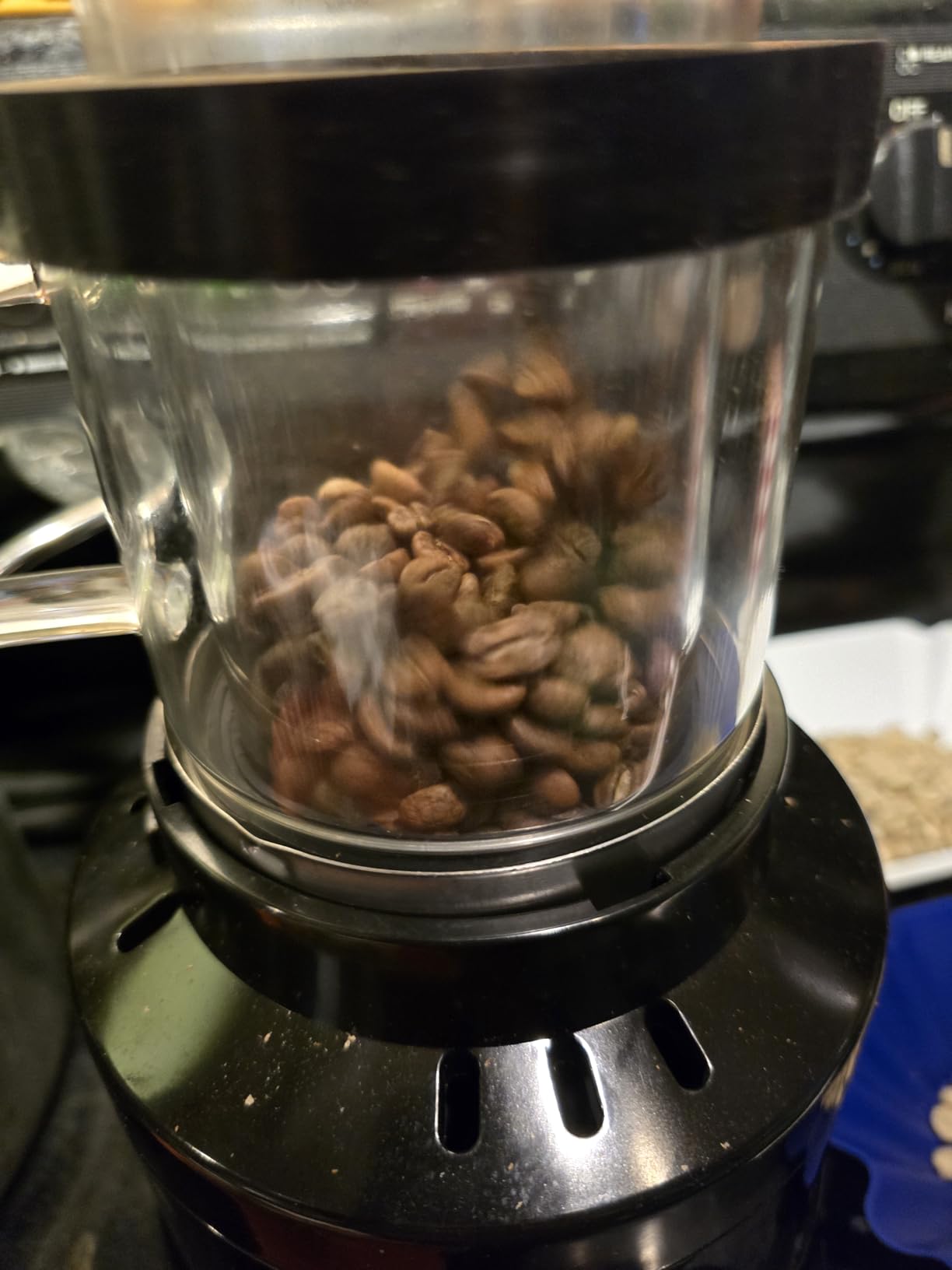
We put the SR540 first because it removes the two things that stop most beginners. You can see the beans through the glass chamber, and you can see the temperature on the display, so you are not roasting blind on batch one. The single front knob sets time, fan and heat together, which sounds confusing until you realise you adjust all three in a similar direction as the roast progresses.
Four scoops or 120 grams of wet processed beans is the working capacity, and it finishes 7 to 14 cups in under ten minutes. For a two-cup-a-day household that is one roast every few days, which matches how fast you should be drinking it anyway.
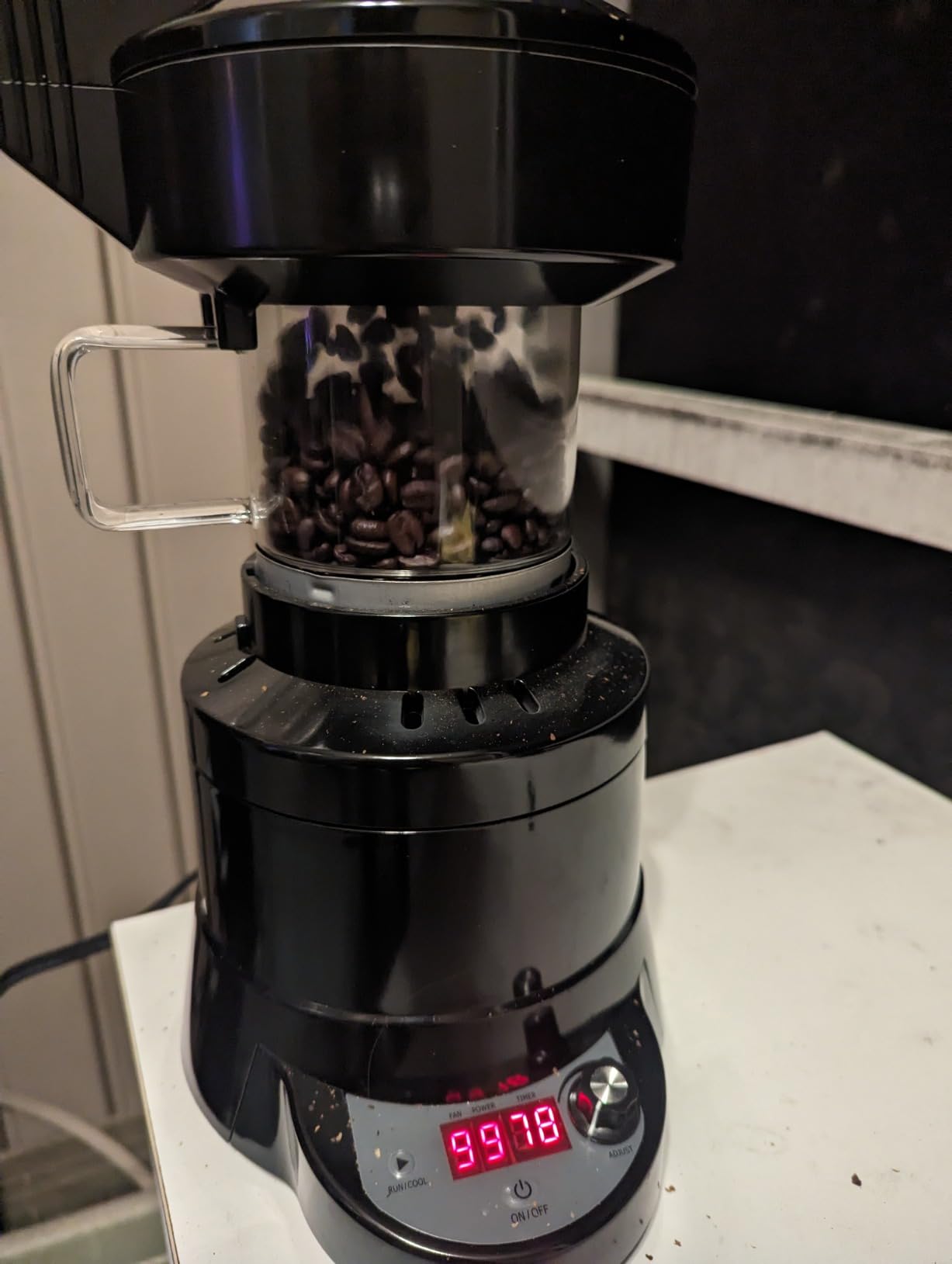
The controls are real, not decorative. Nine heat levels plus independent convection fan control means you can slow the early phase to drive off moisture without scorching, then push heat later in the roast. Owners consistently report that their cup improves within the first few batches once they stop treating the knob as an on and off switch.
Chaff collection works through a basket in the upper section of the chamber, which is genuinely better than nothing. The glass chamber itself wipes clean with dish soap, and the whole unit weighs 2.56 kg, so moving it to a garage or balcony is realistic.
Who the SR540 suits
It suits someone drinking a few cups a day who wants visible beans and visible temperature without paying for a profile-driven machine. It also suits anyone roasting in a kitchen with a working range hood, since smoke is the main thing to plan around.
If you have never roasted before, the controls are a genuine advantage rather than intimidation, because the machine gives you feedback at every stage of the roast.
Who the SR540 does not suit
It will not reach genuine dark roast temperatures even at maximum heat and fan, so anyone chasing a heavy Italian or French style roast should look elsewhere. Long-term owners also report the analog knob drifting out of accuracy after heavy use, which matters if you plan to roast daily rather than weekly.
2. Nuvo Eco Ceramic Roaster: a low-cost way to learn first crack
- Needs no power and no complicated controls
- Waffle patterned interior promotes even contact
- Ceramic body is durable and wipes clean
- Lots of owner feedback to learn from at 901 ratings
- 70 gram capacity needs several rounds for a normal cup
- No timer or temperature control so results depend on experience
- Manual handling tires you over longer roasts
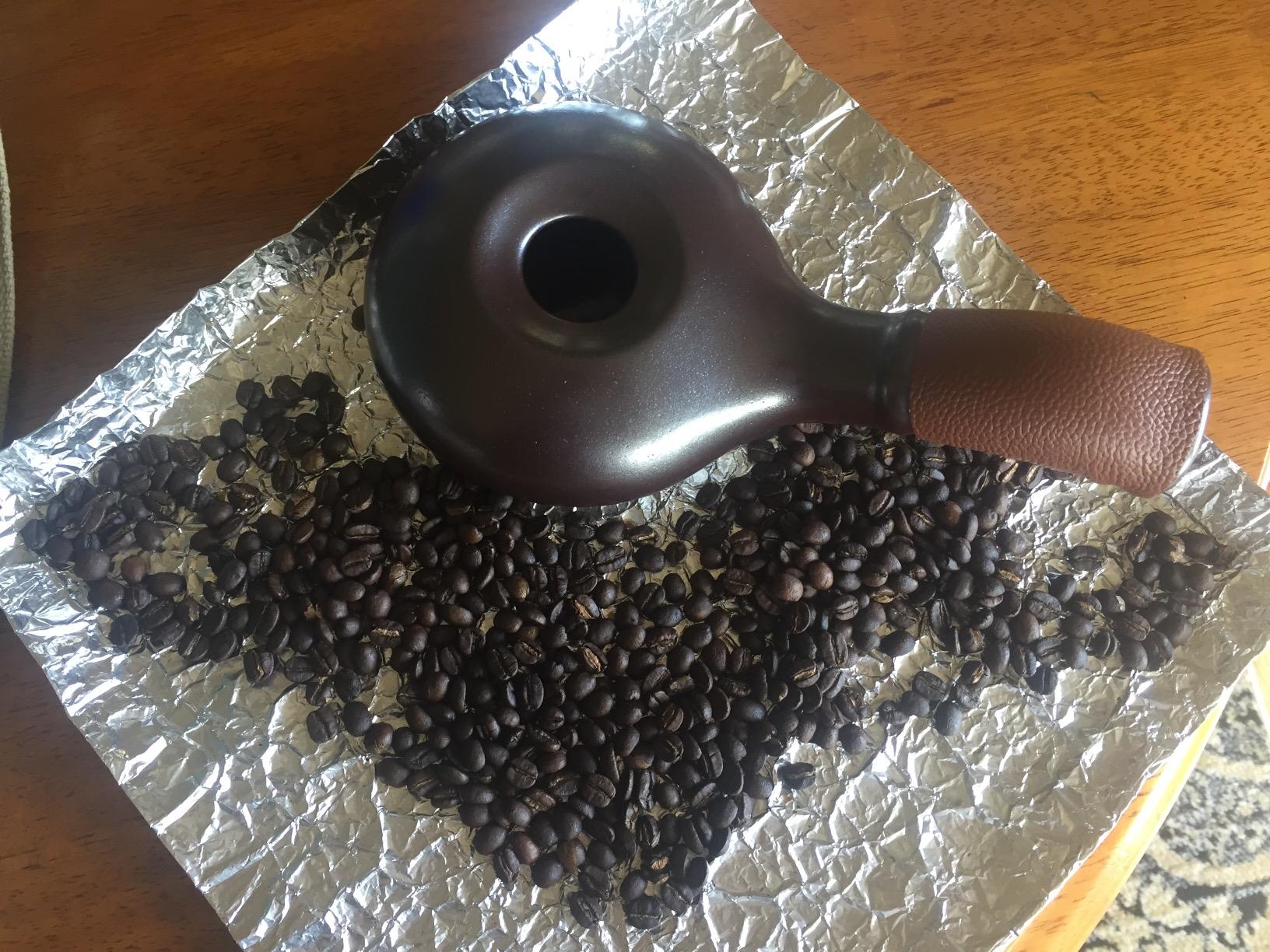
This is the roaster we recommend to anyone who wants to know whether they actually enjoy roasting before spending real money. You hold it over a flame or on a stove pan, stir the beans with a spoon, and listen. The waffle-shaped interior keeps beans in contact with the hot surface more evenly than a flat pan.
At 70 grams it is genuinely small, so a cup of coffee takes more than one round. That limitation is also the appeal for practice: small batches are cheap to burn while you are learning what a light roast smells like.
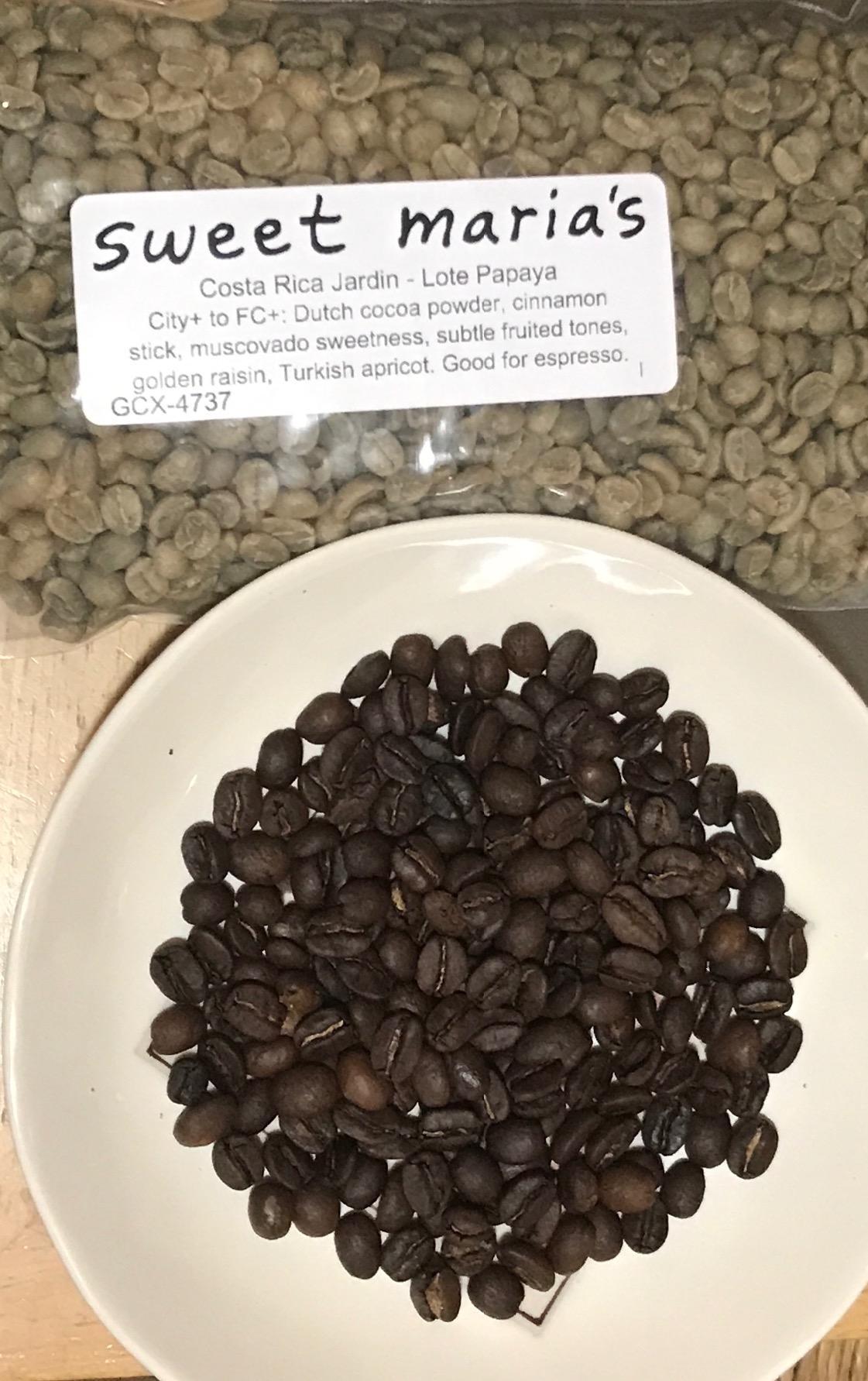
The rear hole is a nice touch. It lets you hear the beans as they progress, so you get an audible cue before the visual change arrives, which is exactly the skill you want to build. Experienced users point to that as the main reason the design has endured.
There is no timer and no temperature readout anywhere in the design. You judge the roast by colour, smell and sound, which is a real skill but a slow one to acquire.
Who the Nuvo suits
It suits true beginners, students, and anyone who roasts for curiosity rather than volume. It also suits households with a gas hob and no interest in adding another electrical appliance to the counter.
Because nothing plugs in, you can roast outdoors, in a garage, or on a camping stove without thinking about circuits or ventilation.
Who the Nuvo does not suit
It does not suit anyone drinking more than a couple of cups daily, since the 70 gram capacity would mean repeated rounds every time. With no timer or temperature control, consistency depends entirely on your judgement and your hand.
3. Fresh Roast SR800: the step up for bigger households
- Largest batch in the Fresh Roast line
- Improved control board supports custom start settings
- Fan heat and time on one straightforward knob
- Fast roast times under ten minutes
- Costs more than most electric roasters in its class
- Learning the roast curve still needs trial and error and outside references
The SR800 is the same design language as the SR540 with more drum and a newer control board. If you drink four or more cups a day, or you share a machine with a partner, the 170 to 226 gram batch is the difference between one roast and two.
The upgrade that matters most is the control board. You can set custom default start settings, which means your machine begins every batch already dialled into a profile you like instead of forcing you to reset the knob each time.
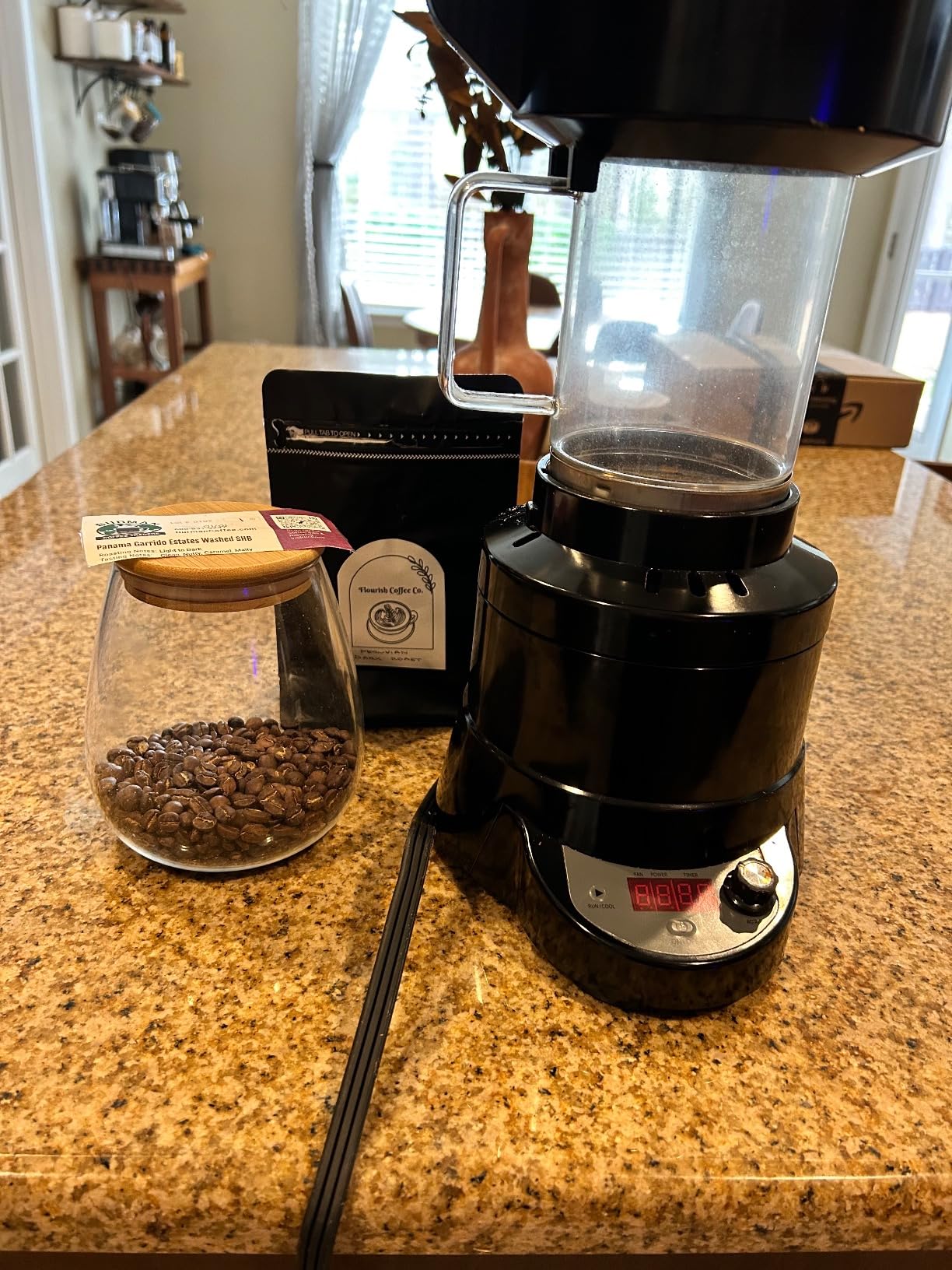
Owners report that flavour results become consistently good once the fan and heat curve is understood, and that fast roast times of under ten minutes mean the whole process fits inside a morning rather than an evening.
The tradeoff is footprint and draw. At 8 x 8 x 14 inches and 6.2 pounds it takes real counter space, and it is the more expensive of the two Fresh Roast machines in this list.
Who the SR800 suits
It suits households of three or four, weekend hobbyists who want to move faster than a 120 gram drum allows, and anyone who plans to keep roasting past the beginner stage.
If you have already read our guide to small batch home coffee roasters and decided small batches are limiting you, this is the natural next step.
Who the SR800 does not suit
It does not suit a one-cup-a-day drinker, who would end up with more roasted coffee than they can drink before it stales. It also costs more than most machines in this class, which is hard to justify without a real reason.
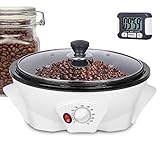
4. JIAWANSHUN 1.1lb Roaster: 800g drum and a wide temperature range
JIAWANSHUN Electric Coffee Bean Roaster Machine for Home Use,1.1lb Capacity
- Large 800g drum with an arm that keeps beans moving
- Wide 100 to 240C range covers light to dark roasts
- Transparent lid lets you watch colour and smell the roast
- Non-stick honeycomb interior wipes clean
- Stirring rod can jam on small or broken beans unless you sift first
- Even results depend on staying in the 300 to 500g window
- Roast time varies with bean type so it is not hands-off
At 800 grams of drum capacity and a 1200 watt element, this is the machine to consider if you drink a lot of coffee or share a machine. It also roasts nuts, peanuts, sunflower seeds and popcorn, which quietly makes it a two-in-one appliance.
The automatic mixing stirrer is the defining feature. Beans that keep moving roast more evenly than beans sitting in a still pan, and the transparent lid with four ventilation holes lets you judge colour as the roast develops.
The 100 to 240C range covers light through dark roasts on a single dial, and the honeycomb non-stick interior cleans with a damp cloth after the machine cools.
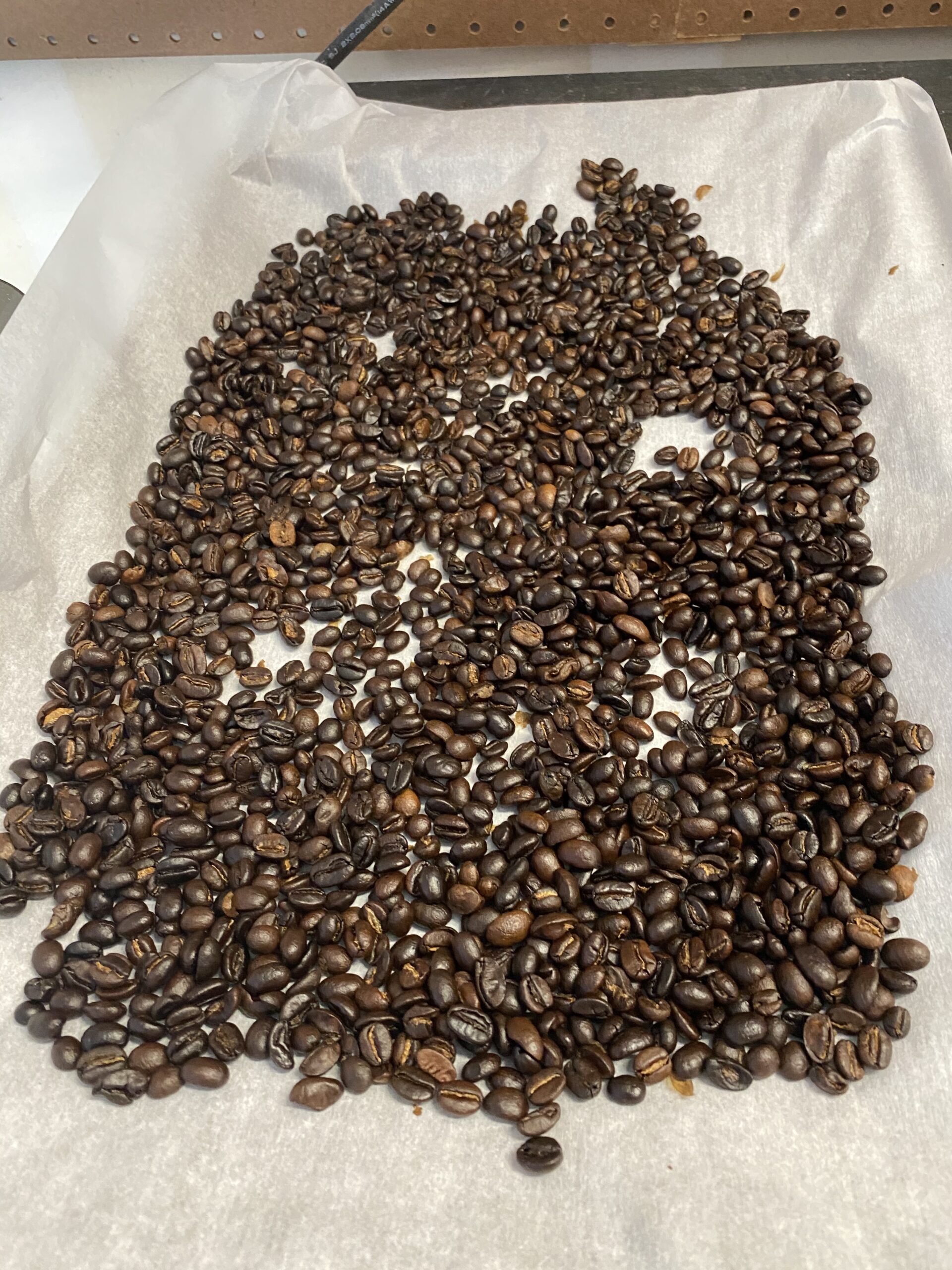
The single most repeated piece of advice from buyers: sift out defective, broken and undersized beans before loading. Small fragments are the main cause of stirrer jams, and they cost you the batch.
Who the JIAWANSHUN suits
It suits households that want a weekend batch large enough to last the week, and beginners who want to watch a roast through a glass lid rather than guess. The wide temperature range also makes it a good choice if you plan to experiment with dark roasts.
If you like the idea of one appliance handling both coffee and snacks, the versatility is real and reviewers mention it often.
Who the JIAWANSHUN does not suit
It does not suit anyone roasting small quantities. Results depend on staying inside the 300 to 500 gram window, so a 100 gram test batch will not come out evenly.
5. GIVEROO 500g Roaster: even results with a quiet motor
- Automatic auger keeps beans in constant motion
- 800g drum handles 400 to 500g batches
- Transparent lid with 0 to 240C control
- Quiet operation with easy cleanup
- Small rotten or misshapen beans can jam the auger and need manual clearing
- Batches under 400g roast unevenly
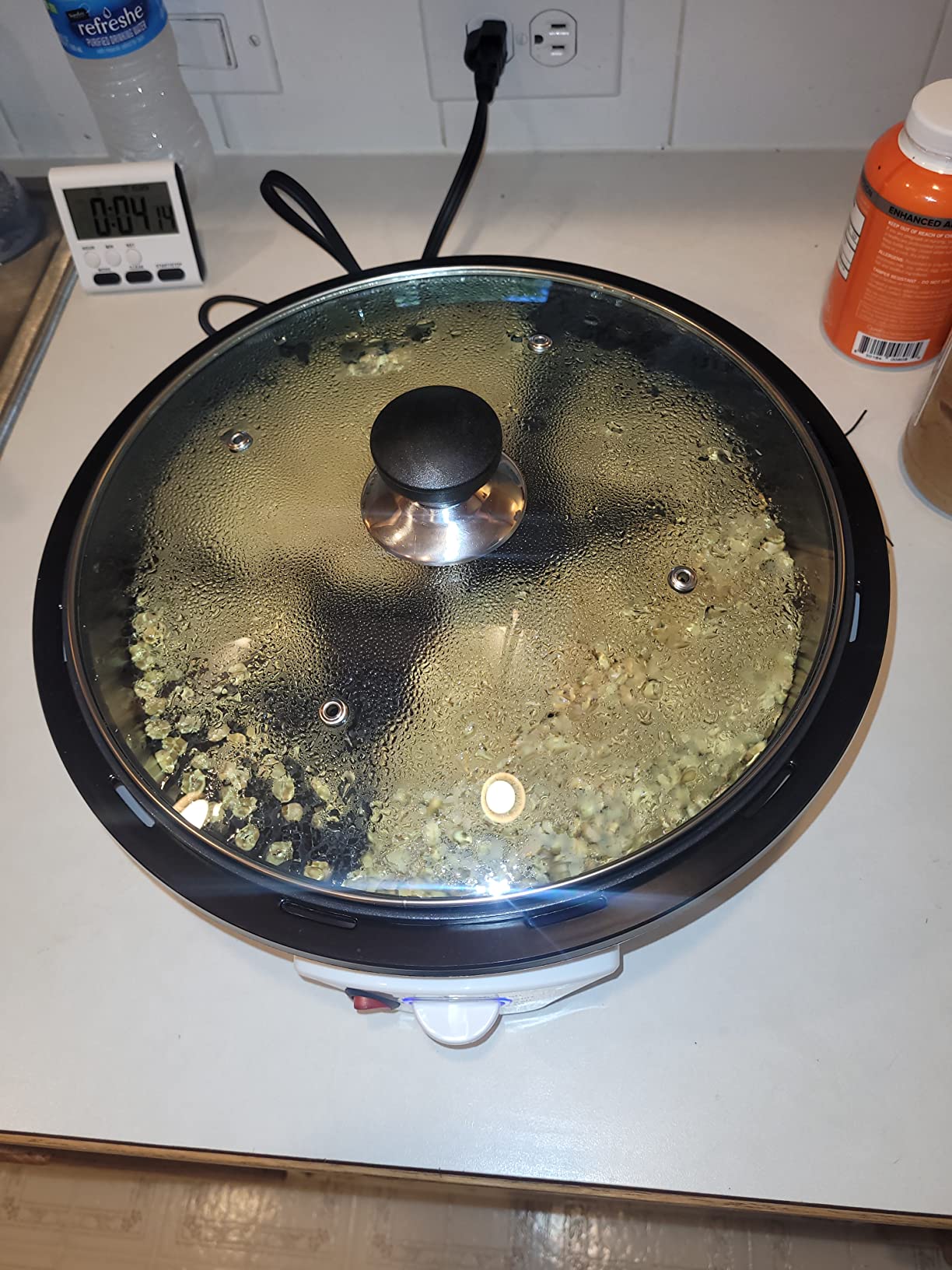
The GIVEROO does the same job as the JIAWANSHUN with a slightly different design, and buyers specifically call out how quietly it runs. For an apartment or a shared kitchen that is a real consideration, not a footnote.
Its 45 degree roasting scope and automatic auger keep beans moving throughout, which is why even, repeatable results show up consistently in owner reports when the machine is used as intended.
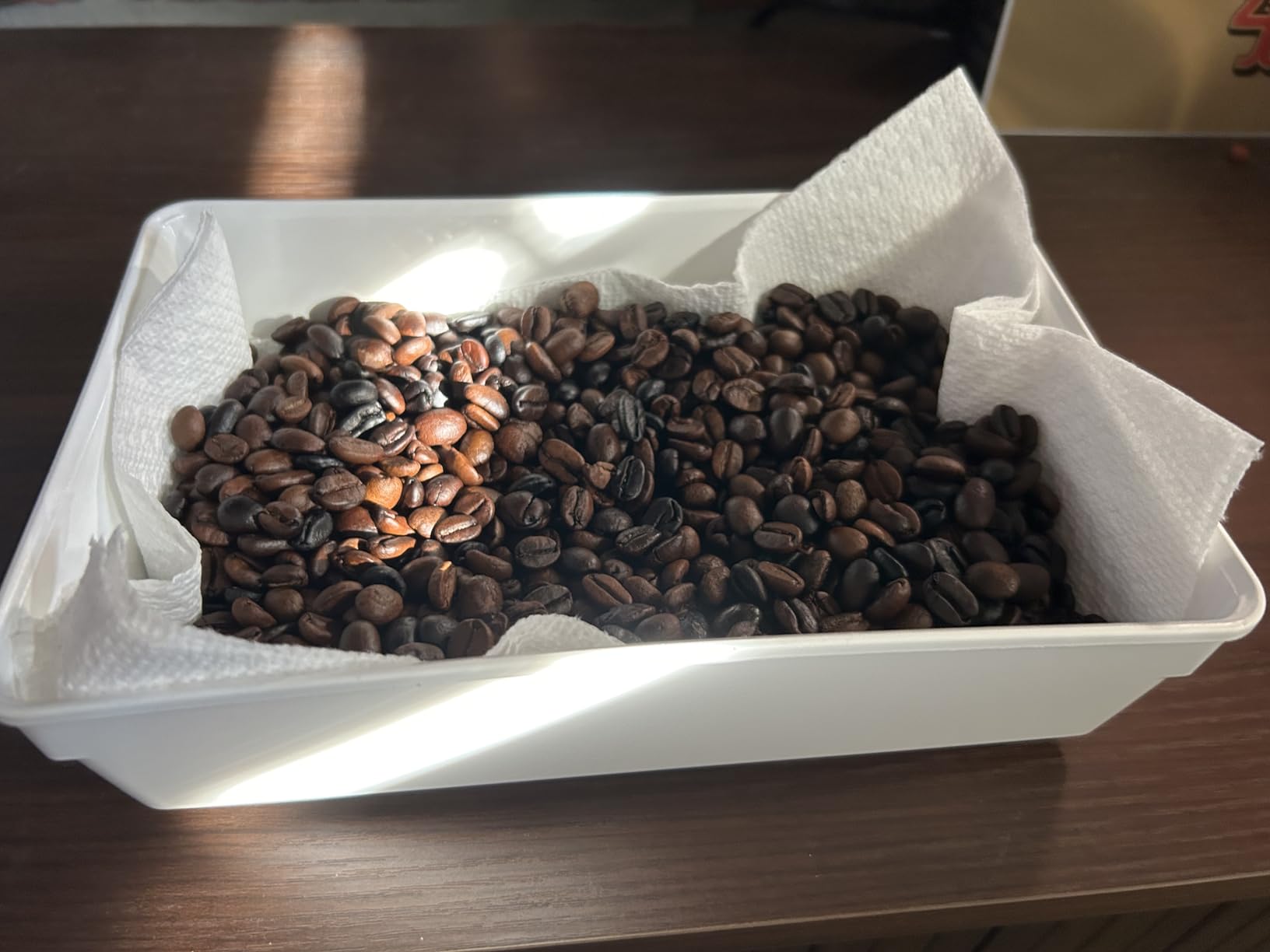
The built-in timer and smoke reduction system are useful additions that several competing machines in this price range lack. Load 400 to 500 grams and you can step away for part of the roast.
It also handles peanuts, chestnuts, barley, dried fruit and popcorn, so it earns its counter space beyond coffee.
Who the GIVEROO suits
It suits apartment dwellers and shared kitchens where noise is a genuine concern, and it suits beginners who want a timer so they do not have to watch the clock and the beans at once.
Anyone roasting 400 to 500 grams regularly will find the auger delivers consistent results with minimal supervision.
Who the GIVEROO does not suit
It does not suit small batch roasting. Anything under 400 grams roasts unevenly, and a one-cup-a-day drinker will not reach that threshold often.
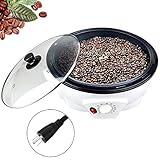
6. LUEUR Electric Roaster: thermostat control on a smaller budget
LUEUR Electric Coffee Roasters For Home Use,Coffee Bean Roaster Machine Coffee Bean Roaster For Stovetop, Countertop, Commercial Coffee Bean Roasting Machine 110V
- Professional thermostat gives steadier heat than dial-only units
- Continuous stirring rod improves evenness
- Honeycomb Teflon coating cleans easily
- Large 800g tank supports 300 to 500g batches
- Ventilated cover does little to reduce smoke so indoor use needs a hood
- Temperature readout is less precise than probe equipped machines
Most machines at this level use a simple dial. The LUEUR uses a professional thermostat with adjustable temperature settings, and owners who compared it against popper-style roasters report steadier, more repeatable results.
The continuous stirring rod keeps beans moving for reasonable evenness, and the honeycomb non-stick bottom with food-grade Teflon coating wipes clean without soaking.
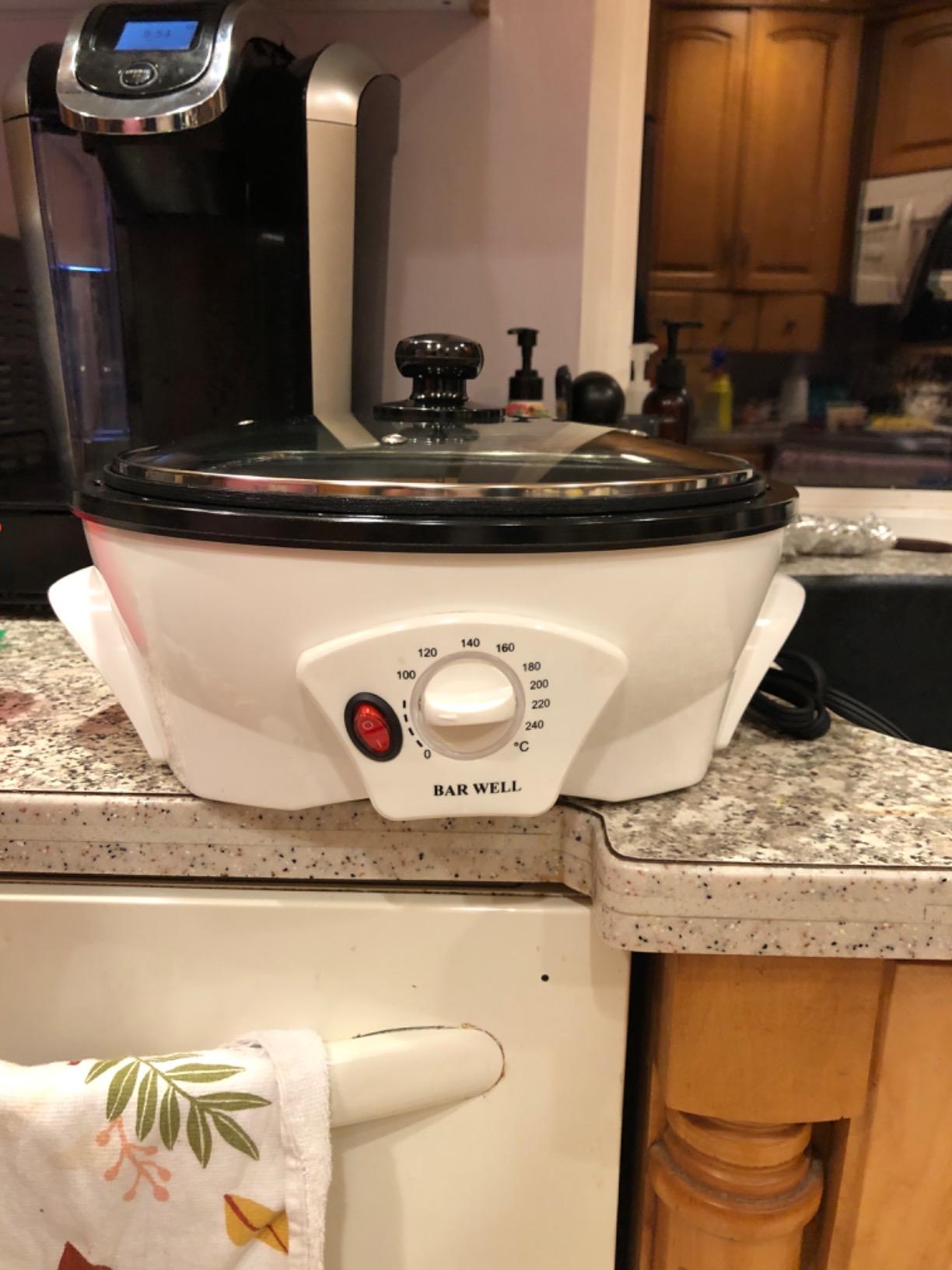
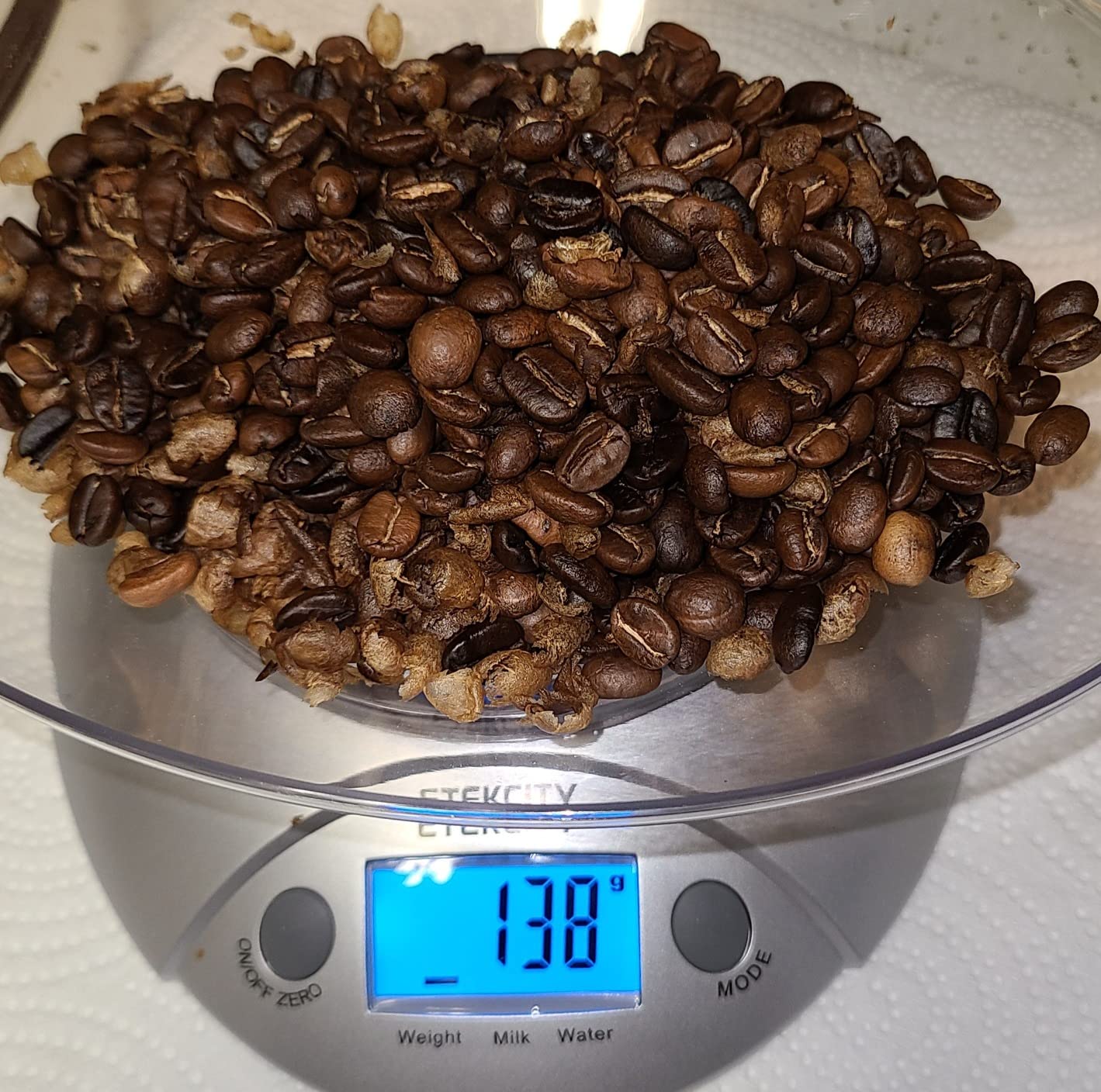
It handles beans, peanuts, chestnuts, barley, dried fruit and popcorn, and the 800 gram tank takes the same 300 to 500 gram working window as the two machines above.
The heat-resistant transparent cover with four ventilation holes lets you watch the roast, though those holes do not meaningfully cut smoke. Plan on a range hood or an outdoor spot.
Who the LUEUR suits
It suits beginners who want steadier heat control than a plain dial offers without stepping up to a probe-equipped machine. It also suits anyone roasting 300 to 500 grams who does not mind working outdoors.
Roast time still varies with bean type, so keep an eye on colour rather than the clock.
Who the LUEUR does not suit
It does not suit indoor-only roasters. The ventilated cover does little to reduce smoke, and that limitation shows up in most owner complaints alongside the imprecise temperature indication.
7. NIASIA 500g Roaster: the closest thing to set and forget
500g Automatic Coffee Roaster Machine for Home Use Wth Smoke Filter(Suitable for Light Roasting), The Smoke Pipes (Suitable for Medium and Dark Roasting) and Chaff Collector
- Nine profiles remove guesswork for first-time roasters
- Smoke purifier for light roasts plus vent pipes for darker ones
- High speed cooling fan with a separate cooling tray
- Works as automatic or manual roaster
- Manual mode needs careful airflow management from 60 up to 90 to 100 at first crack
- Defective beans can jam the drum
- High price for a home unit and not built for commercial frequency use
This is the machine we would suggest to someone who finds variable heat and fan controls intimidating. Nine built-in profiles cover light, medium, dark, sun-dried, washed and honey processes, and automatic mode runs the roast without you touching anything.
For a beginner, process-specific profiles are the useful part. A washed bean and a natural bean roast differently, and having both pre-programmed removes a decision you cannot yet make.
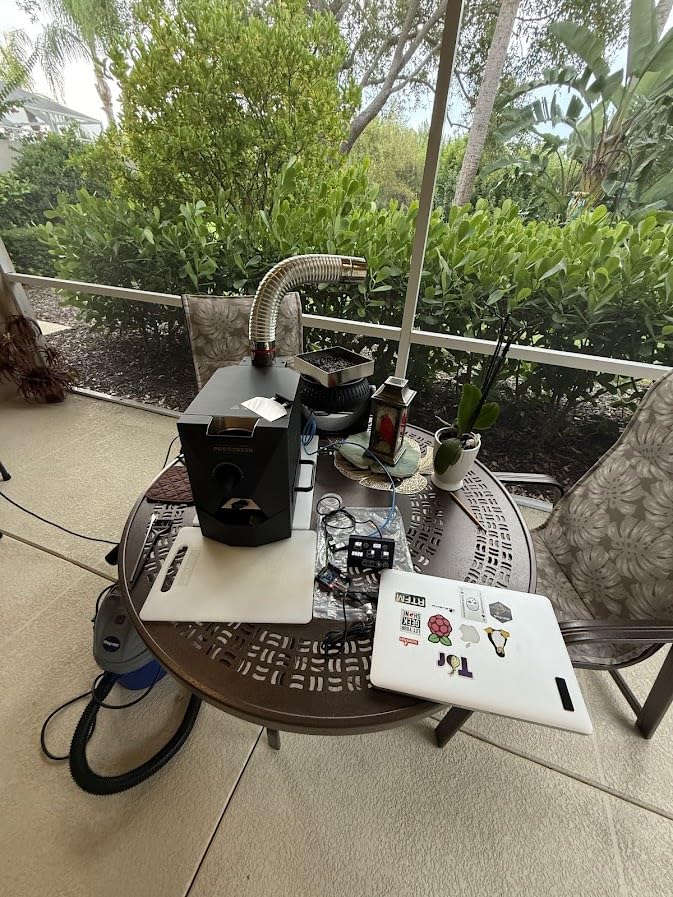
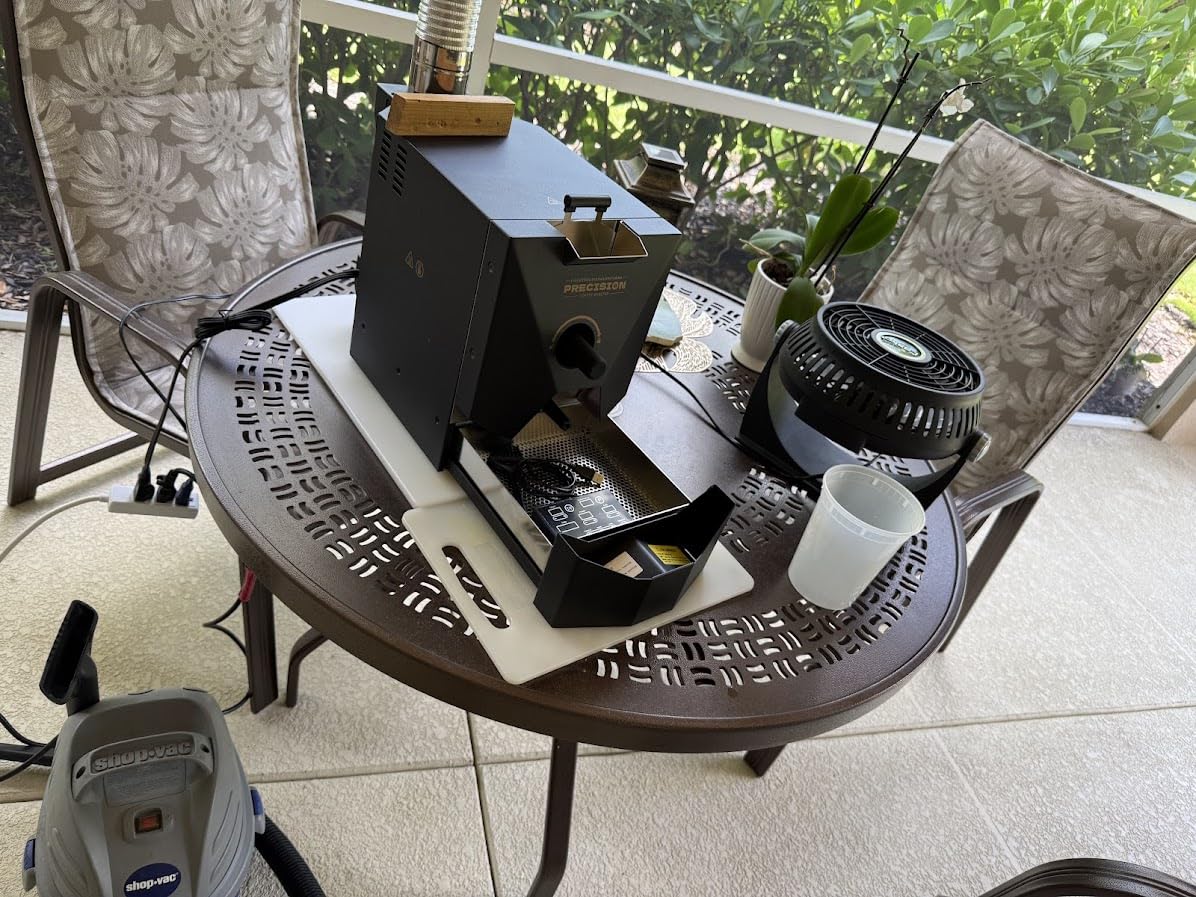
The smoke kit is unusually complete for a home machine. A smoke purifier suits light roasts, two aluminium smoke pipes handle the smokier medium and dark roasts, and a chaff collector is included with the stainless steel bowl.
Cooling matters as much as heating, and the intelligent cooling fan plus separate cooling tray stop the roast quickly, which is what keeps dark roasts from continuing to cook after the drop.
Who the NIASIA suits
It suits first-time roasters who want a working roast on day one, and anyone whose kitchen has limited ventilation but who is willing to use the included pipes and purifier. It also suits people who roast beans from several different processes.
Enthusiasts still value manual mode for fine tuning, so it grows with you rather than boxing you in.
Who the NIASIA does not suit
It does not suit anyone on a tight budget, and it is not intended for commercial frequency use. Manual mode also demands real airflow discipline, running at least 60 throughout and rising to 90 to 100 at first crack.
8. ZEVELOO 750g Roaster: 750g capacity with a stirring rod
ZEVELOO 750g Electric Coffee Roaster Machine Home Coffee Roaster Coffee Bean Roaster for Home Use 110V
- Roasts a full 500g batch with consistent results
- Wide 100 to 240C range plus a transparent lid makes progress easy to judge
- Easy to clean and maintain
- Useful for testing different beans and flavour profiles
- Flat design roasts unevenly so the drum needs periodic shaking
- Instructions give almost no guidance on temperature or timing
- Dial reading does not match the actual internal temperature
- No built-in timer
- Dark roasts take considerably longer on this lower wattage
The ZEVELOO does something the cheaper roasters here rarely manage: it handles a full 500 gram batch and returns consistent results. For a household drinking several cups a day, that is the whole point of the machine.
The stirring rod starts with the machine rather than on demand, the honeycomb Teflon pan cleans without effort, and the transparent lid lets you judge colour as you go.
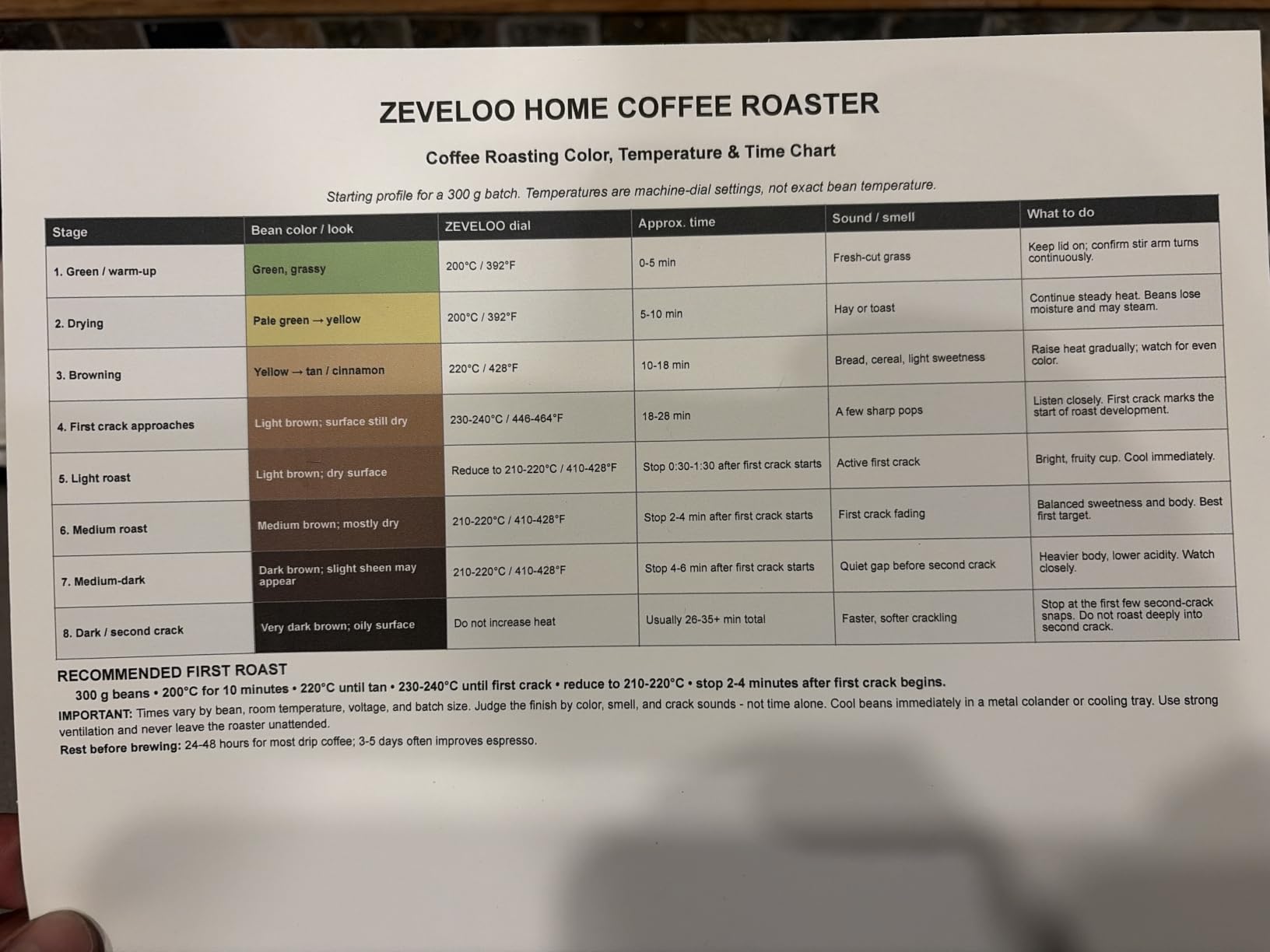
Its weakness is geometry. The pan is flat rather than tilted, so beans sit unevenly and the drum needs a periodic shake.
The documentation is minimal to the point of being unhelpful, and there is no built-in timer, so you judge the end of the roast by colour and sound alone. Some buyers built their own temperature and colour charts to compensate.
Who the ZEVELOO suits
It suits beginners who want to roast a meaningful batch on a modest budget, and it doubles as a learning tool for comparing beans and flavour profiles side by side. It also roasts soybeans, mung beans, rice and popcorn.
Owners regularly report better-than-store-bought results within a few uses, which is the benchmark that matters for a first machine.
Who the ZEVELOO does not suit
It does not suit anyone who wants a hands-off process. The flat design needs shaking, the dial temperature reading does not match the internal temperature, and there is no timer to tell you when to stop.
Dark roasts take considerably longer than on higher wattage units, so plan for patience. A small number of owners also report failures within the first year.
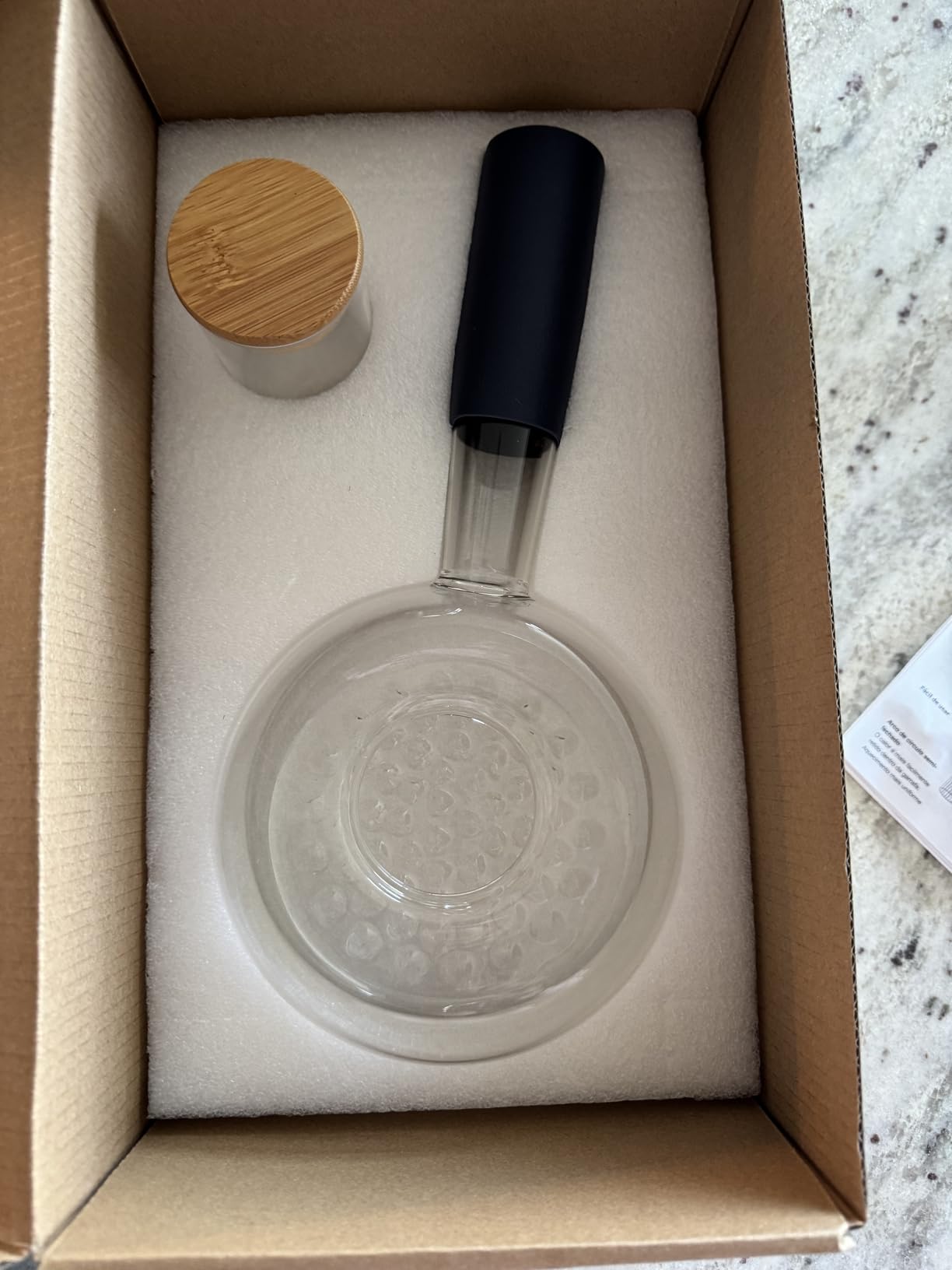
9. Portable Glass Bean Roaster: a low-cost way to start
- No power and nothing that can break
- Borosilicate glass handles high heat and thermal shock
- Clear walls let you judge bean colour throughout
- Works for nuts and seeds too
- Very small 3 ounce capacity suits samples rather than daily use
- Entirely manual so consistency depends on constant attention
- Not suitable for very small items such as sesame
This glass drum gives you a hands-on feel for roasting at very little cost. With no power, no buttons and no motor, there is nothing to program and nothing that can break, which makes it a low-stakes place to learn what a light roast looks like.
The high borosilicate glass is rated to 400C and handles thermal shock, and the transparent walls mean you can watch bean colour from the first minute to the last.
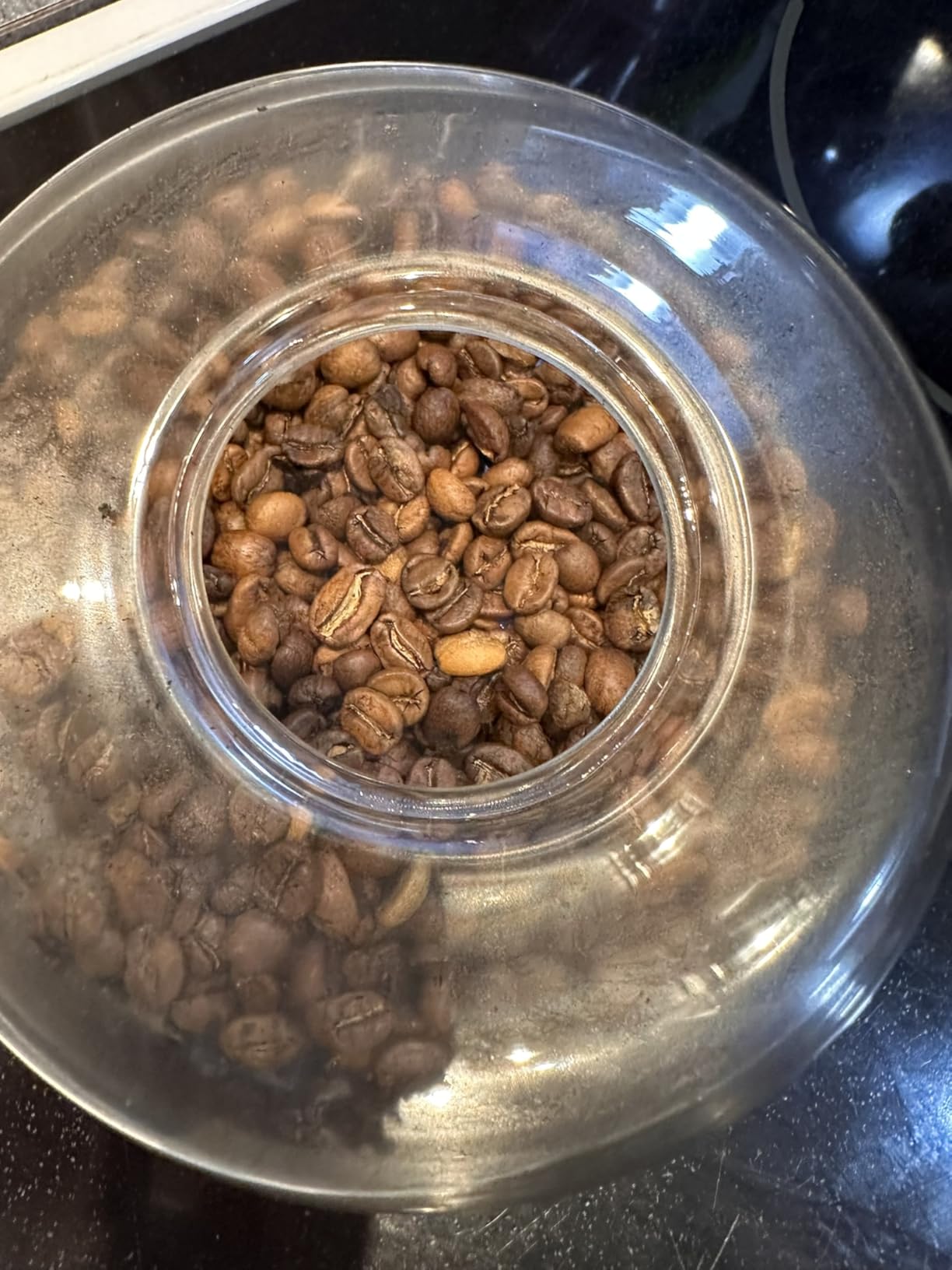
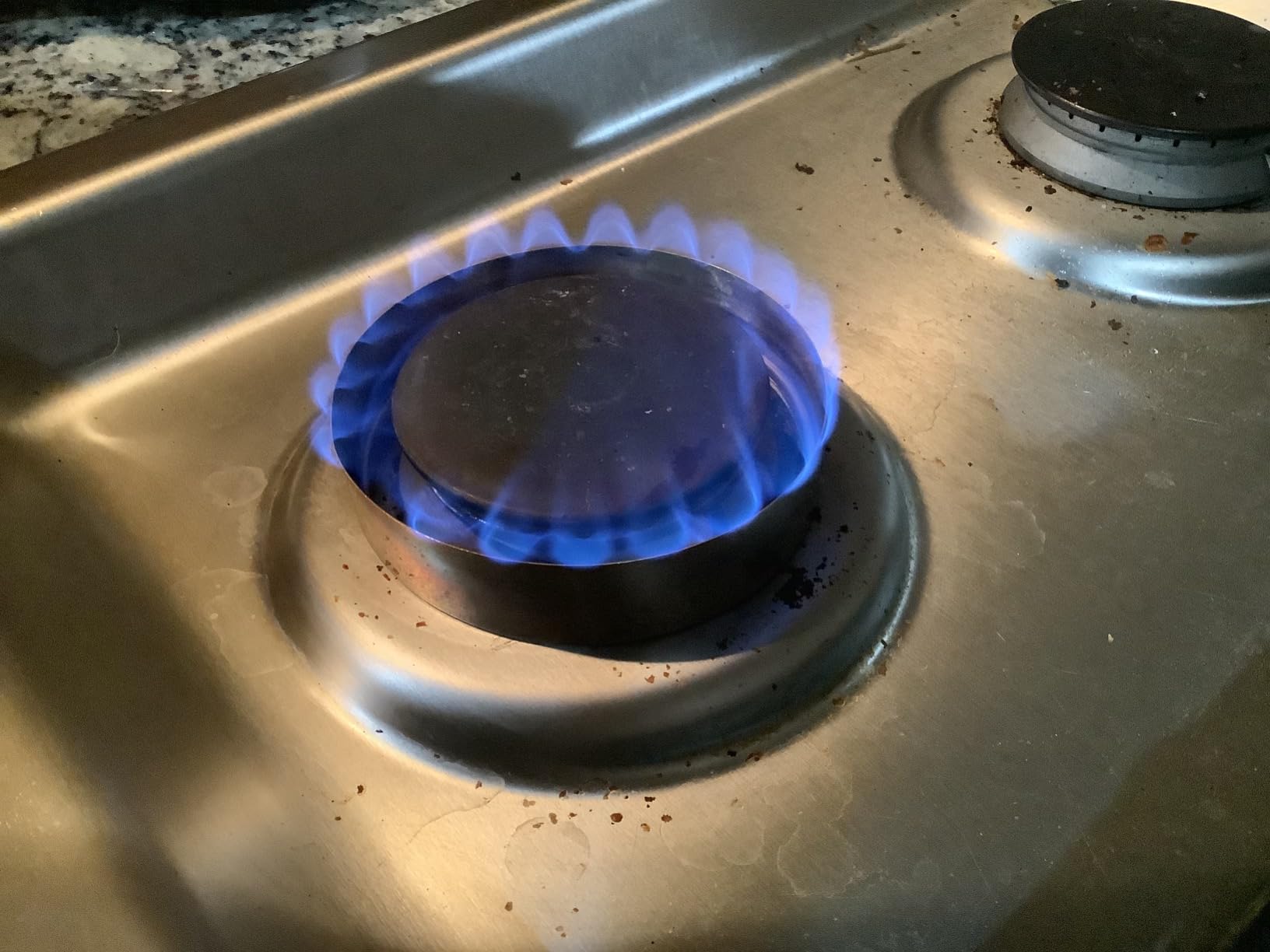
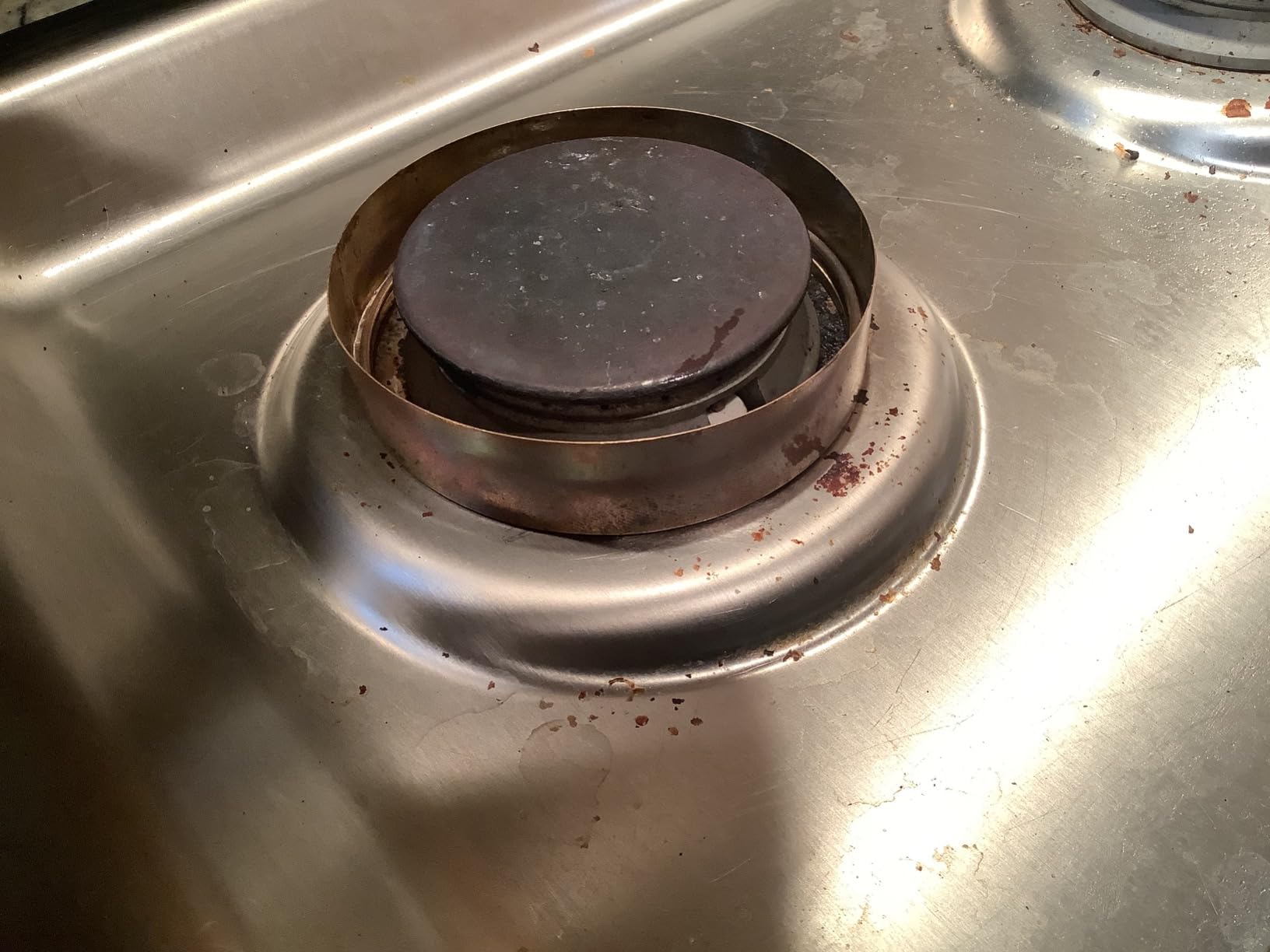
It works on gas and electric stovetops, and at 11.68 ounces it is easy to move, store, or take outside so you never have to think about smoke indoors.
The catch is scale. Three ounces is a sample batch, not a week of coffee, so this is a practice tool or a coffee taster, not a household supply machine.
Who the glass roaster suits
It suits complete beginners who want to learn the smell and sound of a roast before committing to any appliance, and anyone roasting single-origin samples for tasting rather than daily drinking.
It also suits renters and outdoor setups, since there is no electrical connection involved and no smoke indoors.
Who the glass roaster does not suit
It does not suit daily use. The three ounce capacity means repeated small rounds, and the total absence of automation means consistency depends on constant stirring and attention.
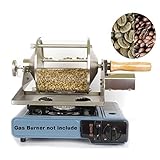
10. DYVEE Gas Burner Roaster: quartz glass and flame control
DYVEE Coffee Roaster Gas Burner Coffee Roasting Machine for Home Use, 400g Capacity, Quartz Glass Drum, Stainless Steel Frame, Peanut and Nut Roaster
- Highest average rating in the group at 4.5
- Quartz glass drum makes colour changes visible start to finish
- Gas flame adjustment gives responsive control of intensity
- 12V low voltage stirring motor
- 304 stainless steel frame and base
- Requires an external gas burner setup rather than a self-contained element
- Heavier and bulkier than electric countertop models at 17 pounds
If your main goal is to see first and second crack happen, the DYVEE is the clearest example in this roundup. The quartz glass drum shows bean colour changes from the start of the roast through to the drop, with nothing in the way.
Heat comes from a gas burner with flame adjustment rather than a built-in element, which means intensity responds immediately to your hand. Owners who already use a gas setup appreciate that directness.
Capacity is 400 grams with 200 to 300 grams recommended per batch, and the 12V low-voltage stirring motor is safer than higher voltage alternatives. Funnel, power adapter and manual are included.
It also roasts peanuts and other nuts, so it doubles as a snack roaster if you have the space.
Who the DYVEE suits
It suits anyone who already has a gas burner and wants responsive heat control with a full view of the beans. It also suits outdoor and garage roasting, since open flame fits those spaces naturally.
The 4.5 average across its owner ratings is the highest in this group, which reflects a well-built machine rather than a lucky sample.
Who the DYVEE does not suit
It does not suit a small kitchen. At 17 pounds and nearly 17 inches tall it is bulky, and it needs an external gas burner rather than plugging into a counter outlet.
If you want a self-contained appliance you can move with one hand, an electric countertop model suits you better.
How to Choose a Home Coffee Roaster
Drum, air, fluid bed or stovetop: which type suits a beginner?
Fluid bed roasters agitate beans in a stream of hot air, drum roasters tumble beans against a heated surface, and stovetop roasters use nothing but your burner and a spoon. For beginners, a fluid bed or air roaster is the easiest because the beans move on their own and heat evenly, since most of the machines here agitate the beans with a stirring arm or auger. Drum roasters give you deeper, darker flavour control but demand more attention, and stovetop roasters teach you the craft at the lowest cost. A reasonable rule: buy the fluid bed for convenience, the drum or gas machine for control.
Match batch size to how much coffee you actually drink
Buy the batch size your habit can finish. A 120 gram batch suits one to two cups a day, a 300 gram batch suits a couple of heavy drinkers, and a 500 gram batch suits a household. Oversizing is the most common beginner regret, because beans roasted faster than you drink them lose aroma long before they spoil. Work out your weekly cup count, multiply by roughly 16 grams per cup, add your 12 to 18 percent roast loss, and that is your green bean requirement per week.
Wattage and circuits are the real trip-wire
The machines here run from 800W up to 1200W, and higher wattage means faster, more even roasting but also more demand on your outlet. Roasting continuously on a 1200W element alongside a kettle and a toaster on the same circuit is how people trip breakers in the middle of a roast. If your machine is 1000W or above, check what else shares that circuit before you start.
Ventilation and noise decide whether you can roast indoors
Smoke and chaff are the two things that stop beginners, not taste. Reviewers of the electric machines here consistently describe roasting outdoors or under a working range hood as the practical setup, and the SR540 in particular is described as smoky enough to set off a smoke detector. Chaff is a fine papery dust that is also a fire risk if it collects near a heating element, which is why machines with an upper chaff basket or an included chaff collector are worth paying for. On noise, quiet-operation claims come up most often for auger-driven machines such as the GIVEROO, while combustion-style machines are the loudest.
Fresh Roast SR540 vs SR800: which should you buy?
The SR800 roasts more, the SR540 costs less and occupies less counter space, and the SR800 control board lets you store custom start settings while the SR540 does not. If you drink one or two cups a day, the 120 gram drum on the SR540 is the right size and the extra capacity on the SR800 will just create stale beans. If you drink four or more cups daily or share the machine, the 170 to 226 gram SR800 batch stops you roasting twice in one morning. Both use the same single-knob fan, heat and time control and the same glass-chamber approach, so the learning curve transfers directly between them.
What else you need alongside a roaster
Three purchases complete the setup and most first-timers forget one of them. You need a burr grinder, since a blade grinder will ruin the work you just did; our guide to the best burr coffee grinders for beginners covers the budget case. You need a small scale with 0.1 gram resolution, because roast consistency is really dose consistency. And you need green beans plus storage: one-way valve bags with a degassing valve, and a separate bag for each batch you are resting. Count on buying beans and the grinder together costing more than the roaster itself.
Your First Batch, Step by Step
Roast coffee at home is far less mysterious once you follow one fixed sequence. Every machine in this roundup performs best when you stop adjusting mid-roast and let the phases happen in order.
Charge cold. Start at room temperature green beans, fill to the recommended batch size for your machine, and never roast leftover beans that have already started to move.
Listen for the drying phase. The first several minutes smell grassy and quiet. Keep fan moderate and heat steady here; rushing this phase produces thin, bready coffee.
Watch for first crack. The dry, papery rustling becomes a distinct popping sound around the middle of the roast. On the electric machines, this is where experienced roasters raise heat and reduce fan.
Decide your end point. Just after first crack is a light roast. Mid first crack is medium. Second crack is dark, and pushing further burns the beans outright.
Drop and cool fast. Cooling stops the roast exactly where you stopped it. Machines with a dedicated cooling tray or high-speed fan do this well; a stovetop pan does not, so move beans immediately.
Rest before brewing. Freshly roasted coffee needs several days to a week of degassing before it tastes good. Brewing too early is the most common self-inflicted beginner disappointment, and it has nothing to do with the roaster.
Two practical notes. Treat chaff as a fire hazard and clear it from the machine and surrounding surfaces after every batch, not weekly. And buy beans from a supplier that lists roast suggestions and process details, because starting with washed or natural beans without that context makes your first few batches harder than they need to be. Our broader roundup of coffee roasters for home use is useful if you want to compare beyond the beginner tier.
Frequently Asked Questions
What is the best type of coffee roaster for beginners?
A fluid bed or air roaster with an automatic stirring arm is the easiest type for beginners, because the beans move on their own and heat evenly without constant attention. Drum and stovetop roasters teach you more control at the lowest cost, but demand more of your judgement. For most first-time buyers, a fluid bed machine in the 100 to 250 gram batch range is the right starting point.
What is the difference between the Fresh Roast SR540 and SR800 roasters?
The SR800 is the larger machine, roasting 170 to 226 grams per batch against the SR540’s 120 grams, and its newer control board can store custom start settings. The SR540 is smaller, cheaper and easier to store. Both use the same single-knob control for fan, heat and time, so the learning carries across.
Which home coffee roaster is best for someone who drinks one cup a day?
Buy the smallest machine that fits your habit. A 70 gram stovetop roaster or the 120 gram Fresh Roast SR540 suits one to two cups a day, because buying a 500 gram machine means roasted beans sitting for weeks before you finish them. Our pick for most beginners is the Fresh Roast SR540, which is the best home coffee roaster for beginners in 2026.
How long do home roasted coffee beans need to rest?
Plan on several days to a full week. Degassing releases carbon dioxide trapped during the roast, and brewing before that gas escapes gives you a flat, gassy cup that people wrongly blame on the roaster. Light roasts need longer than dark ones, so rest them longer.
How loud and smoky are home coffee roasters?
Every electric roaster in this roundup makes smoke, and the Fresh Roast SR540 is specifically described by owners as smoky enough to trigger a smoke detector. Roast outdoors or under a working range hood, and clear chaff from surfaces after every batch since it is a fire risk. Auger-driven machines such as the GIVEROO are the quietest options listed.
Which Home Coffee Roaster Should You Buy?
Buy the Fresh Roast SR540 if you want one machine that is easy to learn, easy to watch, and small enough for a normal kitchen counter. Drink more than four cups a day and want fewer repeat batches? Step up to the Fresh Roast SR800 instead.
Regardless of which you choose, buy green beans, a burr grinder, a scale and one-way degassing bags in the same month. A roaster without those is an expensive ornament, and the twelve percent to eighteen percent weight you lose to moisture means ordering more beans than feels necessary.
And whichever machine you pick, roast outdoors or under a hood until you know your kitchen’s limits, then rest your beans for four days before you judge the result. If you are still building the brew side of the setup, our picks for smart coffee makers for a home office cover the automatic end of the spectrum. This roundup was compiled and updated for 2026, and every machine listed was selected from current listings with owner feedback reviewed for each.