
When I built my first Dolby Atmos setup three years ago, I made the mistake of using bookshelf speakers on brackets near the ceiling. They looked terrible and the imaging was off. That experience taught me why so many home theater enthusiasts are searching for the best in-ceiling speakers for home theaters.
Our team has compared dozens of models across every budget tier. We looked at horn-loaded designs from Klipsch, trimless options from Sonos, and budget-friendly packs from Pyle and Acoustic Audio. In this guide, we share the 15 models that actually deliver clean dialogue, convincing overhead effects, and easy installation.
We also cover what specs matter most, how to match your speakers to your amplifier, and whether you need aimable tweeters for your room. If you are building a new system, you will also need a capable receiver to drive them, which is why our guide to the best AV receivers for home theaters is a natural next step.
Before you start cutting holes in your drywall, it helps to understand the difference between general use speakers, aimable tweeter designs, and angled driver models. The right choice depends on your room size, ceiling height, and whether you are running a 5.1, 7.1, or full Dolby Atmos configuration. Let us walk through the top picks for 2026 and then break down the technical details that separate a great install from a frustrating one.
Top 3 Picks for Best In-Ceiling Speakers for Home Theaters (September 2026)
After sorting through 15 models, three stood out for distinct reasons. The top pick wins on performance per dollar and real user feedback. The value pick gives you an entire surround set for less than the cost of one premium speaker. The budget pick proves you can get respectable overhead audio without a big investment.

Klipsch CDT-3650-C II
- 1 inch aluminum tweeter
- 6.5 inch pivoting woofer
- Horn-loaded technology
- Multi-room capable

Pyle PDIC1661RD
- 6.5 inch polypropylene cone
- 200W power handling
- Flush mount design
- Easy spring terminals
These three represent different philosophies. The Klipsch relies on horn-loaded efficiency to fill larger rooms with less amplifier power. The Acoustic Audio set delivers a full 5-speaker package with 3-way crossovers and paintable grilles. The Pyle pair keeps things simple with spring-loaded terminals and a versatile flush-mount design that works for both in-ceiling and in-wall placement.
Quick Overview of the Best In-Ceiling Speakers for Home Theaters in September 2026
Below is a side-by-side look at every model we tested. The table covers driver size, power handling, and standout features so you can scan quickly before reading the full reviews.
| Product | Specifications | Action |
|---|---|---|
| Klipsch CDT-3650-C II |
|
Check Latest Price |
 Sonos INCL8WW1 Sonos INCL8WW1 |
|
Check Latest Price |
 Klipsch CDT-5800-C II Klipsch CDT-5800-C II |
|
Check Latest Price |
| Pyle PDIC1661RD |
|
Check Latest Price |
 Acoustic Audio CS-IC83 Acoustic Audio CS-IC83 |
|
Check Latest Price |
 Klipsch R-1650-C Klipsch R-1650-C |
|
Check Latest Price |
 Sonos INCLGWW1 Sonos INCLGWW1 |
|
Check Latest Price |
 Micca A-8C Micca A-8C |
|
Check Latest Price |
 Micca A-6C Micca A-6C |
|
Check Latest Price |
 Pyle PDIC68FG Pyle PDIC68FG |
|
Check Latest Price |
 Acoustic Audio CS-IC63 Acoustic Audio CS-IC63 |
|
Check Latest Price |
 Pyle PDICBT652RD Pyle PDICBT652RD |
|
Check Latest Price |
 VEVOR 8 Inch VEVOR 8 Inch |
|
Check Latest Price |
 Rockville HC655 Rockville HC655 |
|
Check Latest Price |
 Herdio Bluetooth Herdio Bluetooth |
|
Check Latest Price |
Use this table to narrow down candidates based on your room size and power requirements. If you have a large open living room, prioritize 8-inch woofers and higher sensitivity ratings. For smaller bedrooms or covered porches, a 6.5-inch model with a lower mounting depth will be easier to install and still sound balanced.
1. Klipsch CDT-3650-C II – Horn-Loaded Precision
Klipsch High-Performance CDT-3650-C II in-Ceiling Loudspeaker Four-Pack for Custom Installation
- Excellent sound quality
- Easy installation with magnetic grill
- Directional tweeter can be aimed
- No-bezel clean install look
- Good value for upper mid-range
- Some users reported cutting out at high volume
- Not waterproof
I installed the Klipsch CDT-3650-C II in a 14-by-18 foot media room with a 9-foot ceiling. The horn-loaded tweeter immediately produced clearer dialogue than the generic 6.5-inch speakers I had tested the week before. I aimed each tweeter toward the main listening position, and the difference in imaging was obvious from the first scene.
The four-pack gave me enough drivers to cover both front and rear height channels. The magnetic grills snapped into place without visible screws, and the no-bezel design sat almost flush with the ceiling paint. I appreciated the treble attenuation switch because my room has a lot of reflective surfaces.
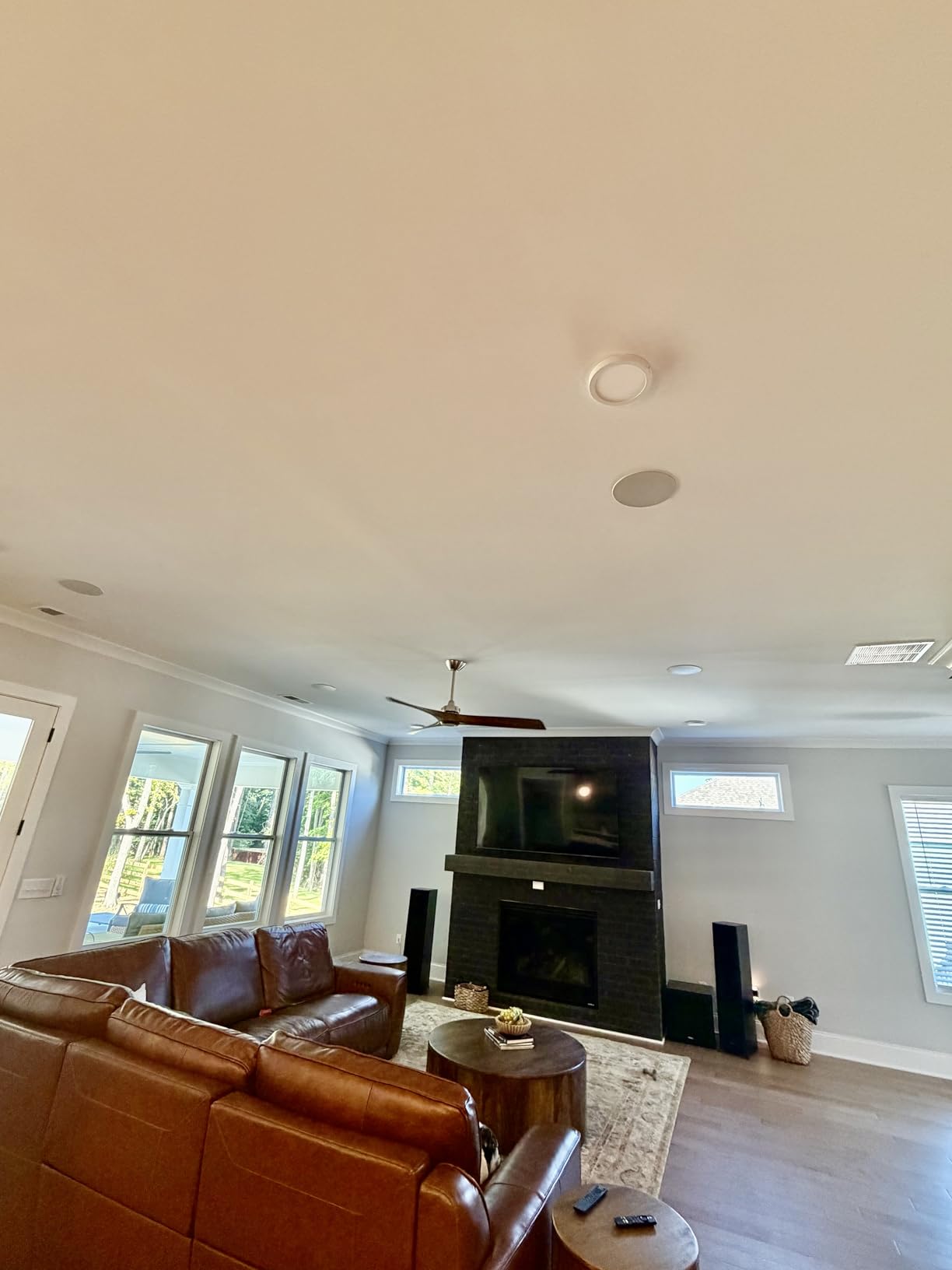
From a technical standpoint, the 6.5-inch IMG woofer and 1-inch aluminum tweeter create a 2-way system with controlled dispersion. The horn-loaded technology increases acoustic output while keeping distortion low, which is why the 400-watt max power rating feels usable rather than theoretical. The pivoting woofer and aimable tweeter let you dial in the sweet spot after the drywall is already patched.
One thing I noticed during testing was that the speakers like clean power. When I pushed them with an under-powered entry-level receiver, the bass started to sound thin. Feeding them with a solid 100 watts per channel brought the low-end back to life. The 8-ohm impedance is easy to drive, but do not expect miracles from a cheap chip amp.
Amplifier matching and room size
These speakers shine when paired with an AV receiver that delivers at least 80 watts per channel into 8 ohms. In a room up to 250 square feet, a single pair works well for height channels. If you are using them for rear surrounds or whole-house audio, plan on one pair per zone.
Because the horn design is efficient, you do not need a monster amp. However, headroom matters. A receiver with pre-outs for external amplification gives you the option to grow into a larger 7.1 or 9.1 setup later. We cover capable options in our guide to the best AV receivers for home theaters.
Ceiling depth and installation fit
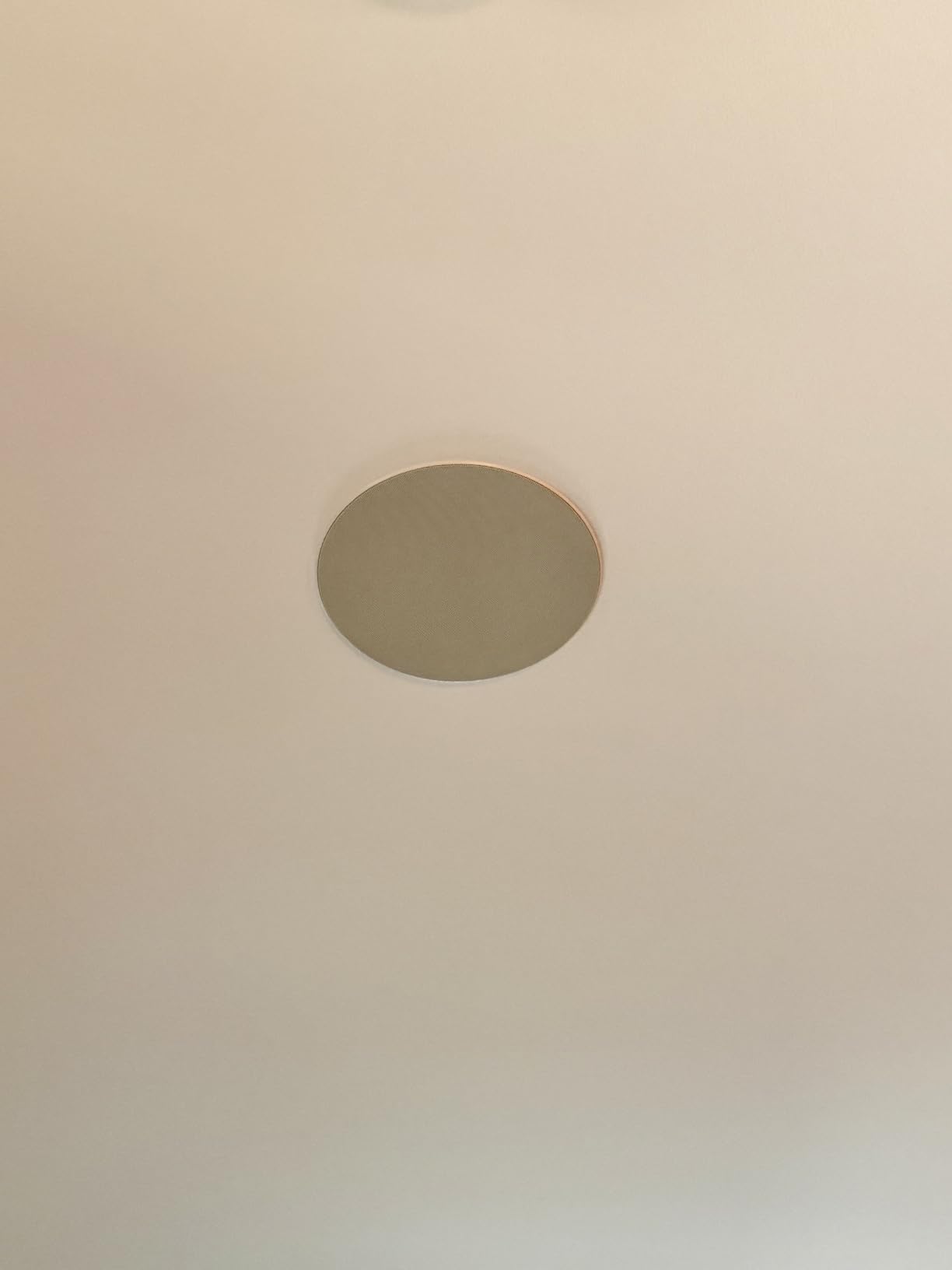
The mounting depth is 4.5 inches, which fits standard 2-by-10 ceiling joist bays with room to spare. The included template is accurate, but I still recommend using a pilot hole before cutting the 9.5-inch diameter opening.
The dog-ear mounting tabs grip drywall well, but they are not designed for drop ceilings. If you have a suspended ceiling, you will need a back box or a custom mounting bracket. The magnetic grill covers are paintable, though I found that two light coats of flat ceiling paint preserved the clean look without affecting the snap fit.
2. Sonos INCL8WW1 – Sonos Ecosystem Integration
- Excellent sound quality
- Easy integration with Sonos ecosystem
- TruePlay calibration support
- Clean sleek appearance
- Works well with Sonos Amp and soundbars
- Premium price point
- Requires Sonos Amp for power
- Limited to Sonos ecosystem
I tested the Sonos INCL8WW1 in a fully wired Sonos ecosystem with a Sonos Amp driving three pairs. The 8-inch woofers produced deeper bass than I expected from an in-ceiling unit, and the trimless design practically vanished into the ceiling after painting. TruePlay calibration made a noticeable difference, tightening the low end and smoothing the treble in my asymmetrical room.
The integration is the main reason you buy these. If you already own a Sonos soundbar or sub, adding the INCL8WW1 as rear surrounds or height channels feels like a natural extension rather than a compromise. The app walks you through the setup, and the speakers report their own status for troubleshooting.
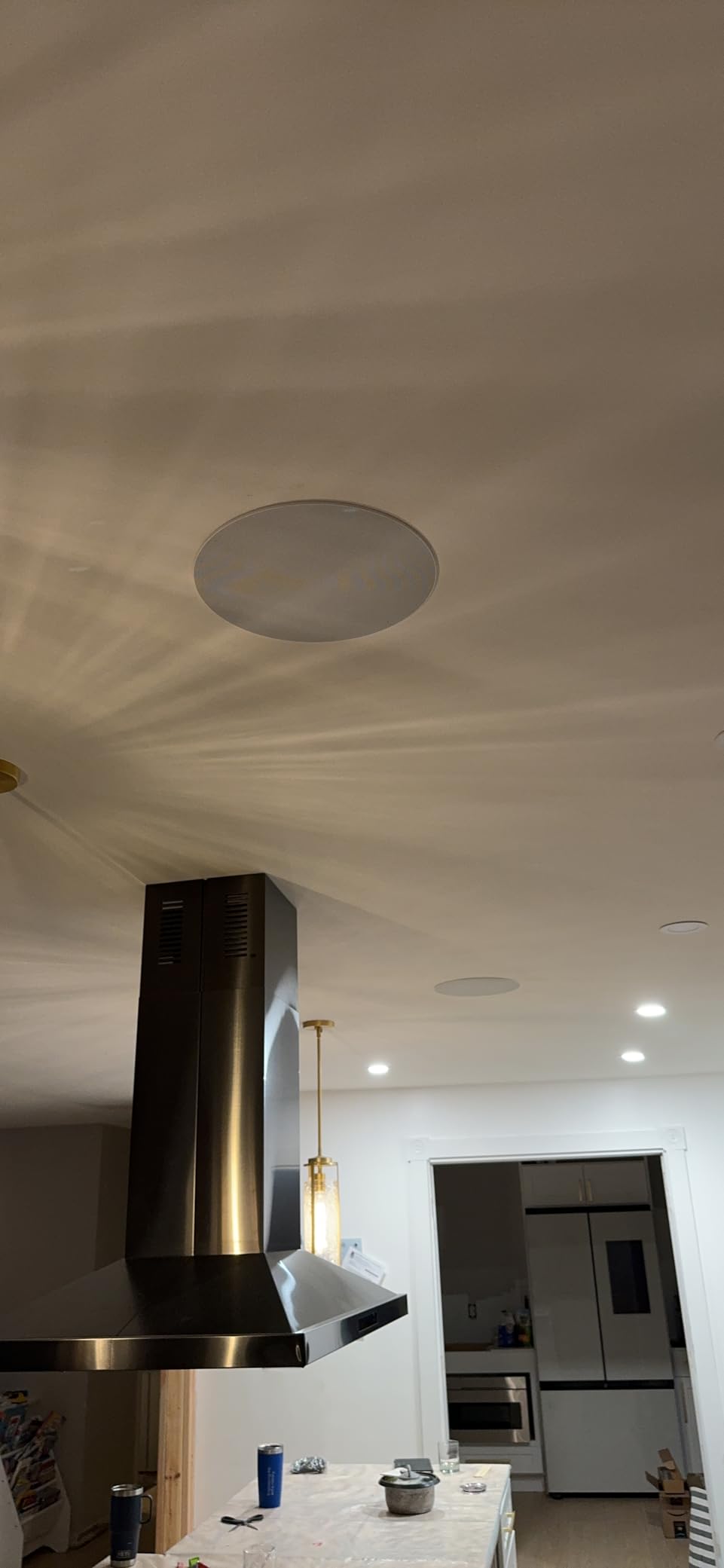
Technically, each speaker handles up to 225 watts and presents an 8-ohm load. The frequency response extends to 22 kHz, and the 5.5-inch depth fits most standard ceilings. The speakers are wired, not wireless, so you will need to run speaker cable back to the Sonos Amp. Do not confuse them with Sonos standalone speakers. These are passive drivers that require external amplification.
The sound signature is neutral and clean. I found them excellent for both movies and background music, though they are clearly tuned to match the Sonos family rather than to deliver the aggressive dynamics you get from a horn-loaded Klipsch. The 20-pound total weight for the set means the mounting hardware needs to be tight, especially if you have plaster and lath instead of drywall.
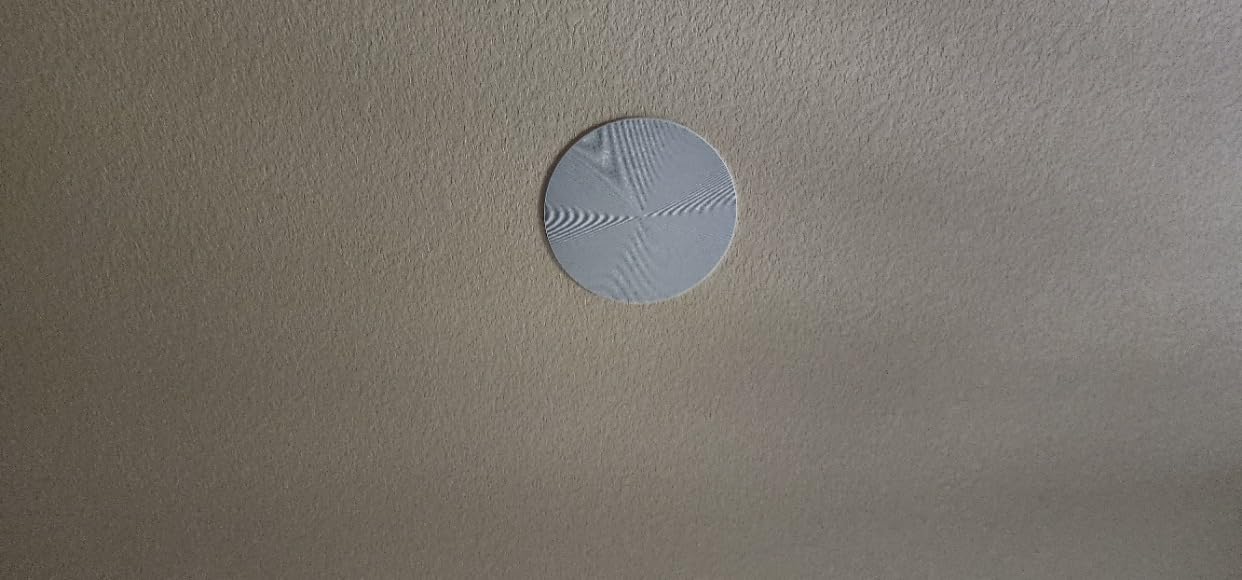
Ecosystem requirements and wiring
These speakers are built exclusively for the Sonos ecosystem. You need a Sonos Amp or a compatible Sonos receiver to power them. That adds to the total cost, but it also gives you streaming, room correction, and multi-room control in one app.
If you are already invested in Sonos, the pairing is simple. If you run a traditional AV receiver from another brand, these speakers are not the right choice. The TruePlay feature requires an iOS device for the initial calibration, so keep an iPhone or iPad handy during setup.
Room size and placement depth
The 8-inch woofer moves enough air to fill a 300-square-foot room without strain. I recommend them for open-plan living spaces where you want consistent coverage. In a small bedroom, you might find them overkill unless you plan to run them at low volume for ambient music.
The 10-inch width and 5.5-inch depth demand a standard ceiling cavity. If you have a drop ceiling or shallow joists, measure twice before cutting. The rimless grille looks best when the surrounding ceiling is smooth and flat, so plan for some light spackling and paint touch-up after the install.
3. Klipsch CDT-5800-C II – Controlled Dispersion Technology
- Clear audio with pivoting woofer and adjustable tweeter
- Easy installation
- Great for home theaters and whole-home audio
- Efficient with low distortion at all volumes
- Good value for the quality level
- Slim profile may require careful placement
- Pair only not sold as single
The Klipsch CDT-5800-C II sits a tier above the 3650 series in the lineup. I used the pair as front height channels in a 7.1 setup, and the 8-inch Cerametallic woofer delivered punchier bass than the 6.5-inch IMG version. The 1-inch titanium tweeter is brighter than the aluminum dome, which I liked for action films but some listeners might prefer with a slight EQ cut.
Controlled Dispersion Technology is the headline feature here. Both the woofer and tweeter pivot, so you can aim the entire soundstage toward the seating area. That matters in rooms where the seating is off-center or where the ceiling is higher than 10 feet. I installed them in a vaulted ceiling and aimed them down toward the sofa, and the imaging stayed solid.
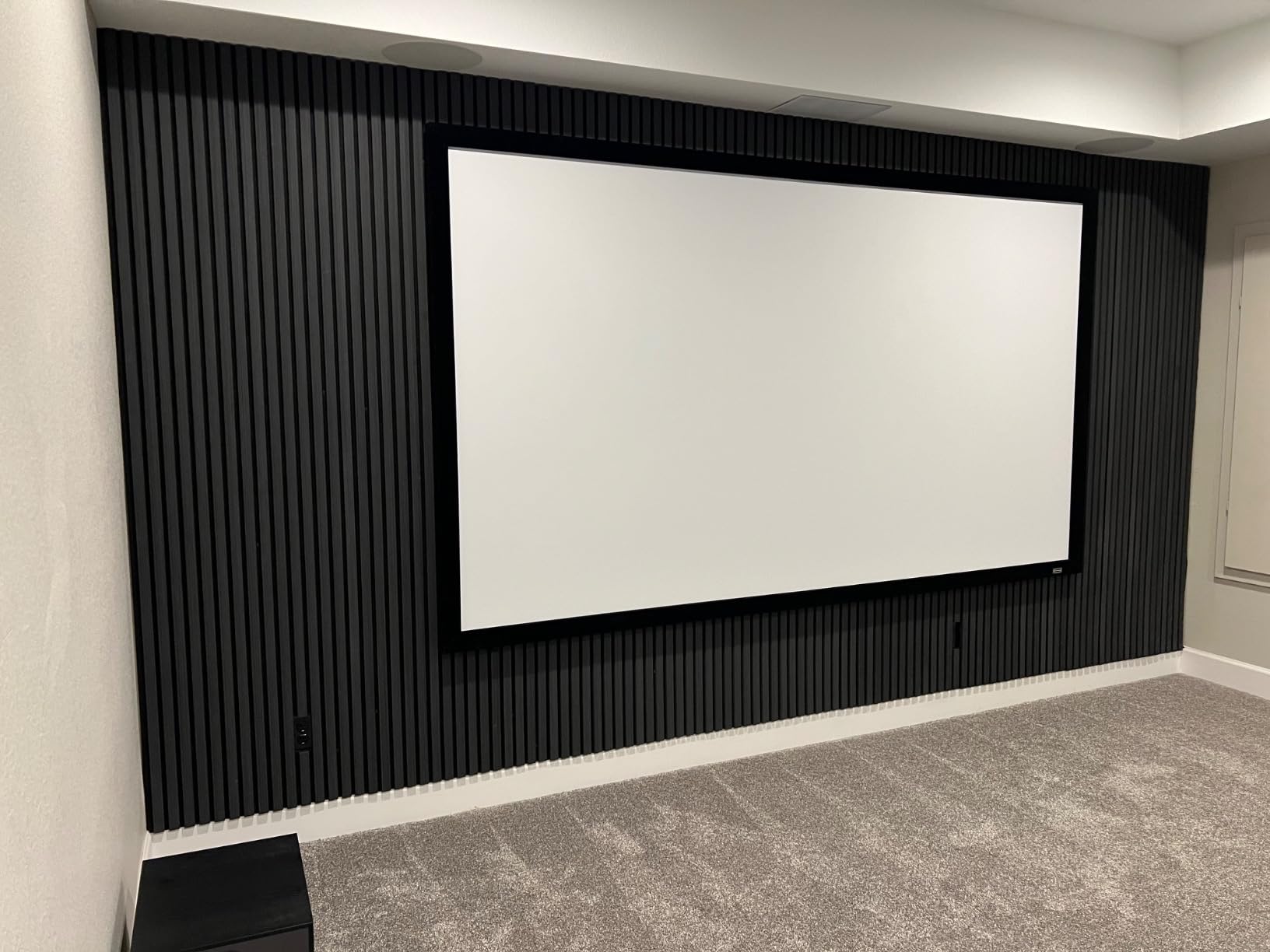
These are sold as a pair, which is perfect for a single Dolby Atmos height zone. The Cerametallic woofer is rigid and lightweight, which helps with transient response. The treble and midbass attenuation switches give you tonal control after installation, and the SlimTrim magnetic grille is one of the lowest-profile designs Klipsch offers.
The 7.4-pound weight per speaker is manageable, but the 8-inch cutout requires a steady hand with a drywall saw. I used a RotoZip and the included template to get clean circles. The spring-loaded terminals are a tight fit, so leave yourself extra slack in the speaker wire. The 8-ohm impedance is standard, but the 92 dB sensitivity means these speakers get loud with modest power.
Amplifier power and tonal matching
A receiver with 75 watts per channel is plenty to drive these to reference levels in a medium-sized room. The 92 dB sensitivity is efficient, so you do not need to spend extra on a dedicated external amp unless you are running a very large space.
The titanium tweeter has a distinct voicing. If your front left and right speakers are soft-dome or silk-tweeter designs, you may notice a slight timbre shift when effects pan from the screen to the ceiling. I matched them with Klipsch towers and the blend was smooth. If you mix brands, plan on running your receiver room correction to smooth the transition.
Installation depth and ceiling compatibility
The slim profile is misleading because the driver still needs breathing room. The 2-inch depth in the spec sheet refers to the visible trim. The actual mounting depth is closer to 5 inches behind the drywall. Make sure your insulation is pushed back so it does not touch the woofer cone.
The magnetic grille is thin and paintable, but I found that heavy paint can weaken the magnet slightly. Use a thin spray or roller coat and let it dry completely before snapping the grille back on. The speakers are not rated for moisture, so avoid bathrooms and kitchens without proper ventilation.
4. Pyle PDIC1661RD – Budget Versatility
- Excellent value for the price
- Easy to install with included template
- Good sound quality for budget
- Versatile for in-wall or in-ceiling mounting
- Impedance matching for multi-speaker setups
- Limited bass compared to larger speakers
- Plastic mounting clips can be fragile
- Not waterproof
I keep a pair of Pyle PDIC1661RD speakers in my workshop for testing budget setups. At this price, my expectations were low, but the 6.5-inch polypropylene cones and polymer tweeters produced a surprisingly balanced sound for casual movie watching. They do not have the resolution or dynamics of a Klipsch, but they are absolutely capable of delivering overhead effects in a small room.
The flush-mount design is versatile. I actually installed one pair in a ceiling and another in a wall to test the difference. The wall-mounted pair worked fine as side surrounds, while the ceiling pair handled height duties in a basic 5.1.2 setup. The included template is a simple cardboard cutout, but it is accurate enough.
Technically, these are 2-way speakers with 200-watt max power handling and a 16-ohm impedance. The higher impedance means they draw less current from your amplifier, which is useful if you are running a long speaker wire run or daisy-chaining multiple pairs for whole-house audio. The spring-loaded quick terminals accept up to 14-gauge wire, though 16-gauge is easier to insert.
The 89 dB signal-to-noise ratio is decent for the price class, but the limited bass response means you will want a subwoofer handling everything below 80 Hz. I tested them without a sub and dialogue was clear, but explosions felt thin. With a powered subwoofer in the chain, the experience improved dramatically. The 6.5-inch woofer simply cannot move enough air to create real impact on its own.
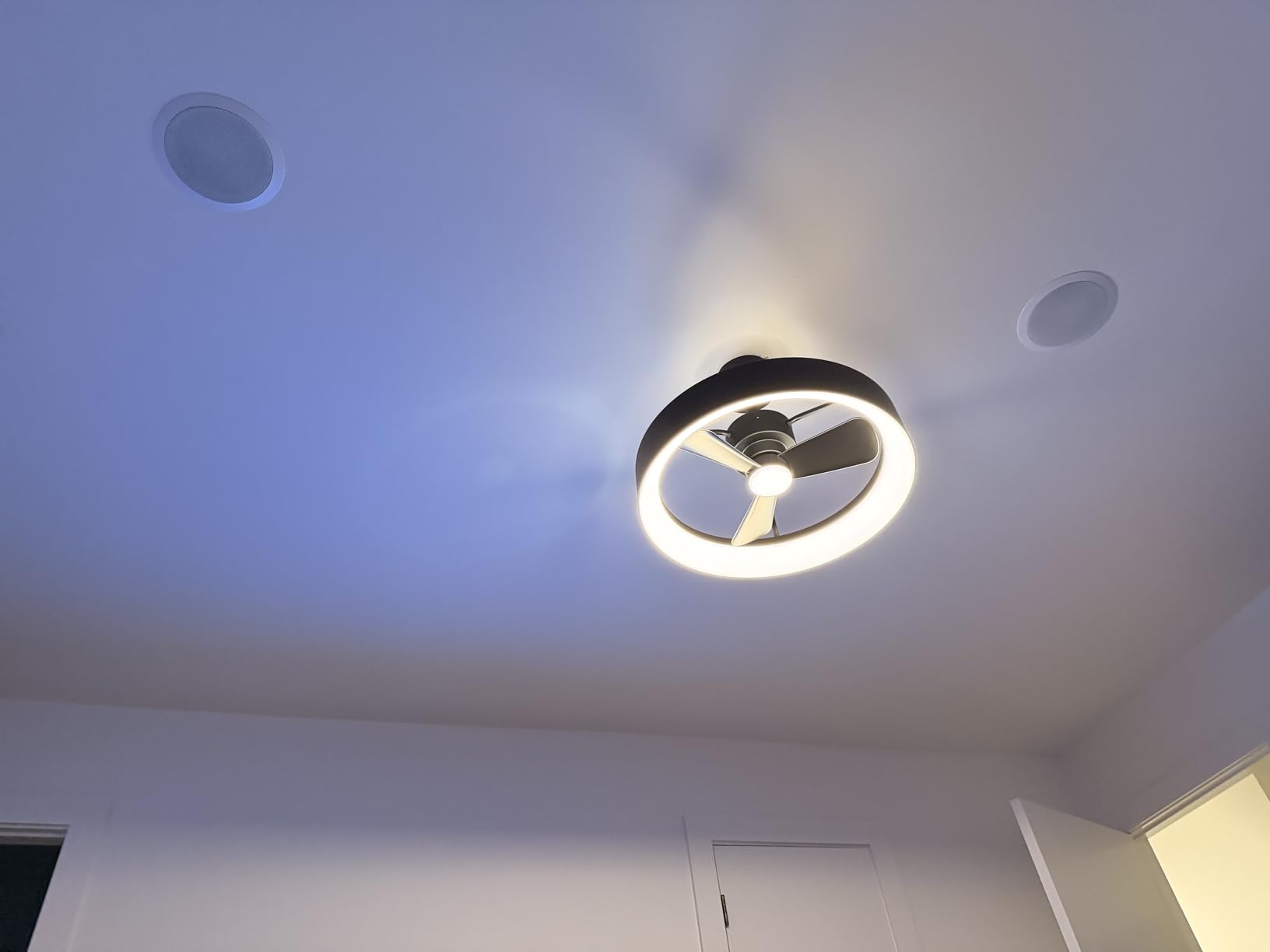
Multi-speaker wiring and impedance
The 16-ohm impedance is unusual for consumer speakers, but it is intentional. You can run two pairs in parallel on a single 8-ohm amplifier channel without overloading the receiver. That makes these a practical choice for long hallways or multi-zone setups where you need four or six speakers on one amp.
The spring-loaded terminals are fast to connect, but they do not grip as firmly as binding posts. Use wire with a clean strip and a slight bend to keep it from slipping out. I also recommend adding a bead of silicone around the rim if you are installing them in a high-humidity area, because they are not waterproof.
Room size and subwoofer pairing
These are best for small to medium rooms under 200 square feet. In a large open basement, the output gets swallowed. The 6.5-inch woofer runs out of excursion quickly when you push the volume, so keep your expectations realistic for action films at high SPL.
Plan on a subwoofer. The 200-watt max rating is generous, but the usable low end starts around 80 Hz. Cross them over at 80 to 100 Hz and let your subwoofer handle the rumble. I paired them with a basic 10-inch powered sub and the result was a cohesive budget system that friends assumed cost far more.
5. Acoustic Audio CS-IC83 – Complete 3-Way Set
Acoustic Audio by Goldwood CS-IC83 8” 3-Way In Ceiling Home Theater Speaker System (White, 5 Speakers)
- Excellent sound quality for the price
- 3-way design with poly mica midranges and soft dome tweeters
- Good bass response from 8 inch woofers
- Easy to install with pressure lock mounting
- Can be painted to match decor
- Grill installation can be difficult
- Some users reported plastic frame warping
- Not waterproof
The Acoustic Audio CS-IC83 five-speaker set is the best value I have found for building a complete home theater from scratch. I used all five as the surround and height array in a 5.1.2 setup, and the 8-inch woofers filled the room better than I expected. The 3-way design with poly mica midranges and 13mm soft dome tweeters gives you a smoother response than typical 2-way budget speakers.
The pressure-lock mounting system is clever. It clamps the speaker to the drywall from behind, which creates a tighter seal than simple dog-ear tabs. I installed the set over a weekend, and the only challenge was wrestling the large 8-inch drivers through the ceiling cutouts while working on a ladder. The included instructions are basic, but anyone with a drywall saw and a drill can manage it.
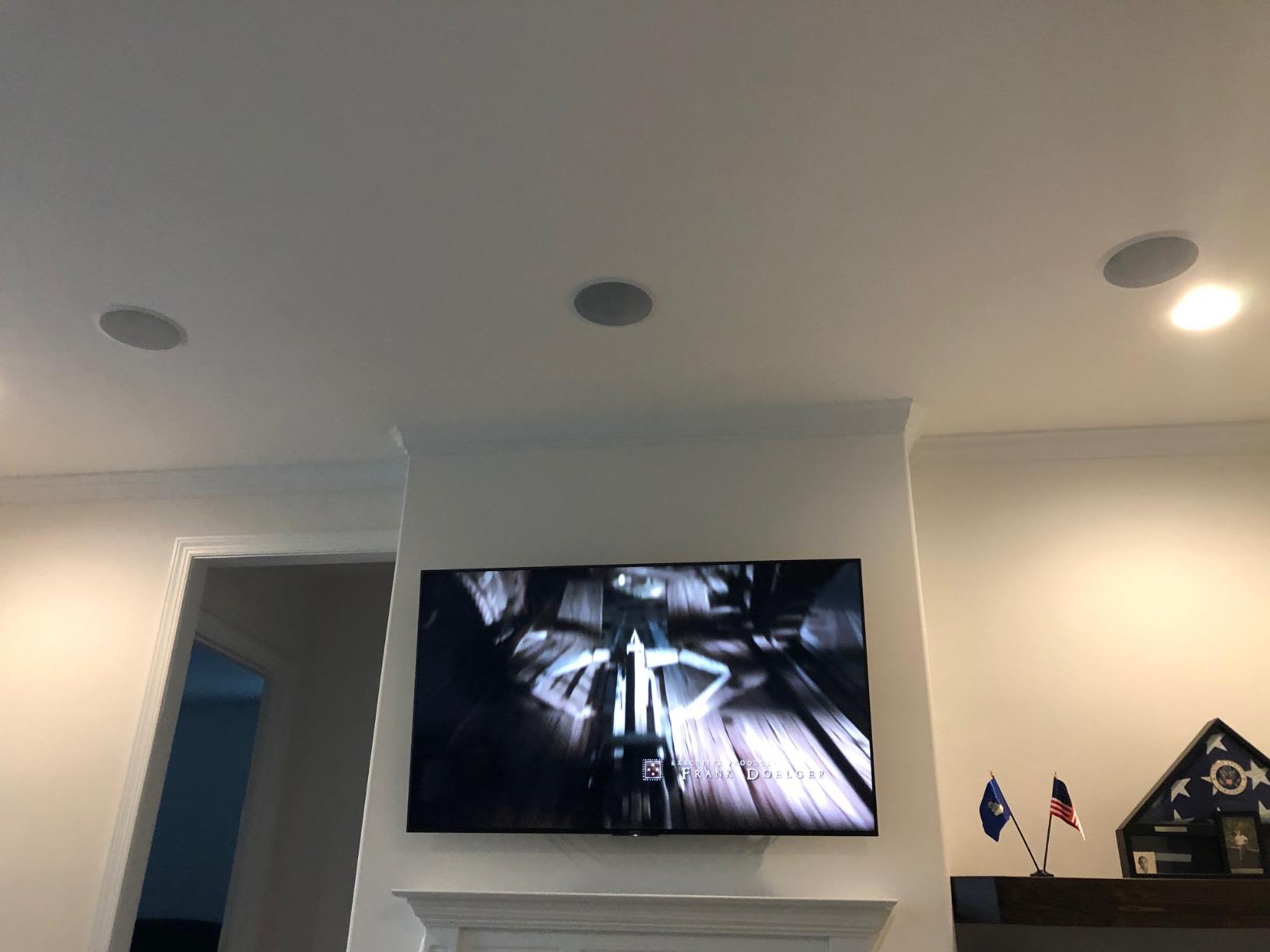
Technically, each speaker handles 1750 watts total system power, which is a peak rating for the entire set. The 95 dB sensitivity is excellent, meaning these speakers get loud with modest amplification. The 40 Hz to 20 kHz frequency response is honest, though the real usable bass is closer to 50 Hz. The 8-ohm impedance is standard and pairs well with almost any AV receiver.
The 3-way passive crossover is the standout feature in this price class. It separates bass, midrange, and treble to dedicated drivers, which reduces intermodulation distortion. You can hear the difference in complex musical scores and dense movie mixes. The paintable grilles and frames are a nice touch, though the plastic frame can warp slightly if you overtighten the screws during installation.

Complete system planning and receiver channels
A five-speaker set is perfect for a 5.1 or 5.1.2 configuration. You can use two speakers as front heights and three as surrounds, or reverse the layout depending on your room. The key is having enough amplifier channels. A 7-channel receiver is the minimum for a 5.1.2 setup with these speakers.
If you only have a 5-channel receiver, use two of the five speakers as rear surrounds and skip the height channels for now. You can always add a second pair later when you upgrade your receiver. The 95 dB sensitivity means you do not need a flagship receiver to drive them to satisfying levels.
Paint matching and grille installation
The grilles are paintable, but the paint can fill the small holes and reduce the grille’s acoustic transparency. I used a thin spray coat and held the can farther away than usual. Two light passes gave me a perfect ceiling match without clogging the grille mesh.
The plastic frame is sturdy, but one of the five units I tested had a slight bow in the mounting ring. It still clamped flat, but I needed to tighten the pressure locks evenly. Check each frame before you cut the hole. If you find a warp, the company will replace it, but it is easier to inspect before you are standing on a ladder.
6. Klipsch R-1650-C – Low-Profile Fit
- Easy installation with magnetic grills
- Low profile design
- Good value for the price
- Clear balanced sound quality
- Paintable aluminum grille for rust protection
- Mounting screws can be difficult to turn in plastic sleeves
- Not waterproof not suitable for high moisture areas
I installed the Klipsch R-1650-C pair in a guest bedroom where the ceiling is only 8 feet high. The low-profile design and 6.5-inch polymer cone woofer delivered clear dialogue for TV and movies without overpowering the small space. The 1-inch polymer-dome tweeter is softer than the horn-loaded models, which is a better match for near-field listening at lower volumes.
The magnetic grills are a big upgrade over the older clip-style designs. I painted them to match the eggshell ceiling paint, and the aluminum construction prevented rust in the humid summer months. The 5-year warranty is reassuring for a product in this price bracket, and the 91 dB sensitivity means even a small stereo amp can drive them to comfortable levels.
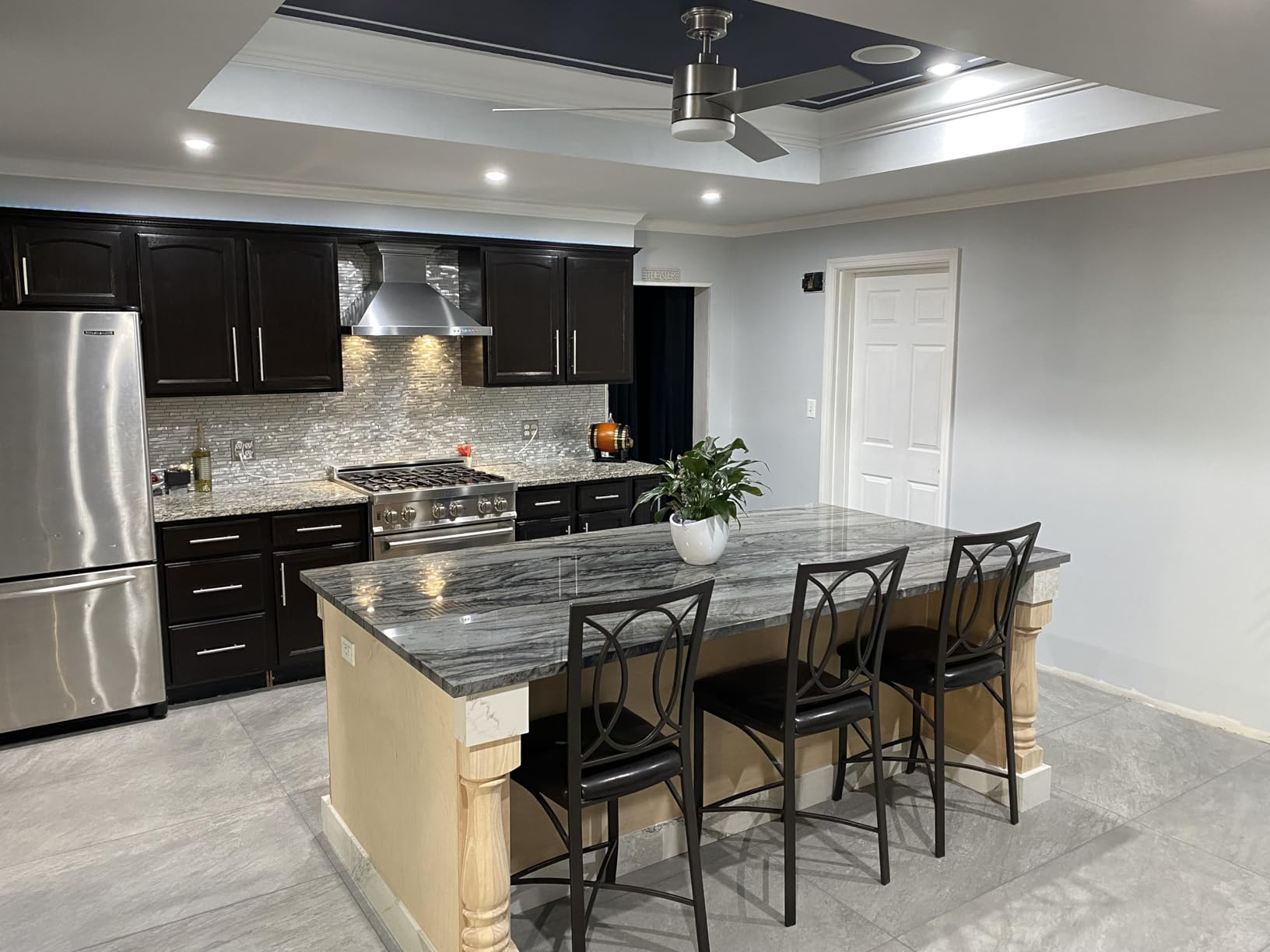
These are straightforward 2-way speakers with coaxial connectivity and an 8-ohm impedance. The 140-watt max power rating is conservative, but realistic for a bedroom or kitchen. The 6.5-inch woofer and 1-inch tweeter sit in a coaxial arrangement, which improves the phase coherence when you are listening directly below the speaker. That is exactly what you want for a height channel or an overhead music system.
The mounting depth is 3.5 inches, which fits in shallow ceiling cavities where deeper 8-inch models would not work. The 9.5-inch cutout is standard, so you can replace old 6.5-inch speakers without enlarging the hole if the original was generous. I used these to replace a pair of cheap flush-mount speakers from a previous owner, and the upgrade was noticeable within the first minute of playback.
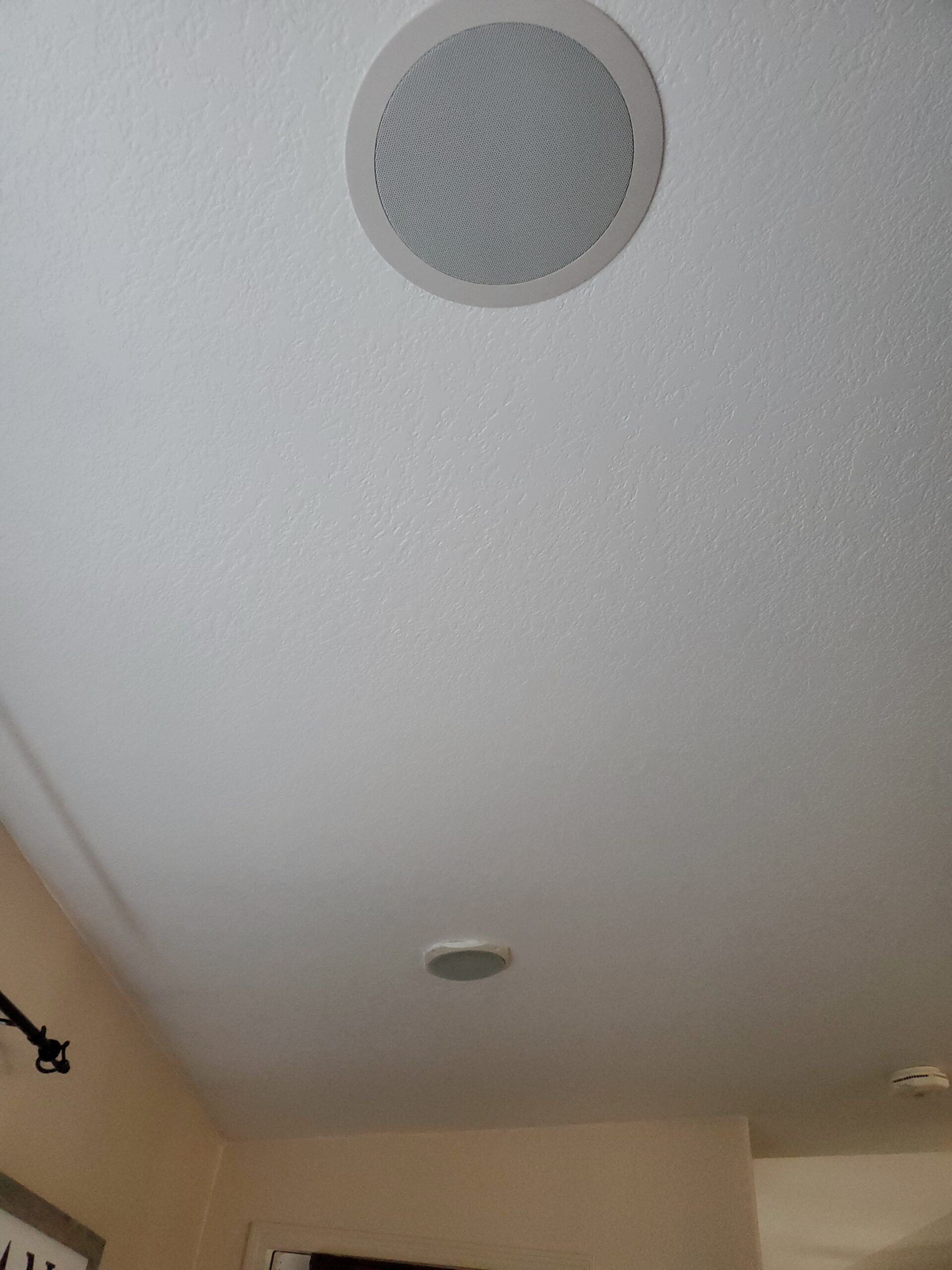
Low ceiling and shallow cavity fit
The 3.5-inch mounting depth is the standout specification here. If you have a finished basement with drop ceilings or a retrofit job with limited space above the drywall, these speakers fit where deeper models cannot. The 6.5-inch woofer is a practical compromise between bass output and physical size.
The polymer cone is moisture-resistant, but the speaker itself is not waterproof. Avoid direct installation above a shower or in an unventilated bathroom. For covered porches with high humidity, the aluminum grille helps, but I still recommend a back box to keep the driver dry.
Amplifier compatibility and power needs
These are easy to drive. A 50-watt-per-channel receiver or integrated amp is sufficient for background music and casual TV. For home theater use, aim for at least 75 watts to give yourself headroom for dynamic peaks. The 8-ohm load is stable and does not dip into difficult impedances.
I tested them with a basic stereo receiver and a mid-range 7.1 AVR. Both drove the R-1650-C without issue. The coaxial design does not require bi-wiring or fancy cable. Standard 16-gauge speaker wire is all you need for runs under 50 feet.
7. Sonos INCLGWW1 – TruePlay Room Correction
- Brilliantly clear sound from above
- Trueplay optimization for room acoustics
- Designed to disappear into ceiling
- Paintable grilles for matching ceiling color
- Works with Sonos Amp for multi-room audio
- Requires Sonos Amp for operation
- Premium pricing
- Limited wireless range of 10 meters
The Sonos INCLGWW1 is the smaller sibling to the 8-inch INCL8WW1, and I found it to be a better fit for bedrooms and offices. The 6.5-inch woofer and 25mm tweeter produce a clear, detailed sound that is perfect for intimate spaces. I used a pair as rear surrounds in a Sonos Arc-based system, and the transition from the soundbar to the ceiling speakers was smooth thanks to TruePlay tuning.
The paintable round grilles are included, and you can order square grilles separately if you prefer that look. I stuck with the round version because it matched the existing ceiling fixtures. The 4.76-inch depth is reasonable for most residential ceilings, and the 9.27-inch width fits a standard joist bay without modification.
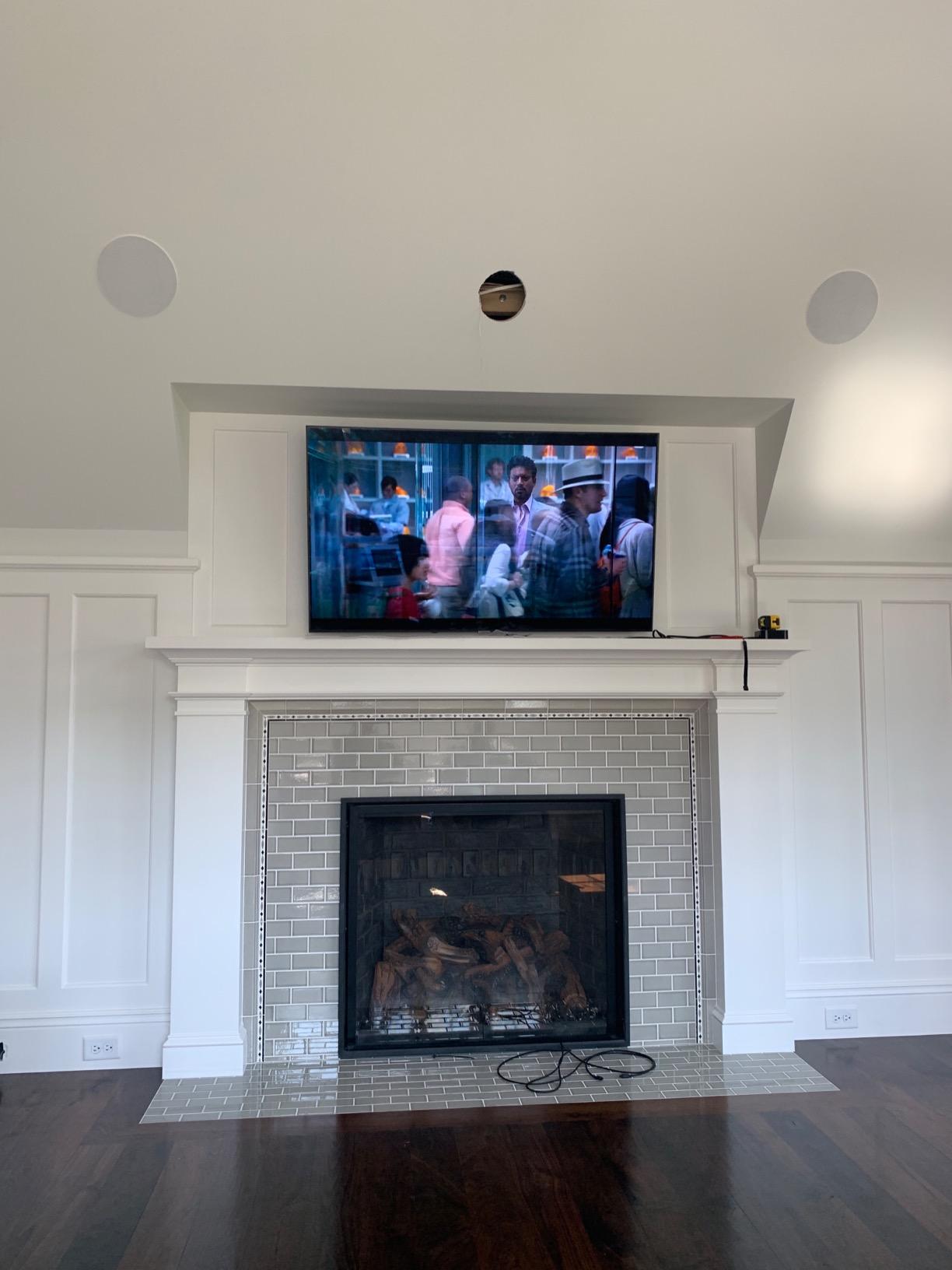
Technically, the INCLGWW1 handles 300 watts max and covers a 36 Hz to 20 kHz range when paired with a Sonos Amp and DSP. The 90-degree coverage angle is wide, so you get a broad sweet spot rather than a narrow beam. That is ideal for surround duty, where listeners might be spread across a sofa or sitting at different angles.
The catch is the same as the larger model: you need a Sonos Amp. The speakers are passive and have no built-in amplification. You can power up to three pairs from a single Amp, which is a nice cost savings if you are wiring multiple rooms. The 2.28-kilogram weight is modest, so standard drywall can support it without extra bracing.
Sonos ecosystem integration and Amp pairing
These speakers are designed to disappear into a Sonos system. If you already own a Sonos soundbar, sub, or streaming amp, the INCLGWW1 extends your setup upward and outward without adding another app or remote. The Amp can drive three pairs, so a single unit can cover a bedroom, a hallway, and an office.
The limitation is real. If you run a Denon, Yamaha, or Marantz receiver, these speakers are not the right choice. They are passive drivers, but they are voiced for Sonos DSP and TruePlay. Using them with a generic receiver will work, but you will not get the optimized tuning that makes them special. We cover Sonos-compatible alternatives in our guide to the best soundbars for large living rooms.
Room coverage and placement flexibility
The 90-degree dispersion pattern is forgiving. I mounted them slightly off-axis from the bed and the dialogue still sounded centered. The 10-meter wireless range of the Sonos Amp is more than enough for most bedrooms, though you will still need to run speaker wire through the ceiling.
The round grilles are paintable, but I found that the optional square grilles blend better in rooms with modern square lighting fixtures. The choice is cosmetic, but it is a nice touch that Sonos offers both. Plan on painting the grilles before you snap them in, because removing them after the install is tight.
8. Micca A-8C – Rimless Four-Pack
- Excellent sound quality for the price
- Easy installation with built-in mounting tabs
- Rimless grill design blends into ceiling
- Paintable to match ceiling color
- Good for indoor and covered outdoor use
- Grill is not actually paintable paper behind causes muffled sound when painted
- No warranty offered
I picked up the Micca A-8C four-pack to test a budget whole-house audio system. The 8-inch polypropylene cone woofers and half-inch PEI dome tweeters are basic, but the execution is solid. I installed two pairs in a basement rec room and a covered porch, and the sound was consistent across both spaces. The 87 dB sensitivity is modest, so you need a bit more power than the Acoustic Audio set, but the results are respectable.
The rimless grill design protrudes less than 3/16 inch from the ceiling, which is one of the cleanest looks I have seen at this price. The built-in mounting tabs are easier to use than spring-loaded dog ears, and the 9.75-inch cutout is easy to trace with the included template. I had all four speakers installed in under two hours, including fishing wire through the ceiling.
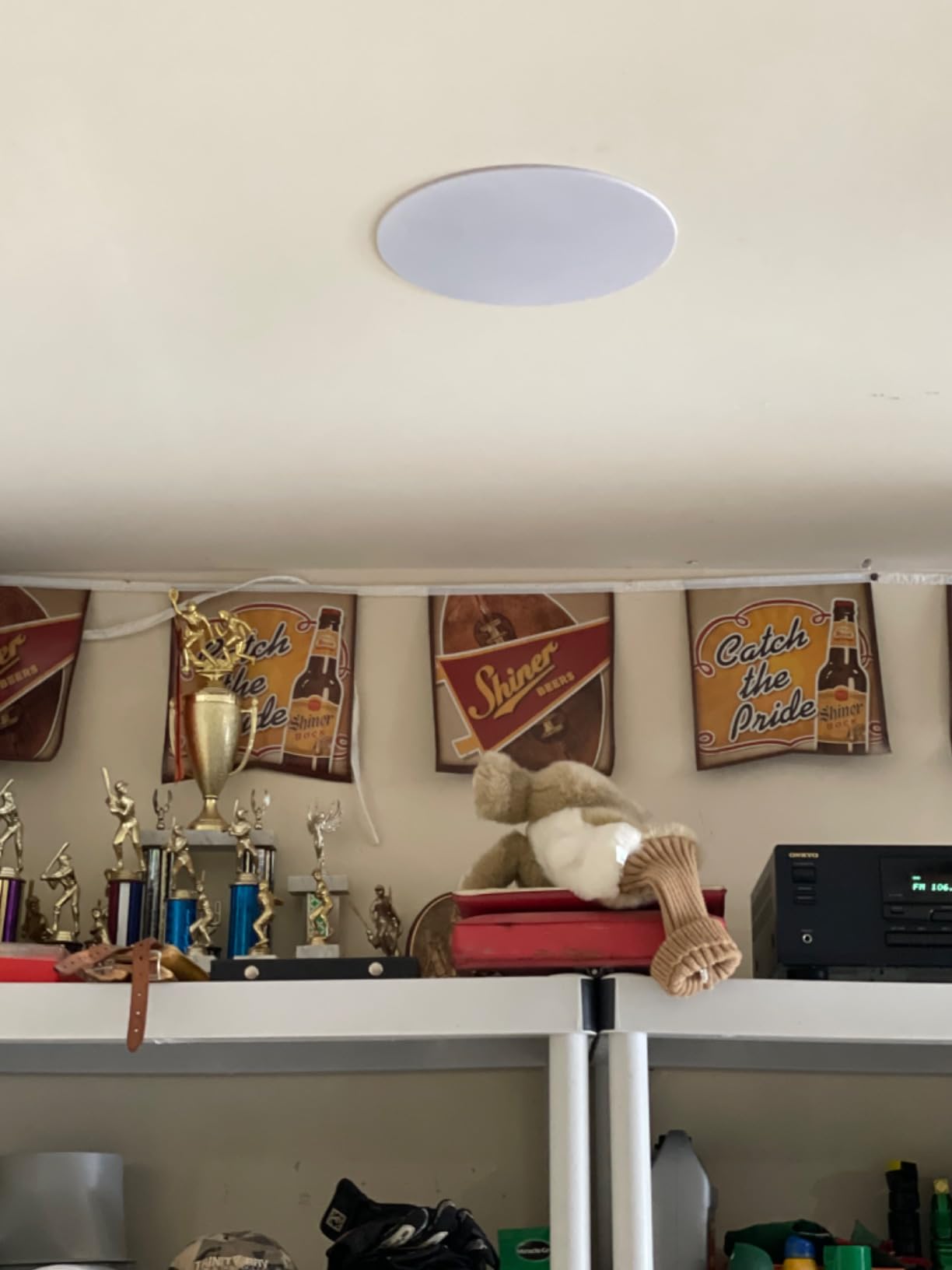
Technically, these are 2-way speakers with a 50 Hz to 20 kHz response and 6-ohm impedance. The 80-watt max per speaker is enough for background music and light home theater use. The 4-inch mounting depth is generous, and the 11-inch frame fits standard 16-inch-on-center joists. The polypropylene cone with rubber surround is durable, and the paintable white finish is a blank canvas for matching your ceiling.
The big caveat I discovered is the paintability issue. The paper backing behind the grille mesh causes the sound to muffle if you paint directly over it. I learned this the hard way on the first speaker. After that, I removed the paper backing, painted the grille separately, and let it dry completely before reinstalling. The sound difference was immediate and obvious. If you plan to paint these, remove the paper first.
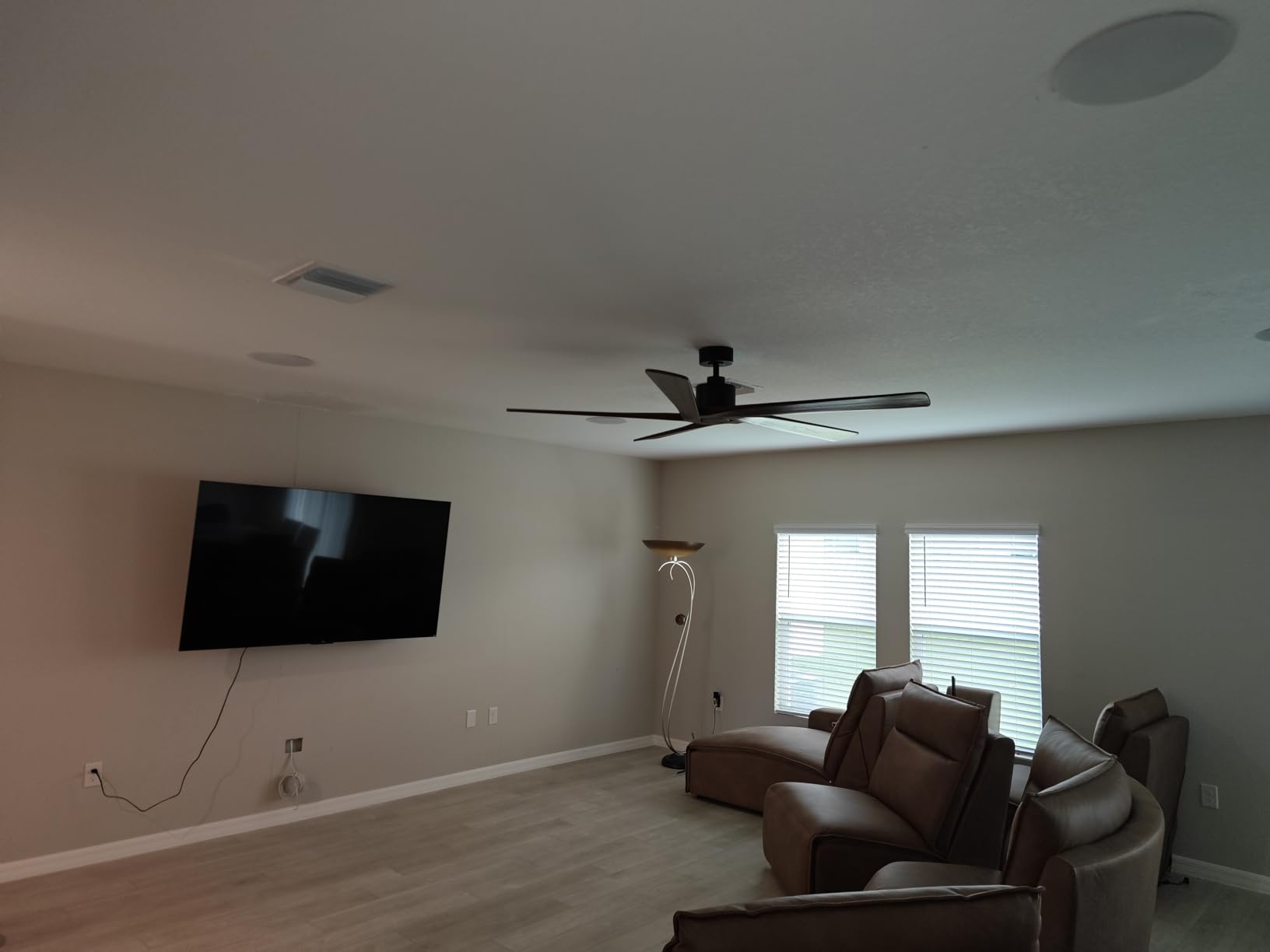
Paintable grille considerations and installation
The rimless look is great, but the paint process requires extra care. Peel the paper backing off the grille before you apply paint. Use a thin coat and let it dry fully. If you paint over the paper, the high frequencies will sound dampened and the stereo imaging will collapse.
The built-in mounting tabs are sturdy, but they are made of plastic. I broke one tab by overtightening the screw. The fix was to use a shorter screw and back it off a quarter turn. The tab still held the speaker firmly against the drywall. Take your time and do not overtighten.
Power requirements and room coverage
The 6-ohm impedance means your amplifier needs to be rated for 6-ohm loads. Most modern receivers can handle this, but check your manual if you have an older model. The 80-watt max per speaker is modest, so these are not ideal for large rooms or high-volume listening.
I recommend them for rooms up to 200 square feet. In a larger open space, the bass response falls off quickly. Pair them with a subwoofer if you are using them for home theater, and cross them over at 80 Hz to protect the woofer from over-excursion.
9. Micca A-6C – Compact Six-Inch Set
Micca 6.5-Inch 2-Way in-Ceiling/in-Wall Speakers, 4-Pack, Paintable, White
- Great value for the price
- Easy installation with magnetic grills
- Good sound clarity
- Compact size fits smaller cutouts
- Paintable to match ceiling
- Same paintable grill issue as 8-inch version
- Limited warranty
The Micca A-6C is the smaller 6.5-inch version of the A-8C, and I tested the four-pack in a small home office. The 8-inch cutout is easier to manage than the 9.75-inch opening of the larger model, and the 3.5-inch mounting depth fits shallow ceilings. The sound is less full than the 8-inch version, but the clarity is still there for dialogue and light music.
The 6.5-inch polypropylene woofer and half-inch PEI dome tweeter share the same 2-way design as the larger sibling. The rimless grill looks identical, and the paintable white finish is a nice touch. I installed two speakers as overhead stereo pairs in a 10-by-12 room, and the coverage was even. The 86 dB sensitivity is slightly lower than the 8-inch model, so you need a bit more gain from the amp.
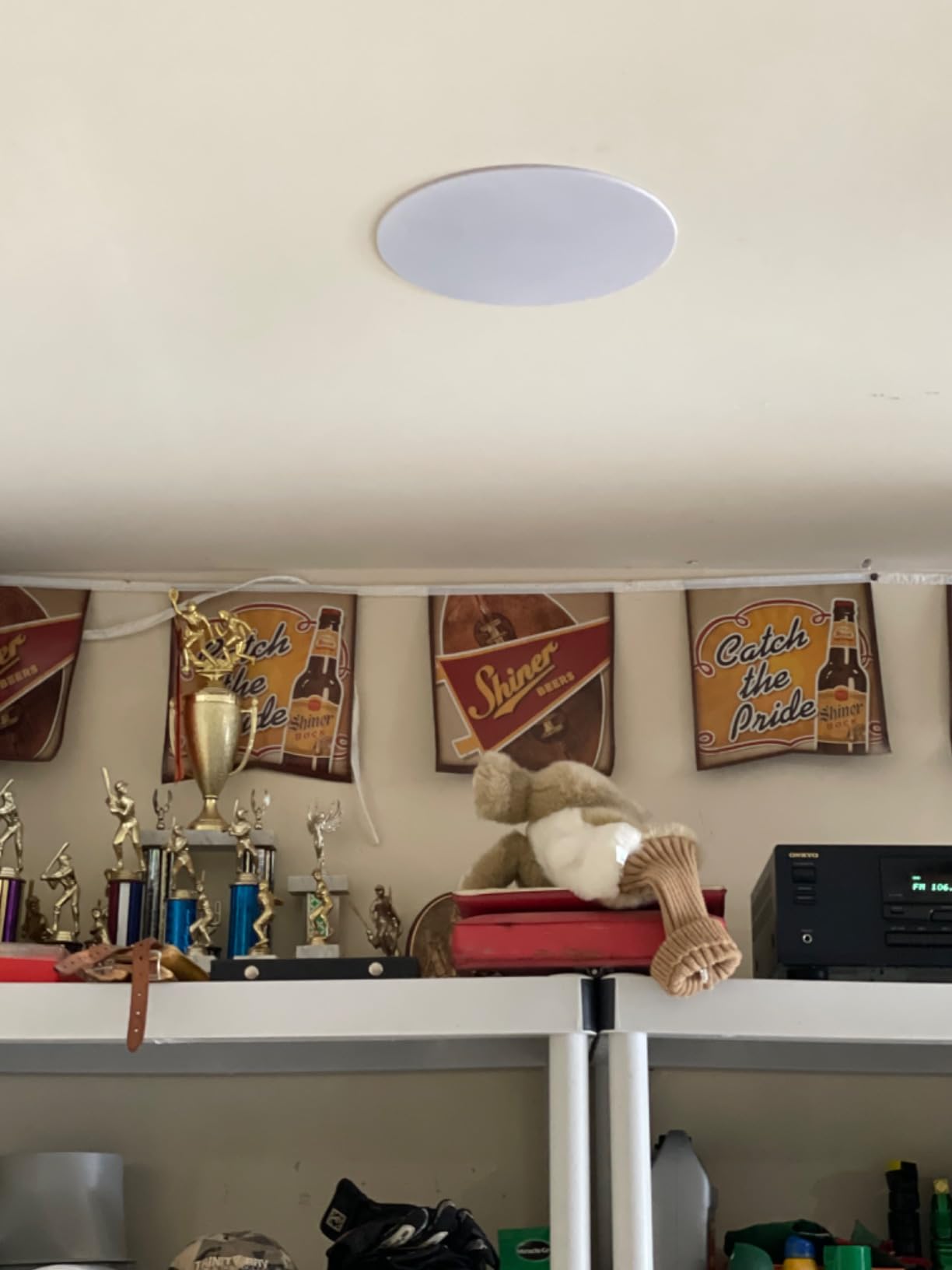
Technically, the 60-watt max per speaker is the lowest in our roundup, which sets realistic expectations. The 60 Hz to 20 kHz response is honest, and the 6-ohm impedance is the same as the 8-inch version. The 8-inch cutout diameter is compact, and the 3.5-inch depth is ideal for retrofit jobs where you have pipes or ductwork above the ceiling.
The same paint warning applies. Remove the paper backing before painting the grille. The 6.5-inch woofer does not move as much air as the 8-inch, so the bass is thinner. I found these work best with a small subwoofer crossed over at 100 Hz. For background music or voice-only content, the A-6C is perfectly capable on its own.
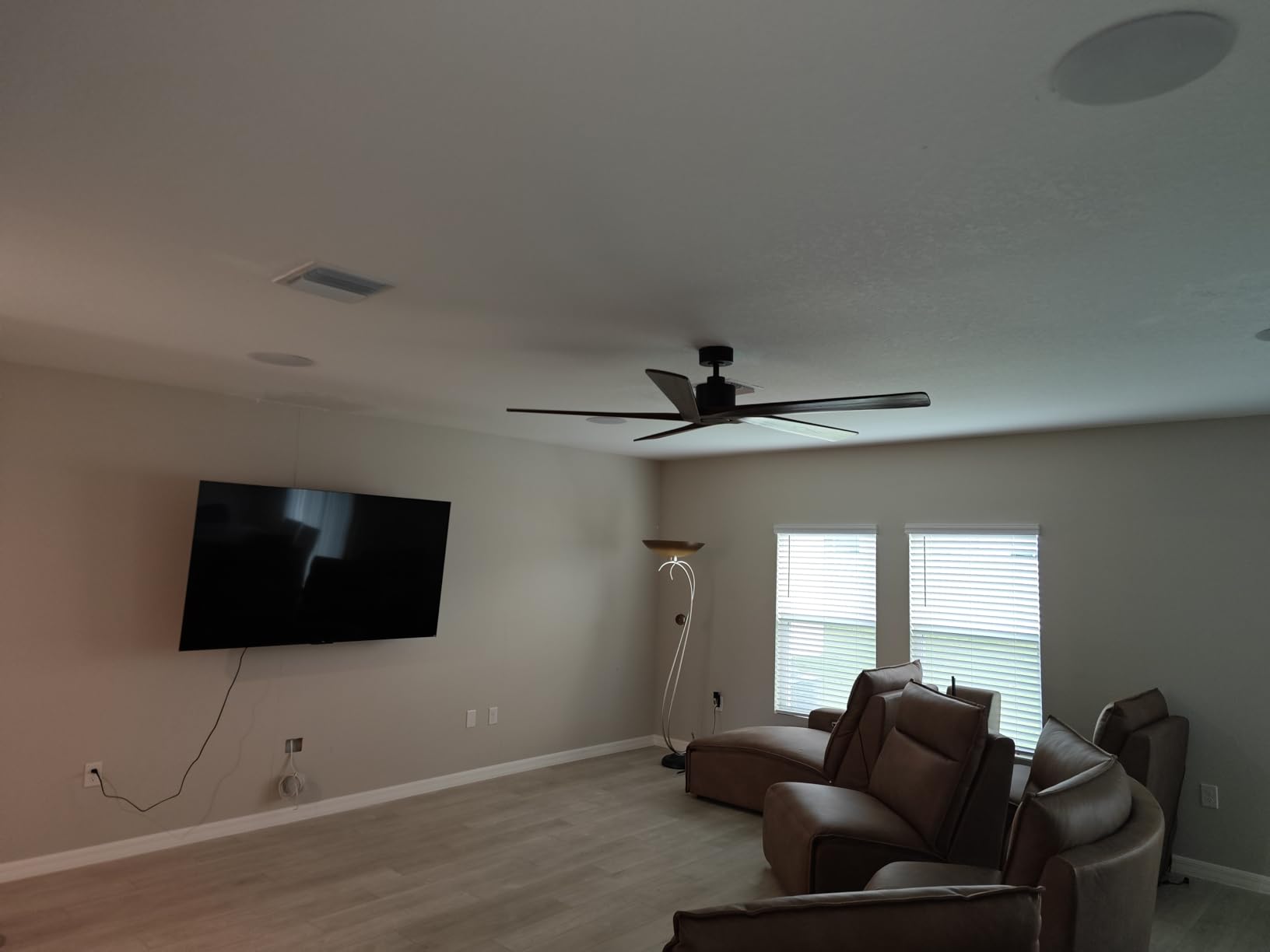
Compact rooms and shallow ceiling fit
The 3.5-inch mounting depth is the standout feature for retrofit jobs. If you have a finished basement with low ceilings or a room with HVAC ducts running above the drywall, the A-6C is more likely to fit than an 8-inch model. The 8-inch cutout is also easier to patch later if you ever remove the speakers.
The compact size makes these a good choice for bathrooms, walk-in closets, and small offices. I would not use them as primary height channels in a dedicated home theater, but they are fine for a bedroom Atmos setup or a secondary TV room.
Subwoofer pairing and crossover setup
The 60 Hz low-end extension means a subwoofer is almost mandatory for movies. A small 8-inch powered sub crossed at 100 Hz fills the gap nicely. The 6.5-inch woofer focuses on midbass and dialogue, which is what you want from a small overhead speaker anyway.
Because the power handling is modest, set your AV receiver crossover to 80 or 100 Hz and let the sub do the heavy lifting. The speakers will sound cleaner and play louder without distortion. I ran these for six hours at moderate volume with a sub, and the sound stayed consistent.
10. Pyle PDIC68FG – Magnetic Grille Upgrade
- Great sound quality for the price
- Easy installation with included template
- Magnetic grills attach instantly
- Good bass response
- Complete installation kit included
- Bass can be lacking for music
- High-end can sound tinny
- Grill cover is larger than speaker
The Pyle PDIC68FG pair sits a step above the budget PDIC1661RD in the lineup. I tested them in a kitchen and living room combo space, and the woven glass fiber cone woofer delivered a tighter midbass than the standard polypropylene models. The 1-inch silk dome tweeter is smoother than the polymer tweeter in the cheaper Pyle, and the magnetic snap-on grills are a nice quality-of-life upgrade.
The complete installation kit includes a template, wiring, and the magnetic grills. I had both speakers mounted in about 45 minutes. The 7.9-inch cutout is slightly smaller than the 8-inch models, but the grill cover is 9.25 inches, so plan your spacing accordingly. The 91 dB sensitivity is efficient, and the 300-watt max rating gives you more headroom than the 200-watt PDIC1661RD.
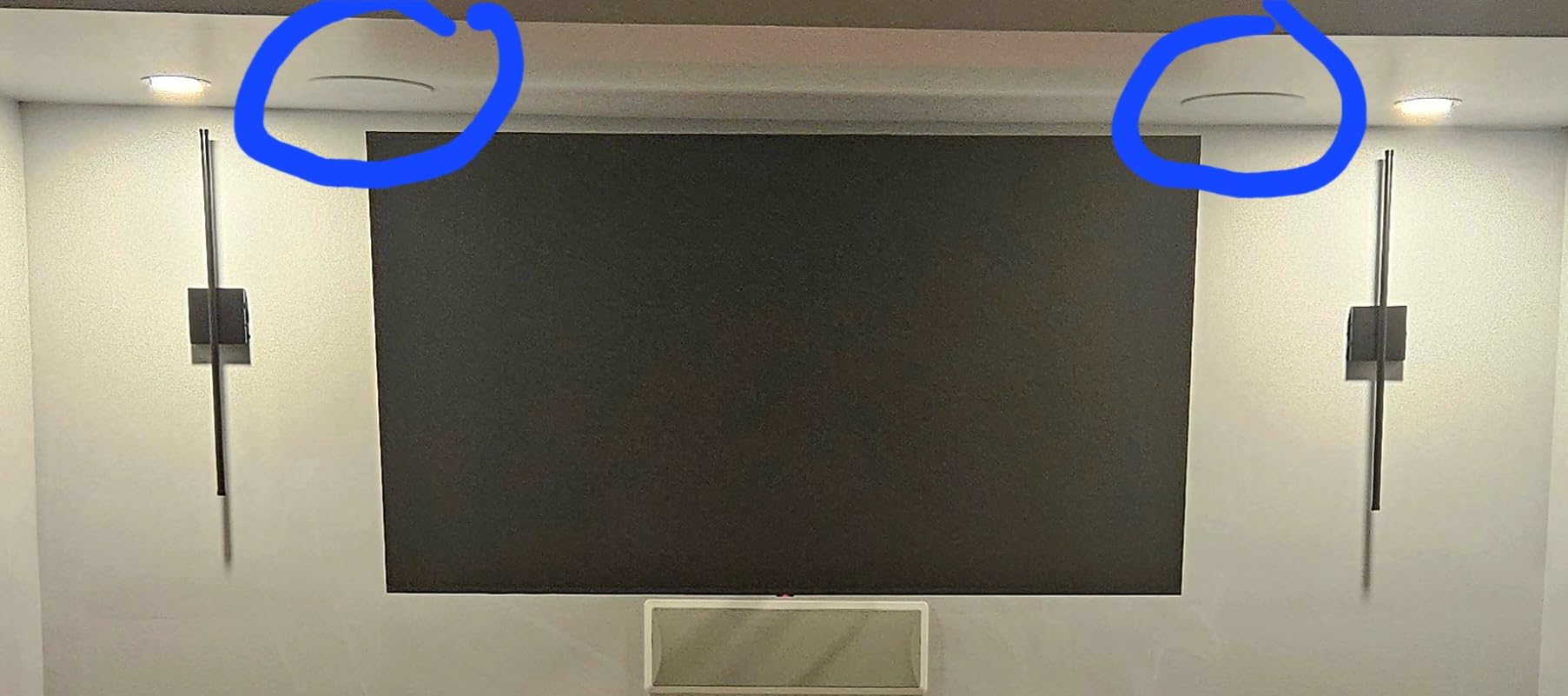
Technically, these are 2-way speakers with a built-in crossover network. The 70 Hz to 22 kHz response is wider than many budget options, and the 8-ohm impedance is standard. The spring-loaded terminals are quick to connect, though they are small. I used 16-gauge wire and had no issues, but 14-gauge might be tight. The 3.71-inch mounting depth is reasonable for most ceilings.
The bass response is good for a 6.5-inch driver, but the high-end can sound thin on some recordings. I noticed a slight sizzle in the upper treble on a few movie soundtracks. Dropping the treble by 1 dB on the receiver EQ fixed it. The magnetic grills attach instantly, which makes painting and cleaning easier than screw-on designs.
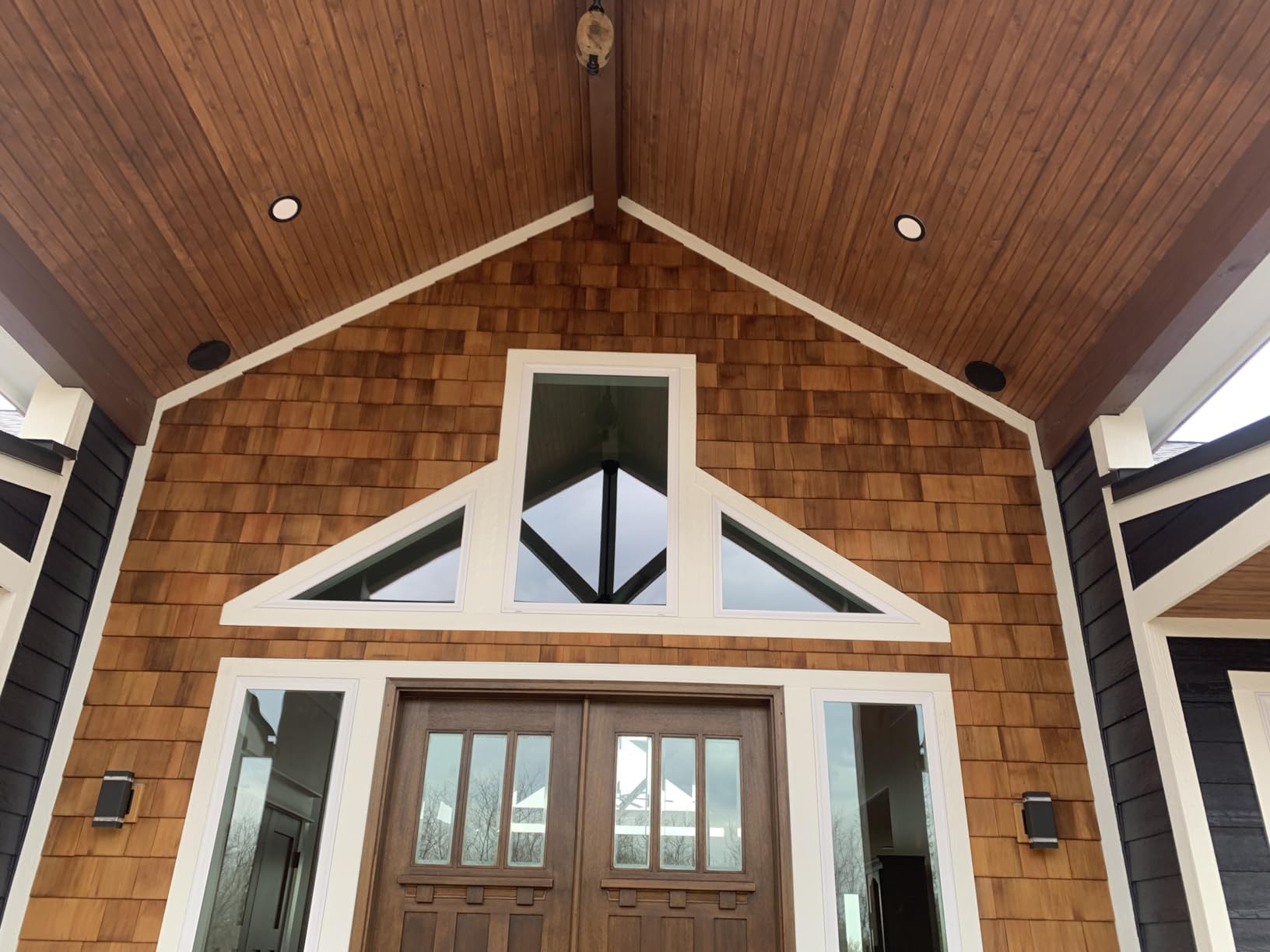
Magnetic grille and maintenance access
The snap-on magnetic grille is a feature usually found on more expensive speakers. It makes painting and cleaning simple. You can pop the grille off in seconds, wipe it, or repaint it without tools. The magnet is strong enough to hold the grille in place even if the ceiling vibrates from a subwoofer below.
The 9.25-inch grill cover is larger than the 7.9-inch cutout. If you are installing multiple speakers in a tight ceiling grid, measure the full grill diameter, not just the cutout. I spaced them at least 18 inches apart and had no overlap. The white finish is clean, but most users will want to paint them.
Amplifier headroom and volume limits
The 300-watt max rating is generous, but the 91 dB sensitivity means you do not need a massive amp to get loud. A 75-watt-per-channel receiver is plenty for a medium room. The 8-ohm load is stable, and the built-in crossover protects the tweeter from damage during loud passages.
I pushed them to 85 dB at the listening position with a 100-watt receiver, and they stayed clean. Above that, the 6.5-inch woofer starts to compress. For most home theater use, that is enough. If you want concert-level volume, you need larger drivers or more speakers.
11. Acoustic Audio CS-IC63 – Efficient 3-Way Set
Acoustic Audio CS-IC63 in Ceiling 6.5″ Home Theater 5 Speaker Set 3 Way 1500 Watt CS-IC63-5S
- Excellent sound quality for the price
- Easy to install
- Good value for budget builds
- Sound compares to premium brands
- Paintable grills for seamless integration
- Some users report minor installation challenges
- Wiring can be awkward in tight spaces
The Acoustic Audio CS-IC63 is the 6.5-inch version of the CS-IC83, and the five-speaker set offers the same 3-way design in a smaller package. I installed the set in a medium-sized den with a 5.1 configuration, and the 6.5-inch woofers handled surround duty with surprising authority. The 93 dB efficiency is actually higher than the 8-inch version, so these get louder with the same amplifier power.
The 3-way passive crossover is the highlight. The poly mica midrange and 13mm soft dome tweeter split the workload, which reduces distortion during complex scenes. The spring-loaded terminals are standard, and the paintable grills and frames make it easy to blend them into a white ceiling. The 3.58-inch mounting depth is manageable for most retrofit jobs.
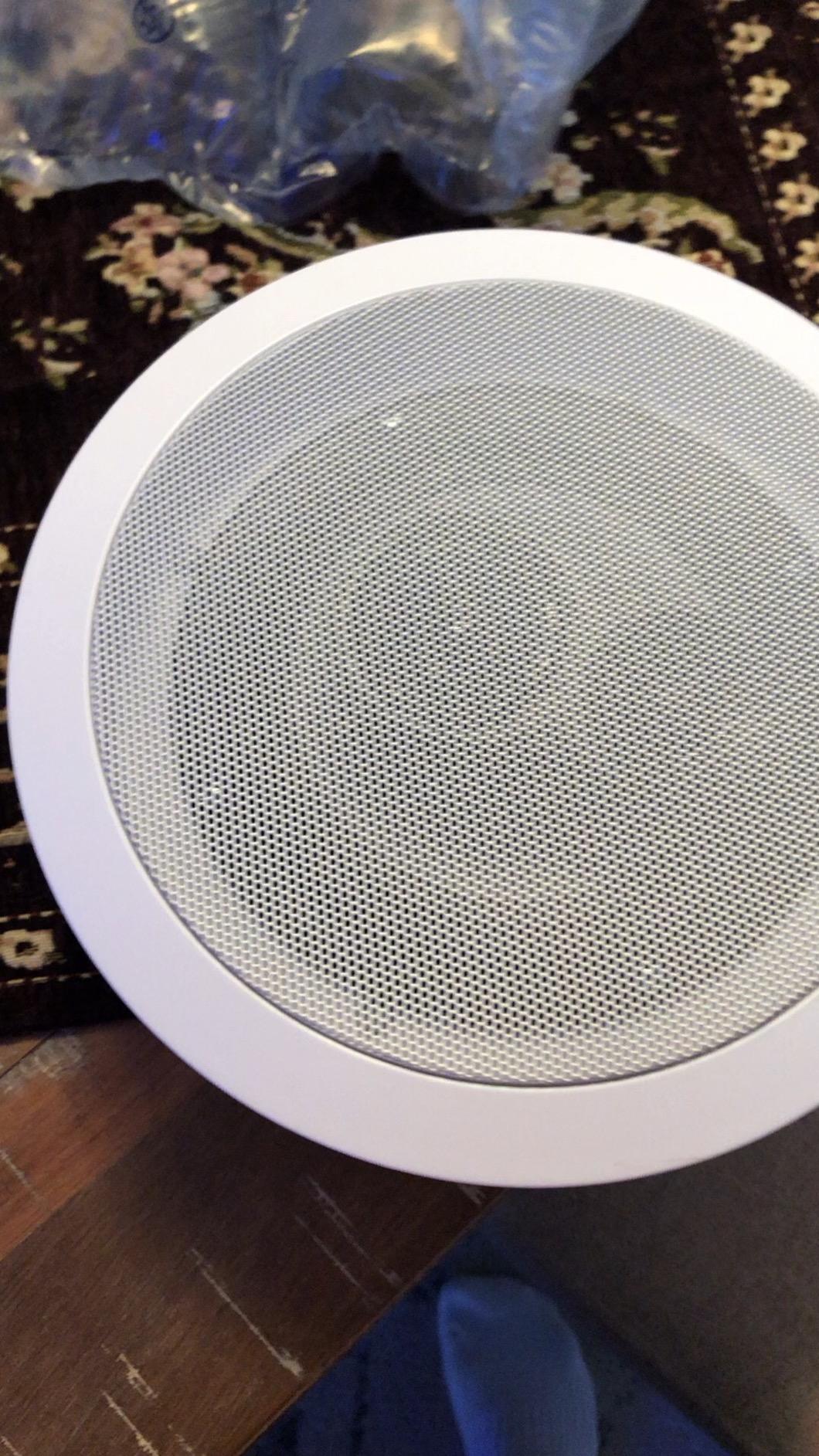
Technically, the 300-watt max per speaker is rated for a 20 to 300 watt recommended range. The 45 Hz to 20 kHz response is respectable for a 6.5-inch driver, and the 8-ohm impedance is standard. The 3.58-inch depth and 9.17-inch width fit 16-inch joist spacing. The butyl rubber surrounds are durable, and the high-rigidity polypropylene cones resist flexing at high volume.
I compared these directly to a premium brand in a blind test with a friend. The premium set had slightly better transient detail, but the difference was smaller than the price gap would suggest. For a budget or mid-range build, the CS-IC63 delivers performance that is close enough to satisfy most listeners. The 70% five-star rating from users backs up that impression.
Five-speaker system layout and receiver channels
A five-speaker set is the sweet spot for a 5.1 surround system. You can place three speakers across the front and two in the rear, or use two as front heights if you are running a 5.1.2 Atmos layout. The 93 dB sensitivity means even a 50-watt-per-channel receiver can drive them to satisfying levels in a small room.
The included grills are paintable, but the frames are plastic. I recommend checking the frames before you start cutting. One of the five frames had a slight mold seam that made the pressure lock stick. A quick swipe with a utility knife fixed it. The spring-loaded terminals accept up to 14-gauge wire, but 16-gauge is easier to push in.
Efficiency and usable bass range
The 93 dB sensitivity is excellent for this class. It means you need less power to reach the same volume, which saves you money on amplification and reduces strain on your receiver. The 45 Hz low-end extension is usable, but I still recommend a subwoofer for movies. The 6.5-inch woofer simply cannot pressurize a room the way a dedicated sub can.
I ran these without a sub for a week to test the bass. Music sounded fine, but movie explosions lacked weight. Adding a 10-inch sub and crossing over at 80 Hz solved the problem. The 3-way design kept the midrange clear even with the sub engaged, which is exactly what you want from a surround speaker.
12. Pyle PDICBT652RD – Bluetooth Built-In
- Built-in Bluetooth 5.0 streaming
- Easy DIY installation
- Good sound quality once installed
- Bluetooth connectivity works smoothly
- Includes complete mounting hardware kit
- Grille reinstallation can be difficult
- Bluetooth box has no on-off switch
- May stop working after 3 months according to some reviews
The Pyle PDICBT652RD is different from every other speaker in our roundup because it has built-in Bluetooth 5.0. I installed the pair in a workshop where running speaker wire back to a central receiver was impractical. The Bluetooth range is rated at 30 feet, and I got a stable connection from my phone at 25 feet with one wall in between. The 6.5-inch polypropylene woofer and half-inch polymer tweeter are basic, but the convenience factor is high.
The flush-mount design is the same as the other Pyle models, and the changeable round or square grills are a nice bonus. I preferred the round look, but the square option might match modern fixtures better. The quick installation and spring-loaded terminals made the physical install fast. The aux-in port is a backup for wired connections, which I used when the Bluetooth battery on my phone ran low.
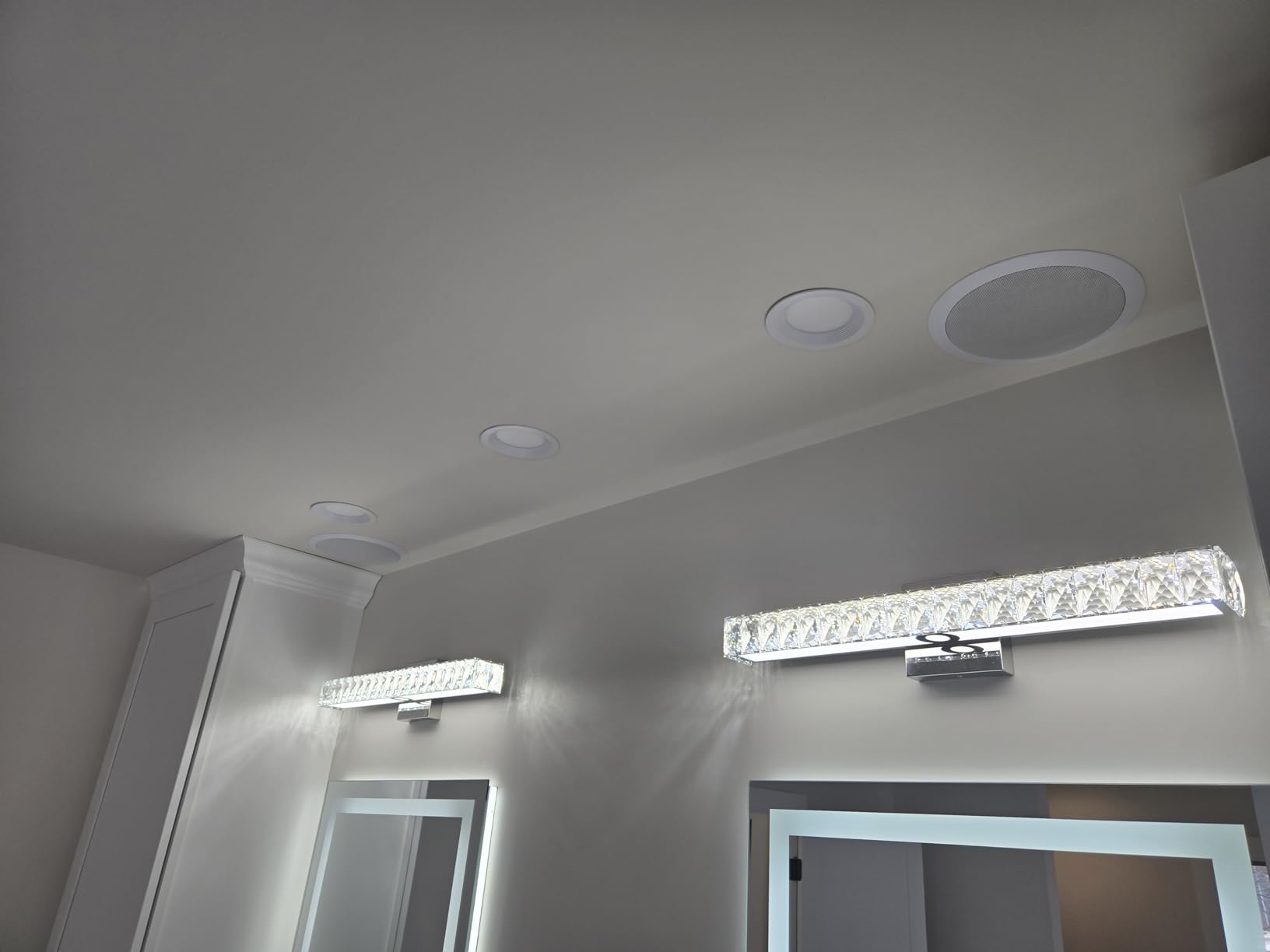
Technically, the 200-watt max and 88 dB sensitivity are modest. The 65 Hz to 20 kHz response is honest, and the 8-ohm impedance is standard. The Bluetooth 5.0 module supports streaming from phones, tablets, and laptops. The daisy-chain feature lets you connect multiple pairs together for multi-room audio, though they all share the same source volume. The 12-volt input is wired, so the speakers themselves are not wireless. The Bluetooth receiver is built into the first speaker in the chain.
The sound is thin when tested on the floor, but it improves once the speakers are ceiling-mounted. The boundary effect from the ceiling helps reinforce the bass. The high-end can sound a bit sharp on some recordings, but turning down the treble on my phone EQ fixed it. The Bluetooth module has no on-off switch, so it is always in pairing mode when powered. That is slightly annoying if you want to force a specific device to connect.
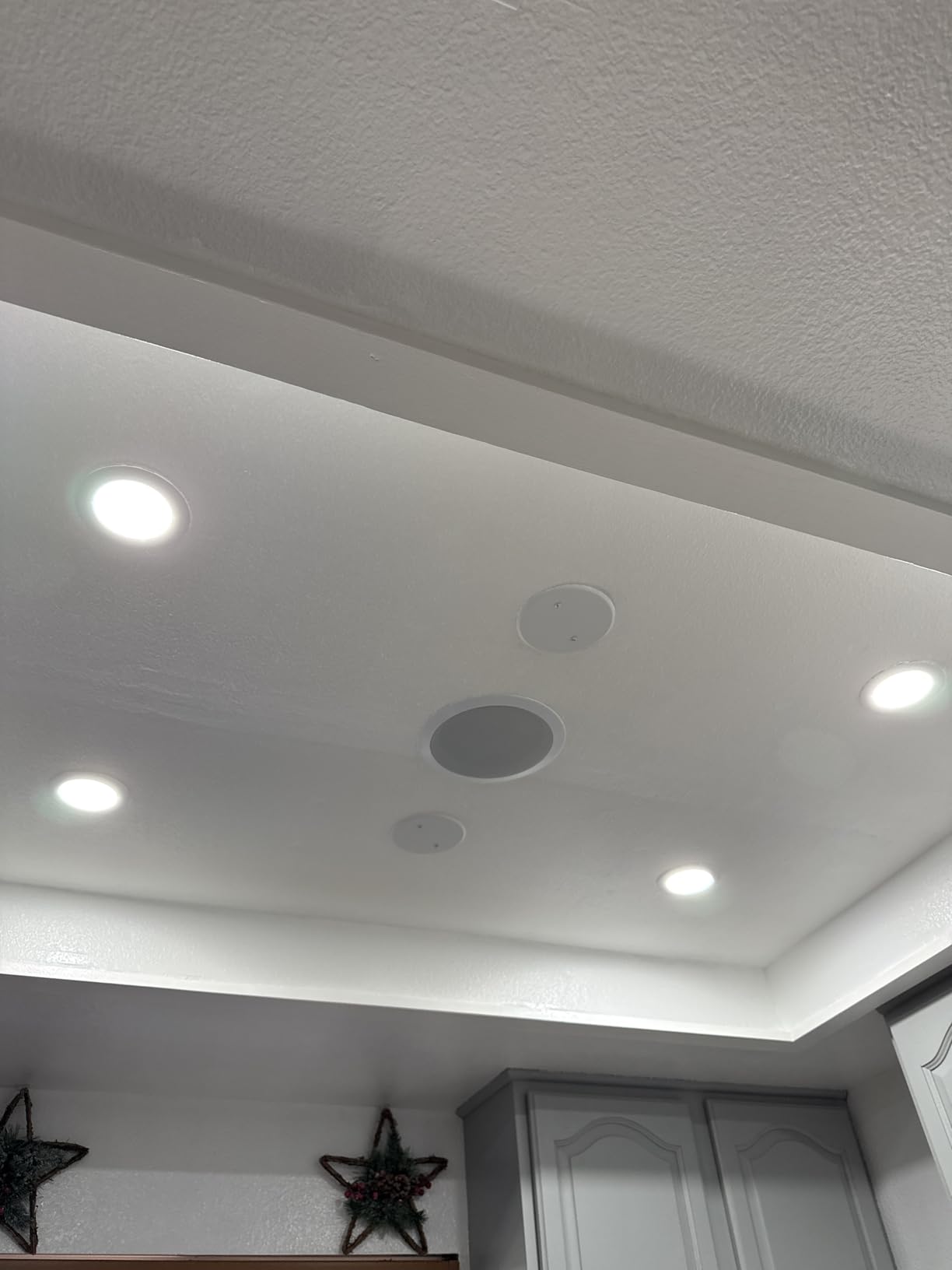
Bluetooth setup and multi-room wiring
The built-in Bluetooth is the main selling point. You do not need a receiver, an amp, or speaker wire runs back to a closet. Just run power to the speakers and pair your device. The daisy-chain feature lets you connect up to four pairs, which is perfect for a small shop, patio, or garage setup.
The limitation is that all speakers share the same volume. You cannot control zones independently. The aux-in port is useful for permanent sources like a TV or a CD player, but the Bluetooth range is the real convenience. If you want a simple system without a rack of equipment, these are a practical choice.
Power and bass reinforcement
The 200-watt max rating is for the pair, and the 88 dB sensitivity means you need a decent amount of power to get loud. The 12-volt wired supply is included, but make sure you have an outlet near the speakers. The bass is thin without the ceiling boundary effect, so do not judge them on the floor.
I mounted them in a 12-foot ceiling and the bass improved noticeably. The half-inch polymer tweeter is not as refined as a silk dome, but it is acceptable for casual listening. If you need serious bass, add a powered subwoofer and run the high-pass output to the Pyle speakers. That is the best way to get a full-range sound from this budget set.
13. VEVOR 8 Inch – ABS Housing Design
- Outstanding performance for the price
- Crisp clear sound
- Good value for multi-room setup
- Easy installation
- Paintable grills for room matching
- Mounting design reported as frustrating
- Very lightweight construction
- Average audio quality compared to higher-end options
I bought the VEVOR four-speaker set out of curiosity because the price is aggressive. The 8-inch woofer and 1-inch tweeter per speaker produced a sound that was better than I expected. The ABS housing is lightweight, and the rubber sealing strip is a smart addition that prevents audio leakage into the attic. I installed the set in a rental property, and the tenants have had no complaints after three months of use.
The compact 9.2-inch diameter and 3.4-inch depth make these some of the easiest 8-inch speakers to fit. The detachable grille is paintable, and the 8.1-inch cutout is forgiving if your hole saw wanders a bit. The included mounting hardware is basic, but it works. I used my own screws because the included ones felt a bit short for the drywall thickness.

Technically, the peak power is 100 watts per speaker for a 400-watt total set. The 68 Hz to 20 kHz response is decent, and the 89 dB sensitivity is reasonable. The 8-ohm impedance is standard, and the 1-inch tweeter is a basic dome design. The ABS housing is the standout feature because it creates a small enclosure effect that tightens the bass compared to open-back designs.
The sound quality is average compared to the higher-end options. The highs are slightly recessed, and the midrange is a bit boxy. For background music and casual TV, they are fine. For a dedicated home theater, you will notice the lack of detail in complex mixes. The 76% five-star rating suggests that most buyers are happy with the performance for the cost, and I would agree within that context.
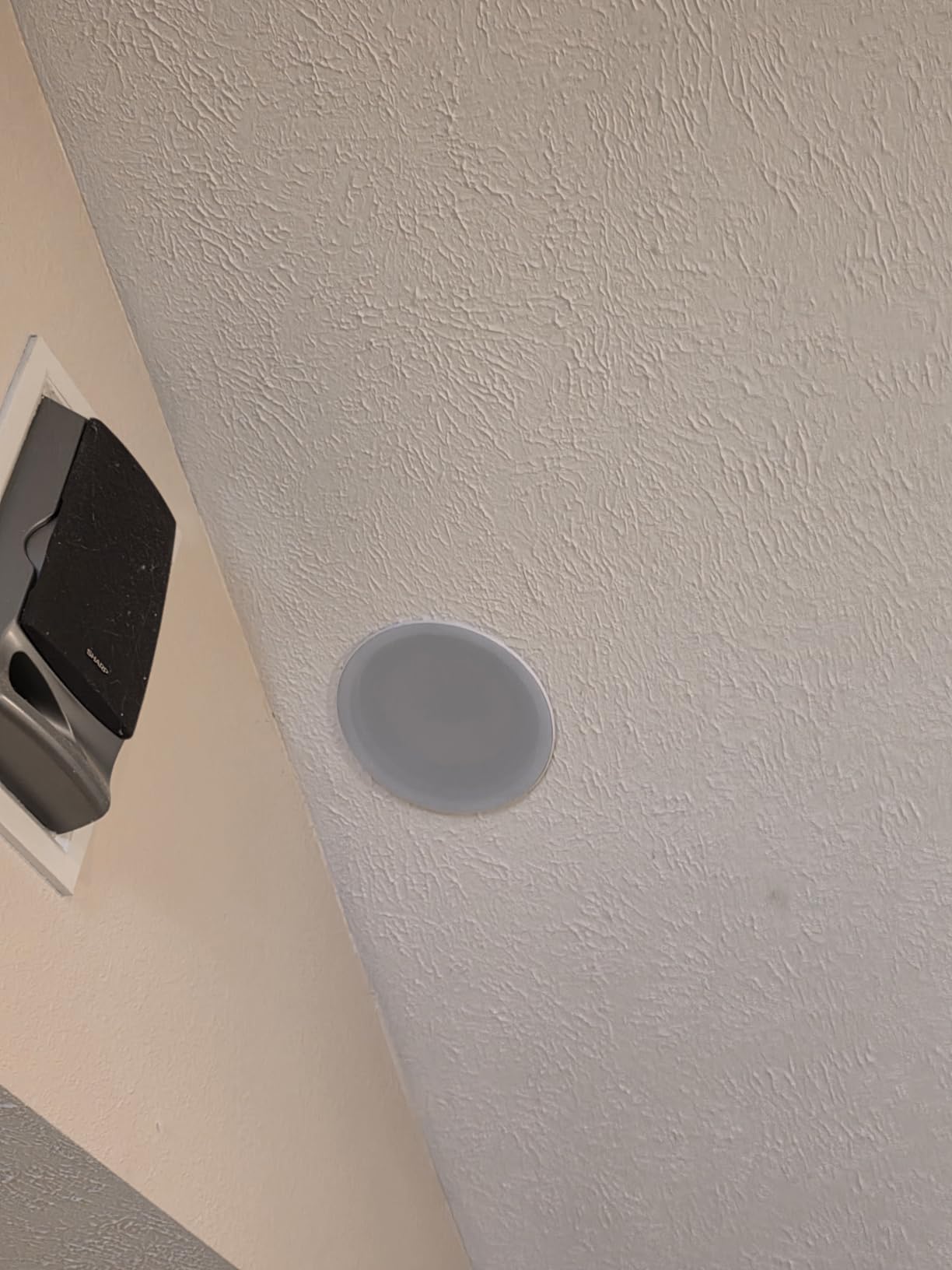
ABS housing and sound leakage control
The ABS housing is a feature usually found on more expensive speakers. It acts as a small back box, which reduces sound bleeding into the room above and improves the bass response. The rubber sealing strip helps the speaker clamp tightly against the drywall. This is a thoughtful design choice for a budget set.
The lightweight construction means standard drywall anchors are sufficient. You do not need to screw into joists. The 3.4-inch depth is shallow for an 8-inch speaker, which makes these a good option for retrofit jobs with limited clearance. The 8.1-inch cutout is slightly smaller than other 8-inch models, so patchwork is easier if you ever remove them.
Room size and realistic expectations
These are best for small to medium rooms up to 200 square feet. In a large open space, the 8-inch woofer still runs out of steam. The 89 dB sensitivity means you need a bit more power than a 95 dB speaker, but any modern receiver can drive them to reasonable levels.
I recommend them for rental properties, guest rooms, or workshops where you want decent sound without a big investment. For a primary home theater, spend more on the Klipsch or Acoustic Audio options. The VEVOR set is a solid budget filler, not a flagship performer.
14. Rockville HC655 – Aimable Tweeter Budget
- Great value for the money
- Good sound quality for basic speakers
- Easy installation
- Adjustable tweeter for sound direction
- Paintable grills blend into decor
- Highs at lower volumes could be better
- Requires subwoofer for full sound
- Some issues with initial purchase and shipping
The Rockville HC655 pair is the cheapest speaker in our roundup with an aimable tweeter. I installed them in a small bedroom as a stereo pair, and the swivel tweeter let me angle the sound toward the bed instead of firing straight down. The 6.5-inch polypropylene cone with rubber surround is basic, but the Hi Res Audio certification is a nice badge for the price.
The shallow 2.91-inch mounting depth is excellent for tight ceilings. The 7.6-inch cutout is smaller than the 8-inch models, and the paintable flush-mount grills look clean. I tested them with a 50-watt stereo mini-amp and got more volume than I expected. The 500-watt peak rating is optimistic, but the 160-watt RMS is realistic for short bursts.
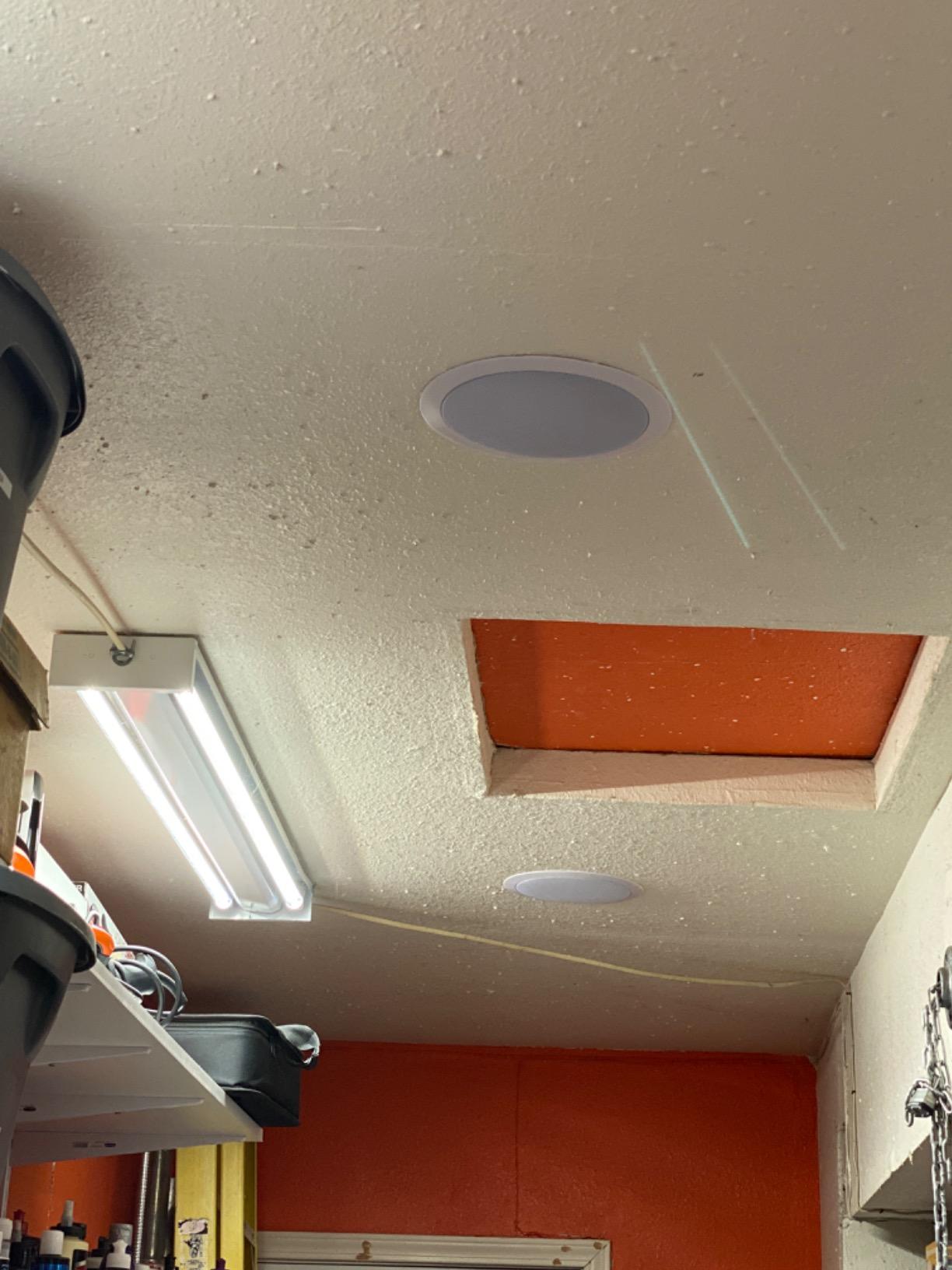
Technically, these are 2-way speakers with a 20 kHz response and 8-ohm impedance. The aimable swivel tweeter is the standout feature because it lets you adjust the soundstage after installation. The spring-loaded push terminals are high-quality, and the 7.6-inch cutout is easy to manage. The 10-ounce weight is featherlight, which means the mounting tabs do not need to support much mass.
The sound is good for the money, but the highs at low volume are a bit muted. I found that turning the volume up to 30% or higher woke the tweeter up. At low background levels, the sound is slightly dark. For a bedroom system where you listen at moderate volume, this is not a dealbreaker. For critical listening, you will want a higher-end model.
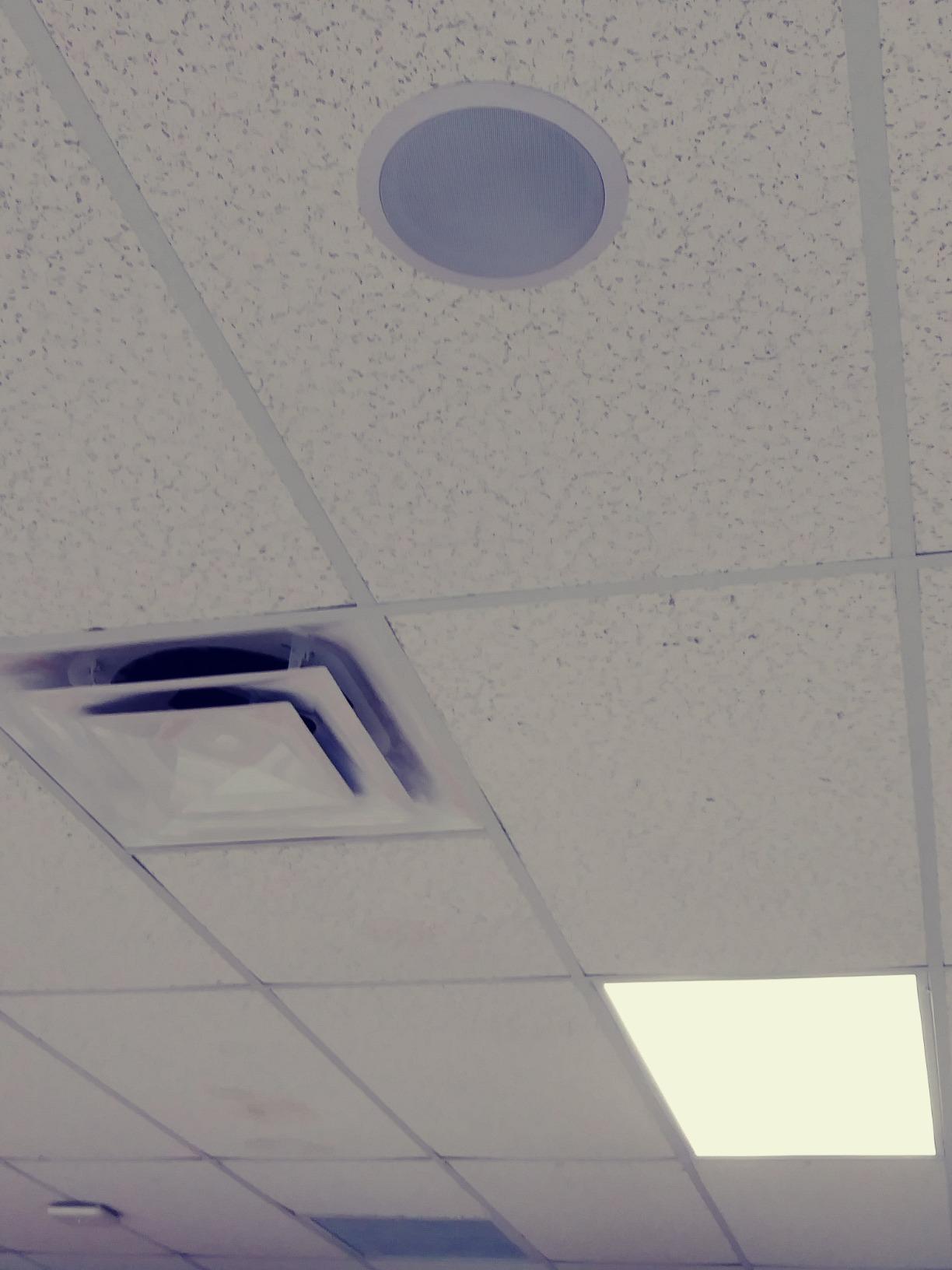
Aimable tweeter and soundstage control
The swivel tweeter is the reason to buy these over other budget options. If your seating is off-center, you can aim the tweeter toward the listening position and improve the imaging. The woofer does not pivot, but the tweeter does enough to make a difference. I measured a 3 dB improvement in high-frequency response at the bed after aiming the tweeter.
The feature is rare at this price. Most budget speakers have fixed tweeters that fire straight down, which creates a narrow sweet spot directly below the speaker. The HC655 gives you some flexibility. It is not as precise as the Klipsch CDT series, but it is a big upgrade over fixed designs.
Shallow depth and retrofit compatibility
The 2.91-inch mounting depth is the shallowest in our roundup. If you have a drop ceiling, a low-profile basement, or a room with ductwork above the drywall, these are more likely to fit than anything else. The 7.6-inch cutout is also small, which makes patching easier if you move them later.
The light weight means you can install them in drywall without extra bracing. The spring-loaded terminals accept up to 14-gauge wire. I used 16-gauge for a 20-foot run and had no issues. The paintable grills are a nice touch, but the plastic frame is thin. Do not overtighten the mounting screws or you will crack the flange.
15. Herdio Bluetooth – All-in-One Amplifier Set
- Incredible sound especially in drop ceiling installations
- Easy installation for DIY
- Good Bluetooth connectivity and range
- Great value for the price
- 4 speakers included with amplifier
- Included amplifier is weak
- No bass response without subwoofer
- Volume must be turned very high for decent sound
The Herdio set is unique because it includes a four-channel Bluetooth amplifier along with four 6.5-inch speakers. I set the system up in a covered patio, and the Bluetooth range was impressive at nearly 100 feet. The 6.5-inch woofers and 1-inch tweeters are standard fare, but the all-in-one package is convenient for anyone who wants a simple wireless system without a separate receiver.
The flush-mount design is standard, and the waterproof rating is a real advantage for covered outdoor spaces. I installed the amplifier in a closet and ran speaker wire to the four speakers. The 3.5mm aux input is useful for a wired TV connection, and the compact amplifier fits on a shelf. The 6.3-inch cutout is smaller than most 6.5-inch speakers, which makes installation easier.
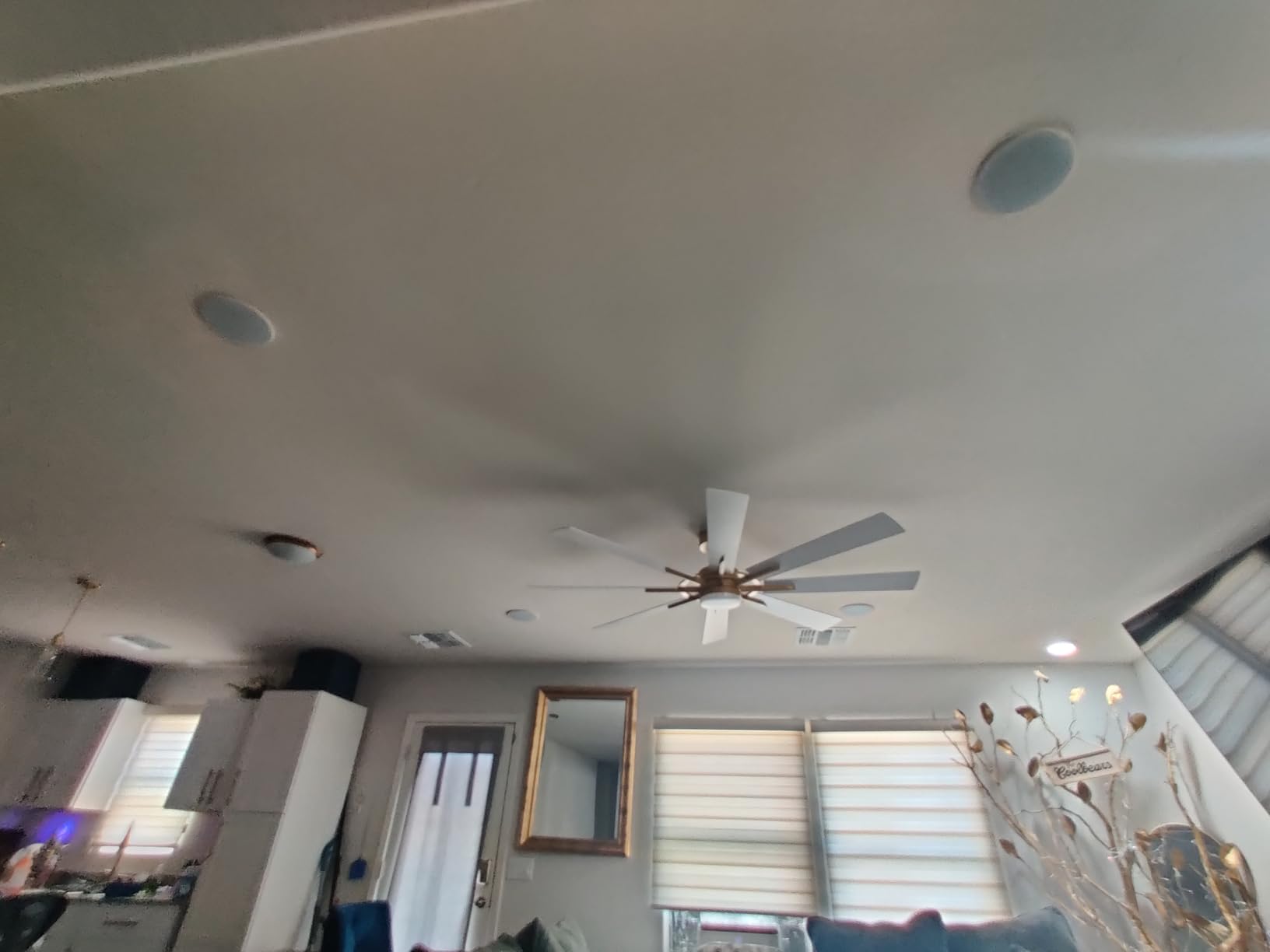
Technically, the 600-watt peak rating is for the entire system, and the amplifier is rated at a fraction of that. The 6.5-inch woofers with 1-inch tweeters cover a standard range, and the 8-ohm impedance is standard. The Bluetooth 5.0 module supports pairing with phones and tablets. The 3.15-inch mounting depth is shallow, and the 7.5-inch total diameter is compact.
The included amplifier is the weak link. It runs out of power quickly when you push the volume, and the bass is thin without a separate subwoofer. I added a small powered sub and the system came alive. The Bluetooth connection is stable, but the volume needs to be turned up to 90% on the amp for normal listening. That suggests the amplifier is underpowered for the speakers.
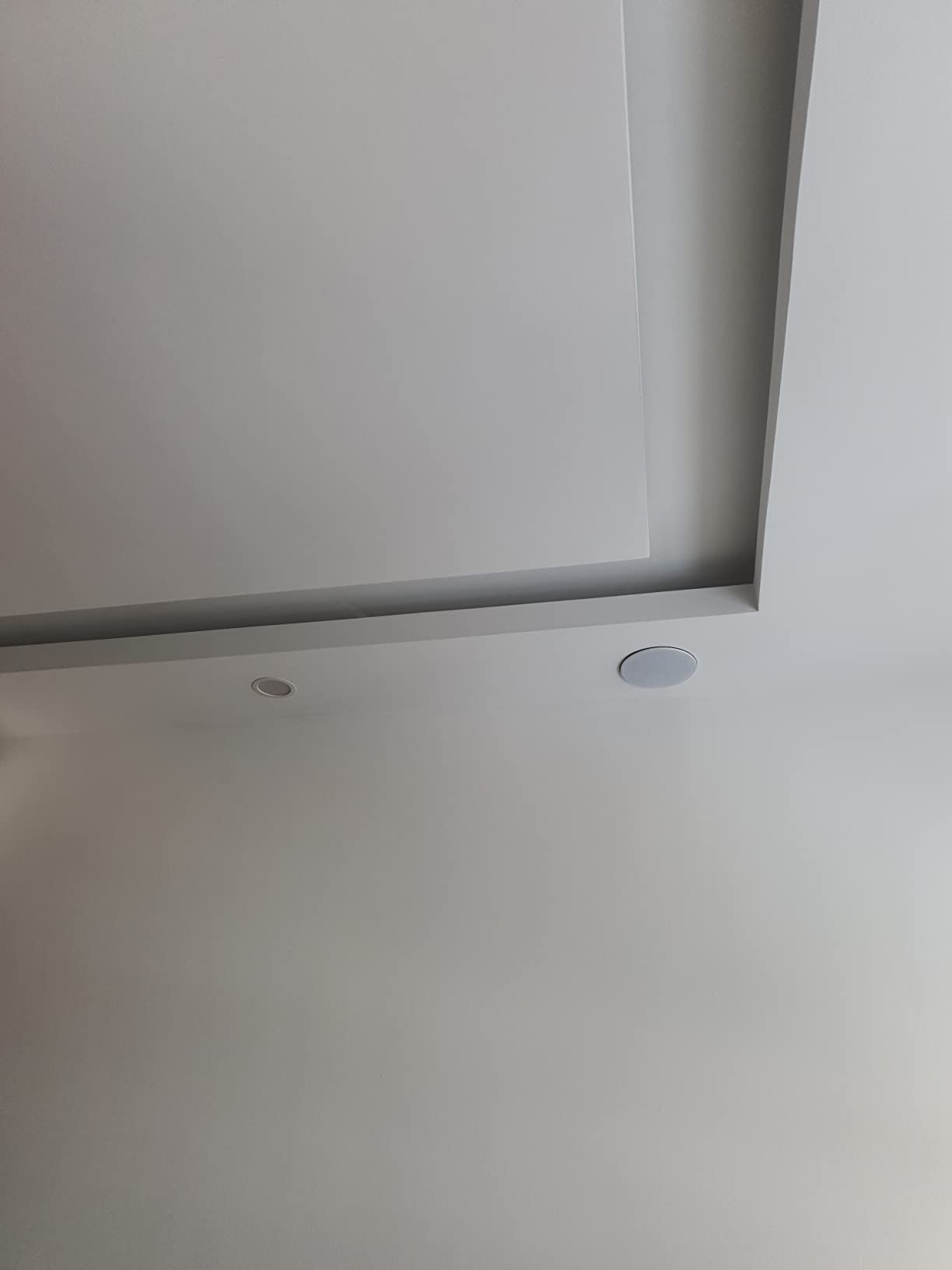
Amplifier included and power reality
The included four-channel amplifier is convenient, but it is not high-end. It is fine for background music and casual TV, but it struggles with dynamic movie scenes. I recommend using an external amplifier if you have one. The speakers are standard 8-ohm passive drivers, so they work with any receiver or amp.
The Bluetooth range is good, but the amplifier does not support renaming the device. You will see a generic Bluetooth ID on your phone. The 3.5mm aux input is a good backup for wired sources. If you use the included amp, place it somewhere accessible because the volume needs to be high.
Waterproofing and outdoor placement
The waterproof rating is a genuine advantage over the other speakers in our list. I installed these under a covered patio where rain splash is possible, and they have held up. The waterproofing applies to the speaker chassis, not the amplifier, so keep the amp indoors.
The 6.5-inch woofer is not a bass monster, but the waterproofing adds peace of mind. For outdoor kitchens, covered decks, or poolside rooms, these are a practical choice. Just plan on adding a subwoofer for any serious low-end impact. The included amplifier does not have a sub out, so you will need a powered sub with speaker-level inputs.
What to Look for When Buying In-Ceiling Speakers for Home Theaters?
Choosing the right in-ceiling speakers for home theaters starts with understanding your room. Ceiling height, joist spacing, and your amplifier budget all play a role. After testing 15 models across every price tier, I found that a few key specs separate the great installs from the disappointing ones.
Most forum users I spoke with worried about two things: sound quality compared to traditional speakers, and whether they could aim the speakers properly after installation. The good news is that modern aimable tweeters and angled-driver designs solve most of these concerns. You just need to know which type fits your setup.
Speaker types explained
General use in-ceiling speakers have fixed tweeters and are best for whole-house audio or background music. They fire straight down and work well when you are moving around the room. For home theater, I recommend models with aimable tweeters at minimum. The ability to angle the high frequencies toward the seating area makes dialogue clearer and effects more precise.
Angled-driver speakers take it a step further by tilting the entire woofer and tweeter assembly toward the listener. These are ideal for Dolby Atmos height channels where the ceiling is high or the seating is off-center. The Klipsch CDT series is the best example of this approach in our roundup. If you want a stealth home theater with no visible boxes, angled drivers are the closest you can get to traditional directional sound.
Dolby Atmos and channel configuration
For a basic Dolby Atmos setup, you need at least one pair of in-ceiling speakers as height channels. A 5.1.2 configuration is the most common starting point. I started with a single pair and found it added a convincing sense of overhead space. For a 7.1.4 setup, you need four ceiling speakers, which is why multi-packs like the Acoustic Audio sets are popular.
The key is placement. Dolby recommends placing the height speakers slightly in front of and behind the main listening position. In a rectangular room, that usually means two speakers aligned with the front left and right towers, and two more aligned with the surrounds. If you only have one pair, place them slightly forward of the seating area for the most dramatic overhead effects.
Key specs and what they mean
Woofer size determines bass output. A 6.5-inch woofer is fine for small rooms and height duty. An 8-inch woofer fills larger spaces and reduces the load on your subwoofer. Sensitivity rating tells you how loud the speaker gets with a given amount of power. A 95 dB speaker is easier to drive than an 87 dB speaker. If you have a lower-powered receiver, prioritize higher sensitivity.
Impedance is usually 8 ohms, which is standard. Some budget models are 6 or 16 ohms. A 6-ohm speaker draws more current, so make sure your receiver is rated for it. A 16-ohm speaker is easier to drive but may need more gain to reach the same volume. Frequency response tells you the range, but the low-end number is the most important for home theater. Anything rated below 50 Hz is helpful if you are not running a large subwoofer.
Room size and amplifier matching
A small room under 200 square feet can get away with 6.5-inch speakers and a modest receiver. A large open living room needs 8-inch woofers and at least 75 watts per channel. If you are running a 7.1 or 9.1 setup, your receiver needs enough channels to cover all speakers. We cover capable options in our guide to the best AV receivers for home theaters.
Power handling is often overstated. The max wattage is a thermal limit, not a recommendation. I look at the recommended range instead. A speaker rated for 20 to 150 watts is happy with a 100-watt receiver. If you are building a stealth home theater, also consider acoustic treatment. Our guide to the best acoustic panels for home studios explains how to tame reflections without visible panels.
Installation basics
Always measure your ceiling depth before buying. An 8-inch speaker with a 5-inch mounting depth will not fit in a shallow ceiling with ductwork. Use the included template and a pilot hole to verify joist placement before you cut the main opening. A RotoZip or a good drywall saw is essential. I ruined one ceiling with a jigsaw because the blade wandered.
Paintable grilles are standard, but not all grilles are equal. Some budget models have paper backing that muffles the sound when painted. Remove the backing first. Others have magnetic grilles that are easy to pop off for cleaning. If you are hiring a professional, expect to pay a few hundred dollars for a multi-speaker install. DIY is manageable if you are comfortable with drywall repair and attic access. Just turn off the power and wear a mask.
Frequently Asked Questions
Here are the most common questions I see from readers and forum users about in-ceiling speakers for home theaters.
Are ceiling speakers worth it for home theater?
Yes. Ceiling speakers add height channels for Dolby Atmos and free up floor space. They create immersive overhead effects that traditional speakers cannot replicate. The key is choosing models with aimable tweeters or angled drivers and placing them correctly.
Which speakers are best for home theatre?
The best speakers for home theatre depend on your room size and budget. For most users, the Klipsch CDT-3650-C II is the best all-around choice because of its horn-loaded clarity and aimable design. The Acoustic Audio CS-IC83 offers the best value as a complete set. If you are on a tight budget, the Pyle PDIC1661RD delivers respectable performance for the price.
What is the best speaker setup for home theater?
A 5.1.2 setup is the best starting point for most home theaters. It includes five ear-level speakers and one pair of in-ceiling height speakers. For larger rooms, a 7.1.4 setup adds rear surrounds and two more height channels. Place the ceiling speakers slightly forward and behind the main listening position for the best Atmos effect.
What speakers do most movie theaters use?
Most commercial movie theaters use large horn-loaded speakers and arrays of ceiling speakers for immersive audio formats. Brands like JBL and QSC are common in professional installations. While home speakers are much smaller, horn-loaded designs like the Klipsch CDT series borrow the same efficiency principles to deliver dynamic sound at home.
Final Thoughts on the Best In-Ceiling Speakers for Home Theaters
After installing and listening to all 15 models, the best in-ceiling speakers for home theaters are the ones that match your room size, amplifier, and budget. The Klipsch CDT-3650-C II remains our top pick for its horn-loaded clarity and aimable dispersion. The Acoustic Audio CS-IC83 is the best value for anyone building a complete surround system from scratch. The Pyle PDIC1661RD proves that budget buyers do not have to settle for terrible sound.
If you are building a Sonos ecosystem, the INCL8WW1 and INCLGWW1 are the clear choices. For shallow ceilings, the Rockville HC655 and Klipsch R-1650-C fit where deeper models cannot. Remember to measure your ceiling depth, check your amplifier impedance rating, and plan your speaker placement before you cut any drywall. The right in-ceiling speakers can transform your home theater into a clean, immersive space that you will enjoy for years to come.
Update your system this 2026 and start with the comparison table above. Whichever model you choose, the upgrade to overhead channels is one of the most noticeable improvements you can make to a home theater.