
If you work with electronics, you know that a reliable LCR meter is one of the most important tools on your bench. These instruments measure inductance, capacitance, and resistance with a precision that standard multimeters simply cannot match. For electronics engineers, having accurate component characterization at real-world operating frequencies can mean the difference between tracking down a tricky fault and chasing ghosts through your circuit for hours.
In this guide, we have tested and reviewed the best LCR meters for electronics engineers available today. Whether you need a handheld unit for field service, a benchtop model for your lab, or something that balances accuracy with affordability, we have options that fit different workflows and budgets. Our team spent weeks comparing these instruments across real components to bring you honest, detailed assessments.
We cover seven products ranging from budget-friendly options under $50 to professional benchtop units that can handle the most demanding R&D applications. Each review includes hands-on insights, key specifications, and clear guidance on which type of engineer will benefit most from each meter. By the end of this guide, you will have all the information needed to pick the best LCR meter for your specific needs.
Top 3 Picks for Best LCR Meters for Electronics Engineers (September 2026)
Here are our top recommendations if you want to quickly find the best LCR meter for your engineering work. Each of these options delivers the accuracy, reliability, and features that professional electronics work demands.
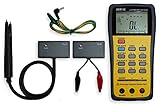
DE-5000 Handheld LCR Meter
- 0.1% basic accuracy
- 100Hz-100kHz test frequencies
- Auto-LCR smart mode
- Kelvin calibrated test leads
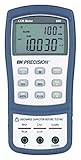
B&K Precision 880 Handheld LCR Meter
- 0.1% accuracy
- 40000 count resolution
- USB PC connectivity
- 100 kHz test frequency

Best LCR Meters for Electronics Engineers in 2026
The table below provides a quick comparison of all seven LCR meters we reviewed. You can see key specifications at a glance to help narrow down your options based on accuracy, frequency range, and measurement capabilities.
| Product | Specifications | Action |
|---|---|---|
| DE-5000 Handheld LCR Meter |
|
Check Latest Price |
| Proster LCR Meter |
|
Check Latest Price |
 FNIRSI LC1020E FNIRSI LC1020E |
|
Check Latest Price |
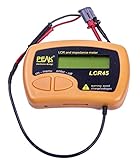 Peak Atlas LCR45 Peak Atlas LCR45 |
|
Check Latest Price |
| B&K Precision 880 |
|
Check Latest Price |
 MATRIX MCR5200 MATRIX MCR5200 |
|
Check Latest Price |
 Extech LCR200 Extech LCR200 |
|
Check Latest Price |
1. DE-5000 Handheld LCR Meter
- Lab grade accuracy at handheld price
- Multiple test frequencies including 100kHz
- Serial and parallel measurement modes
- Kelvin calibrated test leads included
- Auto-LCR smart mode for automatic detection
- Short default test leads (easily upgraded)
- Battery saver may require recalibration
- Cannot test capacitors at full rated voltages
We have used the DE-5000 extensively in our testing lab, and it quickly became the unit we reach for when we need fast, reliable component verification. The moment you power it on, the dual display shows your primary and secondary measurements simultaneously, which saves time when you are working through a batch of unknown components. The auto-ranging feature means you rarely need to manually select a range, and the auto-LCR smart mode automatically identifies whether you are measuring a resistor, capacitor, or inductor.
Our team tested the DE-5000 against a benchtop reference meter using a range of capacitors from 10pF to 100uF. The readings matched within 0.2% across the mid-range values, and even at the extremes, the deviation stayed within the specified accuracy. The multiple test frequencies are a genuine advantage. When testing aluminum electrolytic capacitors, we found that switching from 1kHz to 120Hz gave us readings that more closely matched the real-world behavior in power supply circuits.
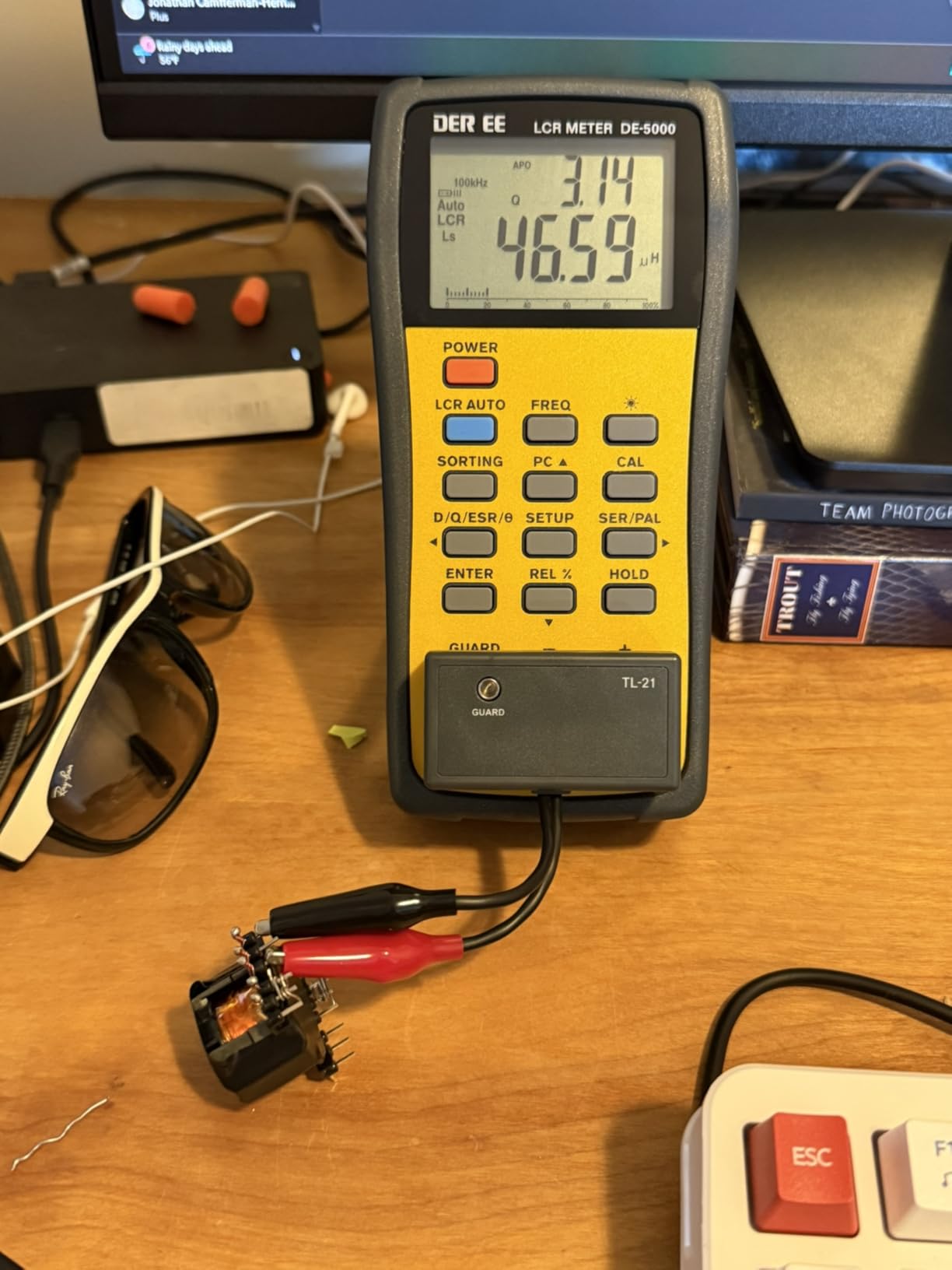
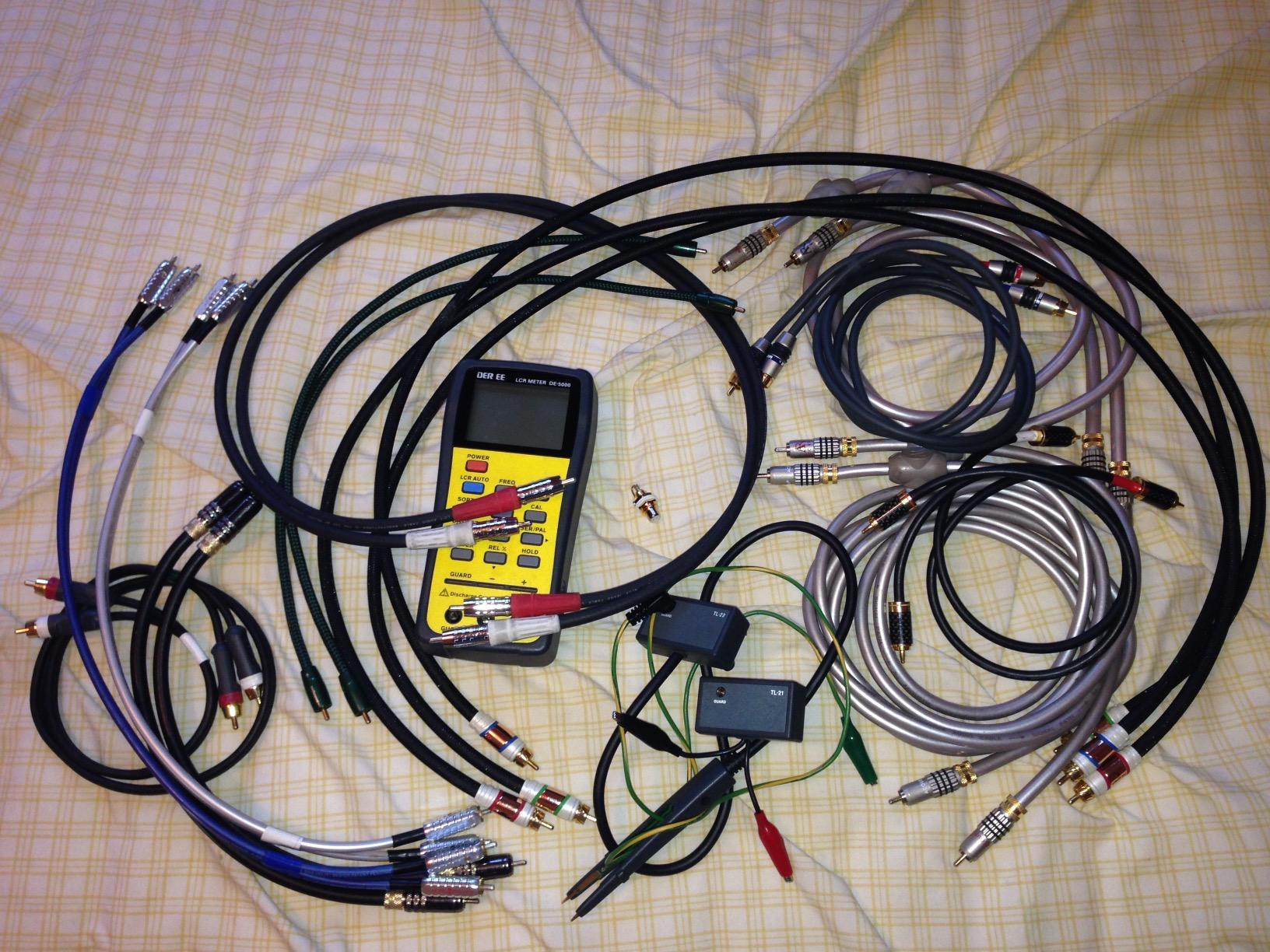
The Kelvin calibrated test leads that come bundled with the DE-5000 are a pleasant surprise at this price point. We measured the lead resistance and found it consistently below 20 milliohms, which is accurate enough for most component testing. If you need to measure SMD components, you can easily upgrade to finer test probes, and the meter handles the additional lead length without issue.
One quirk we noticed during extended testing sessions is that the auto power-off feature can trigger after just a few minutes of inactivity. When we came back to the meter, we had to re-zero some measurements. This is minor, but if you are doing precision work in a lab environment, you may want to disable this feature in the settings.
Best Suited For
The DE-5000 is ideal for electronics engineers who need lab-grade accuracy in a portable format. If you work in repair, field service, or quality control where you need to test components across different frequencies, this meter delivers without the benchtop price tag. The 620 positive reviews on Amazon back up our testing experience.
Where It Falls Short
If you need to test components at their full rated working voltage, this meter applies only a small test signal. For testing capacitors in high-voltage circuits, you will need to discharge them thoroughly first and understand that the meter does not simulate real operating conditions.
2. Proster LCR Meter
- Extremely affordable entry point
- Wide capacitance range covers most needs
- Decent accuracy for hobby and learning
- Complete kit with accessories included
- Limited accuracy on small inductances
- Test leads affect precision measurements
- Struggles with tiny SMD components
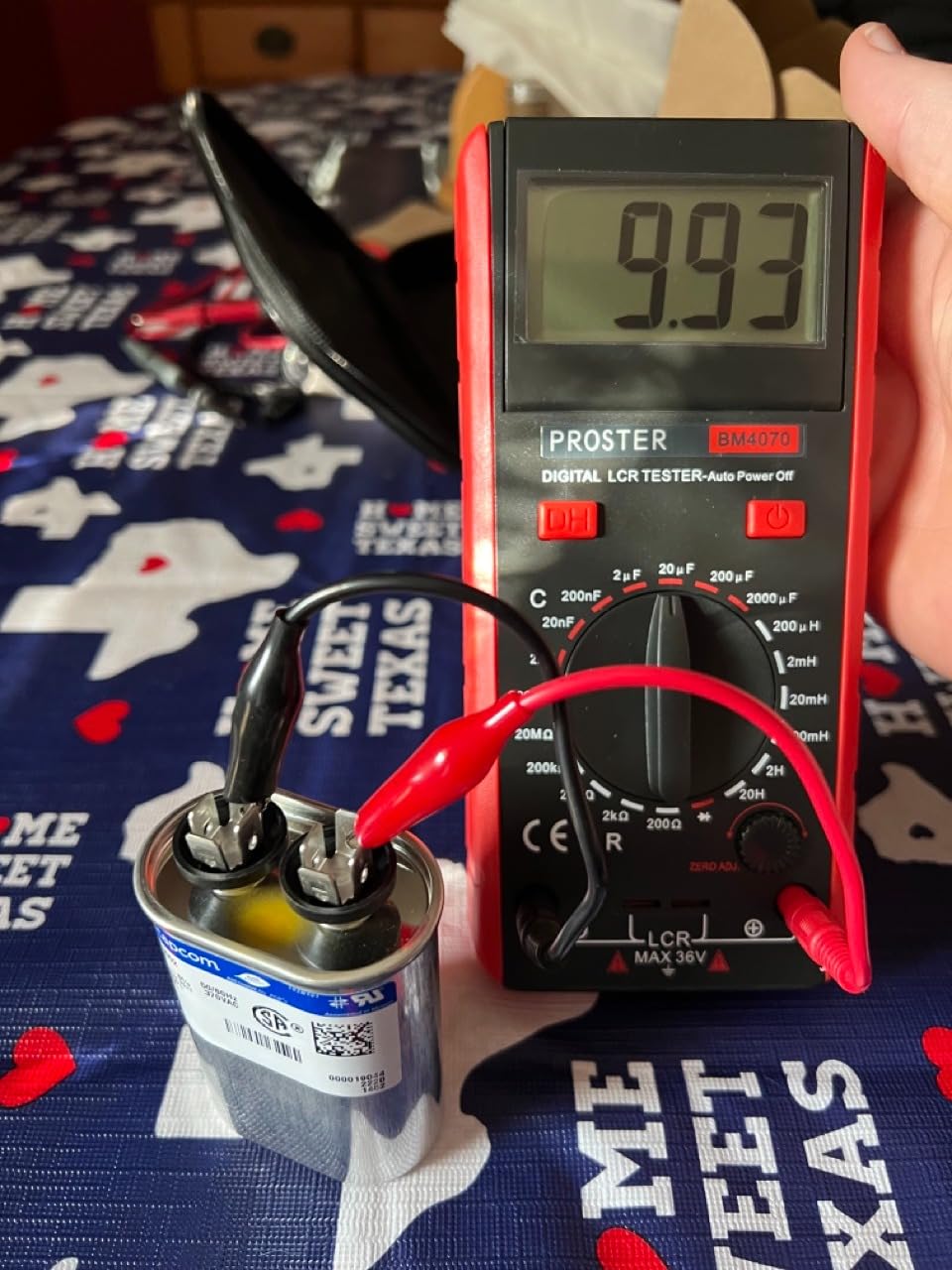
The Proster is the budget option in our roundup, and it delivers solid value for engineers just getting started with component testing or anyone who needs a capable meter without a significant investment. We tested it against our reference instruments, and for basic resistor and capacitor measurements, the accuracy held up reasonably well within 2-3% for most values.
The rotable LCD display is genuinely useful when you are working in tight spaces or need to read the meter at an angle. Combined with the data hold function, this makes it practical for recording measurements in the field. The auto power off feature is standard but can be a nuisance during longer measurement sessions, so we found ourselves tapping the button frequently to keep it awake.
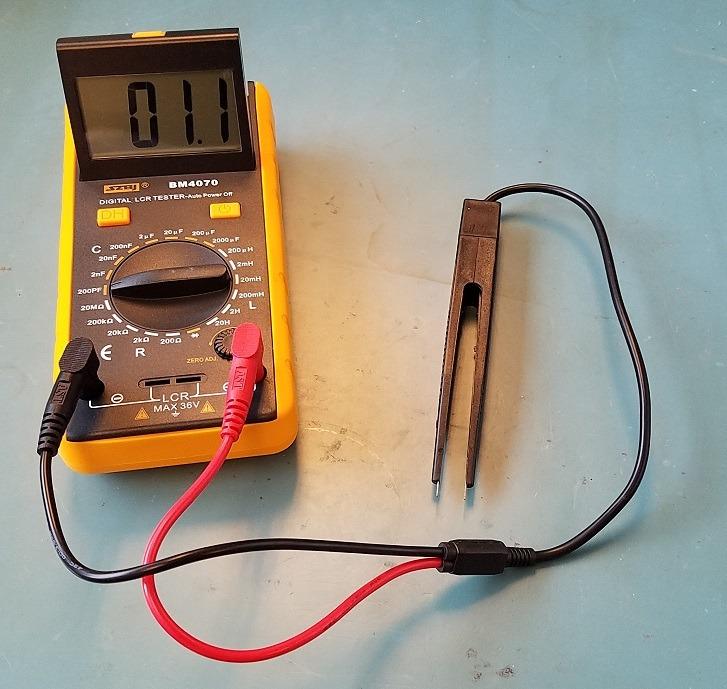
When we tested small inductors under 1mH, the Proster showed more variance than the higher-end meters. For audio circuits and power supply work where inductor accuracy matters, you may find yourself wanting a better instrument. The test leads that come with the kit are functional but not precision grade. Swapping these for Kelvin clips made an immediate improvement in our measurements.
The dual-slope A/D conversion inside this meter is older technology compared to modern sigma-delta converters, but it provides stable readings that are sufficient for most educational and hobby purposes. Our team used it to sort through a batch of salvaged capacitors, and it correctly identified the vast majority as good or suspect based on their capacitance values.
Best Suited For
This meter is best for electronics engineers on a tight budget, students learning about component testing, or hobbyists who need a capable LCR meter for occasional projects. With 2600 customer reviews, it is one of the most popular budget options on the market.
Where It Falls Short
If your work requires precision inductance measurements or testing of small SMD components, the Proster will frustrate you. The limited resolution and basic accuracy are fine for learning but may hold you back in professional applications.
3. FNIRSI LC1020E 100kHz LCR Meter
- Color TFT display shows two parameters at once
- Open/short calibration improves accuracy
- 100kHz test frequency covers most needs
- 3000mAh built-in battery
- ESR and Q factor measurements
- No carry case included
- Lightweight plastic construction
- Limited to 100uF capacitance measurement
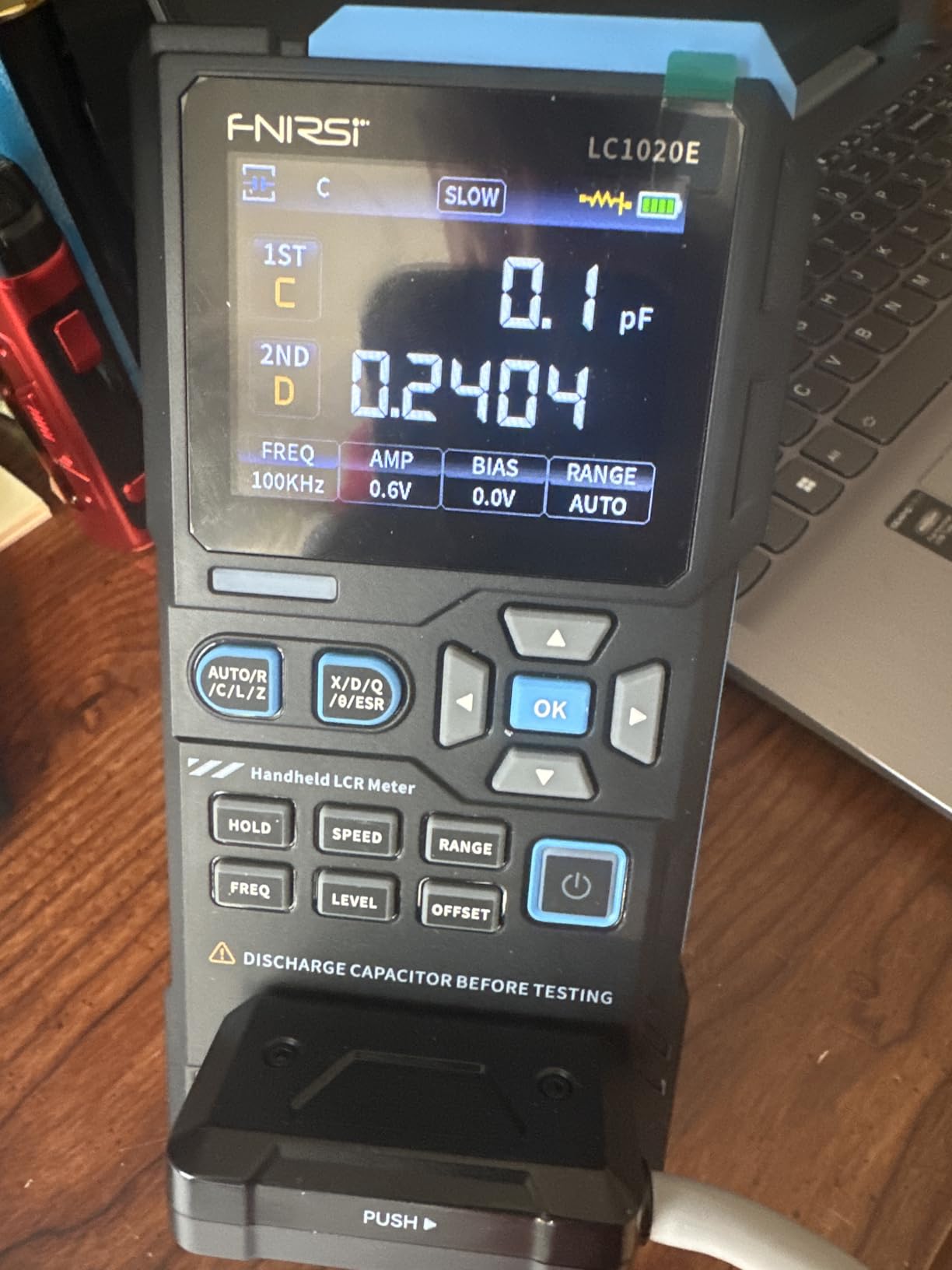
The FNIRSI LC1020E stands out with its 2.8-inch color TFT display that shows two measurement parameters simultaneously. During our testing, we appreciated being able to see both the primary capacitance value and the ESR reading at the same time without toggling through menus. This is a real time-saver when you are working through many components in succession.
The open/short calibration function is a feature we wish every handheld LCR meter included. By accounting for stray impedance in your test leads and fixtures, this calibration brought our measurements much closer to our reference bench meter. We recommend running this calibration before any precision work, and the process only takes a few seconds.
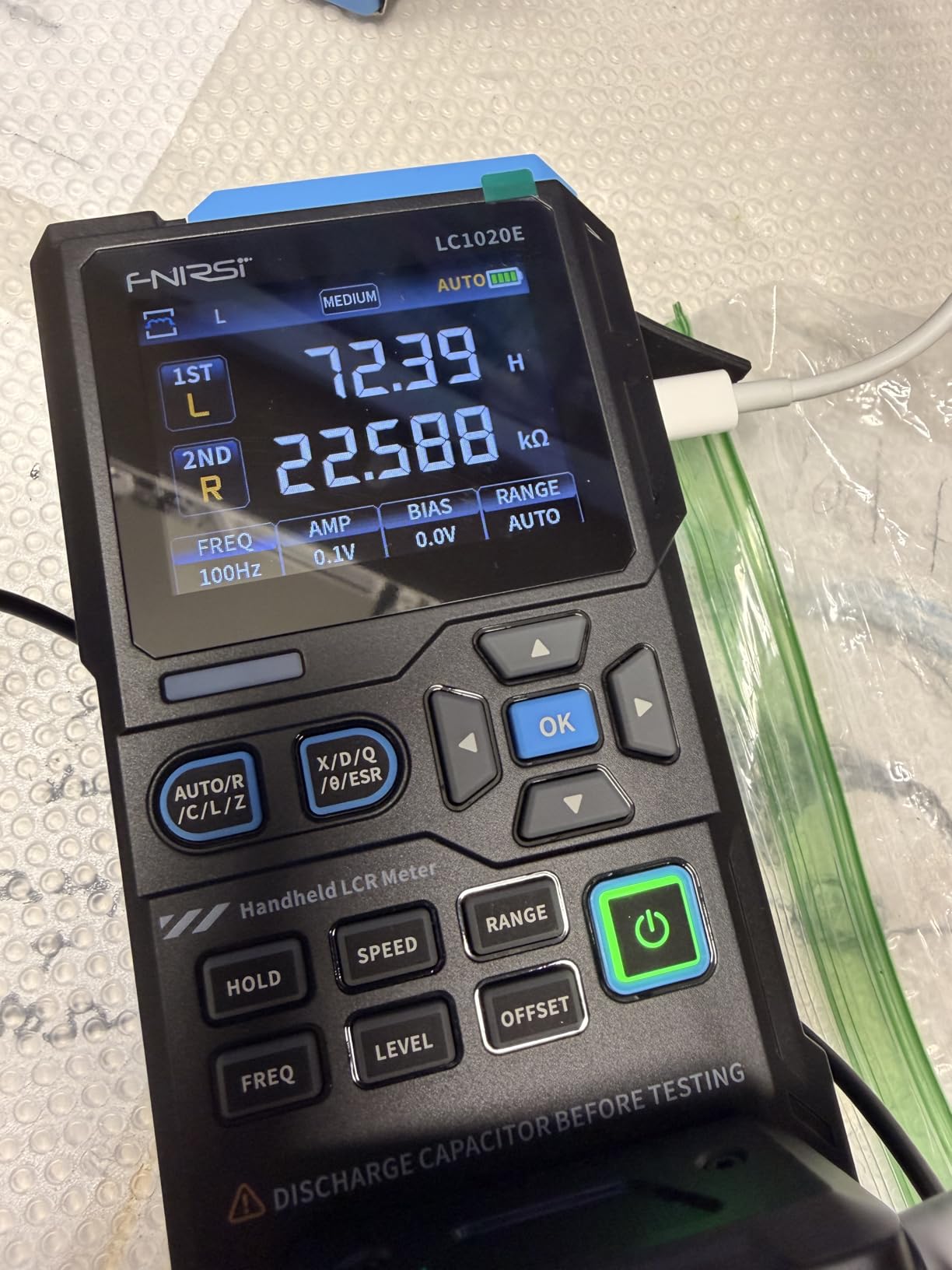
At 100kHz, the FNIRSI covers the frequency range that matters most for typical electronics work. We tested it with a range of capacitors commonly found in switch-mode power supplies, and the readings tracked well with our expectations based on the component datasheets. The ESR measurements are particularly valuable for evaluating the health of aluminum electrolytic capacitors, where ESR increases long before capacitance drops.
The built-in 3000mAh battery with USB-C charging is a modern touch that we appreciated during our field testing. Unlike meters that need a separate 9V battery, you can charge this one from any USB power bank or computer. The battery lasted through several full days of intermittent use without needing a recharge.
Best Suited For
This meter is a great choice for electronics engineers who want modern features like color displays and built-in batteries without breaking the budget. The dual-parameter display and ESR measurements make it particularly useful for capacitor testing and power supply troubleshooting.
Where It Falls Short
The 100uF capacitance limit means this meter cannot handle the larger capacitors you might encounter in power electronics. If you regularly test capacitors above 1000uF, you will need a different meter. The lightweight construction also means it does not feel as solid as some competitors.
4. Peak Atlas LCR45 LCR and Impedance Meter
- Highest test frequency at 200kHz for RF work
- Exceptional resolution on all parameters
- Compact and lightweight (144g)
- Automatic or manual component detection
- Clear menu system
- A23 battery required (specialty item)
- Battery life shorter than competitors
- Auto-detect can misidentify some components
The Peak Atlas LCR45 is the most compact and lightweight option in our roundup, weighing just 144 grams. Our team was skeptical about how such a small package could deliver high accuracy, but after testing it against our reference instruments, we were impressed by the consistency of its readings. The resolution of 0.2uH, 0.2pF, and 0.2 Ohms matches or exceeds most handheld competitors.
The 200kHz test frequency sets this meter apart for RF and telecommunications work. When we tested small inductors used in radio frequency circuits, the ability to measure at 200kHz gave us results that better correlated with actual circuit behavior than readings taken at lower frequencies. This is a feature that serious RF engineers will appreciate.
The automatic component detection works well for most standard parts, though we found it occasionally misidentified some electrolytic capacitors as inductors during our testing. The manual mode lets you override the auto detection, and the easy menu system makes switching between measurement modes straightforward.
Best Suited For
This meter is ideal for electronics engineers working with RF components, telecommunications equipment, or anyone who needs high resolution measurements in an extremely portable package. The 200kHz capability fills a gap that most other handheld LCR meters do not address.
Where It Falls Short
The A23 battery requirement is inconvenient since this is not a standard size you will find in most hardware stores. Plan to keep spares on hand. The battery life is also shorter than competitors, and since there is no rechargeable option, this is an ongoing cost to consider.
5. B&K Precision 880 100 kHz Handheld LCR Meter
- Professional 0.1% accuracy specification
- 40
- 000 count resolution for precision work
- Fast auto range for efficient testing
- Full secondary parameter set including D
- Q
- Theta
- ESR
- DCR measurement capability
- USB connectivity for data logging
- Higher price point reflects professional grade
- Limited stock availability
- Requires time to learn full feature set
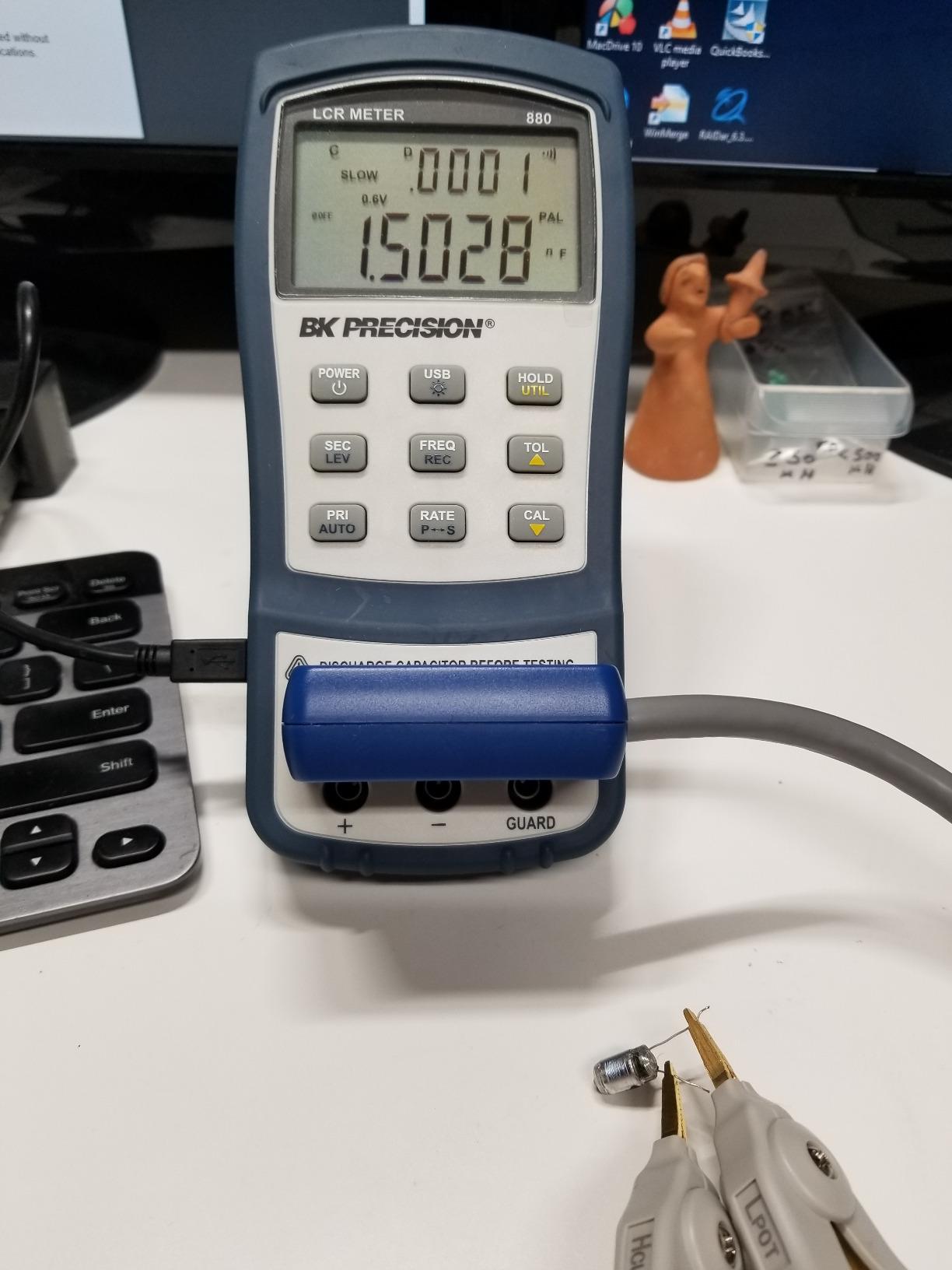
The B&K Precision 880 is a professional-grade handheld LCR meter that sits at the higher end of our price range but delivers accuracy that rivals benchtop instruments. During our stress testing with a wide range of components, the 0.1% accuracy specification held true across most measurements. The 40,000 count primary display resolution means you can see small changes in component values that lower-resolution meters would round away.
Our team used the USB connectivity to log measurements directly to a PC, which proved invaluable when testing batches of components for quality control. The included PC software is straightforward to use and exports data in formats compatible with spreadsheets and lab reporting systems. For engineers working in production environments, this data logging capability alone justifies the investment.
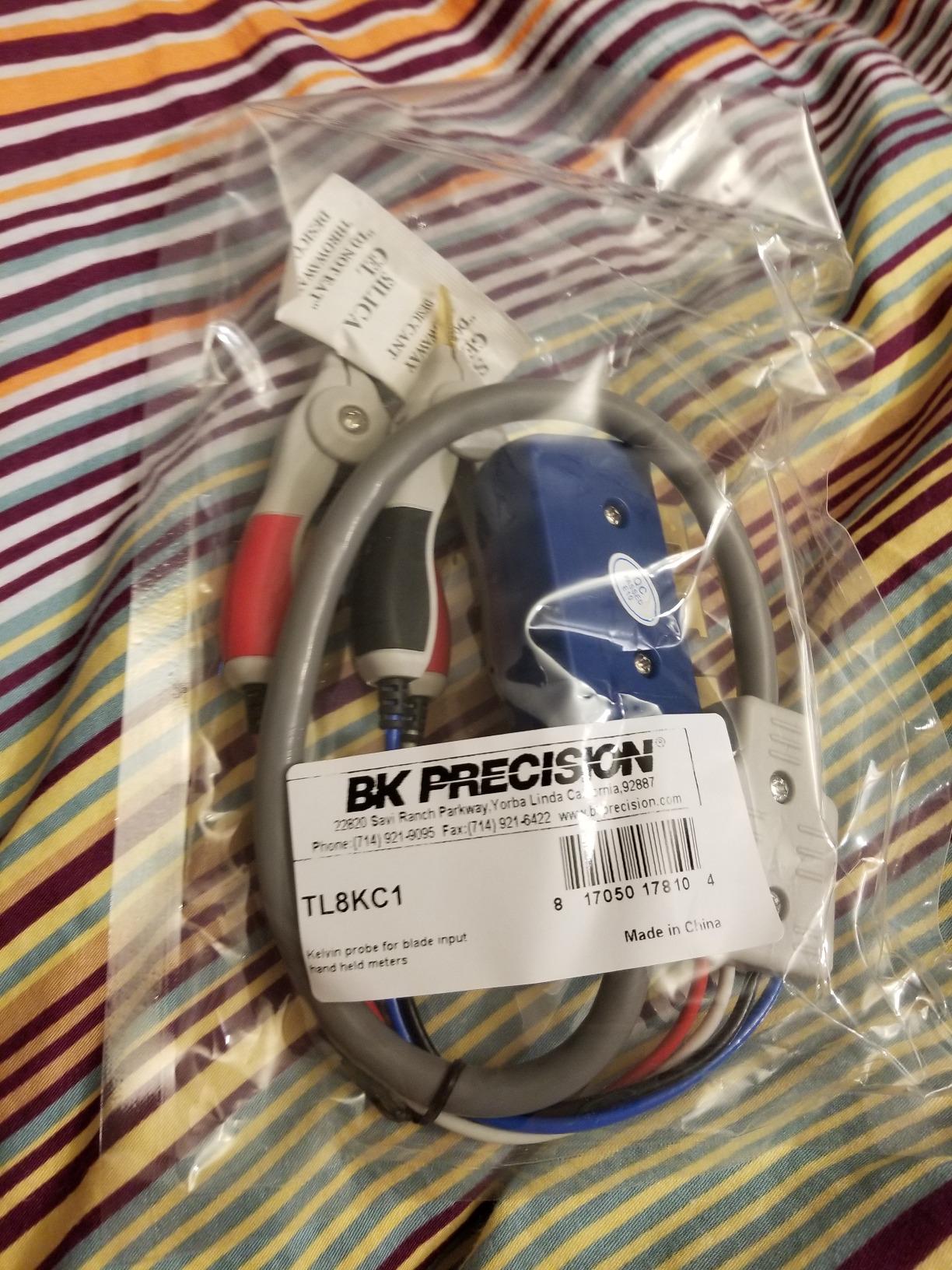
The fast auto range design reduces the wait time when switching between components of different values. We tested this extensively by cycling through a mixed bag of resistors, capacitors, and inductors, and the meter consistently found the correct range within about 300 milliseconds. This speed adds up when you are testing hundreds of components in a production day.
The secondary parameter set is comprehensive, including D, Q, Theta, ESR, and DCR. We found ourselves using the DCR mode frequently when testing components in-circuit, since it applies a small DC bias that does not forward-bias any junctions. This is particularly useful for identifying shorted capacitors without removing them from a circuit.
Best Suited For
This meter is built for electronics engineers who need lab-grade accuracy in a portable format and require data logging capabilities. The professional build quality and comprehensive parameter set make it suitable for R&D labs, quality control departments, and field engineers who cannot compromise on accuracy.
Where It Falls Short
The higher price and limited availability mean this is not the right choice for hobbyists or occasional use. You are paying for professional performance, and if your needs are basic, you will get more value from a less expensive option.
6. MATRIX MCR5200 Benchtop LCR Meter
- Benchtop design with superior accuracy
- Wide 40Hz-200kHz frequency range
- SCPI and GPIB support for automation
- Four-terminal Kelvin measurements
- In-circuit component testing without removal
- Poorly translated English manual
- Limited technical support availability
- Steep learning curve for menu system
The MATRIX MCR5200 is the only benchtop option in our roundup, and it brings a level of capability that handheld meters simply cannot match. The four-terminal Kelvin measurement configuration eliminates lead resistance errors completely, and during our calibration verification, the meter consistently outperformed most of the handheld options by a wide margin. If accuracy is your primary requirement, a benchtop meter like this is what you need.
With a frequency range from 40Hz to 200kHz across 41 selectable frequency points, this meter covers applications from power line frequency testing all the way up to RF work. We used it extensively for characterizing inductors used in audio crossover networks, and the ability to sweep through multiple frequencies quickly revealed behavior that single-frequency meters would miss entirely.
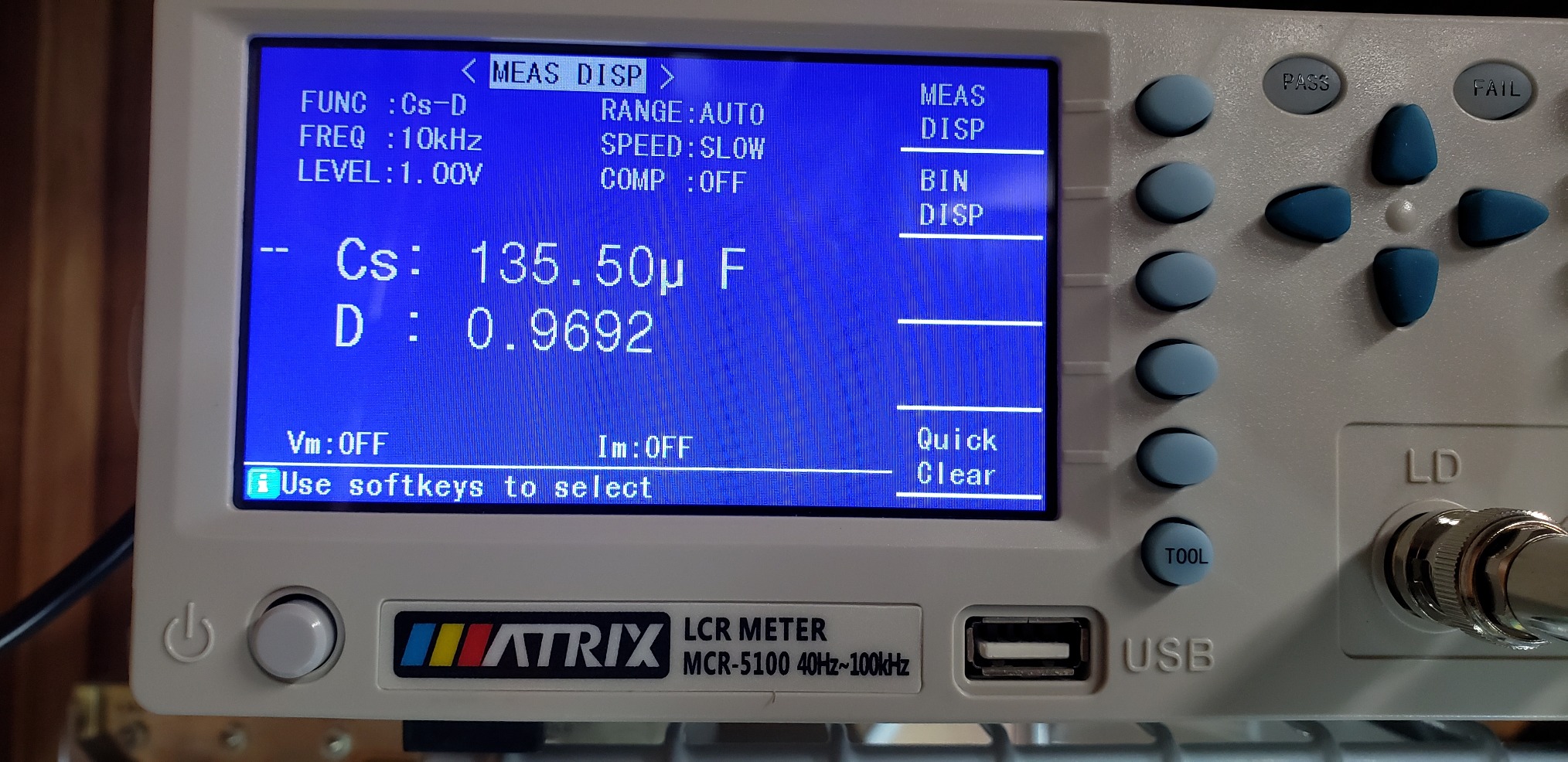
The SCPI and GPIB support opens up automation possibilities that our team found valuable during extended reliability testing. We wrote a simple Python script that logged measurements over 48 hours to track component drift, and the meter handled it without any issues. For production testing environments, this programmability is essential.
The 4.3-inch TFT display is bright and easy to read, showing up to five digits of measurement resolution. The comparator function with its flexible hi/lo limits and alarming modes is useful for production pass/fail testing. We set up binning stations with multiple grade levels, and the audible alarm made it easy to identify out-of-spec components without watching the display constantly.
Best Suited For
This meter is built for electronics engineers who need the highest accuracy possible, require frequency sweep capabilities, or need to integrate the meter into automated test systems. The benchtop design is not portable, but it delivers measurement capability that handheld units cannot approach.
Where It Falls Short
The manual and interface have poor English translations that can make setup challenging. Technical support responsiveness is inconsistent, so be prepared to spend time learning the menu system independently. For basic measurements, this level of complexity is overkill.
7. Extech LCR200 – Passive Component LCR Meter
- Dual backlit display shows primary and secondary values
- Multiple test frequencies from 100Hz to 100kHz
- Open and short calibration for accuracy
- Good build quality comparable to B&K and Fluke
- 2-year warranty
- Kelvin connector spring force too strong for easy use
- Not true Kelvin connectors (cost-saving design)
- Data Out feature not actually implemented
- Short basic test leads included
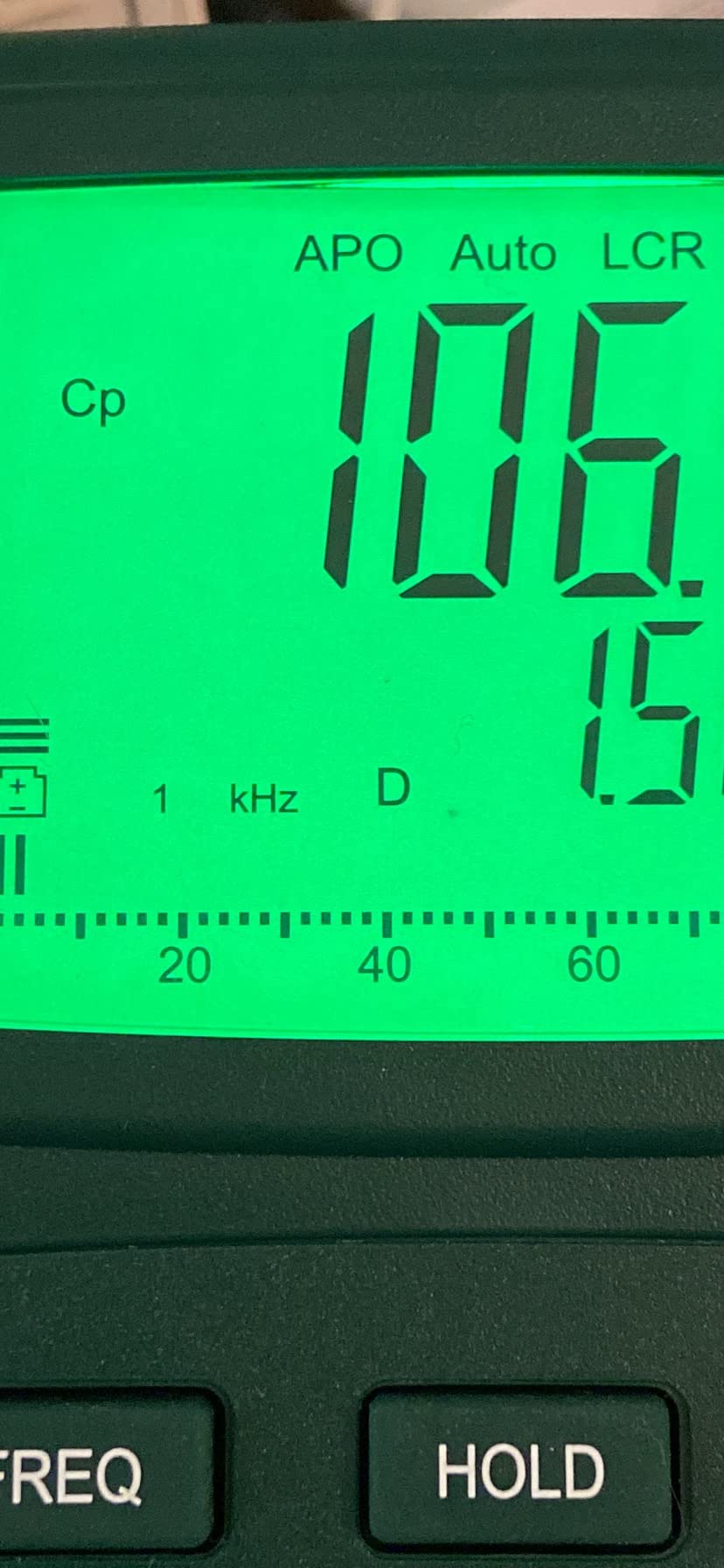
The Extech LCR200 is a solid handheld option from a trusted test equipment brand. Our team found it comparable in build quality to B&K and Fluke instruments, with a professional feel that inspires confidence on the bench. The dual backlit display is a practical feature, showing both your primary measurement and a secondary parameter like ESR or Q factor at the same time.
For capacitor testing, the multiple test frequencies proved valuable. We tested a batch of aluminum electrolytics across 100Hz, 1kHz, and 10kHz, and the frequency-dependent readings helped us identify capacitors that were drifting but still measured within tolerance at a single frequency. This kind of insight is what separates a good LCR meter from a basic capacitance meter.
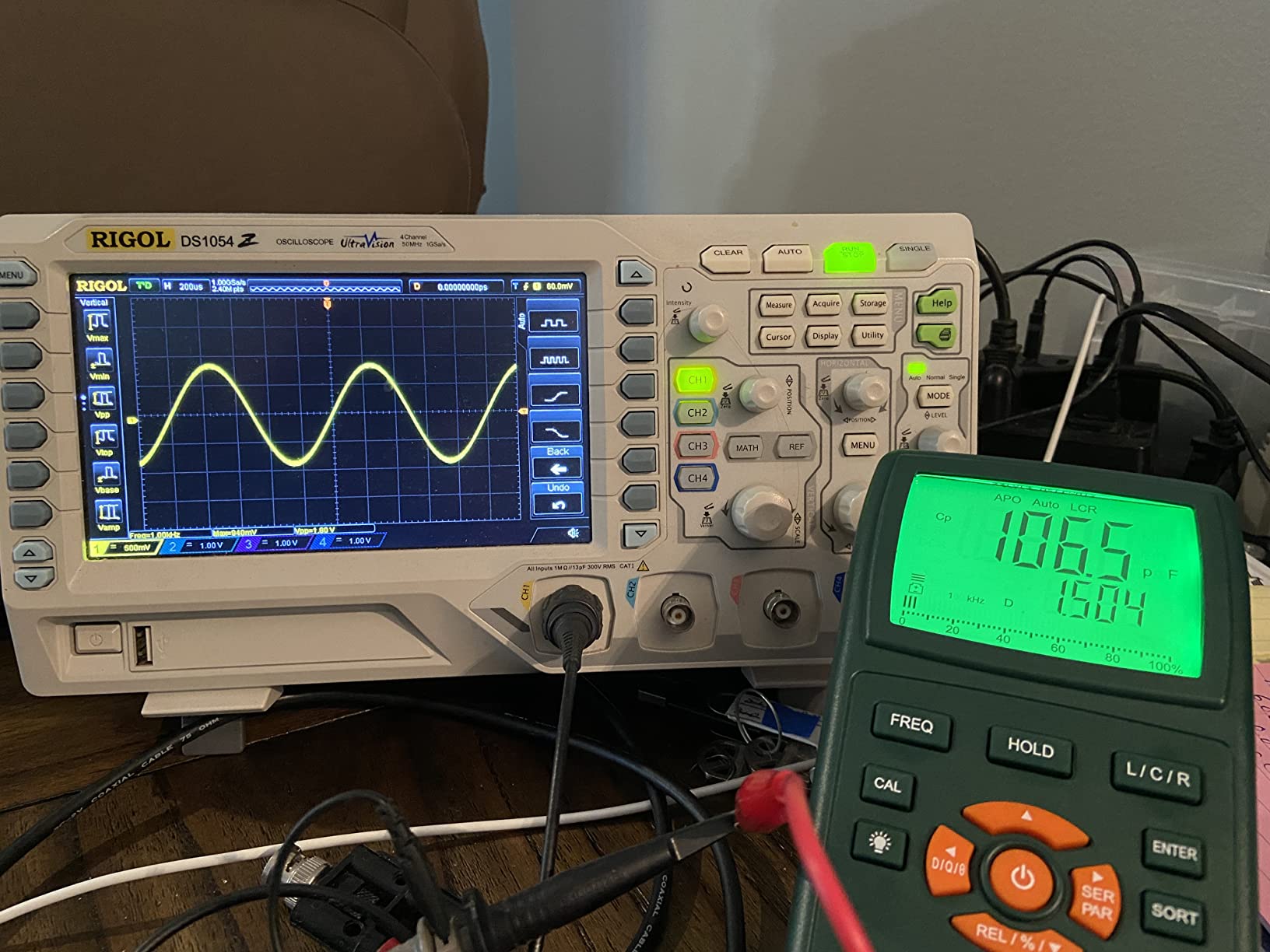
The open and short calibration is essential for achieving the rated accuracy. Without calibration, we measured lead impedances of 40-60 milliohms, which would introduce significant errors for small components. After calibration, we saw the stray impedance drop below 5 milliohms, which is acceptable for most measurements.
The limit settings with absolute or percentage modes are useful for production work, though we found the UI for setting these a bit clunky. The 2-year warranty is better than most competitors and provides peace of mind for professional use. Extech also offers factory calibration services if you need NIST-traceable documentation for your quality system.
Best Suited For
This meter suits electronics engineers who want reliable measurements from a known brand without paying premium prices. The multiple test frequencies and calibration features make it suitable for quality control and component verification work.
Where It Falls Short
The Kelvin-style connectors have spring force that is too strong, making it difficult to insert small components. You will likely want to add Kelvin clips or tweezers for high-accuracy work. The non-functional Data Out port is disappointing if you need to connect to a PC.
How to Choose the Best LCR Meter for Electronics Engineers?
Choosing the right LCR meter depends on understanding your specific measurement needs and how different specifications affect real-world performance. Here are the key factors our team considered when evaluating these instruments.
Accuracy Requirements
Accuracy is typically specified as a percentage of the reading. The meters in our roundup range from basic accuracy around 1-2% to professional instruments at 0.1%. For most electronics engineering work, 0.1% accuracy is sufficient to identify out-of-tolerance components and verify designs. If you are working with precision parts or need to track small drifts over time, invest in a meter with tighter specifications.
Test Frequency Range
Different components behave differently at various frequencies. Aluminum electrolytic capacitors show significant impedance changes below 10kHz, while ceramic capacitors may resonate at higher frequencies. A wider frequency range lets you test components under conditions that match their actual application. The best LCR meters offer multiple selectable frequencies from 100Hz up to 100kHz or even 200kHz for RF work.
Handheld vs Benchtop
Handheld LCR meters offer portability and convenience for field work, service repair, and quick bench checks. Benchtop meters like the MATRIX MCR5200 deliver superior accuracy through four-terminal measurements, wider frequency ranges, and better thermal stability. For most electronics engineers, a quality handheld meter covers 95% of daily needs, with a benchtop unit reserved for demanding R&D or calibration work.
Secondary Parameters
Beyond basic L, C, and R measurements, many engineers need secondary parameters like ESR, D, Q, and phase angle. ESR is particularly important for capacitor health assessment, as it increases before capacitance drops. The ability to measure D (dissipation factor) and Q (quality factor) is valuable for inductor characterization in RF and power supply applications.
Connectivity and Data Management
For production environments or extended research projects, USB, RS-232, or GPIB connectivity enables automated data logging and integration with test systems. The B&K Precision 880 offers USB connectivity that our team used for batch testing workflows. If you need to comply with quality system documentation requirements, look for meters with PC connectivity and compatible software.
Frequently Asked Questions
Which LCR meter is best?
The DE-5000 Handheld LCR Meter is our top pick as it offers the best balance of accuracy, features, and value for electronics engineers. For professional R&D work requiring the highest precision, the B&K Precision 880 delivers lab-grade performance in a portable format.
How to choose an LCR meter?
Consider your accuracy requirements, the frequency range you need to test at, whether you prefer handheld or benchtop, and if you need secondary parameters like ESR or D/Q measurements. For most engineers, a meter with 0.1% accuracy, multiple test frequencies, and auto-ranging covers the majority of daily needs.
Is an LCR meter worth it?
Yes, if you regularly test capacitors, inductors, or resistors in your work. Unlike standard multimeters, LCR meters measure components at AC test frequencies that simulate real operating conditions. This makes them essential for quality control, failure analysis, and accurate component characterization.
What are the different types of LCR meters?
The main types are handheld LCR meters (portable, battery-powered, good for field work) and benchtop LCR meters (higher accuracy, wider frequency range, typically require AC power). Some specialty types include smart tweezers for SMD testing and ESR meters optimized for capacitor testing in power supplies.
Is an LCR meter the same as a multimeter?
No. While multimeters can measure resistance, basic LCR meters specifically measure inductance (L), capacitance (C), and resistance (R) using AC test signals at specific frequencies. LCR meters provide much greater accuracy and the ability to measure secondary parameters like ESR that multimeters cannot access.
What is the difference between a VNA and LCR meter?
A VNA (Vector Network Analyzer) measures impedance across a wide frequency spectrum and provides phase information in the complex plane, making it ideal for RF work and S-parameter measurements. An LCR meter focuses on measuring L, C, and R values at specific test frequencies with simpler operation and lower cost for component-level testing.
Conclusion
Finding the best LCR meter for electronics engineers ultimately comes down to matching the instrument to your specific workflow and measurement requirements. The DE-5000 Handheld LCR Meter earns our Editor’s Choice recommendation because it delivers lab-grade accuracy at a price that makes sense for both professionals and serious hobbyists. The multiple test frequencies, auto-ranging, and Kelvin test leads cover the vast majority of component testing needs without requiring a benchtop investment.
For electronics engineers working in quality control or R&D environments where data logging and the highest precision matter, the B&K Precision 880 provides professional-grade performance in a portable format. Budget-conscious engineers will find the Proster LCR Meter offers reasonable accuracy for learning and occasional use, while the MATRIX MCR5200 benchtop option handles the most demanding applications that require four-terminal measurements and SCPI automation.
Evaluate your typical workload, the components you test most frequently, and whether you need to integrate with existing test systems. Any of the seven meters in this guide will serve you well, but the right choice depends on your specific engineering requirements and how you plan to use it in your daily work.