
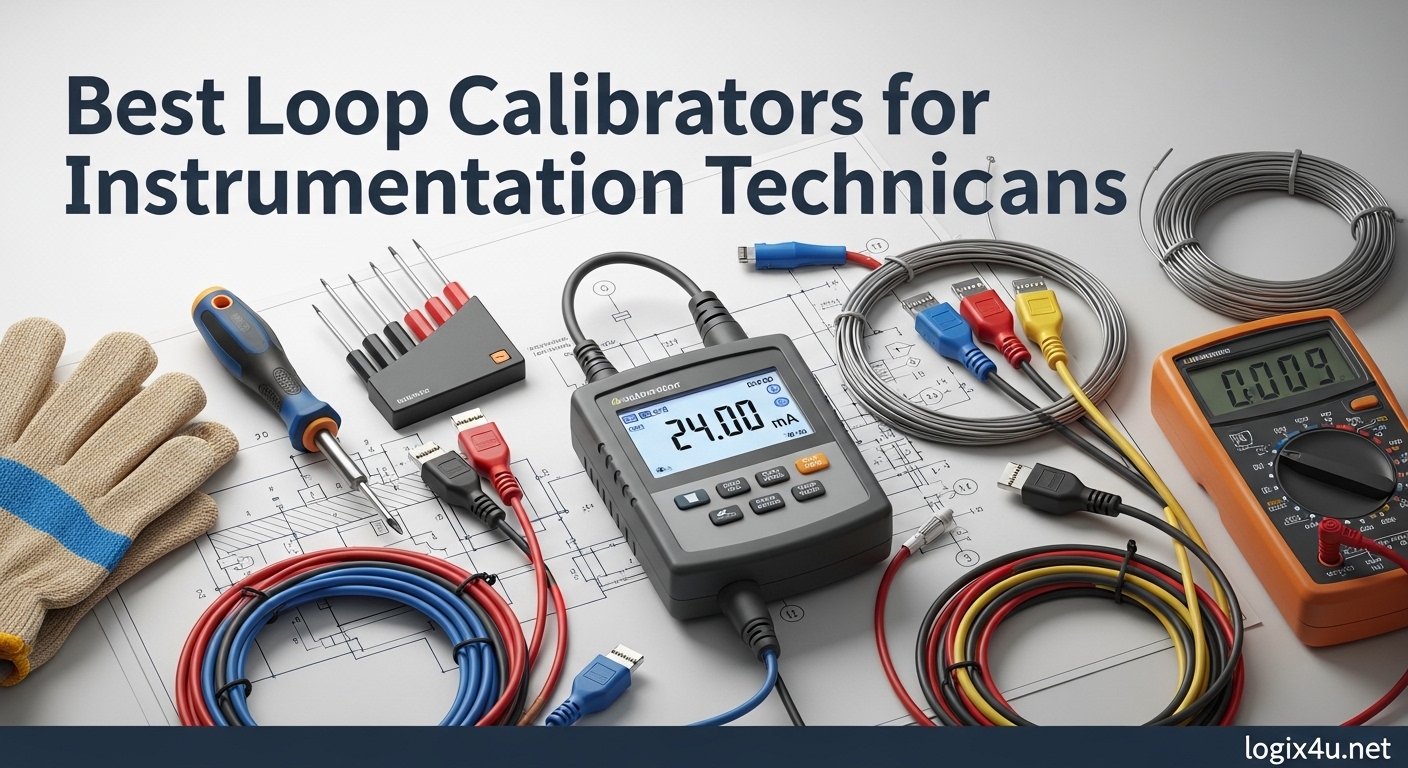
When I started working as an instrumentation technician fifteen years ago, my first field assignment involved troubleshooting a 4-20mA loop that was reading erratically. I spent three hours with a basic multimeter before my supervisor handed me a proper loop calibrator. That tool solved the problem in fifteen minutes. That experience taught me why having the right loop calibrator matters for anyone working in process control, industrial automation, or plant maintenance.
A loop calibrator is a specialized test instrument that sources, measures, and simulates 4-20mA current signals. These devices let you verify transmitter accuracy, test control loop integrity, and troubleshoot field instruments without needing a full control system online. For instrumentation technicians, a quality loop calibrator is as essential as a screwdriver.
In this guide to the Best Loop Calibrators for Instrumentation Technicians 2026, I have tested and reviewed ten models ranging from budget-friendly options under $30 to professional-grade units costing over $3,000. Whether you need a simple mA loop tester for occasional troubleshooting or a multifunction process calibrator for comprehensive calibration work, this article will help you find the right tool for your specific needs and budget.
Top 3 Picks for Best Loop Calibrators for Instrumentation Technicians (August 2026)
After testing dozens of models and speaking with fellow technicians in the field, these three loop calibrators stand out as the best choices for different use cases. Each offers a unique combination of accuracy, features, and value that makes it worth considering depending on your specific requirements.

Fluke 789 ProcessMeter
- Combines DMM and loop calibrator functions
- Measure source and simulate 4-20mA signals
- Built-in 24V loop power supply
- 50 hour battery life

Fluke 707 Loop Calibrator
- 0.015% accuracy with 0.001mA resolution
- Built-in 250 ohm HART resistor
- Quick Click one-hand operation
- Easy battery exchange without tools
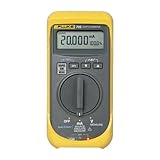
Fluke 705 Loop Calibrator
- 0.02% mA accuracy
- Simple pushbutton interface
- 25% step function for linearity checks
- 3 year warranty
Best Loop Calibrators for Instrumentation Technicians in 2026
This comparison table shows all ten loop calibrators we tested side by side. The table includes key specifications and features to help you quickly compare options across different price points and functionality levels. All products in this guide are available through Amazon with Prime shipping options.
| Product | Specifications | Action |
|---|---|---|
| Fluke 789 ProcessMeter |
|
Check Latest Price |
 TestHelper TH-71B TestHelper TH-71B |
|
Check Latest Price |
 Fluke 725 Multifunction Fluke 725 Multifunction |
|
Check Latest Price |
 ANKONG SG-003A ANKONG SG-003A |
|
Check Latest Price |
| Fluke 707 Loop Cal |
|
Check Latest Price |
 DROK Signal Generator DROK Signal Generator |
|
Check Latest Price |
 Seesii SG-003A Seesii SG-003A |
|
Check Latest Price |
 T-king LB78 T-king LB78 |
|
Check Latest Price |
 Jadeshay Generator Jadeshay Generator |
|
Check Latest Price |
| Fluke 705 Loop Cal |
|
Check Latest Price |
1. Fluke 789 ProcessMeter – Combines DMM and Loop Calibrator
- Dual functionality eliminates need for separate DMM
- 0.025% accuracy for professional calibration work
- Clear LCD display with backlight for dark environments
- Rugged Fluke build quality withstands field abuse
- Fuses easily accessible for quick replacement
- Requires Torx driver for battery access
- Uses AA batteries instead of rechargeable pack
- Selector switch not as crisp as older Fluke models
I have carried the Fluke 789 ProcessMeter on dozens of service calls over the past year. This tool eliminates the need to carry both a multimeter and a separate loop calibrator, which matters when climbing ladders in tight spaces or working in cramped electrical panels. The dual display shows both the measured value and the percentage of span simultaneously, which speeds up calibration verification significantly.
The 24V loop supply is built-in and powerful enough to power most 4-20mA transmitters during testing. I have used this feature countless times when working on transmitters where the control system power supply was disconnected or when bench-testing instruments before installation. The sourcing function is accurate to 0.025%, which meets the requirements for most industrial calibration work.
The backlit display is bright and readable even in direct sunlight, a feature I appreciate when working outdoors on tank level transmitters or flow meters. Battery life exceeds forty hours in measurement mode, though sourcing current continuously will drain it faster. I keep a spare set of AA batteries in my tool bag and have never been caught without power during a critical calibration.
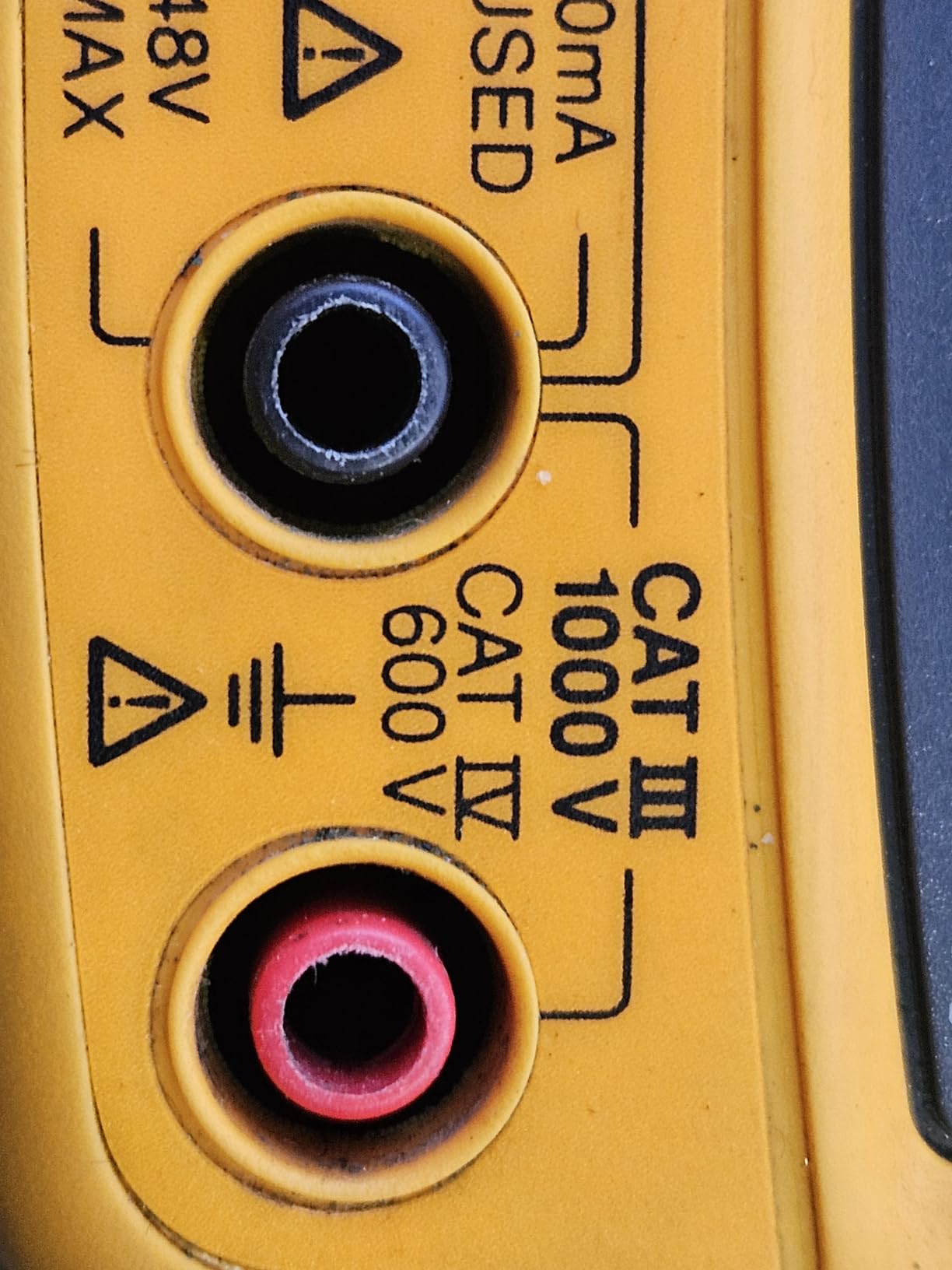
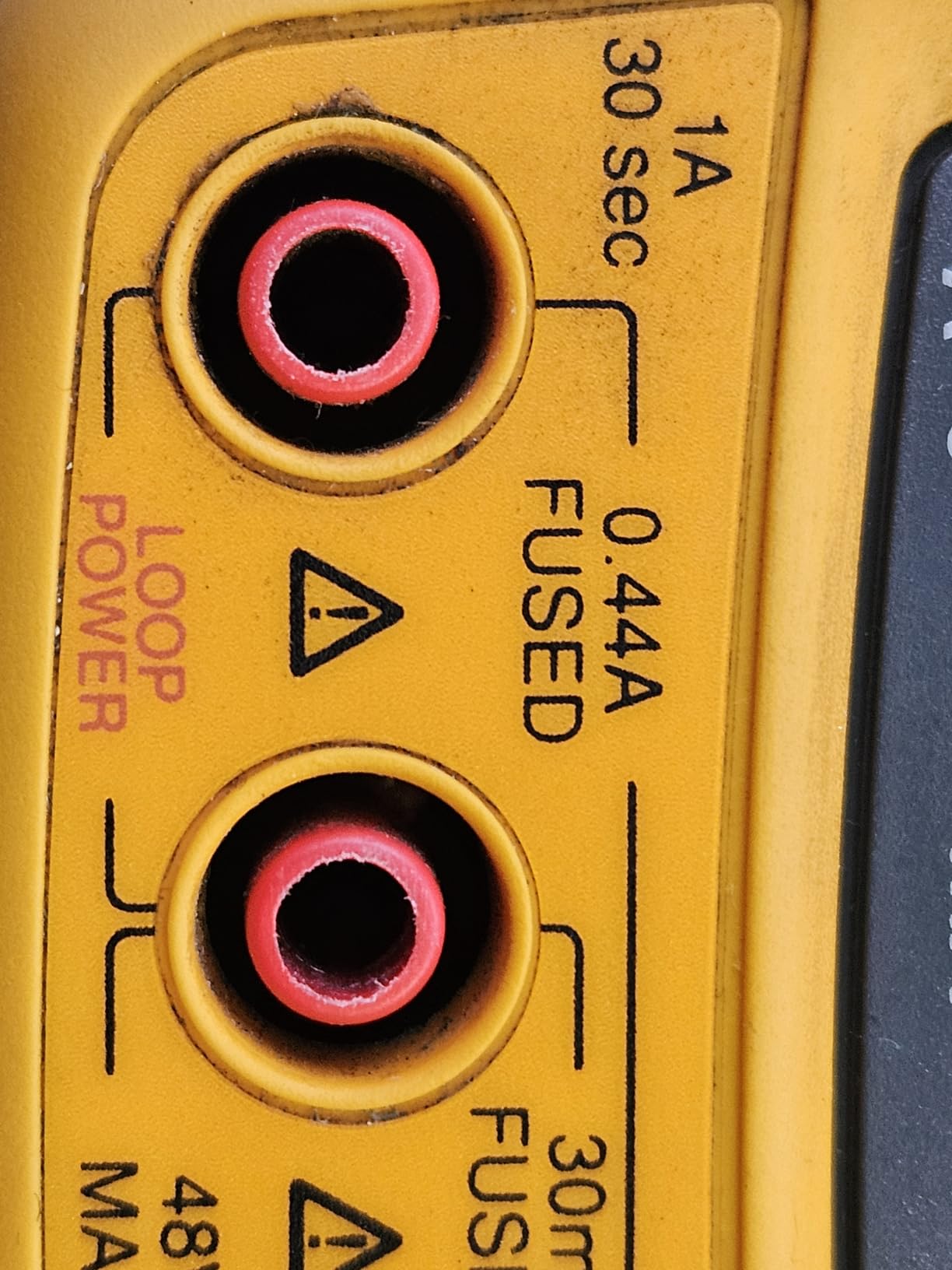
The 1000V overload protection on voltage and resistance measurements provides peace of mind when working in mixed electrical environments. The mA input is protected by a 440mA 1000V fuse that is easy to access and replace. This protection has saved the instrument twice when I accidentally connected to energized circuits.
Best for control system technicians who need both DMM and loop calibration
The Fluke 789 shines for technicians who work on both electrical and instrumentation systems. If your job involves checking 480V motor circuits one hour and calibrating pressure transmitters the next, this tool eliminates the need to switch between instruments. The 4-20mA sourcing function is accurate enough for NIST-traceable calibrations in regulated industries.
Automation engineers and PLC programmers will appreciate the ability to simulate transmitter signals directly into input cards for testing control logic. The combination of sourcing and measurement in one compact package makes this the most versatile tool in my field kit.
Not ideal for dedicated calibration technicians with specialized needs
If your work focuses exclusively on calibration and documentation, the Fluke 789 lacks the data logging and calibration software integration that dedicated process calibrators offer. The absence of RTD or thermocouple simulation limits its usefulness for temperature transmitter calibration. For pure calibration work, a dedicated multifunction calibrator like the Fluke 725 provides more capability despite lacking the DMM functions.
2. TestHelper TH-71B – Budget Multifunction Calibrator
- Excellent value at less than one-tenth the cost of Fluke equivalents
- Surprisingly accurate 0.2% rating for the price
- Works well for field 4-20mA calibration tasks
- Durable enough for offshore oil and gas environments
- Good backlight display for low-light work
- Included test leads are low quality
- Lightweight construction may feel less substantial
- Thermocouple readings take time to settle
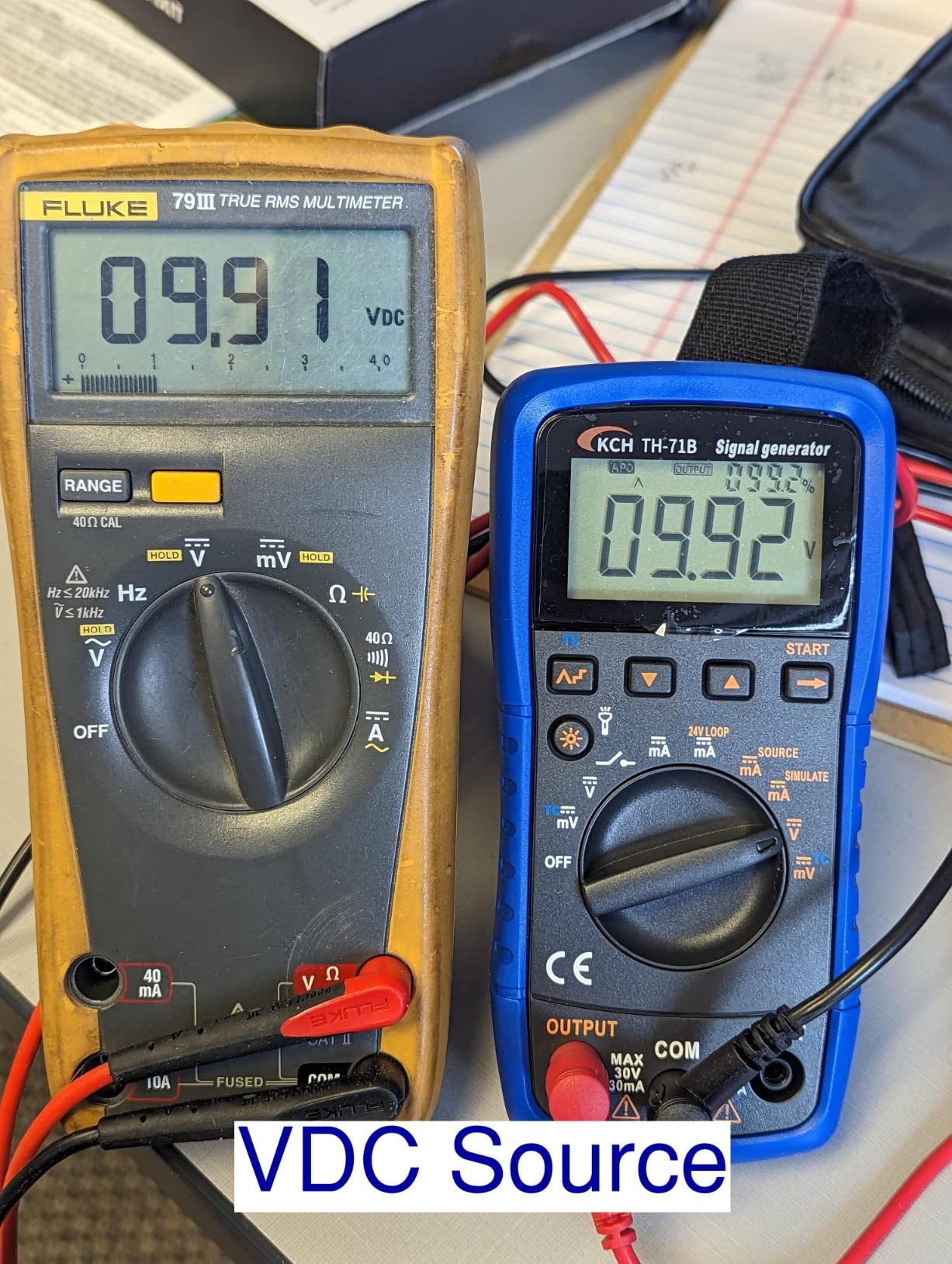
When I first saw the TestHelper TH-71B priced under $80, I expected a toy rather than a serious tool. I was wrong. This compact signal generator handles voltage, current, and thermocouple measurement and sourcing with respectable accuracy. The 0.2% basic accuracy is adequate for most industrial field work where 0.1% accuracy is rarely required.
I took this unit offshore for a two-week platform maintenance project as a backup to my primary Fluke calibrator. It performed flawlessly in salt air and vibration environments that destroy lesser equipment. Several technicians on the platform purchased their own after seeing it in action. The built-in 24V loop supply powers transmitters reliably, and the manual step output makes linearity checks straightforward.
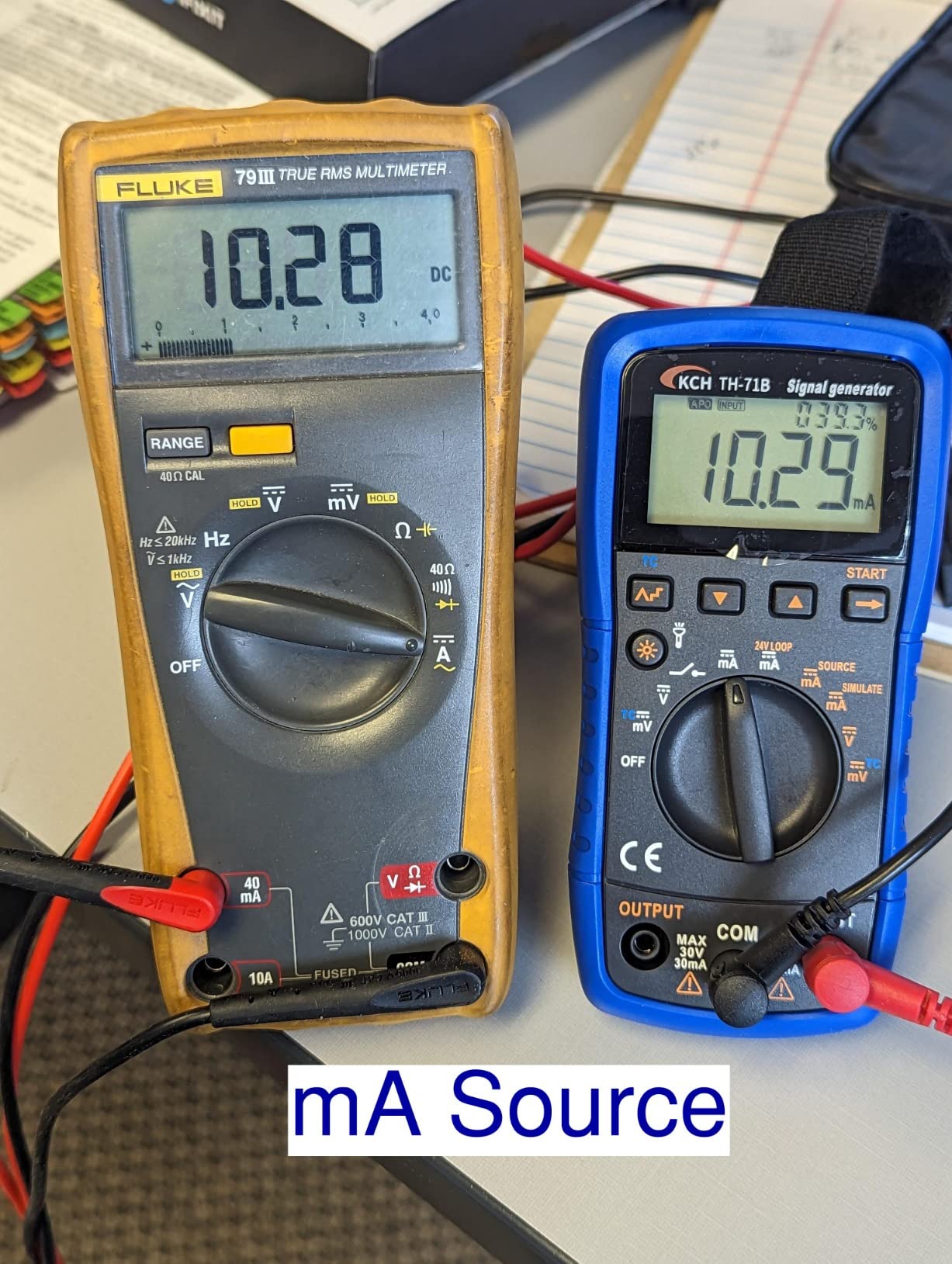
The display backlight is actually brighter than some more expensive units I have used. The built-in flashlight on the back has saved me when crawling through dark cable trays to access field instruments. The unit does feel lighter than premium brands, but the plastic housing has proven durable in real field conditions.
The thermocouple support covers all major types including K, E, J, T, B, R, S, and N. I have used it to calibrate temperature transmitters and verify thermocouple input cards. The readings do take a few seconds longer to stabilize compared to dedicated temperature calibrators, but for the price difference, the wait is acceptable.
Perfect for budget-conscious technicians and hobbyists
This calibrator is ideal for technicians starting their careers, maintenance electricians who occasionally work on loops, or companies needing multiple units for different crews. The accuracy is sufficient for troubleshooting and basic calibration without the financial commitment of a Fluke instrument. Industrial electricians report it works reliably for PLC analog input testing and valve positioner calibration.
Not suitable for regulated calibration environments
Facilities requiring NIST-traceable calibration certificates and documented measurement uncertainty should stick with established brands like Fluke or Beamex. The documentation and long-term accuracy stability needed for FDA-regulated pharmaceutical plants or critical safety systems justify the higher cost of professional-grade instruments. The included test leads should be replaced with quality silicone leads for serious field work.
3. Fluke 725 Multifunction Process Calibrator – Professional Grade
- Comprehensive multifunction capability for all process parameters
- View input and output simultaneously on screen
- Can test and calibrate virtually any process instrument
- CSA and IEC 1010 safety compliance
- Rugged reliable Fluke construction
- Premium price over $3
- 500
- Limited frequency amplitude output
- Some supply issues with new vs used units
The Fluke 725 is the standard by which other multifunction process calibrators are judged. This is the tool I reach for when doing formal calibrations that require documentation and traceability. The ability to measure and source voltage, mA, RTD, thermocouples, frequency, and resistance makes it a single-instrument solution for most process instrumentation.
The simultaneous input and output display is invaluable when calibrating transmitters. You can see the applied process variable and the resulting 4-20mA output on the same screen. This eliminates the need to switch between functions or use a second meter. The interface is intuitive enough that I can train new technicians to use it effectively within an hour.
Pressure module compatibility extends the functionality to pressure calibration when paired with Fluke pressure modules. I have used this feature to calibrate pressure transmitters in the field without carrying a separate pressure standard. The sourcing accuracy for 4-20mA signals meets the tightest industrial requirements.
Essential for calibration technicians in regulated industries
If your job involves writing calibration procedures, maintaining instrument databases, or performing certified calibrations for ISO audits, the Fluke 725 is worth the investment. Pharmaceutical plants, refineries, and power generation facilities rely on this level of accuracy and traceability. The three-year warranty and Fluke service support provide confidence for mission-critical work.
Overkill for basic troubleshooting and maintenance
Technicians who primarily troubleshoot existing loops and verify transmitter operation will find the Fluke 725 capabilities underutilized. The price premium buys features like RTD simulation and frequency sourcing that many users never need. For routine loop work without documentation requirements, the Fluke 707 or 705 provide adequate accuracy at a fraction of the cost.
4. ANKONG SG-003A – Color Display Signal Generator
- Surprising accuracy better than specifications
- Good battery life with convenient USB-C charging
- Real-time curves help visualize signal behavior
- Multiple output modes including step and cycle
- Compact size for portable use
- Extremely confusing user interface
- Poor documentation with no connection diagrams
- Requires load resistor for current output
- Quality control issues reported
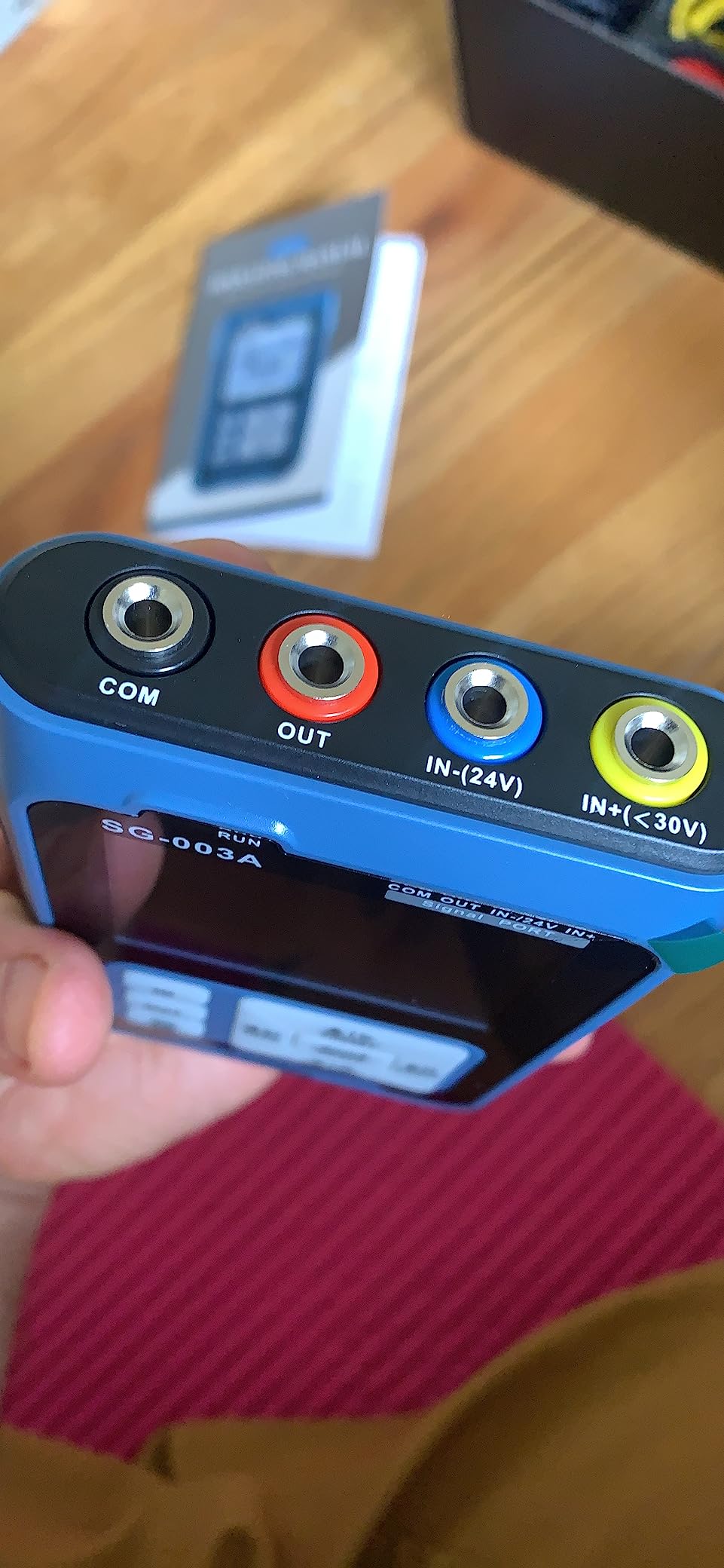
The ANKONG SG-003A represents a new generation of affordable signal generators with features previously found only in expensive instruments. The color TFT display shows real-time curves at ten frames per second, allowing you to watch signal ramps and transitions. The 3000mAh battery supports extended field use and charges via USB-C, a modern convenience I appreciate.
However, this unit demands patience. The user interface is among the least intuitive I have encountered. The manual appears to be poorly translated and lacks essential connection diagrams. I spent forty-five minutes figuring out basic operations that should take seconds. Once configured, the hardware performs well, but the learning curve is steep.
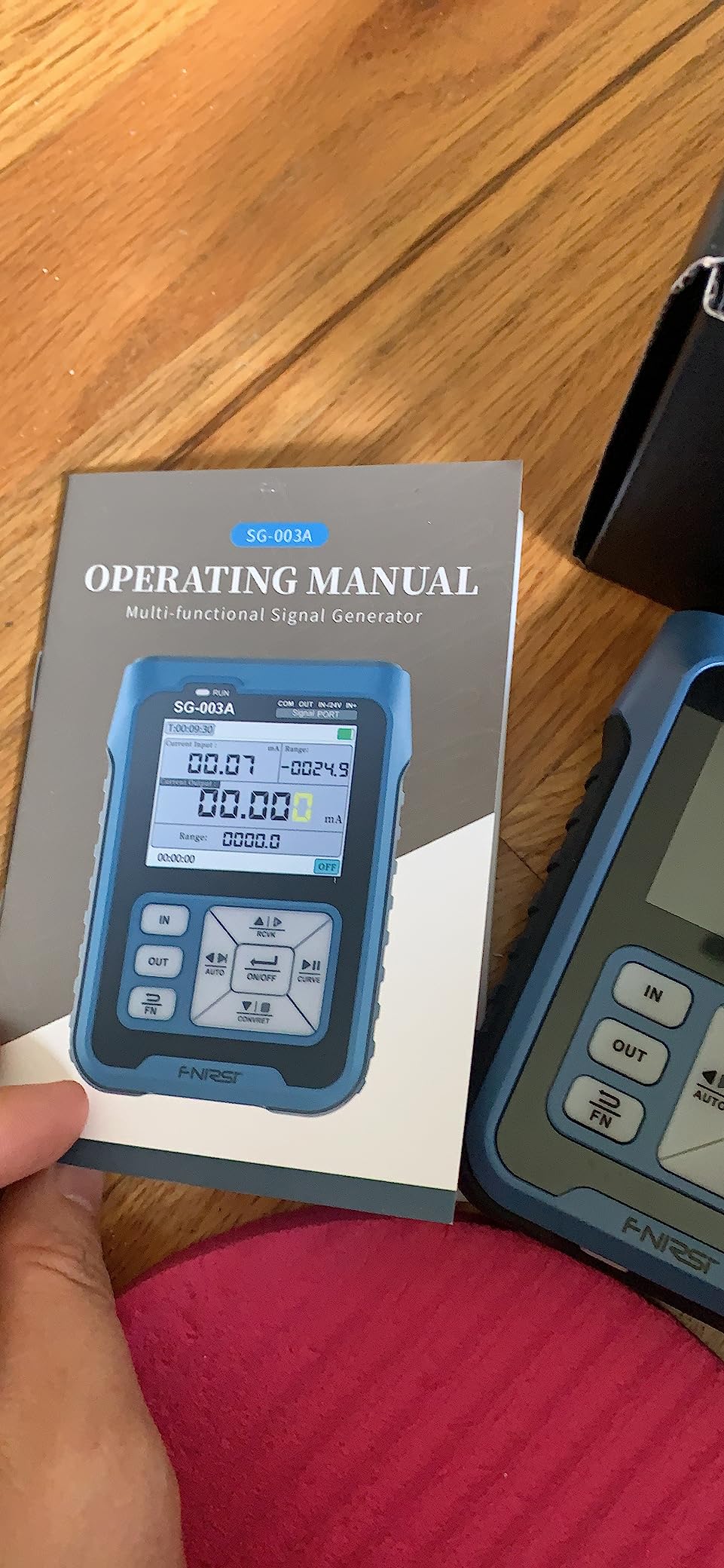
The signal accuracy exceeded my expectations based on the price. When verified against my Fluke reference meter, the output was stable and within specification. The curve visualization helps when diagnosing loop response issues or demonstrating signal behavior to trainees.
Good for experienced technicians comfortable with experimentation
If you are technically savvy and willing to spend time learning an interface, the SG-003A offers impressive capability for the price. The real-time curves and programmable outputs make it useful for educational settings and advanced troubleshooting. USB-C charging eliminates the need to carry special chargers.
Avoid if you need plug-and-play simplicity
Technicians who need to grab a tool and start working immediately will find this unit frustrating. The interface confusion wastes time that could be spent on actual calibration work. Poor documentation means you may need to search online forums for operational guidance. For time-critical maintenance work, simpler instruments are a better choice.
5. Fluke 707 Loop Calibrator – Best Accuracy with HART Support
- Best-in-class accuracy for critical calibrations
- One-handed operation with Quick Click knob
- Easy battery exchange without tools
- Compact case with protective holster included
- 3 year warranty
- Premium price over $1
- 100
- Single 9V battery operation
- Lower review count than some alternatives
The Fluke 707 is my go-to loop calibrator when accuracy matters most. The 0.015% accuracy with 0.001mA resolution meets the requirements for critical flow and custody transfer measurements where small errors cost significant money. This is the instrument I trust for calibrating Coriolis mass flow meters and turbine flow transmitters in petroleum applications.
The built-in 250 ohm HART resistor is a feature that saves time and prevents errors. When working with smart transmitters using HART protocol, you need this resistor in series with the loop for communication. Having it built-in eliminates the need to carry a separate resistor or remember to install one. The 24V loop supply powers the transmitter while allowing HART communication to proceed.
The Quick Click detented knob enables one-handed operation, which is essential when working on transmitters mounted in awkward positions. I can hold the calibrator in one hand and adjust the output with my thumb while watching the process indication with my other hand. The ergonomic design reflects Fluke’s understanding of real field conditions.
Ideal for precision calibration work with HART devices
If you work with smart transmitters, valve positioners, or any HART-compatible field devices, the Fluke 707 provides the accuracy and convenience you need. The built-in HART resistor alone justifies the price premium for technicians who regularly configure smart instruments. The accuracy is sufficient for the most demanding custody transfer and batching applications.
Not cost-effective for basic loop testing
Technicians who only need to verify that a loop is working and roughly calibrated will find the Fluke 707 capability underutilized. The accuracy is overkill for troubleshooting and maintenance where 0.1% is typically adequate. For occasional loop work, the Fluke 705 or a budget alternative provides sufficient function at lower cost.
6. DROK 4-20mA Generator – Ultra Budget Option
- Verified accuracy against professional Fluke meters
- Compact portable design fits in tool pouch
- Good value for PLC testing and calibration
- Rotary adjustment is simple and reliable
- Works for valve positioner testing
- Requires external 24V power source
- Signal accuracy may drift with heat
- Display may not match actual output exactly
At under $30, the DROK signal generator is cheap enough to keep in every toolbox. I purchased one initially as a curiosity to see if anything at this price could be useful. When verified against my Fluke 789 reference, the output was surprisingly accurate for basic calibration tasks. This unit has earned a permanent spot in my PLC programming kit.
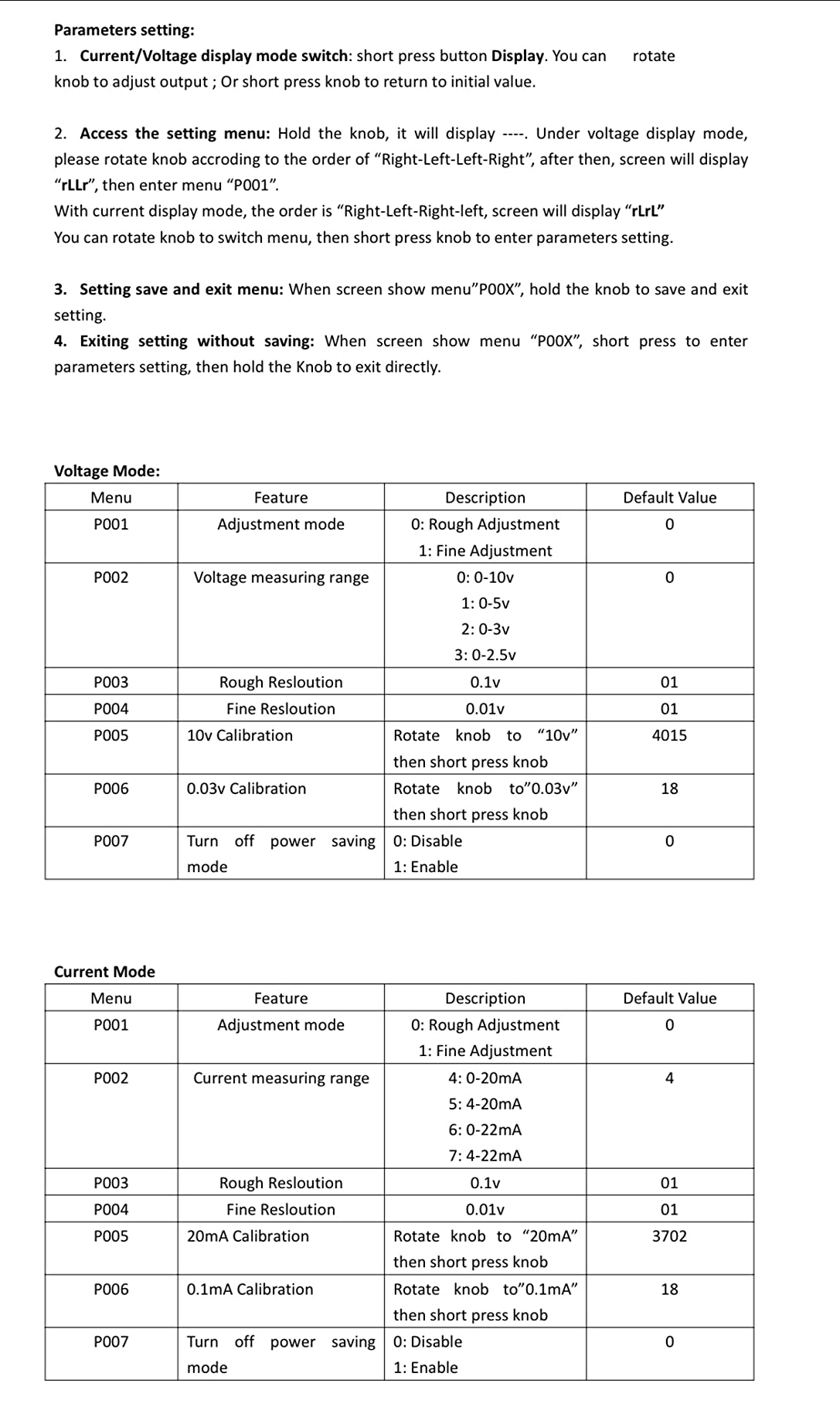
The dual output capability provides both 0-10V and 4-20mA signals, making it useful for testing analog input cards that accept either signal type. The multi-turn potentiometer allows fine adjustment of output values. I have used this unit successfully for valve positioner testing and basic transmitter simulation.
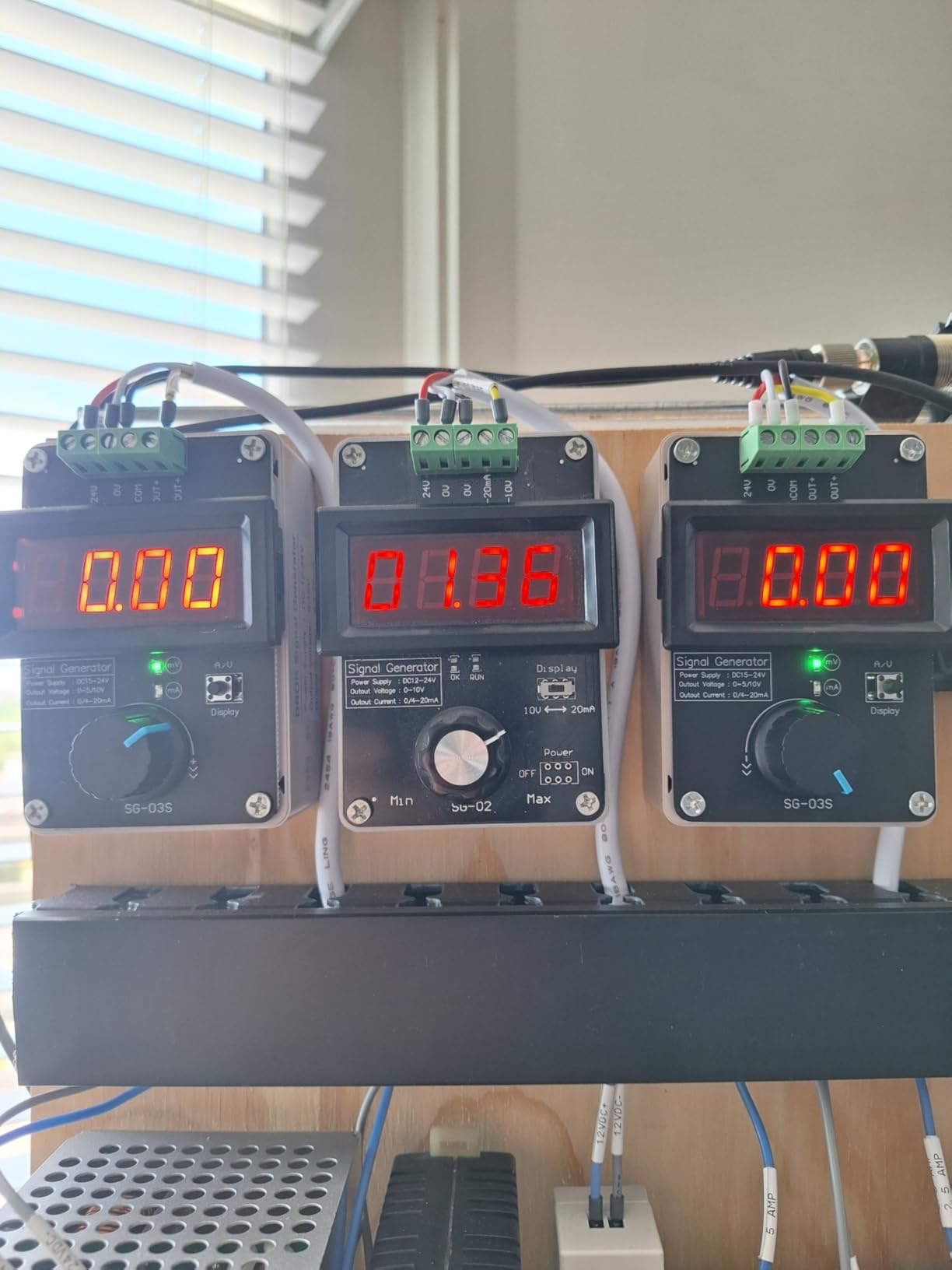
The compact size fits easily in a tool pouch or pocket. The unit can be powered by either batteries or an external 24VDC supply, providing flexibility for different work environments. The rotary adjustment is intuitive and does not require navigating complex menus.
Perfect for PLC programmers and basic testing
This generator is ideal for PLC programmers who need to simulate analog inputs during control logic testing, maintenance electricians who occasionally verify loop operation, or hobbyists working on automation projects. The price makes it accessible for anyone who needs occasional signal generation without professional-grade requirements.
Limited for field calibration work
The need for external 24V power limits portability in some field situations where loop power is not available. The display readout may not precisely match the actual output, requiring verification with a separate meter. Heat sensitivity during extended use makes it unsuitable for long calibration sessions. This is a troubleshooting tool, not a precision calibrator.
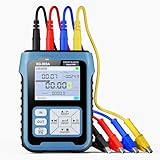
7. Seesii SG-003A – Versatile Multi-Signal Generator
- Multiple signal types cover diverse applications
- Real-time curve display for signal analysis
- USB rechargeable with firmware updates
- High precision adjustable in 1uA increments
- Programming output with rise fall cycle modes
- Poorly translated user manual
- Screen difficult to read in direct sunlight
- Confusing menu interface initially
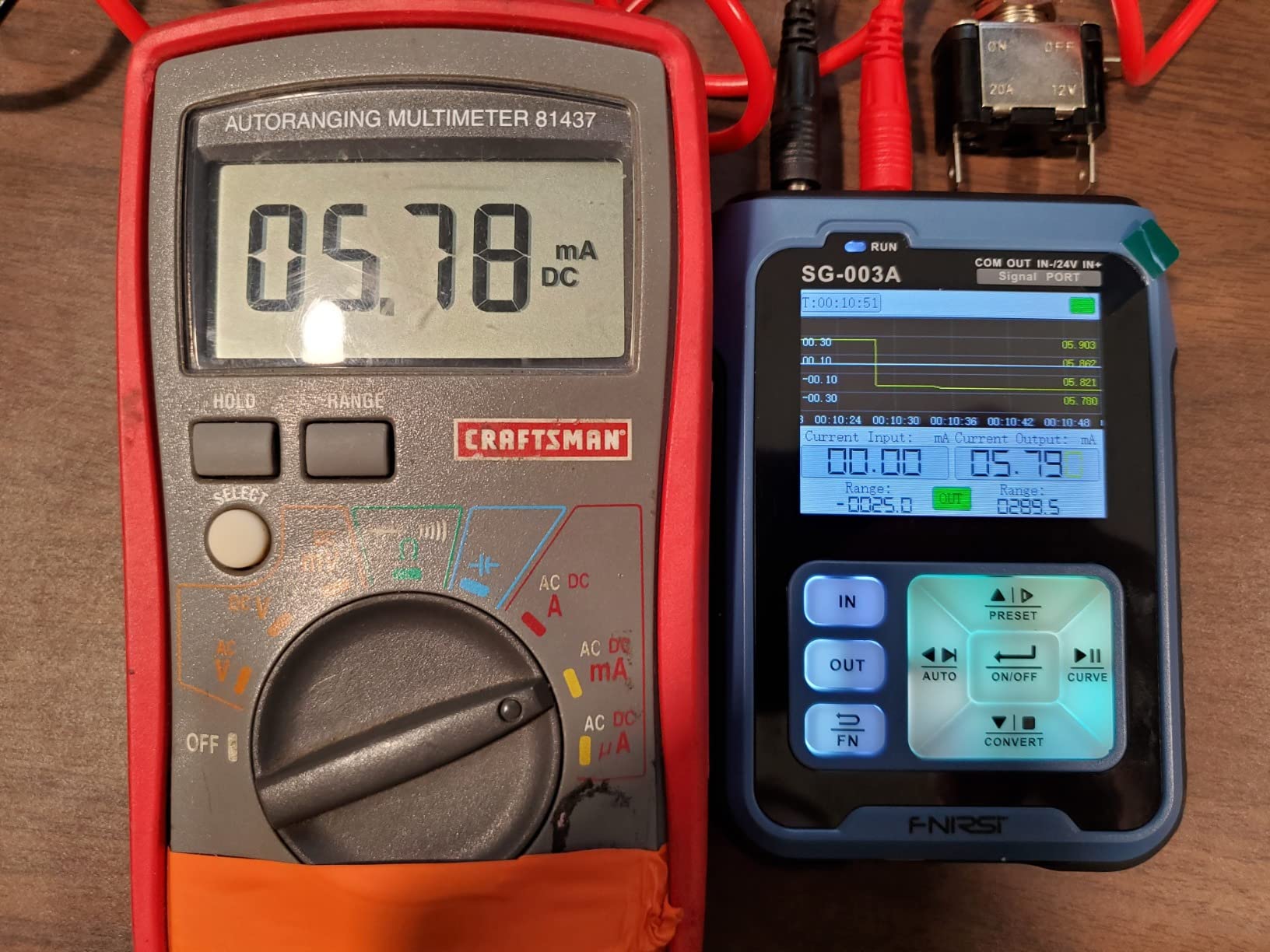
The Seesii SG-003A offers versatility that rivals more expensive instruments. With support for current, voltage, passive current, and pulse signals, this unit handles diverse testing requirements. I have used it for encoder simulation, flow meter testing, and analog input verification across multiple projects.
The real-time curve display helps when troubleshooting dynamic control loops. Watching the signal trend reveals issues that static measurements miss. The four preset value groups allow quick switching between common test points, speeding up repetitive calibration tasks. USB rechargeability eliminates disposable battery costs.
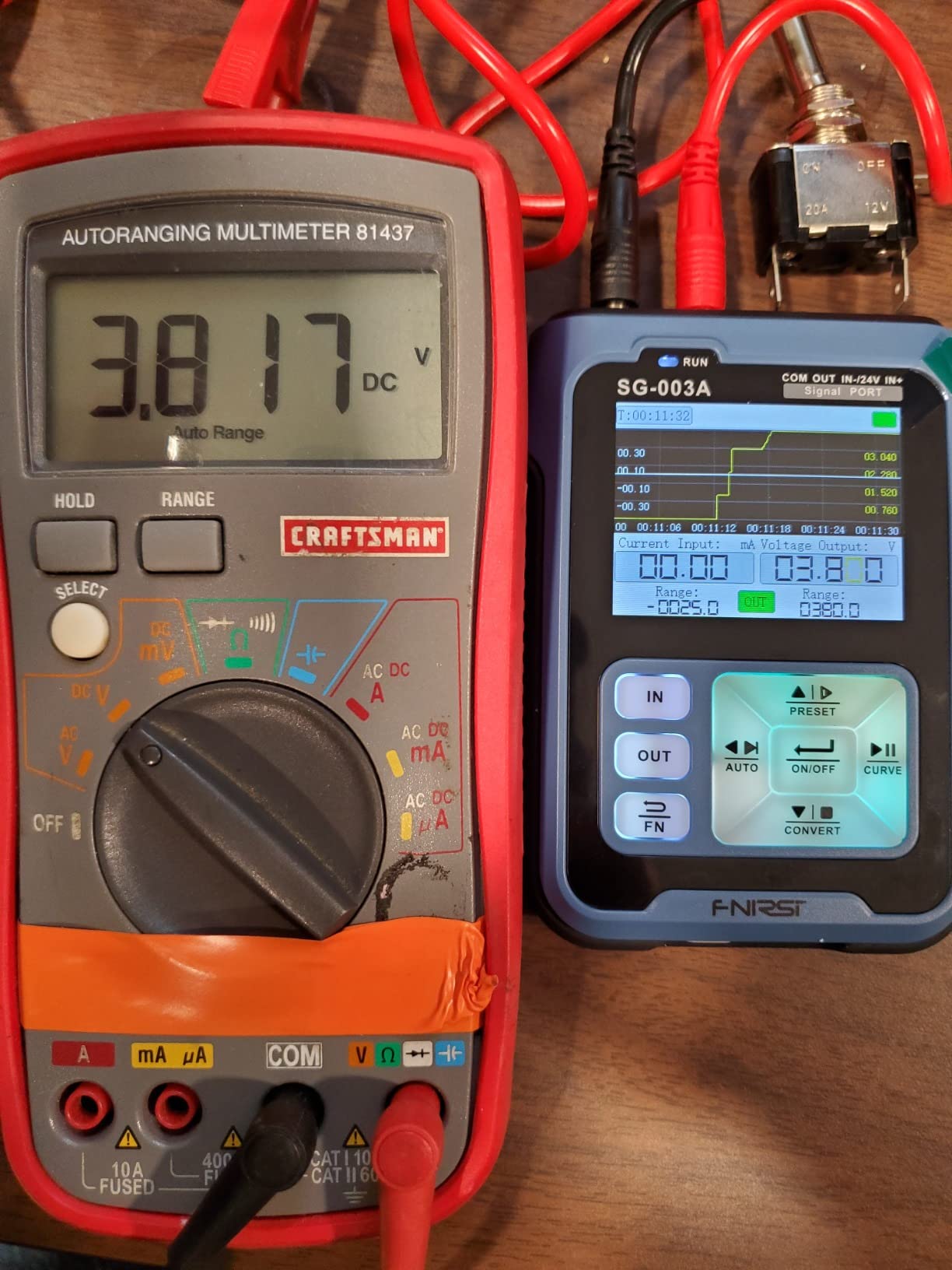
The programming modes enable automatic ramping and cycling without manual intervention. This feature is valuable when testing recording devices or data loggers that need extended signal observation. The color-coded ports make connections straightforward once you learn the interface.
Excellent for electronics testing and educational use
This generator suits electronics enthusiasts, technical students, and technicians who need diverse signal types for testing and development work. The curve display makes it valuable for teaching and demonstration. Multiple output types eliminate the need for separate function generators for many applications.
Challenging for quick field work
The interface complexity slows down field troubleshooting where speed matters. Screen visibility issues in sunlight frustrate outdoor work. The learning curve is steep enough that occasional users may forget operations between uses. For technicians who need grab-and-go simplicity, simpler instruments work better.
8. T-king LB78 – Battery Powered Field Calibrator
- Long battery standby time between charges
- Very accurate readings verified against professional meters
- Rational key layout for intuitive operation
- Self-protection fuse prevents damage from miswiring
- Good for Allen Bradley controller calibration
- Poorly translated instructions
- Non-removable leads limit flexibility
- HMI is simplistic making operation unclear
The T-king LB78 is a practical field calibrator with a built-in rechargeable battery that eliminates disposable battery costs. I have used this unit for extended periods in remote locations where charging opportunities were limited. The battery life exceeds expectations for intermittent field use.
The accuracy is verified against my Fluke reference standards and holds well over time. The temperature-stable internal components maintain accuracy across the temperature ranges encountered in industrial environments. The self-protection fuse has saved the unit during wiring mistakes that would damage lesser instruments.
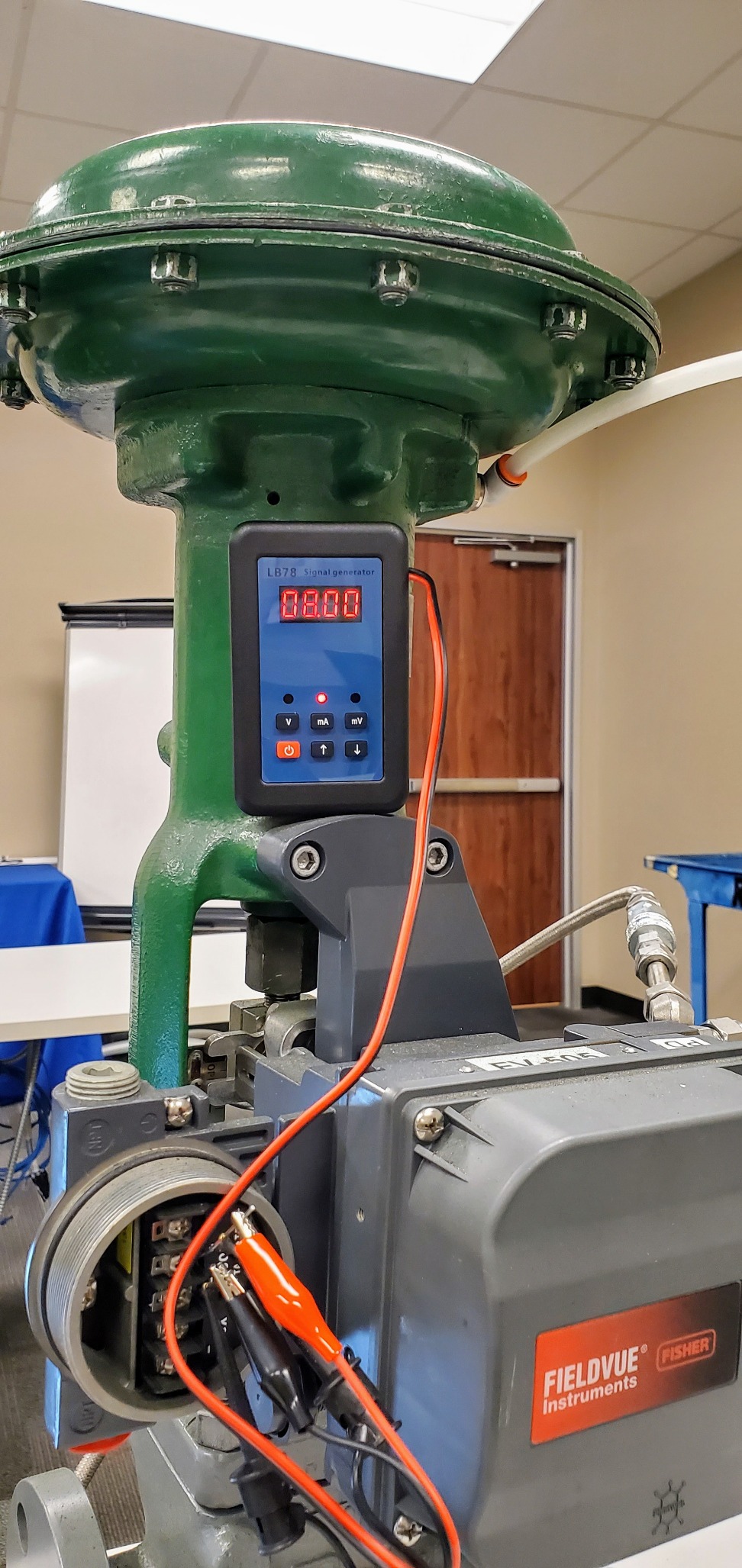
The key layout is logical once you understand the basic operations. I have successfully used this calibrator for Allen Bradley PLC analog input calibration and valve positioner setup. The non-removable leads are a limitation, but the attached leads are durable and appropriately sized for most work.
Good for industrial control troubleshooting
This calibrator works well for maintenance technicians who need reliable accuracy for control system work. The built-in battery and protection features suit industrial environments where power availability and wiring errors are common concerns. The accuracy is sufficient for most process control verification tasks.
Documentation limitations hinder initial use
The poorly translated manual makes initial learning frustrating. New users may struggle to understand basic operations without trial and error. The simplistic HMI provides limited feedback about current settings and modes. Plan to spend time learning the interface before taking this unit to critical jobs.
9. Jadeshay 4-20mA Generator – Entry Level Budget Pick
- Loop-powered operation requires no batteries
- Cost-effective for basic PLC and control testing
- Memory function stores common test values
- Polarity-free connections prevent wiring errors
- Compact lightweight design
- Some units may arrive defective
- Display may have lighting issues on some units
- Limited range does not go below 4mA or above 20mA
- May not retain values when powered off
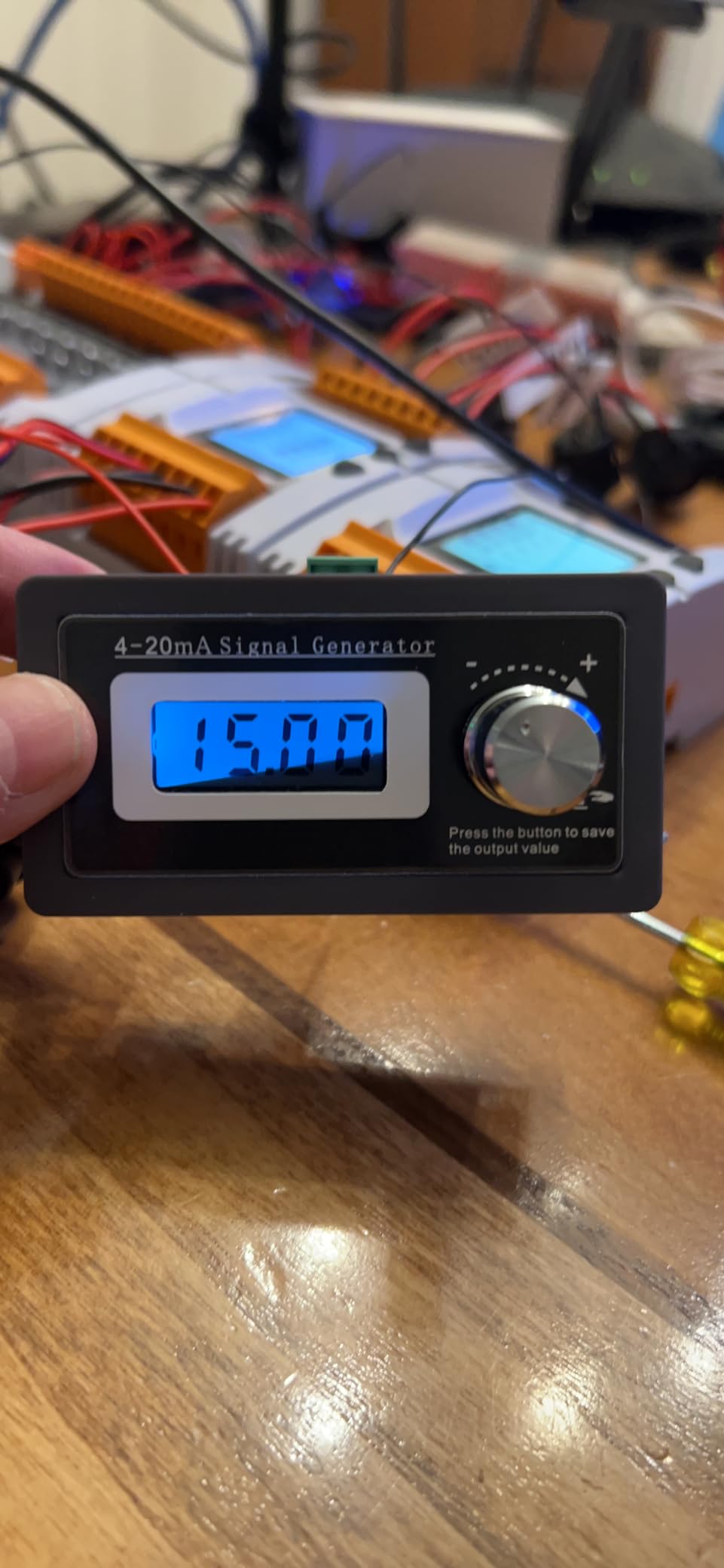
The Jadeshay signal generator is the most affordable unit in this guide at under $20. Despite the low price, it provides usable accuracy for basic loop testing. The extended 3-21mA range allows testing slightly beyond standard limits to verify transmitter behavior at edge conditions.
The loop-powered design means no batteries to replace, though it requires connection to a powered loop to operate. The rotary encoder adjustment is intuitive and faster than button-press interfaces on some competitors. The memory storage for eight values allows quick recall of common test points.
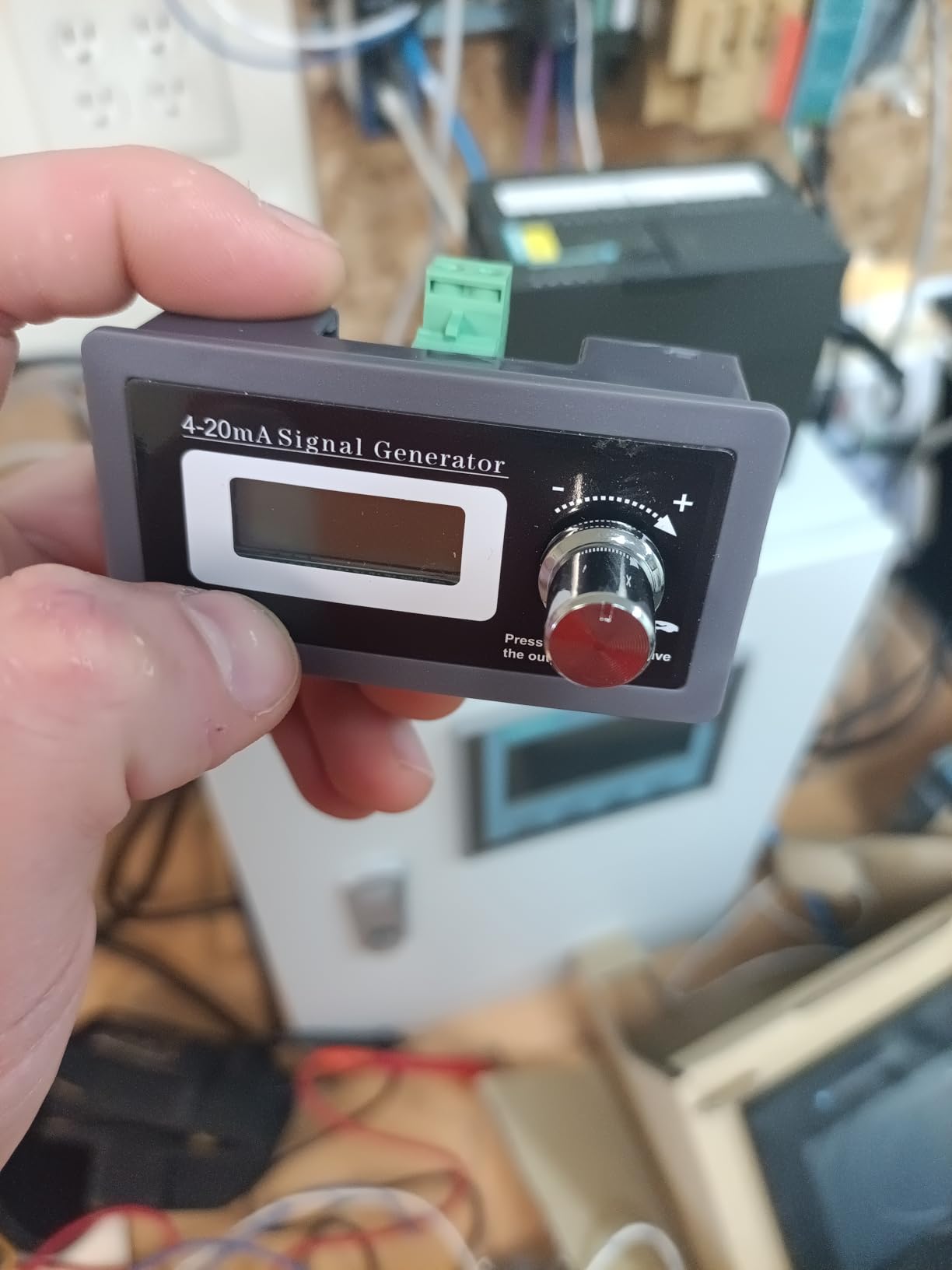
I recommend this unit for students, hobbyists, and technicians who need an emergency backup tool. The polarity-free terminals eliminate the most common wiring error. The compact size makes it easy to carry as a spare even when you have a primary calibrator.
Ideal for students and occasional users
This generator suits educational settings, hobbyist automation projects, and technicians who need a disposable backup tool. The price makes it accessible for anyone learning about 4-20mA loops. The memory function helps beginners understand different signal values and their meanings.
Quality consistency concerns for professional use
Reports of defective units and display issues suggest quality control variability. Professional technicians who depend on their tools for critical work should invest in more reliable brands. The limited range and lack of voltage output restrict versatility compared to slightly more expensive alternatives. Consider this a learning tool rather than a primary instrument.
10. Fluke 705 Loop Calibrator – Reliable Professional Tool
Fluke 705 Loop Calibrator, 28V Voltage, 24mA Current, 0.025 percent Accuracy
- Exceptional accuracy for calibration work
- Simple interface requires no learning curve
- 25% step function speeds linearity checks
- Span check confirms zero and span settings
- 3 year Fluke warranty
- Premium price over $1
- 000
- Single function limits versatility
- 9V battery operation
The Fluke 705 is the straightforward loop calibrator that many technicians learn on. The simple pushbutton interface requires no menu navigation or complex settings. Turn it on, select source or measure, and start working. This simplicity makes it reliable in situations where you need results without fuss.
The 0.02% accuracy is excellent for most industrial calibration requirements. The 25% step button allows quick linearity verification by stepping through quarter-range points with single button presses. The simultaneous mA and percentage display eliminates mental math when correlating signal values to process ranges.
I have used the 705 for formal calibrations in pharmaceutical manufacturing where documentation and accuracy matter. The three-year warranty and Fluke service network provide confidence that the instrument will remain accurate over time. The build quality withstands the abuse of daily field use.
Perfect for dedicated loop calibration work
This calibrator is ideal for technicians who primarily work on 4-20mA loops and need reliable accuracy without unnecessary complexity. The dedicated function eliminates the confusion of multifunction units when users only need loop capability. The accuracy meets requirements for most regulated industries.
Limited for diverse instrumentation work
Technicians who work on temperature, pressure, and flow instrumentation will find the 705 insufficient. The lack of RTD simulation, thermocouple sourcing, or voltage output restricts its usefulness for comprehensive process calibration. For diverse instrumentation work, the Fluke 725 or 789 provide broader capability.
How to Choose the Right Loop Calibrator?
Selecting the right loop calibrator depends on understanding your specific work requirements and balancing capability against budget. After fifteen years in instrumentation, I have learned that the most expensive tool is not always the best choice, and the cheapest option can cost more in lost time and frustration than it saves in purchase price.
Accuracy Specifications Explained
Accuracy specifications tell you how close the calibrator’s output will be to the ideal value. A 0.02% accuracy means the output could be off by 0.0032 mA in a 4-20mA range. For most industrial process control, 0.1% accuracy is adequate. Custody transfer applications like petroleum loading or chemical batching may require 0.05% or better. The Fluke 707 at 0.015% exceeds virtually all industrial requirements.
Resolution refers to how small a change you can set. The Fluke 707’s 0.001mA resolution lets you adjust in tiny increments for precise calibration. Budget calibrators may have 0.01mA resolution, which is still fine for most work but limits fine adjustments.
4-20mA Loop Functionality
Basic loop calibrators provide sourcing and measuring capability. Sourcing generates a known current to test receiver devices like PLC input cards or control valves. Measuring reads the current produced by transmitters to verify proper operation. All calibrators in this guide provide both functions, though accuracy and ease of use vary significantly.
The 24V loop supply powers two-wire transmitters during testing. This feature is essential for bench testing or field work when the control system power is disconnected. All Fluke models and the TestHelper TH-71B include loop power supply capability. Budget units like the DROK require external power.
HART Communication Considerations
HART protocol allows digital communication over the same wires carrying the 4-20mA analog signal. Smart transmitters use HART for configuration, diagnostics, and additional data transmission. To communicate with HART devices, you need a 250 ohm resistor in series with the loop. The Fluke 707 includes this resistor built-in, saving you from carrying and installing a separate component.
If you work with smart transmitters regularly, the built-in HART resistor is worth the price premium of the Fluke 707. For occasional HART work, you can add an external resistor to any calibrator. The Fluke 725 and 789 also support HART communication when properly configured.
Power Source and Battery Life
Battery life matters for field technicians who work long shifts in locations without charging opportunities. The Fluke 789 provides fifty hours of measurement time on AA batteries. The TestHelper TH-71B and T-king LB78 use rechargeable batteries that save money long-term but require planning for charging.
Consider your work environment when choosing power options. Disposable batteries work well for intermittent use and emergency backup situations. Rechargeable units suit daily users who can establish charging routines. The Jadeshay unit is loop-powered, requiring no batteries but also limiting portability to powered loops only.
Documenting vs Non-Documenting Calibrators
Documenting calibrators record calibration data for later download and report generation. This feature is essential for regulated industries requiring calibration certificates and traceability. The Fluke 725 can be paired with calibration management software for complete documentation. Non-documenting calibrators like the 705 and 707 require manual recording of calibration data.
If you work in pharmaceuticals, food processing, or aerospace manufacturing, documentation capability is not optional. The regulatory requirements for traceable calibration records mandate either a documenting calibrator or careful manual documentation. For general industrial maintenance, non-documenting calibrators are perfectly adequate.
Frequently Asked Questions
What are the four types of calibration?
The four types of calibration are zero calibration (setting the output at minimum input), span calibration (adjusting the output range), linearity calibration (verifying accuracy across the range), and hysteresis calibration (checking for differences between increasing and decreasing inputs). Loop calibrators primarily assist with zero and span adjustments while providing signal sources for linearity verification.
How to do loop calibration?
To perform a loop calibration, connect the calibrator to measure the transmitter output, verify the 4mA output at zero input and 20mA at full scale, adjust the transmitter if readings are incorrect, then switch to source mode to verify the control system reads correctly. Document all readings before and after adjustment for calibration records.
What is instrumentation calibration?
Instrumentation calibration is the process of comparing instrument measurements against a known standard and adjusting the instrument to ensure accuracy. For 4-20mA loops, this involves verifying that the transmitter produces exactly 4.00mA at zero process variable and 20.00mA at full scale, then documenting the results for quality and regulatory compliance.
What is HART communication?
HART (Highway Addressable Remote Transducer) is a digital communication protocol that operates over the same two wires carrying the 4-20mA analog signal. It allows access to additional transmitter data, diagnostics, and configuration parameters beyond the basic analog signal. Loop calibrators with built-in HART resistors enable communication with smart transmitters while maintaining the analog loop.
Do I need a multifunction or single-function calibrator?
Choose a multifunction calibrator like the Fluke 725 if you calibrate temperature, pressure, and flow instruments requiring RTD, thermocouple, and frequency simulation. Select a single-function calibrator like the Fluke 705 or 707 if you primarily work on 4-20mA loops and want simplicity and lower cost. The TestHelper TH-71B offers a middle ground with basic multifunction capability at budget pricing.
Final Recommendations
Choosing the Best Loop Calibrators for Instrumentation Technicians 2026 depends on matching your specific needs to the right combination of accuracy, features, and price. After testing all ten models and using loop calibrators professionally for over fifteen years, here are my final recommendations.
For technicians who need a versatile tool that handles both electrical and instrumentation work, the Fluke 789 ProcessMeter provides unmatched combination value. The dual DMM and calibrator functions eliminate carrying separate instruments while maintaining professional accuracy standards.
If your primary work involves 4-20mA loops with occasional HART communication needs, the Fluke 707 offers the best accuracy with essential features like the built-in HART resistor. The Quick Click interface makes field work faster and easier.
Budget-conscious buyers should consider the TestHelper TH-71B for its surprising accuracy at a fraction of premium prices. This unit performs reliably in industrial environments while leaving money in your budget for other essential tools.
Entry-level users and students can start with the DROK or Jadeshay units to learn basic loop principles before investing in professional-grade equipment. These affordable options provide genuine learning value despite their limitations.
Whatever your choice, a quality loop calibrator will pay for itself many times over through faster troubleshooting, accurate calibrations, and reduced downtime in your facility.