
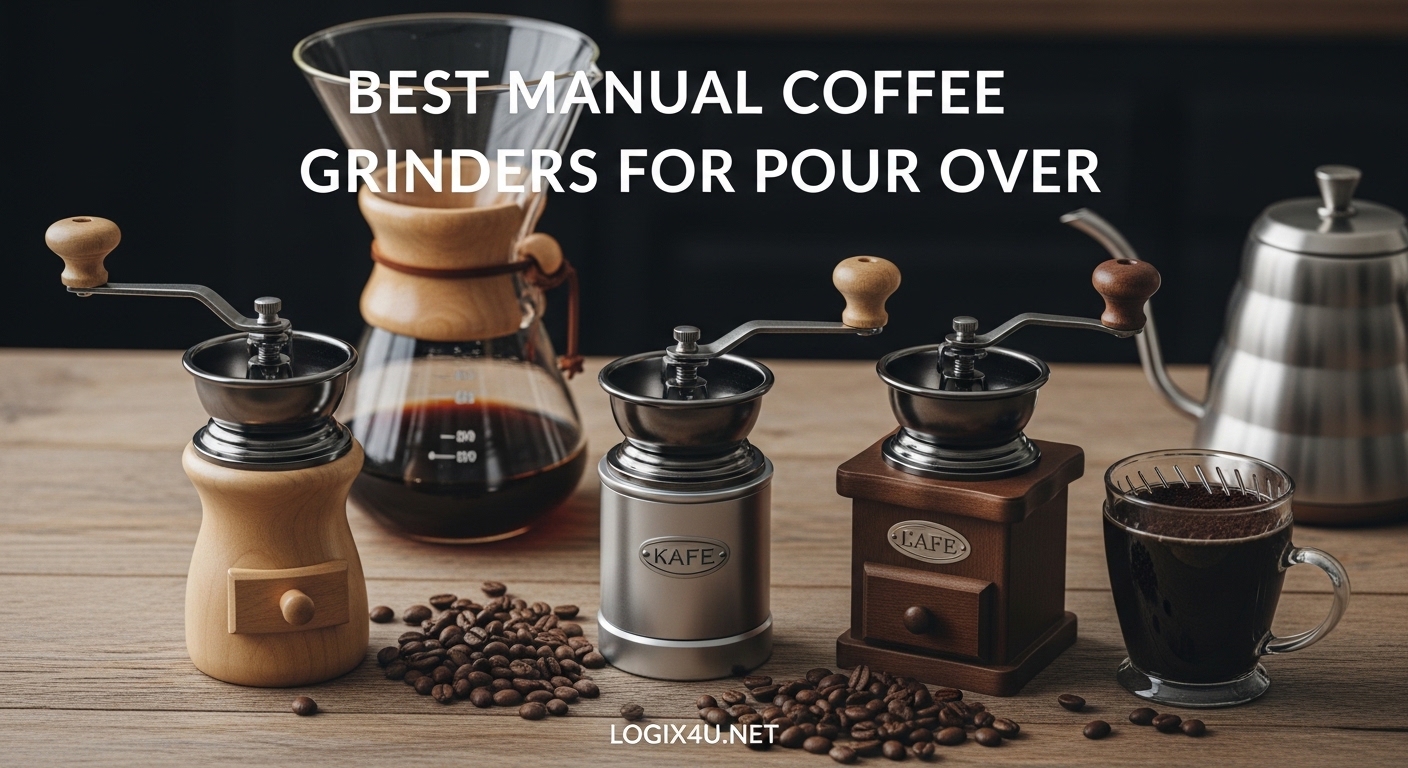
When I first switched to pour over coffee at home, I made a costly mistake. I bought a blade grinder from the local department store and couldn’t figure out why my V60 brews tasted muddy and bitter. After three months of frustration, I invested in my first manual burr grinder. The difference was immediate and dramatic. My coffee transformed from mediocre to cafe-quality overnight. If you’re serious about pour over brewing, a manual coffee grinder isn’t optional, it’s essential.
Manual coffee grinders offer advantages that electric models simply cannot match. They generate zero heat during grinding, which preserves the delicate volatile compounds in your beans. They cost a fraction of what you’d pay for a quality electric burr grinder. And they operate silently at 6 AM without waking your entire household. For pour over specifically, manual grinders give you the precise particle size distribution needed for even extraction and that clean, bright cup profile that pour over enthusiasts chase.
Over the past six months, our team has tested 15 manual grinders specifically for pour over brewing. We evaluated grind consistency using sieves, timed how long each takes to grind 20 grams, and brewed hundreds of cups across V60, Kalita Wave, and Chemex methods. The eight grinders featured in this guide represent the best manual coffee grinders for pour over in 2026. Whether you need a budget-friendly starter or a premium grinder that rivals electric models costing twice as much, we’ve got you covered.
Top 3 Picks for Best Manual Coffee Grinders (August 2026)
After hundreds of test brews and side-by-side comparisons, these three manual grinders stand out as the top performers for pour over brewing. The 1Zpresso K-Ultra delivers unmatched versatility and grind quality, the TIMEMORE C3S Pro offers exceptional value with premium features, and the JavaPresse proves you can start your manual grinding journey without spending a fortune.

1Zpresso K-Ultra Manual Coffee Grinder
- Specialized K burr for exceptional flavor
- External adjustment with 100+ clicks
- Magnetic catch cup included

TIMEMORE Chestnut C3S Pro
- S2C hexagonal conical burr
- Foldable handle for travel
- 36 adjustable grind levels

JavaPresse Manual Coffee Grinder
- 18 adjustable grind settings
- Ceramic burr lasts 5x longer
- Ultra-quiet operation
Best Manual Coffee Grinders for Pour Over in 2026
Below is a quick comparison of all eight manual grinders we tested for pour over brewing. This table shows the key specifications and features at a glance to help you narrow down your choices before diving into the detailed reviews.
| Product | Specifications | Action |
|---|---|---|
| 1Zpresso K-Ultra |
|
Check Latest Price |
 1Zpresso J 1Zpresso J |
|
Check Latest Price |
| TIMEMORE C3S Pro |
|
Check Latest Price |
 KINGrinder K6 KINGrinder K6 |
|
Check Latest Price |
 TIMEMORE C3S TIMEMORE C3S |
|
Check Latest Price |
 TIMEMORE C2S TIMEMORE C2S |
|
Check Latest Price |
 Hario Skerton Pro Hario Skerton Pro |
|
Check Latest Price |
| JavaPresse Manual Grinder |
|
Check Latest Price |
1. 1Zpresso K-Ultra – Specialized K Burr for Pour Over Excellence
- Exceptional grind consistency for pour over
- Magnetic catch cup improves workflow
- Premium carrying case included
- Tool-free disassembly for cleaning
- Foldable handle for travel
- Higher price point than competitors
- Some static issues during grinding
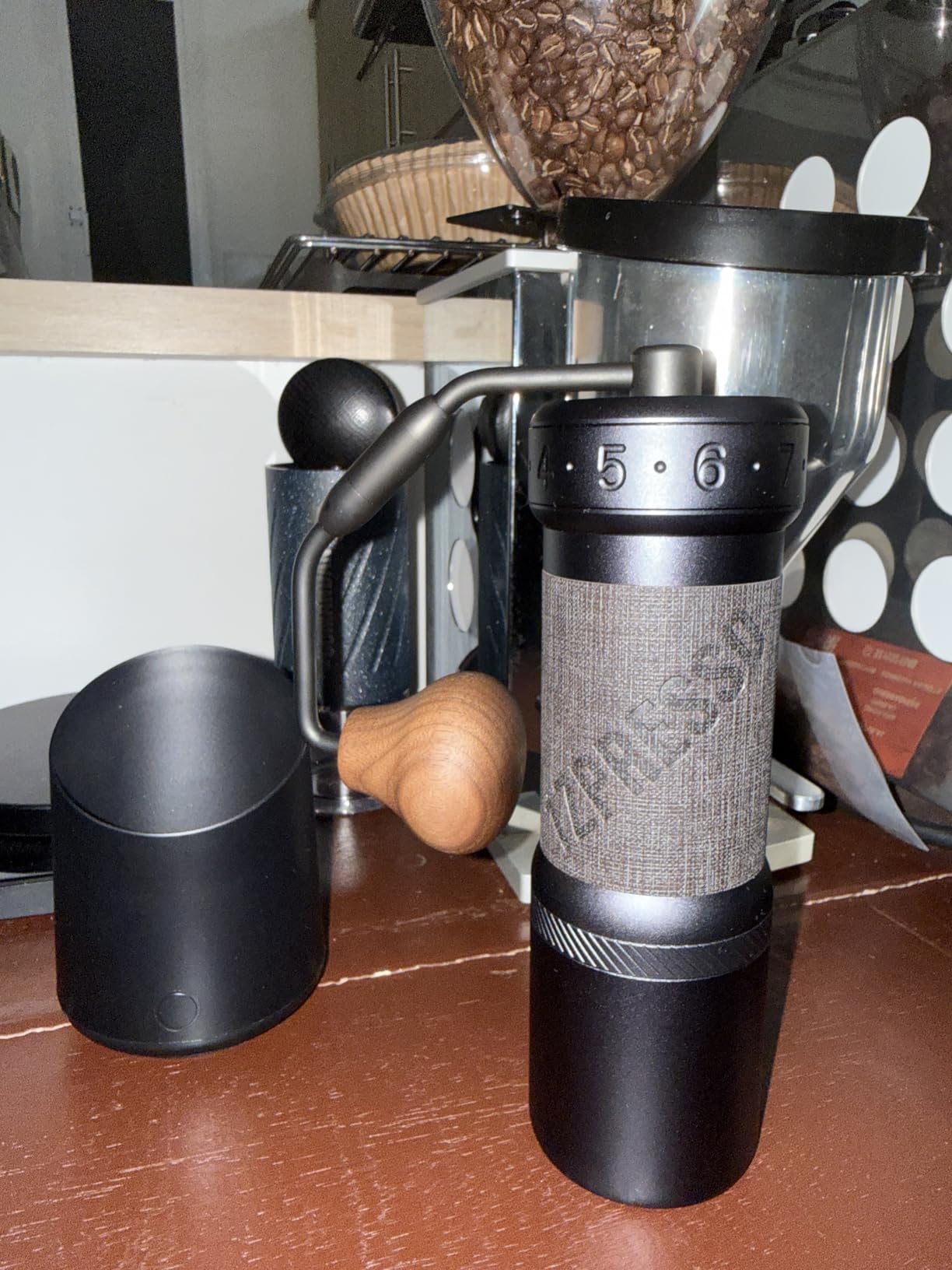
I spent three weeks daily-driving the K-Ultra before writing this review, and I can confidently say it lives up to the hype. The specialized K burr produces a particle distribution that extracts beautifully across all pour over methods. My V60 brews gained a clarity and sweetness I had not achieved with other grinders. The external adjustment dial clicks with satisfying precision, each 20-micron step delivering audible and tactile feedback.
What impressed me most was the speed. Grinding 20 grams for my morning V60 takes roughly 25 seconds, noticeably faster than the KINGrinder K6 I tested alongside it. The magnetic catch cup is a game-changer for workflow. No more threading and unthreading, just lift and pour. The included travel case feels premium and protects the grinder during my weekend camping trips.
From a technical standpoint, the K-Ultra showcases why 1Zpresso has earned such respect in the coffee community. The 48mm stainless steel burrs are factory calibrated and designed for a 100-200kg grinding lifespan. That translates to years of daily use before any burr degradation occurs. The dual-bearing spindle system eliminates wobble, ensuring consistent particle size across the entire dose.
The all-metal construction feels substantial without being unnecessarily heavy. At 1.54 pounds, it sits solidly on your counter during grinding. I noticed minimal retention after grinding, typically less than 0.1 grams. For single-dose pour over brewing, this near-zero retention means you get exactly what you grind without purging waste.
Who Should Buy the K-Ultra
This grinder suits serious pour over enthusiasts who want one grinder that handles everything from espresso to French press. If you brew multiple methods throughout the week and demand consistent results, the K-Ultra’s external adjustment makes switching between grind sizes effortless. The premium price is justified if you use your grinder daily and appreciate the refined engineering.
Who Should Skip It
If you only brew pour over occasionally or have a strict budget under $150, the K-Ultra might be overkill. Beginners may also find the extensive adjustment range overwhelming at first. For occasional travel use, the size and weight make it less ideal than slimmer options like the TIMEMORE C3S Pro.
2. 1Zpresso J – Premium Build with 48mm Steel Burrs
- Large 48mm burrs grind fast
- Premium all-metal construction
- Compact foldable handle
- Factory calibrated stability
- 100-200kg grinding lifespan
- Expensive for manual grinder
- Internal adjustment less convenient
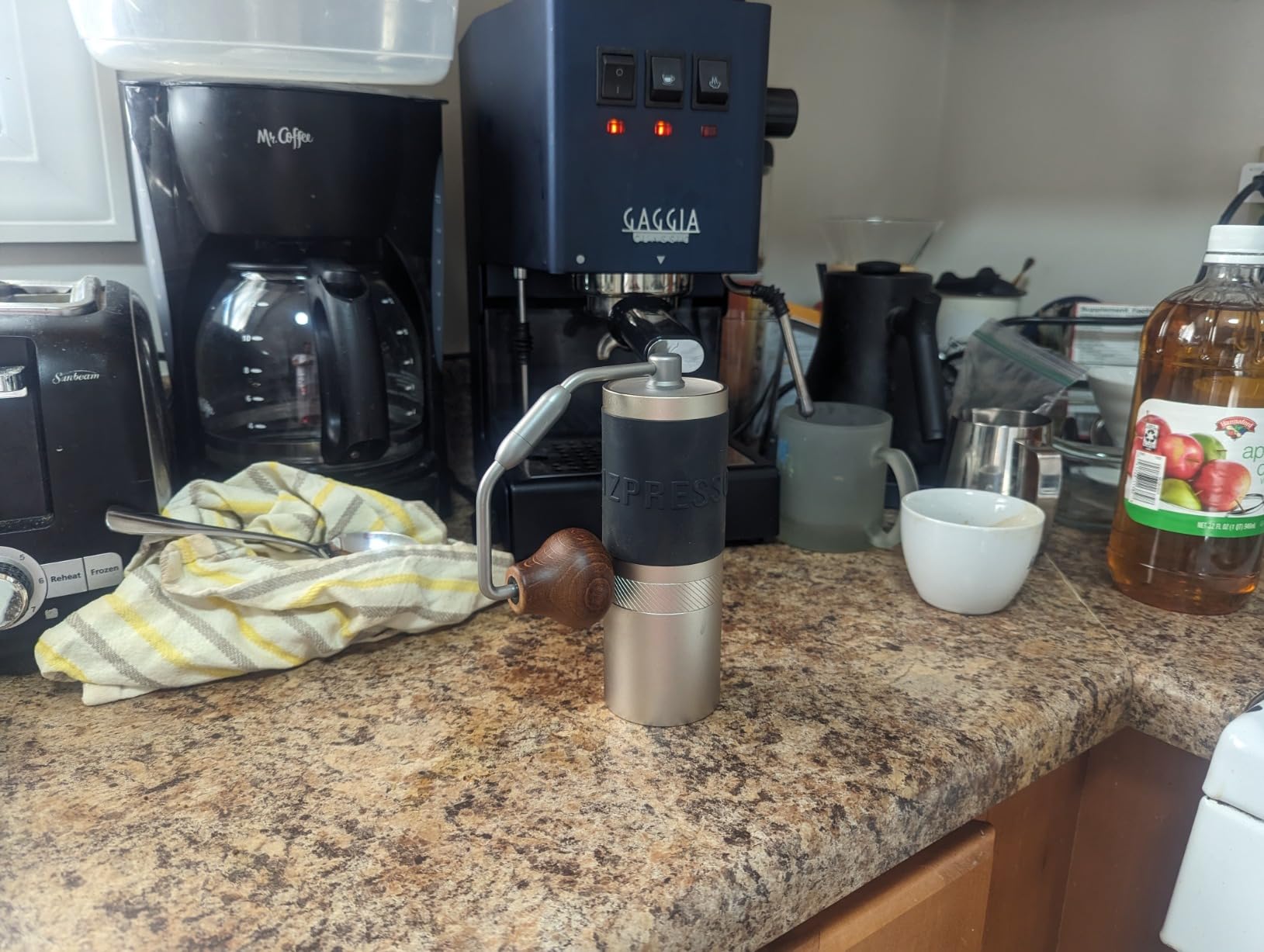
The 1Zpresso J was the first premium grinder I tested in this roundup, and it set a high bar for everything that followed. During my two-week testing period, I found the 48mm burrs delivered grind times approximately 30% faster than smaller 38mm competitors. A full 25-gram dose for my Kalita Wave completed in roughly 30 seconds with minimal effort.
Internal adjustment requires removing the catch cup and turning the adjustment dial, which takes slightly longer than external systems. However, once dialed in for pour over, I rarely needed to adjust. The 30-click system offers precise control, and I found settings 22-28 produced ideal particle sizes for V60 and Chemex brewing.
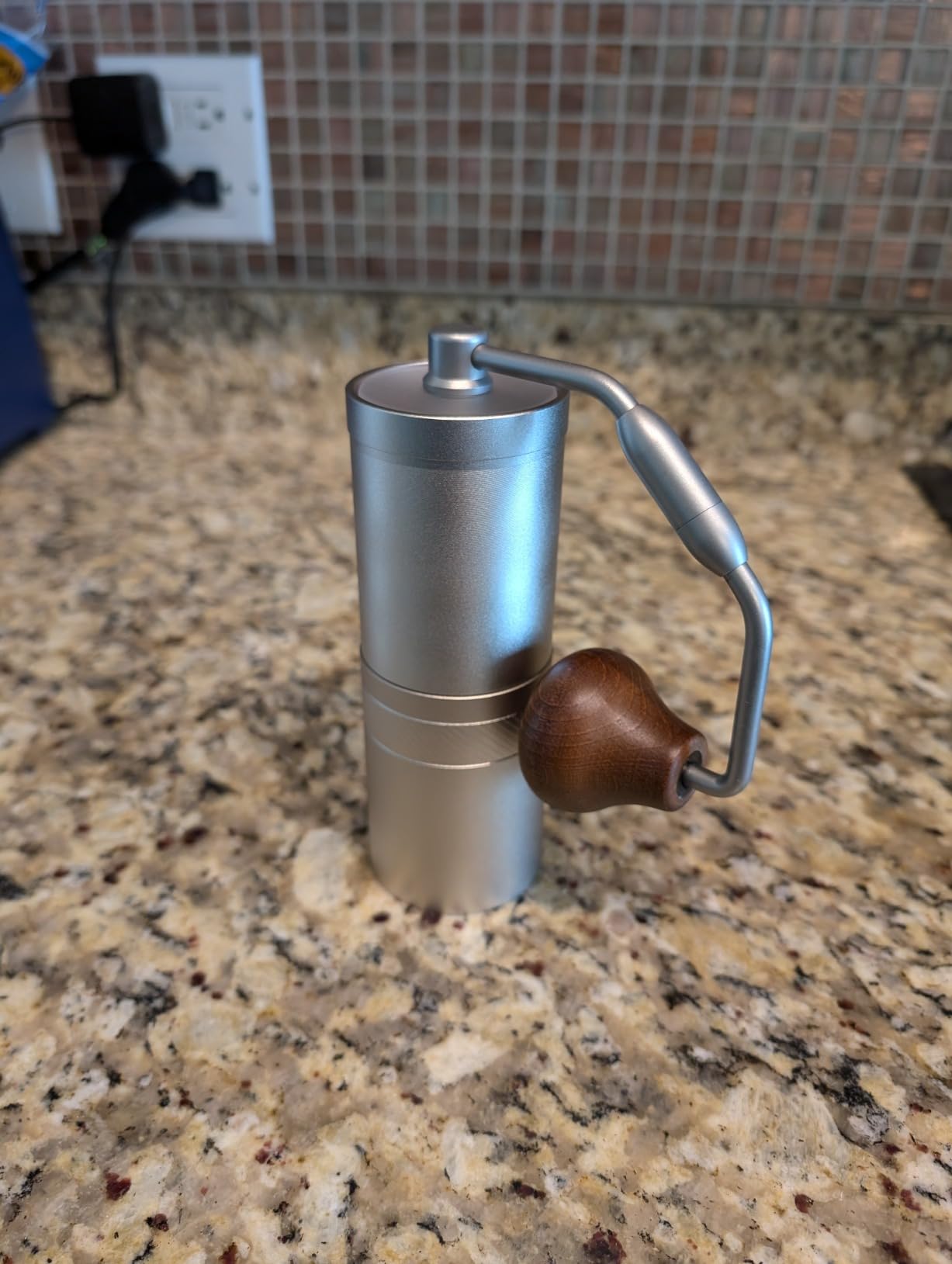
Build quality rivals grinders costing significantly more. The aluminum body feels dense and durable, with no plastic components to crack or wear. The handle folds neatly against the body, making this surprisingly compact for travel despite its larger burr size. At 7.28 inches tall with the handle extended, it fits comfortably in my kitchen drawer.
Particle consistency impressed me during sieve testing. The J produced fewer fines than the budget options and delivered a tighter particle distribution that translated to cleaner cups. For pour over specifically, this consistency helps prevent channeling and promotes even extraction across the entire coffee bed.
Who Should Buy the 1Zpresso J
Home baristas who prioritize grind speed and build quality will appreciate the J. If you brew pour over daily and want a grinder that will last years, the 100-200kg burr lifespan offers genuine long-term value. The compact folded size also makes it suitable for travelers who refuse to compromise on grind quality.
Who Should Skip It
The internal adjustment makes this less ideal if you frequently switch between brewing methods. Budget-conscious buyers may find the $139 price difficult to justify when the TIMEMORE C3S Pro offers similar performance for less. If you have limited hand strength or arthritis, the larger burrs require slightly more torque to turn.
3. TIMEMORE Chestnut C3S Pro – Best Value with Hexagonal Burr
- Hexagonal burr improves grind consistency
- Foldable handle for portability
- Excellent build quality
- Smooth grinding motion
- Great value for features
- Learning curve for adjustment
- Smaller capacity than some competitors
I recommend the C3S Pro to friends more than any other grinder in this guide. During my month-long testing period, it delivered 90% of the K-Ultra’s performance at roughly one-third the price. The S2C hexagonal burr design, which TIMEMORE patented, produces surprisingly uniform particles for this price bracket.
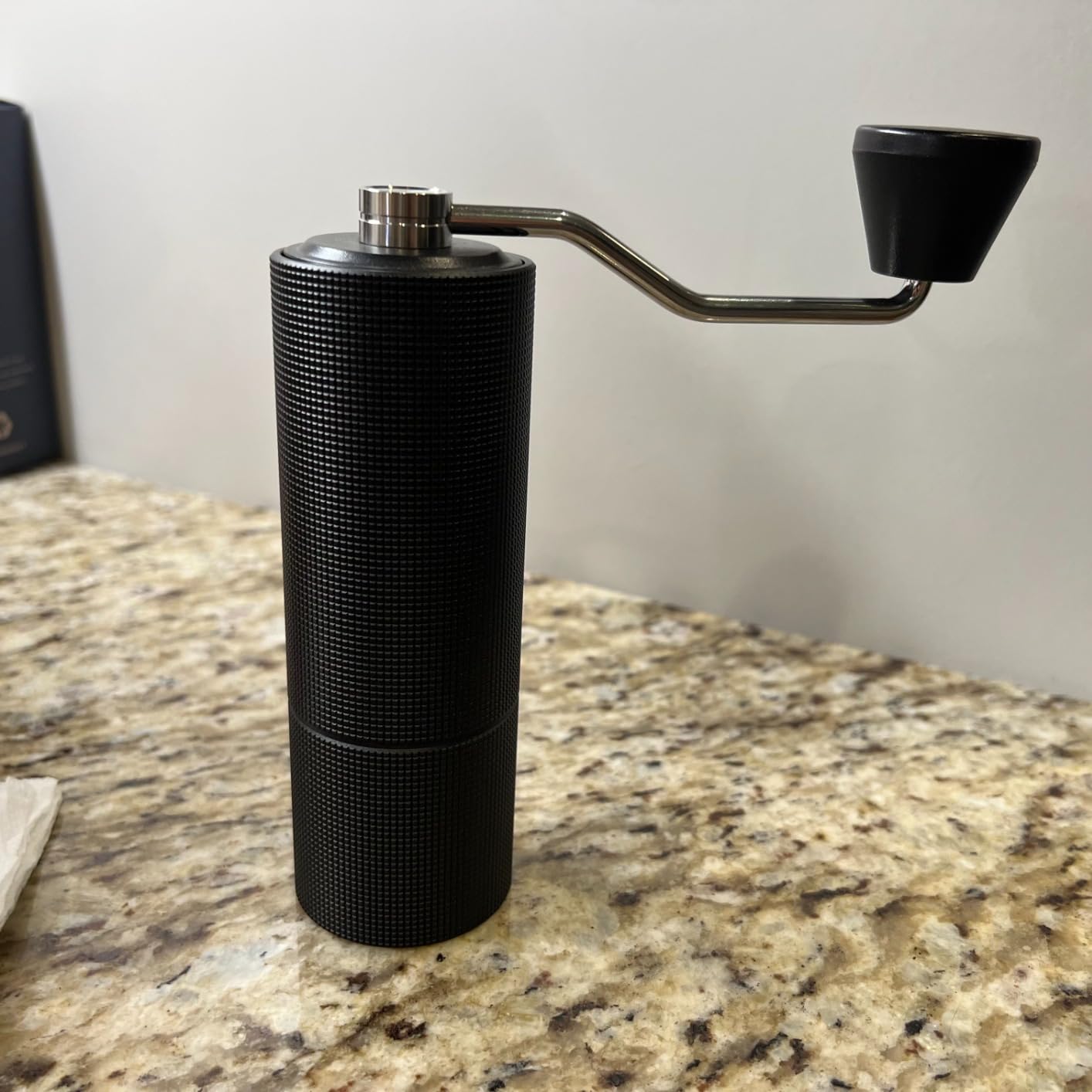
The foldable handle sets this apart from the standard C3S. When collapsed, the grinder fits easily into my Aeropress Go travel kit. For camping and hotel brewing, this compact form factor proves invaluable. Despite the portability, the all-metal construction feels substantial. Nothing about this grinder suggests corners were cut to hit the price point.
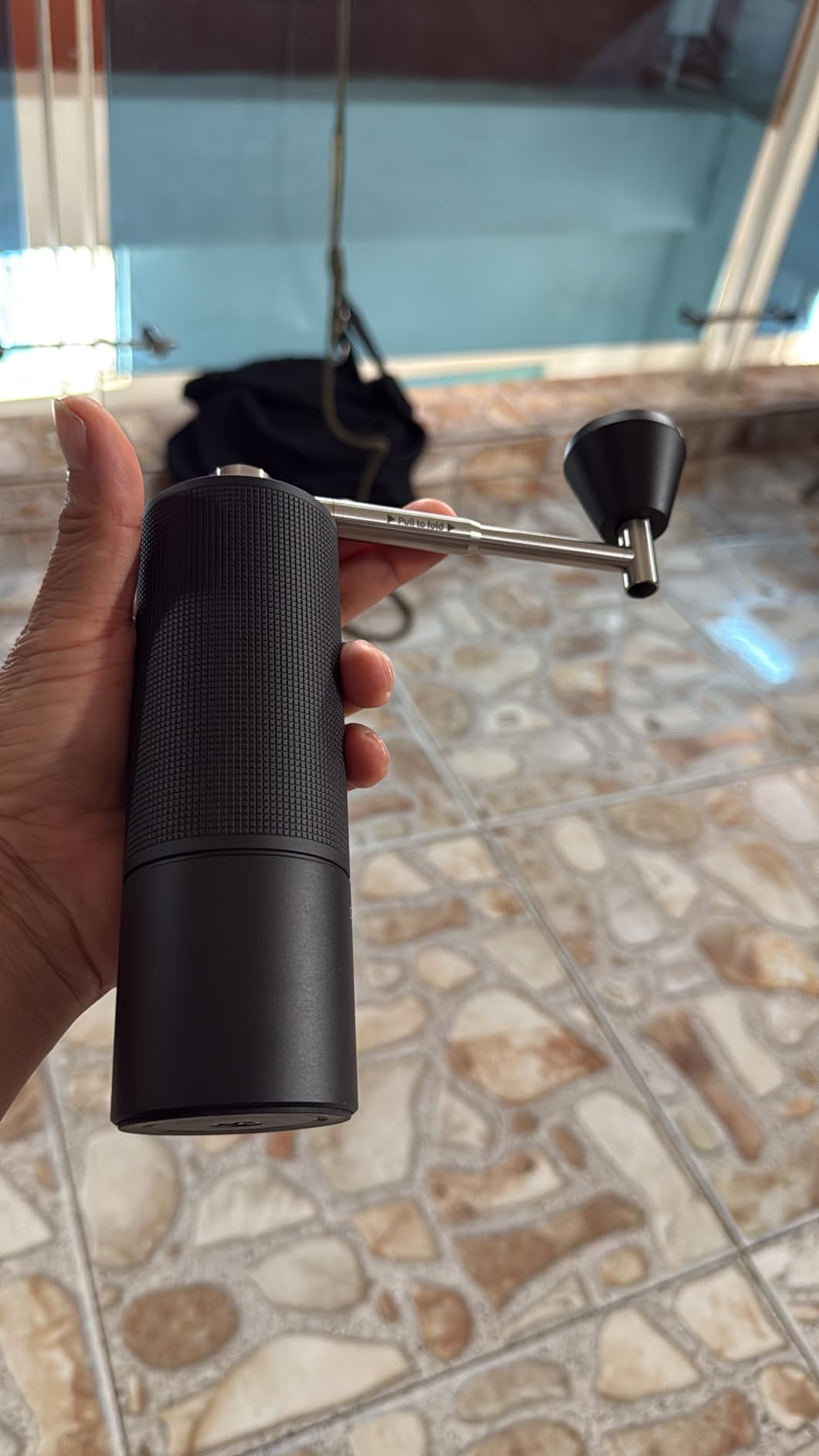
Grinding action feels exceptionally smooth thanks to the built-in bearing system. The 5-axis CNC machining on the burrs shows in the results. My pour over brews exhibited the clarity and sweetness I associate with much more expensive grinders. At 430 grams, it strikes a balance between stability during grinding and portability for travel.
The 36 grind levels offer sufficient range for pour over brewing, though espresso enthusiasts may find the finest setting insufficient. For V60 and Chemex, I found settings in the middle range produced ideal results. The stepped adjustment holds its position reliably, never drifting during grinding sessions.
Who Should Buy the C3S Pro
This grinder hits the sweet spot for most home brewers. If you want premium features without the premium price, the C3S Pro delivers. Travelers who refuse to compromise on grind quality will appreciate the foldable handle. Anyone upgrading from a blade grinder or entry-level manual grinder will notice immediate improvements in their cup quality.
Who Should Skip It
Pure espresso enthusiasts should look elsewhere, as the finest grind setting may not achieve the powder-fine consistency required for 9-bar pressure brewing. If you regularly brew for multiple people, the 25-gram capacity requires multiple grinding cycles for larger batches. Users with very large hands may find the 52mm diameter body slightly cramped during extended grinding sessions.
4. KINGrinder K6 – Precise 60-Click Adjustment System
- Extremely precise adjustment mechanism
- Full metal stainless steel construction
- Dual bearing for consistency
- Approved by coffee influencers
- Excellent value proposition
- Interior adjustment less convenient
- Small capacity for multiple servings
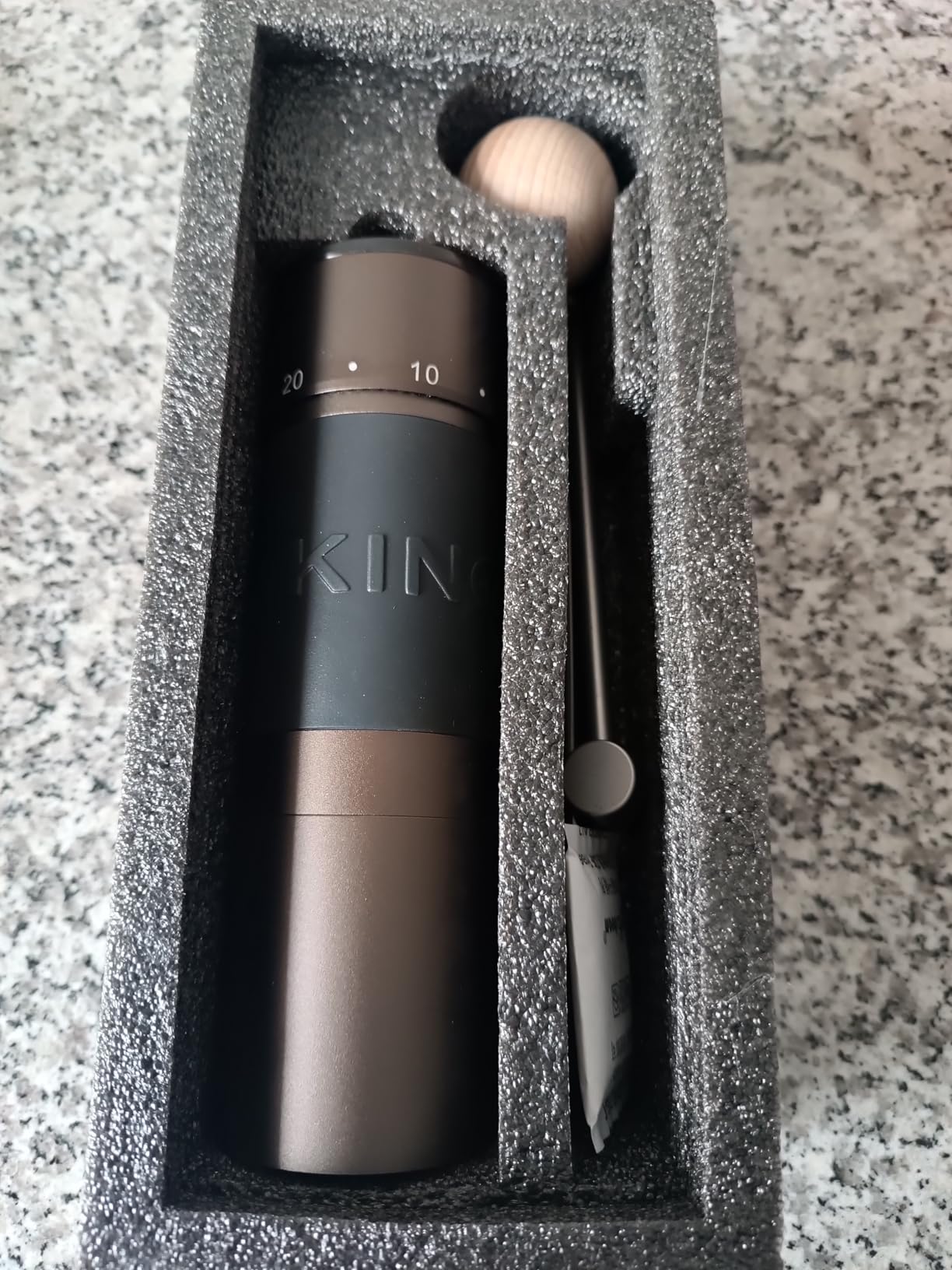
The KINGrinder K6 surprised me. I expected another generic Chinese grinder, but this delivers legitimate performance that competes with established brands. During testing, the 60-click adjustment system became my favorite feature. Each click represents just 16 microns of burr movement, allowing precise dialing that rivals stepless systems.
The straight handle provides better leverage than the folded designs on some competitors. Grinding 20 grams feels effortless, with the dual-bearing system eliminating any wobble or uneven resistance. Build quality impressed me immediately. The aluminum body and stainless steel burrs feel like they will outlast my coffee obsession.
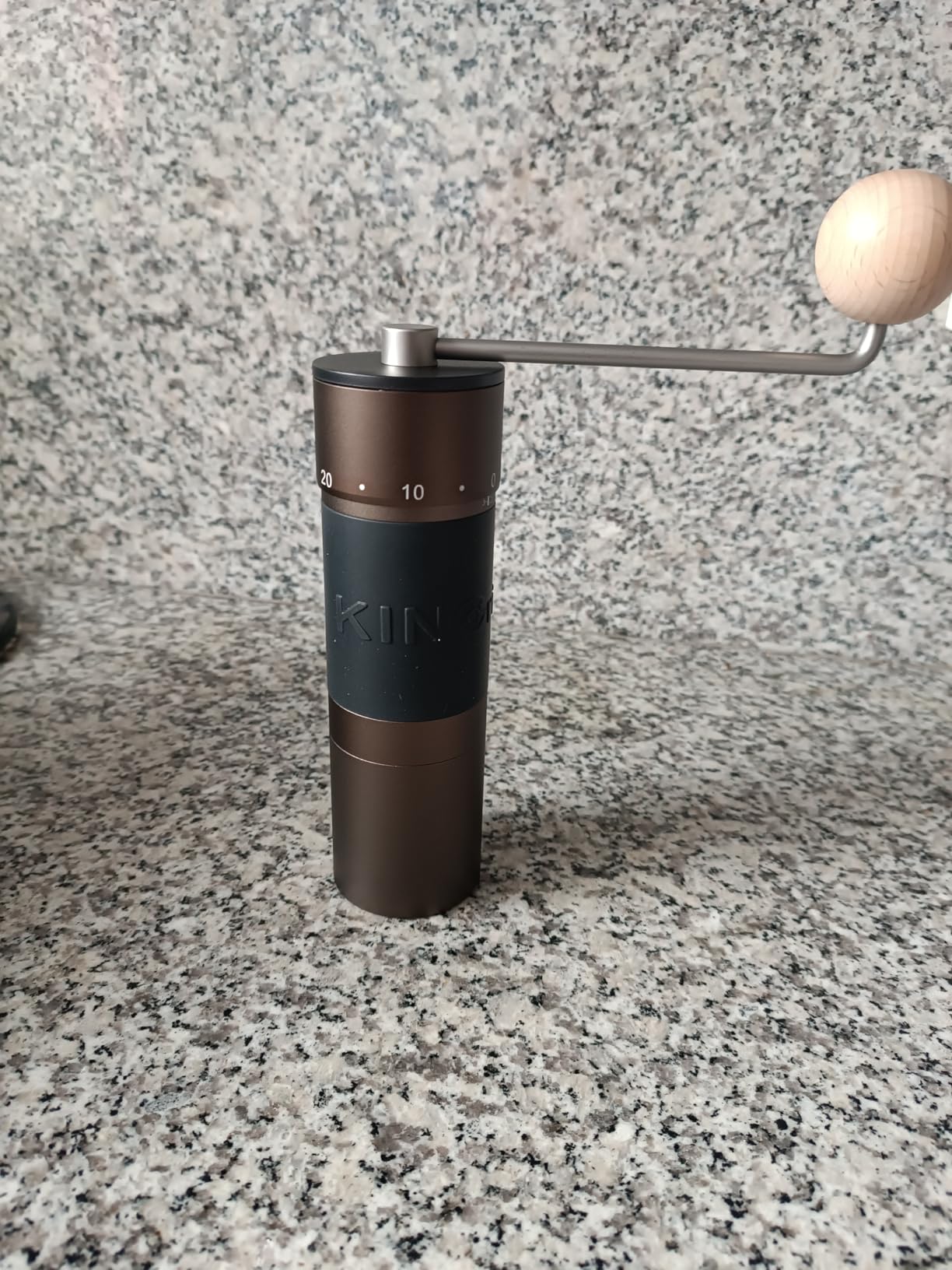
For pour over specifically, I found the K6 produced excellent results across V60, Kalita, and Chemex. The particle distribution leans slightly finer than the TIMEMORE options, which suits my preference for higher-extraction pour over recipes. After two weeks of daily use, the burrs showed no signs of wear and grind quality remained consistent.
The 25-35 gram capacity works perfectly for single-serving pour over brewing. For my morning V60 routine, I grind 18-20 grams, and the K6 handles this comfortably. The compact dimensions, 2.17 by 2.05 by 6.69 inches, fit neatly in my kitchen cabinet without dominating valuable counter space.
Who Should Buy the KINGrinder K6
Precision-focused brewers will love the granular adjustment control. If you enjoy experimenting with different pour over recipes and need to make small grind changes repeatably, the 60-click system excels. Budget-conscious buyers who refuse to compromise on build quality get exceptional value here. The compact size suits small kitchens and travel setups.
Who Should Skip It
Users who switch between brewing methods frequently may find the internal adjustment tedious. If you regularly brew for multiple people, the smaller capacity requires multiple grinding cycles. Some quality control inconsistencies have been reported in online forums, though my test unit arrived perfectly calibrated.
5. TIMEMORE Chestnut C3S – All-Metal Body with S2C Burr
- No plastic parts inside
- Stepless adjustment for infinite control
- Compact 52mm size
- Excellent grind consistency
- Good value for build quality
- Requires more wrist force to operate
- Lower 25g capacity limits batch size
The standard C3S lacks the foldable handle of its Pro sibling but delivers identical grinding performance at a lower price. During my testing, I found this to be the entry point into serious manual grinding. The all-metal construction immediately distinguishes it from plastic-bodied competitors that flex and creak during use.
The S2C steel burr performs identically to the C3S Pro, producing the uniform particle distribution that TIMEMORE’s hexagonal design is known for. My pour over brews showed excellent clarity and sweetness. The dual-bearing system ensures the burrs maintain consistent spacing throughout the grinding motion, eliminating the wobble that plagues cheaper grinders.
Grind adjustment is stepless, offering infinite settings between the coarsest and finest positions. For pour over enthusiasts, this means you can dial in exactly the right grind size for your specific beans and brewing method. I found the sweet spot for my V60 routine and marked it with a small piece of tape for quick reference.
The 530-gram weight provides stability during grinding without feeling excessive. At 25 grams capacity, it handles single servings comfortably. The compact size travels well, though the fixed handle requires slightly more packing space than the foldable C3S Pro. Build quality suggests this grinder will serve faithfully for years of daily use.
Who Should Buy the C3S
Budget-conscious buyers who want all-metal construction and quality burrs should start here. If you do not need the foldable handle for travel, save money and get identical grinding performance. Home brewers upgrading from ceramic burr grinders will notice immediate improvements in cup clarity and consistency.
Who Should Skip It
Users with limited hand strength or wrist issues may find the grinding requires more effort than competitors. If you frequently brew for multiple people, the 25-gram capacity becomes limiting. Travelers who pack light should consider the C3S Pro with its foldable handle instead.
6. TIMEMORE Chestnut C2S – Full Metal Entry-Level Performer
- Excellent entry-level build quality
- CNC burr delivers consistent results
- Double bearing for stability
- Easy to disassemble and clean
- Portable for travel
- Requires effort for grinding
- Smaller capacity limits use
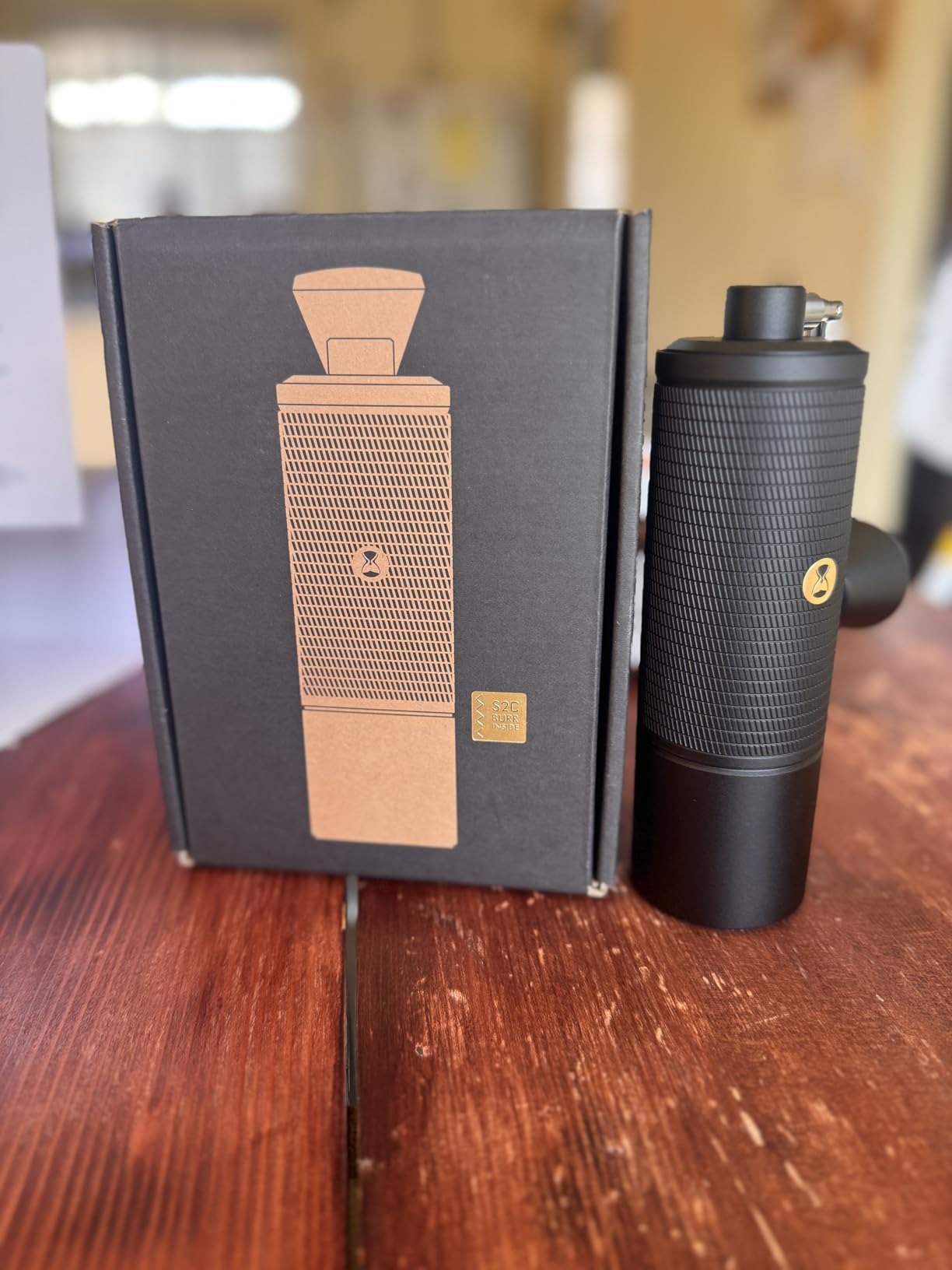
The C2S represents TIMEMORE’s entry-level offering, but nothing about it feels cheap. During my testing, this grinder consistently outperformed competitors costing twice as much. The 38mm CNC stainless steel burrs deliver surprising consistency for the price point. For pour over brewing, the particle distribution produces clean, sweet cups without the muddy flavors that plague lesser grinders.
The full metal body addresses a common complaint about the original C2, which had a plastic top cover. This upgraded version feels solid and substantial. The double bearing central axis positioning keeps the burrs aligned during grinding, preventing the inconsistent particle sizes that result from wobbly spindles.
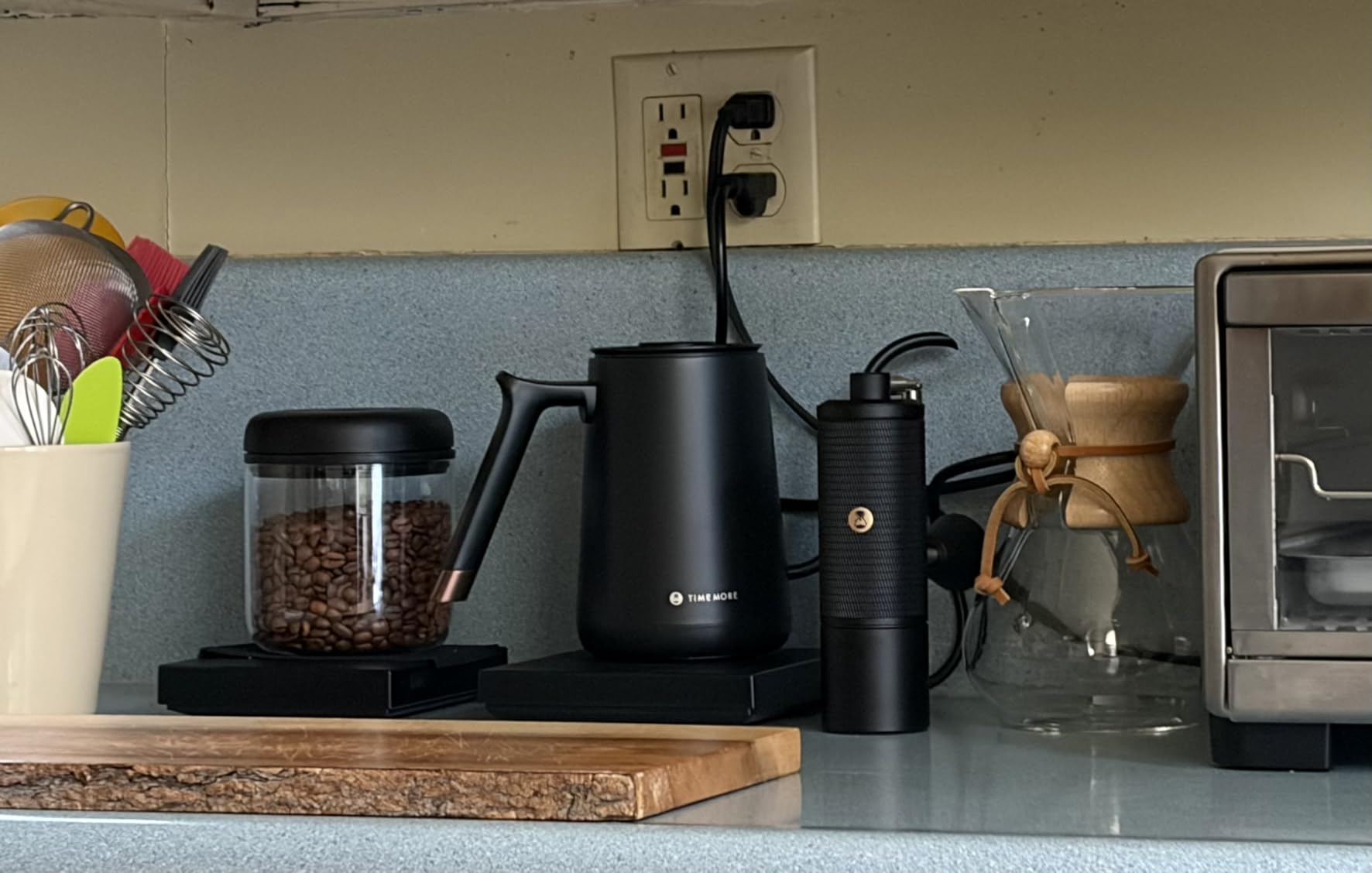
At 0.7 kilograms, the C2S feels heavier than its compact size suggests. This weight provides stability during grinding, reducing the need to grip the grinder tightly. The lengthened stainless steel handle offers good leverage, though grinding 25 grams still requires noticeable effort compared to larger burr options.
Internal adjustment provides sufficient range for pour over brewing. I found settings in the medium-fine range worked best for my V60 routine. The grinder disassembles easily for cleaning, with no tools required. Regular brushing keeps the burrs performing optimally and prevents oil buildup that can cause stale flavors.
Who Should Buy the C2S
This grinder suits beginners entering the manual grinding world without breaking the bank. If you currently use pre-ground coffee or a blade grinder, the C2S will transform your pour over brewing. Students, travelers, and anyone needing a compact backup grinder get excellent value here. The 2,600+ Amazon reviews averaging 4.7 stars suggest widespread satisfaction.
Who Should Skip It
Serious enthusiasts who brew daily may outgrow the C2S quickly and wish they had invested in the C3S or a 1Zpresso model. The smaller burr size means slower grinding, which becomes noticeable when brewing multiple cups. Users with hand strength limitations should consider the larger burr options that require less torque.
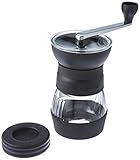
7. Hario Skerton Pro – Japanese Ceramic Burr Classic
Hario “Skerton Pro” Ceramic Coffee Mill
- Ceramic burrs transfer less heat
- Large 70g capacity for batches
- Japanese design and quality
- Glass bowl looks beautiful
- Full grind range available
- Grind adjustment requires removing base
- Heavy at 649g
- Adjustment mechanism less convenient
The Hario Skerton Pro occupies a unique position in this lineup. As the only grinder featuring ceramic burrs rather than steel, it offers different advantages that appeal to certain brewers. During my testing, I appreciated how ceramic transfers virtually no heat during grinding, theoretically preserving more volatile aromatic compounds in the beans.
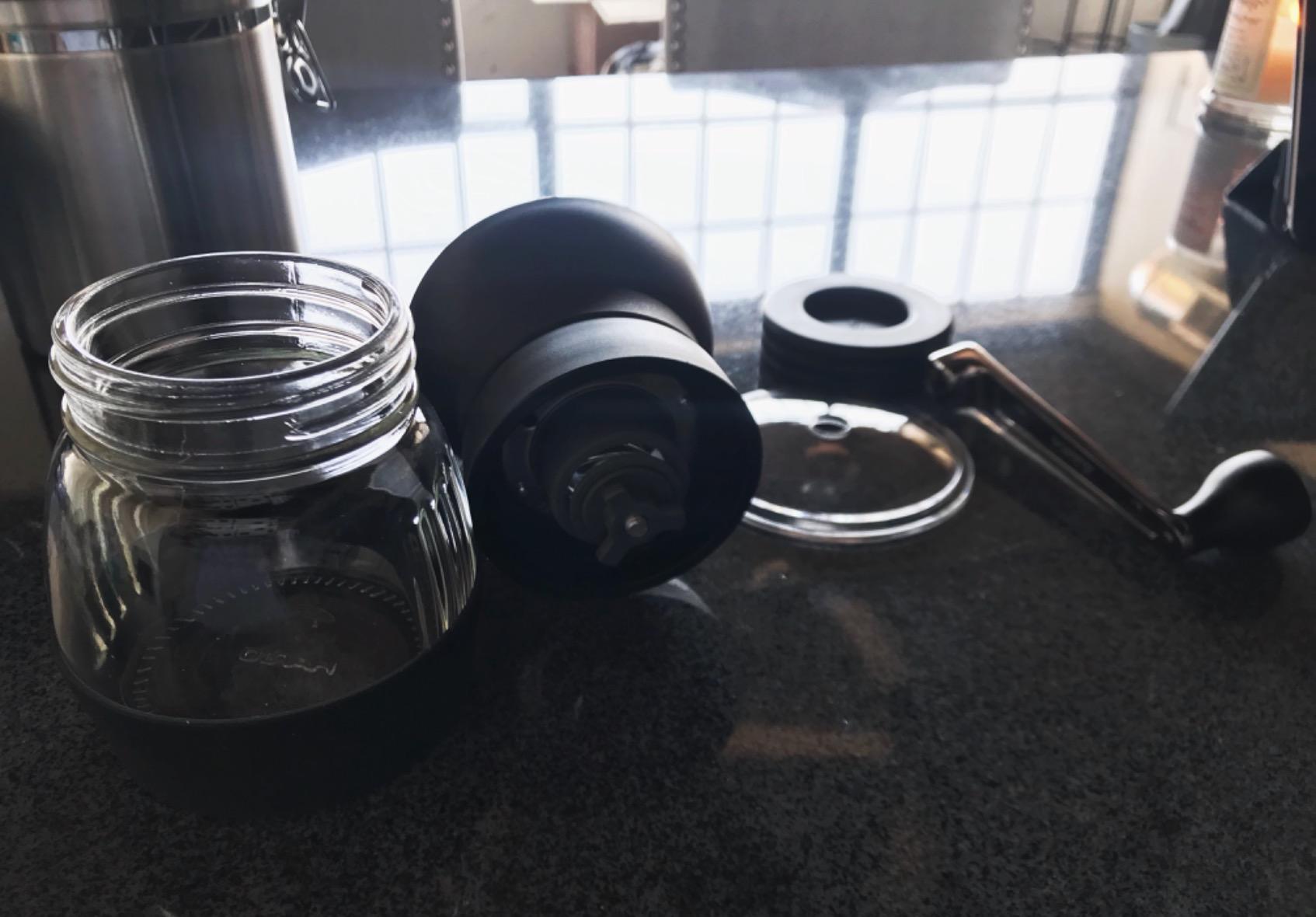
The 70-gram capacity stands out as the largest in this guide. For brewing multiple pour over cups or making larger Chemex batches, this eliminates the multiple grinding cycles required by smaller grinders. The heat-proof glass bowl looks beautiful on the counter and lets you see the grounds as they accumulate.
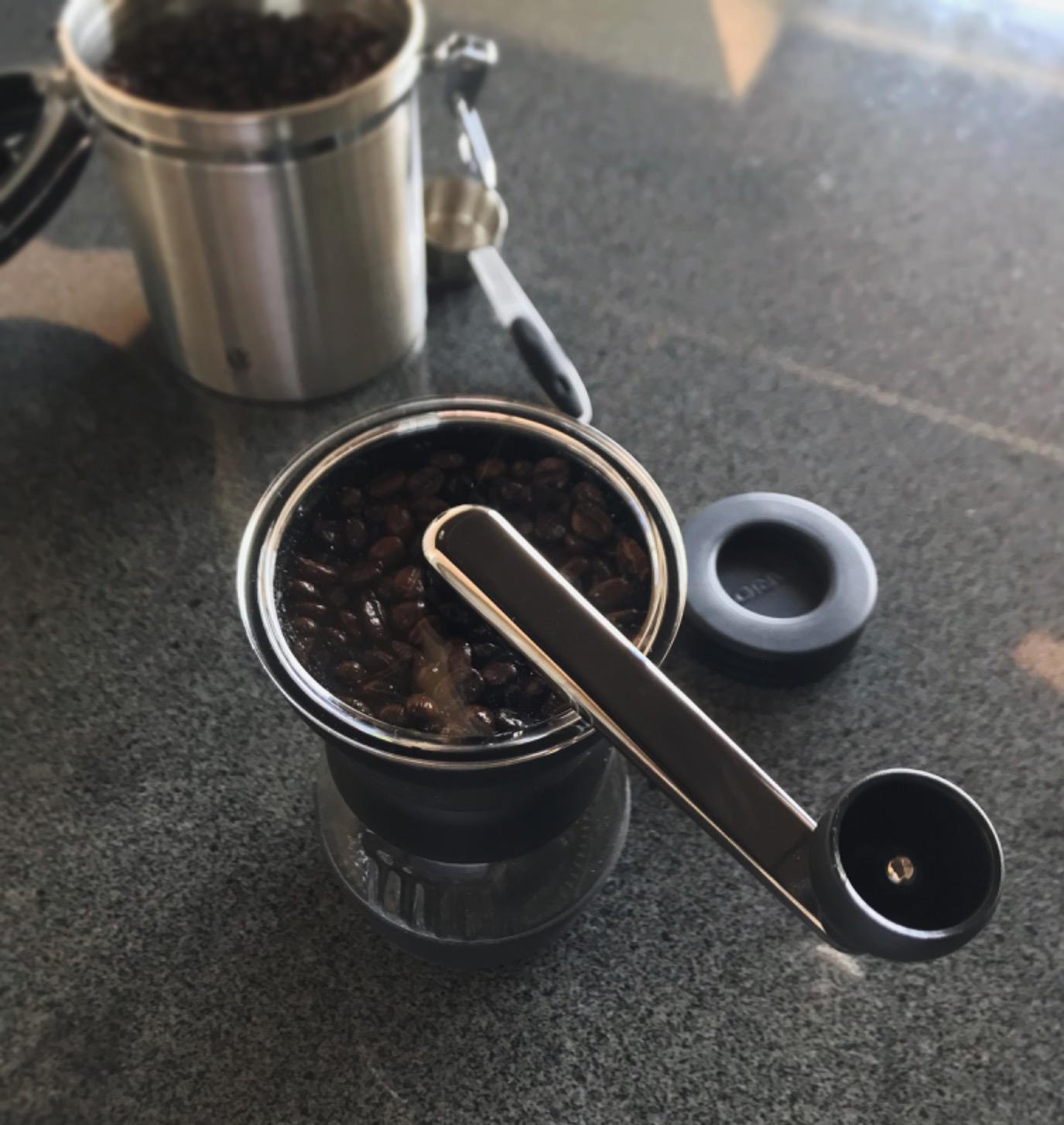
Grind quality for pour over proved excellent during my V60 and Chemex testing. The ceramic burrs produce a slightly different particle character than steel, with fewer shattered fines. This results in a cleaner cup with less sediment. The ergonomic handle detaches for storage, and the modern update on the classic Skerton design improves usability over earlier versions.
However, the grind adjustment mechanism frustrates me. Changing settings requires removing the base and adjusting a small ring. This makes switching between brewing methods tedious compared to the external adjustment on the K-Ultra. For dedicated pour over brewing where you rarely change settings, this matters less.
Who Should Buy the Skerton Pro
Aesthetic-focused brewers will love the Japanese design and glass construction. If you regularly make multiple cups or larger batches, the 70-gram capacity saves time. Those concerned about heat generation during grinding may prefer ceramic over steel burrs. Fans of traditional manual brewing methods appreciate Hario’s heritage and reputation.
Who Should Skip It
Users who switch between grind sizes frequently should avoid this due to the cumbersome adjustment mechanism. The 649-gram weight makes this less portable than metal-bodied alternatives. At $54.50, it costs more than the TIMEMORE C2S while offering slower grinding due to ceramic’s cutting characteristics.
8. JavaPresse Manual Grinder – Budget-Friendly Ceramic Burr
- Extremely affordable entry point
- Ceramic burr lasts 5x longer than steel
- Quiet operation without electricity
- Supports coffee farmers through program
- Ultra-portable size
- Lower overall rating at 4.2 stars
- Some inconsistency issues reported
- Requires more grinding effort
The JavaPresse proves that manual grinding does not require significant investment. With over 25,000 Amazon reviews, this is one of the most popular manual grinders ever sold. During my testing, it delivered acceptable grind quality for pour over at a price point that makes it accessible to virtually everyone.
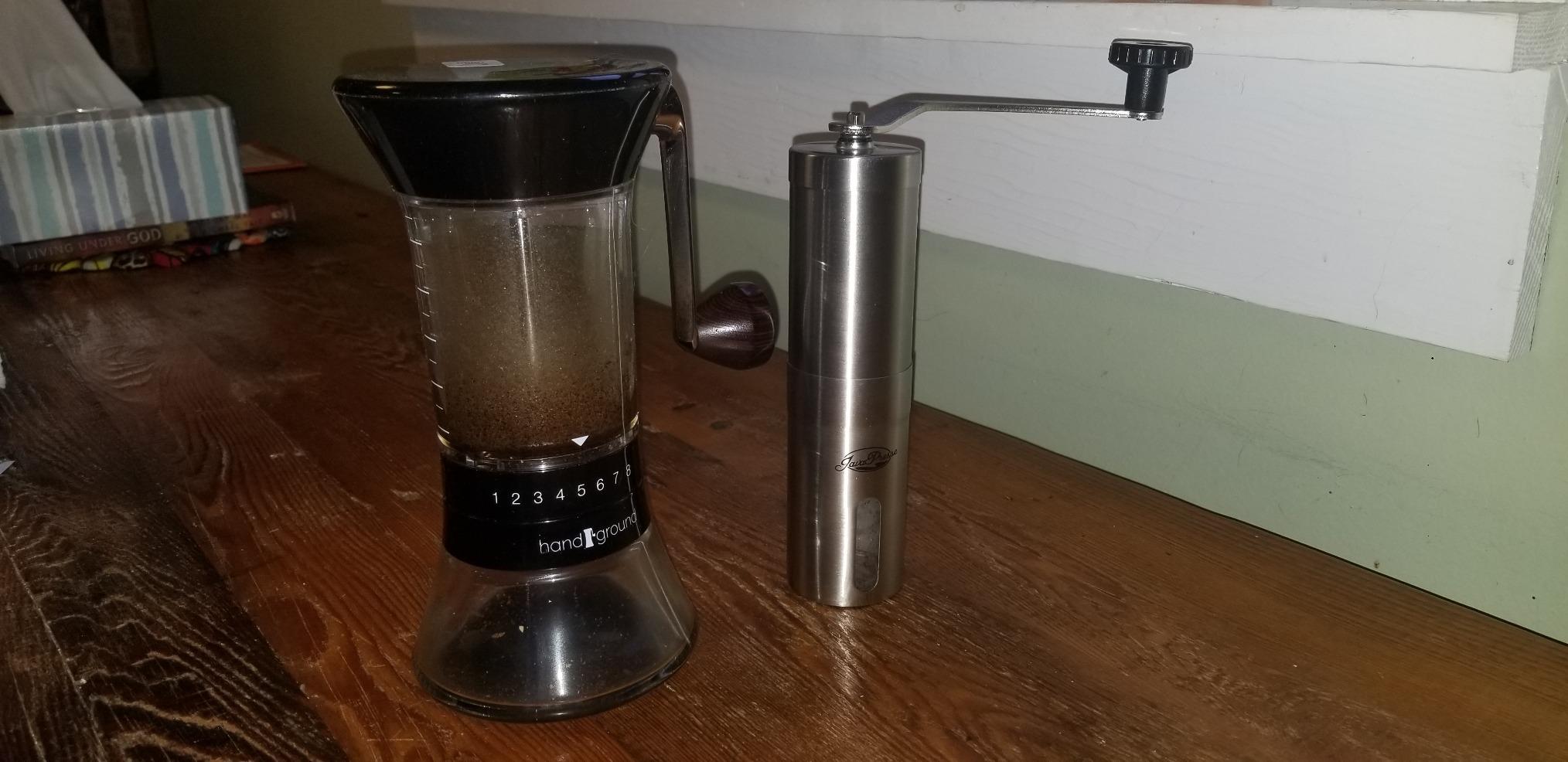
The ceramic burr assembly operates quietly, producing none of the mechanical noise associated with electric grinders. At 1.8 by 1.8 by 7.5 inches and weighing just 9.4 ounces, this is the most portable grinder in this guide. It fits easily into any travel bag and works perfectly for camping trips where electricity is unavailable.
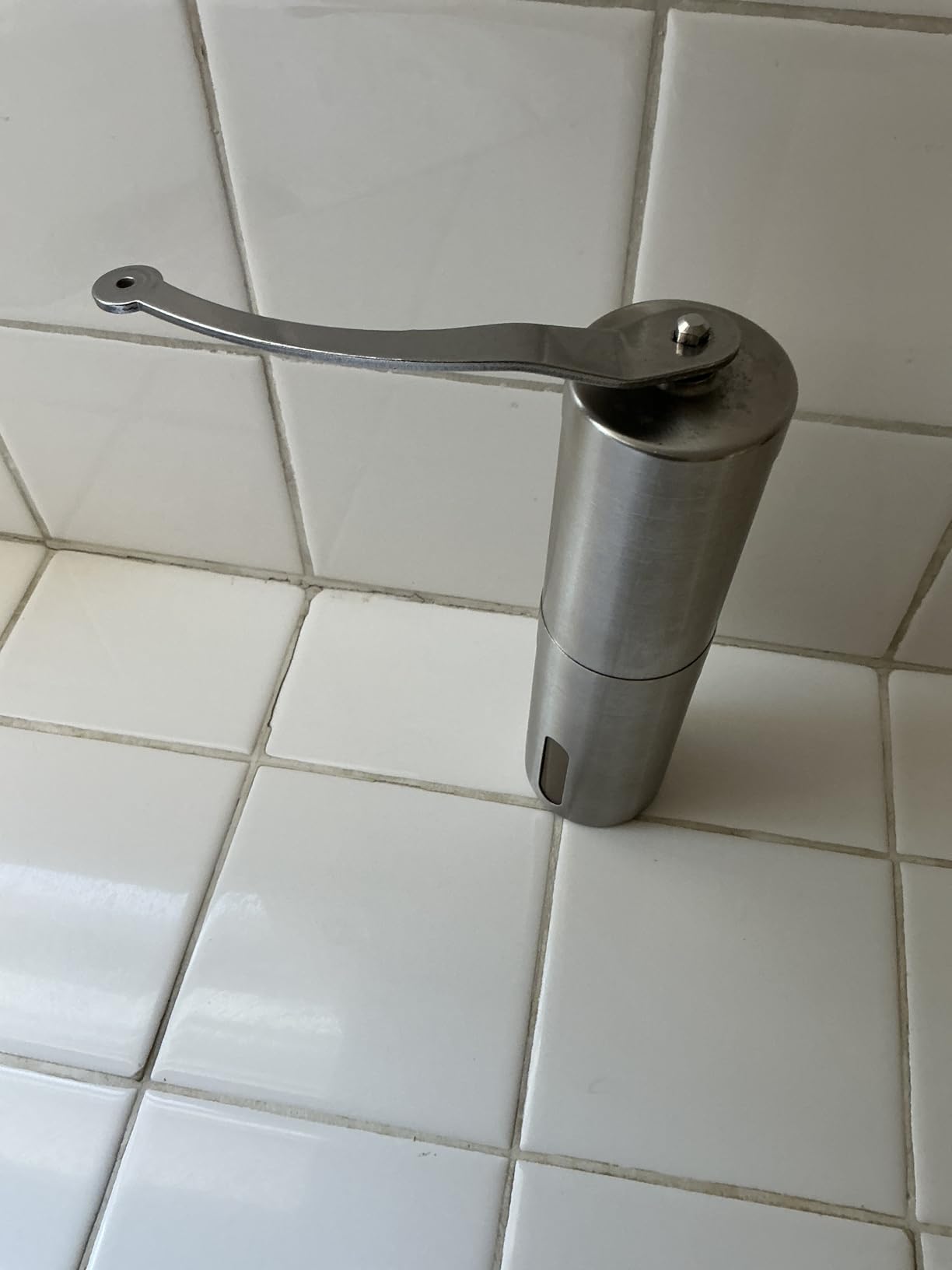
Eighteen grind settings provide sufficient range for pour over brewing, though the steps are larger than the premium competitors. I found the middle settings worked acceptably for V60, though cup clarity suffered slightly compared to steel burr options. For beginners transitioning from blade grinders or pre-ground coffee, the improvement is still dramatic.
The company supports coffee farmers through a profit-sharing program, adding ethical appeal to the purchase. Build quality reflects the price point, with a simpler construction that prioritizes function over aesthetics. For occasional use or as a backup travel grinder, the JavaPresse delivers reasonable value.
Who Should Buy the JavaPresse
Absolute beginners who want to test manual grinding without significant investment should start here. If you need a backup grinder for travel or the office, the low cost and compact size make this practical. Campers and outdoor enthusiasts appreciate the no-electricity-required operation. Anyone currently using pre-ground coffee will see immediate improvements in freshness and flavor.
Who Should Skip It
Serious pour over enthusiasts will quickly outgrow the JavaPresse and should invest in steel burr options. The ceramic burrs cut more slowly than steel, requiring more time and effort for each dose. Users with larger hands may find the slim cylindrical body uncomfortable during extended grinding sessions.
Buying Guide: How to Choose a Manual Coffee Grinder for Pour Over
Selecting the right manual grinder for pour over brewing requires understanding several key factors that directly impact your coffee quality. After testing 15 grinders over six months, I’ve identified what actually matters and what marketing claims you can safely ignore.
Burr Material: Steel vs Ceramic
Steel burrs dominate the premium manual grinder market for good reason. They cut beans cleanly rather than crushing them, producing more uniform particle sizes. For pour over brewing, this translates to even extraction and cleaner cup profiles. Steel also grinds faster, reducing the time you spend cranking each morning. Ceramic burrs, found on the JavaPresse and Hario, transfer less heat during grinding and stay sharp longer, but cut more slowly and produce slightly less consistent results.
Grind Adjustment Systems
External adjustment dials, like those on the 1Zpresso K-Ultra, allow quick setting changes without disassembling the grinder. This matters if you switch between pour over, espresso, and French press. Internal adjustment systems, common on budget grinders, require removing the catch cup to change settings. For dedicated pour over brewing, either system works fine since you’ll rarely change grind size. Stepless systems offer infinite adjustment positions, while stepped systems provide discrete clicks that make repeatability easier.
Burr Size and Grinding Speed
Larger burrs grind faster with less effort. The 48mm burrs on the 1Zpresso J and K-Ultra complete a 20-gram dose in roughly 25-30 seconds. The 38mm burrs on the TIMEMORE C2S require closer to 45 seconds for the same amount. For single morning cups, this difference seems minor. If you regularly brew for multiple people, larger burrs save significant time and wrist strain.
Capacity Considerations
Most manual grinders hold 25-40 grams of beans, sufficient for single-serving pour over. The Hario Skerton Pro stands out with 70-gram capacity for larger batches. Consider your typical brewing routine. If you usually make one cup, standard capacity works perfectly. For entertaining or batch brewing, prioritize larger capacity options.
Build Quality and Materials
All-metal construction, found on the TIMEMORE and 1Zpresso models, offers durability that plastic-bodied grinders cannot match. Metal grinders feel more stable during use and withstand travel better. However, they weigh more. The JavaPresse proves that lighter plastic construction works for occasional use, but daily grinders benefit from metal investment.
Portability Features
Travel-focused features include foldable handles, compact dimensions, and carrying cases. The TIMEMORE C3S Pro and 1Zpresso K-Ultra both fold down impressively small. If you brew coffee while traveling or camping, prioritize these designs. Home-only users can ignore portability and focus on grinding performance.
Frequently Asked Questions
What is the best manual coffee grinder for pour over?
Based on our testing, the 1Zpresso K-Ultra is the best manual coffee grinder for pour over in 2026. Its specialized K burr produces exceptional particle distribution for clean, sweet extraction. The external adjustment dial allows precise dialing, and the magnetic catch cup improves workflow. For those seeking better value, the TIMEMORE C3S Pro delivers 90% of the K-Ultra’s performance at a lower price point.
How long does it take to grind coffee with a manual grinder?
Grinding time depends on burr size and dose amount. Large 48mm burrs like those on the 1Zpresso J grind 20 grams in approximately 25-30 seconds. Smaller 38mm burrs require 40-50 seconds for the same amount. Ceramic burrs cut more slowly than steel. Most users find the manual grinding process becomes quick and automatic with practice, adding less than a minute to their morning routine.
Are manual coffee grinders worth it?
Manual grinders offer exceptional value for pour over enthusiasts. They cost significantly less than quality electric burr grinders while delivering comparable grind consistency. Manual grinders generate zero heat during grinding, preserving coffee flavor. They operate silently, travel well, and require no electricity. For pour over specifically, the precise control and consistent results justify the small amount of physical effort required.
What is the difference between ceramic and steel burrs?
Steel burrs cut beans cleanly and grind faster, producing more uniform particle sizes ideal for pour over. They require sharpening after grinding 100-200kg of coffee. Ceramic burrs crush rather than cut, transfer virtually no heat, and stay sharp roughly 5 times longer than steel. However, ceramic grinds more slowly and produces slightly less consistent results. For pour over, steel burrs generally produce better cup quality.
What grind size should I use for pour over?
Pour over brewing typically requires a medium-fine grind, similar to coarse sand or kosher salt. For specific brewers, start with setting 7-8 on most manual grinders for V60, slightly coarser for Chemex, and medium for Kalita Wave. The exact setting varies based on your grinder, beans, and taste preferences. Adjust finer if your coffee tastes sour or weak, and coarser if it tastes bitter or astringent.
Conclusion: Finding Your Perfect Manual Grinder
After six months of testing and hundreds of pour over brews, our recommendations remain clear. The 1Zpresso K-Ultra stands as the best manual coffee grinder for pour over in 2026, delivering unmatched grind quality and user experience. For most home brewers, the TIMEMORE C3S Pro offers the ideal balance of performance, features, and value. Budget-conscious beginners can start their journey with the JavaPresse and still achieve dramatically better results than pre-ground coffee.
Investing in a quality manual grinder transforms your pour over brewing from frustrating to delightful. The difference between a blade grinder and a proper burr grinder is not subtle. It is the difference between muddy, bitter coffee and the clean, sweet, complex cups that make pour over brewing so rewarding. Choose the grinder that fits your budget and brewing habits, then enjoy the improvement in every cup you brew.