
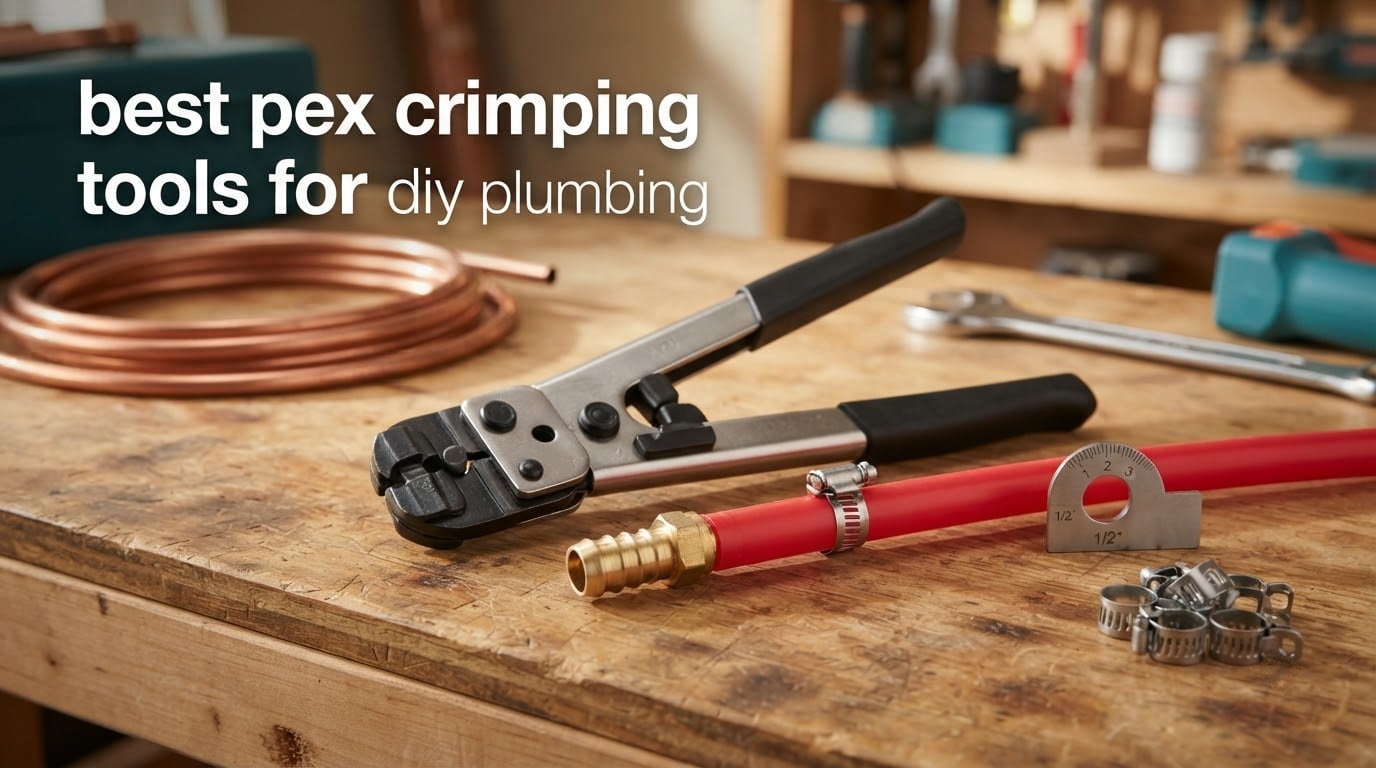
A PEX crimping tool compresses a ring around a tube and a barbed brass fitting to make a permanent mechanical seal, and nothing about that connection is visible once it goes into a wall or under a sink. For most homeowners the right answer is a manual stainless-steel clamp (cinch) tool rather than a cordless press tool, because stainless rings do not oxidise, they are accepted by most fitting brands, and the tool fits in a toolbox instead of a van. If you want the full comparison of the trade-grade options too, we covered those separately in our PEX crimping tools for plumbing experts roundup.
Here is the short version. The iCrimp Cinch and Remove Tool Kit is the best pex crimping tool for DIY plumbing overall, because it cinches and removes clamps in the same body, covers 3/8 inch through 1 inch, and ships factory adjusted so there is no calibration routine to learn on day one. The iCrimp KG-1096 is the better buy if you want the highest rating in this group and only need the tool. The iCrimp IWS-C angle head is the one to buy when the connection is under a sink, inside a cabinet, or between studs.
One important filter before the list. Almost every competing roundup mixes in cordless press tools and hydraulic crimpers aimed at plumbers running a hundred joints a week. This one does not, except as a flagged specialist option. A homeowner replacing a faucet supply, a toilet line, or a water heater connection is working with 1/2 inch and 3/4 inch PEX, and that is the coverage that matters. A tool with a 1 inch jaw will sit in a drawer for years, and a battery platform you do not already own turns one repair into a two-platform purchase.
We also filtered out the tools that cannot tell you whether a crimp is right. Every pick below either ships a go/no-go gauge, stores calibration pieces in the handle, or accepts a separate gauge. That matters more than any other single feature, because an under-crimped ring looks identical to a good one until it fails. We will show you how to read the gauge cutouts, how to spot an under-crimp versus an over-crimp, and the handful of mistakes that cause most DIY leaks.
Top 3 PEX Crimping Tools for DIY Plumbing in 2026
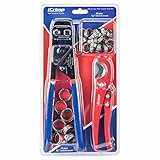
iCrimp Cinch and Remove Clamp Kit
- Cinch and remove in one body
- 3/8 inch to 1 inch coverage
- Factory adjusted
- Includes cutter and 30 clamps

iCrimp KG-1096 Ratcheting Cinch Tool
- Highest rating in the group
- 3/8 inch to 1 inch ratcheting action
- Includes calibration gauge
- Tool only

iCrimp IWS-C Angle Crimping Tool
- Angled head reaches confined spaces
- 1/2 inch and 3/4 inch copper rings
- Go/No-Go gauge included
- Factory calibrated
The iCrimp Cinch and Remove Kit takes the overall spot because the removal function is the part most tools leave out. When a ring lands crooked, you can usually cut it off and reuse the fitting rather than replacing both. The KG-1096 rates highest of anything we looked at and costs the least of the full-size ratcheting tools. The angle head solves a different problem entirely, reach rather than capability.
Best PEX Crimping Tools for DIY Plumbing (October 2026)
| Product | Specifications | Action |
|---|---|---|
| iCrimp Cinch and Remove Clamp Kit |
|
Check Latest Price |
| iCrimp KG-1096 Ratcheting Cinch Tool |
|
Check Latest Price |
| iCrimp IWS-C Angle Crimping Tool |
|
Check Latest Price |
 iCrimp F1807 Copper Ring Kit iCrimp F1807 Copper Ring Kit |
|
Check Latest Price |
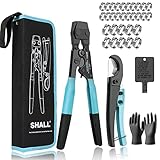 SHALL Clamp and Cutter Kit SHALL Clamp and Cutter Kit |
|
Check Latest Price |
 OURU Crimping Tool Kit OURU Crimping Tool Kit |
|
Check Latest Price |
 CHEN CHEN HAO Clamp Kit CHEN CHEN HAO Clamp Kit |
|
Check Latest Price |
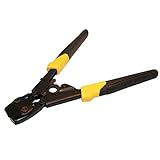 Apollo 69PTKG1096 Pinch Clamp Tool Apollo 69PTKG1096 Pinch Clamp Tool |
|
Check Latest Price |
 IBOSAD Hydraulic Press Crimper IBOSAD Hydraulic Press Crimper |
|
Check Latest Price |
 Ryobi ONE+ 18V P660 Ryobi ONE+ 18V P660 |
|
Check Latest Price |
Everything in this table works on PEX tubing. The real differences are the ring system each one handles, the size range, and whether a gauge comes with it. Read the next ten sections in order if you want a full assessment, or jump straight to the section that matches the job you are doing.
1. iCrimp Cinch and Remove Clamp Tool Kit – Best Overall
iCrimp PEX Crimping Tool Kit, Cinch & Removal Tool for 3/8″-1″ Clamps
- Cinch and removal in a single body so fittings can be reused
- Factory adjusted so no calibration routine is needed
- Covers 3/8 inch through 1 inch stainless clamps
- Includes a cutter and 30 clamps for a ready-to-use kit
- Demands real force
- especially at 1 inch
- Hard to use where handle leverage is limited
- The crimp happens in one squeeze rather than in ratchet increments
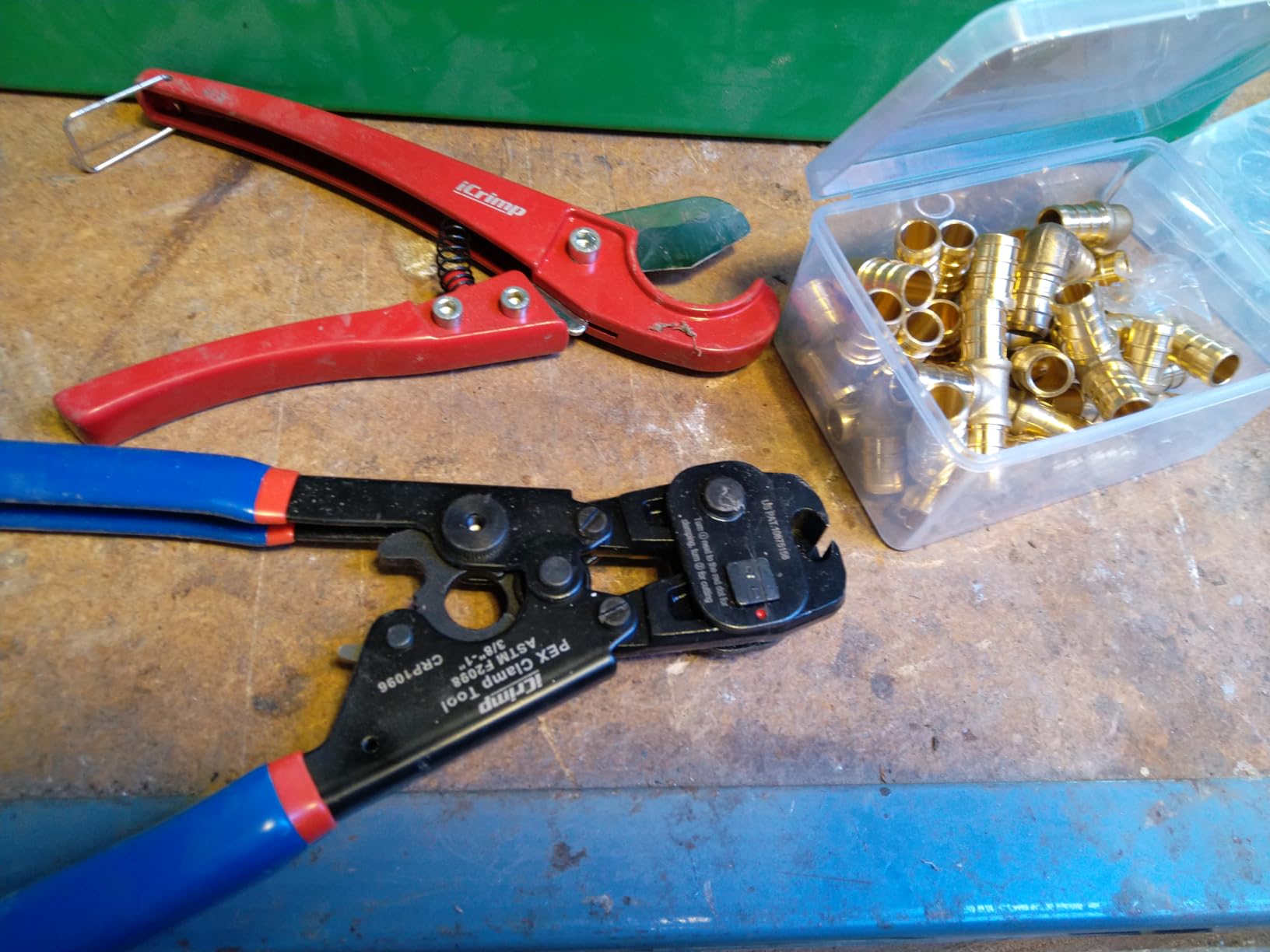
This is the tool we keep reaching for. The body is forged steel with jaws finished by wire EDM, and it runs the full 3/8 inch to 1 inch range on stainless clamps from any manufacturer that meets the ASTM standard. It arrives factory adjusted, which for a beginner is the single most useful thing on the spec sheet. There is no calibration screw to find and no gauge setup to learn before your first joint.
The switch between cinching and removing takes a couple of seconds, and a small flat blade on the opposite side cuts PEX square. A ratchet keeps the handles from releasing until the clamp is fully compressed, so you cannot accidentally stop halfway and think you are done. At 2.4 pounds it is not a lightweight tool, and that mass is part of why the crimp is repeatable.
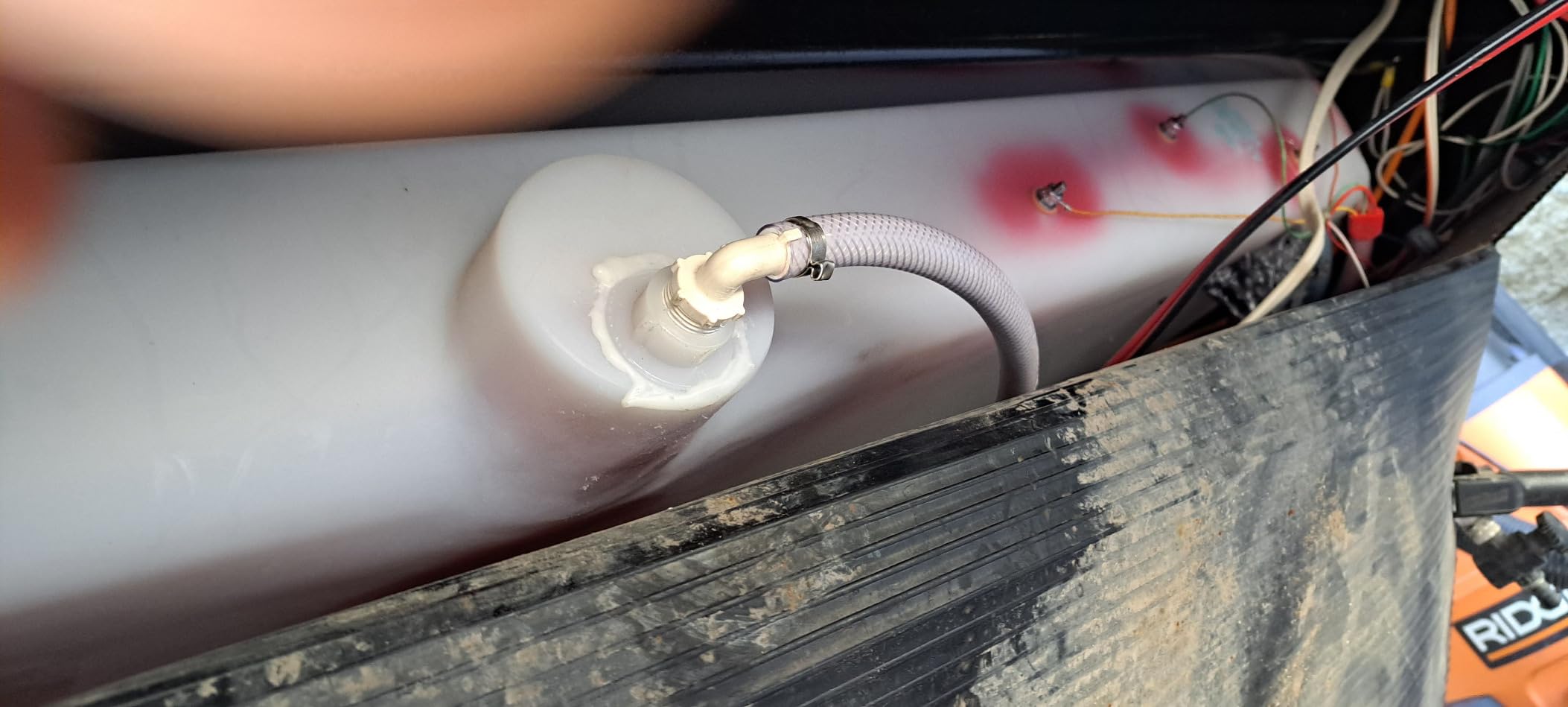
Owners report the same pattern in the reviews. Joints on 1/2 inch and 3/4 inch go in without drama, and the tool is described as replacing plumber visits for supply-line work. The dominant complaint is effort, not accuracy: 1 inch crimps often need two hands and a bit of leverage from surrounding structure. One more detail worth knowing, the ratchet is not truly incremental, the crimp happens in a single squeeze rather than a series of clicks, so a partial crimp will not hold in the jaws waiting for you to finish.
The ring removal function is what separates this from a bare crimper. If you cut a ring at the wrong spot, or crimp onto a fitting that was pushed on crooked, you can usually strip the clamp and reuse the fitting. That single capability pays for itself on a first-timer, because it removes most of the cost of a mistake.
What to check before you buy
Confirm you are buying the clamp version, not the copper ring version. This tool cinches stainless PEX clamps, and copper crimp rings need a different jaw geometry. If your existing fittings use copper rings, this is the wrong tool even though it is a good one.
Check your ring brand against Zurn Quick Clamp style rings, which use a different profile and do not cinch with most generic tools. The iCrimp range covers standard stainless PEX clamps, which is the overwhelming majority of what you will find at a hardware store.
Where it falls short
The body is bulky, and the handles need room to swing. In a crawl space or a narrow joist bay where you cannot get a full arc, this tool is genuinely awkward, and pre-building sections on a bench then connecting them in place is the workaround most owners use.
Handle length is on the shorter side, so 3/4 inch work tires your hand faster than it should. Owners doing a whole-house run report switching grip hands constantly. If you expect more than a dozen joints, the extra leverage of a longer-handled kit is worth the trade.
2. iCrimp KG-1096 Ratcheting Cinch Tool – Best Value
- Highest average rating of any tool in this roundup
- Ratchet will not release until the crimp is complete
- Covers every common PEX clamp size in one tool
- Calibration gauge included for checking crimp tightness
- Will not work with Zurn Quick Clamp style rings
- No ring removal function and no cutter
- Listing weight figure looks inconsistent for a full-size steel tool
At 4.8 stars across more than 2700 reviews, this is the highest-rated tool we could find, and the tool-only design keeps the entry point low. It handles stainless clamp rings from 3/8 inch through 1 inch, and the ratchet refuses to disengage until the crimp is uniform or you pull the quick release lever. That is the behaviour you want on your first ten joints.
It works with brass fittings built to ASTM F1807 and poly fittings built to ASTM F2159, which covers essentially every crimp-style PEX fitting on the shelf. Owners also use it on potable lines, radiant heat, and snow melt runs. A calibration gauge is in the box, and for a homeowner who has never crimped before, having the go/no-go check supplied is worth as much as the tool itself.
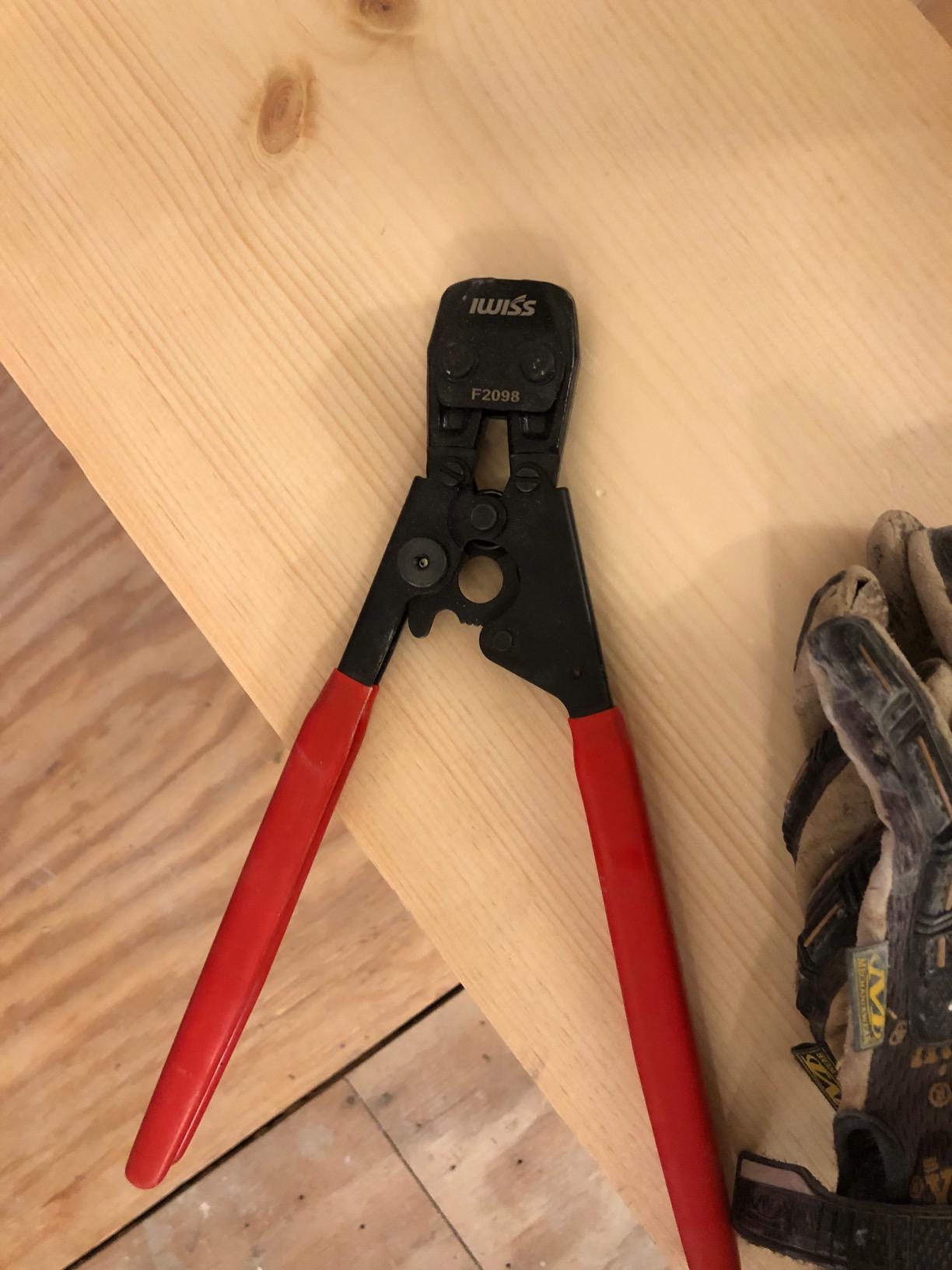
Reviews single out three things: the ratchet, the gauge, and the fact that one tool covers every size a house needs. The 83 percent five-star share reflects that. The compatibility caveat comes up repeatedly, and it is real, this tool does not fit Zurn Quick Clamp style rings. If you are starting from scratch with new fittings, that is a non-issue.
Buyers who own other clamp tools describe this as the one they reach for on a straight run, because the ratchet gives a consistent squeeze every time. It is a tool only purchase, so you will need to buy clamps separately, and you will need a cutter. Plan for both when you work out the full cost of a repair.
What to check before you buy
Verify the clamp style on your fittings. Standard stainless PEX clamps are fine, Zurn Quick Clamp profiles are not. This is the single most common purchase mistake we see with cinch tools, because the boxes look nearly identical from across the aisle.
Decide whether you want removal capability. This tool does not strip rings, so a mis-crimp usually means a new fitting. That is a fine tradeoff for a clean run, and an expensive one on a cramped repair where a mistake is likely.
Where it falls short
There is no removal function and no cutter, so this is a bare crimper. For a first-timer working alone in a cabinet, the combination of having to cut, position, and crimp with no recovery path is a real source of frustration.
Some reviewers note that the crimp still takes firm hand pressure at 3/4 inch and above. A ratcheting clamp tool is more honest about that than a non-ratcheting one, because it will not let go, but it does not make the squeeze lighter.
3. iCrimp IWS-C Angle Crimping Tool – Best for Tight Spaces
- Angled head reaches crawl spaces and between studs
- Short handles fit a 16 inch on-center stud bay
- Two-stage mechanism opens wide enough to slip around the pipe
- Factory calibrated with a go/no-go gauge in the box
- 3/4 inch crimps are exhausting one-handed
- The fat head is awkward next to an already-crimped elbow
- Occasional finish quality complaints on new units
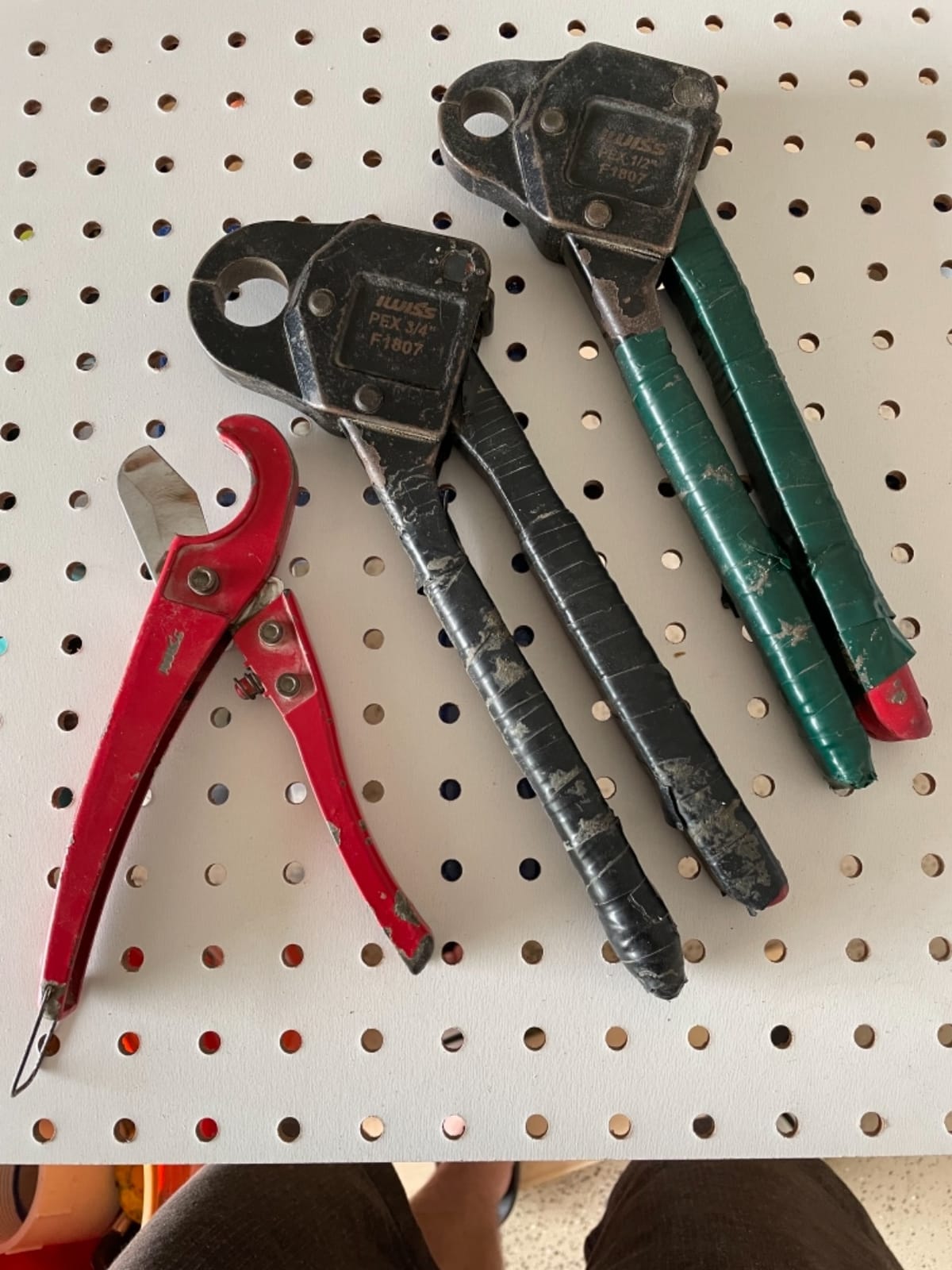
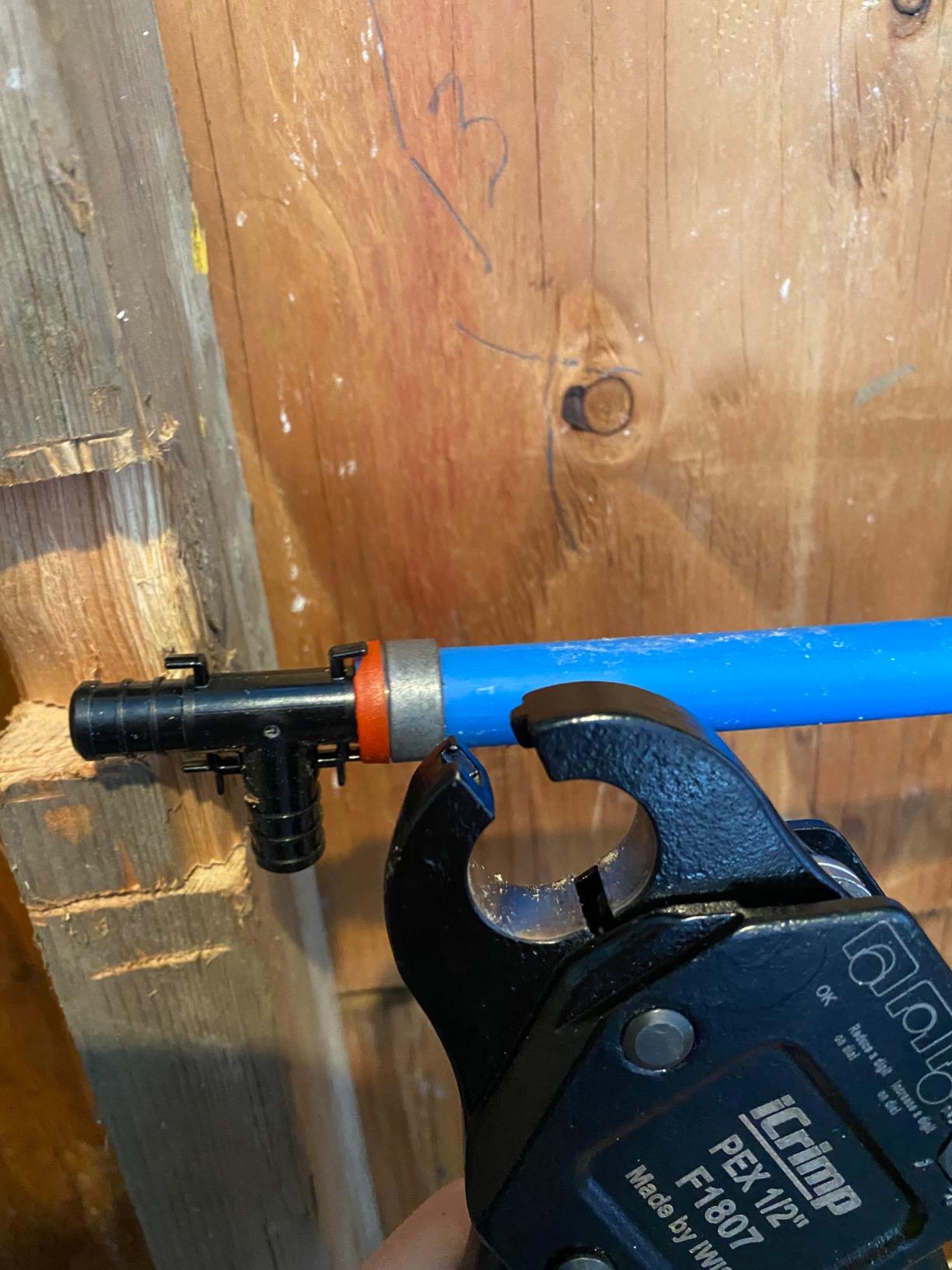
This is the tool to buy when reach is the problem. The angled head has no loose jaws and no adjustment mechanism, so there is nothing to swing open and nothing to drop into a wall cavity. It handles 1/2 inch and 3/4 inch copper crimp rings to the ASTM F1807 standard, which covers rings from Sioux Chief, Watts, and Nibco, plus fittings from Everhot, Nibco, Watts, Zurn, and Apollo.
A two-stage mechanism opens the jaws wide enough to slip around the pipe and ring, then closes in a smooth, low-force stroke. It comes factory calibrated, and the go/no-go gauge is included so you can verify every joint as you go. The tubing cutter in the kit is regularly praised by owners who expected to buy one separately.
Owners who work in crawls and tight framing describe this as holding up to daily trade use with no failures over multi-year spans, and several report results matching tools that cost several times more. The consistent criticism is physical effort at 3/4 inch, where many users say they need both hands or can brace against a joist for leverage.
There is a geometric limitation worth planning around. The head is deliberately fat, which is what buys the reach but makes it hard to crimp a fitting that sits right next to an already-crimped elbow. Measure your clearance before committing.
What to check before you buy
Confirm copper rings, not stainless clamps. This is a copper crimp ring tool for 1/2 inch and 3/4 inch only. It will not handle 1/2 inch clamps or 1 inch pipe, so it works best when you are matching existing copper ring fittings rather than building a new mixed system.
Check the depth of the space. The short handles fit a standard stud bay, but the head needs room to sit flat around the ring. If the connection is between two fittings with millimeters to spare, an offset design is not enough and you need a different approach.
Where it falls short
Two sizes only. If your project includes 1 inch PEX, this tool cannot do it, and owning it alongside a second crimper is a common and avoidable expense for anyone planning a remodel rather than a single repair.
The 3/4 inch stroke is genuinely tiring. Owners doing whole-house work with this tool report switching grip constantly, and a homeowner with less hand strength may find one-squeeze crimping at 3/4 inch difficult on the first few attempts.
4. iCrimp F1807 Copper Ring Crimping Tool Kit – Best Multi-Size Set
iCrimp F1807 Copper Ring Crimping Tool Kit for 3/8,1/2,3/4,1″, PEX Crimper
- Covers 3/8 inch through 1 inch from one kit
- Good leverage so many users crimp 3/4 inch without straining
- Removal tool recovers a bad crimp and can save the fitting
- Includes cutter
- gauge
- removal tool and a case
- Arms swing very wide and need clearance around the pipe
- Awkward in crawl spaces and confined framing
- Heavier build than single-size crimpers
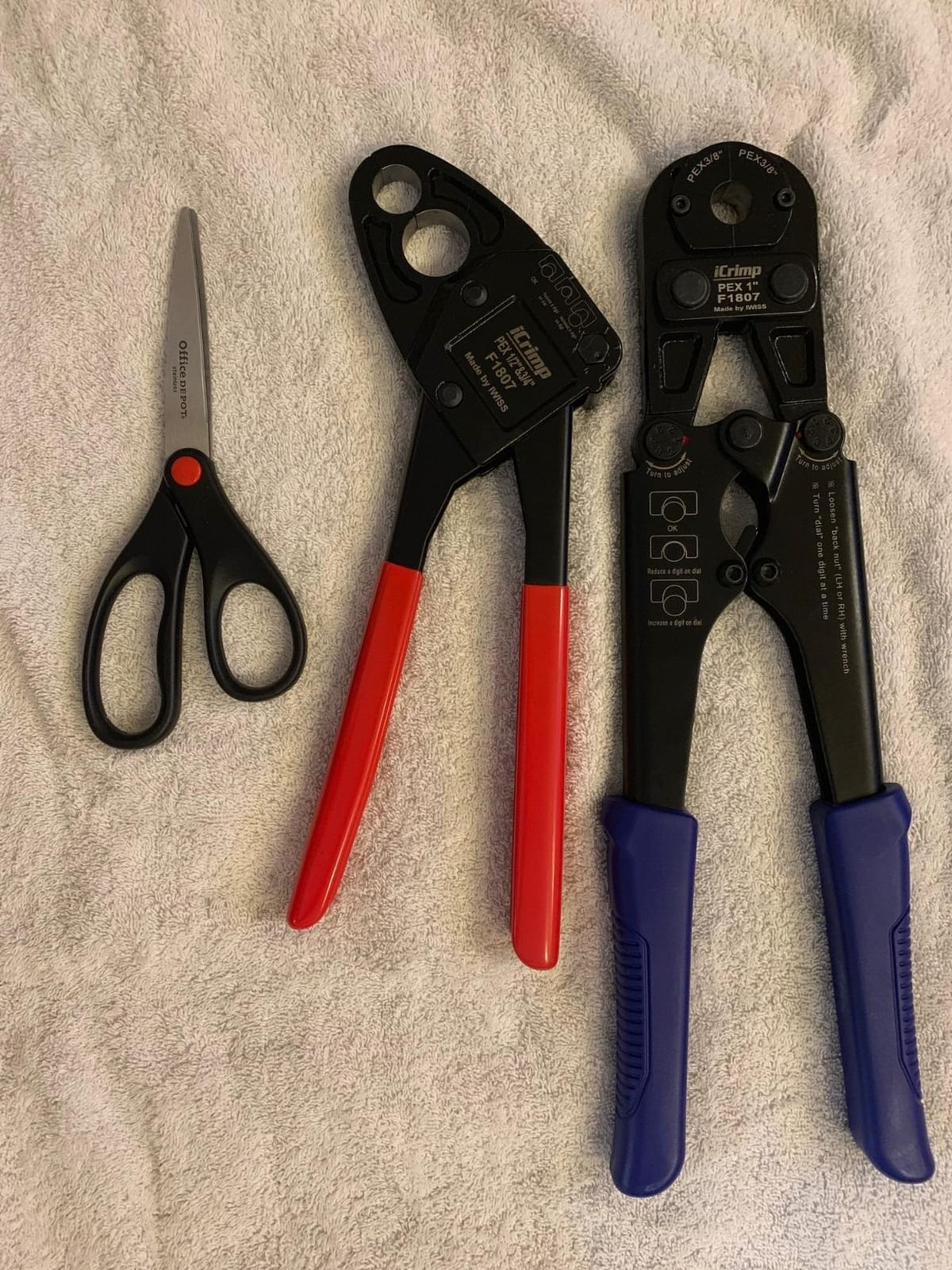
This is the most complete copper-ring package in the group, with six pieces in a hard case. Interchangeable jaw sets cover 3/8 inch, 1/2 inch, and 3/4 inch, and the tool body itself handles 1 inch, so a single kit spans the full residential range. It is built to the ASTM F1807 standard and fastens PEX to brass or poly fittings with copper crimp rings.
The ring removal tool covers 3/8 inch through 1 inch copper rings, and the go/no-go gauge plus spanner are included. That gauge is also used for recalibrating the tool, so the kit handles both verification and maintenance. It ships factory calibrated, which again removes a step for a first-time user.
Reviewers credit the jaw range and the removal tool with letting them correct mistakes instead of replacing fittings, and several describe replacing a plumber on supply-line work with zero leaks across full runs. Leverage is a genuine strength here, many users report crimping 3/4 inch without straining, which is not true of the shorter-handled clamp tools in this roundup.
The trade-off is swing clearance. The arms must open very wide to surround the ring, so users in crawl spaces and tight joist bays report pre-building pipe sections at a bench and crimping them into place afterwards. At 5.7 pounds this is also the heaviest hand tool here, which is fine on a bench and tiring overhead.
What to check before you buy
Check your ring type again. This kit is for copper crimp rings under ASTM F1807, not stainless cinch clamps. Buyers who grab the wrong one usually find out at the hardware store with a box of rings already in hand.
Think about where the work happens. If most joints go in on a workbench and get connected afterwards, the wide swing is irrelevant. If you are reaching into a wall cavity, it is the whole problem.
Where it falls short
Size changes mean changing jaws, so you cannot go from 1/2 inch to 3/4 inch mid-run without a swap. That is slower than a fixed multi-size clamp tool but far faster than owning separate single-size tools.
The gauge is a single combined hole rather than a per-size double-ended part, so you move the same piece between positions to check different sizes. It works, it just takes a moment longer than a dedicated gauge for each size.
5. SHALL Clamp and Cutter Kit – Best for Leverage
- 8.5 inch handles give noticeably better leverage than shorter crimpers
- 30 clamps plus cutter
- calibration tool
- gloves and a storage bag
- Forged manganese steel with wire-EDM interior jaws
- Factory adjusted so there is no setup before first use
- Newer listing with a smaller review base than the iCrimp kits
- Storage bag is the main upgrade over cheaper clamp kits
Handle length is the argument for this kit, and the 8.5 inch handle is the longest listed among the manual clamp tools here. Longer handles mean more leverage on the final squeeze, which is precisely the complaint that dominates reviews of cheaper clamp kits. If you have ever abandoned a 3/4 inch crimp halfway because your hand hurt, this is the fix.
The body is forged from solid manganese steel with interior jaws cut by wire EDM for accuracy. It meets the ASTM standard for stainless clamps from any manufacturer in 3/8 inch to 1 inch, and it also cinches single-ear hose clamps within the jaw range. A ratchet with a self-release mechanism means the handles will not come apart before the crimp is finished.
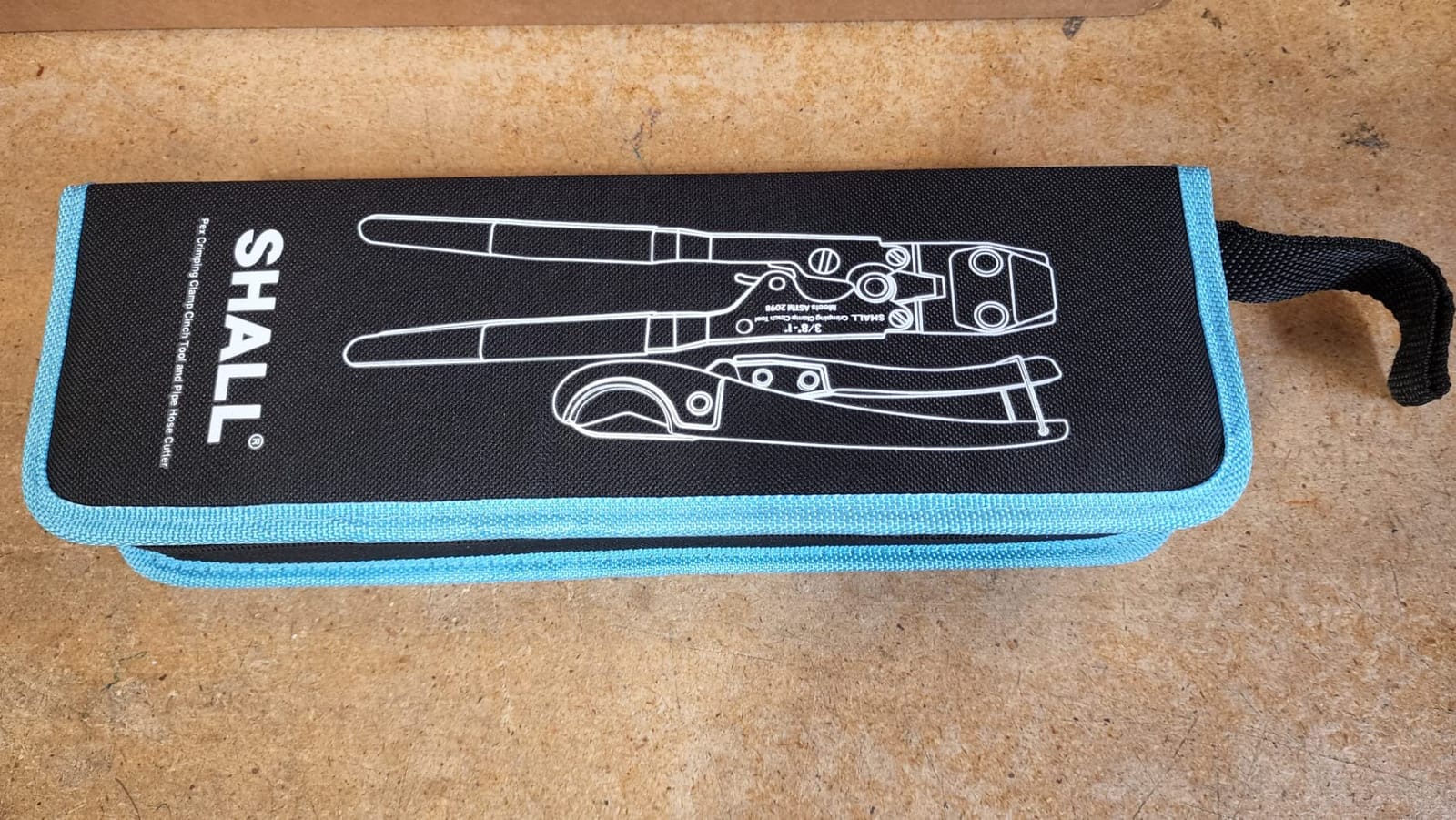
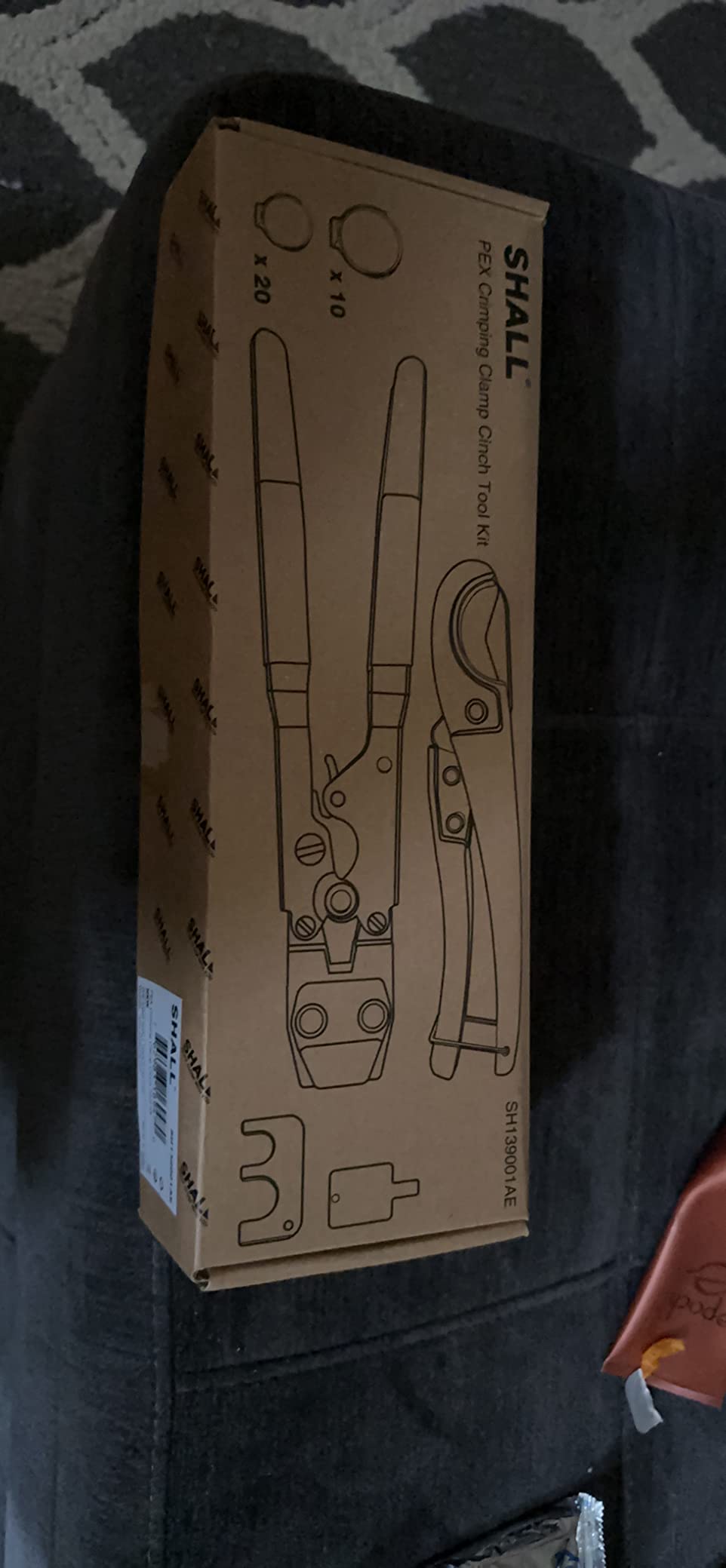
Owners treat handle length as the deciding factor rather than a comfort detail, and the dual-colour anti-slip grips stay comfortable over a long session. The set is generous, 30 clamps, a cutter, a calibration tool, gloves, and a storage bag, so it is genuinely ready to use out of the box. Factory adjustment means no calibration before the first joint.
Be aware of the evidence base. With 1137 reviews this sits below the iCrimp kits in owner volume, so long-term durability data is thinner. Nothing in the reviews suggests a weakness, there is simply less of a track record to read.
What to check before you buy
It is a stainless clamp tool, so match it to clamp fittings rather than copper ring fittings. It also handles 1/2 inch and 3/4 inch clamps far more comfortably than 1 inch, which is normal for a manual ratcheting design.
Note the included clamp count. Twenty 1/2 inch and ten 3/4 inch clamps cover a meaningful single repair or a small bathroom run, but a whole-house repipe needs far more, and ordering rings in the right sizes up front saves a second trip.
Where it falls short
It does not remove clamps, so a mis-crimp means a new fitting. There is no recovery path built in, which is the main gap against the iCrimp kit at the top of this list.
At 1/2 inch the extra leverage is barely needed, and the 1.18 kg body plus a full box of clamps and a bag is a bulky thing to carry for a single faucet swap. If your work is genuinely one job, the simpler kits make more sense.
6. OURU Crimping Tool Kit – Best Budget Starter Kit
OURU PEX Crimping Tool Kit, Cinch & Remove, 3/8″ to 1″,PEX Cutter & Clamps
- Cinch and remove functions in one body
- saving a separate tool
- 35 stainless clamps included so you can start immediately
- The cutter is repeatedly called excellent and cuts square
- Ratchet self-release for fast
- precise crimps
- Fixed riveted plate limits the angle of approach
- Awkward when the ring sits against an elbow or tee
- Two hands needed and the effort feels high for the price class
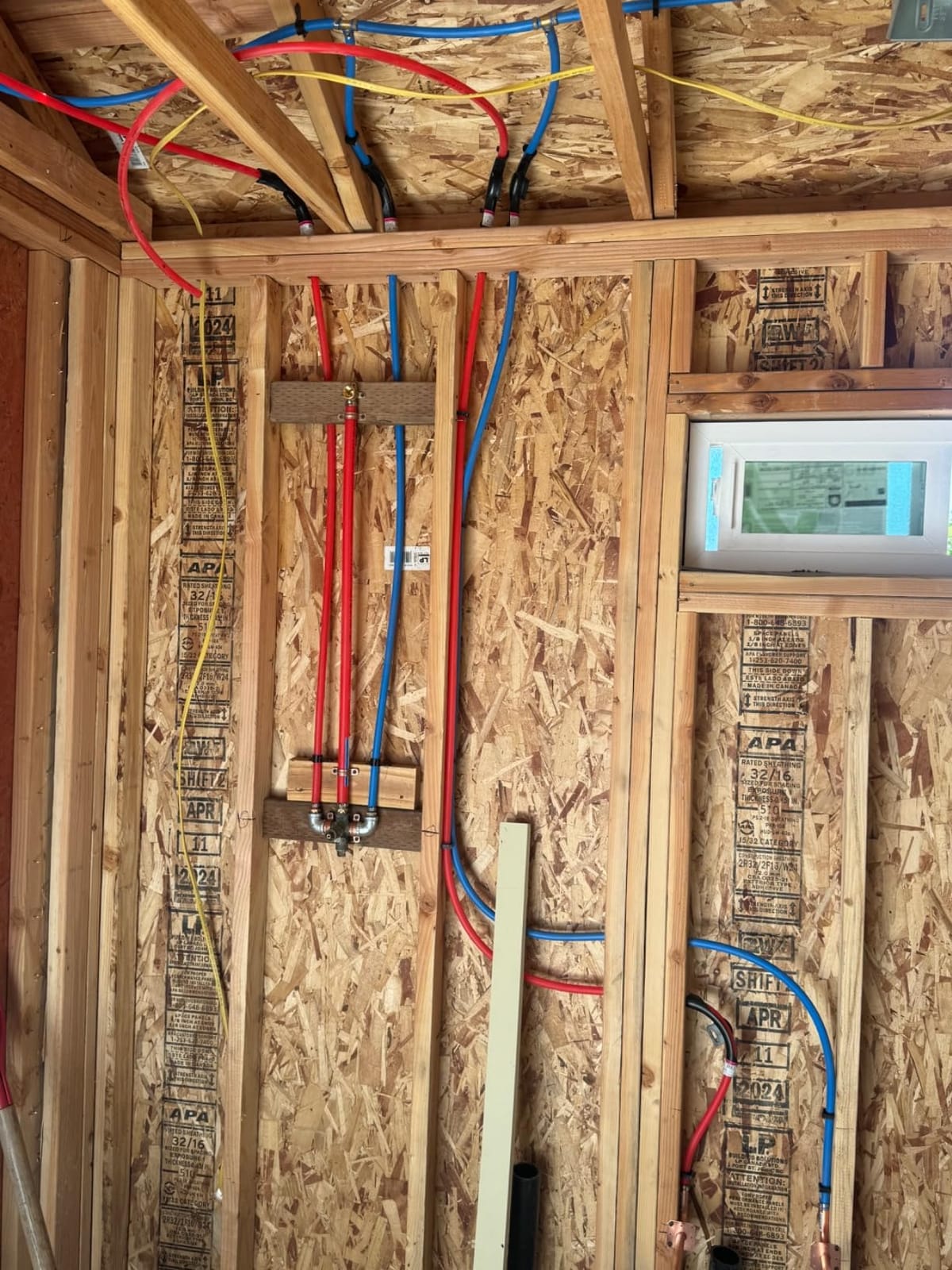
This kit does two jobs in one body, cinching and removing stainless PEX clamps, and it is built around a manganese steel plier body that resists deformation. It works with 304 stainless clamps from 3/8 inch through 1 inch, and the set includes a cinch and remove tool, a cutter, 25 half-inch clamps, and 10 three-quarter-inch clamps.
The cutter gets more praise than it probably should for a kit at this level. Owners call it sharp, and they report clean square cuts through PEX, which matters because an out-of-square cut is the first thing that ruins a good crimp. The function switch takes a couple of seconds, and a ratchet self-release mechanism controls the stroke.
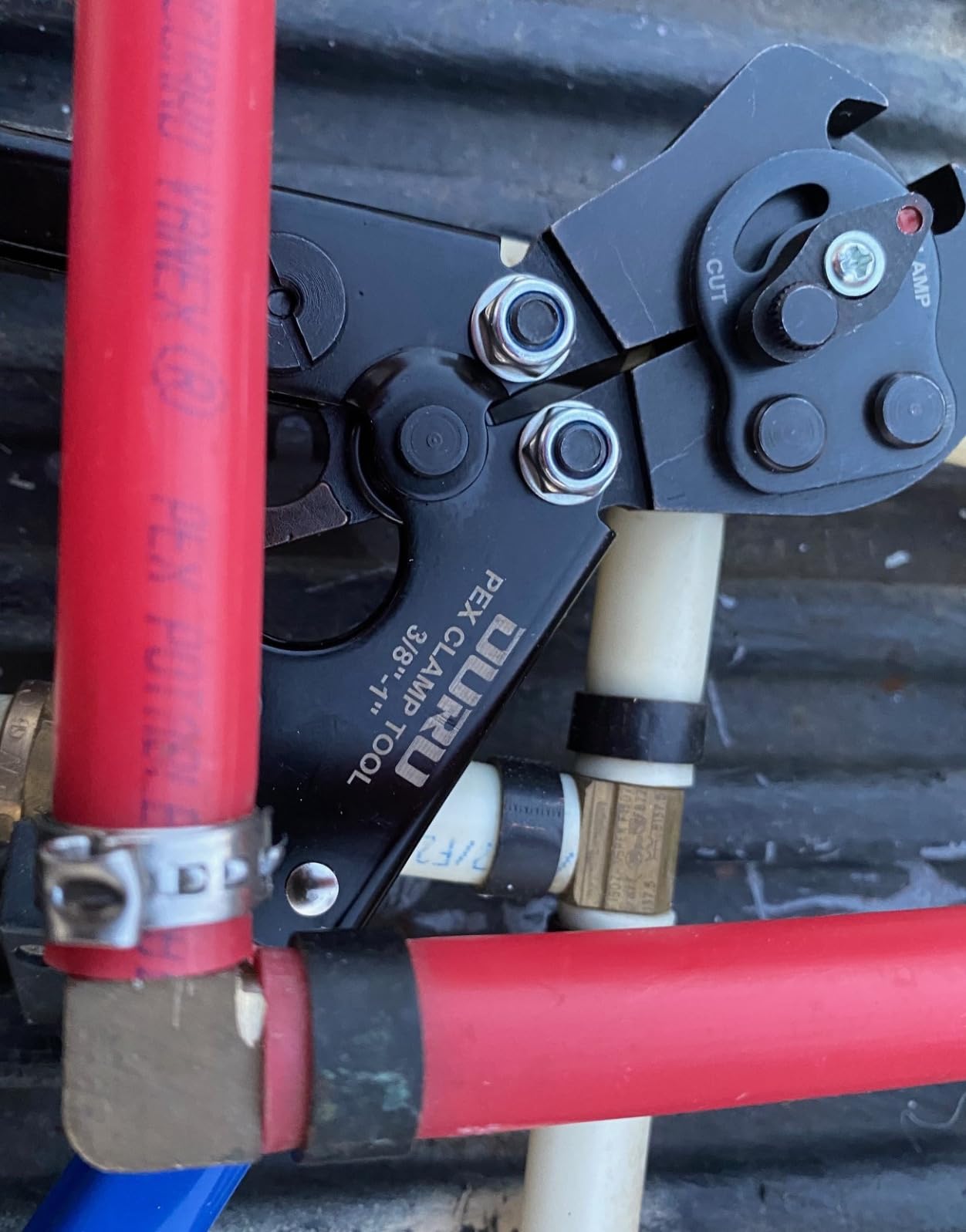
Reviews are generally positive on sturdiness and value, with the cutter singled out as the strongest element. The recurring limitation is geometry rather than quality. A fixed riveted body plate means the tool can approach a clamp from only one direction, which becomes a problem the moment the ring sits against an elbow or a tee, exactly the situation you hit when connecting a pre-built section.
Several buyers who wanted this for a more complex run ended up moving up to a tool with greater angle flexibility. For a handful of straight connections, that advice does not apply and this kit does the job.
What to check before you buy
Sketch your run before buying. If the connections sit on straight runs with open access on one side, the fixed approach angle is fine. If you are building an assembly of elbows and tees on the floor of a cabinet, plan on a tool with more angular freedom.
Confirm the fittings use standard stainless PEX clamps. Like the other cinch tools in this list, it is built for clamps rather than copper crimp rings.
Where it falls short
Squeezing effort is high for the class, and it wants two hands on 3/4 inch. That is a function of handle length as much as anything, and this is a shorter tool than the SHALL kit above.
The average rating sits below the iCrimp kits, which usually reflects finish consistency rather than accuracy. A few buyers reported units needing more force than expected from the start.
7. CHEN CHEN HAO Clamp Kit with Box – Best Lightweight Kit
- Covers every common stainless clamp size from 3/8 inch to 1 inch
- Ratchet safety function prevents incomplete crimps
- Factory adjusted with a spare calibration tool included
- Lightweight body that is easy to handle
- Smallest review base of the clamp kits in this roundup
- Plastic handles give less leverage than steel-handled kits
- No clamp removal function
If you are doing under-sink work or working overhead, weight matters more than most spec sheets suggest. This kit comes in under 1.4 pounds, which is the lightest full-range clamp tool in the roundup, and it still covers 3/8 inch, 1/2 inch, 5/8 inch, 3/4 inch, and 1 inch stainless clamps from any manufacturer meeting the standard.
The ratchet safety function will not release the handles before the crimp completes, which is the important part. The set includes 20 half-inch and 10 three-quarter-inch stainless clamps, a pipe cutter, and a hard plastic box that keeps the whole thing together instead of scattering loose rings through a toolbox. A calibration tool is supplied for later re-adjustment.
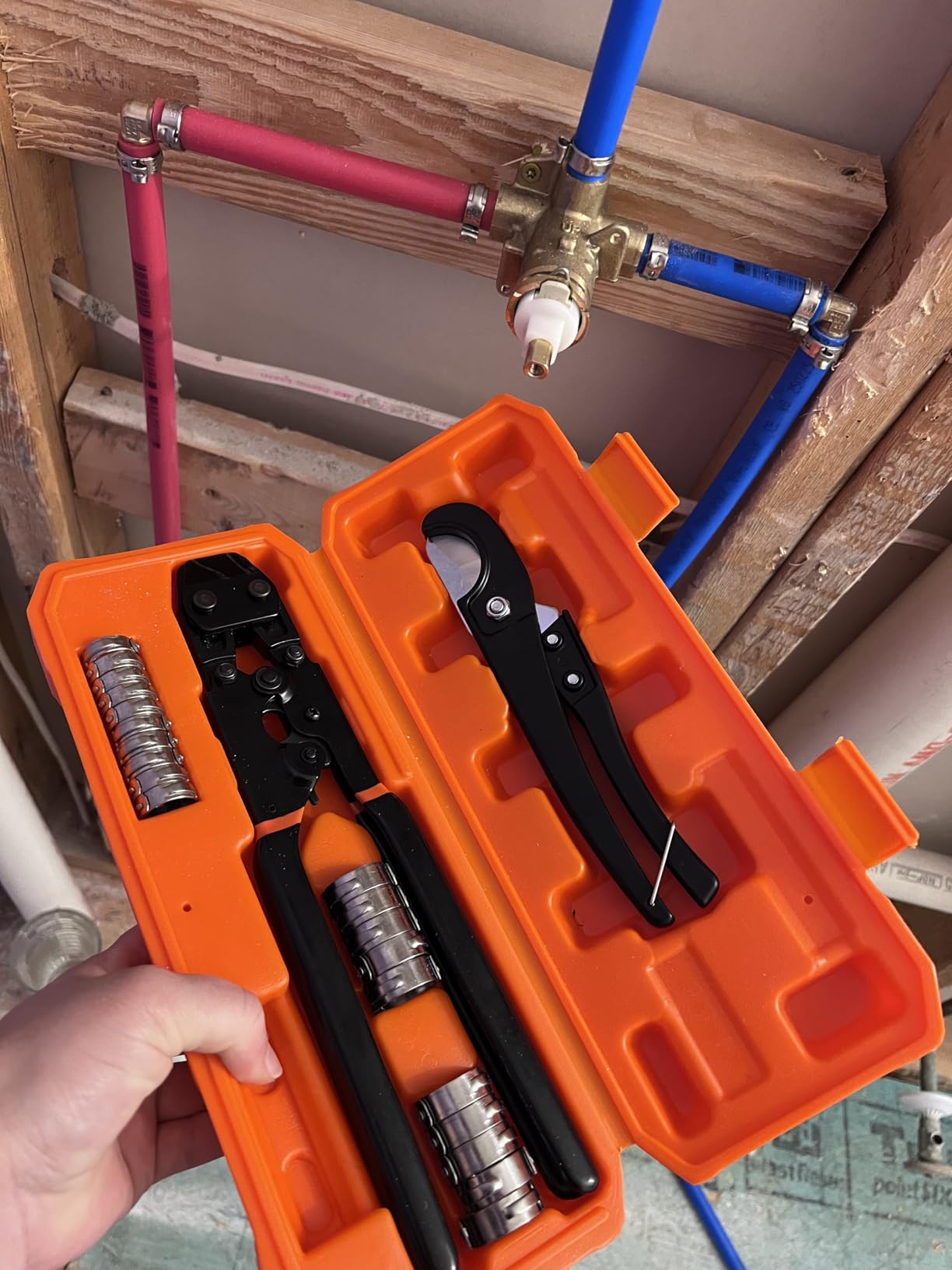
Owners treat this as a straightforward, no-fuss kit. The ratchet safety function and the included calibration tool are the two features most often mentioned, along with the box that keeps 30 spare clamps in one place. At 674 reviews it has the smallest owner base of the clamp kits here, so treat long-term reports as thinner.
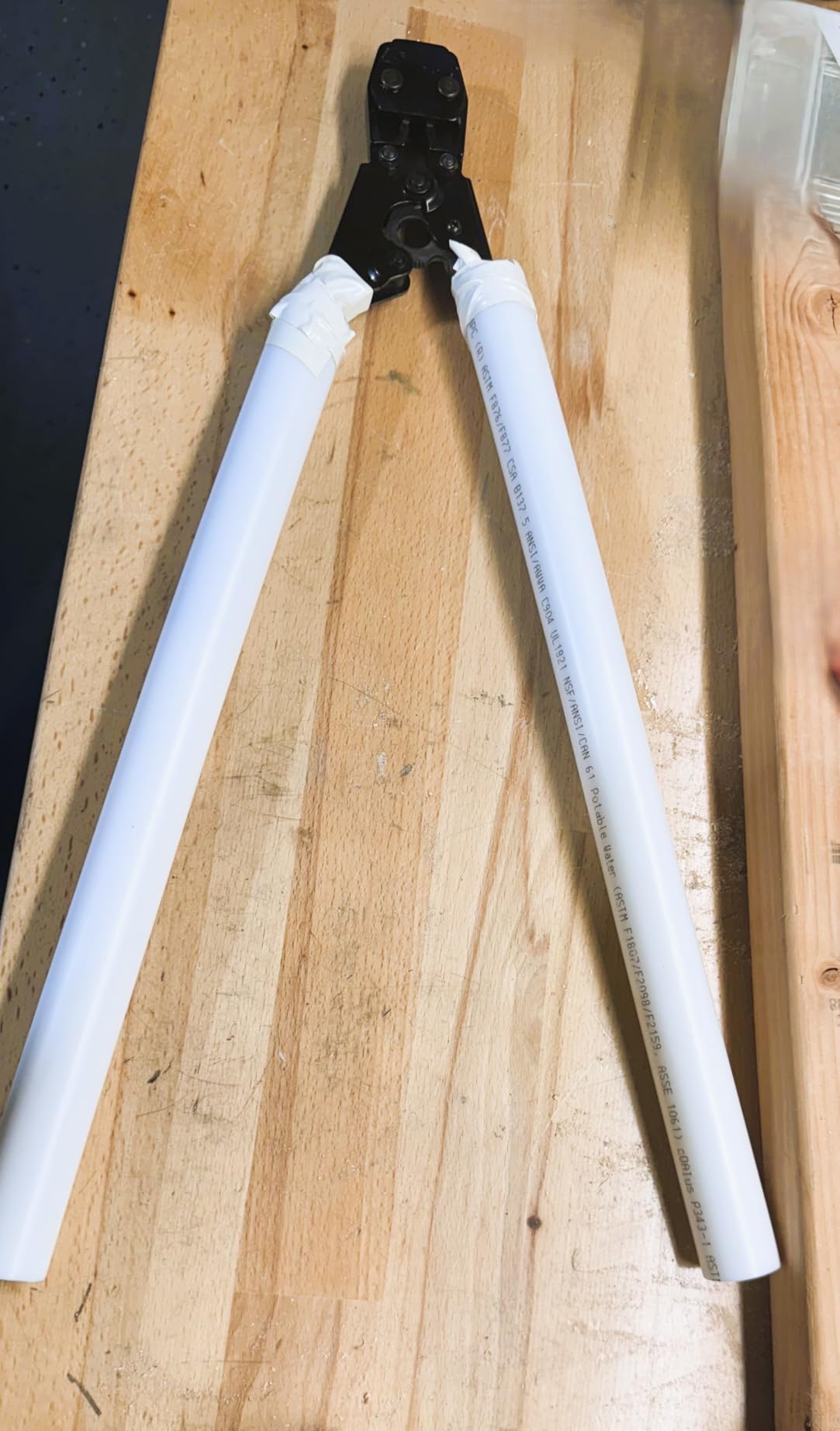
The trade for the low weight is leverage, since the handles are plastic. On 1/2 inch that is irrelevant. On 3/4 inch and 1 inch you will feel the difference against a steel-handled kit, particularly on a long run or an overhead connection.
What to check before you buy
Look at your largest joint. If everything is 1/2 inch, this kit is a genuinely good answer and the light body is a real advantage. If you expect several 3/4 inch joints, look at a longer steel-handled option instead.
There is no clamp removal function, so treat the first few joints as practice pieces. Cut a short scrap length, crimp it, and check it with the calibration tool before you work on anything you cannot afford to replace.
Where it falls short
No removal function means a mistake costs a fitting. On a repair where the shut-off valve is behind a finished wall, that is an unwelcome constraint.
Plastic handles flex under load. Reviewers do not report accuracy problems as a result, but the effort on larger clamps is higher than on the forged steel kits, and the smaller review base means less long-term evidence.
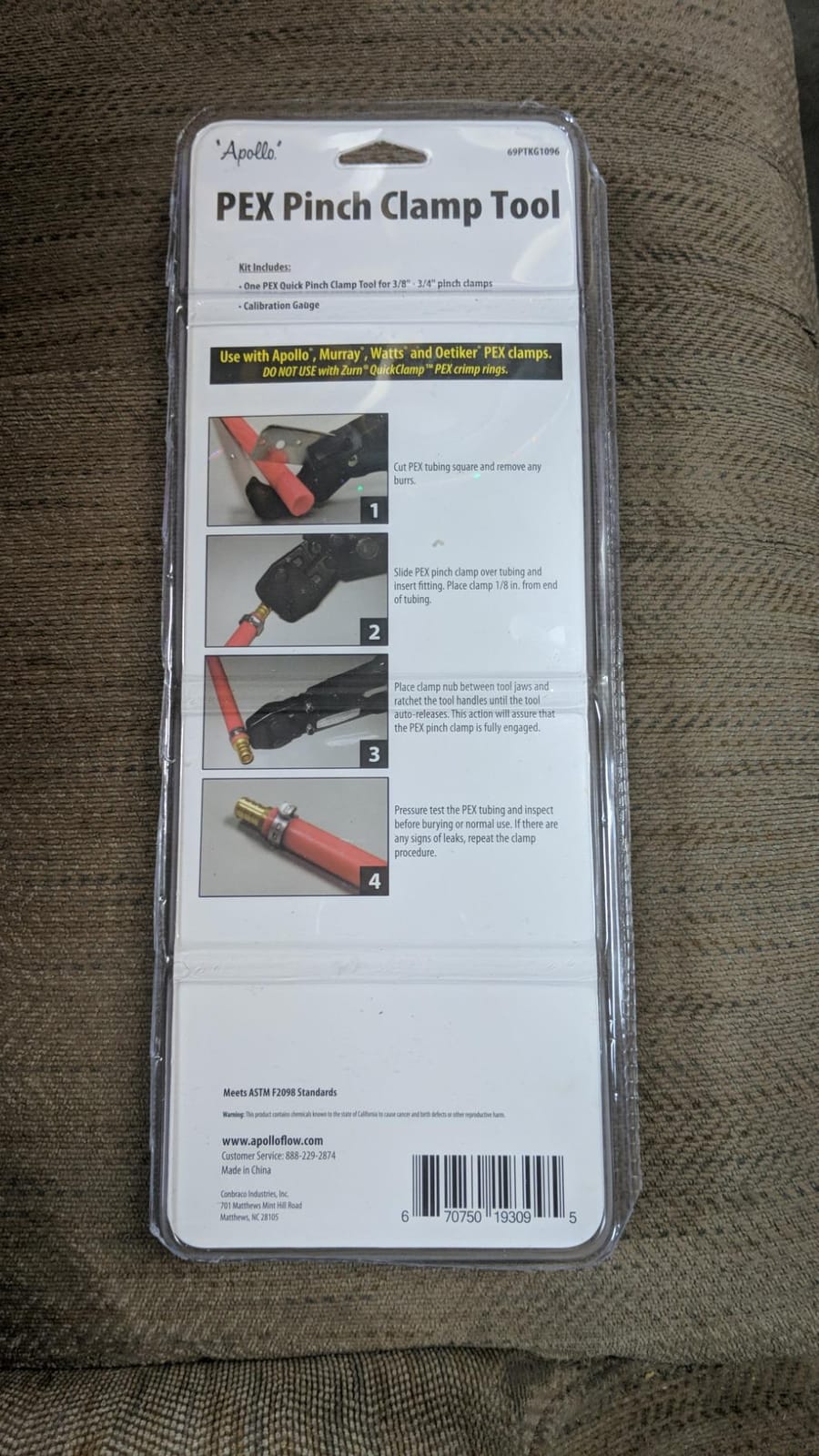
8. Apollo 69PTKG1096 Pinch Clamp Tool – Best Pro-Brand Clamp Tool
Apollo PEX 69PTKG1096 3/8-inch – 1-inch Stainless Steel Pinch Clamp Tool
- Established trade brand with a stainless steel body
- Long handles deliver strong leverage on the final squeeze
- Calibration pieces are stored inside the handle
- Works with Oetiker
- Apollo and Murray clamps
- Requires real strength
- with some users pulling with both arms
- Handles must open fully
- which is difficult in tight spaces
- Not compatible with Zurn Quick Clamp rings
Apollo under Conbraco is the recognised trade name in this category, and that name carries weight for a reason. The body is stainless steel, the dimensions are 5.5 by 15.25 inches, and at 1.5 pounds it is not a large tool. It works with Oetiker PEX pinch clamps in 3/8 inch, 1/2 inch, 3/4 inch, and 1 inch, and also with Apollo and Murray pinch clamps from 3/8 inch through 3/4 inch.
Two details set it apart from generic clamp tools. The calibration pieces are stored inside the handle, so the verification tool is never lost and the check is available years later. And the ratchet will not release until the ring is fully clamped, which removes the most common DIY error of stopping early because the tool felt done.
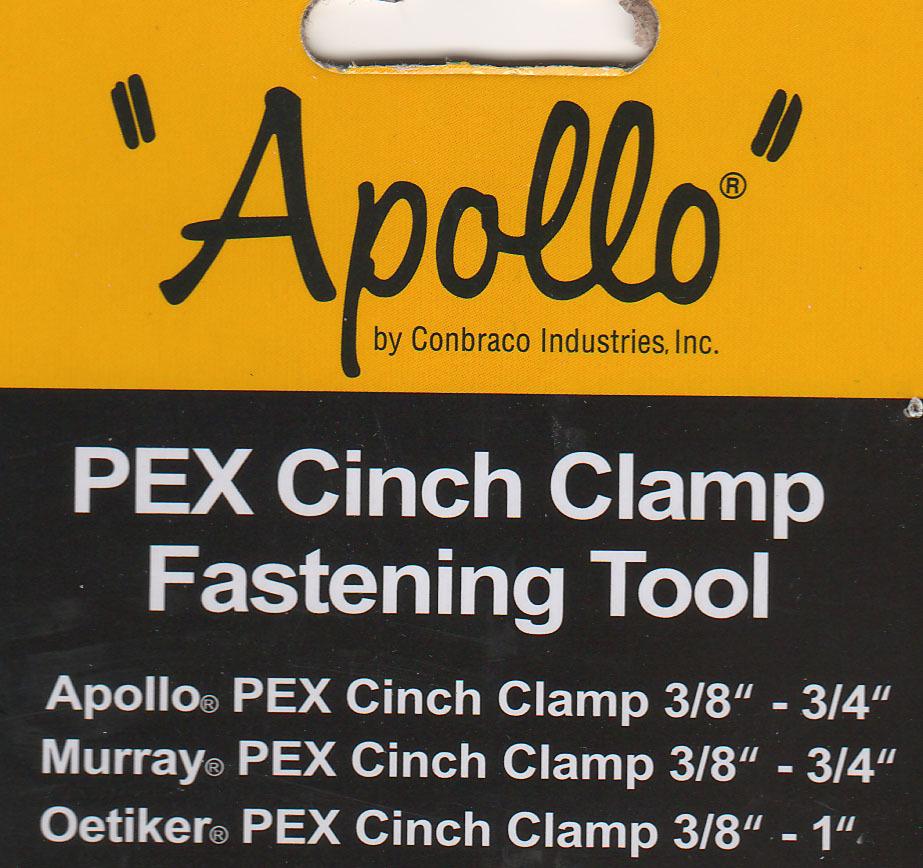
Owners report a decade or more of leak-free service, and treat the tool as durable rather than disposable. The two recurring cautions are effort and expectations. Several buyers assumed it was one-handed because some listings suggest so, and it is not, and some bought it for Zurn Quick Clamp rings before finding out those are excluded.
The calibration pieces arrive in an unlabelled bag, which confuses first-timers. Take two minutes when the tool arrives to compare the pieces against a known-good crimp or the maker instructions, and write down which is which.
What to check before you buy
Check the clamp brand carefully. Oetiker, Apollo, and Murray pinch clamps are all covered, Zurn Quick Clamp crimp rings are not. Because the tool is named for a specific clamp system, this is the error we would most expect a buyer to make.
It is a tool only purchase. No cutter and no rings come in the box, so budget for both if you are starting from nothing.
Where it falls short
It needs genuine strength. Some users report pulling with both arms on the final squeeze, and the handles have to open fully, which is a problem in confined spaces. This is a strong tool, not an easy one.
With 562 reviews the owner base is smaller than the iCrimp kits, and the absence of printed instructions in the box means the calibration step is easy to miss entirely. If you skip it, you are crimping without a reference.
9. IBOSAD Hydraulic Press Crimper – Best for Large Joints
- Hydraulic action removes the arm-strength requirement of manual crimpers
- 350 degree rotating head works around tees and in confined spaces
- Covers half-inch
- three-quarter-inch and one-inch for copper and press sleeves
- Aluminium alloy body resists oil leaks over repeated use
- Heavier and bulkier than hand crimpers at 4 pounds
- Lowest review count in the roundup
- Press systems cost more per joint than clamps
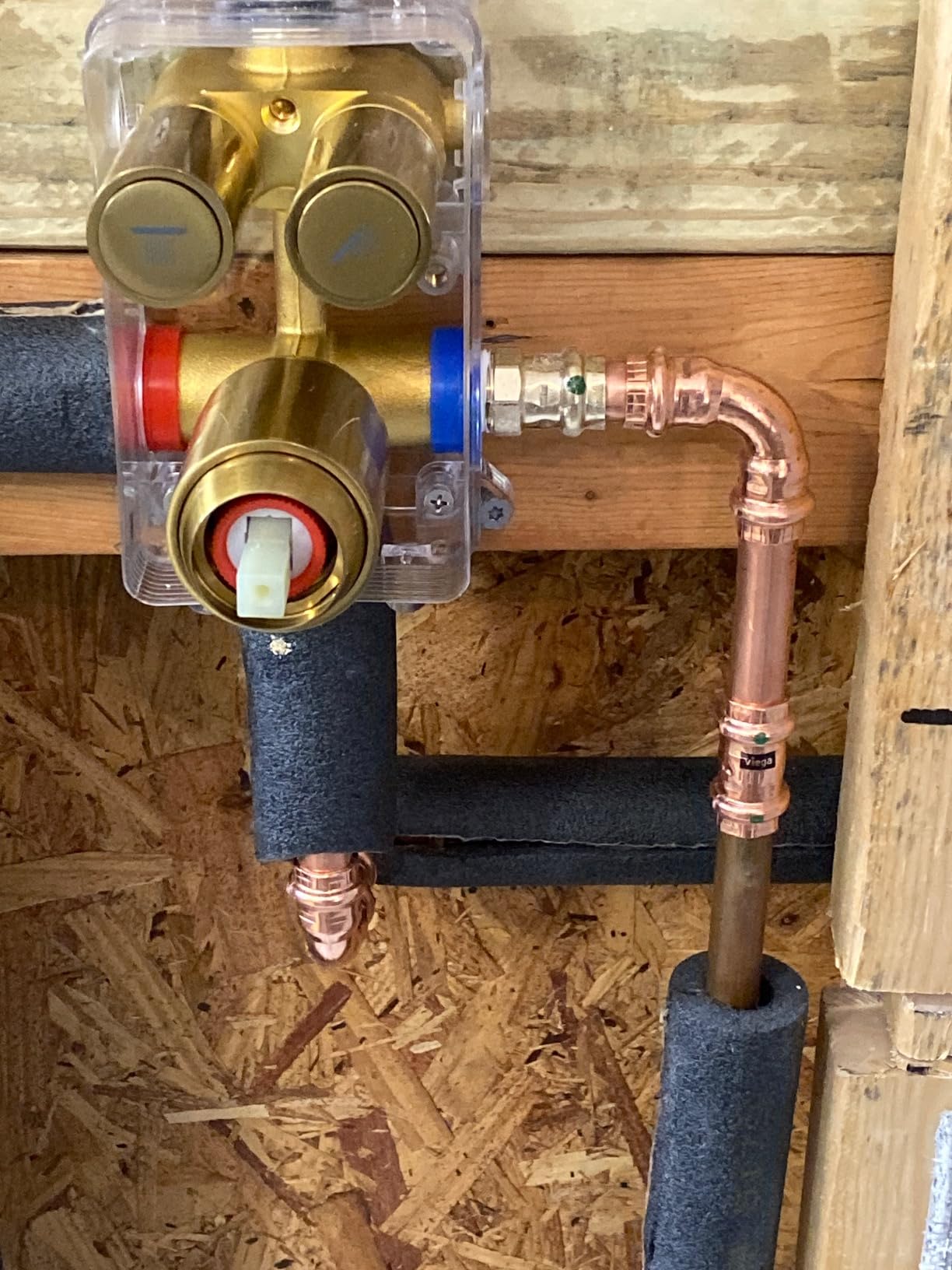
This is the specialist option and it works a different connection system from everything above it. Instead of crimping a ring or cinching a clamp, it presses ASTM F877 stainless PEX press sleeves, and it also handles copper pipe in 1/2 inch, 3/4 inch, and 1 inch. Press sleeves and press tools are a different system entirely, not a better version of the same one.
The hydraulic mechanism is the reason it exists. Manual hand force is the limiting factor on large joints, and a hydraulic drive lets one person make consistent 1 inch connections without the arm fatigue that stops hand crimpers. The head rotates 350 degrees, which is what makes it usable around tees and in confined spaces where a fixed-angle hand tool cannot get a straight approach.
Reviewers point to the rotating head as the feature that makes it practical and to the hydraulic drive as the reason a single person can handle a whole-house run. The aluminium alloy body is specified to resist oil leakage over repeated use, which is the component that usually fails first in a hydraulic tool.
The evidence here is thinner than anywhere else in the roundup, with 218 reviews. That is not a quality signal either way, it simply means there is less long-term owner history to draw on, and hydraulic tools are a bigger commitment than a hand crimper.
What to check before you buy
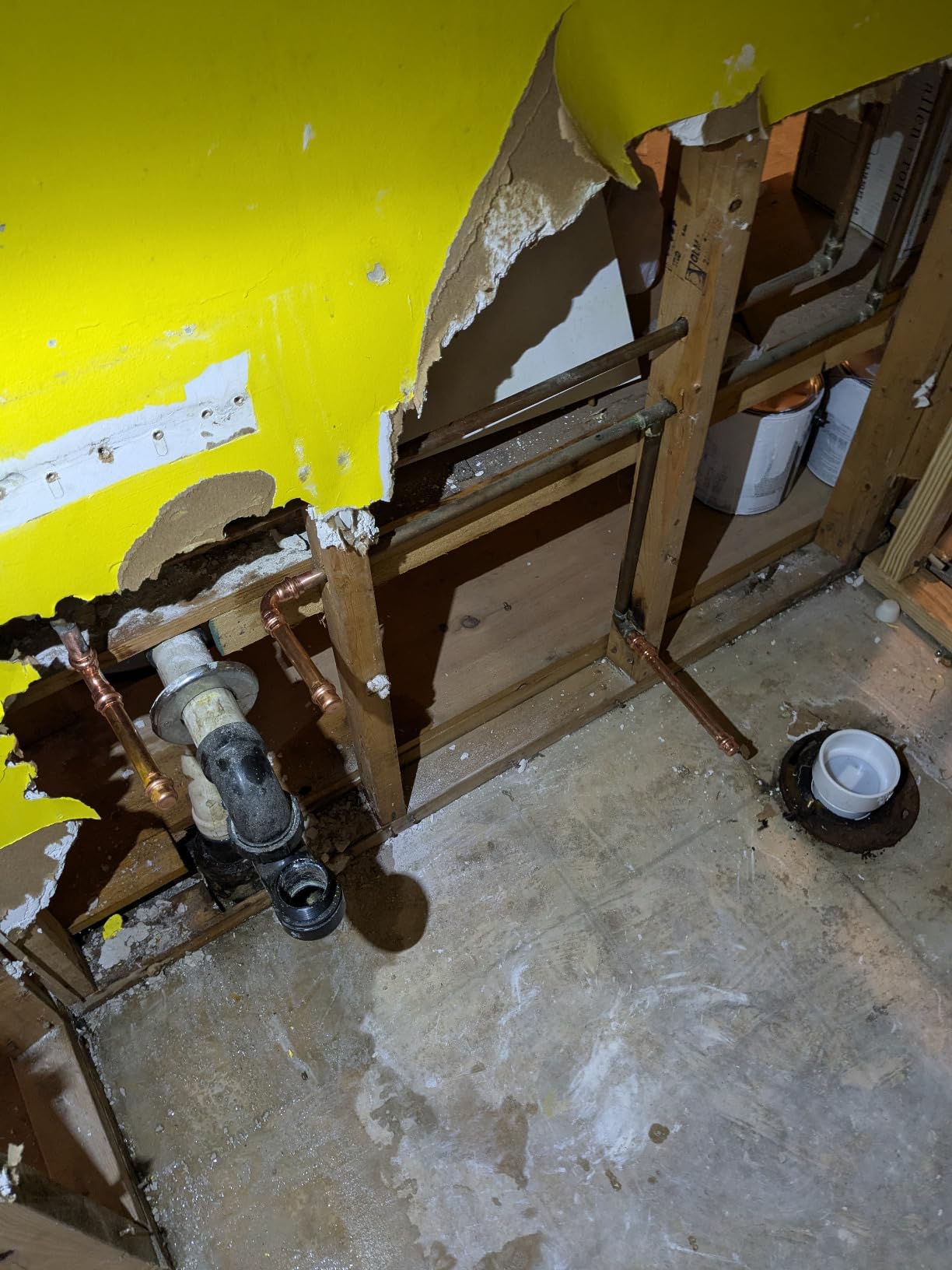
Confirm you want the press system. Press sleeves and press fittings are not interchangeable with crimp rings or cinch clamps, and a press tool will not cinch a stainless clamp. Choosing this means committing your fittings to one connection family.
Think about the joint count. Press systems cost more per joint than clamps, and that only makes sense across many larger-diameter connections, not one supply-line repair.
Where it falls short
It is the heaviest tool in the roundup at 4 pounds and the bulkiest at 17.7 inches long. That is fine for a dedicated whole-house project and a nuisance for a one-off job in a cabinet.
It does not cover 3/8 inch PEX, and it will not crimp copper crimp rings. If your existing plumbing is ring-based, this tool simply does not apply to your system.
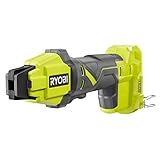
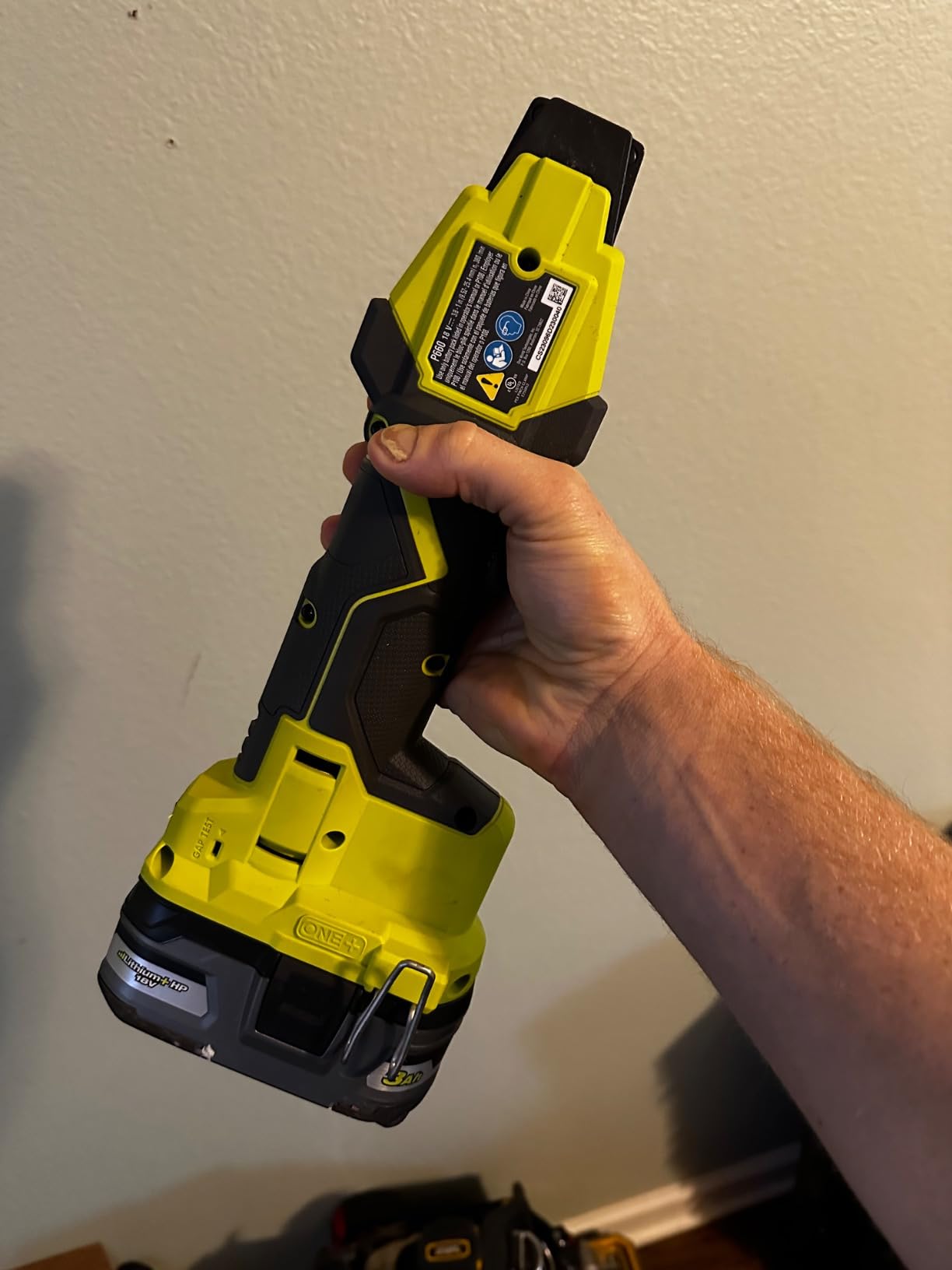
10. Ryobi ONE+ 18V P660 – Best Cordless Option
RYOBI ONEAND 18V Lithium-ION Cordless PEX TUBING CLAMP Tool Tool ONLY P660
- Cordless design removes the squeezing effort that limits hand crimpers
- One-button operation speeds up long whole-house runs
- Battery and charger compatibility across the ONE+ 18V platform
- Compact body is easy to handle in crawl spaces
- Tool only
- battery and charger are separate purchases
- 30 day manufacturer warranty is short
- Heavier than manual clamp tools at 4.6 pounds
The Ryobi ONE+ P660 is a cordless PEX tubing clamp tool on the 18V platform, and its entire purpose is to remove the squeezing effort that makes manual clamp tools punishing over a long run. One-button operation means you position the jaws and pull the trigger, which is a large quality-of-life difference on a run with dozens of joints.
The body is compact ABS plastic measuring 12.68 by 5.39 by 3.58 inches, and at 4.6 pounds it is easy to carry into a crawl space or hold overhead. It comes from a well-known brand with available parts and service, which matters more for a tool with a battery in it than for a purely mechanical one.
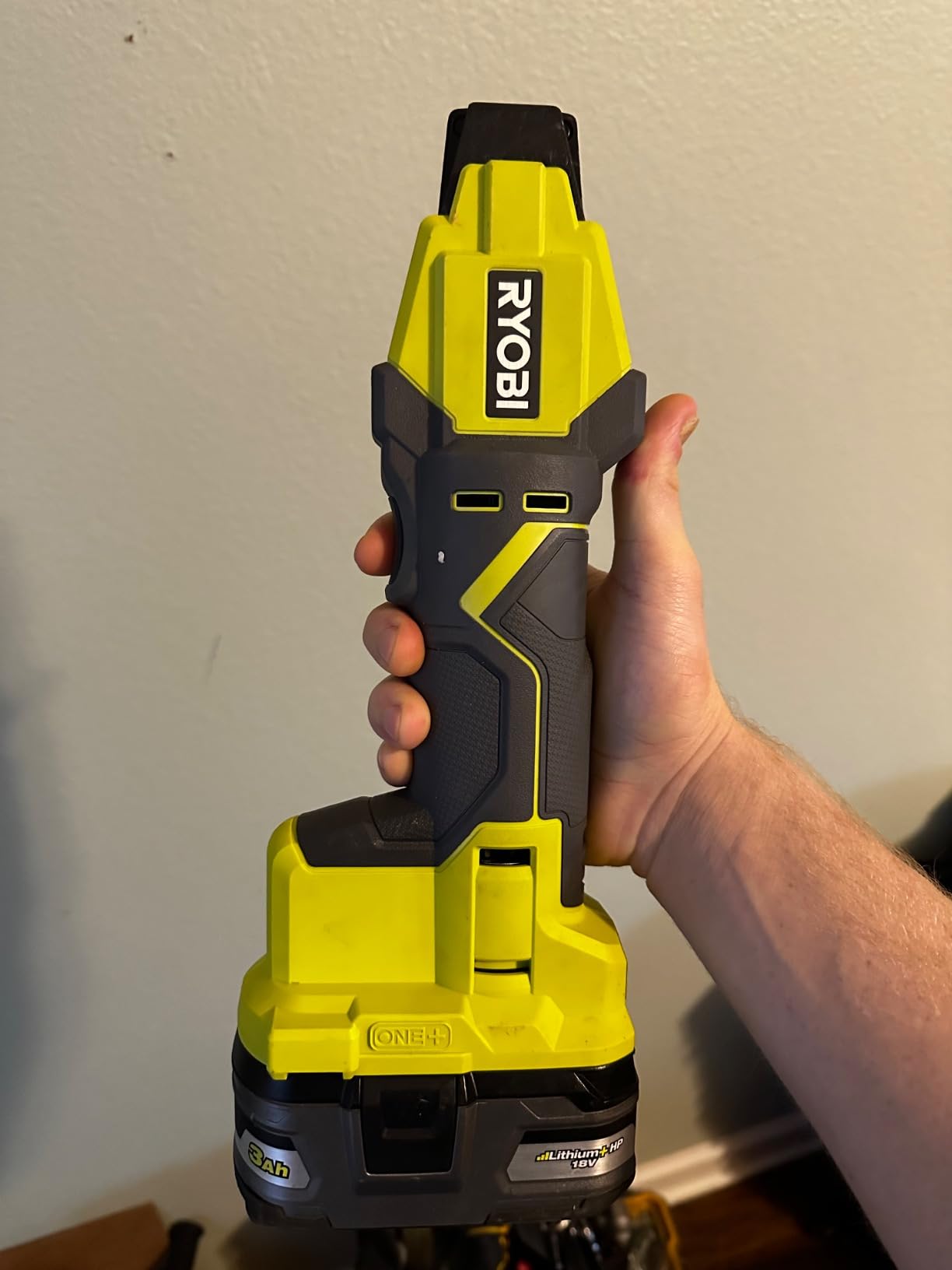
With 85 percent five-star ratings, cordless owners are largely satisfied with how the tool removes arm fatigue. The most common practical point is that this is a tool-only purchase, so the total cost depends entirely on whether you already own ONE+ 18V batteries. Several buyers also note the 30 day warranty is shorter than they expect from a power tool.
Be realistic about size coverage. The tool handles the sizes supported by its own jaws rather than the full 3/8 inch through 1 inch clamp range, so it is not a substitute for a multi-size manual crimper if you need 1 inch work.
What to check before you buy
Check whether you already run the ONE+ 18V platform. If you do, this is one of the cheaper cordless options available to you. If you do not, add a battery and a charger to the cost before deciding, because a bare tool is not a working tool.
Confirm the jaw sizes against your project. Cordless clamp tools are usually sold for a specific size range, and that is narrower than the range on any manual multi-size tool in this roundup.
Where it falls short
The 30 day limited warranty is genuinely short, and for a tool that will sit in a garage for a decade that is worth weighing. Manual crimpers carry no such clock.
At 4.6 pounds it is heavier than a manual clamp tool, and battery performance in cold crawl spaces is a real consideration for anyone working through winter. For a single repair, the platform cost and the weight are both hard to justify.
Do You Even Need a Crimping Tool?
Sometimes you do not, and this is the question homeowners ask most often. Push-to-connect fittings, sold under the SharkBite name among others, use a stainless steel teeth ring inside the fitting that bites the PEX tube when the fitting is pushed on. No tool, no crimp, no gauge. For a supply line to a shut-off valve or a water heater, a correctly sized push-to-connect coupling is a legitimate answer.
Where crimping wins is permanence and speed on the run itself. Push-to-connect fittings run out of space quickly, cost more per joint than a clamp and an elbow, and owners on plumbing forums report that crimped connections are what they trust inside walls and ceilings. The practical rule is simple: use push-to-connect where a fitting needs to come apart later, and crimp everything you intend to leave alone.
Other substitutes people ask about, such as a hose clamp, a crimp tool borrowed from an electrical kit, or channel-lock pliers, are not valid for PEX. A PEX crimp ring or cinch clamp must be compressed to a defined dimension, and none of those options measure that. You also see electricians and assembly work using the same word crimping, but that is a different operation entirely, covered in our insulated crimping tools for electricians guide, and the data-cable equivalent lives in our roundup of the best network crimping tools for IT pros. For heavy-gauge electrical cable rather than tubing, our guide to the best copper crimping tools for battery cables covers the lug and terminal side.
Crimp vs Clamp vs Press vs Expansion
These four words describe four different connection systems, and mixing them is the most expensive mistake a beginner can make. Copper crimp rings sit under a brass fitting and are compressed to the ASTM F1807 dimension. Stainless cinch clamps wrap the tube and fitting from outside and are compressed to the ASTM F2098 dimension. Press sleeves slide over the fitting and are pressed onto the tube with a press tool. Expansion fittings are expanded onto the tube by an expansion tool, mostly for PEX-A and PEX-AL systems.
Choose a copper crimp ring tool if your existing fittings are ring-based, you are matching older work, or you want the widest range of compatible fitting brands. A working plumber in one plumbing forum thread described switching to stainless rings and a cordless gun for residential repair work and reporting reliable results over many hundreds of repairs, which is the common view that stainless is trending because of corrosion resistance. Copper rings remain the most widely stocked ring in North America and work perfectly well with a calibrated tool.
Choose a stainless cinch clamp tool if you are starting fresh, because clamp fittings are widely available and most brands are compatible with any ASTM F2098 clamp. Several homeowners in plumbing forums independently prefer clamps for reach, since a narrower body gets into cabinet spaces where a ring tool will not. If you are unsure, clamp is the safer default for a beginner, and five of the ten tools here use it.
Choose a press system if you are doing many larger-diameter joints and want the fastest, most consistent result with the least hand effort. Press connections are widely used in commercial and hydronic work. For a single household supply-line repair, the extra cost per joint and the tool size make this a poor fit.
Choose expansion only if your tubing is PEX-A or PEX-AL. Expansion is a different tool family, not a crimping variant, and the fittings and tubing must be from the same system. A PEX-A expansion tool will not crimp, and no crimping tool will expand.
PEX A vs PEX B vs PEX C Explained
The letter is a manufacturing method, not a quality grade, and this is the single most misunderstood point in PEX buying. PEX-A is cross-linked with a peroxide process and is the most flexible, which is why it is used for radiant floor heating and for runs that need to bend around obstacles. PEX-B is the most common residential type and is what most DIY supply-line work uses. PEX-C is a chlorine-based process that resists chlorine better but is stiffer and harder to bend.
For crimping purposes, the key point is that PEX-A and PEX-B both work fine with standard crimp rings and cinch clamps, and PEX-B is the most forgiving of a slightly out-of-square cut. The crimp compresses a ring around whatever tube is in place, so the tube type matters far less than the fitting system. If you see a PEX-A specification on a job, check whether the designer also specified an expansion system, because that changes the tool you need.
Stiffness does matter in one practical way. PEX-C resists chlorine better, which is relevant if you are on a private well with high chlorine, and PEX-A bends more easily in tight routing. Neither changes which crimping tool you should buy.
How to Crimp PEX Step by Step
Measure and mark the tube. Mark the insertion depth on the PEX before you push it on, so you can confirm full seating later. Push-fit depth is a fixed dimension from the fitting manufacturer, and marking removes the guesswork.
Cut square. Use a PEX cutter rather than a hacksaw or a tubing cutter set for copper. The cut face has to be square to the tube wall, and a cutter with a built-in guide does this in one pass. A pinched or oval cut is the most common cause of a joint that will not seal.
Slide the ring on first. Put the crimp ring or cinch clamp onto the end of the tubing before the tube goes near the fitting. This is the mistake beginners make most often, because once the tube is on the fitting you cannot get a ring over the end without cutting it all off again.
Push the tube fully onto the fitting. The tube should reach the fitting shoulder and stay there. If the insertion mark is not visible at the fitting edge, the tube is not seated and the joint will not hold pressure.
Position the ring correctly. The ring should sit over the section where the tube enters the fitting, and a plumber forum thread noted that many guides show the ring sitting further from the shoulder than it should. Centre the ring on the barbed section, not out on the free tube.
Crimp with the correctly sized jaws. Close the handles until they fully come together and the ratchet releases. Do not stop early because the resistance feels high, a partial crimp will not show up visually and it will not be caught by feel.
Check with the go/no-go gauge. This is not optional. Slide the fitting into the correct gauge cutout, and if the ring face does not sit inside the GO mark without forcing, the crimp is out of specification.
How to Verify a Crimp with a Go/No-Go Gauge
A go/no-go gauge is a small block with a series of notches cut to a specific dimension. Each notch is labelled for a size and a standard, GO for a correctly compressed ring and NO-GO for one that is still too loose or has been crushed past tolerance. The whole check takes two seconds and it is the only way to know.
Use the notch matching your size and standard. Copper ring tools and clamp tools use different gauges, and using the wrong one tells you nothing. Match both the pipe size and the ring standard.
Slide the fitting into the notch. The crimped ring face should enter the GO notch fully and stop at the shoulder inside it.
If it will not enter GO, try NO-GO. A ring that enters NO-GO cleanly is under-crimped, the clamp did not compress far enough. Add pressure and crimp again, or cut the ring off and start over.
A ring that fits neither notch is over-crimped. The clamp or ring is crushed past dimension. That joint can crack the fitting and it will not recover, so replace the ring and the fitting.
Recheck the tool when a clean crimp fails. If you are crimping new rings and the gauge keeps failing, the tool has drifted out of calibration. Use the adjustment screw and the calibration wrench or spanner, then test again.
Check a crimp on a straight run as well as a fitting. A crimp that passes the gauge but sits too close to the fitting shoulder has less room to flex, which is why ring position matters as much as compression.
Common DIY Crimping Mistakes
Crimping before putting the ring on the tube. The ring has to go on first, always.
Not fully seating the tube on the fitting. If you cannot see your insertion mark, the joint is not ready to crimp.
Stopping before the handles fully close. A ratchet prevents this, which is the argument for buying one.
Skipping the go/no-go gauge. This is the mistake that causes failures inside walls where nobody is looking.
Reusing a cut-off ring. A removed or cut ring is deformed. Use a new one.
Crimping an out-of-square cut. Re-cut it. This is not a crimping problem and no tool will fix it.
Using the wrong ring system. A copper ring tool will not cinch a stainless clamp, and Zurn Quick Clamp profiles need their own tool.
Expecting a light squeeze on 3/4 inch. Ratcheting clamp tools are hard work at that size. If the force feels unreasonable, check the jaw size before assuming the tool has failed.
What to Look for When Buying a PEX Crimping Tool
Ring and fitting compatibility. This is the decision point. Standard stainless PEX clamps meet ASTM F2098 and most clamp tools handle them from any manufacturer, with the notable exception of Zurn Quick Clamp profiles. Copper crimp rings meet ASTM F1807 and need a ring tool, not a clamp tool. If you already have fittings on the wall, match those. If you are starting fresh, stainless clamps are the safer choice for a beginner because compatibility is broader.
Tube size coverage. A house needs 1/2 inch and 3/4 inch for almost everything: supply lines, fixtures, water heater connections, and manifold runs. 3/8 inch appears on ice maker and appliance runs, and 1 inch appears on main feeds and outdoor runs. A tool that covers 1/2 inch and 3/4 inch handles the overwhelming majority of DIY work, and adding 1 inch coverage costs you weight and handle length.
Jaw type and how you change sizes. A fixed multi-size clamp tool handles several sizes in one body, which is fastest for a homeowner. A kit with interchangeable jaw sets covers more sizes but requires a swap mid-job. For a beginner doing scattered repairs, one body that covers both common sizes beats a broader kit.
Handle length and leverage. This is the criterion that determines whether you finish the job. Professionals consistently recommend longer handles, and 8.5 inches or more makes a real difference on 3/4 inch crimps. A short, light tool feels fine at 1/2 inch and punishing at 3/4 inch, and most complaints about manual crimpers trace back to handle length rather than to the crimping mechanism.
Go/no-go gauge included. Every pick in this roundup either includes a gauge, stores calibration pieces in the handle, or accepts one. This is the most trusted feature across every forum discussion we read, and it is the feature that turns crimping from guesswork into a verified process. The gauge is a few dollars on its own, but finding the right standard and size afterwards is a nuisance.
Calibration and adjustment screws. A tool with an accessible adjustment screw can be brought back into spec as it wears, using the supplied calibration wrench or spanner. A factory-adjusted tool with no adjustment path will eventually drift, and a drifted tool produces inconsistent crimps that look fine.
Removal function. A cinch-and-remove tool lets you strip a ring and reuse the fitting after a mistake. On a first job, that capability removes most of the cost of an error, and it is the reason the top pick includes it.
Included cutter. A PEX cutter is inexpensive on its own, but the ones in these kits are consistently praised for cutting square, and a square cut is a precondition for a good crimp. If you are buying a bare tool, add a cutter to the list.
Frequently Asked Questions
Do you need a PEX crimping tool?
Only if your fittings are crimp rings or cinch clamps. Push-to-connect fittings need no tool at all, and are a reasonable choice for supply lines and shut-off connections you may want to remove later. If your plan includes crimp rings, stainless clamps, or a press sleeve, then yes, you need the matching tool, and the go/no-go gauge that comes with it is the part that tells you the joint is right.
Is PEX A or PEX B for crimp?
Both work with standard crimp rings and cinch clamps, and the letter describes a manufacturing method rather than a quality grade. PEX-B is the most common residential type and is the most forgiving of a slightly out-of-square cut. PEX-A is more flexible and is chosen for radiant heat and tight routing, but it is usually paired with an expansion system, which is a different tool family entirely.
What can I use instead of a crimper?
Push-to-connect fittings are the real alternative, and they work well where a joint may need to come apart. Hose clamps, channel-lock pliers, and electrical crimping tools are not valid substitutes for PEX. A crimp ring or cinch clamp has to be compressed to a defined dimension, and those tools do not measure or hold that dimension, so the joint will not hold pressure.
How tight do I need to crimp PEX fittings?
Tight enough that the ring face fits fully inside the GO notch of a go/no-go gauge for your size and ring standard, and does not enter the NO-GO notch. That dimension is set by the ASTM standard for your ring type, not by feel. If the ring enters NO-GO it is under-crimped and should be recrimped or replaced, and if it fits neither notch it is over-crimped and the fitting must be replaced.
Why is my PEX crimp leaking?
Most leaks come from one of five causes: the tube was not fully seated on the fitting, the ring was crimped before being placed on the tube, the cut was out of square, the handles were not closed completely, or the ring sat too far from the fitting shoulder. Check the joint with a go/no-go gauge first, since that tells you immediately whether the compression itself was correct.
Can I crimp PEX with pliers?
No. PEX rings and clamps must be compressed to a specific dimension defined by the ASTM standard, and ordinary pliers apply uneven, unmeasured pressure. A leaking joint is the usual result, often discovered inside a wall. Use a purpose-built ratcheting crimper or clamp tool and verify the result with a go/no-go gauge every time.
The Bottom Line on the Best PEX Crimping Tools for 2026
The iCrimp Cinch and Remove Tool Kit is the best pex crimping tool for DIY plumbing because it covers every size a house needs, arrives factory adjusted, and can strip a bad ring instead of forcing you to replace the fitting. Buy the KG-1096 instead if you want the highest rating available and need nothing but the crimper. Buy the angle head IWS-C if the work happens under a sink or between studs, and reach for longer-handled kits when you expect more than a dozen joints.
Whichever you choose, the gauge is what separates a good connection from an expensive one, and a square cut plus a fully seated tube will do more for you than any feature on a spec sheet. Check every joint, and if you are starting a new system rather than matching old fittings, stainless cinch clamps on 1/2 inch and 3/4 inch PEX are the simplest reliable path for a first-timer in 2026.