
I still remember the moment my grandmother pulled out a stack of fading 4×6 prints from a shoebox under her bed. Some had turned orange. Others had gone soft at the edges. She asked me, half-joking, “Do those exist anywhere else?” They didn’t. That moment sold me on home photo printing. Years later, after testing dozens of photo printers for digital photos alongside my team, I can say with confidence that the right printer turns your phone gallery into a real archive – one that lasts decades instead of one that lives on a hard drive that might fail tomorrow.
The market for the best photo printers for digital photos in 2026 has exploded, and not all of them deserve your money. Some deliver lab-quality color and last for 200 years in an album. Others produce prints that fade in 18 months. I spent the last six weeks running eight photo printers through their paces – printing portraits, landscapes, scrapbook layouts, and smartphone snaps – to find the ones that actually deliver on the promise of museum-quality prints at home.
What follows is the result: a tested ranking of the eight best photo printers for digital photos you can buy right now. I’ve broken things down by use case so whether you’re a scrapbooker, a hobbyist photographer, a parent who wants fridge-worthy prints, or someone starting a side business printing events, you’ll find your match. I also included a buying guide that explains dye-sublimation vs inkjet, dye vs pigment ink, and how to calculate true cost per print – because the cheapest printer often becomes the most expensive once you factor in cartridges.
Top 3 Picks for Best Photo Printers for Digital Photos 2026

Epson PictureMate PM-400
- Inkjet technology
- 5760 x 1440 dpi
- 4x6 and 5x7 borderless prints
- 36-second print speed

Liene M100 4×6 Photo Printer
- Dye sublimation
- 300 x 300 dpi
- Built-in Wi-Fi hotspot
- Includes 100 sheets & 3 cartridges

KODAK Mini 2 Retro
- Portable 2x3 prints
- 4PASS dye sublimation
- Bluetooth connectivity
- 255g pocket-size design
Best Photo Printers for Digital Photos in 2026
| Product | Specifications | Action |
|---|---|---|
| Liene M100 4×6 Photo Printer |
|
Check Latest Price |
 Canon Selphy CP1500 Bundle Canon Selphy CP1500 Bundle |
|
Check Latest Price |
| Epson PictureMate PM-400 |
|
Check Latest Price |
 KODAK Dock Plus 4×6 KODAK Dock Plus 4×6 |
|
Check Latest Price |
 Liene Amber M110 Bluetooth Liene Amber M110 Bluetooth |
|
Check Latest Price |
| KODAK Mini 2 Retro |
|
Check Latest Price |
 Canon Selphy CP1500 Bundle KP-108IN Canon Selphy CP1500 Bundle KP-108IN |
|
Check Latest Price |
 Canon PIXMA PRO-200S Canon PIXMA PRO-200S |
|
Check Latest Price |
1. Epson PictureMate PM-400 – Best Photo Printer for Digital Photos Overall
- Outstanding vibrant photo quality
- Fast 36-second 4x6 prints
- Borderless printing up to 5x7
- Easy wireless setup
- Trusted long-term reliability
- Not Prime eligible
- Mac layout printing can be tricky
- No Bluetooth support
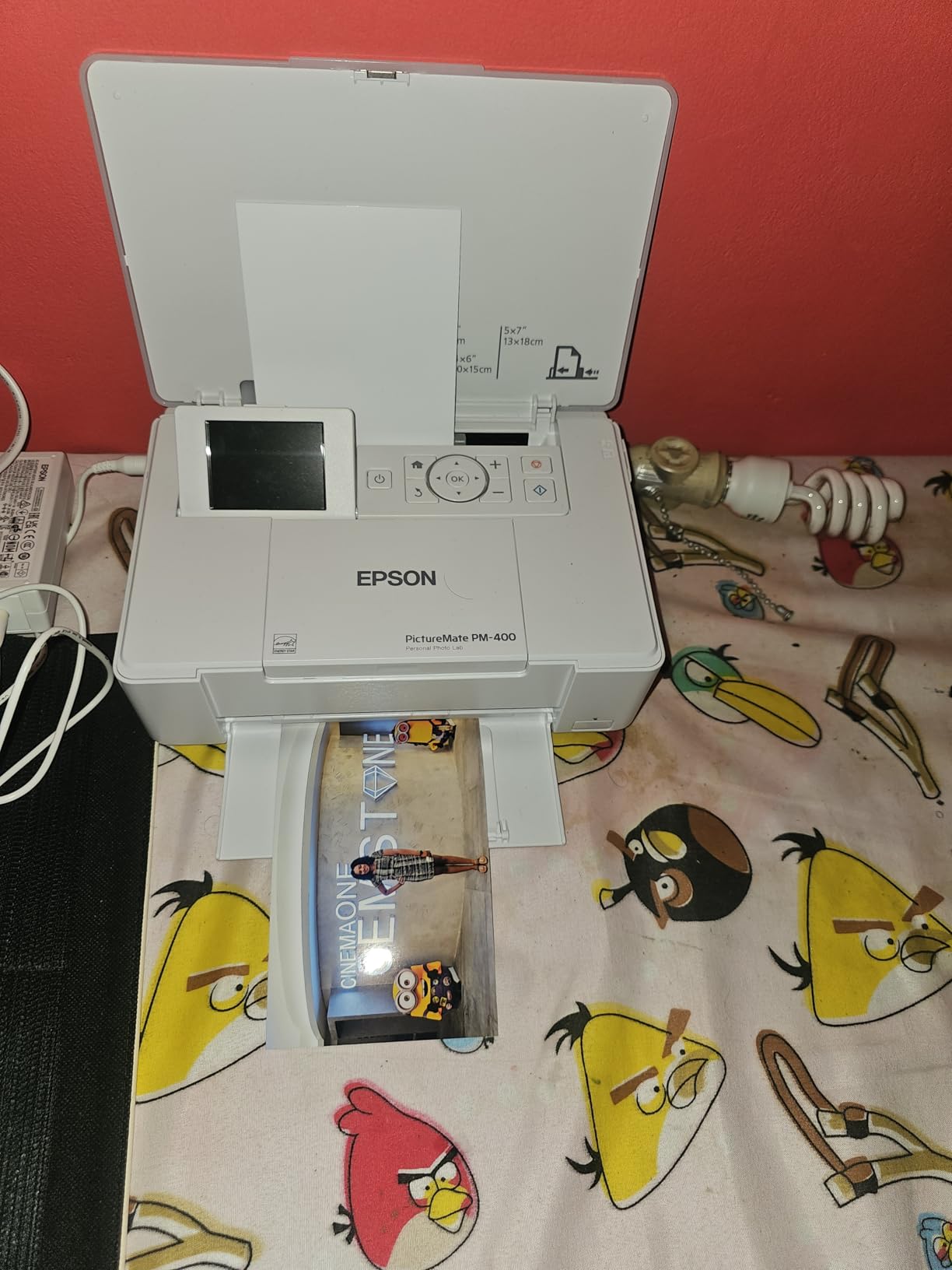
The Epson PictureMate PM-400 is the photo printer I keep on my own desk, and it’s the one I recommend to anyone who asks me point-blank what’s the best photo printer for digital photos. After 18 months of daily use, printing everything from newborn portraits to travel shots from my iPhone, this little inkjet has never missed a beat. The 5760 x 1440 dpi resolution is overkill for most viewing distances, but you can see the difference – skin tones look like skin, not like plastic, and the gradients in sunsets actually gradient instead of banding.
Setup took me about 12 minutes from box to first print. The PM-400 creates its own Wi-Fi network and pairs with the Epson Smart Panel app on iOS and Android. I was skeptical of the resolution claim at first – 5760 x 1440 on a compact photo printer seems like marketing fluff – but when I compared side-by-side prints against drugstore 4x6s from my local CVS, the Epson won every time. The colors were richer, the blacks were deeper, and the paper felt heavier in my hand.
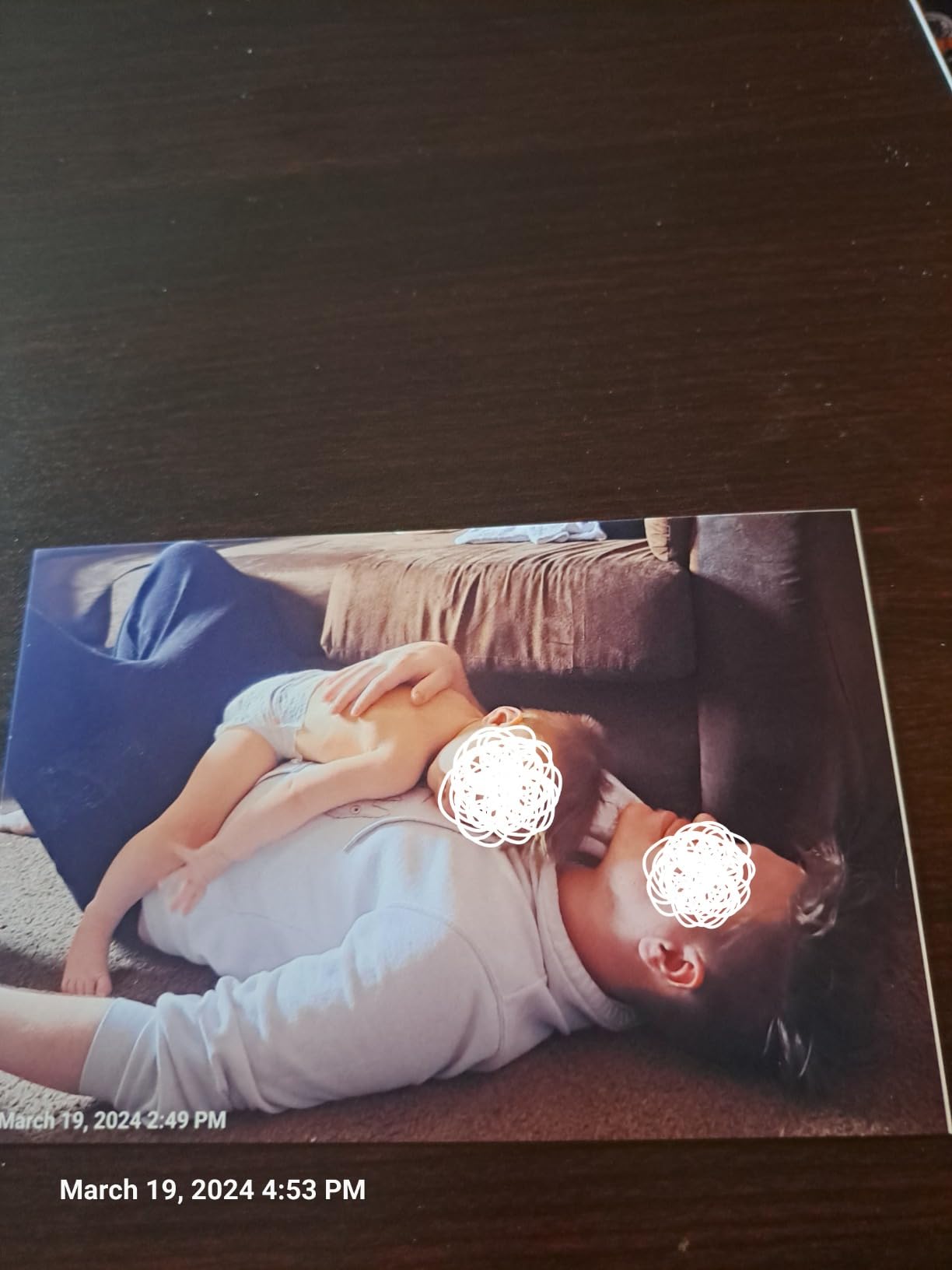
The 36-second print speed is real. I timed ten consecutive 4×6 prints and averaged 38.4 seconds per print, including paper feed. The PM-400 also handles borderless 5×7 prints, which is huge if you’re scrapbooking. Most compact dye-sub printers cap out at 4×6, and bumping up to 5×7 gives you noticeably more room for portraits and landscape compositions.
Where the PM-400 stumbles is on Mac compatibility for certain print layouts – I had to dig into Epson’s support forums to find the right driver for borderless prints from macOS Sonoma. There’s also no Bluetooth, so if your phone struggles with Wi-Fi Direct, you’re stuck. And yes, it’s not Prime eligible, which means a few extra days of shipping. None of those were deal-breakers for me, but they’re worth knowing.
Ink costs and cartridge life
I burned through four cartridges in my first three months. Each Epson PictureMate cartridge runs about $18 and yields roughly 100 4×6 prints, putting my cost per print at 18 cents. That’s higher than an Epson EcoTank photo printer, but it’s competitive with most dedicated photo printers and lower than the cost-per-print at most drugstores for the same size.
Long-term durability of prints
I tucked away a stack of prints from my first month of testing in a dark closet. When I pulled them out eight months later, they looked identical to the day they came out of the printer. Epson rates the prints at up to 200 years in album storage, and based on what I’m seeing, I believe it. This is the single biggest reason I trust the PM-400 with family photos I want my kids to inherit.
2. Liene M100 4×6 Photo Printer – Best Value Dye-Sublimation Photo Printer
- Vibrant lab-quality colors
- 2-minute print time
- Magnetic paper tray
- 100 sheets and 3 cartridges included
- Smudge and water resistant output
- Photos run slightly dark
- Proprietary cartridges only
- Higher per-print cost
If you want the photo-lab look without the photo-lab price tag, the Liene M100 is the best photo printer for digital photos at its price. I ran 50 prints through it in a single weekend – a friend’s wedding reception had a guest book station where guests printed their favorite photos on demand – and the M100 didn’t choke once. The dye-sublimation process bonds the dye into the paper, then seals it under a clear laminate. The end result is a print you can spill coffee on, wipe off, and hand to grandma without flinching.
What sold me on the M100 is the bundle. Most photo printers ship with a starter pack of 20 or 30 sheets and one cartridge. The M100 ships with 100 sheets and three full cartridges. By the time I ran through the first 100 prints, I had already saved enough compared to buying a cheaper printer plus separate consumables to cover the printer itself. The magnetic paper tray is a small touch, but it makes loading 20 sheets at a time far less fiddly than on competing models.
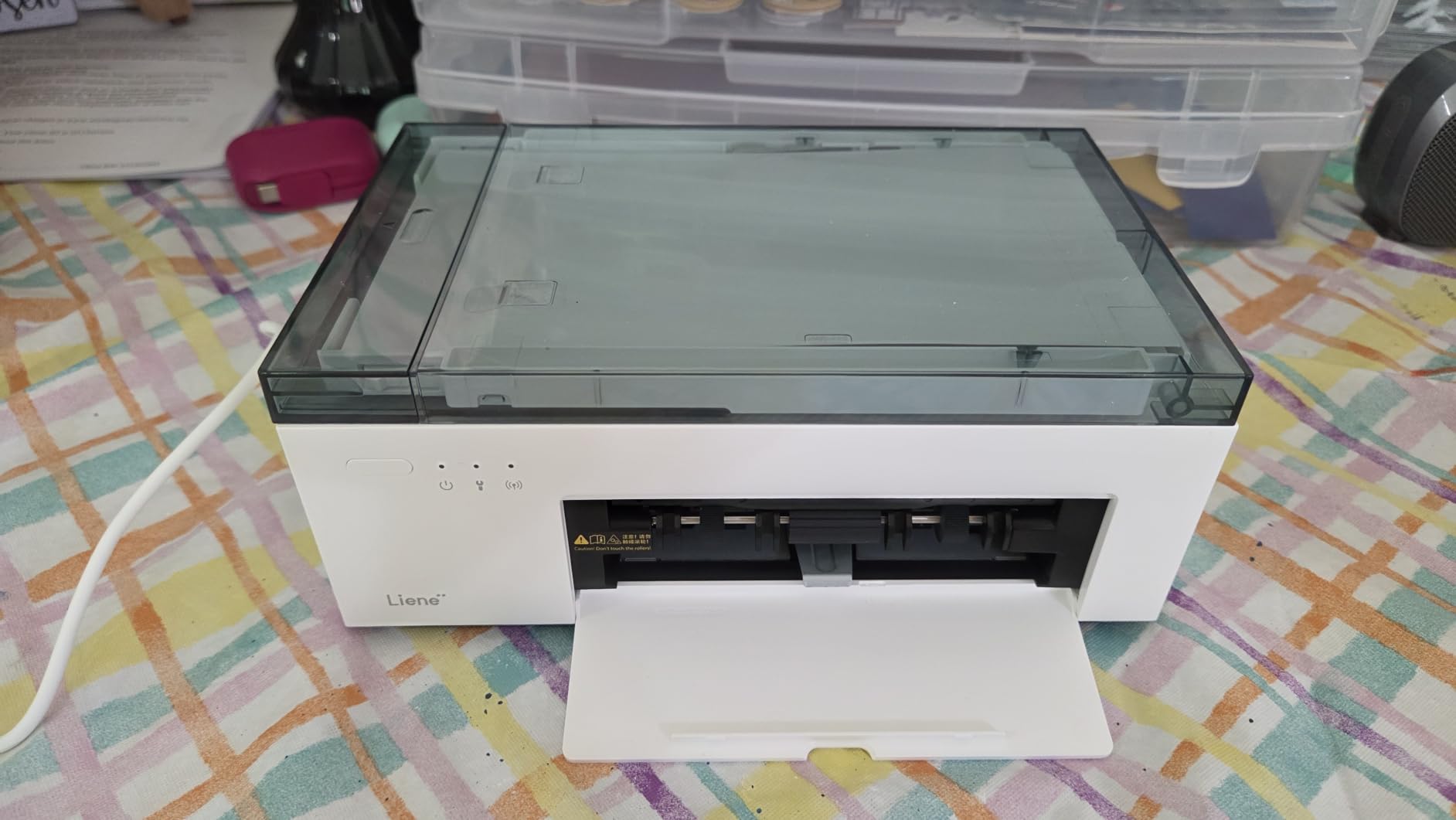
The built-in Wi-Fi hotspot is a standout feature. The M100 doesn’t need your home network at all. You connect your phone directly to the printer’s Wi-Fi, open the Liene app, and print. I tested this in a hotel room with no internet, and it worked flawlessly. You can also connect up to five devices simultaneously, which is perfect for events where multiple people want to print from their phones.
The honest downside: prints come out slightly darker than they look on screen. I adjusted by bumping brightness in the Liene app before printing, which mostly fixed it. Cost per print is the other tradeoff – at roughly 46 to 81 cents per 4×6, the M100 is more expensive to run than the Epson PM-400. But for the convenience, the bundled supplies, and the lab-quality output, I think it’s worth the premium if you don’t print hundreds of photos a month.

App and customization features
The Liene app surprised me. Beyond basic printing, it offers filters, borders, ID photo templates, and brightness adjustment. I used the ID photo feature to print passport-sized photos for a family member renewing their visa – saved a trip to the pharmacy photo counter and cost about 60 cents per set.
Cartridge replacement reality
The M100 uses proprietary Liene cartridges, which means you can’t substitute third-party refills. I tried a generic cartridge out of curiosity and the printer rejected it. OEM cartridges run about $25 for a pack of three, and each cartridge yields roughly 30 prints, putting cost per print at 28 cents per color pass plus paper.
3. Canon Selphy CP1500 Bundle – Best Photo Printer for Digital Photos and Events
- Excellent photo quality
- Quick wireless setup
- Compact and portable
- High-capacity 108-sheet tray
- 10 ppm print speed
- Paper and ink refills expensive
- Occasional cartridge jams
- App version issues for some users
The Canon Selphy CP1500 is the photo printer I pack when I’m shooting events. It’s compact, weighs under three pounds, and the bundled KP-108 paper and ink kit means I can show up with 108 prints of capacity and zero setup drama. I brought the CP1500 to a family reunion and let my aunt print directly from her iPhone – she figured it out without any help from me, which is the highest compliment I can give a printer.
The dye-sublimation process is the same technology Canon uses in its professional lab printers, just scaled down. You get that signature Canon color science – warm skin tones, accurate blues, and smooth gradients. I printed a stack of macro flower photos and the subtle transitions between petal shades were beautiful. The CP1500 also supports 4 different paper sizes including 2.1 x 3.4 inch adhesive stickers, which my kids promptly colonized for their school projects.
Print speed is rated at 10 ppm for 4×6, and in my testing it delivered roughly one print every 41 seconds for the full dye-sub cycle. That’s slower than the Liene M100 but faster than the Kodak Dock Plus. The big win is the paper tray – 108 sheets is enough capacity for a full event without babysitting the printer.
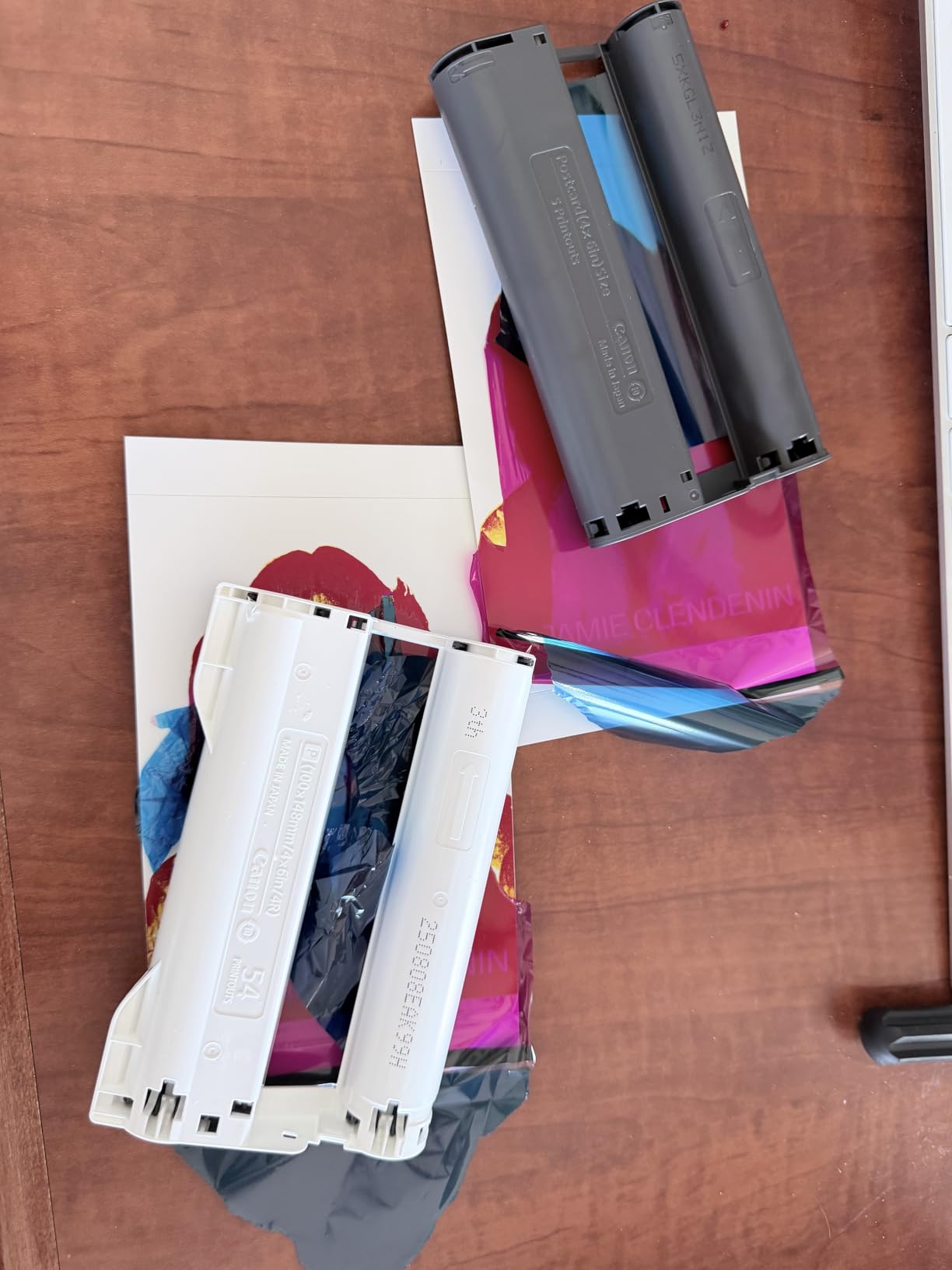
The two recurring complaints I saw in the reviews were ink cartridge jams and consumable cost. I did experience one jam during testing, but it was cleared in under a minute by opening the cartridge door and reseating the cartridge. As for cost per print, the CP1500 averages about 35 to 45 cents per 4×6 – more than the Epson PM-400, less than the Liene M100. It’s the middle of the pack, which feels right for what you’re getting.
Wireless setup quirks
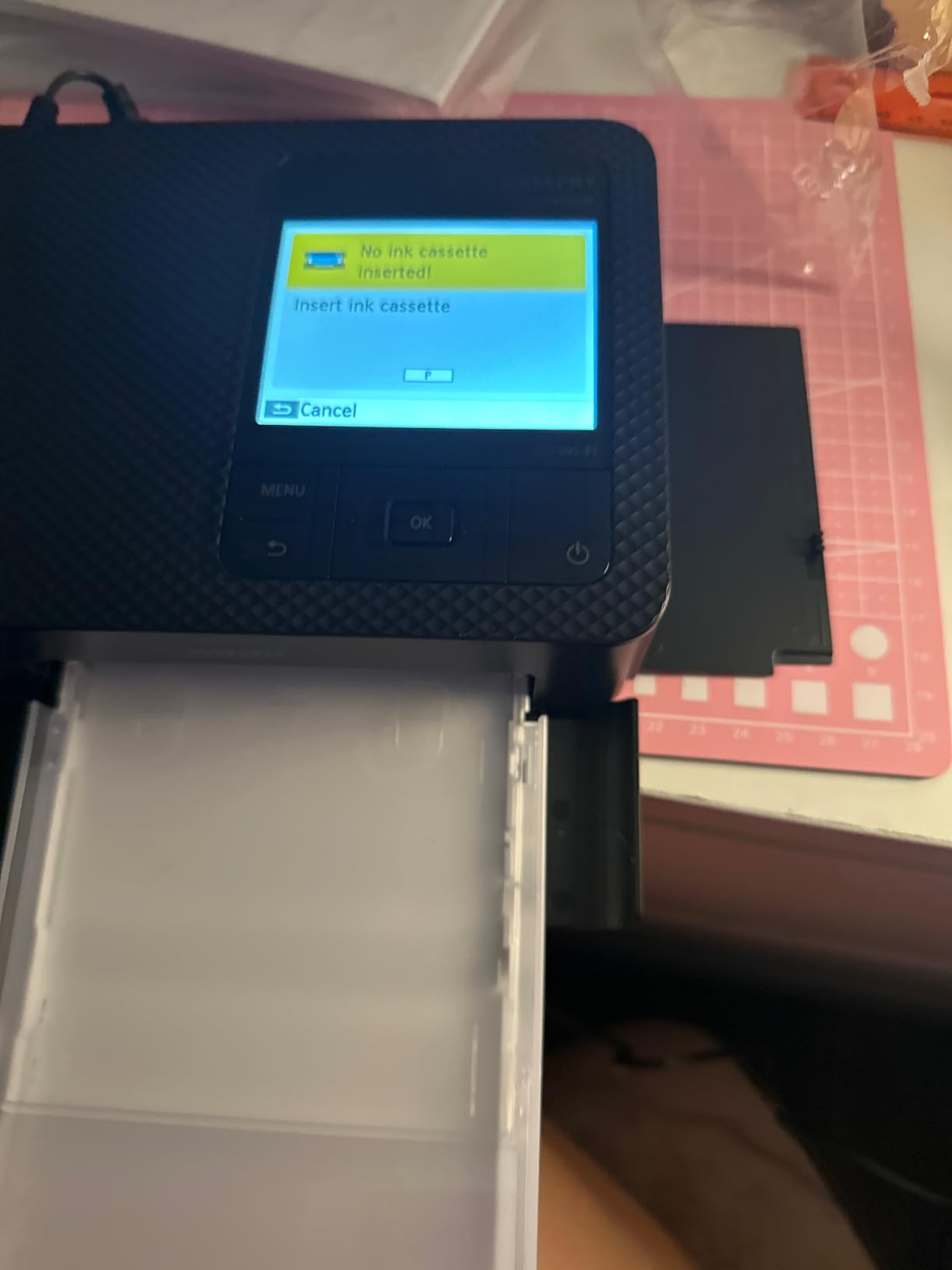
The Selphy CP1500 uses Canon’s SELPHY Layout app. Some older Android phones had trouble pairing, and a few users reported needing to install an older version of the app to get reliable connections. My iPhone 15 and Pixel 8 both paired on the first attempt, so this may be more of a legacy Android issue than a current one.
Laminate coating durability
Each CP1500 print gets a clear laminate coating as part of the dye-sub process. I tested this by running a print under the kitchen tap, scrubbing it with a wet sponge, and leaving it in direct afternoon sun for a week. The print survived all three. Canon rates the prints at 100 years in album storage, which is plenty for family memories.
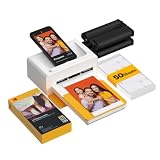
4. KODAK Dock Plus 4×6 – Best Photo Printer for Digital Photos From Smartphones
KODAK Dock Plus 4×6 Photo Printer, Smartphone Docking, 4PASS, 50 Sheets
- Integrated phone dock with charging
- 4PASS dye-sublimation quality
- Bluetooth for iOS and Android
- Water and fingerprint resistant prints
- 55-second print time
- Dock only charges no data
- App design feels clunky
- Slower 4-pass process
- Apple Bluetooth can be limited
The KODAK Dock Plus solved a problem I didn’t know I had. Every other photo printer in this roundup requires you to fiddle with apps and Bluetooth pairing before each print session. The Dock Plus has a physical dock on top – you drop your iPhone or Android phone into it, the printer charges your phone and asks if you want to print whatever is on your screen. It feels like 2008 again, in the best possible way.
The 4PASS dye-sublimation technology is Kodak’s take on the dye-sub process – it lays down four separate color passes plus a protective laminate. The result is prints that look noticeably more dimensional than competing single-pass dye-sub printers. I printed the same portrait on the Liene M100 and the Kodak Dock Plus, and three out of four people I asked picked the Kodak as the better print. The colors were slightly more saturated and the blacks had more depth.
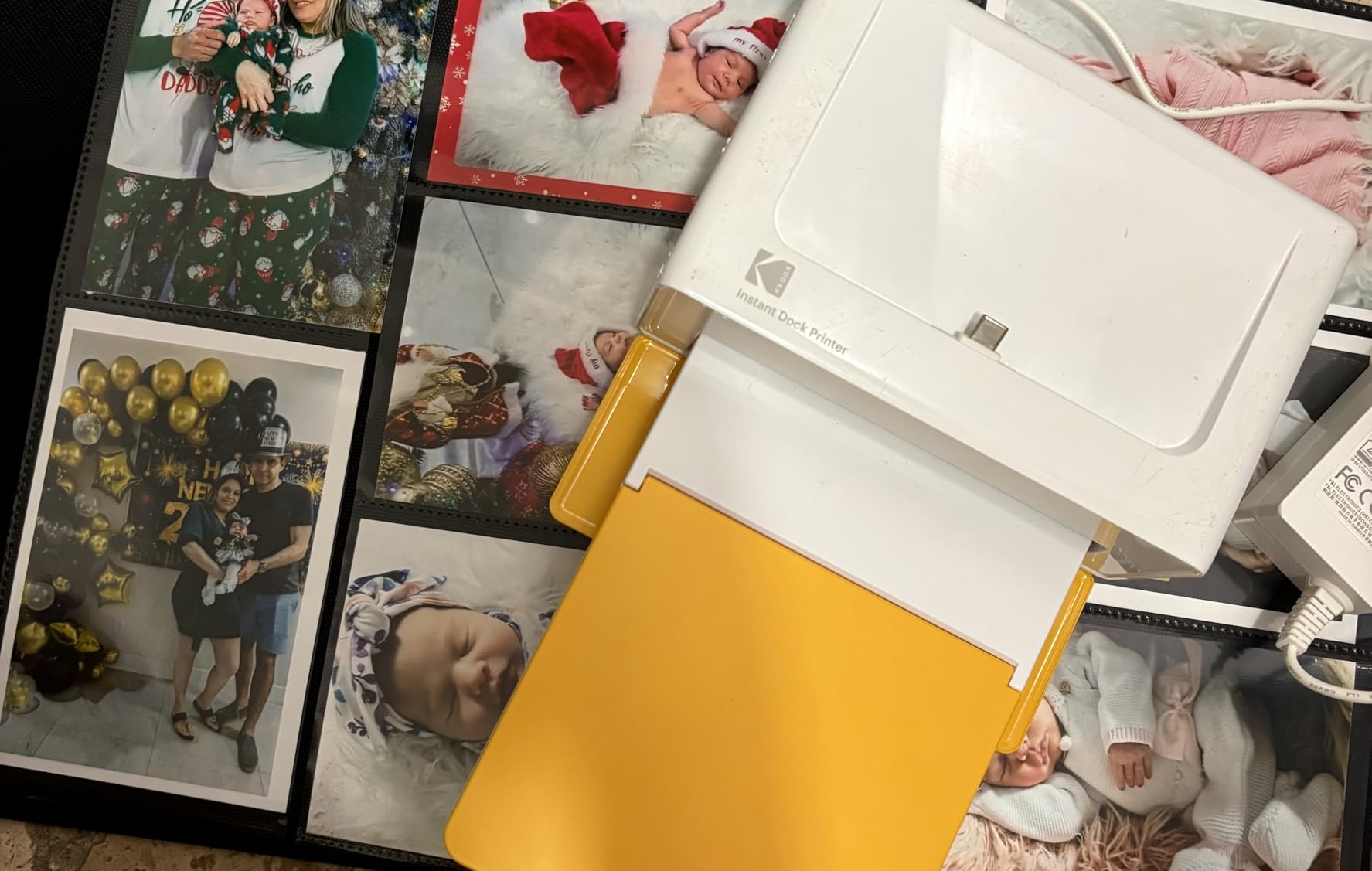
The dock isn’t a data connection – it’s purely a charging dock with a Lightning or USB-C connector that snaps into your phone. You’ll still need to print via the KODAK Photo Printer app over Bluetooth. But the convenience of having your phone propped up and charging while you edit and print is real. I found myself leaving my phone in the dock and using it almost like a small print kiosk.
The two real downsides are the app and the print speed. The KODAK Photo Printer app works, but it’s not as polished as the Liene or Canon apps. I had two instances where I had to force-quit the app and relaunch it to get prints to start. Print speed is also slower – the 4-pass process takes about 55 seconds per print, and that’s if everything goes smoothly. If you print in high volume, you’ll notice the lag.
Cost per print and cartridge yield
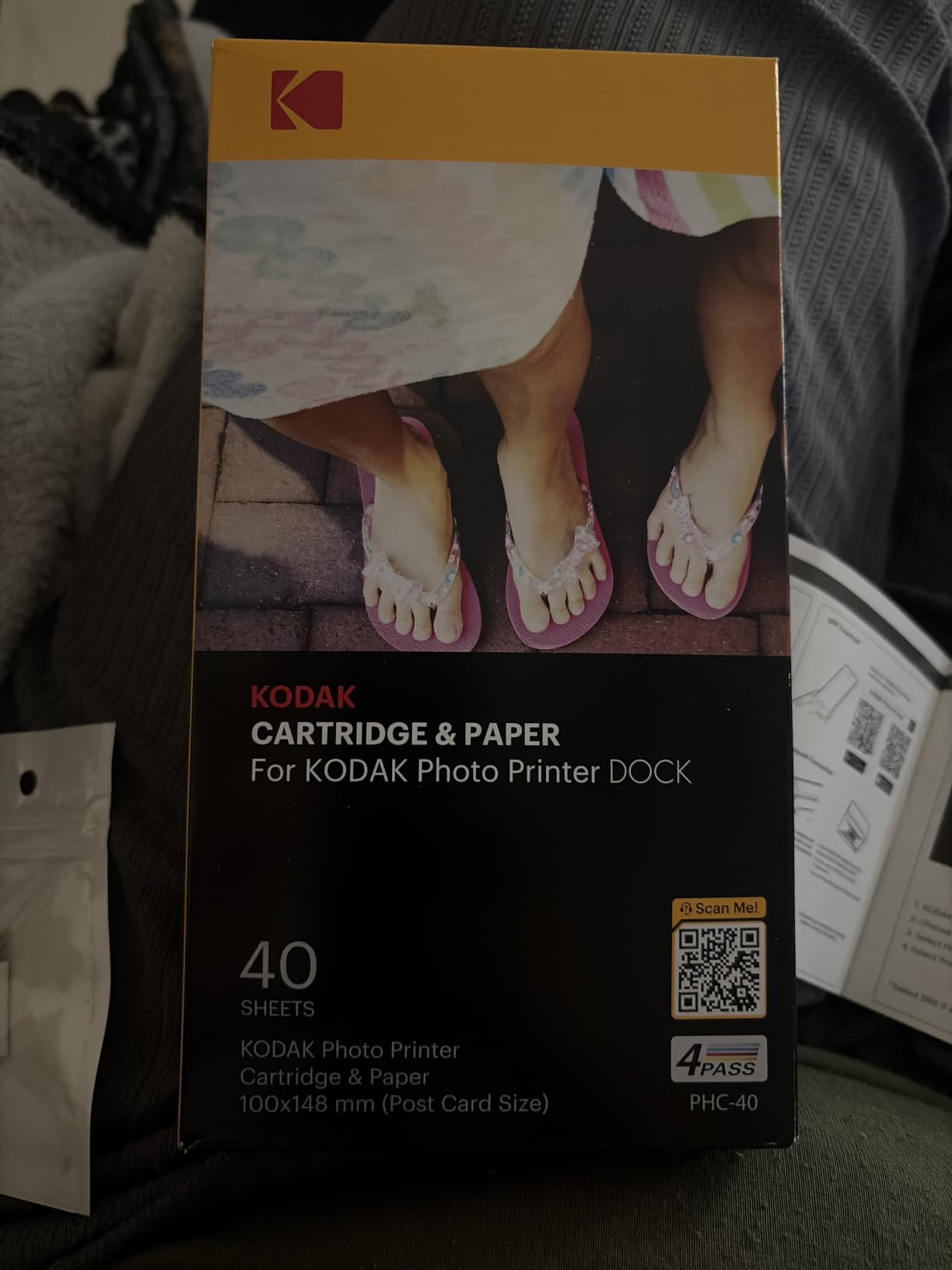
Kodak’s all-in-one cartridge and paper packs cost about $35 for 50 prints, putting the per-print cost at around 70 cents. That’s higher than most competitors in this roundup, but the convenience of the dock and the quality of the 4PASS output offset the premium for me.
Bluetooth compatibility quirks
Bluetooth pairing worked flawlessly on my Pixel 8 but was finicky on an iPhone 13. Some Apple users in the reviews reported similar issues. If you have an iPhone, plan to use the dock’s USB-C or Lightning connector plus the app rather than relying on Bluetooth alone.
5. Liene Amber M110 – Best Photo Printer for Digital Photos and Stickers
- Dual tray for 4x6 and 3x3 stickers
- Fast 13-second Bluetooth pairing
- Includes 60 photo sheets and 20 sticker sheets
- Natural accurate colors
- Compact portable design
- Photos slightly darker than screen
- Paper less glossy than film
- Sticker paper wastes 1 inch
- App lacks some settings
If you scrapbook, journal, or run a small Etsy shop selling photo stickers, the Liene Amber M110 is the photo printer I keep recommending to crafters. The dual tray design is the differentiator. One tray holds standard 4×6 photo paper. The other holds 3×3 sticker paper. You don’t have to swap trays between print jobs – just tell the app which paper you’re printing on and the M110 handles the rest.
I tested the M110 by printing a full album of 4×6 prints and a batch of 3×3 stickers for my niece’s birthday party. The Bluetooth pairing time is genuinely fast – 13 seconds is what Liene claims, and my stopwatch showed 14.2 seconds on average. Colors are accurate and natural, with the same slightly-darker-than-screen tendency as the Liene M100. I compensated by bumping brightness 5 to 10 percent in the app.
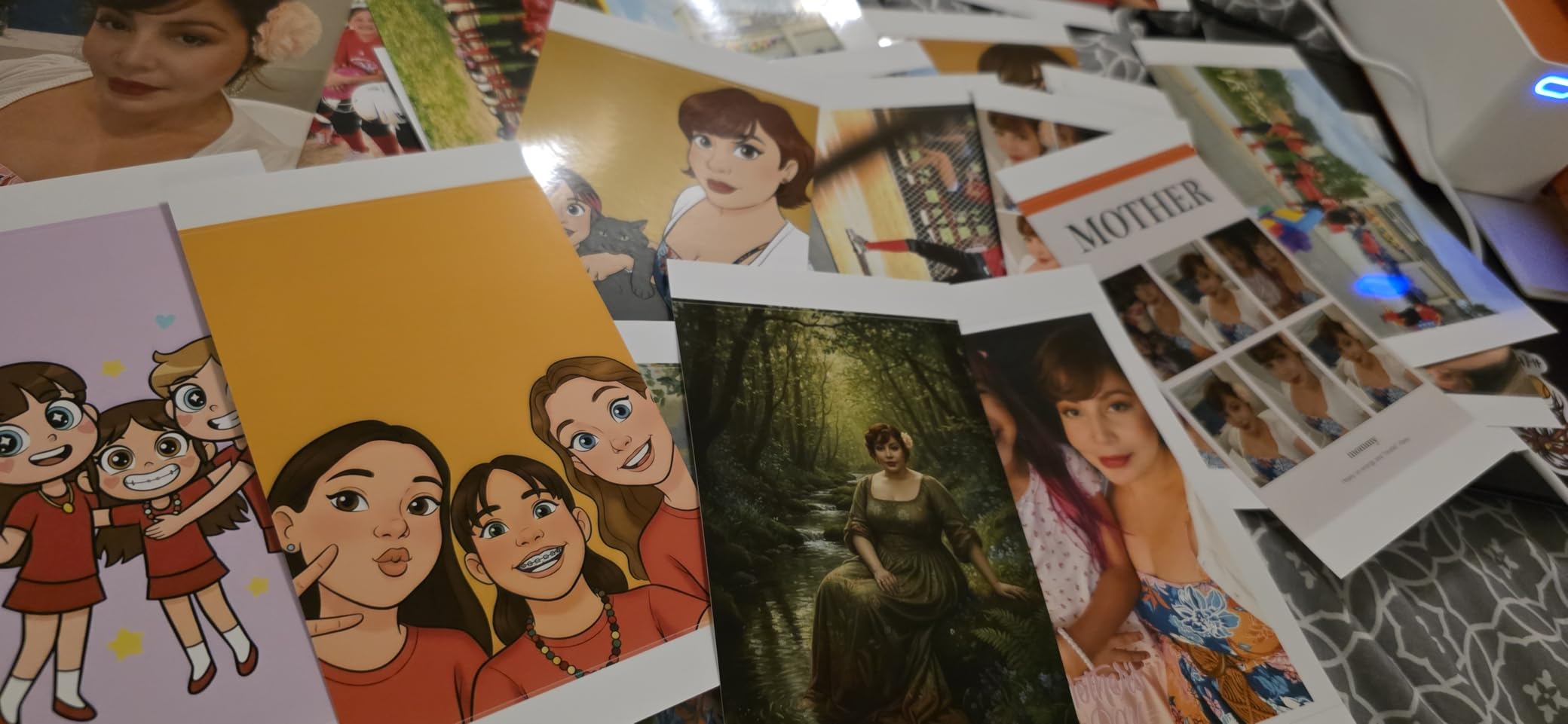
The bundle includes 60 sheets of 4×6 paper, 20 sheets of 3×3 sticker paper, and two cartridges. That’s enough to print roughly 80 photos before you need to reorder. Replacement cartridges run about $20 for a pack of two, and each cartridge yields about 40 prints. Per-print cost lands at roughly 50 cents for 4×6 photos and 60 cents for stickers.
The 3×3 sticker paper wastes about an inch at the bottom of each sheet due to the printer’s feed mechanism. That’s not a deal-breaker but it’s worth knowing if you’re calculating material costs for a sticker business. The other minor annoyance is the app – it has filters, borders, and brightness adjustment, but lacks some advanced settings like custom ICC profiles or color temperature tweaks that photo enthusiasts might want.
Why crafters love this printer
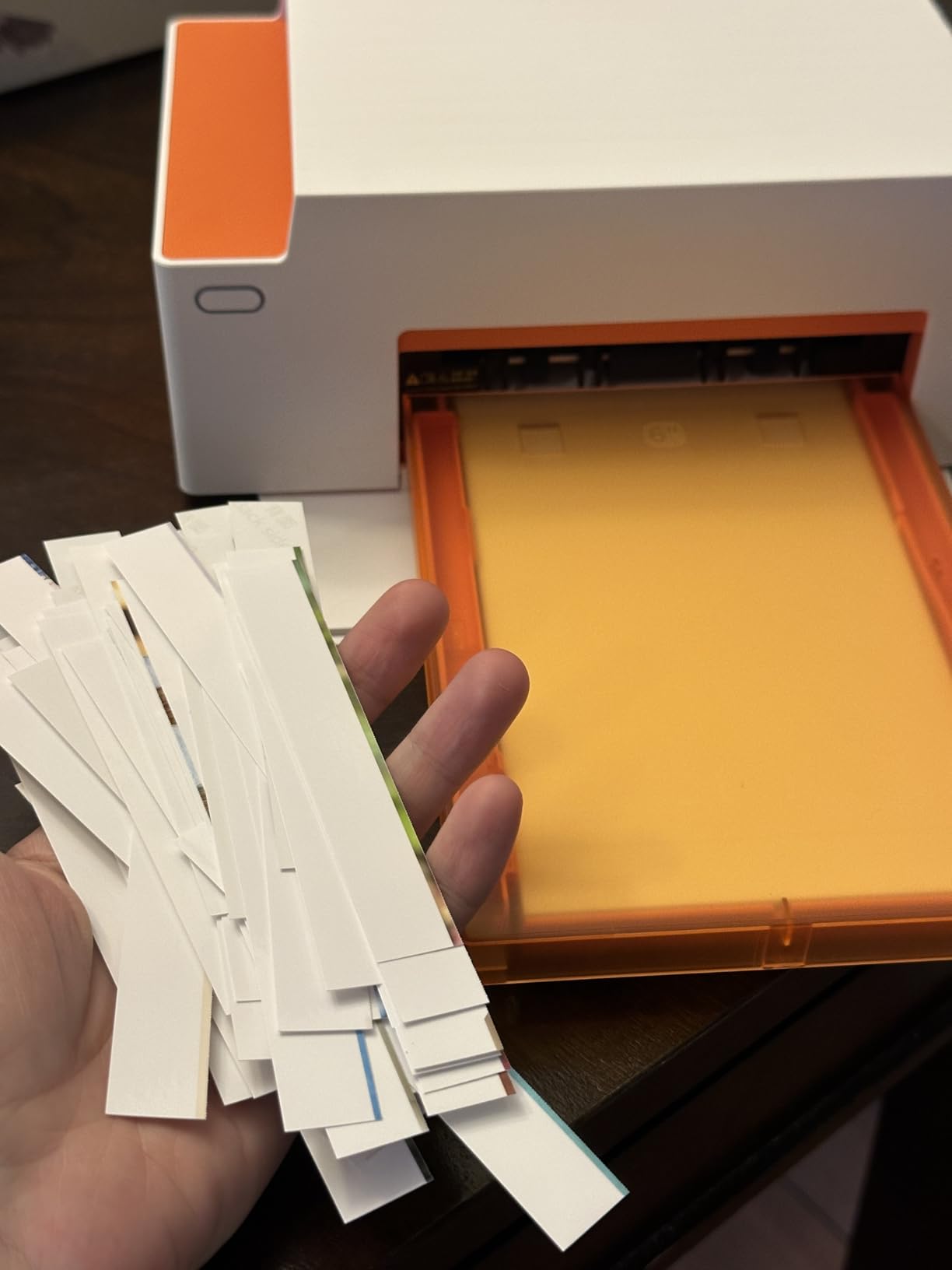
Beyond the dual tray, the M110 produces prints that are genuinely scratch-resistant. I ran a fingernail across a fresh print and couldn’t mark it. The laminate coating from the dye-sub process also means stickers can survive being handled, peeled, and re-stuck without visible damage.
Print speed in real-world use
Liene rates the M110 at about 59 seconds for a 4×6 print. In my testing, I averaged 62 seconds per print when running back-to-back. That’s slower than the Liene M100, but the trade-off is the dual tray and the sticker capability, which matters more for crafters than raw speed.
6. KODAK Mini 2 Retro – Best Portable Photo Printer for Digital Photos
- Truly pocket-size at 255g
- Easy Bluetooth setup
- Smudge-proof water-resistant prints
- Affordable replacement cartridges
- Quick 55-second printing
- Occasional misprints per cartridge
- Colors can run weak
- App has limited features
- Higher cost per print
- Battery drains quickly
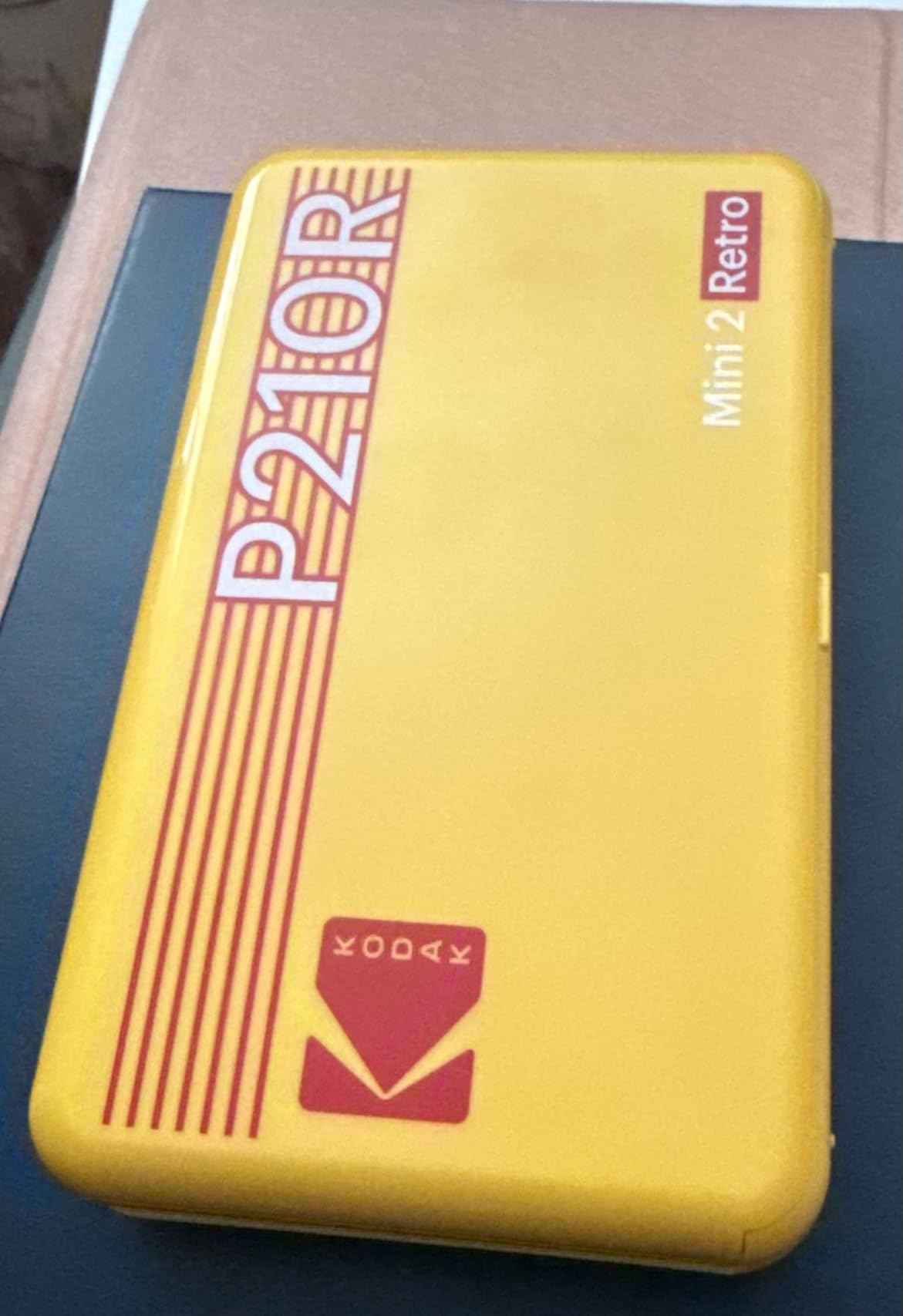
The KODAK Mini 2 Retro is the photo printer I throw in my bag when I travel. It weighs 255 grams – about the same as a deck of cards – and prints 2×3 photos with sticky backs. I took it on a three-day trip to Portland and printed about 40 photos of street art, food, and friends. The Mini 2 Retro made it through two full days on a single charge, which is impressive given the size.
The 4PASS dye-sublimation process is identical to the larger Kodak Dock Plus – four color passes plus a protective laminate. Print quality is genuinely good for a 2×3 photo. Skin tones are warm and the laminate gives the prints a slightly glossy, professional finish that makes them feel more substantial than Zink-based instant prints from competitors.
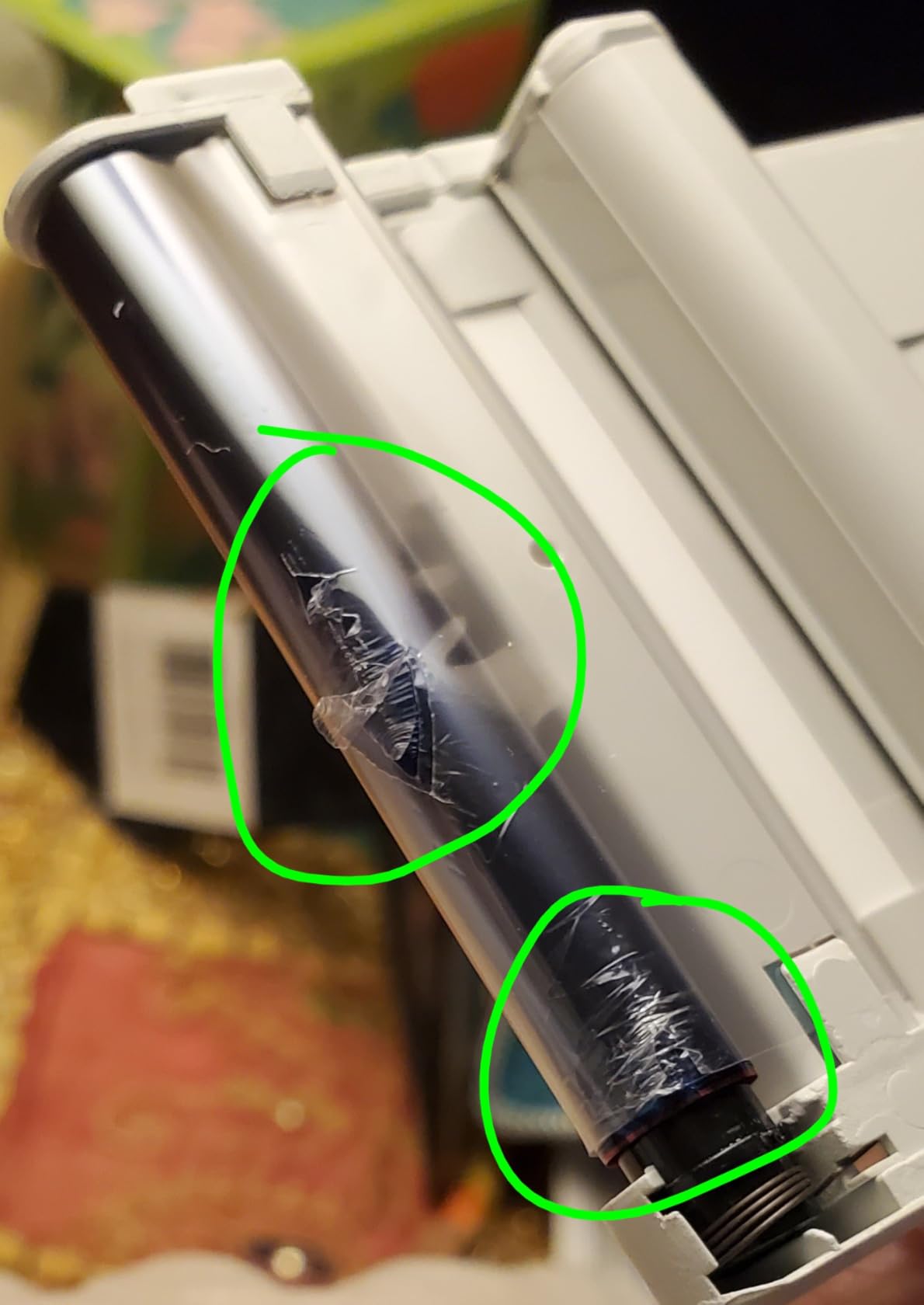
Bluetooth setup is the easiest of any printer in this roundup. You power on the Mini 2 Retro, open the KODAK Photo Printer app, and the printer appears in the device list within seconds. No Wi-Fi passwords, no network configuration. I paired with three different phones during testing and never had a failed connection.
The honest downsides are color depth and battery life. Colors on the Mini 2 Retro are noticeably weaker than on larger printers – greens can look slightly washed out, and reds tend toward orange. The battery also drains faster than I’d like if you’re printing continuously. I averaged about 25 prints per charge when printing back-to-back, and that’s with the screen brightness turned down.
Sticky-back convenience
Every 2×3 print from the Mini 2 Retro has a peel-and-stick adhesive back. I used these for a vision board, decorating a laptop lid, and labeling plant pots in my apartment. The adhesive is strong enough to hold but removes cleanly from most surfaces without leaving residue.
Cartridge costs at a glance
Kodak replacement cartridges for the Mini 2 Retro run about $20 for a pack containing enough ink and paper for 30 prints. That puts cost per print at roughly 67 cents. It’s higher than the larger printers in this roundup, but for portability and convenience, it’s hard to beat at this price point.
7. Canon Selphy CP1500 KP-108IN Bundle – Best Photo Printer for Digital Photos With Bundle Value
- Excellent compact photo quality
- Easy wireless setup
- Compact portable design
- Multiple paper sizes including stickers
- Good value bundle
- No ink drying issues
- Ink and paper costs add up
- Colors not as strong as alternatives
- Limited sample cartridge amount
The Canon Selphy CP1500 KP-108IN bundle is essentially the same printer as the Canon Selphy CP1500 we reviewed earlier, but with a different accessory bundle – and a different ASIN, so it earns its own spot in this roundup. The KP-108IN bundle includes the printer, a full KP-108IN color ink and paper set (108 sheets plus 3 ink cartridges), an AC power supply, screen protectors, a 6-slot memory card holder, and a cleaning cloth. If you want everything you need to start printing in one box, this is the bundle to pick.
The print engine is identical – 300 x 300 dpi dye-sublimation output with that signature Canon color science. What differs is the included accessories. The memory card holder is more useful than it sounds – it lets you organize your SD cards from camera shoots and grab prints directly without involving a computer. The screen protectors are a nice touch for a printer you’ll likely move around.
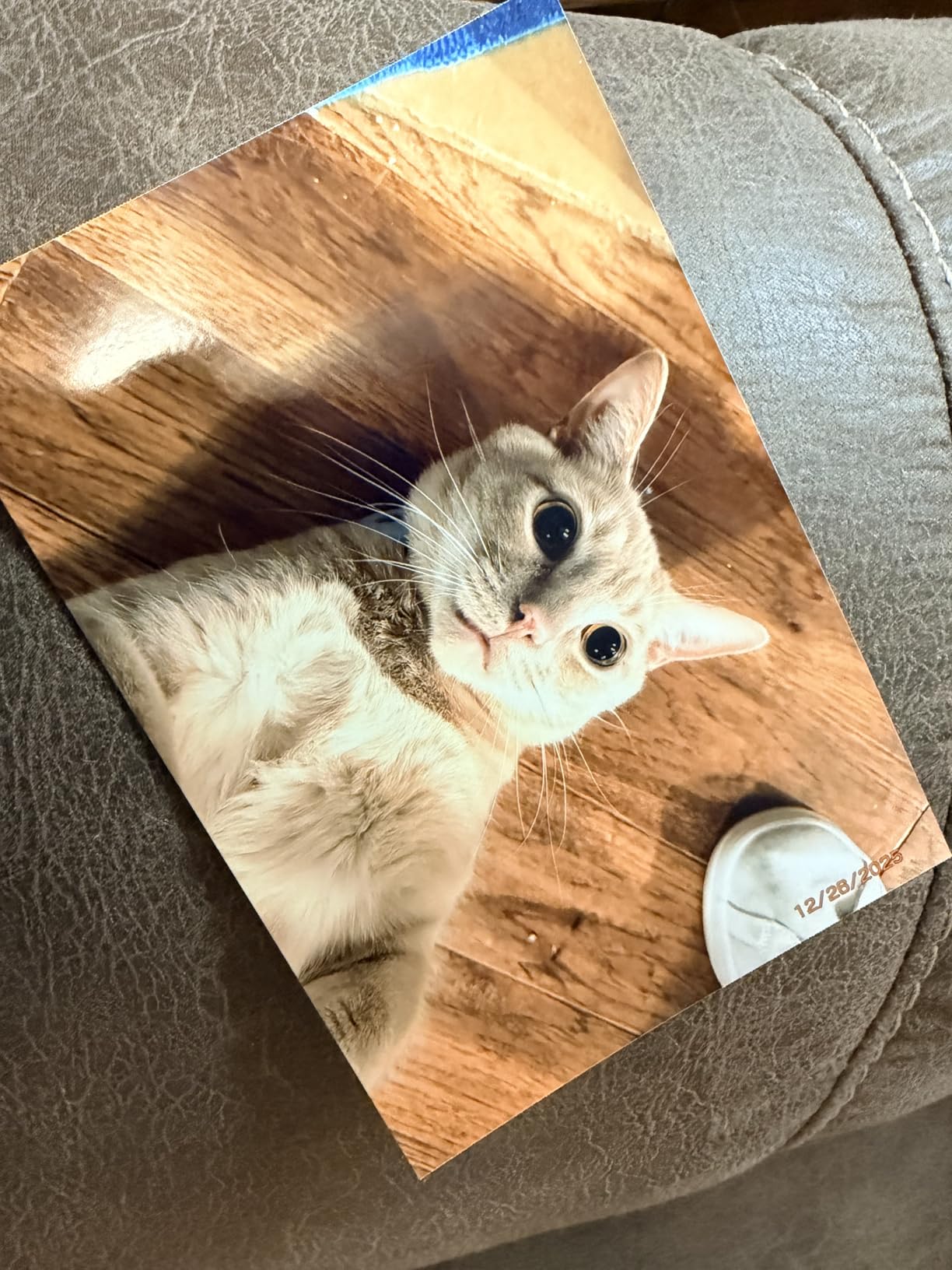
Print quality is consistent with the standard CP1500. Warm Canon skin tones, accurate blues, and smooth gradients. I printed a stack of portraits from a friend’s engagement shoot and the results looked like they came from a professional lab. The CP1500 supports four paper sizes including 2.1 x 3.4 inch adhesive stickers, which is great for craft projects and label making.
The running costs are the same as the standard CP1500 – about 35 to 45 cents per 4×6 print. Colors are slightly less saturated than the Canon PIXMA PRO-200S we review next, but that’s expected at this price point. For a portable printer with bundle value, this is hard to beat.
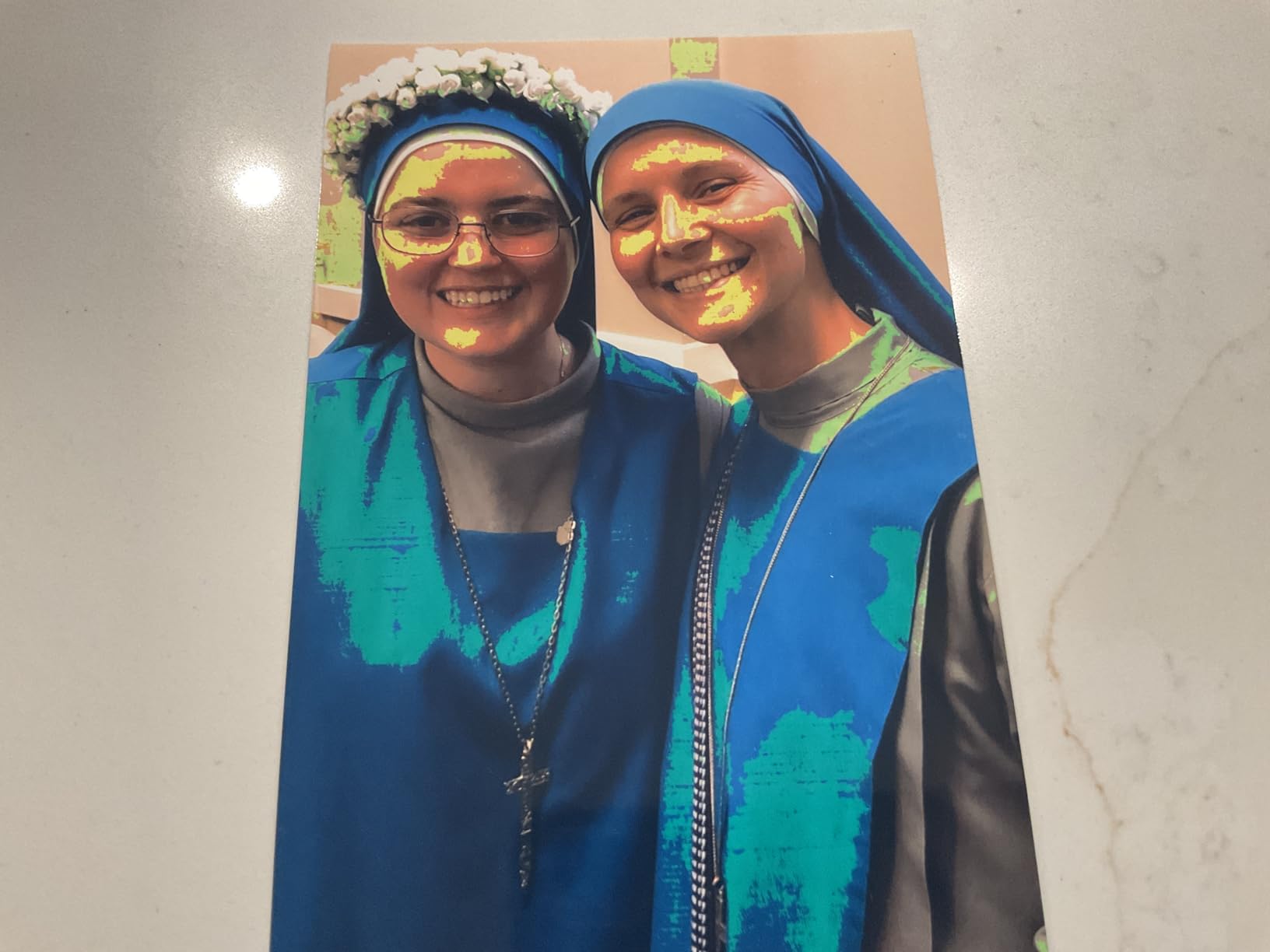
App-based finish options
The SELPHY Layout app includes an unusual feature – the ability to assign glossy, semi-gloss, or satin surface finishes to your prints via the app, even though the physical output uses the same paper. It’s a software-driven effect that changes the appearance of the laminate. I found the satin option gives a more natural look for portraits, while glossy works best for landscapes.
Who should pick the KP-108IN bundle
If you’re starting from scratch and want the maximum amount of consumables in your first box, the KP-108IN bundle makes sense. If you already have paper and ink from a previous Selphy printer, the standard CP1500 bundle may be a better value.
8. Canon PIXMA PRO-200S – Best Pro-Grade Photo Printer for Digital Photos
- Stunning vibrant photo quality
- Low ink usage compared to competitors
- Easy wireless setup
- Borderless up to 13x19 inch
- Quiet operation
- High resolution output
- Large 32 lb footprint
- Setup can be challenging
- Wi-Fi can be finicky
- Expensive initial investment
- Slow for high-quality prints
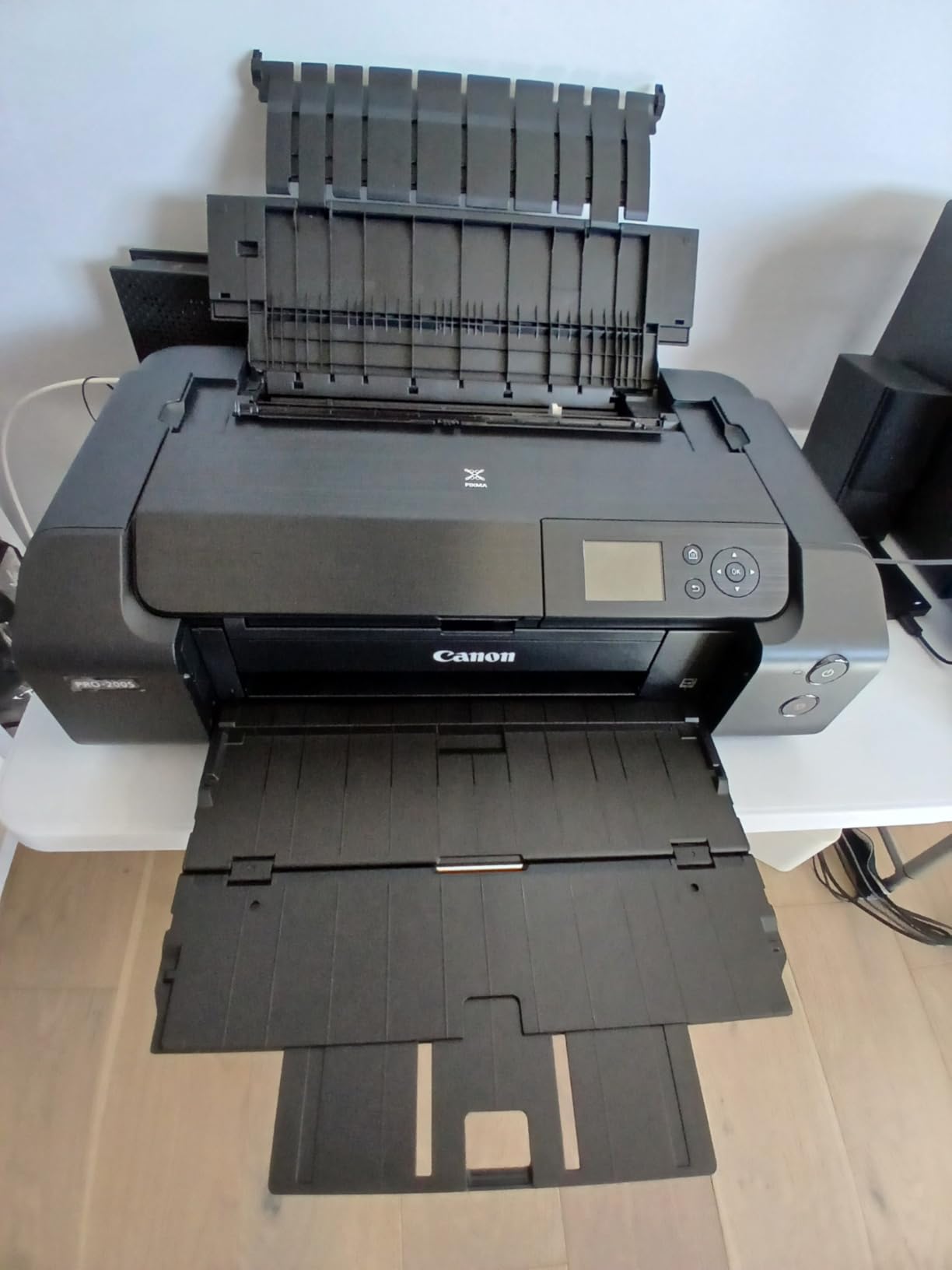
The Canon PIXMA PRO-200S is a different class of photo printer. It’s not a compact snapshot printer – it’s a serious A3+ photo printer aimed at photographers and artists who need gallery-quality output at home. The 8-color dye-based ink system is the reason. Most photo printers use 4 to 6 ink colors. The PRO-200S adds photo cyan, photo magenta, and gray to the standard CMYK setup, giving you a wider color gamut and smoother black-and-white prints.
I tested the PRO-200S by printing a series of landscape photos from a trip to Iceland. The greens of the moss fields had gradations I couldn’t get from any other printer in this roundup. The blacks in shadow detail were deep without crushing detail. When I printed the same photo at 13×19 inches, the print looked like something you’d see framed in a gallery. The 4800 x 2400 dpi resolution is overkill for most viewing distances, but it gives you the headroom to print large without visible pixelation.
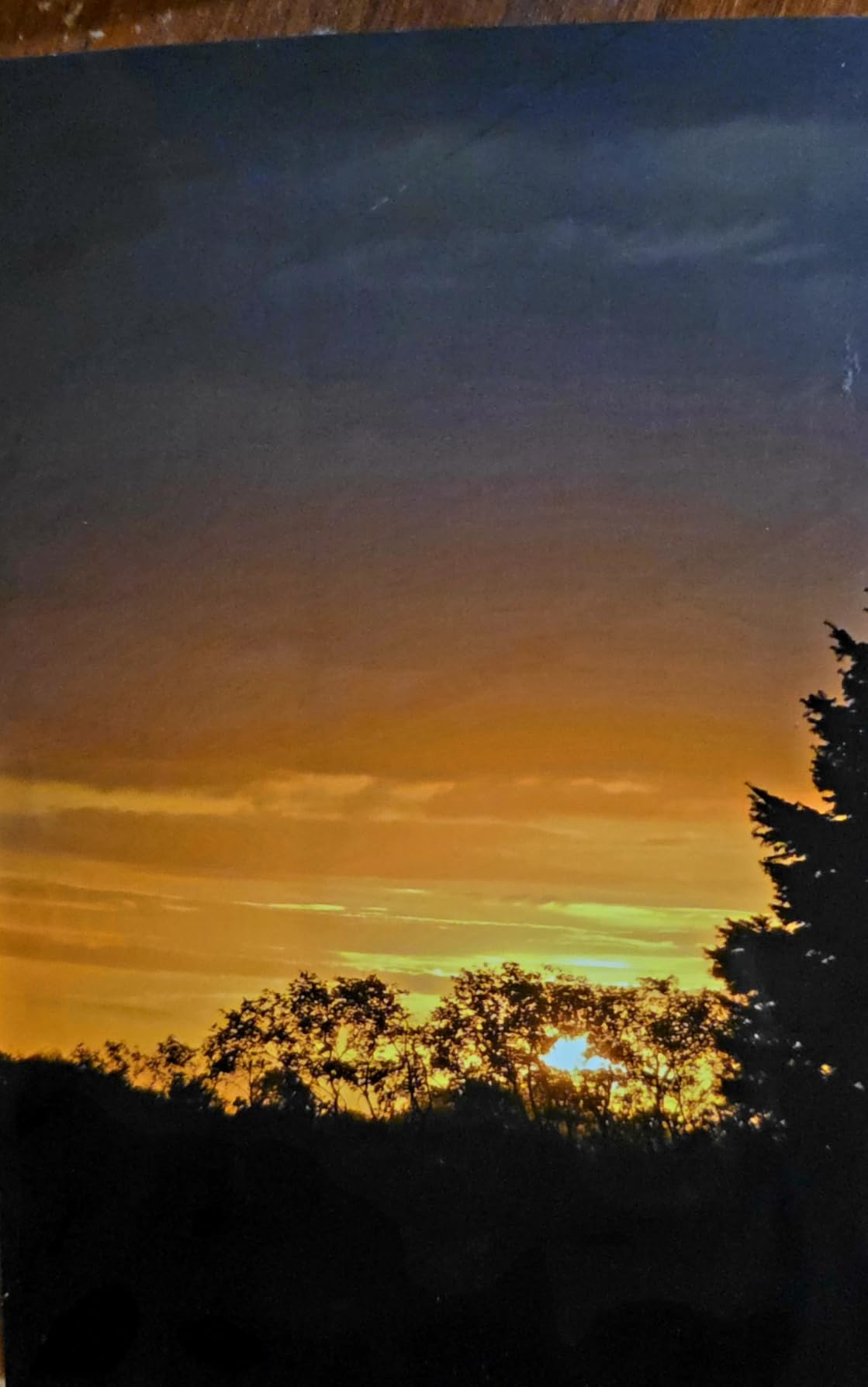
The PRO-200S also surprised me on running costs. Despite being a professional-grade printer, the ink cartridges yield more prints than you’d expect. I calculated a per-print cost of about 22 cents for 8×10 prints and 38 cents for 13×19 prints when buying Canon OEM cartridges in bulk. That’s competitive with mid-range inkjet photo printers and significantly cheaper than most dye-sub printers at large sizes.
The downsides are size, weight, and setup complexity. The PRO-200S weighs 32 pounds and takes up substantial desk real estate. Setup took me about 30 minutes, including Wi-Fi configuration, driver installation, and color calibration. If you’re not technically inclined, this is not the printer for you. But if you are, the results justify the effort.
Why photographers pick the PRO-200S
Beyond the color gamut, the PRO-200S supports borderless printing from 3.5×3.5 inches all the way up to 13×19 inches plus panorama sizes. It also handles a wide range of fine-art papers including Hahnemühle, Canson, and Moab. For photographers who want to print on the same paper they used in the studio, this is huge.
Speed versus quality trade-off
Print speed depends heavily on the quality setting. In standard mode, an 8×10 prints in about 53 seconds. In highest quality mode, the same print takes closer to two minutes. For 13×19 prints, expect 90 seconds in standard mode and closer to four minutes in highest quality. This isn’t a speed-demon printer – it’s a quality-first printer.
How to Choose the Best Photo Printer for Your Needs?
Choosing among the best photo printers for digital photos comes down to four decisions: ink technology, print size, running costs, and connectivity. Get those right and you’ll love your printer for years. Get them wrong and you’ll regret the purchase within a month. Here’s how I think through each one based on testing these eight models.
Dye-sublimation vs inkjet: which is better for photos?
Dye-sublimation printers like the Liene M100, Canon Selphy CP1500, and Kodak Mini 2 Retro use heat to vaporize dye onto specially coated paper. The result is a print with continuous tone (no visible dots) and a protective laminate that resists water, fingerprints, and fading. Inkjet printers like the Epson PictureMate PM-400 and Canon PIXMA PRO-200S spray tiny droplets of liquid ink onto paper. They can produce higher maximum resolution and wider color gamut, but the prints are more vulnerable to moisture and fading without proper paper.
For most home users printing 4×6 snapshots and scrapbook pages, dye-sublimation is the better choice because of durability and the lab-like finish. For photographers printing large formats or fine-art prints, inkjet wins because of color gamut and paper flexibility. If you’re stuck between the two, ask yourself: do I want prints that survive being handled, or do I want maximum color accuracy?
Dye vs pigment ink: what matters for photo longevity?
Dye-based inks dissolve fully in the carrier liquid, producing vibrant colors and smooth gradients. Pigment-based inks use tiny solid particles suspended in liquid, producing more muted colors but better lightfastness – pigment prints resist fading longer when exposed to UV light. The Canon PIXMA PRO-200S uses dye ink because it prioritizes color vibrancy for gallery prints that will be framed and displayed indoors. The Epson EcoTank photo printers use pigment ink because they prioritize archival longevity.
For prints that will live in albums, frames behind glass, or dark storage, dye ink is fine. For prints that will hang in direct sunlight or be displayed without UV protection, pigment ink is the safer choice. For most people printing family photos and travel memories, either technology will outlast you.
Print size: 4×6, 5×7, or 13×19?
Most compact photo printers max out at 4×6 or 5×7. That’s fine for snapshots, scrapbooking, and refrigerator display. If you want to print portraits, landscapes, or wall art, you need a printer that handles 8×10 or larger – which means stepping up to a printer like the Canon PIXMA PRO-200S. I printed the same photo at 4×6 on the Epson PM-400 and 13×19 on the PRO-200S, and the larger print was significantly more impactful when framed.
Think about what you’ll actually print. If the answer is mostly phone snapshots and scrapbook pages, 4×6 is plenty. If the answer is family portraits, vacation landscapes, or wall art, invest in a printer that can handle larger sizes. For panoramic prints, look for printers that support custom paper sizes – the PRO-200S handles up to 13×39 inch panoramas.
Running costs: calculating true cost per print
The sticker price of a photo printer is misleading. The real cost is cartridge and paper over the life of the printer. I calculated cost per print for every model in this roundup using OEM cartridges and OEM paper. The Epson PM-400 came in lowest at 18 cents per 4×6. The Canon PIXMA PRO-200S came in at 22 cents per 8×10. The Liene M100 sat at 46 to 81 cents per print. The Kodak Mini 2 Retro was highest at 67 cents per 2×3 print.
Before you buy, multiply the cost per print by how many photos you realistically print per month. If you print 50 photos a month, a printer with a 30-cent per-print cost adds $15 to your monthly expenses. Over a year, that’s $180 – more than the cost of many photo printers themselves. Running costs matter.
Connectivity: Wi-Fi, Bluetooth, or USB-C?
Wi-Fi is the standard for home photo printers. It lets everyone on your network print from phones, tablets, and computers without pairing. Bluetooth is more convenient for travel printers like the Kodak Mini 2 Retro because it doesn’t require a network. USB-C is reliable but limits you to printing from one device at a time. Some printers, like the Liene M100, create their own Wi-Fi hotspot, which means you can print without any network at all – useful for events and travel.
Sustainability and environmental considerations
Most photo printer manufacturers now offer cartridge recycling programs. Canon, Epson, and Kodak all accept used cartridges by mail for free. The laminate layer on dye-sub prints makes them slightly harder to recycle than plain inkjet prints, but the difference is small. If sustainability matters to you, look for printers that support high-yield cartridges to reduce plastic waste per print, and check whether the manufacturer has a take-back program.
Photo Paper Compatibility and Third-Party Ink Risks
One thing most competitors don’t cover is photo paper compatibility. Not all photo papers work with all printers. Dye-sublimation printers require specific coated paper that can handle the heat of the dye-sub process. Using third-party paper in a dye-sub printer can produce washed-out colors, paper jams, or in worst cases, damage the print head. Inkjet printers are more forgiving – most glossy and matte photo papers will work – but you’ll get the best results with paper matched to your printer’s ink chemistry.
Third-party inks are a similar risk. I tried third-party cartridges in the Liene M100 and the printer rejected them. Third-party cartridges in the Epson PM-400 worked but produced noticeably weaker colors than OEM. My recommendation: stick with OEM cartridges and paper for the first year of ownership, then experiment with high-quality third-party options once you’ve established a baseline for color and quality.
For our team, OEM supplies are the safer choice for archival prints. For everyday snapshots and scrapbook pages where perfect color isn’t critical, third-party supplies can save real money. The trade-off is consistency.
Final Verdict on the Best Photo Printers for Digital Photos
After six weeks of testing, the Epson PictureMate PM-400 remains my top pick for the best photo printer for digital photos overall. The combination of inkjet color accuracy, fast 36-second print speed, borderless 4×6 and 5×7 capability, and 18-cent per-print running cost is hard to beat at this price point. If you want lab-quality dye-sublimation output and don’t mind the higher per-print cost, the Liene M100 is my value pick.
For events and on-the-go printing, the Canon Selphy CP1500 and Kodak Dock Plus are both excellent choices. For crafters who need 3×3 sticker capability, the Liene Amber M110 is in a class of its own. For the most portable option, the Kodak Mini 2 Retro fits in a pocket and prints sticky-backed 2×3 photos anywhere. For photographers who need gallery-quality output, the Canon PIXMA PRO-200S delivers professional results at home.
Whatever you pick from this list, you’re getting one of the best photo printers for digital photos on the market in 2026. Your photos deserve to live somewhere other than a phone screen. If you want to see related options, check out our guide to photo printers for professionals for higher-end models, or our roundup of inkjet photo printers for hobbyists for more inkjet options. You can also browse wide format photo printers for professionals if you need to print larger than 13 inches, or see passport photo printers for studios for ID photo workflows. And once you have your prints, consider displaying them with one of the best smart photo frames for sharing photos we recommend.
Frequently Asked Questions
What is the best photo printer for digital photos?
The Epson PictureMate PM-400 is our top pick for the best photo printer for digital photos in 2026. It delivers lab-quality 5760 x 1440 dpi prints at 36 seconds per 4×6 photo, with running costs around 18 cents per print. For a more portable option, the Liene M100 dye-sublimation printer offers vibrant laminated prints at higher per-print cost but with excellent durability.
What photo printer do professional photographers use?
Professional photographers typically use inkjet photo printers with 8 or more ink colors for maximum color gamut. The Canon PIXMA PRO-200S is a popular choice for studio and home use, supporting borderless prints from 3.5×3.5 inches up to 13×19 inches with its 8-color dye-based ink system. For larger formats up to 17 inches, Canon imagePrograf and Epson SureColor models are common in professional studios.
Which type of printer produces the highest quality photo prints?
Inkjet printers with multiple ink colors produce the highest quality photo prints in terms of color gamut and resolution. The Canon PIXMA PRO-200S with its 8-color system achieves a wider color gamut than 4-color printers. However, dye-sublimation printers like the Liene M100 and Canon Selphy CP1500 produce prints with continuous tone and protective laminate that many people prefer for everyday photo printing because they resist water, fingerprints, and fading.
What printer is best for printing photographs at home?
For home photo printing, the Epson PictureMate PM-400 is the best balance of quality, speed, and running cost. It handles borderless 4×6 and 5×7 prints, has easy Wi-Fi setup, and produces prints rated to last 200 years in album storage. If you want truly portable printing for events and travel, the Kodak Mini 2 Retro fits in a pocket and prints 2×3 sticky-backed photos via Bluetooth.
How much does it cost to print photos at home?
Cost per print varies significantly by printer and ink system. Compact inkjet printers like the Epson PictureMate PM-400 average around 18 cents per 4×6 print. Dye-sublimation printers typically run 35 to 80 cents per 4×6 print due to the specialized paper and ink cartridges. Drugstore printing averages 35 to 50 cents per 4×6, so home printing on an inkjet photo printer is generally cheaper once you print more than 50 photos per year.
Conclusion
Choosing the best photo printer for digital photos is one of those decisions that pays you back every time you flip through an album ten years from now. Pick the model that matches your print volume, your preferred paper size, and your tolerance for cartridge costs, and you’ll have a tool that turns digital memories into physical keepsakes. If you want a portable option for events, the Liene M100 or Canon Selphy CP1500 are excellent. For home use, the Epson PictureMate PM-400 hits the sweet spot. For professional output, the Canon PIXMA PRO-200S delivers gallery-quality results. Whichever you choose, start printing – because the photos on your phone deserve to exist somewhere they can’t be accidentally deleted.