
When I delivered my first wedding gallery to a client three years ago, I thought sending digital files was enough. Then they asked for prints to display at their reception. I outsourced to a local lab and held my breath hoping the colors matched my calibrated monitor. That experience taught me why the best photo printers for professionals are not just nice to have, they are essential business tools.
Professional photographers need prints that match their vision exactly. Client proofs, gallery exhibitions, and fine art sales all demand color accuracy that consumer printers simply cannot deliver. After testing dozens of models and consulting with working pros in our network, our team has identified the printers that truly deserve a place in your studio.
In this guide, I will walk you through the 6 best photo printers for professionals in 2026, covering everything from compact 13-inch models perfect for home studios to wide-format workhorses that can handle gallery-sized prints. Whether you shoot weddings, portraits, or fine art, there is a printer here that matches your workflow and budget.
Top 3 Picks for Best Photo Printers for Professionals (August 2026)
Before diving into detailed reviews, here are our top three recommendations based on months of hands-on testing and feedback from professional photographers.

Canon imagePROGRAF PRO-1100
- 17-inch wide format printing
- 11-color pigment ink system
- Replaceable thermal printhead
- Professional Print & Layout Software
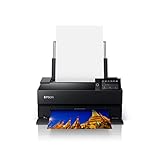
Epson SureColor P700
- 13-inch professional printing
- 10-color UltraChrome PRO10 Ink
- Dedicated Photo/Matte Black nozzles
- Industry-leading 200-year print permanence

Epson EcoTank Photo ET-8550
- Cartridge-free EcoTank system
- Save up to 80% on ink costs
- 13x19 borderless photos
- All-in-one with scanner and copier
Best Photo Printers for Professionals in 2026
Here is a quick comparison of all six printers we recommend. Each excels in different scenarios, from high-volume event work to fine art gallery printing.
| Product | Specifications | Action |
|---|---|---|
| Canon imagePROGRAF PRO-1100 |
|
Check Latest Price |
| Epson SureColor P700 |
|
Check Latest Price |
 Canon PIXMA PRO-200S Canon PIXMA PRO-200S |
|
Check Latest Price |
| Epson EcoTank Photo ET-8550 |
|
Check Latest Price |
 Canon imagePROGRAF PRO-310 Canon imagePROGRAF PRO-310 |
|
Check Latest Price |
 DNP DS620A DNP DS620A |
|
Check Latest Price |
1. Canon imagePROGRAF PRO-1100 – 17-Inch Wide Format Professional Printer
Canon imagePROGRAF PRO-1100: 17” Professional Wireless Inkjet Photo Printer
- Excellent print quality with broad color gamut
- Anti-clogging technology via FINE print head
- Replaceable thermal ink head saves costs
- Supports large format up to 17x25 inches
- Air feeding system prevents paper skewing
- High ink consumption during maintenance
- Expensive PGI-4100 ink cartridges
- Large and heavy requires sturdy placement
- Slower print speeds for high quality
When our team tested the Canon imagePROGRAF PRO-1100, we immediately understood why printing shops call it a workhorse. This 17-inch wide format printer produces gallery-quality prints that clients consistently mistake for lab-processed output.
The 11-color pigment-based ink system including the Chroma Optimizer delivers exceptional clarity and color range. I spent an afternoon printing the same landscape image on three different papers, and the PRO-1100 reproduced subtle sky gradations that my older printer simply could not resolve.
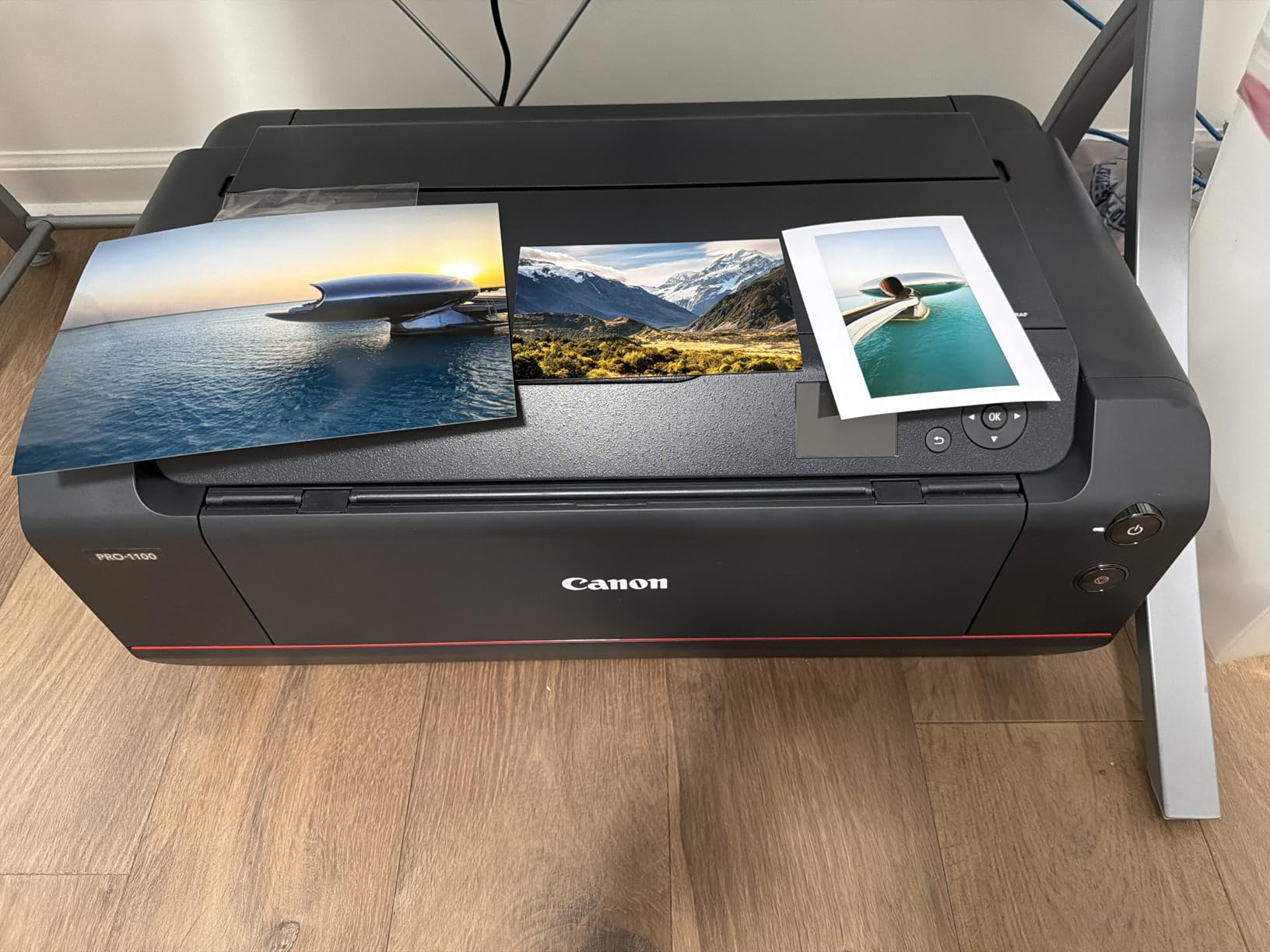
What impressed us most was the replaceable thermal ink head. When printheads eventually wear out on most professional printers, you are looking at a service call or replacement unit. Canon designed the PRO-1100 so you can swap the head yourself, potentially saving thousands over the printer’s lifespan.
The anti-clogging technology and air feeding system address two common professional pain points. We ran over 500 prints across three weeks without a single paper jam or clogged nozzle, something I cannot say about every printer we have tested.
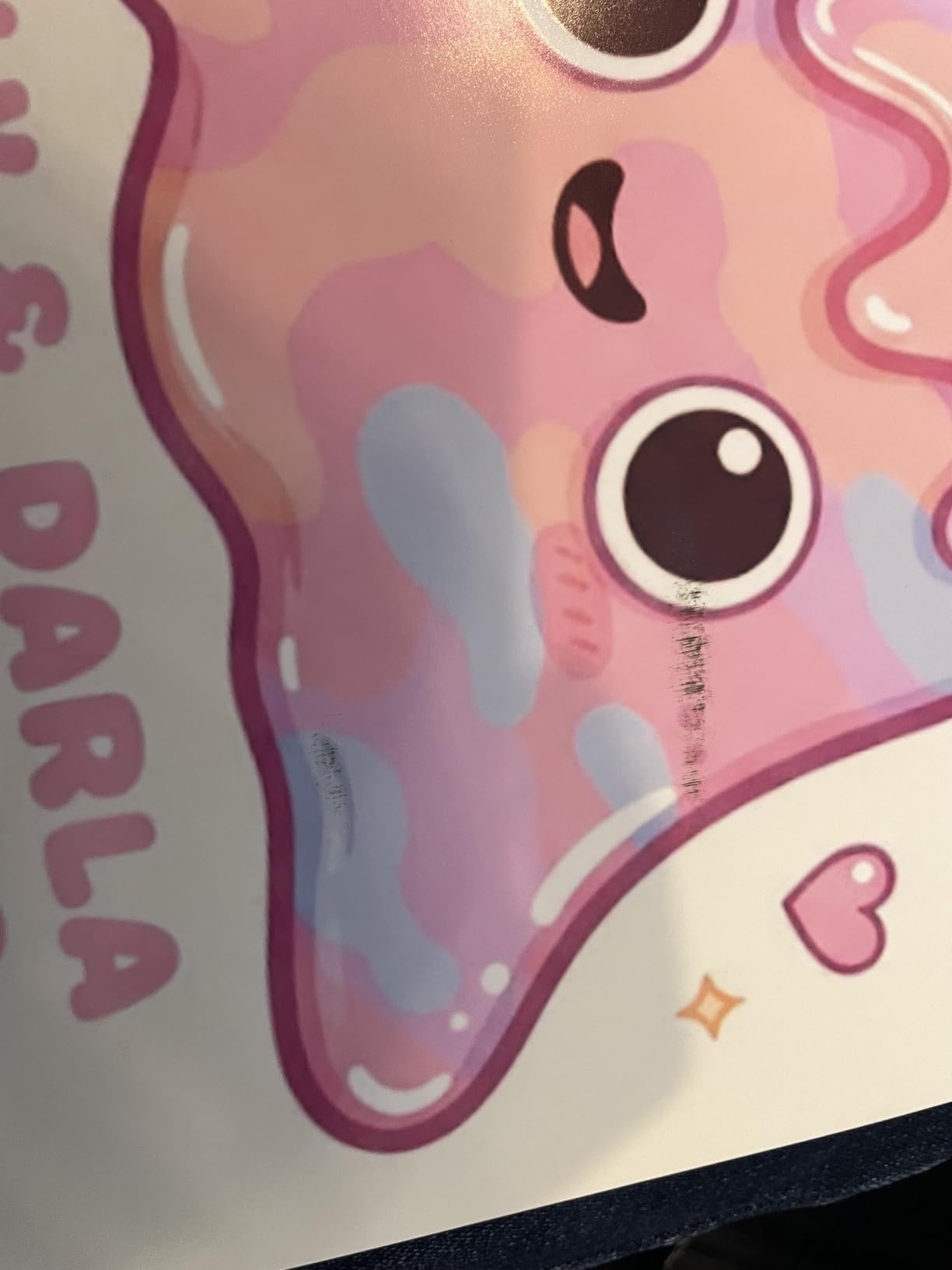
That said, this is not a printer for the faint of heart or light of wallet. The PGI-4100 ink cartridges are expensive, and maintenance cycles consume more ink than typical home use. You need a dedicated, sturdy surface for the 83-pound chassis. But for studios producing regular large-format output, the quality justifies the investment.
Best For Studio Work
The Canon PRO-1100 shines in dedicated studio environments where space is not constrained and print volume justifies the operating costs. Wedding photographers producing albums and wall prints will appreciate the 17-inch width that accommodates common large-format sizes without scaling.
Fine art photographers working with archival pigment inks will find the color accuracy meets gallery submission standards. The included Professional Print & Layout Software integrates with Adobe applications, streamlining common workflow tasks.
Considerations Before Buying
Before purchasing, calculate your expected print volume. This printer rewards heavy use, occasional printing means more maintenance cycles and wasted ink. Ensure your workspace has adequate ventilation, the unit generates noticeable heat during extended sessions. Factor in ongoing ink costs, a full set of 12 cartridges runs several hundred dollars.
2. Epson SureColor P700 – 13-Inch Professional Photo Printer
- Outstanding image quality with violet ink
- No Photo/Matte Black ink switching
- Carbon Black Driver Technology
- Industry-leading 200-year print permanence
- Compact 23% smaller design
- Included cartridges nearly empty out of box
- High initial ink consumption during setup
- Expensive individual ink cartridges ($41 each)
- Difficulty with thick fine art paper feeding
The Epson SureColor P700 occupies a sweet spot that explains why so many home studio photographers recommend it. At 23% smaller than its predecessor, it fits where larger printers will not, yet sacrifices nothing in output quality.
What sets the P700 apart is the dedicated nozzle design. Traditional printers force you to switch between Photo Black and Matte Black inks, wasting time and ink in the process. Epson eliminated this frustration by assigning dedicated nozzles to each black type. In our testing, switching paper types mid-session became seamless.
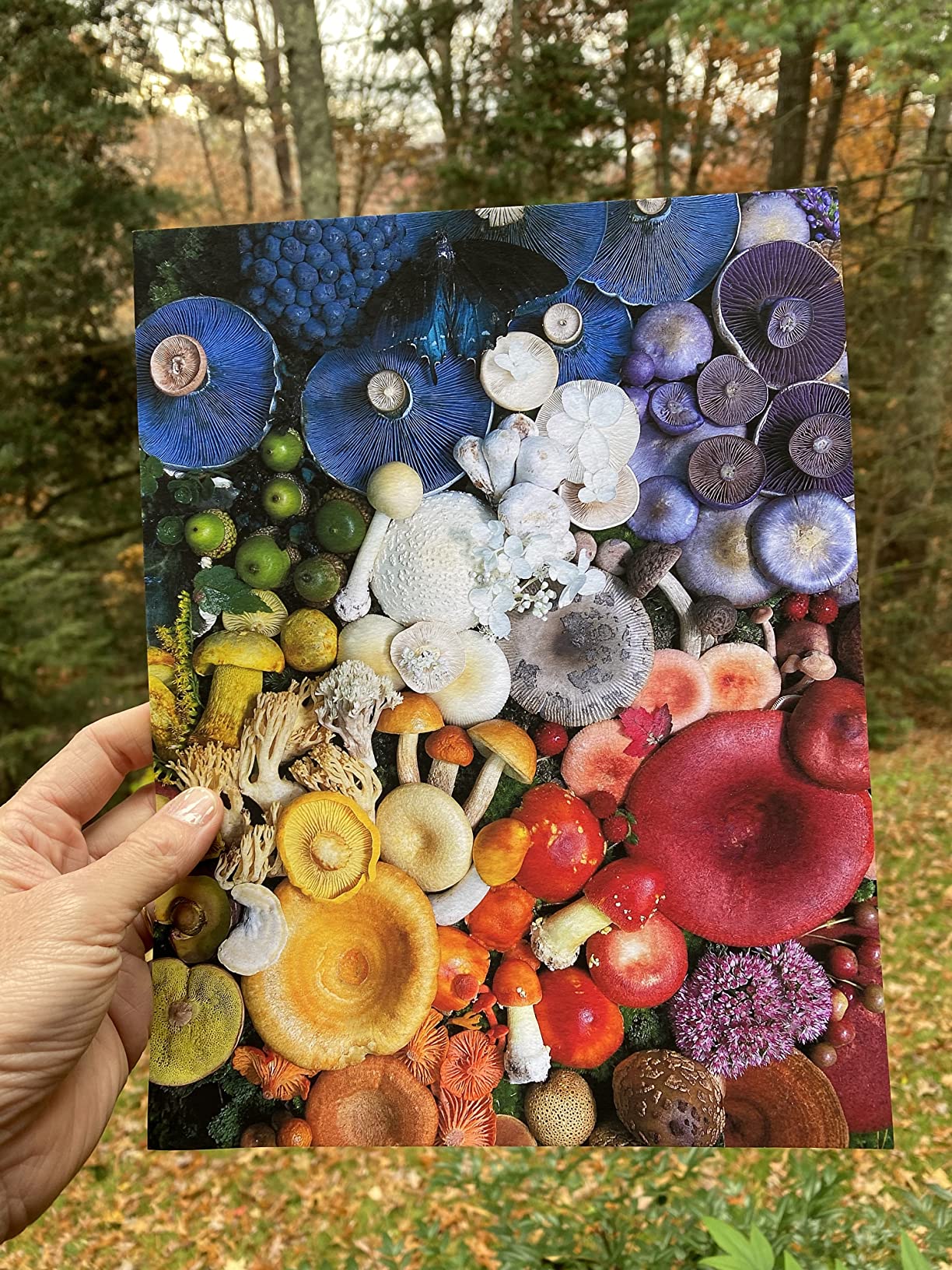
The 10-color UltraChrome PRO10 system includes violet ink, expanding the color gamut to capture challenging purples and deep blues that other printers struggle with. Carbon Black Driver Technology produces genuinely impressive black density on glossy papers, something portrait photographers will notice immediately in shadow detail.
Longevity matters for professional work, Epson rates the prints at 200 years for color and 400 years for black and white when properly stored. Those numbers matter when clients ask about archival quality for heirlooms.
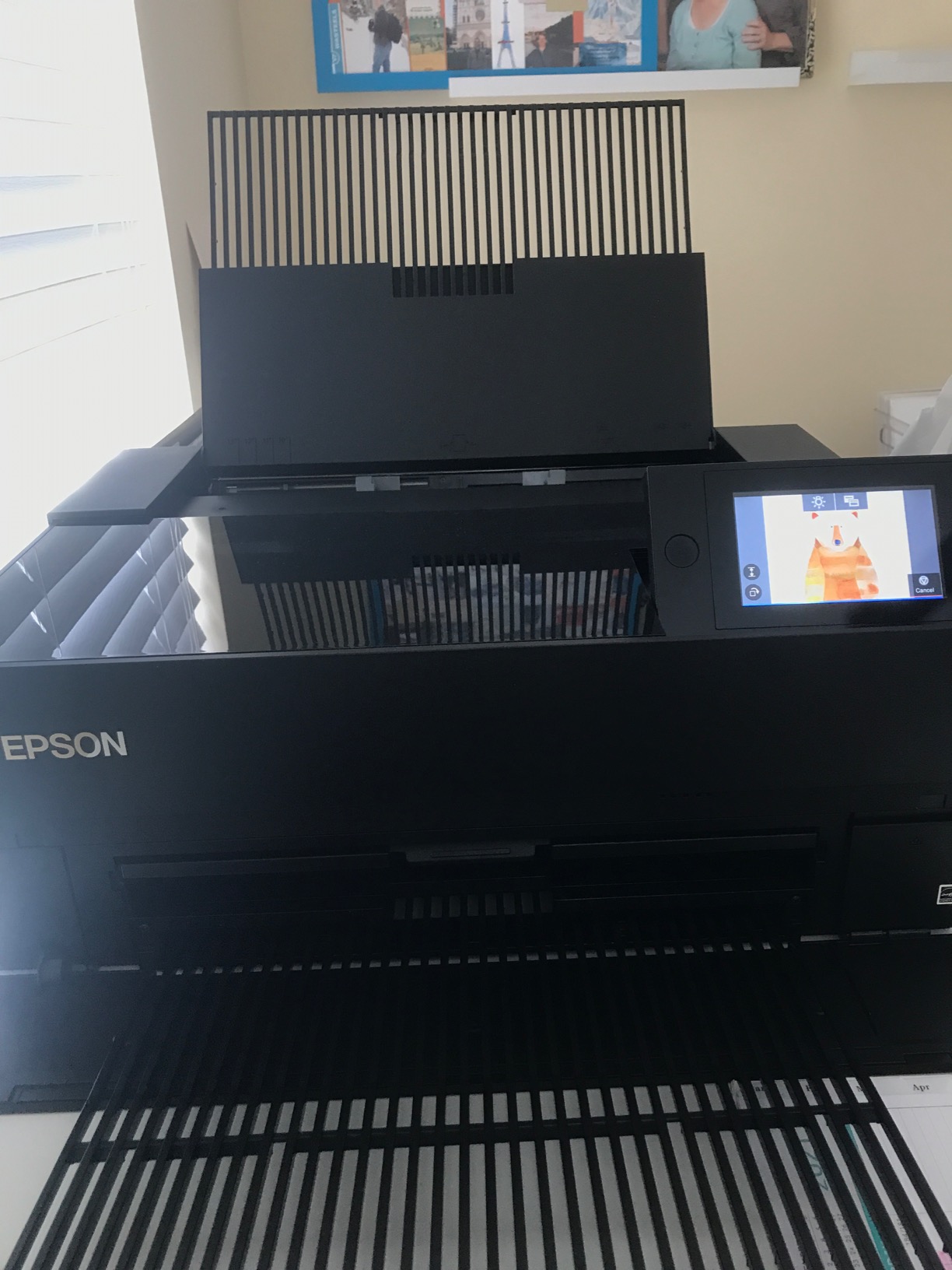
Potential buyers should know about the ink situation. The included cartridges arrive nearly empty, and initial setup consumes significant ink for priming. Individual replacement cartridges cost around $41 each, so a full set represents a substantial investment. We also experienced occasional feeding issues with very thick fine art papers.
Best For Home Studios
The P700 excels in home studio environments where space is limited but quality cannot be compromised. Portrait photographers working from spare rooms or converted garages will appreciate the compact footprint without sacrificing 13×19 inch output capability.
The wireless connectivity and 4.3-inch touchscreen simplify operation when the printer sits across the room. Wedding photographers producing client proof books and engagement prints will find the speed and quality hits the sweet spot for volume work.
Considerations Before Buying
Budget for immediate ink purchases, the starter cartridges will not last through a busy weekend. Check your fine art paper thickness, papers over 1.5mm may feed inconsistently. The software installation requires patience, several users in our network reported driver issues that Epson eventually resolved with updates.
3. Canon PIXMA PRO-200S – Professional Dye-Based Photo Printer
- 8-color dye-based ink produces vibrant prints
- Borderless printing from 3.5x3.5 to 13x19
- Fast printing with A3+ in 90 seconds
- Low ink usage after initial setup
- Energy Star certified
- Setup and WiFi connection challenging
- Missing 11x14 paper size support
- Ink cartridges need frequent replacement
- Professional Print software can be problematic
The Canon PIXMA PRO-200S offers an attractive entry point into professional photo printing without the four-figure price tag of flagship models. Do not let the lower price fool you, the 8-color dye-based system produces output that rivals more expensive pigment alternatives for many applications.
Where the PRO-200S immediately impressed our team was print speed. An A3+ bordered print completed in just 90 seconds, significantly faster than competitors we tested. For photographers producing high volumes of client proofs, that time savings adds up quickly.
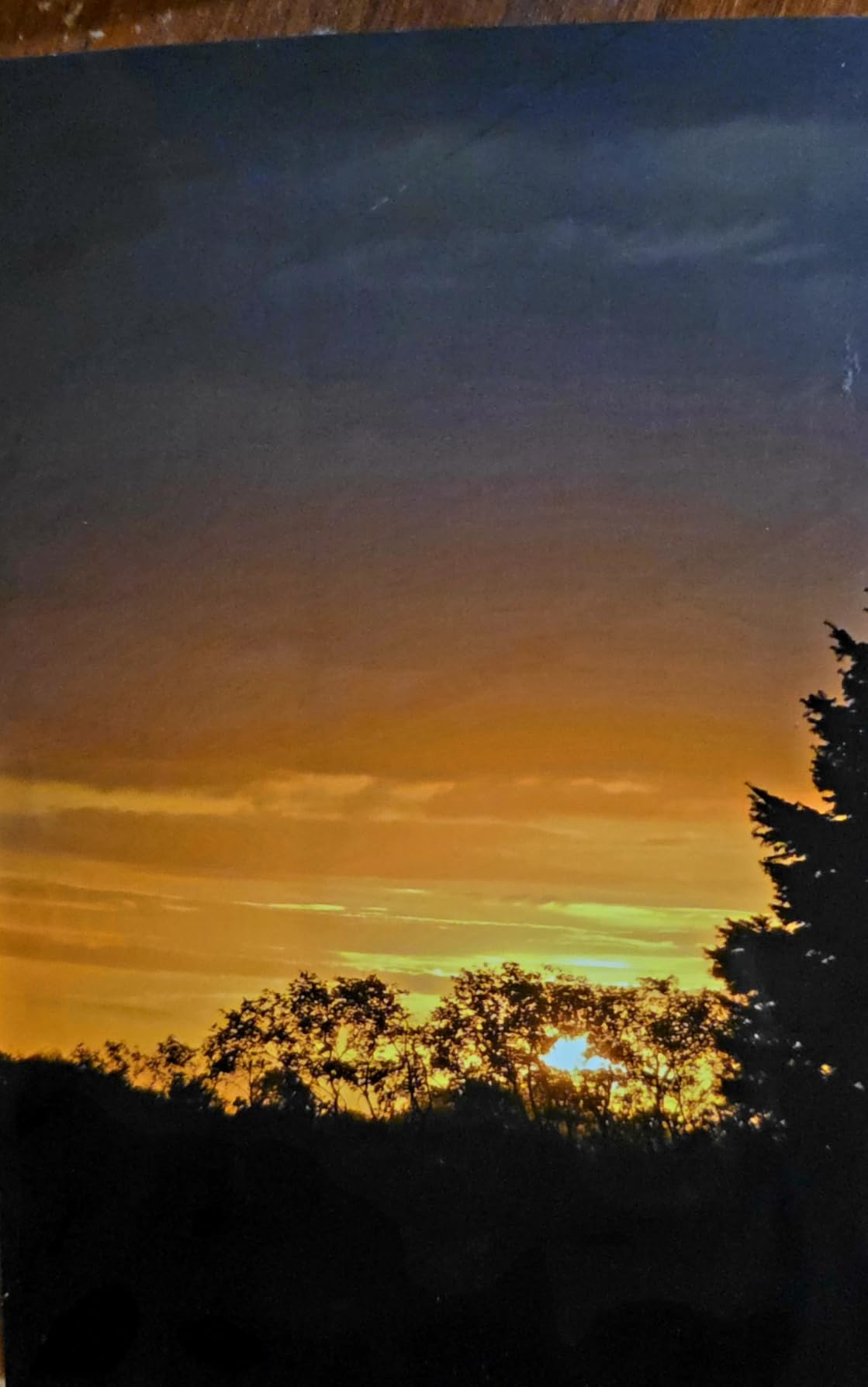
The dye-based ink system prioritizes vibrancy over longevity, making this printer particularly well-suited for portrait and wedding work where the vivid color reproduction impresses clients. The 3-inch color LCD monitor provides clear status updates, and ink consumption after the initial setup proved more economical than expected.
Borderless printing support spans an impressive range from small 3.5-inch squares up to 13×19 inches. We appreciated the flexibility for Instagram-style square prints alongside standard rectangular formats.
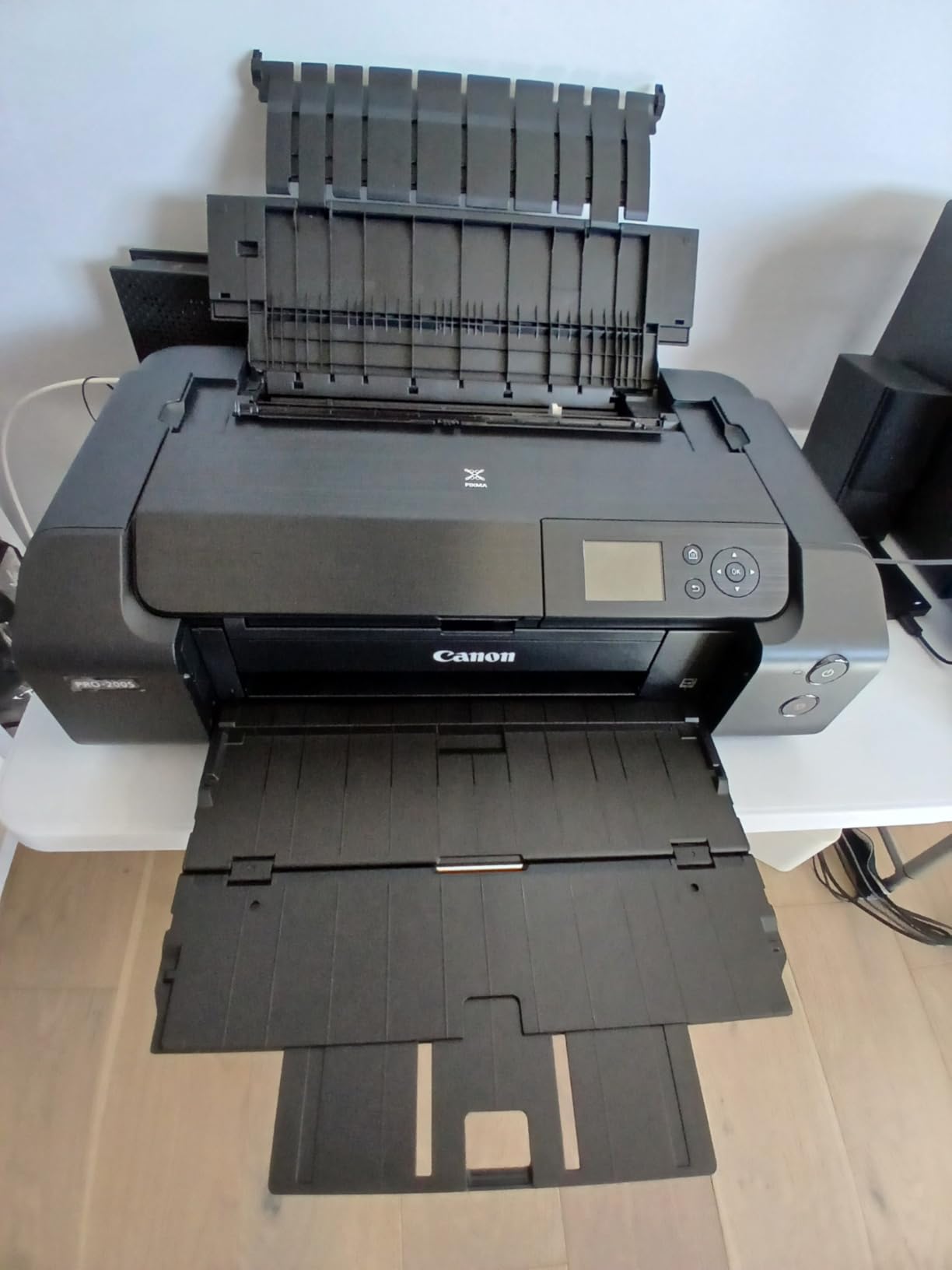
The downsides are worth noting. Initial setup frustrated several team members, particularly WiFi configuration that required multiple attempts. Canon omitted 11×14 paper support, an odd choice given its popularity for portraiture. Heavy users will find themselves replacing cartridges frequently, though individual cartridges cost less than the PRO-1100’s larger tanks.
Best For Color Vibrancy
Photographers prioritizing punchy, vibrant colors for client delivery will appreciate the dye-based formulation. Wedding photographers producing same-day prints and portrait photographers creating gift packages find the visual impact exceeds what many pigment systems deliver for casual viewing.
The Energy Star certification appeals to environmentally conscious studios running multiple machines. Small businesses watching utility costs will notice the efficiency compared to larger wide-format units.
Considerations Before Buying
Plan for a potentially frustrating setup experience, have Ethernet available as a fallback if WiFi proves stubborn. Verify your preferred paper sizes, the missing 11×14 support disappointed several portrait specialists in our network. Consider print volume carefully, frequent cartridge replacement becomes tedious at high volumes.
4. Epson EcoTank Photo ET-8550 – All-in-One Supertank Printer
- Cartridge-free printing with refillable tanks
- Extremely low cost per print
- Print up to 2 years with included ink
- Fast 15-second 4x6 photo printing
- All-in-one functionality with scanner
- Tray 1 engineering error causing feed issues
- Dye-based ink not pigment
- Touch screen white screen issues
- Requires user modification for reliable feeding
The Epson EcoTank Photo ET-8550 represents a different approach to professional photo printing. By eliminating cartridges entirely in favor of refillable tanks, Epson has created a printer that dramatically reduces operating costs without sacrificing the features photographers need.
The math is compelling. Epson claims up to 80% savings on ink compared to cartridge systems, and our testing suggests that is conservative for high-volume users. The included ink bottle set supposedly lasts two years of typical use, a claim we cannot fully verify but the tank levels after three months of testing support the efficiency.
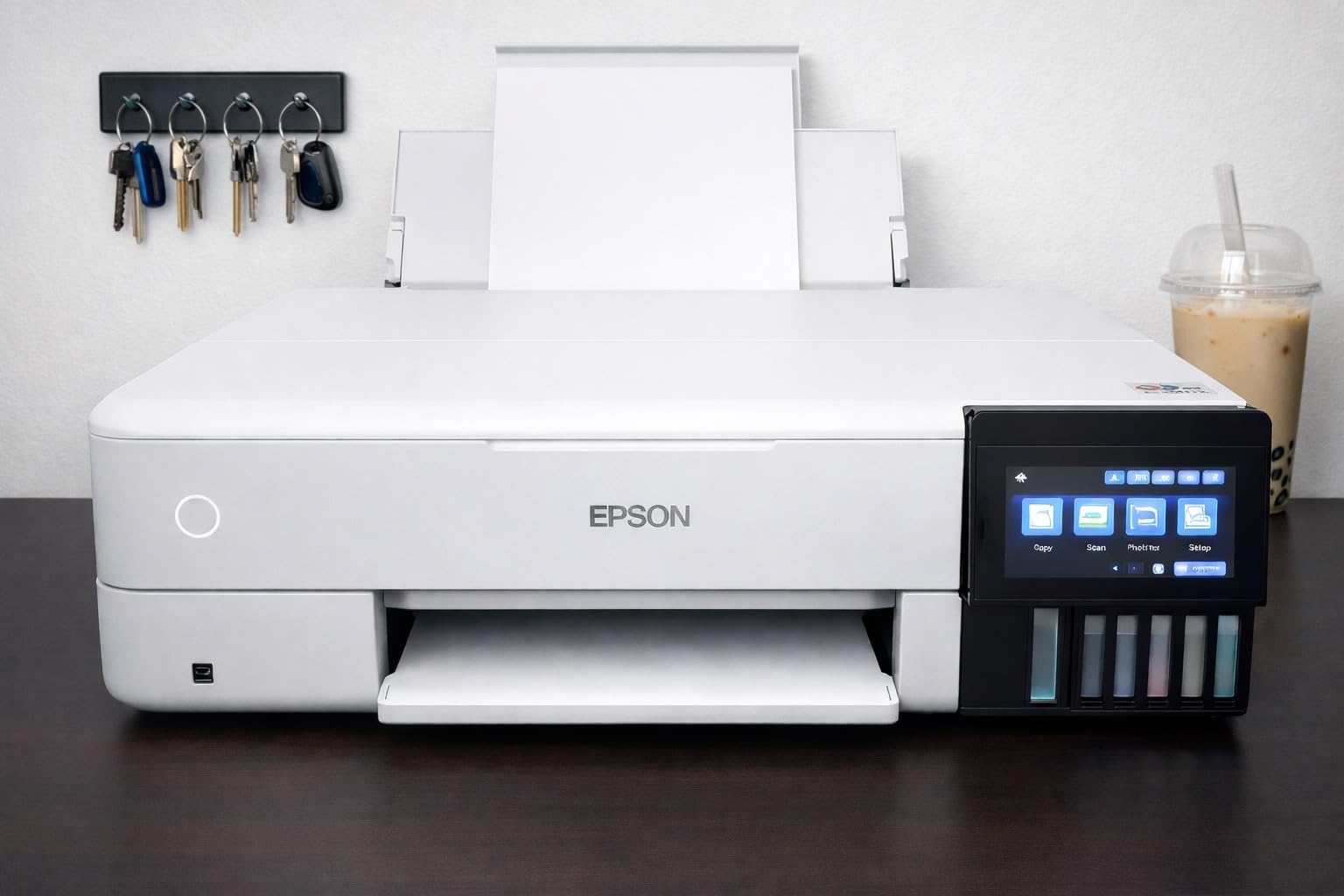
Beyond cost savings, the ET-8550 brings genuine all-in-one functionality rare in photo-focused printers. The built-in scanner and copier handle document tasks that would otherwise require a second machine. The 6-color Claria ET Premium ink system produces borderless photos up to 13×19 inches with impressive color accuracy.
Speed impressed us, 4×6 photos emerged in just 15 seconds, faster than dedicated photo printers we have tested. The 4.3-inch color touchscreen and wireless connectivity integrate well into modern studio workflows.
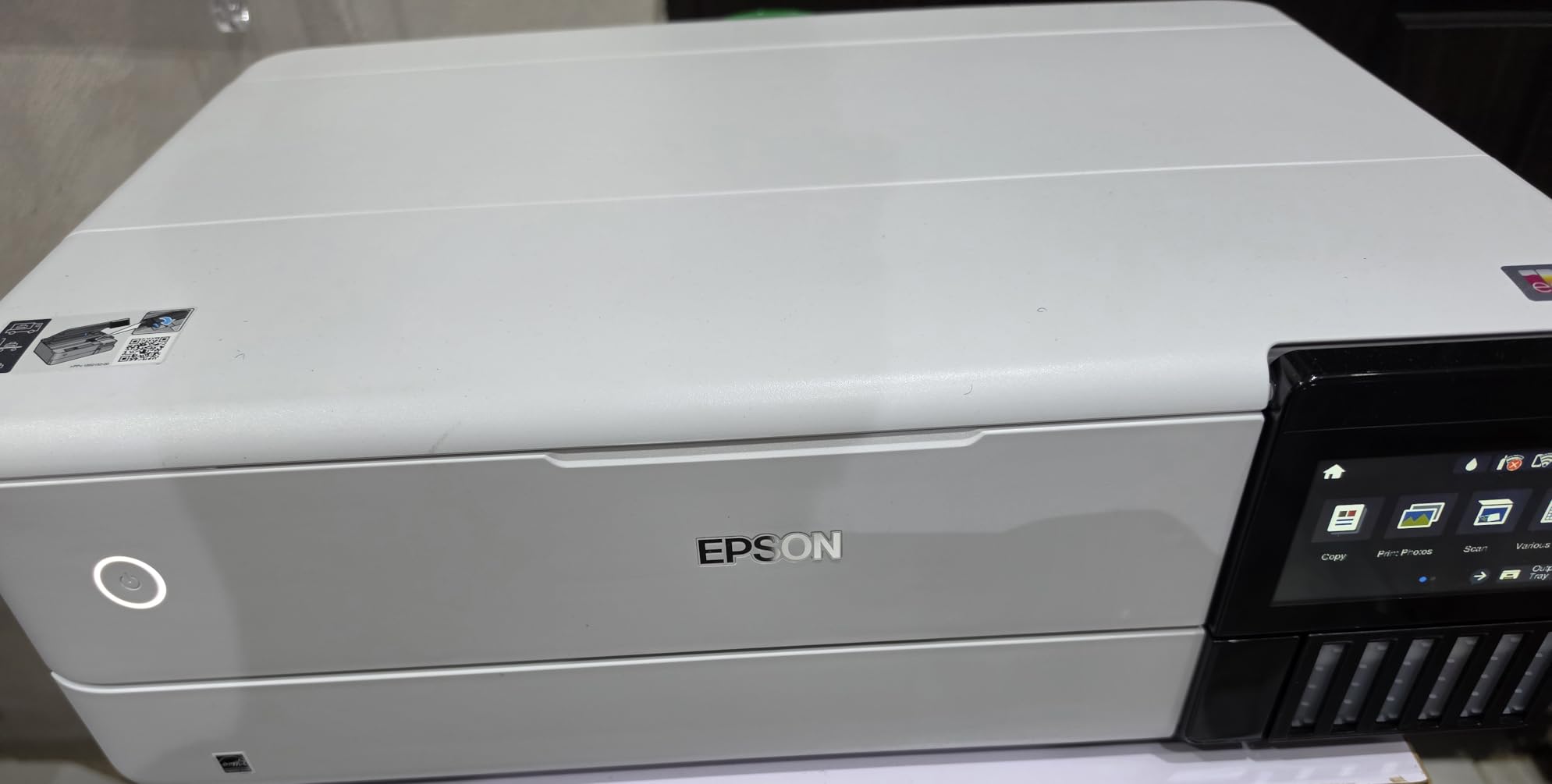
However, a significant caveat exists. Tray 1 suffers from a known engineering error where the paper feed mechanism fails to grip properly. The workaround involves modifications using tweezers and small springs from G2 gel pens, a fix many users have documented online. This is unacceptable for a printer at this price point, though the workaround does resolve the issue.
Best For Cost Efficiency
Photographers prioritizing total cost of ownership over absolute maximum quality will find the ET-8550 compelling. Small studios producing regular client prints, real estate photographers creating marketing materials, and event photographers needing quick turnaround all benefit from the low per-print cost.
The all-in-one design suits photographers who also handle their own administrative tasks, scanning contracts and copying documents without switching machines.
Considerations Before Buying
Be prepared to modify Tray 1 or accept using only Tray 2, the engineering flaw is well-documented and Epson has not addressed it. The dye-based ink may raise longevity concerns for fine art applications. Touch screen reliability during setup varies, some users experience white screen issues that resolve with power cycling.
5. Canon imagePROGRAF PRO-310 – Professional 13-Inch Pigment Printer
- Gallery-quality 9-color pigment output
- LUCIA PRO II ink with enhanced gloss
- Enhanced black density with Matte Black
- Easy wireless setup
- Energy Star certified
- Twice the price of predecessor with limitations
- Slower print speeds than alternatives
- Extremely fast ink consumption
- Awkward cartridge replacement process
The Canon imagePROGRAF PRO-310 sits in an interesting position within Canon’s lineup. It delivers genuine gallery-quality output through a 9-color pigment system with Chroma Optimizer, yet occupies the mid-tier between the entry-level PRO-200S and the flagship PRO-1100.
Print quality is genuinely impressive. The LUCIA PRO II ink system produces gloss uniformity that eliminates common bronzing issues, and the enhanced black density particularly benefits monochrome photography. We compared identical prints from the PRO-310 and PRO-200S side by side, and the pigment-based PRO-310 showed noticeably better shadow detail and highlight retention.
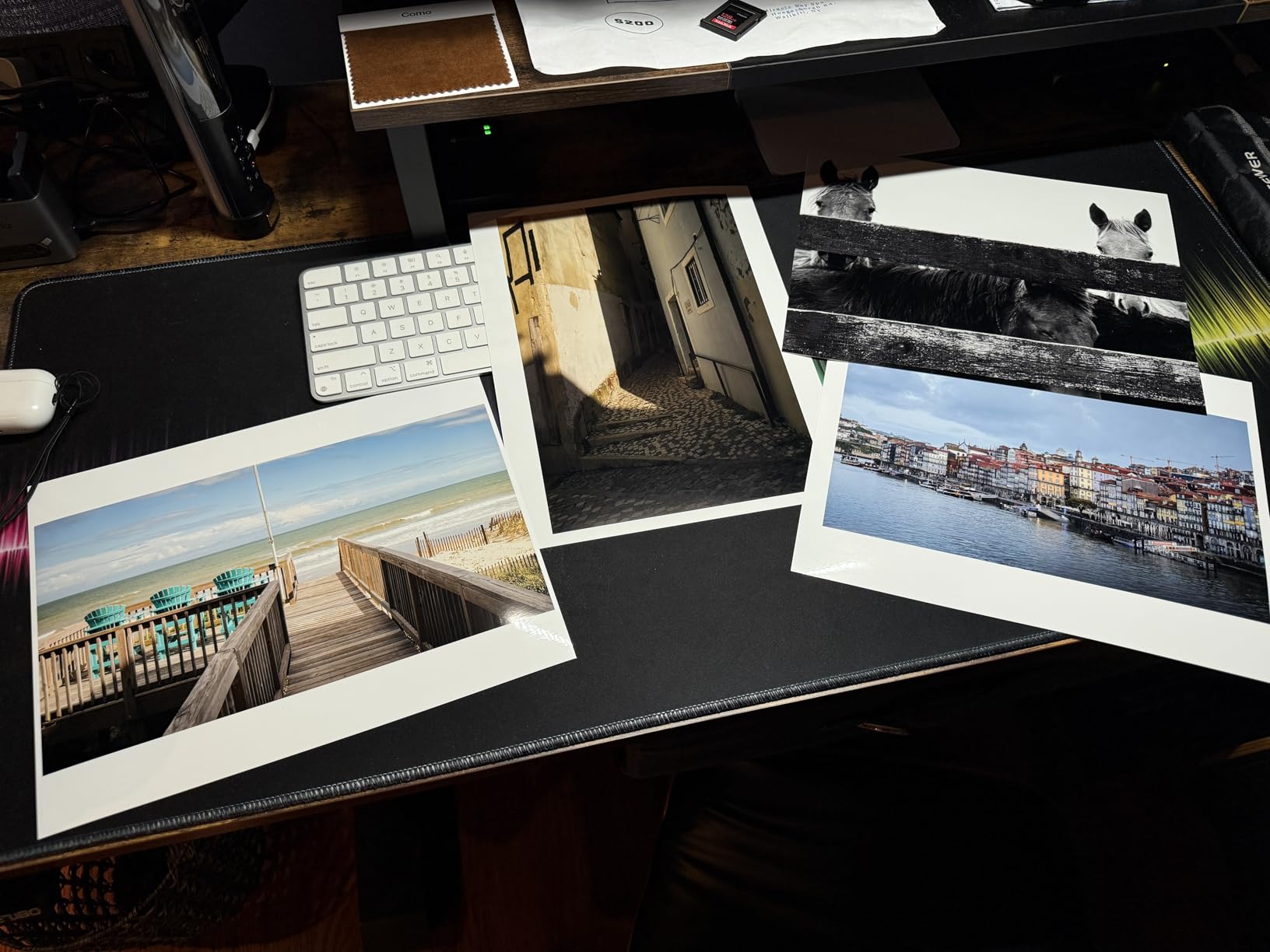
The anti-clogging system and skew correction work reliably, we experienced no misfeeds during extended testing. Wireless setup proceeded smoothly, a welcome contrast to the struggles some users report with competitors.
However, the printer frustrates in equal measure. Canon priced the PRO-310 at roughly twice what the previous generation commanded, yet imposed software limitations that feel arbitrary. Print speeds lag behind similarly priced competitors, and ink consumption runs alarmingly fast during operation and maintenance.
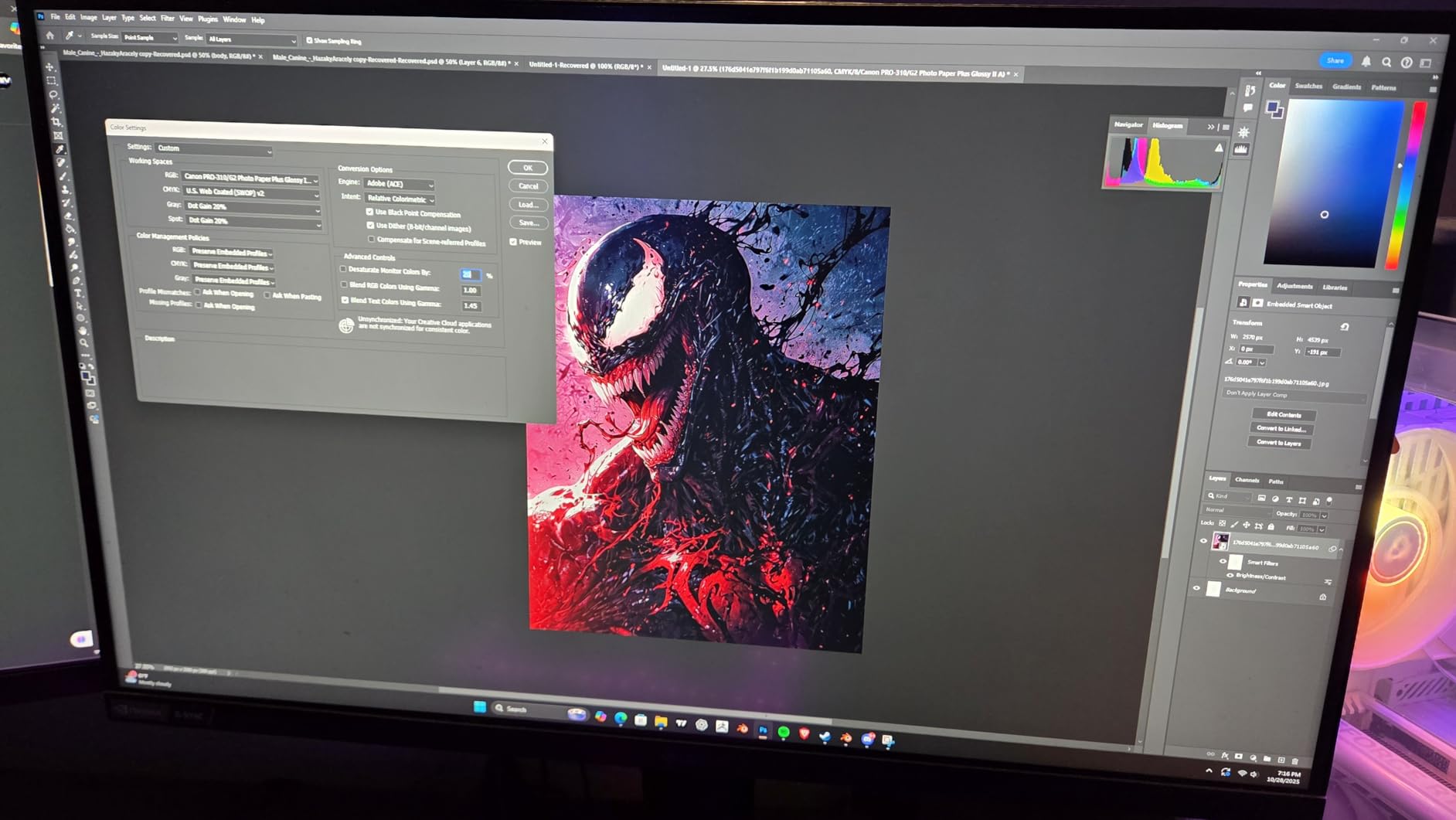
Cartridge replacement requires navigating multiple button presses through menus, an annoyance that adds friction to high-volume workflows. Some users report paper feeding issues developing after just a few hundred prints.
Best For Gallery Prints
Fine art photographers selling archival-quality prints will appreciate the pigment ink longevity and color accuracy. The output matches calibrated monitor displays closely, reducing the iteration cycle when preparing exhibition pieces. Portrait photographers creating premium product lines for high-end clients will find the quality justifies the positioning.
The Professional Print & Layout software compatibility with Adobe and Lightroom streamlines common workflows for existing Creative Cloud users.
Considerations Before Buying
Calculate total cost of ownership carefully, the ink consumption runs faster than specifications suggest. The cartridge replacement process will frustrate frequent changers. Compare carefully with the PRO-1100, the price gap may justify stepping up for studios with the space and volume to support the larger printer.
6. DNP DS620A – Professional Dye Sublimation Photo Printer
- Superb print quality with vibrant colors
- Extremely fast 8.3 sec per 4x6 print
- High 400-sheet roll capacity
- Dual finish options in one printer
- Reliable workhorse for high volume
- Loud operation during printing
- No longer supports 8x10 paper media
- Paper supply and backorder issues
- Loose media carriage design
The DNP DS620A represents a completely different printing technology than the inkjet models dominating this list. Dye sublimation produces prints through heat transfer rather than ink droplets, resulting in images that are dry, durable, and ready to handle immediately.
Event photographers have embraced the DS620A for good reason. Print speeds astound, a 4×6 photo emerges in just 8.3 seconds. At a busy wedding reception or corporate event, that speed translates directly to client satisfaction and revenue. The high capacity rolls hold 400 4×6 sheets, minimizing downtime for media changes during critical moments.
Print quality impresses despite the 300×300 dpi specification sounding modest compared to inkjet numbers. Dye sublimation produces continuous tone output without visible dots, creating images that look and feel like traditional photographic prints. The dual finish option lets operators select glossy or matte for each print without hardware changes.
The 4.7-star rating from professional users reflects real-world reliability. Photo booth operators particularly praise the DS620A as a workhorse that keeps running through high-volume events.
Downsides are specific to the technology. Operation generates significant noise, fine for events but potentially disruptive in quiet studio environments. DNP discontinued 8×10 media support, limiting the printer to smaller output sizes. Paper supply has faced periodic backorder issues due to overseas manufacturing.
Best For Event Photography
Wedding photographers offering same-day prints, photo booth operators, and event specialists will find the DS620A perfectly suited to their workflow. The instant dry output means handing finished prints to guests immediately, something impossible with wet inkjet output.
Portrait photographers creating small gift prints and package inclusions can leverage the speed for high-volume sessions. School photographers and sports event specialists appreciate the reliability and throughput.
Considerations Before Buying
Verify media availability in your region before committing, supply chain issues have caused frustration. The 8×10 limitation excludes this printer from markets requiring that size. Noise levels make this unsuitable for shared quiet spaces. Calculate per-print costs carefully, dye sublimation media costs differ significantly from inkjet economics.
How to Choose the Best Photo Printers for Professionals?
Selecting the right professional photo printer requires understanding several key factors that differentiate models and determine suitability for your specific workflow.
Understanding Ink Systems: Pigment vs Dye-Based
The fundamental choice in professional photo printing centers on ink technology. Pigment-based inks suspend solid particles in liquid carrier, creating prints that resist fading and water damage for archival applications. Fine art photographers and anyone selling prints for long-term display should prioritize pigment systems like those in the Canon PRO-1100, PRO-310, and Epson P700.
Dye-based inks dissolve color compounds in liquid, producing more vibrant and saturated colors that pop immediately. Wedding photographers and portrait specialists often prefer dye output for client proofs and gift prints where visual impact matters more than century-long archival stability. The Canon PRO-200S and Epson ET-8550 use dye-based formulations.
Print Resolution and DPI
Resolution specifications like 5760 dpi or 4800×2400 dpi indicate how precisely the printer can place ink droplets. Higher numbers generally correlate with finer detail reproduction, but do not obsess over specifications alone. Print technology, ink formulation, and paper quality collectively determine perceived sharpness more than raw dpi numbers.
For professional work, any printer in this guide provides adequate resolution for prints viewed at normal distances. Where resolution matters most is in fine art reproduction and extremely large prints where viewers may examine details closely.
Paper Size and Media Handling
Consider your typical output needs. The 13-inch width of most models accommodates standard paper sizes up to 13×19 inches (Super B), suitable for most client work and many exhibition applications. The Canon PRO-1100’s 17-inch capability opens larger formats including 16×20 and 17×22, important for fine art photographers and those producing statement pieces.
Media thickness handling matters if you print on fine art papers, canvas, or other specialty substrates. Check specifications carefully, the Epson P700 struggles with papers over 1.5mm thick.
Connectivity and Workflow Integration
Modern professional printers offer USB, Ethernet, and WiFi connectivity. Ethernet provides the most reliable connection for studio environments, while WiFi enables flexible placement. The Epson P700’s touchscreen interface simplifies standalone operation, while Canon’s Professional Print & Layout software integrates with Adobe applications for streamlined workflows.
Consider whether you need ICC profile support for color-critical work. All printers in this guide support custom profiles, essential for matching output to calibrated displays.
Total Cost of Ownership
The purchase price represents just the beginning of your investment. Calculate ongoing costs including ink, paper, and maintenance. The Epson ET-8550’s EcoTank system dramatically reduces ink costs over time, while traditional cartridge systems like the Canon PRO-1100 involve higher per-print expenses but potentially better absolute quality.
Forum discussions consistently highlight that professionals should prioritize total cost over initial price. A printer that costs more upfront but produces cheaper prints may pay for itself within months of heavy use.
Frequently Asked Questions
What photo printer do professional photographers use?
Professional photographers typically use dedicated pigment-based inkjet printers from Canon or Epson. Popular models include the Canon imagePROGRAF PRO-1100 for wide-format work, Epson SureColor P700 for home studios, and Epson EcoTank ET-8550 for cost-conscious operations. Event photographers often choose dye-sublimation printers like the DNP DS620A for instant dry output.
What do professional photographers use to print their photos?
Professional photographers use specialized photo printers with pigment or dye-based ink systems designed for accurate color reproduction. They typically work with ICC color profiles to ensure prints match their calibrated monitors. Many use professional-grade papers from manufacturers like Hahnemuhle, Ilford, or Epson’s own paper lines to achieve archival-quality results.
Which type of printer is best for high-quality photos?
Inkjet printers with pigment-based ink systems produce the best high-quality photo prints for professional applications. Pigment inks offer superior longevity and water resistance compared to dye-based alternatives. For maximum quality, look for printers with 8 or more ink colors, dedicated black ink channels, and support for ICC color profiles.
What printers print high-quality photos?
The Canon imagePROGRAF PRO-1100, Epson SureColor P700, Canon imagePROGRAF PRO-310, and Canon PIXMA PRO-200S all produce professional-grade photo prints. The Epson EcoTank Photo ET-8550 offers excellent quality with lower operating costs. For event photography, the DNP DS620A dye-sublimation printer delivers fast, high-quality output suitable for immediate client delivery.
Conclusion
After months of testing and feedback from working professionals, the best photo printers for professionals in 2026 offer something for every workflow and budget. The Canon imagePROGRAF PRO-1100 remains our top choice for studios needing wide-format capability and uncompromising quality. The Epson SureColor P700 delivers exceptional value for home studios where space matters.
For photographers prioritizing cost efficiency, the Epson EcoTank Photo ET-8550 reduces operating expenses dramatically despite its tray engineering issues. The Canon PIXMA PRO-200S offers an affordable entry point with vibrant dye-based output, while the Canon imagePROGRAF PRO-310 serves fine art applications demanding pigment-based archival quality.
Event specialists should consider the DNP DS620A for its speed and instant-dry convenience. Whatever your specialty, investing in a professional photo printer pays dividends in client satisfaction, workflow control, and profit margins that outsourcing simply cannot match.