
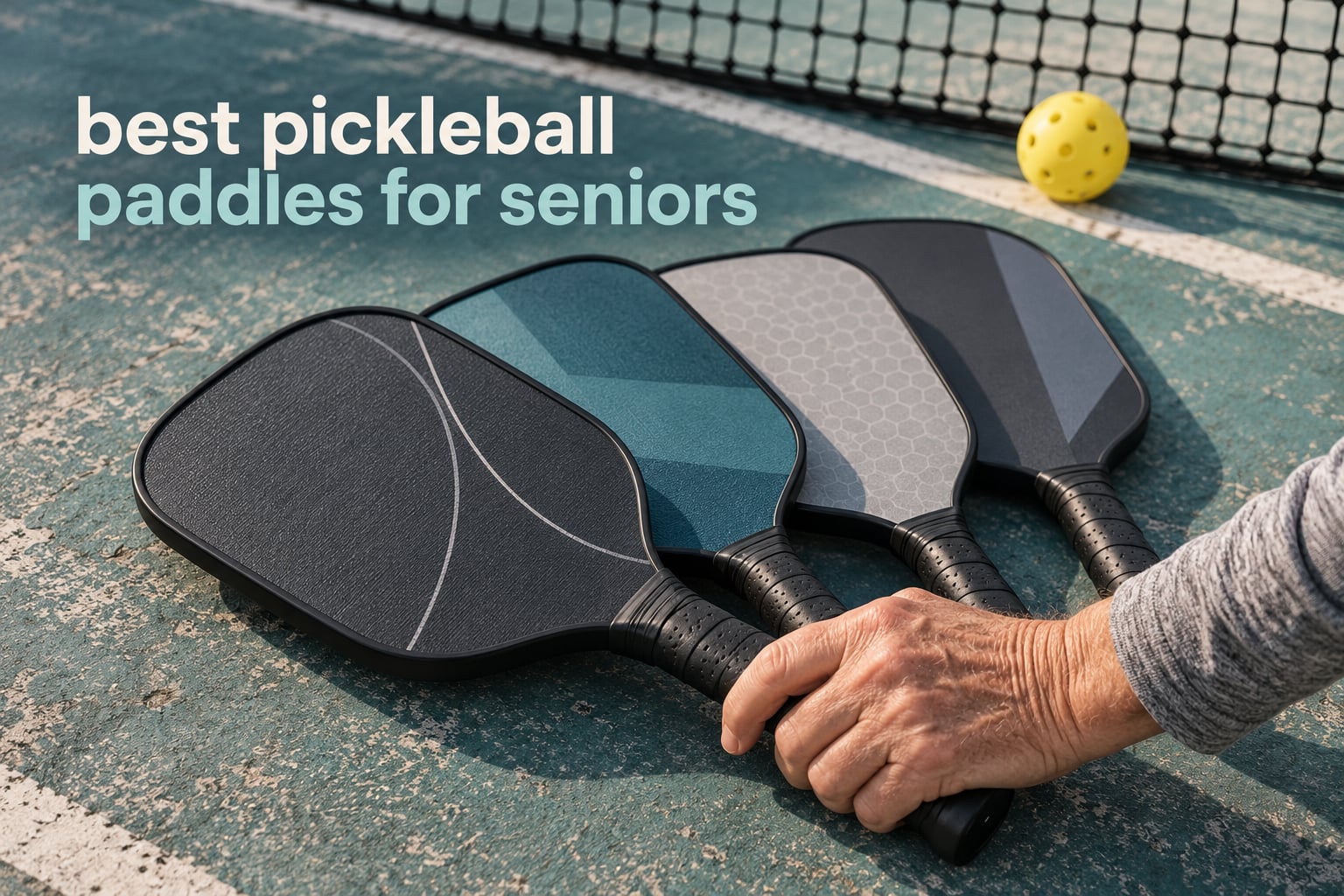
Quick answer: the best pickleball paddle for seniors is a lightweight 7.3-7.8 ounce control paddle with a roomy grip circumference, an oversized sweet spot and a polymer honeycomb core at least 14mm thick. For players managing arthritis or elbow pain, our pick for sensitive joints is the MTEN set, and the best step-up for players who already have one is the Selkirk Sport SLK Atlas with its raw carbon face.
Last updated October 2026. We evaluated ten paddles on the four specs that decide how a paddle feels on an aging arm: listed weight, core thickness, grip circumference and sweet spot shape. Every weight, grip size and rating quoted below comes from the manufacturer’s own published specification for that exact model, and we flag where a spec is disputed between sources.
Disclosure: as an Amazon Associate we earn from qualifying purchases. That never changes which paddle we recommend.
A senior pickleball paddle is a lightweight one, usually 7.25 to 8 ounces, with a roomy grip circumference, an oversized sweet spot and a polymer honeycomb core that absorbs vibration instead of passing it up the arm. It trades raw power for control, so the ball leaves the paddle slowly and the shoulder does less work. Everything else in this guide follows from those four ideas.
Why does it matter past about 55? Tendons lose elasticity and recover more slowly between sessions, so a paddle one ounce heavier than ideal adds up across a season rather than one afternoon. Matched to your weight band and grip, a well-chosen paddle lets you play two or three times a week for years. Mismatched, it ends recreational play within weeks, usually for reasons that feel like bad luck but are actually equipment fit.
We see the same pattern in senior-focused pickleball groups online, where the recurring request is not more power but a grip that does not hurt and a weight the player can hold for a full ninety minutes. Buyers who already own a paddle make up most of the people asking, which tells you the first-paddle and upgrade-paddle answers are different. If you are still deciding where to start, our intermediate pickleball paddle guide covers the middle of the range; if you want to practice alone between group sessions, see our picks for solo practice machines.
Top 3 Pickleball Paddles for Seniors Right Now for October 2026


Selkirk Sport SLK Neo Set of 2
- 14mm polymer core
- widebody sweet spot
- comfort grip
- sling bag

All 10 Senior Pickleball Paddles at a Glance for October 2026
| Product | Specifications | Action |
|---|---|---|
| MTEN Fiberglass Paddle Set of 2 |
|
Check Latest Price |
| Selkirk Sport SLK Neo Set of 2 |
|
Check Latest Price |
| XSPAK PRO Series T700SC Carbon Fiber |
|
Check Latest Price |
 Uteeqe Graphite U1 Set of 2 Uteeqe Graphite U1 Set of 2 |
|
Check Latest Price |
 HEAD Extreme Elite Fiberglass HEAD Extreme Elite Fiberglass |
|
Check Latest Price |
 Amazon Basics Carbon Fiber Set of 2 Amazon Basics Carbon Fiber Set of 2 |
|
Check Latest Price |
 Selkirk Sport SLK Atlas Selkirk Sport SLK Atlas |
|
Check Latest Price |
 Sonix Fiberglass Paddle Sonix Fiberglass Paddle |
|
Check Latest Price |
 Onix Graphite MOD Z5 Onix Graphite MOD Z5 |
|
Check Latest Price |
 Selkirk Sport SLK Helix Pro Selkirk Sport SLK Helix Pro |
|
Check Latest Price |
One note before the reviews. Core thickness and weight vary between model years of the same named paddle, so confirm both on the listing page before you order, especially for the Selkirk models that appear three times in this roundup.
1. MTEN Fiberglass Paddle Set of 2 – Best Overall for Seniors
- Roomy 4.57 inch grip suits hands that close awkwardly
- Very light at 7.8 oz for long sessions
- Polypropylene honeycomb core dampens vibration
- Set of 2 with balls
- grip tapes and carry bag
- Edge guard protects the frame
- Smooth face generates very little spin
- Entry-level build players outgrow
- Carry bag strap reported to fail early
- Grip wrap came loose in one first-session review
Our default recommendation, and the reason is unglamorous: the 4.57 inch grip circumference. That is the roomiest handle in this roundup, and for aging or arthritic hands it is the single spec that decides whether you relax your hold or clamp it. At 7.78 to 7.8 ounces per paddle, it also sits in the middle of the band we think most players over 65 should use.
The construction is fiberglass with a polypropylene honeycomb core, and the manufacturer states the honeycomb tech reduces vibration and stabilizes ball speed. In practice it feels plush rather than harsh, which matters on a soft indoor court where older courts are often played.
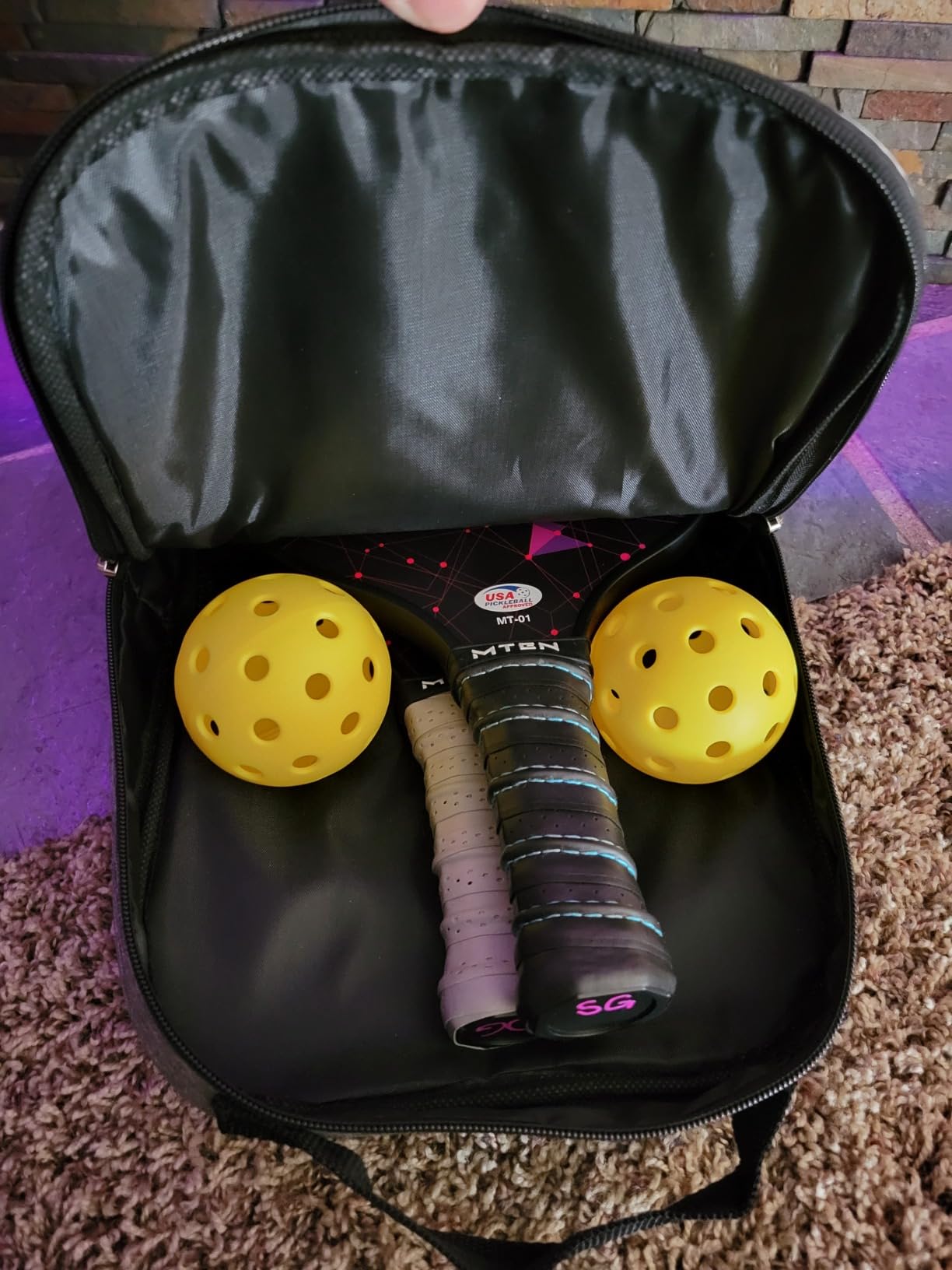
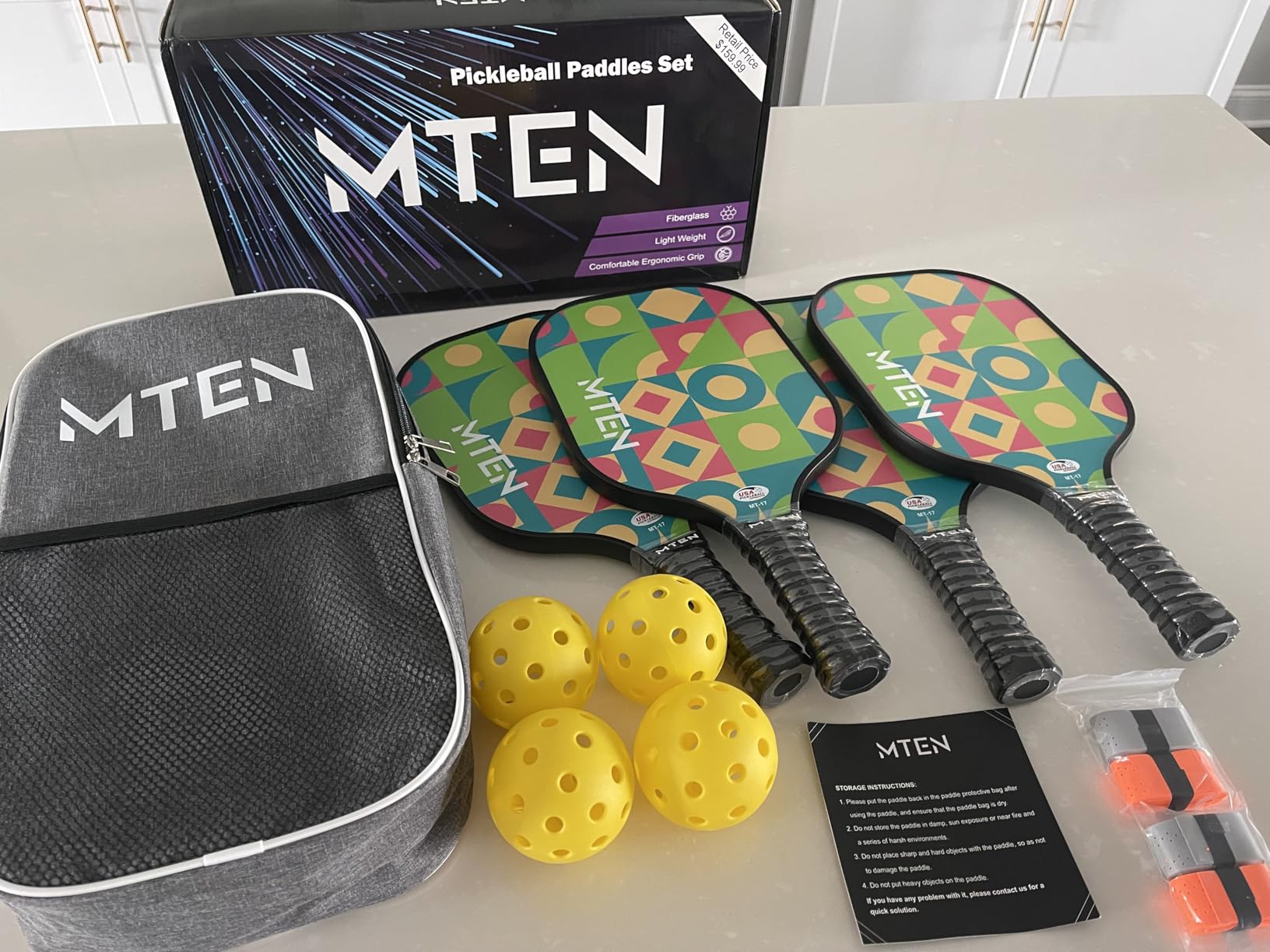
The set includes two paddles, four outdoor balls, two grip tapes and a carry bag, plus a one-year warranty. That bundle matters more than it sounds: a senior group, a couple, or a parent and an adult child can open one box and play inside ten minutes instead of ordering twice.
Worth knowing on the spec sheet: the listing shows dimensions of 17 by 13 inches, which is the packaged set rather than a single paddle face. The individual face is a wide design, and the wide profile is where the extra sweet spots come from.
Honest limits. The face is smooth, with no grit or texture, so it produces very little spin. If your game depends on topspin to hold a deep ball or to keep opponents honest at the kitchen line, you will feel that gap. It is also an entry-level build, and players who start climbing into club or tournament play typically move on within a season or two.
Who this paddle suits
A player in their sixties or seventies who wants a forgiving, low-effort racket and does not chase spin. It is also the safest buy for a parent whose hand strength or grip confidence is the unknown variable, because a grip this wide can be held loosely and still control the ball. Couples and pairs buying together get two paddles in one order.
Who should skip it
Skip it if you already know you want to develop spin, or if you have played before and are chasing ball control at the net. The named failure mode to watch is the handle: one reviewer reported the grip wrap coming loose during a first session, and another reported the carry bag strap giving out, so replace the grip tape early rather than fighting a slippery handle.
2. Selkirk Sport SLK Neo Set of 2 – Best All-Round Set
Selkirk Sport SLK Neo Pickleball Paddles Set of 2|Blue Turquoise+Sling Bag
- Oversized sweet spot forgives off-center hits
- SLK comfort grip reduces fatigue in long sessions
- Fiberglass face with easy-access spin
- Set of 2 with balls and sling bag
- One-year limited warranty
- Fiberglass face spins less than raw carbon
- Control-leaning feel suits rally play more than power
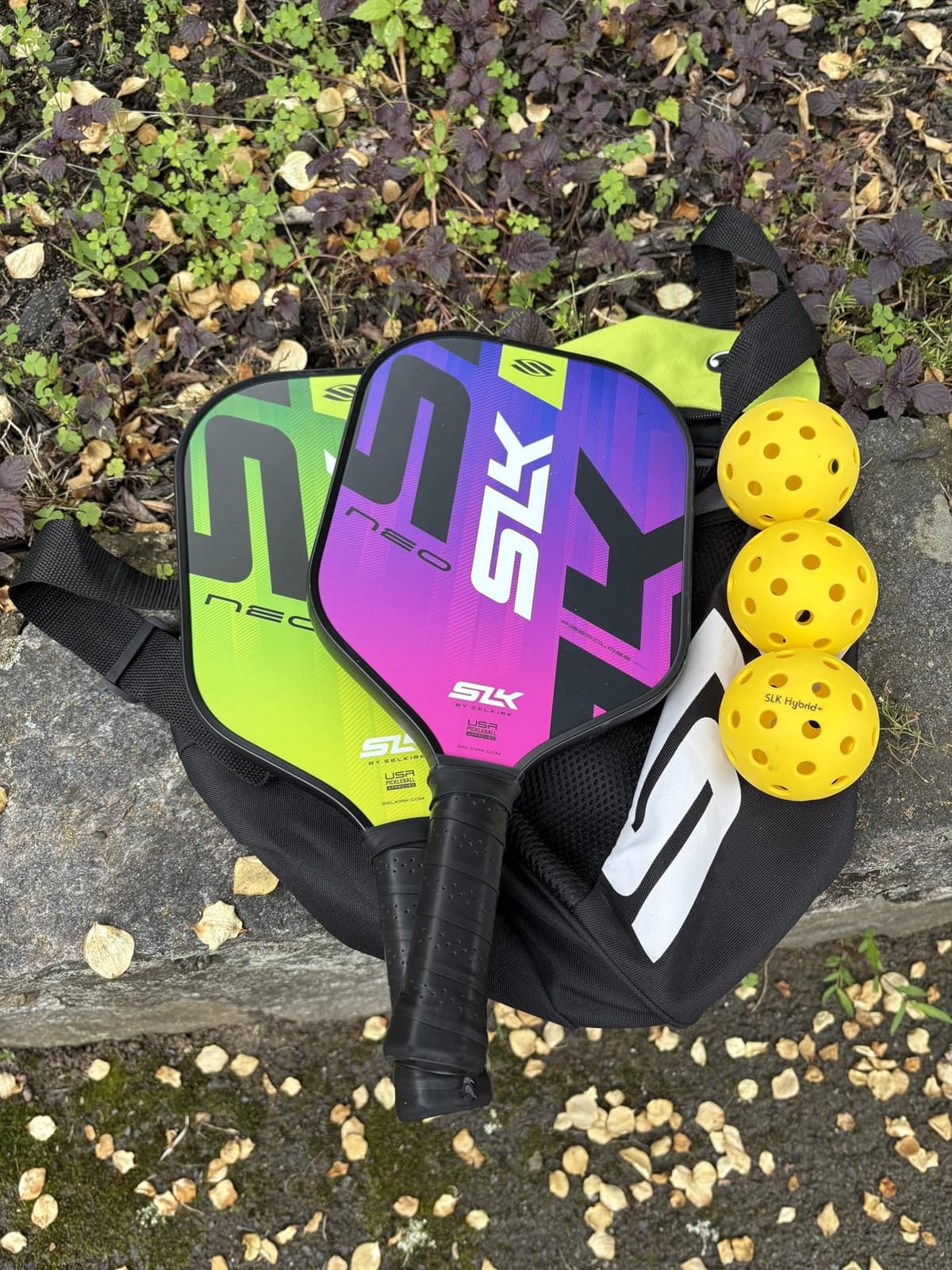
This is the set we hand to a returning player who already owns a paddle and wants a step up without changing how the ball feels. The redesign from the earlier Neo bundles kept the widebody shape and the comfort grip, which is the part that matters most for a longer session.
Listed at 0.21 kg, this is one of the lighter paddles in the roundup, and the 14mm polymer core is a middle ground: softer than a 13mm core, firmer and more responsive than 16mm. For a recreational doubles player without elbow symptoms, that middle position is a sensible place to sit.
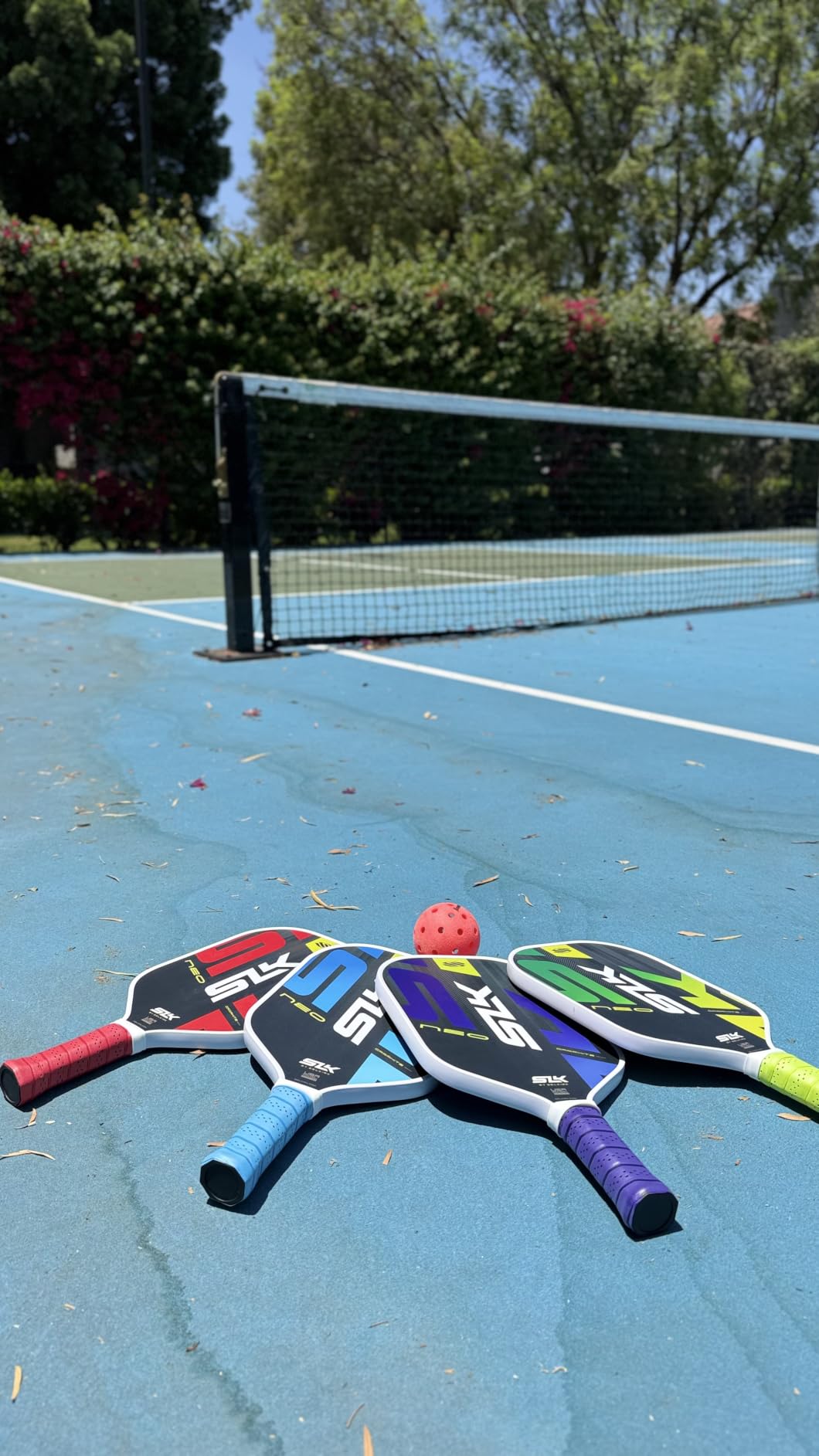
The fiberglass face delivers genuine pop with accessible spin, and reviewers single out the oversized sweet spot as the reason the paddle feels consistent on balls that land a little off-center. At 15.7 by 7.88 inches with a widebody profile, there is a lot of usable face to miss with.
Grip circumference is listed at 4 1/4 inches, which is a step tighter than the MTEN. If your hand needs more room than that, add an overgrip rather than squeezing harder, and see our grip sizing section below.
Who this paddle suits
A player who plays two or three times a week, wants a forgiving face, and prefers rally play and placement over hard power shots. It is the most sensible single purchase for an adult child buying a first real paddle for a parent who already plays occasionally and would be put off by an unfamiliar brand.
Who should skip it
Skip it if you came to pickleball from tennis and want the longer, thinner hitting window that an elongated shape gives you, or if you are a power player who dislikes a control-leaning feel. The fiberglass face is the trade: it is durable and predictable, but it will not generate the raw spin of a raw carbon face.
3. XSPAK PRO Series T700SC Carbon Fiber – Best for Low-Vibration Feel
- XS28 honeycomb core reduces vibration amplitude
- Large grip and long handle at 5.5 inches
- Carbon face defuses opponent spin
- Low-profile edge guard cuts mishits
- USAPA certified
- Tuned toward experienced players
- Less forgiving than a widebody control shape
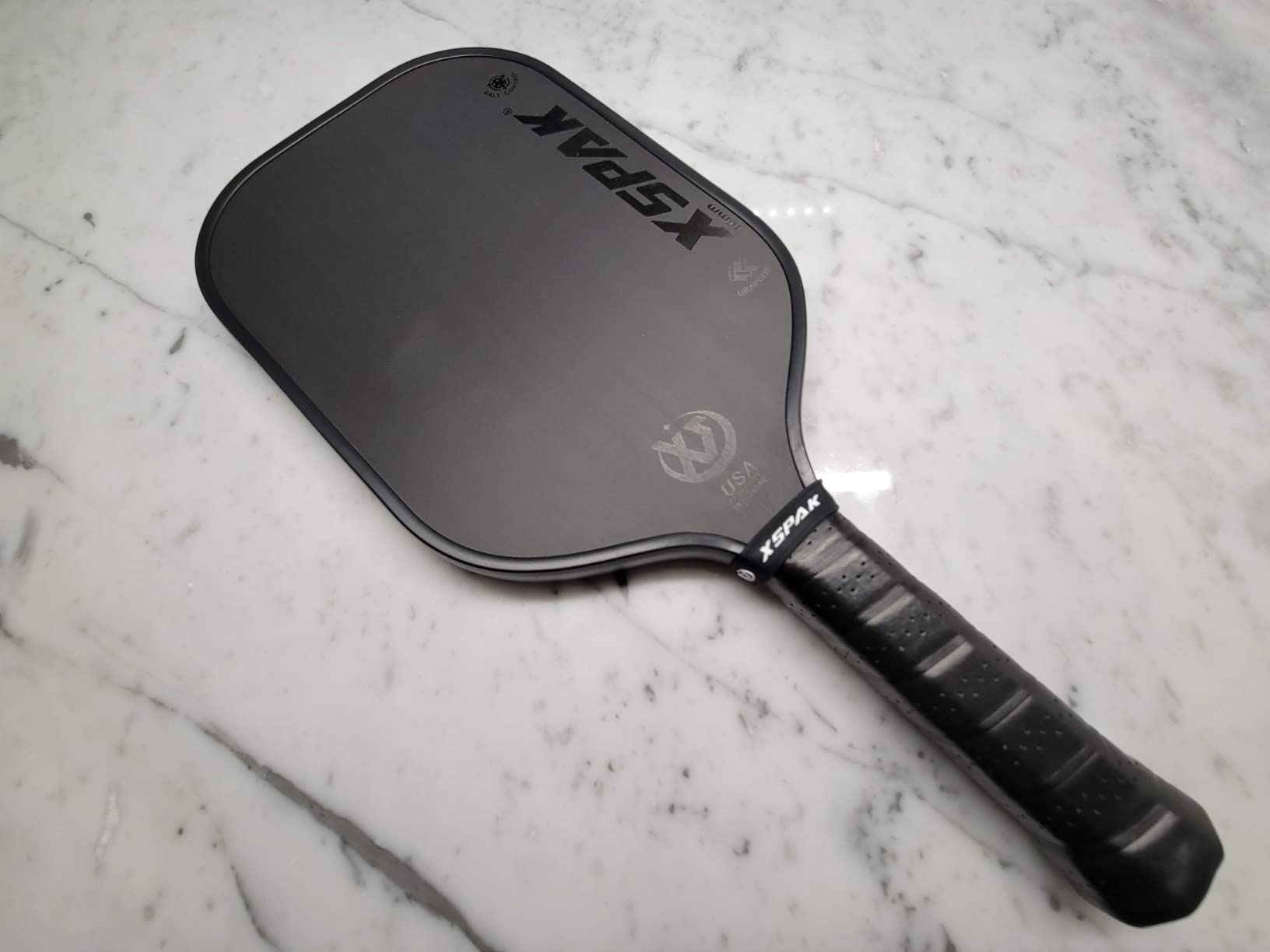
The handle is the story here. At 5.5 by 4.35 inches this is by far the longest handle in the roundup, and a longer handle gives your ring finger a resting place on the butt cap. That reduces the pinch force needed to hold the paddle steady, which is precisely the mechanism behind most forearm complaints we hear about.
Underneath, the manufacturer describes an XS28 polypropylene honeycomb core designed to reduce both the amplitude and frequency of vibration waves, paired with a carbon fiber face. At 8 ounces it sits at the top of the range we consider comfortable for most seniors, so it suits a player with a stronger forearm who still wants vibration control.
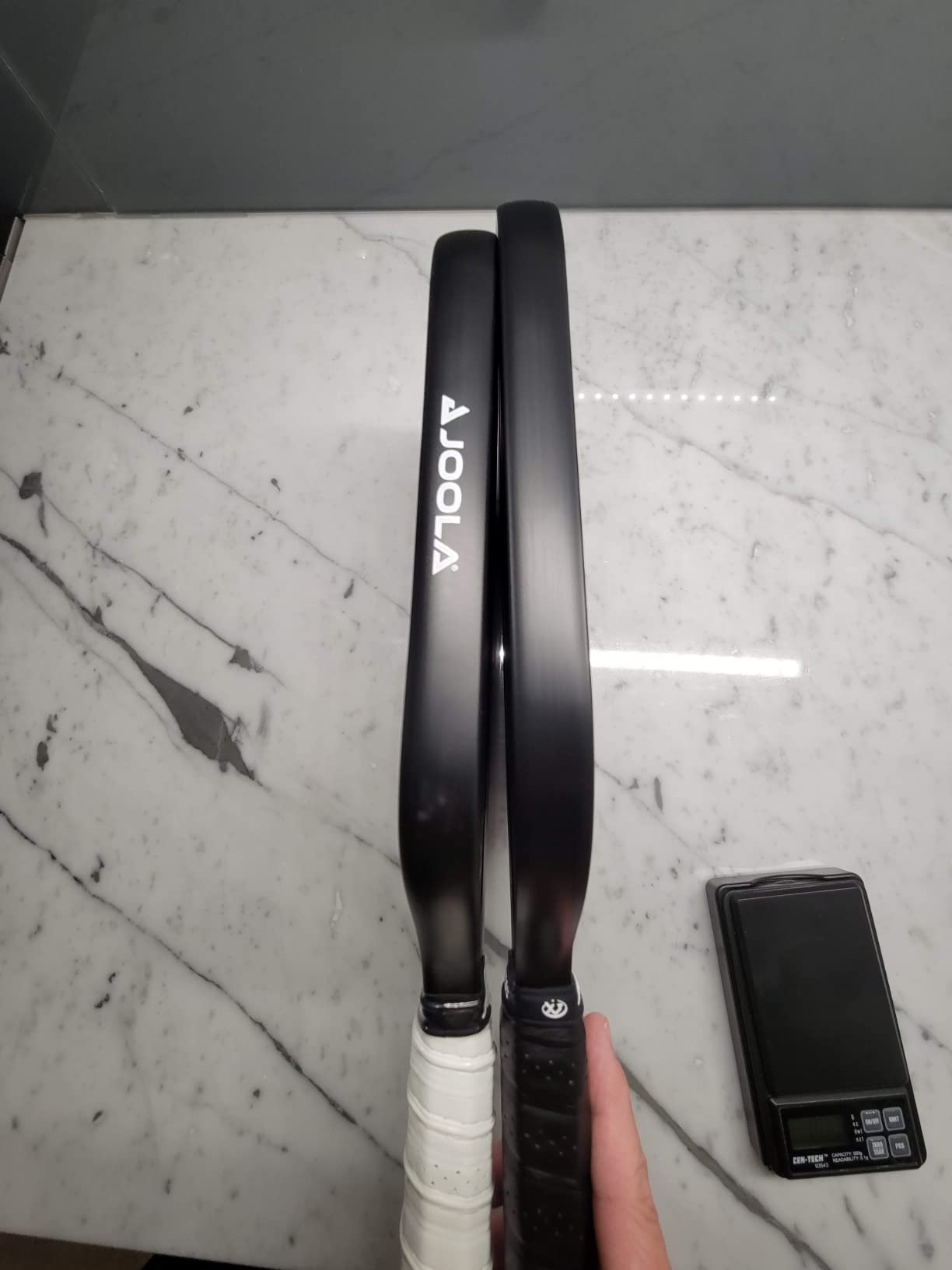
The face measures 16.5 by 7.4 inches, which is longer and narrower than the widebody paddles in this list. That geometry rewards reach on low balls and suits a taller or more tennis-minded player. The carbon face generates real spin, and reviewers note it does a good job of defusing spin coming back from the other side.
A one-year manufacturer warranty covers it, and the low-profile edge guard is thin enough that it does not create a new edge to catch on the ball, which is a common complaint with bulky guards.
Who this paddle suits
A player with a prior tennis habit, or anyone whose hand cramps early in a session and who responds well to a longer handle. It also works well for a dink-focused doubles player who wants placement over pace and appreciates a core that is explicitly engineered to dampen vibration.
Who should skip it
Skip it if you are brand new and want maximum forgiveness on off-center hits; the shape is less forgiving than a widebody and the build is tuned toward experienced players. It is also heavier at 8 ounces, so anyone with a genuinely weak shoulder or a recent shoulder procedure should start lighter.
4. Uteeqe Graphite U1 Set of 2 – Best Budget Spin Paddle
- Semi-textured face adds grip and spin at a low weight
- Thermoformed one-mold build resists delamination
- Spiral-contoured cushioned grip reduces fatigue
- Reinforced edge guard
- Set of 2 with carry bag and balls
- Graphite face less responsive than full carbon
- Less head feedback and power than tournament paddles
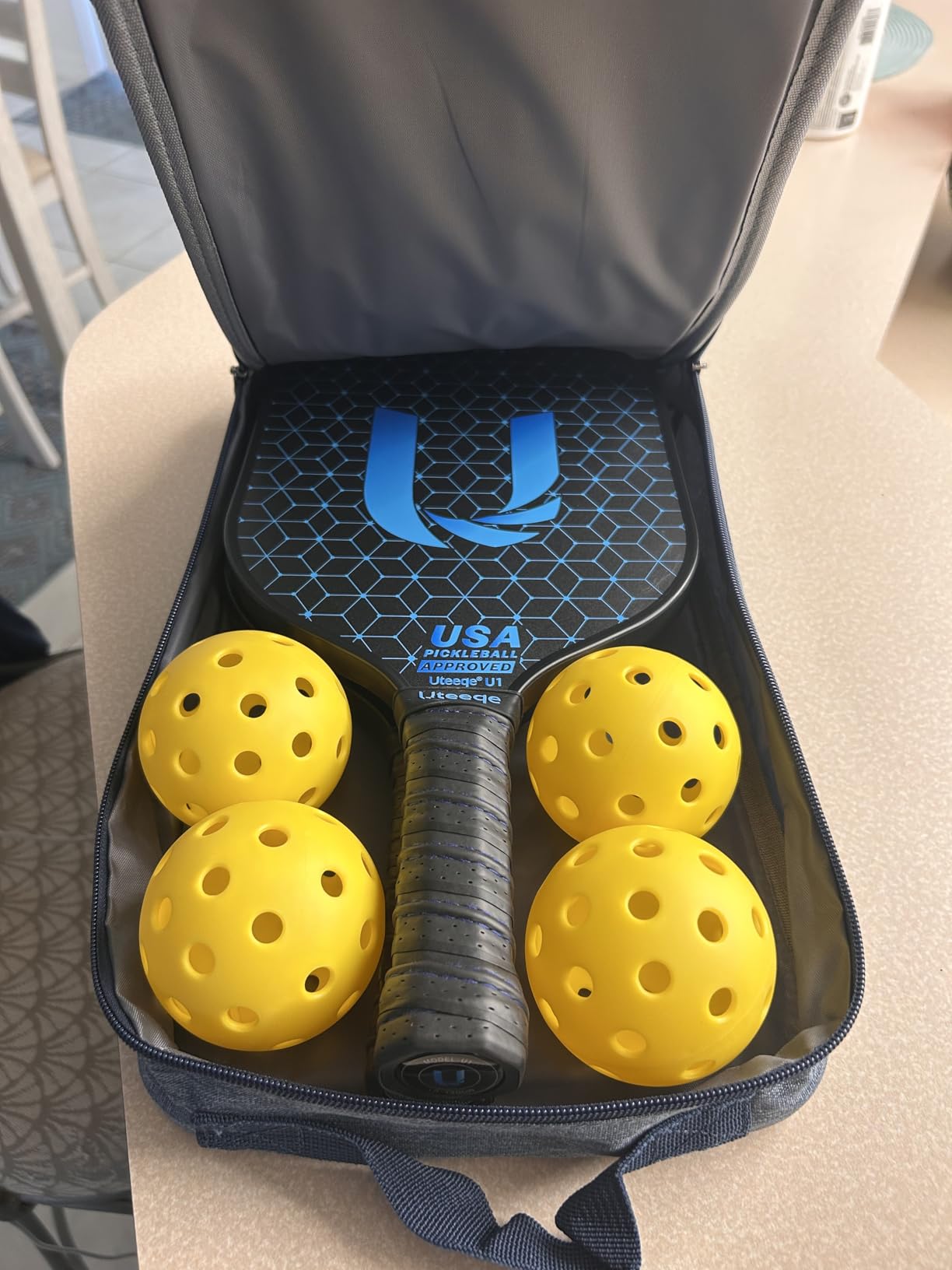
This is the value answer for anyone who has been disappointed by smooth faces. The Uteeqe U1 uses a semi-textured graphite surface, so the ball grips the face and you get meaningful topspin and backspin without moving up to a raw carbon paddle.
At 7.8 ounces it is light, and the spiral-contoured cushioned grip with a sweat-wicking perforated surface is shaped to reduce hand fatigue over extended play. Grip circumference is listed at 4 1/4 inches, and the paddle face measures 15.8 by 7.8 inches.
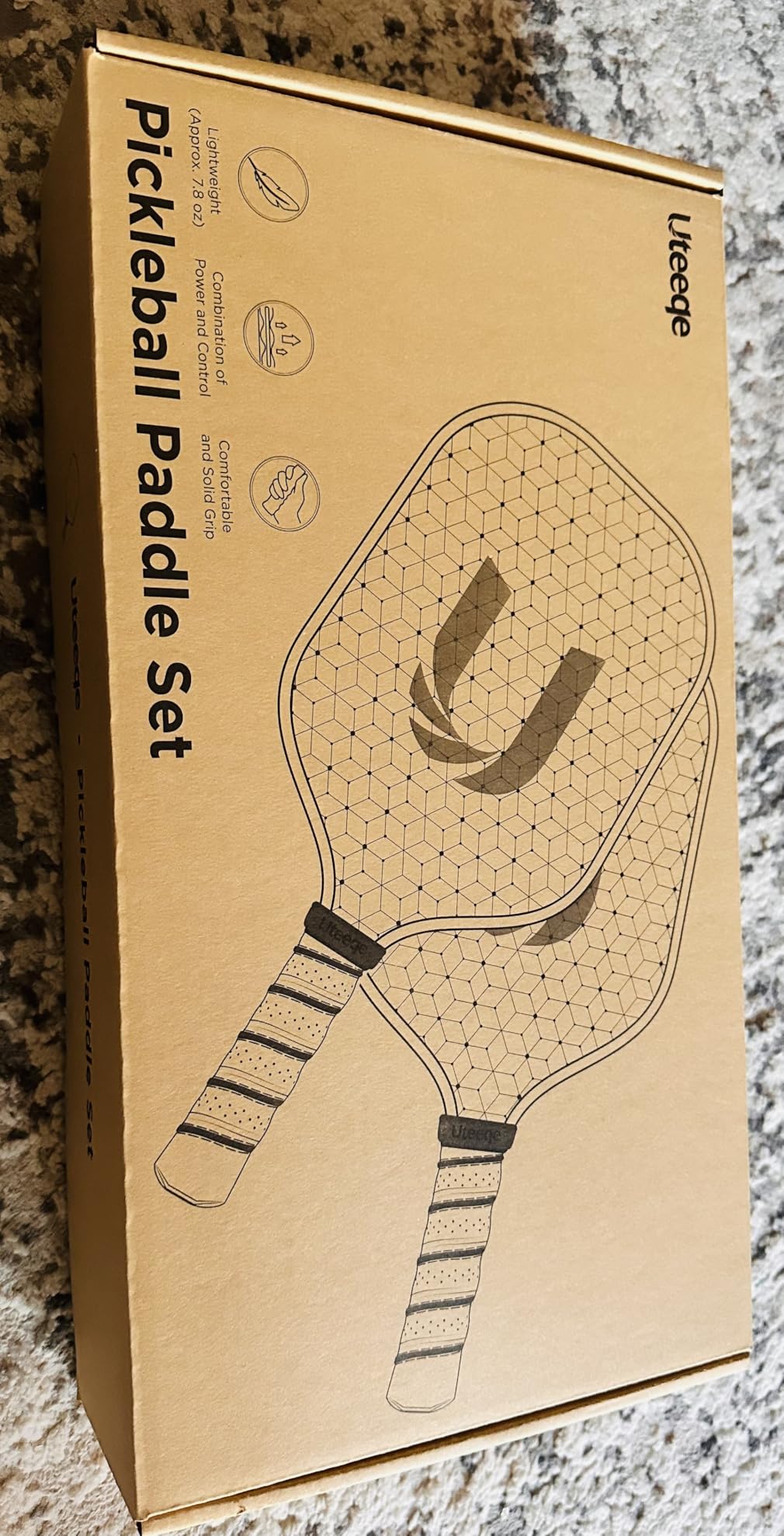
What we like most for longevity is the construction claim: a thermoformed one-mold reinforced shell rather than a cold-pressed laminate, which the manufacturer rates as more than three times stronger. If you play on outdoor concrete or share a paddle with a spouse, that matters, because delamination is the failure mode that ends cheap paddles early.
The core is a polymer honeycomb, paired with a graphite face and a reinforced edge guard designed to resist chips. The model designation is U1, and it is worth noting that grip tape and manufacturing specs can shift between production runs, so confirm the 7.8 ounce figure on the listing when you order.
Who this paddle suits
A social player who wants spin for dinks and resets but does not want to spend heavily, and anyone who plays outdoors on harder courts where durability matters. It is a good fit for a senior center group that wants a spin-capable paddle at a controlled per-head cost.
Who should skip it
Skip it if you want maximum touch and soft feel at the net; graphite is firmer than full carbon and you will notice less head feedback on short games. The named weakness in reviews is limited power and pop, so a player who relies on hard put-aways should look at a fuller carbon face instead.
5. HEAD Extreme Elite Fiberglass – Lightweight Diamond-Shape Starter
HEAD Extreme Elite Fiberglass Paddle with Honeycomb Polymer Core & Comfort Grip, Green/Black, One Size
- Very light and easy to swing for a first paddle
- Recognisable brand with a one-year warranty
- Diamond shape gives clean control
- Comfortable ergo grip
- Holds up with two to three sessions a week
- 4 1/8 inch grip can feel slippery
- Limited power on solid strikes
- Smooth composite face gives little spin
- One review reported a small sweet spot
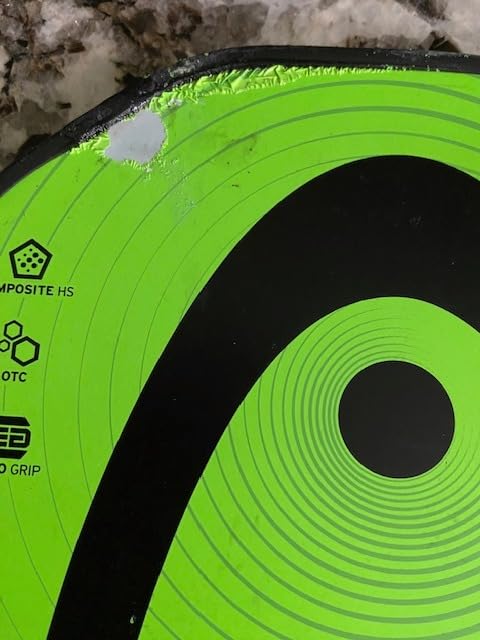
The HEAD Extreme Elite is here for the buyer who wants a name they have heard of, a single paddle rather than a set, and the lowest entry point on this list. The diamond shape is the traditional control geometry, narrower than a widebody, and it suits a player who places the ball rather than batters it.
At 220 grams it is light in the hand, with a honeycomb polymer core and an ergo grip. Be aware that the listed grip is 105 mm, or 4 1/8 inches, which is the tightest handle among the picks we recommend. An undersized grip is the most common cause of wrist discomfort we see in new players.
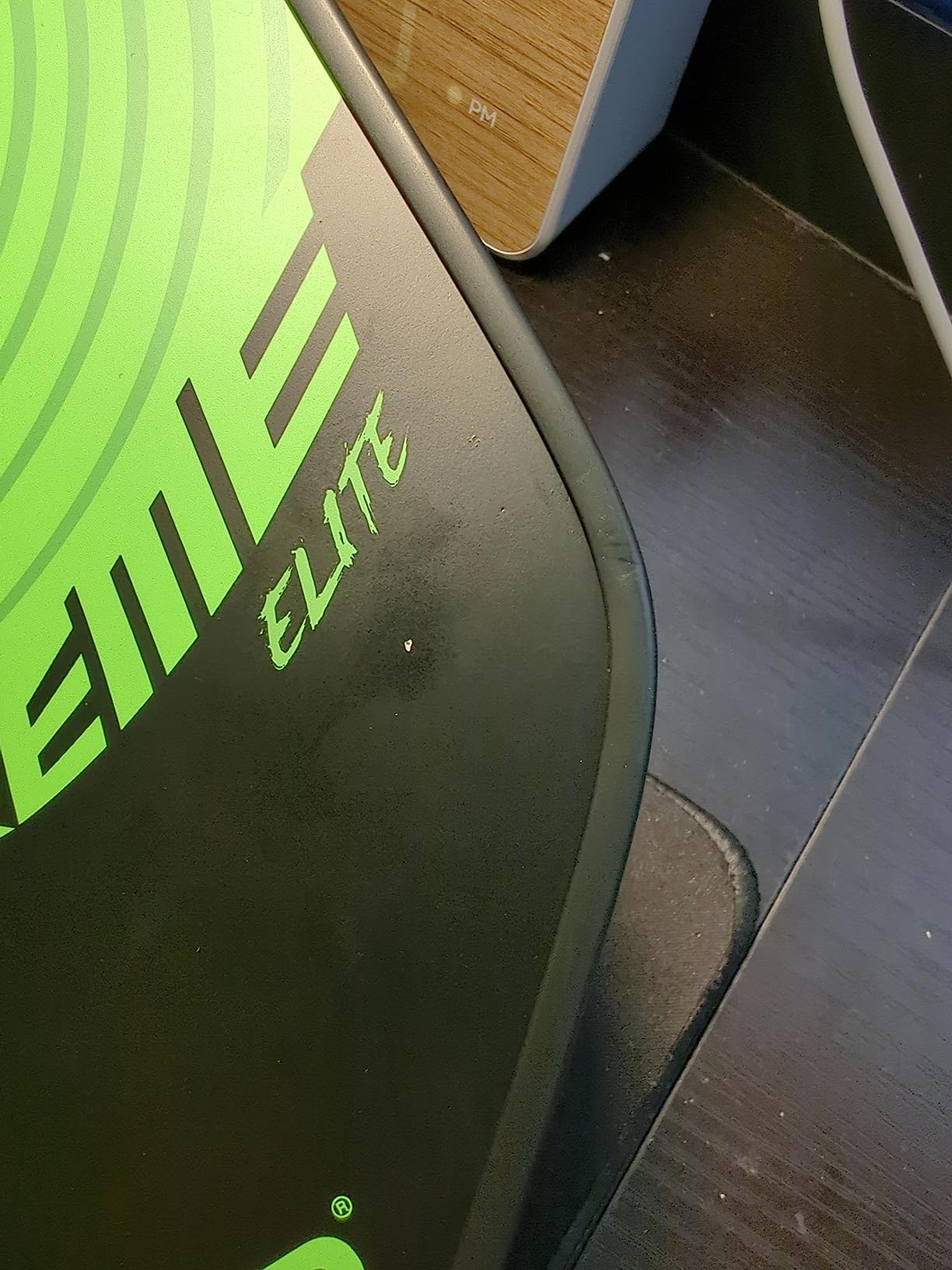
One specification note: the listed item dimensions of 4.13 by 4.13 inches describe the handle, not the paddle face, so do not read that as the paddle size. It is USAPA approved, which matters if you plan to play in a league or club event that requires certification.
The composite hitting surface is smooth rather than textured, so spin is minimal. For a player who has never held a paddle before, that is often fine, because most beginner shots are dinks and drops rather than driven balls where texture matters.
Who this paddle suits
A first-time player on a tight budget, or anyone who wants a single certified paddle for occasional play. The diamond shape rewards a controlled swing, so it suits a player who prefers finesse and placement, and anyone with wrist arthritis who finds a squarer face easier to square up.
Who should skip it
Skip it if your hand needs a roomy grip. At 4 1/8 inches this handle asks you to hold on, and the most common owner complaint is exactly that: it feels slippery and takes effort to keep in place. Fix it with an overgrip, and if it still feels tight, choose a wider paddle instead.
6. Amazon Basics Carbon Fiber Set of 2 – Best Kit for Groups
Amazon Basics Pickleball Paddles Set of 2, USAPA Approved Carbon Fiber Paddle with 4 Balls, Lightweight Pickle Ball Rackets, Carry Bag & Grips, Black
- Consistent 7.8 oz weight with plus or minus 0.3 oz tolerance
- Complete kit with 2 paddles
- 4 balls
- bag and 2 grips
- Ridged perforated grip with sweat cushioning
- Wide face with a generous sweet spot
- Surface less grippy so spin is limited
- Feel somewhat dead near the edges
- Minimal power headroom
This is the kit answer, and the reason is the specification tolerance rather than the marketing. The listed weight is 7.8 ounces per paddle with a plus or minus 0.3 ounce tolerance, and the construction is a glass-encased frame with electroplated edging. When you are buying four or six of these for a group, a consistent weight is worth more than a marginally nicer face.
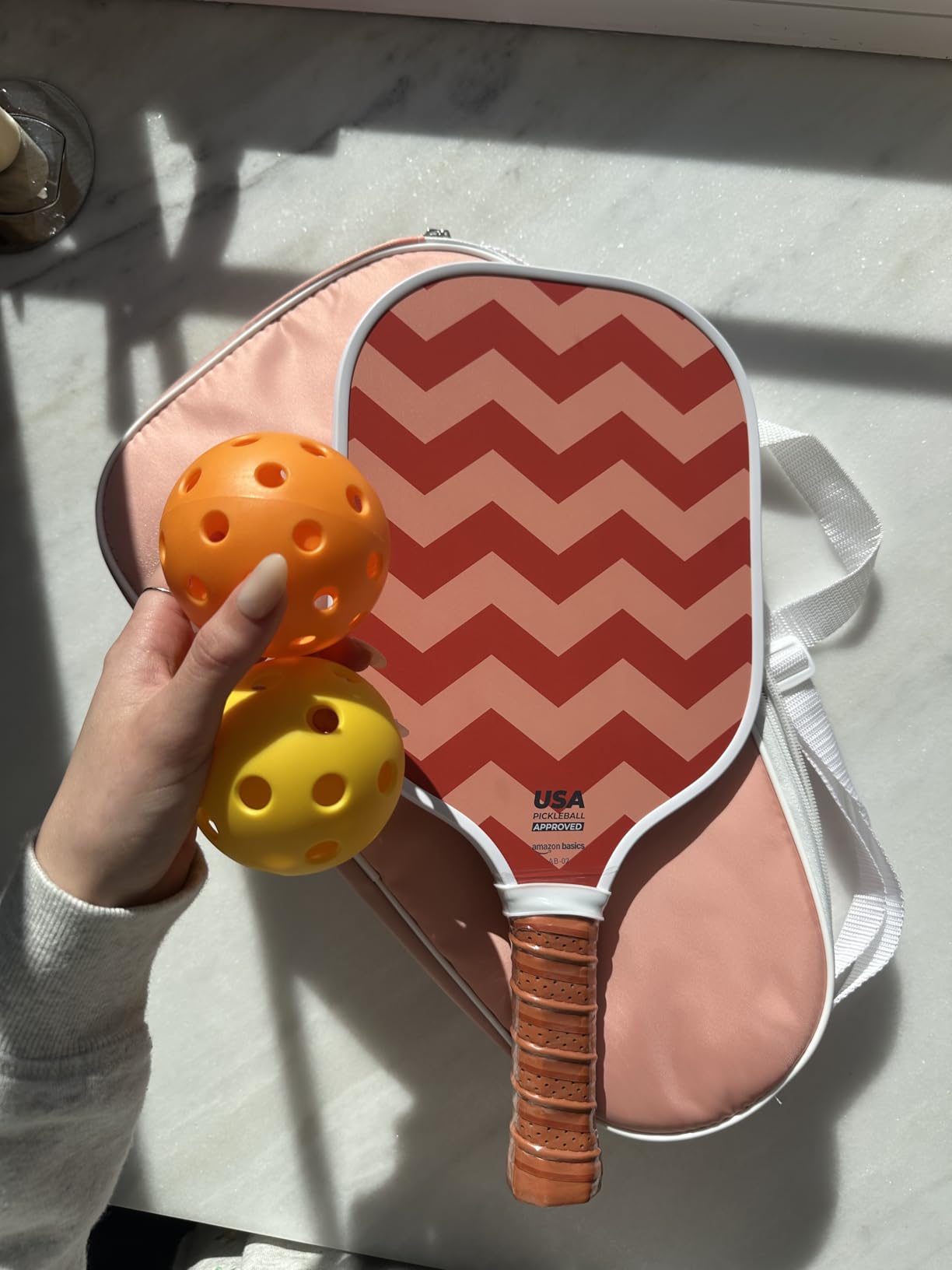
At 0.47 inches of thickness this is a solid, quiet-feeling paddle. The wide face with a ridged perforated grip and sweat-absorbent cushioning is designed for long sessions, and the box contains two paddles, four 40-hole outdoor balls, a compact carry bag with a mesh pocket and two replacement grip tapes.
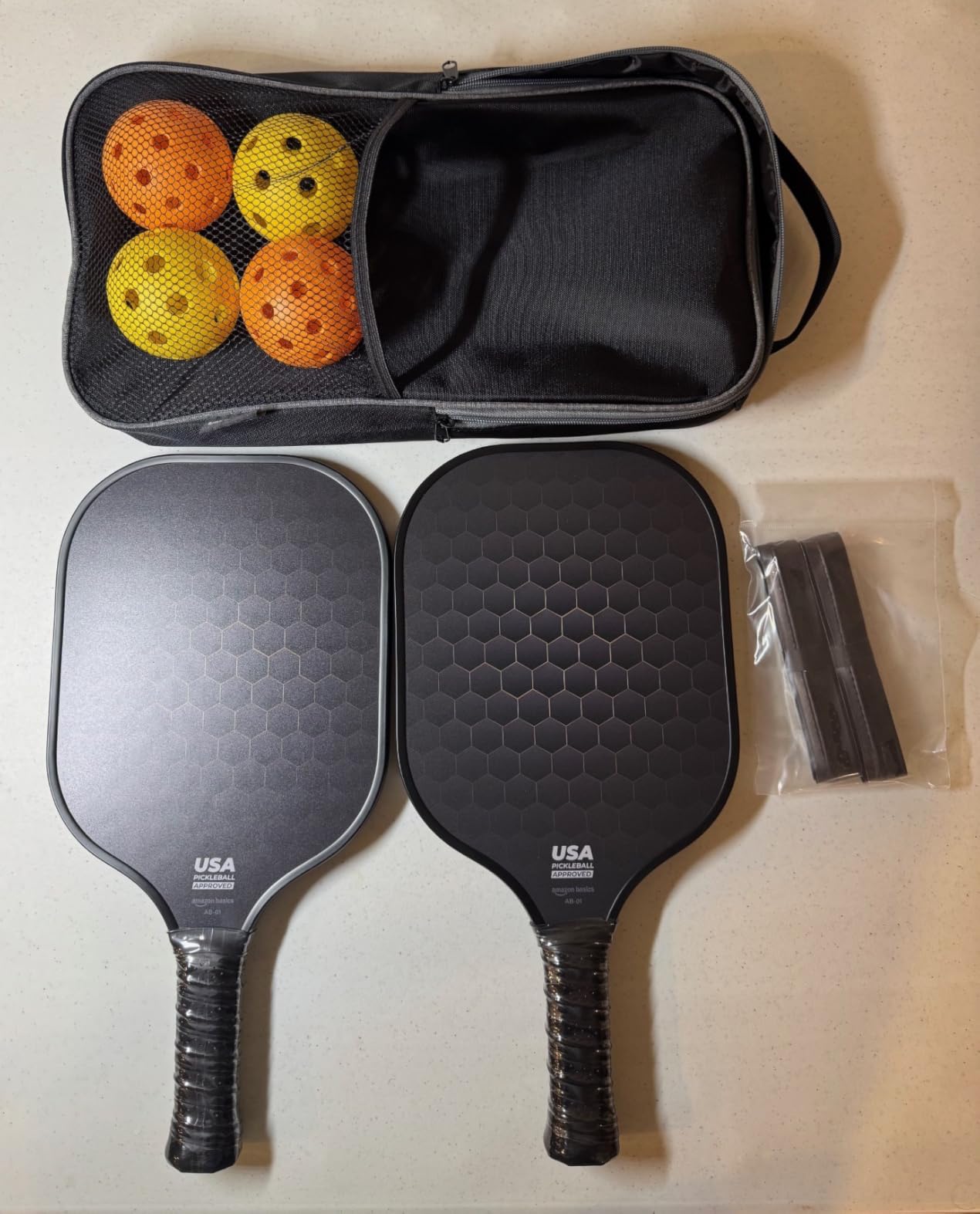
The grip is listed at 4 inches, which sits between a standard handle and a roomy one. It is not the widest in this roundup, so if you are buying for a group with a mix of hand sizes, check the fit at the store if you can, or plan on an overgrip for the players with smaller hands.
Owners frequently compare it favorably to costlier name-brand paddles for beginner play, and reviewers note the light weight and soft grips as the standouts. The criticisms are consistent too: a less grippy surface, limited edge responsiveness, and limited power headroom.
Who this paddle suits
A senior center, condo association or family group buying several at once, and anyone who wants one box to open and play with. The compact size packs well in a car, which matters for people who travel to a court rather than living beside one. It is a solid choice for twice-a-week social play where consistency beats performance.
Who should skip it
Skip it if you want to develop spin or if you already play at a competitive level. The named failure mode is a dead feel toward the edges, so a player who relies on the perimeter of the face for wide-angle volleys will find the sweet spot smaller than expected. Buy one before you buy six, if the budget allows.
7. Selkirk Sport SLK Atlas – Best Raw Carbon Face for Spin
Selkirk Sport SLK Atlas Max Pickleball Paddles | Carbon Fiber | Oasis
- Raw carbon face adds noticeable spin
- Ultra cushion grip absorbs moisture and vibration
- Midweight around 8 oz bridges power and control
- Max shape gives a large sweet spot
- Sold as a single paddle
- Less power-oriented than heavier paddles
- No carry case included
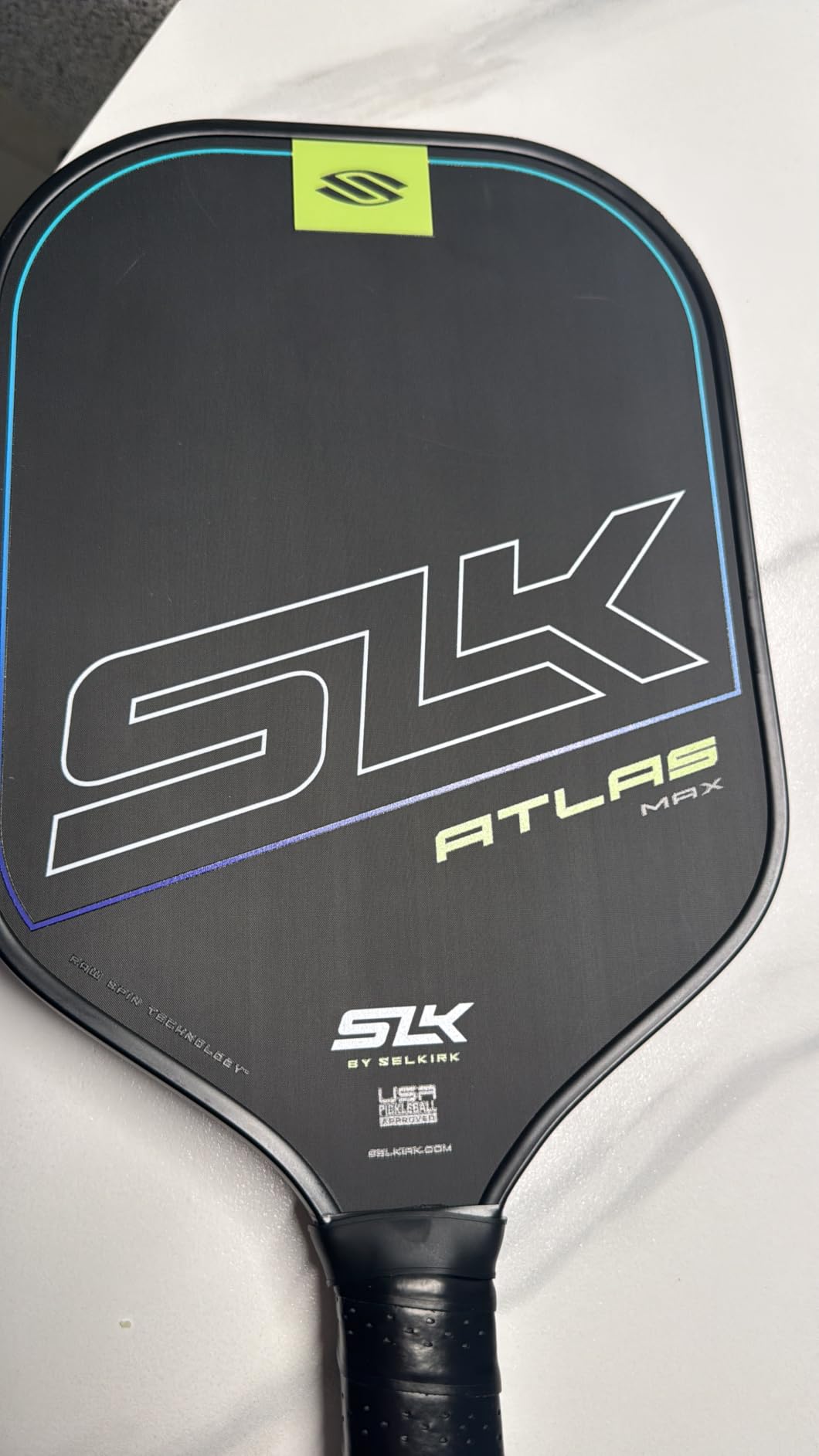
The Atlas is our recommendation for the older player who already owns a fiberglass paddle and has decided they want more control at the kitchen line. A raw carbon face grips the ball, and the Rev-Control polymer honeycomb core is engineered around stability and a large sweet spot that softens impact rather than adding power.
The grip specification is unusually well documented here: 4.25 inch circumference and 4.85 inch length, described as tacky and moisture-absorbing. Both numbers are worth comparing against the paddles you already own, because a longer handle is often the cheapest joint-friendly upgrade available.
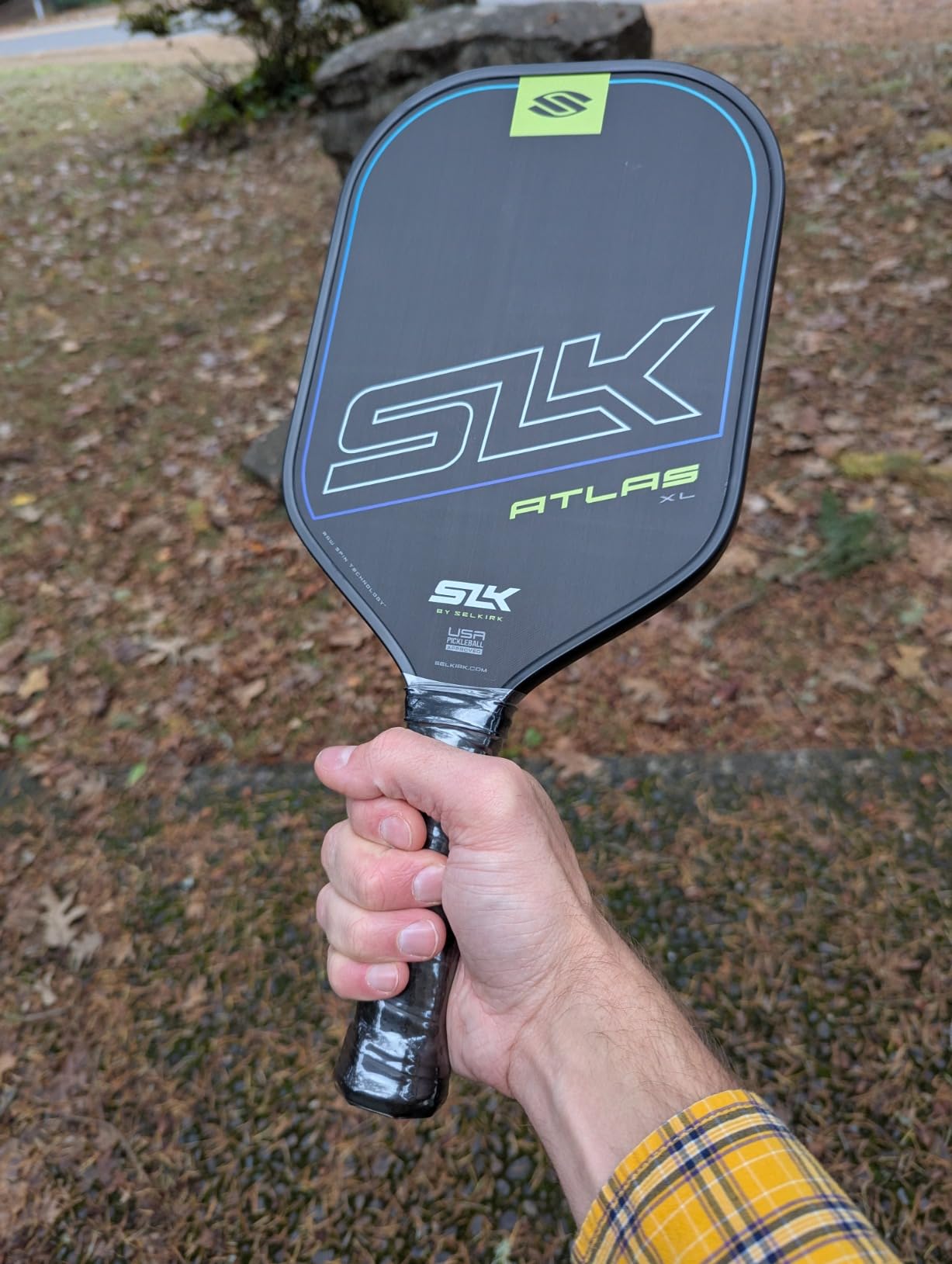
At 0.23 kg, roughly 8 ounces, the Atlas is a midweight design that reviewers describe as a bridge between power and maneuverability. The face is 16 by 7.85 inches in the Max shape, which is a wider, more forgiving geometry than a standard diamond.
Two practical notes. This is a single paddle, so buy two if you want a matched pair, and no case is included. It carries a one-year limited warranty and is USAPA approved for tournament play, so it qualifies for league and club events.
Who this paddle suits
A player with a few seasons behind them who wants to add spin and touch without changing how much they lift. It is also a strong choice for a dink-heavy doubles player and for anyone who has been on a smooth face and found shots landing long, because a raw carbon face buys back some control through grip on the ball.
Who should skip it
Skip it if you want maximum power, or if buying a single paddle with no case is inconvenient for your routine. The named weakness in reviews is modest power output, so a hard-hitting player will find a heavier paddle suits them better. If your priority is the lightest possible racket, look up the list instead.
8. Sonix Fiberglass Paddle – Best for Casual Doubles and Gifts
Sonix | Stylish Premium Pickleball Paddle | Fiberglass Surface, Non-Slip Cushion Grip| Single Pickle Ball Racket | Pink Floral Print | Cottage Floral Pink
- Cushioned ribbed grips absorb shock and sweat
- Light handling suits longer casual matches
- Two prints in one paddle front and back
- USAPA approved for league play
- One-year manufacturer warranty
- Fiberglass face has limited power and spin
- Best suited to casual play over competition
The Sonix is the one to buy when the goal is to get someone playing, not to tune their game. The cushioned ribbed grips are designed to absorb shock and sweat, and a ribbed surface gives a wet hand something to hold onto, which is a real benefit for a player with less grip strength.
Underneath it is a composite fiberglass surface with a honeycomb polypropylene core and a 4 1/4 inch grip, USAPA approved with a one-year manufacturer warranty. The paddle carries two different prints, one on each face, and that detail matters more than it sounds when you are buying a gift and want the recipient to like what they see.
It is the highest-rated paddle in this roundup by star rating, though the number of reviews behind it is smaller than most of the others, so treat the rating as encouraging rather than conclusive. If you want the same paddle size and grip but more forgiveness, our court-side essentials guide covers the rest of the kit.
Who this paddle suits
A new player, a spouse or friend who wants to try the sport, and anyone buying a first paddle as a gift where presentation matters. It is equally good as a second paddle to keep in the car for an unexpected game, and the ribbed grip suits hands that sweat more than they used to.
Who should skip it
Skip it if you already play regularly and want to develop spin or power, because a smooth fiberglass face gives you very little of either. It is built for casual doubles rather than competitive play, so a player chasing tournament performance should step up to a textured or carbon face.
9. Onix Graphite MOD Z5 – Best Wide-Body Sweet Spot
ONIX Graphite Z5 Graphite Carbon Fiber Pickleball Paddles with Cushion Comfort Pickleball Paddle Grip – USA Pickleball Approved, Grip Size 4 1/4 inches
- Widest sweet spot in the roundup at 8.3 inches
- Non-slip grip holds up with sweaty hands
- Well-balanced 7.84 oz weight for control
- Genuine spin on both forehand and backhand
- Edge guard allows safe dives
- Grip tape reported to wear off quickly
- Handle is short against comparable paddles
- Edges are limited against newer carbon designs
The Z5 answers the question that comes up most in senior groups: should I use a widebody or an elongated paddle. The widebody answer is that it is easier to find the ball with, which matters as reaction time slows. At 15.5 by 8.3 inches this is the widest face in our roundup, so more of your shots land on the sweet spot by accident.
Weight is listed at 7.84 ounces, which sits squarely in the middle band we recommend. The core is a Nomex honeycomb, described by the manufacturer as a control core, in a medium-weight graphite paddle. The tennis-handle shape grip is a traditional choice that many players with a tennis background prefer.
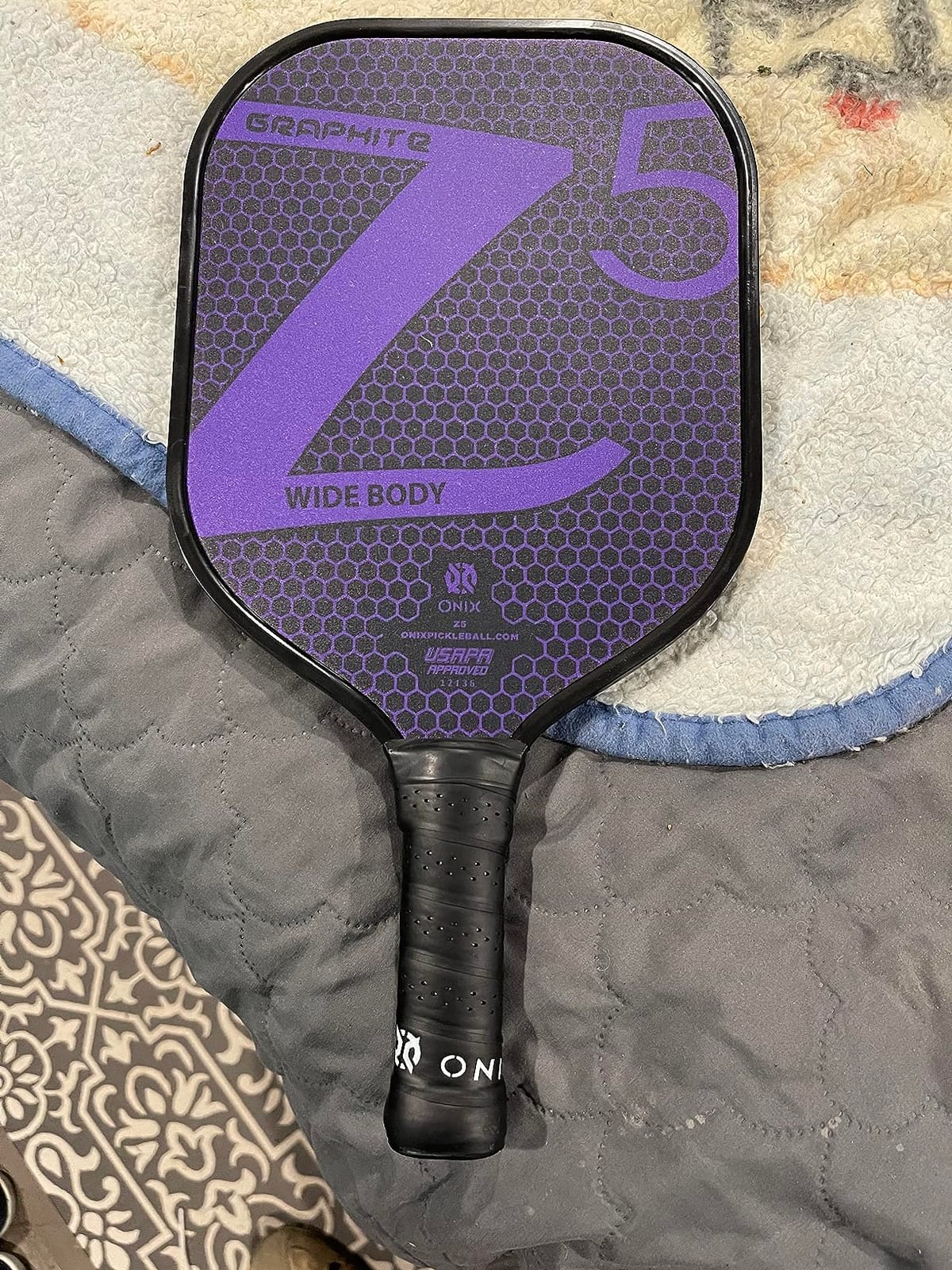
It is dual certified, meeting both USAPA and USA Pickleball requirements, so it is legal for official tournament play. The edge guard is designed so you can dive for a shot without worrying about the frame, and it carries a one-year limited warranty.
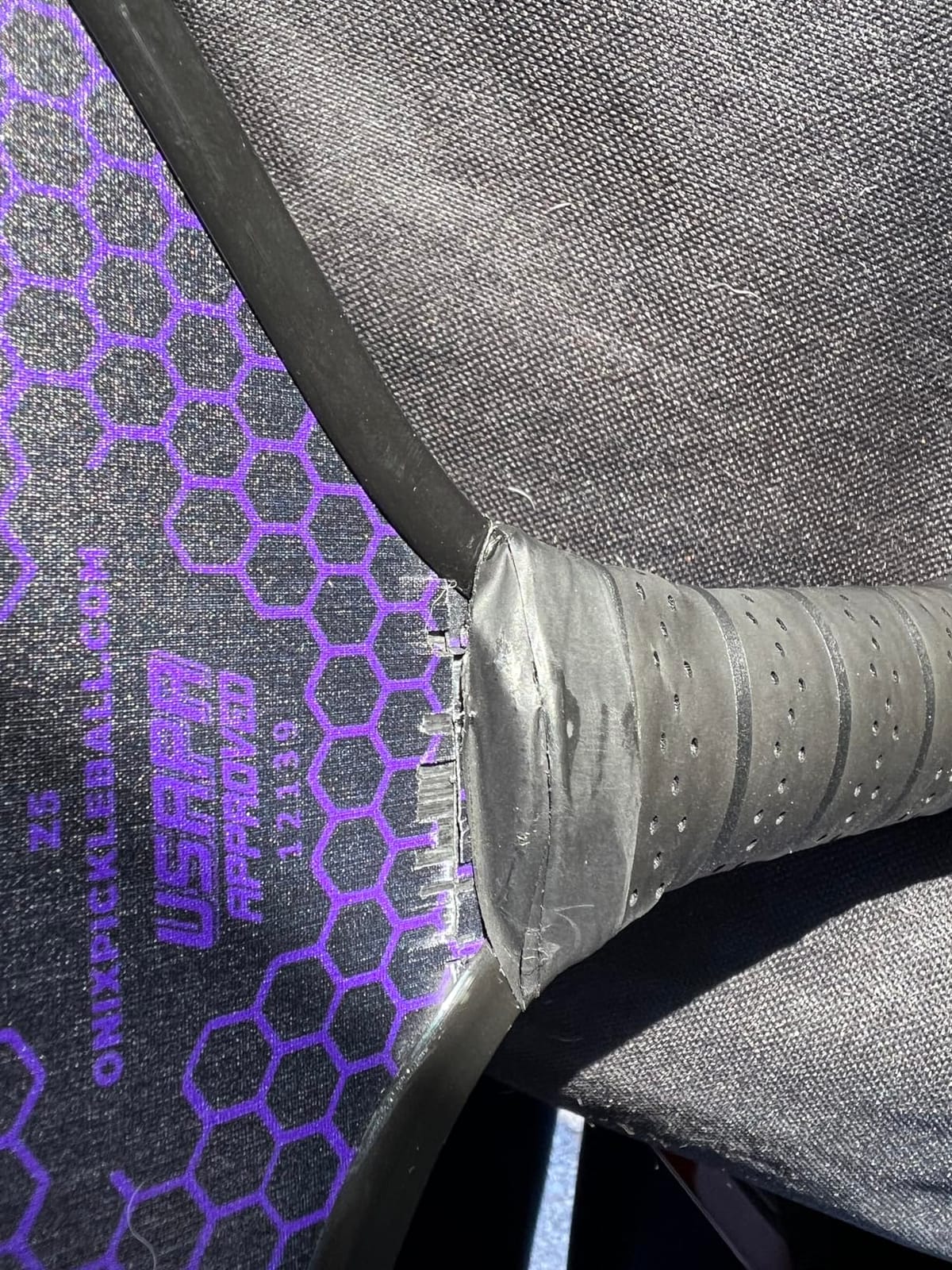
Where it has aged is the grip. Owners report the tennis-handle grip tape wearing off relatively quickly, and the handle length is slightly shorter than comparable paddles. Both are fixable with a fresh overgrip, and the short handle is a reason to check your hand position before committing.
Who this paddle suits
A dink-and-soft-game doubles player who wants the largest possible target and prefers a balanced, predictable feel. Former tennis players who already know how to use a longer handle tend to settle into it immediately. It is also a sensible choice for a player with reduced shoulder strength, because a wide face means less reach and less lifting on wide-angle balls.
Who should skip it
Skip it if you need to reach low balls without bending, because an elongated shape gives you more length in front of your body. The named failure mode is grip tape wear, so budget for one replacement overgrip in the first season rather than treating the handle as permanent.
10. Selkirk Sport SLK Helix Pro – Best Hybrid Step-Up Paddle
Selkirk Sport SLK Helix Pro Pickleball Paddles | Carbon Fiber | Camo Hex
- Hybrid carbon and fiberglass face balances control and power
- Large sweet spot in the Max shape
- Thermoformed carbon core adds consistency
- One-year limited warranty
- Recognised brand with a support network
- Hybrid face spins less than a full carbon paddle
- Not aimed at tournament-level play
The Helix Pro is the middle rung on a three-step ladder. Buy a fiberglass set first, move to this hybrid when you want a firmer, more consistent face without a full carbon price, and step up to a raw carbon paddle only if you decide you need the spin. Most senior recreational players never need the third step.
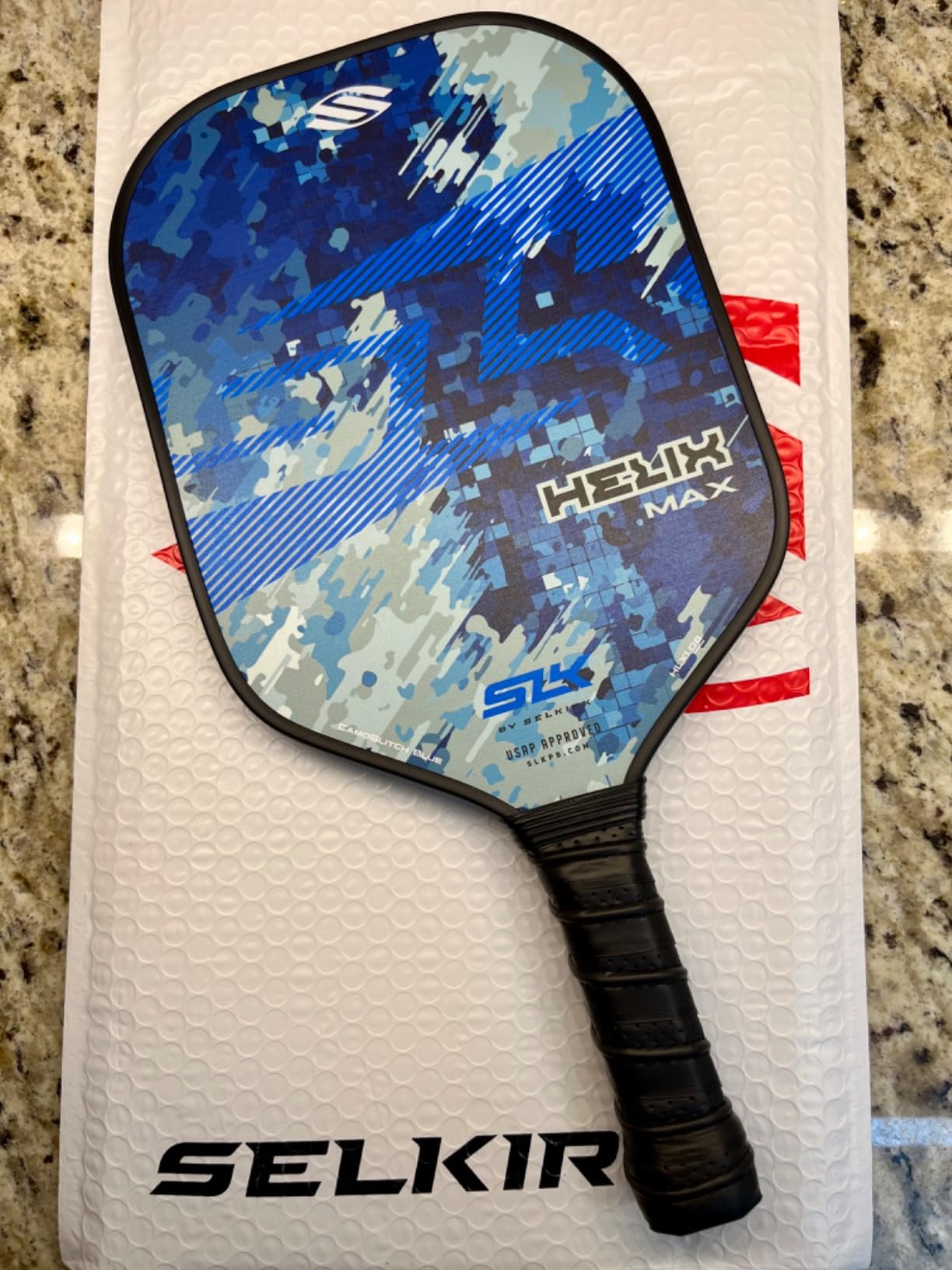
It weighs 8 ounces, measures 16 by 7.9 inches, and uses a thermoformed carbon fiber core inside a carbon and fiberglass hybrid face. The Max shape gives a large sweet spot, which is where the forgiveness comes from.
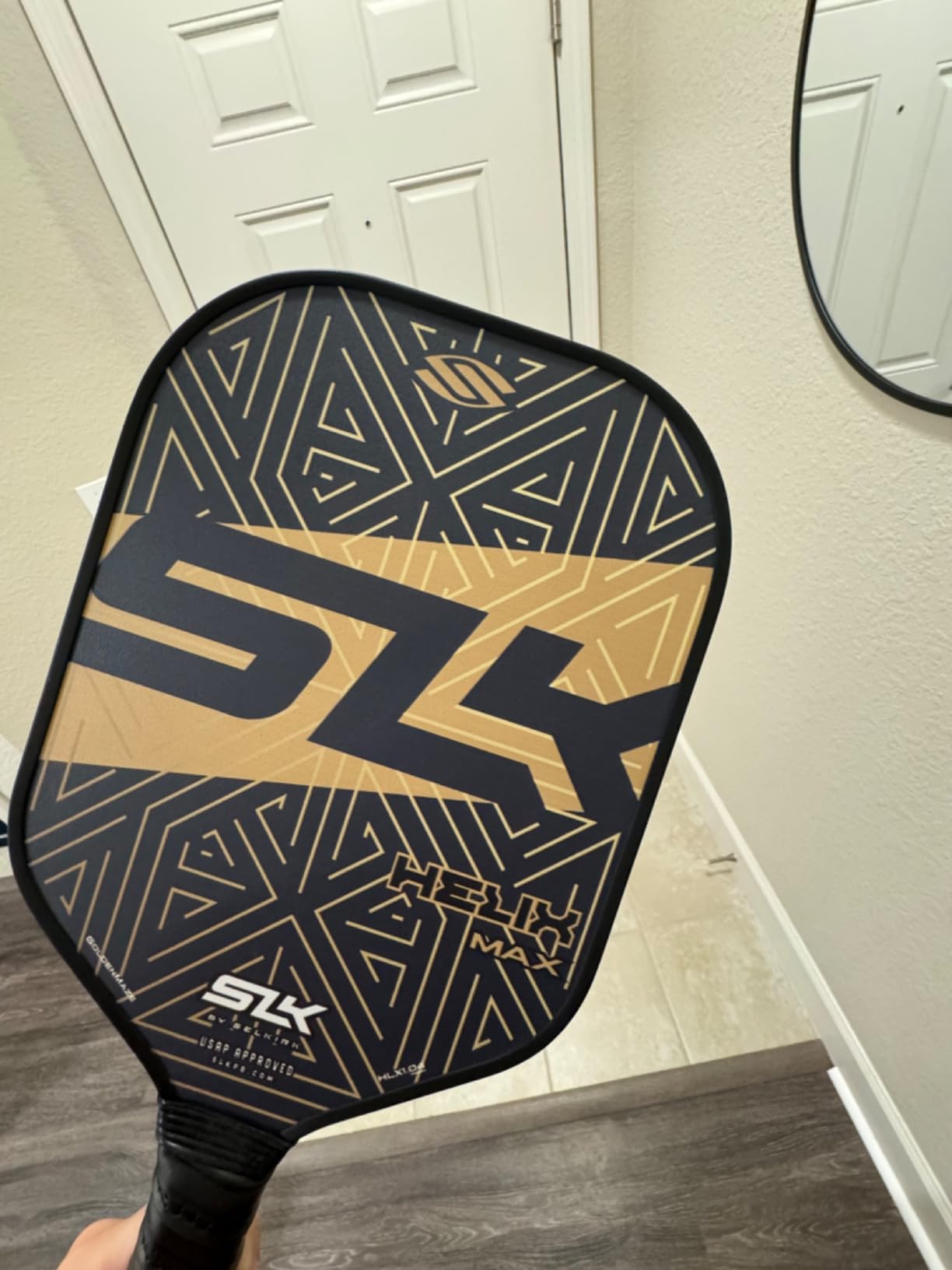
Reviewers consistently describe it as a value step for new players, and the balance of control and power in the hybrid face is the reason. The 4 1/4 inch grip is standard, so it will not suit a hand that needs a roomy handle any more than the SLK Neo will.
One specification caution worth repeating: Selkirk changes core and weight details across model years, so confirm the 8 ounce figure and the face construction on the listing for the specific Helix Pro you are ordering.
Who this paddle suits
A player moving up from a beginner fiberglass set who wants a firmer face and a bigger sweet spot without a big jump. It suits social doubles players who want a little more pop than a control paddle and do not care about tournament-level spin numbers. The one-year limited warranty comes from a brand with a wide service network, which helps if you buy far from home.
Who should skip it
Skip it if you already play a full carbon paddle, because a hybrid face will feel softer and generate less spin in comparison. It is also not the choice for a very weak shoulder at 8 ounces, and a hand that needs a wider grip should rule it out too.
How Heavy Should a Senior’s Paddle Be?
For most players over 65, a paddle weighing 7.25 to 8 ounces is the sustainable window. Go lighter and the paddle loses the momentum needed to absorb ball impact, so the arm ends up taking the shock instead. Go heavier and every contact demands more from the forearm, shoulder and rotator cuff. Here is how the ten paddles in this roundup distribute across four bands.
Under 7.25 ounces. For players with genuinely limited shoulder strength or a recent shoulder procedure. The trade-off is reduced feel and a paddle that can flutter on firm blocks. None of the paddles we list here sits in this band, and that is deliberate: the weight we can verify is at or above 7.78 ounces.
7.25 to 7.8 ounces. The low-strength band and our most common recommendation for players in their seventies and eighties. In this roundup that is the MTEN set at 7.78 to 7.8 ounces, the Uteeqe U1 at 7.8 ounces, the Amazon Basics set at 7.8 ounces plus or minus 0.3, and the Onix Z5 at 7.84 ounces.
7.8 to 8.2 ounces. The balanced band where most seniors should start, and where you can still get good vibration damping. The Selkirk SLK Neo at 0.21 kg and the Selkirk SLK Atlas at 0.23 kg sit here, along with the Sonix paddle and the HEAD Extreme Elite at 220 grams.
Above 8.2 ounces. Power territory, and generally wrong for this audience unless a clinician has cleared you for it. None of our picks are in this band, because heavier paddles are exactly what we would steer a joint-conscious player away from.
One caution on reading weights. A listed weight is a static number measured on a scale, and it does not tell you how the paddle feels when it is moving. Swing weight, the way a paddle behaves at the end of an accelerating swing, is what your shoulder actually experiences, and it is affected by shape and balance as much as by mass. A widebody at 7.8 ounces can feel heavier in motion than an elongated paddle at 8 ounces. If you can, hold both before you buy.
Why Core Thickness and Face Material Matter for Joints
Core thickness is the second lever after weight, and it is the one most often ignored by buyers who chase spin. A thicker core flexes slightly on contact, which softens the impact, enlarges the effective sweet spot and damps vibration before it reaches your hand. A thin core transmits the shock straight through the frame into the forearm tendon.
For this audience, 16mm is the sensible floor. Among the paddles we list, the Selkirk SLK Neo and the Uteeqe U1 both use a 14mm polymer honeycomb core, which is a good middle ground for a player without elbow symptoms. The XSPAK XS28 core and the Selkirk Atlas Rev-Control core are both described by their manufacturers as vibration-dampening designs, and the Onix Z5 uses a Nomex honeycomb core oriented toward control rather than power.
Face material is the third lever. A fiberglass face is durable, predictable and cheap, and it produces modest spin. A semi-textured graphite face, like the Uteeqe, adds meaningful grip for a small step up. A raw carbon face, like the Selkirk Atlas, generates the most spin and defuses incoming spin best, but it is also the most expensive and the least forgiving on badly struck balls. For a player managing existing elbow sensitivity, a textured or hybrid face with a thicker core is the combination we would choose, because it gives up some raw power and gains a softer landing.
Grip Size and Handle Length for Aging Hands
Grip circumference is the spec that most directly affects whether you have to squeeze. An undersized handle forces constant clenching to stop the paddle turning in your hand, and constant clenching is the fastest route to wrist inflammation. A handle that is too large, on the other hand, cannot be closed comfortably at all, which strains the fingers instead.
Start at 4 to 4 1/8 inches and work outward toward 4.5 inches and beyond for larger hands or reduced grip strength. In this roundup the MTEN at 4.57 inches is the most generous, the Selkirk Atlas at 4.25 inches and the standard 4 1/4 inch group sit in the middle, the Amazon Basics at 4 inches is a little tighter, and the HEAD Extreme Elite at 4 1/8 inches is the tightest. That is the single clearest reason to pick one over another for an arthritic hand.
To measure at home, spread your fingers and measure the distance from the tip of your thumb to the tip of your middle finger. A hand span around 8 inches generally suits a 4 1/4 inch grip, and a span closer to 9 inches usually needs 4.5 inches or larger. The measurement is rough, so treat it as a starting point and then confirm in person if you can.
Handle length matters too, and it is the cheapest joint-friendly upgrade there is. The XSPAK at 5.5 inches and the Selkirk Atlas at 4.85 inches both give the ring finger a place to rest, which reduces the pinch force needed to steady the paddle. If your grip is slightly small, an overgrip adds roughly 1/16 inch and solves it overnight. Never stack two overgrips; the extra bulk restricts wrist movement and makes the paddle feel longer and heavier than it is.
Protecting Your Elbow, Shoulder, and Wrist
We are not medical professionals, and nothing in this section is medical advice. If you have existing elbow, shoulder or wrist pain, speak with a clinician before changing equipment or playing through symptoms. Stop the session when something hurts, rather than trying to finish the game.
The most common pickleball complaint among older players is lateral epicondylitis, known as tennis elbow or pickleball elbow. It affects the forearm tendons at the outside of the elbow and typically appears weeks into a season rather than immediately, which is why players often blame a new paddle when the cause is cumulative. In published research on pickleball injuries presenting to United States emergency departments, the trend has been upward as participation has grown.
In practice, most cases trace back to how the paddle is held rather than to the paddle itself. Three causes account for most of it, in order: a death grip at 8 or 9 out of 10 pressure, a paddle that is too heavy for your strength, and a core that is too thin to absorb the impact. The fixes follow directly: relax the grip to about 4 or 5 out of 10, stay inside the 7.25 to 8 ounce band, and move to a 15 or 16mm polymer core.
For the shoulder, drive with shoulder rotation rather than flicking from the wrist, and bend your knees to reach low balls instead of stiff-arming at them. For the wrist, keep the forearm relaxed and rotate from the shoulder through the contact. A five-minute warm-up of arm circles and gentle forearm rotations before you step on court, and a light stretch afterwards, is a low-cost habit that most players in our circles swear by.
Spin Versus Vibration: What You Give Up
Spin and vibration damping pull in opposite directions, and this is the trade-off most roundups mention without resolving. Softer cores and larger sweet spots absorb more energy, which means less energy goes into gripping the ball and generating rotation. Players who need spin to keep a ball deep or to make a drop shot dip will give something up at the kitchen line by choosing a very damp, very forgiving paddle.
Using the picks above: the MTEN, Sonix, HEAD Extreme Elite and Amazon Basics sets all use smooth faces, so they trade spin for the softest landing. The Uteeqe sits in the middle with a semi-textured graphite face that gives usable spin at a light weight. The Onix Z5, Selkirk SLK Atlas and XSPAK carbon faces generate the most spin, and the Selkirk Helix Pro and SLK Neo hybrid and fiberglass faces sit between the two groups.
Our read for this audience: for doubles play near the kitchen, spin matters less than a soft landing and a forgiving face. For singles or for players who already have a reliable stroke, the extra spin from a carbon face is worth the firmer feel.
When to Replace a Worn Paddle
A recreational player going two to three times a week should expect roughly 18 to 24 months, and a regular competitor closer to 12 to 18 months. The signals are more useful than the calendar. Shots start feeling dead, the sweet spot seems to shrink, off-center hits buzz more than they used to, or the face texture looks polished rather than gritty.
Check the edge guard for chips and the face for delamination around the rim, which is where entry-level paddles usually fail first. If the grip tape is peeling, replace it before it goes; a new overgrip costs a fraction of a new paddle and removes most wrist complaints on its own. And if the listed weight has drifted or the model number has changed, upgrade rather than replace, because the newer version is usually a better match for your joints.
Frequently Asked Questions
What is a senior pickleball paddle?
A senior pickleball paddle is a lightweight one, usually 7.25 to 8 ounces, with a roomy grip circumference, an oversized sweet spot and a polymer honeycomb core that absorbs vibration instead of passing it up the arm. It trades raw power for control so the ball leaves the paddle slowly and the shoulder does less work. Weight, core thickness and grip size together decide how a paddle feels on an aging arm.
What is the best pickleball paddle for seniors?
For most players, the best pickleball paddle for seniors is a lightweight 7.3-7.8 ounce control paddle with a 16mm polymer honeycomb core, an oversized sweet spot and a comfortable grip. Our default pick is the MTEN set at 7.78 to 7.8 ounces with a 4.57 inch grip, chosen because a roomy handle lets you hold it loosely. Players who already own a paddle and want more spin should look at the Selkirk SLK Atlas.
What weight pickleball paddle is best for seniors?
Most players over 65 do best between 7.25 and 8 ounces, with 7.3 to 7.8 ounces as the most comfortable window. Under 7.25 ounces the paddle lacks the momentum to absorb impact, so the arm takes more of the shock. Above 8.2 ounces every contact demands more from the shoulder and forearm. A listed weight is a static number, so hold paddles in person if you can and compare swing feel rather than relying on the number alone.
Are heavier or lighter paddles better for seniors with arthritis?
Lighter is generally better because it reduces the load on every swing, but going too light backfires. Below roughly 7.2 ounces a paddle lacks the momentum to absorb ball impact and the forearm compensates by tightening. The sustainable range is 7.25 to 8 ounces combined with a roomy grip of 4 1/4 inches or wider. If your fingers ache after a session, an overgrip adding about 1/16 inch usually solves more than changing weight does. This is equipment guidance, not medical advice.
Is a 14mm or 16mm paddle better for seniors?
For most players in this age group, a thicker core is the better choice. A 16mm core flexes on contact for a softer landing, a larger forgiving sweet spot and better vibration damping, while a 14mm core sits between that and a 13mm core, which transmits the most shock into the wrist and elbow. The trade is some raw power. Among our picks, the Selkirk SLK Neo and Uteeqe U1 use 14mm polymer cores, and the XSPAK and Selkirk Atlas are the softer-feeling options here.
What size pickleball paddle grip should a senior use?
Start at 4 to 4 1/8 inch circumference and move toward 4.5 inches or larger for bigger hands or reduced grip strength. An undersized handle forces constant squeezing, which is the most common cause of wrist discomfort we see. To measure at home, span your thumb to your middle finger: roughly 8 inches suits a 4 1/4 inch grip, closer to 9 inches needs 4.5 inches. A longer handle of 5 inches or more gives the ring finger a resting place and reduces pinch force.
Do expensive pickleball paddles really make a difference?
Yes, but the benefit sits in the face material and core thickness rather than in extra power. A carbon fiber face with a thicker core gives a softer landing and better control on short games, which is where most older recreational players notice the difference. Price cannot fix a wrong weight or a grip that does not match your hand, so match fit first, then core thickness, then brand. A well-fitted fiberglass set will outperform a badly fitted premium paddle.
How long does a pickleball paddle last?
Expect roughly 18 to 24 months for a recreational player going two to three times a week, and 12 to 18 months for regular competitors. Watch for shots that feel dead, a sweet spot that seems to shrink, off-center hits that buzz more than before, and a face texture that looks polished rather than gritty. Check the edge guard for chips and the rim for delamination. Replacing grip tape early removes most wrist complaints for a fraction of the cost of a new paddle.
What is a pickle elbow?
Pickle elbow is the common name for lateral epicondylitis, which is inflammation of the forearm tendons at the outside of the elbow caused by repetitive swinging. The same condition is widely known as tennis elbow. It typically appears weeks into a season rather than immediately, so players often blame new equipment when the cause is cumulative grip tension, paddle weight or a thin core. We are not medical professionals, so if you have symptoms, consult a clinician.
Why does my elbow hurt after playing pickleball?
Three causes account for most cases, in order: a death grip at 8 or 9 out of 10 pressure, a paddle that is too heavy for your strength, and a core too thin to absorb impact before it reaches the tendon. The practical fixes are to relax the grip to about 4 or 5 out of 10, move into the 7.25 to 8 ounce band, and choose a 15 or 16mm polymer core. Stop the session when something hurts rather than finishing the game.
The Bottom Line for Senior Players in 2026
If you want one default recommendation for the best pickleball paddles for seniors, take the MTEN set: 7.8 ounces, a 4.57 inch grip that you can hold without clamping, a polymer honeycomb core that takes the sting out of contact, and a set of two so a partner is never the reason you skip the session. If you already own a paddle and want more control at the kitchen line, the Selkirk SLK Atlas is the upgrade path.
Whatever you choose, match the weight to your strength before anything else, pick a grip your hand can close without effort, and give your grip a rest during rallies. Most of what feels like bad luck in the first two months of pickleball is really fit. Stop when something hurts, and talk to a clinician before playing through joint pain.