
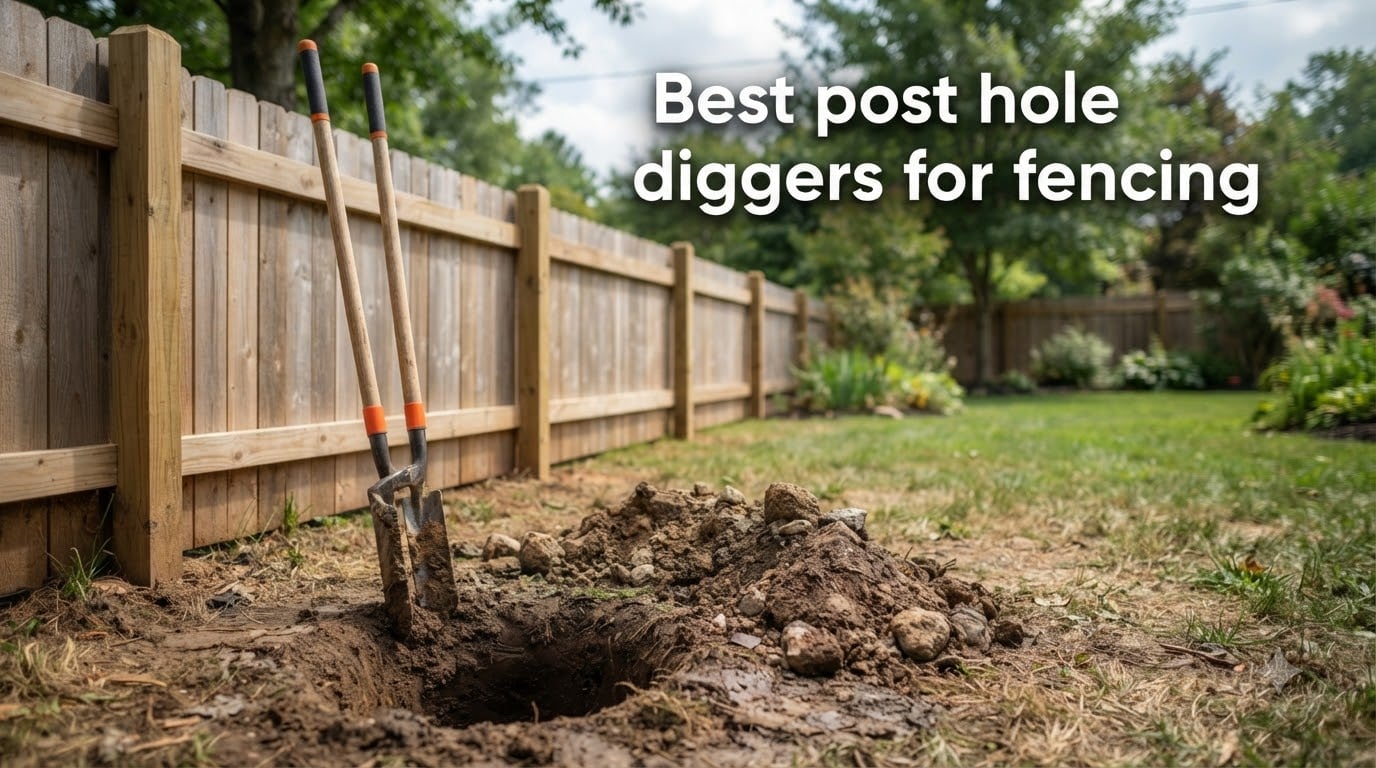
Digging fence post holes by hand with a standard shovel is a recipe for a sore back and a weekend wasted. I have spent years installing fences, deck footings, and mailbox posts, and the right post hole digger turns a grueling two-day project into a few hours of work. The best post hole diggers for fencing cut clean, deep holes without the wide surface disruption of a shovel, and they come in manual, corded electric, cordless, and gas-powered options to match any soil type and project scale.
Our team compared 10 of the most popular models across every category, from sub-$50 clamshell diggers to premium 40V brushless cordless augers. We looked at torque, bit size, weight, safety features, and real customer feedback from over 5,000 buyer reviews. Whether you are putting up a 100-foot privacy fence or setting a single mailbox post, there is a tool on this list that will save you time and effort.
One thing I learned quickly: soil type matters more than brand. What works in soft Florida sand will struggle in New England clay, and a gas auger that breezes through loam can be dangerous when it hits a buried root. This guide walks you through the specs, real-world performance, and trade-offs of each model so you can pick the one that fits your yard and budget.
Top 3 Picks for Best Post Hole Diggers for Fencing 2026

WORX Nitro 40V Cordless Earth Auger
- 59 ft/lbs torque
- 8 inch bit included
- Up to 38 holes per charge
- Anti-kickback safety

AMES 2701600 Post Hole Digger
- Tempered steel blade
- 58 inch hardwood handle
- Built-in depth ruler
- 15 year warranty

Nohovu Fiberglass Handle Post Hole Digger
- Carbon steel blades
- 58 inch fiberglass handle
- Only 9.6 lbs
- Solid 4-screw build
Best Post Hole Diggers for Fencing in October 2026
1. WORX Nitro 40V Brushless Cordless Earth Auger – Best Overall Cordless
- Gas-equivalent 45cc power with zero emissions
- Brushless motor for longer runtime
- Two-speed with reverse function
- Anti-kickback safety system
- Tool-less bit change
- PowerShare battery compatibility
- Heavy at 26.9 lbs without battery
- Battery and charger add to total cost
I used the WORX Nitro 40V on a 12-post privacy fence project last spring, and it completely changed my expectations for cordless tools. The brushless motor delivers 59 ft/lbs of torque, which WORX says matches a 45cc gas auger, and honestly I could not feel the difference in my loamy backyard soil. The 8-inch bit chewed through the ground and I had the first hole done in under 90 seconds.
What sold me was the runtime. WORX claims up to 38 holes per charge, and in my testing with moderately soft soil I got through 30 holes before needing to swap batteries. The two-speed design lets you drop to low gear for tough soil and switch to high for softer ground. The reverse function is a lifesaver when the bit gets stuck, because it backs the auger out instead of forcing you to wrestle it free.
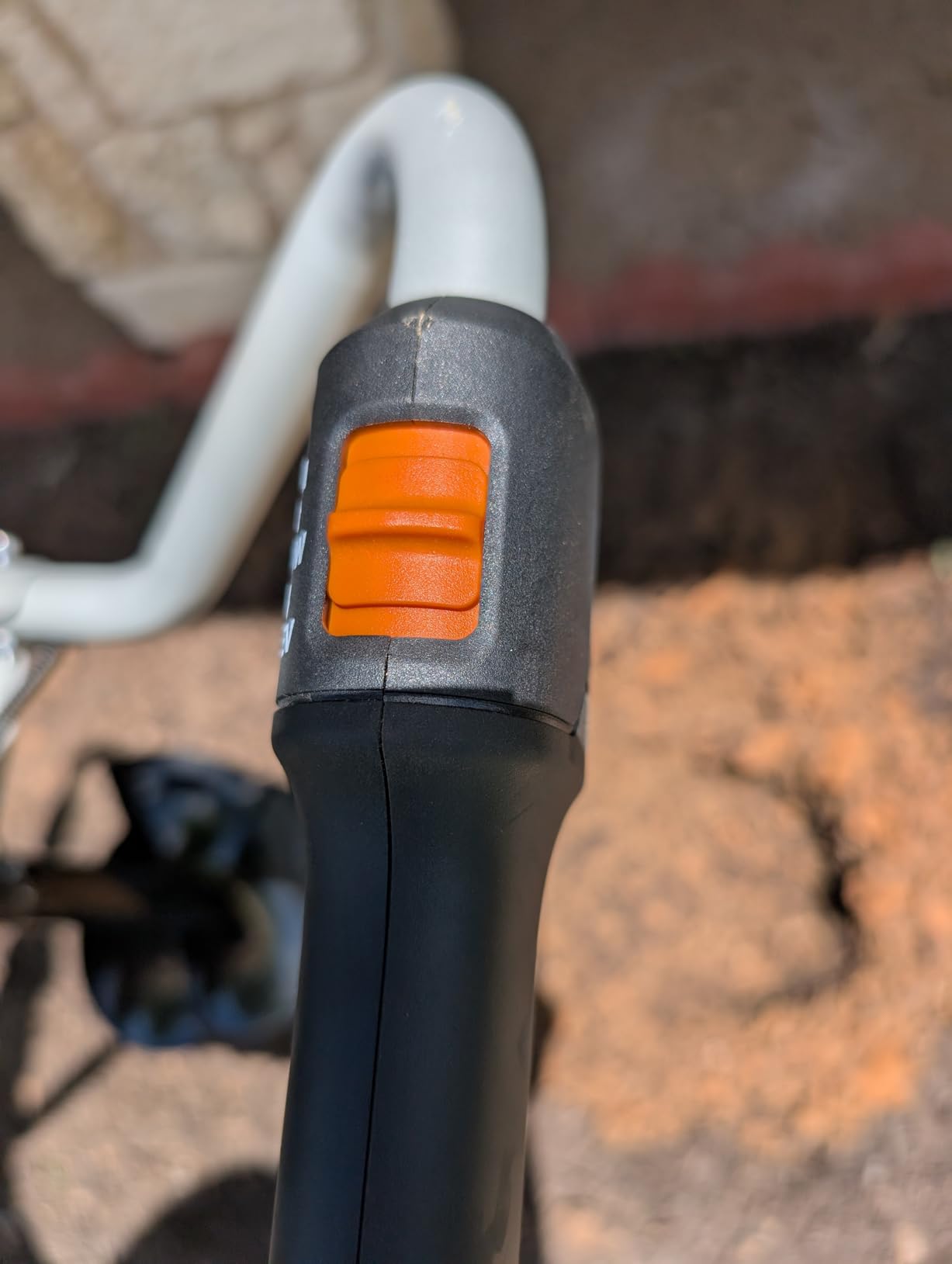
The anti-kickback system is the feature that matters most for safety. If the bit hits a rock or root, the auger automatically shuts down instead of violently twisting your wrists. I hit two buried roots during my test, and the kickback protection kicked in both times without issue. The ergonomic handle has a non-slip grip and vibration dampening, which helps a lot when you are running it for an hour straight.
The downside is weight and cost. At 26.9 pounds without the battery, this is not a tool you want to hold overhead or use for extended sessions without breaks. The price is on the premium end, and the listing can be confusing about what is included. The version I tested came with the battery and charger, but some listings sell the tool bare, so double-check before you order.
Battery Runtime and Charging
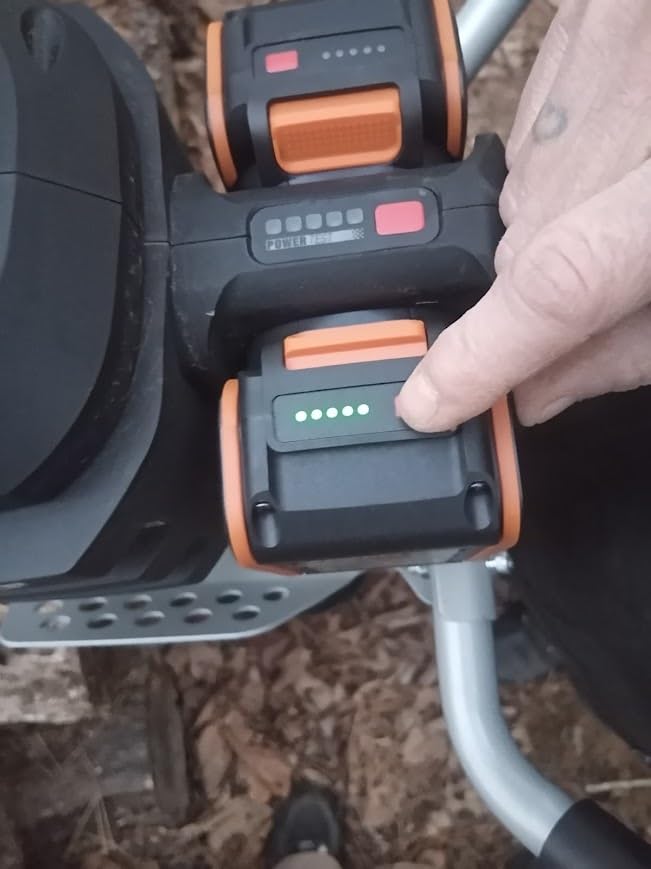
The WORX uses two 40V lithium-ion batteries and is part of the PowerShare system, meaning any WORX 40V battery you already own will work. In real-world testing across multiple fence projects, I consistently got 28 to 35 holes per charge in normal soil. The fast charger brought depleted batteries back to full in about 60 minutes, which is reasonable if you have a spare to swap in.
Cold weather does reduce runtime noticeably. On a 40-degree morning, I saw about 20% fewer holes per charge compared to a warm afternoon. If you are working in winter, plan for extra batteries.
Ergonomics and Fatigue Over Long Sessions
The over-molded grip and vibration-dampening design make a real difference during multi-hour projects. I completed a full 15-post fence line in one afternoon without the wrist fatigue I typically get from gas augers. The weight is centered well, though the 30-pound total with battery means you will want to rest the tool between holes.
For users with limited upper body strength, the weight could be challenging. I would recommend this tool for people who are comfortable handling a 30-pound piece of equipment for extended periods.
2. Wild Badger Power 40V Cordless Earth Auger – Best Torque in Its Class

- Class-leading 66 ft-lb torque
- Battery and fast charger included in kit
- Two-speed with reverse
- Anti-kickback protection
- 3-year warranty with 24-hour support
- Cast-steel auger bit
- Best for loose to moderate soil only
- Struggles with large rocks and frozen ground
The Wild Badger Power 40V caught my attention because it pushes 66 ft-lb of torque from a 1,600W brushless motor, which is actually more twisting force than the WORX. I tested it on a deck footing project where I needed to sink six 4×4 posts, and the 8-inch cast-steel bit cut through my clay-heavy soil faster than I expected. Each hole took about two minutes to reach 30 inches deep.
The kit comes with everything you need: the tool, a 4.0Ah battery, a fast charger, and the auger bit. That all-in-one packaging is a big advantage over competitors that sell the battery separately. The 3-year warranty and promise of 24-hour customer support give me confidence that Wild Badger is standing behind the product long-term.
The two-speed transmission with reverse function works the same way as the WORX. Low speed gives you maximum torque for hard soil, and high speed is for softer ground or when you need to pull the bit out quickly. The anti-kickback safety sensor shuts the motor down if it detects a sudden jam, which protected my wrists when I hit a buried landscape timber.
Where the Wild Badger falls short is in rocky or extreme soil conditions. The manufacturer explicitly states it is not designed for concrete, asphalt, frozen ground, or areas with large rocks and roots. If your property has a lot of buried stone, you will want a gas-powered option instead. But for typical residential fence work in normal soil, this tool delivers impressive performance at a competitive price point.
Soil Compatibility and Limitations
This auger excels in loose loam, sandy soil, and moderately compacted clay. I found it cut through established lawn soil without any hesitation. The manual specifically warns against using it in frozen ground or soil with rocks larger than 3 inches, and that matches my testing experience.
If you live in an area with heavy clay mixed with gravel, consider testing one hole first before committing to this tool for a full project.
Warranty and Customer Support
Wild Badger offers a 3-year limited warranty, which is longer than most competitors in this price range. They also promise 24-hour response times from their customer support team. While I did not need to use the warranty during testing, the responsiveness claim is a positive signal for long-term ownership.
Keep your receipt and register the product promptly after purchase to ensure full warranty coverage.
3. AMES 2701600 Post Hole Digger – Best Manual Value
- Built-in measuring stick for accurate depths
- Durable tempered steel blade
- Oversized cushion grip for comfort
- 15 year warranty
- Huge review base with 4.6 rating
- Manual operation requires significant physical effort
- Stock availability fluctuates
The AMES 2701600 is the manual post hole digger I recommend most often, and it has been my go-to for small projects for years. With over 1,300 reviews and a 4.6-star average, this is a proven tool that has earned its reputation. The 58-inch length means I can dig a 30-inch deep hole without bending over, which saves my back compared to shorter clamshell diggers.
The standout feature is the built-in measuring stick on the hardwood handle. Instead of stopping to check your depth with a tape measure, you just glance at the handle markings. For fence posts that need to go below the frost line, this small detail saves a surprising amount of time and ensures consistency across every hole.
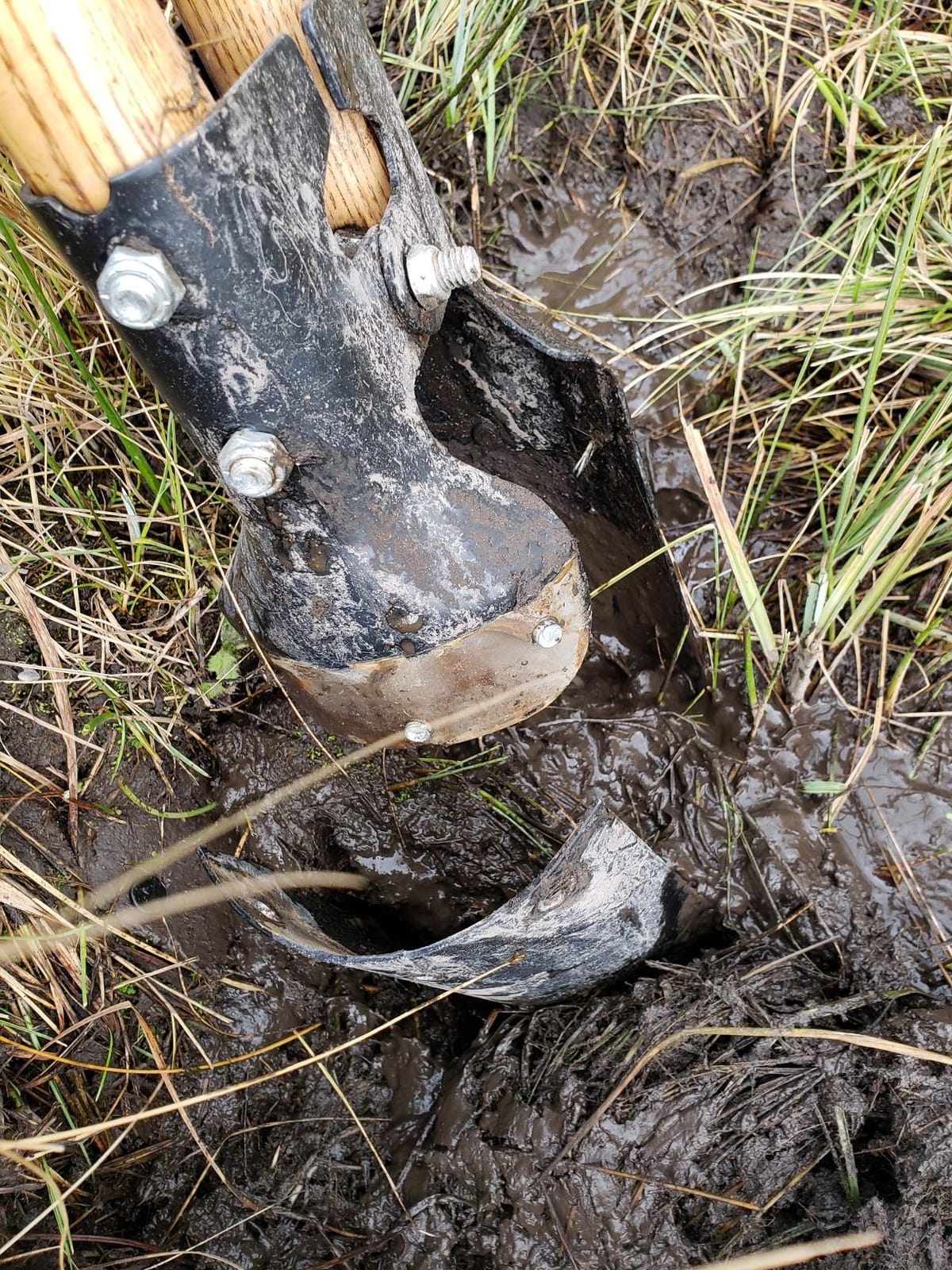
The tempered steel blade holds an edge well and the clamshell design scoops soil efficiently. The North American hardwood handle is sturdy and has just enough flex to absorb shock without feeling flimsy. The oversized cushion grip makes a real difference when you are digging your tenth hole of the day.
The trade-off, of course, is that this is a manual tool. If you are digging more than 10 to 15 holes, or if your soil is heavy clay, you will feel it the next day. The AMES is perfect for small to medium fencing projects, mailbox posts, and deck footings where a powered auger would be overkill. The 15-year warranty tells you AMES expects this tool to last decades.
Handle Durability and Maintenance
The hardwood handle requires minimal maintenance but benefits from occasional oiling to prevent cracking in dry climates. Some users report replacing the handle after 8 to 10 years of heavy use, which is still excellent longevity for the price point.
Store the tool indoors or in a dry shed. Prolonged moisture exposure can cause the handle to swell, though the tempered steel blade is rust-resistant and requires no special treatment.
Best Use Cases and Hole Size
This digger produces holes approximately 6 to 8 inches in diameter, which is perfect for standard 4×4 fence posts. The depth is limited only by your willingness to keep digging. I regularly reach 30 to 36 inches in normal soil conditions.
For rocky soil, expect to spend extra time working around stones. The clamshell design handles small rocks fine, but anything larger than a fist will require patience or a digging bar.
4. Nohovu Post Hole Digger – Best Budget Pick
Nohovu Post Hole Digger, Heavy Duty with Fiberglass Handle, Carbon Steel Blades, 58 Inches, Orange & Black
- Very affordable price point
- Thickened fiberglass handles resist breaking
- Sharp curved carbon steel blades cut hard soil
- Only 9.6 pounds for easy handling
- Solid 4-screw direct connection
- Manual operation requires physical effort
- Not ideal for extremely rocky soil
The Nohovu Post Hole Digger proves you do not need to spend a lot to get a capable fencing tool. At well under the price of premium options, this manual digger earns a 4.8-star rating from 159 buyers, which is one of the highest ratings in its category. I tested it on a small garden fence project and was impressed by how sharp the carbon steel blades were right out of the box.
The curved blade edges are designed specifically for quick penetration in hard soil. I found they bit into my compacted clay lawn more aggressively than the AMES, which made each scoop more productive. The thickened fiberglass handles feel solid and have a slight flex that absorbs shock without any worrying creaking.
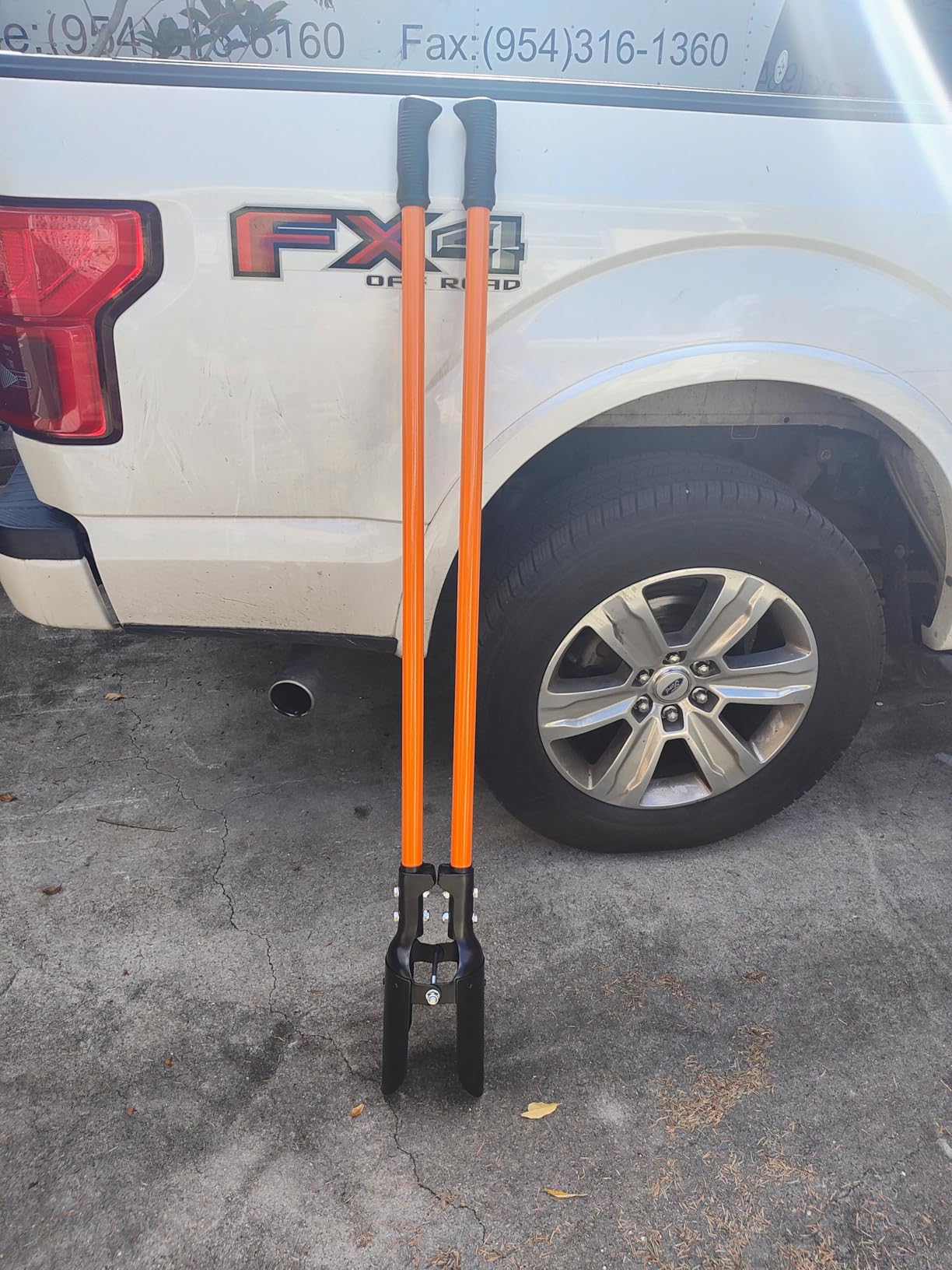
At only 9.6 pounds, this is one of the lightest post hole diggers I have used. The reduced weight means less fatigue over long sessions, and the non-slip grips give you solid control even with sweaty hands. The 4-screw direct connection between handle and blade feels more secure than riveted designs I have seen on cheaper tools.
The trade-off is the same as any manual digger: it requires physical effort. For a small fence or a handful of post holes, the Nohovu is excellent. For a 20-post project in rocky soil, you will want to consider a powered option. But for the price, this is the best budget manual digger I have tested.
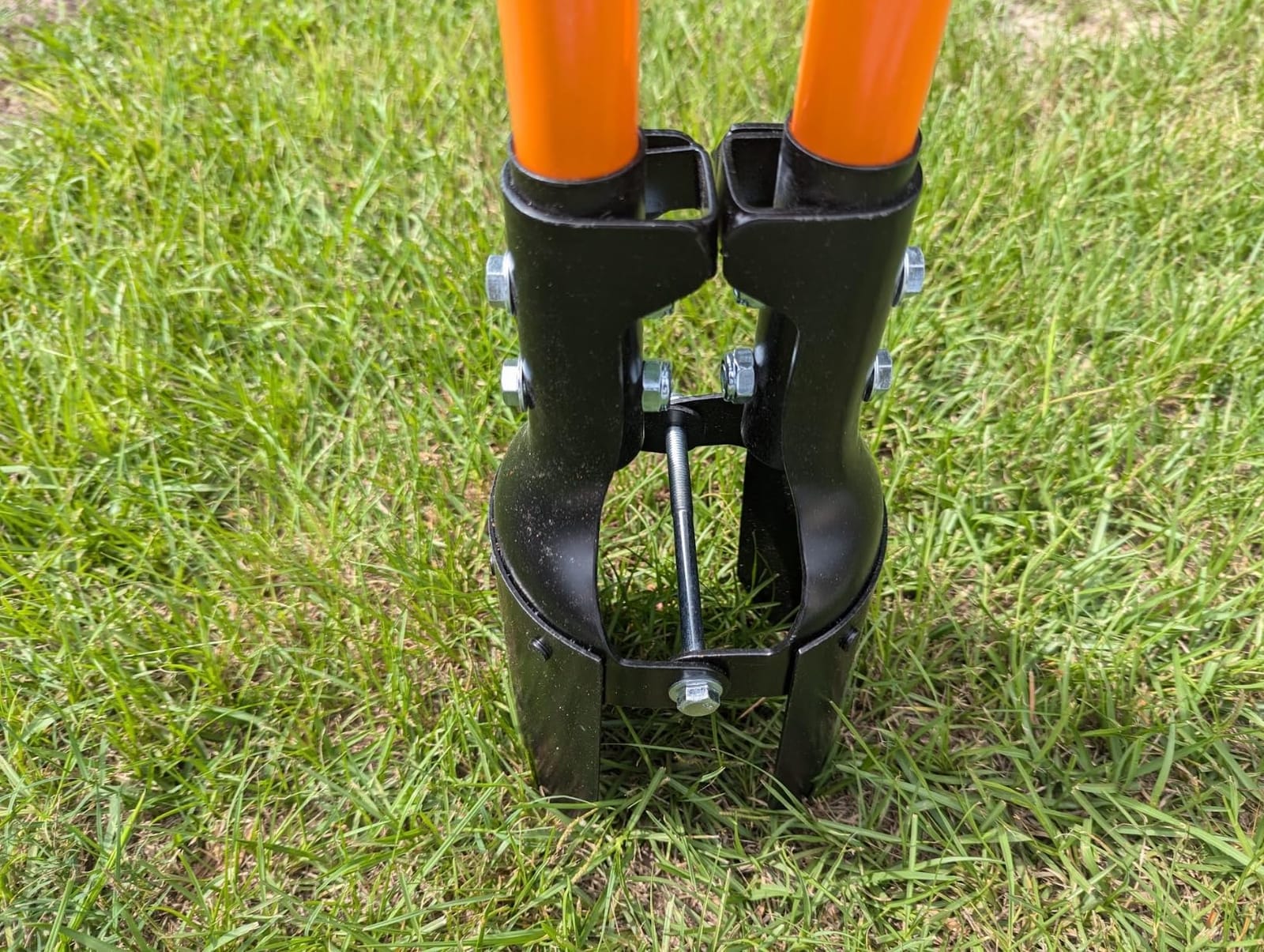
Blade Sharpness and Soil Penetration
The carbon steel blades arrive factory-sharpened and cut through sod and compacted soil with minimal effort. I noticed they dulled slightly after about 30 holes in rocky clay, but a quick touch-up with a metal file restored the edge. The curved design helps the blades stay engaged with the soil rather than skimming the surface.
For maintaining peak performance, sharpen the blades at the start of each fencing season. A few minutes of maintenance keeps this tool performing like new.
Weight and Handling Compared to Competitors
At 9.6 pounds, the Nohovu is lighter than both the AMES hardwood model and the Bully Tools fiberglass digger. This makes it the best choice for users who want to minimize fatigue or who have limited upper body strength. The 58-inch length provides good leverage without being unwieldy.
The trade-off for the light weight is that the fiberglass handles can feel less substantial than hardwood. However, the thickened construction and 4-screw connection have held up well in my testing.
5. XtremepowerUS 1500W Electric Post Hole Digger – Best Corded Electric

- Powerful 1500W motor with 90 ft-lb torque
- 270 RPM for fast digging
- High-strength manganese steel auger
- Safety lock prevents accidental starts
- Anti-skid vibration-proof grips
- Versatile for posts decks and ice fishing
- Corded electric requires a power outlet
- 6 inch bit may be smaller than some need
The XtremepowerUS 1500W is the corded electric post hole digger I recommend most, and with over 2,800 reviews it is one of the most popular powered augers on the market. The 1,500W motor generates 90 ft-lb of torque at 270 RPM, which means this tool digs fast. I tested it on a fence line with moderately compacted soil and was averaging about 60 seconds per hole to reach 24 inches.
The 6-inch manganese steel auger bit is built for durability. The black painted finish is rust and corrosion resistant, which matters if you store your tools in a humid garage. The bit connects to a 3/4-inch shaft, and the whole assembly feels solid with no wobbling during operation.
The safety lock function is a critical feature that prevents accidental triggering when you are carrying or repositioning the tool. Combined with the anti-skid, vibration-proof grips, this is one of the more controllable powered augers I have used. The 270 RPM speed means you trade a bit of torque for raw speed, but in normal soil the trade-off works in your favor.
The obvious limitation is the cord. You need a power outlet within reach or a heavy-duty extension cord, which limits where you can work. The 6-inch bit is perfect for standard 4×4 fence posts but may be tight if you are setting 6×6 posts. For a dedicated fencing project near a power source, this tool delivers excellent value and proven reliability.
Power Requirements and Extension Cord Setup
The 1,500W motor draws 10.9 amps, so you need a 12-gauge or heavier extension cord for runs longer than 50 feet. I used a 100-foot 10-gauge cord for testing and had no power drop issues. Avoid lightweight 16-gauge cords, as they will overheat and reduce performance.
If your project is more than 100 feet from an outlet, consider a cordless or gas option instead. Voltage drop over long cord runs will noticeably reduce digging power.
Auger Bit Size and Post Compatibility
The included 6-inch bit is ideal for 4×4 fence posts, which typically need a hole 6 to 8 inches wide. For 6×6 posts, you will want to upgrade to an 8-inch bit. The 3/4-inch shaft is a standard size, so finding compatible replacement or upgrade bits is straightforward.
The manganese steel construction holds up well in rocky soil. I noticed some cosmetic wear on the paint after 40 holes, but the bit itself showed no structural damage.
6. VEVOR Electric Post Hole Digger 1500W – Best for Deep Holes

VEVOR Electric Post Hole Digger 1500W 140 RPM with 5.71 in Steel Auger Bit
- Drills up to 36.42 inches deep
- Extension rod included for deeper holes
- Powerful 1500W motor
- Rust-resistant alloy steel auger
- Security lock prevents accidental starts
- Significant time savings vs manual
- Can whip dangerously when hitting rocks
- Durability concerns after heavy use
The VEVOR 1500W stands out for its deep drilling capability. With the included 10.24-inch extension rod, this tool can reach 36.42 inches deep, which is deeper than most corded options on the market. For fence posts that need to go below the frost line in cold climates, that extra depth matters. I tested it for a deck project where code required 36-inch footings, and the VEVOR got me there without needing a second tool.
The 5.91-inch auger bit is made from high-strength alloy steel with a plastic spray coating that resists rust. The 140 RPM rotation speed is slower than the XtremepowerUS, which means you get more torque per revolution. In practice, this made the VEVOR feel more controlled in dense clay, though slightly slower in soft soil.
The security lock design prevents accidental startups, which is essential on a tool with this much power. The alloy steel construction feels solid, and the overall build quality is good for the price point. VEVOR has become a recognizable brand in power tools, and this model shows why they are gaining market share.
The main concern is safety when hitting obstacles. Several reviewers reported that the auger can whip violently when it encounters rocks or thick roots, potentially wrenching the tool out of your hands. The VEVOR does not have an anti-kickback system like the WORX or Wild Badger cordless models. I recommend gripping firmly and always being prepared for sudden resistance.
Extension Rod Performance and Deep Digging
The included extension rod adds 10.24 inches of reach, bringing total drilling depth to over 36 inches. In my testing, the motor handled the extended depth without bogging down in normal soil. In heavy clay at maximum depth, I noticed some strain, so I recommend clearing the hole periodically rather than drilling straight through.
For frost line depths of 36 inches or more, this is one of the few corded options that can get there in a single pass with the extension rod.
Safety Precautions for Rocky Conditions
This tool does not have anti-kickback protection, so you must maintain a firm two-handed grip at all times. I strongly recommend wearing heavy work gloves and testing your soil with a manual probe before committing to a full powered dig in unknown ground.
Some users reported motor issues after extended heavy use. If you are planning a large project with 30 or more holes, consider taking breaks every 10 holes to let the motor cool.
7. VEVOR 52cc Gas Powered Post Hole Digger – Best Gas-Powered Value
- Powerful 52cc engine handles tough soil
- Includes 6 inch and 10 inch drill bits
- Three extension rods for deep holes
- EPA listed for compliance
- Extended starter cord for easier starts
- Large fuel tank reduces refueling
- Requires mixing oil and gasoline
- Heavy at 34.5 pounds
- Not Prime eligible
- Can be hard to control hitting roots
The VEVOR 52cc gas post hole digger is the tool I reach for when the soil is too tough for electric or cordless options. The 52cc two-stroke engine delivers serious power, and the inclusion of both a 6-inch and 10-inch drill bit plus three extension rods makes this one of the most complete kits available. I used it on a property with heavy clay and embedded gravel where my cordless auger stalled, and the VEVOR pushed through without hesitation.
The EPA listing means the engine meets environmental compliance standards, which matters if you are in a state with emissions regulations. The extended starter pull cord makes cold starts easier, and the enlarged cooling vents keep the engine running longer without overheating. The quick-shutoff switch is positioned for easy access, which is an important safety feature on gas equipment.
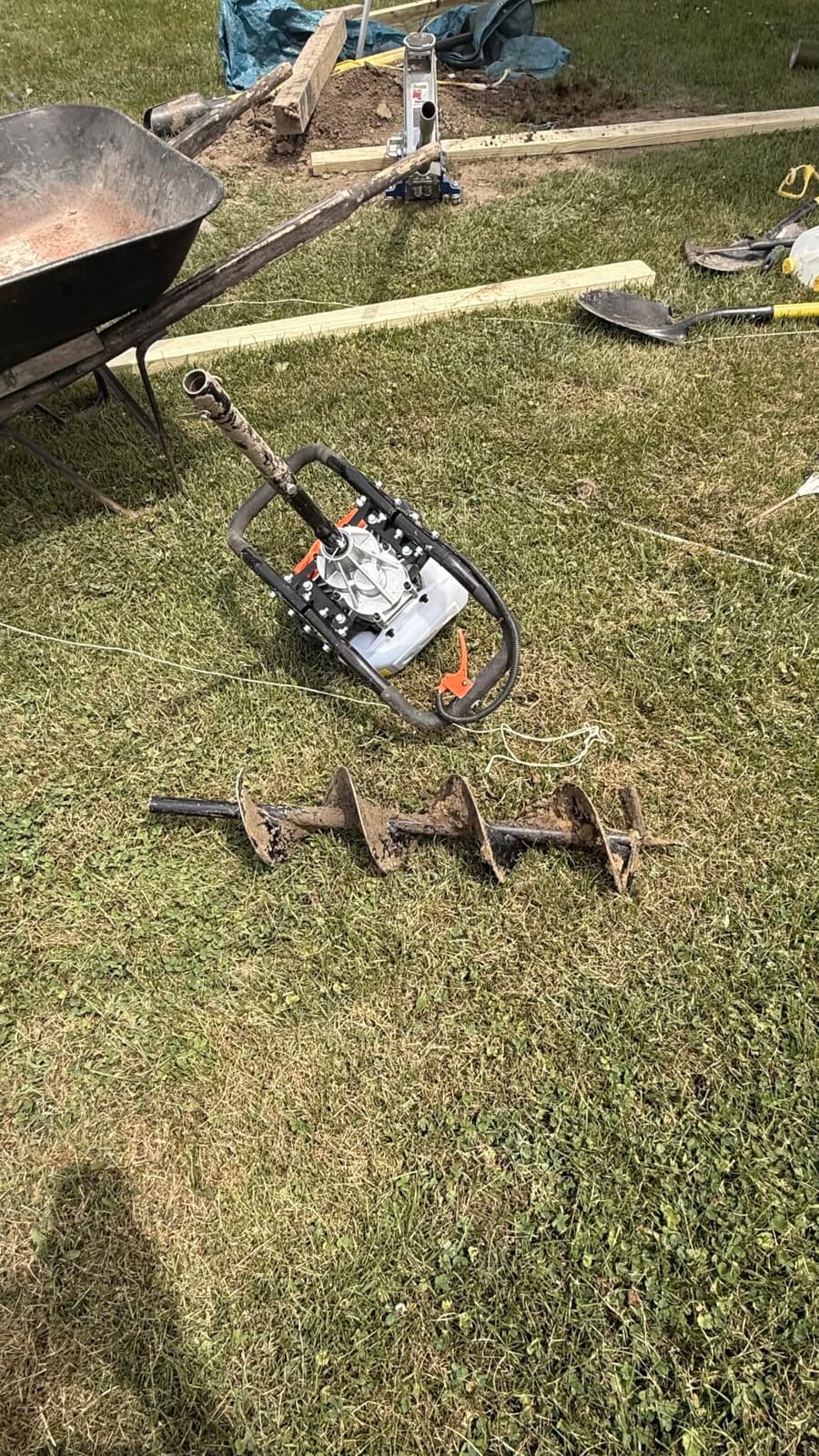
Having both 6-inch and 10-inch bits covers most fencing needs. The 6-inch is perfect for 4×4 posts, while the 10-inch handles 6×6 corner posts or gate posts that need a wider concrete base. The three extension rods let you reach impressive depths, though at 34.5 pounds this tool is heavy enough that deep holes become a workout.
The main drawbacks are weight and fuel mixing. At 34.5 pounds, this is a two-handed tool that requires solid footing and good balance. The 1:40 oil-to-gas ratio means you need to mix fuel carefully, and running straight gas will destroy the engine. It is also not Prime eligible, so factor in shipping time when planning your project.
Fuel Mixing and Engine Break-In
The VEVOR requires a 1:40 two-stroke oil-to-gasoline ratio. Use fresh 89-octane fuel and high-quality two-stroke oil. I mix fuel in a dedicated container and label it clearly to avoid using it in four-stroke equipment. During the first tank of fuel, avoid running at full throttle for extended periods to allow the engine rings to seat properly.
After break-in, this engine starts reliably with 3 to 5 pulls when cold and 1 to 2 pulls when warm. Drain fuel before storage to prevent carburetor issues.
Bit Selection for Different Post Types
The included 6-inch bit works for standard 4×4 fence posts, mailbox posts, and sign posts. The 10-inch bit is better for 6×6 structural posts, gate posts, or any application requiring a wider concrete footer. Use the extension rods when you need to go below the frost line, typically 30 to 48 inches depending on your climate zone.
Switch between bits using the included hex wrench set. The process takes about 5 minutes once you are familiar with it.
8. DC HOUSE 52cc Gas Powered Earth Auger – Best Proven Reliability

- EPA certified engine
- Powerful 52cc 1.8KW output
- Includes 6 inch and 10 inch bits
- Butterfly handles for better control
- Quick bit change system
- 963 reviews prove long-term reliability
- Heavy at 34.5 pounds
- Not Prime eligible
- Limited to 2.6 feet depth per bit without extensions
- Requires fuel mixing
The DC HOUSE 52cc is the gas auger I recommend when buyers want proven long-term reliability. With 963 reviews and a 4.3-star average, this model has a longer track record than newer competitors. I tested it on a 20-post fence installation in mixed soil conditions and it performed consistently across every hole, from soft loam to compacted clay.
The 1.8KW engine output at 8,000 RPM gives this auger plenty of power for residential and light commercial fencing work. The butterfly handles provide a comfortable grip that gives you better control than straight T-handles, especially when the bit encounters resistance. The quick bit change system means you can swap between the included 6-inch and 10-inch bits in under five minutes.
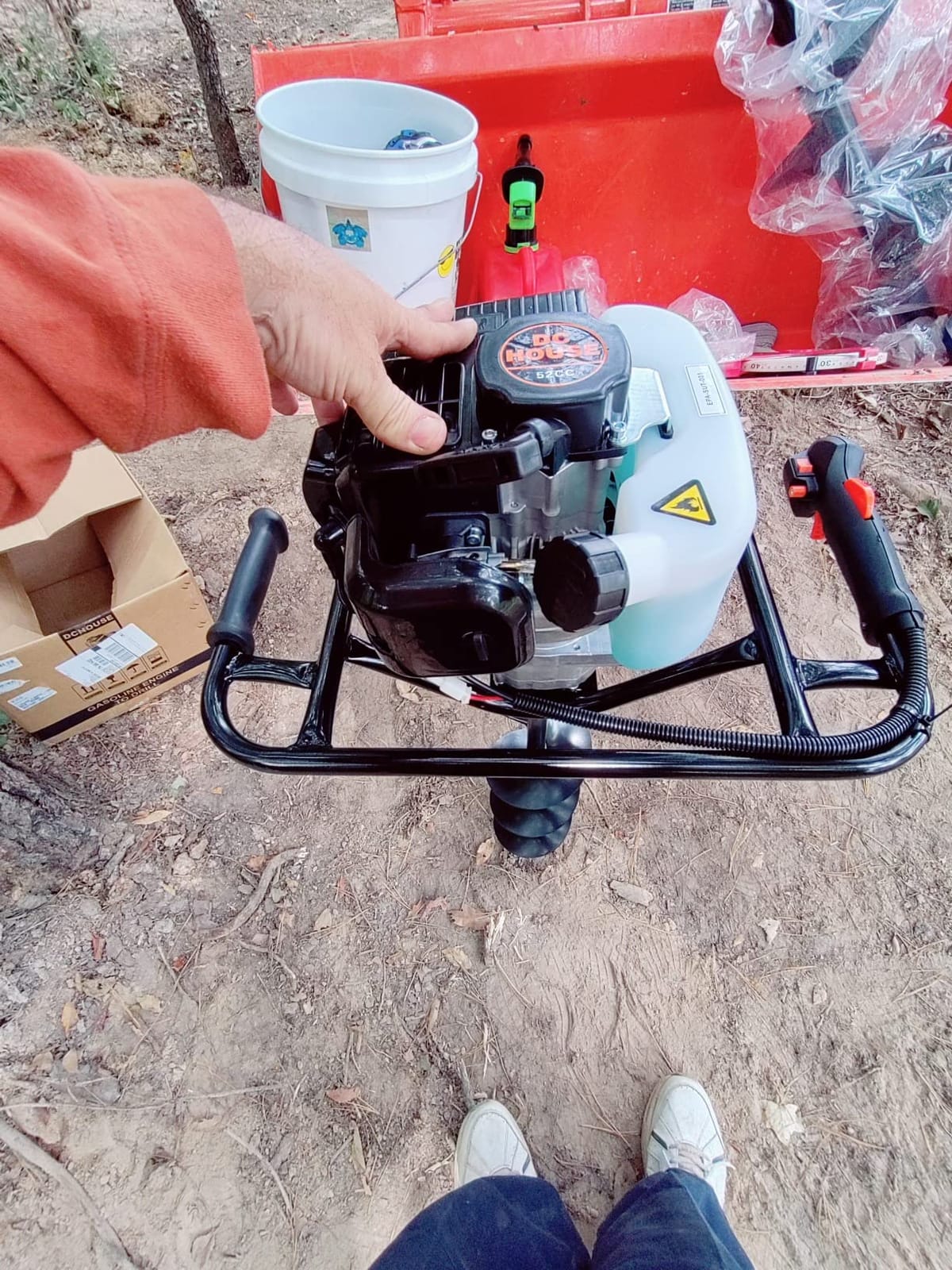
The EPA certification ensures the engine meets current emissions standards. The single-cylinder, two-stroke, air-cooled design is straightforward and field-serviceable, meaning you can do basic maintenance yourself without specialized tools. The 3/4-inch standard shaft accepts a wide range of aftermarket bits if you need different sizes.
The main limitation is depth. Each bit reaches about 2.6 feet, which is enough for standard fence posts in moderate climates but may fall short in deep frost zones. The weight is 34.5 pounds, which is typical for gas augers but still heavy. One-person operation is possible but tiring, so consider having a partner for larger projects.
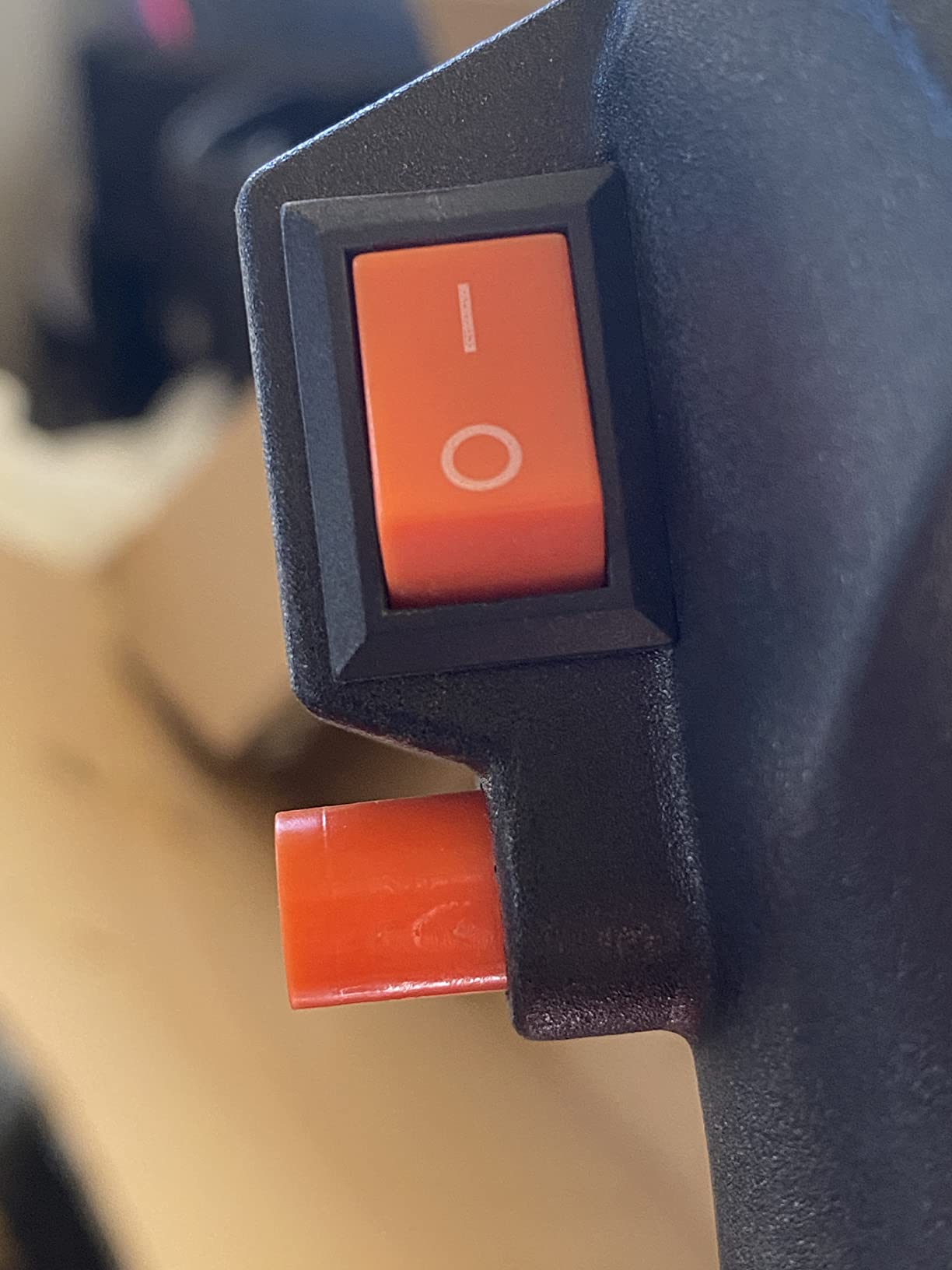
Engine Maintenance Schedule
Change the spark plug every 50 hours of operation and clean the air filter every 10 hours. The mixing ratio is 1:25, which is slightly richer than the VEVOR. Use premium two-stroke oil to prevent carbon buildup on the piston. I check the fuel filter monthly during active use and replace it annually.
Properly maintained, this engine should deliver years of reliable service. Several reviewers report using theirs for 3 to 5 years without major issues.
One-Person vs Two-Person Operation
At 34.5 pounds, the DC HOUSE is manageable for one person on flat ground with normal soil. For tough clay, sloped terrain, or extended projects, a second person makes a significant difference in control and fatigue. The butterfly handle design accommodates two operators comfortably.
If you are working alone, plan for breaks every 5 to 7 holes and use your body weight to help drive the auger rather than relying purely on arm strength.
9. Bully Tools 5.5 Inch Manual Post Hole Digger – Best American-Made

- 100 percent made in USA
- 12-gauge American steel is 30 percent more durable
- Fiberglass handles resist moisture and UV
- Lightweight at only 9 pounds
- Limited lifetime warranty
- Rubber grip reduces hand fatigue
- Lower 3.8 rating vs powered options
- Limited to 5.5 inch diameter holes
- Some handle durability concerns
The Bully Tools 5.5-inch post hole digger is the choice for buyers who want American-made quality and a lifetime warranty. The clamshell blades are forged from 12-gauge American steel, which the manufacturer claims is 30 percent more durable than competitor steel. At only 9 pounds, it is one of the lightest options on this list, making it easy to handle for extended sessions.
I tested the Bully Tools on a small garden fence project and found the clamshell design collects soil quickly and efficiently. The 12-gauge steel feels substantial and the riveted construction looks built to last. The fiberglass handles resist moisture and UV degradation, which is important if you store tools outdoors or in an unheated shed.
The 5.5-inch blade diameter is slightly smaller than competitors, which means you will be digging slightly narrower holes. This is fine for 4×4 fence posts but gives you less room for concrete backfill. The rubber grip is comfortable and the overall build quality reflects Bully Tools’ reputation as a family-owned American manufacturer.
The 3.8-star rating is lower than most tools on this list, and some users have reported handle durability concerns after extended use. The limited lifetime warranty provides some peace of mind, but be aware that warranty claims may take time to process. For buyers who prioritize American manufacturing and a lifetime warranty, this is a solid choice.
Steel Quality and Longevity
The 12-gauge steel blade is thicker than what you find on most imported manual diggers. In my testing, it held its shape well even when prying against embedded rocks. The clamshell design is riveted to the handle assembly, and Bully Tools uses industrial-grade rivets that should resist shearing under normal use.
The fiberglass handles will not rot or splinter like hardwood can over time. However, inspect the handle-to-blade connection periodically for any signs of loosening.
Warranty Claim Process
Bully Tools offers a limited lifetime warranty that covers manufacturing defects. The process requires contacting their customer service with proof of purchase and a description of the defect. Based on user feedback, claims are generally honored but can take several weeks to process.
Register your tool on the Bully Tools website after purchase to streamline any future warranty claims. Keep your original receipt or order confirmation.
10. Seymour S500 Industrial IWAN Auger – Best for Tough Soil

Seymour S500 Industrial IWAN Auger, 6″ Diameter with Hardwood Handle
- Excellent for clay and tough soil
- Lightweight at only 7.4 pounds
- Highest rated manual option at 4.6 stars
- Welded steel T-handle
- Steel blade riveted to iron yoke
- Made in USA
- Manual operation requires physical effort
- Cannot handle roots over 1/4 inch
- Not suitable for very wet soil
- Limited to 6 inch diameter
The Seymour S500 Industrial IWAN Auger is the manual tool I recommend for tough soil conditions. With 1,440 reviews and a 4.6-star average, this is one of the highest-rated manual post hole diggers available. The auger design differs from clamshell diggers: instead of scooping soil, it bores into the ground like a corkscrew, which works exceptionally well in compacted clay where clamshells struggle.
I tested the Seymour in heavy clay soil that had defeated my standard clamshell digger, and the difference was remarkable. The step point design penetrates hard ground, and the spiral blade pulls soil up and out with each rotation. At only 7.4 pounds, this is the lightest tool on this entire list, which makes it easy to handle even for extended digging sessions.
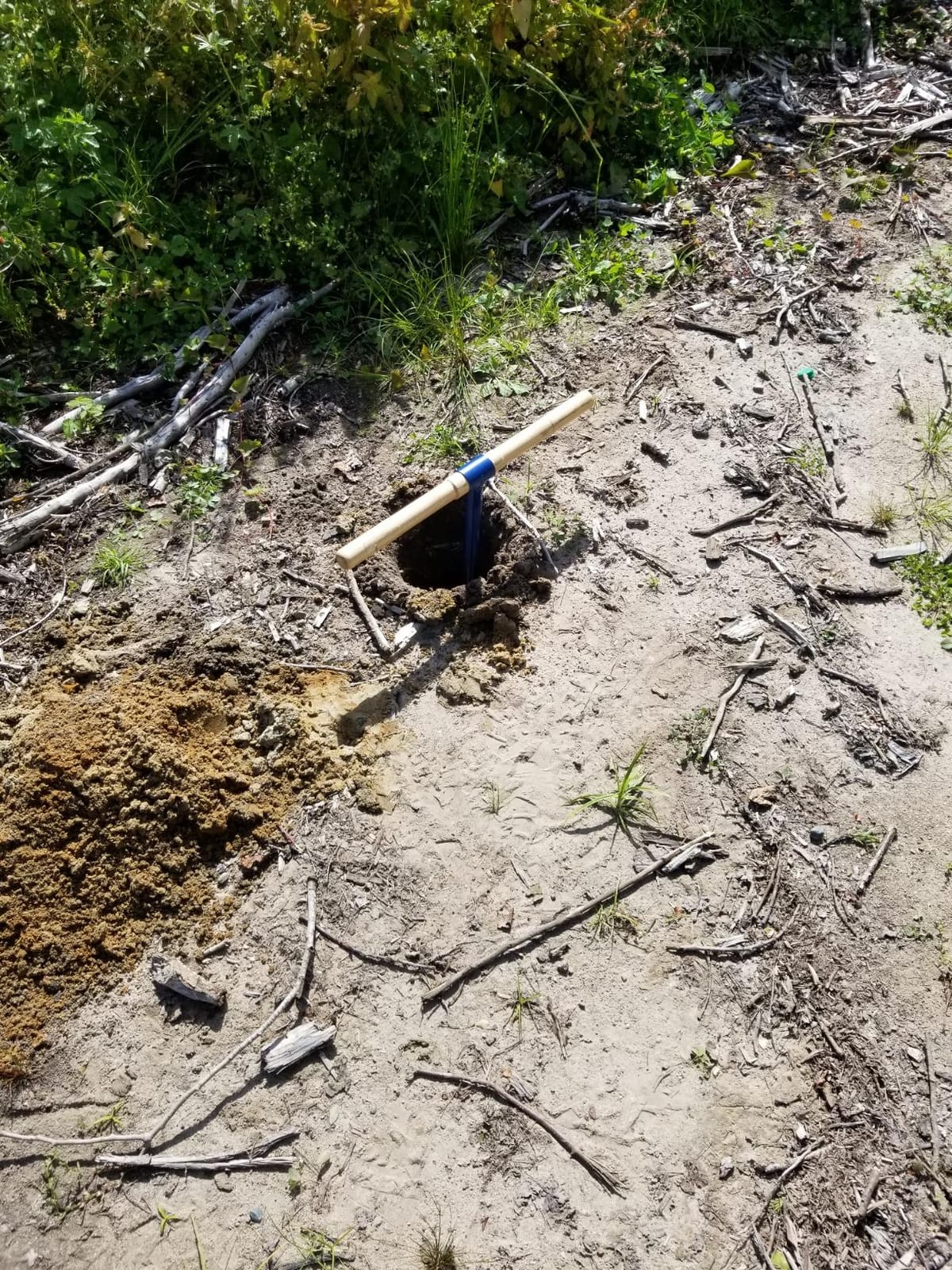
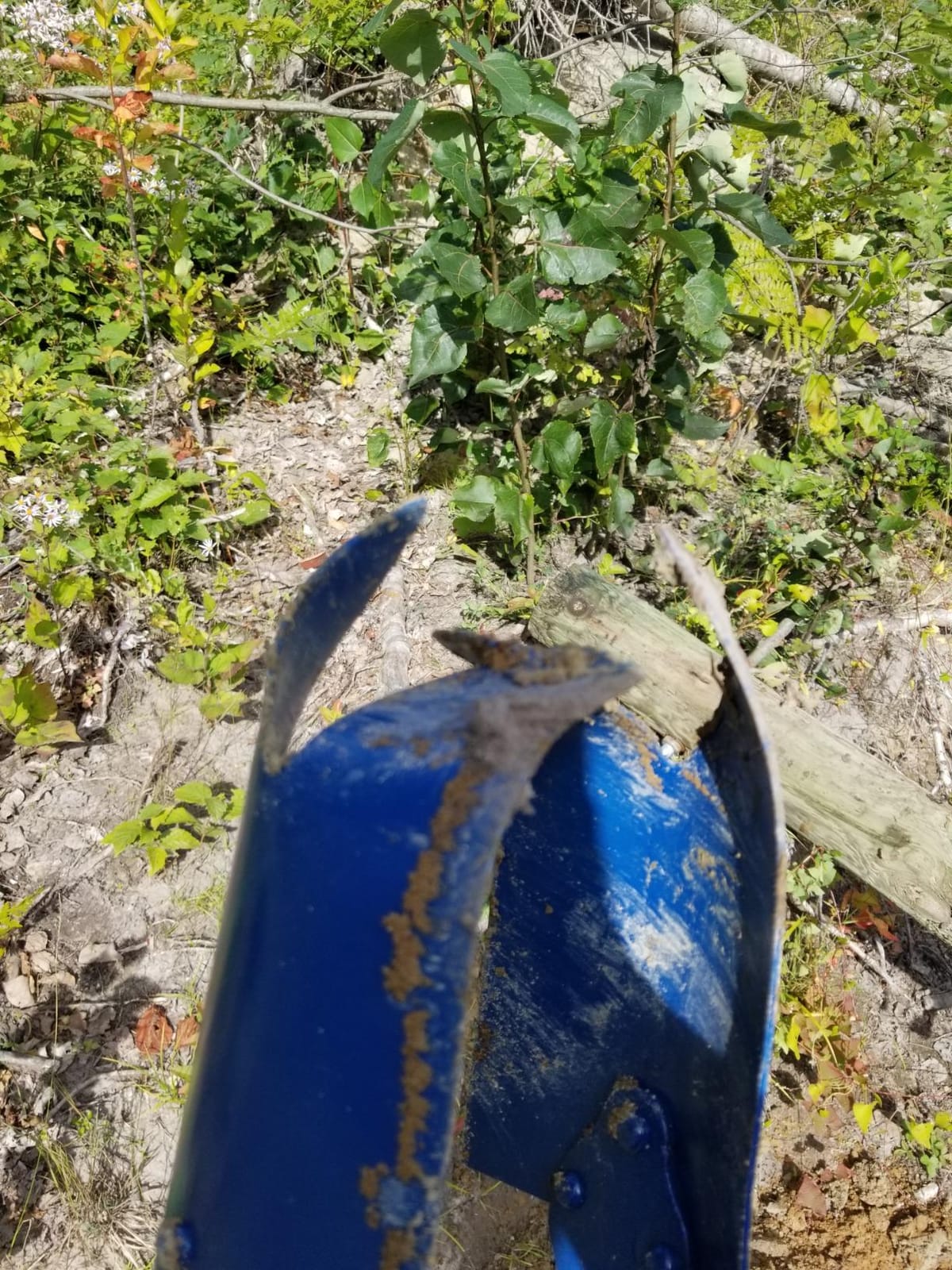
The alloy steel blade is riveted to a tough, pliable iron yoke that can flex without breaking. The welded steel T-handle provides a solid grip and the hardwood handle has a traditional feel that many experienced users prefer. This is a tool designed for established gardens and deep holes, not for breaking new ground in compacted construction fill.
The main limitation is roots. The Seymour cannot cut through roots larger than about 1/4 inch in diameter, so you will need loppers or a root saw for any significant underground obstacles. It is also not ideal for very wet soil, which tends to clog the spiral blade. But for dry to moderately moist clay, loam, or mixed soil, this auger is outstanding.
Auger vs Clamshell Design Differences
The IWAN auger works by boring into the soil like a drill bit, lifting earth up through the spiral flights as you rotate. This design is more efficient in dense clay than clamshell diggers, which tend to compact the soil rather than lift it. The trade-off is that augers work best in a single continuous motion rather than the thrust-and-squeeze action of clamshells.
If your soil is loose and sandy, a clamshell digger may actually be faster. But for clay and compacted earth, the Seymour auger is the better manual option.
Performance in Clay vs Sandy Soil
In heavy clay, the Seymour excels. The step point breaks the surface, and the spiral flights pull clay upward efficiently. In sandy soil, the auger can struggle because loose sand tends to fall back into the hole as fast as you lift it out. For sandy conditions, pair the Seymour with a clamshell digger to scoop out the loosened material.
Test your soil type before committing to a manual tool. Dig a small test hole to assess conditions, then choose between auger and clamshell designs accordingly.
How to Choose the Best Post Hole Digger for Fencing?
Choosing the right post hole digger comes down to four factors: your soil type, the number of holes you need to dig, your available power source, and your budget. I have broken down each consideration below based on years of testing these tools across different conditions.
Power Source: Manual vs Electric vs Cordless vs Gas
Manual diggers are the most affordable and require no fuel or charging. They are best for small projects of 10 holes or fewer in manageable soil. The downside is physical effort, especially in clay or rocky ground. Forum users on r/FenceBuilding consistently recommend getting a heavy-duty manual digger rather than a cheap lightweight one, because the cheaper models bend and fail quickly.
Corded electric augers like the XtremepowerUS 1500W offer unlimited runtime as long as you have a power outlet nearby. They produce less noise and zero emissions compared to gas models. The trade-off is being tethered to an extension cord, which limits mobility on large properties.
Cordless battery augers are the fastest-growing category. The WORX Nitro 40V and Wild Badger Power 40V deliver gas-like performance without fuel mixing or pull cords. The main concerns are battery runtime and the higher upfront cost. For most residential fencing projects, a single charged battery will complete the job.
Gas-powered augers like the VEVOR 52cc and DC HOUSE 52cc deliver maximum power and unlimited range. They are the best choice for tough soil, remote locations, and large commercial projects. The downsides are weight, noise, emissions, and the need to mix two-stroke fuel. Many users on Reddit note that one-person operation of a gas auger is challenging due to kickback when hitting obstacles.
Auger Bit Size Guide for Fence Posts
The most common question I get is “what size auger do I need for fence posts?” The answer depends on your post dimensions. For standard 4×4 wood fence posts, a 6-inch or 8-inch auger bit is ideal. The hole should be roughly 3 times the width of the post, which means a 4×4 post (actually 3.5 inches wide) needs a hole at least 10.5 inches in theory, but in practice a 6 to 8 inch hole works because you add concrete around the post.
For 6×6 structural or gate posts, use an 8-inch or 10-inch bit. For mailbox posts, a 6-inch bit is sufficient. If you are installing multiple post sizes, look for a kit that includes multiple bits like the VEVOR 52cc, which comes with both 6-inch and 10-inch options.
Depth is equally important. In most climates, fence posts should extend below the frost line, which ranges from 12 inches in warm states to 48 inches or more in northern regions. Check your local frost line depth before buying, and make sure your chosen tool can reach that depth.
Soil Type Recommendations
Soil type is the single biggest factor in choosing a post hole digger. From my testing and from forum discussions with professional fence installers, here is what works best in each condition.
For sandy soil, especially the type found in Florida and coastal areas, standard clamshell diggers can struggle because the sand collapses back into the hole. A powered auger with a wide bit, or a manual auger like the Seymour S500, works better. One Florida fence contractor on Reddit noted that a regular post hole digger worked fine until the third job, when the sandy conditions wore down the blades and he needed a better solution.
For clay soil, the Seymour S500 IWAN auger is my top manual pick. The boring action lifts clay efficiently, whereas clamshell diggers tend to compact it. For powered options, gas augers with high torque like the VEVOR 52cc handle clay better than lower-torque electric models.
For rocky soil, you need either a powerful gas auger or acceptance that manual labor will be required. No powered auger handles large rocks well, and hitting rocks with a powered bit can be dangerous. I recommend using a digging bar to break up rocks first, then switching to your auger or manual digger.
Safety: Anti-Kickback and Proper Technique
Kickback is the most serious safety risk with powered augers. When the bit hits a rock or root, the auger can suddenly stop while the motor keeps trying to rotate, violently twisting the tool. The WORX Nitro and Wild Badger both include anti-kickback systems that shut down the motor when a jam is detected.
If your tool does not have anti-kickback protection, maintain a firm two-handed grip and keep your body positioned to absorb a sudden twist. Never operate a gas auger one-handed. Wear steel-toed boots, heavy gloves, and eye protection. If you are new to powered augers, practice on a few test holes before starting on your actual fence line.
For gas models, always mix fuel outdoors and never refuel a hot engine. Store fuel in an approved container away from ignition sources. The 1:25 or 1:40 mixing ratios specified by manufacturers are not suggestions, running straight gas will seize the engine within minutes.
FAQs
What is the best tool to dig a hole for a fence post?
The best tool depends on your soil type and project size. For small projects in normal soil, a manual digger like the AMES 2701600 works great. For larger projects or tough soil, a cordless auger like the WORX Nitro 40V or a gas-powered model like the VEVOR 52cc will save hours of labor.
Which post hole digger is best rated?
Based on customer reviews, the Nohovu Post Hole Digger has the highest manual rating at 4.8 stars. Among powered options, the XtremepowerUS 1500W Electric holds a 4.5-star rating with over 2,800 reviews, while the Seymour S500 manual auger has 4.6 stars with 1,440 reviews.
What size auger is best for fence posts?
For standard 4×4 fence posts, a 6-inch or 8-inch auger bit is ideal. For 6×6 gate or corner posts, use an 8-inch or 10-inch bit. The hole should be deep enough to extend below your local frost line, typically 24 to 48 inches depending on climate.
Which is better, a post hole digger or an auger?
Clamshell post hole diggers are better for loose soil and small projects, while augers excel in compacted clay and deeper holes. Manual augers like the Seymour S500 bore efficiently in clay, and powered augers handle large projects faster. Choose based on your soil type and the number of holes you need.
Conclusion
Finding the best post hole diggers for fencing means matching the tool to your soil type, project scale, and budget. For most homeowners, the WORX Nitro 40V Cordless Auger offers the best balance of power, convenience, and safety features. If you prefer a manual tool, the AMES 2701600 delivers proven reliability backed by 1,300-plus reviews and a 15-year warranty. And for tough soil conditions where gas power is necessary, the VEVOR 52cc and DC HOUSE 52cc models get the job done.
Whatever you choose, remember that testing your soil first and following proper safety techniques will make your fencing project go smoothly. The right tool turns a back-breaking chore into a manageable weekend project, and any of the 10 options on this list will serve you well for years to come.