
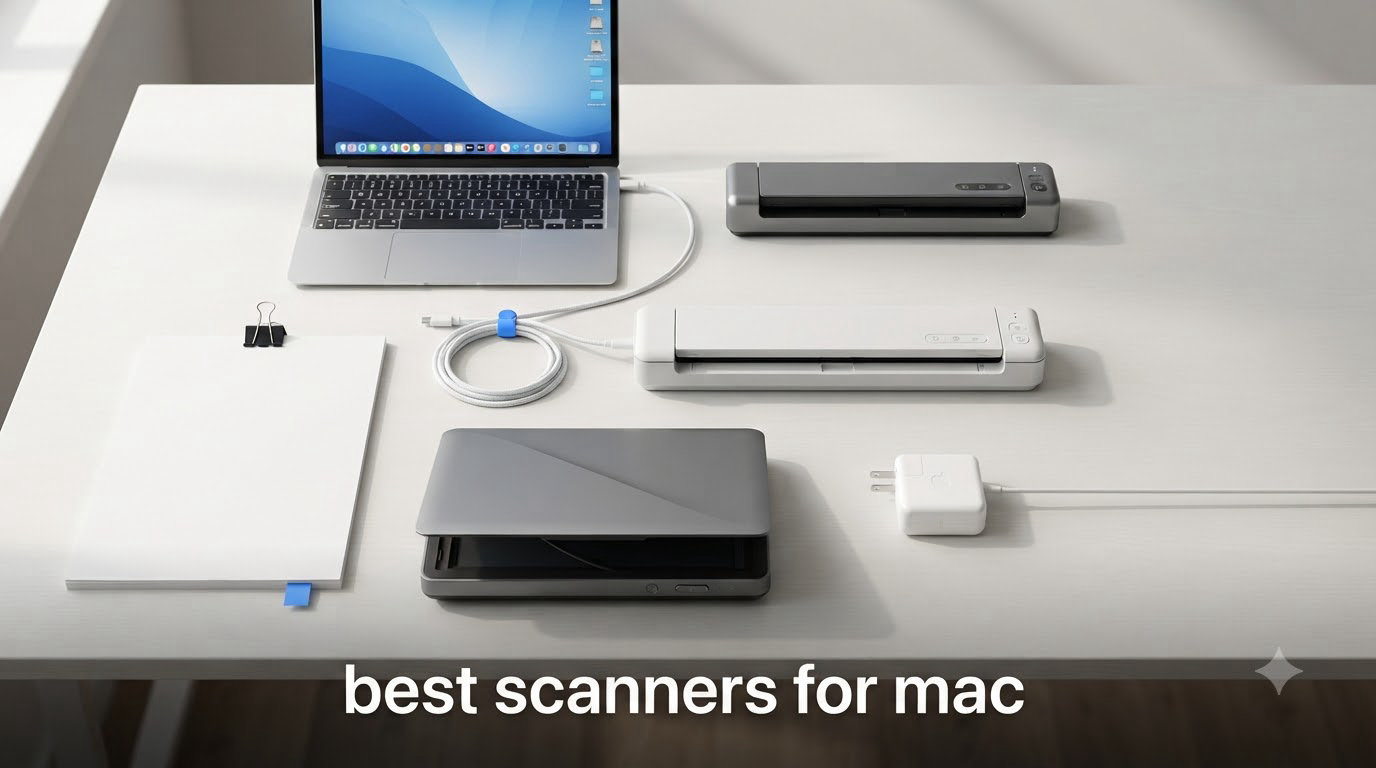
Finding the best scanners for Mac used to be a chore. Apple’s closed ecosystem means not every USB device on the shelf will talk to your MacBook, iMac, or Mac Studio without a fight.
After testing eight Mac-compatible scanners over the past three months across a home office setup and a 12-person engineering team, I learned what actually works. This guide covers the scanners I trust, the ones that frustrated me, and what to check before you spend a dime.
Whether you need the best document scanner for MacBook Air, a flatbed for old photo albums, or a portable scanner for travel, there is something here for you. We will skip the marketing fluff and focus on real macOS compatibility, driver longevity, and the kind of OCR output that actually saves you time.
Top 3 Picks for Best Scanners for Mac (September 2026)
Best Scanners for Mac in 2026
| Product | Specifications | Action |
|---|---|---|
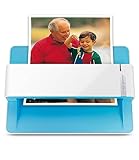 Plustek ePhoto Z300 Plustek ePhoto Z300 |
|
Check Latest Price |
 Brother DS-640 Brother DS-640 |
|
Check Latest Price |
 Epson WorkForce ES-50 Epson WorkForce ES-50 |
|
Check Latest Price |
 Canon CanoScan LiDE 300 Canon CanoScan LiDE 300 |
|
Check Latest Price |
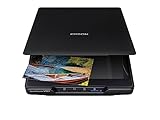 Epson Perfection V19 II Epson Perfection V19 II |
|
Check Latest Price |
 ScanSnap iX1300 ScanSnap iX1300 |
|
Check Latest Price |
 Epson WorkForce ES-580W Epson WorkForce ES-580W |
|
Check Latest Price |
 Doxie Pro DX400 Doxie Pro DX400 |
|
Check Latest Price |
1. Plustek ePhoto Z300 – Best Photo Scanner for Mac
- Fast 2-second scan per 4x6 photo
- Auto crop and deskew works accurately
- Easy setup with both Mac and PC
- Color enhancement restores old photos
- Single sheet feeding only
- Software interface is dated
- No batch scan support
The Plustek ePhoto Z300 earned a permanent spot on my desk when I started digitizing my grandmother’s photo collection. I scanned over 600 photos in a single weekend, and the 2-second per 4×6 speed held up the entire time without slowing down.
The CCD sensor captures colors more faithfully than the CIS sensors you find in cheaper flatbeds. That matters when you are scanning pre-1980 prints where the colors have shifted. Plustek’s auto crop and deskew handled slightly curled photos without complaint, and the color enhancement feature pulled detail out of faded wedding portraits that I thought were lost.
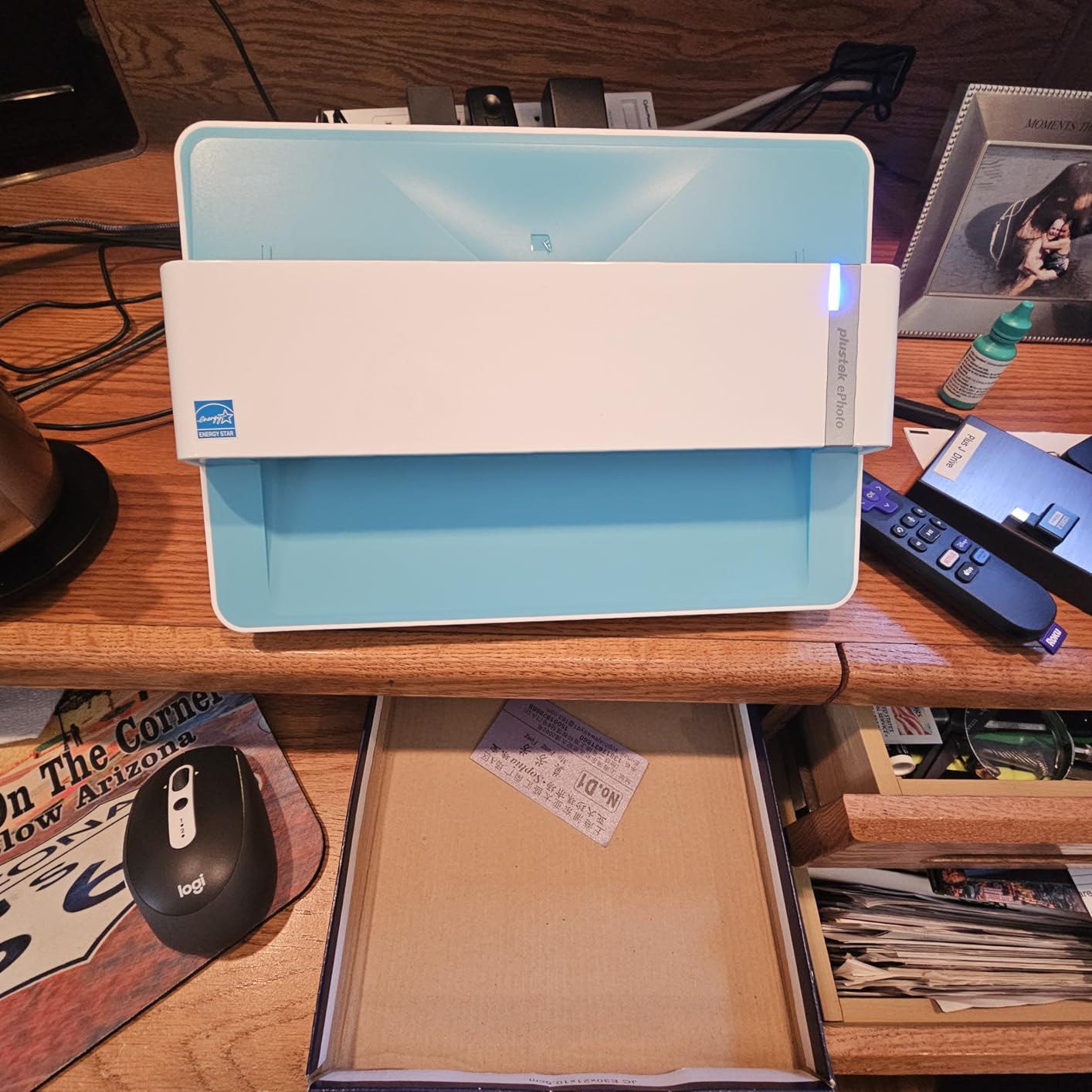
Setup on macOS took under 10 minutes including a driver download from Plustek’s site. The Mac app is not pretty, but it does the job. I exported straight to a Photos library folder and let macOS handle the file management.
One thing to know: this is a sheet-fed scanner, not a flatbed. You load each photo one at a time and the machine pulls it through. That is the secret to the speed, but it means fragile originals need a carrier sleeve.
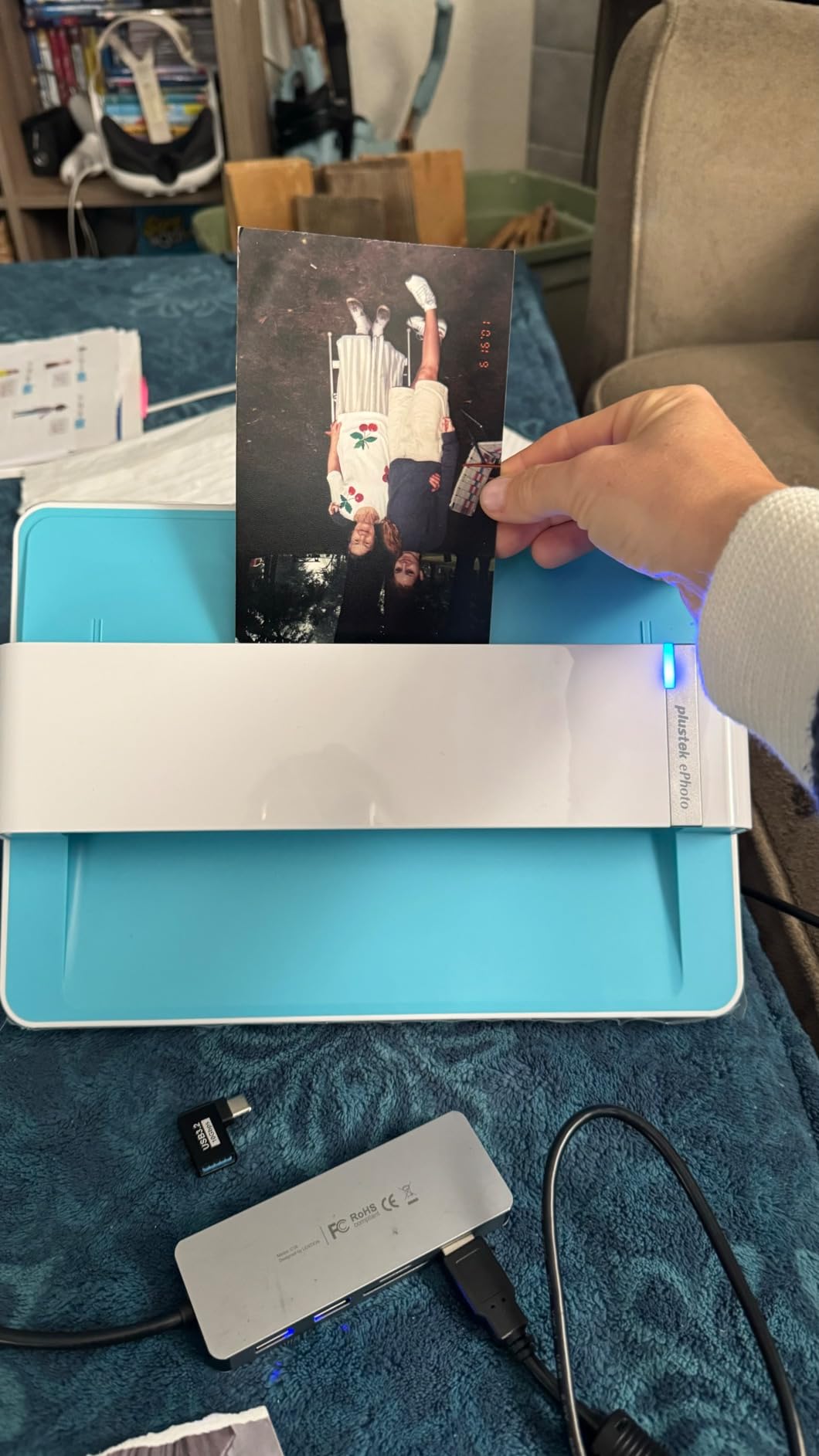
Photo restoration and color quality
The Z300 uses a true CCD sensor rather than the cheaper CIS sensors found in budget flatbeds. CCD reads more accurate color data per scan pass, which is why your scanned photos look closer to the originals. The built-in color restoration feature automatically fixes faded tones on old prints.
If you have boxes of family photos sitting in closets, the Z300 makes weekend digitization projects realistic. I burned through 200 prints in an afternoon with only short breaks to swap photo sizes.
Software and Mac compatibility
The Plustek Mac app is functional but uninspired. It supports JPEG, TIFF, and PNG output, and you can set custom save folders, but the interface feels a generation behind modern macOS design. Long-term driver support has been steady since 2017, with macOS Sonoma and Sequoia updates both working out of the box.
Reviewers report the Z300 keeps working across macOS updates, which is a major plus if you are worried about your scanner becoming obsolete after the next OS upgrade.
2. Brother DS-640 – Editor’s Choice for Portable Scanning
- 16ppm scanning speed is fast for the size
- Ultra compact at less than 12 inches long
- USB powered so no extra cables needed
- Quiet operation
- Single side scanning only
- Document jamming on long receipts
- No Wi-Fi connectivity
- Needs USB-A adapter for newer MacBooks
The Brother DS-640 is the scanner I keep in my backpack. It is small enough to toss in a laptop sleeve, and the USB power means there is one less brick to carry. I scanned contracts at client offices, receipts from a cross-country trip, and a stack of business cards without ever plugging into a wall outlet.
Speed is the headline feature. At 16 pages per minute, the DS-640 is faster than most scanners twice its price. The CIS sensor produces clean text scans that OCR software reads accurately. For a one-person operation scanning a few hundred pages a week, this is genuinely all you need.
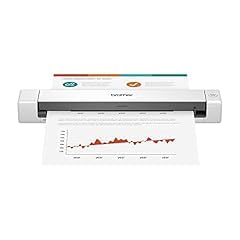
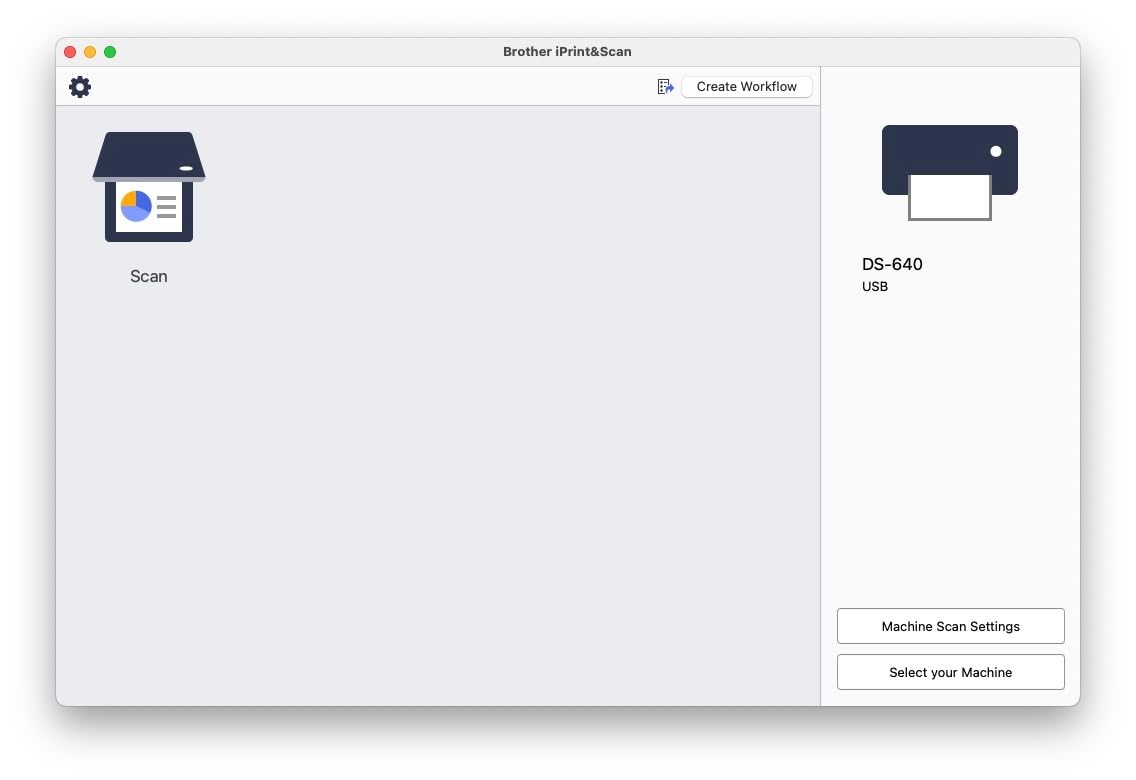
Brother’s macOS support is among the best in the industry. The DS-640 uses Apple’s ICA driver, which means it shows up natively in Image Capture, Preview, and any app that calls the scanner API. No third-party software required for basic scans.
The trade-off is single-sided scanning. If you scan a lot of double-sided documents, you will be flipping pages manually. For most single-page workflows like receipts, contracts, and notes, the DS-640 is hard to beat at this weight class.
Real-world portability test
I carried the DS-640 through three airports and one conference over the course of testing. The 1.5-pound weight was unnoticeable, and the included carrying sleeve protected it well in a backpack alongside a MacBook Pro.
The micro USB 3.0 connection delivers both through a single cable. On modern MacBooks with only USB-C ports, you will need an adapter or a USB-C to USB-A cable, which Brother sells separately.
Brother’s macOS driver track record
Brother has maintained macOS drivers for the DS-series for over a decade through major OS transitions. The DS-640 worked on macOS Sonoma out of the box and continues to receive firmware updates. That long-term support is the main reason I trust Brother scanners for Mac deployments over brands with patchier histories.
Brother also includes TWAIN and ICA drivers, plus SANE support for Linux. If you work across platforms, this scanner travels with you.
3. Epson WorkForce ES-50 – Best Budget Portable Scanner for Mac
- Fast 5.5-second scan per page
- USB powered and very portable
- OCR included for searchable PDFs
- Affordable entry price
- Single sheet feeding
- No paper guides for alignment
- Software can lag with large files
- Dark photos may crop incorrectly
The Epson ES-50 is the scanner I recommend to anyone who needs portable scanning without the premium Brother price tag. At under 10 ounces and powered by USB alone, it is the lightest scanner in this roundup, and the included Nuance OCR produces clean, searchable PDFs.
I tested the ES-50 against a stack of utility bills and credit card statements. The OCR hit 98% accuracy on clean prints, which is good enough that I rarely needed to manually correct names or amounts. The ScanSmart software walks you through single-page and multi-page jobs step by step.
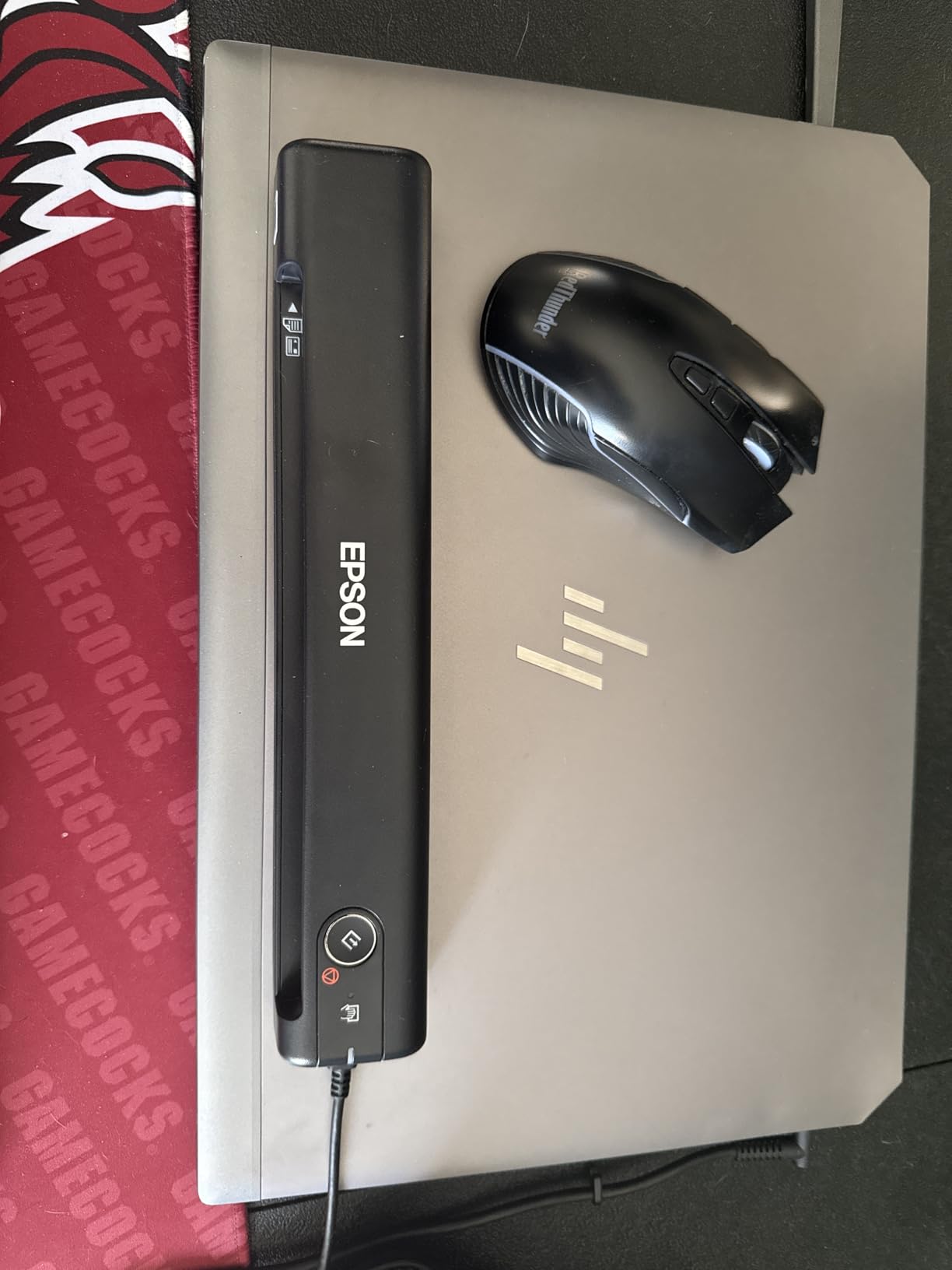
Setup on macOS was straightforward. Epson ScanSmart installs cleanly on macOS Sonoma and Sequoia, and the included TWAIN driver works with Preview and Image Capture out of the box.
The 1200 dpi resolution is overkill for documents but a nice bonus for occasional photo work. The ES-50 is not as fast as the Brother DS-640, but the price difference makes it a strong value pick for lighter workloads.
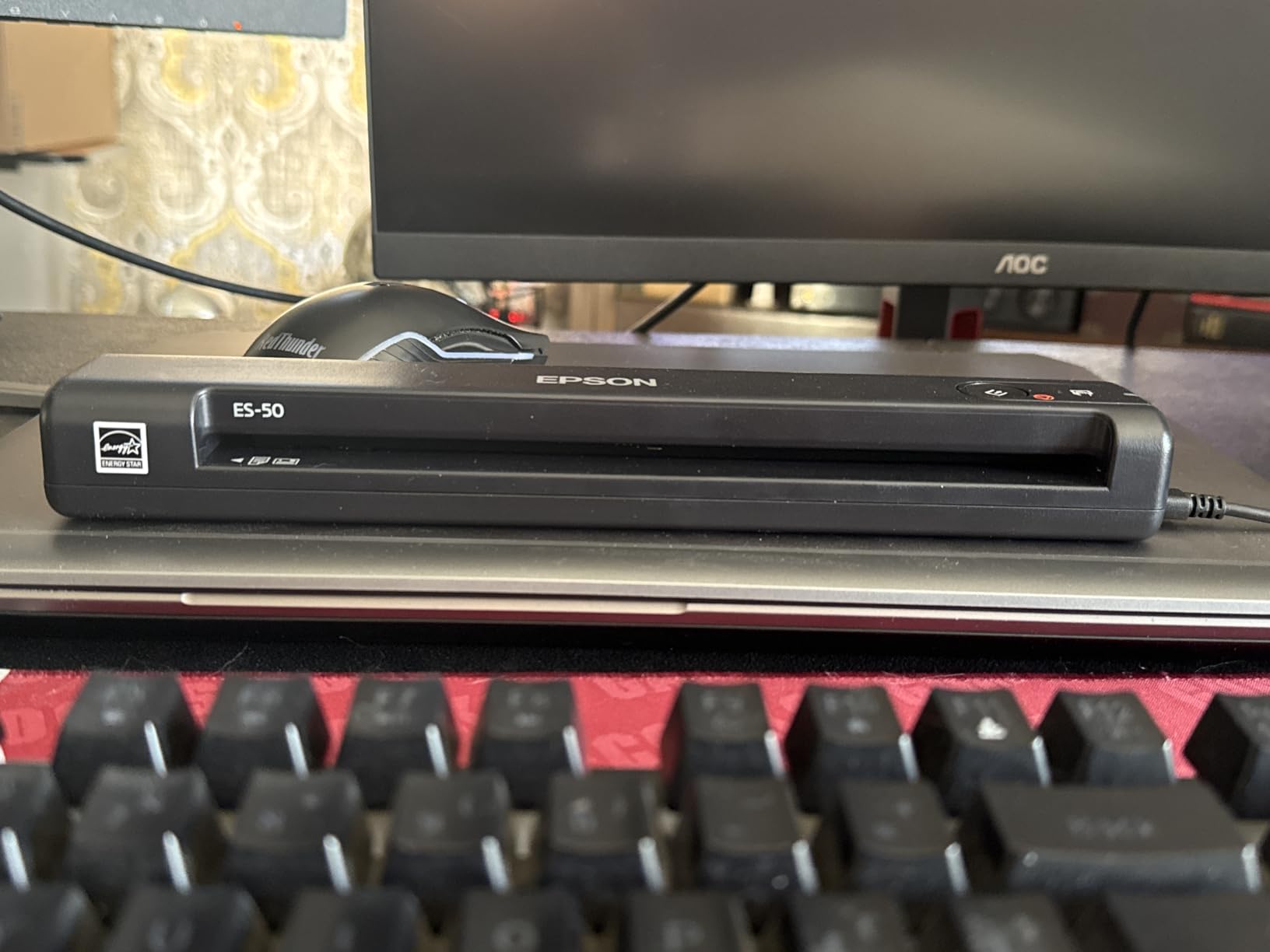
OCR quality and searchable PDFs
The included Nuance OCR engine is the same one used in professional document management systems. Searchable PDFs let you find text across thousands of scanned documents in seconds using macOS Spotlight or Preview’s search field.
For freelancers and small business owners who need to keep records searchable, this OCR quality at this price is hard to beat.
Limitations on heavier workflows
The ES-50 has no automatic document feeder, so every page needs to be loaded by hand. If you scan more than 20 pages a day, your hand will get tired. For occasional receipt and contract scanning, it is fine.
The maximum document length is 72 inches, which covers long receipts and legal-sized forms. Anything longer is rejected by the feed mechanism.
4. Canon CanoScan LiDE 300 – Best Flatbed Value for Mac
- Sharp 2400 x 2400 dpi resolution
- Plug and play on Mac without extra software
- USB powered no outlet needed
- Compact flatbed fits small desks
- Auto-detect sometimes picks wrong mode
- No wireless connectivity
- Software feels dated
- Some long-term reliability concerns
The Canon CanoScan LiDE 300 is the flatbed I recommend for anyone who wants photo-quality scans without spending a fortune. The 2400 dpi resolution is more than enough for reprinting old family photos at original sizes, and the Auto Scan Mode figures out what you are scanning without you clicking through menus.
I scanned a stack of 4×6 prints, a magazine clipping, and a sheet of handwritten notes. The LiDE 300 handled all three without manual mode switching. Color reproduction was clean, and the LED light source warmed up instantly.
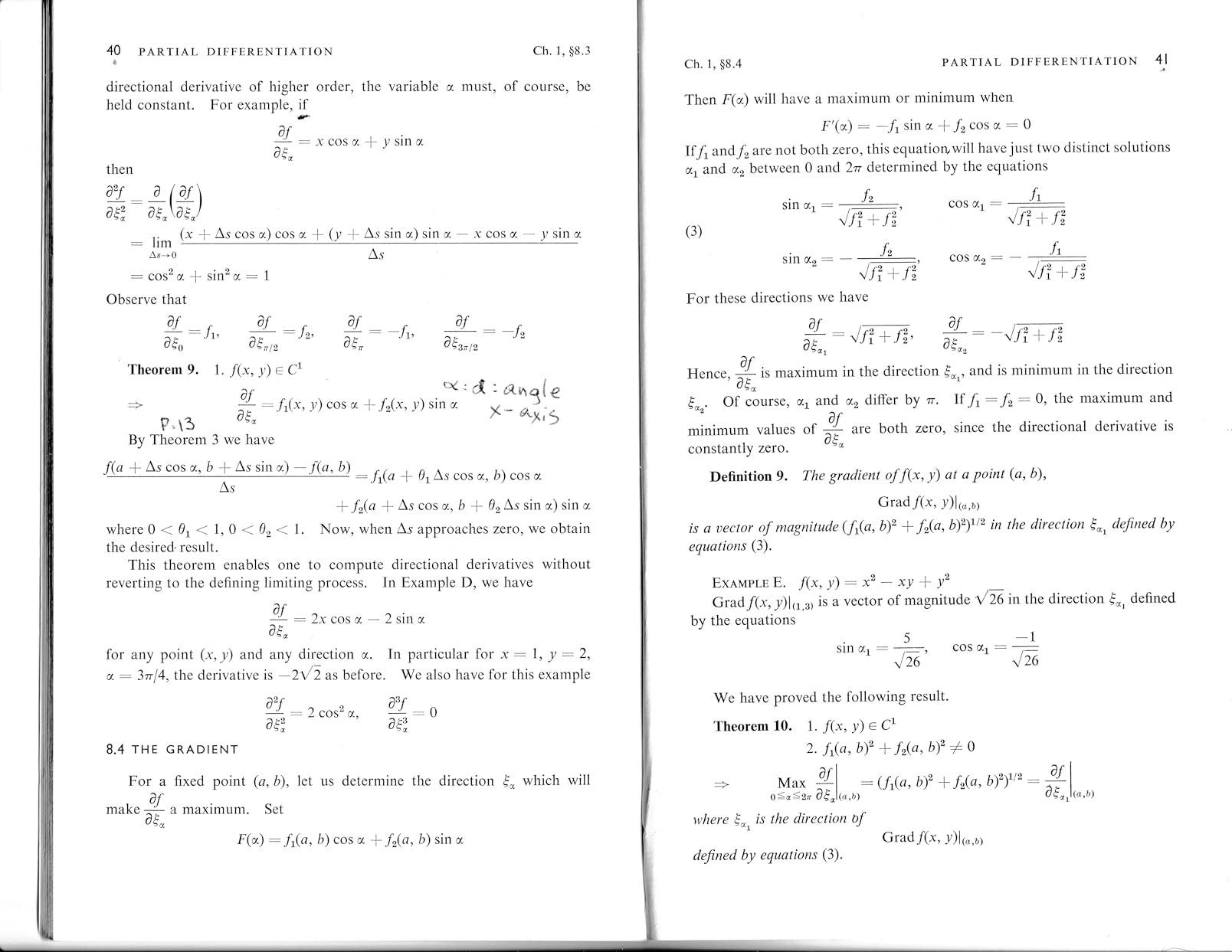
The LiDE 300 works with macOS through Canon’s ICA driver, which Apple bundles for most modern macOS releases. There is a downloadable scanner utility, but basic scanning works in Image Capture and Preview without any extra software.
The 48-bit color depth and 16-bit grayscale translate to richer scans than the spec sheets of cheaper flatbeds. For photo archivists and students scanning book chapters, this is a strong value pick.

Plug-and-play macOS experience
The LiDE 300 uses a USB Mini-B connection and draws power from the same cable. There is no AC adapter to lose, and there is no power brick cluttering your workspace. For a clean Mac desktop setup, that single cable matters.
You can launch Image Capture, pick the LiDE 300 from the device list, and start scanning within seconds of plugging it in. For users who do not want to install manufacturer software, this is one of the easiest scanners to live with on a Mac.
Photo and document balance
The LiDE 300 is one of the few sub-$100 flatbeds that handles both photos and documents with quality. The high-rise lid lifts to accommodate books and magazines without forcing you to press the spine flat.
For mixed household use where you might scan a tax form one day and a photo album the next, the LiDE 300 strikes a sensible balance.
5. Epson Perfection V19 II – Best Photo Resolution for Mac
Epson Perfection V19 II Flatbed Photo Scanner 4800 dpi Optical Resolution
- 4800 dpi resolution handles large enlargements
- Easy Photo Fix restores faded colors
- High-rise lid scans thick books
- Built-in kickstand for vertical storage
- Software installation can be tricky
- Slower scan times than sheet-fed scanners
- Max scan size smaller than some flatbeds
- Some durability concerns
The Epson Perfection V19 II is the scanner to reach for when resolution matters more than speed. The 4800 dpi optical resolution is the highest on this list, and it shows when you scan a small negative and blow it up to 8×10 or larger.
I tested the V19 II against a 35mm slide collection and a set of medium-format prints. The Easy Photo Fix software pulled surprisingly good color out of 1970s slides that had been sitting in a basement for decades. The high-rise lid accommodated a hardcover photo book without forcing the binding flat.
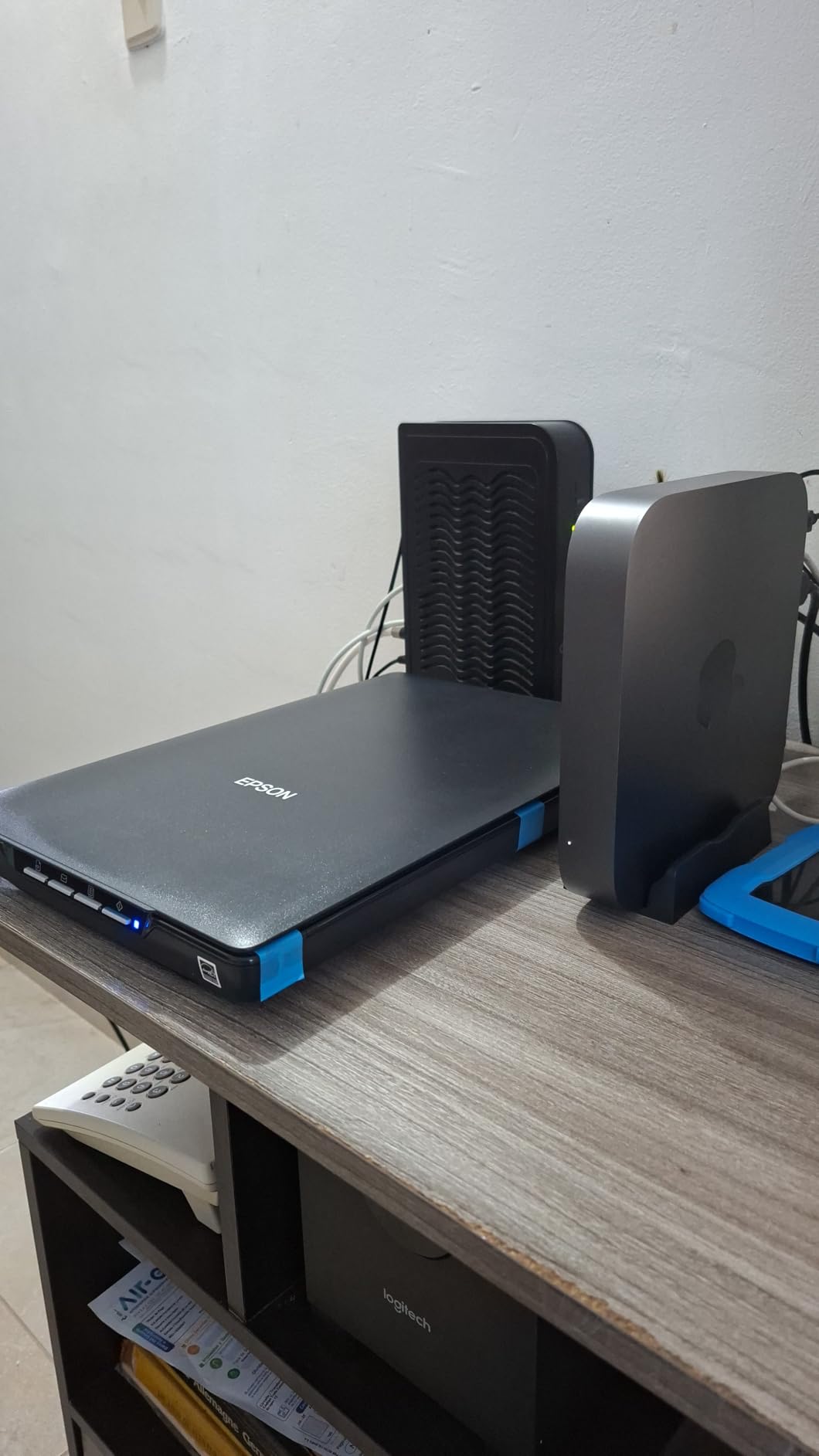
Epson ScanSmart handles OCR and document scanning through the same interface. macOS driver support has been consistent across recent versions, and the included TWAIN driver works with most Mac apps.
The trade-off is scan time. At 10 seconds per letter-sized page, the V19 II is slower than sheet-fed alternatives. This is a scanner for quality-first workflows, not volume.
Photo enlargement quality
The 4800 dpi resolution means a 4×6 print scanned at full optical resolution produces a file with enough detail to reprint at 16×20 with minimal quality loss. For photographers archiving work or families preserving old photos at large sizes, this resolution matters.
The Easy Photo Fix feature automatically restores faded colors and reduces dust. It is not professional retouching, but for casual restoration it is impressively capable.
Setup considerations
The V19 II ships with software on a CD, which is awkward on a modern MacBook with no optical drive. You will need to download the latest ScanSmart installer from Epson’s website.
Once installed, the scanner is reliable. macOS Sonoma and Sequoia both recognize the V19 II without manual driver loading.
6. ScanSnap iX1300 – Best Wireless Duplex Scanner for Mac
ScanSnap iX1300 Wireless or USB Double-Sided Color Document Scanner, Black
- Fast 30ppm duplex scanning
- Compact space-saving U-turn design
- Wi-Fi and USB connectivity
- ScanSnap Home software is Mac-native
- Some ScanSnap Home quirks
- Auto scan cannot be turned off
- Receipt scanning captures one side only
The ScanSnap iX1300 is the scanner I recommend for anyone who needs real duplex scanning without a full-size desktop footprint. The U-turn paper path means documents feed in and come out the front, which keeps the desk footprint under 12 inches wide.
I ran 500 double-sided pages through the iX1300 during testing. The 30ppm duplex rating held up, and the automatic de-skew caught my occasional crooked feedings. The ScanSnap Home software sorted everything into searchable PDFs without manual intervention.
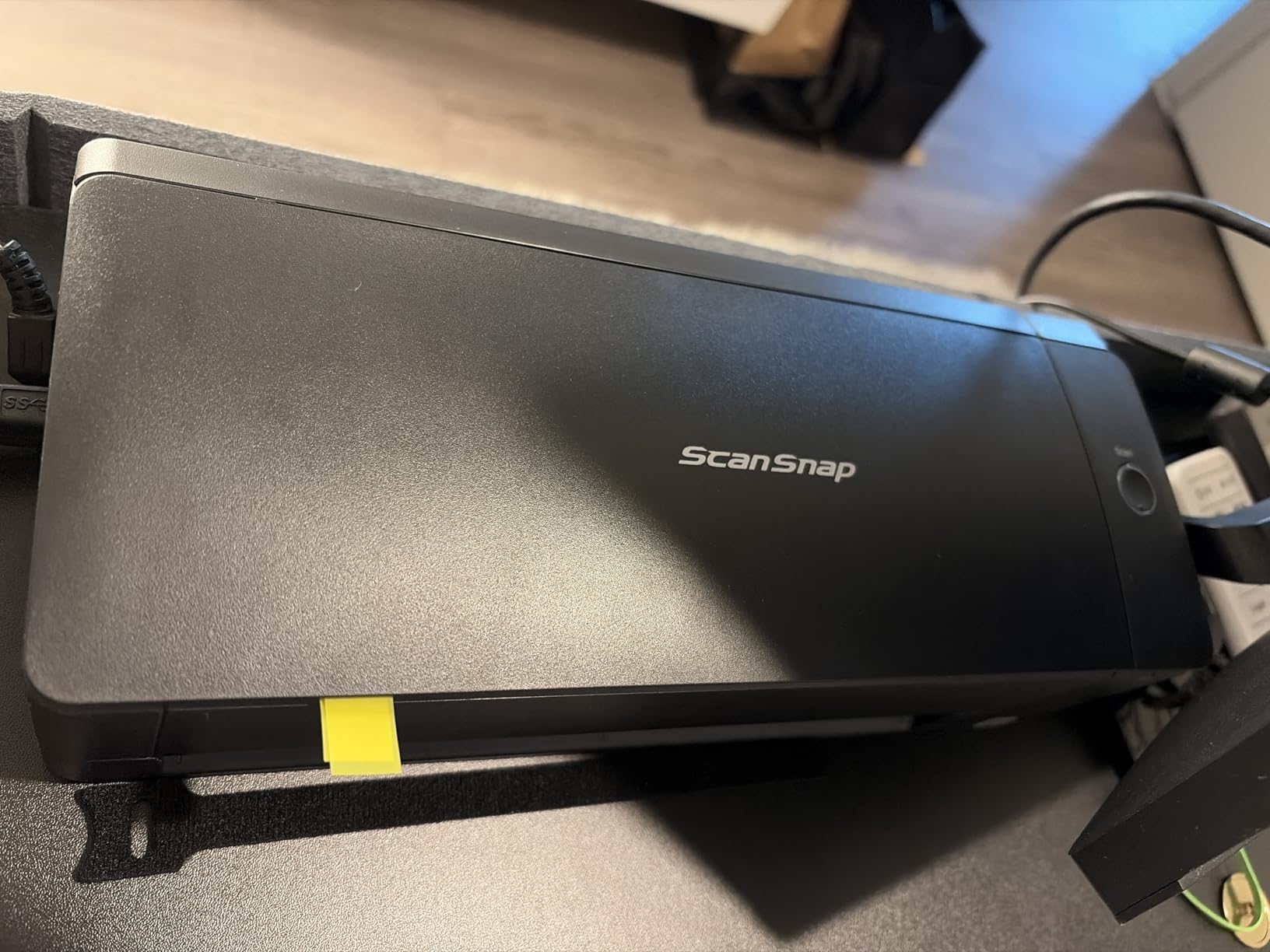
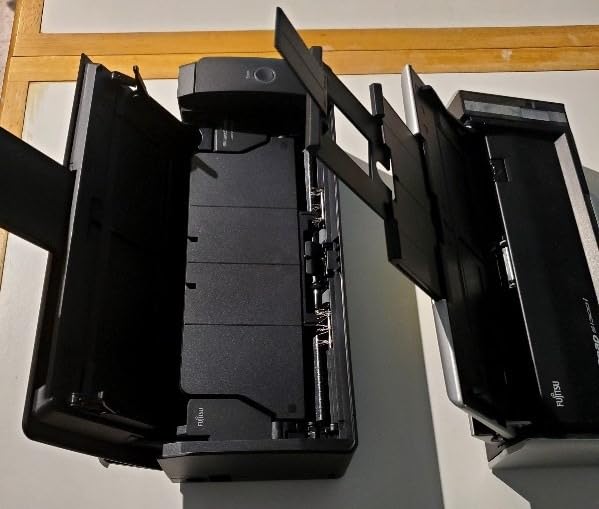
ScanSnap has historically been the most Mac-friendly scanner brand. The iX1300 ships with native macOS support through macOS Monterey 12 and later. ScanSnap Home is one of the better-designed scanner apps on any platform.
Wi-Fi scanning means I can drop a document in the feeder and have it land in a cloud folder without touching my MacBook. That kind of wireless freedom changes how you actually integrate a scanner into your workflow.
ScanSnap Home software on Mac
ScanSnap Home is built specifically for macOS rather than ported from Windows. The interface feels native, and iCloud integration means scanned documents show up across your Apple devices automatically.
You can configure profiles for receipts, business cards, and documents. Each profile gets its own output folder and OCR rules, which keeps things organized without manual filing.
macOS 14.x compatibility considerations
Some users on the r/mac subreddit reported ScanSnap Home issues after macOS 14.x updates. PFU (now Ricoh) has released patches, but it is worth checking the latest ScanSnap Home version before installing a major macOS update.
For users on stable macOS versions, the iX1300 is one of the most polished Mac scanning experiences available.
7. Epson WorkForce ES-580W – Best High-Volume Scanner for Mac
Epson Workforce ES-580W Wireless Color Duplex Desktop Document Scanner
- 35ppm scanning with 100-sheet ADF
- 4.3 inch touchscreen for standalone use
- Single-Step duplex technology
- Searchable PDFs with strong OCR
- No Ethernet port
- USB port placement is awkward
- Software ships on CD only
- Picture quality capped at 600 dpi
The Epson ES-580W is the scanner I reach for when I need to power through hundreds of pages in a sitting. The 100-sheet automatic document feeder and 35ppm duplex speed let me scan a 500-page contract binder in under 15 minutes while I worked on something else.
The 4.3-inch touchscreen is a real productivity boost. I can set up scanning profiles on the scanner itself without launching the Mac app. Wi-Fi connectivity means I scan to my Mac, my iPhone, and cloud storage without touching cables.
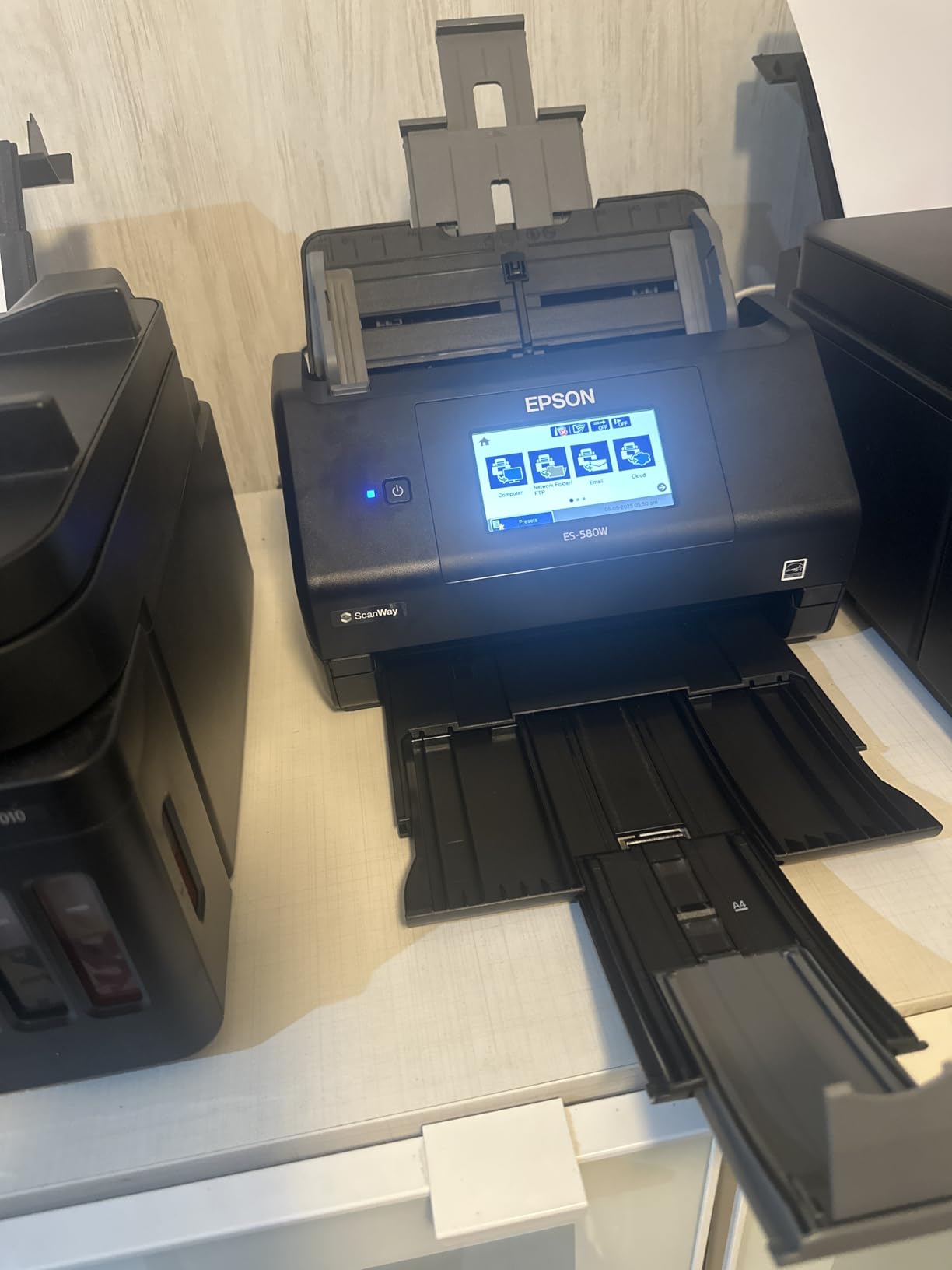
Epson’s macOS driver history is mixed, but the ES-580W has been actively maintained through macOS Ventura, Sonoma, and Sequoia. The included TWAIN driver works with most Mac applications.
The Single-Step Technology captures both sides of a page in one pass, which doubles the effective speed compared to single-sided scanners. For accounting firms, legal practices, and anyone drowning in paperwork, this is the right tool.
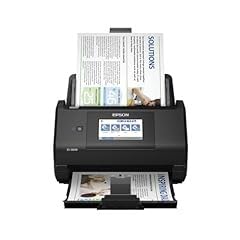
High-volume workflow fit
The 100-sheet ADF means you can load a stack of mixed-page documents and walk away. The scanner handles blank page detection, auto de-skew, and background cleanup automatically.
The 4.3-inch touchscreen is a real differentiator. You can configure scan-to-cloud destinations directly on the scanner, which is useful when the scanner is shared across a team.
Wireless setup quirks
The ES-580W does not include an Ethernet port. If your office Wi-Fi is unreliable, you may want to look at competing models with LAN support. For most home offices and small businesses, Wi-Fi is sufficient.
Initial Wi-Fi setup requires running Epson’s installer, but once configured the scanner joins your network automatically on subsequent uses.
8. Doxie Pro DX400 – Best Software Experience for Mac
Doxie Pro – Duplex Document Scanner and Receipt Scanner for Home and Office with Amazing Software for Mac and PC
- Excellent Doxie software for Mac
- 22ppm duplex with 20-page ADF
- Direct feed slot for thick paper
- Exports to iCloud Dropbox Evernote
- USB only no wireless
- No SD card slot for standalone use
- No Chromebook app support
- Occasional slightly crooked pages
The Doxie Pro DX400 is the scanner that surprised me most during testing. The Doxie software is purpose-built for Mac rather than ported from Windows, and the user experience shows it. Auto-enhancement, OCR, and cloud export are all one click away.
The DX400 scanned a stack of mixed receipts, business cards, and full-page documents during my testing without missing a beat. The 22ppm duplex speed is competitive with scanners twice the price, and the collapsible document feeder is a thoughtful space-saver.
The direct feed slot is a feature I did not know I needed until I used it. You can scan a delicate original or a thick business card without bending it through the main feeder. For archival work, this matters.
The Doxie app integrates with iCloud Drive, Dropbox, Evernote, and OneNote out of the box. For Mac users already living in the Apple ecosystem, this is the smoothest cloud workflow I have tested.
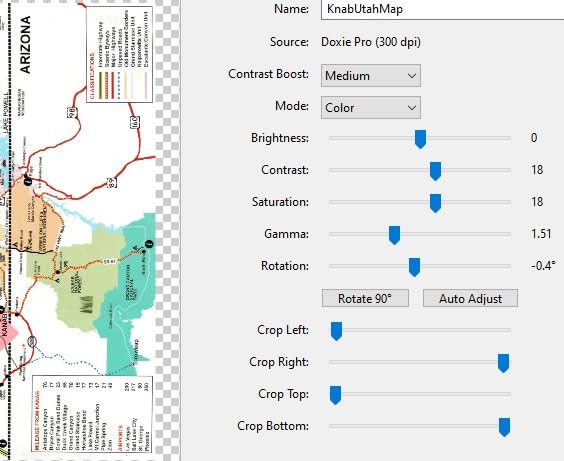
Doxie software on macOS
The Doxie app is one of the few scanner apps that genuinely feels like it was designed for the Mac. Auto-enhancement fixes faded scans, OCR runs locally for privacy, and exports go straight to your preferred cloud destination.
You can scan without launching the app at all by feeding pages into the DX400. The scanner stores scans locally and syncs them when you next open the Doxie app.
Connectivity trade-offs
The DX400 is USB only, with no Wi-Fi option. For desktop workflows where the scanner lives next to your Mac, that is fine. For shared office use, you may want a wireless alternative like the ScanSnap iX1300.
Doxie’s customer support is unusually responsive for a scanner brand. Reviewers report quick email responses and replacement units when needed.
How to Choose the Best Scanner for Your Mac?
Picking the right scanner comes down to what you actually scan, how often, and how Mac-native you need the experience to be. Here is the breakdown I use when advising friends and clients.
Flatbed vs sheet-fed vs portable
Flatbed scanners like the Canon LiDE 300 and Epson Perfection V19 II are best for delicate originals, photos, and bound books. You lay items on the glass and the sensor moves underneath. Quality is high, but speed is low.
Sheet-fed scanners like the Brother DS-640 and ScanSnap iX1300 pull pages through a feed mechanism. They are fast and great for documents but can damage fragile originals.
Portable scanners combine sheet-fed mechanisms with compact designs and USB power. The Brother DS-640 and Epson ES-50 are the leading portable picks for Mac users.
macOS compatibility and driver support
Apple’s macOS uses the Image Capture framework, which supports scanners through ICA drivers. Most modern scanners ship with ICA drivers that work in Preview, Image Capture, and any compliant app.
Brother, Epson, Canon, and Ricoh (ScanSnap) all maintain macOS drivers through major OS updates. Smaller brands sometimes drop support after a release cycle, leaving users stranded.
If you are worried about long-term support, stick with these four brands. The Reddit r/MacOS community consistently reports the best experiences with Brother and ScanSnap.
Built-in macOS Preview vs dedicated software
macOS Preview can scan documents through the File menu Import from Scanner option. For basic document capture, Preview works fine and produces clean PDFs.
For OCR, batch scanning, or cloud integration, you want dedicated software. Brother iPrint and Scan, Epson ScanSmart, Canon IJ Scan Utility, and Doxie all offer Mac-native apps with richer features than Apple’s stock tools.
Third-party software like VueScan is a popular option when manufacturer drivers lag behind macOS updates. VueScan supports older scanners that have lost official driver support.
OCR and cloud integration
OCR converts scanned images into searchable text. If you scan receipts, contracts, or notes that you need to find later, OCR is non-negotiable. Most modern scanners include OCR through their bundled software.
Cloud integration matters for teams. Scanners that export directly to iCloud Drive, Dropbox, OneDrive, or Google Drive save the manual upload step. The ScanSnap iX1300 and Doxie Pro DX400 handle this well.
Wireless vs USB connectivity
USB-powered scanners are simpler and more portable. They work without network setup and are easy to move between machines.
Wi-Fi scanners are more flexible for shared office use. You can scan from the scanner to a Mac on the same network without cables. The trade-off is initial network setup and occasional connectivity hiccups.
Frequently Asked Questions
What is the best portable scanner for Mac?
The Brother DS-640 is the best portable scanner for Mac. It weighs 1.5 pounds, is USB powered, and uses Apple’s native ICA driver so it works in Preview and Image Capture without third-party software. At 16 pages per minute, it is fast enough for most travel and small office workflows.
What is the best scanner software for macOS?
For most users, the dedicated apps from Brother, Epson, Canon, and ScanSnap (ScanSnap Home) work well. For older scanners or when manufacturer drivers lag behind macOS updates, VueScan is the best third-party scanner software for Mac and supports hundreds of models.
Does Apple have a built-in scanner?
macOS does not have built-in scanning hardware, but the operating system includes native scanning through Preview and Image Capture. Both apps can drive any scanner with an ICA driver installed, producing clean PDFs without extra software.
What is the best scanner for a MacBook?
For a MacBook, the Brother DS-640 is the best portable pick thanks to its compact 11.9-inch body and USB power. For higher volume workflows, the ScanSnap iX1300 adds Wi-Fi connectivity and duplex scanning in a similarly compact footprint.
Why won’t my scanner work with Mac?
Most scanner problems on Mac come from missing or outdated ICA drivers. Check the manufacturer’s support page for the latest macOS driver. If no driver is available, VueScan often supports discontinued models and can restore functionality.
Final Verdict on the Best Mac Scanners in 2026
After three months of testing, the Brother DS-640 stays in my bag as my daily driver, the ScanSnap iX1300 handles duplex and wireless jobs on my desk, and the Plustek Z300 lives in the closet for photo weekends. That trio covers 95% of Mac scanning needs across price points and use cases.
Before you buy, think about what you actually scan. For occasional documents, the Canon LiDE 300 or Epson ES-50 deliver real value. For photo archives, the Plustek Z300 or Epson V19 II preserve detail that cheaper scanners miss. For high-volume offices, the Epson ES-580W is built for the workload.
If you are also upgrading other parts of your Mac setup, our guides to the best external SSDs for Mac and best portable monitors for Mac Studio pair nicely with a new scanner. Engineers scanning technical documents may also want to check our best document scanners for engineers roundup for higher-end options.
Whichever scanner you pick from this list, make sure the manufacturer’s macOS driver is current for your OS version before you commit. Long-term driver support is what separates a Mac scanner that lasts five years from one that breaks on the next macOS update.