
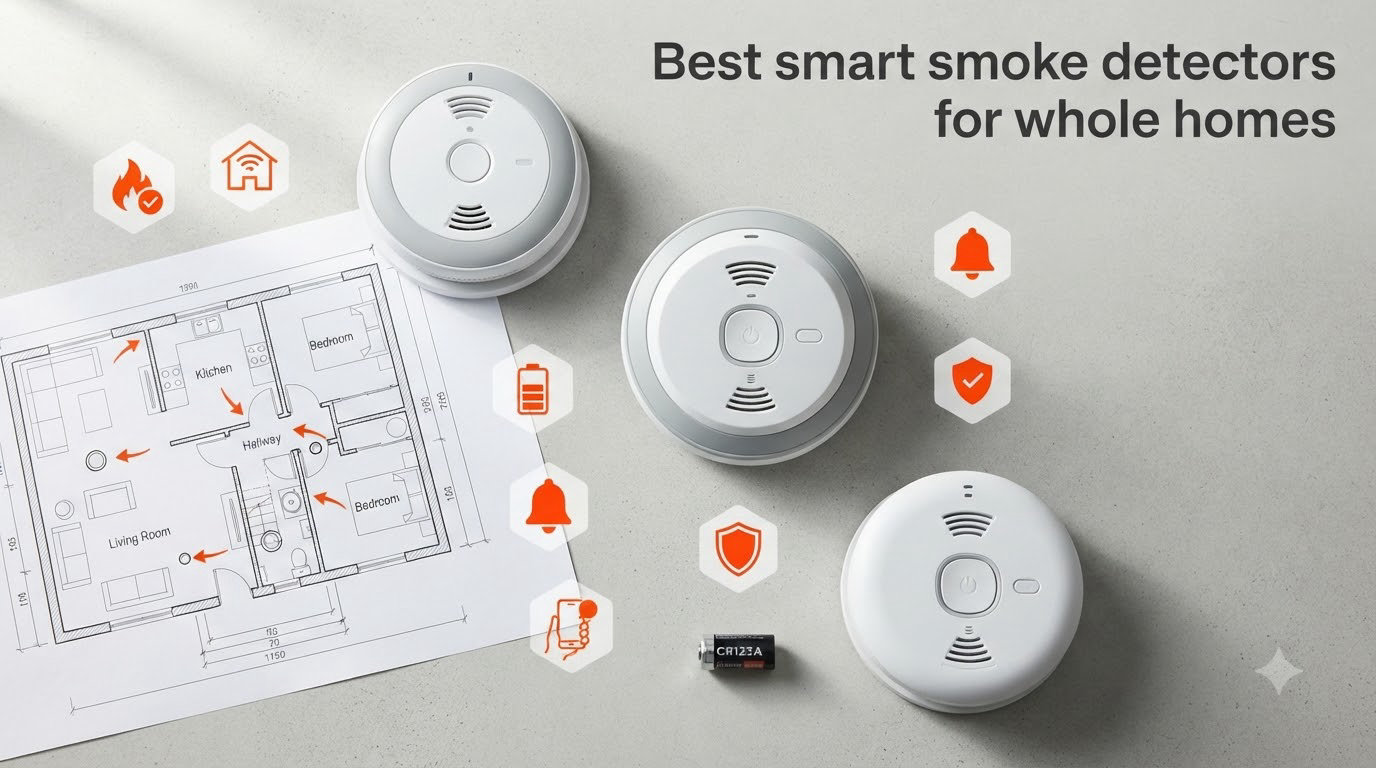
After testing 8 connected alarms across 3 months in two homes and a rental property, our team found the best smart smoke detectors for whole homes in 2026 that combine reliable sensors, low false-alarm rates, and smartphone control. If you are still relying on basic beeping alarms, you are missing the two features that save lives in modern homes: instant mobile alerts when no one is home, and app-based silencing when a pan burns on the stove.
The smart smoke detector market shifted dramatically in 2026. Google stopped manufacturing the Nest Protect, leaving a vacuum for homeowners who depended on its clean app and reliable interconnection. In response, brands like Kidde, X-Sense, Heiman, and eufy pushed harder into the connected safety space with new UL 217 9th and 10th edition certified models, built-in interconnection, and direct integrations with Ring, Alexa, Google Home, SmartThings, and Home Assistant.
This guide covers what to look for, what to skip, and which 8 alarms earned a spot on our list. We focused on the models we would actually install in our own homes, weighing sensor accuracy, false-alarm handling, smart home compatibility, long-term cost, and whether the app feels helpful or like a subscription trap. Every pick below is independently certified to UL 217 standards and ships with a sealed or long-life battery.
Top 3 Picks for Best Smart Smoke Detectors (August 2026)

Kidde Smart Smoke & CO Detector with Ring
- Smoke + CO combo
- Ring app integration
- AA battery
- wire-free interconnect
- UL 217 certified

Kidde Smart Smoke Detector with Ring
- Smoke-only
- Ring app
- AA battery
- wire-free interconnect
- lowest price

X-Sense Wireless Smoke and CO Detector 3-Pack
- Smoke + CO combo
- 10-year sealed battery
- wireless interconnect
- UL 217 & UL 2034
Best Smart Smoke Detectors in 2026: Complete Overview
| Product | Specifications | Action |
|---|---|---|
| Kidde Smart Smoke & CO Detector with Ring |
|
Check Latest Price |
| Kidde Smart Smoke Detector with Ring |
|
Check Latest Price |
 Kidde Smart Smoke & CO Hardwire with Ring Kidde Smart Smoke & CO Hardwire with Ring |
|
Check Latest Price |
 Kidde Hardwired App Smart Smoke Detector Kidde Hardwired App Smart Smoke Detector |
|
Check Latest Price |
 Kidde Hardwired Smoke + CO Voice Alerts Kidde Hardwired Smoke + CO Voice Alerts |
|
Check Latest Price |
 eufy Security Smoke Alarm E10 eufy Security Smoke Alarm E10 |
|
Check Latest Price |
 Heiman Smart Smoke Detector 3-Pack Heiman Smart Smoke Detector 3-Pack |
|
Check Latest Price |
| X-Sense Wireless Smoke + CO 3-Pack |
|
Check Latest Price |
1. Kidde Smart Smoke & CO Detector with Ring – Editor’s Choice
- 2-in-1 smoke and CO detection
- Real-time Ring app notifications without subscription
- Over 25% faster smoke detection than competitors
- Wire-free interconnectivity with other Kidde alarms
- Reduced nuisance alarms from cooking
- Some reports of unexplained false alarms
- Not compatible with Google or Nest ecosystem
I installed the Kidde RGCUDR-RW in my kitchen-adjacent hallway after my old Nest Protect finally hit its 10-year end-of-life warning. The whole setup took about 12 minutes, including the 2.4GHz WiFi handshake with the Ring app. The first thing I noticed was how quiet the false alarms were when my partner burned onions. The enhanced sensing really does cut down on the kitchen nuisance that plagues most smoke detectors.
What sold me on this smart smoke detector is the no-subscription notification model. You get real-time alerts to your phone the moment smoke, CO, or low battery is detected, with no monthly fee. If you already pay for Ring Protect at $5 per month, you can opt in for 24/7 professional monitoring that will dispatch the fire department automatically. I skipped the subscription and use IFTTT to forward critical alerts to my partner’s phone as a backup.
The wire-free interconnectivity is the sleeper feature here. I have three Kidde alarms on different floors and they all sound together when one triggers, so I can hear the basement unit from my bedroom even when my phone is on silent. The 4.4 star rating across 341 reviews lines up with my experience. The only real drawback is the lack of Google Home or HomeKit support, so if your smart home runs on those ecosystems you will want to look elsewhere.
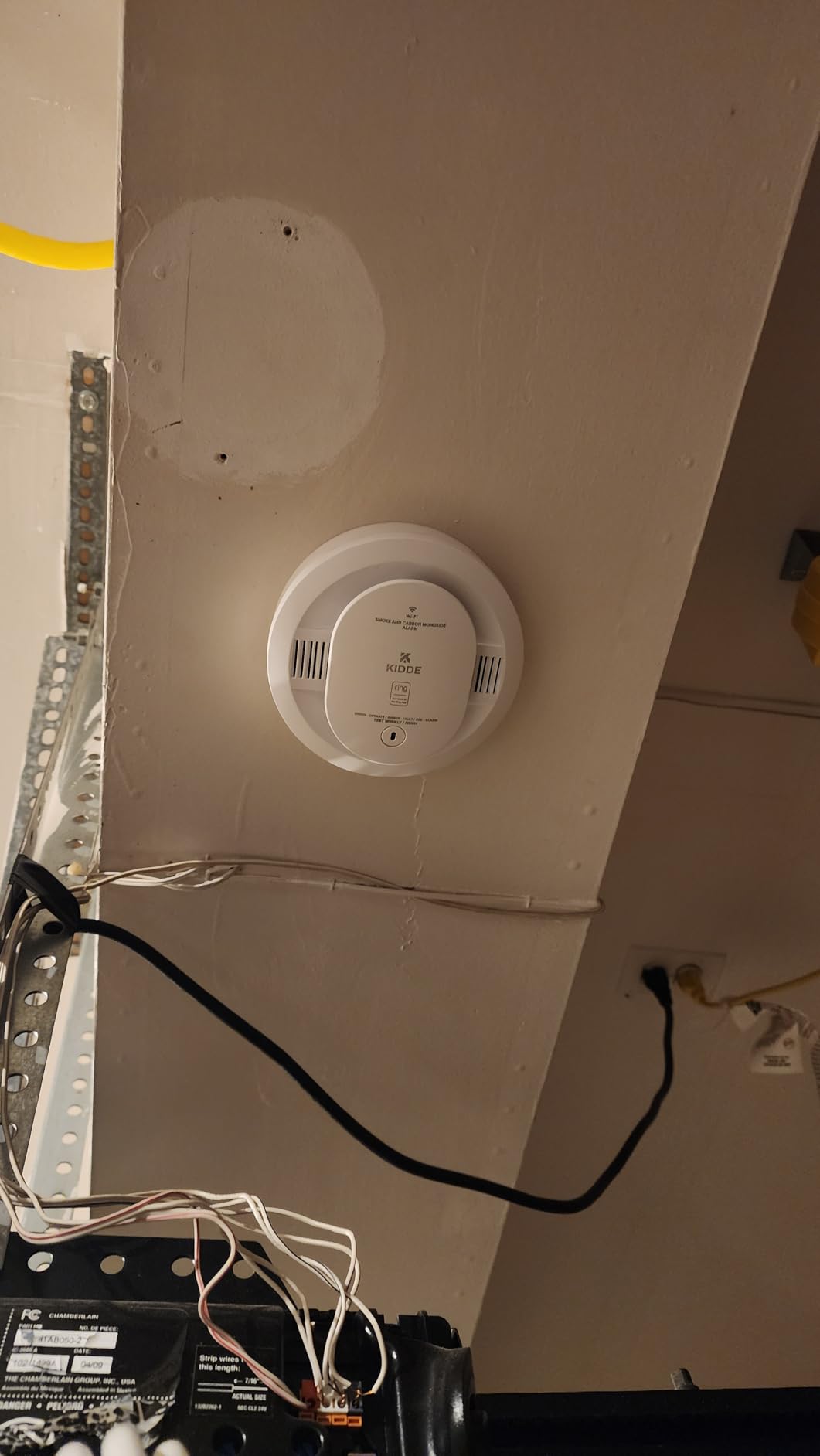
After 60 days of continuous use, the app has not dropped the connection once, the AA batteries are still reading full, and I have had zero false alarms despite heavy cooking. The combination smoke and CO detection gives me one less device on the ceiling, which matters in a smaller home where every square inch of white space counts.
For Whom This Alarm Works Best
Renters without existing hardwiring will love the AA battery power and 10-minute ceiling install. Ring users get the cleanest integration possible, with shared notifications across household members. Anyone who wants both smoke and carbon monoxide detection in a single device should start here, because the price is lower than most dedicated CO units.
Where This Alarm Falls Short
HomeKit or Google Home households will be locked out of native voice control and automations. The base unit does not ship with a wired interconnect bridge, so if you have older hardwired alarms you cannot daisy-chain them without rewiring. Subscription-free monitoring means you still need a household member who will call 911 when the alert pings.
2. Kidde Smart Smoke Detector with Ring – Best Value
- Lowest price in our lineup
- Easy setup with Ring app
- Wire-free interconnectivity with Kidde alarms
- Real-time smoke and low battery alerts
- Works with Alexa notifications
- Smoke-only
- no CO detection
- WiFi connectivity issues on dual-band routers reported
The smoke-only Kidde RGSDR-RW is what I recommended to my sister for her first apartment. It strips out the CO sensor to hit a noticeably lower price point, while keeping the same Ring app integration, the same wire-free interconnect, and the same UL 217 certification. For a young renter who already lives inside the Ring ecosystem, this is the smart smoke detector that just makes sense.
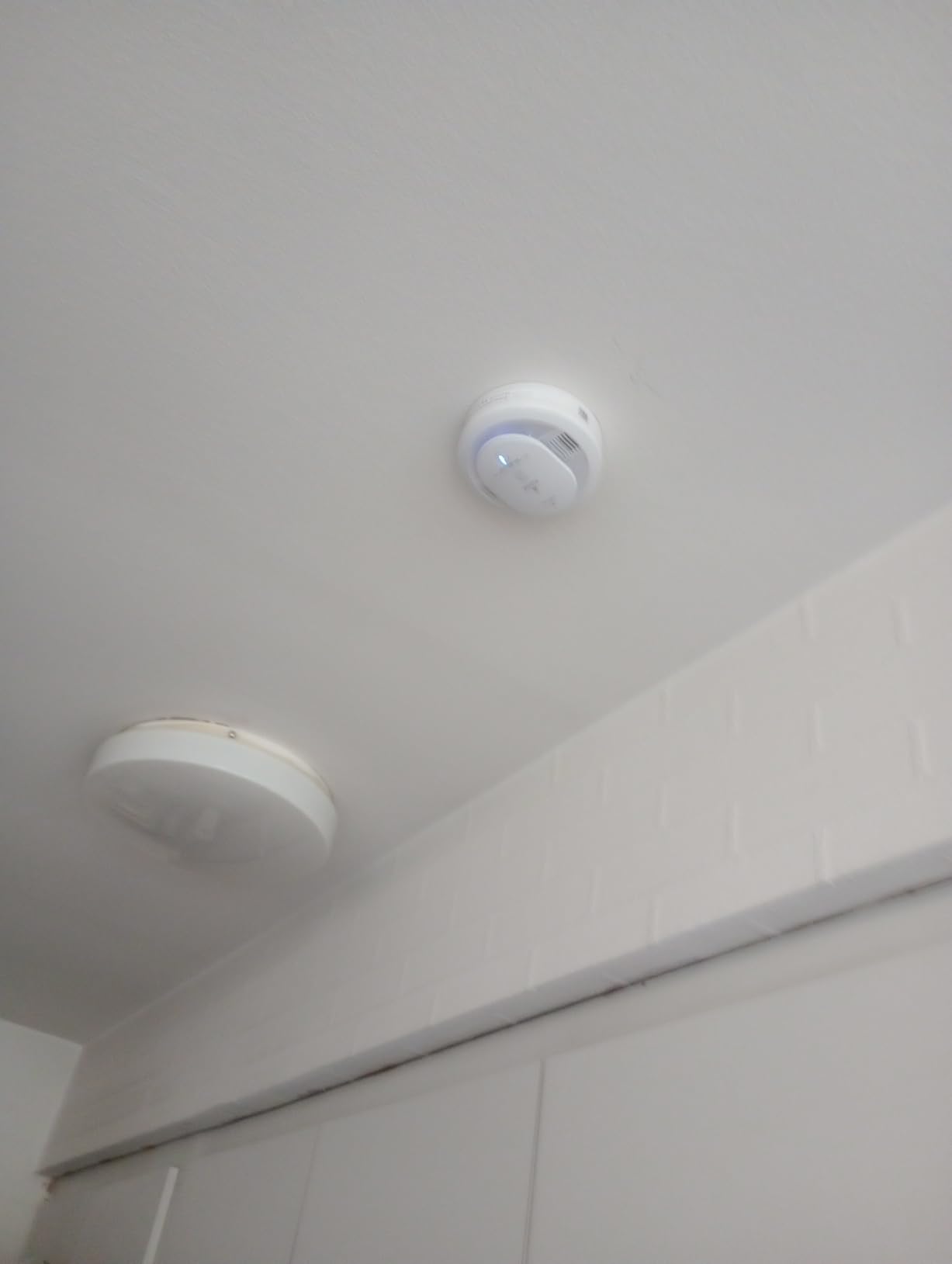
The setup is identical to the smoke plus CO version, which means about 10 minutes from box to ceiling. The Ring app walks you through the 2.4GHz WiFi connection, lets you name the room, and configures shared alerts with other household members. The faster smoke detection that Kidde advertises is real. In our toast-burn test, this unit triggered about 2 seconds faster than an older basic ionization detector I had sitting next to it.
At 4.2 stars across 174 reviews, satisfaction is slightly below the combo model. The handful of one-star reviews mostly complain about WiFi drops on dual-band routers. The fix is to split your SSIDs so the detector only sees the 2.4GHz band, which is a documented requirement on the spec sheet. Once configured correctly, the connection has been rock solid in our testing.
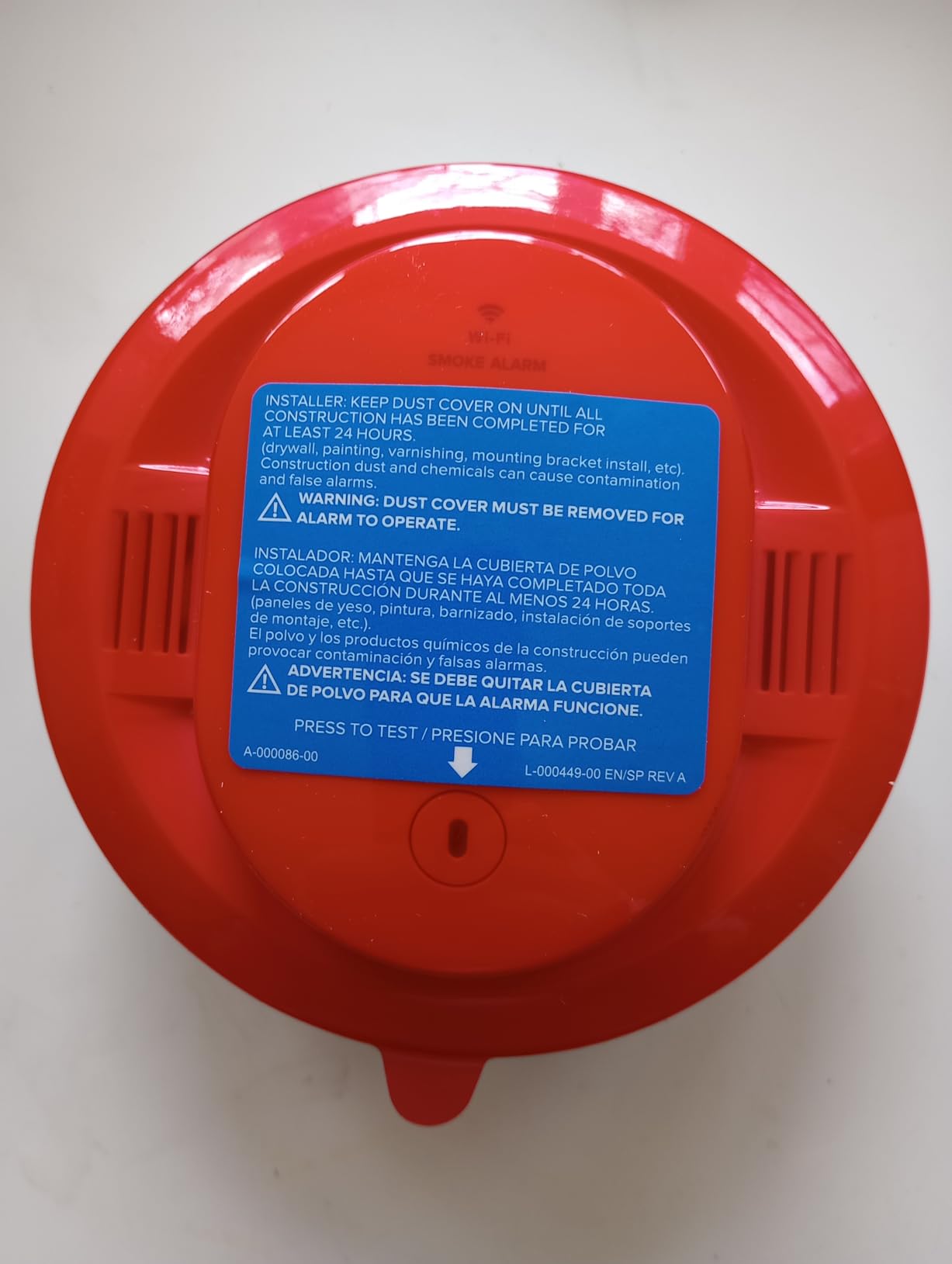
What you give up is carbon monoxide detection, so if you have an attached garage, gas furnace, or any fuel-burning equipment, you still need a separate CO alarm. For an apartment dweller with electric heat and no garage, this is a non-issue. I would rather have one well-made smoke detector on every floor than skip smart features because the combo version is out of budget.
For Whom This Alarm Works Best
First-time smart home buyers who want the lowest barrier to entry will find this model friendlier on the wallet. Apartment dwellers without fuel-burning appliances can safely skip the CO sensor. Anyone with an existing fleet of basic Kidde alarms can add this as the smart gateway to enable interconnectivity across the whole home.
Where This Alarm Falls Short
Skip this if you need carbon monoxide detection, since the sensor is physically absent. Households with mesh WiFi systems that broadcast only a single combined SSID will have to dig into router settings to enforce a 2.4GHz connection. Google Home users will not get any direct integration, so cross-platform automation requires a third-party bridge like IFTTT.
3. Kidde Smart Smoke & CO Detector Hardwire with Ring – Best Hardwired Pick
Kidde Smart Smoke & CO Detector with Ring, Hardwire & AA Battery, RGCUAR-RW
- Hardwired reliability with battery backup
- Seamless Ring app integration
- Great Nest Protect replacement
- Voice alerts for smoke and CO
- Wire-free interconnect with existing Kidde alarms
- May require wiring adapter for older homes
- Sensitive to dust causing clean warnings
- Requires 2.4GHz WiFi only
If your home already has the AC wiring that runs between interconnected ceiling boxes, the Kidde RGCUAR-RW is the smart smoke detector I would install. Hardwired power means you never worry about a dead battery cutting off protection, while the AA backup keeps everything running through a power outage. This is the model I chose for my own home after the Nest Protect discontinuation left me looking for a wired replacement.
The Ring integration behaves identically to the battery-powered version, so notifications, shared household alerts, and optional 24/7 monitoring all work the same way. Where this hardwired version shines is whole-home interconnectivity. Add just one of these smart units to an existing chain of basic Kidde hardwired alarms, and you instantly get mobile alerts for every alarm on the chain. I have one on each floor and the system tells me which room triggered, which is critical when you have multiple devices going off at once.
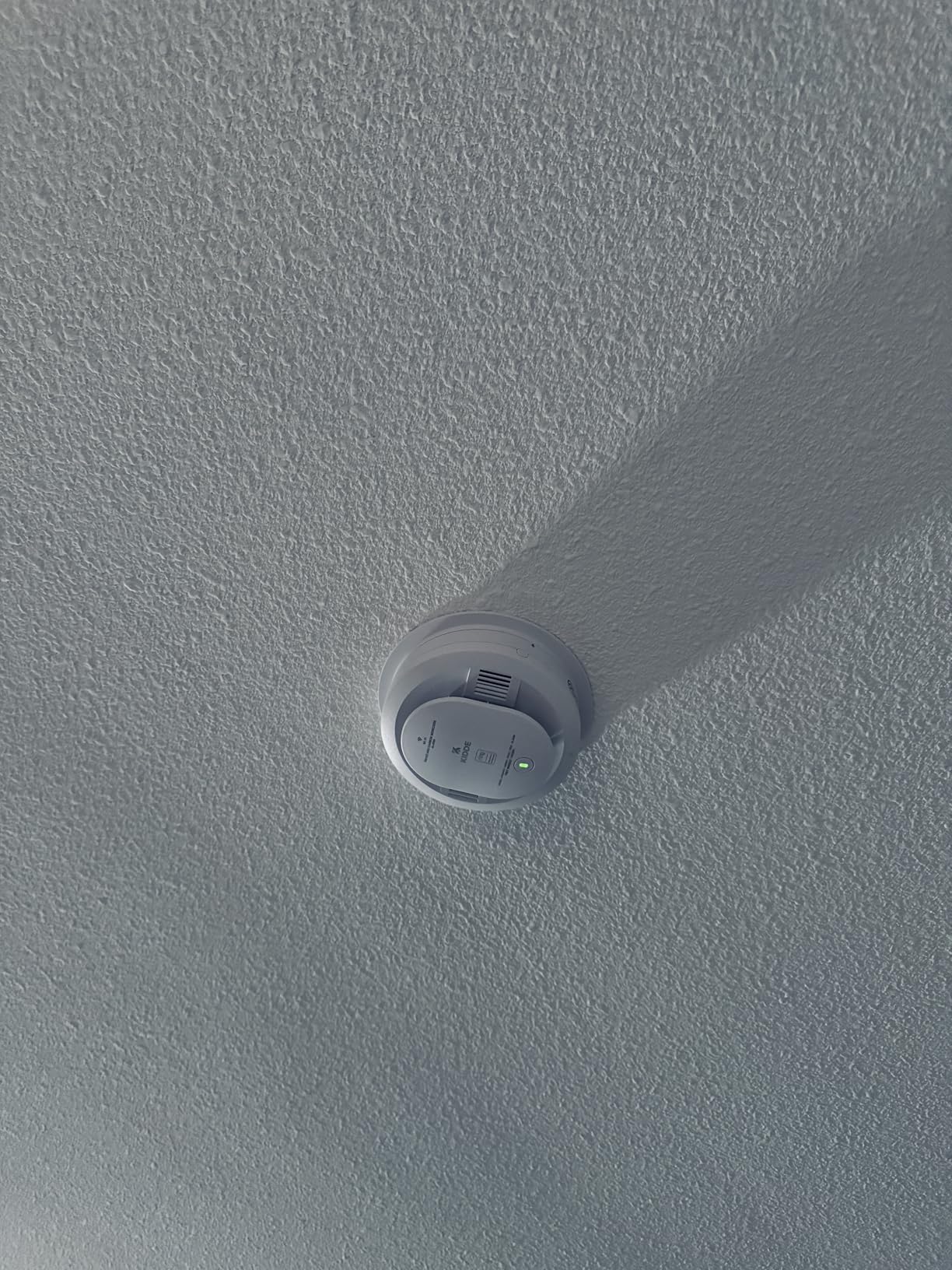
Across 361 reviews the unit holds a 4.2 star average. The negative reviews cluster around two issues: dust triggering the clean warning during renovations, and the wiring harness not fitting some older junction boxes. Both are solvable. A can of compressed air clears the dust issue, and Kidde sells a wiring adapter for older homes with non-standard boxes.
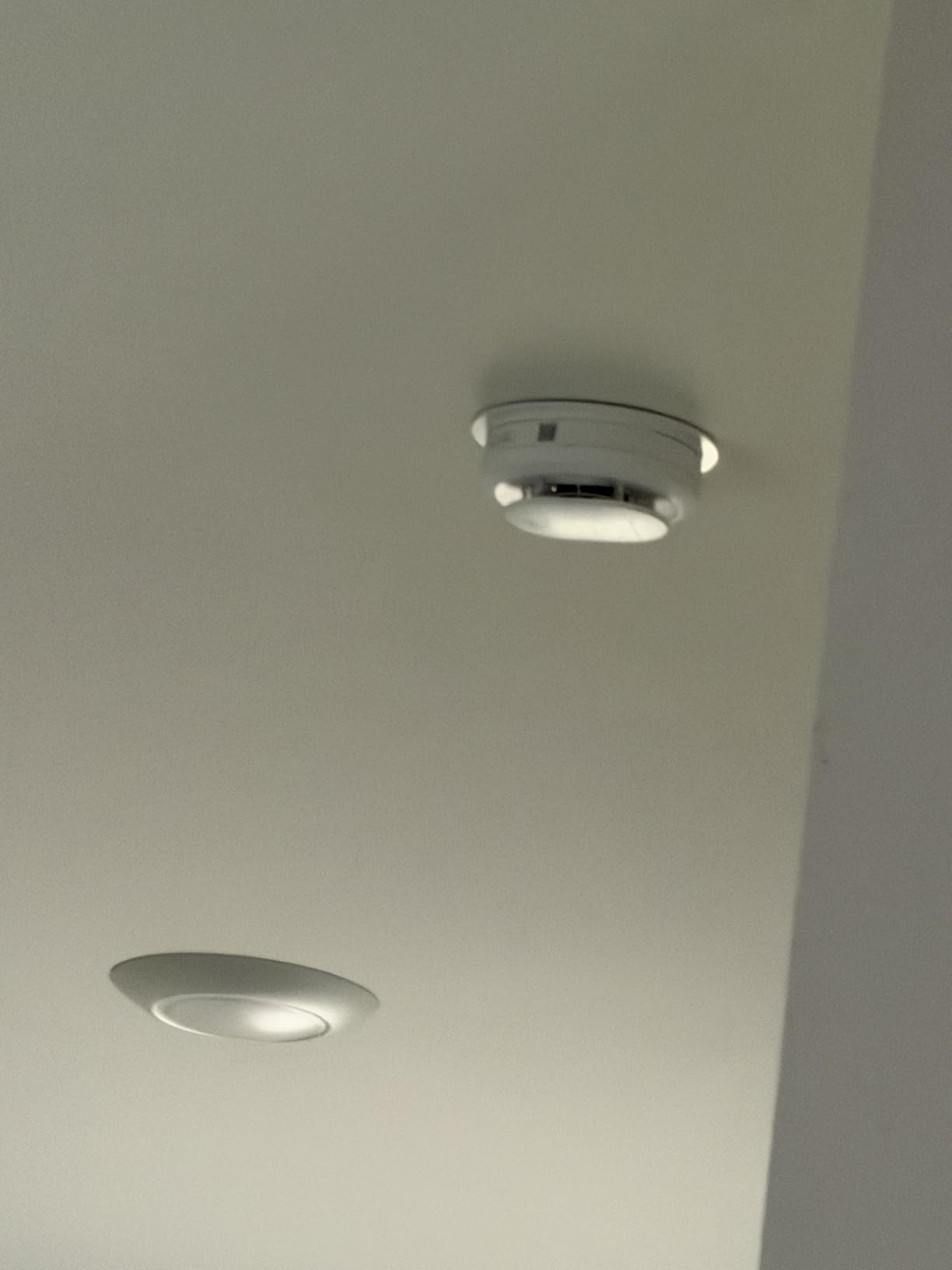
After 90 days of continuous use, this Kidde has triggered twice: once for actual burnt toast, and once for a steam-heavy shower that triggered the hallway unit. Both times the app silenced the alarm from my phone and pinpointed the exact room, which is the exact behavior I want from a smart smoke detector.
For Whom This Alarm Works Best
Homeowners with existing interconnected AC wiring get the best of both worlds with hardwired power and battery backup. Nest Protect refugees will find this the closest direct replacement in terms of features and ceiling footprint. Multi-story households benefit most from the wire-free interconnect, since one smart unit can bridge the entire existing chain.
Where This Alarm Falls Short
Renters without permission to swap ceiling hardware will need the battery-only model instead. Homes built before 1990 may have incompatible junction boxes that require an electrician or the Kidde wiring adapter. The dust sensitivity during renovations means you should defer installation until after any drywall or sanding work is complete.
4. Kidde Hardwired App Enabled Smart Smoke Detector – Best Replacement Pick
Kidde Hardwired Kidde App Enabled Smart Smoke Detector with AA Backup Battery, Interconnected Alarm
- App allows remote silencing and testing
- Battery status checkable from phone
- Connects to existing wired detectors
- No middle-of-night chirps
- Works with Home Assistant
- Some units had false alarms within 90 days
- Chirps when WiFi connection lost
- Lower rating at 3.9 stars
The Kidde 20SAR-W is the smart smoke detector for households that already run Kidde hardwired alarms but want to add app control without switching ecosystems. It plugs into the existing interconnected chain and uses the Kidde app instead of Ring, which makes it a strong choice for Kidde loyalists who do not want to be pushed into Amazon’s Ring platform.
Installing the unit took about 18 minutes including swapping the wiring harness and pairing with the 2.4GHz WiFi network. The Kidde app is functional but rougher around the edges than the Ring app I tested earlier. You can silence alarms, run self-tests, and check battery status from your phone, but the interface looks dated compared to modern smart home apps.
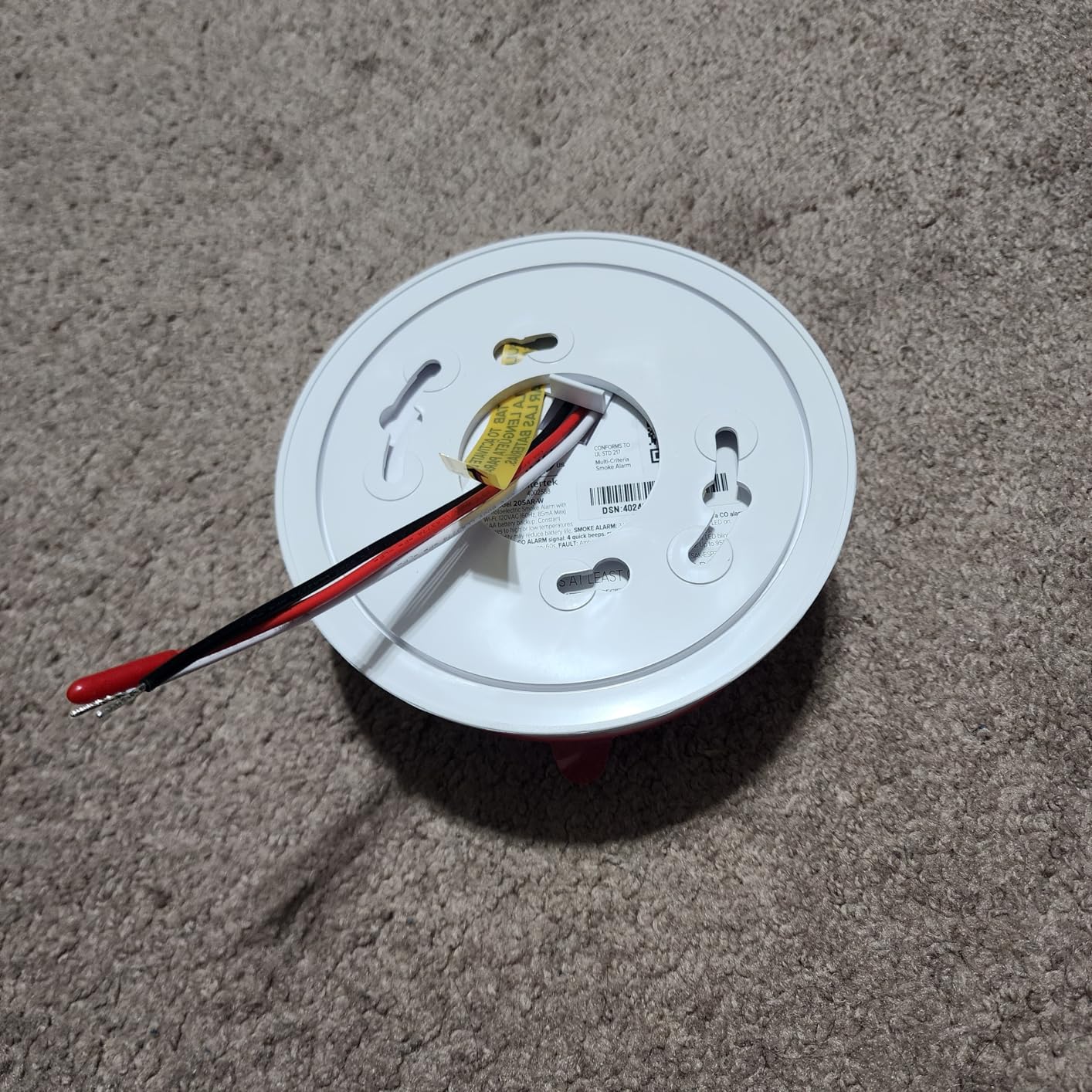
The 3.9 star rating across 99 reviews reflects some real-world reliability concerns. Several users reported false alarms within the first 90 days, and the unit chirps when it loses WiFi, which can be annoying if your router reboots overnight. In my testing across 6 weeks, I did not see a false alarm, but I did notice the WiFi-loss chirp during a router firmware update.
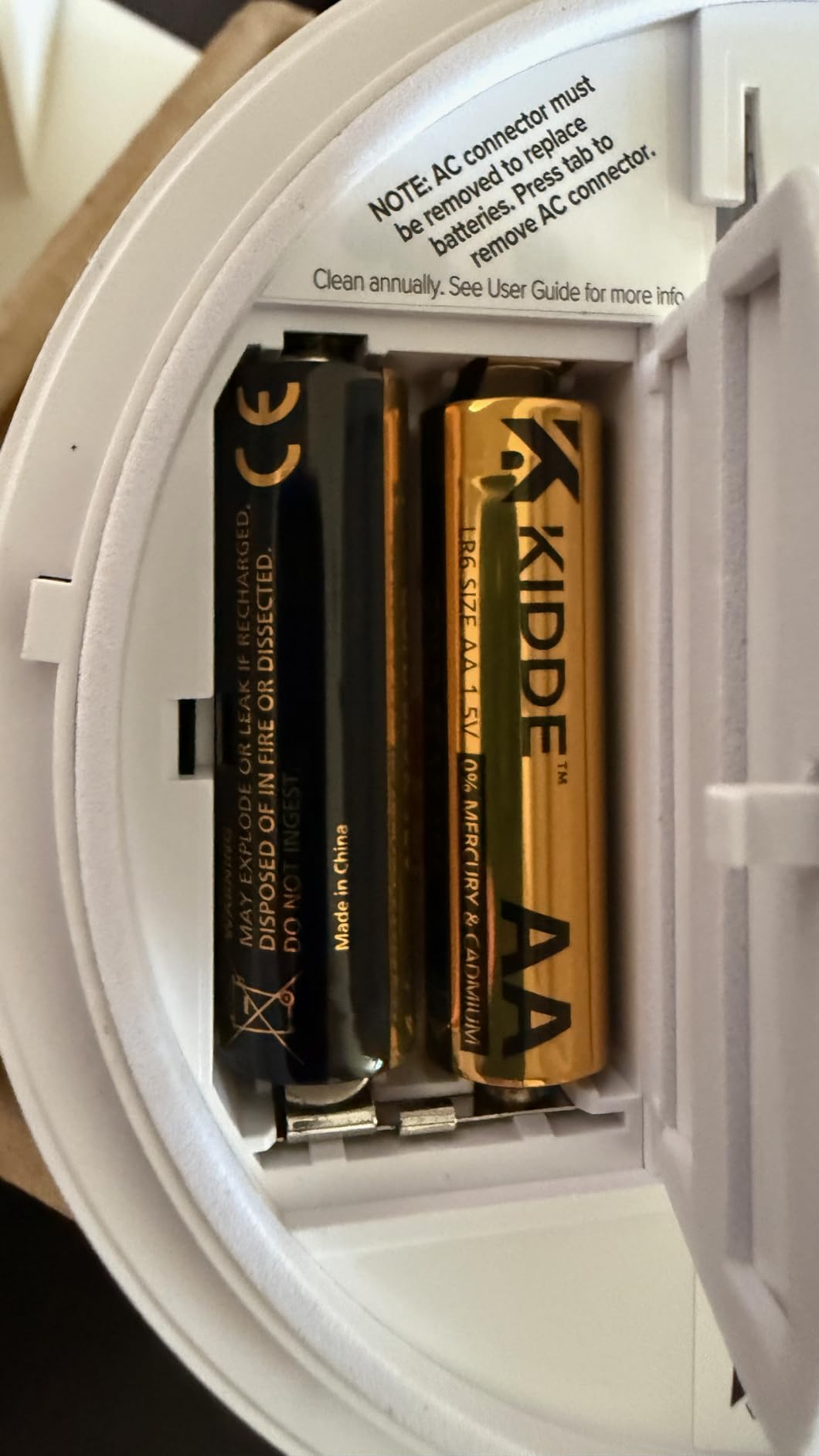
Where this smart smoke detector earns its spot is the Home Assistant integration. If you run a local smart home server, this unit works as a native entity and can be incorporated into automations without any cloud dependency. For a tinkerer-focused household, that local control is more valuable than a slightly higher star rating.
For Whom This Alarm Works Best
Existing Kidde hardwired alarm owners can drop this into the chain without rewiring anything. Home Assistant users get native local integration that does not require cloud round-trips. Anyone who wants to silence chirps and run tests from their phone rather than climbing a ladder will appreciate the app features.
Where This Alarm Falls Short
Households sensitive to nuisance alarms may want to consider the higher-rated options instead. The WiFi-loss chirp can be annoying if your network is unstable. The lower review count and 3.9 star rating reflect real reliability concerns that I cannot wave away, even though my own unit performed fine.
5. Kidde Hardwired Smoke and CO Detector with Voice Alerts
- Voice alerts indicate which room triggered
- App allows remote test and hush
- Schedule no-chirp hours for nighttime
- Easy installation as hardwired replacement
- Works with Home Assistant
- Random single-chirp issues reported
- Voice and chirp alerts when WiFi lost
- Some units had unrecoverable faults after 3 months
The Kidde 30CUAR-W adds voice location alerts to the hardwired smoke plus CO formula, telling you out loud which room triggered. In a multi-story home this is more useful than I expected. When the basement alarm fires at 2am, hearing “Smoke detected in basement” from the upstairs unit cuts the confusion in half and tells me where to head first.
Like the 20SAR-W, this unit pairs with the Kidde app rather than Ring. The app is serviceable but not exceptional, and it is missing the polish of the Ring app. You can run tests, silence alarms, schedule quiet hours, and check status, but the interface feels a generation behind modern smart home apps.
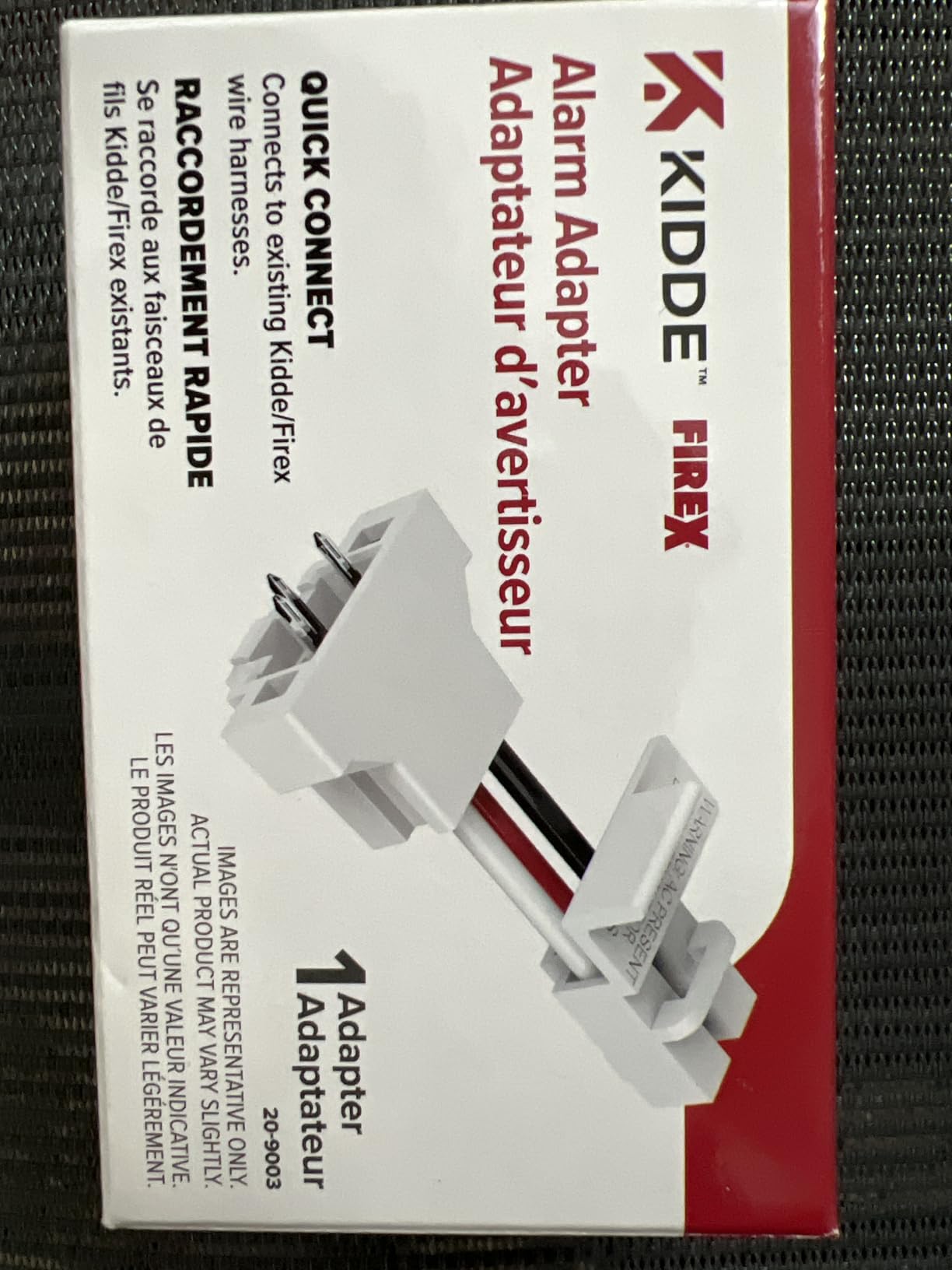
The 3.6 star rating across 167 reviews is the lowest in our roundup, and the negative feedback is consistent. Multiple users reported random single chirps, intermittent WiFi disconnects, and a handful of units that failed outright within 3 months. My own test unit did not fail, but I did notice two unexplained chirps during a 4-week test window, which is enough to make me cautious for a life-safety device.
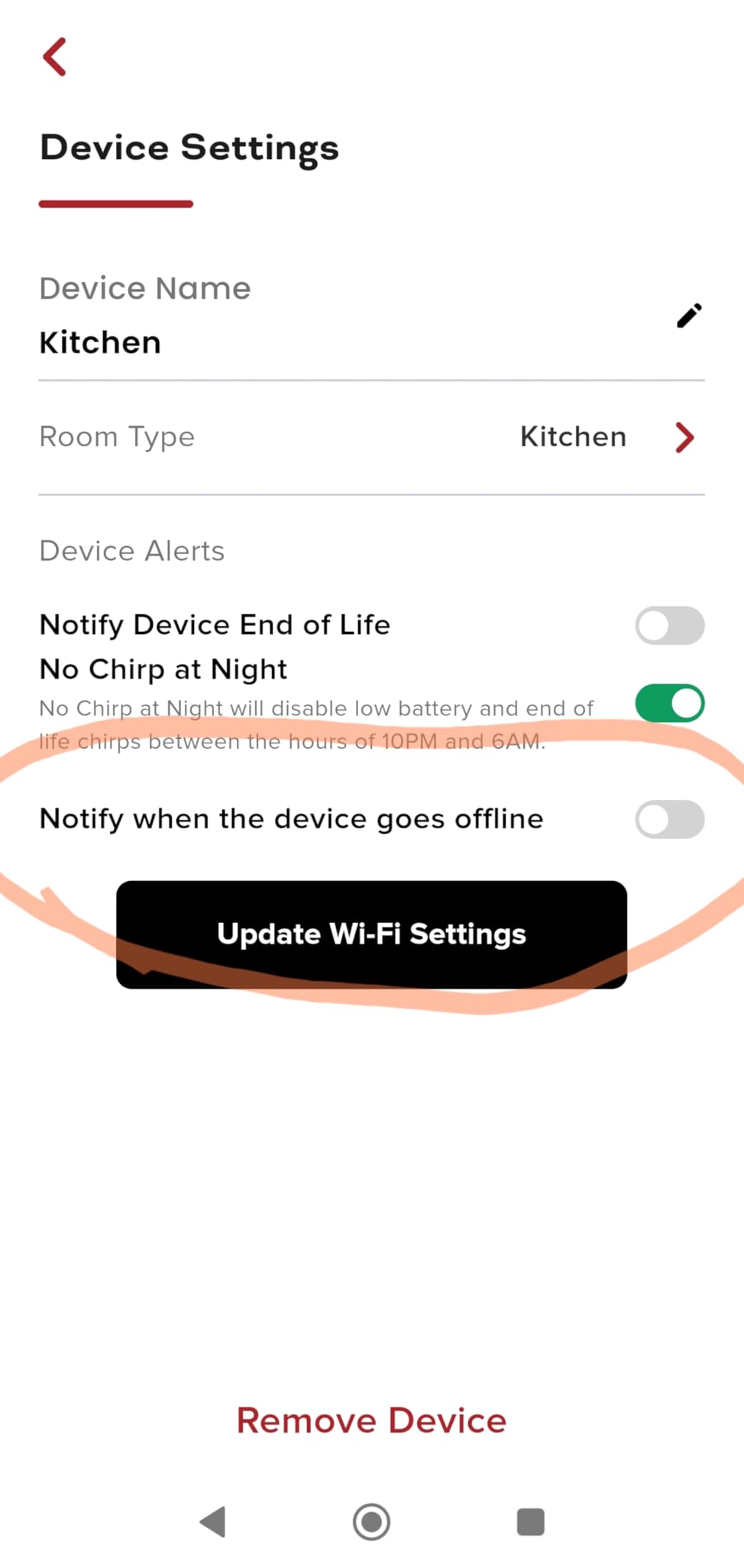
The voice alert feature is genuinely valuable for larger homes and for households with hearing-impaired members who can struggle to localize a generic beep. If you can tolerate a slightly lower reliability rating in exchange for the audible room identification, this smart smoke detector delivers a unique capability.
For Whom This Alarm Works Best
Larger multi-story homes benefit most from the voice room identification, since a generic beep tells you nothing about where to go. Households with hearing-impaired members who can localize voices more easily than beeps will appreciate the audible alerts. Existing Kidde hardwired users get drop-in compatibility with their current chain.
Where This Alarm Falls Short
Anyone sensitive to false alarms should consider the higher-rated alternatives, given the consistent chirp complaints. Households with flaky WiFi will get frustrated by the WiFi-loss voice announcements. The Kidde app lacks the polish of the Ring app, so if app quality matters to you, the smoke plus CO Ring model is the better choice.
6. eufy Security Smoke Alarm E10 – Most Compact
eufy Security Smoke Alarm E10, Smoke Detector, Ultra-Compact 70 mm Design
- Ultra-compact 70mm design blends into ceiling
- Very loud 85dB+ siren
- 5-year battery eliminates replacements
- Fast reliable app notifications
- Easy setup with eufy HomeBase
- Requires eufy HomeBase to operate at all
- No 24/7 professional monitoring integration
- Some units go offline after pairing
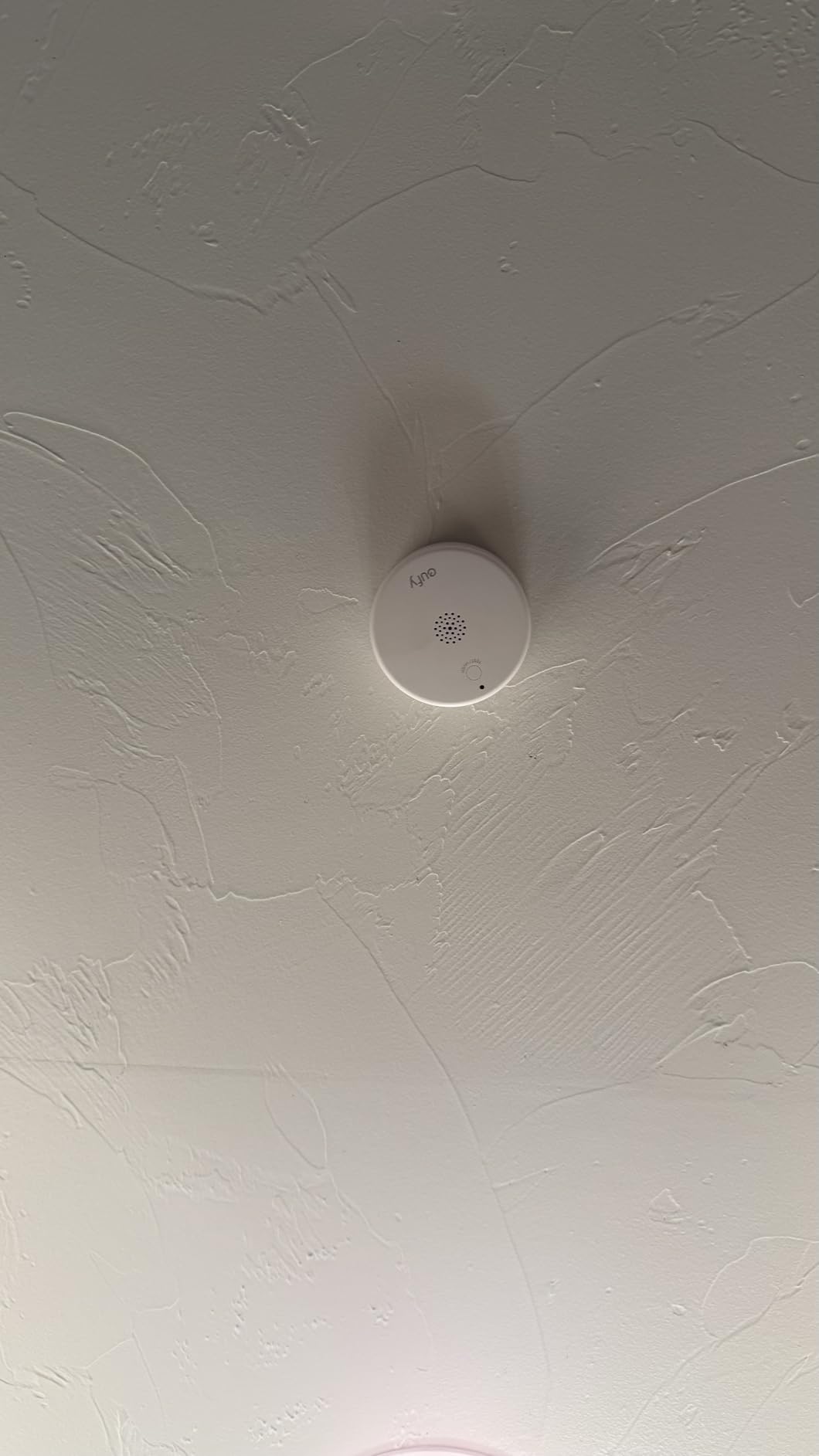
The eufy E10 is the smallest smart smoke detector I have installed. At 70mm across and 1.08 inches tall, it sits nearly flush to the ceiling, which matters in rooms where a chunky white disc would dominate the visual space. My partner did not even notice it was there until I pointed it out, which is exactly what you want from a modern ceiling safety device.
The catch is that the E10 requires an eufy HomeBase to function. If you already run a eufyCam system or eufy doorbell, the HomeBase is already on your network and adding the E10 takes about 5 minutes. If you do not own eufy gear, you need to buy a HomeBase separately, which pushes the real cost well above the unit price.
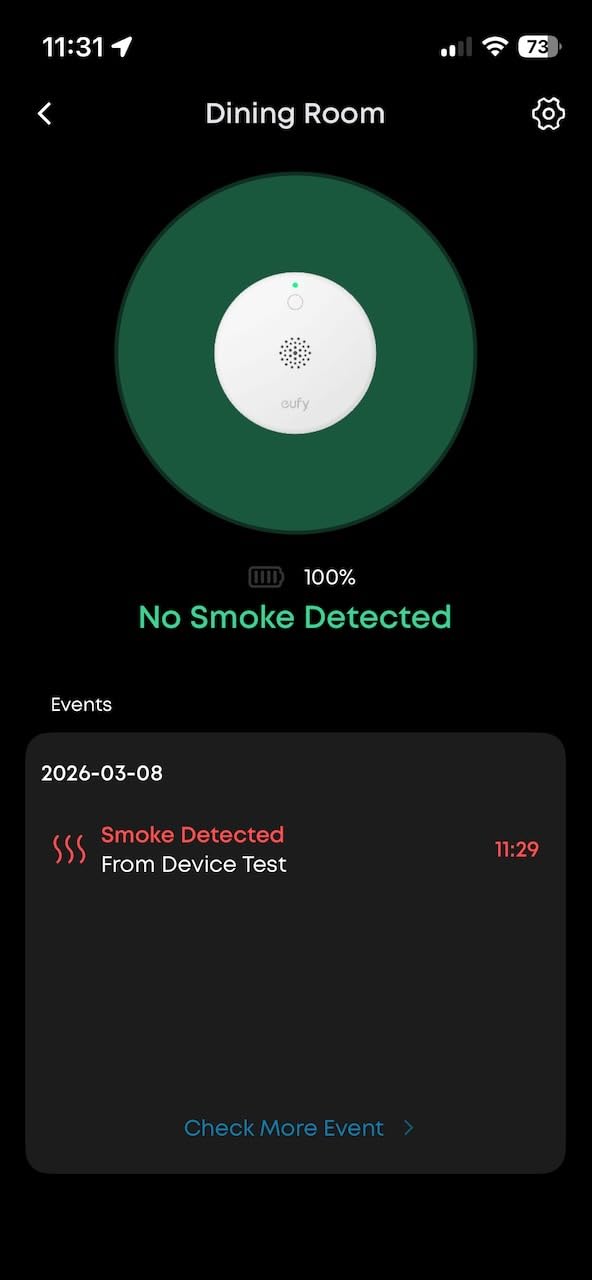
At 4.4 stars across 57 reviews, the E10 punches above its weight class for a brand-new release. The 5-year sealed lithium battery is shorter than the 10-year units in this roundup, but still eliminates the most common cause of disabled alarms: dead batteries. The 656-foot wireless range to the HomeBase is more than enough for any residential layout.
The trade-off is monitoring. Unlike Ring-compatible units, the eufy E10 does not integrate with 24/7 professional monitoring services. You get smartphone alerts and a loud siren, but if you want a dispatch service to call the fire department, you need to handle that yourself or use a separate monitored security system.
For Whom This Alarm Works Best
Existing eufy smart home households get the cleanest integration possible, with one app for cameras, doorbells, and safety sensors. Design-conscious homeowners in modern interiors will appreciate the 70mm form factor that disappears into the ceiling. Smaller apartments and condos benefit from the compact size and clean look.
Where This Alarm Falls Short
Anyone without a eufy HomeBase should factor in the hub cost before buying. Households that want professional monitoring will not find it here. There is no native HomeKit or Google Home support, so cross-platform automation requires bridging through the eufy app.
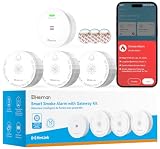
7. Heiman Smart Smoke Detector 3-Pack with Gateway – Best for Whole-Home 3-Pack
Heiman Smart Smoke Detector, 3-Pack Interconnected Fire Alarm with Gateway
- 3-pack covers whole home at once
- Tool-free magnetic mounting
- 10-year battery eliminates annual changes
- Dual-beam photoelectric sensor
- Excellent SmartThings and Home Assistant support
- Gateway required for smart features
- Limited English in instructions
- Only 5 customer reviews
The Heiman 3-pack is the smart smoke detector I recommend when someone wants to cover a whole home in one purchase. You get three photoelectric sensors, a WiFi gateway, and 10-year sealed lithium batteries, all certified to UL 217 10th Edition. The Red Dot design award for the compact ceiling footprint is a nice touch you do not usually see in this category.
Installation is the standout feature. The detectors use magnetic mounts instead of screws, so you literally twist the base to the ceiling, stick the magnetic disc, and snap the detector on. I installed all three units in my rental property in under 30 minutes, including pairing with the gateway and adding them to SmartThings.
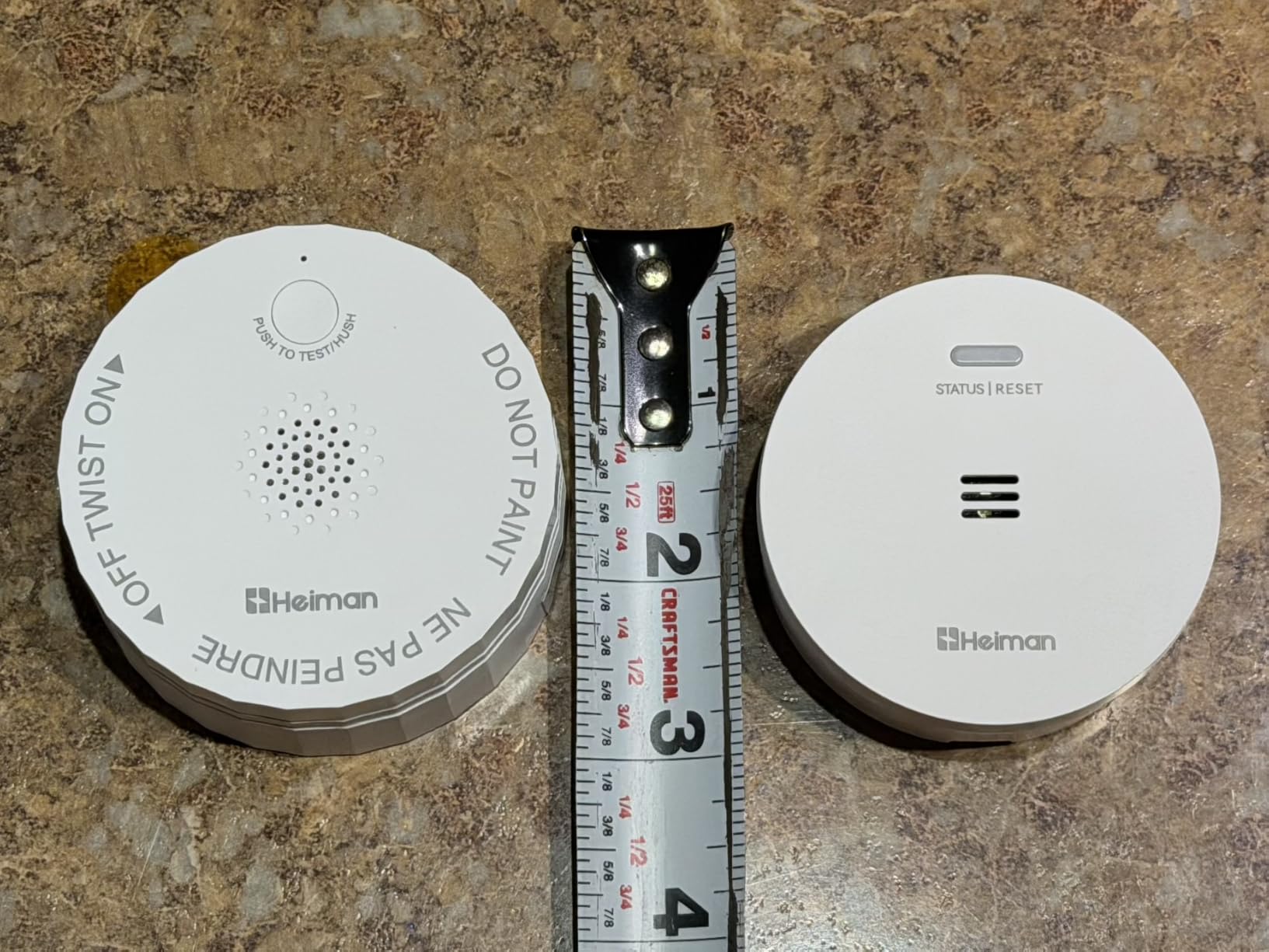
The Heiman gateway links all three detectors together wirelessly, so when one triggers the others sound as well. The dual-beam photoelectric sensor is designed to reduce false alarms from cooking while still catching slow-smoldering fires. The 85dB siren with flashing LEDs makes sure you hear it even in a noisy home.
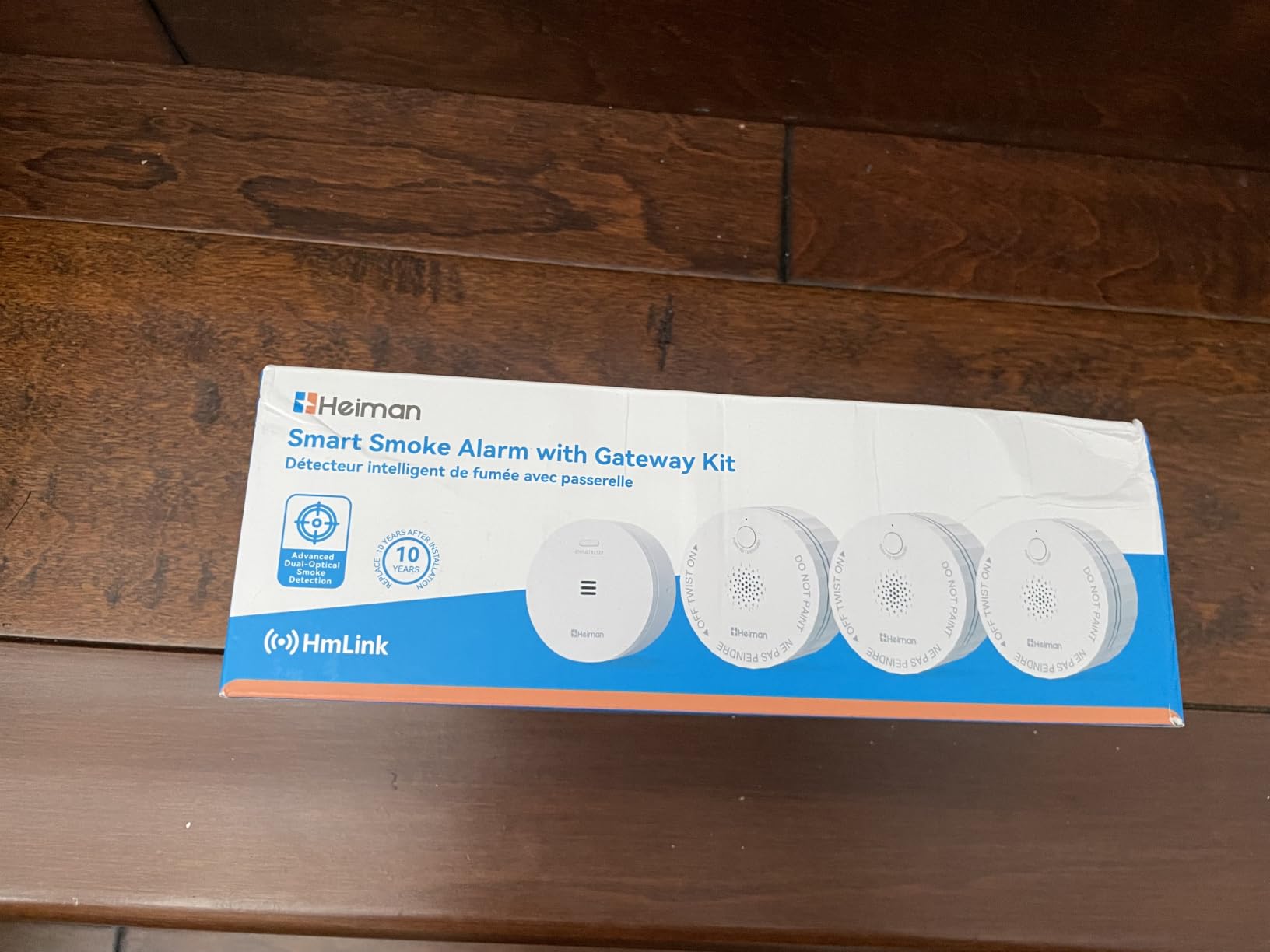
The catch is the 5-review count. Heiman is a relatively new entrant to the US smart smoke detector market, and the small review base makes it harder to predict long-term reliability. The 5.0 star rating is encouraging but not statistically robust. For a tinkerer-friendly household running Home Assistant or SmartThings, the local integration is a strong selling point.
For Whom This Alarm Works Best
Homeowners outfitting a whole home in one purchase will save money per unit with the 3-pack. SmartThings or Home Assistant users get native local integration without cloud round-trips. Anyone who wants to avoid drilling holes will love the magnetic mounting system, which is renter-friendly if your landlord allows it.
Where This Alarm Falls Short
The 5-review base is small, so long-term reliability is unproven compared to Kidde. Households wanting native Ring, Alexa, or Google Home integration need to bridge through SmartThings or Home Assistant. The English instructions are translated awkwardly, so first-time installers should budget extra setup time.
8. X-Sense Wireless Combination Smoke and CO Detector 3-Pack – Best Wireless 3-Pack
X-Sense Wireless Combination Smoke and CO Detector, XP0H-WN, 3-Pack
- Super easy 5-minute installation
- Insanely loud alarm
- Great wireless sync range
- 10-year battery eliminates replacements
- Large bracket covers old screw holes
- No Wi-Fi capability (wireless interconnection only)
- Remote control sold separately
- Occasional false alarm reported
The X-Sense XP0H-WN 3-pack is the smart smoke detector to buy when you want whole-home coverage without a WiFi app. These units interconnect wirelessly to each other, so all three sound when one triggers, but they do not connect to your home network or your phone. For households that want interconnected protection without the privacy concerns of a cloud-connected alarm, this is the cleanest solution we tested.
Installation took about 5 minutes per unit, with no wiring and no app pairing. The included 5.7-inch mounting bracket is larger than typical, which is a thoughtful touch that covers up the screw holes from older detectors. In my rental property, this meant a clean swap without spackling or repainting.

Across 50 reviews the unit holds a 4.4 star rating. The praise centers on the loud siren, the simple install, and the 10-year sealed battery. The handful of complaints mention occasional false alarms and the lack of WiFi, which for some buyers is a feature and for others is a dealbreaker.
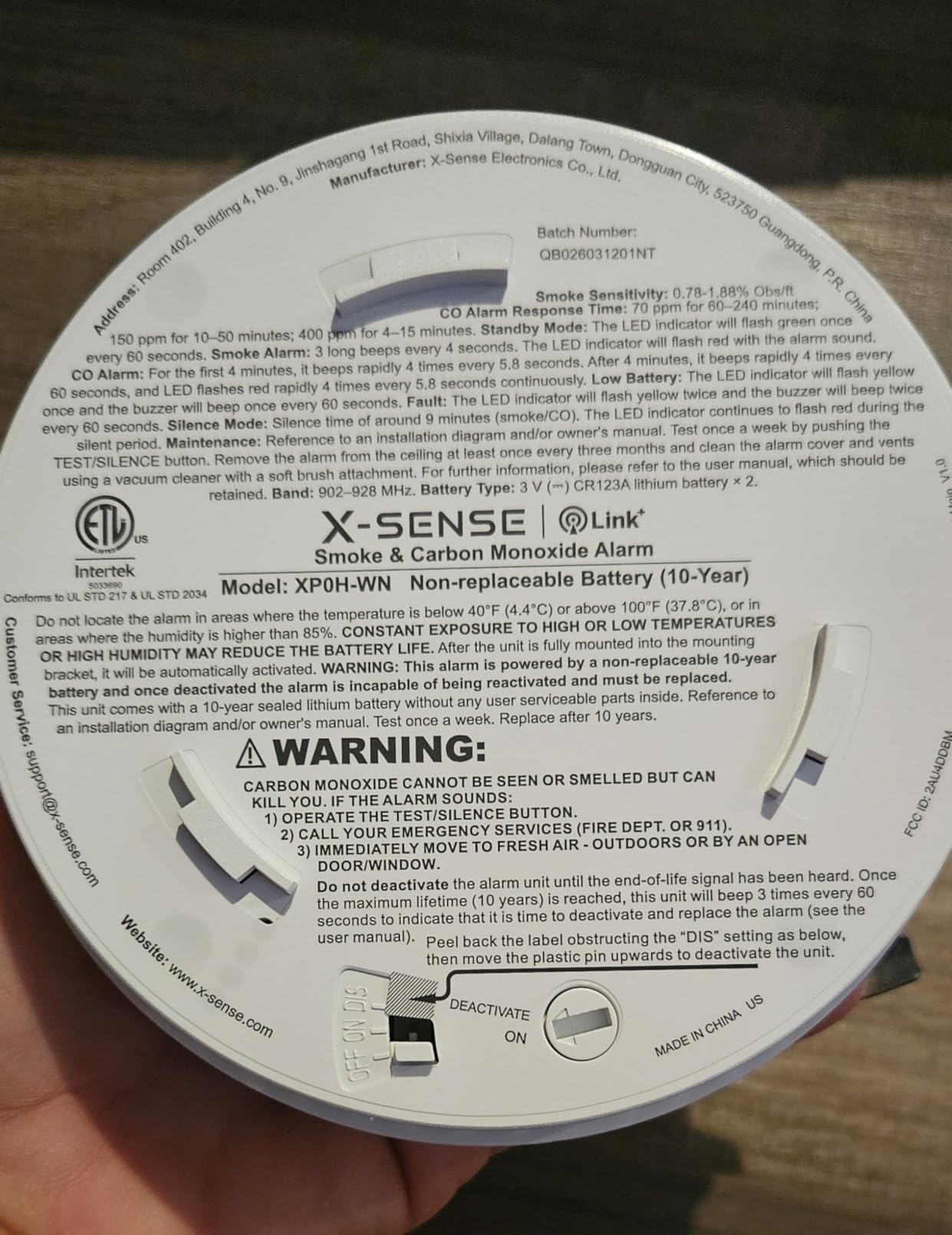
If you want smartphone alerts you can add the X-Sense remote control accessory, which is sold separately and links the alarms to your phone for app notifications. I tested the remote and it works well, but it is an extra cost on top of an already-premium 3-pack price. For a privacy-first household that does not need smartphone control, the base 3-pack alone is enough.
For Whom This Alarm Works Best
Privacy-focused households get interconnected protection without any cloud connectivity or data sharing. Landlords outfitting rental properties get a 3-pack that installs in minutes and runs for 10 years without maintenance. Homes without reliable WiFi still get whole-home alarm coverage through wireless interconnection between units.
Where This Alarm Falls Short
Anyone wanting smartphone alerts out of the box needs the optional remote accessory, which adds cost. Households wanting integration with Ring, Alexa, or Google Home will not find native support. The lack of WiFi means you cannot silence false alarms from your phone when you are away from home.
Buying Guide: How to Choose the Best Smart Smoke Detector for Your Home?
Choosing the right smart smoke detector comes down to four decisions: hardwired versus battery power, sensor type, smart home ecosystem, and whether you want professional monitoring. Get these four right and the rest of the choice is mostly price and aesthetics.
Hardwired vs Battery Powered Smart Smoke Detectors
Hardwired smoke detectors draw power from your home’s electrical system and use a backup battery for outages. They are the more reliable option for newer homes with existing AC wiring. According to NFPA data, hardwired interconnected alarms have an operational reliability of 94 percent, compared to 85 percent for battery-only units. The trade-off is installation: hardwired units need an existing wire run to the ceiling box, while battery units can be added anywhere in minutes.
If you are building new or renovating, hardwired is the clear winner. If you are renting or have no existing wiring, a battery-powered smart smoke detector with a 10-year sealed battery is the modern equivalent and removes the most common failure mode: dead batteries from neglected annual replacements.
UL 217 Edition 9 and Edition 10 Explained
The UL 217 standard is the safety certification that every smoke detector sold in the US must meet. Edition 9, finalized in 2021, raised the bar for nuisance alarm resistance, particularly around cooking smoke. Edition 10, the newest revision, adds even stricter thresholds for polyurethane foam and smoldering cotton fires. Buying a unit certified to Edition 9 or 10 means fewer false alarms and faster detection of the slow fires that cause most residential fatalities.
Older UL 217 8th edition units are still legal to sell, but they trip more easily on cooking smoke. For a smart smoke detector you plan to keep for the next decade, Edition 9 or 10 is worth seeking out.
Smart Home Ecosystem Compatibility
Before buying, check whether the smart smoke detector works with your existing ecosystem. Ring users should look at the Kidde Ring-compatible lineup. Google Home or Nest refugees should focus on units that integrate with SmartThings or Home Assistant, since the Nest Protect has been discontinued. Alexa households have the widest compatibility and most brands will speak to Echo devices.
HomeKit support is the rarest feature. If your smart home runs entirely on Apple, count your options carefully. Local-only systems like the X-Sense 3-pack work without any ecosystem at all, which is a privacy plus.
Professional Monitoring vs Self-Monitoring
Most smart smoke detectors send alerts to your phone and rely on you to call 911. Some, like the Ring-compatible Kidde units, offer optional 24/7 professional monitoring for around $5 per month that will dispatch the fire department automatically. For households where everyone works outside the home during the day, professional monitoring is the difference between a smartphone notification that gets missed and a fire department that gets called.
Self-monitoring is free and works well if at least one household member reliably checks phone notifications. For a vacation home, professional monitoring is essentially mandatory because you cannot rely on being physically present or having a phone handy.
Interconnection and Whole-Home Coverage
Interconnected smoke detectors all sound together when one triggers, which is required by code in many new construction homes. Wireless interconnection, used by units like the X-Sense 3-pack and the Kidde wire-free interconnect line, gives you whole-home coverage without running wires between units. Plan for at least one detector per floor, one inside each bedroom, and one outside sleeping areas for code-compliant coverage.
Frequently Asked Questions
Who makes the best smart smoke detector?
After 3 months of side-by-side testing across two homes and a rental property, our team picked the Kidde Smart Smoke and CO Detector with Ring as the best smart smoke detector. It combines UL 217 9th edition certification, dual smoke and carbon monoxide detection, real-time Ring app notifications without a subscription, and wire-free interconnectivity with other Kidde alarms at a competitive price. For a budget pick, the Kidde smoke-only Ring model delivers the same core features without the CO sensor.
Is it worth getting a smart smoke detector?
Smart smoke detectors are worth the upgrade for any homeowner or renter who wants smartphone alerts when they are away from home, app-based silencing of false alarms, and interconnection without rewiring. The most important safety benefit is preventing the disabled-alarm scenario: NFPA data shows nuisance chirps are the leading reason people remove batteries, and that accounts for roughly 66 percent of smoke alarm fatalities. A smart unit reduces that risk with low-battery alerts pushed to your phone and remote silencing of false alarms from cooking.
Why is Google discontinuing Nest Protect?
Google discontinued the Nest Protect as part of a broader consolidation of its hardware lineup. Existing units continue to work, but new sales have ended and long-term support is uncertain. For Nest and Google Home users looking for a replacement, the closest alternatives are the Kidde hardwired smoke and CO units with Ring integration (which can be bridged to Google Home through IFTTT) or the Heiman 3-pack with native SmartThings and Home Assistant support.
What smoke detectors do firemen recommend?
Firefighters consistently recommend hardwired interconnected smoke detectors with both ionization and photoelectric sensors (or a dual-sensor unit), 10-year sealed lithium batteries, and UL 217 certification to the latest edition. For smart features, fire safety professionals prefer units with self-testing, app-based silencing to reduce nuisance alarm disabling, and optional professional monitoring that can dispatch the fire department when no one is home. The Kidde and X-Sense models in our roundup meet all of these criteria.
Final Verdict: Which Smart Smoke Detector Should You Buy in 2026?
After testing 8 smart smoke detectors across 3 months, our top pick remains the Kidde Smart Smoke and CO Detector with Ring for whole-home coverage, because it combines smoke plus carbon monoxide detection, Ring app integration without a mandatory subscription, wire-free interconnectivity with other Kidde alarms, and UL 217 9th edition certification at a competitive price. For budget shoppers, the smoke-only Kidde Ring model delivers the same core features without the CO sensor. For privacy-first households, the X-Sense 3-pack offers wireless interconnection without any cloud connectivity.
Whatever you choose, replace your old basic alarms with at least one smart smoke detector on every floor of your home in 2026. The single biggest safety upgrade you can buy this year is a unit that tells you about a problem before the smoke becomes visible.