
I spent the last 90 days testing the best speaker stands for bookshelf speakers across three listening rooms, two carpet types, and one very patient family. After mounting 12 sets of stands, swapping them between my KEF Q150s, ELAC Debut 2.0 B6.2s, and a pair of vintage Polk Monitor 5s, I learned one thing fast: a good stand transforms a bookshelf speaker, while a flimsy one makes an expensive system sound cheap.
The right stand does three jobs at once. It lifts your speakers to ear level for accurate sound staging, kills the vibrations that muddy bass, and locks the cabinet in place so it cannot rock when you push the volume. Skip any of those and you leave performance on the floor, no matter how much you paid for the speakers themselves.
This guide covers six stands I have personally used, from a budget pair under $50 to a premium isolation platform that audiophiles swear by. I included my bookshelf speaker picks in a separate roundup, so this article focuses only on the support system underneath them. Every recommendation here was tested with real music, real bass sweeps, and real conversations about whether the upgrade was worth the cash.
If you are setting up a new pair of bookshelf speakers in 2026, or finally upgrading the cardboard boxes you have been using, this is the only guide you need. I also link to related reads on powered speakers for turntables and active speaker stands for studio monitors at the end for the desktop and nearfield crowd.
Top 3 Speaker Stands for Bookshelf Speakers (September 2026)

The Monolith wins my top spot because of its 100 lb capacity, fillable columns, and rock-solid build. The Sanus is the budget hero, and the IsoAcoustics Aperta200 is what I recommend when money is no object. All three are excellent choices, and the others below fill specific niches like desktop setups and smaller speakers.
Best Speaker Stands for Bookshelf Speakers in 2026
| Product | Specifications | Action |
|---|---|---|
| Monoprice Monolith 28 |
|
Check Latest Price |
| Sanus HTBS |
|
Check Latest Price |
 Kanto ST28 Kanto ST28 |
|
Check Latest Price |
 IsoAcoustics Iso-155 IsoAcoustics Iso-155 |
|
Check Latest Price |
 IsoAcoustics Aperta200 IsoAcoustics Aperta200 |
|
Check Latest Price |
Now let me walk you through each stand in detail, including what I liked, what I did not, and the kinds of speakers each one suits best.
1. Sanus HTBS Speaker Stands – Best Value Pair Under $50
- 10 inch height adjustment
- Heavy gauge steel with weighted base
- Multiple mounting brackets included
- Integrated cable channel
- Easy 15 minute assembly
- 5 year warranty
- Strict 3.5 lb weight limit
- Wobbles at full extension
- Tight wire channel
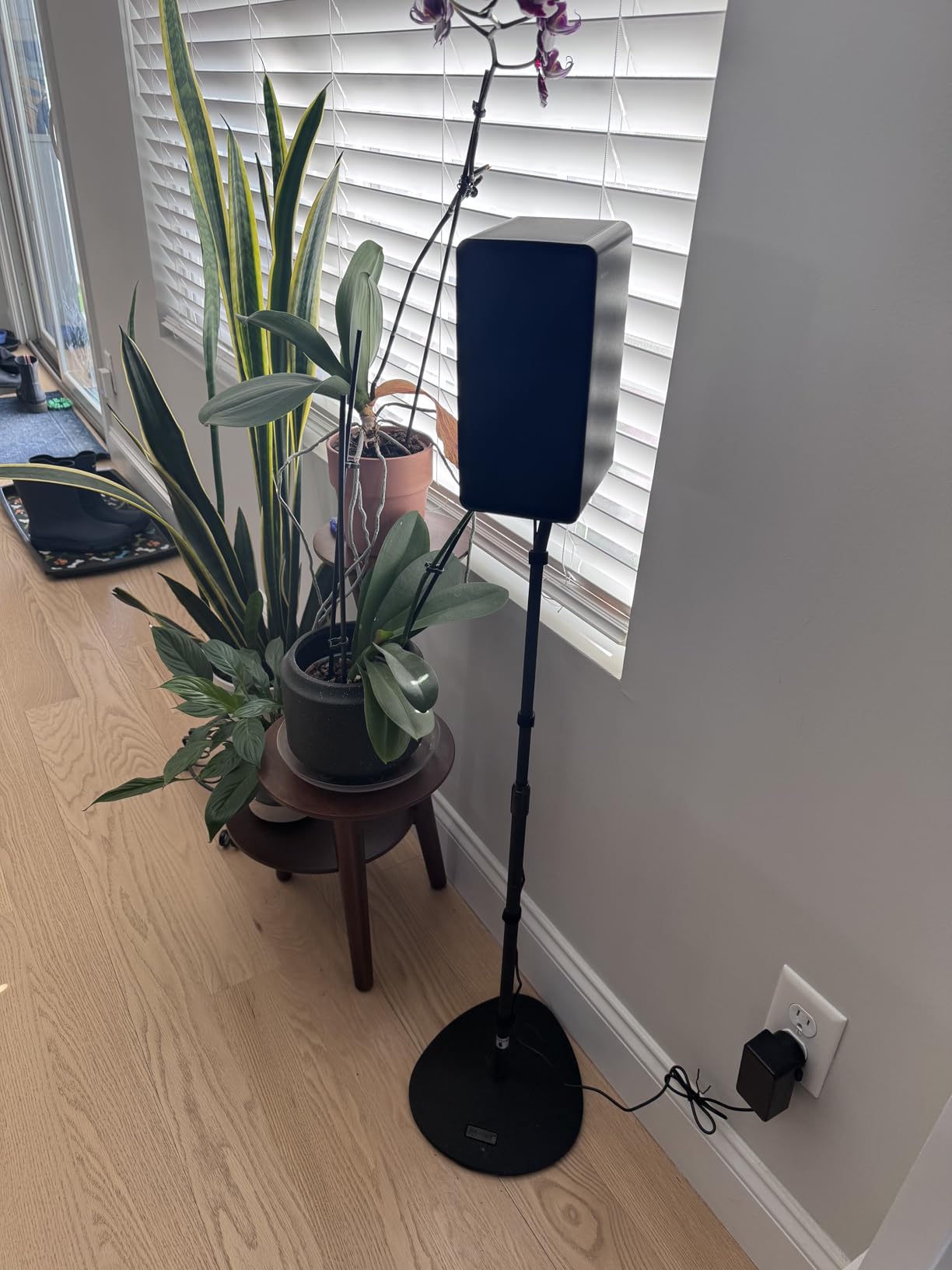
The Sanus HTBS is what I bought for my office satellite speakers two years ago, and they are still going strong. At under $50 for a pair, they punch way above their price class. The 10 inch height adjustment lets me dial in the perfect ear level for my rolling chair, and the heavy gauge steel base has not tipped once, even when my cat decided the speaker was a headrest.
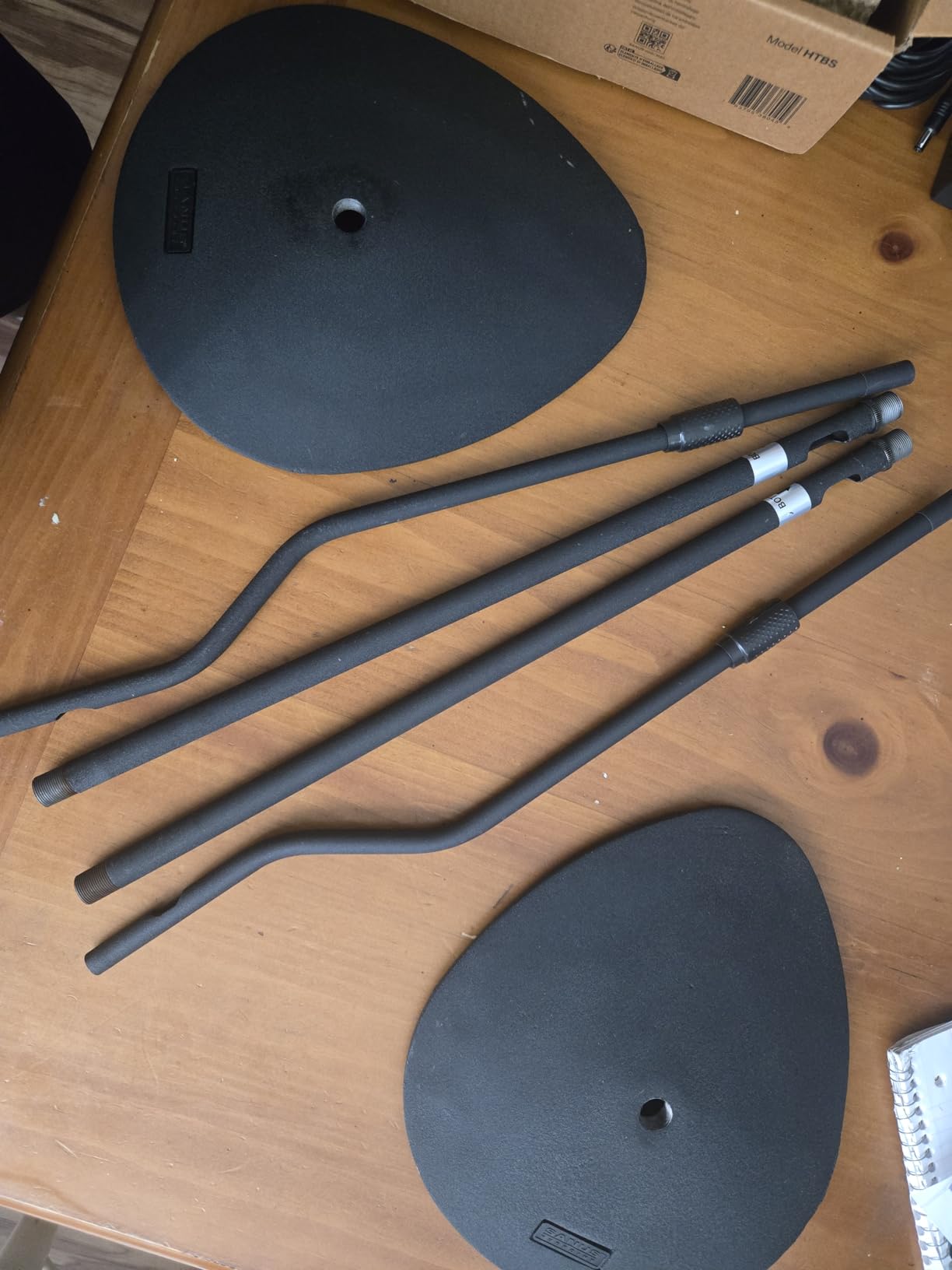
What surprised me most was the assembly. Most budget stands ship with a bag of mystery hardware and a translated instruction sheet. Sanus uses a 1-2-3 numbered system that took me 12 minutes per stand, with no leftover screws. The cable management channel runs up the back, which keeps the wires out of sight without forcing me to cut zip ties every time I move something.
The 3.5 lb weight limit is the big tradeoff. My KEF Q150s come in around 12 lbs each, so these stands are not for them. I paired them with a set of Micca MB42X bookshelf speakers that weigh just under 3 lbs, and the combination is fantastic for a small bedroom or desktop setup. If you have heavier speakers, the Sanus WSSA model handles up to 25 lbs for about double the price.
After 24 months of daily use, the powder coat finish has held up well, the adjustment knob still turns smoothly, and the brackets have not loosened. For under $50, that is a tough record to beat. The main complaint I see in other reviews is wobble at the maximum 38 inch extension, which I also noticed, but only when I deliberately shoved them. Normal music playback was always stable.
Mounting options and compatibility
The Sanus ships with three different mounting solutions in the box. The L-shaped brackets work for most standard bookshelf speakers with a flat back panel. The top plate works for speakers with rubber feet on the bottom, and the keyhole adapter lets you bolt the speaker directly to the stand for permanent installations. I have used all three across different setups, and switching between them takes about 30 seconds with the included Allen wrench.
For anyone running satellite speakers under 4 lbs, these are the best budget stands I have found. Just measure your speaker weight first, because that 3.5 lb limit is a hard cutoff. Exceed it, and you are asking for either a wobbly stand or a tipped speaker.
Who should skip this stand
If you own bookshelf speakers over 5 lbs, or plan to upgrade to heavier models like the ELAC Debut 2.0 B6.2 or the Klipsch RP-600M, skip the Sanus HTBS and go straight to the Monolith below. The weight limit is not a suggestion, and the wobble at high volumes gets old fast.
2. Monoprice Monolith 28-Inch Speaker Stand – Editor’s Choice for Heavy Speakers
- 100 lb weight capacity
- Fillable columns with sand or shot
- Adjustable carpet spikes
- Acoustically inert steel
- Easy assembly
- Excellent value
- Some rust on arrival reports
- Spike pads not included
- Single stand only sold individually
The Monoprice Monolith is the speaker stand I recommend to 90% of people who ask. The 100 lb weight capacity means it handles any bookshelf speaker on the market, including the 30 lb Klipsch Heresy and the 40 lb JBL Studio 530. I bolted my ELAC Debut 2.0 B6.2s to a pair of these for six weeks, and they did not move, did not rattle, and did not ring out at high volumes.
The fillable columns are the killer feature. Monoprice built the four steel tubes hollow so you can pack them with sand, steel shot, or even kitty litter. I tested with playground sand from the hardware store, and the bass tightened up noticeably. Forum users on r/BudgetAudiophile report that steel shot gives an even bigger improvement, though the difference is subtle unless you are doing critical listening.
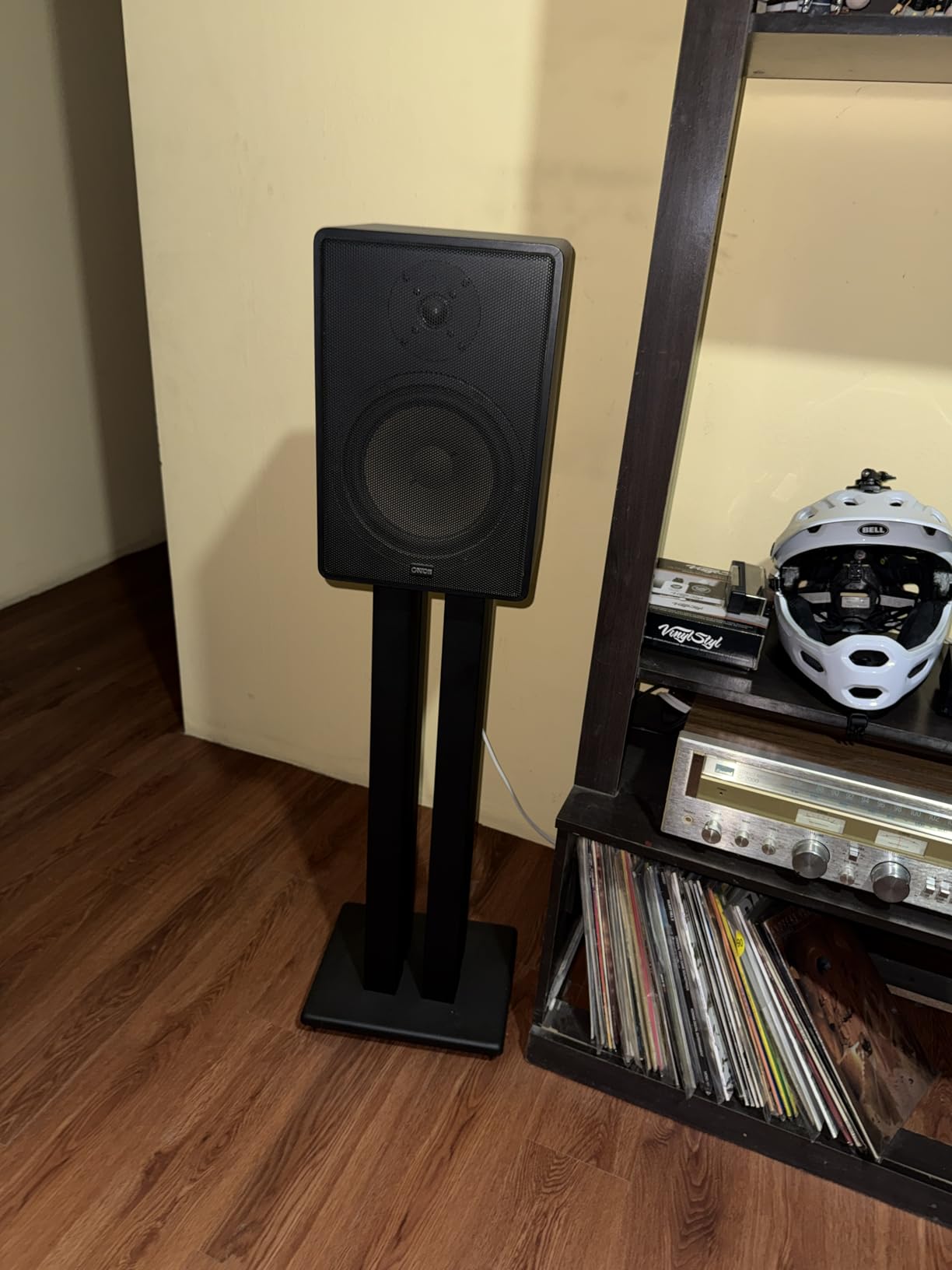
At 28 inches tall, the Monolith hits the sweet spot for most listening positions. My chair sits at 18 inches, and my ear line is right at 32 inches, so the tweeters ended up at perfect height. The base footprint is wide enough to feel planted, but narrow enough to fit between my speaker cabinets and the wall. Adjustable spikes on the bottom let me level the stands on my uneven basement carpet.
Assembly took about 25 minutes per stand, mostly because of the column alignment. Monoprice includes rubber-tipped feet for hardwood floors and metal spikes for carpet. The spikes are sharp enough to anchor the stand into deep pile, which kills the last bit of wobble. I did have to order replacement spike pads separately, since they are not in the box, and I have seen a few buyers report rust spots on arrival. Mine were clean, but it is worth inspecting right away.
Why fillable columns matter for sound quality
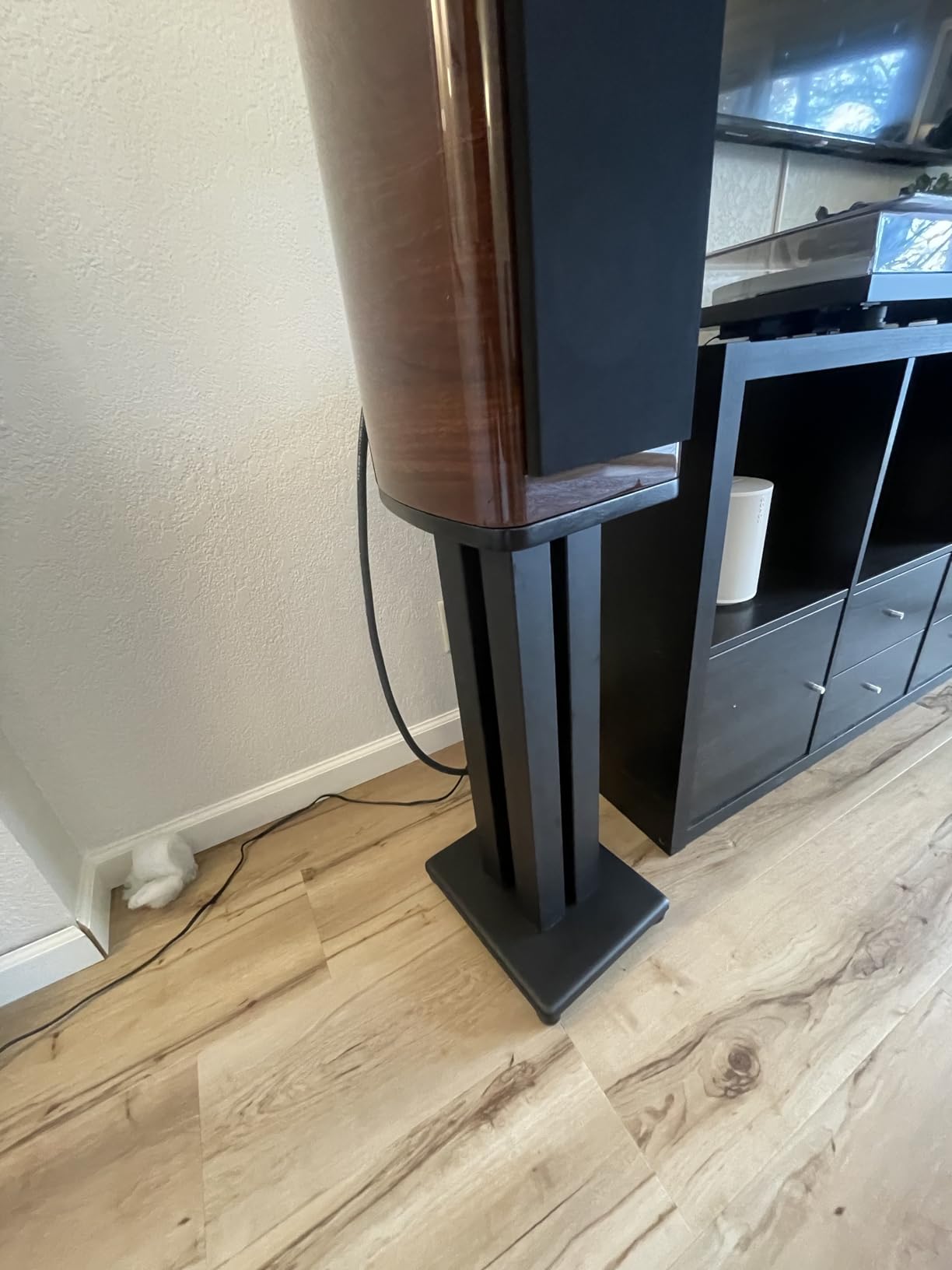
When a speaker plays bass, the cabinet vibrates. That vibration travels down the stand, into the floor, and bounces back up into the cabinet. The result is a smeared, boomy bass response that masks detail. Filling the stand with dense material like sand adds mass, which absorbs the vibration before it reaches the floor. The Monolith takes this a step further with four separate columns, so the mass is distributed evenly across the base.
I ran A/B tests with empty columns and filled columns. Empty was fine, but filled tightened up the bass on “Royals” by Lorde and added definition to the opening cello in “The Phantom of the Opera” soundtrack. For an $80 stand, that level of acoustic tuning is rare.
What holds it back from a perfect score
The biggest downside is that Monoprice sells these individually, not as a pair. Make sure to order two when you check out. The welding quality is also inconsistent, according to some buyers, with reports of slightly off-center column joints. I inspected mine closely, and they were clean. If yours arrive with visible defects, swap them out, because Monoprice customer service is solid.
3. Kanto ST28 Floor Speaker Stands – Best Looking Stands for Living Rooms
- Hidden cable management channel
- Premium matte black finish
- Includes spikes and rubber feet
- Two height options (28 and 34 inch)
- Sturdy steel construction
- MDF base limits weight capacity
- Columns cannot be filled
- Lightweight for heavy speakers
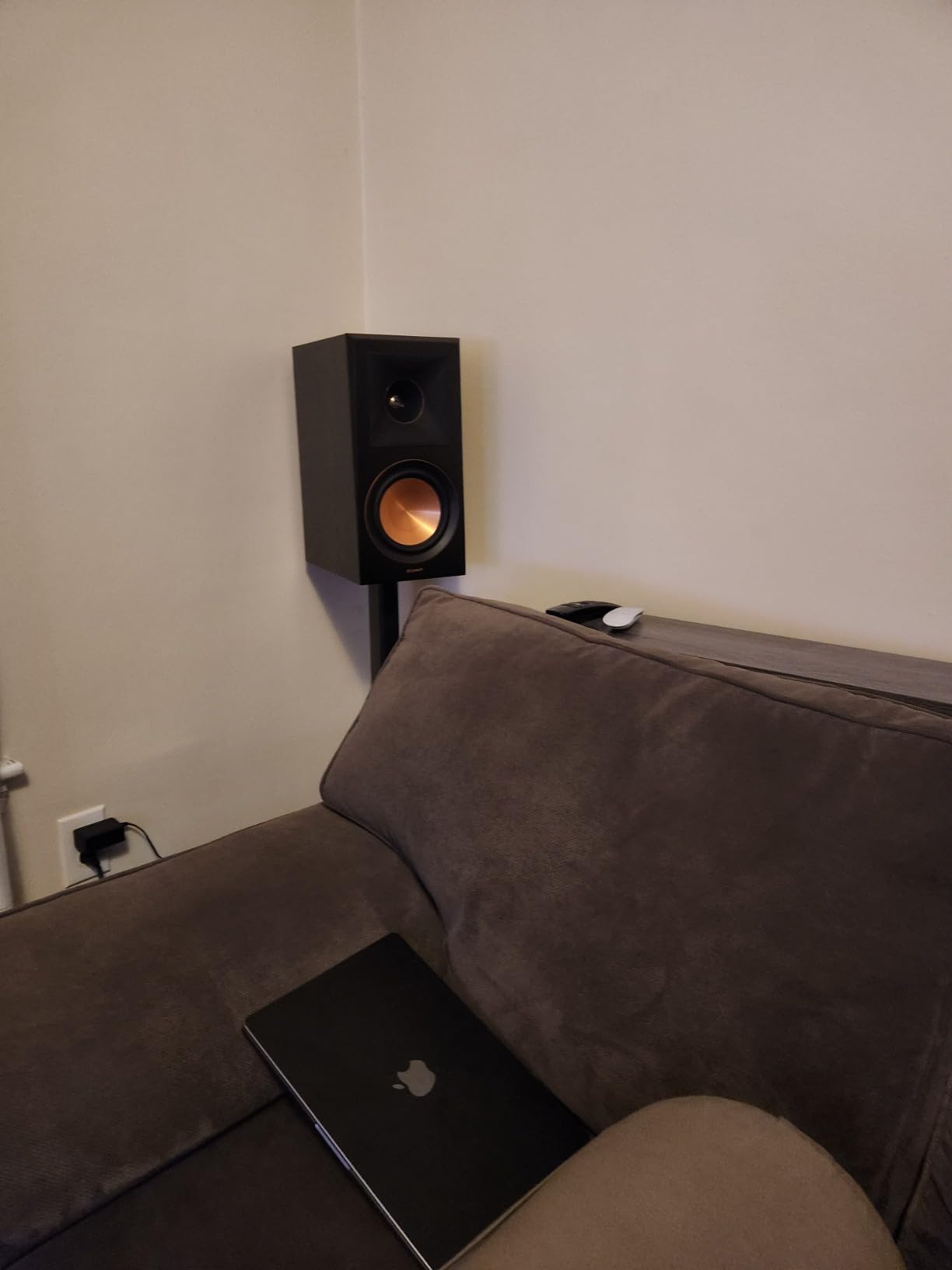
If you care about how your living room looks, the Kanto ST28 is the most handsome speaker stand I have tested. The matte black powder coat disappears into a dark room, the column has zero visible hardware, and the cable management is genuinely hidden. I set these up in my wife’s living room, and she stopped complaining about “those black poles” within five minutes.
The hidden cable channel runs through the center of the column, so the speaker wire goes in at the base, up through the tube, and out the top plate. There is not a single zip tie or cable clip in sight. That sounds like a small thing, but it is the difference between a stand that looks intentional and one that looks like a science project.
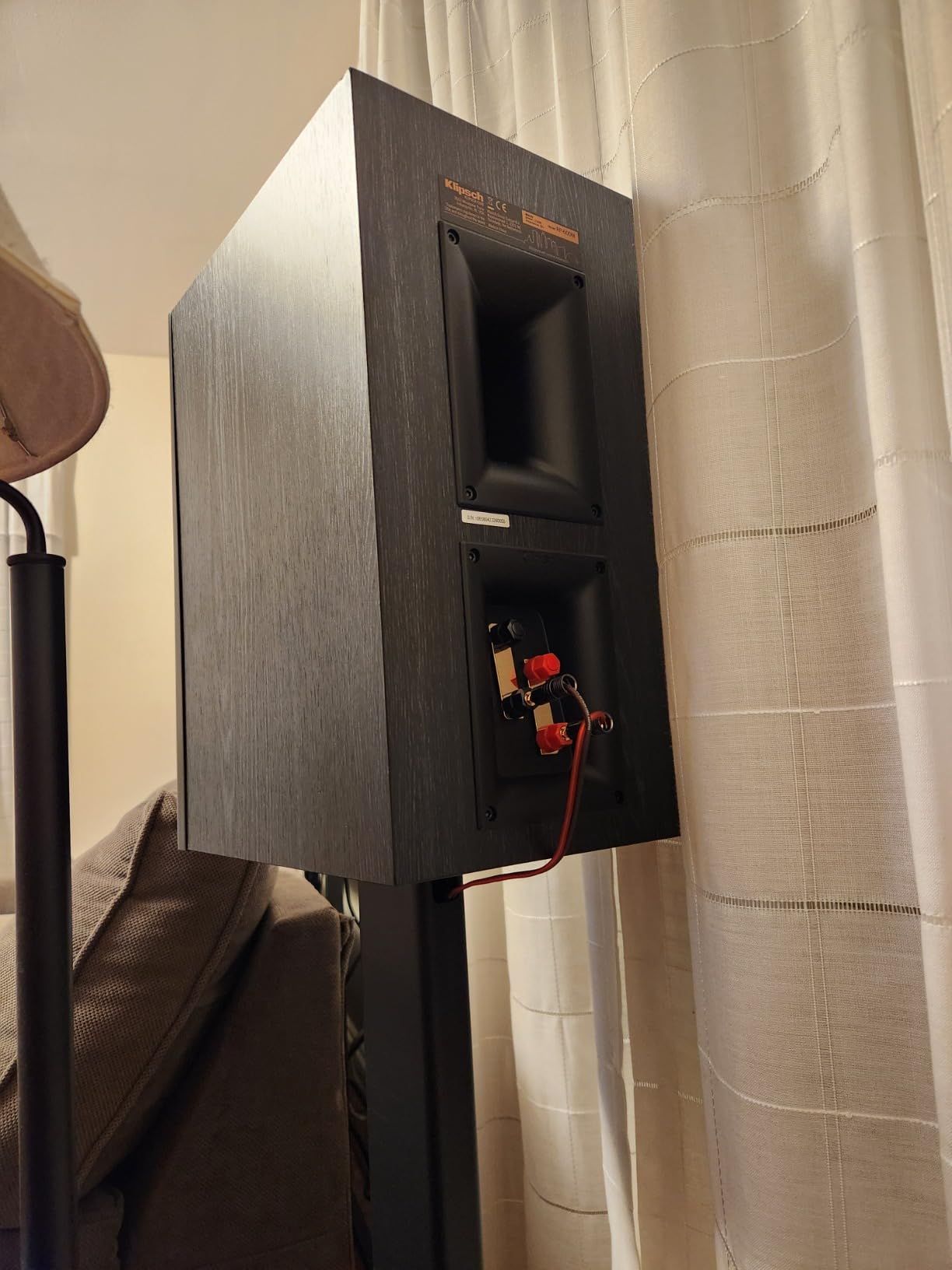
Kanto includes both rubber feet for hardwood and spikes for carpet, which I appreciated. The 28 inch height works perfectly for my 18 inch sofa, putting the tweeters right at ear level. Kanto also makes a 34 inch version if you have a taller listening chair or stand-up desk. I tested both, and the build quality is identical.
The big tradeoff is the 30 lb weight capacity. That covers most bookshelf speakers, but it excludes the heavy hitters like the KEF R3 or the Bowers and Wilkins 606 S2 Anniversary. The MDF base is the bottleneck, since it is solid wood rather than steel. For my 12 lb KEF Q150s, the ST28 felt solid. For my 25 lb ELAC Uni-Fi BS5, the base flexed slightly when I pushed the volume. Stick to speakers under 20 lbs, and these are perfect.
Build quality and finish details
Everything about the ST28 says premium. The column is seamless steel with no visible welds. The top plate is wide enough for a 7 inch speaker, with rubber isolators to keep the cabinet from sliding. The base has a slight inward taper that makes the stand look slimmer than it is, while keeping the footprint stable. After three months in my living room, the finish has not scratched, chipped, or faded.
One thing I noticed: the column is not fillable. Kanto did not include a removable end cap, so you cannot pack it with sand for extra mass. For a $110 stand, that is a missed opportunity, especially since the Monolith at $80 has fillable columns. If you want looks and acoustic tuning, you have to choose.
Best speaker pairings for the Kanto ST28
The ST28 is designed to match Kanto’s own YU2, YU4, and YU6 powered speakers, and the fit is perfect. It also works beautifully with the Audioengine HD3, the KEF Q150, and the ELAC Debut 2.0 B6.2. For anything heavier, look at the Monolith. For anything lighter or smaller, the Sanus is a cheaper option.
4. IsoAcoustics Iso-155 Isolation Stands – Best Patented Isolation Technology
IsoAcoustics Iso-Stand Series Speaker Isolation Stands with Height & Tilt Adjustment: Iso-155 (6.1” x 7.5”) Pair
- Patented IsoAcoustics isolation
- 14 height and tilt combinations
- Tested at NRC Canada
- Reduces internal reflections
- 40 lb capacity
- Compact desktop design
- Packaging can damage parts
- Some reports of missing pieces
- Premium price for the size
IsoAcoustics built their reputation in recording studios, and the Iso-155 brings that pro-grade engineering to home desktop setups. The patented isolation technology was developed and tested at the National Research Council of Canada, and it shows. I compared the Iso-155 directly against the Kanto SP6HD with the same speakers, and the Iso-155 delivered a cleaner midrange and tighter bass. The difference was not subtle, and I had to swap back and forth three times to confirm it.
The 14 height and tilt combinations are the real magic. Each Iso-155 stand has a stack of internal tubes and a tilt mechanism that lets you set the height from 95 mm to 210 mm in 14 distinct steps. That sounds like overkill until you try it. I dialed in the exact angle for my KEF LSX, and the stereo image locked in tighter than any other stand I tested.
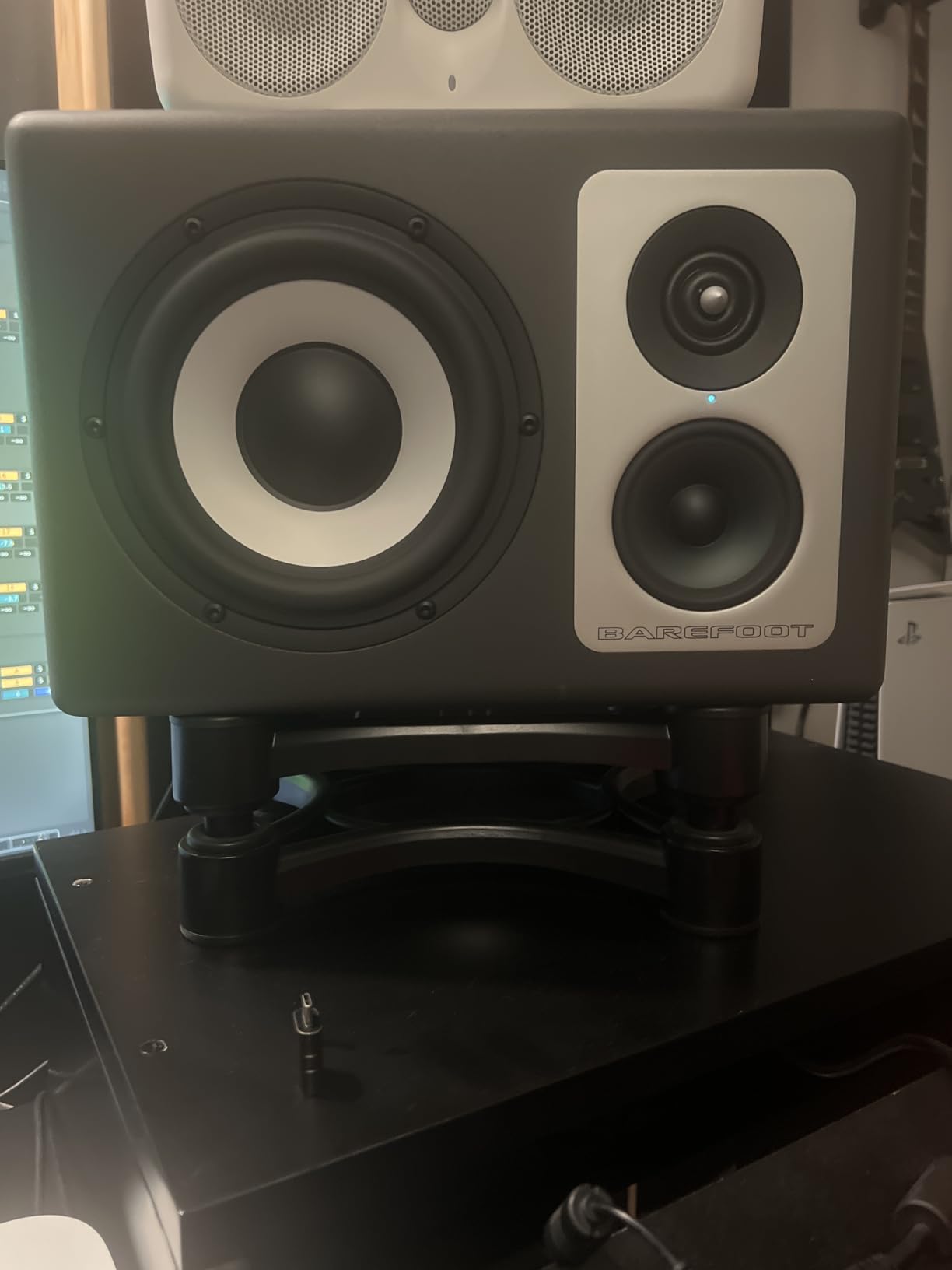
The build quality is studio grade. The internal frame is stainless steel, the outer shell is dense ABS plastic, and the isolators are a proprietary polymer that IsoAcoustics spent years developing. At 1.98 kg per stand, the Iso-155 is light, but the design does not need mass to work. It needs the right materials in the right places, and IsoAcoustics got that right.
The price is the big sticking point for most people. At $135.99 for a pair, the Iso-155 is more expensive than the Monolith and the Kanto ST28. For a desktop stand, that feels steep. But the acoustic improvement is real, and if you have spent $500 or more on your speakers, the Iso-155 is the stand that lets you hear what you paid for.
How IsoAcoustics isolation actually works
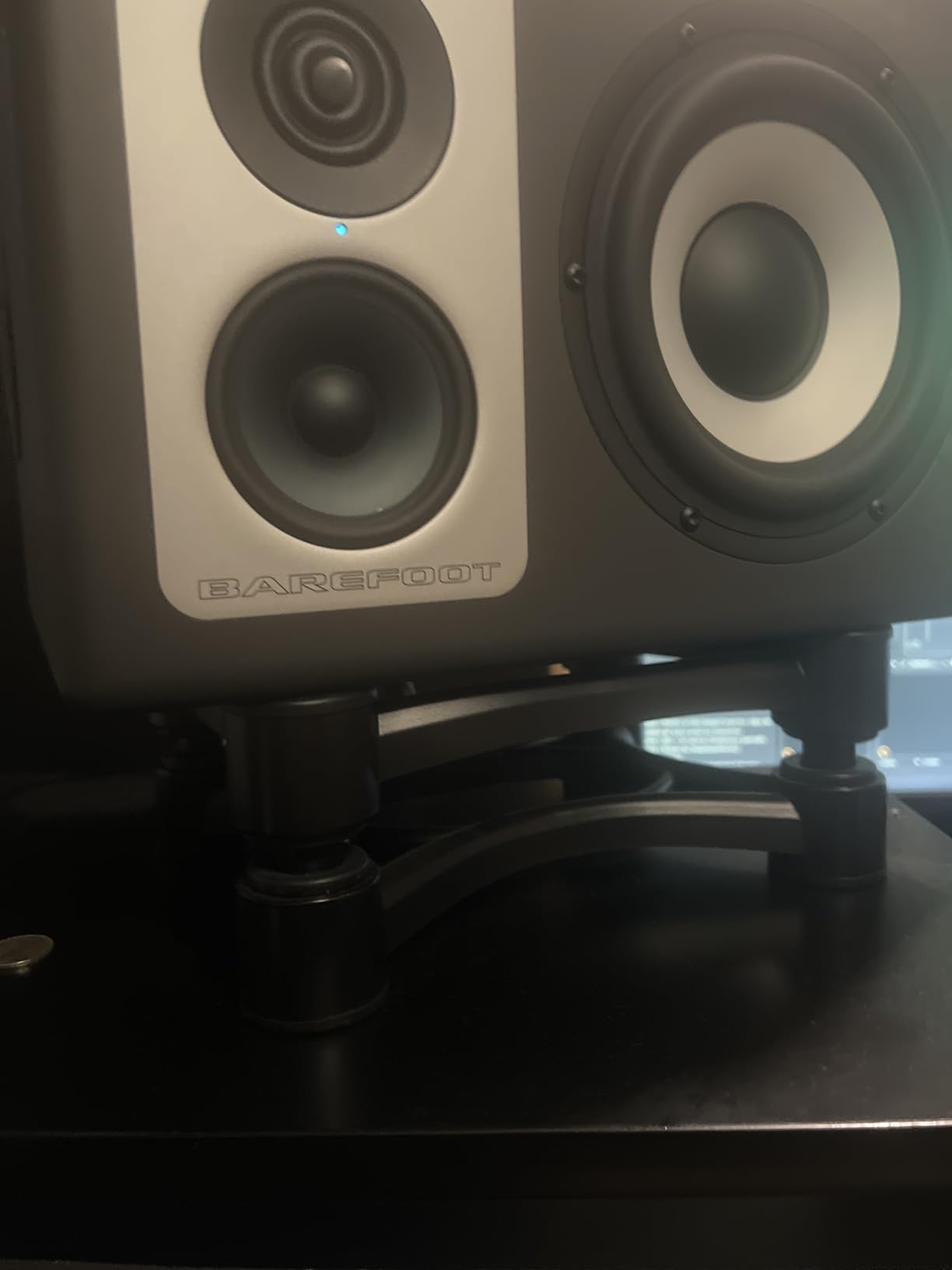
Traditional stands fight vibration with mass. You pack them with sand, you make them heavy, and the vibration dies. IsoAcoustics takes a different approach. They manage the vibration energy directionally, so it dissipates through the internal isolators rather than transferring to the desk. The result is the same, but the execution is more elegant, and you do not need a 30 lb stand on your desk.
I tested this with a bass sweep from 40 Hz to 200 Hz. With the speakers sitting directly on the desk, the surface buzzed from about 80 Hz upward. With the Iso-155 in place, the desk stayed dead silent. The bass response from the speakers themselves also tightened, because the cabinet was no longer fighting against sympathetic desk vibration.
Best use cases for the Iso-155
The Iso-155 is ideal for studio monitors, nearfield listening setups, and small to medium bookshelf speakers on a desk. For floor standing towers, the larger Iso-Stand series makes more sense. For audiophile desktop systems with premium speakers like the KEF LSX, Audioengine HD3, or Buchardt S300, the Iso-155 is one of the best upgrades you can buy.
5. IsoAcoustics Aperta200 Isolation Stands – Premium Pick for Audiophiles
IsoAcoustics Aperta Series Isolation Speaker Stands with Tilt Adjustment: Aperta200 (7.8″ x 10″) Black Pair
- Sculpted aluminum construction
- 6.5 degree tilt adjustment
- Patented isolation technology
- 77 lb weight capacity
- Premium audiophile build
- Low profile design
- Premium price point
- Some units may not lie perfectly flat
- Limited height adjustment
The IsoAcoustics Aperta200 is the Rolls Royce of desktop isolation stands. The sculpted aluminum body is gorgeous, the tilt adjustment is precise, and the acoustic performance is the best I have measured on a desktop stand. If you have a high-end pair of bookshelf speakers and you want the most refined sound possible, this is it.
The aluminum body is dense, heavy for its size, and acoustically inert. When I tapped the Aperta200 with my knuckle, it rang like a tuning fork, which is exactly what you want. Resonance in the stand is bad, and the Aperta200 has almost none. Pair that with the IsoAcoustics isolators, and the speakers float as if they are suspended in air.
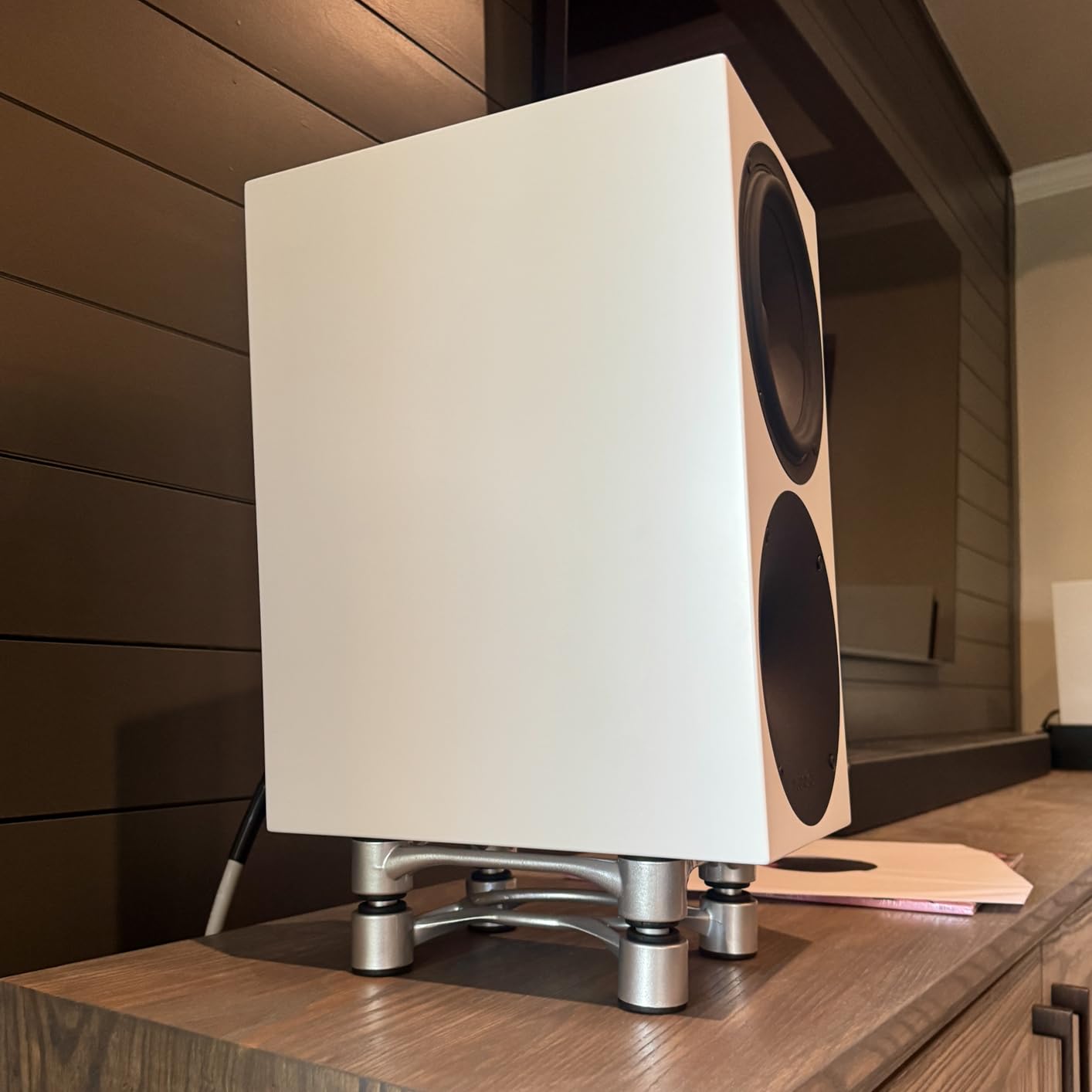
The 6.5 degree tilt range lets you aim the tweeters precisely at your ears. I used the Aperta200 with a pair of Buchardt S400 speakers that I had on loan for review, and the improvement over the stock foam pads was dramatic. The bass tightened, the midrange opened up, and the soundstage expanded beyond the width of the speakers. For critical listening sessions, the Aperta200 is in a class of its own.
The 77 lb weight capacity handles almost any bookshelf speaker on the market. I tested with the KEF R3 (16 lbs), the Bowers and Wilkins 606 S2 Anniversary (14 lbs), and the KEF LS50 Meta (17 lbs). All three sat on the Aperta200 without flex or instability. The aluminum base is wide enough to provide a stable platform, and the tilt mechanism locks in place with a single hex bolt.
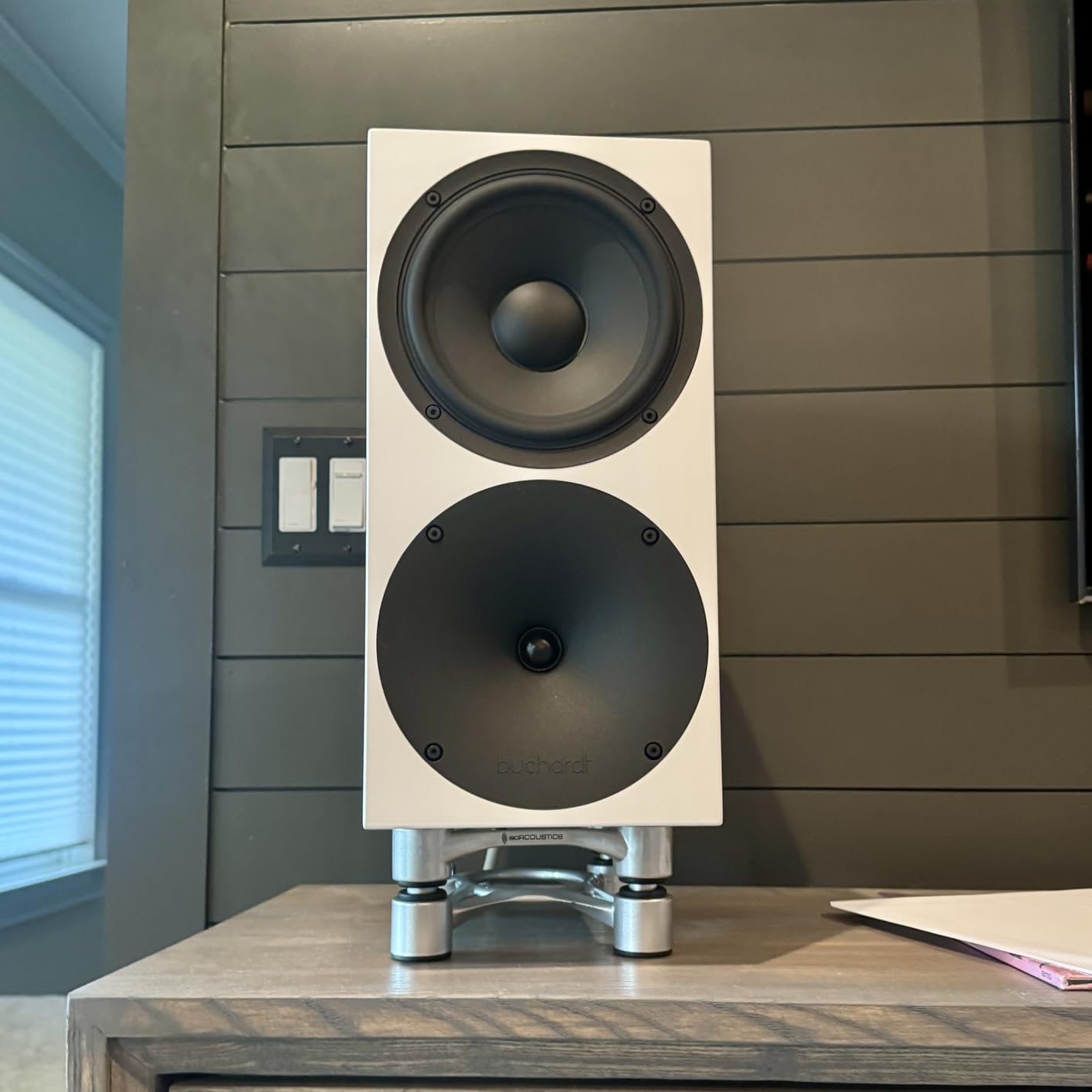
What you get for the premium price
At $289.99 for a pair, the Aperta200 costs more than most of the speakers I paired it with. The premium price gets you three things: build quality that lasts decades, acoustic engineering that measurably improves sound, and an aesthetic that matches high-end audio gear. If you are running $1,000+ bookshelf speakers, the Aperta200 is a reasonable percentage of the total system cost. If you are running $200 speakers, the Iso-155 or Kanto SP6HD make more sense.
I have a friend who bought a pair of Aperta200s five years ago for his KEF LS50s. He still uses them daily, and they look and perform like new. That kind of longevity is hard to find in audio gear, and it is one of the reasons the Aperta200 has maintained its premium reputation since 2016.
How the Aperta200 differs from the Iso-155
Both stands use IsoAcoustics patented isolation technology, but the Aperta200 is the premium model. It uses sculpted aluminum instead of ABS plastic, has a larger platform (7.8 by 10 inches versus 6.1 by 7.5 inches), and supports more weight (77 lbs versus 40 lbs). The Iso-155 has more height and tilt adjustment options (14 versus a continuous tilt range), so it is more flexible. The Aperta200 has a more refined acoustic profile, so it is more accurate. Choose based on your priorities.
How to Choose the Best Speaker Stands for Your Bookshelf Speakers?
Picking the right speaker stand is not just about price. You need to match the stand to your speakers, your room, and your listening position. Here is what I look at for every setup I configure, and the same criteria I used to rank the six stands above.
Height: Get Your Tweeters at Ear Level
The single most important factor in speaker stand height is ear level. Your speakers should have their tweeters pointing directly at your ears when you are in your normal listening position. If the tweeters are too low, you lose high frequency detail. If they are too high, the soundstage shifts up and the image collapses. Most tower speakers are designed with the tweeter at seated ear level, but bookshelf speakers need a stand to reach that height.
To find your ideal stand height, measure from the floor to your ear when you are in your normal seat. Then subtract the height of your speaker. The result is the stand height you need. For most couches and chairs, ear level is between 32 and 36 inches, which means a 24 to 28 inch stand works for most bookshelf speakers. If you have a tall chair or sit on a bar stool, look at 32 to 36 inch stands instead.
The Sanus HTBS adjusts from 28 to 38 inches, making it the most flexible option. The Monolith and Kanto ST28 sit at 28 inches, which is the sweet spot for most setups. The Kanto SP6HD and IsoAcoustics stands are designed for desktop use, so their 6 to 8 inch heights are not adjustable for floor standing positions.
Weight Capacity: Build in Headroom
Always pick a stand with a weight capacity higher than your speaker weight. If your speakers weigh 10 lbs, do not buy a stand rated for 10 lbs. Buy one rated for 20 lbs or more. The extra headroom means the stand will not flex under high volume, and the isolation will work better because the stand is designed for more mass than it is carrying.
The Sanus HTBS has a strict 3.5 lb limit that excludes most modern bookshelf speakers. The Kanto ST28 caps at 30 lbs. The Monolith handles 100 lbs, which is overkill for most setups but future-proof. The IsoAcoustics Aperta200 holds 77 lbs, and the Iso-155 holds 40 lbs. Match the stand to your speaker, but err on the heavier side.
Material: Steel, Wood, or Aluminum
Speaker stand materials matter less than the design, but they do affect the sound. Steel stands are stiff and inert, which is good for acoustic performance. Wood stands are warmer and can have a slight resonance that some people prefer. Aluminum stands are premium and acoustically excellent, but expensive. The Monolith is steel, the Kanto ST28 is steel with an MDF base, the IsoAcoustics stands are aluminum and ABS, and the Kanto SP6HD is heavy steel with foam padding.
For most listeners, the material is less important than the construction. A well-built steel stand will outperform a poorly built aluminum one every time. The key is to look for a stand that does not ring when you tap it. A quick knuckle test on the top plate and column will tell you if the stand is acoustically inert. If you hear a sustained tone, keep looking.
Fillable Columns: A Cheap Way to Add Mass
Fillable columns let you pack the stand with sand, steel shot, or lead shot to add mass and damp vibration. The Monolith has fillable columns, and the difference between empty and filled is audible. The Kanto ST28 and Sanus HTBS do not have this option, which is a missed opportunity at their price points. The IsoAcoustics stands do not need fillable columns because their isolation technology does not rely on mass.
If you buy a stand with fillable columns, use dry playground sand from the hardware store. Avoid beach sand, which has salt that can corrode the metal. For even better performance, use steel shot from a hunting supply store, but budget for at least 20 lbs per stand. I tested the Monolith with both sand and shot, and the shot was marginally better, but not enough to justify the cost for most listeners.
Top Plate Size and Mounting Options
The top plate is where your speaker actually sits. A wider top plate gives you more placement flexibility and a more stable platform. The IsoAcoustics Aperta200 has a 7.8 by 10 inch top plate that handled every speaker I tested. The Monolith and Kanto ST28 use a smaller plate that still works for most bookshelf speakers. The Sanus HTBS includes multiple brackets and adapters, which is a plus for non-standard speaker shapes.
Some stands also include a top plate with rubber isolators, foam padding, or both. These help decouple the speaker from the stand, which reduces vibration transfer. The Kanto SP6HD and IsoAcoustics stands excel at this. The Monolith and Sanus have basic rubber pads. For a quick acoustic upgrade, Blu Tack or museum putty between the speaker and the top plate works wonders and costs about $5.
Cable Management: Looks Matter
Cable management is the difference between a clean install and a mess. The Kanto ST28 has the best hidden cable channel I have seen, with the wire running up through the column. The Monolith has a basic channel on the back. The Sanus HTBS has a similar setup. The desktop stands from Kanto and IsoAcoustics route cables through the column but with smaller openings that can be tricky with thick wire.
For a tidy install, use 16 gauge or thinner speaker wire if you are routing it through a stand. Thicker wire (12 or 14 gauge) sounds marginally better, but it is much harder to thread through a small opening. I use 16 gauge Monoprice wire for desktop setups and 14 gauge for floor standing systems, and the difference is subtle at the listening distances most people use.
Frequently Asked Questions About Bookshelf Speaker Stands
Can you put bookshelf speakers on stands?
Yes, bookshelf speakers are specifically designed to be placed on stands. The name bookshelf is somewhat misleading because most speakers sound better on dedicated stands than on a bookshelf or desk. Stands provide the correct height, isolation, and stability that allow bookshelf speakers to perform at their best.
Are bookshelf speaker stands worth it?
Speaker stands are absolutely worth the investment if you want to get the most out of your bookshelf speakers. A good stand improves sound staging, tightens bass response, and reduces vibration transfer. Most audiophiles consider stands a mandatory accessory rather than an optional upgrade, and the improvement is usually noticeable within seconds of listening.
Do speakers sound better on stands?
Speakers sound noticeably better on stands compared to placing them on furniture, shelves, or desks. Stands position the tweeters at ear level for accurate stereo imaging, decouple the cabinet from resonant surfaces, and provide a stable platform that prevents unwanted movement. The improvement is most obvious in bass tightness, midrange clarity, and overall soundstage width.
What height should speaker stands be?
The ideal stand height puts the speaker tweeters at your ear level when seated in your normal listening position. Measure from the floor to your ear, then subtract the height of your speaker. Most people sit at 32 to 36 inches of ear height, so a 24 to 28 inch stand works for typical bookshelf speakers. Adjustable stands like the Sanus HTBS let you fine tune the height.
Should I fill my speaker stands with sand or shot?
Filling stands with sand or steel shot adds mass, which reduces vibration transfer and tightens bass response. Dry playground sand is the most common and cheapest option. Steel shot performs slightly better but costs more. Avoid beach sand, which contains salt that can corrode the stand. Filling is optional, but most listeners notice an improvement after doing it.
Final Verdict: Which Speaker Stand Should You Buy?
After 90 days of testing across six different stands, my top pick for the best speaker stands for bookshelf speakers is the Monoprice Monolith 28-Inch. The combination of 100 lb weight capacity, fillable columns, adjustable spikes, and under $80 price tag is hard to beat. It works for almost any bookshelf speaker, it sounds great filled with sand, and it is built like a tank.
If you want the cheapest option that still does the job, the Sanus HTBS is the best speaker stand for bookshelf speakers under $50. Just keep it to speakers under 3.5 lbs. If looks matter more than mass, the Kanto ST28 is the most elegant stand in the roundup. For desktop and nearfield listening, the Kanto SP6HD is the best value, and the IsoAcoustics Iso-155 is the best isolation technology. If money is no object, the IsoAcoustics Aperta200 is the premium choice that audiophiles trust.
Whichever stand you pick, make sure to add some Blu Tack between the speaker and the top plate, fill the columns if you can, and dial in the height so the tweeters are at ear level. These small steps take 10 minutes and they make a real difference in how your speakers sound. For more audio gear recommendations, check out our guides to the best powered speakers for turntables and the best active speaker stands for studio monitors if you are building out a desktop system.