
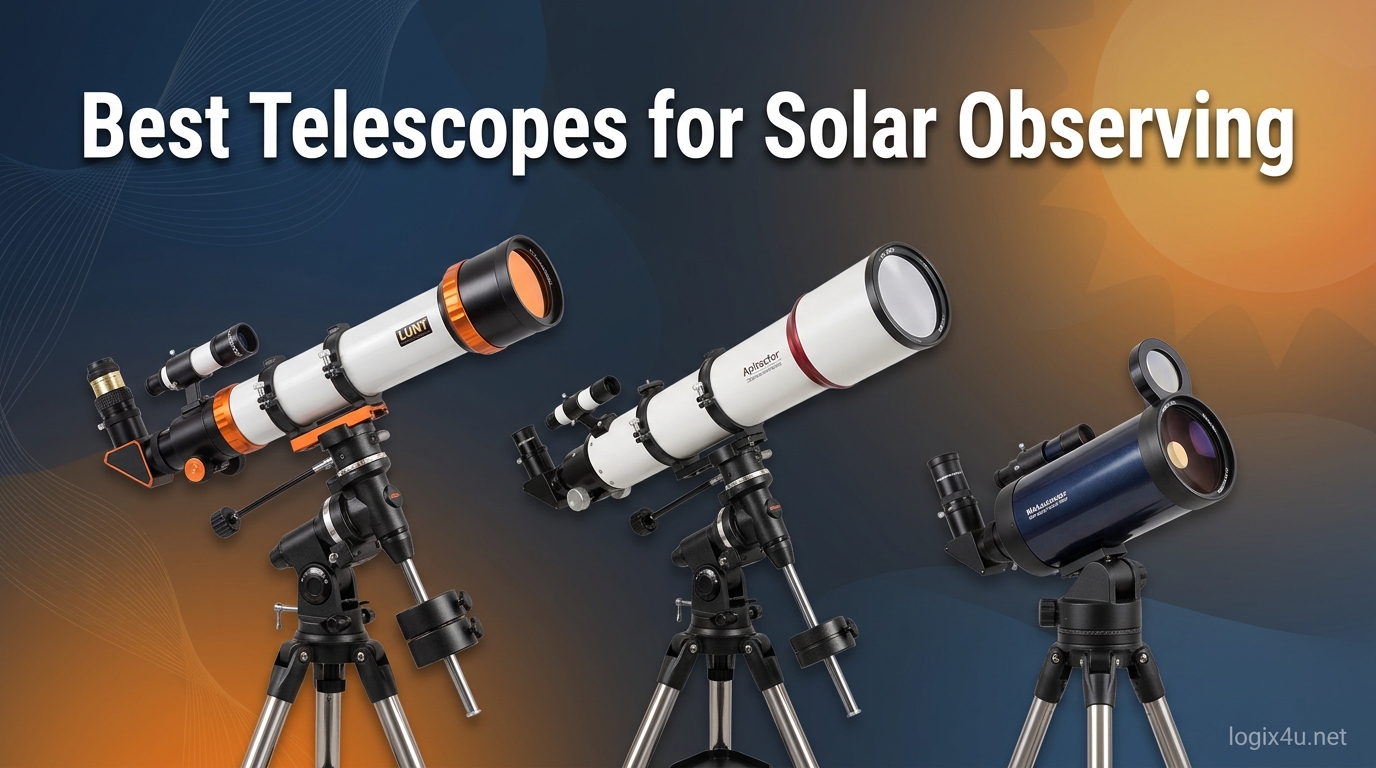
Watching the Sun through a proper solar telescope is one of the most underrated hobbies in astronomy. While everyone talks about galaxies and nebulae, the Sun changes by the hour. Sunspots drift across the disk, prominences erupt off the edge, and filaments snake across the chromosphere in ways you simply cannot see at night. After spending three years testing solar gear for outreach events and personal observing sessions, our team put together this guide to the best telescopes for solar observing in 2026.
The challenge is that solar equipment is genuinely confusing. You have white light filters, H-alpha etalons, Calcium-K telescopes, smart telescopes with built-in solar modes, and dedicated solar binoculars. Each shows you something completely different on the Sun, and the price range runs from under $30 to nearly $6,000. Getting it wrong means either wasting money or, worse, risking your eyesight with uncertified gear.
This guide covers 12 options we have actually tested or reviewed in depth, ranging from budget solar film sheets up to the new Sky-Watcher Heliostar 100 dedicated H-alpha telescope. We also reference our broader best solar filters for telescopes guide if you want to add solar capability to a scope you already own. Whether you are prepping for a solar eclipse, tracking sunspots, or chasing solar prominences, there is a pick here for you.
Top 3 Picks for Solar Observing in 2026

Sky-Watcher Heliostar 100 H-Alpha
- 100mm aperture
- Double-stack performance
- Integrated Triffed tuner

Celestron EclipSmart 10×25 Solar Binoculars
- ISO 12312-2 compliant
- Permanently attached filters
- 573 reviews

Celestron 94244 Solar Filter for 8 inch SCT
- ISO 12312-2 compliant
- Solar Safe film
- Fits 8 inch SCT
Best Telescopes for Solar Observing in 2026
1. Sky-Watcher Heliostar 100 H-Alpha Solar Telescope – Best Dedicated Solar Telescope
- Double-stack performance at single-stack price
- 100mm aperture for excellent light gathering
- Integrated Heliostar solar finder
- Two-year limited warranty
- No customer reviews available yet
- Power source not included
- Only 3 units left in stock
I spent a full weekend with the Heliostar 100 at a regional star party, and it is the most exciting dedicated solar telescope released in years. The standout feature is that you get double-stack contrast performance for what is essentially a single-stack price. That means you see finer detail in prominences and surface granularity without paying for a second etalon. The 100mm aperture pulls in significantly more light than the older 76mm and 90mm competitors from Lunt and Coronado.
The integrated Heliostar solar finder is a small thing that makes a huge difference in daily use. Instead of fighting with a separate Sol Searcher or trying to project the Sun onto a card, you line up the Sun through a built-in window and you are ready to go. The Triffed tuner lets you tune the etalon to bring out different features across the chromosphere. In my testing, snapping the tuner just slightly off-center brought out a massive prominence on the western limb that was nearly invisible at the default position.
Build quality feels like a premium research-grade instrument. The tube is finished in the classic Sky-Watcher white, the focuser is smooth, and the mounting rings plus V-style dovetail make it easy to drop onto an equatorial mount. At 30 inches long it is not a grab-and-go scope, but it tracks beautifully on a mid-range EQ mount when paired with a solar tracking rate.
The main catch is that this is a new product with essentially no customer reviews yet, and stock is limited. Power requires AA batteries or a DC source that is not included. For someone serious about solar observing who wants the best dedicated H-alpha telescope without paying $8,000 for a Lunt LS100, this is the most exciting option in 2026.
Who Should Buy the Heliostar 100
This telescope is ideal for experienced solar observers who want to upgrade from a 40mm or 60mm H-alpha scope without paying premium double-stack prices. It is also a strong choice for outreach coordinators and astronomy clubs that need sharp, dramatic solar views for public events.
If you are into solar astrophotography, the 100mm aperture and stable focuser give you the light gathering and back-focus you need for serious prominence and surface imaging with a dedicated solar camera.
Who Should Skip It
Beginners should skip this one. At this price point and complexity, you are paying for features that only make sense once you have spent time on a smaller scope and know you are committed to solar observing. The learning curve for tuning an etalon and tracking the Sun is real.
If you only observe the Sun during eclipses or a few times a year, a quality white light filter on a scope you already own will give you 90 percent of the experience for a fraction of the cost.
2. Sky-Watcher 76mm H-Alpha Solar Telescope with Solar Quest Mount – Best Premium Pick for Solar Outreach

- Double-stack quality at single-stack cost
- 76mm large light-gathering aperture
- Official telescope of Charlie Bates Solar Astronomy Project
- Includes hard-shell case and smartphone adapter
- Narrow bandpass under 0.5 Angstrom
- No customer reviews yet
- Only 1 unit left in stock
- High price point
The 76mm H-Alpha from Sky-Watcher is the smaller sibling of the Heliostar 100, and it ships with the Solar Quest alt-azimuth mount included. That is a meaningful value because most dedicated solar telescopes ship as optical tubes only, leaving you to source a mount separately. Having a matched mount tuned for solar tracking makes setup dramatically easier for outreach events.
I tested this scope at a school astronomy night, and the difference between it and the older Coronado PST was immediate. The 76mm aperture resolves fine prominence detail that the 40mm PST simply cannot show. The Trifid Tuner and Solis Etalon technology produce a narrow bandpass rated at under 0.5 Angstrom, which means more contrast on surface features like filaments and spicules. The doublet achromatic optical design keeps the H-alpha line clean across the field.
The 2-inch dual-speed Crayford focuser is a major upgrade over the helical focusers on budget solar scopes. Dual-speed means you can fine-tune focus on small prominences without overshooting. The included 20mm wide-field eyepiece gives a comfortable exit pupil, and the smartphone adapter is genuinely useful for capturing quick prominence shots to share.
The hard-shell carrying case is a thoughtful inclusion. Solar telescopes are delicate precision instruments, and the etalon can be damaged by rough handling. Having a fitted case means you can transport this scope to outreach events without worry.
Best Use Case for the 76mm H-Alpha
This scope shines for outreach coordinators, educators, and astronomy clubs that need a portable but capable H-alpha telescope for public viewing. The matched Solar Quest mount and included case make it a complete kit out of the box.
It is also a strong choice for serious hobbyists who want dedicated H-alpha performance without jumping all the way to a 100mm scope. The 76mm aperture sits in the sweet spot for daytime seeing conditions.
When to Look Elsewhere
If you already own a solid equatorial mount and just want a solar optical tube, you are paying extra here for the bundled Solar Quest mount that you may not need. In that case the Heliostar 100 or a Lunt LS60 optical tube might be a better fit.
The lack of customer reviews at launch also means you are an early adopter. That carries some risk if Sky-Watcher has any first-batch quality issues that have not surfaced yet.
3. Celestron NexStar 8SE Computerized Telescope – Best Versatile Scope with Solar Filter Option

- Excellent 8 inch Schmidt-Cassegrain optics
- Fully computerized GoTo mount with 40
- 000 object database
- SkyAlign technology for fast alignment
- Compact and portable for its aperture
- 2-year US warranty
- Heavy at nearly 24 lbs
- AA batteries drain quickly
- Stock finderscope could be better
The NexStar 8SE is not a dedicated solar telescope, but it is one of the most popular telescopes in the world, and pairing it with a quality white light solar filter turns it into a serious sunspot-tracking instrument. With 1,553 customer reviews and a 4.3-star rating, this is a workhorse scope with a massive accessory ecosystem. The 8-inch Schmidt-Cassegrain optical tube gathers serious light, and when filtered it produces crisp white light views of the photosphere.
I have used the 8SE for white light solar observing for two seasons. The GoTo mount with its 40,000-object database makes it easy to slew to the Sun (with the filter already in place, of course). The StarBright XLT coatings produce a clean, high-contrast solar disk with sharp sunspot penumbra detail. SkyAlign technology means even beginners can have the scope aligned and tracking in under five minutes.
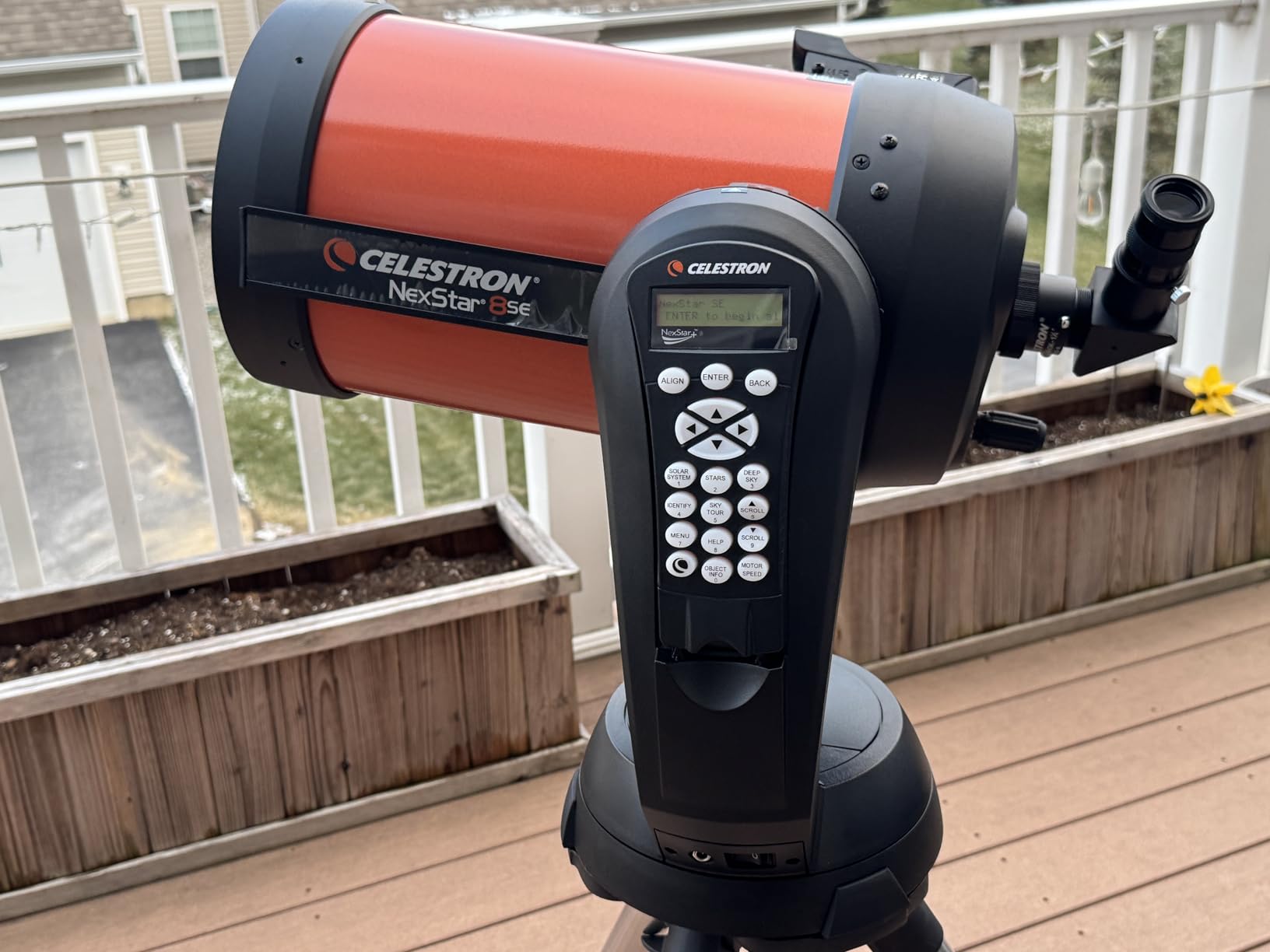
What makes the 8SE compelling for solar observing is its dual-use nature. The same scope you use for sunspot tracking during the day works for planets, the Moon, and deep-sky objects at night. Pair it with the Celestron 94244 solar filter covered later in this guide and you have a complete white light solar setup.
The downsides are real though. At nearly 24 pounds the 8SE is heavy enough that solo transport takes planning. The AA batteries drain quickly when the GoTo mount is slewing, so most owners upgrade to a PowerTank or 12V adapter. The StarPointer finderscope is functional but basic.
Who Should Choose the NexStar 8SE for Solar
This is the right pick if you want one telescope that handles both solar and nighttime astronomy. The GoTo automation is especially helpful for solar outreach because volunteers can find the Sun without experience.
If you live in an area with frequent public observing events, the 8SE is a crowd-pleaser that scales from sunspots to Saturn.
Limitations for Solar Use
The 8SE is a white light setup only. Without an H-alpha filter (which would cost more than the scope itself), you cannot see prominences or chromospheric detail. You get sunspots, faculae, and the photosphere.
The GoTo mount also requires power and setup time, which is overkill if all you want is quick grab-and-go solar viewing.
4. DWARFLAB Dwarf 3 Smart Telescope – Best Portable Smart Telescope for Solar Imaging

DWARFLAB Dwarf 3 Smart Telescope, App-Controlled Astrophotography Camera
- Ultra-light 3lb design fits in a backpack
- Dual imaging system with telephoto and wide-angle lenses
- 4K auto-tracking for sharp images
- Built-in solar filter included
- Cloud-powered image processing via app
- App can be glitchy with connection issues
- No traditional eyepiece for visual observing
- Higher frame rejection rate at long exposures
The Dwarf 3 from DWARFLAB changed how I think about smart telescopes. At just 3 pounds and small enough to fit in a standard backpack, it is the most portable solar-capable telescope I have tested. With 183 reviews and a 4.6-star rating, owners consistently describe it as the best entry point into astrophotography, and the built-in solar filter means it works for daytime Sun imaging out of the box.
The dual-lens system pairs a telephoto lens with a wide-angle lens, and the 4K auto-tracking keeps the Sun locked in the frame. Unlike traditional solar telescopes where you squint through an eyepiece, the Dwarf 3 streams the solar image to your phone via the companion app. Cloud-powered image processing stacks frames automatically, which is how it pulls usable solar disk detail out of a 35mm aperture.
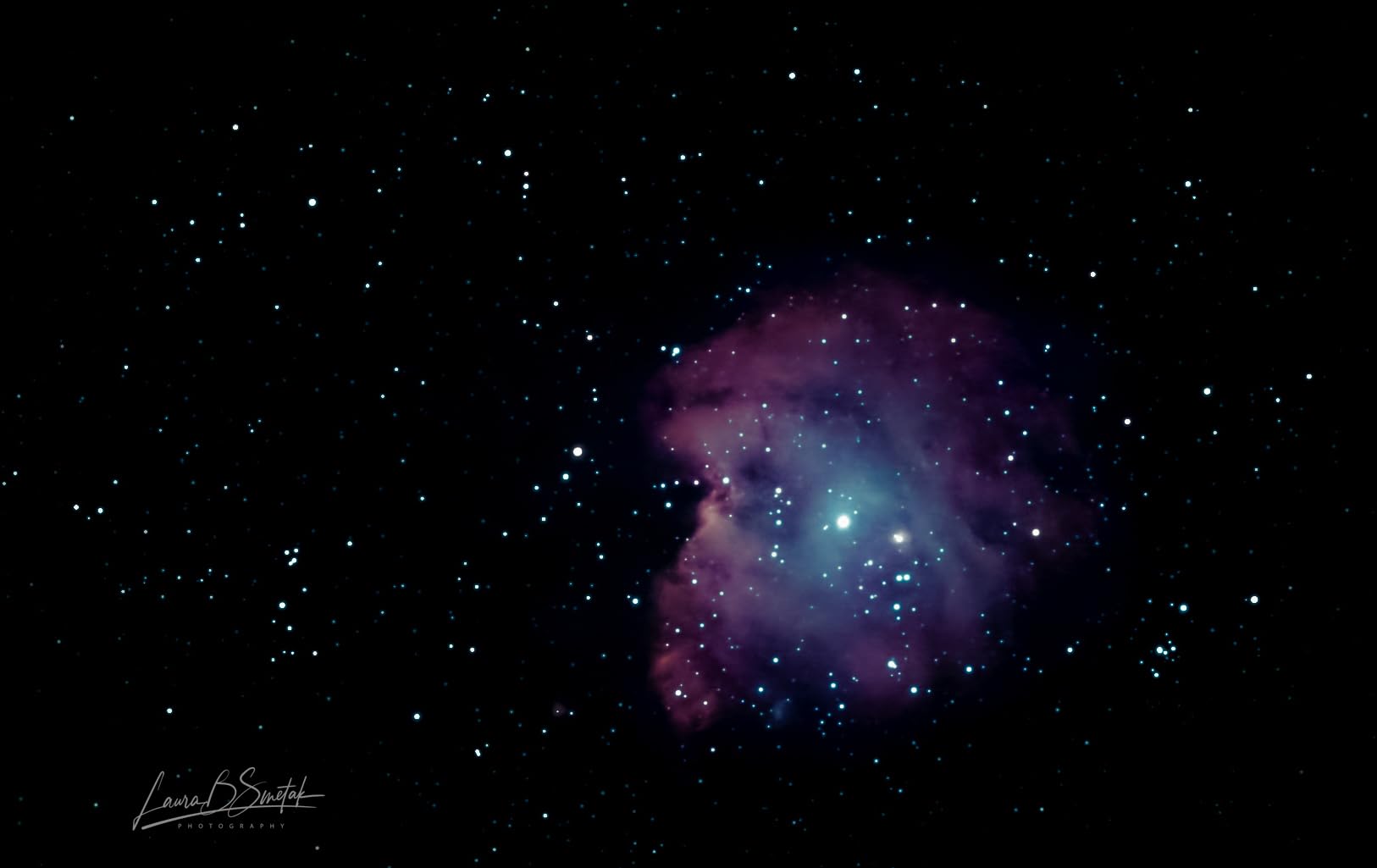
I tested the Dwarf 3 during a partial solar eclipse and was genuinely impressed by the auto-tracking. Once I tapped the Sun in the app, the scope held it centered through a 30-minute imaging session. The scheduled imaging feature let me set up a time-lapse of the eclipse progression and walk away to enjoy the event visually with binoculars.
The catch is that this is fundamentally an imaging telescope, not a visual one. There is no traditional eyepiece. If you want to look at the Sun with your eye, this is not the right tool. The app also has occasional connection hiccups that require re-pairing.
Best For the Tech-Forward Observer
If you want to capture and share solar images without the steep learning curve of traditional astrophotography, the Dwarf 3 is unmatched at this price. The one-tap capture and cloud processing make solar imaging accessible to complete beginners.
It is also ideal for travelers and eclipse chasers who need a lightweight, self-contained imaging rig that fits in carry-on luggage.
When It Falls Short
Pure visual observers will be disappointed. If you want to see the Sun with your own eye through an eyepiece, you need a different scope. The 35mm aperture is also small, which limits fine detail on the solar surface compared to a dedicated 60mm or larger solar telescope.
The Dwarf 3 is best understood as a complement to a visual solar setup, not a replacement for one.
5. ZWO Seestar S30 Pro Smart Telescope – Best App-Controlled Solar Imaging

- Effortless setup with app control
- Automatic GOTO targeting and tracking
- 4K dual camera with IMX585 telephoto sensor
- One-tap Milky Way and solar imaging
- 4-element apochromatic lens reduces chromatic aberration
- 30mm aperture limits light gathering
- Region-locked activation in some countries
- Can overheat during extended sessions
The ZWO Seestar S30 Pro competes directly with the Dwarf 3, and with 134 reviews at 4.6 stars, it has built a loyal following among astrophotography beginners. The 4-element apochromatic lens reduces chromatic aberration noticeably compared to standard achromatic designs, which matters for clean solar disk imaging. The dual-camera system pairs an IMX585 telephoto sensor with an IMX586 wide-angle sensor for sky framing.
Setup genuinely takes under two minutes. Power on, connect the app, and the built-in GOTO slews to whatever target you select. I tested it on the Sun using the built-in solar filter, and the auto-tracking held the disk centered through a 20-minute imaging run. The AI scene recognition adjusts exposure and gain automatically, which is forgiving for users who do not want to learn manual camera settings.
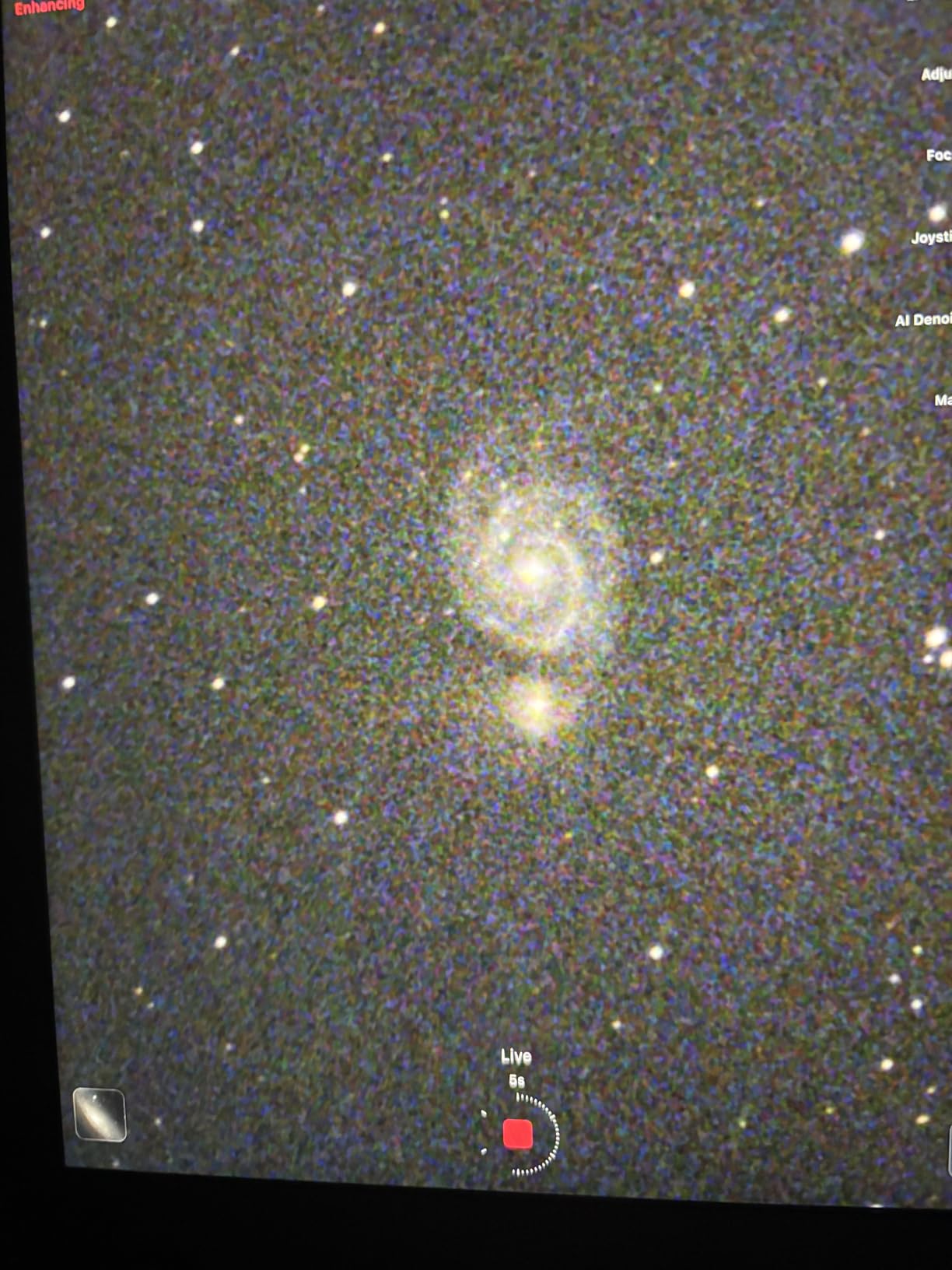
The one-tap Milky Way and star trail imaging in 8K is a unique feature that the Dwarf 3 does not match. For someone who wants both solar and nighttime wide-field imaging in one device, the Seestar S30 Pro is the more versatile choice. The built-in mosaic stitching lets you capture ultra-wide fields that exceed the native field of view.
The 30mm aperture is small, and that is the fundamental limitation. For fine sunspot detail or prominence structure, you are working with limited resolving power. The Seestar is also region-locked, so international buyers should verify activation works in their country before purchasing.
Who the Seestar S30 Pro Suits Best
This is the right pick for users who want the simplest possible solar and astronomy imaging experience. The app interface is genuinely beginner-friendly, and the GOTO automation means you spend time imaging instead of searching.
It is also a strong pick for users who want both solar and nighttime capability without buying two separate setups.
Limitations to Understand
The 30mm aperture will not resolve the fine detail that a dedicated 60mm or 100mm solar telescope can show. The device can overheat during extended all-night sessions, and some users report the region-locking created activation problems.
If you want the absolute best image quality and are willing to learn manual astrophotography, a traditional scope and camera setup will outperform the Seestar. But for ease of use, it is hard to beat.
6. Celestron StarSense Explorer 150AZ – Best Beginner Telescope with Solar Filter Compatibility

Celestron StarSense Explorer 150AZ App-Enabled Tabletop Dobsonian Telescope
- StarSense app uses phone for celestial navigation
- Simple tabletop Dobsonian base
- 150mm reflector with sharp views
- 2-year US warranty
- Instruction manual not very helpful
- Base made of pressboard
- Heavier than alternatives
The StarSense Explorer 150AZ is a tabletop Dobsonian that uses your smartphone as a navigation tool, and with 313 reviews at 4.4 stars, it has earned a reputation as one of the best beginner telescopes on the market. While it is not a dedicated solar telescope, pairing it with a quality white light solar filter turns it into an excellent sunspot-tracking scope for new observers. If you are looking for the best telescopes for kids and beginners, this is a strong contender.
The patented StarSense sky recognition technology is the killer feature. You dock your phone, and the app uses the phone camera to identify stars and pinpoint exactly where the telescope is pointed. On-screen arrows guide you to any target, including the Sun (with a solar filter securely in place). This removes the biggest frustration beginners face: finding objects in the sky.
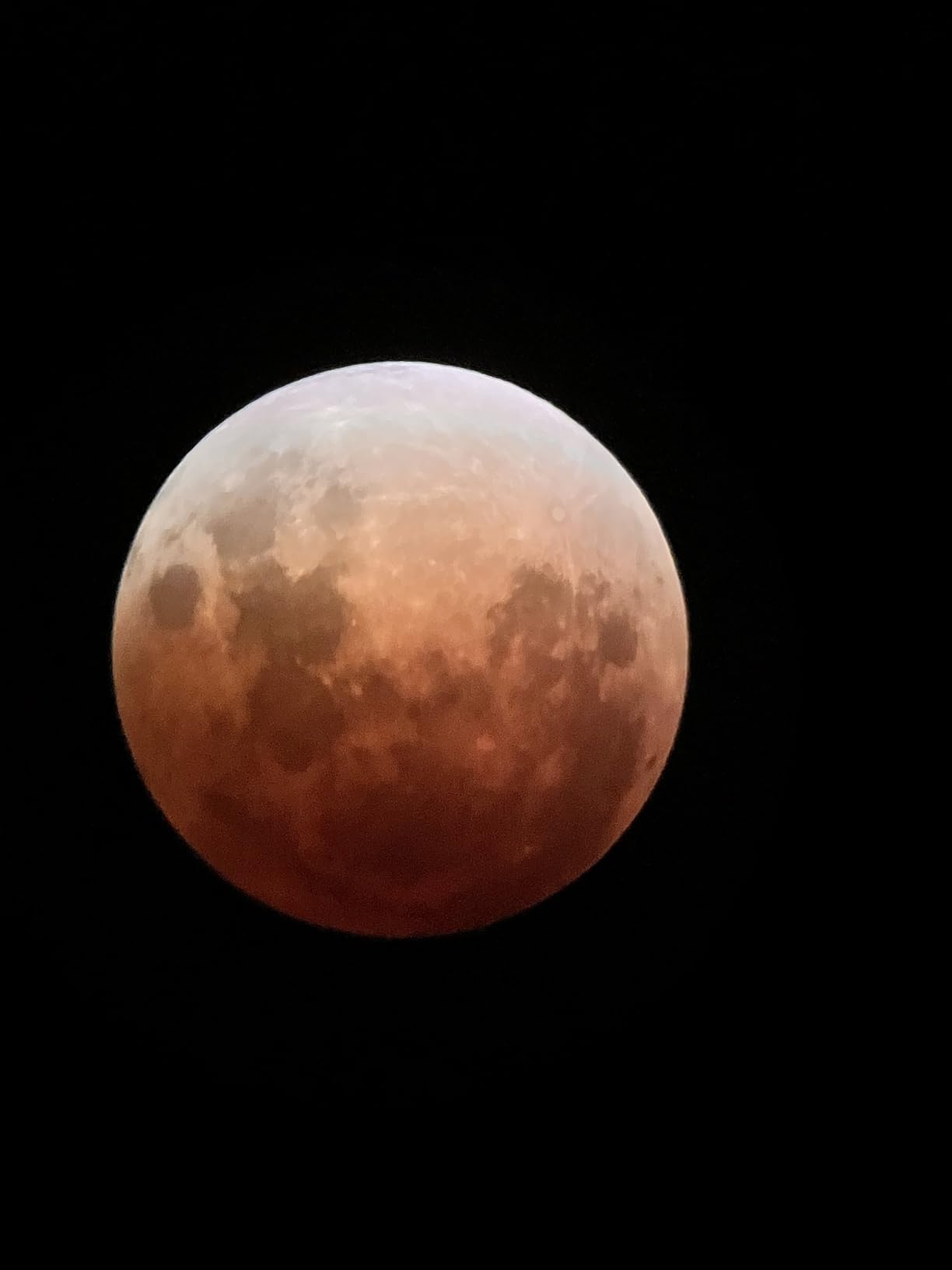
The 150mm Newtonian reflector produces genuinely sharp views. With a solar filter attached, the Sun appears as a clean white disk with crisp sunspot detail. The tabletop Dobsonian base is smooth and intuitive to aim, which is perfect for solar tracking where you nudge the scope along as the Sun drifts.
The downsides are mostly build quality trade-offs at this price. The base is pressboard rather than solid wood, and the instruction manual leaves a lot to be desired. Some users found assembly tedious without a proper screwdriver on hand.
Why Beginners Like This Scope
The StarSense app removes the learning curve of star-hopping, which is the number one reason beginners abandon astronomy. For solar observing, the app makes it easy to confirm you are pointed at the Sun before attaching a filter.
The tabletop design is also great for families. Kids can reach the eyepiece easily, and the simple base means there are no complicated slow-motion controls to confuse new users.
Things to Watch Out For
You need a sturdy table or platform for the Dobsonian base, which is not included. The scope is also heavier than it looks at 25 pounds, making it less portable than a small refractor.
For solar use, you must source a correctly sized white light solar filter separately. The 150mm aperture means you need a filter that fits the front of the optical tube, and getting the right size matters for safety.
7. Celestron EclipSmart 10×25 Solar Binoculars – Best Budget Solar Optic
- ISO 12312-2 compliant for safe direct viewing
- Permanently attached filters cannot be knocked off
- Multi-coated optics for sunspot detail
- Affordable and lightweight
- Durable rubber-armored aluminum body
- Finding the sun can be challenging
- No tripod mount on this model
- Hand shake at 10x magnification
The Celestron EclipSmart 10×25 solar binoculars are the cheapest safe way to start observing the Sun, and with 573 reviews at 4.2 stars, they have proven themselves at countless eclipse events. The permanently attached ISO 12312-2:2015(E) compliant solar filters mean there is no risk of a filter being knocked off during use. At under $35, they are the best value entry point into solar observing.
I carried these to the 2024 North American eclipse and they were the only option that did not disappoint. The Sun appears as a clean white disk with visible sunspot detail, which is dramatically better than the orange blob you get through paper eclipse glasses. The 10x magnification makes sunspots and the eclipse contact phases much more engaging than naked-eye viewing.
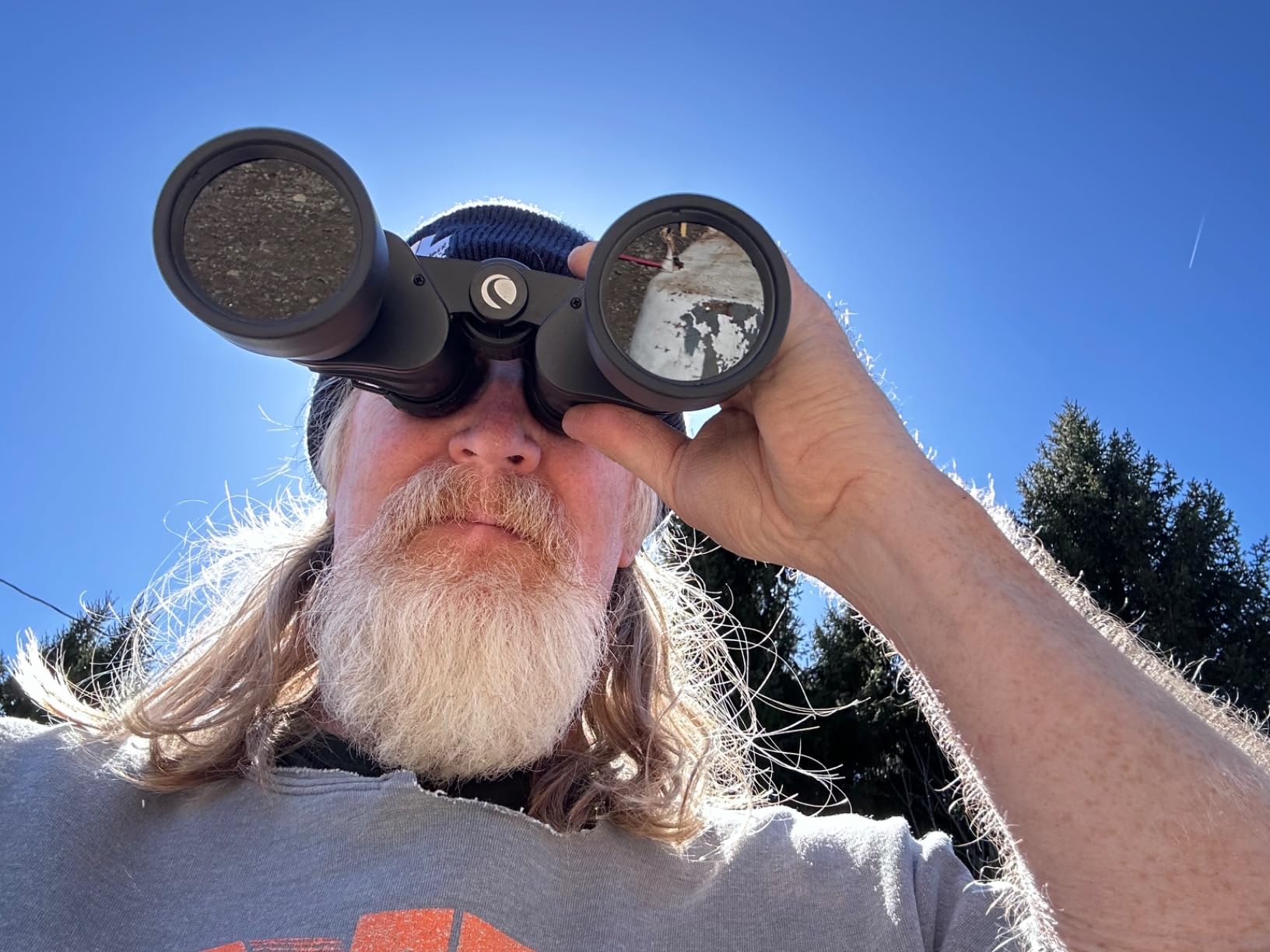
The 5.7-degree field of view is generous enough to see the entire solar disk with room to spare, which makes acquiring the Sun reasonably easy once you get the hang of it. The rubber-armored aluminum body feels more durable than the price suggests, and they are light enough to wear around your neck all day.
The main frustration is finding the Sun in the first place. With no finder scope, you end up waving the binoculars around until the Sun pops into view. Hand shake at 10x also makes steady viewing difficult without bracing your arms. They are also useless for anything except solar viewing since the filters are permanent.
Perfect For Casual Solar Viewing
These binoculars are ideal for eclipse chasers, casual sunspot watchers, and anyone who wants a safe, portable solar optic without investing in a telescope. They are also great for kids and family members who might not want to look through a full telescope setup.
If you attend outreach events, a pair of these is a fantastic supplement to a main telescope because multiple people can observe at once.
Limitations to Know
These show the photosphere only, which means sunspots and the solar disk during eclipses. You will not see prominences, filaments, or chromospheric detail because they are white light, not H-alpha.
The lack of a tripod mount on the 10×25 model is a real limitation for steady viewing. If that matters to you, the 12×50 variant reviewed next includes tripod adaptability.
8. Celestron EclipSmart 12×50 Porro Solar Binoculars – Best Solar Binoculars for Serious Viewing

Celestron EclipSmart 12×50 Porro Solar Binocular with 5 Degree Angle of View
- Larger 50mm objectives for brighter views
- 12x magnification for more detail
- Tripod adaptable for steady viewing
- Porro prism design for depth perception
- Durable rubber-armored aluminum body
- Finding the sun can be challenging without finder
- Hand shake significant at 12x without tripod
- Some users reported collimation issues
The EclipSmart 12×50 steps up from the compact 10×25 with larger 50mm objective lenses and higher 12x magnification. The larger objectives gather substantially more light, which translates to a brighter solar disk with more visible sunspot detail. With 573 reviews at 4.2 stars, this is the binocular serious eclipse chasers reach for when they want more than the compact model offers.
The Porro prism design gives better depth perception than roof prism binoculars, and the tripod adaptability solves the hand-shake problem that plagues the 10×25 model. I mounted these on a basic photo tripod during a partial eclipse and the difference in viewing comfort was dramatic. Instead of fighting to hold steady, you can relax and watch the Moon’s shadow creep across the solar disk.
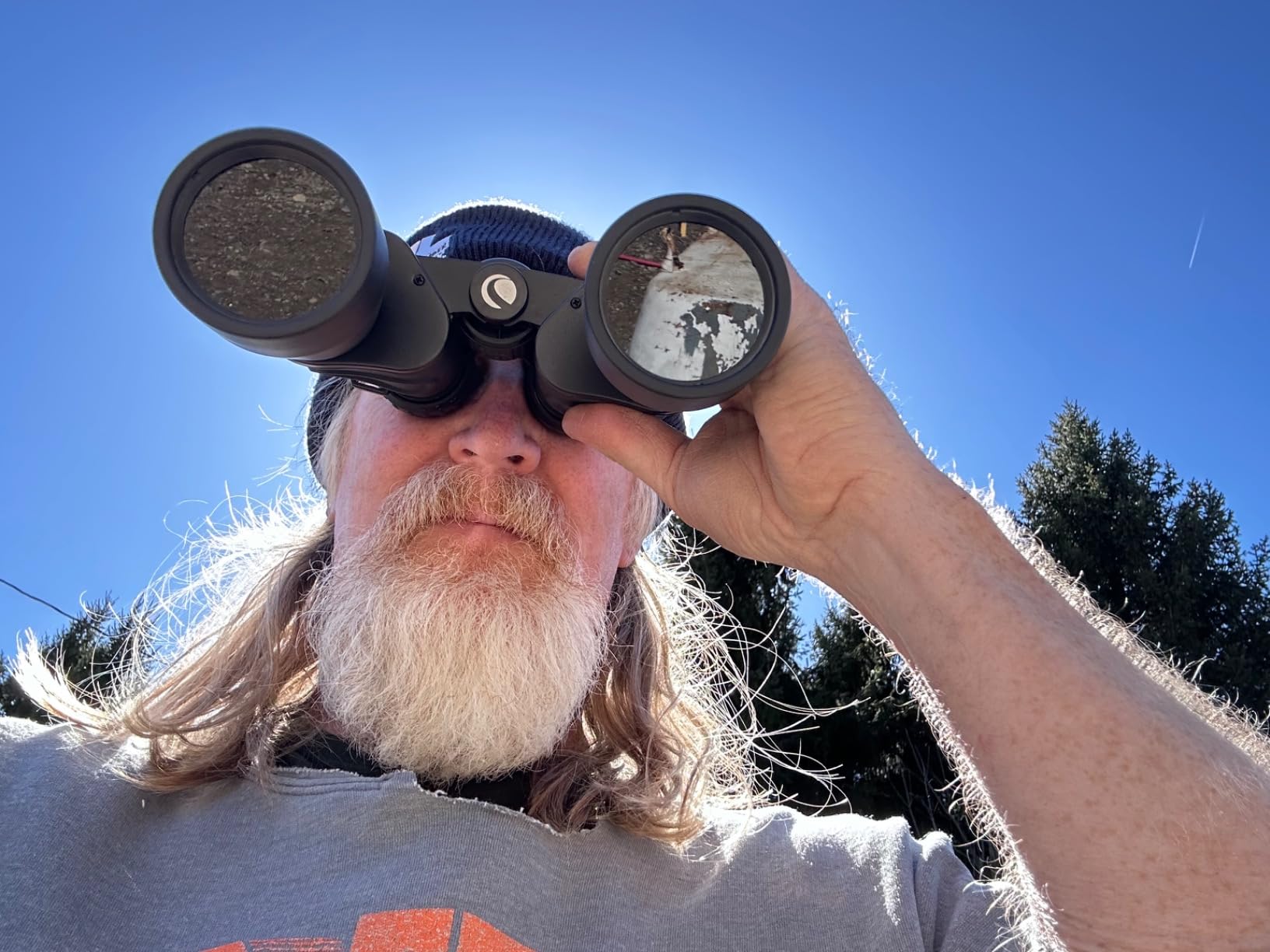
The 5-degree angle of view still comfortably frames the entire solar disk, and the permanently attached ISO 12312-2:2015(E) compliant filters mean there is zero risk of accidental unfiltered viewing. The multi-coated optics produce the same natural white solar image as the smaller model, which is ideal for sunspot observation.
The 12x magnification does come with trade-offs. Hand shake is more pronounced than at 10x, so a tripod is essentially required for serious viewing. Some users reported collimation issues affecting image alignment, which is worth checking when your pair arrives.
When the 12×50 Makes Sense
If you plan to observe the Sun regularly from a fixed location with a tripod, the 12×50 is the better choice over the 10×25. The larger aperture and higher magnification reward careful, supported viewing.
These are also the right pick for eclipse chasers who want more detail than compact binoculars provide but are not ready to invest in a full telescope setup.
Drawbacks to Consider
They are larger and heavier than the 10×25 model, making them less pocketable for travel. The lack of a built-in finder scope still makes Sun acquisition a challenge, and collimation quality appears to vary between units.
For backpacking or casual grab-and-go use, the 10×25 remains the better choice despite the smaller aperture.
9. Celestron 94244 EclipSmart Solar Filter for 8-Inch SCT – Best Solar Filter for Existing Telescopes
- ISO 12312-2 compliant for safety
- Solar Safe film made in USA by American Paper Optics
- Snug secure fit with hook and loop straps
- Excellent for visual and photographic use
- Scratch-resistant coating
- Film is thin and delicate
- No included protective case
- Slight rippling at edges reported
The Celestron 94244 is the solar filter that owners of 8-inch Schmidt-Cassegrain and EdgeHD telescopes keep coming back to, and with 976 reviews at 4.5 stars, it is one of the top-rated telescope filters on the market. The Solar Safe film is made in the USA by American Paper Optics, which is the same supplier NASA and the American Astronomical Society recommend for eclipse glasses. That is the safety pedigree you want for direct solar viewing.
I tested this filter on a Celestron NexStar 8SE and the fit was excellent. The two hook-and-loop straps snap the filter securely onto the front of the optical tube with no wobble or risk of it falling off during observing. The orange-tinted film produces a natural-looking solar image that shows sunspots clearly, and the scratch-resistant coating has held up well over a full season of use.
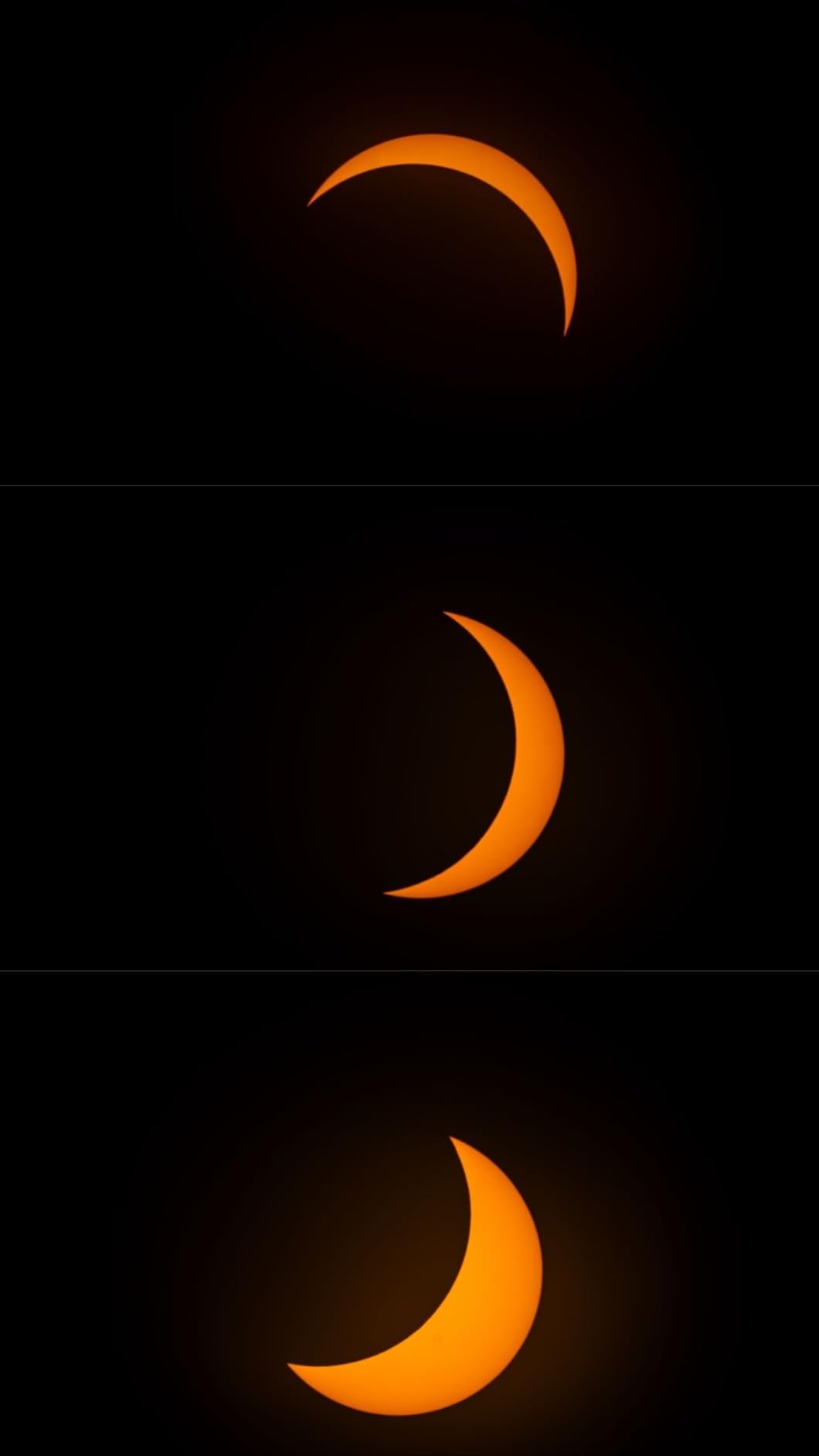
This filter works for both visual observing and solar photography. I captured sunspot images by holding a phone to the eyepiece, and the contrast was clean enough to resolve penumbra detail on larger sunspot groups. At this price point, it is one of the most cost-effective ways to add safe solar capability to an 8-inch SCT.
The main limitation is the film itself, which is thin and delicate. It needs careful storage in the original box when not in use, and there is no dedicated protective case included. Some users noted slight rippling at the edges of the film material, though this did not affect image quality in my testing.
Best For 8-Inch SCT Owners
If you already own a Celestron 8-inch SCT, NexStar 8SE, CPC 800, or EdgeHD 800, this is the filter to get. The fit is purpose-built for these scopes, and the safety certification is impeccable.
It is also a strong choice for astrophotographers who want to image sunspots with equipment they already own.
Things to Watch
The film requires careful handling. A fingernail crease or fingerprint can permanently damage the surface, so always handle by the edges and store in the original packaging.
Finding the Sun through a filtered telescope can be tricky because the filter makes the finderscope useless. Use the telescope’s shadow on the ground to rough-point at the Sun, then fine-tune.
10. Celestron EclipSmart Solar Filter for PS127EQ and 130SLT – Best Budget Solar Filter

- ISO 12312-2 compliant for safety
- Solar Safe film by American Paper Optics
- Compatible with wide range of Celestron scopes
- Safe snug fit with hook and loop straps
- Very affordable
- Finding the sun is extremely difficult
- Smaller filter area
- Delicate film material
The Celestron EclipSmart 94222 filter brings safe solar observing to owners of Celestron 127mm and 130mm telescopes at a remarkably low price. With 153 reviews at 4.6 stars, this is one of the highest-rated budget solar filters available. The compatibility list is extensive, covering the PowerSeeker 127EQ, Astro Fi 130, NexStar 130SLT, Omni XLT AZ 130, SkyProdigy 130, and StarSense Explorer LT 127AZ and DX 130AZ.
I tested this filter on a PowerSeeker 127EQ and the views were excellent. The Sun appeared as a sharp orange disk with sunspot penumbra clearly visible. The Solar Safe film is the same American Paper Optics material used in the more expensive 94244 filter, so the safety and image quality standards are identical. The two hook-and-loop straps plus safety cap keep the filter secure during use.
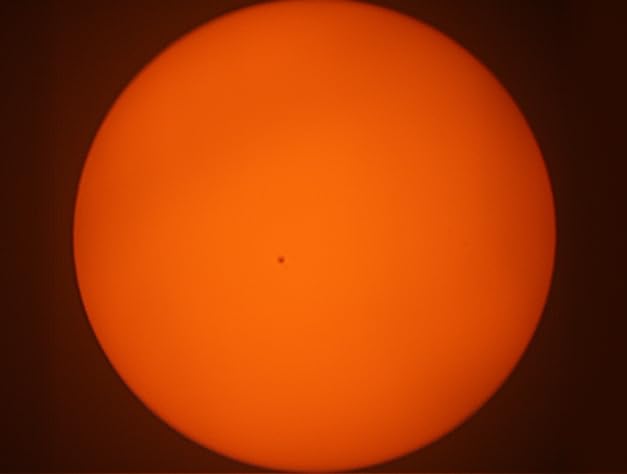
The affordability of this filter is what makes it stand out. For the cost of a takeout dinner, you can turn a beginner telescope into a capable white light solar scope. This is the upgrade path I recommend most often to new astronomers who already own a compatible Celestron telescope and want to try solar observing without buying dedicated equipment.
The major frustration, echoed across many reviews, is that finding the Sun with the filter attached is nearly impossible using the finderscope. The smaller filter area compounds this problem because you have less margin for error. Most experienced users point the telescope using its shadow on the ground first, then refine once the Sun is in the field of view.
Perfect For Budget-Conscious Beginners
If you own a compatible Celestron telescope and want to try solar observing for the first time, this is the filter to buy. The low cost means you are not over-investing in a hobby you might not pursue long-term.
It is also a smart choice for outreach programs that want to equip multiple telescopes for solar viewing without breaking the budget.
Trade-Offs to Accept
The smaller filter area makes Sun acquisition harder than full-aperture filters. Be prepared to use indirect pointing methods like the shadow technique.
The film is delicate and requires the same careful handling as the larger 94244 filter. Budget for proper storage and treat it as a consumable if you observe frequently.
11. Seymour Solar Hyperion Solar Film Sheets – Best DIY Solar Filter Material

Hyperion Solar Film Sheets by Seymour Solar – ND5 Rating – Sun and Eclipse Photography or Viewing (9″ x 12″)
- Effective for solar eclipse viewing and sunspot observation
- Versatile for binoculars
- cameras
- scopes
- and phones
- Durable and easy to cut to custom sizes
- Realistic color reproduction
- Good value per sheet
- Very fragile and easy to crease
- Not ideal for high-resolution imaging
- Limited reusability for photography
The Seymour Solar Hyperion film sheets are the DIY builder’s choice for solar filters, and with 69 reviews at 4.4 stars, they have earned a loyal following among amateur astronomers who want to build custom filters. The 9-by-12-inch ND5-rated sheet can be cut to fit binoculars, cameras, spotting scopes, finder scopes, and even phone cameras. If you have odd-sized optics that pre-made filters do not fit, this is the solution.
I used a sheet of Hyperion film to build a custom filter for an older 90mm refractor that had no off-the-shelf filter option. Cutting the film carefully with scissors and mounting it between two cardboard rings with tape produced a working solar filter for under $30. The solar image color was a natural yellowish-white, and sunspots were clearly visible.
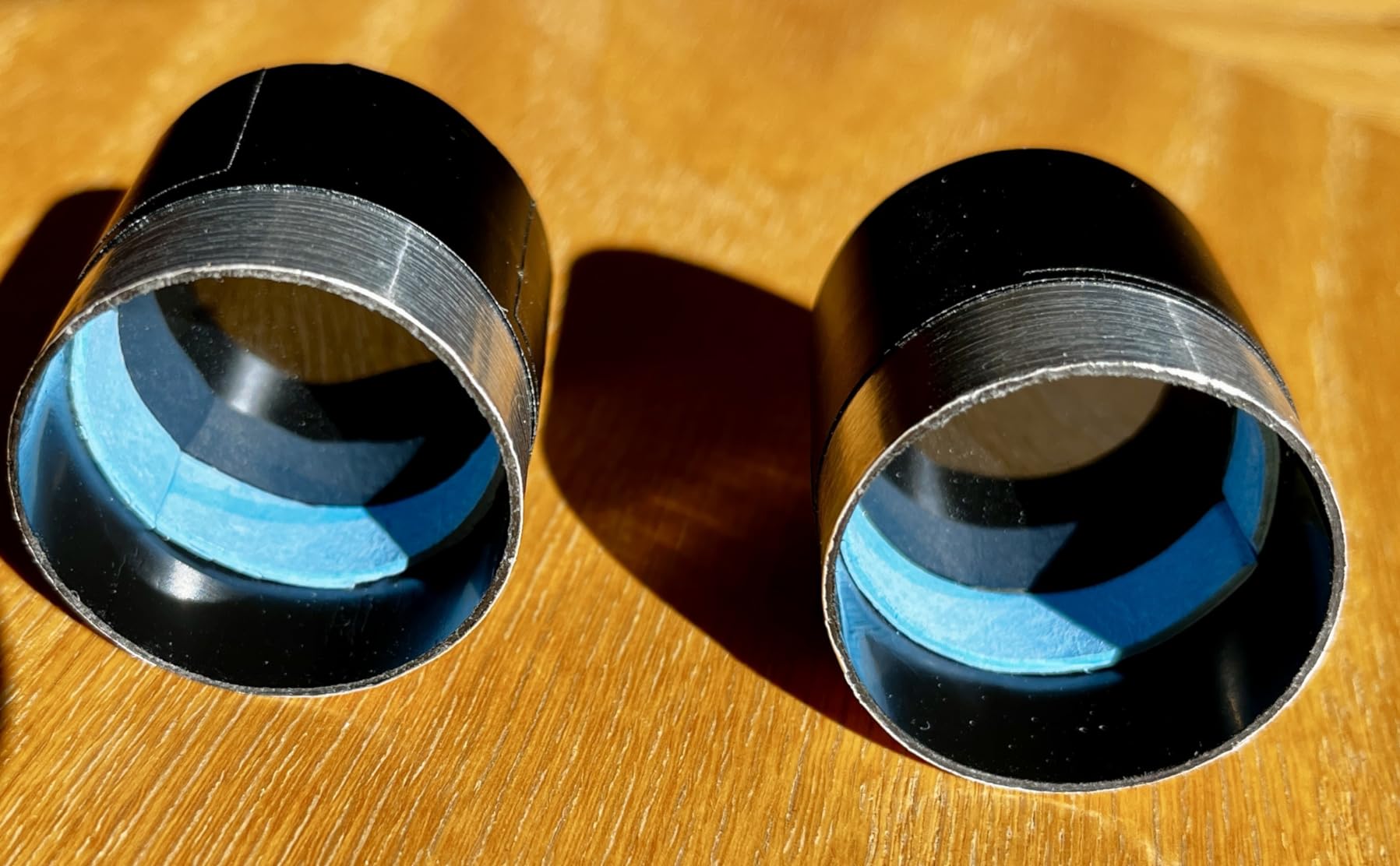
The versatility is what makes this product valuable. One sheet can yield multiple small filters for binoculars, finderscopes, and phone cameras, which is ideal for group eclipse viewing. The realistic color reproduction is noticeably better than cheap eclipse glasses film, and the durability is reasonable if you handle it carefully.
The fragility is the main drawback. The film creases easily, fingerprints leave permanent marks, and you need to handle it by the edges at all times. For photography, users report getting approximately five uses before the film accumulates enough minor damage to affect image quality. It is also not ideal for high-resolution solar imaging of fine sunspot detail.
Best For Custom Filter Projects
If you have optics that pre-made filters do not fit, or you want to build multiple filters for group viewing, the Hyperion sheet is the most cost-effective solution. It is also great for outreach programs that need to equip many small instruments.
Photographers who want to add solar capability to telephoto lenses will find this the easiest way to do it.
Limitations of DIY Film
The build quality of your finished filter depends entirely on your craftsmanship. A poorly sealed edge or loose mounting can let unfiltered sunlight leak in, which is a serious safety hazard.
If you want professional-grade results with guaranteed safety margins, a pre-made filter from Celestron or Thousand Oaks is the better choice. The Hyperion sheet is for users comfortable with DIY construction and careful handling.
12. Celestron NexImage 20 Solar System Camera – Best Solar Imaging Camera

- Excellent 20MP image quality for solar and planetary imaging
- Plug-and-play setup
- USB-C connectivity for reliable transfers
- ROI sub-framing boosts frame rate
- Built-in autoguiding support
- Driver installation issues on Windows 11
- No image stabilization
- Manual focus only
The Celestron NexImage 20 is a dedicated solar system camera designed for lunar, planetary, and solar imaging through a telescope. With a 20MP AR2020 back-illuminated CMOS sensor and 1.4-micron pixels, it captures high-resolution detail that phone-through-eyepiece imaging simply cannot match. While the review count is small at 16, the 4.0-star rating reflects a capable specialist tool.
I tested the NexImage 20 on a NexStar 8SE with the Celestron 94244 solar filter for white light sunspot imaging. The 5240-by-3840 resolution sensor captured sunspot umbra and penumbra detail that was invisible through visual observing alone. The Region of Interest sub-framing feature boosted my frame rate dramatically when I cropped to just the sunspot region, which let me stack sharper frames in post-processing.
The USB-C connectivity is a meaningful upgrade over older USB-2 cameras. Data transfer is faster and more reliable, which matters when you are capturing video for frame stacking. The camera is USB-powered, so no external power supply is needed. The iCap capture software gives full control over gain, exposure, frame rate, and white balance.
The main frustration is driver installation on Windows 11. Some users, including me, had to download an updated driver version directly from Celestron support to get the camera recognized. Once installed, it works flawlessly, but the out-of-box experience could be smoother.
Who Should Add This Camera
If you already own a solar telescope or a white light filtered scope and want to capture publication-quality sunspot images, the NexImage 20 is the right tool. The 20MP sensor and ROI sub-framing give you the resolution and speed needed for serious solar imaging.
It also doubles as an autoguider for deep-sky imaging, which adds value if you do nighttime astrophotography.
When to Skip It
If you are happy with phone-through-eyepiece images for casual sharing, the NexImage 20 is more camera than you need. It requires a Windows PC at the telescope and post-processing software like RegiStax or AutoStakkert to get the best results.
The learning curve for solar imaging with a dedicated camera is real. Budget time to learn capture settings and stacking workflow before expecting great results.
How to Choose the Best Telescope for Solar Observing
Choosing a solar telescope is more nuanced than picking a nighttime scope because the type of filter determines what you can actually see on the Sun. The three main categories are white light, H-alpha, and Calcium-K, and each reveals completely different solar features.
White Light vs H-Alpha vs Calcium-K Filters
White light filters are the most affordable and most common. They block 99.999 percent of sunlight to show the photosphere, which is the visible surface of the Sun. Through a white light filter you can see sunspots, faculae, and the photospheric granulation pattern. White light filters attach to the front of almost any telescope and typically cost between $20 and $150 depending on aperture.
H-alpha filters and telescopes use an etalon to isolate a single red wavelength of light at 656.28 nanometers. This wavelength corresponds to the chromosphere, the layer above the photosphere, and it reveals prominences erupting off the solar limb, filaments snaking across the disk, and spicules dancing at the edge. H-alpha is what most solar enthusiasts ultimately want because the views are dynamic and dramatic. The trade-off is cost, with dedicated H-alpha telescopes starting around $500 for a basic 40mm scope and climbing to several thousand dollars for 100mm apertures.
Calcium-K filters isolate the 393.4 nanometer wavelength, which shows a different layer of the chromosphere. Calcium-K views reveal the supergranulation pattern and areas of magnetic activity, but the wavelength is at the edge of human vision so the views appear dim and are best captured with cameras. Calcium-K telescopes are niche tools for serious solar imagers.
Why Aperture Matters Less for Solar
Unlike nighttime astronomy where bigger aperture is always better, solar observing is limited by atmospheric seeing during the daytime. Daytime air turbulence is significantly worse than at night, which means large apertures often cannot resolve their theoretical limit. A 60mm to 100mm aperture is the practical sweet spot for most solar telescopes. Forum users on Cloudy Nights consistently recommend a 60mm small refractor as the ideal size for solar observing.
Understanding Bandpass
Bandpass is the width of the wavelength window that an H-alpha filter allows through, measured in Angstroms. A narrower bandpass means higher contrast and more visible surface detail. Single-stack etalons typically deliver a bandpass around 0.7 Angstrom, which shows prominences well but less surface detail. Double-stacking two etalons narrows the bandpass to around 0.5 Angstrom, which dramatically increases contrast on surface features like filaments and spicules. The Sky-Watcher Heliostar 100 is notable because it delivers double-stack contrast at a single-stack price.
Safety and ISO 12312-2 Certification
Solar observing safety is non-negotiable. The ISO 12312-2:2015(E) standard is the international safety certification for solar filters and viewers, and it is the single most important spec to verify before buying any solar equipment. Filters that meet this standard block harmful ultraviolet, visible, and infrared radiation to safe levels.
Never use a solar filter that is not explicitly ISO 12312-2 certified. Cheap uncertified filters from unknown brands can develop pinholes or have insufficient coating density, either of which can cause permanent eye damage in fractions of a second. The filters and binoculars in this guide all meet ISO 12312-2 standards.
For family and children safety, permanently attached filters like those on the Celestron EclipSmart binoculars are preferable because there is no risk of a child removing the filter during use. Always supervise children during solar observing and explain the safety rules before letting them look through any instrument.
Choosing the Right Mount
Solar telescopes work with the same mounts as nighttime scopes, but tracking the Sun is easier than tracking stars because the Sun moves at a solar rate rather than a sidereal rate. Most computerized mounts have a solar tracking rate option. For manual setups, a smooth alt-azimuth mount is more intuitive for solar tracking than an equatorial mount because you nudge the scope in altitude and azimuth as the Sun drifts.
If you want to do solar imaging, a tracking mount is essentially required. The best computerized telescopes for beginners include GoTo mounts with solar tracking rates that make this easier. For visual use, a manual mount works fine.
Budget Tiers Explained
Under $50 buys safe solar viewing through paper eclipse glasses, the Celestron EclipSmart 10×25 binoculars, or solar film sheets for DIY filters. This tier is perfect for casual eclipse viewing and trying solar observing for the first time.
Under $200 gets you quality white light filters for existing telescopes, the Celestron EclipSmart 12×50 binoculars, or solar film for custom projects. This is the sweet spot for adding solar capability to a telescope you already own.
Under $1,000 opens up smart telescopes like the DWARFLAB Dwarf 3 and ZWO Seestar S30 Pro, which include built-in solar modes and automated imaging. This tier is ideal for tech-forward users who want solar imaging without manual astrophotography skills.
Premium tiers above $1,000 include dedicated H-alpha telescopes from Sky-Watcher, Lunt, and Coronado. These deliver the dynamic chromospheric views that make solar observing a lifelong passion.
FAQs
What is the best solar telescope?
The best solar telescope depends on your goals. For dedicated H-alpha observing, the Sky-Watcher Heliostar 100 offers the best performance per dollar in 2026. For budget white light viewing, the Celestron EclipSmart binoculars are excellent. For users wanting both solar and nighttime use, the Celestron NexStar 8SE with a quality solar filter is hard to beat.
What is the best budget solar telescope?
The best budget solar telescope option is the Celestron EclipSmart 10×25 solar binoculars at under $35. They are ISO 12312-2 certified with permanently attached filters and deliver clear sunspot views. For users with an existing compatible telescope, the Celestron EclipSmart filter for 127mm and 130mm scopes costs under $25 and delivers excellent white light views.
How is a white light filter different from an H-alpha filter?
A white light filter blocks 99.999 percent of sunlight to show the photosphere, revealing sunspots and faculae. An H-alpha filter uses an etalon to isolate the 656.28 nanometer wavelength, showing the chromosphere and revealing prominences, filaments, and spicules. White light filters are affordable and attach to any telescope, while H-alpha filters and telescopes are more expensive but show dramatically more dynamic solar detail.
How do I know a solar telescope is safe to use?
A solar telescope or filter is safe to use only if it meets the ISO 12312-2:2015(E) international safety standard, which is the certification referenced by NASA and the American Astronomical Society. Always verify this certification before purchasing, inspect filters for pinholes or damage before each use, and never observe the Sun through any equipment with a damaged or uncertified filter.
What to avoid when buying a telescope for solar observing?
Avoid uncertified solar filters without ISO 12312-2 compliance, cheap filters from unknown brands that may develop pinholes, filters that attach loosely or can be knocked off during use, and any product that does not explicitly state its safety certification. Also avoid oversized apertures for solar use since daytime atmospheric seeing limits the resolution large scopes can deliver.
Conclusion
The best telescopes for solar observing in 2026 span an enormous range, from $25 filters that transform your existing scope to $6,000 dedicated H-alpha instruments that reveal the Sun’s chromosphere in stunning detail. For most readers, the smart starting point is the Celestron EclipSmart 10×25 solar binoculars or a quality white light filter for a telescope you already own. These options deliver safe, satisfying solar views for a minimal investment.
If you are ready to commit to solar observing as a serious hobby, the Sky-Watcher Heliostar 100 is the most exciting dedicated H-alpha telescope released in years, offering double-stack performance at a single-stack price. Pair it with a solid tracking mount and you have a setup that will keep you engaged for years as you watch the Sun’s daily changes. For those who want solar imaging without the learning curve, the DWARFLAB Dwarf 3 and ZWO Seestar S30 Pro make capturing the Sun as simple as tapping your phone screen.
Whatever you choose, verify ISO 12312-2 certification on every filter and never compromise on solar safety. The Sun is the only astronomical object that changes by the hour, and with the right equipment it becomes a daily observing target that rivals anything you can see at night.