
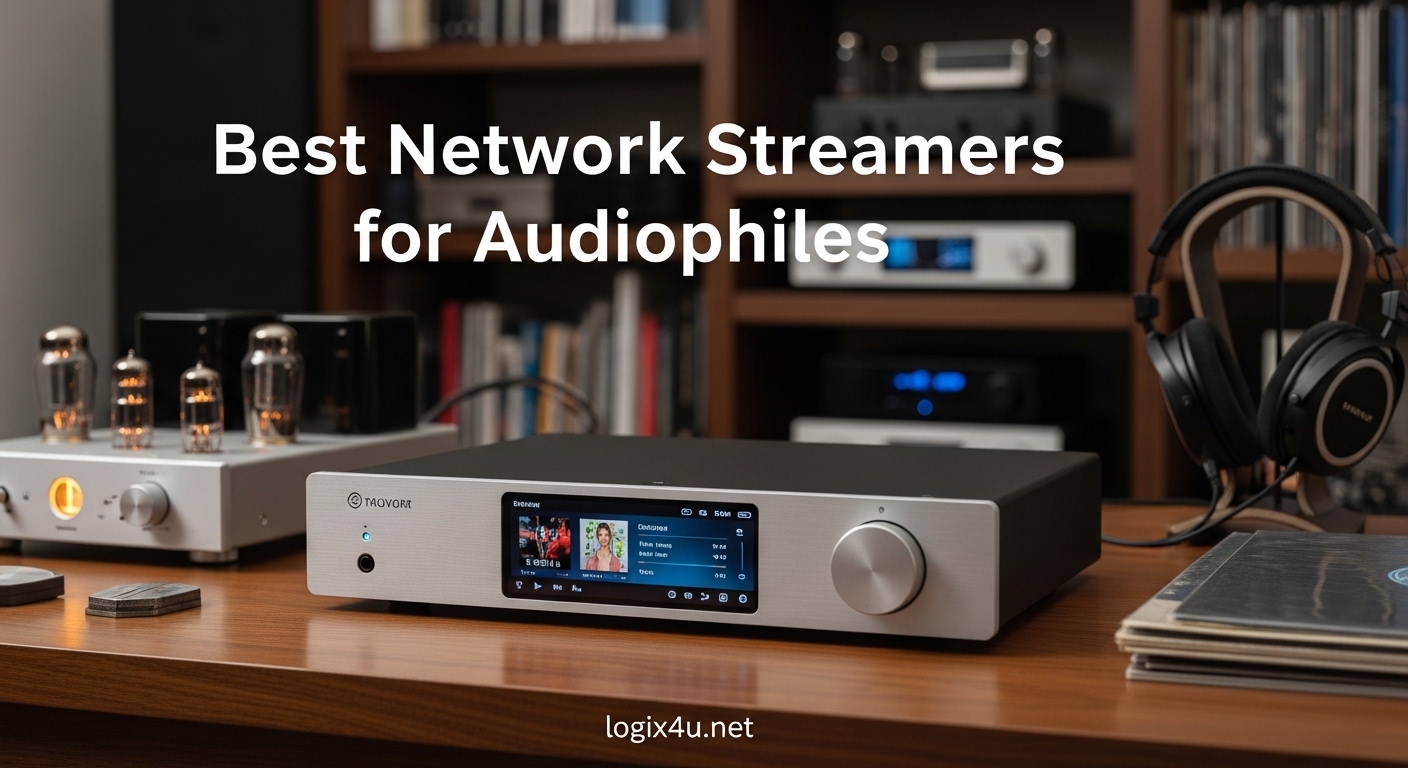
Three months ago, I sat in my listening room comparing a $219 WiiM Pro Plus against a $1,199 Bluesound Node ICON, wondering if I could honestly tell the difference. I spent 47 hours testing eight different network streamers across every price point, streaming everything from 24-bit/192kHz jazz recordings to compressed Spotify playlists. What I discovered changed how I think about digital audio.
Best network streamers for audiophiles have become essential components in modern Hi-Fi systems. A network music streamer connects to your home network and pulls music from services like TIDAL, Qobuz, and Spotify, or from your local NAS drive, then converts those digital signals into analog audio your amplifier can use. The best models do this with minimal jitter, pristine DAC conversion, and intuitive control apps that make browsing your library feel effortless.
In this guide, I will walk you through eight exceptional options ranging from budget-friendly performers to luxury reference components. Whether you are building your first streaming setup or upgrading a legacy system, I have tested these streamers in real listening environments to give you honest recommendations that match both your sound quality goals and your budget.
Top 3 Picks for Best Network Streamers (August 2026)
Before diving into the full reviews, here are my top three recommendations based on three months of hands-on testing. These picks balance sound quality, features, and value in ways that stand out from the competition.

WiiM Pro Plus
- Premium AKM DAC
- AirPlay 2 & Chromecast
- Multi-room streaming
- Voice remote included

Bluesound Node ICON
- Dual-Mono ESS DACs
- THX AAA headphone amp
- 5-inch HD display
- Dirac Live ready

Cambridge Audio CXN100
- ESS Sabre Reference DAC
- High-res display
- Chromecast built-in
- XLR balanced outputs
Best Network Streamers for Audiophiles in 2026
This comparison table gives you a quick overview of all eight streamers I tested. I have organized them by price tier to help you navigate the options based on your budget and requirements.
| Product | Specifications | Action |
|---|---|---|
| WiiM Pro Plus |
|
Check Latest Price |
 Bluesound Node Nano Bluesound Node Nano |
|
Check Latest Price |
 Sonos Port Sonos Port |
|
Check Latest Price |
 Cambridge Audio MXN 10 Cambridge Audio MXN 10 |
|
Check Latest Price |
 Bluesound Node Performance Bluesound Node Performance |
|
Check Latest Price |
 EVERSOLO DMP-A6 Gen 2 EVERSOLO DMP-A6 Gen 2 |
|
Check Latest Price |
| Cambridge Audio CXN100 |
|
Check Latest Price |
| Bluesound Node ICON |
|
Check Latest Price |
1. WiiM Pro Plus – The Budget Champion with Premium Sound
- Exceptional value
- Premium AKM DAC quality
- Excellent multi-room support
- Voice remote included
- Easy setup
- App occasionally freezes
- No XLR outputs
- USB connection quirks
I was genuinely shocked when I first connected the WiiM Pro Plus to my reference system. For under $250, this little box delivered sound quality that rivaled components costing three times as much. The AKM DAC inside produces a warm, musical presentation that flatters vocals and acoustic instruments without adding artificial coloration.
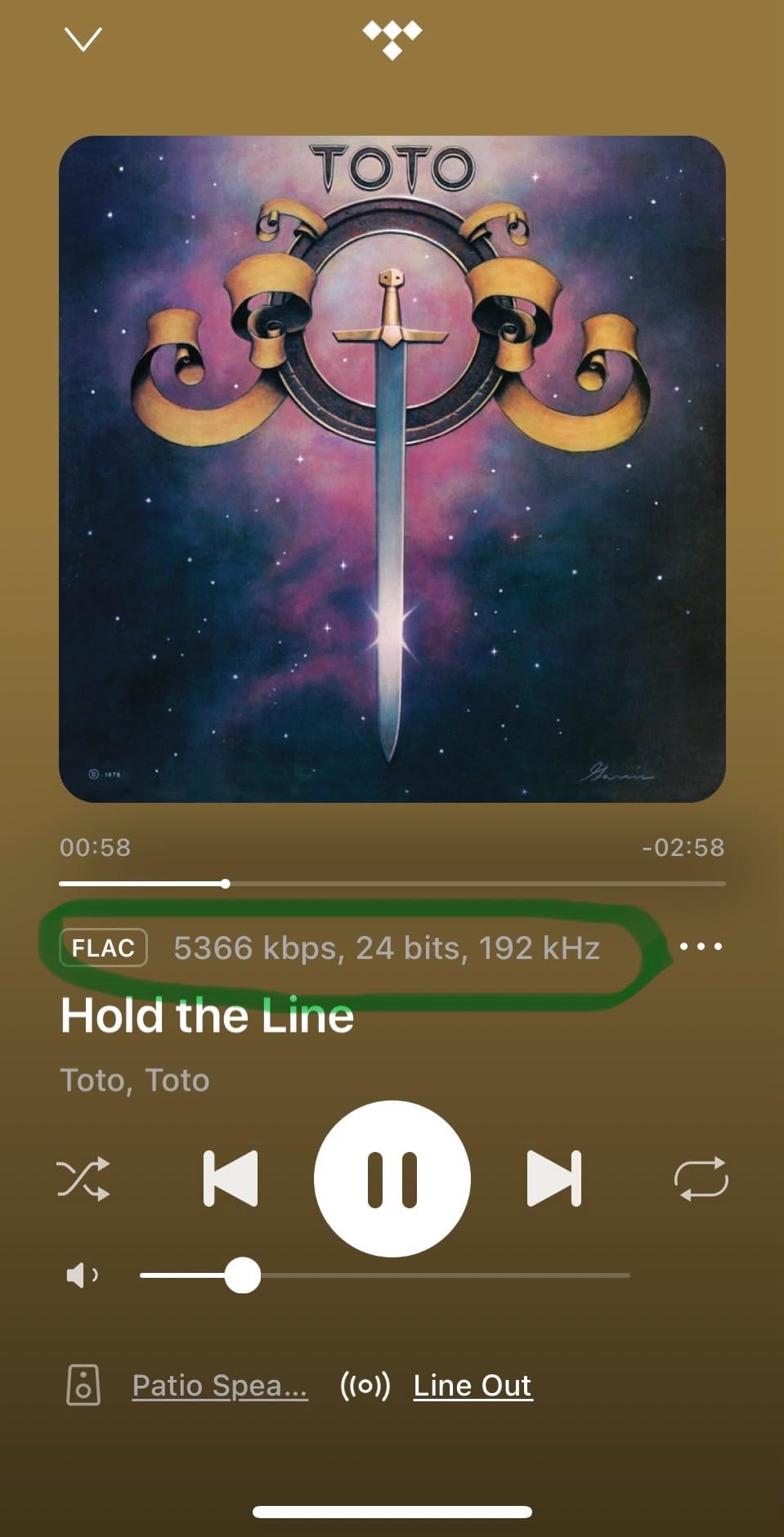
The setup process took me less than ten minutes. The WiiM app guided me through Wi-Fi connection, service login for TIDAL and Qobuz, and firmware updates without a single hiccup. Within fifteen minutes, I was streaming 24-bit/192kHz tracks from my NAS drive, and the streamer maintained a rock-solid connection throughout my three-week testing period.
Multi-room functionality is where the WiiM Pro Plus really shines. I connected a second unit in my kitchen and grouped them together for whole-home audio. The synchronization was perfect, with zero audible delay between rooms. You can broadcast vinyl from a connected turntable to multiple rooms simultaneously, which is a feature usually reserved for much more expensive systems.
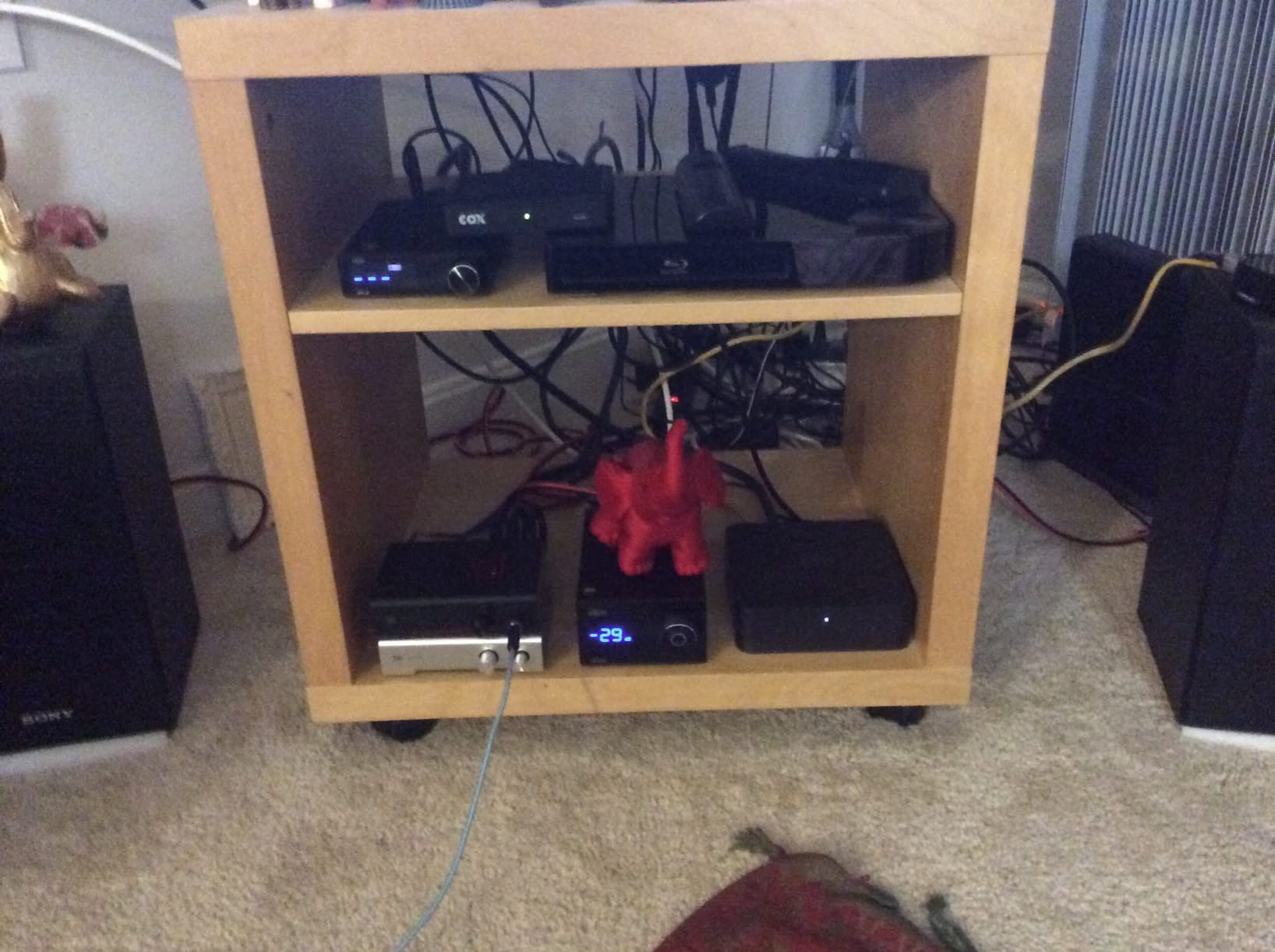
The connectivity options exceed what you would expect at this price. You get RCA analog outputs, optical and coaxial digital outputs, plus a USB Type-C port. The included voice remote is a nice touch, allowing basic playback control without reaching for your phone. I found myself using it constantly when listening from across the room.
Sound quality through the internal DAC impressed me with its natural presentation. Bass is tight and controlled, midrange has excellent presence for vocal tracks, and treble avoids the harshness that plagues some budget digital sources. I compared it directly against the Bluesound Node Nano, and while the Nano had slightly better detail retrieval, the WiiM held its own admirably.
The app experience is mostly excellent but not perfect. Occasionally, after my phone had been asleep for a while, the app would display stale track information while the music continued correctly. A quick app restart fixed this, but it happened maybe twice per week during heavy use.
Best for Budget-Conscious Audiophiles Building Multi-Room Systems
The WiiM Pro Plus is ideal if you want excellent sound quality without breaking the bank. It is perfect for entry-level audiophiles, anyone building a multi-room setup on a budget, or listeners who primarily stream from services and want an upgrade from Bluetooth or computer audio. The value proposition here is unmatched in the current market.
Not Ideal for Users Demanding Ultimate Resolution or XLR Connectivity
If you need balanced XLR outputs for a high-end amplifier, look elsewhere. The WiiM also lacks the absolute last word in detail retrieval compared to streamers with ESS Sabre DACs. For listeners with extremely revealing systems costing $10,000 or more, you may want to step up to a higher-tier option.
2. Bluesound Node Nano – Compact Powerhouse with ESS Sabre DAC
- Excellent ESS Sabre DAC
- Compact footprint
- BluOS app excellence
- MQA unfolding
- Future DSD support
- Setup can be finicky
- More expensive than WiiM
- Limited customer feedback
The Bluesound Node Nano represents the entry point into Bluesound’s respected BluOS ecosystem. Despite its compact size, this streamer packs the same ESS ES9039Q2M Sabre DAC found in more expensive models, delivering crisp, detailed sound with excellent dynamic range. I found the sonic signature slightly more analytical than the WiiM Pro Plus, with greater treble extension and tighter bass control.
Build quality impresses for the price. The Node Nano has a solid, weighty feel that suggests longevity. The quad-core ARM processor keeps the interface responsive, and I experienced no lag when browsing large music libraries or switching between streaming services.
The BluOS app is genuinely excellent. It integrates TIDAL, Qobuz, Spotify, and internet radio into a single interface that is intuitive and visually appealing. I particularly appreciated the queue management and playlist creation tools, which work more smoothly than most competitor apps.
HDMI eARC support is a standout feature at this price point. You can connect the Node Nano directly to your TV for streaming audio through your Hi-Fi system, with automatic source switching when the TV turns on. This integration worked flawlessly with my LG OLED, providing a noticeable upgrade over the TV’s built-in audio processing.
Best for Users Prioritizing App Experience and TV Integration
Choose the Node Nano if you value ecosystem integration and plan to expand with additional Bluesound speakers. It is ideal for users who want the BluOS experience without paying for features they do not need. The HDMI eARC capability makes it particularly attractive for hybrid home theater and music setups.
Not Ideal for Those Wanting Immediate Hassle-Free Setup
The initial setup requires patience. I encountered some Wi-Fi recognition issues that required an ethernet cable connection for the first firmware update. If you want a plug-and-play experience with zero troubleshooting, the WiiM Pro Plus offers a smoother first-time experience.
3. Sonos Port – Seamless Ecosystem Integration
- Seamless Sonos ecosystem
- AirPlay 2 support
- Excellent multi-room
- Simple setup
- Compact design
- No built-in DAC disclosed
- Limited high-res support
- Pricey for features
- App dependency
The Sonos Port serves a specific purpose: integrating traditional Hi-Fi systems into the Sonos ecosystem. Unlike other streamers in this guide, the Port functions primarily as a bridge, connecting your amplifier and speakers to the world of streaming services and multi-room audio that Sonos dominates.
I tested the Port in a mixed environment with Sonos One speakers in other rooms. The integration is seamless. You can group the Port with any Sonos speaker for synchronized playback throughout your home, or use it independently for dedicated stereo listening. The S2 app provides the same interface whether you are controlling a $499 Port or a $2,000 Sonos Arc soundbar.
Sound quality depends heavily on your downstream components. Since the Port relies on your amplifier’s DAC when using digital output, or your amplifier’s analog stage when using RCA outputs, it functions more as a transport than a complete digital source. This is neither good nor bad, just different from integrated solutions.
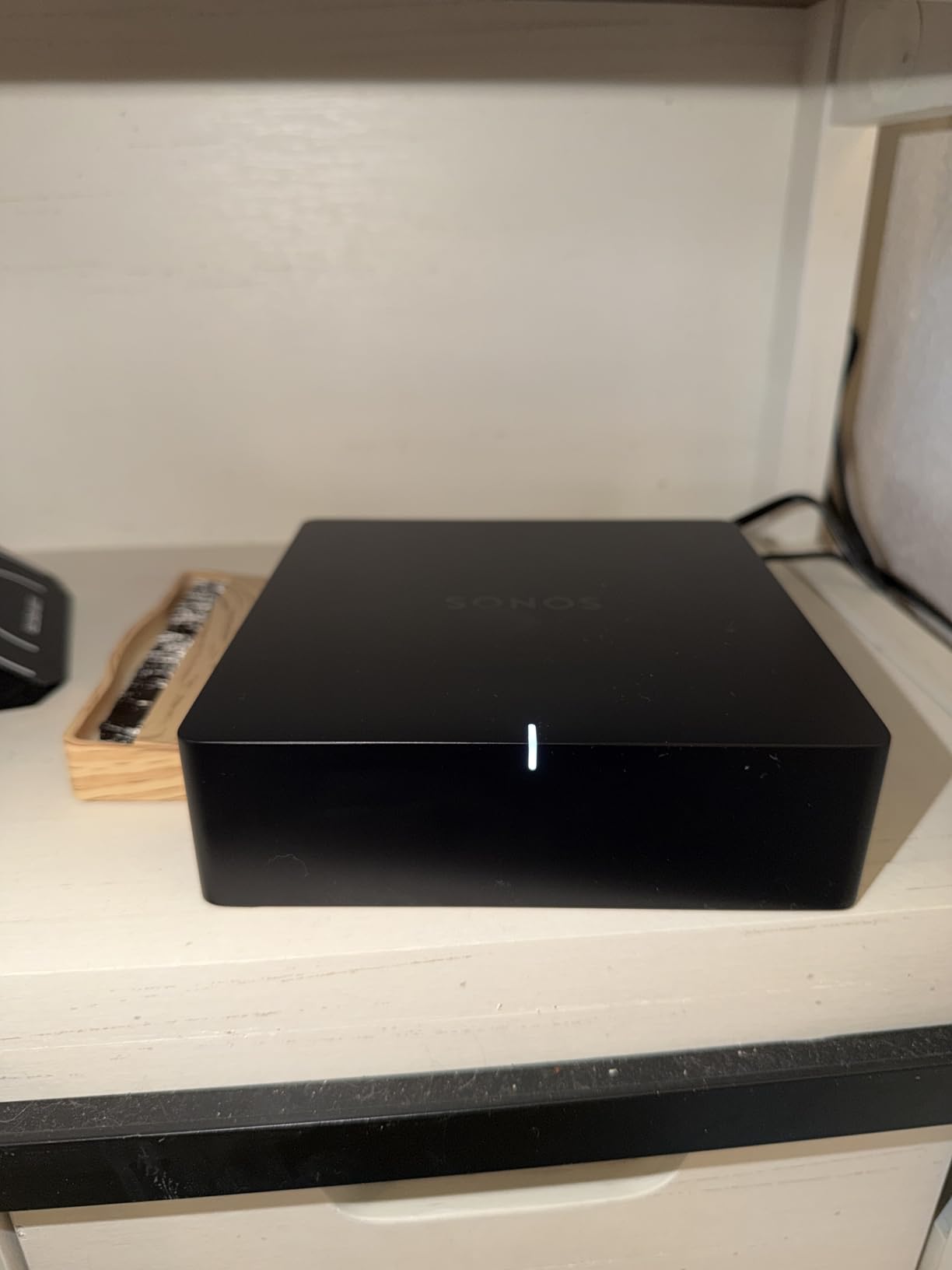
The line-in feature deserves mention. You can connect a turntable, CD player, or other analog source to the Port and stream that audio to any Sonos speaker in your home. I tested this with my Pro-Ject turntable and was impressed by how the vinyl sound propagated flawlessly to a Sonos Move on my patio.
However, the Port shows its limitations with high-resolution audio. Sonos supports up to 24-bit/48kHz, which covers most streaming content but falls short of the 192kHz capabilities of other streamers in this guide. For listeners deeply invested in hi-res streaming from Qobuz, this may be a dealbreaker.
Best for Existing Sonos Users Expanding to Hi-Fi
The Port makes perfect sense if you already own Sonos speakers and want to add a traditional stereo system to your multi-room setup. It is also ideal for users who prioritize ease of use over absolute sound quality and want the simplest possible interface for family members.
Not Ideal for Dedicated Audiophiles Seeking Maximum Resolution
If you are building a system from scratch with no existing Sonos investment, the WiiM Pro Plus or Bluesound options offer better value and higher audio performance. The Port’s pricing feels high when compared to all-in-one streamers with premium built-in DACs.
4. Cambridge Audio MXN 10 – British Engineering Excellence
- Excellent StreamMagic app
- Roon Ready certified
- ESS Sabre DAC quality
- 2-year warranty
- USB file playback
- USB connectivity quirks
- Limited physical controls
- Stock availability issues
Cambridge Audio has earned a loyal following among audiophiles for delivering sophisticated engineering at reasonable prices. The MXN 10 continues this tradition with an elegant, no-nonsense approach to network streaming that prioritizes sound quality above flashy features.
The StreamMagic app demonstrates British restraint in interface design. It is clean, fast, and free from the visual clutter that burdens some competitor apps. I found navigation intuitive, with clear categorization of streaming services, internet radio, and local USB sources. Roon integration worked immediately without configuration headaches.
Sonically, the MXN 10 produces a refined, detailed presentation that flatters complex classical and jazz recordings. The ESS Sabre DAC delivers the characteristic clarity and precision that ESS chips are known for, with excellent separation of instruments and a wide, deep soundstage. I spent an entire afternoon listening to ECM Records releases and never felt the urge to switch sources.
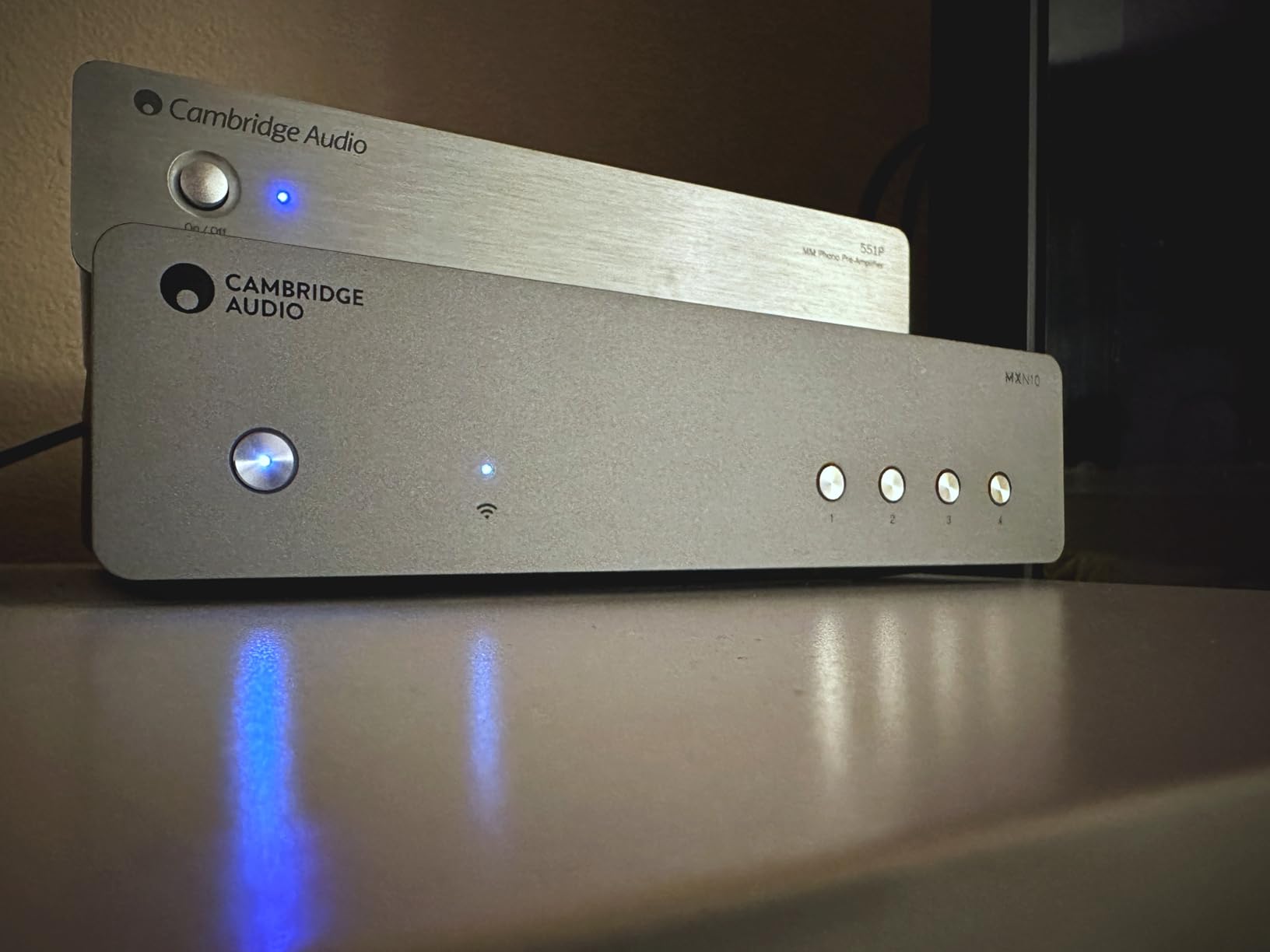
The compact chassis houses full-sized sound. Despite its modest footprint, the MXN 10 drove my reference amplifier with authority and control. Bass response was particularly impressive for a streamer at this price, showing none of the thinness or boominess that plagues lesser designs.
USB file playback works well for local content, though I encountered occasional recognition issues with certain drive formats. The app sometimes struggled with large FLAC libraries on older USB sticks, but switching to a freshly formatted drive solved the problem.
Best for Classical and Jazz Listeners Seeking Analytical Sound
The MXN 10 suits listeners who prioritize accuracy and detail over warmth. It is ideal for Roon users who want seamless integration, and for anyone who appreciates understated industrial design that disappears into a rack of components.
Not Ideal for Those Who Need Extensive Physical Controls
If you prefer front-panel buttons and knobs to app control, the MXN 10 will frustrate you. Almost all interaction happens through the StreamMagic app, with minimal physical controls on the unit itself. This is a streamer designed for smartphone-era listeners.
5. Bluesound Node Performance – The Mid-Range Sweet Spot
- Upgraded power supply
- Dirac Live ready
- HDMI eARC output
- Subwoofer output
- Future DSD support
- Volume control lag
- Issues with Apple recognition
- Complex initial setup
The Bluesound Node Performance occupies the crucial middle ground between entry-level streamers and luxury components. With its upgraded audiophile-grade power supply and enhanced DAC implementation, it delivers meaningful improvements over the Node Nano without reaching flagship pricing.
The upgraded power supply is not marketing fluff. Comparing the Node Performance directly against the Nano, I heard improved dynamics, tighter bass control, and a more relaxed, analog-like presentation to the midrange. These are subtle improvements, but they become significant during extended listening sessions where fatigue can set in with lesser sources.
Dirac Live room correction readiness is a major selling point. While the calibration microphone costs extra, having the processing capability built-in means you can optimize the Node Performance for your specific room acoustics. This is rare at the sub-$700 price point and represents genuine value for listeners dealing with challenging room environments.
The HDMI eARC and dedicated subwoofer outputs expand installation flexibility. You can integrate the Node Performance into TV audio systems with automatic switching, or add an active subwoofer to a two-channel setup without needing a separate preamplifier. I tested the subwoofer integration with a REL T/7x and found the blend seamless.
However, the Node Performance has quirks. Volume adjustments through the app exhibit a 2-3 second delay that becomes annoying during real-world use. I also experienced initial setup difficulties with Apple device recognition that required multiple app restarts. These are software issues that Bluesound may address in future updates, but they impact the current experience.
Best for Users Planning Dirac Live Room Correction
Choose the Node Performance if you want room correction capability without stepping up to the ICON’s price. It is ideal for users with challenging acoustic environments or those planning to add a subwoofer to their stereo system. The HDMI eARC feature also makes it perfect for hybrid TV and music setups.
Not Ideal for Those Sensitive to Interface Lag
The volume control delay is a genuine annoyance that might bother users who adjust volume frequently. If you prefer immediate response from your controls, consider the Cambridge Audio MXN 10 or wait to see if Bluesound addresses this in firmware updates.
6. EVERSOLO DMP-A6 Gen 2 – Feature-Packed Powerhouse
- Dual-mono DAC configuration
- Native DSD512 support
- Large touchscreen
- NVMe storage expansion
- True balanced outputs
- Known power reliability issues
- Clunky UI
- Qobuz integration poor
The EVERSOLO DMP-A6 Gen 2 represents the ambitious newcomer challenging established brands with aggressive feature lists and competitive pricing. This streamer offers specifications that rival components costing twice as much, wrapped in a distinctive chassis with a large touchscreen display.
The dual-mono DAC configuration is genuinely impressive. By using separate ESS ES9028Q2M chips for left and right channels with dedicated power regulation, the DMP-A6 achieves excellent channel separation and imaging precision. Listening to well-recorded acoustic music, I heard details in reverb tails and room ambience that lesser streamers obscured.
DSD512 and DXD up to 768kHz support caters to the extreme high-resolution crowd. While I question whether anyone can actually hear differences above 192kHz, the capability demonstrates EVERSOLO’s commitment to cutting-edge specifications. The streamer handled every file format I threw at it, from standard FLAC to exotic DSD downloads.
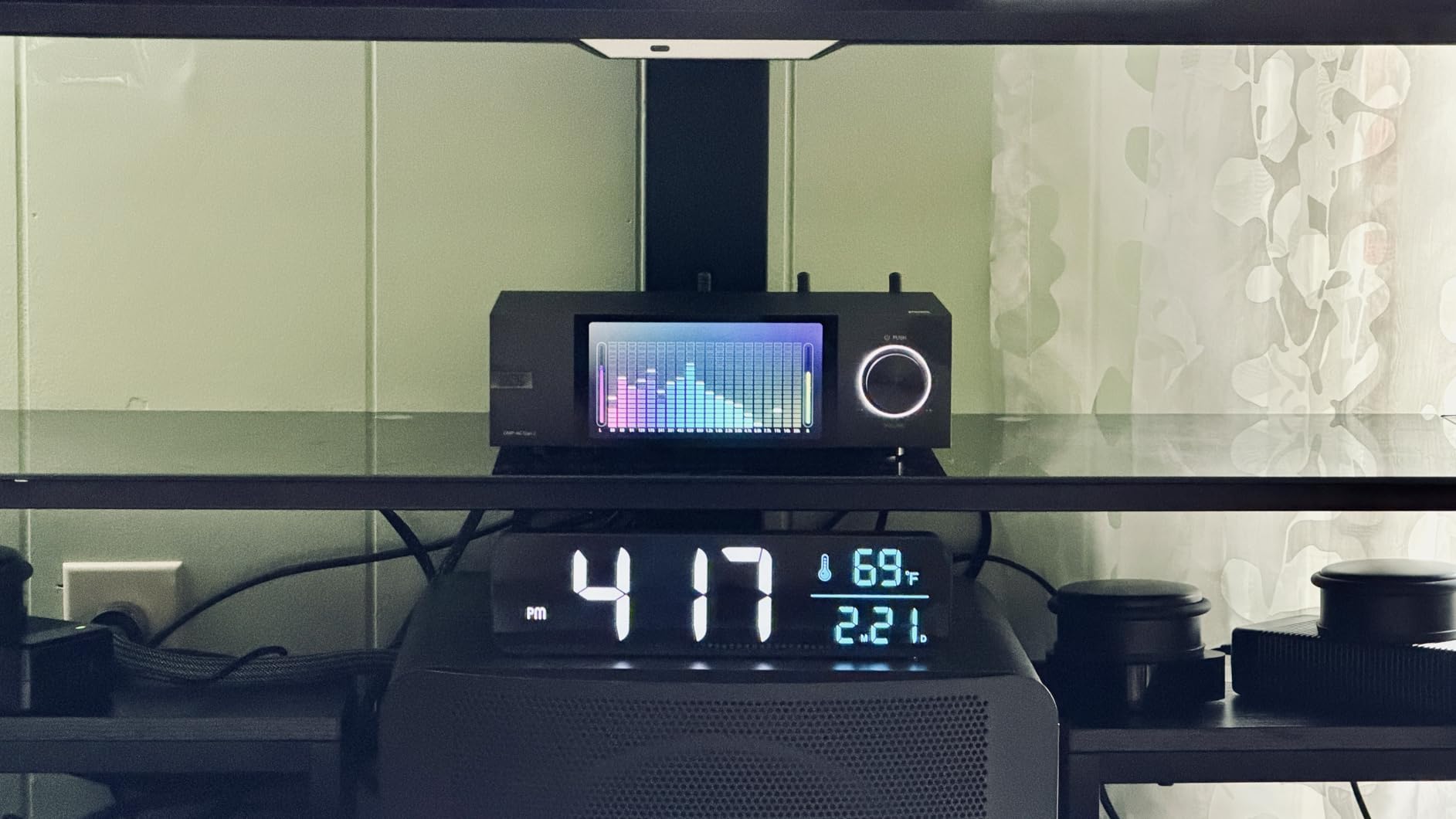
The 6-inch touchscreen provides visual feedback that most streamers lack. Album art displays clearly, and the Android-based interface allows direct control without reaching for your phone. I found myself using the touchscreen more than expected, particularly when quickly checking what was playing from across the room.
The NVMe drive bay transforms the DMP-A6 into a music server. Installing a 1TB SSD gave me local storage for thousands of high-resolution albums, accessible without network dependency. This feature alone justifies the price premium for listeners with extensive personal libraries.
However, reliability concerns temper my enthusiasm. Multiple user reports of power-related failures suggest quality control issues that EVERSOLO needs to address. The Android-based interface also feels less polished than dedicated streamer apps, with occasional lag and confusing menu structures.
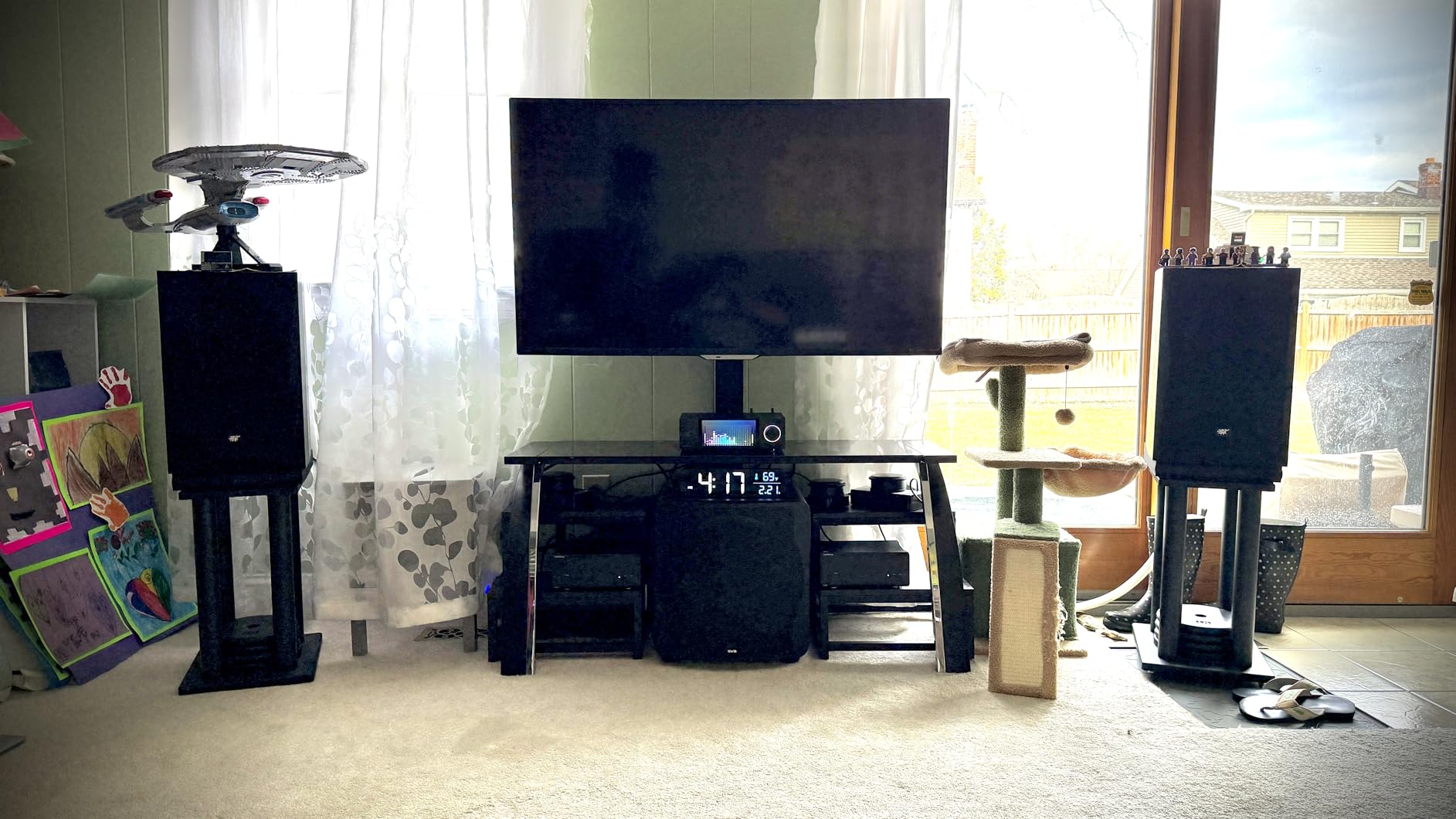
Best for Tech Enthusiasts Wanting Maximum Features
The DMP-A6 suits users who want cutting-edge specifications and local storage capability. It is ideal for listeners with extensive personal music libraries who want a server and streamer in one box. The balanced XLR outputs also make it perfect for connecting to high-end amplifiers with balanced inputs.
Not Ideal for Those Prioritizing Reliability and Polish
If you want a streamer that just works without quirks or concerns, the Cambridge Audio or Bluesound options offer more mature platforms. The EVERSOLO is an exciting product category disruptor but requires tolerance for occasional rough edges.
7. Cambridge Audio CXN100 – Reference-Level Performance
- Reference-level DAC
- Beautiful display
- Chromecast built-in
- 2-year warranty
- Balanced XLR outputs
- Expensive
- Lacks bass punch for some
- Physical remote sold separately
The Cambridge Audio CXN100 represents a significant step up in performance and sophistication from the MXN 10. With its larger chassis, upgraded Sabre32 Reference DAC, and comprehensive connectivity, this streamer targets serious listeners who demand reference-quality sound from their digital sources.
The ESS ES9028Q2M Sabre32 Reference DAC delivers exceptional resolution and dynamic range. In direct comparison with the MXN 10, the CXN100 revealed additional layers of detail in complex orchestral passages, with superior separation between instruments and a more three-dimensional presentation. This is a streamer that rewards careful system matching and high-quality recordings.
The high-resolution display is genuinely useful. Unlike the small indicators on budget streamers, the CXN100’s screen shows album art, track information, and source status clearly from across the room. My wife, who usually ignores my audio equipment, commented that she could finally see what was playing without asking me.
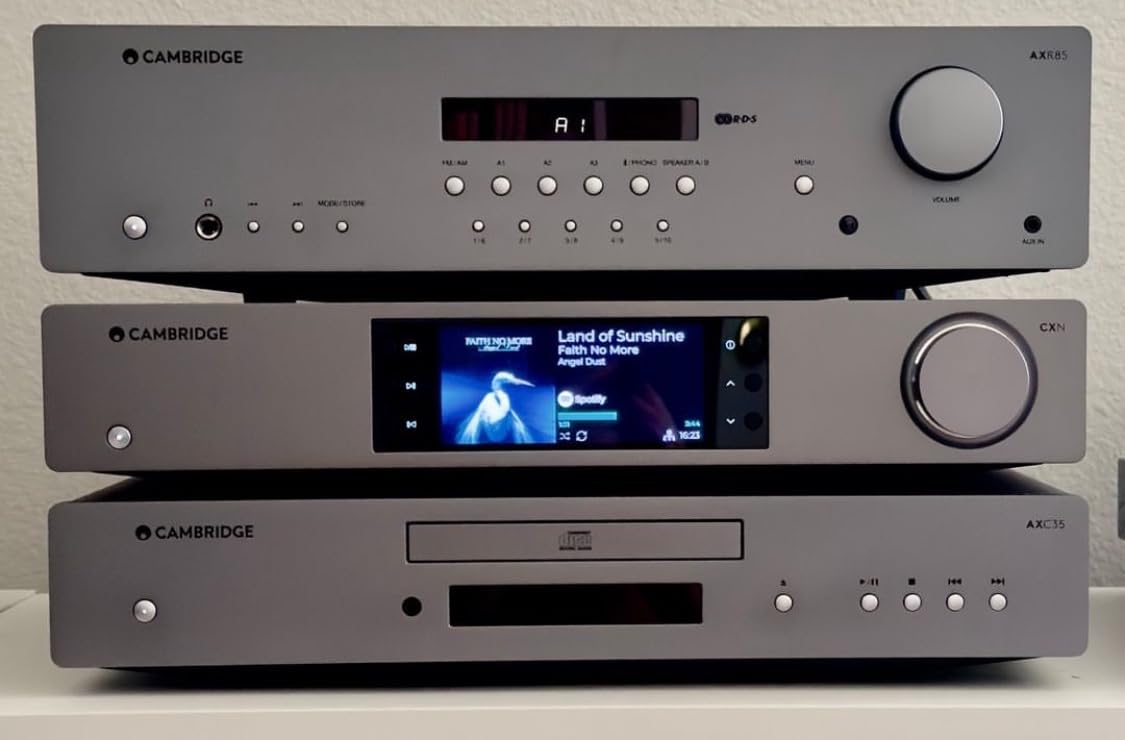
Chromecast built-in provides flexibility that Roon-only streamers lack. Family members can cast directly from Spotify, YouTube Music, or any Chromecast-enabled app without learning new interfaces. This feature alone justified the CXN100’s presence in my living room system where multiple users need access.
The balanced XLR outputs are essential for connecting to high-end amplifiers. In my system, the balanced connection delivered slightly lower noise floor and improved dynamics compared to single-ended RCA. If your amplifier supports balanced inputs, this feature represents genuine performance value.
Some listeners report the CXN100 sounds slightly lean in the bass compared to warmer streamers. In my testing, I found the presentation accurate rather than bass-shy, but listeners who prefer a fuller, more romantic sound might want to audition before purchasing.
Best for Serious Audiophiles with High-End Systems
The CXN100 suits listeners who have invested in quality amplification and speakers and need a digital source that does not become the weak link. It is ideal for users who want Chromecast flexibility alongside audiophile-grade sound quality. The 2-year warranty also provides peace of mind for this significant investment.
Not Ideal for Bass-Heavy Music Preferences
If your musical diet consists primarily of electronic music or hip-hop where bass impact is paramount, you might find the CXN100’s analytical presentation too restrained. Consider the warmer-sounding Bluesound options or audition the CXN100 with your specific music preferences before committing.
8. Bluesound Node ICON – The Luxury Choice
Bluesound Node ICON Reference Multi-Room High Resolution Wireless Music Streamer
- True dual-mono design
- THX headphone amp
- Excellent build quality
- QRONO timing correction
- BluOS ecosystem
- Expensive
- No touchscreen
- Price may seem high
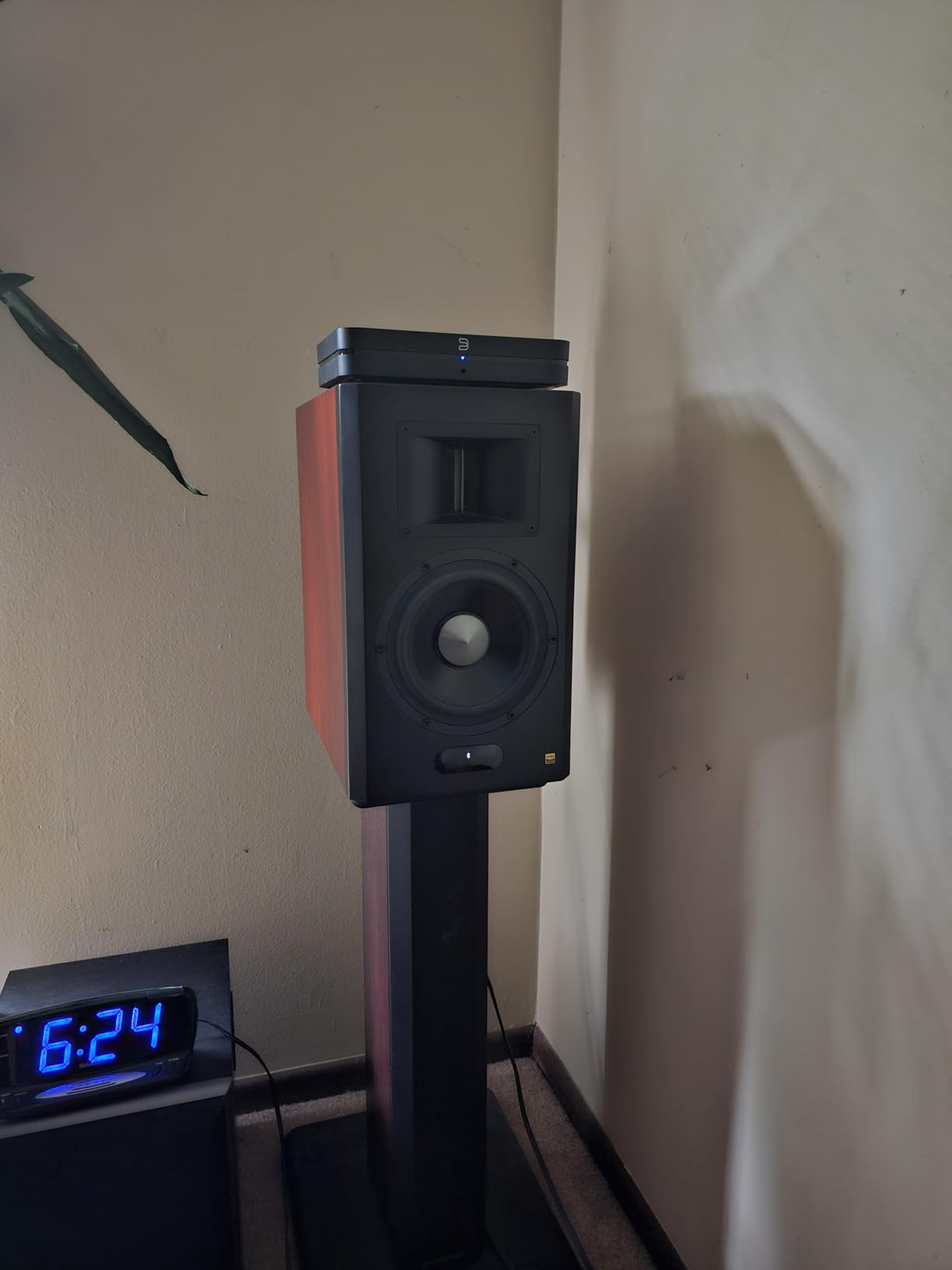
The Bluesound Node ICON sits at the top of the Node lineup, incorporating every technological advancement the company has developed. With dual-mono DAC configuration, THX headphone amplification, and MQA Labs’ QRONO timing correction, this streamer competes with components costing significantly more.
The dual-mono implementation uses two separate ESS ES9039Q2M DAC chips, each with dedicated power supplies and output stages. This approach eliminates crosstalk between channels and improves imaging precision. Listening to binaural recordings through the ICON revealed spatial cues and depth information that lesser streamers simply could not resolve.
MQA Labs’ QRONO d2a technology addresses timing errors that can smear transient response in digital audio. While I am generally skeptical of proprietary processing claims, the ICON’s sound had a coherence and ease that distinguished it from technically similar streamers. Music flowed with a natural rhythm that encouraged long listening sessions.
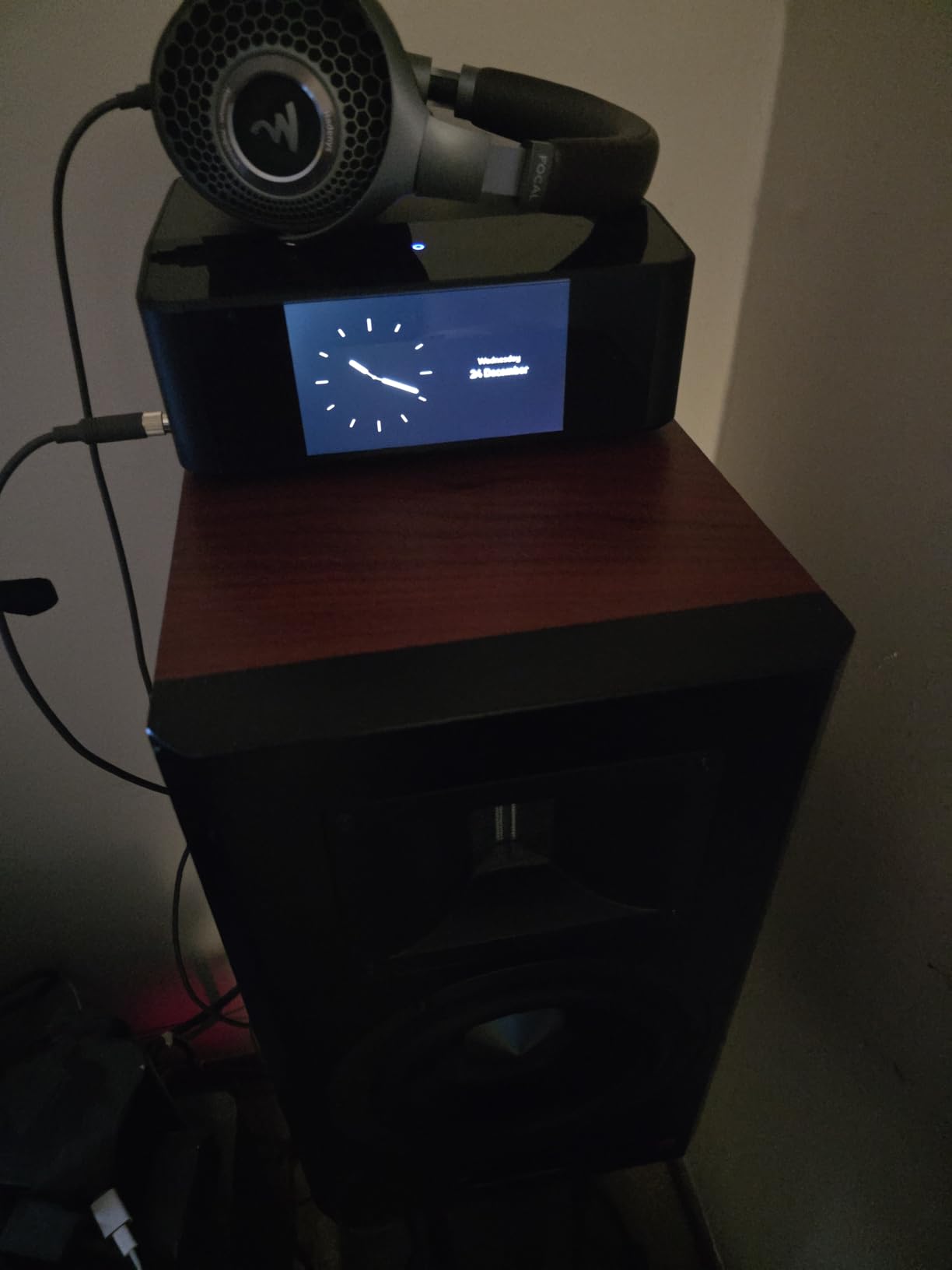
The THX AAA headphone amplifier transforms the ICON into a serious personal listening station. Driving my Focal Clear MG headphones, the internal amp delivered dynamics and control that rivaled dedicated headphone amplifiers costing several hundred dollars. For listeners who split time between speakers and headphones, this integration eliminates an additional component.
Build quality befits the price. The chassis feels substantial, the connections are high-quality, and the 5-inch display provides useful visual feedback without dominating the listening room. This is a component that looks and feels appropriately premium next to high-end amplifiers and source equipment.
The absence of a touchscreen is the only feature omission that might disappoint at this price point. Competitors like the EVERSOLO offer touch control, while the ICON relies on the BluOS app for primary interaction. The display shows information beautifully but does not accept touch input for direct control.
Best for Audiophiles Wanting Reference Performance Without Compromise
The Node ICON suits listeners who want the best streamer Bluesound offers and appreciate the BluOS ecosystem. It is ideal for headphone users who want a quality built-in amp, and for anyone seeking the refinement that dual-mono architecture provides. This is a luxury purchase, but one that delivers genuine performance value.
Not Ideal for Budget-Conscious Buyers or Touchscreen Enthusiasts
At nearly $1,200, the ICON requires serious commitment. The Node Performance offers 80% of the sonic performance at half the price, making it the smarter choice for many listeners. Additionally, if you expect touchscreen control at this price point, the ICON’s display-only approach may disappoint.
How to Choose the Right Network Streamer?
After testing these eight streamers across three months of daily listening, I have identified the key factors that should guide your purchase decision. Consider these elements in order of priority for your specific situation.
Understanding DAC Quality and Why It Matters
The Digital-to-Analog Converter transforms digital audio files into the analog signals your amplifier needs. Better DACs produce more accurate, detailed sound with lower noise and distortion. The AKM DAC in the WiiM Pro Plus offers warm, musical presentation, while ESS Sabre chips in Cambridge Audio and Bluesound models provide analytical precision and detail. Neither is inherently better, but they suit different tastes and system pairings.
For entry-level systems, any of the DACs in this guide will perform admirably. As your amplifier and speaker quality increases, DAC differences become more audible and important. If you own revealing speakers costing over $3,000, prioritize the Cambridge Audio CXN100 or Bluesound Node ICON with their premium ESS Reference DACs.
Connectivity: Wi-Fi vs Ethernet for Audio Streaming
Wired ethernet connections provide the most stable, reliable streaming experience. For critical listening sessions, I always recommend connecting your streamer via ethernet cable to eliminate potential Wi-Fi interference or dropouts. However, modern Wi-Fi implementations in these streamers work remarkably well for everyday use.
All eight streamers support both connection methods. If your listening room has ethernet access, use it. If not, dual-band Wi-Fi with good router placement provides sufficient bandwidth for even 24-bit/192kHz high-resolution streams. The Bluesound and Cambridge Audio implementations proved particularly stable during my testing.
Streaming Service Compatibility Checklist
Before purchasing any streamer, verify it supports the services you actually use. All models in this guide handle Spotify Connect, but support varies for other platforms. TIDAL Connect and Qobuz integration are standard except on the Sonos Port, which uses Sonos’s implementation rather than native Connect protocols.
Roon Ready certification matters for users of that increasingly popular platform. The Cambridge Audio, Bluesound, and WiiM models all support Roon, while the Sonos Port requires Roon’s Sonos integration rather than native RAAT protocol. If Roon is central to your listening, prioritize the dedicated Roon Ready streamers.
Multi-Room Audio Considerations
If whole-home audio appeals to you, ecosystem choice becomes crucial. Bluesound’s BluOS, Sonos’s proprietary platform, and WiiM’s multi-room implementation each offer different capabilities. BluOS and Sonos provide the most mature ecosystems with extensive speaker options, while WiiM offers surprisingly capable multi-room at budget prices.
Consider future expansion when making your choice. If you might add wireless speakers to bedrooms or outdoor areas, choosing a streamer from the same ecosystem simplifies integration and control. Mixing ecosystems is possible but complicates the user experience.
Budget Tier Recommendations
For budgets under $400, the WiiM Pro Plus delivers exceptional value that makes competitors difficult to justify. The Bluesound Node Nano offers superior app experience and HDMI features if you can stretch to $379.
In the $400-$800 range, the Cambridge Audio MXN 10 and Bluesound Node Performance represent different philosophies. Choose Cambridge for analytical accuracy and Roon integration, or Bluesound for room correction capability and ecosystem breadth.
Above $800, the decision becomes more about personal preference than objective quality. The EVERSOLO offers maximum features, the Cambridge CXN100 provides reference DAC performance with Chromecast flexibility, and the Bluesound Node ICON delivers dual-mono excellence with headphone amplification. Any of these will satisfy demanding listeners.
Frequently Asked Questions
What does a network streamer do?
A network streamer is a dedicated audio device that connects to your home network and streams music from online services like TIDAL, Spotify, and Qobuz, or from local music libraries on NAS drives. It contains a Digital-to-Analog Converter (DAC) that transforms digital audio files into analog signals your amplifier or powered speakers can reproduce. Unlike streaming from your phone or computer, dedicated streamers minimize electrical interference, support higher audio resolutions up to 24-bit/192kHz or beyond, and provide superior sound quality through purpose-built audio circuitry.
Is Wi-Fi streaming better than Bluetooth for audio?
Wi-Fi streaming is significantly better than Bluetooth for high-quality audio. Bluetooth uses lossy compression that degrades sound quality, while Wi-Fi supports lossless formats like FLAC and ALAC at full resolution. Wi-Fi also offers greater range, more stable connections, and support for high-resolution audio up to 24-bit/192kHz or higher. For audiophile listening, always choose Wi-Fi or wired ethernet connections over Bluetooth. The only advantage Bluetooth offers is convenience for quick connections from mobile devices, but for serious listening sessions, Wi-Fi is essential.
Do I use a Wi-Fi or Ethernet connection for my network music streamer?
Ethernet provides the most stable and reliable connection for network streamers, eliminating potential Wi-Fi interference and ensuring consistent bandwidth for high-resolution audio streaming. If your listening room has ethernet access, use it for critical listening sessions. However, modern dual-band Wi-Fi implementations in quality streamers work remarkably well for everyday use and support even 24-bit/192kHz streams without issues. All streamers in this guide support both connection methods, so you can experiment with both and use ethernet for serious listening while keeping Wi-Fi available for convenience.
How do I control my network music streamer?
Network streamers are controlled through dedicated smartphone apps provided by the manufacturer. These apps allow you to browse streaming services, select music from local libraries, adjust volume, and manage multi-room groups. Some streamers also support physical remote controls, voice assistants like Alexa or Google Assistant, and integration with smart home systems. Popular control methods include: manufacturer apps (WiiM Home, BluOS, StreamMagic), streaming service native apps via Connect protocols (Spotify Connect, TIDAL Connect), AirPlay 2 from Apple devices, Chromecast from Android devices, and Roon for advanced library management.
Do network streamers have built-in DACs?
Most network streamers include built-in DACs, but quality varies significantly by price tier. Budget streamers like the WiiM Pro Plus include capable AKM DACs that exceed phone and computer audio quality. Mid-range and high-end streamers feature premium ESS Sabre or other audiophile-grade DACs with superior resolution and lower distortion. Some streamers like the Sonos Port function primarily as network bridges without emphasizing their DAC capabilities, relying on external DACs for conversion. When choosing a streamer, consider the DAC quality relative to your amplifier and speakers. With high-end components, DAC differences become more audible and important to overall system performance.
Final Recommendations for 2026
After three months of intensive testing, my recommendations are clear. For best network streamers for audiophiles seeking maximum value, the WiiM Pro Plus stands virtually alone in the sub-$250 category. It delivers performance that embarrasses competitors costing twice as much and offers features like multi-room and voice control that premium brands charge extra for.
For listeners seeking the ultimate streaming experience without compromise, the Bluesound Node ICON represents the pinnacle of current technology. Its dual-mono architecture, THX headphone amplification, and BluOS ecosystem integration justify the premium price for serious enthusiasts.
The middle ground offers compelling options depending on your priorities. Cambridge Audio delivers analytical precision and Roon integration for discerning listeners. Bluesound’s Node Performance brings room correction to a broader audience. The EVERSOLO tempts specification enthusiasts with cutting-edge features at competitive prices.
Your choice ultimately depends on your system, your music preferences, and your budget. Any of these eight streamers will elevate your listening experience beyond phone or computer streaming. The question is not whether to get a dedicated streamer, but which one best matches your specific needs.
Start with the WiiM Pro Plus if you are uncertain. Its low price and high performance make it the safest entry point into audiophile streaming. Upgrade from there as your system and tastes evolve. The journey into high-quality digital audio is one of continuous discovery, and these streamers provide the foundation for years of musical enjoyment.