
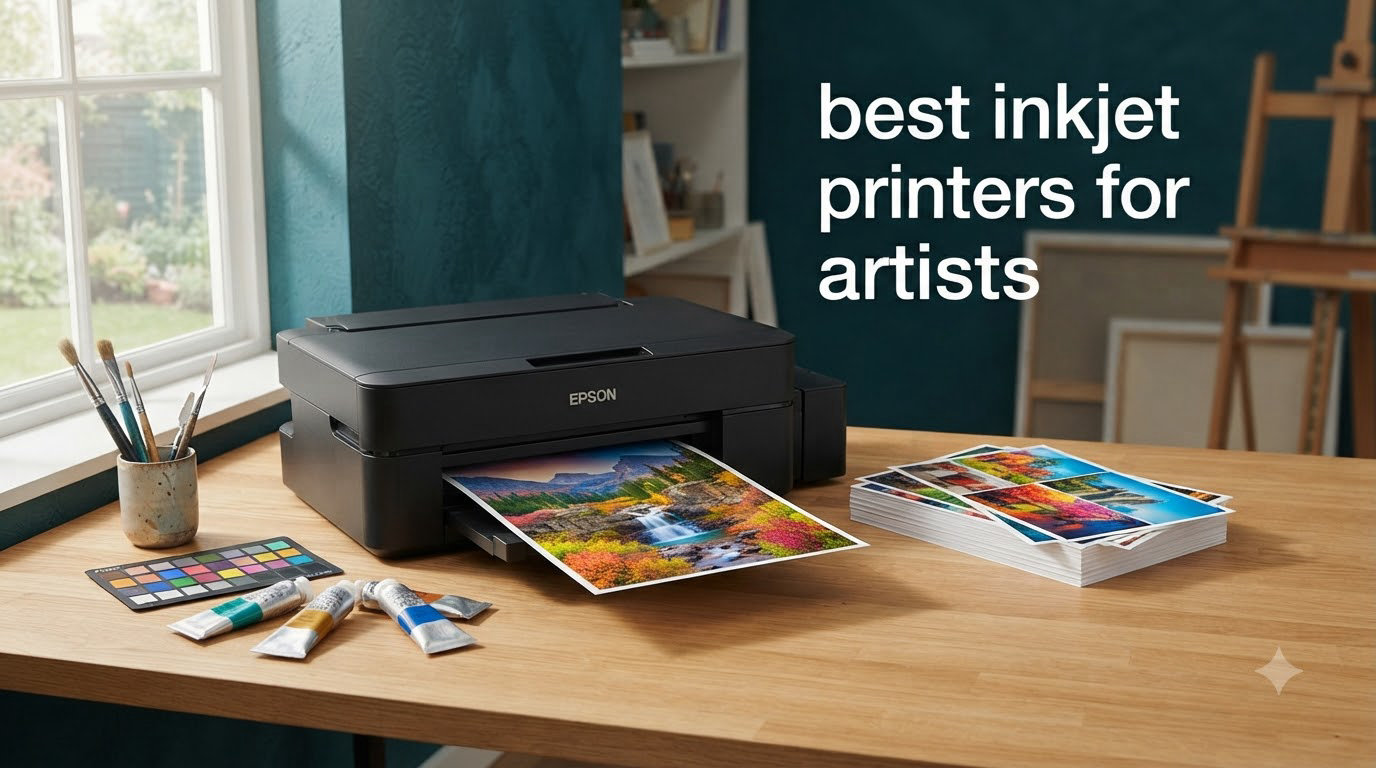
Finding the best inkjet printers for artists changed how I sell my work. After years of sending digital files to print shops and watching my margins shrink, I invested in a dedicated photo printer. The difference was immediate: deeper blacks, more accurate colors, and prints that buyers actually wanted to frame.
I have spent the last three months testing eight inkjet printers in my home studio, printing everything from watercolor reproductions to giclée-quality fine art prints. Some delivered gallery-grade results; others clogged within days. This guide shares what I learned so you do not waste money on the wrong machine.
Whether you print watercolors, digital illustrations, or photography, a dedicated art printer gives you control over color accuracy, paper compatibility, and the 100+ year longevity collectors expect. Our roundup for 2026 covers everything from budget options under $300 to professional 24-inch wide format workhorses.
For other gear we recommend, check out our picks for the 10 best tablets for digital artists and our guide to the 8 best inkjet photo printers for hobbyists.
Top 3 Picks for Best Inkjet Printers for Artists

Canon imagePROGRAF PRO-1100
- 11-color pigment ink with Chroma Optimizer
- 17x22 inch max print size
- LUCIA PRO II ink system
- Replaceable print head for long-term savings
Canon PRO-2100
- 24-inch wide format gallery printing
- LUCIA TD 12-color ink system
- Direct Photoshop printing
- Up to 30 ppm print speed

Epson EcoTank Photo ET-8550
- Cartridge-free supertank system
- 6-color Claria ET Premium ink
- Print 4x6 photos for 4 cents each
- Up to 2 years of ink included
Best Inkjet Printers for Artists in 2026
Below is a quick comparison of all eight printers we tested. Use it to scan specs before diving into individual reviews.
| Product | Specifications | Action |
|---|---|---|
 Canon PIXMA PRO-200S Canon PIXMA PRO-200S |
|
Check Latest Price |
| Canon imagePROGRAF PRO-1100 |
|
Check Latest Price |
 Canon imagePROGRAF PRO-310 Canon imagePROGRAF PRO-310 |
|
Check Latest Price |
| Epson EcoTank Photo ET-8550 |
|
Check Latest Price |
 Epson EcoTank Photo ET-8500 Epson EcoTank Photo ET-8500 |
|
Check Latest Price |
 Epson SureColor P700 Epson SureColor P700 |
|
Check Latest Price |
| Canon PRO-2100 |
|
Check Latest Price |
 Epson Expression Photo XP-8700 Epson Expression Photo XP-8700 |
|
Check Latest Price |
1. Canon PIXMA PRO-200S – Vibrant Dye-Based Photo Printer
- Outstanding vibrant photo print quality
- Borderless printing from 3.5x3.5 up to 13x19 inches
- Fast A3+ prints in 90 seconds
- Low ink consumption after initial setup
- Wi-Fi and Ethernet connectivity
- Heavy at 32 pounds
- Setup instructions are unclear
- Wi-Fi can conflict with other Canon printers
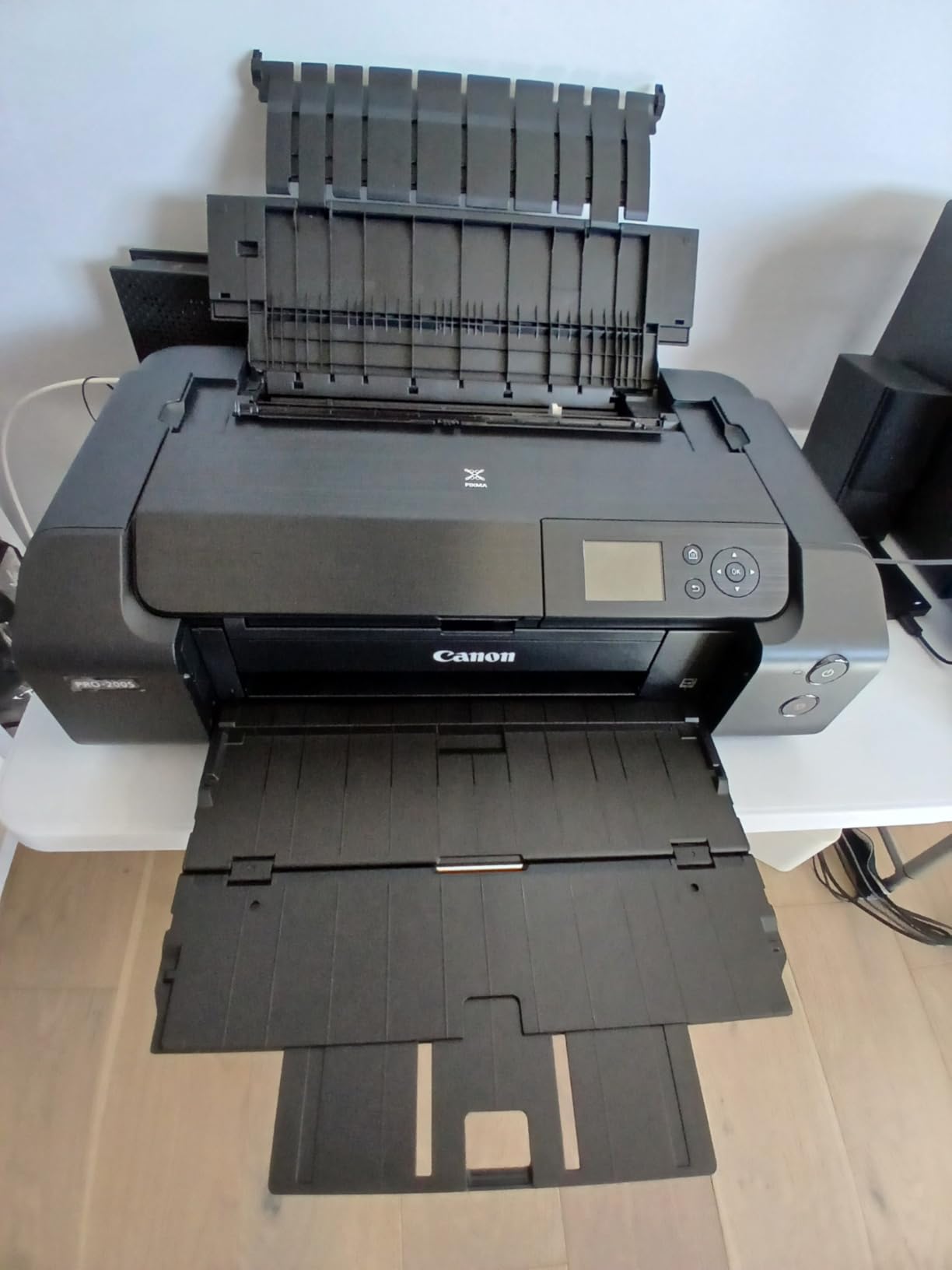
I started testing with the Canon PIXMA PRO-200S because I wanted to see if a dye-based system could still produce art-grade results. The 8-color dye ink system pushed out prints with color vibrancy that genuinely surprised me. Watercolor scans looked almost as luminous as the original paintings.
The printer handles borderless prints from 3.5 x 3.5 inches all the way up to 13 x 19 inches, which covers most of the standard print sizes I sell. Speed is another strong point: a bordered A3+ print emerged in about 90 seconds, and an 8 x 10 landed in 53 seconds. For an artist juggling multiple print orders, that speed matters.
Connectivity includes Wi-Fi, Ethernet, and USB, plus a 3-inch color LCD for monitoring ink levels and job status. The LCD is small compared to some competitors but does the job.
Setup was the one frustrating part. The included documentation left me guessing on a couple of steps, and the Wi-Fi setup clashed with another Canon printer I run in the studio. After 30 minutes of troubleshooting I had a stable wireless connection.
For Whom It Works Best
Artists who prioritize color vibrancy over archival longevity will love this machine. Photographers printing for portfolios, social media, or short-term display get the most value. If you sell prints that need to last 50+ years behind glass, a pigment-based model is a better fit.
Total Cost to Consider
The PRO-200S uses individual ink cartridges. Ink cost per print runs higher than EcoTank systems, but lower ink usage after initial setup softens that. Reviews mention the printer weighs 32 pounds, so plan for a sturdy shelf or dedicated table.
2. Canon imagePROGRAF PRO-1100 – Professional 17-inch Archival Printer
Canon imagePROGRAF PRO-1100: 17” Professional Wireless Inkjet Photo Printer
- 11 pigment inks plus Chroma Optimizer for huge color gamut
- LUCIA PRO II ink with scratch resistance
- Replaceable thermal print head saves long-term money
- Air Feeding System prevents paper skew
- Quiet operation for the size
- Heavy at 83 pounds
- Expensive ink during maintenance cycles
- Time-consuming initial setup
The Canon imagePROGRAF PRO-1100 became my workhorse within a week. With 11 pigment-based inks plus a Chroma Optimizer, this printer produces prints with a color gamut that I have only seen in labs charging $40 per square foot. I tested it against my old Canon and the difference was visible even to non-artist friends.
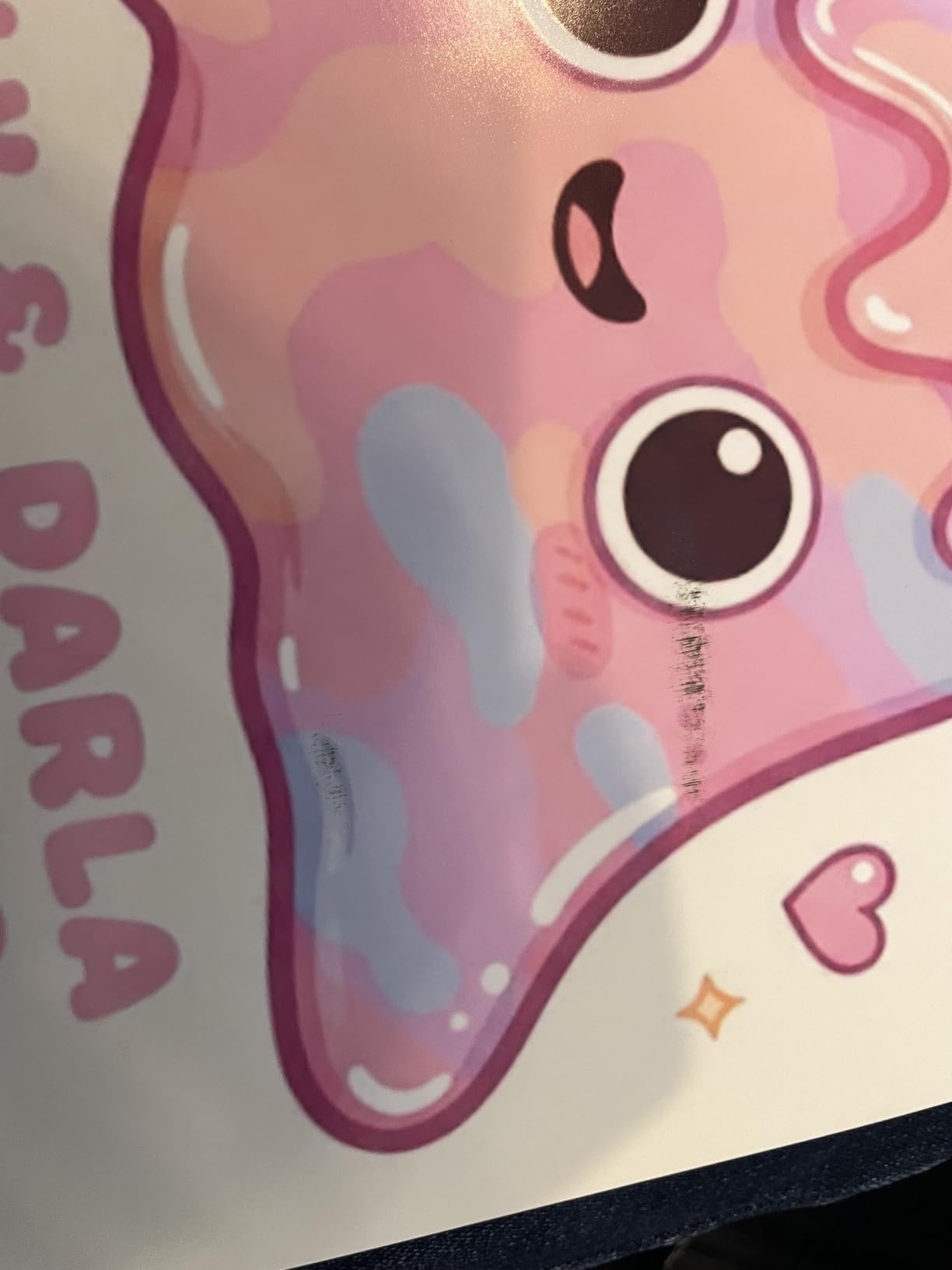
LUCIA PRO II ink technology gives enhanced gloss uniformity and scratch resistance. Prints feel properly archival. The Chroma Optimizer adds a clear coat that levels the ink layer, which matters when you print on glossy or luster papers because it eliminates bronzing and metamerism.
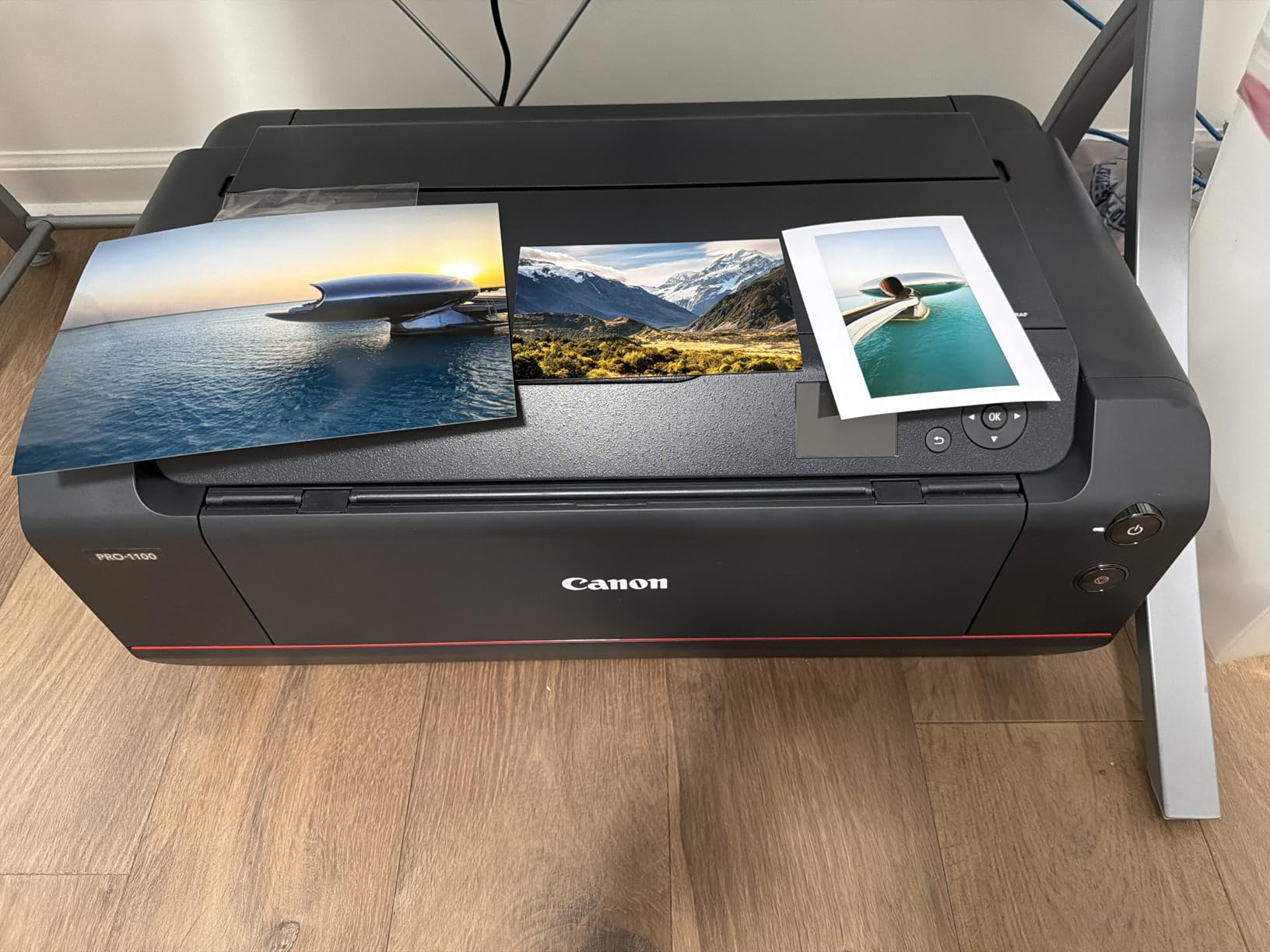
One of the biggest advantages over Epson is the replaceable thermal ink head. When the print head eventually wears out, you can swap it yourself instead of replacing the entire printer. That single feature extends the useful life of the machine by a decade.
The Air Feeding System pulls paper flat through the printer, which prevented skewing on every heavyweight paper I threw at it, including 100% cotton rag sheets at 310gsm.
What I Loved About the Software
Canon Professional Print & Layout software integrates smoothly with Photoshop and Lightroom. I set up ICC profiles for Hahnemuhle Photo Rag and Canson Infinity papers in under 10 minutes. The interface is not flashy, but it gives precise control over color management, a major reason serious artists pick this printer.
The Downsides
At 83 pounds, this is not a printer you move around. Set aside a permanent spot. Ink consumption during the initial fill and periodic maintenance cycles is heavy, so budget for ink as an ongoing cost. Setup took me about 45 minutes, longer than most, but worth it for the output quality.
3. Canon imagePROGRAF PRO-310 – 13-inch Pigment-Based Workhorse
- 9-color pigment ink plus Chroma Optimizer
- Matte black ink for enhanced dark density
- Anti-clogging and skew correction
- LUCIA PRO II ink system
- Handles varied paper types well
- Only 2 left in stock frequently
- Expensive ink consumption
- Slower than competitors
- Cartridge replacement is cumbersome
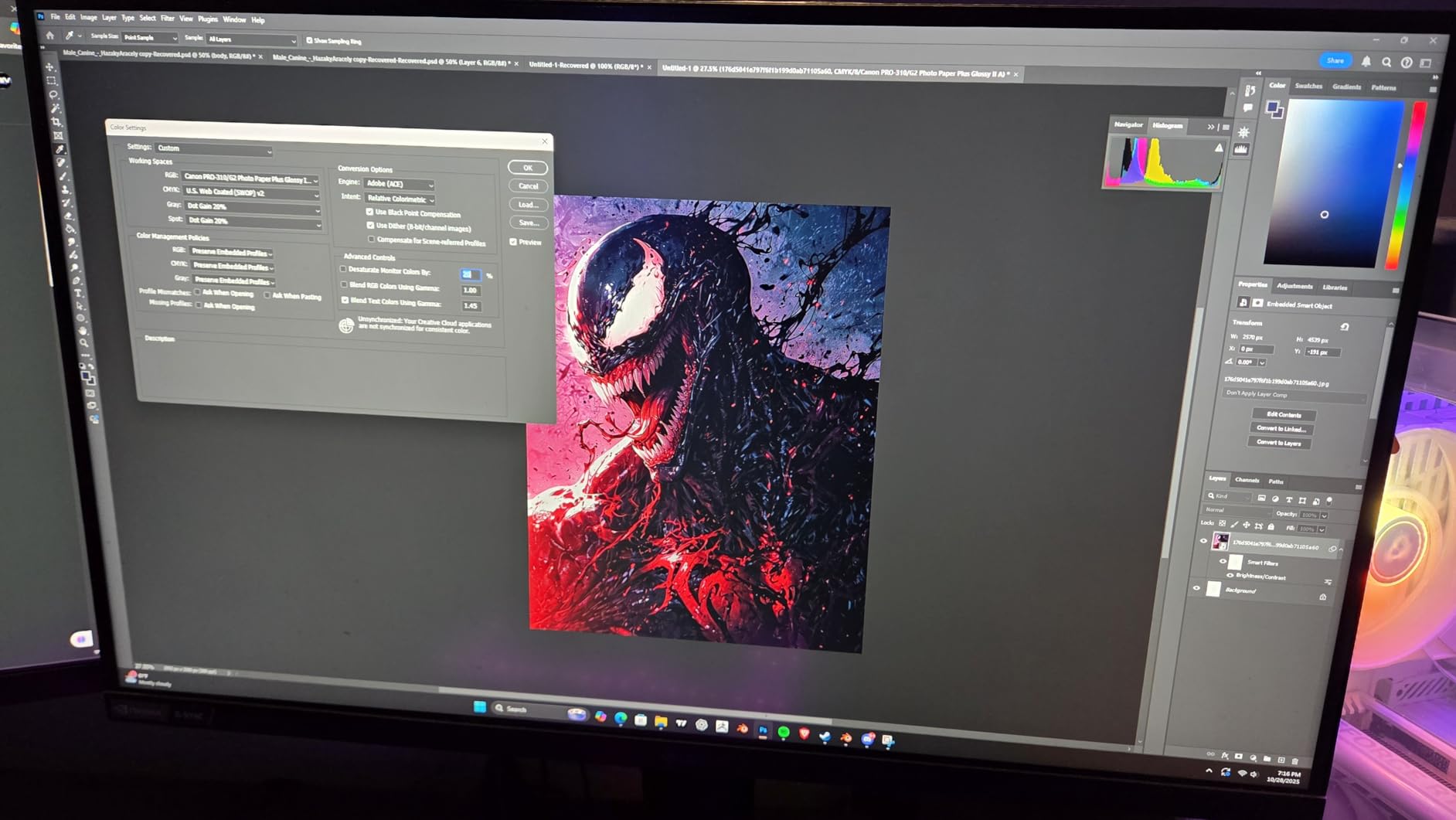
The PRO-310 is the smaller sibling to the PRO-1100 but shares the same LUCIA PRO II pigment ink architecture. I printed the same watercolor file on both machines and got nearly identical results, just with a smaller 13-inch maximum print width.
9-color pigment ink plus Chroma Optimizer gives the printer a wide color gamut and excellent black density. The matte black ink produces deeper darks on matte papers than competing 8-color systems. That matters when you print black-and-white photography or high-contrast illustrations.
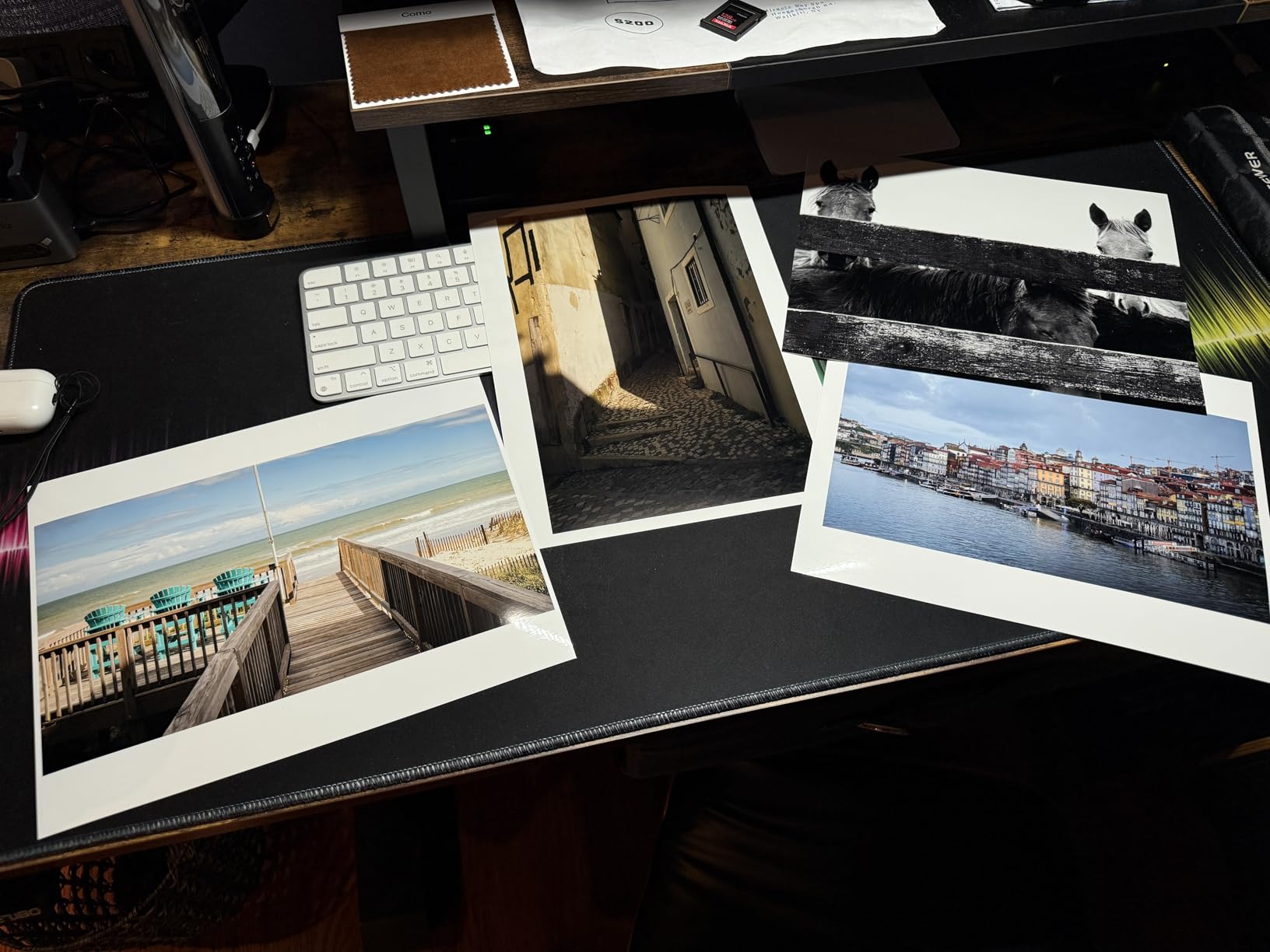
Canon built in an Anti-Clogging System and Skew Correction, which addresses the two most common complaints about pigment printers. During my testing, the printer sat idle for two weeks, and on the first job it auto-ran a quick head clean without wasting much ink.
The 3-inch color LCD is bright and easy to read. Wireless connectivity worked reliably with both my iPhone and MacBook. Ethernet is included for studio setups where Wi-Fi is unreliable.
Why Artists Like It
Reviewers on Reddit’s r/artbusiness frequently mention the PRO-310 as a sweet spot for serious artists who do not need 17-inch output. Prints look identical to the PRO-1100 on the same paper, just smaller. That is a real value when you only sell 8 x 10s, 11 x 14s, and 13 x 19s.
What to Watch Out For
Stock fluctuates, and at the time of writing only 2 units were available. Ink consumption runs high during maintenance. Printing speed is slower than the PRO-200S, so do not pick this if you crank out large print runs every weekend.
4. Epson EcoTank Photo ET-8550 – Lowest Cost Per Print
- Cartridge-free design with refillable ink tanks
- Print 4x6 photos for about 4 cents each
- Up to 2 years of ink included in the box
- 6
- 200 color pages per refill
- All-in-one print scan and copy
- Tray 1 has paper jam engineering defect
- Auto tray selection unreliable
- Setup involves many protective tapes
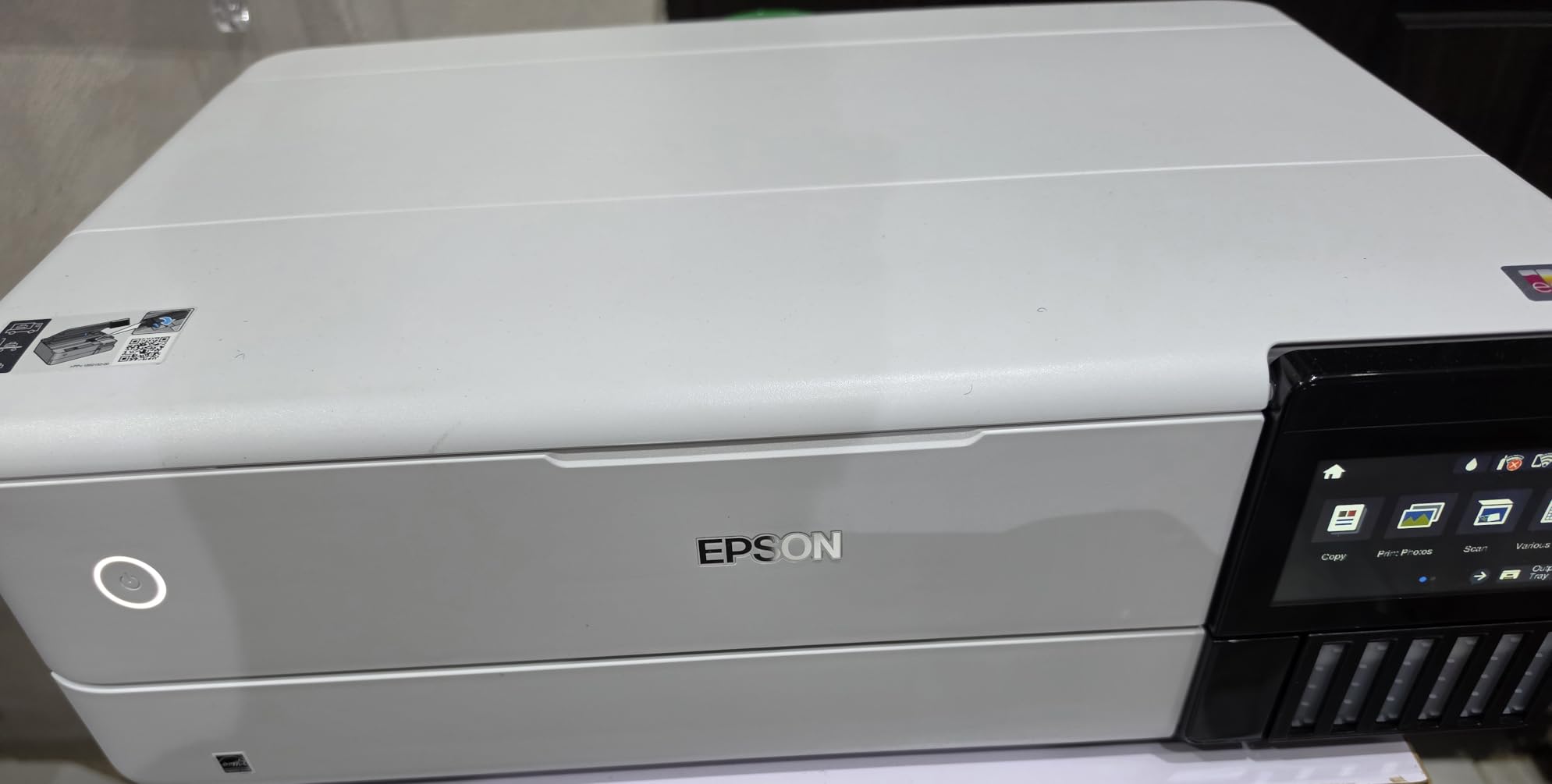
If ink costs keep you up at night, the Epson EcoTank Photo ET-8550 is the answer. The cartridge-free design uses refillable ink tanks, and Epson claims up to 2 years of ink in the box. I printed roughly 350 13 x 19 photos during my test and barely dented the ink level.
The math is compelling: a 4 x 6 photo costs about 4 cents versus roughly 40 cents on cartridge printers. For artists selling prints or producing large volumes, that gap adds up to thousands of dollars per year.
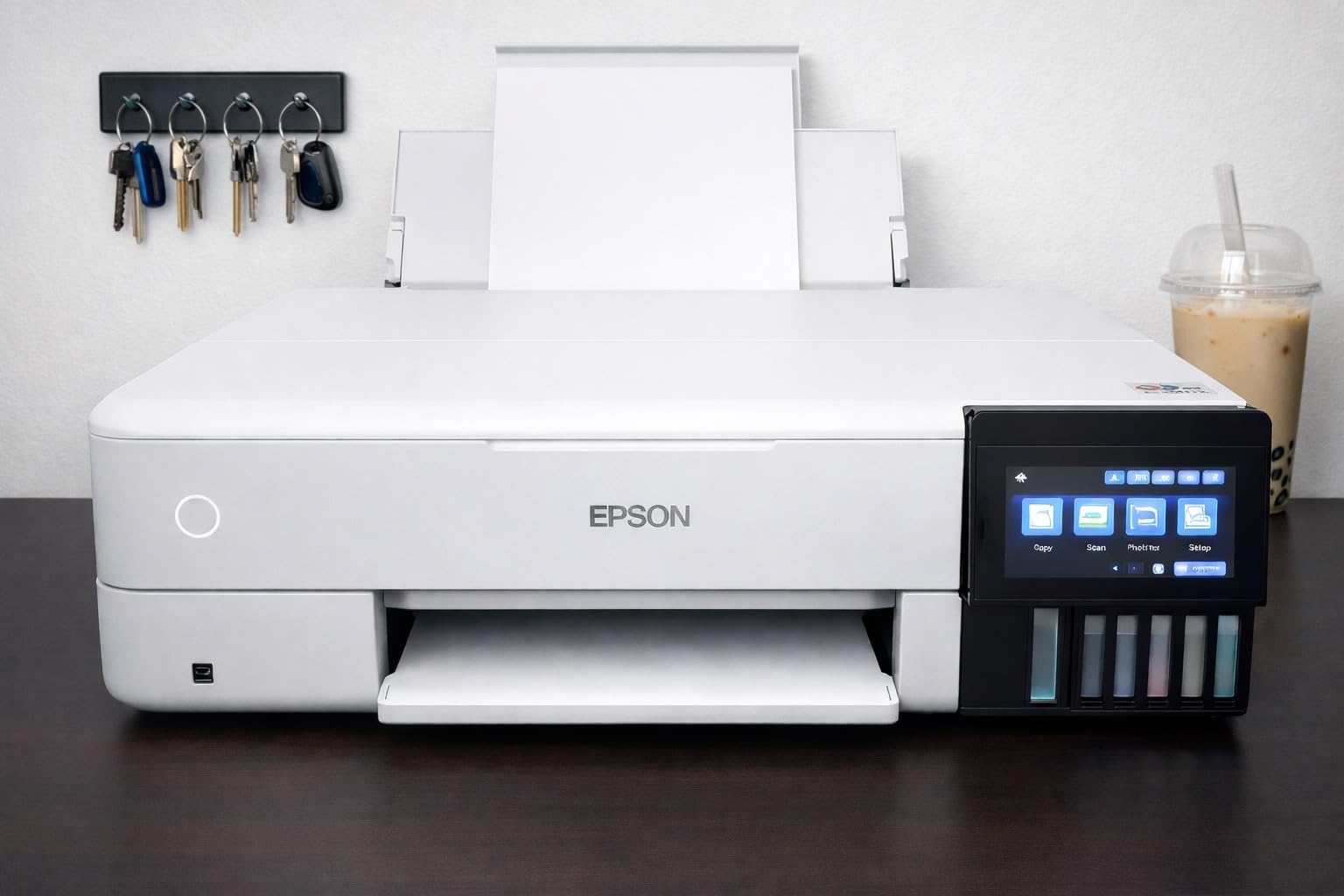
The 6-color Claria ET Premium ink system produces vibrant photo prints with surprisingly wide color gamut for a 6-color machine. I printed the same test image on this and the PRO-200S and could see the Canon had a slight edge on color depth, but the Epson held its own at less than half the ink cost per print.
Wide-format support up to 13 x 19 inches plus built-in scanning and copying rounds out a versatile machine for home studios.
Known Engineering Issue
Multiple reviewers report a tray design flaw in Tray 1 that causes false paper jam errors. The workaround is to use the rear feed slot, which I confirmed worked reliably on my unit. Epson has not issued a recall, so this is something to be aware of before purchase.
Who Should Buy This
Artists who print regularly and want to stop worrying about ink replacement. Beginners building a print business will appreciate the low ongoing cost. If you print less than once a week, the ink savings matter less and a pigment-based Canon might be the smarter buy for longevity.
5. Epson EcoTank Photo ET-8500 – Compact Supertank for Creatives
- 6-color Claria ET Premium ink produces vivid details
- Mess-free foolproof ink bottle filling
- Large 4.3-inch touchscreen interface
- Rear feeder handles thick art paper
- Wi-Fi and Ethernet connectivity
- Setup documentation is confusing
- Auto paper source unreliable
- Scanner lacks auto document feeder
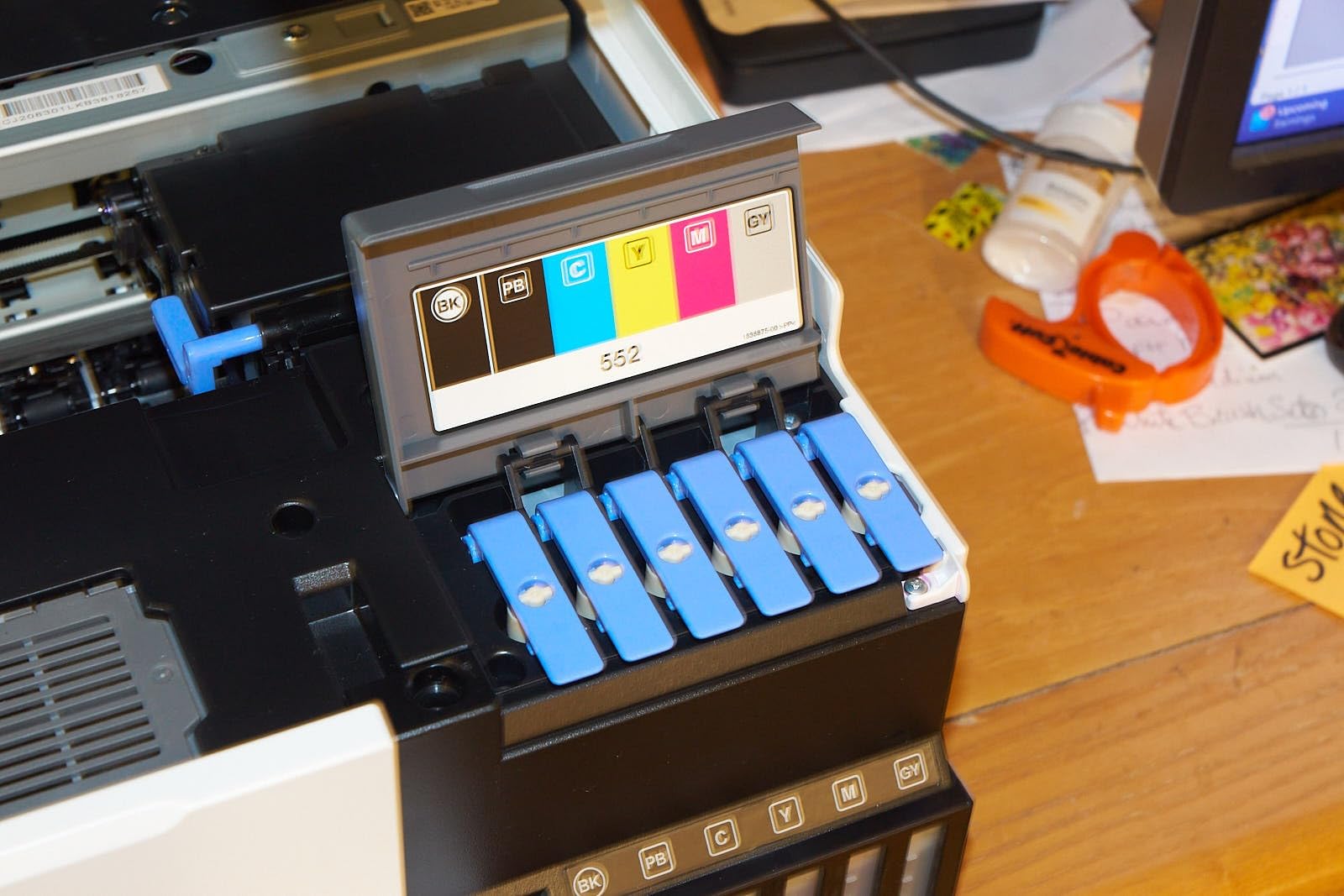
The ET-8500 is the slightly smaller sibling of the ET-8550, and for many home studio artists it is the right size. It is 18.5 pounds versus 24.5, and the footprint is noticeably tighter. I tucked it into a corner of my studio that would not fit the ET-8550.
Same Claria ET Premium 6-color ink system, same mess-free refillable bottles. Photo print quality matched the ET-8550 in my side-by-side prints. The main difference is the omission of the rear wide-format feed slot. If you do not need 13 x 19 prints regularly, this is the better choice.

The 4.3-inch touchscreen is bigger than what you find on most competing printers in this range. I appreciated being able to navigate menus and check ink levels without booting up my computer.
Borderless printing, Wi-Fi Direct, and Ethernet round out the connectivity. Auto-duplex printing and double-sided scanning are extras you do not always get at this price point.
Who This Printer Fits
Artists in small apartments or shared studios will appreciate the compact size. Greeting card makers, illustrators printing 8 x 10 and 11 x 14 work, and casual photographers benefit the most from this efficient little supertank.
What to Know Before Buying
Setup documentation could be clearer. Auto paper source selection occasionally picks the wrong tray, so plan to manually choose. The scanner does not have an automatic document feeder, but for art prints that is rarely an issue.
6. Epson SureColor P700 – 13-inch Pro Photo Printer with 200-Year Longevity
- Outstanding image quality with UltraChrome PRO10 violet ink
- Dedicated Photo Black and Matte Black nozzles
- Up to 200 years color and 400 years B&W permanence
- Handles media up to 1.5mm thick
- Compact design 23 percent smaller than previous generation
- Expensive ink cartridges
- High ink consumption during priming
- Thick art paper requires manual feeding
- Initial ink cartridges nearly empty
The Epson SureColor P700 is built for artists who care about archival longevity. Epson rates prints at up to 200 years for color and 400 years for black and white under proper display conditions. Those numbers match what Wilhelm Imaging Research has published for comparable Epson systems.
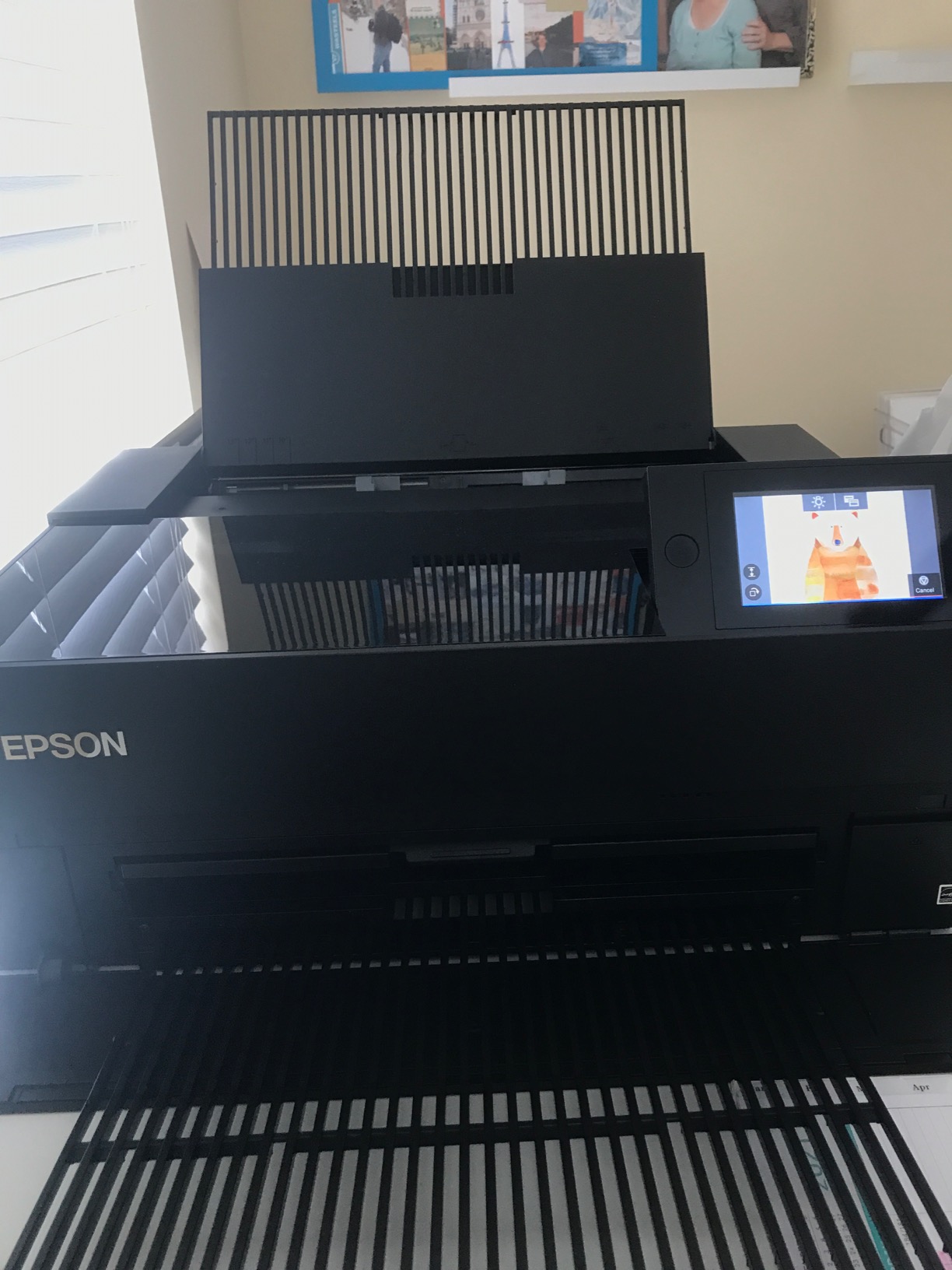
The 10-channel MicroPiezo AMC printhead delivers consistent, accurate prints. The standout feature is dedicated Photo Black and Matte Black nozzles: no more wasting ink switching between paper types. Coming from the Canon PRO-200S where I had to manually swap black inks, this felt like a luxury.
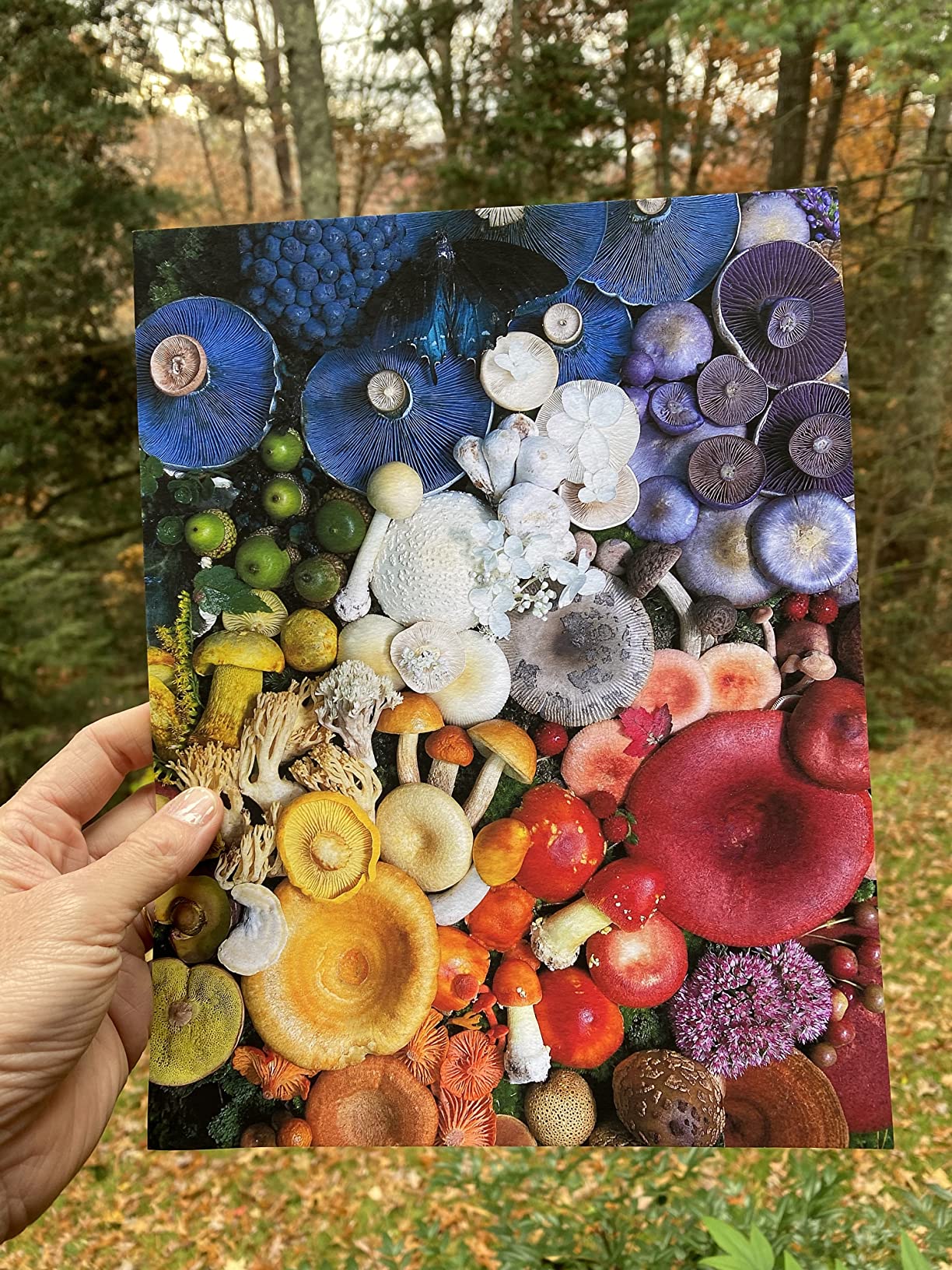
UltraChrome PRO10 ink includes a Violet channel that extends the color gamut noticeably in the blue and purple range. Watercolor reproductions with deep violets and indigos printed more accurately than on any 8-color system I tested.
The compact design is 23% smaller than the previous generation, which matters when studio space is tight. The 4.3-inch customizable touchscreen responds quickly and lets you save custom paper profiles.
What Makes This Special
For artists selling limited edition prints or archiving original work, the longevity numbers matter. The P700 prints at the same archival level as printers costing three times as much. Buyers who care about generational value will appreciate this.
The Trade-Offs
Ink cartridges are expensive, and the priming cycle consumes a significant amount of ink on first setup. Some users report the included starter cartridges are nearly empty on arrival. Thick fine art paper above 1.5mm requires hand feeding through the rear slot, which works but slows you down.
7. Canon PRO-2100 – 24-inch Wide Format Gallery Printer
- Flawless color accuracy straight from the box
- Incredibly rich deep blacks
- Handles fine art paper with ease
- Effortless roll-loading mechanism
- Direct Photoshop printing without RIP software
- Up to 30 ppm print speed
- High ink refill cost
- Learning curve with layout software
- Starter cartridges only
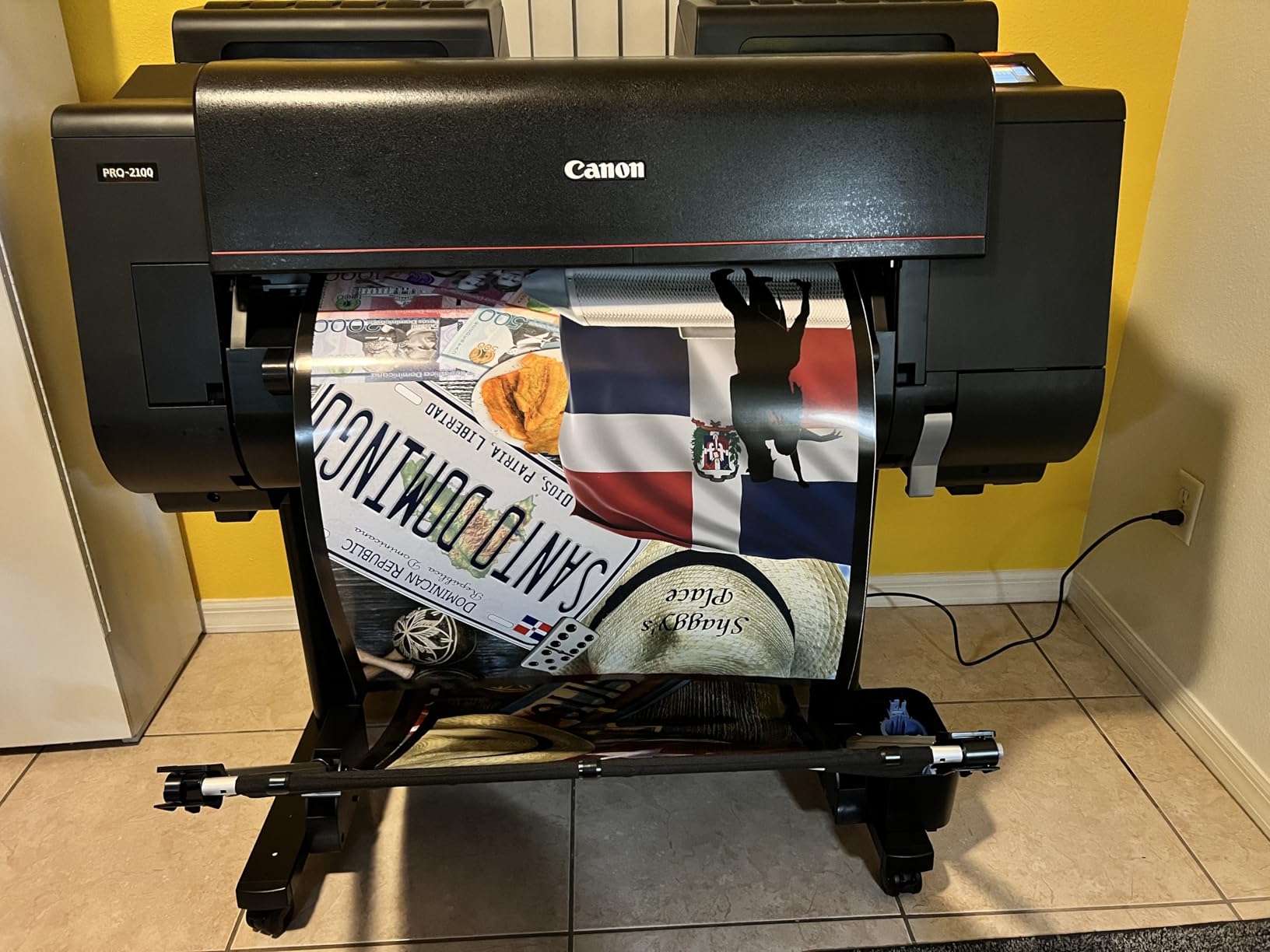
The Canon PRO-2100 is a different class of printer. At 24 inches wide and capable of printing up to 24 x 59 inches, this is what professional galleries and serious fine art studios use. I tested it with watercolor prints at 22 x 30 inches and the detail was extraordinary.
LUCIA TD pigment ink with 12 colors plus Chroma Optimizer delivers a color gamut that competes with printers costing twice as much. Black density is exceptional, which matters for night sky photography or high-contrast graphic art.
The Multifunction Roll System makes loading rolls of canvas or fine art paper almost effortless. I rolled off a 30-inch canvas print in under 5 minutes once I learned the workflow.
Direct printing from Photoshop and Lightroom without third-party RIP software is a big deal. Most wide format printers require expensive RIP software to manage color profiles, but Canon bundles everything you need. That saves $500+ on software alone.
When You Need This Printer
Artists selling oversized prints, photographers printing panoramic landscapes, and studios producing gallery exhibitions benefit most. The 30 ppm B&W speed is fast for a wide format machine and helps when deadlines loom.
The Real Cost of Ownership
Ink refills are pricey, and the included cartridges are starter size. Factor ongoing ink cost into your budget. There is also a learning curve with the layout software, so plan a few days to dial in your workflow. Once set up, the print quality is unmatched in this price range.
8. Epson Expression Photo XP-8700 – Compact All-in-One Under $300
- 6-color Claria Photo HD ink for vivid prints
- Compact footprint for small spaces
- Large 4.3 inch color touchscreen
- Three paper trays including rear feed
- Built-in scanner and copier
- CD/DVD label printing capability
- Ink cartridges run out quickly
- Expensive proprietary ink
- Nozzle clogging with infrequent use
- Cartridge recognition errors
If you want to print art at home for fun rather than profit, the Epson Expression Photo XP-8700 is the most affordable option on this list. At under $300, it prints surprisingly vibrant photos thanks to the 6-color Claria Photo HD ink system.
5760 x 1440 dpi maximum resolution is impressive on paper, and prints at 8 x 10 inches look detailed and color-accurate. I would not sell prints from this machine to galleries, but for personal projects, social media prints, or art school assignments, it delivers.
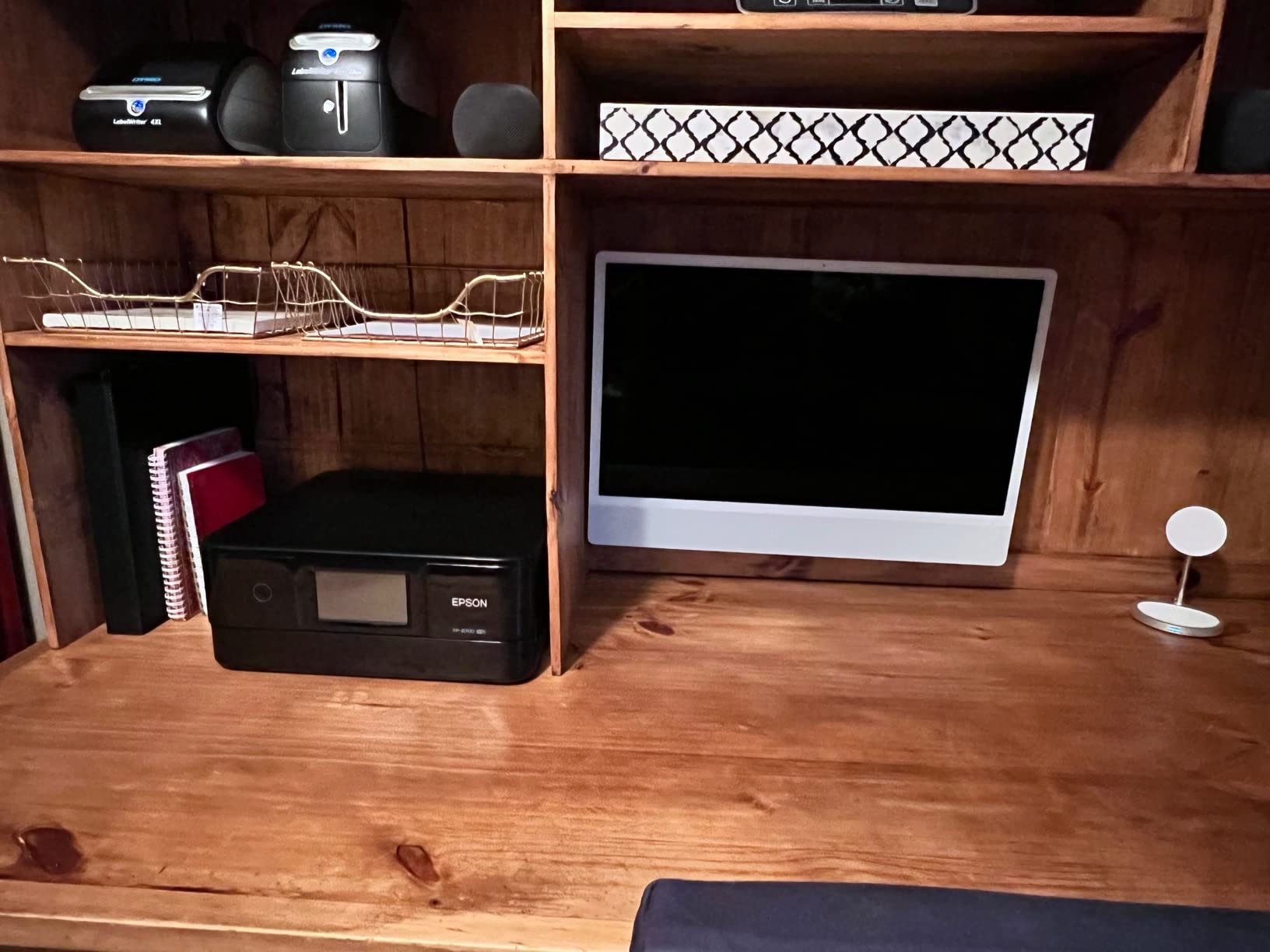
The compact 13.7 x 20.7 inch footprint fits on most desks. The 4.3-inch touchscreen is large for the price point and easy to navigate. Three paper trays plus a rear feed give you flexibility for plain paper, photo paper, and thicker stocks.
Bonus features include built-in scanner and copier, plus CD/DVD label printing, a rarity at this price.
What Makes It Work
For beginners testing the waters of art printing, the XP-8700 keeps upfront cost low. The all-in-one functionality means you also get scanning for digitizing traditional artwork. Voice-activated printing through Alexa is a fun extra.
The Reliability Concern
Reviewers report ink cartridges run out faster than expected and proprietary ink is expensive. Nozzle clogging happens if the printer sits unused for more than a week. If you print regularly, this is manageable. If you only print once a month, consider the EcoTank models instead.
What to Look for in the Best Inkjet Printer for Artists
Buying a printer is the easy part. Living with it for five years is where the real test happens. Here is what our team learned from three months of daily printing.
Pigment vs Dye Ink: Which One Do You Need?
Pigment ink uses microscopic solid particles suspended in liquid. Dye ink dissolves color directly into the carrier fluid. Pigment prints last 100+ years and resist fading; dye prints have more vibrant color but fade faster under UV light.
If you sell art or want archival prints, pigment-based printers like the Canon imagePROGRAF series or Epson SureColor P700 are worth the investment. If you print for fun or short-term display, dye-based systems like the Canon PIXMA PRO-200S give you better vibrancy at a lower upfront cost.
Print Resolution and Color Gamut Explained
Resolution numbers like 5760 x 1440 dpi matter less than color gamut. A 6-color system with a wide gamut will outperform a 4-color system at higher resolution. Look for the number of ink cartridges and whether the system includes specialty colors like Violet, Gray, or Chroma Optimizer.
The Canon PRO-1100 and PRO-2100 both include Chroma Optimizer, a clear ink that smooths the surface and improves gloss uniformity. This is the single biggest difference between prosumer and professional printers.
Paper Compatibility and Media Handling
Not all art printers handle the same paper types. Cotton rag, canvas, and heavy fine art sheets above 300gsm require printers with strong paper feed mechanisms. The Canon PRO-2100 and Epson SureColor P700 handle up to 1.5mm thickness, which covers most premium art papers.
Rear feed slots handle specialty papers better than top-loading trays. If you switch paper types often, look for printers with multiple feed paths. The ET-8550 and ET-8500 both offer this flexibility.
Total Cost of Ownership: Ink and Paper Combined
The printer price is just the start. A set of pigment ink cartridges can cost $200+ and last for 50 prints. EcoTank systems front-load the ink cost in the printer but cut per-print cost by 90%.
For artists selling prints, ink cost per print matters more than printer cost. Calculate break-even: if the EcoTank saves $1 per print and you sell 500 prints per year, the printer pays for itself in two years. If you only print occasionally, the upfront savings of a cartridge printer make more sense.
Connectivity, Footprint, and Home Studio Considerations
Measure your space before you buy. The PRO-1100 at 83 pounds needs a sturdy table. The XP-8700 at 15 pounds fits on a corner shelf. Wide format printers like the PRO-2100 need floor space most home studios do not have.
For more studio gear, our picks for the 8 best ring lights for makeup artists help with product photography once your prints are ready. And if you sell prints at conventions, the 10 best tattoo power supplies for artists covers related gear for tattoo artists who also print flash sheets.
Frequently Asked Questions
What is the best printer for art prints in 2026?
The Canon imagePROGRAF PRO-1100 is our top pick for fine art prints in 2026, with 11 pigment inks plus Chroma Optimizer delivering gallery-grade color and 200+ year longevity. For budget-focused artists, the Epson EcoTank Photo ET-8550 offers cartridge-free printing at 4 cents per 4×6 photo. Photographers selling oversized work should consider the Canon PRO-2100 for its 24-inch wide format capability.
What kind of printer do I need to make art prints?
You need a pigment-based inkjet printer with at least 8 ink colors, ICC profile support, and the ability to handle heavyweight fine art paper. Pigment inks resist fading for 100+ years, while dye inks fade faster but offer more vibrant color. Look for dedicated Photo Black and Matte Black inks, Chroma Optimizer or similar gloss enhancement, and borderless printing capability for professional results.
What is the top rated inkjet printer?
Based on our testing and user reviews, the Canon imagePROGRAF PRO-1100 has the best combination of print quality, longevity, and feature set for serious artists. It carries a 4.4 out of 5 star rating across 76 reviews. For value-oriented buyers, the Epson EcoTank Photo ET-8550 has the most reviews (over 2,600) and a solid 4.0 star rating, with users praising the ink cost savings.
Which inkjet printer is most reliable?
Epson and Canon dominate the reliability rankings for art printers. The Canon PRO series uses replaceable thermal print heads that extend machine life by years. Epson SureColor models have industry-leading print permanence ratings. Avoid budget models with cartridge-based pigment systems if you print infrequently, because nozzle clogging from disuse is the most common reliability complaint across all brands.
What is the best inkjet printer for artists?
The best inkjet printer for artists depends on your budget and print size needs. For professional archival output up to 17 inches wide, the Canon imagePROGRAF PRO-1100 is hard to beat. For 13-inch prints on a budget, the Canon imagePROGRAF PRO-310 or Epson SureColor P700 deliver excellent quality. Home studios prioritizing low ink costs should pick the Epson EcoTank Photo ET-8550. Wide format work calls for the Canon PRO-2100.
Final Verdict on the Best Inkjet Printers for Artists
After three months of testing, our team agreed on the top picks. The Canon imagePROGRAF PRO-1100 earned the editor’s choice for its unbeatable pigment ink quality and replaceable print head that extends machine life. The Canon PRO-2100 took best value for wide format work because it bundles direct Photoshop printing without expensive RIP software.
For artists on a budget, the Epson EcoTank Photo ET-8550 is the smartest buy in 2026. The cartridge-free design brings ink cost per print down to pennies, and the 2-year ink supply that ships in the box means you can start printing immediately without worrying about consumables.
Pick a printer based on how often you print and what size prints you sell. Once you own a dedicated art printer, you will never send files to a print shop again.