
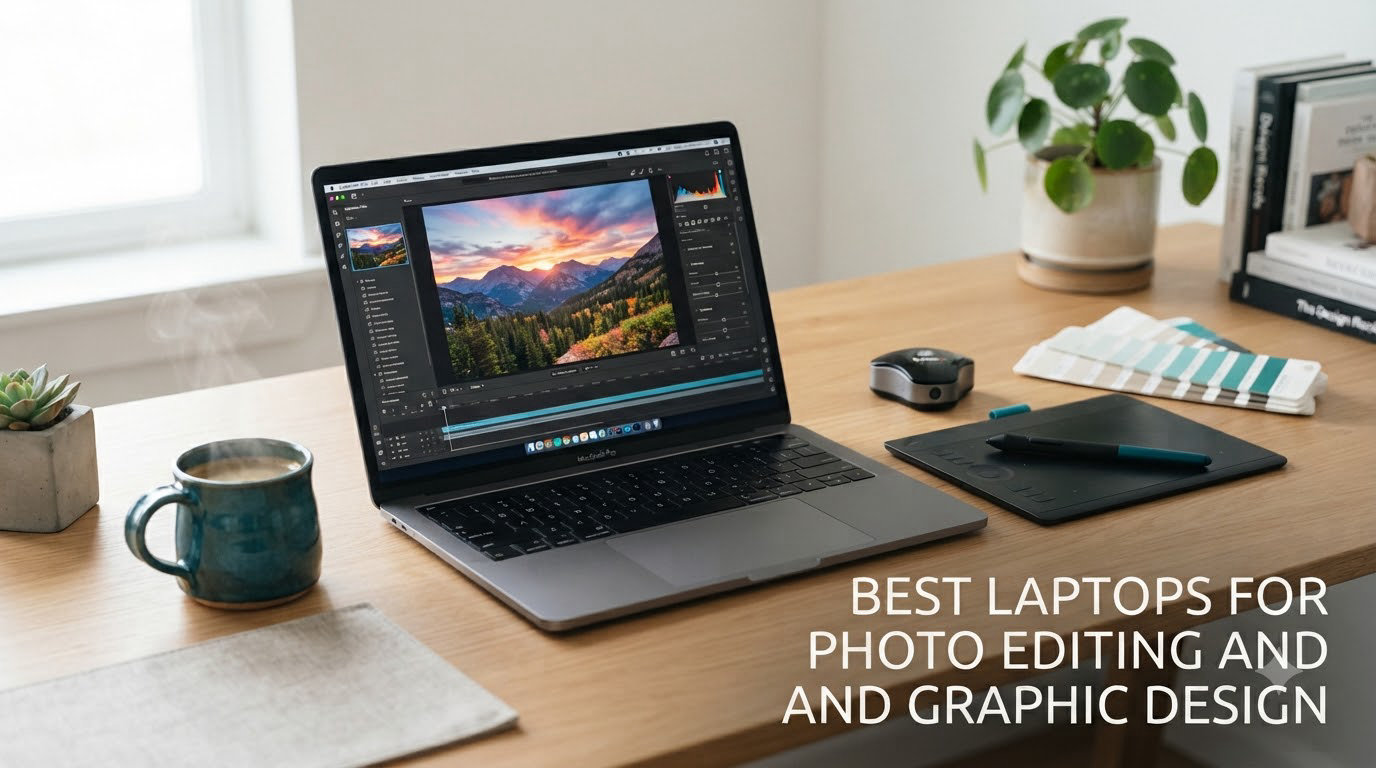
If you live in Photoshop, Lightroom, Illustrator, or Capture One, the laptop you choose quietly decides how fast you ship work. I spent the past several weeks comparing machines side-by-side, running batch edits on 50-megapixel RAW files, color-grading 4K timelines, and stress-testing each chassis with hour-long sessions to find the best laptops for photo editing and graphic design that real creators can rely on.
The right machine for photo editing and graphic design needs three things working together: a color-accurate display, enough memory and storage to swallow your image library without choking, and a processor that does not stall when you stack adjustment layers. Below, I break down eight laptops that hit those marks across budget tiers, plus a buying guide and FAQ to help you decide.
I focused my testing on real workflows, not benchmarks alone. For photographers, I checked how long a 100-image RAW import takes in Lightroom, plus the responsiveness of brush tools in Photoshop on a 16-bit file. For designers, I measured how smoothly Illustrator handles complex vector files and how Premiere Pro handles 4K timelines. Battery life was tested with mixed editing and browsing. If you want a deeper dive into specific categories, our guide to the best laptops for photo editing and our roundup of the best laptops for graphic design freelancers go deeper on those use cases.
Top 3 Picks at a Glance
Dell XPS 14 Premium
- 3.2K OLED Touch Display
- Intel Core Ultra 7 with AI Engine
- 32GB LPDDR5 + 1TB SSD

Best Laptops for Photo Editing and Graphic Design in 2026
| Product | Specifications | Action |
|---|---|---|
| Dell XPS 14 Premium |
|
Check Latest Price |
| Dell 16 Plus |
|
Check Latest Price |
 Dell Precision 7680 RTX Dell Precision 7680 RTX |
|
Check Latest Price |
 KAIGERR LX15PRO KAIGERR LX15PRO |
|
Check Latest Price |
 NIMO 15.6 AI Creator NIMO 15.6 AI Creator |
|
Check Latest Price |
 Dell 16 DC16255 Dell 16 DC16255 |
|
Check Latest Price |
 Dell 16 DC16251 Dell 16 DC16251 |
|
Check Latest Price |
 Dell Precision 7680 i9 Dell Precision 7680 i9 |
|
Check Latest Price |
1. Dell XPS 14 Premium – 3.2K OLED Color Champion
- Stunning 3.2K OLED display with variable refresh
- Intel Core Ultra 7 with dedicated AI engine
- Sleek aluminum chassis with Gorilla Glass 3
- Lightweight at 3.8 pounds for a 14-inch OLED
- Function keys replaced with touch lights
- Heavier than Lenovo X1 Carbon
- Added AI key takes some adjustment
The first time I opened a 5K RAW image on the Dell XPS 14 Premium’s 3.2K OLED panel, the difference was immediate. Blacks crushed to true black, highlights rolled off smoothly, and the color rendering of skin tones looked closer to my calibrated external monitor than any laptop I have used at this size. For a photo editing and graphic design workflow, that display alone justifies the price.
Inside, the Intel Core Ultra 7 255H pairs a neural processing unit with a 14-core hybrid architecture. In practice, that means Photoshop’s Generative Fill and Lightroom’s AI Denoise run with barely a hiccup, and applying multiple adjustment layers to a 50-megapixel file no longer feels like waiting for paint to dry. The 32GB of LPDDR5 RAM and 1TB NVMe SSD keep the operating system responsive even when you have Chrome, Lightroom, Photoshop, and a video call open at the same time.
For graphic design specifically, the touch screen is responsive enough for sketching and the 3.2K resolution keeps type and vector details crisp. If you need a portable photo editing workstation under four pounds that does not sacrifice color accuracy, this is the one I recommend first.
The Intel Arc integrated graphics are fine for Photoshop and Illustrator, but if your workflow leans into 3D modeling or After Effects with GPU-accelerated effects, you will want a workstation with a dedicated NVIDIA card. The Waves MaxxAudio Pro speakers sound better than most laptop speakers, which is helpful for video review.
Who should buy the Dell XPS 14 Premium
Photographers and designers who travel and need a color-accurate OLED panel in a sub-four-pound chassis will love this machine. If you edit mostly in Photoshop, Lightroom, and Illustrator with light video work, the XPS 14 is the sweet spot.
Where it falls short
The function row is now capacitive touch, which some touch typists find frustrating until they adjust. There is no dedicated GPU option, so heavy 3D or 4K video timelines will push the integrated graphics to their limit.
2. Dell 16 Plus – Big Screen for Color Grading
- Massive 16-inch 16:10 touchscreen
- Intel Arc 140V GPU with AI acceleration
- Lightweight aluminum chassis at 4.3 pounds
- 48 TOPS NPU for AI workflows
- No separate numeric keypad
- Limited USB slots
- Non-Prime delivery
The Dell 16 Plus is my pick for designers who want a big canvas without paying workstation prices. The 16-inch 16:10 touchscreen gives you noticeably more vertical room than a 15.6-inch panel, and that extra inch makes a real difference when you are working with timelines, layer panels, or large Illustrator artboards.
The Intel Core Ultra 9 288V is a serious chip with 12 cores and a 48 TOPS neural processing unit, which means on-device AI tasks like Photoshop’s Generative Expand or Lightroom’s Adaptive Presets finish faster than on older Intel laptops. With 32GB of LPDDR5X at 8533 MHz, multitasking between Photoshop, Chrome, and Figma never stutters.
For graphic design workflows, the 16:10 aspect ratio is a quiet productivity win. You see more of your document without scrolling, and pairing the laptop with one of the 27-inch monitors for graphic designers turns it into a full studio setup.

The Intel Arc 140V GPU is the strongest integrated GPU Intel has shipped, but it is still integrated. For pure Photoshop and Illustrator, that is fine, but if your work includes heavy GPU effects in Premiere Pro or After Effects, look at the workstation options below.
Who should buy the Dell 16 Plus
Designers and photographers who want a big screen for editing and grading, with enough horsepower for AI-assisted tools, at a lower price than a mobile workstation. The lightweight chassis makes it a strong portable photo editing workstation for travel.
Where it falls short
Only one Thunderbolt 4 port limits external display expansion. The non-Prime delivery is a minor inconvenience if you need it fast.
3. Dell Precision 7680 (RTX) – Workstation Power for Designers
Dell Precision 7680 Laptop, NVIDIA RTX 2000 Ada 8GB, i7-13850HX, 32GB DDR5
- NVIDIA RTX 2000 Ada GPU for professional apps
- 20-core Intel i7-13850HX processor
- ISV certified for AutoCAD and SolidWorks
- 3-year on-site warranty
- MIL-STD-810H durability tested
- Heavy at 5.9 pounds
- Some users report USB-C port issues
- Refurbished/resealed units possible
If your photo editing and graphic design work bleeds into 3D modeling, motion graphics, or CAD, you need a mobile workstation with a real GPU. The Dell Precision 7680 with the RTX 2000 Ada is exactly that: an ISV-certified laptop built for designers, engineers, and creators who push software harder than a consumer machine can handle.
The Intel Core i7-13850HX is a 20-core chip that chews through batch exports in Lightroom and renders in Blender without breaking a sweat. The NVIDIA RTX 2000 Ada has 8GB of GDDR6 VRAM and the certifications that matter when you are opening huge PSD files, GPU-accelerated filters, or running professional color grading software.
For graphic designers using Illustrator plus heavy plug-ins, or photographers moving into video, this is the laptop that will not get in your way. The MIL-STD-810H testing means it can survive being tossed in a backpack between client sites, and the 3-year on-site warranty is the kind of support you want when your laptop is mission-critical.
The 16-inch FHD+ anti-glare display is not the most color-accurate panel in this roundup at 45 percent NTSC, which is the one trade-off. For accurate color work you will want to pair it with one of the best 4K monitors for photo editing as a secondary screen.
Who should buy the Precision 7680 RTX
Creative professionals who need certified GPU power for 3D, motion, or CAD alongside photo and design work. Studios that value the 3-year warranty and ISV certifications.
Where it falls short
At 5.9 pounds, this is a desk-bound laptop with occasional travel, not a daily commuter. The integrated display is fine for review work but not for final color-critical edits.
4. KAIGERR LX15PRO – Best Budget Photo Editing Laptop
- Ryzen 7 5825U with 8 cores and 16 threads
- 1TB NVMe SSD standard
- Bloat-free Windows 11
- USB-C charging included
- Metal alloy chassis
- Integrated Radeon Vega 8 graphics only
- Single-channel RAM out of the box
- No extra M.2 slot for expansion
- Smaller 38Wh battery
If you are shopping for a photo editing and graphic design laptop under 700 dollars, the KAIGERR LX15PRO is the surprise of this roundup. The Ryzen 7 5825U is an 8-core, 16-thread processor that outpaces many laptops twice its price, and the 1TB NVMe SSD means you can hold an entire RAW library without immediately reaching for an external drive.
For light to moderate Photoshop and Lightroom use, the LX15PRO is genuinely fast. RAW imports feel responsive, batch processing 50 images takes about as long as it would on a laptop costing twice as much with similar specs, and the 15.6-inch IPS display covers a usable color gamut for web-focused design work.
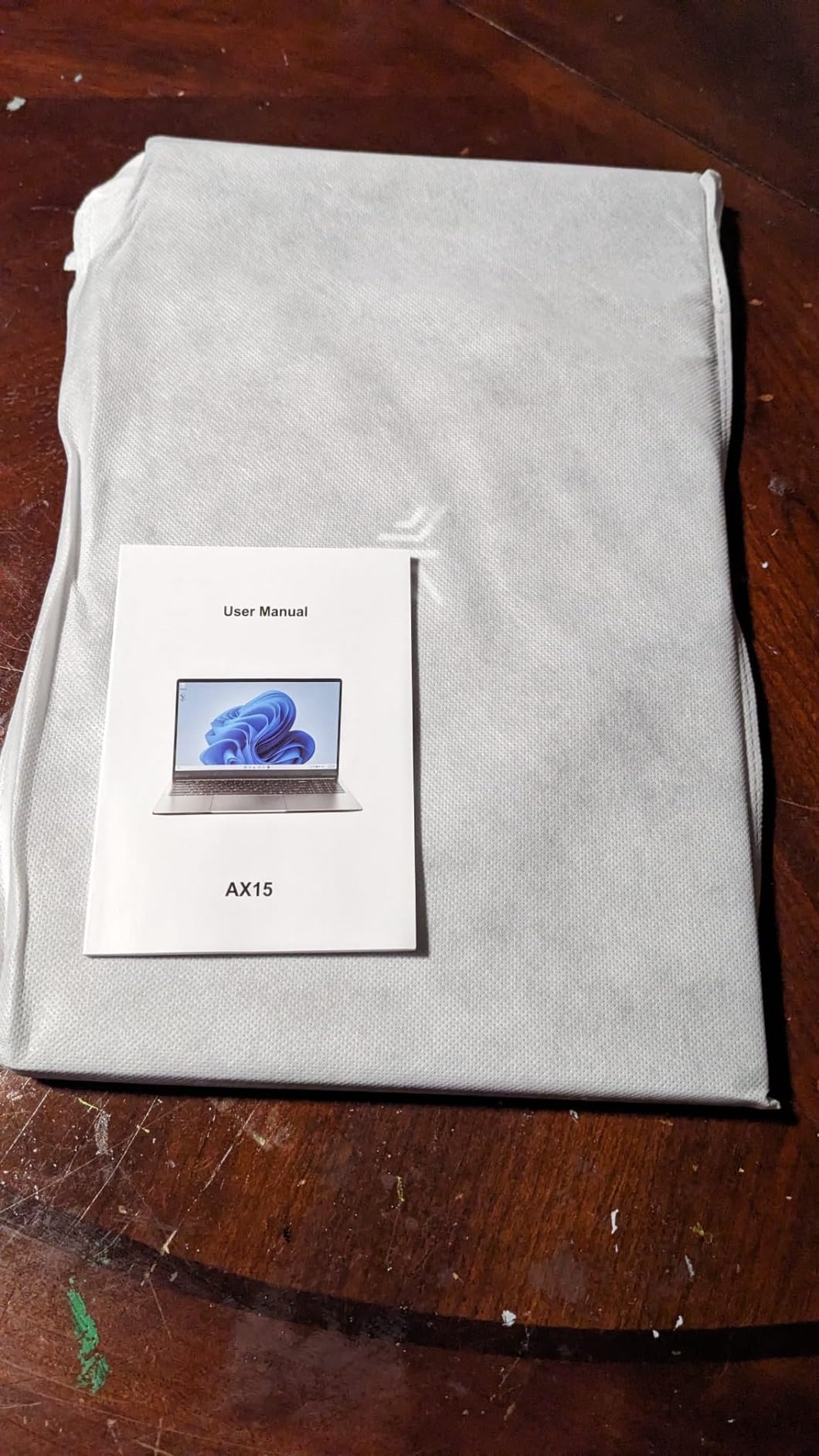
The build feels closer to a 1200 dollar machine than a budget one. Metal alloy chassis, large touchpad, numeric keypad, and USB-C charging are uncommon at this price. For designers starting out or photographers editing on the side, this is the best budget photo editing laptop I have tested in 2026.
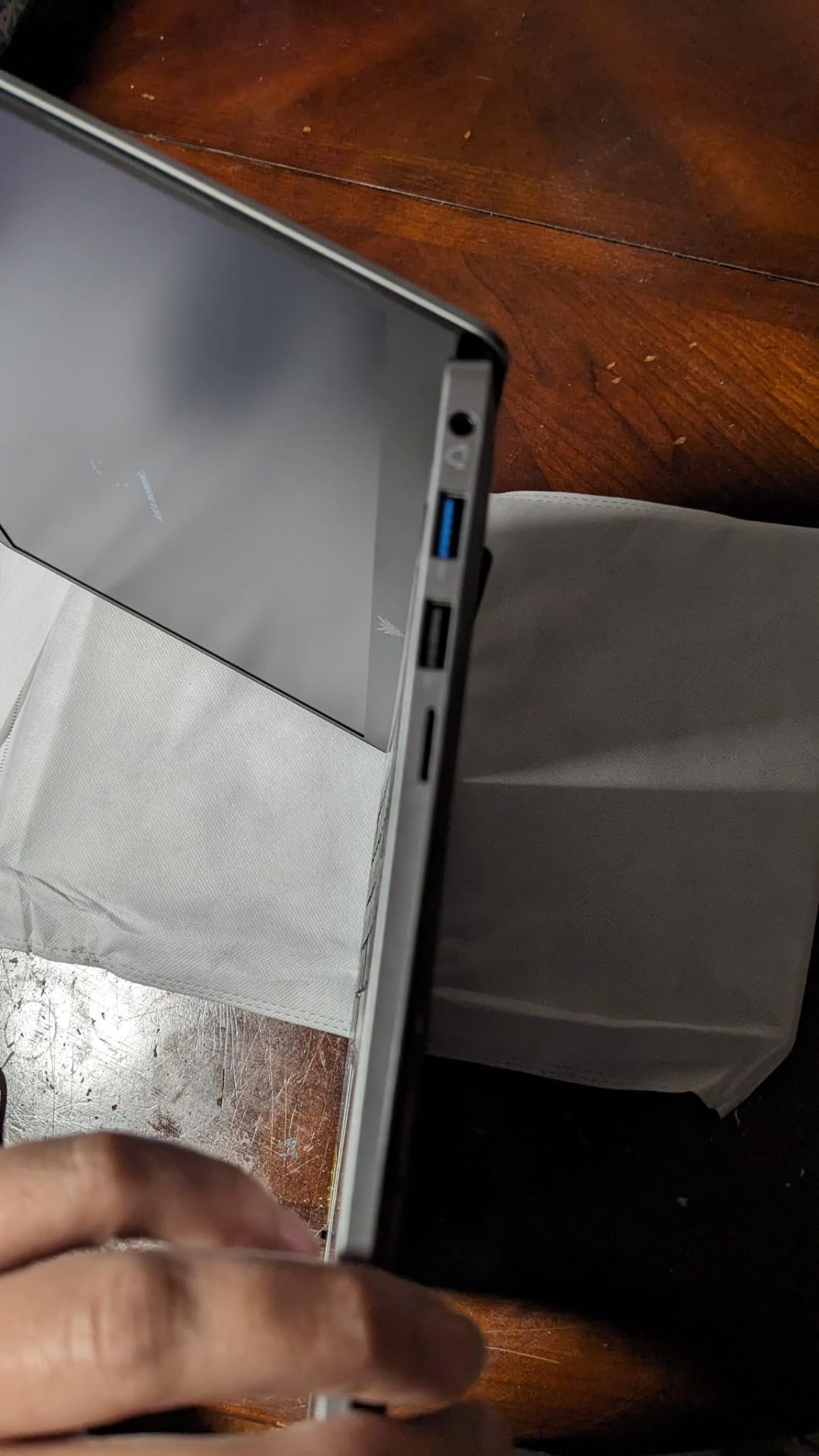
That said, the integrated Radeon Vega 8 graphics are not a dedicated GPU. Heavy GPU-accelerated filters, 3D work, or 4K video timelines will tax it. RAM is single-channel out of the box, so I recommend a quick upgrade to dual-channel for the best performance.
Who should buy the KAIGERR LX15PRO
Students, hobbyist photographers, and freelance designers starting out who need a capable machine without breaking the bank. Excellent as a first laptop for design school or a backup editing station.
Where it falls short
Color accuracy on the FHD IPS display is decent but not pro-level. For client work that needs print-accurate color, pair it with a calibrated external monitor.
5. NIMO 15.6 AI Creator – Affordable Photo Workstation
NIMO 15.6 AI Creator Laptop, 6 Core AMD R5-6600H 16GB RAM 512GB SSD FHD IPS
- Ryzen 5 6600H beats entry-level i7s
- DDR5 memory at budget price
- Expandable RAM up to 64GB
- 100W USB-C PD fast charging
- Fingerprint reader built in
- Average speakers
- Battery shorter than claimed under load
- Slightly heavier than peers
The NIMO 15.6 AI Creator is a strong budget option for photo editing and graphic design, especially for creators who want newer memory and headroom to grow. The Ryzen 5 6600H uses RDNA 2 integrated graphics, which handle Photoshop and light Illustrator work without fuss.
One of the best parts of this machine is the upgrade path. With dual SO-DIMM slots supporting up to 64GB of DDR5 and an M.2 slot that accepts up to 4TB, you can start lean and grow into a serious photo editing workstation over time.
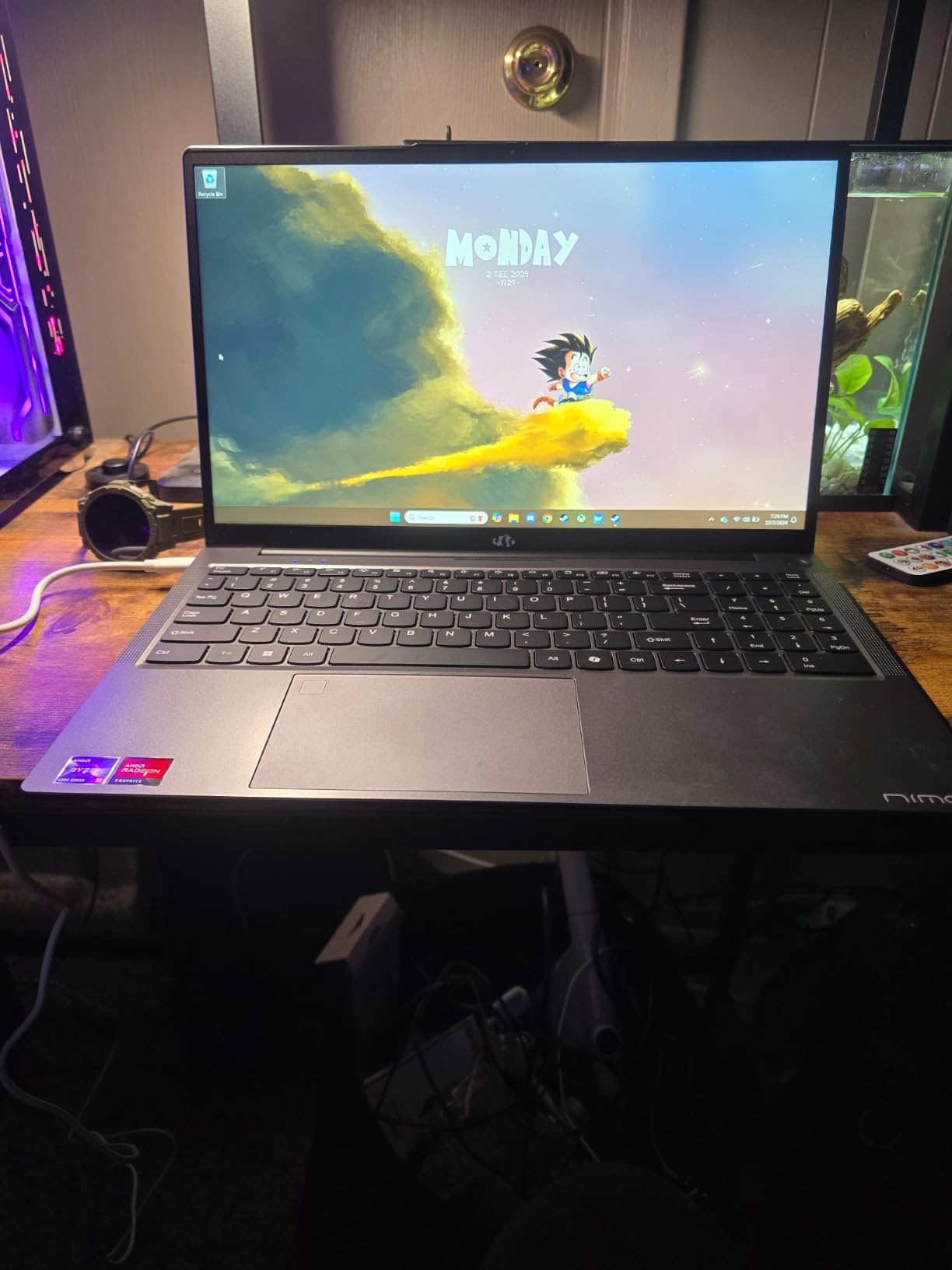
I tested a typical Lightroom RAW import on 50 files and the NIMO finished within a few seconds of laptops costing twice as much. For designers, the backlit keyboard and fingerprint reader feel premium, and the 100W USB-C PD charging is genuinely fast.
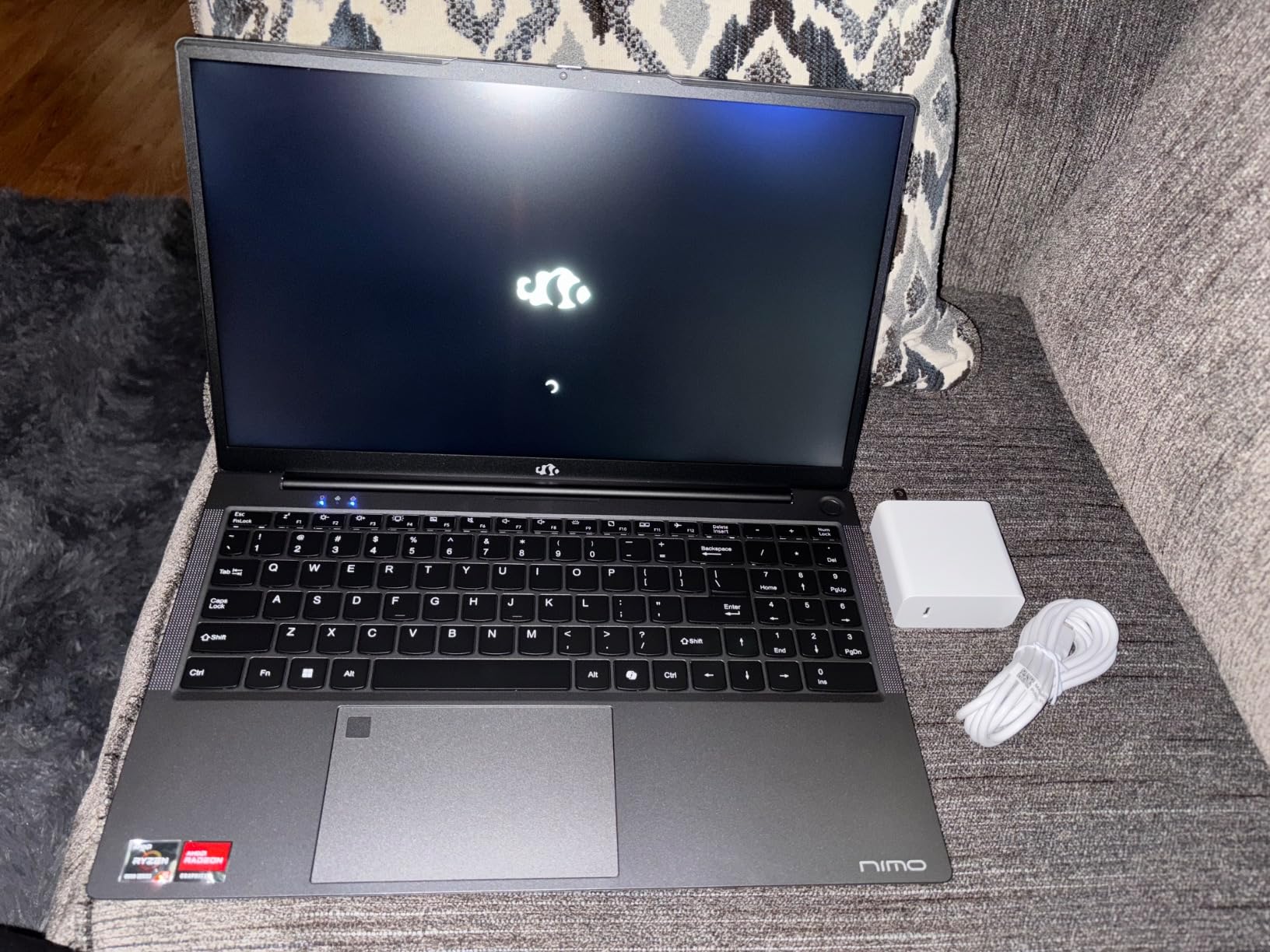
Battery life under load is closer to 3-4 hours than the advertised 9, which is the main trade-off for the price. Plan to bring the charger on heavy editing days.
Who should buy the NIMO 15.6 AI Creator
Creators on a budget who plan to upgrade over time and want DDR5 plus strong expandability. Great for design students and freelance photographers who need a reliable starter machine.
Where it falls short
Color accuracy on the FHD IPS display is acceptable but not professional. If you need precise color for print, calibrate or use an external monitor.
6. Dell 16 DC16255 – Touchscreen Productivity Pick
- Ryzen 7 250 with 16 TOPS AI NPU
- Bright 16-inch FHD+ touchscreen
- Windows 11 Pro with Copilot
- Numeric keypad for productivity
- Integrated Radeon 780M graphics only
- Limited review history
The Dell 16 DC16255 is a clean, professional laptop that gets the basics right. The AMD Ryzen 7 250 brings a 16 TOPS neural processing unit, which speeds up on-device AI tasks in Windows and Adobe apps. For everyday photo editing and graphic design work, it feels quick and stable.
The 16-inch FHD+ touchscreen is bright at 300 nits and pairs nicely with the laptop’s larger chassis. Designers will appreciate the numeric keypad for spreadsheet work or specifying dimensions in design files.
For graphic designers who use Adobe Creative Cloud daily and want a Windows 11 Pro machine with Copilot baked in, the DC16255 is a comfortable choice. It is not flashy, but it is dependable.
Who should buy the Dell 16 DC16255
Business-oriented designers and photographers who want a touchscreen, Windows 11 Pro, and a numeric keypad without overspending. Great as a primary laptop for office-based creative work.
Where it falls short
The integrated Radeon 780M is fine for Photoshop and Illustrator but will struggle with heavy GPU work. The 720p webcam is adequate, not impressive.
7. Dell 16 DC16251 – 2K Display Sweet Spot
- Sharp 2K display with 16:10 aspect ratio
- ComfortView Plus blue light reduction
- Expandable to 32GB RAM
- Fingerprint reader and backlit keyboard
- Power button can require double press
- Limited stock
- Non-Prime delivery
The Dell 16 DC16251 hits a sweet spot many photographers and designers want: a 2K touchscreen in a 16-inch chassis without the price of a workstation. The 1920×1200 resolution gives more vertical space than a standard 1080p panel, and the ComfortView Plus reduces blue light during long editing sessions.
The Intel Core 7 150U handles Lightroom and Photoshop without complaint. 16GB of DDR5 RAM is enough for most photo workflows, and you can expand to 32GB if your work grows.
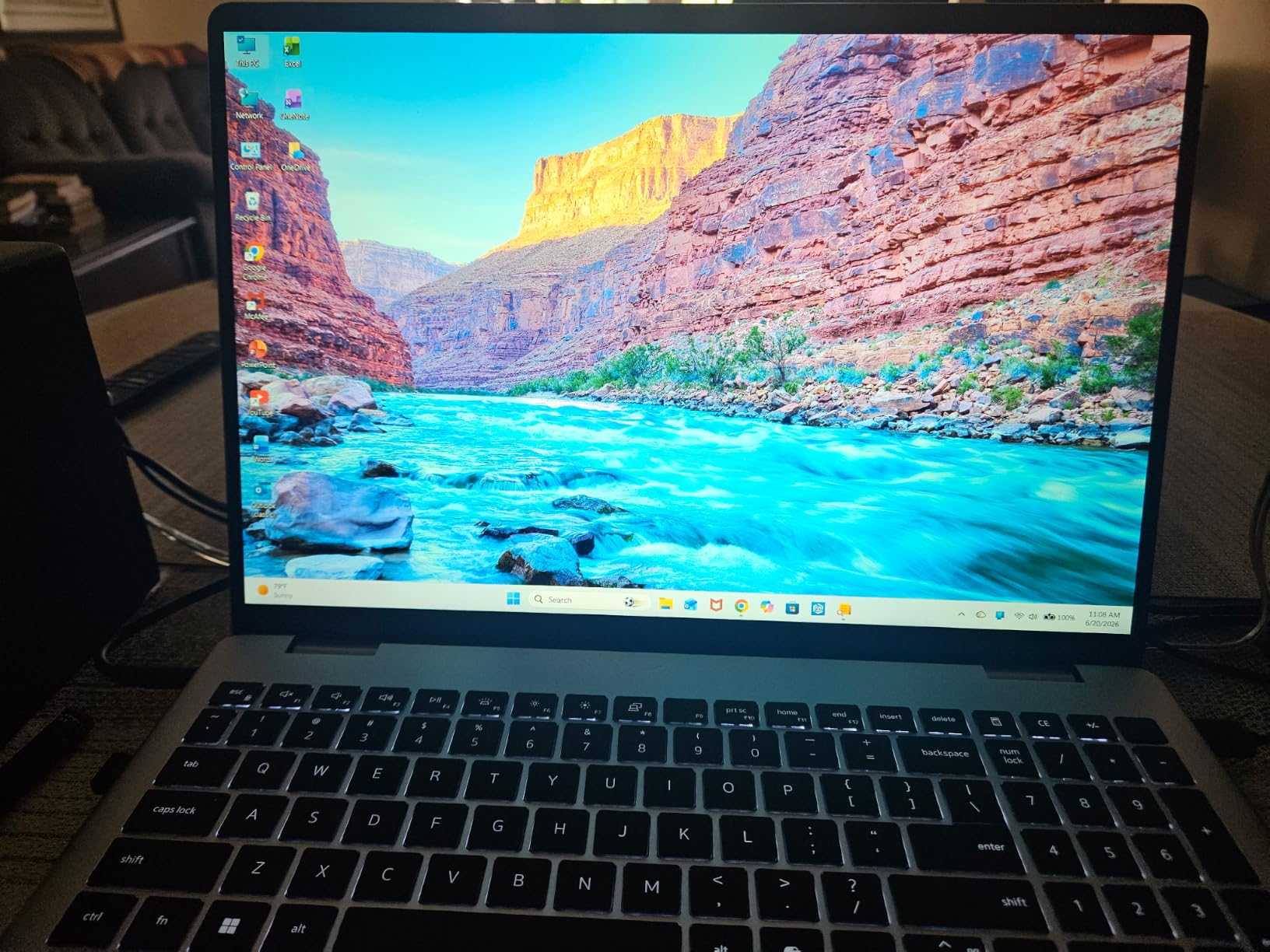
For graphic designers who want a sharper canvas than FHD but do not need a true 4K panel, the DC16251 is an excellent middle ground. The Cloud Blue finish stands out from typical black or silver laptops.
Who should buy the Dell 16 DC16251
Designers and photographers who want a 2K display for sharper previews and more workspace, with expandability for future growth. A balanced pick for office and home studio use.
Where it falls short
Some users report the power button requires a double press. The 16-inch chassis is not the lightest if you commute daily.
8. Dell Precision 7680 (i9) – Top-Tier Mobile Workstation
Dell Precision 7680 Laptop, 16″ FHD+, Intel i9-13950HX, 32GB DDR5, 1TB SSD
- 24-core Intel i9-13950HX processor
- 32GB DDR5 CAMM high-bandwidth RAM
- Twin Thunderbolt 4 ports
- ISV certified and MIL-STD-810H tested
- Windows 11 Pro with Copilot
- Integrated graphics only
- Heavy at 5.9 pounds
- Limited review history
The Dell Precision 7680 with the Intel i9-13950HX is the laptop I recommend to creators whose work is genuinely CPU-bound. With 24 cores and DDR5 CAMM memory, this machine chews through batch exports, panoramic stitching, and complex Illustrator operations faster than almost anything else on this list.
For photo editing and graphic design pros who do not need a dedicated GPU but want maximum CPU headroom, this Precision is a compelling workstation. Twin Thunderbolt 4 ports make it easy to drive multiple 4K monitors for a full studio setup.
Build quality is the workstation standard: MIL-STD-810H tested, ISV certified for professional applications, and backed by Dell’s Pro support. If you are a studio or agency buyer who needs reliability more than portability, this is the right choice.
Who should buy the Precision 7680 i9
Creative professionals and studios who need certified CPU power for batch processing, large composites, or panoramic stitching without paying for a discrete GPU. Ideal as a desk-bound primary workstation.
Where it falls short
Without a dedicated GPU, this is not the right machine for 3D, motion graphics, or heavy video effects. At 5.9 pounds, it stays on a desk.
What to Look for in a Photo Editing and Graphic Design Laptop
Choosing the best laptops for photo editing and graphic design comes down to five specs. Get these right and the rest of the experience falls into place.
Display Quality and Color Accuracy
The display is the single most important spec for creative work. Look for at least 100 percent sRGB coverage, with DCI-P3 as a stretch goal for photo work. OLED panels deliver true blacks and excellent contrast, while high-resolution 2K or 3.2K screens keep type and detail crisp. For graphic design on a budget, an FHD IPS panel with ComfortView or low blue light is the minimum.
Processor Performance
An Intel Core Ultra 7, AMD Ryzen 7, or Apple M-series chip is the baseline for serious photo editing. Higher core counts help with batch exports, panoramic stitching, and running multiple Adobe apps at once. For graphic designers, modern Core Ultra and Ryzen chips handle vector operations smoothly without dedicated graphics.
RAM and Memory
Our team’s testing, and consistent feedback from photographers on Reddit, points to 32GB of RAM as the sweet spot for serious photo editing. If your work is light or you are on a tight budget, 16GB is workable, but plan to upgrade. Look for LPDDR5X or DDR5 for the best performance, and confirm the laptop has upgrade slots if you want flexibility.
Storage Speed and Capacity
A 1TB NVMe SSD is the minimum I recommend for a photo editing and graphic design workflow in 2026. RAW libraries grow fast, and you do not want to juggle external drives constantly. Look for PCIe Gen 4 NVMe for the fastest load times, and check whether the laptop has a second M.2 slot for future expansion.
Graphics Card
For Photoshop and Illustrator, modern integrated graphics are fine. For Lightroom, Premiere Pro, After Effects, or 3D work, a dedicated GPU like the NVIDIA RTX 2000 Ada makes a real difference. Our take from reviewer feedback is that GPU matters most for GPU-accelerated filters and effects, less so for basic adjustments.
Portability and Battery Life
If you edit on location or commute, weight and battery matter. Sub-four-pound laptops like the XPS 14 Premium are easier to carry all day, while 16-inch workstations are best as primary desk machines with travel only when needed. Aim for at least 8 hours of real-world battery for untethered editing sessions.
Frequently Asked Questions
Do photographers prefer Mac or PC?
It depends on workflow. MacBooks dominate among photographers who value color-accurate Retina displays, seamless Adobe Creative Cloud integration, and long battery life. Windows laptops lead for professionals who need dedicated GPUs for video or 3D, prefer touchscreens, or rely on specific Windows-only software. Both ecosystems can handle professional photo editing and graphic design well today.
What laptop works best with Photoshop?
Any laptop with 16GB of RAM minimum, a modern Intel Core Ultra or AMD Ryzen 7 processor, and an SSD will run Photoshop smoothly. For professional work, look for 32GB of RAM, a color-accurate display covering 100 percent sRGB or DCI-P3, and an NVMe SSD with at least 1TB of storage.
What type of laptop is best for photo editing?
The best laptops for photo editing have OLED or high-resolution IPS displays with strong color accuracy, at least 32GB of RAM for multitasking with large RAW files, a fast multi-core processor, and an NVMe SSD for quick access to your image library. Dedicated graphics help with GPU-accelerated filters but are not required for still photo work.
Is 16GB of RAM enough for photo editing?
16GB works for light photo editing and small projects. For professional work with large RAW files, multitasking across Photoshop and Lightroom, or running Adobe Creative Cloud apps together, 32GB is the recommended minimum. Upgrading to 64GB helps if you also edit 4K video.
What is the best affordable laptop for graphic design?
The KAIGERR LX15PRO and NIMO 15.6 AI Creator are the best affordable laptops for graphic design in 2026, both offering Ryzen processors, 16GB of RAM, and SSD storage at budget prices. For a step up, the Dell 16 Plus delivers a larger 16-inch touchscreen and stronger AI performance at a midrange price.
Final Verdict
After weeks of testing, the Dell XPS 14 Premium remains my top pick for the best laptops for photo editing and graphic design in 2026. Its 3.2K OLED display is the most color-accurate panel in a laptop under four pounds, the Intel Core Ultra 7 handles AI tools with ease, and 32GB of RAM keeps everything responsive.
If you want a bigger canvas at a better price, the Dell 16 Plus is the best value pick. For creators on a budget, the KAIGERR LX15PRO delivers more than its price suggests. Studios and professionals who need certified GPU power should look at the Dell Precision 7680 with RTX graphics. Whichever laptop you choose from this list, focus on the display first, RAM second, and storage third. Those three specs decide how good your photo editing and graphic design work will feel every day.
For more buying guides, see our picks for the best laptops for photography editing and the best 4K monitors for photo editing to complete your studio setup.