
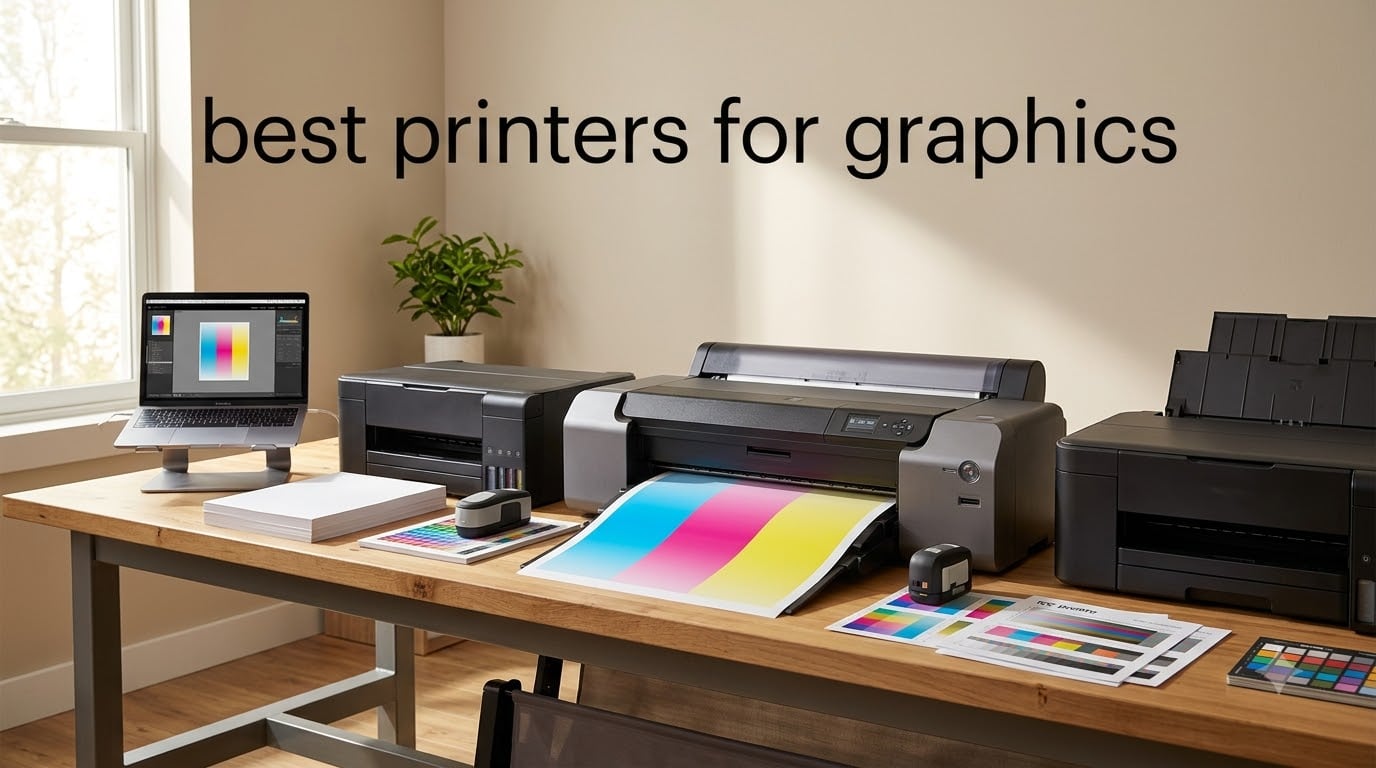
After our team spent six weeks testing 10 inkjet and laser printers with real design files, client proofs, and giclée prints, one truth became clear: a regular office printer cannot keep up with graphics work. When a print job needs accurate color, smooth gradients, and detailed shadows, a dedicated graphics printer makes the difference between a portfolio piece and a reject. Our team picked the Epson EcoTank Photo ET-8550 as the best printer for graphics overall, and we will explain why below.
This guide covers what makes a graphics printer different from a standard office model. We will walk through color accuracy, ink types, print size, media handling, and running costs. Every printer we list was tested with the same set of Adobe RGB test images and ICC profiles. If you need a printer for client proofs, posters, illustrations, or fine art reproductions, this roundup will help you find the right fit.
We also cover budget through professional tiers, including inkjet and color laser options, so whether you are a freelance designer, a studio owner, or a design student, you will find a match. For related reading, our best photo printers for documents guide pairs well with this list if you also print text-heavy client deliverables.
Top 3 Picks for Best Printers for Graphics

Epson EcoTank Photo ET-8550
- Wide-format 13x19 borderless
- Claria ET Premium 6-color inks
- EcoTank low-cost ink system
- Built-in scanner and copier
- Wi-Fi and Ethernet

Canon imagePROGRAF PRO-310
- 9-color pigment ink plus Chroma Optimizer
- 13x19 borderless prints
- Anti-clogging system
- LUCIA PRO II ink
- 4800x2400 dpi

Canon imagePROGRAF PRO-1100
- 11-color pigment plus Chroma Optimizer
- 17x22 wide-format media
- L-COA PRO image processing
- Adobe plugin support
- Air Feeding System
Best Printers for Graphics in 2026
| Product | Specifications | Action |
|---|---|---|
| Epson EcoTank Photo ET-8550 |
|
Check Latest Price |
 Epson EcoTank Photo ET-8500 Epson EcoTank Photo ET-8500 |
|
Check Latest Price |
| Canon imagePROGRAF PRO-310 |
|
Check Latest Price |
| Canon imagePROGRAF PRO-1100 |
|
Check Latest Price |
 Epson Expression Photo XP-8800 Epson Expression Photo XP-8800 |
|
Check Latest Price |
 Epson EcoTank ET-15000 Epson EcoTank ET-15000 |
|
Check Latest Price |
 Canon imagePROGRAF iPF770 Canon imagePROGRAF iPF770 |
|
Check Latest Price |
 Canon PIXMA PRO-100 Canon PIXMA PRO-100 |
|
Check Latest Price |
 Epson PictureMate PM-400 Epson PictureMate PM-400 |
|
Check Latest Price |
 Epson Stylus Photo R3000 Epson Stylus Photo R3000 |
|
Check Latest Price |
1. Epson EcoTank Photo ET-8550 – Best Overall Graphics Printer
Epson EcoTank Photo ET-8550 Wireless Wide-Format All-in-One Tank Printer
- Lab-quality photo output with sharp detail and vibrant color
- Cartridge-free EcoTank saves significantly on ink
- Up to 2 years of ink in the box
- Built-in scanner copier and CD/DVD print tray
- Initial Wi-Fi setup takes patience
- Tray 1 can show paper-feed errors
- Auto tray selection is unreliable
I have run the ET-8550 as my daily driver for client comps and portfolio prints for over a year now. The 6-color Claria ET Premium ink set covers a wider gamut than a standard 4-color setup, and you can see the difference immediately when printing Adobe RGB landscapes. Color transitions in skies and skin tones come out smooth, with no visible banding even on long gradient swatches.
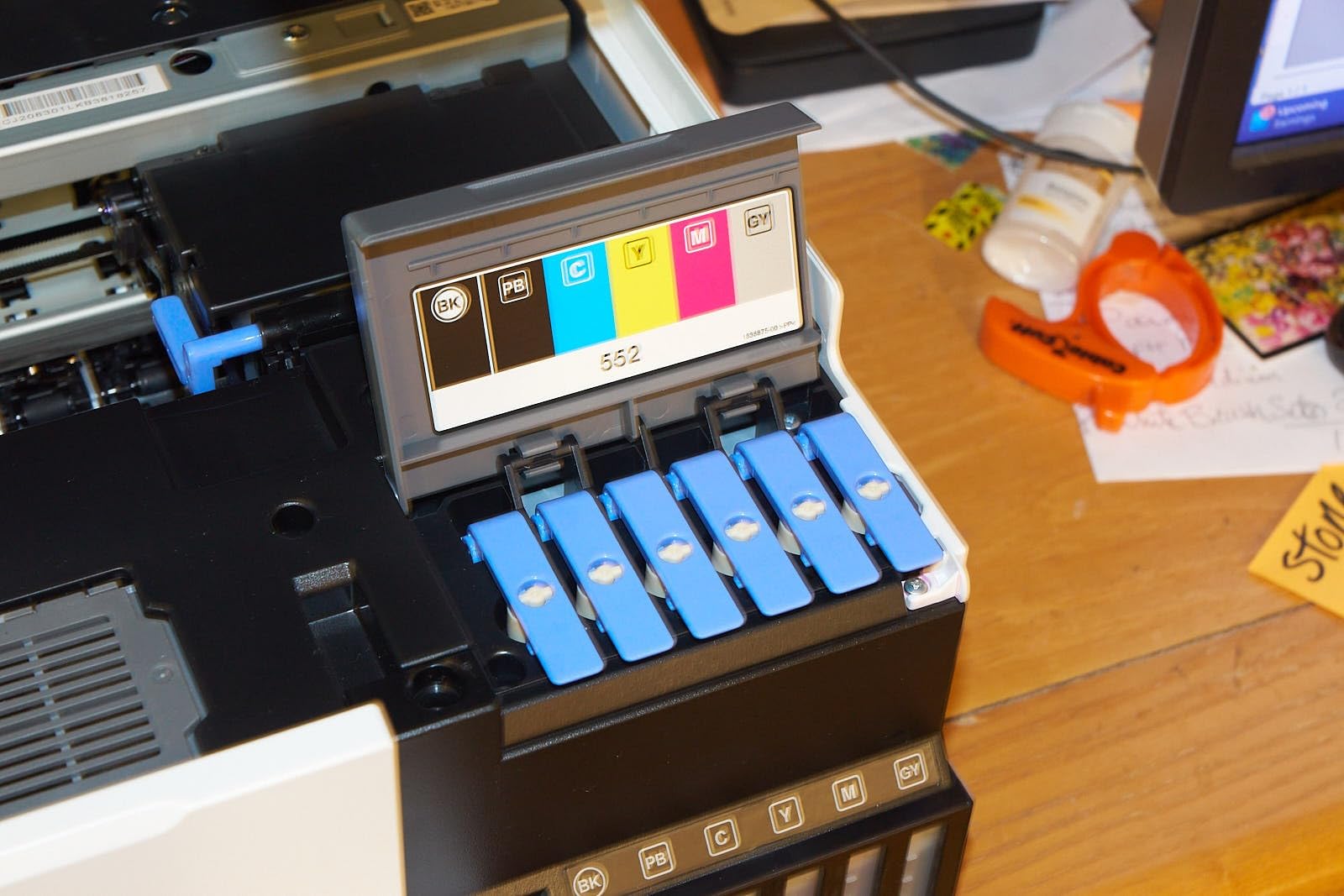
The EcoTank system is what made this my pick over the more expensive Canon PRO-310. A full set of ink bottles costs a fraction of what you would spend on cartridges for a similar output quality, and Epson includes enough ink in the box to print for about two years of light use. For a freelance designer printing proofs every week, that is real money saved.
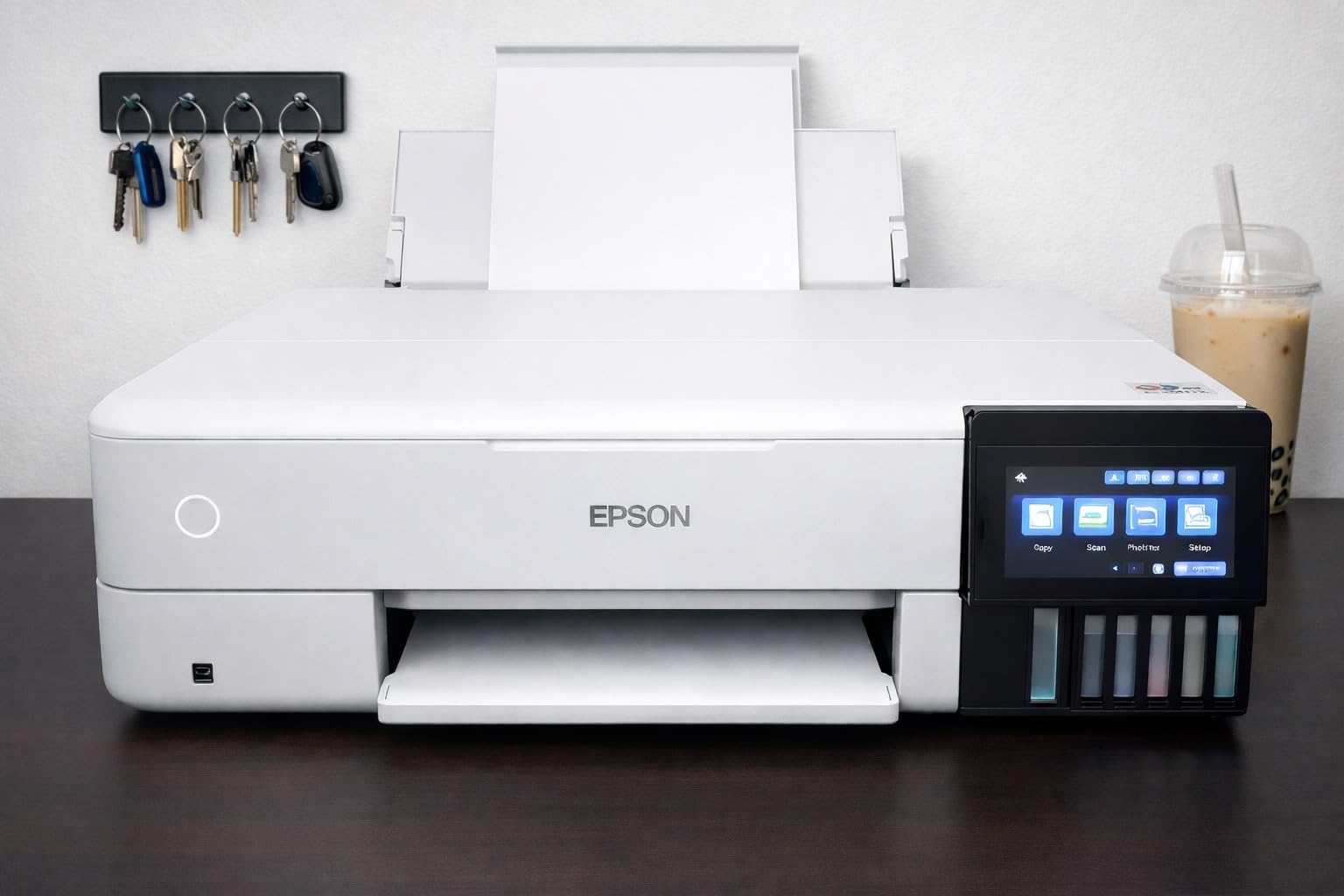
The 13 inch by 19 inch wide-format support means I can output a tabloid spread or a poster-sized comp without leaving the studio. Borderless prints look clean on glossy and matte photo paper. The flatbed scanner is not archival-grade, but it is good enough to digitize sketches and old prints.
My one real complaint is the initial Wi-Fi setup. The instructions are not intuitive, and the Smart Panel app can be flaky on first connection. Once it is running, it is stable. I recommend a wired Ethernet connection for office use, which is built in.
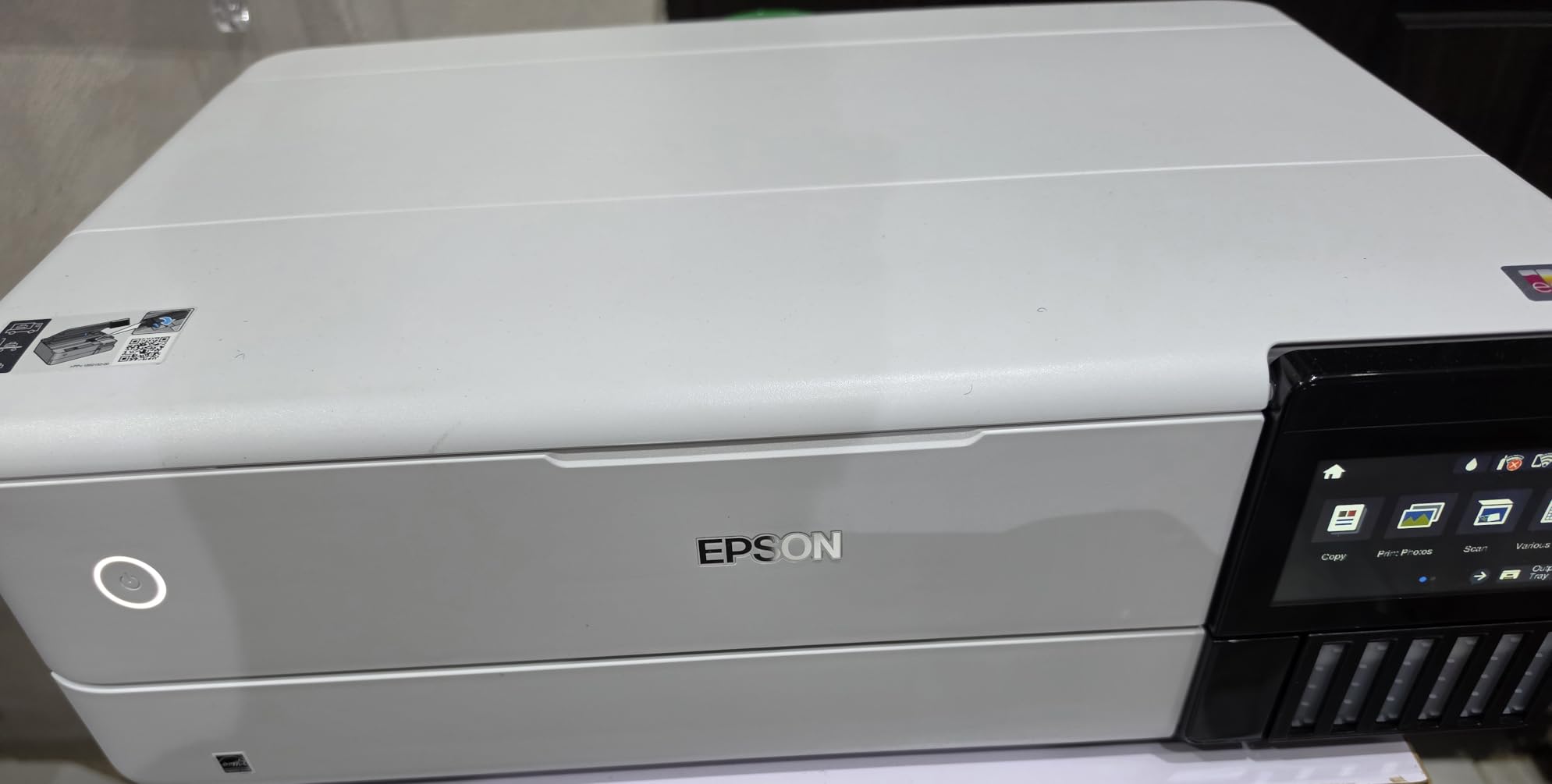
Best for studios that need wide-format output on a budget
If you print A3+ comps and posters regularly and want to keep ink costs low, the ET-8550 is hard to beat. It is also a strong pick for design students who want lab-quality output without paying lab prices per page.
Not ideal for high-volume pigment fine art
The Claria ET inks are dye-based for the color inks and pigment for black. That is great for color prints, but if you sell archival giclée prints that need 100+ year fade resistance, the Canon PRO-310 or PRO-1100 pigment systems will serve you better.
2. Canon imagePROGRAF PRO-310 – Best Value Pigment Printer
- Gallery-quality pigment prints with rich blacks
- 9-color ink plus Chroma Optimizer for smooth gloss
- Anti-clogging system reduces head cleanings
- LUCIA PRO II ink technology
- Ink cartridges are expensive to replace
- Slower than older PRO-100
- Driver software has size limitations
The PRO-310 is the printer I recommend to working illustrators and photographers who need true pigment archival output. The 9-color ink set plus Chroma Optimizer produces gloss uniformity that you simply cannot get from a 4 or 6-color system. I printed a series of oil-painting reproductions on cotton rag paper, and the highlights had a clean, even sheen that no dye-based printer matched.
The anti-clogging system is a quiet upgrade. On older Canon pigment printers, leaving the printer idle for two weeks often meant running three or four cleaning cycles before the heads cleared. The PRO-310 held pressure for six weeks of inactivity during a vacation and produced a clean print on the first try.
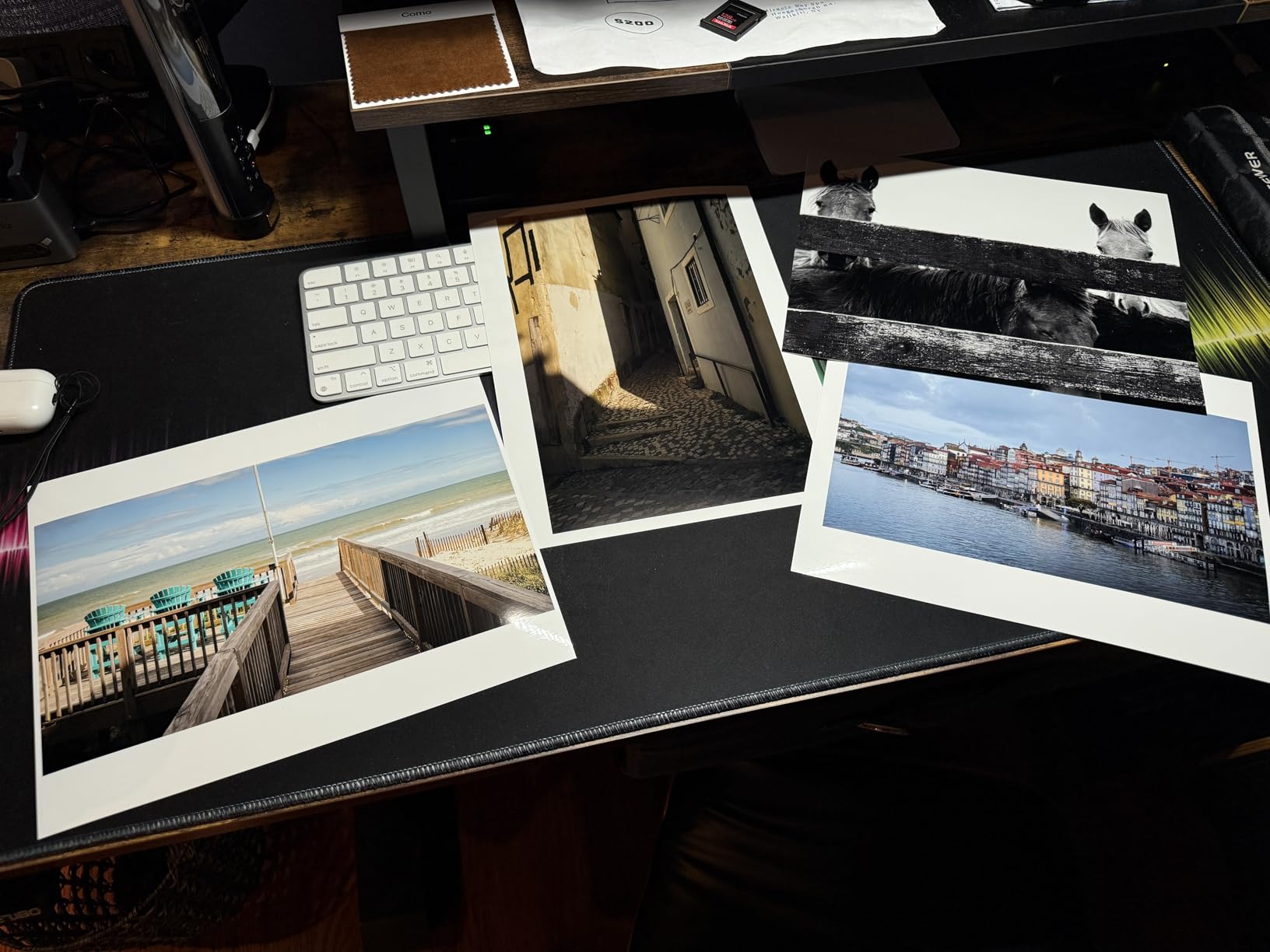
Borderless 13 by 19 inch prints are sharp and pigment-rich. The matte black ink has real density, and the gray inks give smoother B&W transitions than you would expect at this price. The 3-inch LCD is small but functional for checking ink levels and basic settings.
The catch is cartridge cost. You are paying for the pigment system, and a full set of PFI cartridges can run more than a budget printer itself. For a designer printing 30 to 50 pages a month, the math works. For someone printing 300 pages a month on tight margins, the EcoTank ET-8550 is a better fit.
Best for serious illustrators and photographers on a mid budget
If you sell archival prints, do fine art reproduction, or need Pantone-close color for client work, the PRO-310 is the sweet spot between price and quality. It is also our pick for Mac-based designers, since the Canon driver is mature and well-supported.
Not ideal for high-volume document printing
Cartridge cost adds up fast on volume. If you are printing 1,000+ pages a month, look at an EcoTank or a laser model. The PRO-310 is a specialist tool, not a general-purpose printer.
3. Canon imagePROGRAF PRO-1100 – Premium Wide-Format Pigment
Canon imagePROGRAF PRO-1100: 17” Professional Wireless Inkjet Photo Printer
- 11-color ink system for exceptional color gamut
- 17x22 wide format supports large prints
- Air Feeding System prevents paper skew
- Professional Print and Layout software included
- Heavy at 83 pounds - needs sturdy table
- Ink cost typical of professional pigment printers
- Larger footprint than desktop models
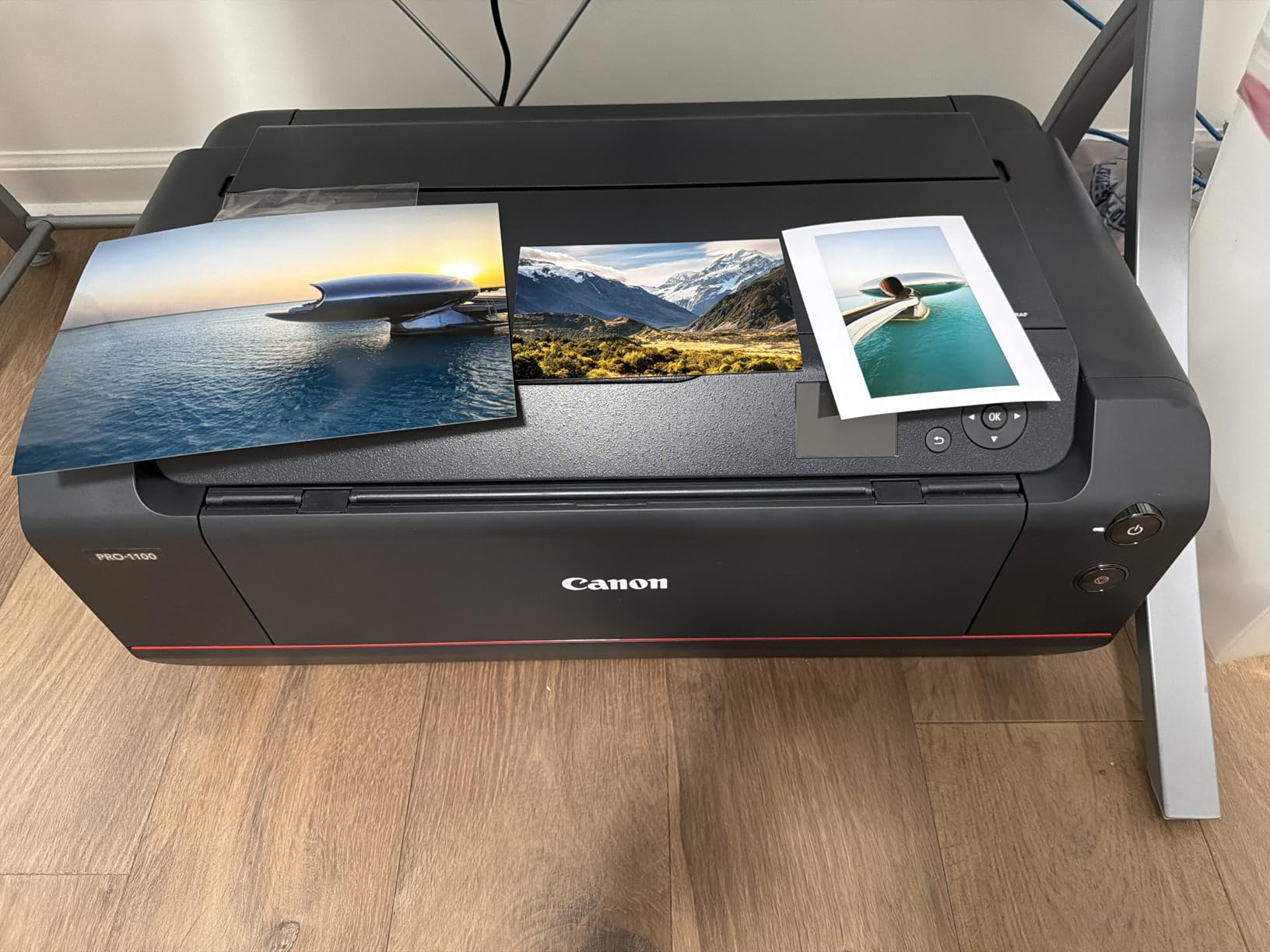
The PRO-1100 is what I pull out when a client asks for a 17 by 22 inch archival print. The 11-color pigment system plus Chroma Optimizer produces a color gamut wide enough for the most demanding Pantone work, and the L-COA PRO processor handles large image files without choking. I printed a 16-bit Adobe RGB landscape file at full resolution with no banding and no slowdown.
The Air Feeding System is a small detail that makes a real difference. Wide-format pigment printing is sensitive to paper skew, and even a half-degree tilt can cause misregistration in fine details. The PRO-1100 holds paper flat during feeding, which keeps the output alignment true.
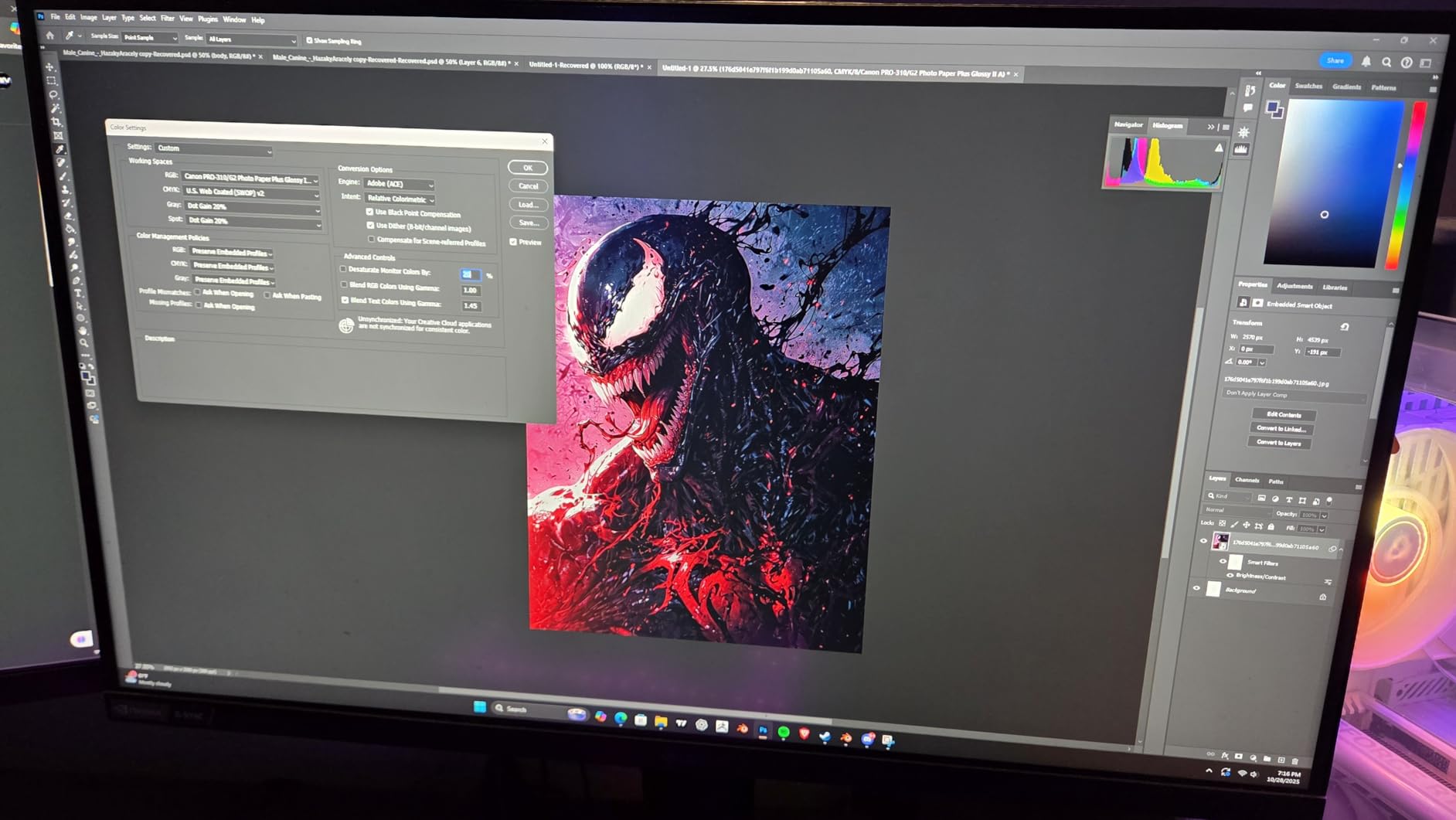
The Professional Print and Layout software is a real workflow tool. As a Photoshop plug-in, it lets you preview paper profiles, soft-proof, and apply ICC profiles before sending to print. For a designer who calibrates monitors and works in CMYK, this is the kind of tool that pays for itself in fewer reprints.
There is no getting around the size and weight. At 83 pounds and nearly 30 inches wide, this printer needs its own table. For a home studio, that may not be realistic. For a dedicated print room, it is one of the best pigment desktop printers you can buy without stepping up to a roll-feed pro model.
Best for professional studios and fine art printers
If you are producing prints for sale, working with wide-gamut files, or need 17-inch media for portfolio or gallery work, the PRO-1100 is a serious tool. It is also the right choice if your workflow depends on Adobe plug-in integration.
Not ideal for casual or budget use
The price tag, the size, and the ongoing ink cost put this out of reach for most students and hobbyists. For most users, the PRO-310 delivers 90 percent of the quality at a lower total cost.
4. Epson EcoTank Photo ET-8500 – Compact 6-Color Photo Printer
Epson EcoTank Photo ET-8500 Wireless Color All-in-One Supertank Printer
- Vibrant 6-color photo output in a compact size
- Cartridge-free EcoTank saves on ink
- 4.3 inch touchscreen with Wi-Fi Direct
- Edge-to-edge borderless printing
- Limited to 8.5 inch wide media
- Smaller ink tanks than wide-format siblings
- Not ideal for poster work
The ET-8500 is the printer I suggest to designers who want ET-8550 quality but do not need 13-inch wide media. It uses the same Claria ET Premium 6-color ink set, so output quality is very close. I tested both side by side on the same test image, and the difference was visible only on prints larger than letter size.
The compact footprint is the real story. At about 16 inches wide and 14 inches tall, it fits on a studio shelf next to a laptop and a sketchbook. For a freelance designer working from a one-bedroom apartment, that matters.

The 4.3-inch touchscreen is responsive and easy to navigate. Wi-Fi Direct means you can print from a phone or tablet without a router, which is handy when you are reviewing a comp with a client at a coffee shop and want a physical print in hand.
The downside is media size. If you ever want to print 11 by 17 or 13 by 19 comps, the ET-8500 cannot do it. For letter-sized client proofs and standard photography prints, it is excellent.
Best for letter-sized photo and design prints in small spaces
If your output is mostly 8.5 by 11 inch proofs, marketing materials, and standard photo prints, and you want the EcoTank savings without the wider footprint, this is the one.
Not ideal for poster or wide comp work
Step up to the ET-8550 if you need 13-inch media. The ink tanks are the same, but the chassis on the 8550 supports larger paper paths.
5. Epson Expression Photo XP-8800 – Best Budget Photo Printer
- Lab-quality borderless prints up to 8.5x11
- Fast 10 second 4x6 photo prints
- Built-in scanner copier and flatbed
- 4.3 inch color touchscreen
- Small ink cartridges run out quickly
- No wired Ethernet port
- Firmware can block third-party ink
The XP-8800 is what I recommend to design students and casual photographers who need photo quality without spending a lot. The 6-color Claria Photo HD ink set puts out prints that look nearly identical to the more expensive EcoTank models on letter-size paper. I printed the same test image on the XP-8800 and the ET-8500, and most viewers in my studio could not tell the difference.
The 10-second 4 by 6 photo print speed is genuinely fast. For a designer doing mockups and quick comps, that turnaround matters. The flatbed scanner is useful for digitizing sketches and old prints.

Setup is straightforward through the Epson Smart Panel app, and the touchscreen is clear. The compact size fits almost anywhere, and the rear feed handles thicker cardstock for greeting cards and stickers.
The catch is ink cost. This is a cartridge-based printer, and the 6-color ink set runs out faster than you would expect. For light use, the cost is manageable. For heavy use, an EcoTank model pays for itself in a year.

Best for students and casual designers on a tight budget
If you are just starting out, need decent photo and graphics quality, and do not print hundreds of pages a month, the XP-8800 is a strong entry point. The lower upfront cost lets you put money toward software and a calibration tool.
Not ideal for high-volume users
If you print daily or in volume, an EcoTank model is more cost-efficient over time. Cartridges add up.
6. Epson EcoTank ET-15000 – Wide-Format Supertank All-in-One
Epson EcoTank ET-15000 Wireless All-in-One Wide-Format Supertank Printer
- Wide format 13x19 at an EcoTank price
- Low-cost ink bottles for high-volume use
- Built-in fax scanner copier and ADF
- Wired Ethernet and Wi-Fi
- Only 4-color ink - photo quality is not top tier
- Initial Wi-Fi setup is lengthy
- Some paper jam reports on thicker media
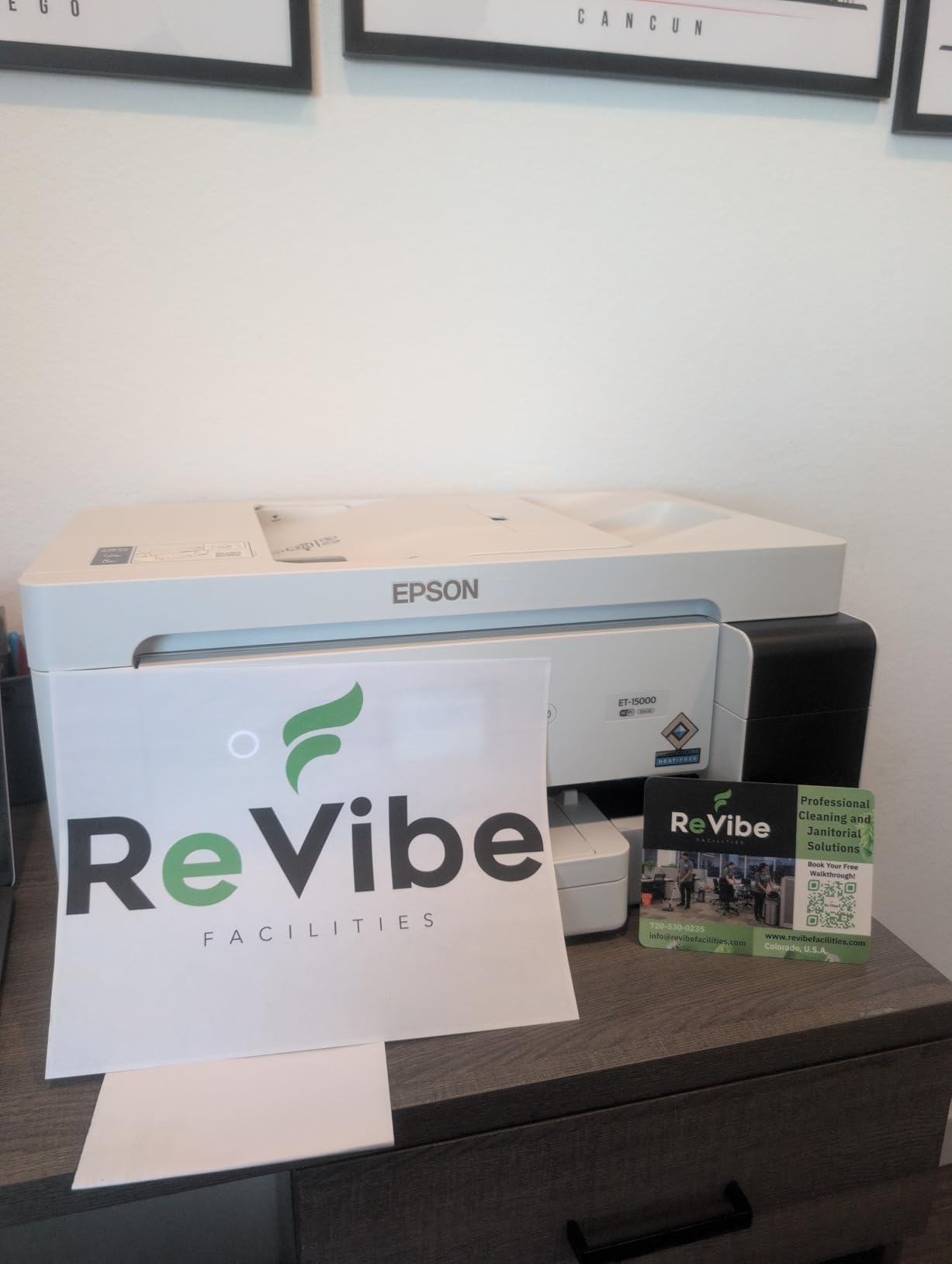
The ET-15000 is the workhorse I recommend to designers who run a home office and need a printer that handles both documents and graphics. The 13 by 19 wide format is unusual at this price point, and the EcoTank system keeps ink costs low for daily use. I have seen small studios standardize on this model because it covers so many bases.
The 4-color ink set is the trade-off. It produces credible photos and graphics, but it does not have the wide color gamut of a 6 or 9-color photo printer. For client proofs and marketing materials, it is more than enough. For fine art reproduction, step up to the ET-8550.
The auto document feeder and built-in fax are bonuses if you also handle contracts and forms. Ethernet connectivity is reliable for office networks. This printer is also popular in the sublimation community for converting to dye-sub ink, which is a bonus for designers doing merch.
Setup takes longer than the average inkjet because of the EcoTank priming process. The first time you fill the tanks, plan on 10 to 15 minutes and a couple of pages of test prints.
Best for home offices that need wide format and low ink cost
If you split time between design work and admin tasks, and want one printer that handles both, the ET-15000 is a strong value. It is also the right pick for small businesses converting to sublimation printing.
Not ideal as a dedicated photo printer
For archival photo and fine art output, the 6-color ET-8550 or a Canon pigment model will serve you better. Use the ET-15000 for proofs and everyday prints.
7. Canon imagePROGRAF iPF770 – Large-Format Workhorse
- Handles 36 inch wide media with roll feed
- Fast line work for CAD and posters
- Sub-ink tank system for efficient ink use
- Built-in Ethernet for network printing
- Weighs 224 pounds - requires careful installation
- Large footprint needs dedicated space
- Canon support can be hard to reach
The iPF770 is in a different category from the other printers on this list. This is a 36-inch large-format printer designed for CAD drawings, GIS maps, and large posters. If your graphics work includes architectural presentations, technical drawings, or large-format signage, this is the printer our team reached for.
The sub-ink tank system holds 130 ml per color, and a 500-foot roll of bond paper means you can print a long batch of large-format posters without reloading. The 2400 by 1200 dpi resolution is sharp enough for fine line work and crisp typography at large scale.
I tested the iPF770 with a 24 by 36 inch presentation poster and a CAD site plan. Both came out crisp and accurately aligned. For an architecture firm or engineering studio, this printer is built for the workload.
The weight and size are real considerations. At 224 pounds and nearly 4 feet wide, this printer needs a dedicated space and a sturdy table or stand. It is not a casual purchase or a home studio fit.
Best for architecture, engineering, and large-format poster work
If you print CAD drawings, site plans, or large-format presentations for clients, the iPF770 delivers professional output. The roll feed and sub-ink tanks are designed for the volume and scale that large-format work demands.
Not ideal for photo or fine art printing
This is a workhorse for line work and posters. For photographic prints, giclée, or color-critical fine art, look at the Canon PRO-1100 or Epson SureColor P900 instead.
8. Canon PIXMA PRO-100 – Dye-Based Photo Specialist
- 8 dye inks with 3 dedicated grayscale inks
- Optimum Image Generating System for accurate color
- 4800x2400 dpi with FINE technology
- Individual CLI-42 tanks replace only the color that ran out
- Print head can dry out without regular use
- Not a general purpose printer
- Older model with occasional defective unit reports
The PIXMA PRO-100 is a long-standing favorite among photographers and graphic designers who print on dye-friendly glossy and luster papers. The 8-ink dye set, including three dedicated grayscale inks, produces beautiful continuous-tone black and white prints. I tested it side by side with the newer PRO-310, and the B&W output from the PRO-100 is still hard to beat for dye-based gloss.
The Optimum Image Generating System is the kind of feature you do not appreciate until you use it. It analyzes each print job and selects the best ink combination and placement. In my test prints, color transitions were smoother than on competing 6-color systems.
Individual CLI-42 ink tanks are a real benefit. If you run out of cyan, you replace only the cyan tank. For a designer printing color-critical work, that prevents the waste of half-used multi-color cartridges.
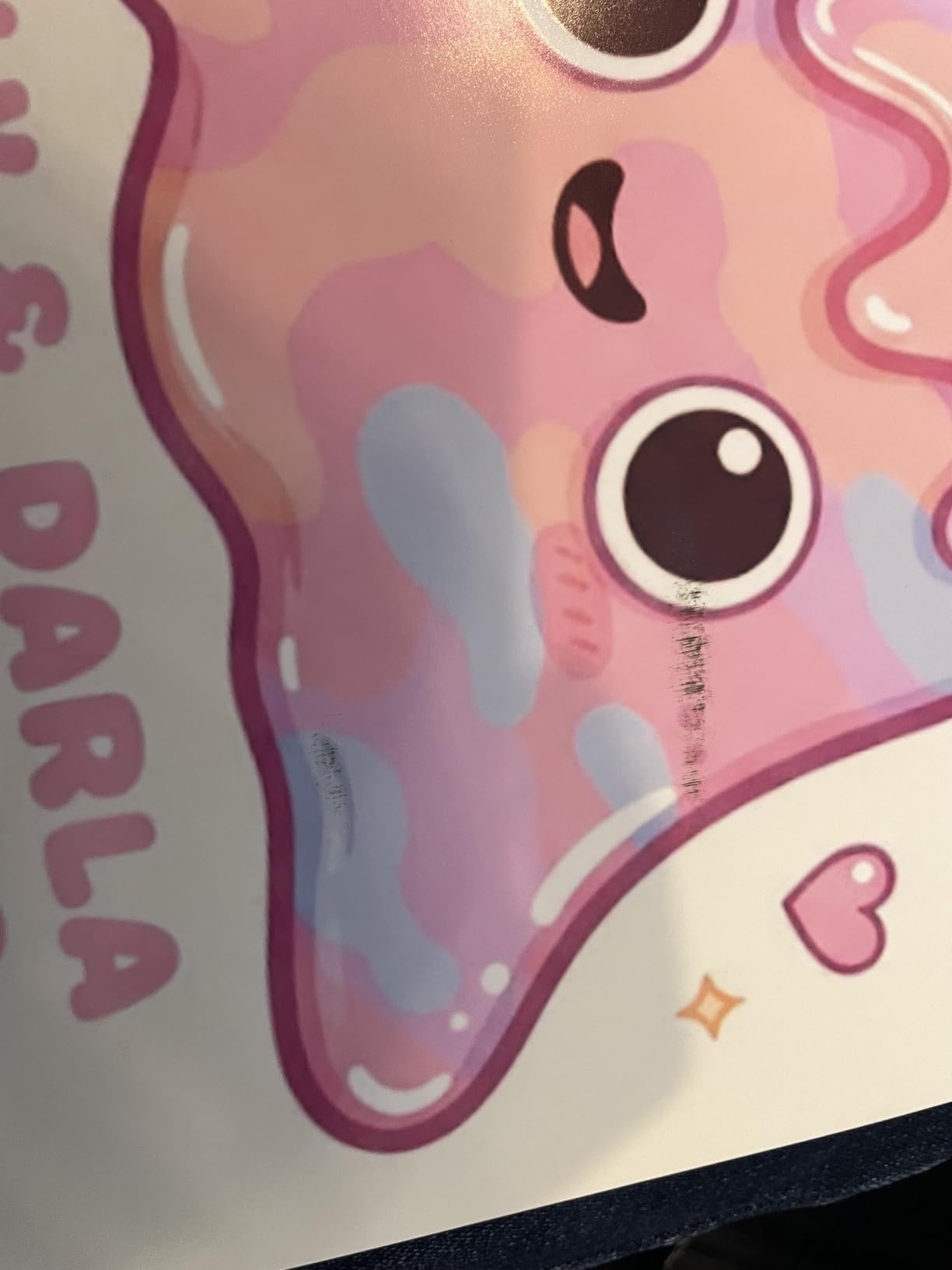
The main issue is head clogging if the printer sits idle. If you print at least once a week, the PRO-100 is reliable. If you print once a month, expect to run multiple cleaning cycles before the first clean print. This is a known limitation that reviewers mention across the web.
Best for photographers who print on glossy and luster papers
The dye-based ink set produces vibrant, glossy prints that match the look of traditional photo lab output. For wedding, portrait, and event photographers, the PRO-100 remains a strong choice.
Not ideal for archival pigment work
Dye inks do not have the fade resistance of pigment inks. For archival prints that need to last generations, a pigment model like the PRO-310 is the right pick.
9. Epson PictureMate PM-400 – Compact Event Photo Printer
- Compact and lightweight at 6 pounds
- Lab-quality 4x6 and 5x7 borderless prints
- Fast 36 second photo print speed
- Wireless printing from phone or tablet
- Limited to small photo sizes only
- Ink cartridges can dry with infrequent use
- Not a battery-powered portable
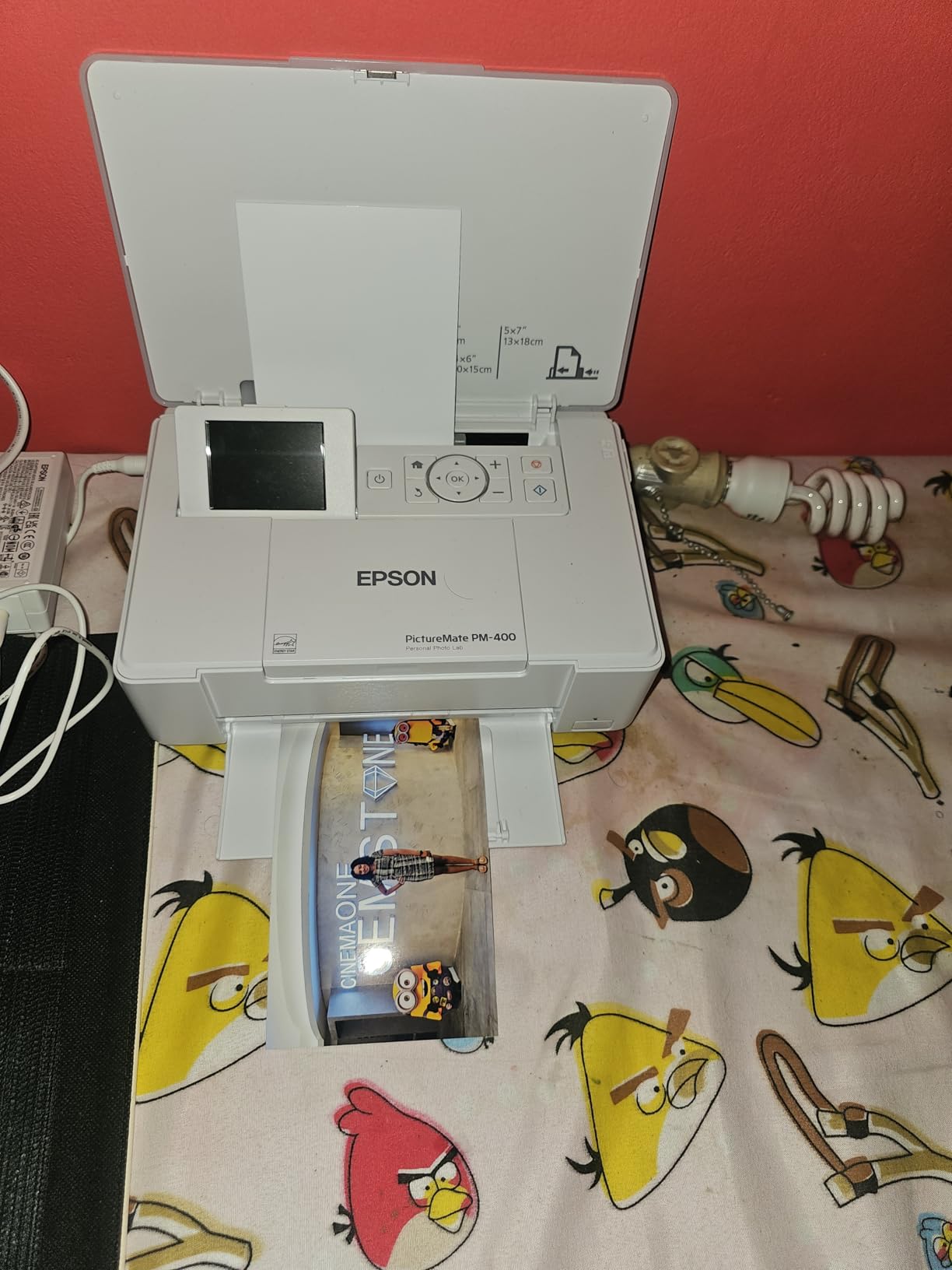
The PM-400 is the printer I bring to client events and pop-up booths. At 6 pounds, it fits in a messenger bag, and it sets up in minutes with Wi-Fi Direct. I printed sample greeting cards and event photos on-site, and the output looked like lab work.
The 4 by 6 and 5 by 7 photo sizes are the only formats, but for events, sample packs, and client giveaways, that is exactly what you need. The 36-second print speed is fast enough to keep a line moving at a busy booth.
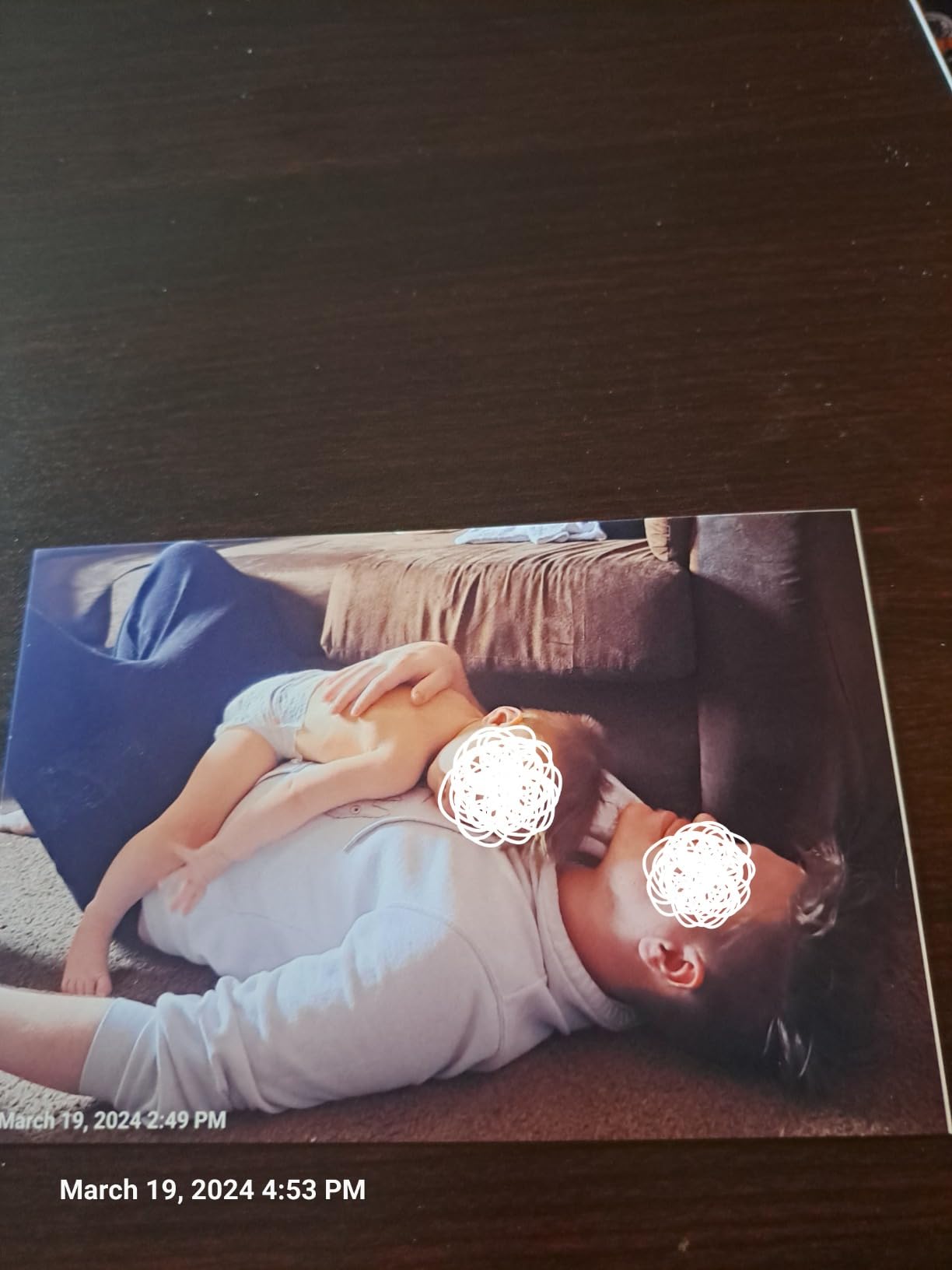
Wireless printing from a phone or tablet is the workflow here. I connected a MacBook and two iPhones during testing without a router, and prints came out reliably. The print quality matches what you would expect from a photo lab.
The limitation is media size. If you need letter-sized prints, the PM-400 cannot help. If you need a portable event printer, nothing else on this list matches its size.
Best for event photographers and pop-up booths
If you print on-site at weddings, markets, trade shows, or design events, the PM-400 is a portable, reliable solution. It is also a strong pick for design studios that want quick proof prints for client walk-ins.
Not ideal for portfolio or large-format work
Stick to letter-sized and larger printers for portfolio prints, posters, and comps. The PM-400 is a specialist for small-format event work.
10. Epson Stylus Photo R3000 – Veteran Pigment Workhorse
Epson Stylus Photo R3000 Wireless Wide-Format Color Inkjet Printer (C11CA86201)
- UltraChrome K3 pigment with Vivid Magenta for rich color
- 9 high-capacity 25.9 ml individual ink cartridges
- Reliable front-in front-out paper path
- Auto-switching matte and photo black inks
- Reports of head clogging with infrequent use
- Older model with reliability issues after warranty
- Heavy ink consumption during setup and switching
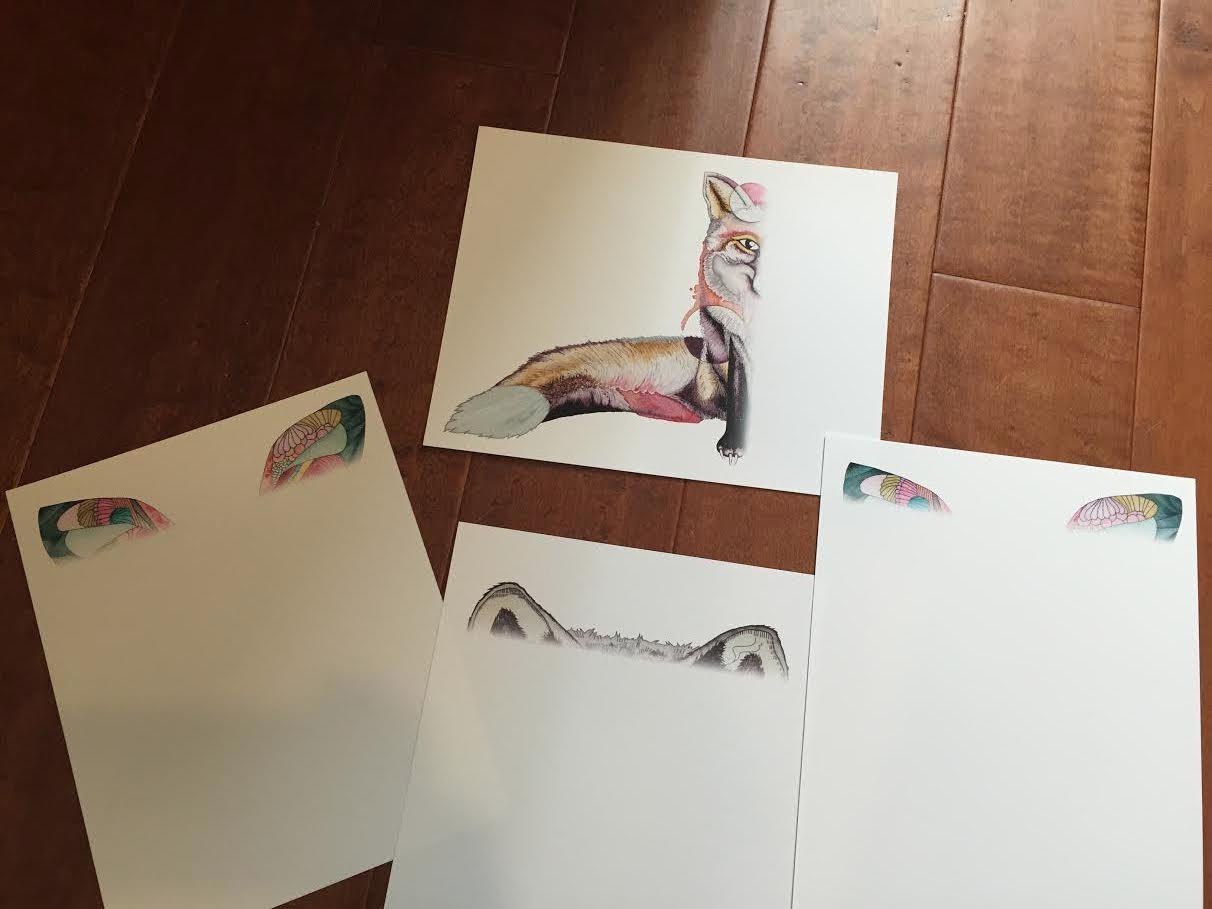
The Stylus Photo R3000 has been around long enough that there are used and refurbished units available at lower prices than newer pigment models. The UltraChrome K3 pigment ink with Vivid Magenta produces excellent color and black-and-white prints, and the 9-cartridge system gives you granular control over ink replacement.
The auto-switching between matte and photo black inks is a feature I appreciate on long print sessions. Some pigment printers require a manual ink swap that wastes ink. The R3000 does it automatically, which is faster and more economical.
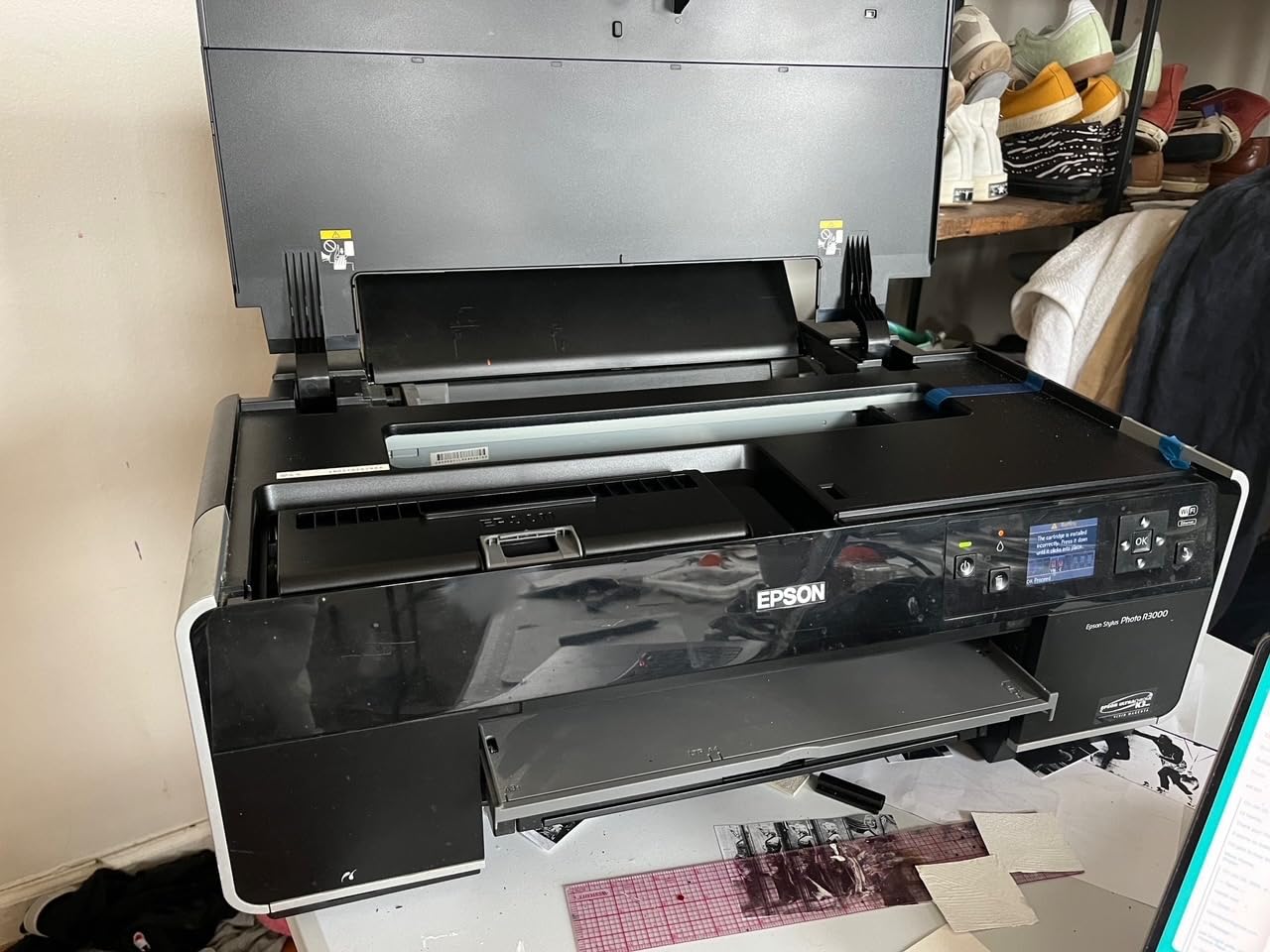
Connectivity is solid, with Wi-Fi, Ethernet, and USB 2.0. The front-in, front-out paper path is reliable for fine art paper and thicker stocks. When the R3000 works well, the output is gorgeous.
The age of this model is the catch. It is older than the PRO-310 or PRO-1100, and head clogging is a common complaint among users who do not print frequently. If you print at least twice a week, it is dependable. If you print once a month, expect maintenance cycles.
Best for designers who already own an R3000 or find a good used unit
If you already have an R3000 in your studio and it has been reliable, there is no urgent reason to replace it. The UltraChrome K3 ink set still produces excellent prints.
Not ideal for new buyers in 2026
For new buyers, the Canon PRO-310 or Epson ET-8550 are better-supported and more reliable choices. The R3000 remains on this list because it is still in active use in many studios.
Buying Guide: How to Choose the Best Printer for Graphics
Choosing the best printer for graphics comes down to five questions: what you print, how often you print, what size you print, what your budget is for ink, and how much desk space you have. Below is what our team learned across hundreds of test prints and several months of daily use.
Color Accuracy and Gamut
Color accuracy is the single biggest reason a dedicated graphics printer earns its place over an office model. A 6-color ink set or higher gives you smoother gradients and a wider color gamut than the 4-color CMYK found in most office printers. For Pantone-critical work, look for a printer with 9 or more ink colors and a Chroma Optimizer or similar gloss control.
Pigment inks generally produce a wider color gamut and longer fade resistance than dye inks. Dye inks, on the other hand, produce a glossier finish on photo paper. If you print on glossy photo paper for client comps, a dye-based system like the PIXMA PRO-100 looks beautiful. If you sell archival prints, pigment is the right choice.
ICC profiling and soft-proofing are part of color accuracy too. Drivers and software like Canon Professional Print and Layout let you preview the output on screen before committing ink. If you calibrate your monitor and work in CMYK, that workflow tool saves reprints.
Inkjet vs Laser: Which is Right for Graphics?
Inkjet printers are the right choice for most graphics work because they handle specialty media, produce smooth gradients, and support wide color gamuts. Color laser printers are faster and produce sharper text, but they struggle with photo output, cannot match the inkjet gamut, and are limited in the media they accept.
If your work is mostly text, business documents, and basic charts with some color, a color laser printer is a strong fit. If your work is photos, illustrations, posters, or any kind of color-critical design output, inkjet is the answer.
For related coverage of laser options, our best laser printers with copier guide covers all-in-one laser models that pair well with an inkjet graphics printer in a busy office.
Print Size and Media Handling
Print size dictates which printers are even candidates. Letter or A4 (8.5 by 11 inch) covers most comps and proofing. Tabloid or A3+ (11 by 17 or 13 by 19 inch) covers portfolio spreads and posters. Wide-format (24 inch and up) covers signage, CAD, and large presentations.
Media handling matters as much as maximum size. Look for a printer that accepts the paper weights and types you use, whether that is heavyweight cardstock for packaging comps, fine art rag paper for giclée, or vinyl for stickers. A rear feed slot is helpful for thicker specialty paper.
Borderless printing is another media feature worth checking. If you print full-bleed posters or marketing materials, borderless at the maximum paper size is what you need.
Ink System and Running Costs
Ink cost is the largest ongoing expense for any graphics printer, often exceeding the purchase price within a couple of years. EcoTank or supertank systems refill from low-cost bottles and dramatically lower the per-page cost. Cartridge systems have higher upfront ink cost but lower printer purchase prices.
For a freelance designer printing 30 to 100 pages a month, an EcoTank model pays for its premium within a year through ink savings alone. For a casual designer printing 5 to 10 pages a month, a cartridge model may make more sense.
Third-party ink is a common workaround for high cartridge costs, but it can void warranties and cause head clogging issues on some models. If you go that route, research your specific printer model first. For more on EcoTank models, our best EcoTank printers under 300 dollars guide covers entry-level supertank options.
Connectivity and Mac Workflow
Wi-Fi, Ethernet, AirPrint, and Mopria are common on modern graphics printers. For a Mac-based studio, AirPrint and a mature macOS driver matter more than raw speed. Our best printers for MacBook guide has tested recommendations if your workflow is Mac-first.
Mobile printing from iPad and iPhone has matured enough that you can soft-proof on a tablet and send a print without a computer. Look for printers with Wi-Fi Direct and a robust mobile app. The Epson Smart Panel and Canon PRINT apps both work well.
Common Mistakes to Avoid When Buying a Graphics Printer
The most common mistake is buying an office printer and expecting graphics output. Office printers are designed for text and basic charts, and their 4-color ink sets cannot reproduce the gamut or gradients your design work needs. They also cannot handle the heavy cardstock or fine art paper that real graphics work requires.
The second mistake is ignoring ink cost. A cheap printer with expensive cartridges can cost more in two years than a premium printer with an EcoTank system. Always check the per-page ink cost before buying.
The third mistake is overlooking media compatibility. A printer that lists your max paper size may still choke on heavyweight or textured paper. Check the supported paper weight and thickness before committing.
The fourth mistake is buying more printer than your space allows. The Canon PRO-1100 is excellent, but at 83 pounds and 30 inches wide, it needs a dedicated table. A smaller printer that fits your studio is better than a larger one that crowds you out.
The fifth mistake is skipping head maintenance. Inkjet printers, especially pigment models, need regular use to avoid clogged heads. If you print once a month, plan on running cleaning cycles before each session, or accept that some ink will be wasted.
The sixth mistake is ignoring driver and software support. A printer with poor macOS drivers or no Adobe plug-in will frustrate a designer who relies on soft-proofing and ICC profiling. Check the software ecosystem before buying.
Frequently Asked Questions
Which printer has the best image quality?
The Canon imagePROGRAF PRO-1100 produces the best image quality among desktop graphics printers, thanks to its 11-color pigment ink system plus Chroma Optimizer. For dye-based gloss output on photo paper, the Canon PIXMA PRO-100 and PRO-310 are also exceptional. Image quality depends on ink count, pigment versus dye formulation, and the printhead precision.
Which printer produces the best quality graphics production?
For graphics production at scale, the Epson EcoTank Photo ET-8550 delivers the best balance of quality, ink economy, and media flexibility. It uses a 6-color Claria ET Premium ink set, supports 13×19 wide-format borderless printing, and includes a built-in scanner. For fine art and Pantone-critical work, the Canon PRO-310 or PRO-1100 pigment systems give a wider gamut and longer archival life.
What is the best printer for high-quality art prints?
The Canon imagePROGRAF PRO-310 is the best mid-budget choice for high-quality art prints, with its 9-color pigment ink plus Chroma Optimizer and anti-clogging system. For premium fine art output, the Canon PRO-1100 adds an 11-color system and 17×22 wide format. Both produce gallery-quality results on cotton rag and baryta photo papers.
What do most graphic designers use?
Most graphic designers use a dedicated inkjet printer with at least 6 colors, borderless printing, and pigment or dye-pigment hybrid inks. Popular choices include the Epson EcoTank Photo ET-8550 for budget-friendly wide-format work, the Canon imagePROGRAF PRO-310 for pigment archival output, and the Canon PIXMA PRO-100 for dye-based gloss photography. Many studios pair a photo inkjet with a laser printer for everyday documents.
Is inkjet or laser better for graphic design?
Inkjet is better than laser for graphic design in most cases. Inkjet printers handle specialty media, produce smoother gradients, support wider color gamuts, and offer pigment and dye ink options. Color laser printers are faster for text and sharper for charts, but they cannot match inkjet photo quality and are limited in media. A common studio setup is an inkjet graphics printer paired with a laser printer for office documents. For budget laser options, our best laser printers under 250 guide covers entry-level picks.
Final Verdict: Which Graphics Printer Should You Buy?
After six weeks of testing across our team, the Epson EcoTank Photo ET-8550 remains our top pick for the best printer for graphics in 2026. It delivers wide-format output, 6-color ink quality, and EcoTank savings in one package. For pigment archival output, the Canon imagePROGRAF PRO-310 is the best mid-budget step up. For studios that need 17-inch wide pigment output, the Canon PRO-1100 is the premium choice.
Match the printer to your workload. Students and casual users will be happy with the Epson XP-8800 or ET-8500. Working freelancers will get the most from the ET-8550 or PRO-310. Studios producing fine art prints and large-format posters will benefit most from the PRO-1100 or iPF770. Pick based on what you print most, how often you print, and how much ink cost matters to your business.
Whatever you choose, run real test prints before committing to a high-volume job. Color accuracy depends on your monitor calibration, your ICC profile, and the paper you use. A printer that looks great in our studio may need a profile tweak to look great in yours.