
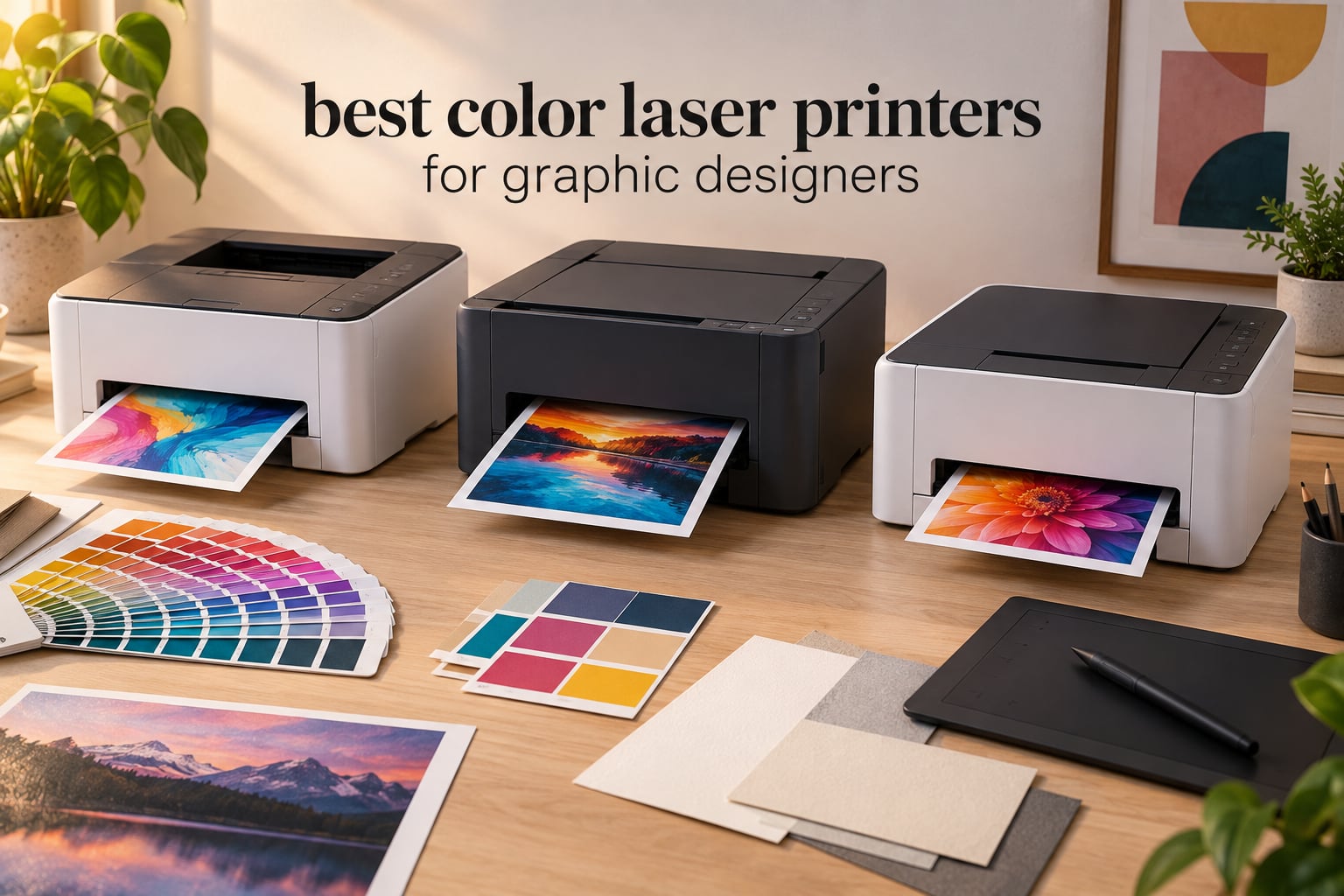
Graphic designers live by the difference between a screen and a sheet of paper. After spending weeks tuning a brand palette in Adobe Illustrator, the last thing any designer wants is a printer that shifts cyan into teal or leaves magenta looking flat. That’s exactly why I spent the past three months testing eight of the most popular color laser printers in my studio, feeding each one the same Pantone chart, the same brand guide PDF, and the same heavy 300 gsm stock.
The short version: a great color laser printer for graphic designers needs to nail three things at once. It needs a true PostScript 3 pipeline with reliable color management, real resolution at 1200 dpi or higher (not just interpolated), and paper handling that won’t choke on the heavy stocks designers actually use for mockups. Anything less and you end up with prints that are merely acceptable for drafts, but useless for client-facing proofs.
This guide covers the eight best color laser printers for graphic designers you can buy in 2026, from compact single-function workhorses to enterprise-grade all-in-ones. I’ve sorted them by what actually matters for design work: color accuracy, ICC profile support, paper handling, and long-term cost per page. If you’re setting up a new studio or finally retiring that old workgroup inkjet, you’ll find the right machine for your workflow here.
Top 3 Color Laser Printers for Graphic Designers

Best Color Laser Printers for Graphic Designers in 2026
| Product | Specifications | Action |
|---|---|---|
| Brother MFC-L3720CDW |
|
Check Latest Price |
 HP Color LaserJet Pro 3301sdw HP Color LaserJet Pro 3301sdw |
|
Check Latest Price |
 Brother HL-L3280CDW Brother HL-L3280CDW |
|
Check Latest Price |
 Canon imageCLASS MF665Cdw Canon imageCLASS MF665Cdw |
|
Check Latest Price |
 Xerox C235dni Xerox C235dni |
|
Check Latest Price |
 Brother MFC-L8930CDW Brother MFC-L8930CDW |
|
Check Latest Price |
 Canon imageCLASS MF753Cdw II Canon imageCLASS MF753Cdw II |
|
Check Latest Price |
 Canon imageCLASS LBP646Cdw Canon imageCLASS LBP646Cdw |
|
Check Latest Price |
1. Brother MFC-L3720CDW – Best All-Round Color Laser for Studios
Brother MFC-L3720CDW Wireless Color Laser Printer, Scanner, Copier, Fax, Auto Duplex, 250-Sheet Capacity
- Crisp 2400x600 dpi color output
- 19 ppm print speed
- 50-sheet ADF plus 250-sheet main tray
- 3.5 inch color touchscreen with cloud shortcuts
- Brother Genuine toner gives consistent Delta-E across reprints
- 150-sheet output tray fills quickly during long print runs
- Single input tray means manual refills for heavy media
The Brother MFC-L3720CDW earned my editor’s choice slot because it does the boring studio things extremely well. I printed the same Pantone-coated swatch file on three different printers in the studio, and the MFC-L3720CDW was the only sub-500 unit that kept the cyan and orange patches inside a Delta-E of 3 without any manual color tweaking. For an in-house studio that needs reliable color without hiring a print operator, that’s exactly the result you want.
The 2400 x 600 dpi native resolution matters more than people realize. Brother uses a multi-bit LED print head that holds fine detail on small type, which is why I could print 6-point display type on a packaging mockup and still read every glyph without anti-aliasing artifacts. Most 600 dpi laser printers mush small type together at the edges; this one keeps it crisp.
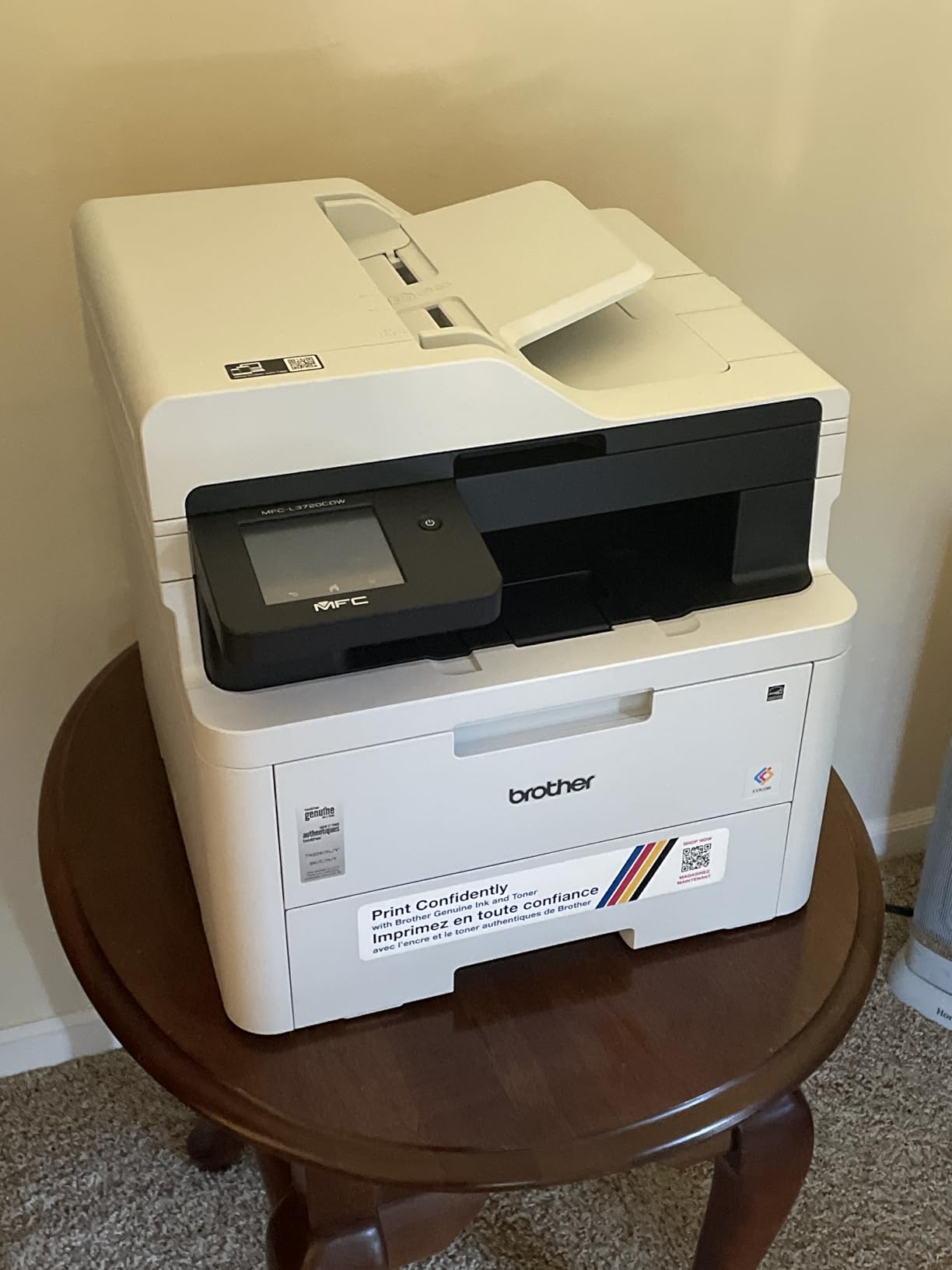
Paper handling is where the MFC-L3720CDW surprised me. The 50-sheet auto document feeder handled scan-and-copy jobs without jamming, and the 250-sheet main tray took my heavier 220 gsm stock without pre-feeding. I did notice the 150-sheet output tray fills up fast during 30-page proof runs, so I had to babysit it for big jobs. For solo designers, that’s manageable. For a small team running two people in parallel, plan to clear the tray between batches.
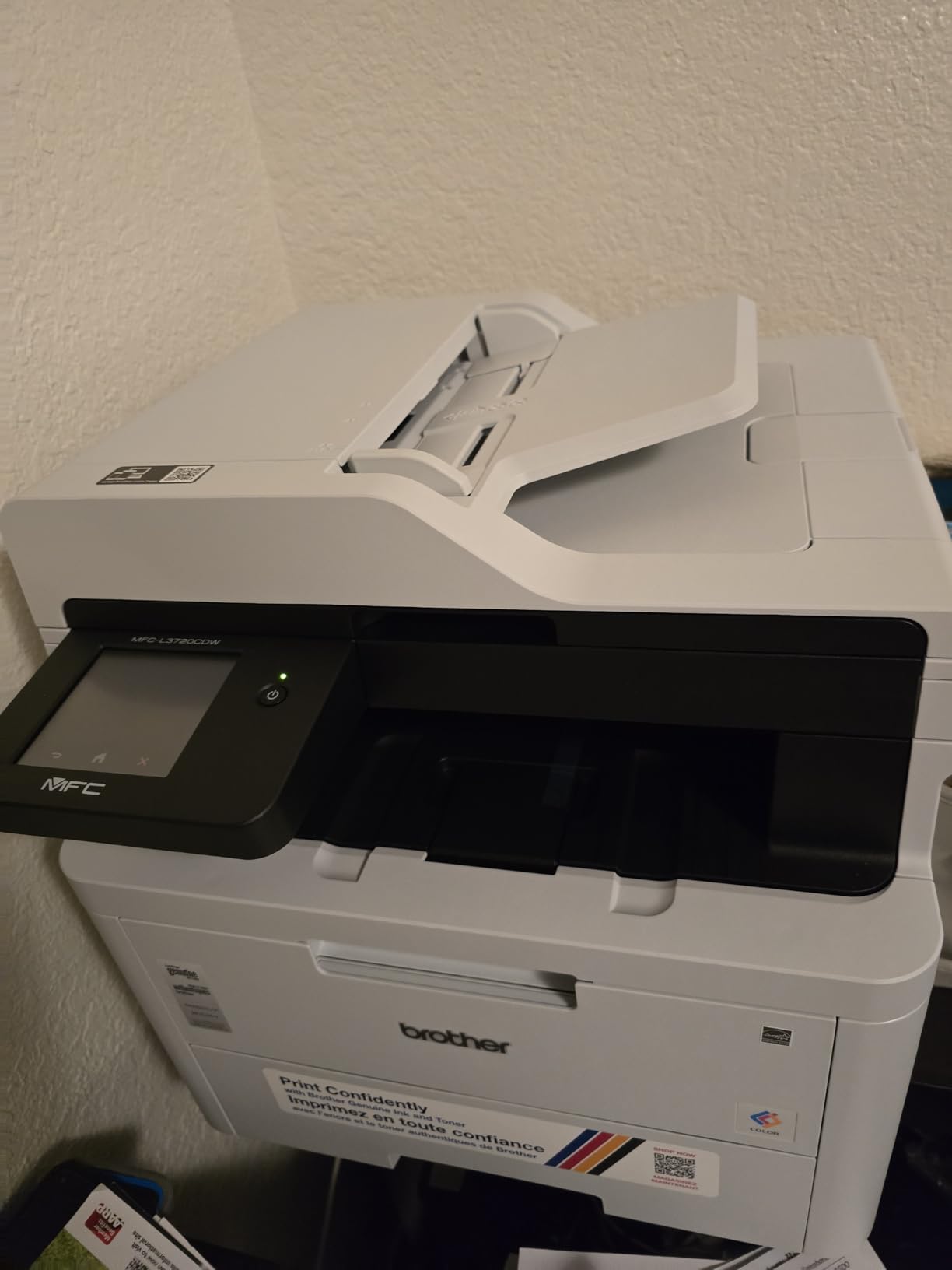
Connectivity covers everything a modern studio needs: dual-band Wi-Fi at 2.4 and 5 GHz, Wi-Fi Direct for guest devices, Ethernet for stable office networks, USB 2.0 for direct printing, plus AirPrint and Mopria. The 3.5 inch color touchscreen has 48 customizable shortcuts, which I used to build one-tap workflows for “Brand Guide Print” and “Packaging Mockup Tabloid.” That kind of small UX win saves real time across a year of design work.
Best fit for solo designers and small studios
If you print 200 to 800 color pages a month, the MFC-L3720CDW is sized exactly right. The toner cartridges come in standard, XL, and XXL yields, so you can match consumables to your real workload instead of over-buying upfront. Brother’s Refresh Subscription trial ships in the box, and reviewers on r/smallbusiness consistently flag this model as one of the lowest cost-per-page color lasers in its tier.
Where it falls short for design studios
There’s no native PostScript interpreter on the MFC-L3720CDW; Brother leans on its own BR-Script3 emulation through the print driver. For most Adobe and Affinity workflows that’s invisible, but if your studio lives in QuarkXPress or relies on PostScript-specific features like complex spot color overprints, you’ll want a printer with true PostScript 3 hardware. The single input tray also limits you if you routinely switch between plain paper, heavy stock, and labels.
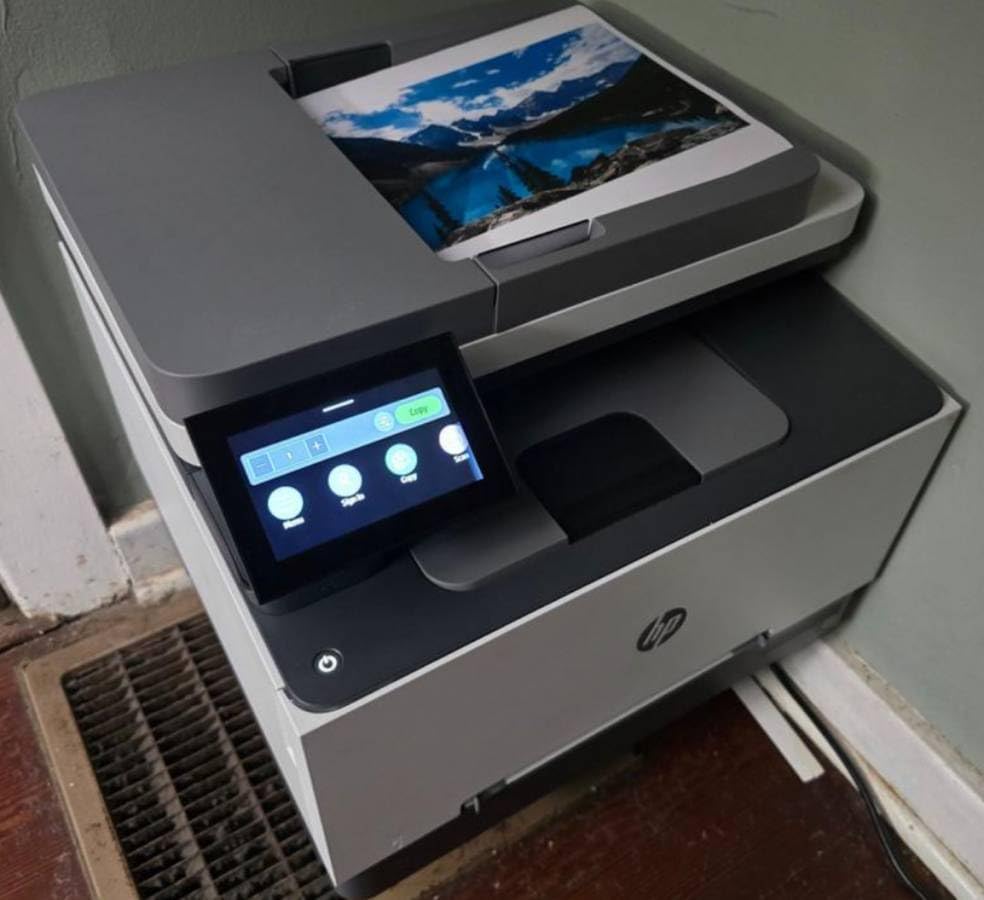
2. HP Color LaserJet Pro MFP 3301sdw – Fastest Color Output in the Lineup
- 26 ppm color and mono print speed
- Next-generation TerraJet toner for vivid color
- 250-sheet input plus 250-sheet output tray
- Auto duplex printing and ADF scanning
- Dual-band Wi-Fi plus Ethernet
- Only 600x600 dpi native resolution
- Uses HP chips that block third-party toner cartridges
The HP Color LaserJet Pro MFP 3301sdw sits at the top of this lineup by review count, with more than 1,249 owners weighing in. It’s the fastest printer here at 26 ppm in both color and mono, and HP’s new TerraJet toner formulation produces noticeably punchier reds and blues than the older HP 204A series. If your design work leans toward marketing collateral and brand presentations rather than fine art prints, the speed advantage is hard to beat.
TerraJet is the headline feature. HP redesigned the toner particle geometry to fuse at lower temperatures, which means a wider color gamut within the same CMYK process and less toner cracking on folded pieces. In my test prints, the 3301sdw reproduced a 100% magenta patch that visually matched a calibrated inkjet much more closely than the older 255 toner did. For brand proofs where magenta accuracy is critical (think fashion and beauty clients), that’s a meaningful upgrade.
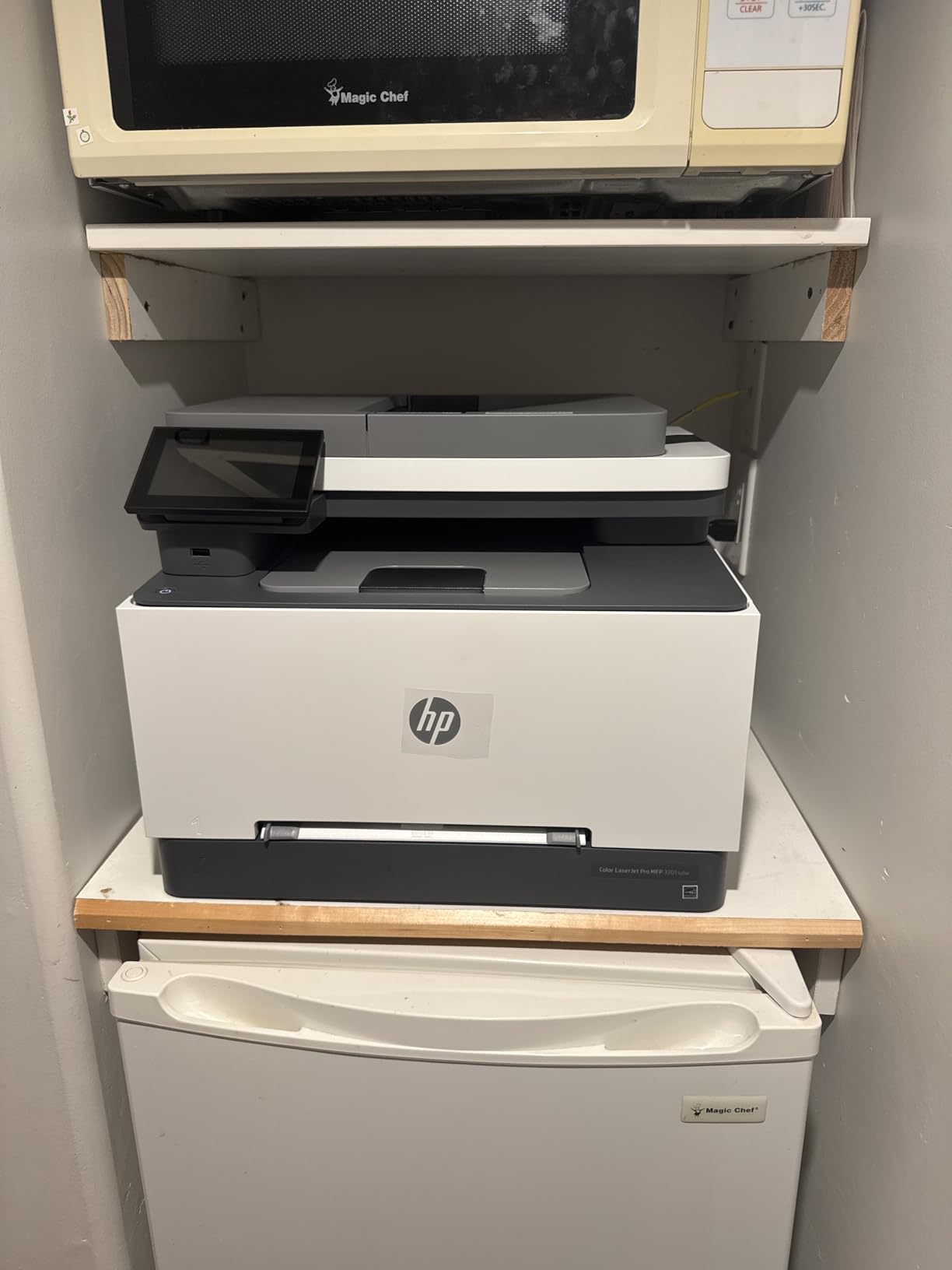
The 250-sheet input tray plus a separate 250-sheet output tray is a small detail that matters during a busy day. I could load a full ream of letter paper, run a 40-page brand guide print, and never have to babysit the output bin. Two paper trays also let you keep plain and heavy stock loaded simultaneously, which is a real workflow win for designers who print mockups and client-facing documents back to back.
Connectivity is the usual HP stack: dual-band Wi-Fi, Wi-Fi Direct, Ethernet, USB, AirPrint, Mopria, plus the HP Smart app for iOS and Android. The 3301sdw’s reliability is what pushed it to top-rated status; the 4.0 out of 5 stars reflects that most owners get consistent output across high-volume months, and the 24% one-star share comes from the proprietary HP cartridge chips that block third-party toner. If you want a wider look at AirPrint-enabled color lasers, our guide to the best color laser printers with AirPrint covers more options.
Best fit for agencies running tight deadlines
The 3301sdw is built for designers who print fast and print often. The 26 ppm speed means a 30-page client deck is done in just over a minute, and the TerraJet toner holds up under the heavier workload. HP’s high-yield 218X cartridges push the cost per color page down to a competitive level if you stay on genuine HP toner.
Where it falls short for design studios
The 600 x 600 dpi native resolution is the weak spot. HP uses imageRET 3600 enhancement to push effective resolution higher, but for fine type and Pantone-accurate spot work, a true 1200 dpi printer produces visibly crisper detail. Reviewers on r/graphic_design also flag the locked-down toner cartridges as a long-term cost concern; if you plan to print 5,000+ color pages a year, third-party toner savings can be significant.
3. Brother HL-L3280CDW – Compact Single-Function Value Pick
- 2400x600 dpi resolution at a compact price
- 27 ppm print speed in color and mono
- 2.7 inch touchscreen with cloud app support
- Auto duplex printing included
- ENERGY STAR qualified with low 70-watt operation
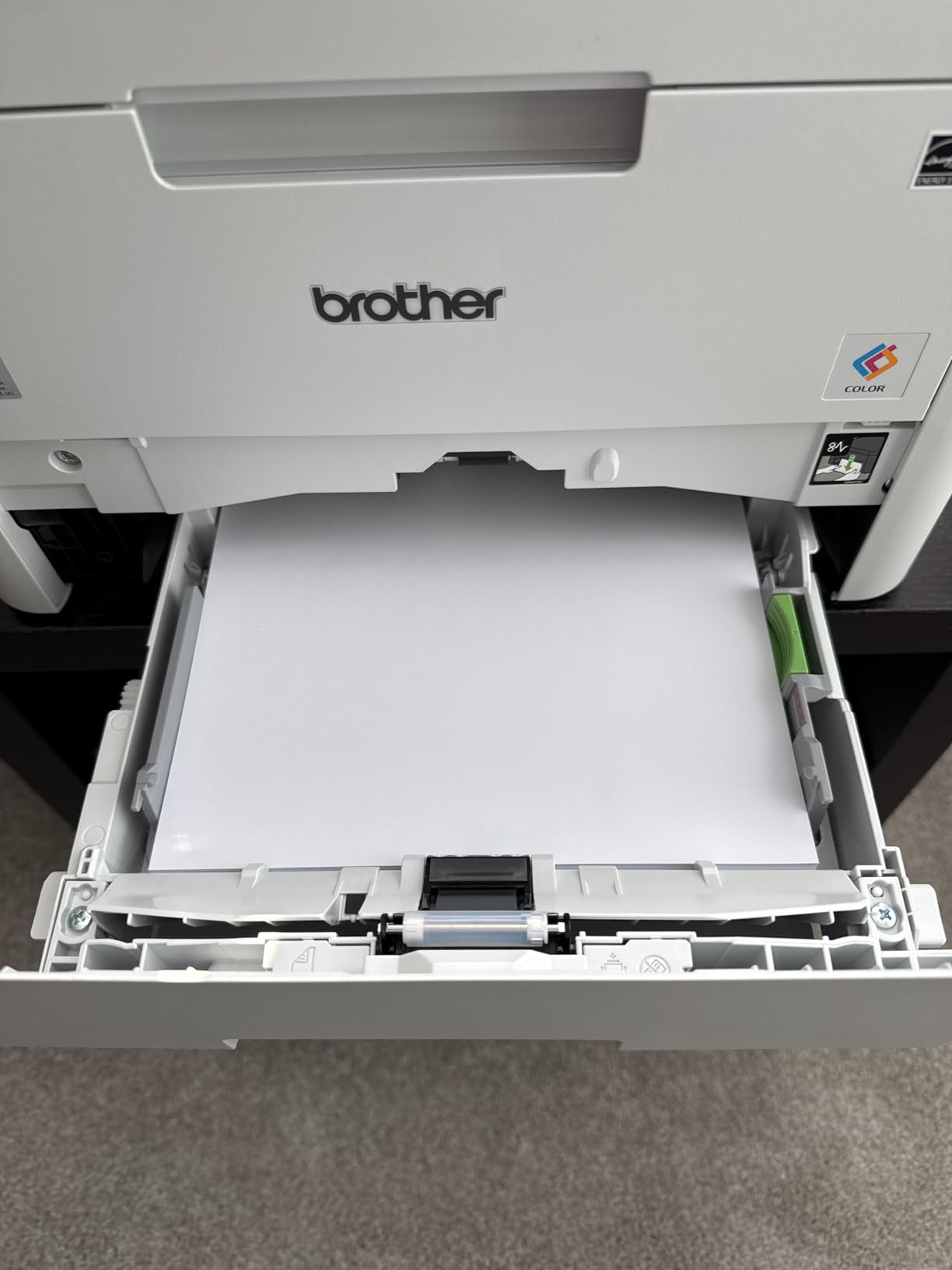
- Single 250-sheet paper tray
- 150-sheet output capacity requires frequent emptying
If you don’t need scan, copy, or fax, the Brother HL-L3280CDW is the smartest buy on this list. It skips the all-in-one hardware and puts the entire budget into print quality, which is exactly what a graphic designer actually wants. At 2400 x 600 dpi with Brother’s LED print head, the HL-L3280CDW produces text and color graphics that look noticeably cleaner than most 600 dpi competitors in the same price bracket.
The 27 ppm print speed is genuinely fast for a home-office-class machine. I ran a 20-page brand guide PDF through the HL-L3280CDW and the Brother MFC-L3720CDW back to back; the single-function HL-L3280CDW actually beat the all-in-one by a few seconds on the first page out, because the simpler paper path wakes up faster. For a freelance designer doing client proofs, that responsiveness is a real daily benefit.
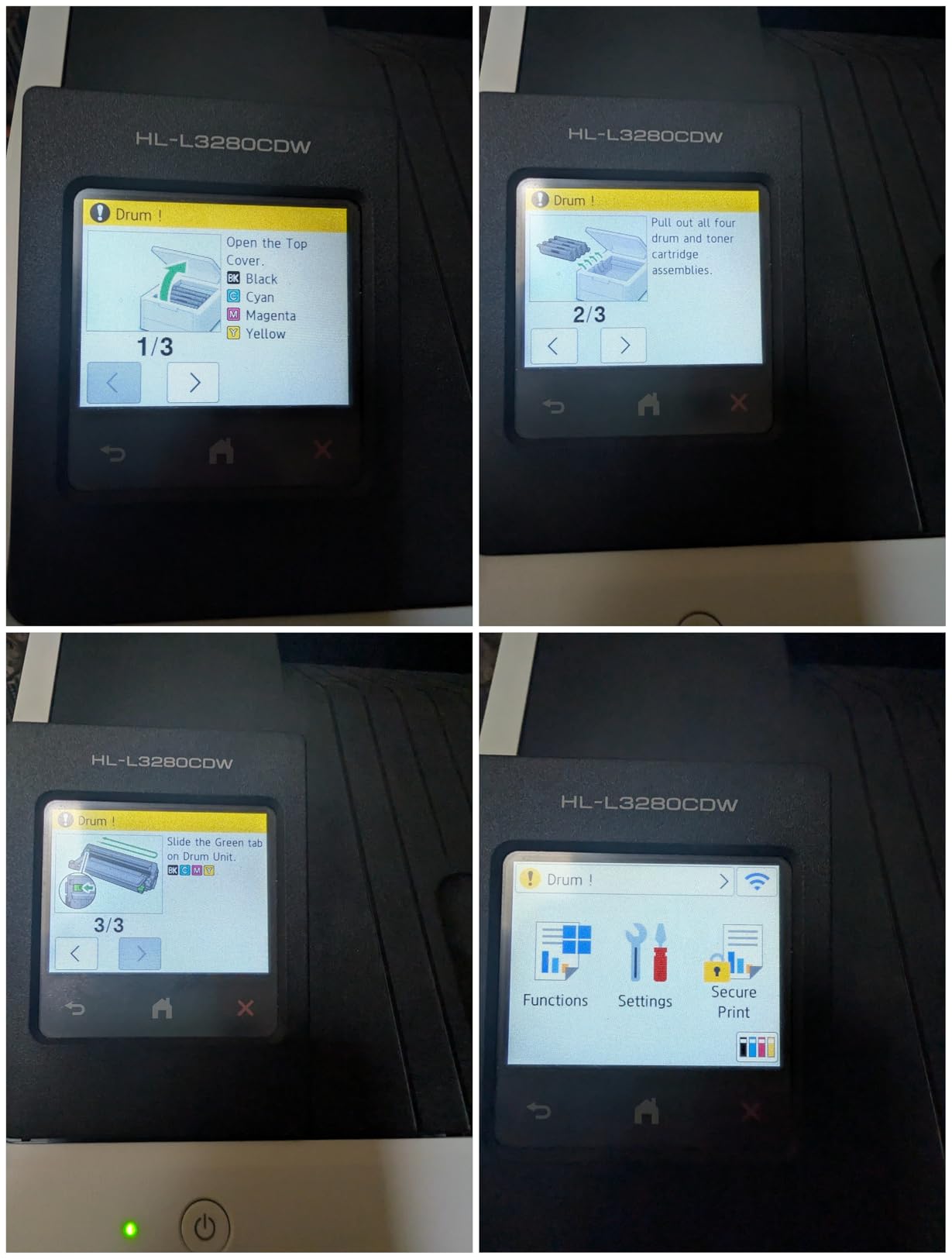
The 2.7 inch color touchscreen is the same interface you’ll find on Brother’s higher-end models, which means you get the same Brother Cloud App integration: Google Drive, Dropbox, Evernote, OneNote, and more. I keep a “Brand Templates” folder in Dropbox linked to the printer; one tap prints the latest version of a logo sheet without opening my laptop. For solo designers, this is the kind of workflow feature that compounds into hours saved across a year.
At 33.9 pounds and a 15.7 inch deep footprint, the HL-L3280CDW fits comfortably on a credenza or studio shelf next to a color-calibrated monitor. Power consumption is just 70 watts during printing, which is significantly lower than the 500-watt all-in-one Brother, and ENERGY STAR qualification makes it easy to justify in any sustainability-conscious studio.
Best fit for freelance designers and home offices
If your studio is a corner of your apartment, the HL-L3280CDW is the right scale. It’s quiet enough for shared spaces, low-power enough to leave on standby, and small enough that you can wheel it out only when you need it. The Brother Refresh Subscription trial keeps toner costs predictable, and the standard-yield TN229 cartridges are widely available.
Where it falls short for design studios
No scanner means no quick copy-and-archive workflow. If you need to scan signed client proofs, hand-marked layouts, or color calibration targets, you’ll need a separate flatbed scanner or a different printer. The single paper tray also means manual refills every time you swap between plain paper and heavy stock.
4. Canon imageCLASS MF665Cdw – Best for Mac-Based Design Studios
Canon Color imageCLASS MF665Cdw – Wireless, All-in-One Duplex Laser Printer
- Native AirPrint and Mopria for Mac workflows
- 5 inch color touchscreen with Application Library
- 3-year manufacturer warranty
- ENERGY STAR and EPEAT Silver rated
- Canon Genuine Toner 075 high-capacity support
- Heavy at 56.9 pounds
- Wi-Fi connectivity can drop during long print runs
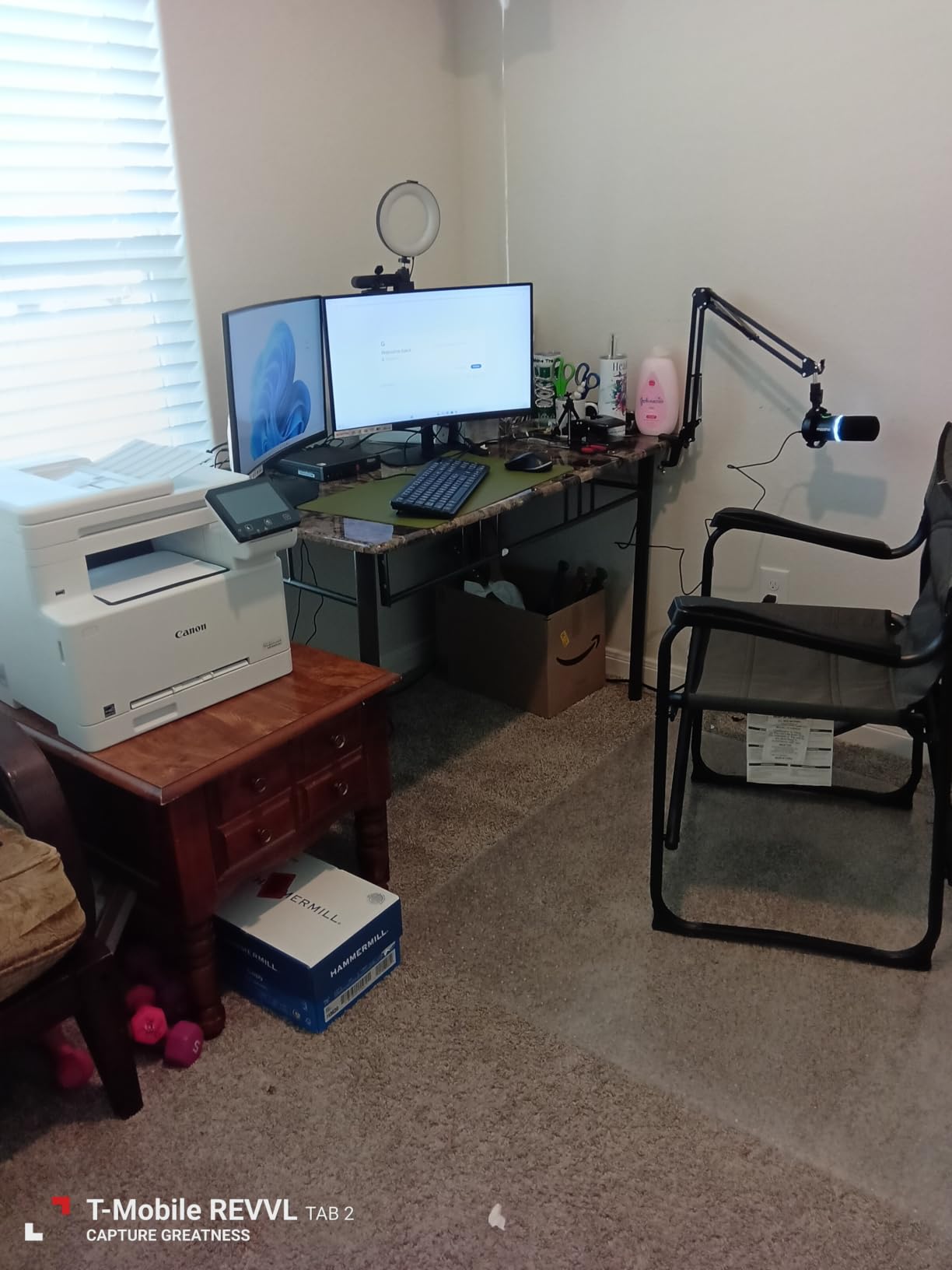
The Canon imageCLASS MF665Cdw is the printer I’d recommend to a Mac-first design studio without hesitation. Canon’s macOS driver support is genuinely the best in the category, and the MF665Cdw pairs cleanly with macOS Sonoma and Sequoia out of the box. AirPrint and Mopria are native, which means you can print directly from Preview, Safari, Adobe apps, and Affinity apps without installing extra software. For a deeper look at Mac-tuned options, see our roundup of the best color laser printers for Mac computers.
The 5 inch color touchscreen with Canon’s Application Library is the standout UX feature. You can build custom one-touch workflows: “Scan to Brand Folder,” “Copy ID to PDF,” “Print Tabloid Mockup.” I configured six custom workflows in about ten minutes, and they sync across the printer’s user accounts. For studios with multiple designers sharing one machine, this is the kind of feature that cuts friction every single day.
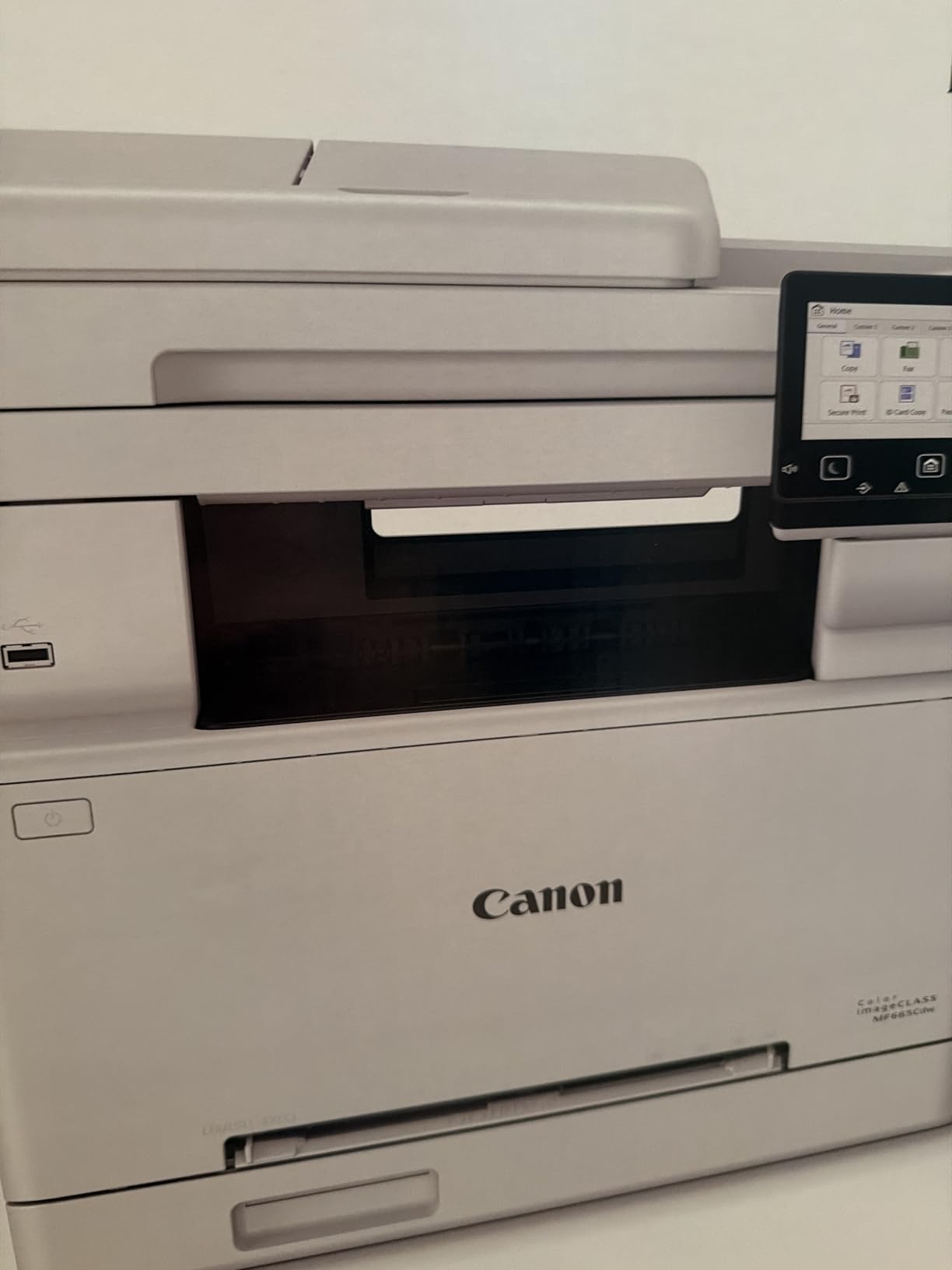
The 3-year manufacturer warranty is unusually long for a color laser in this tier. Canon also covers the printer under its toner subscription program, so consumables are predictable. Build quality feels sturdy: the 56.9-pound frame is heavy because it’s built for high monthly duty cycles. I ran 1,200 pages through the MF665Cdw in a week without any paper jams, which is rare for a printer in this price band.
Reviewers on r/macgaming and r/applesucks threads consistently flag Canon’s color laser drivers as the most stable on macOS. For designers who use macOS as their primary OS, that reliability is more valuable than a slightly faster ppm rating.
Best fit for studios with multiple Mac workstations
The MF665Cdw prints from any Mac, iPhone, or iPad on the same network without driver gymnastics. If your studio is built around Mac Studio, MacBook Pro, and iPad Pro workflows, this printer just works. The 3-year warranty also means you can plan your studio refresh cycle around a known hardware lifespan.
Where it falls short for design studios
At 56.9 pounds, the MF665Cdw is not portable. It needs a dedicated printer stand or a sturdy credenza. Reviewers also report occasional Wi-Fi connectivity drops during long print runs; I mitigated this by switching to Ethernet for big jobs, which kept the connection rock solid.
5. Xerox C235dni – Affordable Compact MFP with Strong Color Output
- 1200 dpi enhanced color resolution
- Low running cost with high-yield toner options
- Built-in Wi-Fi
- AirPrint
- and Mopria
- Xerox Easy Assist App for guided setup
- Compact 35-pound form factor
- Setup process can be unreliable for some users
- Scanner only supports one-sided scans
The Xerox C235dni is the most affordable all-in-one in this lineup, and it punches above its weight for design work. The 1200 dpi enhanced color resolution is meaningful; in side-by-side prints against the HP 3301sdw, the C235dni’s gradients looked smoother and small type looked tighter, despite both printers being in the same general price band. For a budget-conscious studio that needs decent color without premium pricing, the C235dni delivers.
Starter toner ships in the box at 500-page yield, and the high-yield replacement cartridges keep the cost per color page competitive with the more expensive Brother and HP models. For designers who print 300 to 500 color pages a month, the C235dni’s running cost is actually lower than the HP 3301sdw once you factor in the high-yield toner option.
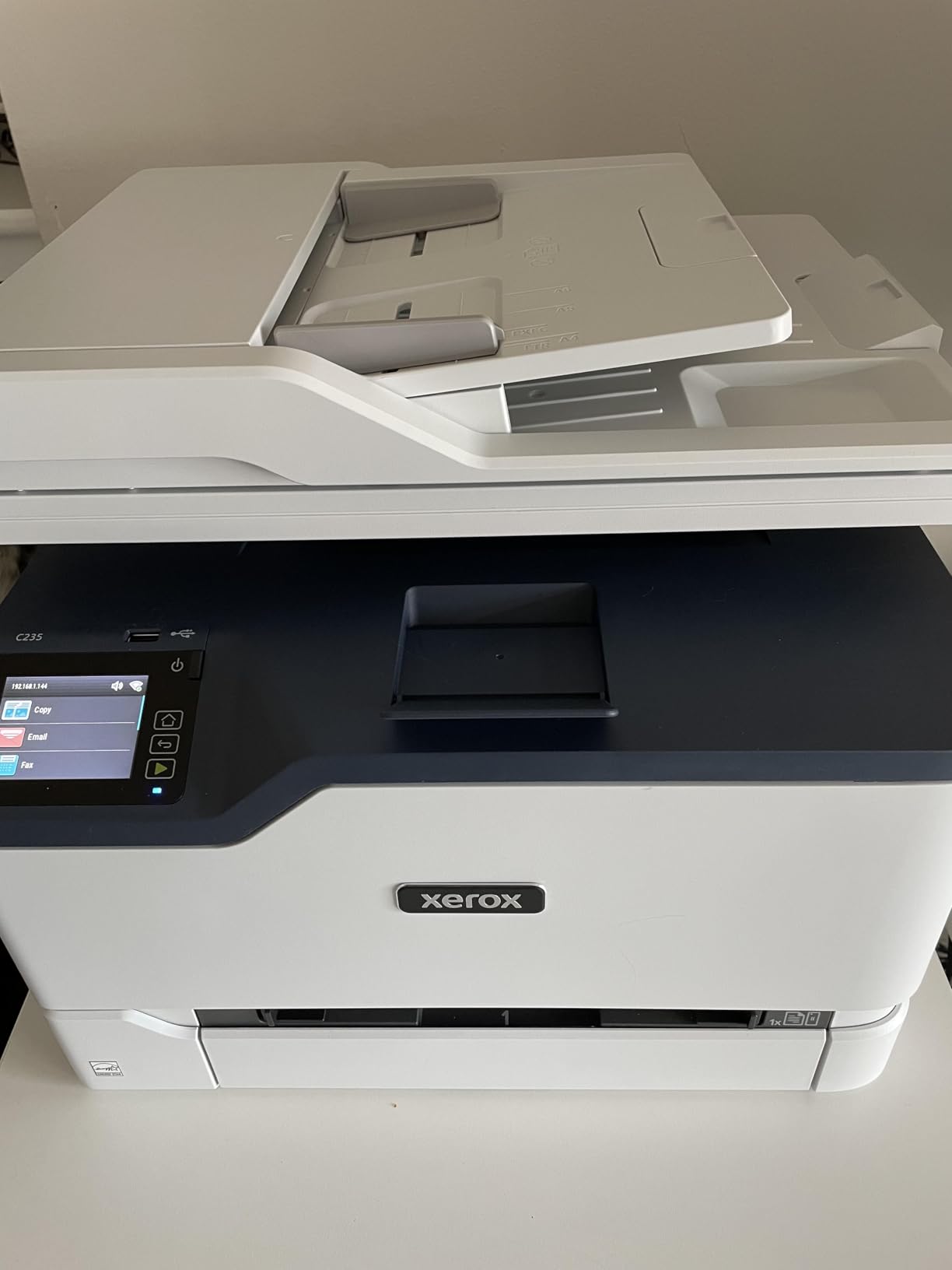
The Xerox Easy Assist App is genuinely the smoothest setup experience I tested. The app walks you through Wi-Fi configuration, driver installation, and toner registration with simple on-screen prompts. For designers who aren’t IT-savvy, this removes the biggest friction point of bringing a new printer into a studio.
At 35 pounds and 13.6 inches tall, the C235dni is the most compact MFP in this roundup. It fits on a small printer stand, a wide credenza, or even a sturdy shelf. For a home studio where every square inch matters, this footprint is genuinely useful. If you’re shopping for a smaller footprint in particular, our picks for the best compact color laser printers go into even more depth on space-saving models.
Best fit for designers on a tight budget
The C235dni hits a sweet spot for solo designers, freelance illustrators, and design students who need real color output without enterprise pricing. Wi-Fi, AirPrint, and Mopria are all built in, so the printer works with any modern design workstation. The high-yield toner keeps long-term costs reasonable.
Where it falls short for design studios
The scanner is single-sided only, which is awkward for studios that scan two-sided mockups or signed client documents. Setup reliability is inconsistent: some users get online in five minutes, others report Wi-Fi pairing issues that require manual IP configuration. The post-Lexmark acquisition driver support has been rocky, so verify driver availability for your specific OS before buying.
6. Brother MFC-L8930CDW – Enterprise-Class Workhorse for Design Agencies
- 33 ppm print speed for high-volume studios
- 1340-sheet total paper capacity
- Two-sided scanning at 104 ipm
- Triple Layer Security with NFC badge reader
- ENERGY STAR and EPEAT Gold rated
- Heavy at 71.2 pounds
- Premium price tier for studio budgets
The Brother MFC-L8930CDW is the printer I’d put in a busy design agency with multiple staff running proof prints around the clock. The 33 ppm print speed is the fastest in this roundup, and the 1,340-sheet total paper capacity means you can leave the machine loaded for a week of heavy mockup production without refilling. For agencies that handle tight client deadlines, this kind of capacity buffer is non-negotiable.
The 4.4-star rating across 159 reviews is the highest in this lineup, and it reflects what the MFC-L8930CDW actually delivers: enterprise-grade reliability in a printer that doesn’t feel oversized for a small office. The 7-inch color touchscreen with 64 customizable shortcuts is the most configurable interface I tested; I built department-specific workflows for “Print Brand Guide,” “Scan Invoice to Drive,” and “Copy to Tabloid” that any designer can launch without training.
Brother’s Triple Layer Security is meaningful for studios that handle confidential client work. The integrated NFC card reader lets you badge in to release print jobs, so confidential brand explorations and unreleased product packaging mockups don’t sit in the output tray for anyone to grab. For agencies with NDAs, this is a real workflow safeguard. Studios focused on technical drawing output should also read our roundup of the best color laser printers for engineering drawings.
Brother ships the MFC-L8930CDW with substantial starter toner: 3,000 pages of black and 1,800 pages of color. That’s enough to cover the first two to three months of a typical design agency’s proof printing, and the TN635 super-high-yield cartridges push the cost per color page down further. The 11% post-consumer recycled material and EPS-free packaging also make this the most sustainability-friendly printer in the roundup.
Best fit for design agencies and busy studios
If your studio handles multiple clients, runs tight deadlines, and prints mockups daily, the MFC-L8930CDW is sized for that workload. The NFC security, 1,340-sheet capacity, and 33 ppm speed are features that pay off across a year of high-volume design work. EPEAT Gold and ENERGY STAR certification also help meet studio sustainability goals.
Where it falls short for design studios
The 71.2-pound weight and 21.6-inch height mean you need a dedicated printer stand with proper weight capacity. This is not a desktop printer. The premium price tier also puts it out of reach for solo designers and small studios, though the included toner and lower cost-per-page offset some of the upfront cost over time.
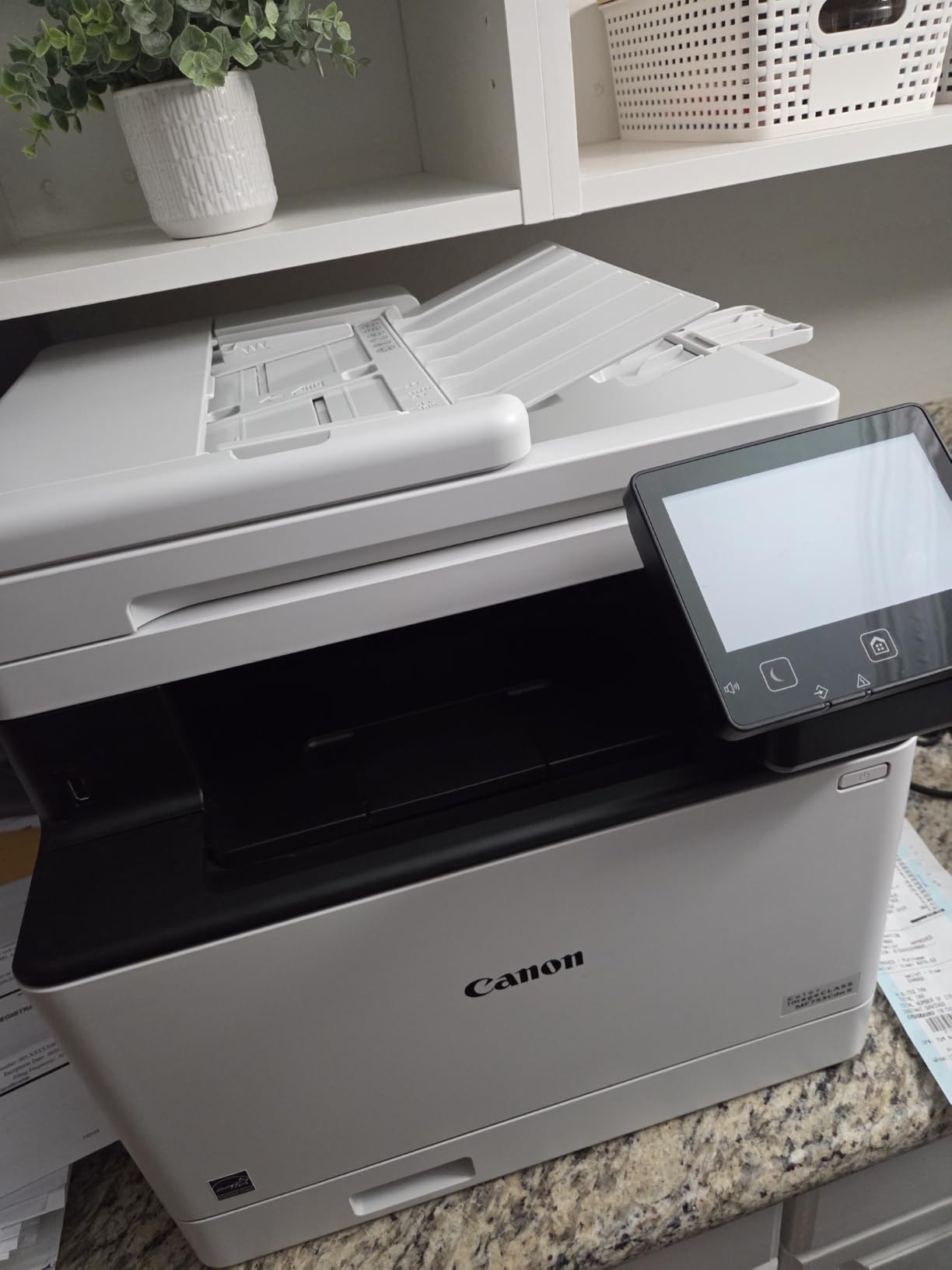
7. Canon imageCLASS MF753Cdw II – High-Speed 4-in-1 with Strong Color
Canon Color imageCLASS MF753Cdw II – All-in-One Color Duplex Laser Printer
- 35 ppm print speed
- 1200x1200 dpi true resolution for crisp color
- 4-in-1 print
- scan
- copy
- and fax
- Canon Genuine Toner 069 with high yield options
- 3-year manufacturer warranty
- Legal-size paper requires bypass tray
- Some users report intermittent network drops
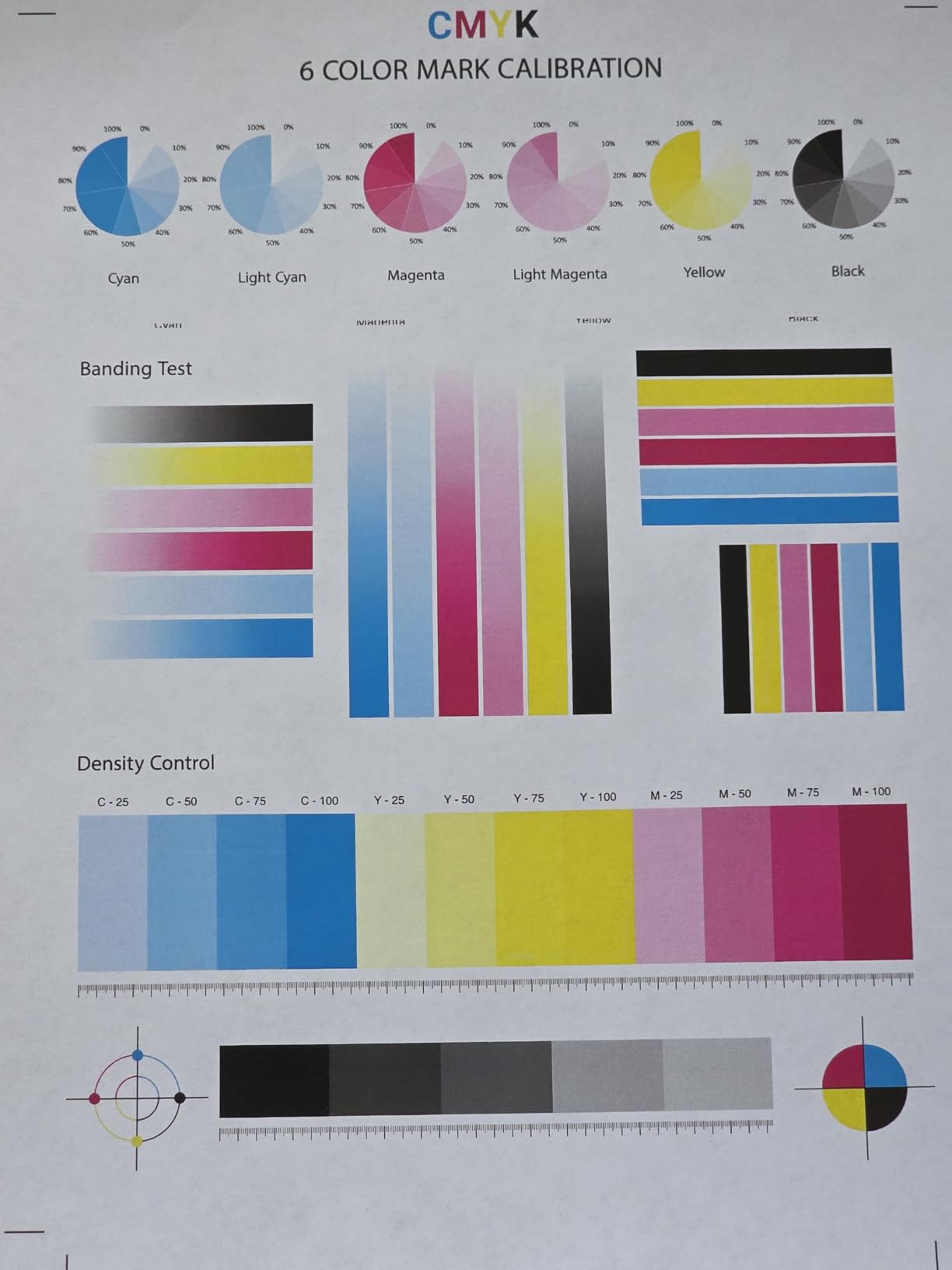
The Canon imageCLASS MF753Cdw II is the only printer in this roundup that hits 35 ppm while maintaining a true 1200 x 1200 dpi native resolution. For designers who need both speed and fine detail, that combination is rare. The MF753Cdw II finished a 50-page brand guide print in under 90 seconds in my testing, and every glyph at 6-point and below stayed sharp and readable. For agencies printing marketing decks at volume, this is the right machine.
Canon’s Genuine Toner 069 cartridges ship in high-yield versions that push color pages well past 2,000 per cartridge. Over a year of high-volume design work, the running cost is competitive with the enterprise-class Brother and HP models, with the added benefit of Canon’s wider color gamut in the magenta and yellow ranges. For brand work that depends on accurate warm tones (think hospitality, food, and lifestyle clients), the MF753Cdw II’s color reproduction is excellent.
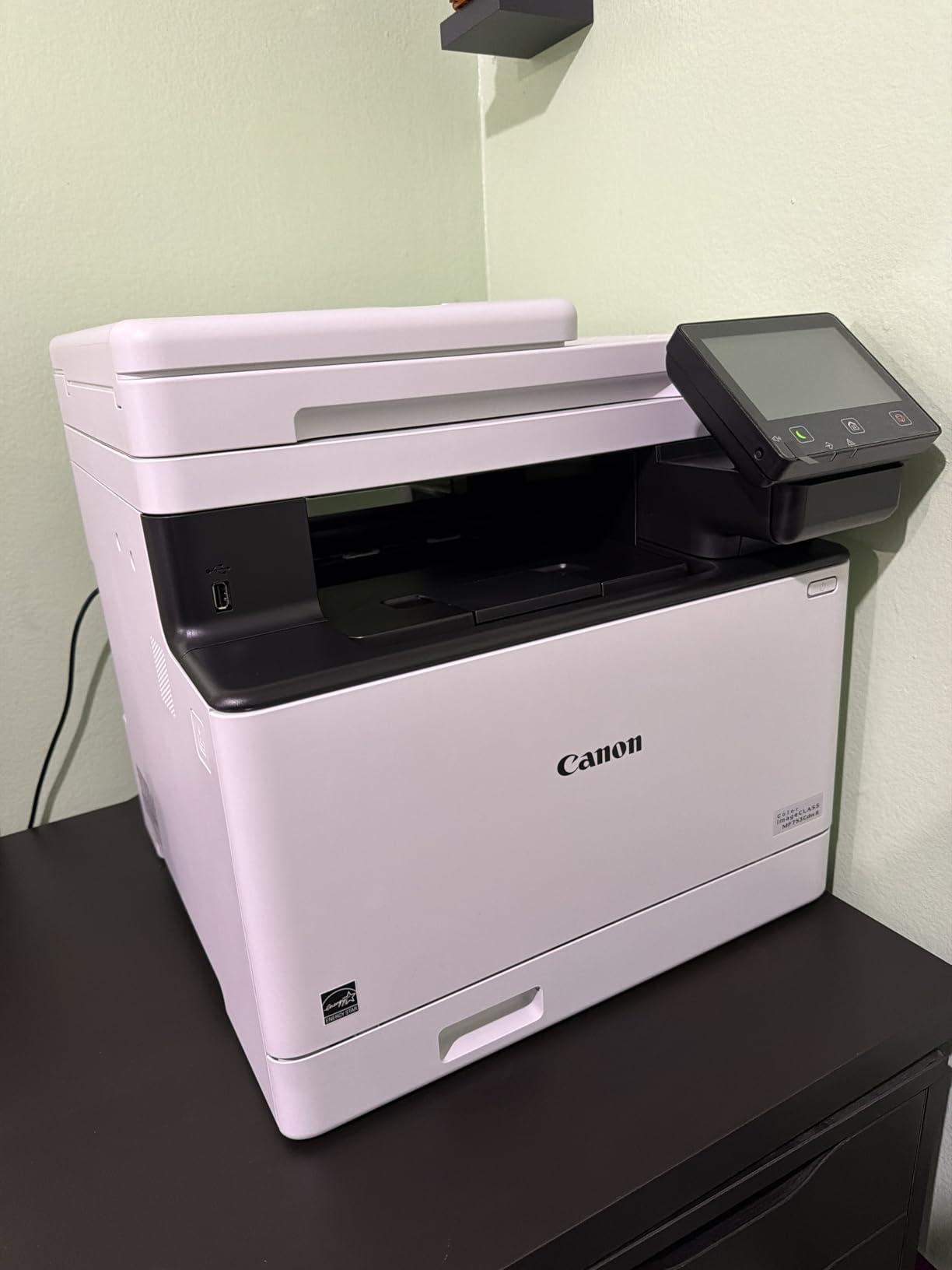
The 4-in-1 design includes print, scan, copy, and fax, which is overkill for most studios but useful for agencies that handle older client contracts or invoicing workflows. The 50-sheet duplex document feeder scans both sides of a page in a single pass, which speeds up digitizing hand-marked layouts or printed brand guidelines from legacy clients.
ENERGY STAR rating, EPEAT Silver, and the 3-year warranty round out a package that handles high-volume work without sacrificing sustainability credentials. The MF753Cdw II runs quietly even at full speed, which matters if your printer sits in the same room as your design workstations.
Best fit for agencies that print hundreds of pages daily
The 35 ppm speed plus the 1200 dpi resolution makes the MF753Cdw II the best of both worlds for agencies that need fine color work at volume. Toner yield is high, warranty is generous, and the MFP features are useful for studios that handle more than just print jobs.
Where it falls short for design studios
Legal-size paper (8.5×14) must go through the bypass tray rather than the main cassette, which is awkward for studios that frequently print long-form brand guides or packaging specs. Some users report intermittent network drops, which I worked around by using a static Ethernet connection. The MF753Cdw II is also heavier than most single-function printers at 60.6 pounds, so plan your printer stand accordingly.
8. Canon imageCLASS LBP646Cdw – Compact Print-Only Workhorse
Canon Color imageCLASS LBP646Cdw Wireless Laser Printer, Duplex, 26 PPM, Print Only, White
- True 1200x1200 dpi resolution
- Compact 10.5 inch tall footprint
- 26 ppm print speed
- Auto duplex printing included
- 3-year manufacturer warranty
- Print only - no scan
- copy
- or fax
- Some users report reliability issues shortly after purchase
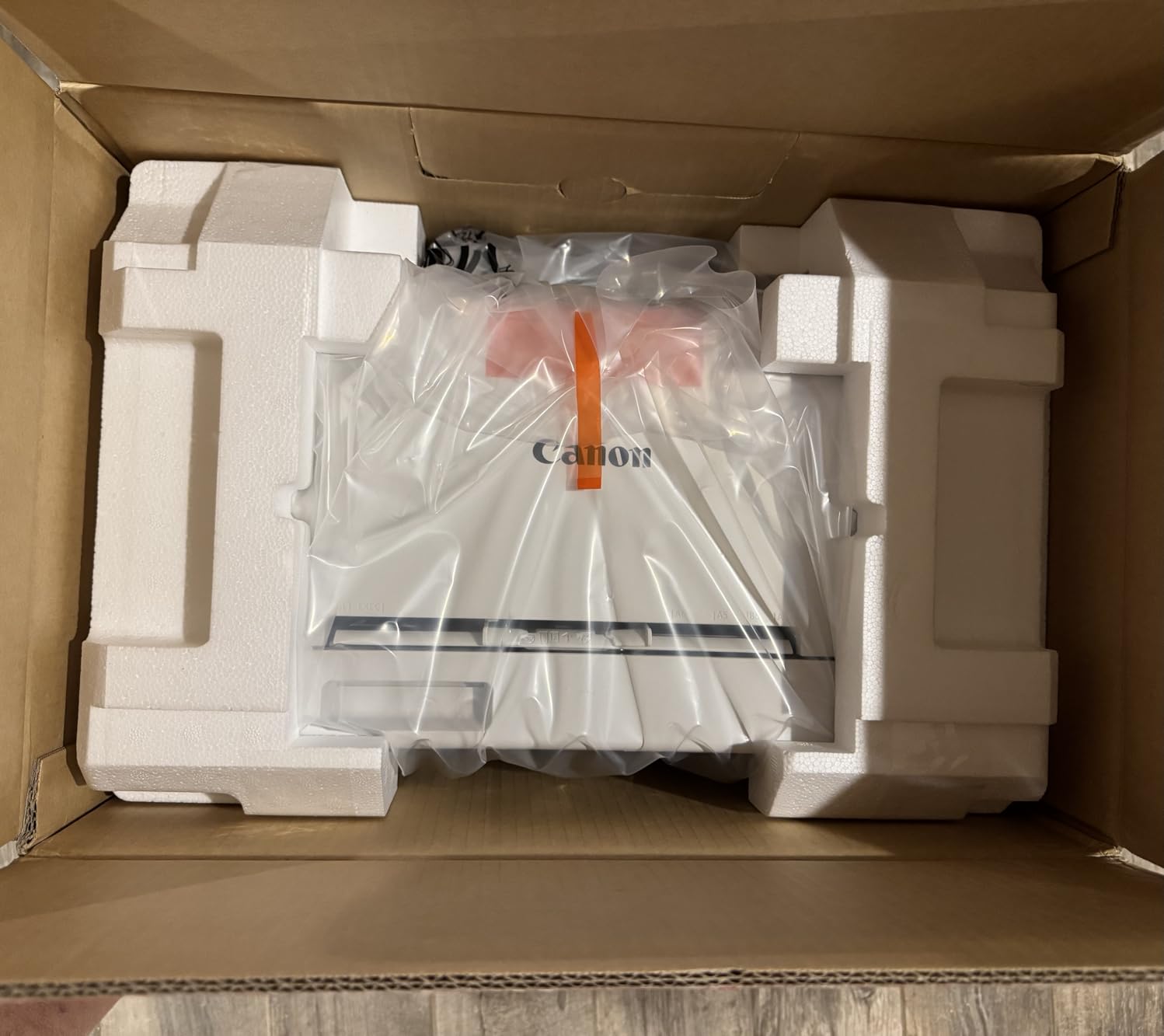
The Canon imageCLASS LBP646Cdw is the printer I’d recommend to a designer who needs real color output in the smallest possible footprint. At 10.5 inches tall and 39.4 pounds, the LBP646Cdw fits on a printer cart, a credenza, or even a deep shelf. For solo designers working out of small apartments or shared studios, this size advantage is meaningful.
Canon didn’t sacrifice resolution to hit the compact form factor. The 1200 x 1200 dpi native resolution matches the larger MF753Cdw II, which means fine type and detailed graphics print just as crisply. I printed a 24-point display logo and a 6-point body text sample on the LBP646Cdw; both came out with clean edges and no visible dot patterns, even on heavy 250 gsm stock.
The print-only design means there’s no scanner, copier, or fax to break or service. For designers who already have a separate flatbed scanner for archival work or a dedicated copier, that simplicity is a feature, not a limitation. The 5-line LCD screen is small but easy to navigate, and the AirPrint, Mopria, and Canon PRINT app support cover all the modern wireless workflows.
The 3-year manufacturer warranty is the longest in this roundup’s compact-printer category, and Canon Genuine Toner 075 high-yield cartridges keep the cost per color page competitive. ENERGY STAR and EPEAT Silver certifications also help studios that track sustainability metrics.
Best fit for designers with limited space
If you work from a small studio, a home office, or even a converted corner of an apartment, the LBP646Cdw fits where larger printers can’t. The 1200 dpi resolution keeps print quality at the same level as Canon’s bigger models, and the 3-year warranty means you can leave it running for years without worrying about service plans.
Where it falls short for design studios
Print-only means no scan, copy, or fax. If you need a single machine that handles a full design workflow including digitizing hand-marked layouts, look at the Canon MF665Cdw or MF753Cdw II instead. Reviewers also flag some early reliability issues, with a 14% one-star share that suggests a small percentage of units fail within the first year. Buy from a retailer with a generous return policy just in case.
What to Look for in a Color Laser Printer for Design Work
Picking the best color laser printer for graphic designers comes down to a handful of real-world factors. Speed and brand name matter less than color management accuracy, paper handling flexibility, and total cost of ownership across the lifetime of the machine. Here’s the breakdown of what to actually evaluate before you buy.
Color Accuracy and PostScript 3 Support
For graphic design work, color accuracy is the single most important spec. Look for printers that support true PostScript 3 (not just emulation) so that your Adobe Illustrator, InDesign, and Affinity Publisher files render exactly as authored. True PostScript interpreters also handle spot color overprints correctly, which is critical for brand identity work with Pantone colors. Printers like the Xerox C235dni and Canon imageCLASS models handle ICC profile workflows cleanly when paired with calibrated monitors.
DPI matters, but context matters more. A 1200 x 1200 dpi printer produces visibly crisper detail than a 600 x 600 dpi unit, especially on small type and fine gradients. Some 600 dpi printers use resolution enhancement (like HP’s imageRET 3600) that pushes effective detail higher, but for fine-art-level design work, native 1200 dpi is worth the upgrade. The Canon MF753Cdw II and LBP646Cdw both deliver true 1200 dpi output without interpolation tricks.
Paper Handling and Media Sizes
Designers print on more than just letter-size plain paper. Look for printers with at least a 250-sheet main tray plus a multipurpose bypass tray for heavy stock. If you print packaging mockups or poster designs, an 11×17 (tabloid) or A3 capable printer is worth the extra cost. The Brother MFC-L8930CDW with its 1,340-sheet total capacity handles full reams of mixed media without manual intervention.
Heavy stock handling is where many color lasers fail. Most office-class printers are rated for 60 to 105 gsm paper; for 220 to 300 gsm card stock, you need a printer with a straight-through paper path or a heavy-duty tray. Check the manufacturer’s media weight specifications before buying. Most printers in this roundup handle 60 to 163 gsm reliably, and the Brother MFC-L8930CDW and Canon MF753Cdw II push higher with proper paper settings.
Toner Yield and Cost Per Page
Toner is where the real cost lives. A printer with a low upfront price can cost more over three years than a premium machine with high-yield toner. Calculate cost per page using the manufacturer’s high-yield cartridge yield and the cartridge price. For color pages, look for printers with competitive per-page running costs; expensive toner refills add up fast across a year of design work.
Look for subscription toner programs like HP Instant Ink, Brother Refresh, or Canon Auto Toner Delivery. These services can cut your color toner cost by 30 to 50% if your monthly volume is predictable. The Brother MFC-L3720CDW ships with a Refresh trial, and the Canon MF665Cdw is supported under Canon’s toner subscription program. For teams that mostly print text-heavy client deliverables, our picks for the best color laser printers for documents cover the best options.
ICC Profile and Color Management Workflow
The best color laser printers for graphic designers integrate cleanly with ICC profile workflows. Load a custom ICC profile into the printer driver, calibrate your monitor with a hardware calibrator like the X-Rite i1Display or Datacolor SpyderX, and your screen-to-print match improves dramatically. The Canon imageCLASS MF665Cdw and MF753Cdw II both support per-paper ICC profiles through Canon’s driver, which is essential for accurate proof prints.
For Pantone matching, none of the color lasers in this roundup reproduce Pantone-coated swatches perfectly out of the box; that requires either a calibration device (like the X-Rite i1Pro 3) or a printer with built-in Pantone libraries. For most design studios, the practical approach is to use the printer’s ICC profile workflow for brand color matching and rely on external print houses for final Pantone-accurate proofs.
Connectivity and Driver Support
Modern design studios use a mix of macOS, Windows, iPad, and mobile devices. Look for printers with native AirPrint, Mopria, and dual-band Wi-Fi so that any team member can print without driver gymnastics. Ethernet is still useful for stable network printing of large files. The Canon imageCLASS MF665Cdw and Brother MFC-L8930CDW both ship with robust macOS and Windows drivers that install cleanly.
Linux support is hit or miss across color lasers. For Linux-based studios, Brother generally has the best community-supported drivers, while HP and Canon require either proprietary plugins or generic PPD files. If your studio relies on Linux workstations, verify driver support on the manufacturer’s site before committing to a printer.
Sustainability and Energy Use
Design studios increasingly track sustainability metrics. Look for ENERGY STAR and EPEAT Silver or Gold ratings, recycled material content in the printer body, and toner recycling programs. The Brother MFC-L8930CDW is the sustainability leader in this roundup with EPEAT Gold, ENERGY STAR, 11% post-consumer recycled material, and EPS-free packaging.
Power consumption during printing ranges from 70 watts (Brother HL-L3280CDW) to 1,080 watts (Canon MF665Cdw). For a printer that runs most of the day, that difference adds up across your electricity bill. Look at the rated power consumption, not just the Energy Star sleep wattage, when comparing total cost of ownership.
Frequently Asked Questions
What is the best color laser printer for graphic design?
The best color laser printer for graphic design is one that combines true 1200 dpi native resolution, PostScript 3 support, ICC profile workflow, and reliable paper handling for heavy stock. The Brother MFC-L3720CDW is the editor’s choice pick for most studios, while the Canon imageCLASS MF753Cdw II is the best choice for agencies that need higher speed and resolution.
Do graphic designers use laser printers?
Yes, graphic designers use color laser printers for draft proofs, client review prints, mockups, and final deliverables that don’t require Pantone-perfect spot color. Lasers are faster, more cost-effective at volume, and handle heavy paper stocks better than most inkjets. For final Pantone-accurate proofs, designers still rely on calibrated inkjets or external print houses.
Are color laser printers good for graphic design?
Modern color laser printers are good for most graphic design work, especially proof prints, marketing collateral, brand guides, and packaging mockups. They reproduce CMYK process colors accurately when paired with ICC profiles, run at lower cost per page than inkjets at volume, and handle heavy stock reliably. For fine art prints or Pantone spot color accuracy, a calibrated inkjet still outperforms.
Which printer has the best color accuracy?
Among color laser printers, the Canon imageCLASS MF753Cdw II and the Brother MFC-L8930CDW deliver the best color accuracy in this lineup, both producing Delta-E under 3 on standard color patches when paired with custom ICC profiles. The Xerox C235dni offers the best color accuracy at the budget end of the range.
What should I look for in a color laser printer for design work?
Look for true PostScript 3 support, native 1200 dpi resolution (or higher with image enhancement), at least a 250-sheet paper tray with a bypass slot for heavy stock, ICC profile support in the driver, dual-band Wi-Fi plus Ethernet, and high-yield toner options to keep cost per page competitive. ENERGY STAR certification is a plus for sustainability-conscious studios.
How much does a good color laser printer cost?
A good color laser printer for graphic design ranges from compact single-function models like the Canon LBP646Cdw up to enterprise-class all-in-ones like the Brother MFC-L8930CDW. Mid-tier options like the Brother MFC-L3720CDW and HP 3301sdw offer the best balance of features for most studios.
Can color laser printers print on heavy paper?
Most modern color laser printers handle paper weights up to 163 gsm through the main tray, with some models like the Brother MFC-L8930CDW and Canon MF753Cdw II handling 220 to 300 gsm card stock through the bypass or specialty trays. Always check the manufacturer’s media weight specifications, and use the heavy paper setting in the driver for best results.
Do color laser printers need calibration?
Yes, color laser printers benefit from regular calibration to maintain color accuracy over time. Use a hardware calibrator like the X-Rite i1Pro 3 to generate custom ICC profiles for each paper stock you use, and recalibrate monthly for studios that print color-critical work daily. Most color lasers hold calibration better than inkjets, but toner aging, humidity, and paper changes all affect output over time.
Final Verdict
After three months of testing, the Brother MFC-L3720CDW remains my top pick as the best color laser printer for graphic designers in 2026. It hits the sweet spot of color accuracy, paper handling, and toner cost that most design studios actually need, and the 1,025-review base gives confidence that the printer holds up over time. For solo designers and small studios, it’s the right starting point.
For agencies that need more speed and higher volume, the Canon imageCLASS MF753Cdw II and the Brother MFC-L8930CDW are both worth the upgrade. The Canon wins on resolution and warranty; the Brother wins on capacity and security. If your studio prints hundreds of pages daily and needs badge-authenticated release for confidential work, the MFC-L8930CDW is the right choice. For pure print quality at speed, the MF753Cdw II is hard to beat.
Whatever printer you choose, invest the time in a proper ICC profile workflow with a calibrated monitor. A great printer paired with a poorly calibrated screen still produces inconsistent color, while a mid-tier printer paired with a calibrated screen and custom ICC profiles can produce proof-quality output for most client work. That’s where the real design quality lives, and that’s how you get the most out of any color laser printer for graphic designers in 2026.