
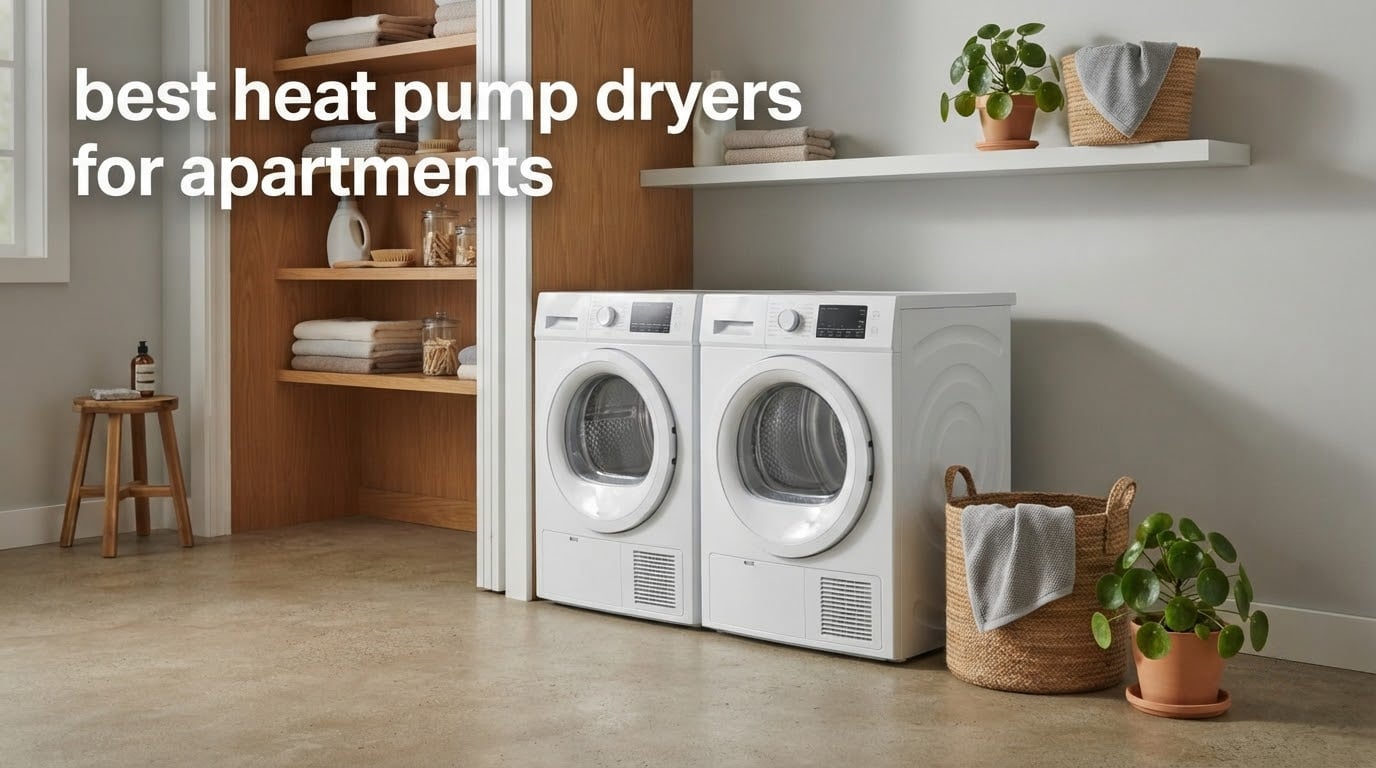
If you live in an apartment and your building does not allow a dryer vent through the wall, your dryer choice is not really a choice at all. Almost every appliance sold as a heat pump dryer is ventless, and every vented dryer you would want is off the table before you start shopping. That is the problem this roundup solves: finding the best heat pump dryers for apartments that actually fit a 24-inch closet, run on the circuit your unit has, and do not push hot air into a shared hallway.
We compared the six ventless machines listed here that carry published review ratings, cross-checking every spec against the manufacturer listing rather than a marketplace page. The short version of what we found is that only one of them runs on a standard 120V outlet, several of them need a 240V branch circuit that older apartments simply do not have, and the loudest owner complaint on this category has almost nothing to do with the machine itself. We dig into that in the maintenance section below, because the fix is a ten-minute job once you know it exists.
If your main concern is running cost rather than apartment fit, we also published a separate breakdown of heat pump dryers for energy savings that covers the efficiency math in more detail. This page stays focused on the four constraints that decide whether a machine can go into your unit at all.
Top 3 Best Heat Pump Dryers for Apartments (October 2026)
The three below are the ones we would put in a rental or a condo first. The Samsung all-in-one is the only pick that plugs into a normal wall outlet, the Midea runs a true refrigerant heat pump loop inside a compact frame, and the Kenmore is the most useful machine for small, frequent loads.

Samsung WD53DBA900HZA1 All-in-One
- 5.3 cu. ft. drum
- 120V standard outlet
- Ventless heat pump drying
- ENERGY STAR

Midea MLE25H7BWW Heat Pump Dryer
- True refrigerant heat pump
- 4.4 cu. ft.
- Dry Smart humidity sensor
- ENERGY STAR

Kenmore 4.0 cu. ft. Ventless Condensing
- 12-minute Express Dry cycle
- 15 drying cycles
- Reversible door
- ENERGY STAR
All Best Heat Pump Dryers for Apartments (October 2026)
This table is the short version of the whole article. Ventless column, drum size, the circuit each one demands, and what it is genuinely best at.
| Product | Specifications | Action |
|---|---|---|
| Samsung WD53DBA900HZA1 All-in-One |
|
Check Latest Price |
 Hamilton Beach HBFDR3206 4 cu. ft. Hamilton Beach HBFDR3206 4 cu. ft. |
|
Check Latest Price |
| Midea MLE25H7BWW 4.4 cu. ft. |
|
Check Latest Price |
| Kenmore 4.0 cu. ft. Ventless Condensing |
|
Check Latest Price |
 LG DLHC1455W 4.2 cu. ft. LG DLHC1455W 4.2 cu. ft. |
|
Check Latest Price |
 Electrolux ELFE4222AW 4.0 cu. ft. Electrolux ELFE4222AW 4.0 cu. ft. |
|
Check Latest Price |
1. Samsung WD53DBA900HZA1 all-in-one washer and ventless heat pump dryer
- Plugs into a standard 120V wall outlet with no dryer vent needed
- 5.3 cu. ft. drum in a 27-inch-wide frame
- Super Speed wash and dry cycle in 98 minutes
- Stainless steel tub with 20-year digital inverter motor coverage
- AI Opti Wash and Dry adjusts for soil level and fabric
- A full wash-and-dry cycle can run about six hours without warning
- Heat exchanger needed cleaning by the one-year mark on several machines
- 27-inch width is wide for a compact laundry closet
This is the only machine in the roundup that solves the apartment problem completely. It washes and dries in one drum, it plugs into a normal 120V outlet, and it needs no exhaust duct at all. If your building gave you a laundry closet with nothing but a cold water line and a 120V socket, this is the box that goes in it.
The drum is 5.3 cu. ft., which is large for a 27-inch-wide machine that weighs 317 pounds. Owners consistently report replacing a laundromat routine with a single machine, and the Super Speed cycle is documented at 98 minutes for a full wash and dry.
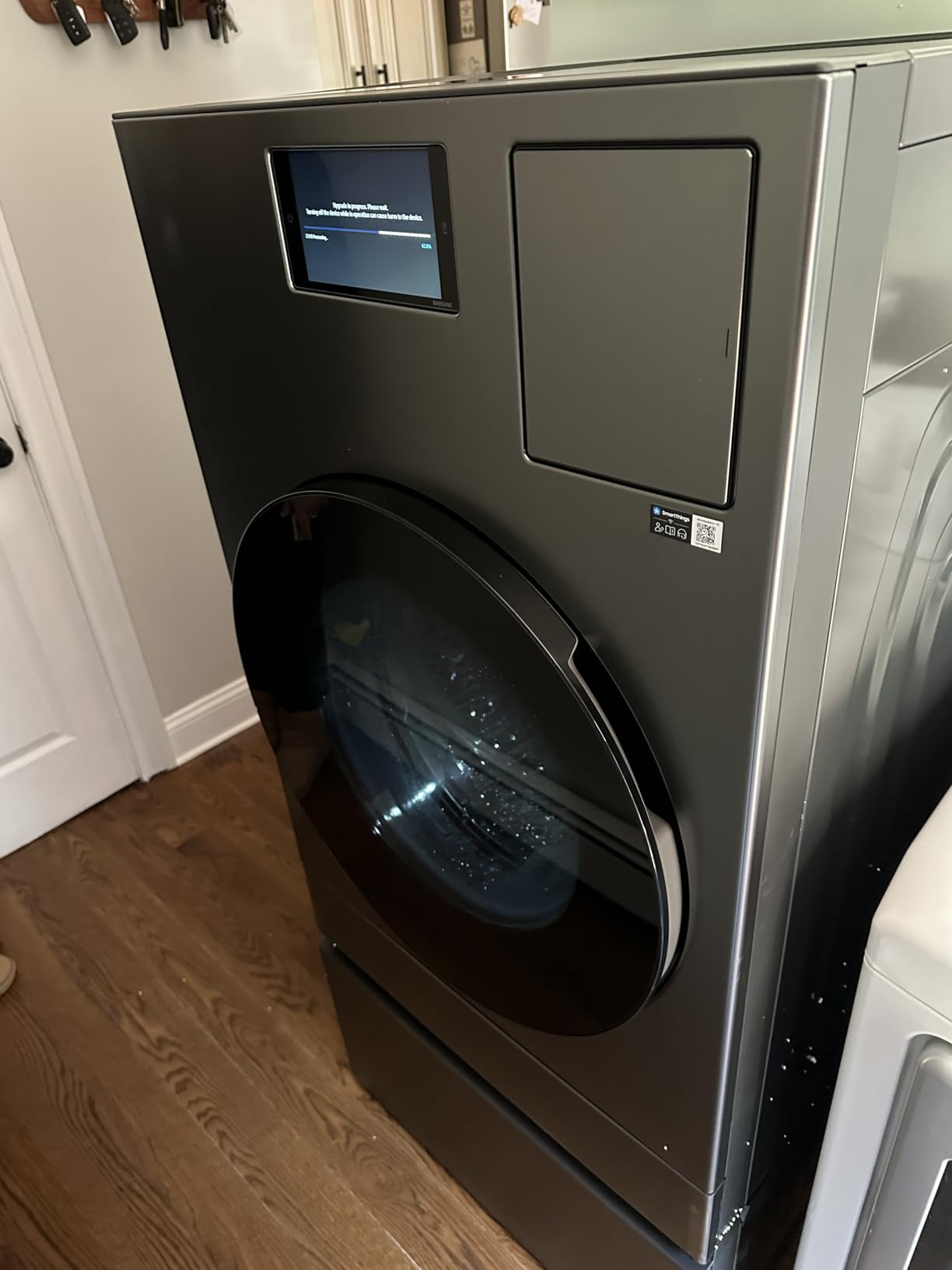
The honest catch is cycle length. Samsung’s own copy leads with 98 minutes, and owners report that a full wash-and-dry can run roughly six hours when the load is heavy and the heat pump has to work through it. That is the ventless trade-off showing up in a machine that does two jobs instead of one.
The second catch is warranty anxiety. Coverage is one year parts and labor, three years on the stainless tub, and twenty years on the digital inverter motor, and several owners report the heat exchanger needed cleaning by the one-year mark with failures shortly after parts coverage ended. Owners of appliances supplied by landlords in furnished rentals are frequently handed a Samsung-class heat pump machine of this general type, and the durability conversation comes up there constantly.
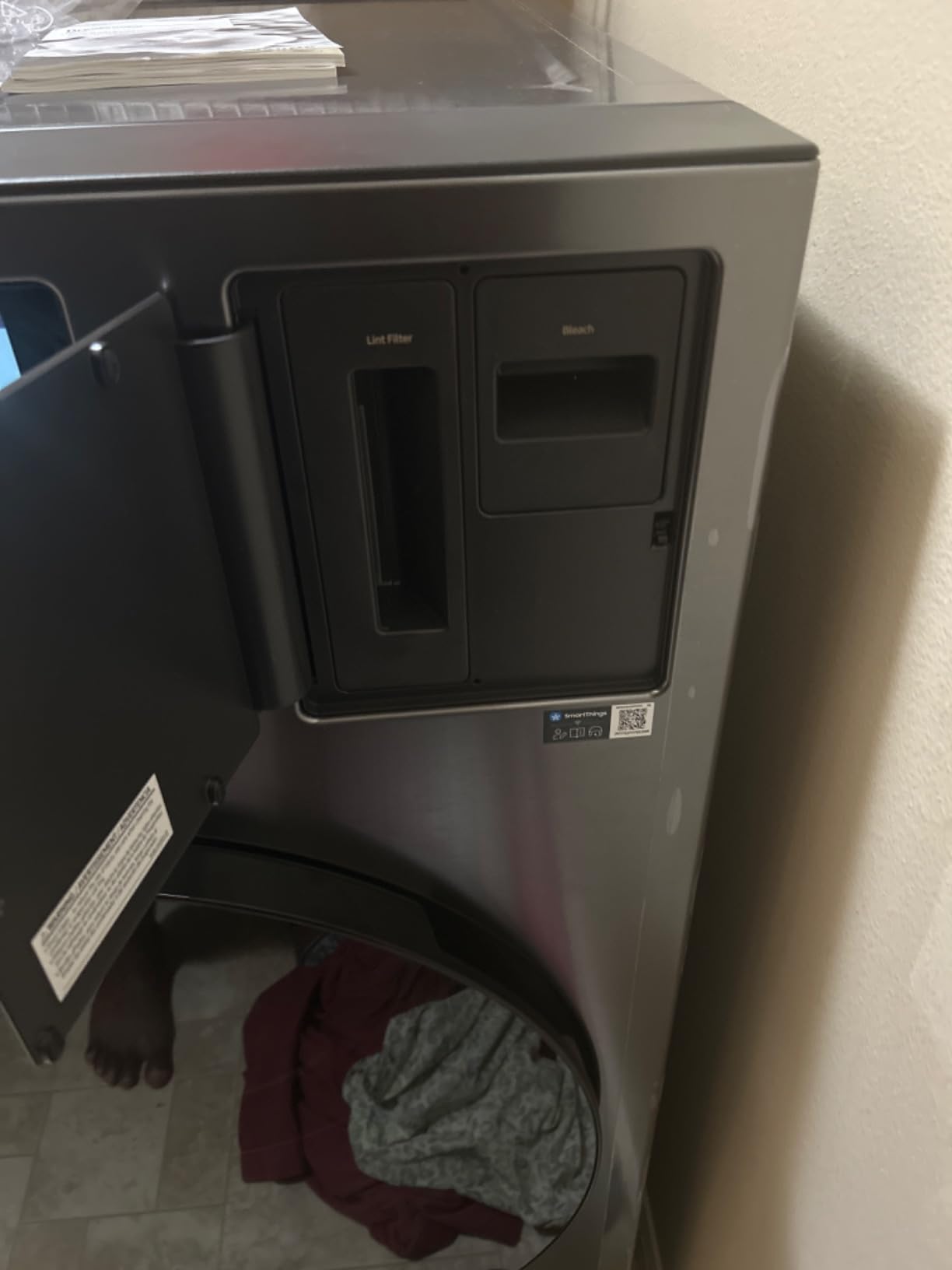
Is the Samsung combo right for a small closet?
Measure before you order. At 27 inches wide and 34.4 inches deep it is the widest machine here, and closet depth matters as much as width once the door is open, which is why the manufacturer specs on compact dryers include a maximum depth with the door open. If your opening is exactly 24 inches, this one does not fit and you should skip to the Midea or the Electrolux.
Where the all-in-one falls short
For a household that already owns a decent washer, buying a washer again inside the dryer is duplicated hardware. Six hours to a dry load is a real cost in a one-bedroom apartment where you share the laundry room, and if you wash in the evening you may be folding clothes at midnight.
2. Hamilton Beach HBFDR3206 ventless 4 cu. ft. dryer
- Explicit 24-inch width for a standard apartment closet opening
- Stainless steel tub at 100 pounds
- Sanitize cycle reaches high temperature with two-way tumbling
- Failure detection monitors temperature
- humidity
- door and airflow
- Four automatic drying modes on simple controls
- Needs a dedicated 208-240V branch circuit
- Lowest average rating here at 3.3 with about a quarter of reviews at 1 star
- Only a 1-year warranty
This is the most literal answer to the apartment question in the roundup. The manufacturer states 24-inch width in the product name itself, which is exactly the dimension a standard closet opening is cut for. It uses ventless condenser technology, so no duct leaves the machine, and the stainless steel tub is a genuine step up from the plastic-and-metal cabinets on compact dryers.
The sanitize cycle is unusual at this size. It raises the main drying temperature to a high level and uses two-way tumbling, which is how you handle bedding or a damp towel that a low-temperature condenser cycle would leave slightly damp.
Why the rating is so low
The 3.3 average across 22 ratings is the weakest in this group, and the distribution explains why: 38 percent at five stars but 24 percent at one star. Reviewers who like it cite the format, the tub material and quiet operation. Reviewers who do not cite inconsistent drying results and durability, and the one-year warranty gives no protection when something goes wrong in month fourteen.
The failure detection system is a nice touch for troubleshooting, since it watches temperature rise, the humidity sensor, the door and air circulation, and it will stop the drum rather than cook a load. That is the kind of feature you appreciate at month ten, not at purchase.
Is this the machine for your closet?
If your opening is a hard 24 inches and you already have a 240V circuit, the fit is guaranteed and nothing else in this roundup is as literal about it. If you do not have that circuit, this machine is simply not an option without an electrician, and the 240V requirement is the single most common reason apartment buyers abandon a full-size dryer.
3. Midea MLE25H7BWW heat pump ventless front load dryer
- Genuine sealed refrigerant heat pump loop
- 4.4 cu. ft. drum in a 23.5-inch chassis
- Manufacturer states at least 28 percent less energy than standard dryers
- Dry Smart humidity sensor stops the cycle before over-drying
- Wrinkle Care adds about 90 minutes of unheated tumbling
- Stacks with a compatible Midea washer
- Power cord sold separately and adds cost
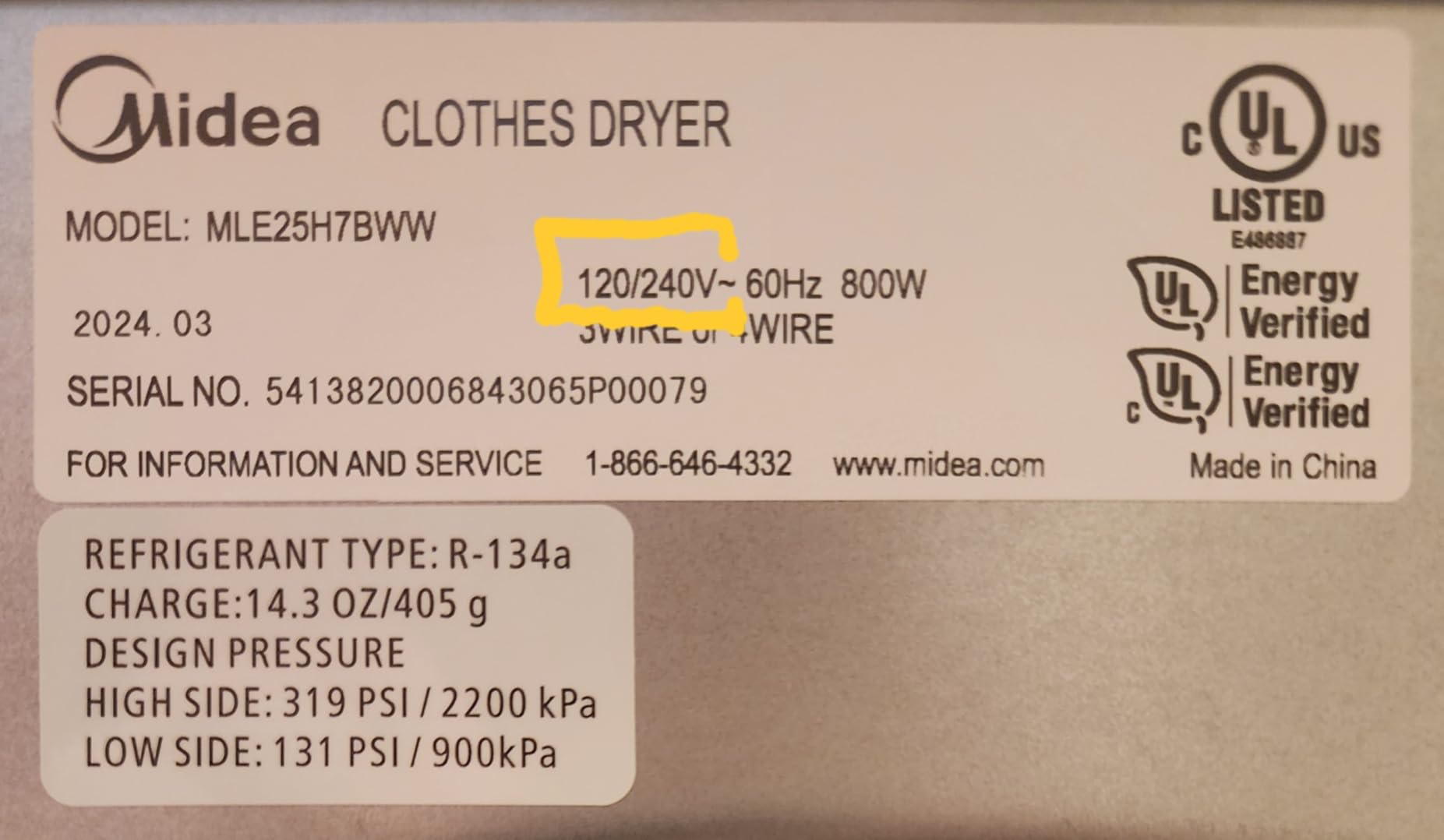
- Needs a 240V supply so a standard apartment outlet will not work
- Rating of 3.4 with about a third of reviews at 1 star
- Only a 1-year manufacturer warranty
If the phrase heat pump dryer has to mean something technically precise, this is the machine. A ventless condenser can heat recirculated air without a sealed refrigerant loop; a heat pump moves heat out of the room into the drum through one, which is why this machine can dry at lower temperatures and still finish a load. It is ENERGY STAR qualified and the manufacturer states it cuts energy use by at least 28 percent against standard dryers.
At 22.5 inches deep by 23.5 inches wide by 33.5 inches high, it is the smallest dryer-only chassis here, and it is designed to stack with a compatible Midea washer. In a studio or a 24-inch closet, being two inches narrower than the category standard is worth real money in the wall-savings department.
The Dry Smart humidity sensor is the feature owners praise most in reviews. It measures moisture and adjusts drying time rather than running a fixed clock, which is how a low-temperature heat pump cycle avoids the over-drying that makes a crisp shirt feel like cardboard. Wrinkle Care then adds roughly 90 minutes of intermittent tumbling in unheated air after the main cycle finishes.
A back-up drain hose is included, which matters more than it sounds. Condensate has to go somewhere, and having a fallback route is what keeps a ventless machine from stopping mid-load.
What do you give up for that footprint?
Two things. The power cord is not included and has to be purchased separately, which is an easy surprise on install day. And the 3.4 rating across 17 reviews is polarized, with 34 percent at one star, so the people who have it are not uniformly happy. The model number is also used for the washer-dryer stack combination, so confirm you are buying the dryer alone.
Should you skip the heat pump technology?
Do not, if you care about fabric. Low-temperature heat pump drying is the gentlest approach available in a dryer at all, since the machine never heats a coil to sanitizing temperature, and it is the right choice for wool, delicates and anything you would hand to a dry cleaner. If you run very large, very wet loads week after week, a condensing dryer with a sanitize cycle will finish faster.
4. Kenmore 4.0 cu. ft. ventless condensing electric dryer
Kenmore 4.0 cu. ft. Ventless Condensing Electric Dryer – White
- Express Dry handles three shirts in about 12 minutes
- 15 drying cycles across three temperature options
- Wrinkle Guard tumbles after the cycle to cut wrinkles and static
- Reversible door and side-by-side or stacked placement
- Smart moisture sensors prevent over-drying
- ENERGY STAR certified
- Light 46-pound cabinet raises questions about long-term robustness
- Compact 4.0 cu. ft. drum is small for family laundry
- About a quarter of reviews are 1 star
- Only a 1-year appliance warranty
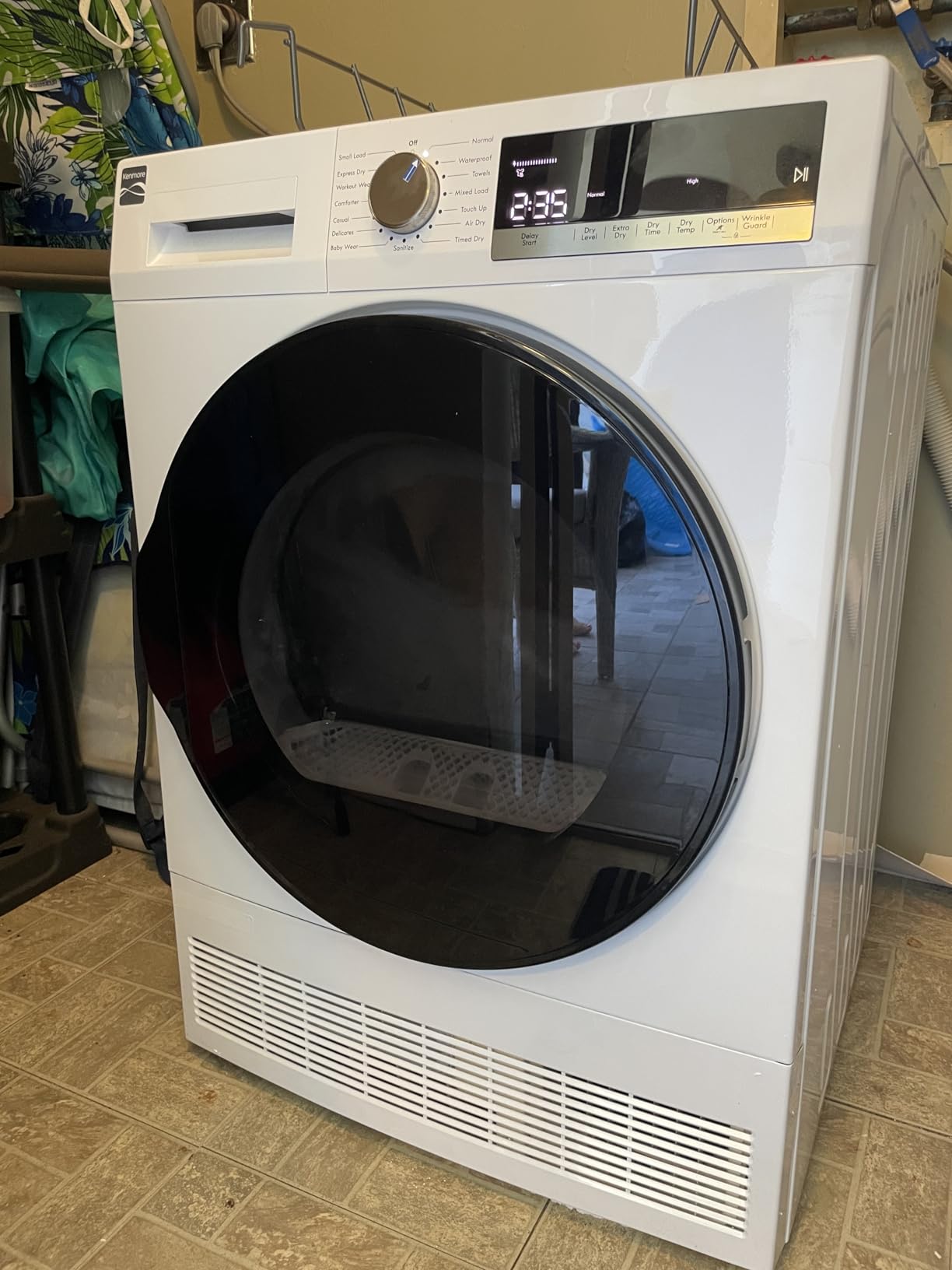
This is the dryer for the way most apartments actually get used. One or two people, small loads every couple of days, and a need to refresh a sweater without running a full hour cycle. The Express Dry option gets three shirts dry in about 12 minutes, and the Wrinkle Guard tumbles the load intermittently after the cycle to knock down creases and static.
The ventless condensing system needs no duct, and at 23.5 inches wide by 33.2 inches high it slots into a compact laundry area side by side or stacked with a washer. The reversible door lets you swing it whichever way your closet is shaped.
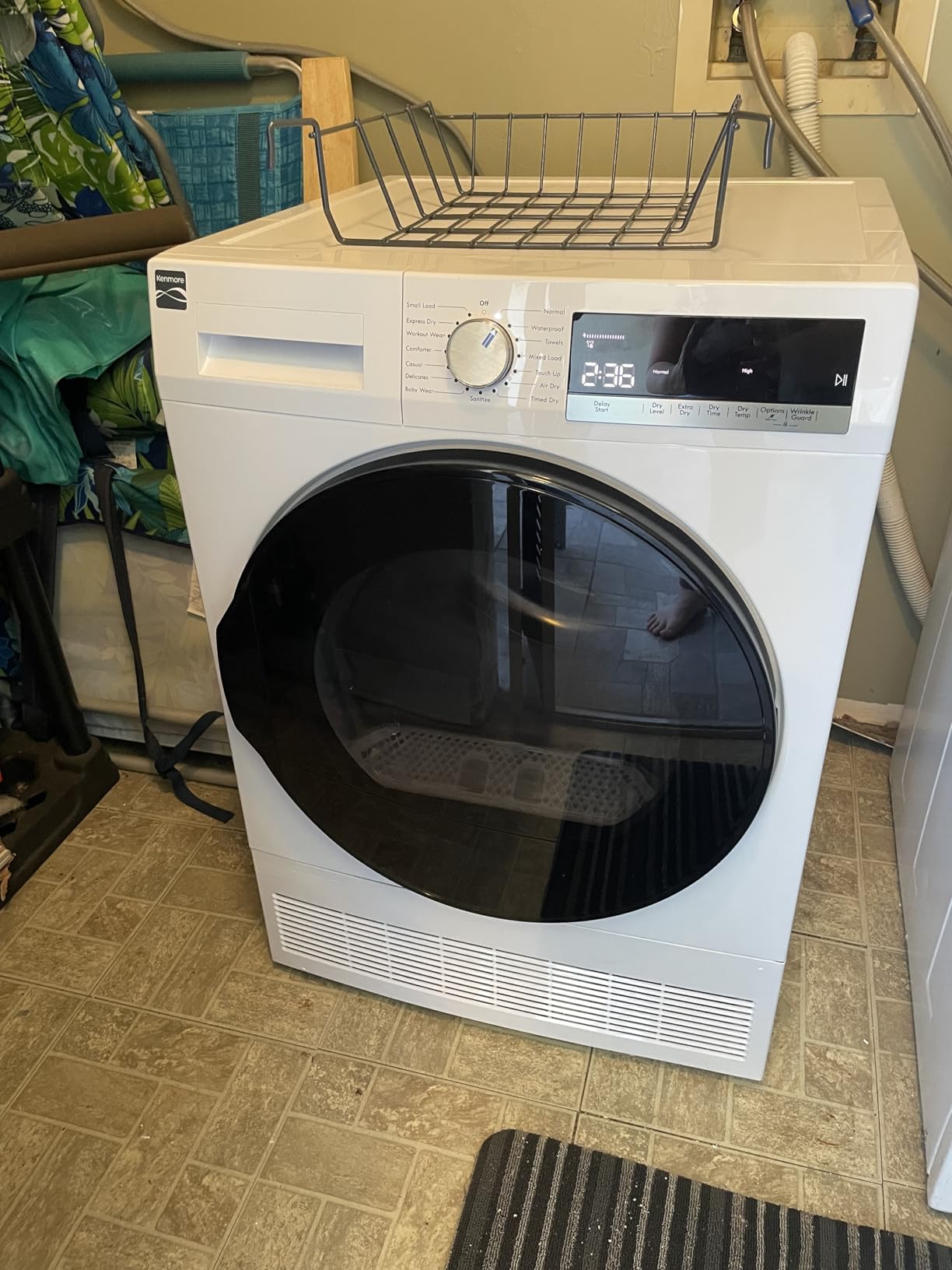
Fifteen drying cycles across three temperature options is a long program list for a machine this size. There are also cycles aimed at non-washable items like decorative pillows, sleeping bags and plush toys, which is a genuine advantage in a small apartment where a duvet is a big fraction of your weekly laundry.
At 46 pounds it is by far the lightest cabinet here, which is the one spec that gives us pause. Metal and plastic construction rather than a steel tub or a heavy stainless body means less mass resisting drum vibration over a decade of use.
Is 4.0 cu. ft. enough for an apartment?
For one or two people, yes, and the 12-minute refresh cycle is the reason. For a family or a rental unit where you wash for several households, it is not. The rating of 3.7 is decent, but 25 percent of reviews sit at one star, and the one-year warranty means any structural problem shows up exactly when coverage ends.
What about stacking it?
Stacking is supported and the manufacturer positions this model for studios, basements, condos and vacation homes. Check the stacking kit requirement for your washer model before you plan the closet, because the width adds up and the door swing still has to clear the wall in front.
5. LG DLHC1455W 24 inch ventless heat pump smart dryer
LG DLHC1455W 24 in. W 4.2 Cu. Ft. Ventless Stackable Compact Smart Electric Dryer in White with Dual Inverter HeatPump Technology
- Dual Inverter HeatPump technology for low-energy ventless drying
- 4.2 cu. ft. capacity inside a 24-inch footprint
- Wi-Fi remote start and cycle alerts through the LG ThinQ app
- 14 built-in dryer programs across fabric types
- Sensor Dry adjusts cycle length to moisture content
- Only six ratings
- which makes reliability hard to judge
- Two reviewers report units stopped working within about two years
- One owner reported severe garment shrinkage
- Highest power draw in this group
- Only a 1-year manufacturer warranty
This is the most app-connected machine here and one of the picks built around a true inverter heat pump loop. Dual Inverter HeatPump technology drives the ventless drying cycle at lower energy use, and it packs 4.2 cu. ft. into a 24-inch-wide frame that is designed for closets and small laundry areas rather than a dedicated utility room.
Sensor Dry sets cycle length from measured moisture instead of a timer, and fourteen built-in programs cover different fabric types. The ThinQ app gives you remote start, monitoring and cycle alerts, which matters in an apartment building where the laundry room is shared and you want to know a load is finished before you walk down four flights.
Should you trust a six-review rating?
No, not on its own. The 3.9 average sounds strong, but it is built on six ratings: 74 percent at five stars and 26 percent at one star. Two of the six describe units that stopped working properly within roughly two years, one with a cracked interior drum, and one owner reported severe, unsalvageable shrinkage of socks, underwear and t-shirts.
What about LG service?
Owners report that customer service was unhelpful on units less than a month old, with repairs pushed back to the owner. That is the detail we would weigh most heavily, because a heat pump loop is a sealed refrigeration circuit and it is not a DIY job. The one-year manufacturer warranty is short for the category and does not specifically call out compressor coverage.
6. Electrolux ELFE4222AW compact ventless stackable dryer
Electrolux 24 in. 4.0 cu. ft. Compact Stackable Electric Ventless Dryer in White with Instant Refresh ELFE4222AW
- Stainless steel construction weighing 178.6 pounds
- 4.0 cu. ft. drum in a compact 24-inch frame
- 12 drying cycles including towels and delicates
- Instant Refresh cycle
- Reversible door swing and stackable footprint
- Only two ratings so almost no reliability signal
- Ventless dry heat warms the room in mild weather
- One owner reported delivery arriving about a week late
- Only a 1-year warranty
This is the one we would pick on build quality alone. At 178.6 pounds in stainless steel, it is a different class of object from a 46-pound plastic-and-metal compact dryer, and that mass is what keeps a drum stable over years of tumbling. The cabinet is 23.62 inches wide by 24 inches deep by 33.5 inches high with a 42-inch maximum depth when the door is open.
Twelve drying cycles cover towels, delicates, jeans and heavy-duty loads, plus an Instant Refresh cycle for a quick pass on something you do not want to fully dry. The reversible door swing and stackable footprint handle awkward closet geometry, and it is ENERGY STAR certified.
Does a ventless dryer heat your apartment?
Yes, and this is the owner-reported drawback specific to small spaces. Because the machine exhausts dry air into the room rather than out a duct, room temperature climbs noticeably in warm weather, and sharply if the laundry area is a small enclosed closet with the door open. Run it with the closet door propped and a fan on high in summer.
What is the catch on warranty and parts?
Coverage is one year, and there is a genuine plus buried in the fine print: EU spare part availability is guaranteed for five years, which is unusual to see stated. The catch is evidence. Two ratings, both four stars, tells you almost nothing about failure rates, so treat this as a well-built machine of unknown track record rather than a proven one.
Vented vs. ventless heat pump in an apartment: the honest trade-off
Here is the part competitor roundups tend to skip. A ventless heat pump dryer in an apartment is not a smarter dryer, it is a different machine with a different set of compromises, and the compromises are predictable.
Dry time. Ventless units run cooler and recycle the same air, so a full cotton load takes longer than the same load in a vented dryer. Nobody publishes a clean multiplier, which is why the number you hear quoted varies wildly.
Cold rooms hurt more. A heat pump moves heat from the room into the drum. In an unheated closet in winter, that source heat is thinner and cycle times stretch further than in a warm utility room.
Two filters, not one. A ventless machine recirculates air through a coil that catches lint and dust, which is why your manual lists a lint filter and a separate condenser or heat exchanger filter. Neglecting the second one is the single biggest cause of the complaints below.
Condensate handling. Water has to be collected. A tank means emptying it; a drain hose means routing it. Forget a full tank mid-cycle and the machine stops, with wet laundry inside.
Heat into the room. Ventless dryers do not cool the apartment. In summer that is a real cost in comfort, not just a footnote.
Upfront cost. You are also buying a compressor and a sealed refrigerant loop, which is why a ventless machine always costs more than the vented dryer you are giving up.
Why ventless heat pumps run long, and the maintenance routine that fixes it
The most repeated warning on this category comes from a service technician on r/Appliances who says the same thing about every ventless heat pump machine they see: long drying times, even with clean filters, described as a design flaw in the machine. Read the thread and you will also find the counterexample, an owner whose ventless Miele in a previous condo was the best dryer they have owned.
That disagreement is the useful part. It points at the real variable, which is not the brand but whether the heat exchanger gets cleaned. A ventless machine pulls room air through a coil that condenses moisture out of it, and that coil accumulates lint and dust from every load. Once it is partly blocked, airflow drops, the refrigerant loop runs less efficiently, and the cycle stretches out. The owner with the great dryer cleaned the filters. The owner with the terrible one did not.
Our recommended routine, roughly: clear the lint filter after every single load, because it takes ten seconds and it is the difference between an efficient cycle and a two-hour one. Vacuum the condenser or heat exchanger filter every month and wash it if the manual allows it. Give the coil itself a proper clean twice a year, more often in a pet household, either through the self-cleaning cycle your model offers or by hand.
Check the condenser filter before you blame the machine for slow drying, and check it before you blame the machine for a high electricity bill. Our broader energy notes are in the heat pump dryer energy savings guide. If you are upgrading the rest of the utility room at the same time, our heat pump water heater buying guide works through the same running-cost comparison for the water heater side of the apartment.
Buying guide: what actually decides the purchase in an apartment
Can heat pump tumble dryers be integrated? Mostly yes, as long as the closet has the depth and the width to take a 24-inch stack. Every unit here except the Samsung combo is built for a 24-inch opening, and the four compact dryers plus the Midea are described as stackable or designed to stack with a matching washer. Measure the washer height as well as the dryer, because the pair has to clear the closet opening with the door shut.
Which dryer has the highest energy efficiency? Look at the ENERGY STAR label first, then at capacity per cycle. A larger drum that handles a whole weekly load in one cycle consumes less energy overall than a small drum that has to run twice for the same laundry. Among these picks the Samsung is rated at 103 kWh per year, with the Midea claiming at least a 28 percent energy cut over a standard dryer. The efficiency figure to check is the one on the yellow EnergyGuide label for your exact model, not the marketing line.
Get the circuit decision right first. The Samsung combo is the only one of the six confirmed to run on a standard 120V outlet. The Hamilton Beach and the Midea both state a 208-240V, 60 Hz requirement with their own grounded three- or four-prong receptacle, and the Kenmore, LG and Electrolux are full-size electric dryers that expect the same dedicated circuit. If your apartment has no 240V receptacle in the laundry closet, start from that fact, not from a wish list, because electrician work in a rental is a negotiation with a landlord.
Match capacity to load size. 4.0 to 4.4 cu. ft. is right for one or two people doing daily small loads. Below 4.0 you will be running two cycles to finish one load. The Samsung at 5.3 cu. ft. is the outlier and covers a family or a rental unit where several people push laundry through the same machine.
Noise is a specification, not a vibe. Only some manufacturers publish a decibel figure, so use the qualitative claims carefully and compare at your own door. The Hamilton Beach is the one that explicitly claims quiet operation designed not to disturb normal conversation or sleep. Run any machine at its spin phase and listen from the hallway before you accept a delivery.
Decide on condensate routing now. A tank means a chore and a mid-cycle failure if you forget. A drain hose means you need somewhere to route it. The Midea ships with a back-up drain hose, which is worth more attention than it sounds in a closet where you cannot afford a spill.
Check warranty terms on the sealed loop, not just the machine. Every unit here carries a one-year warranty on the appliance. The exceptions are on the Samsung combo, which adds three years on the stainless tub and twenty years on the digital inverter motor. A compressor and condenser loop is a different repair category from a drum motor, so ask what the warranty actually covers before you sign.
Talk to the landlord before you order. Renting in a building where you cannot modify the unit means no stacking kit, no new receptacle, no wall penetration. Get the answer in writing, and ask who pays for the install. If the building supplies the appliances, that changes the calculation entirely and may make your decision for you. Our notes on shared-space hand dryer options cover the other half of that problem in communal buildings, where a private laundry closet is not available at all.
Frequently Asked Questions
What type of dryer do I need in an apartment?
A ventless heat pump dryer or a ventless condensing dryer, since most buildings will not allow a duct run through the wall. The deciding factor is not drying power but your circuit: most full-size models need a dedicated 240V branch circuit, while all-in-one washer and dryer combos run on a standard 120V outlet. Check the closet width too, because apartment openings are built around 24-inch machines.
What is the downside of a heat pump dryer?
Cycle times are longer than a vented dryer because the machine heats and recirculates air instead of exhausting it. Performance drops further in a cold, unheated closet because the heat pump draws its source heat from the room. It also needs two filters cleaned instead of one, needs condensate drained or emptied, dumps waste heat into your apartment, and costs more up front than the vented dryer it replaces.
Which brand is best for heat pump dryers?
There is no clear consensus, and the disagreement itself is informative. Owners on appliance forums split between brands entirely. What separates good outcomes from bad ones is more reliably the heat exchange filter cleaning routine and the size of the drum relative to your loads than the badge on the front panel. Pick on circuit voltage, closet width and warranty terms first, then on brand.
Can heat pump tumble dryers be integrated?
Yes, most compact models are designed for a 24-inch closet opening and most are stackable with a compatible washer. Check the maximum depth with the door open against your closet before you commit, since the dryer sits against the wall behind the door. In a rental, confirm with the landlord first, since stacking hardware can count as a modification.
What brand of dryer has the least problems?
Owners most often single out the condenser and heat exchanger loop rather than the motor, drum or controls. The failure pattern to watch is dry times creeping upward over months, which usually means the heat exchange filter is blocked rather than that the machine is broken. All six machines here carry a one-year appliance warranty, so keeping that first-year filter schedule is what protects you after coverage ends.
Which heat pump dryer should you buy for your apartment in 2026
If your apartment has a normal 120V outlet and no vent, the Samsung WD53DBA900HZA1 is the pick. It is the only machine here that needs neither an exhaust duct nor an electrician, and its 5.3 cu. ft. drum carries real family-sized loads. If you already own a washer, the Midea MLE25H7BWW is the better buy, since it is a genuine refrigerant heat pump loop in the smallest frame here and stacks with a matching washer.
For quick daily loads and refresh cycles, the Kenmore 4.0 cu. ft. condensing dryer wins on its 12-minute Express Dry option and its 15-cycle program list. The Electrolux ELFE4222AW is the one to choose on build quality, and the LG DLHC1455W is the choice if remote cycle alerts from the ThinQ app matter more to you than the thin evidence base.
Whatever you choose, the best heat pump dryers for apartments all share one rule: clean the heat exchange filter on a schedule, because that single habit decides whether the machine feels slow or genuinely is. Confirm your circuit voltage and your landlord’s rules before you order, and the rest takes an afternoon.