

If you walk eighteen holes in September and carry everything in your own bag, the watch on your wrist has to do three jobs at once: give you fast yardages without stopping your momentum, stay comfortable through a full swing, and still have battery left on the back nine. That trio of demands is what actually decides the best GPS golf watches for walking golfers, and it is why the usual “best golf watch” rankings often mislead you.
Below are the quick picks, so you can jump straight to a category winner. Best overall for walking golfers is the TecTecTec ULT-G at 55g with no subscription. Best value is the Garmin Approach S12 at 34.1g. Best for club data is the Garmin Approach S62. Best on a budget is the CANMORE TW353. Best for course maps is the SkyCaddie LX5.
Best overall: TecTecTec ULT-G — 55g, five buttons, 38,000+ courses and no ongoing fee
Best value: Garmin Approach S12 — 34.1g, sunlight-readable screen, 30 hours of GPS battery
Best for club suggestions: Garmin Approach S62 — Virtual Caddie and PlaysLike slope distance
Best on a budget: CANMORE TW353 — 42g with 41,000+ courses and free lifetime updates
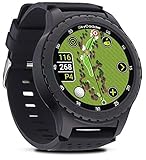
Best for map detail: SkyCaddie LX5 — ground-verified CourseView imagery with IntelliGreen
Our team spent October 2026 cross-checking twelve of the most-watched golf GPS watches on the market, weighing every published specification against owner reviews and paying close attention to the things that only surface after hour eight: wrist fatigue, glove friction, and whether the watch still holds a satellite lock in a corridor of trees.
Everything below is written for the golfer who walks. If you ride a cart, most of the comfort arguments below still apply, but the battery math changes completely. If you are still kitting out your bag, our guide to golf shoes for walking the course covers the other half of an 18-hole day on foot.
Top 3 Picks for Walking Golfers in 2026
The three watches below are the ones we would put on a wrist for a full walking round. Each one solves a different part of the walking-golfer problem, so read the verdict rather than just the rank.
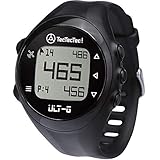
TecTecTec ULT-G
- 55g case
- 38K+ preloaded courses
- Up to 2.5 rounds per charge
- No subscription needed

Garmin Approach S12
- 34.1g and 0.45 inch thin
- 30 hours GPS battery
- Sunlight-readable MIP display

Garmin Approach S62
- 1.3 inch color touchscreen
- Virtual Caddie club calls
- PlaysLike slope distance
The TecTecTec ULT-G takes the top slot because walking comfort is first a weight problem, and 55g with a five-button interface you can operate through a glove is the safest combination we found. The Garmin Approach S12 is the better watch in absolute terms — thinner, lighter and far more readable in glare — and it is the pick for anyone who wants a single device for the course and daily wear.
The Approach S62 earns the premium slot for golfers who want more than a number: club suggestions, elevation-adjusted yardages and pin direction on blind shots. Its 20-hour GPS battery still covers a walking 18 comfortably, which is the number that matters on foot.
Best GPS Golf Watches for Walking Golfers (October 2026)
This table gives you the whole lineup in one place. Weight, case size, display type and GPS-mode battery are the four columns that decide comfort and endurance for a walking round, so we have put them first.
| Product | Specifications | Action |
|---|---|---|
| TecTecTec ULT-G |
|
Check Latest Price |
| Garmin Approach S12 |
|
Check Latest Price |
| Garmin Approach S62 |
|
Check Latest Price |
 CANMORE TW353 CANMORE TW353 |
|
Check Latest Price |
 SkyCaddie LX5 SkyCaddie LX5 |
|
Check Latest Price |
 Garmin Approach S44 Garmin Approach S44 |
|
Check Latest Price |
 Bushnell iON Elite Bushnell iON Elite |
|
Check Latest Price |
 Shot Scope V5 Shot Scope V5 |
|
Check Latest Price |
 Shot Scope G6 Shot Scope G6 |
|
Check Latest Price |
 Shot Scope X5 Shot Scope X5 |
|
Check Latest Price |
 CANMORE TW411 CANMORE TW411 |
|
Check Latest Price |
 Voice Caddie T11 LT Voice Caddie T11 LT |
|
Check Latest Price |
A few patterns jump out immediately. Only one watch in this lineup holds 30 hours of GPS battery, and it is the monochrome, button-driven Approach S12. Every colour screen here trades roughly half its endurance for better readability and richer data, so the battery ranking runs almost exactly opposite to the display ranking.
1. TecTecTec ULT-G: The Best All-Round Choice for Walking Golfers
- Accurate front center and back yardages plus hazard distances
- Works with no phone and no app on the course
- Five buttons with automatic hole progression
- 38K+ courses with free lifetime updates
- 55g build lasting up to 2.5 rounds per charge
- No course maps or green shape data
- Monochrome LCD with no elevation information
- Course and firmware updates need a computer and cable
The TecTecTec ULT-G is the watch we hand to a walking golfer who wants nothing to think about. It weighs 55g, it runs on five physical buttons, and it does not need a phone, an app or a membership to give you yardages. On a course where you are already carrying everything yourself, a device that never asks for your attention is worth more than one that offers a menu you have to scroll through.
Yardage accuracy is the part that matters most and it holds up. Reviewers regularly report that the front, center and back numbers line up with cart GPS and with laser rangefinder readings within a few yards, and one of the more common positive notes is that the hazard and shot distance measurement covers the yardage questions a walking golfer actually asks. Over 5,600 reviews, roughly two thirds are five stars, and the praise clusters around accuracy, simplicity and the absence of any ongoing cost.
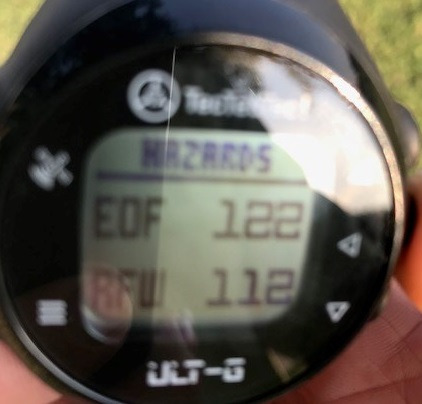
On the walking-specific question — will it stay comfortable — the answer is mostly yes, with one caveat. At 55g it is among the lighter options here, and the band sits flat enough that most golfers never notice it through 18 holes. The caveat is case depth: at 0.75 inches the case is thicker than the slimmest watches in this list, and a few golfers with larger wrists report that the strap takes a moment to settle. It is not a swing-interference problem, but it is not invisible either.
Battery life is listed at 10 hours, which sounds short until you understand how it is spent. Reviewers describe getting up to two and a half rounds from a single charge, because the monochrome screen is off most of the time and the radio is only working when you are moving. For a walking golfer that is genuinely enough for a 36-hole weekend, but you should still top it up on the drive home.
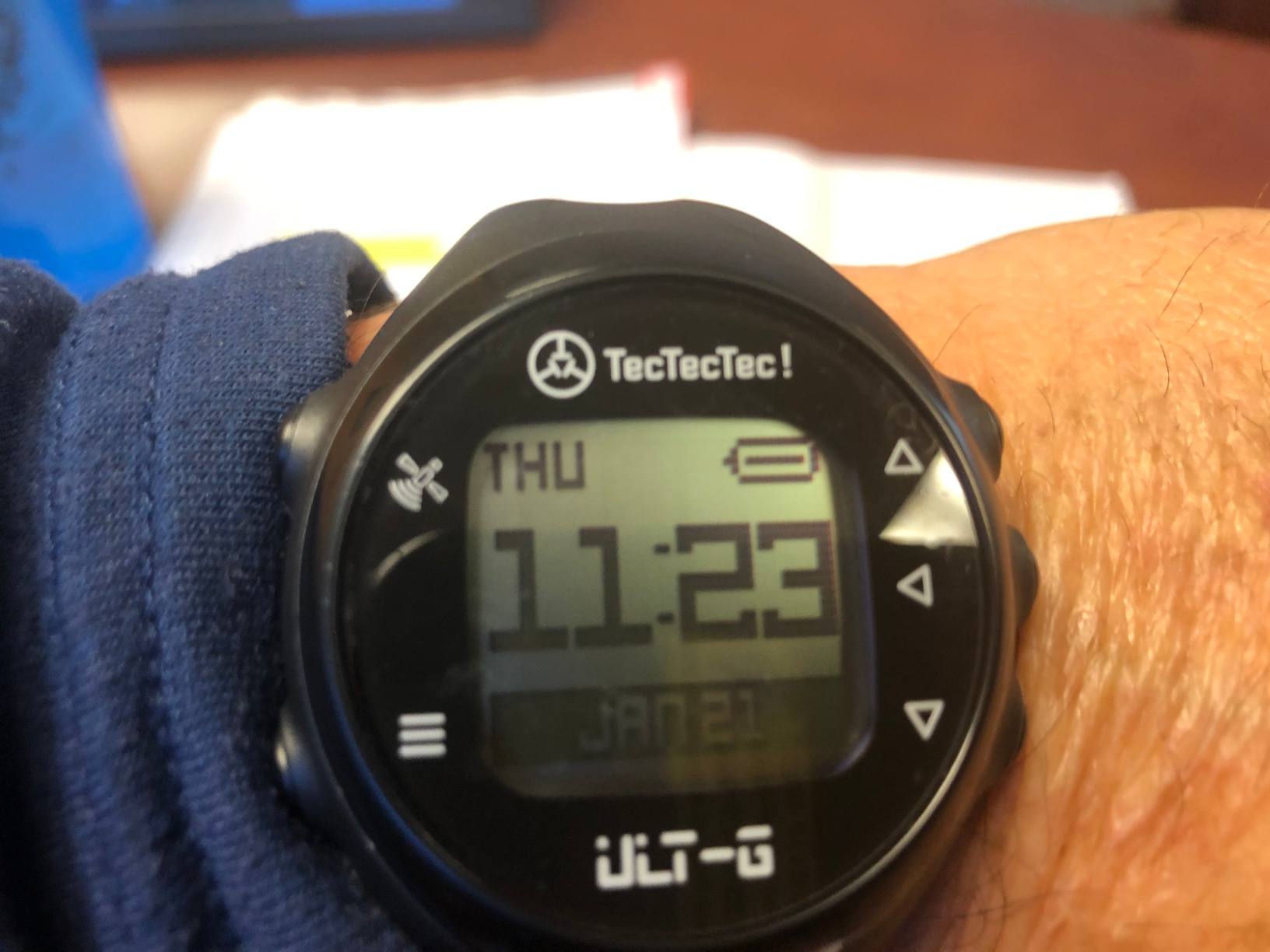
Why it survives a full 18 holes on foot without distracting you
Because there is no interface to learn. Five buttons, one obvious meaning each, and the watch advances holes on its own. You can press it in a glove, in the rain, while walking, and it does the same thing it did on the practice range. For golfers who resent stopping mid-stride, that predictability is the feature.
Where the TecTecTec ULT-G falls short for a walking golfer
It gives you numbers and nothing else. There is no hole layout, no green shape, no hazard shape and no elevation data, so if you want to read a green you are back to eyeballing it. Course updates also run through a computer and a cable rather than a phone app, which is a real annoyance if you play somewhere new every week.
2. Garmin Approach S12: The Best Value and the Flattest Case Here
Garmin Approach S12, Easy-to-Use GPS Golf Watch, 42k+ Preloaded Courses, Black, 010-02472-00
- Exceptionally readable in sun and rain
- 30 hours of GPS battery per charge
- Yardages match cart GPS and laser readings
- 34.1g and only 0.45 inch thick
- 42K+ courses with no ongoing fee
- Distances only with no maps or green detail
- Hazard yardages buried in the menu
- Occasionally needs manual hole advance
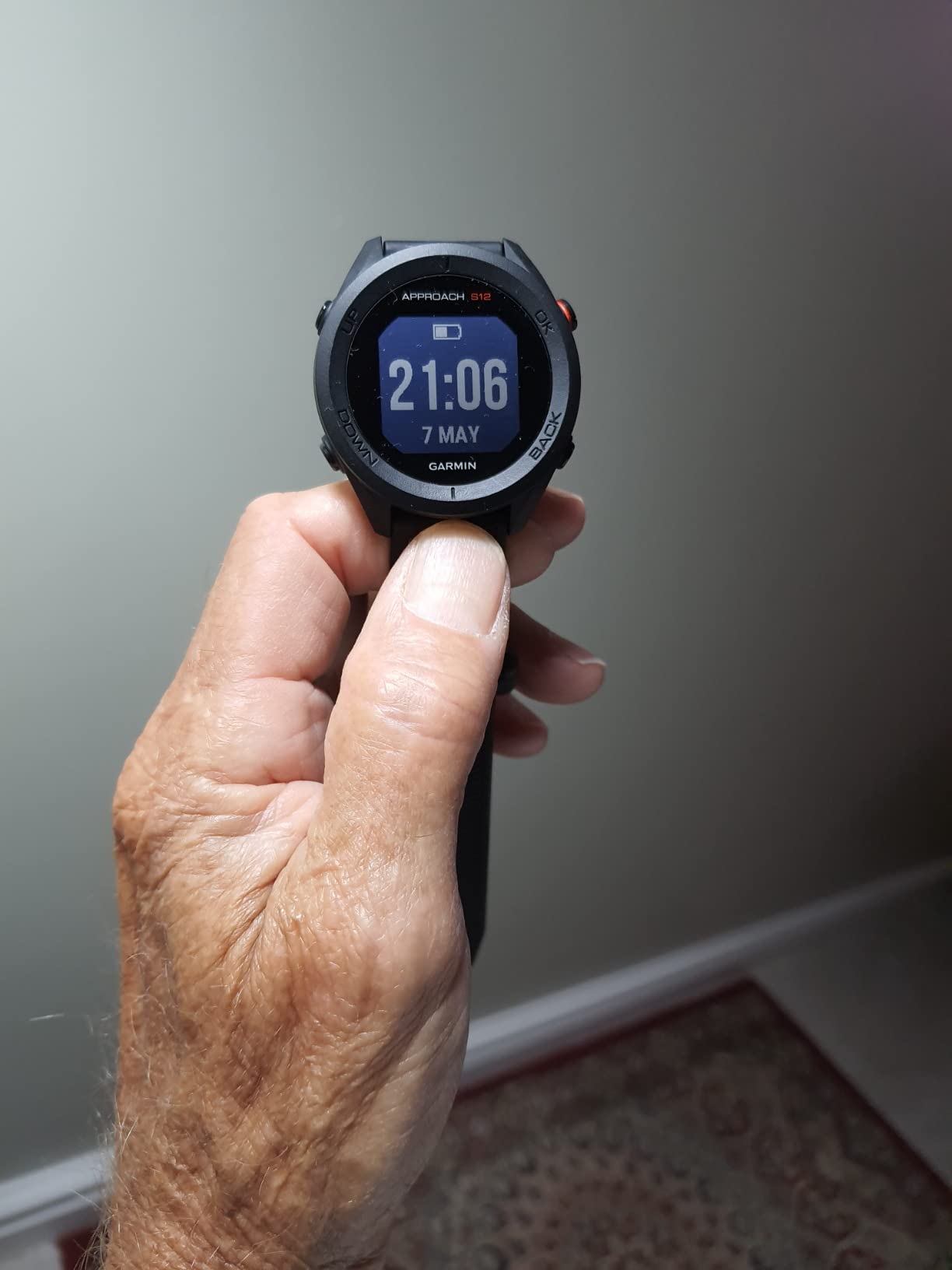
The Approach S12 is the watch we recommend to a walking golfer who wants the best-engineered object on the wrist. At 34.1g it is comfortably light, and at 0.45 inches thick it is one of the flattest cases here, which is exactly what a full swing at the top of the backswing wants. The band is silicone with QuickFit-style release, so swapping to a thinner strap takes seconds.
The display is the reason it outperforms pricier rivals outdoors. It is a sunlight-visible transflective memory-in-pixel screen, meaning it gets stronger in direct sun rather than washing out, and the numbers stay crisp in light rain when a glossy panel would glare. Reviewers call the readability the standout feature, and 72 percent of its reviews are five stars for exactly that reason.
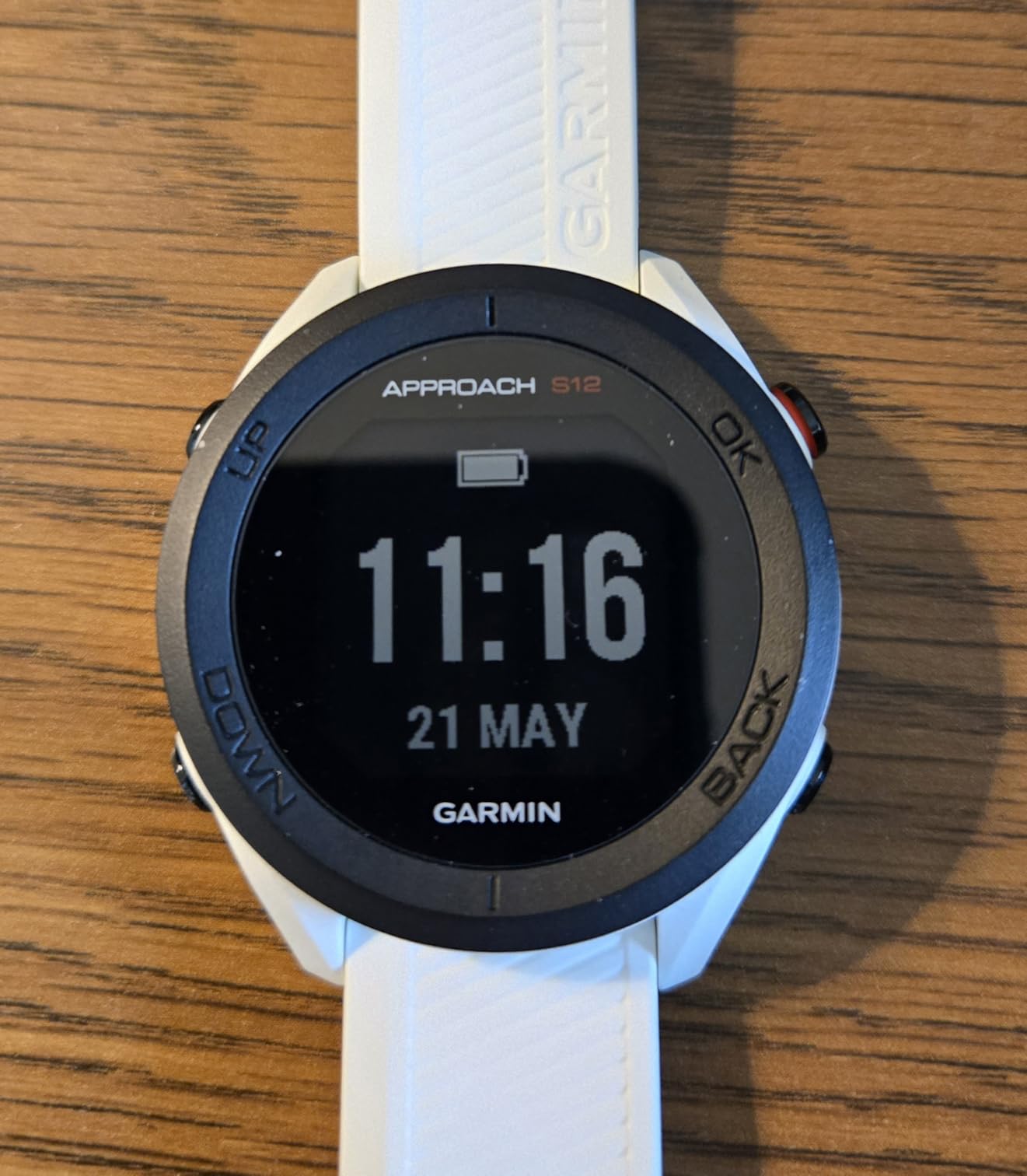
Accuracy is another consistent strength. Across reviews, the yardages land within roughly zero to five yards of cart GPS and of pricier watches, and the front, center and back green numbers plus dogleg distances all appear on the main screen. That tolerance is comfortable for club selection even though it is not laser-precise, and for most walking golfers the difference does not change a club.
Battery life is rated at 30 hours in GPS mode, the best published figure in this lineup. Reviewers describe three-plus full rounds per charge. That headroom is what lets a walking golfer play 36 holes across two days without planning a charging stop, and it is the single most valuable spec on this list for the target buyer.
Why walking golfers keep recommending the Approach S12
Because it disappears. 34.1g and 0.45 inches thick means no wrist fatigue over five hours, no glove snag at the top of the swing, and a watch you can also wear to the shops without looking like you are on duty. It is the rare golf watch that is not strictly a golf watch.
What you give up compared with a mapping watch
There are no course maps, no Virtual Caddie and no green detail. Hazard distances do exist but sit a couple of menus deep, which costs you a few seconds on a bad shot. If you only need to know how far the flag is, that trade is excellent value; if you want to study a hole, it is not.
3. Garmin Approach S62: The Best Watch for Club Suggestions and Slope Data
- Bright 1.3 inch color touchscreen in the S series
- Virtual Caddie and PlaysLike distance data
- PinPointer and Hazard View for blind shots
- 41K+ full-color CourseView maps
- Ceramic bezel with QuickFit bands
- GPS battery around 20 hours
- Green contour data needs a paid membership
- Touchscreen menus awkward with a glove on
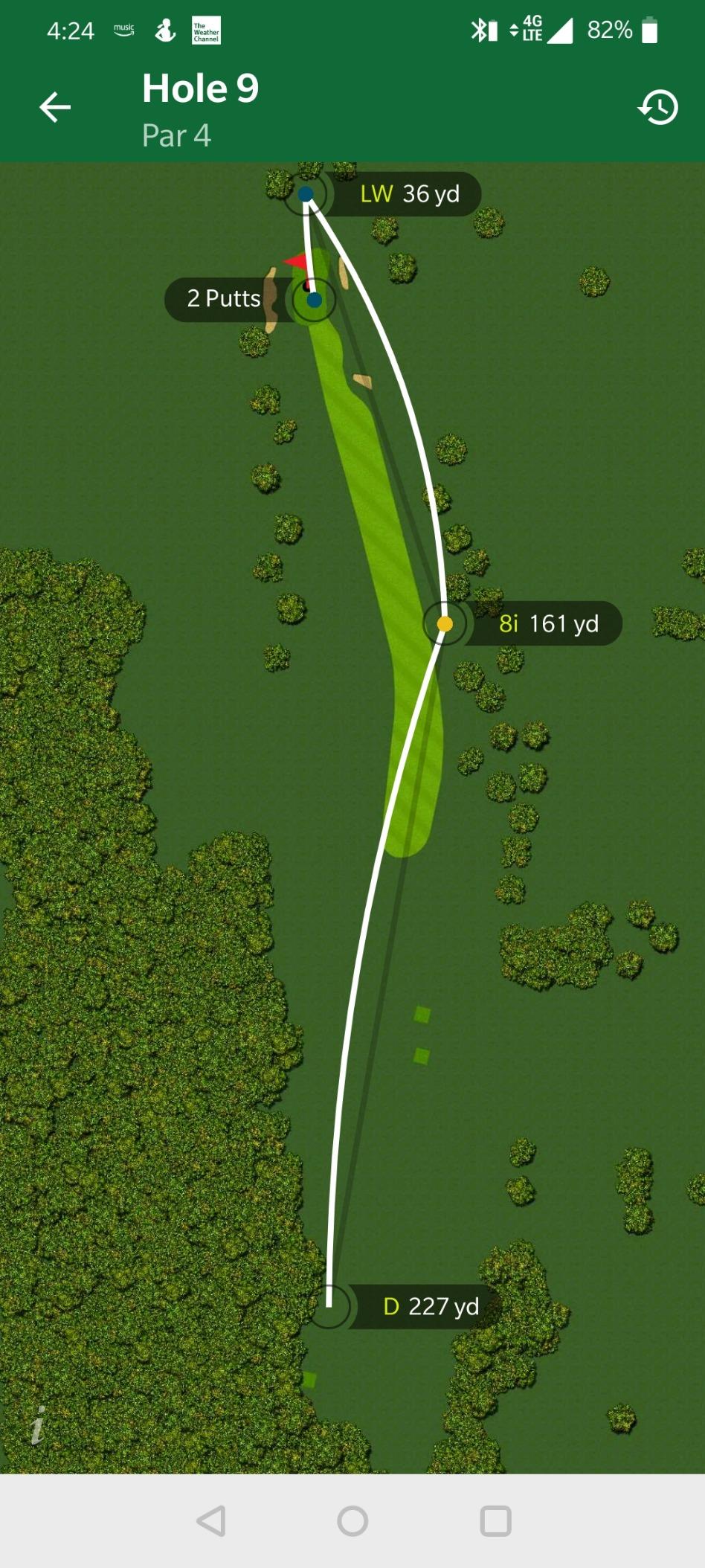
The Approach S62 is the deepest golf watch in this roundup and the one that changes decisions rather than just reporting them. It carries 41,000+ full-color CourseView maps, a Virtual Caddie that suggests a club from your typical distance plus wind and elevation, and PlaysLike Distance, which shows how far a shot actually plays uphill or downhill rather than how long the flagstick is.
Those three features answer the questions a walking golfer cannot easily answer alone. PinPointer points you in the flag’s direction when the green is hidden behind a bunker or a tree, and Hazard View scrolls the mapped water and sand so you can pick a layup side before you commit. The manual pin placement lets you move the flag ten yards if someone is being unreasonable about which green it really is.
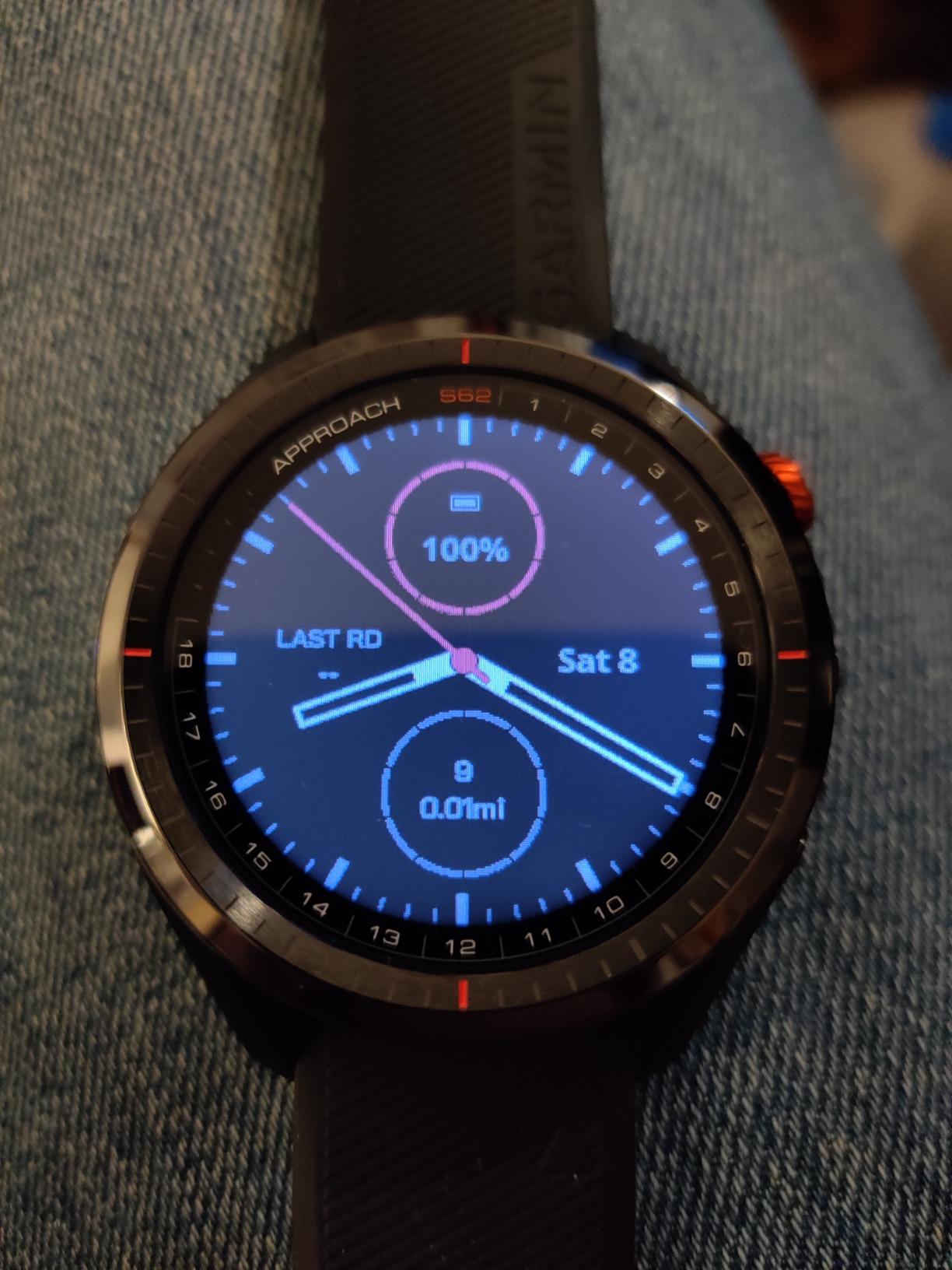
Weight is 2.08 ounces, roughly 59g, and the case is 1.85 by 1.85 by 0.58 inches. That is heavier and thicker than the Approach S12, and a walking golfer will feel the difference on a long second nine. The ceramic bezel and QuickFit band system soften it, and the band can be swapped to something thinner, but this is a watch that announces itself a little more than a simple distance unit.
Battery is rated at 20 hours in GPS mode and 14 days in smartwatch mode. Twenty hours covers a full walking 18 with a comfortable margin, and the 14-day smartwatch figure is unusually good, which matters if you also want it on the wrist at home. The catch is that the richest data sits behind a Garmin Golf membership, which is the detail most golfers should read twice before buying.
Who gets the most from a mapping and club-suggestion watch
Golfers who miss greens with mishits from the wrong side, who play unfamiliar courses often, and who want the watch to tell them what club to hit instead of just how far it is. The Virtual Caddie and PlaysLike pair is the most useful combination here for stroke-play scoring, and PinPointer is the feature that turns a bad blind shot into a recoverable one.
Where the S62 frustrates a walking golfer
The touchscreen. With a golf glove on, a damp finger or in light rain, tapping a small target on a 1.3-inch screen slows you to a crawl, and pace of play suffers. It is also the heaviest Garmin here, it costs the most, and enhanced CourseView maps and green contours need a paid membership on top of the purchase.
4. CANMORE TW353: The Best Low-Cost Lightweight Watch
- Genuine front center and back yardages at a low price
- High-contrast screen readable in glare and dull weather
- Accuracy within a couple of yards of pricier units
- Comfortable 42g rubber band
- 41K+ courses with free lifetime updates
- Updates require emailing the manufacturer
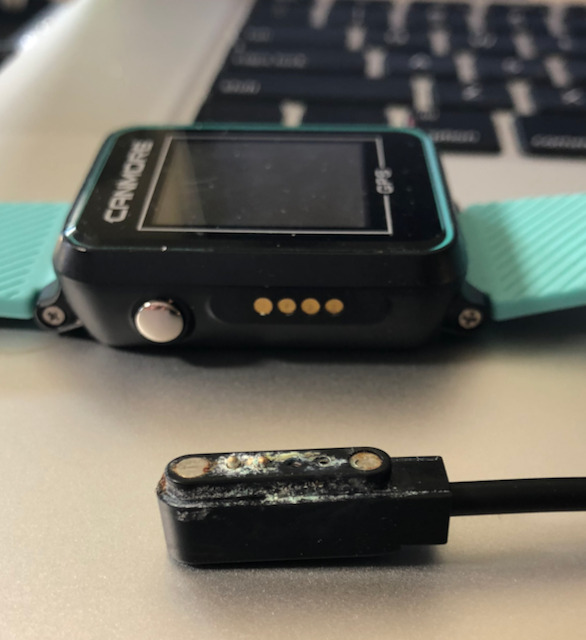
- Magnetic charger disconnects easily
- Reports of blank screens and sticking buttons
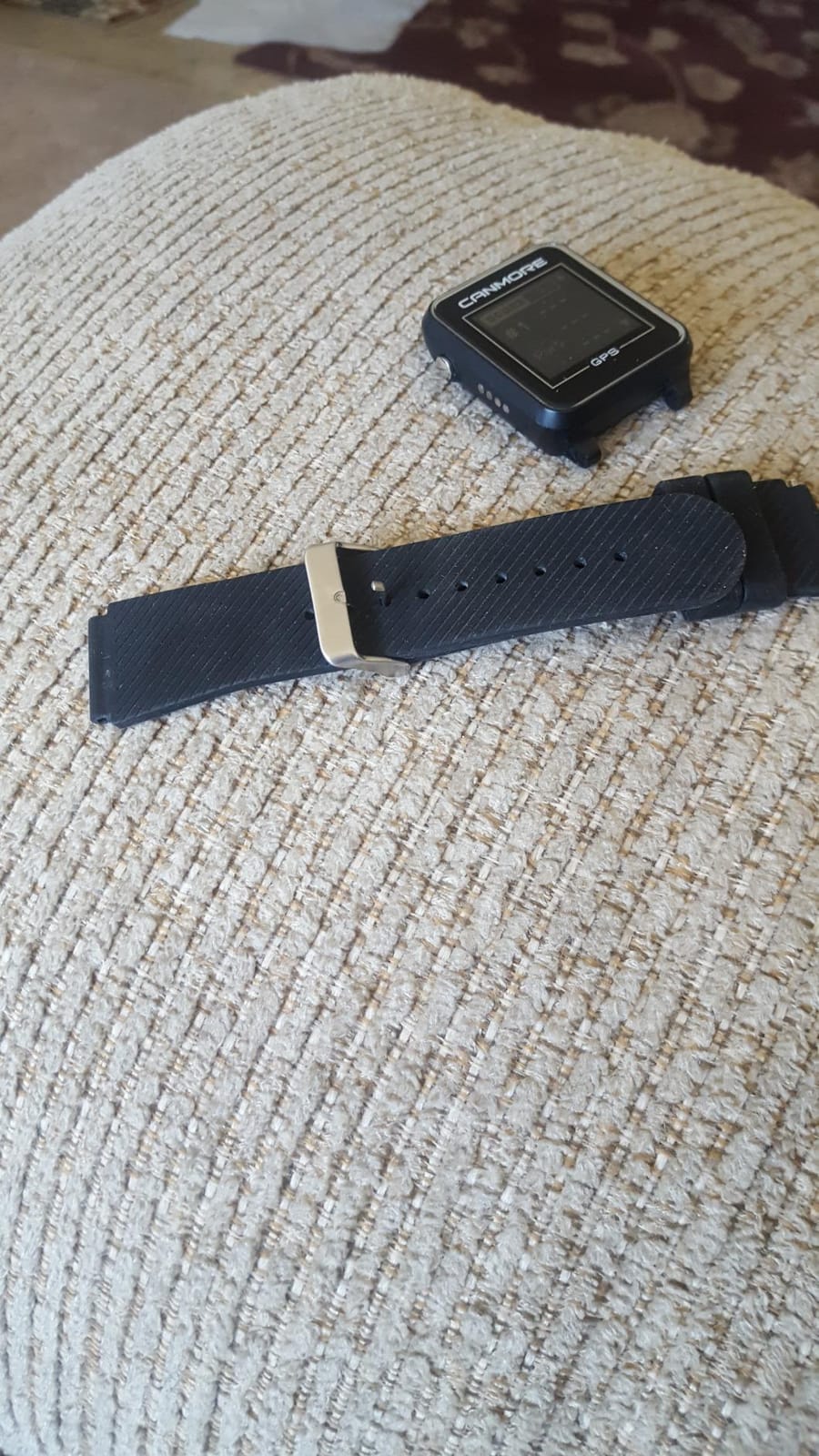
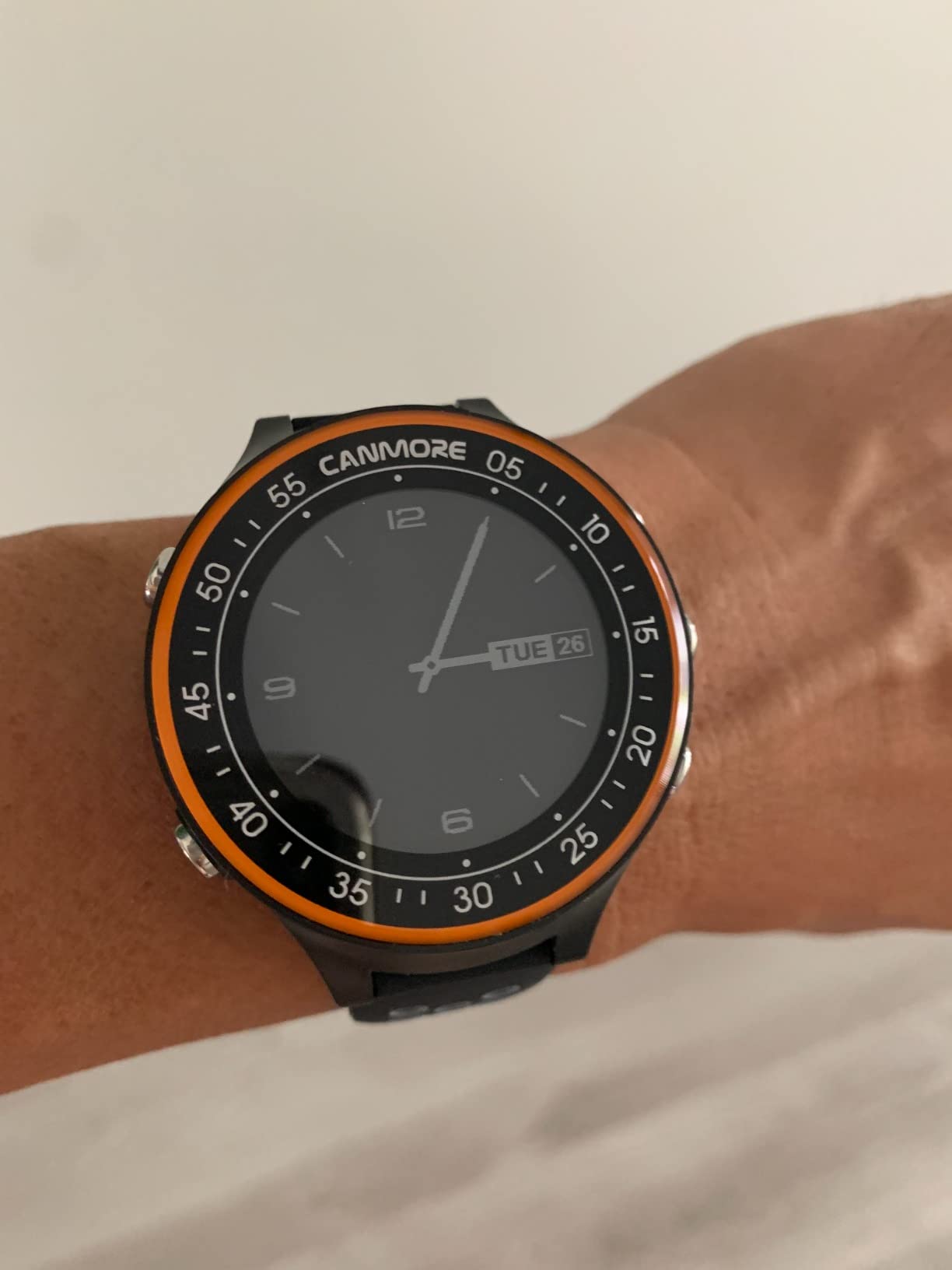
The CANMORE TW353 weighs 42g, comfortably light enough to forget over 18 holes, and it delivers the same three green distances most golfers actually need. For a walking golfer on a strict budget, it is the cheapest way in this roundup to a working GPS golf watch with 41K+ preloaded courses and free updates for the life of the device.
The screen is a monochrome LCD with a backlight, white on black, and review language repeatedly praises its contrast. High contrast is what survives both harsh sun and flat overcast light, and for a screen that has no colour or backlight dimming, this is a genuinely practical choice rather than a compromise.
Accuracy is generally reported within a couple of yards of phone apps and of watches costing several times more. Battery is listed at 11 hours, with a soft sweatproof rubber band that reviewers call comfortable over a full round. The warranty is described as one-time purchase, lifetime service and free weekly course updates, with no subscription of any kind.
The 3.6-star rating is where honesty matters. Just 41 percent of its reviews are five stars and 17 percent are one star, and the negative cluster is unusually specific: course and firmware updates that require emailing the manufacturer and waiting for files, a magnetic charging cable that disconnects easily, buttons that stick, screens going blank mid-round, and a non-replaceable battery reported to fade after about a year. One reviewer also disputed the waterproof claim after submerging the watch.
Why the TW353 suits a walking golfer on a budget
Weight and cost. At 42g it will not bother you over 18 holes, and the one-time purchase with free lifetime updates means your total cost of ownership over three years is the purchase price alone. If you only want front, center and back yardages, this watch does exactly that and nothing else.
Where the CANMORE TW353 will disappoint you
Durability. The update process is old-fashioned and slow, the charger is a known annoyance, and the reliability reports around blank screens, sticking buttons and a fading battery are consistent enough that we would not recommend it as the only watch for a travelling golfer. No course maps either, so hole layout and green shape are out.
5. SkyCaddie LX5: The Best Watch for True Course Maps
SkyCaddie LX5, GPS Golf Watch with Touchscreen Display and HD Color CourseView Maps, Black, Small
- Ground-verified CourseView maps with true green shape
- IntelliGreen rotates front back and pin distances
- Large bright colour touchscreen with zoom and pan
- Three years of prepaid membership in the box
- Wi-Fi for scoring stats and step counting
- Heaviest weight listed in grams here at 64g
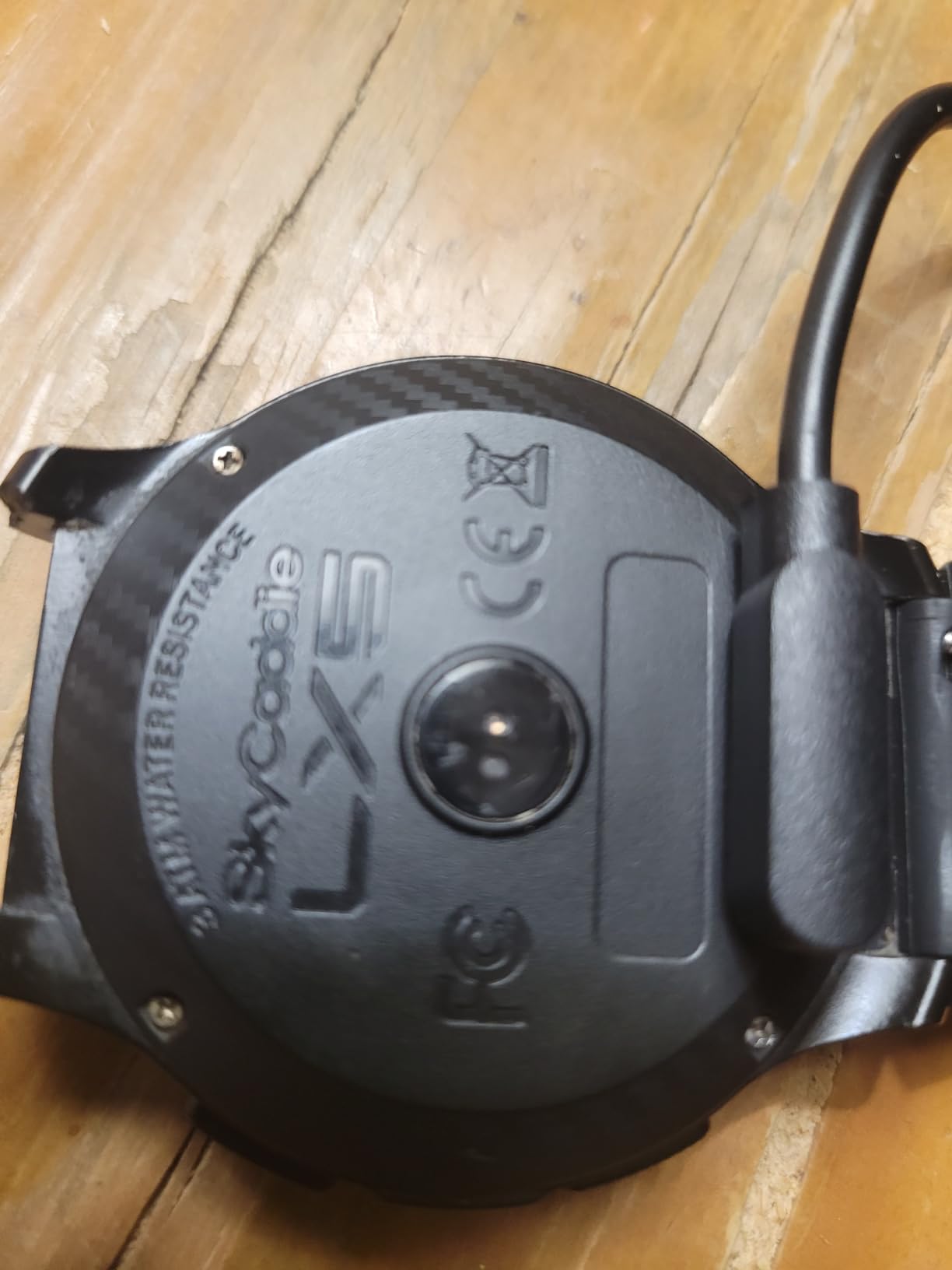
- Only 10 hours of GPS battery
- Short six-month manufacturer warranty
- Included membership period eventually lapses
The SkyCaddie LX5 is the only watch in this lineup with ground-verified course maps, and that is its entire reason to exist. Walkers regularly take photos of the shot, and a walker who is not sure whether a stream is carryable or a bunker sits in front of the green needs a map more than anyone. The screen is a 1.38-inch full HD AMOLED touchscreen you can zoom, pan and target with a cursor.
IntelliGreen is the feature reviewers mention most. It rotates the actual shape of the green so you get true front, back and pin distances rather than three numbers from a single pin position, which is more honest on an undulating green. The box also includes a three-year prepaid membership to more than 35,000 ground-verified maps, and both small and large wristbands.
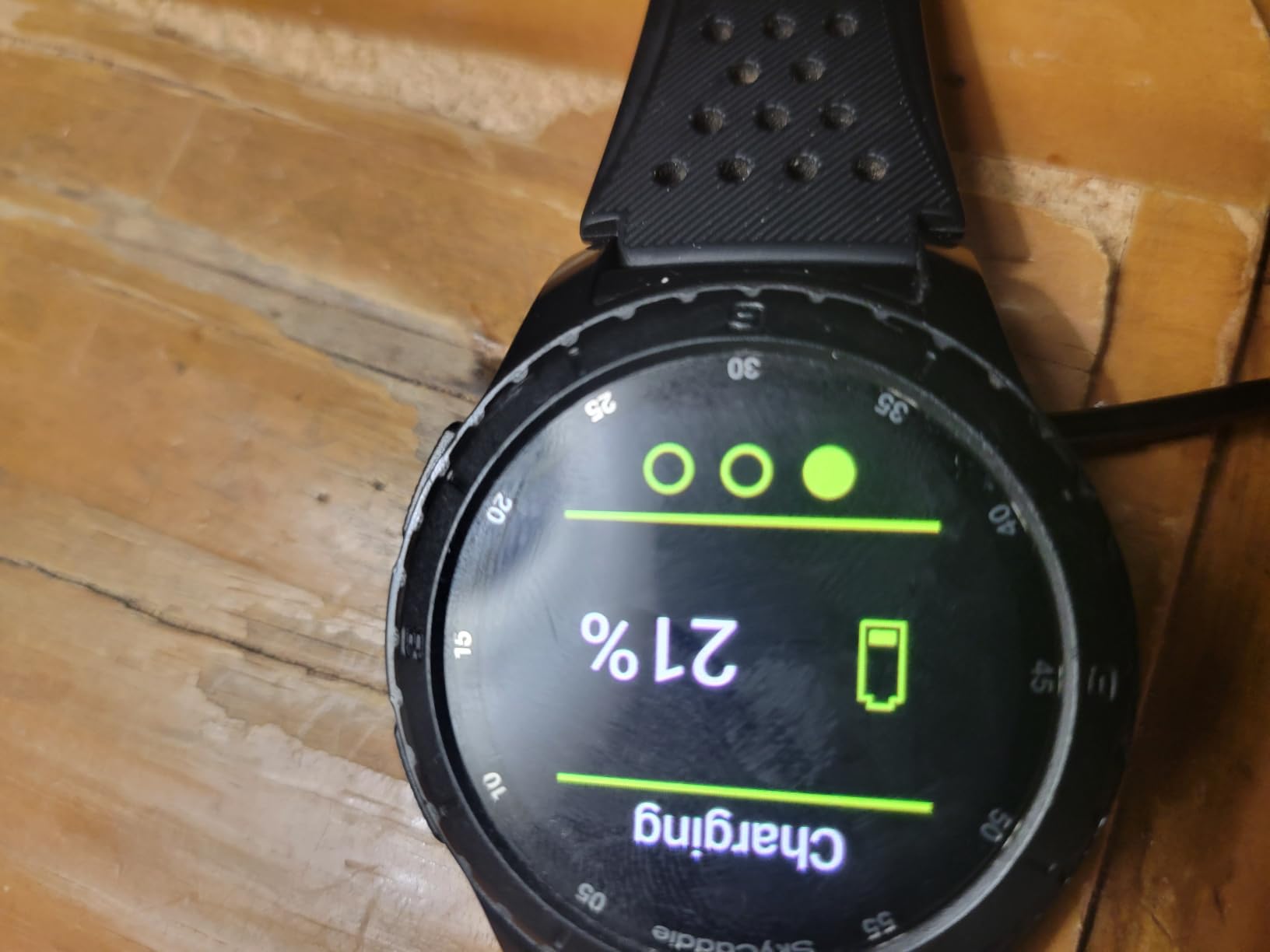
For a walking golfer, though, the ergonomics are the problem. At 64g this is one of the two heaviest watches in the roundup, and it sits well above the 34.1g Approach S12, a gap you feel across a five-hour round. A 10-hour GPS battery covers one 18 comfortably and not much more, so a 36-hole walking day needs a charge between rounds, and the 6-month warranty is half what the Garmins offer.
Wi-Fi connectivity, scoring, statistics, heart rate and a step counter make it an everyday watch as well as a golf device, which helps offset the membership that eventually lapses. Ratings sit mid-pack at 3.8 stars, with about 49 percent five-star and 16 percent one-star reviews concentrated on battery life and warranty length rather than on map quality.
Why the LX5 is worth its weight for map-focused golfers
If your regular round includes courses you have never played, a verified map saves a lot of blind shots. The zoomable cursor lets you check exactly how far a carry is over water, and the rotated green shape is the only true reading of an undulating target in this group. Bundled membership means the maps are covered for three years before you think about paying again.
Where the SkyCaddie LX5 works against a walking golfer
Weight and endurance, in that order. At 64g this sits above most of the field on a hot five-hour walk, 10 hours of GPS means a mid-round top-up on a 36-hole day, and the six-month warranty leaves you exposed if the AMOLED screen or the case fails. It is also a touchscreen, so gloves and sweat work against you.
6. Garmin Approach S44: The Best Everyday Golf Smartwatch
- Bright AMOLED display in a slim 43mm case
- 43K+ courses with hazard and layup navigation
- Charges fully in about 30 minutes
- Smart notifications keep the phone in the bag
- Scoring syncs for stats and handicap calculation
- Roughly 15 hours of GPS is half the S12 figure
- Green contours and Touch Targeting need a membership
- No virtual caddie club suggestions
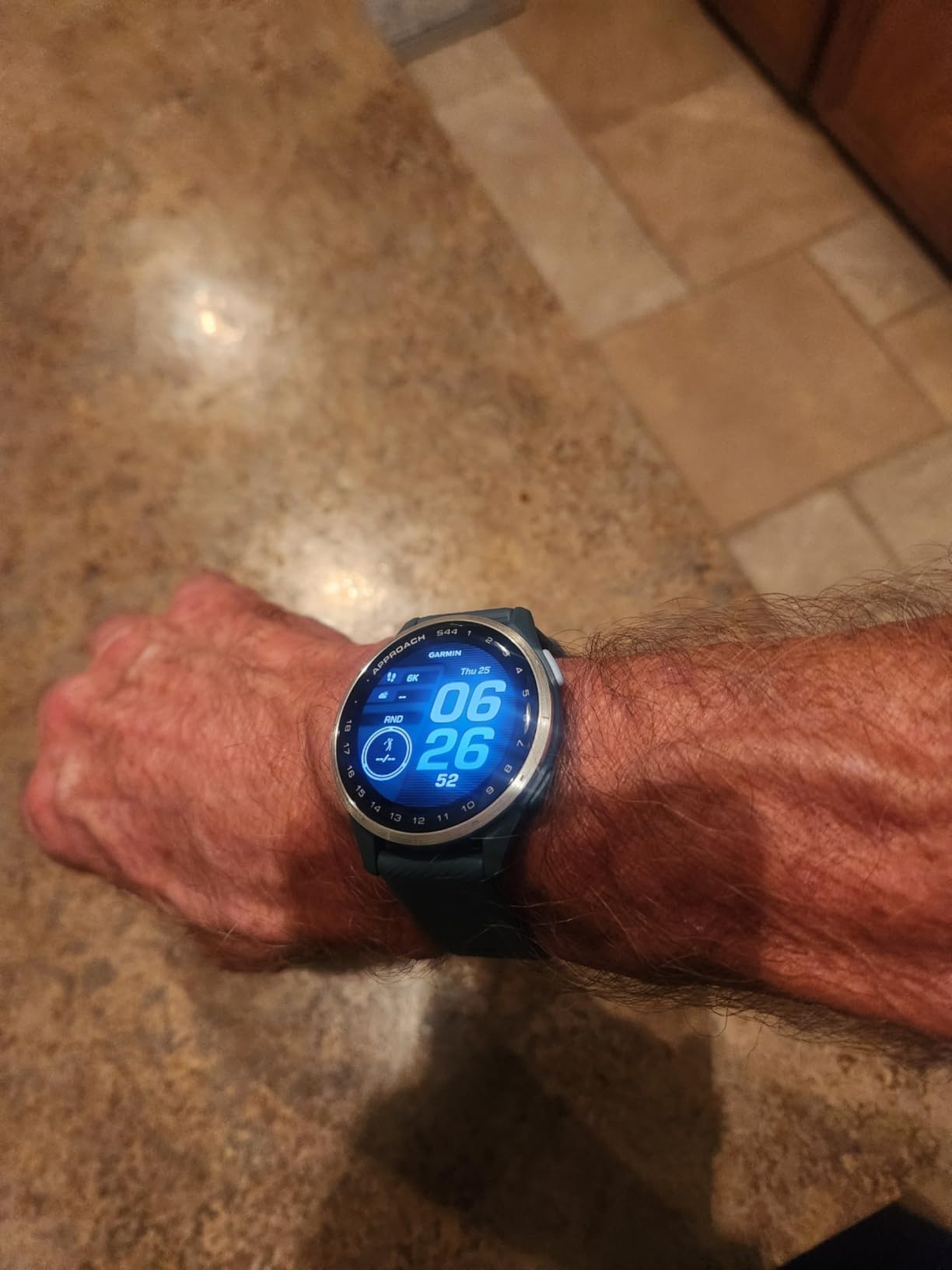
The Approach S44 is the Garmin for a golfer who wears one watch for everything. It is a 43mm aluminium case with a 1.2-inch colour AMOLED touchscreen, and it does the everyday smartwatch job properly: notifications from a paired phone, music and activity features, and score syncing to the Garmin Golf app for statistics and handicap calculation.
On the course it gives front, middle and back green distances with hazard view for bunkers, water and layups, and it recognises 43,000+ preloaded courses with multi-constellation support across GPS, GLONASS and Galileo. The 350 mAh battery charges fully in about 30 minutes, which is a genuine convenience when you are getting two rounds in over a weekend.
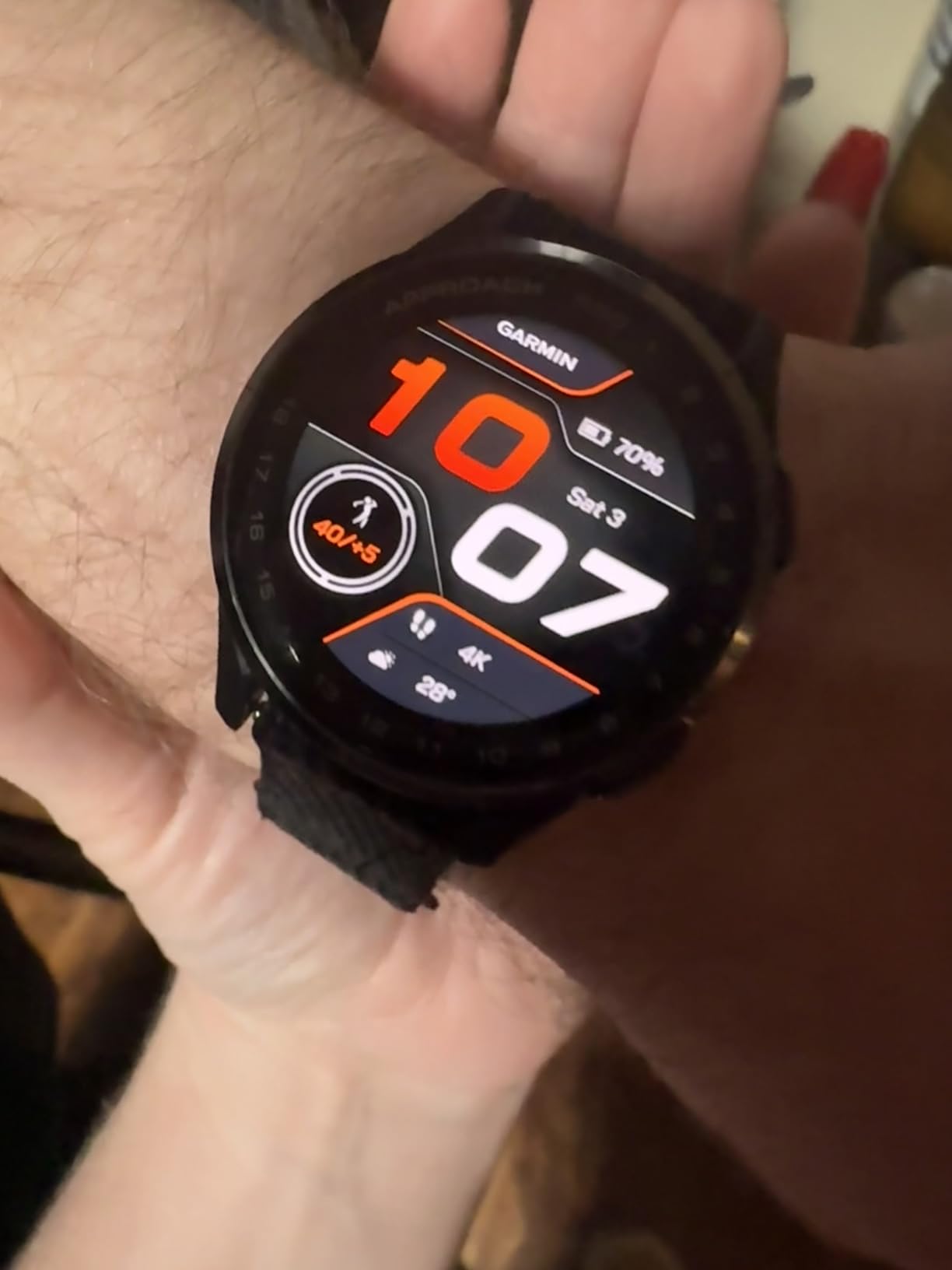
The trade for walking golfers is endurance. Fifteen hours of GPS mode is roughly half the Approach S12 figure, and it is the number most often cited in critical reviews alongside the subscription requirement. A walking 18 fits, but a 36-hole day means charging overnight, and AMOLED brightness costs you the endurance that the transflective S12 gives away for free.
Note also that enhanced CourseView maps, green contour data, PlaysLike Distance and Touch Targeting all require a Garmin Golf membership. The base mapping and yardages are included, so you are not locked out of the watch itself, but the features that justify the premium over a simpler Garmin do cost extra over time.
Why the S44 suits a golfer who walks and wears one watch for everything
Because the smartwatch half is real. Notifications mean your phone can stay in the bag rather than in your hand, the case is a slim 43mm with a silicone band, and scoring syncs automatically so your handicap index updates without any extra effort. It looks far more like an everyday watch than a golf device.
Where the S44 falls short for a walking golfer
GPS battery hours and subscription cost. Fifteen hours of GPS covers one walking round with little margin, and the AMOLED screen makes that figure worse in bright sun when you raise brightness. The membership requirement for green contours and PlaysLike also means the headline slope feature is not bought with the watch.
7. Bushnell Golf iON Elite: The Best Glove-Friendly Button Design
- Single physical button designed to work with a glove
- Slope-adjusted distances with tournament-legal toggle
- App-based course updates are simple
- HoleView GreenView and movable pin placement
- One charge usually covers two rounds
- Magnetic charging contact fails for some owners within months
- Sunlight readability is mediocre
- No club or shot tracking beyond one shot distance
- Hazard data is hard to read
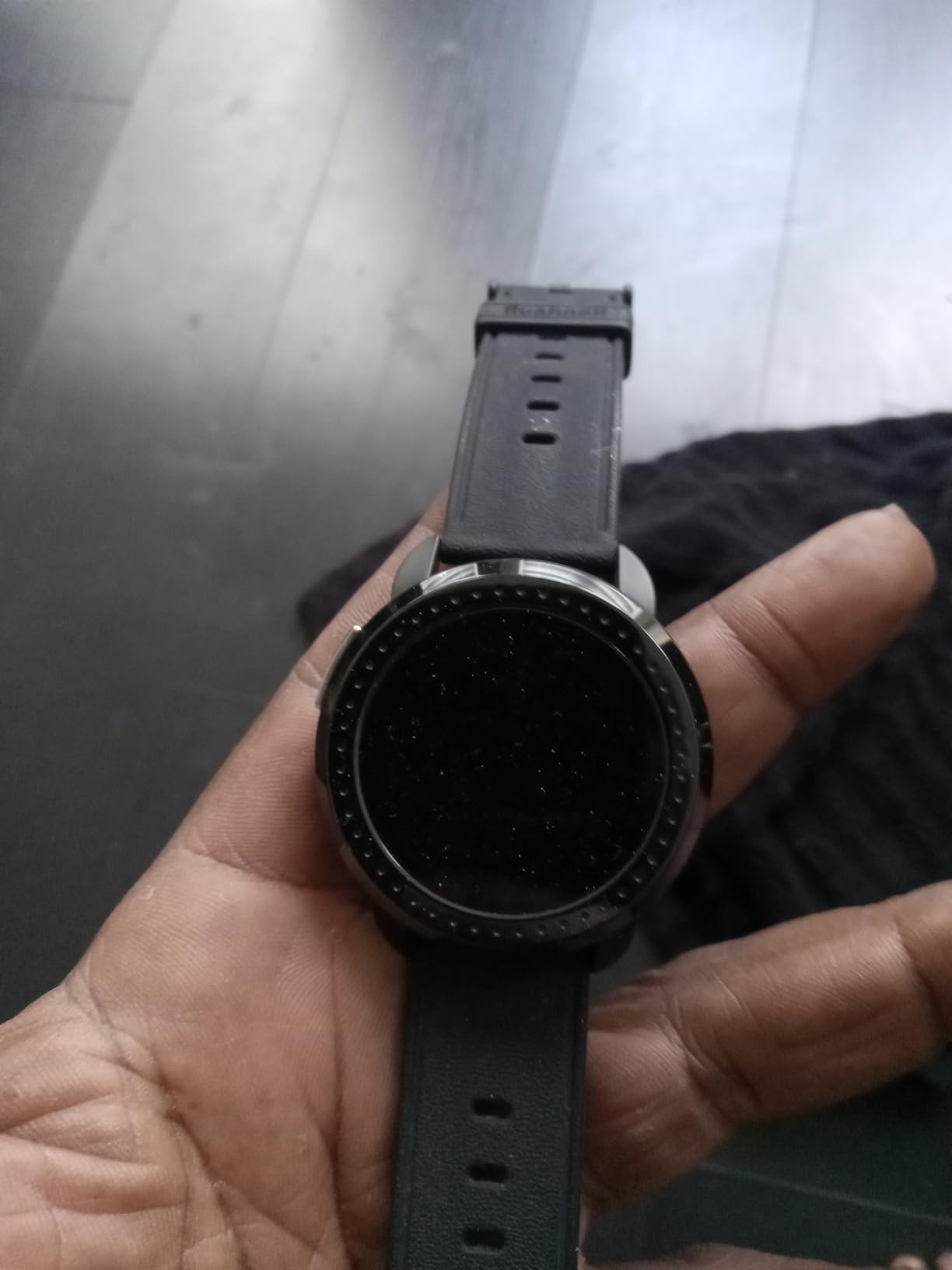
The Bushnell iON Elite solves the touchscreen problem in an unusual way: one physical button. Because there is only one button, you can find and press it through a golf glove, with a sweaty hand, in rain, while walking, without looking. For a golfer on an exposed course with no shelter, that is a real design advantage over the touchscreens in this roundup.
On the data side it is competitive. It carries slope-adjusted plays-like distances with a tournament-legal mode toggle, HoleView and GreenView, dynamic mapping and tap-to-move pin placement, 38,000+ preloaded courses with automatic hole advance, and shot distance measurement that syncs to the Bushnell Golf app. Reviewers who get a working unit praise the yardage accuracy against a top-tier rangefinder and the easy app-based course updates.
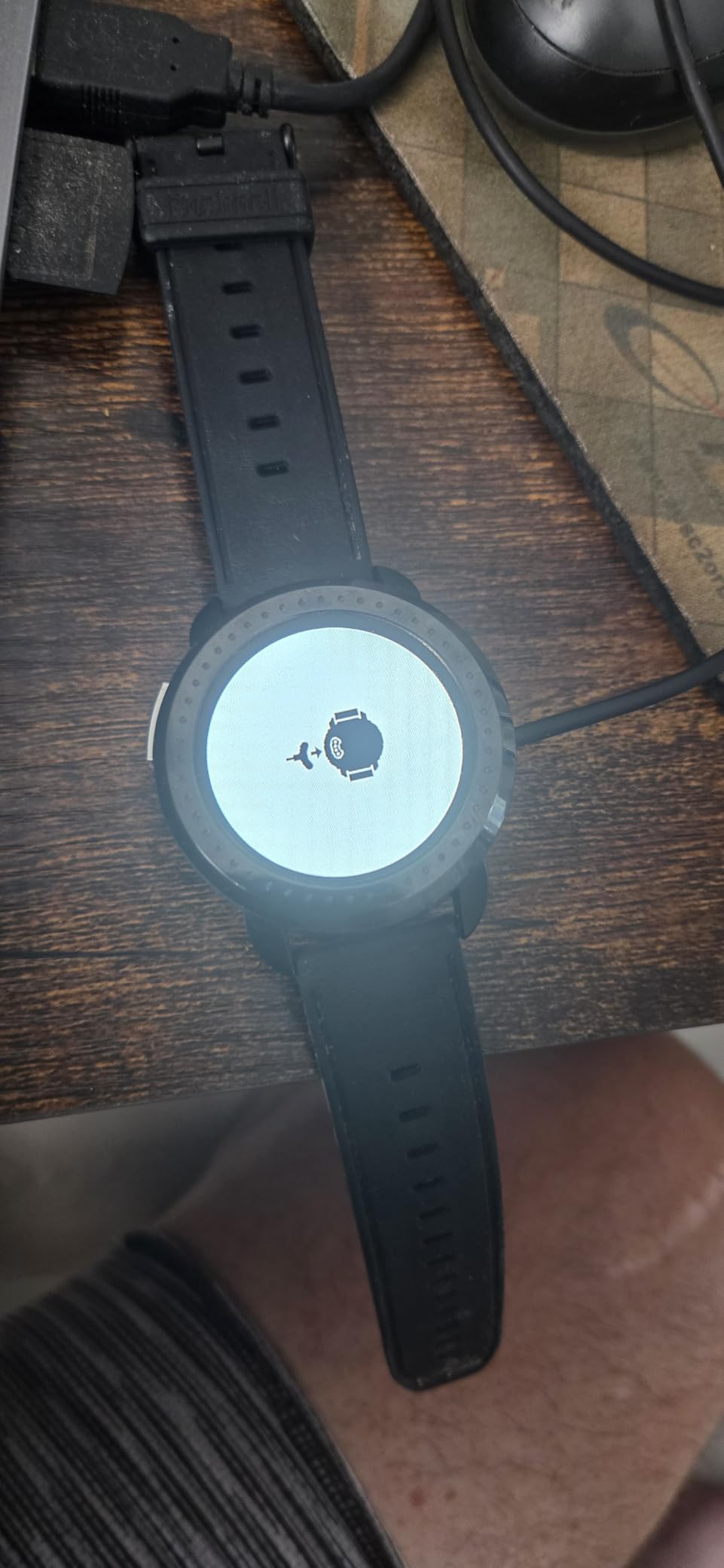
The problem is hardware reliability, and it is why this watch sits at the bottom of the ratings here with 3.2 stars and a third of reviews at one star. Multiple accounts describe the four-prong magnetic charging cord failing within six weeks to nine months and leaving the watch unusable. Bushnell’s replacement service is credited when the serial number was registered in the app, but several buyers report slow or fruitless support attempts.
Other complaints cluster around the screen, which reviewers call mediocre in sunlight, and the interface, where hazard data is hard to read and switching between absolute and slope distance is not intuitive. There is no club or shot tracking beyond the single measured shot distance, and the battery is listed at 12 hours plus, which covers one round with margin.
Why the single-button design deserves attention from walking golfers
Because you will use it with a glove on, in the rain, while moving. One button means no precision tapping, no missed taps on a small target, and no stopping mid-stride to hunt for a menu. At about one ounce it is also light on the wrist, so it will not add fatigue over a long walk.
Why we would hesitate to recommend the Bushnell iON Elite
The charging contact is the deal-breaker. A watch that dies from a failed cable after two months is a worse outcome for a walking golfer than a heavier watch with solid battery management, because the charger is the part you cannot work around. Read the warranty registration instructions carefully before you rely on it.
8. Shot Scope V5: The Best Automatic Shot Tracking Without a Subscription
Shot Scope V5 GPS Watch, Shot Tracking, 36k+ Preloaded Courses, Full Course Maps, No Subscription (Black)
- Sixteen tracking tags included in the box
- Automatic shot tracking with no subscription
- 100+ statistics including strokes gained
- 36K+ courses with full hole maps
- Two-year warranty
- Small LCD is weak in bright sun
- Button interface is slow to move through
- Bluetooth only with no Wi-Fi for syncing
- Around 10 hours of battery
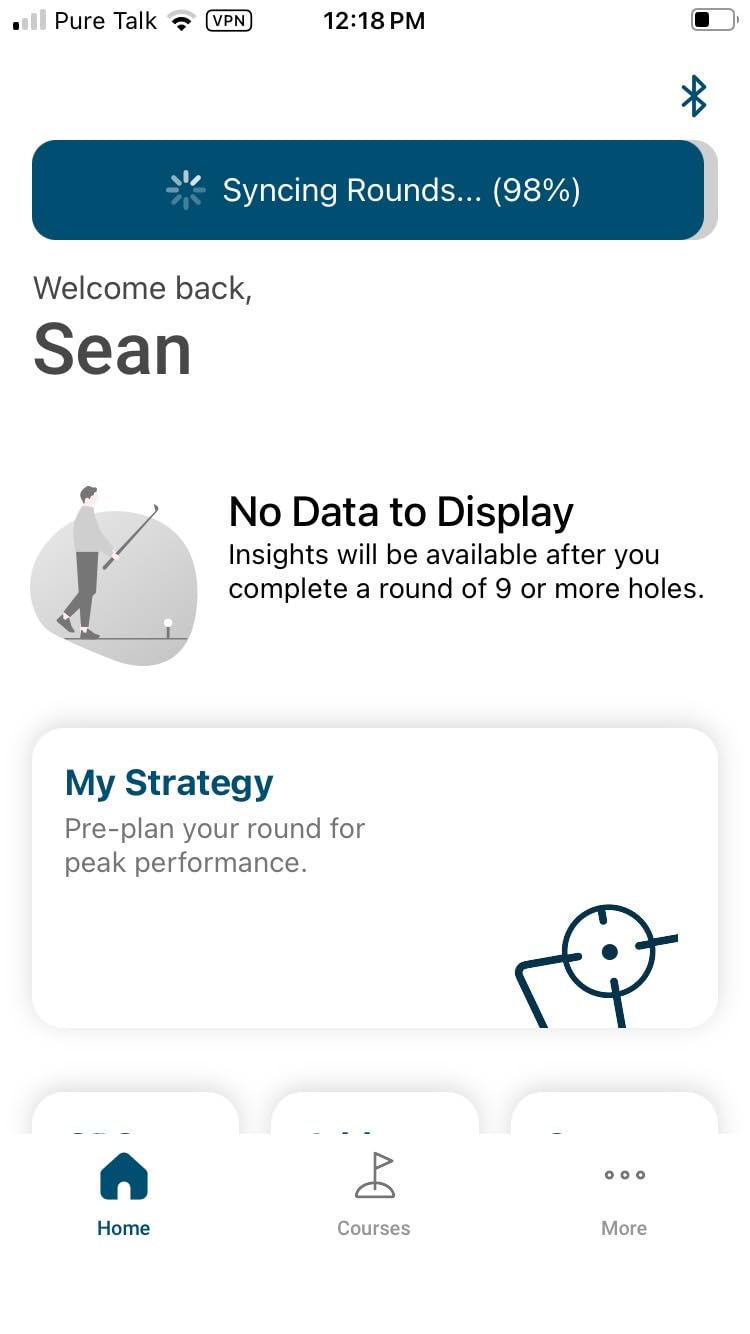
The Shot Scope V5 is the watch to consider if your real interest is shot tracking rather than yardages. Sixteen second-generation tracking tags are included in the box, and once a tag is in a club grip the watch records where each shot started and ended without you touching anything. No subscription is required for the maps, the tags or the statistics, which is the part that separates it from most rivals.
The app gives you 100+ statistics including strokes gained and handicap benchmarking, and the watch itself carries full hole maps with distances to greens, hazards, layup points and doglegs for 36,000+ preloaded courses. Forum discussion among golfers weighing data quality tends to frame this automatic tracking as the deciding factor over hardware, and the V5 is the least expensive route into it.
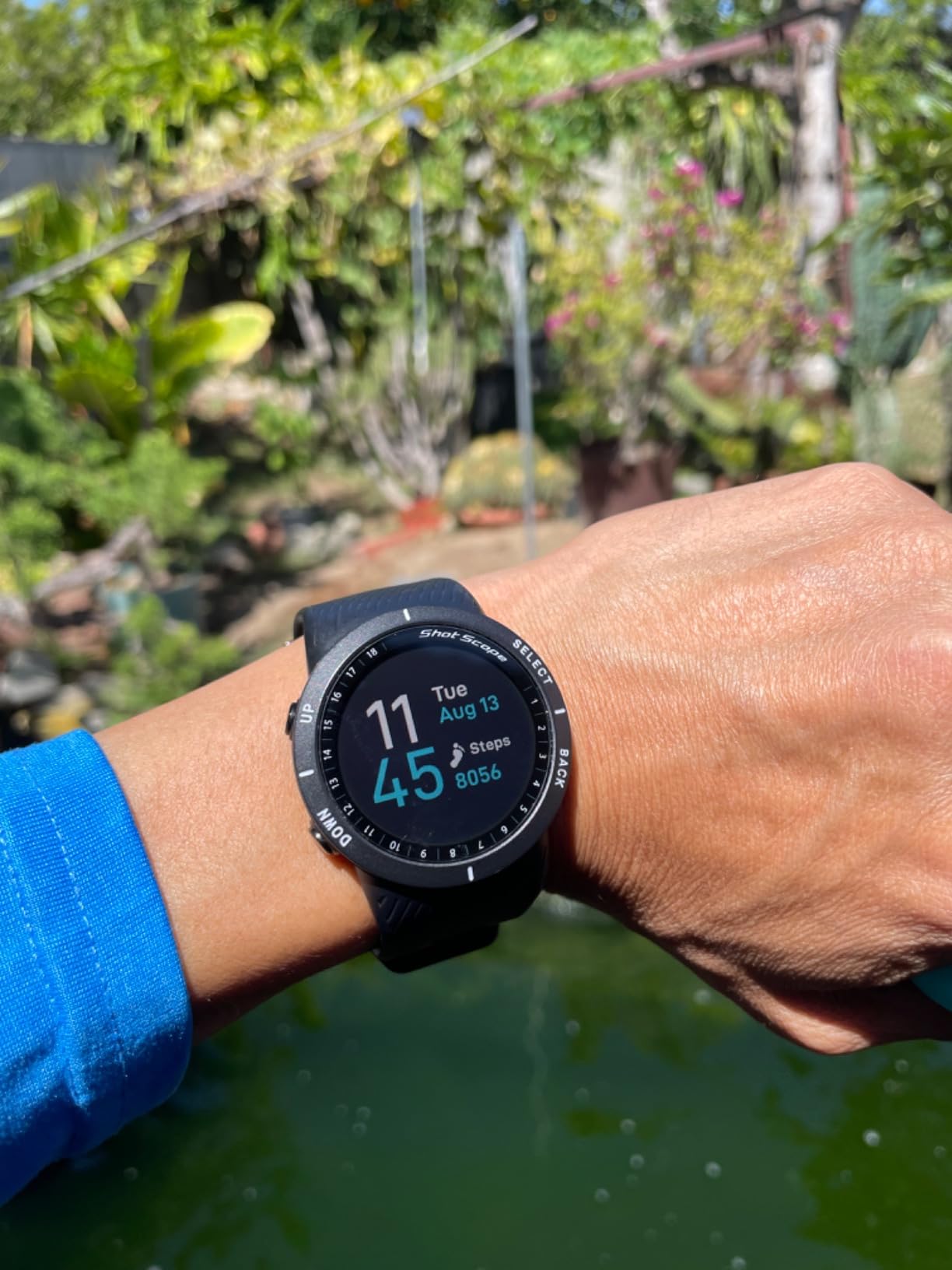
The compromises are physical. The listed weight is 6.24 ounces, heavier than every other watch in this roundup and at the opposite end of the comfort scale from the light models above. Its 1.2-inch non-colour LCD is also noticeably weaker in direct sun than either the transflective Garmins or the AMOLED colour models, and for a midday summer round that readability gap matters more to a walking golfer than the extra data does.
Navigation is button-driven, which is glove-friendly but slow if you need to dig through layers of map detail. Connectivity is Bluetooth only, so course data syncs more slowly than a Wi-Fi model, and the battery is around 10 hours. The two-year warranty is the longest of any watch in this lineup, which partly offsets that.
Why the included tags make the V5 stand out for data golfers
Because the cost of getting into automatic shot tracking is normally a box of sensors plus a membership, and the V5 bundles sixteen tags with a subscription-free app that produces strokes gained and dispersion data. Over a season, that is the difference between knowing your misses and guessing at them.
Where the Shot Scope V5 works against you on foot
Sunlight and weight. A small monochrome screen in a 6.24-ounce case is the combination we would think twice about for a midday walking round, and 10 hours of battery means one round rather than two. Buy it for the data, and accept that reading yardages in July glare takes more effort than on a colour model.
9. Shot Scope G6: The Best Mid-Tier Watch With Full Hole Maps
Shot Scope G6 GPS Watch, 38k+ Pre-Loaded Courses, Full Hole Maps, 2X Strap Sets (Black and Gray), Color Sceen, Unisex Golf Watch for Men and Women
- Full hole maps with dynamic front middle and back distances
- 38K+ courses with no subscription
- Distances match rangefinder readings
- Two strap sets in the box
- Around 15 hours rated battery
- No shot tracking tags included
- Slow to acquire the GPS signal
- Reports of satellite loss mid-round
- Standby drain between rounds
The Shot Scope G6 puts a colour LCD and full hole maps in a mid-tier package, with 38,000+ preloaded courses and no subscription. For a walking golfer who wants to see the shape of the hole rather than just the yardage to the flag, it delivers that at a tier below the mapping-focused premium watches, and the free mobile app handles course updates without a computer.
Two strap sets in black and gray are in the box, which matters more than it sounds for a watch you wear every day. Reviewers who compare several GPS units rate its look, its fit and its distance accuracy against rangefinders highly, and the design is one of the more discreet options here. The 4.2-centimetre colour screen is a genuine step up from the monochrome V5.
Reliability is the recurring criticism, and for a walking golfer that is not a minor point. Reviews report slow satellite acquisition compared with other watches, signal loss on the back nine, and a hole-advance lock that could not be cleared. That last one is the dangerous scenario on foot: the watch stops knowing which hole you are on, and you lose pace of play while you fight it.
There is also standby drain, with some owners reporting the watch dropping to zero percent within days between rounds, and course map data that can still be out of date after downloading current firmware. Note also that the G6 does not include the tracking tags that made the V5 attractive, despite the brand association.
Why the G6 is a good map watch for a walking mid-range buyer
Because you get hole shape, dynamic front, middle and back green distances and a colour screen without a membership. It is ready to play out of the box, updates through a phone app, and the extra strap set means it works as an everyday watch as well as a golf one.
Why we would look elsewhere for a walking golfer
Slow satellite lock and reported mid-round signal loss. A walking golfer plays alone or in pairs, not in a cart with a phone to re-establish a connection, and a watch that loses the hole on the back nine is a genuine problem. The standby drain adds a second failure mode between rounds.
10. Shot Scope X5: The Best Full-Colour Touchscreen With Tags
Shot Scope X5 Golf GPS Watch – Premium GPS Watch with Automatic Performance Tracking | Distances, Hazards, Doglegs & Layups (Presitge Black)
- Full-colour touchscreen with a polished ceramic bezel
- Carry distances to water and bunkers plus doglegs and layups
- Green View with movable pin placement
- Sixteen battery-free tags with 12cm range
- 36K courses with no subscription
- Roughly 10 hours of battery for a premium watch
- Bluetooth only with no Wi-Fi
- 36K courses is below the Garmin count
- One of the smallest review bases here
The Shot Scope X5 is the most refined object in the Shot Scope line, with a full-colour memory-in-pixel touchscreen inside a polished ceramic bezel. It gives dynamic front, middle and back green yardages plus front and carry distances to water and bunkers, dogleg and layup distances on every hole, and Green View with movable pin placement, all from 36K preloaded courses with no subscription.
The sixteen included second-generation tracking tags are the reason to choose it over a plain mapping watch. They have a range of up to 12 centimetres, weigh 1.2g each and need no battery, so the shot-tracking cost that normally comes as an extra is simply in the box. Daily step tracking also makes it usable as an everyday watch.
The 3.5-star rating reflects a small review base and one consistent complaint: around 10 hours of battery, which is short for a watch positioned above its own cheaper siblings. Two full rounds back to back is not realistic without a charge, and that is exactly the scenario a walking golfer planning a 36-hole weekend will want to avoid.
Connectivity is Bluetooth only, so there is no Wi-Fi for faster map syncing, and the 36,000-course count is lower than the 43,000-plus on the Garmin models in this roundup. Both are minor in absolute terms, but they are the two arguments a serious walking golfer will raise about paying more for less endurance and less coverage.
Why the X5 earns its place for golfers who want maps and data
Carry distances are the quiet hero feature. Knowing how far it is to the water in front of the green is what lets you pick a club before you are committed, and dogleg and layup distances stop you guessing on blind holes. Add free maps and included tags and the value per feature is high.
Where the X5 falls short for a walking round
Battery endurance first, always. Ten hours of GPS means a single 18 with no margin, which is fine for a Saturday and wrong for a 36-hole event. The touchscreen also needs a bare finger in dry conditions, which is a step back from the Bushnell’s single-button approach for a gloved walking golfer.
11. CANMORE TW411: The Best Watch With a Bubble Level
CANMORE TW411 Golf GPS Watch with Fitness Tracker, 41,000+ Free Preloaded Worldwide Course, Upgraded IC Chip, Blue
- Front middle and back distances within a couple of yards
- Faster GPS acquisition than the older model
- Bubble level pedometer alarm and fitness tracking
- Lightweight 52g ABS case that does not affect the swing
- 41K+ free courses with weekly updates
- Reports of screens going black within months
- Controls and hazard readouts are hard to learn
- Customer service and warranty process unreliable
- Distance only with no hole maps
The CANMORE TW411 is the model to look at if you want more than yardages without paying for a mapping watch. It includes a bubble level, a pedometer, an alarm and basic fitness tracking, all on a 1.36-inch high-contrast sunlight-readable LCD, and the current hardware revision brought faster GPS acquisition, better locating and about 50 percent longer battery than the TW410 it replaced.
Distance accuracy is reported within a couple of yards of other GPS watches, with front, middle and back green readings plus shot and hazard distances and automatic hole change. Reviewers also like the ABS case at around 52 to 54g, describing it as light enough not to affect the swing, and 41K+ free preloaded courses with weekly USB updates and no subscription.
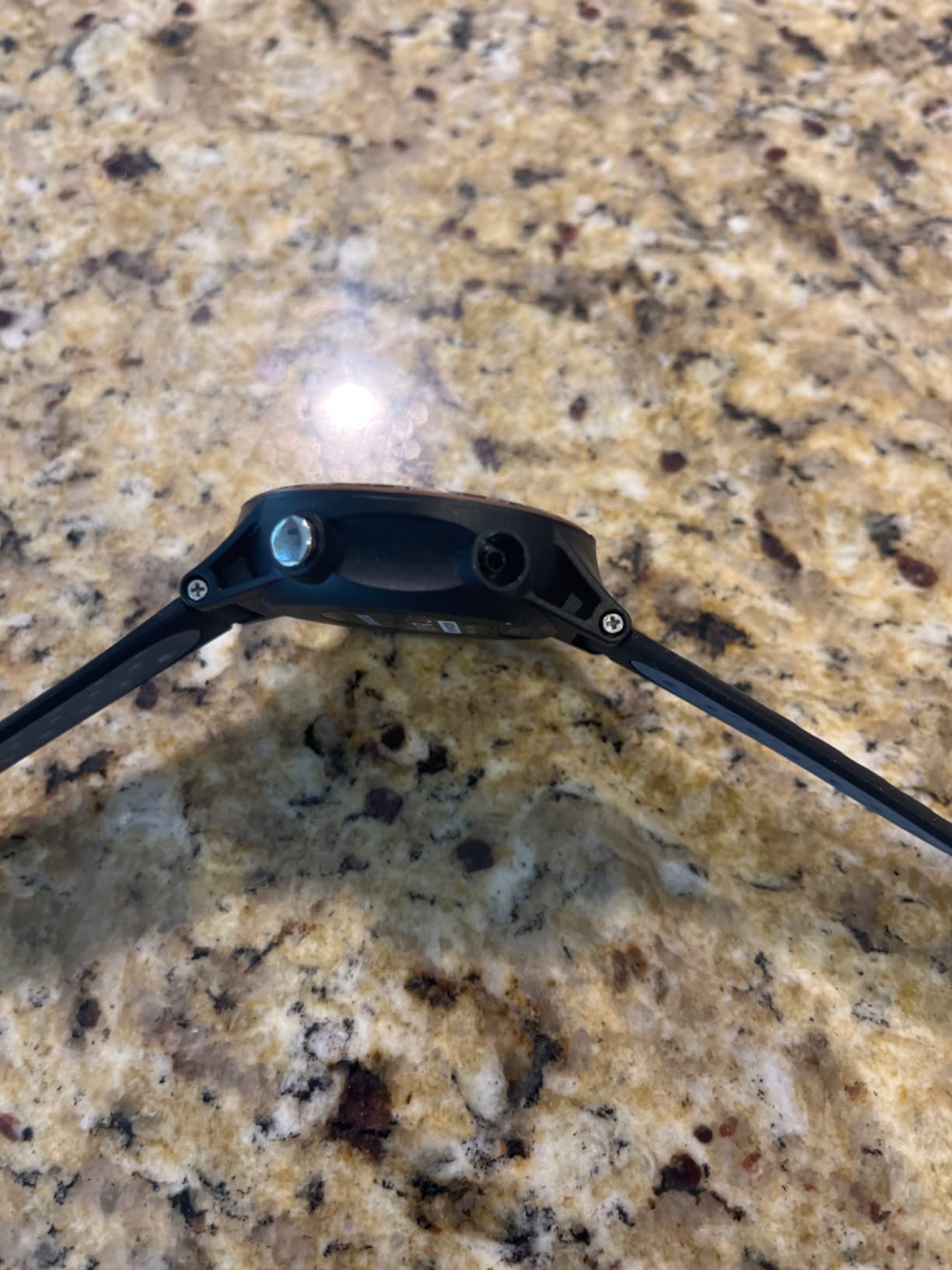
What holds the rating to 3.4 stars is reliability and usability rather than capability. There are repeated reports of the screen going black and the watch dying within months, several owners describe the controls and hazard readouts as not user friendly, and customer service and warranty handling are called unreliable. A bubble level is also a fun extra that most golfers try once and never again.
For the walking angle specifically, the positives are real: 14 hours of battery beats most of the colour and mapping watches here, the case is light, and the weekly update process is straightforward with a computer. The missing hole maps are the same limitation as every other distance-only watch in this roundup.
Why the TW411 is worth a second look from a walking golfer
Because it is light, the screen has high contrast for glare, and the battery figure is among the better ones in this class. Several owners upgrading from older Canmore models report a real improvement in lock speed and locating, which is what makes it usable when you are walking and stopping frequently.
Where the TW411 is a gamble
Build quality. A watch that goes dark after a few months leaves you with no yardages at all on the back nine, and for a walking golfer there is no cart GPS to fall back on. The difficult controls and the reported warranty experiences mean this is a backup-friendly choice rather than a sole device.
12. Voice Caddie T11 LT: The Best for Green Undulation Data
- Green undulation heat maps with break-direction arrows
- No monthly subscription with 40K+ courses
- Lightweight and comfortable with a clear menu
- Smart Green and Putt View for pin and break reading
- Practice Tempo Mode for putting work
- Lowest battery figure here at around 7 hours
- Screen too dim to read in direct sunlight
- Distances run roughly 10 yards off premium units
- Touchscreen can be unresponsive and golf mode can lock up
The Voice Caddie T11 LT exists for one reason: green undulation. Its heat maps show elevation change across the putting surface with arrows indicating break direction, and Smart Green and Putt View add pin placement, distance to the pin and the direction the putt will run. If you are the kind of walking golfer who studies a green before every putt, that data is genuinely hard to get anywhere else without a membership.
It also carries slope mode, front, center and back green yardages, Course View hole layout, Practice Tempo Mode for tempo work, and automatic score logging that works the same for golfers who shoot either way round.
Forty thousand-plus courses come preloaded with no monthly subscription, and at 1.7 ounces in a 0.52-inch-deep case it sits flat and light on the wrist.
The 3.2-star score is fair, and the reasons are concrete. Battery is listed at about 7 hours, the lowest figure in this roundup, which is not enough for a long walking round plus anything after it. Distances run roughly plus or minus 10 yards against a high-end unit, which is a wide margin when the watch is your only source of yardage.
Reviewers also report a dim screen that is hard to read in direct sunlight, a touchscreen that can be unresponsive when logging scores, and golf mode locking up on exit so that holding the crown button is needed to free it. Advanced features work only in the USA, Canada, Europe, Korea and Japan, which is a genuine limitation for golfers who travel.
Why the T11 LT appeals to putting-focused walking golfers
Because undulation maps with break arrows are unusual at this level, and they come with no subscription attached. Combine them with Practice Tempo Mode and you have a putting development tool on your wrist, which is useful on a course where you are walking the same five or six putts every week.
Why the T11 LT is a hard sell for long walking rounds
Seven hours of battery, roughly 10 yards of accuracy drift against premium hardware, and a dim screen in July sun. If the watch is your only yardage source, those three together are disqualifying for a full 18 on foot, even though the undulation data is excellent.
How to Choose a Golf GPS Watch for Walking
For most walking golfers, weight and GPS-mode battery narrow the list to four or five watches before you look at any feature. Work through these six criteria in order and the choice makes itself.
1. Weight and case profile
Anything under 45g will disappear over 18 holes; anything over 60g is a deliberate choice you should test on a full round. Case thickness matters more than diameter because a tall case catches the glove strap and forces you to turn your wrist to read the screen. The Approach S12 at 34.1g and 0.45 inches thick is the reference point here.
2. Battery life in GPS mode, not smartwatch mode
Manufacturers quote two numbers and only one matters on the course. Smartwatch-mode figures of 10 to 14 days look impressive and tell you nothing about a walking 36-hole day. Look for GPS mode instead: the Approach S12 at 30 hours is the only watch here with published endurance that comfortably covers a full round plus reserve, and the 15 to 20 hour models will need a charging plan for a two-day event.
3. Display readability in direct sun
Transflective memory-in-pixel screens get brighter in sunlight and stay legible in rain. AMOLED panels look sharper indoors but can wash out at two in the afternoon, and they cost you battery to keep bright. If your summer rounds are midday rounds, the transflective option is the safer buy even though it is monochrome.
4. Buttons versus touchscreen with a glove on
Ask yourself honestly how often you play with a glove on and whether your hands are wet. Button-driven watches are faster, never misread, and work in any condition. Touchscreens give richer data but cost you pace of play every time you have to stop and tap precisely, and that is precisely what a walking golfer does least happily.
5. Subscription cost over three years
This is where ownership cost quietly diverges. Watches that state no subscription or free lifetime updates include the TecTecTec ULT-G, the CANMORE TW353, the CANMORE TW411, the Shot Scope V5, the Shot Scope G6, the Shot Scope X5 and the Voice Caddie T11 LT. Their three-year cost is the purchase price. The Garmin Approach S44 and Approach S62 charge extra for enhanced CourseView maps, green contour data, PlaysLike Distance and Touch Targeting through a Garmin Golf membership, and the SkyCaddie LX5 includes three prepaid years before that lapses.
For a walking golfer the subscription decision is fairly simple. If you want club suggestions, green contours and premium maps, budget for the membership. If you only need accurate yardages, the subscription-free watches in this lineup do the job and remove an ongoing cost entirely.
6. Course database and update method
Course counts run from 36,000 on the Shot Scope models to 43,000-plus on the Garmin Approach S44. Count matters less than freshness. App-based updates on the Approach S12, Approach S62, Bushnell iON Elite and Shot Scope models take minutes. The CANMORE TW353 requires emailing the manufacturer, and the TecTecTec ULT-G needs a computer and cable, so plan a check before you travel to a new area.
For shoppers still comparing the broader Garmin range rather than golf-specific models, our guide to Garmin watches for golfers covers the crossover picks. It also helps to know the same multi-constellation GPS hardware shows up in GPS watches for backpackers, which are built for the same all-day endurance a walking round demands.
GPS Watch vs Laser Rangefinder for Walking Golfers
Short answer: the watch wins for everything except exact measurement. A golf GPS watch gives you yardages to the front, center and back of the green, hazard and layup distances, and in the best models a club suggestion, with your hands free and without breaking stride. A laser rangefinder gives you a single precise number to a target, and nothing else.
The forum consensus among golfers is consistent on this: a watch replaces a rangefinder for most walking rounds, and serious players keep a laser for the specific shot where a yard matters. That division of labour is exactly right on foot, because a walking golfer has no cart to stash a rangefinder in and no easy place to set it down when they want to read the green.
Where a rangefinder still wins is elevation. If you need to know how far a putt plays with a stinger or a severe false front, only a laser with slope compensation measures the roll, and among these watches only the Garmin Approach S62, the Bushnell iON Elite and the Voice Caddie T11 LT attempt slope-adjusted distance at all.
Accuracy expectations are worth setting honestly. Yardages from any of these watches can differ by a couple of yards from a rangefinder, and reviews of the higher-spec models put the spread closer to zero to five yards. That tolerance rarely changes a club; it matters only when you are choosing between two clubs that carry the same distance.
If you also want to compare this with a handheld unit, the same endurance logic applies — and the battery comparison in our GPS running watch guide covers the multi-hour tracking hardware these watches share.
Frequently Asked Questions
What is the best GPS golf watch for the money?
The TecTecTec ULT-G is the best value for most walking golfers: 55g, five buttons, 38,000+ preloaded courses, free lifetime updates and no subscription. If you want a better-engineered screen and longer battery, the Garmin Approach S12 adds sunlight-visible transflective readability and 30 hours of GPS mode for 34.1g and 0.45 inches of case thickness. Both are far lighter and thinner than any mapping watch in this roundup.
Is a golf GPS watch worth it?
For a walking golfer, usually yes. It replaces a rangefinder for nearly every shot, gives hazard and layup distances you would otherwise guess at, and costs you no pace of play because your hands stay free. The exception is a golfer who already has a laser and plays only familiar courses, where the marginal value is lower. Accuracy varies by a couple of yards on most models.
What is the best Garmin watch for golf that isn’t expensive?
The Garmin Approach S12 is the answer. It weighs 34.1g and sits at just 0.45 inches thick, one of the flattest cases in this roundup, and its transflective screen is the most readable outdoors. It delivers 30 hours of GPS-mode battery with 42K+ preloaded courses and no ongoing course subscription. The Garmin Approach S44 adds a colour AMOLED screen and smart notifications but halves GPS endurance to about 15 hours.
Is a Shot Scope better than Garmin?
It depends on what you want. Shot Scope is stronger on automatic shot tracking, because the V5 and X5 include sixteen tracking tags in the box with no subscription for maps or statistics. Garmin is stronger on map quality, club suggestions and battery endurance, with PlaysLike Distance and Virtual Caddie on the Approach S62 and up to 30 hours of GPS on the S12. For walking comfort, the S12 is the lighter and thinner of the two brands’ entry flagships.
What is the best fitness watch with golf GPS?
The Garmin Approach S44 is the strongest all-round answer, with a slim 43mm case, a 1.2-inch AMOLED display, smart notifications, music and activity features, and 43,000+ preloaded courses. It charges fully in about 30 minutes and syncs scores to the Garmin Golf app, although GPS mode lasts about 15 hours and the best mapping features need a Garmin Golf membership. The SkyCaddie LX5 also tracks heart rate and steps but is far heavier at 64g.
Which Apple Watch has the best GPS for golf?
No Apple Watch is designed for golf. The hardware gives you multi-band GPS, a bright screen and excellent battery life, but it has no preloaded course database, no front, center and back green yardages, no hazard or layup distances and no slope data without a third-party app. It can track steps, heart rate and workouts well. For on-course yardages, a dedicated golf GPS watch remains the better tool.
What is the best handheld GPS for golf?
A handheld unit and a wrist watch solve different problems. Handhelds give you a larger, colour screen and course maps you can zoom, with GPS batteries that typically last 18-plus hours, and some add audible distance announcements. Watches are lighter, keep your hands free and let you glance down without stopping your walk. For a walking golfer, most combine the watch for yardages on the course with a laser rangefinder for exact measurement on specific shots.
Conclusion: Which GPS Golf Watch Should You Walk 18 Holes With?
Our pick for most walking golfers is the TecTecTec ULT-G: 55g, five buttons, a subscription-free 38,000-course database and enough battery for two and a half rounds per charge. The Garmin Approach S12 is the better-engineered watch and the runner-up here, with 34.1g, 0.45 inches of thickness, 30 hours of GPS battery and a transflective screen that stays readable in bright sun, so buy it if you want one device for the course and daily wear. Go to the Garmin Approach S62 only when you want Virtual Caddie club suggestions and PlaysLike slope distance, and go to the Shot Scope V5 or X5 when automatic shot tracking matters more than battery hours.
Whatever you choose, test it on a full walking round before you rely on it, and check the GPS-mode battery figure rather than the smartwatch one. These rankings and specs were reviewed in October 2026, and every weight, case size, screen and battery number comes from the manufacturer data and owner reviews listed above.