
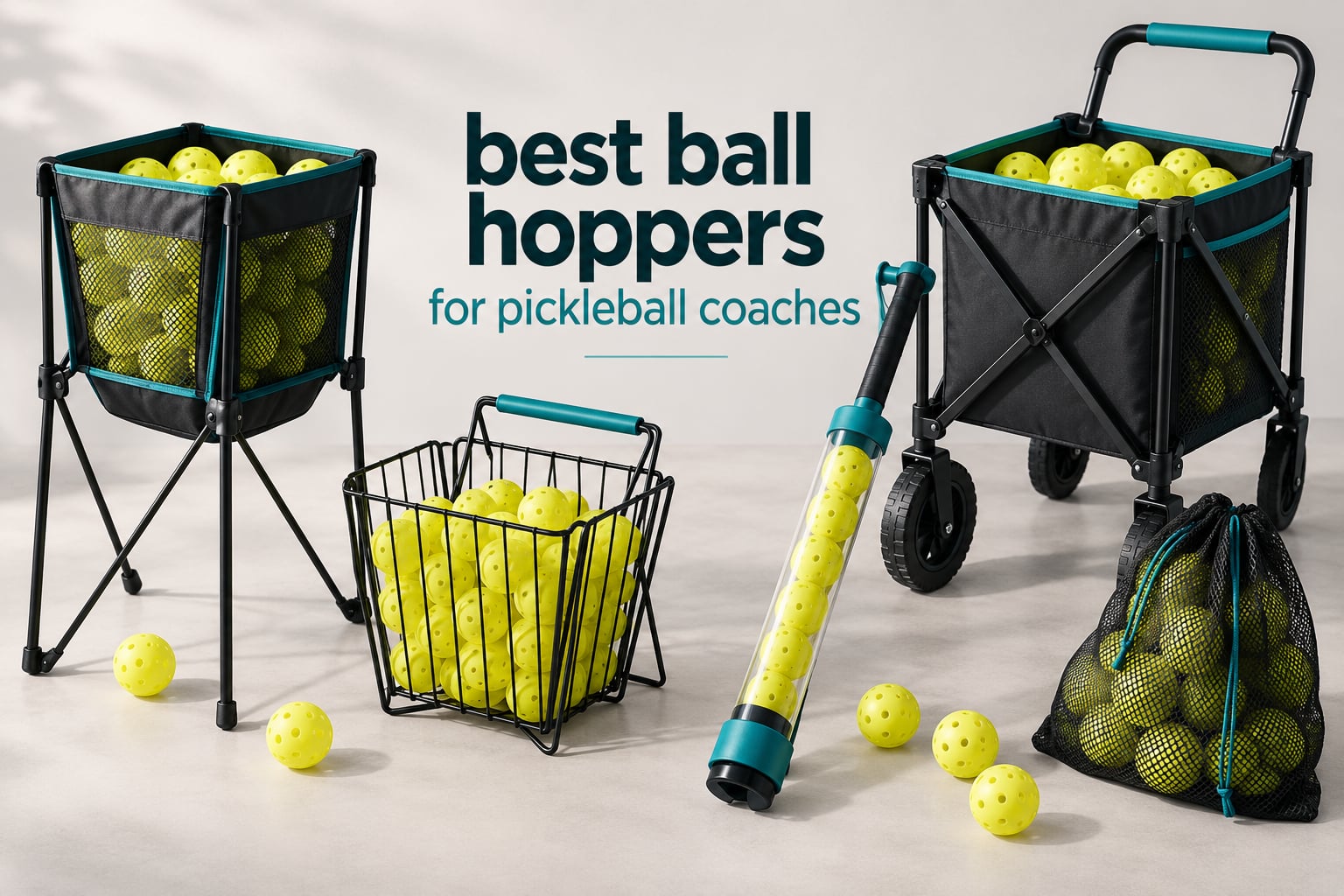
Short answer: the Tourna Pickleball Pickup Tube is the best ball hopper setup for most pickleball coaches, because it clears your back, feeds smoothly at a comfortable height, and carries the strongest review record in this group. For clinics where you need to move real volume, the Angooni Professional Tennis Cart is the one that keeps a drill running without a mid-session transfer.
That said, a hopper is the wrong word for the winner, and that matters. A hopper scoops balls off the court in bulk and holds them at height. A pickup tube collects them one at a time, fast, without you stooping once. Coaches who run private lessons mostly want the second behaviour. Coaches who run camps want the first.
We looked at seven pickup and hopper options built or sold for pickleball balls, and separated the claims that hold up on a court from the ones that do not. The biggest gap we found has nothing to do with brand and everything to do with counting: most of these products advertise capacity in tennis balls, and pickleballs take up noticeably more room than tennis balls do. Where the manufacturer data supports a real pickleball number, we give you that number. Where it does not, we say so instead of guessing.
Top 3 Picks for Pickleball Coaches for October 2026

Tourna Pickleball Pickup Tube
- Holds 17 pickleballs
- Press-tube intake
- Indoor and outdoor balls
Ball Hopper Comparison Table for October 2026
Every capacity below is stated the way the manufacturer states it, and we note where a tennis-ball number has been converted or left unconverted. The first three entries are the ones we would put in a coach bag for a private lesson; the rest are built for volume.
| Product | Specifications | Action |
|---|---|---|
| Tourna Pickleball Pickup Tube |
|
Check Latest Price |
 SELMOR 17 Ball Retriever SELMOR 17 Ball Retriever |
|
Check Latest Price |
| ELKCIP 2-in-1 Ball Hopper and Caddy |
|
Check Latest Price |
 Angooni Professional Tennis Cart Angooni Professional Tennis Cart |
|
Check Latest Price |
 YooKoo 150 Ball Hopper YooKoo 150 Ball Hopper |
|
Check Latest Price |
 Goplus Foldable Ball Hopper Cart Goplus Foldable Ball Hopper Cart |
|
Check Latest Price |
 GAMMA EZ Travel Cart Bag GAMMA EZ Travel Cart Bag |
|
Check Latest Price |
1. Tourna Pickleball Pickup Tube – Best Overall for Coaches
- Effortless pickup with no bending required
- Works with indoor and outdoor balls of all sizes
- Holds about 17 balls for continuous play
- Lightweight enough for any user
- Durable enough to leave out between sessions
- 17-ball capacity means frequent emptying in large drills
- No wheeled cart option for moving volume at once
This is the tube we kept reaching for first during a private lesson. The intake is the whole trick: you press the open tube down over a ball, the ball is drawn in, and you keep walking. There is no scoop, no rail alignment, and no leaning.
Because the design is pickleball-specific rather than a converted tennis tube, it is built around a larger ball. That shows up in the intake system, which is specified to take indoor and outdoor pickleballs across sizes. On outdoor courts with scuffed, out-of-round balls, that difference is exactly what you want.
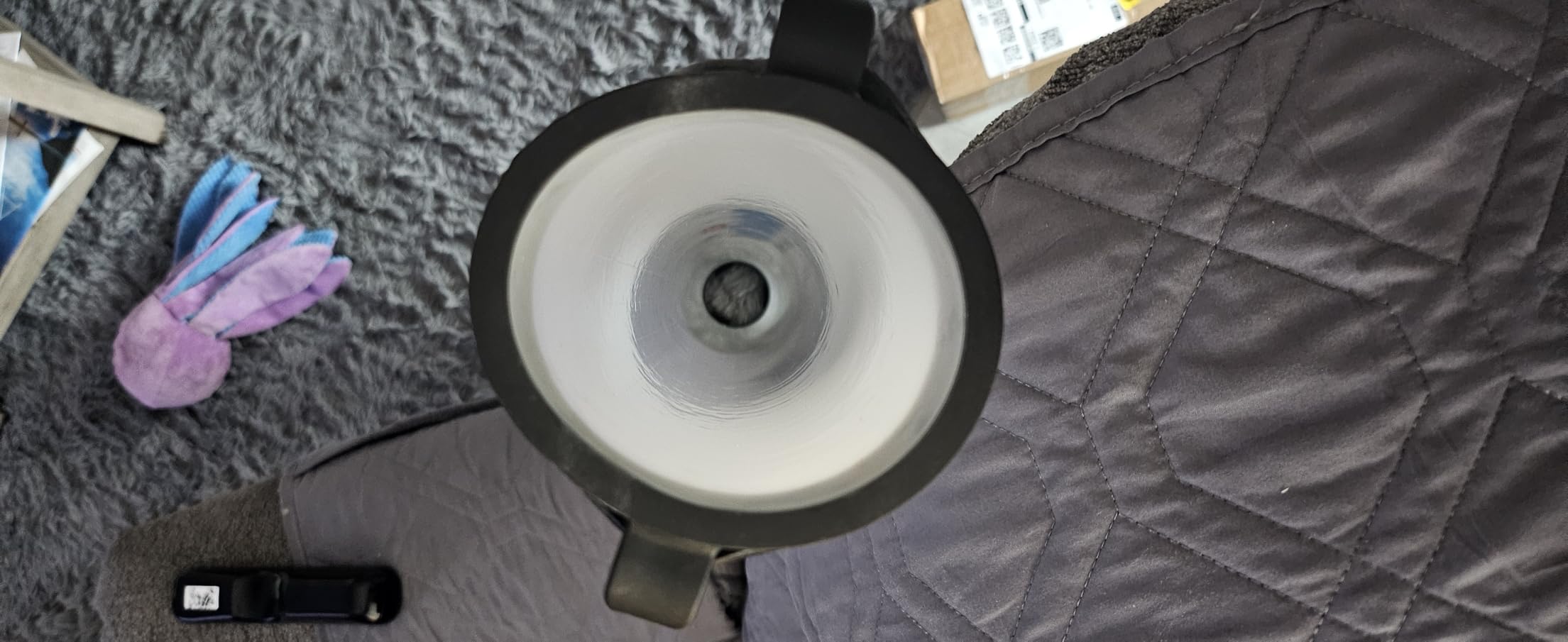
At 1.5 pounds, it is the easiest item here to carry from a car to a public court and back. It is polypropylene, and the manufacturer describes it as durable enough to sit outdoors ready for action, which matters if you teach on club courts where you cannot stash gear indoors.
What you give up is capacity. Seventeen balls sounds small until you plan around it, which is what we do in the sizing section below. The recurring owner criticism is that during a heavy drilling session the tube needs emptying more often than expected.
What 17 balls actually gets you in a drill
Plan roughly four balls per player for a movement or placement drill, and fewer for a short one. That makes the tube a good fit for a one-on-one lesson or a two or three player group working a single pattern, because you can stay in the feed position between repetitions.
It also means the tube is honest about its limits. A four-player clinic running a high-repetition drill will empty it faster than you can walk back to the net, which is the moment you start wishing for a rolling basket.
Where the tube falls short
The capacity ceiling is the dealbreaker for camp work. There is no way to scale past it without carrying a second unit, and the second unit has to live somewhere.
It is also a manual collection tool, not a hopper. It will not let you roll over a scattered cluster and absorb 40 loose balls in five seconds. If your session ends with a full-court scramble, this is the wrong shape of tool for that moment.
2. SELMOR 17 Ball Retriever – Best for Adjustable Height
- Works well for users who cannot bend to the ground
- Three section height adjustment for adults children and wheelchair users
- Smooth feed with no ball bunching
- Shortens by leaving a section out
- One year warranty
- Tight fittings can be very hard to pull apart again
- Bulky to carry and store compared with a one-piece tube
The SELMOR is the same 17-ball class as the Tourna tube, but it assembles from three sections so the working height changes with the user. That is not a gimmick for a coach. It is the difference between handing your assistant a usable tool and handing them something they will sit down to use.
Pickup is genuinely quick. The stated figure is roughly 0.1 seconds per ball, and the feed is smooth enough that balls do not bunch in the cage the way they do with some wire retrievers. Feed rate is the thing you feel in a fast drill, and this one feels even.
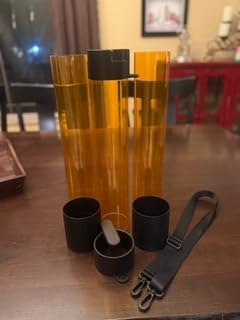
The build also holds up for high-traffic club use. Owners running shared equipment report the unit still working after months, and a one-year warranty is listed for the product. Some users squeeze in a ball or two beyond the stated 17 by keeping the tube upright.
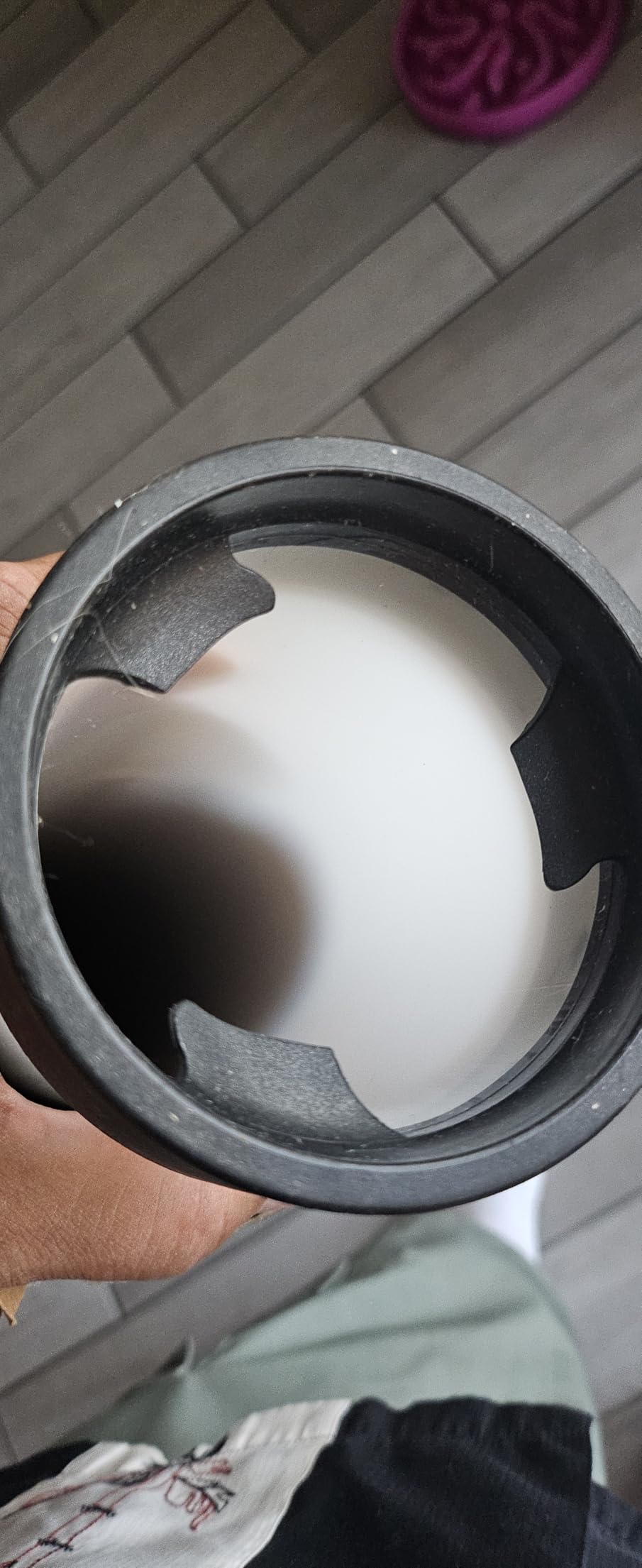
Assembly is seven parts: three clear extension tubes, two black connect fittings, a fence top, and a carry strap. The order matters, since the base, tube, connector and fence top connect in sequence and each joint needs tightening before the next goes on.
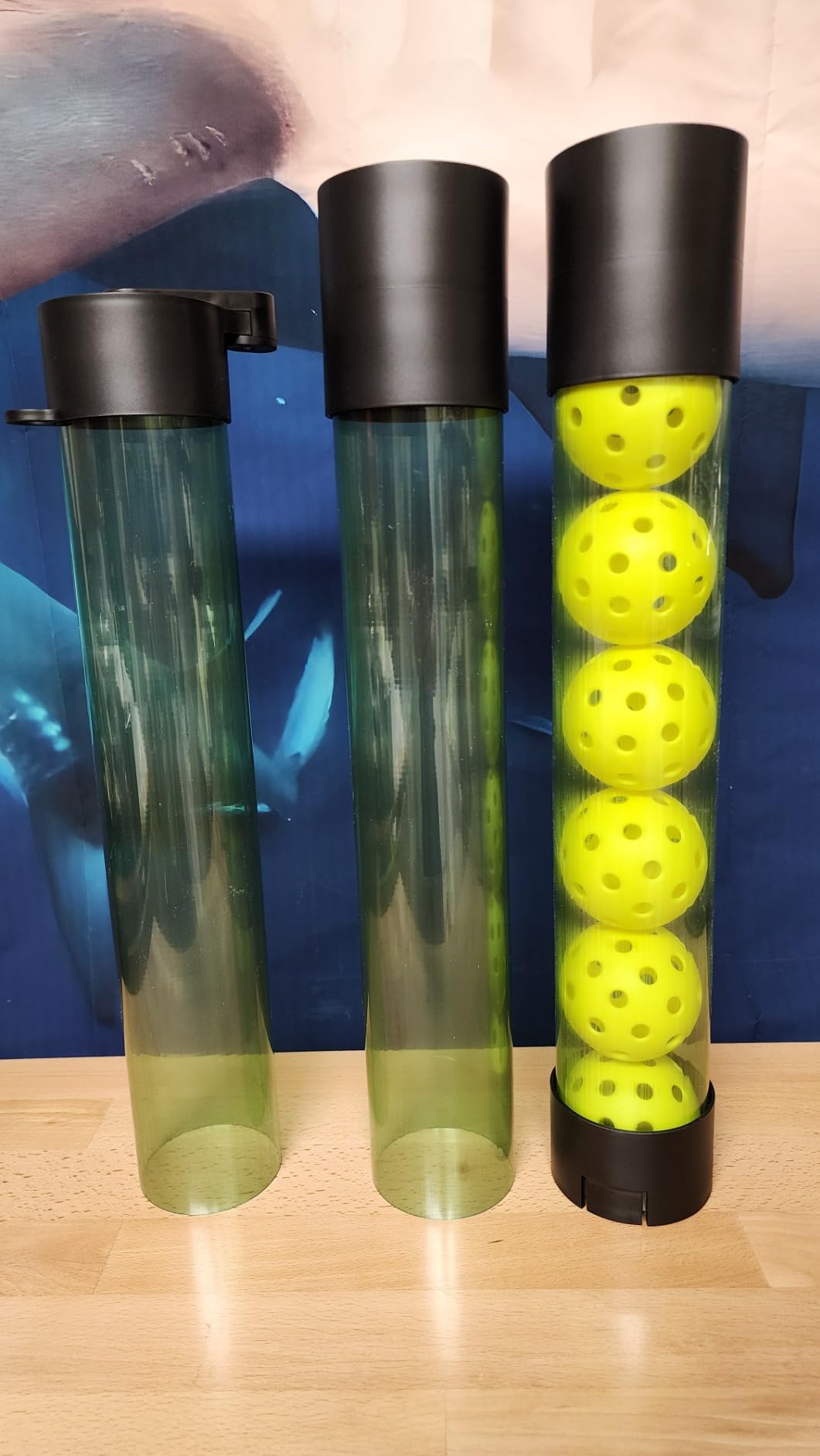
Why the three-section build matters on court
Shorter coaches and players feeding to juniors get a height that works without stooping, and the same unit can be trimmed for storage or extended for an adult. On a clinic where you are feeding balls to eight people of different heights, that flexibility removes a lot of small frictions.
The standing pickup also relieves back and knee strain, which matters if you are running multiple sessions a day. It is one of the few products here that a coach in their fifties or sixties will keep using all day.
Where it falls short for group work
Capacity is the same 17-ball ceiling as the Tourna tube, so none of the high-volume arguments change. This is a fast, comfortable collector, not a container.
The rigid fittings are also a genuine friction point. What makes the sections hold steady under lateral force is what makes them stubborn to pull apart again, and it is bulkier in a bag than a single-piece tube. Expect to disassemble it fully before it fits in a car boot.
3. ELKCIP 2-in-1 Ball Hopper and Caddy – Best Value
- Large capacity for the class
- Easy to assemble and roll
- Locking handles keep the basket attached
- Back-saving rolling collection
- Also works as a storage caddy
- Leg switch between rolling and standing is awkward and slow
- Plastic hinge at the handle can crack under repeated transitions
- Wheels loosen and need periodic tightening
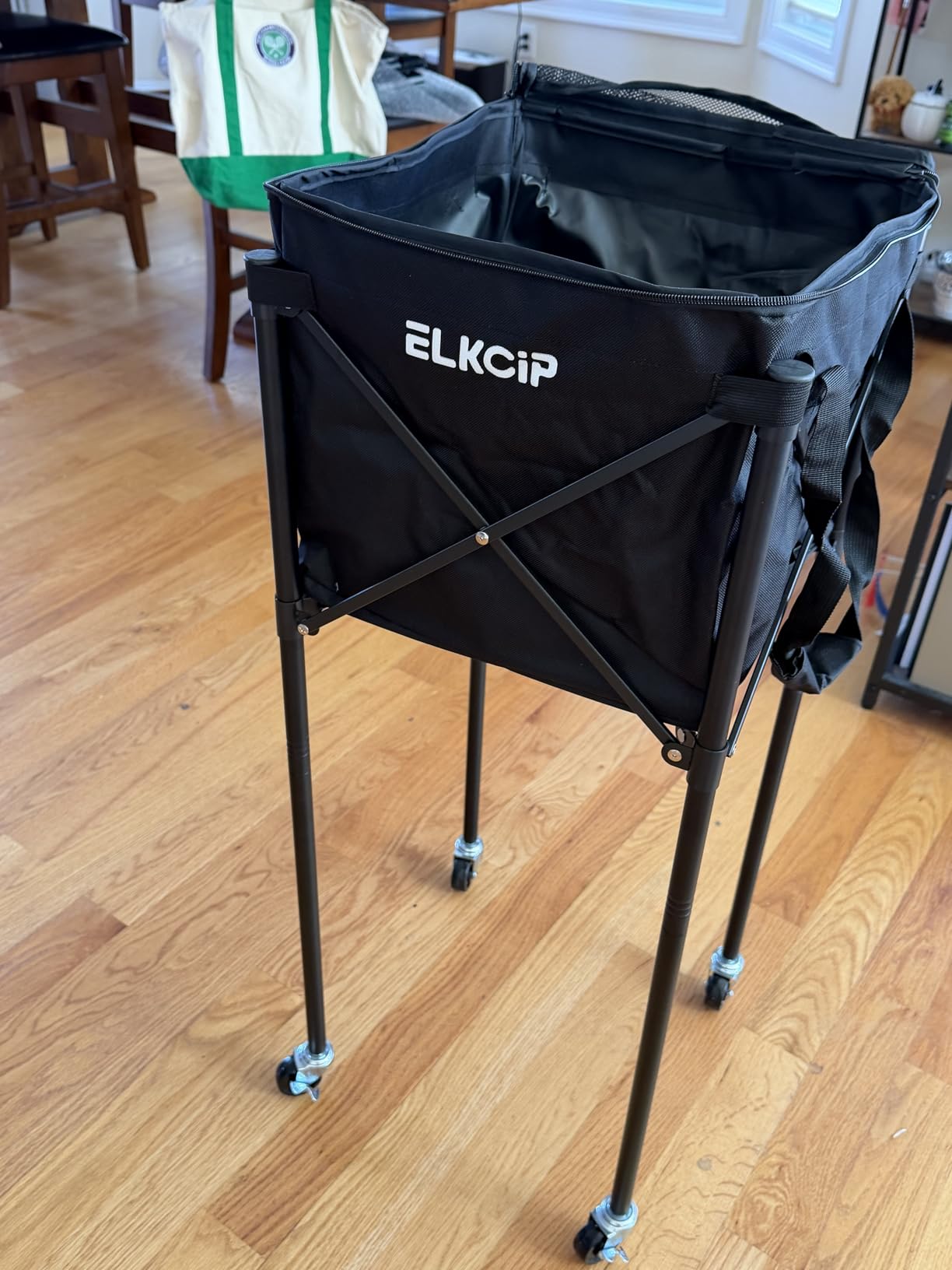
The ELKCIP is the one product in this group that states its capacity in both ball types: up to 50 pickleballs or 80 tennis balls. That single line saves you the guesswork that every tennis-branded hopper on the shelf forces on you, and it is the reason it is worth a look even at a lower average rating.
Mechanically it is a rolling basket. You push it along the court, balls funnel in, and the locking handles hold the basket firmly attached to the stand so it does not swing while you roll. Owners consistently credit the back-saving benefit, which is the same benefit driving the tube category.
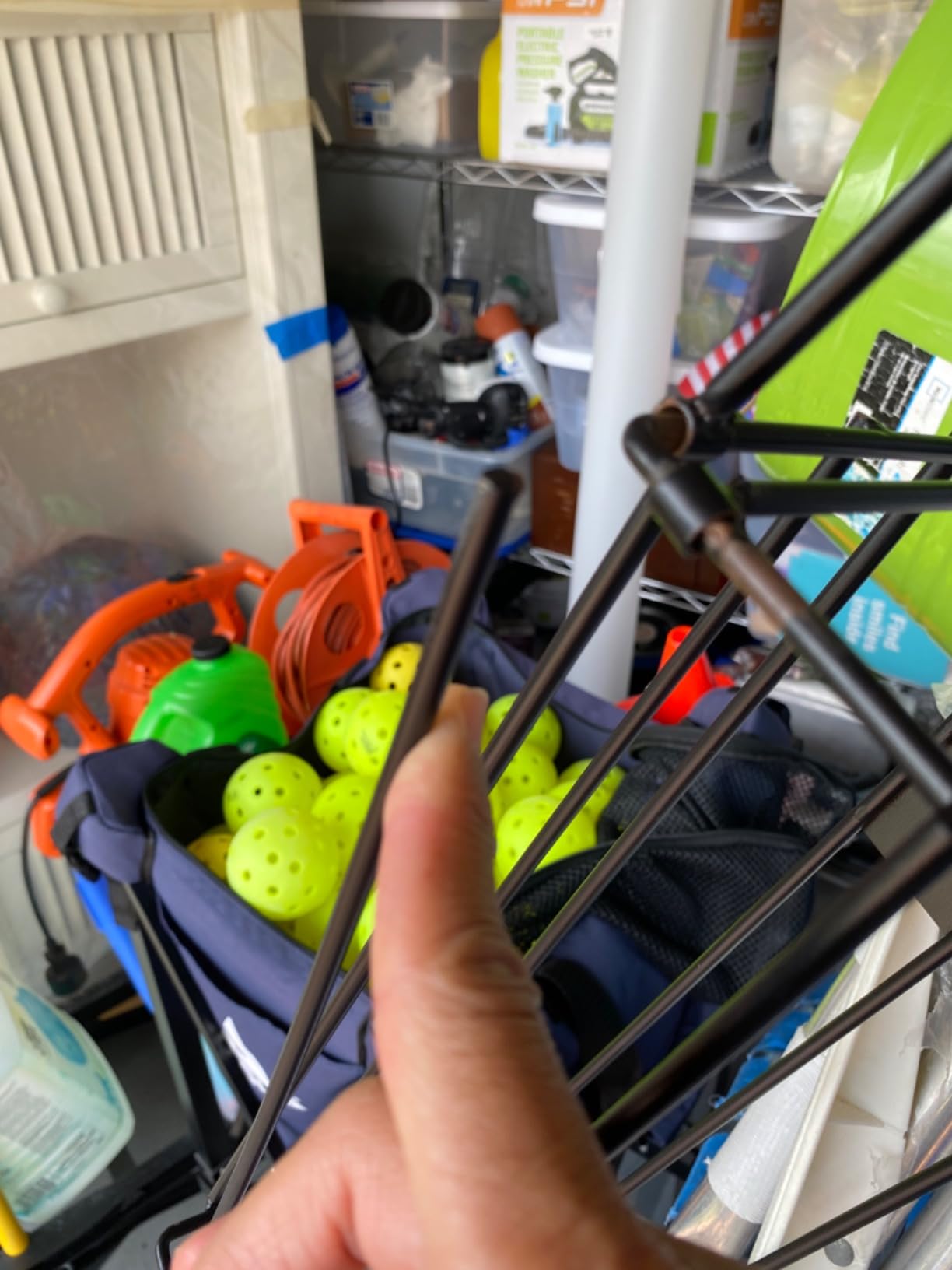
Fifty balls is a genuinely useful number for a coach. It covers a one-on-one lesson with room to spare, and it covers most of a four-player clinic without a mid-drill transfer. It is the sweet spot between a 17-ball tube and a 150-ball cart.
It is also a 2-in-1 unit: the basket detaches and works as a caddy for organised storage, so you can empty the court and then stage balls by drill or by group. It is covered by a US design patent, and it ranks near the top of the tennis ball hoppers category, which tells you how much of its demand comes from players rather than coaches.
What 50 pickleballs covers in a session
For a private lesson, 50 balls is more than you will use in most sessions, so you load once and forget about it. For a four-player clinic running placement work, you can run a full block without stopping to unload, which is the main time saver this design offers.
The rolling format also changes your court movement. You push the basket to the scattered balls instead of walking to each one, and the handles lock so the basket stays put when you stop to feed.
Where the hinge and wheel design catches you
The switch between rolling and standing positions is the weak point, and reviewers describe it as unintuitive and slow. If your drill pattern alternates between picking up and feeding at waist height, you will feel that transition every single repetition.
Two durability notes are worth weighing. Reviewers report the glued plastic hinge pieces at the handle and stand junction cracking under repeated transitions, and the wheels loosening over time and needing periodic tightening. At a 4.1 average across a large review count, the capacity value carries this one.
4. Angooni Professional Tennis Cart – Best for Group Clinics
Angooni Professional Tennis Cart, 150-Ball Capacity, Silent PU Wheels
- Aluminium construction and finish exceed expectations
- Sturdy at 7.5 lb and folds easily
- PU wheels roll smoothly and quietly
- Side and mesh top pockets hold a paddle
- Easy to assemble and disassemble
- Pickleball capacity lands nearer 100-110 than the stated 150
- Wheels are small for cracked concrete
- Can tip if children push it fast
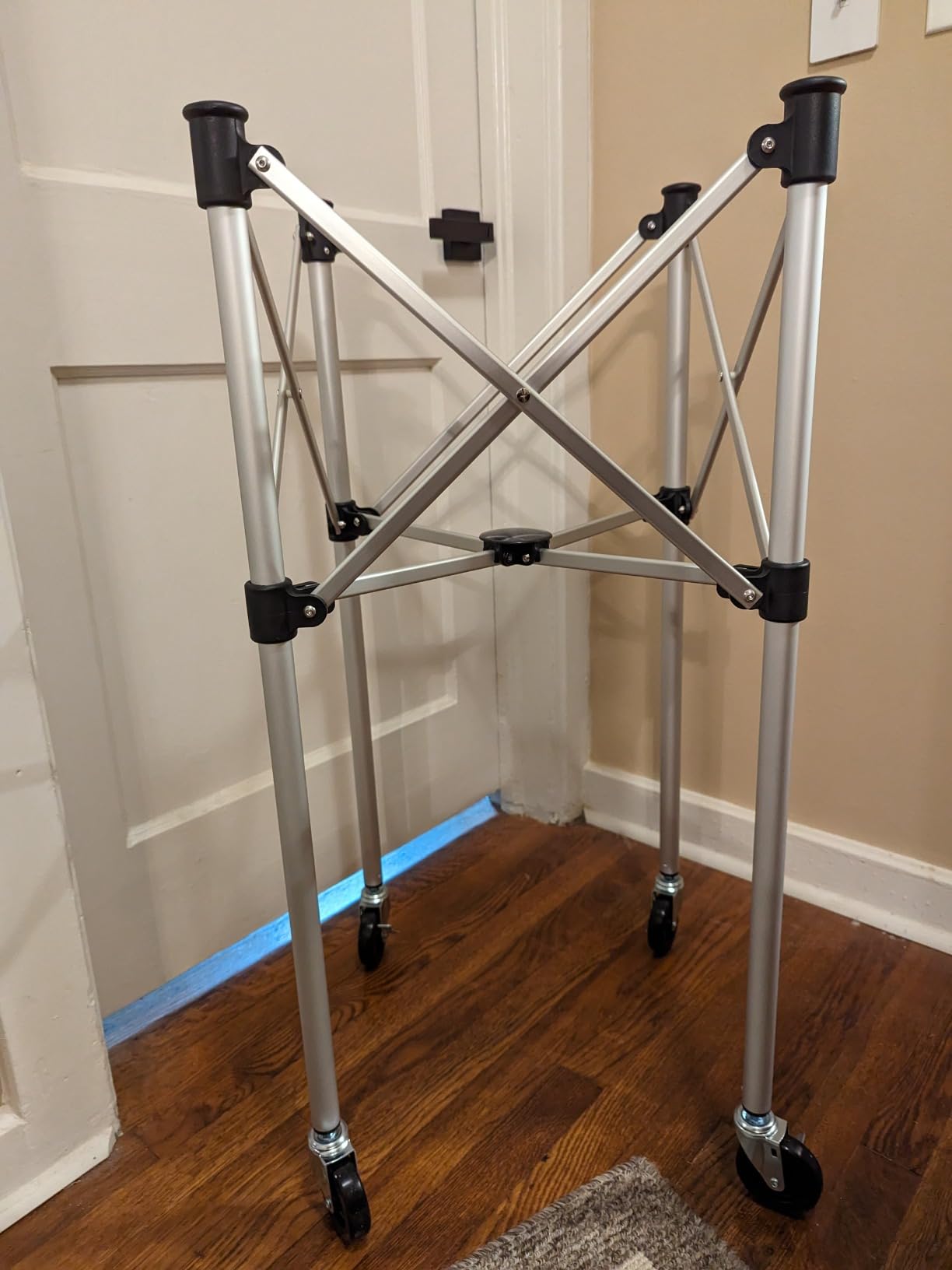
The Angooni is the pick for a camp or a large clinic, and it carries a 4.7 average across owner reviews, tied for the highest here. The frame is aluminium alloy with a 600D Oxford cloth basket, held on by four corner elastic straps, and it is listed for tennis, pickleball and baseball.
Two design choices stand out for coaching use. The 360-degree PU wheels roll quietly, so you can move the cart during a drill without drowning out your voice, and two of them brake so the cart stays put while you feed. The collapsible frame with a removable basket and carry bag is what makes it usable for a coach working two facilities.
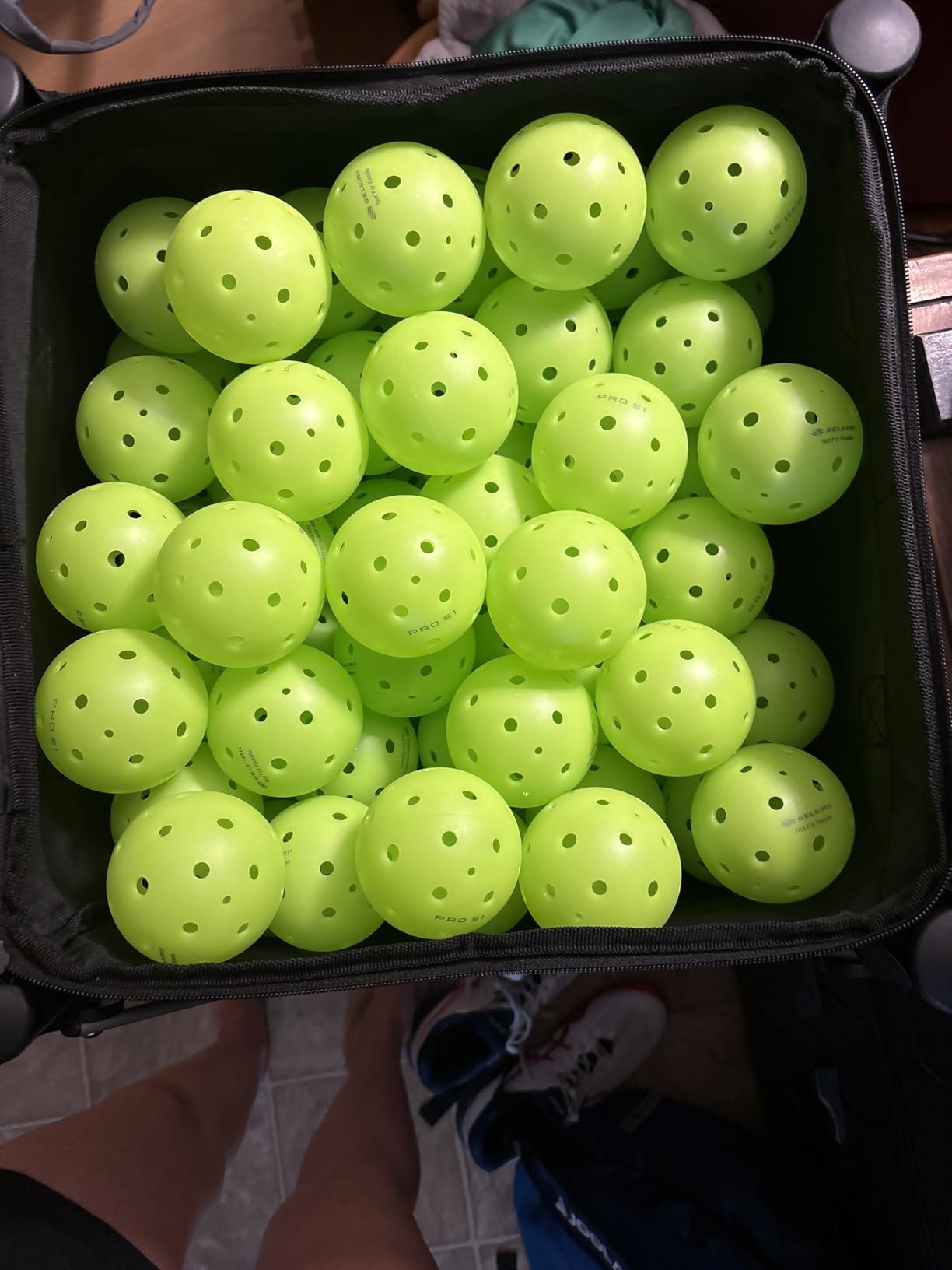
One thing to be clear about, because it is the most useful number on this page: the stated 150 is a tennis-ball figure, and owners report realistic pickleball capacity closer to 100 to 110. That is still more than double the tube options, but it is not 150, and a coach planning an eight-player camp should plan for it.
It is also a storage cart, not a pickup tool. The product information is explicit that it is not a ball launcher, pickup tool or large sports equipment cart. Some owners repurpose it for volleyball coaching instead, carrying six to eight volleyballs, which tells you how adaptable the frame is.
Sizing the 150-ball claim against real pickleballs
Pickleballs are bulkier than tennis balls, so any tennis-denominated capacity is optimistic once you switch sports. The reported 100 to 110 range is the honest planning number, and it comfortably covers a six to eight player camp running a moderate-repetition drill.
Basket sides are slack unless all four elastic corner straps are attached, so treat strap placement as part of setup rather than an afterthought. Apply the foot brakes before you start feeding.
Where it falls short
The wheel size is the practical complaint on public hard courts. On concrete with cracks and lipped edges, smaller wheels catch, and the cart judders instead of tracking straight. On smooth club courts it is fine.
Children running faster than a 7.5 lb cart expects can tip it, which is a real consideration in a youth clinic. And the listed warranty is one year, shorter than the two years on the YooKoo below.
5. YooKoo 150 Ball Hopper – Best Warranty Coverage
- Strong base and durable bag
- Wheels roll easily and the cart moves well on court
- No assembly required and folds for transport
- Metal insert attachment avoids velcro tearing
- Carry case included
- Two year manufacturer warranty
- Bag fabric frays and tears within roughly four to six months
- Feels heavy for smaller users at 8.5 lb
- No crossbar to hold the bag during fitting
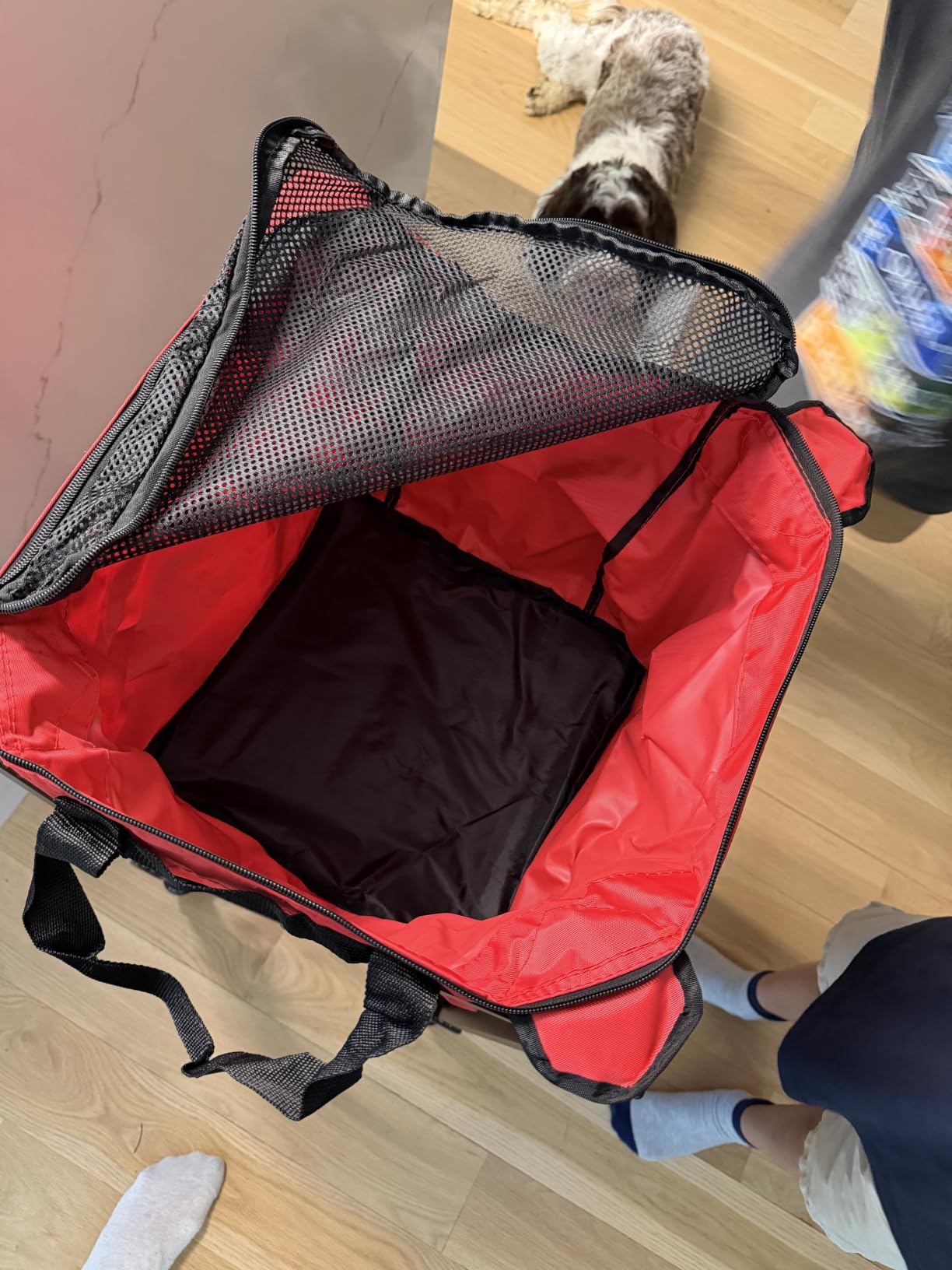
The YooKoo is the sturdiest-looking base in this group, and the bag attaches with a metal insert into the base rather than velcro. That detail matters more than it sounds: velcro attachments on this kind of cart are the first thing to fail when a full bag is lifted.
It also requires no assembly. You unfold the frame, drop the bag on, and go. For a coach who sets up and tears down on the same session schedule for a full season, removing assembly from the routine is a small time win that compounds.
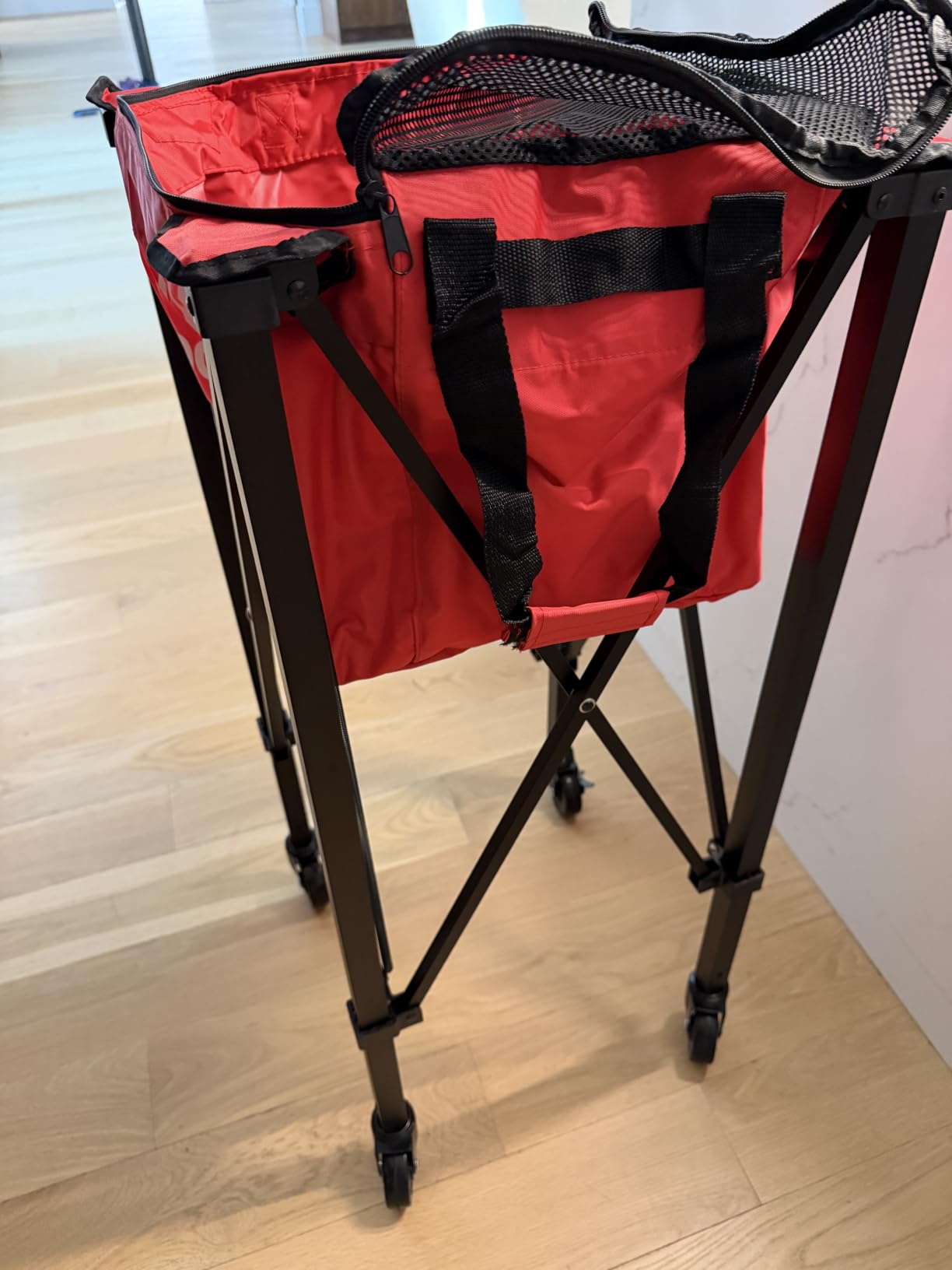
The aluminium body is treated for antiseptic and anti-rust performance outdoors, and the base carries two lockable universal wheels among the four. Standing height is 35 inches, measured at 15.7 by 15.7 inches across.
This is also the only product here with a two-year manufacturer warranty listed, which matters for a club or league organiser who is buying one cart to be shared among several coaches.
The 35 inch feed height question
A 35 inch basket sits near hip height on a standing coach. That is a comfortable grab point and it keeps the top of the pile within sight, which helps you judge how many balls remain without lifting the bag.
It is a storage-and-feed height rather than a ground-collection height. To gather loose balls from the court you still need a separate collector, so the most efficient setup pairs this cart with one of the tubes rather than replacing it.
Where the bag gives out
The standout negative in owner reports is long-term bag wear: fraying and gaping holes after four to six months of regular use under ball weight. Several owners recommend sourcing a reinforced replacement bag, and the frame itself is generally described as holding up.
At 8.5 pounds it is also the heaviest cart here, and some users find it too much to handle as a smaller-framed user. There is also no crossbar to hold the bag while fitting it if it is not already on the legs.
6. Goplus Foldable Ball Hopper Cart – Best Foldable Cart
- Holds up to 150 balls with useful side pockets
- Bag detaches and frame folds without tools
- Aluminium frame and 600D Oxford basket
- Lockable wheels keep the cart steady
- Includes a carry bag
- Manufacturer warranty is only three months
- Bag and frame feel less heavy duty than costlier metal carts
The Goplus is the aluminium-and-Oxford answer for a coach who needs a cart that disappears into a car boot. Once you remove the detachable bag, the frame folds to a compact size without tools, and the whole thing goes in the included carry bag.
It stands 36 inches tall on a 16 by 16 inch footprint, which is the tallest basket in this group by an inch, and the basket has two side pockets for a phone, keys, or a paddle. The double zippers open a mesh enclosure so balls stay contained when the cart is parked.
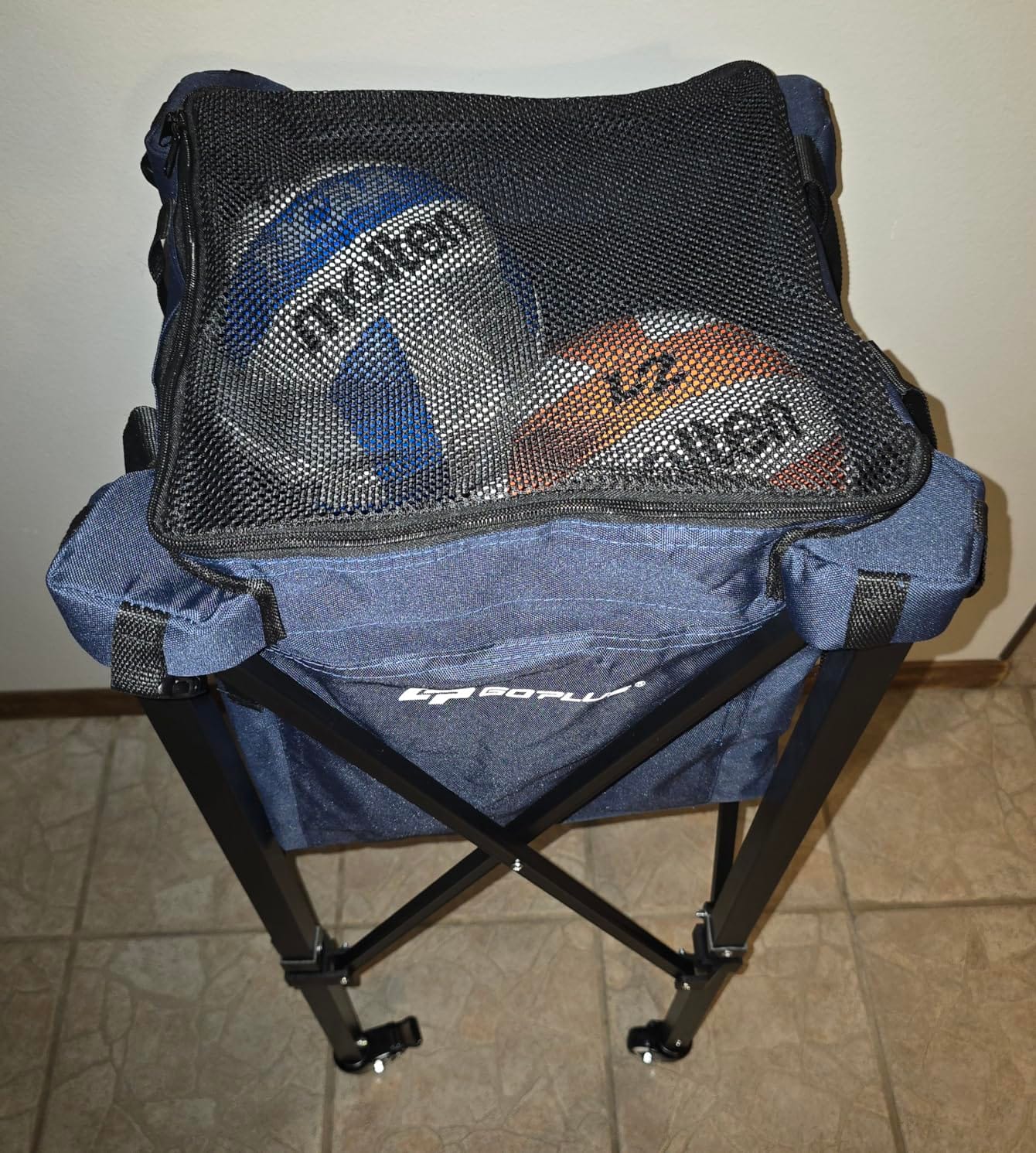
The frame is rustproof aluminium tube rated for a 66 pound load, and four universal swivel wheels include two brakes. Rated capacity is 150 balls, and the manufacturer also lists badminton, baseball, table tennis, pickleball and squash balls as compatible.
That multi-sport claim is genuinely useful if you coach more than one racket sport, though it is stated in tennis-ball terms, so plan a lower realistic figure for the larger pickleballs the same way you would with any tennis-denominated cart.
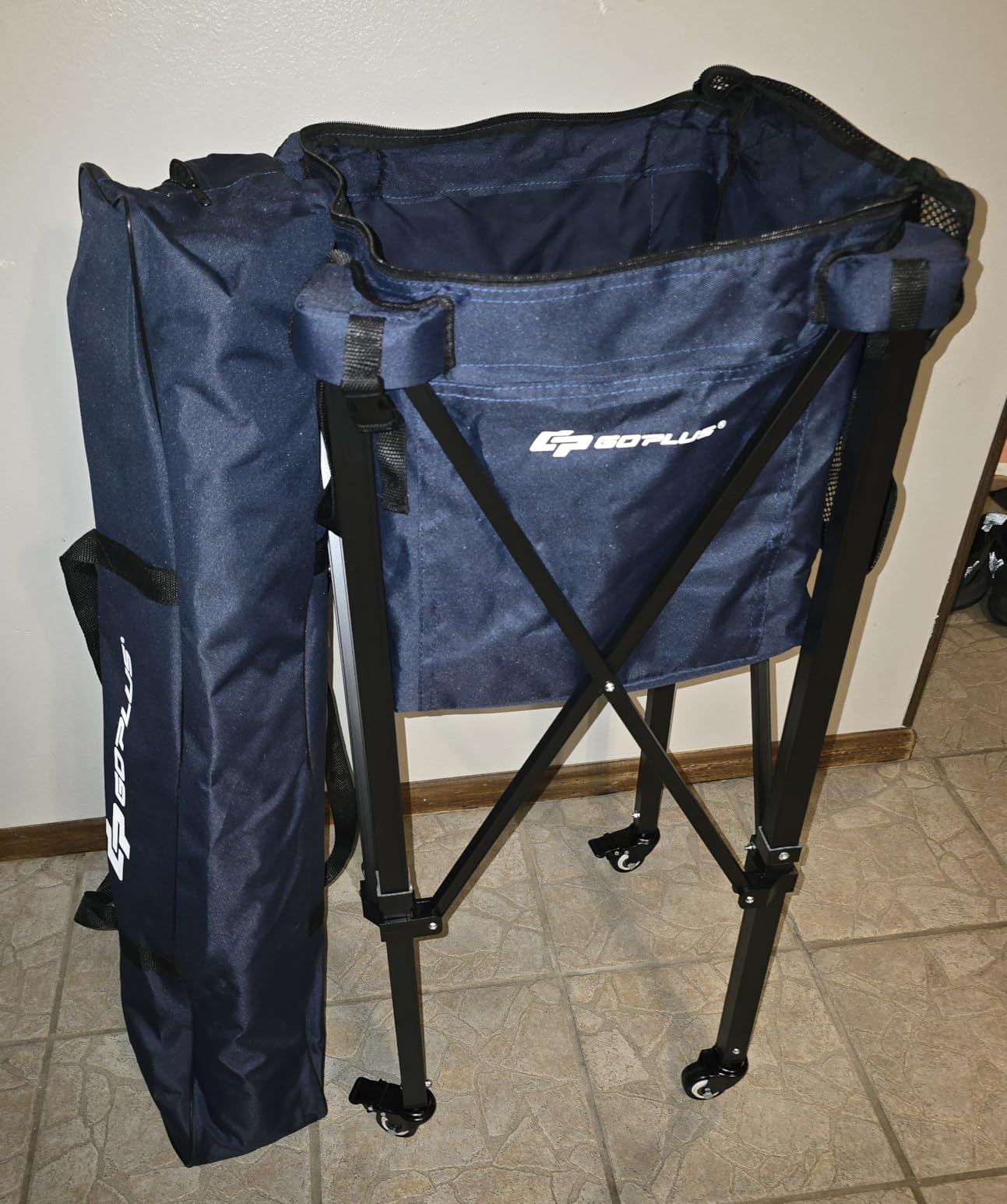
Transport and lockable wheels for a travelling coach
Tool-free folding is the reason to pick this one over a rigid cart. You can move it between an indoor hall and an outdoor facility, or hand it to another coach at a club, without needing a second vehicle or a wrench.
The two brake wheels hold the cart steady on court while you feed, and the 66 pound load rating gives you headroom above a full basket for the weight of the frame itself.
Where it falls short
The manufacturer warranty is listed at three months, which is the shortest here by a wide margin. For a shared club cart that is a real consideration.
Buyers also describe the bag and frame as less heavy duty than costlier metal carts. At 7 pounds it is light and portable, but the same lightness is a fair proxy for how it will feel after a season of outdoor court use.
7. GAMMA EZ Travel Cart Bag – Best for Bulk Ball Storage
- Holds well over 150 balls
- Lightweight and easy to carry
- Metal snaps improve on the original plastic clips
- Two carry handles and two mesh cover zips
- Suitable for tennis pickleball and padel
- Soft shell collapses without the cart frame
- The 250 ball version is larger than expected
- Only makes sense with the frame rather than standalone
This entry is a bag, not a cart, and the honest way to use it is as the second half of a two-piece system: a tube or small hopper for pickup, and this bag for bulk storage. Note that this listing is the bag-only variant, so it is designed to hang from a compatible cart frame.
At 16 ounces it is the lightest thing in the roundup, and the polyester shell takes a big load without complaint. Heavy duty metal snaps secure it to the travel cart frame corners, which is a genuine upgrade over the plastic clips used on earlier versions.
Both 150 and 250 ball variants exist, and one tennis coach called it the holy grail of ball carts. There are two zippered compartments and a stash pocket, plus two carry handles and two mesh cover zips to keep balls contained.
How the two-piece hopper plus basket setup works
Collect with the tube or the rolling hopper, walk to the bag, and unload in one motion. For a coach running an eight-player camp, that is the arrangement that stops you making two trips.
The soft shell is the catch. It does not hold its shape on its own, and it is only worth it with the frame. If you buy it standalone as a ball sack, you are paying for a bag that collapses under its own weight.
Where it falls short
The 250-ball version is much bigger than buyers expect, which matters if your plan is car boot storage between facilities. Measure before committing to that variant.
It also solves no pickup problem. Balls still have to get into it one trip at a time, so on its own it does not reduce collection time by a single minute. A member of the r/Pickleball community recommended a Gamma pickleball hopper over an older Gamma tennis design, noting the pickleball-specific version improved on the layout, and that is a separate product from this bag.
How to Choose a Ball Hopper as a Pickleball Coach
Five criteria decide this purchase, and only the first two really matter for coaching work.
1. Collection type before capacity. Decide whether you are picking up a handful of balls after a drill or rolling over a full-court scatter. Tubes win the first, hoppers and carts win the second, and buying the wrong one leaves you carrying a tool you never use.
2. Capacity sized by session type. A one-on-one lesson needs about 60 balls available across a session, so a 17-ball tube means roughly four restocks. A four-player clinic wants 100 to 120 in the container. A six to eight player camp wants 150 or more, and only the carts here reach that. If you run all three, the sensible answer is two tools rather than one compromise.
3. Feed height. Anything under about 20 inches means bending, which is the problem you bought the tool to solve. The carts here sit at 35 to 36 inches, which is a comfortable standing grab. Tubes are waist-level by definition.
4. Portability. Weight on this list runs from 1.5 pounds for the Tourna tube to 8.5 pounds for the YooKoo cart. A cart that must be lifted into a high boot by one person every session is a cart that never leaves the garage.
5. Court surface. All four carts have small universal or PU wheels and all four brake setups. On smooth club courts they track cleanly. On cracked public hard courts, owners report the smaller wheels catching, and on grass or sand any wheeled option drags. Budget for carrying it across the last few metres.
One more thing worth checking before you commit: whether you plan to use a machine. If your sessions pair manual feeding with a ball machine for drills or solo practice, the cart becomes the ball staging station rather than the collection tool, and any of the 150-ball options will do that job.
Do You Need a Ball Picker, a Hopper, or a 2-in-1?
Pickleball collectors fall into three shapes, and each solves a different problem.
Pickup tubes collect one ball at a time with no bending. Capacity is 17 to 18 balls, pickup is roughly a tenth of a second per ball, and they are the fastest option for a scattered dozen balls. Weakness: they fill up in a large drill.
Wire or mesh hoppers and carts take in many balls per pass and hold far more, from 50 pickleballs up to 150 or more by the manufacturer count. Weakness: you are moving the whole unit, and capacity is usually quoted in tennis balls.
Pick-up rollers and 2-in-1 designs sit between the two, absorbing a cluster of balls as you roll and then converting to a feed position. Weakness: rollers in particular can be awkward to empty, and some designs are built only to fire balls out of a machine rather than to be moved around a court, which is a complaint r/Pickleball users raise repeatedly.
For private lessons, buy the tube. For group clinics, buy the cart. For a coach who does both, buy the tube and the cart, and accept that no single product in this list covers both jobs well.
Tennis vs Pickleball Hoppers: What Actually Differs
A tennis ball hopper will physically hold pickleballs, but the numbers will not hold up. Pickleballs are larger than tennis balls, so a hopper advertised at 150 tennis balls realistically takes fewer pickleballs, and the best data point in this roundup is the Angooni, where owners report 100 to 110 pickleballs against a stated 150.
The second difference is the rail gap. r/Pickleball users buying cheap tennis-only wire hoppers report that the rails and bar gaps are too small to take pickleballs cleanly, and that balls have less squeeze than tennis balls so they sit worse in the gap. That means more pressure per ball and a worse fit than expected.
The third is ball condition. Scuffed or out-of-round outdoor pickleballs are hard to push into rails, and the same users report porosity and scuffing concerns after repeated compression in wire baskets. A pickleball-specific tube, with a press-down intake rather than a funnel, avoids the rail problem entirely.
That is why our top pick here is a pickleball-labelled tube rather than a high-capacity tennis cart. For a coach, per-ball collection speed with zero rail friction beats bulk capacity you have to wrestle with.
Coach Buying Checklist
Before you buy, work through these six questions.
Is the capacity quoted in pickleballs or tennis balls? If it is tennis balls, cut your plan by roughly a third.
Does the collection mechanism use rails and a funnel, or a press-down intake? Rails risk the scuffing and fit complaints above.
What is the working height, and can you feed at it without bending?
How heavy is it fully loaded, and can you carry it from a car by yourself?
Do the wheels lock, and are they large enough for the courts you actually teach on?
What is the listed warranty period, and is the bag or basket a replaceable part?
If you are also choosing paddles for a beginner group you have inherited, our pickleball paddle picks for intermediate players cover the other half of the kit. Everything above assumes you already have balls and a court.
Frequently Asked Questions
What is the best pickleball ball hopper?
The Tourna Pickleball Pickup Tube is our top pick for most coaches. Its press-tube intake clears balls off the court without bending, works with indoor and outdoor pickleballs of all sizes, and it is the highest-reviewed product in this roundup. For bulk collection during group clinics, the Angooni Professional Tennis Cart holds far more.
What is a pickleball hopper?
A pickleball hopper is a container with an open bottom of rails or a mesh funnel that you push or drag across the court, scooping loose pickleballs up into the basket until it reaches capacity, then holding them at a set height so you can feed drills without bending over. A pickup tube does the same job one ball at a time with much less capacity.
Will a tennis ball hopper work with pickleballs?
It will hold them, but the stated capacity will not hold up. Pickleballs are larger than tennis balls, so a 150-ball tennis cart realistically takes fewer. The Angooni, advertised at 150, is reported by owners at 100 to 110 pickleballs. Tennis-only wire hoppers also draw complaints about rail gaps that fit pickleballs poorly and scuff them.
How big a ball hopper do I need for coaching?
Size it to your session type. A one-on-one lesson needs around 60 balls available, so a 17-ball tube means several restocks. A four-player clinic wants 100 to 120 balls in the container. A six to eight player camp wants 150 or more, which only the larger carts here reach. If you run all three, two tools beat one compromise.
Do I need a ball picker or a ball hopper?
Buy a pickup tube for private lessons and any small scatter. Tubes collect one ball at a time with no bending and roughly a tenth of a second per ball, but they hold only 17 or 18 balls. Buy a hopper or cart for group clinics and full-court pickups, where you need 50 to 150 balls at once. A coach who does both uses both.
Are ball hoppers worth it for pickleball coaches?
For private lessons, a tube is worth it because it removes repeated bending and shortens the gap between drills. For group clinics, a rolling basket or cart is worth it because it removes the mid-drill transfer that breaks up drill flow. The value is highest where ball collection is currently eating the session, and lowest if you already collect as you go.
Conclusion
The best ball hoppers for pickleball coaches come down to session size, not brand. The Tourna Pickleball Pickup Tube wins for private lessons, the ELKCIP 2-in-1 covers the middle ground with a stated 50-pickleball capacity, and the Angooni cart is the one to put in front of a group clinic.
Whichever you pick, check whether the capacity is quoted in pickleballs or tennis balls before you plan a drill around it. That single detail is the difference between a hopper that finishes a session and one that runs out mid-drill. All of our picks are current for 2026, and we update this roundup whenever the line-up changes.