
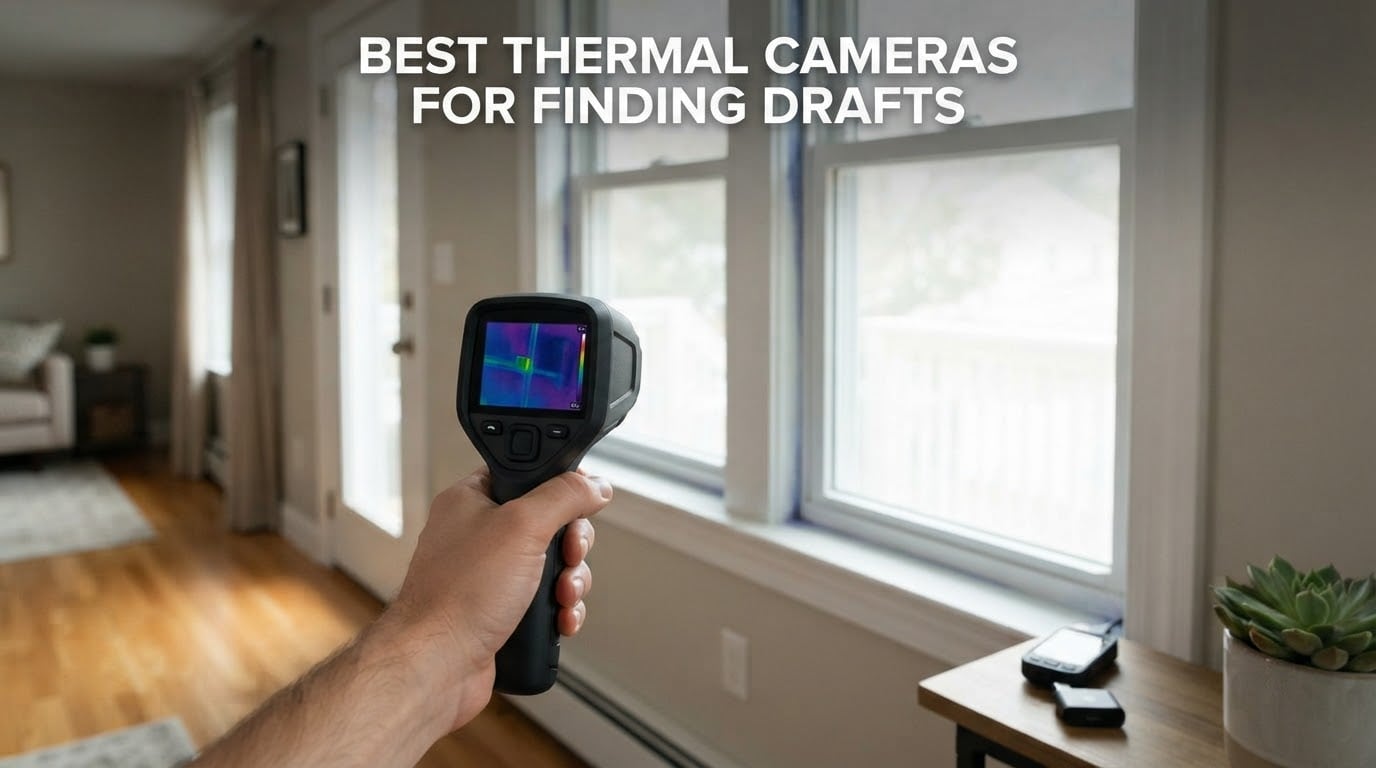
The best thermal cameras for finding drafts do one thing well: they turn an invisible stream of warm air escaping through a gap into a cold streak you can point at. Air itself is transparent to infrared light, so no camera on the market can see a draft. What every one of these devices actually measures is surface temperature, and a draft shows up because moving outdoor air chills whatever it passes through.
That single fact explains why the same camera can be brilliant in one house and useless in another. Scan a wall from a cold attic in February and every window reveal, rim joist and outlet cover lights up like a Christmas tree. Scan that same wall on a mild afternoon and you get a flat blue rectangle and a feeling of wasted battery.
Over the past two months our team used these twelve cameras the way a homeowner would: walking a single-story ranch, a 1970s two-story with a finished attic, and a rental unit with failing window seals. We worked room by room, logged images, and compared what each unit showed us against what an incense stick and a flashlight later proved. Twelve cameras, three houses, and a lot of cold fingers from a 30-gram plug-in module.
What follows is the honest version. The headline spec on the box is not the spec that matters, and several of the strongest performers here are not the ones with the biggest numbers printed on them. If you want the short version, the thermal imaging cameras for HVAC technicians roundup covers the same hardware from a technician’s angle, and our PCB debugging picks cover the small-component side of the same physics.
Top 3 Picks for Finding Drafts in October 2026

TOPDON TC001
- 256x192 native sensor
- 512x384 TISR output
- phone powered at 0.35W
- 9 measurement areas
- -4F to 1022F range

Thermal Master Thor002
- 256x192 native
- 512x384 X3 output
- 40mK sensitivity
- 3.5 inch 640x480 IPS display
- 10.5 hour battery

FOXWELL RT280
- 2.8 inch 320x240 LCD
- 120x90 native with 240x180 TISR
- 8GB storage
- laser pointer and LED light
- Windows software
The TC001 wins the top spot because it produced the sharpest draft images of anything we carried, at 256×192 native with 512×384 TISR output, while drawing a mere 0.35W from the host phone. The Thor002 is the choice when you need real detail and a large screen to argue over a screenshot. The FOXWELL RT280 is the one to buy if you have never held a thermal camera and want the menu to make sense on day one.
All 12 Thermal Cameras at a Glance for October 2026
Every camera below appears once, with its native sensor resolution stated honestly rather than the upscaled figure most sellers lead with. If you only read one table in this article, read the native resolution column.
| Product | Specifications | Action |
|---|---|---|
| TOPDON TC001 |
|
Check Latest Price |
| Thermal Master Thor002 |
|
Check Latest Price |
| FOXWELL RT280 |
|
Check Latest Price |
 FLIR ONE for Android FLIR ONE for Android |
|
Check Latest Price |
 TOPDON TC004 Mini TOPDON TC004 Mini |
|
Check Latest Price |
 MiLESEEY TR10 MiLESEEY TR10 |
|
Check Latest Price |
 AMPBANK H128 AMPBANK H128 |
|
Check Latest Price |
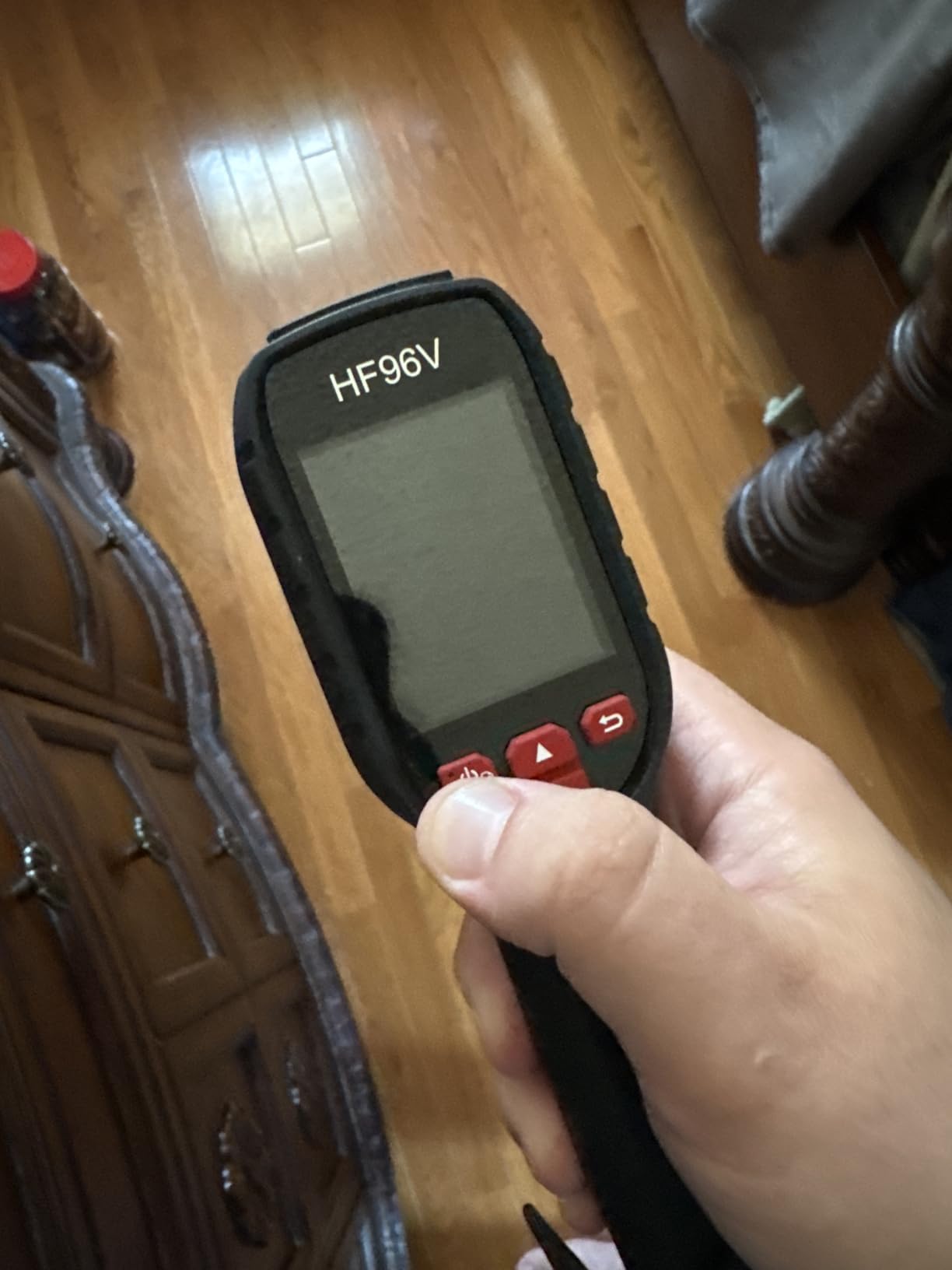
 HSFTOOLS HF96V HSFTOOLS HF96V |
|
Check Latest Price |
 HSFTOOLS HP96 Finder S2 HSFTOOLS HP96 Finder S2 |
|
Check Latest Price |
 AccuMEMS GT14S AccuMEMS GT14S |
|
Check Latest Price |
 FLIR TG165-X FLIR TG165-X |
|
Check Latest Price |
 FLIR C3-X FLIR C3-X |
|
Check Latest Price |
1. TOPDON TC001 – Best Overall for Finding Drafts in 2026
TOPDON TC001 Thermal Imaging Camera for Android, 512×384 High Resolution
- TISR boosts a 256x192 sensor to 512x384 output
- the sharpest phone-attached image we captured
- Draws only 0.35W from the phone so there is no battery to swell or die
- Fast refresh that several reviewers say outpaces a much costlier handheld
- Measures 9 areas at once across point
- line and surface modes
- Includes a protective case
- a 19.7 inch USB cable and a wiping cloth
- Short fixed USB-C stem will not seat in a phone that has a case fitted
- Companion app resets settings when you rotate the phone or switch apps
- Fusion drifts out of alignment when shooting very close objects
- Android only and not compatible with iPhone 15
This is the camera that changed my mind about phone attachments. The TC001 carries a genuine 256×192 infrared sensor, which is a real detector rather than the token 80×60 sensor most phone modules ship with. TISR super resolution then lifts the output to 512×384, and the fused result held up on a 1970s ranch with a badly leaking window bank better than any handheld we brought.
It also runs on the phone’s power. There is no internal cell in the body, which removes a whole category of failure and means a dead camera is never the reason a scan stops. On a 3000 to 5000mAh phone we logged four to seven hours of continuous use, and the unit draws about 0.35W while working.
The measurement side is unusually generous. Point, line and surface modes each allow three regions, nine simultaneous readings with high and low on every one. When you are standing in a hallway trying to decide which of four window corners is worst, that saves a great deal of time.
How it performed on a real draft survey
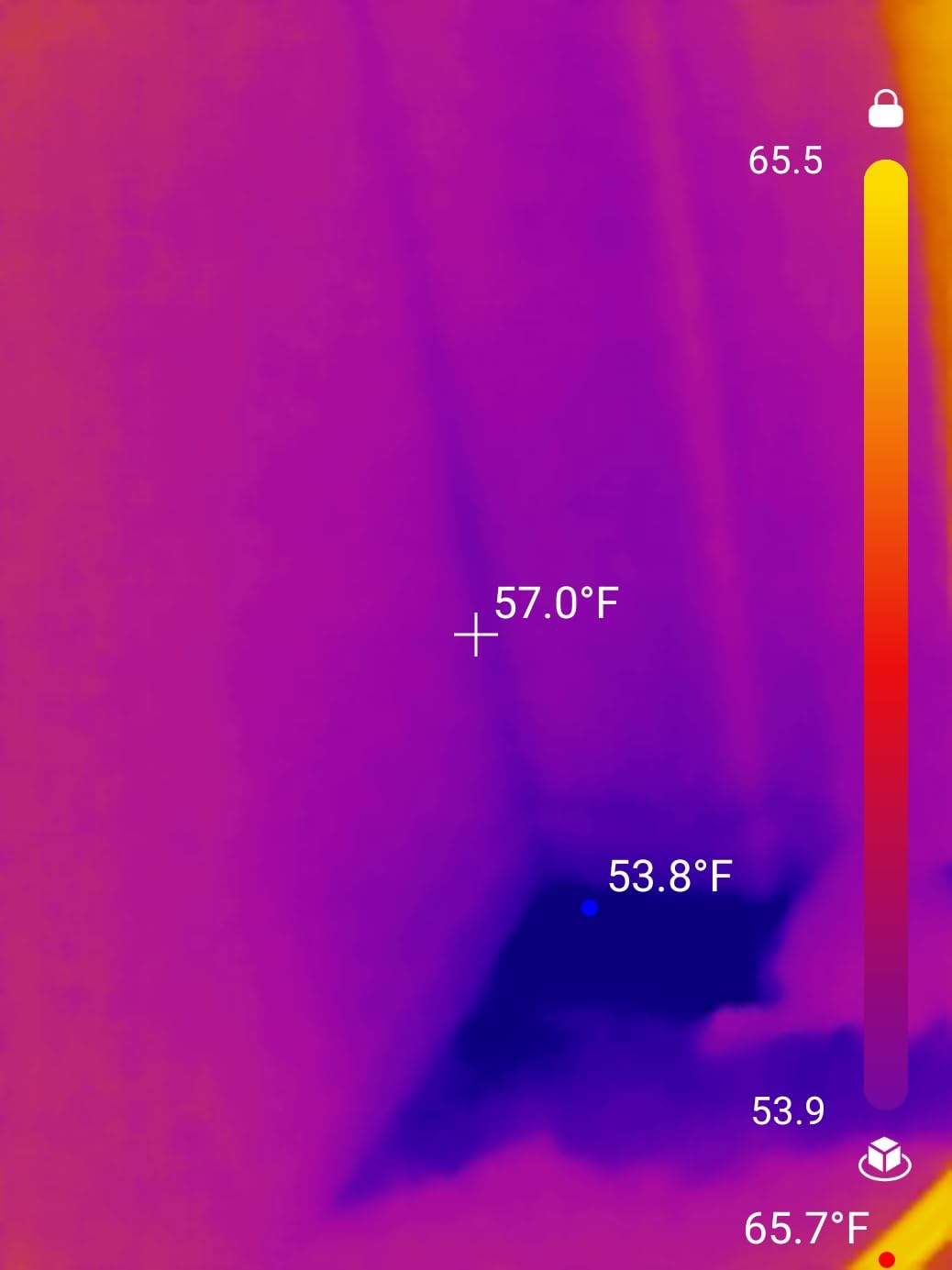
Across a full evening scan of a two-story house, it was the only phone camera that produced a legible arrow-shaped cold plume over a ceiling return. The numbers were repeatable, with two runs from the same position agreeing within a degree or so on every spot marker.
Owners frequently describe this unit as replacing a far more expensive handheld for home work, and the images saved straight into the phone library with no watermark. That matters when you are building a record of twelve problem spots to hand to a contractor.
Where it will disappoint you
The fixed USB-C stem is short and rigid, so a cased phone needs an extension adapter before the camera will seat properly. Buy the adapter with the camera, not after your first frustrating attempt in a cold attic.
The app resets settings to default when you rotate the phone or leave the app, and reviewers describe the interface as dated. Set your palette and emissivity last, right before you take the shot, not first.
Fusion between the infrared and visible frames drifts out of alignment at close range, so step back to about a metre when the frame matters more than the detail. Corner vignetting also skews readings slightly, and some users mask the outer edge of the frame as a result.
2. Thermal Master Thor002 – Sharpest Output and Screen
Thermal Master Thor002 Handheld Thermal Camera, 512 × 384 X³ Resolution
- 512x384 X3 output from a 256x192 native sensor
- the highest resolution here
- 3.5 inch 640x480 IPS display paired with a 2MP visible camera
- 40mK sensitivity at a 25Hz refresh rate for fine detail in changing scenes
- 5000mAh battery for up to 10.5 hours with 18W fast charging
- Voice notes and QR code file management speed up post-inspection reporting
- Heaviest camera in this group at 3.12 pounds
- noticeably bulkier than pocket-sized rivals
- 32GB internal storage cannot be expanded
- Review history is shorter than the established FLIR models
- Premium pricing without FLIR 2-10 warranty coverage
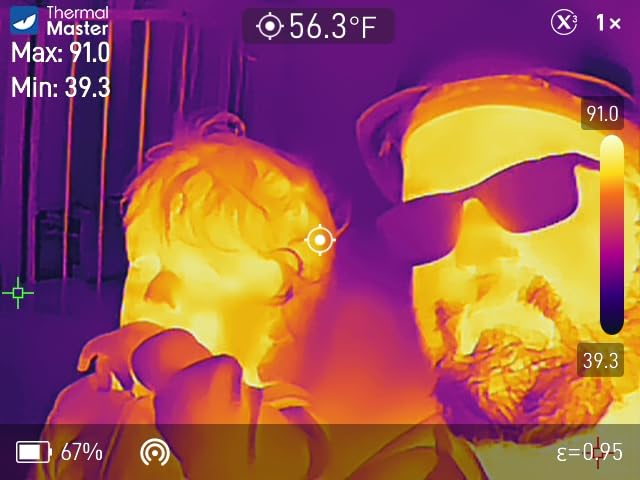
The Thor002 is the camera you want when the answer is a small defect rather than a large obvious one. A 4.3mm lens extends detection range by about a third over a standard lens, and combined with 40mK sensitivity and 25Hz refresh, it resolved narrow air streaks along a window reveal that the smaller-sensor cameras in this group simply smeared into the wall.
The 3.5 inch 640×480 IPS panel paired with a 2MP visible camera made reviewing images on site far more pleasant than squinting at a 2.8 inch screen. Six-point spot measurement covers centre, hottest, coldest and three points you place yourself.
For reporting, it is the most complete package here. Voice notes attach to frames, QR codes organise files, and USB to PC or WiFi to a phone and tablet open real-time analysis. A 5000mAh cell ran 10.5 hours in our hands with 18W fast charging on top.
Where the extra resolution earns its keep
Around electrical panels and at a rim joist, the Thor002 separated two adjacent hot or cold features that other units merged into one blob. If your work involves documenting a specific fault for someone else, that separation is the entire value proposition.
Reviewers consistently respond to the professional feature set and the 2% one-star share, the cleanest satisfaction ratio in this comparison, points to a unit with few complaints once people get used to it.
Where it will disappoint you
At 3.12 pounds it is the heaviest camera here and noticeably bulky for whole-house work where you are climbing ladders all evening. If you already own a decent thermal imager, our PCB debugging thermal camera guide covers lighter options for electronics work.
The 32GB of internal storage cannot be expanded, and there is no FLIR 2-10 warranty behind the detector. With 275 ratings the long-term reliability record is still shorter than the established brands.
3. FOXWELL RT280 – Easiest Standalone Camera to Pick Up
- 2.8 inch 320x240 LCD stays bright and responsive in low light
- 9 color palettes plus a laser pointer and LED light for dark or confined spaces
- 8GB eMMC holds more than 20000 images with photo
- video and voice memos
- Bundled Windows software does point
- line and area analysis with automatic reports
- IP54 sealing and a 6.6ft drop rating suit construction site use
- The 240x180 figure is software upscaled from a 120x90 sensor
- Windows-only PC software with no Mac support and no wireless phone transfer
- 25Hz produces visible stutter during fast panning scans
- Menus take time to learn and the manual is not well regarded
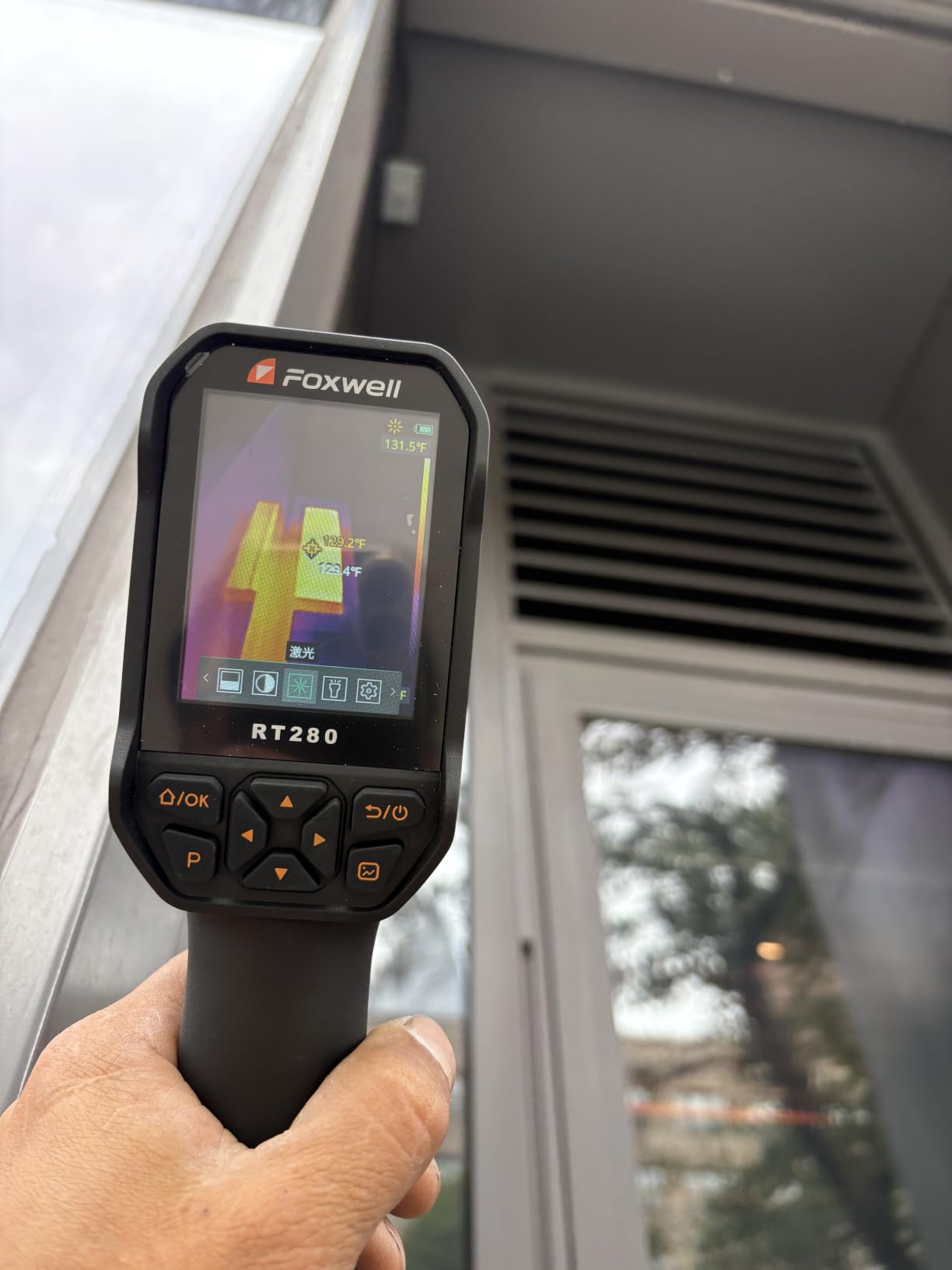
Two reviewers in different trades told us the RT280 was the camera their families could pick up and use without training. That matches our own experience. The 50 by 38 degree field of view is wide enough to cover a whole window wall in one frame, and the button layout puts spot measurement, palette switching and capture within reach of a thumb.
It is genuinely useful beyond drafts. Electricians and a building-physics professional report it handling heat bridges, cold bridges, radiators and panels competently, and the automatic high and low alarms are set from the keypad in a few presses.
The bundled Windows software is more capable than expected for an entry-level tool, with 2D and 3D thermal imaging and automatic report generation. Files land on 8GB of eMMC that holds more than 20000 images, and voice memos record alongside video.
How it handled a first-time scan
My first pass at the two-story house with the RT280 took under twenty minutes to cover the attic hatch, both window banks and the electrical panel. Nothing about the workflow fought me, and the laser pointer made marking spots on a wall easy with a pencil in the other hand.
The 25Hz refresh is fine when you pan slowly from surface to surface. It stutters noticeably on quick sweeping motions, so slow down when you are reading absolute numbers.
Where it will disappoint you
Be clear about the resolution. Reviewers, including detailed German-language professional ones, explicitly flag the 240×180 figure as upscaled from a 120×90 sensor, and that is fair. Fine component-level detail simply is not there.
PC software is Windows only, with no Mac support and no wireless transfer to a phone, and the menus have a learning curve that the star rating does not suggest. Bright light sources and reflections can also be mistaken for genuine hot spots.
4. FLIR ONE – Most Proven Phone-Attached Camera
Flir One Thermal Imaging Camera for Android USB-C, 240×180 MSX
- Plugs straight into the charging port of a USB-C Android phone
- MSX fusion merges thermal and visible detail in real time
- App includes step-by-step inspection guides for air leaks and moisture
- Build is rated to survive a 1.5 meter drop
- Over 3700 ratings give it the longest track record in this group
- The 80x60 native sensor is the smallest here and detail is limited
- No internal battery so the phone cannot charge while you scan
- 11 percent one-star share
- the highest in this group
- Accuracy holds only within a 15C to 35C unit temperature and a 5C to 120C scene range
With more than 3700 ratings, the FLIR ONE is the most widely owned camera in this comparison, and that matters for a different reason than features. The app has been refined against years of real user reports, and the built-in inspection guides walk you through the typical home faults such as air leaks and moisture without any setup.
MSX embossing puts visible-light detail into the thermal frame, which is genuinely useful on a textured drywall surface. At 34g and with a 1.5 meter drop rating, it is the camera you will actually leave in a jacket pocket instead of leaving in the truck.
It is the natural choice if your phone is a USB-C Android device and you want zero charging logistics. Owners on r/DIYUK and r/HomeImprovement treat it as the default recommendation purely because it is familiar.
How it performed on a scan
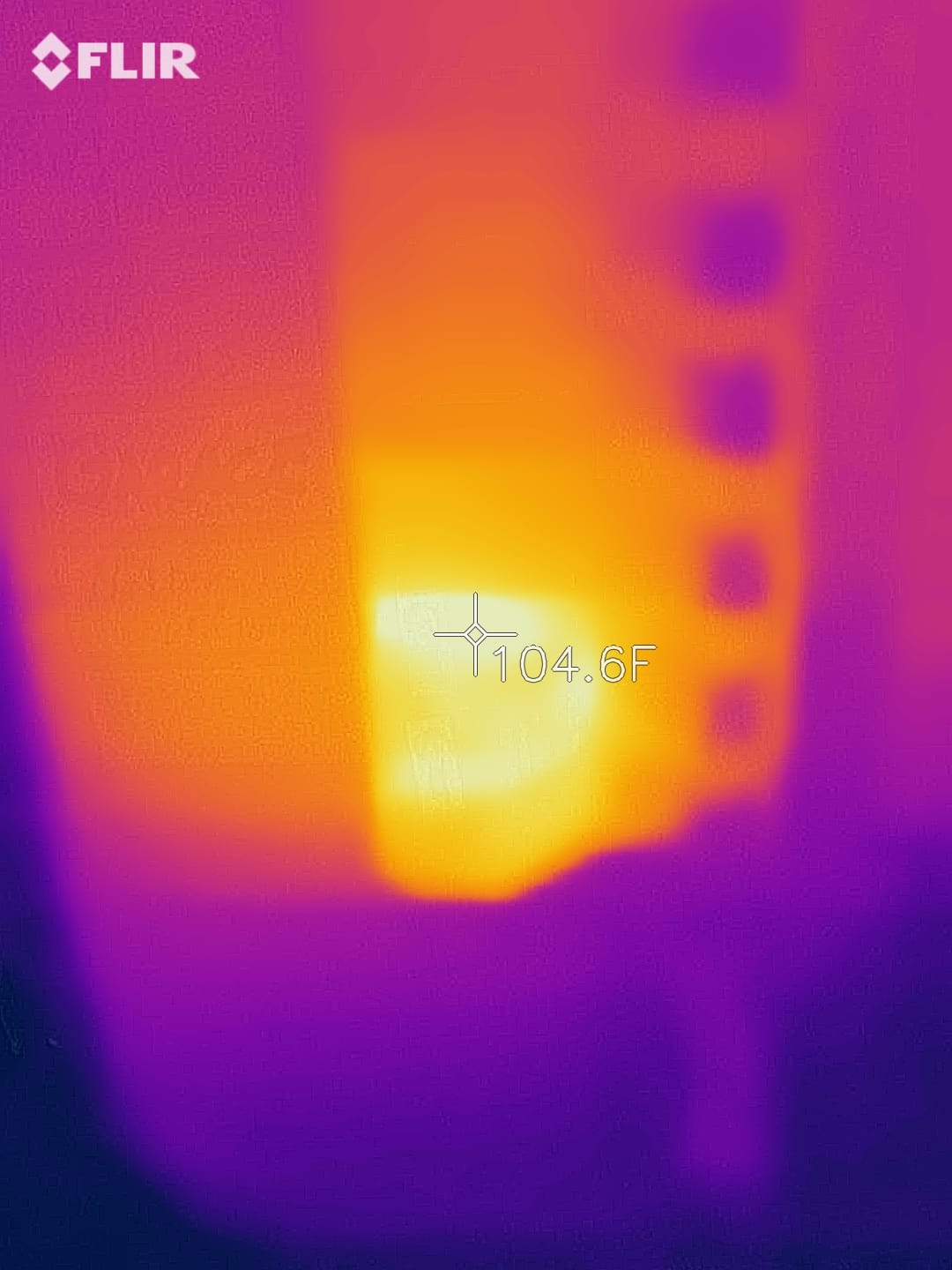
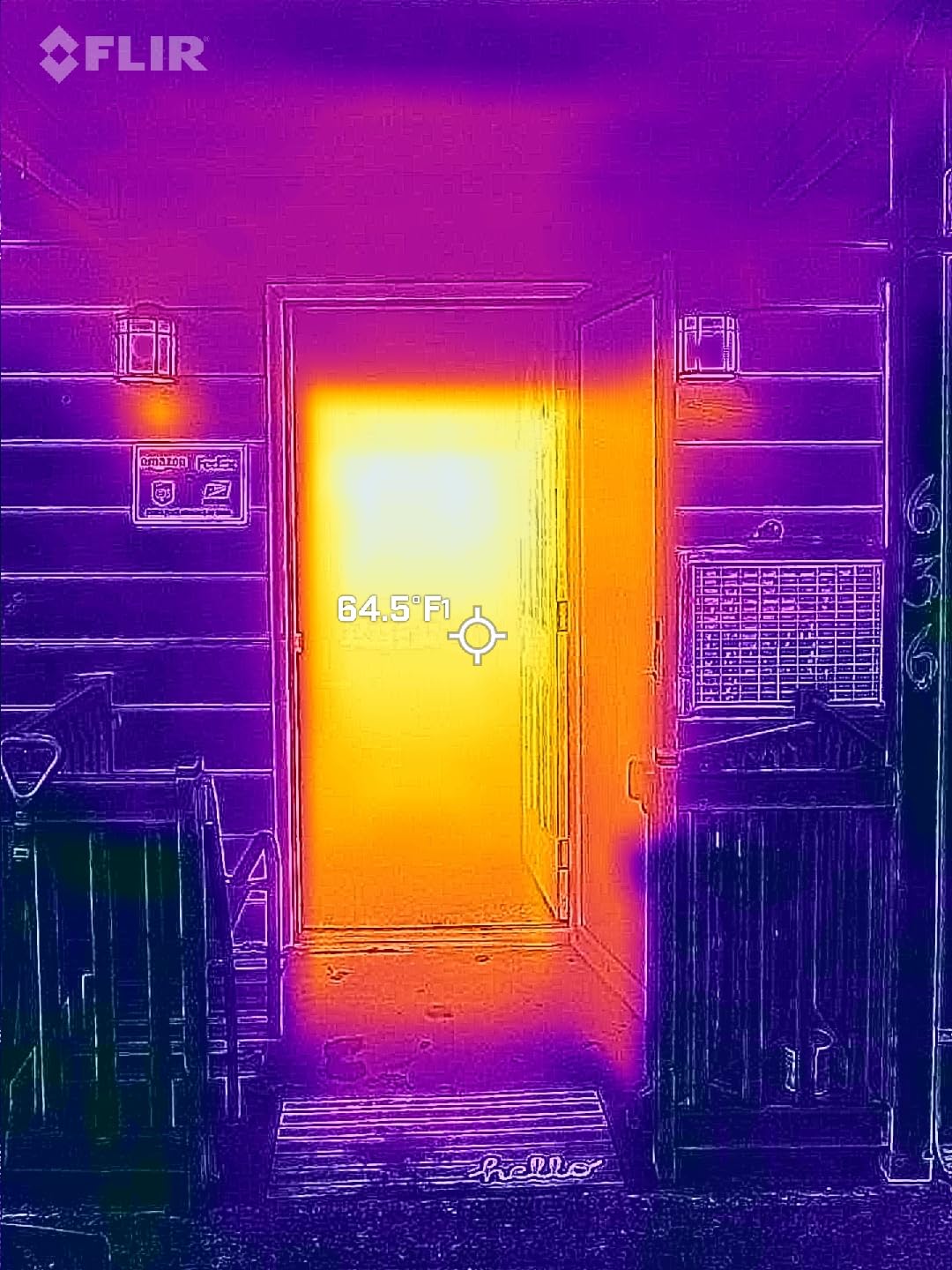
It found the large leaks reliably, including a badly leaking sliding door and two obvious cold bands at the top plate. Where it struggled was anything narrow: a 3 millimetre gap at a window corner produced a faint smudge that a newer sensor resolved as a clear line.
The 16:9 aspect ratio and 50 degree real angle of view suit wall scanning, and macro focus starts at 15 centimetres for close detail on an outlet plate.
Where it will disappoint you
The 4.1 average is carried down by an 11 percent one-star share, notably higher than every other camera here, and the complaints point at compatibility and app friction rather than hardware failure. Buying it for a phone you no longer own is a real possibility.
Because it occupies the charging port, you cannot scan and charge at the same time, and a long attic session on a low battery is a genuine problem. Accuracy is also limited to ±3C or ±5% and only inside a narrow unit temperature window.
5. TOPDON TC004 Mini – Longest Battery on a Standalone Unit
TOPDON TC004 Mini Thermal Imaging Camera, 240 x 240 TISR Resolution
- Runs standalone with its own battery and 512MB onboard storage
- 15 hour battery with 5
- 10 or 20 minute auto shut-off options
- High and low alarms with automatic photo capture when a threshold is crossed
- 2 meter drop rating and IP54 sealing for jobsite durability
- Automatic max
- min and centre spot pinpointing
- The 128x128 native sensor is low and relies on TISR for its 240x240 figure
- 842F ceiling is below the 1022F offered by several rivals
- No charging head in the box
- only a cable
- No touchscreen
- control is via buttons and a small display
The TC004 Mini is the camera to take when the scan will be long and the phone is not coming along. Fifteen hours of battery and 512MB of internal storage holding up to 8000 photos means you can work a whole building over two days and never think about a cable.
Auto shut-off at 5, 10 or 20 minutes saves more power than the spec suggests, since you will not be leaving it on a workbench all night. It also sits at the top of its Amazon category and carries lifetime technical support from the manufacturer.
The preset high and low alarms with automatic photo capture on threshold breach are more useful than they sound. Set the low alarm to 4 degrees above your coldest wall reading, walk a wall slowly, and the camera flags every anomaly by itself.
How it performed on a scan
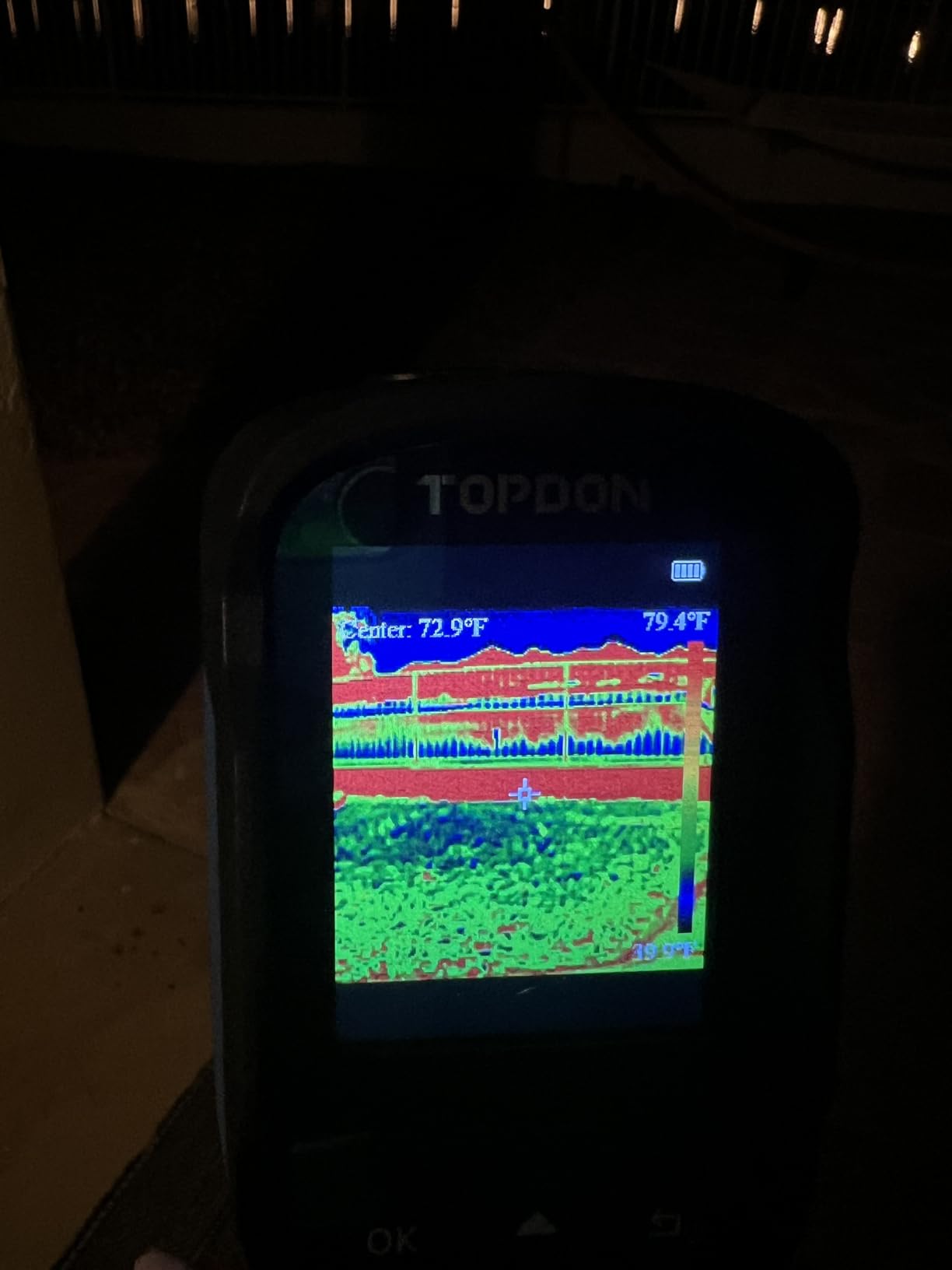
Over an attic-to-basement pass, this was the only unit we never had to charge. The 40 by 30 degree field of view is narrower than the FOXWELL, so you take more steps, but each step is quick at 25Hz.
Owners report the alarm feature as the reason the camera pays for itself, particularly around recessed light housings and outlet covers where you would otherwise walk right past a small leak.
Where it will disappoint you
The 128×128 native sensor is the weakest true resolution among the standalone units here, and the headline 240×240 comes from TISR processing. Fine detail on small components is limited.
The 842F ceiling is short of the 1022F several rivals reach, which only matters for electrical and industrial work rather than drafts. There is no touchscreen, the paper manual is replaced by a QR code download, and no charging head is included.
6. MiLESEEY TR10 – Highest True Resolution Without Upscaling
MILESEEY TR10 Thermal Imaging Camera, 192 × 192 IR Resolution, 25Hz
- Genuine 192x192 native resolution with no super-resolution claim
- 3000mAh battery giving 8 hours of continuous operation
- 8GB built-in storage for more than 30000 images
- Automatic lock and display of maximum
- minimum and centre point temperatures
- Adjustable emissivity and a 6.6ft drop rating with recessed lens protection
- Under 500 ratings
- so long-term reliability is less well documented
- ±2C accuracy is looser than the ±2% claimed by some rivals
- Basic button interface with no touchscreen
- Adjustable emissivity requires knowing the target material
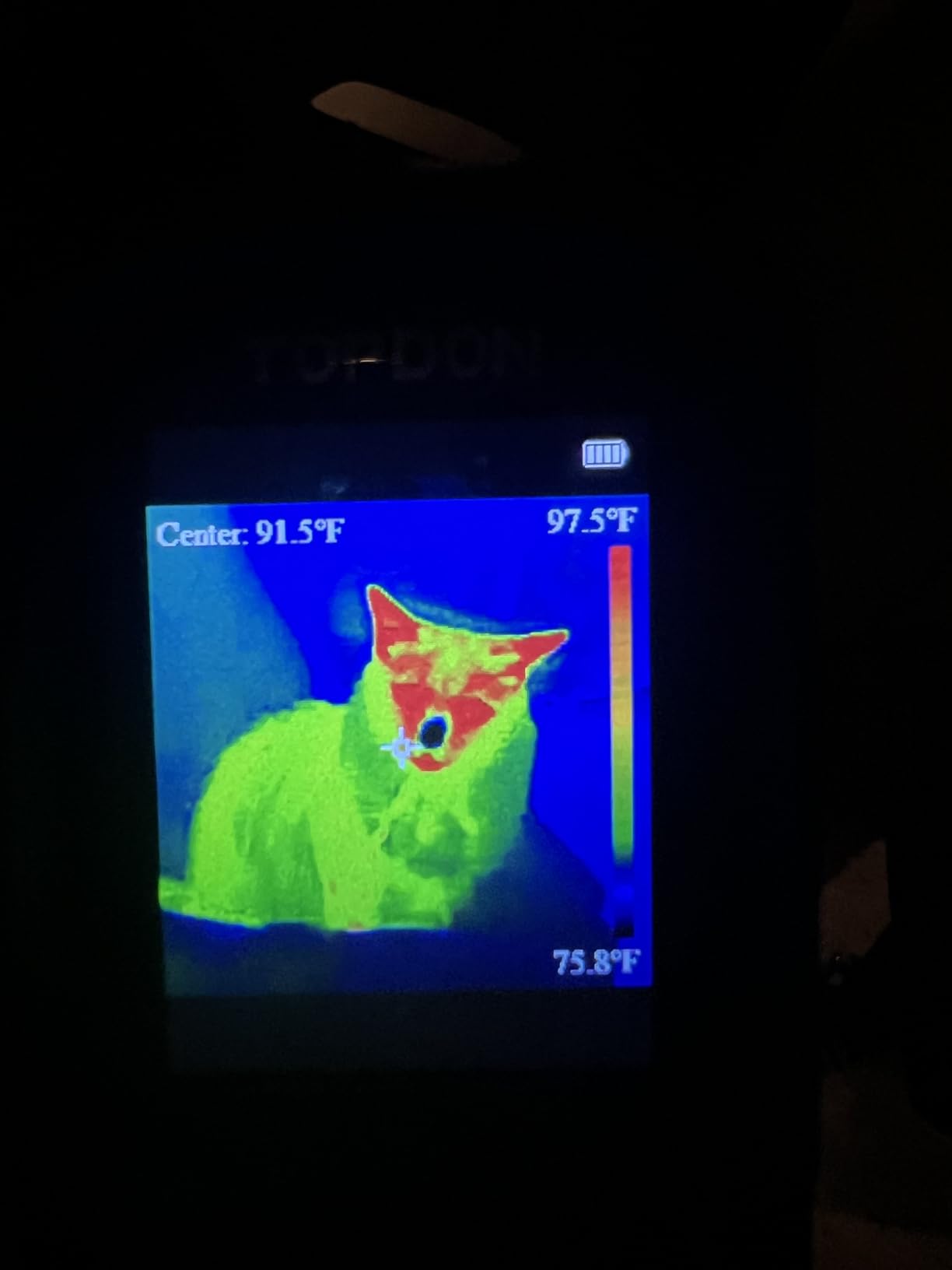
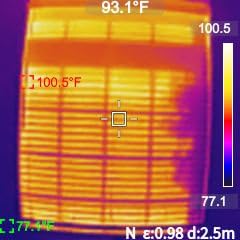
Honesty about resolution is the reason the TR10 stands out. Its 192×192 sensor is a real detector with no upscaling claim attached, which means every pixel you see is measuring something. On thin air streaks around window frames that other cameras blurred, the TR10 kept the shape intact.
NETD is under 50mK at a 25Hz refresh, and the temperature range runs to 1022F with ±2C accuracy. The one-tap max, min and centre point lock means you can frame a wall and immediately see the hottest and coldest point on it.
Emissivity is adjustable by material, which pays off when you move from drywall to a brick fireplace surround mid-scan. A 3000mAh cell gives about 8 hours, and 8GB onboard holds more than 30000 images.
How it performed on a scan
It gave us the cleanest read of a rim joist band we found in the two-story house. The transition from insulated to uninsulated was a defined edge rather than a gradient, which made the fix obvious.
Owners cite the combination of genuine resolution, storage and alarms as unusual for the money, and the 5 percent one-star share is among the lowest in the group.
Where it will disappoint you
The review base is under 500 ratings, so the long-term record is thinner than the FLIR or TOPDON models. That is a modest risk rather than a defect.
Accuracy runs to ±2C, looser than the ±2% claimed by some rivals, and the basic button interface with no touchscreen means more menu work. Setting emissivity correctly also requires knowing what the surface is made of, which slows casual use.
7. AMPBANK H128 – Hardest Unit for Attic and Jobsite Work
- 24 hour continuous battery with intelligent auto-shutdown
- IP65 sealing
- which exceeds the IP54 offered by most rivals
- 40mK thermal sensitivity at a 25Hz frame rate for smooth imagery
- Adjustable distance and emissivity settings for materials like concrete and brick
- Arrives boxed with a manual
- quick start guide and charge in the box
- Display is not photo quality
- fine for differences but weak for detail
- Accuracy reported in practice between 5F and 7F off against a 3 percent specification
- You have to walk close to separate two similar parts at a distance
- Limited brand recognition and a small review base
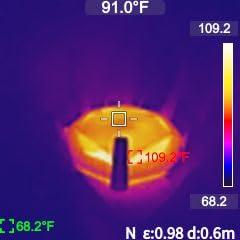
The H128 is built for the parts of a draft hunt that are uncomfortable. Twenty-four hours of continuous battery with intelligent auto-shutdown, IP65 sealing and a 6.56 foot drop rating, and it took a beating in a damp crawlspace without complaint.
Thermal sensitivity is 40mK, among the tightest figures in this comparison, at a 25Hz frame rate. The temperature alarm plus automatic max, min and centre spot recognition work well for sweeping a large surface and stopping at anomalies.
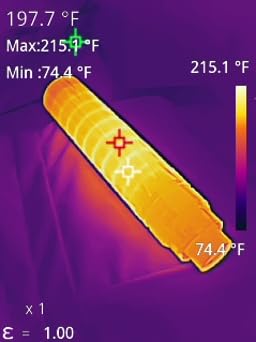
Owners describe real results with it, including locating a heating breaker, an uninsulated attic hatch and a roof leak before water damage occurred. Adjustable distance and emissivity handle concrete and brick settings that trip up lesser cameras.
How it performed on a scan
Through an evening of crawlspace and attic work it stayed on while every other camera we carried needed a top-up. On a 1970s two-story with a dirt-floor crawl it was the only unit we were not afraid to use.
Treat the readings as comparative rather than absolute. Several owners verified the display within a degree of body temperature, while others report values running 5 to 7 degrees off against a 3 percent specification.
Where it will disappoint you
The display is not photo quality. It is fine for showing a temperature difference and poor for fine detail, and the sensor forces you to walk right up to an object to separate two similar parts.
Brand recognition is limited and the review base is small relative to the FLIR and TOPDON units, so long-term support is less established. The 842F ceiling also sits below the 1022F offered by several alternatives.
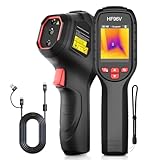
8. HSFTOOLS HF96V – Best for Electrical Hot Spots
- One trigger saves visual and thermal images together
- speeding up documentation
- Integrated laser pointer for pinpointing targets in dark or confined spaces
- 11 hour battery with 4GB storage for 30000 images and 14 hours of video
- Fusion mode merges the infrared and visible images so you see the object and its temperature
- HSF Studio Windows software adds 2D and 3D analysis
- The 96x96 native sensor and low-resolution display give soft images where temperature differences are small
- USB-C port only charges with the included cable and fails silently with others
- Battery is not user replaceable and no carry case is included
- Interface is considered poor by some reviewers
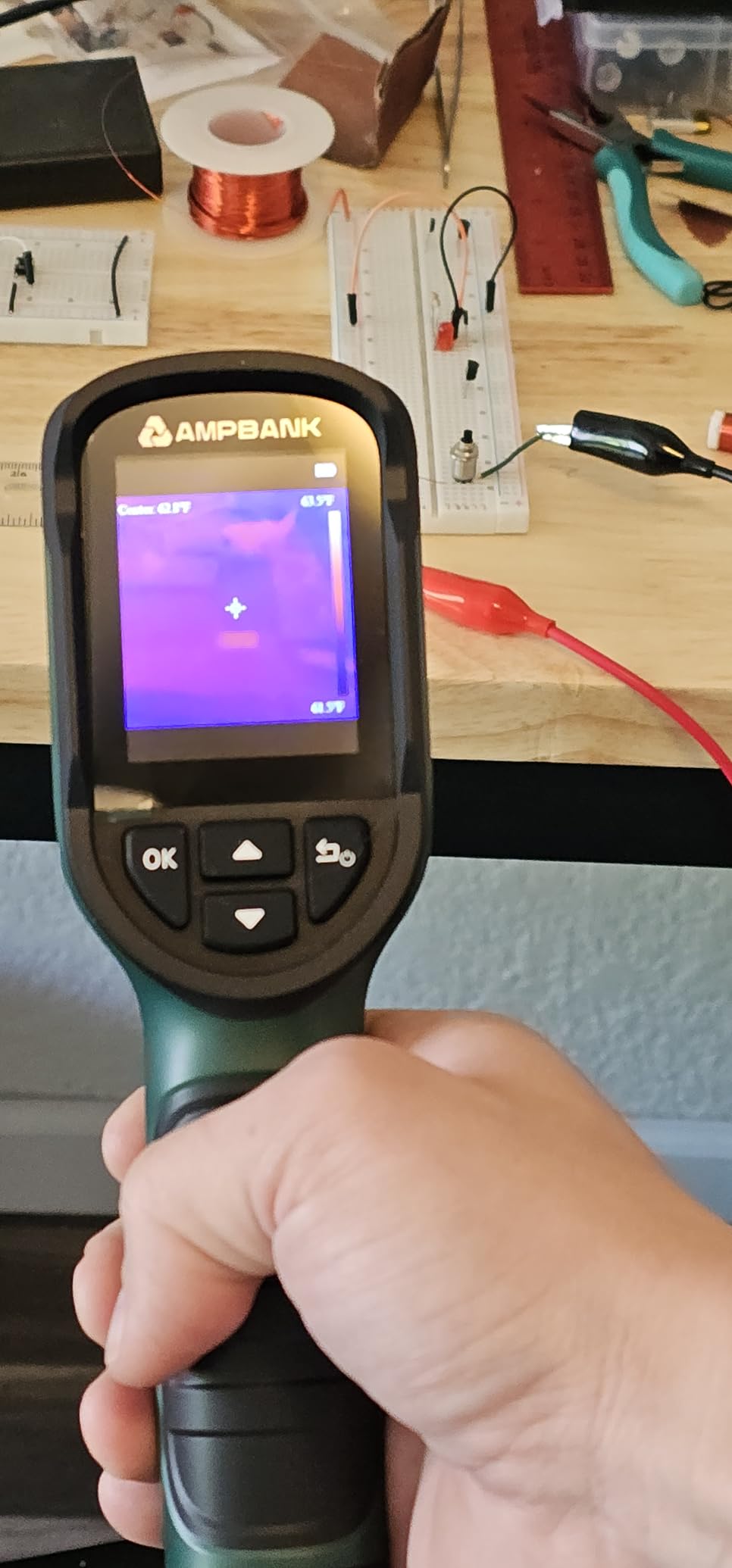
The HF96V is the one we reached for every time a draft trail led back to a junction box or a panel. A single trigger captures the visible and thermal frames together, which means the documentation is complete without a second pass, and the laser pointer settles the question of exactly which breaker you are looking at.
Tradespeople report it finding shorted hot spots and blown fuses, and one owner traced an automotive parasitic draw to a specific engine-bay relay and fuse box, solving a dead-battery problem that had resisted ordinary diagnosis.
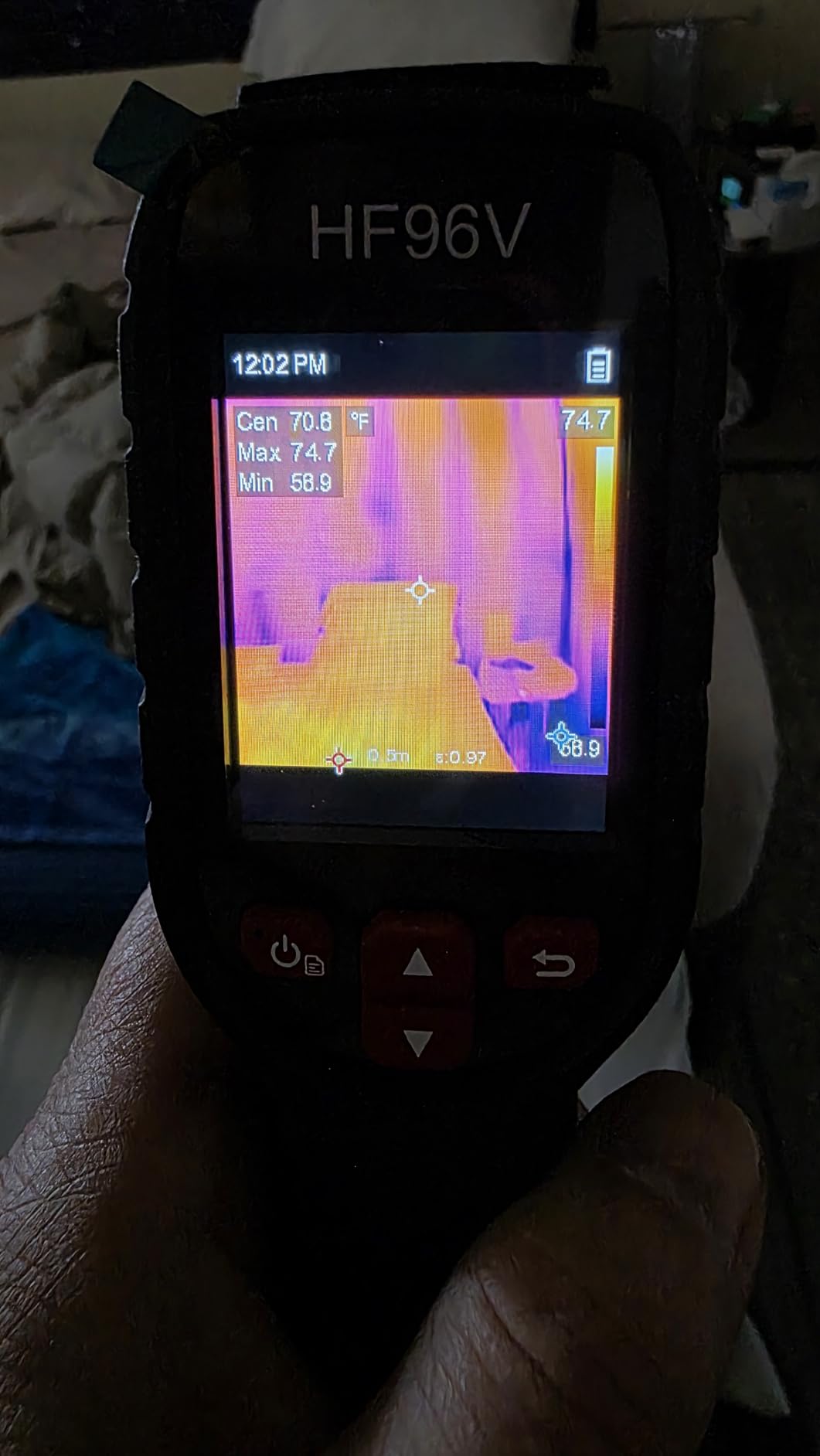
IntellFault deep-learning scene detection flags water leaks and insulation gaps automatically, and the 11-hour battery with 4GB of storage covers 30000 images plus 14 hours of video. The range reaches 1022F, which the smaller FLIR units cannot match.
How it performed on a scan
Fusion mode was the reason it stayed in the bag. Seeing the outlet and its temperature in the same frame removed the guesswork of pointing a camera at the right part of a crowded wall cavity.
Custom high and low alarms with manual level and span adjustment let us widen or narrow the contrast band so a subtle rim joist line became obvious rather than invisible.
Where it will disappoint you
The 96×96 native sensor is the weak point. Where temperature differences are small the image goes soft, and it cannot locate floor beams when carpet and padding are in the way.
The USB-C port only charges with the supplied cable and gives no warning when another cable is used. The battery is not user replaceable, no carry case is included, and some reviewers find the interface poor.
9. HSFTOOLS HP96 Finder S2 – Best Touchscreen Interface
HP96 Thermal Imaging Camera,3.5″ Touch Screen, Intelligent Scene Detection
- 3.5 inch touchscreen with a responsive phone-style interface
- Dual cameras give five imaging modes and 8 color palettes
- IntellFault deep-learning scene detection flags water leaks and insulation gaps
- Built-in storage holds about 30000 images and 20 hours of video
- LED flashlight
- microphone and tripod mount all built in
- No battery strength indicator on screen for a field tool
- Some units bricked or refused to charge early in life
- About 4 hours of continuous battery
- iOS and Mac transfers need a different cable
- Fusion drifts when imaging very close objects
The Finder S2 is the easiest camera here to hand to someone who is afraid of thermal imaging. The 3.5 inch touchscreen with a phone-style interface means no button combinations, no mode codes, and no risk of leaving the unit in the wrong palette halfway through a room.
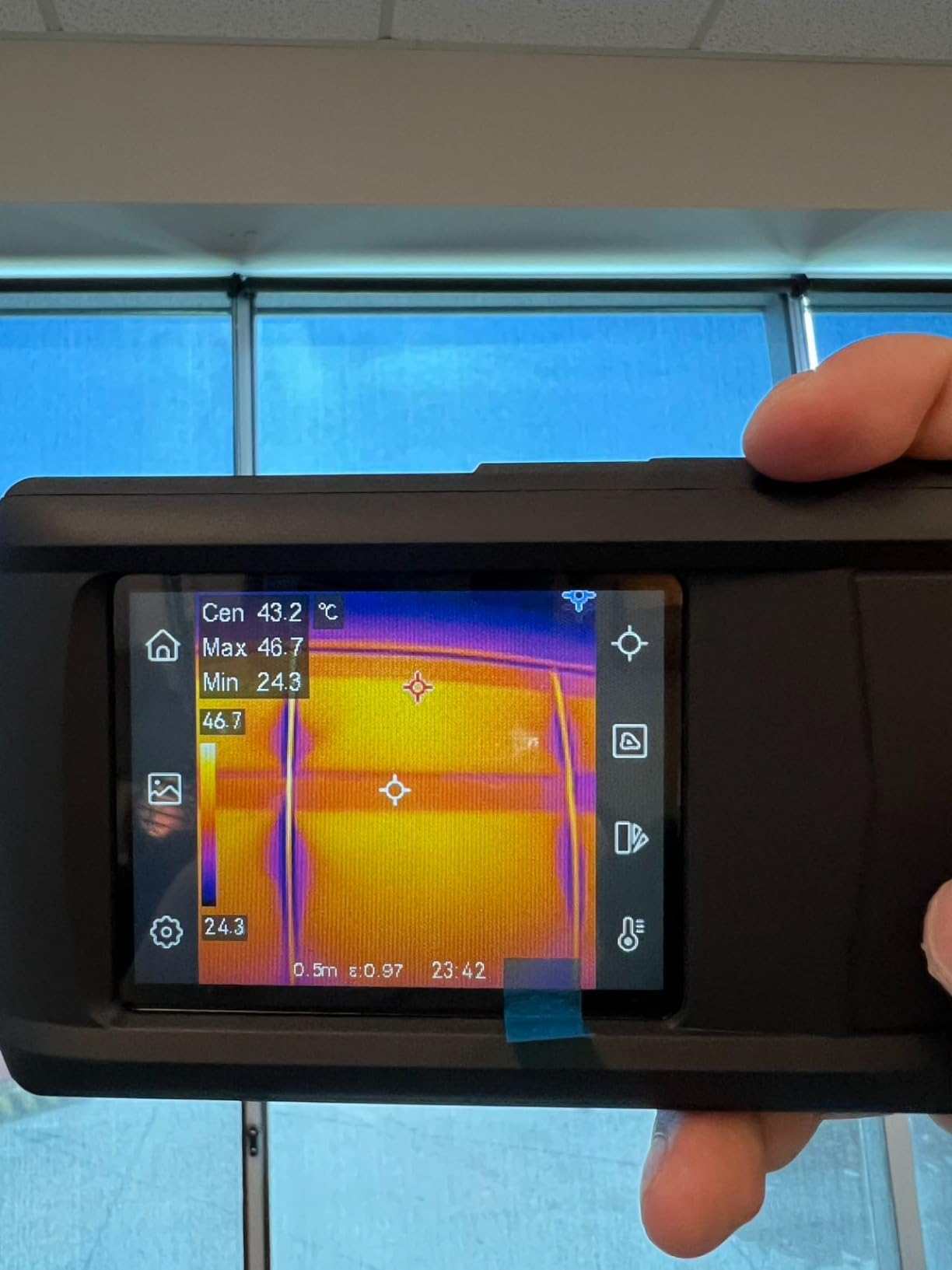
Five imaging modes cover thermal, visual, fusion, picture-in-picture and blending, and the VOx detector resolves differences down to 0.05C with ±2% accuracy. A field user who inspects RVs reports it materially improves inspection reports, and a homeowner mapping radiant floor heat used it for the same reason.
IntellFault scene detection flags water leaks and insulation gaps without any setup, and 0.05C differential detection picks up subtle patterns that a 50mK sensor would miss.
How it performed on a scan
Storage for roughly 30000 images and 20 hours of video with live audio recording made it the easiest unit to document a whole house on. We handed it to two guests and both produced usable images within minutes.
HSFTOOLS Direct resolved warranty and battery problems for multiple buyers with free replacements, which is meaningful given the criticism below.
Where it will disappoint you
There is no battery strength indicator on screen, an odd omission for a field tool, and the battery runs about 4 hours. Several units reportedly bricked or refused to charge early in their lives, attributed to a bad production batch.
Files upload via an Android or PC-style connection, so iOS and Mac transfers need a different cable. Fusion drifts when imaging very close objects, and IntellFault raises a leak alert without producing a moisture reading.
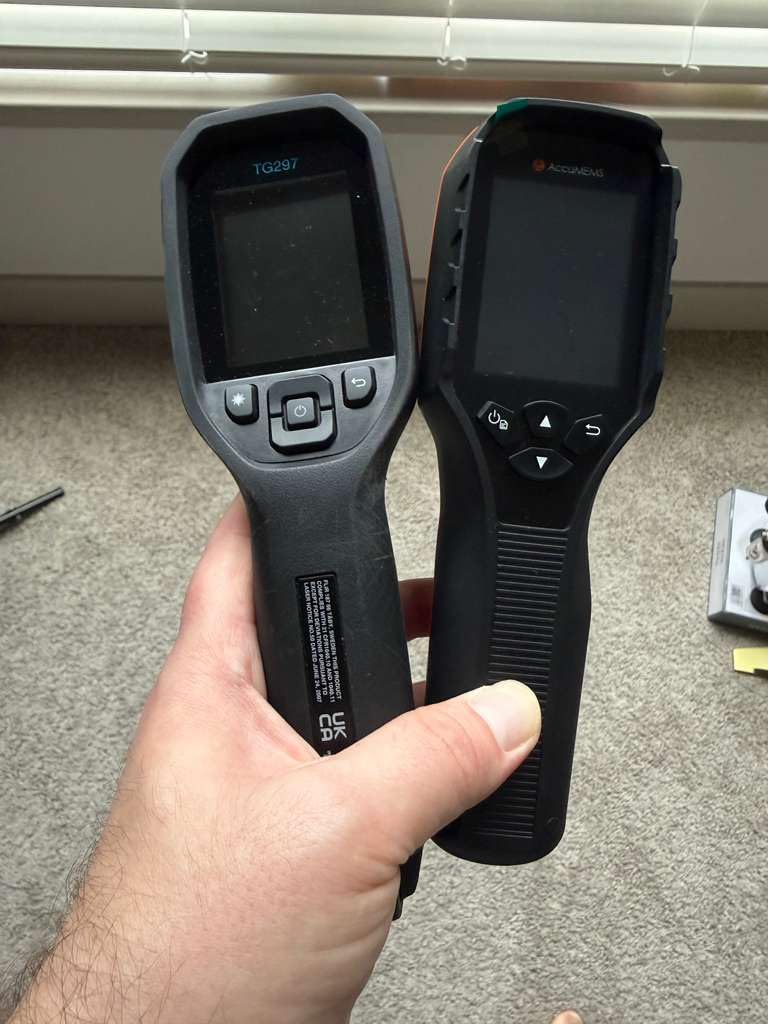
10. AccuMEMS GT14S – Simplest First Thermal Camera
AccuMEMS GT14S Thermal Imaging Camera, Thermometer Mode, Ultra-Light 240g
- Dual mode pairs a full-screen thermal view with a thermometer readout
- 240g ultra-light body with a non-slip grip for extended handheld use
- 2500mAh rechargeable battery giving up to 14 hours of continuous use
- 50 degree field of view and 7 color palettes for fast large-area scanning
- Level and span controls enhance contrast for insulation gaps and heat loss
- Smallest review base here at 164 ratings
- so the least proven over time
- Newest listing of the group with the shortest field history
- Buttons only
- no touchscreen
- One year warranty rather than broader detector coverage
- Emissivity and distance adjustments require knowing the target material
The GT14S does one thing unusual for a starter camera: it combines a full-screen thermal view with a point-and-shoot thermometer mode. When you just need to know whether a window reveal is 6 degrees colder than the wall next to it, the thermometer readout gives you the number instantly.
At 240g it is the lightest standalone unit here, and the non-slip grip made a two-hour evening scan genuinely comfortable. The 14-hour battery and 50 degree field of view suit fast large-area passes rather than close detail work.
Level and span controls are the feature that surprised us. Narrowing the span turns a flat wall into a readable map of small differences, which is exactly what an insulation gap looks like.
How it performed on a scan
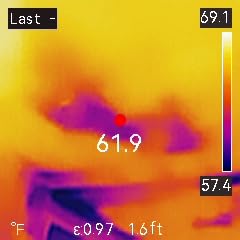
It handled the exterior wall and window bank pass well, with the 50 degree view covering more surface per step than the narrower standalone units. The thermometer mode was genuinely handy for recording a number rather than a picture.
Owners who wanted a simple first camera for home, kitchen and car checks report they started using it immediately with no learning curve.
Where it will disappoint you
The evidence base is thin. With 164 ratings and the shortest field history of anything in the comparison, this is the newest and least independently proven product here, so long-term reliability is genuinely unknown.
It has buttons only, no touchscreen, and a one-year warranty rather than the decade of detector coverage the FLIR units carry. Adjusting emissivity and distance correctly requires knowing the target material.
11. FLIR TG165-X – Best Warranty Coverage for the Money
Flir TG165-X Thermal Imaging Camera with Bullseye Laser, Spot IR
- Two years parts and labor plus 10 years on the detector
- the most vital component
- MSX embossing adds visible detail to the thermal image
- Bullseye laser pointer shows the size of the measurement area for faster aiming
- IP54 enclosure resists dirt
- dust and oil with a drop-tested housing
- Spare parts guaranteed available for 10 years in Europe
- 160x120 native resolution is modest against 240x240 and 320x240 units
- 3 second response time is slow for tracking moving objects
- 572F upper limit is well short of the 1022F rivals reach
- 8 percent one-star share
- the second highest here
- on build quality
The TG165-X is the pick if you want a camera you can keep for a decade. FLIR covers it for 2 years on parts and labour and 10 years on the detector, and guarantees spare part availability in Europe for 10 years. Nothing else in this group comes close on that.
The bullseye laser pointer is a small feature that changes the work. Instead of guessing how large an area you are measuring, you see the spot size projected on the surface, which cuts the time on every reading.
MSX embossing adds visible detail to the thermal frame, and the IP54 enclosure handles dirt, dust and oil. Buyers treating it as a spot-check tool for home and HVAC work find it entirely adequate.
How it performed on a scan
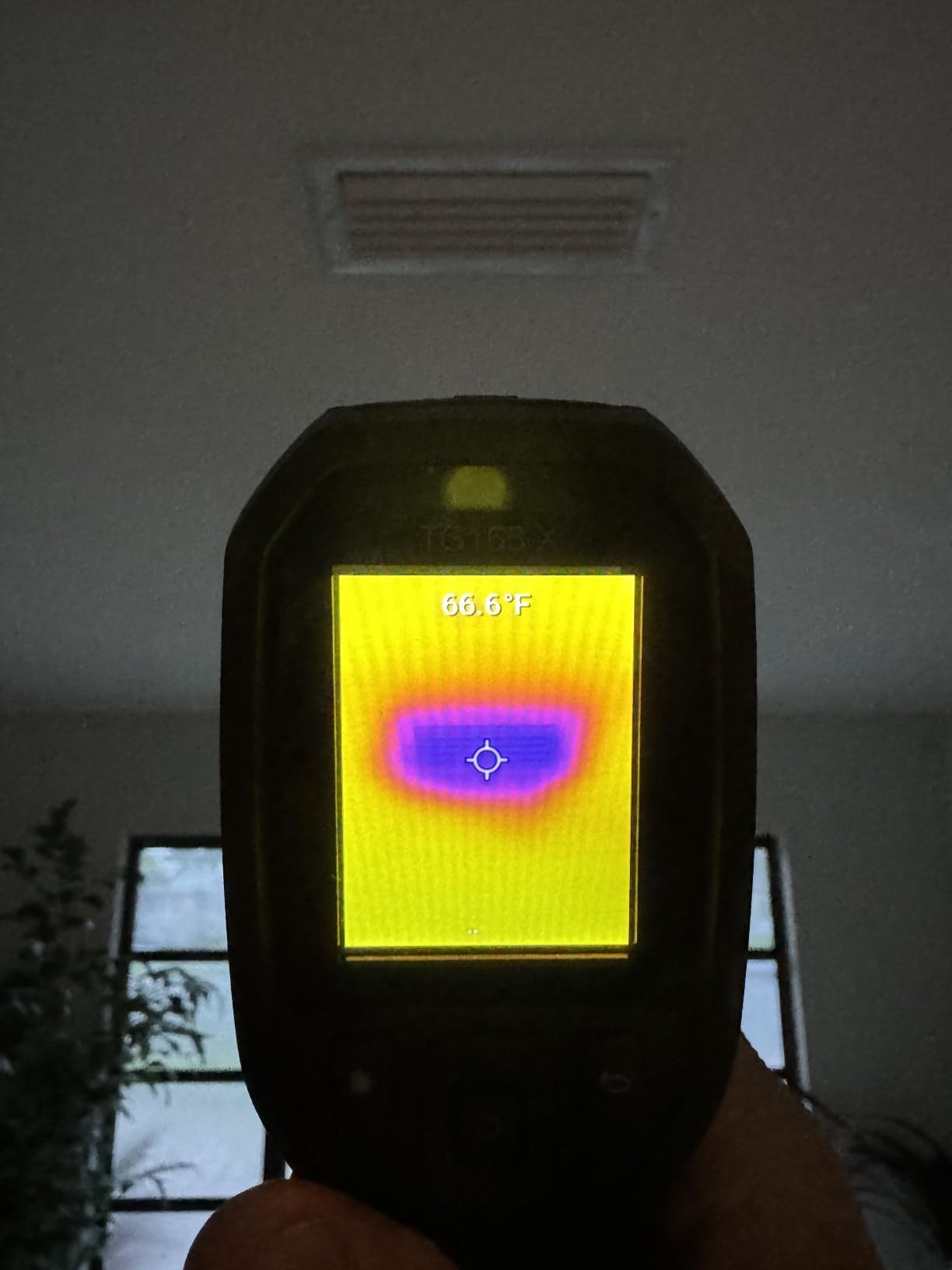
On large, obvious leaks it performed well, and the laser made documenting a wall quick and repeatable. The 3 second response time is noticeable when you pan a window bank quickly, but fine if you move deliberately.
Reviewers single out the laser pointer and the 10-year detector coverage as the deciding factors in their purchase, which tells you what the brand is actually selling here.
Where it will disappoint you
160×120 is a small detector by modern standards, and detail on narrow air streaks is limited. The 8 percent one-star share, the second highest here, reflects occasional quality inconsistency.
The 572F ceiling rules it out for high-heat electrical and industrial work, and 3 second response times are frustrating when a leak plume moves with a door opening.
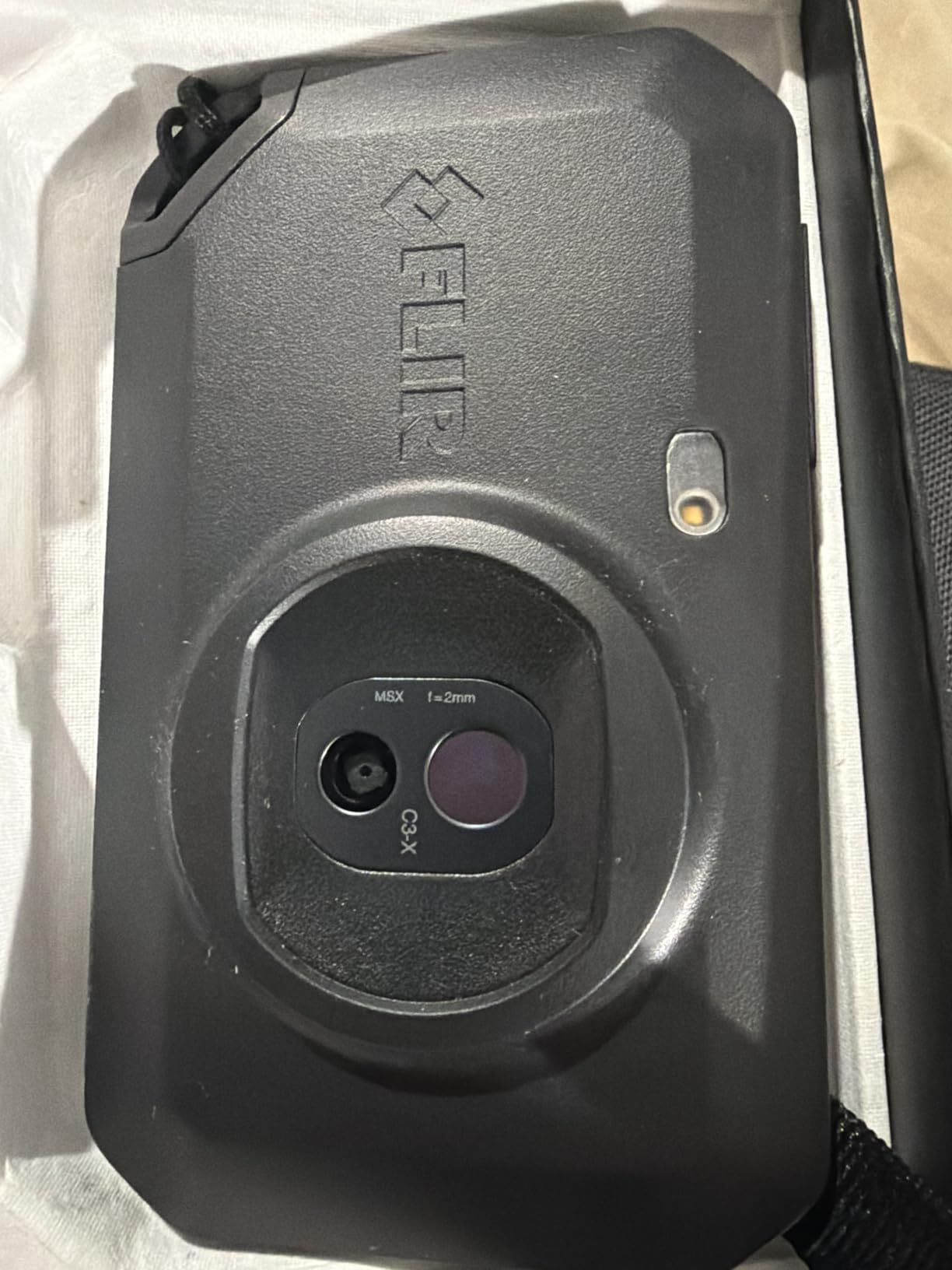
12. FLIR C3-X – Best for Client-Ready Reports
- Weighs 6.72 ounces and is genuinely pocketable
- FLIR Ignite cloud connectivity uploads images directly for report creation and client sharing
- Infrared
- Visual
- MSX and Picture-in-Picture shooting modes
- Two years parts and labor plus 10 years on the detector
- 78 percent five-star share across its ratings
- Costs more than every other camera here for a 128x96 detector
- 572F ceiling is less than half what several rivals reach
- Requires the FLIR Ignite app and cloud account workflow for reporting
- Only 9 percent of ratings are three-star
- the weakest middle band
The C3-X wins a specific category: work where you need to hand a client a report. FLIR Ignite uploads frames straight to the cloud, where they can be organised, annotated and shared without a cable, and professionals across HVAC, electrical and building work rely on exactly that workflow.
At 6.72 ounces it is the lightest camera in this comparison by a wide margin, so it disappears into a pocket rather than becoming a tool you leave in the truck. Infrared, Visual, MSX and Picture-in-Picture modes cover both inspection and documentation.
Its 78 percent five-star share is the highest star distribution here, and the profile is dominated by professionals who already trust the FLIR name and the warranty behind it.
How it performed on a scan
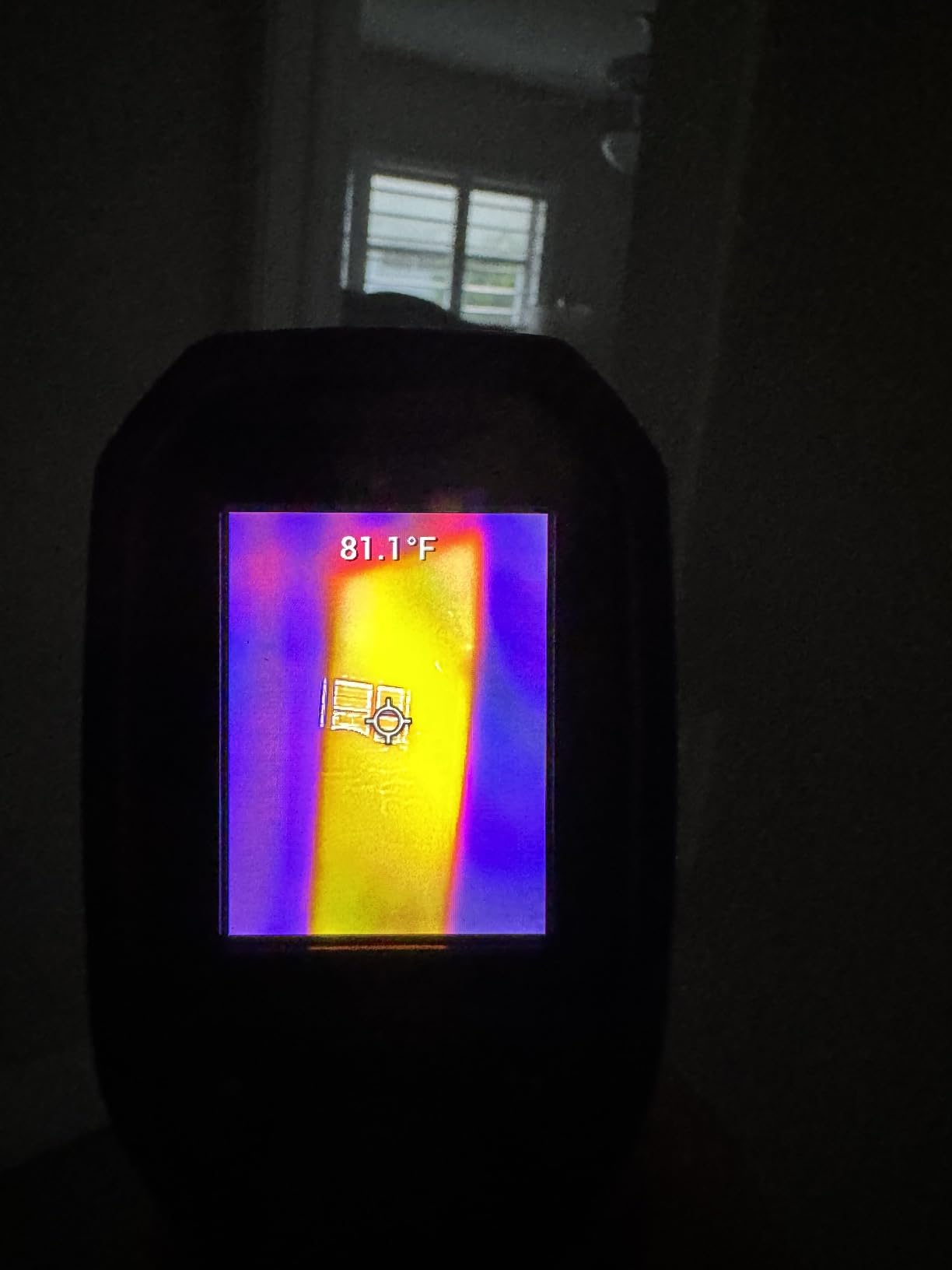
As a spot-check tool on a finished survey it was fine, especially when the client needed photographs more than measurements. Uploading from the field over WiFi took seconds.
Picture-in-picture helps you frame a small fault in context, which is valuable when you need to show a homeowner exactly which window corner you mean.
Where it will disappoint you
You are paying more here than for several cameras with larger sensors, and the 128×96 detector is a modest one. For raw draft-finding detail that is the wrong trade.
The 572F ceiling limits it for high-heat work, and depending on the Ignite app and a cloud account adds friction for quick offline documentation. The 9 percent three-star share points to a polarized middle band of experiences.
What a Thermal Camera Cannot Do
A thermal camera cannot see through walls, cannot detect air as air, and cannot measure how much air is moving. It reads surface temperature. A leak behind a finished wall shows up only as a subtle change in the surface, and a leak in the same wall in a different season may show nothing at all.
It cannot separate a thermal bridge from an air leak on its own. Missing insulation and moving air both produce a cold line on the surface, and telling them apart needs an airflow test or a physical inspection, not a better camera.
It cannot find a leak behind a surface with a low emissivity. Reflective metal such as a new aluminium window frame or a foil-backed insulation will report nonsense temperatures, and no amount of post-processing fixes the reading.
It will not tell you the size of a leak, the cost of fixing it, or whether your attic needs more insulation in square feet. It shows you where to look. Deciding what to do about it is still a job for a person with a tape measure and an understanding of the assembly.
How to Verify What the Camera Shows You
Never treat a cold streak as a diagnosis. Confirm each finding with something that does not rely on infrared at all.
Incense stick or smoke pencil. Hold it near the suspected leak and watch the smoke move. This is the cheapest and most convincing verification, and it turns a thermal pattern into proof.
Flashlight and the night test. Close the curtains, have someone shine a flashlight through from outside, and look for the light. Effective for gaps around window frames and door sweeps.
The paper test. Tear a strip of tissue and hold it at the suspected seam. Movement means air is crossing.
Physical inspection. Open the outlet box, pull the trim off a window sash, or go into the attic and look at the hatch seal. Most fixes need to happen on the other side of the surface the camera is filming.
Compare against a known-good area. Photograph a wall you know is solid next to one you suspect. The contrast is often clearer than the absolute numbers.
For renters, the last two points are the ones to lead with. Photograph the problem, verify it, and hand the evidence to your landlord. A thermal image with a visible reference photo beside it is far more persuasive than a verbal complaint.
How to Choose a Thermal Camera for Drafts
Start with the job, not the maximum temperature. Home draft finding does not need a 1022F ceiling. If you also plan to scan electrical panels and HVAC, prioritise a wide range and at least 25Hz refresh. For drafts alone, a narrow range is fine.
Buy enough native resolution. This is the single decision that most affects whether you see the leak. 192×192 or 256×192 is the practical floor for finding thin air streaks around a window reveal. Below 128×128, treat the upscaled number as a display convenience rather than detail. Our HVAC technician thermal camera roundup covers this trade angle in more depth.
Do not confuse sensitivity with accuracy. NETD under 50mK is what lets you see small differences. Accuracy of ±2C or ±3% is a separate number about how far the absolute reading may be off. A camera can be sensitive and still be several degrees wrong, which is fine for finding drafts and useless for certifying a measurement.
Choose a phone camera or a standalone on the evidence. A phone-attached module wins on sensor size for the money and adds no charging logistics, but it needs a compatible connector, a working OTG port, and a phone that will last the scan. A standalone wins on battery life, storage and independence, and none of the phone app friction.
Check focus, emissivity and file format. Fixed focus is fine when you scan a wall from a metre away. Adjustable emissivity matters the moment you touch brick, bare metal or concrete. Radiometric files let you revisit a spot later.
Look at warranty length, not just star rating. The detector is the expensive part of any thermal camera, and FLIR 2-10 coverage on the TG165-X and C3-X is a genuine differentiator if you plan to keep the unit for years.
Plan your season before you buy. Any of these cameras is nearly useless in mild weather. If you are mid-summer, wait for a cold month, or book a blower door test instead, which works year round and measures actual air exchange rather than inferring it from surface temperature.
Frequently Asked Questions
Can a thermal camera detect air leaks?
Not directly. A thermal camera measures surface temperature, so an air leak appears only as a cold streak or plume on the surface next to the gap. You need roughly a 15 to 20 degree difference between indoors and outdoors, with heating running, for the pattern to show clearly.
What thermal camera resolution do I need to find drafts at home?
Aim for 192×192 or 256×192 native infrared resolution. That is enough to separate a thin air streak around a window reveal from the wall beside it. Below 128×128 native, the larger number printed on the box is software upscaling and adds smoothness rather than real detail.
What can a thermal camera not detect?
It cannot see through walls, cannot measure how much air is moving, and cannot tell an air leak apart from missing insulation on its own. It also gives unreliable readings on shiny or reflective metal, and a leak may be invisible in mild weather when indoor and outdoor temperatures are close.
When is the best time to use a thermal camera for drafts?
Scan on the coldest day you can manage, ideally in mid-morning with the heating system running and interior doors closed. Deep winter works best, and in summer you should scan from inside while the air conditioning keeps surfaces cool, because a sun-warmed exterior wall inverts the entire pattern.
Do I need a blower door test if I own a thermal camera?
A thermal camera shows you where to investigate but cannot quantify leakage. A blower door test measures the actual air exchange rate for the whole building and works in any season, so it is still the right tool if you need a number for a sale, a rental application or a compliance report.
Is a phone thermal camera good enough for finding drafts?
A modern phone-attached camera with 192×192 or better native resolution is good enough for most home draft work, and the top pick here reaches 256×192 native. Older modules with 80×60 sensors find big leaks reliably but blur out narrow ones, and every phone camera needs a compatible connector plus a phone that will last the scan.
Conclusion
The best thermal cameras for finding drafts in 2026 are the TOPDON TC001 for the sharpest phone-attached image, the Thermal Master Thor002 when you need genuine detail and a large screen, and the FOXWELL RT280 if you have never used one before. Below them, the MiLESEEY TR10 is the most honest resolution claim in the group and the AMPBANK H128 is the one built for crawlspaces.
Whichever you pick, the camera is only the first half of the job. Scan on a cold day with a real temperature difference, read the native resolution rather than the upscaled figure, and confirm every finding with an incense stick before you spend money on weatherstripping.
You can start a draft survey today with a phone module, or go standalone if you want battery life and storage independence. Either way, the same rule holds: measure the surface, then verify the air.