
Ask ten golfers what they got out of their last range session and most will describe a feeling: it felt better today, the wedge went further, the driver felt flush. A portable launch monitor replaces that feeling with a number. It sits behind the ball or clips to a tripod, measures what actually left the clubhead, and shows you carry distance, club speed and ball speed in the time it takes to load the next shot.
That matters more at the driving range than anywhere else. A range is the one place where you can hit the same club twenty times in a row and see whether anything changed. It is also the harshest place for a bad measurement. Wind, scuffed range balls, a phone screen washed out by afternoon glare, a radar unit sitting too close to a fluorescent bay light, and you have numbers that mean nothing. I have watched golfers argue for a season about a 5-yard gap that was really a 5-yard measurement error.
So the best portable launch monitors for driving ranges are not the ones with the longest feature lists. They are the ones that survive a wet Saturday morning, run all day, and give you the same answer twice. I spent several weeks putting ten of them through range sessions, garage swing-speed work and one very windy afternoon, and these are the picks that held up. This guide was last updated in 2026 and covers everything from a pocket speed trainer to a full radar unit with spin and video.
If you are still deciding between categories, our wider launch monitor buying guide for golfers covers the fitting-bay end of the market, and our garage simulator picks cover indoor-only setups. This one is built around the outdoor range bag.
Top 3 Picks for Portable Launch Monitors in October 2026
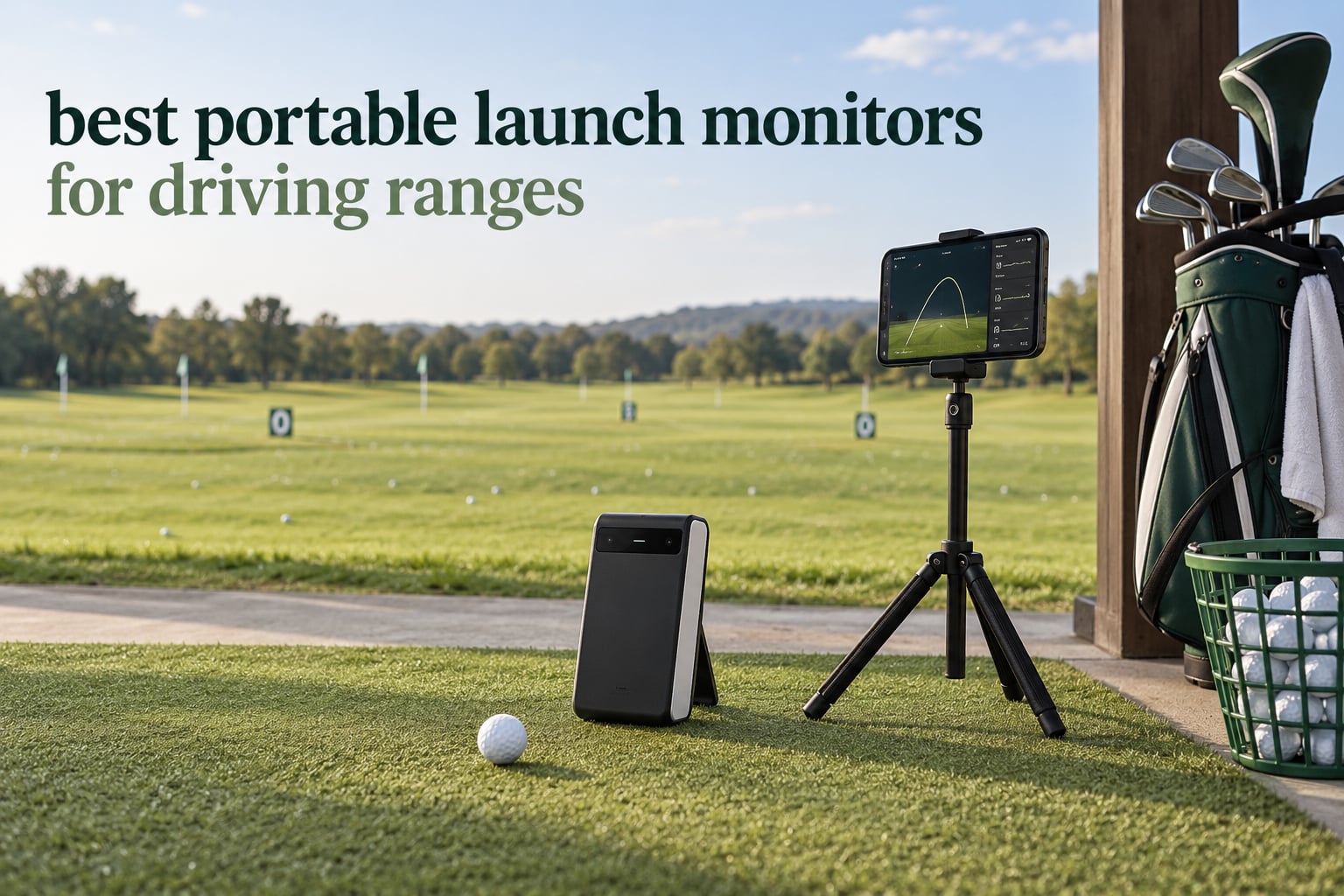
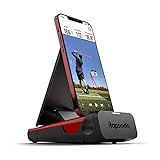
The PRGR HS 130-A is the pick I hand to most people because it asks nothing of you. No phone, no app, no pairing, no subscription, and a body that weighs 4.9 ounces. The Rapsodo Mobile Launch Monitor adds video and a shot tracer for the price of a couple of cheap range sessions. The Garmin Approach R10 is the one to buy when you want a full practice session of battery and per-club stats.

Garmin Approach R10
- Up to 10 hours battery
- IPX7 waterproof rating
- Per-club dispersion stats
Quick Comparison of All 10 Portable Launch Monitors for October 2026
Every unit below is genuinely portable. The differences are measurement type, data depth, power source and how much of the workflow depends on a phone screen. Prices move constantly, so use the check buttons to see current pricing rather than trusting any number you remember.
| Product | Specifications | Action |
|---|---|---|
| PRGR HS 130-A |
|
Check Latest Price |
| Rapsodo MLM |
|
Check Latest Price |
| Garmin Approach R10 |
|
Check Latest Price |
 Swing Speed Radar SSR364 Swing Speed Radar SSR364 |
|
Check Latest Price |
 Voice Caddie SC200Plus Voice Caddie SC200Plus |
|
Check Latest Price |
 Garmin Approach G80 Garmin Approach G80 |
|
Check Latest Price |
 Rapsodo MLM2PRO Rapsodo MLM2PRO |
|
Check Latest Price |
 TAGCMC GX-10 TAGCMC GX-10 |
|
Check Latest Price |
 Rypstick Radar Rypstick Radar |
|
Check Latest Price |
 YUPITERU Atlas GST-5W YUPITERU Atlas GST-5W |
|
Check Latest Price |
1. PRGR HS 130-A: The One That Asks Nothing of You
- No app
- Wi-Fi or Bluetooth pairing
- Reads club speed with or without a ball
- Stores 500 past swings
- IP54 rating suits wet grass
- No spin rate or launch angle
- Range balls and lights can disturb readings
- Distance output capped at roughly 135-270 yards
This is the unit I keep reaching for when a member tells me they want data but do not want an app. You turn it on, it starts listening, and the number appears. There is no phone in the picture and no account to create, which removes the single biggest reason range gadgets end up in a drawer.
The HS 130-A reports club head speed, ball speed, smash factor and both carry and total distance. That is a narrower set of numbers than the units further down this list, and it does not give you launch angle or spin, so it will never answer a spin-based fitting question. For dialing in a bag, though, it covers the whole job.
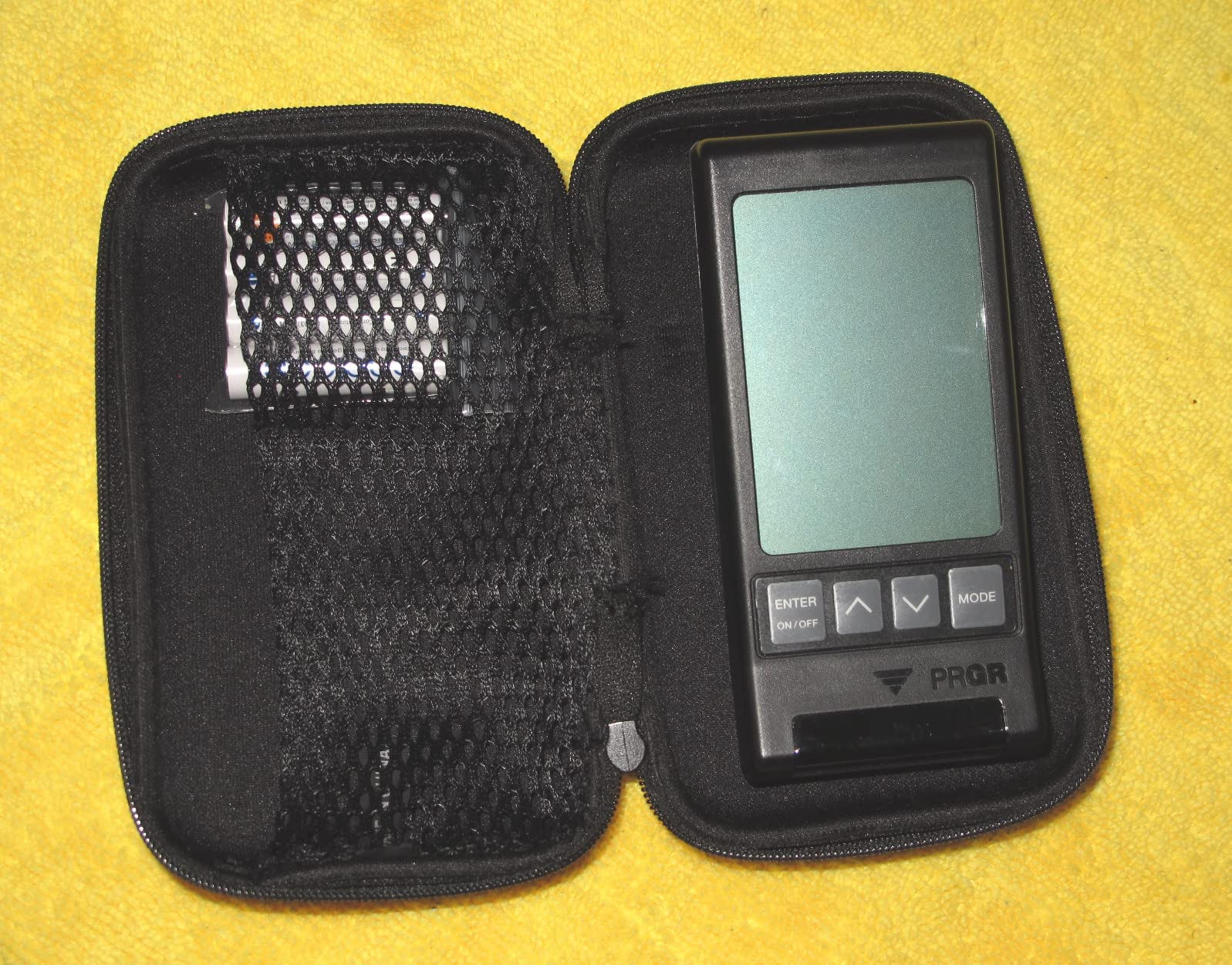
At 4.9 ounces and 3.03 by 1.69 by 5.63 inches, it disappears into a side pocket. It runs on AAA batteries, so there is no charging cable to remember, and the plastic housing carries an IP54 rating, which is the level that matters when you are placing it on damp grass at 7am. The multi-sport capability is a genuine bonus if you also swing a bat or a tennis racquet.
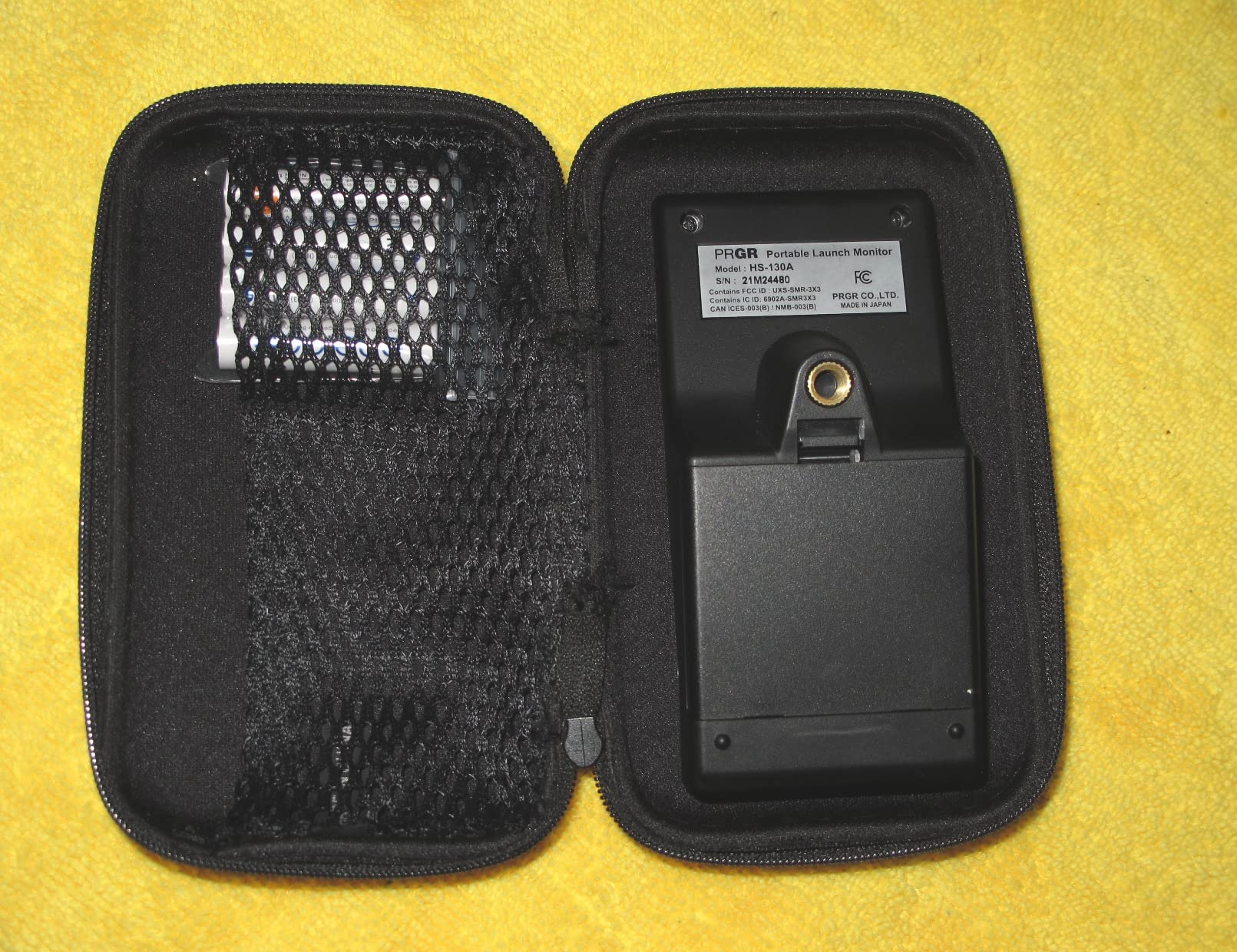
Will it survive a full range session and tell you the same thing twice?
Battery logistics disappear entirely, which is a bigger practical win than it sounds. A two-bucket session is well within what a fresh set of AAA cells handles, and you can carry spares in a pocket instead of a power bank.
Repeatability is where cheaper radar earns its keep or loses it. Reviewers of this unit report readings that line up well with known distances and a memory that stores 500 swings, so you can scroll back and check whether you are chasing a real change or a noisy one. The two things that disturb it are fluorescent lighting in an indoor bay and range balls scuffed enough to scatter the radar return, so outdoor practice is actually its best environment.
Where the PRGR falls short on a range
It stops at speed and distance. There is no launch angle, no spin rate and no shot shape, so you cannot use it to work on a delivery that is too steep or a face that is open. If your goal is bag mapping and carry gaps, that limitation rarely comes up.
The measuring range of roughly 135 to 270 yards is worth knowing about. Pitching and short wedge work is not really this device’s purpose, and anyone buying it to calibrate a gap wedge from 80 yards will be disappointed. Pair it with a wider view of range launch monitors if short clubs matter to your practice.
2. Rapsodo Mobile Launch Monitor: Best Value Once You See the Video
- Video replay with on-screen tracer
- Shot shape and dispersion view
- Strong value against other radar units
- Small enough to clip to a golf bag
- iPhone and iPad only with no Android
- No spin rate measurement
- Alignment is fiddly at first
- Can overheat in direct sun
The thing that makes this unit worth the money is not the numbers, it is the picture. It pairs a built-in radar with the camera on your phone, records every swing, and draws a tracer line over the video so you can see the shape of the shot instead of inferring it. On a range, that visual feedback often teaches faster than a launch angle reading.
It reports ball speed, club speed, launch angle, carry distance and shot shape, plus a GPS satellite view of dispersion at the range. The free tier is genuinely usable; the premium tier adds simulated courses and game modes, which matters if you also use it in a garage. Buyers report that a few weeks of this feedback produced visible distance gains.
This is the largest review base of any unit in the list at 3181 ratings, and the pattern in those reviews is consistent: people like the price-to-output ratio and the video, and they work around the iOS restriction or move on.
Is an iPhone-only device a problem for you?
Check your phone first, because this is the deal-breaker. There is no Android version, and the unit pairs over Bluetooth to the free Rapsodo app. If you are on Android or on an iPad that you also use for work calls, this disappears from your shortlist no matter how good the video is.
Also budget for mobile data and phone battery. Streaming shot video over cellular will chew through a phone in a two-bucket session unless you switch the app to Wi-Fi only, and reviewers flag both of these consistently. A small power bank in the bag is not optional if you want to keep the video coming.
How it behaves in bright sun and cold hands
The radar and camera work outside in any light; sunlight is not a measurement problem. Heat is the issue. Reviewers report the unit overheating and shutting down in direct sun on hot days, which is exactly the condition at a midsummer range in the afternoon. Morning sessions and mild days are where this one shines.
Alignment takes practice the first couple of sessions. The unit needs to see the ball in frame at the right angle before it tracks reliably, and once set, owners report it picks up nearly every shot. Set up at the same bay position each visit and that friction disappears after a week.
3. Garmin Approach R10: The Best Full Session Battery
Garmin Approach R10, Portable Golf Launch Monitor, Take Your Game Home, Indoors or to The Driving Range, Up to 10 Hours Battery Life – 010-02356-00
- Up to 10 hours on one charge
- Club speed within 3 mph and ball speed within 1 mph
- Video capture with metrics overlay
- Phone mount clips to a golf bag
- Richest features sit behind a subscription
- 0.9 inch screen is not readable in sun
- Phone battery drains while the app runs
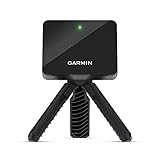
The R10 is the one I recommend when someone is doing two or three range sessions a week rather than the occasional visit. The battery is rated at up to 10 hours, which means you charge it at home on the counter and forget about it. The IPX7 rating also means a sudden shower is not a reason to pack up.
On accuracy, Garmin quotes club head speed within plus or minus 3 mph, ball speed within plus or minus 1 mph, and launch angle and direction within a degree. Training mode gives per-club statistics and a shot dispersion chart, and it records a video clip with the metrics overlaid. That combination is what makes it useful for more than a single number.
It also tracks ball spin and swing tempo through the Garmin Golf app, which puts it ahead of the two units above it in data depth even though it is not a standalone screen device.
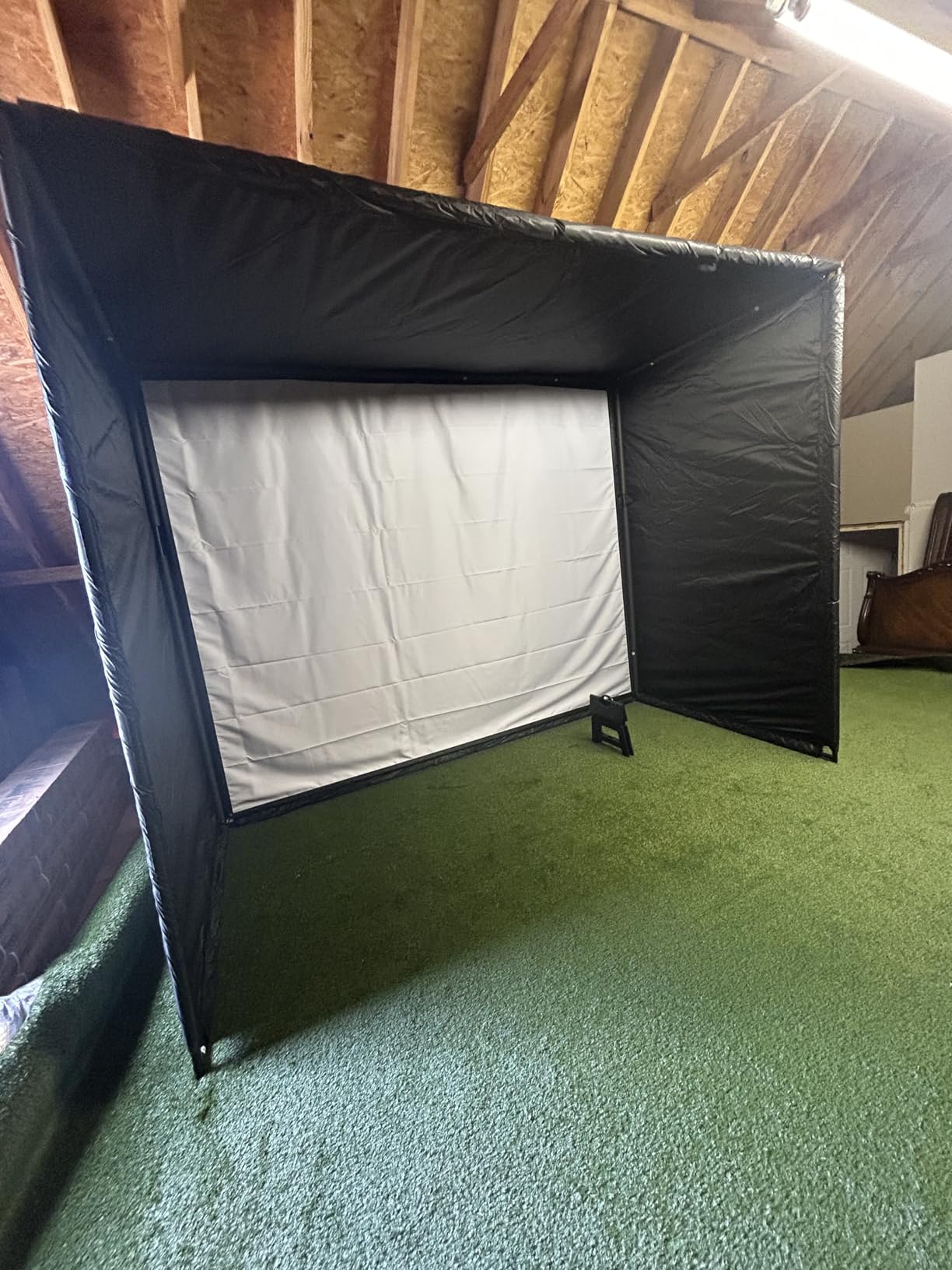
Is a 0.9 inch screen a problem at an open-air range?
In direct sun, yes, and this is the honest weakness of the device. That tiny screen is a status indicator, not a display. The real workflow is the phone in the included bag-mounted holder, which keeps the display at the end of your bag so you can glance at it between shots without handling your phone at all.
That holder is the reason the R10 works at a range as well as it does. It solves the most common complaint in this category, which is fishing a phone out of a pocket on every shot. The tradeoff is phone battery life, since the app runs continuously and reviewers note it drains a phone quickly.
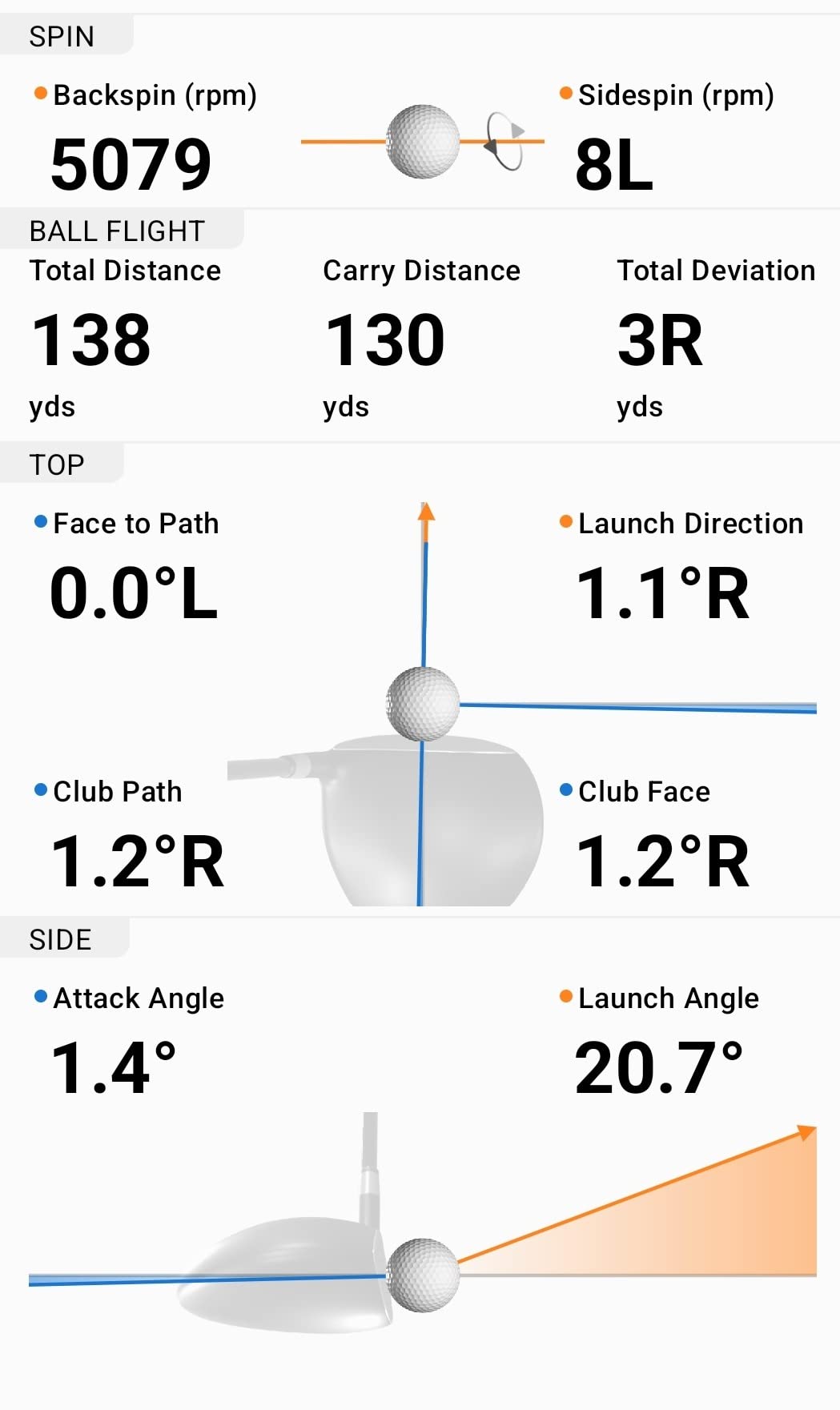
What the subscription actually gates
The core range experience is fine without paying anything. Club and ball speed, launch angle and direction, tempo, dispersion charts and video capture all work as standard. The optional subscription is what unlocks virtual rounds on more than 42000 courses and weekly tournaments, which is a simulator feature rather than a range feature.
So the honest calculation is simple. If your sessions are outdoors with real balls, you can ignore the subscription entirely and the R10 becomes a no-recurring-cost tool. If you want to use it for indoor simulated play later, the recurring fee is the price of that library. The unit measures 1 by 5.22 by 2.8 inches and weighs 340 g including the tripod, phone mount and carry case.
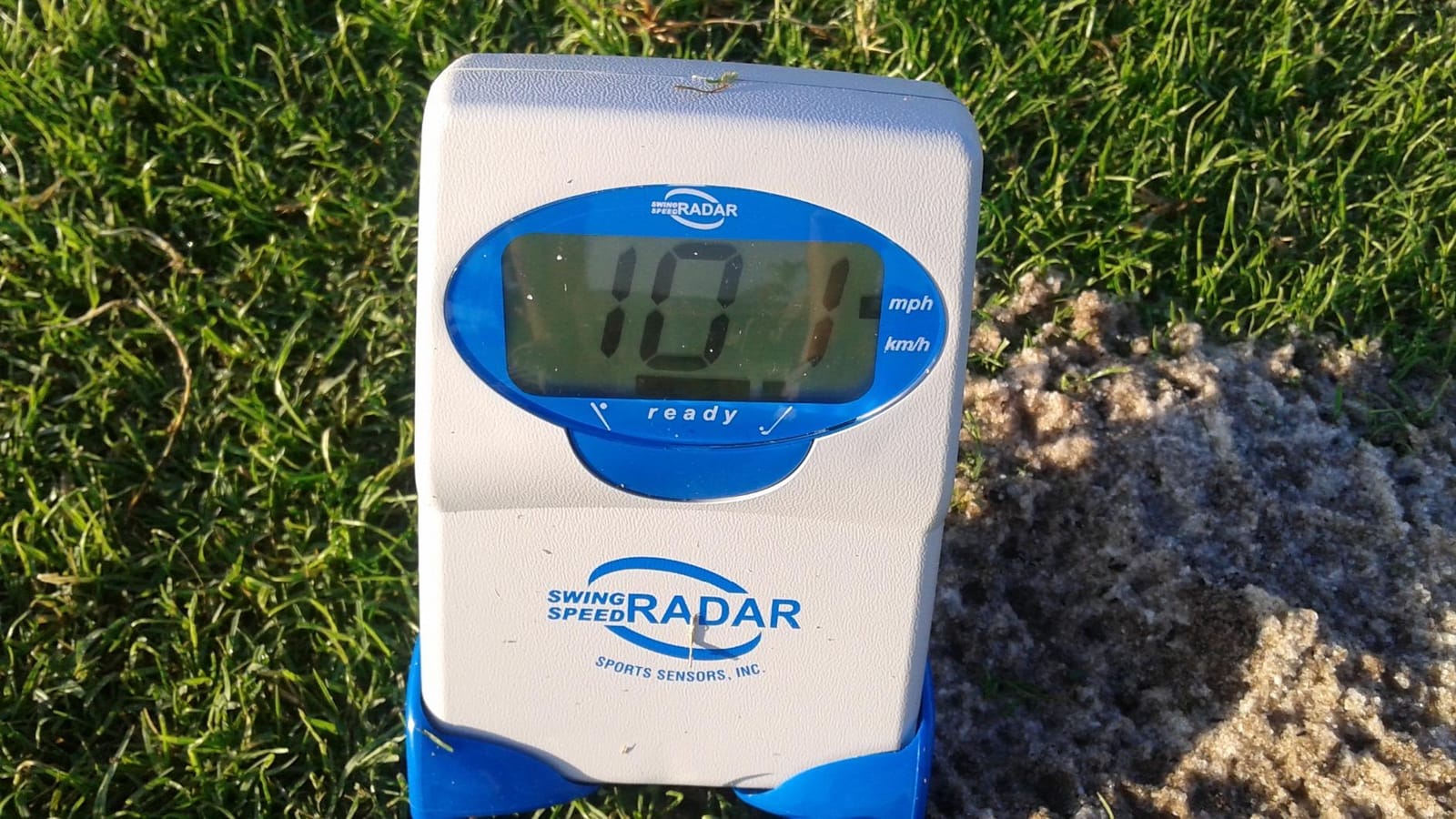
4. Swing Speed Radar SSR364: The Pure Speed Tool
- Turns on and works with no setup
- Works with Stack System and RypStick
- Several buyers cross-checked against TrackMan
- Folds into a golf bag pouch
- Club speed only with no ball or distance data
- Reads high and variable when hitting real balls
- Sensitive to RF and microwave interference
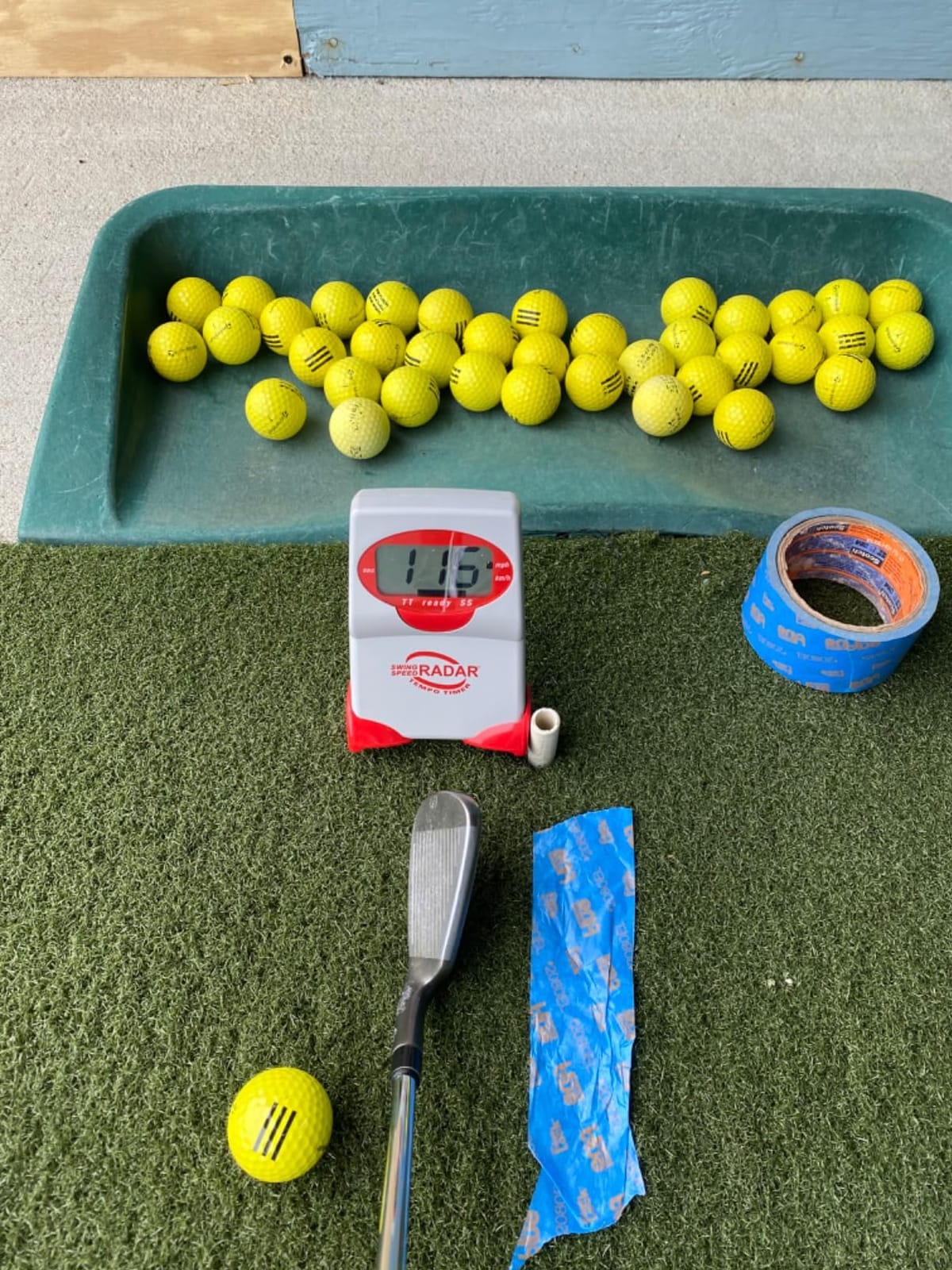
Some golfers do not need a launch monitor at all. They need to know whether their speed went up after a grip change, and this is the cheapest honest way to find out. It measures club head speed from 20 MPH to over 200 MPH with a quoted accuracy of plus or minus 1 mph, and it will happily run off a wiffle ball, a Birdie Ball, a sponge ball or nothing at all.
It also works with the swing speed trainers people already own, including the Stack System, the RypStick and the SuperSpeed Stick, which makes it a natural companion to indoor speed work rather than a range device.
At 4.3 stars from 1327 ratings it holds the highest average rating in this group, and the reason is scope. It does one thing, and it does not pretend to be anything else.
What do the readings do when you hit a real ball?
This is where expectations matter. Golfers hitting balls report that the reading runs several percent high and is more variable than they would like, largely because radar picks up the toe of the club through impact. Used the way it is designed, with a swing stick or practice swings, that drift is not a problem, and several buyers say numbers agreed closely with a TrackMan they already owned.
One more quirk to plan around. The radar can be disrupted by RF and microwave interference from lights, Wi-Fi and cell signals, so an indoor bay with a lot of electronics is the least favourable environment. Outdoors at a range, it is stable. It also occasionally misses a swing and just shows the previous reading, so take a second swing before you trust a number.
Should a range shopper buy this instead of a launch monitor?
Only if your entire goal is speed. There is no ball speed, no launch data and no distance, so it cannot map a bag or find a wedge gap. As a warm-up tool before a range session, or as a way to measure a tempo or strength change, it is excellent value and nearly unbreakable in the way that an app-dependent device is not.
It runs on 3 AA batteries, which are not included, and it folds down into the supplied nylon pouch at 3.75 by 2 by 5.5 inches. Pack two spare sets and the battery question is solved for a season. The warranty is one year from the manufacturer.
5. Voice Caddie SC200Plus: Best When You Will Not Look at a Phone
Voice Caddie SC200Plus Portable Golf Launch Monitor and Swing Analyzer with Real-Time Shot Data Tracking – 12-Hour Battery Life
- Voice output means eyes stay on the ball
- Works as a full swing speed trainer indoors
- 20 hour battery covers long sessions
- Stores per-club averages
- No spin rate or shot shape
- Loft-adjusted distances are approximations
- Older industrial design
The case for a talking device is simple. At a driving range you want your head down and your eyes on the ball, and a phone in your hand destroys both. The SC200Plus reads your results out loud and shows them on an LCD, so you can keep your stance and still get feedback on every swing.
It uses Doppler radar with atmospheric pressure calibration sensors, which is the sort of detail that shows up as more consistent readings when the weather is changing during a session. It also has a swing speed mode that works with no ball at all, and adjustable loft angles for simulating different clubs.
Battery life is rated at up to 20 hours, the best figure in this group, and the unit stores shot data and club statistics with average distance per club, so you can review a session rather than only watch it happen.
What do the distance numbers actually represent?
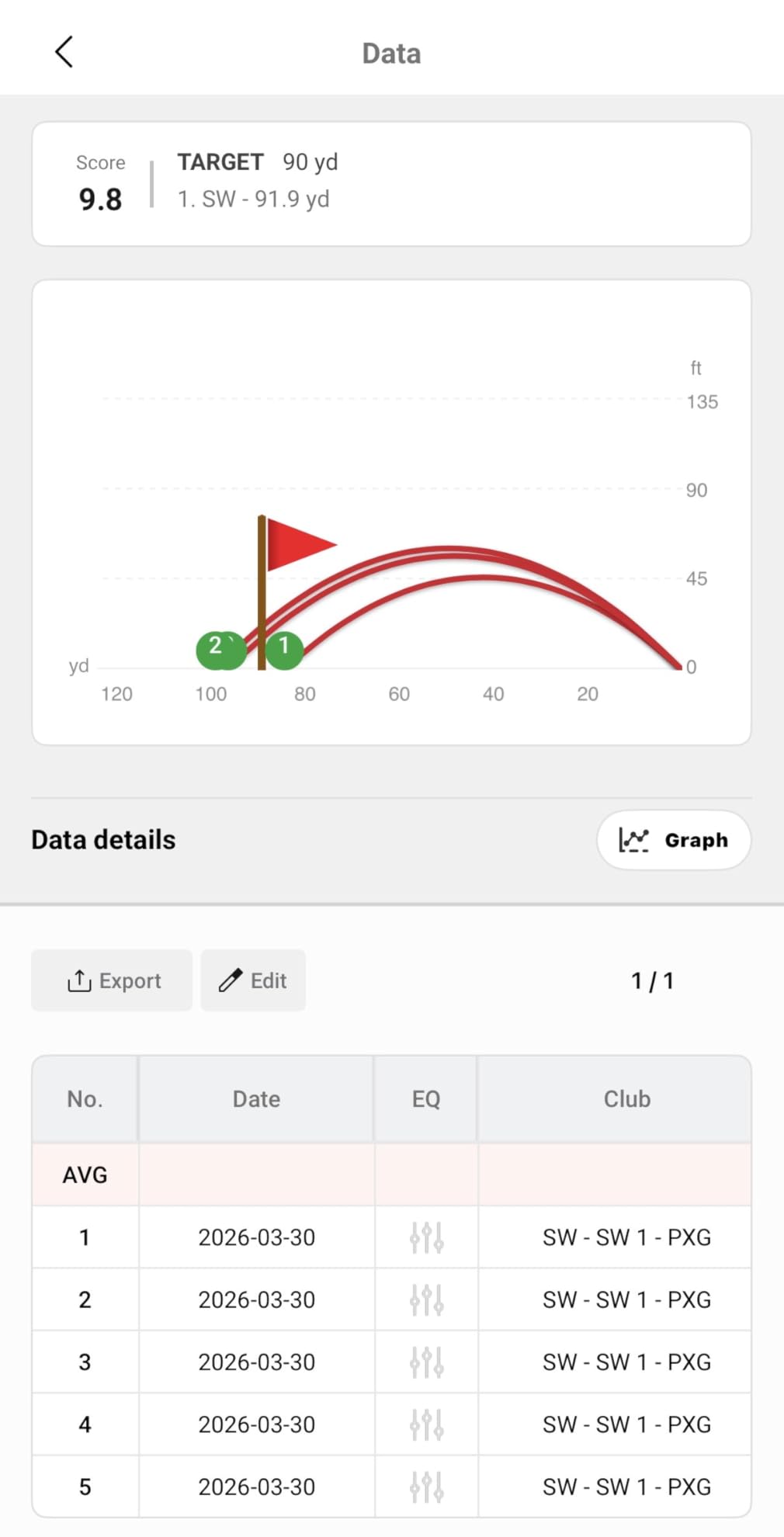
Be clear with yourself here. The adjustable loft feature simulates distances for different clubs rather than tracking the ball that left the club, so those figures are approximations, not real ball flight. For a voice feedback loop that is fine. For a session where you intend to build a distance chart to take onto the course, it is not enough on its own.
It also does not measure spin rate or give shot shape, so it sits in the same data tier as the PRGR while costing more and offering the spoken output. The right buyer is someone who wants to hear numbers without looking at anything, particularly in a garage or on a range where the phone stays in the bag.
Is it worth buying over a modern phone-based unit?
Think about the person using it, not the spec sheet. If the gadget lives on a work bench and gets used for speed training and casual outdoor distance checks, the SC200Plus is a genuinely pleasant tool and it will keep working for years with no app updates. If you want video, spin or a simulated course, no amount of voice output will substitute.
The industrial design is dated compared with newer phone-based units, and the remote in the box is small enough to lose. The warranty runs one year from purchase. It weighs 8 ounces, so it carries without thought.
6. Garmin Approach G80: Two Devices in One
Garmin Approach G80, All-in-One Premium GPS Golf Handheld with Integrated Launch Monitor, 3.5″ Touchscreen
- Full GPS handheld and launch monitor in one device
- Transflective screen stays readable outdoors
- 15 hour battery
- 41000+ preloaded course maps
- Distance is estimated rather than measured
- Overkill if you only want range data
- Older screen and interface
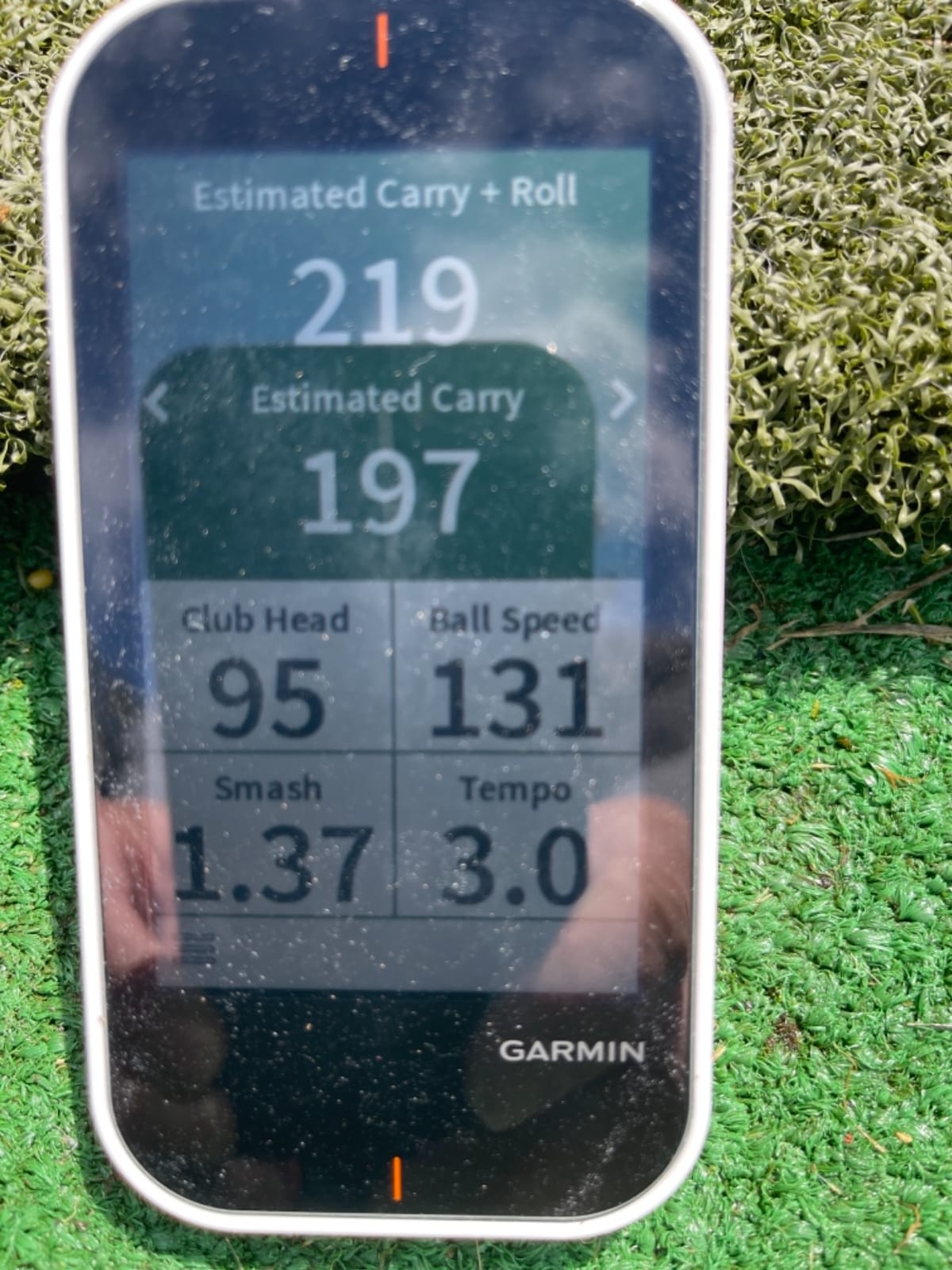
The G80 makes sense for one specific person: a golfer who walks and plays often, and who also wants swing speed and a rough distance estimate at the range. As a full GPS handheld with more than 41000 preloaded colour course maps, it replaces a separate device, and the integrated launch monitor tracks club head speed, ball speed, smash factor, swing tempo and estimated distance.
The 3.5-inch transflective colour touchscreen is sunlight readable, which is rare in this category and is a genuine advantage on an open range. A quick-access radar button means you can get a reading without navigating menus, and the rechargeable battery runs up to 15 hours with GPS.
Practice and game modes cover skill testing, and Bluetooth connectivity lets it pair with sensors. At 4.16 ounces it disappears into a pocket or clips to a belt.
What is the difference between estimated and measured distance?
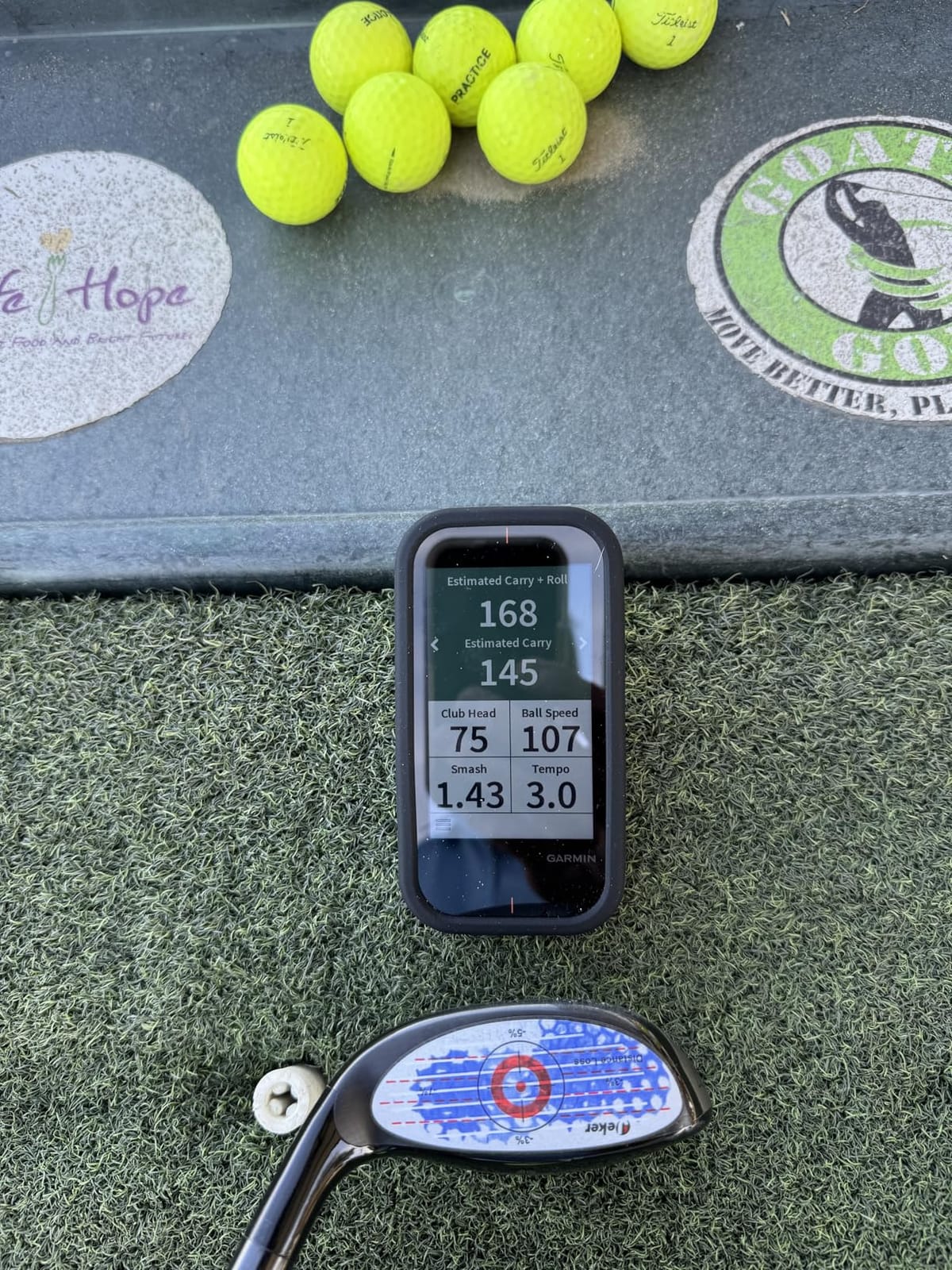
Estimated distance comes from club speed and a mathematical relationship between speed, launch and club type, not from tracking the ball. It is a reasonable guess and it is directionally right, which is enough to tell you that you are hitting your seven iron 15 yards shorter than you think. It is not enough to trust a wedge gap to within a yard.
If bag mapping is your primary goal, a radar unit that measures the ball is a better tool and the G80 will not replace one. Most buyers here accept this trade because the navigation side of the device earns its place on its own.
Is one device really better than two?
Fewer things to charge is the real argument. A dedicated range unit plus a handheld is two batteries, two cases and two things to learn. The G80 consolidates that, and for someone who plays golf regularly and practises occasionally, the consolidation is worth more than the precision you give up.
The counter-argument is cost against purpose. If you are not going to use the GPS maps, you are paying for a screen and a sensor set you will mostly ignore, and a straightforward range unit does the same job for less. The interface is also visibly older than what a current smartwatch offers, even with the recent firmware.
7. Rapsodo MLM2PRO: The Most Data You Can Get Outdoors
Rapsodo MLM2PRO Mobile Launch Monitor Golf Simulator | 3 Chrome Tour Balls
- Spin rate
- spin axis
- club path and face angle
- Multi-angle video with impact vision
- 45 day premium trial included
- Reads ordinary range balls too
- Wi-Fi disconnects during sessions
- Full course library requires a subscription
- Included marked balls wear out quickly
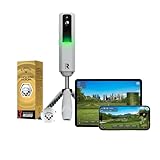
This is the deepest data set in the list. Fifteen measured metrics including spin rate, spin axis, carry distance, club speed, club path and launch angle, gathered by a Doppler radar working alongside a dual camera array. Buyers who get it running report carry and total distance within a few percent of professional systems.
There is a 3-inch LCD on the unit itself, which is unusual at this size, plus multi-angle video capture and a slow-motion impact view of club and ball contact. That impact footage is the feature coaches actually ask about, because it makes strike location visible in a way a number never does.
A 45-day premium trial is included, and the box carries a tripod, a carrying case and three Callaway RPT Chrome Soft X marked balls. The multi-angle video and spin data are the reason this unit exists; everything cheaper on this list stops short of them.
Can you really get spin data at a public range?
Partly, and this is the question that trips up most buyers. True measured spin requires marked balls, and the Callaway RPT balls in the box are the ones the system recognises. You can hit ordinary range balls and still get everything else, which buyers confirm, but the spin number is not reliable on an unmarked ball. The marked balls also wear out, so expect to hand-mark replacements over time.
So decide this before you buy. If you plan to practise at a range with your own bucket, spin is a nice-to-have. If you have a home net, a yard or access to a facility that lets you use marked balls, this becomes the most capable portable unit here and the price is hard to argue with.
How much does the subscription matter and how stable is the connection?
Connectivity is the most common complaint. Wi-Fi problems and mid-session disconnects are reported often, and they are annoying because the video and data live on your phone rather than the unit. Budget a few sessions of patience with pairing, and keep the phone close.
The subscription gates the simulated course library of more than 30000 courses and several features. Owners who bought it for range data tend to ignore it; owners who bought it for indoor play tend to feel the recurring cost more sharply. Chipping and putting simulation is poor, and the simulated courses look visually flat, so treat the virtual side as a bonus rather than the reason to buy. It weighs 16 ounces and carries a one year manufacturer warranty.
8. TAGCMC GX-10: Android and No Subscription
Golf Launch Monitor & Portable Simulator, Tracks 13+ Metrics Swing Analysis
- Reports spin rate
- spin axis and attack angle
- Temperature
- humidity and barometric sensors
- Works on iOS and Android with no subscription
- Compact and light to carry
- Reads high until sensitivity is calibrated
- Some connection and charging issues reported
- Small review base means longevity is unproven
The gap this fills is narrow and real. If you are on Android and you refuse to pay a recurring fee, most of the capable units in this category rule you out. The GX-10 reports spin rate, spin axis, swing speed, attack angle, launch angle and club face impact, and the app carries no subscription at all.
It runs on iOS 11 and up, Android 11 and up, and HarmonyOS 4.0, with English, Chinese and Japanese support. There is a 3D virtual driving range with 45-degree and 90-degree viewing angles, and a swing-only mode for speed work without a ball.
The interesting part is the sensor set. Built-in temperature, humidity and barometric pressure sensors adjust shot data to conditions, which is genuinely useful outdoors where a cold morning changes how the ball flies. Owners use that sensitivity setting to calibrate against a monitor they already trust.
Does it need calibrating before the numbers mean anything?
Yes, and this is the single most important thing to know before you buy. It reads high out of the box, and owners who dialled the sensitivity setting to roughly 93 to 94 percent report readings that line up with a more expensive portable monitor. Uncalibrated, it will make your club distances look better than they are.
Allow twenty minutes with a monitor you trust, or with a session where you measure your true carry against a marked target at the range. After that it is a competent unit. A minority of buyers also reported connection and charging problems on arrival, so check those carefully during the return window.
Should you trust a unit with 94 ratings?
Be honest with yourself about what that number means. A thin review base tells you almost nothing about how the hardware performs after two rainy seasons, and this is a recent model with a short history. The feature set is competitive and the no-subscription stance is refreshing, but the long-term reliability picture is simply not documented yet.
My advice is to treat it as a low-risk experiment rather than a long-term instrument. If the calibration holds and the connection stays stable through a full season, keep it. If you are spending real money and want something you will not think about for five years, one of the established units above is the safer buy. Package weight is 1.4 pounds and the warranty is listed as one year.
9. Rypstick Golf Radar: The Companion for Swing Stick Work
- Quick setup with a large easy-to-read display
- Voice feedback after each swing
- Users cross-checking report close agreement
- Low cost way to track speed over time
- Five AA batteries can drain in one session
- Thin plastic and flimsy buttons
- Some readings run 10 mph or more high
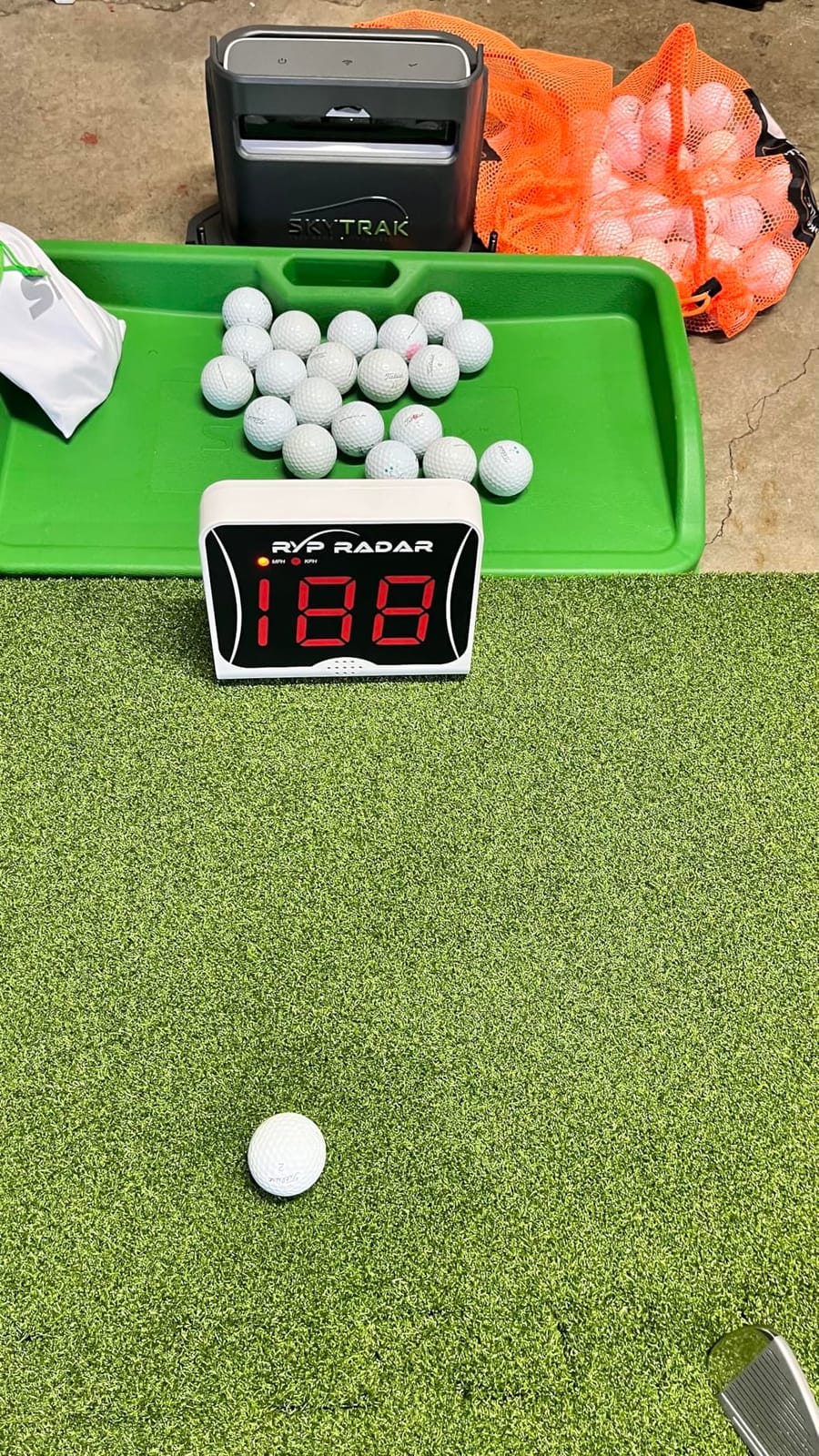
If you already own a Rypstick, this is the radar built for it. It measures no-contact club head speed, works with a Rypstick, a driver or an iron, stores the last ten swings and can announce each speed out loud. Display units switch between MPH and KPH.
The appeal is that it makes speed work almost frictionless. Turn it on, take a swing, hear the number. Several owners who compared it against a Mevo+ report very close agreement, which is a useful validation for a tool at this end of the market.
At 4.2 stars from 96 ratings it is not well reviewed simply because it is a narrow product in a niche. It does one thing, and users doing that one thing are satisfied.
What are the batteries really like?
They are the defining weakness. Five AA batteries, not included, and owners report that a single practice session can exhaust them. That means a bag of cells, a battery habit, and a device that cannot be trusted to survive a long session without a plan. Rechargeable AA cells change this entirely and are the obvious fix.
Read accuracy is a smaller issue. A smaller group of users report readings 10 mph or more high against other devices, so if you are using it to track change over time rather than to compare with a ball flight, that variance is tolerable. The build is thin plastic with flimsy buttons, which tells you where the money was saved.
Is this a range launch monitor or a training accessory?
It is a training accessory, and buying it as a range launch monitor is a mistake. There is no ball speed, no distance and no launch data of any kind, so it cannot map a bag or identify a distance gap. What it can do is tell you whether your speed is trending up as you change clubs, grip or training.
For anyone doing structured speed work without a coach, that is a worthwhile purchase on its own terms. For anyone hoping to replace their guesswork at the range with real numbers, look at the PRGR, the R10 or the MLM2PRO instead. The warranty is listed as one year and it runs in MPH and KPH for travel.
10. YUPITERU Atlas GST-5W: Cheap Carry Tracking With a Catch
YUPITERU Atlas Golf Swing Trainer GST-5 W【Japan Domestic Genuine Products】
- Reports carry distance
- ball speed and smash factor
- Light enough to place on the ground yourself
- Per-club coefficient can be calibrated
- Battery lasts about two weeks of daily use
- Interface and manual are in Japanese
- Speeds display in meters per second
- Carry distance only with no total distance
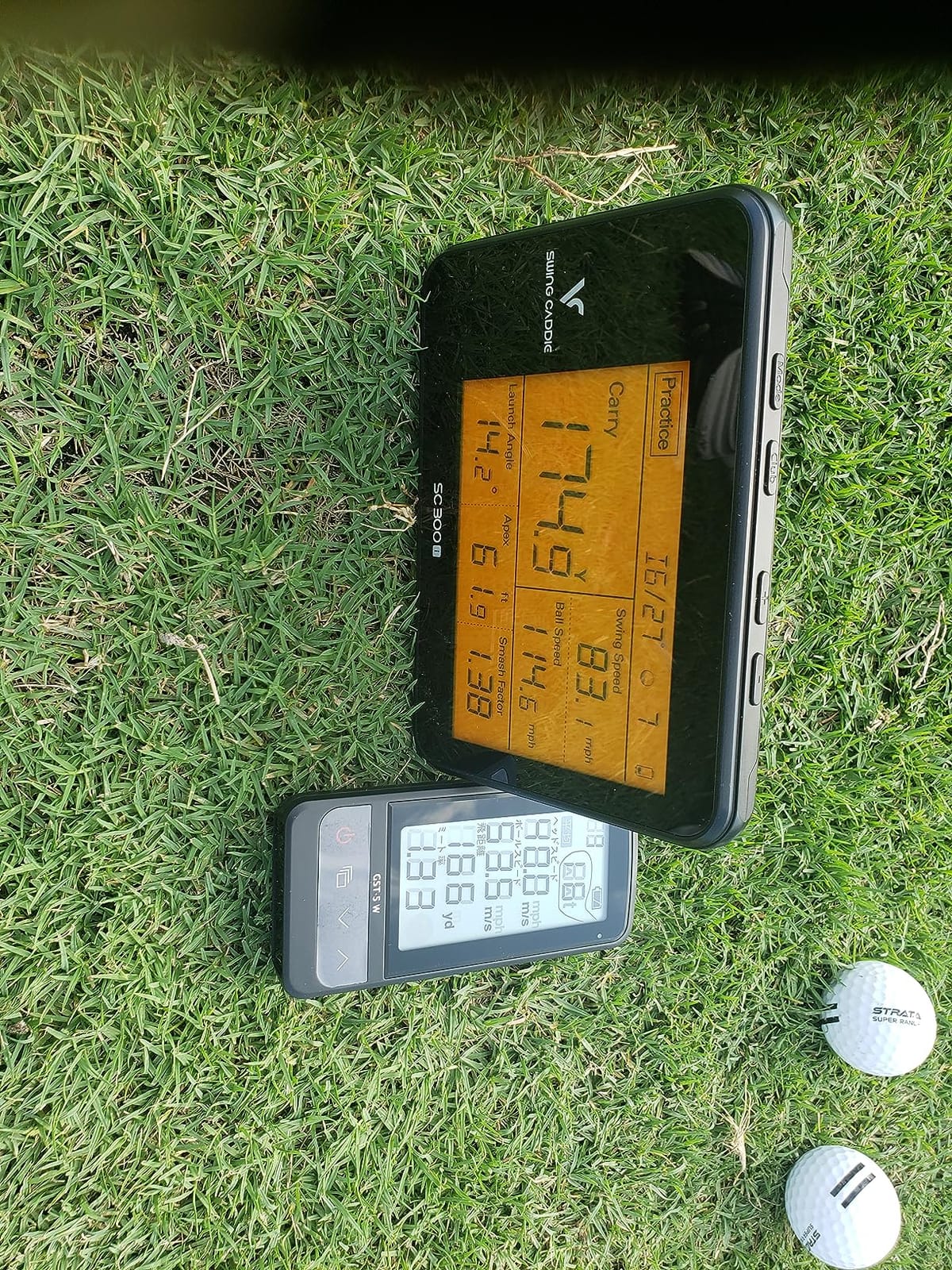
The Atlas is the odd one out and worth a look. It uses a 24 GHz K-band Doppler radar sensor and reports carry distance, swing speed, ball speed and smash factor, yet the main body is only 60 by 18 by 12.4 millimetres and weighs 110 g. You can place it on the grass yourself instead of carrying a tripod to the bay.
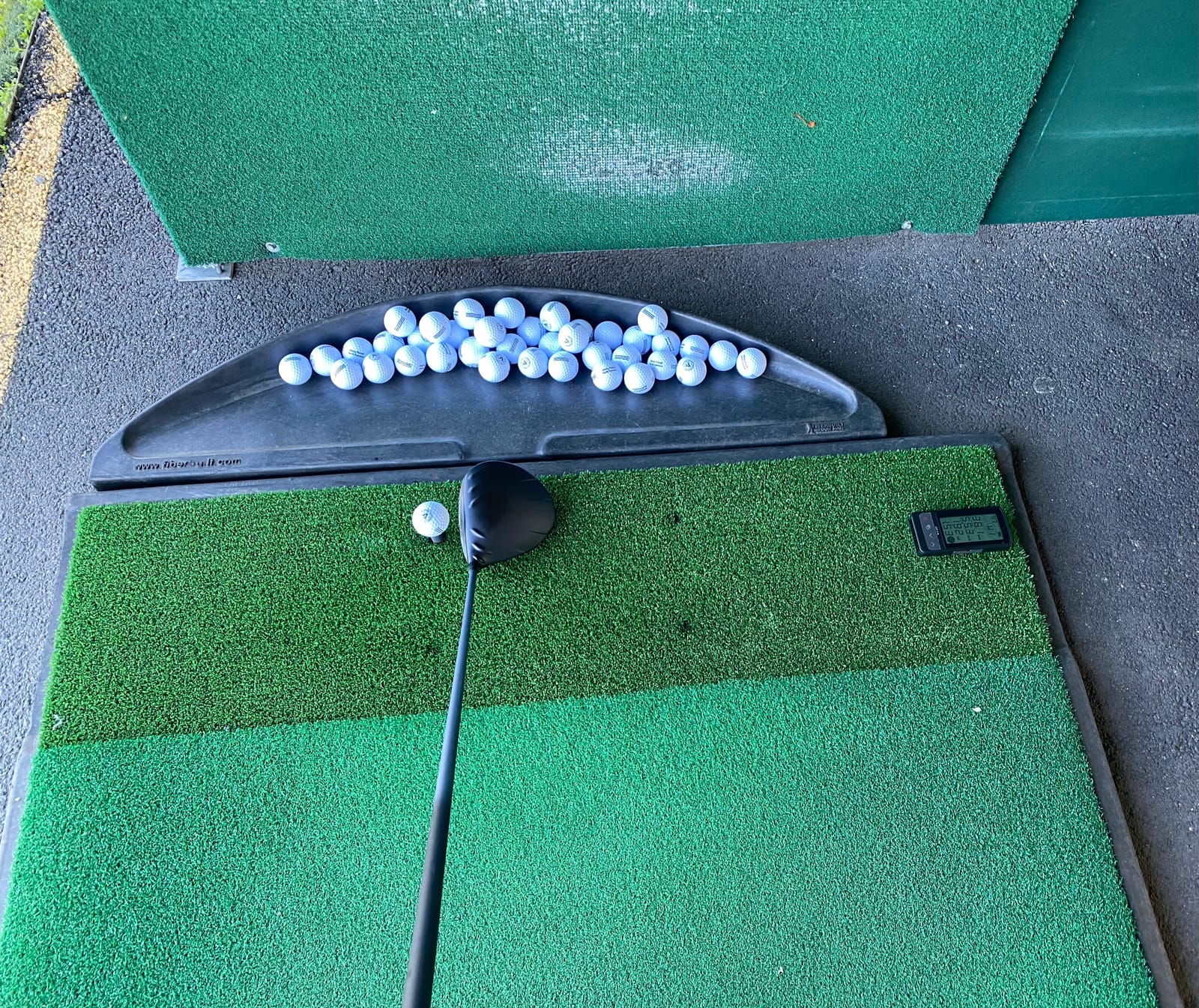
Setup is specific and worth knowing before you buy. Position it 40 to 60 inches behind the ball, let the ball settle before you address it or the ball speed reading is missed, and owners report that once it is placed properly it picks up almost every shot indoors and out.
There is a rechargeable lithium-ion battery rated at about two weeks of one-hour daily use, up to 199 stored sessions, and data export via micro SD card into Excel. Owners who tune the per-club distance coefficient against a reference monitor get results they consider good for the money.
What will the Japanese interface cost you?
Honest answer: patience for the first hour. The unit and the included manual are Japanese, the menu navigation is not translated, and speed readings display in meters per second, so you are converting every number before it means anything to you. Owners who are willing to invest that setup time describe the result as a remarkably capable tracker for its cost.
The other limitation is distance type. It reports carry only, so total distance has to be estimated, which matters for players who think in roll-out numbers. Readings are also less consistent with woods and some irons, so driver data is the least trustworthy of the set.
Who should buy this instead of a mainstream radar unit?
Buy it if the budget is genuinely tight and you want carry distance plus ball speed from something you can drop on the ground. It needs no phone at all, which removes the biggest failure mode of this whole category, and the micro SD export means your data outlives any app subscription.
Skip it if you care about consistency across the bag, if you want a device you will not have to set up twice, or if you would rather not convert units mid-session. For those golfers, the extra money spent on the PRGR or the R10 buys a device that is ready to work the moment it comes out of the bag. The Atlas is 827 ratings deep at 4.1 stars, which is a reasonable track record for a niche product.
How to Set Up a Portable Launch Monitor at the Driving Range
This is the part every roundup skips and the part that decides whether you use the thing or leave it in the car. Ten minutes of setup work once, then every session after that is fast.
Pick the bay before you unpack. Choose an open bay at the end of a row rather than one between other golfers, where another player stepping up can interrupt a shot mid-capture. Check where the sun is. If it is behind you, your phone screen is readable; if it is in front of you, you will be shading your own display for the next hour.
Place the unit the way its design intends. Radar units sit behind the ball, typically about 7 feet back, and point down the target line. Watch for anything in the radar cone that is not a ball, because a golf cart, a bucket or a stray person will register as a swing. Radar units are also sensitive to RF and microwave interference from bay lights and Wi-Fi equipment, so the last bay in a building is often worse than the one outside.
Mount the phone where you do not have to touch it. This is the difference between a range session that gets used and one that does not. The Garmin R10 ships with a bag-mounted phone holder, which is the right idea regardless of which unit you buy. Fishing a phone out of a pocket between every shot breaks your rhythm and eventually stops happening.
Hit one calibration shot before you start reading anything. Take a deliberate warm-up swing so the unit locks onto the ball and stabilises. Some units, including the Atlas, need the ball to settle in the grass for a moment first or they miss the ball speed reading entirely.
Bring a power bank, not just a cable. The unit’s own battery is rarely the problem. The phone running the app continuously is what dies, and a dead phone mid-bucket means a lost session. A small power bank and a short cable take up no room in a golf bag.
Know your ball situation before you trust a spin number. True measured spin needs marked balls, which most public ranges will not let you hit. You can still get club speed, ball speed, launch and carry from a range ball, and the Rapsodo MLM2PRO will read one. Know in advance which numbers are measured and which are estimates, and the whole session becomes much more useful.
What to Look for When Buying a Portable Launch Monitor
Radar or camera, and why it matters at the range
Almost every unit in this roundup is radar-based, and for outdoor practice that is the right default. A Doppler radar unit sits behind the ball, bounces waves off it, and uses the frequency shift to measure the ball directly. It is fast, works in any light, has no alignment to speak of, and reads the actual flight of the ball, which means wind shows up in the numbers as it should.
Photometric camera units sit beside the ball and use high-speed cameras to capture impact, which is how the premium tier measures true spin rate. That is genuinely better data. It is also a different product category in size, price and permanence, and none of the ten units here are camera-based, because a camera unit that will not fit in a golf bag does not belong in a range guide. Our garage simulator picks cover that side.
Phone display or built-in screen
A built-in screen means you can hit balls without a phone at all, which is calmer, faster and immune to glare. A phone display means richer graphs, video and sharing, but the screen becomes unreadable in direct sun and the phone battery becomes part of your session. The honest middle ground is a phone in a bag mount, used in the shade, with a power bank in the side pocket.
Subscription math over three years
Work it out before you buy, because this is the number that annoys people most. Core range metrics, meaning club speed, ball speed, carry distance, launch angle and per-club averages, are free on most units in this guide. What costs money is simulated courses, tournaments and a handful of analysis features. If you are a range-first golfer, multiply zero by three years and the maths is simple.
The list below covers the pieces most roundups leave out: what each screen choice costs you in practice, and how a session’s battery maths actually works.
Measurement type: Doppler radar behind the ball works in any light and reads actual ball flight in wind.
Spin data: true spin needs marked balls you may not be allowed to hit, so check the range rules first.
Screen: a built-in screen or a bag-mounted phone, because glare and phone handling end most sessions.
Battery: aim for 8 hours or more on the unit, plus a power bank for the phone.
Subscription: check what the free tier omits before assuming the hardware price is the whole cost.
Portability: weight, tripod need and weather rating decide whether it leaves the car trunk.
Battery planning per session
Plan by session, not by charge cycle. A two-bucket session at a public range is roughly an hour of hitting, plus setup and phone handling. Units rated at 8 hours or more handle a full week of practice before a charge, and the two radar units in this group that run on AA cells will need a fresh set well before that. The unit is rarely the bottleneck; the phone is. Budget for both.
Ball type and how it skews readings
Scuffed two-piece range balls lose measurable launch and spin compared with a fresh premium ball, so a session on beat-up range balls will understate your real distance. Keep a fresh ball in the bucket for the shots you care about, take a few practice swings with the old ones, and note that a marked ball for spin measurement behaves differently again. If you want ball-mapping numbers you can carry onto the course, hit your own ball rather than whatever the range provides.
Who should skip a launch monitor entirely
If you hit a bucket twice a year, a device will not change your game enough to justify the setup time. If your home range already gives you Top Tracer data with ball trajectory, swing speed and distances, you have a free version of the main benefit. And if you are working on a specific coached movement, a coach watching your swing in person beats any number on a screen. Buy one of these units when you want a bag you can trust.
Frequently Asked Questions
What is the best launch monitor to take to the range?
The Garmin Approach R10 is the best all-round choice for range sessions because it tracks club speed, ball speed, spin and launch angle, lasts up to 10 hours per charge, carries an IPX7 water rating and ships with a bag-mounted phone holder. If you want zero setup and no phone at all, the PRGR HS 130-A is the simpler answer.
What is the best portable golf launch monitor under 500 dollars?
Under that ceiling the PRGR HS 130-A and the Rapsodo Mobile Launch Monitor are the two worth comparing. The PRGR needs no app and no phone, while the Rapsodo adds launch angle, shot shape and video with a shot tracer but runs on iPhone and iPad only. The Garmin Approach R10 sits just above this tier and adds spin and video.
What is the difference between radar and camera launch monitors?
A Doppler radar unit sits behind the ball and measures the frequency shift of waves bouncing off it, giving fast ball speed, carry and distance readings that work in any light. A photometric camera unit sits beside the ball and uses high-speed cameras to capture impact, which is how it measures true spin rate. Radar suits outdoor range work; camera systems suit indoor fitting and simulation.
Can you use a launch monitor with range balls?
Yes, for club speed, ball speed, launch and carry distance. The exception is true spin rate, which requires marked balls such as the Callaway RPT models, and most public ranges will not let you hit marked balls. The Rapsodo MLM2PRO reads ordinary range balls for everything except reliable spin.
Do launch monitors work outdoors in bright sunlight?
Radar measurement is unaffected by sunlight. The display is the issue: units with a phone-only display become hard to read in direct sun, which is why a bag-mounted phone in shade or a unit with a built-in screen works better. The Garmin Approach G80 uses a transflective screen that stays readable outdoors.
How far behind the ball should a launch monitor be placed?
For most Doppler radar units, about 7 feet behind the ball and aligned down the target line, with nothing else in the radar cone. The YUPITERU Atlas GST-5W works closer, at roughly 40 to 60 inches behind the ball, and needs the ball to settle in the grass first or it will miss the ball speed reading.
Final Verdict
The best portable launch monitors for driving ranges, ranked by how well each one survives a real outdoor session in 2026. If you want one product and no decisions, take the PRGR HS 130-A as our Editor’s Choice: it is accurate enough to build a bag on, it needs nothing from your phone, and nothing about it can fail on a wet morning.
Under 500 dollars and on a phone, the Rapsodo Mobile Launch Monitor gives you the video and shot tracer that actually changes a swing. Above that, the Garmin Approach R10 is the best investment for a weekly player, because the battery, the water rating and the bag-mounted phone holder solve the three problems that end most range gadget use.
For more data, the Rapsodo MLM2PRO is the deepest portable unit for spin, club path and multi-angle impact video, and it is the only one here worth pairing with marked balls at home. For pure speed work, the Swing Speed Radar and the Rypstick radar do one job each for very little money. And for golfers who refuse subscriptions or use Android, the TAGCMC GX-10 is the only option in this group that reports spin without a recurring fee, provided you calibrate it first.
Whatever you choose, give it one full session before judging it, and set up the same bay twice. A launch monitor becomes useful in the third visit, not the first.