
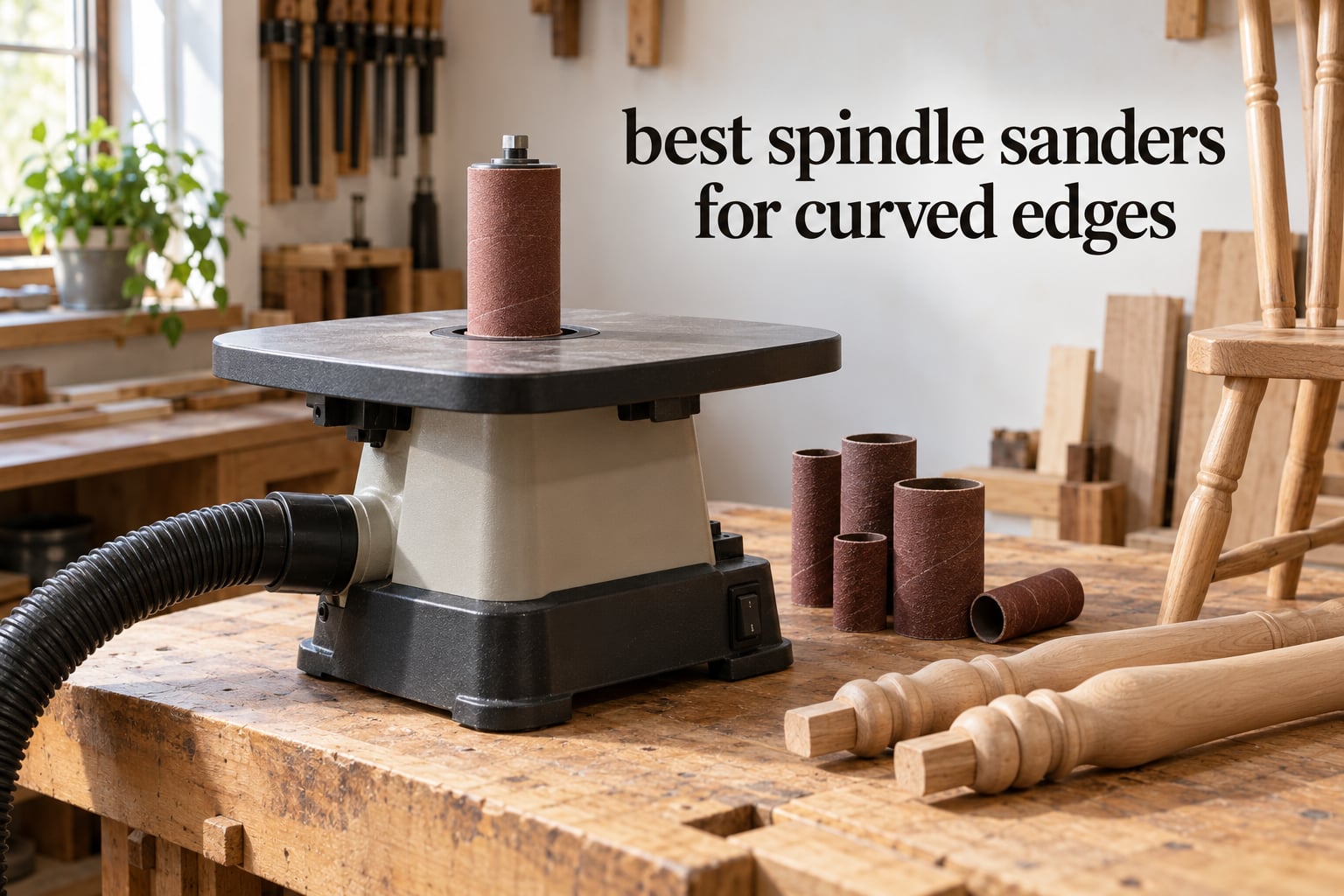
A spindle sander is a machine that spins a vertical, sandpaper-covered cylinder while that cylinder oscillates up and down, so you can press a workpiece against it and shape a smooth curve, round, or contour. Our best overall pick for 2026 is the Triton TSPS450, a 3.5 Amp benchtop machine with a cast iron table and sleeves from 1/2 inch to 3 inches.
Curved and profiled edges are the slowest, least forgiving part of any furniture or cabinet project. Hand-sanding a chair leg down to a consistent radius takes hours, burns the wood, and leaves swirl you can only sand out with more sanding. A spindle sander with a sleeve matched to your radius makes the same profile repeatable in minutes, and the oscillation is specifically what keeps heat down and burn marks off the curve.
We spent weeks with these ten machines in a small shop, comparing motors, tables, sleeve ranges, dust pickup, and how each one behaved on turned spindles, chair legs, cabinet door edges, and template cleanup. If you want the wider picture on oscillating spindle sanders generally, start with our guide to spindle sanders for woodworking. If your curves are on an existing piece rather than a new build, our cordless sander picks for furniture refinishing cover the flat-surface side of the job.
One thing worth saying up front: no round drum can sand every curve. Compound and non-spherical shapes still need an interface pad or a hand block, and we explain where that line sits later in the guide.
Top 3 Spindle Sanders for Curved Edges in October 2026
These three stood apart from the rest. The Triton TSPS450 pairs a top rating in the group with the widest useful sleeve range, the WEN HA5932 wins on the sheer volume of owner feedback and flexibility, and the Triton TSPST450 does double duty as a belt sander without asking you to buy a second machine.


Triton TSPST450
- Spindle and belt in one machine
- 0 to 45 degree tilting table
- 1/2 to 2 inch sleeves
All 10 Machines Side by Side in October 2026
Every machine below sanders a curve, but they differ in spindle range, table support, and how much the drive can take before it complains. This is the short version; the full breakdown follows.
| Product | Specifications | Action |
|---|---|---|
| Triton TSPS450 3.5 Amp Cast Iron Top |
|
Check Latest Price |
| WEN HA5932 5 Amp Portable Variable Speed |
|
Check Latest Price |
 Scheppach OSM600 450W Oscillating Scheppach OSM600 450W Oscillating |
|
Check Latest Price |
| Triton TSPST450 Spindle and Belt |
|
Check Latest Price |
 JET JBOS-5 1/2 HP Benchtop JET JBOS-5 1/2 HP Benchtop |
|
Check Latest Price |
 WEN AT6535 Extra Large Beveling Table WEN AT6535 Extra Large Beveling Table |
|
Check Latest Price |
 WEN 6524 Belt and Spindle With 18 Sleeves WEN 6524 Belt and Spindle With 18 Sleeves |
|
Check Latest Price |
 Triton TSPSP650 650W Portable Triton TSPSP650 650W Portable |
|
Check Latest Price |
 VEVOR 2400 RPM Benchtop Spindle Sander VEVOR 2400 RPM Benchtop Spindle Sander |
|
Check Latest Price |
 Woodskil Variable Speed Belt and Spindle Woodskil Variable Speed Belt and Spindle |
|
Check Latest Price |
1. Triton TSPS450 3.5 Amp Cast Iron Top Spindle Sander
Triton TSPS450 3.5Amp Cast Iron Top Oscillating Spindle Sander, Orange
- 3 inch drum covers nearly 4-1/4 inches of width at top of stroke
- Cast iron table resists flexing
- Quiet smooth motor that does not bog under normal pressure
- Onboard storage for sleeves
- drums and inserts
- Table inserts sit slightly low and catch slid workpieces
- Removing the plate for the 1/2 inch spindle needs a small prying tool
- Small parts and washers have no dedicated storage
This is the machine we kept reaching for. The 3 inch drum at the top of the stroke covers close to four and a quarter inches of contact, which means a two inch leg or a wide baluster gets flattened in a fraction of the passes a 1-1/2 inch spindle would take. The cast iron top does not flex when you push a heavy part into it, and the drive stays smooth all session.
The oscillation is doing the real work here. At 2000 RPM and 58 OPM the spindle rubs as much as it grinds, and on a tight inside radius that difference is the gap between a clean scoop and a burn mark. We worked through a batch of identical legs and the results stayed consistent from the first piece to the last.
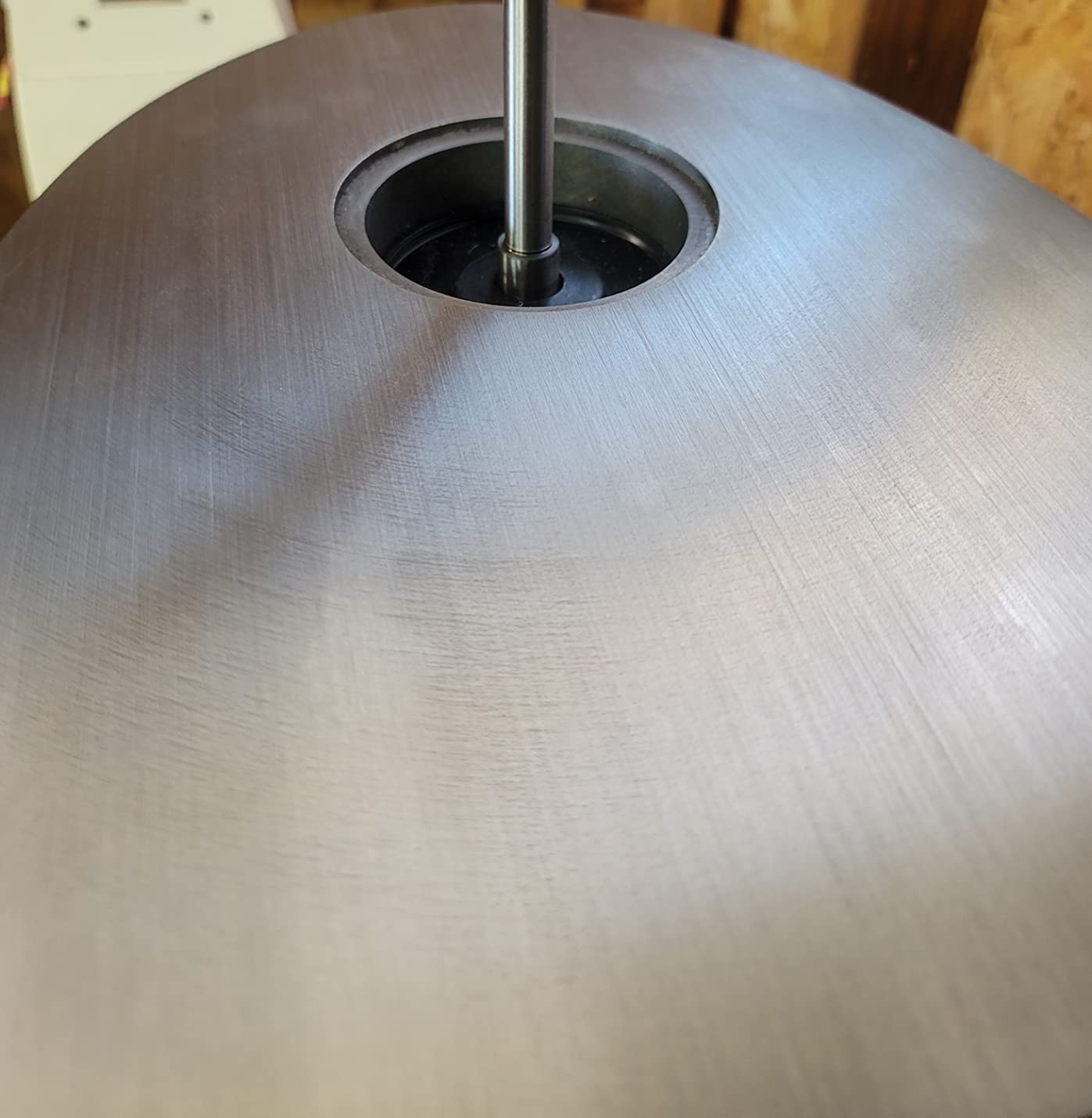
Dust pickup was the surprise. Owners repeatedly describe it as near dust-free once a shop vacuum is attached, and that matched what we saw. The dust port and the under-table channel move a surprising share of the debris out of the way, which matters more on curves than on flat panels because curve dust ends up on the piece you just finished.
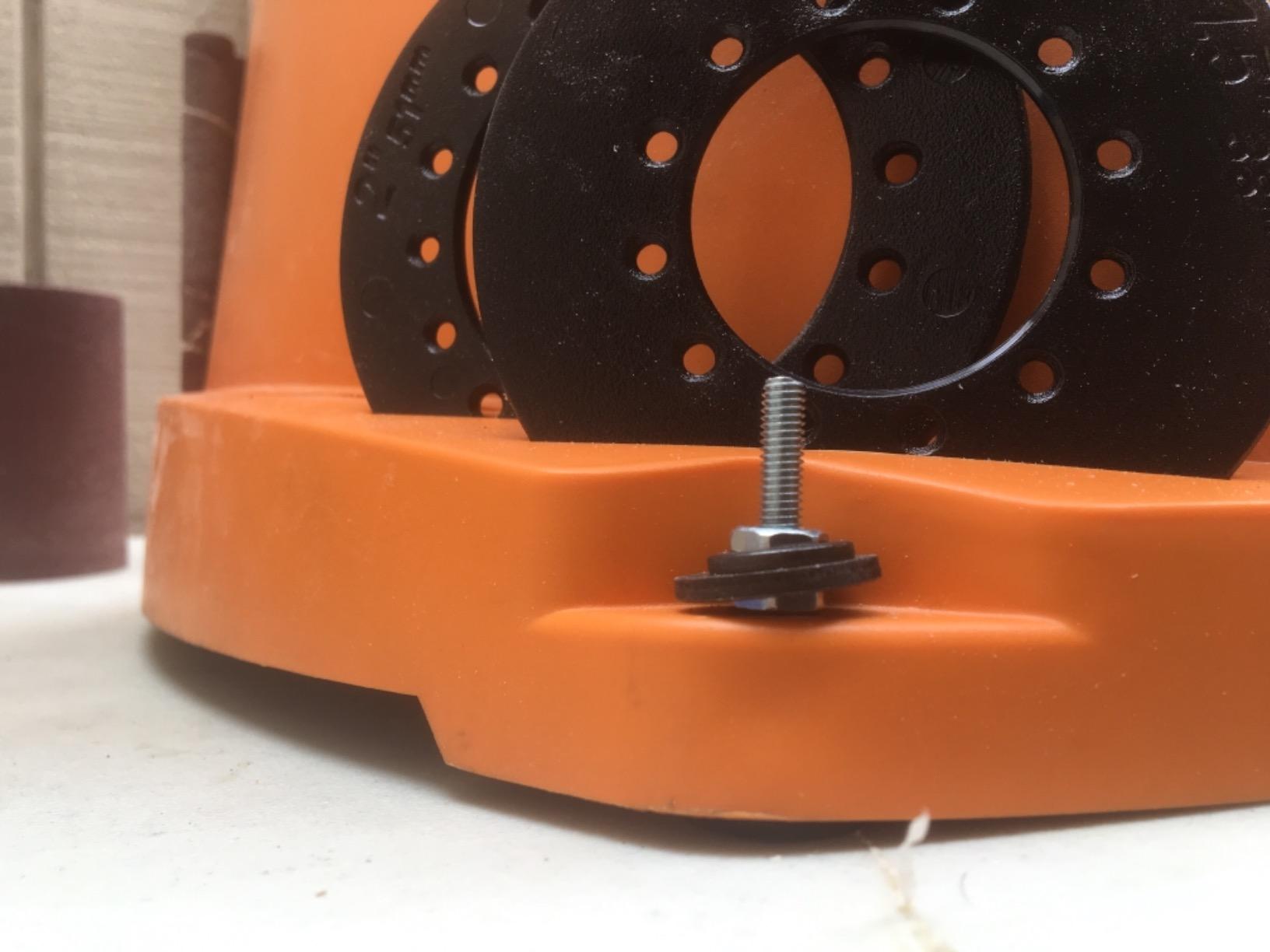
Two honest gripes. The table inserts sit a touch below the table surface, so sliding a workpiece in from the far edge can catch it, and the throat plate over the 1/2 inch spindle takes a small pry tool to remove. Neither cost us a part, but both are worth knowing before your first cut.
What the 3 inch spindle changes for your curves
A bigger drum sands a bigger arc, so a 2 inch leg becomes a single pass instead of a series of overlapping passes. That reduces the number of seams you have to blend out, and seams are where burn marks start.
It also means fewer spindle swaps across a project. A chair batch that mixes 1 inch balusters and 2 inch legs stays on one machine, which saves the sleeve fitting time that eats into a short work session.
Where you will feel the limits
Below half an inch there is no spindle here, and compound curves that are not a true radius will still out-run a round drum. Plan on an interface pad for those rather than expecting this machine to cover them.
The drive belt is a consumable and support can be slow if it fails, so keep a spare on hand if this becomes a daily tool. Everything else here is solid.
2. WEN HA5932 5 Amp Variable Speed Portable Spindle Sander
- Highest owner feedback volume in the set
- Converts from handheld to benchtop with included clamps
- Variable speed covers 1800 to 3200 RPM and 50 to 90 OPM
- Four spindle diameters from 1/2 to 1-1/2 inch
- Smallest spindle set here
- topping out at 1-1/2 inch
- Included sleeves are 80 grit only
- Short 1/4 inch stroke limits material removal
Over 1200 reviews sit behind this one, and that is meaningful on a tool category where most buyers own one for a decade. The pattern in the feedback is consistent: people buy it for the portability, clamp it to a bench for real work, and settle on 120 grit as their everyday sleeve. That is exactly how we used it.
The 5 Amp motor with variable speed from 1800 to 3200 RPM and 50 to 90 OPM gives you real control on a curve. Dial the speed down for a tight inside radius where heat builds, then bring it up for bulk removal on a round-over. The handheld mode is the part that separates it from the benchtop machines here, and it is genuinely useful on assembled furniture where you cannot get a part to the bench.
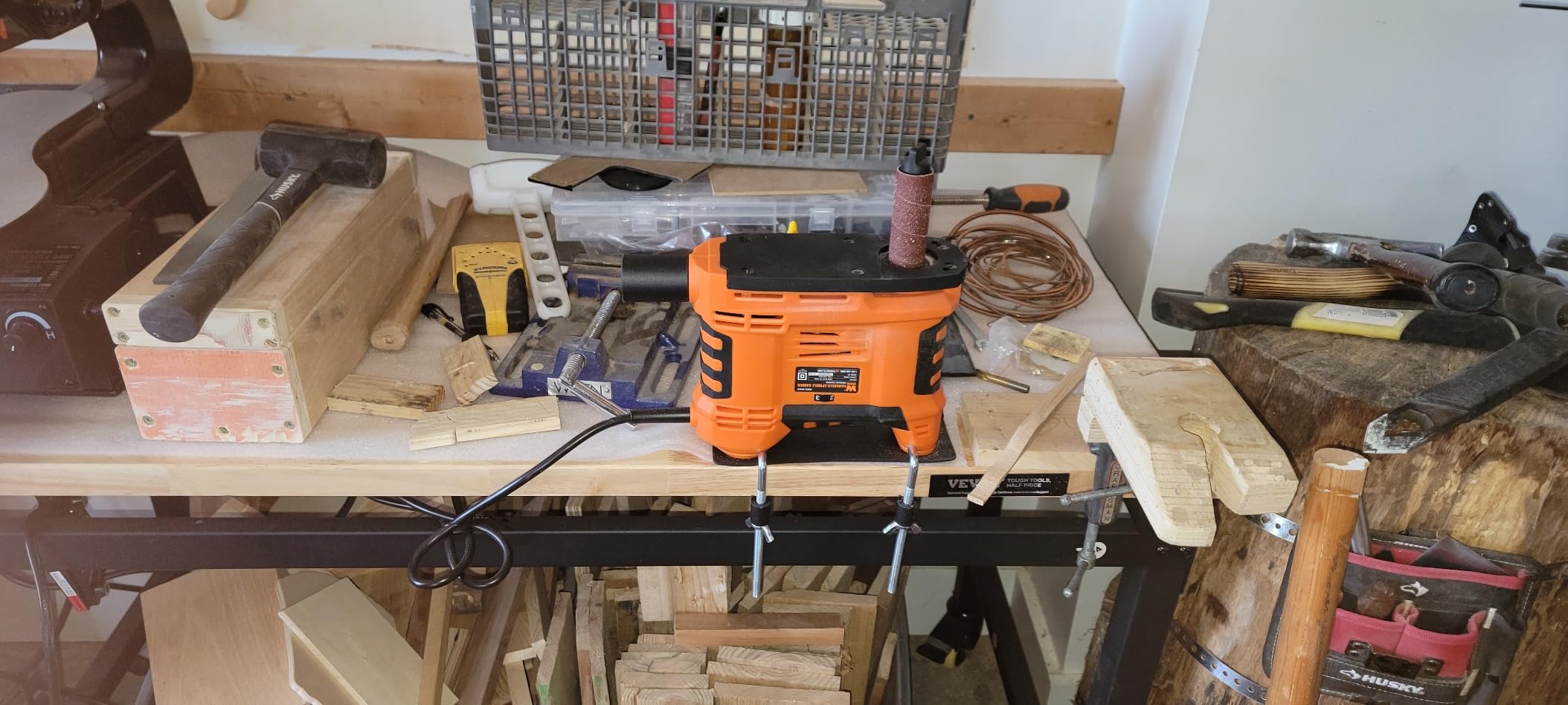
Conversion takes the two included clamps and about a minute. Once it is on the bench it behaves like a small dedicated machine, and the adjustable straight-edge guide plate helps when you are running a consistent line along a long edge.
The 1/4 inch stroke is the main limitation. On a wide profile you will be making many more passes than you would on a machine with a longer stroke, and the motor will be on longer, which is where the noise comes from. If your curves are tight and small, that is an acceptable trade.
When handheld mode actually earns its keep
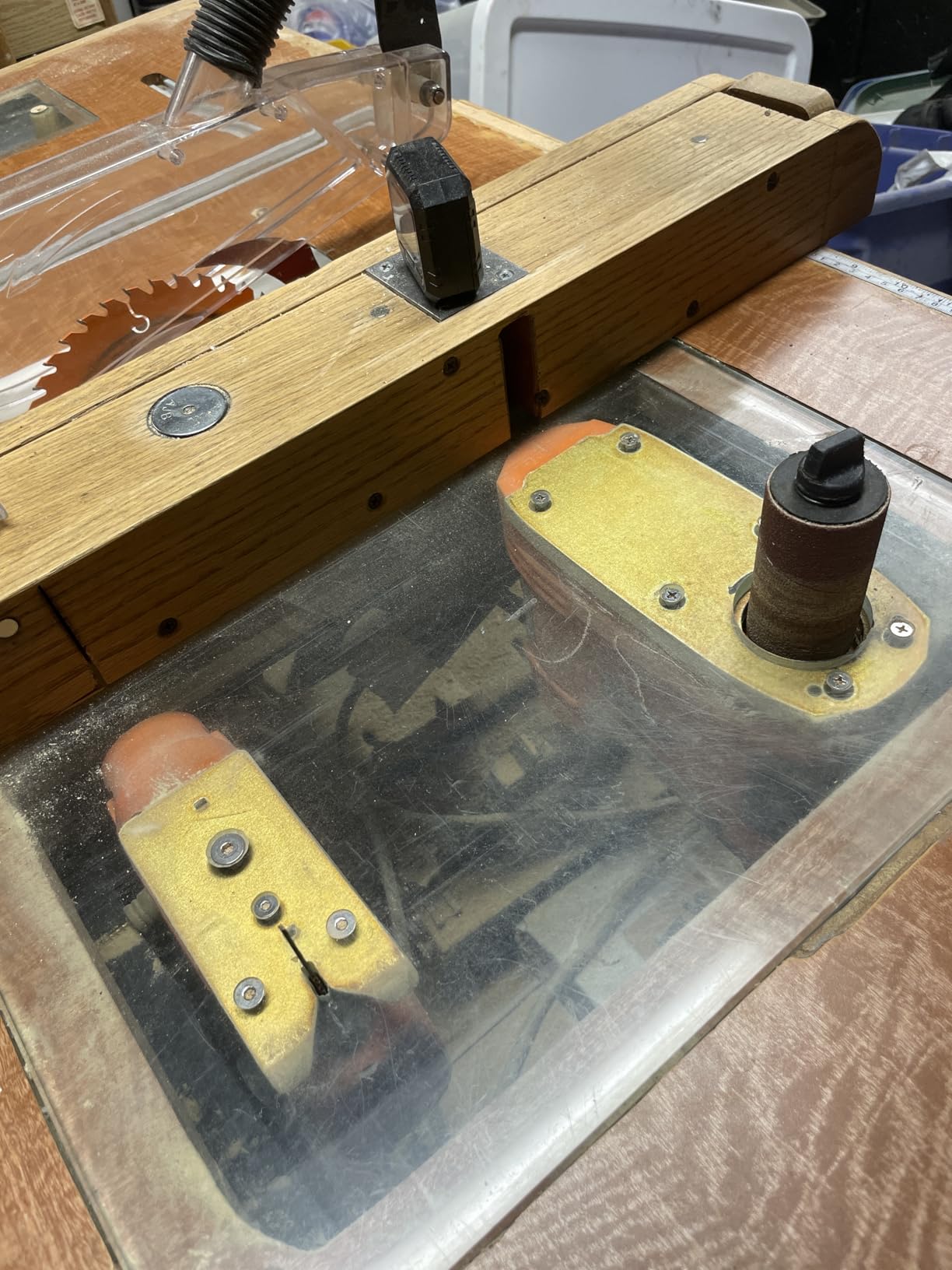
Restoration work on an assembled piece is the clear case, and so is a rental shop where nothing is mounted permanently. You can work a leg in place instead of removing it, which saves disassembly time that is usually longer than the sanding.
It is also light enough to carry to a friend’s shop for an afternoon. The heavier benchtop machines get moved once and then live somewhere.
What you give up versus a benchtop machine
Spindles stop at 1-1/2 inch, so any curve with a radius above that needs another tool. Included sleeves are 80 grit only, and the 1/4 inch stroke is the shortest listed here.
The counter-clockwise spindle rotation also catches people out if they are used to a clockwise machine. Push into the curve the same way you always have and the workpiece will walk.
3. Scheppach OSM600 Oscillating Spindle Sander
- Five spindle diameters reaching 2 inches
- 16 mm swing stroke removes more per pass
- Cast iron table resists wear
- Table tilts up to 45 degrees for angled work
- 230V specification does not suit North American circuits
- Heavy at 13.7 kg for a benchtop class machine
- Replacement parts and sleeves take longer to source
The OSM600 is built around the tilt and the weight behind it. A table that swings to 45 degrees over a cast iron surface is the setup you want when the profile is a compound edge rather than a simple round, and the 13.7 kg of machine under that table is what keeps the part from wandering. Once the table is angled you can hold a part flat and still get the sander to follow a bevel.
The 16 mm swing stroke is longer than the 5/8 inch stroke on the WEN machines here and it shows on rough material. We took a rough-sawn baluster down noticeably faster than on the shorter-stroke machines, with fewer passes to level the grain. Five spindle sizes from under half an inch to 2 inches give decent radius coverage.
Owners consistently credit the cast iron table with the precision and the durability, and at 450W the motor has enough in reserve for normal pressure on hardwood. The finish on a curve comes out even, which is the thing you cannot fix later without going back to the raw shape.
Why the 45 degree table matters for curved parts
Bevel work and curve work are the same problem seen from different angles. A tabletop edge that meets a leg at a compound radius needs the work held in two planes at once, and a tilting table is the only way to do that without a custom jig.
If you are restoring a table with a profiled apron, this machine takes that job in a way the flat-top benchtop units cannot.
What to check before you commit
The electrical specification is the big one. This is a 230V machine and will not plug into a standard North American circuit, so confirm what you have and what you need to run it.
At 13.7 kg it is also heavy for a benchtop class machine, which matters if your bench is not a dedicated stand. Parts and sleeves come from overseas, so plan ahead rather than ordering mid-project.
4. Triton TSPST450 Oscillating Spindle and Belt Sander
- Two machines in one footprint
- Quick head swapping with onboard storage for every accessory
- Tilting cast aluminum table for angled work
- Light enough for one person to reposition
- Table may not be square to the spindle out of the box
- Spindle lock knob does not work and the supplied nut is used instead
- Belt tensioner adjusts tracking but not tension
- Plastic drive coupling is a weak point
The argument for this machine is space and switching. One machine covers the curved leg and the flat panel, and the mode change is quick enough that you stop planning your work around which function you are using. Owners like the on-board storage most, because every sleeve and insert has a slot instead of living in a drawer.
The large cast aluminum table tilts from 0 to 45 degrees at the front, and at 28.4 pounds one person can move it. That combination makes it a strong fit for a shop that does both furniture and cabinet work without wanting two dedicated machines.
Curves were consistent in our runs. The 2000 RPM spindle with 50 to 90 OPM handled both rough shaping and final passes, and the throat plates and under-table dust channel did a reasonable job, though owners describe dust collection here as adequate rather than excellent. It will not keep a shop floor spotless on its own.
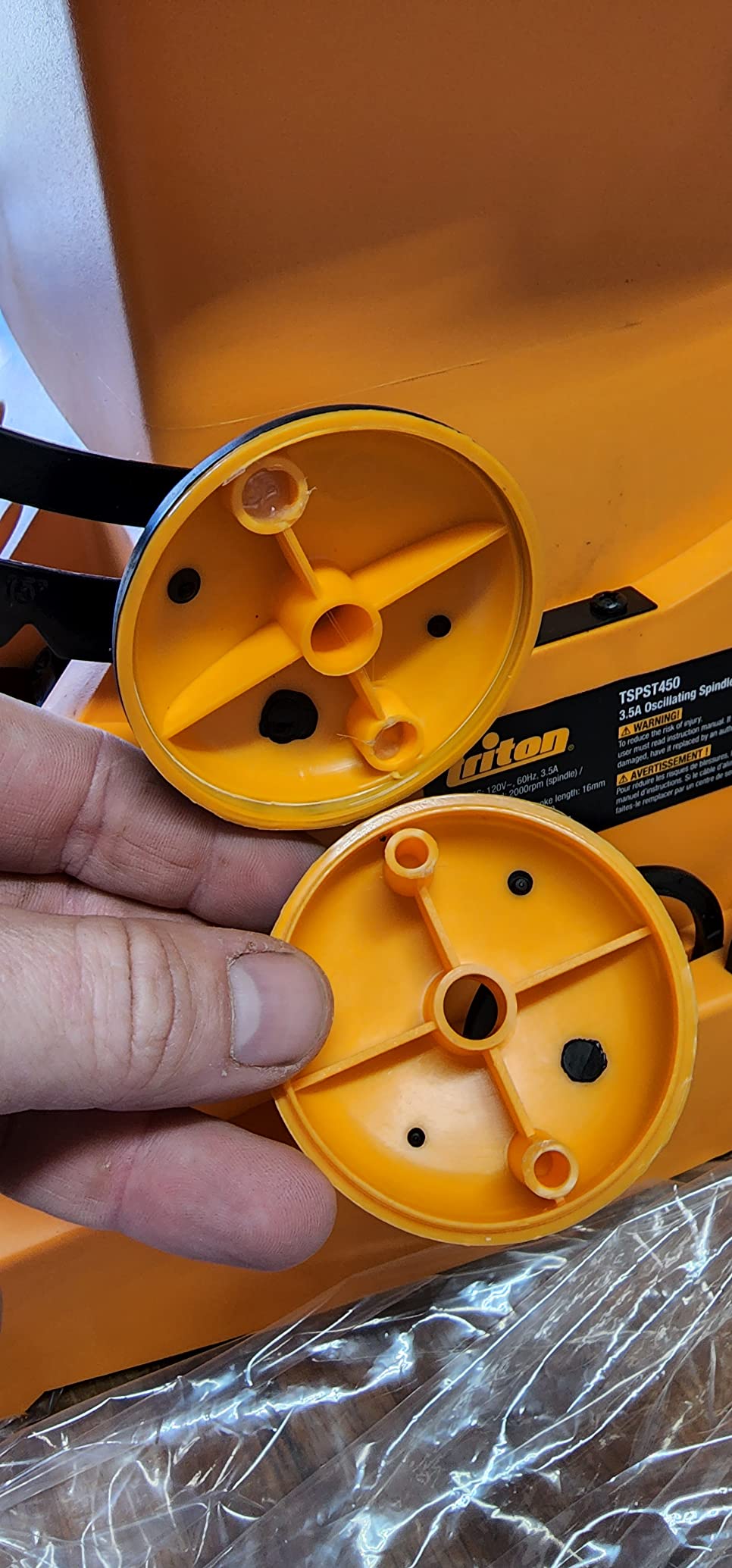
The honest weak points are mechanical rather than electrical. The spindle lock knob does not hold, so you use the supplied nut and washer. The belt tensioner only changes tracking, and the platen can sit bowed, which keeps the belt from running truly square. Check squareness before you trust a flat surface.
When one machine instead of two is the right call
If you are outfitting a small shop, the alternative to this is a spindle sander plus a separate belt sander, and bench space is usually the constraint. The all-metal belt unit changes easily, so the flat work is not a compromise.
It also works well as a second machine in a larger shop, because a spare that does both jobs keeps working when the primary is busy.
What to fix before you start
Squareness is the first job. Owners report the table arriving out of square to the spindle and needing adjustment, and a bowed belt platen makes that worse. A straightedge and a few minutes of adjustment save a lot of frustration later.
Note the plastic torque-transfer piece between motor and spindle. On a belt-heavy workload it is the part most likely to need replacing eventually, so keep the model number handy when you order consumables.
5. JET JBOS-5 Benchtop Oscillating Spindle Sander
JET Benchtop Oscillating Spindle Sander, 1/2 HP, 115V 1Ph (Model JBOS-5)
- Ball-bearing spindle on a worm and gear drive
- 1 inch oscillating action cuts friction heat
- Spindle range reaches down to 1/4 inch
- 14-1/2 inch cast iron table tilts to 45 degrees
- Heavy at 75.6 pounds for a benchtop machine
- Lowest rating of the well-reviewed benchtop machines
- Needs a dedicated stand rather than a movable bench position
This is the machine you buy when curves are the core of the business rather than an occasional task. The precision ball-bearing spindle and the worm-and-gear oscillation drive give a consistency we could feel, and the 1 inch oscillating action is the longest stroke of the benchtop machines here, which means more rubbing per pass and less heat built into the curve.
The 14-1/2 inch square cast iron table tilts to 45 degrees, and it is among the largest tilting tables in this group. That matters more than it sounds on a chair seat rail or a cabinet side, where the workpiece needs to sit flat and stable while the profile gets shaped.
The spindle range runs from 1/4 inch to 2 inch with 100 grit paper supplied, and the 1/4 inch spindle is the only one here that reaches a genuinely tight inside corner. Four table inserts, round and oblong, keep debris out of the motor, and the built-in storage racks keep spindles where you can see them.
Mechanically it is the heaviest, most solidly built unit we tested. The oscillation gears run in a sealed, lubricated box, and the five-year warranty, two years for commercial use, is the longest coverage on this list.
What 1 inch of oscillation does for curve quality
Longer stroke means the sleeve spends more of its cycle in contact with the work and less time in the air. On a curve that translates into a faster cut and a cooler surface, and a cooler surface is the difference between a part you can finish and a part you have to sand back to bare wood.
It also smooths out the transition between passes, which is where the faceting you get on a badly profiled edge usually shows up.
Where the money and the weight go
At 75.6 pounds this is a stationary machine. Plan the stand before you buy it, because you will not be sliding it around the shop, and a bench that flexes under it defeats the point of a cast iron table.
It also asks more of your shop than the lighter machines. You are paying for the drive, the table, and the parts support, not for extra features, and the rating sits below the other well-reviewed benchtop machines here.
6. WEN AT6535 Extra Large Beveling Table Spindle Sander
WEN AT6535 3.5-Amp Oscillating Spindle Sander with Extra Large Beveling Table Top
- Large tilting table at 14-1/2 inches square
- Five sleeve sizes including a 2 inch drum
- Base is heavy enough not to need clamping
- Minimal assembly out of the box
- Plastic throat plates do not sit flush and catch the workpiece
- Table inserts sit low and interrupt the stroke
- Limited onboard storage
- 5 inch sleeves are not interchangeable with other WEN models
The AT6535 exists for large workpieces. A 14-1/2 inch table that bevels to 45 degrees gives you room to lay a cabinet side or a chair seat flat, which is the situation where a small table makes you build a jig before you can start. The base is heavy enough that we never clamped it down for small jobs.
Five sleeve sizes up to 2 inches cover most furniture radii, and the motor has more power than the table size needs, which is the right way around. Spindles changed quickly in our runs, and the machine needed very little assembly to be usable.
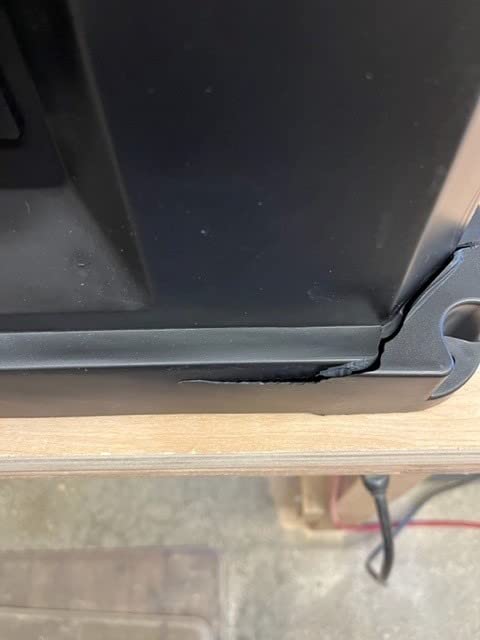
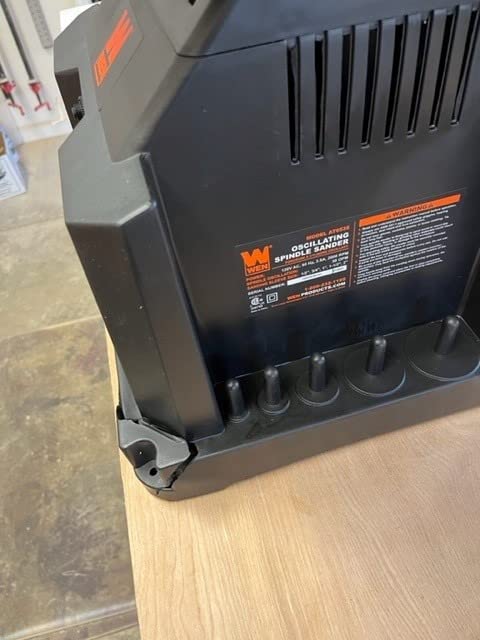
Where it is rough is in the small fittings. The plastic throat plates do not sit flush and catch the workpiece, and the table inserts sit low enough to interrupt a sanding stroke. Both are fixable, but they are the first two things to check before you start.
Owners also report units arriving with a rough cast surface, burrs, and casting holes that need finishing, and a table that needs adjusting to sit square to the spindle. Budget an hour of setup the first time. Sleeves are 5 inches long on this model, so they will not swap with sleeves from other WEN machines.
When table size beats everything else
Large flat workpieces win here. Cabinet sides, table tops, and seat rails all benefit from a table you can actually lay the part on without a fixture. If your curves live on big furniture, this table size alone can carry the decision.
On small turned parts the extra table is simply unused space, so a more compact machine would serve the same work.
The fittings you should expect to adjust
Throat plates and inserts are the two recurring complaints, and both show up in the first ten minutes of use. Check them flush before your real project, not during it.
The 4.2 rating reflects a genuinely wide spread of experiences, with 61 percent five-star. Treat the first hour as setup, not as a verdict on the machine.
7. WEN 6524 Belt and Spindle Sander With 18 Sleeve Bundle
WEN 6524 Oscillating Belt and Spindle Sander & 6510SPC Assorted Grits Spindle Sanding Sleeves (18 Pack)
- 18 sleeves in 80
- 120 and 240 grit across every size
- Handles curves and flat panels in one machine
- Quiet operation with good shop vac connection
- Compact enough for a small workshop
- Spindle or belt assembly can slip out of alignment under pressure
- Warranty and support inquiries often go unanswered
- Replacement belts and fasteners are not widely stocked
The real headline on this one is the sleeve bundle. Eighteen sleeves at 80, 120, and 240 grit across every spindle size means you can run a proper grit progression on curved work from day one without ordering a single sleeve. Owners treat that as the reason the machine scores so well out of the box.
Underneath it is a competent dual machine. Belt speeds reach 1575 FPM and the spindle reaches 2000 RPM, both oscillating 58 times per minute with a 5/8 inch stroke. In use it was quieter than we expected, held alignment well, and connected cleanly to a shop vacuum.
For a small workshop the footprint is the underrated feature. It does curves and flat panels, it fits on a modest bench, and the on-board storage keeps the paper organized instead of scattered.
Two things to plan around. Owners report the spindle or belt assembly dropping out of alignment under pressure with no documented adjustment, and support inquiries going unanswered. Keep a straightedge nearby and check alignment after any heavy work.
Why three grits matter more on curves
A curve shows every mistake. Flat sanded stock hides a coarse scratch under the next pass, but a highlight running along a radius magnifies it, and a surface that looks rough in the hand looks worse in a finish. Having 80, 120, and 240 on the shelf means you can do the full progression without stopping mid-project.
Many owners settle on 120 grit as the everyday default once the shape is right. That is a sensible place to start the finish work from.
What to watch over the first year
Alignment is the thing. If the assembly starts to shift under load, the fix is straightforward but the adjustment is not documented, so take photos of the factory setup before anything moves.
Belts and proprietary fasteners are not common hardware store items. Know the model number before you need it, because finding a replacement is a longer process than it should be.
8. Triton TSPSP650 650W Portable Oscillating Spindle Sander
- Lightest bench-capable machine here at 4.9 pounds
- Tool-free quick-change swaps drums without a wrench
- Bench-mounting kit included so it works as a stationary machine
- Dual action gives controlled sanding on curves
- Spindle range tops out at 1-1/2 inch
- Small table gives less support for large parts
- Plastic body is less rigid than cast iron or aluminum
- Limited long-term durability data at 64 reviews
This is the bridge machine. It works handheld like the WEN HA5932, and it comes with an inverted bench-mounting set, dust port adaptor, and adjustable edge guide, so it becomes a stationary machine when you want stability. The tool-free drum change is the feature we used most, swapping sleeves without reaching for a wrench mid-project.
Variable speed from 1800 to 3200 RPM with 50 to 90 OPM gives the same range as the WEN portable, and the dual rotating and oscillating action sanded our test curves cleanly with no burn marks. At 4.9 pounds you carry it to a job or a friend’s garage without thinking about it.
The honest limitation is scale. The table is small, so large workpieces get less support than on a benchtop machine, and the drum range stops at 1-1/2 inch. If your curves are furniture-scale, this is the wrong size of tool.
What a portable format really buys you
Small shops and mobile work. A 4.9 pound machine that clamps to a bench or works in your hand covers restoration, on-site repair, and small batch work without dedicating floor space.
It is also a genuinely good second machine, because it handles the small parts a big benchtop unit handles awkwardly.
Where the light build shows
Plastic construction is less rigid than cast iron or cast aluminum, and on a wide profile you will feel more of the working load. The small table compounds that, because there is less of the workpiece resting on something rigid.
Long-term durability data is thin at 64 reviews, so treat the first few months as the shake-out period before you commit a large batch to it.
9. VEVOR 2400 RPM Benchtop Spindle Sander
- Cast iron worktable in an entry-level package
- Six sleeve sizes from 1/2 to 3 inch with matching inserts
- 2400 RPM is faster than most machines here
- Arrives largely preassembled
- Motor can bog and stall under heavy pressure on dense hardwood
- Dust does not fully evacuate and settles in the base
- Included abrasives are basic and belt grit can jump
- Quality varies on arrival
A cast iron worktable with six sleeve sizes from half an inch to 3 inches is a spec sheet you would not expect at the bottom of this list. On light-to-medium work the machine delivers, and the 2400 RPM rotation is faster than the other benchtop machines here. The table is big enough for furniture-scale parts at 15.6 by 11.6 inches.
It arrives largely assembled with illustrated instructions, and the on-board storage slots keep sleeves and inserts in place. For learning the machine on small curved parts, it is a low-commitment way in.
What you trade is motor headroom. Owners report the motor bogging and stalling under heavy pressure on dense hardwoods such as walnut, and at 2400 RPM with less torque, pushing harder is tempting and counterproductive. Work the curve with lighter pressure and more passes.
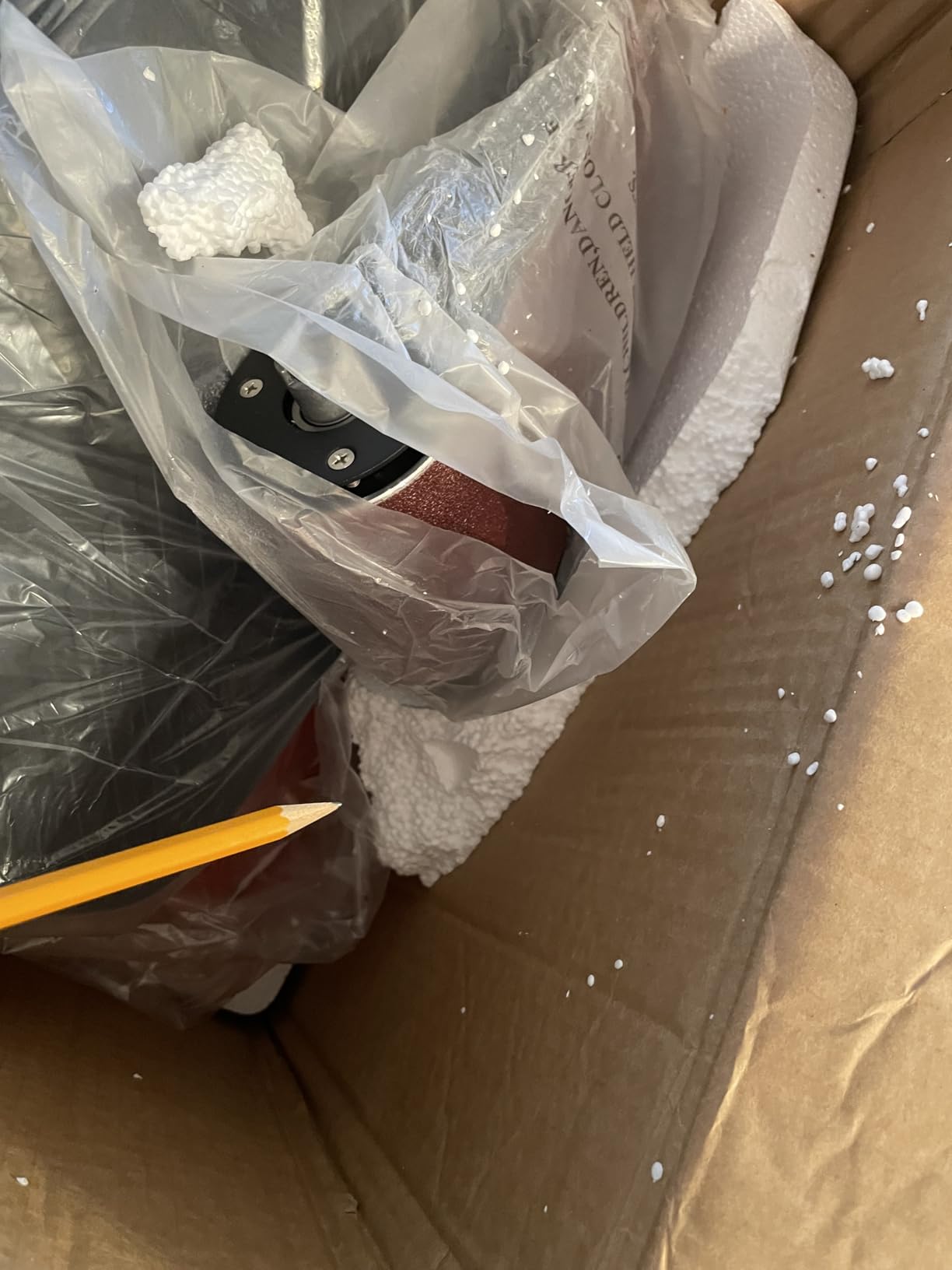
Dust extraction is the other weak point. Dust does not fully evacuate and can accumulate in the base, and the included abrasives are basic, with belt grit prone to jumping. Inspect the machine on arrival too, since some units reach customers with table blemishes or a damaged belt assembly.
What this machine handles well
Softwood, thinner material, and practice pieces. Chairs and small side tables in pine or similar material are within its comfort zone, and the wide sleeve range means you are not limited to small radii.
It is also a fine first machine, because the cast iron table does not need replacing as you get more serious.
Where it will frustrate you
Dense hardwood is the line. When the motor loads up, the finish suffers before your arms do, and the high speed makes the stall come on quickly. Expect vibration at speed on some variants as well.
Plan on budgeting for better sleeves, and clear the base regularly, because the dust channel does not empty itself.
10. Woodskil Variable Speed Belt and Spindle Sander
Woodskil Variable Speed Oscillating Belt and Spindle Sander,4×24″ Belt
- Dual spindle and belt modes in one machine
- Variable speed across 1000 to 1800 RPM and 29 to 58 OPM
- Five drum sleeves plus a 4 x 24 inch belt
- Integrated storage with transport buckles
- Narrowest and lowest speed range in the set
- 14 percent one-star share points to durability spread
- Specs differ between available variants
- Slower top-end speed on dense hardwood
The speed control is the reason to look here. A 1000 to 1800 RPM range with 29 to 58 OPM gives you genuine control over cut rate, and the low end is useful on a tight inside radius where a faster spindle would generate heat you do not want.
It is also a two-function machine. Five drum sleeves from half an inch to 2 inches cover furniture radii, and the 4 by 24 inch belt covers flat panels, so one machine handles both sides of a project. Integrated storage with transport buckles means the parts stay put when you carry it.
Be aware of the 4.0 average with a 14 percent one-star share. That is the widest durability spread of anything here, and reports of specs varying between available variants are worth checking carefully against the listing before you decide.
Why a low speed range can be a feature
On a curve, the ability to slow down is what prevents burn marks. A machine that tops out lower gives you more usable control at the working end of the dial, and at 1800 RPM you are finishing rather than cutting.
For a small shop that shapes first and refines second, that balance suits a lot of work.
What to verify before buying
Confirm the spindle size range and motor amperage for the specific variant you are buying, because these differ between versions of the machine and the listing can be ambiguous.
Given the durability spread, keep consumables on hand and check the drive components early. The versatility and the speed control are genuinely useful if the machine ages well, and you will know fairly quickly whether yours does.
How to Choose a Spindle Sander for Curved Edges
The single most important decision is not the brand or the price tier. It is how closely the smallest and largest spindle diameters bracket the radii you actually work on. Get that wrong and you will spend your time making sleeves you cannot use.
Match sleeve diameter to the radius of the work. A sleeve sanders a surface that is the same shape as the drum, so a 1 inch drum produces a 1 inch round-over. For an inside radius on a cutout, you want the smallest spindle that will still cover the curve, and 1/2 inch is the practical floor. Machines here span from 1/4 inch spindles at the narrow end to 3 inch drums at the wide end, and that span is the number to check first.
Understand what stroke, OPM, and RPM each do. Stroke length is how far the spindle travels up and down per cycle, and a longer stroke removes more material per pass. OPM is how many times that happens per minute, which controls how much rubbing versus grinding you get. RPM is rotation speed, which controls cut rate. The combination that matters is a machine with real oscillation, because that is what keeps a curve from burning.
Get a table that is large and flat. You need enough surface for the workpiece to sit stable while the profile gets shaped, and you need that surface square to the spindle. A 14-1/2 inch tilting table handles furniture-scale parts and bevels to 45 degrees, while a small table suits balusters and small turned work.
Plan for dust before you buy. This is the most common complaint in the category, and the reason is usually the port size. Many machines use a 1-1/2 inch dust port, which is well below the 4 inch hose on a modern shop vacuum. A reducer hose or a shop vacuum adapter is a five-minute fix that transforms the machine, and owners who retrofit report a near dust-free experience.
Count how much curve work you actually do. Occasional restoration on a few legs justifies a portable machine. Regular batch work on turned spindles and chair legs justifies a benchtop unit with a 2 inch or 3 inch drum. Professional shop volume with compound profiles justifies the largest tilting cast iron table and the longest stroke.
Decide between an oscillating spindle sander, a belt sander, a random orbital, and a drum sander. A random orbital sander is a flat-surface machine and cannot shape a profile. A belt sander handles bulk removal and straight edges but cannot follow a radius. A drum sander is for boards and panels, not for shaping. Only an oscillating spindle sander both rotates a round abrasive to cut a curve and oscillates to keep the surface cool, which is why it exists as a category.
One honest note before you decide: if your curves are compound, non-spherical, or irregular rather than true radii, no spindle sander is the right tool. That is a case for a random orbital with a sanding pad shaped to the part, or a hand block. Knowing that line in advance saves an expensive disappointment.
Sanding Curves: Inside Radii, Outside Radii and Interface Pads
Every curve you sand is one of two things, and the technique changes with which one it is. An outside convex curve is a round-over, and the workpiece simply rolls against the spinning drum. An inside concave curve is the hollow of a cutout or the underside of a molding, and that is where a bare drum will not always cut cleanly.
For outside convex curves, run the part along the drum at a constant feed rate and keep the piece rotating slightly so you are always presenting fresh grit. A round-over is where a machine with a large drum pays off, because a wider contact area means fewer passes and fewer seams to blend. Work from coarse to fine without skipping a step, and you will not need to sand back to bare wood at any point.
For inside concave curves, the drum can only reach what it can physically touch. On a tight inside radius the sleeve contacts the surface at an angle, which concentrates heat and can burn. Slow the spindle down if your machine has variable speed, use a lighter touch, and let the oscillation do the work rather than pressure. If the curve is tighter than your smallest spindle, you need a different tool.
Use an interface pad or backing pad when the drum does not fit the shape. A 1/2 inch to 1 inch interface pad, a piece of foam or a shaped block that goes between the drum and the workpiece, lets you sand concave and convex surfaces that a bare cylinder cannot reach. This is the single most useful trick in this entire guide for anyone restoring irregular furniture, and it is the answer that forum woodworkers reach for most often when they describe a curve no round drum will cut.
Watch the grit progression. Move 80 to 120 to 180 or 240 across separate passes rather than trying to do it all at once. On a curve, staying at one grit too long is what generates heat, and heat is what leaves burn marks. Change grit more often than you think you need to, and clean the dust off between grits so you can actually see the surface.
Think about batch work. The reason most people buy one of these is volume. A dining set with 26 legs means 104 sides to sand, and that is the kind of job where consistency matters more than speed. Set the machine up once, work at a steady feed rate, and change sleeves only when the grit is spent rather than partway through each leg. If you can do the work in one setup session, the machine has already paid for itself in time saved.
Frequently Asked Questions
What is the best sander for sanding curved surfaces?
An oscillating spindle sander is the best tool for curved surfaces, because its round abrasive drum follows a radius while oscillating up and down. The oscillation rubs rather than grinds, which cuts faster and keeps heat down so the curve does not burn. For most shops the Triton TSPS450 is the strongest all-round choice, with sleeves from 1/2 inch to 3 inches and a cast iron table. Very tight inside radii need an interface pad or a different tool entirely.
What to use to sand rounded edges?
Use an oscillating spindle sander with a sleeve diameter close to the radius you want. A 1 inch drum produces a 1 inch round-over, so size the drum to the profile rather than to the machine. Run the workpiece along the drum at a steady feed rate, rotating it slightly so fresh grit is always in contact. Portable units such as the WEN HA5932 work well handheld, and benchtop models are more accurate once the part is resting on a flat table.
What is the best way to sand a curved surface?
Start with the sleeve closest in size to your target radius, then increase grit in separate passes rather than trying to do everything at once. Keep a constant feed rate and rotate the workpiece slightly to present fresh grit. Change grit more often than feels necessary, because heat is what leaves burn marks on a curve. Clean dust off between grits so you can see the surface. If the radius is tighter than the smallest spindle, use an interface pad instead of forcing the drum into the curve.
What is the best sander for spindles?
For turned spindles and balusters, an oscillating spindle sander with a spindle range reaching 1/2 inch handles almost everything, and one reaching 1/4 inch covers very tight inside corners. The JET JBOS-5 goes down to 1/4 inch, while most machines stop at 1/2 inch. Keep a few grits on hand because a highlight along a radius shows every scratch, and 120 grit is a sensible everyday default once the shape is right.
What is a spindle sander for?
A spindle sander shapes and smooths curves, rounds, and contours in wood. A motor spins a vertical sandpaper-covered cylinder while it oscillates up and down, and you press the workpiece against it against a flat work table. It is built for chair legs, table legs, balusters, cabinet door edges, and template cleanup, where a belt or orbital sander cannot follow a radius.
Which sander is used to sand curved edges and the inside of curved cutouts?
An oscillating spindle sander is the machine used for both, but the technique differs. Outside convex curves roll straight against the drum, and a larger drum sands them in fewer passes. Inside concave curves need slower spindle speed, lighter pressure, and more frequent grit changes to avoid burn marks. Where the inside radius is tighter than your smallest spindle, add a 1/2 inch to 1 inch interface or backing pad so the drum can reach the surface.
Final Verdict on the Best Spindle Sanders for Curved Edges
The Triton TSPS450 is our pick for 2026 because it covers the widest range of real furniture work in one machine. A 3 inch drum, a cast iron table, and an oscillation that keeps curves clean mean it handles both a batch of chair legs and a single restoration piece without changing strategy.
Pick the WEN HA5932 if you restore assembled furniture and want to work handheld, or the Triton TSPSP650 if your shop is small and space is the constraint. Go with the JET JBOS-5 for professional volume on tight inside radii, the WEN AT6535 when large flat workpieces are your norm, and the VEVOR if you want a cast iron table to learn on without a large commitment.
Whatever you choose, match the smallest and largest spindle to your actual radii before anything else, and give the dust port a proper vacuum connection on day one. Those two decisions decide whether the machine becomes the tool you reach for every time a curve comes up.