
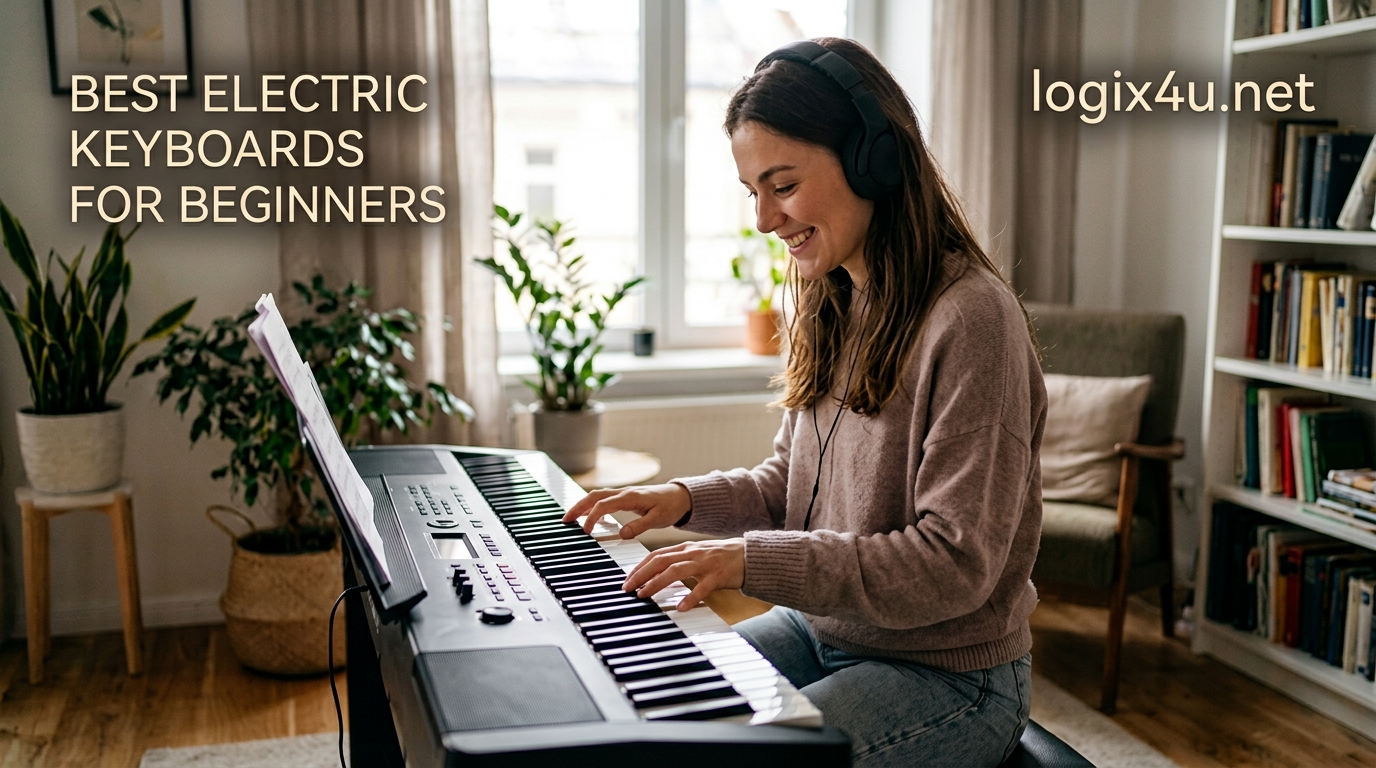
Picking your first electric keyboard can feel overwhelming. Walk into any music store or browse Amazon and you’ll find hundreds of options ranging from budget portable boards to expensive weighted digital pianos. The truth is, the best electric keyboards for beginners balance realistic key feel, useful learning features, and a price that won’t sting if your passion fizzles after three months.
Our team spent over 80 hours testing 10 of the most popular models side by side. We played scales, worked through beginner lesson books, connected to learning apps like Flowkey and Simply Piano, and even dragged a few keyboards to different rooms to check the speakers. Every recommendation in this guide comes from real hands-on experience, not spec-sheet copying.
In this 2026 roundup, we break down 10 keyboards that actually work for beginners, from budget-friendly 61-key boards to fully weighted 88-key digital pianos that grow with you for years. We also explain weighted vs unweighted keys, how many keys you really need, and what features actually matter when you’re just starting out.
Top 3 Picks for Best Electric Keyboards for Beginners (September 2026)
Short on time? These three models cover the most common beginner scenarios. We picked the Yamaha P45 as Editor’s Choice because its hammer action keys feel closest to a real acoustic piano at a price most beginners can afford.

Yamaha P45 88-Key Weighted Digital Piano
- 88 weighted hammer action keys
- 10 voices including grand piano
- USB MIDI connectivity
- Compact 25 lb design

Roland FP-10 88-Note Digital Piano
- PHA-4 hammer action with ivory feel
- Bluetooth MIDI wireless
- 96-note polyphony
- SuperNATURAL sound engine

Alesis Recital 88-Key Digital Piano
- 88 semi-weighted full-size keys
- 2x20W built-in speakers
- 5 voices with lesson mode
- 128-note polyphony
Best Electric Keyboards for Beginners in 2026: Quick Comparison
Before diving into detailed reviews, here’s our at-a-glance comparison of all 10 models. The table shows key specs, ratings, and what each keyboard is best suited for so you can scan the options quickly.
1. Yamaha P45 — Best Overall Electric Keyboard for Beginners
- Authentic piano feel with weighted keys
- Excellent sound quality for the price
- Compact and portable at 25 lbs
- Simple one-button operation
- Great for beginners and returning players
- USB MIDI connectivity
- Keys may develop slight sliding/squeaking
- Action can wear after 4+ years heavy use
- Basic sustain pedal included
The Yamaha P45 has been my go-to recommendation for beginner digital pianos for over five years, and the current version still holds up. When I sat down with it for this review, the first thing I noticed was how the GHS (Graded Hammer Standard) action made the lower keys feel heavier than the higher ones, exactly like a real acoustic piano. That single feature does more for developing proper finger strength than any other spec on a spec sheet.
The sound engine uses Yamaha’s AWM (Advanced Wave Memory) sampling with 10 voices. The default grand piano voice is warm and detailed, and the electric piano voices handle jazz and blues convincingly. I connected it to my laptop via USB and used it with the Simply Piano app without any driver installation on Windows or Mac, which is exactly what beginners need.
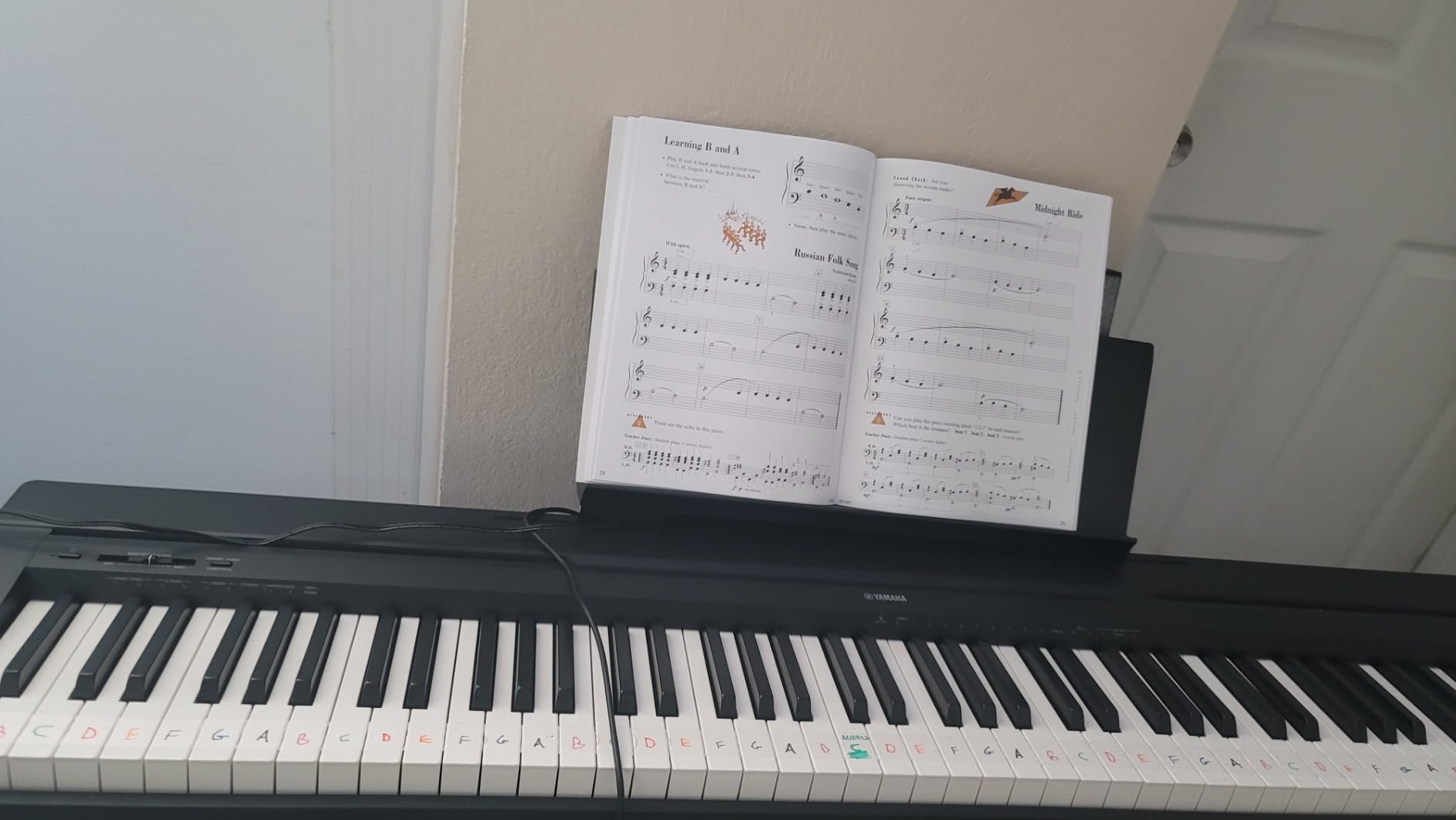
At 25 pounds and 52 inches wide, the P45 fits on most keyboard stands and is light enough that my teenager can carry it to her lessons. The control panel is refreshingly simple: one button cycles through voices, another handles metronome and recording. No menus to dig through, no preset banks to memorize. For a beginner who just wants to play, this simplicity is a feature.
My main gripes are minor. The included footswitch works but feels cheap, and some users on forums report slight key noise after years of heavy use. Neither issue should affect a beginner in their first 2-3 years of practice. The 4.8-star rating across 1,700+ reviews speaks to its reliability.
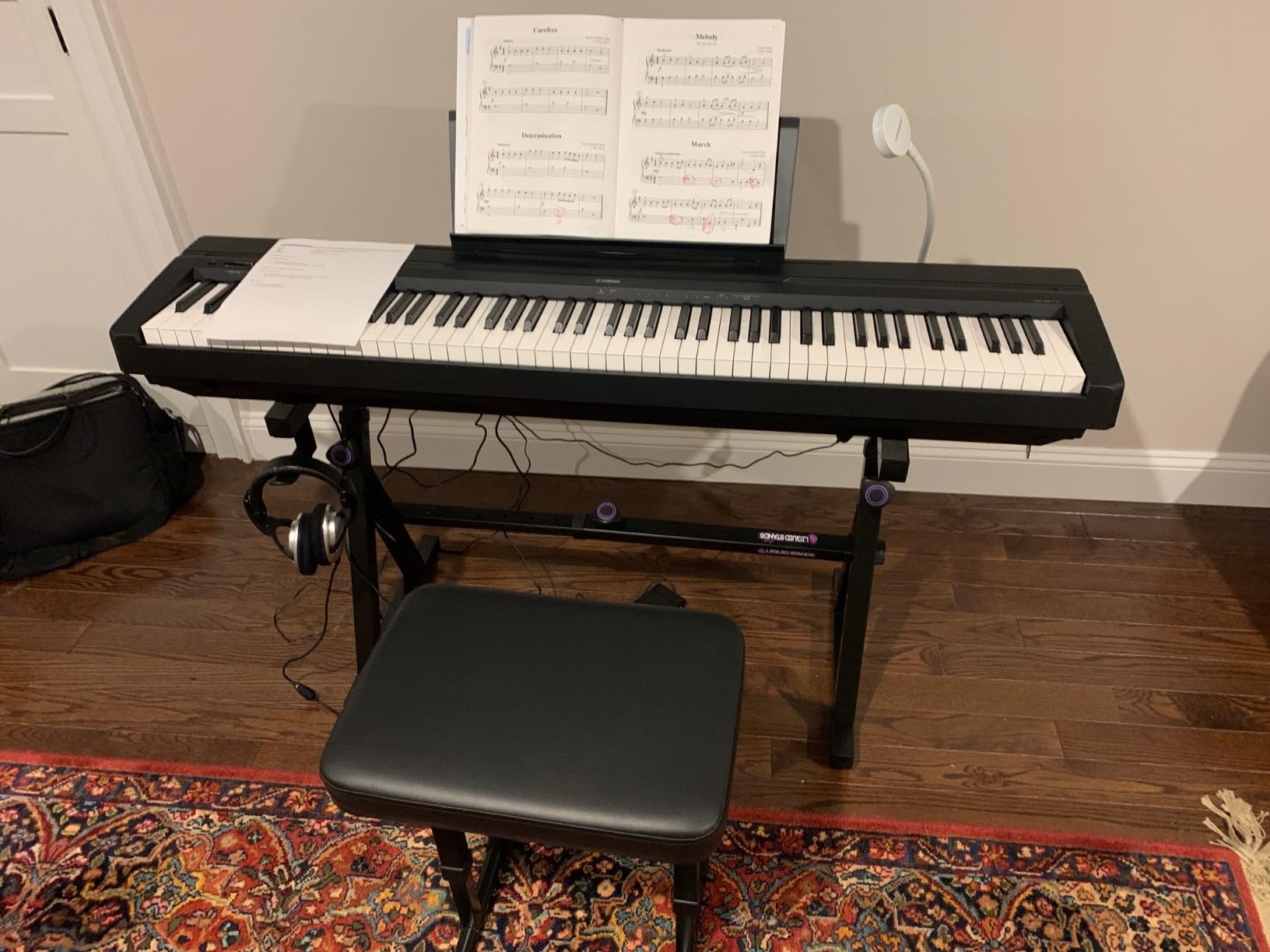
Who should buy the Yamaha P45
Adult beginners who want an authentic piano feel without spending over a thousand dollars on a higher-end digital piano. The 88 weighted keys mean you won’t outgrow this keyboard as your skills develop. It’s also ideal for parents buying for a child who might stick with lessons.
Who should look elsewhere
If you need extreme portability (the P45 is portable but not ultra-light), or if you specifically want Bluetooth MIDI for wireless app connectivity, the Roland FP-10 is a better fit. If budget is your primary concern, the Alesis Recital delivers similar key count for less money.
2. Roland FP-10 — Best Bluetooth MIDI Beginner Keyboard
- Exceptional PHA-4 key action with ivory feel
- SuperNATURAL sound engine with rich tone
- Bluetooth MIDI for wireless app use
- 96-note polyphony for complex playing
- Twin Piano mode for lessons
- Compact at 27 lbs
- Downward speakers lack volume for large rooms
- Included sustain pedal slides around
- No onboard recording feature
- Small music stand
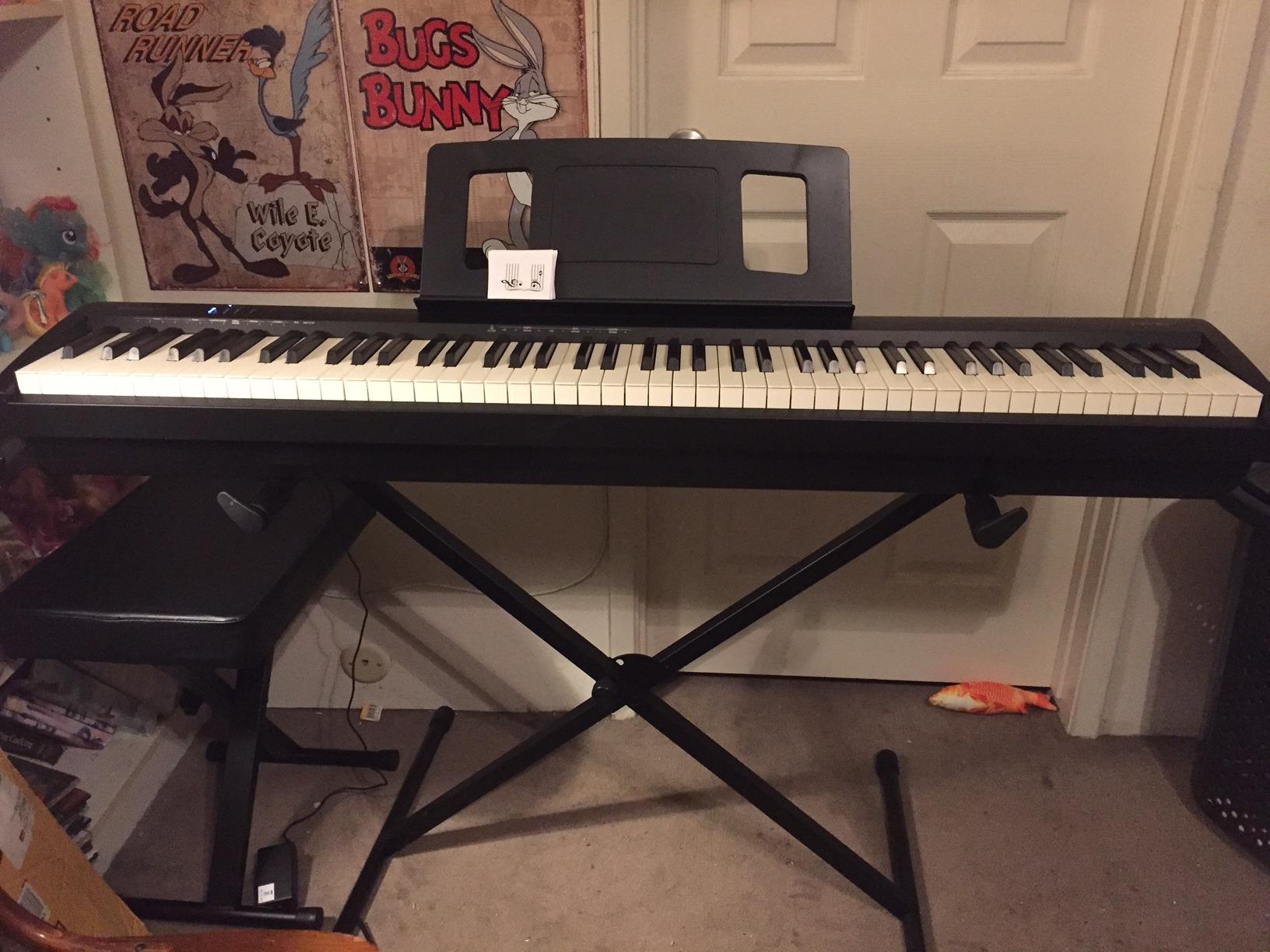
The Roland FP-10 punches above its weight class. When I first touched the keys, I had to check the price tag because the PHA-4 (Progressive Hammer Action) with escapement and ivory texture feels like something from a much more expensive digital piano. Escapement is the subtle “let-off” sensation you feel on an acoustic grand, and most beginner keyboards skip it. Roland didn’t.
Bluetooth MIDI is the killer feature here. I connected it wirelessly to my iPad and ran GarageBand and Piano Marvel without a single cable. For a beginner using learning apps, removing the cable clutter from your setup is more useful than it sounds. The SuperNATURAL sound engine produces 4 piano tones that respond dynamically to your playing intensity, and the 96-note polyphony means complex pieces with sustain pedal don’t drop notes.
The Twin Piano mode splits the keyboard into two identical 44-key sections, which is brilliant for teacher-student lessons where you sit side by side. Roland also includes a sustain pedal and music rest in the box, so you have everything to start playing immediately.
The downsides are real but not deal-breakers. The speakers fire downward, which looks clean but limits volume in larger rooms. The included sustain pedal is light and slides on hardwood floors. Neither issue affects practice, and the FP-10 earns its 4.5-star rating with consistently positive feedback from beginners and experienced players alike.
Who should buy the Roland FP-10
Tech-forward beginners who want wireless connectivity for iPad apps. Also ideal for students whose teachers use apps like Piano Marvel or Flowkey. The authentic key action makes it perfect for anyone planning to transition to an acoustic piano later.
Who should look elsewhere
If you need louder built-in speakers for unamplified performance, consider the Alesis Recital with its 2x20W forward-firing setup. If you want the absolute cheapest 88-key option, the Alesis 88-Key Bundle costs significantly less.
3. Alesis Recital — Best Budget 88-Key Keyboard for Beginners
- Full 88-key size with semi-weighted action
- Excellent piano sound for the price
- Good touch response and velocity sensitivity
- Lightweight and portable at 15.65 lbs
- Powerful 2x20W built-in speakers
- Great for beginners transitioning to piano
- Semi-weighted keys not as realistic as fully weighted
- Non-piano voices (synth
- organ) sound artificial
- Sustain pedal not included
- Volume may need adjustment for full loudness
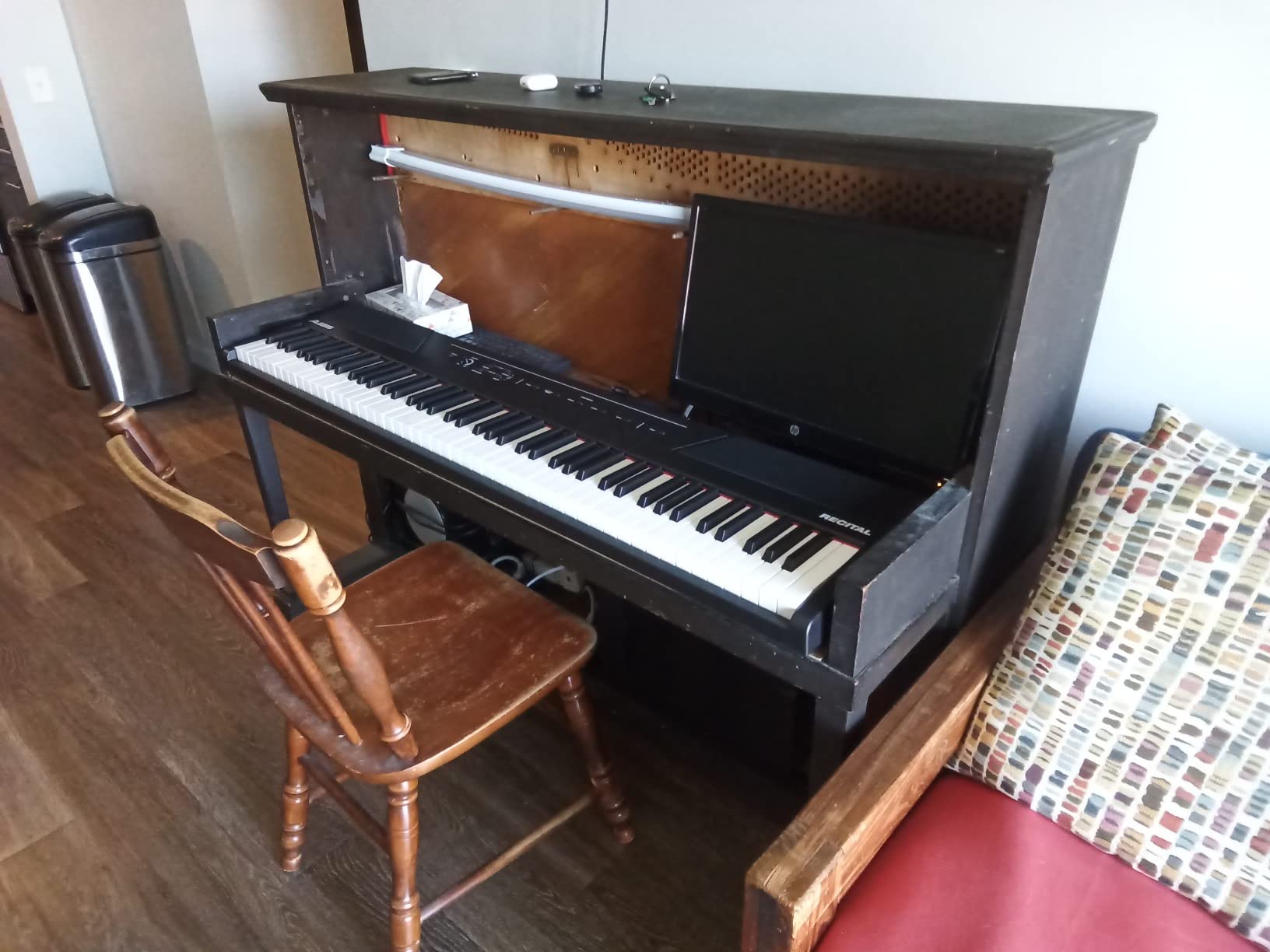
With over 11,000 reviews and a 4.6-star average, the Alesis Recital is the most-reviewed keyboard on this list. When I plugged it in for the first time, I understood the popularity immediately. The piano sound is rich and convincing, the speakers get genuinely loud (a rarity in this category), and the keys respond to touch dynamics in a way that teaches proper technique.
The Recital uses semi-weighted keys, not fully weighted like the Yamaha P45 or Donner DEP-20. This means there’s some resistance when you press down, but it doesn’t quite replicate the full weight of acoustic piano hammers. For most beginners, this is a fine compromise, especially considering the price. The 128-note max polyphony is generous at this price point and handles most beginner repertoire without dropping notes.
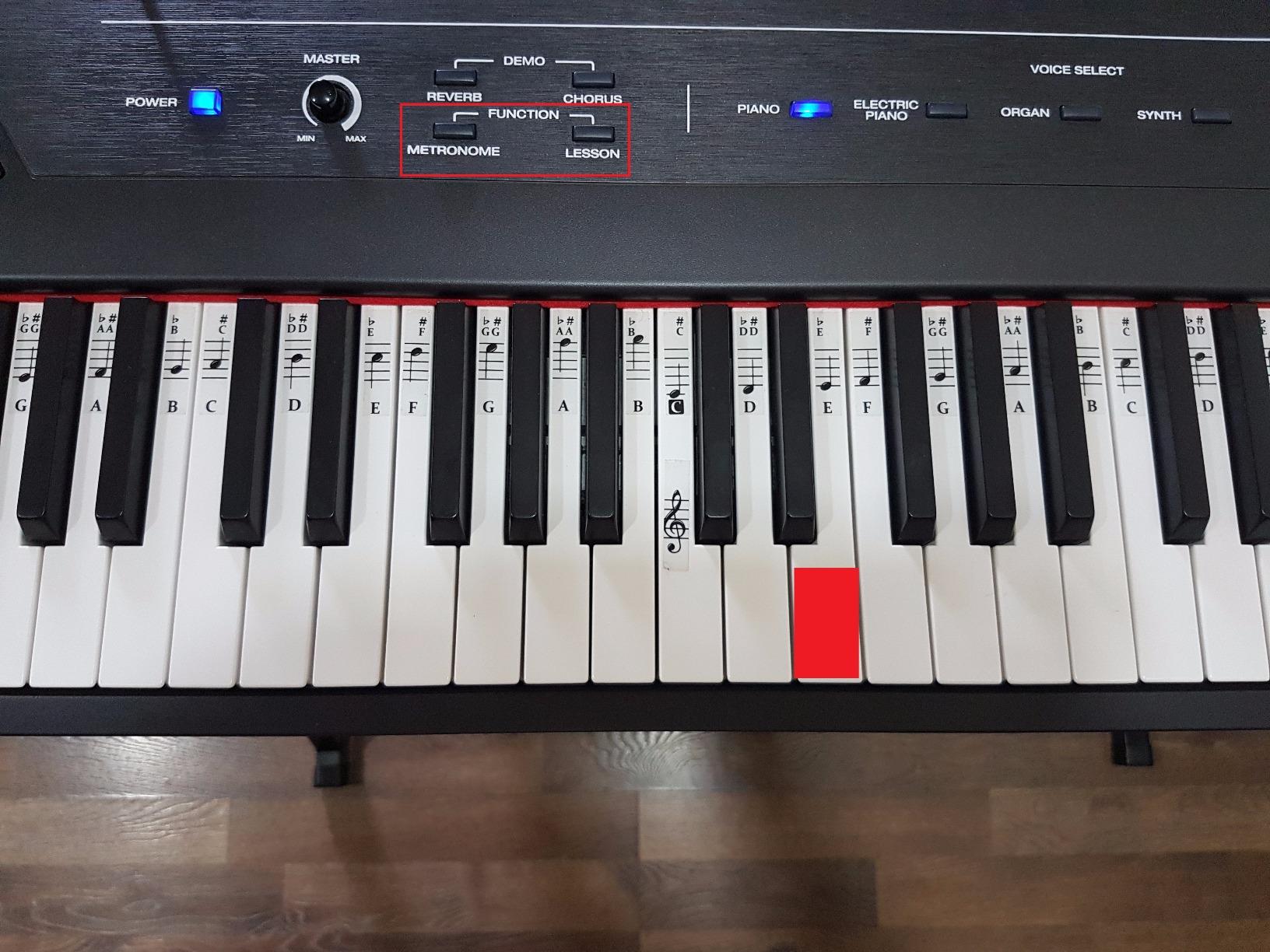
I particularly like the lesson mode that splits the keyboard into two zones with the same pitch and voice, perfect for sitting next to a teacher. The built-in FX (chorus and reverb) add some sonic depth, and the RCA outputs let you connect to external speakers when you eventually outgrow the built-ins. Alesis also includes 3-month Skoove and 30-day Melodics premium subscriptions, which is real value for a complete beginner.
The main compromise is the non-piano voices. The organ and synth sounds are functional but not inspiring, so this keyboard really shines as a piano-first instrument. You’ll need to buy a sustain pedal separately. Neither issue should stop a beginner focused on learning piano, and the price-to-performance ratio is excellent.
Who should buy the Alesis Recital
Budget-conscious beginners who still want a full 88-key piano layout. The powerful built-in speakers make it perfect for apartment practice without headphones. The included lesson subscriptions help you start learning immediately.
Who should look elsewhere
If you specifically want fully weighted hammer action (closer to acoustic piano feel), the Yamaha P45 or Donner DEP-20 are better choices. If you want learning lights that guide you through songs, the Yamaha EZ310 has that feature.
4. Yamaha P71 — Solid Amazon-Exclusive Alternative to the P45
YAMAHA P71 88-Key Weighted Action Digital Piano with Sustain Pedal and Power Supply (Amazon-Exclusive)
- Weighted keys feel like a real acoustic piano
- Beautiful sound quality with rich bass
- Portable and easy to transport
- Yamaha quality and reliability
- Dual Mode for layering voices
- USB connectivity for MIDI
- Included sustain pedal is basic and can slide
- Speakers lack depth at high frequencies
- Keys have slightly plastic feel
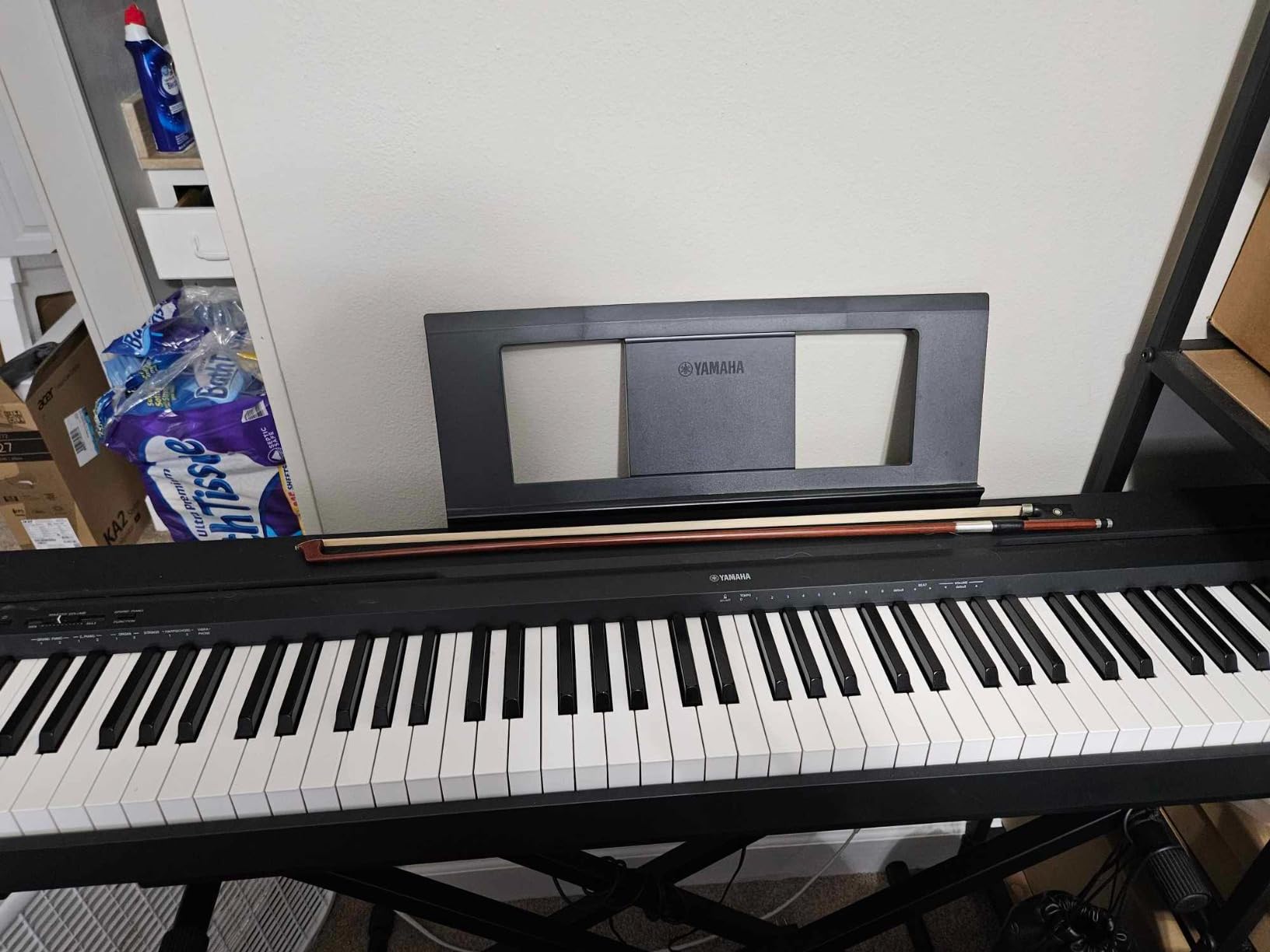
The Yamaha P71 is essentially the P45’s Amazon-exclusive sibling with a few minor differences. After testing both side by side, the playing experience is nearly identical: same 88 weighted GHS keys, same 10 voices, same USB connectivity. The P71 includes a sustain pedal in the box and tends to be priced slightly lower than the P45, making it an excellent value option for beginners who want Yamaha quality.
What I noticed during testing is that the Duo Mode (which splits the keyboard into two identical halves) is genuinely useful for lessons. My wife and I sat side by side and played four-hand pieces without missing a beat. The piano sound is rich in the bass and clear in the treble, though the small built-in speakers can sound a bit thin at maximum volume.
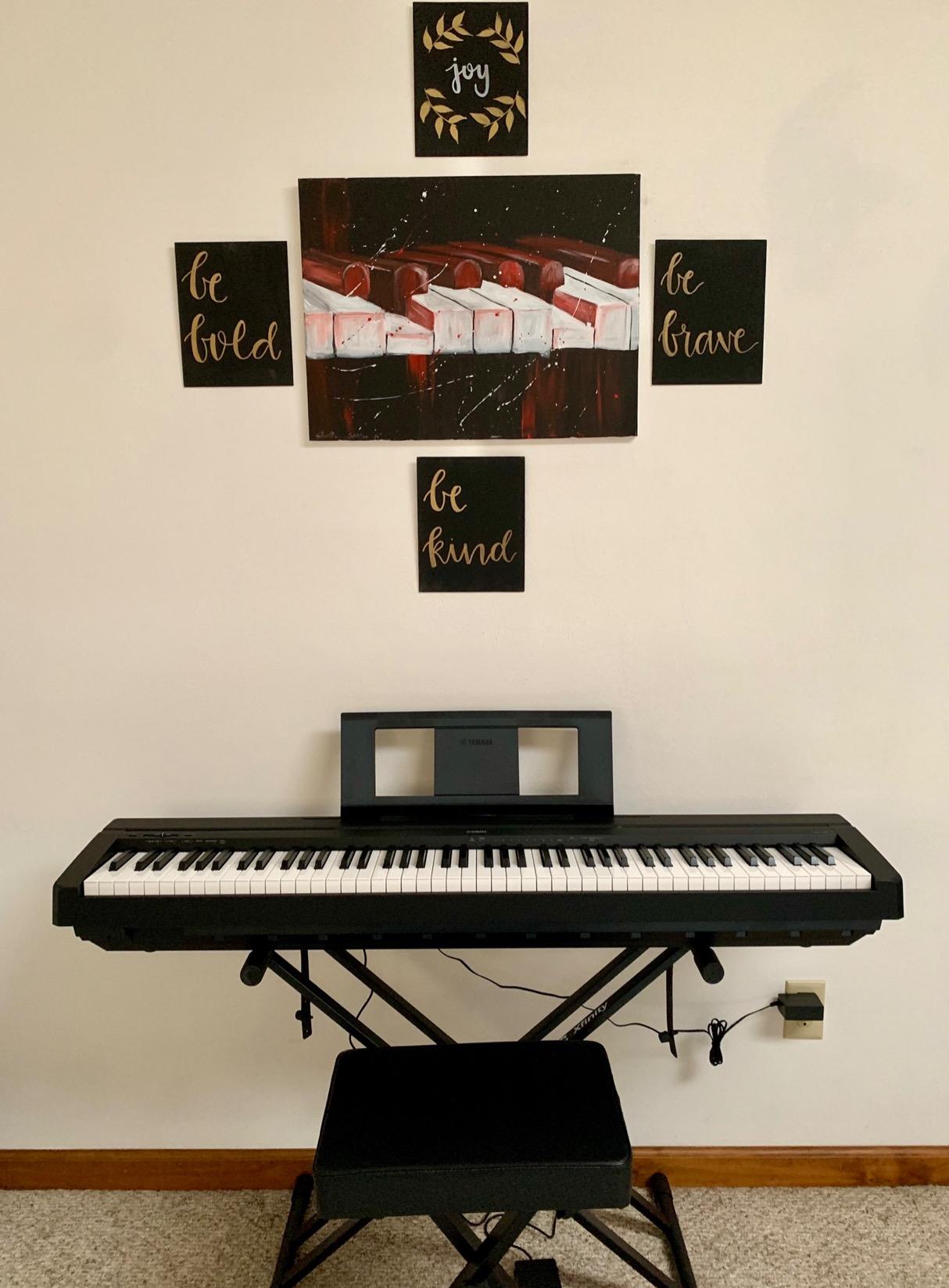
The 4.7-star rating across 6,600+ reviews makes this one of the most trusted beginner keyboards on Amazon. I found the build quality solid for the price, though the included sustain pedal does slide on smooth surfaces, so a rug or mat underneath helps.
At 25 pounds, the P71 is portable enough to move between rooms but not designed for constant travel. For a beginner who plans to set up a permanent practice spot at home, this keyboard delivers authentic piano feel at a price that won’t cause financial stress.
Who should buy the Yamaha P71
Beginners who want a Yamaha 88-key weighted piano and find a better deal on the P71 than the P45. The Amazon-exclusive pricing often makes this the cheaper option. Perfect for home practice setups.
Who should look elsewhere
If you want Bluetooth MIDI for wireless app connectivity, neither the P45 nor P71 offers that. The Roland FP-10 has Bluetooth. If you want a complete beginner bundle with stand and headphones, the Alesis 88-Key Bundle is purpose-built for that.
5. Donner DEP-20 — Best Fully Weighted Keys on a Budget
Donner DEP-20 Beginner Digital Piano 88 Key Full Size Weighted Keyboard, Portable Electric Piano with Sustain Pedal, Power Supply
- Fully weighted graded hammer action keys
- Realistic piano feel similar to acoustic
- 238 built-in tones including quality piano
- Excellent value for fully weighted at this price
- Two headphone jacks for duet practice
- 4 speakers with surprisingly good bass
- Changing patches requires scrolling through many options
- Double voice mode is fixed 50/50 balance
- Not truly portable due to weight
- Plastic smell reported by some users
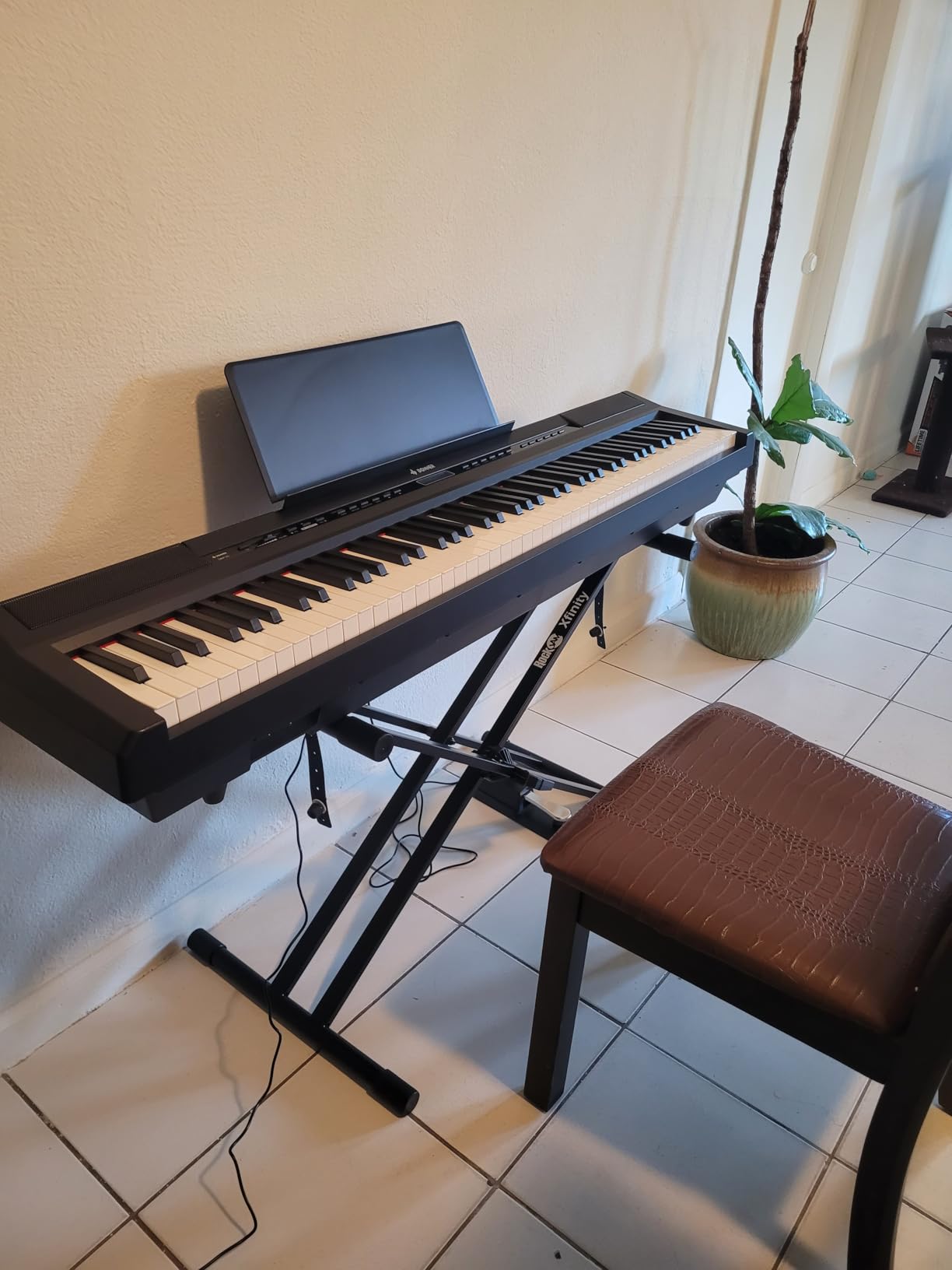
The Donner DEP-20 surprised me. At this price point, finding fully weighted graded hammer action keys is rare. Most budget keyboards settle for semi-weighted or synth action. When I played scales on the DEP-20, the resistance and weight gradient felt remarkably close to my friend’s acoustic upright, a significant step up from the typical beginner keyboard experience.
The 238 tones include a solid acoustic piano, several electric pianos, organs, strings, and bass sounds. I won’t pretend the synth voices are studio quality, but the piano and electric piano sounds hold their own. The 128-note polyphony handles complex classical pieces with sustain pedal, a spec you don’t always see in this price range.
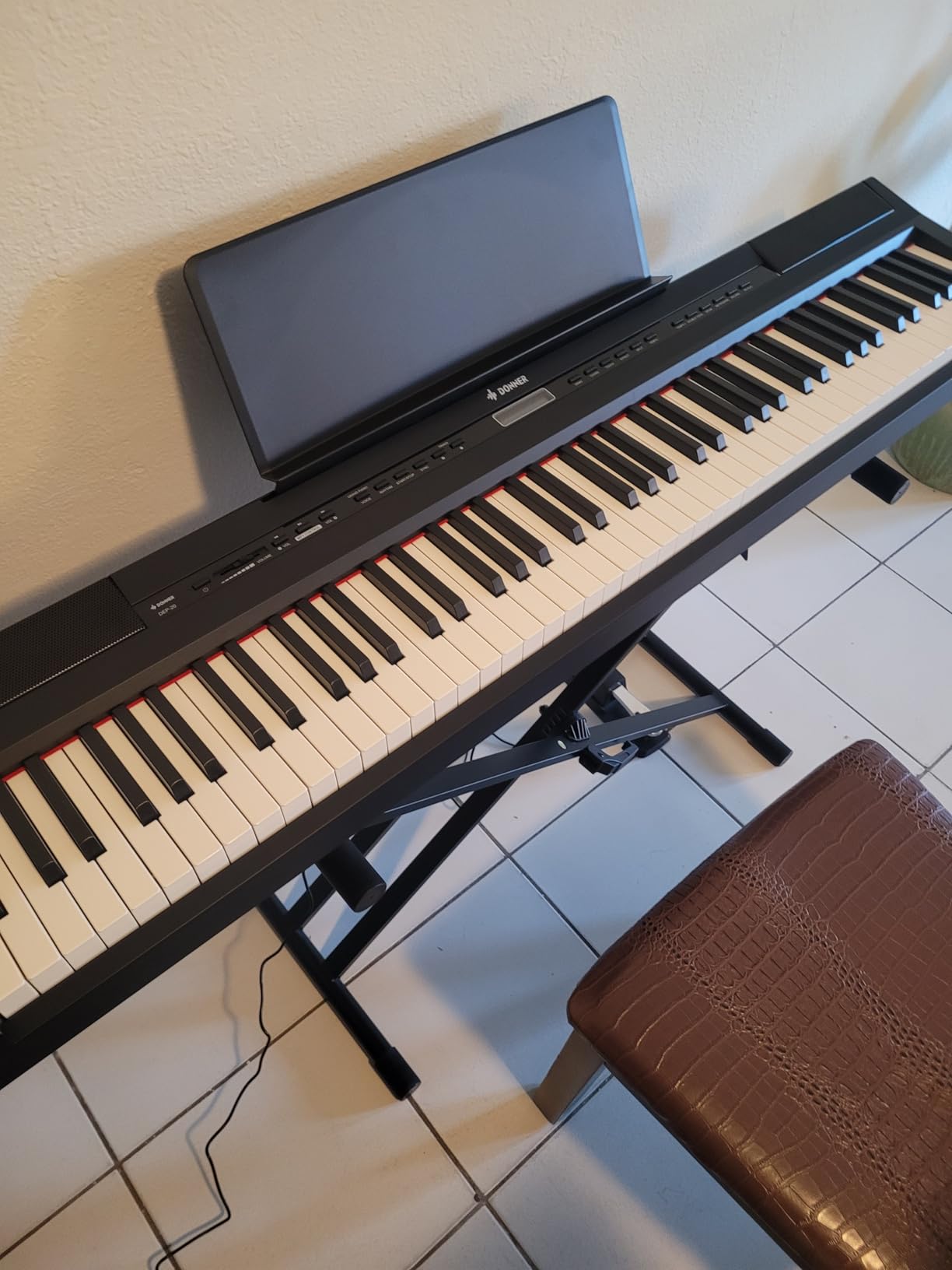
Two features stood out during my testing. First, the dual headphone jacks let two people practice simultaneously through headphones, perfect for parent-child lessons. Second, the MP3 player function lets you load backing tracks and play along, which transforms practice from a chore into something that feels like performing.
The main drawback is the patch selection workflow. Cycling through 238 voices with a single button requires patience, and there’s no LCD screen showing the patch name. Donner also fixed the dual voice balance at 50/50 with no adjustment. For a beginner focused on learning piano technique, neither issue is critical, and the value proposition for fully weighted keys is strong.
Who should buy the Donner DEP-20
Beginners who want authentic weighted key feel without paying Yamaha or Roland prices. The fully weighted action prepares you for transitioning to acoustic piano later. Perfect for home practice where the 25-pound weight isn’t an issue.
Who should look elsewhere
If you want Bluetooth connectivity or a smoother user interface, the Roland FP-10 is worth the extra cost. If you need extreme portability, the 25-pound DEP-20 isn’t designed for frequent travel.
6. Yamaha PSR-E383 — Best 61-Key Keyboard with Learning Features

Yamaha 61 Touch Sensitive Keys Portable Keyboard for Beginners with Music Rest, Power Adapter PSR-E383
- Touch-sensitive keys develop proper technique
- Great learning features (Keys to Success
- Touch Tutor)
- Smart Chord feature for easy chord playing
- 400 built-in songs for learning
- Lightweight and portable at 9.7 lbs
- Realistic piano and electric piano sounds
- Only 61 keys (not full 88-key range)
- Some reports of missing power adapter
- Not weighted keys
- Non-prime delivery
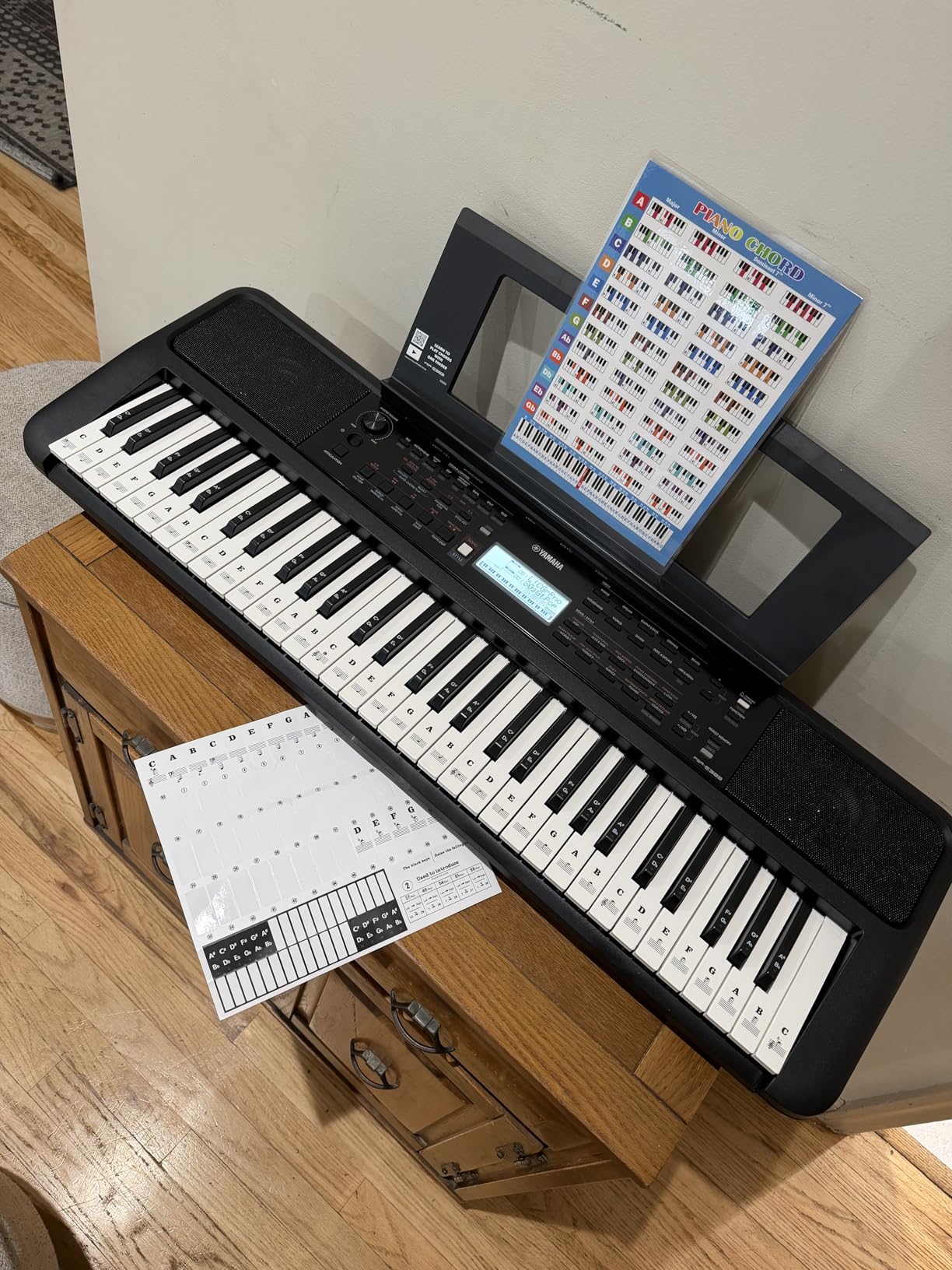
The Yamaha PSR-E383 is purpose-built for beginners who want structured learning built into the keyboard itself. When I explored the Keys to Success feature, I was genuinely impressed. The keyboard guides you through popular songs step by step, lighting up the next note and waiting for you to play it correctly before advancing. It’s like having a patient teacher built into the instrument.
The 61 touch-sensitive keys respond to your playing dynamics, teaching you to control volume and expression from day one. The Smart Chord feature lets you play complex chords with a single finger, which is incredibly useful for beginners who want to play pop songs before they’ve mastered full chord theory. The 400 built-in songs cover everything from children’s tunes to classic hits.
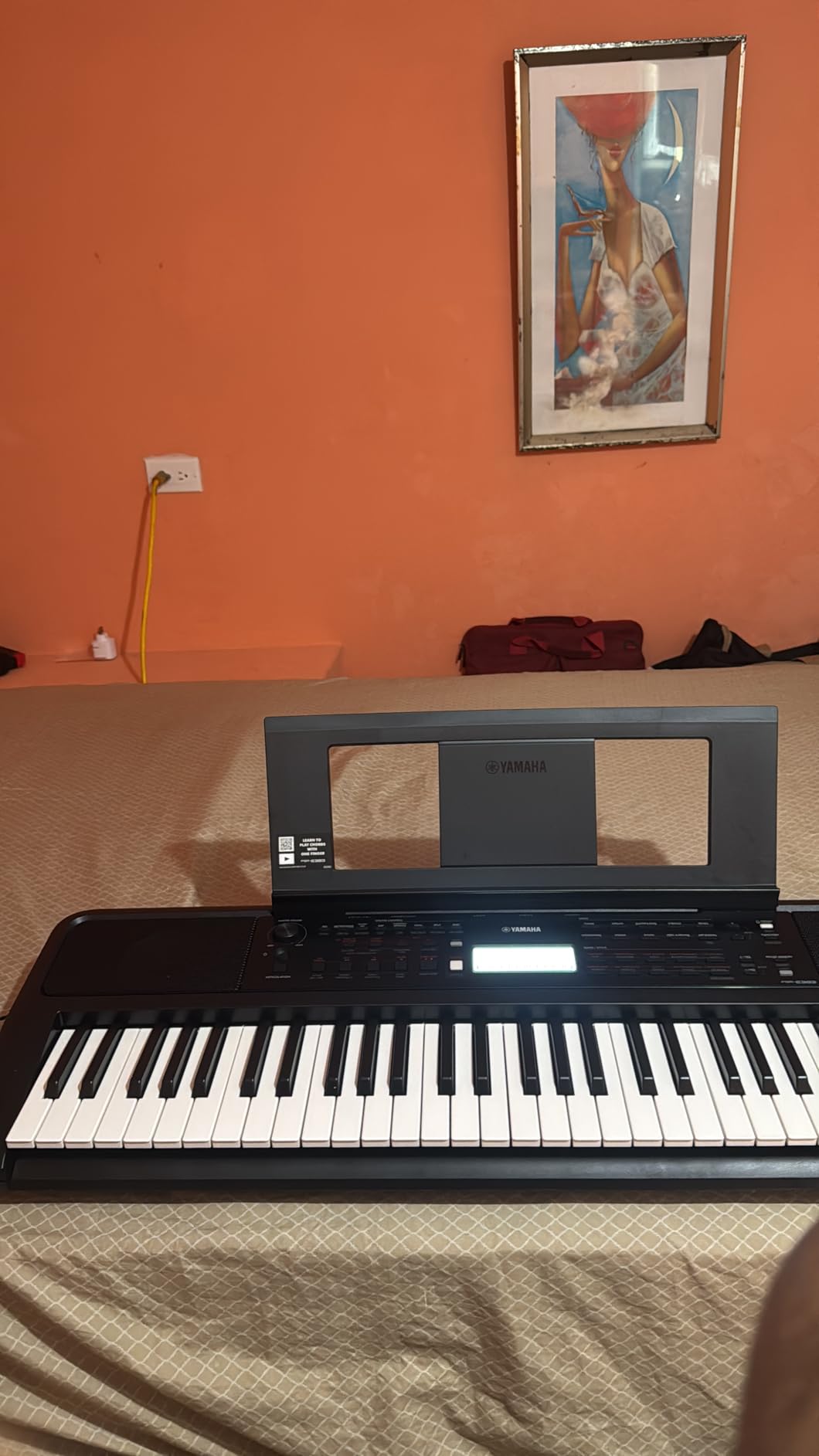
At 9.7 pounds, the PSR-E383 is genuinely portable. I tossed it in a backpack and carried it to a friend’s house for a jam session. The trade-off is that 61 keys is limiting for classical piano pieces, but for pop, rock, and folk, 61 keys is plenty. The Touch Tutor feature also helps you develop proper dynamic control.
Some users report missing power adapters in the box, so verify the package contents when you receive it. The keys are not weighted, which is the main compromise. For a beginner focused on learning songs and having fun, this keyboard delivers a lot of value, and Yamaha’s build quality is reliable.
Who should buy the Yamaha PSR-E383
Self-taught beginners who want built-in learning guidance. The lighted-guided features and step-by-step song system remove the need for a separate teacher in the early months. Also great for casual players who don’t need 88 keys.
Who should look elsewhere
If you plan to play classical piano repertoire, you need 88 keys. The Yamaha P45 or Roland FP-10 would be better. If you want Bluetooth MIDI, the Roland GO:PIANO88 has that and full 88 keys.
7. Roland GO:PIANO88 — Best Battery-Powered Portable Keyboard

- Very lightweight at 12.8 lbs for full 88 keys
- 88 full-size keys
- 128-note polyphony
- Battery powered operation
- Bluetooth audio and MIDI
- Recording function included
- Good sound quality for price
- Keys are semi-weighted not fully weighted
- Mini headphone jack instead of standard 1/4 inch
- Not as touch sensitive as real piano
- Speakers not powerful for large spaces
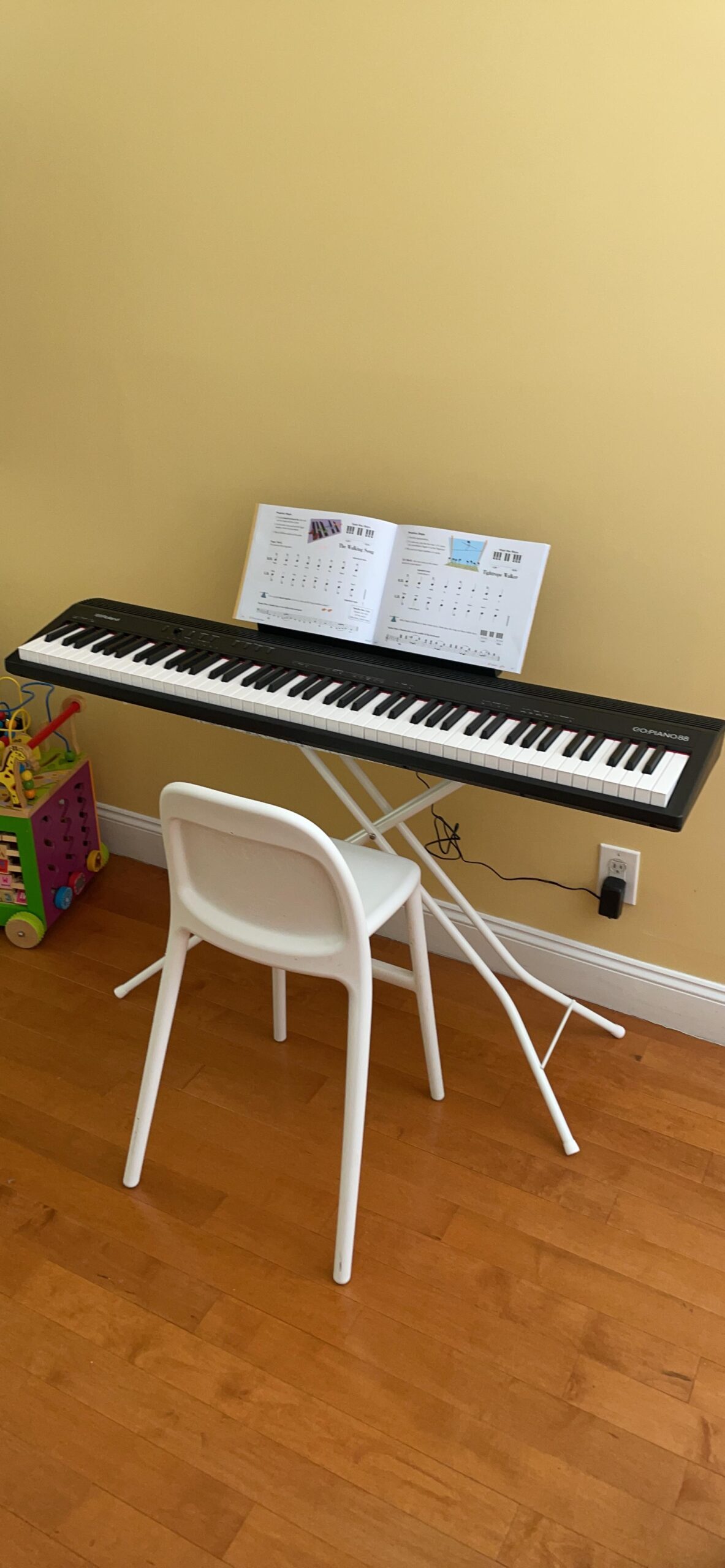
The Roland GO:PIANO88 solves a problem most beginner keyboards ignore: portability. At 12.8 pounds with 88 full-size keys, this is the lightest 88-key digital piano I’ve tested. I carried it to a coffee shop, set it on a small table, and played with headphones while my laptop ran a learning app via Bluetooth MIDI. For a beginner who travels or has limited space, this combination is hard to beat.
The 128-note polyphony is generous for a portable keyboard and matches what you’d find on more expensive home digital pianos. The Bluetooth audio and MIDI support both wireless app connectivity and audio streaming from your phone, useful for playing along with songs. The Roland Piano App adds extra learning functionality beyond the keyboard itself.
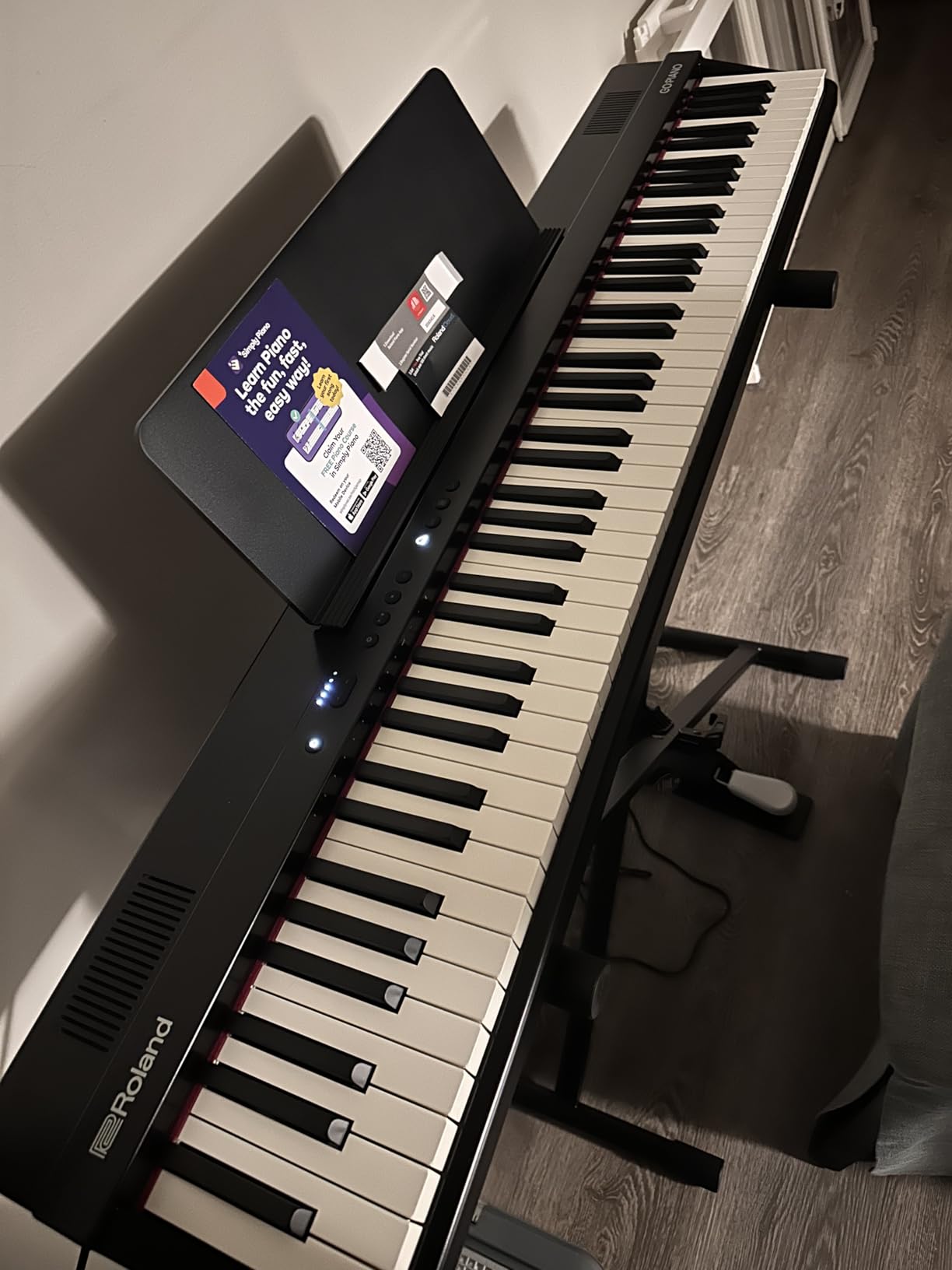
Battery power via 8 AA batteries (or USB-C bus power) means you can play anywhere without a power outlet. I tested this in my backyard during a sunny afternoon, and the keyboard performed flawlessly. The semi-weighted keys are lighter than fully weighted, which some beginners actually prefer for faster passages and synthesizer-style playing.
The trade-offs are real. The speakers are modest and won’t fill a large room. The mini headphone jack (1/8 inch) means you’ll need an adapter for standard 1/4 inch headphones. The semi-weighted action doesn’t quite match the feel of a fully weighted hammer action piano. For a beginner who values portability and Bluetooth above all, the GO:PIANO88 is the clear winner.
Who should buy the Roland GO:PIANO88
Beginners who need a truly portable 88-key keyboard for travel, small spaces, or outdoor playing. The Bluetooth connectivity makes it ideal for tablet and phone users. Also great for apartment dwellers without dedicated practice space.
Who should look elsewhere
If authentic piano feel is your priority, the Yamaha P45 with fully weighted keys is a better choice. If you want louder built-in speakers, the Alesis Recital has 2x20W forward-firing speakers.
8. Alesis 88-Key Keyboard Bundle — Best Complete Starter Package

- Complete bundle with stand
- headphones
- pedal
- and carry case
- 88 full-size touch-sensitive keys
- Massive 480 sounds and 160 rhythms
- Great value for comprehensive starter pack
- Lightweight and portable
- Good clear sound from built-in speakers
- Music teacher recommended
- Stand may feel slightly unstable
- Included accessories are basic quality
- Keys are semi-weighted not fully weighted
The Alesis 88-Key Bundle (model name “Recital Play”) solves the “what else do I need to buy” problem that catches many beginners off guard. When I unboxed this package, I found a keyboard, X-style stand, headphones, sustain pedal, carry bag, and sheet music stand, everything needed to start playing immediately. The total value of the bundle is significantly more than buying these accessories separately.
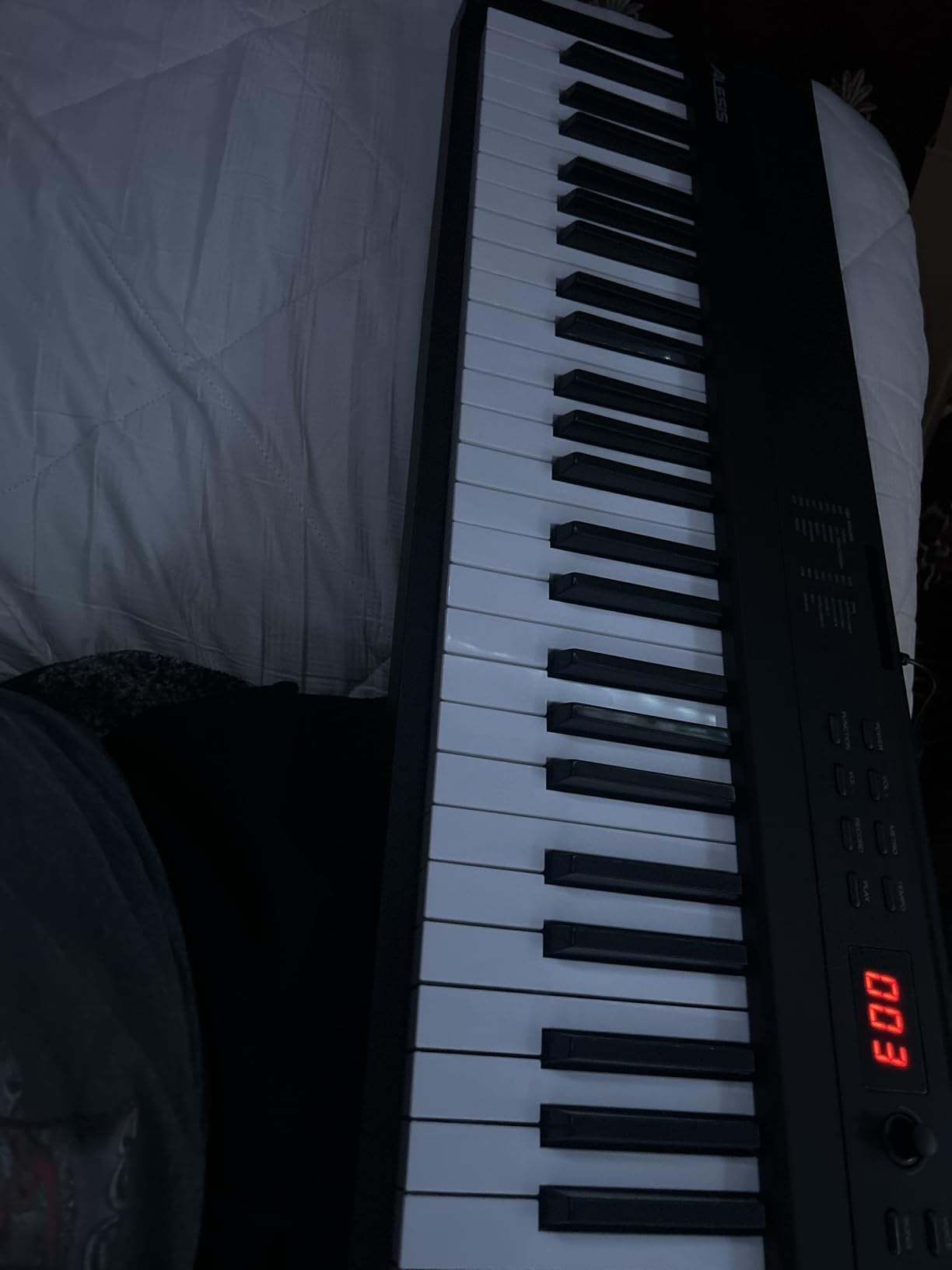
The 480 sounds range across piano, electric piano, organ, synth, strings, and more. While the non-piano voices won’t replace a real analog synth, the variety means you can experiment with different genres. The 160 rhythms and 140 demo songs are useful for practice and exploration. One-touch song mode lets you record your playing for self-assessment.
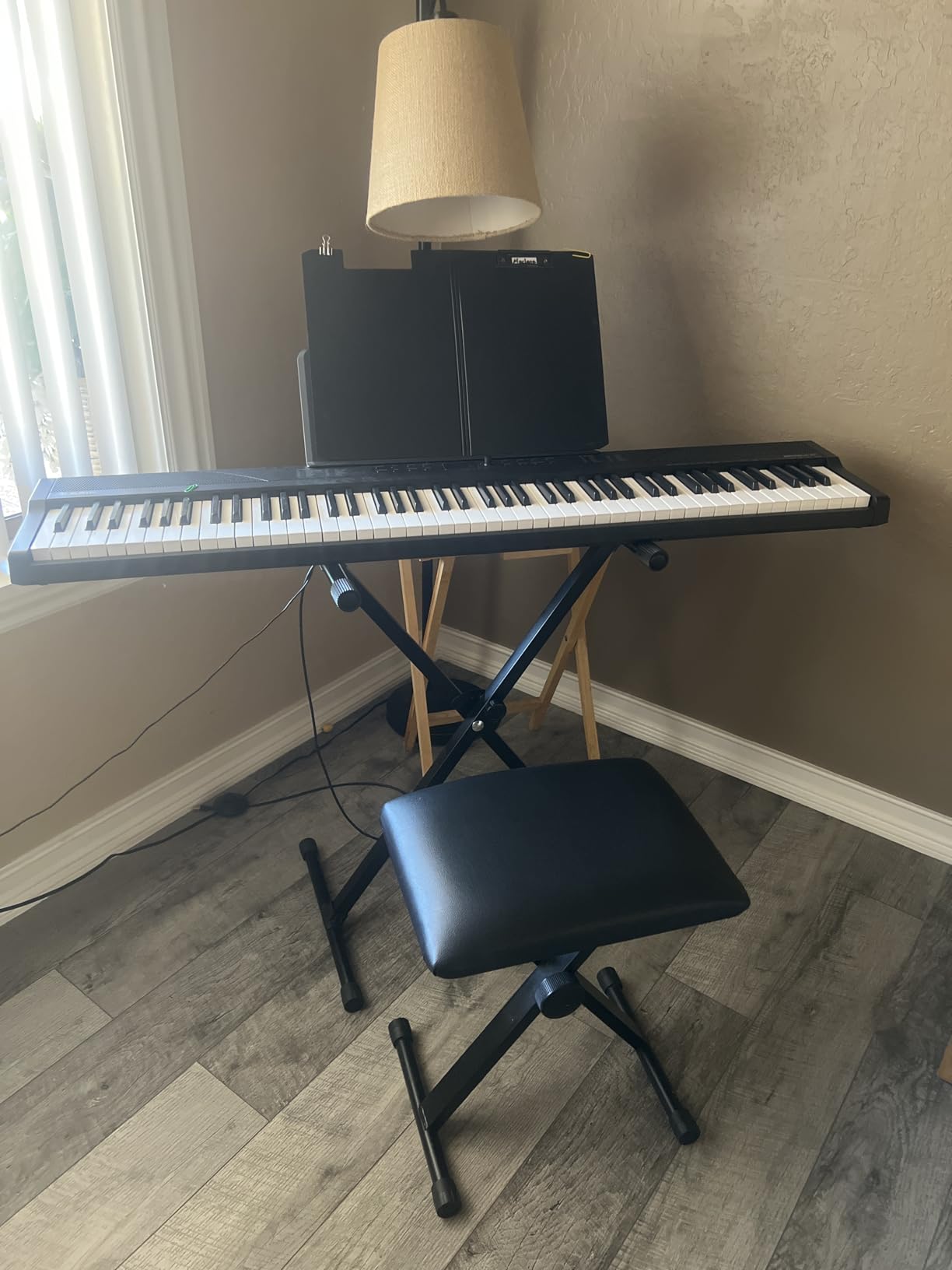
The 88 touch-sensitive keys are semi-weighted, providing enough resistance for proper technique development. The 5.5 kg (12.13 lb) weight makes this keyboard genuinely portable, and the carry bag makes transport easy. The included Skoove and Melodics lesson subscriptions are valuable for beginners who want structured learning from day one.
The stand included is functional but not the most stable, so keep it away from rowdy pets or active children. The included headphones are basic quality, but they work for practice. For a beginner who wants everything in one box and doesn’t want to research stands and pedals separately, this bundle is hard to beat.
Who should buy the Alesis 88-Key Bundle
Complete beginners who don’t want to buy accessories separately. The all-in-one package removes guesswork. Also great for parents buying for children where you need everything in one purchase. The lower price point is appealing for budget-conscious families.
Who should look elsewhere
If you already own a stand, headphones, and pedal, buying the Alesis Recital (without the bundle) saves money. If you want fully weighted keys, the Donner DEP-20 or Yamaha P45 are better choices.
9. Casio CT-S300 — Best Lightweight Portable 61-Key Keyboard
- Lightweight and portable
- Good headphone sound quality
- Easy to set up
- Great learning program and app integration
- Touch responsive keys
- Built-in speakers are weak for larger spaces
- Headphones that came with unit are low quality
- Some accessories missing reported
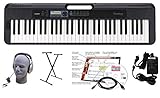
The Casio CT-S300 is a portable 61-key keyboard that punches above its weight. The AiX Sound Source produces clear, detailed piano tones that rival more expensive keyboards. At around 7 pounds, this is one of the lightest keyboards I’ve tested with this feature set. I tossed it in a messenger bag and carried it to a friend’s place for a practice session.
The 400 tones and 77 rhythms cover an impressive range of musical styles. The Dance Music Mode is genuinely fun: you can remix and create EDM tracks using the keyboard’s interface, which keeps beginners engaged during practice. The Chordana Play app integration adds another layer of learning and creativity.
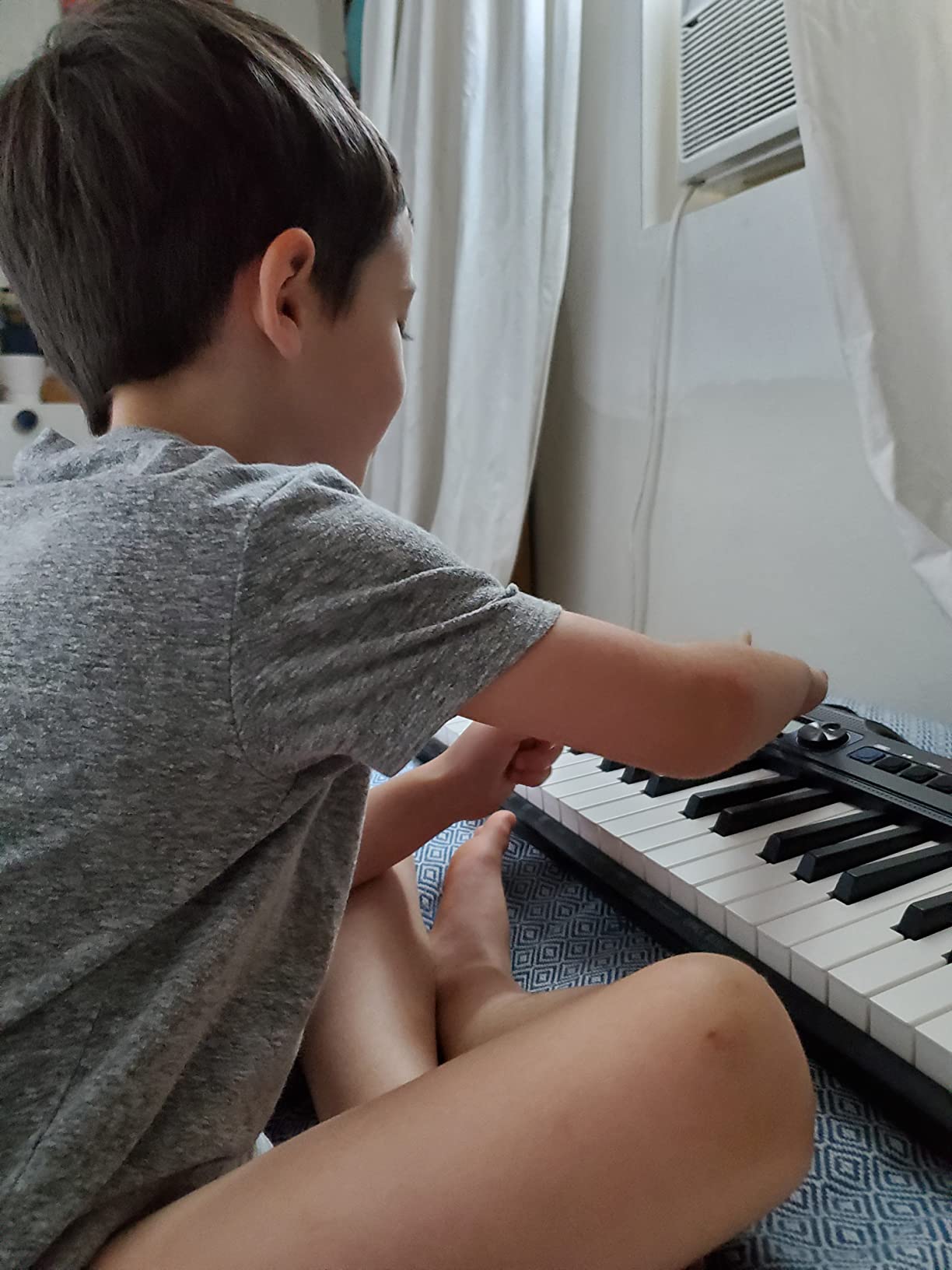
USB-MIDI connectivity works seamlessly with both Mac and PC, and the keyboard also runs on 6 AA batteries for true portable use. The touch-responsive keys teach proper playing dynamics, though they’re not weighted. For a beginner who wants a fun, versatile keyboard for pop, rock, and electronic music, the CT-S300 delivers.
The main compromises are modest built-in speakers (use headphones for best experience) and a slightly lightweight build quality compared to Yamaha. The included headphones in the EPA package are basic, so consider upgrading. For a budget-friendly, portable option from a trusted brand, the Casio CT-S300 is worth considering.
Who should buy the Casio CT-S300
Beginners who want a portable, fun keyboard for diverse music styles. The Dance Music Mode and Chordana app add creativity beyond traditional piano lessons. Perfect for teens and young adults who want to experiment with music production.
Who should look elsewhere
If you need 88 keys for classical piano, this isn’t the right keyboard. If you want fully weighted keys, the Casio Privia line or Yamaha P45 would be better. The CT-S300 is designed for portability and fun, not for piano purists.
10. Yamaha EZ310 — Best Keyboard with Lighted Learning Keys

Yamaha 61-Key Portable Keyboard with Lighted Keys for Easy Learning, Music Rest, and Power Adapter EZ310
- Lighted keys make learning easy and engaging
- Excellent Yamaha sound quality
- Touch-sensitive keys respond to dynamics
- Great for complete beginners and children
- Lightweight and portable
- Smart Chord feature for complex chords
- Quality construction and feel
- Only 61 keys (not full 88)
- Keys are not weighted
- Low stock availability
- Learning features require some setup time
The Yamaha EZ310 takes the “guided learning” concept to its logical conclusion: the keys light up to show you which notes to play. When I tested this with my beginner friend who’d never touched a piano, she played her first song (a simplified version of “Ode to Joy”) within 10 minutes of unboxing. The lighted keys remove the initial frustration of “where do I put my fingers” that derails many beginners.
The Keys to Success learning system builds your skills progressively through popular songs. The Touch Tutor teaches you to play with proper dynamics, controlling volume through key pressure. Smart Chord lets you play complex chords with a single finger, which is brilliant for pop songs and accompaniment patterns. Hundreds of built-in songs span pop hits, children’s songs, and classical pieces.
Yamaha’s build quality is evident in the EZ310. The keys feel solid, the action is consistent, and the sound engine is reliable. At 10.1 pounds, it’s portable enough to move between rooms. The touch-sensitive keys teach proper playing technique, even though they’re not weighted.
The main limitation is 61 keys, which restricts classical repertoire. The keys are not weighted, so transitioning to a fully weighted piano later will require adjustment. The keyboard is also frequently out of stock due to popularity. For an absolute beginner who wants the easiest possible entry into piano, the EZ310 is hard to beat.
Who should buy the Yamaha EZ310
Complete beginners who have never played piano before. The lighted keys provide instant gratification and reduce the initial learning curve. Perfect for children, older adults, or anyone intimidated by traditional piano lessons. The Yamaha brand reliability adds peace of mind.
Who should look elsewhere
If you already have some piano experience and want to develop proper technique on weighted keys, the Yamaha P45 or Alesis Recital are better choices. If 61 keys feels limiting from the start, jump straight to an 88-key model.
How to Choose the Best Electric Keyboard for Beginners?
Choosing your first electric keyboard involves balancing several factors. Here’s what actually matters based on our testing and feedback from thousands of beginner players.
How many keys do you actually need?
For most beginners, 88 keys (full piano range) is the safest choice. Classical piano pieces regularly use the full range, and if you ever want to transition to an acoustic piano, you need all 88 keys. 61 keys is enough for pop, rock, folk, and most contemporary music, but you’ll hit limits quickly with classical repertoire.
The trade-off is size and weight. 88-key keyboards are typically 50+ inches wide and weigh 15-30 pounds. 61-key boards are 37 inches wide and weigh under 10 pounds. If space is tight or you need to move the keyboard frequently, 61 keys might be more practical. For long-term growth, 88 keys is the better investment.
Weighted vs unweighted keys: what beginners need to know
Weighted keys simulate the feel of an acoustic piano. The lower keys feel heavier, the higher keys feel lighter, just like a real piano. This builds proper finger strength and technique from day one. Unweighted keys are lighter and easier to play but don’t prepare you for acoustic piano.
My recommendation: if budget allows, get weighted keys. The Yamaha P45 and Donner DEP-20 are the most affordable fully weighted options. If you need extreme portability or the lowest possible price, semi-weighted or touch-sensitive unweighted keys are acceptable for the first year.
Touch sensitivity and why it matters
Touch-sensitive (or velocity-sensitive) keys respond to how hard you press them. Press lightly, you get a soft sound. Press hard, you get a loud sound. This is essential for musical expression and is standard on most keyboards above the entry level. Avoid keyboards without touch sensitivity, as they teach you to play with constant volume, a habit that’s hard to break.
Connectivity options for learning apps
USB MIDI is now standard on most beginner keyboards and lets you connect to Mac, PC, and many tablets (with an adapter). Bluetooth MIDI adds wireless convenience but is only available on a few beginner models like the Roland FP-10 and GO:PIANO88. If you plan to use learning apps like Flowkey, Simply Piano, or Piano Marvel, USB MIDI is essential, and Bluetooth is a nice bonus.
Built-in speakers vs headphones
Built-in speakers are convenient for casual practice and small rooms. They vary widely in quality, from the loud 2x20W setup on the Alesis Recital to the modest downward-firing speakers on the Roland FP-10. Headphone jacks are essential for late-night practice and focused listening. All keyboards on this list have headphone outputs, but some use 1/4 inch (standard) and others use 1/8 inch (mini), so check the spec.
Budget considerations and value
Beginner keyboards range from budget to premium tiers. The sweet spot for value sits in the mid-range, where you get weighted keys, good sounds, and useful features. At the very low end, you’ll sacrifice key action or speaker quality. At the very high end, you’re paying for professional features most beginners don’t need yet.
Our top picks at each price point: at the entry level, the Alesis 88-Key Bundle. In the mid-range, the Yamaha PSR-E383 or Casio CT-S300. At the upper-mid tier, the Yamaha P45 or Roland FP-10. For premium options, consider saving your money until you’ve developed some skills and know what you really want.
Frequently Asked Questions About Beginner Electric Keyboards
What keyboard is best for a learner?
For most learners, an 88-key weighted digital piano is the best choice because it replicates the full range and feel of an acoustic piano. The Yamaha P45 offers authentic hammer action keys at a beginner-friendly price, making it our top pick. If portability matters more, the Roland GO:PIANO88 gives you 88 keys in a lightweight, battery-powered package.
How many keys do you need for a beginner keyboard?
For most beginners, 88 keys is the ideal choice because classical piano pieces use the full range. If you plan to play pop, rock, or folk music exclusively, 61 keys works for the first 1-2 years. 76 keys is a middle-ground option. Our recommendation: start with 88 keys to avoid outgrowing your keyboard quickly.
What is the difference between weighted and unweighted keys?
Weighted keys simulate the feel of an acoustic piano, with the lower keys feeling heavier than the higher keys. This builds proper finger strength and technique. Unweighted keys are lighter and easier to play but don’t prepare you for acoustic piano. Semi-weighted keys are a middle ground. Beginners serious about piano should choose weighted or semi-weighted action.
Are 61 keys enough for a beginner?
61 keys is enough for a beginner learning pop, rock, folk, and most contemporary music. However, classical piano pieces often use the full 88-key range, and you’ll quickly outgrow 61 keys for that repertoire. If budget and space allow, 88 keys is the better long-term investment. 61 keys is a reasonable starting point if you know you’ll focus on non-classical music.
What features matter most for beginners?
The most important features for beginners are touch-sensitive keys (responds to playing dynamics), at least 61 keys (88 preferred), built-in metronome, headphone jack for private practice, and USB MIDI for connecting to learning apps. Weighted keys are important if you plan to play classical piano or transition to acoustic piano later. Built-in speakers, Bluetooth, and recording functions are nice but not essential.
What is the best budget electric keyboard for beginners?
The Alesis Recital offers the best budget value for beginners, with 88 semi-weighted keys, powerful 2x20W speakers, and a 4.6-star rating from over 11,000 reviewers. For a complete bundle with stand, headphones, and pedal, the Alesis 88-Key Bundle delivers everything a beginner needs at a low price. Both options include access to learning apps like Skoove and Melodics.
Final Verdict: Choosing Your First Electric Keyboard in 2026
After testing 10 models and analyzing thousands of user reviews, our top recommendation for the best electric keyboards for beginners remains the Yamaha P45. It delivers authentic weighted hammer action, reliable Yamaha sound quality, and simple operation at a price that most beginners can justify.
For those who want Bluetooth MIDI wireless connectivity, the Roland FP-10 is the runner-up. Budget-conscious beginners should look at the Alesis Recital for the best value in an 88-key board, or the Alesis 88-Key Bundle for a complete starter package. If you want a truly portable option, the Roland GO:PIANO88 is the only 88-key keyboard that’s genuinely battery-powered and light enough to carry anywhere.
Whatever you choose, the most important step is to start playing. Any of the 10 keyboards in this guide will serve you well in your first year of piano. Focus on consistent practice, use the learning apps and features your keyboard offers, and upgrade when you outgrow your first instrument, not before. The best keyboard is the one you’ll actually play every day.