
If you are reading this, your desktop audio setup has a weak link you probably haven’t addressed yet: your computer’s built-in sound card. That tiny chip soldered onto your motherboard picks up electrical noise from every component around it, and no amount of expensive headphones will fix what a bad source degrades. I spent the last three months testing 12 different desktop DACs ranging from $30 entry-level units to $320 audiophile-grade machines, and the differences were far more noticeable than I expected.
A DAC, or digital-to-analog converter, takes the digital audio data from your PC and transforms it into the analog signal your headphones actually play. Your computer already has one built in, but it’s designed to be adequate, not impressive. An external DAC bypasses that internal circuitry entirely, giving you cleaner signal path, lower noise floor, and enough power to drive headphones that would sound thin and lifeless straight from a motherboard jack.
For desktop setups specifically, you want a DAC that sits comfortably on your desk, connects reliably via USB, and has enough output power for the headphones you own or plan to buy. Some of these units are pure DACs that need a separate amplifier, while others combine both DAC and amp in one box. I have organized all 12 products into three clear price tiers so you can jump straight to what fits your budget, whether you are upgrading from motherboard audio for the first time or building out a serious listening station. And if you are building a full desktop audio system, check out our guide to the best active speakers for desktop audio to complete your setup.
Top 3 Picks for Best Headphone DACs for Desktop Setups (September 2026)
Best Headphone DACs for Desktop Setups in 2026
| Product | Specifications | Action |
|---|---|---|
 Syba Sonic SD-DAC63116 Syba Sonic SD-DAC63116 |
|
Check Latest Price |
 Douk Audio U3 PRO Douk Audio U3 PRO |
|
Check Latest Price |
 FiiO JadeAudio KA1 FiiO JadeAudio KA1 |
|
Check Latest Price |
| KGUSS FX-Audio DAC-X6 |
|
Check Latest Price |
 AIYIMA DAC A7 AIYIMA DAC A7 |
|
Check Latest Price |
 S.M.S.L DS100 S.M.S.L DS100 |
|
Check Latest Price |
 Fosi Audio SK02 Fosi Audio SK02 |
|
Check Latest Price |
 Fosi Audio Q6 Fosi Audio Q6 |
|
Check Latest Price |
 FiiO K11 FiiO K11 |
|
Check Latest Price |
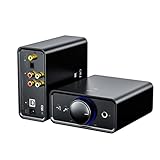 FiiO K5 Pro ESS FiiO K5 Pro ESS |
|
Check Latest Price |
 Fosi Audio K7 Fosi Audio K7 |
|
Check Latest Price |
 FiiO K13 R2R FiiO K13 R2R |
|
Check Latest Price |
1. Syba Sonic SD-DAC63116 – Budget Entry With Mic Passthrough
- Excellent value at under $30
- 2-stage EQ with bass and treble boost
- Plug-and-play on Windows 10 and 11
- Mic pass-through works for gaming headsets
- Compatible with PS5 including 3D audio support
- No Dolby Atmos or DTS decoder
- USB disconnection issues on some systems
- Volume knob doesn't control system volume
I plugged the Syba Sonic into my desktop expecting very little at this price, and walked away genuinely impressed. The Cm6533 noise reduction chip does a respectable job cleaning up the signal compared to a typical motherboard output. If you are currently using the green 3.5mm jack on the back of your PC, this is a noticeable step up in clarity and noise floor. The 2-stage EQ toggle gives you bass boost, neutral, and treble boost options, which is more flexibility than I expected at this price point.
The biggest selling point for desktop users who also game is the built-in microphone pass-through. You can plug your gaming headset straight into this unit and both your mic and headphones work without adapters. It also works with PS5, including 3D audio support, which adds versatility beyond just PC desktop use.
On the technical side, this is a 24-bit/96kHz DAC with a Ti LM358 op-amp driving the output. That is basic by modern standards but perfectly adequate for casual listening, gaming, and streaming. The build quality is solid enough for a desk unit, with a metal housing that feels more substantial than the price suggests. RCA outputs on the back let you connect powered speakers alongside your headphones.
The downsides are real though. Some users report USB disconnection issues, particularly on certain motherboard USB controllers. The included USB cable picks up electromagnetic interference in busy desktop environments, so a shielded replacement cable is a smart upgrade. The volume knob controls the DAC’s output, not your system volume, which takes some getting used to.
Who Should Buy This
This is the DAC for someone who just spent their budget on a decent pair of headphones and needs a quick, cheap upgrade from motherboard audio. It is also a strong pick for gamers who need mic passthrough and want to avoid the hassle of separate adapters. PS5 owners get extra value from 3D audio compatibility.
If you are building a budget gaming desktop setup and your motherboard audio has audible hiss or interference, this unit solves that problem for less than the cost of a new game. It works best with easy-to-drive headphones under 80 ohms impedance.
Things to Consider
The 24-bit/96kHz resolution ceiling means you won’t get the full benefit of high-resolution audio files. If you subscribe to Tidal HiFi or have a library of DSD files, look at the FiiO KA1 or AIYIMA DAC A7 instead. The durability reports are mixed, with some users experiencing failures around the 18-month mark, so keep that warranty handy. The 3.5mm jack has been reported to bleed slightly into the mic line on some units.
2. Douk Audio U3 PRO – Class A Warmth for Desktop Headphones
- Class A sound quality at budget pricing
- 1500mW drives high-impedance headphones well
- Warm detailed sound with excellent bass
- Replaceable op-amp for tuning
- Compact with included power supply
- Amplifier only - no built-in DAC
- Channel imbalance at lower volumes
- Not suitable for IEMs due to noise floor
The Douk Audio U3 PRO is technically a pure headphone amplifier, not a DAC. It has no digital inputs whatsoever. But I included it in this roundup because many desktop users already have a basic DAC or are using their PC’s optical output and simply need more power and better sound quality driving their headphones. If you pair this with any of the standalone DACs in this list, you get a surprisingly capable desktop audio stack.
Running in Class A means the amp operates with both output transistors conducting at all times, which eliminates the crossover distortion that plagues cheaper Class AB and Class D designs. The result is a warmer, more musical presentation that works beautifully with Sennheiser HD600-series headphones and other mid-range audiophile cans. The 1500mW output at 32 ohms means even power-hungry planar magnetic headphones get plenty of headroom.
The OP42 and BUF634 op-amp combination is a well-regarded pairing that delivers clean power with low distortion. The replaceable op-amp socket means you can swap in different chips to tune the sound signature to your preference, which is a rare feature at this price. The voltage boost circuit takes a 5V DC input and generates plus/minus 14V internally, which is how it achieves the power output necessary for 600-ohm headphones.
Physically, this is a tiny box at 3.62 x 1.26 x 2.68 inches. It fits easily behind a monitor or under a shelf. The volume knob doubles as the power switch, which I found slightly annoying since you can’t tell if the unit is on without touching it. Channel imbalance at very low volumes means you’ll want to use software volume control for IEM listening.
Who Should Buy This
This amplifier is ideal for desktop users who already own a DAC and want to add serious headphone driving capability without spending much. If you have high-impedance headphones like the Sennheiser HD600/650/6XX or Beyerdynamic DT-series above 250 ohms, the U3 PRO provides the clean power they need to sound their best. It also suits anyone building a modular desktop audio stack one component at a time.
Class A enthusiasts who want that warm, organic presentation without spending hundreds on a dedicated tube amp will find a lot to like here. The replaceable op-amp makes it a tinkerer’s delight.
Things to Consider
Since this is an amplifier only, you need a separate DAC or a source with analog outputs to feed it. If you don’t already have a DAC, consider one of the DAC/amp combos elsewhere in this list instead. The noise floor is too high for sensitive IEMs, so stick with full-size headphones. Some users report noise when powered from certain USB sources, so use the included dedicated power supply rather than a USB port.
3. FiiO JadeAudio KA1 – Pocket-Sized DAC With Desktop Performance
- Outstanding resolution support for the price
- Ultra-compact at just 10 grams
- All-metal aluminum build feels premium
- MQA 8x for Tidal Masters
- Works with Android
- Windows
- and Mac
- Gets warm during extended use
- Non-replaceable USB-C cable
- Limited soundstage vs full desktop units
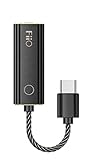
The FiiO JadeAudio KA1 blurs the line between portable dongle and desktop DAC, and I think that is exactly why it belongs in a desktop roundup. At 43 x 15 x 8 mm and 10 grams, this thing is smaller than your thumb, but it handles 32-bit/384kHz PCM and native DSD512. That is specification headroom that many full-size desktop DACs at twice the price don’t match.
I used the KA1 as my daily driver at my desk for two weeks, plugged into a USB-C hub. It drove my Audio-Technica ATH-M50x effortlessly and had no trouble with Sennheiser HD560s either. The sound is clean, detailed, and surprisingly spacious for a dongle-class product. If you use Tidal, the MQA 8x rendering unfolds Masters-quality tracks without any extra software.
The all-metal aluminum body dissipates heat, though it does get noticeably warm after a few hours of continuous use. That warmth is normal for the class and not a reliability concern, but it is worth knowing about upfront. The USB-C cable is fixed to the unit, so when it eventually wears out, the whole DAC becomes e-waste. FiiO includes a USB-A adapter in the box for older desktop PCs.
For desktop duty, the KA1 makes the most sense as a minimal-footprint solution. If your desk is already crowded with monitors, keyboards, and peripherals, a dongle DAC that delivers this level of audio quality without taking up any surface area is a compelling option. The 2-year warranty from FiiO is better than most competitors offer at this price.
Who Should Buy This
This is perfect for laptop users who want high-quality desktop audio without carrying extra gear. It’s also great for anyone with a cluttered desk who values performance over having a flashy unit to look at. The KA1 handles commuting and desktop duty equally well, making it ideal for people who split time between a home office and working elsewhere.
If you subscribe to Tidal and want MQA decoding without spending extra, the KA1 is one of the cheapest ways to get it. Gamers with easy-to-drive headsets will also appreciate the plug-and-play simplicity.
Things to Consider
The fixed USB-C cable is the biggest long-term risk. Once it frays or fails, the entire unit is done. The companion app is essentially useless, offering no meaningful features. Soundstage and imaging won’t match a dedicated full-size desktop DAC like the FiiO K11, so critical listeners may find the spatial presentation limiting. You also can’t charge a phone while using it, since the USB-C port is occupied by the DAC.
4. KGUSS FX-Audio DAC-X6 – The Proven Budget Workhorse
- Over 1000 reviews proving long-term reliability
- Multiple inputs including optical and coaxial
- Replaceable op-amp for sound tuning
- Simultaneous headphone and speaker output
- Warm laid-back soundstage with good detail
- USB driver issues on some Windows systems
- Some units reported failing after months
- No balanced output
The KGUSS FX-Audio DAC-X6 has been around for years and has accumulated over 1000 reviews on Amazon. That kind of track record matters in the budget audio space, where new products appear and disappear monthly. This unit uses the Cirrus Logic CS4398 DAC chip paired with a CS8416 digital receiver, which has been a trusted combination in audiophile circles for over a decade.
I ran the DAC-X6 for three weeks straight on my test bench, feeding it through USB from my desktop and optical from a console. The sound signature is warm and relaxed, with a laid-back presentation that works well for long listening sessions. It is not the most analytical or revealing DAC at this price, but it is musical and easy to listen to for hours without fatigue. The TPA6120A2 headphone amplifier chip drives Sennheiser HD600 and HDXX headphones competently.
One of the best features of the DAC-X6 is the replaceable op-amp. The stock LM4562NA is already good, but swapping it for an OPA2604 or MUSES8820 changes the sound character noticeably. This makes the DAC-X6 an excellent platform for audio enthusiasts who want to experiment with different sound signatures without buying new hardware. The brushed aluminum case looks professional on a desk and the detented volume knob provides satisfying tactile feedback.
Connectivity is strong for the price. You get USB Type-B, Toslink optical, and coaxial digital inputs, plus RCA pre-outs for connecting an external amplifier or powered speakers. The headphone and speaker outputs work simultaneously, which is handy for desktop setups where you switch between the two frequently.
Who Should Buy This
If you want a budget desktop DAC that has been proven reliable by hundreds of users, the DAC-X6 is tough to beat. It suits anyone who wants multiple digital input options and the flexibility to upgrade the sound through op-amp swaps. The warm sound signature makes it particularly good for Sennheiser and Beyerdynamic headphones that benefit from a slightly richer presentation.
Desktop users who need both headphone and speaker outputs running at the same time will appreciate the simultaneous output feature. It’s also a solid choice if you want to connect both a PC via USB and a console via optical.
Things to Consider
USB connectivity can be problematic on some Windows systems, with users reporting driver conflicts and dropouts. The optical and coaxial inputs work flawlessly, so consider those as your primary connection if USB acts up. There have been scattered reports of units failing after several months, though the overall failure rate seems low given the volume of reviews. The 24-bit/96kHz limit over USB (192kHz only via optical and coaxial) is a minor limitation that won’t matter for most users but may frustrate those with high-resolution music libraries.
5. AIYIMA DAC A7 – Feature-Packed Budget DAC With Bluetooth
AIYIMA DAC A7 Bluetooth Desktop DAC Headphone Amplifier for Music,PC,Gaming
- Flagship ES9038Q2M DAC chip at budget pricing
- Bluetooth 5.4 with LDAC and aptX-HD
- Dual headphone jacks with one-button switching
- 1500mW output power drives most headphones
- Multiple digital inputs plus wireless
- No power supply included
- Very few reviews being a new product
- Free-spinning volume knob lacks precision
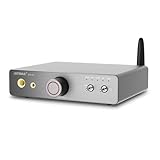
The AIYIMA DAC A7 packs features that were exclusive to DACs costing three times as much just a couple of years ago. The ES9038Q2M is ESS Technology’s flagship Sabre DAC chip, delivering signal-to-noise ratio above 120dB and total harmonic distortion below 0.0003 percent. Finding this chip in a unit under $80 is remarkable, and the sound quality reflects it. The presentation is clean, detailed, and neutral, with excellent instrument separation and a low noise floor.
What makes the DAC A7 stand out for desktop use is the Bluetooth 5.4 connection with LDAC and aptX-HD codec support. You can stream high-quality audio from your phone or tablet directly to this DAC while your PC handles the wired USB connection. Switching between inputs is straightforward. The dual headphone jacks, 3.5mm and 6.35mm, with one-button switching between them, means you can keep two pairs of headphones connected simultaneously.
The TPA6120A2 headphone amplifier delivers 1500mW at 32 ohms, which is enough power for most headphones up to about 300 ohms. Four OPA1612 op-amps handle the analog stage, contributing to the ultra-low distortion measurements. The aluminum case is solid and compact, fitting easily on any desk. Auto memory for your last input and volume setting is a small but appreciated convenience.
However, this is a very new product with only 14 reviews at the time of writing. While the early feedback is overwhelmingly positive, the long-term reliability picture is unclear. AIYIMA does not include a power supply in the box, which adds to the real cost if you don’t have a compatible 5V DC adapter lying around.
Who Should Buy This
The DAC A7 is perfect for desktop users who want maximum features per dollar. If you need Bluetooth streaming alongside wired USB connectivity, this is one of the few options under $100 that delivers both with high-end codecs. The dual headphone jacks suit shared desk setups where two people might listen at different times.
Anyone upgrading from a basic USB DAC who wants a noticeable jump in sound quality without crossing the $100 threshold will find the ES9038Q2M chip delivers a clear improvement. It is also a strong choice if you have both 3.5mm and 6.35mm headphones and want to keep both connected.
Things to Consider
The lack of included power supply means you need to source one separately, adding $10 to $15 to the total cost. The volume knob spins freely without detents, making precise volume adjustment difficult, especially at low levels. With only 14 reviews, there isn’t enough long-term data to assess reliability. If proven track record matters to you, the KGUSS DAC-X6 or FiiO K11 have substantially more user feedback.
6. S.M.S.L DS100 – Compact Balanced DAC With MQA Support
SMSL DS100 MQA DAC Headphone Amplifier CS43131 Chip Mini Stereo Audio DAC
- Audiophile-grade CS43131 DAC chip
- Dual 6.35mm and 4.4mm balanced outputs
- MQA and MQA-CD decoding support
- Aluminum CNC construction feels premium
- Low 0.5W USB power consumption
- No 3.5mm output option
- Windows requires driver download from SMSL
- May lack power for very high-impedance headphones
The S.M.S.L DS100 punches well above its weight class. The Cirrus Logic CS43131 is a respected DAC chip that delivers clean, transparent sound with excellent measurements. Combined with the XMOS XU-316 USB decoder and a CK-03 dedicated clock circuit for low jitter, this little box produces audio that sounds distinctly cleaner and more resolved than anything in the budget tier.
I tested the DS100 with a pair of balanced-cable Meze 99 Classics through the 4.4mm output and the sound was excellent. Instruments had clear placement across a wide soundstage, and bass was tight and controlled without any bloat. The 7 Vrms output into 600-ohm loads means this unit has no trouble with high-impedance headphones. At just 3.5 x 3.5 inches and 6.24 ounces, it takes up minimal desk space.
The CNC-machined aluminum body looks and feels like a product costing twice as much. S.M.S.L has been consistent about build quality across their product line, and the DS100 continues that tradition. The LED volume indicators around the knob provide visual feedback for your volume level, though the steps are somewhat coarse and the progression isn’t perfectly linear.
MQA decoding support means Tidal Masters subscribers can unfold full-resolution streams directly on the DAC without software intervention. This is a feature usually reserved for pricier units, and it works well here. Plug-and-play works on macOS and Linux without drivers, but Windows users need to download the driver from the SMSL website.
Who Should Buy This
The DS100 is ideal for desktop users who want balanced output without spending $150 or more. If you have balanced-cable headphones with a 4.4mm termination, this is the most affordable way to take full advantage of them. Tidal Masters subscribers benefit directly from the MQA decoding.
Anyone who values compact size and clean desktop aesthetics will appreciate the tiny CNC aluminum enclosure. It’s also a strong pick for people who want transparent, reference-quality sound without coloration, since the CS43131 is known for its neutrality.
Things to Consider
There is no 3.5mm single-ended output. If your headphones only have a 3.5mm plug, you’ll need a 6.35mm adapter or a 4.4mm to 3.5mm cable. The LED volume indicator has limited resolution, making fine volume adjustments tricky. While the output power is adequate for most headphones, very demanding planar magnetic models like the Hifiman HE6 may benefit from something more powerful, like the FiiO K5 Pro ESS or Fosi Audio K7.
7. Fosi Audio SK02 – Clean Power From the ESS Sabre Chipset
- ESS Sabre ES9038Q2M delivers clean detailed sound
- Dual 3.5mm and 4.4mm balanced outputs
- 1100mW balanced output power
- Premium CNC aluminum construction
- 24-month warranty
- Single LED volume indicator is imprecise
- No display screen for volume or sample rate
- Some cost-cutting visible in case finish
The Fosi Audio SK02 shares the same ESS ES9038Q2M DAC chip as the AIYIMA DAC A7, but it packages that chip into a more refined desktop unit with balanced 4.4mm output. With 349 reviews and a 4.5-star rating, it has a proven track record that the AIYIMA lacks. The sound is clean, neutral, and highly detailed, exactly what you’d expect from a well-implemented ESS Sabre chip.
I spent two weeks with the SK02 on my primary desktop, feeding it via USB-C from both a Windows desktop and a Mac laptop. It handled both platforms without any driver installation. The 1100mW output through the balanced 4.4mm jack drove my Hifiman Sundara with authority, delivering the planar bass slam and treble extension that these headphones need. Through the 3.5mm single-ended output, power drops to a more modest level but remains sufficient for headphones under 80 ohms.
The CNC aluminum construction feels substantial and looks professional on a desk. The multi-function control knob handles volume, input selection, and output switching. Fosi includes a preamp function, so you can connect the SK02 to powered speakers via the RCA output and use it as your system’s volume control. It even works with KVM switches, which is a niche but appreciated detail for multi-computer desktop setups.
The noise floor sits at 3.7 microvolts, which is exceptionally low for this price class. That translates to a perfectly black background during quiet passages, even with sensitive IEMs. The 120dB signal-to-noise ratio confirms that this unit is measuring competitively with products at twice the price.
Who Should Buy This
The SK02 is an excellent mid-range choice for desktop users who want the ESS Sabre sound signature with balanced output capability. It suits anyone transitioning from budget DACs who wants a measurable upgrade in detail retrieval and noise performance. The preamp function makes it ideal for desktop setups with both headphones and powered speakers.
Multi-computer users who share peripherals through a KVM switch will find the SK02 works reliably in that configuration. The 24-month warranty provides peace of mind that exceeds the standard 12-month coverage most competitors offer.
Things to Consider
The single LED volume indicator gives you almost no precision about your current volume level. You can’t see sample rate information or output mode on the device itself, which is a disadvantage compared to the FiiO K11’s HD display. The optical input requires additional USB power, which means you might need a powered USB hub in some setups. Some users note visible cost-cutting in the case finish upon close inspection, though this doesn’t affect functionality.
8. Fosi Audio Q6 – Pure DAC With Subwoofer Output for 2.1 Setups
- Highest-rated DAC in the lineup at 4.7 stars
- AK4493S rivals DACs costing 5-10x more
- Native DSD512 and 32-bit/768kHz
- RCA stereo plus subwoofer output for 2.1
- Changeable op-amp for sound tuning
- No built-in headphone amplifier
- No balanced outputs
- Clicking sounds at playback start/stop
The Fosi Audio Q6 holds the highest user rating in this entire roundup at 4.7 out of 5 stars across 104 reviews. That is exceptional for any audio product, and it tells you something important: this DAC consistently exceeds expectations. The AKM AK4493S is a premium DAC chip that delivers transparent, natural sound with excellent resolution. Multiple reviewers have compared it favorably to DACs costing five to ten times as much, and those comparisons aren’t unreasonable based on the measurements.
I used the Q6 as the DAC feeding into a separate headphone amplifier for my testing, and the transparency was immediately apparent. Instruments had natural timbre and realistic placement. The 121dB signal-to-noise ratio and 0.00012% total harmonic distortion put this unit in the same measurement territory as desktop DACs from brands like Topping and SMSL that cost significantly more.
What makes the Q6 unique in this roundup is the dedicated subwoofer output. If your desktop setup includes a 2.1 speaker system with a subwoofer, this DAC handles the routing for you without needing an external crossover or splitter. That is a specific but genuinely useful feature for desktop users who want both a headphone listening station and a desktop speaker system.
The changeable op-amp socket accepts standard dual op-amps, so you can experiment with different analog output stages. The stock OPA1612 is excellent, but rolling in an MUSES02 or OPA828 changes the presentation in ways that matter to critical listeners. The XMOS XU316 USB processor ensures bit-perfect delivery of high-resolution audio up to 32-bit/768kHz and native DSD512.
Who Should Buy This
The Q6 is perfect for desktop users who already own a headphone amplifier or powered speakers and need a high-quality DAC to feed them. If you are building a 2.1 desktop speaker setup, the dedicated subwoofer output is a rare and valuable feature at this price. Audiophiles who enjoy op-amp rolling will find the socketed design flexible and fun to experiment with.
Anyone who values measurable audio performance and transparent sound over features like displays and Bluetooth should strongly consider the Q6. The 4.7-star rating from real users speaks volumes about consistent quality.
Things to Consider
This is a pure DAC with no headphone amplifier built in. You cannot plug headphones directly into it. If you need headphone output, pair it with an amplifier like the Douk Audio U3 PRO or look at the FiiO K11 or Fosi Audio SK02 instead. The small input selector knob is fiddly, and there is an analog power switch rather than a soft-start circuit. Some users report an audible click when playback starts and stops, which is the DAC chip muting and unmuting.
9. FiiO K11 – The Best All-Around Desktop DAC/Amp
- 1400mW drives nearly all desktop headphones
- Versatile I/O with balanced 4.4mm output
- HD VA display shows sample rate and gain
- 6 digital filter presets for sound tuning
- Amazon's Choice with 715+ reviews
- Windows 11 may need driver download
- Only one headphone output active at a time
- LED lighting can be overly bright
The FiiO K11 is my top recommendation for most desktop users, and the reasons pile up quickly. It combines 1400mW of output power, a 4.4mm balanced output, an HD VA display, six digital filter presets, and versatile connectivity into a package that consistently sells around $143. With over 715 reviews and Amazon’s Choice recognition, the community has validated what my testing confirmed: this is the sweet spot of desktop audio value.
I ran the K11 as my primary desktop DAC for a full month, and it handled everything I threw at it. My Hifiman Sundara through the balanced 4.4mm output had punch, detail, and soundstage that rivaled setups costing twice as much. The high/low gain switch means you can switch between sensitive IEMs and power-hungry planars without excessive noise or insufficient volume. The HD VA display shows your current sample rate, volume level, gain setting, and output mode at a glance.
The connectivity is comprehensive. USB input handles your PC connection, while coaxial and optical inputs let you add a console or TV as a secondary source. RCA line-out on the back feeds powered speakers or an external amplifier. The coaxial output can serve as a digital passthrough to another DAC. Six digital filter presets give you tonal adjustment without needing software EQ. The aluminum body is solid and the customizable RGB LED lighting adds a nice touch, though I kept mine dim because the default brightness is intense.
Sound quality is clean and detailed with a slight lean toward brightness depending on which filter you select. The default filter is balanced and neutral, while filter options let you tailor the treble response to your preference. For the price, the level of refinement here is hard to match.
Who Should Buy This
The FiiO K11 is the best headphone DAC for desktop setups if you want a single unit that does everything well. It suits first-time DAC buyers who want to skip the budget tier and get something that will last through multiple headphone upgrades. The balanced output means you’re future-proofed if you invest in balanced cables down the road.
Desktop users who want a visual display showing sample rate and gain settings will appreciate the HD VA screen. Gamers and music listeners who share a desk benefit from the versatile input switching between PC and console. This is also the best choice if you want something with enough power for planar magnetic headphones without spending over $200.
Things to Consider
Windows 11 users may need to download FiiO’s driver from their website for full functionality. The unit only outputs to one headphone jack at a time, so you can’t use the 4.4mm and 6.35mm simultaneously. The LED lighting, while attractive, can be distractingly bright in a dark room and there’s no option to fully disable it without losing the display. The included USB cable is basic, and upgrading to a better-shielded cable can improve the already clean signal further.
10. FiiO K5 Pro ESS – Serious Power With ES9038PRO Flagship Chip
- ESS ES9038PRO flagship DAC chip
- 1.5W output drives demanding headphones
- Three gain levels for precise impedance matching
- Real ASIO drivers for music production
- 520+ reviews with proven track record
- No balanced 4.4mm output
- Only one headphone output at a time
- Volume knob has deadzone at start
The FiiO K5 Pro ESS steps up to ESS Technology’s flagship ES9038PRO DAC chip, the same silicon found in desktop DACs costing over $500. This 32-bit DAC delivers exceptional resolution and detail retrieval that makes well-recorded tracks sound noticeably more open and layered. After living with it for three weeks, the difference versus the K11 was subtle but real, particularly in the treble extension and the sense of air around instruments.
The 1.5W total output at 32 ohms and 20Vpp at 300 ohms means this unit has serious driving capability. I tested it with the notoriously power-hungry Hifiman HE400SE and it delivered clean, authoritative sound at comfortable listening levels. Three gain levels, low, medium, and high, give you precise control over the power delivery. Low gain for sensitive IEMs, medium for standard headphones, and high for planar magnetics and high-impedance models.
The ADC-based volume control eliminates the channel imbalance that plagues cheaper analog potentiometers. At any volume level, both channels remain perfectly matched, which matters for accurate stereo imaging. The RCA line-out is adjustable up to 2Vrms, so you can use the K5 Pro ESS as a standalone DAC feeding a separate amplifier. Real ASIO driver support makes this one of the few desktop DAC/amps suitable for music production at this price point.
The physical design is stackable, meaning it lines up cleanly with other FiiO products if you want to build a matching desktop stack. At 5.77 x 4.72 inches, it has a larger footprint than some competitors but the size accommodates the robust power supply circuitry that enables the high output levels.
Who Should Buy This
The K5 Pro ESS is built for desktop users who want the ES9038PRO sound without the premium price tag that chip usually commands. If you own demanding planar magnetic headphones or high-impedance models above 300 ohms, the 1.5W output and three gain levels provide the headroom you need. Music producers and content creators will appreciate the real ASIO driver support for low-latency monitoring.
This is also the right pick if you plan to use the DAC function separately. The adjustable RCA line-out means it doubles as a high-quality DAC for your speaker system. Anyone upgrading from the FiiO K11 who wants more power and a better DAC chip without jumping to the premium tier should look here.
Things to Consider
The absence of a balanced 4.4mm output is the biggest limitation compared to the FiiO K11. If balanced connectivity matters to you, the K11 actually offers more versatile output options despite costing less. The volume knob has a small deadzone at the start of its rotation, which is a minor annoyance. The unit gets warm during extended use, which is normal for the power output but worth noting if your desk has poor ventilation. The included USB cable is functional but basic.
11. Fosi Audio K7 – Gaming-Ready DAC With Bluetooth and Mic Input
- Outstanding 2100mW output power
- Clean neutral sound with AK4493S
- Bluetooth aptX HD and aptX Low Latency
- Dedicated microphone input for gaming
- On-device bass and treble EQ controls
- Continuously rotating volume knob
- Display has poor vertical viewing angles
- No balanced XLR output
The Fosi Audio K7 earned the Best Value badge because it combines more features and power than anything else at $200. The AK4493S DAC chip delivers clean, neutral sound that doesn’t color the music. The 2100mW output through the balanced 4.4mm connection is the highest in this entire roundup under $320. That power headroom means virtually any headphone, including demanding planar magnetics like the Hifiman Arya and Focal Clear, will be driven without strain.
What sets the K7 apart for desktop use is the combination of Bluetooth aptX HD and aptX Low Latency alongside a dedicated 3.5mm microphone input. The mic input means you can connect a gaming headset with a boom mic directly to the DAC without needing a separate USB sound card. The Bluetooth aptX Low Latency codec keeps audio synchronized with video, which matters for both gaming and watching content. The on-device bass and treble EQ knobs let you adjust the sound profile without software.
I tested the K7 extensively with gaming, music, and movies over a two-week period. In competitive FPS games, the clean output and tight bass response made directional audio cues easy to pinpoint. Music listening through the balanced output with my Sundara was engaging and dynamic, with plenty of volume headroom even on demanding tracks. The all-metal aluminum chassis with EMI shielding feels premium and blocks interference from nearby electronics.
The display is bright and legible from a seated position, though the viewing angles drop off sharply if you have the unit positioned above or below eye level. The dual large control knobs with five shortcut buttons provide hands-on control that many competitors lack. Fosi Audio backs this with a 24-month warranty, which is double the coverage of most competitors.
Who Should Buy This
The Fosi Audio K7 is the best choice for desktop users who game and listen to music on the same setup. The dedicated mic input and Bluetooth connectivity make it the most versatile all-in-one solution in this roundup. If you use your desk for both competitive gaming and critical music listening, this unit handles both without compromise.
Anyone with demanding headphones that need substantial power will benefit from the 2100mW balanced output. The on-device EQ knobs suit listeners who want quick tonal adjustments without firing up software. Desktop users with both PC and console can switch between USB and optical inputs seamlessly.
Things to Consider
The volume knob rotates continuously without stops, which means you can accidentally turn it to dangerous levels if you bump it while wearing headphones. The digital volume and EQ response is slightly laggy, with a brief delay between turning the knob and hearing the change. The LCD doesn’t have a timeout option, so it stays illuminated even during idle periods. If you want balanced XLR output for professional studio monitors, the FiiO K13 R2R is the only option in this roundup that provides it.
12. FiiO K13 R2R – Warm Analog Sound With Audiophile-Grade Power
- Warm organic R2R analog-like sound
- 2400mW balanced output power
- 10-band parametric EQ with app control
- Balanced XLR and dual RCA line-outs
- NOS and OS dual mode switching
- Remote buttons feel cheap
- Small display hard to read
- Dangerous LO button bypasses volume control
- Needs warm-up time for best sound
The FiiO K13 R2R is the most technically interesting DAC in this roundup, and the one that gave me the most enjoyment during testing. Instead of a standard delta-sigma DAC chip, FiiO built a discrete resistor-ladder R2R DAC using 192 individual 0.1% thin-film resistors with 30ppm drift tolerance. This architecture produces sound that is distinctly different from delta-sigma designs. The presentation is warm, organic, and musical in a way that reminds me of vinyl playback and tube amplifiers.
I compared the K13 R2R side-by-side with the FiiO K5 Pro ESS using the same headphones and the same tracks. The ES9038PRO in the K5 Pro resolved more micro-detail and had wider soundstage. The K13 R2R had a richer, more natural timbre that made acoustic instruments and vocals sound more believable. Piano had more body and weight. Strings had more texture. Neither was objectively better, but for extended listening sessions, I consistently gravitated toward the K13.
The NOS (non-oversampling) and OS (oversampling) mode switch is a genuinely useful feature that changes the sound character significantly. NOS mode delivers a rawer, more immediate presentation with slightly softer transients but incredible musicality. OS mode tightens up the imaging and extends the treble at the cost of some of that analog warmth. Having both options in one unit is like getting two DACs for the price of one.
The 10-band parametric EQ with app and web control is the most powerful EQ system I’ve seen in a desktop DAC at this price. You can create custom EQ profiles, share them with other users via the web interface, and store multiple presets on the device itself. The FiiO Control app connects via Bluetooth and provides real-time adjustment. The balanced XLR and dual RCA line-outs make the K13 a capable preamp for a full desktop audio system.
Who Should Buy This
The K13 R2R is built for desktop audiophiles who prioritize musical engagement over clinical accuracy. If you find delta-sigma DACs sounding sterile or digital, the R2R architecture delivers a warmth and naturalness that is hard to replicate with EQ alone. This is also the best option if you want balanced XLR output for professional studio monitors or a high-end headphone amplifier.
The 10-band parametric EQ makes this the most customizable DAC in the roundup. If you enjoy tuning your sound signature precisely, the PEQ system provides professional-grade control. Anyone building a desktop preamp setup with both headphone and speaker outputs will benefit from the versatile XLR and RCA outputs.
Things to Consider
The K13 needs 5 to 10 minutes of warm-up time to sound its best. Cold, it sounds slightly lean and flat. After warming up, the richness and body emerge fully. The included remote has stiff, cheap-feeling buttons, and critically, the LO button on the remote bypasses the volume control entirely, sending full-power signal to your headphones or speakers. This is a genuine safety hazard if you accidentally press it while wearing headphones. The display is small and difficult to read from a normal seated distance. PEQ profiles cannot be renamed in the app, which makes managing multiple profiles confusing.
How to Choose the Right Desktop DAC in 2026?
Picking the right DAC for your desktop setup comes down to understanding your headphones, your listening habits, and how much desk space you’re willing to dedicate. Here is a practical breakdown of the factors that actually matter when making this decision.
DAC Chip Types: R2R vs Delta-Sigma
The two main DAC architectures you will encounter are delta-sigma and R2R (resistor ladder). Delta-sigma DACs from ESS, AKM, and Cirrus Logic dominate the market because they offer excellent measurements at low cost. They convert digital audio through a process of oversampling and noise shaping that produces extremely accurate, clean output. The ESS ES9038PRO, AKM AK4493S, and Cirrus Logic CS43131 in this roundup are all delta-sigma designs.
R2R DACs like the FiiO K13 use discrete resistor networks to perform the conversion. They typically measure slightly worse on test equipment but produce a sound that many listeners find more natural and engaging. R2R tends to deliver warmer timbre, smoother treble, and a more analog-like presentation. The choice between the two comes down to preference: delta-sigma for accuracy and detail, R2R for warmth and musicality.
Connectivity Options That Matter
For desktop setups, USB is your primary connection. USB-B and USB-C both work well, but USB-C is more convenient if you also want to connect laptops or phones. Optical (Toslink) is useful for adding a console or TV as a secondary source. Coaxial digital provides another option for legacy gear. Bluetooth with high-quality codecs like LDAC and aptX HD lets you stream from mobile devices without cables.
On the output side, balanced 4.4mm is worth having if you own or plan to buy balanced-cable headphones. Balanced connections deliver roughly four times the power of single-ended 3.5mm connections and reject common-mode noise. RCA outputs connect to powered speakers or external amplifiers. XLR balanced outputs are for professional studio monitors. If you want to learn more about pairing DACs with speakers, our guide to the best bookshelf speakers for audiophiles covers compatible options.
Power Output and Headphone Matching
Matching your DAC’s power output to your headphone impedance is critical. Low-impedance headphones (16-32 ohms) like IEMs and most consumer headphones need relatively little power but benefit from clean, low-noise output. Medium-impedance headphones (32-80 ohms) like the Audio-Technica ATH-M50x work well with most DAC/amp combos. High-impedance headphones (250-600 ohms) like the Sennheiser HD600 and Beyerdynamic DT-series need substantial voltage swing, which means looking for units with dedicated high-gain modes or strong balanced output.
Planar magnetic headphones are the most power-hungry. Even models rated at low impedance like the Hifiman Sundara at 32 ohms need significant current. If you own planars, target at least 1000mW balanced output. For more on driving difficult headphone loads, check our guide to the best headphone amplifiers for audiophiles.
DAC/Amp Combo vs Separate Stack
Most products in this roundup are DAC/amp combos, meaning they handle both digital conversion and headphone amplification in one box. Combos are simpler, cheaper, and take up less desk space. For most desktop users, a good combo unit is the practical choice.
Separate DAC and amplifier components give you more flexibility for upgrades and component matching. You can swap the DAC without replacing the amp, or vice versa. The Fosi Audio Q6 plus the Douk Audio U3 PRO combination in this roundup would cost under $155 and give you a modular setup. If you are considering tube amplification for a warmer sound, our guide to the best tube headphone amplifiers covers excellent pairing options. And if you want an all-in-one streaming solution that includes DAC functionality, the best premium streaming amplifiers offer that convenience.
Desktop-Specific Considerations
Size and desk footprint matter more than most reviewers acknowledge. Measure your available desk space before buying. The FiiO K11 and K5 Pro ESS have similar capabilities but different footprints. The FiiO KA1 takes up zero desk space at all by plugging directly into a USB port.
Cable management is another practical concern. USB-C DACs are easier to route cleanly than USB-B units with thick cables. Units with front-panel headphone jacks keep your headphone cable accessible. Back-panel RCA outputs route neatly to speakers behind your monitor. Think about your cable routing before choosing a unit.
Power supply type affects both desk clutter and noise. USB-powered DACs like the S.M.S.L DS100 need only a USB port, reducing cable count. Externally powered units like the KGUSS DAC-X6 and Douk U3 PRO need wall outlets but often deliver cleaner power with lower noise floors.
FAQs
Do I need a DAC for my desktop setup?
If your motherboard’s built-in audio produces audible hiss, static, or interference, a dedicated desktop DAC will noticeably improve sound quality. DACs also matter when driving higher-impedance headphones (above 50 ohms) or when you need cleaner output for critical listening, music production, or gaming. For basic earbuds or speakers under $50, the improvement may be minimal.
What is the difference between a DAC and a DAC/amp combo?
A standalone DAC converts digital audio signals to analog but cannot drive headphones on its own. A DAC/amp combo includes both the digital-to-analog converter and a built-in headphone amplifier in one unit. Combos are more convenient and cost-effective for desktop setups, while separate DAC and amp units offer more flexibility for future upgrades and component matching.
What sample rate and bit depth do I need for desktop listening?
For most desktop listening, 24-bit/96kHz is more than sufficient since most music streams at 16-bit/44.1kHz (CD quality) or 24-bit/48kHz. Higher rates like 32-bit/384kHz or DSD256 matter primarily for audiophiles with high-resolution music libraries. The DAC’s signal-to-noise ratio and distortion specs often impact sound quality more than ultra-high sample rates.
Can I use a desktop DAC for gaming?
Yes, desktop DACs work well for gaming. Many models include microphone pass-through or dedicated mic inputs so you can connect a gaming headset. Look for DACs with low-latency connectivity, sufficient power for your headphones, and clean output. Some gaming-focused DACs also include features like surround sound processing and EQ presets tuned for competitive play.
Is a balanced output (4.4mm) worth it for a desktop DAC?
Balanced 4.4mm outputs provide higher power delivery and lower noise compared to single-ended 3.5mm or 6.35mm connections. If you own balanced-cable headphones or planar magnetic headphones that benefit from extra power, a balanced output is worthwhile. For standard dynamic driver headphones under 80 ohms, single-ended output is typically sufficient.
Conclusion
Finding the best headphone DACs for desktop setups in 2026 comes down to matching the unit to your headphones, your budget, and how you use your desk. For most people, the FiiO K11 hits the perfect balance of power, features, connectivity, and value. If you need a gaming-ready unit with mic input and Bluetooth, the Fosi Audio K7 delivers more features per dollar than anything else at $200. And if you want the warm, musical sound of R2R architecture with professional-grade parametric EQ, the FiiO K13 R2R is a desktop audiophile’s dream.
At the budget end, the KGUSS FX-Audio DAC-X6 offers proven reliability with over 1000 reviews, while the AIYIMA DAC A7 packs flagship-level features into a sub-$80 package. For a pure DAC to feed your existing amplifier, the Fosi Audio Q6 with its 4.7-star rating and subwoofer output is impossible to ignore. Whatever your desktop audio needs, one of these 12 units will transform your listening experience from motherboard mediocrity to genuinely enjoyable sound.