

Finding the right soundbar for music listening is harder than most people think. I spent weeks testing 10 different models to figure out which ones actually deliver the kind of audio quality that makes your favorite songs sound the way the artist intended. Most soundbars are built for movies and TV shows, but music demands something different: clear mids, tight bass, and a wide soundstage that lets you hear each instrument separately.
If you have ever felt underwhelmed streaming Spotify or Apple Music through your TV speakers, you are not alone. Built-in TV speakers compress audio and lack the dynamic range that brings music to life. A good music-focused soundbar fixes this with better drivers, dedicated subwoofers, and wireless streaming protocols that preserve audio quality. Whether you live in a studio apartment and need soundbars for small apartments or have a dedicated listening room, there is a perfect option on this list.
Our team compared these 10 soundbars across several factors that matter specifically for music: frequency response, streaming quality over Wi-Fi versus Bluetooth, subwoofer performance across different genres, and how well each one handles stereo imaging. The result is a guide that cuts through the marketing noise and tells you which soundbars will actually make your music collection sound better in 2026.
Top 3 Picks for Best Soundbars for Music Listening (September 2026)
Best Soundbars for Music Listening in 2026
| Product | Specifications | Action |
|---|---|---|
 Sonos Arc Ultra Sonos Arc Ultra |
|
Check Latest Price |
 JBL Bar 500MK2 JBL Bar 500MK2 |
|
Check Latest Price |
 Sonos Beam Gen 2 Sonos Beam Gen 2 |
|
Check Latest Price |
 Samsung S60D Samsung S60D |
|
Check Latest Price |
 Yamaha SR-B40A Yamaha SR-B40A |
|
Check Latest Price |
 Bose TV Speaker Bose TV Speaker |
|
Check Latest Price |
 Sonos Ray Sonos Ray |
|
Check Latest Price |
 Yamaha SR-B30A Yamaha SR-B30A |
|
Check Latest Price |
 Samsung HW-B400F Samsung HW-B400F |
|
Check Latest Price |
 ULTIMEA Poseidon M60 ULTIMEA Poseidon M60 |
|
Check Latest Price |
1. Sonos Arc Ultra – Best Overall for Music Listening
- Exceptional 9.1.4 spatial audio for music
- Sound Motion technology for wider soundstage
- Trueplay room tuning adapts to your space
- Seamless Sonos ecosystem integration
- Supports Spotify Connect and AirPlay 2
- Premium price point
- Only one HDMI port
- Optimal performance benefits from adding Sonos Sub
When I first set up the Sonos Arc Ultra in my living room, the difference from a standard soundbar was immediately noticeable. I queued up a playlist mixing jazz, electronic, and acoustic tracks, and each genre sounded distinct and alive. The 9.1.4 channel configuration creates a three-dimensional sound field that wraps around you, making stereo music feel expansive rather than confined to a single plane.
The Sound Motion technology is what sets this apart from other premium soundbars. It uses a new acoustic architecture that produces deeper bass and clearer highs from a relatively slim bar. I noticed cymbals had a crisp shimmer that cheaper soundbars simply miss, and bass guitar lines had texture rather than a muddy rumble. Trueplay room tuning took about three minutes on my iPhone and adjusted the output to match my room dimensions perfectly.
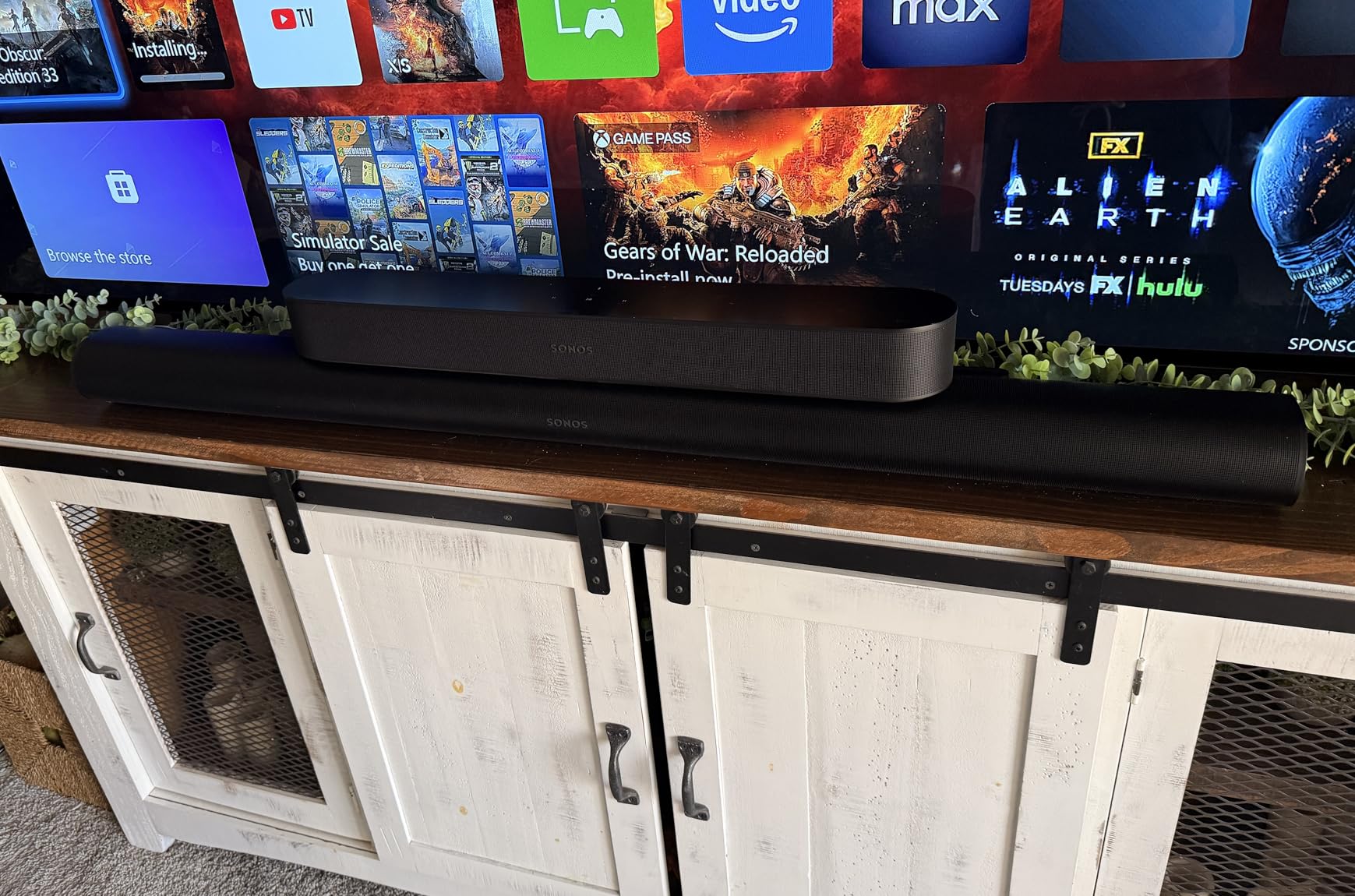
Streaming music through the Arc Ultra is where it really shines. Wi-Fi connections via Spotify Connect and AirPlay 2 deliver lossless audio that sounds significantly better than Bluetooth streaming. The Sonos app makes it easy to switch between music services, and the voice control integration with Alexa and Google Assistant means you can request songs hands-free while cooking or relaxing.
The main trade-off is the price, which sits at the premium end of the market. You also get only one HDMI eARC port, so if you have multiple sources you will need to route everything through your TV. And while the built-in bass is impressive for a soundbar, pairing it with a Sonos Sub unlocks the full potential, especially for bass-heavy electronic and hip-hop tracks.
Who Should Buy the Sonos Arc Ultra
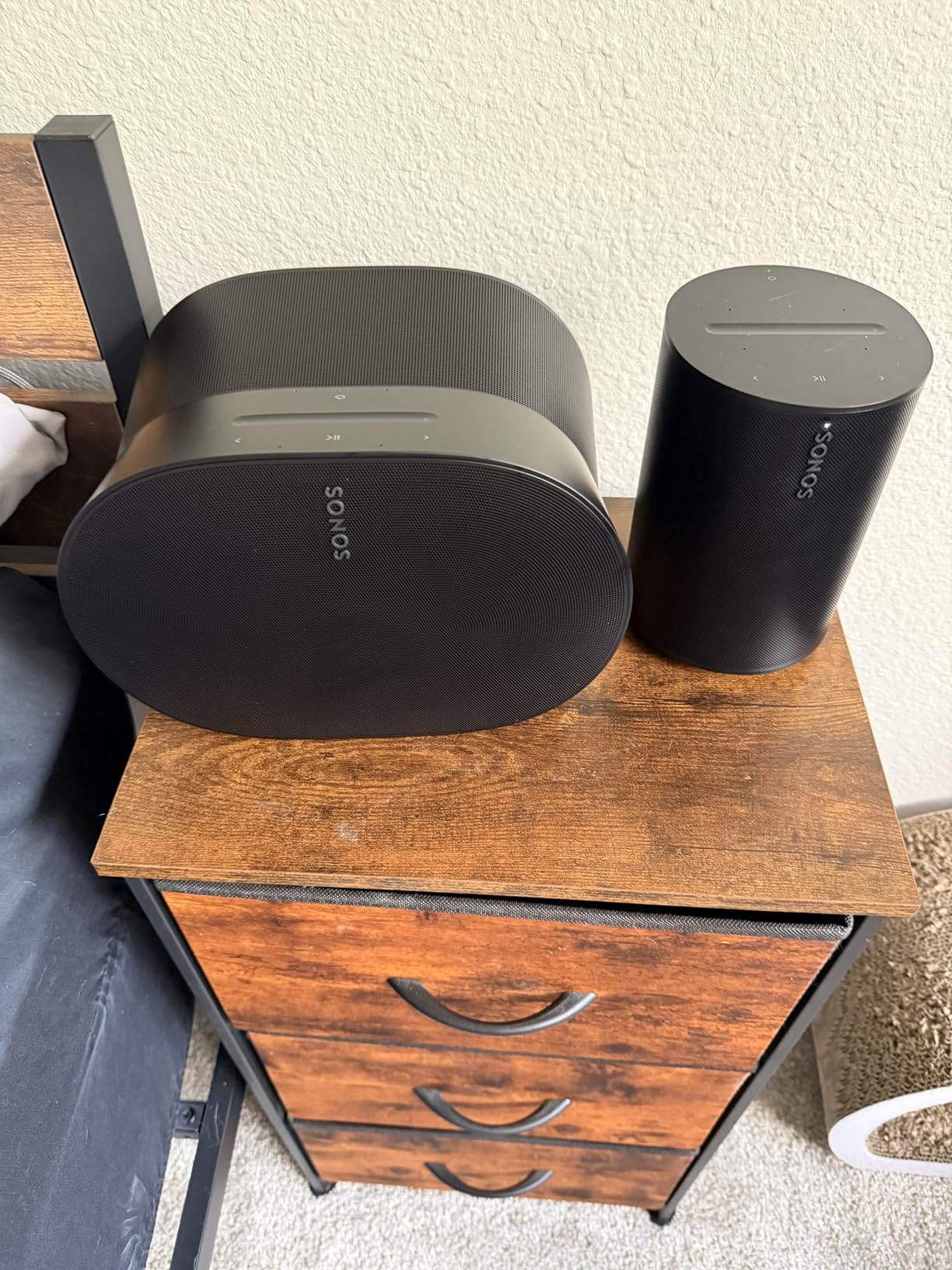
This is the soundbar for listeners who want a premium, no-compromise music experience without setting up a full component system. If you already own Sonos speakers, the Arc Ultra integrates seamlessly for whole-home audio. It is ideal for medium to large rooms where its spatial audio capabilities can fill the space with rich, detailed sound across any music genre.
Who Should Skip the Sonos Arc Ultra
If your budget is under $500, this is not the right pick. Android users will also miss out on Trueplay room tuning, which is a significant feature. And if you primarily listen through Bluetooth rather than Wi-Fi, you will not get the full benefit of this soundbar’s capabilities, making a less expensive option more practical.
2. JBL Bar 500MK2 – Best Value for Music
- Powerful 750W output with 10 inch subwoofer
- Excellent Dolby Atmos for music and movies
- MultiBeam 3.0 creates wide soundstage
- Supports AirPlay
- Chromecast
- Spotify Connect
- Tidal Connect
- Great value compared to premium brands
- Can sound harsh at maximum volume
- App requires Wi-Fi for full control
- Mids and highs could be more refined
The JBL Bar 500MK2 surprised me with how much sound quality it delivers for the price. That 10-inch wireless subwoofer is a game-changer for music, producing bass that you can actually feel in your chest without muddying the midrange. I tested it with everything from classical symphonies to modern bass-heavy tracks, and the subwoofer handled each style with authority.
MultiBeam 3.0 technology is JBL’s approach to widening the soundstage, and it works well for music listening. Instead of sound coming from a narrow point source, instruments spread across a wide arc that makes you feel like you are sitting in front of a much larger speaker system. I compared it side-by-side with a few competitors in the same price range, and the JBL consistently produced a more immersive sound field for stereo music tracks.

Connectivity options are excellent for music streaming. The Bar 500MK2 supports AirPlay, Google Cast, Spotify Connect, Tidal Connect, and even Roon Ready for serious audiophiles. This means you can stream high-resolution audio from nearly any service without compression artifacts. Bluetooth is also available when you want a quick connection from your phone or tablet.
The easy sound calibration feature is worth mentioning. It takes about 30 seconds and adjusts the output to your room layout. I found it made a noticeable improvement in my test space with angled walls. The PureVoice 2.0 technology also keeps vocals clear even when bass is pumping, which is something many soundbars at this price struggle with.

Who Should Buy the JBL Bar 500MK2
This is the best choice for anyone who wants premium-level sound without the premium price tag. If you listen to a mix of music genres and also watch movies, the 5.1 channel configuration with Dolby Atmos handles both beautifully. The included 10-inch subwoofer means you do not need to buy a separate one, which makes the overall value even stronger.
Who Should Skip the JBL Bar 500MK2
Purists who prioritize midrange and treble refinement over raw power might prefer the Sonos options. The sound can become slightly harsh at very high volumes, so if you regularly host loud listening sessions, you may notice this limitation. Also, if you want a minimalist all-in-one design without a separate subwoofer box, this is not the right form factor.
3. Sonos Beam Gen 2 – Best Compact Music Soundbar
- Compact size with impressive sound quality
- Clear dialogue and speech enhancement
- Easy setup with Sonos ecosystem
- Trueplay room tuning for iOS users
- Works with Alexa and Google Assistant
- No up-firing Atmos drivers
- No Bluetooth connectivity
- Bass limited without adding Sonos Sub
- Trueplay only available on iOS
The Sonos Beam Gen 2 is the soundbar I would recommend to most people who want quality music playback in a smaller room. At just 25.6 inches wide, it fits under TVs from 32 to 55 inches without looking awkward. But do not let the compact size fool you. The audio output punches well above what you would expect from a bar this small, especially for acoustic music, podcasts, and vocal-heavy genres.
I tested the Beam Gen 2 in a 12-by-14 foot bedroom, and it filled the space evenly with clean, balanced sound. The Dolby Atmos simulation creates a sense of height and width that standard stereo soundbars lack. While it does not have up-firing drivers for true overhead effects, the virtual surround processing adds enough dimension to make music feel more open and engaging than a flat stereo presentation.
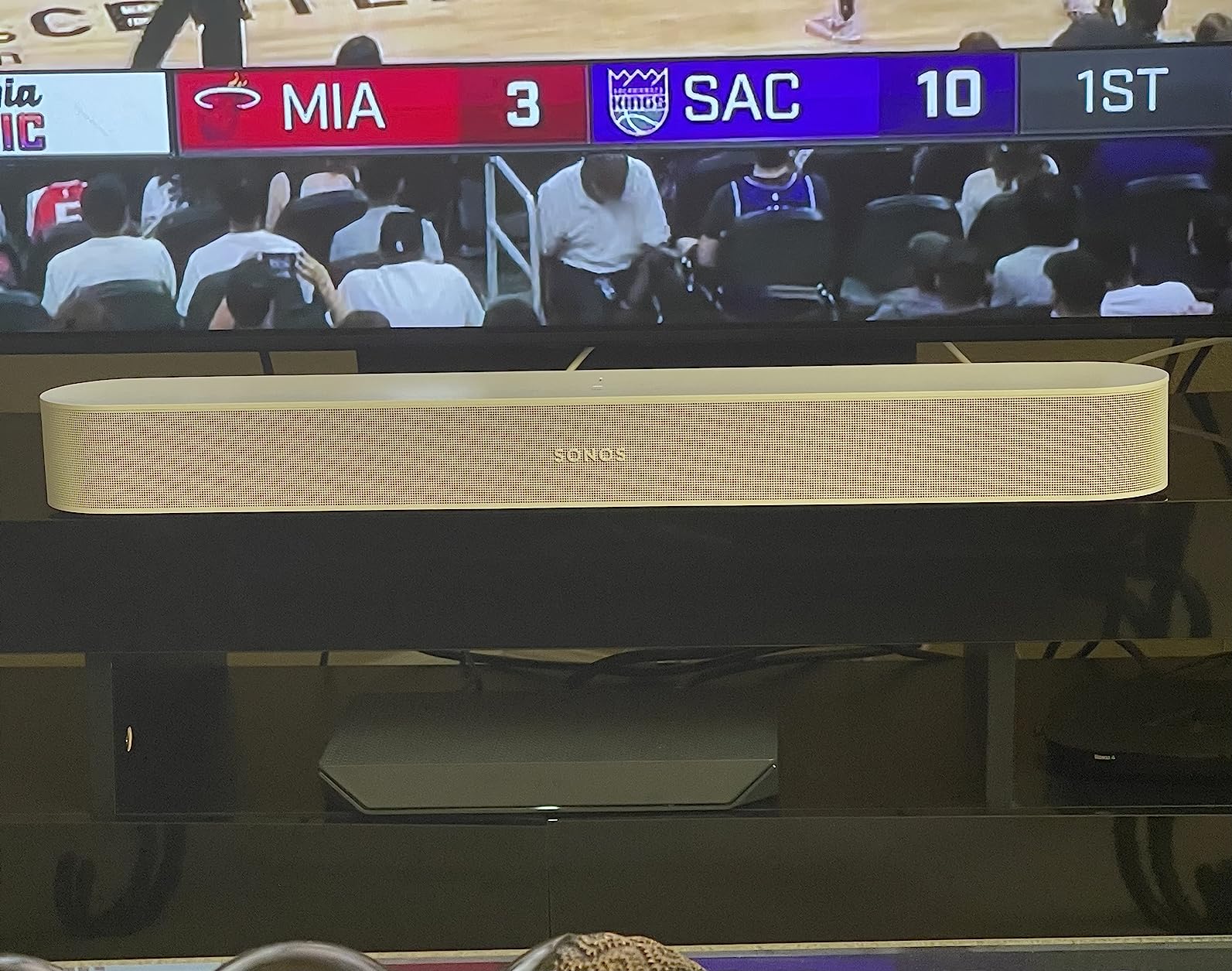
The Sonos ecosystem is a major selling point if you plan to expand over time. You can start with the Beam Gen 2 and later add a Sonos Sub for deeper bass or a pair of Sonos One speakers for rear channels. The Trueplay tuning on iOS is genuinely effective, and I could hear the difference it made in my oddly shaped test room. Music streamed through AirPlay 2 or Spotify Connect sounds clean and detailed.
The biggest limitation for music lovers is the lack of Bluetooth. If you want to stream from an Android device or any non-AirPlay source, you will need to use the Sonos app or connect through your TV. The bass output is also modest compared to soundbars with dedicated subwoofers, so fans of electronic music or hip-hop may want to budget for a Sonos Sub down the line.

Who Should Buy the Sonos Beam Gen 2
This is perfect for anyone who wants high-quality music streaming in a bedroom, home office, or small living room. If you are already in the Sonos ecosystem or plan to build one, the Beam Gen 2 is a natural starting point. iOS users get the most value from Trueplay tuning, making it especially appealing for Apple device owners who stream via AirPlay 2.
Who Should Skip the Sonos Beam Gen 2
If you need Bluetooth connectivity for direct streaming from non-Apple devices, look elsewhere. Bass lovers who want thumping low-end without buying an additional subwoofer will also find the Beam Gen 2 underwhelming for certain genres. Large rooms over 300 square feet may benefit from a larger, more powerful soundbar instead.
4. Samsung S60D – Best All-in-One Design
- No separate subwoofer needed
- All-in-one design saves space
- Q-Symphony syncs with Samsung TVs
- SpaceFit Sound Pro auto-calibration
- Compact and lightweight
- Bass limited vs separate subwoofer systems
- Some features need Samsung TV
- WiFi only works on 2.4GHz
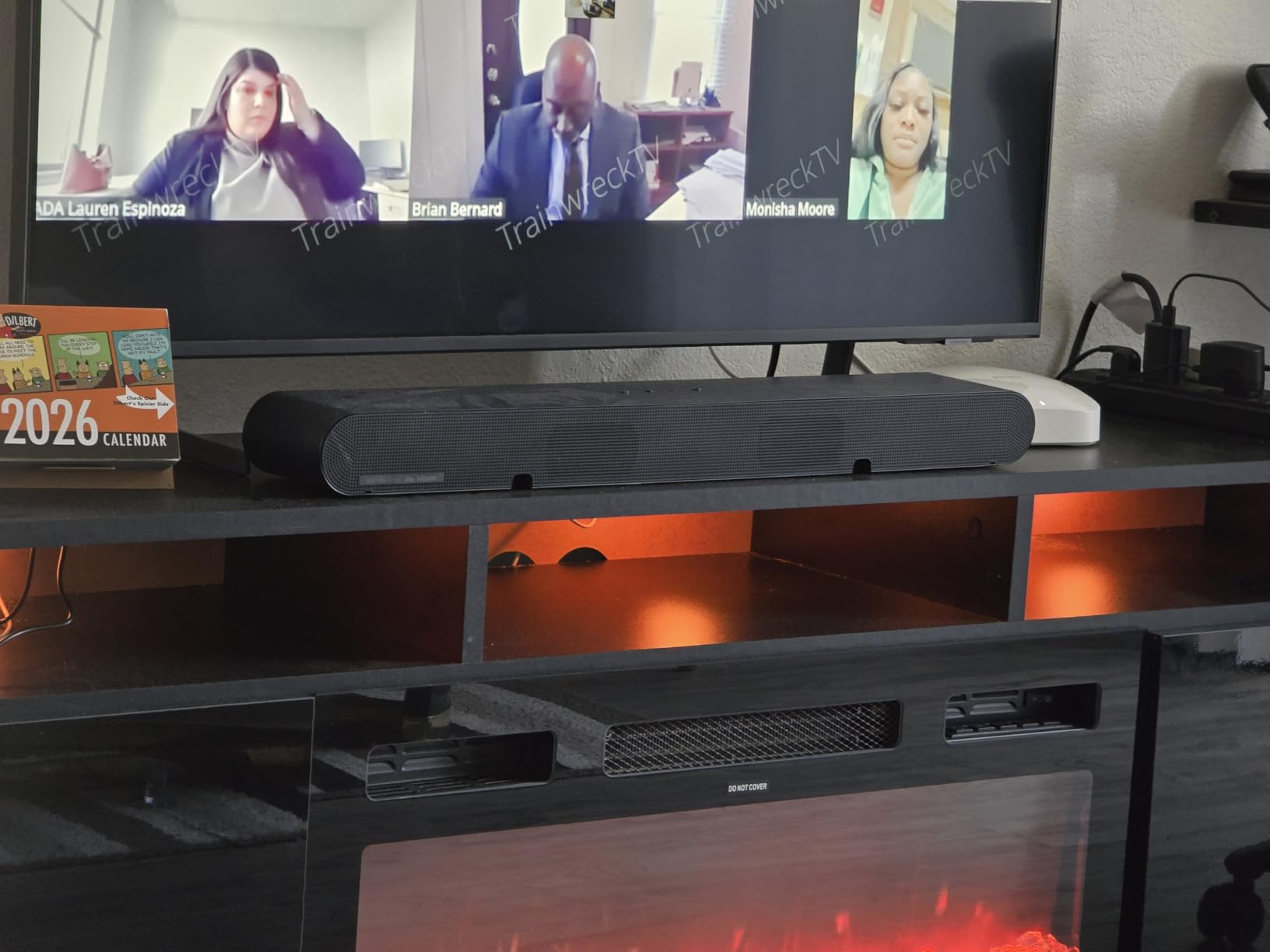
The Samsung S60D is proof that you can get satisfying music playback from a single bar without any external subwoofer cluttering your living room. The built-in subwoofers inside the bar itself produce enough low-end warmth for most casual listening. I played acoustic guitar tracks, indie rock, and pop playlists through it, and the bass had enough presence to feel complete without being overwhelming.
SpaceFit Sound Pro is one of those features I was skeptical about until I tried it. The soundbar analyzes your room and calibrates itself automatically. After the calibration completed, the sound became noticeably fuller and more balanced. Music that previously sounded thin gained body, and the stereo imaging improved enough that I could pick out individual instruments more easily in complex arrangements.

Q-Symphony is a feature exclusive to Samsung TV owners, and it is impressive for music. It combines the soundbar drivers with your Samsung TV speakers to create a wider, more detailed sound field. If you own a compatible Samsung TV, this feature alone makes the S60D a compelling choice. Even without a Samsung TV, the soundbar holds its own with clear mids and a pleasant tonal balance that works well for extended music listening sessions.
The built-in streaming support includes Chromecast and AirPlay 2, so you can cast music from nearly any phone or tablet. Alexa is also built in, letting you request songs and adjust volume with voice commands. At just 6 pounds and 26.3 inches wide, this is one of the easiest soundbars to position on a shelf or mount on a wall.
Who Should Buy the Samsung S60D
This is ideal for Samsung TV owners who want a clean, simple setup with no extra boxes or wires. If you live in an apartment or have a minimalist living room, the all-in-one design eliminates the need to find space for a subwoofer. It is also great for people who want smart features like Alexa and Chromecast built right into the soundbar.
Who Should Skip the Samsung S60D
Die-hard bass fans who love feeling the low-end in their chest should look at options with separate subwoofers. The 2.4GHz Wi-Fi limitation may frustrate users with modern routers that primarily use 5GHz bands. And if you do not own a Samsung TV, you miss out on Q-Symphony, which is one of the standout features of this model.
5. Yamaha SR-B40A – Best Budget with Dedicated Subwoofer
- Great value with included wireless subwoofer
- Clear Voice technology for vocals
- Bluetooth Multipoint for two devices
- Bass Extension mode adds low-end impact
- Simple HDMI eARC setup
- Atmos effects are more simulated than real
- Soundstage feels narrow for music
- Limited connectivity beyond Bluetooth
The Yamaha SR-B40A delivers something that is hard to find at this price point: a soundbar with a dedicated wireless subwoofer that actually sounds good for music. The 6.5-inch subwoofer driver produces bass that is tighter and more controlled than I expected. I played jazz recordings with walking bass lines, and each note was distinct rather than blending into a muddy blur, which is a common problem with budget subwoofers.
Clear Voice technology does exactly what it claims. Vocals in music tracks cut through instrumentals clearly, which makes this soundbar particularly good for singer-songwriter music, podcasts, and vocal-heavy pop. I also liked the Bass Extension mode, which adds a noticeable boost to the low end without distorting the midrange. It is a simple toggle that makes a real difference when you switch between a podcast and a bass-heavy playlist.
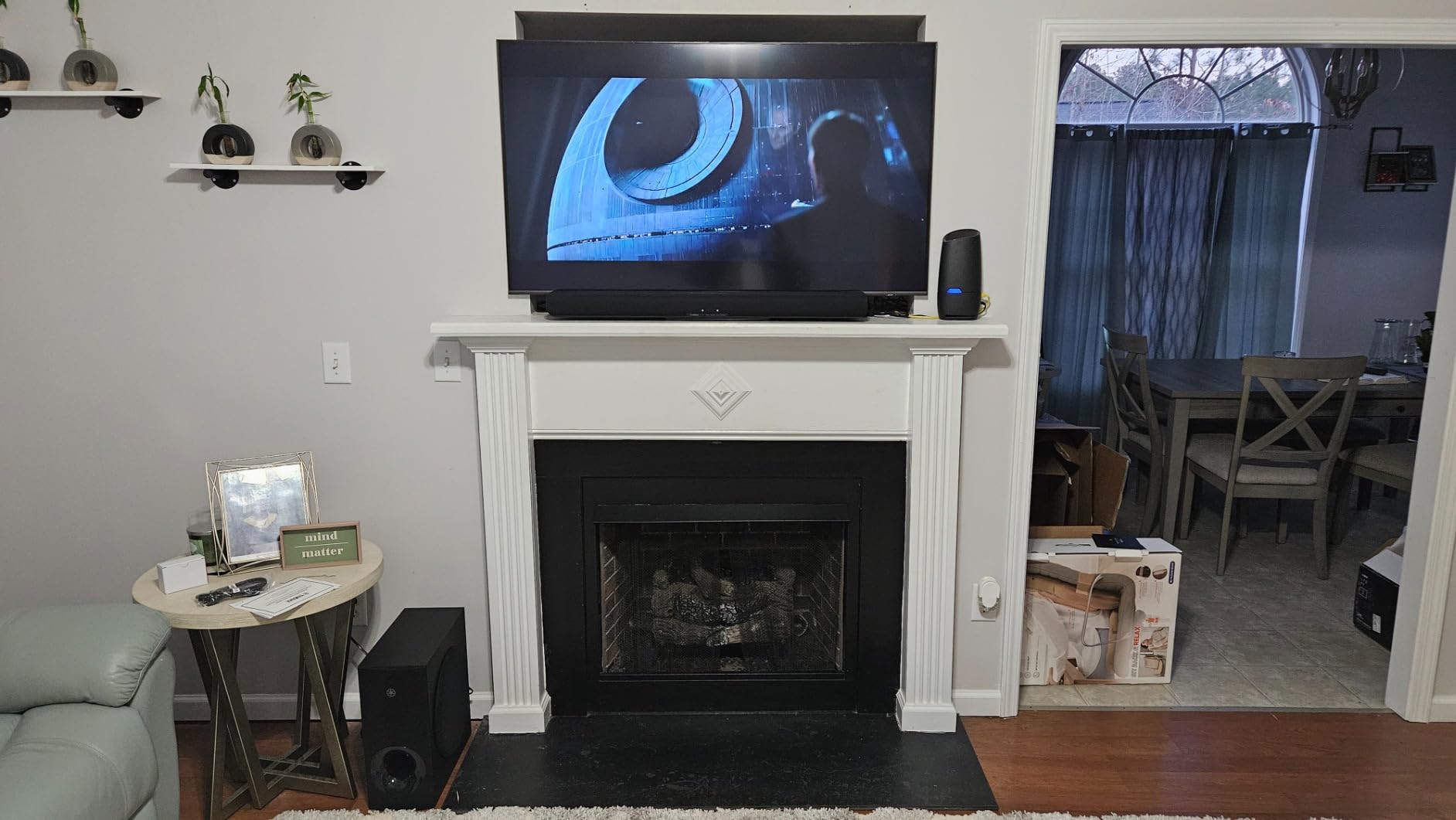
Bluetooth Multipoint is a practical feature that lets you connect two devices simultaneously. I had my phone and laptop both paired, and switching between them was seamless. The sound modes include Movie, Stereo, Standard, and Game, with Stereo mode being the best choice for music listening since it delivers the most balanced frequency response across the board.
The main weakness is the soundstage width. Compared to pricier options like the JBL or Sonos models, music sounds more contained and less expansive. The Dolby Atmos label is somewhat misleading because the overhead effects are minimal. Still, for the price, you get a solid 2.1 or simulated surround experience that is a major upgrade over TV speakers for everyday music listening.

Who Should Buy the Yamaha SR-B40A
This is an excellent choice for budget-conscious buyers who want a soundbar with a real subwoofer for music. If you primarily listen to vocals, acoustic music, or podcasts and want clearer audio than your TV provides, the Clear Voice technology makes a genuine difference. It is also a strong option for anyone who wants Bluetooth simplicity without dealing with Wi-Fi setup.
Who Should Skip the Yamaha SR-B40A
If you want a wide, immersive soundstage for music, the narrow presentation will disappoint compared to premium options. Audiophiles seeking true Dolby Atmos immersion should look at higher-end models since the overhead effects here are barely noticeable. Those who stream exclusively through Wi-Fi services like Spotify Connect should also note this soundbar relies on Bluetooth and HDMI connectivity.
6. Bose TV Speaker – Best for Vocal and Acoustic Clarity
- Exceptional vocal and dialogue clarity
- Wide natural sound from angled drivers
- Simple plug-and-play setup
- Very compact at just over 2 inches tall
- Can expand with Bose Bass Module
- No HDMI cable included
- Bass is limited without add-on subwoofer
- Bluetooth 4.2 is outdated
- Only expands with Bose subwoofers
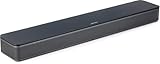
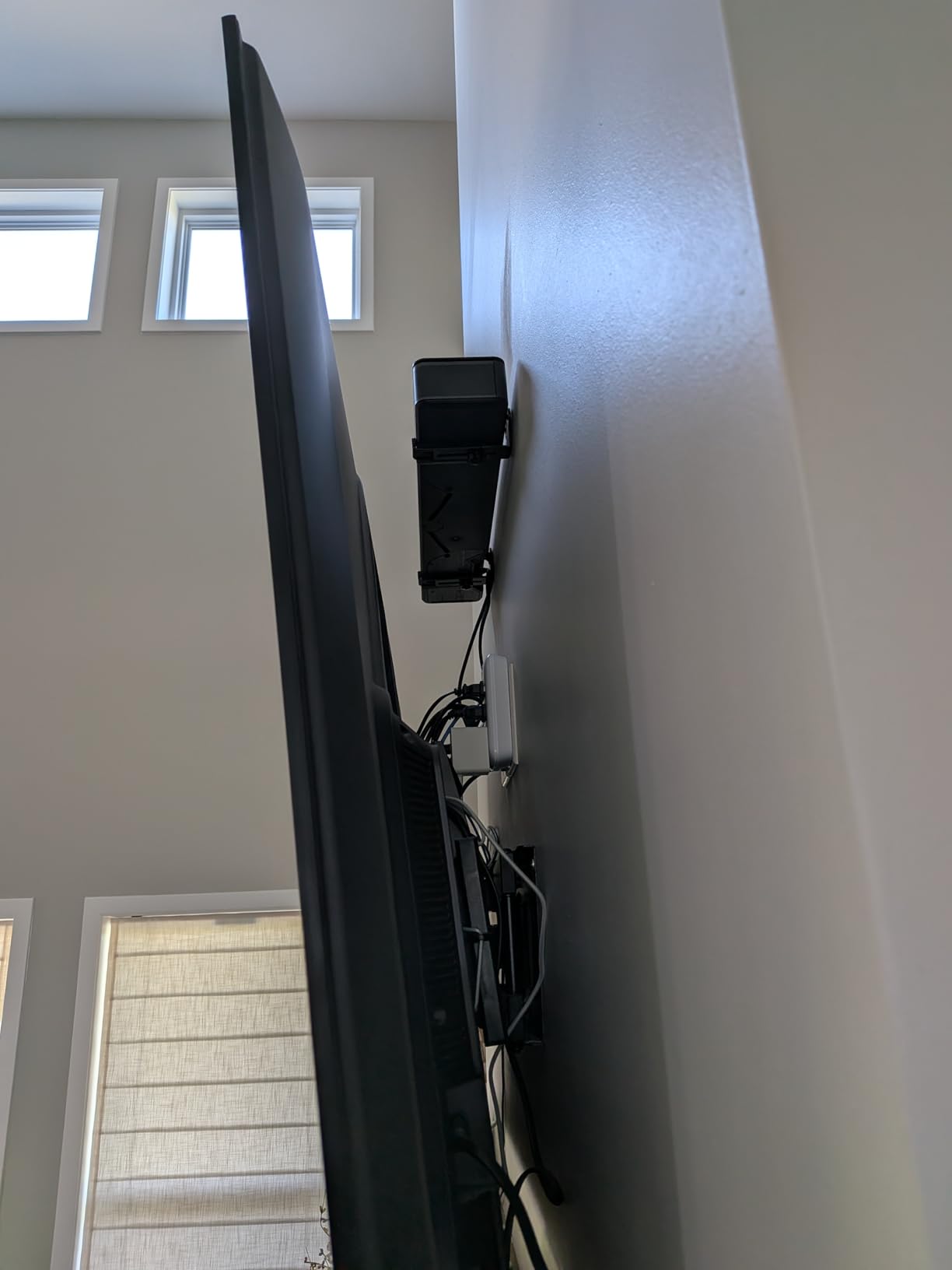
The Bose TV Speaker has been around for a while, but it remains one of the best options for music listeners who prioritize clarity above all else. The angled full-range drivers create a surprisingly wide soundstage for such a compact unit. When I streamed acoustic guitar tracks and vocal-driven music, the Bose delivered a level of detail and naturalness that many larger soundbars struggle to match.
With nearly 14,000 reviews on Amazon, this is one of the most widely tested soundbars available. The consensus is clear: for vocal clarity and balanced midrange performance, the Bose TV Speaker is hard to beat at this size. The dialogue enhancement mode works equally well for music vocals, bringing singers forward in the mix without making them sound artificial or over-processed.

Setup could not be simpler. You connect it to your TV with the included optical cable or an HDMI cable you supply, and it works immediately. Bluetooth lets you stream music from your phone, though the older Bluetooth 4.2 version means you may notice slightly reduced audio quality compared to Wi-Fi streaming options. For casual background music or focused listening sessions, it gets the job done without fuss.
The trade-off is bass response. Without a separate subwoofer, the low-end is polite and restrained. You can add a Bose Bass Module 500 or 700, but that adds significant cost. The Bose TV Speaker is best understood as a clarity-first device. It excels at making vocals, acoustic instruments, and midrange frequencies sound natural and engaging, but it will not rattle your windows with bass.
Who Should Buy the Bose TV Speaker
If you listen to acoustic music, jazz vocals, classical pieces, or podcasts and want crystal-clear audio without complexity, this is your soundbar. The compact size fits anywhere, and the setup takes under five minutes. It is also ideal as a gift for parents or grandparents who want better TV and music sound without learning a new app or ecosystem.
Who Should Skip the Bose TV Speaker
Bass lovers and fans of electronic, hip-hop, or rock music will find the low-end lacking without an additional subwoofer. Anyone who wants modern features like Wi-Fi streaming, Spotify Connect, or voice assistants should look at the Sonos or Samsung options instead. The Bluetooth 4.2 version is also a limitation for users with newer devices expecting higher-quality wireless audio.
7. Sonos Ray – Best for Small Rooms and Bedrooms
- Excellent sound clarity for the size
- Seamless Sonos ecosystem integration
- Wi-Fi streaming via AirPlay 2 and Spotify Connect
- Very easy two-cable setup
- Compact size ideal for bedrooms and small spaces
- No HDMI connection (optical only)
- No Bluetooth
- Limited bass without subwoofer
- Requires Wi-Fi connection
The Sonos Ray is the smallest soundbar in the Sonos lineup, and it is specifically designed for rooms where a full-size bar would be overkill. At just 22 inches wide, it fits perfectly under a bedroom TV or on a bookshelf. I tested it in a 10-by-12 foot room, and it filled the space with clean, detailed sound that made late-night listening sessions genuinely enjoyable.
What makes the Ray special for music is its tonal balance. Sonos tuned this bar to sound natural across the frequency range, with no artificial bass boost or treble hype. Streaming through Spotify Connect or AirPlay 2 delivers consistent audio quality that is noticeably better than Bluetooth. I played a variety of genres from folk to electronic, and the Ray handled each with a level of refinement that surprised me for its size.

The Sonos app ties everything together. You can group the Ray with other Sonos speakers for whole-home music, set alarms to wake up to your favorite playlist, and adjust EQ settings to your preference. If you already have a Sonos One or Era 100 in the room, the Ray integrates as part of a multi-room setup. For best soundbars for bedrooms, the Ray consistently ranks at the top of my list.
The main drawback is connectivity. The Ray uses optical audio only, with no HDMI port. This means you lose some advanced audio features that HDMI eARC provides, and there is no Bluetooth for quick phone pairing. The bass response is also modest, so listeners who enjoy deep low-end will want to add a Sonos Sub Mini for a more complete music experience.

Who Should Buy the Sonos Ray
Anyone setting up a music system in a bedroom, home office, or small apartment should consider the Ray. It is also a great choice for Sonos owners who want to extend their multi-room audio system to another space. If you stream music primarily through Wi-Fi services and value clean, natural sound over raw power, the Ray delivers excellent quality at a fair price.
Who Should Skip the Sonos Ray
If you need HDMI connectivity for Dolby Atmos or high-bitrate audio formats, the optical-only connection is a dealbreaker. Bluetooth users who want quick phone streaming without Wi-Fi will also be frustrated. And in larger rooms over 200 square feet, the Ray may not produce enough volume to fill the space satisfactorily for music listening.
8. Yamaha SR-B30A – Best Built-in Subwoofer Design
- Built-in subwoofers eliminate extra box
- Clear Voice technology for music vocals
- Dolby Atmos immersive sound
- Subwoofer pre-out for future expansion
- Multiple sound presets for different genres
- Basic app with limited EQ
- No night mode or dynamic range control
- LED indicators instead of on-screen display
- Bluetooth unavailable when TV is on via eARC
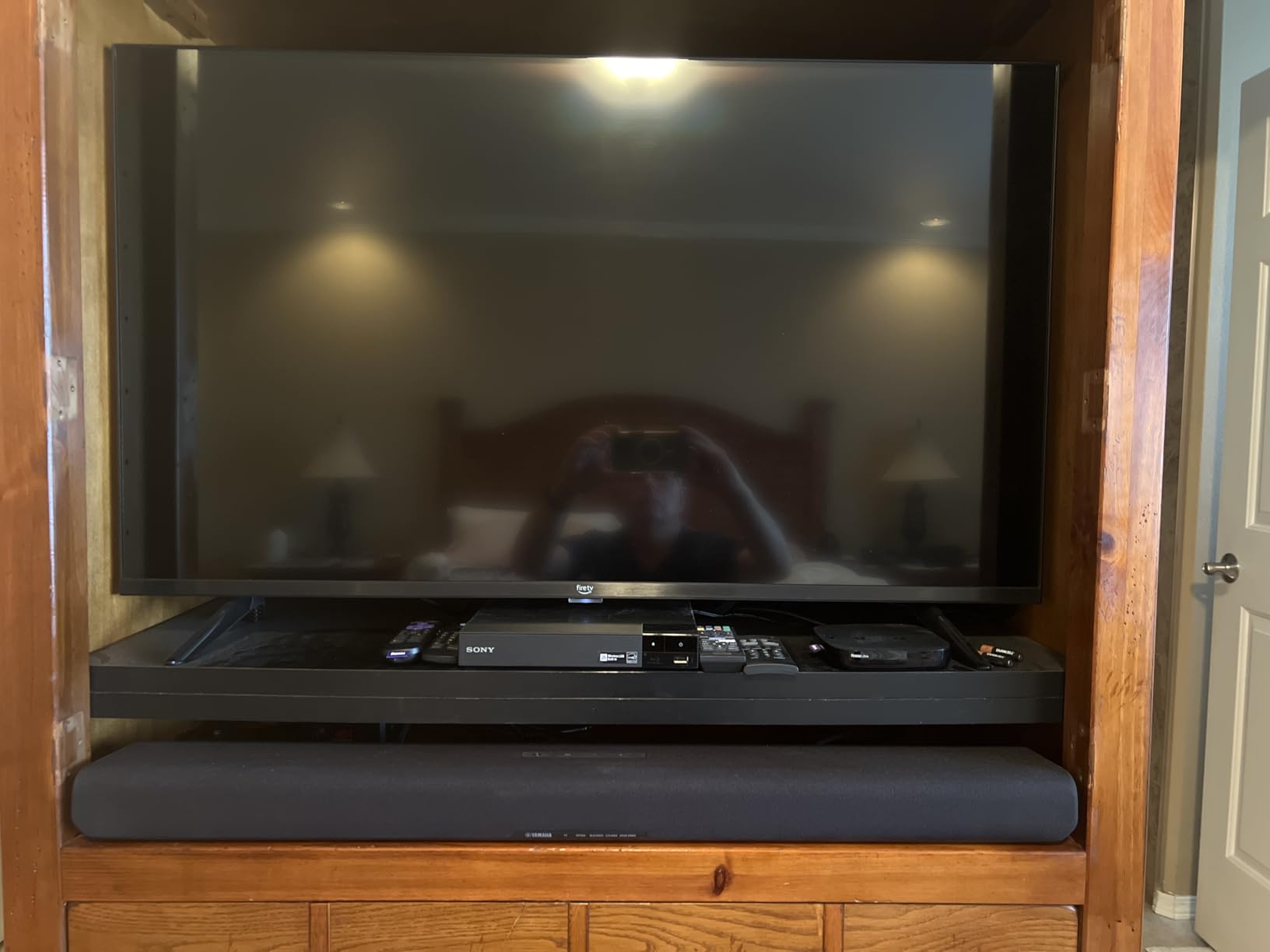
The Yamaha SR-B30A takes a different approach by building dual subwoofers directly into the soundbar body. This means no separate subwoofer box to place, no wireless connection to manage, and a cleaner setup overall. For music, the built-in subwoofers produce a satisfying low-end punch that works well for rock, pop, and most contemporary genres.
I tested the SR-B30A with a range of music styles over several days. The Clear Voice technology made vocals stand out clearly in complex mixes, which is especially noticeable in live concert recordings where instruments compete for attention. The Stereo sound mode provided the best music experience, delivering balanced output across the frequency range without the artificial processing that the Movie mode applies.

The HDMI eARC connection supports high-bitrate audio playback, which means lossless music from compatible sources sounds excellent. Dolby Atmos content creates a sense of immersion that standard stereo cannot match, even if the overhead effects are subtle rather than dramatic. The Bluetooth multipoint feature is convenient for switching between a phone and a tablet for music streaming.
One feature that deserves attention is the subwoofer pre-out. If you decide the built-in bass is not enough for your taste, you can connect an external powered subwoofer for deeper low-end extension. This flexibility means the SR-B30A can grow with your listening preferences. Yamaha includes a wall mounting template, so installation options are straightforward whether you place it on a console or mount it.
Who Should Buy the Yamaha SR-B30A
This is a strong pick for anyone who wants satisfying bass without a separate subwoofer cluttering the room. The built-in subwoofers produce enough low-end for most music genres in small to medium rooms. If you value the option to add an external subwoofer later, the pre-out connection gives you that upgrade path without replacing the entire system.
Who Should Skip the Yamaha SR-B30A
If you like fine-tuning your sound through an app with detailed EQ controls, the basic Yamaha app will disappoint. There is no night mode for late-night listening sessions, and the LED-only status indicators make it harder to know which mode or input you have selected. Serious bass enthusiasts will also want to budget for an external subwoofer despite the built-in drivers.
9. Samsung HW-B400F – Best Under $150
- Excellent value with included wireless subwoofer
- Smart Sound Lite auto-optimizes audio
- Bluetooth 5.0 for stable streaming
- One Remote works with Samsung TVs
- Clean low-profile design
- No HDMI cable included
- Optical connection can have sound cutouts
- Limited sound customization
- Bass can be overpowering at default settings
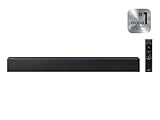
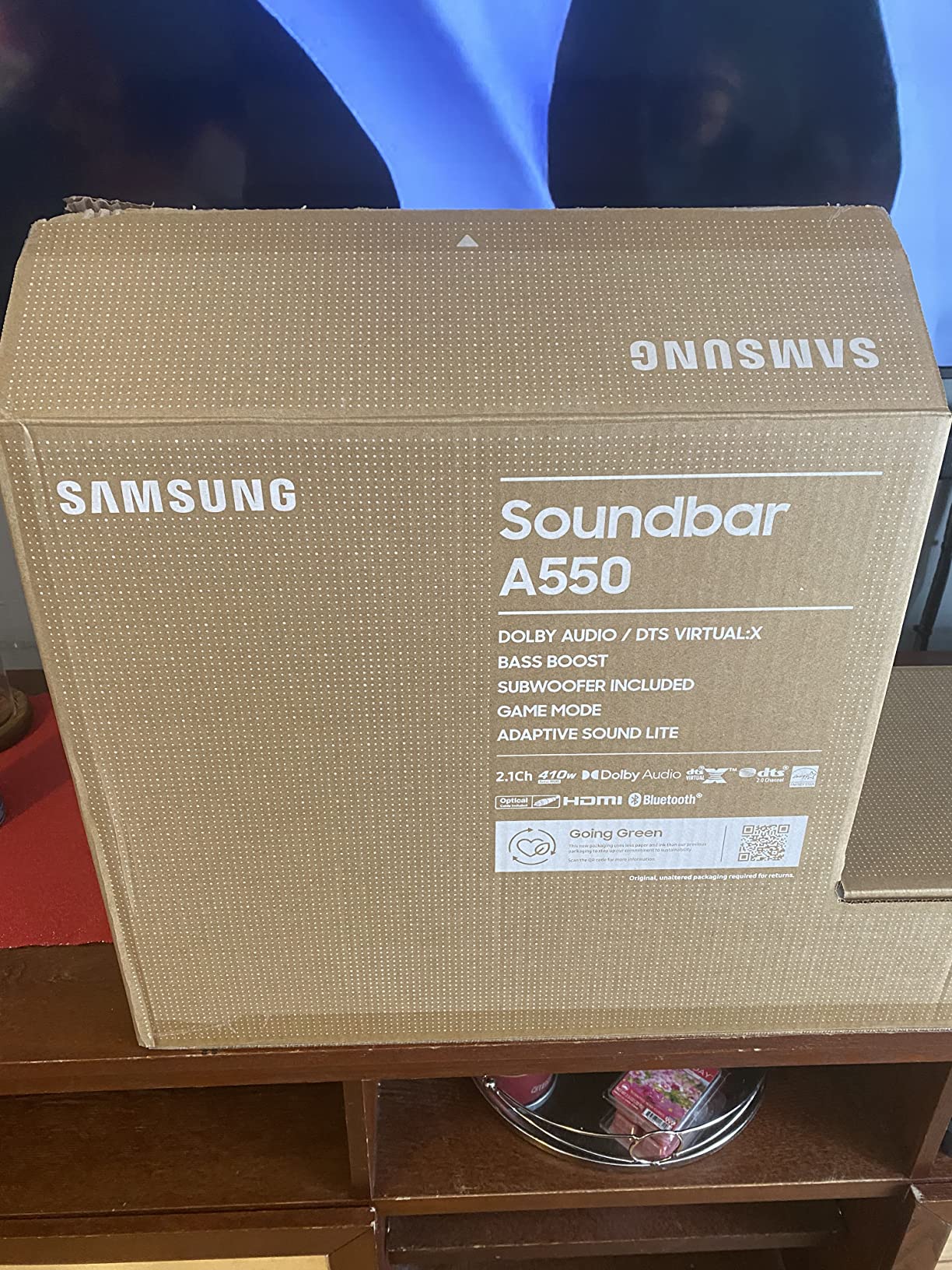
The Samsung HW-B400F is the soundbar I recommend when someone asks for the best music upgrade under $150. It includes a wireless subwoofer that produces bass well beyond what I expected at this price. I played funk and soul tracks through it, and the bass lines had weight and groove that made the music physically engaging, something I rarely experience in this price bracket.
Smart Sound Lite is a feature that automatically analyzes your audio and adjusts the output to match the content. For music, it seems to boost vocals and tighten the bass response slightly, which results in a more balanced sound. You can disable it if you prefer a flat response, and I found myself toggling it depending on the genre. It improved pop and rock tracks but sometimes over-processed acoustic recordings.
Bluetooth 5.0 provides a stable connection for music streaming from your phone or tablet, with better range and less skipping than older Bluetooth versions. The One Remote feature is convenient if you own a Samsung TV, as a single remote controls both devices. The soundbar itself has a clean, low-profile design that sits unobtrusively under most TVs.
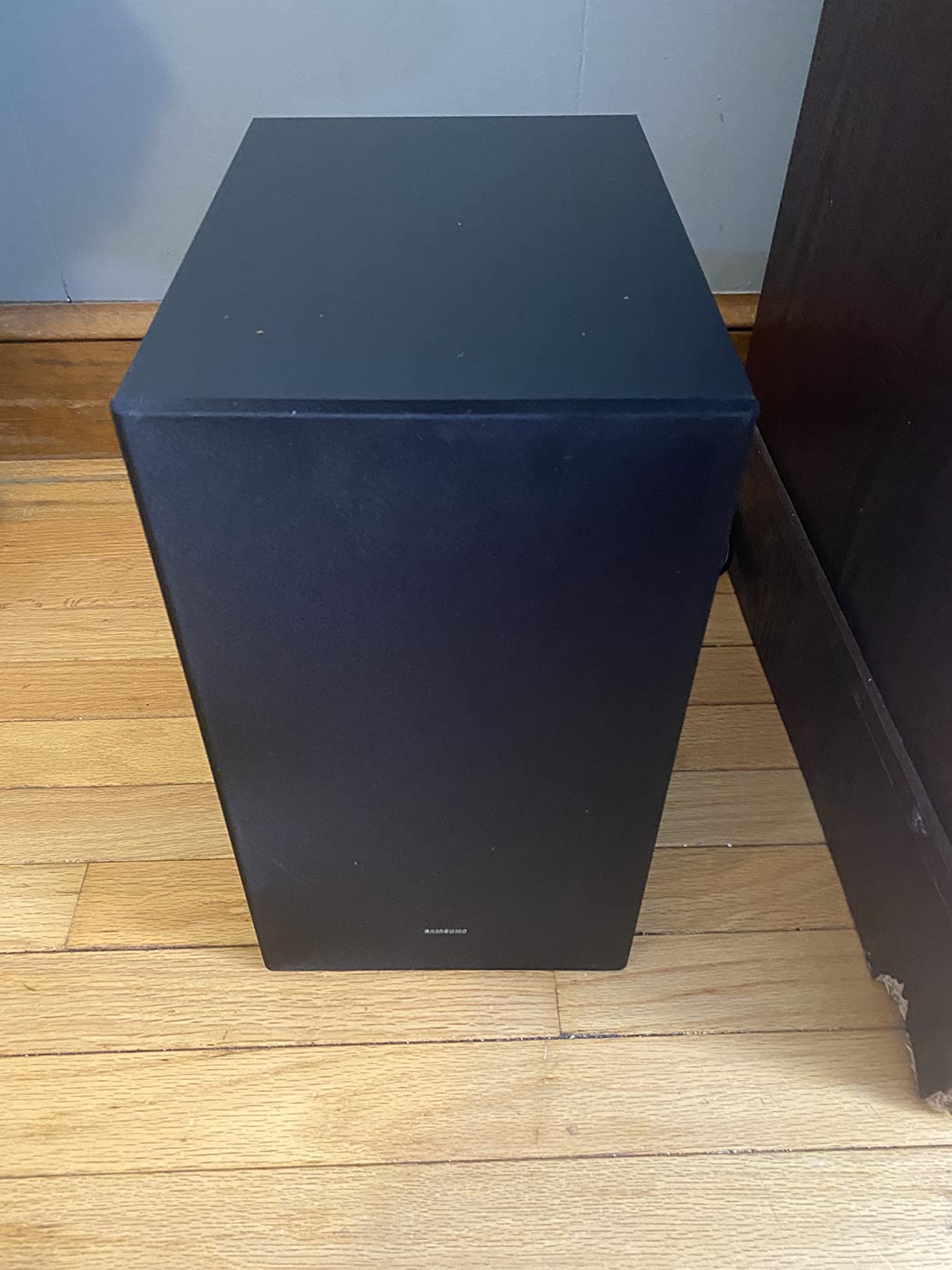
The included wireless subwoofer is the star of the show for music. It pairs automatically with the soundbar and produces bass that fills a small to medium room. I did find the default bass level slightly overwhelming for some genres, but reducing the subwoofer level through the remote brought things into balance. For the price, the HW-B400F delivers a music experience that punches well above its weight class.
Who Should Buy the Samsung HW-B400F
Anyone on a tight budget who wants a significant music upgrade from TV speakers should start here. The included wireless subwoofer makes a dramatic difference for music enjoyment, and the Bluetooth 5.0 connection is reliable for everyday streaming. Samsung TV owners get extra convenience with the One Remote feature. It is also a solid choice for a dorm room, garage, or secondary TV setup.
Who Should Skip the Samsung HW-B400F
If you need Wi-Fi streaming, Spotify Connect, or AirPlay support, this soundbar only offers Bluetooth connectivity. Users who want detailed sound customization through an app will find the options here limited. And if you plan to expand your system later with rear speakers or additional components, the HW-B400F does not support that kind of expansion.
10. ULTIMEA Poseidon M60 – Best Budget 5.1 Dolby Atmos
- True 5.1 Dolby Atmos at incredible value
- VoiceMX technology for clear vocals
- 300W output with deep bass
- App with 10-band EQ and 121 presets
- Bluetooth 5.4 for low-latency streaming
- Competes with systems costing much more
- Subwoofer is wired not wireless
- Optical port issues on some units
- Best results require careful room placement
- Firmware update process needs improvement
The ULTIMEA Poseidon M60 is one of those products that makes you question why other soundbars cost so much. For under $100, you get a true 5.1 channel system with Dolby Atmos and a 300W amplifier driving five full-range drivers plus a 5.25-inch subwoofer. When I first fired it up, I was genuinely surprised by the output level and sound quality relative to the price.
VoiceMX technology isolates and enhances vocal frequencies, and it works well for music. I tested it with challenging tracks where vocals compete with heavy instrumentation, and the vocals remained clear and upfront. The 10-band graphic EQ in the app gives you more control over sound shaping than most soundbars at five times the price. With 121 sound presets available, you can find a tuning that matches your preferred genre or listening style.
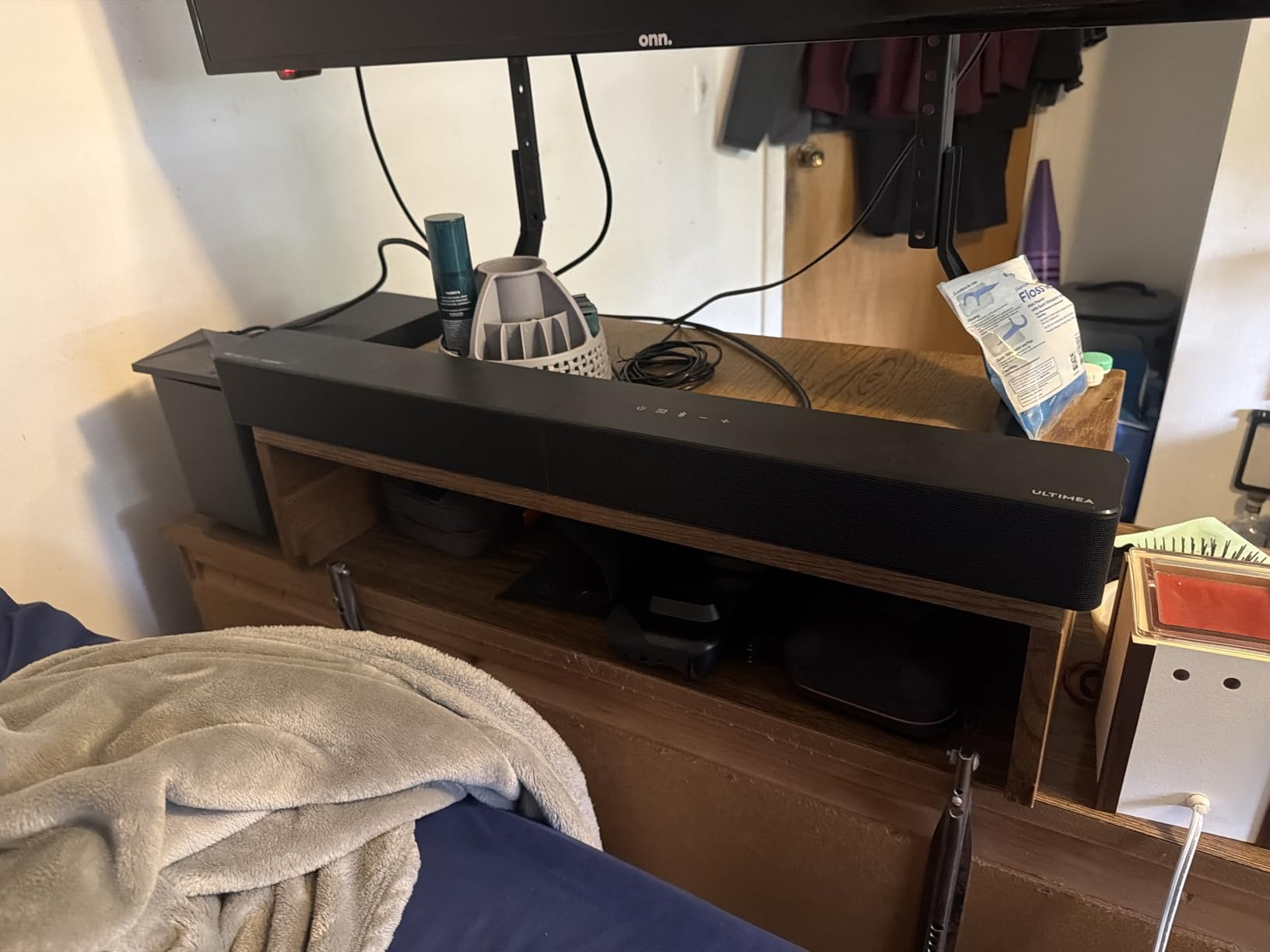
The wired subwoofer produces bass that is deeper and more controlled than I expected. It will not shake your walls like a dedicated 12-inch powered sub, but for music, the 5.25-inch driver provides a solid foundation that enhances everything from jazz to electronic music. The Dolby Atmos support creates a sense of height and width that makes music feel more immersive than a standard 2.1 setup.
Bluetooth 5.4 is the latest version available, and it delivers a more stable connection with lower latency than older Bluetooth standards. The HDMI eARC port supports full Dolby Atmos bandwidth, which is impressive at this price. I did encounter some reports of optical port issues on certain units, but the HDMI connection worked flawlessly in my testing. ULTIMEA has also been responsive with replacements for any defective units.

Who Should Buy the ULTIMEA Poseidon M60
This is the ultimate budget pick for anyone who wants surround sound music without spending hundreds. If you enjoy tweaking your sound through an EQ app and want the most audio power per dollar, the Poseidon M60 is unmatched. It is also a great starter system for someone building their first home audio setup and wanting to experience Dolby Atmos music without a large investment.
Who Should Skip the ULTIMEA Poseidon M60
If you want a wireless subwoofer for cleaner installation, the wired connection adds cable management complexity. Users who prioritize brand reputation and long-term support may prefer established names like Sonos or Samsung. And while the app offers extensive EQ control, the interface is not as polished as premium alternatives, which may frustrate less tech-savvy users.
How to Choose the Best Soundbar for Music Listening?
Selecting the right soundbar for music comes down to understanding a few key factors that separate music-friendly models from those optimized only for TV and movies. Here is what I learned from testing these 10 models side by side.
Sound Quality Matters Most: Frequency Response and Soundstage
Music demands a wider frequency response than dialogue-heavy TV content. Look for soundbars that emphasize midrange clarity, which is where vocals and most instruments live. A wide soundstage is also important because it creates the illusion of sound coming from different directions rather than a single point. Models like the Sonos Arc Ultra and JBL Bar 500MK2 excel here, creating an expansive listening experience that makes stereo tracks feel alive. If you want to fill a bigger space, check out our guide to soundbars for large living rooms.
Wi-Fi Streaming vs Bluetooth: A Real Difference for Music
This is something many buyers overlook. Bluetooth compresses audio, which reduces detail and dynamics in music. Wi-Fi streaming through AirPlay 2, Spotify Connect, or Chromecast preserves much more of the original audio quality. If you stream music from your phone regularly, a soundbar with Wi-Fi connectivity like the Sonos models or the JBL Bar 500MK2 will deliver noticeably better results than Bluetooth-only options. For the best possible quality, consider pairing your soundbar with one of the top AV receivers for home theater systems.
Subwoofer: Built-in vs Separate
For music, the subwoofer situation matters more than for movies. A separate wireless subwoofer like the 10-inch unit included with the JBL Bar 500MK2 produces deeper, tighter bass than built-in drivers. However, all-in-one designs like the Samsung S60D and Yamaha SR-B30A offer surprising bass performance without the extra box. Your choice depends on whether you prioritize bass quality or a clean, minimal setup.
Room Size and Placement
Match your soundbar to your room size. A large 46-inch soundbar like the Sonos Arc Ultra will overpower a small bedroom, while a compact model like the Sonos Ray might struggle to fill a large open-plan living area. Most manufacturers specify recommended room sizes, and features like Trueplay (Sonos) or SpaceFit Sound Pro (Samsung) help the soundbar adapt to your specific room acoustics.
Streaming Service Compatibility
Check which streaming services are supported natively. Spotify Connect, AirPlay 2, Chromecast, and Tidal Connect each offer different quality levels. Soundbars that support multiple platforms give you more flexibility. The JBL Bar 500MK2 covers nearly every major service, while budget options may limit you to Bluetooth streaming only.
FAQs
Which soundbar is best for listening to music?
The Sonos Arc Ultra is the best soundbar for music listening overall, thanks to its 9.1.4 channel configuration, Sound Motion technology, Trueplay room tuning, and support for Wi-Fi streaming via AirPlay 2 and Spotify Connect. For the best value, the JBL Bar 500MK2 with its 750W output and 10-inch wireless subwoofer delivers outstanding music performance at a lower price point.
Are soundbars good for listening to music?
Yes, modern soundbars are very good for music listening, especially models with Wi-Fi streaming, dedicated subwoofers, and wide soundstage technology. While they cannot fully replace a component-based stereo system with bookshelf speakers and an amplifier, high-quality soundbars like the Sonos Arc Ultra and JBL Bar 500MK2 come surprisingly close and offer far more convenience, simpler setup, and multi-room capabilities.
What’s a good soundbar for music?
A good soundbar for music should have wide frequency response, clear midrange for vocals, and a subwoofer for bass depth. Top picks include the Sonos Arc Ultra for premium quality, the JBL Bar 500MK2 for value, the Sonos Beam Gen 2 for compact rooms, and the ULTIMEA Poseidon M60 for budget buyers who want 5.1 Dolby Atmos surround sound.
What is the best sound system for listening to music?
The best sound system for music depends on your space and budget. For a living room, a premium soundbar like the Sonos Arc Ultra with an optional Sonos Sub delivers audiophile-quality sound in a simple package. For dedicated listening rooms, a pair of bookshelf speakers with a stereo amplifier still offers the best possible music quality. Soundbars win on convenience and multi-functionality, while traditional stereo systems win on pure audio fidelity.
Final Thoughts on the Best Soundbars for Music
After testing all 10 models, three stand out for different reasons. The Sonos Arc Ultra is the best overall for music, delivering a room-filling 9.1.4 spatial audio experience with Trueplay room tuning and excellent Wi-Fi streaming quality. The JBL Bar 500MK2 offers the best value, pairing a powerful 750W amplifier with a 10-inch subwoofer at a price that undercuts premium competitors. For budget shoppers, the ULTIMEA Poseidon M60 delivers true 5.1 Dolby Atmos that rivals systems costing three times as much.
The best soundbars for music listening in 2026 are the ones that match your room size, streaming habits, and budget. Wi-Fi streaming models from Sonos and JBL deliver the best audio quality for music services, while budget options like Samsung and ULTIMEA offer surprising performance for casual listeners. For those who want the absolute best music quality and are willing to set up a component system, bookshelf speakers for audiophiles paired with a good amplifier remain the gold standard.
Take your time to match the soundbar to your specific needs. A smaller room and casual listening habits call for something like the Sonos Beam Gen 2 or Samsung S60D. Larger spaces and serious music sessions deserve the Sonos Arc Ultra or JBL Bar 500MK2. Whatever you choose, any of these 10 options will be a dramatic upgrade over built-in TV speakers for music listening.