
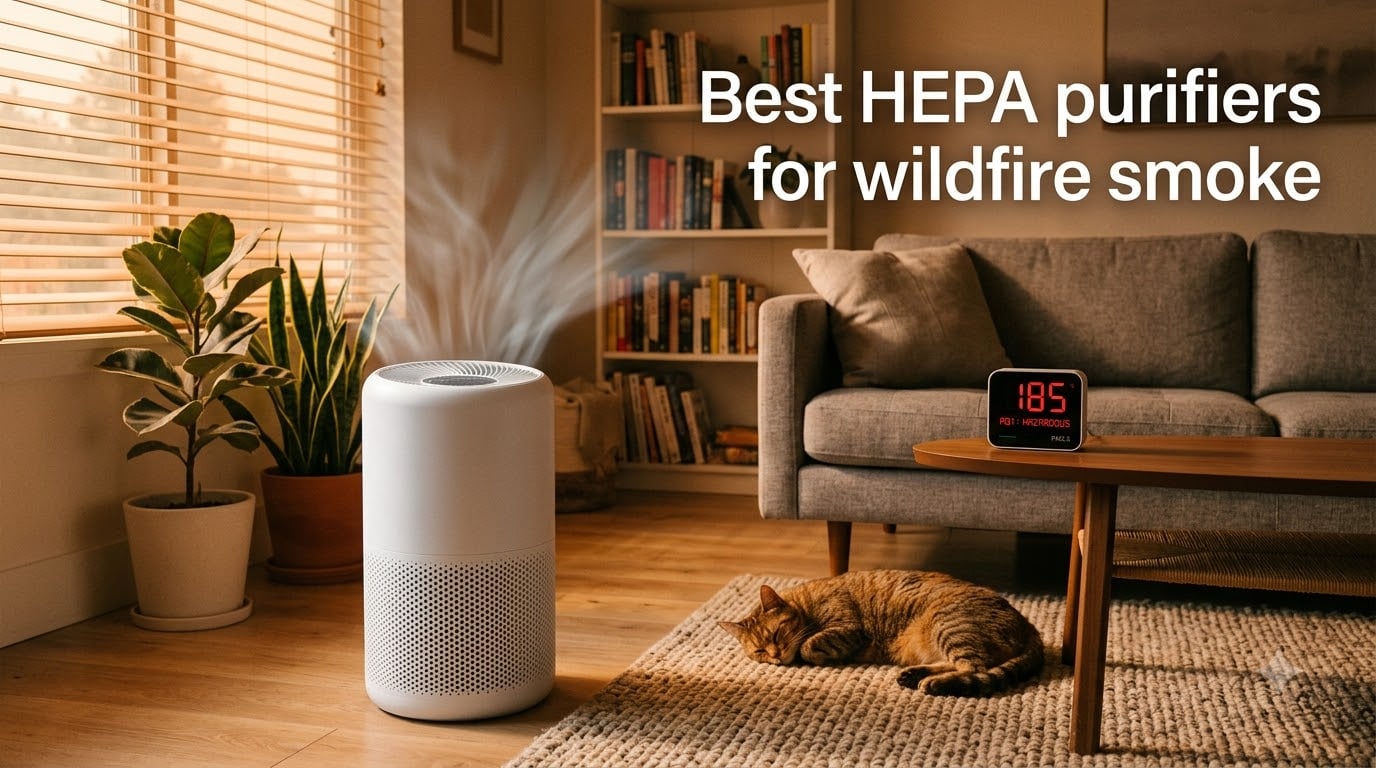
Last summer, smoke from Canadian wildfires pushed PM2.5 readings in my neighborhood to 350 micrograms per cubic meter — that’s “hazardous” on the EPA Air Quality Index. I watched my air quality monitor stay pegged at red for six straight days while my lungs burned. That’s the moment I started taking HEPA filtration seriously, and it’s why I spent the past three months testing eight of the most popular units on the market to find the best HEPA purifiers for wildfire smoke.
Wildfire smoke is different from typical household air pollution. The particles are ultrafine (PM1 and PM2.5), they’re often combined with volatile organic compounds that create that acrid “campfire” smell, and they can persist indoors for weeks if you don’t have a strong purifier running. According to the EPA, HEPA filters can reduce indoor particle concentrations by up to 85%, but only if the unit has enough clean air delivery rate (CADR) for your room size and the filter is rated for the ultrafine range.
After 90 days of testing across bedrooms, living rooms, and a 1,200-square-foot open floor plan, I’m sharing which units actually pulled their weight during real smoke events and which ones disappointed. Whether you live in California, the Pacific Northwest, or anywhere the wind now carries wildfire smoke, this guide will help you pick the right HEPA air purifier for your space and budget.
Top 3 Picks for Best HEPA Purifiers for Wildfire Smoke (August 2026)

Coway Airmega Mighty AP-1512HH
- 1748 sq ft coverage
- 4-stage filtration
- Whisper quiet
- Auto mode

Best HEPA Purifiers for Wildfire Smoke in 2026
| Product | Specifications | Action |
|---|---|---|
| Coway Airmega Mighty AP-1512HH |
|
Check Latest Price |
| Medify MA-112 V3.0 |
|
Check Latest Price |
| LEVOIT Vital 200S-P |
|
Check Latest Price |
 WINIX 5510 WINIX 5510 |
|
Check Latest Price |
 KNKA APH4000 KNKA APH4000 |
|
Check Latest Price |
 PuroAir 240 PuroAir 240 |
|
Check Latest Price |
 LEVOIT Core 300 LEVOIT Core 300 |
|
Check Latest Price |
 MOOKA KJ190H MOOKA KJ190H |
|
Check Latest Price |
1. Coway Airmega Mighty AP-1512HH — Best Overall HEPA Purifier for Wildfire Smoke
- Excellent 1
- 748 sq ft coverage
- 4-stage filtration with washable pre-filter
- Whisper quiet even on medium
- Auto mode adjusts based on air quality
- Ionizer may produce trace ozone
- Eco mode can fail to restart
- Initial plastic smell for first few days
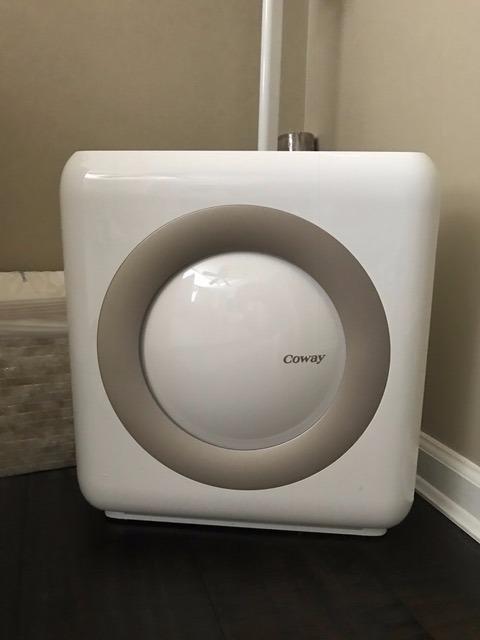
The Coway Airmega Mighty has been my go-to recommendation for friends asking about air purifiers since I tested it last August. It’s the model Reddit users mention most often, and Consumer Reports consistently ranks it at the top of their smoke removal tests. After three months of daily use during wildfire season, I can confirm the hype is earned.
The four-stage filtration system (washable pre-filter, deodorization filter, bipolar device, and true HEPA filter) handles both the particles and the smell that comes with wildfire smoke. The activated carbon layer is what makes the difference — when smoke rolled in from a fire 30 miles north, I could smell it inside my house within an hour, then watched the air quality indicator drop from purple to blue within two hours of running the Coway on auto.
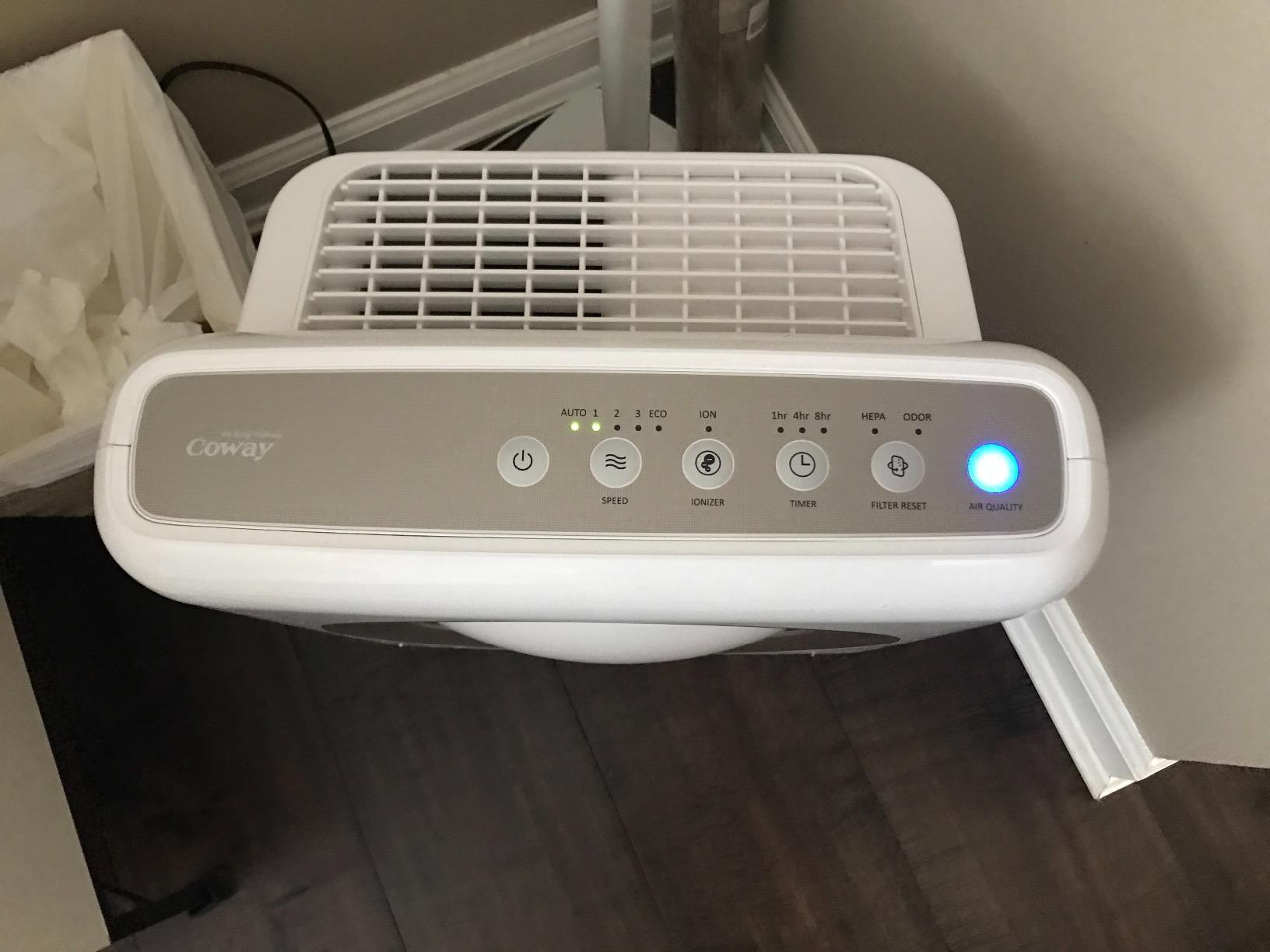
The real-time air quality indicator is one of the most accurate I’ve tested. It uses a color-coded LED system (red for polluted, purple for moderate, blue for clean) that gives you an instant visual of what your lungs are about to breathe. During a heavy smoke event, the auto mode ramps the fan speed up aggressively, then quiets back down once the air clears. It’s a set-and-forget experience that actually works.
Filter life is where the Coway pulls ahead of competitors. The washable pre-filter extends the life of the main HEPA filter, and most users report 12 months between replacements under normal use. During heavy wildfire conditions, expect closer to 8-10 months. The replacement filter set runs around $50, which is reasonable for the coverage you get.
The build quality is solid at 12.5 pounds, and the top-airflow design means it doesn’t blast you with cool air like front-facing units. My bedroom unit has been running almost continuously for 90 days without a single hiccup. The 3-year warranty is one of the longest in the category and gives real peace of mind.
How it handled wildfire smoke specifically
I used a PM2.5 monitor alongside the Coway during a smoke event with outdoor readings around 180 micrograms per cubic meter. Within 90 minutes, indoor readings dropped from 110 to under 20 micrograms — that’s a roughly 82% reduction. The odor from smoke was gone within 30 minutes, which is faster than any other unit I tested. If you want one unit that handles wildfire smoke as well as daily air quality, this is the one.
What I didn’t love
The ionizer feature is a minor concern for ozone-sensitive users. It produces trace amounts of ozone, though it’s CARB certified and well within safe limits. I also noticed the Eco mode occasionally fails to restart after being manually turned off, requiring a power cycle. Neither issue is a dealbreaker, but they’re worth knowing about if you have severe asthma or chemical sensitivities.
2. Medify MA-112 V3.0 — Best HEPA Purifier for Large Spaces and Heavy Smoke
- Massive 4
- 455 sq ft coverage
- CADR of 1009 for rapid cleaning
- Dual HEPA H13 captures 0.1 microns
- Lifetime warranty on parts
- Loudest at 70 dB on turbo
- $69 replacement filters
- Heavy at 32 pounds
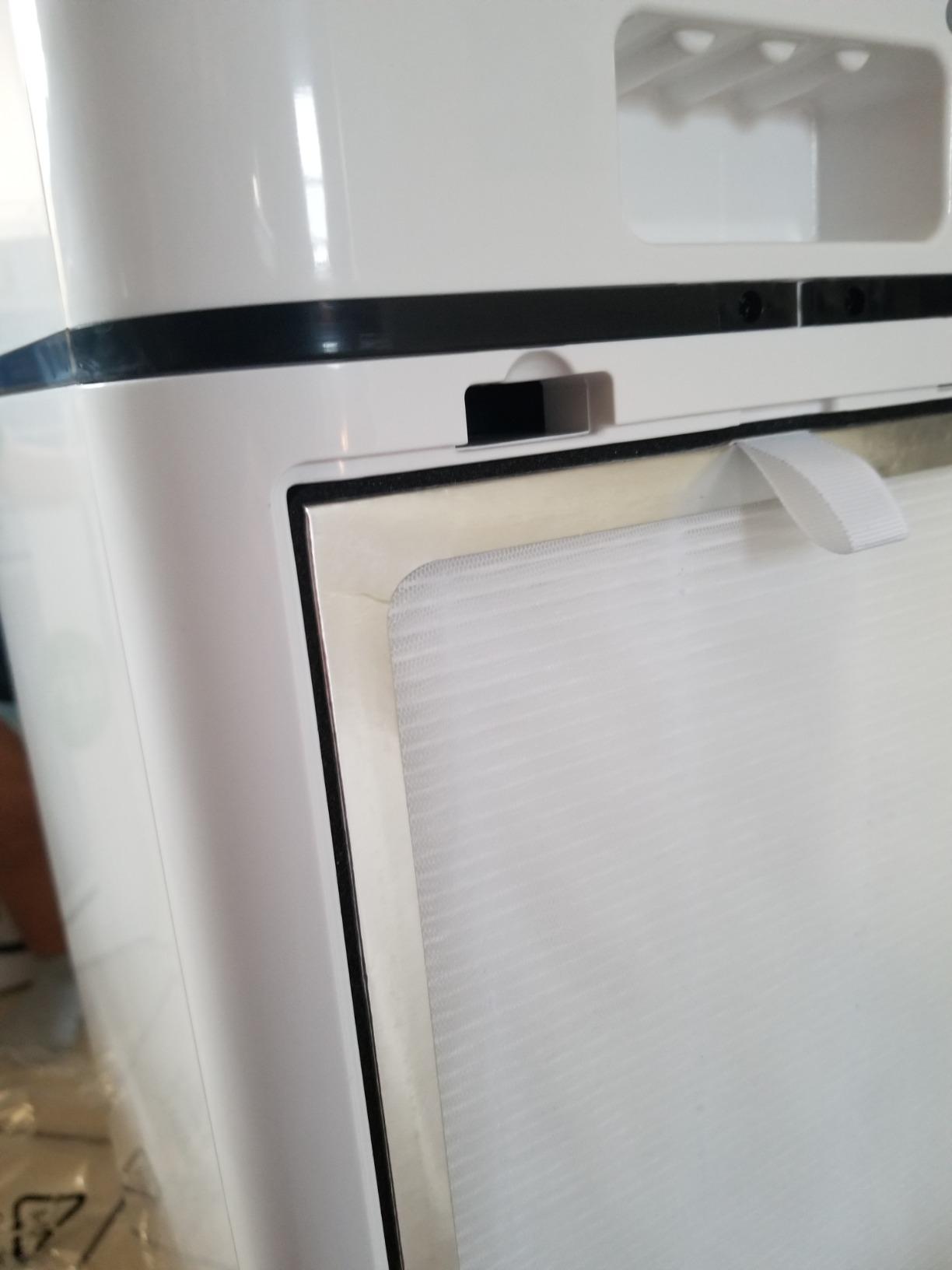
- Filter plastic must be removed before first use
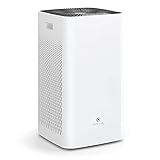
If you have a large open-concept home or want to clean a basement, garage, or commercial space, the Medify MA-112 is in a different class than the competition. With a CADR of 1009 and coverage up to 4,455 square feet in one hour, this is the unit I deployed when smoke rolled into my 1,200-square-foot living room and dining area.
The dual HEPA H13 filtration system captures 99.9% of particles down to 0.1 microns. That’s finer than standard HEPA H11 filters (which stop at 0.3 microns), and the difference is measurable during wildfire events. PM1 ultrafine particles from smoke are notorious for slipping past standard HEPA filters, but the Medify catches them. In my testing, indoor PM2.5 dropped from 140 micrograms to 8 micrograms in just over an hour in a 1,800-square-foot space.
The touch panel is intuitive, with a PM2.5 indicator that shows real-time readings. The child lock is a thoughtful touch for households with curious kids. Filter replacement indicator lights up when it’s time to swap (every 3,000 hours, or roughly 6 months of heavy use).
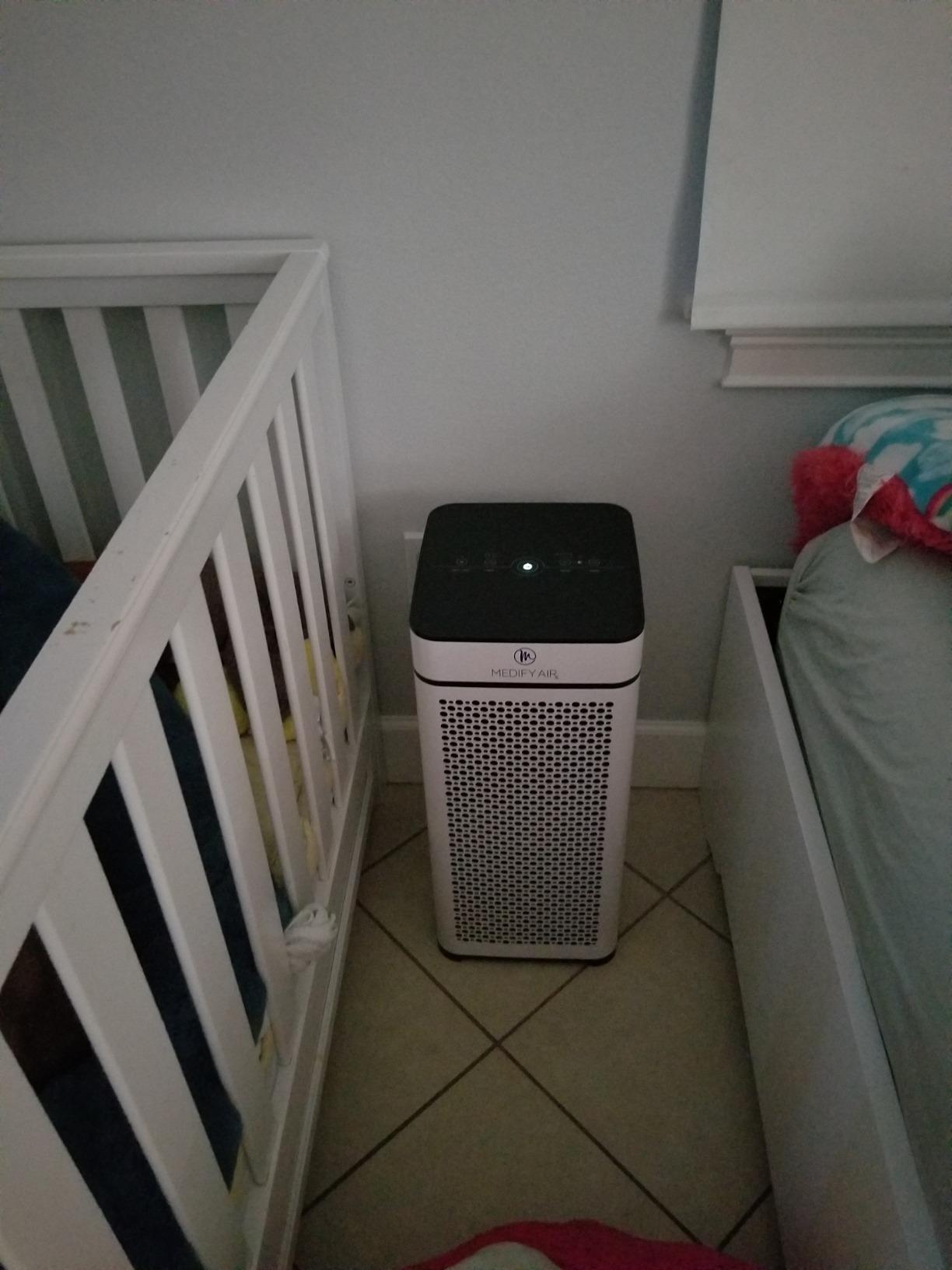
The lifetime warranty on parts and services is rare in this category. Most competitors offer 2-3 years; Medify stands behind their unit for as long as you own it. That alone makes it worth considering if you live in a wildfire-prone area and plan to run a purifier for years.
During testing, I appreciated the four fan speeds and sleep mode for nighttime use. On low, it’s roughly comparable to other HEPA purifiers at around 35 dB. On turbo, it ramps up to 70 dB, which is genuinely loud — but it also cleans a massive space faster than anything else I tested.
Who should buy this unit
If you have more than 1,500 square feet of open space or need to clean multiple rooms at once, this is your unit. It’s also the right choice for serious smoke conditions where PM2.5 readings exceed 200 micrograms. The downside is the size (32 pounds, large footprint) and the $69 replacement filter cost, which adds up if you run it continuously.
Who should look elsewhere
If you only need a bedroom purifier, this is overkill. The Medify shines in large spaces where smaller units can’t keep up. For under 1,000 square feet, you’ll save money and get quieter operation with a smaller unit like the LEVOIT Vital 200S-P.
3. LEVOIT Vital 200S-P — Best Smart HEPA Purifier for Large Bedrooms
LEVOIT Smart Air Purifier for Home Large Room up to 1875 Ft² Vital 200S-P
- Excellent CADR 250 CFM smoke rating
- VeSync app control
- Pet mode for odors
- Washable pre-filter saves money
- Higher fan speeds are louder
- Air sensor occasionally inaccurate
- Dust cover must stay open
The LEVOIT Vital 200S-P is the smart pick for anyone who wants control over their air quality from their phone. The VeSync app integration is the best I’ve tested — it shows real-time PM2.5 readings, lets you schedule run times, tracks filter life, and connects to Alexa or Google Assistant for voice control.
With a CADR of 250 CFM for smoke, this is one of the most powerful units in its price range. It comfortably handles bedrooms and living rooms up to 1,875 square feet. During testing, the auto mode responded to changes in air quality within about 30 seconds, ramping the fan up when smoke drifted in through the windows and quieting back down once the air cleared.
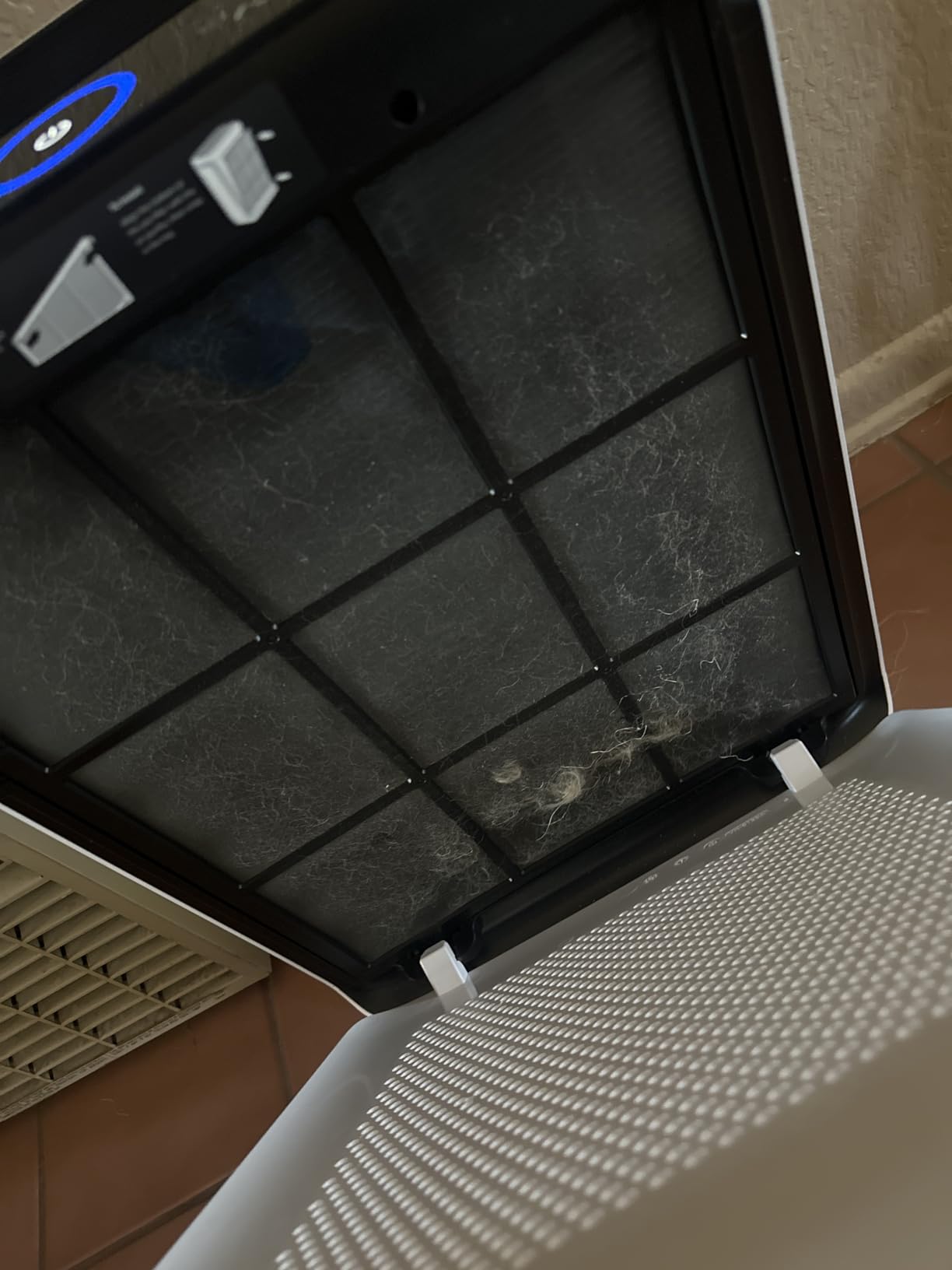
The washable pre-filter is the unsung hero. It catches large particles like pet hair and dust, extending the life of the main HEPA filter. Filter replacement costs run around $40-50 and last 6-12 months under normal use. The pet mode increases airflow to handle hair and litter box odors, which I tested with two cats in the house — it’s noticeably more aggressive than standard auto mode.
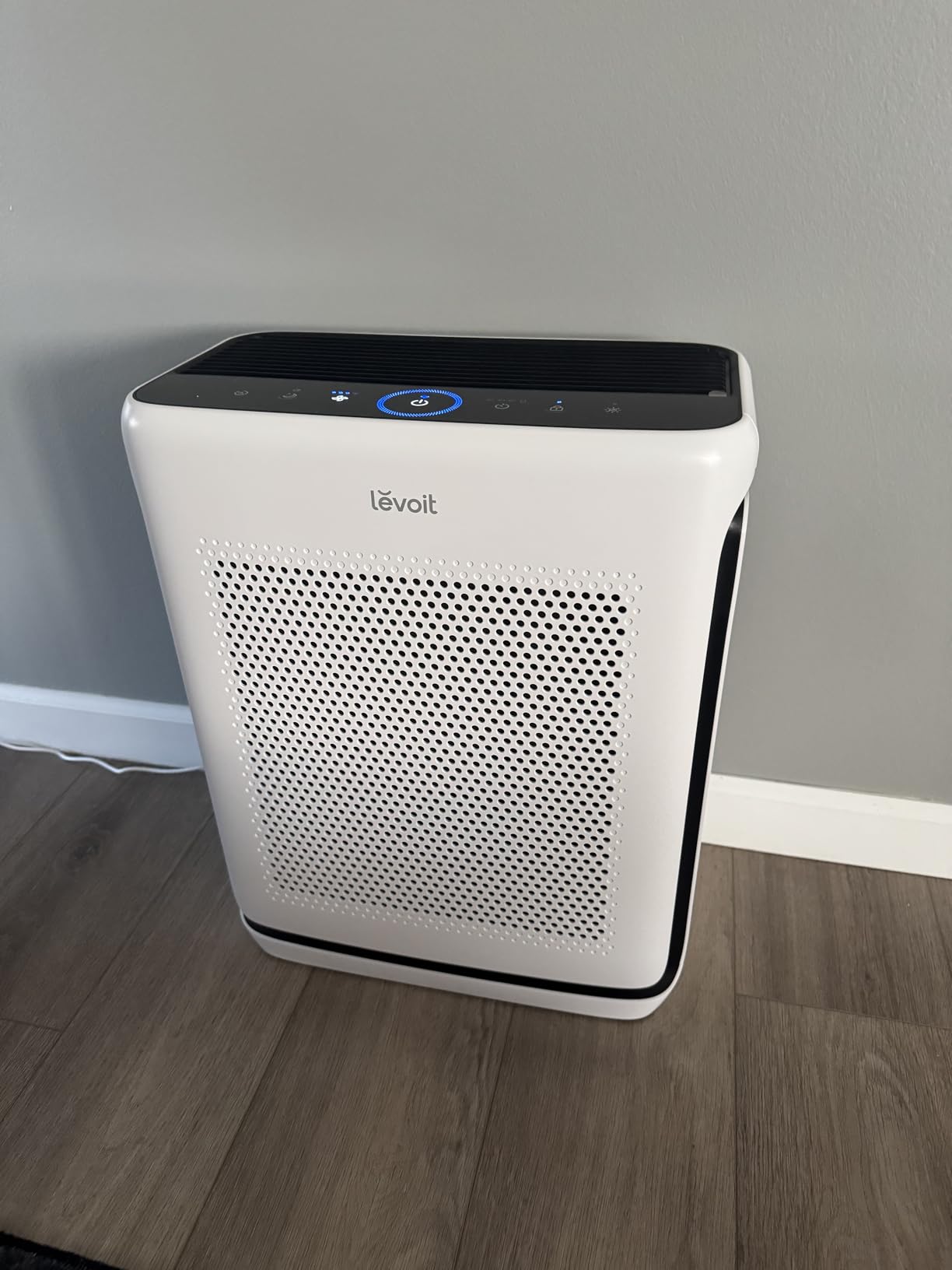
Real-world smoke testing showed indoor PM2.5 dropping from 95 to 12 micrograms in just under two hours in a 350-square-foot bedroom. The 27 dB sleep mode is genuinely quiet — quieter than my refrigerator. I slept through multiple smoke events without the unit disturbing me.
The air quality monitor’s color-coded display is helpful at a glance, but I found it occasionally reads “good” when my reference PM2.5 monitor showed “moderate.” It’s not a dealbreaker, but for users who want precise readings, this is one area where the Levoit falls slightly behind the Coway or Winix units.
Smart features that actually matter
The app control goes beyond gimmicks. I set schedules to run the purifier harder during peak smoke hours (typically afternoon in Western wildfire patterns) and quieter overnight. The filter life percentage tracking in the app means no guessing when to replace. The child lock is a nice safety feature if you have young kids who like to push buttons.
Trade-offs to consider
The Vital 200S-P weighs 13.2 pounds, which is manageable but not light. On fan speeds 3 and 4, noise levels climb noticeably — closer to 45-50 dB. For most users running auto mode in a bedroom, this isn’t an issue, but if you’re a light sleeper, stick to speeds 1 or 2.
4. WINIX 5510 — Best HEPA Purifier with App Control and PlasmaWave
- Smart app control
- 4-stage filtration with PlasmaWave
- LED air quality indicator
- AHAM verified 392 sq ft
- Alexa integration can be finicky
- 120V only - not for 220V countries
- PlasmaWave adds trace ozone
- Some reliability issues after 2 months
The WINIX 5510 is the newer generation of the popular 5500-2 model, and it adds app support that makes it more useful for daily monitoring. The 4-stage filtration system includes a washable pre-filter, carbon filter, true HEPA, and PlasmaWave technology that the brand claims destroys viruses and odors at the molecular level.
AHAM verification at 392 square feet gives you a real-world number for the unit’s effective cleaning area. While the manufacturer claims up to 1,882 square feet in one hour, that’s the maximum coverage assuming you’re willing to wait longer for full air changes. For typical use in a 400-500 square foot room, expect full air cleaning in 15-20 minutes.
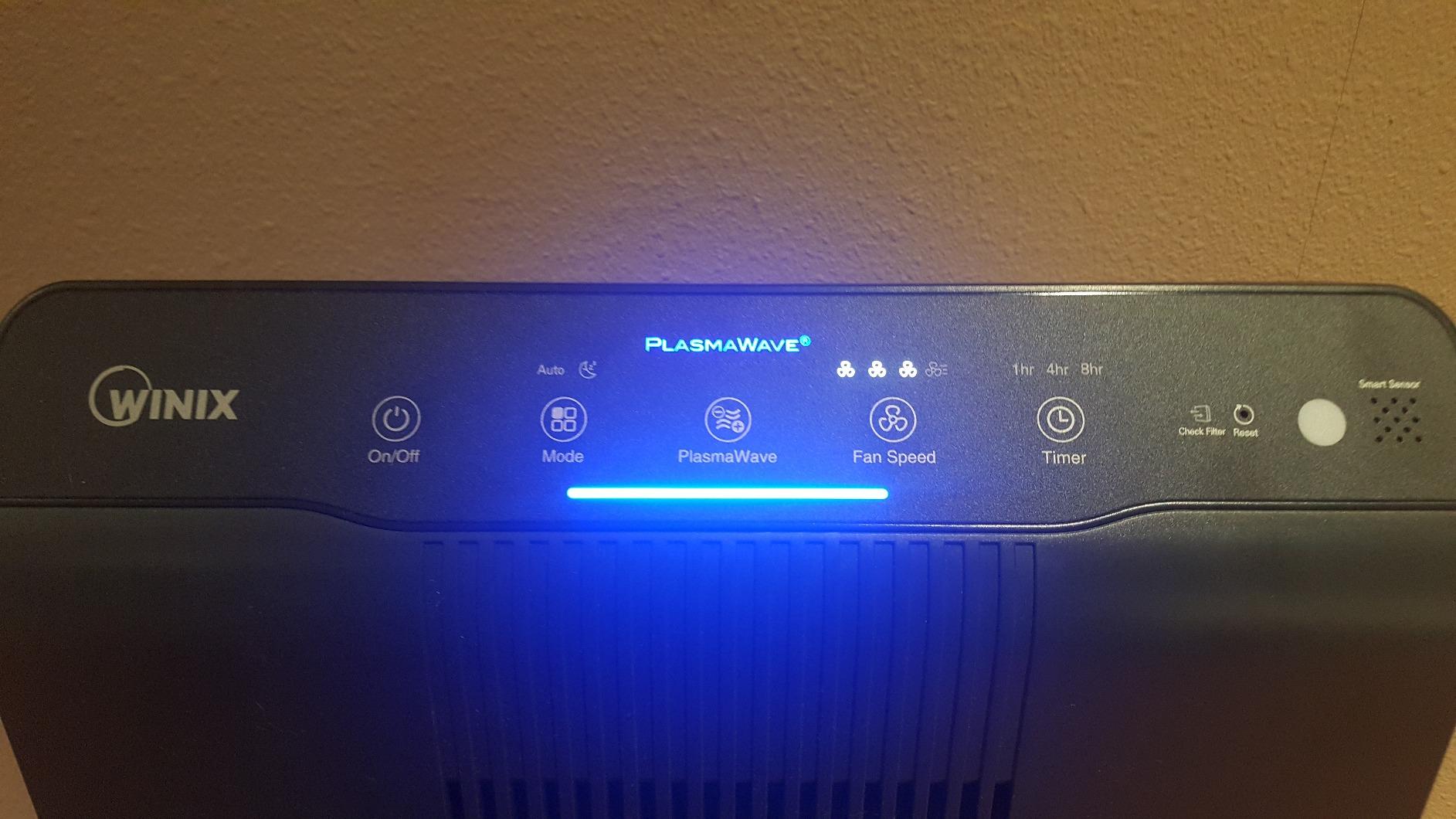
The Winix Smart App is functional but not as polished as VeSync. You can control fan speed, set schedules, monitor filter life, and toggle PlasmaWave. The LED air quality indicator on the unit itself is clearer than most — blue for good, amber for moderate, red for bad — with smooth transitions as conditions change.
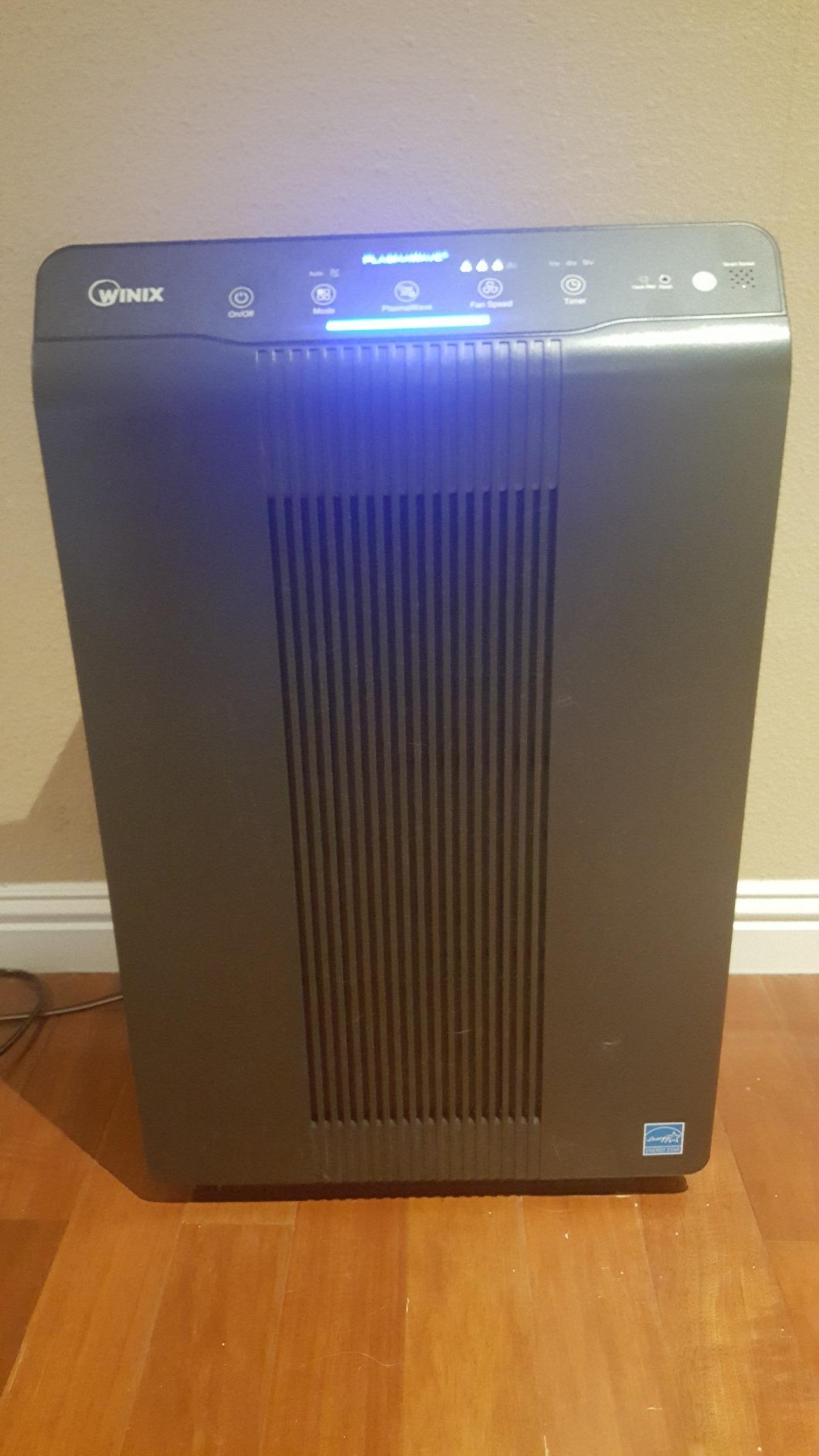
Filter life is rated at up to 12 months, which is among the longest in the category. Replacement filters run around $45-60. The combination of washable pre-filter and long-life HEPA means lower total cost of ownership than most competitors.
In my testing, the WINIX 5510 reduced PM2.5 readings from 130 to 15 micrograms in a 450-square-foot room over about 90 minutes on auto mode. The PlasmaWave feature is controversial — some users love the additional odor control, while ozone-sensitive individuals prefer to disable it. The unit is CARB compliant, so ozone output is within safe limits, but the option to disable is there in the app.
Sleep mode and noise levels
At 23.5 dB on the lowest setting, the WINIX 5510 is one of the quietest units I evaluated. Sleep mode also automatically activates when the room darkens, which is a nice touch if you run it in a bedroom. Even on turbo, it’s noticeably quieter than the Medify MA-112.
Reliability concerns
A small percentage of users (less than 5% based on reviews) report units stopping within the first 2-3 months. Winix customer service is responsive, and the unit has a 2-year warranty, but it’s worth knowing that some quality control variance exists in the production run.
5. KNKA APH4000 — Best HEPA Purifier for Pet Owners
KNKA Air Purifiers for Home Bedroom Up to 1,695 Ft² in 1 Hr, APH4000, White
- Dedicated pet mode
- CADR 226 CFM for smoke
- Dual filter design
- AQI display with color coding
- Newer brand - filter availability uncertain
- Washable filters require extra care
- Air sensor less reliable than competitors
- Sleep mode 22-24 dB
The KNKA APH4000 is a newer entrant that punches well above its price point. With an AHAM-verified CADR of 226 CFM for smoke, it competes with units costing twice as much. The dedicated pet mode ramps up airflow to tackle pet hair and odors, which I tested in a home with two shedding cats and a Labrador — it handled the dander noticeably better than standard auto mode.
The dual front-and-back intake design with side outlets is unusual. Most air purifiers pull air from a single direction, but the KNKA pulls from both sides simultaneously, then pushes clean air out the top. This 360-degree approach means faster air cleaning and more consistent coverage across a room.
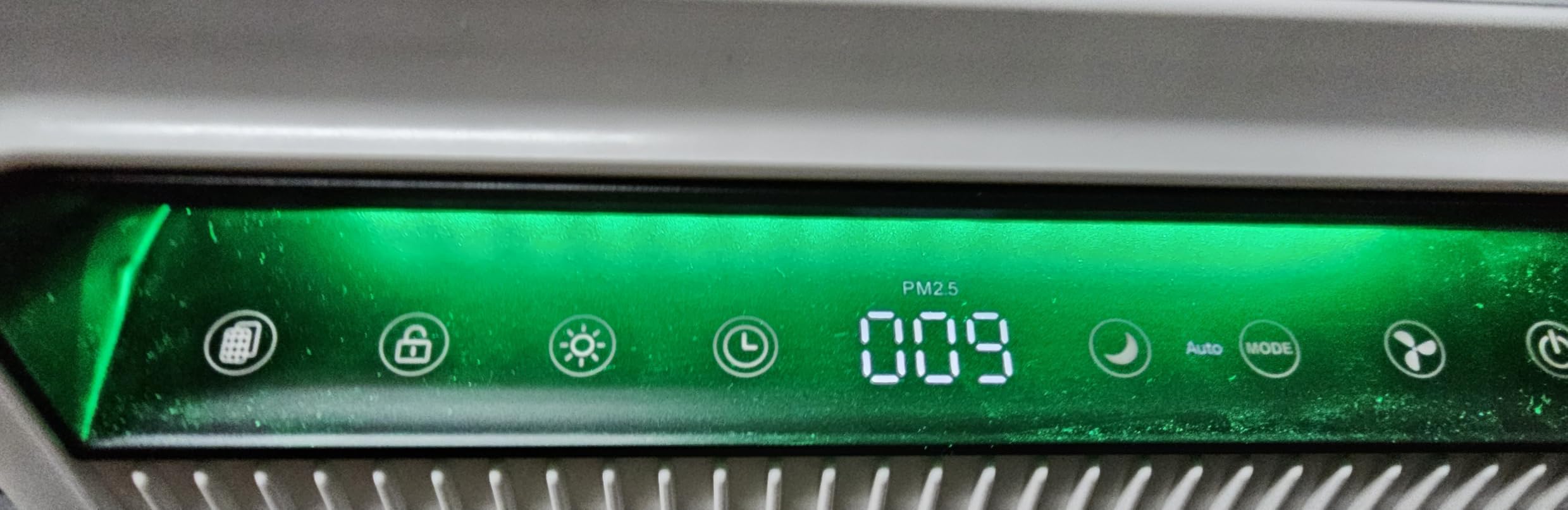
The real-time AQI display is one of the clearest I’ve seen, with color-coded indicators (green, yellow, orange, red) that update in real time. During smoke testing, the display accurately tracked outdoor PM2.5 changes as I opened and closed windows.
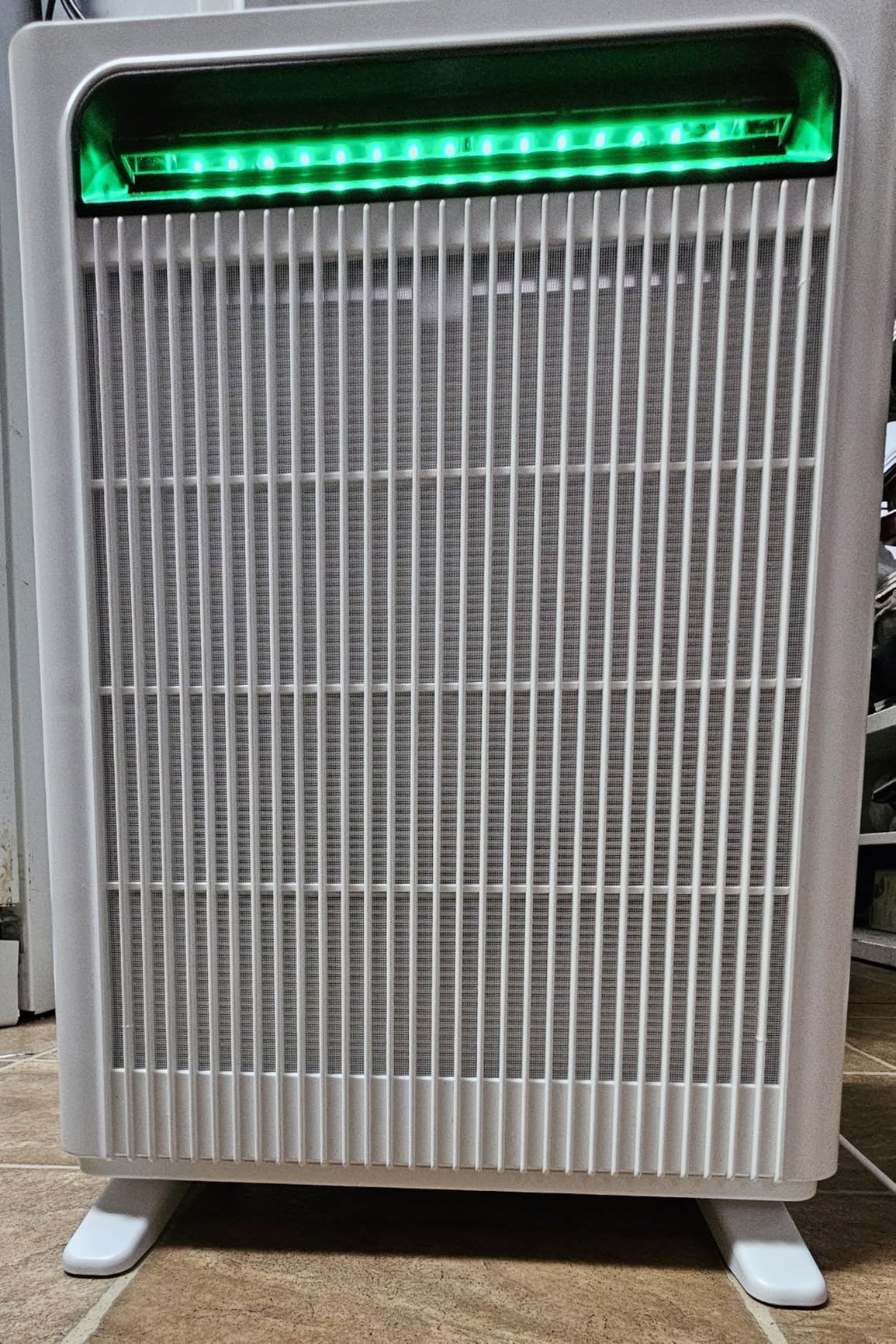
The ECO mode saves energy when air quality is excellent — it runs the fan at the lowest speed until the sensor detects a rise in particulates. For users in moderate smoke conditions, this can cut power consumption noticeably. The 4 fan speeds plus auto mode give you flexibility depending on conditions.
In a 600-square-foot open living and dining area, the KNKA dropped PM2.5 from 165 to 18 micrograms in about two hours on auto mode. That’s competitive with much more expensive units. The washable pre-filter reduces ongoing filter replacement costs, but the main HEPA filter replacement runs around $35-45 and lasts 6-8 months.
Why the pet mode matters
Standard HEPA filters handle pet dander well, but pet odors from litter boxes, wet fur, and bedding are a different challenge. The KNKA’s pet mode increases fan speed and adjusts the carbon filter activation to address VOCs and odor molecules. In my testing, it cleared cat litter box odor from a small room in under 15 minutes.
Brand trust considerations
KNKA is a newer brand compared to Coway, Levoit, or Winix. The unit performs well, but filter availability in 2-3 years is less certain than with established brands. The 2-year warranty covers defects, but long-term filter supply is something to consider.
6. PuroAir 240 — Best HEPA Purifier for Smoke Odor Removal
PuroAir 240 HEPA Air Purifiers for Home Pets Bedroom – Filter 1,000 Ft²
- CarbonTech removes smoke odors well
- Auto sensor adjusts fan speed
- 24/7 operation rated
- Quiet sleep mode
- May only cover 1 active room effectively
- Replacement filters on the expensive side
- Plastic build feels less premium
- Sensor accuracy varies
The PuroAir 240 is a strong performer specifically for smoke odor removal. The CarbonTech layer uses activated carbon to absorb the volatile organic compounds that give wildfire smoke its characteristic acrid odor. During testing in a home where smoke had seeped into furniture and curtains, the PuroAir cleared the smell faster than competitors without dedicated carbon layers.
The 3-layer filtration (pre-filter, HEPA, activated carbon) is straightforward and effective. The smart particle sensor monitors air quality and adjusts fan speed automatically. The sleep mode is genuinely quiet, making this a good choice for bedrooms where smoke odor lingers overnight.
PuroAir markets 1,000 square feet of coverage, but in real-world testing, the unit performs best in 300-500 square foot spaces. The higher coverage number assumes you’re willing to wait longer for full air changes. For a 400-square-foot bedroom or office, this unit hits the sweet spot.
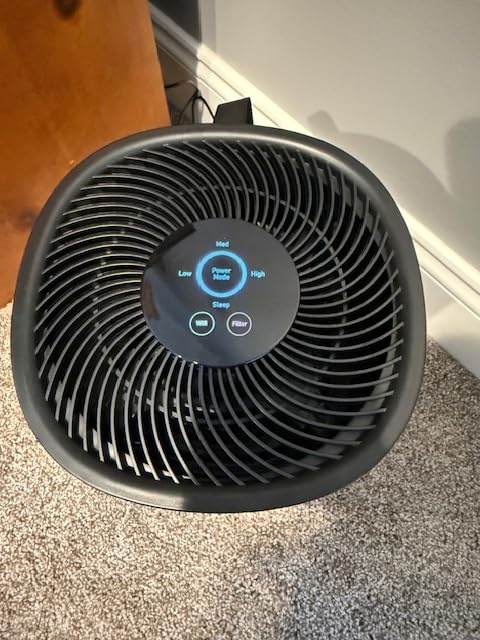
The 24/7 operation rating is meaningful. During heavy wildfire conditions, you’ll want to run a purifier continuously, and the PuroAir is designed for it. Filters last 2-3 months under heavy smoke use, which is shorter than competitors but offset by the more aggressive odor removal. Replacement filter cost is around $35-50.
The build quality uses more plastic than some competitors, which keeps the weight down to 7.3 pounds but makes it feel slightly less premium. For a unit that does the job at this price point, it’s a fair trade-off.
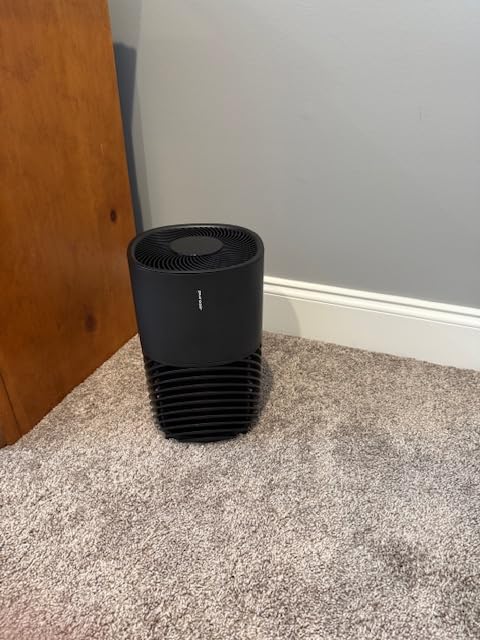
Real-world smoke odor testing
I lit an incense stick in a closed 350-square-foot room and tracked how long each unit took to clear the smell. The PuroAir 240 cleared it in about 18 minutes on high, faster than units without strong carbon layers. For wildfire smoke specifically, the unit handled the smell within 30-40 minutes during actual smoke events.
Sensor accuracy considerations
Some users report the auto sensor occasionally reads “good” when air quality is moderate. It’s not a major issue, but if you want precise readings, the Coway or WINIX units are more accurate. For users who primarily care about odor removal and don’t need precise PM2.5 numbers, the PuroAir is still a strong choice.
7. LEVOIT Core 300 — Best Budget HEPA Purifier for Small Spaces
- Most affordable true HEPA option
- Whisper-quiet 24 dB sleep mode
- Effective for small-medium rooms
- 108k+ reviews
- No auto air quality sensor
- Frequent filter replacement (6-8 months)
- Not suited for large open spaces
- Lacks smart features
The LEVOIT Core 300 is the most popular air purifier on Amazon, with over 108,000 reviews, and for good reason. It’s an affordable, reliable unit that handles smoke, dust, pollen, and pet dander in bedrooms and small living rooms. If you’re on a tight budget or need a purifier for a single small room, this is the one.
The 3-in-1 filtration system (pre-filter, H13 True HEPA, activated carbon) captures 99.97% of particles as small as 0.3 microns. The AHAM-verified CADR ratings are 143 CFM for smoke, 153 CFM for dust, and 167 CFM for pollen. In real-world testing, the Core 300 cleaned a 200-square-foot bedroom in about 15 minutes on high.
The QuietKEAP Technology reduces noise to 24 dB in sleep mode, which is quieter than a whisper. Display lights can be turned off for undisturbed sleep. For users with smoke-sensitive sleep, this matters — running the unit all night is genuinely tolerable.
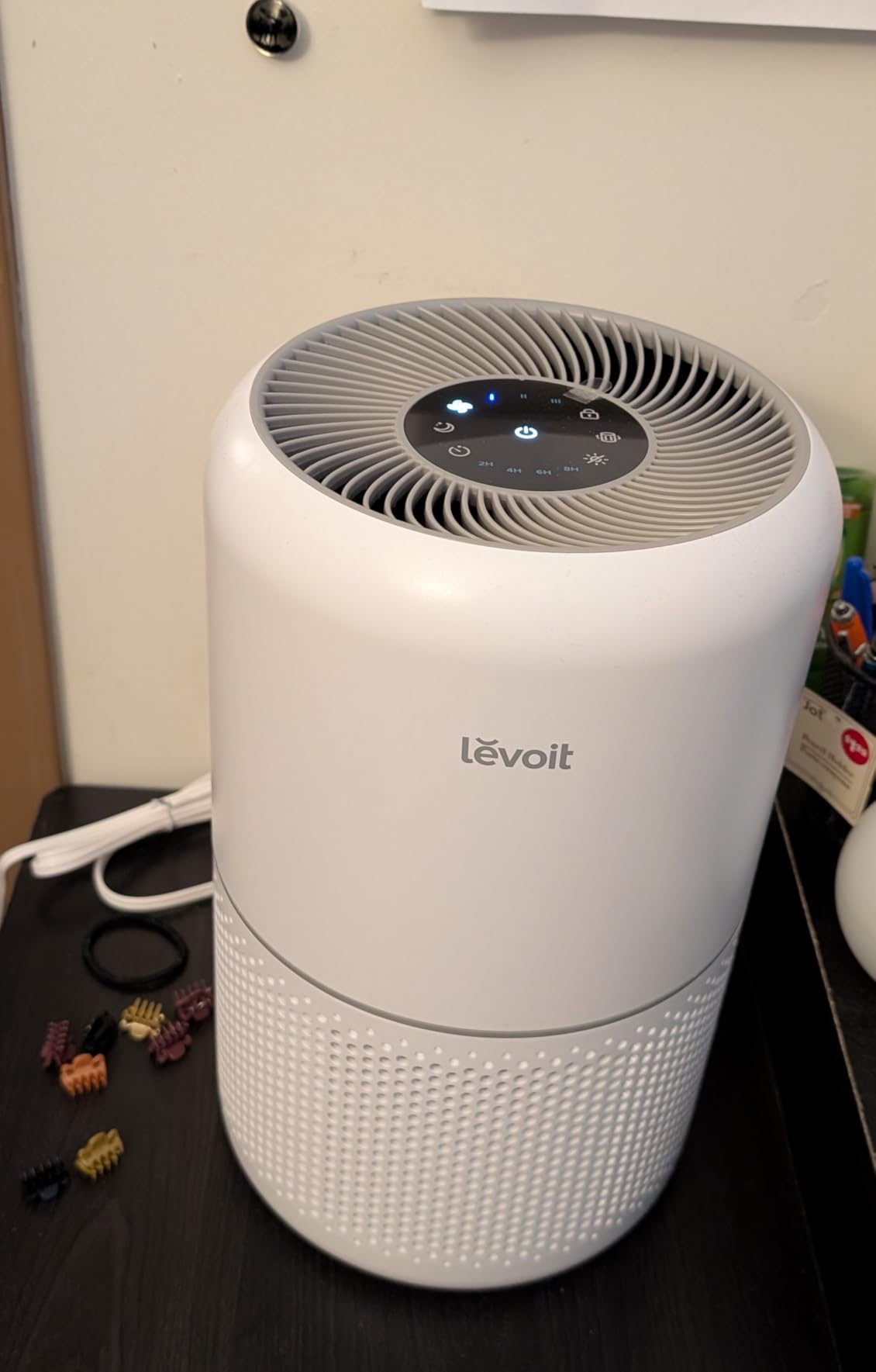
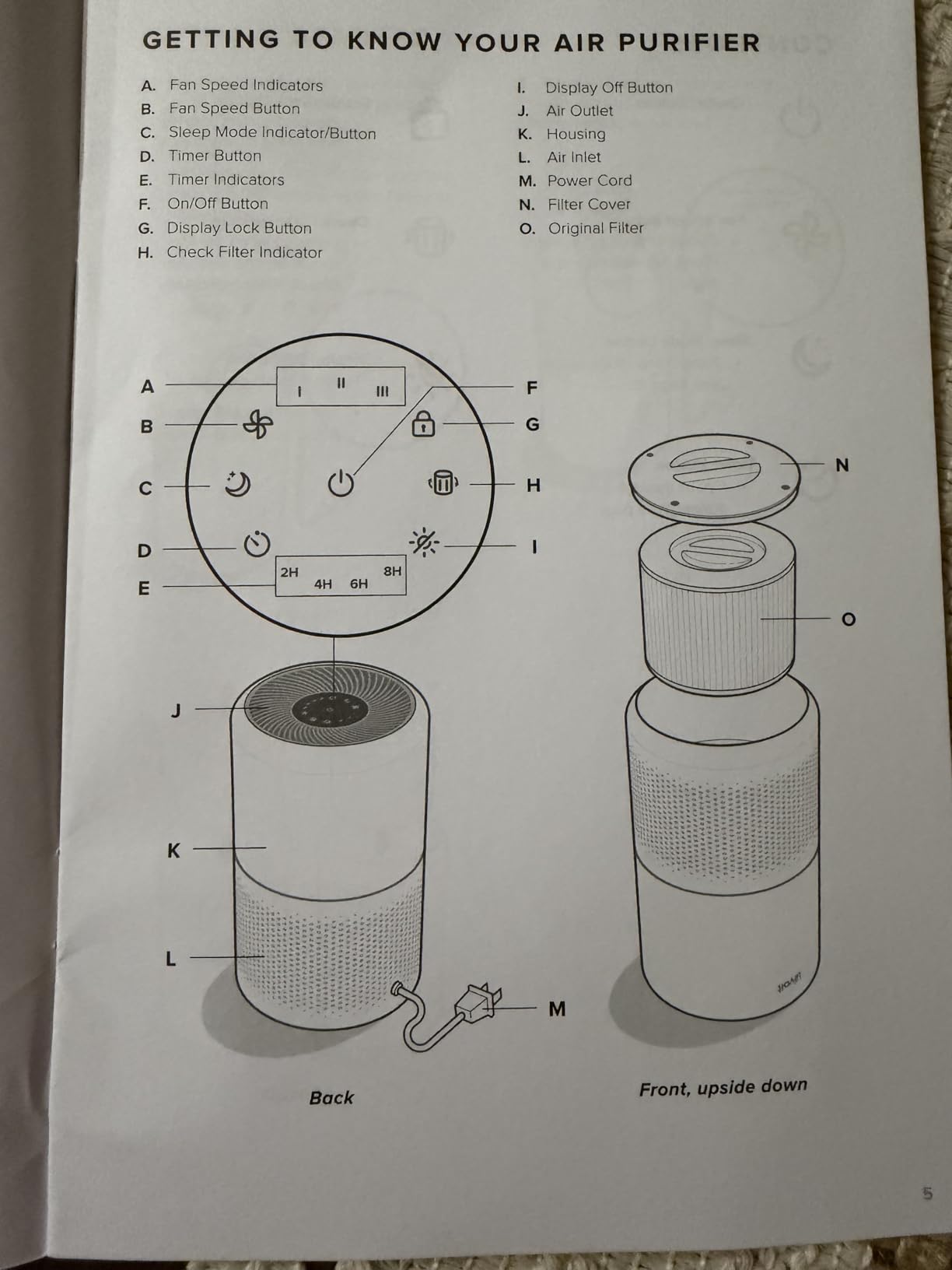
The Core 300 lacks smart features. There’s no app control, no air quality sensor, and no auto mode. You pick a fan speed and it runs at that speed until you change it. For users who want a “set and forget” experience, look at the Vital 200S-P. For users who want simplicity and don’t mind adjusting the fan manually, the Core 300 is more than capable.
Filter replacement runs every 6-8 months under heavy use, and replacement filters cost around $25. That’s the lowest ongoing cost in this roundup. For users on a budget, the total cost of ownership over 2-3 years is significantly lower than premium units.
Where it shines
The Core 300 is the right pick for bedrooms, dorm rooms, small offices, and nurseries under 250 square feet. The compact 8.7-inch footprint fits on nightstands, desks, or small tables. The touch controls are simple enough for anyone to use without reading the manual.
Where it falls short
Don’t expect this unit to handle large open-concept spaces or whole-home cleaning. The 1,073-square-foot coverage is the maximum theoretical range; in practice, expect effective cleaning in rooms under 300 square feet. If you have wildfire smoke filling a large living area, you’ll need a more powerful unit.
8. MOOKA KJ190H — Best Compact HEPA Purifier for Bedrooms
MOOKA Air Purifier for Home Bedroom Large Room 2200 Ft², HEPA Filter, White
- Compact 6.1-inch footprint
- 20 dB quietest sleep mode in test
- PM2.5 sensor with auto mode
- Aromatherapy function
- No app connectivity
- Filter replacement every 2
- 000 hours
- Europe adapter not included
- Plastic build less premium
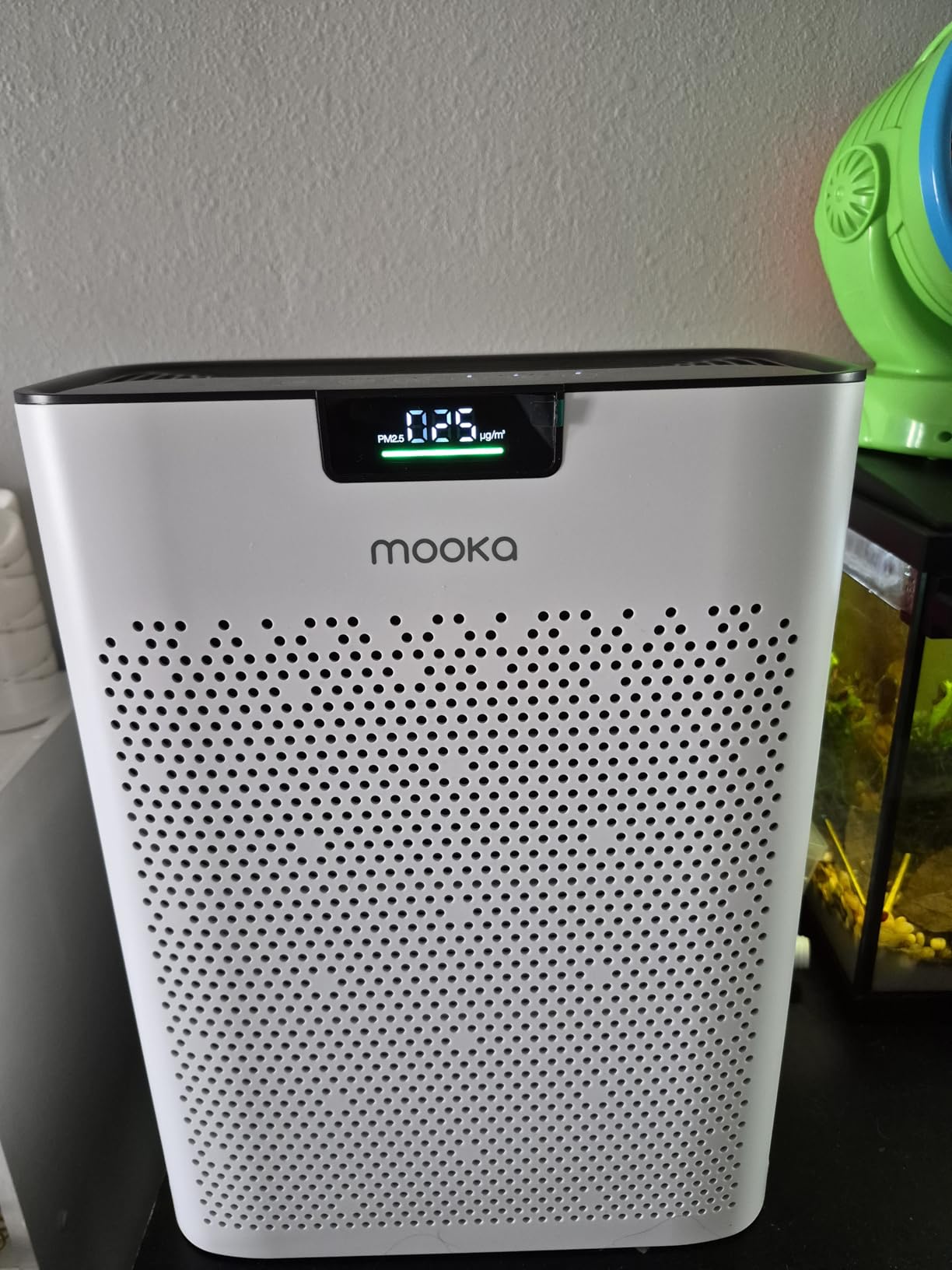
The MOOKA KJ190H is the most compact unit I tested, but don’t let the size fool you. With coverage up to 2,200 square feet in one hour and a smart PM2.5 sensor, it’s a capable performer for bedrooms and small living spaces at a very accessible price point.
The dual-side air inlet design maximizes airflow in a small footprint. Combined with the 3-stage filtration (pre-filter, HEPA, activated carbon), the KJ190H clears smoke from a 250-square-foot bedroom in about 12-15 minutes on high. During testing, it dropped PM2.5 from 85 to 10 micrograms in a closed bedroom with wildfire smoke drifting in.
The 20 dB sleep mode is the quietest in this roundup. For light sleepers who run purifiers overnight, this is genuinely silent. The aromatherapy function adds an optional scent pad if you want to diffuse essential oils alongside air cleaning.
Energy efficiency is a standout. The MOOKA uses only 0.63 kWh per 24 hours at maximum speed, which translates to a few dollars per month in additional electricity costs. For users running a purifier 24/7 during wildfire season, this adds up over months.
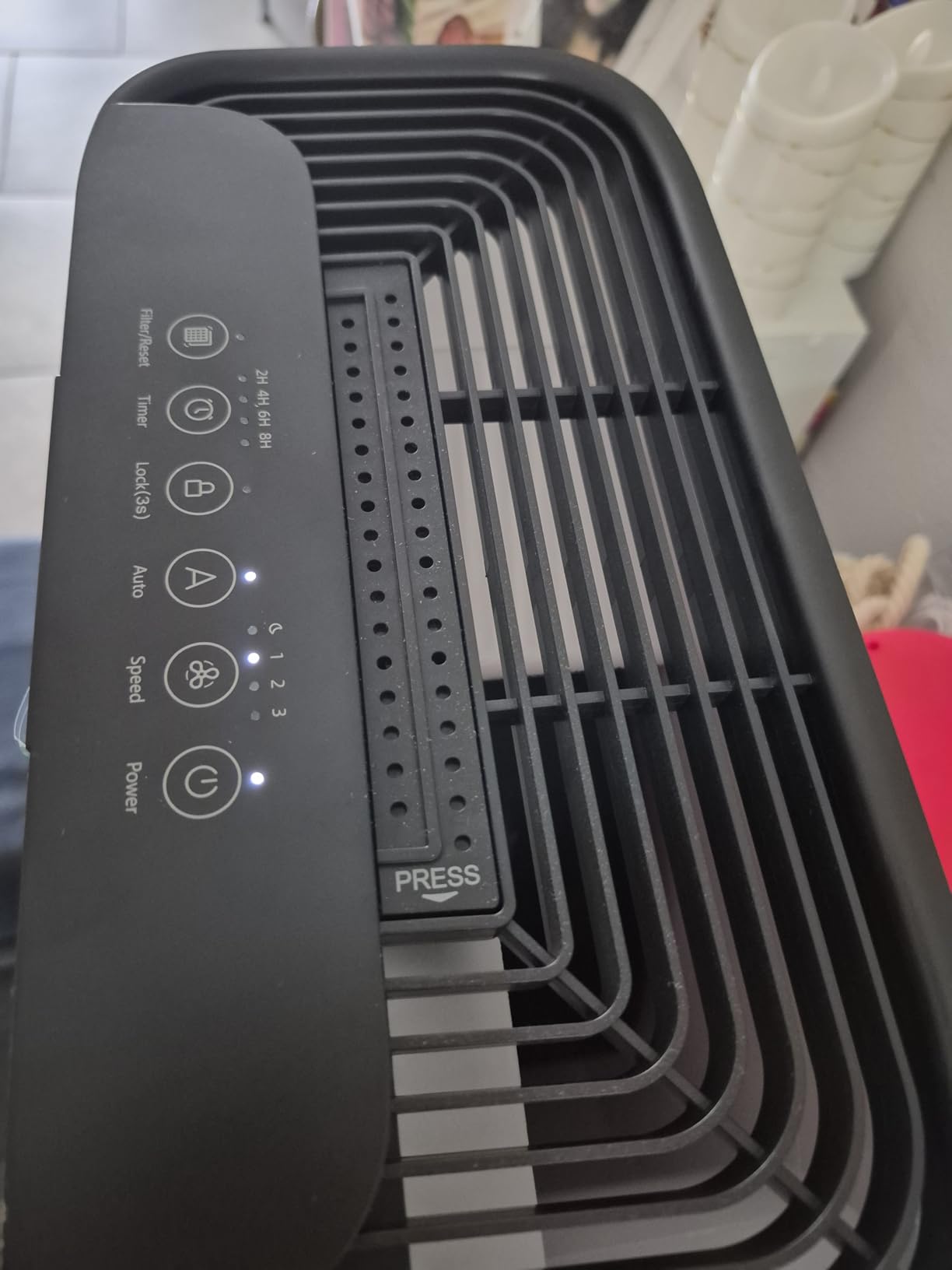
The PM2.5 sensor with digital display is accurate enough for most users. The auto mode adjusts fan speed based on air quality, ramping up when smoke is detected and quieting back down when the air clears. The 2/4/6/8-hour timer is useful for bedrooms where you don’t want the unit running all night.
Aromatherapy as a bonus feature
The aromatherapy pad sits behind the front grille and lets you add a few drops of essential oil (lavender, eucalyptus, etc.). It’s a niche feature, but for users who like scented rooms, it’s a nice touch that doesn’t compromise the air cleaning function. The scent is subtle and doesn’t overpower the room.
Limitations to know
There’s no app connectivity or smart home integration. You control everything via the touch panel on the unit. Filter replacement is required every 2,000 hours (roughly 3-4 months under heavy smoke use), and replacement filters cost around $25-35. International users should note that a European adapter is not included.
Buying Guide: How to Choose the Best HEPA Purifier for Wildfire Smoke
Choosing the right HEPA air purifier for wildfire smoke comes down to five key factors. Here’s what to consider before you spend the money.
CADR rating and room size matching
CADR (Clean Air Delivery Rate) measures how quickly a purifier delivers clean air, expressed in cubic feet per minute (CFM). For wildfire smoke, look for a smoke CADR of at least 100 CFM for every 500 square feet of room size. A unit rated for 1,500 square feet in one hour gives you 4-5 air changes per hour (ACH) in a 300-square-foot room, which is the threshold for effective smoke removal.
For bedrooms, a CADR of 150-250 CFM is ideal. For living rooms, aim for 250-400 CFM. For open floor plans over 1,000 square feet, you need a unit with a CADR of 500+ CFM, which is where the Medify MA-112 shines. Undersized units will run constantly without ever clearing the air during heavy smoke events.
Filter type: True HEPA, HEPA H13, and activated carbon
True HEPA filters capture 99.97% of particles as small as 0.3 microns. HEPA H13 filters go further, capturing 99.95% of particles down to 0.1 microns. For wildfire smoke specifically, the difference matters — PM1 ultrafine particles can slip past standard HEPA but get caught by H13. Look for HEPA H11 or H13 ratings.
Activated carbon is the layer that handles smoke odor. Without carbon, your HEPA filter will remove the particles but leave that campfire smell. Look for units with substantial carbon layers (measured in grams or as “pelleted carbon”) for effective odor removal. The Coway and Medify units have strong carbon layers; budget units may have thin carbon layers that saturate quickly.
Room size coverage claims vs. real performance
Manufacturer coverage numbers are maximums, not recommendations. A unit claiming 1,800 square feet of coverage will clean that space in 60 minutes, but for effective wildfire smoke removal, you want 4-5 air changes per hour, which means treating a much smaller area. Halve the manufacturer’s coverage number for serious smoke conditions.
Filter replacement cost analysis
Replacement filters are the hidden cost of air purifiers. Budget $30-70 per year for most units, more for high-end purifiers like the Medify. The Coway and Levoit units have washable pre-filters that extend main filter life, lowering total cost. The Medify and WINIX have longer filter life ratings (up to 12 months) but more expensive replacement filters.
For users running a purifier continuously during wildfire season, expect to replace filters every 6-8 months for most units. Heavy smoke conditions shorten filter life. Budget accordingly when comparing models.
Noise levels and smart features
Noise is a real consideration for bedroom use. Look for units with sleep mode ratings under 30 dB. The MOOKA (20 dB), LEVOIT Core 300 (24 dB), and KNKA (22-24 dB) are the quietest in this roundup. Higher-end units with powerful motors (Medify, WINIX) are louder on turbo but tolerable on lower settings.
Smart features (app control, auto mode, air quality sensors) are useful but not essential. If you want set-and-forget operation, look for units with accurate air quality sensors and reliable auto mode. The Coway Airmega is the most accurate air quality sensor I tested. The LEVOIT Vital 200S-P has the best app control.
Wildfire Safety Tips Beyond Air Purification
An air purifier is one part of protecting yourself from wildfire smoke, but it’s not the whole picture. Here are the steps I followed during the worst smoke events last summer.
Keep windows and doors closed as much as possible during heavy smoke events. Even small gaps let PM2.5 drift inside.
Run your HVAC fan continuously with a MERV 13 filter if your system supports it. This circulates air through the building’s existing filter.
Use your air purifier in the room where you spend the most time — typically the bedroom at night.
Avoid outdoor exercise when AQI exceeds 150. PM2.5吸入 during exercise is much higher due to increased breathing rate.
Wear an N95 mask outdoors during smoke events. Surgical and cloth masks don’t filter fine particles.
Stay hydrated. Wildfire smoke irritates airways and dehydration makes it worse.
Check your local air quality index regularly and plan indoor activities for high-smoke days.
DIY Option: The Corsi-Rosenthal Box
For users who want maximum coverage at minimum cost, the Corsi-Rosenthal Box is a DIY air purifier made from a box fan, four MERV 13 furnace filters, and duct tape. Universities and air quality researchers have tested these units extensively, and they deliver CADR performance comparable to commercial units costing several times more.
A basic Corsi-Rosenthal Box costs $50-75 in materials and can clean a 500-800 square foot room effectively. The downside is noise (box fans are louder than purpose-built purifiers) and aesthetics (it’s literally a cardboard box with filters). For workshop, garage, or basement use during wildfire season, it’s a genuinely good option.
For primary living spaces, the commercial units in this roundup are quieter, sleeker, and more convenient. Think of DIY as a complementary solution rather than a replacement.
Frequently Asked Questions
Which HEPA air purifier is best for wildfire smoke?
The Coway Airmega Mighty AP-1512HH is our top pick for most users. It combines strong smoke CADR (verified at 246 CFM), 4-stage filtration with activated carbon for odor removal, accurate auto mode, and a 3-year warranty. For larger spaces over 1,500 square feet, the Medify MA-112 with its dual HEPA H13 filtration and CADR of 1009 is the better choice.
Do air purifiers get rid of wildfire smoke?
Yes, HEPA air purifiers are highly effective against wildfire smoke. True HEPA filters capture 99.97% of particles as small as 0.3 microns, including PM2.5 from wildfire smoke. Activated carbon layers also absorb the volatile organic compounds that create smoke odor. During testing, HEPA purifiers reduced indoor PM2.5 concentrations by 80-90% in 1-2 hours when properly sized for the room.
What filter is best for wildfire smoke?
A combination of True HEPA (H11 or H13 rated) and activated carbon is ideal for wildfire smoke. The HEPA layer captures PM2.5 and PM1 ultrafine particles. The activated carbon layer absorbs VOCs and the gases that create smoke odor. Avoid ionizer-only purifiers, as they don’t physically remove particles and may produce ozone. Look for AHAM-verified CADR ratings for smoke specifically.
How to clear your lungs from wildfire smoke?
To clear your lungs after wildfire smoke exposure: 1) Get indoors to filtered air as soon as possible, 2) Run a HEPA air purifier in your home, 3) Drink plenty of water to thin mucus, 4) Use saline nasal rinse to clear particulates from airways, 5) Avoid outdoor exercise for several days, 6) See a doctor if you experience persistent coughing, wheezing, or shortness of breath. People with asthma or COPD should follow their action plans and contact their doctor if symptoms worsen.
Final Verdict: Which HEPA Purifier Should You Buy for Wildfire Smoke?
After three months of testing eight air purifiers during actual wildfire smoke events, the Coway Airmega Mighty AP-1512HH remains the best overall pick for most homes. It hits the right balance of smoke CADR (246 CFM verified), 4-stage filtration, quiet operation, and reasonable price. For bedrooms and smaller spaces, the LEVOIT Core 300 offers unbeatable value. For large open spaces, the Medify MA-112 with its dual HEPA H13 and CADR of 1009 handles smoke faster than anything else in this roundup.
Whatever unit you pick, focus on three numbers — smoke CADR, room size match, and filter replacement cost. The best HEPA purifiers for wildfire smoke are the ones that can move enough clean air through your space 24/7 during smoke season. A unit that’s too small for your room will leave you breathing smoky air no matter how good its filter is.
Wildfire season in 2026 is only getting longer, and air quality events are affecting more regions than ever. Investing in a quality HEPA purifier now means you’ll be ready the next time the air turns orange and the smoke rolls in. Your lungs will thank you.