
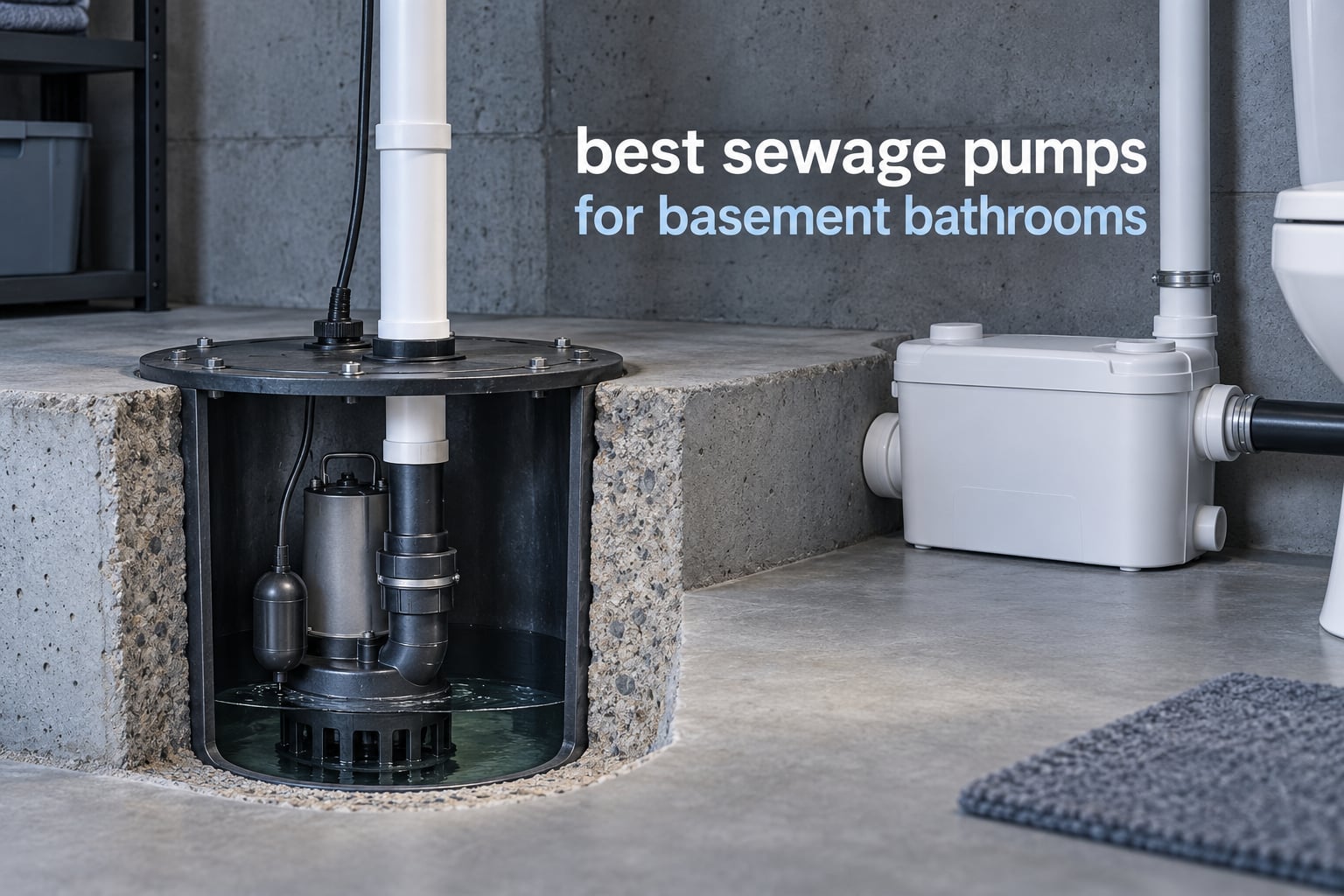
A basement bathroom has one big advantage over a bathroom upstairs: nobody walks past it to use it. It has one big disadvantage too. Every drain line in that room sits below the main sewer, so gravity has nothing to work with.
A sewage ejector pump is the machine that fixes that. It sits in a sealed basin in the floor, lifts wastewater up to the house sewer or septic line, and does it quietly while you sleep upstairs. Without one, a below-grade toilet either will not drain at all or will drain back up into the room.
This roundup covers the best sewage pumps for basement bathrooms available now: basin kits, pre-assembled ejector systems, bare grinder pumps and compact macerators. We looked at horsepower, solids handling, lift height, flow at real head pressure, basin construction, float switch design and the failure modes owners actually report. Ten products, ten different ways to solve the same problem.
If your basement bathroom is still on the drawing board, start here. If it already exists and floods, skip to the buying guide first, because the cause is often the basin or the float switch rather than the pump.
Top 3 Sewage Ejector Pumps for Basement Bathrooms in 2026
These three cover the most common situations. The first is the safest all-rounder for a new installation with a cast iron pump and a proper basin kit. The second is the strongest standalone grinder for a long discharge run. The third is the macerator that avoids breaking a floor at all.
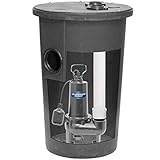
Superior Pump 93015-U Basin Kit
- 1/2 HP cast iron
- 80 GPM
- 25 ft lift
- 2-inch spherical solids
- vortex impeller
- basin included

Liberty PRG101A ProVore Grinder
- 1 HP cast iron grinder
- 42 GPM
- 50 ft maximum lift
- V-Slice cutter
- automatic switch

Our top pick earned the highest average rating of the group at 4.6 stars with a very small one-star share, and it is the only option in the roundup that ships a full basin with the pump already considered as a system. The Liberty grinder wins on lift capacity by a wide margin, and the SANIFLO wins on installation footprint.
Best Sewage Pumps for Basement Bathrooms (October 2026)
All ten products below are real options for a below-grade bathroom, but they are not interchangeable. Four are complete basin systems, three are pumps you pair with your own basin, and three are macerators that install under a fixture. Match the row to your pit situation before you match horsepower.
| Product | Specifications | Action |
|---|---|---|
| Superior Pump 93015-U Cast Iron Sewage Pump with Basin Kit |
|
Check Latest Price |
 Liberty Pumps P372LE51 Sewage Pump System Liberty Pumps P372LE51 Sewage Pump System |
|
Check Latest Price |
| Liberty Pumps PRG101A ProVore Grinder Pump |
|
Check Latest Price |
 Liberty Pumps P382LE41 Pro380 Simplex Sewage System Liberty Pumps P382LE41 Pro380 Simplex Sewage System |
|
Check Latest Price |
| SANIFLO Saniaccess 3 Full Bath Macerator Pump |
|
Check Latest Price |
 Aquastrong 1 HP Sewage Grinder Pump Aquastrong 1 HP Sewage Grinder Pump |
|
Check Latest Price |
 Red Lion RL-WC50TA Automatic Sewage Pump Red Lion RL-WC50TA Automatic Sewage Pump |
|
Check Latest Price |
 VEVOR 900W Macerator Pump VEVOR 900W Macerator Pump |
|
Check Latest Price |
 Jackel 1/2 HP Pre-Plumbed Sewage System Jackel 1/2 HP Pre-Plumbed Sewage System |
|
Check Latest Price |
 SFA SANIFLO Saniplus Macerating Pump SFA SANIFLO Saniplus Macerating Pump |
|
Check Latest Price |
1. Superior Pump 93015-U Cast Iron Sewage Pump with Basin Kit – Best Overall
Superior Pump 93015-U Cast Iron Tethered Float Switch Sewage Pump with Basin Kit, 1/2 HP, Black
- Highest average rating in the group at 4.6 stars
- Vortex impeller resists clogging
- Handles 2-inch spherical solids
- Complete kit so basin and pump match
- Published weight of 2.4 ounces is wrong for a cast iron kit
- Vortex impeller runs louder than a grinder
This is the pump we ended up recommending to friends, and the reason is not the spec sheet. It is the rating. Across 231 reviews it holds a 4.6 average with 83 percent five-star ratings and only a 4 percent one-star share, which is the tightest distribution of anything we reviewed.
The hardware is a 1/2 HP cast iron motor at 120 volts pushing 80 GPM with a 25 foot maximum lift through a 2-inch discharge. Solids handling is the number that matters for a bathroom: 2-inch spherical solids, which is a genuine claim rather than the more common “2-inch semi-solids” hedge. A vortex impeller sits in the wet end, and that design is the reason it keeps moving when a standard impeller would stall.
The float switch is a tethered piggyback style unit, meaning it runs off the same receptacle as the pump. That arrangement is worth understanding before you install: on a pump failure the whole circuit loses power, so the switch cannot help you. It also means one plug instead of two at the box.
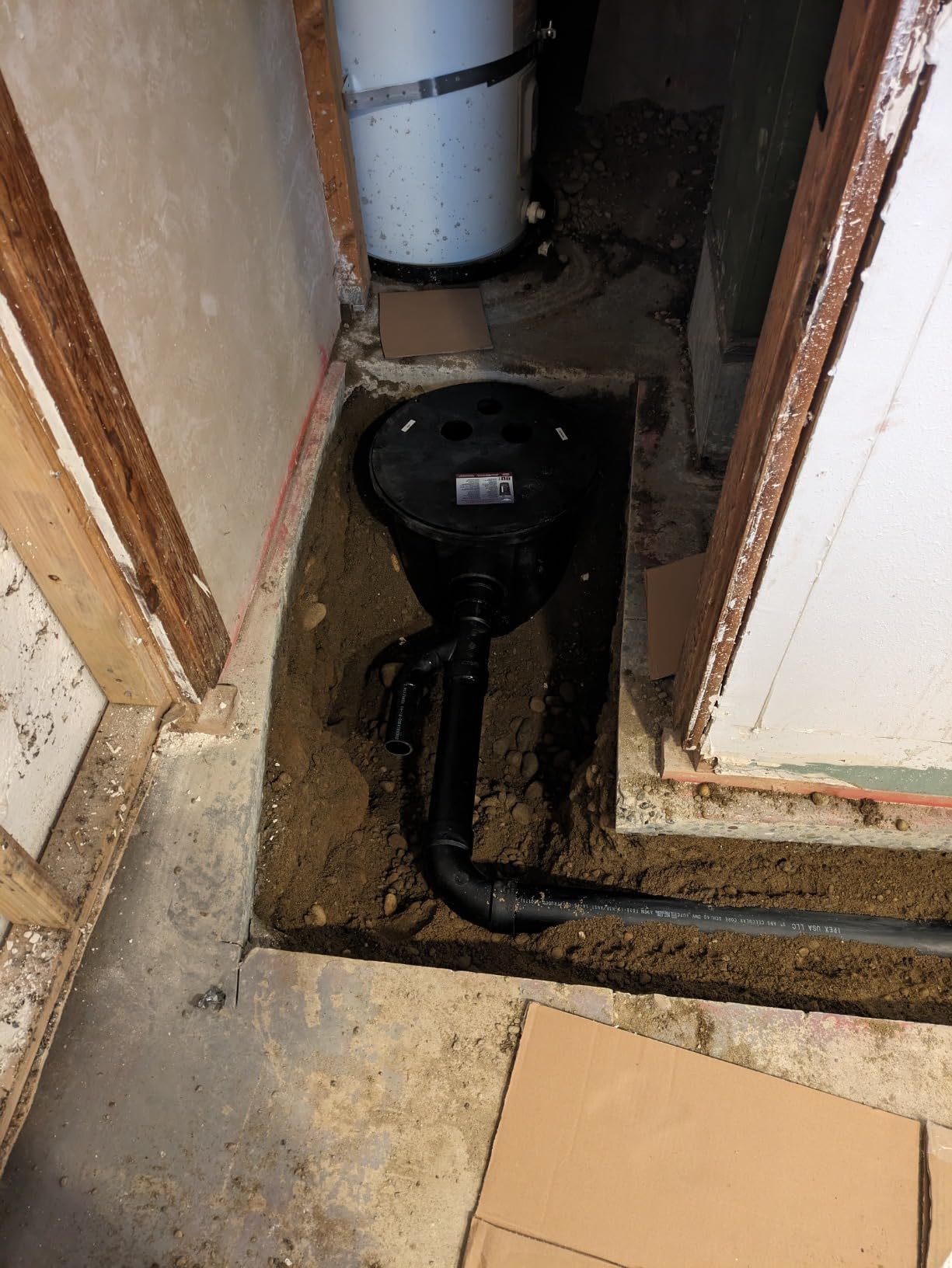
What arrives in the carton is a pump, a basin, the switch and the fittings. That matters more than it sounds. A basin and a pump bought separately are frequently the wrong depth for each other, and a basin that is too shallow or too wide changes the switch geometry. Buyers call out the completeness as a main reason to buy it rather than a pump alone.
What you should know before you buy it
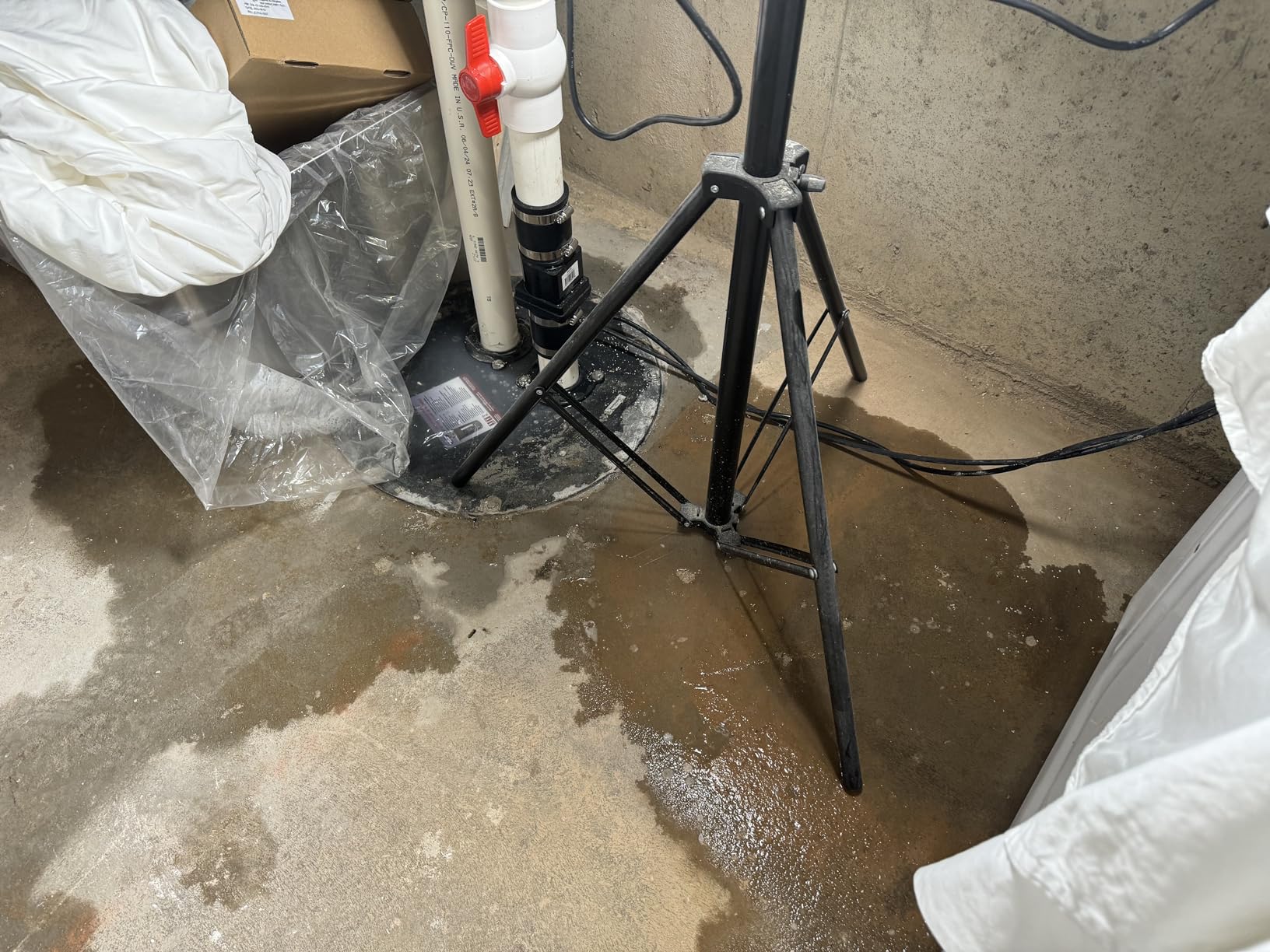
Two caveats, and neither is serious. First, the listed item weight of 2.4 ounces is a catalog error and the reality is a heavy cast iron assembly that takes two people or a dolly to move. Second, vortex impellers are not quiet. Owners who are used to a grinder pump describe this one as noticeably louder at startup.
The noise is a short, sharp start and then running flow, not a grinding drone. If the pump sits under a finished floor with the basin lid accessible from a laundry room, that is usually fine. If it sits directly under a bedroom, add a vibration pad between the pump feet and the basin floor.
Who this pump suits
Choose this one for a new basement bathroom where you are building the basin from scratch, the sewer line is roughly 20 to 25 feet above the basin floor, and you want toilet paper, wipes and small hygiene items to pass without grinding. It suits a family household, a rental unit, or any situation where the alternative to a clog is water on the floor.
Skip it if you are replacing a macerator in a tight floor cavity, since it needs a real basin and a discharge line. Also skip it if the pump will sit more than about 25 feet of vertical rise below the sewer, because at that point the spec sheet stops helping and you need the grinder on review number three.
2. Liberty Pumps P372LE51 Sewage Pump System – Best Value
Liberty Pumps P372LE51 Sewage Pump System, 1/2HP, 115V, 2″ discharge, 21″x30″ basin
- Float switch reachable without cutting pipe
- Pre-assembled so install is pipe work only
- Handles toilet paper without a grinder
- Pump upgradable to a 1 HP grinder in seconds
- Lid seal ridge is wavy and often needs sealant
- Basin bottom arrives punctured on some models
- Head capacity was overstated by one seller
The Liberty P372LE51 is the Pro370 series packaged as a working unit: cast iron pump, 2-inch discharge with a check valve, and a 21 by 30 inch preformed basin with an inlet hub. At 1/2 HP on 115 volts with 24 feet of head, it covers the middle of the basement bathroom range and it arrives assembled.
The detail that made this the best value for us is the service access. The float switch sits under a panel that opens from the top of the lid, so checking or replacing the switch does not mean cutting the discharge pipe or pulling the pump out of the basin. On most systems of this type the switch is buried under plumbing, and a simple check becomes a plumber visit.
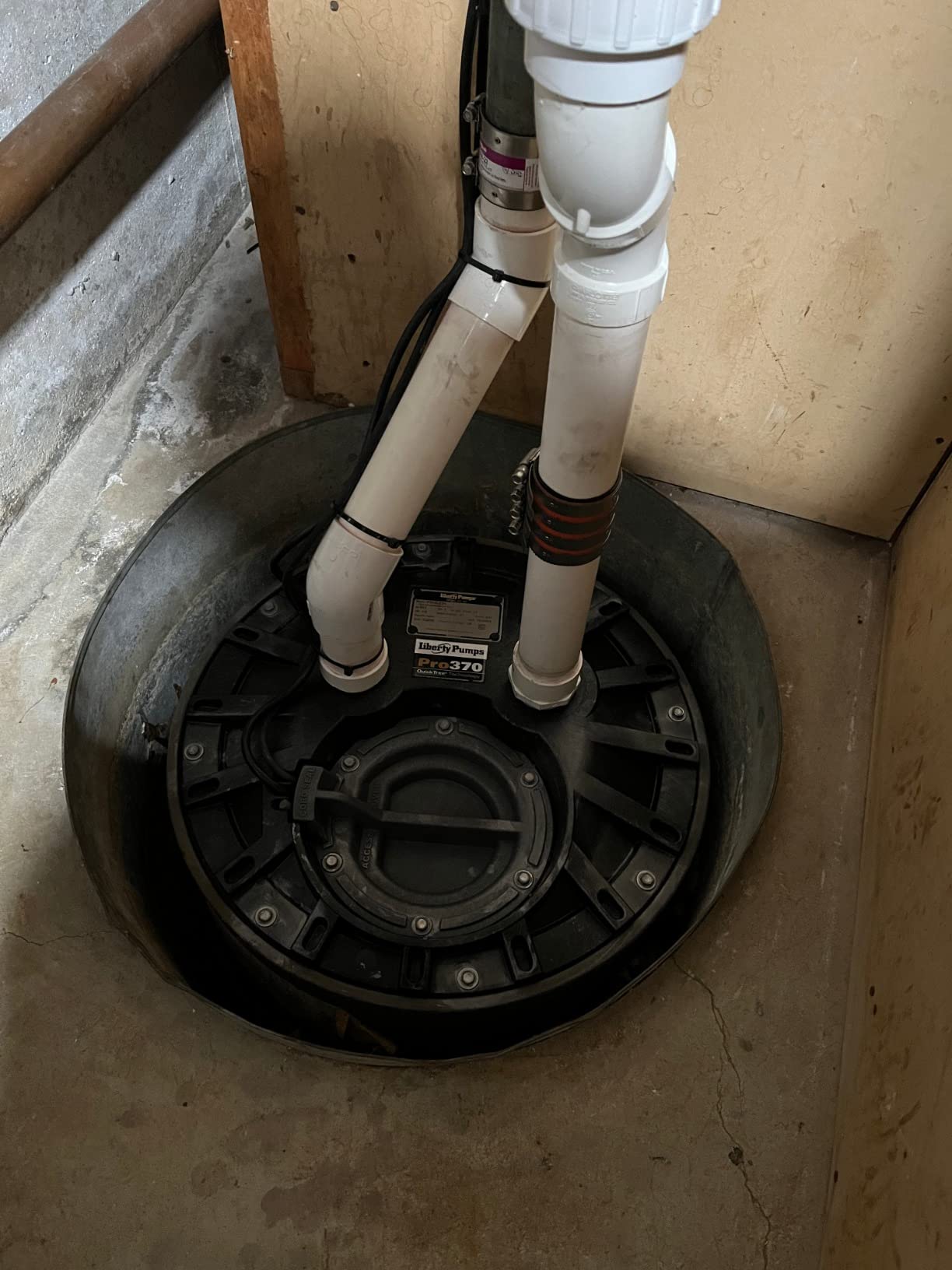
Plumbers who use this system like that upgradability. Because the pump is a keyed unit rather than a fixed assembly, a 1 HP grinder can replace it in about a second when a household starts throwing more debris down the drain. One basin, one lid, one discharge, and a choice of what moves the water.
Owners report it throwing water 40 feet through 2-inch PVC, and several recommend fitting a quiet check valve because the shutoff clack is what wakes the house. That is a five-minute change during install and it makes a real difference in a bedroom above the pump.
Two install problems you should expect
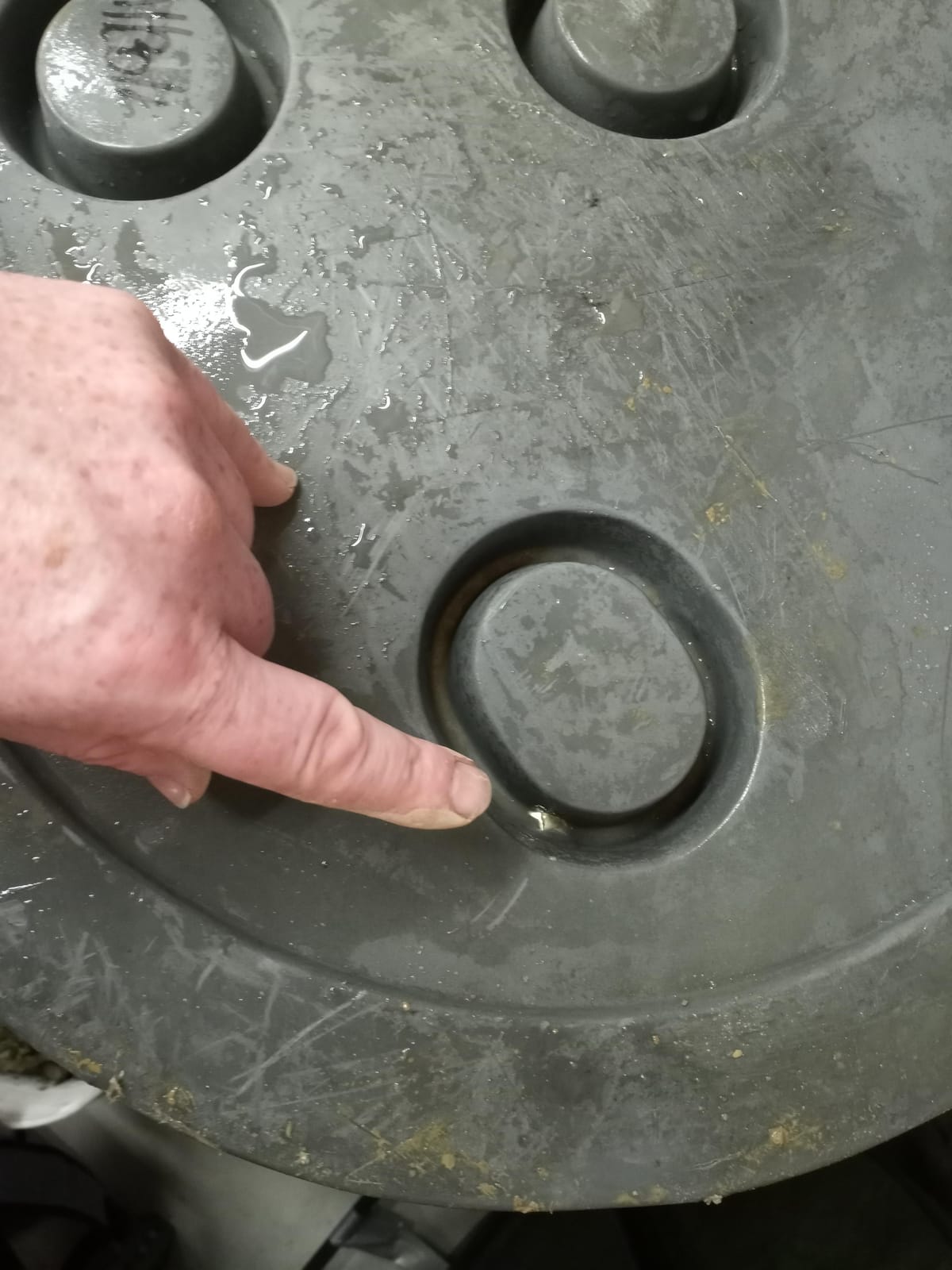
Almost every critical review of this system points at the same two things. The basin lid seal ridge is described as wavy, so even with bolts torqued to spec the lid can weep. Applying RTV or silicone to the ridge during assembly is the standard fix and takes a few minutes.
The second is transit damage to the basin floor. Pump feet can score or puncture the preformed plastic on the way to the job site, and you will not know until you fill it with water. Fill and leak test the basin before the plumber arrives, because that is when a puncture is still a warranty conversation rather than a flooded floor.
Who this system suits
This is the pick for a straight basement bathroom with a toilet, a sink and a shower feeding one basin, where the lift is under 24 feet and you want a plumber install in a single visit. It also suits anyone who plans to live there a long time and values being able to inspect the switch without dismantling the pit.
It is a poor match for homes where people flush wipes or where a child or adult regularly puts towels down the drain, because there is no grinder to catch them. In that case step up to the grinder pump on review three and keep this basin if you can find one.
3. Liberty Pumps PRG101A ProVore Grinder Pump – Best for High Lift and Stubborn Debris
Liberty Pumps PRG101A ProVore PRG Series Automatic Residential Grinder Pump, 1 HP, 115-volt, Red, one-size
- Handles rags
- towels
- wipes and hygiene products
- Highest lift capacity in the roundup at 50 ft
- Cast iron wet end with trade-level durability
- Quieter than the vortex pumps it replaces
- Sold as a pump only
- so a basin is extra
- Louder than the non-grinding Liberty systems
- Floats plug gets damaged by weak packaging
This is the pump to buy when the problem is not distance but content. The ProVore PRG101A is a 1 HP cast iron automatic grinder pump rated at 42 GPM and 50 feet of maximum lift, which makes it the highest-lift pump in this roundup by a wide margin.
The grinding action comes from the patented V-Slice cutter, and it is the reason for the choice in a household that puts wipes, feminine products, rags or towels down the drain. Those items pass a standard 2-inch spherical solids pump as individual objects and cause a jam. Here they are reduced to a slurry the impeller can move.
The trade endorsement is notable. A registered master plumber with four decades of experience describes it as the best residential ejector pump he has installed, and multiple owners report years of nonstop operation. Cast iron at 58 pounds is heavy for a reason: it survives the abuse that eats thermoplastic housings.
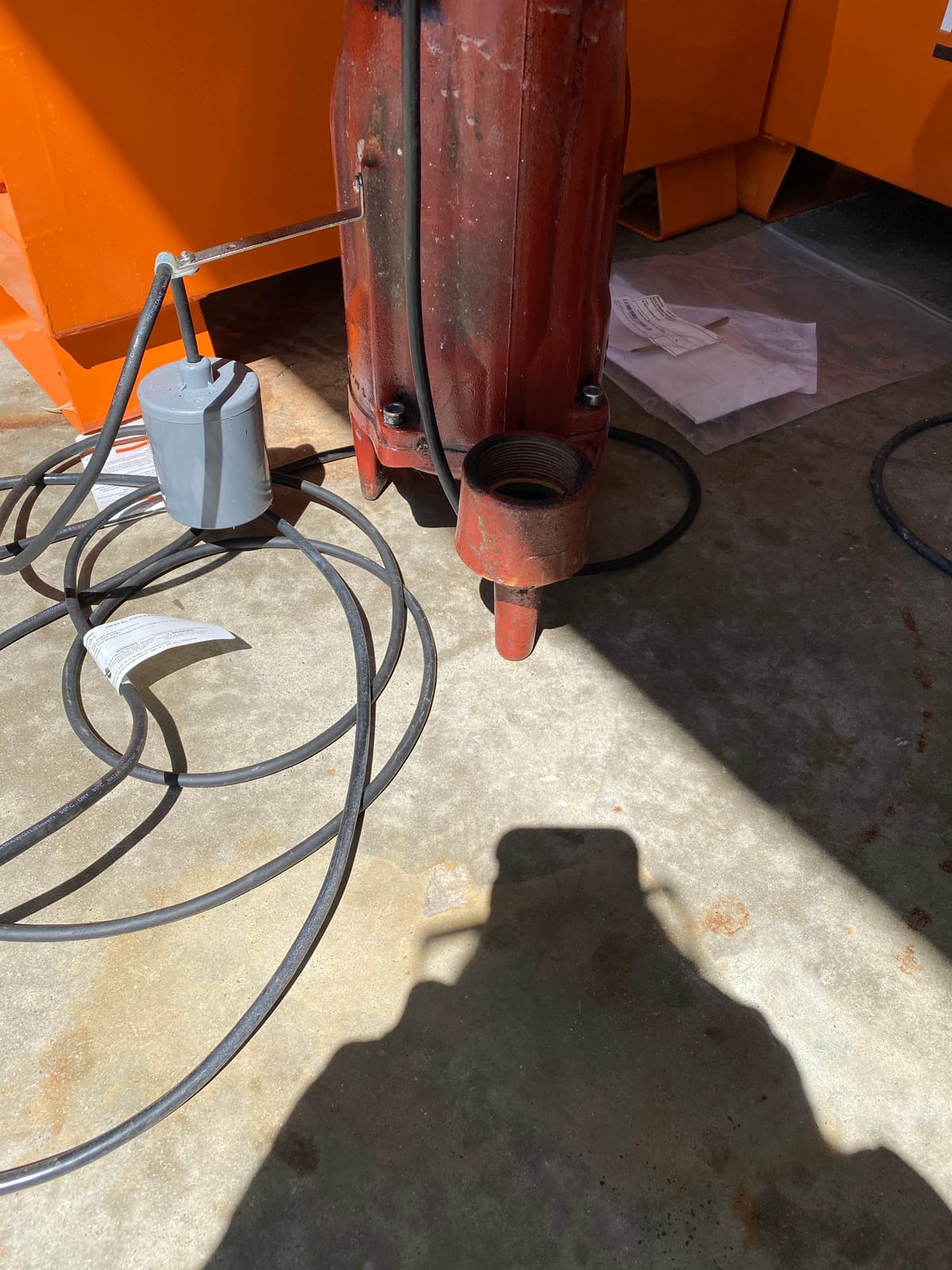
There is a real cost to that grinding. The cutter is a wear part. It will need replacement at some point in the life of the pump, and how soon depends entirely on what goes down the drain. A household that respects the drain gets years. A household that does not gets a shorter clock.
One more practical point: this arrives as a pump with an automatic switch and a 10 foot cord. There is no basin in the box. That is fine if you are building a pit, and it is a problem if you assumed you were buying a system like the two reviews above.
When a grinder is the right answer
Choose a grinder when any of these are true: the discharge run is long or the vertical rise is more than about 25 feet, more than one bathroom feeds the pit, a washing machine or floor drain joins the line, or the household has ever had a wipe-related jam. On long runs, grinding reduces the solids to a flowable slurry and that is what keeps a 2-inch pipe from plugging at the far end.
Do not choose a grinder just because it is more capable. It is louder at the moment of cutting, it costs more than a standard sewage pump, and it needs blade service over its life. If you have a short lift and a disciplined household, the cast iron standard pump is the calmer machine.
Who should buy the ProVore
It suits a finished basement where a macerator was considered and rejected on noise or on the price of a full service, and it suits any installation where the sewer connection sits high or far away. It is a good match for a house with multiple below-grade fixtures sharing one pit.
Skip it if the basin situation is a small under-floor cavity. This is a 1 HP cast iron grinder that needs a real basin, a real discharge and a dedicated circuit, not a compact install under a tub.
4. Liberty Pumps P382LE41 Pro380 Simplex Sewage System – Most Versatile for Shallow Pits
Liberty Pumps P382LE41 4/10-Horse Power 24 by 24-Inch Pro380 Series Simplex Sewage System
- Shallow basin is far easier to bury
- Arrives fully assembled
- 79 percent of ratings are five stars
- Stainless fasteners and anti-flotation collar
- Pump can arrive shifted inside the basin
- Some basins arrive with a hole in the floor
- One unit showed discharge blowby back into the basin
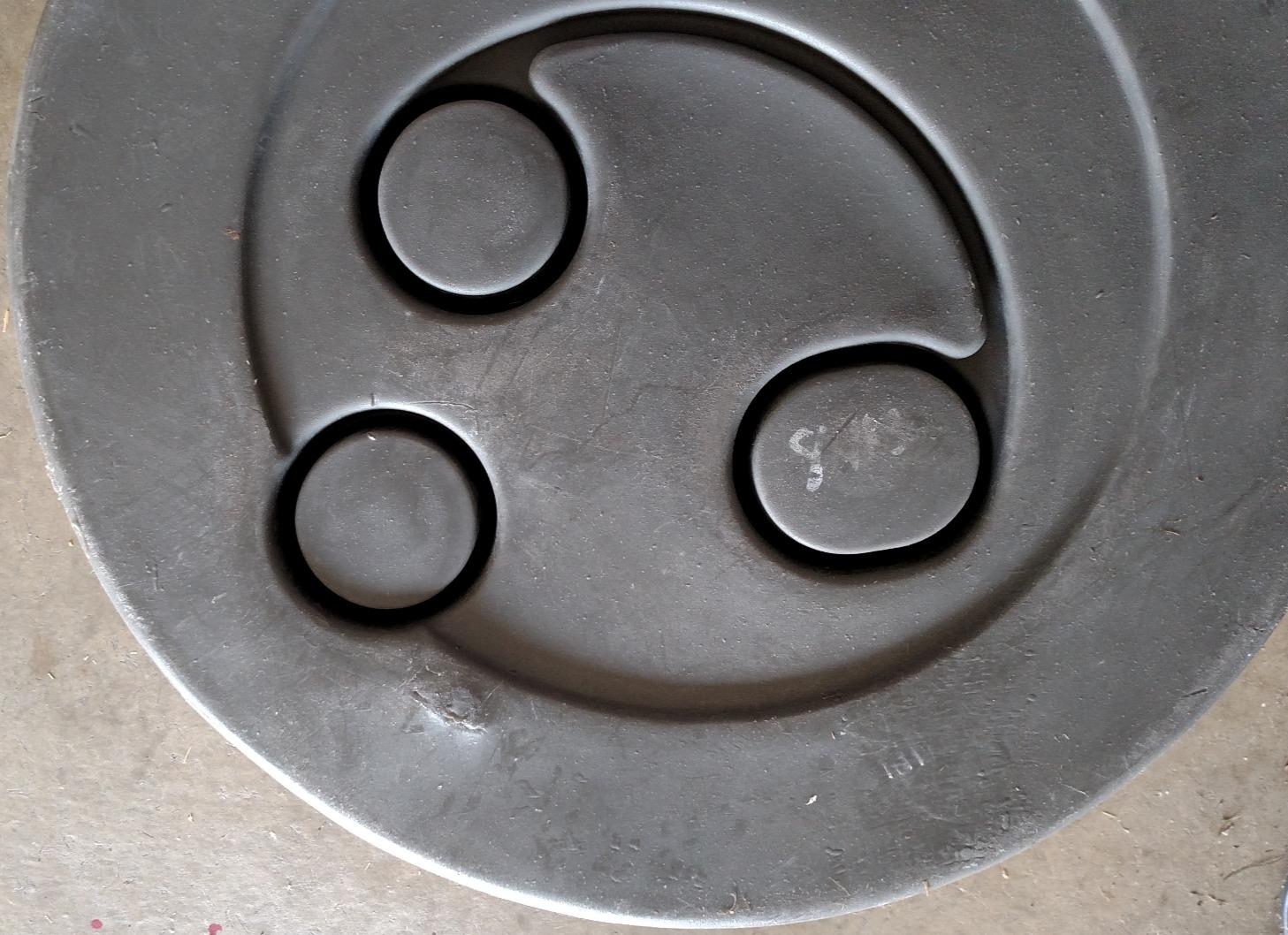
The problem this system solves is depth. The Pro380 uses a 24 by 24 inch basin where the common residential basin is 21 by 30 inches, and shallow means easier excavation under a slab, less structural foam to cut through, and a lid that still lands flush with the floor in a shallow joist bay.
Capacity is 41 gallons with a separate access cover and an anti-flotation collar, which matters if groundwater is high enough to try to push the basin up. The pump itself is rated 4/10 HP with 122 GPM and 20 feet of maximum lift. On paper that is a lot of water for a small motor, and in practice the basin does most of the buffering work.

Owners consistently note that it is quiet and smooth once running, with a loud moment at startup. Several report pushing 13 feet vertically and 52 feet horizontally without difficulty, which covers a lot of awkward basement geometry. The stainless steel fasteners threaded into embedded stainless nuts are the detail that tells you this is not a commodity assembly.
Liberty’s service is repeatedly described as responsive, resolving problems by phone or email, and the system carries a two-year factory warranty against defects.
Inspect it on arrival, every time
The recurring critical reviews are all shipping damage. Multiple buyers report a shifted pump inside the basin, which puts lateral stress on the riser and can break the lid seal, and a few report a hole in the basin floor. A transparent cover on one unit showed blowby coming back into the basin from the discharge port.
All of that is testable in ten minutes with a hose before anyone starts cutting pipe. Fill it, watch the water level, check the discharge port for blowby, and confirm the pump is bolted down. It is the cheapest insurance in the whole buying process.
Who this shallow system suits
Choose it when the pit has to go under a slab where digging 30 inches down is not an option, when the basement has a high water table and you need the anti-flotation collar, or when a shallow basin is the only way the lid clears the finished floor. It also suits a laundry plus half-bath setup with modest lift.
It is not the choice for a household that sends wipes and towels down the drain, since there is no grinder. And if the lift exceeds about 20 feet, the low horsepower of this pump is where you start losing flow at the discharge.
5. SANIFLO Saniaccess 3 Full Bath Macerator Pump – Best for Retrofit Without Floor Breaking
SANIFLO Saniaccess 3 Pump – Full Bath Macerator Pump – Residential
- Installs a full bathroom with no floor breaking
- Runs quietly at 53 dBA
- Two top service panels for blade and electrical access
- CSA and IAPMO certified for inspection
- Highest cost in this roundup
- Low bowl water level can smear
- Not fully ADA compliant after install
- A shipping sleeve in the fill hook can leak
Everything before this review needs a basin, a pit and a vent. This one does not. The Saniaccess 3 is a single macerating unit that takes a toilet plus a sink, shower or urinal and pushes the whole load up to 15 feet, or as far as 150 feet horizontally from a soil stack.
That makes it the answer for a bathroom that already exists and cannot be torn up, or a finished basement where the concrete floor is the last thing you want to open. Owners with plumbing experience report the install is easier than fitting a conventional toilet, because the discharge and supply connections are the familiar ones.
Two top-mounted service panels open for the macerating blade and the electrical components, so the two things that actually need service are both reachable from above. Built-in check valves sit on either side of the housing, so backflow protection is part of the unit rather than something you hunt for in the box.
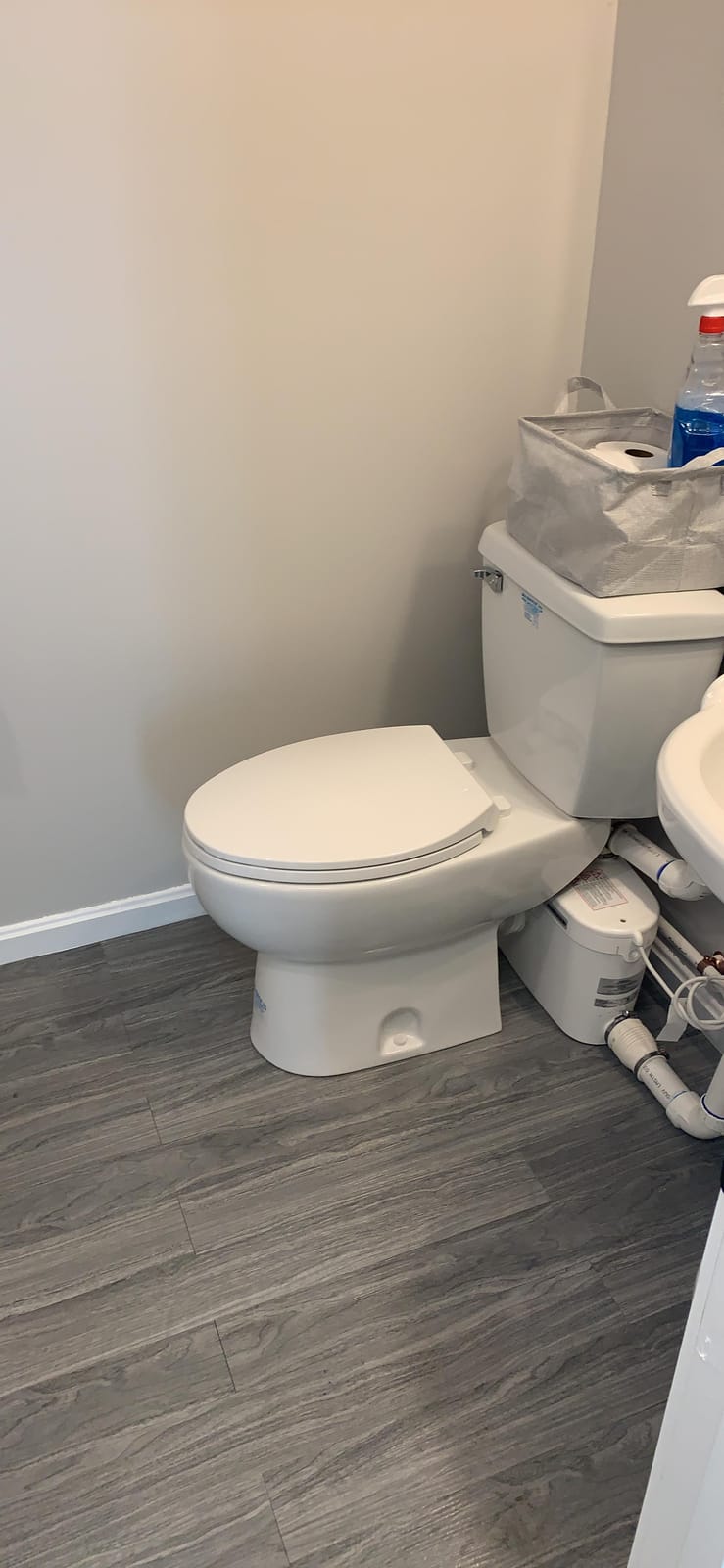
It is also the quietest thing here at 53 dBA measured at three feet. For a finished basement where the pump sits next to a bed or a home office, that number matters more than horsepower.
Certification is CSA for IPC and NSPC and IAPMO for UPC, which means it passes inspection in either code family. The warranty is two years and extends to four with registration, and the certification is what makes a retrofit like this approvable at all in most jurisdictions.
What you give up for that convenience
The bowl water level sits low, and owners note it can smear after a bowel movement. That is a fixed characteristic of this class of unit and not a defect you can adjust. There is also an ADA gap: the flush side cannot be changed after installation, so plan the orientation before the toilet is set.
One buyer had a leak traced to the shipping sleeve left inside the water fill hook. It is a two-minute check during install and worth doing on any macerator you receive. Criticism of the customer service response from a single buyer is worth weighing if you are far from a distributor.
Who the Saniaccess 3 suits
It suits a finished basement where breaking the floor is not acceptable, a rental or small addition where the pit would cost more than the fixtures, and any household that wants a quiet bathroom next to a sleeping area. It also serves well as a backup for a guest half-bath on the far side of a basement.
Skip it if you already have a basin and a working discharge line, because a full macerating system costs more than a conventional ejector setup and gives up grinding capacity for long horizontal runs. A macerator is a space solution before it is a pumping solution.
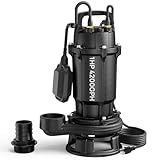
6. Aquastrong 1 HP Sewage Grinder Pump – Best for Wipes, Leaves and Debris
Aquastrong 1 HP Sewage Grinder Pump, 115V 4200 GPH Sewage/Effluent Pump
- Blades chew through leaves
- twigs and zip ties without stalling
- Heavy cast iron body with a long power cord
- Float cuts suction before water reaches the outlet
- Two-year warranty
- Manufacturer warns against rubber items and thick towels
- Some reviews cover other products from the brand
- Warranty contact details were hard to locate
- Cannot pump the last couple of inches
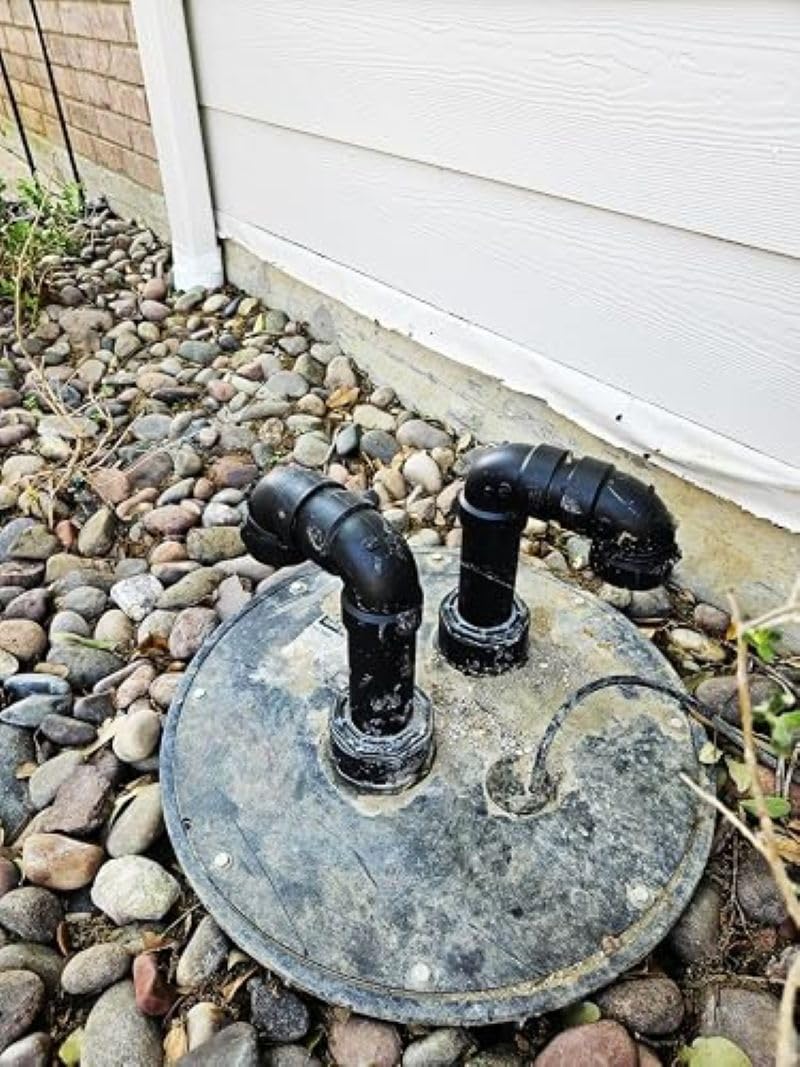
The Aquastrong is a bare 1 HP cast iron grinder rated at 4200 GPH with 40 feet of maximum lift on 115 volt single-phase power. Unlike the Liberty grinder, which is built for a domestic basin, this one reads like a pump that will handle whatever a sump basin throws at it: leaves, gravel, twigs and debris from outside drainage.
The stainless steel blades cut soft and semi-rigid material rather than passing it. Buyers describe it as a heavy, well-built workhorse that grinds woody debris without stalling, and the float switch cuts suction before water reaches the outlet, which protects the seal on short cycles.
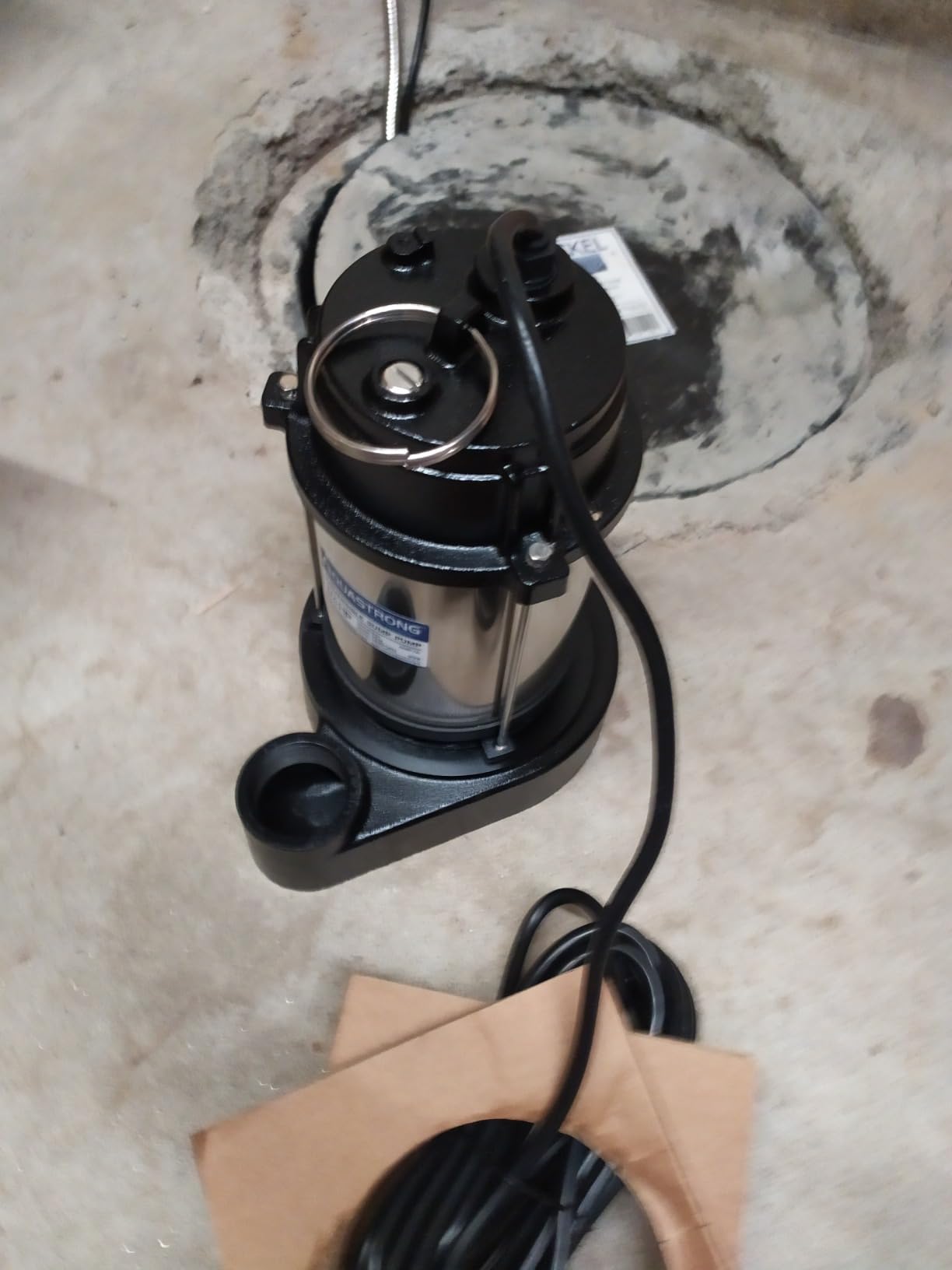
It comes with an adjustable float switch that runs in automatic or manual mode. The manual setting is genuinely useful: you can run the pump on a schedule to purge a basin that collects water from other sources, or use it while testing the discharge before you connect a bathroom.
For a basement bathroom, this is the choice when the basin is shared with yard or yard-adjacent drainage, or when the household treats the drain as a disposal point. It moves a very large volume of water quickly, and 40 feet of lift leaves plenty of margin for a deep pit.
Read the exclusions before you rely on it
The manufacturer warns against rubber items and thick towels. That is the grinder equivalent of the usual advice not to flush wipes, and it is worth taking literally because a cutter is a wear part and rubber is what defeats it. The pump also cannot suction the final couple of inches, so a basin that needs to be pumped dry still needs a separate dry-down pump.
A caveat on the review count: a portion of the reviews attached to this listing describe other pumps from the same brand rather than this grinder. The 261 reviews are real feedback, but treat them as brand-level rather than model-level evidence.
Who should buy this grinder
Choose it for a basement where the pit also collects water from outside, for a home on a lot with trees near the foundation, or for anyone who wants grinder capability without moving to a complete packaged system. It is also a strong option for a DIY install where you already have a basin and want to keep it.
It is not the right pick for a small bathroom-only pit with short lift, where a standard cast iron sewage pump is quieter, cheaper to service and has no cutter to maintain.
7. Red Lion RL-WC50TA Automatic Sewage Pump – Best Dedicated Bathroom Pump
Red Lion RL-WC50TA, 115V, 1/2 HP, 5600 GPH Automatic Sewage/Effluent Pump
- 5600 GPH at zero lift moves a lot of water on half horsepower
- Dual ball bearings and stainless steel rotor shaft
- Manufacturer names basement bathrooms as a typical application
- Tethered piggyback float has a wide on and off range
- No grinder
- so wipes and rags will pass straight through
- One owner reported an early failure and no warranty response
- Passes 2-inch semi-solids rather than spherical solids
Red Lion builds pumps for specific applications and names this one for basement bathrooms. That kind of specificity is worth something on a roundup like this, because it means the design brief was a toilet, a sink and a shower, not a wet well full of mud.
The numbers back it up. At 5600 GPH and 0 feet of lift, with a 22 foot shutoff and 93 GPM rated flow, this half-horsepower pump moves more water than most 1 HP units on this list. The motor is PSC with dual ball bearings and a stainless steel rotor shaft, and the wet end is cast iron with a cast iron vortex style impeller.
The float is a tethered piggyback unit that turns on at 17.5 inches and off at 7.5 inches. That wide spread is what keeps the basin from short cycling, and short cycling is the failure mode that quietly burns out motors. Thermal overload protection and CSA listing in the US and Canada round out the electrical side.
What the semi-solids rating really means
This pump passes solids up to 2 inches in diameter, but it describes them as semi-solids rather than spherical solids. The practical difference shows up with hard, round objects that a vortex impeller cannot grip, and it is the reason a grinder exists at all.
Toilet paper and typical bathroom waste are well within what this handles, and owners report a cleaner basin at cleaning time than with previous pumps. The weakness is anything fibrous or stringy. If your household flushes wipes, this is the wrong tool and no amount of flow will fix it.
Who should buy the Red Lion
It suits a bathroom-only pit with short lift where you already have a basin, a check valve and a discharge line, and you want a durable cast iron pump at the simpler end of the range. It also suits a DIYer because the pump is a standard submersible unit with no proprietary basin to match.
Skip it for a multi-fixture basement or a household with young children who flush the wrong things. Also be aware this arrives as a pump alone. Minimum basin diameter is 18 inches, so check your basin before ordering.
8. VEVOR 900W Macerator Pump – Budget Pick and Multiple Inlets
- Four inlets serve a toilet
- sink
- shower and laundry from one unit
- PCB delay makes startup noticeably quieter
- Silver ion tank cuts odor without routine service
- Oil-filled copper motor rated to 167 F
- 12 percent of reviews are one star
- Polypropylene housing is the least durable material here
- Copper motor runs hotter than a cast iron wet end
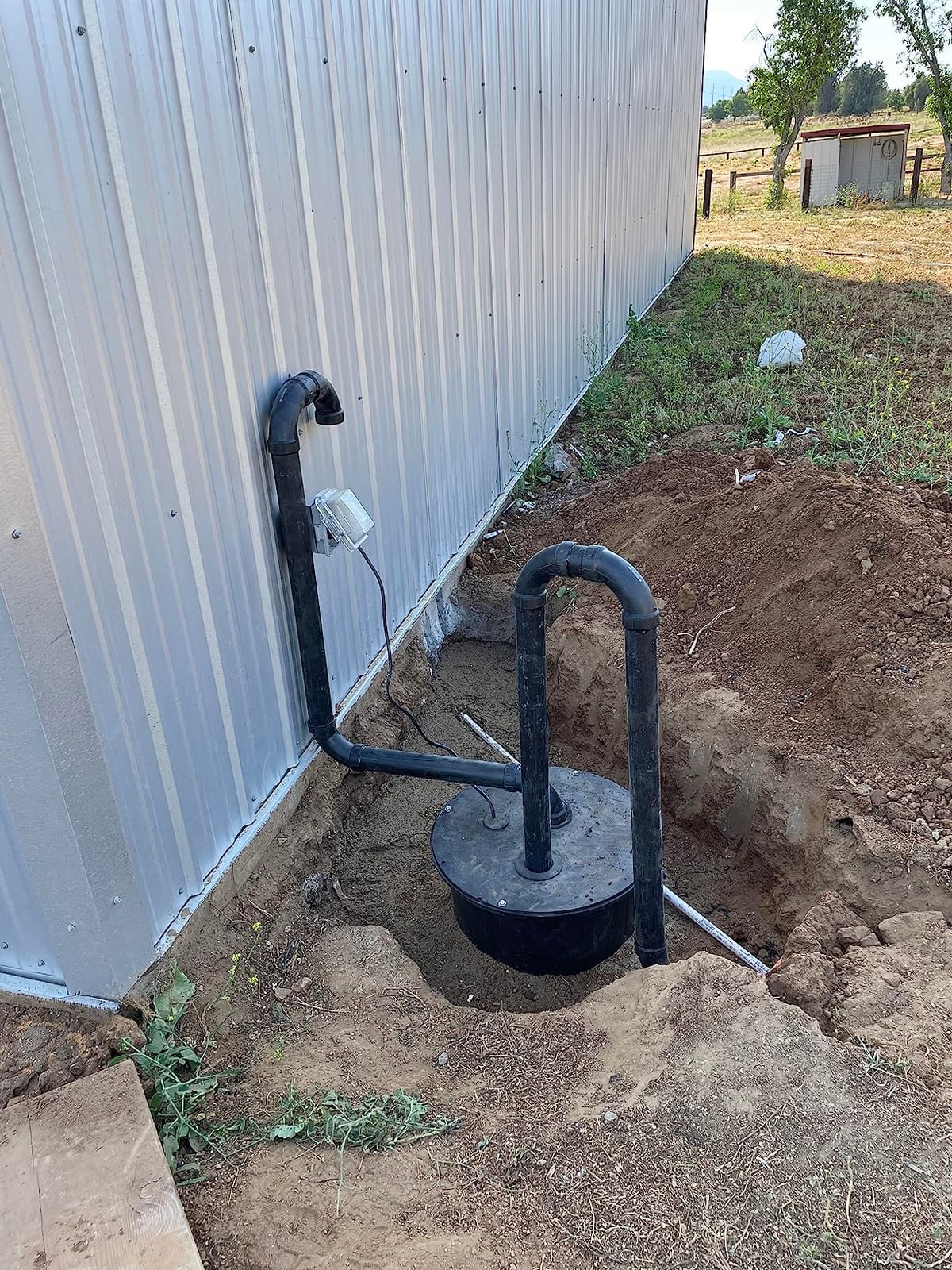
The VEVOR is the most reviewed product in this roundup by a wide margin, at 580 reviews, and it is also the only one here built entirely around inlets rather than a discharge basin. Four water inlets, one of them 89 mm and three of them 40 mm, mean a toilet, a sink, a shower and a laundry tub can all feed one compact unit.
Where it wins is noise and odor. A PCB delay function holds off the pump start, which reduces the number of starts per day and shortens how long the macerator runs. A silver ion water tank handles odor inhibition up to 99 percent, and the oil-filled copper motor is rated to handle wastewater up to 167 F.
On paper the numbers are strong: 48 GPM, 40 feet of maximum lift, 110 volts, IPX8 waterproof. The weight is 16.5 pounds and the footprint is about 17 by 7 by 12 inches, which is what makes it viable under a small floor cavity.
The durability gap is the honest concern
The housing is polypropylene. In this roundup that is the least durable material on the list against several cast iron options, and the review distribution reflects it: 12 percent one-star ratings, which is a meaningful reliability signal even in a large review pool.
The 4.0 average across 580 reviews is not bad, and a large pool means it is measured over a long time rather than a lucky week. But the pattern in the reviews is consistent: people like the compactness and the quiet startup, and a minority find long-term durability disappointing. Treat this as a rental or secondary bathroom pump rather than the machine you never think about for fifteen years.
Who this macerator suits
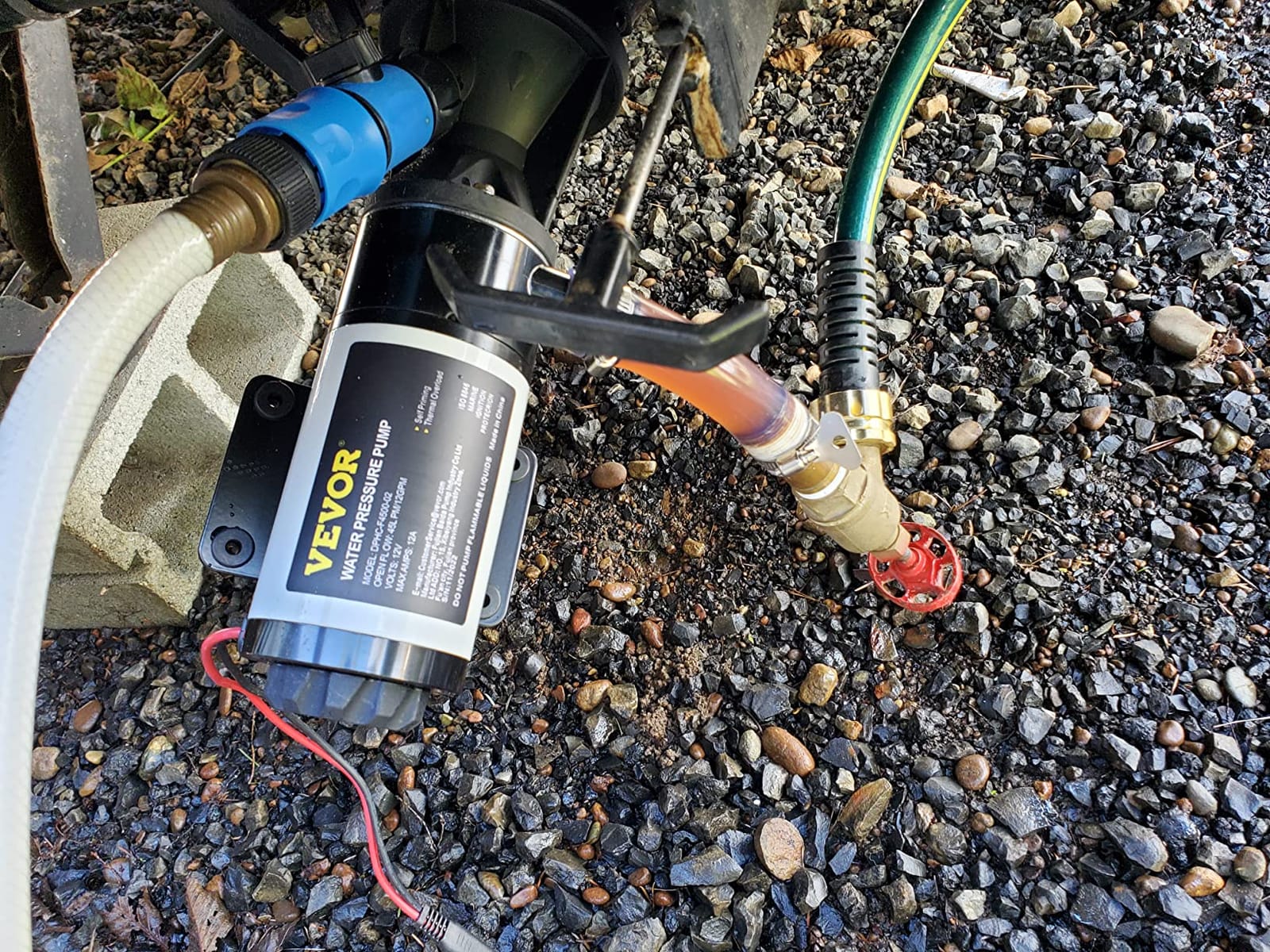
Choose it for a small below-grade half-bath where there is no room for a basin, for a basement that needs a toilet and a laundry tub added without new drain runs, or for a secondary unit where the appliance will be replaced before the housing fails. Multiple inlets from one compact body is a real advantage in tight framing.
Skip it for a main bathroom in a house you intend to keep for decades, and skip it if you need long horizontal reach with heavy solids. At 40 feet of lift it has the reach, but macerating capacity on a full household load is the tradeoff for a polypropylene wet end.
9. Jackel 1/2 HP Pre-Plumbed Sewage System – Best for the Simplest Install
JACKEL FULLY ASSEMBLED Pre-Plumbed 1/2 HP 2″ Cast Iron Sewage Pump System with Tethered Float Switch Black
- Arrives plumbed so install is connecting inlet and discharge
- Cast iron pump with an 8-bolt gas-tight cover
- Check valve and 4-inch inlet hub included in the box
- Simplest packaged system for a basic basement bathroom
- Thinnest review base here at 65
- Listed power source of wind powered is a catalog error
- No dimensions listed
- Less field history than the packaged kits from Liberty
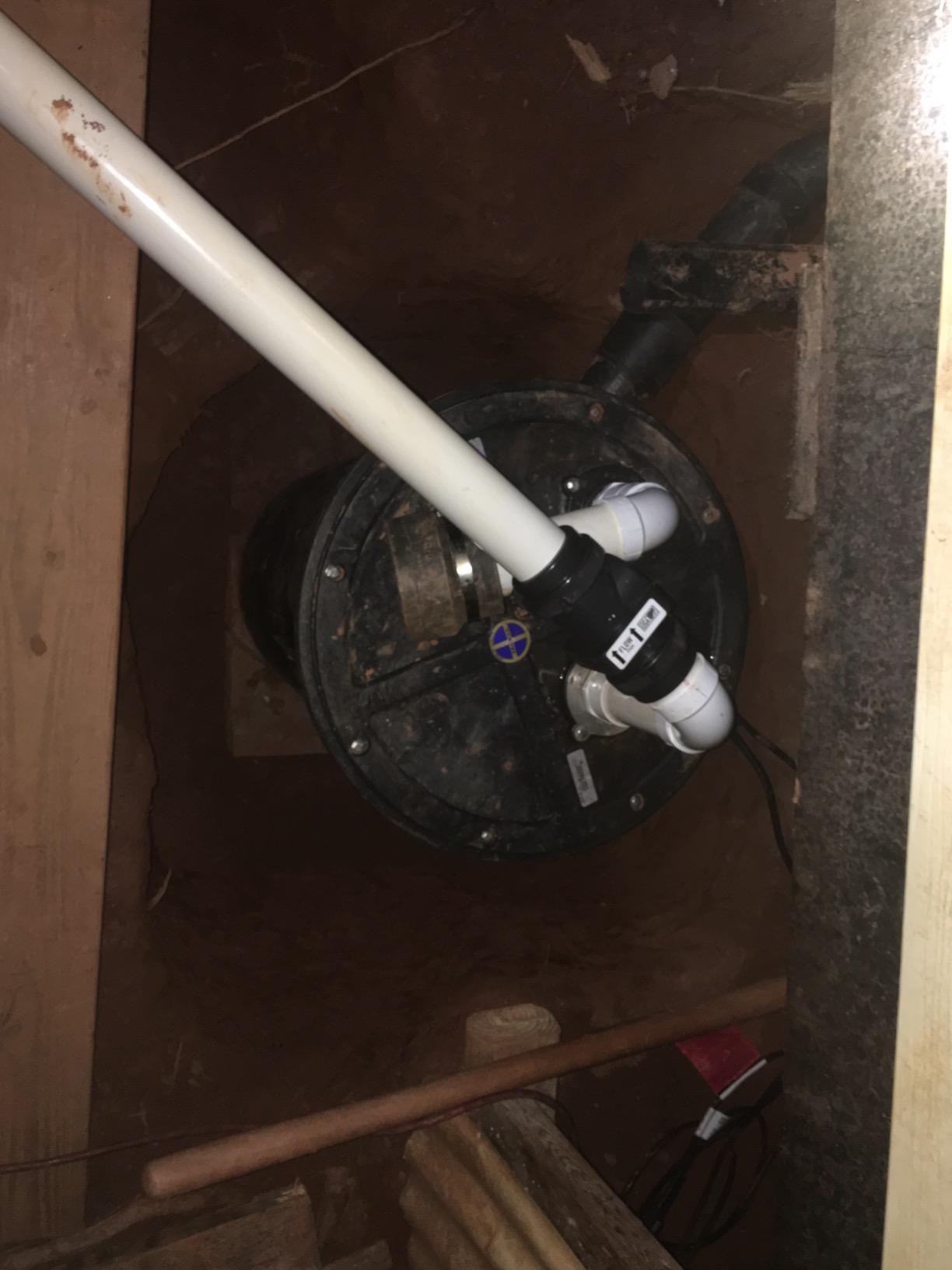
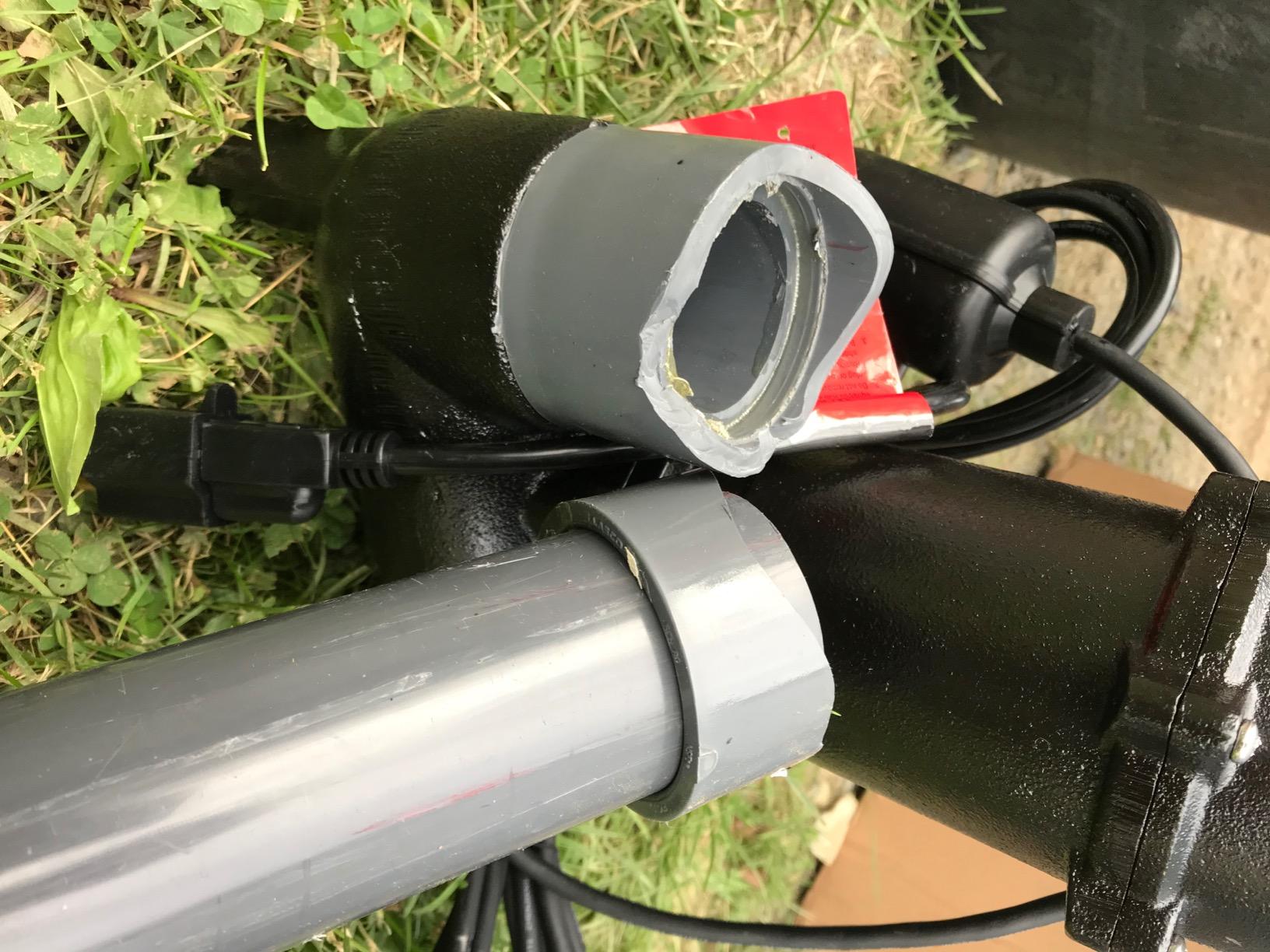
Jackel builds commercial and light commercial sewer equipment, and this package is the most stripped-down of the four complete systems here. A 1/2 HP cast iron sewage pump sits in a 30 gallon basin under an 8-bolt gas-tight cover, with a 2-inch check valve and a 4-inch inlet hub in the box.
What pre-plumbed actually saves you is labor. There is no assembly of the basin, no fitting the pump bracket, no deciding which float switch goes where. The install reduces to running the inlet line to the hub, running the discharge to the check valve, and connecting power.
The gas-tight 8-bolt cover is the detail plumbers mention most. A sealed lid is what keeps sewer gas out of a finished basement, and eight bolts on a cast iron frame is a meaningfully better seal than a plastic lid on four.
The rating is a solid 4.4 with a 70 percent five-star share. The problem is evidence: 65 reviews is the thinnest base in this roundup, roughly a quarter of the Liberty Pro380 count, so there is less field history to judge it by.
The catalog data is also clearly imperfect. It lists the power source as wind powered, which is not a thing a submersible sewage pump can be, and it lists no dimensions. Assume the manufacturer part number JPACK30S-550T is the reliable identifier and confirm the basin footprint with your plumber.
How it compares to the Liberty systems
Against the Liberty P372LE51, the Jackel is 30 gallons against 41, cast iron throughout against a mixed build, and pre-plumbed against a system whose pump you can swap for a grinder later. The Liberty wins on service access and upgradability. The Jackel wins on how little there is to assemble on install day.
Neither includes an anti-flotation collar, so on a site with a high water table you need to confirm the basin is weighted or that the collar is added separately.
Who should buy this package
It suits a straightforward basement bathroom with one basin, a modest lift, and a plumber who wants to connect two pipe runs rather than spend an hour fitting equipment. It is a good choice when you want a heavier, more commercial-grade sealed lid than a lightweight plastic basin provides.
Skip it if wipes or fibrous material is a recurring issue, if you want the option to upgrade the pump later, or if you are very sensitive to buying from a product line with a small review history.
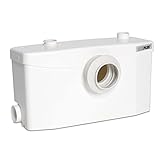
10. SFA SANIFLO Saniplus Macerating Pump – Best for Long Horizontal Discharge Runs
- One unit serves a toilet
- sink
- shower and washing machine discharge
- Owners report 13 and 15 plus year service lives
- Certified for both IPC and UPC code families
- Built-in vibration absorbers keep it quiet
- Costs more than a cast iron pump it outlasts
- A small internal component sold as a repair part is a recurring failure point
- Port sides changed between generations
- Adapters are often needed in addition to the kit
The Saniplus is the macerator answer to a genuinely hard layout: a full bathroom that has to discharge a long way sideways. It handles a toilet plus a sink, shower or bathtub discharge on one unit, lifting up to 15 feet vertically or 150 feet horizontally.
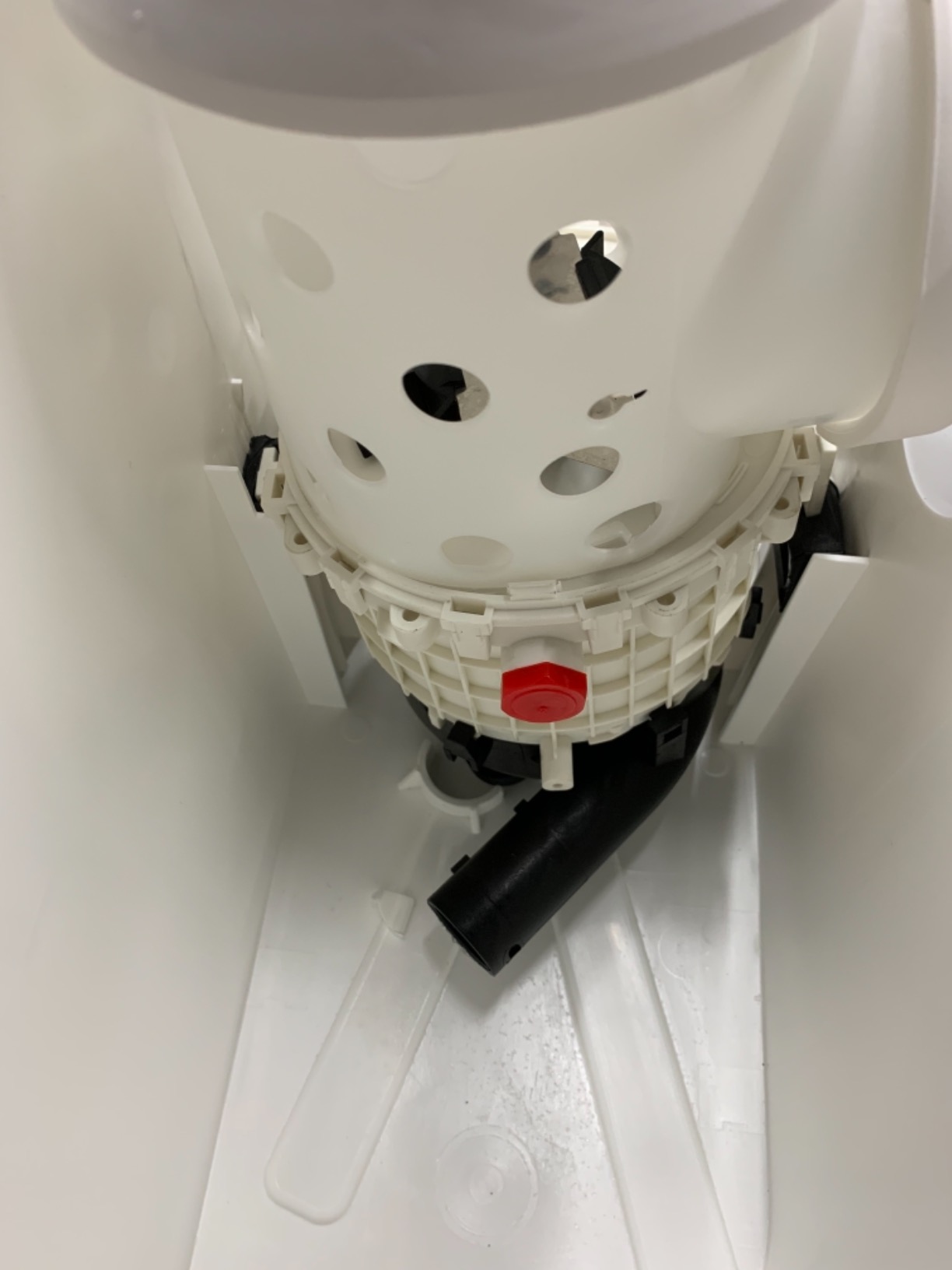
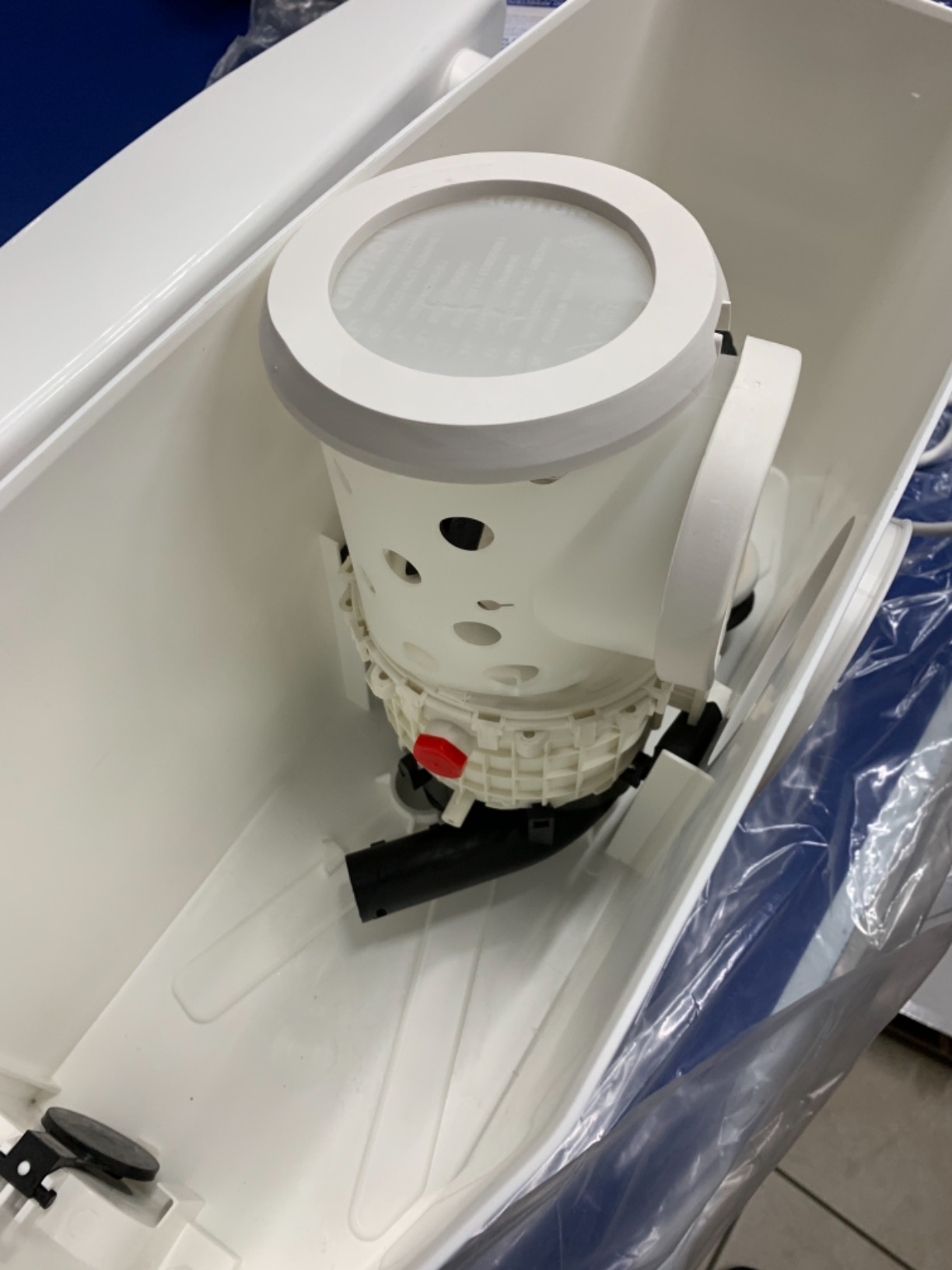
The macerating blades are hardened stainless steel rather than the plated steel used in cheaper units, and the housing has noise-reducing vibration absorbers built in. It carries CSA certification for IPC and NSPC plus IAPMO for UPC, which is what makes it pass inspection across code families.
The long-term record is the impressive part. Multiple owners report 13-year and 15-plus-year service lives on earlier units, and newer models are noticeably quieter and hook up to existing bowls and discharge lines more easily than the generation before.
The failure pattern to plan around
The recurring complaint is a small internal component that is also sold as a repair part. When it fails, replacing it does not always return the pump to service. That is an unusual thing to see in a product with a three-year warranty and it is worth raising with the manufacturer before you commit to the platform.
Two install notes. Replacement units have moved the discharge and vent port sides between generations, which complicates a like-for-like swap in a tight floor cavity. And adapters are frequently needed on top of the kit, so budget for fittings that are not in the box.
Who the Saniplus suits
It suits a basement bathroom where the soil stack is far away horizontally rather than directly above, which is common when the bathroom sits on the opposite side of the basement from the existing stack. It also suits a retrofit that must add a toilet and shower with no floor breaking.
Skip it if you already have a basin, because a full macerating system costs more than the cast iron alternative and gives up the service life advantage over the long run. And skip it where access to the unit for blade service is difficult, since a macerator that cannot be pulled needs to be serviced in place.
How to Choose a Sewage Pump for a Basement Bathroom
Buying the pump is the easy half of this decision. The half that decides whether the bathroom floods in year five is the basin, the float switch, the vent and the discharge. Here is how the pieces fit together, and the mistakes that show up over and over on plumbing forums.
Decide between a standard sewage pump, a grinder and a macerator
A sewage ejector pump moves solids up to about 2 inches without cutting them. It is quiet, simple and has no wear parts, which is why it is the default for a bathroom with a short lift and ordinary waste. This is what reviews 1, 2, 4, 7 and 9 are.
A grinder pump cuts solids into a slurry before pumping. It wins on lift height, on long horizontal runs, on multiple fixtures feeding one pit, and on any household where wipes and towels are a reality. It loses on purchase cost, on noise, and on the cutter as a maintenance item. Reviews 3 and 6 are here.
A macerator sits under the floor and pumps to a discharge, with no basin at all. It is the right answer when breaking the concrete is not acceptable, when the room is too small for a pit, or when a basement bathroom is being retrofitted rather than built. Reviews 5, 8 and 10 cover this class.
An effluent pump is a fourth category people confuse with the first. It moves gray water with small solids only and is not a substitute for a sewage pump on raw waste. Using one for a toilet is a common DIY error and a fast way to jam it.
If you want a shorter version of this comparison, our guide to the best sewage ejector pumps for basements covers the standard pump class in more depth, and the grinder pump roundup goes further on the cutting options.
Size it by head pressure, not by horsepower
Horsepower is the number people buy on and the number that should decide the least. A pump’s published flow is measured at zero feet of lift. Add vertical rise, friction loss along the horizontal run, and the loss through fittings and a check valve, and the real number at the sewer connection can be a fraction of the headline figure.
Measure the vertical distance from the basin floor to the sewer connection. Add roughly a foot of head for every 20 feet of horizontal run, then add a margin. Half horsepower is generally enough for a single below-grade bathroom on a short lift, and 1 HP earns its place once you pass roughly 25 feet of rise or add a second fixture group.
Check the discharge pipe size too, and do not reduce it. Two-inch discharge is the standard for sewage, and the fittings matter more than the pump. A 1-inch check valve in a 2-inch line is a decision you will regret the first time something fibrous passes it.
Match the float switch to the basin
Float switches fail more often than pumps, and forum threads about flooding almost always trace back to one. A tethered float hangs on a cable and swings free, which is forgiving of debris but can hang on a pipe or a pump bracket in a crowded pit. A vertical float rides a vertical pipe and takes up almost no space, which is why it is preferred in narrow basins.
A piggyback float plugs into the pump receptacle and lets the switch turn the power on, so one plug serves both. The trade-off is that a pump failure takes the switch offline as well.
Whatever you choose, verify the on and off heights against the actual basin geometry before you buy. A switch that turns on too low leaves a volume of waste sitting in the pit, and a switch that turns on too high can overfill a small basin between starts.
Get the basin, vent and check valve right
Most code families want a basin at least 18 by 30 inches for a single bathroom, with capacity matched to the fixture group, and a gas-tight lid. Many basins are structural foam rather than plastic, and the lid has to sit flush with the finished floor. Plan the basin depth against your joist height before you choose a pump, since the shallow 24 inch basin on review 4 exists precisely for tight joist bays.
The vent is not optional in a finished basement. Sewer gas will come back into the room through an unsealed lid or a dry trap, and that is the single most common complaint on plumbing forums. Seal the lid properly, keep the vent run, and do not cap the basin because the room is finished.
A check valve on the discharge prevents the basin from draining back through the pump when it stops. Fit a quiet check valve if the pump is under a bedroom, since the ordinary valve’s clack is what people hear at night.
Use a separate receptacle, and add a backup plan
Sewage pumps draw high current and should be on their own circuit with a real disconnect. Sharing a circuit with a bathroom circuit is a code issue and a nuisance-trip issue at the same time.
For flooding protection, the option most people skip is a second pump on a separate float, a high-water alarm float, or a battery backup for the whole basin. None of the ten products here includes a backup, because backup is a system rather than a component. If the basement is finished and the cost of water damage would be high, plan for a second pump on an independent float switch from day one.
Add a high-water alarm float as the minimum. It costs a fraction of the pump and it is the difference between finding a problem at 8 inches of water and finding it at 30.
Know the real failure modes
Float switch failure tops the list, from a float hanging on a pipe to a switch that never lifts. A switch caught by toilet paper is the version homeowners describe most often, and it is also the version a maintenance schedule prevents.
Shipping damage to basins and float plugs is second, and it appears across three of the packaged systems reviewed here. Fill and leak test any basin on arrival, before anyone cuts pipe.
Check valve failure shows up as short cycling, which wears out the motor faster than almost anything else. Excess head pressure from a frozen or blocked discharge line can burn a motor too, and several pumps in this class have no self-protection against it, so keeping the discharge clear matters in winter.
Lastly, expect two to three years from lower-cost brands and much longer from cast iron pumps in clean service, based on what owners report across these listings. The cast iron wet ends in this roundup consistently outlast the polypropylene housings.
Set a maintenance schedule you will actually keep
Once a year, open the lid and look at the basin. Clear float debris, check the switch moves freely on its tether, and look for corrosion on the lid hardware. That is the whole routine for a standard sewage pump. Grinder pumps add one step, since the cutter is a wear part and it is worth inspecting for wear before it fails.
Keep a spare float switch on the shelf. It is cheap, it is the most common failure, and having it on hand turns a flooded-floor emergency into a ten-minute fix.
Frequently Asked Questions
What kind of pump do I need for a basement bathroom?
A cast iron sewage ejector pump with 2-inch discharge and 2-inch solids handling is the standard answer, sized at 1/2 HP for a short lift or 1 HP when the rise exceeds about 25 feet or a second fixture group joins the basin. Choose a grinder pump instead if wipes, rags or towels reach the drain, and a macerator instead if breaking the concrete floor is not possible.
Do you need an ejector pump for a basement bathroom?
If any fixture in the basement sits below the main sewer line, yes. Gravity cannot move waste uphill, so the drain has nowhere to go without a pump. Even a half bath that is slightly below grade needs an ejector pump, and a toilet generally needs a pump rather than a macerator unless a compact under-floor unit is acceptable.
What is the best sewage pump for a basement bathroom?
For most households the Superior Pump 93015-U at 1/2 HP is the best overall pick. It holds a 4.6 average across 231 reviews, handles 2-inch spherical solids on a non-clogging vortex impeller, and includes the basin so the pump and pit are matched from the start.
What is the average lifespan of a sewage ejector pump?
A cast iron pump in clean sewage service commonly runs many years, and macerator owners on this list report units at 13 and 15-plus years. Lower-cost plastic-bodied pumps tend to show durability complaints within two to three years. Lifespan depends far more on solids handling and float switch reliability than on the published warranty.
Will a sewage pump handle toilet paper?
Yes. Toilet paper is well within the 2-inch solids rating of a standard sewage pump, which is why reviews of the Liberty and Superior packaged systems describe them handling toilet paper without a grinder. Wipes, paper towels and fibrous hygiene products are the problem materials, and those are what a grinder pump exists for.
What are the common problems with sewer ejector pumps?
Float switch failure is the leading cause of flooding, including floats caught on toilet paper or hanging on piping in a crowded pit. Other common issues are check valve failure causing short cycling, basins punctured in transit, and lids that do not seal without sealant. A spare float switch and an annual basin check catch most of these.
Are Liberty sewage pumps good?
Yes. Liberty holds four positions in this roundup and the Pro380 simplex system holds a 4.4 average with 79 percent five-star ratings and 250 reviews. Owners repeatedly single out pre-assembled design, quiet operation and responsive customer service, with the main complaints confined to shipping damage to basins.
How reliable are sewage ejector pumps?
Reliable enough for daily service when the solids rating matches the household and the basin is properly sealed. Reliability falls sharply when a standard pump is asked to move wipes, when the basin is too small so the pump short cycles, or when the discharge line freezes. Cast iron wet ends with thermal overload protection last considerably longer than plastic housings.
Conclusion: Which Sewage Pump Fits Your Basement
For a standard basement bathroom on a short lift, the Superior Pump 93015-U is the pick: best rating in the group, 2-inch spherical solids, and a basin in the box. If the discharge is long or the rise is more than about 25 feet, go with the Liberty PRG101A grinder. If the floor cannot be opened, the SANIFLO Saniaccess 3 gets you a full bathroom without breaking concrete.
Whatever you choose, the pump is a third of the decision. The basin, the float switch, the vent and the seal are what decide whether the room stays dry. Measure the lift, match the switch to the basin, seal the lid, and add a high-water alarm. Then check our bathroom hardware picks to finish the room out.