
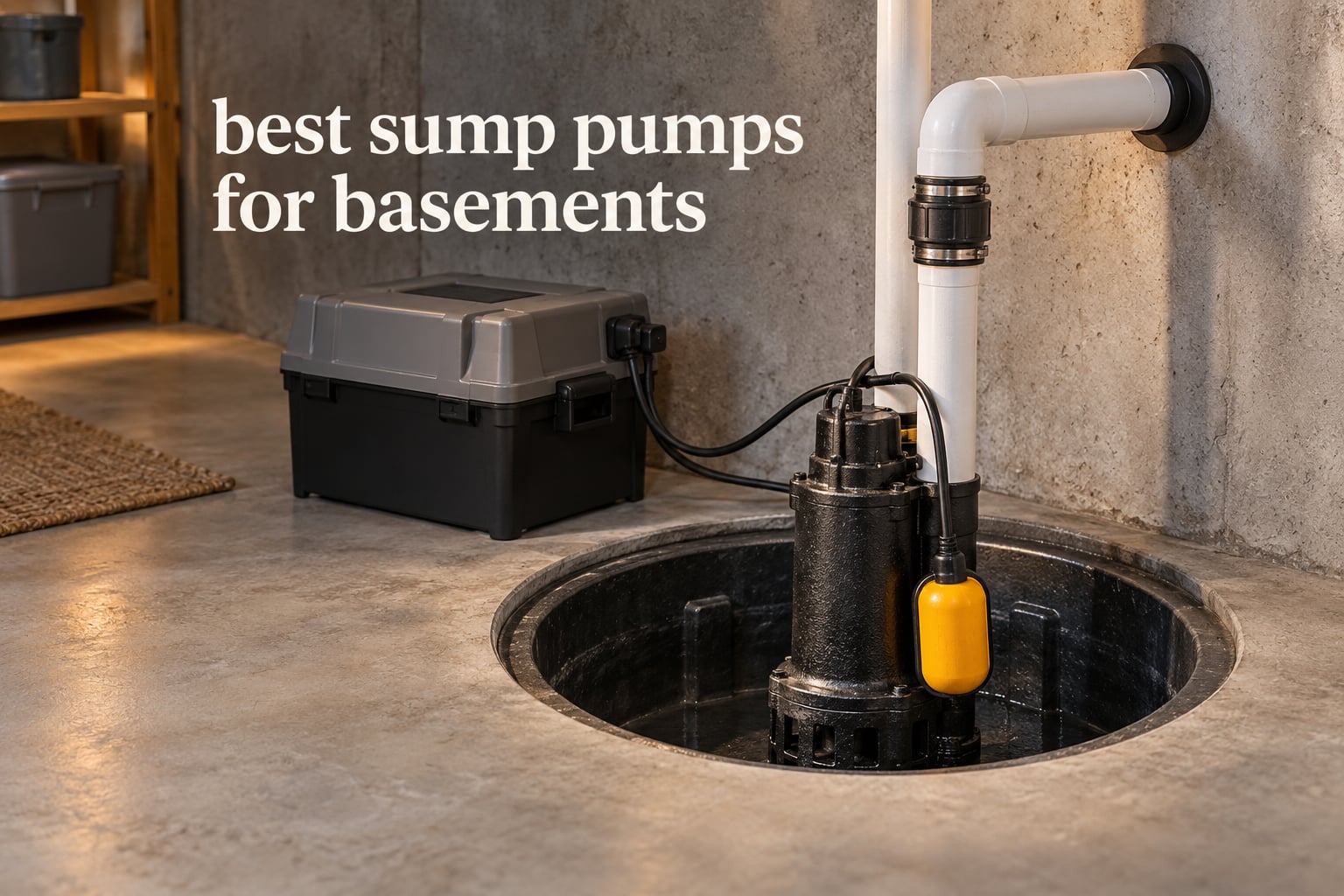
Every basement has one component that stands between groundwater and your finished walls, and that component is a sump pump. It is also the single point of failure: when it stops, the pit overflows, and no amount of French drain or vapor barrier changes that. If you are searching for the best sump pumps for basements right now, you are probably replacing a failed unit, sizing a pump for a new pit, or protecting a house that floods in heavy rain.
We spent weeks reading the specs, the review histories, and the failure complaints behind ten of the most widely installed residential submersible pumps, plus the two backup systems that protect them. Our team compared horsepower, vertical lift, housing material, float switch design, warranty length, and real owner reports before ranking anything. Nothing here is lab-tested in a controlled environment, so we lean on published specifications and long-run owner feedback rather than invented flow readings.
This roundup was last updated in 2026, and it covers submersible primaries, a water-powered emergency backup, and a WiFi-ready battery backup, because the buyer with the flooded basement is the one most in need of guidance.
Every sump pump works the same way. Groundwater seeps into the pit, the water lifts a float, and at the trigger level the switch closes an electrical circuit that starts the motor. The pump moves water up and out through the discharge line until the float falls and the circuit opens. Submersible models sit in the water itself, which cools the motor, and that self-cooling is the reason they outlast pedestal pumps in most basements.
Use the picks below as a starting shortlist. If your basement already has water and you need immediate protection rather than a shopping list, our guide to sump pumps for flooded basements covers emergency pumping first.
Top 3 Sump Pump Picks for Basements in 2026
Zoeller M53 Mighty-Mate 1/3 HP
- Cast iron housing and motor
- Vortex impeller
- 19.25 ft max lift
- LED power plug

WAYNE CDU980E 3/4 HP
- Up to 5490 GPH
- Cast iron and stainless steel
- 5-year warranty
- Vertical float switch

WAYNE CDU790 1/3 HP
- 4600 GPH throughput
- Cast iron volute
- Float tested to 1 million cycles
- 3-year warranty
Best Sump Pumps for Basements (October 2026)
This is the table our team actually used while ranking. Flow figures are manufacturer ratings, which are measured at zero head and always fall as vertical lift increases.
| Product | Specifications | Action |
|---|---|---|
| Zoeller M53 Mighty-Mate 1/3 HP |
|
Check Latest Price |
| WAYNE CDU980E 3/4 HP |
|
Check Latest Price |
| WAYNE CDU790 1/3 HP |
|
Check Latest Price |
 Superior Pump 92341 1/3 HP Superior Pump 92341 1/3 HP |
|
Check Latest Price |
 WAYNE CDU800 1/2 HP WAYNE CDU800 1/2 HP |
|
Check Latest Price |
 Liberty SumpJet SJ10 Water Powered Backup Liberty SumpJet SJ10 Water Powered Backup |
|
Check Latest Price |
 Zoeller M98 Flow-Mate 1/2 HP Zoeller M98 Flow-Mate 1/2 HP |
|
Check Latest Price |
 Liberty Pumps 237 1/3 HP Liberty Pumps 237 1/3 HP |
|
Check Latest Price |
 Basement Watchdog Special CONNECT BWSP Basement Watchdog Special CONNECT BWSP |
|
Check Latest Price |
 RainBro PSU051V 1/2 HP RainBro PSU051V 1/2 HP |
|
Check Latest Price |
1. Zoeller M53 Mighty-Mate (1/3 HP) – Best Overall
- Automatic float activated switch
- Non-clogging vortex impeller
- Cast iron switch case motor and housing
- LED power plug for quick diagnosis
- Plastic base less durable than all cast iron units
- Float switch is a consumable wear item
The M53 is the pump plumbers name first, and the reason is not marketing. It has been in continuous residential service for decades, and when you ask on r/Plumbing which brand makes the best submersible sump pumps, the recurring answer is Zoeller. That kind of consensus built over 3267 reviews at a 4.7 rating is worth more to us than any spec sheet.
The construction is the differentiator. The switch case, motor, and pump housing are cast iron, with only the base molded from plastic. Cast iron pulls heat out of the motor and dumps it into the water, which is exactly what keeps the windings alive in a pit that fills and drains dozens of times a day.
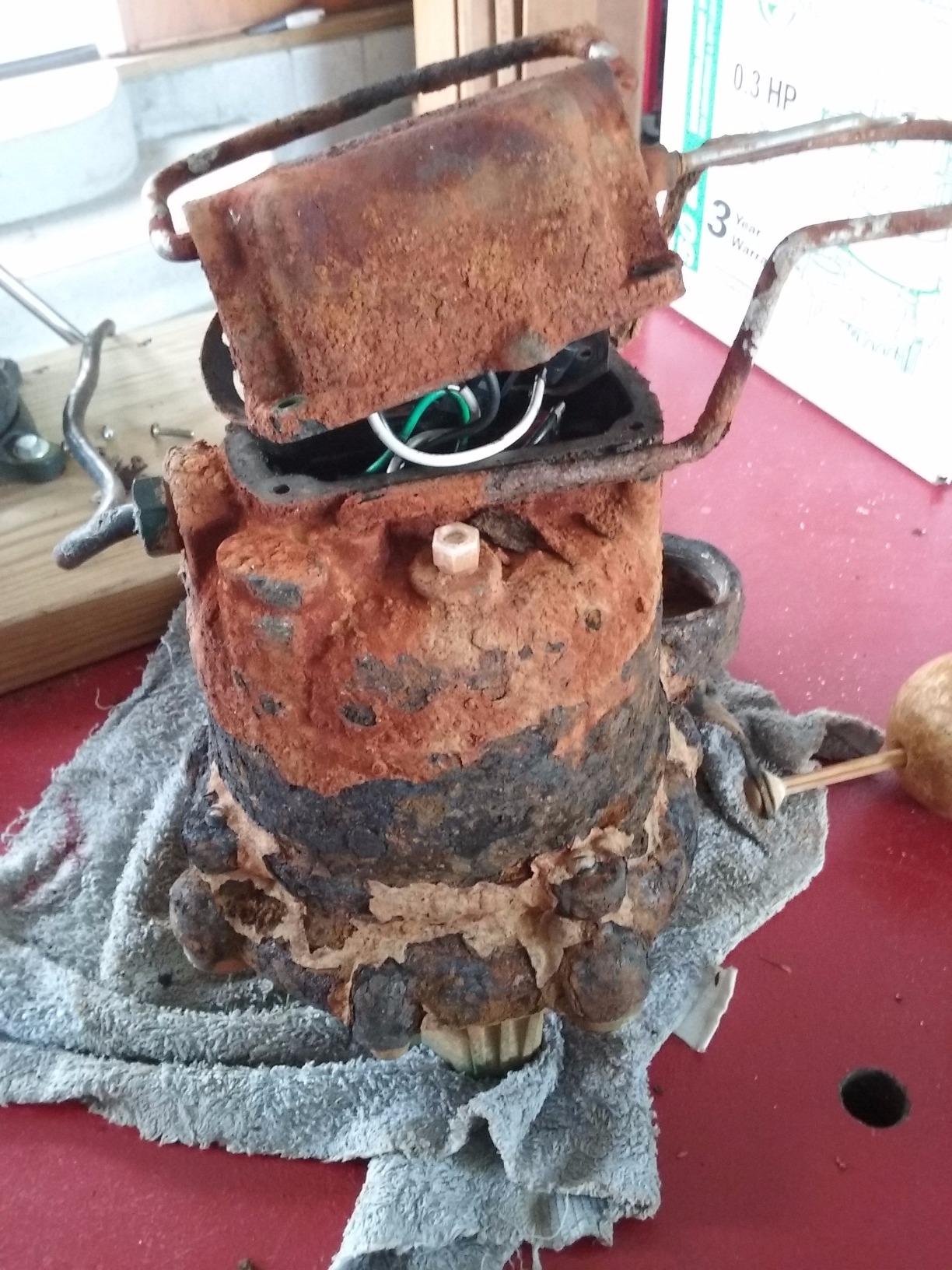
The vortex impeller is the other detail worth knowing. A non-clogging vortex design lets the impeller clear solids that would jam a conventional semi-open impeller, and that matters in pits that collect grit, sediment, and the occasional sock.
Owners also single out the LED power plug. In a finished basement with a finished ceiling over the pit, being able to look at the plug and confirm the circuit is live saves an hour of guessing on a dark floor.
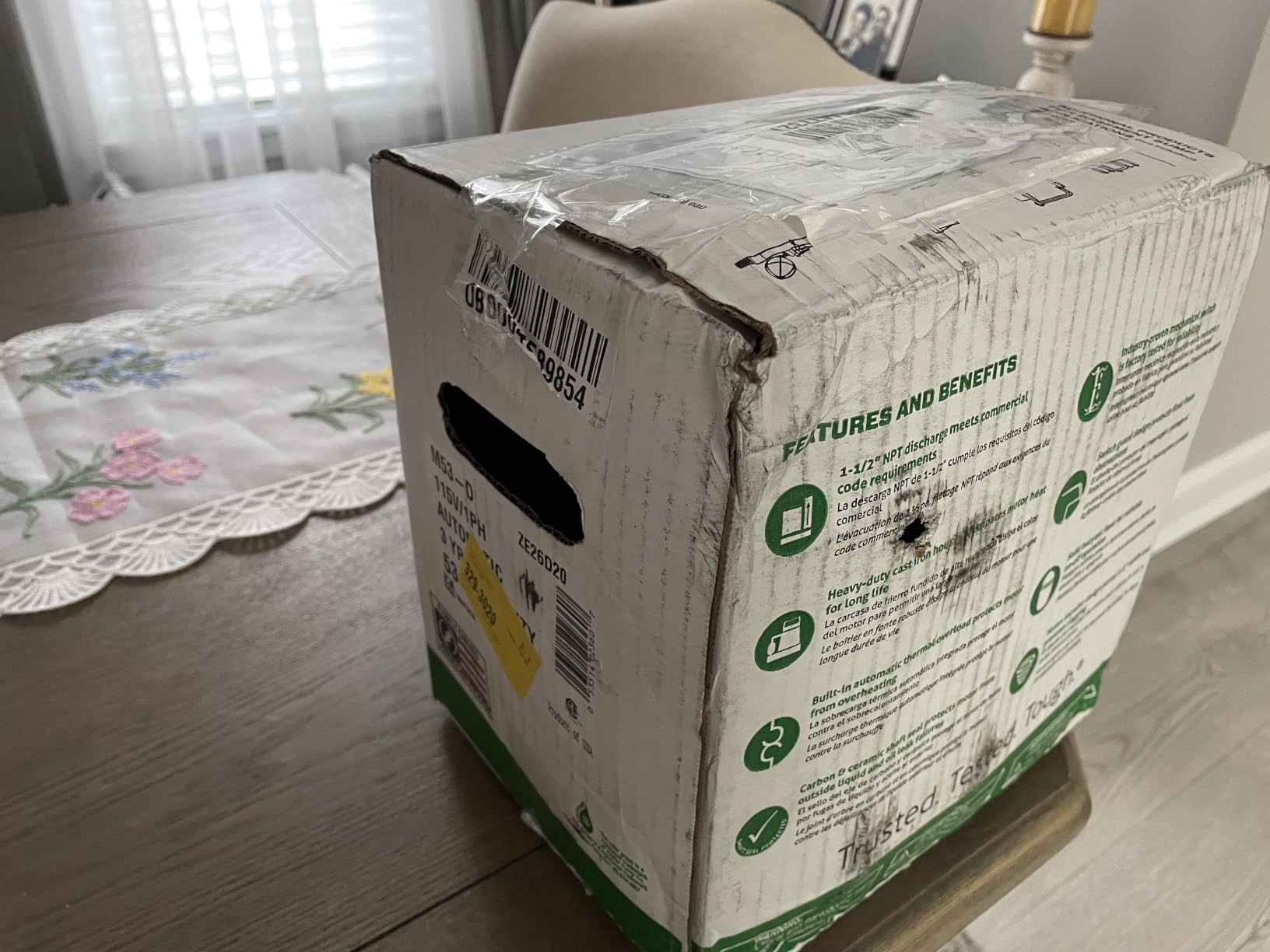
Why we picked it as the best sump pump for basements
It sits in the middle of the horsepower range where most basements actually live. A third horsepower motor clears normal groundwater inflow without the short-cycling you get from an oversized pump, and it will run a deep pit with up to 19.25 feet of listed vertical lift.
The float switch is the part to budget for later. Like every float-operated pump, the switch is a consumable, and on this model it typically gives out well before the cast iron body does. Owners who keep a spare on hand avoid the most common reason a sump pump stops working overnight.
Where it falls short
The plastic base is the honest weakness. It is the least durable component in an otherwise metal-heavy pump, and it is the part that takes the punishment when a pump is yanked out of a tight pit or dropped back in on its side.
Second, this is a primary pump only. Nothing about the M53 protects you if the power goes out during a storm, and several forum threads we read describe exactly that scenario as the moment a finished basement was lost. If outages are common on your street, pair it with a backup from our battery backup systems guide.
2. WAYNE CDU980E (3/4 HP) – Best for Heavy Inflow
WAYNE CDU980E 3/4 HP Submersible Sump Pump – Cast Iron & Stainless Steel, Vertical Float Switch, 5,490 GPH, 5-Year Warranty
- 5490 GPH capacity for heavy storms
- Cast iron and stainless steel body
- Integrated vertical float fits narrow pits
- Top suction anti-airlock design
- Assembled in USA with 5-year warranty
- Higher horsepower draws more electricity
- Replacement float switch is the likely service item
If your basement takes in water fast during a storm, horsepower is the only answer that matters, and this is the pump we would size up to. The CDU980E carries a 3/4 HP motor rated by the manufacturer at up to 5490 GPH, which is the highest throughput figure on this list.
Wayne builds it in cast iron and stainless steel with stainless fasteners, and that mix of materials is what survives a pit that holds mineral-laden groundwater year round. The switch is integrated into the pump body as a vertical float, which keeps the profile narrow enough for a small basin.
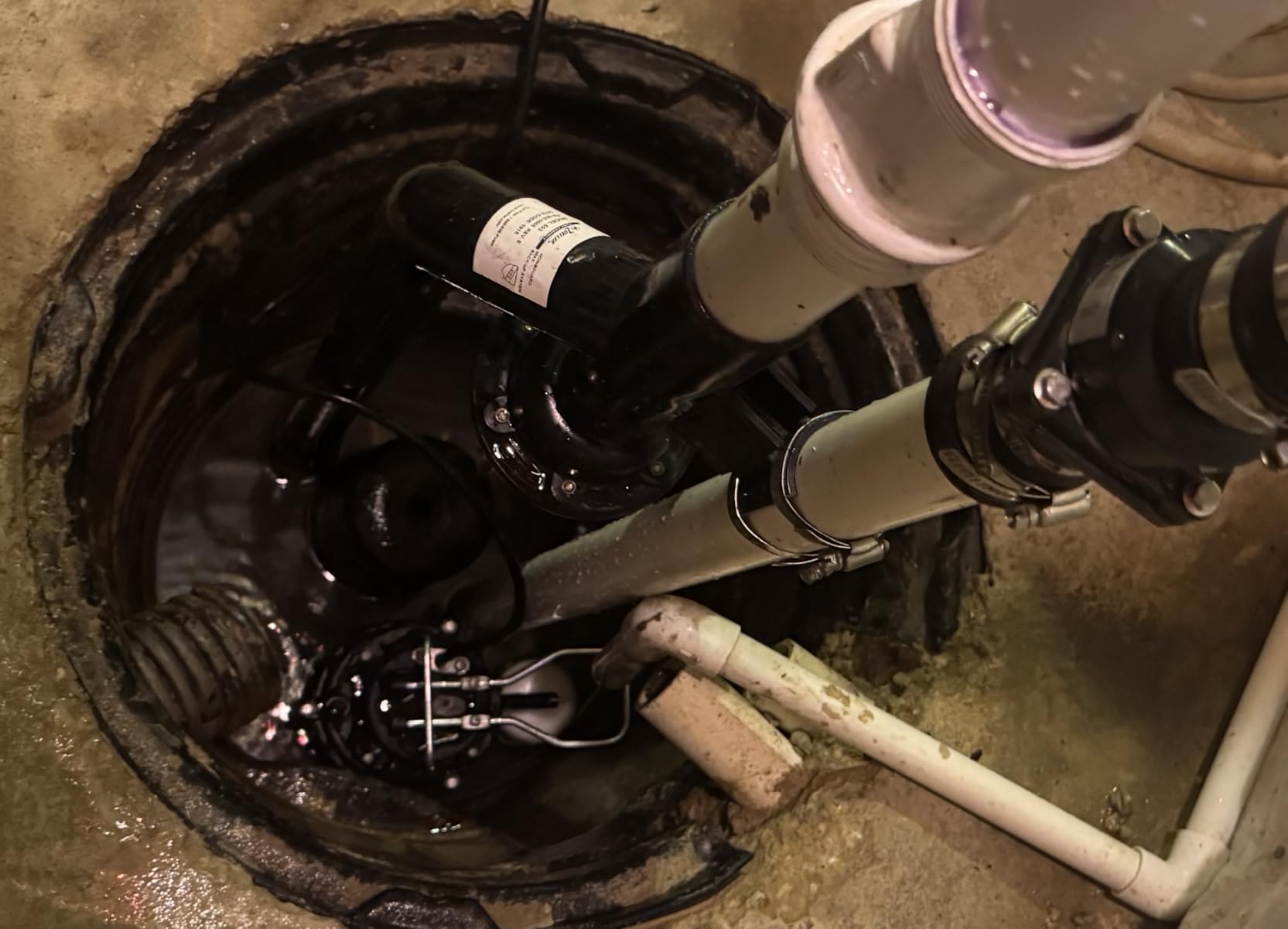
Two design choices set this pump apart from other high capacity units. The top suction arrangement moves the inlet above the floor of the pit so debris settles beneath it instead of in front of it, and it removes the need to drill a weep hole through the basin floor during installation.
Owners report that the CDU980E runs quietly relative to lighter pumps, and several describe units still going after a decade or more of service. The 3479 reviews here make it the most reviewed pump in this roundup, which means the failure patterns are well documented rather than anecdotal.
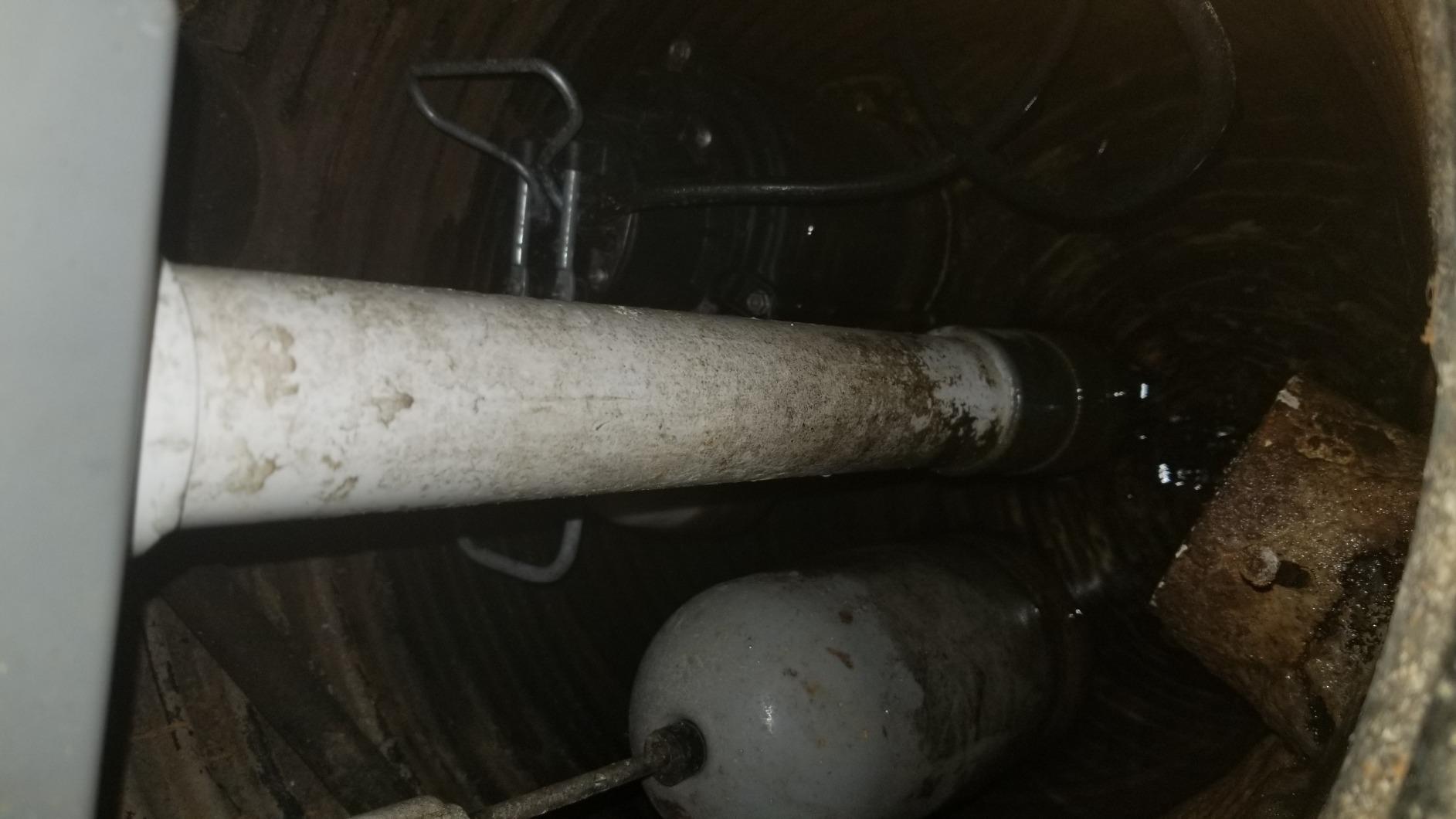
What you gain by oversizing the motor
Throughput headroom is the entire point. A pump that clears a pit before the next wave of groundwater arrives never runs long enough to overheat, and it never short-cycles, which is the fastest way to burn out a motor bearing and a float switch in the same year.
For snowmelt climates, the same logic applies to spring runoff. The listed 5-year warranty is also the longest in this group, which for a pump that sits in water year round is a reasonable proxy for expected service life.
Where it falls short
A 3/4 HP motor pulls meaningfully more current than a third horsepower unit. If your sump pit is fed by a French drain and the basement stays mostly dry between storms, you are paying for capacity you will rarely use.
Reviewers in noise-sensitive homes note that high capacity is audible through a finished floor. If the basement is a bedroom suite rather than a storage space, weigh that against the flooding risk before choosing.
3. WAYNE CDU790 (1/3 HP) – Best Value Cast Iron Pump
- Top suction eliminates air lock and clogging
- Epoxy coated steel housing with stainless fasteners
- Float switch tested to 1 million cycles
- 4600 GPH for heavy rain and snow melt
- Fits narrow pits
- Float on and off level is fixed
- 1/3 HP lags larger motors in extreme inflow
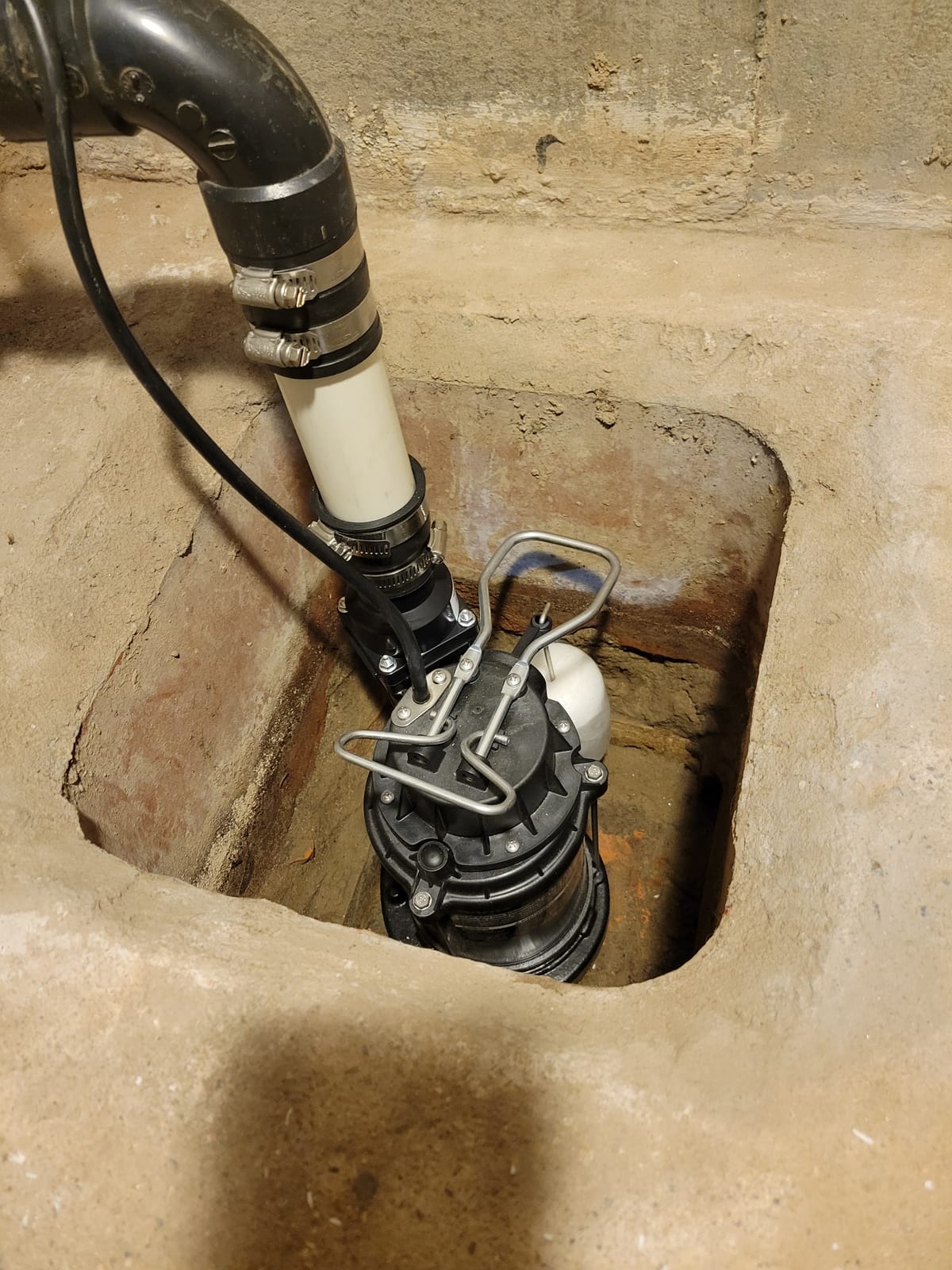
The CDU790 is the pump we would put in a normal basement with a normal water problem. It is a third horsepower cast iron unit rated at 4600 GPH, which sits right at the residential benchmark that contractors quote when they size a pit.
The construction is heavier than the price suggests. An epoxy coated steel motor housing, stainless steel fasteners, and a cast iron volute mean the corrosion-prone parts are the ones that matter, and Wayne assembles the pump in the USA.
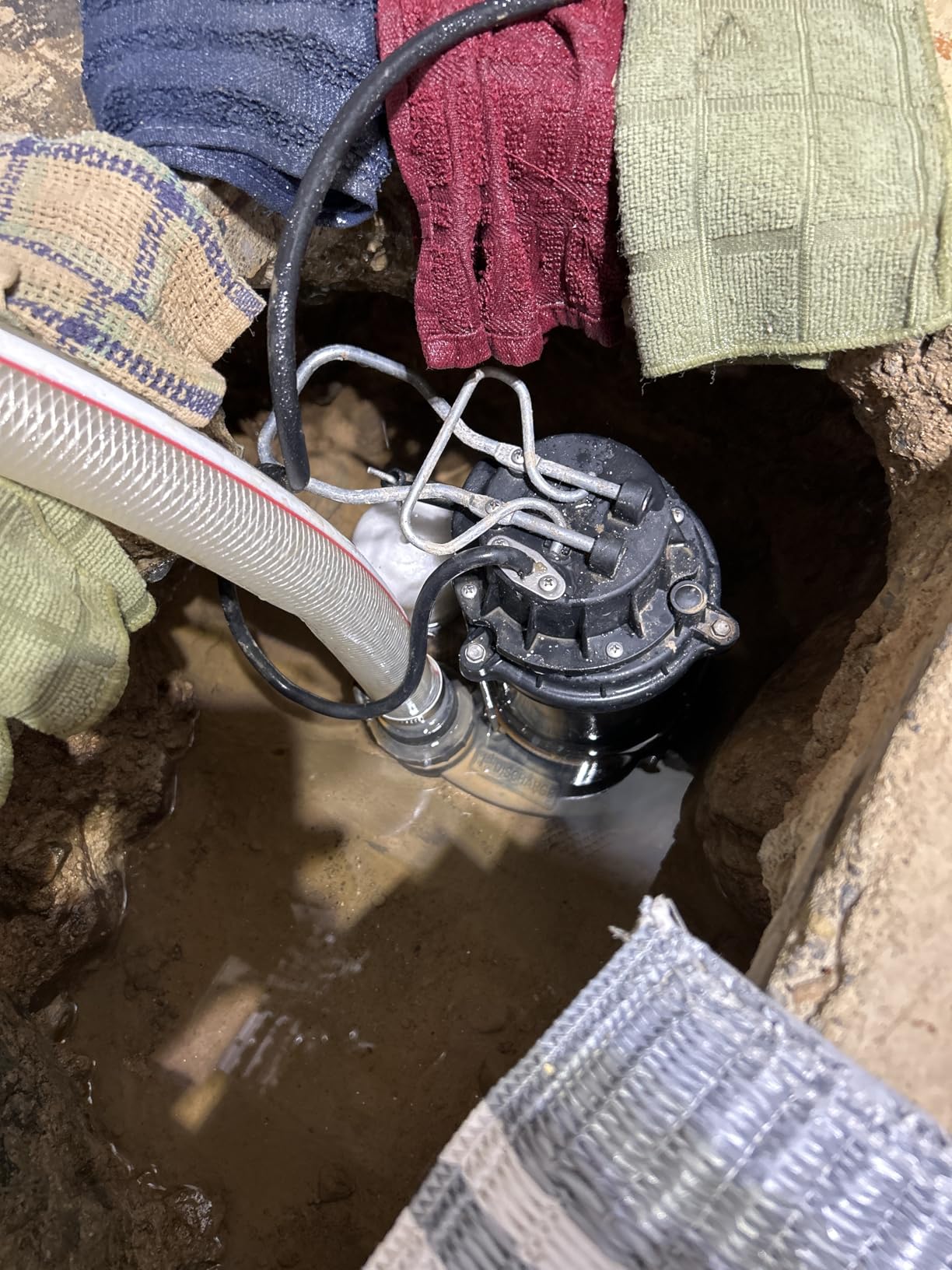
The integrated vertical float switch is rated by the manufacturer as tested to 1 million cycles. In plain terms, that is the single component most sump pump owners replace, and this is the one specification on the box most worth reading carefully.
Owners consistently report units running 7 to 13 years before anything fails, and several mention the pump emptying the pit faster than they expected for a third horsepower motor. Installation is often described as a 15 minute job with no weep hole drilling.
Why this is the value pick
You get a cast iron volute and a metal motor housing at a price point where most competing pumps are molded thermoplastic. That material difference is the main reason a pump outlives its warranty, and it is the hardest thing to add later.
The footprint is also compact enough for a narrow basin, which matters if your pit was built to code decades ago and does not meet the 18 inch diameter many modern pumps want.
Where it falls short
The float switch on and off points are fixed. Changing them requires adding a hose float extension, so if your pit is unusually deep or your shutoff level is too low, plan for that extra part.
Second, in extreme inflow the smaller motor simply loses the race. If your pit fills during a single storm faster than this pump can empty it, step up to the CDU980E rather than expecting a bigger pump to fix an undersized basin.
4. Superior Pump 92341 (1/3 HP) – Budget Cast Iron With a Small Footprint
Superior Pump 92341 1/3 HP Cast Iron Submersible Sump Pump with Vertical Float Switch
- Rugged cast iron construction with factory testing
- Vertical float switch uses little pit space
- Adjustable float arm for narrow basins
- Compact body fits beside a backup pump
- Spare parts widely available
- Louder than Wayne or Zoeller cast iron units
- No discharge adapters included
- 10 foot cord is short for distant outlets
The 92341 answers a narrow question well: what if your pit is small and your budget is fixed? The body is cast iron, the footprint is compact, and the vertical float switch leaves most of the basin free for a second pump.
One owner in the reviews installed this alongside a battery backup in a very small sump, which is exactly the layout this pump suits. Superior pumps these units 100 percent before shipping, and replacement parts are easy to source, so a mechanical failure is a repair rather than a full replacement.
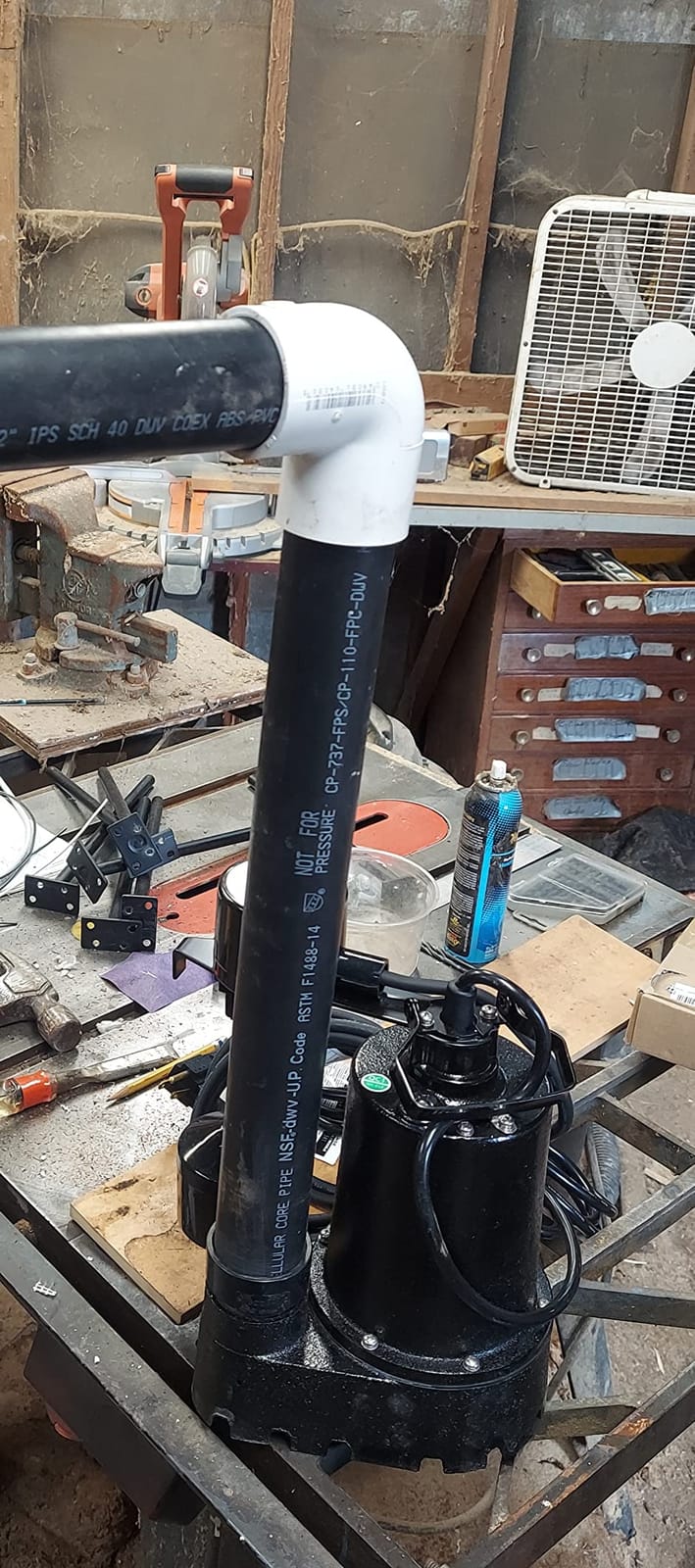
Be clear-eyed about the capacity figure, though. The manufacturer rates this model at up to 2760 GPH, which is well under the 4600 to 5490 GPH range of the cast iron pumps above it. Several owners report it moving as much water as the half horsepower pump it replaced, but the paper number is the smaller of the two.
That makes it a good fit for groundwater seepage and a normal pit. It is a poor choice for a high water table home where the basin fills in minutes.
Who should buy this one
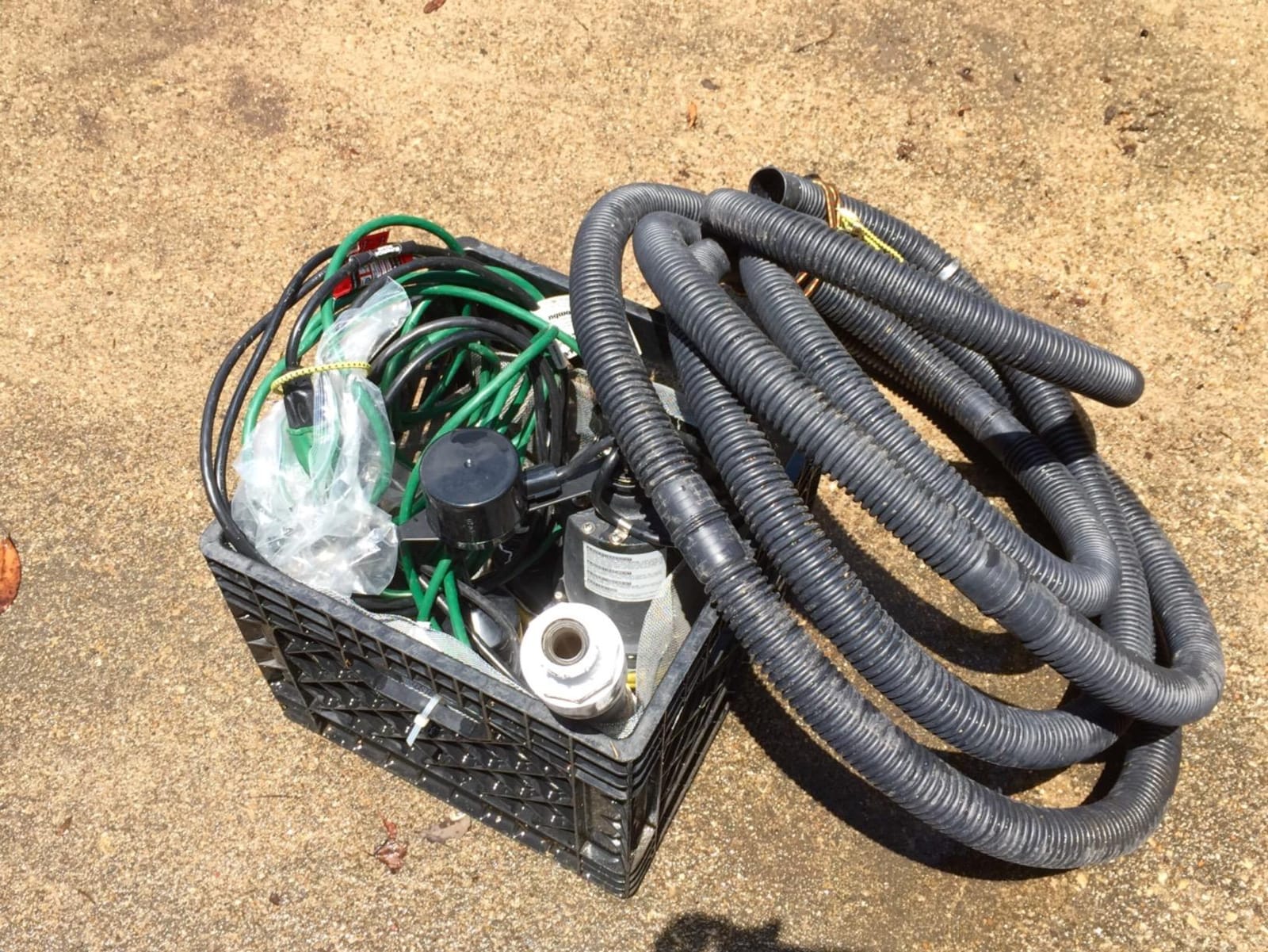
Buy it if you have a tight basin, you are pairing it with a backup pump, and you want a metal body without a premium price. The adjustable float arm is genuinely useful when you need to control the shutoff level in an oddly shaped pit.
Owners who came from a larger pump frequently note it doing the same job. Just measure your basin first, because this is a compact unit that works because of its size rather than in spite of it.
Where it falls short
The most common complaint is noise. Reviewers consistently describe it as louder than premium cast iron units from Wayne or Zoeller, which is the trade for the lighter price tag and smaller motor.
Also budget for fittings. Discharge adapters are not included, and the 10 foot cord is short if your outlet sits far from the pit. Customer support is also described as giving incomplete sizing answers, so do your own basin math.
5. WAYNE CDU800 (1/2 HP) – The Highest Rated of the Group
WAYNE CDU800 1/2 HP Submersible Sump Pump – Cast Iron & Stainless Steel, Vertical Float Switch, 5,100 GPH, 3-Year Warranty
- 5100 GPH from a 1/2 HP motor
- Cast iron and corrosion resistant steel
- Float switch tested to 1 million cycles
- Top suction minimizes clogging
- Code compliant 1-1/2 inch NPT discharge
- Fixed float switch water level
- Replacement switch is the likely service item
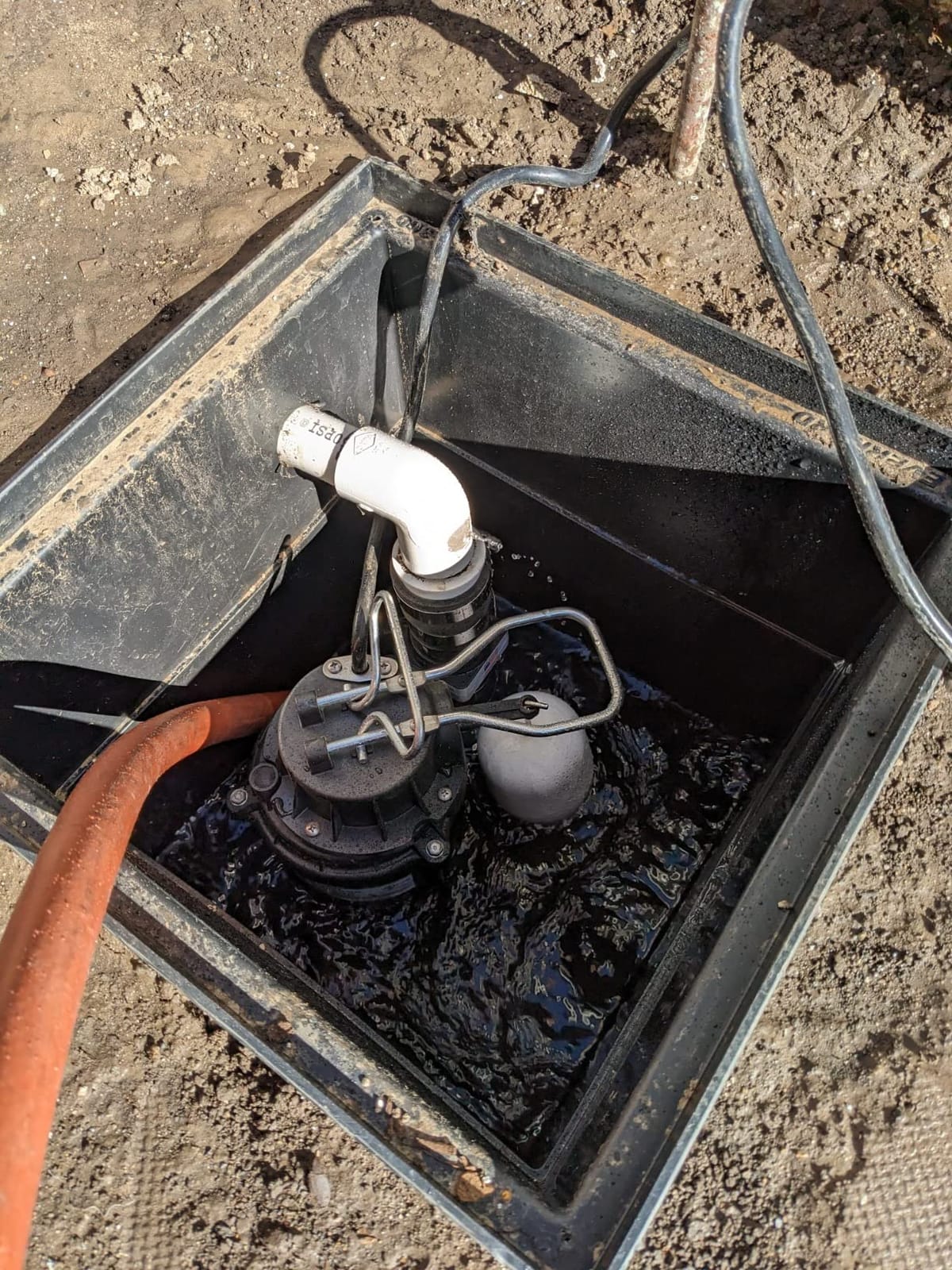
At 4.8 out of 5 across 1307 reviews, the CDU800 carries the highest average rating of any pump we evaluated. It is a half horsepower unit rated at 5100 GPH, and it pairs that throughput with cast iron and corrosion resistant steel construction.
The design is the same well-executed family as the CDU790: integrated vertical float, top suction inlet, no weep hole required. If you like the idea of the CDU790 but want more capacity, this is the step up rather than a sideways move.
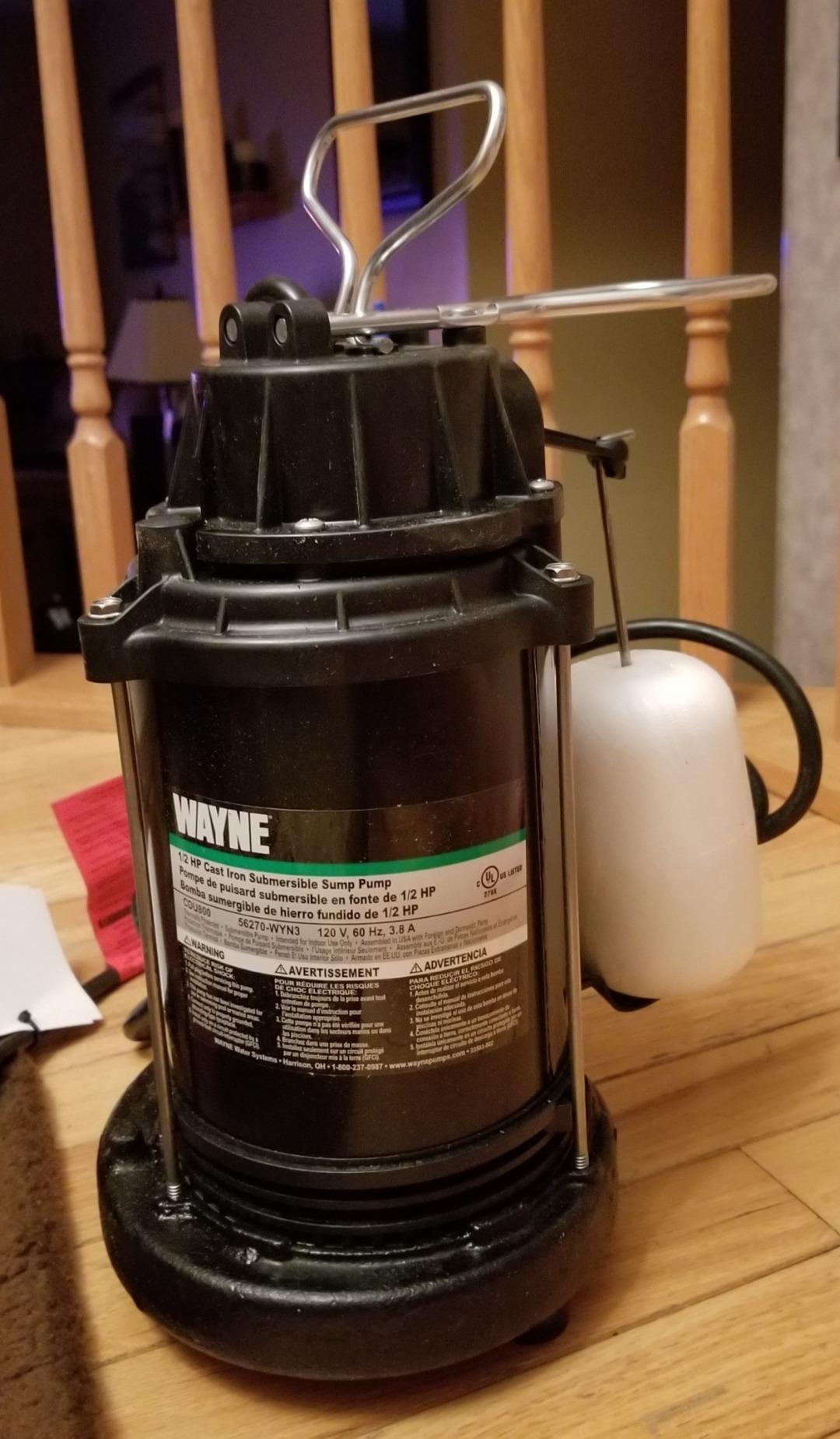
The 1-1/2 inch NPT discharge meets standard building codes, which means it will mate with the discharge line most existing basements already have. That single compatibility detail removes the most common reason a straightforward pump swap turns into a plumbing project.
Owners describe a balanced package: enough power for heavy rainfall and snow melt without the current draw of a 3/4 HP motor, plus quiet automatic operation. Wayne assembles it in the USA and warrants it for three years.
Where half horsepower is the right answer
Half horsepower is the sweet spot for most mid-size basements. It clears typical groundwater inflow with headroom for a storm, and it does not short-cycle the way an oversized pump does when the basin is small.
Short-cycling deserves more attention than it gets. Every start-stop cycle wears the motor windings and the float switch, and a pump that cycles 30 times an hour in light seepage will age faster than one that runs steadily for ten minutes at a time.
Where it falls short
The float switch water level is fixed, exactly as on the CDU790. If your pit needs a custom on and off point, this pump will not give it to you without an accessory.
Second, warranty length is three years rather than the five years on the CDU980E. That is a reasonable trade for the lower running cost, but it is worth knowing if you are sizing for a decade of service.
6. Liberty SumpJet SJ10 Water Powered Backup – Best for Power Outages
- Runs on municipal water pressure with no battery runtime limit
- Flow close to a 1/2 HP primary pump
- Fully assembled and easy to install
- Backs onto existing discharge plumbing
- Needs a supply line backflow preventer and shutoff valve
- Long body is hard to fit in shallow pits
- Several points must align precisely
- Requires 20 to 100 psi inlet pressure
This is the category that almost every roundup leaves out, and it is the one that matters most the night the power goes out. The SumpJet SJ10 has no motor and no battery. It runs off the pressure of your municipal water line, which is a supply that does not disappear when the electricity does.
Flow is the headline. At 19.8 GPM the manufacturer puts it close to a half horsepower primary pump, and well above what a typical battery backup can move. A backup that cannot keep pace with inflow simply delays the flood.
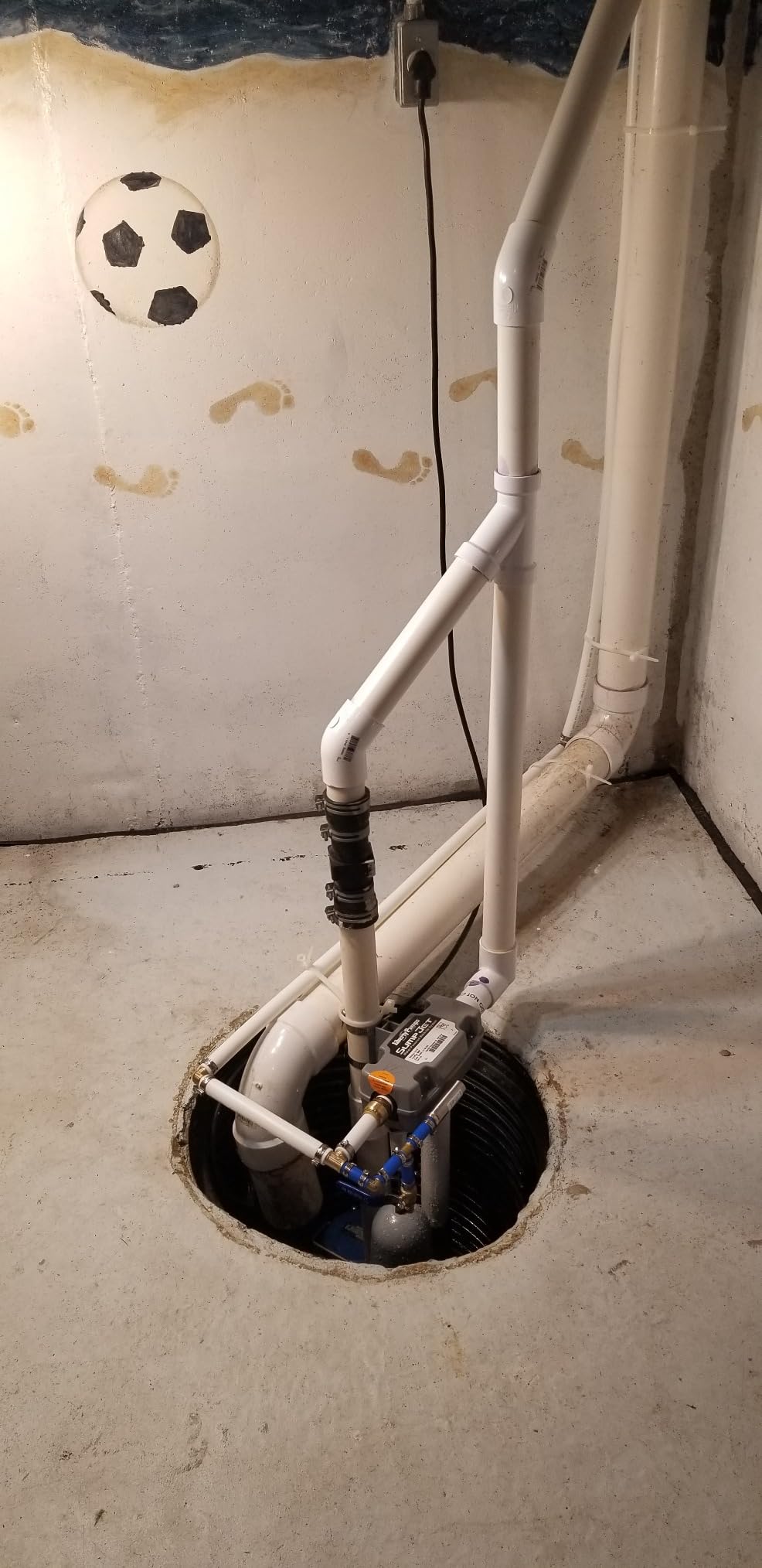
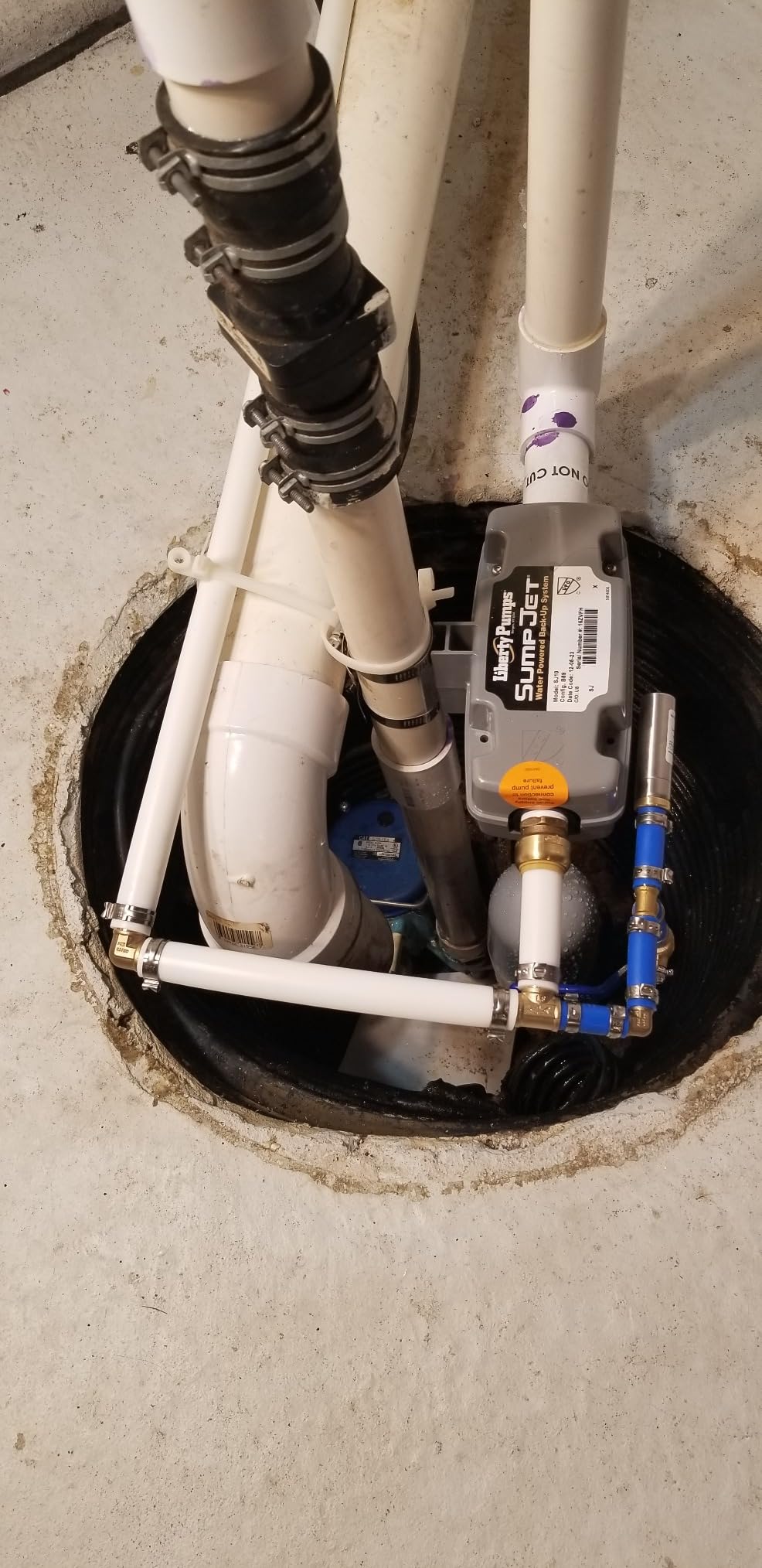
Several owners describe installing it themselves, which is reasonable. The unit arrives fully assembled at just 5 pounds, and it ties into existing discharge plumbing with PEX and push-fit fittings.
What makes it compelling is the failure mode it removes. A battery backup has a finite runtime and a battery that ages whether or not you use it. This pump has neither problem.
Where a water-powered backup wins
Rural homes, and any house where outages cluster with heavy rain, benefit most. The pump needs between 20 and 100 psi of inlet pressure, which is well within a normal municipal supply but which a well system may not deliver reliably.
It also solves the short-cycling problem that plagues battery backups in shallow pits. Because it discharges at a steady rate rather than in bursts, it keeps the water level moving instead of oscillating.
Where it falls short
Installation is more involved than any other pump here. You need a 3/4 inch supply line, a backflow preventer, and a shutoff valve, so the materials cost lands on top of the unit.
The long body is also a problem in small or shallow pits, and because it needs standing water to prime, it leaves residual water in the basin before it begins to discharge. With rigid ABS pipe, several connection points have to align precisely, which is where most DIY installs go wrong.
7. Zoeller M98 Flow-Mate (1/2 HP) – Premium Pick for Long Service
- Oil filled motor dissipates heat for long life
- Non-clogging corrosion resistant vortex impeller
- LED power plug for at a glance power check
- Stainless hardware and float guard
- Built-in snap action float switch
- Snap action float and start capacitor reported failing within 1 to 3 years
- Weak customer service on warranty claims
- Heaviest unit in this roundup
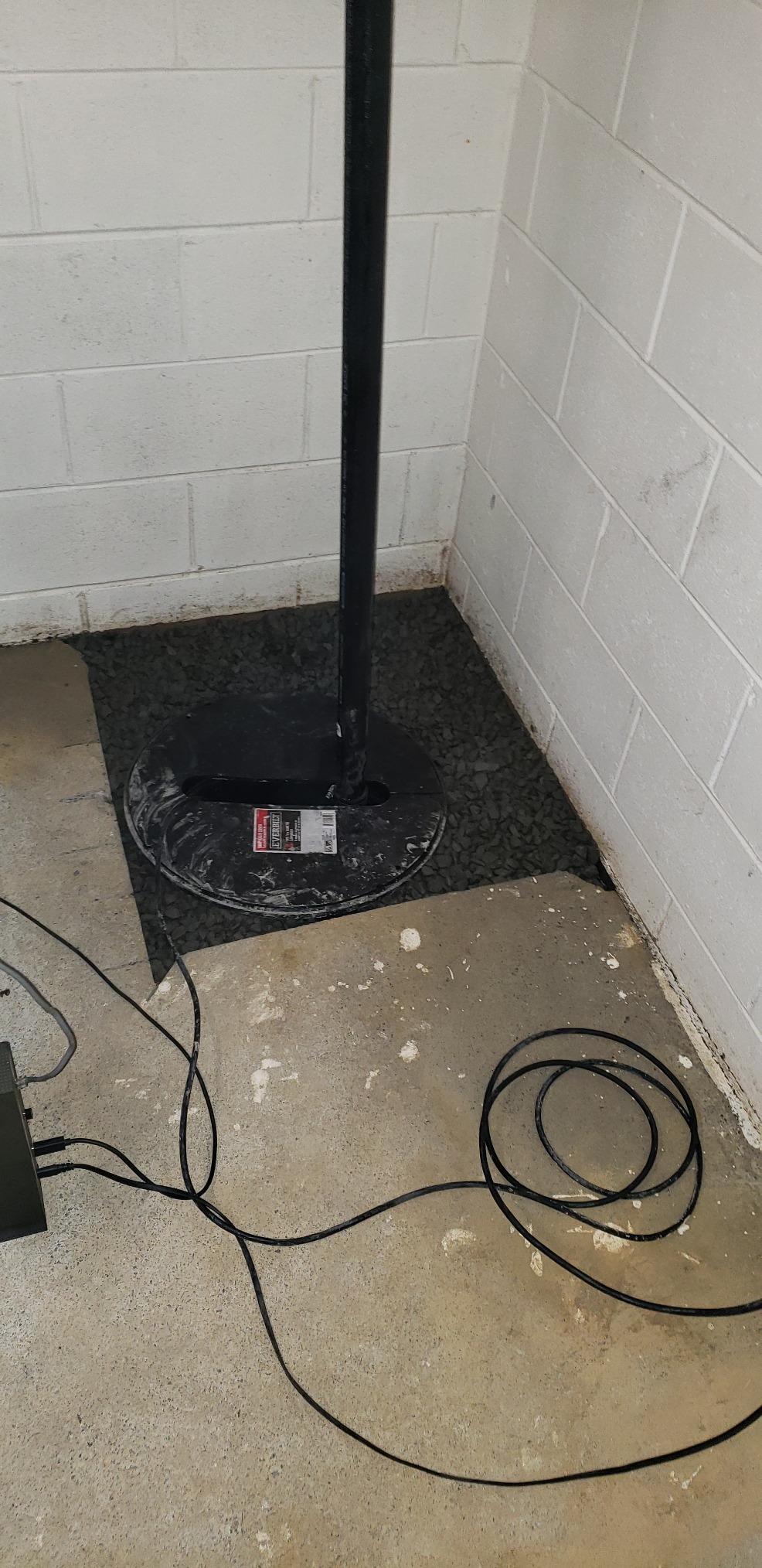
The M98 is the oldest design in this roundup and the one with the most committed owners. It is a half horsepower cast iron pump rated at 4320 GPH, built around an oil filled motor that pulls heat into the water like a radiator.
That motor design is why so many owners report individual units running seven to eleven years or more. It is also why this is the heaviest pump here at just over 14 kilograms, and why it needs a pit with real floor space rather than a narrow basin.
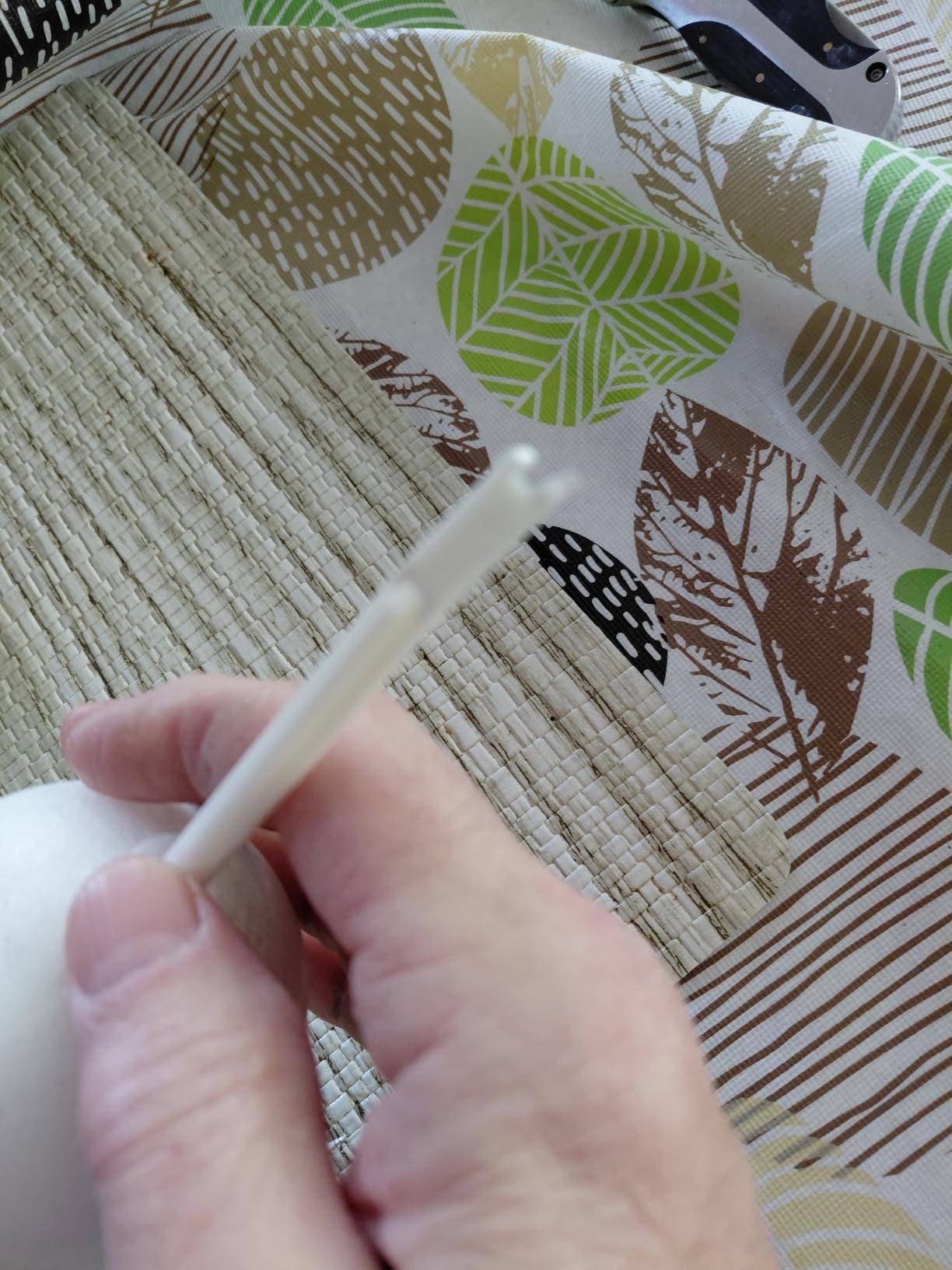
The vortex impeller is molded from corrosion resistant plastic, which sounds like a downgrade until you understand what it is doing. The plastic impeller resists the chemical attack that eats cast iron impellers in acidic groundwater, and it passes solids without binding.
Stainless steel hardware, a float guard, and a switch arm round out the corrosion protection. The LED power plug is the same diagnostic feature found on the M53 and remains genuinely useful.
Why it earns a place despite the rating
The 4.4 rating is the lowest in this roundup, and the complaints cluster in one place rather than being spread across the product. Owners are loyal to the pump itself and frustrated with the parts and the service around it.
If you keep a spare snap action float switch and a start capacitor on hand, this pump’s service life is hard to beat. Those are cheap parts relative to replacing a working cast iron pump body.
Where it falls short
The failure reports are specific and worth weighing. Some owners report the snap action float switch failing inside the first three years, and others report motor start capacitors on half horsepower units going early, sometimes within a year.
Support is also a recurring complaint, with warranty claims going unanswered in some cases. The warranty itself is short compared to the Wayne units, covering 12 months from installation or 18 months from manufacture. If you want the pump’s longevity but not the support risk, the CDU790 or CDU800 are the calmer choices.
8. Liberty Pumps 237 (1/3 HP) – Best Compact Design
- Vortex style impeller reduces clogging
- Deep finned powder coated aluminum housing
- Vertical magnetic float switch
- 1-1/2 inch discharge fits standard basins
- Handles 3/8 inch solids
- 2-year warranty is shorter than 3 to 5 year rivals
- Aluminum housing is lighter and less rugged than cast iron
The Liberty 237 is the lightest cast-metal option in this group at 11 pounds, and that low weight is its whole argument. Moving a 21 pound pump in and out of a pit is annoying; moving an 11 pound pump is not.
The housing is deep-finned powder coated aluminum, and the fins exist to move heat off the motor into the surrounding water. A vertical magnetic float switch provides automatic operation without a mechanical pivot to corrode or jam.
Vortex impellers are the reason the flow holds up. The design passes solids rather than catching them, and the pump handles 3/8 inch solids, which makes it usable for general basement drainage and not just clean groundwater.
Deep finned aluminum dissipates heat better than an unribbed plastic shell, and the fins are visible if you ever pull the pump for service.
The 1-1/2 inch discharge fits standard sump basins, and the thermally protected motor is designed to extend run life. At 44 GPM the flow rate is modest, which suits a pit that sees steady seepage rather than storm surge.
One thing to be clear about: the review base here is 346, the thinnest of the ten pumps we ranked. The 4.6 rating is good, but it rests on far fewer owners than the cast iron competitors above it.
When the light pump makes sense
Choose this one if you service your own pump regularly, if your pit is cramped, or if you want a second auxiliary pump for a finished drainage area rather than a single primary.
The magnetic vertical float is a genuine quiet upgrade over a mechanical float, and solids handling widens what you can put in the pit without worrying about a clog.
Where it falls short
The two-year manufacturer warranty is the shortest among the metal-bodied pumps here, and several rivals offer three to five years. Warranty length is usually a reasonable proxy for how long the manufacturer expects the pump to last.
Aluminum is also the softer metal. It corrodes faster and takes more abuse than cast iron, which is a fair trade for weight but a real one in a pit with aggressive groundwater.
9. Basement Watchdog Special CONNECT (BWSP) – Best Smart Battery Backup
The Basement Watchdog Special CONNECT Battery Backup Sump Pump System w/Copper-Wound Motor, 2,890 GPH (BWSP); WiFi-Capable w/Add-on Module
- Control panel lights up with a warning and explains what to do
- Battery fluid level sensor
- Compact pump fits small sump pits
- Dual float switch suits primary plus backup installs
- WiFi capable with add-on module
- Battery sold separately so installed cost is higher
- Throughput well below a primary pump
- Runtime limited by battery during an outage
- 2-year warranty
Basement Watchdog builds this as a diagnostic tool first and a pump second. The control panel lights up when something is wrong and tells you what to do about it, which is a meaningful upgrade over discovering a problem through wet carpet.
The package includes the controller, charger, dual float switch, pump, and battery box. A sensor monitors battery fluid levels, so the most common cause of a dead backup, an uncharged battery, is flagged before the storm rather than during it.
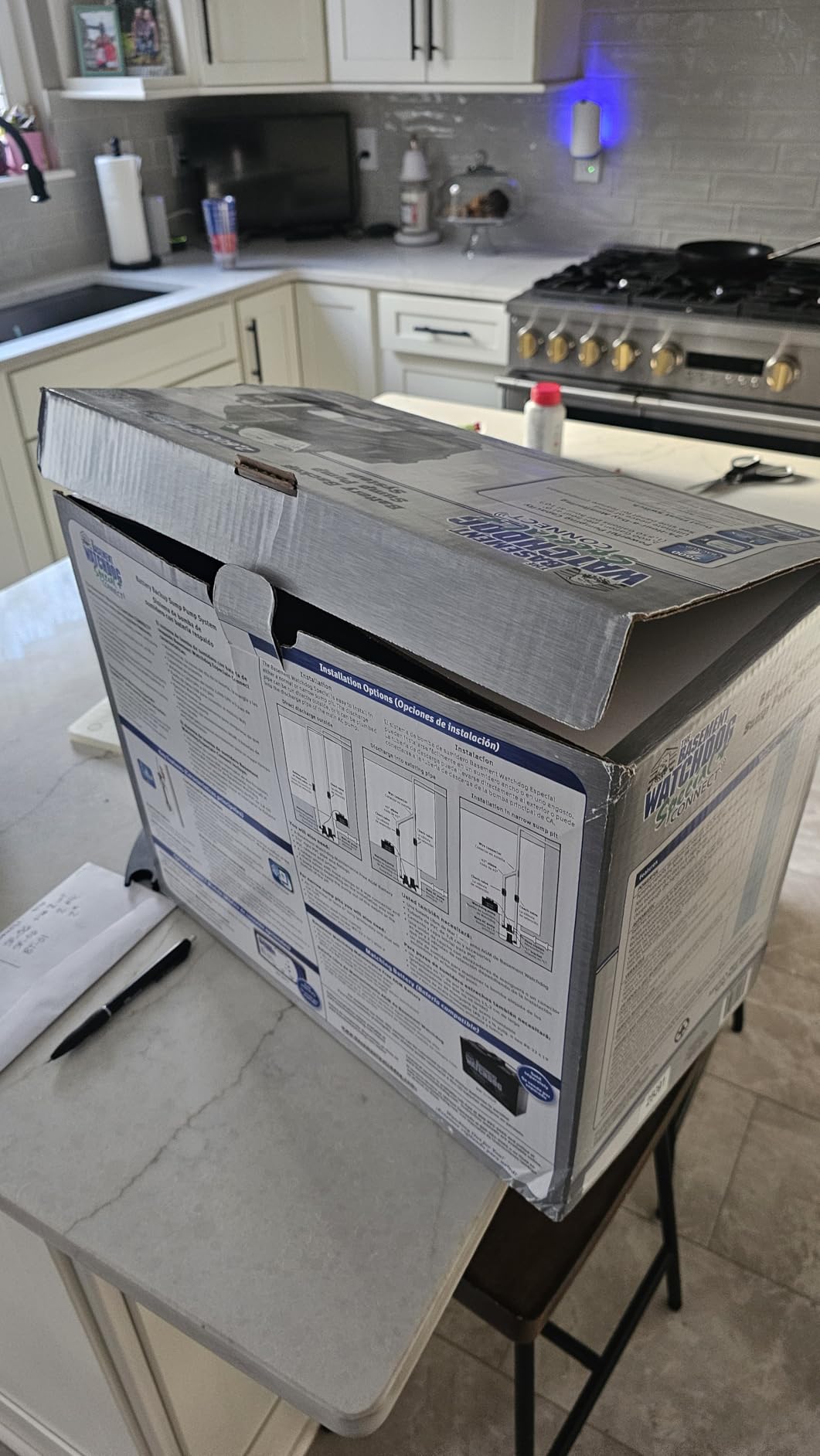
The CONNECT platform accepts a WiFi add-on module, which is the only route to remote monitoring in this roundup. That lets you check status and receive alerts from away, and it is the closest thing to a smart sump pump on the market right now.
Owners also like the compact body, which fits in small or narrow pits where the primary pump already occupies most of the volume. The dual float switch configuration is standard for primary plus backup layouts.

How to set expectations correctly
Read the flow numbers before anything else. This unit pumps 2500 GPH at zero lift and 1730 GPH at 10 feet, which is a fraction of what a third to three quarter horsepower primary moves. A backup is meant to buy time and reduce damage, not to empty a pit during peak inflow.
Its job is to run when the electricity is off and the main pump is dead. Under those conditions, moving water steadily for as long as the battery holds is exactly right.
Where it falls short
The battery is sold separately, so the real installed cost is meaningfully higher than the listed figure. Budget for a deep-cycle AGM battery sized for your pump, and our battery backup sump pump guide covers the battery types in detail.
Runtime is finite, the warranty is two years, and in a pit that fills fast this pump will simply lose the race. Size the basin or the primary pump first, then treat the backup as insurance.
10. RainBro PSU051V (1/2 HP) – Budget Pick With Real Flow
Rainbro 1/2 HP Thermoplastic Submersible Sump Pump With Vertical Float Switch, Utility Pump, Model# PSU051V
- Half horsepower output moving up to 3600 GPH
- Handles both clean and dirty water
- Quiet enough to only hear the discharge pipe
- Dual 3/4 inch and 1-1/2 inch outlets
- Quick swap-in replacement design
- Thermoplastic housing less durable than cast iron
- Requires a basin of at least 14 inch diameter
- Thermal overload can shut it down on sustained duty
The RainBro PSU051V is the pick for a homeowner replacing a failed pump on a tight budget who still wants half horsepower. It moves up to 3600 GPH from a 1/2 HP motor, which is more flow than most third horsepower cast iron pumps in this roundup.
It handles both clean and dirty water, and the vertical float switch activates at roughly 10 inches of water. The top handle means swapping it straight into an existing discharge line is quick.
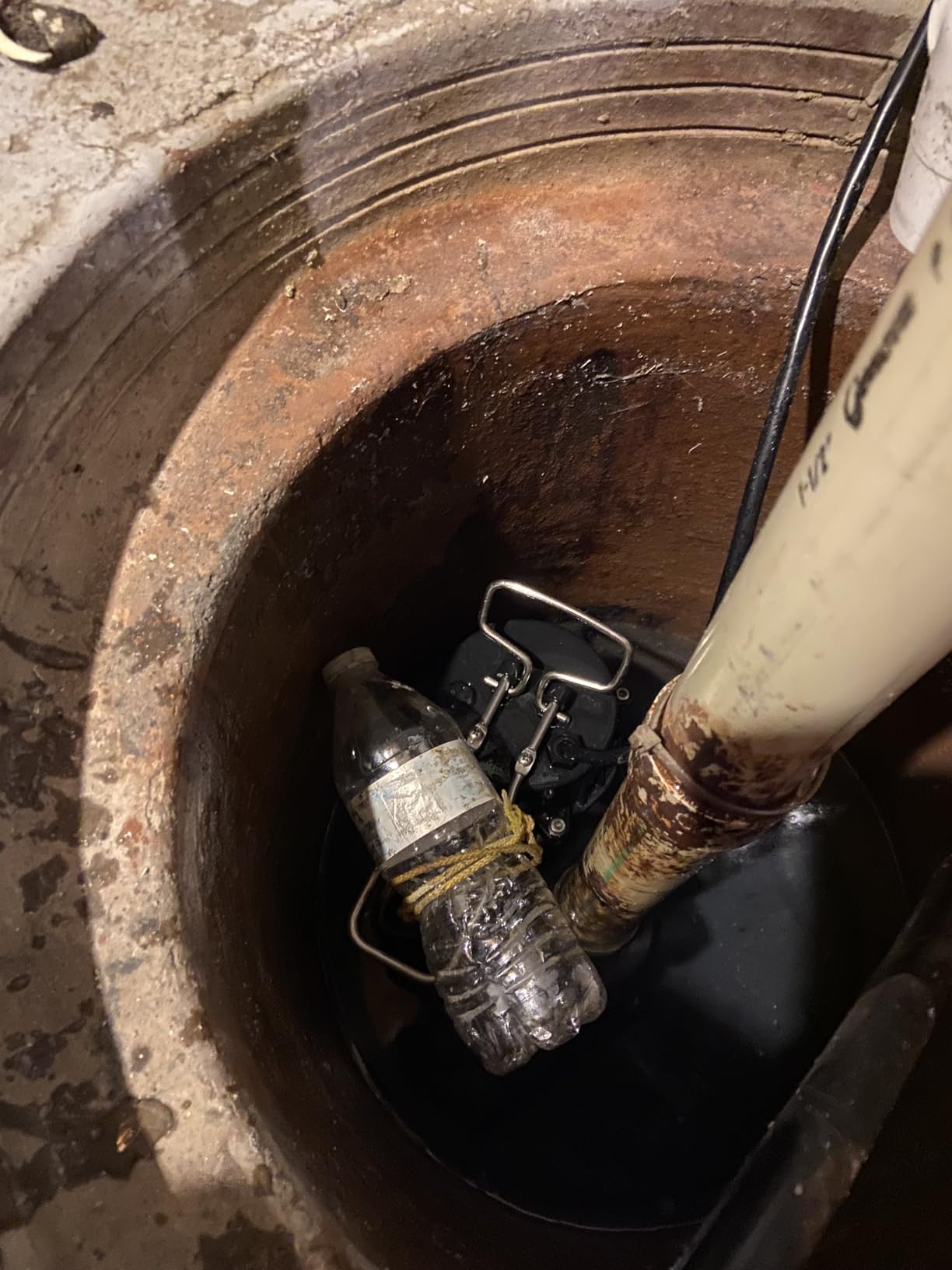
The dual discharge outlets are unusual at this level. Most pumps give you one size, while this one offers both 3/4 inch and 1-1/2 inch connections, so you can match the existing plumbing or tune flow to hose size.
Owners report the pump running quietly enough that the only thing audible is water moving through the drain pipe, and one buyer replaced a failed pump directly with no other changes. RainBro support is also described as responsive when sizing questions come up.
Where a thermoplastic pump makes sense
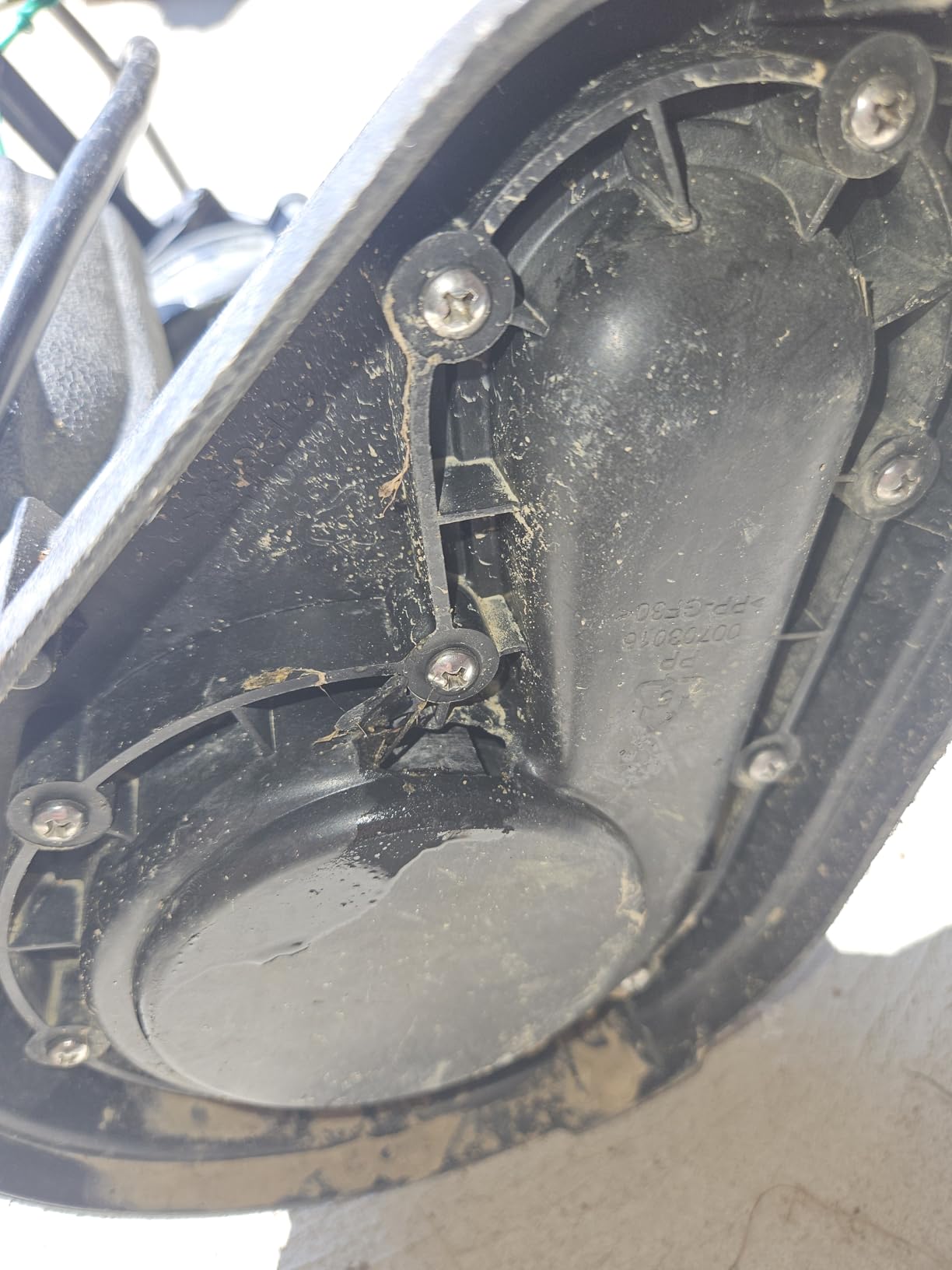
Plastic housing is not automatically a bad choice. It will not rust, it is lighter to handle, and in a basement with mild, clean groundwater it will often outlast a budget cast iron pump that corrodes from the inside.
The listed head of 31 feet and 22 foot maximum immersion depth give it plenty of range for a deep pit, and the motor includes thermal overload protection that shuts it down before it cooks itself.
Where it falls short
Measure your basin first. The pump is designed for basins of 14 inch diameter or greater, and forcing it into a smaller pit can restrict flow and prevent the float from moving freely.
Second, the thermoplastic housing will not match a cast iron pump for impact resistance, and the thermal overload protector can shut the pump down during sustained duty. If you want metal, step up to the Superior Pump 92341 instead.
How to Choose a Sump Pump for Your Basement
Specs on a box are marketing until you convert them into a number for your own pit. These six checks decide the purchase faster than any rating.
Match horsepower to inflow, not to aspiration
A 1/3 HP pump suits an average basement with steady groundwater seepage. A 1/2 HP pump handles a larger basin and heavier rainfall, and a 3/4 HP unit covers high water table homes and snowmelt regions.
Oversizing causes its own problem. A pump far larger than the inflow cycles on and off rapidly, and short-cycling wears motor windings and float switches faster than continuous running does. Size up only when the pit visibly fills faster than a smaller pump can clear it.
Understand that rated GPH is measured at zero lift
Every flow number printed on a sump pump box is measured at zero head, with no height to push against. Real output falls as the pump lifts water to your discharge, and it falls again along a horizontal run.
The Basement Watchdog spec sheet shows this clearly: 2500 GPH at zero lift drops to 1730 GPH at 10 feet. Add elbows, a check valve, and a long discharge line and the real number is lower still. Use the rated figure to compare pumps against each other, never to predict how fast your pit drains.
Choose cast iron for a long service life
Cast iron housing, motor, and volute resist corrosion and pull heat away from the motor. It is the single biggest material difference in this category, and both of the major contractor sources we read independently prefer it.
Thermoplastic and aluminum are lighter and will not rust, and in mild water with a limited budget that is a defensible trade. Just expect a shorter life than cast iron in a pit that sees heavy mineral content.
Understand the three float switch types
A vertical float switch slides on a stem and takes up almost no space, which makes it the right choice in a narrow pit. A tethered switch hangs from a cable and is easy to see in a deep pit but can tangle with debris. An electronic float switch has no moving float at all and reports its own status.
Whatever the type, the switch is the part that fails first. Buying a model with a switch available separately is the cheapest insurance in sump pump ownership. More detail is in our backup system roundup.
Decide whether you need a backup at all
A battery backup runs on stored power and gives you hours of protection during an outage. A water powered backup runs on municipal water pressure and has no runtime limit but needs a supply line. Both are secondary to a working primary pump.
Whichever you choose, the pairing rule matters. A backup that cannot keep pace with inflow only buys minutes, so fix the basin or the primary pump before adding the second unit.
Plan for noise where it matters
A finished basement puts a pump within feet of where people sleep. An airtight lid over the basin, a rubber-gasketed cover, and the shortest practical discharge line all cut the noise that travels up through the floor.
Also install the discharge line on a vibration-tolerant connection. Rigidly piping a pump to a wall turns every start into a hammer blow that you will hear through the framing.
Float Switch Failures and How to Diagnose Them
The float switch fails long before the pump body does, and that is the single most repeated complaint we found across plumbing forums. Recognizing the symptom tells you whether you need a switch or a whole pump.
First symptom, the pump will not start at all. Lift the float manually and hold it up while the pump is plugged in. If the motor runs, the pump body and power are fine and the switch is the fault. If nothing happens, test the outlet and then the pump.
Second symptom, the pump runs continuously and will not shut off. The float is not falling far enough or the switch is stuck closed, and debris wrapped around the float or a jammed tilt switch is the usual cause.
Third symptom, the pump short-cycles. The switch is triggering too close together, usually because the float is riding up on a plastic shaft or the basin is too small for the volume being pumped.
Fourth symptom, the pump cycles once and shuts down even though the pit is still full. That points to a float that cannot travel far enough, or a pit that fills faster than any pump can clear it.
Diagnosing a switch in a flooded pit is genuinely hard, because finding the float with a flooded pit is the challenge homeowners describe. The practical move is a garden hose on a string, lowered to draw the surface down until the float is visible and reachable.
On whether to repair or replace, the answer is usually the switch. A replaceable switch costs far less than a new pump of the same class, and every model on this list except the water powered and battery backup systems uses a standard float switch that is sold separately. Keep a spare on the shelf and the most common failure becomes a ten minute fix.
Frequently Asked Questions
Should I get a 1/3 hp or 1/2 hp sump pump?
A 1/3 hp pump handles an average basement with steady groundwater seepage and fits most residential pits. Choose 1/2 hp for a larger basin, heavier rainfall, or a pit that fills quickly. Step up to 3/4 hp for a high water table home or snowmelt regions. Avoid oversizing, because a pump far larger than the inflow short-cycles and wears out the motor and float switch faster.
Is a cast iron or plastic sump pump better?
Cast iron lasts longer because it resists corrosion and pulls heat away from the motor into the surrounding water. Thermoplastic and aluminum pumps will not rust and are lighter, which makes them easier to service and cheaper. For a metal-bodied pit with mineral-heavy groundwater, cast iron is the better long-term choice. For mild water on a limited budget, a quality plastic pump can serve several years.
What is the difference between a vertical float switch and a tethered float switch?
A vertical float switch slides along a stem mounted to the pump and takes up almost no space, making it ideal for narrow pits, though debris can wrap around the stem. A tethered float switch hangs from a cable and is easier to see and reach in a deep pit, but the cable can tangle with debris. Both fail from wear over time and both are sold as separate parts.
How to tell if your float switch is bad?
Four symptoms point to the switch. The pump will not start even when you lift the float by hand. The pump runs continuously and will not shut off. The pump short-cycles on and off rapidly. Or the pump runs once and stops while the pit is still filling. If the motor runs while you manually hold the float up, the pump body and power are fine and the switch has failed.
How much does it cost to replace a sump pump float switch?
A replacement float switch is far less expensive than a new pump of the same class, and it is the cheapest repair in sump pump ownership. This is the most repeated question on plumbing forums, and the advice there is consistent: keep a spare switch on hand so the most common failure becomes a short DIY job rather than an emergency callout.
Is a sump pump a red flag when buying a house?
A sump pump itself is not a red flag. It means groundwater reaches the foundation, which is normal in many regions, and a working pump is a positive sign that the previous owner dealt with it. What should worry you is a pump that is old, undersized, missing a backup, or has no discharge pipe leaving the house. Ask how old it is, whether it was ever serviced, and confirm the pit has a working check valve and a lid.
How often should I test my sump pump?
Test it twice a year, once before the rainy season and once at the end of fall. Fill the pit with a hose to the float switch trigger point and confirm the pump starts, runs, and shuts off cleanly. While the pit is full, look at the power plug if the pump has an LED indicator. Clean debris from the basin during the same visit, and test any backup system monthly during storm season.
Our Final Verdict for 2026
For most basements, the best sump pumps for basements are the Zoeller M53 Mighty-Mate for overall reliability and community trust, the WAYNE CDU790 when you want cast iron construction without a premium price, and the WAYNE CDU980E when your pit fills faster than a smaller pump can clear it.
Match the motor to the inflow, buy the metal body, and keep a spare float switch on the shelf. Those three decisions account for most of the difference between a pump that protects your basement for a decade and one that fails in the middle of the first storm of autumn.
This roundup was updated in 2026. Pump specifications and ratings change as manufacturers revise models, so check the current listing details before you buy.