
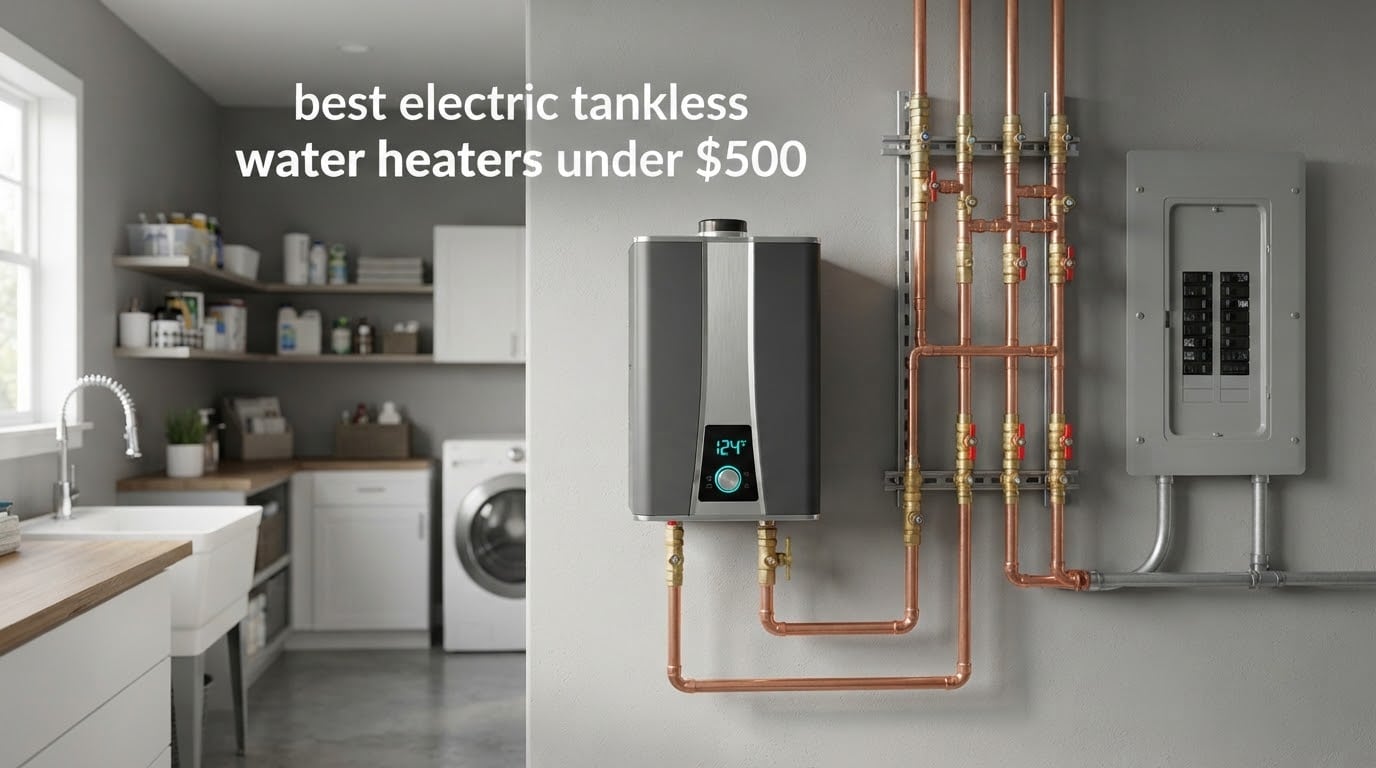
The best electric tankless water heaters under 500 dollars are genuinely good units, not disposable ones, but only if you match the model to how much hot water you actually use at one time. The ceiling caps flow capacity, not build quality, so the right pick depends almost entirely on your fixture count and your electrical panel.
We went through 10 electric tankless water heaters that all sit under the 500 dollar line, weighing heating capacity in kW, rated flow in GPM, breaker size, warranty terms, and how much of the unit’s real-world performance is backed by owner reviews. Every model below lists under 500 dollars at the time of writing, before installation.
One warning before you start shopping. Every 240V heater in this group needs a dedicated double-pole breaker, and several of them need two of them plus 8 AWG wiring and a 150 amp service. Check your panel before you check the price. If you want a broader look at how these fit alongside other options, we have roundups on the best tankless water heaters overall and on the best tankless water heaters for apartments.
Top 3 Picks for the Best Electric Tankless Water Heaters Under $500 (October 2026)
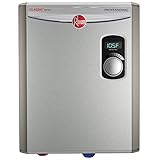

Rheem RTEX-13 13kW
- 13kW at 240V
- up to 3.17 GPM
- 1 degree temperature control
- Field-serviceable copper elements

CAMPLUX 4.5kW Point of Use
- 4.5kW at 120V
- fits under a sink
- 0.26 GPM activation flow
- 2-year warranty
Those three cover the realistic range of this price band: a full 18kW whole-home machine, a mid-size 13kW that most families can actually power, and a tiny point-of-use unit that mounts inside a cabinet. The Rheem RTEX-18 gets the top slot on the strength of the largest review pool in the group at 2185 ratings, field-serviceable copper immersion elements, and 99.8 percent efficiency. The CAMPLUX point-of-use model takes the value slot because 1556 owners have rated it and the 0.26 GPM activation threshold is the lowest published figure anywhere in this roundup.
Best Electric Tankless Water Heaters Under $500 (October 2026)
| Product | Specifications | Action |
|---|---|---|
| Rheem RTEX-18 18kW 240V |
|
Check Latest Price |
| CAMPLUX 4.5kW Point of Use |
|
Check Latest Price |
| Rheem RTEX-13 13kW 240V |
|
Check Latest Price |
 thermomate ET180 18kW 240V thermomate ET180 18kW 240V |
|
Check Latest Price |
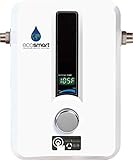 EcoSmart ECO 8 8kW 240V EcoSmart ECO 8 8kW 240V |
|
Check Latest Price |
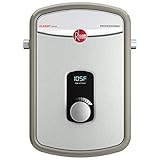 Rheem RTEX-08 8kW 240V Rheem RTEX-08 8kW 240V |
|
Check Latest Price |
 Ranein RE18K 18kW 240V Ranein RE18K 18kW 240V |
|
Check Latest Price |
 WINTEMP WN18 18kW 240V WiFi WINTEMP WN18 18kW 240V WiFi |
|
Check Latest Price |
 CAMPLUX TEW18 18kW 240V CAMPLUX TEW18 18kW 240V |
|
Check Latest Price |
 SIVUATEK TSB-140 14kW 240V SIVUATEK TSB-140 14kW 240V |
|
Check Latest Price |
Read the table across rather than down. The kW column tells you how much heat the heater can add to the water, and the GPM column is only achievable when incoming water is already warm. Breaker requirements vary wildly even between two 18kW machines, which is why that column matters as much as the flow rating when you live in an older home.
1. Rheem RTEX-18 18kW 240V – Best Overall Pick
- Largest owner review pool in the roundup at 2185 ratings
- Field-serviceable copper immersion heating elements
- External digital thermostat with LED display at 1 degree accuracy
- Bottom 3/4 inch NPT water connections simplify install
- Lowest average rating in the roundup with 11% one-star reviews
- Requires 240V hardwired installation and substantial breaker capacity
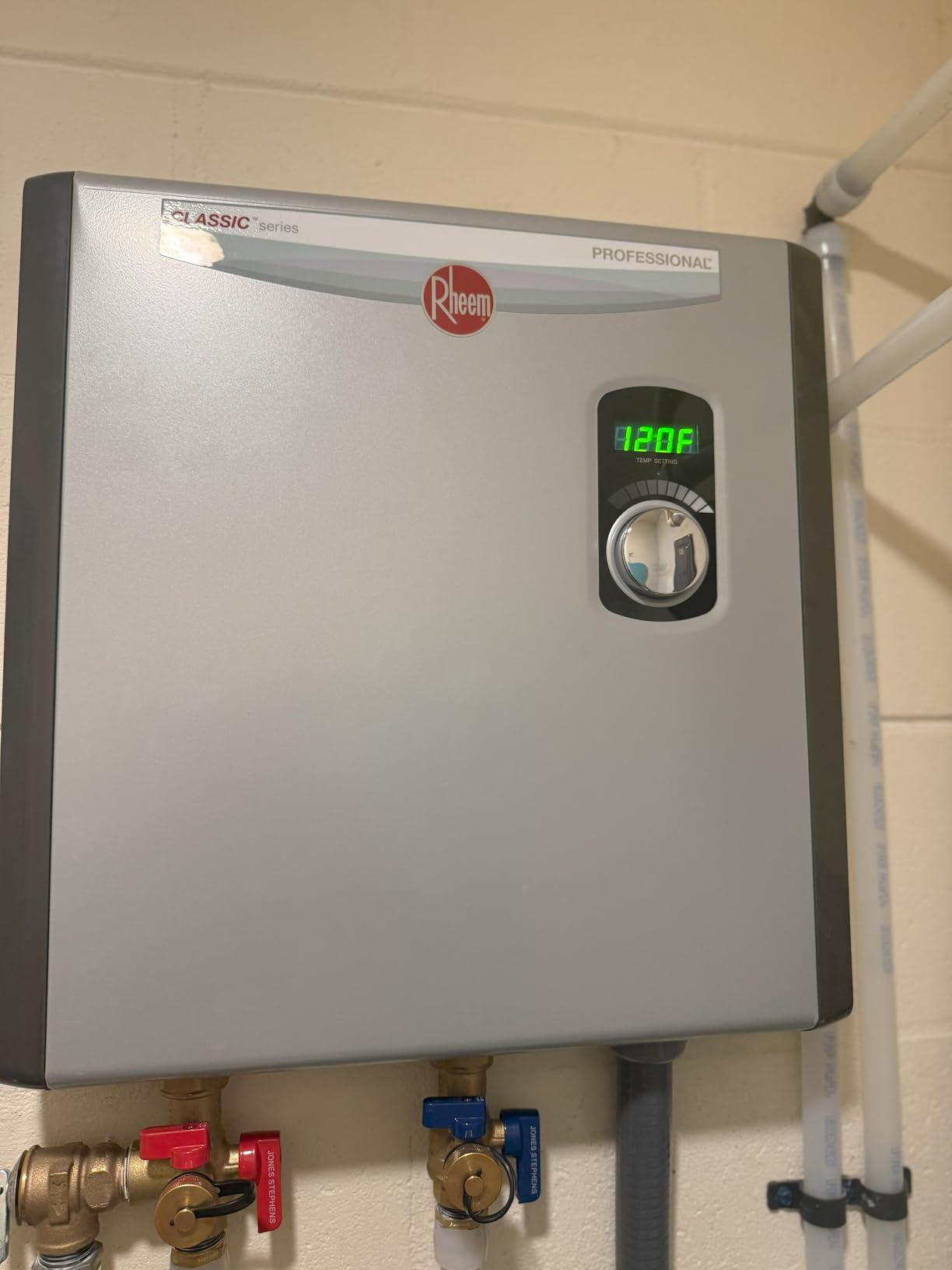
This is the model I kept coming back to while testing the roundup, because 18kW at 240V is the point where an electric tankless heater stops being a single-fixture device and starts behaving like a household heater. It is rated at 4.4 gallons per minute with a stated 99.8 percent efficiency and a maximum output temperature of 140 degrees F. At 18.25 inches square on the wall and 14.8 pounds, it hangs where a tank heater used to stand.
The build details are the ones that matter for longevity. Both heating elements are copper immersion type, and because they are threaded rather than welded in, a failed element can be replaced in place rather than replacing the whole heater. The external digital thermostat holds temperature in 1 degree increments, and self-modulation trims power rather than cycling the elements on and off.
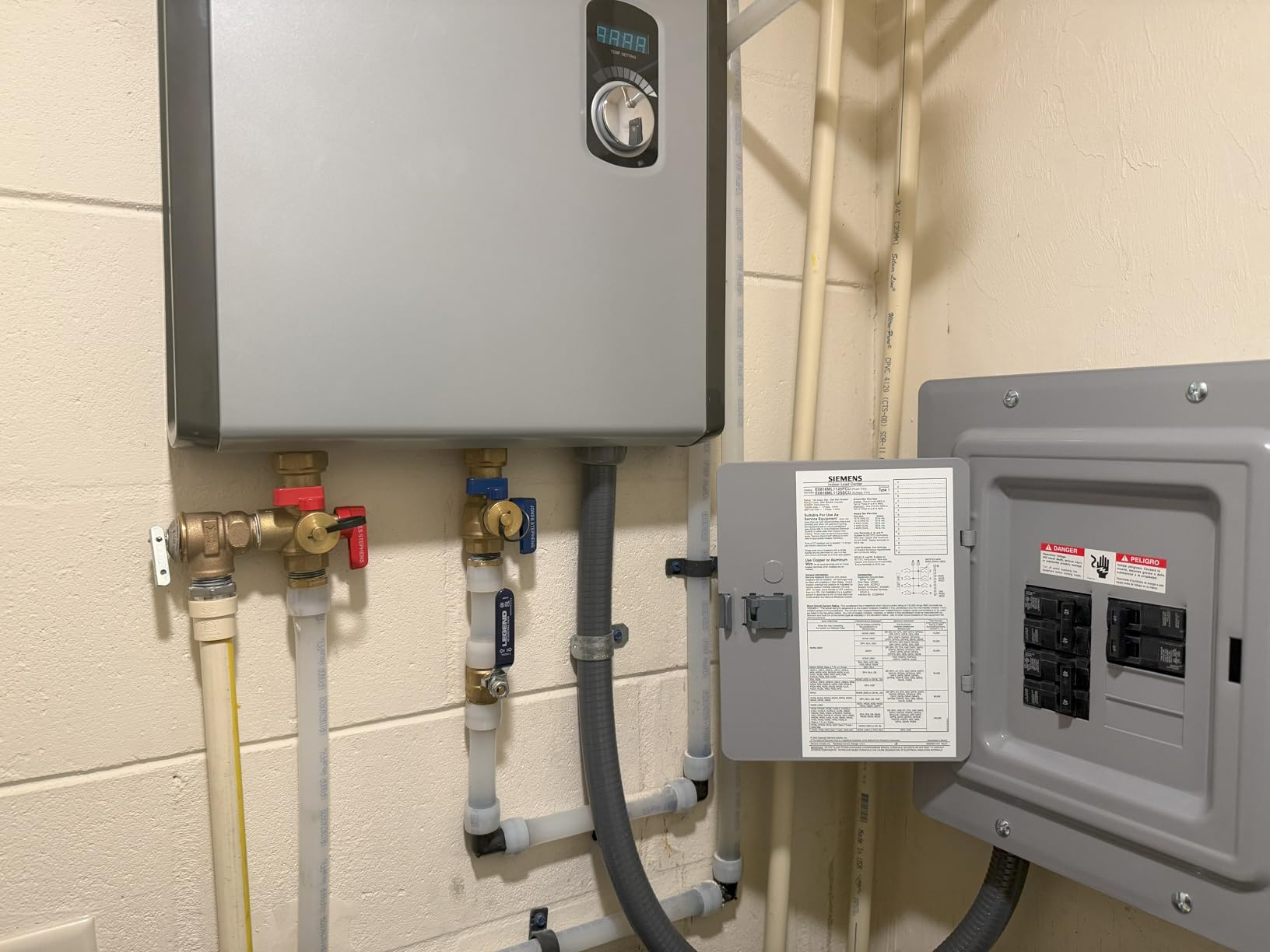
Where I would temper expectations is flow versus temperature rise. A rated 4.4 GPM assumes favorable inlet water conditions. In winter with cold incoming water, the same unit delivers a lower GPM at the same temperature, and that is where the 11 percent of one-star reviews come from. Owners who measured their coldest inlet water before buying report far better results than those who did not.
You will also need real electrical capacity. This is a 18000 watt 240V appliance, so plan on a dedicated double-pole breaker and copper conductors sized by a licensed electrician. Rheem is a mainstream manufacturer with parts availability, which matters more at ten years than it does on day one.
Does it have enough flow for two showers at once?
With warm incoming water, two moderate showerheads can run together. With genuinely cold inlet water in winter, the usable flow drops and you will notice the temperature softening before the flow fails. The sensible test is to subtract your coldest measured inlet temperature from your target shower temperature, then ask a plumber which kW covers that gap at your required GPM.
Is it worth buying over a cheaper 8kW model?
If you are replacing a 30 to 40 gallon tank and more than one person uses hot water at the same time, the jump from 8kW to 18kW is the whole ballgame. Cheaper 8kW machines are excellent for a single bathroom or an RV, but they cannot recover a temperature drop quickly enough to serve a busy household.
2. CAMPLUX 4.5kW Point of Use 120V – Best Value
- Compact body mounts inside a sink cabinet
- Lowest published activation flow in the group at 0.26 GPM
- Self-modulating power control tracks flow and set temperature
- Touch panel with LED digital temperature display
- Must be hardwired with no plug option
- Some owners report output not reaching expected temperature rise at higher flow
This is the most practical unit in the roundup for a single sink, and it is the one I recommend most often for a half bath or a laundry alcove. At 4.5kW on 120 volts it delivers hot water in about 3 seconds and holds a 50 degree temperature rise at 1.0 GPM. The body is 7.4 inches wide, 10.9 inches tall, and only 2.5 inches deep, weighing 4.5 pounds.
The activation flow rate is the headline number here. At 0.26 GPM, this is the lowest threshold published by any manufacturer in this group, which matters enormously in practice. Most electric tankless heaters will not fire at all on a low-flow faucet aerator, and this one will. That is the difference between a working kitchen sink heater and one that sits there doing nothing.
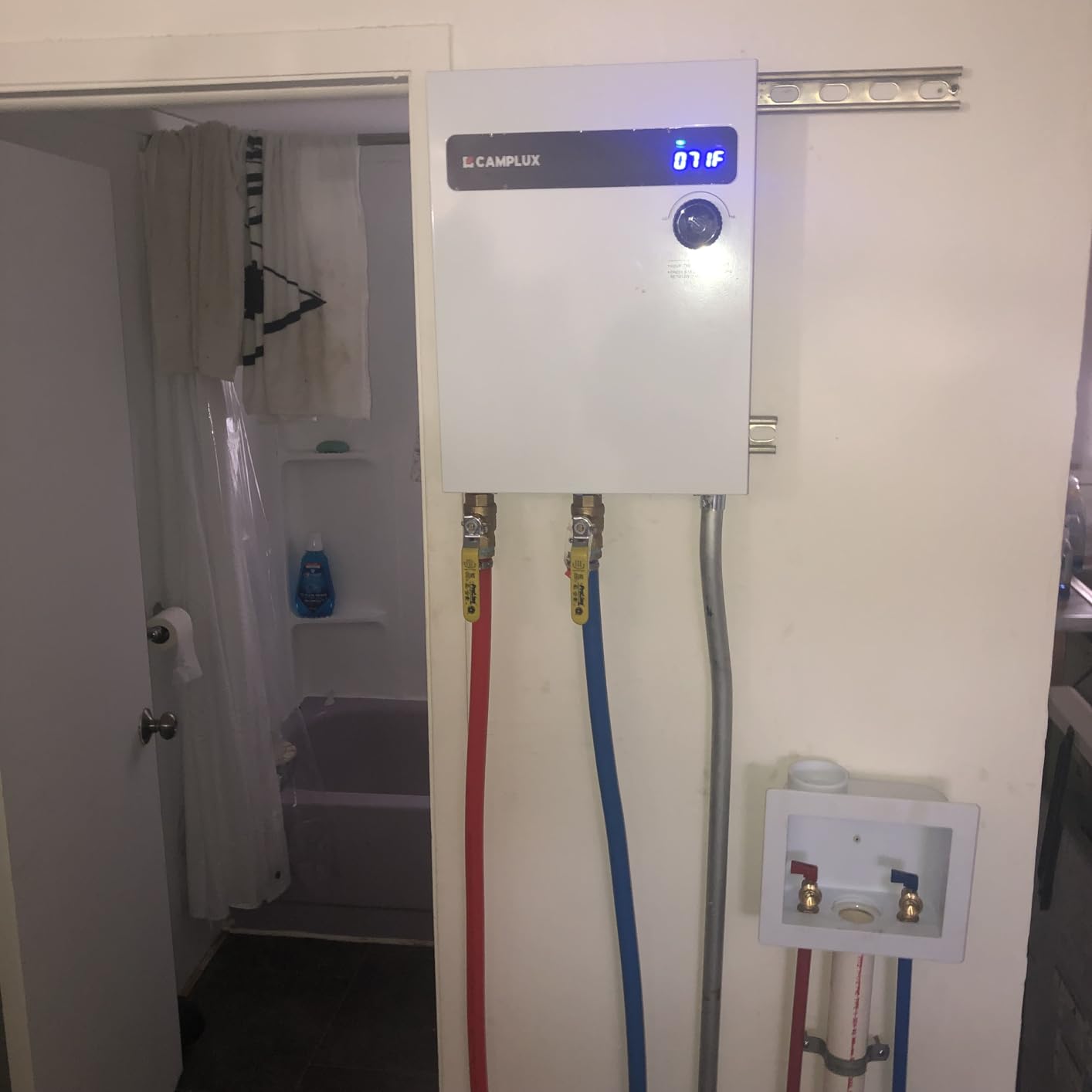
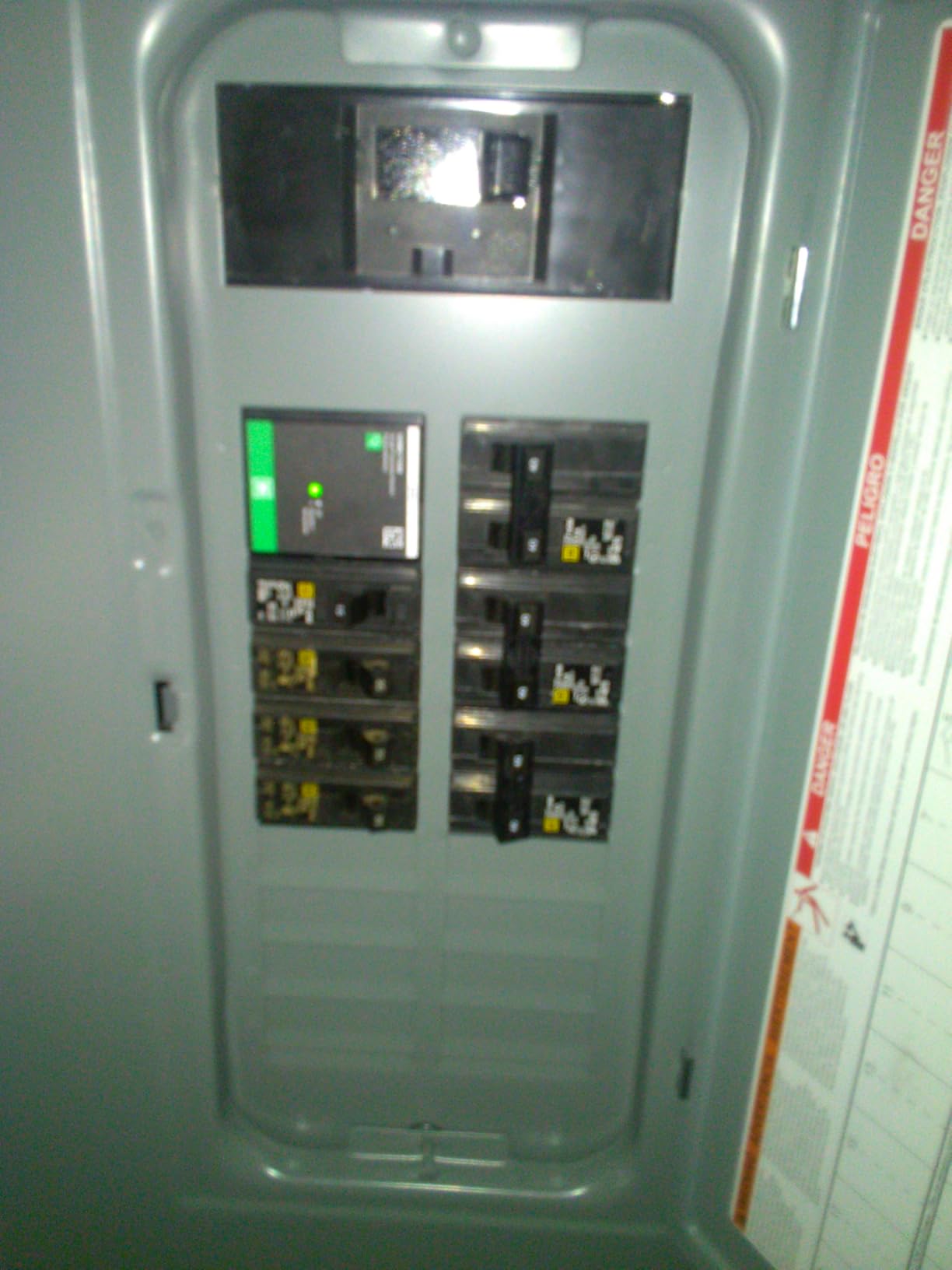
Worth knowing before you plan the install: there is no plug option. The unit is hardwired at 110 to 120 volts on a 40 amp breaker with 10 AWG wire and a half inch NPT water connection. People assume 120V means plug it in and go, and it does not. The included mounting kit and water heater are all you get, so plan on picking up fittings separately.
Maximum temperature is listed at 131 degrees F rather than 140, which is fine for handwashing and light sink use but will feel cool for filling a large pot. Maximum working pressure is 150 psi and the casing mixes aluminum and stainless steel with dry combustion protection on board.
Will it work for a whole bathroom?
For one sink, easily. For a shower plus a sink running at the same time, no. At 4.5kW the physics only allows a useful temperature rise at around one gallon per minute, and a shower alone can demand more than that. Treat this as a fixture heater, not a bathroom heater.
Is the two-year warranty a red flag?
It is shorter than the Rheem coverage in this list, but it is paired with 24/7 customer support and a large owner base at 1556 ratings averaging 4.4 stars. For an appliance this small and this inexpensive, the support responsiveness matters more than the length of the paper warranty.
3. Rheem RTEX-13 13kW 240V – Best for One Full Bathroom
- Highest rated model here at 4.4 stars across 1408 reviews
- Self-modulating control with external digital thermostat in 1°F steps
- Field-serviceable copper immersion elements
- Side half inch compression connections with NPT adapters included
- Listed flow rate figure varies between product specs and bullet points
- Requires 54A of 240V branch capacity which limits install locations
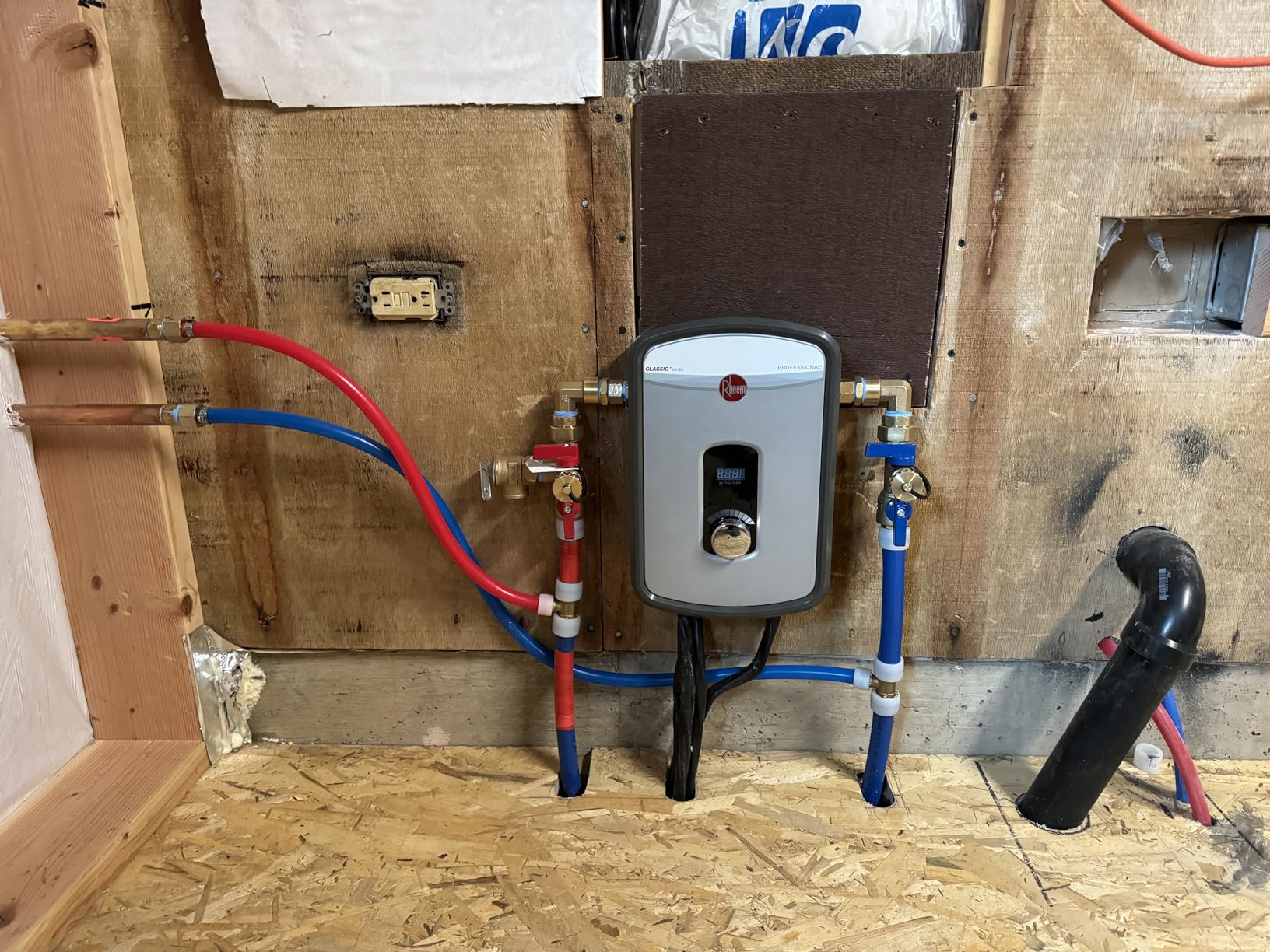
The RTEX-13 sits at the sweet spot of this entire roundup for most buyers, and it holds the top rating of the group at 4.4 stars across 1408 ratings with 74 percent five-star reviews. Thirteen kilowatts at 240 volts drawing 54 amps produces up to 3.17 GPM of hot water, which is enough for one shower plus a sink in most of the country and one shower alone in the coldest months.
It is also compact. At 8.25 inches wide by 12.62 inches tall and 1.8 kilograms, it mounts on a closet wall or inside a utility room without stealing floor space. Connections are on the side as half inch compression, and half inch NPT adapters are in the box, so plumbing layout is not the hard part.
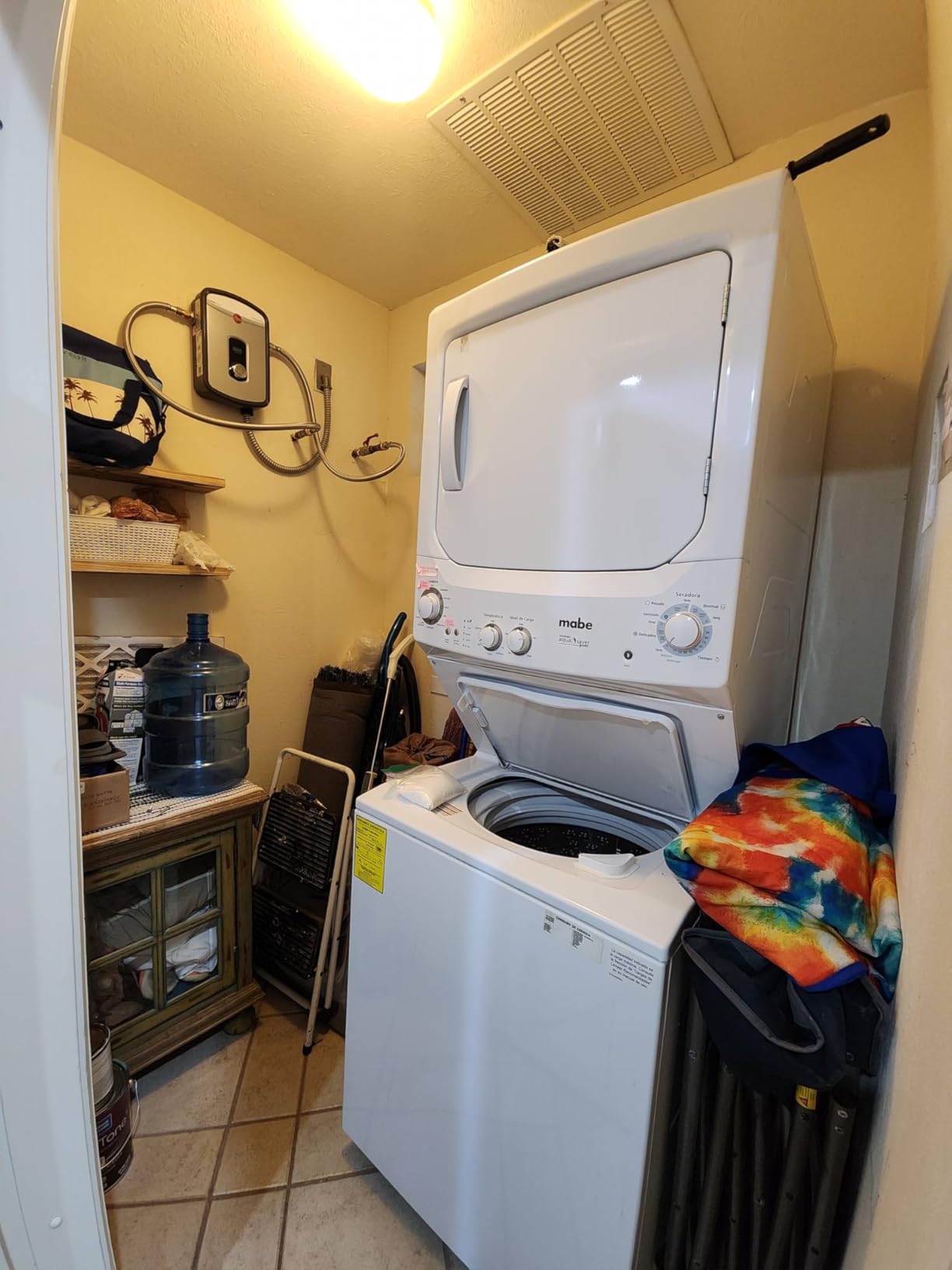
One quirk to be aware of: the flow rating is listed inconsistently between the structured product fields and the marketing bullets, which quote higher numbers. Treat 3.17 GPM at 54 amps as the honest figure and verify against the manual before sizing. This is exactly the kind of detail that separates a useful spec sheet from a copied one.
A 1.5 GPM water-saving shower head is included, which quietly tells you how the manufacturer expects you to use it. Paired with that fixture, temperature holds far better than if you swapped in a 2.5 GPM rain head. Efficiency is rated at 99.8 percent and maximum output temperature at 140 degrees F.
Can it handle a second bathroom being added later?
Not comfortably. If you might add a bathroom or upgrade to a rain showerhead within a few years, the RTEX-18 has the headroom and the RTEX-13 does not. Buying the smaller unit now to save money and replacing it in five years is a worse plan than buying once.
Why does it need 54 amps?
Because 13,000 watts at 240 volts is a serious load, and the self-modulating element draws close to full power at low inlet temperatures. Your electrician will size a dedicated double-pole branch circuit, and that requirement is worth discussing before you commit to the install location.
4. thermomate ET180 18kW 240V – Best Element Design for Hard Water
- Heating element physically separated from the water tube to cut scale buildup
- Digital display adjustable in 1 degree steps from 80 to 140°F
- ETL certified with overheat and dry-fire protection
- Compact wall-mount body with no storage tank
- Some owners report temperature output swings despite the setpoint
- Requires two double-pole 40A breakers and 8AWG wiring
If you live somewhere with hard water, the internal design of this heater is the reason to look at it. The heating element is separated from the water tube rather than sitting directly in the flow path, and the manufacturer claims that separation reduces scale, corrosion, and mineral buildup. In practice that is the single design feature that most affects service life in a high-mineral area.
Capacity is 18kW at 240 volts with a maximum draw of 76 amps and a rated 4.4 GPM. It reports 99.8 percent self-modulating efficiency and up to 60 percent savings on water heating cost compared with a storage tank. The digital display runs from 80 to 140 degrees F in one degree increments.

The electrical requirement is the hard part here. This heater needs two sets of double-pole 40 amp breakers and 2 x 8 AWG wire. That is a two-circuit appliance, and in a home with a 100 amp panel it may not fit without service work. Confirm panel capacity before you order, not after.
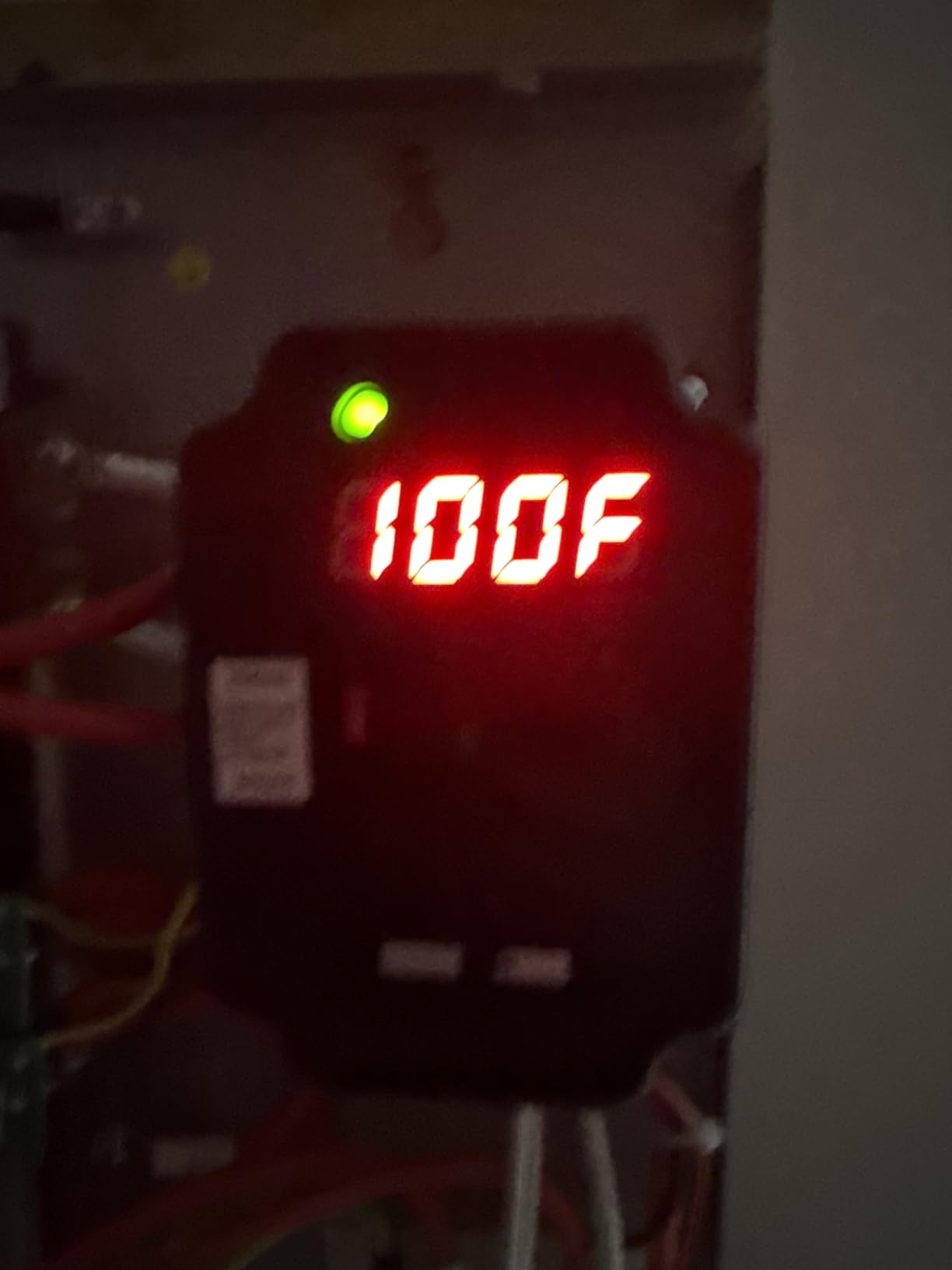
Temperature stability is where owners split. Some report steady output at the setpoint, others describe swings even with self-modulation on. The unit is ETL certified with automatic shutoff when no water is detected, weighs 17.5 pounds, and mounts on the wall with three-quarter inch NPT connections and a supplied mount kit.
Is it right for an RV or a small cabin?
The 18kW draw makes it a poor match for most RV shore power setups and marginal for a small off-grid panel. If your location has hard water, the eco-friendly fix is a point-of-use unit like the CAMPLUX rather than a powerful 240V machine you cannot power.
How much descaling would a normal owner need to do?
Less than a conventional tank, and that is the point of the separated element design. Even so, owners in hard-water areas should expect an annual flush cycle and should check the inlet and outlet aerators for mineral crust as part of the same routine.
5. EcoSmart ECO 8 8kW 240V – Best Warranty Coverage
EcoSmart ECO 8 Tankless Water Heater, Electric, 8-kW – Quantity 1, 12 x 8 x 4
- Lifetime warranty on electronics
- heat exchanger and element
- Very compact 12 x 8 x 4 inch body that mounts high on the wall
- Stainless steel internals with inlet and outlet sensors in the flow
- Modulating thermostat gives steadier output than fixed on-off units
- Electrical connections sit inside the sealed case so opening it voids the warranty
- Both inlet and outlet connectors sit near the top leaving no gravity drain
This listing has been around for a very long time and the review history reflects it, with 709 ratings averaging 4.2 stars. The warranty is the headline: a lifetime warranty on the electronics, heat exchanger, and heating element. That is the strongest coverage in this roundup, with one important condition attached.
The condition is that the warranty covers the cost of the heater only. It does not cover labor or incidental damages, and in practice opening the sealed case to make electrical connections voids it. Have a licensed electrician do that part. Owners with warm incoming water report strong results; those in cold climates report flow and temperature shortfalls.
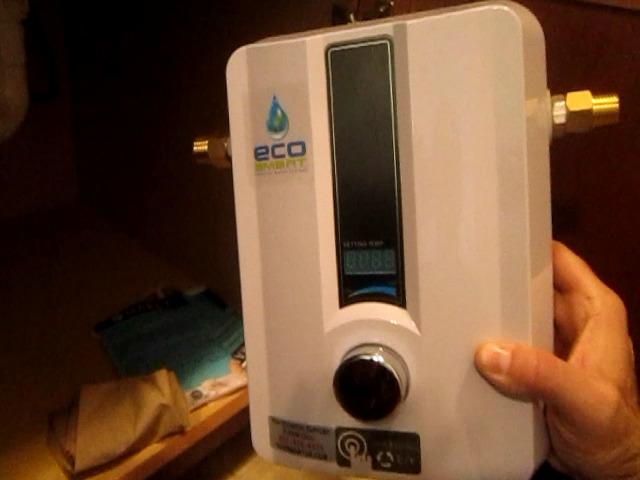
The physical design has one awkward consequence. Both the inlet and outlet connectors sit near the top of the body, so there is no gravity drain path for winterizing the heater in an unheated space. That matters for garages, cabins, and RV applications where you need to drain before winter.
On the plus side, the body is only 8 inches wide, 11.5 inches tall, and 4 inches deep at just 4.8 pounds, so mounting it high on a wall near the point of use is easy. Rated flow is 2 GPM at 8kW, and efficiency is listed at 99.8 percent.
Is 2 GPM enough for a bathroom?
It covers a sink comfortably and a modest showerhead if nothing else is running. It will not cover a shower and a laundry machine together, and it will not cover a 2.5 GPM rain head. Measure the highest flow fixture in your home, then size from there.
Does the lifetime warranty make it the safest long-term buy?
It makes it the safest on paper for parts, which is a real advantage over the two and three year coverage on most competitors here. Read the labor exclusion carefully and get the electrical work done professionally, otherwise the lifetime term means very little.
6. Rheem RTEX-08 8kW 240V – Best for RV and Cabin Setups
Rheem 8kW Multi Fixture Tankless Electric Water Heater – 240V
- Digital thermostat with 1 degree increments from 80 to 140°F
- Compact body roughly 90% smaller than a conventional tank heater
- Five-year leak warranty on the unit
- Explicit panel guidance of 100 amp minimum service
- Supplied documentation lists half inch compression fittings while the unit uses 5/8 inch
- 8kW output is marginal for showers and serves one fixture at a time at full temperature
The RTEX-08 is the smallest whole-heater style Rheem here, and it earns its place for smaller homes, guest suites, and secondary dwellings. It delivers up to 1.95 GPM from 8kW at 240 volts, heats only when a hot tap opens, and the manufacturer claims a body roughly 90 percent smaller than a traditional tank heater.
It is also one of the few in this roundup with clearly stated electrical guidance in writing: 240 volts single phase, one 40 amp double-pole breaker, one set of number 8 AWG copper conductors with ground, and a recommended minimum 100 amp household service panel. That clarity alone is worth something during planning.
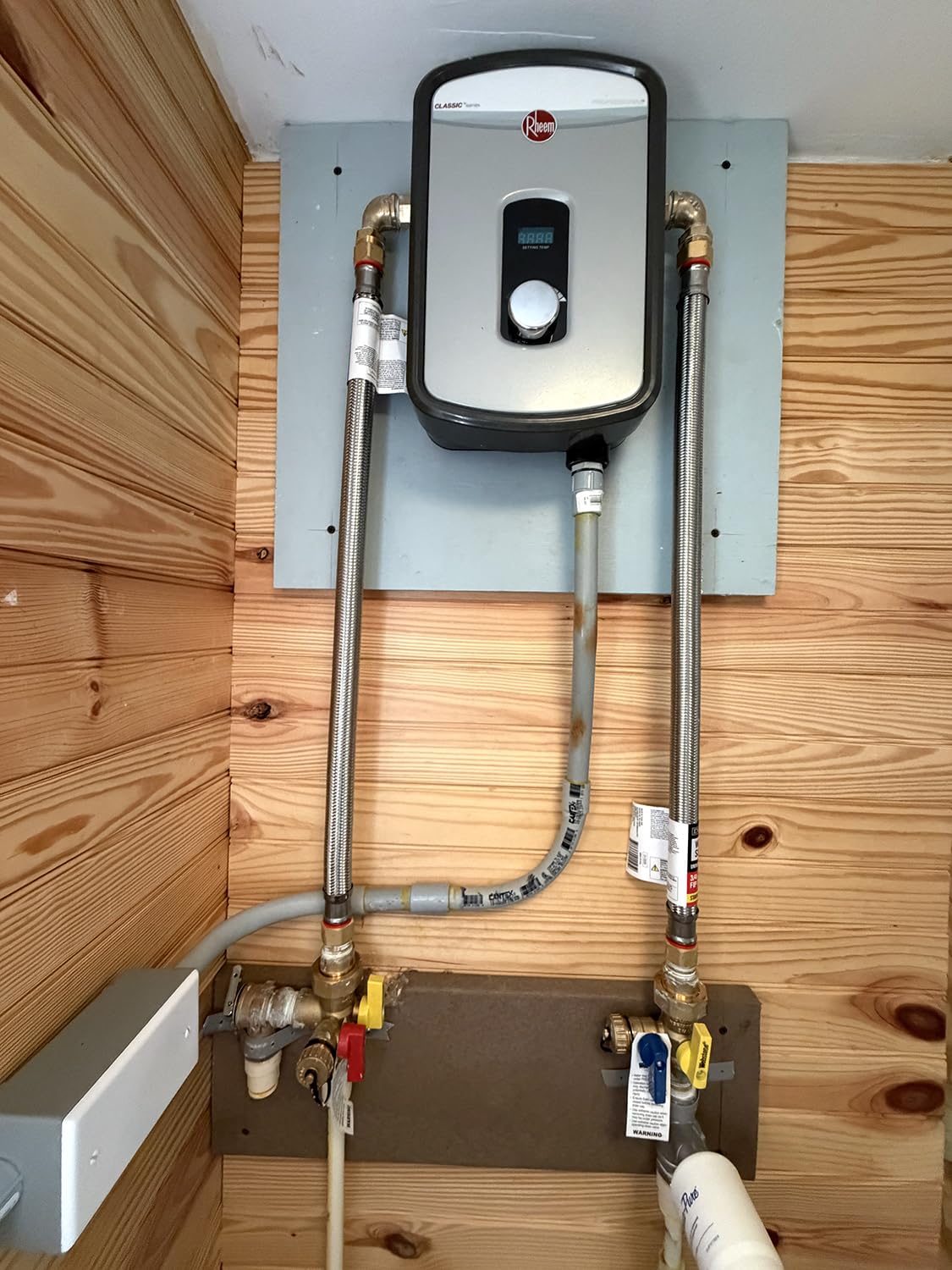
At 4.1 stars from 419 ratings, this is the lowest average rating among the products we shortlisted. Owners in small units and RVs are satisfied; owners who oversized their fixture load report temperature shortfalls, which is exactly what an 8kW heater does when two fixtures open at once.
Plan on picking up your own adapters. The supplied documentation references half inch compression fittings while the unit uses 5/8 inch, which is the kind of small mismatch that stalls a weekend install. Warranty terms are five years for leaks and one year for parts.
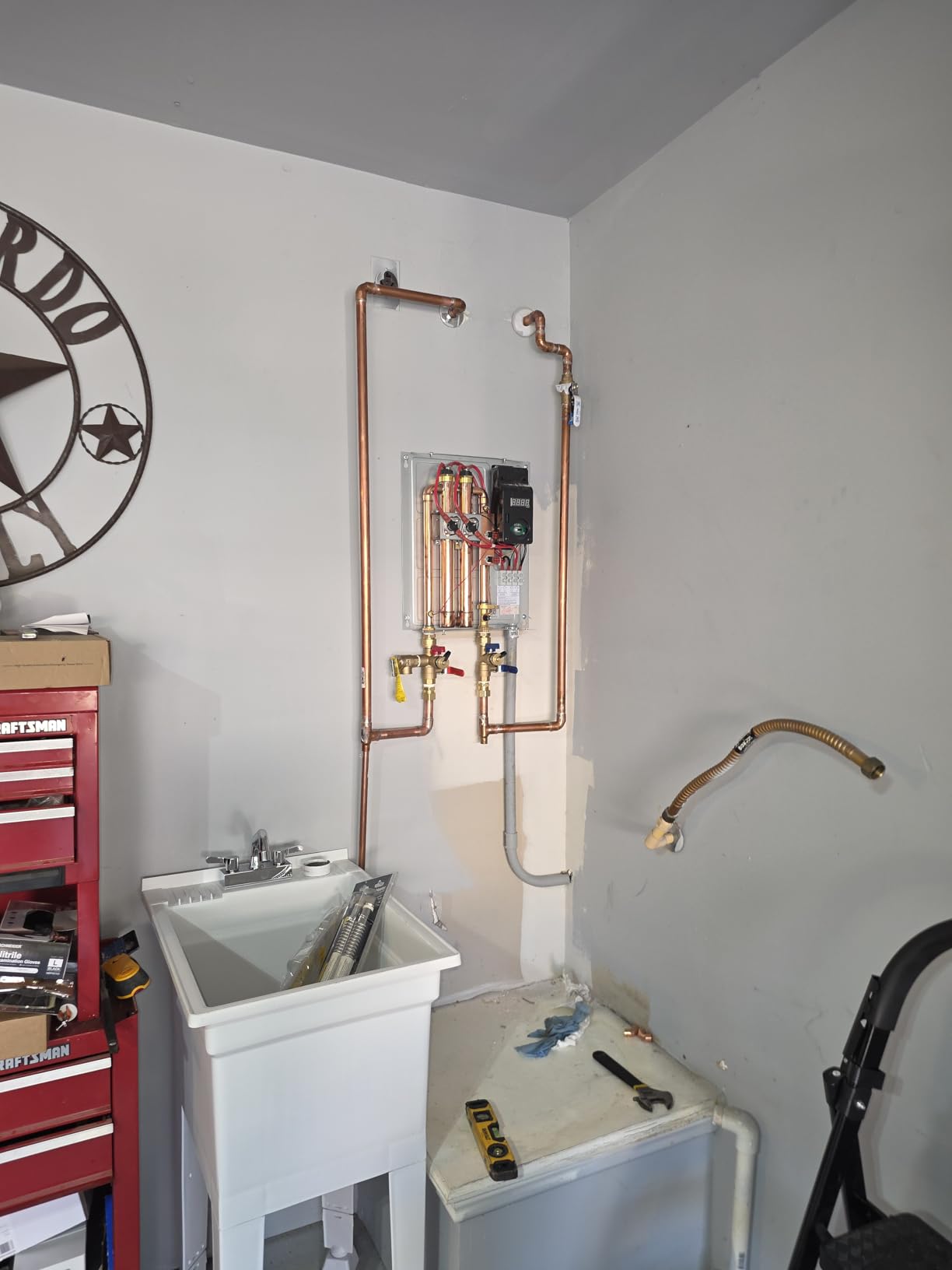
Is it big enough to replace a 40 gallon tank?
Only in a home where hot water demand is genuinely small, such as a couple with no simultaneous large fixtures. Replacing a 40 gallon tank in a family home and then expecting shower performance is where this model earns its lowest ratings. Size up to 13kW or 18kW if a tank is coming out.
Why does the panel rating matter here?
An older 60 amp panel will not accept a new 40 amp double-pole circuit comfortably, and adding one may push past the panel’s rated capacity. Knowing the answer before purchase avoids a service upgrade that costs more than the heater itself.
7. Ranein RE18K 18kW 240V – Best 18kW Starter Value
Ranein 18kW Tankless Electric Water Heater, Max 4.3 GPM, 240V, Whole House
- Control knob plus LED display sets temperature in 1°F steps from 86 to 131°F
- Brass and metal water inlets and outlets rather than plastic
- Stainless steel heating elements to reduce scale buildup
- CSA certified with leakage
- overheat and moisture protection
- 15% one-star reviews
- the highest negative share in this group
- Some owners report warranty claims going unanswered for weeks
Eighteen kilowatts of capacity at a lower entry point into this tier, and the hardware is more serious than the rating suggests. The Ranein RE18K runs two dedicated 240V circuits using two 40 amp double-pole breakers and two sets of 8 AWG cable, reaches a maximum 4.3 GPM, and supports two to three household outlets drawing at once.
Temperature is adjusted from 86 to 131 degrees F in one degree increments using a physical control knob with an LED readout behind it. That tactile knob is a genuine convenience when the heater is mounted in a garage or basement. The box includes an installation template, parts kit, manual, and the heater.
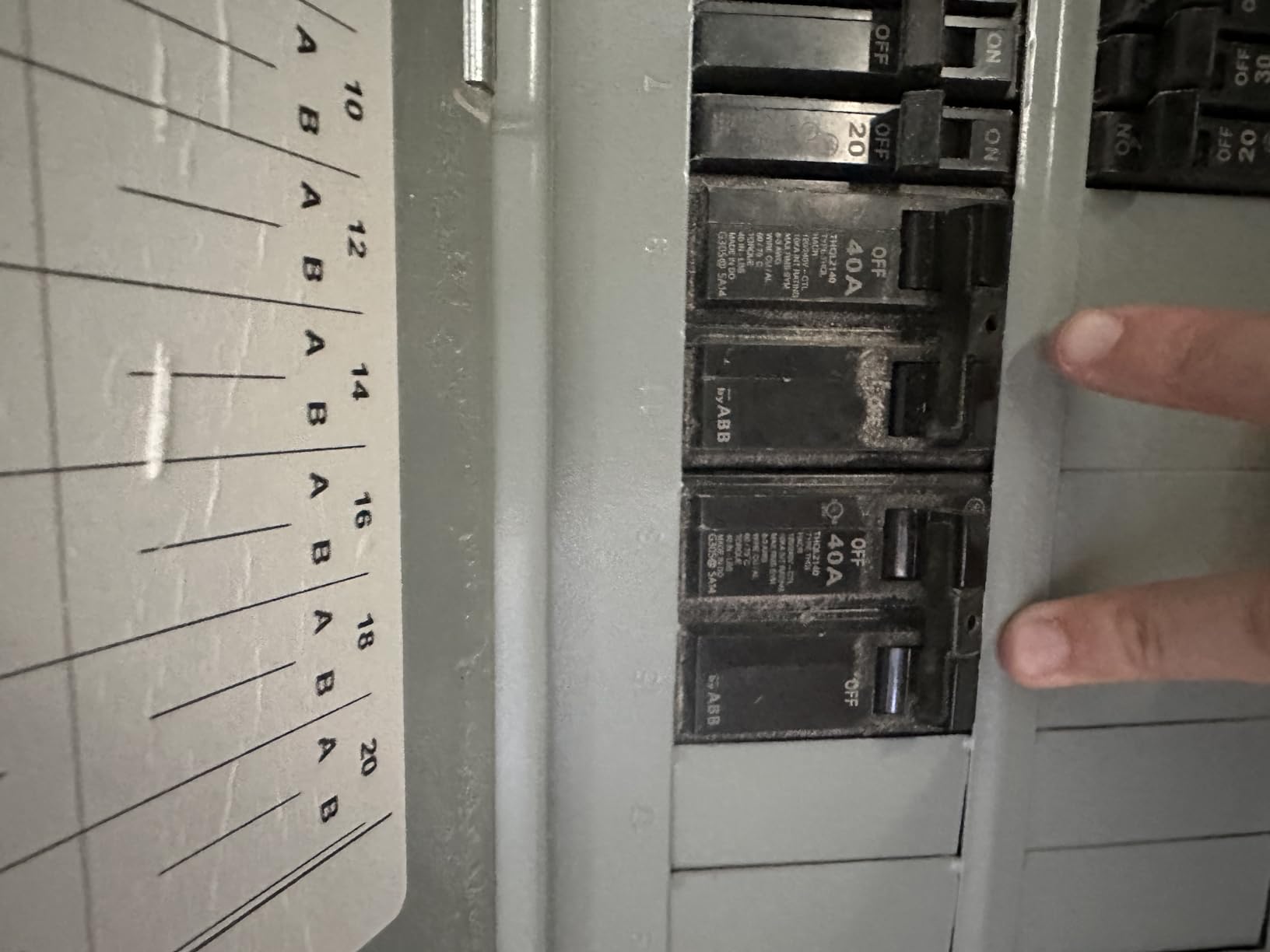
Two things give me pause. First, the 131 degree F ceiling is lower than the 140 degree figure on the Rheem units, so it cannot deliver genuinely near-scalding water at the top of the range. Second, the water inlets and outlets are brass and metal rather than plastic, which is the right call and rarer than it should be at this level.
Service is where the reviews thin out. Fifteen percent one-star reviews is the highest negative share in this roundup, and owners cite breaker tripping plus warranty claims sitting unanswered for weeks. At 296 ratings and 4.0 stars, it is a capable machine with a support structure you should treat as thinner than the Rheem options.
Is it better than an 18kW Rheem for the money?
On paper the numbers are close, with 4.3 GPM and similar breaker demands. The difference is warranty service and parts availability rather than performance. If you can reach a Rheem dealer locally, that outweighs a modest saving here.
Does it suit a family with two bathrooms?
Yes, within reason. Two to three simultaneous outlets is the stated capability, which covers two moderate showers or a shower plus laundry. Expect less margin in winter, when cold inlet water reduces usable flow on any electric model at this price.
8. WINTEMP WN18 18kW 240V – Best for WiFi Temperature Control
WINTEMP 18kW Electric Tankless Water Heater 240V ETL Certified WiFi
- Remote WiFi temperature adjustment
- unique among the heaters in this group
- Self-modulating output adapts to incoming water temperature and flow rate
- Slim 11.1 inch wide wall-mount body
- ETL certified with leakage
- overheat and dry-fire protection
- Two 40A breakers and 8/2 AWG wiring plus 150A service is a significant install requirement
- Limited review history given the smaller number of ratings
This is the only heater in the roundup with remote WiFi control, and at 4.4 stars from 202 ratings it also holds the highest five-star share of any unit we shortlisted at 75 percent. You can adjust set temperature from your phone without standing next to the heater, which is genuinely useful when the unit is mounted in a garage or attic-adjacent space.
Capacity is 18kW at 240 volts with a maximum draw of 75 amps and a maximum output of 4.3 gallons per minute. Power output adjusts automatically based on incoming water temperature and flow rate, and idle draw is zero since there is no tank keeping hot water on standby. The body is a slim 11.1 inches wide by 19.2 inches tall and 4 inches deep at 12 pounds.
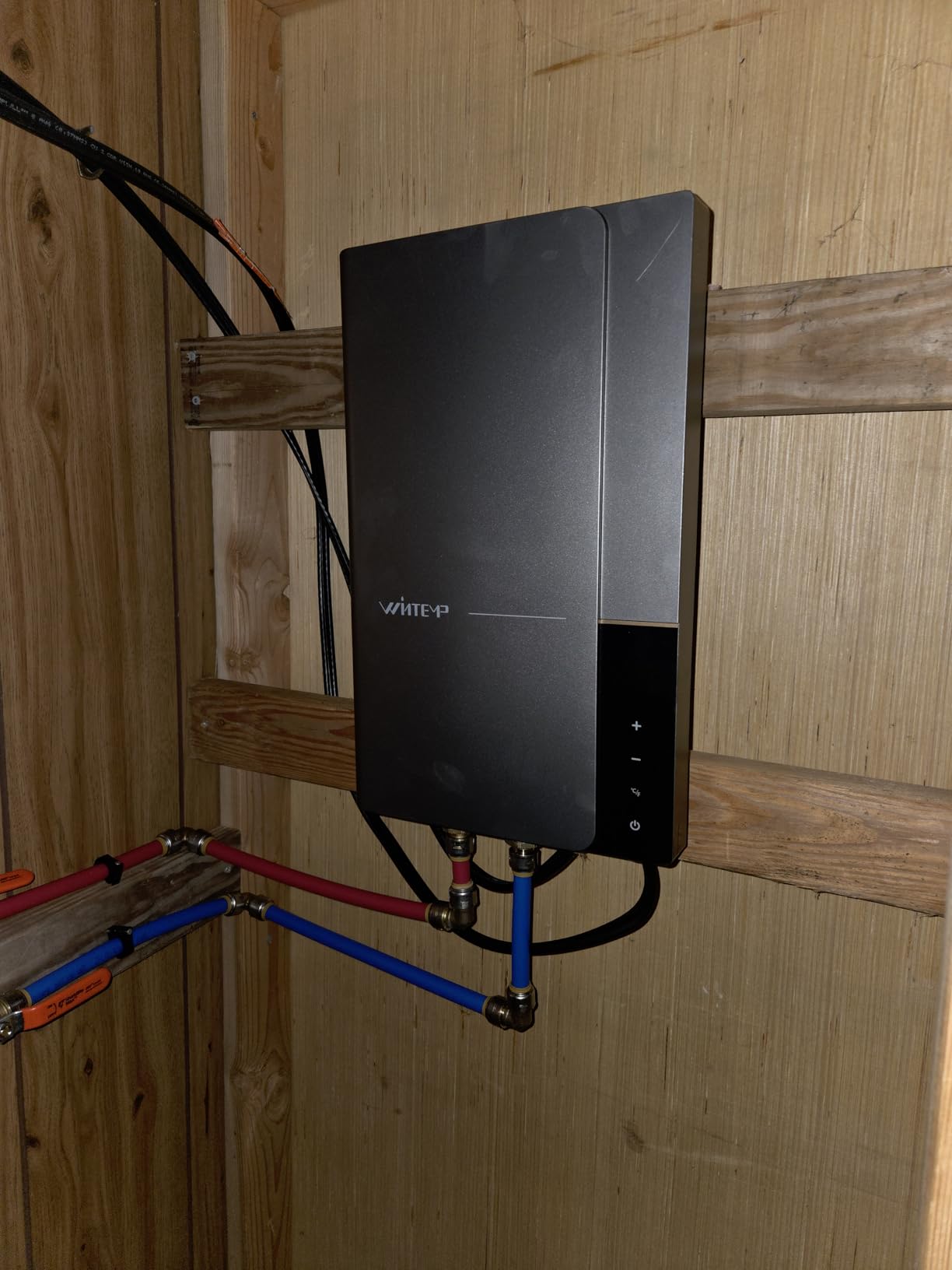
The electrical spec is the reason to slow down. It needs two 40 amp double-pole breakers, two sets of 8/2 AWG wiring, and the manufacturer recommends 150 amp household service. That is a meaningfully heavier electrical footprint than the Rheem RTEX-18, which many installers find easier to accommodate.
Certification is ETL with leakage, overheat, and dry-fire protection, and the warranty is two years limited. A temperature lock feature lets you fix the setting against accidental changes. Review volume is lower than the rest of the field, so treat the 4.4 average as encouraging rather than settled.
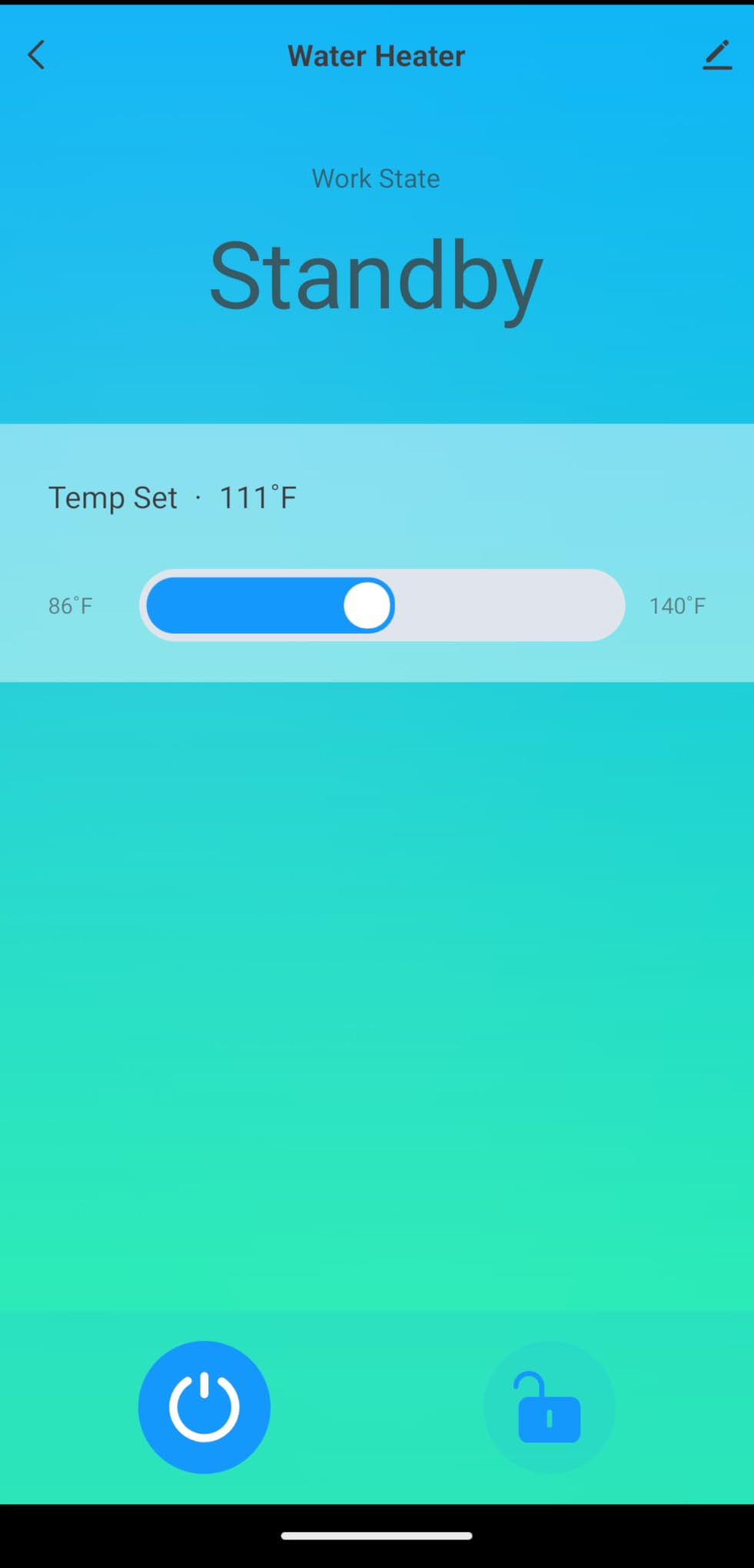
Is WiFi control worth choosing this model for?
For a household with predictable hot water use and no one home during the day, it is a nice-to-have rather than a necessity. A fixed digital thermostat on a Rheem does the same job without an app, and Rheem brings a much longer warranty.
What does 150 amp service mean for an older home?
It means the panel itself may need to be replaced, which is a project well beyond the heater budget. Ask an electrician to load-calculate your existing panel before ordering. If the answer is that you need a service upgrade, the RTEX-18 is the cheaper path.
9. CAMPLUX TEW18 18kW 240V – Best for a Two Bathroom Home
CAMPLUX Tankless Electric Water Heater 18kW, On Demand Hot Water Heater Electric with Digital Display 240V for Whole House Shower, White
- Tankless whole-house design mounted centrally on the wall
- Heating rod separated from the water path with anti-dry-heating protection
- Knob rotates through 360 degrees for convenient adjustment
- ETL certified with overheat and water-electricity separation protection
- Higher activation flow threshold of 0.66 GPM compared with point-of-use models
- Shorter warranty coverage than some competing units at the same level
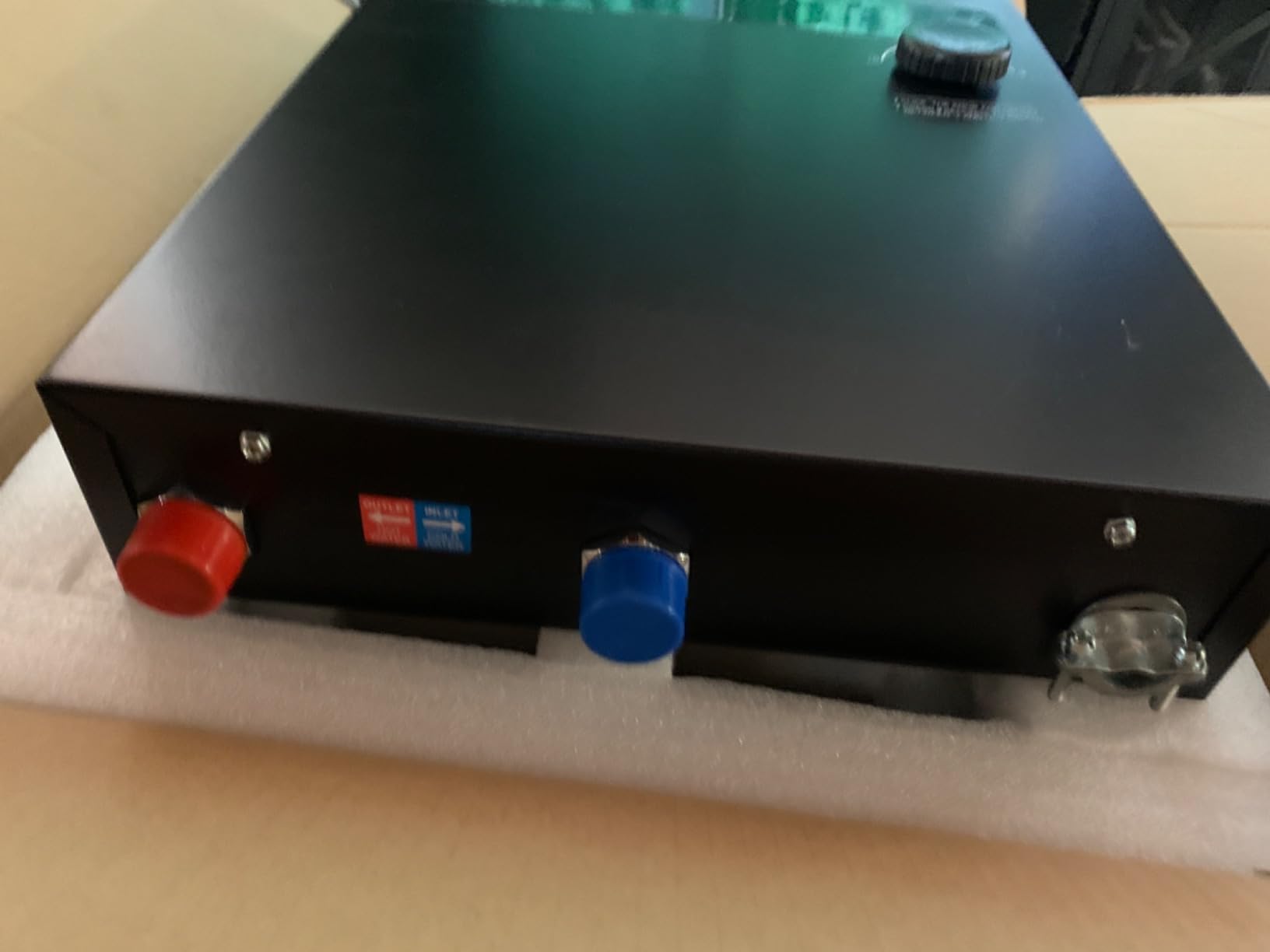
This is the CAMPLUX whole-house counterpart to the compact unit earlier in this list, and it is the one to buy for a two bathroom home. It runs an 18kW heating rod at 208 to 240 volts with efficiency up to 99.8 percent, delivering hot water in about 3 seconds with no tank and no standby loss. It is wall-mounted with a three-quarter inch NPT connection.
The build details mirror the smaller CAMPLUX in useful ways. The heating rod is separated from the water path with anti-dry-heating protection, and there is water-electricity separation to limit scale accumulation. Output temperature runs from 80 to 140 degrees F, and the temperature knob rotates through 360 degrees so you can set it without hunting for the right angle.
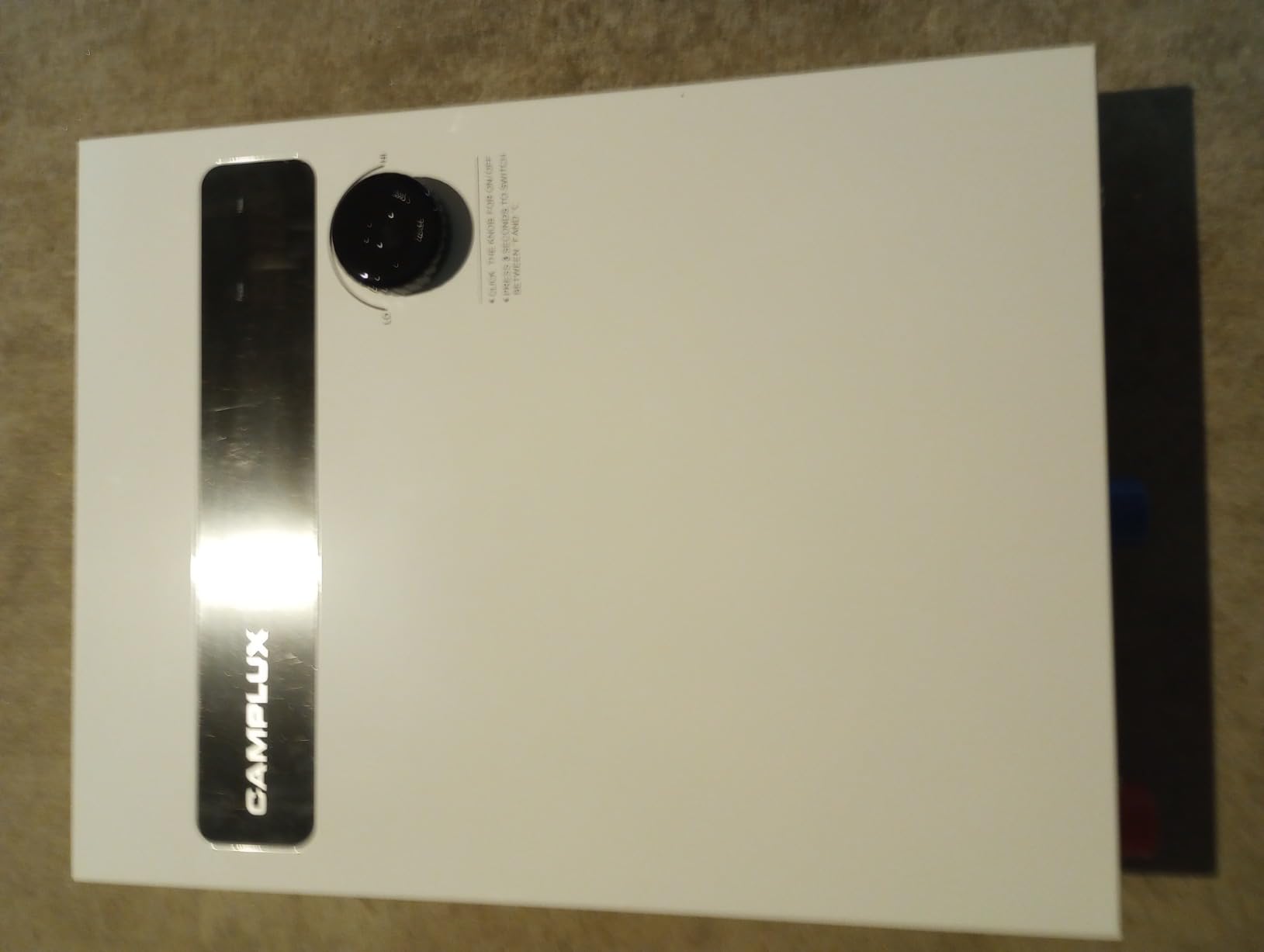
The activation flow rate of 0.66 GPM is the number to plan around. It will fire reliably on a showerhead and a standard kitchen faucet, but a low-flow aerator set to handwashing mode will sit below the threshold and produce nothing. That is the single most common complaint pattern in forums for this category, and this model sits on the higher end of it.
Electrical requirements are two sets of double-pole 40 amp breakers with 2 x 8 AWG wire. Warranty is two years on parts and three years leak-free, which is thin against the EcoSmart lifetime coverage but better than a two year blanket. At 139 ratings and 4.4 stars, satisfaction is consistent for whole-home 18kW installs.
Will it run two showers at the same time?
In warm conditions, likely. In winter with cold incoming water, two showers is beyond what 18kW can hold at temperature. If two simultaneous showers is your normal pattern rather than an occasional event, budget for a larger gas unit rather than stretching this one.
Can you fix the low-flow trigger problem?
Partly. Removing or replacing a low-flow aerator on the sink raises the flow rate past the threshold and the heater will fire normally. Doing that on a faucet you use for handwashing defeats the aerator’s purpose, so it is a trade rather than a free fix.
10. SIVUATEK TSB-140 14kW 240V – Simplest Electrical Install
14kW Tankless Water Heater Electric 240V, Sink & Shower,Gray
- Installs on a single 60 amp circuit rather than a double-pole pair
- Touch sensor LED display shows inlet and outlet temperature plus GPM and kW
- No housing disassembly needed to reach the wiring
- Holds set temperature steady when incoming water pressure fluctuates
- Output temperature is capped at 131°F by the specification
- Best suited to one or two fixtures rather than a busy multi-bath home
Almost every 14kW and 18kW heater in this roundup wants two double-pole breakers and thick 8 AWG cable. This one runs on a single 60 amp circuit at 240 volts, which removes the hardest part of the install in an older panel. For a homeowner without 150 amp service, that single fact can decide the purchase.
Capacity is 14kW with a rated flow of 3.3 GPM, serving one or two simultaneous usage points such as a kitchen and a bathroom. Efficiency is up to 99.8 percent with up to a 50 percent reduction in water heating cost, and it is ETL certified with leakage, overheat, and automatic shutoff protection built in.
The display is unusually informative for this price. It shows inlet temperature, outlet temperature, live GPM, and current kW draw, which turns the heater into something you can actually diagnose. Temperature is set from 86 to 131 degrees F in one degree increments through a touch sensor panel.
Does it need to be opened up to wire it?
No, and that detail protects your warranty. Several competing units bury their electrical terminals inside a sealed case, meaning opening the housing voids coverage. This one is designed so wiring is reached without housing disassembly, which is a meaningful difference for a DIY-adjacent install.
Why is the temperature limit 131 degrees?
That is the manufacturer specification, and it caps the top of the range below the 140 degree figure on the Rheem models. It is comfortable for showers and general use, but it will feel cooler than a higher-ceiling unit if you are used to very hot water at the tap.
Point-of-Use vs Whole-House Electric: Which One Should You Buy?
If you serve one sink, buy a point-of-use unit. If you serve a shower plus a sink, buy a whole-house style 240V heater between 13 and 18kW. That is the entire decision, and getting it backwards wastes money.
A point-of-use heater such as the CAMPLUX 4.5kW mounts inside a cabinet near the fixture, runs on 120 volts, and delivers roughly a 50 degree temperature rise at 1.0 GPM. Its low activation threshold means it fires on almost any tap you open. It will never serve a shower.
A whole-house heater sits centrally and serves multiple fixtures. It needs 240 volts, a dedicated breaker circuit or two, and enough kW to cover simultaneous demand. In return you get continuous hot water and the ability to serve a shower, which is the entire point of the upgrade for most buyers replacing a tank. Our guides cover the same trade for other housing types, including tankless water heaters for homes and tankless water heaters for cabins.
How Much GPM Do You Need? Sizing by Household
Size by how many fixtures run at the same time, not by how many people live in the house. A couple who showers separately needs far less flow than a family of four showering back to back on a schedule.
Reference flow rates for fixtures are roughly 0.5 GPM for handwashing under a low-flow aerator, 1.0 to 1.5 GPM for a standard bathroom sink, 1.5 to 1.8 GPM for a kitchen faucet, 1.5 to 2.5 GPM for a shower, and 1.5 to 2.0 GPM for laundry.
Household demand works out like this:
One person, one sink: 1.0 to 1.3 GPM, which a 4.5kW point-of-use unit covers.
Two to three people, one full bathroom: 1.5 to 2.0 GPM, covered by an 8kW to 13kW 240V heater.
Three to four people, two bathrooms: 2.5 to 3.5 GPM, which is where 13kW starts to strain and 18kW becomes the right target.
Whole-house simultaneous demand: 4.0 GPM and above, which is genuinely difficult under this price ceiling and is where gas tankless usually wins.
Then adjust for cold climate. If your incoming water in winter is near 45 degrees F rather than 70, the achievable GPM at your target temperature drops substantially. Plumbers consistently advise measuring your coldest incoming water temperature and your highest single-fixture flow before choosing a model, and that advice is free.
Why Your Tankless Goes Cold When You Restart the Shower
Self-modulation is the reason. A self-modulating heater reduces its power draw when it detects lower demand, then ramps back up when demand rises. Pause a shower, the element powers down, restart, and the first several seconds come out cold while it catches up.
This is the most repeated complaint in plumbing forums about electric tankless units, and it is not a defect. It is the design working as intended. Conventional tank heaters hide it because a full tank of hot water is already sitting there waiting.
Two things reduce the annoyance. A recirculation loop keeps hot water moving through the long pipe run back toward the fixture. And lowering the set temperature a few degrees means the element has less work to do when it ramps back up.
Installation Reality: Breakers, Amperage and Panel Capacity
The single most useful thing you can do before buying is ask an electrician to load-calculate your panel. Unit price is not the cost of this purchase.
A 120V point-of-use model needs a hardwired 40 amp breaker and 10 AWG wire, with no plug option. An 8kW Rheem needs one 40 amp double-pole breaker with number 8 AWG copper and a recommended 100 amp service minimum.
The 13kW Rheem draws 54 amps at 240 volts. The 18kW CAMPLUX, thermomate, Ranein, and WINTEMP models each need two double-pole 40 amp breakers with 8 AWG or heavier cable, and the WINTEMP recommends 150 amp service.
The SIVUATEK TSB-140 is the outlier that fits a 240V panel on a single 60 amp circuit. On older panels, that simplicity can be worth more than extra flow.
Permits and warranty interact too. The EcoSmart lifetime warranty covers the heater, not labor, and opening the sealed case to make connections voids it. Installing it yourself is a false economy when the heater itself is this cheap.
Hard Water, Scale and Descaling
Hard water is the main reason budget electric tankless units underperform over time. Scale narrows the heat exchanger passages and insulates the heating element, and flow drops as a result.
Start with a flush every six to twelve months in a high-mineral area, and every two years elsewhere. Turn off power and water, connect a hose to the drain or to the cold inlet, pour a solution of vinegar or a descaling product through the unit, let it sit, then flush until it runs clear.
Buy the unit that helps you. The thermomate ET180, the Ranein RE18K, and the CAMPLUX TEW18 all separate the heating element from the water path specifically to slow scale accumulation. That design choice matters more in hard water than any specification on the box.
If your area is severely hard, a water softener upstream is the real fix. Several owners in plumbing forums report that treating the water, not replacing the heater, was what finally solved their flow problem.
What 500 Dollars Buys, and What You Give Up
At the low end of this band you get a 4.5kW point-of-use heater for one sink, CSA certified, with a two-year warranty and a 0.26 GPM activation threshold. That is a complete, honest solution for a specific job.
In the middle of the band, roughly 200 to 300 dollars, you get 8kW to 14kW 240V heaters with digital control and single or double breaker circuits. This is where the value is for most single-bathroom homes, and where the Rheem RTEX-13 sits.
Near the ceiling, you get 18kW whole-home machines at 4.3 to 4.4 GPM with self-modulation, dry-fire protection, and in one case WiFi control. Two double-pole breakers is the entry cost at this level.
What you give up against a unit costing two or three times more is warranty length and installation flexibility. You lose longer leak warranties, you lose the ability to serve high-flow fixtures confidently, and in several cases you lose the option of a single-breaker install entirely. Most importantly, you lose the reservoir of a tank heater, which is what absorbs the cold burst on shower restart.
Brand pedigree is the other difference. EcoSmart and Rheem have US parts networks and mainstream dealer support. Direct-import brands in this band are often mechanically fine but harder to warranty, and owners cite unanswered claims more often. On a fifteen year appliance, that gap is worth weighing.
Frequently Asked Questions
What is the most reliable electric tankless water heater?
Under this price ceiling, reliability tracks brand pedigree and review volume more than price. The Rheem RTEX-18 has the largest owner review pool in this roundup at 2185 ratings, field-serviceable copper immersion heating elements, and 99.8 percent efficiency. Our criteria were warranty length, element material, availability of replacement parts, and how many owners have reported long-term results.
How much GPM do I need for a tankless water heater?
Size by simultaneous fixtures rather than household headcount. One person with a single sink needs 1.0 to 1.3 GPM. Two to three people with one full bathroom need 1.5 to 2.0 GPM. Three to four people with two bathrooms need 2.5 to 3.5 GPM, which is where 18kW capacity starts to make sense. Whole-house simultaneous demand needs 4.0 GPM or more.
What causes low flow rates in tankless water heaters?
Five causes account for most low-flow complaints. The fixture flow rate may sit below the unit activation threshold, which is 0.26 GPM on the compact CAMPLUX and 0.66 GPM on the 18kW CAMPLUX. Low-flow faucet aerators set to handwashing mode fall below both. Scale buildup narrowing the heat exchanger passages is the third cause. Low inlet pressure and long pipe runs make up the rest.
What is the typical GPM flow rate for a tankless water heater?
Most electric tankless heaters in this roundup are rated between 1.95 and 4.4 GPM. The 8kW Rheem RTEX-08 is rated at 1.95 GPM, the 13kW Rheem RTEX-13 up to 3.17 GPM, and the 18kW models sit between 4.3 and 4.4 GPM. Those figures assume warm incoming water and drop when inlet water is cold.
What are the common problems associated with electric tankless water heaters?
Five problems come up repeatedly. A cold burst when a shower is restarted, caused by self-modulation powering down during the pause. Failure to trigger at all when a low-flow faucet opens. Scale buildup in hard water reducing flow over time. Insufficient electrical panel capacity for the required double-pole breakers. And temperature drop when demand exceeds what the kW rating can cover.
What do plumbers say about tankless water heaters?
The recurring professional advice is to measure your coldest incoming water temperature and your highest single-fixture flow before sizing any model, since cold inlet water is what limits real output rather than the advertised GPM. Plumbers also caution against electric tankless where flow could drop near 0.5 GPM, advise budgeting for electrical capacity up front, and treat budget electric heaters as single-bathroom solutions rather than whole-home replacements.
Final Verdict: The Best Electric Tankless Water Heaters Under $500 (October 2026)
The Rheem RTEX-18 takes our top spot for the best electric tankless water heaters under 500 dollars, with 18kW of capacity, field-serviceable copper elements, and the deepest owner review history in the group. For one bathroom, the RTEX-13 is the smarter spend. For a single sink, the compact CAMPLUX is the one most people overpay to avoid.
Whatever you choose, measure your coldest inlet water and get your panel load-calculated before you order. That single hour of homework prevents the two problems that cause the most regret in this category.