

Doubles is a different sport wearing the same clothes. A frame that feels brilliant from the baseline can feel clumsy and slow between the posts, where every point is decided by reaction volleys, blocked passing shots and a serve that lands on a line. That is why the best tennis rackets for doubles players are not simply the best rackets overall.
The short version: look for a racket around 100 square inches of head size, 300 g or so of unstrung weight, a head-light balance so your wrist can snap the racket at the net, and a frame stiff enough to deflect incoming pace rather than absorb it. Power matters on your serve, but it is the least important of the four.
We went through seven frames that real doubles players actually buy and break down what each one does at the net. This is an honest list, and that means something you will notice: most of the frames here are recreational and intermediate models rather than tour-approved doubles frames. The best tennis rackets for doubles players in the budget and mid-range bracket are a different category of object than the Pro Staff 6.1 Classics and Volkl O3s that veterans name on Talk Tennis, and pretending otherwise would waste your money.
One honest note before we start. If you already own a frame you love, read our section on solo practice gear and think carefully about whether a second frame helps you. There is a real argument for just using your singles racket for doubles, and we lay it out in full further down.
Top 3 Doubles Racket Picks for October 2026

Wilson Federer Adult Recreational
- 295 g lightweight frame
- Midplus head with large sweet spot
- Stop Shock vibration pads
- Pre-strung and ready to play

Wilson Tour Slam Adult Recreational
- V-Matrix enlarged sweet spot
- AirLite Alloy lightweight frame
- Stop Shock sleeves at 3 and 9
- Multiple grip sizes

HEAD Ti S6
- 115 sq in forgiving head
- 8.6 oz strung weight
- Titanium and graphite frame
- 27.7 inch extended length
If you want one answer to the question “what is the best racquet for doubles?” it is the Wilson Federer Adult Recreational. It is light, it swings fast in front of you, the sweet spot is large enough to survive a mistimed volley, and at 4510 reviews it is by far the most proven frame in this group.
The HEAD Ti S6 is the fastest frame here to get through the air, which matters enormously when a serve is coming at you at 100 mph and you have about a third of a second to react. The Wilson Tour Slam is a straightforward way into a frame with vibration damping at the 3 and 9 o’clock positions, which is where the sting from a blocked ball actually shows up.
Quick Spec Comparison of All Seven Doubles Rackets for October 2026
| Product | Specifications | Action |
|---|---|---|
| Wilson Federer Adult Recreational |
|
Check Latest Price |
| Wilson Tour Slam Adult Recreational |
|
Check Latest Price |
| HEAD Ti S6 |
|
Check Latest Price |
 Wilson Hyper Hammer 5.3 Wilson Hyper Hammer 5.3 |
|
Check Latest Price |
 HEAD Graphene XT Speed MP HEAD Graphene XT Speed MP |
|
Check Latest Price |
 HEAD Ti. Conquest HEAD Ti. Conquest |
|
Check Latest Price |
 Senston 27 Inch Racket Set Senston 27 Inch Racket Set |
|
Check Latest Price |
1. Wilson Federer Adult Recreational Racket: Best All-Round Doubles Pick
Wilson Federer Adult Recreational Tennis Racket – Grip Size 3 – 4 3/8″, Red/White/Black
- Lightweight and well balanced for fast net reactions
- Stop Shock pads dampen vibration well
- Oversized sweet spot forgives off-center volleys
- Pre-strung so you can play on day one
- Built for recreational rather than competitive doubles
- Limited feel compared with higher-tier frames
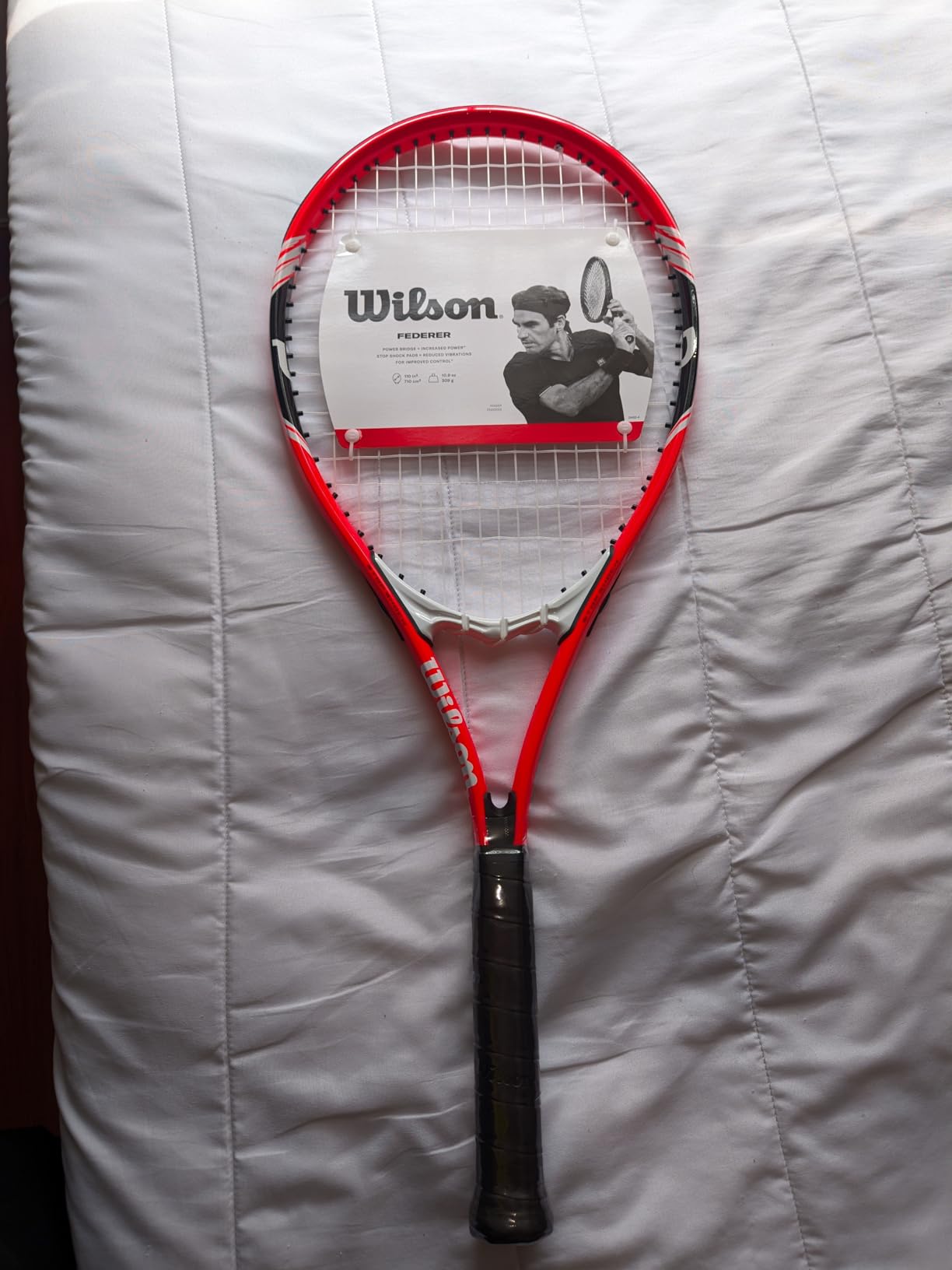
This is the frame we keep coming back to for league doubles. It weighs 295 g, which is light enough that you can get the racket head in front of your body and hold it there, and the midplus head gives you a sweet spot big enough that a volley hit a centimetre late still goes over the net.
AirLite Alloy construction is the reason it moves so easily. The frame is built to be swung rather than pushed, and the extra length it carries gives you reach on lobs and sharper angles on passing shots. Reviewers consistently describe it as comfortable over long sessions, which matters if you play doubles twice a week.
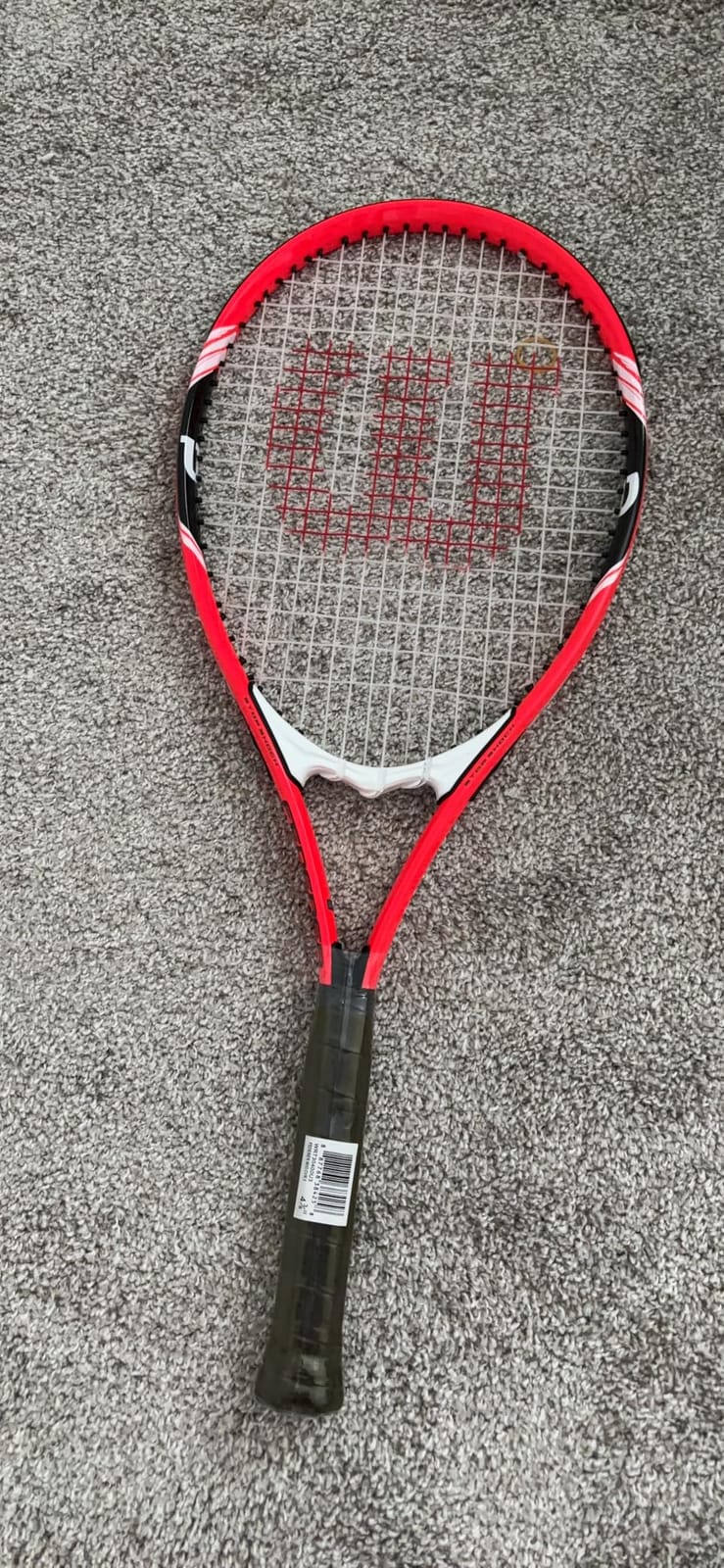
The design is inspired by the Pro Staff line, and that heritage is not accidental. Doubles players have leaned on Pro Staff frames for decades precisely because of the head-light feel and the punch on volleys, and this frame captures the handling without demanding tour-level technique.
Stop Shock pads sit where the throat meets the hoop, which is the exact spot that transfers string vibration into the handle. They do not make the frame plush, but they take the edge off a hard blocked ball, and players with a history of elbow tenderness notice the difference over a season.
Why it works at the net
At 295 g with a head-light bias, the racket is easy to reverse. When a lob drops short and you have to turn and sprint back, then punch another volley, the frame does the work at the shoulder rather than the forearm. That is where most of the arm comfort in doubles actually comes from.
The enlarged sweet spot is the other half of the argument. At the net you strike the ball far from the centre, so a larger hitting zone means more blocked volleys land where you aimed them. The 5-star share of reviews, roughly four out of five, tracks with that forgiving feel.
Where it falls short
Be clear about what this is. It is a recreational frame, and the review summary says so plainly. If you are playing high-level league doubles and already hit flat and deep from the baseline, you will notice the frame giving up on hard, deep balls. There is not a lot of feel coming back through the handle either, so players who rely on touch to drop a short ball just inside the service line may find it a compromise.
It is also a fixed specification rather than a customisable one. The grip ships at size 3, or 4 3/8 inches, so if you need a smaller handle for wrist comfort, this is not the frame. Check your grip size before you commit.
2. Wilson Tour Slam Adult Recreational Racket: Best Doubles Value
Wilson Tour Slam Lite Adult Recreational Tennis Racket – Grip Size 3 – 4 3/8″, Blue/Black
- Very forgiving sweet spot from V-Matrix
- Easy to swing for newer doubles players
- Stop Shock sleeves damp vibration at 3 and 9 o'clock
- Offered in multiple grip sizes
- Oversize design trades precision for forgiveness
- Specification field lists string installation as unstrung so verify contents
The Tour Slam is what we recommend to someone starting doubles in their thirties or forties who wants a racket that will not punish an awkward volley. The oversize head and V-Matrix technology produce a genuinely large sweet spot, and the AirLite Alloy frame at 0.31 kg is light on the shoulder over a long evening of club matches.
Where it genuinely stands out for doubles is the Stop Shock sleeves. They sit at 3 and 9 o’clock, directly opposite each other, which is where the frame flexes most when you block a hard shot. A forum regular describing doubles frames put it plainly: the sting at those two points is what wears down an elbow over a season, not the arm swing.
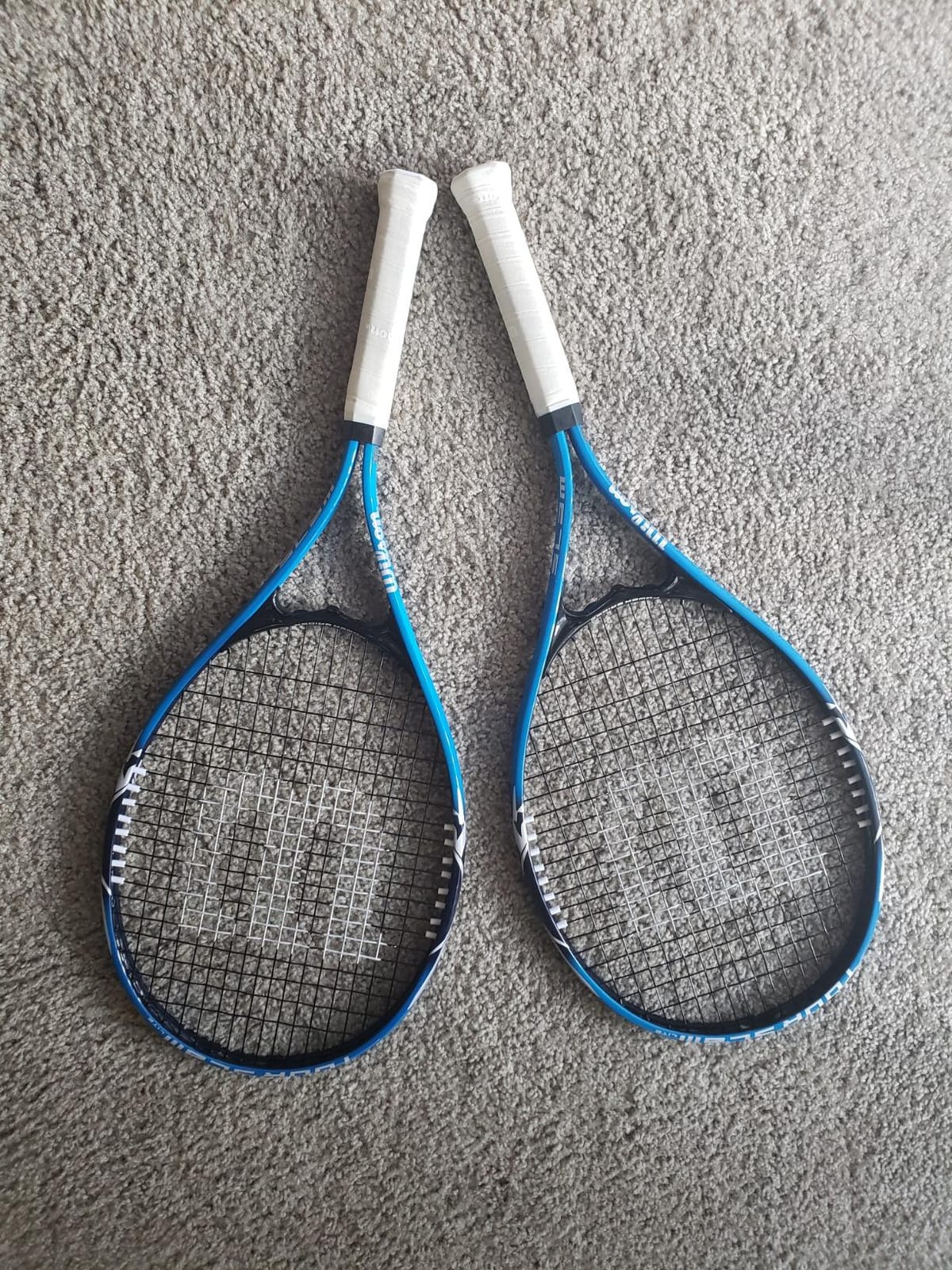
Power Bridge geometry allows for longer mainstrings, which is how an oversize frame generates power without a heavy weight. Reviewers report that the racket hits harder than its weight suggests, and that matters because doubles points often turn on a serve you do not want to laboured into.
Multiple grip sizes are listed across the variants, from 4 1/4 inches up to 4 1/2 inches, which is more choice than most of the frames in this roundup. That is worth something if you are between sizes and worried about wrist strain.
Why it works at the net
Forgiving plus light equals fast. A doubles player who misses the contact point on a reaction volley still gets the ball over, which means the next shot happens. A frame that makes you flinch on every blocked ball teaches you to dread the net, and dreading the net is how you lose the point before it starts.
The trade-off is honest: an oversize head with an open string pattern generates power and spin but gives up some directional control. You will not shape the ball as precisely as you would with a midplus frame, so drop shots and angled passing attempts come out flatter than intended. For most club doubles that is a fine price to pay.
Where it falls short
Players who have moved up from beginner doubles to a competitive league often outgrow the forgiveness. The review feedback describes it as solid and dependable rather than refined, and the frame does not have the feel to place a ball within an inch of the line.
One practical note. The specification listing for this model shows the string installation field reading as unstrung while the product copy describes it as pre-strung. Confirm what is actually in the box when it arrives before you assume you can play with it straight away.
3. HEAD Ti S6 Tennis Racket: Best for Fast Net Reactions
- Extremely light for quick reactions at the net
- Very forgiving 115 sq in sweet spot
- Extra length adds reach for net play
- Pre-strung with a comfortable SofTac grip
- Factory strings wear out quickly and need early restringing
- Not as stiff as advanced players want
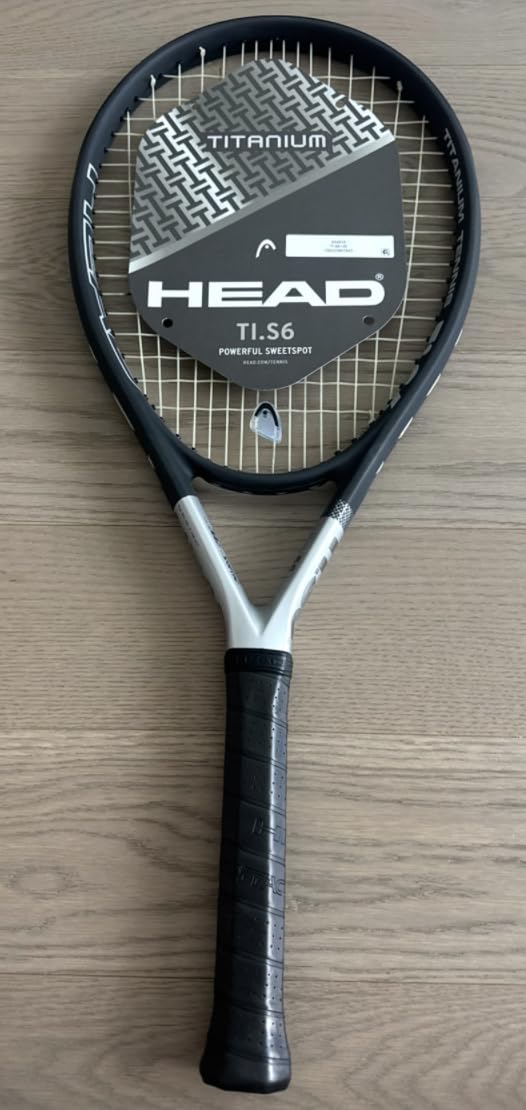
At 8.6 ounces strung, the Ti S6 is the fastest frame to change direction in this entire group, and that is not a marketing line, it is the number. When a first serve arrives and you have roughly 300 milliseconds to get a racket in front of your body, swinging speed is the whole point.
The 115 square inch head is enormous, and the honest consequence is a high twistweight. You will feel some twisting in the hoop when you block a genuinely hard passing shot. What you get in return is a sweet spot so large that mistimed contact at the net barely matters, which is a better trade for most doubles players than the reverse.
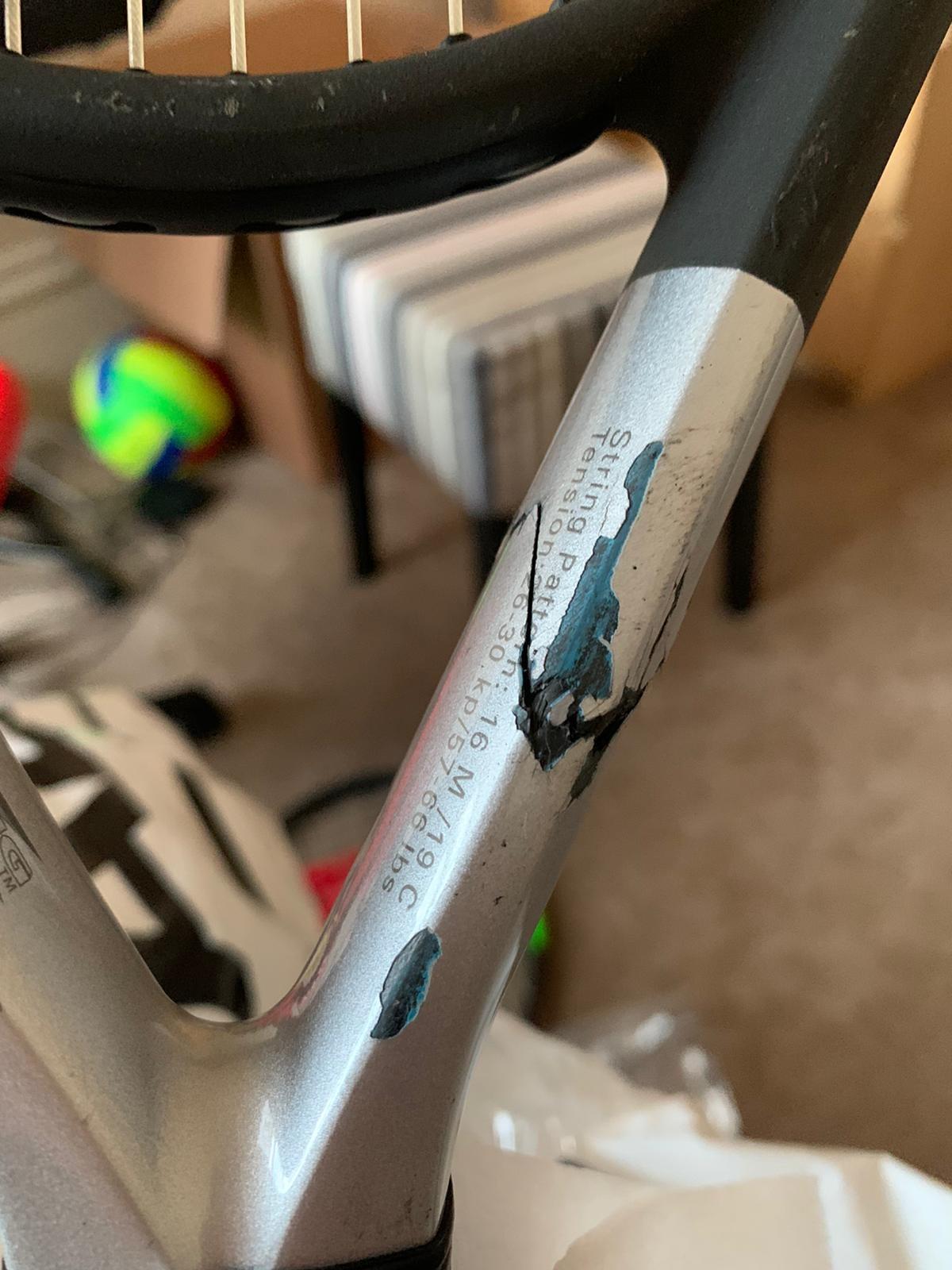
The titanium and graphite composite is what gives it a stable, muted feel without the harshness of a pure aluminium frame. Reviewers mention comfort over long matches, and the head is slightly larger than you expect, which reads as a beginner recommendation but works well for anyone returning to the game after years away.
The 27.7 inch frame is the longest in this roundup. That extra reach helps on lobs and gives you a larger hitting zone, though it also means the racket has more mass out in front than a shorter frame. It is a trade, and for net play we would take it.
Why it works at the net
Open 16×19 stringing makes topspin and slice easy to generate, which is genuinely useful at the net. A sliced drop shot that dies just over the net is a doubles weapon, and an open pattern lets you brush it without hitting through the ball.
The lightness also means you recover faster from an off balance volley. When you are stretched wide and the ball arrives at an awkward height, a heavy frame forces you to muscle it back into position. A frame this light lets you improvise, which is where most doubles points are won.
Where it falls short
The most common complaint across reviews is not the frame at all, it is the factory strings. They wear quickly and some players report needing a restring within weeks. Budget for that as a real cost of ownership rather than a surprise.
Second, players who want maximum power from a stiff frame will find it soft. And a doubles specialist who blocks pace at a high level will find the large head twisting more than they would like. Advanced players generally prefer a tighter head than 115 square inches.
4. Wilson Hyper Hammer 5.3: Best Doubles Racket for Power
- Hammer Technology delivers real power from a compact swing
- Head-heavy balance adds stability in a light frame
- Club players report strong topspin and serves
- Grip sizes available from 4 inch to 4 1/2 inch
- Noticeable string vibration on impact
- Open string pattern moves on heavy topspin and feels hollow off centre
- Head-heavy feel does not suit players used to head-light frames
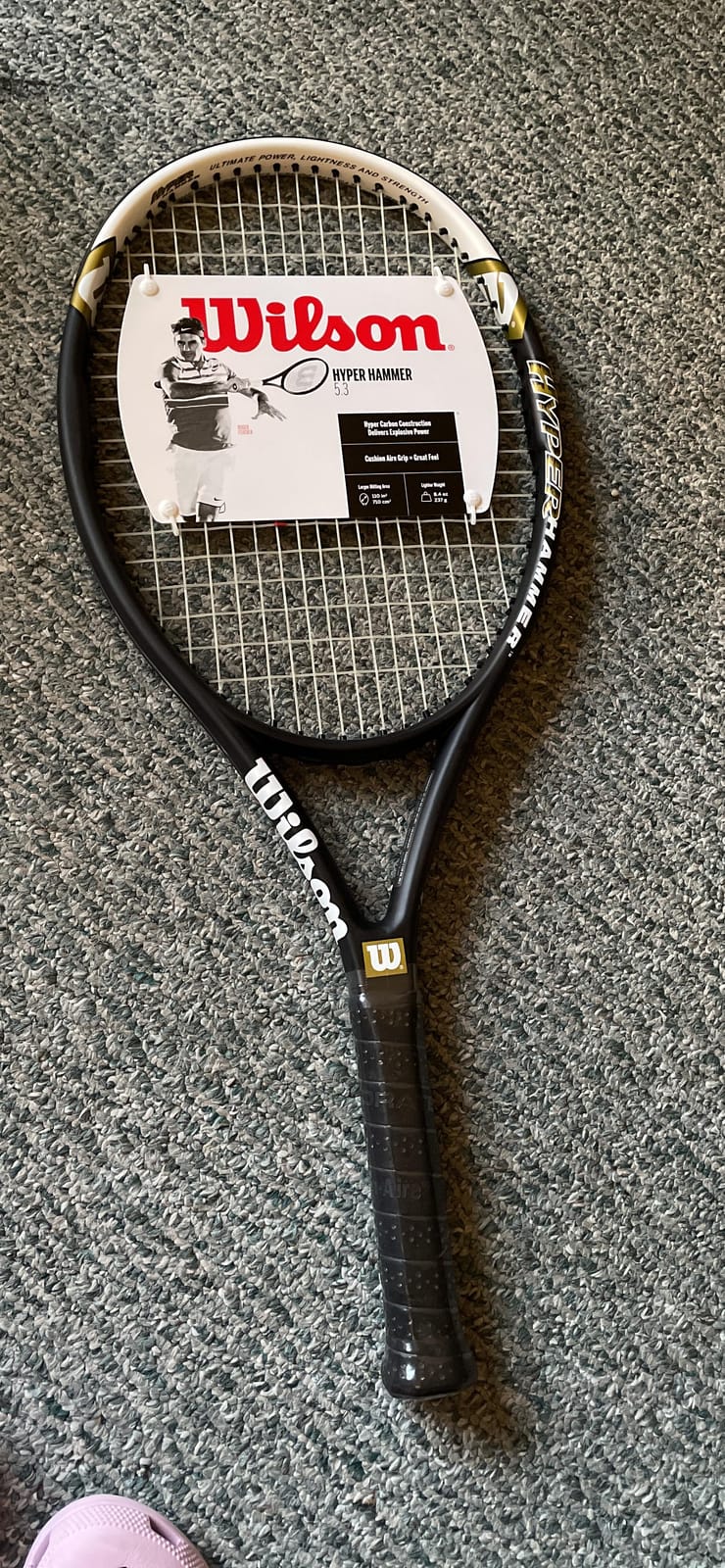
The Hyper Hammer is the odd one out in this list in a way that turns out to matter. It is head-heavy in a light frame, and that combination is the reason it can punch a blocked volley back hard without twisting, because the weight is out in the hoop resisting the impact rather than in the handle.
Hammer Technology produces a large sweet spot, and review feedback from longtime club players describes solid control near the net alongside the power. For a doubles team that plays first-strike tennis and wants the ball to land on the service line after one return, that is a useful profile.
The 0.24 kg frame is genuinely light, and club players report strong topspin generation and a serve that carries. It comes with a one-year manufacturer warranty, and the range of grip sizes runs from 4 inch to 4 1/2 inch, which is the widest spread available in this roundup.
Be aware of the balance, though. If you have spent years with a head-light frame, the weight out front will feel unfamiliar at first. Two or three sessions usually settles it, but it is an adjustment rather than an instant fit.
Why it works at the net
Stability is the argument. A head-heavy balance resists the incoming ball, so a blocked passing shot comes back flatter and lower rather than sailing long. Doubles teams that rely on blocking to neutralise an aggressive net player will find that advantage immediately.
The 27.5 inch frame gives good court coverage, so when a crosscourt volley comes at you from the wide side you can reach it without lunging. Lunging produces weak contact, and weak contact at the net is how a point is lost from a winning position.
Where it falls short
String vibration is the most reported issue. Without a dampener the frame is noticeably buzzy on impact, and for players with elbow sensitivity that is not a small thing. Add a dampener as standard if you pick this one.
The open string pattern is the second limitation. Reviewers report string movement on heavy topspin shots and a hollow feel off centre. It also means spin potential depends on your swing speed more than a closed pattern would, which disadvantages a player who does not swing hard on volleys.
5. HEAD Graphene XT Speed MP: Best Doubles Racket for Volleys
HEAD Graphene XT Speed MP Tennis Racquet – Pre-Strung 27 Inch Intermediate Adult Racket – 4 1/4 Grip
- Fast head-light balance built for quick reactions
- Balanced blend of control
- spin and power
- Durable lightweight graphene graphite frame
- Pure feel reported on ball contact
- Factory strings are low quality and fray quickly
- Limited grip size options
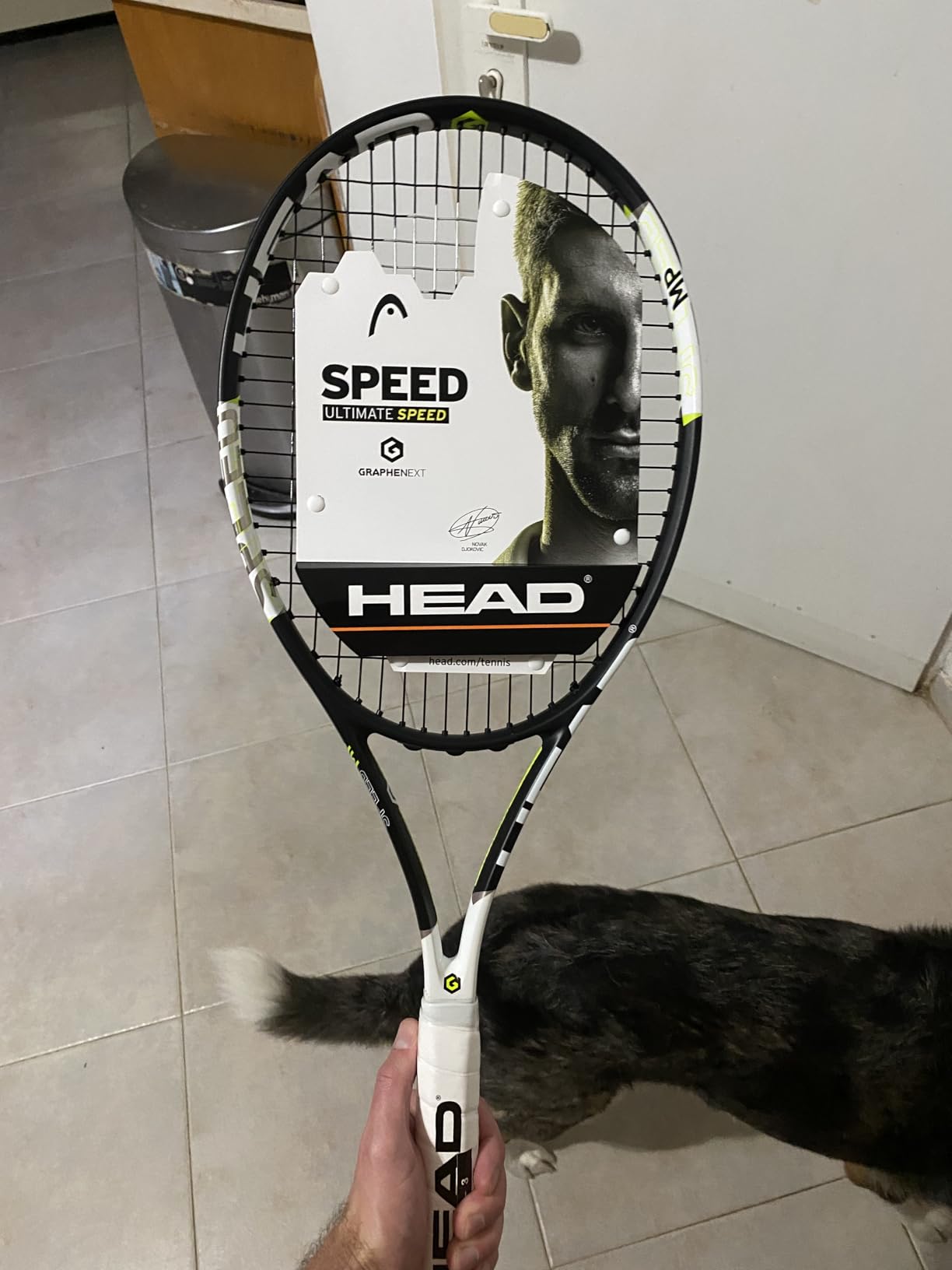
This is the closest thing in the list to a frame actually designed around doubles geometry. A 100 square inch head, a 4 point head-light balance and 315 g strung is almost exactly the spec profile that experienced doubles players describe when they explain why a frame works at the net.
Head-light balance puts mass in your hand, which is exactly what you want for a reaction volley. Your forearm does less work to hold the racket head up, so you can push it out in front and snap it back down. The graphene graphite frame is stiff and responsive, and owners describe a pure, clean feel on contact.
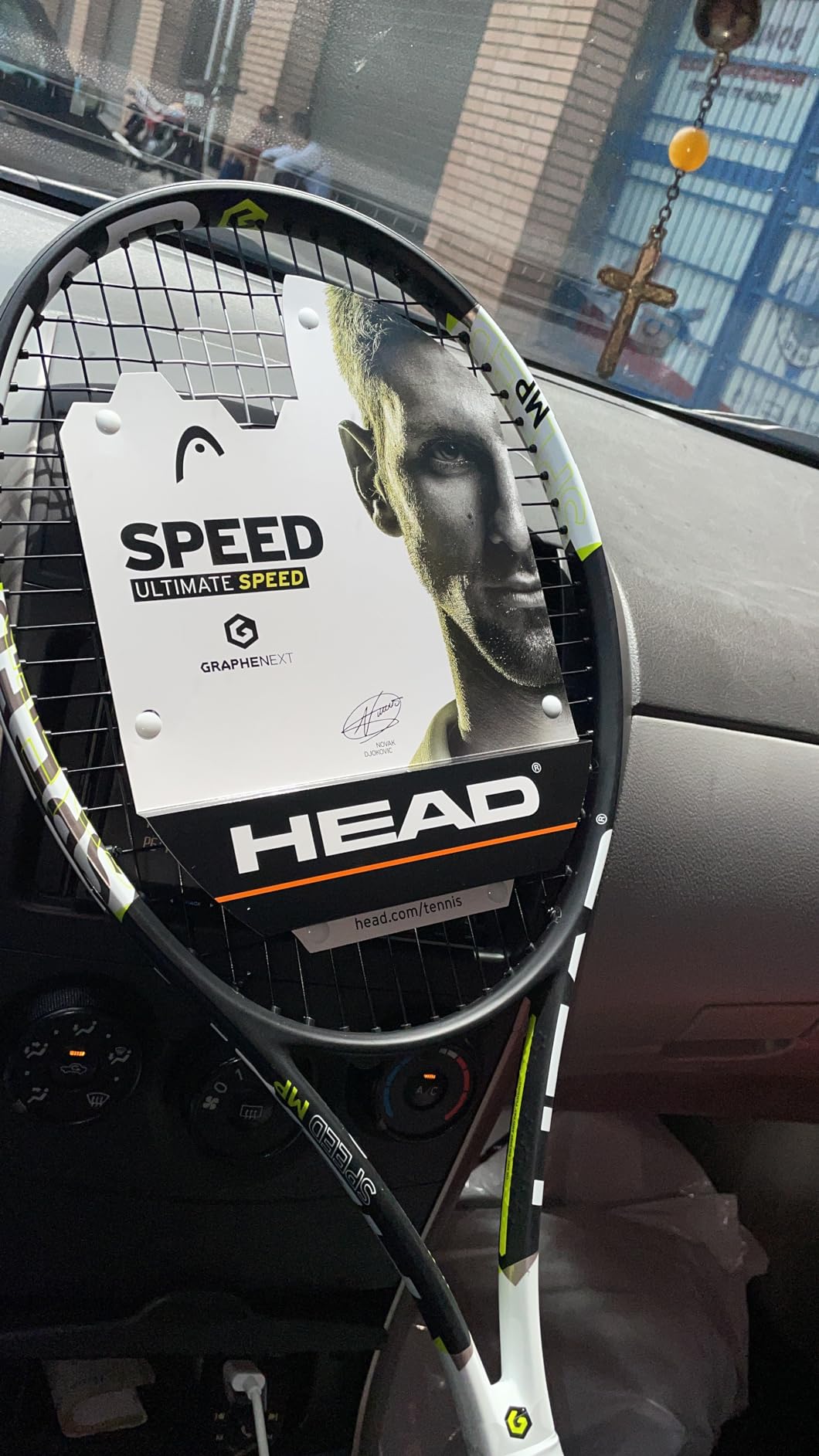
Owners also rate it highly for the balance between control, spin and power, which is the hardest combination to find. A frame that is all power gives you no touch; a frame that is all control makes you work for every ball. The Speed MP splits the difference, and it carries a one-year manufacturer warranty.
The catch is grip size. It is listed at 4 1/4 inches here, with fewer options than the recreational Wilson frames. Measure your hand before ordering, because a grip that is too big forces your wrist to do the work the balance point was designed to avoid.
Why it works at the net
At 315 g strung this frame has real momentum without being sluggish. Doubles is not a game where you want an anemic racket. Players report that it can pack real pace into a flat volley, which is the punch that forum users say they are chasing when a frame feels limp.
The 4 point head-light figure is worth understanding. A head-light balance means the balance point sits closer to your hand than to the middle of the strings, and the practical result is a racket that wants to be moved rather than pushed. For a reaction volley, that is the whole point.
Where it falls short
The most common complaint in the reviews is the factory strings. They are described as low quality, with reports of peeling and fraying after short sessions. Plan your first restring as an immediate rather than eventual purchase.
Second, at 315 g strung this is the heaviest frame in the group and it is a performance frame, not a beginner frame. A player with a slower swing or an arm already complaining about tendinitis should look at the lighter options instead.
6. HEAD Ti. Conquest: Best Lightweight Doubles Racket for Comfort
- Very light O-Beam frame reduces fatigue over long sessions
- Oversized 108 sq in head forgives off-centre volleys
- Head-light balance helps stability at the net
- Pre-strung and ready to play
- Most mixed reviews in the group
- Entry-level feel limits control for experienced players
The Ti. Conquest is the one to look at if your elbow has a history. The O-Beam frame is engineered to be light and the stated purpose is fatigue reduction, and at 9.7 ounces it is a frame you can hold up for three hours of mixed doubles without your forearm telling you about it.
The head-light balance is unusual at this level and genuinely useful. The listing describes it as enhancing control and handling at the net and helping players stay stable through volleys, and that is the correct behaviour for a doubles frame. Combined with a 108 square inch head, it gives you a large target and a fast racket in the same package.
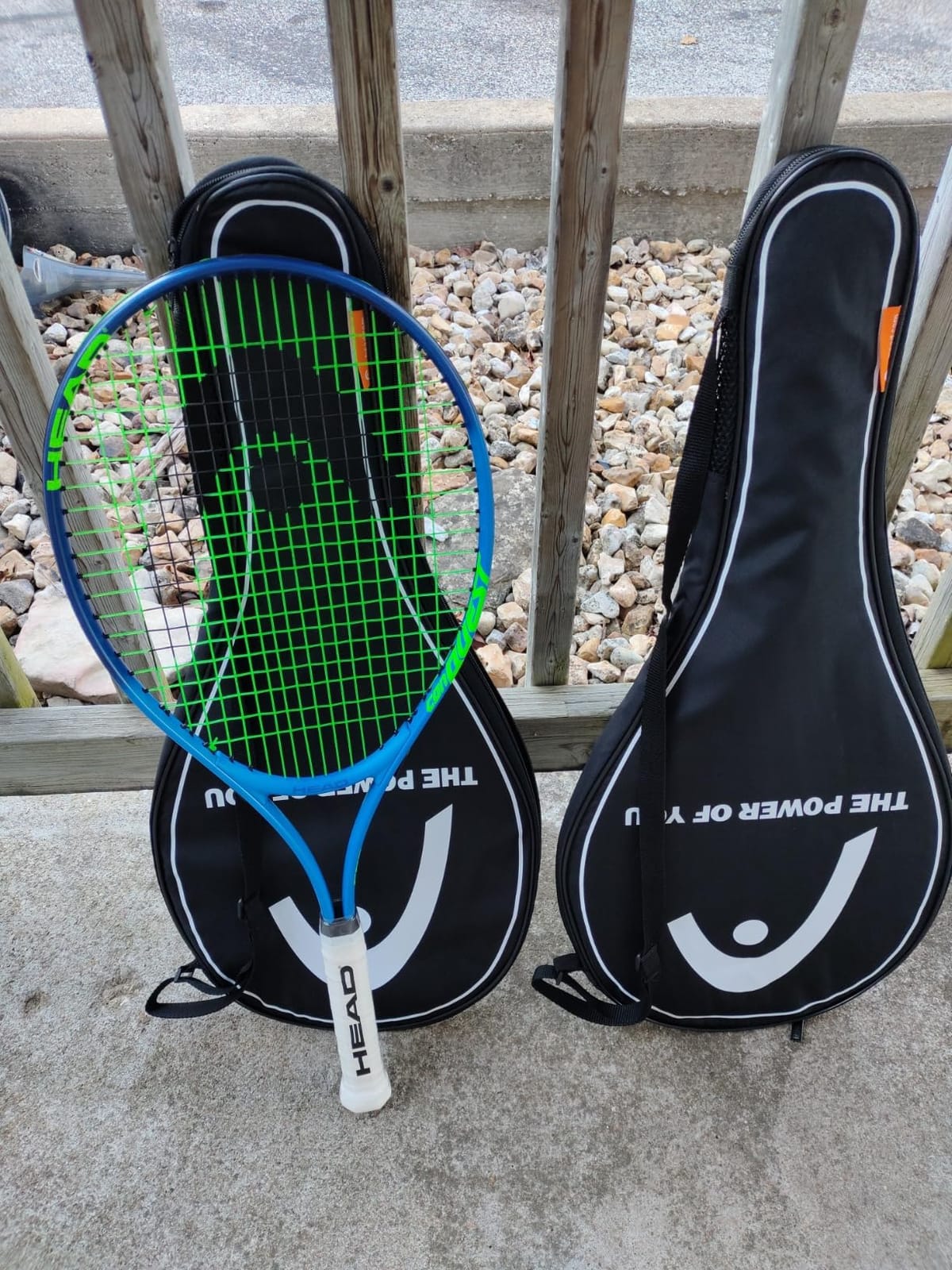
Durable titanium construction holds up to regular club use, and it arrives pre-strung so you can start playing immediately. Three grip sizes are offered at 4 1/4, 4 3/8 and 4 1/2 inches, plus a one-year manufacturer warranty, so you can get the size that suits you.
One thing to note is that this frame carries the lowest average rating in the group at 4.5, with a larger share of three-star feedback than the others. The complaints are consistent: it is an entry-level frame and it feels like one to players who have progressed past beginner doubles.
Why it works at the net
Lightness and a head-light balance together. That combination lets you hold the racket up in front of your chest with almost no effort, which is precisely the position you need for a punch volley. Players with less strength or reduced mobility find this the difference between getting there and not.
The 108 square inch head forgives off-centre contact, so an awkward volley while moving backwards still clears the net. For doubles players over 50 who want to keep playing without picking up an injury, that combination of forgiveness and low weight is the reason to buy this frame.
Where it falls short
Control is the limitation, plainly. The frame is built for forgiveness and easy power, so a player who wants to place a drop shot or thread a passing shot through a narrow gap will find limited feedback. Experienced doubles players tend to outgrow it within a season or two.
The review pattern is also more polarised than the other frames here, with more one and two-star feedback. If you are on the fence, the first three frames in this list are the safer picks.
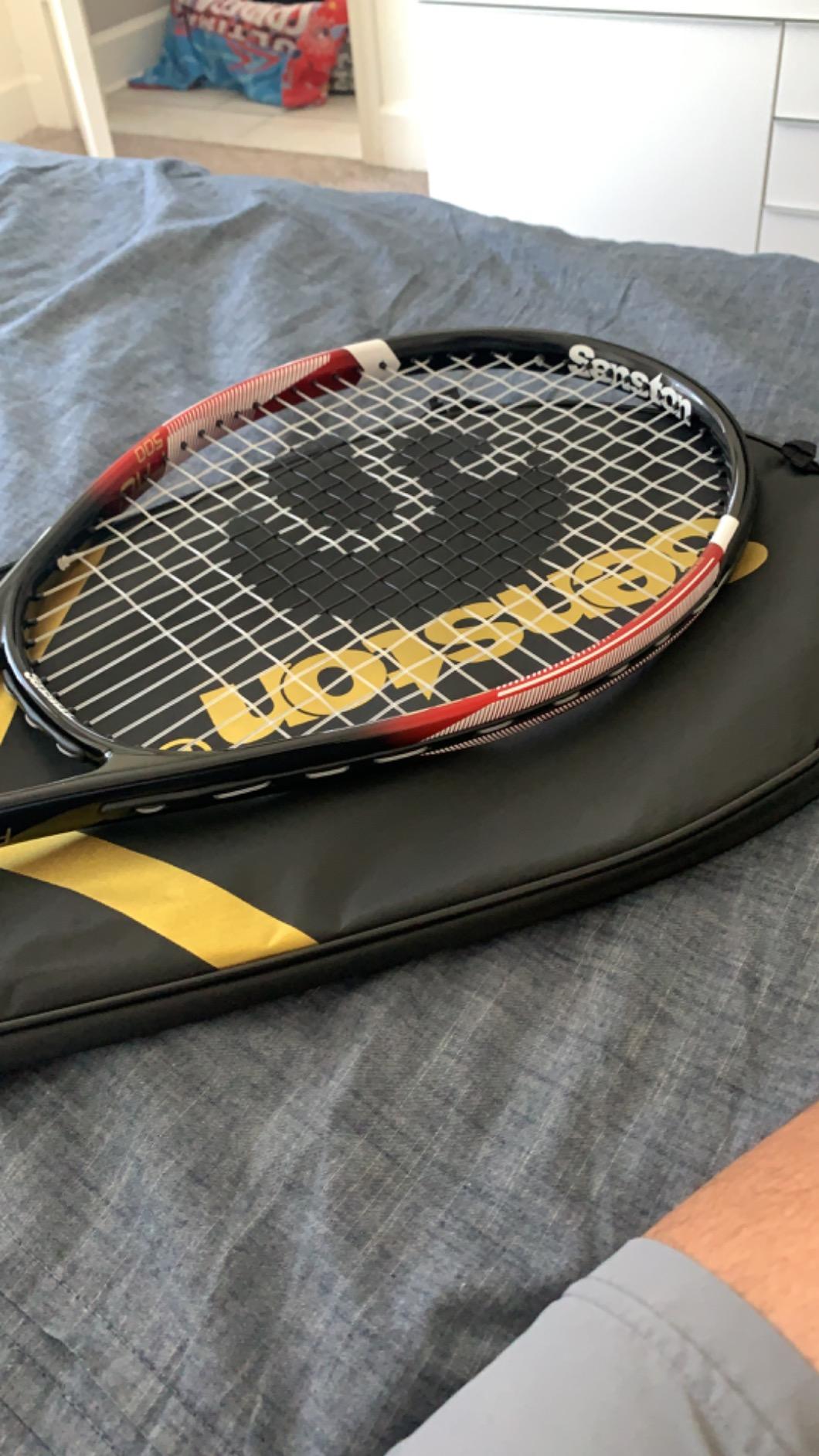
7. Senston 27 Inch Adult Tennis Racket Set: Best Doubles Starter Package
Senston 27″ Adult Tennis Racket Set Durable Lightweight Vibration Dampening
- Complete package with two rackets and all accessories
- Lightweight aluminum alloy frame is easy to swing
- Pre-installed overgrips and dampeners reduce arm fatigue
- Several colour combinations available
- Aluminum construction feels less refined than graphite frames
- Accessory bundle adds little if you already own rackets
- Most three-star feedback of the group
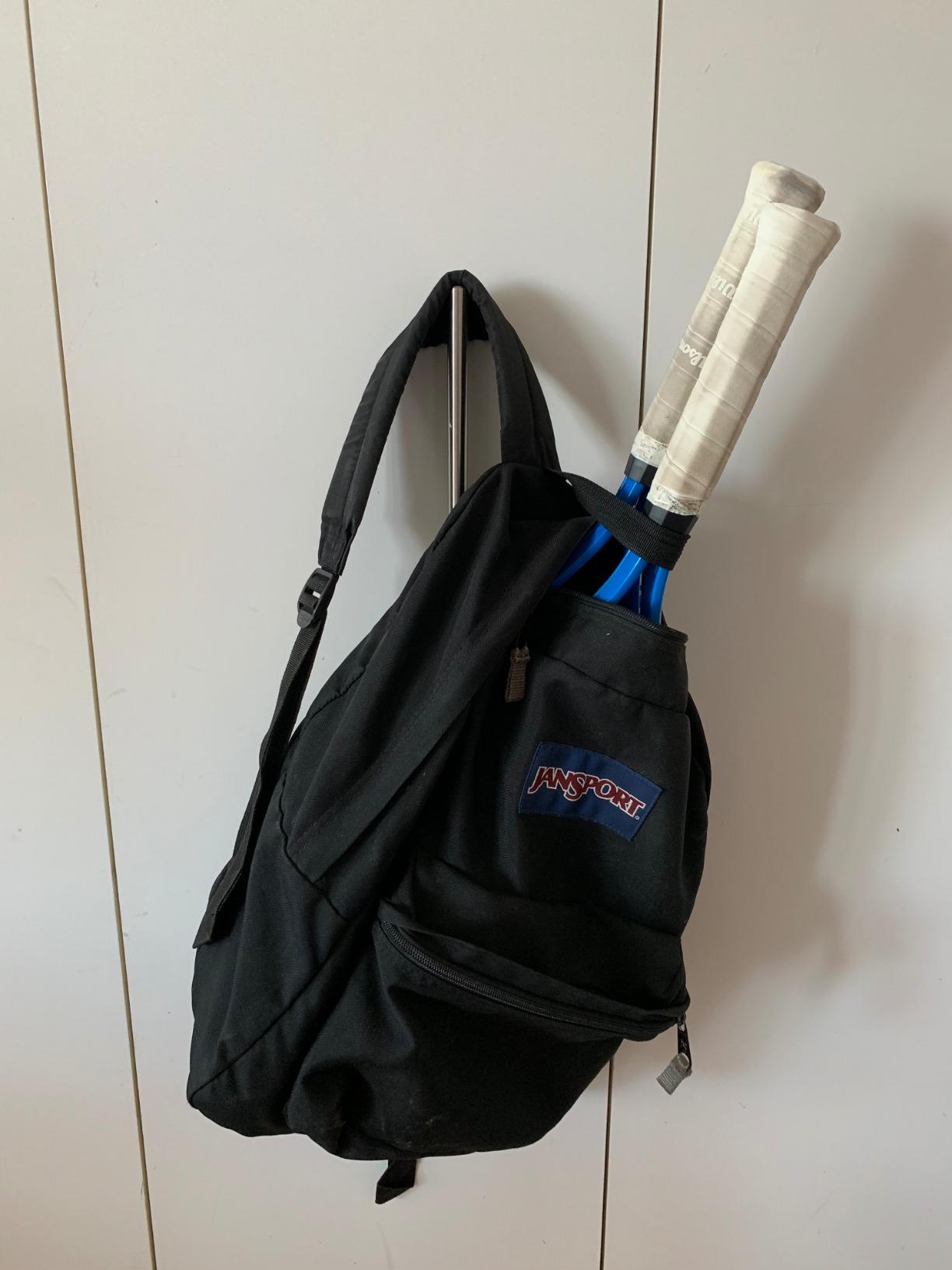
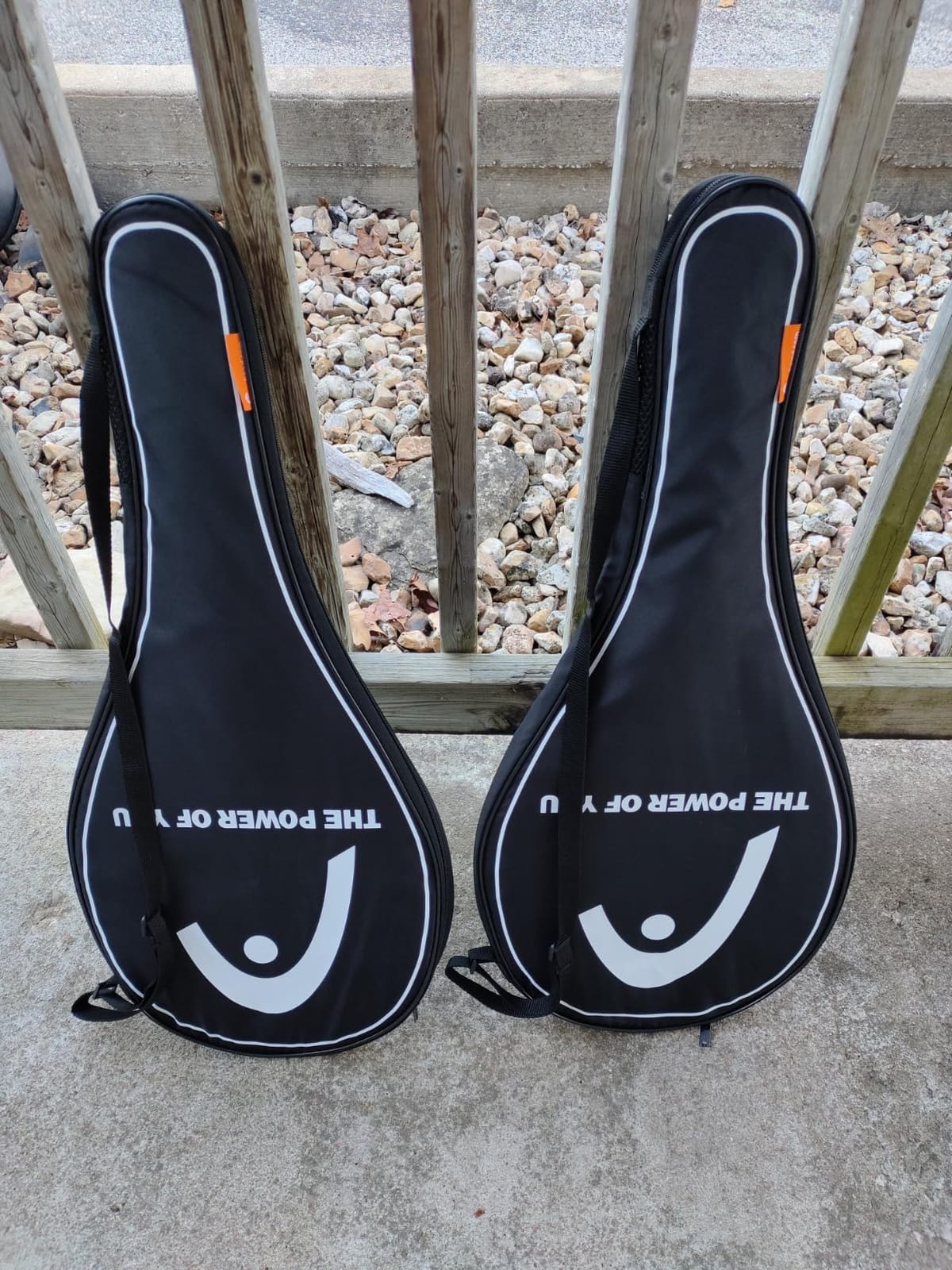
Most doubles players have a playing partner, and this set solves that problem in one purchase. Two 27 inch rackets come in the box along with a shoulder bag, three high-visibility balls, two absorbent overgrips and two vibration dampeners. Nothing else to buy before your first match.
The aluminum alloy frame is light and easy to swing, which is the correct priority for a beginner doubles set. Reviewers rate the comfort highly, and the included dampeners and overgrips take the sting out of a blocked ball from day one, which matters more for beginners than experienced players because beginners swing harder and less accurately.

Four colour combinations are offered, which is a minor thing but tells you the set is aimed at recreational and casual play rather than competitive league tennis. The design intent is stated clearly: immediate practice and friendly matches, and it delivers on that.
There is no listed strung weight for this frame, so treat any handling claims as impressions from reviews rather than a specification. Reviewers describe the frames as lightweight, though some also note feeling less solid than comparable graphite frames.
Why it works at the net
The included dampeners matter more than they sound. Doubles beginners block a lot of balls they did not see, and every one of those is a shock to the elbow. Starting with a dampened frame is a low-cost form of injury prevention that most players skip.
Lightweight aluminium is also forgiving of mishits, so a new player is not punished for a late volley. That kind of forgiveness keeps people playing, and for a doubles set aimed at casual partners it is the right priority.
Where it falls short
This is not a performance frame and it does not pretend to be. Reviewers who compared these against graphite frames describe them as less refined, and you should not expect consistent control on a volley or depth on a serve after returning one.
Second, the bundle is a gimmick if you already own a racket. If your partner already has a frame, buy one of the individual rackets earlier in this list instead and put the money into a decent string job.
Doubles Racket Buying Guide: Head Size, Weight, Balance and Stiffness
This is the section that separates a doubles roundup from a general racket roundup. Most buying guides talk about the power and control trade-off, which is a singles conversation. Doubles needs four different numbers.
Head size: aim for 100 square inches
Head size is the total area of the string bed in square inches. A larger head spreads the impact across more strings, which forgives off-centre contact. For singles that forgiveness is nearly always good. For doubles, a larger head also raises twistweight, which is the frame twisting around your grip when you block a hard ball.
That is why experienced doubles players keep coming back to roughly 100 square inches. It is large enough to survive mistimed volleys and small enough that the frame does not torque when a first serve arrives. The AI Overview for this query makes the same point, citing a numeric threshold of 100 square inches or slightly larger as the target.
The frames in this roundup span a wide range, from 100 square inches on the HEAD Speed MP up to 115 on the Ti S6. That spread is deliberate, and the guide below explains when each end of the range is the right call.
Unstrung weight versus swingweight
Unstrung weight is what you lift with one hand. Swingweight is what your arm has to accelerate through the arc, and the two are not the same number. A long, thin frame can be light in the hand and heavy to swing. This is the single most misunderstood spec in tennis, and it is why people tell you a doubles racket should be heavy and then cannot explain why a 300 g frame feels light.
The practical target for doubles is a frame that is heavy enough to have momentum through the ball but head-light enough that you can move it. If you are choosing between two frames of the same weight, take the one that is head-light. If you are choosing between two frames of the same balance, take the one you can swing fastest without straining.
Doubles players regularly cite a swingweight target in the low 300s with roughly five points of head light, and stiffness in the 60 to 72 range. Those are forum numbers rather than laboratory ones, but they are a reasonable sanity check when you are comparing frames.
Head-light balance is a doubles advantage
Head light means the balance point sits in or near the handle, so the mass is under your hand rather than out in the strings. At the net this is worth more than anything else on the spec sheet, because it means your wrist and forearm do less work to hold the racket in front of your body and get it moving again.
Two frames in this list are explicitly head-light. The HEAD Ti. Conquest is built around it, and the HEAD Speed MP is listed at 4 points head light. The Hyper Hammer 5.3 runs the other way, head-heavy, and players report noticing the difference immediately. Neither is wrong, but they suit different styles.
Stiffness: deflect, do not absorb
In singles you absorb pace and let the ball come to you. In doubles you are in the path of a hard driven ball and you have to send it back. That is a different job, and it is why a slightly stiffer frame suits doubles players better than the plush frames many beginners are sold.
A stiff frame returns a blocked shot flatter and lower instead of absorbing the impact and floating long. It also transfers more vibration, which is why the light stiff frames in this group are the ones we pair with a dampener recommendation rather than selling as arm-friendly in isolation.
Grip size: measure before you buy
Grip size anxiety is one of the most common threads in racket forums, and it is well founded. A grip that is too large forces your wrist to bend further at contact, which loads the forearm and the elbow. A grip that is too small gives you nothing to resist against and makes you twist the frame.
The standard sizes run from G2 at 4 1/8 inches through G5 at 4 5/8 inches, in eighth-inch steps. Take the measurements from this roundup seriously: the Wilson Federer Adult comes in at 4 3/8 inches, the Speed MP at 4 1/4 inches, and the Hyper Hammer is available across the widest range here. Pick the size that matches your hand, not the one that looks right.
When larger heads hurt doubles play
Larger heads do not ruin doubles play, but they change what you are optimising for. Above roughly 110 square inches, twistweight rises and the frame starts to feel less precise when you block pace. If your doubles game depends on stopping hard passing shots and putting the ball back down the line, that is a real cost.
The counter-argument is fairness. A large head forgives errors, and errors cost more points than control does at recreational level. The HEAD Ti S6 at 115 square inches is a fine doubles racket for a beginner. It is the wrong choice for a player returning first-serve bombs all afternoon.
Strings and Tension for Doubles
Strings matter more in doubles than most players expect, because you are hitting the ball a short distance from yourself at high speed and the sweet spot of your swing is passing through the string bed constantly.
Polyester mains with synthetic crosses is the setup most experienced doubles players land on. The poly gives you control and spin on the short, flat volleys that doubles is made of, while the softer synthetic crosses take the sting out of the impact. If you have elbow trouble, a full poly stringbed is the wrong choice even in a stiff frame.
Tension is the other half. Doubles rewards a slightly higher tension than many players run, because control matters more than free power when you are hitting to a target rather than swinging for the fences. Around 50 to 55 pounds in a stiff frame is a reasonable starting point, and lower it by a few pounds if you play on a hard court and your arm complains.
One practical note before you buy a frame. Every frame in this roundup ships with factory strings, and reviews of five of the seven specifically mention the factory strings peeling, fraying or wearing out quickly. Budget for a proper restring shortly after purchase. It is a far better use of money than a new frame, and it will do more for your doubles game than any frame on this list.
Do You Actually Need a Different Racket for Doubles?
The honest answer is often no, and the strongest argument against a dedicated doubles frame comes from players who have thought about it longest.
On Talk Tennis, a regular in a thread laying out ideal doubles specs made the case plainly: a good doubles racket, for them, is the racket they are used to and play singles with. The reasoning is practical. Muscles memory built over years does not transfer to a new frame, and the mid-season adjustment period is when matches are being won. Doubles is a team game where your partner is counting on you to be reliable, not experimental.
There is a real cost to switching that goes beyond money. A frame you have never held will not be pushed into position the same way in a scramble volley, and the first few weeks involve consciously thinking about your swing. In a league where matches are tight, that adjustment is a genuine handicap.
Where the other side has the better of the argument is specific. If your singles frame is head-heavy, heavy in the hoop, or noticeably flexible, then a net game built on reaction volleys and blocked balls will not suit it, and a head-light doubles frame will. That is a real correction rather than a preference, and the five points head light figure we mentioned earlier is a meaningful difference at the net.
Our rule: keep your singles frame if it is head-light and it serves you. Add a second frame if your singles racket is a baseliner’s frame that you have to wrestle into position at the net. Most of the frames in this roundup are affordable enough to make that second choice a low-risk experiment, which is a better argument than any of ours for demoing before you commit.
Whatever you decide, demo first. The dominant behaviour in every racket recommendation thread we read was players demoing four or five frames before buying, and the ones who regretted a purchase almost always skipped that step. Our other guides cover the rest of your court setup, including protective eyewear for outdoor matches and ball machines for solo consistency work.
Frequently Asked Questions
What is the best racquet for doubles?
The Wilson Federer Adult Recreational is our top pick for doubles. At 295 g with a midplus head and Stop Shock pads in the throat, it is fast enough for reaction volleys and forgiving enough to survive mistimed contact. Players who want maximum swing speed should consider the HEAD Ti S6 at 8.6 ounces strung.
What head size should a doubles player use?
Around 100 square inches is the standard target for doubles play. It forgives off-centre volleys without raising twistweight as much as a larger head. Above roughly 110 square inches the frame starts to twist more when you block a hard passing shot, which costs you precision.
Should I use a different racket for doubles?
It depends on your balance point. If your singles frame is head-light, keep it and save the money. If it is head-heavy or stiff in the hoop, a dedicated head-light doubles frame will be easier to handle at the net. Many advanced players argue that switching frames mid-season costs more in adjustment than it gains.
What string pattern is best for doubles tennis?
An open 16×19 pattern like the HEAD Ti S6 gives you easy topspin and slice, which helps with drop shots at the net. A hybrid of poly mains and synthetic crosses is the most common doubles setup, because the poly controls the volley and the softer crosses reduce sting at the elbow.
How do I choose the right weight for my tennis racket?
For doubles, compare swingweight rather than unstrung weight, since swingweight is what your arm actually moves. Pick a frame that is head-light so the mass sits in your hand, then confirm you can swing it fast enough for a reaction volley without straining your forearm.
How stiff should a doubles racket be?
Slightly stiffer than a singles frame. Doubles players deflect incoming pace rather than absorbing it, so a firmer frame returns a blocked shot flatter and lower instead of floating long. The trade-off is more vibration, so pair a stiff frame with a dampener if your elbow is sensitive.
Which Doubles Racket Should You Buy?
If you are a recreational or intermediate league player who wants the single best-balanced option, the Wilson Federer Adult Recreational is the answer. It is light, forgiving, well damped and the most proven frame we looked at. If swing speed at the net is your main concern and your arm is fine, the HEAD Ti S6 is faster than anything else here.
For players on a tight budget or starting doubles later in life, the Wilson Tour Slam gives you vibration damping and forgiveness without stepping up to a performance frame, and the HEAD Ti. Conquest is the lightest, most joint-friendly option. The HEAD Speed MP is the only frame here with a true doubles spec profile at 100 square inches and 4 points head light, and the Hyper Hammer is the choice if you want to block pace with authority rather than finesse. The Senston set is worth a look if you need two frames and all the accessories in a single purchase.
Whichever you pick, demo it before you buy, and restring it with a poly mains and synthetic crosses hybrid once you know your grip size. That last step will improve your doubles game more than any frame on this list.