
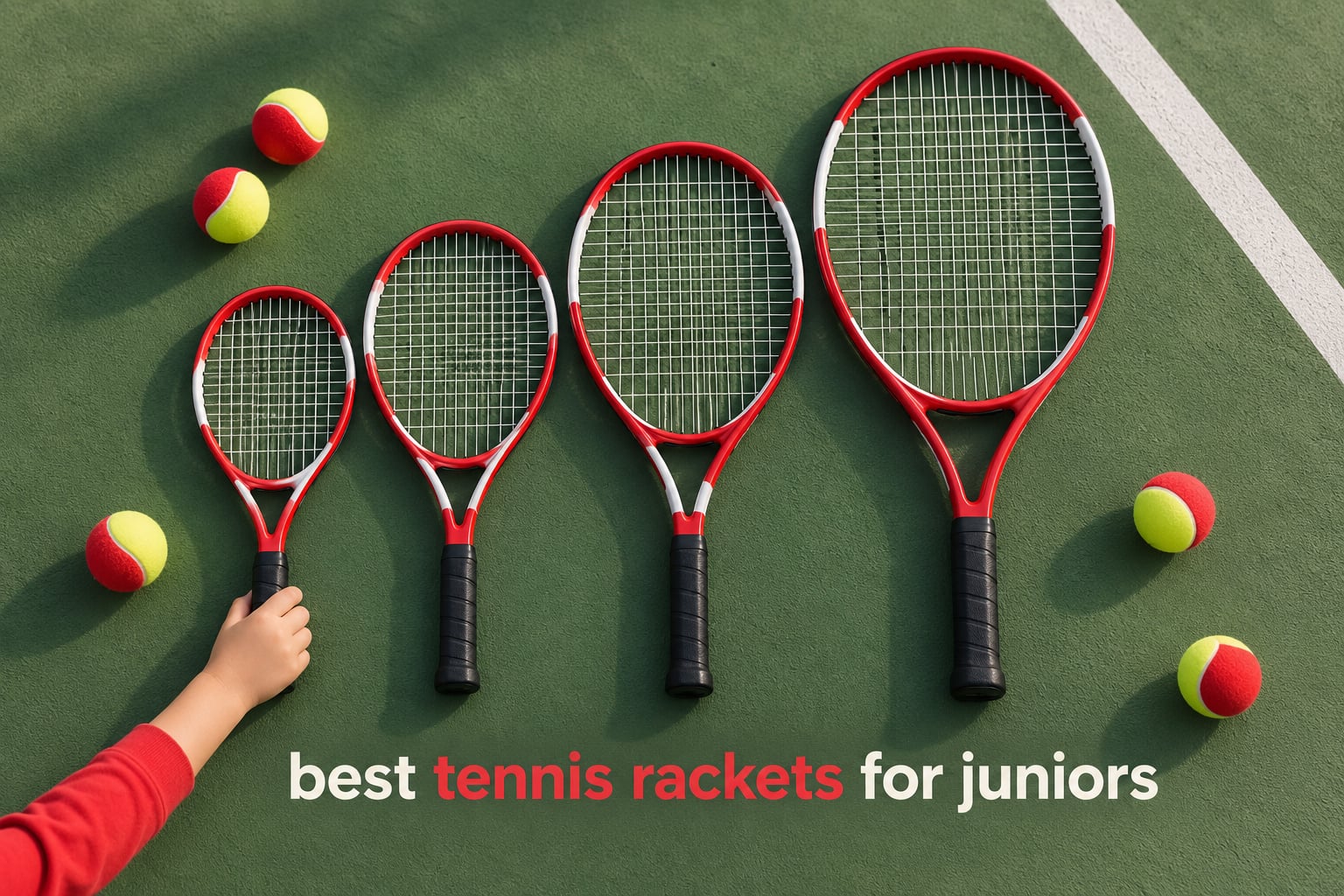
Choosing the best tennis rackets for juniors is less about brand name and more about length, weight and head size. A racket that is too long is heavy in a child’s hands, slows the swing and can strain a young elbow, and a frame that is too short leaves a growing player twisting to make contact. Get the size right and even a first-time beginner can rally within a handful of sessions.
We went through the junior rackets that parents buy most often, from the smallest 17 inch frames for four year olds up to the 25 inch models that pre-tournament juniors play with. Along the way we checked weight, grip circumference, stringing status and what buyers actually say after a few months of use. Every racket below is a real model you can order, not a generic placeholder.
One rule matters more than any other: size by height first, age second, skill level third. A tall nine year old often needs a 25 inch frame, while a smaller eleven year old may still be better served by a 23 inch racket that they can swing with speed. Below that rule, this is where to start.
Ages 2 to 4, under 3 feet tall: 17 inch racket, soft foam or red ball.
Ages 4 to 6, around 3 feet tall: 19 inch racket, red to orange ball.
Ages 7 to 9, around 3.5 to 4 feet tall: 21 to 23 inch racket, orange to green dot ball.
Ages 9 to 12, around 4 to 4.5 feet tall: 25 inch racket, green dot to yellow ball.
Short, stocky players: step down one size from the height guide, since racket weight scales with length.
If your child is already taking lessons, mention the racket length to the coach before you buy. Coaches often know which specific junior model their group is using and can tell you whether a longer upgrade would actually help.
Top 3 Picks for the Best Tennis Rackets for Juniors in October 2026
The three rackets below cover the most common buying situations: a very young beginner, a child who needs several sizes as they grow, and a parent who wants a proven frame from a known tennis brand. Each of them carries more than 900 reviews from verified buyers, which is more evidence than most junior rackets on the market can offer.


HEAD Instinct Junior 21-25 inch
- Three sizes as kids grow
- Head light balance
- 8.5 oz at 25 inch
- Pre-strung

AMA SPORT Kids Kit 17-25 inch
- Five sizes from 17 to 25 inch
- 420D nylon bag included
- Big sweet spot
- Play and Stay design
Best Tennis Rackets for Juniors in October 2026
Every racket in the table below is aluminum, which is the standard material for junior frames because it is light, inexpensive to build and forgiving on off-centre hits. Where they differ is length range, listed weight, whether the frame arrives strung and what is included in the box.
| Product | Specifications | Action |
|---|---|---|
| HEAD Speed Junior 19 inch |
|
Check Latest Price |
| AMA SPORT Kids Kit 17-25 inch |
|
Check Latest Price |
 INSUM Kids Racket 17-25 inch INSUM Kids Racket 17-25 inch |
|
Check Latest Price |
| HEAD Instinct Junior 21-25 inch |
|
Check Latest Price |
 Street Tennis Club 19 inch Street Tennis Club 19 inch |
|
Check Latest Price |
 Senston Junior 19-25 inch Senston Junior 19-25 inch |
|
Check Latest Price |
 PIKASEN Kids 17 inch PIKASEN Kids 17 inch |
|
Check Latest Price |
 Dunlop Nitro Junior 23 inch Dunlop Nitro Junior 23 inch |
|
Check Latest Price |
 Wilson US Open Junior 19 inch Wilson US Open Junior 19 inch |
|
Check Latest Price |
 Wilson Profile 25 Junior Wilson Profile 25 Junior |
|
Check Latest Price |
 LUNNADE Youth 19-25 inch LUNNADE Youth 19-25 inch |
|
Check Latest Price |
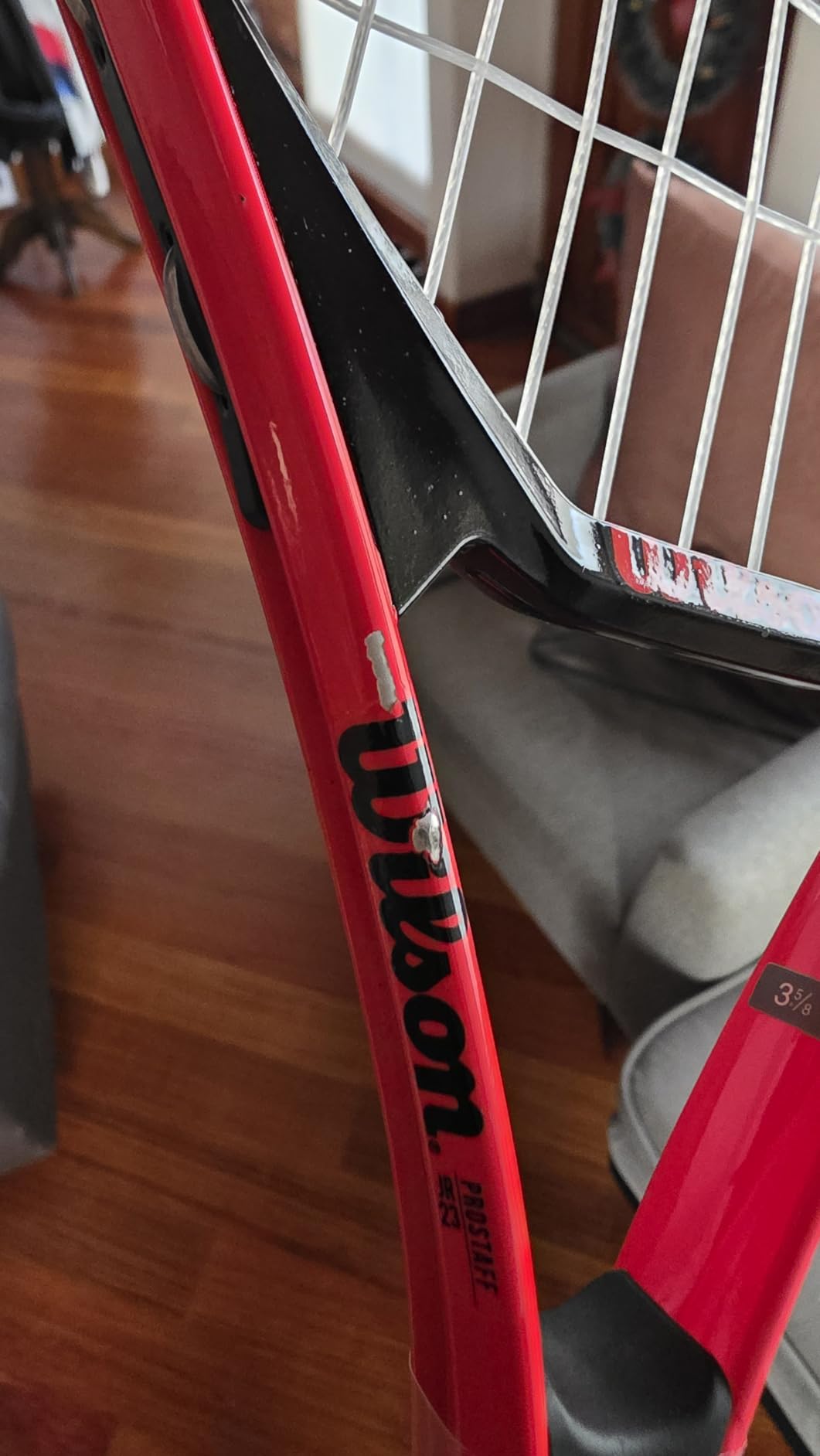
 Wilson Pro Staff Precision 23 inch Wilson Pro Staff Precision 23 inch |
|
Check Latest Price |
1. HEAD Speed Junior 19 Inch: Best Overall for First-Time Players
- Very light at 170 g
- Pre-strung and ready to play
- Forgiving 76 sq in sweet spot
- Aluminum O-beam construction
- Kid friendly grip
- Offered only in 19 inch length
- Limited color options
This is the racket we keep coming back to for a child making the first real contact with tennis. At 170 g it is among the lightest frames in the junior category, and that low mass is the whole point: a small player can swing it fast enough to actually see the ball leave the frame.
Around 84 percent of its reviews are five star, and the comment that repeats most is simple, it feels like real sporting equipment rather than a toy. Parents also note the aluminum O-beam construction survives being dropped in a car boot and passed between two siblings without complaint.
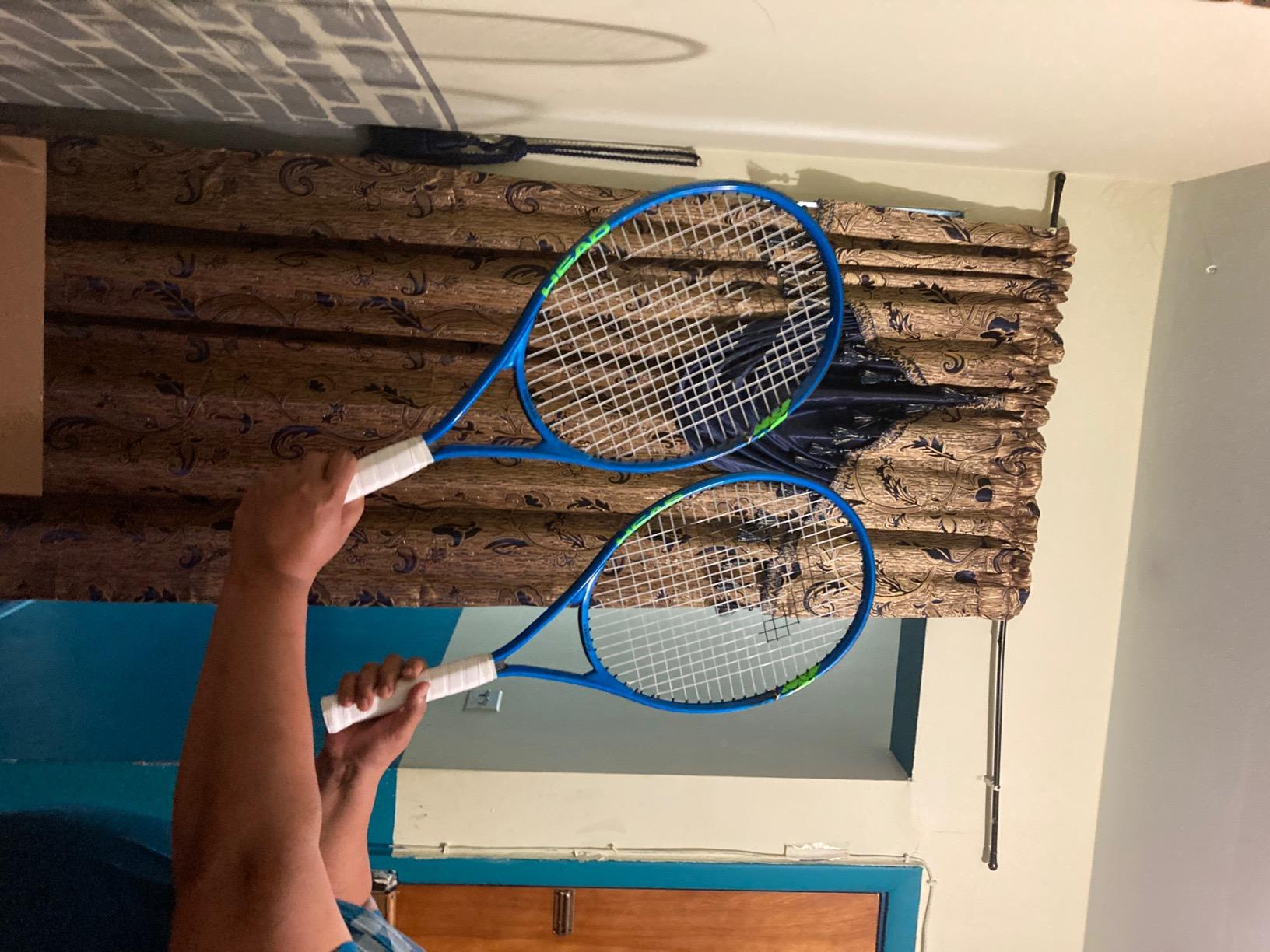
The 76 square inch head is generous relative to the frame length, so off-centre strikes still travel forward instead of dying in the strings. That forgiveness is what keeps a four year old hitting the ball over the net after a handful of swings, and forgiveness matters more than power at this age.
Grip size is 3 5/8 inches, the smaller junior circumference, which suits small hands but can feel cramped for a child with larger hands who will move on to a 21 inch frame soon. The frame arrives strung, so there is nothing to buy beyond the racket and a bag of foam balls.
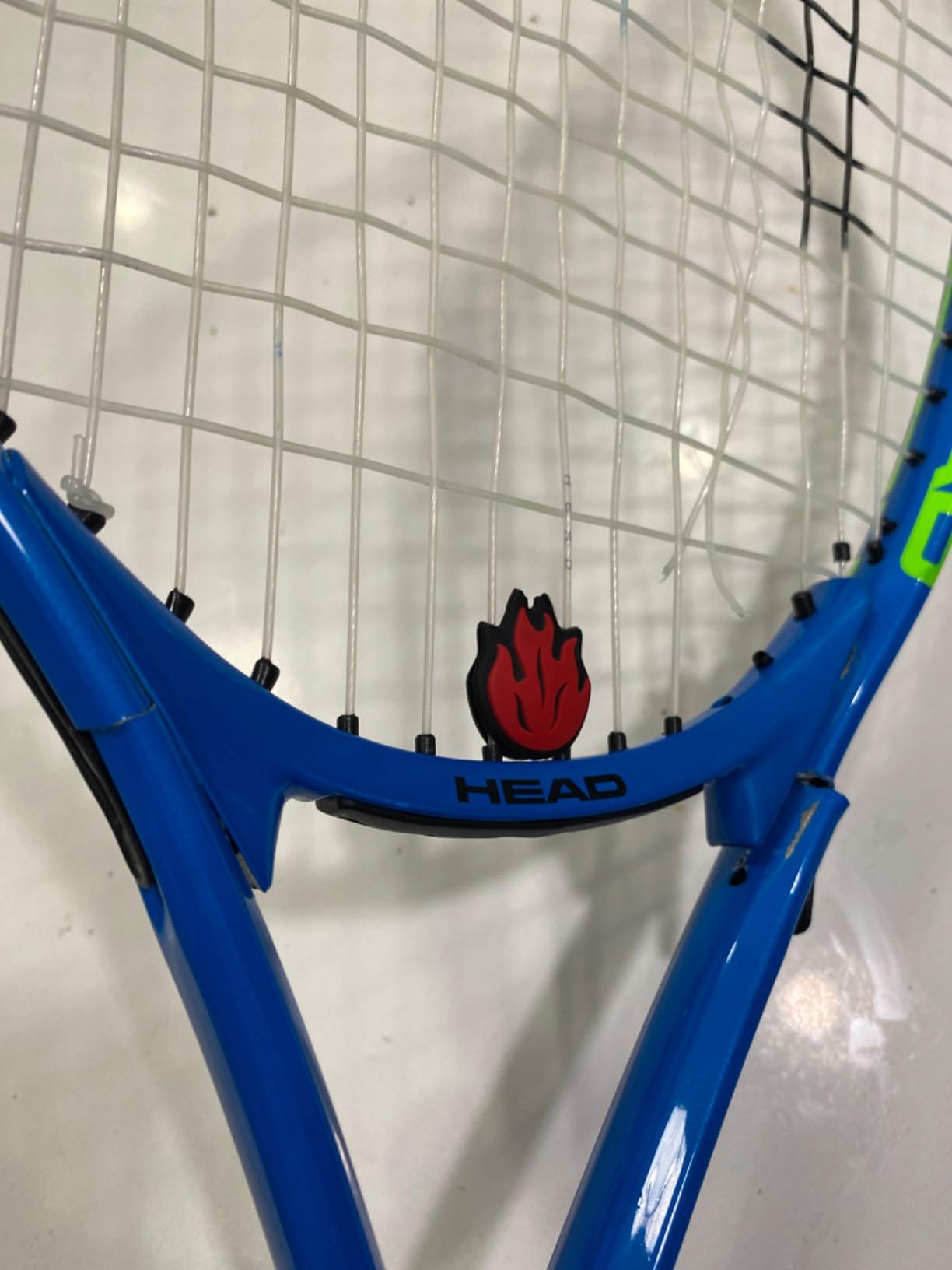
Who this racket suits
Ages 2 to 4 in lessons, first sessions with a coach, or any child who will be practising with red or foam balls. The low weight means a beginner can generate a real swing without an adult shortening the handle for them.
It also works as a loaner racket for a visiting grandchild or a first birthday present, since most children of that age will outgrow the 19 inch length within a year or two.
Where the limits show
Only one length exists in this model, so a child who grows quickly will move to a different model rather than a longer size of the same one. There is also no 25 inch version, so this is not the racket to buy for a nine year old.
Colours are limited to a small set of variants, which matters less than it sounds except to a child who has strong preferences. The frame is designed for learning, not for a child who already plays matches at club level.
2. AMA SPORT Kids Tennis Racket 17-25 Inch Kit: Best Size Coverage for Growing Players
- Five sizes from 17 to 25 inch
- 420D nylon shoulder bag included
- Play and Stay teaching design
- Large sweet spot
- Many color variants
- Grip size spec is unclear
- Some string durability complaints
The strongest argument for this kit is simple arithmetic. Most families do not buy one junior racket, they buy two over four years, and a range that covers 17 through 25 inch removes the guesswork of matching a model to a size later on.
Design is built around the ITF Play and Stay teaching philosophy, which favours rackets that make contact easy rather than rackets that hit hard. The 17 inch version listed here weighs 0.16 kg and comes with a 420D nylon shoulder strap bag, which is a better bag than most of the bare-bones rackets at the larger sizes.
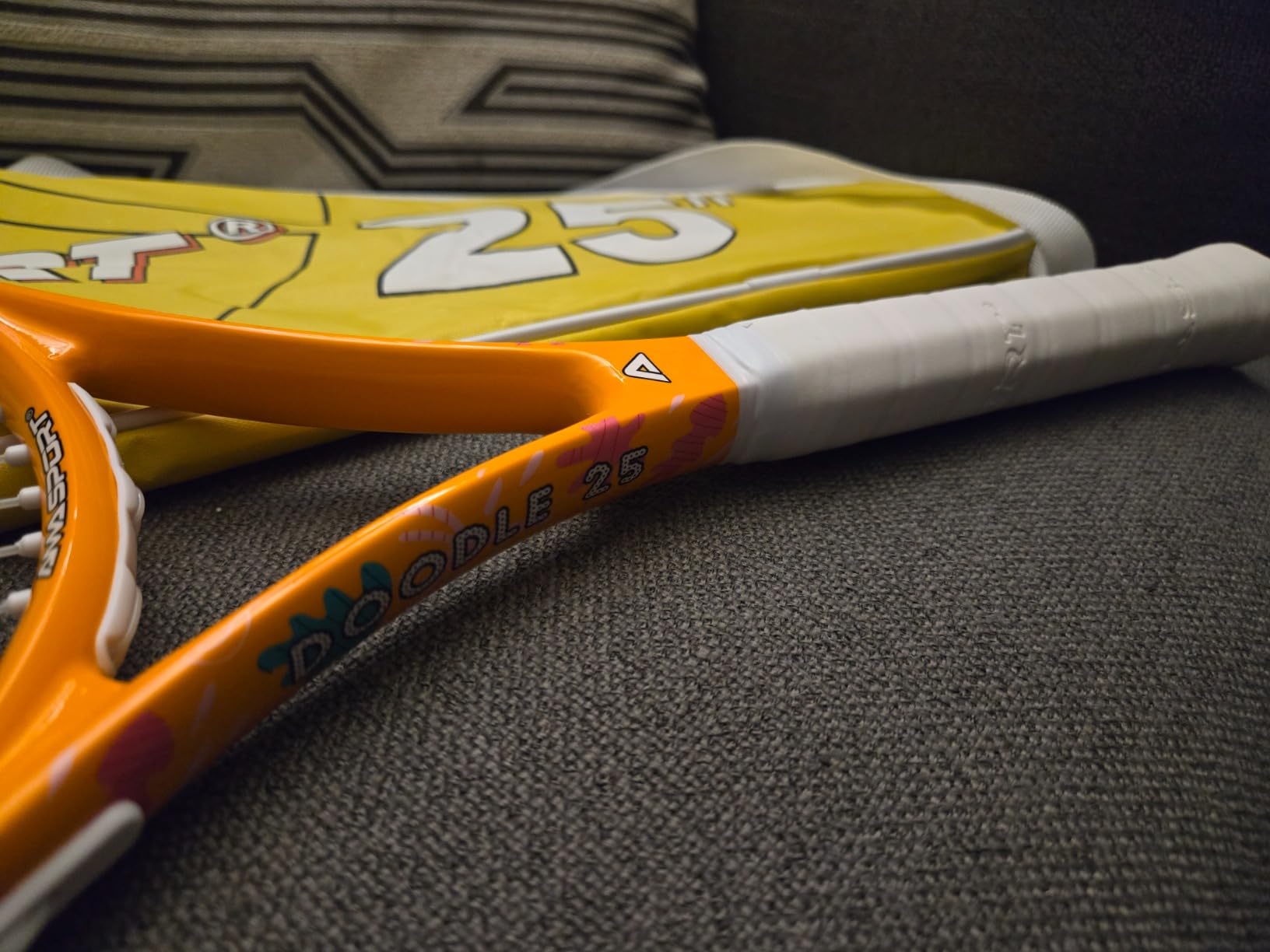
Reviews run about 86 percent five star, with parents most often mentioning the size chart, the bag and the fact that their child picked a colour and stuck with it. Colourways include pink, blue, green, orange and printed patterns, which is a genuine advantage at the four to seven year old stage.
The big sweet spot does the heavy lifting for beginners, absorbing mis-hit shots that would rattle a smaller head. For a child who has never held a racket, that is the difference between a lesson that is fun and a lesson that ends early.
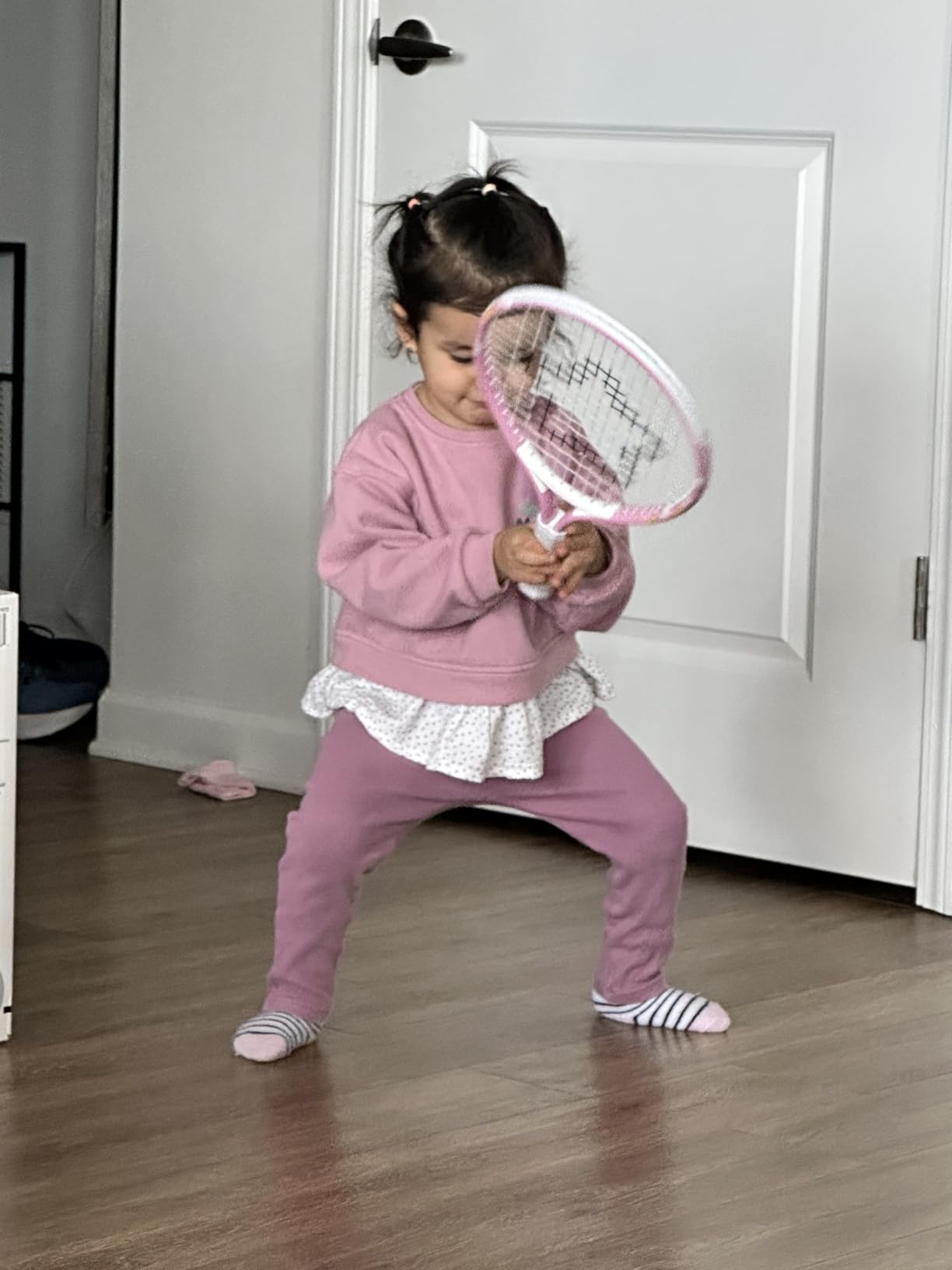
Who this racket suits
Families who want one purchase to cover several stages, and parents buying for a range of ages such as siblings or cousins starting at different points. The included bag also makes it practical for school tennis or a summer camp where the racket has to travel.
It is a sensible choice for a club or coach running group lessons, since a single model across five sizes keeps the equipment bag uniform.
Where the limits show
The listed grip size specification is vague, quoted as a 0000 format, so you cannot confirm the exact circumference from the listing alone. Ask the seller for the grip measurement if the child is between sizes.
A small number of reviewers report strings losing tension or snapping sooner than expected, which usually points to hard court use rather than a fault. The frame itself is moulded aluminum, so a restring replaces the problem entirely.
3. INSUM 17-25 Inch Kids Tennis Racket: Best for Budget-Conscious Families
- Size guide spans ages 2 to 12
- Matching shoulder cover bag
- Lightweight aluminum frame
- Generous hitting area
- Multiple colour options
- Only 90 day warranty
- 4 1/8 inch grip runs large for toddlers
This model follows the same playbook as the larger kits, a full 17 through 25 inch range with a printed size chart, but the 17 inch version is the lightest frame we measured in the group at 5.29 ounces. That figure matters for a child who is barely able to close a fist around the handle.
Reviews sit around 83 percent five star, and the recurring theme is value: parents say the racket holds together through backyard play and still looks presentable enough for weekly lessons. The matching cover with an adjustable shoulder strap is included at no extra cost.
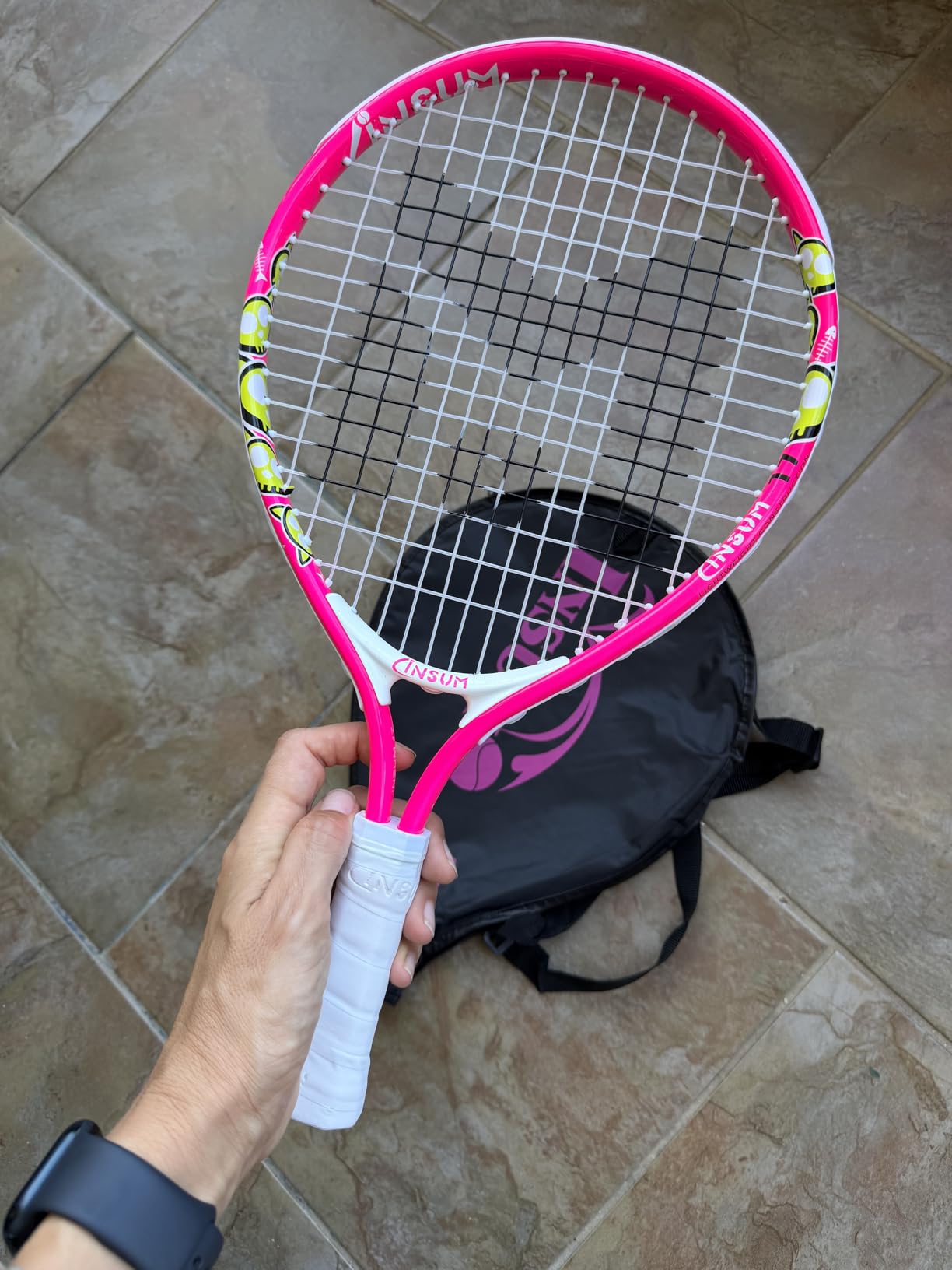
Colours include red, yellow and blue, blue, pink and yellow variants, so there is a reasonable chance of finding something a picky child accepts. The frame arrives strung, which removes one step between delivery and the first swing.
A beginner-friendly head with a generous hitting area means the ball goes back more often, and in junior play that is what keeps a session going. Sound, feel and power are secondary when a player is six years old.
Who this racket suits
Families who want a low-commitment first racket and are prepared to replace it when the child outgrows the size. The size chart in the listing also makes it easy to buy the correct length again in a year or two from the same range.
It suits casual and recreational players who are not in a formal programme, and parents who want one purchase to cover a child and a younger sibling.
Where the limits show
The warranty is 90 days, which is short compared with the one year or longer that some brands offer, so damage after the first few months falls on you. Budget for a replacement cover or racket sooner rather than later.
The 4 1/8 inch grip is on the larger side for a toddler, so a very small child may need to hold the handle further down or use a fresh overgrip for comfort. It is a minor issue that fades as soon as the child moves to a 19 inch model.
4. HEAD Instinct Junior 21-25 Inch: Best Multi-Size Growth Racket
- Three sizes as the child grows
- Head light balance cuts vibration
- Aluminum O-beam construction
- Pre-strung and ready
- Strong owner feedback
- One report of defective strings
- Limited colours per size
Where most junior rackets offer one or two lengths, the HEAD Instinct covers 21, 23 and 25 inch. That is the stretch of a child’s tennis life from about age 4 to age 10, and it is why this is our pick for families who do not want to rebuy every season.
About 89 percent of its reviews are five star. Parents consistently describe the weight as light for the length, the grip as comfortable and the frame as feeling like a real racket rather than a toy, which matters once a child starts caring what is in their hand.

The head light balance is the technical detail worth understanding. It keeps the centre of gravity below the sweet spot, so the racket is easier to control and less likely to jar a small arm on a mishit, a benefit coaches look for when a player is new to the sport.
At 8.5 ounces in the 25 inch version, it is heavier than the smaller 19 inch models, which is correct because a longer racket needs more mass to feel stable. The 3 7/8 inch grip is the middle junior size and works well for a growing hand.
Who this racket suits
A child between roughly 4 and 10 who is in lessons and climbing through the age groups. The three sizes cover a wide height range, so you can move up a size every year or two without changing brand or feel.
It is also a good choice as a player moves up a level, because the head light build stays controllable as they start hitting with more pace.
Where the limits show
There is a single report of strings arriving defective, isolated against a large volume of positive reviews, so inspect the string bed before the first lesson. A defective string on a small frame is an easy replacement but a frustrating first impression.
Colour choice is limited per size, so if your child has a strong colour preference it is worth checking the listing images first. There is no 19 inch option here, so a toddler needs a different model.
5. Street Tennis Club Kids Racket With Training Videos: Best for Self-Teaching
- Training videos from a pro coach
- Very light at 4.8 oz
- Neoprene handle feels good
- Happy face graphics kids like
- Only 30 day warranty
- Only 17 and 19 inch sizes
- Limited colour range
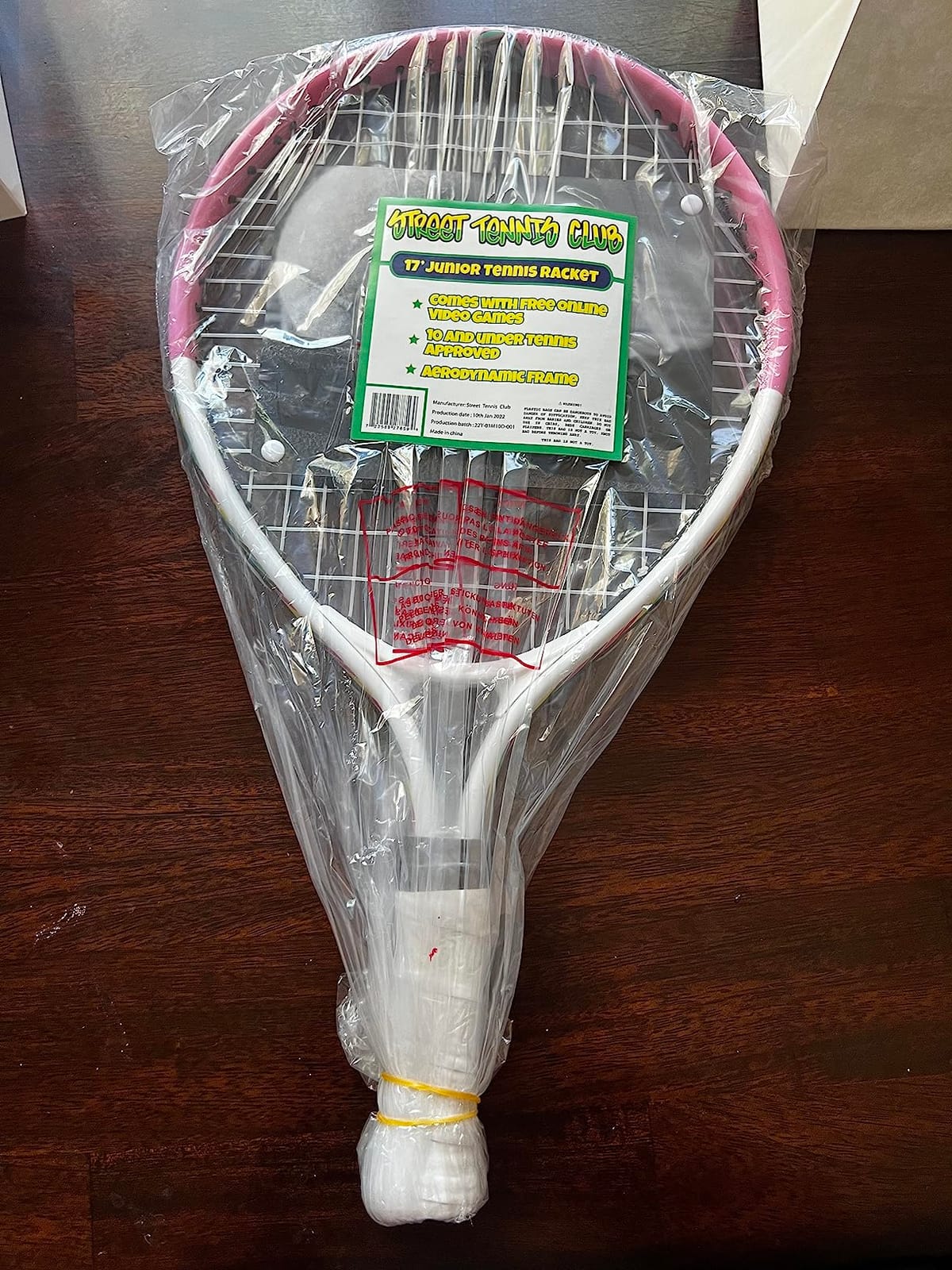
This is the only racket in the group that arrives with instruction. Alongside the frame you get educational training videos from a professional coach, which turns the racket into a self-teaching kit for a child who is not yet in a formal programme.
At 4.8 ounces the frame is one of the lightest here, and the neoprene handle gives a softer, grippier surface than bare molded plastic. Around 79 percent of reviews are five star, with parents most often praising the videos and the graphics that make a child want to pick the racket up again.
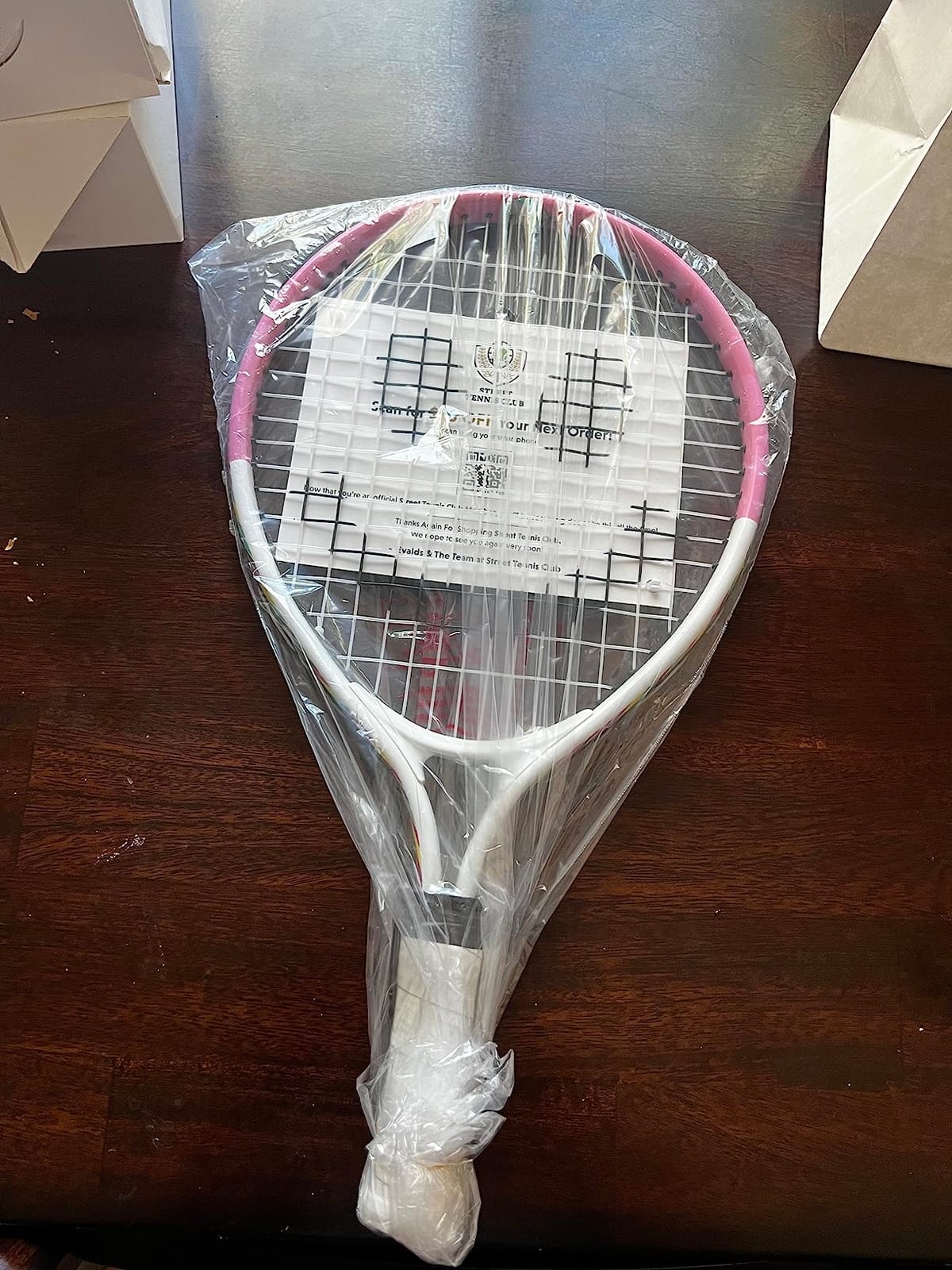
Construction is an aluminum frame with thick polyester strings, strung on arrival. The happy face graphics read as childish, and for a five year old swinging a racket in a garden that is a feature rather than a flaw.
Because the listed length options are 17 and 19 inch, this works well for ages 3 to 7 and then the child moves to a longer model. Treat it as a first racket rather than a long-term one.
Who this racket suits
Home practice and backyard sessions, and any parent whose child is between lessons or waiting for a coaching place. The videos give a structured reason to practise alone between sessions.
It is also a solid gift choice, since the child needs nothing else to get started beyond a bag of foam balls.
Where the limits show
The 30 day warranty is the shortest in the group, which is a real limitation on a frame that will be knocked about. Treat it as a consumable purchase and expect to replace it once the child moves past 19 inch.
The graphics and colour range are narrow, so a child who does not like pink and playful designs may not connect with it. There is also no 21 inch or larger version to grow into.
6. Senston 19-25 Inch Junior Racket: Best Complete Accessory Package
Senston 23″ Tennis Racket for Kids Children Boys Girls Tennis Racquets Kids Tennis Racket Pink Color
- Cover overgrip and damper included
- One-piece molded frame
- Three size options
- Good colour variety
- Arrives unstrung and needs stringing
- Bag straps less durable
- Higher cost than basic models
Many junior rackets arrive alone. This one comes as a full package with the racket, a cover, an overgrip and a vibration damper, so nothing else needs buying before the first session.
Reviews run about 81 percent five star, and the praise lands on the one-piece molded construction rather than the accessories. That molding is what makes the frame stiff enough to hold its shape after months of junior play, which is a genuine quality step up from a basic two-part frame.
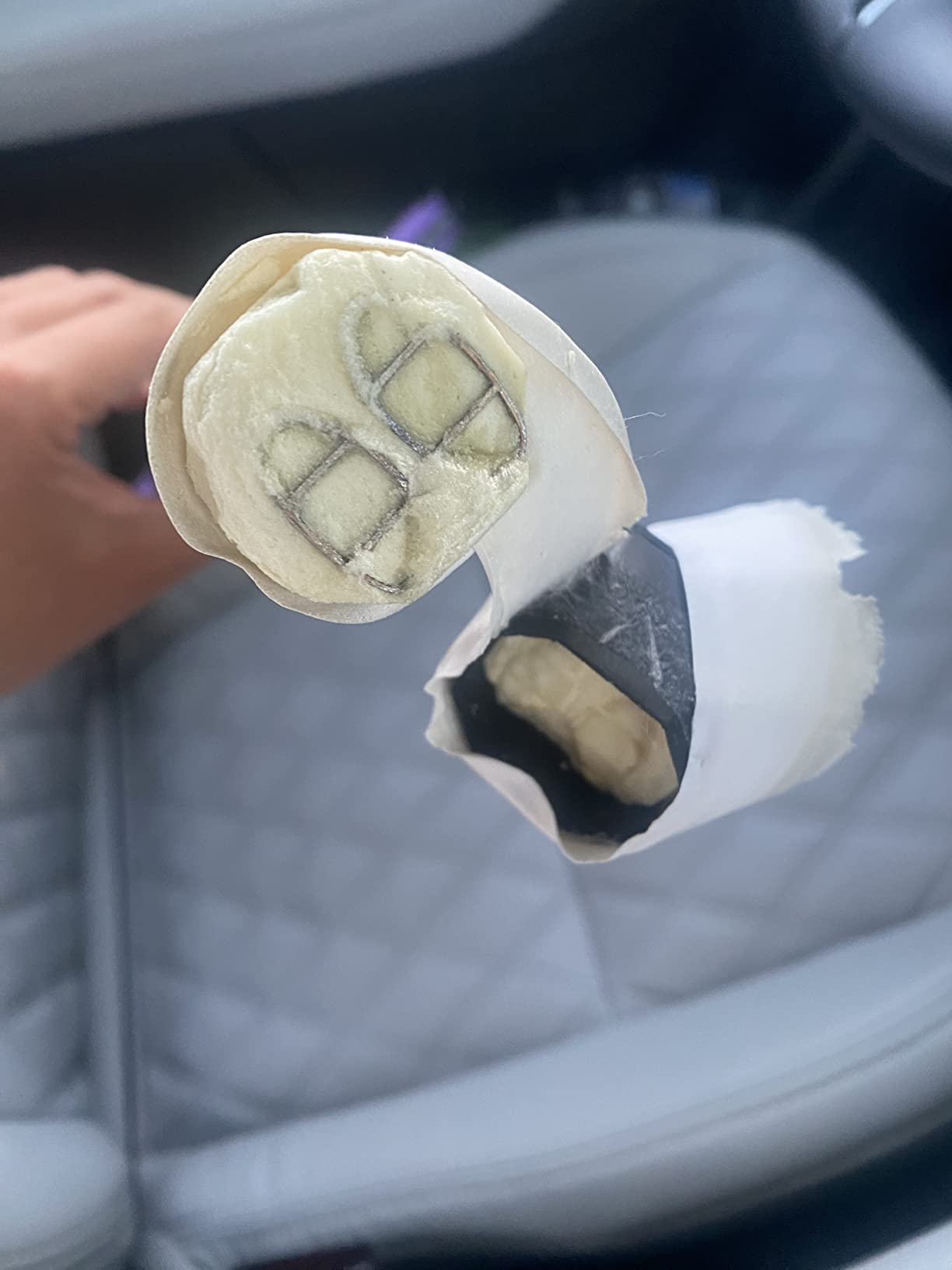
The head size is 92 square inches, among the largest in this guide, and the unstrung weight is around 210 g. A 92 square inch head with a modest weight gives a very high sweet spot ratio, which is the easiest kind of racket to learn on.
Sizes run 19, 23 and 25 inch with pink, blue, purple, white and red variants. The 23 inch version suits ages 7 to 10, which is the range most buyers are shopping for.
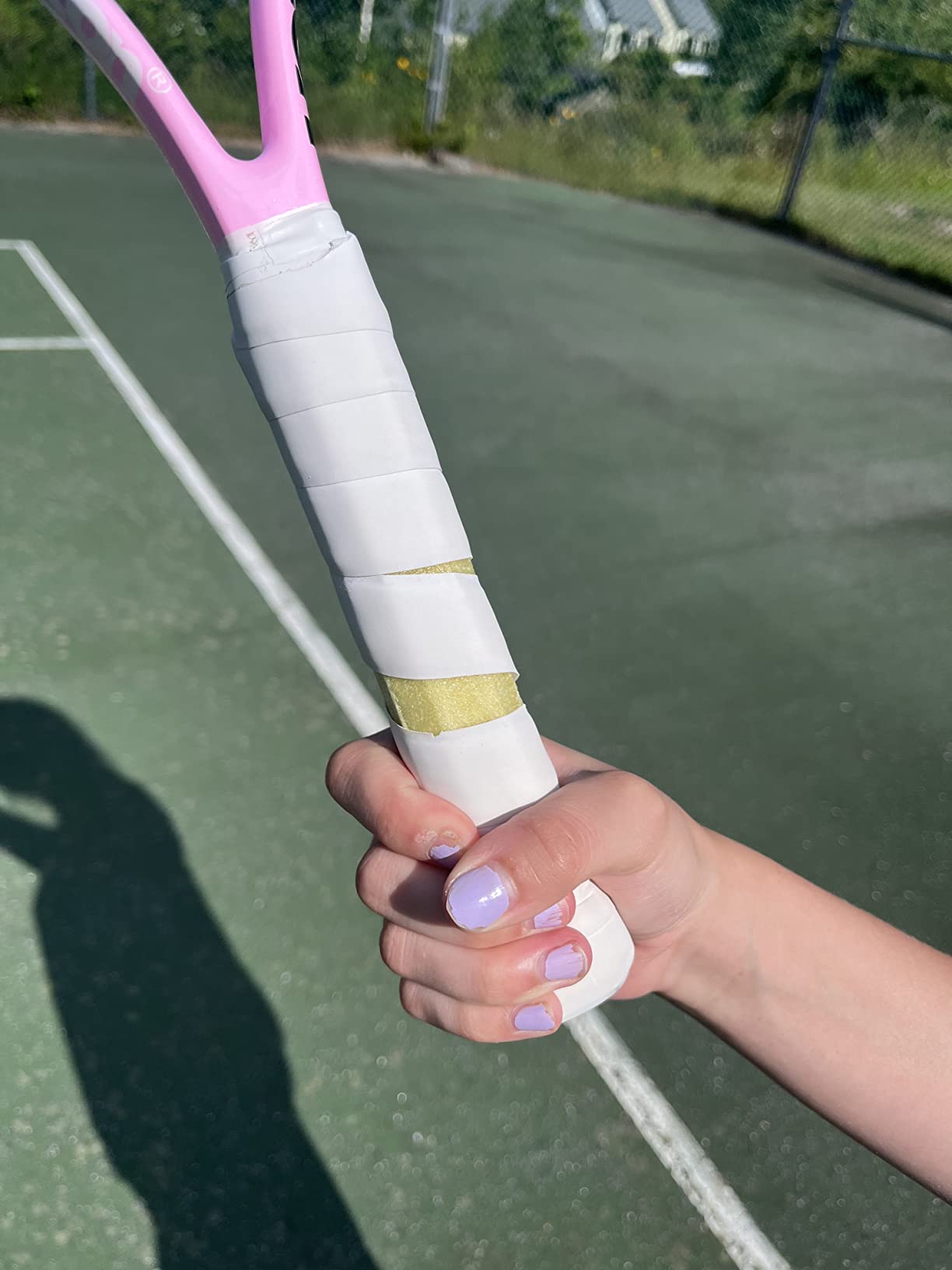
Who this racket suits
Parents who want a complete set without a second order, and players moving into the 23 and 25 inch sizes where a bigger head and an included overgrip make more sense. The damper is a small touch that reduces string vibration on mishits.
It suits a child in lessons who is starting to hit with real pace and needs a racket that stays stable under a faster swing.
Where the limits show
It arrives unstrung, so a stringing service is required before play, and that is an extra step and an extra cost that a pre-strung model avoids. Some reviewers report the carry bag straps and zips as less durable than the racket itself.
Because it is a larger package, it costs more than a bare basic frame. If you already have a bag and an overgrip, the value here drops considerably.
7. PIKASEN 17 Inch Kids Racket: Best for the Youngest Players
PIKASEN 17″ Kids Tennis Racket Best Starter Kit for Kids Age 4 and Under with Shoulder Strap Bag and Mini Tennis Racket Toddler Tennis Raquet (Yellow)
- Made for ages 4 and under
- Large 75 sq in sweet spot
- Ultra light at 5.3 oz
- Nylon soft strings reduce vibration
- Bag included
- Only 17 inch length
- Two colour options
- Warranty terms unclear
Some children are simply not physically ready for a 19 inch frame, and this 17 inch model is the shortest serious racket here. It weighs 5.3 ounces and carries a 75 square inch head, which is enormous relative to a 17 inch length.
About 84 percent of reviews are five star, and parents describe it as a first racket that works for ages 2 to 4 without feeling flimsy. The nylon soft strings reduce vibration noticeably, which is a genuine comfort benefit for a small arm still learning to swing.
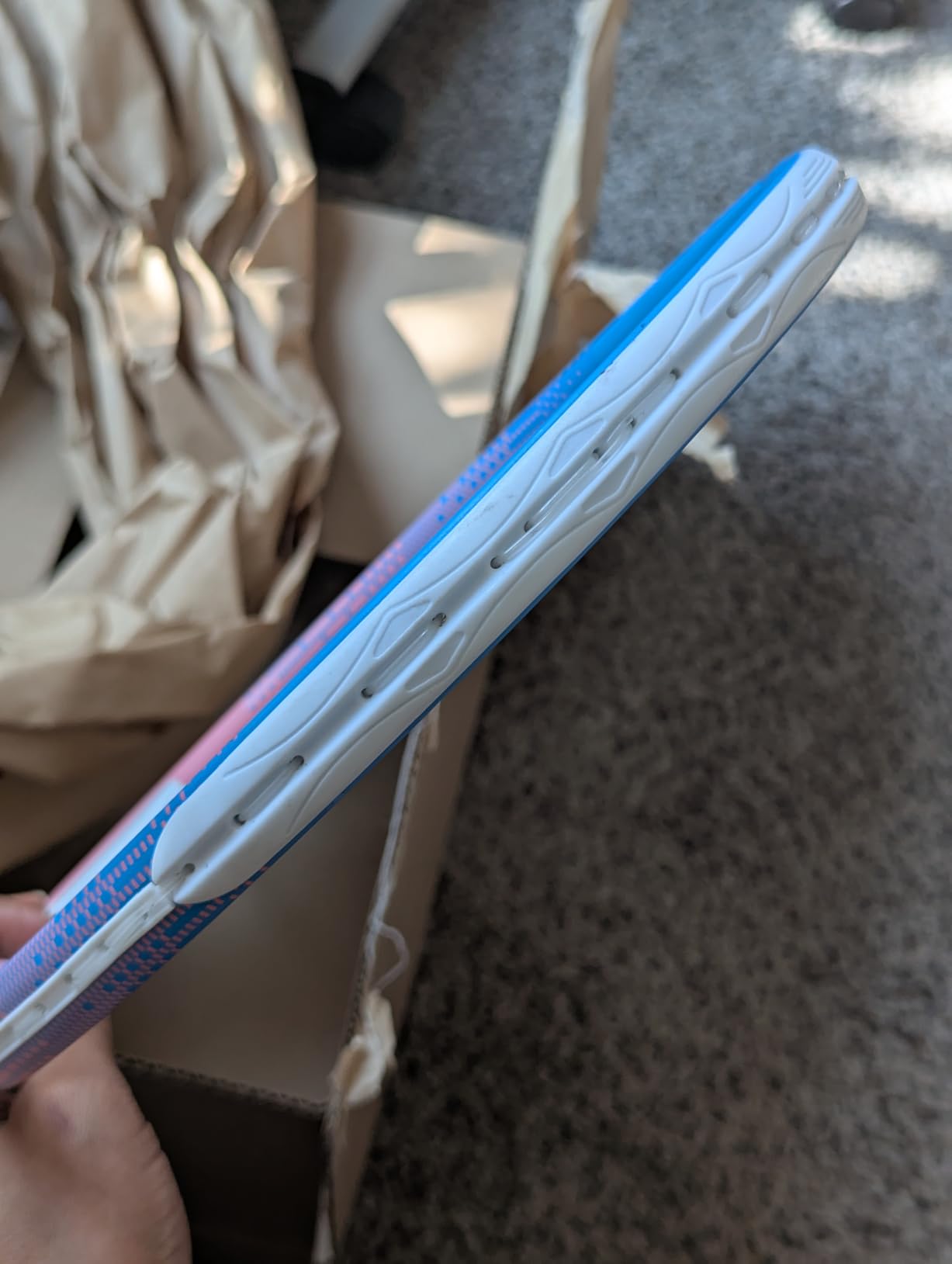
It comes with a three quarter head cover and a carry bag, and arrives strung, so it is genuinely ready for a first lesson. The 3 3/4 inch grip is a small but not tiny circumference, which suits most four year olds better than an undersized handle.
Colours are yellow or pink. The nylon strings feel different from polyester strings on a more expensive frame, less crisp and less responsive, but for foam ball rallies that difference is invisible.
Who this racket suits
A child aged 4 and under who is starting lessons, and any parent who wants a first racket that will not be outgrown in three months. The 17 inch length matches a height of roughly 2.5 to 3 feet, which is the smallest sensible group.
It works well for indoor play in winter, since the low weight means a small child can swing it indoors without the frame catching on furniture or walls.
Where the limits show
Only the 17 inch length exists here, so there is nothing to move up to within the model. Plan to change brand or model rather than size once the child reaches about 4.5 feet tall.
The warranty description in the listing is not clear, so treat the guarantee as uncertain and check the retailer’s terms. Two colour options is also a narrow choice for a child who has opinions.
8. Dunlop Nitro Junior 23 Inch: Best From a Major Tennis Brand
- Dunlop is a recognised tennis brand
- Pre-strung and ready to play
- Good weight for ages 8 to 10
- One year manufacturer warranty
- No carry bag included
- Only 21 and 23 inch sizes
- Plain graphics
Dunlop has been a fixture in tennis for decades, and the Nitro Junior is a straightforward way into a long-established tennis name on this list. It comes in 21 and 23 inch lengths with a junior grip and a pre-strung white string bed.
At 7.8 ounces in the 23 inch size, it sits comfortably for ages 8 to 10, and reviewers commonly call it good value in the junior category. Around 78 percent of reviews are five star, with the brand reputation doing as much work as the frame itself.
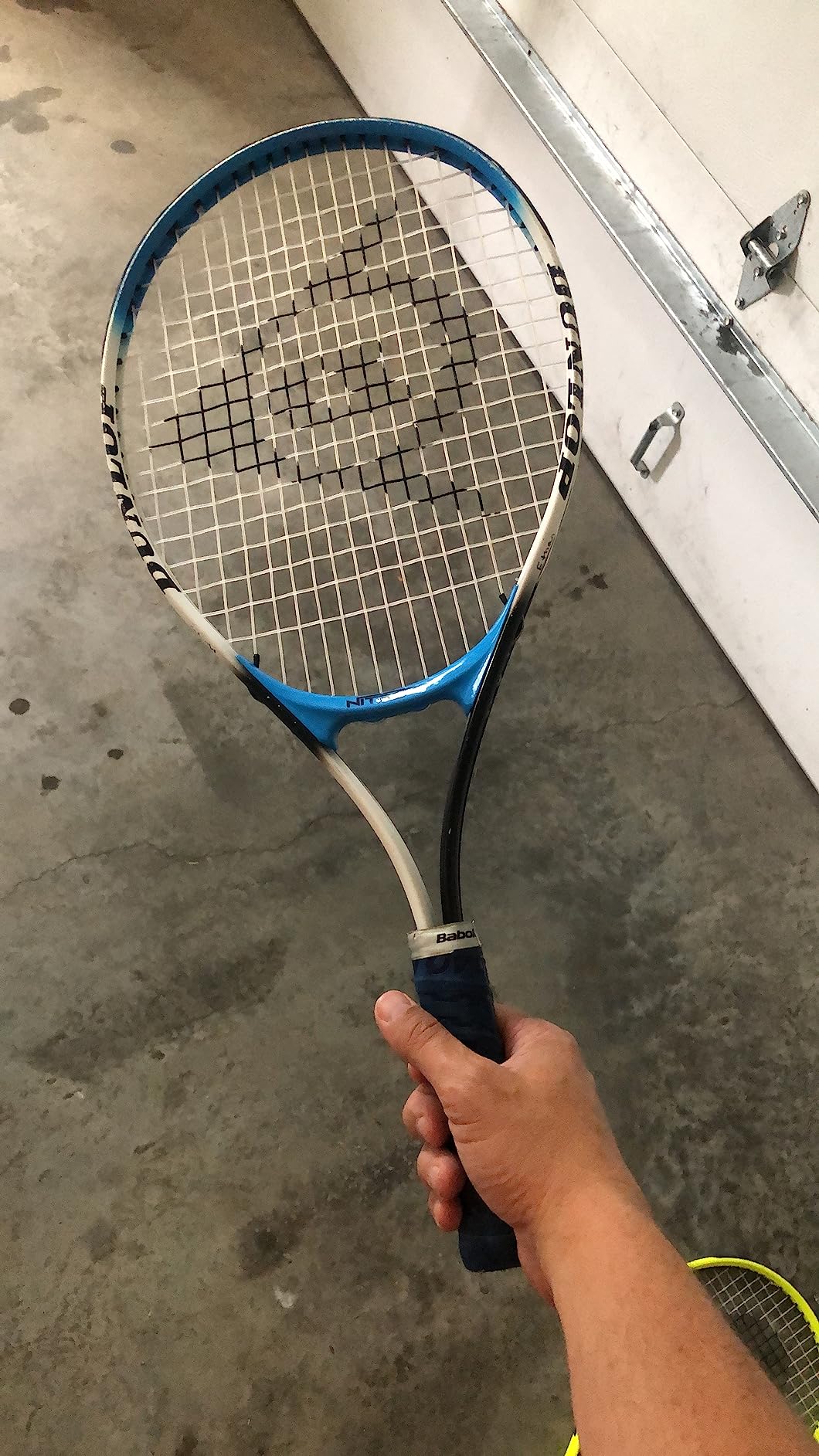
The aluminum frame construction keeps the weight down and the price low, and a one year manufacturer warranty is one of the longer guarantees among the models here. For a child in lessons or a summer camp, that is a sensible first step up from a toy-style racket.
There is a catch worth knowing: the frame has no aerodynamic styling and minimal graphics, so a child who cares about design may not be excited by it. The performance is unremarkable in the best possible way, it simply works.
Who this racket suits
Ages 7 to 10 in group lessons, school tennis and club programmes where a durable, well-known brand matters more than colour. It is a reliable choice when you would rather not chase a specific model name that changes every year.
Parents who expect the racket to survive being shared with a sibling or a friend will appreciate the simple, tough build.
Where the limits show
No carry bag is included, which is a real annoyance for a child who has to carry a racket to lessons on foot. Budget for a separate cover.
Only 21 and 23 inch sizes exist, so this does not cover a toddler or a ten year old moving to 25 inch. The plain graphics and lack of vibration dampening are minor drawbacks next to those size limits.
9. Wilson US Open Junior 19 Inch: Best for Brand-Minded Young Beginners
- Recognisable Wilson brand name
- US Open inspired design
- AirLite alloy gives easy power
- Sized for ages 2 to 4
- Only 19 inch offered
- Some lopsided frame reports
- Higher cost than basic 19 inch frames
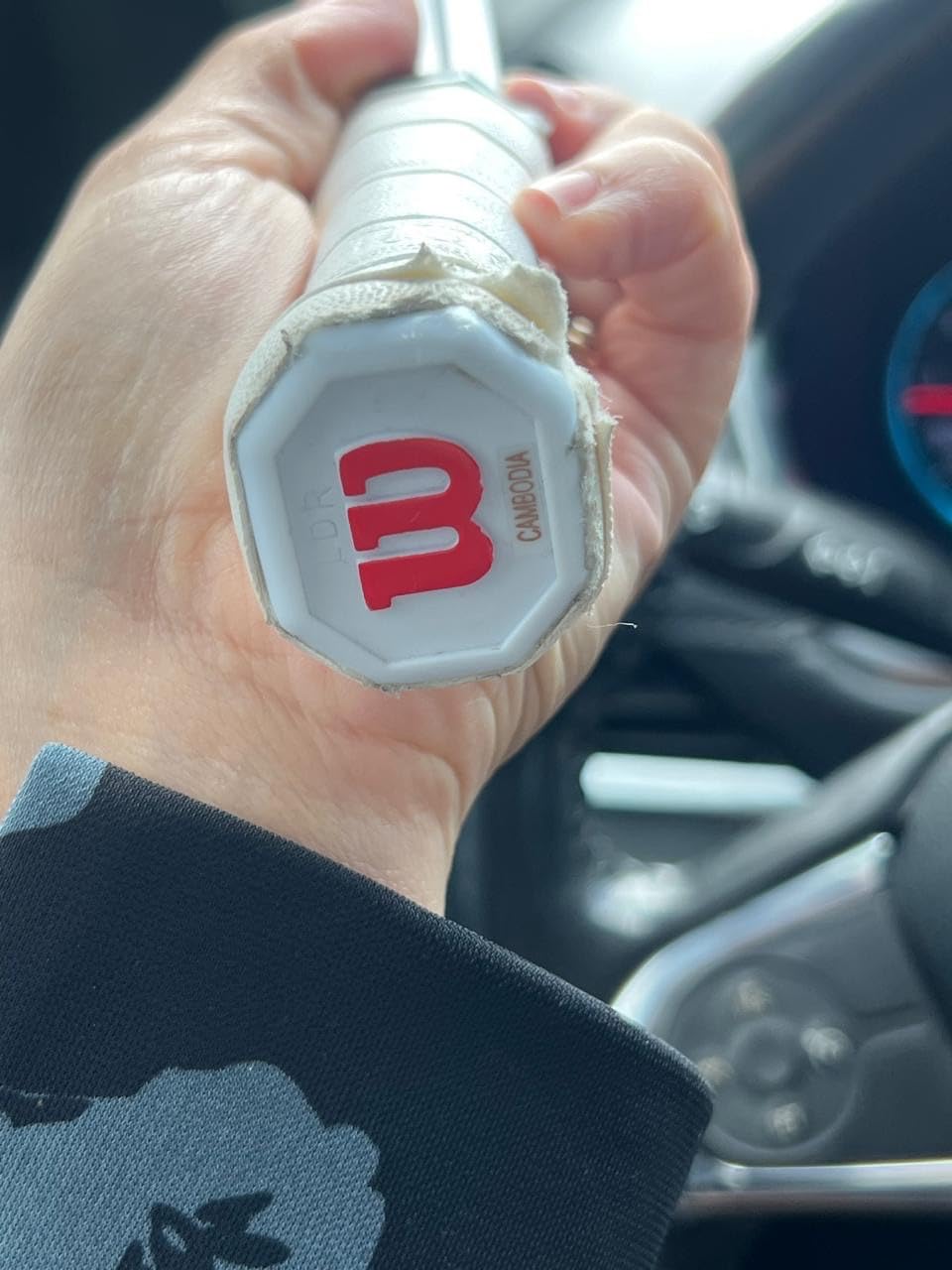
Some children pick a racket because of the name on the frame, and Wilson is one of the most recognised junior brands in the sport. This US Open inspired 19 inch model is the entry point, with AirLite alloy construction and a design that mirrors a tournament the child will eventually see on television.
Reviews are around 76 percent five star, the lowest share in this group, and the reason is consistency rather than excitement. Parents value the brand and the design, but a small number report frames arriving off-centre, which is a quality control issue rather than a design one.
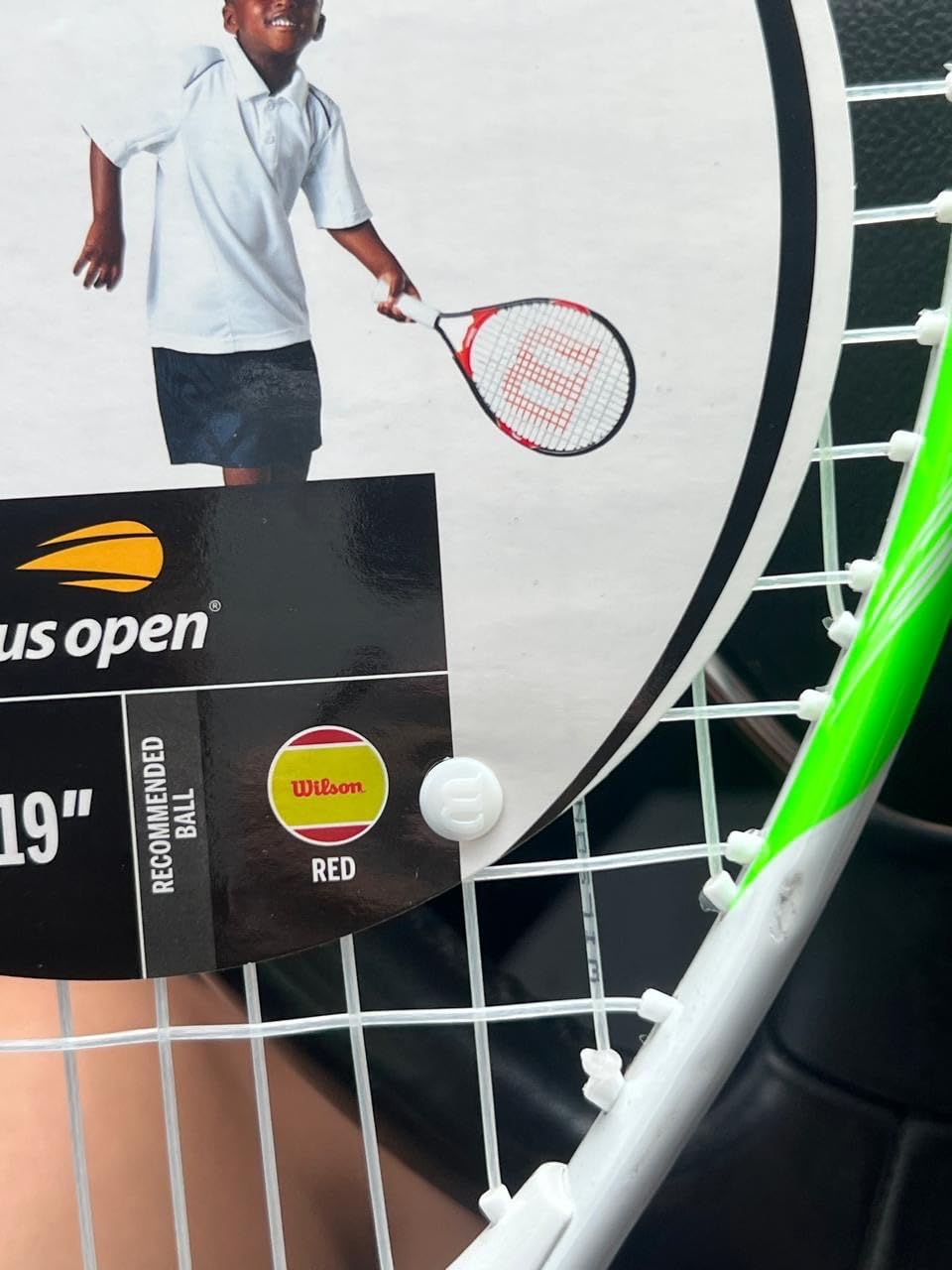
AirLite alloy is a thin-walled aluminum construction that keeps the frame light while holding power on contact, and the racket arrives pre-strung and ready to pair with red or foam starter balls. Grip size is 4 inches, which is roomier than the smallest junior grips.
The racket is listed for the youngest players, around ages 2 to 4, and pairs naturally with a red ball. As a first racket it is unremarkable in a good way, it does the job without a fuss.
Who this racket suits
A parent whose child recognises the Wilson name or wants a racket that looks like a real tour frame. It works for first lessons with a red or foam ball, and for a four year old who is drawn to the yellow and orange colourway.
It is also a reasonable choice if the family already uses Wilson rackets, since the grip size and feel will match later models.
Where the limits show
Only the 19 inch length is offered, so there is nothing to grow into. Reports of lopsided frames are worth checking for on arrival, since a bent frame throws the sweet spot off to one side.
Compared with a generic 19 inch aluminum frame the cost is higher for similar capability, so the premium is really for the brand name and the design rather than the playing characteristics.
10. Wilson Profile 25 Inch Junior: Best for Ages 9-10
- AirLite alloy with QuadriForm tech
- Bumper guard protects the frame
- Recommended for ages 9 to 10
- Stable swing weight
- Arrives unstrung and needs stringing
- Only 25 inch size
- No cover included
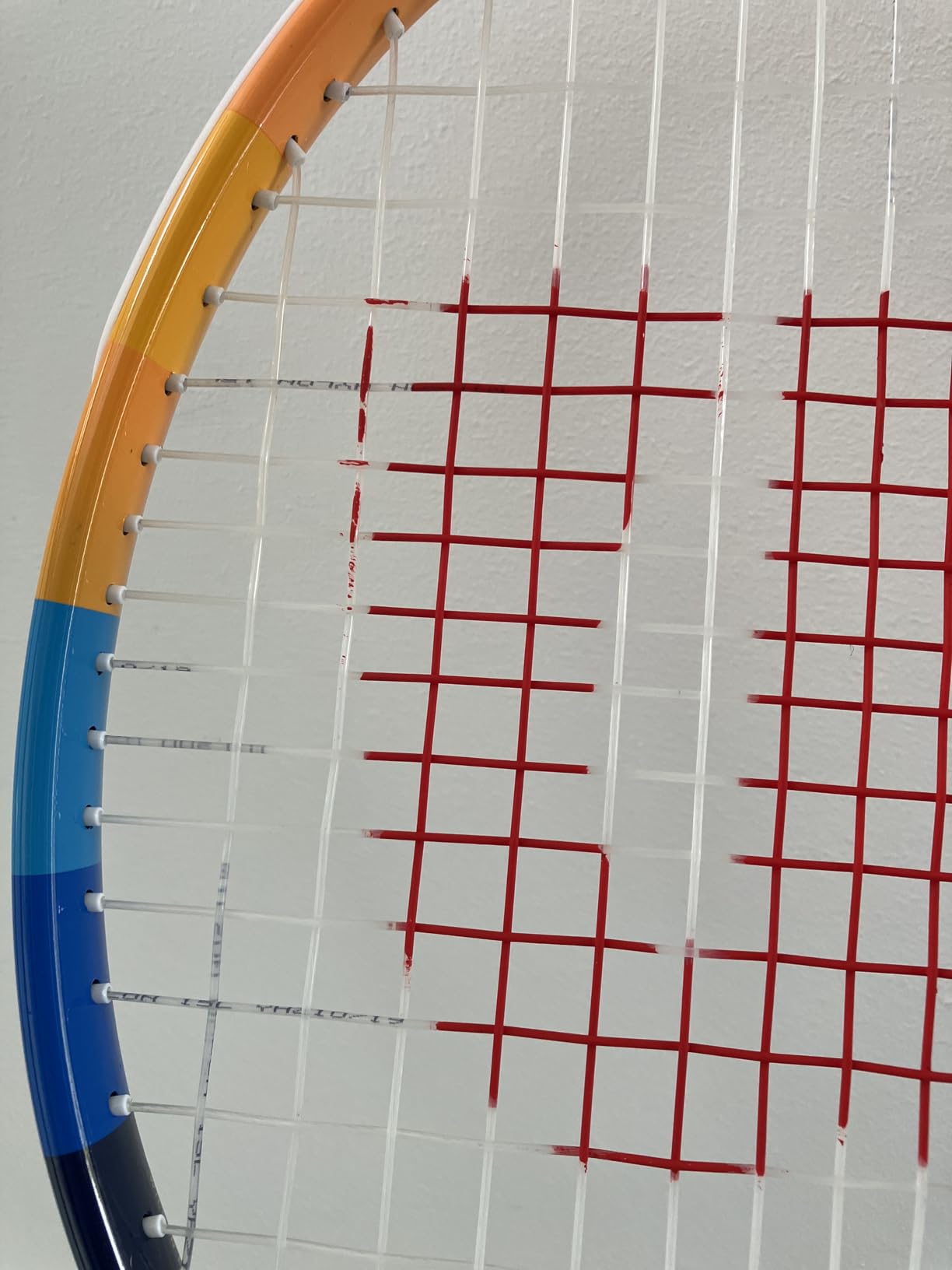
The 25 inch length is where junior rackets start to resemble the real thing, and this Wilson Profile is a solid, well-built entry into that bracket. It suits a child around 9 to 10 years old who is moving toward green dot and then yellow ball play.
Around 84 percent of reviews are five star, with parents of 9 to 11 year olds most often mentioning stability and easy power. QuadriForm technology is designed to steady the swing, which reduces the twisting that makes a long junior racket feel unpredictable.
The bumper guard around the head is a practical addition for a junior frame, since it protects the edge of the racket when a child clips a fence post or lands the racket hard after a point. Material is listed as composite with an alloy shaft, described as AirLite alloy construction.
Colour options are navy or orange with warm and cold colours at the 3 and 9 positions, a design detail borrowed from adult rackets. Grip size is 3 7/8 inches, the same middle junior circumference as the 25 inch HEAD Instinct.
Who this racket suits
A nine or ten year old who has outgrown 21 and 23 inch frames and needs something stable at 25 inch. The stability and power that this size offers suit a player starting to take points seriously rather than chasing balls for fun.
It suits families already sold on Wilson gear who want the same feel at junior level, and parents who prefer to buy from a brand with a physical store presence for future restringing.
Where the limits show
The racket arrives unstrung, so it needs a stringing service before it can be used, and there is no cover in the box. Both are real extra steps on a purchase that is otherwise well specified.
Only the 25 inch length is available here, so a parent planning ahead should know that a second racket will be a different model. Buying unstrung also means you can choose the string tension yourself, which is a bonus if you know what to ask for.
11. LUNNADE 19-25 Inch Youth Racket: Best Flexible Choice for Ages 3-12
LUNNADE Tennis Racket for Kids Junior, 19/21/23/25 Inch Youth Tennis Racquet with Cover, Suitable for Beginner Boys and Girls Age 3-12
- Four sizes covering ages 3 to 12
- Racket cover included
- Two pack colour option
- Strung and ready to play
- Less established brand name
- 4 inch grip runs large for small hands
- Limited technical detail listed
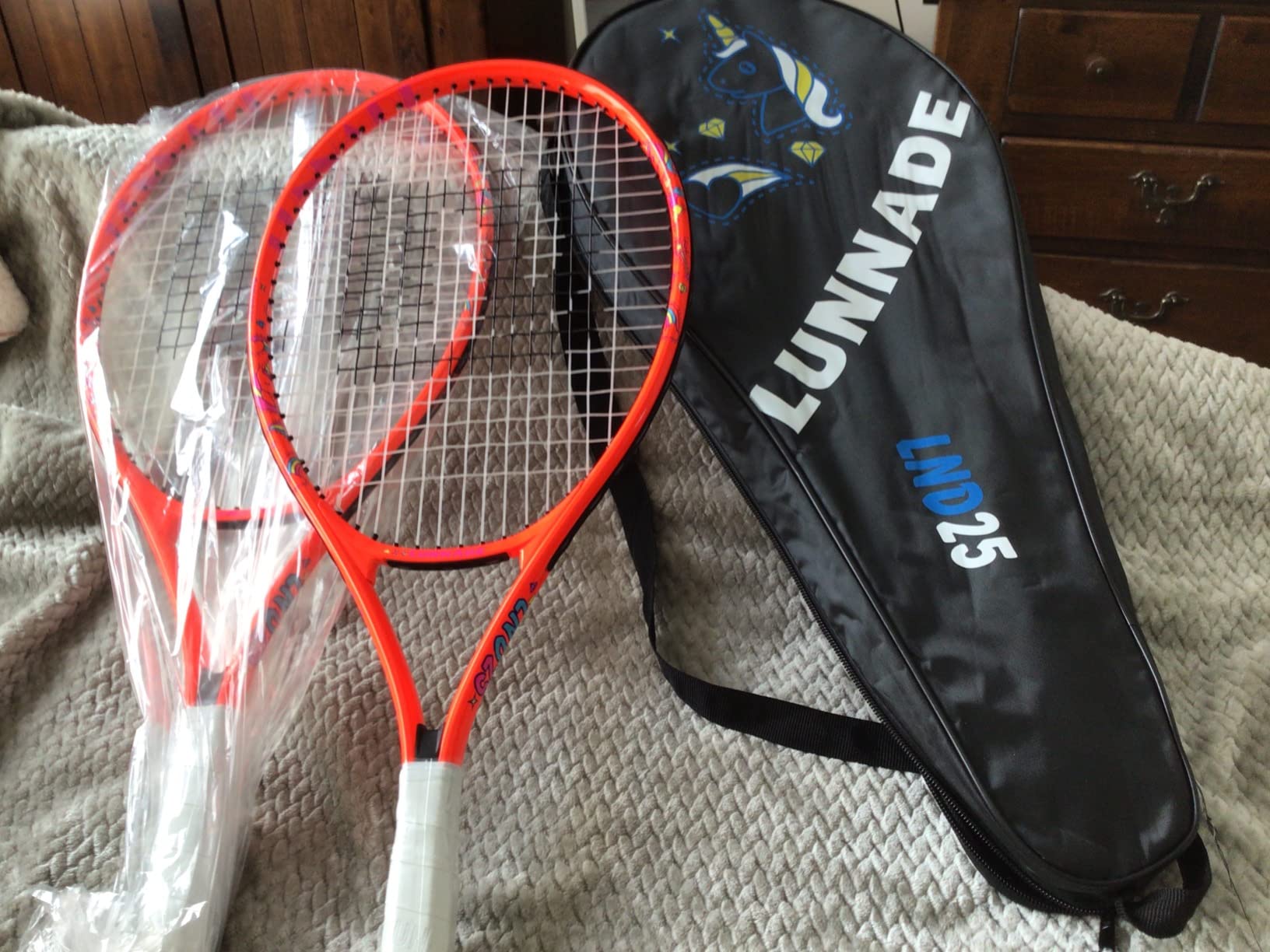
This is a straightforward aluminum racket range offered in 19, 21, 23 and 25 inch, with a cover included and every frame arriving strung. It covers ages roughly 3 to 12, which makes it a useful one-stop option for a family with children of different ages.
Reviews are about 81 percent five star, and the comments cluster around the range of sizes, the included cover and the printed designs, including a two pack option for families with two players.
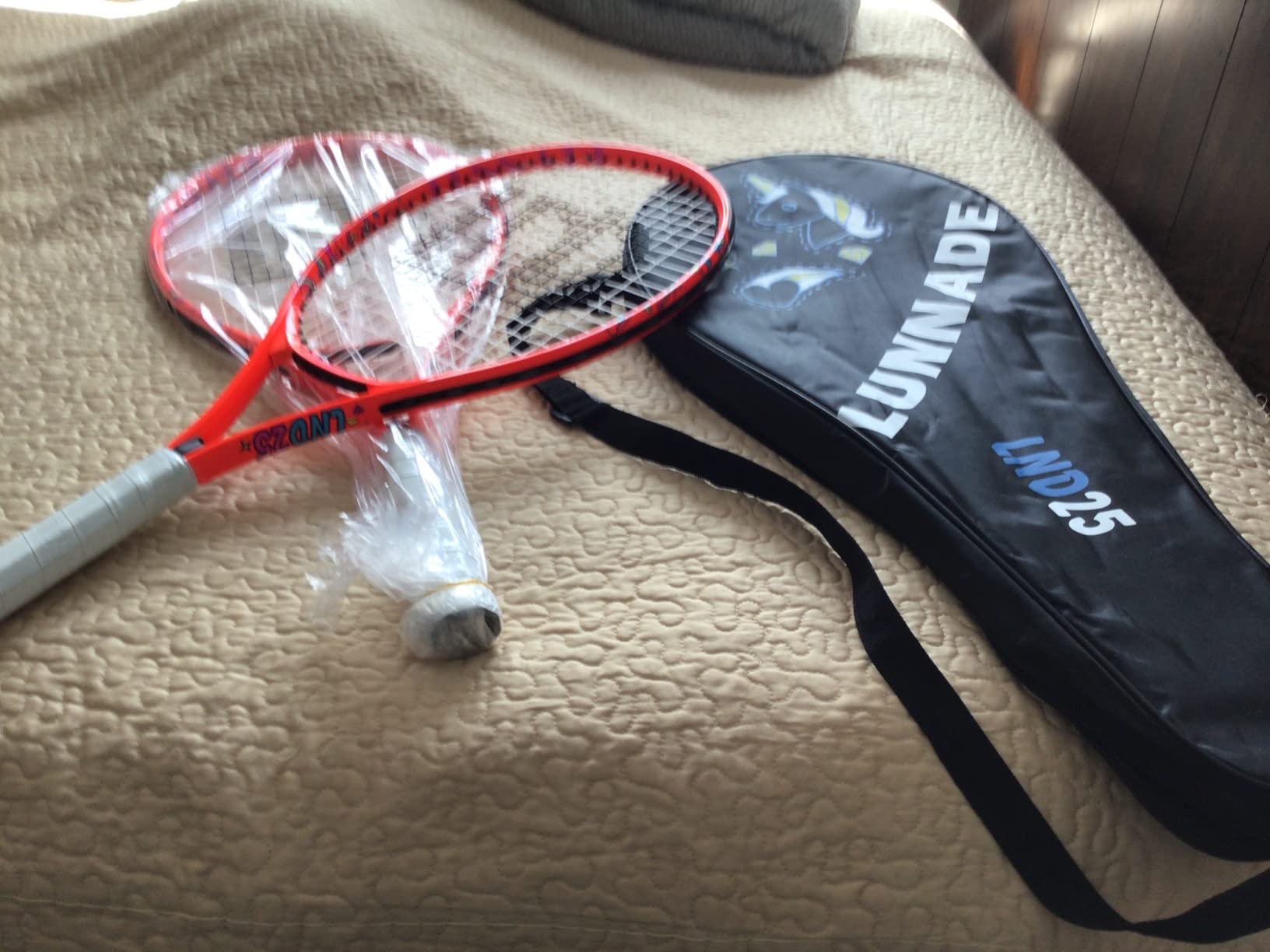
Weight is not published for this model, though the frame is described as lightweight aluminum, so ask for the strung weight if your child is at the upper end of a size band. Grip size is listed at 4 inches, which is roomy for a young child’s hand.
Colours include orange, blue, yellow, pink and the two pack, and the printed designs appeal to younger players. Technical specifications are thin compared with the branded models, which is normal for this tier.
Who this racket suits
Families who want one model to cover a wide age spread, and parents of children aged 3 to 5 in particular, who report high satisfaction with the smaller sizes. The included cover makes it a good fit for a racket that has to go to every practice.
The two pack option works well for siblings or for a child who insists on a specific colour.
Where the limits show
The brand is less established than Wilson or HEAD, so there is less long term support if something breaks and less chance of finding the same model second hand. The 4 inch grip is also on the large side for a small hand.
Because the listing gives no strung weight, you are buying partly on size alone. Measure the child and compare against the size chart rather than relying on the age label.
12. Wilson Pro Staff Precision 23 Inch: Best for Swing Stability
- Pro Staff design in a junior frame
- Perimeter weighting at 3 and 9
- Four sizes available
- Pre-strung and ready to play
- Higher cost than entry models
- Smaller review base than rivals
This model takes Pro Staff design cues and drops them into a junior frame, which mostly means the stability features. It is listed in 19, 21, 23 and 25 inch with a 23 inch version weighing 7.04 ounces, and it arrives pre-strung.
Around 76 percent of reviews are five star, from a smaller pool of 175 ratings than most rivals here. Parents tend to mention the stability and the range of sizes rather than any single standout feature.
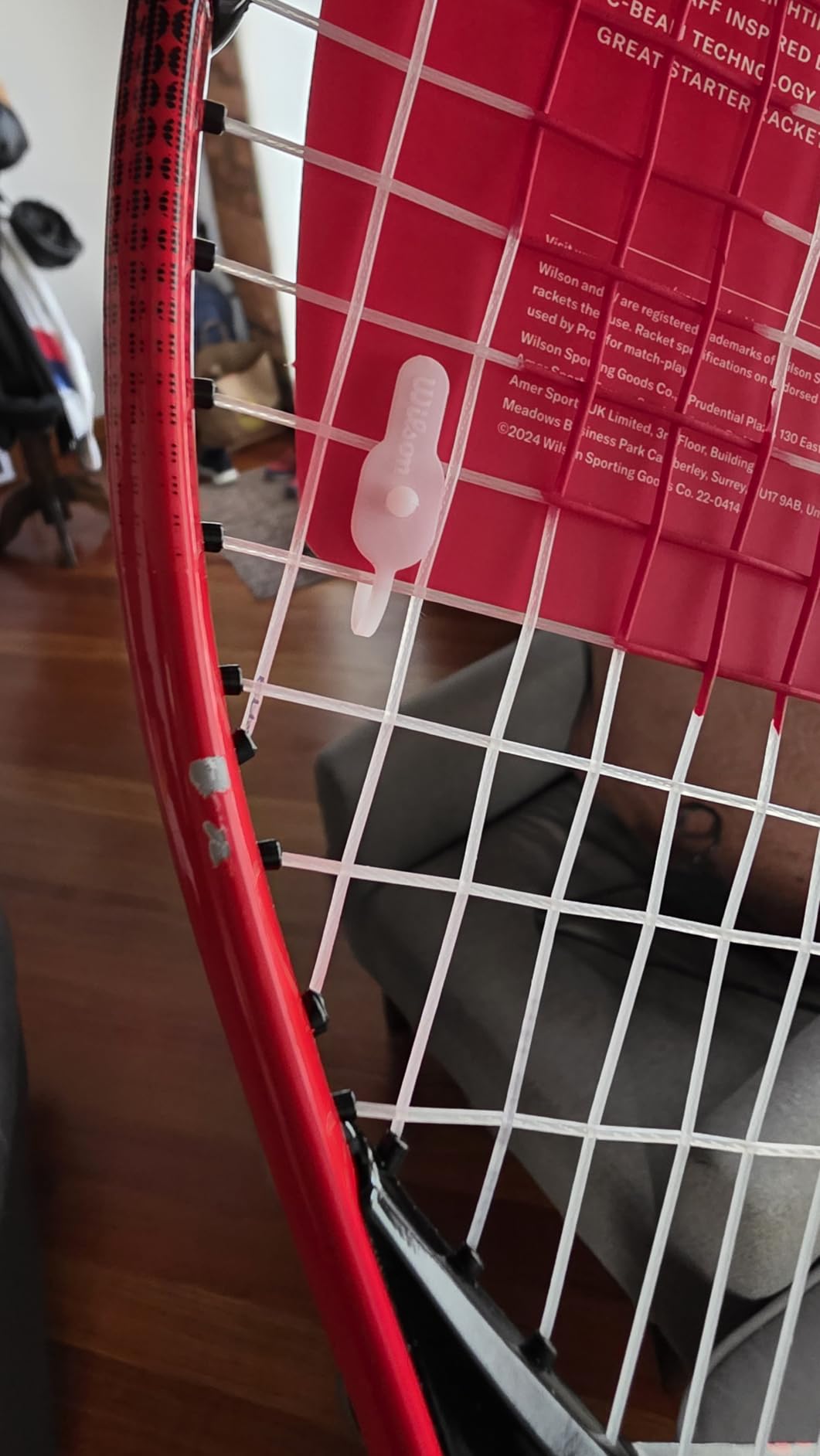
The perimeter weighting system places weight at the 3 and 9 o’clock positions, which resists torsional twisting on off-centre hits and makes the frame feel solid. C Beam technology adds stiffness through the shaft, and AirLite alloy keeps the overall weight at junior levels.
The 23 inch size is listed as best suited to ages 7 to 8, and the frame uses a 4 inch grip. Compared with a basic aluminum frame the technology does not transform the shot, but it does make the racket more stable and more forgiving to hit with.
Who this racket suits
A child between 7 and 8 who is hitting consistently and starting to swing with intent, where a steadier frame genuinely helps contact. It also suits parents who want a junior racket that will not need replacing until the 25 inch stage.
Players moving from a very light toy-style racket will notice the stability difference, which is the main reason to pay more here.
Where the limits show
It costs more than entry-level models for construction features that a true beginner cannot yet exploit, so it is an early purchase only if your child is already playing regularly.
The review base of 175 is the smallest of the twelve rackets here, which means less long term feedback to draw on. A one year limited warranty is also the shortest guarantee among the branded models in this roundup.
Junior Tennis Racket Size Guide by Age and Height
Height beats age every time, because a ten year old can be 4 feet or 5 feet tall and the racket length that suits one will be wrong for the other. Measure your child against a wall, then match that height to a length below.
17 inch, roughly ages 2 to 4, under 3 feet tall
The shortest usable racket. It pairs with foam balls and red balls, and it suits a child who can barely lift it with one hand. The PIKASEN 17 inch is the clearest example, with a 75 square inch head and nylon soft strings.
19 inch, roughly ages 4 to 6, around 3 feet tall
The most common first racket size. A 76 square inch head, a 3 5/8 inch grip and a frame under 200 g is the standard combination, and red or orange balls are appropriate. Several rackets in this guide come in 19 inch including the HEAD Speed Junior.
21 inch, roughly ages 6 to 8, around 3.5 feet tall
Weight climbs to about 7 ounces and the swing length becomes noticeable. Orange ball is the right stage here, and children who have been playing since age 4 usually move up around their sixth birthday.
23 inch, roughly ages 7 to 10, around 4 feet tall
A 92 square inch head and about 210 g unstrung is typical. This is a common size for green dot ball play and for a child who has started lessons in earnest. Several of the kits here offer 23 inch as part of a range.
25 inch, roughly ages 9 to 12, around 4.5 feet tall
The last full junior length. Weight is around 260 g strung and the swing feels noticeably faster. Most programmes use green dot or yellow ball at this length, and it is the last size before a 26 inch or 27 inch adult frame.
What to do when a child is between sizes
Go one size up only if the child is tall for their age and can already swing a racket with pace. A frame that is too long turns a controlled swing into a wild one, and the usual result is a frustrated player rather than a faster learner.
Parents often buy a racket two sizes up so the child can grow into it, and that is a common mistake. A racket that is too heavy produces swing tension in the shoulder and elbow, which is exactly the injury the junior category exists to prevent.
How to Choose a Junior Tennis Racket: Material, Grip and String Tension
Aluminum for 17 to 21 inch, composite for 23 to 25 inch
Nearly all of the rackets in this roundup are aluminum, and that is the right call below 23 inch. Graphite and composite frames are noticeably stiffer and better at controlling ball, but the advantage only becomes useful once a player can generate their own pace, which is usually around 25 inch.
Until then, a stiff composite frame in small hands just makes the ball go faster, which is not the same as making it easier. Prioritise a large sweet spot and low weight for beginners.
Getting the grip size right
Junior grip sizes cluster between 3 5/8 inches and 4 1/8 inches, and the difference is small in absolute terms but noticeable in a small hand. If the child can wrap the fingers loosely around the handle and reach the tip with the pad of the thumb, the size is close enough.
A grip that is too large causes the child to hold the racket lower and loosen the bottom hand, which produces a wobbly swing. A grip that is too small forces a white knuckle hold and quick forearm fatigue, which is a common cause of arm ache in young players.
String tension for juniors
Lower tension feels more forgiving and reduces vibration, which is why junior rackets are strung that way by default. As a general guide, 17 to 21 inch frames are usually strung around 38 to 44 pounds, 23 inch frames around 44 to 50 pounds, and 25 inch frames around 50 to 54 pounds.
Anything softer is fine for a beginner and anything above 56 pounds will feel boardy and unforgiving in a junior frame. Check what the racket is shipped with before assuming you need to change it, because most arrive at a sensible factory tension.
Common mistakes parents make
Buying on age rather than height, buying two sizes too big, and treating a racket as a permanent purchase are the three errors we see most. A second racket is also worth considering rather than a premium one, so a club can be restrung at the same time as the first.
Another common error is skipping the grip entirely. A fresh overgrip costs little, improves feel and stops a slippery handle, and it is the simplest upgrade available to a junior player.
If you are also building out practice equipment, our picks for the best tennis ball machines for practice and the best table tennis robots for solo training cover the rest of the gear list, and outdoor sessions call for transition lens sunglasses for tennis players to keep the glare off a small player’s eyes.
When to Move Up From a 25 Inch Junior Racket to an Adult Frame
The move from a 25 inch junior racket to a 26 or 27 inch adult frame is a decision based on strength and height rather than a birthday. Most children reach that point somewhere between ages 12 and 14, though a tall twelve year old may be ready sooner.
The signs it is time
Three practical signals. First, the child can hit a rally consistently with a 25 inch racket but struggles to control a faster ball, which is what a longer frame helps with. Second, the racket feels light rather than heavy, meaning there is room for more mass. Third, a coach recommends it, and coaches see dozens of players a week at this stage.
If the child complains of arm or shoulder soreness after a session, that is a different signal: the racket is probably too long already, and a 25 inch frame is the safer choice until strength catches up.
Why the 26 inch step exists
The 26 inch frame is the bridge most manufacturers offer between junior and adult sizing, and it is a useful first adult step for a taller junior. The jump from 25 to 27 inch in one move adds more length and weight at once, which is why it catches a lot of twelve year olds out.
Whatever frame you land on, check that the grip is comfortable and that the racket is not so heavy the child cannot swing it for a full session. A racket used happily at the wrong size is worse than a lesser racket that gets played.
Rackets last well if cared for, and a junior frame that is hit with a hard edge or stored in a hot car will crack sooner than one that is looked after. Wiping the grip, restringing when the strings go soft and keeping the frame in its cover will usually get two to three years out of a good junior racket.
Frequently Asked Questions
What size tennis racquet is best for junior players?
Size by height first. A child under 3 feet tall needs a 17 inch racket, around 3 feet needs 19 inch, around 3.5 to 4 feet needs 21 to 23 inch, and around 4.5 feet needs 25 inch. Under 23 inch, a light aluminum frame with a large head is the best choice because power matters less than making contact consistently.
What is a good junior tennis racket for a 12-year-old?
Most 12 year olds are ready for a 25 inch racket, and taller children may already be moving to 26 inch. For a 25 inch frame the HEAD Instinct, the Senston 23 and 25 inch range, or the Wilson Profile 25 are the strongest starting points, with the Wilson Pro Staff Precision offering the most stability if the player is hitting with pace.
What size tennis racket should a 13 year old have?
A 13 year old is usually on a 25 inch frame and ready to step up to a 26 or 27 inch adult racket within a year, depending on height and strength. Choose the 25 inch if the child can still hit a controlled rally, and move up if the racket feels light and a coach recommends a longer frame.
What is the best tennis racquet for a beginner child?
A pre-strung 19 inch aluminum racket with a large head is the safest first purchase for a beginner aged 4 to 6. The HEAD Speed Junior is the most reviewed option at that size, and kits such as the AMA SPORT and INSUM ranges cover the same ground with a carry bag included.
Are expensive junior rackets worth it?
For a true beginner, no. Until a player can generate their own pace, usually around 25 inch, a well-made aluminum frame with a large sweet spot performs nearly as well as a premium junior frame. Extra money is better spent on a second racket, lessons or a restring every season than on a more expensive frame the child has not grown into.
Final Verdict on the Best Tennis Rackets for Juniors in 2026
The HEAD Speed Junior takes our overall recommendation for its combination of a 170 g weight, a forgiving 76 square inch head and the largest review base of any racket in this guide, which makes it the easiest recommendation to stand behind. For a child who needs a frame that grows with them, the HEAD Instinct covers 21, 23 and 25 inch with a head light balance that is kind to small arms.
Families buying once and stretching the purchase across several years should look at the AMA SPORT or INSUM kits, which run from 17 to 25 inch and include a carry bag. Players moving to 25 inch should finish with the Wilson Profile 25 or the Senston 23 and 25 inch package.
Whatever you choose, measure your child, pick the length from the guide above and let the coach have a say before you spend. That thirty seconds of checking is the difference between a racket a child actually uses and one that ends up against a wall.