
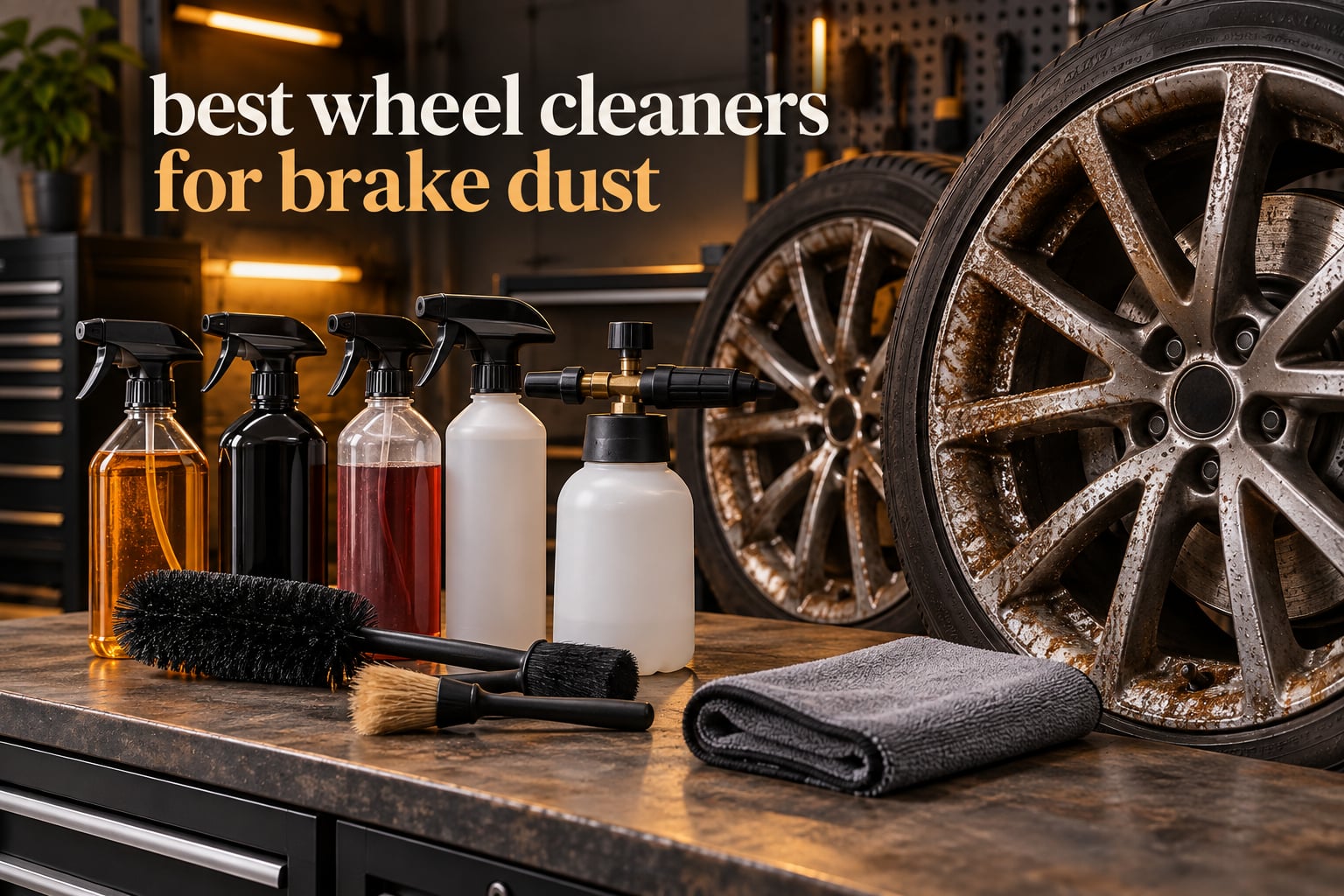
Brake dust is the single most stubborn thing on a car that does not live in the engine bay. It is iron filings from your rotors, held on by the binder in your pad material, and once it has been through a few rain cycles it turns into ferric oxide and behaves like rust-coloured sandpaper. Leave it in place and it chews through clear coat, eats thin spokes, and makes the next clean harder than the last.
The best wheel cleaners for brake dust fall into two camps: acid-free, pH-neutral formulas that dissolve iron safely on coated and painted finishes, and stronger acidic chemistry that cuts heat-baked dust faster but demands more care. I spent six weeks working through ten of the most-reviewed options on daily-driven cars, a coated-wheel crossover and a set of multi-spoke factory alloys, comparing dwell time, agitation needed, rinse behaviour and finish safety. Everything below is grounded in what actually came off the wheel.
The short answer: for most people the Chemical Guys Signature Series wheel cleaner is the best wheel cleaner for removing brake dust, because a foaming, dilutable concentrate handles both routine maintenance and a heavy front rim without touching your finish. If your dust is truly heat-baked or you run more than one car, the P&S Brake Buster gallon gives you more solution per wash and is the better long-term buy.
One thing to clear up first. Forum regulars on r/Detailing and r/AutoDetailing keep saying the same thing in different words: dilution and agitation beat raw chemical strength almost every time. A cleaner left to dwell for three to five minutes with a proper wheel woolie will outperform a stronger product sprayed and rinsed immediately. Keep that in mind as you read, because it changes which bottle you should buy.
Top 3 Best Wheel Cleaners for Brake Dust

Chemical Guys Signature Series Wheel Cleaner
- Foaming concentrate
- Safe on chrome painted and clear-coated
- 16 oz trigger spray

P and S Brake Buster Wheel and Tire Cleaner
- Non-acid 1 gallon concentrate
- Foams in a sprayer
- Leaves protective coating

SONAX Wheel Cleaner Full Effect
- Color-change iron indicator
- Acid-free pH-balanced
- Ready to use 500 ml
All 10 Wheel Cleaners at a Glance in 2026
| Product | Specifications | Action |
|---|---|---|
| Chemical Guys Signature Series Wheel Cleaner |
|
Check Latest Price |
| P and S Brake Buster Wheel and Tire Cleaner |
|
Check Latest Price |
 CarGuys Wheel Cleaner 18 oz CarGuys Wheel Cleaner 18 oz |
|
Check Latest Price |
 Chemical Guys Diablo Gel Foaming Wheel Cleaner Chemical Guys Diablo Gel Foaming Wheel Cleaner |
|
Check Latest Price |
| SONAX Wheel Cleaner Full Effect |
|
Check Latest Price |
 Adam’s Polishes Wheel Cleaner 16 oz Adam’s Polishes Wheel Cleaner 16 oz |
|
Check Latest Price |
 Armor All Extreme Wheel and Tire Cleaner Armor All Extreme Wheel and Tire Cleaner |
|
Check Latest Price |
 Gtechniq W6 Iron Removing Wheel Cleaner Gtechniq W6 Iron Removing Wheel Cleaner |
|
Check Latest Price |
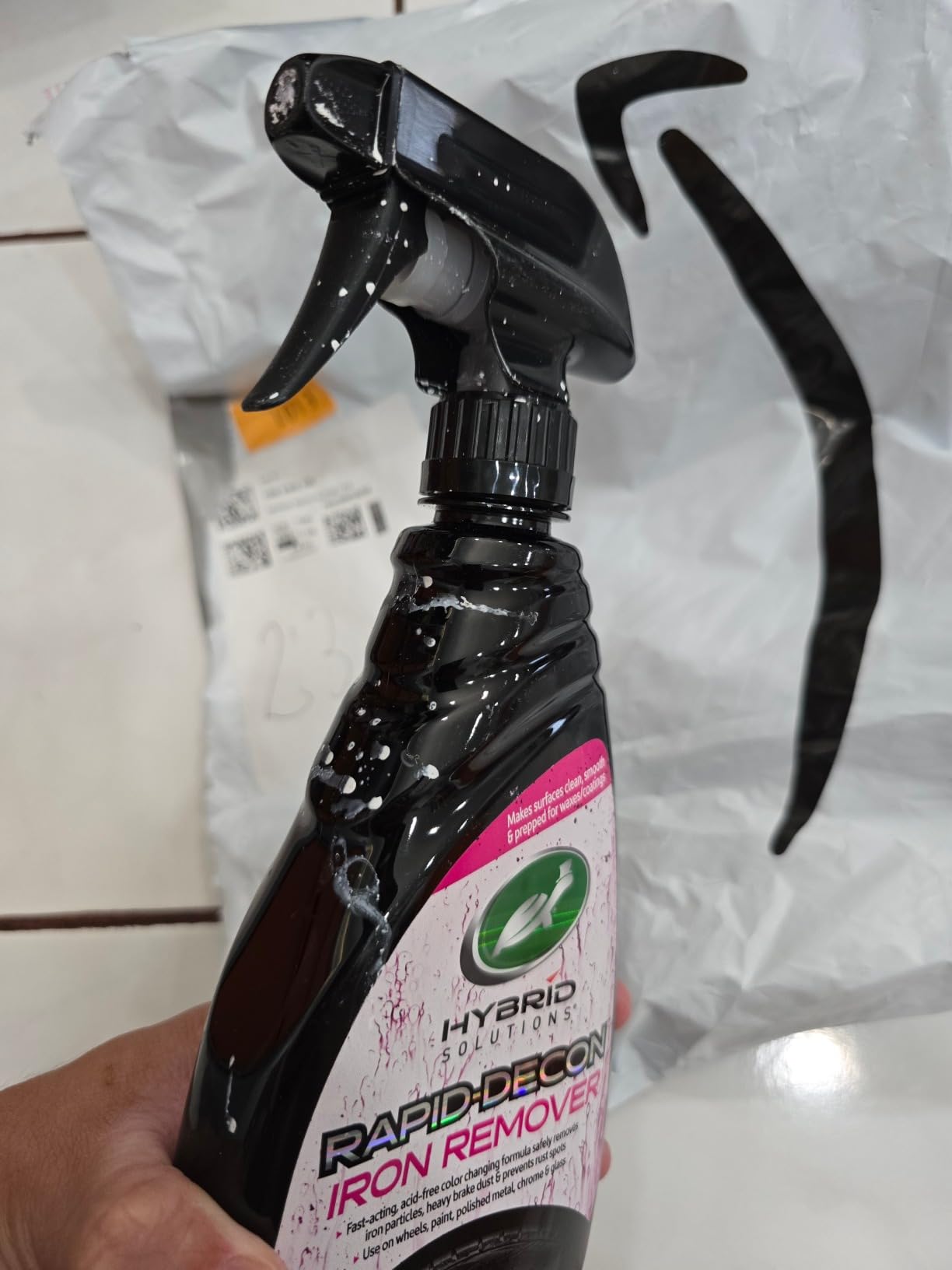
 Turtle Wax Hybrid Solutions Iron Remover Turtle Wax Hybrid Solutions Iron Remover |
|
Check Latest Price |
 Meguiar’s Non Acid Tire and Wheel Cleaner Meguiar’s Non Acid Tire and Wheel Cleaner |
|
Check Latest Price |
1. Chemical Guys Signature Series Wheel Cleaner: the Best All-Rounder for Brake Dust
Chemical Guys, Signature Series Wheel Cleaner Spray for All Finishes, 16 oz
- Breaks down heavy brake dust and road grime with light scrubbing
- Fast-acting foam clings for real dwell time
- No streaking or residue on gloss finishes
- Handles barrels
- center caps and lug nuts
- Dilutable so one bottle stretches
- Dries faster in direct sun
- cutting the dwell window
- Can leave a white residue that needs wiping
This is the bottle I keep coming back to, and it earned the top spot here on volume of evidence rather than hype. Chemical Guys has sold this formula since 2013 and it carries 8013 reviews at 4.4 stars, which is the largest review base in this group. Every finish category I threw at it, chrome, painted, powder-coated, anodized and clear-coated, came back without etching or dulling.
The chemistry is a trigger-spray concentrate, so the same bottle works two ways. Straight out of the trigger for a dirty front rim, or diluted into a second bottle you keep for maintenance washes. That flexibility is why it works as a one-product solution for most households instead of a specialist chemical you only reach for twice a year.
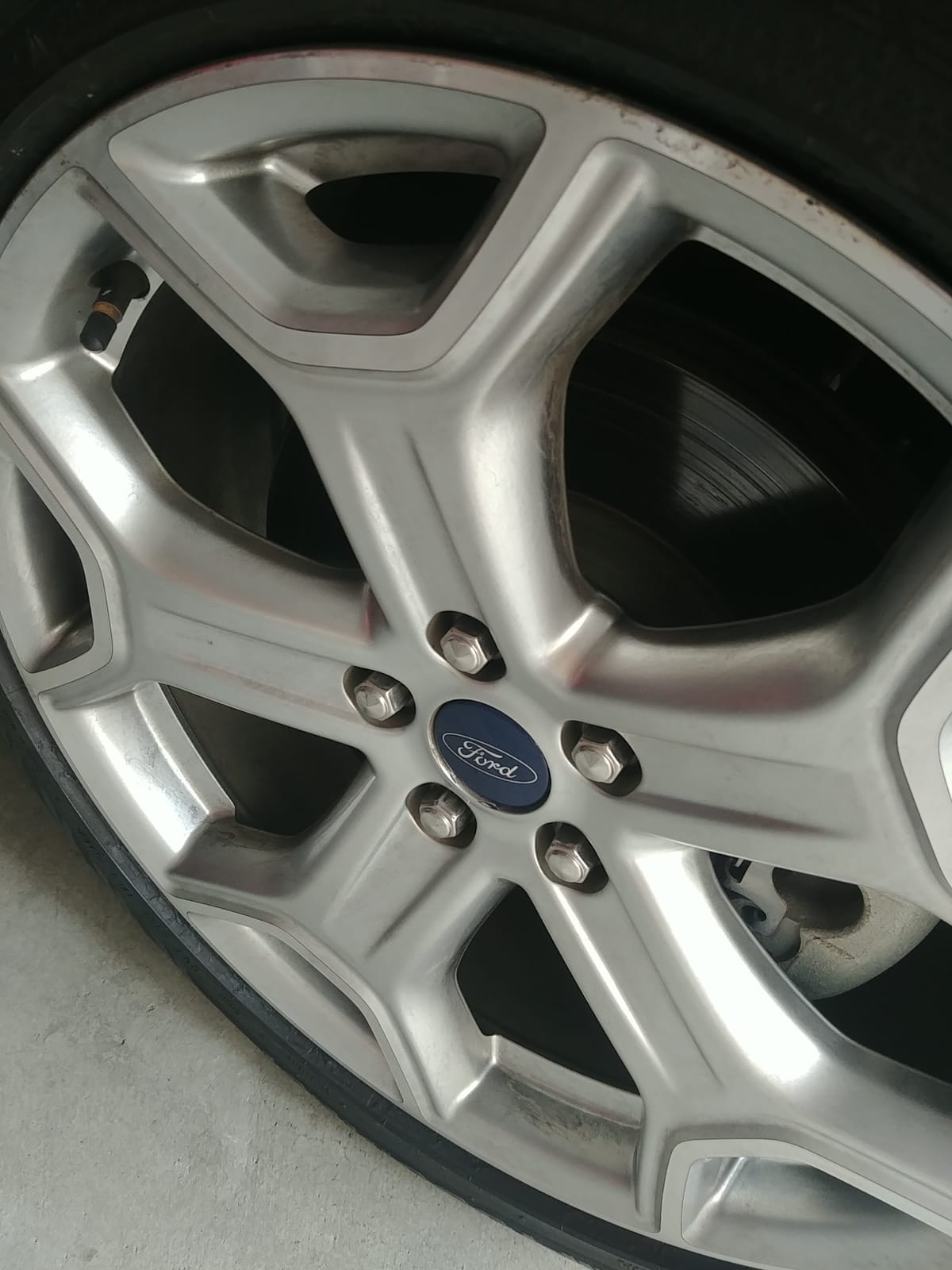
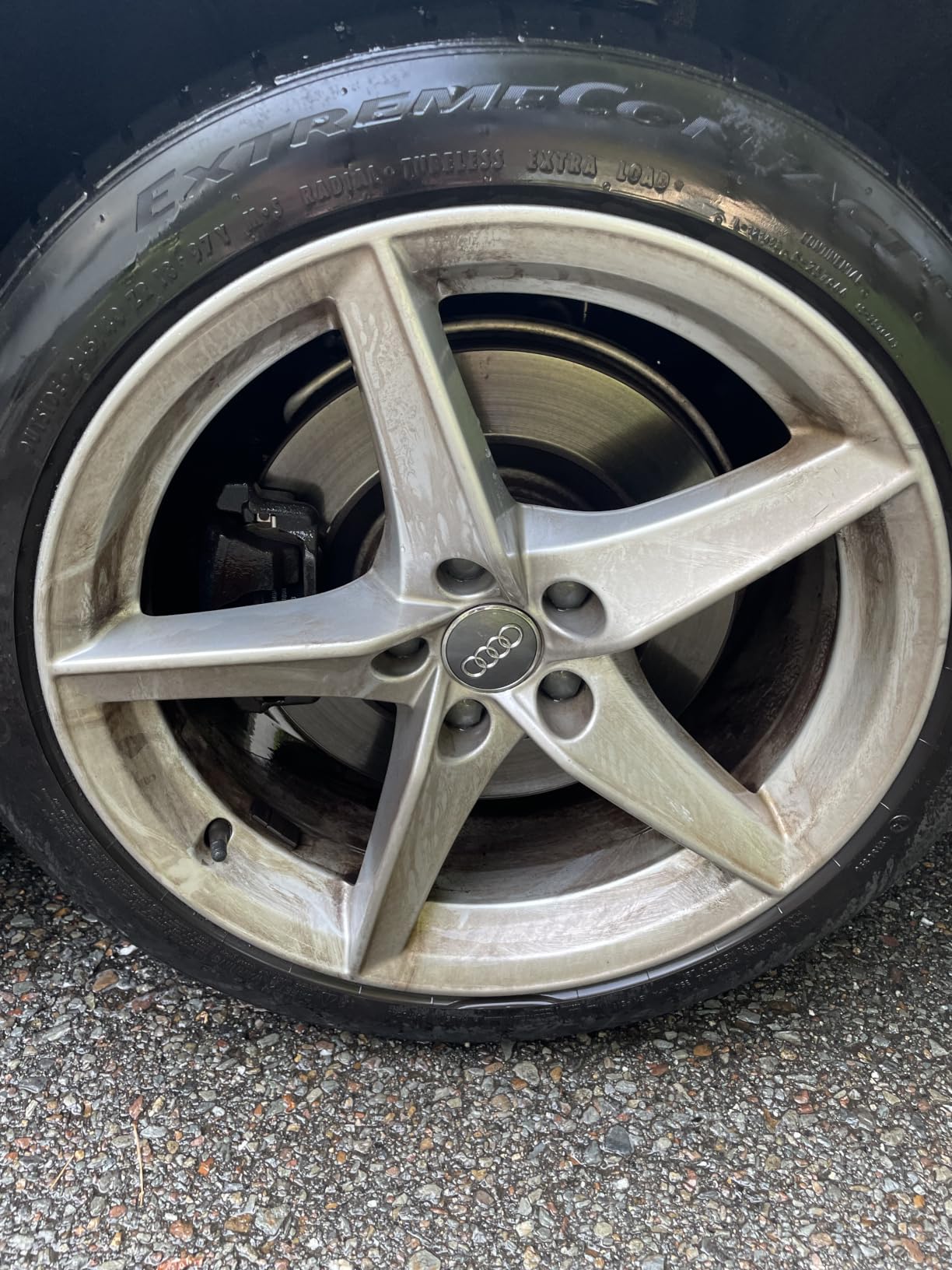
On a coated crossover with a season of city driving, the foam clung to the vertical spoke faces far better than a thin liquid spray would have. I gave it about four minutes, worked the barrel with a woolie, and the rinse carried away a surprising amount of dark residue in the runoff. The second wheel needed noticeably less work than the first, which is a fair indicator that the product is doing the lifting rather than the brush.
It is also one of the more versatile items here. The label rates it for wheel barrels, center caps, lug nuts and suspension components, and owners routinely use it on motorcycle spokes and mixed wheel types across cars, trucks and RVs. One bottle covers a car and a bike in the same garage.
Where it falls short on neglected wheels
If your wheels have a year of baked dust and never see a wheel brush, this formula needs a second pass. Reviewers consistently report that full-strength use on heavy caked buildup means re-spraying rather than a single dwell. That is not a defect, it is the trade-off for a finish-safe formula, but it means budget time for two rounds on the first clean.
Two smaller quirks are worth knowing. It can leave a light white residue that a microfiber towel removes, and it dries quickly on wheels sitting in direct sun, which quietly shortens your dwell window. Working in the shade and keeping a second bottle of diluted solution in a pump sprayer solves both.
Who should buy this one
This is the pick for someone with one car, mixed finishes and no patience for chemistry. It is the safest broad recommendation in the list because it works on essentially every finish a road car can have. Buy it as your default and treat the process below as the part that actually does the cleaning.
2. P and S Brake Buster: Premium Pick for Heavy Brake Dust
- Cuts through embedded brake dust with minimal effort
- No finish damage on painted and black wheels
- Cleans calipers and the exposed rotor hat
- Foams well in a foam sprayer
- Dilutable without losing effectiveness
- Streaks if allowed to dry on the wheel before rinsing
- Noticeable acidic smell during use
- Gallon is a larger commitment for occasional users
P and S Brake Buster is the incumbent in enthusiast circles, and the r/Detailing bulk-buy threads that pit it head to head against the brand’s own Dark Fury usually end with Brake Buster as the default answer. At 4.6 stars across 6365 reviews it pairs that safety record with 79 percent five-star ratings, which puts it in the top tier of the group.
Despite the name on the smell, the listed formula is explicitly non-acid and acid free, rated safe for chrome, aluminum, painted, powder-coated and steel wheels. That combination is rare. Most of the aggressive dust cutters in this category trade finish safety for bite, and this one does not.
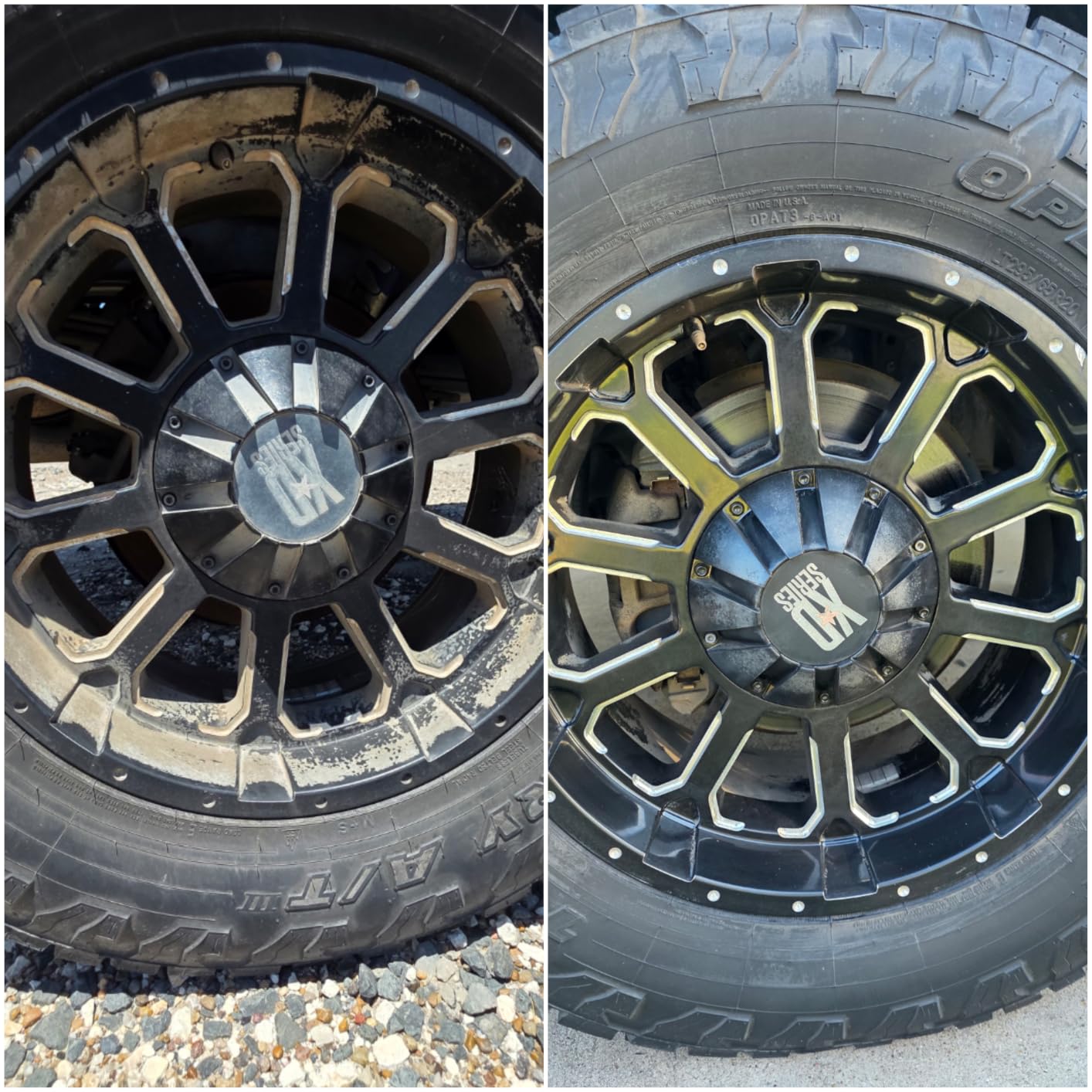
The practical advantage is volume. This is a 128-ounce container, and it is designed to go into a foam sprayer where it expands and covers a whole wheel face in one pass. For a front rim carrying genuine baked dust, I got better coverage per pump of sprayer than with any 16-ounce trigger bottle in the group, and the foam stayed put long enough to work.
It is not only a wheel product. Owners use it on painted and black-finished wheels without damage, on calipers, and on the exposed hat of the rotor. Multiple reviews also mention that wheels stay visibly cleaner between washes, which lines up with the listed protective coating that helps repel future grime and oxidation.
How to get the most out of a gallon
The single most repeated complaint is streaking, and it is a process issue rather than a product issue. If the solution dries on the wheel before you rinse, it leaves a mark. Work one wheel at a time, keep the product wet through the agitation stage, and rinse before it goes matte.
The second note is volume. A gallon is generous for one car, so buy it if you also clean tires, wheel wells and calipers with it, or if you want solution you can dilute into a maintenance strength for weekly use. For a single car cleaned occasionally, a smaller bottle is the honest choice.
Who should buy this one
This is the pick for high-mileage drivers, delivery and tow operators, and anyone whose front wheels take genuine heat. It also stretches well per wash simply because the container runs long and dilutes cleanly for routine work.
3. CarGuys Wheel Cleaner: Best for Calipers, Rotors and Whitewalls
CarGuys Wheel Cleaner | Effective Rim and Tire Cleaner | Safe & Versatile Brake Dust Remover for Alloy, Chrome, Aluminum Rims, White Wall Tires, and More! | 18 Oz
- pH-neutral and gentle on rims and tires
- Strips old tire dressing and caliper residue
- Gel clings to vertical surfaces with little runoff
- Can be diluted to extend the bottle
- Backed by a 100 percent satisfaction guarantee
- Effectiveness drops on years of baked-on dust without heavy agitation
- Thick gel takes effort on the sprayer pump
- Fewer long-term customer photos
CarGuys Wheel Cleaner earns its place here for surface coverage, and at 4.4 stars from 6268 reviews it sits in the top tier of review volume in the group. That much feedback matters in a category where finish-safety claims are easy to make and hard to verify.
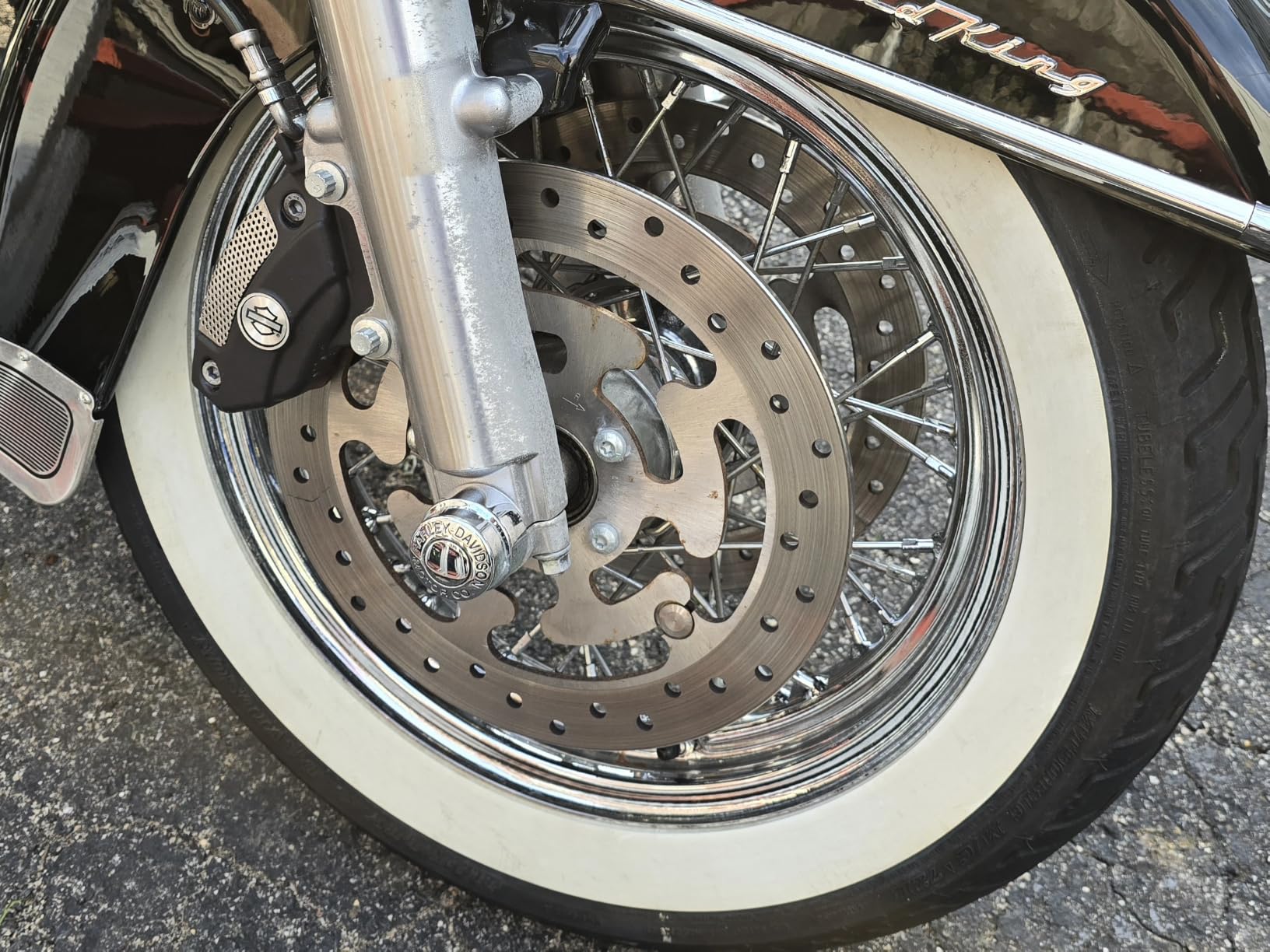
The pH-neutral gel is the differentiator. It is rated safe on alloy, chrome and aluminum while also functioning as a whitewall tire cleaner, so one product covers the rim, the sidewall, the caliper, the rotor and the exhaust tip. For a maintenance wash that is genuinely more efficient than carrying three bottles to the driveway.
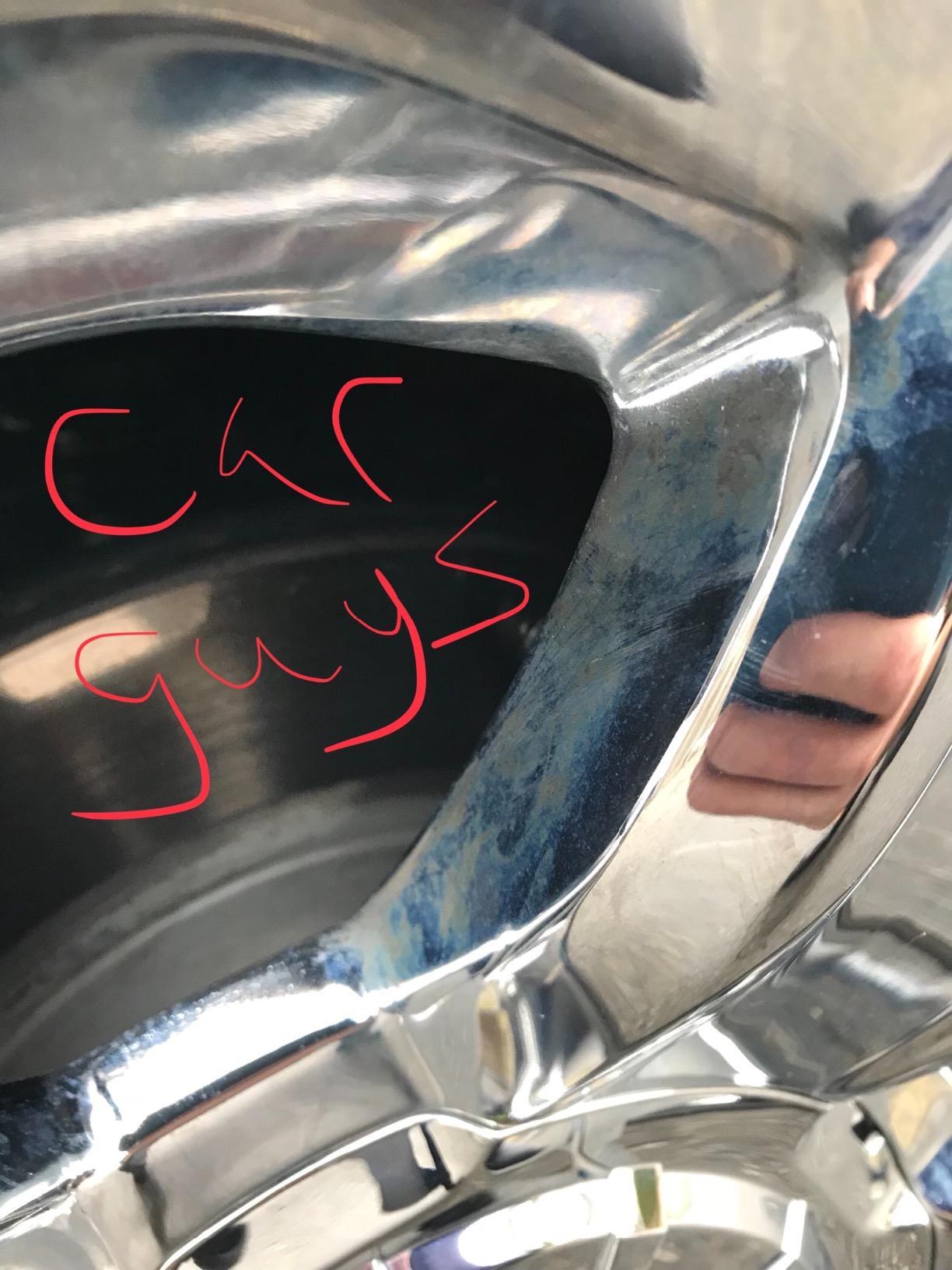
The gel consistency is the part I noticed first on a vertical five-spoke. It stayed on the spoke face instead of running to the ground, and the concentrated form also means you can dilute it for lighter jobs. Owners report that the sprayer pump needs some effort because of that thickness, which is a fair warning before you blame the bottle for a weak spray.
Where it earns its keep is the caliper. The formula is listed for old tire dressing, caliper residue and rotors, and those are exactly the areas that make a wheel look dirty even after the face is clean. Treating the caliper and exposed rotor with the same gel takes minutes and makes a visible difference in how the wheel reads in daylight.
Where its mildness shows
This is a maintenance-grade chemical, and the reviews are honest about that. Effectiveness drops noticeably on years of baked-on brake dust and rust unless you commit real agitation time. If your wheels have been neglected for many seasons, this alone will leave you disappointed regardless of how good the finish safety is.
The honest positioning is that it is a weekly and monthly product. Paired with a harder-working cleaner for the occasional deep clean, it is excellent. On its own for a heavy restoration, it is the wrong tool.
Who should buy this one
Pick this if you maintain your car weekly, care about whitewalls or classic trim, and want one bottle that covers wheels and tires. It is also the safest choice on a set of wheels where you genuinely do not know the finish, because pH-neutral chemistry on chrome and aluminum leaves very little room for a mistake.
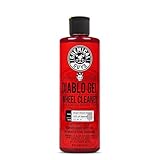
4. Chemical Guys Diablo Gel: the Best Foaming Gel for Vertical Faces
Chemical Guys, Diablo Gel Foaming Wheel & Rim Cleaner, All Finishes, 16 oz
- Foaming gel clings to vertical surfaces with minimal rubbing
- Handles heavy brake dust better than fallout-only removers
- pH-balanced so it will not stain rims
- Light fruity scent instead of harsh odor
- Dilutes well at 3:1 for maintenance
- Not truly no-scrub
- needs physical brushing
- Neglected buildup demands real elbow grease
- Some buyers report bottles leaking in transit
Diablo Gel is the formula that made foaming wheel cleaners mainstream, and at 4.6 stars across 6023 reviews with 77 percent five-star ratings it has built one of the largest and most loyal owner bases in the group, with 77 percent five-star ratings. The oxygen-infused foaming gel floats grime away from the surface before it can resettle, which is the mechanism behind the reduced scrubbing.
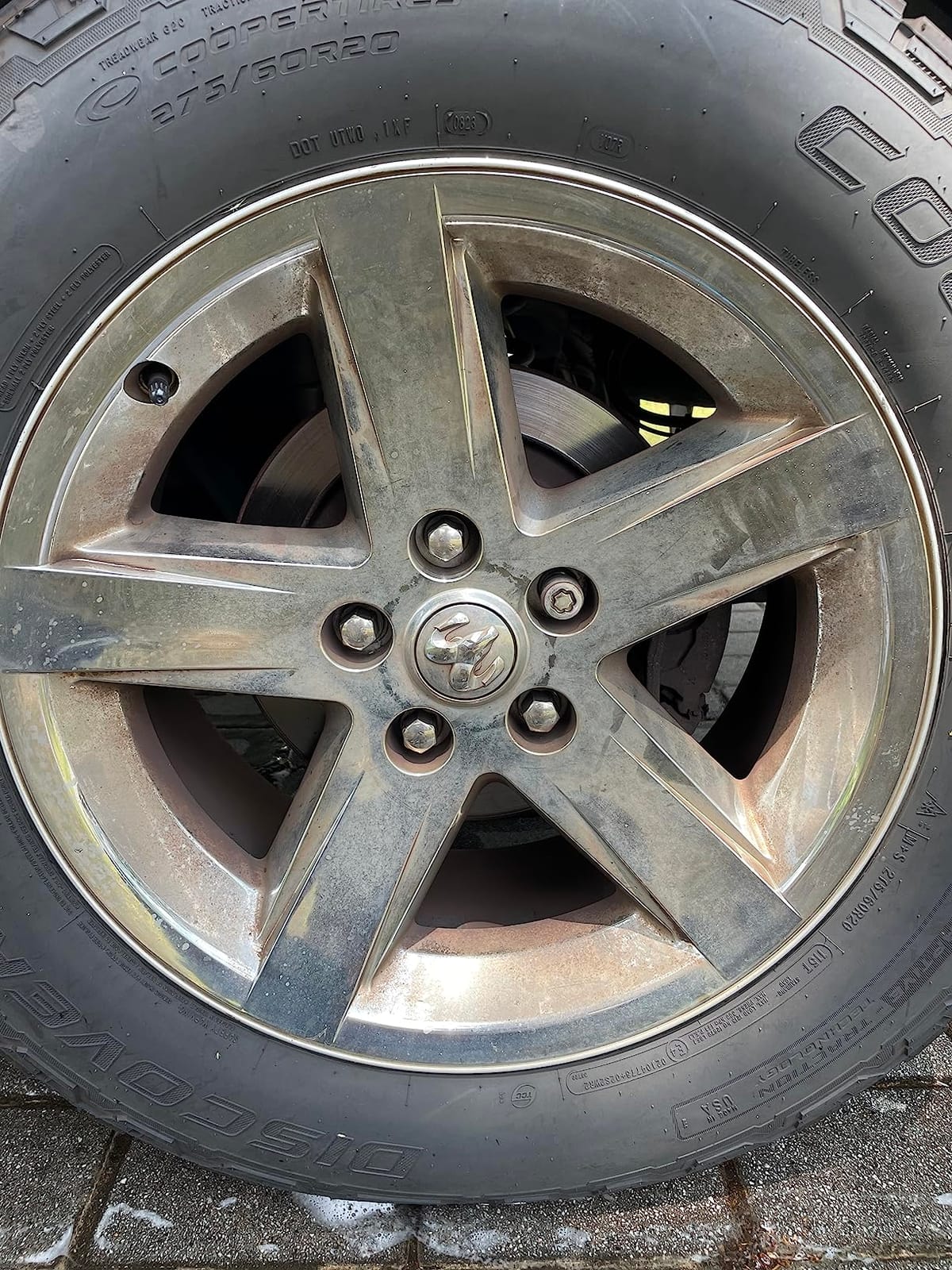
Detailers point to the pH-balanced, non-caustic profile as the reason it doubles as a maintenance product. It is rated safe for aluminum, chrome, powder-coated, polished and painted wheels, and it is also rated safe for external trim adhesives and rubber seals when diluted as directed, which is the detail most owners never check before spraying a wheel arch.
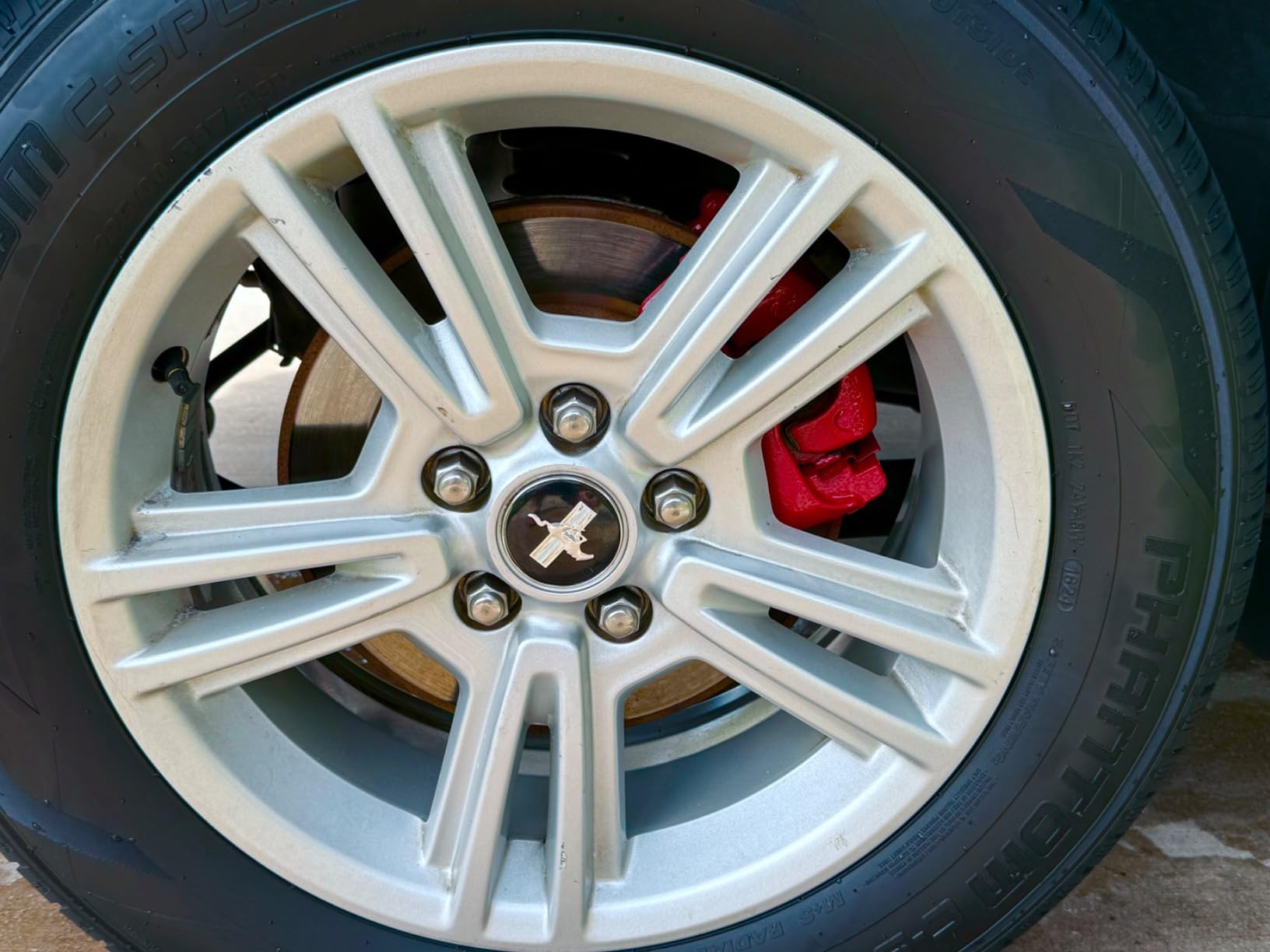
On spokes with narrow gaps, the gel held a thick, even layer and I could see it working downward through the dwell rather than running off. Owners specifically single out its performance on heavy performance-car dust compared with general fallout removers, and it handled a full season of road film on my alloy with a single light pass.
The scent deserves a mention because it is genuinely unusual in this category. A light fruity smell instead of the chemical sharpness most iron and dust products give you makes it far easier to use in an enclosed garage, which matters if you are working in a small space rather than on a driveway.
The no-scrub question, answered honestly
Marketing language and customer experience diverge here, and the reviews are clear. It reduces scrubbing; it does not remove it. Even owners who rate it 5 stars describe picking up a stiff wheel brush. Years-neglected buildup on a front rim is outside what this formula will do alone.
Concentration is the other lever. Straight from the bottle for a real clean, or 3:1 for maintenance washes, and note that a gallon diluted at that ratio covers only a few sets of wheels. Some buyers have also reported bottles arriving damaged, so check the cap seal before you plan a whole car around it.
Who should buy this one
This suits a car that gets washed regularly and wants a safe, pleasant-smelling default. It is also a strong pick for narrow-spoke wheels where a liquid spray would simply run off the surface, and for anyone working in a garage rather than outside.
5. SONAX Full Effect Wheel Cleaner: Best With a Color-Change Indicator
- Color change proves the chemistry is working on iron
- Near no-scrub results after a five minute dwell
- Reaches narrow spoke gaps a hand cannot
- Safe on anodized
- coated
- chrome and stainless
- Ready to use with no dilution
- Bottle is small for multi-car households
- Very strong odor during use
- Light wiping still needed after rinsing
- Slower than acidic options on neglected wheels
The color-change reaction is the most convincing trust signal in this category, and SONAX Full Effect is where enthusiasts most often point. It sprays on yellow-green and turns red or purple where iron contamination is present, so you can see exactly where the chemistry is working instead of guessing. Users across r/AutoDetailing and Autopia repeatedly call out that visible reaction as the reason they trust the product.
The chemistry underneath is acid-free and pH-balanced, rated safe as directed on painted alloy, anodized, clear-coated, chrome, aluminum and stainless steel. That last category is not boilerplate here. Owners of European cars with heavy factory brake dust mention it specifically, and the Autopia forum consensus treats this product as safe on effectively everything.
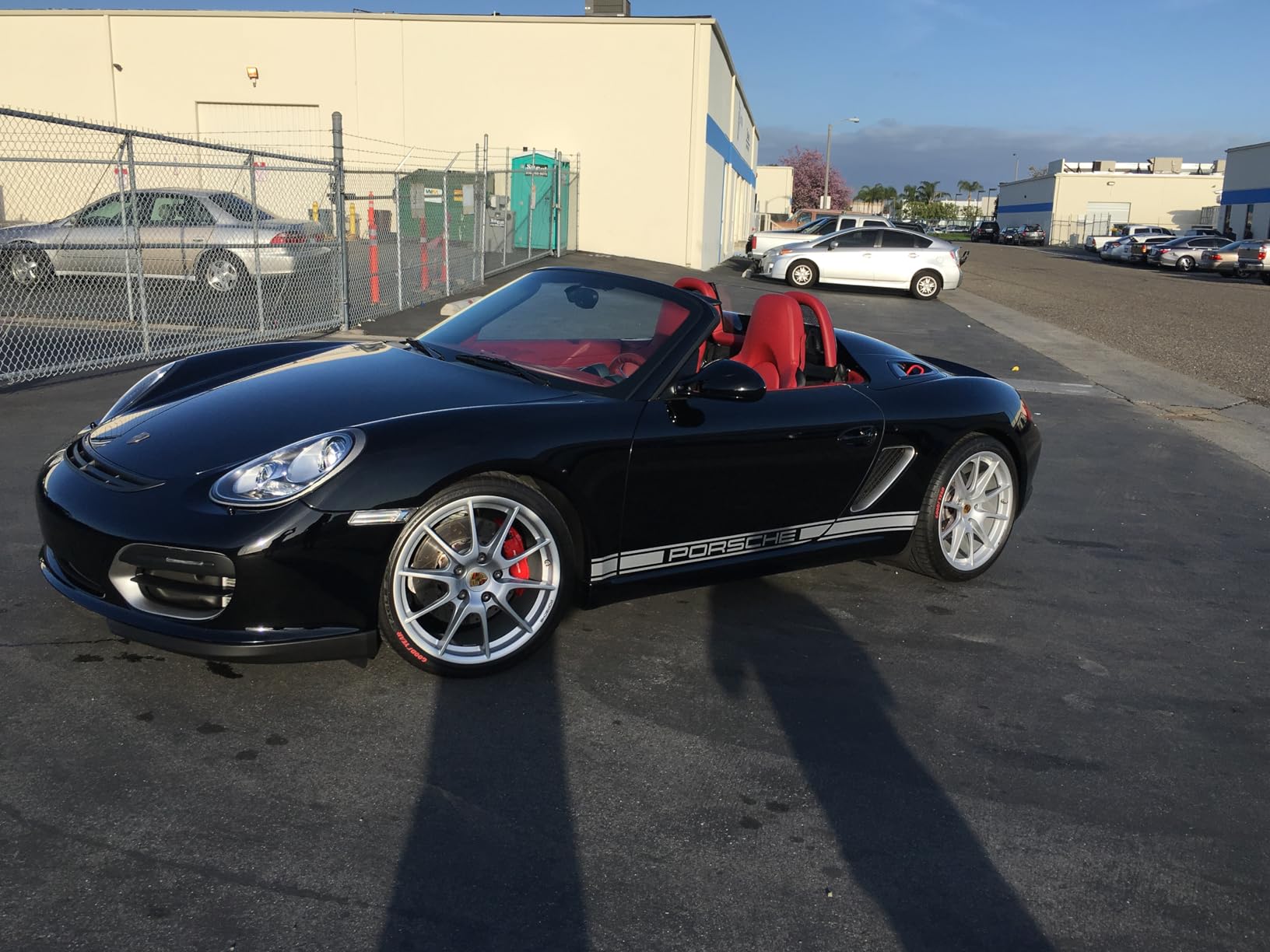
With a full five-minute dwell on normal buildup, results were close to no-scrub for me. The emulsified dust lifted from narrow spoke gaps that a hand simply cannot reach, and the indicator showed hot spots I would otherwise have missed, including the inner lip of the barrel. It is ready to use with no dilution, which removes one step from the process.
For baked-on dust it is slower than the acidic options, and r/Detailing users comparing formulas note that dwell time and agitation are what close the gap. Given the finish safety and the fact that you never have to guess whether it is working, that is a trade most people are glad to make.
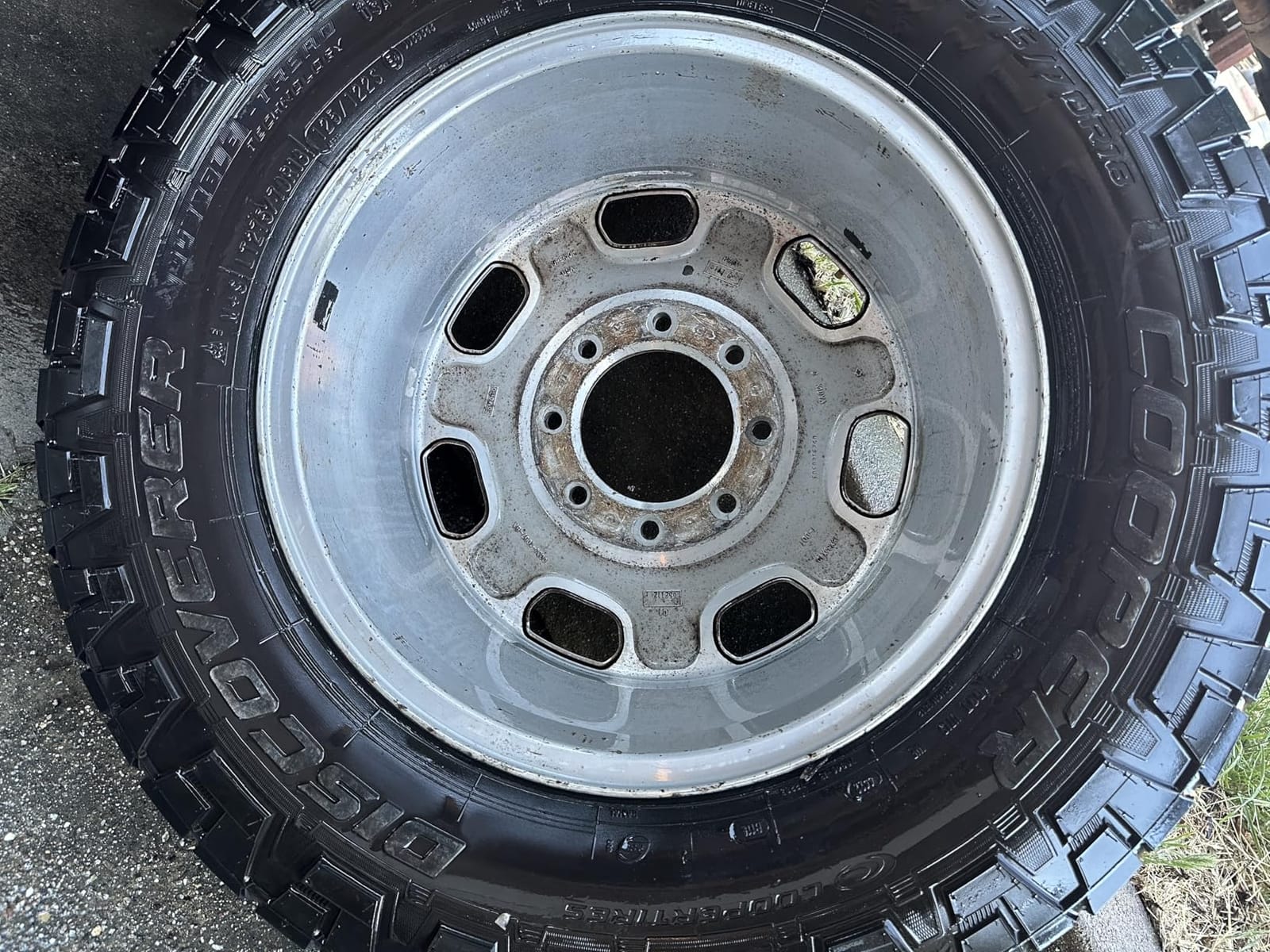
The bottle size and the smell are real drawbacks
At 500 ml this is the smallest bottle relative to how quickly it disappears on a set of four wheels, and multi-car households burn through it. The odor during application is strong, so open a garage door before you start. Some owners also note a light wipe-down after rinsing to get a fully clean look rather than a merely rinsed one.
Neither issue changes the recommendation, but both are worth planning around. Keep it away from fabric and do not let the bottle sit open, because the scent transfers to everything it touches.
Who should buy this one
Buy this if you want visible proof the product is working and you care most about finish safety. It is a strong match for European and Asian imports with heavy factory-applied brake dust, for multi-spoke alloys where dust hides in tight gaps, and for anyone who prefers a single bottle they never have to dilute.
6. Adam’s Polishes Wheel Cleaner: Best for Long-Neglected Wheels
- Color shift to deep purple shows dust reacting
- Removed roughly ten years of caked dust and winter rust
- Foams well and rinses without streaks
- Acid-free and safe on clear-coated and chrome
- Works well with a wheel brush
- Strong odor that lingers on hands and fabrics
- Uses a large share of a 16 oz bottle per heavy wash
- Thick formula sprays too much
- Needs agitation rather than working alone
Adam’s Wheel Cleaner has a strong reputation for neglected wheels, and the reviews back it up. Owners report removing around ten years of caked dust and winter rust from aluminum wheels with it. At 4.5 stars across 5282 reviews it sits just below the median review volume but with a high satisfaction rate at 74 percent five-star.
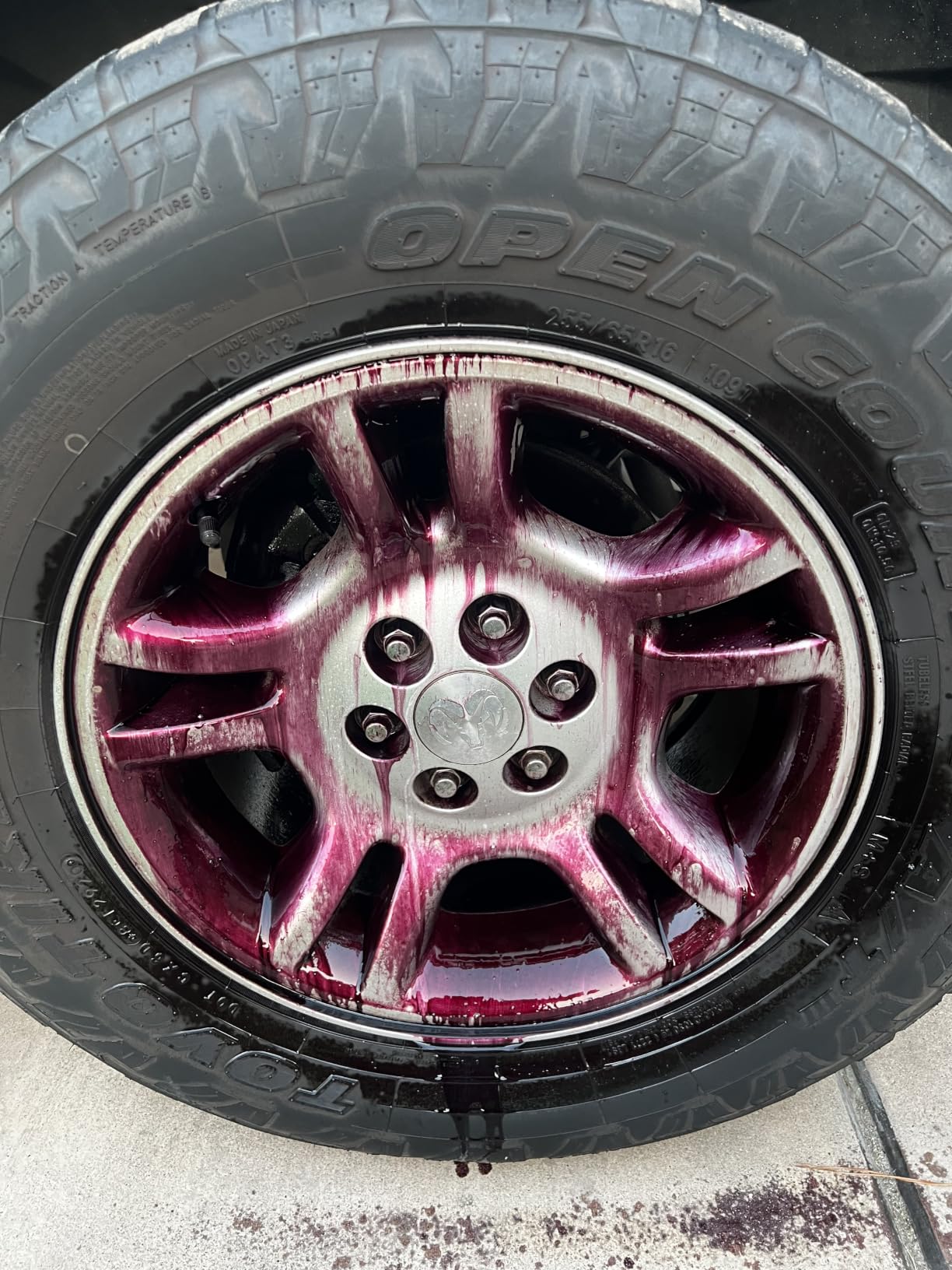
Like SONAX, it gives you a live reaction, this time bleeding bright purple as metallic contamination dissolves. That reaction is the point. On a wheel you have neglected for years, you can watch the dust activate and see which sections need a second application instead of scrubbing blindly across the whole face.
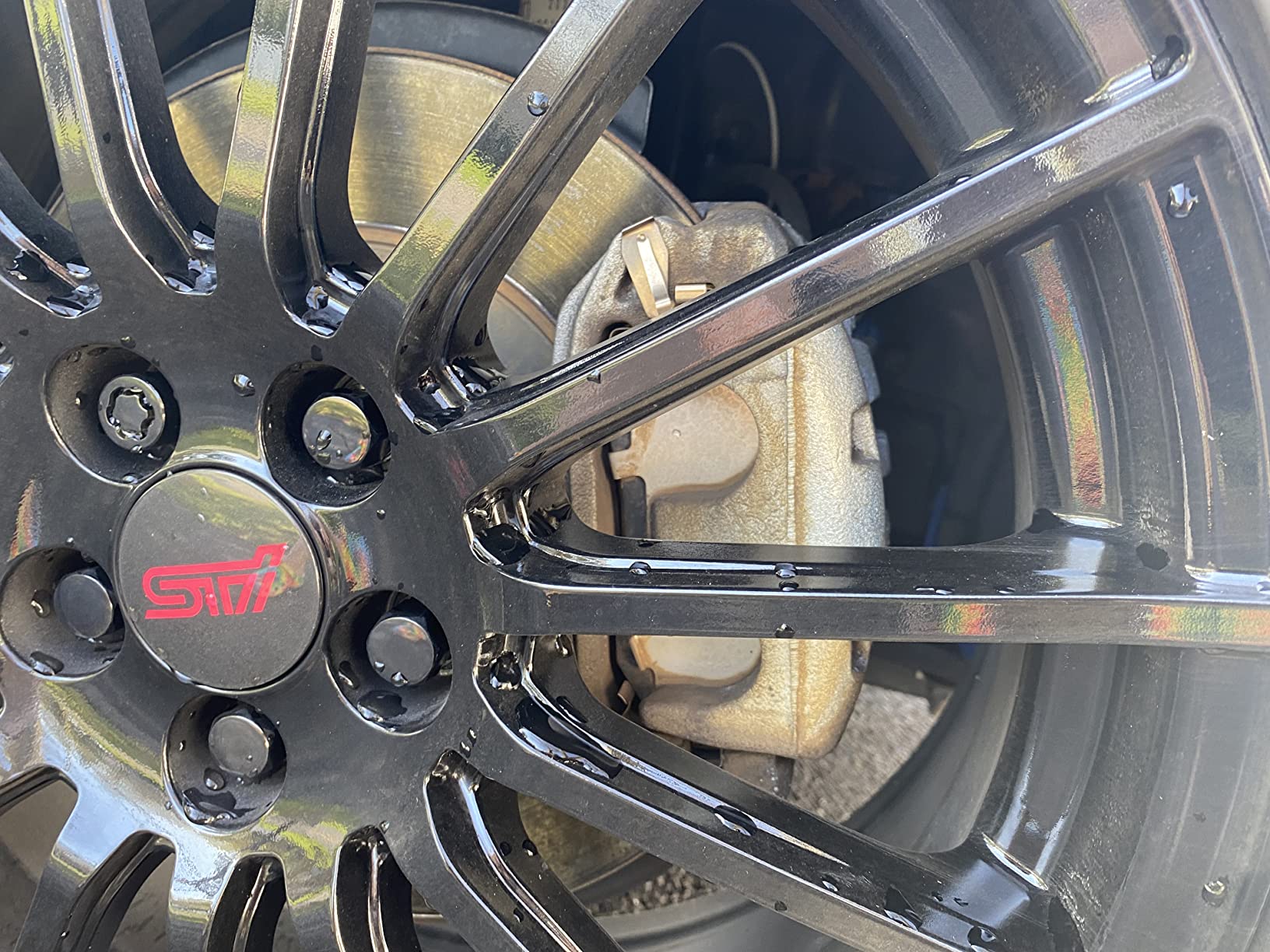
It is a spray-and-agitate product, explicitly designed to pair with a wheel brush or a drill attachment. On a heavily contaminated alloy the foam built well and the purple reaction spread evenly across the caked areas, and the rinse came away with a lot of dark material in it. Several owners single out BMW-style heavy factory dust as the exact case this bottle handles best.
One important exclusion. It is not recommended for anodized raw aluminum, polished aluminum or bare aftermarket metallic wheels, so read that line carefully if your wheels are aftermarket rather than factory-coated.
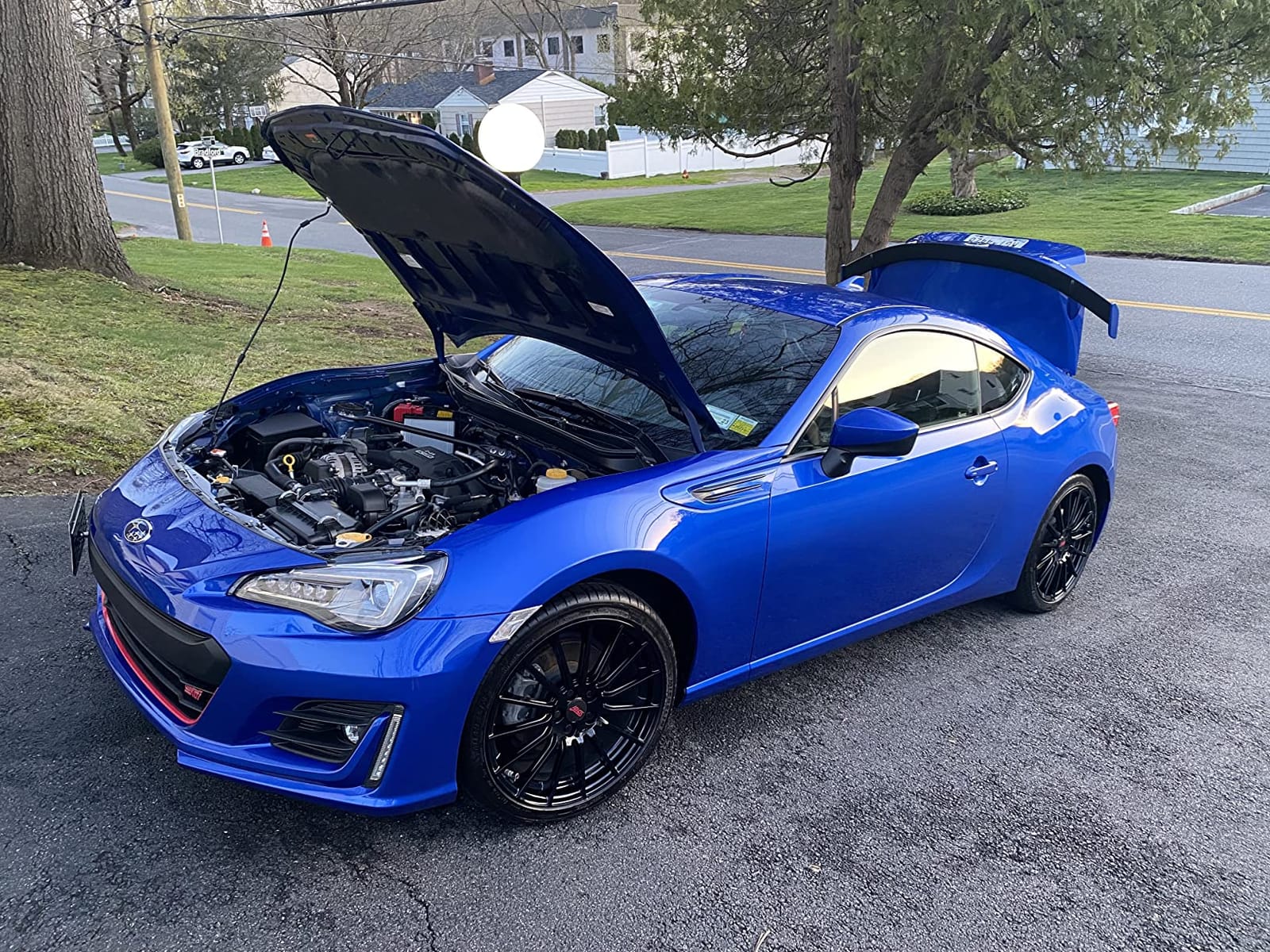
Why the bottle disappears so fast
The formula is thick, and thickness means the trigger dispenses far more product than a fine spray would. On a heavy wash that is genuinely a large share of a 16-ounce bottle in a single session, and that is the most common complaint in the reviews alongside the scent, which is cherry pineapple and lingers on hands and fabrics.
Because it is a spray-and-agitate formula, applying it without a brush will disappoint you. Budget for the brush, and the result on genuinely old buildup is the one that surprised me most.
Who should buy this one
This is the one to buy if your wheels have gone a year or more without a proper clean, or if you are restoring a car and want the fastest route back to bare metal. It is also a sensible maintenance partner for anyone who already owns a stiff wheel brush and a drill attachment.
7. Armor All Extreme Wheel and Tire Cleaner: Best Budget Spray for Quick Washes
Armor All Extreme Wheel and Tire Cleaner , Car Wheel Cleaner Spray, 24 Fl Oz
- Fast 30-second soak suits a quick routine wash
- Safe on alloy
- steel
- chrome and plastic finishes
- Dislodges dirt
- grease
- tar and brake dust
- Leaves a clean shine after rinsing
- Large 24 oz bottle
- Not an acid-free or pH-neutral formula
- May need brushing for caked dust
- Must be dried by hand to avoid water spots
Armor All Extreme is the accessible end of this list, and it has the reach to justify it. At 4.4 stars from 3179 reviews it holds a top-four position in its category and it has been on shelves since 2008, which is a long track record for a simple spray.
The trade-off is chemistry. This is not an acid-free or pH-neutral formula, and the reviews are candid that it is a less cautious choice for delicate finishes than the specialists here. On factory alloy, steel, chrome and plastic wheel covers and hubcaps, which is most of the cars on the road, it performs exactly as advertised.
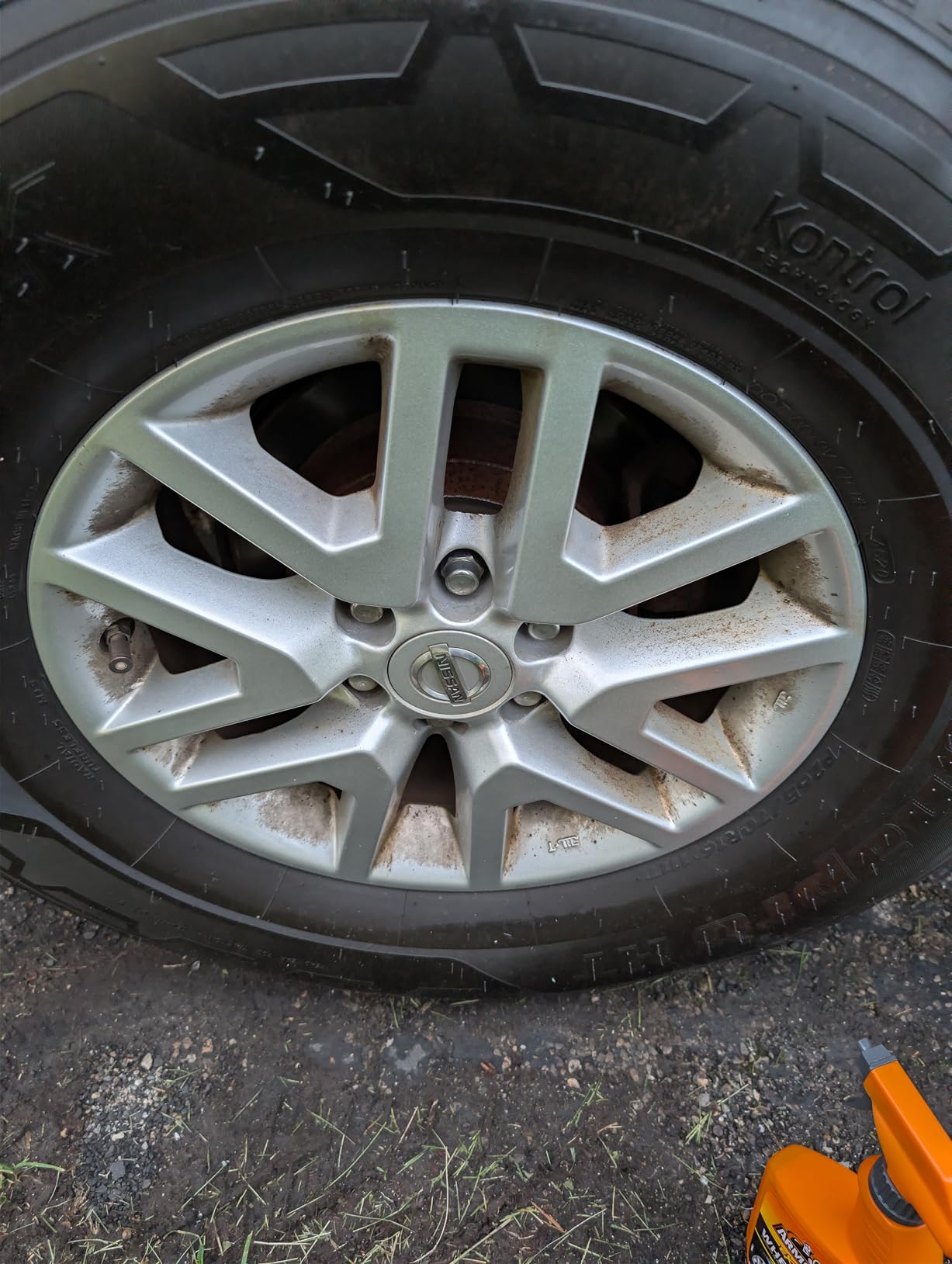
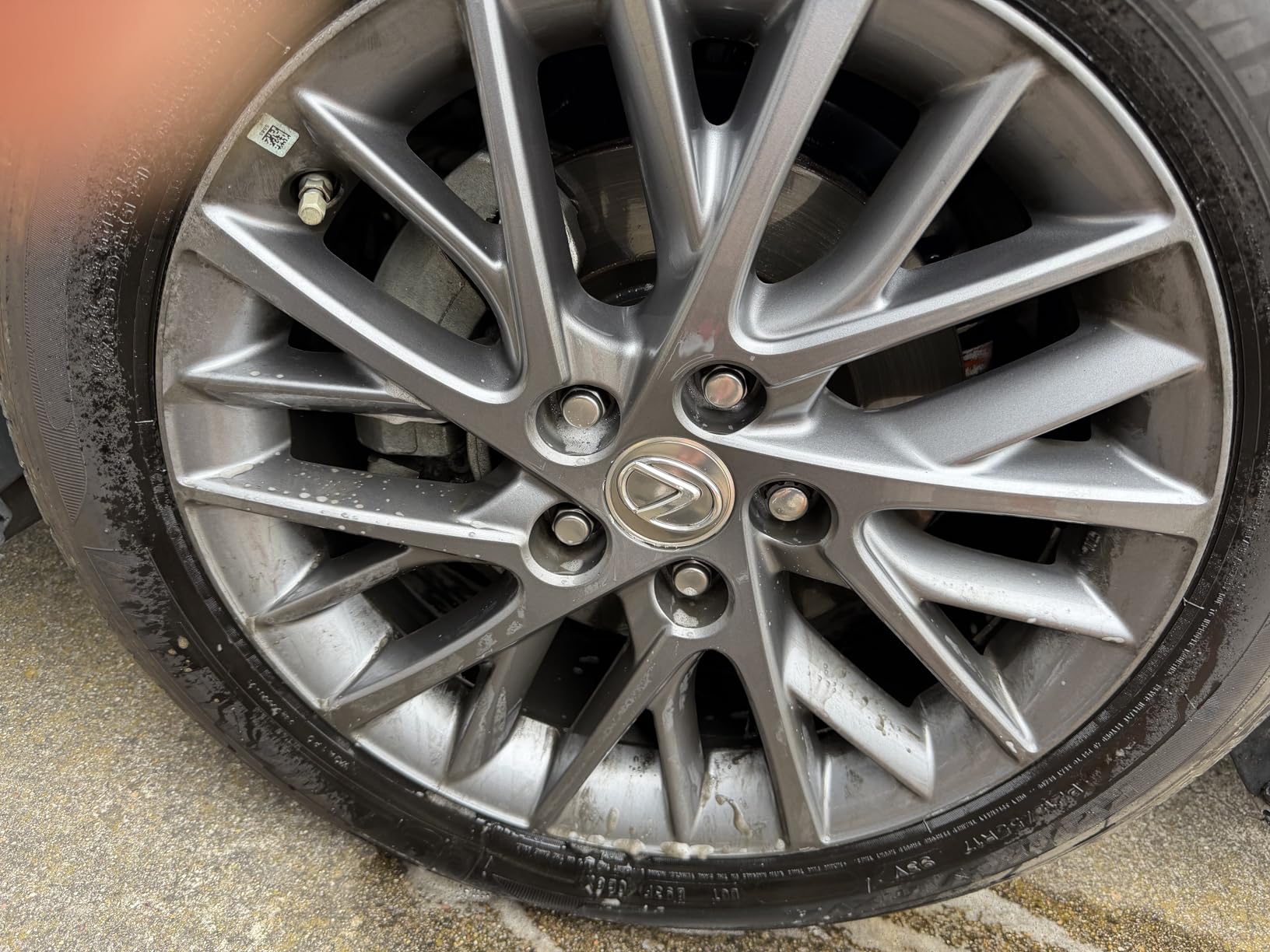
What it does better than the rest here is speed. Thirty seconds on cool wheels is a genuinely short dwell, and on a car that gets a light dusting weekly that is all the time you need. Deep-cleansing agents penetrate hard-to-reach areas and dislodge dirt, grease, tar and brake dust in that window, and the wheels rinsed clean and shiny.
Working cool wheels matters more than the label suggests. A wheel that has been sitting in direct sun can dry a solution before it has done anything, and this is the product most likely to show that effect because its dwell window is so short.
Where the budget trade-off bites
Two limits are worth being clear about. Because it is not pH-neutral, it is not the bottle to reach for on a show car, a matte finish or a wheel you are unsure about. And genuine caked dust will still need a brush, which undercuts the speed advantage on a dirty car.
There is also the drying step. Rinse and then dry with a soft cloth, otherwise you are left with water spots that undo the shine the product just delivered. Budget two minutes of hand drying per wheel.
Who should buy this one
Buy this for an older car with steel wheels or plastic covers, a beater that lives outside, or anyone who wants a fast wipe-down product for weekly maintenance. It is a sensible first wheel cleaner and a reasonable second bottle to keep in the trunk.
8. Gtechniq W6 Iron Remover: Best for Coated Wheels
- 81 percent five-star ratings across 3218 reviews
- Gel clings well and lifts iron contamination fast
- Safe on ceramic coatings
- waxes and sealants
- Dual purpose on wheels and paintwork
- Noticesably brighter rims after one treatment
- Higher cost per ounce than mass-market gels
- Enthusiast positioning suits committed detailers
- Needs dwell and rinsing to clear reacted iron
Gtechniq W6 has one of the strongest satisfaction profiles in this group. At 4.6 stars with 81 percent five-star ratings across 3218 reviews, it earns its place on the combination of rating and approval rate rather than review volume. The reason is stated plainly in the technical data: it is coating and wax safe, unlike harsher decontamination products.
That single attribute is why it belongs on a brake dust list at all. Most aggressive iron removers are the exact products that strip or dull a ceramic coating on a wheel, which means the wheel needs decontaminating and re-protecting. W6 is the rare bottle you can use on a coated wheel without that follow-on work.
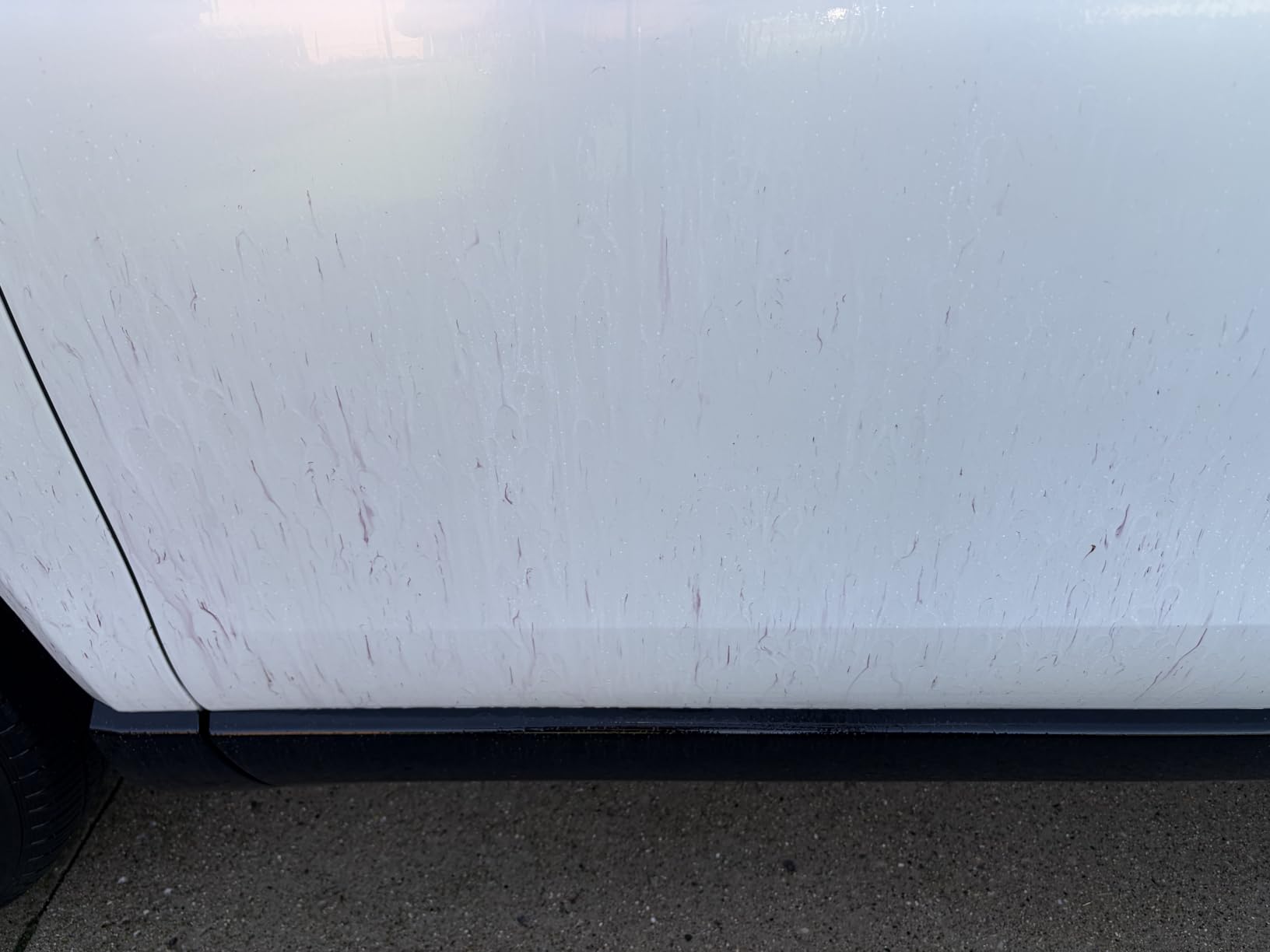
The thick gel clings to the surface and only needs a few minutes of dwell before rinsing, which is where the high-cling formula earns its keep on a vertical spoke. Users report noticeably brighter rims after a single treatment, and that matched what I saw on a set of coated wheels where the gloss came back after one pass rather than three.
It is also dual purpose. Because it doubles as a general degreaser for paintwork and rims, it fits naturally into a decontamination step before waxing, polishing or coating, which makes it a useful product to own even if your wheels are not your main focus.
The enthusiast positioning is the catch
Three honest limits. It costs more per ounce than the mass-market gels, and on heavy neglect you will get through it quickly. It needs the full dwell and a complete rinse, because reacted iron left on the surface is exactly what you were trying to remove. And the marketing voice assumes you already understand dilution and decontamination steps.
If you are new to wheel care, that last point matters more than it sounds. This is a product for someone who has a process, not someone building one.
Who should buy this one
Pick this if your wheels are ceramic coated, ceramic sealed or waxed and you refuse to strip that protection to remove dust. It is also the right call if you decontaminate paint as part of your wash routine and want one gel that does both jobs.
9. Turtle Wax Hybrid Solutions Iron Remover: Best Multi-Surface Pick
Turtle Wax Hybrid Solutions Iron Remover & Wheel Cleaner, 23 oz. (1 Pack)
- Clear to purple color change shows progress in real time
- Removed embedded rust from chrome and black aftermarket wheels
- Safe on paint
- clear coat
- polished metal and glass
- Odor-neutralizing chemistry
- Also works outside the wheel wells
- Heavy rust still needs firm nylon brush agitation
- Can stain driveways if allowed to dry
- Odor still noticeable despite the claim
- Underperforms on dust baked into wheel clear coat
The Turtle Wax Hybrid Solutions formula is the newest item in this roundup, added to the range at the end of 2021, and it is positioned deliberately between a budget spray and an enthusiast iron remover. At 4.5 stars across 2216 reviews with 76 percent five-star ratings, it has built a solid record faster than most.
What sets it apart is scope. It is rated pH neutral and acid free for paint, clear coat, polished metal, chrome, glass and all wheels, so it works well outside the wheel arches. That matters if your brake dust problem is really a paint decontamination problem or if you want one trigger bottle for the whole car.
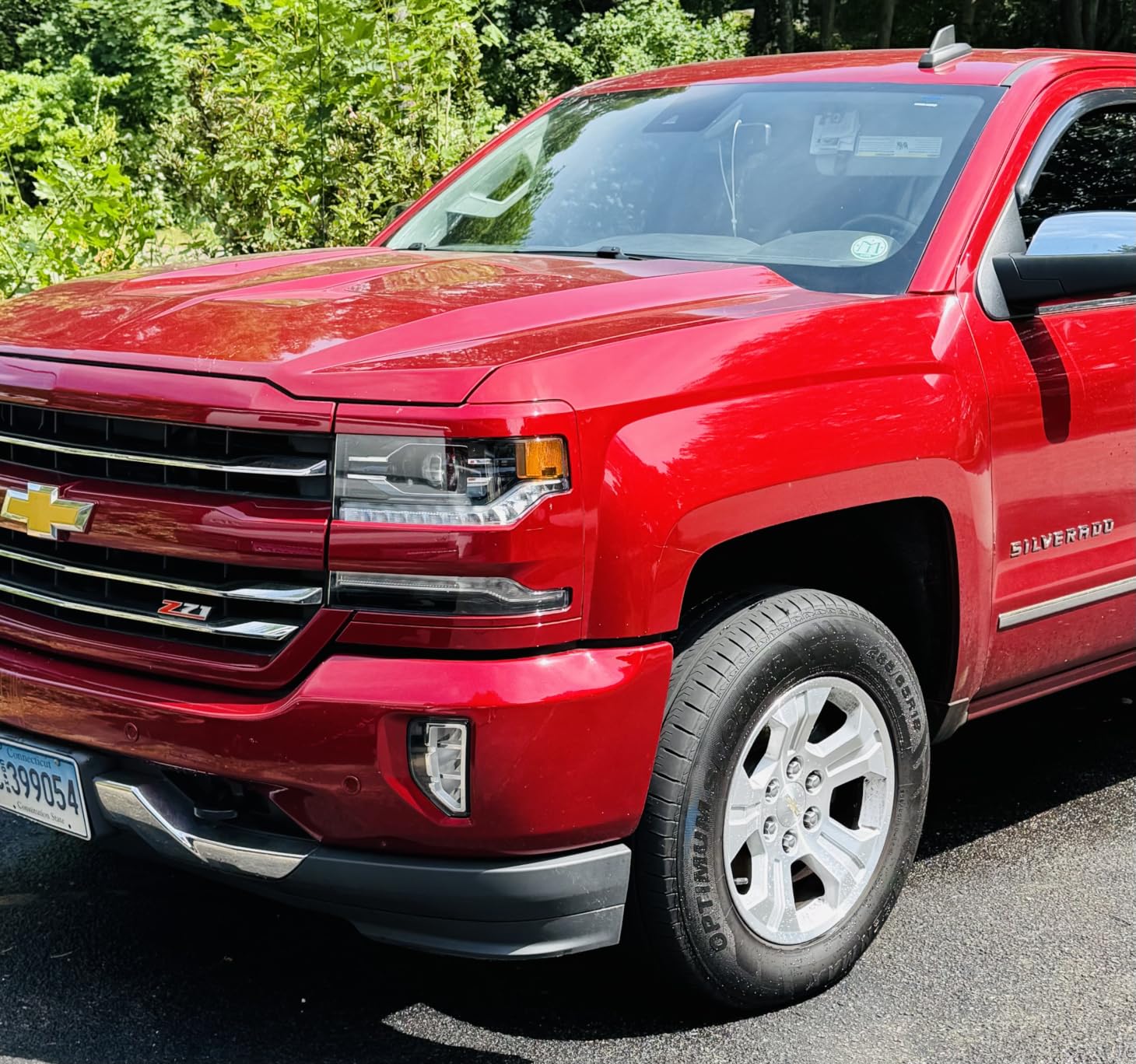
The clear-to-purple reaction is easy to read and appears quickly on contaminated surfaces. Owners highlight its rust removal on both chrome and black aftermarket wheels, which are two of the harder and more sensitive combinations to treat, and the scent-blocking technology does soften the usual iron remover smell, though not eliminate it.
Its intended role is surface preparation before waxing, polishing or coating, and that is where it fits best in a wash routine. Used that way it removes the embedded iron particles a normal car wash cannot touch, which is the same iron that turns into brake dust on your wheels in the first place.
Where it falls short, and the driveway warning
Two practical limits. It underperforms on brake dust that has genuinely baked into the wheel clear coat, so treat it as a decontamination product rather than a deep wheel cleaner, and expect to still need firm nylon brush work on heavy rust. More importantly, the reacted iron will stain concrete, so keep a hose in hand and rinse before the product dries on the driveway.
The smell is still noticeable even with the scent-blocking claim in place. If you work in a closed garage, plan for ventilation.
Who should buy this one
This is the pick for a car that needs iron removed from more than just the wheels, particularly ahead of waxing or coating. It is also a sensible upgrade over a basic spray if you want visible color feedback without moving to a dedicated gel.
10. Meguiar’s Non Acid Tire and Wheel Cleaner: Best for Pro Volume Work
Meguiar’s D14301 Non Acid Tire and Wheel Cleaner, Pre-Diluted, No Mixing Required Car Wheel Cleaner – 1 Gallon Wheel Cleaner 128 Fl Oz
- Non-acid formula detailers trust on delicate finishes
- Pre-diluted and ready to spray from the bottle
- Brake dust bleeds visibly off tires and rinses away
- Works on factory and aftermarket alloy wheels
- Gallon size suits multi-vehicle use
- Can leave a temporary stain if it dries on the surface
- Some containers arrive without a factory seal
Meguiar’s is the gallon-format option built for volume, and at 4.6 stars with 81 percent five-star ratings from 2169 reviews it matches Gtechniq W6 for approval rate. Professional detailers use it on factory and aftermarket alloy wheels, and one detailer with thousands of jobs on record calls it the safest wheel and tire cleaner they work with.
Two practical decisions make it a favorite. It is pre-diluted, so there is no mixing step and no measuring error, which matters when the same bottle has to work on a delicate aftermarket wheel and a beaten-up steel rim on the same afternoon. And it is non-acid, which is why professionals reach for it on finishes they cannot identify with certainty.
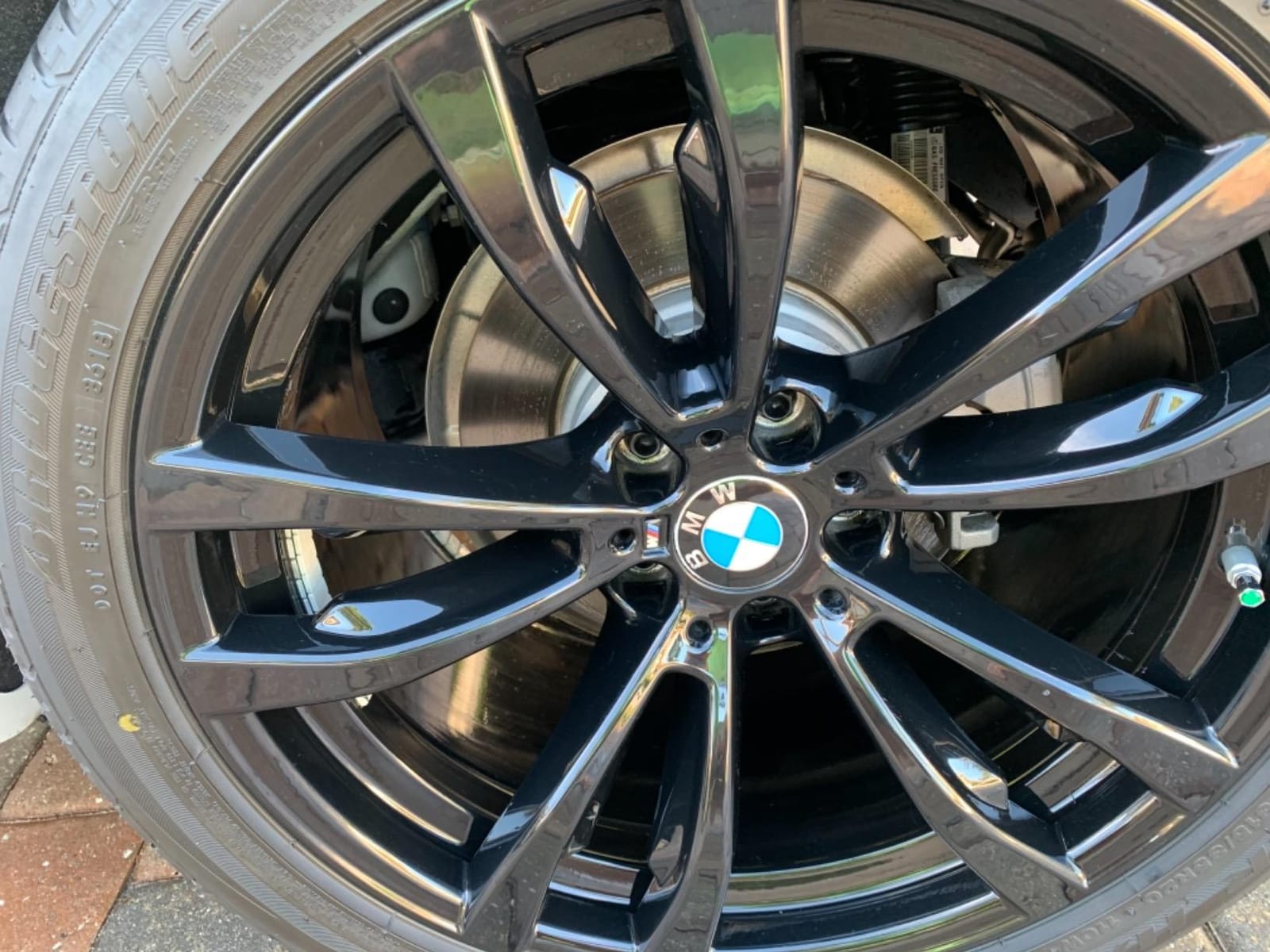
In practice it removes brake dust, road grime, light grease and dirt effectively, and you can see the dust bleeding off the tire sidewall and rinsing away. It works with a straight spray-and-rinse or with a detailing brush, and the gallon container gives good price-to-performance for anyone cleaning frequently or running more than one vehicle.
Be clear about the trade-off, because the reviews repeat it: it trades peak strength for finish safety. Heat-baked dust from a performance or track car will need brush agitation that a reactive iron formula would not. On routine road dust, it is more than adequate.
What to watch with a pre-mixed gallon
Two things bite here. It can leave a temporary stain if it sits too long on a surface, so keep the wet window short and rinse promptly. And because it is sold in a large container, some buyers report arriving without a factory seal, so check for a compromised seal or contamination before you trust a full gallon.
For professional or multi-car use the economics are the whole point. A pre-diluted gallon removes the per-job mixing step entirely, which is where the real time saving lives over a working week.
Who should buy this one
Buy this if you clean wheels often, run more than one vehicle, or work on wheels with unknown or mixed finishes. It is the volume pick for a small operation and the sensible bulk choice for a household with several cars that all sit outside.
How to Use a Wheel Cleaner for Brake Dust
The process matters more than the bottle. Five steps, in this order, and the same cleaner gives different results depending on how carefully you work through them.
Work on cool, dry wheels in the shade. A wheel that has been sitting in direct sun will dry the chemical before it reacts, and most of the streaking complaints in reviews trace back to this one habit. Rinse the wheels first if they are heavily soiled, and dry them.
Dilute if you are doing maintenance, go straight if you are doing damage. A 3:1 dilution is the most commonly recommended maintenance ratio across detailing forums, while baked-on dust on a front rim wants full strength.
Spray to a thick, even foam. Cover the spoke faces, the inner lip of the barrel, behind the center cap and the lug nuts. A foam sprayer on a concentrate gives far better coverage per pump than a trigger bottle.
Dwell for three to five minutes, then agitate. This is the step people skip and the reason they conclude a cleaner does not work. Use a wheel woolie or a stiff nylon brush and work the barrel and lug recesses, which is where nearly all of the surviving dust ends up.
Rinse thoroughly, then dry. Rinse until the runoff runs clear, use a second pass if the water is still carrying dark residue, and dry with a clean microfiber to avoid water spots. Always rinse the driveway immediately so reacted iron does not stain concrete.
Two extra habits close most of the gaps people complain about. Work one wheel at a time so nothing dries on the rim while you finish the other, and keep a separate pump sprayer of diluted solution so you can re-wet a surface mid-agitation. Both cost nothing and both remove an entire category of complaint.
If your garage is also your workshop, the same idea of staging the right tool for the job applies well beyond cars. We have written up dust collection systems for workshops and dust collectors for woodworking shops if you want the garage side of things sorted, and if you tow a trailer the same prep logic carries over to trailer brake controllers, where heat and load change what you can get away with.
Wheel Cleaner Buying Guide: Chemistry, Format and Finish Safety
Acid-free and pH-neutral is the default you want. Brake dust is iron, and non-acidic chemistry dissolves it through surfactant action and chelation rather than by etching the wheel to lift it. That distinction is the single most important buying decision in this category. Every product rated acid-free or pH-neutral in this roundup is safe on clear-coated, painted, chrome and anodized finishes, and every one of them can be used on a wheel whose finish you do not know.
Use acidic chemistry only when the dust is genuinely heat-baked. Acid works faster on stubborn buildup, which is why it remains popular on old, untreated iron and steel. The risk is that it will also attack clear coat, powder coat and trim adhesives with the same enthusiasm. If your front wheels have caked dust that has been through many wet cycles and you are not certain of the finish, an acid-free product with a longer dwell will get you there without a repair bill. On bare anodized raw aluminum and bare aftermarket metallic wheels, avoid acid entirely.
Choose gel when the wheel face is vertical or narrow. Gel and foam formulas cling, which buys you real dwell time on a spoke face instead of watching a thin liquid run to the pavement. That is the deciding factor for multi-spoke alloys and for anything with tight gaps between spokes. It is also why gel concentrates dilute usefully for lighter maintenance work.
Choose liquid concentrate for volume. If you clean several vehicles, work on fleet trucks or want solution you can dilute to a 3:1 maintenance strength, a one-gallon concentrate is the economical format. Foam sprayers make a concentrate cover considerably more wheel per pump. Ready-to-use spray bottles are convenient for one car and quickly used up on a neglected set of wheels.
Match the format to the finish list. Painted, clear-coated, chrome, gloss black, matte and diamond-cut are not interchangeable. Painted and clear-coated respond best to acid-free, pH-balanced formulas. Gloss black shows every streak and every water spot, so it needs a product that rinses clean and a disciplined hand-drying step. Matte and satin wraps and powder coats should stay on the gentlest chemistry you can find, since any residue or etch shows permanently. Diamond-cut faces are bare machined aluminum, which is the most vulnerable finish on a modern wheel and the one to treat most carefully. One of the recurring forum warnings is to keep overspray off brake calipers and suspension parts, so work low and controlled rather than spraying from a distance.
Know what not to reach for. WD-40 is a water displacer and light lubricant, not a brake dust remover. It will soften fresh dust slightly and then leave an oily film that traps the next layer of dust more firmly than before, so it makes the problem worse over time. Dish soap is a general household cleaner with no iron-dissolving chemistry, and household acid cleaners have no finish testing behind them at all. An all-purpose cleaner is fine for wheel wells and general grime, but it is not a substitute for a dedicated wheel cleaner on the wheel face.
Protecting Your Wheels So Brake Dust Stops Coming Back
The fastest way to clean less often is to stop the dust from bonding in the first place. Wheel dust is generated by the friction between pads and rotors, so the best protection is applied to the wheel surface before the dust has a chance to set.
Users on r/Detailing consistently point to a wheel sealant such as Cerakote Wheel Sealant as the practical answer, noting that sealed wheels stay looking cleaner for longer and are easier to clean on the next wash. That is the mechanism: a sealant fills the microscopic surface texture where iron particles lodge, so rinses carry the dust away before it oxidises into ferric oxide.
The order of operations matters. Clean and decontaminate the wheels first, then seal. Applying a sealant over baked-on dust traps it against the finish and makes the next clean harder, which is the opposite of what you want. On a coated car, decontaminate the paint and wheels with an iron remover, then apply protection, and you have removed the source of future buildup rather than just the visible symptom.
Reapply sealant on a schedule rather than waiting for dust to return. Weekly maintenance washes keep films thin and easy to remove, while a monthly or seasonal clean lets dust bake longer and requires more chemical to shift. Whichever interval you choose, the cleaner only has to deal with what the sealant did not stop.
Frequently Asked Questions
What is the best wheel cleaner for removing brake dust?
The best wheel cleaner for brake dust is a foaming, acid-free, pH-neutral concentrate such as the Chemical Guys Signature Series wheel cleaner. It dissolves iron deposits on chrome, painted, powder-coated, anodized and clear-coated wheels, and the same bottle dilutes to a 3:1 strength for routine maintenance washes. For heat-baked dust on a neglected front rim, a gallon concentrate like P and S Brake Buster gives more working solution and still stays non-acid.
Will WD-40 remove brake dust from wheels?
No. WD-40 is not a brake dust remover and it is not recommended for wheels. It dissolves almost nothing on its own, and the oil film it leaves behind traps the next layer of brake dust against the finish more firmly than before. Use a dedicated pH-neutral wheel cleaner instead, then follow up with a wheel sealant to slow the buildup.
How long should I let wheel cleaner sit before rinsing?
Three to five minutes is the range most detailers land on. Work on cool, dry wheels in the shade, spray a thick even foam, and let it activate before you agitate with a wheel brush. Leaving it longer will not improve results and can dry a streak on the finish, so rinse promptly once the reaction has visibly stopped developing.
Is an acid wheel cleaner safe for painted wheels?
Not as a rule. Acidic wheel cleaners cut heat-baked dust faster but will also etch clear coat, powder coat, trim adhesives and bare metals, so they belong on bare steel and untreated iron at most. On painted, clear-coated, gloss black, matte or diamond-cut wheels, choose an acid-free pH-neutral formula and give it a longer dwell instead of reaching for stronger chemistry.
What is the best wheel coating for blocking brake dust?
A dedicated wheel sealant is the most practical option for most drivers, because it fills the surface texture where iron particles lodge and rinses away before dust can oxidise. Ceramic spray coatings and professional ceramic coatings last longer and are more durable, but they cost more and only work properly on wheels that have been cleaned and decontaminated first. Apply protection after cleaning, never over baked-on dust.
Where to Start With Brake Dust Removal
Start with the Chemical Guys Signature Series wheel cleaner. It has the largest body of real-world use in this group, it is safe on essentially every finish a road car can have, and it works both straight and diluted so one bottle covers a quick maintenance wash and a heavy front rim. Pair it with a stiff wheel brush, work in the shade, and give it a full three-to-five minute dwell before you agitate.
Move up to the P and S Brake Buster gallon if your dust is heat-baked, you run more than one car, or you want solution you can dilute for weekly use. Reach for the SONAX Full Effect or the Adam’s Wheel Cleaner if you want visible color-change proof that the chemistry is working, and choose the Gtechniq W6 if your wheels carry a ceramic coating you do not want stripped.
Whatever you pick, the protection step matters as much as the cleaner. Clean and decontaminate, then seal, and the next wash takes a fraction of the effort. That is the actual fix for brake dust, and it is the reason these best wheel cleaners for brake dust matter less every time you use them properly in 2026.