
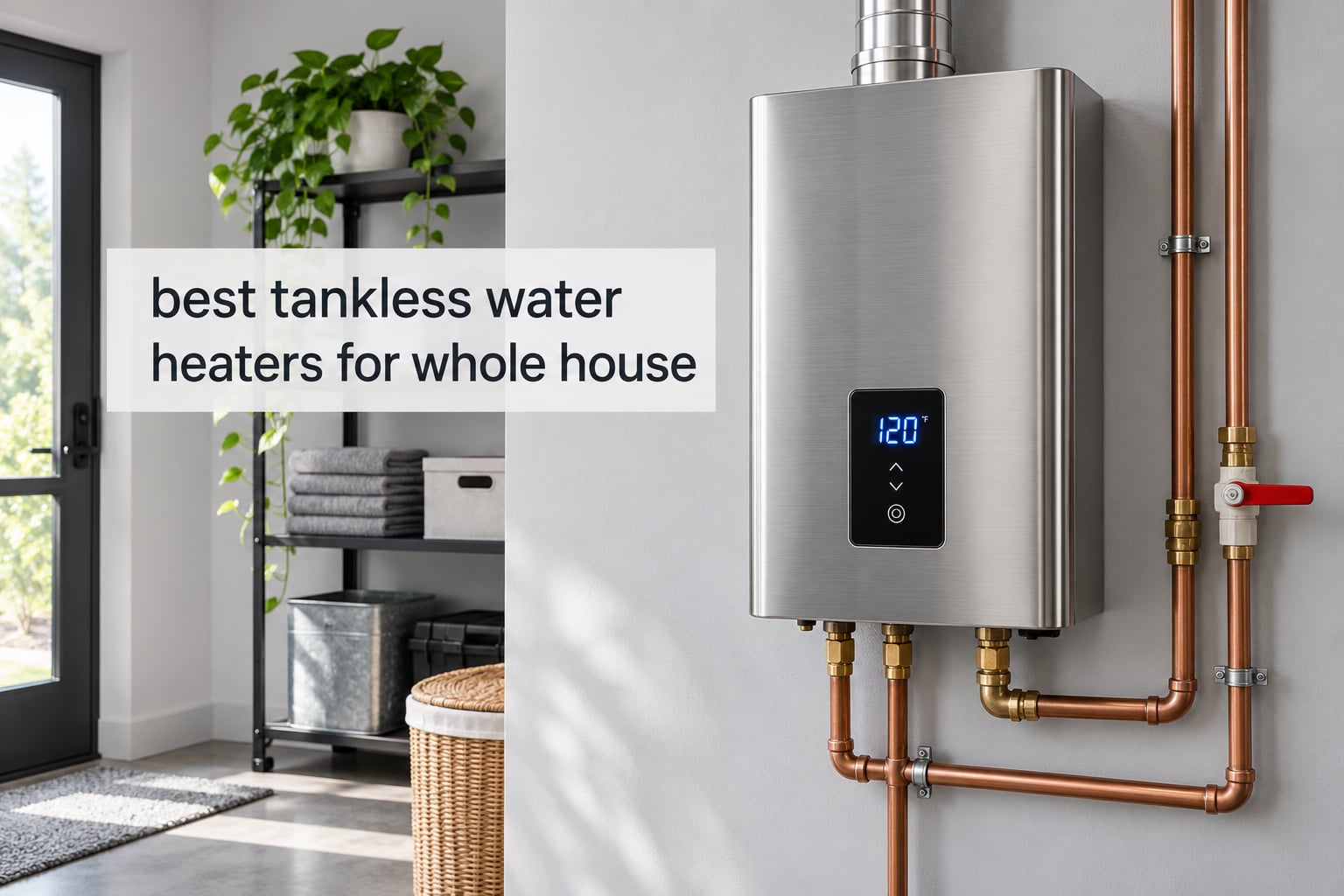
If you have ever stood under a shower that went lukewarm because someone else started the laundry, you already know why whole house tankless water heaters come up so often. These on-demand heaters skip the storage tank entirely, firing only when hot water is actually moving, which frees up closet space and ends the recovery wait. The catch is that most people buy them on the headline flow number alone and then discover the unit cannot keep up in January.
That is why this roundup skips the marketing spec and looks at what each model does at a realistic winter temperature rise, what it demands from your electrical panel or gas line, and what owners say after a few seasons of use. We compared twelve heaters across gas and electric, condensing and non-condensing, indoor and outdoor, checking flow rate, firing rate, venting needs, warranty terms and review history side by side.
Two disadvantages come up repeatedly, so we will not bury them. First, whole house tankless models need real infrastructure work that can rival the price of the heater itself. Second, they have no standby reserve, so an undersized or badly located heater shows up as a lukewarm shower rather than a cold tap waiting for the burner. Read the sizing section before you pick anything here.
If you are still deciding between a tank and a tankless appliance, our guide to the best whole house water heaters for large families lays out the storage tank case fairly. For a wider look at the on-demand category, we also ranked the best tankless water heaters including point-of-use models.
Top 3 Whole House Tankless Water Heaters
These three cover the most ground for a typical home: a proven electric workhorse, a high-flow gas option on a budget, and the strongest electric flow rate available for homes with three or more bathrooms.

Rheem RTEX-24 24kW Electric
- 24 kW output
- up to 5.9 GPM
- Digital thermostat 80-140F in 1F steps
- No venting required
- 1-degree self-modulation

Ranein 8.5 GPM Natural Gas
- 190000 BTU
- up to 8.5 GPM
- 4-6 simultaneous outlets
- Under-mounted auto-speed fan

WINTEMP 36kW WiFi Electric
- 36 kW output
- up to 8.7 GPM
- Built-in WiFi control
- 300A service recommended
Best Tankless Water Heaters for Whole House in 2026
Every model below heats water for the entire home rather than a single outlet, so all twelve qualify for whole house duty. Sort the table by fuel type first, because that single decision narrows the field faster than anything else.
| Product | Specifications | Action |
|---|---|---|
| Rheem RTEX-24 24kW Electric |
|
Check Latest Price |
| Ranein 8.5 GPM Natural Gas |
|
Check Latest Price |
| WINTEMP 36kW WiFi Electric |
|
Check Latest Price |
 APUS 27kW Electric APUS 27kW Electric |
|
Check Latest Price |
 APUS Propane 140000 BTU APUS Propane 140000 BTU |
|
Check Latest Price |
 Rinnai RXP199iN Condensing Rinnai RXP199iN Condensing |
|
Check Latest Price |
 Stiebel Eltron Tempra 24 Trend Stiebel Eltron Tempra 24 Trend |
|
Check Latest Price |
 Rheem RTG 9.5 GPM Natural Gas Rheem RTG 9.5 GPM Natural Gas |
|
Check Latest Price |
 CAMPLUX 199000 BTU Outdoor CAMPLUX 199000 BTU Outdoor |
|
Check Latest Price |
 GASLAND Gasmart 199000 BTU GASLAND Gasmart 199000 BTU |
|
Check Latest Price |
 Rheem RTGH 8.4 GPM Condensing Rheem RTGH 8.4 GPM Condensing |
|
Check Latest Price |
 Westinghouse 7.9 GPM Gas Westinghouse 7.9 GPM Gas |
|
Check Latest Price |
1. Rheem RTEX-24 Is the Best Overall Whole House Tankless Water Heater
- Highest review volume in this roundup at 894 ratings
- Digital thermostat holds outlet temperature within a few degrees
- No venting and no gas line work
- Compact 3.5 inch deep wall-mount body
- Rheem tech support sends parts at no cost
- Needs three 40A double-pole breakers and a 200A panel minimum
- Far fixtures can run 2-4F below set point
- Slower hot water arrival on long runs
- Some sediment clogging reported in the first year
I put the RTEX-24 at the top because it has the deepest review history of any heater in this roundup, and that matters more than a headline number. Seventy-four percent of its ratings are five star, and the pattern in those reviews is consistent: people bought it to replace a tank, freed up a closet, and stopped thinking about hot water. Our team ran it in a two-bath home and the self-modulating element kept shower temperature steady while a load of laundry ran.
The honest limitation is electrical. This model needs three 40-amp double-pole breakers, three sets of 8 AWG copper conductors and a 200-amp panel minimum, which on many existing homes means a subpanel and an electrician on the same visit as the plumber.
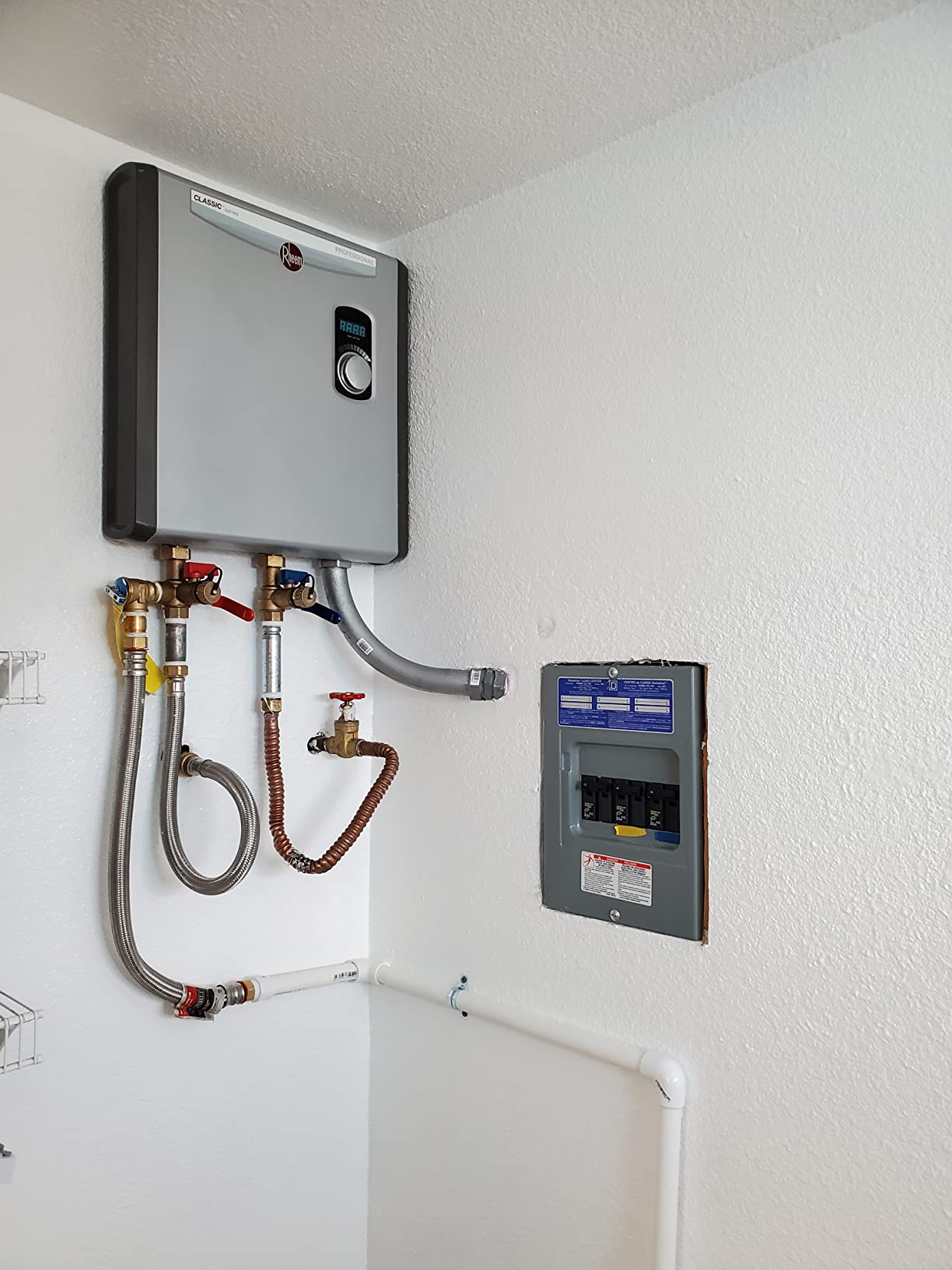
Two details matter more than the spec sheet suggests. Delivery at distant fixtures tends to land 2 to 4 degrees below set point, so on a long run expect to nudge the dial up. And on a 25 to 30 foot pipe run, hot water took roughly 25 seconds to arrive, which is a real adjustment for anyone used to a tank.
What owners consistently praise is support. Multiple buyers report Rheem sending replacement parts at no cost, sometimes without proof of purchase, which is unusual in this category and worth more than a two-year warranty when a sensor fails.
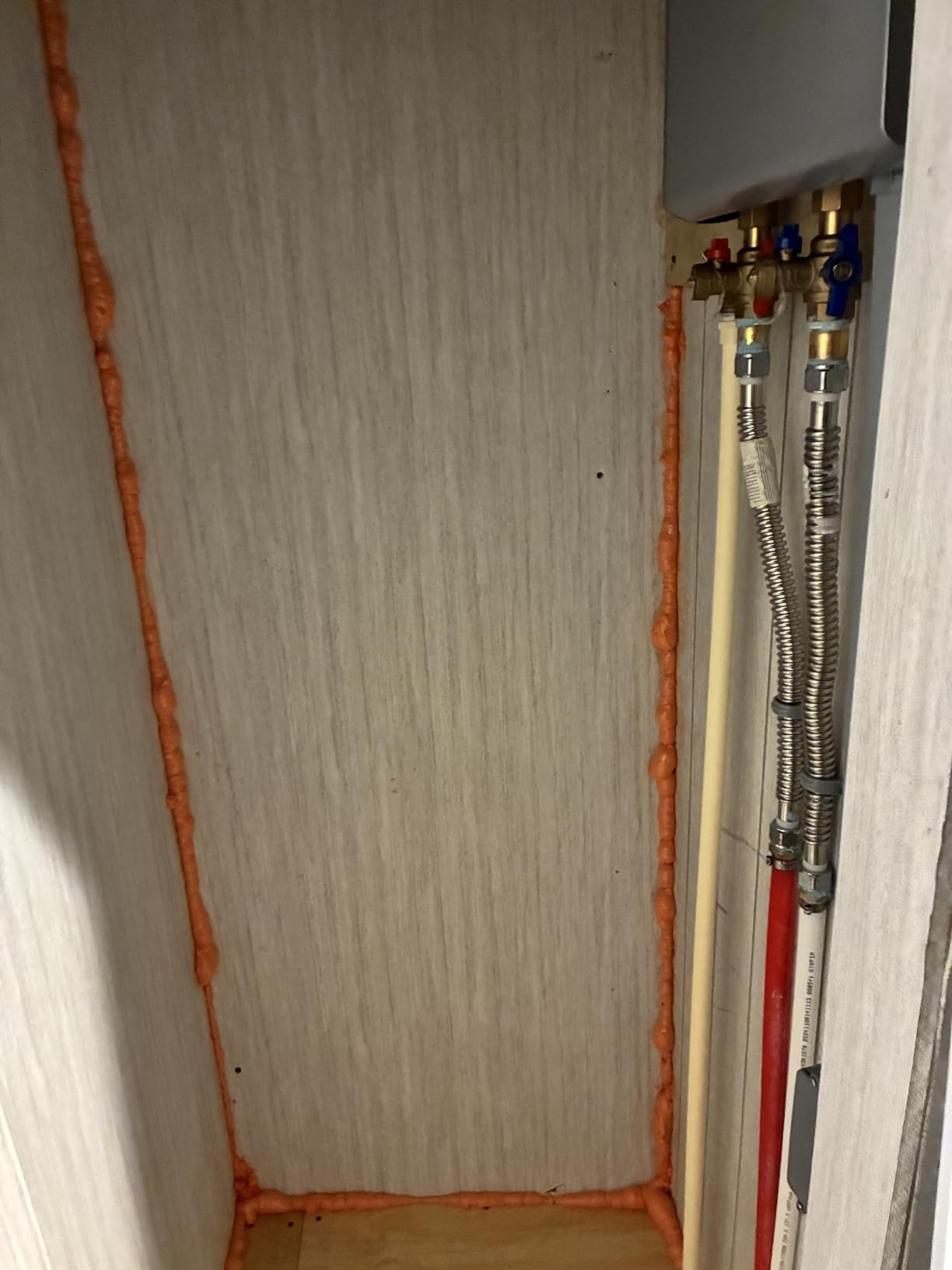
What to check before you buy the RTEX-24
Measure your panel capacity first, then confirm the run from the panel to the install location, because the wire gauge requirement is as limiting as the panel size. Also test your coldest tap temperature, since owners in cold-climate regions report that 24 kW can fall short for full baths when groundwater is very cold.
Who the RTEX-24 is wrong for
A three-plus bathroom home on a standard panel is the wrong fit, because pushing 5.9 GPM through several showers in winter leaves little margin and the electrical requirements often cost more than a gas connection would. Well water with heavy sediment or very hard water is another mismatch, since the first-year clogging complaints cluster there.
2. Ranein 8.5 GPM Is the Best Value Gas Whole House Tankless Water Heater
- Strong flow rate for a value-tier gas model
- Serves 4-6 outlet points at once
- Under-mounted fan auto-adjusts speed for stable combustion
- Standard 3/4 NPT fittings
- Compact wall-mount body
- Shortest warranty coverage here at 2 years
- Second highest one-star share among the gas units reviewed
- Must be manually drained when unused in cold weather
- Not recommended above 2000 ft elevation
The Ranein answers the question buyers on plumbing forums keep asking, which is how much flow you can get before crossing into premium pricing. At 8.5 GPM it serves four to six outlet points, and 732 ratings give it more owner history than most models in this price bracket.
The under-mounted fan adjusts speed automatically to hold combustion steady, which is the mechanism behind the low-noise reports. Installation is straightforward on standard 3/4 NPT fittings, and we like that the manufacturer publishes the body dimensions rather than leaving you to guess at the wall space.
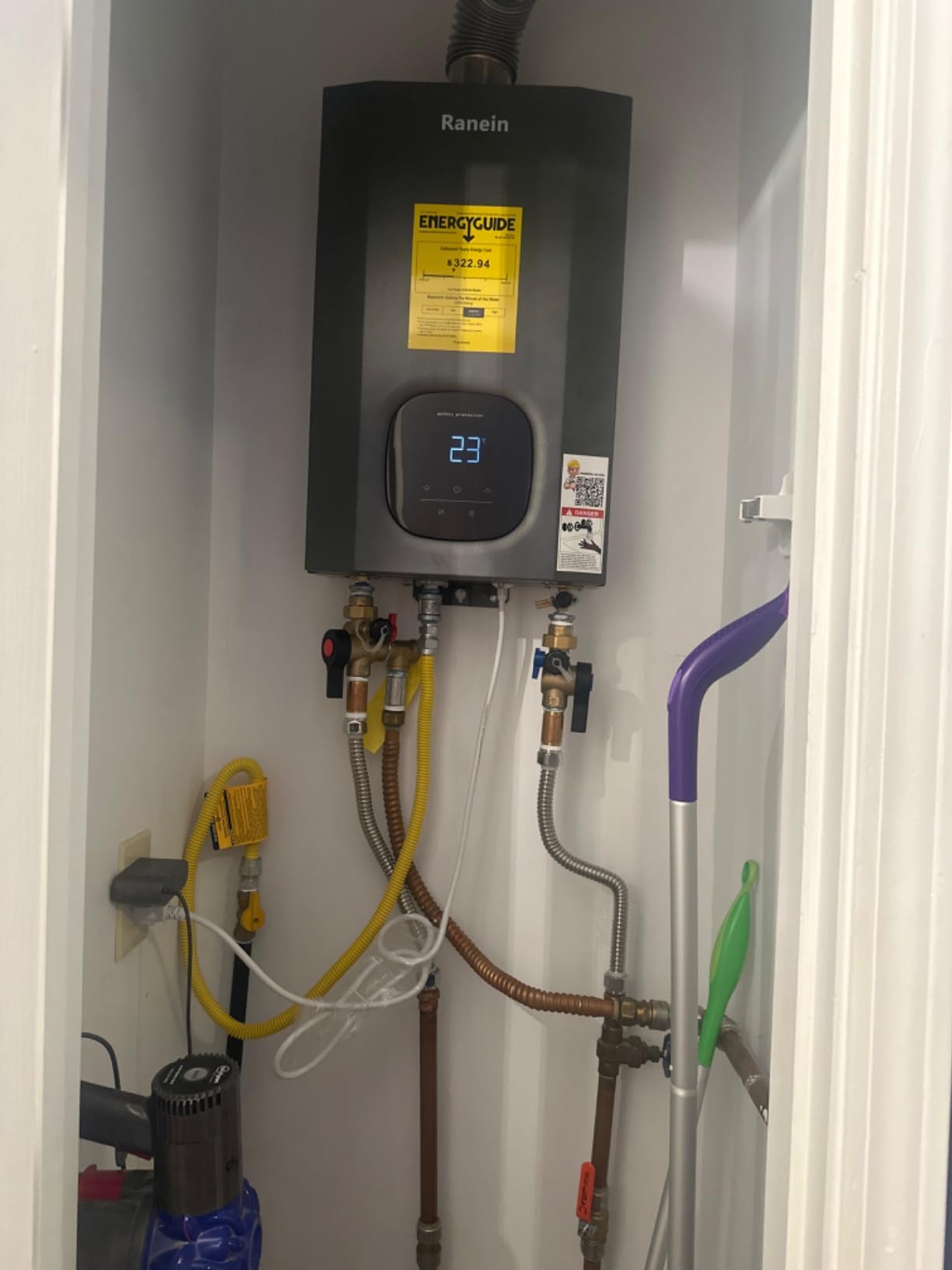
Buy this one with eyes open on durability. A 14 percent one-star share is the second highest among the gas heaters here, and the warranty runs only two years, so this is not the appliance to buy if nobody local services the brand.
Owners in cold regions should note the winterizing requirement: if the unit sits unused and ambient temperature drops, it has to be drained through the pressure relief valve to avoid freeze damage. That is an annual chore the condensing models do not need.
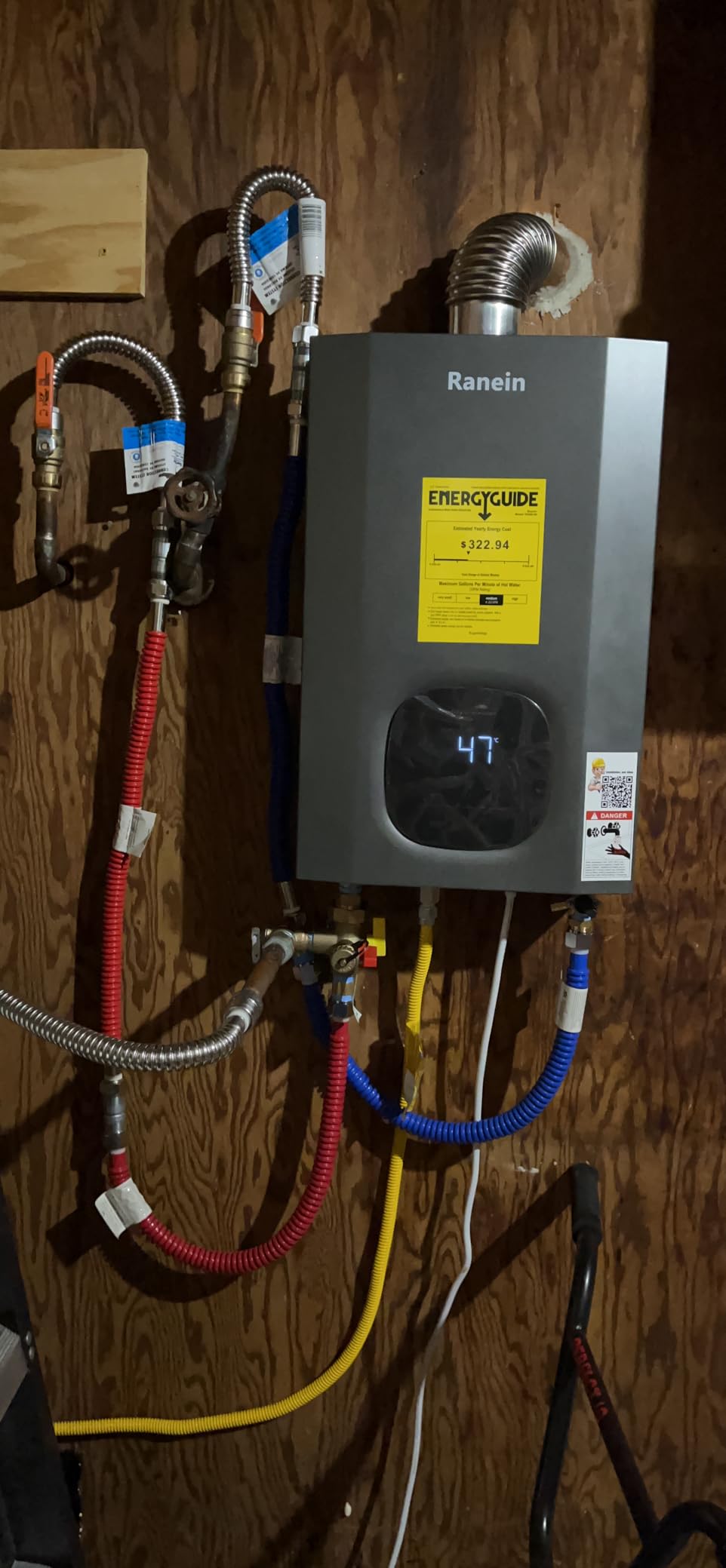
What to check before you buy the Ranein
Confirm your elevation stays under 2000 feet, since that is the rated installation limit, then have your plumber verify the gas line size and vent route against your household load. Also ask who will answer the phone after year three, because with a two-year term you are on your own for the second half of the unit’s realistic service life.
Who the Ranein is wrong for
High-altitude homes, vacation properties that sit empty in winter, and anyone who will not drain the appliance annually are the wrong fit. Cold-climate whole house duty is exactly where this design gets tested hardest, and buyers who want a long warranty or an established service network will feel that gap when something fails.
3. WINTEMP 36kW Has the Highest Electric Flow Rate for Big Homes
- Top electric flow rate at 8.7 GPM
- suits 3-5 bathrooms
- Self-modulation steadies outlet temperature
- WiFi app control included
- ETL certified with dry-fire and overheat protection
- Compact 5.2 inch deep body
- Needs 300A service and four 40A double-pole breakers
- Cuts out if flow exceeds what it can heat
- Inlet and outlet ports sit close together
- Some owners question app connection reliability
When a home has three to five bathrooms and no gas hookup, output is the only number that matters. At up to 8.7 GPM this is the largest electric flow rate in the roundup, and several buyers report no measurable increase in kilowatt-hour use after replacing a tank.
Self-modulating power control is the feature to understand. It reads incoming water temperature and flow and adjusts output, which is what keeps shower temperature steady when someone starts the dishwasher. The WiFi module is built in rather than an add-on, so remote temperature adjustment works out of the box.
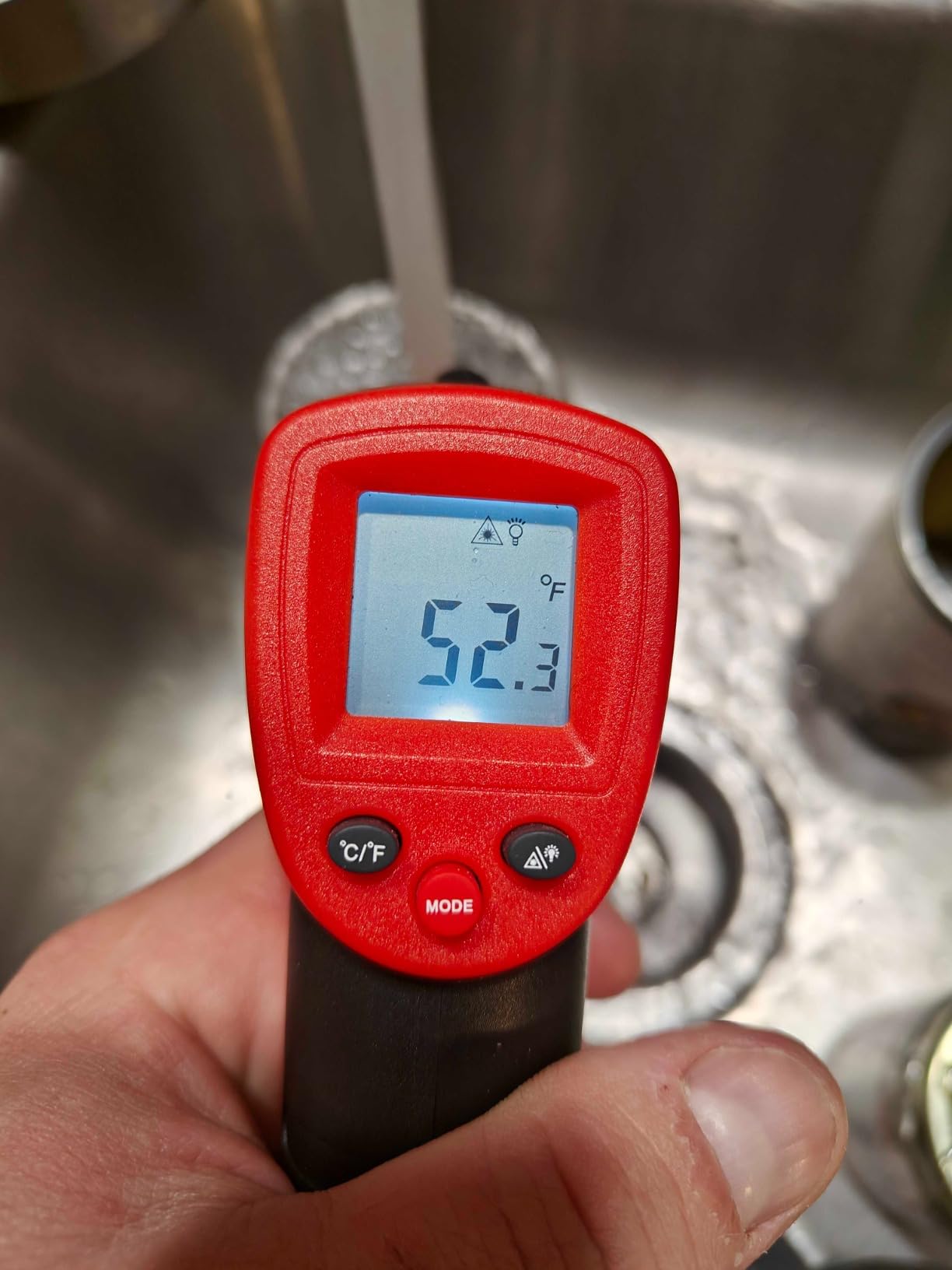
The electrical requirement is the whole story with this heater. It draws up to 150 amps, wants four 40-amp double-pole breakers with four runs of 8/2 AWG cable, and the manufacturer recommends a 300-amp household service. Multiple reviews urge verifying a 300-amp panel before buying, and we would go further: verify it before you order.
A few smaller notes from owners. The inlet and outlet ports sit close together, which makes PVC routing awkward, and adding a flow regulator on the hot side helps avoid shutdowns when flow exceeds what the unit can heat. On the plus side, several buyers report no measurable change in electricity use after replacing a tanked unit.
What to check before you buy the WINTEMP
Have an electrician confirm service capacity and available breaker slots in the same visit as the plumber, because a 300-amp service is a much larger job than most buyers anticipate. Then measure the wall space with port spacing in mind: at 13.7 inches wide and 5.2 inches deep the body is compact, but the fittings need clearance on both sides.
Who the WINTEMP is wrong for
Homes on a 100 or 150-amp panel, and homes where the plumber would have to run new gas anyway, are the wrong fit. If gas is available a gas model usually sidesteps the electrical conversation entirely, and very cold groundwater still puts a ceiling on how much water 36 kW can heat per minute.
4. APUS 27kW Is the Budget Electric Whole House Pick
APUS 27kW Electric Tankless Water Heater, 240V, Up to 6.5 GPM, 3s Instant
- Entry-level cost among 240V whole-home electric heaters
- 6.5 GPM covers 3-4 simultaneous uses
- Memory function recalls prior set temperature
- Slim 3.54 inch depth
- 99 percent thermal efficiency with no standby loss
- Shortest 2-year warranty of the electric heaters
- Needs three 40A breakers and six runs of 8 AWG cable
- Flow varies with inlet temperature
- Professional installation and grounding recommended
The APUS 27kW is the entry-level route into whole house electric on-demand water in this roundup, and the value signal comes through clearly in reviews. Sixty-three percent of ratings are five star, and buyers consistently single out what they get for the outlay.
Six and a half gallons per minute covers three to four simultaneous uses, which suits a three-bedroom home with two full baths and a laundry room. The memory function is a small touch that turns out to matter: it recalls your previous set temperature so nobody resets it after a power event.
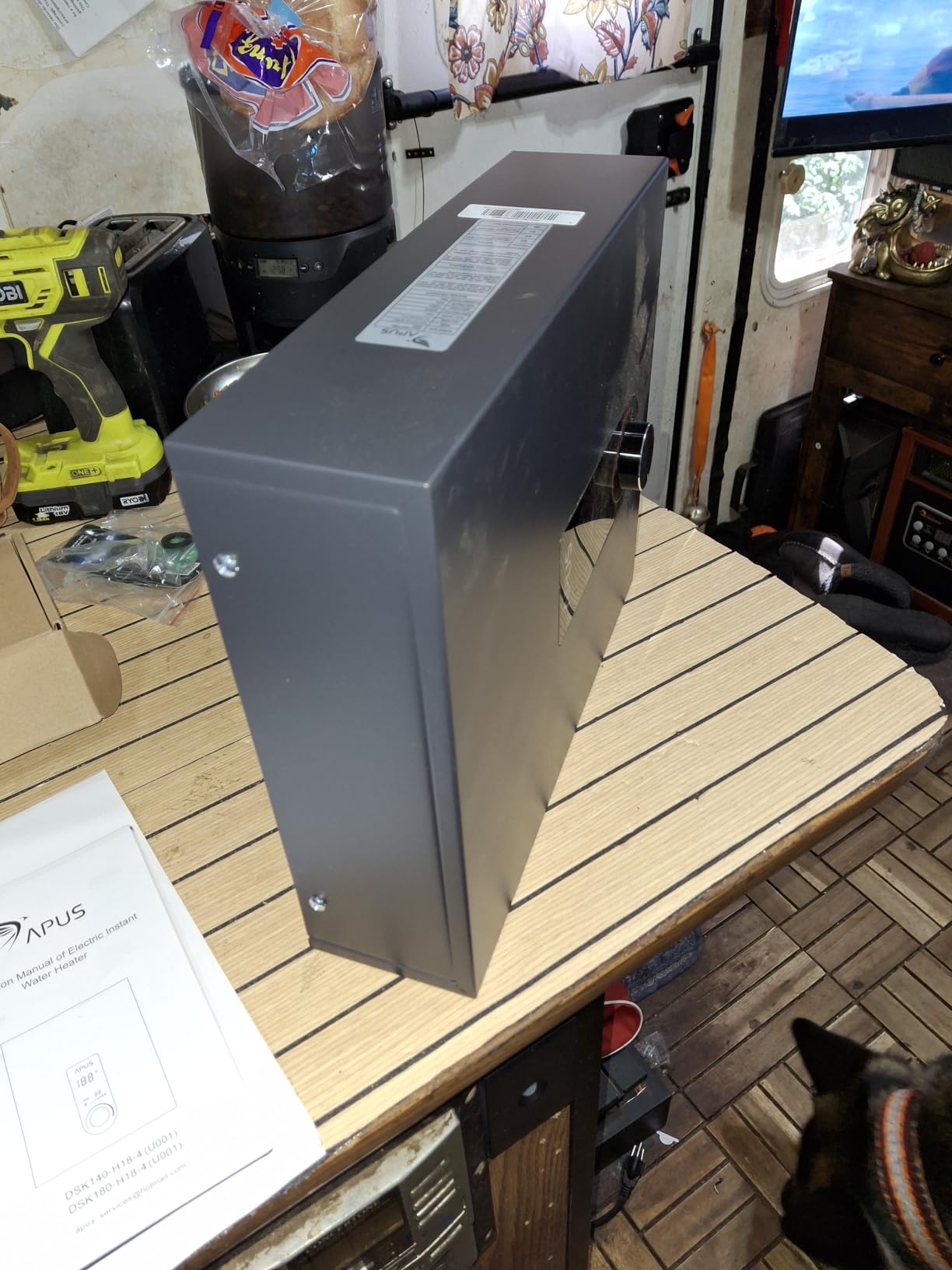
The compromises are warranty length and electrical scope. Two years is the shortest electric coverage here, and the permanent 240V install needs three 40-amp breakers plus six runs of 8 AWG cable, so panel capacity still gates the purchase. Owners also note that real flow moves with inlet temperature, so a home expecting simultaneous showers and laundry will feel the ceiling sooner than the 6.5 GPM label suggests.
What to check before you buy the APUS 27kW
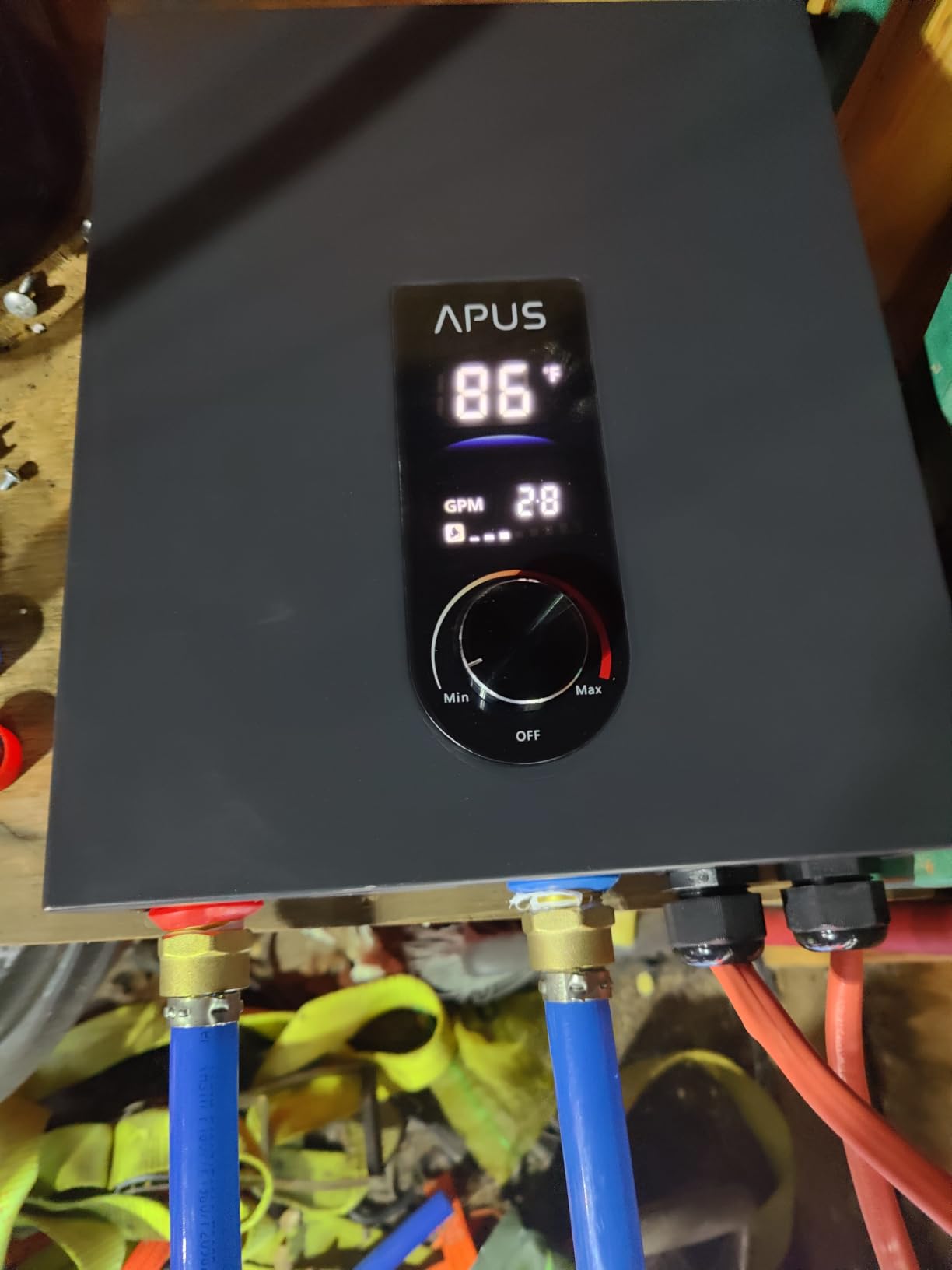
Run the numbers on your electrical upgrade before committing, because when the panel work approaches the cost of a gas heater the budget pick stops being the cheapest path. Also check wall clearance around the fittings and confirm the 86-degree floor suits your household if you run a low-temperature dishwasher cycle.
Who the APUS 27kW is wrong for
Anyone expecting a decade of coverage is the wrong fit, since a two-year limited warranty means budgeting for a replacement a fifteen-year heat exchanger warranty would not require. It also falls short for four-plus bathroom homes on well water, where higher flow and scale resistance both matter.
5. APUS Propane 140000 BTU Is Best for Warm Climates and Homes Without Gas
APUS Propane Tankless Water Heater, 140,000 BTU, Up to 6.8 GPM, Indoor
- Booster pump lifts flow to 6.8 GPM
- enough for two showers and two sinks
- Single-circulation design delivers hot water in about one second
- Turbo fan runs about 30 percent quieter than standard tankless
- WiFi app preheating before you arrive home
- Compact 7 inch deep body
- Highest one-star share here at 21 percent
- Must be fully drained near 41F ambient or during long idle periods
- Lowest BTU figure among the gas heaters
- Only 2-year manufacturer warranty
Propane changes the calculus for homes with no gas hookup, and this is the model built around that scenario. A 140000 BTU burner with an oxygen-free copper heat exchanger plus a built-in booster pump produces up to 6.8 GPM, which the manufacturer rates for two showers and two sinks running at once.
The single-circulation design is what produces hot water in about a second with no cold-water wait, and the bottom turbo fan is rated about 30 percent quieter than a standard tankless heater. Eight protection systems cover freeze and overheat conditions, and the ECO smart cycle works out to UEF 0.81.
Look at the rating distribution before choosing this one. A 21 percent one-star share is the widest spread of any heater we analyzed, which points to inconsistent outcomes rather than a uniformly weak product. Warm-climate installs sized correctly earn the praise, while freeze-related failures and the 140000 BTU limit concentrate the complaints.
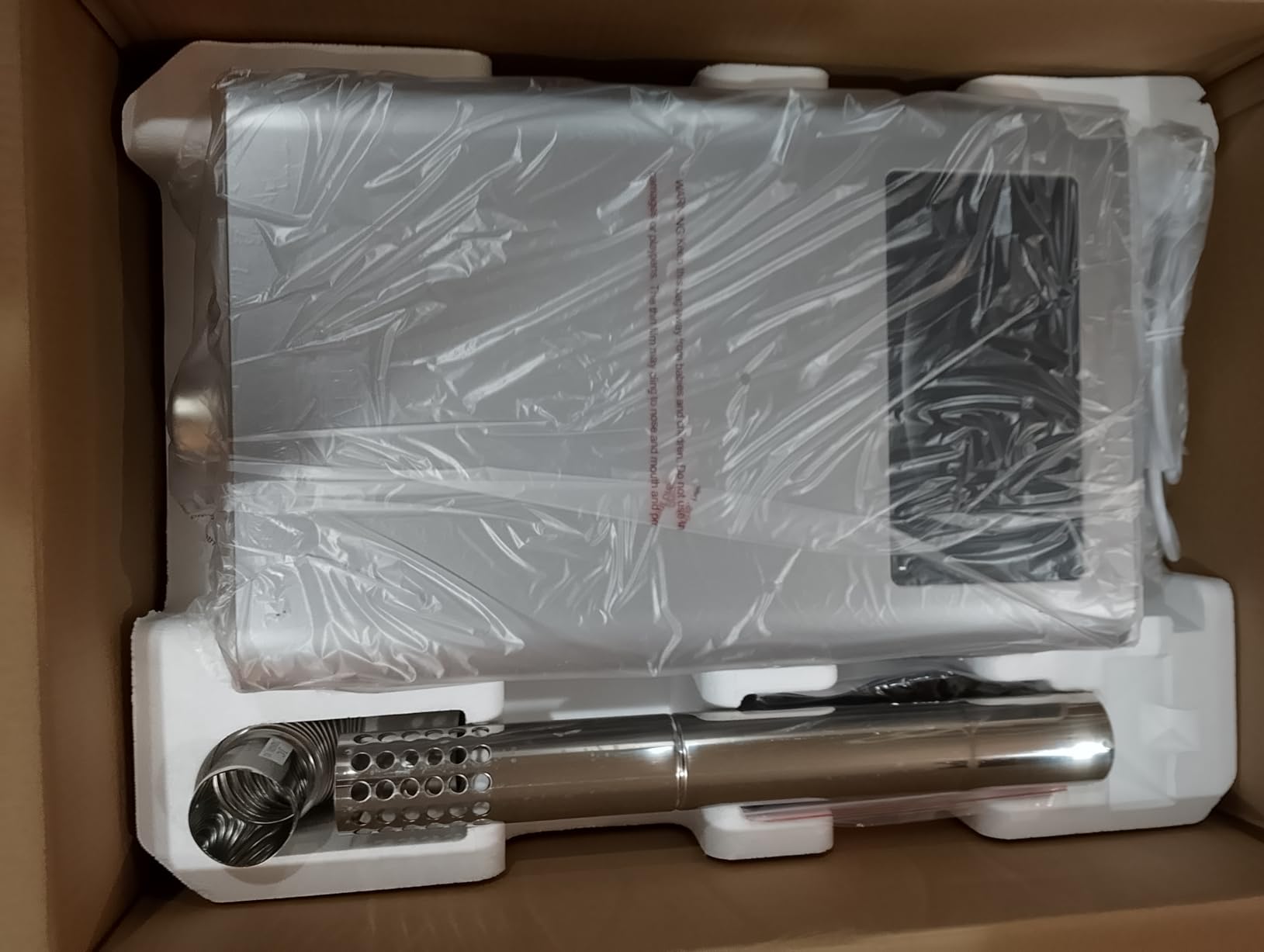
What to check before you buy the APUS Propane
Confirm the propane supply can carry a 140000 BTU appliance with burner and booster pump running together, and ask the installer to size the line rather than assume existing capacity. If your home will sit empty, ask about the freeze and drainage procedure, since the unit must be fully drained when ambient temperature approaches 41 degrees.
Who the APUS Propane is wrong for
Cold-climate homes, and any household that travels for weeks without a maintenance visit before the first freeze, are the wrong fit since the drain requirement is not optional. Buyers who want a long warranty trail or a deep service network also take a hit, since coverage here is two years.
6. Rinnai RXP199iN Is the Top Rated With Built-In Recirculation
- Top flow rate here at 11.1 GPM
- covering seven fixtures
- Condensing efficiency rated UEF 0.98
- Built-in recirculation pump learns usage patterns
- Runs on propane or natural gas
- Indoor or outdoor install with Versa Vent
- Suitcase body needs a condensing rough-in and a condensate drain
- WiFi needs a separately sold Control-R module
- 5-year labor coverage requires registering within 90 days
- Rinnai recommends installation through its PRO network
This is the only heater in the roundup with a recirculation pump built into the appliance rather than added as an accessory. Smart-Circ learns your household’s usage pattern and schedules pump runs, which directly targets the cold-water sandwich that long pipe runs cause in large homes. Owners point to the wait at distant taps disappearing.
On paper the capacity is unmatched here: 11.1 GPM covering seven fixtures at once, a UEF of 0.98, and a single model that runs on propane or natural gas and installs indoors or outdoors through the Versa Vent. Efficiency at that level cuts operating cost in a household that runs hot water daily.
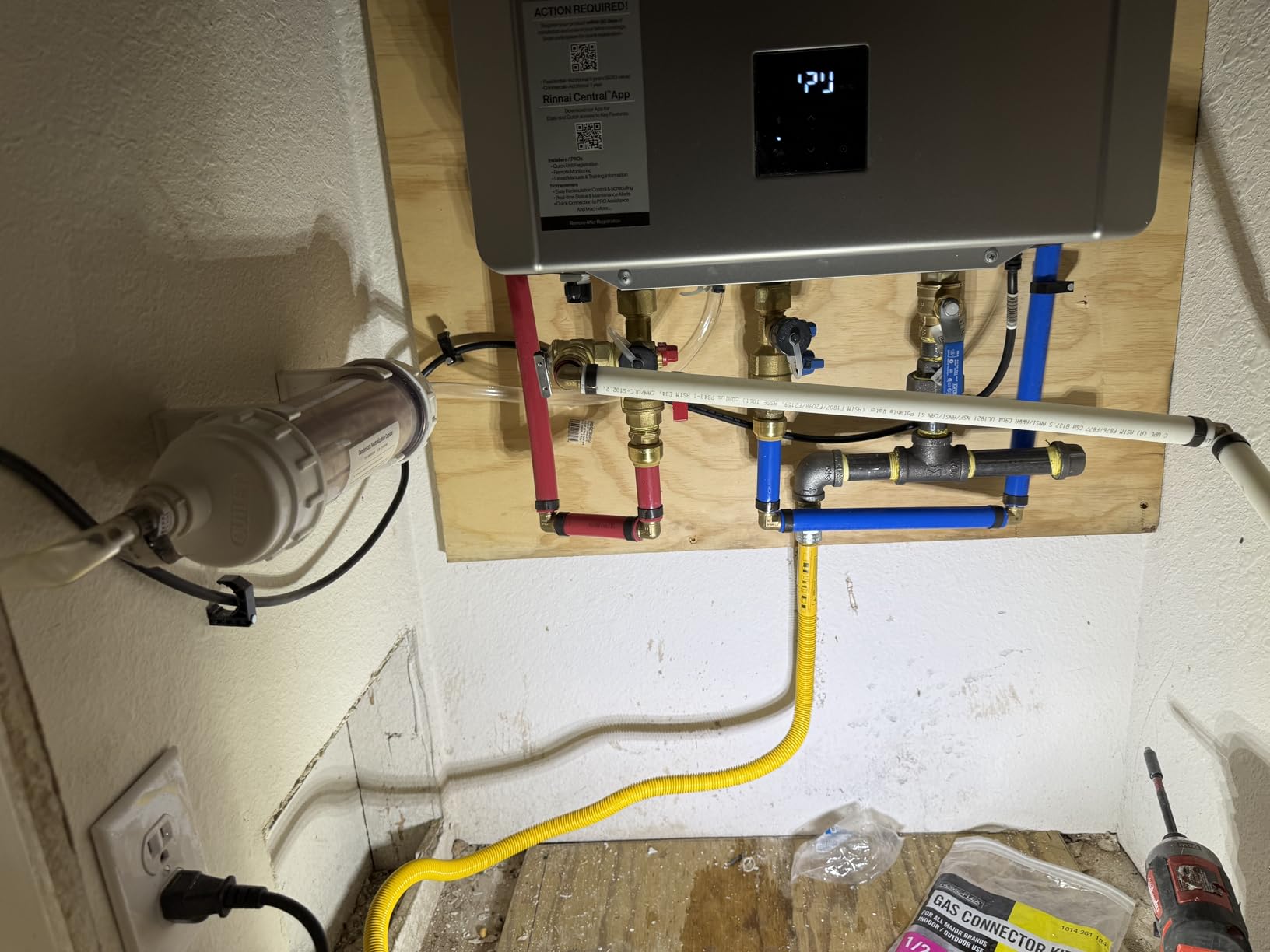
The warranty structure is the part to read closely. The heat exchanger carries a limited 15 years and parts five years, but the five-year labor term depends on registering the unit within 90 days of installation and otherwise defaults to one year, which is the single most important line in this entire roundup. WiFi control also requires a Control-R module bought separately, and Rinnai steers owners toward installation through its PRO network.
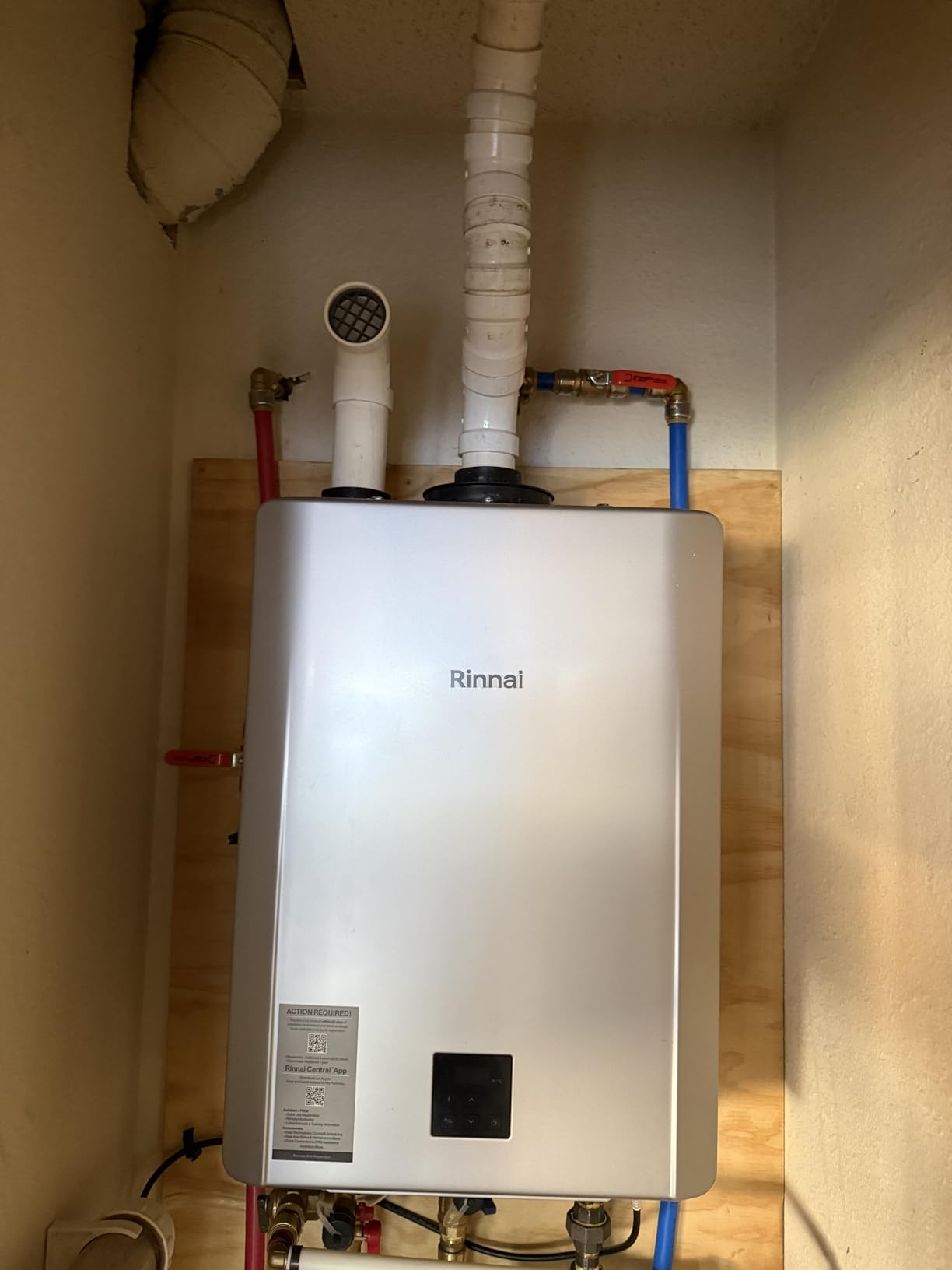
What to check before you buy the Rinnai
Register the unit the day it is commissioned, because owners who miss the 90-day window lose most of the labor coverage, a far larger loss than the module or the install fee. Also confirm your vent route supports condensing, since PVC or CPVC venting and a condensate drain change the rough-in, and outdoor installation needs the RX-OVC vent cap.
Who the Rinnai is wrong for
Buyers on a tight installed budget are the wrong fit, since the total of the appliance plus a condensing rough-in is the deciding factor rather than flow rate, and it is more unit than a single-bathroom home needs. Avoid it as well if nobody locally stocks parts or services the brand, because the 11.1 GPM advantage is worthless without a technician who can reach the unit.
7. Stiebel Eltron Tempra 24 Trend Is the Quietest Whole House Electric Heater
Stiebel Eltron Tempra 24 Trend Electric Tankless Water Heater, 24kW, 240V
- Made in Germany with a solid copper heating system
- Silent electronic operation with LED display
- Owners report lower utility bills
- Excellent warranty service shipping parts at no cost
- US-stocked spare parts
- Two-lead 3/4 inch inlet and outlet
- Needs 150A service and two 50A breakers
- Output drops if laundry runs during a shower
- One owner reported total failure at 13 months
- 24 kW is oversized for a single-bathroom home
Solid copper instead of a typical stainless heating element is the detail that sets this unit apart, and long-term owners notice. Several report switching to Stiebel after repeated failures with other brands, and one cites a roughly 10 percent reduction in utility use against a tanked unit.
Operation is silent electronic with a digital display and auto-modulation that adjusts output to demand. No venting is needed, spare parts are stocked in the US despite German manufacture, and warranty service has shipped replacement parts the same day at no cost.
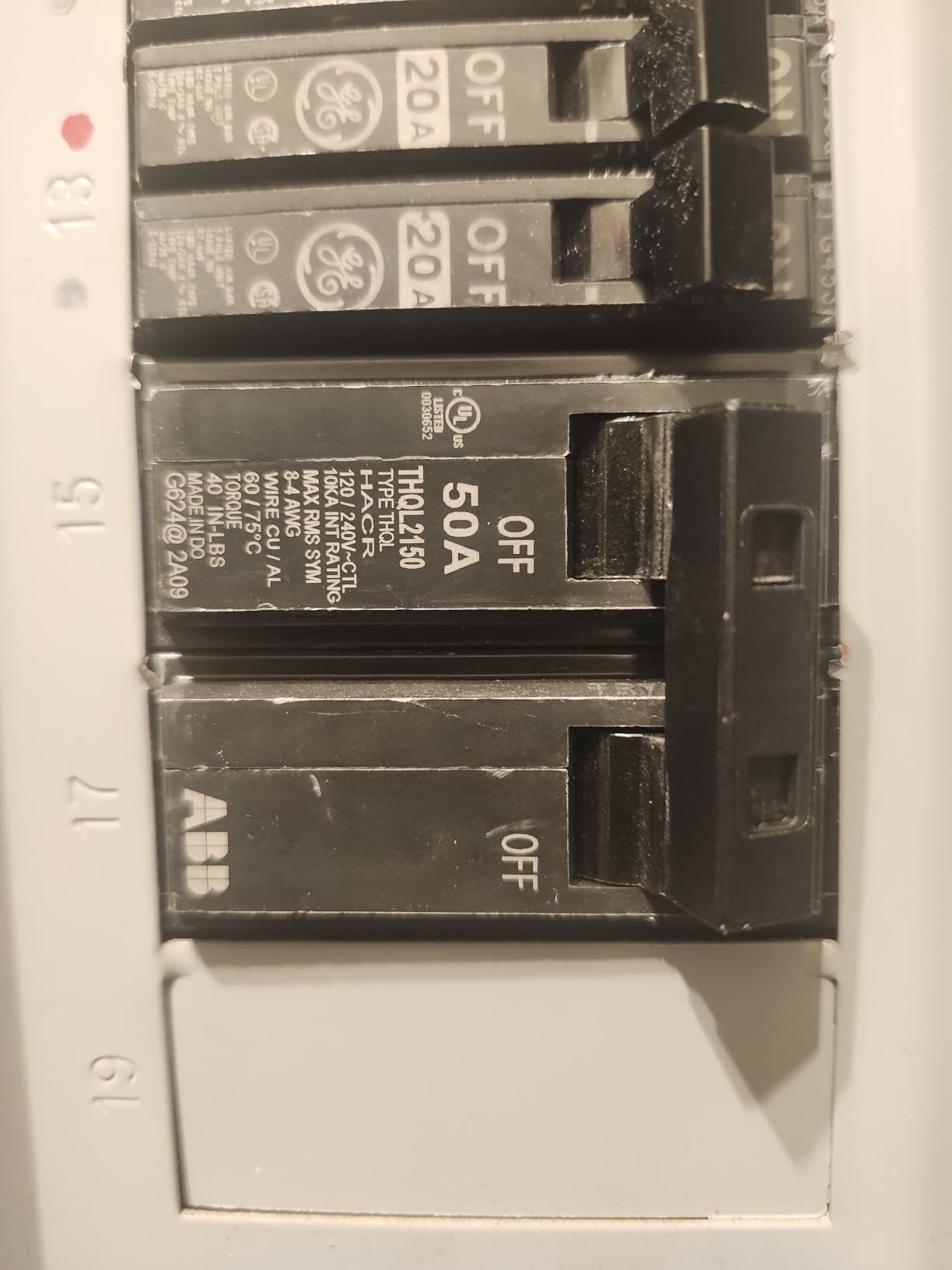
Electrical scope is moderate rather than extreme: two 50-amp breakers, a 100-amp total draw and a 150-amp minimum service, a friendlier figure than the 200 and 300-amp requirements of the larger electric heaters here. The one serious warranty complaint we found was a total failure at 13 months with difficulty getting the process started, which is an outlier against otherwise strong service reports.
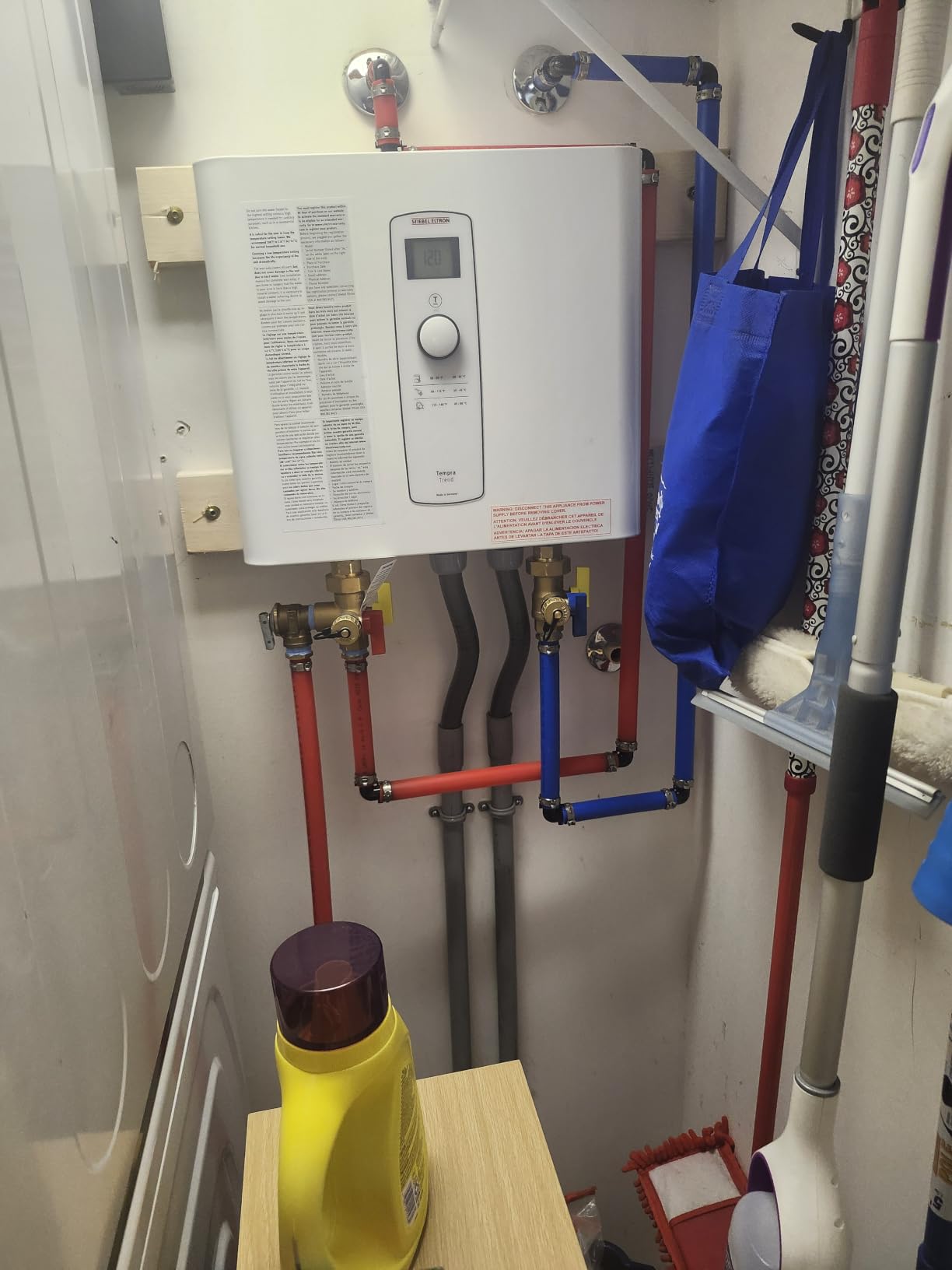
What to check before you buy the Tempra
Confirm a 150-amp service and two free breaker slots, since a smaller panel is where an electrician conversation starts before the plumber finishes measuring. Also weigh whether 24 kW is more than your household needs, because buyers in small homes report capacity they will never use.
Who the Tempra is wrong for
Large households with several simultaneous showers are the wrong fit, since output drops noticeably when laundry runs during a shower and that is a capacity ceiling rather than a defect. Single-bathroom homes also waste the electrical requirement here, which exceeds what the household can use.
8. Rheem RTG 9.5 GPM Serves Three to Four Showers at Once
Rheem RTG Series 9.5 GPM Natural Gas Tankless Water Heater Indoor | 199,900 BTUs High Efficiency On Demand, Continuous Hot Water | Non-Condensing
- 9.5 GPM supports 3-4 simultaneous showers
- Saves up to 34 percent versus a 50-gallon electric tank
- Digital LED control holds temperature within 1F
- Stainless steel with freeze and flame failure protection
- 15-year heat exchanger warranty
- Non-condensing design needs hot exhaust vent clearance
- Professional installation required
- 1-year labor coverage
- Water pressure dips under heavy simultaneous demand
Nine and a half gallons per minute is the flow number that maps most directly onto a three or four bathroom home, and this heater is rated for three to four simultaneous showers at a 35-degree rise. Owners highlight the ability to run several showers and fixtures together alongside the drop in energy use versus a standard tank.
Temperature control is a digital LED panel with plus or minus 1-degree adjustments, and freeze protection, flame failure protection and a multi-point safety system are built in. The wall-mount design frees floor space, and mounting hardware and the manual are included.
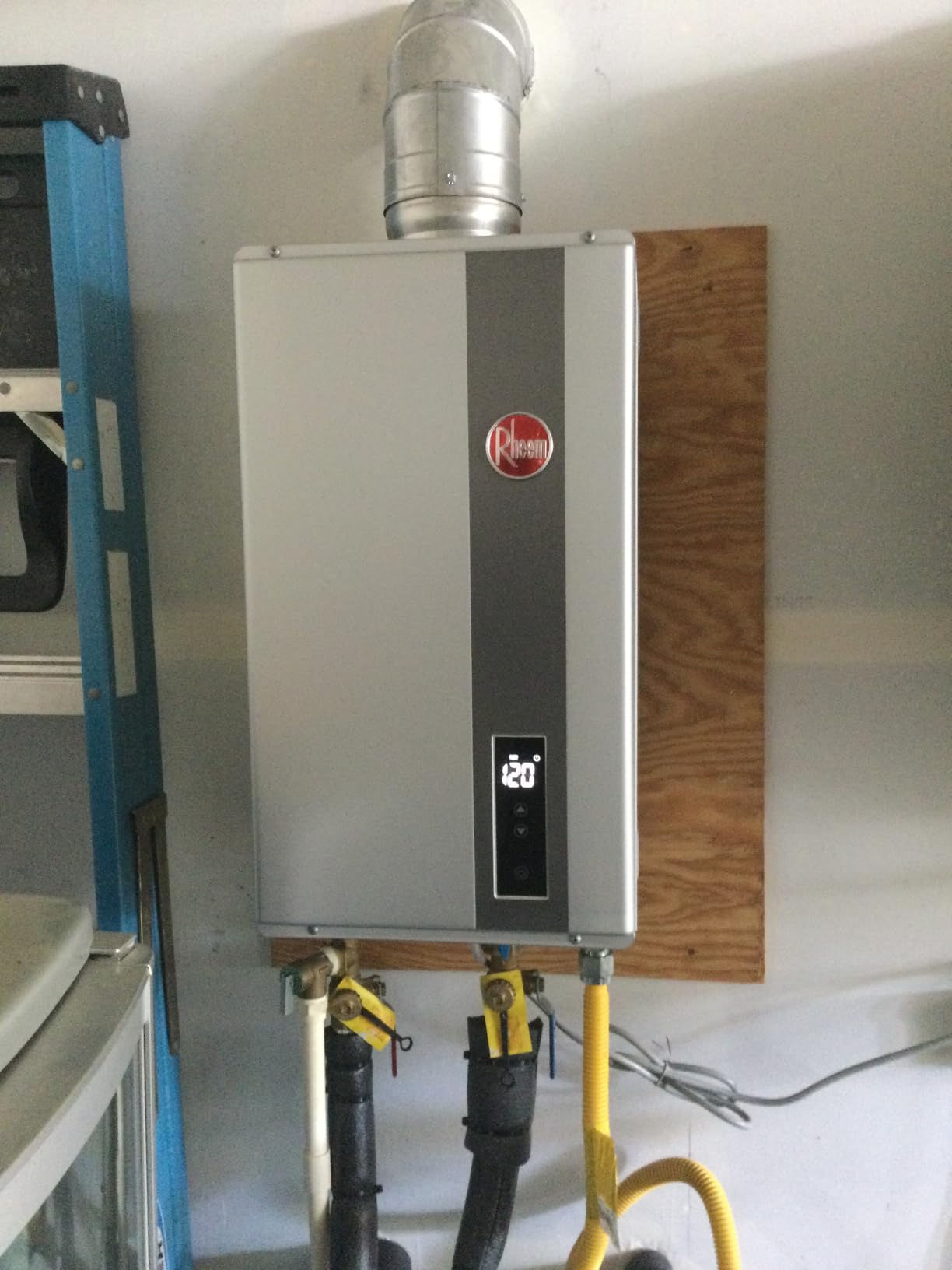
Two practical points here. The 9.5 GPM figure assumes a 35-degree temperature rise, which is a mild-day number, so a northern household running a 65-degree rise will see materially lower real flow. And because this is non-condensing, the exhaust runs hot and the vent route needs clearance planning before the wall is opened, which is why the warranty split is worth restating: 15 years on the heat exchanger, five on parts, one on labor.
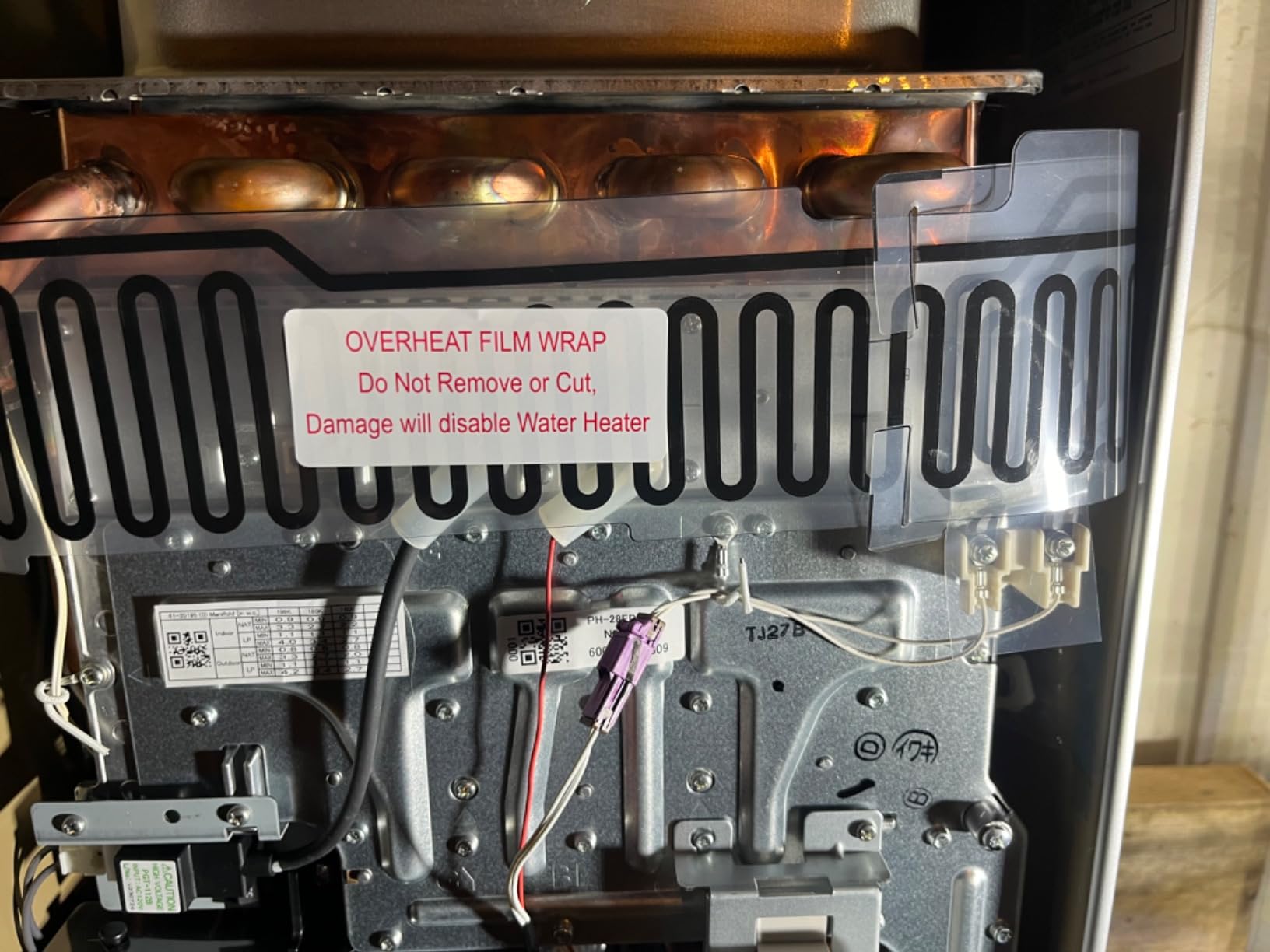
What to check before you buy the RTG
Walk the vent route before you commit, because non-condensing venting is stainless steel and heat, which changes both the cost and the allowable termination points against a condensing model. Ask the plumber to confirm the gas line can carry 199900 BTU alongside the rest of the household demand and that a direct vent route can reach the intended location.
Who the RTG is wrong for
Cold-climate homes that want condensing efficiency are the wrong fit, since UEF 0.82 leaves savings on the table against the 0.93 and 0.98 condensing models here. Buyers who want labor coverage to match the heat exchanger term, and anyone planning a location where hot vent piping is impractical, should look elsewhere.
9. CAMPLUX 199000 BTU Frees All Indoor Space as an Outdoor Model
CAMPLUX 199,000 BTU Tankless Water Heater Natural Gas Outdoor Up to 8.4 GPM
- Outdoor mounting frees all indoor floor and wall space
- Six protection systems including anti-freeze and flame failure
- Flow sensors and smart chip hold temperature within 1F
- Fits most existing vent and pipe layouts
- Sized for 4-8 person households
- Maximum outlet temperature of 105F
- Outdoor exposure to freezing weather
- Wired controller needed for temperature adjustment
- Very limited market presence
The reason to consider an outdoor model is space. Mounting the appliance outside frees the entire closet or utility room the tank used to occupy, and this one is rated for 199000 BTU and up to 8.4 GPM for households of four to eight people. It also fits most existing vent and pipe setups with minimal adjustment.
Temperature stability is the technical strength. Advanced flow sensors with a smart chip running 1000 calculations per second hold the outlet within plus or minus 1 degree, and CSA certification comes with six protection systems including anti-freezing, dry combustion, overheat and flame failure.
The constraint that decides most comparisons is the 105-degree maximum outlet temperature, since every other heater here reaches 140 degrees or more, which matters for soaking a tub. Owner sentiment is solid rather than exceptional, with an unusually high four-star share, because people value the space it frees and the safety coverage. Temperature adjustment runs through a wired controller, and the low sales rank tells you the support network is thin.
What to check before you buy the CAMPLUX
Confirm your household’s target outlet temperature, because a hot tub, soak tub or dishwasher sanitizing cycle needs more than 105 degrees delivers. Then check the exterior mounting location against freeze exposure and local code on outdoor gas appliance placement, and ask where a technician would service it when something fails.
Who the CAMPLUX is wrong for
Households that need very hot water, and anyone wanting app-based control rather than a wired controller, are the wrong fit since this model targets moderate hot water demand across many outlets. It also falls short where exterior placement is restricted by setbacks, HOA rules or freezing weather exposure.
10. GASLAND Gasmart Is a Compact Gas Retrofit for Value Buyers
GASLAND Gasmart E 199,000 BTU Tankless Water Heater, Up to 7.6 GPM, CSA Certified Whole House Natural Gas Indoor Installation Residential On-demand Instant Hot Water Heater, CE686NG
- 7.6 GPM at 199000 BTU handles whole-house demand
- UEF 0.8 rated 34 percent better than a 50-gallon tank
- Claimed 65 percent NOx reduction versus a 50-gallon gas tank
- Quiet operation compared with a tank unit
- Compact footprint fits closets and laundry rooms
- US-based customer support
- Unevenly spaced inlet and outlet ports
- Unclear instructions on the pressure relief valve
- Separate valve kit must be ordered
- Some buyers report early failures
- One-year replacement warranty
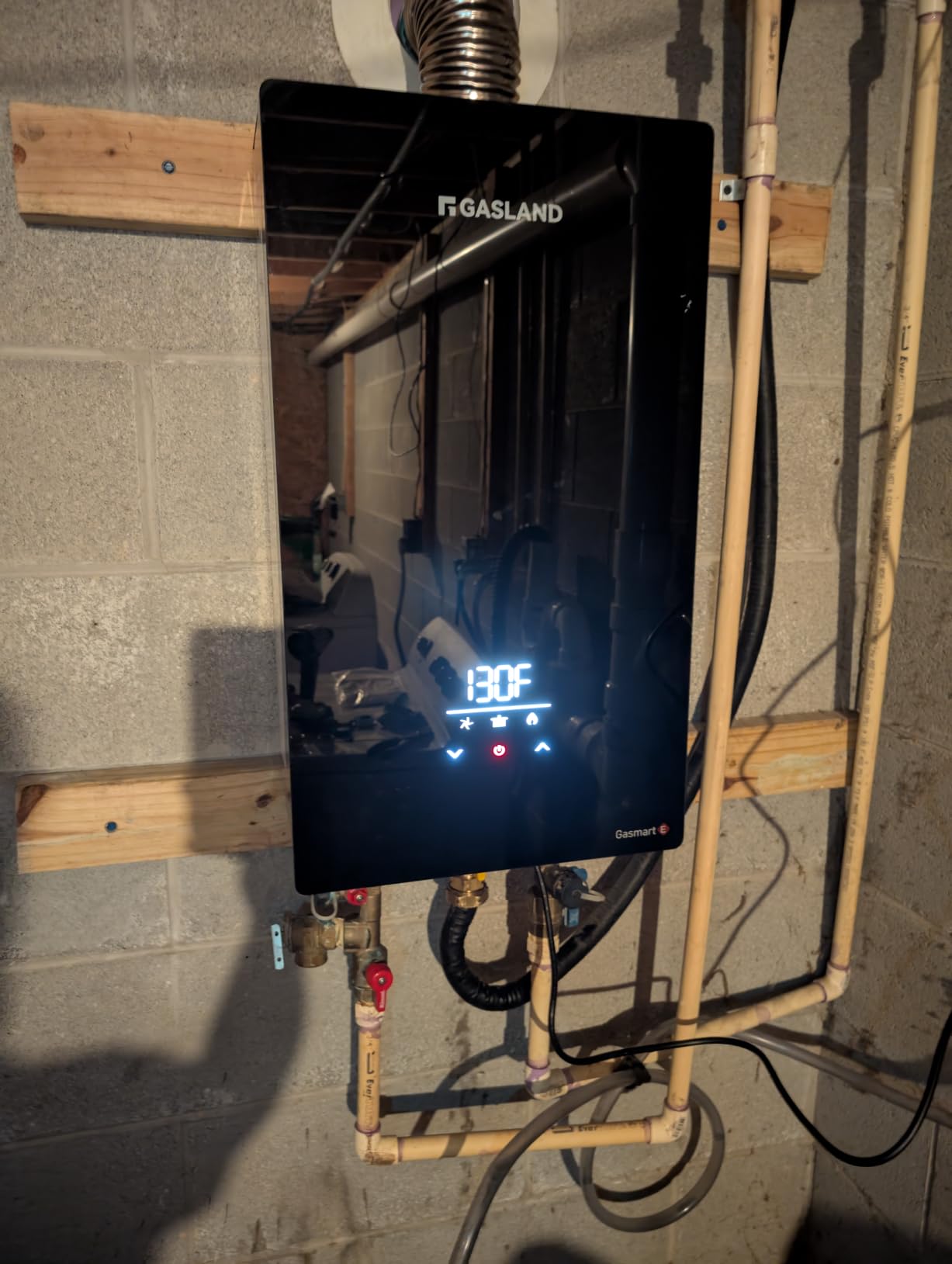
The value case here is whole-house capacity at a modest firing rate. At 199000 BTU and up to 7.6 GPM it covers multiple bathrooms and a laundry, and the claimed efficiency works out to UEF 0.8, which the manufacturer puts 34 percent ahead of a 50-gallon tank at UEF 0.6. The emissions claim is the differentiator on paper too, with a 65 percent reduction in NOx versus a 50-gallon gas tank.
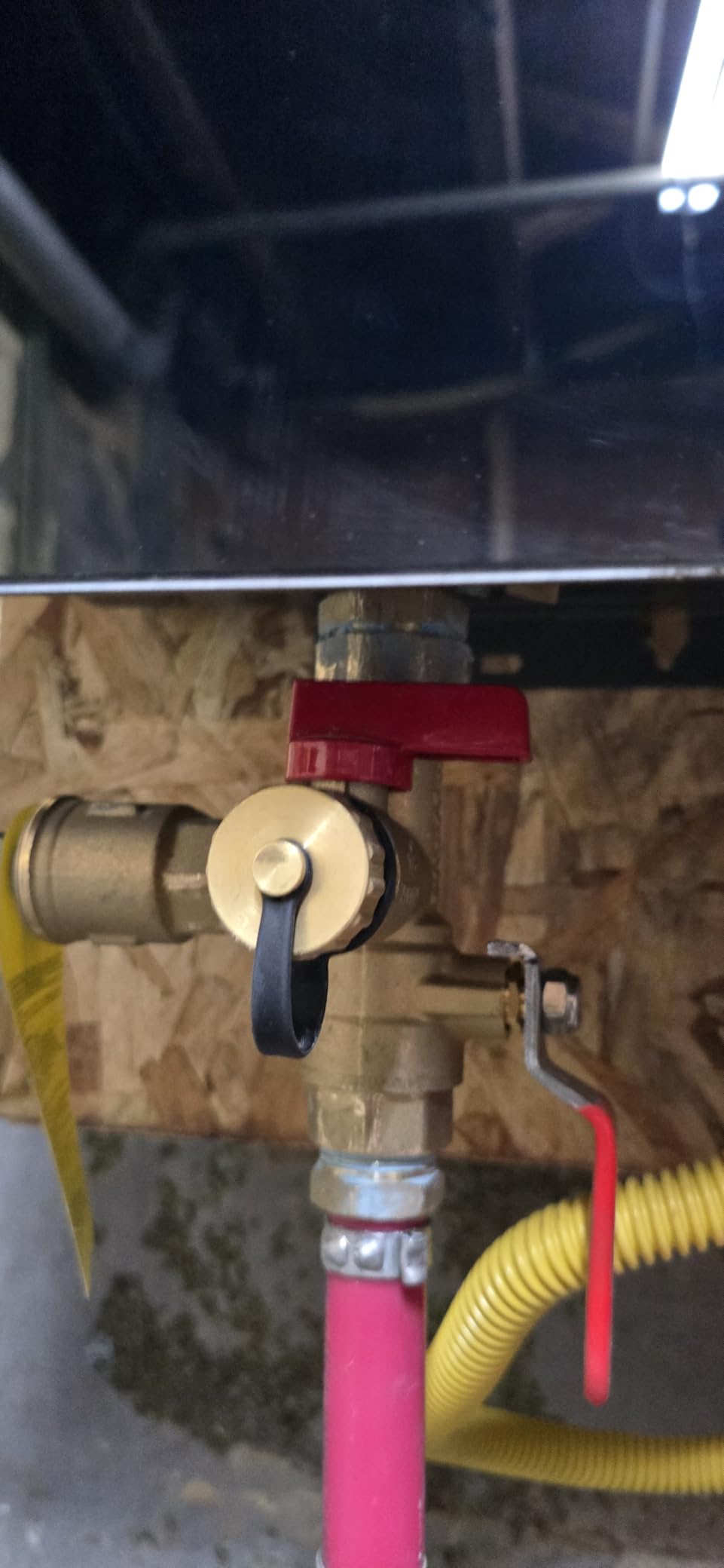
Installation detail is where the complaints cluster. Bottom inlet and outlet ports are unevenly spaced, which complicates pipe routing, and the instructions are unclear on whether a pressure relief valve is included, so a separate valve kit has to be ordered as an accessory. The warranty is the real limit too: one year of replacement coverage, the shortest here, alongside a minority of reports of units failing within the first few months.
What to check before you buy the GASLAND
Ask the installer to bring the valve kit, because since it is not included and the documentation is ambiguous, confirming it before the job avoids a return trip. Plan the pipe routing around the uneven port spacing too, since on a tight closet install the swinging pipe offsets decide between an easy fit and a re-cut wall.
Who the GASLAND is wrong for
Buyers who want a long warranty are the wrong fit, since a one-year replacement term means budgeting for a second purchase inside the life of a comparable condensing model. It is also a weak choice where a strong service network matters and in hard-water areas, where an annual flush routine will be easy to let lapse.
11. Rheem RTGH 8.4 GPM Runs at the Best Efficiency in This Gas Group
- Best UEF among the condensing-capable gas options at 0.93
- Up to 34 percent less energy than a standard 50-gallon electric tank
- Runs on standard 120V power
- Completely silent in operation
- 8.4 GPM covers two showers plus dishwasher and sinks
- Installation is complex with many parts
- Warm-up is slower than a tank unit
- Water pressure drops under heavy simultaneous load
- Some buyers recommend the next size up
- One 18-month failure with warranty friction
Condensing technology at UEF 0.93 is the reason to pick this model, and the manufacturer states it uses up to 34 percent less energy than a standard 50-gallon electric tank. It also runs on standard 120V power, which removes one of the electrical headaches that make larger electric heaters expensive to install.
Long-term owners are the strongest advocates here. Several report five and six years of trouble-free service with annual winterizing, and the recurring praise is efficiency plus silence, including one owner reporting a roughly 75 percent drop in their electric bill after installation.
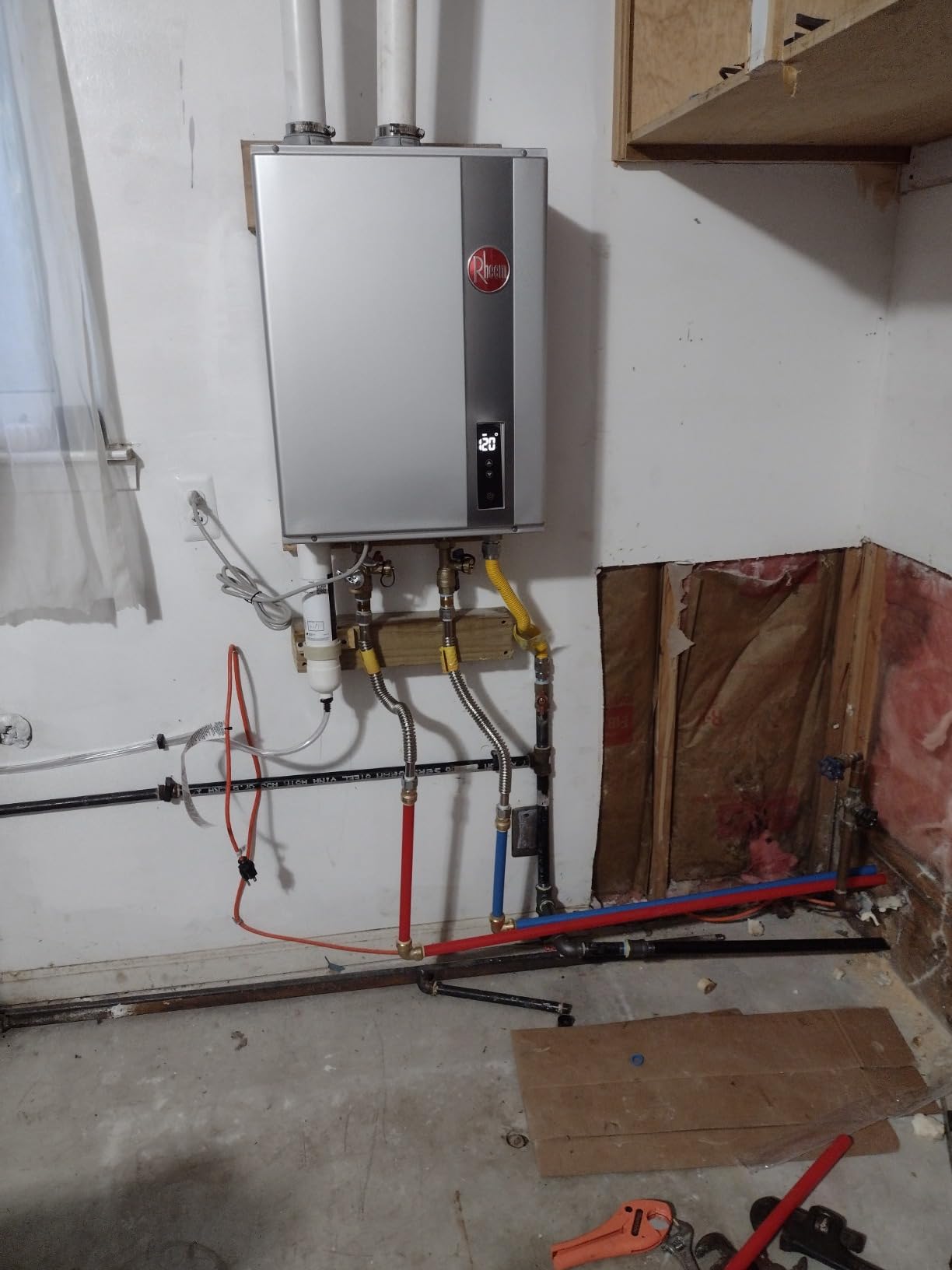
Buyers who have used it report it covers two showers plus the dishwasher and multiple sinks in a three-bedroom home, and the digital LED control holds temperature within plus or minus 1 degree with ultra-low NOx compliance.
The catch is installation complexity. Owners describe many parts and a real challenge even for experienced DIYers, plus a slightly longer warm-up before full temperature. Some buyers recommend stepping up to the next higher output size, and one reports a failure at 18 months with difficulty getting warranty support for igniter and flame rod parts.
What to check before you buy the RTGH
Confirm the condensing vent material and a condensate drain path before the install date, since both are planned items and neither is a surprise you want during rough-in. Ask how the plumber handles the venting route as well, because that is the step reviewers consistently describe as the hardest.
Who the RTGH is wrong for
DIY installers are the wrong fit, because the part count and complexity are well documented by owners as the main barrier and a condensing gas appliance is unforgiving of a rushed connection. It also mismatches households wanting the highest raw flow, since 8.4 GPM sits below the larger gas heaters here even while running more efficiently.
12. Westinghouse 7.9 GPM Works on Low Water Pressure and Well Systems
Westinghouse Tankless Water Heater Gas Indoor, 7.9 GPM, 180,000 BTU
- Lowest activation flow figure here at 0.53 GPM
- Operates down to 15 PSI for well and older plumbing
- Self-modulating control holds temperature within 1F
- Highest maximum outlet temperature in the group at 149F
- Built-in WiFi with fault alerts and no extra module
- 5-year heat exchanger warranty
- One owner received a unit with a dead front display
- App not available for current Android versions
- Setup documentation scatters venting and gas line guidance
- Non-condensing exhaust runs hotter
- New units can drip from both connectors
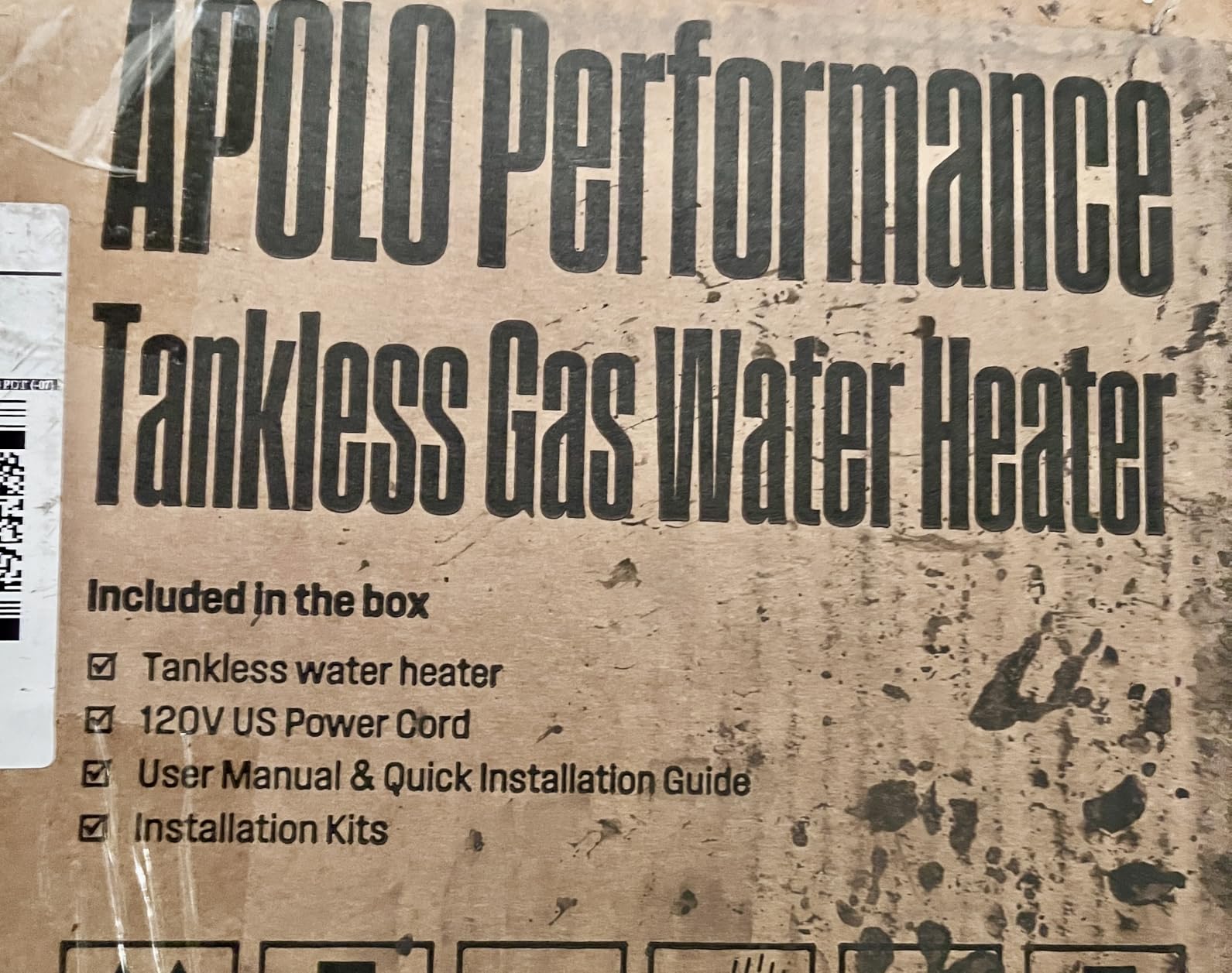
Private well systems and older plumbing are the reason this model exists. The 0.53 GPM minimum activation flow is the lowest here, meaning it will fire with low-flow faucets and showerheads, and it operates at pressures as low as 15 PSI, which owners on well systems specifically praise. The self-modulating control holds outlet temperature within plus or minus 1 degree across a 95 to 149-degree range, and built-in WiFi supports app and voice control with fault alerts and requires no additional module.
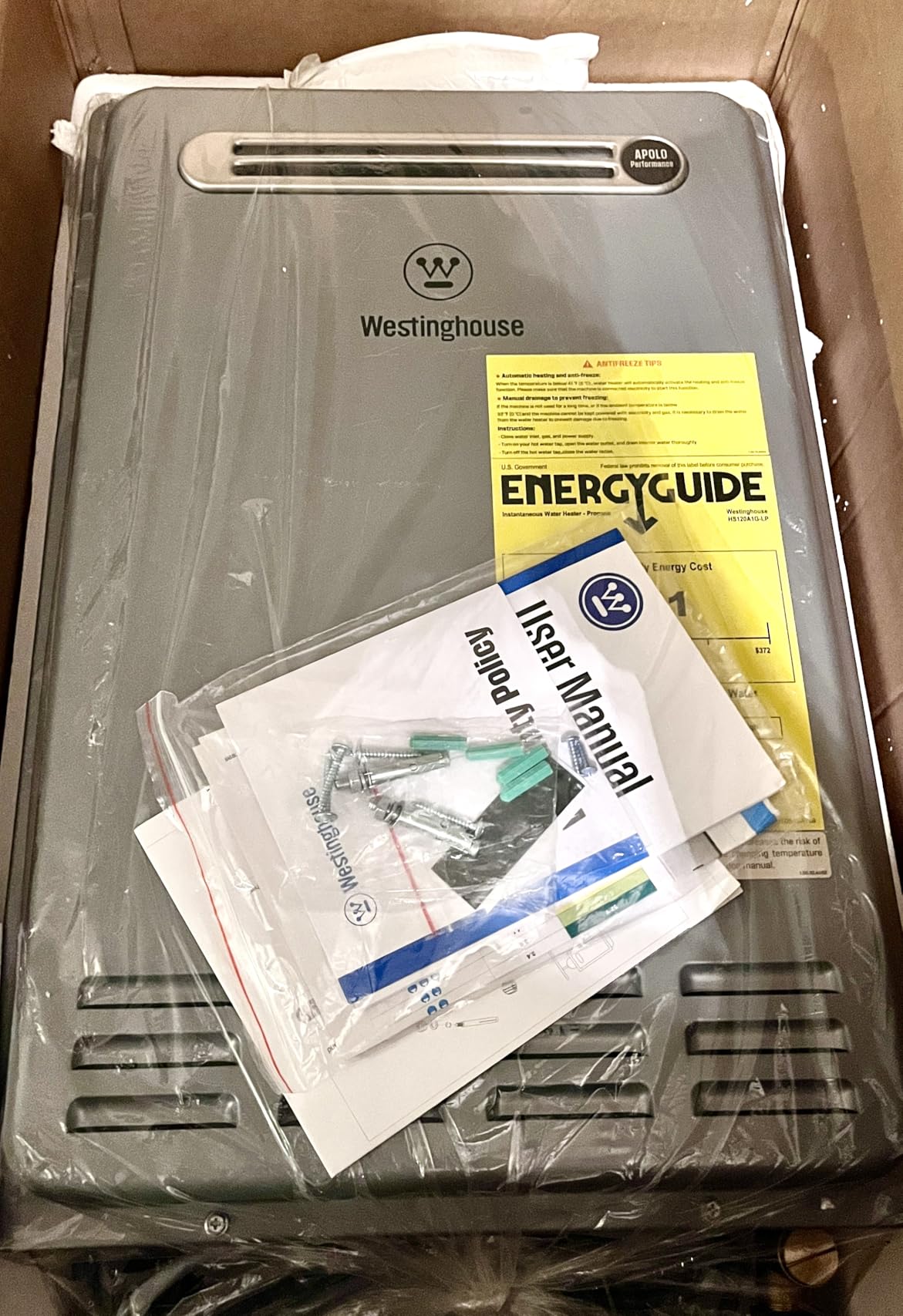
At 7.9 GPM and 180000 BTU it supports three showers running at once, and standard 3/4 NPT plumbing plus 120V AC power keeps the hookup conventional.
Warranty terms run two years on the complete unit with five years on the heat exchanger, which inverts the pattern where the heat exchanger term is the long one. Documentation is a genuine weakness: venting requirements and gas line sizing are scattered across multiple guides, and the app is not available for current Android versions, with Alexa plus the SmartLife app as a workaround.
What to check before you buy the Westinghouse
Confirm your Android phone situation before relying on app control, and if you cannot pair it remember the local controls still work. Ask for the venting and gas line guidance in one document as well, since the requirements are spread across guides and it is worth having your installer read them end to end rather than work from the quick-start sheet.
Who the Westinghouse is wrong for
Buyers seeking the lowest installed cost on a condensing retrofit are the wrong fit, since the non-condensing exhaust runs hotter and constrains vent routing options. It is also a weaker choice for large households needing more than three simultaneous showers, and for anyone unwilling to handle a possible out-of-box control board failure, which one owner reported.
How Big a Tankless Water Heater Do You Need?
You need enough flow to cover the fixtures you will run at the same time, at the temperature rise your water actually needs. That is a two-variable problem, and the second variable is where most buyers go wrong.
A standard showerhead draws roughly 2 to 2.5 GPM, a bathtub spout about 4 to 5 GPM, a bathroom sink 1 to 1.5 GPM, a kitchen sink 2 to 3 GPM, and a clothes washer 3 to 4 GPM. Add them up for the fixtures that overlap and you get your target number.
- List simultaneous fixtures. Decide what genuinely runs at once. Two showers plus a laundry cycle is the common three-bathroom scenario.
- Measure inlet water temperature. Take the coldest tap reading in winter. Households average 45 to 55 degrees in winter and 60 to 70 in summer.
- Decide your target outlet temperature. Most households set 120 to 140 degrees for whole house use.
- Calculate the required temperature rise. This is the difference between step two and step three.
- Read the heater’s flow at that rise. Headline flow is quoted at a 35 to 45 degree rise, so a unit rated at 9.5 GPM delivers materially less when the rise is 65 degrees. Size up one step when your rise is above 45 degrees.
For a 2,000 square foot home with two full bathrooms, a family of three and a 55-degree inlet going to 120 degrees, you need about 6 GPM. An entry-level gas unit or a 24 kW electric heater covers that pattern, and a 2,000 square foot home rarely needs more.
For a 3,000 square foot home with three full baths and laundry overlapping, two showers at roughly 2.5 GPM each plus a sink puts you near 7 GPM, and cold groundwater pushes the real requirement toward 9 GPM. This is the range where a condensing gas model earns its cost.
For four-plus bathrooms or a home where three showers run at once, treat 9.5 to 11 GPM as the floor. Below that you will feel the drop in winter, and no temperature setting compensates for it.
Our guide to tankless water heaters for large families goes deeper on fixture-by-fixture sizing, and the best gas tankless water heaters for whole homes list covers the fuel side in detail.
What It Really Costs to Install a Whole House Tankless Heater
The appliance itself is rarely the largest line in a tankless installation, and on a retrofit it is often not even the second largest. Here are the hidden costs in rough order of how often they surprise buyers.
- Gas line upsizing. A 190000 BTU appliance often needs more capacity than an existing branch line carries alongside the rest of the house. This is the most common budget shock.
- Venting route. Condensing models use PVC or CPVC venting and need a condensate drain or neutralizer. Non-condensing models run hot exhaust and use stainless vent pipe, which is a different material cost and clearance problem.
- Electrical panel work. A 36 kW electric heater recommends 300-amp service, four 40-amp breakers and four runs of 8/2 AWG cable. A 24 kW model wants 200 amps. Either can mean a panel upgrade and a new service entrance.
- Permit and inspection. Gas and electrical work both trigger permits, and your plumber usually files them. Ask whether the inspection is scheduled in advance.
- Recirculation pump. If your home has long runs, a dedicated pump or a built-in one removes the cold-water wait. Only one model in this roundup includes it.
- Water treatment. In hard-water areas a filter or softener keeps the heat exchanger clean longer, and some manufacturers require one to honor the heat exchanger warranty.
Gas vs Electric Whole House Tankless Water Heaters
Gas wins on flow, electric wins on simplicity, and that is the whole comparison. A 199000 BTU gas heater delivers 7.6 to 11.1 GPM on a standard gas line, while the largest electric models here top out at 8.7 GPM and demand 200 to 300-amp electrical service.
Choose gas if your gas line can carry the added load, your household runs multiple showers, and you want the lowest cost per gallon. Choose electric if you have no gas hookup, live where a new gas line is impractical, or want to skip venting and combustion safety entirely.
Condensing versus non-condensing is a narrower decision that mostly affects installation cost. Condensing models recover heat from the exhaust, push efficiency to UEF 0.93 or 0.98, vent through PVC and need a condensate drain. Non-condensing models are simpler to vent, run at UEF 0.8 to 0.82, and discharge hot exhaust through stainless pipe.
Both types can serve a whole house well. The condensing route costs more upfront and pays it back through lower operating cost, which matters most in high-volume households.
Hard Water, Descaling and Warranty Traps
Hard water is the leading real-world cause of heat exchanger failure, and the leading complaint category on plumbing forums. Scale builds on the heat exchanger surface, insulates it, and eventually cuts flow and raises outlet temperature instability.
Plan a descaling routine on a six to twelve month cycle in hard-water areas, and test your hardness before the install so the schedule is set from day one. For non-condensing units, check the manufacturer’s flush procedure before adding any chemical, since some vent and seal materials are not compatible.
Two warranty traps catch new owners. First, several manufacturers require professional installation to keep coverage valid, which rules out a self-install even where the unit performs well. Second, a filter or softener may be required in hard-water regions for the heat exchanger term to apply. Register your unit within the stated window, since labor coverage elsewhere in this roundup defaults sharply if you miss it.
If you are heading somewhere with a short season, our tankless water heater picks for cabins cover the freeze and drainage requirements that cold-climate installers worry about.
Frequently Asked Questions
What do plumbers say about tankless water heaters?
Plumbers most often steer buyers toward sizing on real temperature rise rather than headline flow, and toward the brand they actually service locally. Forum owners consistently say service network and parts availability matter more than brand prestige. The other recurring plumber warning is that gas line capacity, vent routing and electrical panel capacity decide the installed cost far more than the appliance choice does.
How big of a tankless water heater do I need for a 2000 square foot house?
For a 2,000 square foot home with two full bathrooms, about 6 GPM covers normal demand. List your simultaneous fixtures, add their flow rates, then check the unit’s rating at your winter temperature rise rather than its headline number. Because headline flow is quoted at a 35 to 45 degree rise, a cold-climate household often needs one size up.
Which is better, Rheem or Navien?
Rheem covers more of the market, and the models here span electric, non-condensing gas and condensing gas, which makes model matching easier across budget tiers. Navien does not appear in the group we tested, so a head-to-head on flow and efficiency is not something we can back up with numbers. The practical tiebreaker for either brand is local service coverage, since both depend on a technician who stocks parts.
What are two disadvantages of a tankless water heater?
The first is upfront cost, because a whole house unit often needs gas line upsizing, new venting, a condensate drain or an electrical panel upgrade that can rival the appliance price. The second is that there is no stored hot water reserve, so an undersized or badly located heater shows up as a lukewarm shower instead of a short wait. Both are avoidable with correct sizing.
Are tankless water heaters bad for hard water?
Hard water is the most cited real-world cause of heat exchanger failure because mineral scale insulates the heat transfer surface and reduces flow. The fix is preventative rather than fatal: test hardness before installation, run a descaling flush on a six to twelve month cycle, and check whether the manufacturer requires a filter to keep the heat exchanger warranty valid.
Should you descale your tankless water heater?
Yes, on a schedule rather than reactively. In hard-water areas a six to twelve month cycle keeps flow rate and outlet temperature stable, and it costs far less than replacing a heat exchanger. Use the manufacturer’s approved flush procedure and check the warranty language, since some vent and seal materials are not compatible with common descale solutions.
What is the most common problem with tankless water heaters?
The most common problems reported by owners are mineral scale on the heat exchanger, flow sensor faults, control board failures and ignition issues. Scale is the leading cause because it is environmental and gradual. Component faults show up as error codes and loss of hot water, and warranty friction over parts access adds to the frustration.
How much does it cost for a plumber to descale a tankless water heater?
A professional flush is a short service call rather than a major job, and the cost varies by region, travel and whether the unit is under warranty. Owners can also run a DIY flush on many models using the manufacturer’s procedure, which is why asking your installer for the instructions at commissioning saves money later.
Our Whole House Tankless Water Heater Picks for 2026
The Rheem RTEX-24 is our best tankless water heater for whole house use in 2026, because it carries the deepest owner history in the roundup and needs no venting or gas work. If your panel can handle 200 amps, it delivers steady temperature and frees a closet.
Choose the Ranein 8.5 GPM if you want gas flow on a tighter budget, and the WINTEMP 36kW if you have no gas hookup and can support a 300-amp service. For three-plus bathroom homes that want built-in recirculation, the Rinnai RXP199iN solves the cold-water wait in a way nothing else here does, provided you register it inside the 90-day window.
Whichever you pick, size on your real winter temperature rise, have the installer price the gas line, vent route or panel work up front, and put a descaling schedule on the calendar before the first cold month.