
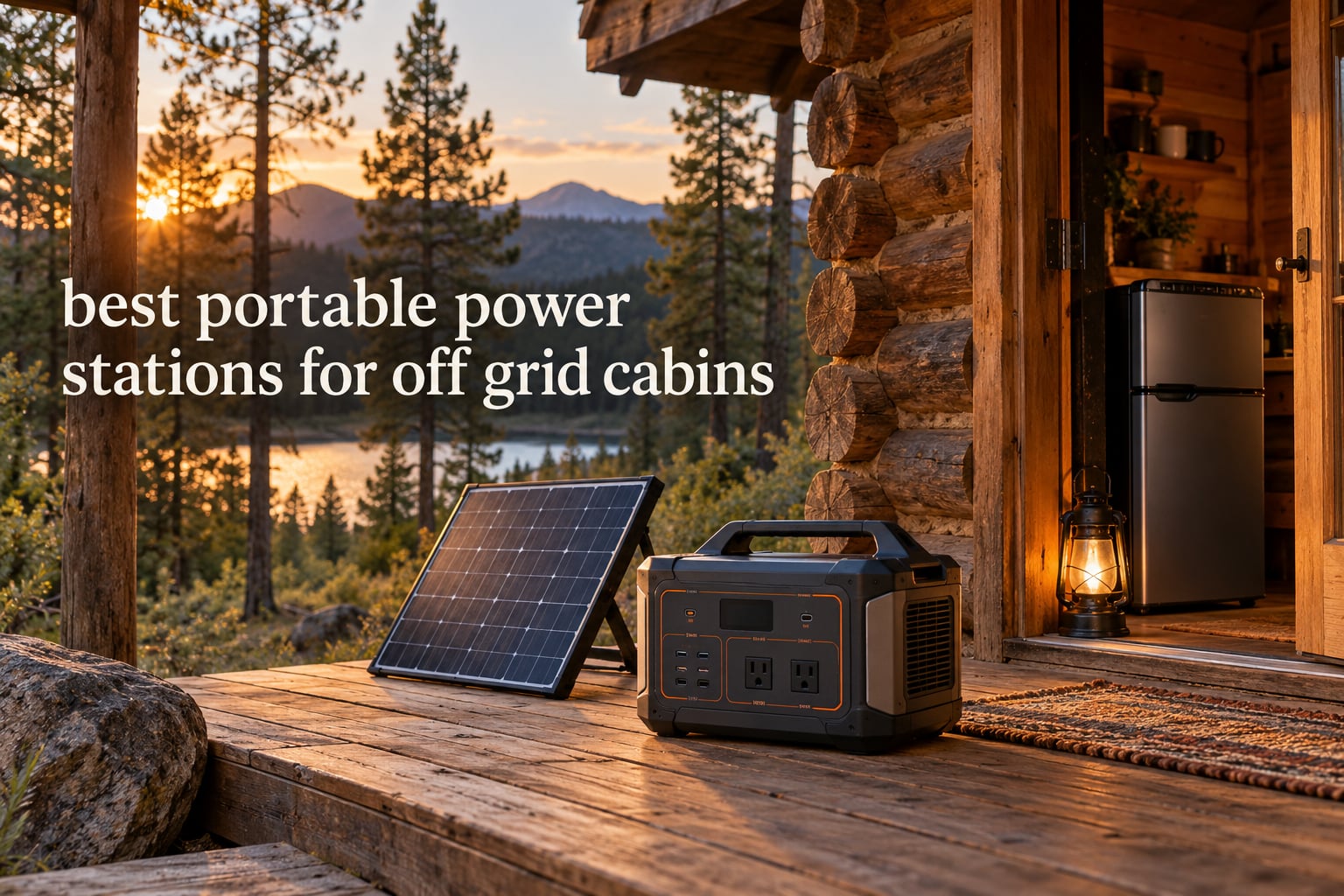
The BLUETTI AC180 is the best portable power station for most off-grid cabins. It carries 1152Wh of LiFePO4 capacity, 1800W of continuous output with 2700W peak, 500W of solar input and a five-year warranty, and at 37.4 pounds it is still manageable for one person to carry down a path or up cabin steps.
That combination matters because a cabin is not a campsite. A weekend camper can recharge from a car every morning. A cabin with no grid hookup cannot, so the unit has to carry a refrigerator, LED lights, a router and possibly a CPAP machine through a multi-day stretch of overcast weather. The AC180 covers that load list and refills from solar in under four hours.
What you are choosing, in practical terms, is how many watt-hours sit in the box and how quickly the sun can put them back. I compared ten units across those two numbers, plus weight, surge headroom for motors, and battery chemistry, because a fixed cabin is a multi-year commitment rather than a weekend purchase. These are the best portable power stations for off-grid cabins, ranked by what they actually do once they are unloaded and plugged in.
Before the picks, one framing that came up again and again in off-grid forums is worth repeating: most cabin owners plan a full solar array that is still a long way off budget, and buy a portable power station as the bridge. One r/OffGrid poster put it plainly, having got more confused with every page they read, until they landed on the 500Wh to 1000Wh range as a sweet spot between portability and enough charge to last a day or two with light use. If that is you, our solar generator guide for off-grid cabins covers the fixed-install side.
Top 3 Picks for Off-Grid Cabins in 2026

The AC180 wins on balance rather than on any single headline number. The C1000 Gen 2 edges it on rating and on solar input, and the Mega 1 costs far less for a similar inverter, but the AC180 is the one that leaves the fewest gaps once you start adding real appliances.
All 10 Best Portable Power Stations for Off-Grid Cabins in 2026
Every unit below runs LiFePO4 chemistry, which matters more for a stationary cabin than for a weekend trip. Continuous output is what the inverter will hold indefinitely; peak is the short surge a compressor or motor needs at start.
| Product | Specifications | Action |
|---|---|---|
| BLUETTI AC180 |
|
Check Latest Price |
 BLUETTI Elite 100 V2 BLUETTI Elite 100 V2 |
|
Check Latest Price |
| Anker SOLIX C1000 Gen 2 |
|
Check Latest Price |
 OUPES Mega 1 OUPES Mega 1 |
|
Check Latest Price |
 Anker SOLIX C2000 Gen 2 Anker SOLIX C2000 Gen 2 |
|
Check Latest Price |
 Anker SOLIX S2000 Anker SOLIX S2000 |
|
Check Latest Price |
 Jackery Explorer 2000 v2 Jackery Explorer 2000 v2 |
|
Check Latest Price |
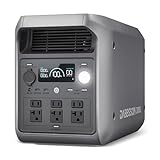 DABBSSON 2000L DABBSSON 2000L |
|
Check Latest Price |
 Jackery Solar Generator 1000 v2 Jackery Solar Generator 1000 v2 |
|
Check Latest Price |
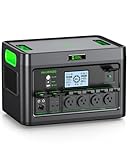 EBL 2400W EBL 2400W |
|
Check Latest Price |
1. BLUETTI AC180 – Best Overall for an Off-Grid Cabin
- Full charge in about 1 hour at 1440W AC input
- 1800W continuous covers a fridge plus modem lights and router
- 20ms UPS keeps internet gear alive through a switch
- 11 total ports with 8 AC outlets
- BLUETTI app plus bright LCD for real-time monitoring
- 37.4 lb is awkward for repeated carries over distance
- Wireless charging pad on top frequently fails to charge
- About 20W of inverter self-consumption cuts into small-load runtime
The AC180 is the unit I keep coming back to for a cabin that runs lights, a router, a refrigerator and a fan through a long weekend without a wall outlet. It is a 1152Wh LiFePO4 pack with 1800W of continuous AC output, 2700W of peak, and eight AC outlets alongside three more ports. At 37.4 pounds it is not a carry-anywhere box, but it is a two-person move or a solid one-person effort up a short path.
Charging is where it separates itself. A full charge takes about an hour at the 1440W AC input, and 500W of solar input brings it from empty to full in roughly three hours. That solar figure matters more than almost any other spec here, because a cabin has no wall to fall back on and the panel is the only refuel. UPS switchover at 20ms keeps a router and modem from rebooting during a short input drop.
Two numbers deserve attention before you commit. The manual states that only 90% of rated capacity is usable, so treat 1152Wh as about 1030Wh in practice. Reviewers also report roughly 20W of inverter self-consumption, which is invisible on a 100W load and obvious on a 15W LED lamp running all night.
Several owners reported disappointing early performance that resolved once they installed firmware updates and did one full discharge and recharge cycle. That is worth the ten minutes before you decide the unit is faulty. A handful of units also shipped with slower-than-expected AC input until recalibrated, and it costs nothing to check with a full cycle before writing the unit off.
What the AC180 handles that smaller units cannot
It will run a well pump, a microwave, a power tool or a small kettle without hesitation, where the sub-1000Wh units in this list would stall. Expansion is the one gap: the AC180 does not list stackable expansion batteries in its specification, so growing past 1152Wh means buying a second station rather than adding a module.
It is also the one I would choose for a cabin that will sit unused for months between visits. LiFePO4 cells hold their charge far better than the older NMC chemistry, and the five-year warranty covers a realistic multi-year install rather than a single season.
Where the AC180 disappoints
The top-mounted wireless charging pad is the most repeated complaint across reviews, and it is the one feature I would tell you to ignore entirely. If you need phone charging, use a cable.
Only one USB-C port is a real limitation in a cabin where everyone is charging a laptop, a camera battery and a phone from the same unit. Several settings are also reachable only through the phone app, which is awkward at a site with no cell signal. Jackery and Anker units here let you set limits from the unit itself more reliably.
2. BLUETTI Elite 100 V2 – Best Lightweight Pick You Can Carry Alone
BLUETTI Elite 100 V2 Portable Power Station for Camping 1024Wh 1800W
- Only 25 lb with a built-in top handle for one-handed carry
- Silent mode at 30dB suits a sleeping cabin
- 10ms UPS holds routers and PCs steady through outages
- 4000+ cycle LiFePO4 cells
- App works offline which matters off-grid
- 25 lb still feels heavy on a long walk
- Low-draw loads may not register on the wattage readout
- Barrel-style DC outputs are exposed and easy to short
If your cabin sits at the end of a long path, a hundred steps down a slope or up a set of stairs, weight is the constraint that decides the purchase. The Elite 100 V2 at 25 pounds is the lightest unit here that still delivers 1800W of rated AC output and 1024Wh of capacity. The folded top handle makes it genuinely carryable by one person with a free hand for a flashlight.
It is also a proper LiFePO4 pack rated past 4000 cycles to 80% capacity, backed by a 60-month warranty, which is the combination a fixed install needs. A standard refrigerator is the load this size handles best: enough surplus to run through the night and recover the following day from 500W-class solar input.
Charging is quick, with 1200W TurboBoost AC input taking it from zero to 80% in around 45 minutes. UPS transfer is 10ms, faster than the AC180, so a network that would hiccup on some units holds steady here. Silent mode runs the cooling fan at 30dB, which is low enough to sleep beside.
Reviewers describe real-world runtime holding up well for fridges, lights and satellite internet equipment. A minor but telling detail: the app works offline, so you can still read state and change settings at a cabin with no bars, which is not true of every unit in this group.
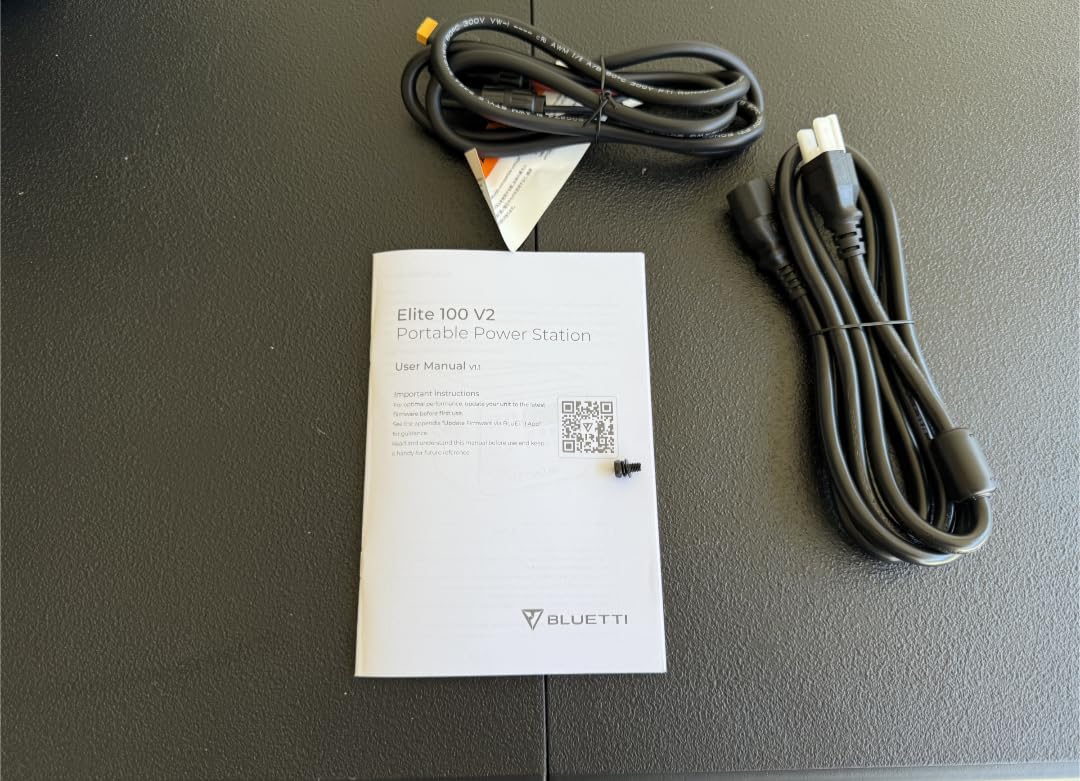
Where the 25-pound weight still bites
Owners carrying it more than a short distance consistently describe it as heavier than the number suggests. Budget for two trips or a cart if your access is rough, and plan its permanent position before you unpack it.
Two smaller annoyances: the front display could be brighter for daylight reading, and very low draw may not show on the wattage readout, so you cannot always confirm a 5W device is drawing power. Neither is a dealbreaker, both are mildly annoying at 2am when you are checking whether the lights are actually running.
When to pick a heavier unit instead
Choose the AC180 or the Mega 1 rather than this one if you plan to run power tools, a hot plate or anything with a compressor. The Elite 100 V2’s 2700W rating is a resistive-load lifting figure, and it will not deliver that on a motor-starting surge the way a true 2700W peak rating would.
It is also a fixed-capacity unit with no listed expansion path, so if your cabin is going to grow from weekend use toward full-time, step up a tier now rather than replacing this later.
3. Anker SOLIX C1000 Gen 2 – Top Rated for CPAP and Router Uptime
- Full recharge from the wall in 49 minutes at 1600W
- Ran a CPAP machine three nights without a recharge
- 600W solar input gives an 1.8 hour full solar recharge
- 10ms UPS protects medical and network gear
- Bundle includes a 200W bifacial panel
- No battery expansion on Gen 2 unlike Gen 1
- 15 to 20 percent harmonic distortion on a microwave load
- Small bundled 200W panel is slow next to the AC intake
This is the unit I would put next to a bed where a CPAP machine runs all night. At 1024Wh it holds roughly three nights of CPAP on a single charge according to owners, and the 10ms UPS transfer is short enough that a sleep machine and a router do not notice an input drop. If that is your situation, we also have a dedicated breakdown of the best portable power stations for CPAP machines.
On solar, 600W of input is the second highest in this group, giving a full recharge in about 1.8 hours in good sun. The bundle ships with a 200W bifacial PS200 panel and an XT60i cable, so it works out of the box without a second purchase, and 4000 cycles to 80% capacity keeps a stationary install viable for years.
The recharge speed is the headline. HyperFlash at 1600W AC input fills it in 49 minutes, which means a short visit to a house with a wall outlet can top it up between trips, and the app’s time-of-use scheduling can hold charge during peak tariff hours if you ever reconnect to a grid.
Owners report it handling a CPAP, a refrigerator and a router simultaneously through multi-day stretches, running silently in normal use, and being small enough to move between rooms or between vehicles. Buyers who needed a panel to make off-grid charging simple appreciated that it was included.
The two compromises you should know about
Gen 2 removed the battery expansion that the first generation offered. That is a meaningful loss if your plan is to grow, because your only route to more capacity is a second unit. Check your load list honestly before accepting the ceiling.
Reviewers also report 15 to 20% harmonic distortion when driving a microwave. That is a real signal purity note rather than a dealbreaker, but if you plan to run sensitive audio gear, medical devices with pumps or anything fussy, check the waveform claims before committing.
What to pair it with
The included 200W panel is genuinely usable but slow next to a 600W input ceiling. Our solar panel buying guide for off-grid cabins covers how to size panels properly if you want to use the full 600W rather than the panel in the box.
If your roof is exposed to winter snow and strong wind, remember that the 200W panel is small and light, which is an advantage over the heavier panels people buy to match bigger units. It just will not refill a depleted battery in one dull afternoon.
4. OUPES Mega 1 – Best Value Per Watt in the 1 kWh Class
- 2000W continuous output is unusually high for the 1kWh class
- 0-80% in about 36 minutes on AC
- Expands to 5.1kWh with two B2 batteries using the same inverter
- Under 30 lb while still running fridges and tools
- Strong proactive customer support
- 4500W surge is optimistic and some units trip around 2050-2200W
- Proprietary charging cable is hard to source
- Plastic housing is not weather resistant and fans are loud when charging
The Mega 1 is the value pick in a class where the leaders cost meaningfully more. It delivers 2000W of continuous output from 1024Wh of LiFePO4 at 27.8 pounds, which is more inverter headroom than any other unit at this capacity. For a cabin owner who wants to run a microwave or a power tool occasionally without a second battery, that headroom is worth more than raw capacity.
The expansion path is the standout feature and the reason it ranks this high. Two B2 batteries take the pack to 5120Wh through the unit’s own inverter, with no separate inverter to buy, no second box to charge and no compatibility guesswork. That turns a 1kWh weekend unit into a genuine multi-day system if your cabin eventually needs one.
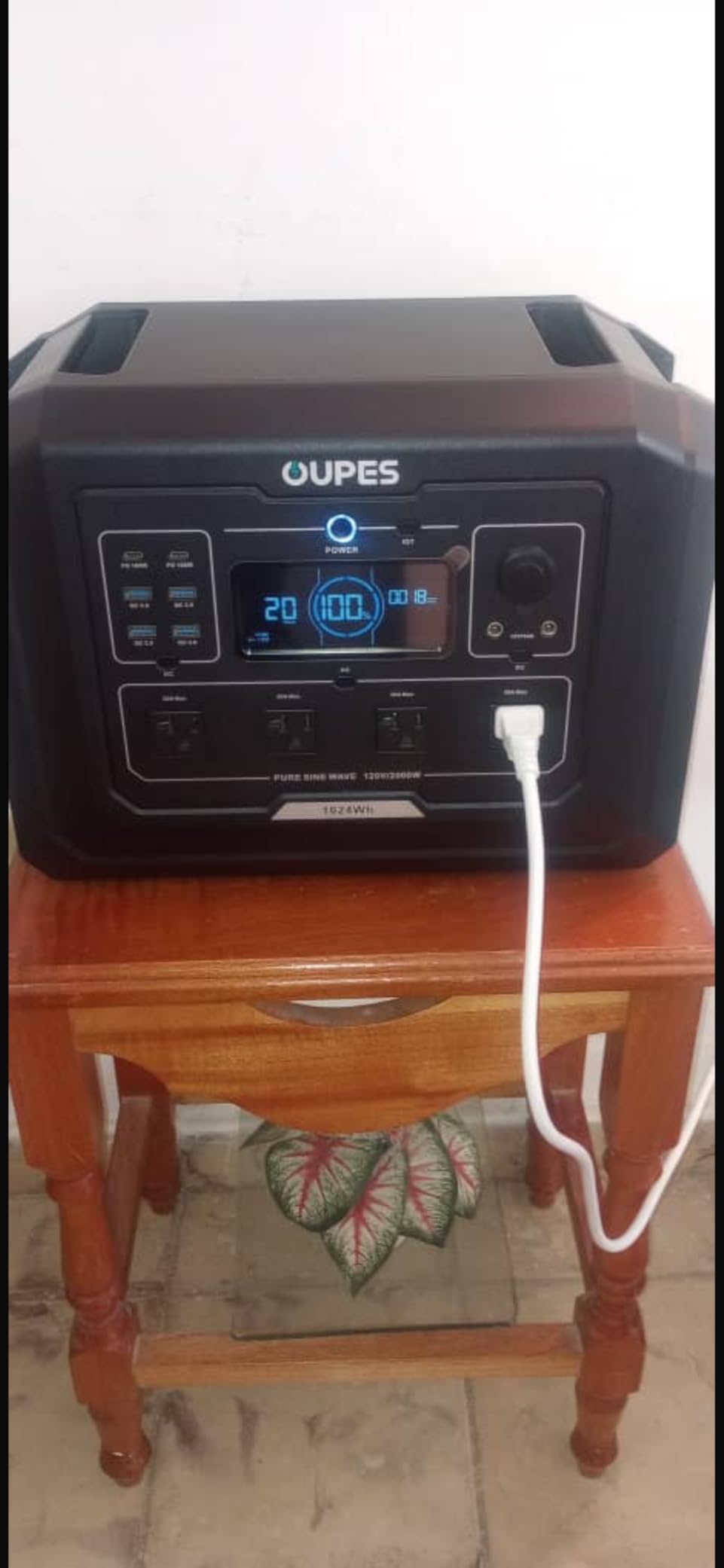
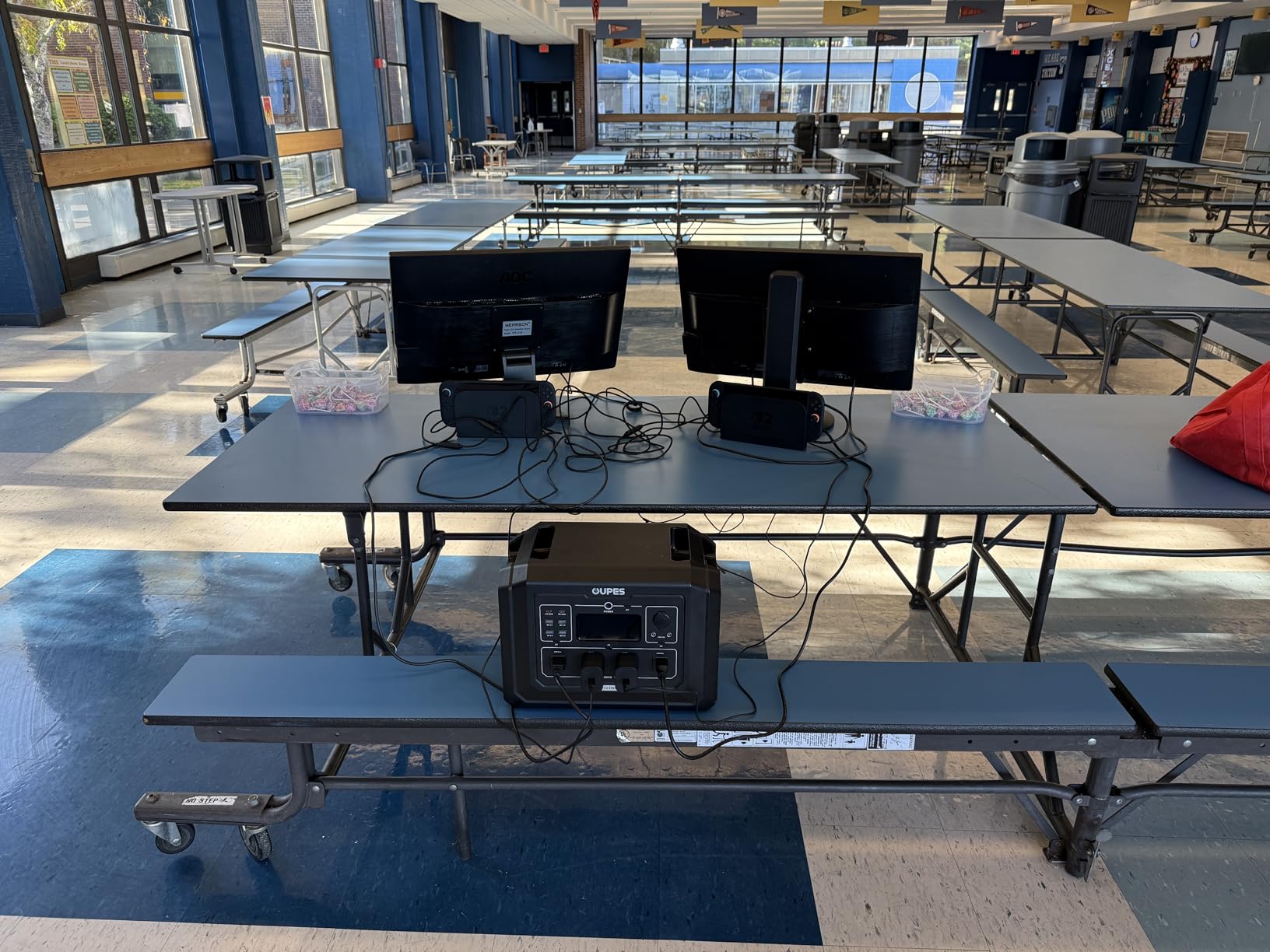
Charging is fast: 0 to 80% in about 36 minutes on AC, and 26 minutes when AC and solar run together. Solar input is 800W through MC4 connectors, the joint highest in this group, so a 400W panel pair can refill it in a single good day. There are dual 100W USB-C PD ports and four QC3.0 USB-A ports alongside four spaced AC outlets that avoid plug crowding.
Reviewers consistently frame it as the best power-per-dollar option in the 1kWh tier, and customer support draws specific praise when problems do occur. LiFePO4 cells are rated at 3500+ cycles with a five-year warranty, and pass-through charging lets it run a fridge while it recharges.
Read the surge number carefully
The advertised 4500W surge is optimistic. Some owners report units tripping between roughly 2050W and 2200W. Plan on 2000W continuous and about double that for a brief start surge, and size any well pump or compressor assumption against the lower figure.
That is a real constraint, and it is the reason this does not take the top spot despite excellent value. A cabin with a well pump wants a genuinely rated high-peak unit, and honest headroom matters more than a number on a box.
Build and app weaknesses to plan around
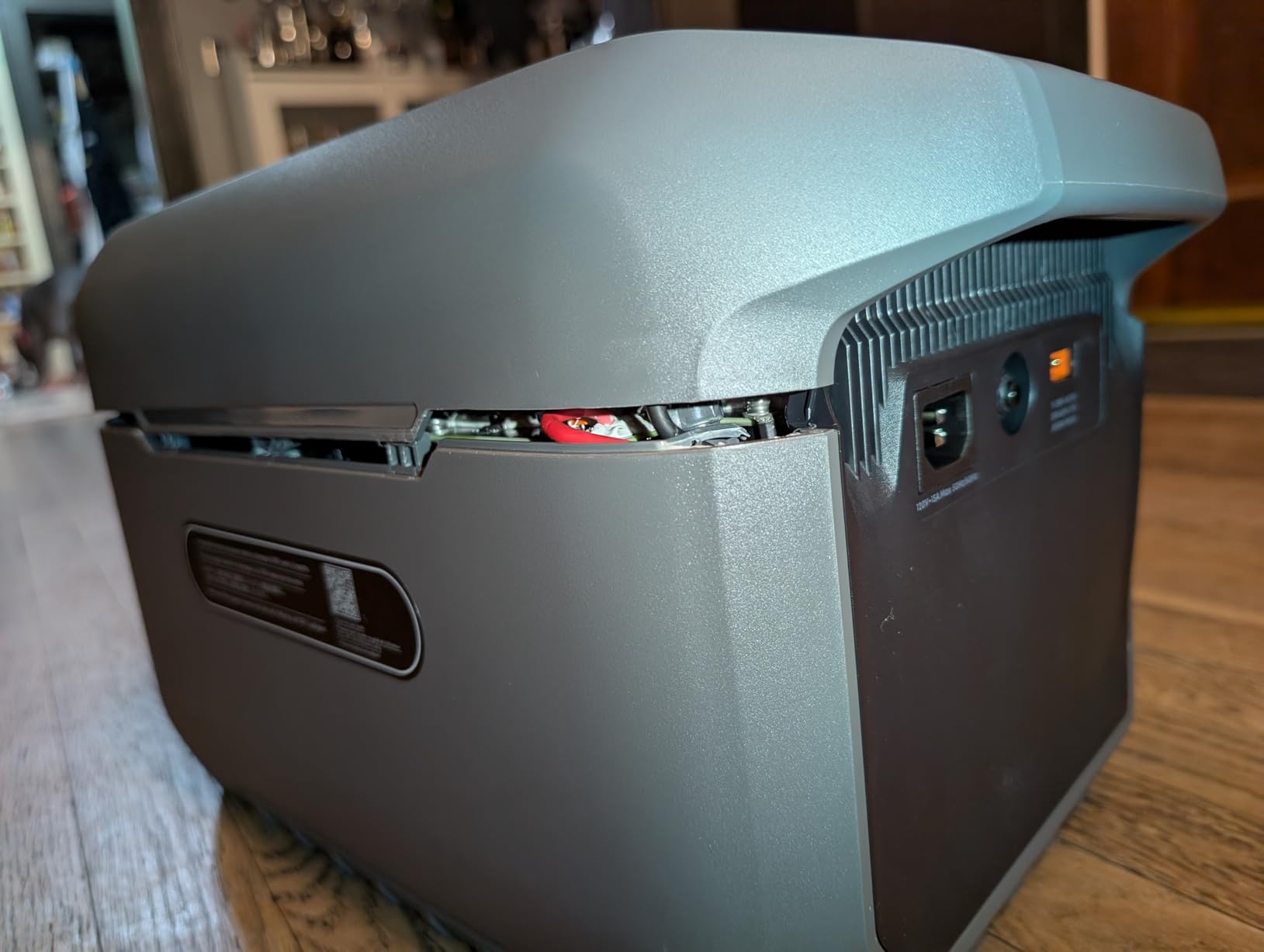
The housing is plastic and not weather resistant, so this unit lives indoors and stays there. Cooling fans run continuously during charging and are loud under heavy load, which is fine in a basement or mudroom and annoying in a sleeping cabin.
The app is basic, with no cell state or temperature detail, and Wi-Fi connectivity in the app is reported as unreliable. Bluetooth control is the dependable path. The proprietary charging cable is the item to watch, because a replacement is not something you can walk into a hardware store and buy.
5. Anker SOLIX C2000 Gen 2 – Best for Full-Time Cabin Living
Anker SOLIX C2000 Gen 2 Portable Power Station, 2,048Wh, 2,400W, Camping
- 9W standby draw so a fridge on its own loses very little per hour
- Expandable to 4kWh with an extra battery for multi-day runs
- 4000W peak can start window and RV air conditioners
- 800W alternator charging fills it from a car in about 3 hours
- Limited written owner detail on this listing
- Expansion battery and alternator charger are sold separately
- 41.7 lb needs two hands or a cart
If you live at the cabin rather than visiting it, idle draw becomes the number that matters most. A power station that sips 30W while doing nothing will eat a refrigerator-sized amount of stored energy every day without powering anything. The C2000 Gen 2 draws 9W standby, which is why Anker rates it at 32 hours on a dual-door fridge from a single charge.
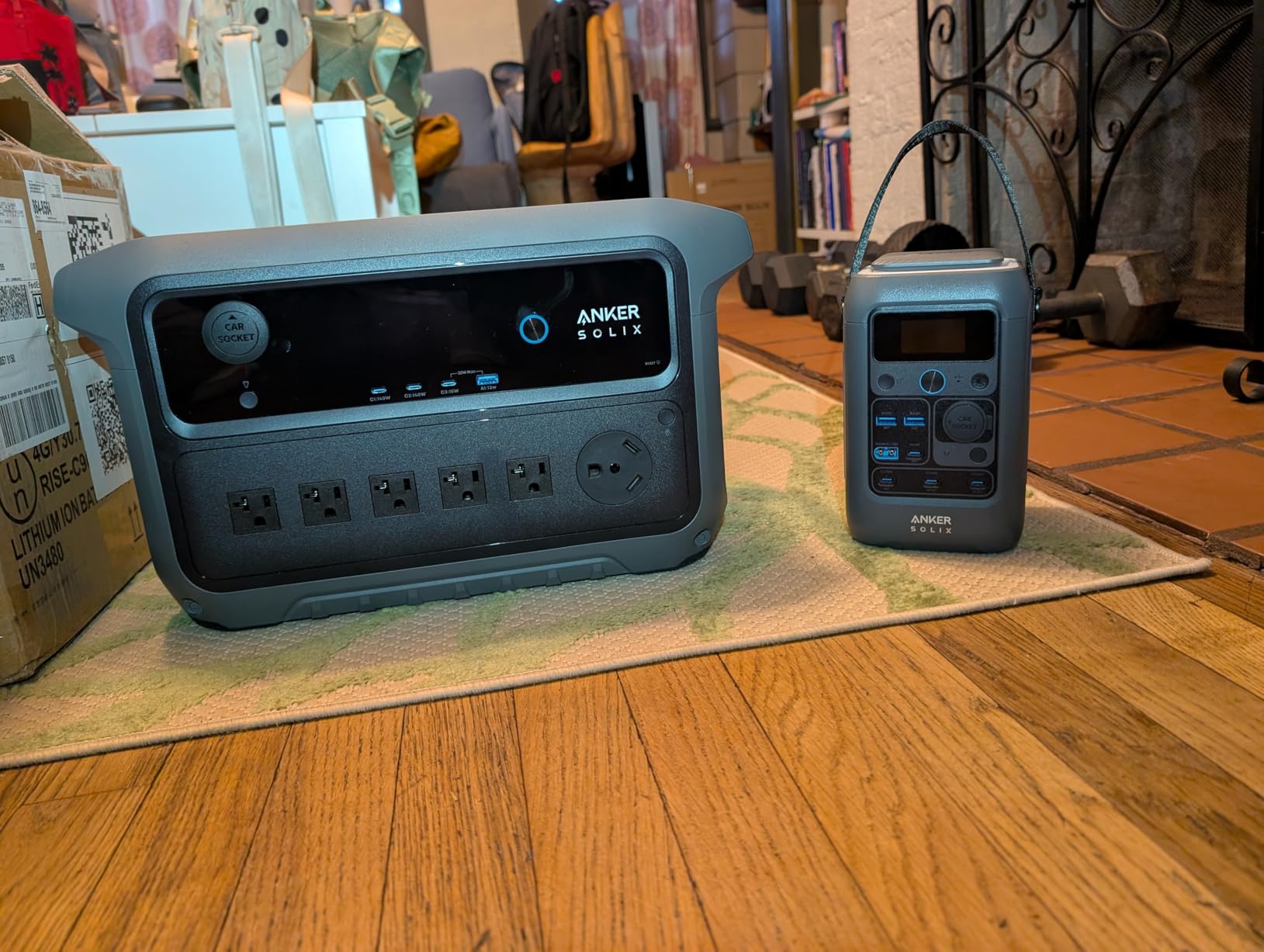
That is the design choice that makes it a full-time unit rather than a weekend one. It also expands to 4096Wh with an additional battery, giving roughly three to four days of a basic cabin load without any sun at all, and the 2400W rated output with 4000W peak is enough headroom to start a window or RV air conditioner, which most units in this list cannot do.
There are six recharge paths, and the 800W alternator charging path is the one cabin owners care about most. It fills the unit in about three hours from a vehicle, which turns a pickup truck into a genuine generator replacement on a supply run. Full charge from AC plus solar takes about 58 minutes.
At 41.7 pounds it is described as 25% lighter and 29% smaller than comparable units, which is meaningful in a category where everything else is heavier. A five-year warranty covers a multi-year install, and the LiFePO4 chemistry suits daily cycling far better than older cells.
What full-time living demands that weekend use does not
A weekend cabin can absorb a bad solar week by driving to a shop with a wall outlet. A full-time cabin cannot, so the 2kWh starting capacity and the expansion to 4kWh are the minimum sensible configuration, not a luxury. Size solar for your daily load, then use the expansion battery to cover the overcast stretch.
The nine-watt idle draw also means a laptop, a router and a few LED lamps left plugged in overnight cost you very little. That is a different ownership experience from units that lose 15 to 20W doing nothing.
The tradeoffs to accept
Written owner detail on this specific listing is thinner than for the other picks, so the decision rests on specifications and the rating rather than a large body of owner reports. Buyers who need a handle on real-world behaviour should read the expanded Anker SOLIX entries here instead.
Both the expansion battery and the alternator charger are separate purchases, which pushes the true cost of a full-time setup above the headline figure. At 41.7 pounds it is a two-person lift or a cart job, so choose its permanent home before it arrives.
6. Anker SOLIX S2000 – Best for Refrigerator Duty
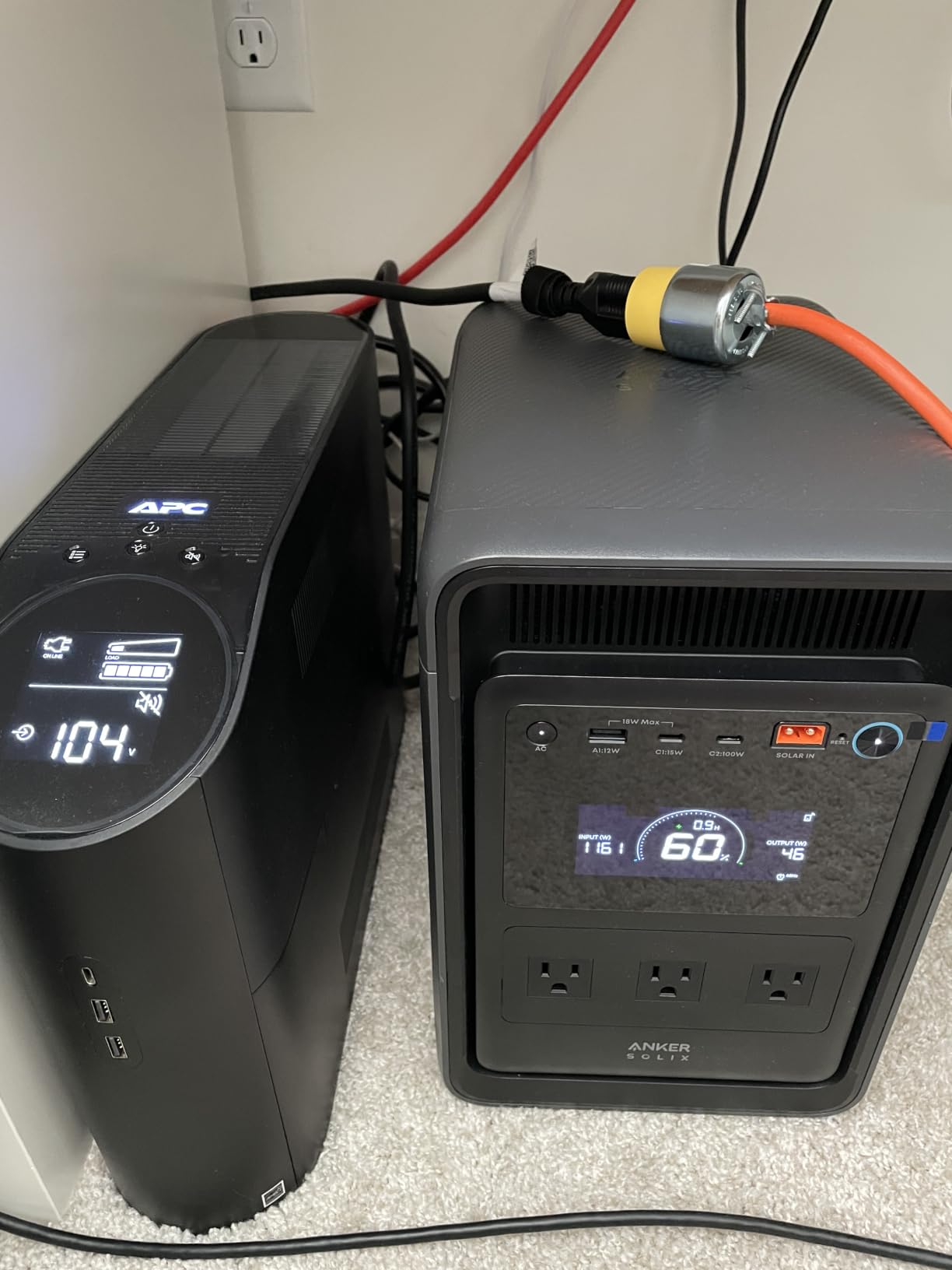
- Only 6W idle draw and about 3W in UPS mode so small loads barely cost you
- Smallest and lightest 2kWh body here at 35.7 lb
- Front and rear outlets separate always-on from switched devices
- Charges from 33 to 100 percent in about 1.5 hours at 1200W
- App lets you cap charge and discharge levels to protect the cells
- No 12V DC port for car fridges
- Cooling fan drones loudly while charging at 1200W
- 35 lb needs a two-hand carry and 1500W is modest for a well pump
If a refrigerator is the single load you refuse to lose, this is the unit to buy. The S2000 holds 2010Wh of LiFePO4 capacity, runs 1500W continuously, and Anker rates it at 35 hours on a full-size fridge from one charge. Owners report the same figure in practice, along with network racks running for 13 hours.
It also has the lowest idle consumption here at 6W, dropping to about 3W in UPS mode. A refrigerator’s compressor cycle means the unit is effectively always on, so every watt of idle draw comes straight out of your runtime. That 3W figure is the single best number on this list for fridge duty.
The battery is rated at 10000 cycles, and Anker pairs that with a five-year warranty, which is the strongest endurance claim in this group. Front and rear outlet banks let you leave a fridge permanently plugged in without cycling the whole unit every time you need a USB port, and the app lets you set charge and discharge limits to protect cell life.
Recharge options number six, including 400W solar input, wall, generator, alternator and car outlet. Several owners report charging from 33% to 100% in about an hour and a half at a sustained 1200W, and one confirmed it handles a window air conditioner and an induction cooker without trouble.
The 1500W ceiling and what it rules out
1500W continuous is modest for motor-starting loads. A well pump typically draws 800W to 1000W but spikes far higher on start, and this unit is not the right answer if drawing water is a daily necessity. Choose the C2000 Gen 2 or the Jackery Explorer 2000 v2 if a pump is in the load list.
There is also no 12V DC car port, which matters if you planned to run a portable car fridge from it. Plan to use the AC inverter for that instead and accept a small efficiency loss.
Everyday handling issues
The cooling fan is reported as loudly droning while charging at 1200W, so fast top-ups are audible in the room. Silent charging modes on the Jackery units are quieter if the cabin is your bedroom.
At 35.7 pounds it needs two hands, and a few owners reported a strong chemical smell on the very first charge that cleared after the first full cycle. Ventilate the room for that first charge.
7. Jackery Explorer 2000 v2 – Best Two-Panel Solar Bundle
Jackery Explorer 2000 v2 and 2x200W Solar Panels, 2042Wh, 2200W AC Output
- Smallest and lightest 2kWh body in this class
- Cell-to-Body design is 41% lighter than conventional 2kWh units
- Runs silently with no fumes so it can sit indoors
- 20ms UPS holds computers and networking gear
- Bundle includes two 200W solar panels
- Full bundle weighs 66.8 lb so the panels and station are separate lifts
- 0-80% takes 66 minutes on AC
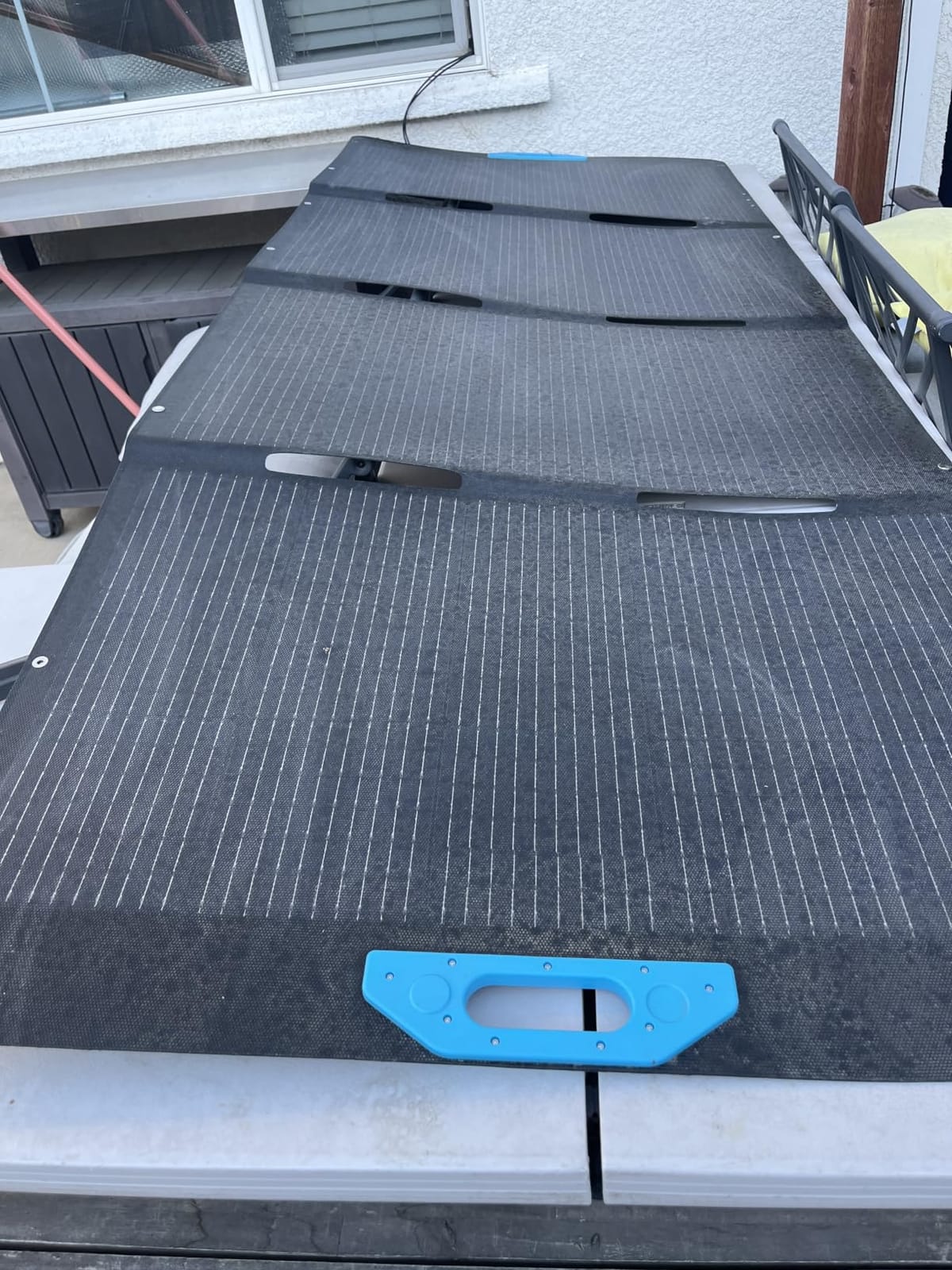
- Panel alignment must be adjusted periodically for maximum input
Two panels in the box is the reason this bundle is on the list at all. At a cabin with no grid, the difference between one 200W panel and two is the difference between a battery that tops up daily and one that does not. The bundle also includes the AC charging cable, so nothing else is needed to go off-grid on day one.
Under the hood it is 2042Wh of LiFePO4 with 2200W of AC output across three ports and a 100W USB-C PD port for laptops. Jackery rates the cells for up to ten years of daily use, and the unit carries a five-year manufacturer warranty plus UL1778 test certification as an uninterruptible power supply.
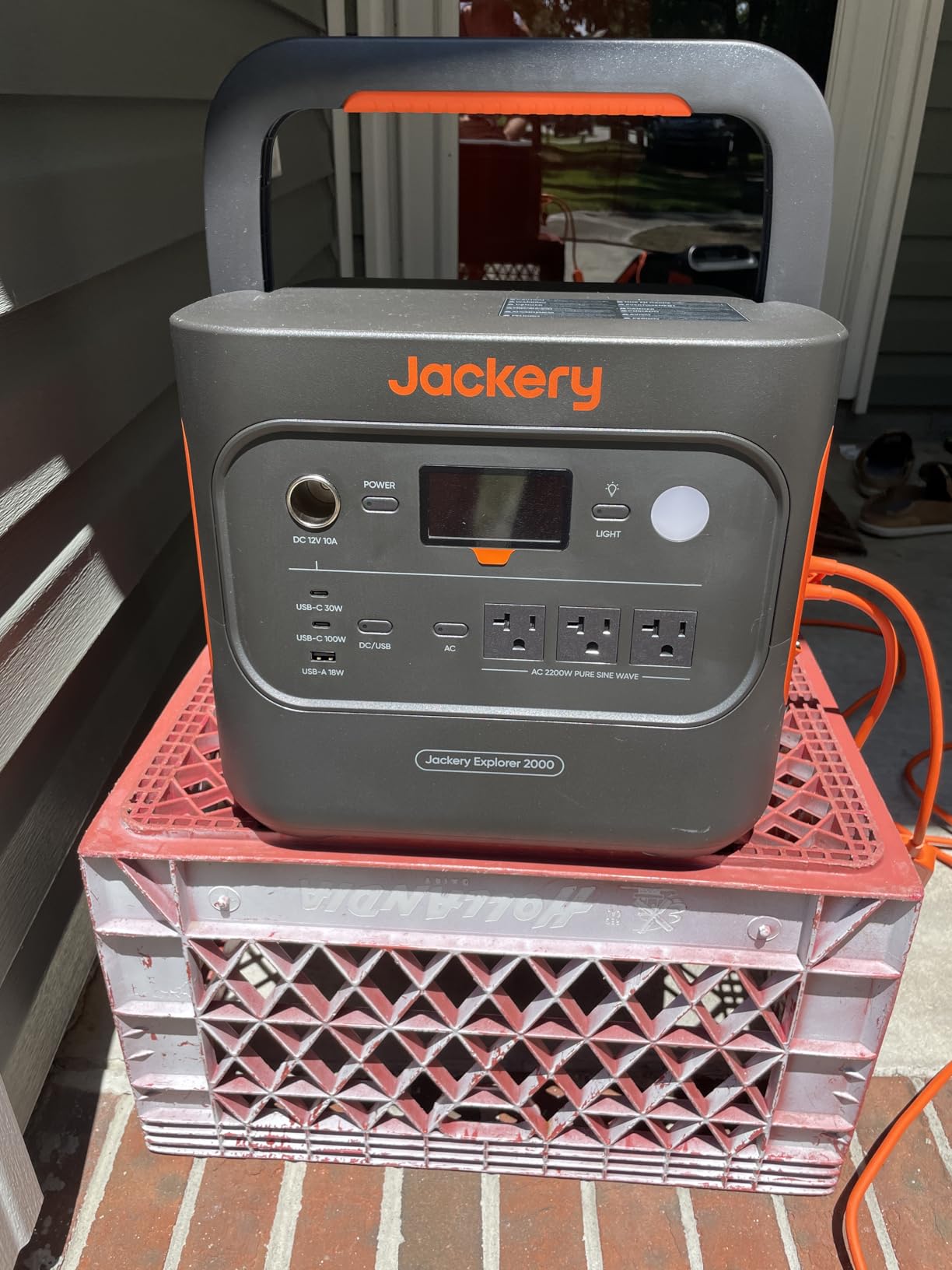
Charging is 0 to 80% in 66 minutes on AC, with a full charge in 102 minutes in Emergency Super Charging mode. From solar, a full charge takes about six hours with the two 200W panels in typical conditions, and a silent charging mode runs the cooling fan at 30dB for overnight top-ups in a sleeping cabin.
Cell-to-Body packaging is why it is only 39.5 pounds. That is lighter than most 2kWh units and the reason it remains portable, but note the full bundle is 66.8 pounds, so the station and the panels are realistically two separate carries.
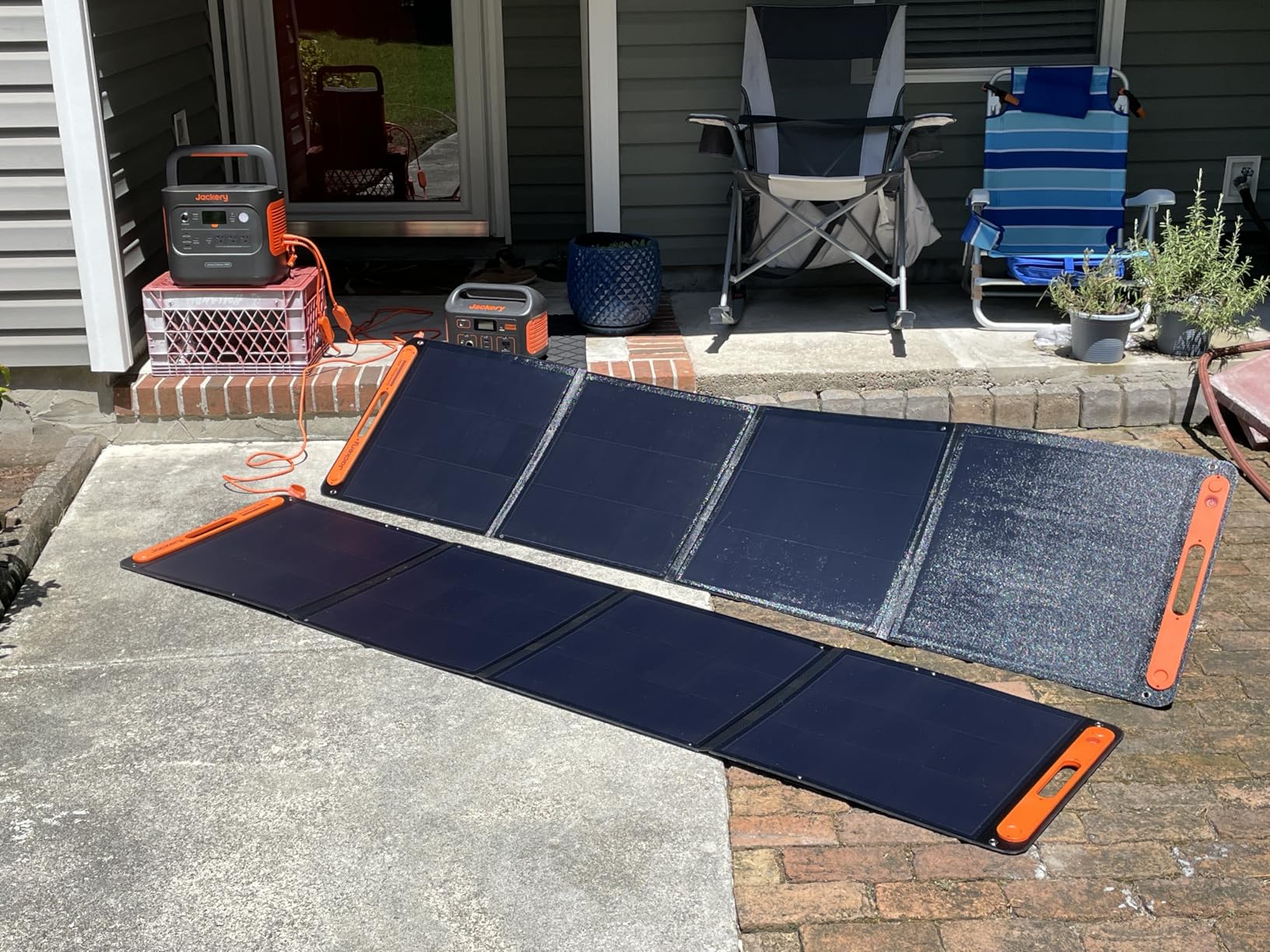
Panel logistics are the real cost of a bundle
Two rigid panels need somewhere to mount, somewhere to store and time to re-aim through the day. A cabin roof with two clear south-facing positions is ideal; a shaded forest cabin is not. If your site is heavily wooded, budget for a longer charging window and check the alignment note below.
Owner feedback on this specific bundle listing is light on detail, so the specifications and the 4.6 rating carry more weight here than a large body of individual reports would. If you need more documented behaviour, the S2000 and the AC180 are better evidenced.
Where it falls short of rivals
The 400W solar input ceiling is half of what the DABBSSON 2000L and the Mega 1 accept, so the bundled panels use the full input but leave no room to add a third. The 20ms UPS is also slower than the 10ms on the Anker SOLIX units, which matters if you run a NAS or a network that drops sessions.
It has three AC ports rather than the six to eleven offered elsewhere in this list, so more simultaneous appliances means more external power strips.
8. DABBSSON 2000L – Best for 800W MPPT Solar Input
- Semi-solid LFP cells deliver measurably longer runtime than standard LFP
- 800W MPPT solar input with hybrid dual-input
- Full AC recharge in about 1 hour
- Ran two full-size fridges and two chest freezers for 7.5 hours
- 2200W handled a 1400W coffee maker air fryer and microwave
- UL94-V0 flame-retardant housing
- Cooling fan cycles on periodically even at zero load and is audible at 20 feet
- Wi-Fi pairing needs a 2.4GHz network and Bluetooth pairing is also fiddly
- Charge limit settings did not persist for some owners and one unit shut off under a light 100W load
The DABBSSON 2000L solves the problem that hurts most off-grid cabins, which is refill speed. Its 800W MPPT solar input is tied for the highest in this group, and with hybrid dual-input you can combine wall and solar charging. Full AC recharge in about an hour keeps it ready between visits, and the semi-solid LiFePO4 cells claim 1.3 times the runtime of a standard 2048Wh station.
Output is 2200W continuous with a 3300W power boost, and owners report it handling a 1400W coffee maker, an air fryer and a microwave in testing. One owner ran two full-size refrigerators and two chest freezers simultaneously for seven and a half hours, which is the kind of real-world result most listings only claim on paper.
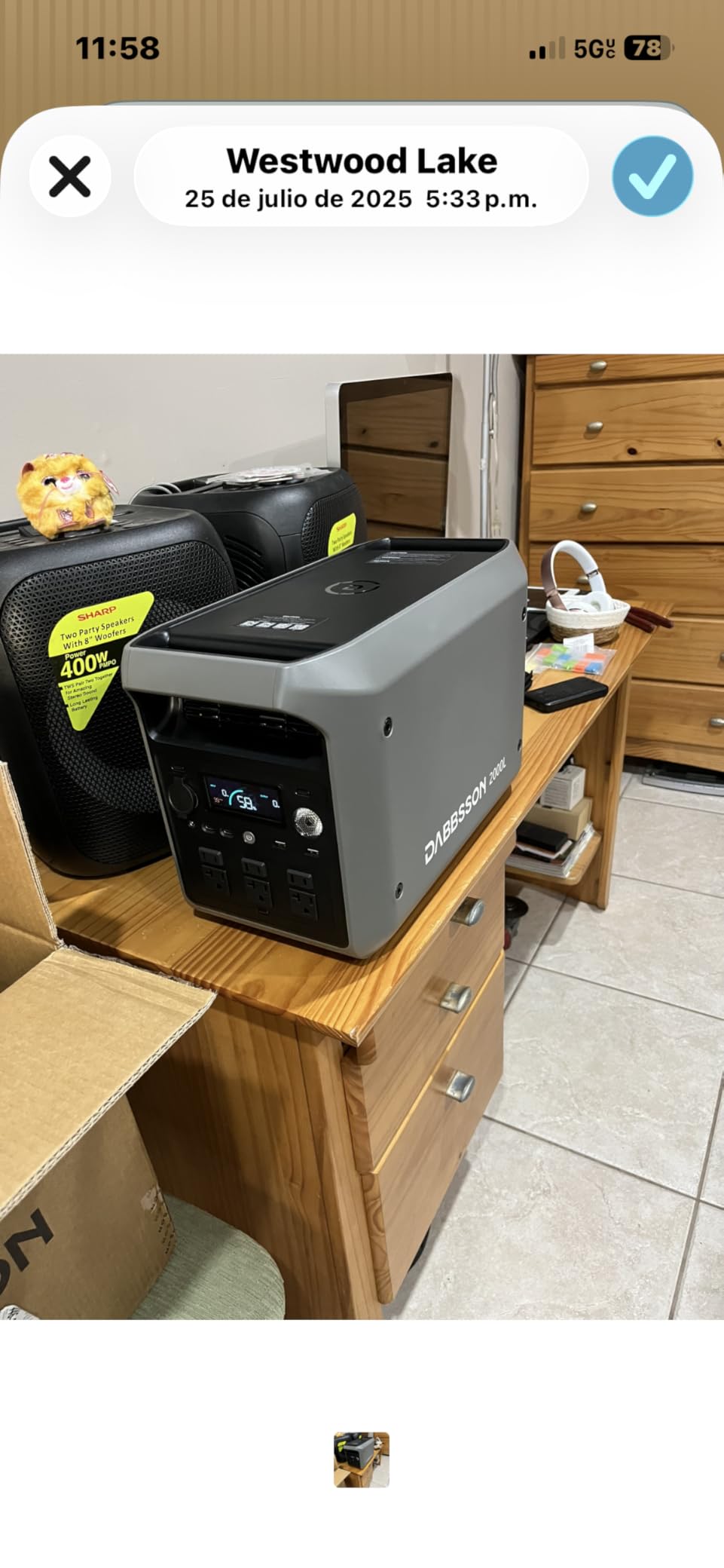
There are six AC outlets, under 15ms switchover for computers, NAS and routers, pass-through charging so the unit runs appliances while recharging, and a built-in multi-mode LED light. The housing is UL94-V0 flame-retardant, which is a sensible specification for a unit living inside a wooden cabin.
At 41 pounds with built-in handles it is a two-hand carry, and pass-through charging plus hybrid dual-input give real flexibility in how you recharge. The app supports charge scheduling over Wi-Fi and Bluetooth, and a five-year warranty covers standard plus extended coverage.
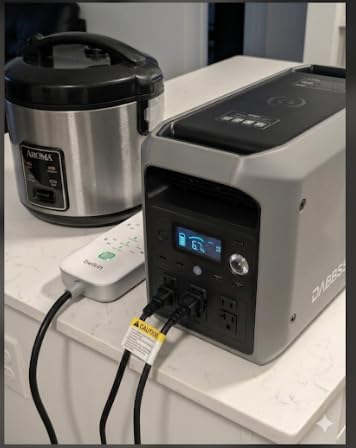
The fan is the flaw people notice first
Owners report the cooling fan cycling on periodically even at zero load, audible at roughly 20 feet. In a quiet cabin that becomes the background sound of your week, and it is the most repeated complaint in reviews of this unit.
Pass-through mode also produces repeated clicking between the battery and the AC side, which sounds alarming the first time you hear it. It is normal behaviour for this mode, but worth knowing before you assume a fault.
Firmware and reliability caveats
Wi-Fi pairing requires a 2.4GHz network and can be difficult, and Bluetooth pairing is reported as fiddly too. Charge and discharge limit settings did not save for some owners, which removes a useful battery-protection tool.
One owner reported a unit shutting itself off unexpectedly below 40% under a light 100W load, and USB-C port count is thin with no USB-C input charging. Owners with experienced setups rate it as the best price-to-output option among 2kWh units, but expect some hands-on configuration.
9. Jackery Solar Generator 1000 v2 – Best Starter Kit with Panel
- Only 23.8 lb with a foldable handle for one-person carry
- Kept a 32-quart portable fridge running for three days in heavy rain
- Charges while simultaneously powering a fridge and phones
- The 200W panel held the battery topped up in overcast conditions
- LFP battery holds over 70% capacity after 4000 cycles
- Bundled 200W panel is unwieldy
- sags and blows over without props
- Short panel cable makes it hard to avoid partial shading
- One-hour emergency charge mode needs app activation and shortens cell life
This is the strongest seller here by review volume, and the reason is simple: it is the least fiddly package. A 1070Wh LiFePO4 unit, a foldable 200W SolarSaga panel and 23.8 pounds of total weight give you a working off-grid kit without a second purchase or a compatibility decision.
Owners report running a 15-year-old full-size side-by-side refrigerator for nine hours overnight in a real outage, and keeping a 32-quart portable fridge running for three days straight through heavy rain. It also charges while simultaneously outputting, so the fridge never has to stop while the battery refills.
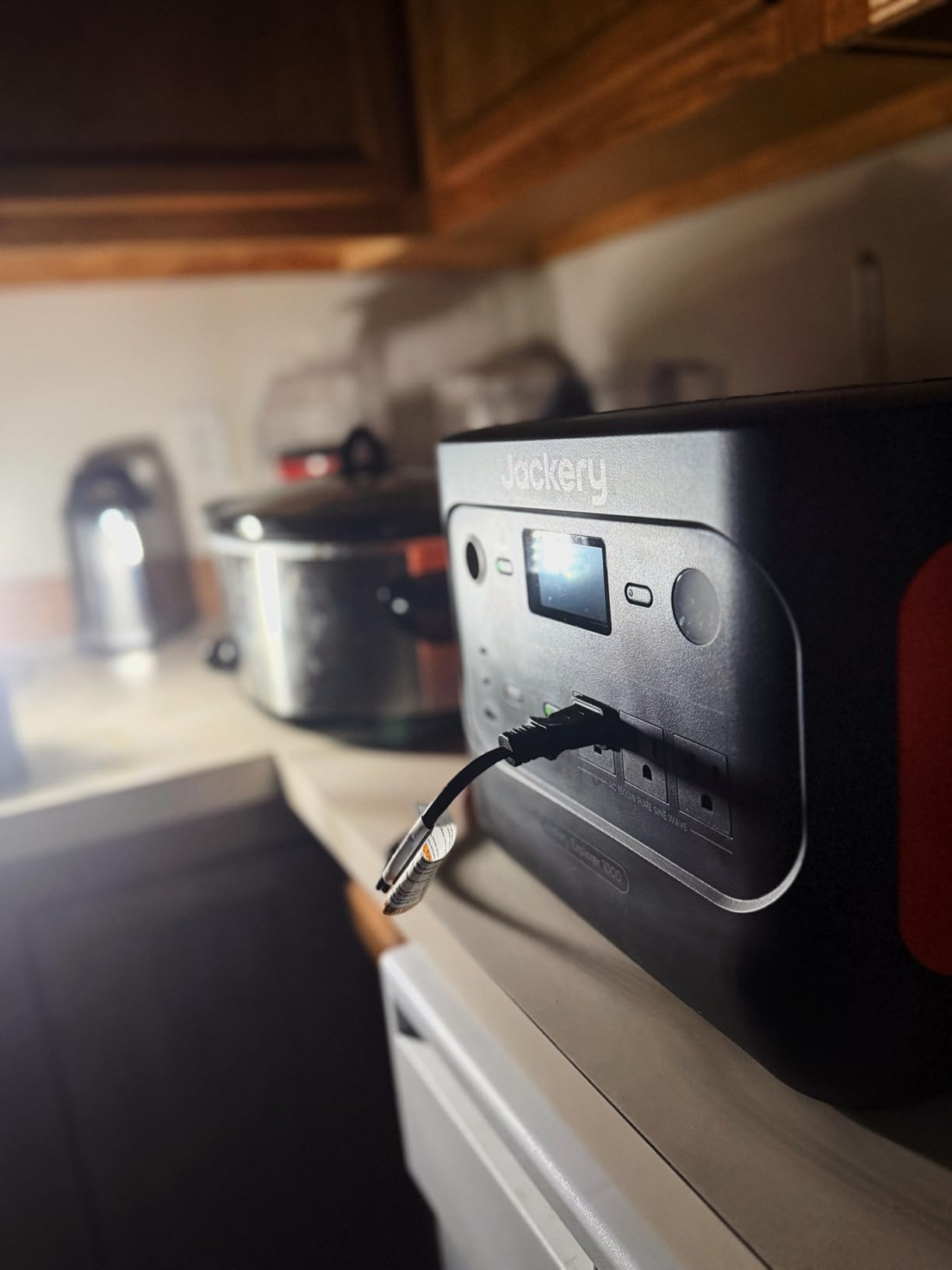
Output is 1500W continuous with 3000W surge across three pure sine wave AC ports, plus two USB-C, one USB-A and a 12V car port. That port mix is one of the broadest on a 1kWh unit, and the pure sine wave output matters for sensitive electronics. The LFP battery holds over 70% of capacity after 4000 cycles, more than ten years of daily use.
Charging is 0 to 100% in one hour with app-activated emergency charging and 1.7 hours by default. A 30dB quiet mode handles overnight top-ups, and a 600W alternator charger fills it in three hours if you want a vehicle as your refuel point.

The panel is the weak point, not the station
Almost every complaint in reviews of this bundle concerns the 200W panel rather than the power station. It sags in the middle, blows over without props and needs real anchoring at a windy site, and the short cable makes it awkward to keep the panel clear of partial shade.
Panel alignment also has to be adjusted periodically for maximum input, and the generator and panel may ship as separate items, which confuses first-time buyers. If you buy this for the convenience, mount the panel properly from day one rather than leaving it flat on the ground.
When to spend the extra for a bigger unit
200W of solar input is the lowest meaningful figure here, so recovering a full 1070Wh from empty takes most of a good day. A cabin with three or more cloudy days in a row will drain it faster than it refills.
The one-hour emergency charging mode needs the app and reviewers note it shortens battery lifespan, so use the standard 1.7-hour mode as your normal setting. If you need heat, a well pump or power tools, move up to the 2kWh class instead.
10. EBL 2400W – Widest Port Selection for a Shared Cabin
- 1843Wh at 2400W continuous is unusually high capacity for the class
- Charges up to 12 devices at once which suits a shared cabin
- Widest port selection including a wireless charging panel
- 0.1 second switchover protects computers from data loss
- LiFePO4 cells rated 3500+ cycles and a 10+ year service life
- Lowest average rating in this group with 12% one-star reviews
- Only a 2-year manufacturer warranty which is the shortest here
- Heavy at 54 pounds
- Brand support and app maturity trail the established competitors
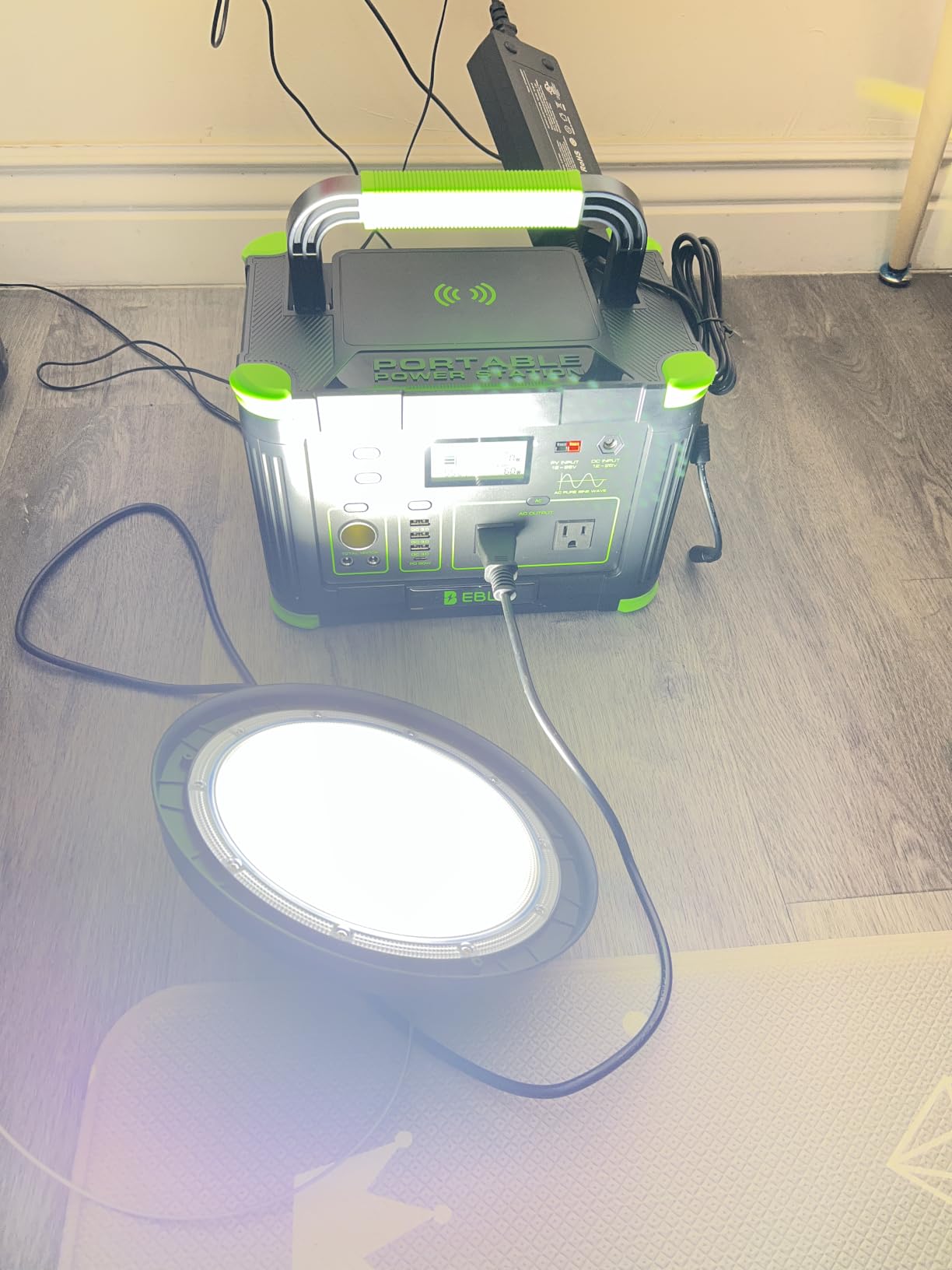
The EBL 2400W makes its case on ports and simultaneity. It runs up to 12 devices at once, with four AC ports, two USB-A, two fast USB-C, two DC ports, a car port and a wireless charging panel. For a bunkhouse or a shared cabin where several people charge at the same time, that is a genuine practical advantage over units with three or four AC outlets.
Capacity is 1843.2Wh of LiFePO4 with 2400W of continuous output, and the cells are rated at 3500+ cycles for a claimed 10+ year service life. A 0.1 second emergency power mode switchover protects computers from data loss, and a four-mode LED light covers outage lighting.
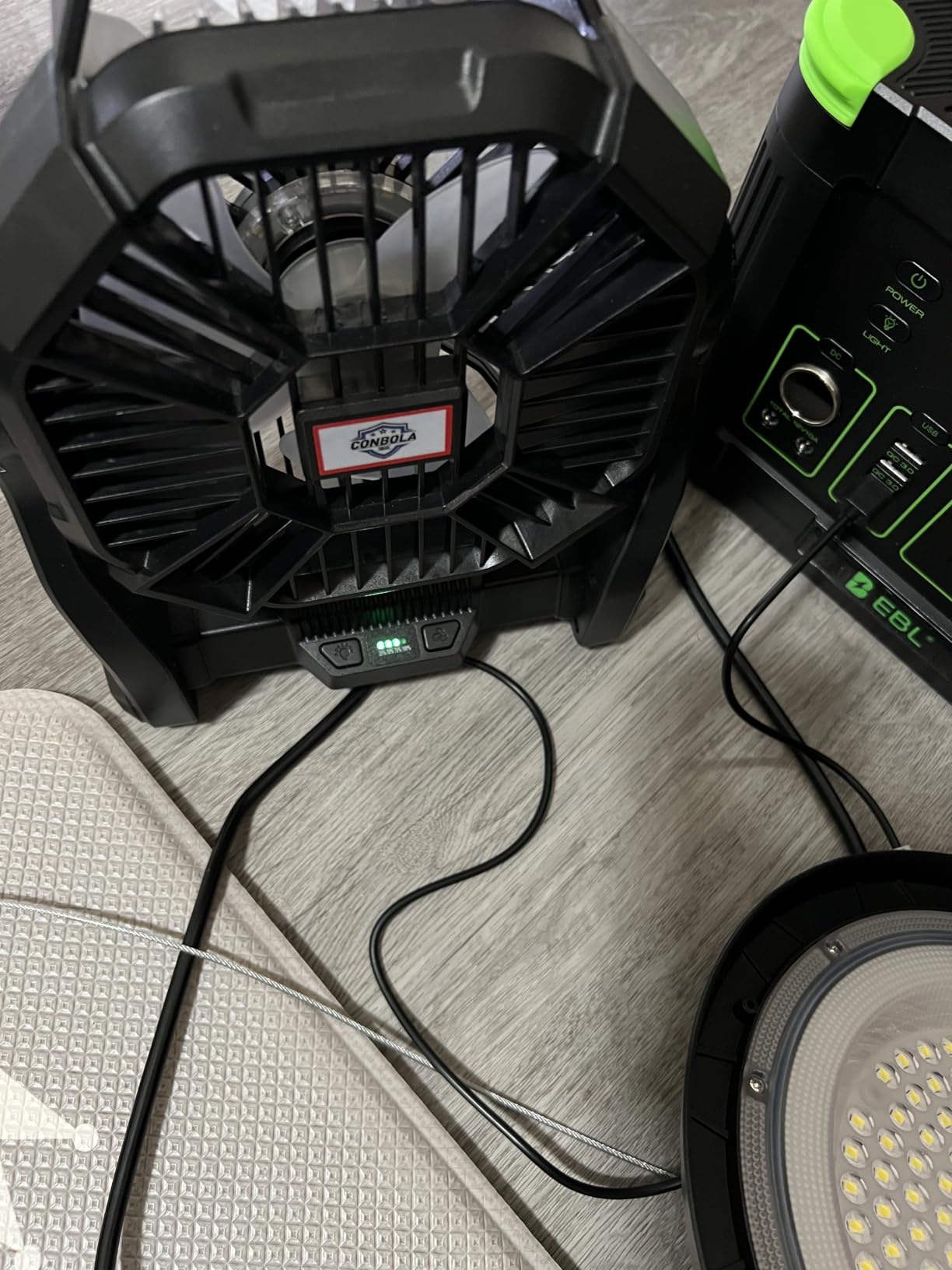
Built-in protection covers overcharge, over-discharge, short circuit and high temperature, and the housing is shock-resistant and flame-retardant with dual-side handles for transport. A clear display shows remaining battery and working status, which suits a unit that will sit in plain view rather than behind equipment.
Satisfaction centres on getting 2400W out of an 1843Wh pack, which is where its rating comes from. Owners running a group or a cabin value the 12-device capability and the broad port selection over any single premium feature.
Why this ranks tenth despite strong specifications
It has the lowest average rating in the group, with 12% one-star reviews against 4 to 6% for the other picks. That gap reflects dissatisfaction with build and support consistency rather than with the electrical design, and for a multi-year cabin install consistency is the part that matters.
The two-year manufacturer warranty is the shortest here by three years, against five years on most of the list. For a unit expected to cycle daily through seasons, that is a meaningful difference in what you are protected against.
Handling and longevity tradeoffs
At 54 pounds it is the heaviest unit in this roundup, and the only one above the point where a single person should lift it unaided. Plan a permanent floor position and a two-person move.
Brand support and firmware and app maturity trail the established competitors, which matters most if you intend to set charge limits or schedule charging from the app. If the broad port selection is not decisive for your cabin, a five-year-warranty unit is the safer long-term buy.
How Big of a Power Station Does an Off-Grid Cabin Need?
Add up your watts, multiply by hours per day, cover two to three sunless days, and divide by 0.85 for inverter losses. A standard refrigerator draws about 4000Wh per 24 hours, so two days of fridge alone points to roughly 10000Wh, which in practice means a 2000Wh unit recharged daily by 400W to 600W of solar.
Start from a real cabin load list rather than a spec sheet. These are the numbers most cabin owners are actually working with, drawn from what off-grid households report running:
Refrigerator or freezer: about 150W running, cycling on and off, roughly 4000Wh per day. Chest freezers draw less but run more continuously. LED lighting: 5W to 15W per room. Wi-Fi router and modem: 10W to 20W combined, running 24 hours. CPAP machine: 30W to 60W, overnight only. Phone and laptop charging: 10W to 65W while in use. Summer fan: 40W to 60W. Well pump: 800W to 1000W average, spiking on start. Power tools when building out: 800W to 2000W intermittently.
For the baseline weekend load most people describe, which is a few lights, phone charging and a small fan in summer, you can total roughly 150Wh per day. Cover three days without sun and you are looking at 600Wh of storage, so a 1024Wh unit is genuinely comfortable and a 1152Wh unit leaves margin.
Once a refrigerator and a router join that list, the daily total jumps to roughly 4300Wh. Three days of cover means 13000Wh stored, which is where the 2kWh class with expansion starts to make sense, and it is also where solar stops being optional.
Use this formula for every load: runtime in hours equals watt-hours times 0.85, divided by device watts. On the AC180, a 4000Wh-per-day refrigerator works out to (1152 × 0.85) ÷ 150, which is 6.5 hours per full charge at running wattage, or about 27 hours once you account for the compressor duty cycle. The manufacturer’s 90% usable capacity figure trims that further, so plan on roughly 24 hours per charge without sun.
Well pumps deserve their own warning. A pump that draws 800W to 1000W but spikes on start can trip an inverter that is undersized for the surge even when the average draw looks manageable. Forum advice on powerequipmentforum treats the pump as the load that dictates the size of the whole system, and that is sound. If a pump is in your load list, size for surge headroom rather than average watts.
How Many Solar Panels Does a Cabin Power Station Need?
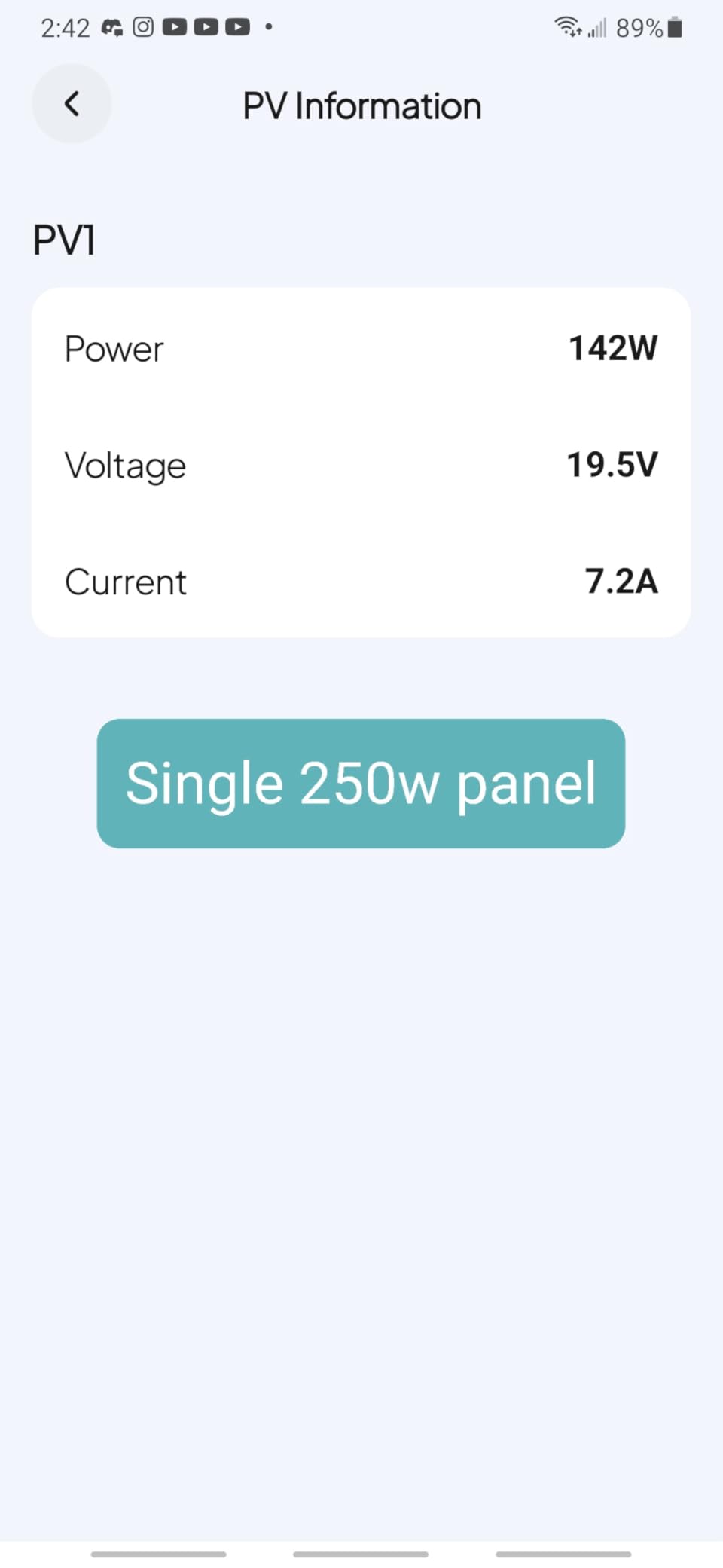
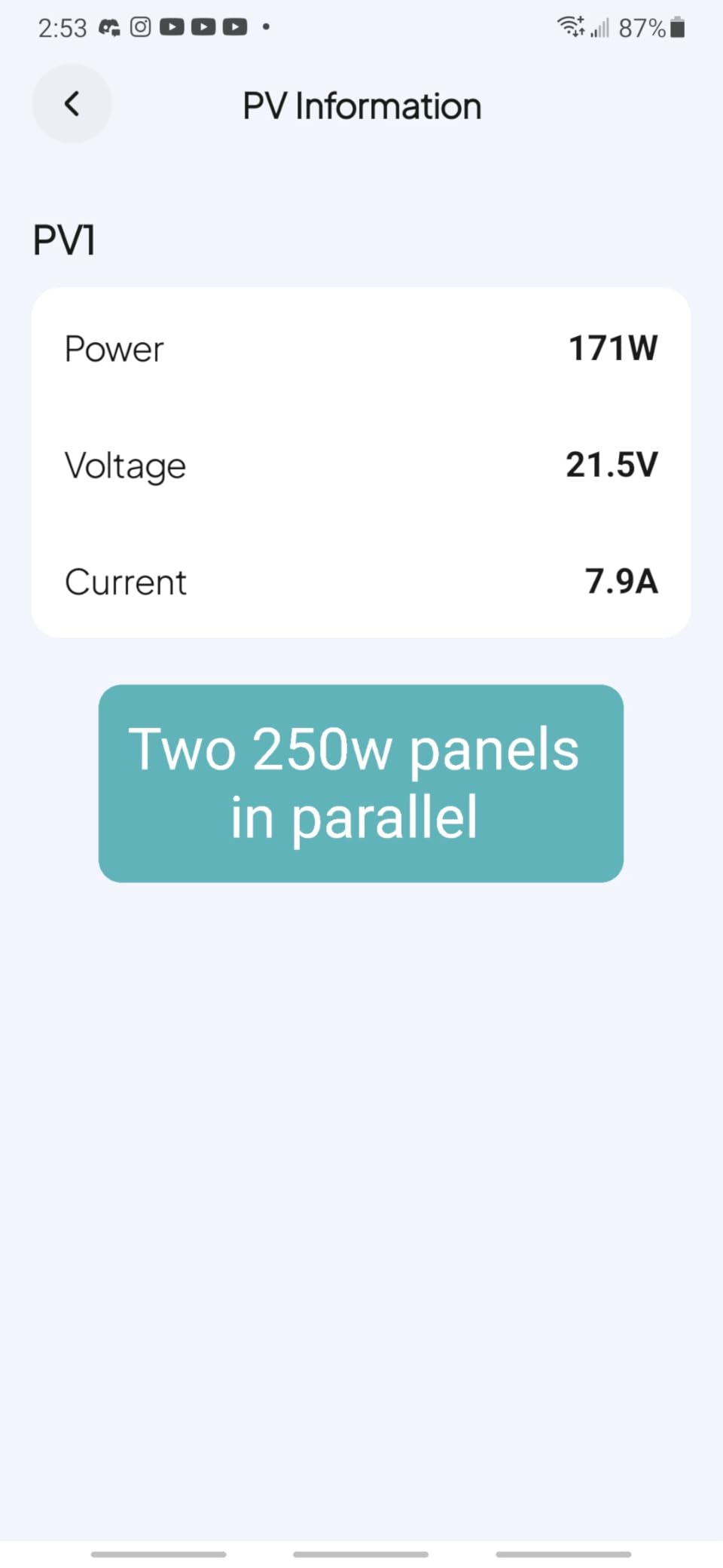
Divide the unit’s watt-hours by the panel’s wattage and by four to get the peak-sun hours needed for a full recharge. A 1152Wh unit on a 200W panel needs about 5.8 peak-sun hours, which is a full sunny day; on a 500W array, about 2.3 hours.
That is the optimistic case. Real-world recovery is roughly half, because panels produce well below rated output at low sun angle, partial shade and heat, and because no panel array charges a battery faster than the unit’s own solar input ceiling accepts. Budgeted against a 2000Wh daily load, that 4000Wh refrigerator day needs a 500W to 800W array to break even.
Match your panels to the unit’s input ceiling, not the other way around. The DABBSSON 2000L and the Mega 1 both accept 800W, the AC180 accepts 500W, the C1000 Gen 2 accepts 600W, and the Jackery 1000 v2 bundle accepts only 200W. Buying a 400W panel for a 200W input does nothing, and the panel choice deserves the same care as the unit. Our solar panel guide for off-grid cabins covers the mounting side.
Budget for the overcast week, because that is the scenario that ends off-grid plans. Three days with no useful sun on a 2000Wh unit and a 4300Wh daily load means a shortfall of roughly 9000Wh, which no panel array can make up in that window. The answer is either more stored capacity through expansion, a generator for storm weeks, or lowering the load by swapping the refrigerator for a more efficient chest freezer.
One more cold-weather point on charging. Panel output falls in winter even when the sky is clear, and cold reduces battery charging efficiency, so a 400W array in January may deliver what a 200W array delivers in July. Either upsize the array for winter months or accept a slower recharge and carry more stored capacity into the season.
LiFePO4 vs NMC for a Fixed Cabin
Every unit in this roundup is LiFePO4, and for a cabin that is the correct chemistry. NMC cells hold charge well in storage, but they degrade quickly when cycled deeply, and the off-grid forum consensus is that frequent deep cycling shortens their life. A cabin unit that sits at 20% every night in winter is exactly the use case that punishes NMC.
LiFePO4 cells are rated from 3500 to 10000 cycles here depending on the model, against roughly 500 cycles typical of older NMC packs. At one deep cycle a day, a 4000-cycle LFP battery is a decade-plus asset for a fixed installation, and 10000 cycles on the S2000 puts it well past the point where a cabin owner would replace the unit.
The tradeoffs are weight and cost. LFP packs are heavier for the same watt-hours, which is exactly why the whole list starts at 23.8 pounds rather than the 6-pound camping units, and why the Elite 100 V2’s 25-pound weight is a genuine selling point rather than a spec sheet line.
LFP is also the safer chemistry in a wooden building. None of these units are designed to be the only thing between your walls and a thermal event, but the thermal stability of lithium iron phosphate removes one variable from a stationary indoor install.
Cold Weather, Dust, and Where to Put the Unit
Lithium batteries do not charge well below freezing, and off-grid builders say so repeatedly. The commonly repeated line from a diychatroom sizing thread is that most batteries do not do well under 32F, which matters enormously for a winter cabin with a CPAP machine or a freezer in it.
Keep the unit indoors and keep it above 32F. That means a mudroom, a closet or a heated storage area, with the panel run outside and the cable brought in. If you cannot heat the space, treat deep winter as a generator season and size the battery accordingly.
None of the units in this roundup carries a meaningful IP rating for wet outdoor placement, and one owner explicitly reports the OUPES Mega 1’s plastic housing is not weather resistant. Treat every one of these as indoor equipment. Dust is less of a problem than moisture, but a cabin with a wood stove or a lot of sawdust should keep the intake clear.
Outlet waveform matters more than most buyers expect. A pure sine wave inverter like the Jackery 1000 v2’s protects sensitive electronics, and our pure sine wave inverter guide explains when modified sine wave is and is not acceptable. Fans, hair dryers and resistive heaters tolerate it; motors, compressors and some medical equipment do not.
When a Portable Power Station Is the Wrong Answer
Space heat, window air conditioning and well pumps are where power stations stop being the sensible answer. Heating elements draw 1500W and up and run for long stretches, and a resistive space heater would empty a 2000Wh unit in well under two hours.
The specific downsides, so you are not finding them after delivery:
Sun dependence with no fallback. A cabin has no grid, so a multi-day overcast stretch is a real emergency rather than an inconvenience, and most units accept only 200W to 800W of solar input, which is often not enough to catch up.
Advertised runtime is optimistic. Inverter conversion loses roughly 15%, several units in this roundup state only 90% of rated capacity is usable, and idle draw of 6W to 20W silently reduces runtime on small loads.
Weight. Everything above about 25 pounds is a two-person move or a cart job, and 54 pounds is genuinely a problem on a rough path.
Capacity decay. Every battery loses capacity over years of daily cycling, and a charge held partly full for months is harder on cells than regular use. Forum experience is that modern lithium batteries tolerate sitting mostly full, but frequent deep cycling shortens life.
No grid-quality power for some loads. Several units show measurable harmonic distortion, and a few have never been tested with a heavy induction or microwave load.
Cold charging limits. Below freezing, charging slows or stops entirely, which can strand a battery at a low state of charge at the worst time of year.
App dependence. Several units here gate charge limits and scheduling behind a phone app, which is awkward at a site with no cell signal, and a few reviewers report Wi-Fi pairing that never succeeds.
What a power station genuinely cannot do: run electric space heat, window or central air conditioning, an electric water heater, a clothes dryer or an electric range. For any of those, a generator or a properly engineered fixed solar system with a grid-tie style inverter is the right tool, and our pellet furnace guide for off-grid cabins covers the heating side properly.
If you are replacing a gas generator, a realistic migration looks like this. The power station covers the fridge, lights, router, CPAP and phone charging, which is where a generator is least welcome because it cannot run indoors. The generator covers heat, tools and pump starting during storms. Most cabin owners who do this end up keeping both, and that combination is more honest than either system alone.
Frequently Asked Questions
How long will a portable power station power a refrigerator?
A standard refrigerator averages about 4000Wh per 24 hours, drawing roughly 150W while the compressor runs. Using the formula (watt-hours × 0.85) ÷ device watts, a 1024Wh unit gives about 5.8 hours of running wattage per charge, or roughly 24 hours once the compressor duty cycle is accounted for. The S2000 is rated for 35 hours and the C2000 Gen 2 for 32 hours on a fridge, because their idle draw is only 6W and 9W.
Can a portable power station power a house?
It can cover a cabin’s essential loads indefinitely, but not a whole house on battery alone. A 2000Wh unit with expansion to 4000Wh will run a refrigerator, lights, a router, fans and electronics for several days without sun. It will not run space heat, window air conditioning, an electric water heater, a clothes dryer or a well pump on battery alone, because those loads exceed what any portable unit can sustain.
What are the downsides of using a portable power station off-grid?
The main ones are sun dependence with no grid fallback, optimistic advertised runtime, physical weight above 25 pounds, capacity decay over years of cycling, and cold-weather charging limits below 32F. Additional drawbacks include measurable harmonic distortion on some inverter outputs, fan noise while fast charging, and app-only settings that are awkward where there is no cell signal.
Are LiFePO4 power stations better for off-grid cabins?
Yes, for a fixed cabin installation. Every unit in this roundup uses lithium iron phosphate, which is rated from 3500 to 10000 cycles here against roughly 500 cycles for older NMC packs. NMC cells degrade quickly under repeated deep discharge, which is exactly what a winter cabin at 20% charge does to a battery. LFP is also thermally more stable indoors, and the tradeoff is weight and cost.
What size power station do I need to run a well pump and refrigerator?
A well pump draws 800W to 1000W on average but spikes hard on start, so the surge rating decides the answer more than the average draw. Pair it with a refrigerator at about 4000Wh per day and you need roughly 2kWh of storage with expansion for two to three sunless days. Choose a unit with 4000W peak or more, and confirm the pump starts reliably before you rely on it.
Is Jackery or Anker better for an off-grid cabin?
It depends on which constraint matters more. Jackery packages are the more complete kits, bundling solar panels that let you go off-grid on day one, and the Explorer 2000 v2 carries two 200W panels. Anker SOLIX units have the lower idle draw at 6W to 9W, which is the deciding factor for refrigerator duty over long stretches, and they carry five-year warranties. BLUETTI and OUPES cover the 1kWh tier with the best capacity-to-weight ratios.
Final Verdict for Off-Grid Cabin Power
The BLUETTI AC180 is the best portable power station for most off-grid cabins in 2026. Its 1152Wh of LiFePO4 capacity, 1800W continuous output, 500W solar input and five-year warranty cover the standard cabin load list, and 37.4 pounds stays within what one strong person can manage.
Go lighter with the BLUETTI Elite 100 V2 if access is rough, pick the OUPES Mega 1 if output headroom per pound matters most, and move to the 2kWh class with expansion, which is where the Anker SOLIX C2000 Gen 2 and the S2000 live, once a refrigerator is running 24 hours a day. Check the load math above before you order, and size the solar to your real daily wattage.