

Yes, you can cut plywood with a jigsaw, and a jigsaw is the right saw for curves where a circular saw or table saw would fight you. The quality of that cut is decided by three things: a narrow scroll blade, orbital action switched off, and a saw that holds the blade straight without deflecting. Pick a jigsaw with all-metal T-shank blade clamping, a variable speed trigger, and at least three orbital settings, and those curves come out clean.
We spent weeks putting ten jigsaws through plywood — 3/4 inch birch, 1/2 inch and 3/8 inch, cabinet grade and construction grade — cutting circles, S-curves and tight inside arcs, and reading through thousands of owner reviews on top of that. The list below spans entry-level corded saws up to brushless 20V models, and each section names the blade we would pair with it.
If you are still choosing tools rather than a saw, our cordless jigsaw buying guide for DIYers covers battery platforms and starter kits, and cordless saws for plywood covers breaking down full sheets. This roundup is scoped narrowly to curved cuts.
Top 3 Picks for Curved Cuts in Plywood for October 2026

DEWALT DCS334B 20V XR
- Brushless motor
- 4-position orbital
- LED cutline light
- Variable speed trigger and dial

BLACK+DECKER BDEJS600C
- 4 curve settings
- 3000 SPM variable speed
- T-shank and U-shank blades
- 45 degree bevel
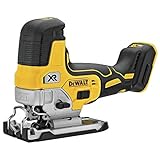
DEWALT DCS335B Barrel Grip
- Barrel grip control
- 4 orbital settings
- Brushless 20V motor
- Keyless T-shank blade change
All 10 Jigsaws Compared for Plywood Curve Work for October 2026
| Product | Specifications | Action |
|---|---|---|
| DEWALT DCS334B 20V MAX XR |
|
Check Latest Price |
| BLACK+DECKER BDEJS600C |
|
Check Latest Price |
 DEWALT DCS331B 20V MAX DEWALT DCS331B 20V MAX |
|
Check Latest Price |
 BLACK+DECKER BDEJS300C BLACK+DECKER BDEJS300C |
|
Check Latest Price |
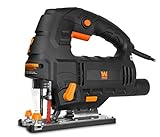 WEN 33606 6.6 Amp WEN 33606 6.6 Amp |
|
Check Latest Price |
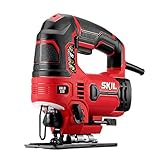 SKIL JS314901 6 Amp SKIL JS314901 6 Amp |
|
Check Latest Price |
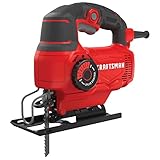 CRAFTSMAN CMES610 5 Amp CRAFTSMAN CMES610 5 Amp |
|
Check Latest Price |
| DEWALT DCS335B Barrel Grip |
|
Check Latest Price |
 Bosch JS260 6 Amp Bosch JS260 6 Amp |
|
Check Latest Price |
 BLACK+DECKER BDCJS20B 20V BLACK+DECKER BDCJS20B 20V |
|
Check Latest Price |
1. DEWALT DCS334B – Best Overall for Curved Plywood Cuts
DEWALT 20V MAX XR Jig Saw, 3,200 Blade Speed, Cordless, Brushless Motor, LED Light, Bare Tool Only (DCS334B)
- Brushless motor with longer runtime than the older DCS331
- Compact body gives real control on curves
- Variable speed trigger plus dial for fine speed control
- All-metal lever-action keyless T-shank blade change
- LED and dust blower keep the cut line visible
- Bare tool
- battery and charger sold separately
- Bevel locks at fixed detents rather than any angle
This is the saw we kept reaching for once the curve got tight. The DCS334B weighs 4.2 pounds, the lightest tool in this group, and that low mass is the first thing you notice when you tip the saw over onto its side to follow a line. A heavy saw wants to roll as you turn, and rolling is what puts a curve off the pencil line.
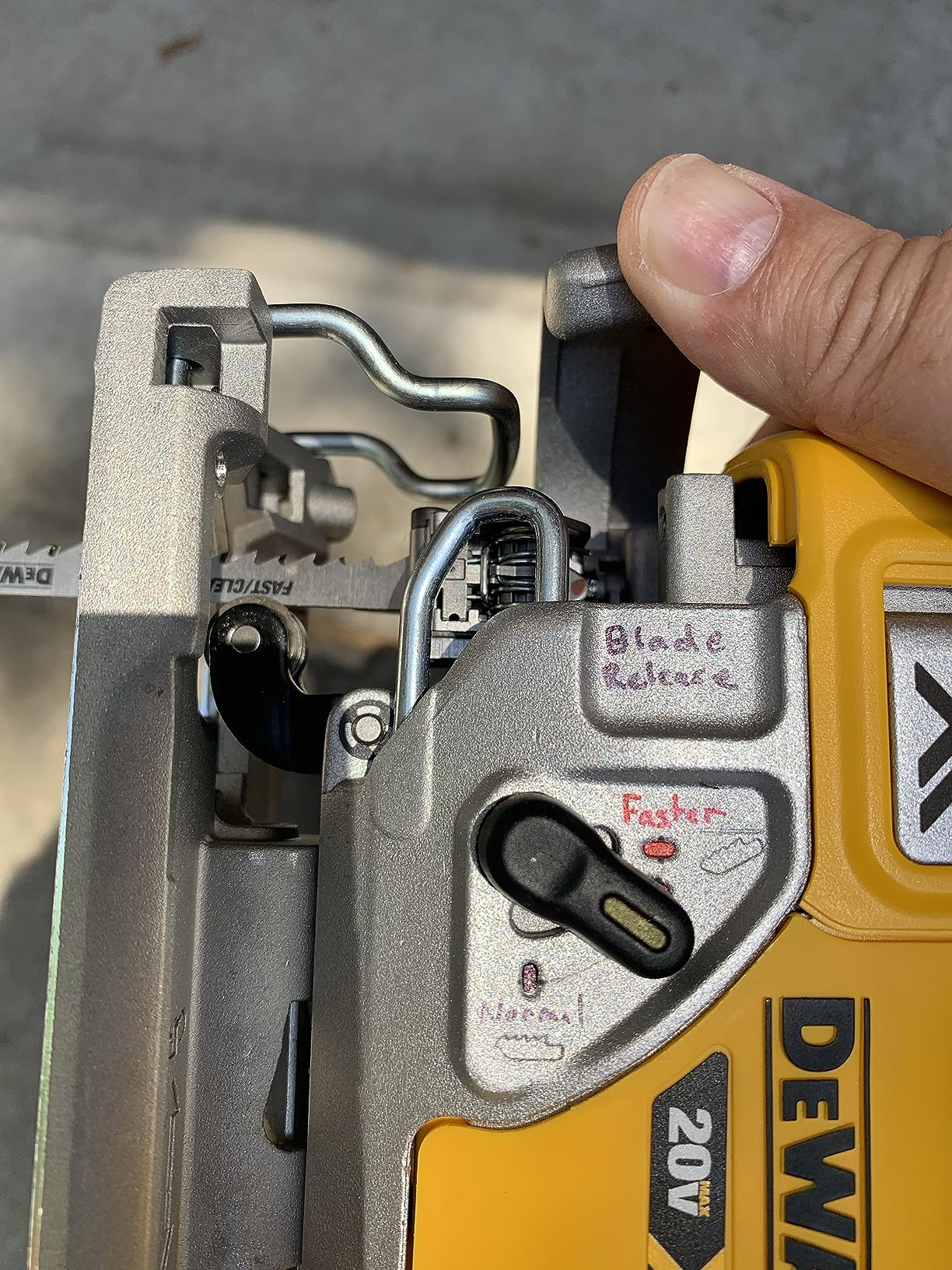
The 4-position orbital selector is what makes it work on plywood. Position one gives you a pure up-and-down stroke for the actual curve, and the higher settings let you hog through the straight entry cut and through thick stock quickly. Owners report roughly 4.8 out of 5 across more than 9600 reviews, and the most common thing people praise is that the compact grip and the variable speed trigger work together well on detailed work.
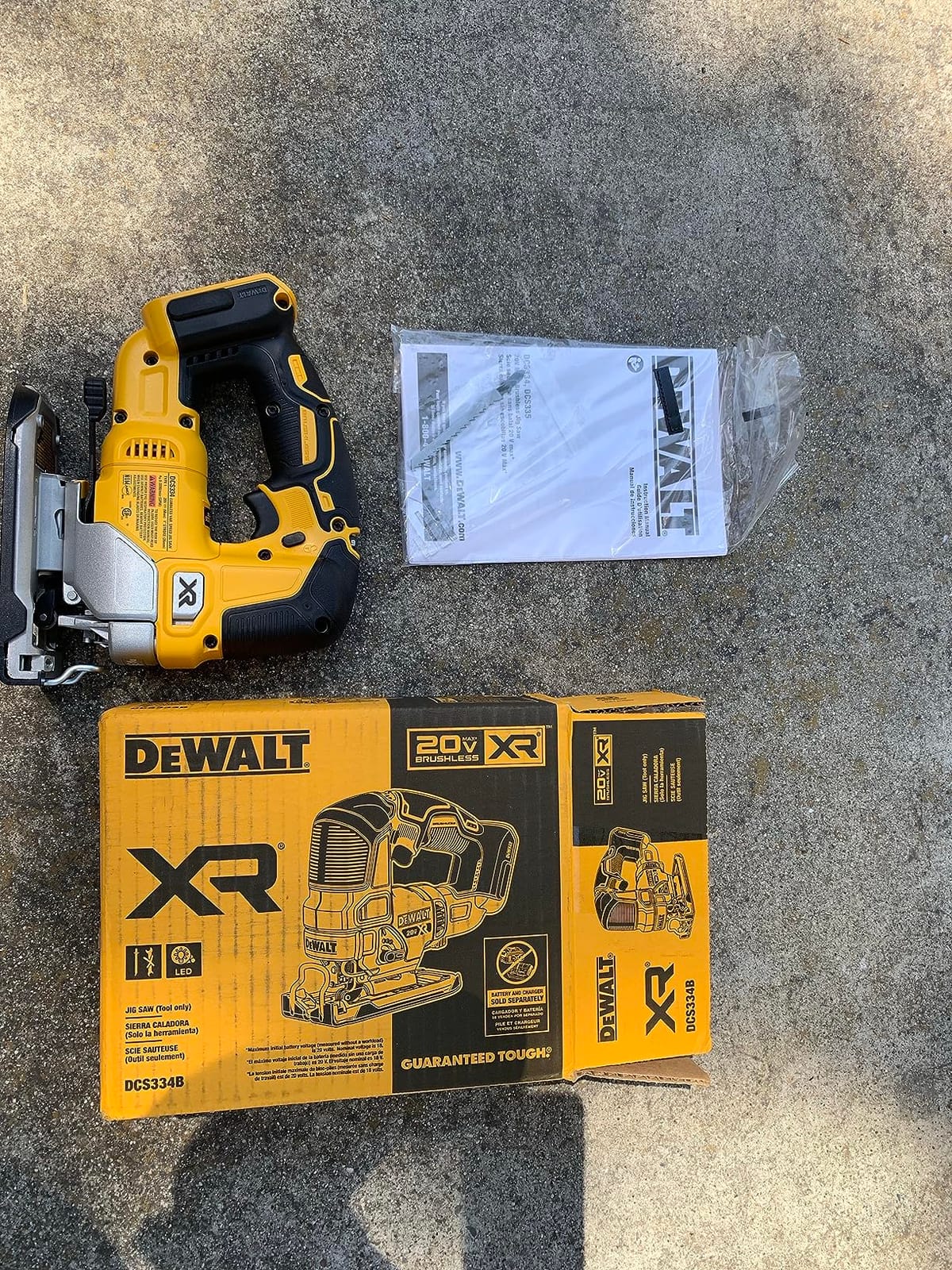
The numbers worth knowing: 3200 blade speed, 4-position orbital action, 4.2 pounds, 45 degree bevel capacity with detents at 0, 15 and 30 degrees and a positive stop at 45. The all-metal lever-action keyless clamp is a genuine advantage over plastic clamps because it grips T-shank blades hard enough to stop the blade from walking when you enter the curve.
For blade pairing, this saw wants a narrow T-shank scroll blade in bi-metal. A Bosch T101B or a DeWalt DW3173 is the right shape for plywood curves, and the DCS334B’s T-shank clamp holds either without a hex key. The integrated dust blower plus the LED is the combination that let us follow a faint pencil line on dark plywood without stopping to clear chips.
What to check before you buy
It ships as a bare tool. If you do not already own a 20V MAX pack and charger, that is the real cost of entry, and it is the single most common complaint in the reviews. Buying the battery separately is fine if you own the platform; it is expensive if you do not.
The other thing to know is the fixed-detent bevel. You cannot slide the shoe and lock it at an arbitrary angle, so bevelled curve work is limited to 0, 15, 30 and 45 degrees. For flat sheet work that is not a problem at all.
Who should skip it
Skip this saw if you cut mostly one-handed and prefer a barrel grip, or if you need a plunge-cut base for interior cutouts you cannot reach from an edge. It is a top-handle tool with a fixed shoe, and the low-vibration plunge design is not its strong suit.
Also skip it if you are starting from nothing and want one tool that does straight work too. For long straight rips, a circular saw or a track saw is faster, and the saw only earns its battery if curves are a regular part of your work.
2. BLACK+DECKER BDEJS600C – Best Value Corded Saw for Curves
- Four curve settings give real control over orbital aggressiveness
- Lowest orbital setting cuts laminate and plywood top layers cleanly
- Highest review volume in this roundup
- Quick lever blade change accepts T-shank and U-shank
- Dust port and blower keep the line visible
- Bevel lock needs a screwdriver
- Shoe uses preset angle slots only
- No trigger guard
- Comes with one general-purpose blade
The BDEJS600C is the highest-volume listing in this group, with more than 11100 reviews at 4.7 out of 5, and the reason is the four curve settings. Most budget saws give you two orbital positions. This one gives you four, which means you can find a middle setting that cuts plywood fast without pushing hard enough to chew the exit side.
It is a 5 amp corded tool rated to 3000 SPM, weighs 4.6 pounds, and has a 3/4 inch orbital blade. Owners consistently single out the curve settings as useful for rounded cuts in sheet material, and the dust blower plus adjustable shoe with wire guard keeps the pencil line visible on both faces of the sheet.
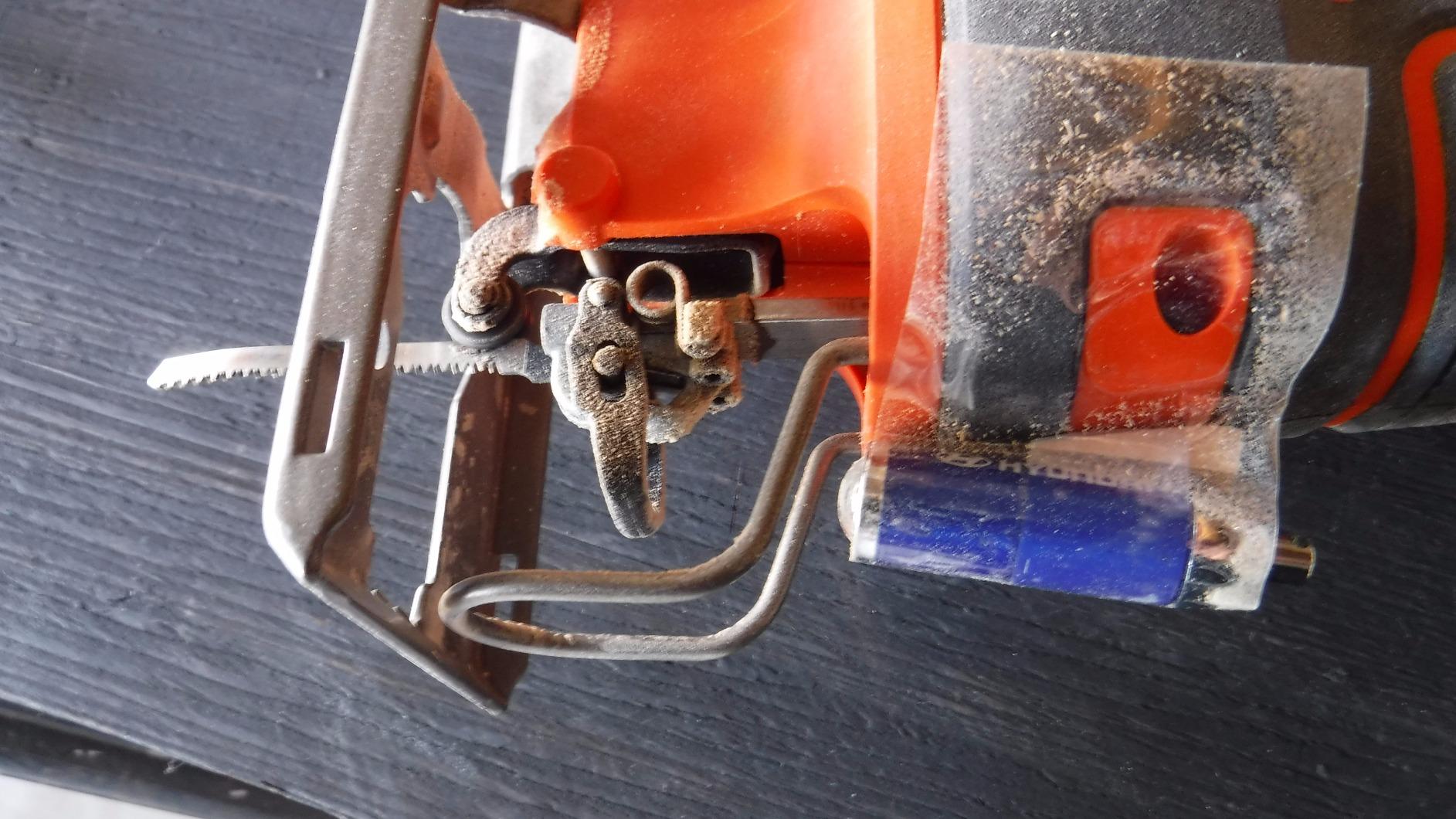
It also accepts both T-shank and U-shank blades, which matters more than it sounds. If you already own a mixed blade collection from an older saw, you can keep using it. The quick lever blade change means swapping to a narrow scroll blade takes a few seconds and no tools.
The compromises are in the shoe. The bevel lock takes a screwdriver to loosen, and the shoe only slides into preset angle slots rather than locking at any angle you choose. That is fine for a flat cutout and frustrating for a compound bevel on a curve.
What to check before you buy
There is no trigger guard, so the saw starts on contact. You get used to it quickly, but it is worth knowing if you work around children or hand-held freeform curves where your hand passes close to the shoe. The dust exhaust also blows forward and to the right, which some left-handed users find awkward.
Only one general-purpose blade ships in the box. Budget for a proper narrow scroll blade in bi-metal before you attempt a tight radius, and expect to add a shop vacuum adapter if you care about cleanup.
Who should skip it
Skip it if you need a plunge base for interior cutouts, or if you plan a lot of one-handed work. The straight top-handle layout is workable but not the most precise on tight inside curves, and the preset bevel slots rule out angled curve work.
This is also the pick to avoid if your shop is 240V. It is a 120V tool, and unlike the batteries in this list there is no converter option.
3. DEWALT DCS331B – Steady Cordless Performer for Sheet Goods
- All-metal lever-action keyless blade change
- Four orbital settings with a usable low setting
- Variable speed from 0 to 3000 SPM
- Adjustable dust blower clears the line of cut
- Two blades ship in the box
- Heavier at 5.6 pounds than the XR model
- Bare tool only with no battery or charger
- Older brushed motor design
The DCS331B is the older sibling of the DCS334B and still carries a 4.8 rating across roughly 8000 reviews. If you already own 20V MAX packs, this is the sensible pick, and the difference in practice on plywood is smaller than the spec sheet suggests. It has the same four-position orbital action and a variable speed trigger across 0 to 3000 SPM.
What you give up is weight and motor type. At 5.6 pounds it is noticeably heavier than the 4.2 pound brushless model, and that mass is exactly what you feel when the saw has to pivot mid-curve. On a large cabinet panel with a long sweeping arc, the lighter saw tracks noticeably more quietly.

The all-metal keyless shoe bevel with detents at 0, 15, 30 and 45 degrees is a genuinely nice piece of hardware, and the anti-slip comfort grip helps during long sessions. Owners praise the all-metal lever-action keyless blade change, the four orbital settings, and the adjustable dust blower that keeps cut lines visible.
Blade pairing: the DCS331B accepts T-shank blades, so the Bosch T101B or DeWalt DW3173 narrow plywood blade fits directly. It ships with two blades, though neither is the narrow scroll blade you actually want for a tight radius.
What to check before you buy
Confirm the bare tool situation first. Battery and charger are separate, and this is the most common complaint in the reviews. If you are starting without a 20V MAX pack, compare the total cost against the corded picks in this list before deciding.
Also note that this is the older brushed design. It will do the job, but if you are buying fresh with no platform, the brushless model is the better long-term choice on weight and runtime.
Who should skip it
Skip it if you are doing fine scroll patterns where every gram of saw mass matters, or if you cut large panels overhead where 5.6 pounds adds up fast. The battery also has to be carried separately, which erodes some of the cordless advantage in a workshop far from an outlet.
If your plywood is thick and you need to hog through a cut quickly before turning a corner, the 3000 SPM ceiling is a little lower than some corded rivals. For curves, that is not a real limitation.
4. BLACK+DECKER BDEJS300C – Lightweight Corded Starter for Curve Work
- Compact and light at 4.4 pounds with reduced vibration
- Variable speed to 3000 SPM suits wood and metal
- 0.75 inch stroke length
- Tool-free quick-clamp blade changes
- Base plate tilts to 45 degrees for bevels
- Only one wood blade and no case included
- Short cord for larger jobs
- 4.5 amp is thin for thick solid wood
This is the simplest tool here that will still run a plywood curve without drama. At 4.4 pounds with a 4.5 amp variable-speed motor, it is light, quiet-ish, and easy to keep on a line. Reviewers consistently report cutting tight curves with ease, and with more than 9100 reviews at 4.6 out of 5 the failure rate is well understood.
The 0.75 inch stroke length and up to 3000 SPM give it enough authority for 1/2 inch plywood, and the base plate tilts to 45 degrees if you need a bevelled edge. The wire guard sightline channel and built-in dust blower keep the line visible, which is more than many tools in this price bracket offer.
Tool-free quick-clamp blade changes are the feature that matters most day to day. When you are swapping between a wood blade for rough shape-outs and a narrow blade for the final profile, not hunting for a hex key is the difference between a two-minute swap and a two-minute break.
Be realistic about the power. A 4.5 amp motor is less suited to thick solid wood than the 6 amp and 6.6 amp saws here. For plywood sheet goods, which is what you are buying it for, it is entirely adequate.
What to check before you buy
It ships with a single wood blade and no carrying case, and the cord is short for larger jobs. If your shop is more than a room away from an outlet, an extension cord changes how the tool feels more than the specs suggest.
This is a 120V tool. In a 240V market it is not usable without a converter, which is worth checking before you order.
Who should skip it
Skip it if you routinely cut through 3/4 inch hardwood ply at a fast pace, or if you want a plunge base. It also has fewer orbital detents than the picks above it, so you have less room to tune the cut between a rough entry and a clean finish.
For a first jigsaw on a small budget, though, it does the core job cleanly. Add a narrow scroll blade and you have everything you need for a cabinet back panel or a template.
5. WEN 33606 – Best Lighting for Following a Pencil Line
WEN 33606 6.6-Amp Variable Speed Orbital Jig Saw with Laser and LED Light,Black, Silver
- Onboard laser plus LED illuminate the line of cut
- 4-position orbital knob gives four cut behaviours
- 6.6 amp motor spans 0 to 3300 SPM
- 1.5 inch dust port plus front dust blower
- Bevelling footplate
- non-marring shoe and fence bracket included
- Heaviest corded tool in the mid range at 5.4 pounds
- Lowest rating in this roundup
- Build quality is questioned at this price
The WEN 33606 solves a problem the other saws here handle differently. It has an onboard laser and an LED that work together, so the cut line is lit and marked. On a large sheet of dark-faced plywood lying on a garage floor at night, that combination did more for our accuracy than any amount of extra power would have.
Under the hood it is a 6.6 amp variable-speed motor running 0 to 3300 SPM, which is the highest top-end speed of the corded picks here. The 4-position orbital selection knob switches the blade action from straight up-and-down to circular, so the top setting is usable for a slow, controlled curve in plywood.
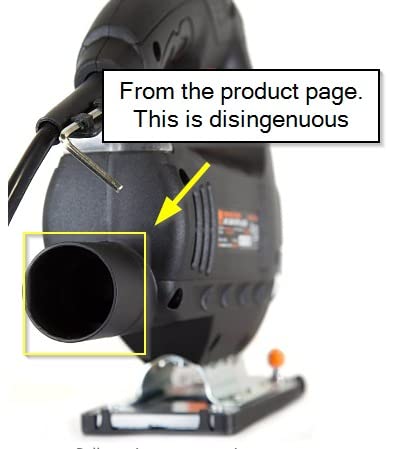
The accessory list is unusually generous. You get a beveling footplate, a non-marring shoe, a wood blade, a metal blade, a parallel fence bracket, and a two-year warranty. The 1.5 inch dust port is the largest here, which matters because plywood dust is heavy and clogs a small port fast.
The honest caveat: this is the lowest-rated pick in the roundup, at 4.5 out of 5 from about 2700 reviews, and a measurable share of that criticism is build quality relative to what you pay. It is a value tool, not a professional one.

What to check before you buy
It weighs 5.4 pounds, which is heavier than the other corded saws here, and for curve work weight is a real cost. A heavier saw resists small steering corrections. The laser helps you aim, but it does not make the saw lighter.
The listing does not spell out the blade shank type, so confirm compatibility before you commit to a multi-pack of T-shank scroll blades. That is a two-minute check that saves a wasted blade order.
Who should skip it
Skip it if you cut a lot of thick hardwood and want headroom in the motor, or if you already own a good LED-equipped saw and do not need a laser. The brand also carries less weight with professional trades than the established options here, which matters only if resale value matters to you.
For a weekend hobbyist working on decorative cutouts in a garage, the lighting and included accessories justify it comfortably.
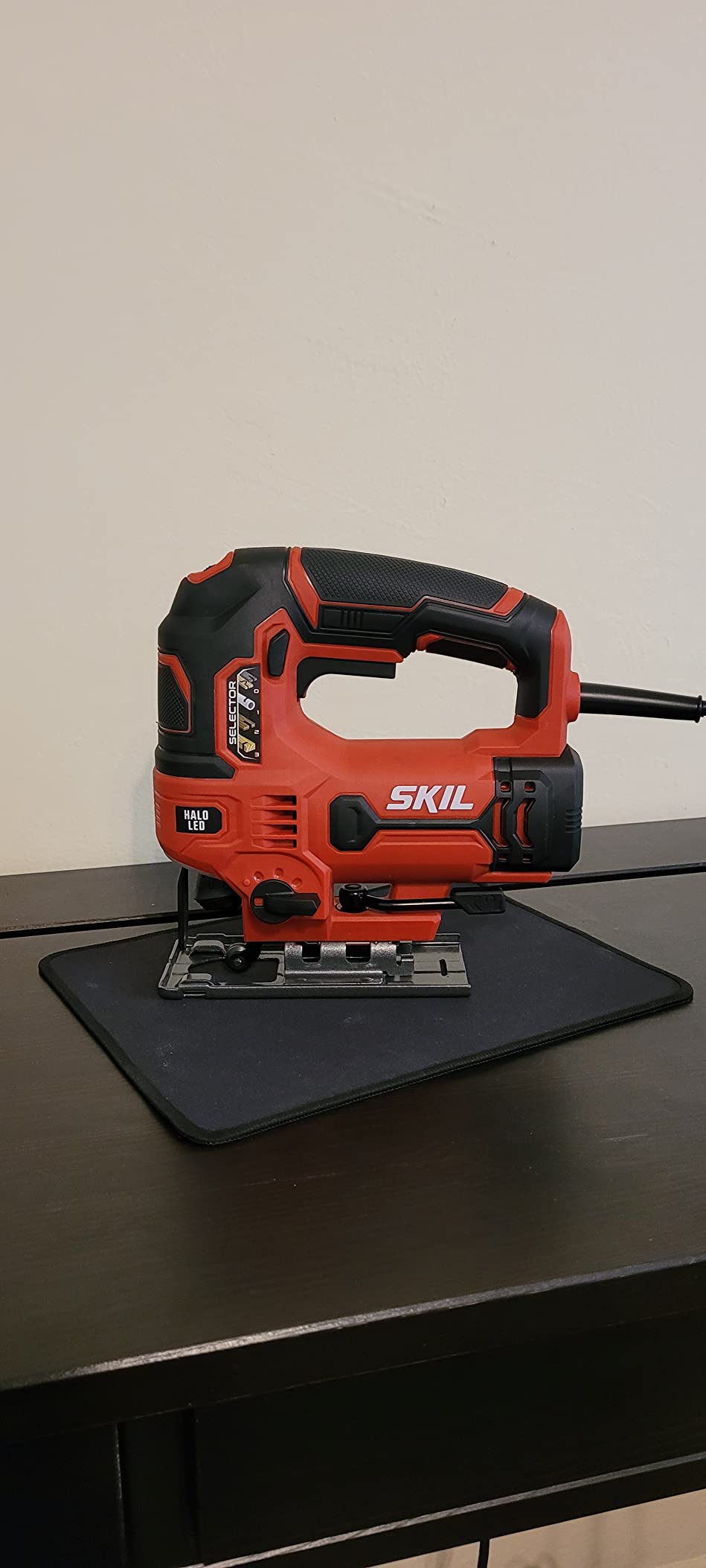
6. SKIL JS314901 – Best Blade Compatibility and Tool-Free Changes
SKIL 6 Amp Corded Jig Saw with Tool-Free Blade Change – JS314901
- Tool-free blade clamp swaps blades in seconds
- Accepts both T-shank and U-shank blades
- 4-stage orbital function across materials
- Bright halo light far stronger than a standard LED
- Blade roller guide limits blade flex in thicker stock
- Variable speed trigger is very sensitive and needs practice
- No dust port for vacuum extraction
- No onboard blade storage
The SKIL JS314901 is the pick if you already own blades. It accepts both T-shank and U-shank, so almost any jigsaw blade in your drawer will fit, and the tool-free blade clamp swaps them in seconds. For someone who keeps a drawer of specialty blades, that combination removes the most annoying part of the job.
It is a 6 amp corded saw with a 4-stage orbital function and a two-finger trigger for speed control, rated 4.7 out of 5 from about 2400 reviews. Owners praise the tool-free blade change, the halo light, and the dual shank compatibility, and one reviewer reports cutting a curved cat-door opening in about an hour.
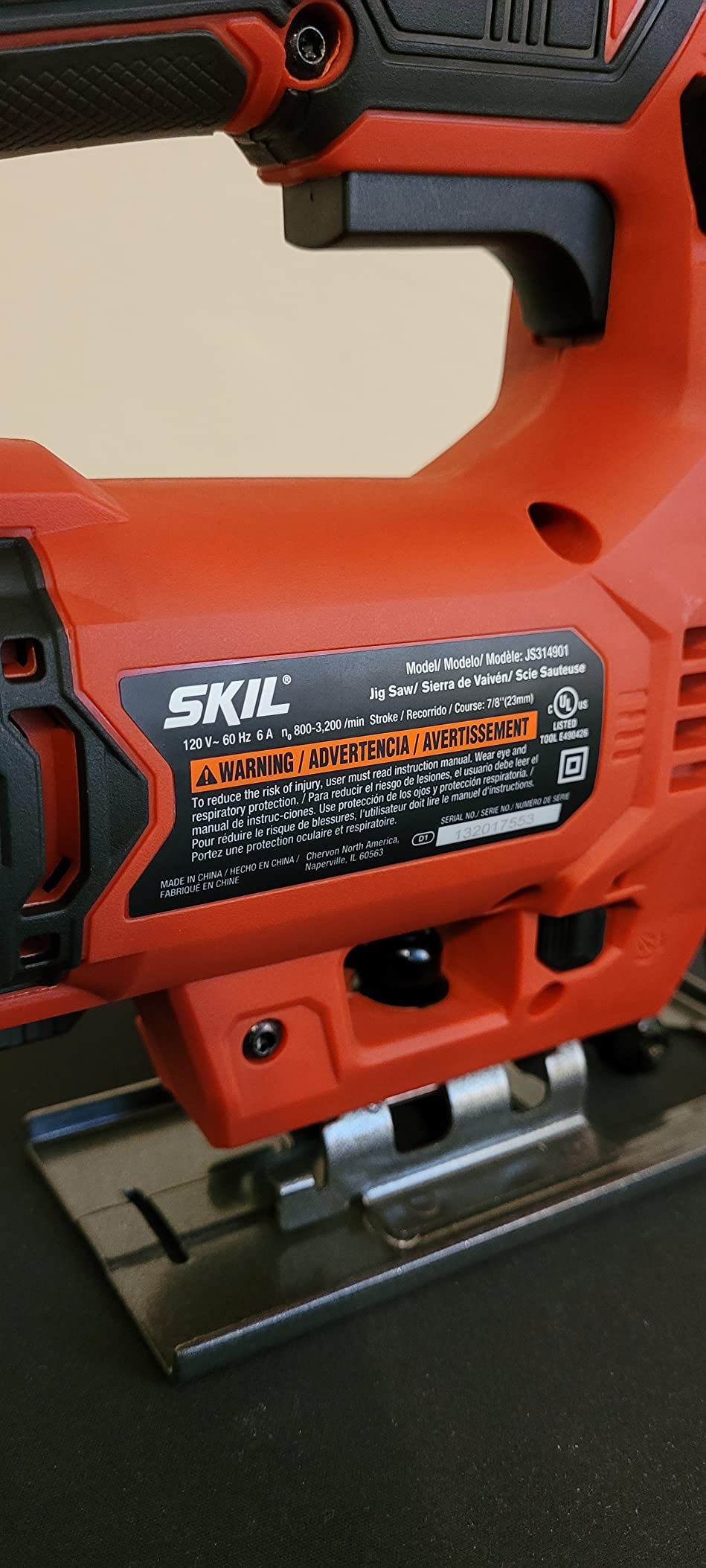
Two details stand out for plywood. The halo light is rated as far brighter than a standard LED, which is what lets you see the line on a curve. And the blade roller guide is the feature that reduces blade flex in thicker material, which is directly the cause of a curve drifting off line in mid-sheet.
Pair it with a narrow bi-metal scroll blade and the four-stage orbital function gives you plenty of room to tune the cut. Drop to a low setting for the curve, climb up for the straight approach cut.
What to check before you buy
There is no dust port, so vacuum extraction is not an option. Plywood dust from a cutout job is heavy and it will end up on your bench, your floor and your air filter. Plan for a broom, or choose a different saw if extraction matters to you.
Be aware the variable speed trigger is unusually sensitive. Several owners describe needing up to a week of practice to get a steady speed out of it, and an accidental stall in a tight curve is exactly how a blade snaps.
Who should skip it
Skip it if you have a clean blade drawer full of one shank type already, or if dust extraction is a requirement. It is a 1-year limited warranty, the shortest here, so parts and service longevity are worth factoring in if you are a heavy daily user.
For a hobbyist who keeps a mixed blade collection, the compatibility alone makes this one of the smarter buys in the roundup.
7. CRAFTSMAN CMES610 – Comfortable Corded Saw for Long Cutting Sessions
CRAFTSMAN Jig Saw, 4 Orbital Settings, Up to 3,000 SPM, 5 Amp, Corded (CMES610)
- Four orbital settings adjust cut aggressiveness
- Variable speed trigger from 0 to 3000 SPM
- Accepts both T and U blades
- Contoured over-molded handle for longer sessions
- Only one wood blade included
- Lower review volume than the leading models
- Bare weight is heavy for fine work
The CMES610 is built around one idea: reduce hand fatigue on long cuts. The contoured over-molded handle is the reason to pick it, and it matters more than any spec on the list if you are cutting a full sheet of plywood in one session rather than a few short cutouts.
Underneath it is a straightforward 5 amp corded saw with a variable speed trigger from 0 to 3000 SPM and four orbital settings. Owners give it 4.7 out of 5 across roughly 1600 reviews, and the T and U blade compatibility means it slots into an existing blade collection the same way the SKIL does.
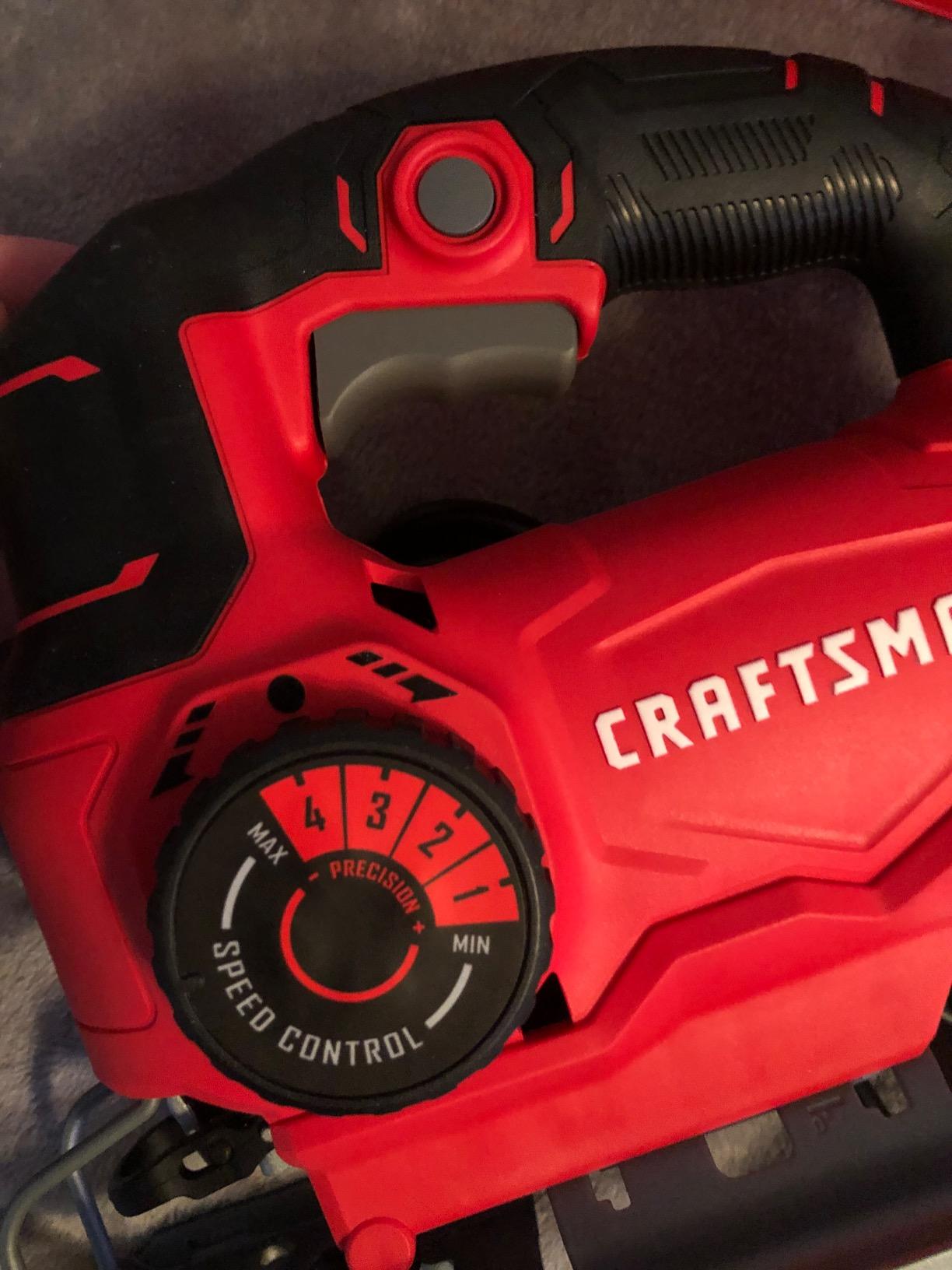
For curve quality, the four orbital settings are the useful part. Setting one is a clean up-and-down stroke that will not gouge the top veneer on a tight radius, and the variable speed trigger lets you creep through the last third of the turn where blades normally snap.
It weighs 5.4 pounds. That is on the heavy side for fine work, and it is why this is a session-comfort pick rather than a precision pick. On a big open radius in 3/4 inch ply you will not feel it.
What to check before you buy
Only a single wood blade is included, and it is not the narrow scroll blade you want for a tight curve. Review volume is also the lowest of the corded picks here at about 1600 reviews, so there is less long-term owner data behind it than the Black and Decker or DeWalt listings.
Check the warranty terms for your region before buying, since the listing states a limited warranty without a specific duration.
Who should skip it
Skip it if you do small, tight-radius scroll work, where 5.4 pounds and a lighter option would serve you better. Skip it if you need a plunge base or vacuum port, since neither is offered.
If your main event is cutting a stack of cabinet parts in one sitting, the grip comfort will make a bigger difference to how the afternoon feels than another few hundred strokes per minute would.
8. DEWALT DCS335B – Best Barrel Grip for Tight Inside Curves
DEWALT 20V MAX Jig Saw, Cordless, Barrel Grip, 3,200 Blade Speed, Bare Tool Only (DCS335B)
- Barrel grip with low centre of gravity for real curve control
- Brushless motor with strong power and long runtime
- Four clearly distinct orbital settings
- LED light and dust blower keep the line visible
- All-metal lever-action keyless T-shank blade change
- Thumb on/off button sits in an awkward position
- Barrel grip suits larger hands and favours right-hand use
- Ships as a bare tool without a case
- Balances better with a 5Ah or 6Ah pack
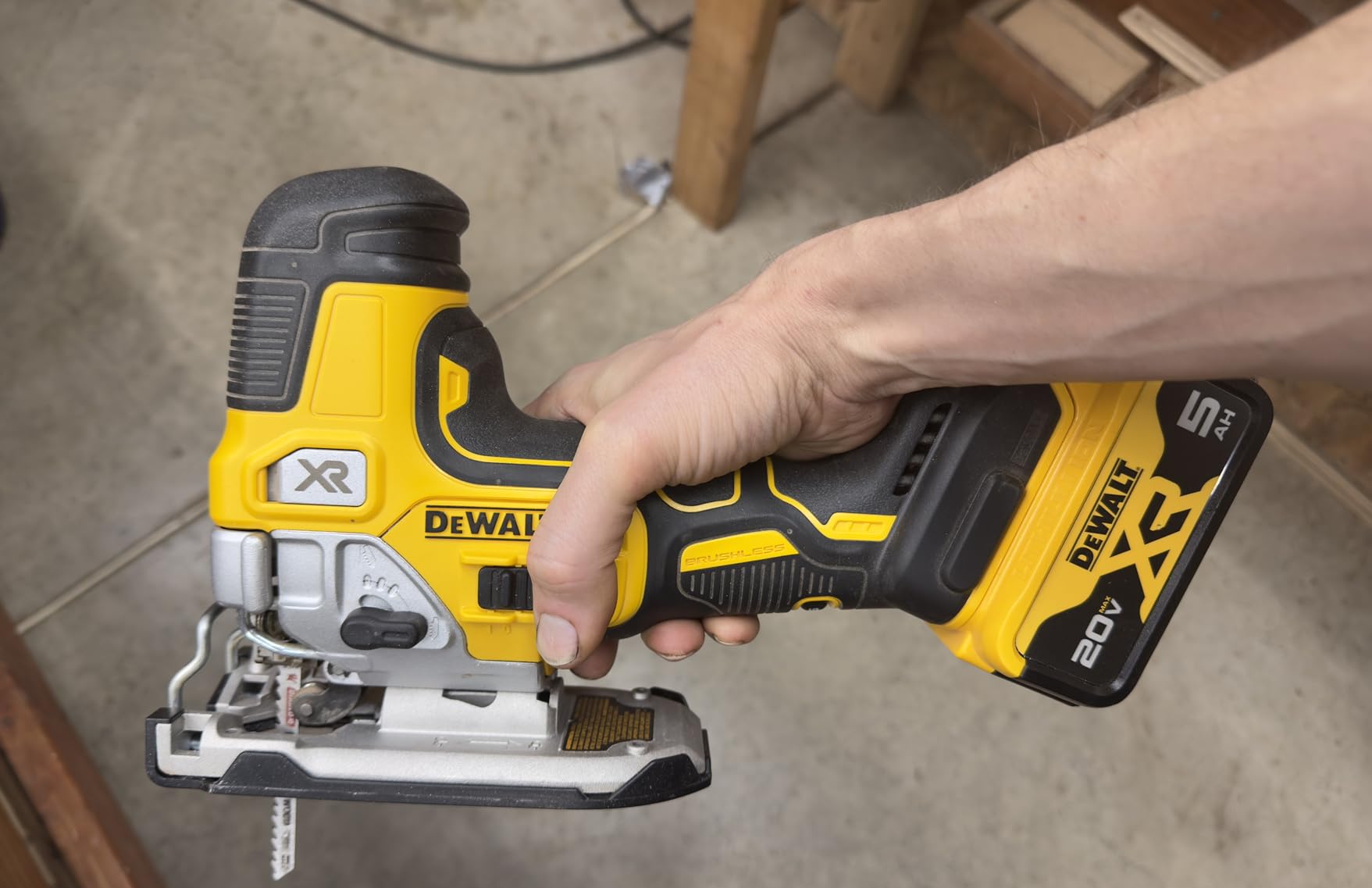
The DCS335B is the only barrel-grip saw in this roundup, and that is the entire point. A barrel grip puts your whole hand around the tool with the motor mass low and close to the work, which lets you roll the saw through a turn instead of pivoting it. Owners report stepping in for scroll-saw style fine curve work, and at 4.7 out of 5 from about 2400 reviews the barrel-grip ergonomics are the most-praised feature by a wide margin.
It carries the same brushless motor, 3200 blade speed, 4-position orbital action, LED and dust blower as the top-handle DEWALT. The all-metal lever-action keyless T-shank blade change means a narrow scroll blade swaps in seconds.
For a tight inside curve, the barrel grip changes the failure mode. On a top-handle saw, a bind tends to twist the tool out of your hand. Here, the saw tends to stop. That is a much better failure when you are halfway through a face frame cutout.
Pair it with a narrow T-shank scroll blade and use orbital position one for the curve. The keyless shoe bevel with detents at 0, 15 and 30 degrees plus a positive stop at 45 covers bevelled edges on curved parts.
What to check before you buy
Handle size matters more than usual with a barrel grip, so try it if you can. It suits larger hands, and the shape favours right-handed use. If you have small hands or work left-handed, the top-handle models in this roundup are a safer bet.
The thumb on/off button is the most-cited drawback, because its position is awkward and hard to find without looking. It also balances better with a 5Ah or 6Ah battery than smaller packs, which changes the feel of a curve cut noticeably.
Who should skip it
Skip it if you do a lot of one-handed overhead work, where a barrel grip is unusable, or if you already own a lot of U-shank blades. This is a T-shank clamp only.
It is also a bare tool with no fitted case. If you already have 20V MAX packs, the economics are good. If not, add that cost before comparing it against a corded pick.
9. Bosch JS260 – Best Anti-Splinter Control in Plywood
- Anti-splinter insert reduces tear-out on plywood
- Precision-machined low-vibration plunge mechanism
- Four orbital settings from smooth to aggressive
- Multidirectional clamp grips T-shank blades hard
- Toolless blade change and heavy-gauge steel footplate
- Heaviest tool here at 6.9 pounds
- Does not accept U-shank blades
- Cut-line notch sits away from the blade on tight curves
- Noticeable vibration under heavy hardwood load
The Bosch JS260 is the only saw here with an anti-splinter insert in the box, and on plywood that insert is the difference between a cut edge you can leave visible and one you need to sand. It sits behind the blade and keeps the top veneer from lifting as the teeth exit the bottom of the cut. Owners rate it 4.7 out of 5 from about 1600 reviews and repeatedly mention the very tight radius it cuts without breaking blades.
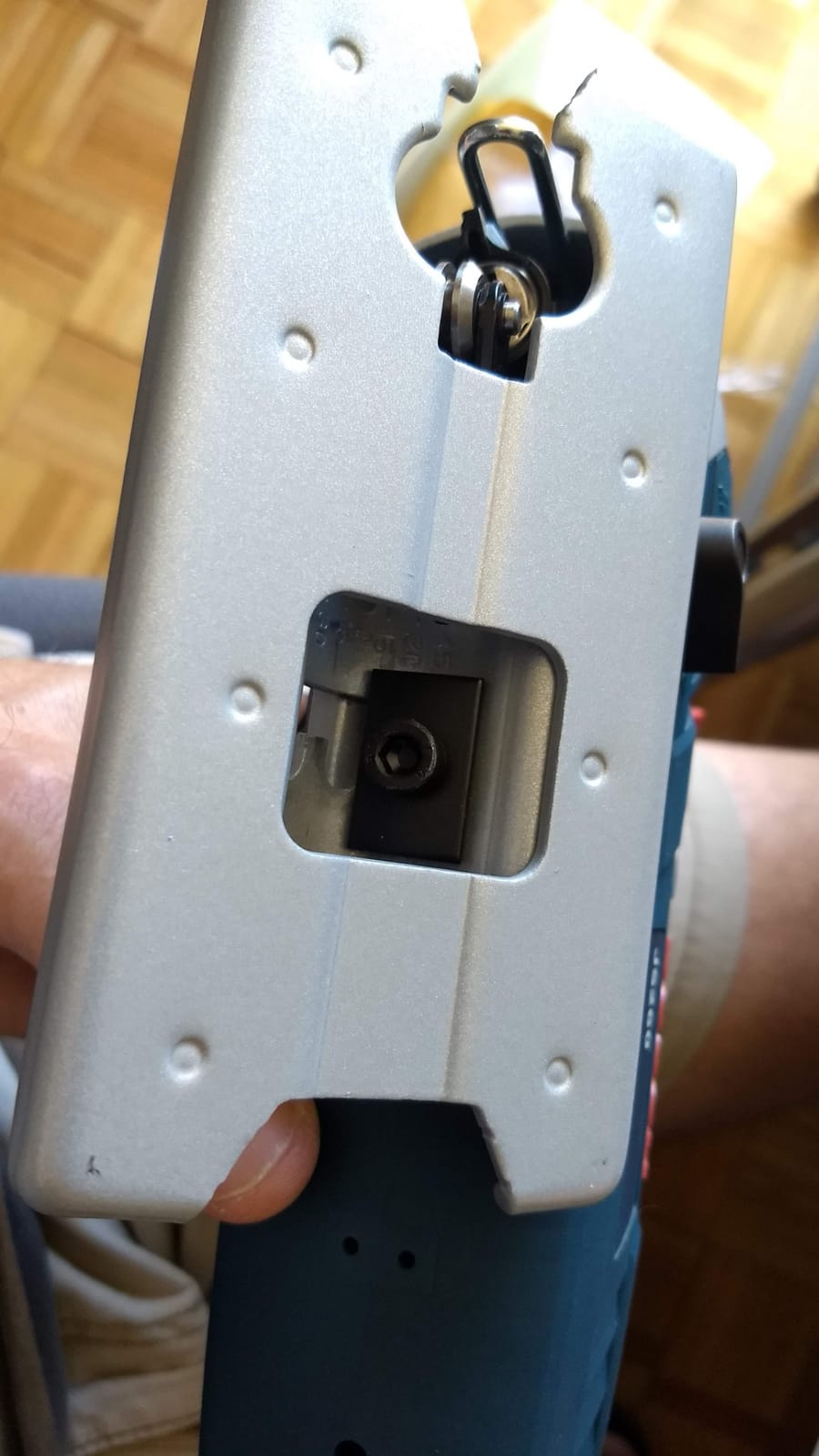
It is a 6 amp corded saw with a variable speed dial and accelerator trigger, up to 3100 SPM, and four orbital-action settings. The precision-machined plunging mechanism and low-vibration design are cited as the reasons for its accuracy, and the multidirectional blade clamp grips T-shank blades firmly enough that the blade does not shift when the cut binds.
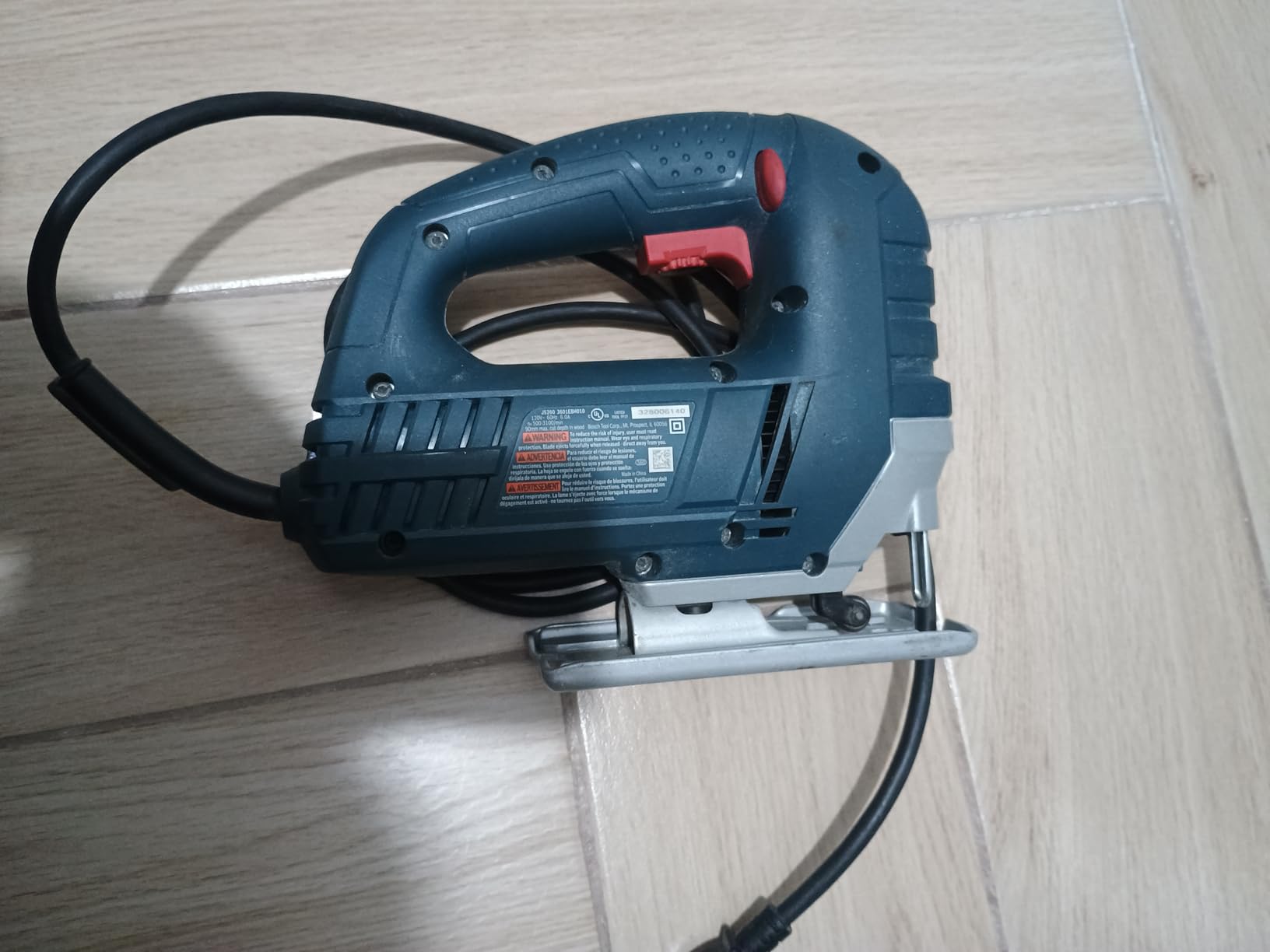
There is a trade-off with the weight. At 6.9 pounds it is the heaviest tool in this roundup, and the plunge design plus heavy-gauge steel footplate account for a lot of that. On a flat sheet with a support block under the workpiece, that mass actually works in your favour. It is why we back plywood cuts with a sacrificial block on the tight sections.
Pair it with a narrow bi-metal T-shank scroll blade. The toolless blade-change system makes swaps fast, and the always-on dust blower keeps the line clear without a switch.
What to check before you buy
It is T-shank only. U-shank blades will not fit, so check what is in your drawer. The 1-year warranty is also the shortest alongside the SKIL, and Bosch supplies a carrying bag and bevel wrench in the box.
Hardwood users report noticeable vibration under heavy loads, and the cut-line notch sits far enough from the blade that tracking a very tight curve takes practice. If your work is mostly heavy hardwood rather than sheet goods, the mass works against you.
Who should skip it
Skip it if you are left-handed, if you need U-shank blades, or if you want a light tool for a long scroll session above your head. The plunge base is also not user-adjustable on a fixed-base job the way a plunge jigsaw would be.
If your priority is a clean top face on plywood and you can manage the weight, the anti-splinter insert alone justifies the pick.
10. BLACK+DECKER BDCJS20B – Best Cordless Saw for Occasional Plywood Work
BLACK+DECKER 20V MAX* POWERCONNECT Cordless Jig Saw, Jigsaw Tool Only (BDCJS20B)
- Handles straight
- curved
- angled and plunged cuts in one tool
- Tool-free blade changes accept U and T shank
- 45 degree bevel shoe cuts both directions
- Variable speed trigger to 2500 SPM
- Wire guard and dust blower keep the line clear
- Battery and charger sold separately
- Top speed is lower than most corded picks here
- Ships with a single blade
The BDCJS20B is the cordless option for someone whose plywood work is occasional and off-site. It handles straight, curved, angled and plunged cuts, has a variable speed trigger up to 2500 SPM, and the tool-free blade change accepts both U and T shank blades, so you are not locked into one blade ecosystem.
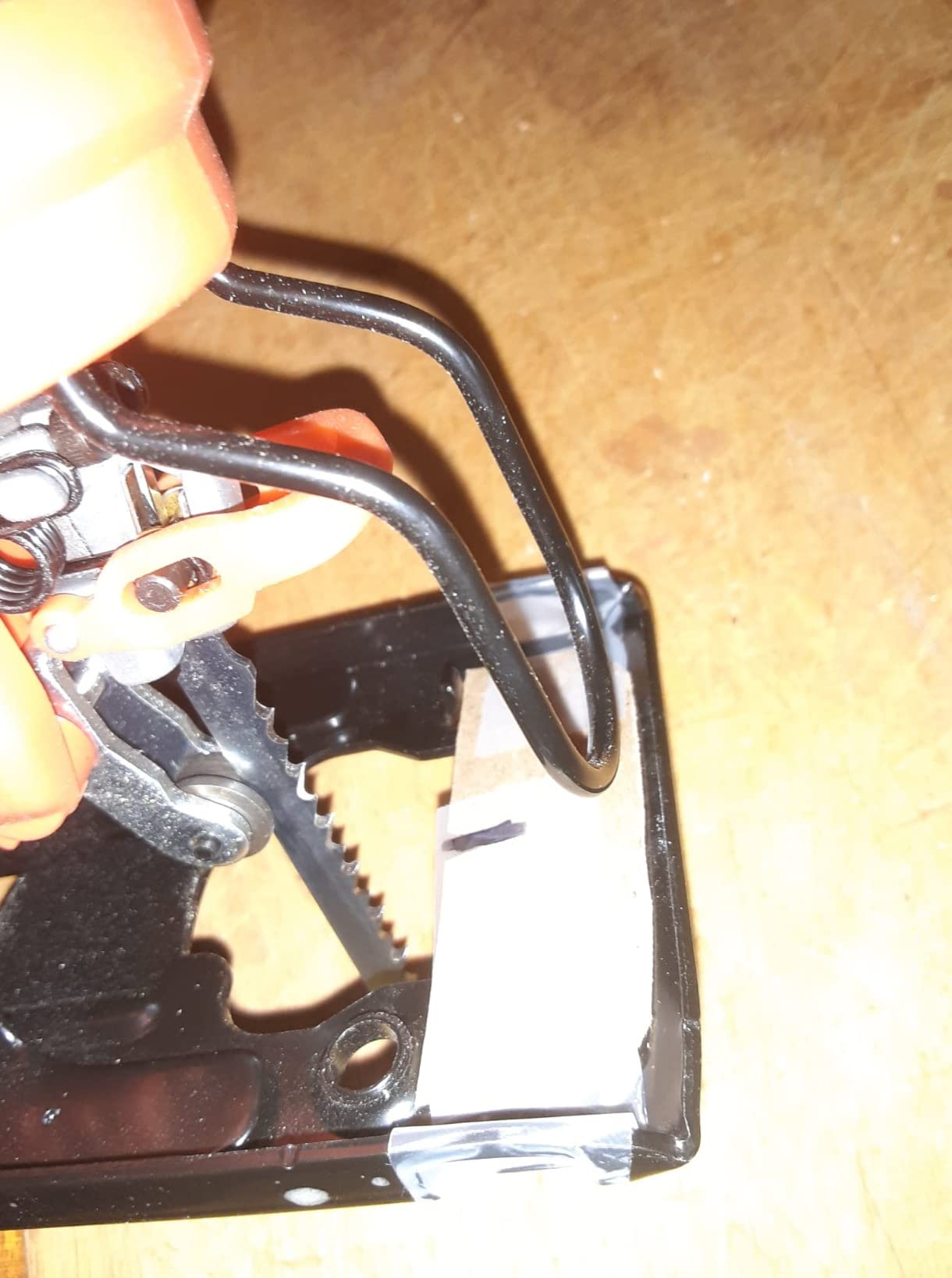
Owners rate it 4.7 out of 5 from about 1580 reviews. The 45-degree bevel shoe cuts in both directions, and the wire guard plus built-in dust blower keep the cut line visible, which is the part that matters when you are working on a driveway rather than a bench.
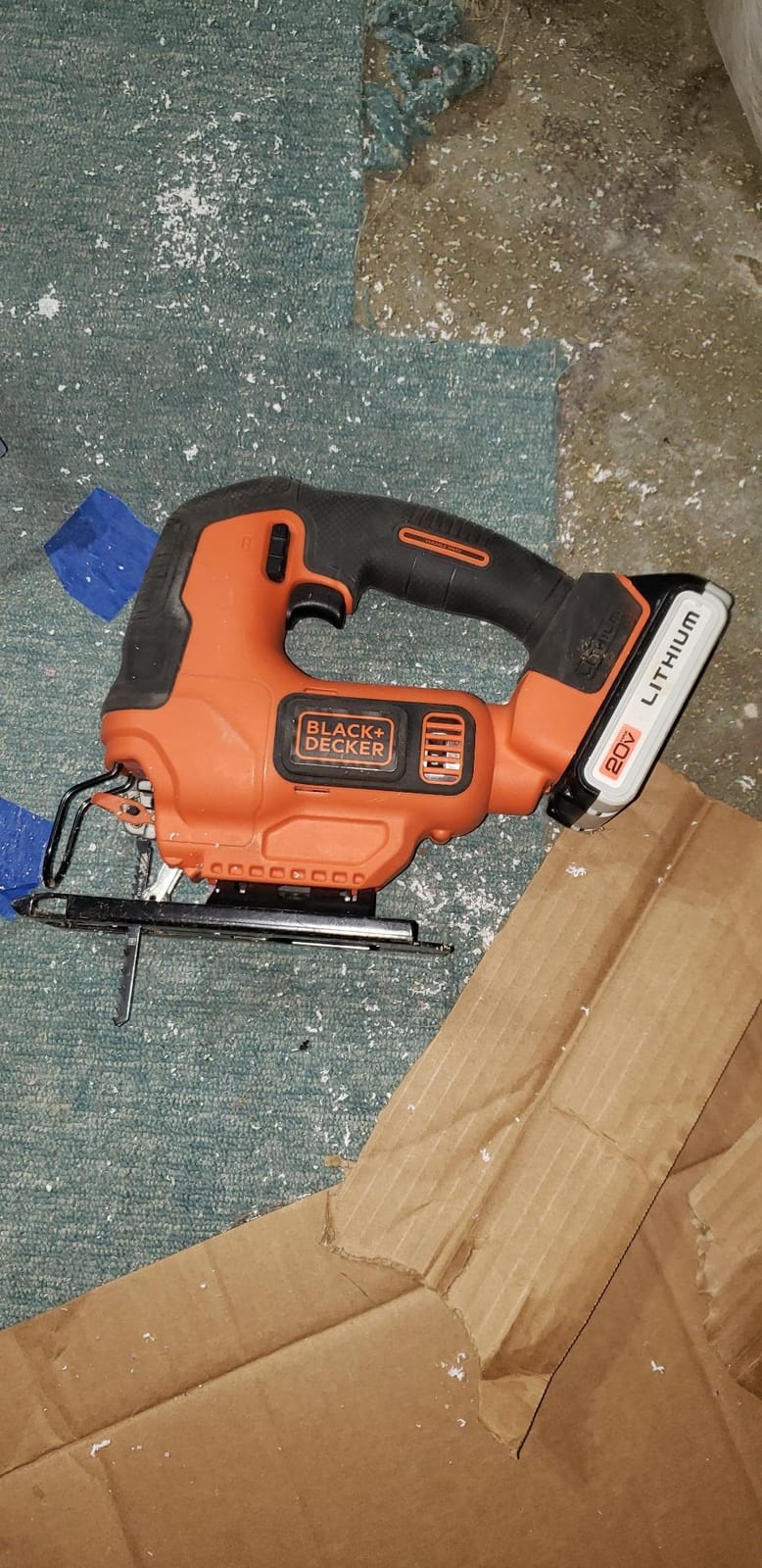
It weighs 4.7 pounds, which is light enough to control on a curve, and the plunge capability is a genuine advantage over the fixed-base corded picks here. You can start a cutout in the middle of a panel without drilling an access hole.
The trade-off is speed. At 2500 SPM it is the lowest top speed of the cordless saws here, so hogging through thick sheet is slower. For curves that does not matter, because you want the low end of the trigger anyway.
What to check before you buy
It is a bare tool. A 20V pack and charger are separate purchases, and unless you already own the BLACK+DECKER 20V platform, that is the real cost. Only one blade ships, and it is not a narrow scroll blade.
Confirm the blade shank fit in your own collection before buying a stack of blades, since dual shank support is a real advantage here but you still need to know which one your clamp favours in practice.
Who should skip it
Skip it if you already own a 20V MAX or 18V platform from another brand, because you would be buying a second battery ecosystem. Skip it if you need to cut thick hardwood ply fast, since the 2500 SPM ceiling will feel slow.
For someone with a small BLACK+DECKER battery already on a shelf and a handful of plywood projects a year, it is the lowest-friction cordless option here.
How to Cut Curves in Plywood Without Splintering
Splintering on a plywood cut is a top and exit-side problem, and both are fixable before the saw touches the sheet. Here is the sequence we use.
Fit the narrowest bi-metal scroll blade your curve radius allows. A wide general-purpose blade chips the veneer and will not hold a tight radius.
Set orbital action to the lowest setting, or fully off, before you enter the curve. You can climb back up for the straight approach cut.
Roll masking tape over the pencil line on the top face. The tape holds the veneer fibres together and the tear-out sticks to the tape instead of the panel.
Back the cut with a sacrificial block of scrap. Screw or clamp a scrap piece under the sheet so the blade exits into wood instead of air, and the exit side stops splintering.
Run the saw at roughly a third to a half of top speed through the turn, and back the speed off further as the radius tightens. Slow speed keeps the teeth from grabbing.
Cut past the end of the line by about half an inch on any outside curve, then trim back to the line from a supported direction once the waste piece is off.
Forum regulars add a seventh step that is worth stealing: rough out the shape with a slightly larger radius, then finish the final profile from a template or a routed guide. It costs a second pass and removes almost all of the risk on a part you cannot afford to redo.
Why Jigsaws Kick Back on Tight Curves (and How to Fix It)
When a jigsaw binds in a curve it does three things at once: the blade stops, the motor stalls, and the remaining momentum throws the saw off the line. Fixing it is about removing one of those three links. In practice, five causes account for nearly all of it.
Orbital action left too high. The forward component of the stroke drives the blade into the curve. Drop to the lowest setting or switch it off entirely for the turn.
Blade too wide for the radius. A standard 3/4 inch blade cannot follow a 1 inch radius without the teeth dragging on the side of the cut. Drop to a narrow scroll blade.
Speed too high. Fast strokes build heat and torque in a small area. Ease the trigger off as the curve tightens.
No support under the workpiece. If the sheet is unsupported, the blade pulls the panel down and the shoe loses contact. Back the cut with a block or a sacrificial piece.
Blade deflection. A thin blade under load bends, and a bending blade cuts a curve you did not ask for. A roller guide, a sturdier blade, or a slower speed all reduce it.
The narrow-blade point comes up more than any other on woodworking forums, and a long-running thread on diy.stackexchange.com makes the same case: standard blades bind a little in curves, and switching to a narrow jigsaw blade is the single change that fixes it. The forum consensus on backing the cut with a sacrificial block matches what we found cutting cabinet-grade birch.
Jigsaw vs Scroll Saw vs Router for Curved Plywood
A jigsaw is the right tool for most curved plywood, but there is a boundary. As a general rule for sheet goods, a jigsaw handles an outside radius of about 1 inch and up comfortably, and it gets workable down to roughly 1/2 inch with a narrow blade. Below that, the blade deflects faster than it cuts, and you will fight the tool on every centimetre.
A scroll saw takes over below that radius. It holds the blade vertically, has a much smaller kerf, and will run a 3/16 inch radius in thin plywood all day without complaint. It is slower, needs more floor space, and does not handle thick stock or plunge cuts. If you intend to do a lot of small-radius scroll work, read our scroll saw roundup before committing to a jigsaw-only shop.
A router with a template and a bearing is the third option, and it is the one forum users recommend for a finished edge. Cut rough with a jigsaw or bandsaw, then route the final profile from a template and the edge comes out perfectly smooth with no tear-out at all. The router cannot reach an inside corner, so the jigsaw still does the corners. Our take: the jigsaw plus a template router is the best combination for furniture-grade parts, and the jigsaw alone is the best combination for the first one.
Saw and Blade Pairing Guide
The blade matters more than the saw. Match the shank to the clamp first, then pick a narrow bi-metal scroll blade with fine teeth for the curve and a ground tooth count for the clean top face.
DEWALT DCS334B, DCS331B, DCS335B — T-shank clamp. A Bosch T101AO or T101B, or the DeWalt DW3173, fits directly. These three take no U-shank blades.
BLACK+DECKER BDEJS600C and BDCJS20B — both T-shank and U-shank accepted, so almost any blade in your drawer works.
SKIL JS314901 and CRAFTSMAN CMES610 — both T and U shanks accepted. Convenient if you already own mixed blade stock.
Bosch JS260 — T-shank only, and the clamp grips hard, which suits a narrow blade that has to resist binding.
BLACK+DECKER BDEJS300C and WEN 33606 — the listings do not state shank type, so confirm fit before ordering a blade pack.
On shanks generally: a T-shank has the wider profile and the metal tang that the all-metal lever-action clamps grip, which is why every brushless saw in this list uses one. A U-shank is the older, narrower style that clamps into a different slot. A T-shank blade is the better choice on plywood because the tang resists the twist that happens when a curve binds.
On tooth count: for a clean top face in plywood, more teeth means a finer finish. A fine-tooth ground blade such as a Bosch T101AO or Diablo DCSB14 leaves a smoother edge. A coarse-tooth blade cuts faster and is a better choice for rough shape-outs before the final profile pass.
How to Choose a Jigsaw for Curved Plywood Cuts
Blade control and deflection. An all-metal lever-action or multidirectional clamp holds a T-shank blade far more securely than a plastic quick-release. That grip is what stops the blade walking when the cut binds, and a walking blade is a snapped blade. A blade roller guide, offered on the SKIL, adds a second layer of support for thicker stock.
Variable speed with a usable low end. A trigger that reaches full speed within a millimetre is hard to use for curves. You want a wide low-speed band so you can creep through a tight turn. A fixed-speed saw is a poor choice for this work.
Orbital action you can switch off. At least three settings is the practical minimum, and the top setting should approximate a pure up-and-down stroke. If the lowest orbital setting still pushes aggressively, the saw is geared for cutting speed rather than control.
Throat clearance and shoe stability. Look at the shoe, not the motor. A short throat with a wide sole plate rocks when the blade approaches an inside corner, and a narrow sole plate with a long throat keeps contact. A no-mar shoe cover matters more than it sounds if the plywood face is a finished face.
Dust extraction. Plywood dust is heavy. A dedicated dust port, ideally 1 inch or larger, is worth paying for if you make cutouts regularly. The WEN 33606 and BLACK+DECKER BDEJS600C have ports; the SKIL JS314901 has none.
Line of sight. A wire guard, a dust blower, or a light above the shoe all exist to keep the pencil line visible. Bosch JS260 users point out that an offset cut-line notch works against you on tight curves, so a light aimed at the blade is often the better feature.
Corded or cordless. Corded gives you unrestricted runtime and consistent power for long scroll sessions, which is what most of the picks here are. Cordless wins on portability and on sheet goods you have to carry to the work. A saw from a platform you already own will always beat a better saw from a platform you do not.
Top handle or barrel grip. A top handle is more accurate and better for straight work. A barrel grip puts the motor low and lets you roll the saw through a turn, which is why the DEWALT DCS335B is our pick for tight inside curves. Left-handed users and users with small hands should favour a top handle.
Frequently Asked Questions
What is the best jigsaw blade for curved cuts in wood?
A narrow bi-metal scroll blade in the T-shank style, with fine ground teeth for a clean top face. Models such as the Bosch T101AO, Bosch T101B and DeWalt DW3173 are the common choices. Match the shank to your saw’s clamp first, since a T-shank and a U-shank blade are not interchangeable.
Should orbital action be on or off when cutting curves in plywood?
Turn it down to the lowest setting, or off entirely, once the blade reaches the curve. Orbital action pushes the blade forward as it strokes, which speeds up a straight cut but makes a tight radius bind and kick back. Many builders climb back to a higher setting for the straight approach cut and drop down for the turn.
Can you cut plywood with a jigsaw?
Yes. A jigsaw handles plywood sheet goods very well, and it is the standard tool for curves, cutouts and shapes that a circular saw cannot follow. The cut quality depends far more on blade choice and orbital setting than on saw power. Use a narrow blade, keep speed low through the turn, and back the sheet with a sacrificial block to prevent splintering.
What is the maximum thickness a jigsaw can cut?
A typical corded jigsaw handles roughly 1 inch of hardwood, and cordless models sit a little lower, closer to three-quarters of an inch. For plywood you are rarely limited by the saw, because thin sheet goods cut far faster than solid wood at the same nominal thickness. Check the manufacturer rating for your specific model before committing to thick stock.
Is a scroll saw better than a jigsaw for tight plywood curves?
Below roughly a half-inch radius, yes. A scroll saw holds the blade vertical with a very small kerf and will run small radii without the blade deflecting, while a jigsaw blade bends and wanders at that radius. Above about an inch, a jigsaw is faster, lighter and far more portable, and it handles plunge cuts and thick stock that a scroll saw will not.
What is the difference between a U-shank and a T-shank jigsaw blade?
A T-shank blade has a wide profile with a metal tang at the top that all-metal lever-action and multidirectional clamps grip firmly, which resists the twist that happens when a curve binds. A U-shank blade is narrower and fits a different, older clamp style. Many budget and mid-range saws accept both, while brushless models are usually T-shank only.
Conclusion: Where to Start
If you want one answer for the best jigsaws for curved cuts in plywood, start with the DEWALT DCS334B. It is the lightest tool in the group, the brushless motor keeps the speed steady, and the four-position orbital action gives you a clean up-and-down stroke for the curve itself.
If you already own 20V MAX packs, the DCS331B gives you the same control characteristics at a lighter outlay. If tight inside curves are your main event, the DCS335B barrel grip changes how the saw handles a bind. For a corded tool with the most useful curve control per dollar, the BLACK+DECKER BDEJS600C is hard to argue with, and the Bosch JS260 is the one to buy if splinter-free top faces matter more than weight.
Whichever you choose, spend the extra few dollars on a narrow bi-metal scroll blade in the correct shank, keep orbital action at its lowest setting through the turn, and back the sheet with a sacrificial block. Those three things decide the quality of the cut more than any spec on the list. Our cordless saw picks for plywood are the better choice once the curve work is done and it is time to break the sheet down square.