
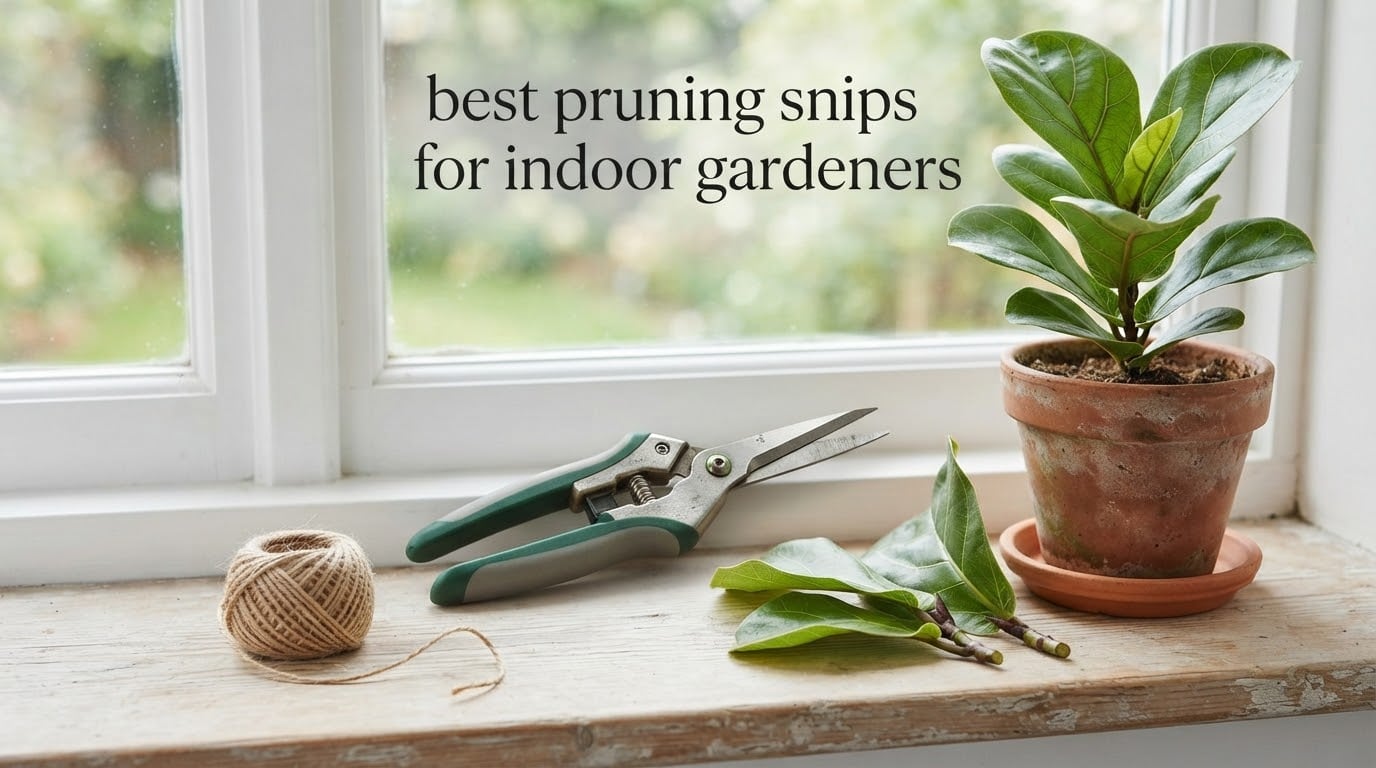
Most pruning shears advice on the internet is written for people cutting rose canes and blueberry branches in a yard. Those readers want a 9-inch bypass pruner rated for three-quarter-inch wood, and for that job it is the right tool. It is the wrong tool for a fiddle-leaf fig crowded against a wall, where the handle is longer than the gap between the pots.
That mismatch is the reason indoor gardeners keep getting frustrated. The tool either cannot physically reach the node you need to cut, or it does reach and crushes a tender stem instead of slicing it. So this roundup of the best pruning snips for indoor gardeners sticks to one editorial rule: nothing over 8 inches, everything built to make clean cuts on live green growth.
We compared twelve snips across four things you can actually measure before you buy. Blade tip style decides whether you can get inside a dense canopy. Cut capacity decides whether a thick money-tree stem gets sliced or split. Handle weight decides whether you can deadhead twenty blooms without your hand aching. And the coating on the blade decides whether the tool is still usable after you cut into a rubber plant.
The direct answer, if you want it now: the Fiskars 6 inch Non-Stick Pruning Snips are the best overall pick for houseplants, the Kimura 8 inch Pro Pruning Scissors handle the thickest indoor stems, and the VIVOSUN 6.5 Inch Gardening Scissors are the best value for general trimming. Keep reading for the other nine, and for the blade-type explainer that tells you which of the four styles you actually need.
While you are setting up, it also helps to know how your plants are doing. Our guide to the best smart plant sensors for gardeners covers soil moisture tracking, which tells you whether a yellowing leaf is a watering problem rather than a pruning problem.
Top 3 Picks for the Best Pruning Snips for Indoor Gardeners for October 2026
Three snips earned the top slots because each solves a specific indoor problem the others do not. One handles sap, one handles thick stems, one handles sheer volume of use.

Fiskars 6 inch Non-Stick Snips
- Micro-tip blades cut to the point
- Non-stick coating for sap
- Easy Action spring
- Light 2.86 oz body

Kimura 8 inch Pro Scissors
- Japanese SK5 high-carbon steel
- Heat treated to 59 HRC
- Non-slip vinyl-coated grips
- Multi-tasking snips
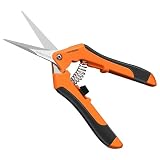
Every Snip We Looked At in October 2026
All twelve snips below are sized for indoor work. Cut capacity and blade style are stated in inches because that is the only measurement that tells you whether a tool suits your plant.
| Product | Specifications | Action |
|---|---|---|
| Fiskars 6 inch Non-Stick Pruning Snips |
|
Check Latest Price |
| Kimura 8 inch Pro Pruning Scissors |
|
Check Latest Price |
| VIVOSUN 6.5 Inch Gardening Scissors |
|
Check Latest Price |
 Fiskars 5 inch Herb Scissors Fiskars 5 inch Herb Scissors |
|
Check Latest Price |
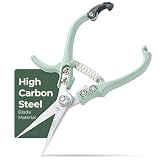 Modern Sprout Pruning Shears Modern Sprout Pruning Shears |
|
Check Latest Price |
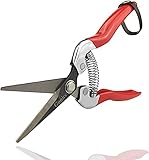 gonicc Micro-Tip Snips GPPS-1008 gonicc Micro-Tip Snips GPPS-1008 |
|
Check Latest Price |
 TABOR TOOLS K7A Pruning Snips TABOR TOOLS K7A Pruning Snips |
|
Check Latest Price |
 TABOR TOOLS K18A Straight Shears TABOR TOOLS K18A Straight Shears |
|
Check Latest Price |
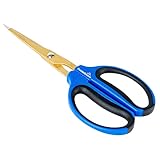 CastleGreens 60mm Plant Scissors CastleGreens 60mm Plant Scissors |
|
Check Latest Price |
 Corona Long Straight Snip AG 4930 Corona Long Straight Snip AG 4930 |
|
Check Latest Price |
 Corona Long Curved Snips AG 4940 Corona Long Curved Snips AG 4940 |
|
Check Latest Price |
 Fondwell 6.5 inch Small Pruning Shears Fondwell 6.5 inch Small Pruning Shears |
|
Check Latest Price |
1. Fiskars 6 inch Non-Stick Pruning Snips – Best Overall for Indoor Plants
- Micro-tip blades cut cleanly right to the point
- Non-stick coating reduces sap and resin jamming
- Easy Action spring eases hand fatigue on long sessions
- SoftGrip handle wipes clean of sticky plant sap
- Sheath included for drawer storage
- Straight blades are less precise than a true needle-nose
- Soft spring means thicker stems take more effort
- Not built for woody growth
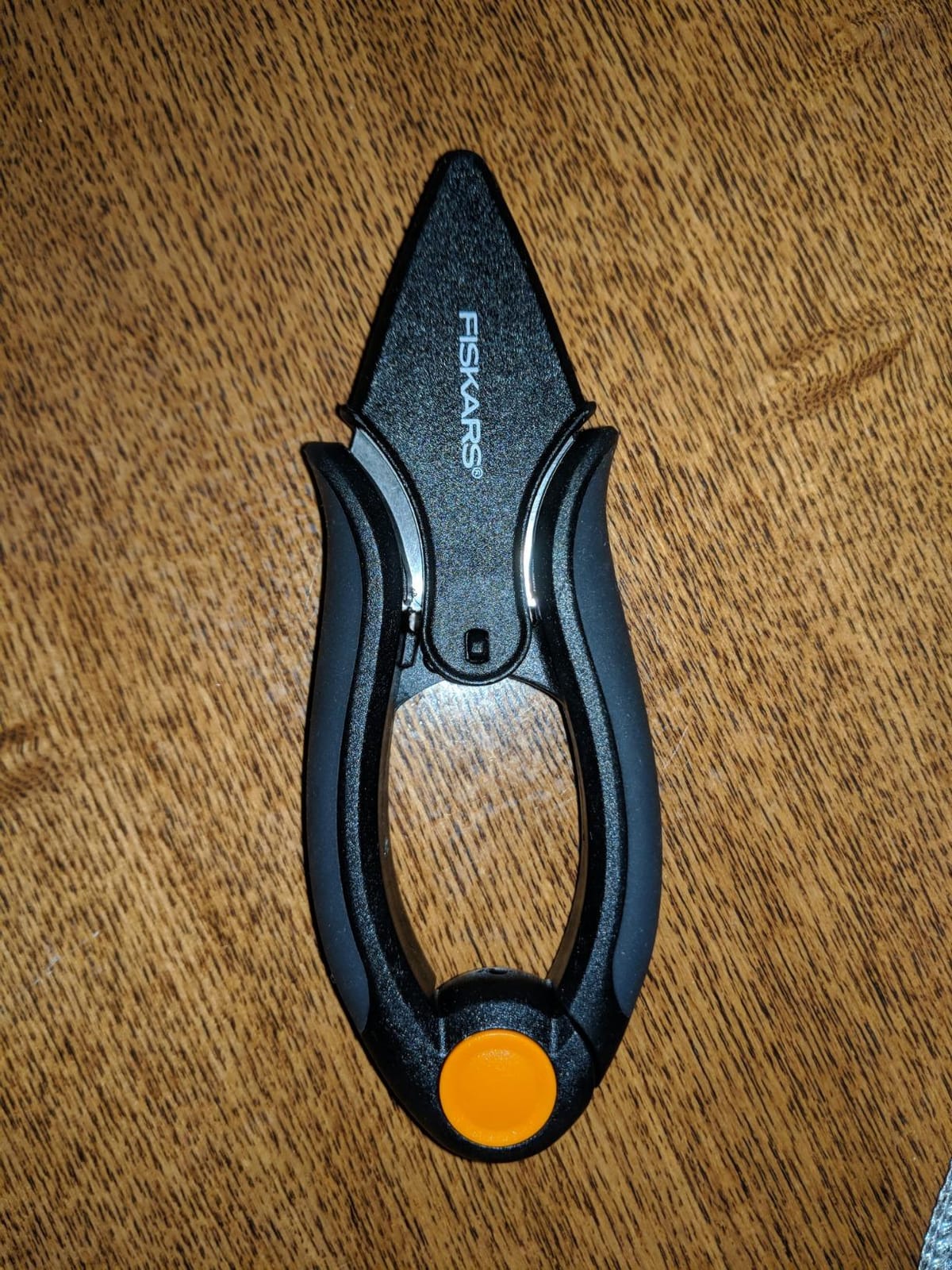
This is the snip I reach for first, and it has earned that spot for one reason: the blades cut all the way to the point. Most garden snips lose a few millimeters of cutting edge at the tip, which means you cannot snip a petiole right against a main stem without scissoring sideways and bruising the neighbor.
The non-stick coating is not a gimmick indoors. Ficus, rubber plants and poinsettias all push white latex that turns to glue on a bare blade, and within a few cuts an uncoated tool pulls and tears instead of cutting. The coating on these blades keeps that residue sliding off.
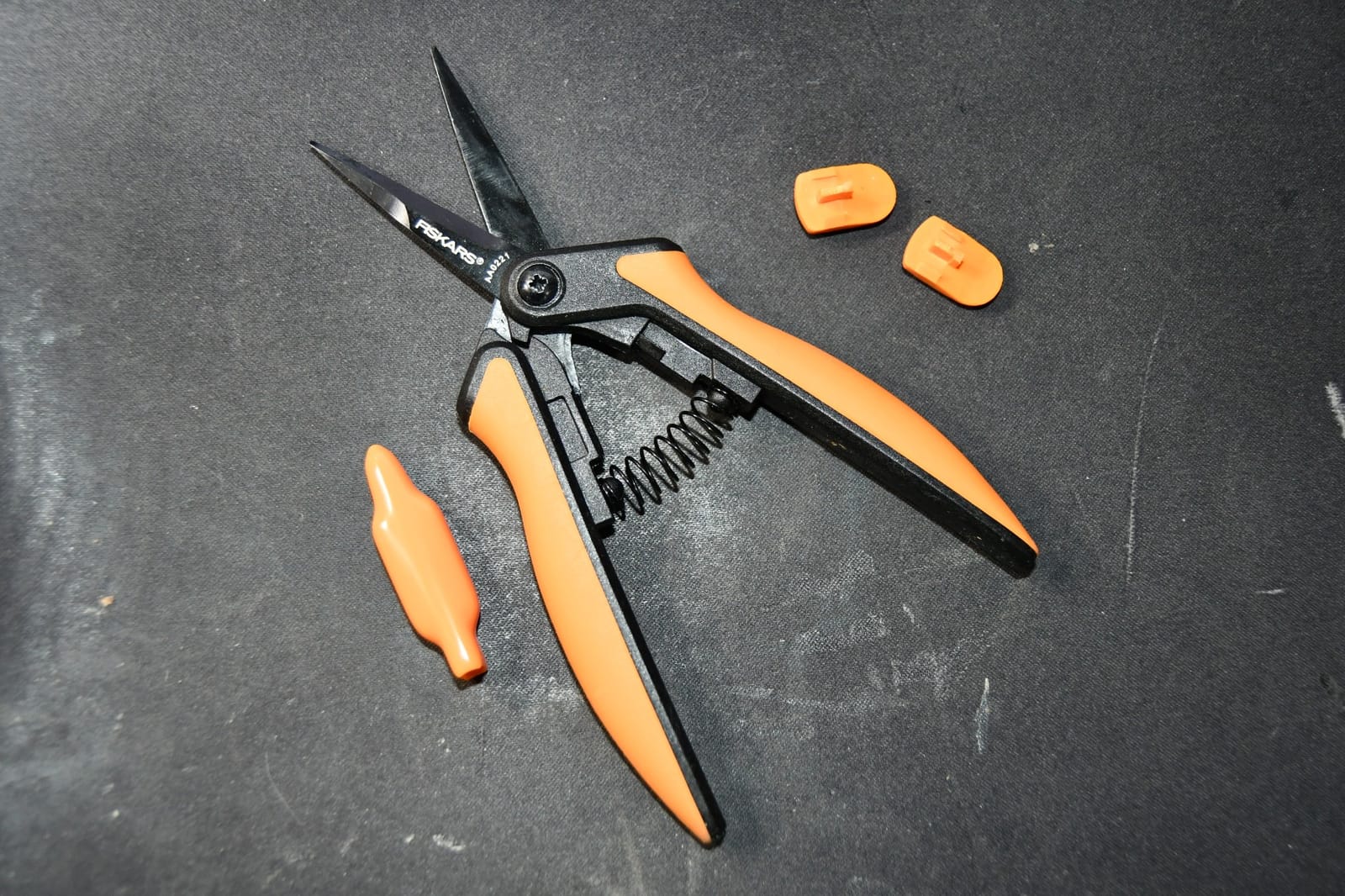
At 2.86 ounces, this is one of the lightest tools in the group, and the Easy Action spring opens the blades gently after each cut so you can deadheading twenty flowers without the spring fighting you. The included sheath is a small thing that matters, because a snip stored loose in a junk drawer next to a screwdriver is how edges get chipped.
The 6-inch length does something a 5-inch herb snip cannot. It gives you enough leverage that a slightly woody node on an old money tree separates rather than bending, while still turning easily in the hand to reach into a canopy.
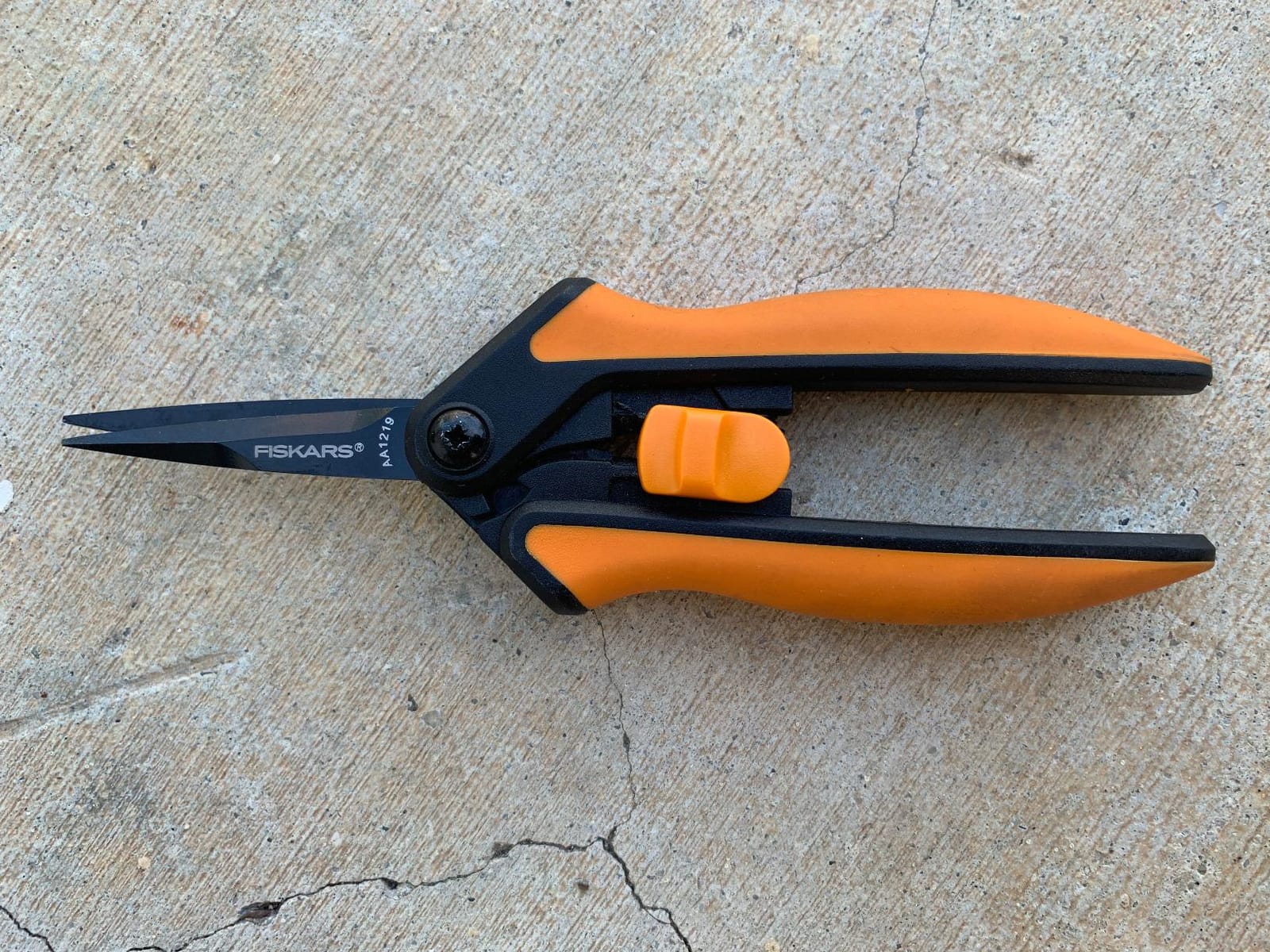
What this snip handles well indoors
Node-level cuts on propagation stems, deadheading flowering houseplants, and trimming herbs on a windowsill. The micro-tip profile is the reason it can get between two leaves that are touching.
It also copes with the messier plants better than most picks here. A cut into a rubber plant leaves latex on the blade, wipes off the coating with a dry cloth, and the tool is clean for the next plant.
Where it falls short
For genuinely woody stems on an old bonsai or a thick money tree, the gentle spring means you will be leaning into it. That is where the Kimura below earns its place.
The straight blade profile is also less precise than a needle-nose in a genuinely cramped interior space, and the micro tip is not designed for succulent cuttings thick enough to need a knife.
2. Kimura 8 inch Pro Pruning Scissors – Best for Thick Stems and Long Sessions
- SK5 steel heat treated to 59 HRC holds its edge
- Forged blades cut thicker live stems cleanly
- Non-slip vinyl-coated handles for grip
- Lightweight build reduces fatigue
- Thumb-operated locking strap for storage
- Lock strap can be fiddly to re-engage
- Heavier than plastic-handled snips
- Handle is bulky on a crowded shelf
If your indoor plants include a tall fiddle-leaf fig, a dracaena, or a money tree with a trunk that has actually thickened, this is the snip that will not disappoint. The blades are forged in Japan from SK5 high-carbon steel and heat treated to 59 HRC, which is a real specification rather than marketing language.
What that buys you indoors is cut capacity. The longer, fine-tipped profile gets further into a canopy than a short blunt snip, and the stronger spring means a woody node separates instead of folding.
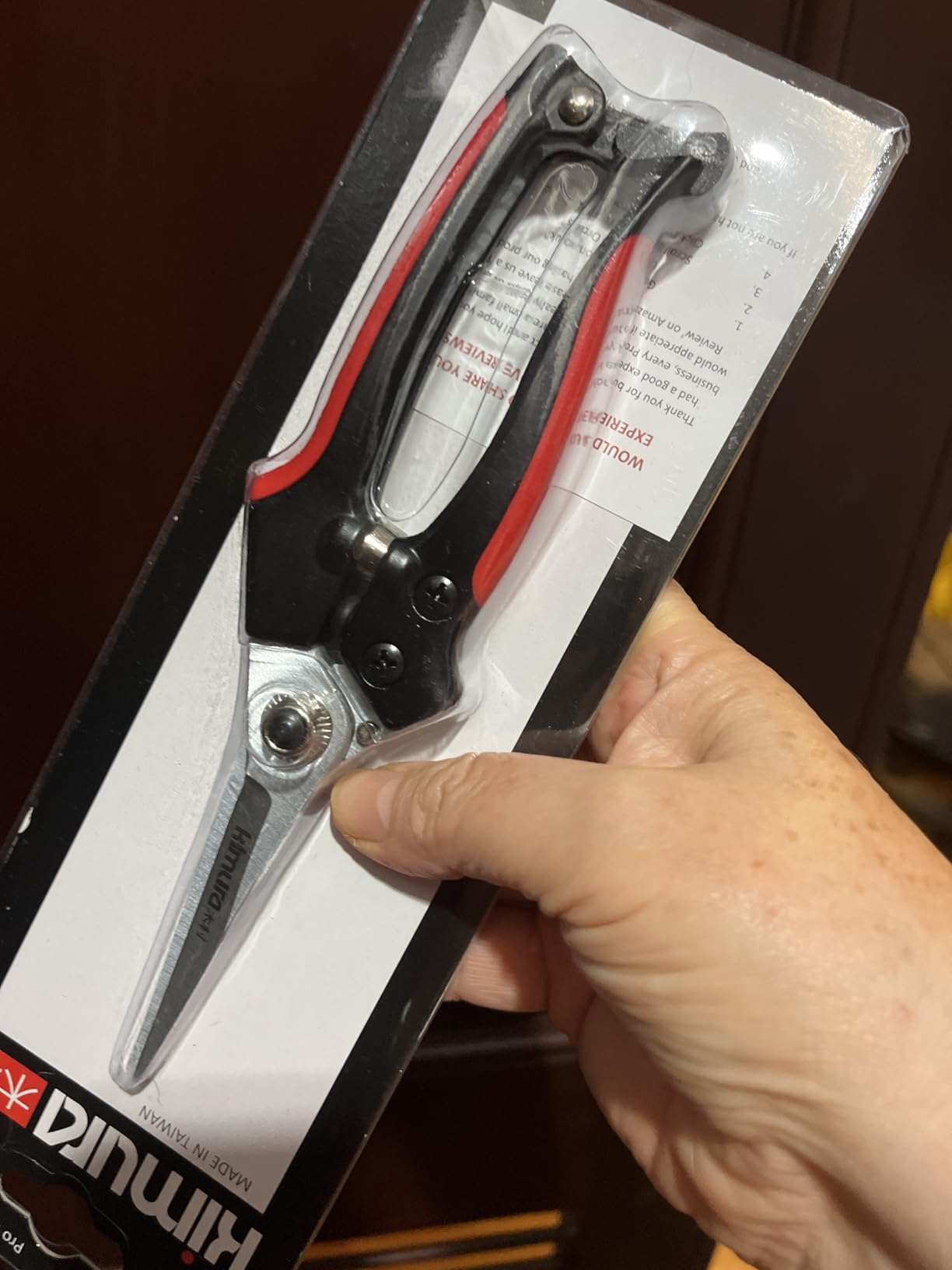
Reviewers consistently describe the spring as heavier than what they came from, and that is the point: it stays seated instead of popping out mid-job, and the return force is lower, which reduces hand strain over a long grooming session. The vinyl-coated aluminum handles are also the pick here for anyone with grip issues.
The corrosion-resistant blade finish is doing the same job as the Fiskars coating, resisting sap and rust, and the thumb strap means the blades stay closed in a drawer between uses.
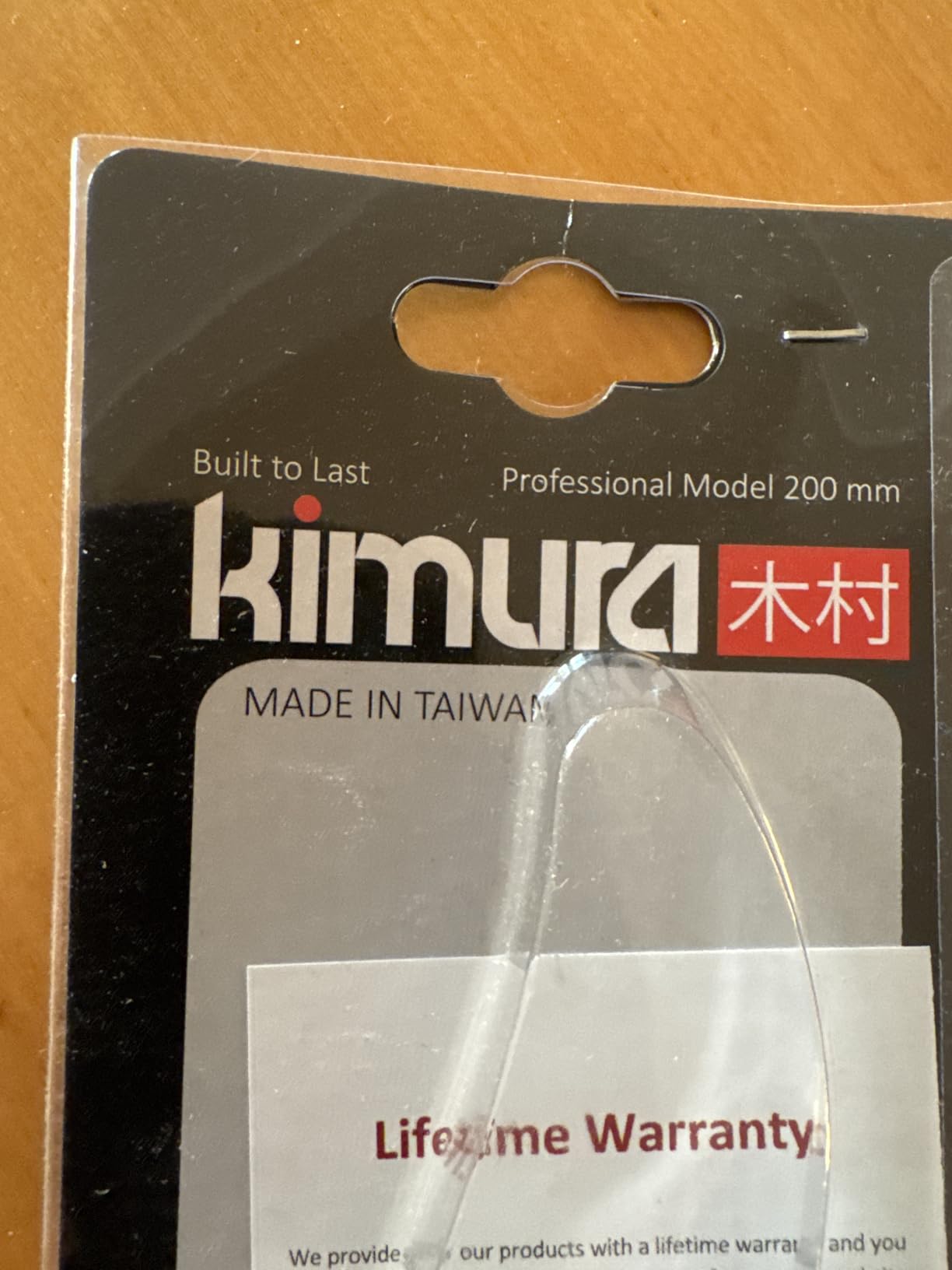
Who should buy this one
Anyone with a plant collection where the work is structural rather than cosmetic. Shaping a bare trunk, taking a leggy top cutting on a rubber plant, or cutting back a dracaena stem all reward the extra mechanical advantage.
It is also a strong choice for a large collection where a session means pruning six plants in a row, because the spring and the weight are built for repetition rather than occasional dabs.
Where it falls short
At 8 inches it is one of the longest tools in this roundup, and on a crowded shelf with pots touching, the handle is the thing that will not fit between the leaves.
The thumb locking strap is the most repeated complaint. It takes a firm squeeze to re-engage, and if you misjudge it the blades stay open. That is a small irritation, not a defect.
3. VIVOSUN 6.5 Inch Gardening Scissors – Best Value Workhorse
- Micro tips reach between crowded stems
- Sharp stainless blades with low hand fatigue
- Secure sideways lock protects blades in storage
- Works equally well for either hand
- Proven design across a very large review base
- Straight blade geometry is less precise deep inside a canopy
- Doubles as a general scissor rather than a specialist tool
- Not the cleanest possible cut on very soft live growth
There is a reason this one shows up on so many windowsills. It is a low-cost, reliable way to get off household scissors, and the difference in cut quality is immediate and obvious.
The micro-tip profile is doing the important work here. When you are trimming a dense pothos or a trailing plant, you can slide the point in and cut only the stem you aimed at rather than shoving a wide blade through the canopy and bruising everything in the way.
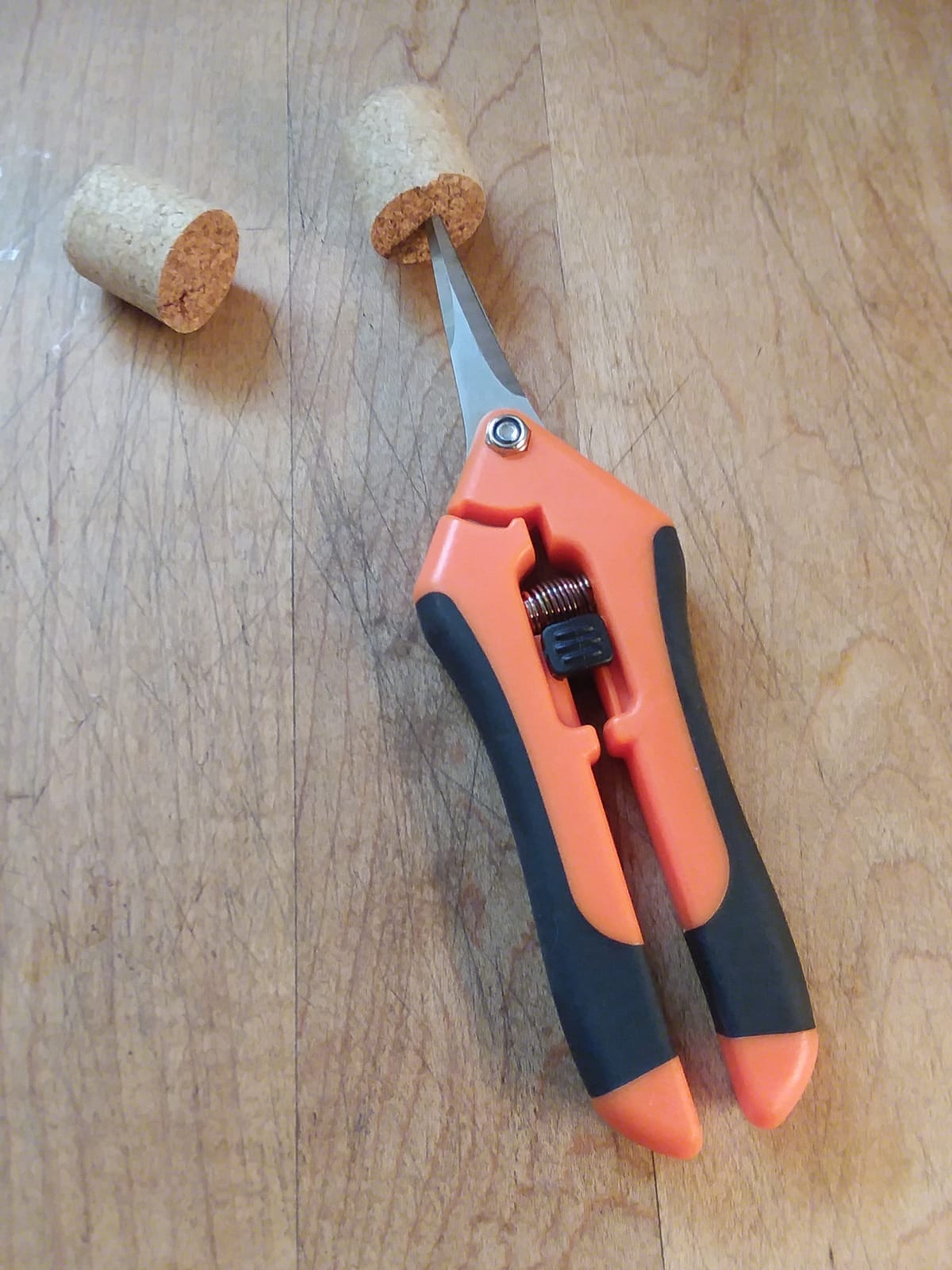
At 0.07 kg, it is light enough that hand fatigue basically disappears, and the balanced body means it works the same for either hand. The sideways lock is the detail most household scissors lack, and it is the reason the blade stays undamaged between uses.
If you are starting from nothing, this is the snip to buy first. You can add a needle-nose tool later if your collection grows, and this one will not let you down in the meantime.
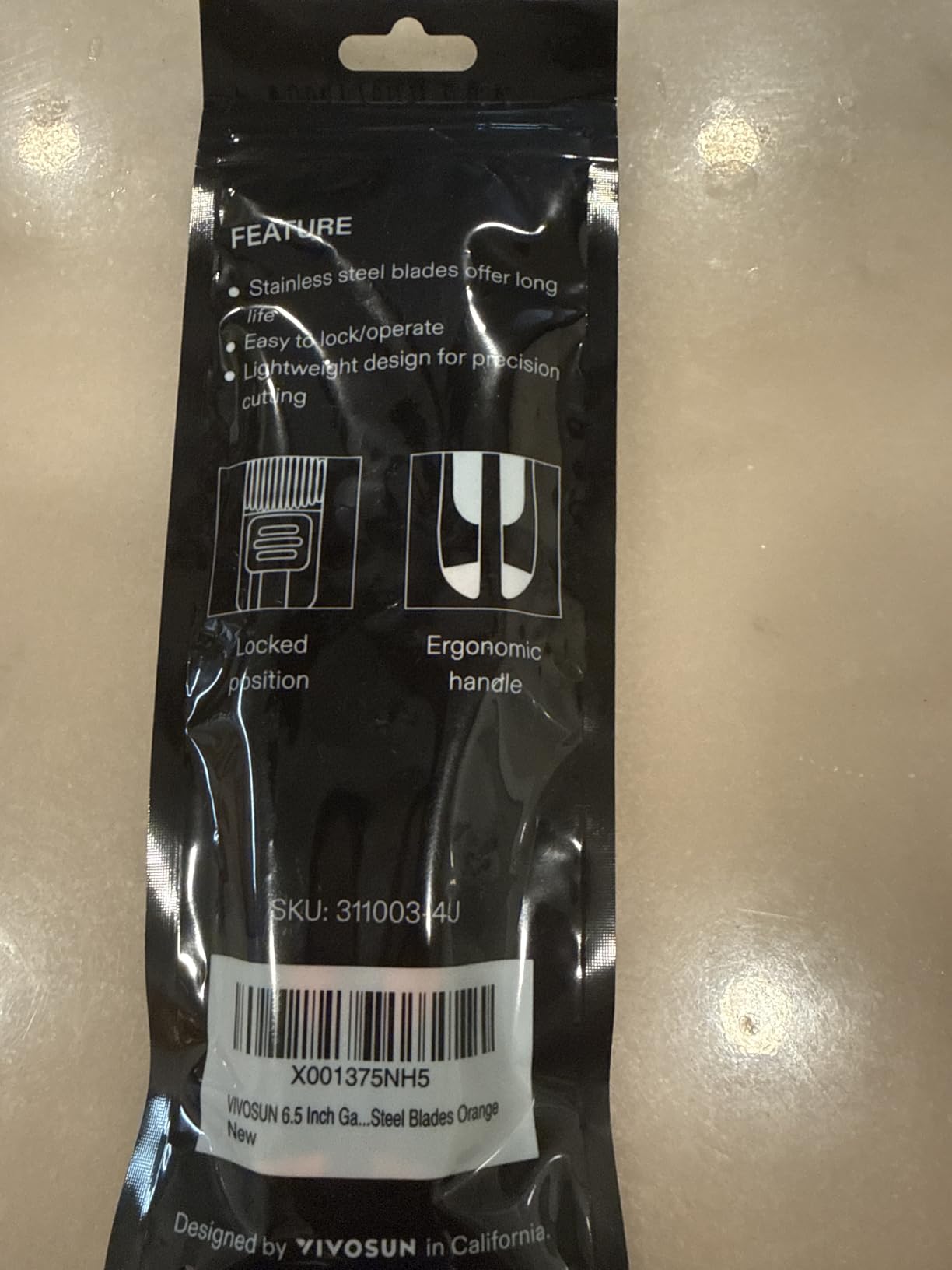
Where it earns its place
General indoor maintenance: removing yellow lower leaves, tidying a trailing vine, cutting back a leggy stem on a philodendron. It is fast, light and always within reach.
It also works for non-plant jobs, which is a genuine benefit indoors where a single drawer holds everything from plant care to gift wrapping.
Where it falls short
The straight blade is less precise than a needle-nose deep inside a canopy, and the build is closer to an anvil geometry, so it is not the cleanest possible cut on very soft live growth.
If your plants are mostly thick-stemmed and woody, upgrade to the Kimura. If they are mostly vines, ferns and flowering houseplants, you can stay here.
4. Fiskars 5 inch Herb Scissors – Best for Windowsill Herb Gardens
Fiskars 5″ Herb Scissors, Garden Snips with Sheath and SoftGrip Handle
- Pointed tips give control in tight herb planters
- Easy Action spring reduces fatigue while harvesting
- Dishwasher safe after messy herbs
- Compact 5 inch size fits a kitchen drawer
- Sheath included
- 5 inch blade suits fine stems rather than thicker growth
- Bypass geometry is poorly suited to hard woody stems
This is the snip for basil, mint, chives and cilantro grown in a pot by the kitchen sink. At 5 inches it is short enough to work in a dense windowsill herb pot where a bigger tool cannot physically fit between the stems.
Being dishwasher safe is not a gimmick in that setting. Herb sap is sticky and smells, and cleanup takes thirty seconds in a dishwasher instead of scrubbing a pivot with a cloth. For an indoor kitchen gardener, that is the feature that keeps the tool in use.
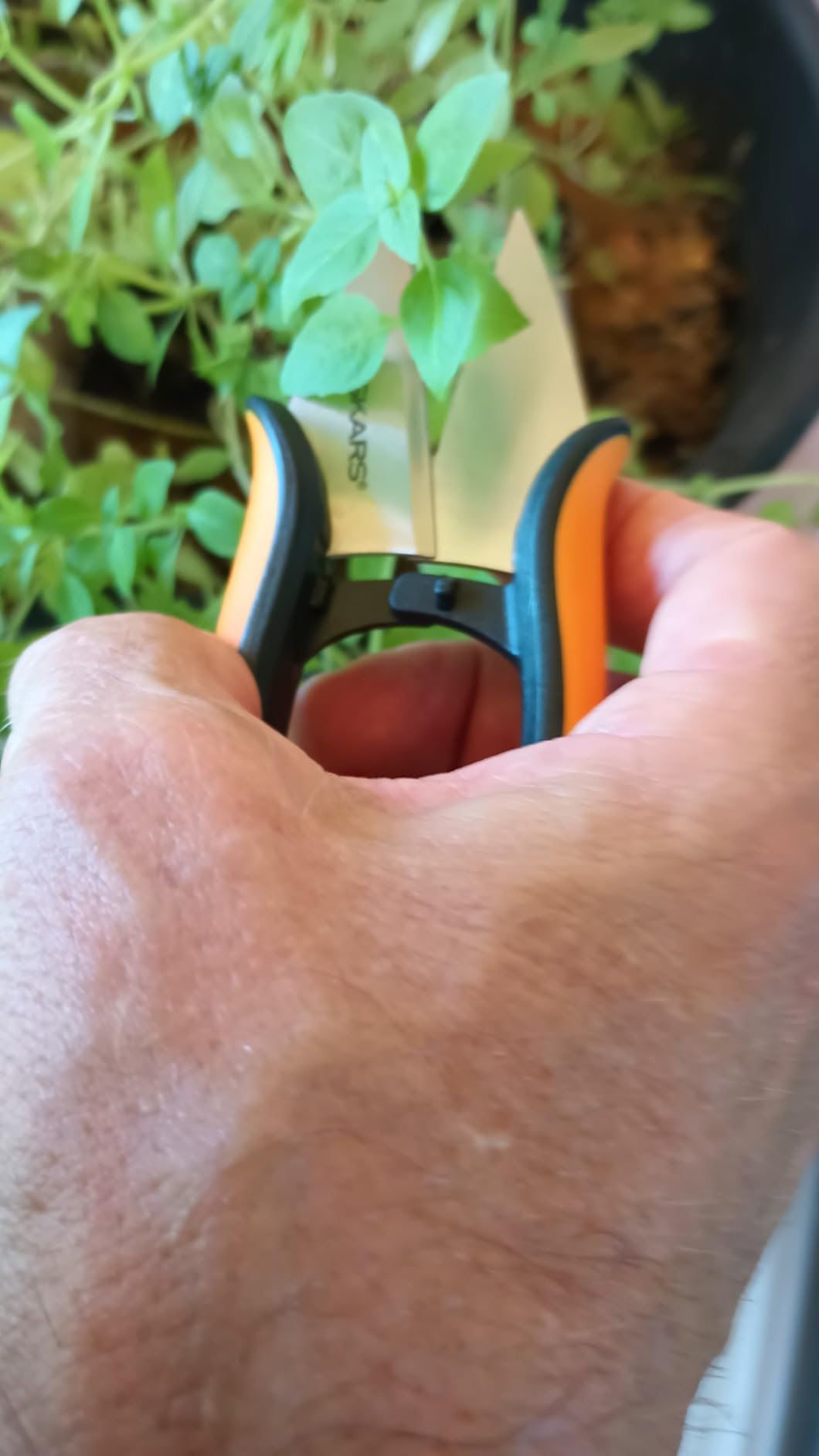
The pointed tips are genuinely accurate for taking a cutting above a node, and the Easy Action spring returns the blades open without a hard shove, so a harvest session does not leave your thumb and middle finger aching.
The included sheath is consistent with the rest of this brand, and it matters indoors because storage is a drawer, not a shed.
Why it suits indoor herbs
A 5-inch frame with pointed tips lets you work directly over a small pot without the handle knocking neighboring pots over, which happens constantly with a longer tool.
It also travels. If you move pots to a balcony table for summer, this snip goes in the sheath and comes with you.
Where it falls short
It is a fine-stem tool only. Anything with real thickness in the stem is beyond what a 5-inch bypass herb snip can part cleanly.
Keep it as a dedicated harvest and deadheading tool and pair it with a heavier snip for structural pruning, rather than forcing it to do both jobs.
5. Modern Sprout Pruning Shears – Best for Bonsai and Fine Detail Work
Modern Sprout Pruning Shears – Garden Snips – Herb Scissors – Sage 1-Pack
- Needle-nose tip praised for fine-stemmed plants and bonsai
- High carbon steel blades resist rust
- Ergonomic handles that cut down on fatigue
- Compact design sits comfortably in the palm
- Easy-lock latch for tidy drawer storage
- Some units arrive with rough unfinished outer edges
- Bright colourways can disappear into green trimmings
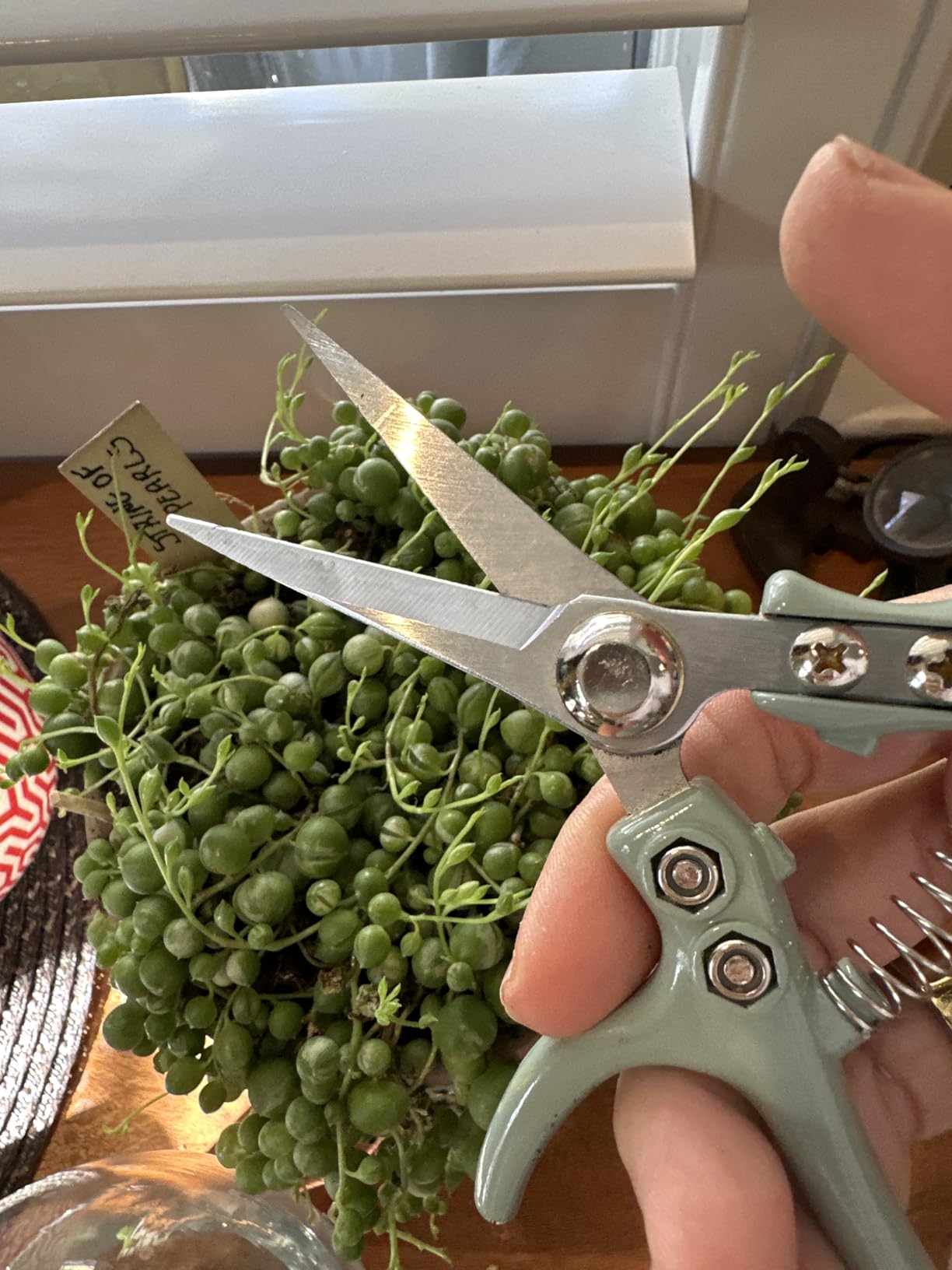
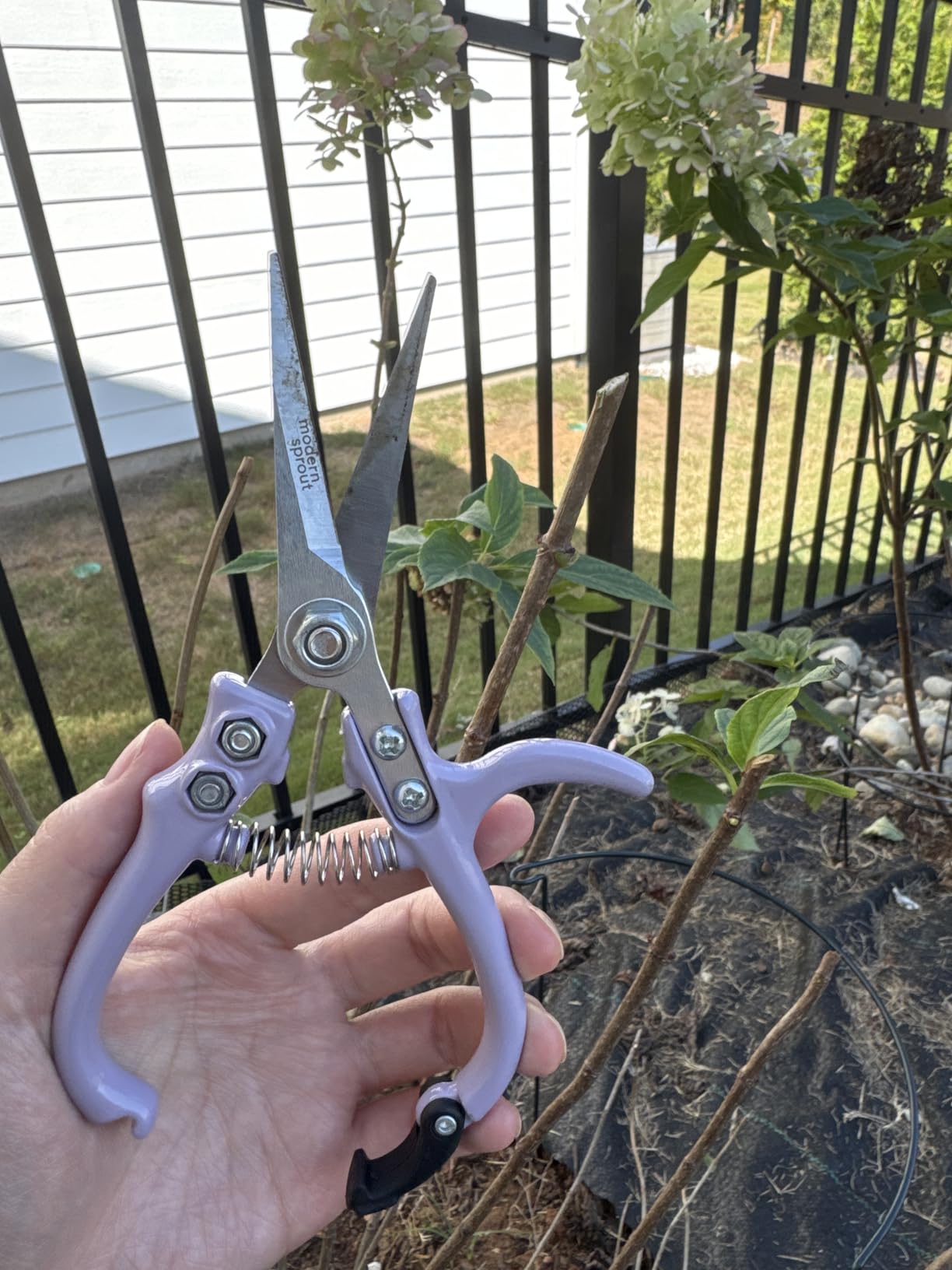
The narrow needle-nose tip is what separates this from a general snip. It is long enough to put a cut right at the base of a small branch, close to a trunk, without needing a wide blade to travel through the gap.
That is the geometry bonsai work and orchid work both demand. Owners buying it for fine-stemmed plants consistently point to the tip quality and the fact that the high-carbon blades hold an edge rather than dulling within a few sessions.
Its 4.8 average is one of the highest in this group, and the ergonomic aluminum frame is comfortable for the kind of long, slow styling session that indoor bonsai work involves.
Because the body is balanced and compact, it also works as a general precision tool for propagation cuttings on anything from pothos to hoya, where a clean node-level cut raises your odds of rooting.
Why detail work is its strength
The tip geometry means you can work from a stable angle on thin stems without shifting the blade, which is what causes crushed or angled cuts on small branches.
It also suits indoor collections with a mixed plant list, where different plants need very different cut sizes, because the tip works on both very fine and mid-range stems.
Where it falls short
The finish is the complaint. Some units arrive with rough outer edges that feel cheap in the hand, even though the cutting geometry is good.
And if you buy a bright colourway, expect it to vanish into a tray of clippings. That is a minor annoyance, not a functional problem.
6. gonicc Micro-Tip Pruning Snips GPPS-1008 – Best for Reaching Into Dense Canopies
gonicc Micro-Tip Pruning Snips(GPPS-1008), Stainless Steel Garden Shears
- Sharp micro-tip blades cut clean and close to the stem
- Lightweight and balanced for long sessions
- Anti-rust oil applied at the factory
- Suits different hand sizes
- Strong showing for fine detail work
- Factory oil residue on the blades surprises some buyers
- 8 inch length is bulkier than compact indoor snips
- Rating sits below the leaders in this group
This snip is built for access, and that is the most useful signal in its design. Reaching deep into a plant is the hardest version of indoor detail pruning, and it is where the tool geometry matters most.
At 110 grams the tool is genuinely balanced in the hand, and the micro-tip geometry is what lets you get into the middle of a plant where branches cross and a wider blade would have to travel through leaves to reach the stem.
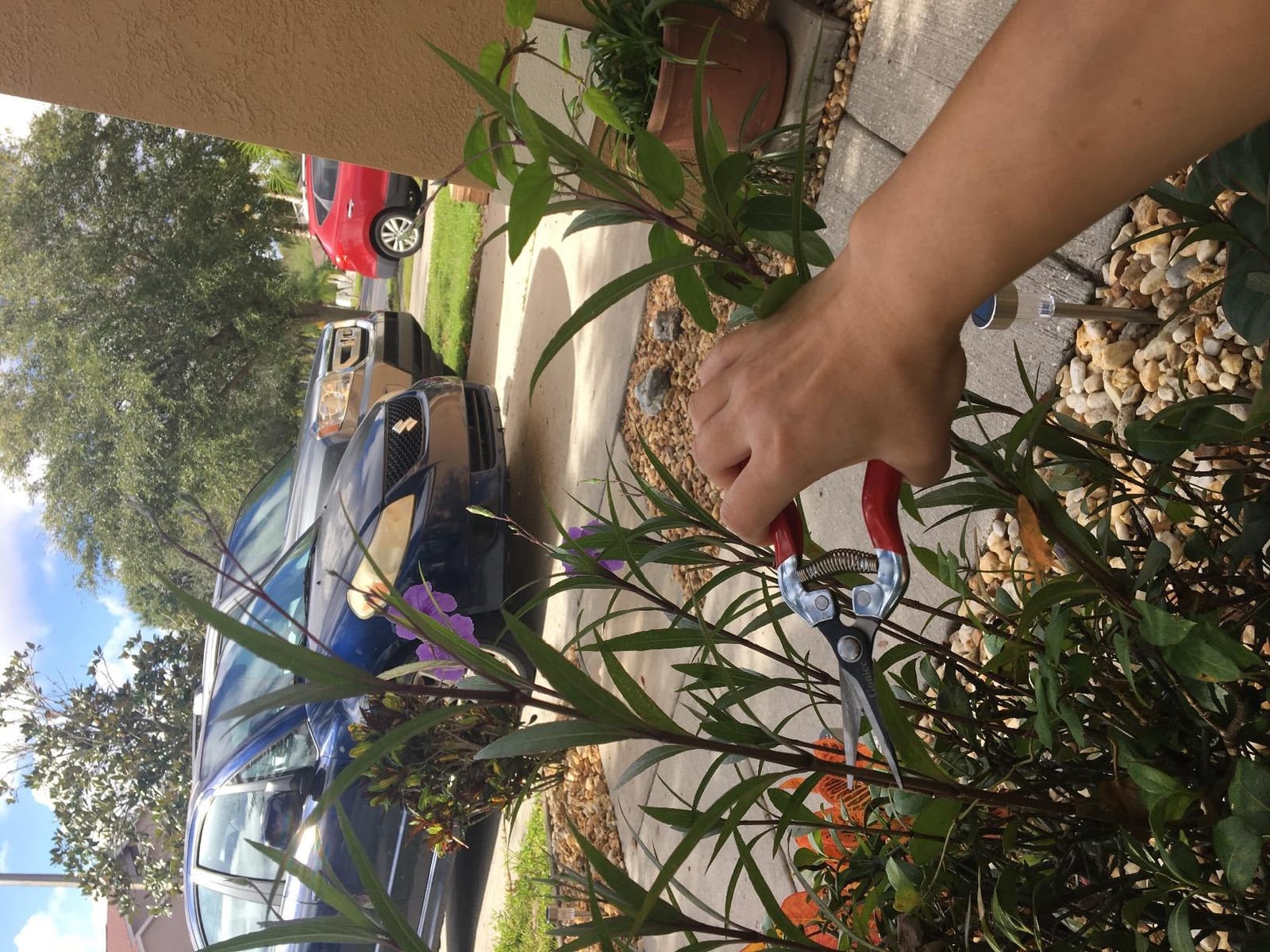
The anti-rust oil coating is applied at the factory and is why the blades arrive with a visible residue. It is a protective layer, not a defect, but it does explain the first impression many buyers report.
Its fine-detail performance is a good argument for indoor use, where the work is closer to houseplant scale than to orchard scale.
When it earns a place in your shelf
It is the right pick when access is the problem. Deep canopies, plants set back against a wall, and crowded windowsills are exactly where a longer snip with a fine tip beats a short blunt one.
The balanced grip is also comfortable across hand sizes, which matters if a partner or family member handles the pruning too.
Where it falls short
Its 4.5 average sits at the lower end of this group, and buyers mention more three- and four-star responses than with the leaders.
At 8 inches it is also one of the bulkier options, so on a very tight shelf the handle may be the limiting factor rather than the blade.
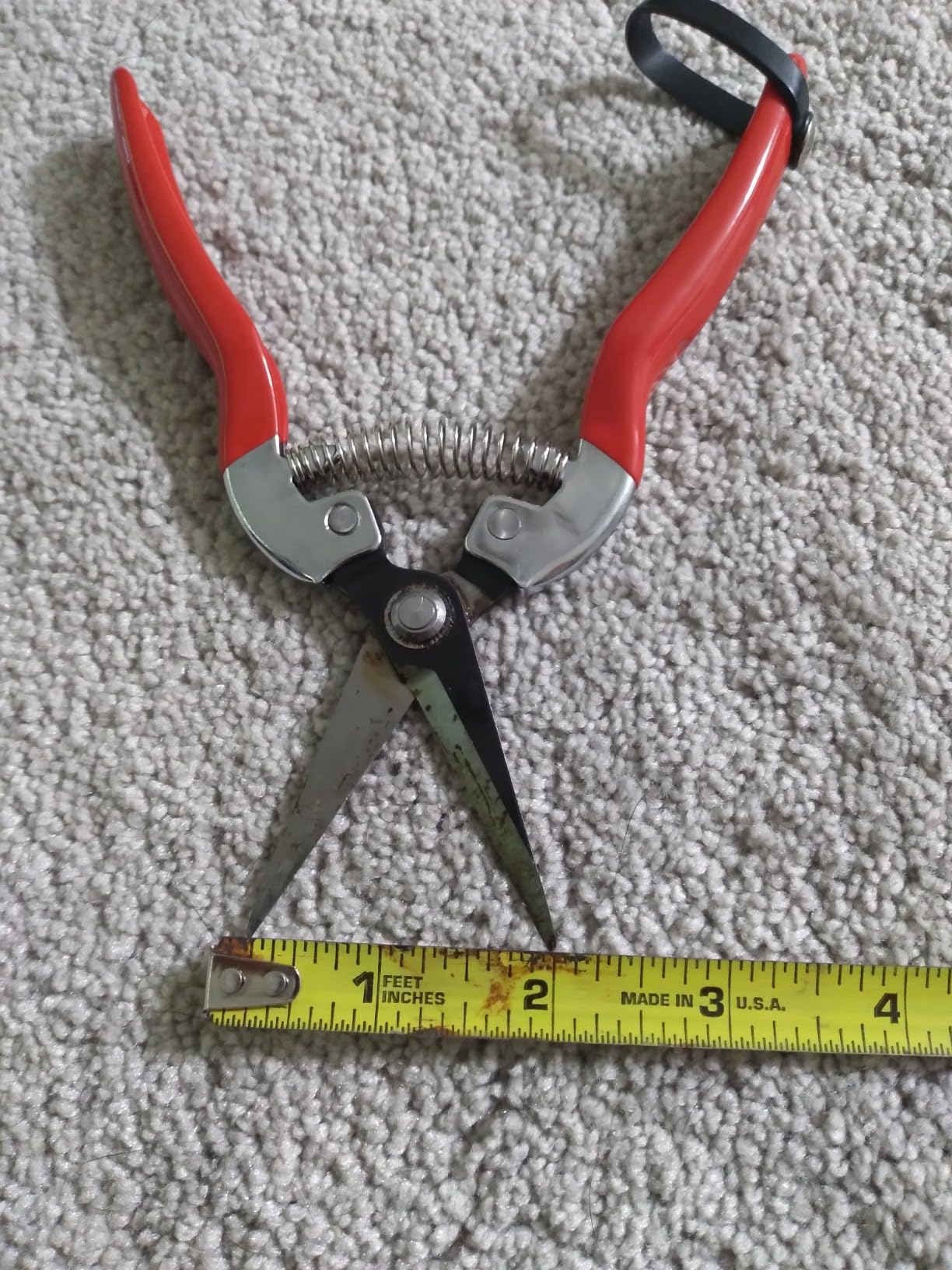
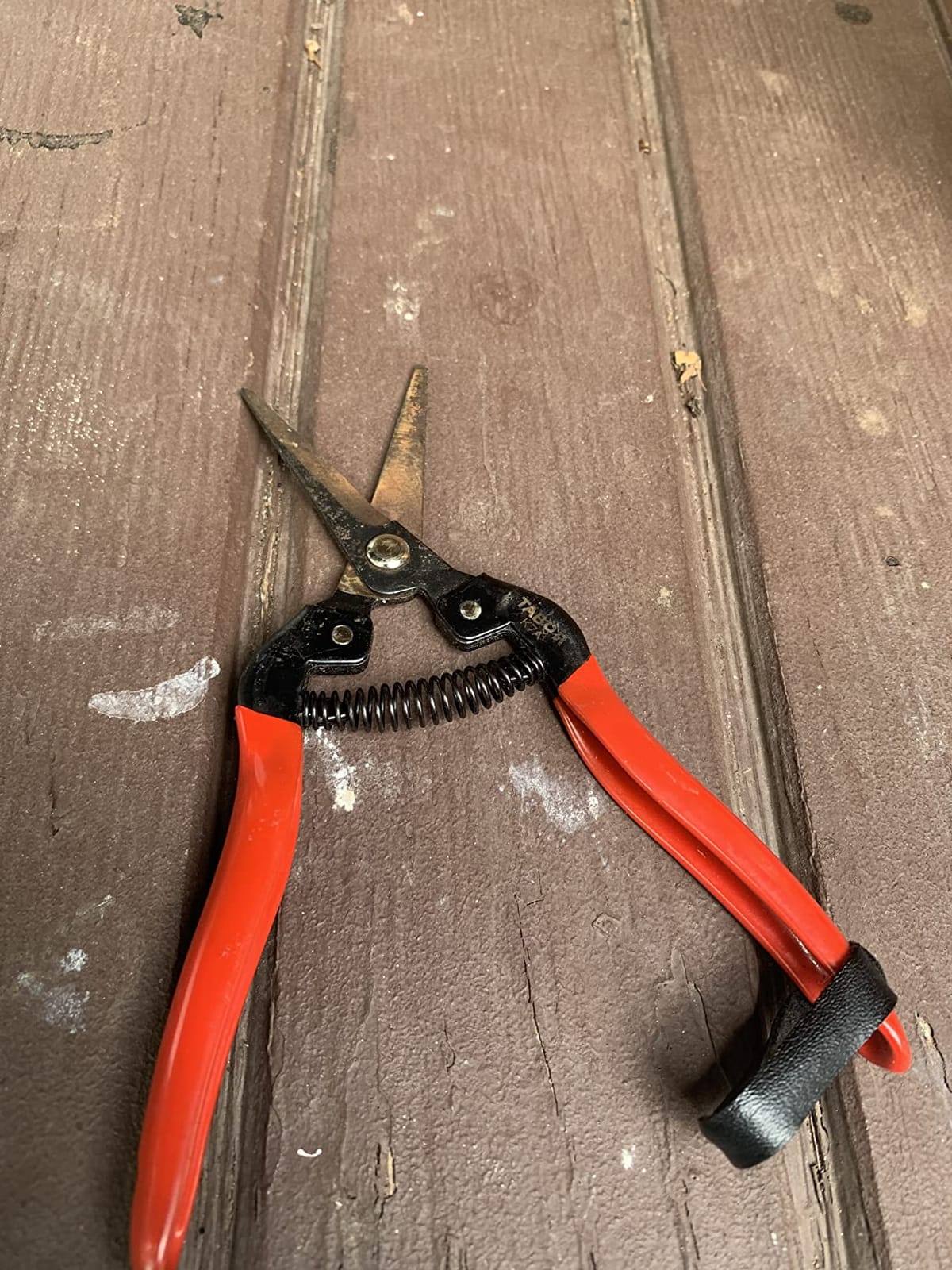
7. TABOR TOOLS K7A Pruning Snips – Best for Hydroponics and Sap-Heavy Stems
- Carbon steel holds a keen edge longer than ordinary blades
- Non-stick coating glides through stems without sap build-up
- Shock-absorbing spring reduces hand strain
- Handles suit limited hand strength
- Sized for indoor herb growing
- Carbon steel needs drying after use to avoid rusting
- General-purpose tip rather than a fine needle-nose
Hydroponic growers cut far more often than ornamental plant owners, and wet conditions are the real enemy of a blade. This snip is built around that: a shock-absorbing spring that opens the blades gently, and a non-stick coating that keeps plant residue sliding off.
Carbon steel is the reason the edge holds, and carbon steel is also why you need to wipe it dry. In an indoor room with high humidity, or a grow area with damp air, a carbon blade left wet will spot.
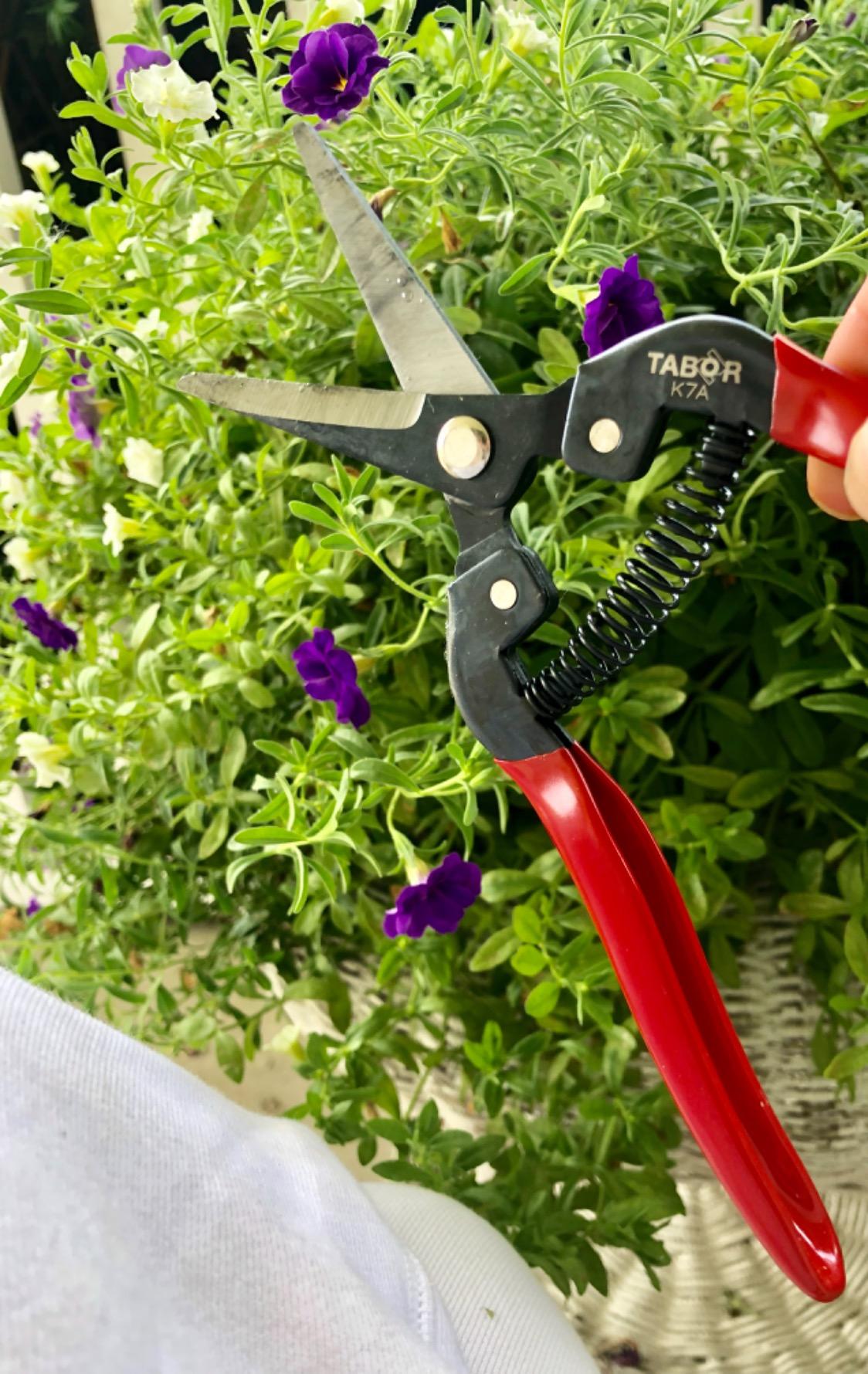
The handles are a genuine benefit for anyone whose grip is not what it was ten years ago, and buyers regularly call that out as the reason they kept using the pair.
It cuts cleanly to the tip, works for either hand, and the simple strap keeps the blades shut in a drawer between sessions.
Where it performs best indoors
Indoor herb growers, hydroponic lettuce and microgreen trimmers, and anyone harvesting often enough that hand strain becomes the limiting factor rather than cut quality.
The non-stick coating also makes it a good companion for the sappy plants, since the residue has somewhere to slide off to.
Where it falls short
The care requirement is real. Wipe carbon steel blades dry after every use, especially near a humid grow area, or you will trade edge retention for rust spots.
It is also a general-purpose snip rather than a fine needle-nose, so the very smallest tips are not its strength.
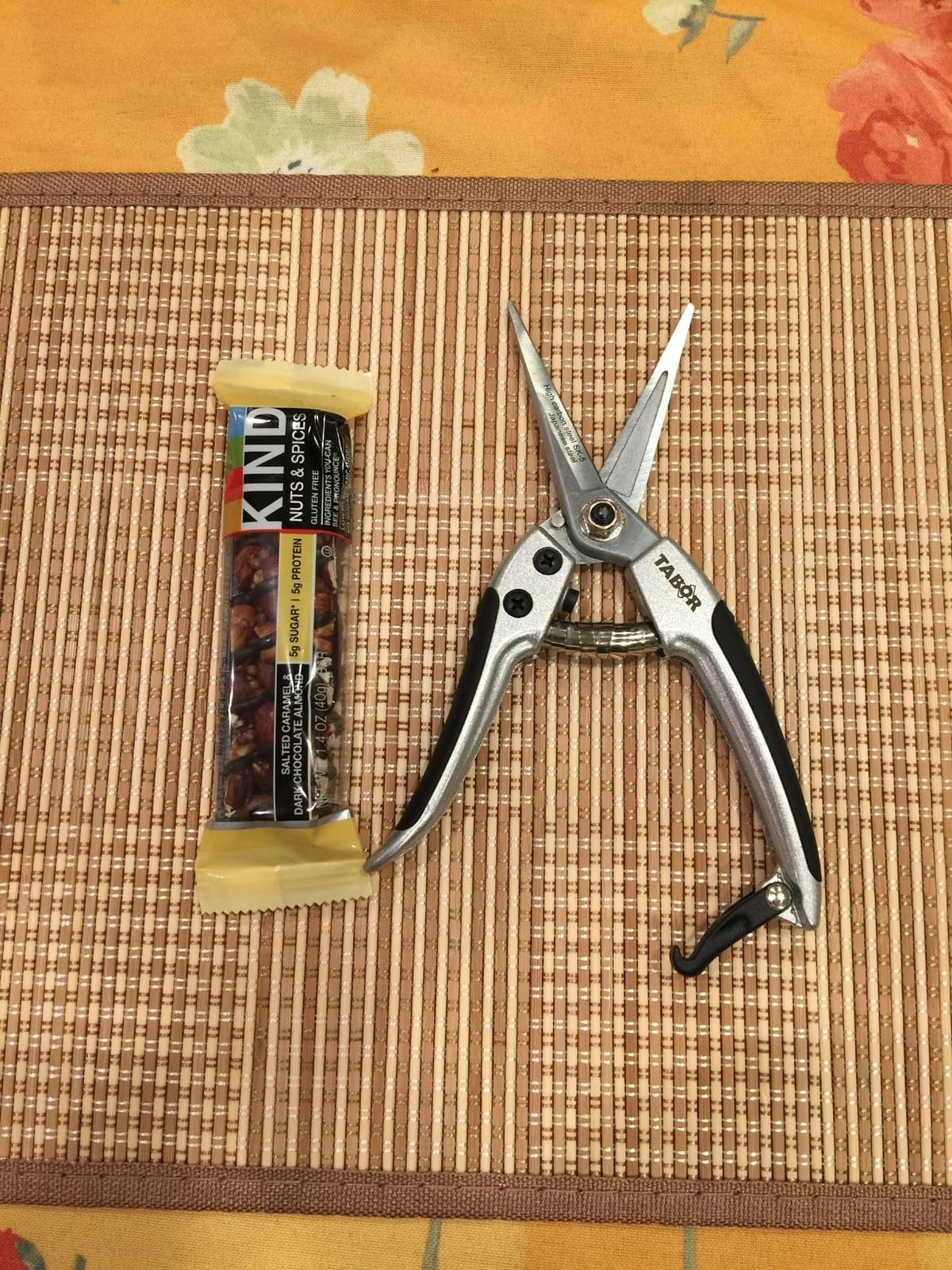
8. TABOR TOOLS K18A Straight Pruning Shears – Best for Owners Who Buy Once
- Blade tips meet precisely for accurate clean cuts
- Long nose reaches deep into a plant
- Blades stay rigid and do not twist under light load
- One-handed locking mechanism
- Handle comes apart for sharpening
- Light duty only and not for woody branches
- Heavier than plastic-handled snips
- Some models are SK5 carbon steel rather than the listed stainless
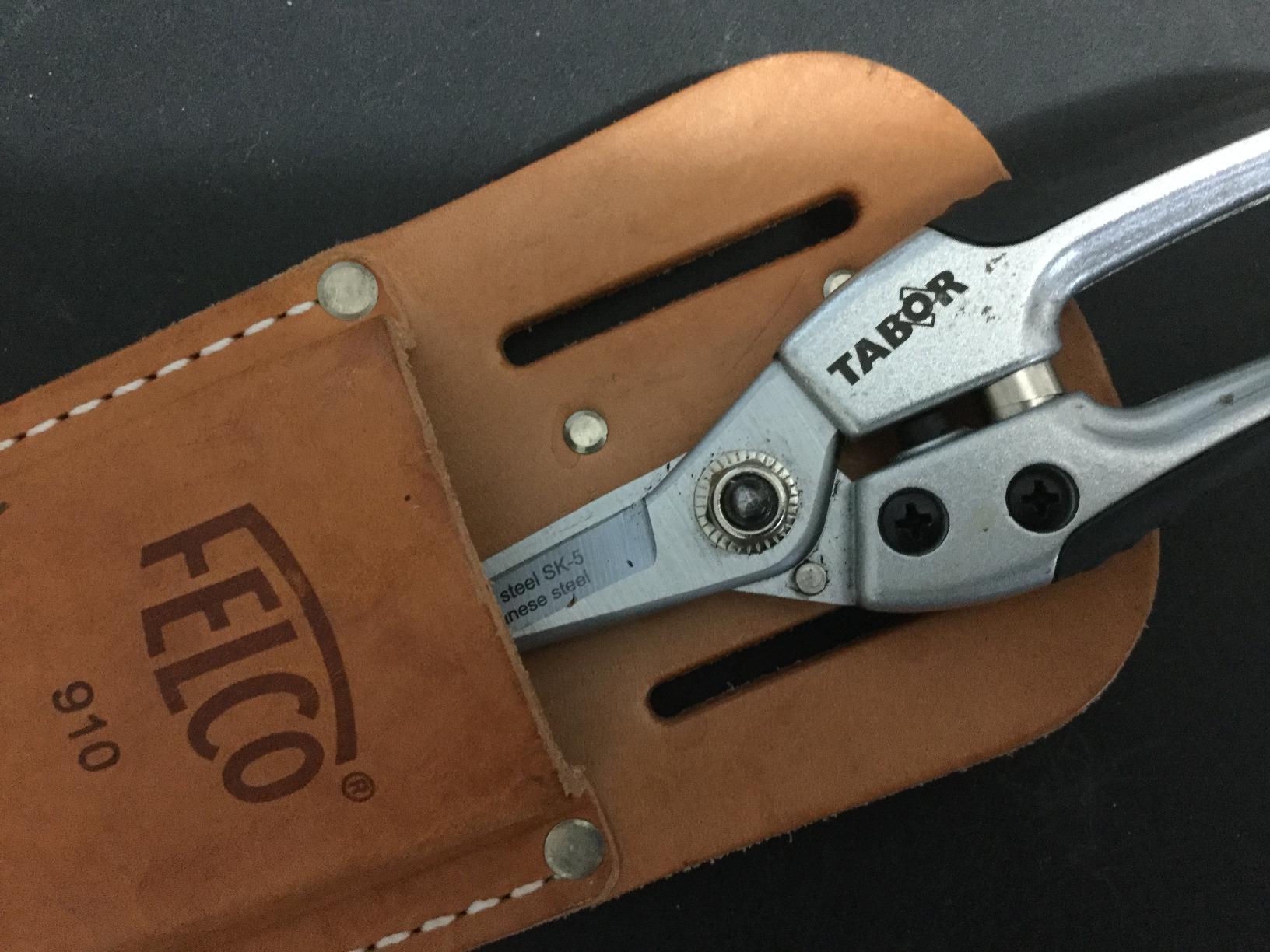
The detail that makes this one different is the take-apart handle. The handle comes apart so the blades can be sharpened, which means the tool is not disposable when it goes dull. For an indoor gardener who cuts a few times a month for a decade, that is the whole argument.
The Japanese-style straight needle-nose blades meet precisely at the tip and the rigid construction does not flex, so the cut lands where you aimed even under light load. That precision is what you want for a propagation cutting placed exactly above a node.
Several owners describe buying this as a replacement for an identical pair they had owned for years. That kind of repeat purchase is the most reliable durability signal available when you cannot physically test a tool.
At 0.18 kg it is heavier than the plastic-handled snips here, and that weight is a feature for control, though it does add fatigue in a very long session.
Why buy-once ownership matters indoors
Indoor tools live in drawers and get used in short bursts, so a tool that can be sharpened and reassembled keeps working for years instead of being replaced when the edge dulls.
The one-handed lock is also practical on a shelf, because you can open it and close it with the same hand that is holding a pot in the other.
Where it falls short
It is a light-duty design. Thick woody branches are outside its intent, and trying to force them risks both the blade and the plant.
Be aware that some models are etched SK5 carbon steel rather than the stainless the listing describes, so treat the care guidance for carbon steel as applicable.
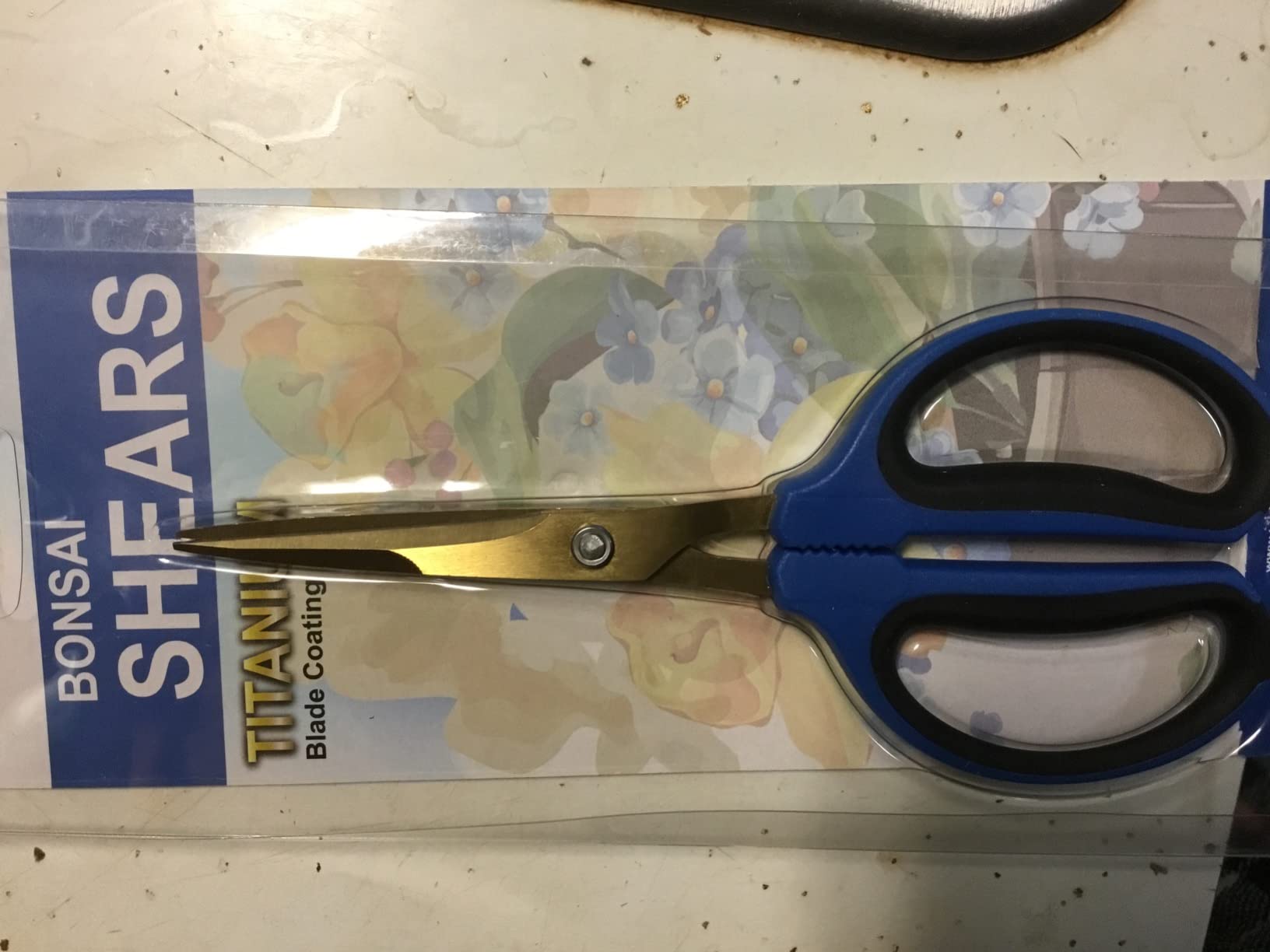
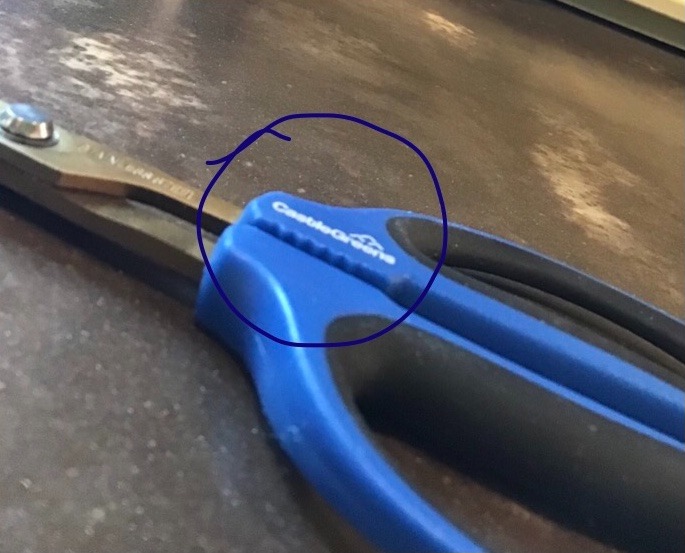
9. CastleGreens 60mm Plant Scissors – Budget Pick for Bonsai Detail
- Sharp blades that cut through sticky sappy plants
- Titanium plating improves durability over plain steel
- Non-slip rubber grips keep them secure in hand
- Long enough blade to reach stems inside dense bundles
- Light and compact enough to keep as a spare
- Shorter overall length limits reach versus 7 and 8 inch models
- Flat construction offers less leverage on thicker stems
- Rating sits at the lower end of this group
This is the compact option, and its size is the feature rather than a compromise. At 7.2 inches overall with a 2.36 inch blade, it moves inside a dense potted arrangement in a way a longer snip simply cannot.
The titanium plating is described as roughly three times harder than standard steel, and buyers on sappy plants report the blades stay sharp and clean through that residue. The rubber grips keep it secure when your hands are damp from watering.
It is the snip to buy if you want a second pair. Keeping a small detail tool in a second room, or a spare that lives with your supplies, removes most of the friction from indoor pruning.
It is also aimed at bonsai and hydroponic work, which are the two indoor disciplines where blade reach and compactness matter more than cutting power.
When compact size wins
Shelves packed with small pots, bonsai benches with low clearance, and windowsills where the handle of a longer snip would knock a pot over before the blades ever arrived.
The light 0.11 kg frame is also comfortable for a beginner, since a light tool rewards a shaky first attempt with a clean cut instead of a slipped one.
Where it falls short
Flat construction means less mechanical advantage. On a stem with real thickness you will need more hand force than with a spring-heavy pruner.
Its 4.5 average sits at the lower end of this group, so treat it as a capable second tool rather than a primary one.
10. Corona Long Straight Snip AG 4930 – Best for Deadheading
- Narrow straight blades cut accurately without bruising stems
- Fully heat-treated steel holds sharpness through repetition
- Light 3.2 oz body reduces fatigue in extended sessions
- Blades plus spring plus handle all rust resistant
- Simple strap lock that stays out of the way
- All-metal handles lack a cushioned grip
- Straight blades are less precise than needle-nose in tight spaces
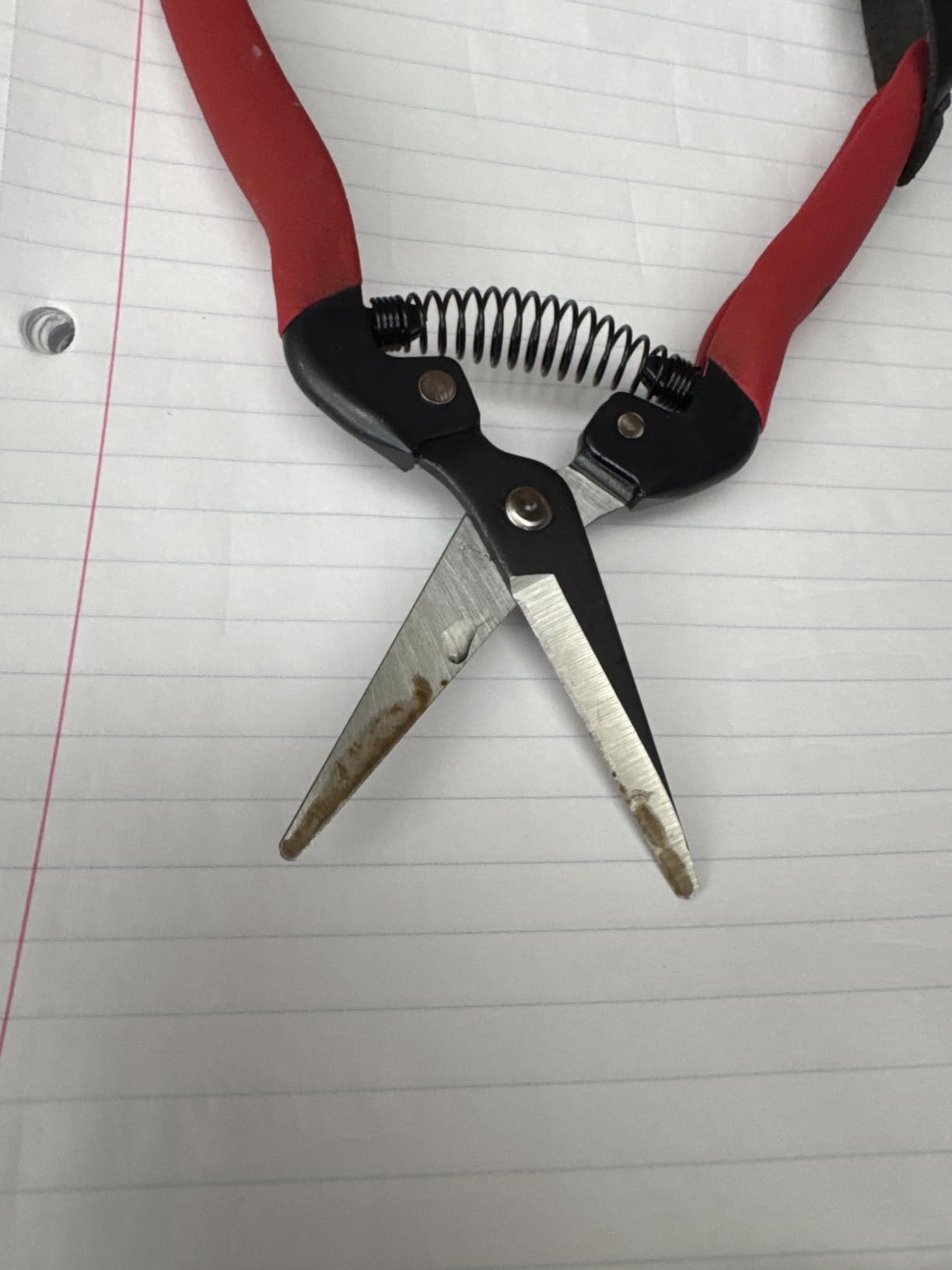
Deadheading is the most repeated indoor task, and the constraint is volume rather than precision. You are cutting spent blooms and yellow leaves off a plant every week, in short sessions, forever. The right tool for that is a light one you can pick up without thinking.
At 3.2 ounces, this Corona is one of the lightest tools in the roundup. The narrow straight blades are fully heat-treated, which is why they still make clean cuts rather than tearing after months of regular use.
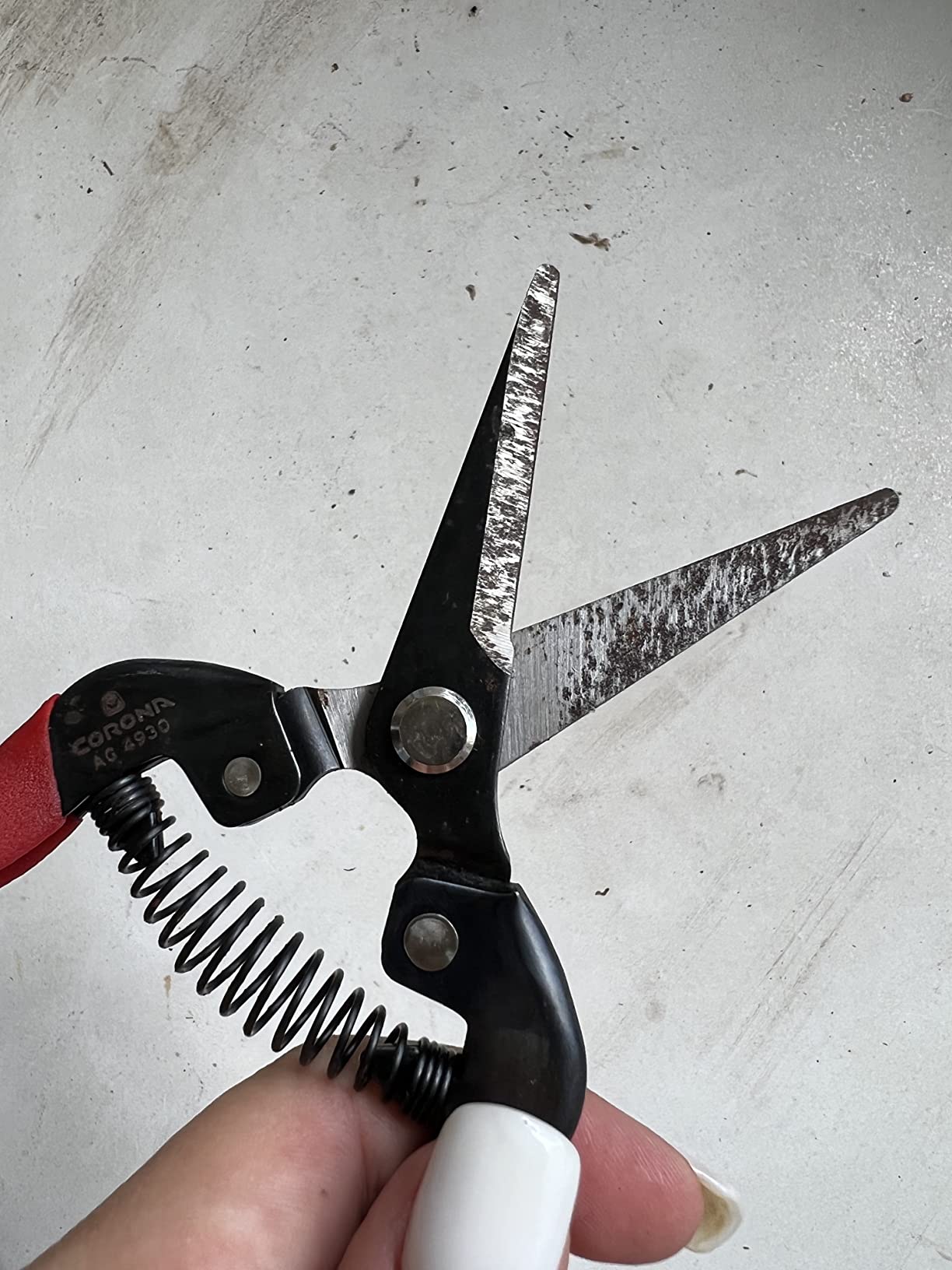
The whole tool, including blades, spring and handle, carries a rust-resistant coating. That matters more than it sounds indoors, where a snip stored in a humid room or a garage-adjacent utility space will corrode at the pivot if it is not protected.
The simple strap lock is unobtrusive and does not interfere with the grip, which is exactly what you want in a tool you use frequently.
Why deadheading suits this tool
It is a proven design in the nippers and snips category, so the geometry suits the exact job of removing spent flowers.
Because it works equally well for either hand, it suits either grip, and the light weight makes it an easy pick in this roundup to grab for a two-minute job.
Where it falls short
The all-metal handle has no cushioned soft grip. Over a long grooming session, that is a real difference in comfort against the vinyl-coated and rubber options here.
It is the wrong shape for fine interior detailing, since a straight blade cannot enter a node gap the way a needle-nose tip can.
11. Corona Long Curved Snips AG 4940 – Best Curved Needle-Nose Precision
Corona Tools Long Curved Snips – 1.75″ Tempered Steel Precision Garden Shears for Fruit, Herbs, Flowers & Vineyard Use
- Curved needle-nose blade gives strong control in tight spaces
- Heat-treated tempered steel stays sharp through repeat use
- Light 4.16 oz build reduces hand strain
- Suits live green stems without crushing them
- 1.75 inch blade limits capacity to fine growth
- Handle material is unspecified so comfort padding is minimal
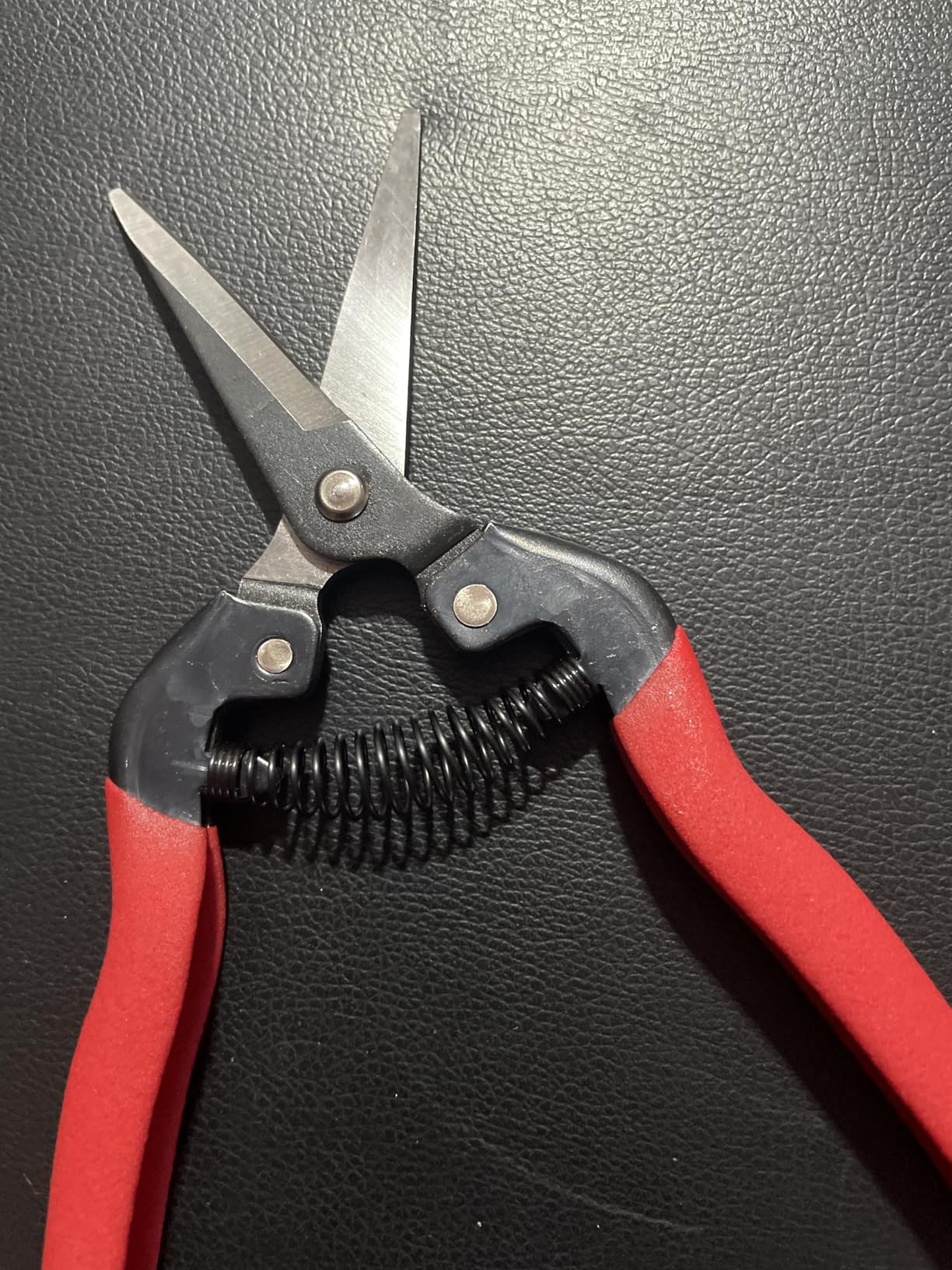
The curve matters more than the length. A curved needle-nose blade follows the line of a stem into a tight space and lets you see the cut point, which is the difference between reaching a node and guessing at it beside a leaf.
These are bypass snips, so the two tempered steel blades slide past each other rather than crushing against a flat surface. On live green indoor growth, that is the geometry that leaves a clean wound that closes instead of a torn stub.
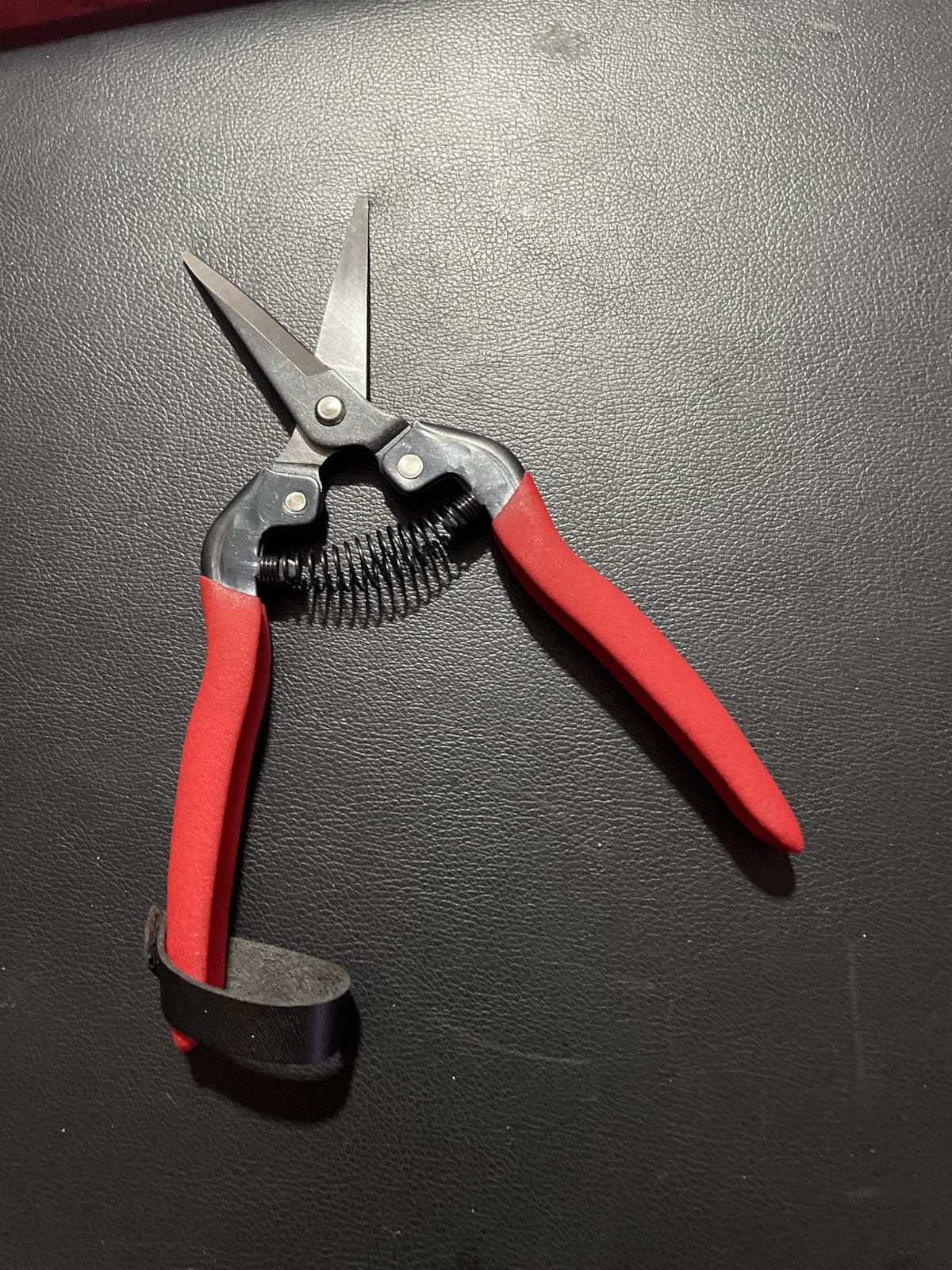
Buyers use them for indoor herb harvesting, flower work and detailed cutting where access is tight, and they consistently describe the heat-treated steel as holding its edge.
At 4.16 ounces it stays light, and the slim profile keeps it manageable when you are working with damp hands straight after watering.
Where the curve pays off
Working inside a dense trailing plant, around a bonsai with close branch structure, or on a windowsill where other plants are physically in the way of a straight blade.
It is also a comfortable pick for small hands, because the short 1.75 inch blade gives fine control without a long handle to manage.
Where it falls short
A 1.75 inch blade means this is a fine-growth tool. It is not going to part a thick money-tree stem, and asking it to is how blades get chewed.
The handle offers minimal padding, so if you plan long sessions rather than quick jobs, choose a cushioned grip instead.
12. Fondwell 6.5 inch Small Pruning Shears – Best Lightweight Pocket Snip
Fondwell 6.5″ Small Pruning Shears for Gardening, Plant Trimming Scissors
- Sharp micro-tip blades reach into nicks and crannies
- Light 6.5 inch frame fits the hand and a pocket
- Non-stick stainless blades resist sap and hold an edge
- Push-to-lock keeps blades closed in storage
- Plastic blade lock can loosen and swing into the work
- Spring and locking slide separated on some units
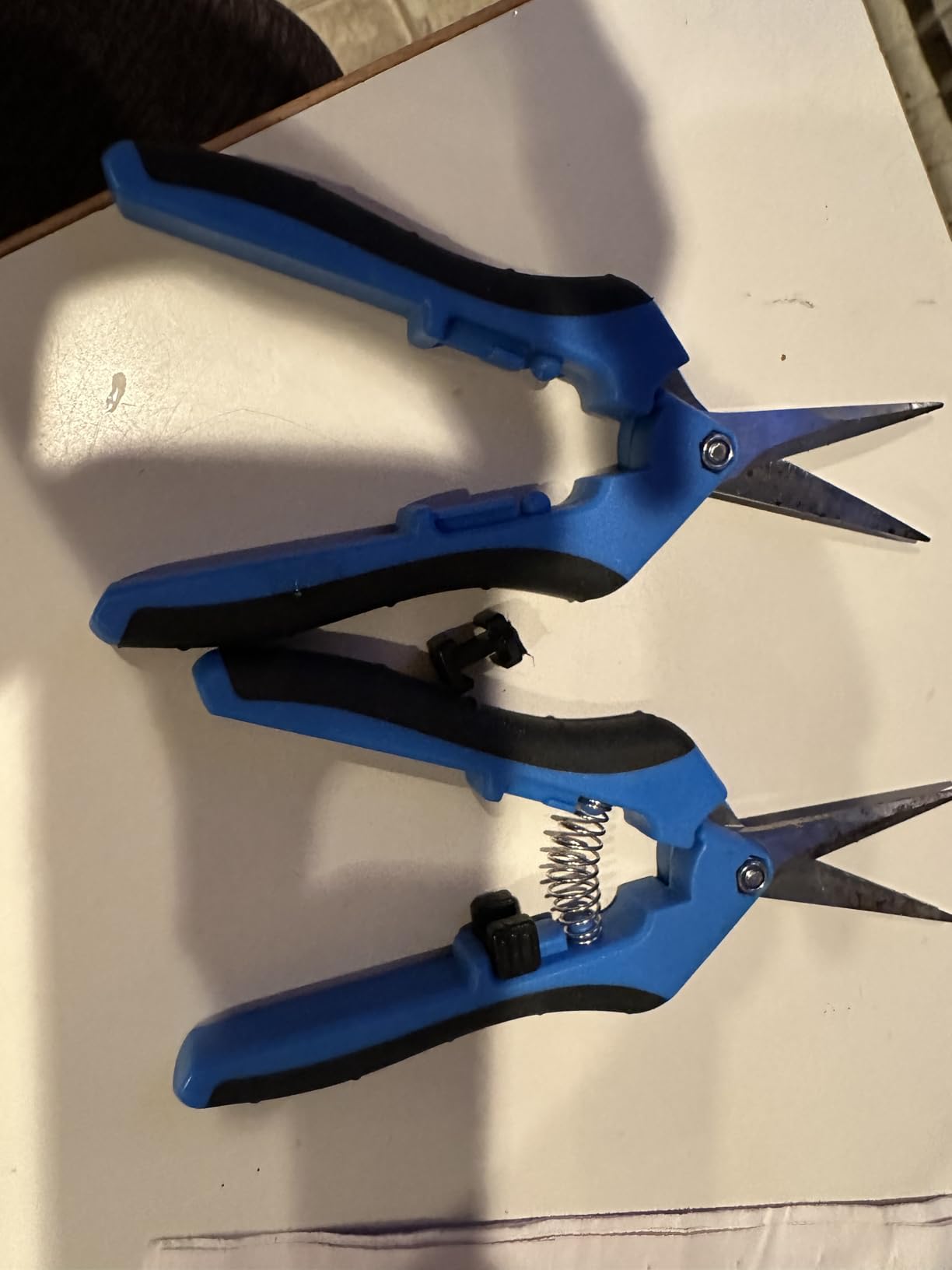
A snip that lives in a jacket pocket solves a problem nobody sells you on: pruning tools that sit in a garden shed are useless when the plant that needs cutting is in the other room. At 6.5 inches this one is small enough to keep on you, and light enough that you will actually reach for it.
At 2.3 ounces, this is the lightest tool here, and the micro-tip stainless blades reach into small gaps that a wider blade would have to clear by pushing foliage aside.
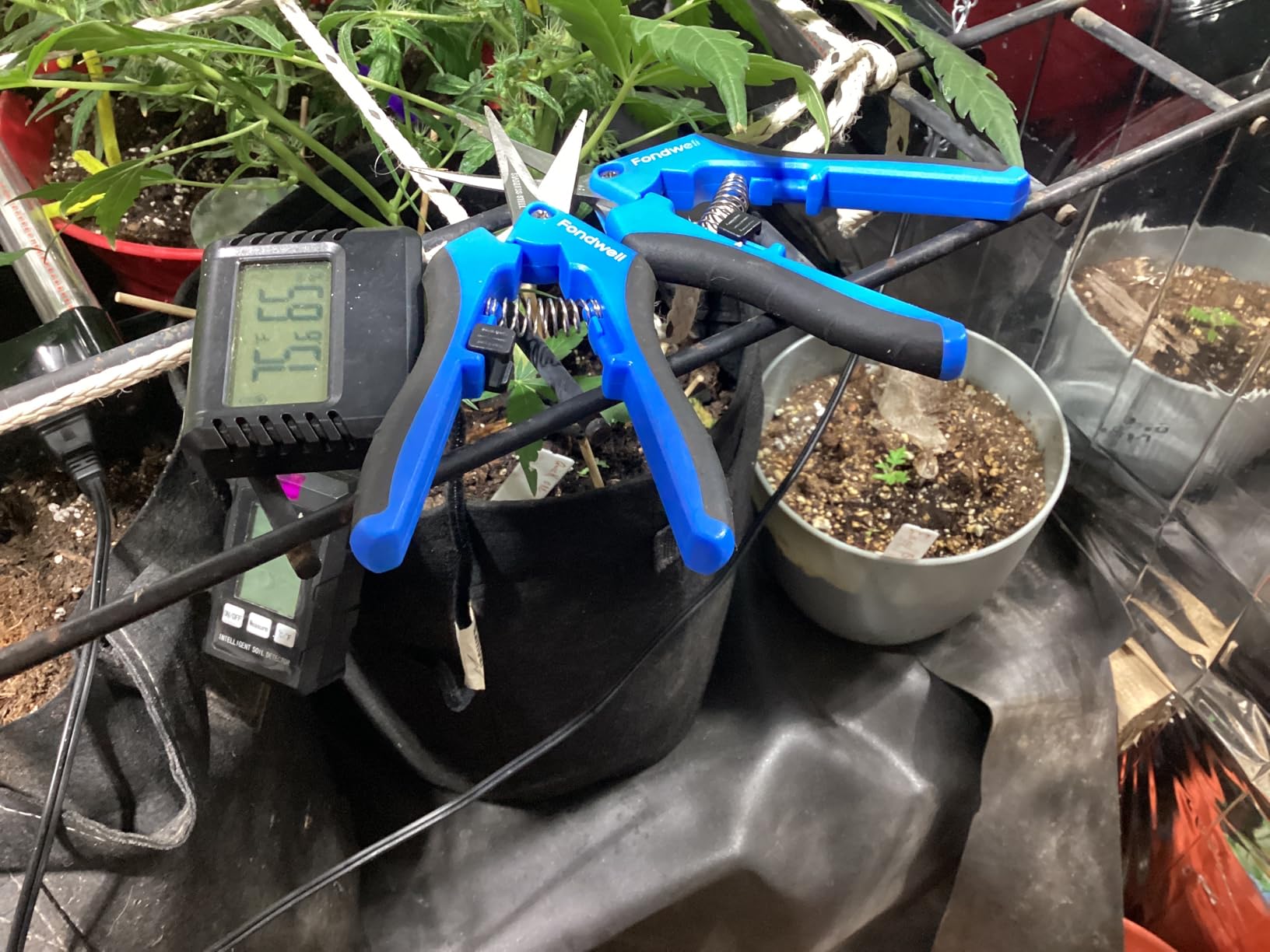
The non-stick coating resists sap, and the spring action resets smoothly for repeated cuts. Buyers rate the sharpness and the pocketability most highly, which tells you what this tool is for.
It is a sensible companion to a heavier primary snip: the heavy one for structure, this one for the ten small jobs that happen between waterings.
Why pocket size works indoors
Micro-tip stainless blades reach the awkward nodes at the base of a plant, so you are not repositioning the plant to suit the tool.
It is also the pick for a renter or a traveler who wants a full kit in a bag rather than a fixed tool at home.
Where it falls short
The recurring complaints are mechanical rather than cutting-related. A plastic lock that can loosen and swing into the work, and a spring or slide that separated on some units.
Because the blade is narrow, it is worth keeping your other hand clear of the stroke line when working close to a stem for a long stretch.
Buying Guide: Choosing Pruning Snips for Houseplants
Four blade styles cover almost every indoor cutting you will make, and choosing wrong is the main reason a new tool disappoints. Here is how they differ.
Bypass, anvil, straight-blade and ratchet explained
Bypass snips have two sharpened blades that slide past each other, like scissors. They are the default for live green indoor growth because the cut is clean and the wound seals quickly. This is the right style for stems, vines, herbs and flowers.
Anvil snips close a single blade onto a flat surface. They are built for dead or dry wood and will crush a tender live stem, so keep them off your houseplants even though the listing may call them pruning shears.
Straight-blade snips are scissor-style tools with a fine point, made for flowers, herbs and succulents. They are a practical middle ground and several of the picks in this roundup fall into that group.
Ratchet pruners use a multi-stroke mechanism to multiply your hand force, which helps with thick stems or limited grip. Most indoor stems do not need one, but a very woody money tree or large bonsai might.
Micro-tip versus standard blade
Micro-tip blades narrow toward the point and cut all the way to the tip, which is what lets you snip a petiole right against a main stem. Standard blades lose cutting edge at the tip and force you to approach at an angle.
For a dense fiddle-leaf fig canopy, a narrow needle-nose tip is worth more than extra length. For a windowsill herb pot, a shorter 5-inch frame matters more than tip style.
Cutting capacity for indoor woody stems
Most of the picks in this list handle thin to medium stems cleanly, which covers the vast majority of indoor work. The exception worth knowing is that dracaena and mature money tree stems thicken faster than you expect, and there you want the longer reach and heavier spring of the Kimura, whose SK5 steel and strong spring are built for exactly that job.
Succulents and cactus offsets are the case where no snip is the right answer. Use a clean blade and gloves, and let the cut surface callus before you pot.
Blades, coatings and indoor sap
SK5 high-carbon and Japanese high-carbon steel hold an edge best but need to be kept dry. Stainless steel forgives neglect better. Titanium plating and non-stick coatings matter indoors mainly because of latex from ficus and rubber plants, which otherwise gums up the pivot within a few cuts.
Carbon steel is the one to wipe after every use, especially in a humid room. A sap groove is worth having on any tool you use on sappy plants, because it channels the liquid away from the cutting faces.
Ergonomics, grips and small hands
Weight matters more indoors than outdoors. The 2.86 ounce Fiskars and the 2.3 ounce Fondwell are comfortable across a long grooming session, while the 0.18 kg TABOR K18A tires the hand faster when you are pruning one plant at a time on a shelf.
For limited grip, look for cushioned or non-slip handles, an Easy Action style spring that opens the blades gently, and balanced bodies. A one-handed safety lock also helps, since you can open the tool without needing your other hand free.
Cleaning and disinfecting between plants
Every cut is a wound, and a collection of houseplants in one room can pass problems between them on a dirty blade. Wipe blades with alcohol between plants when you are working on a plant that is already stressed or showing spots.
For routine work, a ten-second wipe with a dry cloth after a sappy plant, plus a drop of light oil on the pivot, keeps the tool moving freely. Store with the blades closed, and keep snips away from a radiator or a damp utility area.
Setting up a proper work surface helps more than most people expect. Our picks for the best potting benches for gardeners include compact options that suit an indoor corner, and pruning indoors without a stable surface is how fingers get hurt.
For anyone who takes their indoor collection seriously enough to grow some of it outdoors in summer, our guide to the best greenhouses for backyard gardeners covers the next step up. You can also track conditions in the house with the best weather stations for home gardeners, which helps you judge seasonal light changes before a plant drops leaves.
Frequently Asked Questions
What are the best pruning shears for indoor plants?
Small bypass or straight-blade snips with micro-tip points under 8 inches long are best for houseplants. Look for pointed micro-tip blades, cutting capacity for stems up to roughly a quarter-inch, a non-stick coating to handle latex from ficus and rubber plants, and a safety lock for drawer storage. Fiskars 6 inch Non-Stick Pruning Snips are the strongest all-round choice.
Should I use bypass or anvil shears on houseplants?
Use bypass shears for houseplants. Bypass blades slide past each other and leave a clean wound that seals quickly on live green growth. Anvil shears close one blade onto a flat surface, which crushes tender stems, and they are meant for dead or dry wood only.
How do I stop latex from my ficus gumming up the blades?
Wipe the blades immediately after each cut with a dry cloth, before the latex sets. Choose snips with a non-stick or PTFE coating, and clean between plants with alcohol. Carbon steel blades need drying after every use or they will spot with rust in a humid room.
How big should my pruning shears be for houseplants?
Five to eight inches overall is the useful indoor range. A 5-inch frame with pointed tips works best in a packed windowsill herb pot, while a 7 to 8 inch snip with a needle-nose tip gives enough reach and cutting power for thicker stems on money tree, dracaena and fiddle-leaf fig.
How do I keep pruning shears sharp?
Wipe blades clean after use and add a drop of light oil on the pivot. Sharpen on a fine stone or hone in the direction of the bevel, and pick take-apart models whose handle unscrews so the blades can be honed separately. Store closed in a drawer away from moisture, and avoid cutting gritty or dusty dry material.
Are Japanese steel snips worth it for indoor plants?
They are worth it if you cut thick stems or cut often. SK5 high-carbon steel holds its edge far longer than ordinary steel and can be re-sharpened, which suits indoor gardeners who want one tool for years. They need to be kept dry to avoid rust, and they cost more than stainless models that need less care.
Conclusion
The Fiskars 6 inch Non-Stick Pruning Snips are the best pruning snips for indoor gardeners overall, because the micro-tip blades cut all the way to the point and the coating survives the latex that every ficus and rubber plant throws at it. If your stems are thicker than a pencil, move up to the Kimura 8 inch Pro. If you want one low-cost tool for general trimming, the VIVOSUN 6.5 Inch scissors do the job with no commitment.
The common mistake is buying a 9-inch outdoor pruner because a guide told you it was the best pruning shears on the market. It is not the wrong tool, it is a tool for a different room. Match the blade tip to the density of your plants, the cut capacity to the thickness of your stems, and the weight to how long you plan to spend holding it, and the right pair will last you years in 2026 and beyond.